NorthEast Motorcycle Road Racing (NEMRR) has a program allowing children to test ride StaCyc electric balance bikes for free, and the program will continue at all 2023 NEWRR race events, including the 100th Loudon Classic on June 16-18, 2023.
The program started in 2022 when Freedom Cycle, a dealership located in Concord, New Hampshire, provided NEMRR with eight StaCyc electric balance bikes to offer demo rides to children.
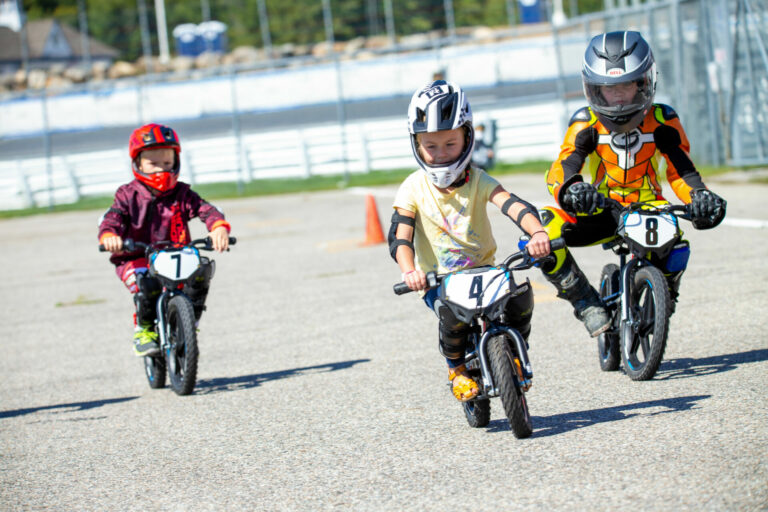
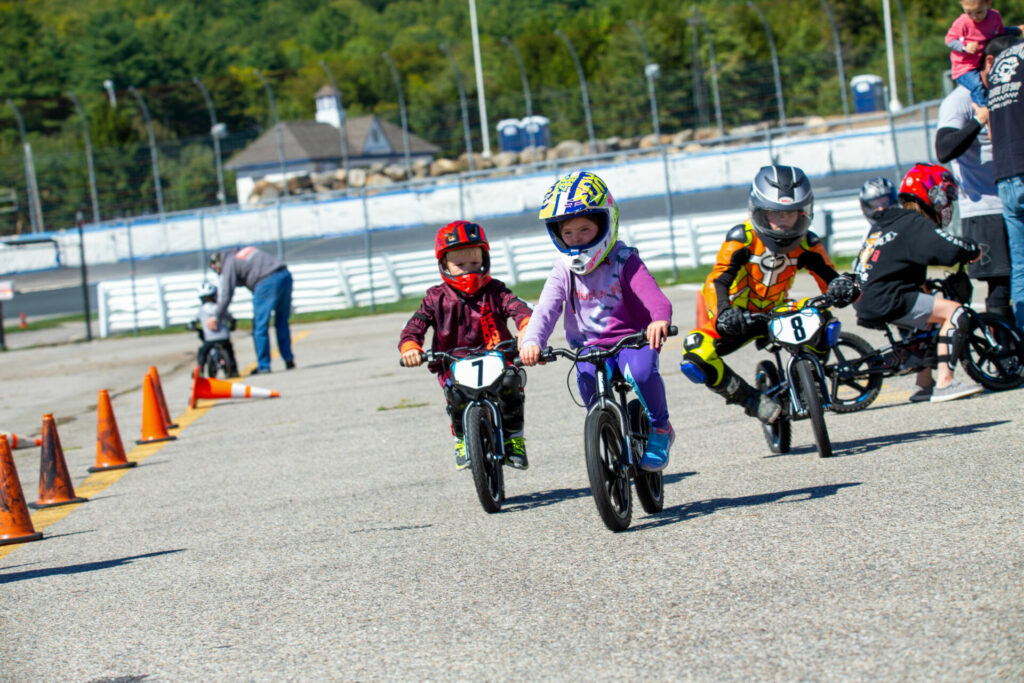
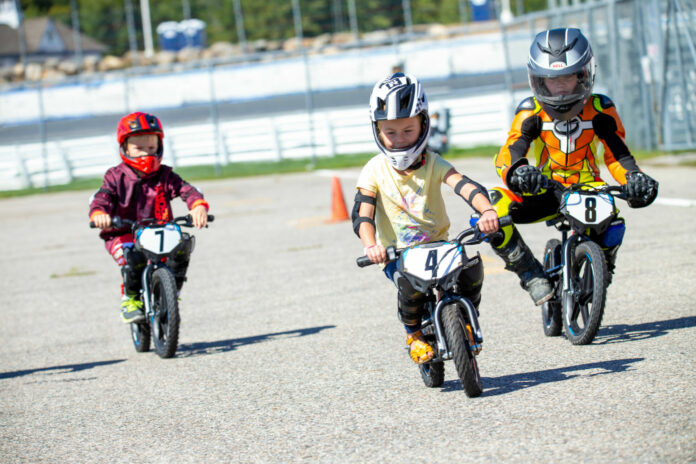
Kids of varying skill levels riding StaCyc electric balance bikes while a volunteer works with another rider in the background. Photo by Sam Draiss, courtesy NEMRR.
“The idea was to get kids interested in riding,” NEMRR Executive Director John Grush told Roadracingworld.com. “We set up a little course with cones [in the paddock at New Hampshire Motor Speedway], gave them a little instruction and a lot of supervision, and set them loose, basically. It was pretty amazing to watch those kids progress from the beginning of the year to the end of the year. We had kids putting knee pucks on and dragging their knees on those things.”
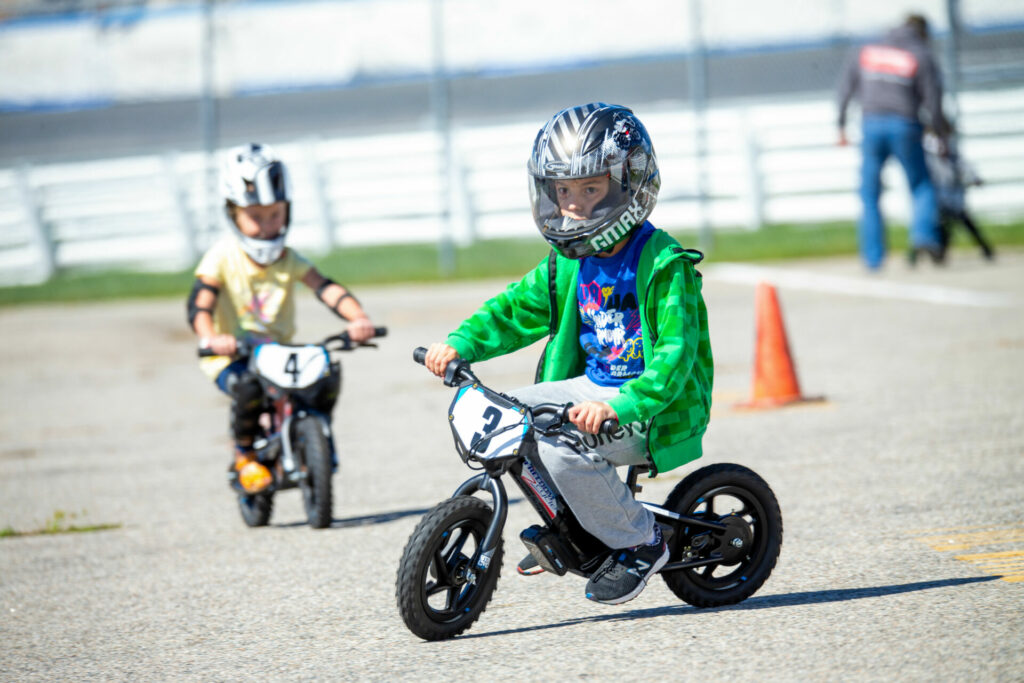
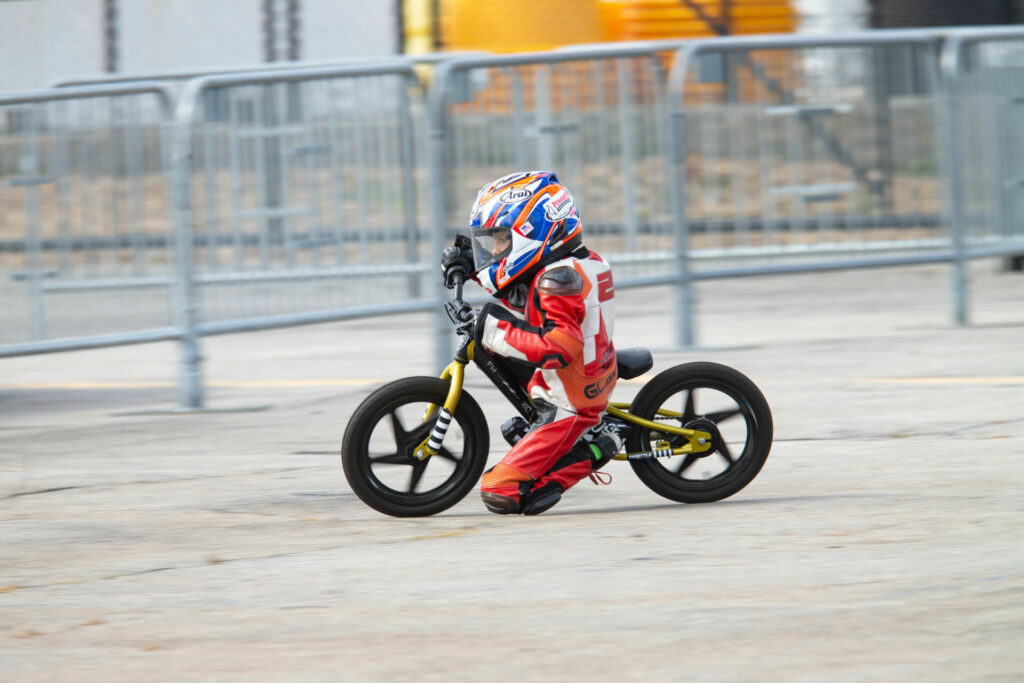
NEMRR provides helmets for children to wear while riding the StaCycs. Photo by Sam Draiss, courtesy NEMRR.
Initially, NEMRR was running just one, 1.5-hour session on one day of its race weekends and, based on demand, that quickly expanded to two sessions on one day of each race event. In 2023, the program will expand again to two days each weekend, giving more young people a chance to start riding.
There’s no fee or advanced registration required. The kids only need to wear long pants, a parent needs to sign the release waiver, and then it’s first-come, first-served.
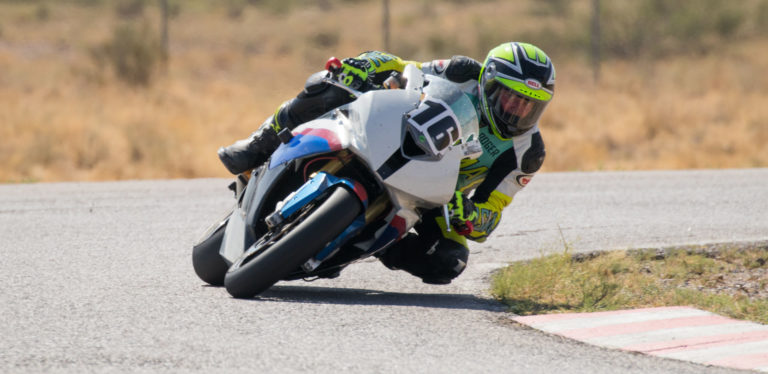
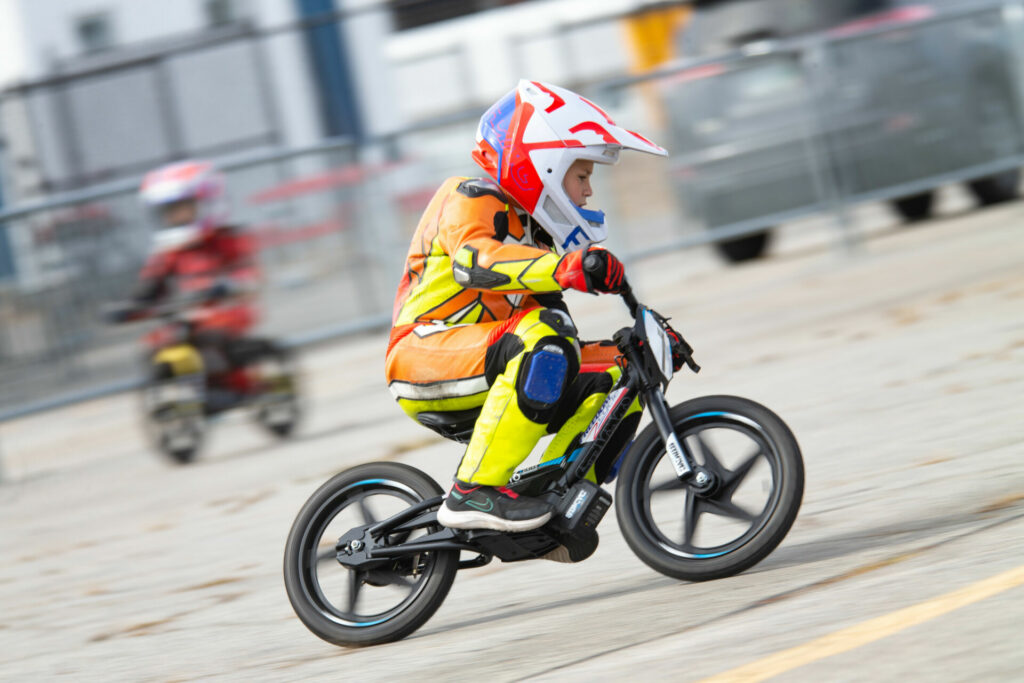
A kid wearing leathers at speed on a StaCyc electric balance bike. Photo by Sam Draiss, courtesy NEMRR.
“We provide helmets and knee and elbow pads and the StaCyc,” said Grush.
NEMRR currently does not have a youth-based mini road racing element to its club. So, what happens when the children or their parents inquire about getting involved with racing?
“We work with [NEMRR racer] Sergio Di Molfetta and he has a [mini] racing series with 50cc and up bikes on courses in parking lots. We steer them to that program,” said Grush. “Sergio actually volunteers his time to supervise and give the kids instruction.”
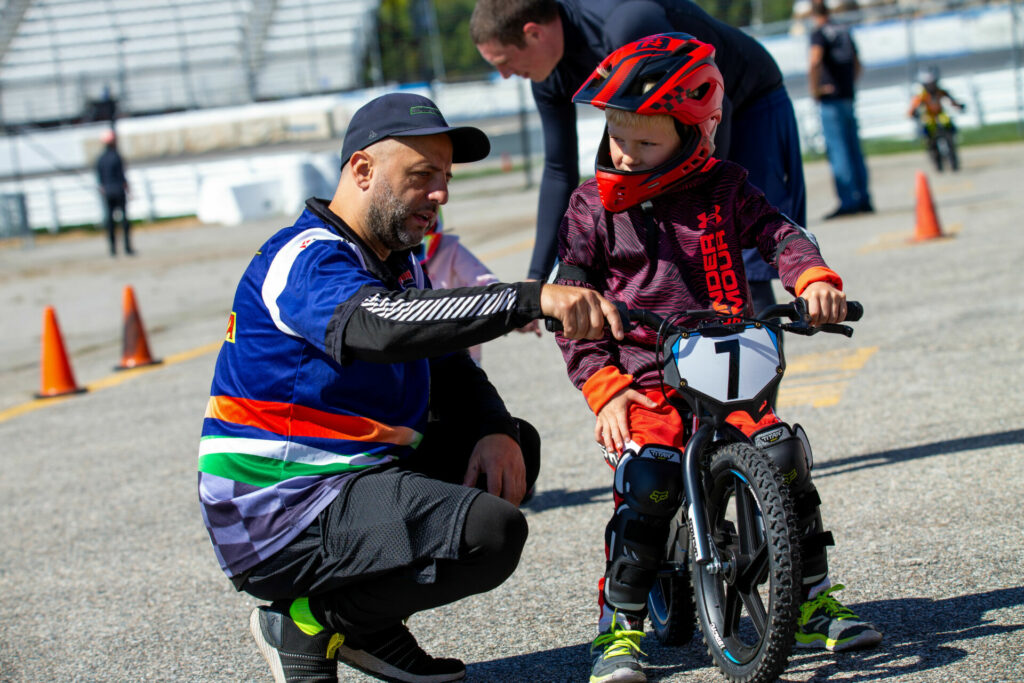
In addition to safety gear and the StaCycs, NEMRR provides volunteers to offer supervision and some instruction to riders. Here, NEMRR racer Sergio Di Molfetta works with a young rider. Photo by Sam Draiss, courtesy NEMRR.
“We Start With A Different Mentality Than This Year…”
Honda’s Iker Lecuona And Xavi Vierge Talk 2023 WorldSBK Season
by Michael Gougis
On the eve of the WorldSBK winter test at Jerez, Honda’s factory racers Iker Lecuona and Xavi Vierge told the international media that, with new concessions in hand and a year of experience on the fast but challenging CBR1000RR-R, they fully expected to be fighting for better results in 2023 than they had in 2022.
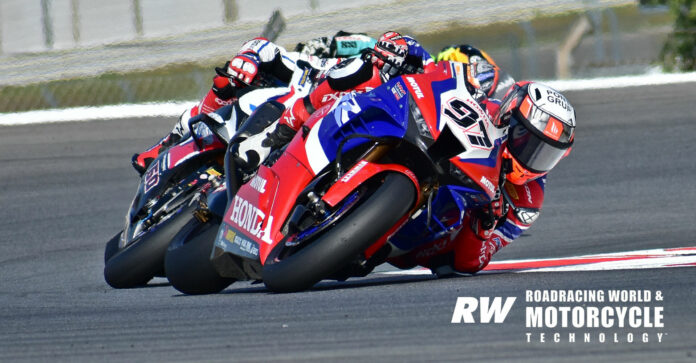
“We have a lot of data (now), and we see the potential we have,” said Vierge, the former Moto2 World Championship podium finisher who has just completed his first season on the factory HRC Superbike team.
“For sure, we start with a different mentality than this year. We have potential. We start with the mentality that we can fight for the podium if everything is right,” echoed Lecuona, who raced three seasons in MotoGP on KTM’s satellite Tech3 squad before joining Honda’s WorldSBK team in 2022.
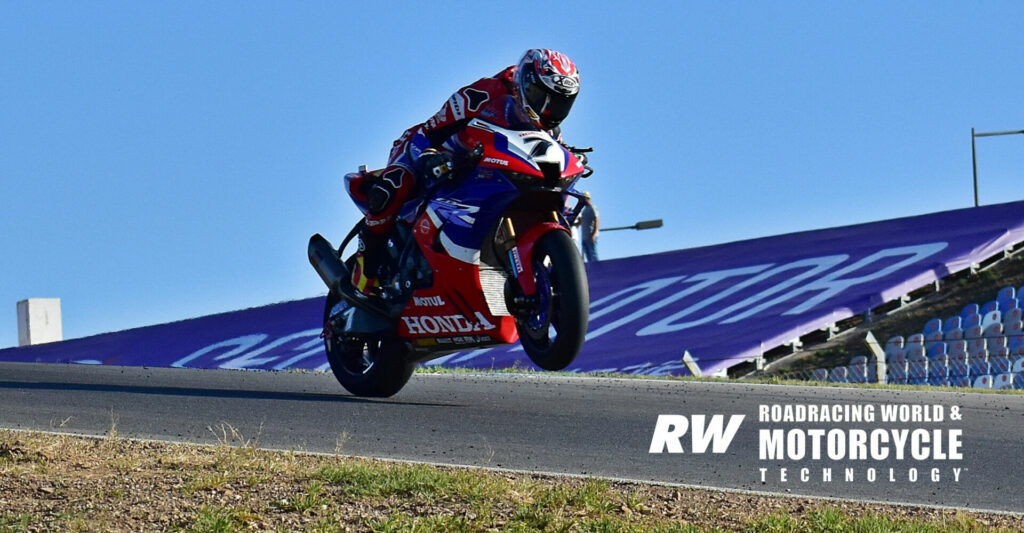
Iker Lecuona (7) wheelies over the crest of a hill at Algarve International Circuit on his factory HRC Honda CBR1000RR-R. Photo by Michael Gougis.
Lecuona scored the factory team’s only podium and its one pole position in 2022. That has to be placed in perspective: The team fielded two riders that were not only new to Honda, but to WorldSBK, and both struggled with injuries at different points in the season. Still, it was not the season Honda wanted.
Worse was that former HRC factory rider Alvaro Bautista, who scored only three podiums on his Honda in 2020 and 2021, returned to the factory Ducati team in 2022, went straight back to the front of the field, and took his first Superbike World Championship. It was hard to avoid drawing the conclusion that the weak component of the Bautista-Honda combination was the bike, not the rider.
In an attempt to create more competitive racing, WorldSBK regulations allow different manufacturers different specifications and concessions. Engine rev limits and chassis adjustments are different from manufacturer to manufacturer, and the series is considering imposing a minimum combined rider/machine weight limit.
For 2022, Honda is one of the beneficiaries of the new “superconcessions” regulations, and Vierge says the increased parameters of chassis adjustments will help the team get the most from its CBR1000RR-R.
While the machine is very quick in a straight line, there are areas where the Honda struggles. A lack of rear grip at the end of races costs the HRC riders acceleration out of corners, Vierge says, and the last phase of braking into the corners needs improvement, because what the Honda riders are losing in acceleration they are trying to make up on the brakes.
Vierge says the increased ability to adjust swingarm pivot and steering geometry should help the team make better use of the series’ spec Pirelli tires.
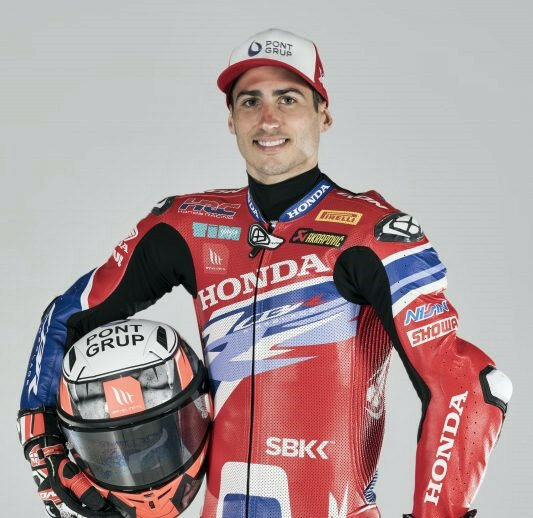
Xavi Vierge. Photo courtesy Honda.
“For sure, superconcessions will help us. It will help us have an easier life,” Vierge says.
Without that assistance, Lecuona says, the Honda requires its riders to try to force the machine to do things it doesn’t want to do, with predictable results.
“You need to fight with the bike to go fast. Many crashes,” Lecuona says. “We have many new parts. I don’t know what we need to try in the test, but we are 100 percent ready to fight.”
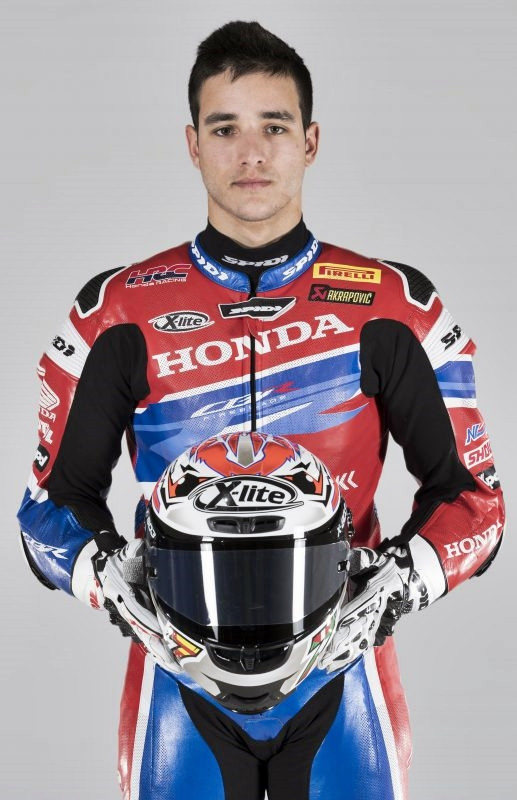
Iker Lecuona. Photo courtesy Honda.
Vierge says the Honda’s struggles begin when the rear tire starts to wear during races.
“We struggle a bit more than the rest to stop the bike in the last part of the corner, so we push more the tire, and then we never can pick up the bike to find the perfect drive. To go like the others, we need to use much more the tire,” Vierge says. “We lose on acceleration, we are trying to make up that time (in braking). At the beginning of the races, with the new tire, we are able to be there, let’s say. But…after the moment the tire drops we cannot continue pushing at the same level. The crashes arrive.”
Vierge’s comments echoed that of Honda’s Marc Marquez, who said after the first post-season test that he was struggling to get the RC213V stopped during the last phase of braking.
Both Honda WorldSBK riders said the idea of a minimum combined rider/machine weight had positives and negatives, and Vierge added that such a regulation would be difficult to implement in a way that impacts all riders and teams equally.
“About the minimum weight, it is difficult to say. In our box, Iker (Lecuona) is much more heavy than me. For sure he has some benefits, but also some positives for myself. Of course, my bike is much faster on the straight, but then I am not able to use the rear grip like he (can). I was always struggling with the grip,” Vierge says.
“It’s difficult. If they put the (combined) minimum weight, I will not have the advantage of the straight, let’s say, but I will continue having the disadvantage of not using the rear grip, so…it’s not easy to be fair to everyone. In…areas like MotoGP and Superbike, it is really difficult to find the correct compromise. If you move something, you will penalize someone or another one. If you are really small, you are not able to change nothing to win race. If you are big, it will be much more tough than another person, but you can make different training. It’s not easy. I can understand both parts.”
While the team has the “superconcessions” to work with for 2023, testing is limited and time is short, so HRC’s challenge is to find the ideal settings among a bigger range of possibilities in the time that it has before the season starts, Vierge says.
“Honda is Honda, and for sure we will be back fighting for wins,” Vierge says.
2021 MotoGP World Champion Fabio Quartararo suffered a bone fracture in his left hand when he crashed while riding motocross on Sunday, December 11.
Quartararo reported the incident himself via social media, stating, “Yesterday I had a crash during my motocross training and I suffer a little fracture on my left hand. No surgery needed, time to recover.”
With MotoGP currently in the holiday season testing moratorium, Quartararo’s next on-track appearance isn’t until the official MotoGP pre-season test at Sepang February 10-12, 2023.
ASBK Returns to The Bend Motorsport Park in 2023 for the Grand Finale
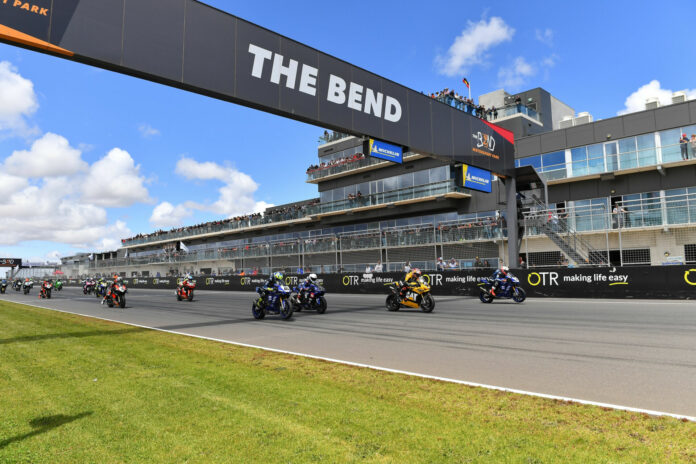
In 2023, the mi-bike Motorcycle Insurance Australian Superbike Championship presented by Motul (ASBK) is returning to The Bend Motorsport Park for the final round of the season, in what is fast becoming not only a tradition but a must-see event.
The finale of season 2023 will be Round 7 of the ASBK Championship at The Bend Motorsport Park and will be held from the 1st to the 3rd December 2023. This date has been carefully selected to provide an opportunity for international riders to once again return to Australia to battle it out with the ASBK’s fastest riders.
In recent years, The Bend Motorsport Park round of ASBK has broken records for both spectator attendance and viewing numbers on social media, ASBK livestream, and live TV audiences; all of whom will be keen to catch the action from The Bend Motorsport Park.
The presence of Jack Miller in ’21 and ‘22 has played a massive role in increasing awareness of the ASBK Championship and its world class racing. In 2022, Jack returned alongside teammates Josh Hook, German racer Marcel Shrötter and Harrison Voight, with the event also drawing an ever-expanding line-up of strong internationally-based Australian racers like Joel Kelso, Harrison Voight, Senna Agius and Billy McConnell who returned for wildcard rides at ASBK’s Grand Finale.
Peter Doyle, CEO of Motorcycling Australia: “The Bend Motorsport Park event in 2023 is going to be a logical extension of the success the event has enjoyed over the last two years.
“We’ve seen this event blossom into a must-see, must-do event with large crowds and rider numbers. The challenging International Circuit layout lends itself to fantastic racing and the facilities are truly international standard.
“Wrapping up the season at The Bend Motorsport Park is the perfect way to complete what will surely be another great season of ASBK…”
The Bend Motorsport Park Managing Director, Sam Shahin: “Judging by the level of participation and attendance at this year’s ASBK round at The Bend, the future of motorcycle racing is very bright in Australia.
“Rarely have I seen a more enthusiastic and knowledgeable crowd. It also must be said that the quality of ASBK racing was just unbelievable; every category from Oceania Junior Cup all the way to Superbikes was phenomenal.
“We knew we’ve built a spectacular racetrack, but I must say, motorcycle racing at The Bend is epic.”
The Bend Motorsport Park will host the ASBK Grand Finale in 2023, and once again on the Sunday night after the final races have been run and won, The Bend will also host the ASBK Night of Champions to honour and applaud the ASBK Champions of season 2023.
For more information on the event, stay tuned to the ASBK website and social pages.
New season, new look: Team Bolliger Switzerland reveals 2023 EWC line-up
Team Bolliger Switzerland has revealed its line-up for the 2023 FIM Endurance World Championship with a top-five overall finish once again the goal for the Kawasaki-powered squad.
Austrian Nico Thöni, 27, will form part of the Team Bolliger Switzerland attack for a second season, while Swiss Marcel Brenner joins on a full-time basis having contested the 12 Hours of Estoril in 2021 on the outfit’s #8 Formula EWC category entry. German Patrick Hobelsberger, a frontrunner in the FIM Supersport World Championship and an IDM title winner in the past, will complete the Team Bolliger Switzerland line-up for what will be his first experience of racing around the clock.
Brenner, 25, and Hobelsberger, 26, replace Jan Bühn and Jesper Pellijeff, who depart Team Bolliger Switzerland with the best wishes of Team Manager Kevin Bolliger.
“Like Jan and Jesper, Nico did a really good job in 2022, and we are very pleased to keep him in our team,” said Kevin Bolliger. “When he’s in the flow he can reach a good lap time in qualifying and he’s also really fast when it’s raining. He showed me during the 2022 season that he’s really motivated to do endurance racing. He was really open-minded to change his personal preparation and that showed me that he really wants to achieve his goals with us.
“Marcel is a young rider from World Supersport who did the 12 Hours of Estoril with our team in 2021. He was meant to do this year’s Bol d’Or with us but crashed in the World Supersport event at Magny-Cours and broke his hand so wasn’t able to ride. He’s never done a 24-hour race before and now he has three big ones calling for him. But he’s really excited and really curious about what is coming for him. He’s strong and fast and it’s really important for us to have a Swiss guy in our team.
“Patrick is new to endurance racing but had some strong races with Kallio Racing in World Supersport. However, he hurt his elbow when he crashed hard last season, but he’s signed for a team to do the German Superbike Championship and has also signed for us for EWC and we’re very happy to have him in our team. We also have three German-speaking riders now and this for sure will help with the communication.”
Of the departing Jan Bühn and Jesper Pellijeff, Bolliger said: “Jesper would like to put more focus on sprint races, but I know if I need a rider, I am always allowed to call him, that’s what he told me. I really hope Jan finds a good saddle in the EWC paddock because he’s one of the most experienced riders, he’s really consistent and he’s really good. I really appreciated the time with him in our team, it was really nice, but we decided to make a change although everything is fine between us.”
Heading its 42nd season in the EWC as the championship’s only ever-present entrant, the team founded by former racer Hanspeter Bolliger in 1982 but now managed by his son Kevin, is one of the championship’s leading privateer outfits. It placed seventh in the final EWC standings in 2022 and finished a fine third in the classification for independent teams.
“The top five will be the goal in 2023,” Bolliger continued. “I know it’s a big goal against all these top teams. We have made some other changes in the team and with some suppliers, but we keep these changes a secret for now because we don’t like to play with fully open cards. But if we can be consistent like I know we can and with the package we have I am pretty sure we can achieve a lot and with these riders. I am curious about the upcoming season and look forward to getting started.”
The 2023 FIM Endurance World Championship totals four events and gets underway with the 24 Heures Motos at Le Mans in France from 13-16 April.
Suzuki’s Long-Haul Sport-Tourer (As Originally Seen In The September 2022 Print Issue)
By Michael Gougis
I should have been terrified, but being young and dumb blinds you to things. Case in point: Getting caught in a freezing rainstorm on the Grapevine, a mountain pass connecting Central and Southern California, coming back from one of my first long motorcycle rides. Soaked to the bone, riding a decrepit Honda CB550 with bald tires and a chain and sprocket well past their recycle-bin due date, I was riding on the shoulder, watching semi-trailer rigs splash and slide their way past on my left. There were plenty of ways to die in that moment, and I look back and just shake my head.
I was thinking about that ride on my way to Vancouver, British Columbia, Canada on Suzuki’s sport-touring 2022 GSX-S1000GT+. Getting caught in a downpour in downtown Portland during morning rush hour brought back those memories—the rain dumped down so hard that visibility was nearly nonexistent. I focused on the less-soaked tire tracks left behind by cars, aiming precisely at the center of the left tire’s narrow footprint and focusing on the taillights of the car ahead.
The reason I thought about that earlier ride was the difference between then and what I was experiencing at that moment in Portland. It wasn’t just attire, although an electric vest and a water-resistant, fully armored textile suit meant that I was dry and avoided DCGS (Damp Cold Groin Syndrome).
When the hard rain started, I hit the buttons on the handlebars of the GSX-S, turned the traction control all the way up, and switched to the softest power mode. ABS was already functioning. It would have been difficult to do something with the throttle or brakes that would have caused me to lose traction and fall. So all I had to do was stay on my line, watch the distance to the car in front of me, and ride through the squall. I thought, instead of being soaked, freezing and terrified, I’m mildly annoyed. Irritated that Nature was raining on me, in the Pacific Northwest, of all places!
A good sport-touring motorcycle invites heading for destinations far, far away and delivers the confidence that it can handle anything that happens along the way. Suzuki engineers reoriented and retuned the GSX-S1000F model to expand its touring capabilities and pass new emission standards, adding new ride-by-wire throttle control, electronic rider aids, clutchless shifting, cruise control, a new fairing and hard luggage. And the marketeers renamed it the GSX-S1000GT+.
The sporting capabilities of the prior bike had been solid, albeit weak in the suspension and throttle response. Suzuki upgraded those areas for 2022, but the cargo capacity and cruise control begged to be put to the test. It is an elemental distance machine, a stripper in the world of tourers, squarely in the minimalist, sporty end of the sport-touring segment.
So at 5:27 a.m. one morning, I pulled on my helmet, closed the garage door, jumped on the freeway at the very eastern edge of Los Angeles County and aimed for the Canadian border.
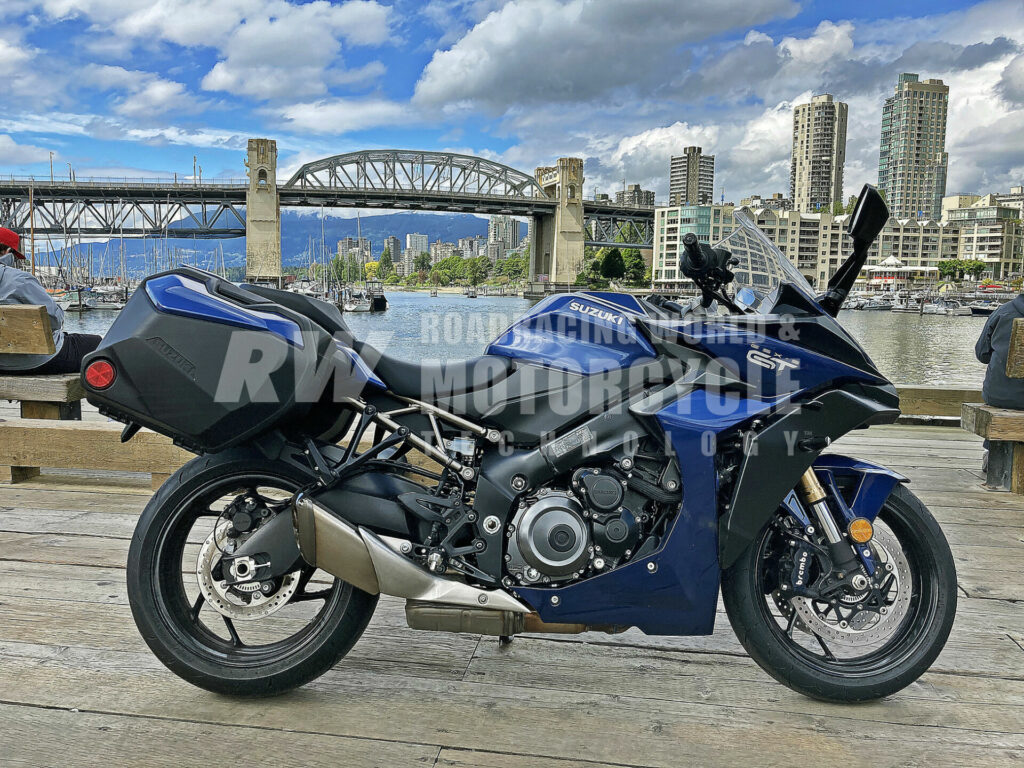
The GSX-S1000GT+ about 1,200 miles north, overlooking False Creek on Canada’s Granville Island with Vancouver in the background. Photo by Michael Gougis.
Tech Briefing
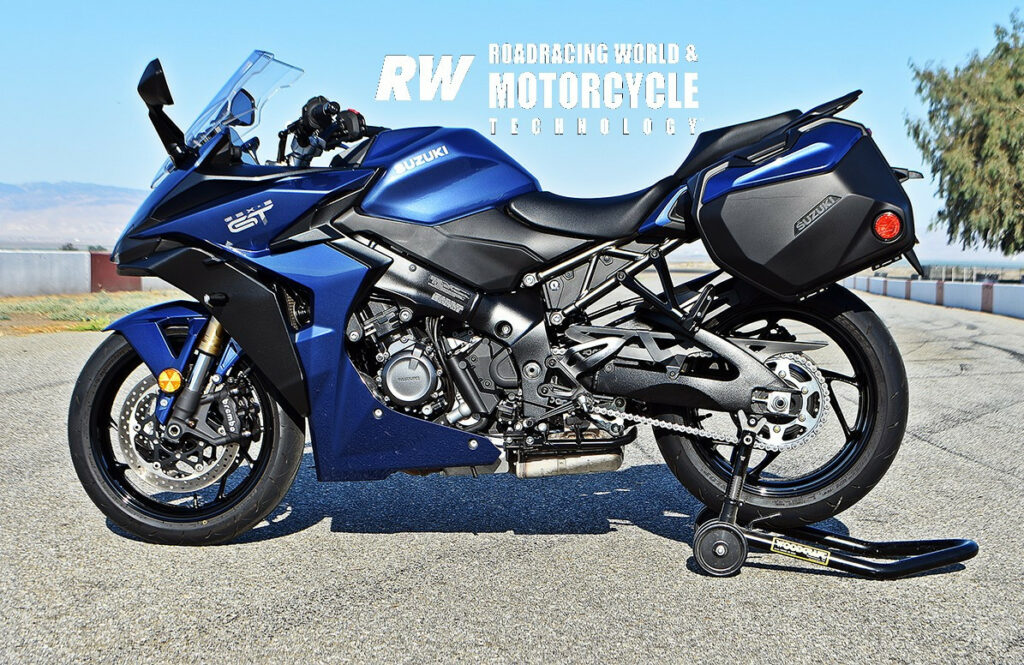
Suzuki is making the most of its overhaul of the GSX-S1000 lineup for 2022. Like a chef working from a shelf with only a few spices, Suzuki engineers mixed and matched components, trying to come up with different dishes from a few stock ingredients. Note that the hexagonal LED headlights from the GSX-S1000 naked bike (or ones that are nearly identical) make an appearance in the nose of the GT.
Fortunately, the basic ingredients are good. The engine is the same as used in the new-for-2022 GSX-S1000, an updated version of the 2005-era GSX-R1000 longer-stroke design with a 73.4mm bore and 59mm stroke. New cams, valve springs, cam chain tensioner and cam chain adjuster make up the major internal changes, and this bike shares the naked bike’s new 40mm throttle bodies with 10-hole injectors in each. A new 4-2-1 stainless-steel exhaust has an internal butterfly valve to reduce noise, and since the noise and emissions-reduction equipment is located under the engine, offers the rider the option of replacing the silencer with an approved aftermarket muffler and still meeting the regulations.
Suzuki says the GT model’s powertrain is identical to the one used for the naked bike, and runs on two Dynojet dynomometers bears that out. The naked bike produced 133.09 bhp on the dyno at Mickey Cohen Motorsports (1961 E. Miraloma Ave., Unit B, Placentia, CA 92870, 714-993-5000, www.cohenmotorsports.com). The GT registered 133.69 bhp on the dyno at ChaChaCha Motorsports (393 W. La Cadena Dr. #8, Riverside, CA 92501, 909-684-4600, www.chachachamotorsports.com). That’s a difference of less than ½%.
The transmission has a new assisted slipper clutch and a new clutchless quickshifter for both directions. The new ride-by-wire system is the rider’s main point of interaction with the Suzuki Intelligent Ride System (SIRS), which features the Suzuki Drive Mode Selector (SDMS) with three power modes—Active, Basic and Comfort—and a five-level Suzuki Traction Control System. There’s a low rpm assist system to help prevent stalling when pulling away from a stop, and the machine will start without the clutch lever disengaged if it’s in neutral.
The twin-spar aluminum-alloy frame shares design and dimensions with the GSX-S1000F, the prior faired “comfort” sportbike in Suzuki’s lineup. An older GSX-R1000 swingarm is mated to a single KYB shock adjustable for rebound damping and preload only, with revised valving and spring rates. Because the bike is expected to see two-up use on a regular basis, the GT models have a bespoke subframe and a thicker passenger seat. Front suspension is handled by 43mm KYB inverted forks, adjustable for rebound and compression damping, plus spring preload.
Six-spoke cast aluminum–alloy wheels carry a 190/50ZR-17 Dunlop Roadsport 2 radial at the rear and a 120/70ZR-17 at the front. The ABS brake system operates through four-piston Brembo calipers mated to 310mm (about 12.2-inch) discs at the front and a single 240mm (about 9.5-inch) disc at the rear. New handlebars are wider and closer to the rider, fuel capacity is up to 5.0 gallons, and the rider seat is a touch lower and redesigned as well for greater comfort. Details reflect the motorcycle’s intended mission. The footpegs have rubber inserts where the boots touch. The handlebar is rubber-mounted. Just ahead of that handlebar is a new Thin-Film Transistor (TFT) screen with smart-phone connectivity. Next to that is a power outlet.
The biggest changes from the previous, GSX-S1000F model, are visual. Nearly everyone wanted to call that bike a sport-tourer, so it seems like Suzuki marketeers and engineers threw up their hands and said, “Fine! We’ll make it a sport-tourer.” The new wind-tunnel-designed fairing is all angles and sharp lines, with a hint of MotoGP-inspired winglets thrown in as well. It’s either cutting-edge modern or an homage to the 1980 Craig Vetter Mystery Ship, depending on how you look at it. Honestly, the GT+ sort of reminded me of the way a whole generation went sport-touring back in the day (before people used the term, “back in the day”); they bought Vetter fairings and hard saddlebags, bolted them on to some of the highest-performing bikes available in the showrooms, and chased horizons. It’s like Suzuki took its roadster GSX-S and gave it the Vetter fairing and saddlebag treatment. The “+” in the GT+ nomenclature refers to the inclusion of the 25.7-liter hard bags. An optional higher windscreen is available, also sculpted in the wind tunnel, for those who prefer a larger still-air pocket while riding. Both windscreens allow a controlled bleed of air under the leading edge and into the cockpit, balancing the aero forces on the rider.
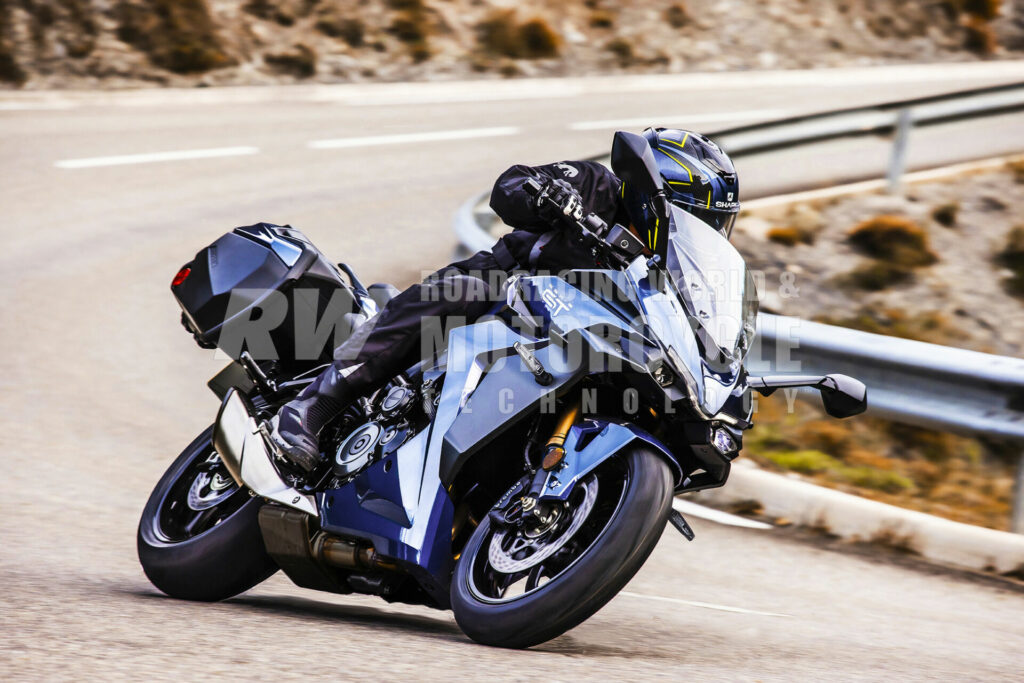
The Suzuki GSX-S1000GT+ at speed in Europe. Photo courtesy Suzuki.
Riding The GXS-S1000GT+
Roadracing World’s customer service admin nicknamed the bike Taylor, after singer Taylor Swift. That’s because when I first rode it to the office, I walked in and asked, “Who sang that song about knowing you were trouble when you first walked in?” From the first few miles I rode the GT+, I knew I was going to put some serious miles on it. With TC set at two and power setting in full party mode, the bike felt powerful, enthusiastic, and fully controllable. I suppose somebody could complain that with “only” 133 bhp pushing 527 lbs., the Suzuki GSX-S1000GT+ is not in the league of true supersport machines, and they’d be right. But there’s a lot to be said for a solid hit of torque from relatively low rpm; a smooth, featureless power curve; and snappy response to the throttle. I left the office with a full-face helmet in one of the saddlebags, confirming that they were spacious and easy to use.
I did a pair of 800-mile days in a week on the bike and followed each of those with 400-mile days. I went through hours of rain; mountain passes with temps down in the low 40s; 100-plus-degree afternoons accented with vicious side winds in the southern part of California; covered miles and miles of empty, straight four-lane Interstate; swept through huge, gentle, and fast corners in northern California and southern Oregon; and braved city traffic in Vancouver, where wandering geese are an ever-present threat. I rode in broad daylight, pitch black of night, and through bug swarms that looked like rain in the headlight beam.
The 2022 Suzuki GSX-S1000GT+ comes with spacious, easy-on-and-off hard luggage; more rearward, rubber-mounted bars; a lower seat; and a new fairing that has winglets and increased rider protection. Photo by Michael Gougis.
Here’s what got my attention:
I love this engine. Smooth and refined, like an antique piece of furniture that has been lovingly and expertly refinished again and again. It has the power to flatten mountains and pierce headwinds without exertion. Setting the cruise control at 85 mph and pouring on the gas when it came time to pass someone was just something that never got dull; the bike just leaps forward when the throttle is twisted. And even in this type of usage, it got 37 mpg or so, and drafting semi-trucks could bump the real-time mpg display up over 40 mpg for short periods.
The fairing really works for me. I’m about 5′ 10”, and the wind blast hit my shoulders and left my helmet in clean, unbuffeted air. It kept most of the rain off me, and eliminated a great deal of the fatigue that goes along with covering long stretches of road.
The dash lacks some of the features of its competitors (most specifically the Ninja 1000), but the electronic rider aids are simple enough to toggle through. The cruise control holds the vehicle’s speed steady enough, but it’s not as sophisticated as I’ve seen on other brands. Trying to trim off one or two mph made the system feel like it was disengaging fully with the bike decelerating rapidly, as if all power had suddenly been cut. I learned to put my hand on the throttle, feed in a bit of gas from steady-state cruise control operation and disengage cruise by tapping the rear brake pedal. While I’m whining about this merely “adequate” digital cruise control—talk about a first-world problem!—a bike with hard bags that is marketed as a GT machine really needs heated grips.
The seat/bar/footpeg configuration seems perfect for long rides, although I might go for bars that were lower and further forward if I were to use this thing for more sporting rides than long tours. Butt pain was minimal to nonexistent, vibration wasn’t an issue, and the size of the bike wasn’t overwhelming, even in a city setting. It felt nice to have a long-distance machine that delivered feedback more like a sportbike than a cruiser—I felt connected to the motorcycle and the road. And afterwards, really the only pain I felt was in a spot on my back where I was injured in a car wreck decades ago—and it hurts during short rides on some bikes!
A lot of the comfort came from Suzuki and KYB engineers tweaking the suspension settings. The GSX-S1000F, as mentioned, was a wonderful concept let down by a shock that seemed to come out of the reject pile at a bargain shock factory. The new suspension is So. Much. Better.
Things were still a bit vague if I just kind of eased the bike into a corner, but when I dialed in more damping at the rear and then threw the bike over with authority and confidence, it responded with stability and precision. And this version no longer beat me up on the freeway or city streets.
I’m still in the kind of shape where taking a GSX-R1000 from LA to Laguna and back doesn’t faze me. So I wanted to put the GSX-S1000GT+ to the sort of test that I wouldn’t necessarily want to do on a full-blooded sportbike. The bike behaved flawlessly, handled well, rode comfortably, and did everything I wanted it to do—which was haul ass for a long distance and get up and do it again the next day. Compared to its closest competitor, the Ninja 1000, the Suzuki is a bit less sophisticated in the dash, a little more raw. But it’s also about 12 horsepower stronger, about 14 pounds lighter, and the chassis feels stiffer and more connected to the pavement. The Yamaha Tracer 9 GT is another potential competitor, with active suspension, an excellent chassis, and very nice heated grips. But it’s down about 25 horsepower to the Suzuki, and its lighter weight can’t make up the difference.
In the sport-touring universe, the GSX-S1000GT+ is relatively light, powerful, solid, and comfortable. A good sport-touring bike is a balanced compromise, and in this case, after a long courtship, it feels like Suzuki engineers got the recipe almost perfect for me.
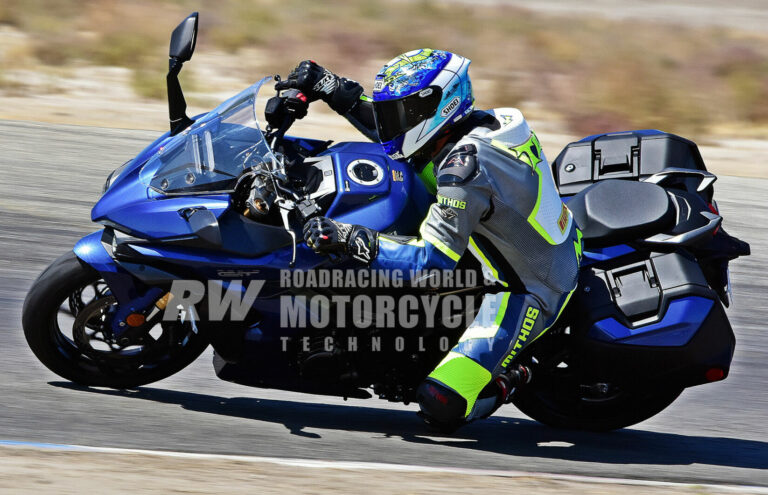
Racer Jeremy Toye and the Suzuki GSX-S1000GT+ on track at Buttonwillow Raceway Park. Photo by Michael Gougis.
Riding On The Track
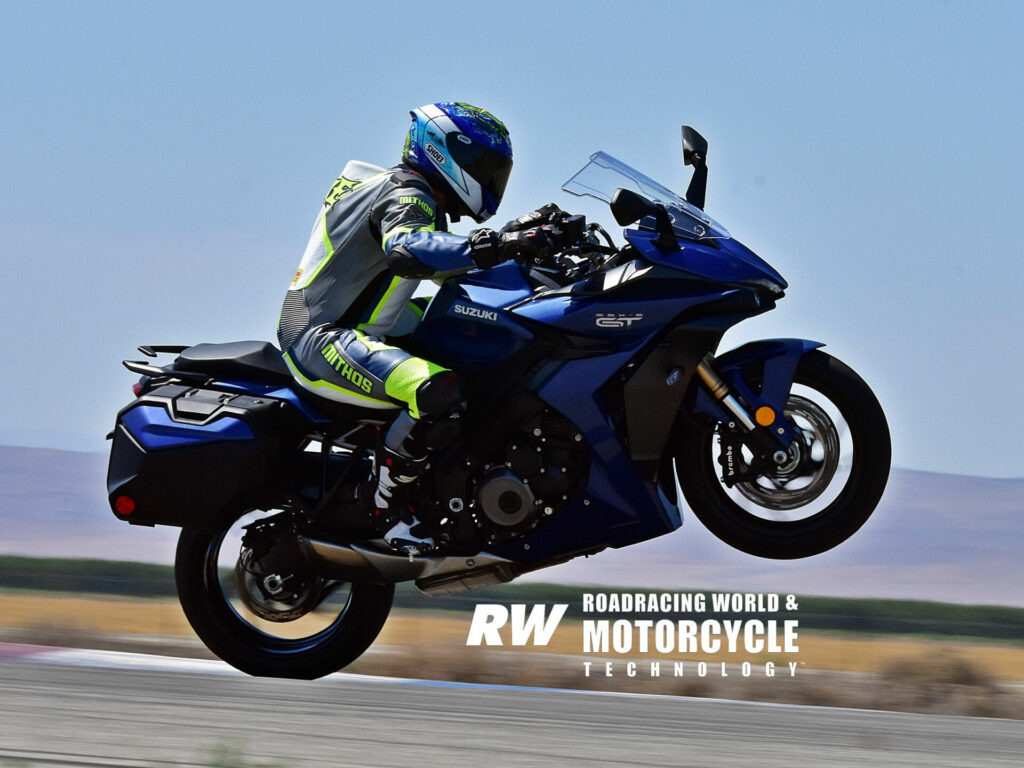
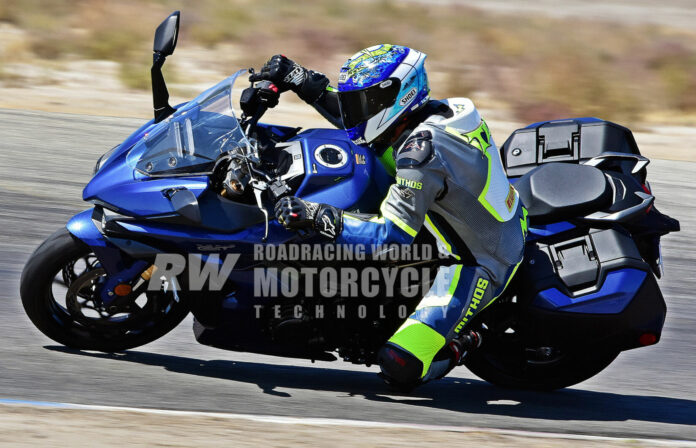
Long-time Pro racer Jeremy Toye spent a hot summer morning ripping the GSX-S1000GT+ around the 3.0-mile circuit at Buttonwillow Raceway Park. While machines with saddlebags are not his typical choice for track use, Toye still found plenty of positive things to say about the sportbike in touring clothes.
“It gets the job done, it really does. The biggest drawback is the suspension. It’s really soft. But I was putting load into the shock before I would get to the corner, and that way it didn’t lock up or hit the limits of the linkage. And honestly, the chassis is so good that it makes up for a lot of the suspension behavior. I could really put a lot of force into the front end, and I can tell the geometry is kind of raked out, but it still works. Brakes were good, power was good for what it is, even the tires were not bad – I had fun.”
Toye isn’t the kind of rider who just hangs around, no matter what the machine. There are bumps in the final corner of Buttonwillow that some refer to as a launch ramp. Other riders slow down. Toye described his approach to the corner as “apex early, get the thing upright, and when it jumped up I could hear the forks top out as the front end came off the ground.”
And although it isn’t a cutting-edge sportbike, Toye still found that on the racetrack, Suzuki’s approach of using tried and tested components, refined over years, paid off with a bike that kept its composure in an environment well wide of its design brief.
Specifications: 2022 Suzuki GSX-S1000GT+
Engine Configuration: Four-stroke Inline-4
Engine Displacement: 999cc
Engine Cooling: Liquid
Compression Ratio: 12.2:1
Combustion Chamber Design: Pentroof
Valves Per Cylinder: 4
Intake Valves Per Cylinder (Material): 2 (Steel)
Exhaust Valves Per Cylinder (Material): 2 (Steel)
Bore and Stroke: 73.4mm x 59.0mm
Connecting Rod Length (center-to-center): 4.5 inches (111mm)
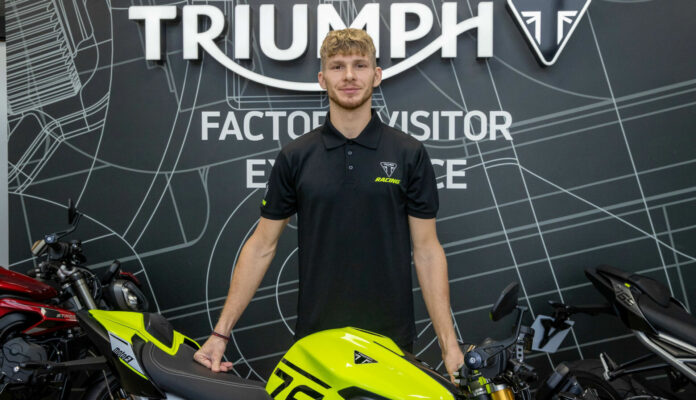
NIKI TUULI JOINS TRUELOVE AT DYNAVOLT TRIUMPH FOR 2023
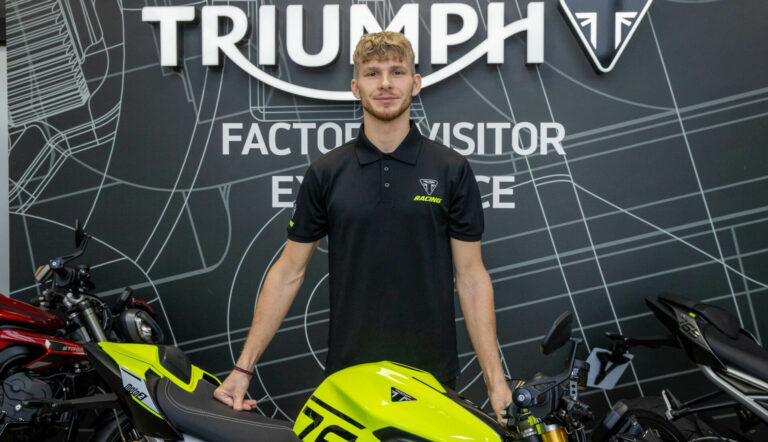
Dynavolt Triumph are pleased to confirm that Niki Tuuli will join Harry Truelove to complete the team line-up in the 2023 FIM Supersport World Championship.
Finland’s Tuuli erupted onto the World Supersport scene in 2016 with just three races in his debut, showing his huge potential. 2017 saw the Nordic racer return to World Supersport as a permanent rider with Kallio Racing for his first full campaign in the class. Tuuli began 2018 in World Supersport with PTR Racing before he moved over to Moto2™ where he scored his first point before the end of the year.
Two seasons in MotoE™ followed where he finished sixth in the 2020 championship before he returned to the World Supersport category for 2021 and 2022 with MV Augusta, delivering the brand’s first victory since 2017 in Indonesia last month.
Niki Tuuli: “I am really, really happy that I can continue in the World Championship. I think I have a lot more to give than I have given until this moment. I am really interested and super happy to join this new project with Triumph. I think they showed really good potential this year, even in their first year they made a really good result and I think that tells a lot about what the team can do and what the bike is capable of. I cannot wait to start the year with the new bike. I am feeling really good and relaxed when I’m thinking about next year. I’m happy to be staying with the three-cylinder bike, I think it fits my riding style really well. So the expectations are I’m looking to make a really good job, I think it’s realistic to say that. In the end I want to say a huge thanks to Simon and Dynavolt Triumph, all my sponsors, my background they help me a lot and gave me this chance so I can’t wait to start the year and make the best job together.”
Dynavolt Triumph Team Manager Simon Buckmaster: “It’s good to bring Niki Tuuli back into the team, he rode for us back in 2018 and then had a chance to ride in Moto2 as there was then a proposed Finnish GP and he was a young Finnish rider. That didn’t work out as well for him and the GP didn’t happen. He’s been back in World Supersport and he’s taken time to get back to where his level of riding is. He missed some rounds this year with an injury when he lost some toes but he’s come back and been on good form. It’s good to have him back in the team, I think he’ll do a really good job and we all know each other so we should gel quickly. Coming off one three-cylinder machine to another, the adaption to the Dynavolt Triumph 765 RS Street Triple should be quite quick, which is good because we don’t have too much time for testing. I think he will work very well with Harry and they will be a really good team unit. So, we welcome Niki into the team and to the Triumph family for a title challenge in World Supersport. We can’t wait to get testing, let’s see what we can do.”
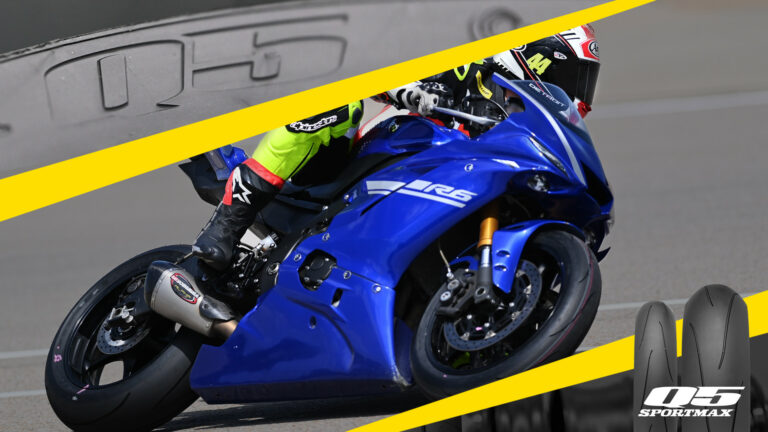
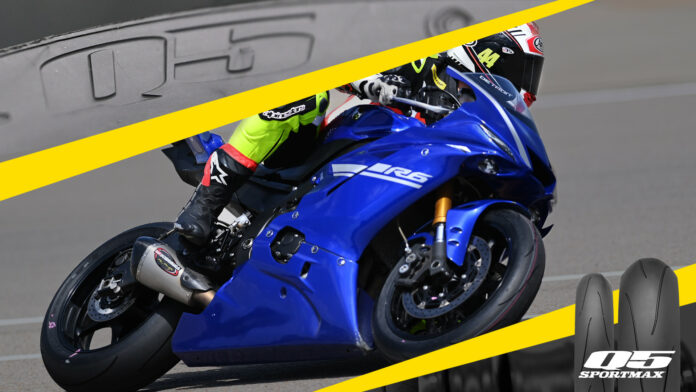
Dunlop is pleased to introduce the fifth generation of the Dunlop Sportmax family. The Dunlop Sportmax Q5 is a purpose-built, track-day tire that has been in the making for over 4 years. Evolving from a blend of the highly popular Sportmax Q4 and Dunlop’s cutting-edge MotoAmerica spec road race tires, the Q5 utilizes the very best technologies Dunlop has to offer for a track tire that is still street legal.
Having enhanced constructions, profiles, compounds and tread patterns, the Q5 is the new benchmark for track-day tires. The Q5 is even more user-friendly, as dry and wet grip, tire compliance, and warm-up times have all been improved.
Dunlop has also expanded the size range of the Q5 to include five additional sizes for increased bike fitments: 110/70ZR17, 140/70ZR17, 150/60ZR17, 160/60ZR17, and 200/60ZR17.
Key features of the all new Sportmax Q5:
Sharply defined new tread pattern with lower groove density puts more rubber on the ground at all lean angles
Optimized tread pattern design and position to aid in quicker warm-up times and improved wet-weather performance.
Street-friendly performance— Tire warmers are not necessary for track use.
Designed in five additional sizes for increased bike fitments: 110/70ZR17, 140/70ZR17, 150/60ZR17, 160/60ZR17, and 200/60ZR17.
The front and rear tire profiles have a taller and narrower profile to improve turn-in and compliance while increasing the footprint and grip at camber.
Front tire has reduced vertical stiffness to improve compliance and damping and increased lateral and longitudinal stiffness to improve braking and handling performance.
The 140/70ZR17, 180/60ZR17, 200/55ZR17, and 200/60ZR17 utilize the exact same profiles as the race spec tires developed for the MotoAmerica series.
The rear tires tread features Dunlop’s Jointless Tread (JLT) technology, the same process used in Dunlop’s racing slicks. JLT applies a continuously wound tread strip over the carcass to achieve the ideal stability, flex, and grip where it’s needed most across the tire’s tread profile.
Improved compound to enhance the dry grip by adjusting the compound formula. The culmination of these changes puts the rear tire compound much closer to a true race tire compound.
Dunlop’s proprietary Intuitive Response Profile (IRP) for ultra-linear and responsive steering.
Proudly made in Dunlop’s Buffalo, NY factory on the same proprietary equipment as their road race tires.
Availability:
The Sportmax Q5 will be sold through all Dunlop retailers, as well as race tire distributors, to be easily accessible to all street or track riders. Tires will be available in all channels beginning in November and December.
Barnett Clutches and Cables 75th Anniversary–1948-2023
Barnett Tool & Engineering is proud to announce that 2023 will be our 75th year of manufacturing the finest American made motorcycle clutches and cables! Since Charlie and Afton Barnett started out in a small storefront in Huntington Park, California in 1948, we have been producing clutches and control cables with direct-fit upgrade applications for just about everything on two wheels. From vintage bikes to the newest machines on the showroom floor– street to off-road and ATV’s and SXS’s–we have it covered! All Barnett products are made in-house and in the USA with top quality materials and cutting-edge technology. We also specialize in custom length cables, brake lines and specialized “one-off” cables for a wide variety of applications. We are the industry leader in custom cables made to order.
Charlie and Afton believed that in making performance motorcycle parts, they must be of the finest quality and that customer service and satisfaction must be second to none. Those beliefs run as deep today as they did 75 years ago. Still family owned and operated, Barnett products are still made in America by riders, for riders.
To read more about Barnett Tool & Engineering, a.k.a. Barnett Cables and Clutches, grab a September 2018 issue of Roadracing World & Motorcycle Technology or view the PDF copies of the article below.
Children enjoying free demo rides on StaCyc electric balance bikes at a NEMRR event. Photo by Sam Draiss, courtesy NEMRR.
By David Swarts
NorthEast Motorcycle Road Racing (NEMRR) has a program allowing children to test ride StaCyc electric balance bikes for free, and the program will continue at all 2023 NEWRR race events, including the 100th Loudon Classic on June 16-18, 2023.
The program started in 2022 when Freedom Cycle, a dealership located in Concord, New Hampshire, provided NEMRR with eight StaCyc electric balance bikes to offer demo rides to children.
Kids of varying skill levels riding StaCyc electric balance bikes while a volunteer works with another rider in the background. Photo by Sam Draiss, courtesy NEMRR.
“The idea was to get kids interested in riding,” NEMRR Executive Director John Grush told Roadracingworld.com. “We set up a little course with cones [in the paddock at New Hampshire Motor Speedway], gave them a little instruction and a lot of supervision, and set them loose, basically. It was pretty amazing to watch those kids progress from the beginning of the year to the end of the year. We had kids putting knee pucks on and dragging their knees on those things.”
NEMRR provides helmets for children to wear while riding the StaCycs. Photo by Sam Draiss, courtesy NEMRR.
Initially, NEMRR was running just one, 1.5-hour session on one day of its race weekends and, based on demand, that quickly expanded to two sessions on one day of each race event. In 2023, the program will expand again to two days each weekend, giving more young people a chance to start riding.
There’s no fee or advanced registration required. The kids only need to wear long pants, a parent needs to sign the release waiver, and then it’s first-come, first-served.
A kid wearing leathers at speed on a StaCyc electric balance bike. Photo by Sam Draiss, courtesy NEMRR.
“We provide helmets and knee and elbow pads and the StaCyc,” said Grush.
NEMRR currently does not have a youth-based mini road racing element to its club. So, what happens when the children or their parents inquire about getting involved with racing?
“We work with [NEMRR racer] Sergio Di Molfetta and he has a [mini] racing series with 50cc and up bikes on courses in parking lots. We steer them to that program,” said Grush. “Sergio actually volunteers his time to supervise and give the kids instruction.”
In addition to safety gear and the StaCycs, NEMRR provides volunteers to offer supervision and some instruction to riders. Here, NEMRR racer Sergio Di Molfetta works with a young rider. Photo by Sam Draiss, courtesy NEMRR.
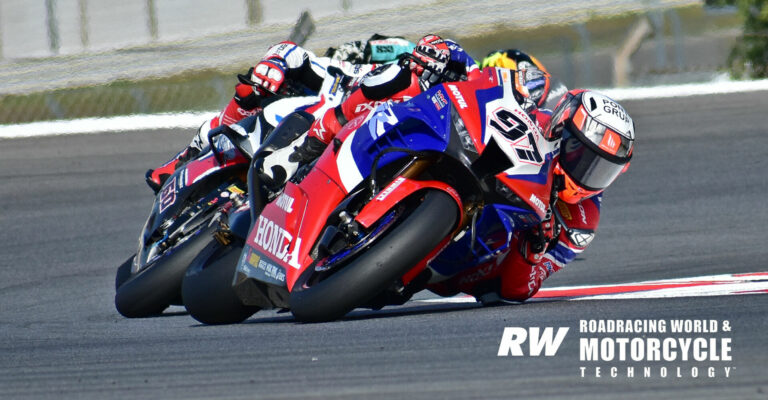
Xavi Vierge (97) in action at Algarve International Circuit in Portugal. Photo by Michael Gougis.
Copyright 2022, Roadracing World Publishing, Inc.
“We Start With A Different Mentality Than This Year…”
Honda’s Iker Lecuona And Xavi Vierge Talk 2023 WorldSBK Season
by Michael Gougis
On the eve of the WorldSBK winter test at Jerez, Honda’s factory racers Iker Lecuona and Xavi Vierge told the international media that, with new concessions in hand and a year of experience on the fast but challenging CBR1000RR-R, they fully expected to be fighting for better results in 2023 than they had in 2022.
“We have a lot of data (now), and we see the potential we have,” said Vierge, the former Moto2 World Championship podium finisher who has just completed his first season on the factory HRC Superbike team.
“For sure, we start with a different mentality than this year. We have potential. We start with the mentality that we can fight for the podium if everything is right,” echoed Lecuona, who raced three seasons in MotoGP on KTM’s satellite Tech3 squad before joining Honda’s WorldSBK team in 2022.
Iker Lecuona (7) wheelies over the crest of a hill at Algarve International Circuit on his factory HRC Honda CBR1000RR-R. Photo by Michael Gougis.
Lecuona scored the factory team’s only podium and its one pole position in 2022. That has to be placed in perspective: The team fielded two riders that were not only new to Honda, but to WorldSBK, and both struggled with injuries at different points in the season. Still, it was not the season Honda wanted.
Worse was that former HRC factory rider Alvaro Bautista, who scored only three podiums on his Honda in 2020 and 2021, returned to the factory Ducati team in 2022, went straight back to the front of the field, and took his first Superbike World Championship. It was hard to avoid drawing the conclusion that the weak component of the Bautista-Honda combination was the bike, not the rider.
In an attempt to create more competitive racing, WorldSBK regulations allow different manufacturers different specifications and concessions. Engine rev limits and chassis adjustments are different from manufacturer to manufacturer, and the series is considering imposing a minimum combined rider/machine weight limit.
For 2022, Honda is one of the beneficiaries of the new “superconcessions” regulations, and Vierge says the increased parameters of chassis adjustments will help the team get the most from its CBR1000RR-R.
While the machine is very quick in a straight line, there are areas where the Honda struggles. A lack of rear grip at the end of races costs the HRC riders acceleration out of corners, Vierge says, and the last phase of braking into the corners needs improvement, because what the Honda riders are losing in acceleration they are trying to make up on the brakes.
Vierge says the increased ability to adjust swingarm pivot and steering geometry should help the team make better use of the series’ spec Pirelli tires.
Xavi Vierge. Photo courtesy Honda.
“For sure, superconcessions will help us. It will help us have an easier life,” Vierge says.
Without that assistance, Lecuona says, the Honda requires its riders to try to force the machine to do things it doesn’t want to do, with predictable results.
“You need to fight with the bike to go fast. Many crashes,” Lecuona says. “We have many new parts. I don’t know what we need to try in the test, but we are 100 percent ready to fight.”
Iker Lecuona. Photo courtesy Honda.
Vierge says the Honda’s struggles begin when the rear tire starts to wear during races.
“We struggle a bit more than the rest to stop the bike in the last part of the corner, so we push more the tire, and then we never can pick up the bike to find the perfect drive. To go like the others, we need to use much more the tire,” Vierge says. “We lose on acceleration, we are trying to make up that time (in braking). At the beginning of the races, with the new tire, we are able to be there, let’s say. But…after the moment the tire drops we cannot continue pushing at the same level. The crashes arrive.”
Vierge’s comments echoed that of Honda’s Marc Marquez, who said after the first post-season test that he was struggling to get the RC213V stopped during the last phase of braking.
Both Honda WorldSBK riders said the idea of a minimum combined rider/machine weight had positives and negatives, and Vierge added that such a regulation would be difficult to implement in a way that impacts all riders and teams equally.
“About the minimum weight, it is difficult to say. In our box, Iker (Lecuona) is much more heavy than me. For sure he has some benefits, but also some positives for myself. Of course, my bike is much faster on the straight, but then I am not able to use the rear grip like he (can). I was always struggling with the grip,” Vierge says.
“It’s difficult. If they put the (combined) minimum weight, I will not have the advantage of the straight, let’s say, but I will continue having the disadvantage of not using the rear grip, so…it’s not easy to be fair to everyone. In…areas like MotoGP and Superbike, it is really difficult to find the correct compromise. If you move something, you will penalize someone or another one. If you are really small, you are not able to change nothing to win race. If you are big, it will be much more tough than another person, but you can make different training. It’s not easy. I can understand both parts.”
While the team has the “superconcessions” to work with for 2023, testing is limited and time is short, so HRC’s challenge is to find the ideal settings among a bigger range of possibilities in the time that it has before the season starts, Vierge says.
“Honda is Honda, and for sure we will be back fighting for wins,” Vierge says.
Fabio Quartararo with his freshly broken left hand. Photo courtesy Fabio Quartararo.
2021 MotoGP World Champion Fabio Quartararo suffered a bone fracture in his left hand when he crashed while riding motocross on Sunday, December 11.
Quartararo reported the incident himself via social media, stating, “Yesterday I had a crash during my motocross training and I suffer a little fracture on my left hand. No surgery needed, time to recover.”
With MotoGP currently in the holiday season testing moratorium, Quartararo’s next on-track appearance isn’t until the official MotoGP pre-season test at Sepang February 10-12, 2023.
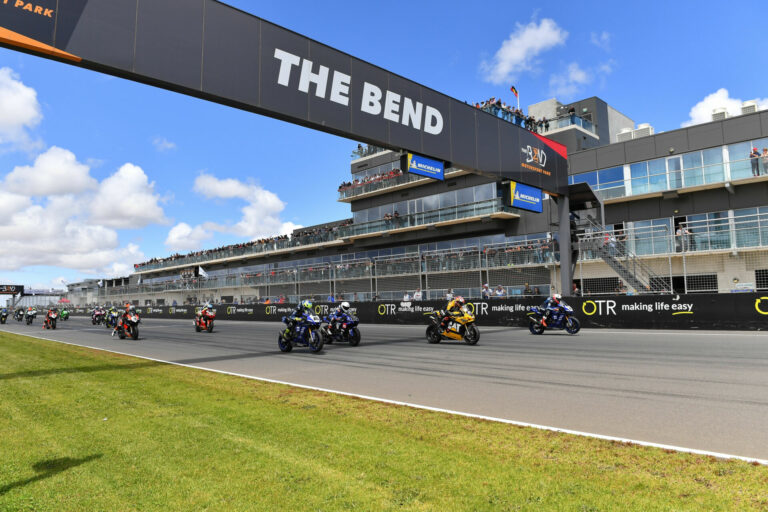
The start of Australian Superbike Race One during the 2022 season finale at The Bend Motorsport Park. Photo courtesy ASBK.
ASBK Returns to The Bend Motorsport Park in 2023 for the Grand Finale
In 2023, the mi-bike Motorcycle Insurance Australian Superbike Championship presented by Motul (ASBK) is returning to The Bend Motorsport Park for the final round of the season, in what is fast becoming not only a tradition but a must-see event.
The finale of season 2023 will be Round 7 of the ASBK Championship at The Bend Motorsport Park and will be held from the 1st to the 3rd December 2023. This date has been carefully selected to provide an opportunity for international riders to once again return to Australia to battle it out with the ASBK’s fastest riders.
In recent years, The Bend Motorsport Park round of ASBK has broken records for both spectator attendance and viewing numbers on social media, ASBK livestream, and live TV audiences; all of whom will be keen to catch the action from The Bend Motorsport Park.
The presence of Jack Miller in ’21 and ‘22 has played a massive role in increasing awareness of the ASBK Championship and its world class racing. In 2022, Jack returned alongside teammates Josh Hook, German racer Marcel Shrötter and Harrison Voight, with the event also drawing an ever-expanding line-up of strong internationally-based Australian racers like Joel Kelso, Harrison Voight, Senna Agius and Billy McConnell who returned for wildcard rides at ASBK’s Grand Finale.
Peter Doyle, CEO of Motorcycling Australia: “The Bend Motorsport Park event in 2023 is going to be a logical extension of the success the event has enjoyed over the last two years.
“We’ve seen this event blossom into a must-see, must-do event with large crowds and rider numbers. The challenging International Circuit layout lends itself to fantastic racing and the facilities are truly international standard.
“Wrapping up the season at The Bend Motorsport Park is the perfect way to complete what will surely be another great season of ASBK…”
The Bend Motorsport Park Managing Director, Sam Shahin: “Judging by the level of participation and attendance at this year’s ASBK round at The Bend, the future of motorcycle racing is very bright in Australia.
“Rarely have I seen a more enthusiastic and knowledgeable crowd. It also must be said that the quality of ASBK racing was just unbelievable; every category from Oceania Junior Cup all the way to Superbikes was phenomenal.
“We knew we’ve built a spectacular racetrack, but I must say, motorcycle racing at The Bend is epic.”
The Bend Motorsport Park will host the ASBK Grand Finale in 2023, and once again on the Sunday night after the final races have been run and won, The Bend will also host the ASBK Night of Champions to honour and applaud the ASBK Champions of season 2023.
For more information on the event, stay tuned to the ASBK website and social pages.
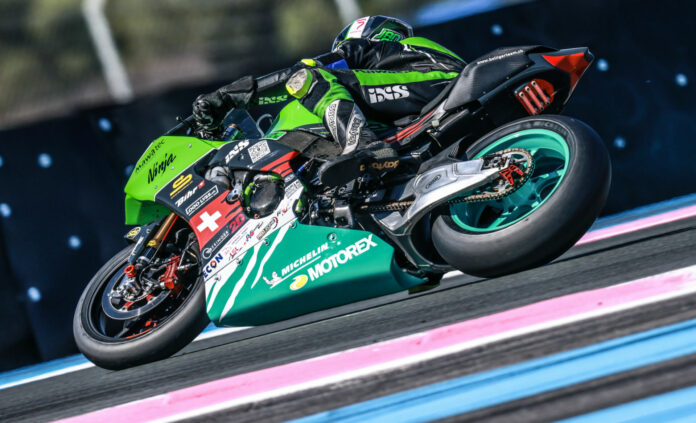
Team Bolliger Switzerland (8) in action during the 2022 season. Photo courtesy FIM EWC Press Office.
New season, new look: Team Bolliger Switzerland reveals 2023 EWC line-up
Team Bolliger Switzerland has revealed its line-up for the 2023 FIM Endurance World Championship with a top-five overall finish once again the goal for the Kawasaki-powered squad.
Austrian Nico Thöni, 27, will form part of the Team Bolliger Switzerland attack for a second season, while Swiss Marcel Brenner joins on a full-time basis having contested the 12 Hours of Estoril in 2021 on the outfit’s #8 Formula EWC category entry. German Patrick Hobelsberger, a frontrunner in the FIM Supersport World Championship and an IDM title winner in the past, will complete the Team Bolliger Switzerland line-up for what will be his first experience of racing around the clock.
Brenner, 25, and Hobelsberger, 26, replace Jan Bühn and Jesper Pellijeff, who depart Team Bolliger Switzerland with the best wishes of Team Manager Kevin Bolliger.
“Like Jan and Jesper, Nico did a really good job in 2022, and we are very pleased to keep him in our team,” said Kevin Bolliger. “When he’s in the flow he can reach a good lap time in qualifying and he’s also really fast when it’s raining. He showed me during the 2022 season that he’s really motivated to do endurance racing. He was really open-minded to change his personal preparation and that showed me that he really wants to achieve his goals with us.
“Marcel is a young rider from World Supersport who did the 12 Hours of Estoril with our team in 2021. He was meant to do this year’s Bol d’Or with us but crashed in the World Supersport event at Magny-Cours and broke his hand so wasn’t able to ride. He’s never done a 24-hour race before and now he has three big ones calling for him. But he’s really excited and really curious about what is coming for him. He’s strong and fast and it’s really important for us to have a Swiss guy in our team.
“Patrick is new to endurance racing but had some strong races with Kallio Racing in World Supersport. However, he hurt his elbow when he crashed hard last season, but he’s signed for a team to do the German Superbike Championship and has also signed for us for EWC and we’re very happy to have him in our team. We also have three German-speaking riders now and this for sure will help with the communication.”
Of the departing Jan Bühn and Jesper Pellijeff, Bolliger said: “Jesper would like to put more focus on sprint races, but I know if I need a rider, I am always allowed to call him, that’s what he told me. I really hope Jan finds a good saddle in the EWC paddock because he’s one of the most experienced riders, he’s really consistent and he’s really good. I really appreciated the time with him in our team, it was really nice, but we decided to make a change although everything is fine between us.”
Heading its 42nd season in the EWC as the championship’s only ever-present entrant, the team founded by former racer Hanspeter Bolliger in 1982 but now managed by his son Kevin, is one of the championship’s leading privateer outfits. It placed seventh in the final EWC standings in 2022 and finished a fine third in the classification for independent teams.
“The top five will be the goal in 2023,” Bolliger continued. “I know it’s a big goal against all these top teams. We have made some other changes in the team and with some suppliers, but we keep these changes a secret for now because we don’t like to play with fully open cards. But if we can be consistent like I know we can and with the package we have I am pretty sure we can achieve a lot and with these riders. I am curious about the upcoming season and look forward to getting started.”
The 2023 FIM Endurance World Championship totals four events and gets underway with the 24 Heures Motos at Le Mans in France from 13-16 April.
Racer Jeremy Toye and the Suzuki GSX-S1000GT+ on track at Buttonwillow Raceway Park. Photo by Michael Gougis.
Copyright 2022, Roadracing World Publishing, Inc.
Suzuki’s Long-Haul Sport-Tourer (As Originally Seen In The September 2022 Print Issue)
By Michael Gougis
I should have been terrified, but being young and dumb blinds you to things. Case in point: Getting caught in a freezing rainstorm on the Grapevine, a mountain pass connecting Central and Southern California, coming back from one of my first long motorcycle rides. Soaked to the bone, riding a decrepit Honda CB550 with bald tires and a chain and sprocket well past their recycle-bin due date, I was riding on the shoulder, watching semi-trailer rigs splash and slide their way past on my left. There were plenty of ways to die in that moment, and I look back and just shake my head.
I was thinking about that ride on my way to Vancouver, British Columbia, Canada on Suzuki’s sport-touring 2022 GSX-S1000GT+. Getting caught in a downpour in downtown Portland during morning rush hour brought back those memories—the rain dumped down so hard that visibility was nearly nonexistent. I focused on the less-soaked tire tracks left behind by cars, aiming precisely at the center of the left tire’s narrow footprint and focusing on the taillights of the car ahead.
The reason I thought about that earlier ride was the difference between then and what I was experiencing at that moment in Portland. It wasn’t just attire, although an electric vest and a water-resistant, fully armored textile suit meant that I was dry and avoided DCGS (Damp Cold Groin Syndrome).
When the hard rain started, I hit the buttons on the handlebars of the GSX-S, turned the traction control all the way up, and switched to the softest power mode. ABS was already functioning. It would have been difficult to do something with the throttle or brakes that would have caused me to lose traction and fall. So all I had to do was stay on my line, watch the distance to the car in front of me, and ride through the squall. I thought, instead of being soaked, freezing and terrified, I’m mildly annoyed. Irritated that Nature was raining on me, in the Pacific Northwest, of all places!
A good sport-touring motorcycle invites heading for destinations far, far away and delivers the confidence that it can handle anything that happens along the way. Suzuki engineers reoriented and retuned the GSX-S1000F model to expand its touring capabilities and pass new emission standards, adding new ride-by-wire throttle control, electronic rider aids, clutchless shifting, cruise control, a new fairing and hard luggage. And the marketeers renamed it the GSX-S1000GT+.
The sporting capabilities of the prior bike had been solid, albeit weak in the suspension and throttle response. Suzuki upgraded those areas for 2022, but the cargo capacity and cruise control begged to be put to the test. It is an elemental distance machine, a stripper in the world of tourers, squarely in the minimalist, sporty end of the sport-touring segment.
So at 5:27 a.m. one morning, I pulled on my helmet, closed the garage door, jumped on the freeway at the very eastern edge of Los Angeles County and aimed for the Canadian border.
The GSX-S1000GT+ about 1,200 miles north, overlooking False Creek on Canada’s Granville Island with Vancouver in the background. Photo by Michael Gougis.
Tech Briefing
Suzuki is making the most of its overhaul of the GSX-S1000 lineup for 2022. Like a chef working from a shelf with only a few spices, Suzuki engineers mixed and matched components, trying to come up with different dishes from a few stock ingredients. Note that the hexagonal LED headlights from the GSX-S1000 naked bike (or ones that are nearly identical) make an appearance in the nose of the GT.
Fortunately, the basic ingredients are good. The engine is the same as used in the new-for-2022 GSX-S1000, an updated version of the 2005-era GSX-R1000 longer-stroke design with a 73.4mm bore and 59mm stroke. New cams, valve springs, cam chain tensioner and cam chain adjuster make up the major internal changes, and this bike shares the naked bike’s new 40mm throttle bodies with 10-hole injectors in each. A new 4-2-1 stainless-steel exhaust has an internal butterfly valve to reduce noise, and since the noise and emissions-reduction equipment is located under the engine, offers the rider the option of replacing the silencer with an approved aftermarket muffler and still meeting the regulations.
Suzuki says the GT model’s powertrain is identical to the one used for the naked bike, and runs on two Dynojet dynomometers bears that out. The naked bike produced 133.09 bhp on the dyno at Mickey Cohen Motorsports (1961 E. Miraloma Ave., Unit B, Placentia, CA 92870, 714-993-5000, www.cohenmotorsports.com). The GT registered 133.69 bhp on the dyno at ChaChaCha Motorsports (393 W. La Cadena Dr. #8, Riverside, CA 92501, 909-684-4600, www.chachachamotorsports.com). That’s a difference of less than ½%.
The transmission has a new assisted slipper clutch and a new clutchless quickshifter for both directions. The new ride-by-wire system is the rider’s main point of interaction with the Suzuki Intelligent Ride System (SIRS), which features the Suzuki Drive Mode Selector (SDMS) with three power modes—Active, Basic and Comfort—and a five-level Suzuki Traction Control System. There’s a low rpm assist system to help prevent stalling when pulling away from a stop, and the machine will start without the clutch lever disengaged if it’s in neutral.
The twin-spar aluminum-alloy frame shares design and dimensions with the GSX-S1000F, the prior faired “comfort” sportbike in Suzuki’s lineup. An older GSX-R1000 swingarm is mated to a single KYB shock adjustable for rebound damping and preload only, with revised valving and spring rates. Because the bike is expected to see two-up use on a regular basis, the GT models have a bespoke subframe and a thicker passenger seat. Front suspension is handled by 43mm KYB inverted forks, adjustable for rebound and compression damping, plus spring preload.
Six-spoke cast aluminum–alloy wheels carry a 190/50ZR-17 Dunlop Roadsport 2 radial at the rear and a 120/70ZR-17 at the front. The ABS brake system operates through four-piston Brembo calipers mated to 310mm (about 12.2-inch) discs at the front and a single 240mm (about 9.5-inch) disc at the rear. New handlebars are wider and closer to the rider, fuel capacity is up to 5.0 gallons, and the rider seat is a touch lower and redesigned as well for greater comfort. Details reflect the motorcycle’s intended mission. The footpegs have rubber inserts where the boots touch. The handlebar is rubber-mounted. Just ahead of that handlebar is a new Thin-Film Transistor (TFT) screen with smart-phone connectivity. Next to that is a power outlet.
The biggest changes from the previous, GSX-S1000F model, are visual. Nearly everyone wanted to call that bike a sport-tourer, so it seems like Suzuki marketeers and engineers threw up their hands and said, “Fine! We’ll make it a sport-tourer.” The new wind-tunnel-designed fairing is all angles and sharp lines, with a hint of MotoGP-inspired winglets thrown in as well. It’s either cutting-edge modern or an homage to the 1980 Craig Vetter Mystery Ship, depending on how you look at it. Honestly, the GT+ sort of reminded me of the way a whole generation went sport-touring back in the day (before people used the term, “back in the day”); they bought Vetter fairings and hard saddlebags, bolted them on to some of the highest-performing bikes available in the showrooms, and chased horizons. It’s like Suzuki took its roadster GSX-S and gave it the Vetter fairing and saddlebag treatment. The “+” in the GT+ nomenclature refers to the inclusion of the 25.7-liter hard bags. An optional higher windscreen is available, also sculpted in the wind tunnel, for those who prefer a larger still-air pocket while riding. Both windscreens allow a controlled bleed of air under the leading edge and into the cockpit, balancing the aero forces on the rider.
The Suzuki GSX-S1000GT+ at speed in Europe. Photo courtesy Suzuki.
Riding The GXS-S1000GT+
Roadracing World’s customer service admin nicknamed the bike Taylor, after singer Taylor Swift. That’s because when I first rode it to the office, I walked in and asked, “Who sang that song about knowing you were trouble when you first walked in?” From the first few miles I rode the GT+, I knew I was going to put some serious miles on it. With TC set at two and power setting in full party mode, the bike felt powerful, enthusiastic, and fully controllable. I suppose somebody could complain that with “only” 133 bhp pushing 527 lbs., the Suzuki GSX-S1000GT+ is not in the league of true supersport machines, and they’d be right. But there’s a lot to be said for a solid hit of torque from relatively low rpm; a smooth, featureless power curve; and snappy response to the throttle. I left the office with a full-face helmet in one of the saddlebags, confirming that they were spacious and easy to use.
I did a pair of 800-mile days in a week on the bike and followed each of those with 400-mile days. I went through hours of rain; mountain passes with temps down in the low 40s; 100-plus-degree afternoons accented with vicious side winds in the southern part of California; covered miles and miles of empty, straight four-lane Interstate; swept through huge, gentle, and fast corners in northern California and southern Oregon; and braved city traffic in Vancouver, where wandering geese are an ever-present threat. I rode in broad daylight, pitch black of night, and through bug swarms that looked like rain in the headlight beam.
The 2022 Suzuki GSX-S1000GT+ comes with spacious, easy-on-and-off hard luggage; more rearward, rubber-mounted bars; a lower seat; and a new fairing that has winglets and increased rider protection. Photo by Michael Gougis.
Here’s what got my attention:
I love this engine. Smooth and refined, like an antique piece of furniture that has been lovingly and expertly refinished again and again. It has the power to flatten mountains and pierce headwinds without exertion. Setting the cruise control at 85 mph and pouring on the gas when it came time to pass someone was just something that never got dull; the bike just leaps forward when the throttle is twisted. And even in this type of usage, it got 37 mpg or so, and drafting semi-trucks could bump the real-time mpg display up over 40 mpg for short periods.
The fairing really works for me. I’m about 5′ 10”, and the wind blast hit my shoulders and left my helmet in clean, unbuffeted air. It kept most of the rain off me, and eliminated a great deal of the fatigue that goes along with covering long stretches of road.
The dash lacks some of the features of its competitors (most specifically the Ninja 1000), but the electronic rider aids are simple enough to toggle through. The cruise control holds the vehicle’s speed steady enough, but it’s not as sophisticated as I’ve seen on other brands. Trying to trim off one or two mph made the system feel like it was disengaging fully with the bike decelerating rapidly, as if all power had suddenly been cut. I learned to put my hand on the throttle, feed in a bit of gas from steady-state cruise control operation and disengage cruise by tapping the rear brake pedal. While I’m whining about this merely “adequate” digital cruise control—talk about a first-world problem!—a bike with hard bags that is marketed as a GT machine really needs heated grips.
The seat/bar/footpeg configuration seems perfect for long rides, although I might go for bars that were lower and further forward if I were to use this thing for more sporting rides than long tours. Butt pain was minimal to nonexistent, vibration wasn’t an issue, and the size of the bike wasn’t overwhelming, even in a city setting. It felt nice to have a long-distance machine that delivered feedback more like a sportbike than a cruiser—I felt connected to the motorcycle and the road. And afterwards, really the only pain I felt was in a spot on my back where I was injured in a car wreck decades ago—and it hurts during short rides on some bikes!
A lot of the comfort came from Suzuki and KYB engineers tweaking the suspension settings. The GSX-S1000F, as mentioned, was a wonderful concept let down by a shock that seemed to come out of the reject pile at a bargain shock factory. The new suspension is So. Much. Better.
Things were still a bit vague if I just kind of eased the bike into a corner, but when I dialed in more damping at the rear and then threw the bike over with authority and confidence, it responded with stability and precision. And this version no longer beat me up on the freeway or city streets.
I’m still in the kind of shape where taking a GSX-R1000 from LA to Laguna and back doesn’t faze me. So I wanted to put the GSX-S1000GT+ to the sort of test that I wouldn’t necessarily want to do on a full-blooded sportbike. The bike behaved flawlessly, handled well, rode comfortably, and did everything I wanted it to do—which was haul ass for a long distance and get up and do it again the next day. Compared to its closest competitor, the Ninja 1000, the Suzuki is a bit less sophisticated in the dash, a little more raw. But it’s also about 12 horsepower stronger, about 14 pounds lighter, and the chassis feels stiffer and more connected to the pavement. The Yamaha Tracer 9 GT is another potential competitor, with active suspension, an excellent chassis, and very nice heated grips. But it’s down about 25 horsepower to the Suzuki, and its lighter weight can’t make up the difference.
In the sport-touring universe, the GSX-S1000GT+ is relatively light, powerful, solid, and comfortable. A good sport-touring bike is a balanced compromise, and in this case, after a long courtship, it feels like Suzuki engineers got the recipe almost perfect for me.
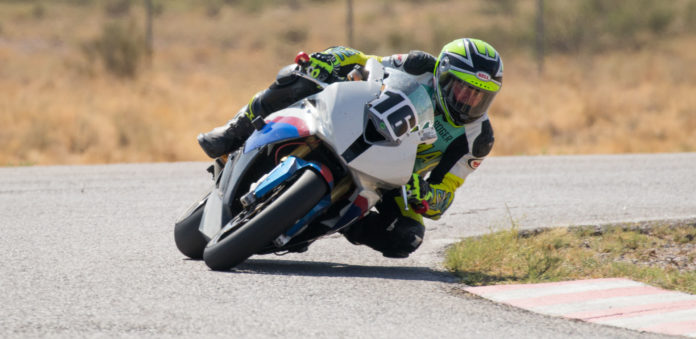
Racer Jeremy Toye and the Suzuki GSX-S1000GT+ on track at Buttonwillow Raceway Park. Photo by Michael Gougis.
Riding On The Track
Long-time Pro racer Jeremy Toye spent a hot summer morning ripping the GSX-S1000GT+ around the 3.0-mile circuit at Buttonwillow Raceway Park. While machines with saddlebags are not his typical choice for track use, Toye still found plenty of positive things to say about the sportbike in touring clothes.
“It gets the job done, it really does. The biggest drawback is the suspension. It’s really soft. But I was putting load into the shock before I would get to the corner, and that way it didn’t lock up or hit the limits of the linkage. And honestly, the chassis is so good that it makes up for a lot of the suspension behavior. I could really put a lot of force into the front end, and I can tell the geometry is kind of raked out, but it still works. Brakes were good, power was good for what it is, even the tires were not bad – I had fun.”
Toye isn’t the kind of rider who just hangs around, no matter what the machine. There are bumps in the final corner of Buttonwillow that some refer to as a launch ramp. Other riders slow down. Toye described his approach to the corner as “apex early, get the thing upright, and when it jumped up I could hear the forks top out as the front end came off the ground.”
And although it isn’t a cutting-edge sportbike, Toye still found that on the racetrack, Suzuki’s approach of using tried and tested components, refined over years, paid off with a bike that kept its composure in an environment well wide of its design brief.
Specifications: 2022 Suzuki GSX-S1000GT+
Engine Configuration: Four-stroke Inline-4
Engine Displacement: 999cc
Engine Cooling: Liquid
Compression Ratio: 12.2:1
Combustion Chamber Design: Pentroof
Valves Per Cylinder: 4
Intake Valves Per Cylinder (Material): 2 (Steel)
Exhaust Valves Per Cylinder (Material): 2 (Steel)
Bore and Stroke: 73.4mm x 59.0mm
Connecting Rod Length (center-to-center): 4.5 inches (111mm)
NIKI TUULI JOINS TRUELOVE AT DYNAVOLT TRIUMPH FOR 2023
Dynavolt Triumph are pleased to confirm that Niki Tuuli will join Harry Truelove to complete the team line-up in the 2023 FIM Supersport World Championship.
Finland’s Tuuli erupted onto the World Supersport scene in 2016 with just three races in his debut, showing his huge potential. 2017 saw the Nordic racer return to World Supersport as a permanent rider with Kallio Racing for his first full campaign in the class. Tuuli began 2018 in World Supersport with PTR Racing before he moved over to Moto2™ where he scored his first point before the end of the year.
Two seasons in MotoE™ followed where he finished sixth in the 2020 championship before he returned to the World Supersport category for 2021 and 2022 with MV Augusta, delivering the brand’s first victory since 2017 in Indonesia last month.
Niki Tuuli: “I am really, really happy that I can continue in the World Championship. I think I have a lot more to give than I have given until this moment. I am really interested and super happy to join this new project with Triumph. I think they showed really good potential this year, even in their first year they made a really good result and I think that tells a lot about what the team can do and what the bike is capable of. I cannot wait to start the year with the new bike. I am feeling really good and relaxed when I’m thinking about next year. I’m happy to be staying with the three-cylinder bike, I think it fits my riding style really well. So the expectations are I’m looking to make a really good job, I think it’s realistic to say that. In the end I want to say a huge thanks to Simon and Dynavolt Triumph, all my sponsors, my background they help me a lot and gave me this chance so I can’t wait to start the year and make the best job together.”
Dynavolt Triumph Team Manager Simon Buckmaster: “It’s good to bring Niki Tuuli back into the team, he rode for us back in 2018 and then had a chance to ride in Moto2 as there was then a proposed Finnish GP and he was a young Finnish rider. That didn’t work out as well for him and the GP didn’t happen. He’s been back in World Supersport and he’s taken time to get back to where his level of riding is. He missed some rounds this year with an injury when he lost some toes but he’s come back and been on good form. It’s good to have him back in the team, I think he’ll do a really good job and we all know each other so we should gel quickly. Coming off one three-cylinder machine to another, the adaption to the Dynavolt Triumph 765 RS Street Triple should be quite quick, which is good because we don’t have too much time for testing. I think he will work very well with Harry and they will be a really good team unit. So, we welcome Niki into the team and to the Triumph family for a title challenge in World Supersport. We can’t wait to get testing, let’s see what we can do.”
Dunlop is pleased to introduce the fifth generation of the Dunlop Sportmax family. The Dunlop Sportmax Q5 is a purpose-built, track-day tire that has been in the making for over 4 years. Evolving from a blend of the highly popular Sportmax Q4 and Dunlop’s cutting-edge MotoAmerica spec road race tires, the Q5 utilizes the very best technologies Dunlop has to offer for a track tire that is still street legal.
Having enhanced constructions, profiles, compounds and tread patterns, the Q5 is the new benchmark for track-day tires. The Q5 is even more user-friendly, as dry and wet grip, tire compliance, and warm-up times have all been improved.
Dunlop has also expanded the size range of the Q5 to include five additional sizes for increased bike fitments: 110/70ZR17, 140/70ZR17, 150/60ZR17, 160/60ZR17, and 200/60ZR17.
Key features of the all new Sportmax Q5:
Sharply defined new tread pattern with lower groove density puts more rubber on the ground at all lean angles
Optimized tread pattern design and position to aid in quicker warm-up times and improved wet-weather performance.
Street-friendly performance— Tire warmers are not necessary for track use.
Designed in five additional sizes for increased bike fitments: 110/70ZR17, 140/70ZR17, 150/60ZR17, 160/60ZR17, and 200/60ZR17.
The front and rear tire profiles have a taller and narrower profile to improve turn-in and compliance while increasing the footprint and grip at camber.
Front tire has reduced vertical stiffness to improve compliance and damping and increased lateral and longitudinal stiffness to improve braking and handling performance.
The 140/70ZR17, 180/60ZR17, 200/55ZR17, and 200/60ZR17 utilize the exact same profiles as the race spec tires developed for the MotoAmerica series.
The rear tires tread features Dunlop’s Jointless Tread (JLT) technology, the same process used in Dunlop’s racing slicks. JLT applies a continuously wound tread strip over the carcass to achieve the ideal stability, flex, and grip where it’s needed most across the tire’s tread profile.
Improved compound to enhance the dry grip by adjusting the compound formula. The culmination of these changes puts the rear tire compound much closer to a true race tire compound.
Dunlop’s proprietary Intuitive Response Profile (IRP) for ultra-linear and responsive steering.
Proudly made in Dunlop’s Buffalo, NY factory on the same proprietary equipment as their road race tires.
Availability:
The Sportmax Q5 will be sold through all Dunlop retailers, as well as race tire distributors, to be easily accessible to all street or track riders. Tires will be available in all channels beginning in November and December.
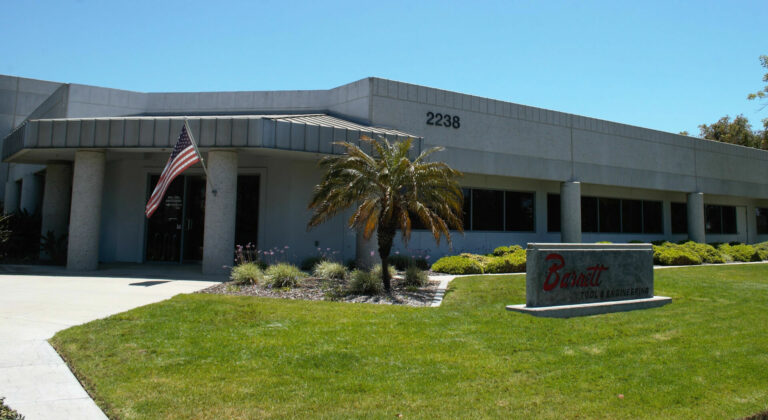
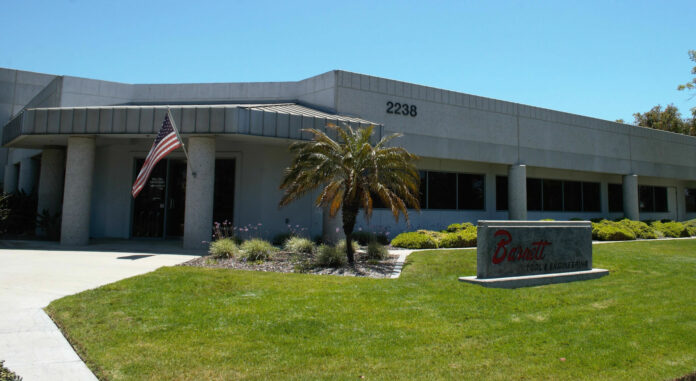
Barnett Tool & Engineering's 43,000-square-foot headquarters in Ventura, California. Photo by David Swarts.
Barnett Clutches and Cables 75th Anniversary–1948-2023
Barnett Tool & Engineering is proud to announce that 2023 will be our 75th year of manufacturing the finest American made motorcycle clutches and cables! Since Charlie and Afton Barnett started out in a small storefront in Huntington Park, California in 1948, we have been producing clutches and control cables with direct-fit upgrade applications for just about everything on two wheels. From vintage bikes to the newest machines on the showroom floor– street to off-road and ATV’s and SXS’s–we have it covered! All Barnett products are made in-house and in the USA with top quality materials and cutting-edge technology. We also specialize in custom length cables, brake lines and specialized “one-off” cables for a wide variety of applications. We are the industry leader in custom cables made to order.
Charlie and Afton believed that in making performance motorcycle parts, they must be of the finest quality and that customer service and satisfaction must be second to none. Those beliefs run as deep today as they did 75 years ago. Still family owned and operated, Barnett products are still made in America by riders, for riders.
To read more about Barnett Tool & Engineering, a.k.a. Barnett Cables and Clutches, grab a September 2018 issue of Roadracing World & Motorcycle Technology or view the PDF copies of the article below.
A “press release” is promotional text issued by a rider, team, company or organization to inform
the public about an event, product, or service from the issuer’s own point of view, and if deemed
to have news value, may be placed on roadracingworld.com as a service to our readers.
A press release is not an article written by Roadracingworld.com staffers. When a post is labeled with the words “press release”, it means that Roadracingworld.com is not responsible for its content and that Roadracingworld.com makes no guarantee that it is accurate. Not all press releases are posted and Roadracingworld.com may reject press releases if the content is too heavy on commercial promotion with little or no news value or if the press release contains obvious errors.
Accessibility
Accessibility modes
Epilepsy Safe Mode
Dampens color and removes blinks
This mode enables people with epilepsy to use the website safely by eliminating the risk of seizures that result from flashing or blinking animations and risky color combinations.
Visually Impaired Mode
Improves website's visuals
This mode adjusts the website for the convenience of users with visual impairments such as Degrading Eyesight, Tunnel Vision, Cataract, Glaucoma, and others.
Cognitive Disability Mode
Helps to focus on specific content
This mode provides different assistive options to help users with cognitive impairments such as Dyslexia, Autism, CVA, and others, to focus on the essential elements of the website more easily.
ADHD Friendly Mode
Reduces distractions and improve focus
This mode helps users with ADHD and Neurodevelopmental disorders to read, browse, and focus on the main website elements more easily while significantly reducing distractions.
Blindness Mode
Allows using the site with your screen-reader
This mode configures the website to be compatible with screen-readers such as JAWS, NVDA, VoiceOver, and TalkBack. A screen-reader is software for blind users that is installed on a computer and smartphone, and websites must be compatible with it.
Online Dictionary
Readable Experience
Content Scaling
Default
Text Magnifier
Readable Font
Dyslexia Friendly
Highlight Titles
Highlight Links
Font Sizing
Default
Line Height
Default
Letter Spacing
Default
Left Aligned
Center Aligned
Right Aligned
Visually Pleasing Experience
Dark Contrast
Light Contrast
Monochrome
High Contrast
High Saturation
Low Saturation
Adjust Text Colors
Adjust Title Colors
Adjust Background Colors
Easy Orientation
Mute Sounds
Hide Images
Hide Emoji
Reading Guide
Stop Animations
Reading Mask
Highlight Hover
Highlight Focus
Big Dark Cursor
Big Light Cursor
Cognitive Reading
Virtual Keyboard
Navigation Keys
Voice Navigation
Accessibility Statement
www.roadracingworld.com
May 12, 2026
Compliance status
We firmly believe that the internet should be available and accessible to anyone, and are committed to providing a website that is accessible to the widest possible audience,
regardless of circumstance and ability.
To fulfill this, we aim to adhere as strictly as possible to the World Wide Web Consortium’s (W3C) Web Content Accessibility Guidelines 2.1 (WCAG 2.1) at the AA level.
These guidelines explain how to make web content accessible to people with a wide array of disabilities. Complying with those guidelines helps us ensure that the website is accessible
to all people: blind people, people with motor impairments, visual impairment, cognitive disabilities, and more.
This website utilizes various technologies that are meant to make it as accessible as possible at all times. We utilize an accessibility interface that allows persons with specific
disabilities to adjust the website’s UI (user interface) and design it to their personal needs.
Additionally, the website utilizes an AI-based application that runs in the background and optimizes its accessibility level constantly. This application remediates the website’s HTML,
adapts Its functionality and behavior for screen-readers used by the blind users, and for keyboard functions used by individuals with motor impairments.
If you’ve found a malfunction or have ideas for improvement, we’ll be happy to hear from you. You can reach out to the website’s operators by using the following email
Screen-reader and keyboard navigation
Our website implements the ARIA attributes (Accessible Rich Internet Applications) technique, alongside various different behavioral changes, to ensure blind users visiting with
screen-readers are able to read, comprehend, and enjoy the website’s functions. As soon as a user with a screen-reader enters your site, they immediately receive
a prompt to enter the Screen-Reader Profile so they can browse and operate your site effectively. Here’s how our website covers some of the most important screen-reader requirements,
alongside console screenshots of code examples:
Screen-reader optimization: we run a background process that learns the website’s components from top to bottom, to ensure ongoing compliance even when updating the website.
In this process, we provide screen-readers with meaningful data using the ARIA set of attributes. For example, we provide accurate form labels;
descriptions for actionable icons (social media icons, search icons, cart icons, etc.); validation guidance for form inputs; element roles such as buttons, menus, modal dialogues (popups),
and others. Additionally, the background process scans all the website’s images and provides an accurate and meaningful image-object-recognition-based description as an ALT (alternate text) tag
for images that are not described. It will also extract texts that are embedded within the image, using an OCR (optical character recognition) technology.
To turn on screen-reader adjustments at any time, users need only to press the Alt+1 keyboard combination. Screen-reader users also get automatic announcements to turn the Screen-reader mode on
as soon as they enter the website.
These adjustments are compatible with all popular screen readers, including JAWS and NVDA.
Keyboard navigation optimization: The background process also adjusts the website’s HTML, and adds various behaviors using JavaScript code to make the website operable by the keyboard. This includes the ability to navigate the website using the Tab and Shift+Tab keys, operate dropdowns with the arrow keys, close them with Esc, trigger buttons and links using the Enter key, navigate between radio and checkbox elements using the arrow keys, and fill them in with the Spacebar or Enter key.Additionally, keyboard users will find quick-navigation and content-skip menus, available at any time by clicking Alt+1, or as the first elements of the site while navigating with the keyboard. The background process also handles triggered popups by moving the keyboard focus towards them as soon as they appear, and not allow the focus drift outside it.
Users can also use shortcuts such as “M” (menus), “H” (headings), “F” (forms), “B” (buttons), and “G” (graphics) to jump to specific elements.
Disability profiles supported in our website
Epilepsy Safe Mode: this profile enables people with epilepsy to use the website safely by eliminating the risk of seizures that result from flashing or blinking animations and risky color combinations.
Visually Impaired Mode: this mode adjusts the website for the convenience of users with visual impairments such as Degrading Eyesight, Tunnel Vision, Cataract, Glaucoma, and others.
Cognitive Disability Mode: this mode provides different assistive options to help users with cognitive impairments such as Dyslexia, Autism, CVA, and others, to focus on the essential elements of the website more easily.
ADHD Friendly Mode: this mode helps users with ADHD and Neurodevelopmental disorders to read, browse, and focus on the main website elements more easily while significantly reducing distractions.
Blindness Mode: this mode configures the website to be compatible with screen-readers such as JAWS, NVDA, VoiceOver, and TalkBack. A screen-reader is software for blind users that is installed on a computer and smartphone, and websites must be compatible with it.
Keyboard Navigation Profile (Motor-Impaired): this profile enables motor-impaired persons to operate the website using the keyboard Tab, Shift+Tab, and the Enter keys. Users can also use shortcuts such as “M” (menus), “H” (headings), “F” (forms), “B” (buttons), and “G” (graphics) to jump to specific elements.
Additional UI, design, and readability adjustments
Font adjustments – users, can increase and decrease its size, change its family (type), adjust the spacing, alignment, line height, and more.
Color adjustments – users can select various color contrast profiles such as light, dark, inverted, and monochrome. Additionally, users can swap color schemes of titles, texts, and backgrounds, with over seven different coloring options.
Animations – person with epilepsy can stop all running animations with the click of a button. Animations controlled by the interface include videos, GIFs, and CSS flashing transitions.
Content highlighting – users can choose to emphasize important elements such as links and titles. They can also choose to highlight focused or hovered elements only.
Audio muting – users with hearing devices may experience headaches or other issues due to automatic audio playing. This option lets users mute the entire website instantly.
Cognitive disorders – we utilize a search engine that is linked to Wikipedia and Wiktionary, allowing people with cognitive disorders to decipher meanings of phrases, initials, slang, and others.
Additional functions – we provide users the option to change cursor color and size, use a printing mode, enable a virtual keyboard, and many other functions.
Browser and assistive technology compatibility
We aim to support the widest array of browsers and assistive technologies as possible, so our users can choose the best fitting tools for them, with as few limitations as possible. Therefore, we have worked very hard to be able to support all major systems that comprise over 95% of the user market share including Google Chrome, Mozilla Firefox, Apple Safari, Opera and Microsoft Edge, JAWS and NVDA (screen readers).
Notes, comments, and feedback
Despite our very best efforts to allow anybody to adjust the website to their needs. There may still be pages or sections that are not fully accessible, are in the process of becoming accessible, or are lacking an adequate technological solution to make them accessible. Still, we are continually improving our accessibility, adding, updating and improving its options and features, and developing and adopting new technologies. All this is meant to reach the optimal level of accessibility, following technological advancements. For any assistance, please reach out to