
MotoGP FP2
© , Roadracing World Publishing, Inc.
American Honda Congratulates Hayden Family on Nicky Hayden’s Motorsports Hall of Fame Induction
2006 MotoGP World Champion receives major mainstream motorsports award
October 1, 2021 — PONTIAC, Michigan
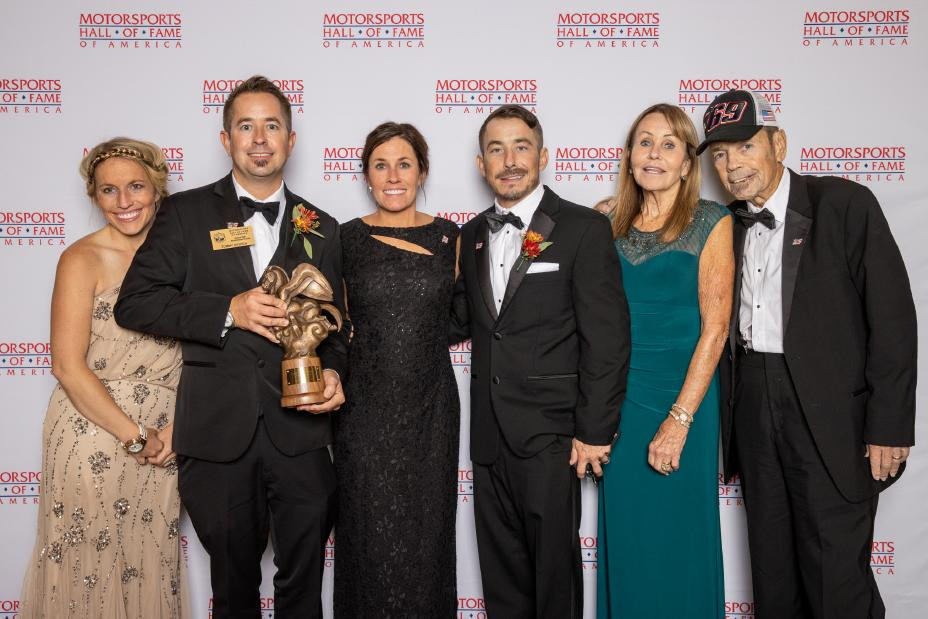
On the occasion of this week’s induction of Nicky Hayden to the Motorsports Hall of Fame of America, American Honda congratulates the family of the late road race and dirt track star. While the Hall of Fame is located at Daytona International Speedway, this year’s ceremony was held at the M1 Concourse in Pontiac, Michigan. The award was presented by former Honda team manager Gary Mathers, and received by Nicky’s younger brother Roger Hayden; Roger also kicked off the event by riding a lap of honor aboard a Repsol edition CBR1000RR while carrying the American flag, as Nicky often did following his major wins.
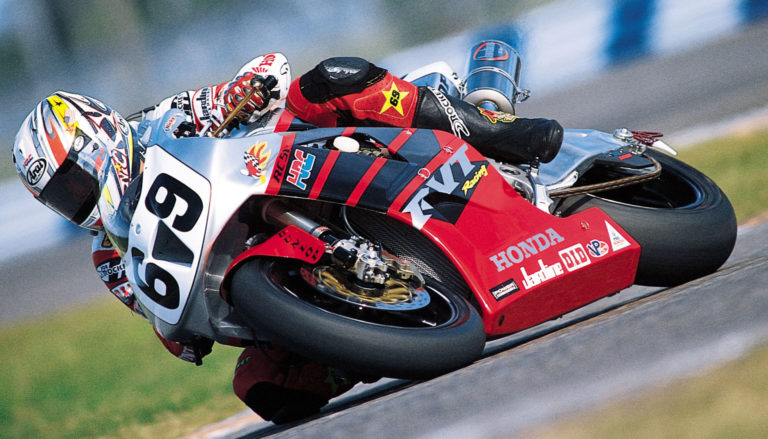
Nicky Hayden rode for American Honda-backed teams in AMA road racing classes between 1999 and 2002, earning the AMA 600 Supersport Championship and AMA Pro Athlete of the Year Award in 1999, and the AMA Superbike Championship and Daytona 200 win in 2002. During part of that tenure, he also rode Hondas in a scrappy AMA Flat Track side project, famously joining brothers Tommy and Roger to lead a Hayden-family podium sweep of the 2002 Springfield TT. Nicky then joined the factory Repsol Honda team in MotoGP from 2003 to 2008, earning the 2006 MotoGP World Championship. He rode for a private Honda MotoGP team in 2014 and 2015, before switching to Honda’s World Superbike team. In 2017, Hayden tragically lost his life in a bicycle accident during a training ride in Italy. In 2018, Hayden was posthumously inducted into the AMA Motorcycle Hall of Fame, one of the motorcycling world’s top recognitions.
This week’s honor is more mainstream, as the Motorsports Hall of Fame of America annually recognizes personalities from the entire world of motorsports – including many forms of auto racing, powerboats, aviation and motorcycles. Other members of Hayden’s class are stockcar driver Davey Allison, land-speed racer John Cobb, drag racer Larry Dixon Jr., Indy and NASCAR trailblazer Janet Guthrie, Indy journalist Robin Miller, powerboat team owner Fran Muncey, NASCAR champion Ray Nichels and famed sports-car racing scorer Judy Stropus. The class of 2020 – including motorcycle dirt track champion Chris Carr – was honored two nights earlier, after last year’s ceremony was postponed due to COVID-19.
“On behalf of the entire motorcycling community, congratulations to the Hayden family for this prestigious recognition of Nicky’s accomplishments on and off the track,” said Bill Savino, Senior Manager of Customer Engagement at American Honda. “The Kentucky Kid will always occupy a place in our hearts – as a racer, but especially as a person – and we’re pleased that the Hall of Fame also recognizes how exceptional he was.”
COPYRIGHT 2021, ROADRACING WORLD PUBLISHING, INC.
Interview: Red Bull KTM MotoGP Factory Rider Brad Binder:
“There Comes A Moment Where It Feels Completely Normal…”
by Michael Gougis
It’s hard to think of Brad Binder as still kind of a rookie. The 2016 Moto3 World Champion already has two MotoGP wins in a very short time in the premier class, and he seems to have been around the paddock for a long time. That is likely because of the attention he’s gotten, as he has spent much of his Grand Prix career near the front, with podiums every year since 2014 and wins in most of those seasons.
Yet the South African finds himself still facing new circuits and new challenges. His premier-class rookie season of 2020 was short and chaotic because of the global COVID-19 pandemic, and he’s just now getting into his second full season of wrestling the mechanical bull known as a MotoGP racebike.
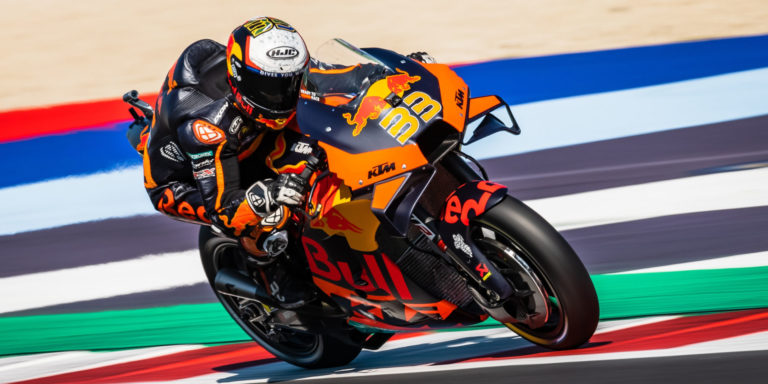
“I’ve only had one and a bit proper seasons under my belt on a MotoGP bike. I still feel like – I’ve never been here on the MotoGP bike,” says Binder, 26, of Potchefstroom, South Africa, as he prepared for the Grand Prix of The Americas, in Austin, Texas.
“And there’s a lot of tracks coming next season – I’ll be going to Philip Island, Japan, Argentina – all of these places for the first time on the MotoGP bike, when I’ll be in my third season! It’s a little bit difficult, a little bit strange. But I think I’ve adapted well to the class, and I understand what I need to do to go fast and where to improve.”
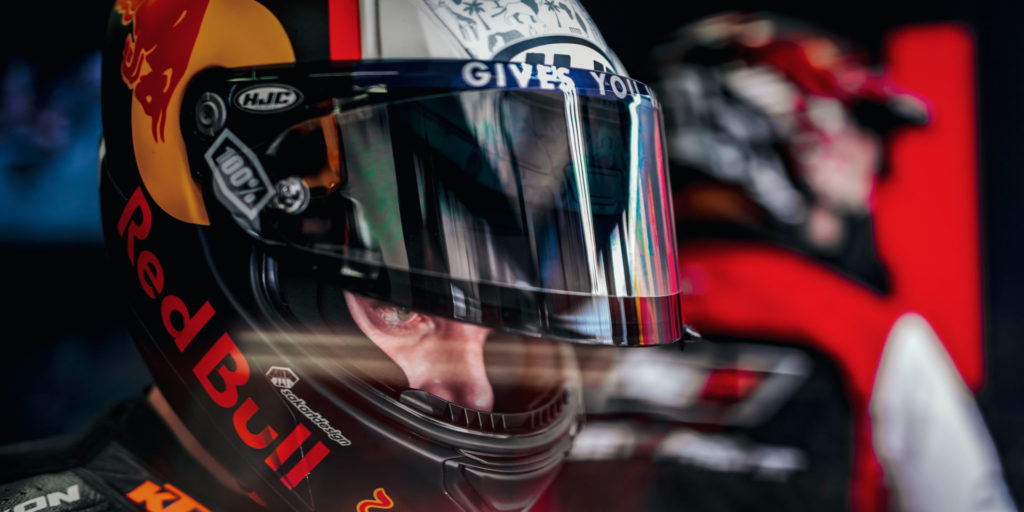
Binder is no stranger to COTA, although he still finds the track a unique challenge on the Championship circuit.
“There’s nothing quite like it,” Binder says of the 3.4-mile, 20-turn track. “I think it’s got the most corners of any track! It’s unique. The grip conditions are really low at the beginning, and it just gets better and better and better. It’s a long, big track, and it’s something I’m really looking forward to.”
This season, the factory Red Bull KTM MotoGP RC16 has proven to prefer hot, slick racetracks, Binder says.
“Sometimes we see that in super-hot conditions we’re more competitive than we are when it’s cooler. In MotoGP it comes down to what the tire allocation is for the weekend. Sometimes the harder rubber suits our KTM a little bit better. Some tracks you can use it, some tracks you can’t,” he says. “The hotter, the more slippery, the more sketchy the track conditions are, the better it is for us.”
With a new fuel coming on-stream in the middle of the 2021 season, the KTM has also added more straight-line speed – not that it was really lacking in that department – to its stout performance under braking. The two, combined, help Binder with his increasingly common Sunday afternoon charge from a starting spot toward the back of the grid to a finishing spot closer to the front than anyone expects.
“Our strongest point on the KTM is definitely our braking performance, which has always been the strongest point for our bike. We have the ability to stop the bike in a shorter space of time than the other guys. We’re able to really push it that little bit harder, which makes things a lot better to fight in the race and make overtakes. That’s one point of the bike that I’m really happy about,” he says. “The biggest difference as far as our top speed goes is the new fuel. It’s nice, it’s great to have that little extra margin. It’s time for free at the end of the day!”
The weak spots, he says, are the obvious one – qualifying – and one that’s harder to spot, simply because in MotoGP, the differences between winning and finishing mid-pack are increasingly small.
“The one point where we need to improve is corner exits, especially coming out of hairpins where you’re in first gear and you’re hooking through the first three-four gears is where we seem to be missing a little bit,” Binder says. “That’s what we’re working on. We’ve got to sort out some small issues, and we’ll be a lot stronger in the upcoming races.”
Qualifying is the next major issue that KTM – and he – have to focus on, he says.
“Normally, if I can do a lap time once, I can do it over and over again. But I struggle to do that one lap that’s much quicker than the rest. I’ve always got good race pace, which always seems to carry me through on the Sunday,” he says.
“As a rider, it’s not my strongest point. It’s something that we’re working on as a team, for sure. It’s not the strongest point for our bike at the moment. But on the other hand, our bike can be consistent over 20 laps. If I had to write one off (race or qualifying), I’d choose qualifying. But I hope for the future we’ll be in a position where we can fight for some pole positions as well.”
Although Binder says he knows there is room for improvement, the past year has seen the pucker factor of just riding a MotoGP machine drop to the point where he can focus on getting the last few percent of performance out of himself and the KTM. He’s come a long way from the wide-eyed rider who hopped off the winning Moto2 machine at Valencia in 2019 and two days later swung his leg over the RC16 at the post-season test.
“The first impression when you get on a MotoGP bike is overwhelming. You don’t know how you’re going to complete a race distance, because it’s so physical, it’s so physically demanding, it’s just so strong, the wheelie and everything is next level. It takes a while to get used to. But then there comes a moment where it feels completely normal. That becomes the norm. There’s no more insane power – of course it’s still there, but it becomes like walking – something you completely adapt to. It took a while, to be honest. But it seems like I’m used to it,” he says.
Editorial Note: This article first appeared in the March 2021 issue of Roadracing World & Motorcycle Technology magazine.
COPYRIGHT 2021, ROADRACING WORLD PUBLISHING, INC.
All Kids Bike: THE POINT OF DEPARTURE
By Michael Gougis
The demographics of motorcycling are a constant point of worry for the industry. Some figures are even worse. Very, very few people get into motorcycling without learning to ride a bicycle. And in the United States, this year, the majority of children will not ride a bicycle this year—not even once.
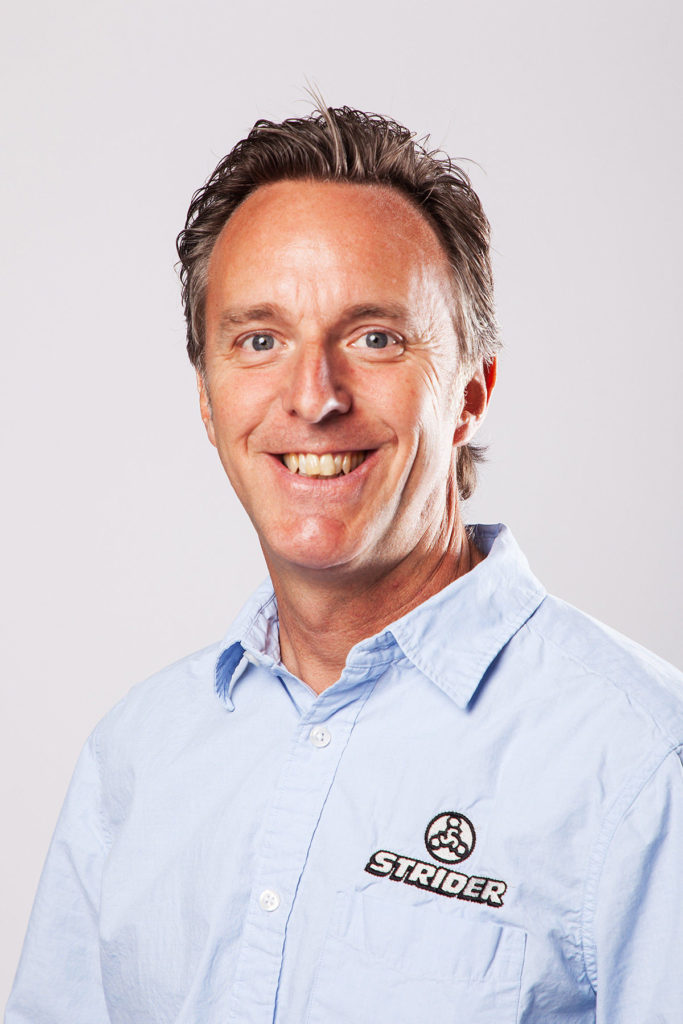
“The trends are getting scary,” says Ryan McFarland, founder and CEO of Strider Sports International, aka Strider, the producer of balance and beginning bikes. “Three-quarters of American kids aren’t going to ride a bicycle once this year. That’s the whole industry, the whole bike industry, the whole motorcycle industry. It’s all the same ladder, and kids aren’t even getting on the first rung of the ladder anymore.”
McFarland is doing something about it. He began All Kids Bike, a program to bring bicycle riding into the kindergarten curriculum at many public and non-profit private schools.
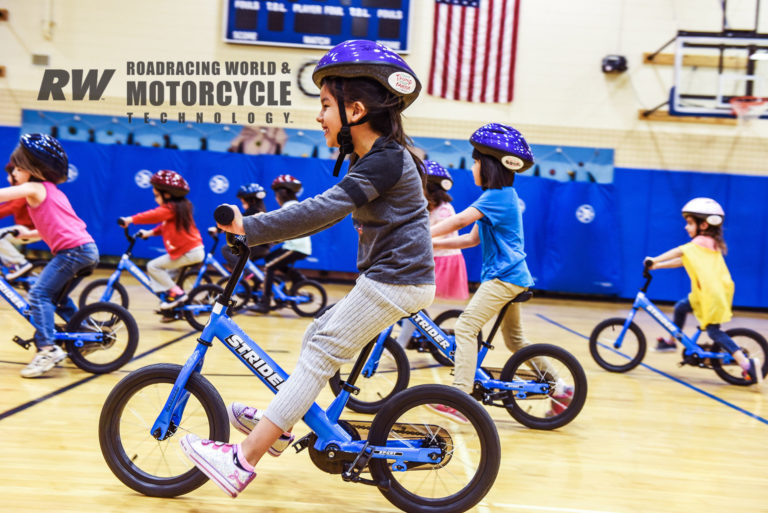
In little more than two years, the non-profit program has taught approximately 40,000 children how to ride. Starting with a simple Strider balance bike, in eight lessons the children progress to riding a pedal-propelled bicycle.
And perhaps more importantly, McFarland structured the program to focus on teaching teachers how to conduct the curriculum. Combined with special bicycles to minimize repairs and maintenance, it leverages the program’s efforts, allowing it to reach far more children than McFarland ever could on his own.
Strider’s foundations were personal: “I’m a lifelong motorcycle enthusiast and mountain bike enthusiast. My dad had a motorcycle dealership,” says McFarland, an entrepreneur and fabricator. “When I became a dad, I was super-excited to get my son riding. When he was two years old, I had all kinds of get-riding toys lined up. I had a whole fleet of things because I was so excited!
“Then I realized that these things weren’t helping him to learn to ride. I was watching him enthusiastically try to use these things, but realized they were too heavy, too big, too complex. My wife said give him a year or two, and I said, ‘No, can’t do that!’”
The basic failures of the beginning machines were related to scale, McFarland says. They weighed as much as the two-year-old, with a seat at chest height and gearing that was too tall for toddler leg muscles. So he took a basic 12-inch-wheel bicycle and started chopping until the seat height was appropriate for a two-year-old. With the seat that low, however, it was impossible to operate the pedals.
Then McFarland had his flash of inspiration. “That’s when I really realized that the key to this whole thing was separating propulsion from riding. Riding is balancing two linear wheels while straddling it. You start thinking about propulsion separately. Why not striding and walking? That’s one way of getting something to move,” McFarland says. “What’s the easiest propulsion method for a two-year-old? Walking and running. Feet on the ground, Fred Flintstone-style. Totally safe, totally confident, just focusing on riding the bike.”
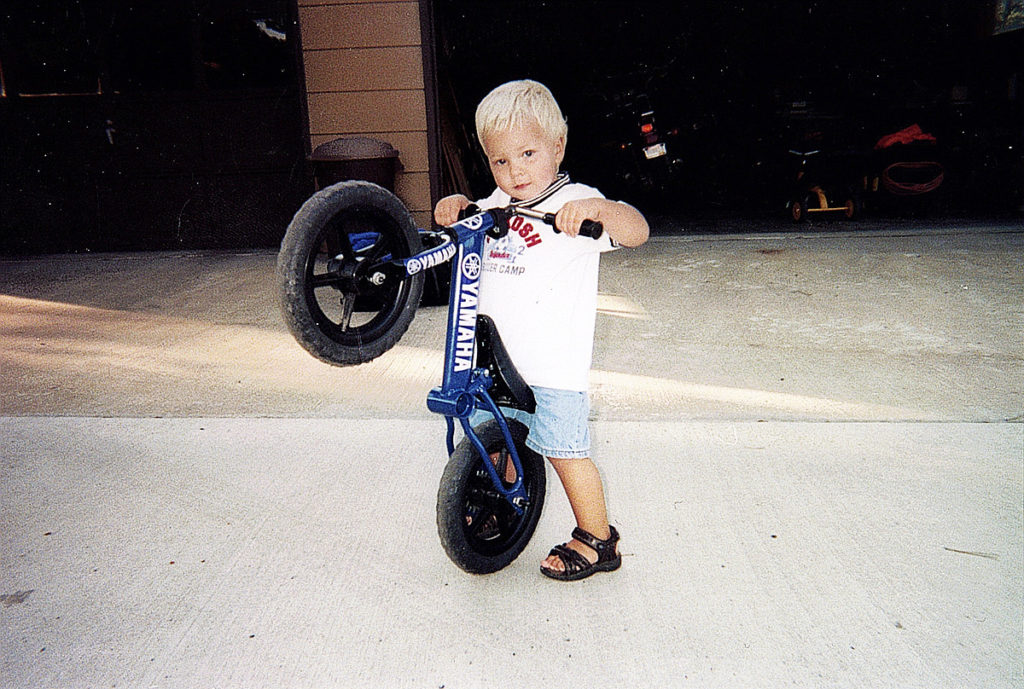
McFarland painted it blue to match the Yamaha 450 dirtbike in his garage and slapped some Yamaha stickers on it. Quickly, his son and the homemade Strider bike were inseparable. It was evidence that the idea was sound—so sound that the company, founded in 2007, has now sold over three million units.
Still, McFarland was not unaware of the fundamental changes in childhood sweeping the world. Not even available a generation or two ago, video-based activities have literally created an alternative reality for those born in the last few years, a reality in which their physical bodies are sedentary. In a very real sense, most of the U.S. is coming to grips with a video-generated reality that is beyond the imagination of those who were studying the impact of television on society 60 years ago. The youngest are facing those changes as surely as anyone else.
“What really dialed us in was the urgency of the problem. This stuff is happening fast. How can we address this?” McFarland says he pondered.
His solution: Get as many kids as possible on bikes, as early as possible. That meant reaching kids where they gathered—school—at the youngest age they were going to be there—kindergarten. “Every kindergarten program has a P.E. program, and that’s where we wanted to be,” McFarland says.
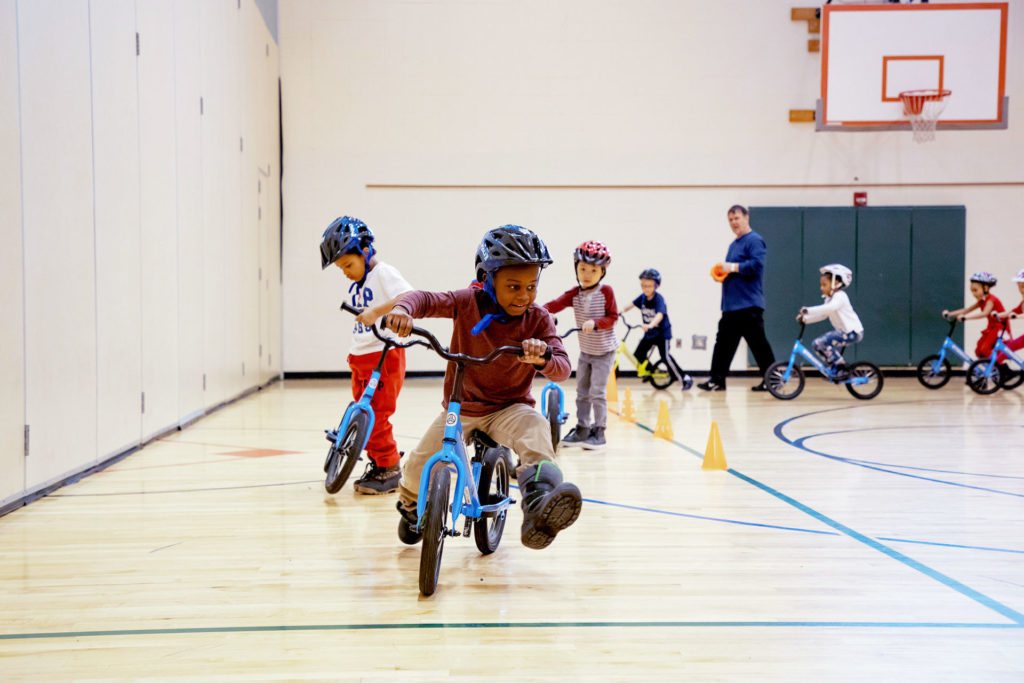
Two things were needed. One was an online curriculum to teach teachers how to teach their kindergartners. The other was a somewhat mythical creature—a kid-proof bicycle. McFarland devised a version of Strider’s 14X bike with solid tires and easy-to-adjust handlebars. The bicycles come with a pedal kit that change a balance bike to a pedal bike in three minutes.
The non-profit Strider Education Foundation was incorporated in 2017 as the (pardon the pun) vehicle to collect donations and distribute the curriculum and machines to schools. Since 2018, more than 260 schools in 38 states have adopted the curriculum.
The foundation is looking for donors to support the program. For $5,000 the foundation can provide a fleet of 24 of the children’s bikes, one adult-size bike for the teacher, helmets, the pedal conversion kits, and a five-year support commitment.
It’s all part of McFarland’s plan to save the pastimes about which he is passionate, and to help America’s children lead healthier, happier lives. “Just giving kids a bike isn’t the answer. Teaching them how to ride bikes is the answer. It really does come down to the educational piece,” McFarland says. “Kids need this experience.”
More, from a press release issued by Dorna WorldSBK Press Office:
Rea leads KRT 1-2, Gerloff flies high and Honda show strength on day one at Portimao
Friday, 1 October 2021 15:08 GMT
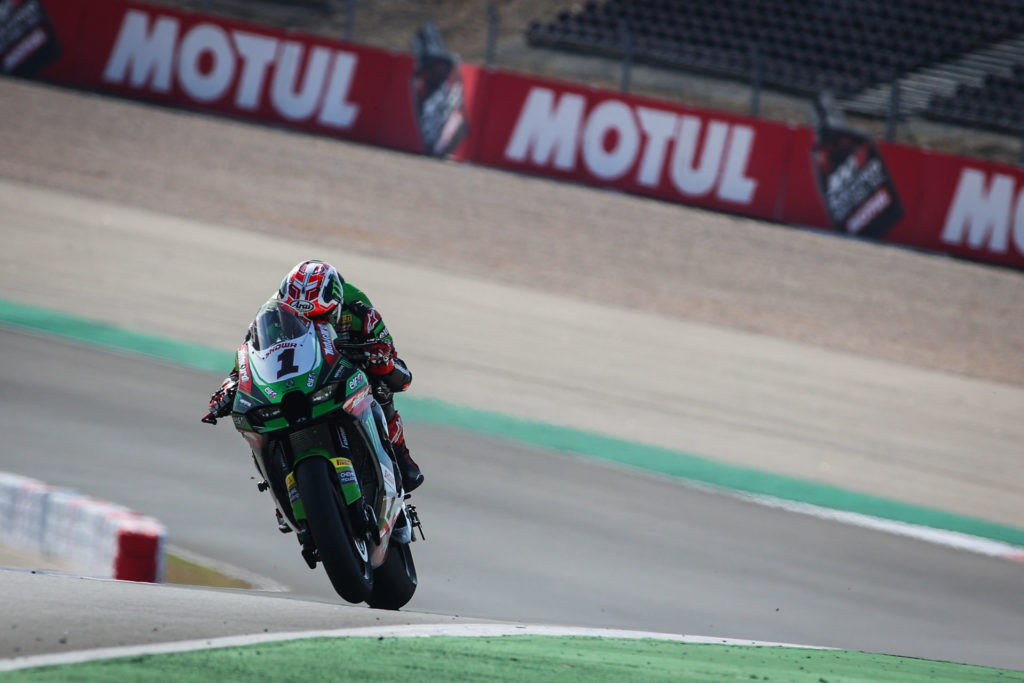
11 riders covered by less than nine tenths of a second – the Motul Portuguese Round is shaping up to be a thriller
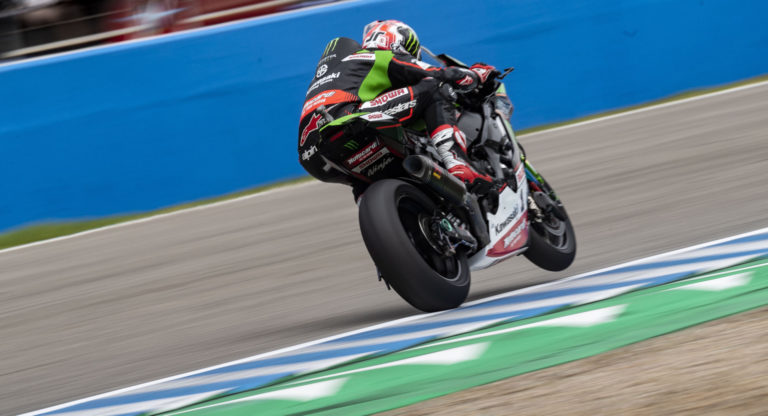
The 2021 MOTUL FIM Superbike World Championship season is in its closing stages as the final European round comes into view at the Autodromo Internacional do Algarve for the Motul Portuguese Round. The Portimao track welcomes the next chapter of the Championship duel and day one saw the advantage go to Jonathan Rea (Kawasaki Racing Team WorldSBK), with the Ulsterman leading a Kawasaki 1-2 in Portugal.
KAWASAKI CONQUER: Rea heads Lowes
It was a strong session for Jonathan Rea (Kawasaki Racing Team WorldSBK), as the master of Portimao topped FP1 on Friday morning before moving on to finish first again in the afternoon. Rea improved with less than six minutes to go to increase his advantage over the rest of the field, completing a solid opening day’s work. Teammate Alex Lowes was third in FP1, with both Kawasakis showing strongly in the cooler temperatures. Lowes improved his overall time in the last 20 minutes of the second session, meaning that he finished in second overall.
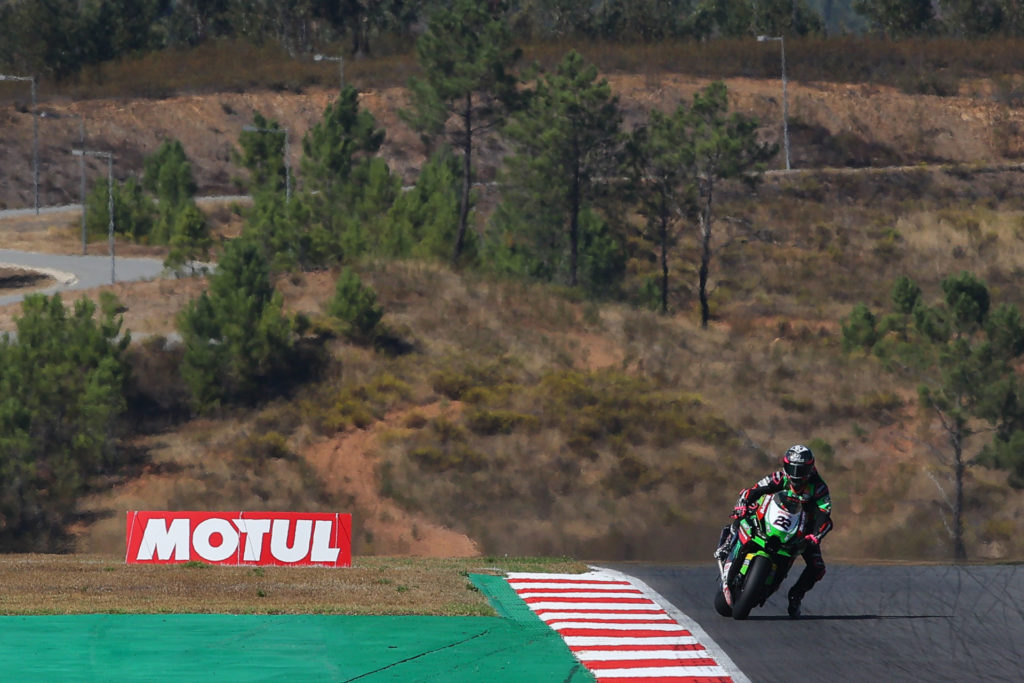
INDEPENDENT CHARGE: top six sensations
Finishing in third at the end of the first day and looking like his old self, Garrett Gerloff (GRT Yamaha WorldSBK Team) was up in third and back on the pace. The American rider was second in FP1 but was only pipped by Lowes in the overall classification come the end of the day. He led the Independent charge as Loris Baz (Team GoEleven) joined him in the top six overall in sixth. The French super-sub, deputising for Chaz Davies, is right on the pace at the circuit where he returned to the podium at last year following a six year wait. Baz set 38 laps, more than anyone else in the top six, getting valuable track time with Ducati Panigale V4 R.
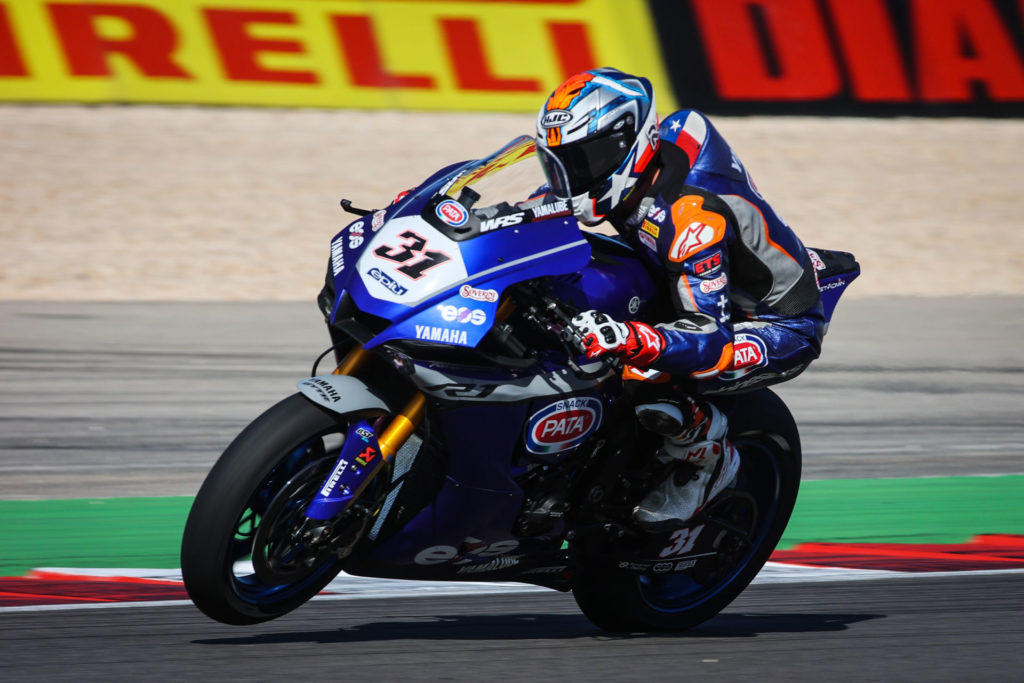
HONDA AND YAMAHA: shining solidly
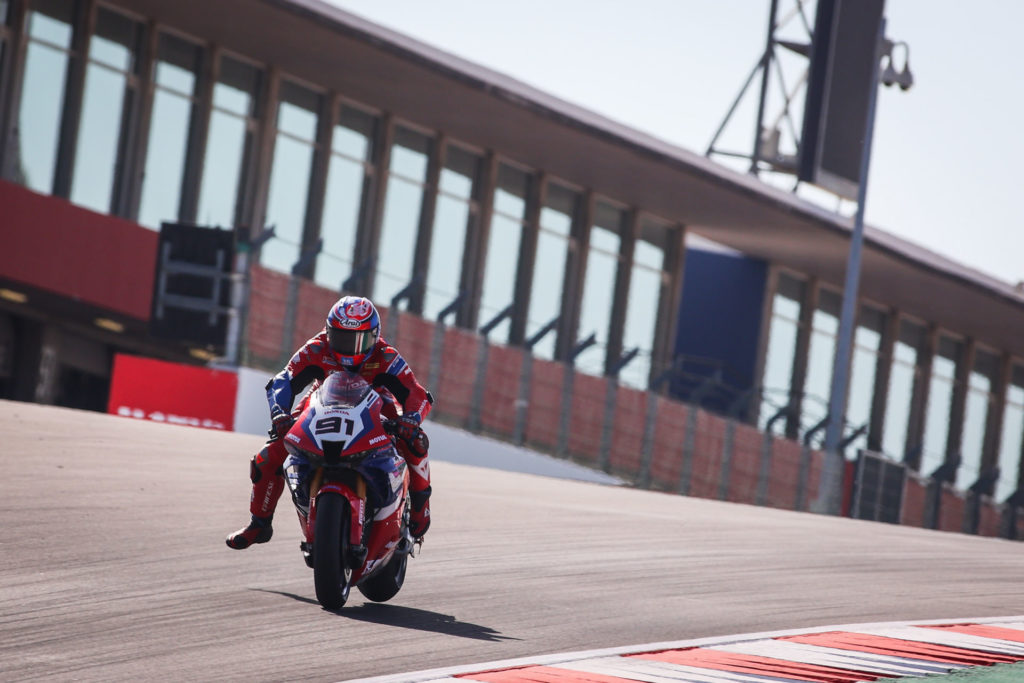
It was a very promising first day at the Portimao office for Honda, with Leon Haslam (Team HRC) one of the biggest improvers compared to the morning time. The ‘Pocket Rocket’ knocked off 1.2s from his morning time, running well inside the top three for the majority of the second half of the second session. On the other side of the garage, the sun was also shining as Alvaro Bautista was up inside the top eight in FP2 and for most of the session, less than half a second from the top spot. Come the conclusion of the first day, Haslam finished in fourth overall, with Bautista in ninth.
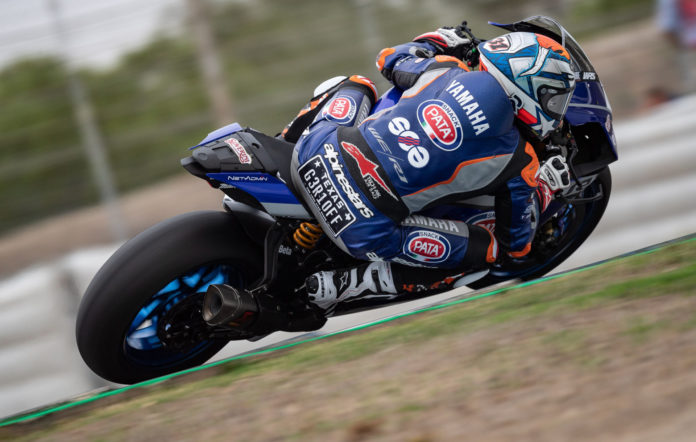
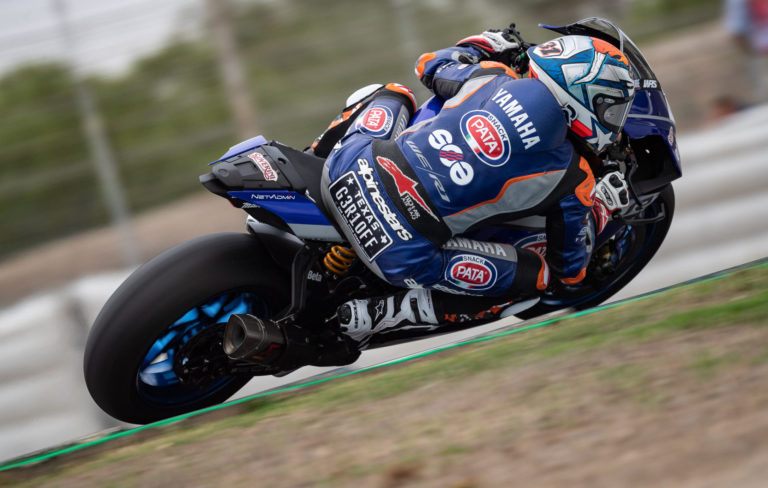
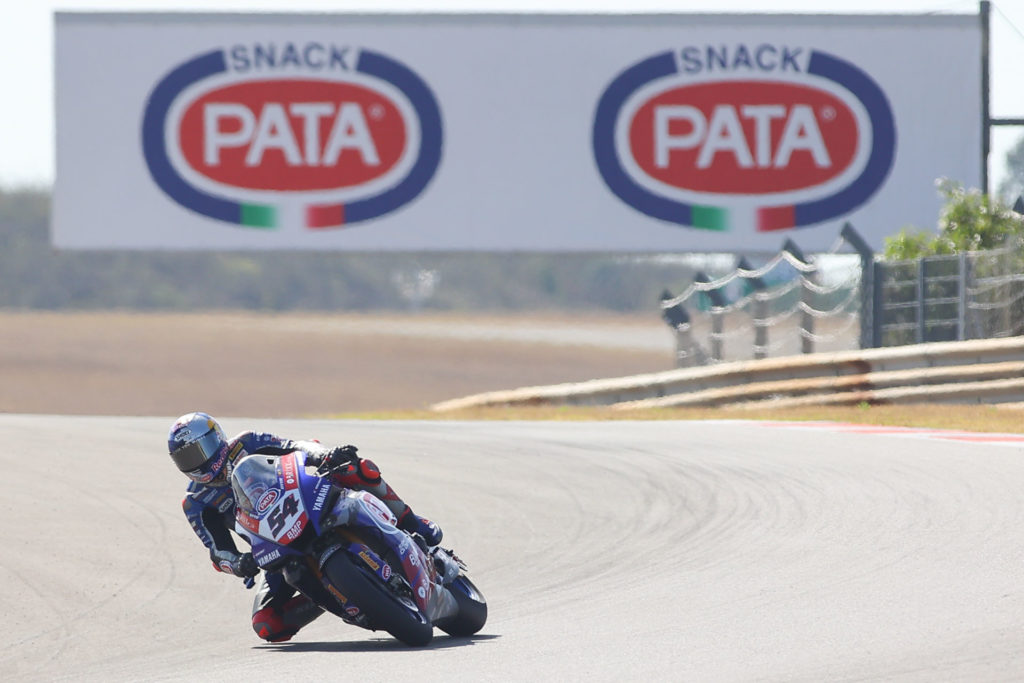
It was a solid day for Yamaha as Toprak Razgatlioglu (Pata Yamaha with Brixx WorldSBK) got his weekend underway. The Championship leader, who sports a 20-point advantage, was fourth in the morning session and was consistently inside the top four in the afternoon. Toprak set highly consistent lap times, with many laps all within a couple of tenths of his fastest time but ultimately, finished fifth. Teammate Andrea Locatelli had quite a quiet day in general, going about his business in the top eight and finishing the day in tenth overall.
WORK TO DO: Ducati and BMW set for Saturday improvements
It wasn’t the easiest first day at Portimao for Ducati, with Scott Redding (Aruba.it Racing – Ducati) placing as top Ducati in the morning in sixth place, whereas teammate Michael Ruben Rinaldi was only 13th. Both were well inside the top ten in FP2 but only Rinaldi was able to improve, as Redding lost time in the pitlane following a technical issue. Getting out for a flying lap at the end of the day and setting his fastest time, Redding finished in seventh come the close of business, whilst Rinaldi was eighth.
Friday saw another tricky start for BMW, with no representation inside the top ten. Michael van der Mark (BMW Motorrad WorldSBK Team) was marginally faster in the afternoon than the morning but consistent too, with both times being in the 1’42.3 bracket. For Eugene Laverty (BMW Motorrad WorldSBK Team), he was back in action in place of the injured Tom Sykes, and finished the day in 15th place, although the Irishman did suffer a technical issue on his final run at the end of FP2.
THE REST: a surprise from afar?
Axel Bassani (Motocorsa Racing) took 12th place as he got to grips with Portimao’s undulations, whilst Isaac Viñales (Orelac Racing VerdNatura) was 13th on his return to WorldSBK action. Leandro Mercado (MIE Racing Honda Team) continued to impress next up in 14th, whilst Jonas Folger (Bonovo MGM Racing) was 16th behind fellow BMW rider Laverty. Kohta Nozane (GRT Yamaha WorldSBK Team), Samuele Cavalieri (Barni Racing Team) and Tito Rabat (Kawasaki Puccetti Racing) completed the top 20, whilst wildcard Gabriele Ruiu (B-Max Racing Team) was next up, ahead of OUTDO TPR Team Pedercini duo Loris Cresson and Lachlan Epis.
American Honda Congratulates Hayden Family on Nicky Hayden’s Motorsports Hall of Fame Induction
2006 MotoGP World Champion receives major mainstream motorsports award
October 1, 2021 — PONTIAC, Michigan
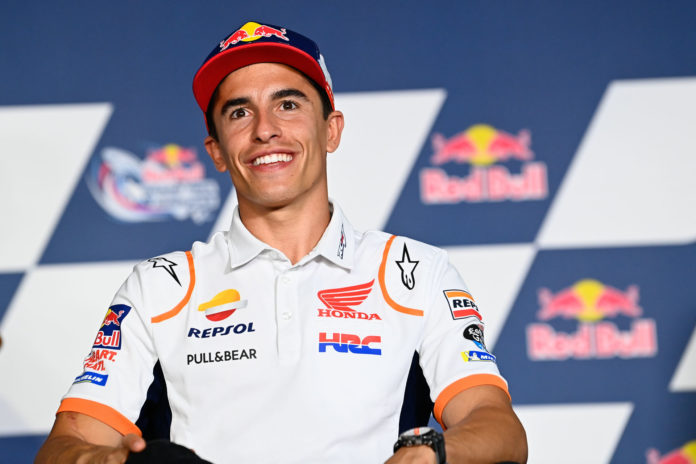
On the occasion of this week’s induction of Nicky Hayden to the Motorsports Hall of Fame of America, American Honda congratulates the family of the late road race and dirt track star. While the Hall of Fame is located at Daytona International Speedway, this year’s ceremony was held at the M1 Concourse in Pontiac, Michigan. The award was presented by former Honda team manager Gary Mathers, and received by Nicky’s younger brother Roger Hayden; Roger also kicked off the event by riding a lap of honor aboard a Repsol edition CBR1000RR while carrying the American flag, as Nicky often did following his major wins.
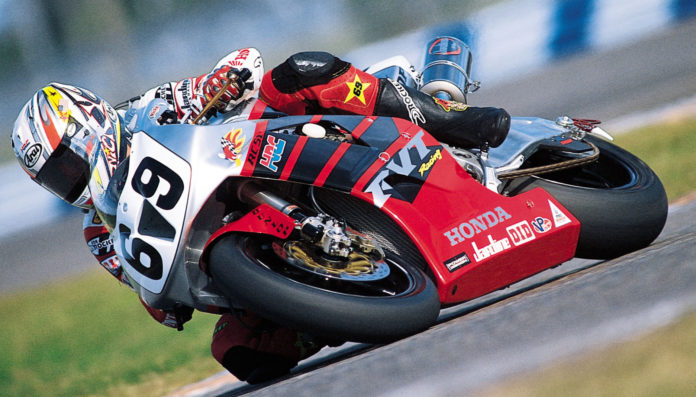
Nicky Hayden rode for American Honda-backed teams in AMA road racing classes between 1999 and 2002, earning the AMA 600 Supersport Championship and AMA Pro Athlete of the Year Award in 1999, and the AMA Superbike Championship and Daytona 200 win in 2002. During part of that tenure, he also rode Hondas in a scrappy AMA Flat Track side project, famously joining brothers Tommy and Roger to lead a Hayden-family podium sweep of the 2002 Springfield TT. Nicky then joined the factory Repsol Honda team in MotoGP from 2003 to 2008, earning the 2006 MotoGP World Championship. He rode for a private Honda MotoGP team in 2014 and 2015, before switching to Honda’s World Superbike team. In 2017, Hayden tragically lost his life in a bicycle accident during a training ride in Italy. In 2018, Hayden was posthumously inducted into the AMA Motorcycle Hall of Fame, one of the motorcycling world’s top recognitions.
This week’s honor is more mainstream, as the Motorsports Hall of Fame of America annually recognizes personalities from the entire world of motorsports – including many forms of auto racing, powerboats, aviation and motorcycles. Other members of Hayden’s class are stockcar driver Davey Allison, land-speed racer John Cobb, drag racer Larry Dixon Jr., Indy and NASCAR trailblazer Janet Guthrie, Indy journalist Robin Miller, powerboat team owner Fran Muncey, NASCAR champion Ray Nichels and famed sports-car racing scorer Judy Stropus. The class of 2020 – including motorcycle dirt track champion Chris Carr – was honored two nights earlier, after last year’s ceremony was postponed due to COVID-19.
“On behalf of the entire motorcycling community, congratulations to the Hayden family for this prestigious recognition of Nicky’s accomplishments on and off the track,” said Bill Savino, Senior Manager of Customer Engagement at American Honda. “The Kentucky Kid will always occupy a place in our hearts – as a racer, but especially as a person – and we’re pleased that the Hall of Fame also recognizes how exceptional he was.”
COPYRIGHT 2021, ROADRACING WORLD PUBLISHING, INC.
Interview: Red Bull KTM MotoGP Factory Rider Brad Binder:
“There Comes A Moment Where It Feels Completely Normal…”
by Michael Gougis
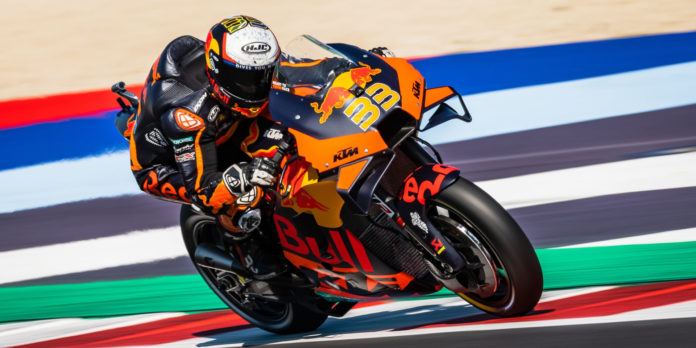
It’s hard to think of Brad Binder as still kind of a rookie. The 2016 Moto3 World Champion already has two MotoGP wins in a very short time in the premier class, and he seems to have been around the paddock for a long time. That is likely because of the attention he’s gotten, as he has spent much of his Grand Prix career near the front, with podiums every year since 2014 and wins in most of those seasons.
Yet the South African finds himself still facing new circuits and new challenges. His premier-class rookie season of 2020 was short and chaotic because of the global COVID-19 pandemic, and he’s just now getting into his second full season of wrestling the mechanical bull known as a MotoGP racebike.
“I’ve only had one and a bit proper seasons under my belt on a MotoGP bike. I still feel like – I’ve never been here on the MotoGP bike,” says Binder, 26, of Potchefstroom, South Africa, as he prepared for the Grand Prix of The Americas, in Austin, Texas.
“And there’s a lot of tracks coming next season – I’ll be going to Philip Island, Japan, Argentina – all of these places for the first time on the MotoGP bike, when I’ll be in my third season! It’s a little bit difficult, a little bit strange. But I think I’ve adapted well to the class, and I understand what I need to do to go fast and where to improve.”
Binder is no stranger to COTA, although he still finds the track a unique challenge on the Championship circuit.
“There’s nothing quite like it,” Binder says of the 3.4-mile, 20-turn track. “I think it’s got the most corners of any track! It’s unique. The grip conditions are really low at the beginning, and it just gets better and better and better. It’s a long, big track, and it’s something I’m really looking forward to.”
This season, the factory Red Bull KTM MotoGP RC16 has proven to prefer hot, slick racetracks, Binder says.
“Sometimes we see that in super-hot conditions we’re more competitive than we are when it’s cooler. In MotoGP it comes down to what the tire allocation is for the weekend. Sometimes the harder rubber suits our KTM a little bit better. Some tracks you can use it, some tracks you can’t,” he says. “The hotter, the more slippery, the more sketchy the track conditions are, the better it is for us.”
With a new fuel coming on-stream in the middle of the 2021 season, the KTM has also added more straight-line speed – not that it was really lacking in that department – to its stout performance under braking. The two, combined, help Binder with his increasingly common Sunday afternoon charge from a starting spot toward the back of the grid to a finishing spot closer to the front than anyone expects.
“Our strongest point on the KTM is definitely our braking performance, which has always been the strongest point for our bike. We have the ability to stop the bike in a shorter space of time than the other guys. We’re able to really push it that little bit harder, which makes things a lot better to fight in the race and make overtakes. That’s one point of the bike that I’m really happy about,” he says. “The biggest difference as far as our top speed goes is the new fuel. It’s nice, it’s great to have that little extra margin. It’s time for free at the end of the day!”
The weak spots, he says, are the obvious one – qualifying – and one that’s harder to spot, simply because in MotoGP, the differences between winning and finishing mid-pack are increasingly small.
“The one point where we need to improve is corner exits, especially coming out of hairpins where you’re in first gear and you’re hooking through the first three-four gears is where we seem to be missing a little bit,” Binder says. “That’s what we’re working on. We’ve got to sort out some small issues, and we’ll be a lot stronger in the upcoming races.”
Qualifying is the next major issue that KTM – and he – have to focus on, he says.
“Normally, if I can do a lap time once, I can do it over and over again. But I struggle to do that one lap that’s much quicker than the rest. I’ve always got good race pace, which always seems to carry me through on the Sunday,” he says.
“As a rider, it’s not my strongest point. It’s something that we’re working on as a team, for sure. It’s not the strongest point for our bike at the moment. But on the other hand, our bike can be consistent over 20 laps. If I had to write one off (race or qualifying), I’d choose qualifying. But I hope for the future we’ll be in a position where we can fight for some pole positions as well.”
Although Binder says he knows there is room for improvement, the past year has seen the pucker factor of just riding a MotoGP machine drop to the point where he can focus on getting the last few percent of performance out of himself and the KTM. He’s come a long way from the wide-eyed rider who hopped off the winning Moto2 machine at Valencia in 2019 and two days later swung his leg over the RC16 at the post-season test.
“The first impression when you get on a MotoGP bike is overwhelming. You don’t know how you’re going to complete a race distance, because it’s so physical, it’s so physically demanding, it’s just so strong, the wheelie and everything is next level. It takes a while to get used to. But then there comes a moment where it feels completely normal. That becomes the norm. There’s no more insane power – of course it’s still there, but it becomes like walking – something you completely adapt to. It took a while, to be honest. But it seems like I’m used to it,” he says.
Editorial Note: This article first appeared in the March 2021 issue of Roadracing World & Motorcycle Technology magazine.
COPYRIGHT 2021, ROADRACING WORLD PUBLISHING, INC.
All Kids Bike: THE POINT OF DEPARTURE
By Michael Gougis
The demographics of motorcycling are a constant point of worry for the industry. Some figures are even worse. Very, very few people get into motorcycling without learning to ride a bicycle. And in the United States, this year, the majority of children will not ride a bicycle this year—not even once.
“The trends are getting scary,” says Ryan McFarland, founder and CEO of Strider Sports International, aka Strider, the producer of balance and beginning bikes. “Three-quarters of American kids aren’t going to ride a bicycle once this year. That’s the whole industry, the whole bike industry, the whole motorcycle industry. It’s all the same ladder, and kids aren’t even getting on the first rung of the ladder anymore.”
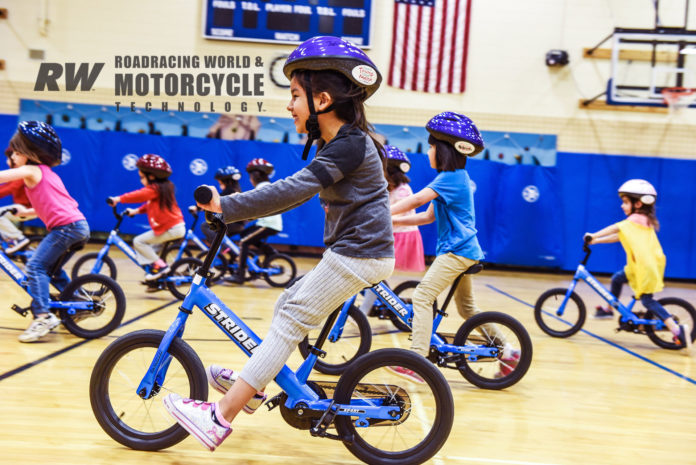
McFarland is doing something about it. He began All Kids Bike, a program to bring bicycle riding into the kindergarten curriculum at many public and non-profit private schools.
In little more than two years, the non-profit program has taught approximately 40,000 children how to ride. Starting with a simple Strider balance bike, in eight lessons the children progress to riding a pedal-propelled bicycle.
And perhaps more importantly, McFarland structured the program to focus on teaching teachers how to conduct the curriculum. Combined with special bicycles to minimize repairs and maintenance, it leverages the program’s efforts, allowing it to reach far more children than McFarland ever could on his own.
Strider’s foundations were personal: “I’m a lifelong motorcycle enthusiast and mountain bike enthusiast. My dad had a motorcycle dealership,” says McFarland, an entrepreneur and fabricator. “When I became a dad, I was super-excited to get my son riding. When he was two years old, I had all kinds of get-riding toys lined up. I had a whole fleet of things because I was so excited!
“Then I realized that these things weren’t helping him to learn to ride. I was watching him enthusiastically try to use these things, but realized they were too heavy, too big, too complex. My wife said give him a year or two, and I said, ‘No, can’t do that!’”
The basic failures of the beginning machines were related to scale, McFarland says. They weighed as much as the two-year-old, with a seat at chest height and gearing that was too tall for toddler leg muscles. So he took a basic 12-inch-wheel bicycle and started chopping until the seat height was appropriate for a two-year-old. With the seat that low, however, it was impossible to operate the pedals.
Then McFarland had his flash of inspiration. “That’s when I really realized that the key to this whole thing was separating propulsion from riding. Riding is balancing two linear wheels while straddling it. You start thinking about propulsion separately. Why not striding and walking? That’s one way of getting something to move,” McFarland says. “What’s the easiest propulsion method for a two-year-old? Walking and running. Feet on the ground, Fred Flintstone-style. Totally safe, totally confident, just focusing on riding the bike.”
McFarland painted it blue to match the Yamaha 450 dirtbike in his garage and slapped some Yamaha stickers on it. Quickly, his son and the homemade Strider bike were inseparable. It was evidence that the idea was sound—so sound that the company, founded in 2007, has now sold over three million units.
Still, McFarland was not unaware of the fundamental changes in childhood sweeping the world. Not even available a generation or two ago, video-based activities have literally created an alternative reality for those born in the last few years, a reality in which their physical bodies are sedentary. In a very real sense, most of the U.S. is coming to grips with a video-generated reality that is beyond the imagination of those who were studying the impact of television on society 60 years ago. The youngest are facing those changes as surely as anyone else.
“What really dialed us in was the urgency of the problem. This stuff is happening fast. How can we address this?” McFarland says he pondered.
His solution: Get as many kids as possible on bikes, as early as possible. That meant reaching kids where they gathered—school—at the youngest age they were going to be there—kindergarten. “Every kindergarten program has a P.E. program, and that’s where we wanted to be,” McFarland says.
Two things were needed. One was an online curriculum to teach teachers how to teach their kindergartners. The other was a somewhat mythical creature—a kid-proof bicycle. McFarland devised a version of Strider’s 14X bike with solid tires and easy-to-adjust handlebars. The bicycles come with a pedal kit that change a balance bike to a pedal bike in three minutes.
The non-profit Strider Education Foundation was incorporated in 2017 as the (pardon the pun) vehicle to collect donations and distribute the curriculum and machines to schools. Since 2018, more than 260 schools in 38 states have adopted the curriculum.
The foundation is looking for donors to support the program. For $5,000 the foundation can provide a fleet of 24 of the children’s bikes, one adult-size bike for the teacher, helmets, the pedal conversion kits, and a five-year support commitment.
It’s all part of McFarland’s plan to save the pastimes about which he is passionate, and to help America’s children lead healthier, happier lives. “Just giving kids a bike isn’t the answer. Teaching them how to ride bikes is the answer. It really does come down to the educational piece,” McFarland says. “Kids need this experience.”
More, from a press release issued by Dorna WorldSBK Press Office:
Rea leads KRT 1-2, Gerloff flies high and Honda show strength on day one at Portimao
Friday, 1 October 2021 15:08 GMT
11 riders covered by less than nine tenths of a second – the Motul Portuguese Round is shaping up to be a thriller
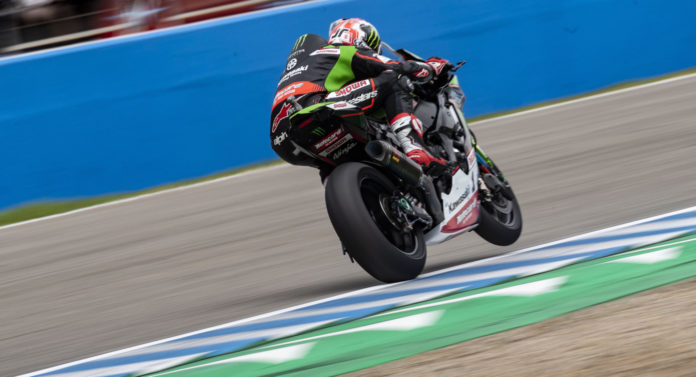
The 2021 MOTUL FIM Superbike World Championship season is in its closing stages as the final European round comes into view at the Autodromo Internacional do Algarve for the Motul Portuguese Round. The Portimao track welcomes the next chapter of the Championship duel and day one saw the advantage go to Jonathan Rea (Kawasaki Racing Team WorldSBK), with the Ulsterman leading a Kawasaki 1-2 in Portugal.
KAWASAKI CONQUER: Rea heads Lowes
It was a strong session for Jonathan Rea (Kawasaki Racing Team WorldSBK), as the master of Portimao topped FP1 on Friday morning before moving on to finish first again in the afternoon. Rea improved with less than six minutes to go to increase his advantage over the rest of the field, completing a solid opening day’s work. Teammate Alex Lowes was third in FP1, with both Kawasakis showing strongly in the cooler temperatures. Lowes improved his overall time in the last 20 minutes of the second session, meaning that he finished in second overall.
INDEPENDENT CHARGE: top six sensations
Finishing in third at the end of the first day and looking like his old self, Garrett Gerloff (GRT Yamaha WorldSBK Team) was up in third and back on the pace. The American rider was second in FP1 but was only pipped by Lowes in the overall classification come the end of the day. He led the Independent charge as Loris Baz (Team GoEleven) joined him in the top six overall in sixth. The French super-sub, deputising for Chaz Davies, is right on the pace at the circuit where he returned to the podium at last year following a six year wait. Baz set 38 laps, more than anyone else in the top six, getting valuable track time with Ducati Panigale V4 R.
HONDA AND YAMAHA: shining solidly
It was a very promising first day at the Portimao office for Honda, with Leon Haslam (Team HRC) one of the biggest improvers compared to the morning time. The ‘Pocket Rocket’ knocked off 1.2s from his morning time, running well inside the top three for the majority of the second half of the second session. On the other side of the garage, the sun was also shining as Alvaro Bautista was up inside the top eight in FP2 and for most of the session, less than half a second from the top spot. Come the conclusion of the first day, Haslam finished in fourth overall, with Bautista in ninth.
It was a solid day for Yamaha as Toprak Razgatlioglu (Pata Yamaha with Brixx WorldSBK) got his weekend underway. The Championship leader, who sports a 20-point advantage, was fourth in the morning session and was consistently inside the top four in the afternoon. Toprak set highly consistent lap times, with many laps all within a couple of tenths of his fastest time but ultimately, finished fifth. Teammate Andrea Locatelli had quite a quiet day in general, going about his business in the top eight and finishing the day in tenth overall.
WORK TO DO: Ducati and BMW set for Saturday improvements
It wasn’t the easiest first day at Portimao for Ducati, with Scott Redding (Aruba.it Racing – Ducati) placing as top Ducati in the morning in sixth place, whereas teammate Michael Ruben Rinaldi was only 13th. Both were well inside the top ten in FP2 but only Rinaldi was able to improve, as Redding lost time in the pitlane following a technical issue. Getting out for a flying lap at the end of the day and setting his fastest time, Redding finished in seventh come the close of business, whilst Rinaldi was eighth.
Friday saw another tricky start for BMW, with no representation inside the top ten. Michael van der Mark (BMW Motorrad WorldSBK Team) was marginally faster in the afternoon than the morning but consistent too, with both times being in the 1’42.3 bracket. For Eugene Laverty (BMW Motorrad WorldSBK Team), he was back in action in place of the injured Tom Sykes, and finished the day in 15th place, although the Irishman did suffer a technical issue on his final run at the end of FP2.
THE REST: a surprise from afar?
Axel Bassani (Motocorsa Racing) took 12th place as he got to grips with Portimao’s undulations, whilst Isaac Viñales (Orelac Racing VerdNatura) was 13th on his return to WorldSBK action. Leandro Mercado (MIE Racing Honda Team) continued to impress next up in 14th, whilst Jonas Folger (Bonovo MGM Racing) was 16th behind fellow BMW rider Laverty. Kohta Nozane (GRT Yamaha WorldSBK Team), Samuele Cavalieri (Barni Racing Team) and Tito Rabat (Kawasaki Puccetti Racing) completed the top 20, whilst wildcard Gabriele Ruiu (B-Max Racing Team) was next up, ahead of OUTDO TPR Team Pedercini duo Loris Cresson and Lachlan Epis.