Ready for the challenge – Repsol Honda Team launch 2021 campaign
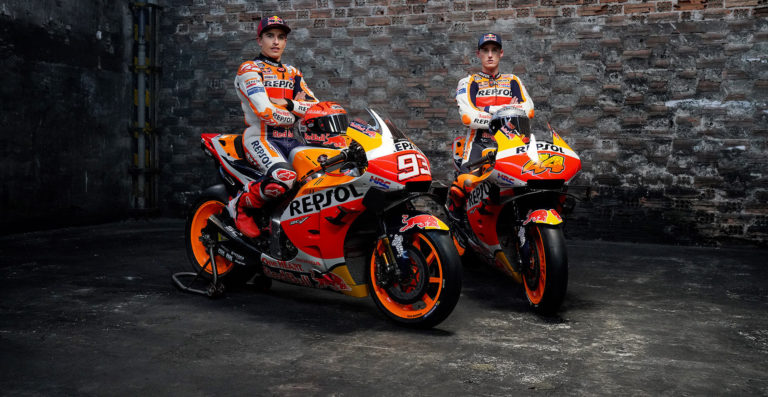
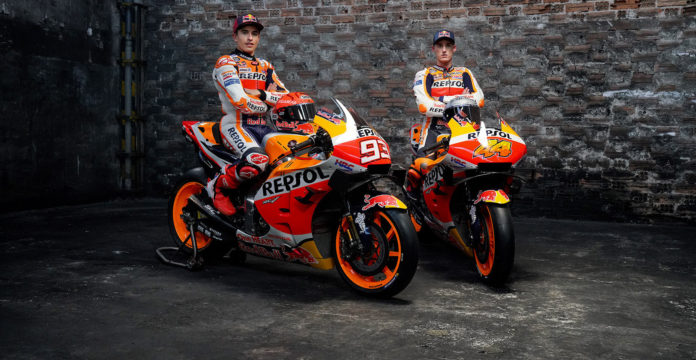
Marc Marquez and Pol Espargaro prepare for all new challenges in 2021 with the Repsol Honda Team.
After a season like no other, both on and off the track, 2021 presents the MotoGP World Championship with a chance to rally in the face of adversity and forge ahead. With a difficult 2020 behind them, the Repsol Honda Team are also out to reset and show they are ready for any challenge. Marc Marquez is joined on this challenge by Pol Espargaro, fresh from his best premier class season to date. The pair have grown up racing together, battling from local championships in Spain to the premier class and bring with them 446 World Championship starts, 184 podiums, 109 poles and 97 wins.
With the world still working to overcome to Covid-19 pandemic, the Repsol Honda Team have launched their 2021 challenge with a fully online presentation for the first time in Honda’s history. A new style presentation for a year set to be full of new challenges.
The 2013 Moto2 World Champion, Pol Espargaro, achieves a life-long dream in 2021 as he wears the Repsol Honda Team colours aboard the factory Honda RC213V. With over 100 premier-class starts, the 29-year-old is among the most experienced riders in MotoGP and arrives in the best form of his career. Fighting to fifth in the World Championship standings with five podiums and two pole positions, Pol brings not only experience but an undeniable fire to succeed to the team.
For Marc Marquez, the 2021 season is a new beginning as he is set to return from his season-ending injury sustained in Jerez. Focusing exclusively on his recovery from a broken right humerus, the eight-time World Champion has been working diligently to return to his best and comeback strong for the 2021 season. A champion’s spirit drives Marquez to succeed at everything he does.
The iconic Repsol Honda Team livery will be another constant in 2021 as Repsol and Honda continue their more than quarter of a century long partnership. With 180 premier class wins, 447 premier class podiums and 15 World Championships, the combination is without doubt the most decorated in Grand Prix Racing and is determined to return to these levels of success.
The Repsol Honda Team will now travel to Qatar for the MotoGP pre-season where Pol Espargaro will get his first taste of the Honda RC213V. Marc Marquez will not attend the Qatar Test as he continues to focus on his recovery.
Tetsuhiro Kuwata
HRC Director – General Manager Race Operations Management Division
“We enter another season full of anticipation and desire. After what has been a difficult 2020, we are continuing to learn and to work to return to the top of championship. From the technical side, HRC have been working as hard as always to keep improving the RC213V. We have a new rider in the shape of Pol Espargaro this year who brings good experience and a desire for victory. We are all eagerly awaiting the first test with him. On Marc’s side, we have been closely following his recovery and will continue to do everything we can to support him to return as strong as possible.
“Finally, I would like to thank Repsol and all of our sponsors for their continued support. Without them we would be unable to go racing, they are not just sponsors but partners on this great challenge.”
Ana Camps
Sponsoring, Media, Advertising and PR Deputy Director – Repsol
“We of course look forward to achieving the results that have always been our trademark, like fighting for victories, podiums and championships. This is the reason why, after more than 25 years, we continue side by side with the best partner in MotoGP, Honda. The alliance between our two companies goes beyond a sponsorship agreement and is based on technology: collaboration between Honda’s facilities in Saitama and the Repsol Tech Lab in Madrid.
“Our Tech Lab scientists apply the most avant-garde technology to our fuels and lubricants, and we take advantage of all the knowledge that high competition provides for our Repsol products. We know that Marc is an extraordinary rider and a unique person with a great ability to overcome anything, so we have no doubt that he will soon amaze us again. Marc, of course, has all our support to achieve the goals he pursues.
“We also look forward to the arrival of a new rider, Pol Espargaro. He is a great professional and a mature rider and will now have an opportunity to prove his amazing talent.”
Marc Marquez
“After a long time away it was nice to see my bike again and wear my leathers. 2020 was a difficult year for everyone and especially for me with the injury and watching the races from home. But I have continued to work with the doctors, with my team and with myself to recover and return to MotoGP. Of course, I would have liked to return sooner, but it is very important to listen to the doctors and my body until I am fully fit. I can imagine the best comeback that is to start riding again the bike and be the same, but it will be difficult to be like this. But we will see if it takes one race, two races, half the season to be the same Marc. I will not be at the Qatar Test as I aim to return only when I am 100% and there is still some work to do.”
Pol Espargaro
“The lead up to this season has been one of the most exciting of my career, it’s been like waiting for my first season or my MotoGP debut. To ride for the Repsol Honda Team is every rider’s dream and something to be truly proud of. Every few weeks I have taken another step, seeing the bike at my home, now wearing the leathers. The final step is to ride the RC213V for the first time at Qatar, this excitement is motivating me to train more and be the best I can be for the 2021 World Championship. I am here in the Repsol Honda Team in order to achieve success and fight at the top, this is the goal for 2021.”
HARLEY-DAVIDSON REVOLUTION MAX 1250 ENGINE TUNED FOR ADVENTURE
All-New Liquid-Cooled V-Twin to Power Pan America 1250 and Pan America 1250 Special
MILWAUKEE (February 22, 2021) – The Harley-Davidson® Pan America™ 1250 and Pan America™ 1250 Special models are powered by the all-new Revolution® Max 1250 engine, a liquid-cooled V-Twin designed to offer flexible, engaging performance with a broad powerband that builds to a rush of high-RPM power surging through the redline. The Revolution Max 1250 engine has been tuned specifically to deliver desirable power characteristics for the Pan America 1250 and Pan America 1250 Special models, with an emphasis on smooth low-end torque delivery and low-speed throttle control applicable to off-road riding.
“Through its history Harley-Davidson has embraced technological evolution while respecting the heritage of our brand, with engines that produce real-world performance for real-life riders,” said Harley-Davidson Chief Engineer Alex Bozmoski. “The Revolution Max 1250 is a clean-sheet, advanced-design effort that will carry Pan America riders over new horizons with reliability, efficiency, and exciting performance.”
A focus on performance and weight reduction drove both vehicle and engine architecture, material choices, and aggressive component design optimization. To minimize overall motorcycle weight the engine is integrated into the vehicle as the central member of the chassis. The use of lightweight materials helps achieve a desirable power-to-weight ratio.
The Revolution Max 1250 engine is assembled at the Harley-Davidson Pilgrim Road Powertrain Operations facility in Wisconsin.
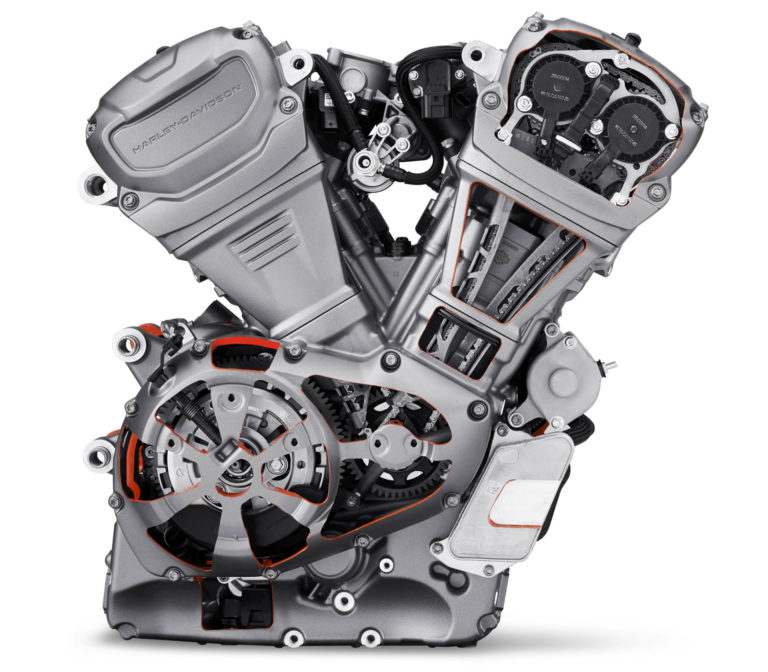
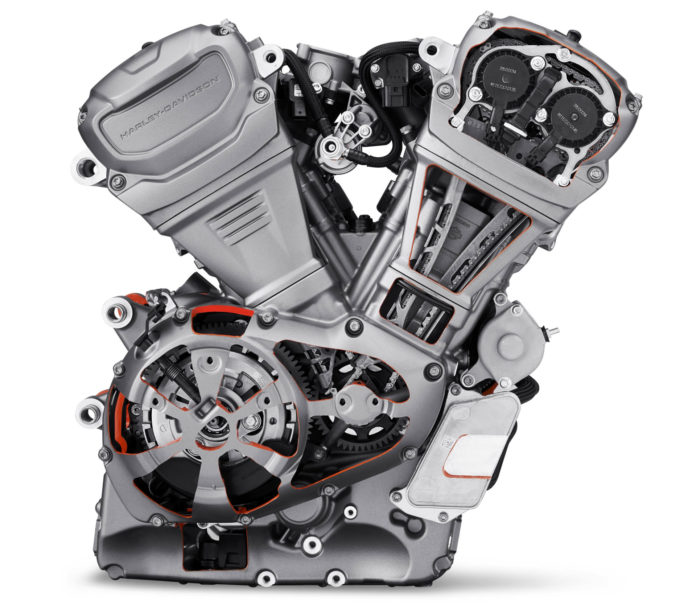
Harley-Davidson’s new Revolution Max 1250 V-Twin engine with sections cut away to display the internal parts. Photo courtesy Harley-Davidson.
Revolution® Max 1250 Engine
Displacement: 1250cc
Bore x Stroke: 4.13 in. (105 mm) x 2.83 in (72 mm)
Horsepower: 150hp
Peak Torque: 94 ft. lbs.
Peak RPM: 9,500
Compression Ratio: 13:1
Another view of Harley-Davidson’s new Revolution Max 1250 V-Twin engine with sections cut away to display the internal parts. Photo courtesy Harley-Davidson.
Revolution® Max 1250 Engine Technical Features
V-Twin Architecture
A V-Twin design provides a narrow powertrain profile that centralizes mass to enhance balance and handling, and also provides ample foot/leg room for the rider.
A 60-degree V angle of the cylinders keeps the engine compact while providing space between the cylinders for dual down-draft throttle bodies that maximize air flow and increase performance.
Optimized Design for Light Weight
Reducing the weight of the powertrain contributes to lower motorcycle weight – reducing weight can enhance every aspect of motorcycle performance: efficiency, acceleration, handling and braking.
The use of finite element analysis (FEA) and advanced design optimization techniques in the engine design stage minimized material mass in cast and molded components. For example, as the design progressed, material was removed from the starter gear and camshaft drive gears in an effort to lighten these components.
Single-piece aluminum cylinders with nickel silicon carbide-surface galvanic coating are a lightweight design feature.
Rocker covers, camshaft covers and primary cover are lightweight magnesium.
Stressed Member Powertrain
The Revolution Max 1250 powertrain is a structural component of the motorcycle chassis.
The engine serves two functions – providing power and acting as a structural element of the chassis.
Eliminating a traditional frame significantly reduces motorcycle weight and results in a very stiff chassis.
A front frame element, mid frame element and the tail section bolt directly to the powertrain.
The powertrain is designed to be both strong and very rigid so that it can effectively function as a chassis component.
The rider realizes optimized performance due to a significant weight savings, a rigid chassis and mass centralization.
A front view of Harley-Davidson’s new Revolution Max 1250 V-Twin engine with sections cut away to display the internal parts. Photo courtesy Harley-Davidson.
Liquid Cooling
Heat is an enemy of both durability and rider comfort. Liquid cooling the engine maintains a stable and controllable engine and oil temperature for consistent performance in changing environmental and riding situations.
Powertrain performance is enhanced by tight component tolerances that can be achieved when engine temperature is controlled (there is less expansion and contraction of metal parts).
Desirable engine sounds – a stirring exhaust tone – can predominate because noise from internal engine sources is reduced by liquid cooling.
The engine oil is also liquid cooled, which ensures that engine oil performance and durability will be maintained in challenging conditions.
The cooling system is designed to be esthetically pleasing, easy to service and rugged.
The coolant pump is internal and features high-performance bearings and seals for extended service life.
Coolant passages are integrated into a complex stator cover casting to save weight and reduce powertrain width.
A coolant drain plug is recessed and guarded by a foot peg to limit vulnerability to damage in off-road riding situations.
Offset Connecting Rod Journals
The two crankshaft connecting rod journals are offset by 30 degrees. Harley-Davidson leveraged its extensive experience in flat track racing to help inform the cadence of Revolution® Max 1250 engine power pulses.
The 30-degree offset creates a 90-degree firing order that produces a smooth power delivery, especially at higher RPM.
The cylinders are offset slightly to accommodate the crankshaft design, with the rear cylinder positioned to the rider’s left on the crankcase, a choice made to enhance ergonomics.
The rider may gain control and confidence because the power pulses of a 90-degree firing order may improve traction in some off-road riding situations.
The 90-degree firing order produces a stirring exhaust beat.
Forged Aluminum Pistons
Piston crowns are machined for precise control of compression ratio. The 13:1 compression ratio improves engine torque at all speeds. This high compression ratio is made possible by advanced knock detection sensors. The engine will require premium-grade (91 octane) fuel to make maximum power, but will run on lower-octane fuel and is protected from detonation by the knock sensor technology.
The base of the piston is chamfered so no piston ring compression tool is required for installation.
The piston skirt has a low-friction coating.
Low-tension piston rings reduce friction, which improves performance.
The top ring land is anodized to enhance durability.
Oil cooling jets are aimed at the bottom of the pistons to help dissipate combustion heat.
Four-Valve Cylinder Heads
Four-valve cylinder heads (two intake and two exhaust) permit the largest-possible valve area.
The rider realizes an optimal performance profile for adventure touring – strong bottom-end torque with a smooth transition to peak power – because the flow of gasses through the combustion chamber is optimized to match the desired performance requirement and engine displacement.
The exhaust valves are sodium-filled to better dissipate heat.
Suspended oil passages within the heads are made possible by a complex casting technique, and reduce weight because the head wall thickness is minimized.
The cylinder heads are cast from high-strength 354 aluminum alloy. Because the heads act as a chassis mounting point, they are designed to be flexible at that mounting point but rigid over the combustion chamber. This is accomplished in part through targeted heat treating.
Double Overhead Camshafts (DOHC)
The Revolution Max 1250 engine is equipped with separate intake and exhaust camshafts for each cylinder.
The DOHC design facilitates higher-RPM operation by reducing valve train inertia, which produces higher peak horsepower.
The DOHC design permits independent Variable Valve Timing (VVT) on the intake and exhaust cam, optimized for the front and rear cylinder, to broaden the powerband.
Specific cam profiles are selected to produce the most-desirable performance characteristics.
The drive-side camshaft bearing journal is part of the drive sprocket, a design that makes it possible to remove the camshaft for service or a future performance upgrade without disassembling the camshaft drive.
The camshaft drive chain guides and sprockets have been optimized to reduce as much mass as possible. The chain tensioner is internally mounted and incorporates design features to minimize start-up clatter.
Hydraulic Lash Adjusters
The Revolution® Max 1250 engine features roller-finger valve actuation with hydraulic lash adjusters.
This design ensures that the valves and valve actuators (“fingers”) are in constant contact as engine heat changes.
The hydraulic lash adjusters make the valve train maintenance-free, saving the owner time and cost – there is no mechanical adjuster.
This design realizes a reduction in undesirable valve train noise, especially on cold starts.
This design maintains consistent pressure on the valve stem, which facilitates more-aggressive camshaft profiles which can boost performance.
Variable Valve Timing (VVT)
The Revolution Max 1250 engine is equipped with computer-controlled Variable Valve Timing (VVT) on both the intake and exhaust camshafts.
Through computer control, VVT advances or retards exhaust and intake camshaft timing independently through a potential range of 40 degrees of crankshaft rotation.
VVT broadens the overall powerband and improves torque management and efficiency compared to the same engine with fixed valve timing. This allows the same engine to provide both low-end grunt for acceleration off the line as well as the thrill of high-RPM horsepower.
VVT may improve fuel efficiency and increase range from each tank of fuel.
The timing phaser is located between the cam drive sprocket and the camshaft, and uses a solenoid plunger to control ported hydraulics that change the cam timing.
When the engine is shut down, VVT sets intake cams to full retard and exhaust cams to full advance to reduce compression for easier starting.
Camshaft position pick-ups are located in the valve covers.
Dual Spark Plugs
The Revolution Max 1250 engine is equipped with two spark plugs per cylinder.
Dual spark plugs improves ignition of the fuel charge across this wide-bore cylinder.
The Revolution® Max 1250 engine is equipped with “dual side strap” spark plugs that are designed to better manage high temperatures in the combustion chambers than a standard spark plug.
Dual Down-Draft Throttle Bodies
Separate throttle bodies are located between the cylinders, positioned to create minimal turbulence and impedance to air flow.
High-velocity air flow into the combustion chamber is optimized for improved performance.
Fuel delivery can be optimized individually for each cylinder, which can improve economy and range.
The central location of the throttle bodies permits the ideal position of an 11-liter airbox over the engine. Airbox capacity is optimized for engine performance.
The airbox is shaped to permit use of tuned velocity stacks over each throttle body that utilize inertia to pack more air mass into the combustion chamber, which can increase power output.
The airbox is formed of glass-filled nylon with integrated internal ribs that help quell resonance and muffle intake noise. A forward-facing intake snorkel directs intake noise away from the rider. Silencing intake noise permits desirable exhaust tone to predominate.
The circular base of the washable conical air filter provides an optimal seal to the airbox.
Robust Oiling System
The engine oiling system is scaled to perform well in challenging conditions.
The engine features a dry sump oiling system, with the oil reservoir (or sump) incorporated into the crankcase casting below all rotating parts. This increases performance by reducing the parasitic power loss that can occur when a rotating part must pass through an oil bath.
Triple oil scavenge pumps evacuate excess oil from three engine cavities – crankcase, stator cavity and clutch cavity. The rider gains optimal performance as parasitic power loss is reduced because internal engine components do not have to rotate through excess oil.
A windage tray prevents the clutch from aerating engine oil, which could degrade oil delivery.
The oil feed pump is fitted with a large-capacity screen able to filter debris for the lifespan of the motorcycle.
The oil pump is designed to pull vacuum in the crankcase, which can further reduce internal engine friction because lighter piston ring pressure is required to minimize combustion blow-by.
Oil delivery to main bearings and connecting rod bearings is delivered through the center of the crankshaft, a design that enables low oil pressure (60-70 psi) that reduces parasitic power loss at high RPM.
Fully Balanced Powertrain
Internal balancers cancel most engine vibration to enhance rider comfort and improve vehicle durability.
Primary balancer: This spiral-shaped, chain-driven balancer located in the crankcase manages the primary vibration created by the crank pins, pistons and connecting rods, and also a “rolling couple,” or side-to-side imbalance, caused by the off-set cylinders.
Secondary balancer: A small balancer located in the front cylinder head between the camshafts complements the primary balancer to further reduce vibration.
The balancers are tuned to retain just enough vibration to make the motorcycle feel “alive.”
Engine balancing contributes to weight reduction and motorcycle performance because engine components do not have to be designed to withstand stress inputs from vibration.
Clutch and Transmission
The Revolution® Max is a unitized powertrain, meaning that the engine and six-speed transmission are housed in a common case.
The clutch is mechanically actuated with a large-diameter cable for smooth, consistent disengagement and minimal drag.
The clutch assist function offers a lighter feel at the clutch lever while maintaining the ability to transmit full torque and power to the transmission.
The clutch features eight friction plates designed to provide consistent engagement at maximum torque throughout the life of the clutch.
A clutch slipper function enables the rider to downshift without over-speeding the engine or slipping or hopping the rear wheel.
To minimize NVH (noise vibration harshness) the primary gear assembly was designed to achieve the optimal balance of sound quality and performance. A custom-designed scissor gear reduces both backlash and gear meshing noise.
Compensation springs in the primary gear smooth out torque pulses from the crankshaft before they reach the transmission, providing consistent torque delivery.
The six-speed transmission shift system features roller bearings to support the shift drum and Teflon-coated shift shaft support bushings to minimize frictional losses and optimize shift quality.
Internal shift components are durable but also as light as possible to improve shift quality and acceleration by minimizing power losses during shift events.
The semi-dry transmission cavity reduces parasitic power loss and increases fuel economy for the customer because gears are not churning through oil.
Harley-Davidson, Inc. is the parent company of Harley-Davidson Motor Company and Harley-Davidson Financial Services. Our vision: Building our legend and leading our industry through innovation, evolution and emotion. Our mission: More than building machines, we stand for the timeless pursuit of adventure. Freedom for the soul. Our ambition is to maintain our place as the most desirable motorcycle brand in the world. Since 1903, Harley-Davidson has defined motorcycle culture by delivering a motorcycle lifestyle with distinctive and customizable motorcycles, experiences, motorcycle accessories, riding gear and apparel. Harley-Davidson Financial Services provides financing, insurance and other programs to help get riders on the road. www.harley-davidson.com.
EXPLORE ENDLESS HORIZONS: NEW HARLEY-DAVIDSON PAN AMERICA 1250 AND PAN AMERICA 1250 SPECIAL MOTORCYCLES DEBUT
Built to Endure, Designed to Explore, and Engineered for Adventure
MILWAUKEE (February 22, 2021) – The Pan America™ motorcycle is Harley-Davidson’s explore-it-all machine for riders who see touring as detouring – on road and off. This rugged, powerful, technologically advanced multi-purpose vehicle is designed from the ground up to inspire rider confidence and fuel the spirit of adventure, wherever the road may take you.
Harley-Davidson has leveraged its cutting-edge design and engineering capabilities to create the Pan America 1250 and Pan America 1250 Special, all-new, adventure-touring motorcycles, each designed with premium features, outstanding performance and innovative technology.
The left-side view of a 2021 Harley-Davidson Pan America 1250. Photo courtesy Harley-Davidson.
“From its inception more than a century ago, when many roads were little more than dirt trails, Harley-Davidson has stood for adventure. So, I’m very proud to present Pan America as the first adventure touring bike designed and built in America,” said Jochen Zeitz, chairman, president and CEO Harley-Davidson. “The Pan America models exude that go-anywhere spirit, shared today by riders in the US and around the globe who want to experience the world on a motorcycle.” That same adventurous spirt is deeply shared by actor and brand ambassador, Jason Momoa, who is joining creative forces with the Company to bring Pan America’s passion for adventure to the world.
Pan America 1250 and Pan America 1250 Special models are powered by the new 150hp Revolution® Max 1250 engine, a liquid-cooled 1,250cc-displacement V-Twin designed to offer a broad powerband that builds to a rush of high-RPM power. To minimize overall motorcycle weight (Pan America 1250 534lb. wet/Pan America 1250 Special 559lb. wet), the Revolution Max engine is integrated into the vehicle as the central member of the chassis.
The right-side view of a 2021 Harley-Davidson Pan America 1250. Photo courtesy Harley-Davidson.
Pan America models are equipped with technologies designed to enhance the riding experience, including multiple electronically controlled ride modes plus Cornering Rider Safety Enhancements. This broad collection of technologies is designed to match motorcycle performance to available traction during acceleration, deceleration and braking. The Pan America 1250 Special model is equipped with electronically adjustable semi-active front and rear suspension. As an industry-first innovation, Pan America is equipped with Adaptive Ride Height (ARH), a revolutionary new suspension system which automatically transitions between a low stopped position and optimal ride height when the motorcycle is in motion.
Harley-Davidson design and engineering teams collaborated throughout the process of creating and refining the Pan America™ 1250 and Pan America™ 1250 Special models with a vision guided by utility. Like a good multi-tool, function leads the form of these Harley-Davidson® models. From grab handles to integrated luggage mounts, to a horizontal headlamp configured to better illuminate an off-road trail, function defines style. Inspired by the spirit of rugged North American off-road versatility, the Pan America 1250 and Pan America 1250 Special models stand out visually in the adventure touring landscape, with design that reflects the capability of the motorcycles.
Harley-Davidson® dealers will offer a complete line of accessories for the Pan America 1250 and Pan America 1250 Special models, including three durable luggage systems, and new technical riding gear for men and women developed in collaboration with respected European motorcycle apparel specialist, REV’IT!.
The Pan America 1250 and Pan America 1250 Special models will arrive at Harley-Davidson dealerships in Spring 2021.
A 2021 Harley-Davidson Pan America 1250 in action. Photo courtesy Harley-Davidson.
PAN AMERICA 1250 MODEL
The Harley-Davidson® Pan America 1250 model is a rugged, powerful, technologically advanced multi-purpose motorcycle designed for riders ready to embrace real-life adventure. The riding experience is capable and intuitive, on a motorcycle that stays composed and confident wherever your adventure takes you.
Optimized Chassis
A focus on performance and minimizing weight drove both vehicle and engine architecture, material choices, and aggressive component design optimization, all with the goal of achieving a desirable power-to-weight ratio. The powertrain is a stressed member of the chassis, eliminating the traditional frame. Three distinct elements – the front frame, the mid frame and the tail section – bolt directly to the powertrain. This design reduces motorcycle weight and results in a stiff chassis that contributes to precise handling. The cast-aluminum swingarm minimizes unsprung weight. The chassis is designed with a 62.2-inch wheelbase, ideal for touring capability (especially with a passenger and loaded luggage) and agile handling required for off-road maneuverability.
Cast aluminum wheels (19-inch front and a 17-inch rear) are designed to be strong, yet light weight, intended for use on paved roads and un-paved surfaces, such as gravel roads and fire roads. Harley-Davidson and Michelin collaboratively designed a Scorcher Adventure tire for the Pan America models to meet the demands associated with adventure touring. Michelin Anakee Wild tires with an aggressive “knobby” tread pattern will be offered through Harley-Davidson® Genuine Motor Parts & Accessories for riders seeking maximum off-road traction and a bold style profile.
Brembo® Braking
Harley-Davidson and Brembo collaborated on an all-new braking system for the Pan America™ models that is designed to provide the rider with outstanding braking feel and performance. A new radial monoblock four-piston (30 mm) caliper takes full advantage of the material characteristics to increase stiffness while reducing overall weight. Dual front brake rotors are 320mm in diameter; single rear-brake rotor is 280mm diameter. A new lightweight front brake master cylinder offers adjustable lever response.
Adjustable Suspension
The Pan America 1250 model features premium passive front and rear suspension that is fully adjustable for pre-load and compression/rebound damping. Suspension travel front and rear is 7.48 inches (190mm). Front suspension is provided by a SHOWA® 1 by 1 47mm inverted cartridge fork. Rear suspension is a SHOWA® Piggyback reservoir shock with adjustable hydraulic preload. The rear suspension incorporates a linkage system which provides a progressive feel through the stroke and maintains a comfortable, compliant ride on-road, while providing superior support for off-road conditions.
Touchscreen Display
All instrumentation and infotainment functions are displayed on a tilting 6.8-inch TFT touchscreen (thin-film-transistor, a type of liquid-crystal display noted for high image quality and contrast). Its non-reflective glass cover makes it easier to view in most lighting conditions. The touchscreen function is disabled when the motorcycle is in motion, but the rider can use hand controls to manage many functions of the screen display when the motorcycle is moving. The display supports infotainment generated by the rider’s Bluetooth-equipped mobile device, including music and calls. Navigation is supplied by the free Harley-Davidson® App for iOS or Android.
Cornering Rider Safety Enhancements
The Pan America 1250 model is equipped with Cornering Rider Safety Enhancements, a collection of technologies designed enhance rider confidence during unexpected situations or poor road conditions. The systems are electronic and utilize the latest chassis control, electronic brake control and powertrain technology. Cornering enhanced technology utilizes an inertial measurement unit, IMU, for optimal intervention when the motorcycle is leaned compared to when the motorcycle is upright. Elements of Cornering Rider Safety Enhancements for the Pan America 1250 model include: Cornering Enhanced Electronically Linked Braking, Cornering Enhanced Antilock Braking System, Cornering Enhanced Traction Control System, Cornering Enhanced Drag-Torque Slip Control System, and Hill Hold Control.
Ride Modes
Selectable Ride Modes electronically control the performance characteristics of the motorcycle, and the level of technology intervention. Five modes are available on the base model (4 are pre-programmed and one can be customized). The Pan America™ 1250 Special model has two additional modes that can be customized by the owner. Pre-programed ride modes for the Pan America 1250 models include Road, Sport, Rain, Off-Road and Off-Road Plus. Each Ride Mode consists of a specific combination of power delivery, engine braking, Cornering Enhanced Antilock Braking System (C-ABS) and Cornering Enhanced Traction Control System (C-TCS) settings. The rider may use the MODE button on the right-hand controller to change the active ride mode while riding the motorcycle or when stopped, with some exceptions.
Additional Pan America™ 1250 Model Features
The lightweight exhaust system is crafted from corrosion-resistant 304-series stainless steel and designed to meet global emissions (including Euro V) and sound regulations without compromising durability or the performance experienced by the rider. The catalyst is located as close to the engine as possible to minimize its size and weight and also keep heat away from the rider. A pair of mufflers – one below the engine and the second on the right side of the motorcycle – adds volume to the exhaust system, which allows effective sound muffling with minimal back pressure, which improves performance. The exhaust system is designed to create clearance under the motorcycle to limit potential impact damage during off-road riding, and to not compromise lean angle.
The rider portion of the seat has a high and low position which allows the rider to achieve a better fit on the motorcycle. Seat height adjustment does not require tools. Unladen seat height is 34.2 inches in the low position and 35.2 inches in the high position.
A four-position windscreen can be adjusted with one hand, using a lever adjacent to the display screen, through a range of 1.8 inches to best match rider stature, preference or changing environmental conditions.
Cruise control is standard equipment.
A lightweight aluminum fuel tank holds 5.6 gallons for extended riding range. The fuel filler is located forward on the top of the tank so it will not be covered by most tank bags, making it easier to fuel up with a bag in place. The fuel tank is shaped to optimize the capacity of the engine intake airbox, which is located below the tank.
The Pan America™ 1250 model features all-LED lighting designed to deliver signature style and outstanding performance with and additional focus on rugged durability in the off-road environment. The Daymaker® Signature LED headlamp has been designed using new photometric analysis technology to produce outstanding “punch” down the road with a very homogenous spread of light; eliminating distracting “hot spots.”
The front turn signals are positioned to be protected by the brush guard during off-road riding.
Paint Color: Vivid Black, River Rock Gray with Medallion
The right-side view of a 2021 Harley-Davidson Pan America 1250 Special. Photo courtesy Harley-Davidson.
PAN AMERICA 1250 SPECIAL MODEL
The Pan America 1250 Special model is a premium adventure touring motorcycle loaded with the following additional exclusive features:
Semi-Active Front and Rear Suspension with Vehicle Load Control
The Pan America™ 1250 Special model is equipped with electronically adjustable semi-active front and rear suspension. Utilizing data provided by sensors on the motorcycle, this suspension system automatically controls damping to suit the prevailing conditions and riding activity. These suspension components are provided by SHOWA, while the control software was developed by Harley-Davidson. The Vehicle Loading Control system senses the weight of the rider, a passenger and luggage to select optimal suspension sag by automatically adjusting rear preload. Unladen seat height is 33.4 inches in the low position and 34.4 inches in the high position.
Tire Pressure Monitoring System (TPMS)
The TPMS displays current front and rear tire pressure on the on the color display screen and displays an indicator to alert the rider when tire pressure is low, and the pressure should be checked. Maintaining proper tire air pressure is important both for vehicle performance and tire life.
Center Stand
The center stand supports the parked motorcycle in an upright position. With the center stand deployed the parked motorcycle takes up less space than it would leaning on its side stand, a benefit when garage space is tight. The stand also raises the rear wheel off the ground to facilitate maintenance and tire changes, at home or in the backcountry.
The left-side view of a 2021 Harley-Davidson Pan America 1250 Special. Photo courtesy Harley-Davidson.
Multi-Position Rear Brake Pedal
Without using tools, the rear-brake foot pedal height can be changed between two positions to improve control and comfort when the rider is standing. Standing while riding through off-road terrain can improve control of the motorcycle and improve rider’s vision of the trail ahead.
Brush Guard
Tubular steel brush guards are designed to protect the radiator and help support the motorcycle in a tip-over event.
Aluminum Skid Plate
This rugged skid plate is designed to protect the engine crankcase from impacts.
A 2021 Harley-Davidson Pan America 1250 Special in action. Photo courtesy Harley-Davidson.
Daymaker® Signature Adaptive Headlamp
Advanced Daymaker® Adaptive Headlamp technology utilizes the ABS IMU to determine the lean angle of the motorcycle and automatically project additional light into corners to illuminate areas of the road that may be unlit by an LED headlamp without this technology. This may give the rider more confidence on dark roads.
The system includes three LED elements per side, located just above the main Daymaker headlamp.
The adaptive lamps illuminate in sequence based on motorcycle lean angle, at 8 degrees, 15 degrees and 23 degrees.
Rather than just switching on and off, the current to the adaptive elements ramps up gradually so the additional lighting is progressive and appears almost seamless to the rider.
The system functions when the headlight is in either high-beam or low-beam mode.
Heated Hand Grips and Hand Wind Deflectors
Both provide added comfort when riding in cool weather. Heated grips have three temperature settings, selected with a button on the hand control.
Steering Damper
A steering damper enhances dynamic performance during aggressive off-road riding.
The 2021 Harley-Davidson Pan America 1250 Special can be fitted with Adaptive Ride Height. Photo courtesy Harley-Davidson.
Factory Installed Option: Adaptive Ride Height
Harley-Davidson is the first to offer this technology in the motorcycle industry, and Adaptive Ride Height (ARH) is an option for the Pan America™ 1250 Special model only. Adaptive Ride Height unlocks confidence you can feel in different scenarios by enabling a lower seat height when the motorcycle is at rest, without compromising ground clearance in motion.
This revolutionary suspension system automatically transitions the motorcycle between a low stopped position and optimal ride height when the motorcycle is in motion. The system allows the rider to mount the Pan America 1250 Special model with ease, and facilitates placing feet down to the ground at a stop, by lowering the seat height 1 to 2 inches (depending on automatically selected rear pre-load, which determines ride height when the bike is moving). Unladen seat height is 32.7 inches in the low position and 33.7 inches in the high position. ARH retains all of the features of the semi-active front and rear suspension.
ARH does not compromise suspension travel – full travel is always maintained – and does not compromise lean angle, ground clearance or ride quality.
There are four selectable Adaptive Ride Height sub-modes:
Auto Mode: The system determines how quickly to lower the suspension based on how aggressive the braking action is, with the target of having the suspension fully lowered when the bike comes to a stop.
Short Delay and Long Delay Modes: In these modes the lowering function is delayed until the motorcycle comes to a stop, so that full ride height is maintained while the motorcycle is moving at low speeds, such as when negotiating a parking lot.
Locked Mode: The Adaptive Ride Height system will always maintain the normal ride height and does not lower at a stop. This mode might be selected by a tall rider who does not need Adaptive Ride Height to be flat footed at a stop, or for off-road riding when full ride height is desirable at low speeds.
Factory Installed Option: Tubeless Laced Wheels
The stainless-steel spokes are inserted through the aluminum wheel rim outside of the tire bead. These wheels offer the rider several advantages over the cast wheels in off-road conditions.
This design allows the use of a tubeless tire, which eliminates the weight of an inner tube.
The spokes are repairable in the field without removing the wheel from the motorcycle or removing the tire from the wheel.
The laced wheels look both rugged and high-tech.
Paint Colors: Vivid Black; Gauntlet Gray Metallic; Deadwood Green (available in select international markets only); two-tone Baja Orange and Stone Washed White Pearl; all with Split Graphic
Learn more about the Harley-Davidson® Pan America™ 1250 and Pan America™ 1250 Special models at www.harley-davidson.com.
Harley-Davidson, Inc. is the parent company of Harley-Davidson Motor Company and Harley-Davidson Financial Services. Our vision: Building our legend and leading our industry through innovation, evolution and emotion. Our mission: More than building machines, we stand for the timeless pursuit of adventure. Freedom for the soul. Our ambition is to maintain our place as the most desirable motorcycle brand in the world. Since 1903, Harley-Davidson has defined motorcycle culture by delivering a motorcycle lifestyle with distinctive and customizable motorcycles, experiences, motorcycle accessories, riding gear and apparel. Harley-Davidson Financial Services provides financing, insurance and other programs to help get riders on the road. www.harley-davidson.com.
The partnership between the brands METZELER and Indian Motorcycle is strengthened: several new Indian Motorcycle models equipped with tires of the blue elephant brand
Along with the Indian Challenger, METZELER CRUISETEC™ will be original equipment tires of the Indian Roadmaster, Chieftain, Springfield and Vintage models. METZELER SPORTEC™ M9 RR will now be original equipment on the brand new Indian FTR
ROME, Ga. – The technical partnership between the brands METZELER and Indian Motorcycle forges ahead since the first collaboration between the German-born tire brand and the legendary US motorcycle manufacturer happened in 2019. METZELER brand was chosen as the development partner and exclusive supplier for the powerful touring model, the 2020 Indian Challenger. It was an extremely successful project, thanks to the joint work between two brands that share the same philosophies of enhancing their company heritage and at the same time aiming for the highest level of performance, in compliance with the most challenging quality standards.
From that moment, the technical collaboration between the two historic brands has been further strengthened and to date it has been extended to other important models of the American manufacturer. In fact from 2021, in addition to the Indian Challenger, METZELER tires will exclusively equip the brand new Indian FTR, which was recently unveiled to fans all over the world, and other iconic models from America’s first motorcycle company, such as the Indian Roadmaster, Chieftain, Springfield and Vintage.
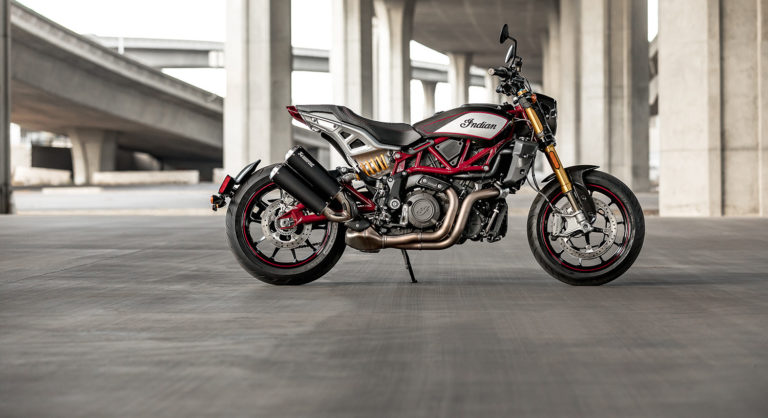
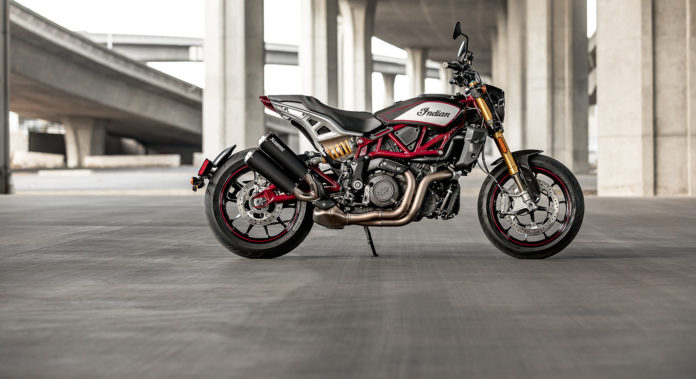
For the Indian FTR, including the FTR S and FTR R Carbon versions, METZELER SPORTEC™ M9 RR tires were selected as original equipment, in 120/70 ZR 17 front and 180/55 ZR 17 rear sizes. Pulling inspiration from its American Flat Track race bike, the FTR750, the new 2022 FTR is an exciting motorcycle that combines style and performance, ideal for both weekend trips and daily use. The FTR offers incredible power, and at the same time, thanks in part to the agility conferred by the original equipment SPORTEC™ M9 RR tires, extraordinary handling. The powerful 1203cc, 120hp, 117.9Nm torque V-Twin engine precisely manages power delivery, which is safely discharged to the ground via SPORTEC™ M9 RR tires.
SPORTEC™ M9 RR combines in the best way the versatility typical of everyday use with the brand’s experience in Road Racing competitions, exploiting the latest technological advances in the German brand’s research and development field. SPORTEC™ M9 RR was designed for motorcyclists, primarily owners of supersport and naked machines, with a sporty riding style and who use their bikes almost every day, from the urban jungle to the winding roads out of town. Motorcyclists looking for riding pleasure and sporty performance even in the wet need a sport tire that provides precise and safe feedback while enjoying their bike’s performance at full capacity.
METZELER CRUISETEC™ has been selected as the original equipment tire for several models within Indian Motorcycle’s cruising and touring portfolio, including the Challenger, Roadmaster, Chieftain, Springfield and Vintage models, also in the Limited and Dark Horse versions.
METZELER CRUISETEC™ is designed to offer motorcyclists with power cruisers, custom and touring bikes, a tire that is more performance oriented than others in the segment to date. CRUISETEC™ has been developed to take advantage of the full performance potential of these heavyweight and powerful motorcycles thanks to the high level of grip even in wet conditions, revolutionary handling, and the structural characteristics oriented towards riding pleasure thanks to stability and precision.
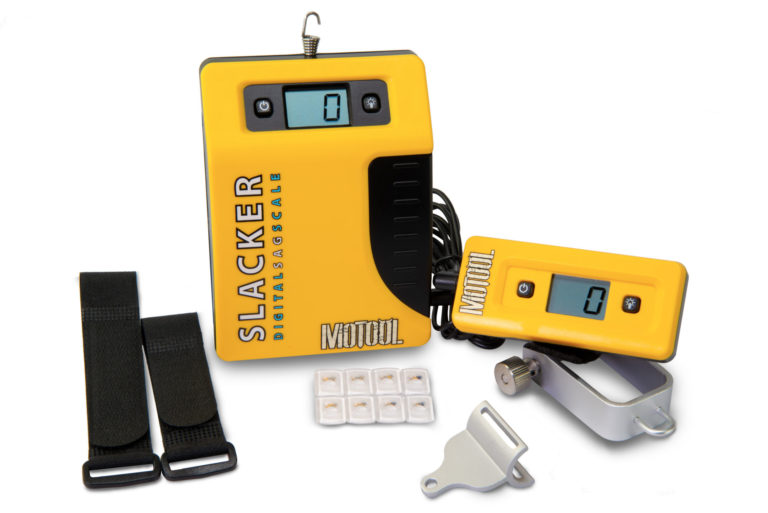
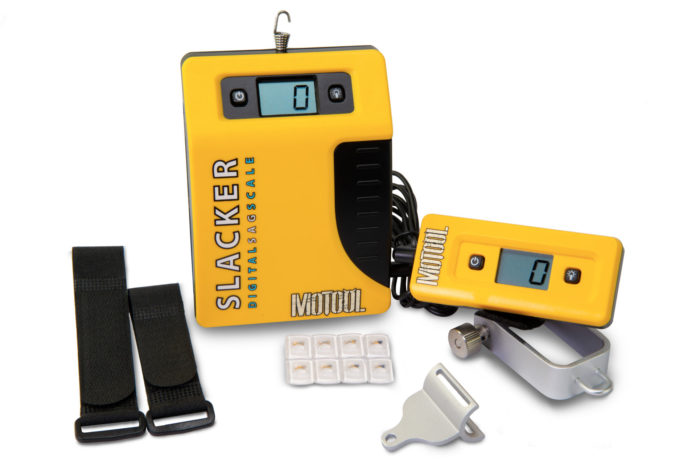
An order of 2,000 Motool Slacker sag measuring units is missing. The units may be bobbing in the Pacific, or they may be crushed under damaged shipping containers on a massive cargo vessel at berth in Japan, or they may be perfectly fine but unreachable for the moment.
In any case, the November sea catastrophe – when a containerized cargo ship lost nearly 1,900 containers in a storm off of Hawaii – has battered the small company, best known for a remarkably clever digital tool that has revolutionized the process of setting the sag on a motorcycle.
“It’s a brutal situation. I’ve had a tough couple of months,” says John Casebeer, founder and owner of Motool.
On November 30, the vessel ONE Apus, a Bird-class container ship nearly 1,200 feet long and with a capacity of 14,000 TEU (20-foot equivalent unit) suffered a stack collapse when it encountered high seas en route from Yantian, China to the Port of Long Beach. Experts say the rough seas sent the ship into what is known as parametric rolling, where the vessel is pitched into dramatic lean angles of up to 30 degrees in a matter of seconds.
This motion places extreme stress on the mechanisms by which containers stacked on the deck are secured, and can cause the stack retention mechanisms to snap and the stack of containers to collapse.
ONE Apus lost 1,816 containers, and several others were askew on the deck of the ship when it reached port in Kobe, Japan.
And that’s where Motool’s limbo began.
The order of 2,000 Slacker units takes up only part of a single container, Casebeer said. And the shipping company has not yet released information as to which containers are missing, which are damaged, and which are still on the ship, he said.
“I still don’t know if I lost my stuff or not,” Casebeer said. “I just know it was on the deck. “They’re being real tight-lipped. My stuff might be there. It might be in the Pacific. This is the largest maritime loss of cargo in history when they didn’t lose the ship.”
The shipping claims specialist firm W K Webster posted on its website that even figuring out what is still aboard the Apus is still not clear.
*As at Wednesday, 3rd February, 638 containers have been discharged from the ONE APUS at the port of Kobe, Japan,” the company said in its latest update. “Progress is still relatively slow although the rate of discharge does appear to be increasing slightly as the most severely damaged containers are discharged, leaving others that are more easily handled to be removed. It is still likely to be a few more weeks before discharge is completed and necessary repairs made to the vessel.”
Out of inventory, Casebeer had to scramble. He contacted his factory in the Guangdong Province and placed another order for 720 of the units. And then, to meet his growing backlog, he had to have these airfreighted at six to eight times the cost of ocean shipping, he said.
As the world starts to emerge from the COVID-19 pandemic and learns to live and operate in the current health environment, goods are pouring out of China and other countries in the Asian/Pacific Rim, straining supply lines like never before. Even airfreight was delayed, Casebeer said.
Finally, the air shipment of 720 Slackers arrived and Casebeer got them into his possession on Tuesday. He shipped 590 units in three days, he said.
It is unclear what will happen in regards to the other 2,000 units, Casebeer says. He has an agent in Japan working on the situation. Containers are being removed from the ship one by one and their contents inventoried and inspected. But Casebeer does not expect the situation to be resolved any time soon.
“It has been a wild ride,” Casebeer says.
To see video of the ONE Apus before and after the disaster, go HERE.
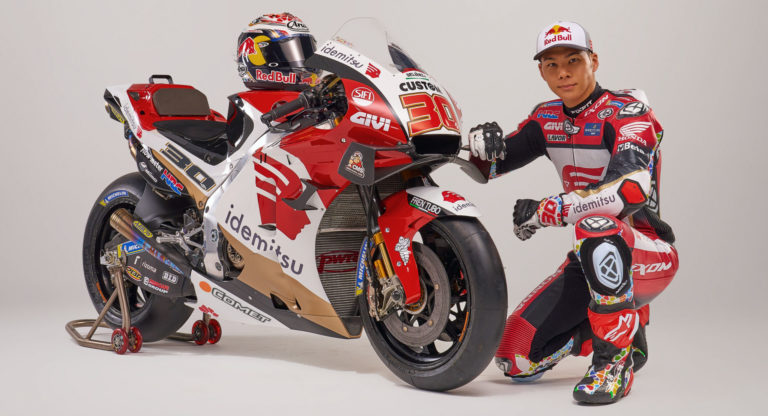
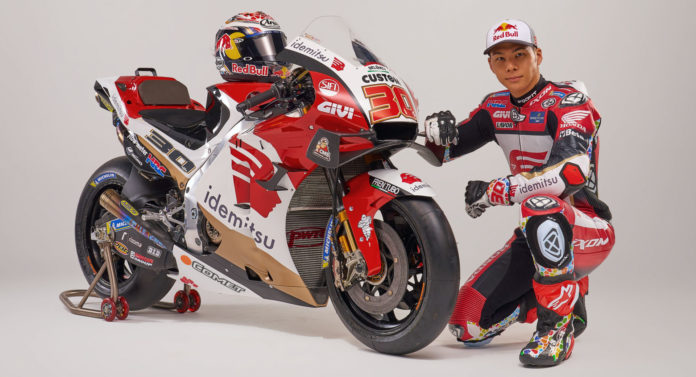
Born in Chiba (Japan) on February 9, 1992, Nakagami joined the Japanese Road Race
Championship in the GP125 category in 2005 and in 2006 became the youngest ever
winner of the Japanese 125cc Championship. The same year he also joined the MotoGP
Academy which gave him the chance to compete overseas for the first time in the CEV
(Spanish) 125GP series. In 2007 he decided to focus on the CEV 125GP championship
(under the Academy banner) and had the chance to compete as a wildcard in 125cc
World Championship at the final round in Valencia.
He impressed enough to secure a full-time ride in the 125cc World Championship in
2008, joining the Italian I.C. Team riding an Aprilia and he continued in the Championship
in 2009 with Ongetta I.S.P.A. Aprilia. Despite having offers to remain in the 125cc
championship in 2010, Nakagami decided to return to Japan and re-join the Harc-Pro
team (with Honda) for 2 years winning the Japanese Moto2™ title in 2011 was drafted in
by the Italtrans Team at the Japan GP as a substitute rider.
The team offered him a fulltime seat for 2012, and in 2013 just missed out on a maiden
race victory on numerous occasions – not least when he scored four consecutive second
place finishes in the middle of the season. He switched to Idemitsu Honda Team Asia in
2014, but he had to wait until the following year to return to the podium with third in
Misano. He remained with the team in 2016 and took his first win in Assen at the Dutch
GP, and by the end of 2017 had garnered eight podiums and two poles.
For 2018 Nakagami graduated to the premier class to ride with LCR Honda IDEMITSU
and was the best qualifying rookie with several appearances in Q2. Nakagami got his
best result at the last round in Valencia crossing the line in 6th position (Best
Independent Rider of the Spanish round) and was impressive in winter testing.
He stayed with LCR Honda IDEMITSU in 2019 alongside his team-mate Cal Crutchlow,
noticing the best finish of 5th in the Italian GP (Best Independent Rider of the round in
Mugello). Unfortunately, his season saw an early end as he had to take a difficult
decision to undergo shoulder surgery right after his home GP in Motegi, just to be sure
he is fully fit for the upcoming 2020 season.
Nakagami showed great consistency in 2020 and made important progress. He achieved
his first ever pole position in MotoGP at Aragon and he finished the Championship, 10th
overall. In 2021, his fifth year in MotoGP, Taka will be riding a full factory spec bike,
alongside new teammate Alex Marquez.
The LCR Team (Lucio Cecchinello Racing) was born in 1996 when Lucio decided to
establish his own Team following the footsteps of other racing champions who successfully
done the same thing. Simply starting with two mechanics and one van, over the years the
LCR Team continued to grow turning into a complex and highly organized structure. After
nine years in 125cc class, five years in 250cc class LCR is actually competing in the
MotoGP class (since 2006) with two riders and more than 50 highly qualified collaborators
and also in MotoE category with two riders.
The LCR Team lined up with the most talented riders of the international field such as
Nobby Ueda, Alex De Angelis, Mattia Pasini, Randy De Puniet, Roberto Locatelli, Carlos
Checa, Casey Stoner, Stefan Bradl, Jack Miller, Cal Crutchlow and many others with more
than 600 races held in the four different categories.
85 podiums, 24 victories, 2 “Rookie of the Year”, 1 Runner-Up Award and the Best
Independent Team Rider awards are the maximum expression of the daily work conducted
by Lucio and the Team members during 25 years of racing competitions.
Lucio Cecchinello
Bio
Team Manager and former Top 125cc rider Lucio Cecchinello, is one of the true
personalities of the Grand Prix paddock as he began racing in the 80s and his passion for
this sport is the same as it was on day one.
At the age of 7, Lucio dissembled his dad’s old motorcycle engine and that was his first
step into his future “racing life”.
He initially worked as a mechanic for teams in national and international racing field and in
1989 he began racing in the Italian Sports Production Championship before moving into
the European Championship in ’91 and, two years later, progressing to Grand Prix.
The year 1996 was the first turning point: Lucio organized his own small team for the World
Championship in the 125 class, obtaining several important results in the top ten. It was
the same in 1997 and in 1998, after 4 Grands Prix, Lucio obtained his first VICTORY in the
World Championship. He remained with Honda until 2000 earning further important results
in the smaller class and in 2001 the Team left the Japanese Constructor to Aprilia
Manufacturer. Lucio finished the championship in 4th place repeating the same result in
2002. In 2003, his last season as a professional racer, Lucio finally crossed the finishing
line in 1st place at the Italian GP in Mugello putting a lasting mark on his career (with a
total of 19 podiums, 7 victories and 4 pole positions).
Today he is a well-known and highly valued Team Manager of the LCR Honda Team
competing in the premier class as well as a 16-year member of the IRTA Committee
(Teams internal paddock commission involved in the improvement and development of the
MotoGP Championship).
Since 2019 Cecchinello doubled his commitment as a Team Manager, managing also the
LCR E-Team (MotoE™ World Cup).
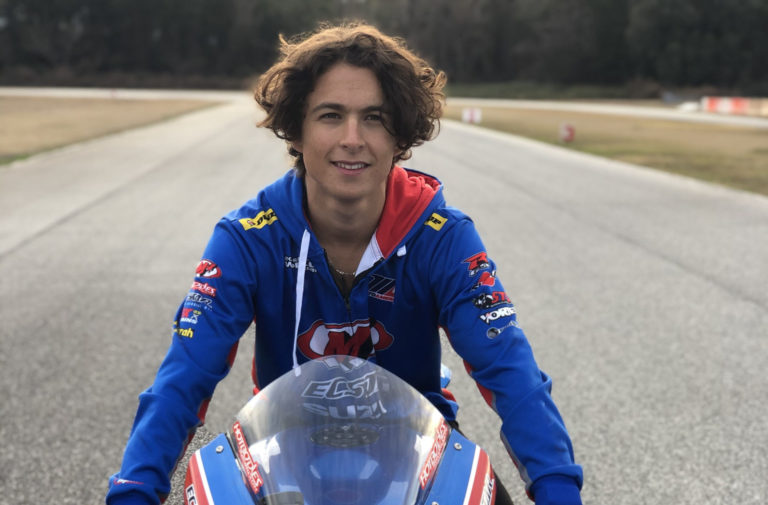
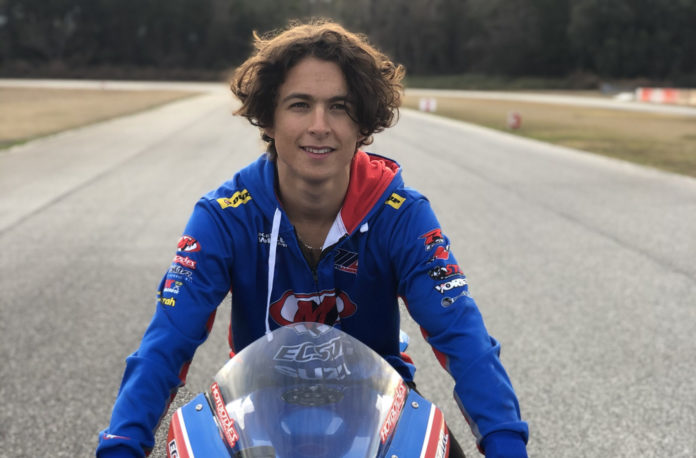
Team Hammer, Inc. is thrilled to announce the signing of top prospect Sam Lochoff to contest the 2021 MotoAmerica AMA/FIM North American Road Racing series. The 18-year-old South African will step up to MotoAmerica Supersport competition in 2021 aboard a Team Hammer built M4 ECSTAR Suzuki GSX-R600.
Lochoff turned heads by landing on the podium in his MotoAmerica debut in 2019, finishing third in the Junior Cup season-opener. Following an abbreviated rookie season in 2019, Lochoff made his presence felt in 2020, earning 13 podium finishes — including five runner-up finishes — en route to an overall third-place ranking in the 2020 Junior Cup standings.
His recent MotoAmerica achievements are just the latest in a string of accolades the teenager has packed into a very short time frame. His racing career kicked off less than five years back, the first year of which was dedicated primarily to four wheels. Once he switched his focus to motorcycle sport, the Cape Town native quickly racked up a pair of regional championships in his home country before graduating to the international scene.
In 2018, he stormed to the title in both the Alpe Adria International Motorcycle and FIM Supersport 300 European Championships, while getting his first taste of world championship competition in FIM World Supersport 300.
Looking ahead to 2021, Lochoff said, “I’ve always attempted to join the most professional and accomplished teams possible. I did a lot of research on the history of Team Hammer before signing this contract, and I’m convinced this is the best team I’ve ever been lucky enough to race for. I think this is going to be the year where I prove to myself that I can really make a career out of racing.”
Lochoff has dug deep to find speed. “Early last year, I found myself in the pack battling for fifth through 13th, 40 seconds behind the leader. After that, I said, ‘We can’t do this anymore — I have to find something.’ That’s when I really started training and focusing. After that I closed the gap down to 16 seconds, and then eight, and by the end of the year, I was battling for the win.”
Lochoff expects to continue his learning curve in 2021. “I don’t expect to come out and win straightaway in my first Supersport race. I plan to make the same kind of steady progress, and work my way into contention.”
About Team Hammer
The 2021 season will mark Team Hammer’s 41st consecutive year of operating as a professional road racing team. Racebikes built and fielded by Team Hammer have won 108 AMA Pro and MotoAmerica National races, have finished on AMA Pro and MotoAmerica National podiums 291 times, and have won nine AMA Pro and MotoAmerica National Championships, as well as two FIM South American Championships (in Superbike and Supersport). The team has also won 137 endurance races overall (including seven 24-hour races) and 13 Overall WERA National Endurance Championships with Suzuki motorcycles, and holds the U.S. record for mileage covered in a 24-hour race. The team also competed in the televised 1990s Formula USA National Championship, famously running “Methanol Monster” GSX-R1100 Superbikes fueled by methanol, and won four F-USA titles.
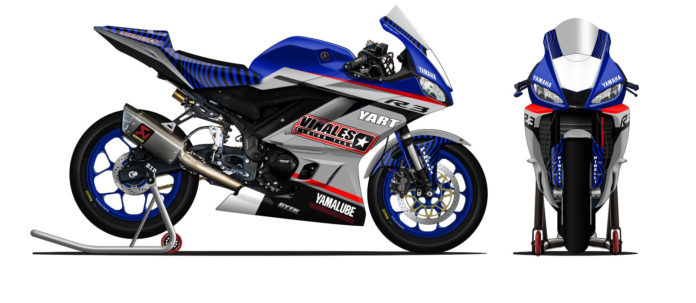
Viñales Racing Team Becomes Yamaha Supported WorldSSP300 Team for 2021
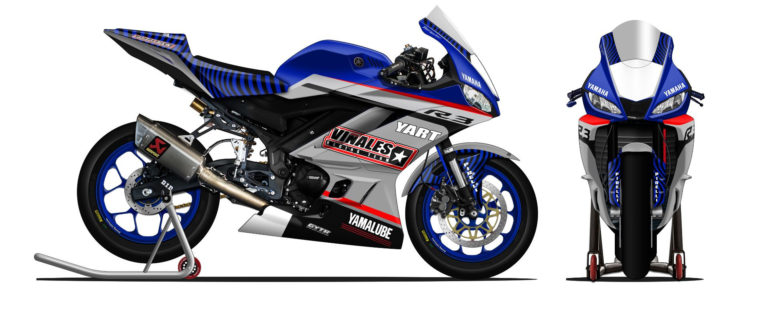
For the 2021 FIM Supersport 300 World Championship season, the newly formed Viñales Racing Team will be a Yamaha Supported WorldSSP300 Team, fielding young talents Kevin Sabatucci and Dean Berta Viñales.
The Spanish outfit was created by Ángel Viñales, father of Monster Energy Yamaha MotoGP Team rider Maverick Viñales, and will be running a pair of R3 GYTR-kitted bikes. Their commitment to helping young riders on their first steps towards the pinnacle of motorcycle racing is shared by Yamaha Motor Europe, and the team will now benefit from official support.
Italian youngster Sabatucci is no stranger to the Yamaha family, having raced in the 2019 WorldSSP300 championship with support from the bLU cRU program. The year prior, the 21-year-old took a podium on his debut at Imola, riding a R3 GYTR-kitted bike, with his first victory coming at Donington Park in 2019. Last year, the 21-year-old was a consistent front-runner and scored eight points finishes in WorldSSP300.
For Berta Viñales, Maverick’s cousin, this marks his first foray into the WorldSSP300 championship, having contested the European Talent Cup in 2019 and 2020, where he took a best result of 13th last year in Estoril. The Spaniard will be just 15 years-old when the season gets underway and has already impressed in Spanish national championships during his junior career so far.
Kevin Sabatucci
Viñales Racing Yamaha Supported WorldSSP300 Team
“The team approached me in December and it didn’t take long for us to get everything agreed. They are confident in my potential and that’s all I needed to know before getting started. I knew Angel Viñales wanted to build a good project and I believe we have a good starting point. To be honest, I prefer not to have any specific targets for me or the team, just to focus on myself and to be in the best form possible to start the season. My one and only target is to give my best, build a good relationship with the team and then we will see what happens. I know the team is working hard at the workshop to build the 2021 bike and honestly I can’t wait to test it. When I trained with the Viñales family, their advice was so important. Angel told me some things and I will try to improve them, especially about being fast riding alone, which is something that can help me a lot in qualifying, my biggest problem in the past. I’m working on that with the help of all the team and I’m confident I can improve my skills for the start of the season.”
Dean Berta Viñales
Viñales Racing Yamaha Supported WorldSSP300 Team
“This year I’ve been given the opportunity to be with the Viñales Racing Yamaha-supported WorldSSP300 Team and we’re excited, very happy and looking forward to getting started as soon as possible. I am very grateful for the opportunity the team have given me to take part in the WorldSSP300 championship. We are slowly fulfilling our dreams. I’m sure together we will do a good job. I am looking forward to start working together with the team and my teammate. I must thank my family and sponsors greatly for their help and trust they are placing in me.”
Ángel Viñales – Team Manager
Viñales Racing Yamaha Supported WorldSSP300 Team
“We needed a rider in the team with the experience that we lack in the rest of this championship so we could adapt more easily. Kevin is definitely a born winner, a committed rider and hardworking. I hope he feels really happy with the team and can bring out all the potential on track. Not to put pressure on him, but I wish to see a lot of finishes on the podium. It’s a pride for me to be able to count on Dean in the team. He deserves this opportunity so much, he is a great talent, and he will finally be able to show it. I want him to learn, have fun, evolve, and work hard to celebrate together all the successes he will definitely reap. Also, getting Yamaha support means everything for me and the team. It’s our first year in the WorldSBK paddock and to be handed this opportunity is more than a dream come true, we are really happy and excited for that. This comes while Maverick is also entering his fifth season as a Monster Energy Yamaha MotoGP Team Rider, so it’s amazing for us. Thanks to the Yamaha family for putting their trust in us.”
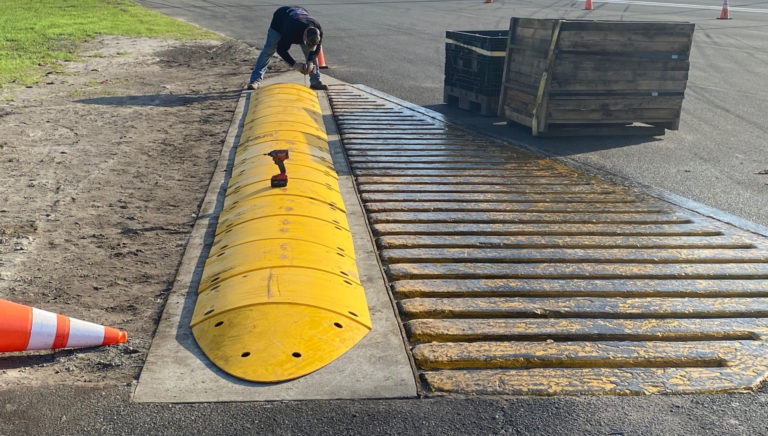
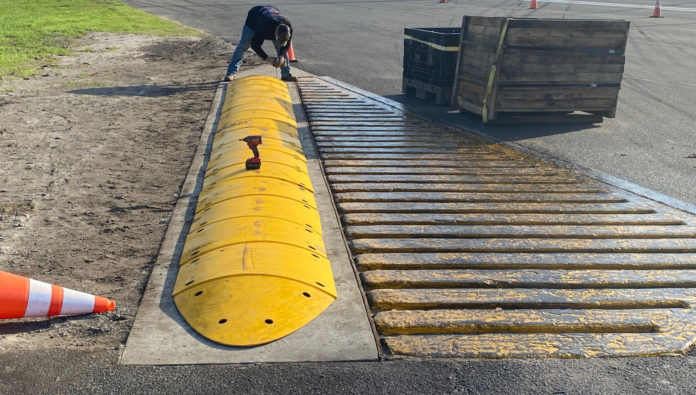
The tall, yellow curbs recently installed in the chicane on the back straightaway of the infield road course at Daytona International Speedway (DIS) for this coming weekend’s NASCAR road races will not be used for the upcoming Daytona 200 and ASRA/CCS races, according to ASRA/CCS.
The “turtle” curbs, as some are calling them, were installed to keep four-wheel race vehicles from straight-lining the course, dropping tires off the pavement, and sending dirt and debris onto the track and the windshields of other cars and trucks, according to numerous media reports.
Martin Truex Jr. crashed out of the lead of the Busch Clash NASCAR road race February 9 at DIS when he said he hit dirt and mud on the track in the chicane.
“Andrew Gurtis (DIS Vice President of Operations) called me right away,” ASRA President Kevin Elliott told Roadracingworld.com Friday, “because he knew those new curbs would not work for motorcycles. So, we started working on solutions.”
The “turtle” curbing installed on rider’s right and left at the exit of the chicane at Daytona International Speedway. Photo courtesy NASCAR.
Gurtis is also the person who approved the application of anti-slip paint on the DIS infield road course after Valentin Debise touched a painted line and suffered a huge highside crash while leading the 2018 Daytona 200.
According to Elliott, DIS will remove the “turtle” curbs after the cars are done using the road course and they will be replaced with FIA-approved curbs. The FIA curbs will have a more gradual taper and be less of a hazard for riders who encounter them during a crash while still preventing advantages from being gained by riding over them, said Elliott.
A cash purse of $175,000 plus a Rolex Cosmograph Daytona wristwatch grand prize for the winner have been confirmed for the 79th running of the Daytona 200, which is scheduled to take place March 13, 2021 at Daytona International Speedway.
In the absence of an official announcement, Roadracingworld.com reached out to Kevin Elliott, President of ASRA, which co-sanctions the race along with AMA, to ask about the purse for the upcoming race.
Elliott confirmed the same $175,000 purse that has been posted for the last several years will once again be up for grabs in 2021. Plus, said Elliott, he is adding a special $1,000 cash prize for the top-finishing Canadian rider, “just because I know what they are going to have to go through [quarantine] to get back into Canada after the race.”
There will also be a special prize for the rider who qualifies on pole position, a brand new Arai Corsair X helmet, courtesy of Arai Helmet Inc.
Here is a breakdown of the 2021 Daytona 200 purse payouts:
Repsol Honda's Marc Marquez (left) and Pol Espargaro (right). Photo courtesy Repsol Honda.
Ready for the challenge – Repsol Honda Team launch 2021 campaign
Marc Marquez and Pol Espargaro prepare for all new challenges in 2021 with the Repsol Honda Team.
After a season like no other, both on and off the track, 2021 presents the MotoGP World Championship with a chance to rally in the face of adversity and forge ahead. With a difficult 2020 behind them, the Repsol Honda Team are also out to reset and show they are ready for any challenge. Marc Marquez is joined on this challenge by Pol Espargaro, fresh from his best premier class season to date. The pair have grown up racing together, battling from local championships in Spain to the premier class and bring with them 446 World Championship starts, 184 podiums, 109 poles and 97 wins.
With the world still working to overcome to Covid-19 pandemic, the Repsol Honda Team have launched their 2021 challenge with a fully online presentation for the first time in Honda’s history. A new style presentation for a year set to be full of new challenges.
The 2013 Moto2 World Champion, Pol Espargaro, achieves a life-long dream in 2021 as he wears the Repsol Honda Team colours aboard the factory Honda RC213V. With over 100 premier-class starts, the 29-year-old is among the most experienced riders in MotoGP and arrives in the best form of his career. Fighting to fifth in the World Championship standings with five podiums and two pole positions, Pol brings not only experience but an undeniable fire to succeed to the team.
For Marc Marquez, the 2021 season is a new beginning as he is set to return from his season-ending injury sustained in Jerez. Focusing exclusively on his recovery from a broken right humerus, the eight-time World Champion has been working diligently to return to his best and comeback strong for the 2021 season. A champion’s spirit drives Marquez to succeed at everything he does.
The iconic Repsol Honda Team livery will be another constant in 2021 as Repsol and Honda continue their more than quarter of a century long partnership. With 180 premier class wins, 447 premier class podiums and 15 World Championships, the combination is without doubt the most decorated in Grand Prix Racing and is determined to return to these levels of success.
The Repsol Honda Team will now travel to Qatar for the MotoGP pre-season where Pol Espargaro will get his first taste of the Honda RC213V. Marc Marquez will not attend the Qatar Test as he continues to focus on his recovery.
Tetsuhiro Kuwata
HRC Director – General Manager Race Operations Management Division
“We enter another season full of anticipation and desire. After what has been a difficult 2020, we are continuing to learn and to work to return to the top of championship. From the technical side, HRC have been working as hard as always to keep improving the RC213V. We have a new rider in the shape of Pol Espargaro this year who brings good experience and a desire for victory. We are all eagerly awaiting the first test with him. On Marc’s side, we have been closely following his recovery and will continue to do everything we can to support him to return as strong as possible.
“Finally, I would like to thank Repsol and all of our sponsors for their continued support. Without them we would be unable to go racing, they are not just sponsors but partners on this great challenge.”
Ana Camps
Sponsoring, Media, Advertising and PR Deputy Director – Repsol
“We of course look forward to achieving the results that have always been our trademark, like fighting for victories, podiums and championships. This is the reason why, after more than 25 years, we continue side by side with the best partner in MotoGP, Honda. The alliance between our two companies goes beyond a sponsorship agreement and is based on technology: collaboration between Honda’s facilities in Saitama and the Repsol Tech Lab in Madrid.
“Our Tech Lab scientists apply the most avant-garde technology to our fuels and lubricants, and we take advantage of all the knowledge that high competition provides for our Repsol products. We know that Marc is an extraordinary rider and a unique person with a great ability to overcome anything, so we have no doubt that he will soon amaze us again. Marc, of course, has all our support to achieve the goals he pursues.
“We also look forward to the arrival of a new rider, Pol Espargaro. He is a great professional and a mature rider and will now have an opportunity to prove his amazing talent.”
Marc Marquez
“After a long time away it was nice to see my bike again and wear my leathers. 2020 was a difficult year for everyone and especially for me with the injury and watching the races from home. But I have continued to work with the doctors, with my team and with myself to recover and return to MotoGP. Of course, I would have liked to return sooner, but it is very important to listen to the doctors and my body until I am fully fit. I can imagine the best comeback that is to start riding again the bike and be the same, but it will be difficult to be like this. But we will see if it takes one race, two races, half the season to be the same Marc. I will not be at the Qatar Test as I aim to return only when I am 100% and there is still some work to do.”
Pol Espargaro
“The lead up to this season has been one of the most exciting of my career, it’s been like waiting for my first season or my MotoGP debut. To ride for the Repsol Honda Team is every rider’s dream and something to be truly proud of. Every few weeks I have taken another step, seeing the bike at my home, now wearing the leathers. The final step is to ride the RC213V for the first time at Qatar, this excitement is motivating me to train more and be the best I can be for the 2021 World Championship. I am here in the Repsol Honda Team in order to achieve success and fight at the top, this is the goal for 2021.”
Harley-Davidson's new Revolution Max 1250 V-Twin engine with sections cut away to display the internal parts. Photo courtesy Harley-Davidson.
HARLEY-DAVIDSON REVOLUTION MAX 1250 ENGINE TUNED FOR ADVENTURE
All-New Liquid-Cooled V-Twin to Power Pan America 1250 and Pan America 1250 Special
MILWAUKEE (February 22, 2021) – The Harley-Davidson® Pan America™ 1250 and Pan America™ 1250 Special models are powered by the all-new Revolution® Max 1250 engine, a liquid-cooled V-Twin designed to offer flexible, engaging performance with a broad powerband that builds to a rush of high-RPM power surging through the redline. The Revolution Max 1250 engine has been tuned specifically to deliver desirable power characteristics for the Pan America 1250 and Pan America 1250 Special models, with an emphasis on smooth low-end torque delivery and low-speed throttle control applicable to off-road riding.
“Through its history Harley-Davidson has embraced technological evolution while respecting the heritage of our brand, with engines that produce real-world performance for real-life riders,” said Harley-Davidson Chief Engineer Alex Bozmoski. “The Revolution Max 1250 is a clean-sheet, advanced-design effort that will carry Pan America riders over new horizons with reliability, efficiency, and exciting performance.”
A focus on performance and weight reduction drove both vehicle and engine architecture, material choices, and aggressive component design optimization. To minimize overall motorcycle weight the engine is integrated into the vehicle as the central member of the chassis. The use of lightweight materials helps achieve a desirable power-to-weight ratio.
The Revolution Max 1250 engine is assembled at the Harley-Davidson Pilgrim Road Powertrain Operations facility in Wisconsin.
Harley-Davidson’s new Revolution Max 1250 V-Twin engine with sections cut away to display the internal parts. Photo courtesy Harley-Davidson.
Revolution® Max 1250 Engine
Displacement: 1250cc
Bore x Stroke: 4.13 in. (105 mm) x 2.83 in (72 mm)
Horsepower: 150hp
Peak Torque: 94 ft. lbs.
Peak RPM: 9,500
Compression Ratio: 13:1
Another view of Harley-Davidson’s new Revolution Max 1250 V-Twin engine with sections cut away to display the internal parts. Photo courtesy Harley-Davidson.
Revolution® Max 1250 Engine Technical Features
V-Twin Architecture
A V-Twin design provides a narrow powertrain profile that centralizes mass to enhance balance and handling, and also provides ample foot/leg room for the rider.
A 60-degree V angle of the cylinders keeps the engine compact while providing space between the cylinders for dual down-draft throttle bodies that maximize air flow and increase performance.
Optimized Design for Light Weight
Reducing the weight of the powertrain contributes to lower motorcycle weight – reducing weight can enhance every aspect of motorcycle performance: efficiency, acceleration, handling and braking.
The use of finite element analysis (FEA) and advanced design optimization techniques in the engine design stage minimized material mass in cast and molded components. For example, as the design progressed, material was removed from the starter gear and camshaft drive gears in an effort to lighten these components.
Single-piece aluminum cylinders with nickel silicon carbide-surface galvanic coating are a lightweight design feature.
Rocker covers, camshaft covers and primary cover are lightweight magnesium.
Stressed Member Powertrain
The Revolution Max 1250 powertrain is a structural component of the motorcycle chassis.
The engine serves two functions – providing power and acting as a structural element of the chassis.
Eliminating a traditional frame significantly reduces motorcycle weight and results in a very stiff chassis.
A front frame element, mid frame element and the tail section bolt directly to the powertrain.
The powertrain is designed to be both strong and very rigid so that it can effectively function as a chassis component.
The rider realizes optimized performance due to a significant weight savings, a rigid chassis and mass centralization.
A front view of Harley-Davidson’s new Revolution Max 1250 V-Twin engine with sections cut away to display the internal parts. Photo courtesy Harley-Davidson.
Liquid Cooling
Heat is an enemy of both durability and rider comfort. Liquid cooling the engine maintains a stable and controllable engine and oil temperature for consistent performance in changing environmental and riding situations.
Powertrain performance is enhanced by tight component tolerances that can be achieved when engine temperature is controlled (there is less expansion and contraction of metal parts).
Desirable engine sounds – a stirring exhaust tone – can predominate because noise from internal engine sources is reduced by liquid cooling.
The engine oil is also liquid cooled, which ensures that engine oil performance and durability will be maintained in challenging conditions.
The cooling system is designed to be esthetically pleasing, easy to service and rugged.
The coolant pump is internal and features high-performance bearings and seals for extended service life.
Coolant passages are integrated into a complex stator cover casting to save weight and reduce powertrain width.
A coolant drain plug is recessed and guarded by a foot peg to limit vulnerability to damage in off-road riding situations.
Offset Connecting Rod Journals
The two crankshaft connecting rod journals are offset by 30 degrees. Harley-Davidson leveraged its extensive experience in flat track racing to help inform the cadence of Revolution® Max 1250 engine power pulses.
The 30-degree offset creates a 90-degree firing order that produces a smooth power delivery, especially at higher RPM.
The cylinders are offset slightly to accommodate the crankshaft design, with the rear cylinder positioned to the rider’s left on the crankcase, a choice made to enhance ergonomics.
The rider may gain control and confidence because the power pulses of a 90-degree firing order may improve traction in some off-road riding situations.
The 90-degree firing order produces a stirring exhaust beat.
Forged Aluminum Pistons
Piston crowns are machined for precise control of compression ratio. The 13:1 compression ratio improves engine torque at all speeds. This high compression ratio is made possible by advanced knock detection sensors. The engine will require premium-grade (91 octane) fuel to make maximum power, but will run on lower-octane fuel and is protected from detonation by the knock sensor technology.
The base of the piston is chamfered so no piston ring compression tool is required for installation.
The piston skirt has a low-friction coating.
Low-tension piston rings reduce friction, which improves performance.
The top ring land is anodized to enhance durability.
Oil cooling jets are aimed at the bottom of the pistons to help dissipate combustion heat.
Four-Valve Cylinder Heads
Four-valve cylinder heads (two intake and two exhaust) permit the largest-possible valve area.
The rider realizes an optimal performance profile for adventure touring – strong bottom-end torque with a smooth transition to peak power – because the flow of gasses through the combustion chamber is optimized to match the desired performance requirement and engine displacement.
The exhaust valves are sodium-filled to better dissipate heat.
Suspended oil passages within the heads are made possible by a complex casting technique, and reduce weight because the head wall thickness is minimized.
The cylinder heads are cast from high-strength 354 aluminum alloy. Because the heads act as a chassis mounting point, they are designed to be flexible at that mounting point but rigid over the combustion chamber. This is accomplished in part through targeted heat treating.
Double Overhead Camshafts (DOHC)
The Revolution Max 1250 engine is equipped with separate intake and exhaust camshafts for each cylinder.
The DOHC design facilitates higher-RPM operation by reducing valve train inertia, which produces higher peak horsepower.
The DOHC design permits independent Variable Valve Timing (VVT) on the intake and exhaust cam, optimized for the front and rear cylinder, to broaden the powerband.
Specific cam profiles are selected to produce the most-desirable performance characteristics.
The drive-side camshaft bearing journal is part of the drive sprocket, a design that makes it possible to remove the camshaft for service or a future performance upgrade without disassembling the camshaft drive.
The camshaft drive chain guides and sprockets have been optimized to reduce as much mass as possible. The chain tensioner is internally mounted and incorporates design features to minimize start-up clatter.
Hydraulic Lash Adjusters
The Revolution® Max 1250 engine features roller-finger valve actuation with hydraulic lash adjusters.
This design ensures that the valves and valve actuators (“fingers”) are in constant contact as engine heat changes.
The hydraulic lash adjusters make the valve train maintenance-free, saving the owner time and cost – there is no mechanical adjuster.
This design realizes a reduction in undesirable valve train noise, especially on cold starts.
This design maintains consistent pressure on the valve stem, which facilitates more-aggressive camshaft profiles which can boost performance.
Variable Valve Timing (VVT)
The Revolution Max 1250 engine is equipped with computer-controlled Variable Valve Timing (VVT) on both the intake and exhaust camshafts.
Through computer control, VVT advances or retards exhaust and intake camshaft timing independently through a potential range of 40 degrees of crankshaft rotation.
VVT broadens the overall powerband and improves torque management and efficiency compared to the same engine with fixed valve timing. This allows the same engine to provide both low-end grunt for acceleration off the line as well as the thrill of high-RPM horsepower.
VVT may improve fuel efficiency and increase range from each tank of fuel.
The timing phaser is located between the cam drive sprocket and the camshaft, and uses a solenoid plunger to control ported hydraulics that change the cam timing.
When the engine is shut down, VVT sets intake cams to full retard and exhaust cams to full advance to reduce compression for easier starting.
Camshaft position pick-ups are located in the valve covers.
Dual Spark Plugs
The Revolution Max 1250 engine is equipped with two spark plugs per cylinder.
Dual spark plugs improves ignition of the fuel charge across this wide-bore cylinder.
The Revolution® Max 1250 engine is equipped with “dual side strap” spark plugs that are designed to better manage high temperatures in the combustion chambers than a standard spark plug.
Dual Down-Draft Throttle Bodies
Separate throttle bodies are located between the cylinders, positioned to create minimal turbulence and impedance to air flow.
High-velocity air flow into the combustion chamber is optimized for improved performance.
Fuel delivery can be optimized individually for each cylinder, which can improve economy and range.
The central location of the throttle bodies permits the ideal position of an 11-liter airbox over the engine. Airbox capacity is optimized for engine performance.
The airbox is shaped to permit use of tuned velocity stacks over each throttle body that utilize inertia to pack more air mass into the combustion chamber, which can increase power output.
The airbox is formed of glass-filled nylon with integrated internal ribs that help quell resonance and muffle intake noise. A forward-facing intake snorkel directs intake noise away from the rider. Silencing intake noise permits desirable exhaust tone to predominate.
The circular base of the washable conical air filter provides an optimal seal to the airbox.
Robust Oiling System
The engine oiling system is scaled to perform well in challenging conditions.
The engine features a dry sump oiling system, with the oil reservoir (or sump) incorporated into the crankcase casting below all rotating parts. This increases performance by reducing the parasitic power loss that can occur when a rotating part must pass through an oil bath.
Triple oil scavenge pumps evacuate excess oil from three engine cavities – crankcase, stator cavity and clutch cavity. The rider gains optimal performance as parasitic power loss is reduced because internal engine components do not have to rotate through excess oil.
A windage tray prevents the clutch from aerating engine oil, which could degrade oil delivery.
The oil feed pump is fitted with a large-capacity screen able to filter debris for the lifespan of the motorcycle.
The oil pump is designed to pull vacuum in the crankcase, which can further reduce internal engine friction because lighter piston ring pressure is required to minimize combustion blow-by.
Oil delivery to main bearings and connecting rod bearings is delivered through the center of the crankshaft, a design that enables low oil pressure (60-70 psi) that reduces parasitic power loss at high RPM.
Fully Balanced Powertrain
Internal balancers cancel most engine vibration to enhance rider comfort and improve vehicle durability.
Primary balancer: This spiral-shaped, chain-driven balancer located in the crankcase manages the primary vibration created by the crank pins, pistons and connecting rods, and also a “rolling couple,” or side-to-side imbalance, caused by the off-set cylinders.
Secondary balancer: A small balancer located in the front cylinder head between the camshafts complements the primary balancer to further reduce vibration.
The balancers are tuned to retain just enough vibration to make the motorcycle feel “alive.”
Engine balancing contributes to weight reduction and motorcycle performance because engine components do not have to be designed to withstand stress inputs from vibration.
Clutch and Transmission
The Revolution® Max is a unitized powertrain, meaning that the engine and six-speed transmission are housed in a common case.
The clutch is mechanically actuated with a large-diameter cable for smooth, consistent disengagement and minimal drag.
The clutch assist function offers a lighter feel at the clutch lever while maintaining the ability to transmit full torque and power to the transmission.
The clutch features eight friction plates designed to provide consistent engagement at maximum torque throughout the life of the clutch.
A clutch slipper function enables the rider to downshift without over-speeding the engine or slipping or hopping the rear wheel.
To minimize NVH (noise vibration harshness) the primary gear assembly was designed to achieve the optimal balance of sound quality and performance. A custom-designed scissor gear reduces both backlash and gear meshing noise.
Compensation springs in the primary gear smooth out torque pulses from the crankshaft before they reach the transmission, providing consistent torque delivery.
The six-speed transmission shift system features roller bearings to support the shift drum and Teflon-coated shift shaft support bushings to minimize frictional losses and optimize shift quality.
Internal shift components are durable but also as light as possible to improve shift quality and acceleration by minimizing power losses during shift events.
The semi-dry transmission cavity reduces parasitic power loss and increases fuel economy for the customer because gears are not churning through oil.
Harley-Davidson, Inc. is the parent company of Harley-Davidson Motor Company and Harley-Davidson Financial Services. Our vision: Building our legend and leading our industry through innovation, evolution and emotion. Our mission: More than building machines, we stand for the timeless pursuit of adventure. Freedom for the soul. Our ambition is to maintain our place as the most desirable motorcycle brand in the world. Since 1903, Harley-Davidson has defined motorcycle culture by delivering a motorcycle lifestyle with distinctive and customizable motorcycles, experiences, motorcycle accessories, riding gear and apparel. Harley-Davidson Financial Services provides financing, insurance and other programs to help get riders on the road. www.harley-davidson.com.
Harley-Davidson's new Pan America 1250 adventure touring bike. Photo courtesy Harley-Davidson.
EXPLORE ENDLESS HORIZONS: NEW HARLEY-DAVIDSON PAN AMERICA 1250 AND PAN AMERICA 1250 SPECIAL MOTORCYCLES DEBUT
Built to Endure, Designed to Explore, and Engineered for Adventure
MILWAUKEE (February 22, 2021) – The Pan America™ motorcycle is Harley-Davidson’s explore-it-all machine for riders who see touring as detouring – on road and off. This rugged, powerful, technologically advanced multi-purpose vehicle is designed from the ground up to inspire rider confidence and fuel the spirit of adventure, wherever the road may take you.
Harley-Davidson has leveraged its cutting-edge design and engineering capabilities to create the Pan America 1250 and Pan America 1250 Special, all-new, adventure-touring motorcycles, each designed with premium features, outstanding performance and innovative technology.
The left-side view of a 2021 Harley-Davidson Pan America 1250. Photo courtesy Harley-Davidson.
“From its inception more than a century ago, when many roads were little more than dirt trails, Harley-Davidson has stood for adventure. So, I’m very proud to present Pan America as the first adventure touring bike designed and built in America,” said Jochen Zeitz, chairman, president and CEO Harley-Davidson. “The Pan America models exude that go-anywhere spirit, shared today by riders in the US and around the globe who want to experience the world on a motorcycle.” That same adventurous spirt is deeply shared by actor and brand ambassador, Jason Momoa, who is joining creative forces with the Company to bring Pan America’s passion for adventure to the world.
Pan America 1250 and Pan America 1250 Special models are powered by the new 150hp Revolution® Max 1250 engine, a liquid-cooled 1,250cc-displacement V-Twin designed to offer a broad powerband that builds to a rush of high-RPM power. To minimize overall motorcycle weight (Pan America 1250 534lb. wet/Pan America 1250 Special 559lb. wet), the Revolution Max engine is integrated into the vehicle as the central member of the chassis.
The right-side view of a 2021 Harley-Davidson Pan America 1250. Photo courtesy Harley-Davidson.
Pan America models are equipped with technologies designed to enhance the riding experience, including multiple electronically controlled ride modes plus Cornering Rider Safety Enhancements. This broad collection of technologies is designed to match motorcycle performance to available traction during acceleration, deceleration and braking. The Pan America 1250 Special model is equipped with electronically adjustable semi-active front and rear suspension. As an industry-first innovation, Pan America is equipped with Adaptive Ride Height (ARH), a revolutionary new suspension system which automatically transitions between a low stopped position and optimal ride height when the motorcycle is in motion.
Harley-Davidson design and engineering teams collaborated throughout the process of creating and refining the Pan America™ 1250 and Pan America™ 1250 Special models with a vision guided by utility. Like a good multi-tool, function leads the form of these Harley-Davidson® models. From grab handles to integrated luggage mounts, to a horizontal headlamp configured to better illuminate an off-road trail, function defines style. Inspired by the spirit of rugged North American off-road versatility, the Pan America 1250 and Pan America 1250 Special models stand out visually in the adventure touring landscape, with design that reflects the capability of the motorcycles.
Harley-Davidson® dealers will offer a complete line of accessories for the Pan America 1250 and Pan America 1250 Special models, including three durable luggage systems, and new technical riding gear for men and women developed in collaboration with respected European motorcycle apparel specialist, REV’IT!.
The Pan America 1250 and Pan America 1250 Special models will arrive at Harley-Davidson dealerships in Spring 2021.
A 2021 Harley-Davidson Pan America 1250 in action. Photo courtesy Harley-Davidson.
PAN AMERICA 1250 MODEL
The Harley-Davidson® Pan America 1250 model is a rugged, powerful, technologically advanced multi-purpose motorcycle designed for riders ready to embrace real-life adventure. The riding experience is capable and intuitive, on a motorcycle that stays composed and confident wherever your adventure takes you.
Optimized Chassis
A focus on performance and minimizing weight drove both vehicle and engine architecture, material choices, and aggressive component design optimization, all with the goal of achieving a desirable power-to-weight ratio. The powertrain is a stressed member of the chassis, eliminating the traditional frame. Three distinct elements – the front frame, the mid frame and the tail section – bolt directly to the powertrain. This design reduces motorcycle weight and results in a stiff chassis that contributes to precise handling. The cast-aluminum swingarm minimizes unsprung weight. The chassis is designed with a 62.2-inch wheelbase, ideal for touring capability (especially with a passenger and loaded luggage) and agile handling required for off-road maneuverability.
Cast aluminum wheels (19-inch front and a 17-inch rear) are designed to be strong, yet light weight, intended for use on paved roads and un-paved surfaces, such as gravel roads and fire roads. Harley-Davidson and Michelin collaboratively designed a Scorcher Adventure tire for the Pan America models to meet the demands associated with adventure touring. Michelin Anakee Wild tires with an aggressive “knobby” tread pattern will be offered through Harley-Davidson® Genuine Motor Parts & Accessories for riders seeking maximum off-road traction and a bold style profile.
Brembo® Braking
Harley-Davidson and Brembo collaborated on an all-new braking system for the Pan America™ models that is designed to provide the rider with outstanding braking feel and performance. A new radial monoblock four-piston (30 mm) caliper takes full advantage of the material characteristics to increase stiffness while reducing overall weight. Dual front brake rotors are 320mm in diameter; single rear-brake rotor is 280mm diameter. A new lightweight front brake master cylinder offers adjustable lever response.
Adjustable Suspension
The Pan America 1250 model features premium passive front and rear suspension that is fully adjustable for pre-load and compression/rebound damping. Suspension travel front and rear is 7.48 inches (190mm). Front suspension is provided by a SHOWA® 1 by 1 47mm inverted cartridge fork. Rear suspension is a SHOWA® Piggyback reservoir shock with adjustable hydraulic preload. The rear suspension incorporates a linkage system which provides a progressive feel through the stroke and maintains a comfortable, compliant ride on-road, while providing superior support for off-road conditions.
Touchscreen Display
All instrumentation and infotainment functions are displayed on a tilting 6.8-inch TFT touchscreen (thin-film-transistor, a type of liquid-crystal display noted for high image quality and contrast). Its non-reflective glass cover makes it easier to view in most lighting conditions. The touchscreen function is disabled when the motorcycle is in motion, but the rider can use hand controls to manage many functions of the screen display when the motorcycle is moving. The display supports infotainment generated by the rider’s Bluetooth-equipped mobile device, including music and calls. Navigation is supplied by the free Harley-Davidson® App for iOS or Android.
Cornering Rider Safety Enhancements
The Pan America 1250 model is equipped with Cornering Rider Safety Enhancements, a collection of technologies designed enhance rider confidence during unexpected situations or poor road conditions. The systems are electronic and utilize the latest chassis control, electronic brake control and powertrain technology. Cornering enhanced technology utilizes an inertial measurement unit, IMU, for optimal intervention when the motorcycle is leaned compared to when the motorcycle is upright. Elements of Cornering Rider Safety Enhancements for the Pan America 1250 model include: Cornering Enhanced Electronically Linked Braking, Cornering Enhanced Antilock Braking System, Cornering Enhanced Traction Control System, Cornering Enhanced Drag-Torque Slip Control System, and Hill Hold Control.
Ride Modes
Selectable Ride Modes electronically control the performance characteristics of the motorcycle, and the level of technology intervention. Five modes are available on the base model (4 are pre-programmed and one can be customized). The Pan America™ 1250 Special model has two additional modes that can be customized by the owner. Pre-programed ride modes for the Pan America 1250 models include Road, Sport, Rain, Off-Road and Off-Road Plus. Each Ride Mode consists of a specific combination of power delivery, engine braking, Cornering Enhanced Antilock Braking System (C-ABS) and Cornering Enhanced Traction Control System (C-TCS) settings. The rider may use the MODE button on the right-hand controller to change the active ride mode while riding the motorcycle or when stopped, with some exceptions.
Additional Pan America™ 1250 Model Features
The lightweight exhaust system is crafted from corrosion-resistant 304-series stainless steel and designed to meet global emissions (including Euro V) and sound regulations without compromising durability or the performance experienced by the rider. The catalyst is located as close to the engine as possible to minimize its size and weight and also keep heat away from the rider. A pair of mufflers – one below the engine and the second on the right side of the motorcycle – adds volume to the exhaust system, which allows effective sound muffling with minimal back pressure, which improves performance. The exhaust system is designed to create clearance under the motorcycle to limit potential impact damage during off-road riding, and to not compromise lean angle.
The rider portion of the seat has a high and low position which allows the rider to achieve a better fit on the motorcycle. Seat height adjustment does not require tools. Unladen seat height is 34.2 inches in the low position and 35.2 inches in the high position.
A four-position windscreen can be adjusted with one hand, using a lever adjacent to the display screen, through a range of 1.8 inches to best match rider stature, preference or changing environmental conditions.
Cruise control is standard equipment.
A lightweight aluminum fuel tank holds 5.6 gallons for extended riding range. The fuel filler is located forward on the top of the tank so it will not be covered by most tank bags, making it easier to fuel up with a bag in place. The fuel tank is shaped to optimize the capacity of the engine intake airbox, which is located below the tank.
The Pan America™ 1250 model features all-LED lighting designed to deliver signature style and outstanding performance with and additional focus on rugged durability in the off-road environment. The Daymaker® Signature LED headlamp has been designed using new photometric analysis technology to produce outstanding “punch” down the road with a very homogenous spread of light; eliminating distracting “hot spots.”
The front turn signals are positioned to be protected by the brush guard during off-road riding.
Paint Color: Vivid Black, River Rock Gray with Medallion
The right-side view of a 2021 Harley-Davidson Pan America 1250 Special. Photo courtesy Harley-Davidson.
PAN AMERICA 1250 SPECIAL MODEL
The Pan America 1250 Special model is a premium adventure touring motorcycle loaded with the following additional exclusive features:
Semi-Active Front and Rear Suspension with Vehicle Load Control
The Pan America™ 1250 Special model is equipped with electronically adjustable semi-active front and rear suspension. Utilizing data provided by sensors on the motorcycle, this suspension system automatically controls damping to suit the prevailing conditions and riding activity. These suspension components are provided by SHOWA, while the control software was developed by Harley-Davidson. The Vehicle Loading Control system senses the weight of the rider, a passenger and luggage to select optimal suspension sag by automatically adjusting rear preload. Unladen seat height is 33.4 inches in the low position and 34.4 inches in the high position.
Tire Pressure Monitoring System (TPMS)
The TPMS displays current front and rear tire pressure on the on the color display screen and displays an indicator to alert the rider when tire pressure is low, and the pressure should be checked. Maintaining proper tire air pressure is important both for vehicle performance and tire life.
Center Stand
The center stand supports the parked motorcycle in an upright position. With the center stand deployed the parked motorcycle takes up less space than it would leaning on its side stand, a benefit when garage space is tight. The stand also raises the rear wheel off the ground to facilitate maintenance and tire changes, at home or in the backcountry.
The left-side view of a 2021 Harley-Davidson Pan America 1250 Special. Photo courtesy Harley-Davidson.
Multi-Position Rear Brake Pedal
Without using tools, the rear-brake foot pedal height can be changed between two positions to improve control and comfort when the rider is standing. Standing while riding through off-road terrain can improve control of the motorcycle and improve rider’s vision of the trail ahead.
Brush Guard
Tubular steel brush guards are designed to protect the radiator and help support the motorcycle in a tip-over event.
Aluminum Skid Plate
This rugged skid plate is designed to protect the engine crankcase from impacts.
A 2021 Harley-Davidson Pan America 1250 Special in action. Photo courtesy Harley-Davidson.
Daymaker® Signature Adaptive Headlamp
Advanced Daymaker® Adaptive Headlamp technology utilizes the ABS IMU to determine the lean angle of the motorcycle and automatically project additional light into corners to illuminate areas of the road that may be unlit by an LED headlamp without this technology. This may give the rider more confidence on dark roads.
The system includes three LED elements per side, located just above the main Daymaker headlamp.
The adaptive lamps illuminate in sequence based on motorcycle lean angle, at 8 degrees, 15 degrees and 23 degrees.
Rather than just switching on and off, the current to the adaptive elements ramps up gradually so the additional lighting is progressive and appears almost seamless to the rider.
The system functions when the headlight is in either high-beam or low-beam mode.
Heated Hand Grips and Hand Wind Deflectors
Both provide added comfort when riding in cool weather. Heated grips have three temperature settings, selected with a button on the hand control.
Steering Damper
A steering damper enhances dynamic performance during aggressive off-road riding.
The 2021 Harley-Davidson Pan America 1250 Special can be fitted with Adaptive Ride Height. Photo courtesy Harley-Davidson.
Factory Installed Option: Adaptive Ride Height
Harley-Davidson is the first to offer this technology in the motorcycle industry, and Adaptive Ride Height (ARH) is an option for the Pan America™ 1250 Special model only. Adaptive Ride Height unlocks confidence you can feel in different scenarios by enabling a lower seat height when the motorcycle is at rest, without compromising ground clearance in motion.
This revolutionary suspension system automatically transitions the motorcycle between a low stopped position and optimal ride height when the motorcycle is in motion. The system allows the rider to mount the Pan America 1250 Special model with ease, and facilitates placing feet down to the ground at a stop, by lowering the seat height 1 to 2 inches (depending on automatically selected rear pre-load, which determines ride height when the bike is moving). Unladen seat height is 32.7 inches in the low position and 33.7 inches in the high position. ARH retains all of the features of the semi-active front and rear suspension.
ARH does not compromise suspension travel – full travel is always maintained – and does not compromise lean angle, ground clearance or ride quality.
There are four selectable Adaptive Ride Height sub-modes:
Auto Mode: The system determines how quickly to lower the suspension based on how aggressive the braking action is, with the target of having the suspension fully lowered when the bike comes to a stop.
Short Delay and Long Delay Modes: In these modes the lowering function is delayed until the motorcycle comes to a stop, so that full ride height is maintained while the motorcycle is moving at low speeds, such as when negotiating a parking lot.
Locked Mode: The Adaptive Ride Height system will always maintain the normal ride height and does not lower at a stop. This mode might be selected by a tall rider who does not need Adaptive Ride Height to be flat footed at a stop, or for off-road riding when full ride height is desirable at low speeds.
Factory Installed Option: Tubeless Laced Wheels
The stainless-steel spokes are inserted through the aluminum wheel rim outside of the tire bead. These wheels offer the rider several advantages over the cast wheels in off-road conditions.
This design allows the use of a tubeless tire, which eliminates the weight of an inner tube.
The spokes are repairable in the field without removing the wheel from the motorcycle or removing the tire from the wheel.
The laced wheels look both rugged and high-tech.
Paint Colors: Vivid Black; Gauntlet Gray Metallic; Deadwood Green (available in select international markets only); two-tone Baja Orange and Stone Washed White Pearl; all with Split Graphic
Learn more about the Harley-Davidson® Pan America™ 1250 and Pan America™ 1250 Special models at www.harley-davidson.com.
Harley-Davidson, Inc. is the parent company of Harley-Davidson Motor Company and Harley-Davidson Financial Services. Our vision: Building our legend and leading our industry through innovation, evolution and emotion. Our mission: More than building machines, we stand for the timeless pursuit of adventure. Freedom for the soul. Our ambition is to maintain our place as the most desirable motorcycle brand in the world. Since 1903, Harley-Davidson has defined motorcycle culture by delivering a motorcycle lifestyle with distinctive and customizable motorcycles, experiences, motorcycle accessories, riding gear and apparel. Harley-Davidson Financial Services provides financing, insurance and other programs to help get riders on the road. www.harley-davidson.com.
A 2022-model Indian FTR R Carbon fitted with Metzeler Sportec M9 RR tires. Photo courtesy Indian Motorcycle.
The partnership between the brands METZELER and Indian Motorcycle is strengthened: several new Indian Motorcycle models equipped with tires of the blue elephant brand
Along with the Indian Challenger, METZELER CRUISETEC™ will be original equipment tires of the Indian Roadmaster, Chieftain, Springfield and Vintage models. METZELER SPORTEC™ M9 RR will now be original equipment on the brand new Indian FTR
ROME, Ga. – The technical partnership between the brands METZELER and Indian Motorcycle forges ahead since the first collaboration between the German-born tire brand and the legendary US motorcycle manufacturer happened in 2019. METZELER brand was chosen as the development partner and exclusive supplier for the powerful touring model, the 2020 Indian Challenger. It was an extremely successful project, thanks to the joint work between two brands that share the same philosophies of enhancing their company heritage and at the same time aiming for the highest level of performance, in compliance with the most challenging quality standards.
From that moment, the technical collaboration between the two historic brands has been further strengthened and to date it has been extended to other important models of the American manufacturer. In fact from 2021, in addition to the Indian Challenger, METZELER tires will exclusively equip the brand new Indian FTR, which was recently unveiled to fans all over the world, and other iconic models from America’s first motorcycle company, such as the Indian Roadmaster, Chieftain, Springfield and Vintage.
For the Indian FTR, including the FTR S and FTR R Carbon versions, METZELER SPORTEC™ M9 RR tires were selected as original equipment, in 120/70 ZR 17 front and 180/55 ZR 17 rear sizes. Pulling inspiration from its American Flat Track race bike, the FTR750, the new 2022 FTR is an exciting motorcycle that combines style and performance, ideal for both weekend trips and daily use. The FTR offers incredible power, and at the same time, thanks in part to the agility conferred by the original equipment SPORTEC™ M9 RR tires, extraordinary handling. The powerful 1203cc, 120hp, 117.9Nm torque V-Twin engine precisely manages power delivery, which is safely discharged to the ground via SPORTEC™ M9 RR tires.
SPORTEC™ M9 RR combines in the best way the versatility typical of everyday use with the brand’s experience in Road Racing competitions, exploiting the latest technological advances in the German brand’s research and development field. SPORTEC™ M9 RR was designed for motorcyclists, primarily owners of supersport and naked machines, with a sporty riding style and who use their bikes almost every day, from the urban jungle to the winding roads out of town. Motorcyclists looking for riding pleasure and sporty performance even in the wet need a sport tire that provides precise and safe feedback while enjoying their bike’s performance at full capacity.
METZELER CRUISETEC™ has been selected as the original equipment tire for several models within Indian Motorcycle’s cruising and touring portfolio, including the Challenger, Roadmaster, Chieftain, Springfield and Vintage models, also in the Limited and Dark Horse versions.
METZELER CRUISETEC™ is designed to offer motorcyclists with power cruisers, custom and touring bikes, a tire that is more performance oriented than others in the segment to date. CRUISETEC™ has been developed to take advantage of the full performance potential of these heavyweight and powerful motorcycles thanks to the high level of grip even in wet conditions, revolutionary handling, and the structural characteristics oriented towards riding pleasure thanks to stability and precision.
A Motool Slacker sag measuring device. Photo courtesy Motool.
By Michael Gougis
An order of 2,000 Motool Slacker sag measuring units is missing. The units may be bobbing in the Pacific, or they may be crushed under damaged shipping containers on a massive cargo vessel at berth in Japan, or they may be perfectly fine but unreachable for the moment.
In any case, the November sea catastrophe – when a containerized cargo ship lost nearly 1,900 containers in a storm off of Hawaii – has battered the small company, best known for a remarkably clever digital tool that has revolutionized the process of setting the sag on a motorcycle.
“It’s a brutal situation. I’ve had a tough couple of months,” says John Casebeer, founder and owner of Motool.
On November 30, the vessel ONE Apus, a Bird-class container ship nearly 1,200 feet long and with a capacity of 14,000 TEU (20-foot equivalent unit) suffered a stack collapse when it encountered high seas en route from Yantian, China to the Port of Long Beach. Experts say the rough seas sent the ship into what is known as parametric rolling, where the vessel is pitched into dramatic lean angles of up to 30 degrees in a matter of seconds.
This motion places extreme stress on the mechanisms by which containers stacked on the deck are secured, and can cause the stack retention mechanisms to snap and the stack of containers to collapse.
ONE Apus lost 1,816 containers, and several others were askew on the deck of the ship when it reached port in Kobe, Japan.
And that’s where Motool’s limbo began.
The order of 2,000 Slacker units takes up only part of a single container, Casebeer said. And the shipping company has not yet released information as to which containers are missing, which are damaged, and which are still on the ship, he said.
“I still don’t know if I lost my stuff or not,” Casebeer said. “I just know it was on the deck. “They’re being real tight-lipped. My stuff might be there. It might be in the Pacific. This is the largest maritime loss of cargo in history when they didn’t lose the ship.”
The shipping claims specialist firm W K Webster posted on its website that even figuring out what is still aboard the Apus is still not clear.
*As at Wednesday, 3rd February, 638 containers have been discharged from the ONE APUS at the port of Kobe, Japan,” the company said in its latest update. “Progress is still relatively slow although the rate of discharge does appear to be increasing slightly as the most severely damaged containers are discharged, leaving others that are more easily handled to be removed. It is still likely to be a few more weeks before discharge is completed and necessary repairs made to the vessel.”
Out of inventory, Casebeer had to scramble. He contacted his factory in the Guangdong Province and placed another order for 720 of the units. And then, to meet his growing backlog, he had to have these airfreighted at six to eight times the cost of ocean shipping, he said.
As the world starts to emerge from the COVID-19 pandemic and learns to live and operate in the current health environment, goods are pouring out of China and other countries in the Asian/Pacific Rim, straining supply lines like never before. Even airfreight was delayed, Casebeer said.
Finally, the air shipment of 720 Slackers arrived and Casebeer got them into his possession on Tuesday. He shipped 590 units in three days, he said.
It is unclear what will happen in regards to the other 2,000 units, Casebeer says. He has an agent in Japan working on the situation. Containers are being removed from the ship one by one and their contents inventoried and inspected. But Casebeer does not expect the situation to be resolved any time soon.
“It has been a wild ride,” Casebeer says.
To see video of the ONE Apus before and after the disaster, go HERE.
Takaaki Nakagami and his LCR Honda IDEMITSU RC213V. Photo courtesy LCR Honda IDEMITSU.
2021 LCR Honda IDEMITSU Team
Takaaki Nakagami
Bio
Born in Chiba (Japan) on February 9, 1992, Nakagami joined the Japanese Road Race
Championship in the GP125 category in 2005 and in 2006 became the youngest ever
winner of the Japanese 125cc Championship. The same year he also joined the MotoGP
Academy which gave him the chance to compete overseas for the first time in the CEV
(Spanish) 125GP series. In 2007 he decided to focus on the CEV 125GP championship
(under the Academy banner) and had the chance to compete as a wildcard in 125cc
World Championship at the final round in Valencia.
He impressed enough to secure a full-time ride in the 125cc World Championship in
2008, joining the Italian I.C. Team riding an Aprilia and he continued in the Championship
in 2009 with Ongetta I.S.P.A. Aprilia. Despite having offers to remain in the 125cc
championship in 2010, Nakagami decided to return to Japan and re-join the Harc-Pro
team (with Honda) for 2 years winning the Japanese Moto2™ title in 2011 was drafted in
by the Italtrans Team at the Japan GP as a substitute rider.
The team offered him a fulltime seat for 2012, and in 2013 just missed out on a maiden
race victory on numerous occasions – not least when he scored four consecutive second
place finishes in the middle of the season. He switched to Idemitsu Honda Team Asia in
2014, but he had to wait until the following year to return to the podium with third in
Misano. He remained with the team in 2016 and took his first win in Assen at the Dutch
GP, and by the end of 2017 had garnered eight podiums and two poles.
For 2018 Nakagami graduated to the premier class to ride with LCR Honda IDEMITSU
and was the best qualifying rookie with several appearances in Q2. Nakagami got his
best result at the last round in Valencia crossing the line in 6th position (Best
Independent Rider of the Spanish round) and was impressive in winter testing.
He stayed with LCR Honda IDEMITSU in 2019 alongside his team-mate Cal Crutchlow,
noticing the best finish of 5th in the Italian GP (Best Independent Rider of the round in
Mugello). Unfortunately, his season saw an early end as he had to take a difficult
decision to undergo shoulder surgery right after his home GP in Motegi, just to be sure
he is fully fit for the upcoming 2020 season.
Nakagami showed great consistency in 2020 and made important progress. He achieved
his first ever pole position in MotoGP at Aragon and he finished the Championship, 10th
overall. In 2021, his fifth year in MotoGP, Taka will be riding a full factory spec bike,
alongside new teammate Alex Marquez.
The LCR Team (Lucio Cecchinello Racing) was born in 1996 when Lucio decided to
establish his own Team following the footsteps of other racing champions who successfully
done the same thing. Simply starting with two mechanics and one van, over the years the
LCR Team continued to grow turning into a complex and highly organized structure. After
nine years in 125cc class, five years in 250cc class LCR is actually competing in the
MotoGP class (since 2006) with two riders and more than 50 highly qualified collaborators
and also in MotoE category with two riders.
The LCR Team lined up with the most talented riders of the international field such as
Nobby Ueda, Alex De Angelis, Mattia Pasini, Randy De Puniet, Roberto Locatelli, Carlos
Checa, Casey Stoner, Stefan Bradl, Jack Miller, Cal Crutchlow and many others with more
than 600 races held in the four different categories.
85 podiums, 24 victories, 2 “Rookie of the Year”, 1 Runner-Up Award and the Best
Independent Team Rider awards are the maximum expression of the daily work conducted
by Lucio and the Team members during 25 years of racing competitions.
Lucio Cecchinello
Bio
Team Manager and former Top 125cc rider Lucio Cecchinello, is one of the true
personalities of the Grand Prix paddock as he began racing in the 80s and his passion for
this sport is the same as it was on day one.
At the age of 7, Lucio dissembled his dad’s old motorcycle engine and that was his first
step into his future “racing life”.
He initially worked as a mechanic for teams in national and international racing field and in
1989 he began racing in the Italian Sports Production Championship before moving into
the European Championship in ’91 and, two years later, progressing to Grand Prix.
The year 1996 was the first turning point: Lucio organized his own small team for the World
Championship in the 125 class, obtaining several important results in the top ten. It was
the same in 1997 and in 1998, after 4 Grands Prix, Lucio obtained his first VICTORY in the
World Championship. He remained with Honda until 2000 earning further important results
in the smaller class and in 2001 the Team left the Japanese Constructor to Aprilia
Manufacturer. Lucio finished the championship in 4th place repeating the same result in
2002. In 2003, his last season as a professional racer, Lucio finally crossed the finishing
line in 1st place at the Italian GP in Mugello putting a lasting mark on his career (with a
total of 19 podiums, 7 victories and 4 pole positions).
Today he is a well-known and highly valued Team Manager of the LCR Honda Team
competing in the premier class as well as a 16-year member of the IRTA Committee
(Teams internal paddock commission involved in the improvement and development of the
MotoGP Championship).
Since 2019 Cecchinello doubled his commitment as a Team Manager, managing also the
LCR E-Team (MotoE™ World Cup).
Sam Lochoff, age 18, will compete in MotoAmerica Supersport in 2021. Photo courtesy Team Hammer.
LOCHOFF JOINS TEAM HAMMER FOR 2021
Team Hammer, Inc. is thrilled to announce the signing of top prospect Sam Lochoff to contest the 2021 MotoAmerica AMA/FIM North American Road Racing series. The 18-year-old South African will step up to MotoAmerica Supersport competition in 2021 aboard a Team Hammer built M4 ECSTAR Suzuki GSX-R600.
Lochoff turned heads by landing on the podium in his MotoAmerica debut in 2019, finishing third in the Junior Cup season-opener. Following an abbreviated rookie season in 2019, Lochoff made his presence felt in 2020, earning 13 podium finishes — including five runner-up finishes — en route to an overall third-place ranking in the 2020 Junior Cup standings.
His recent MotoAmerica achievements are just the latest in a string of accolades the teenager has packed into a very short time frame. His racing career kicked off less than five years back, the first year of which was dedicated primarily to four wheels. Once he switched his focus to motorcycle sport, the Cape Town native quickly racked up a pair of regional championships in his home country before graduating to the international scene.
In 2018, he stormed to the title in both the Alpe Adria International Motorcycle and FIM Supersport 300 European Championships, while getting his first taste of world championship competition in FIM World Supersport 300.
Looking ahead to 2021, Lochoff said, “I’ve always attempted to join the most professional and accomplished teams possible. I did a lot of research on the history of Team Hammer before signing this contract, and I’m convinced this is the best team I’ve ever been lucky enough to race for. I think this is going to be the year where I prove to myself that I can really make a career out of racing.”
Lochoff has dug deep to find speed. “Early last year, I found myself in the pack battling for fifth through 13th, 40 seconds behind the leader. After that, I said, ‘We can’t do this anymore — I have to find something.’ That’s when I really started training and focusing. After that I closed the gap down to 16 seconds, and then eight, and by the end of the year, I was battling for the win.”
Lochoff expects to continue his learning curve in 2021. “I don’t expect to come out and win straightaway in my first Supersport race. I plan to make the same kind of steady progress, and work my way into contention.”
About Team Hammer
The 2021 season will mark Team Hammer’s 41st consecutive year of operating as a professional road racing team. Racebikes built and fielded by Team Hammer have won 108 AMA Pro and MotoAmerica National races, have finished on AMA Pro and MotoAmerica National podiums 291 times, and have won nine AMA Pro and MotoAmerica National Championships, as well as two FIM South American Championships (in Superbike and Supersport). The team has also won 137 endurance races overall (including seven 24-hour races) and 13 Overall WERA National Endurance Championships with Suzuki motorcycles, and holds the U.S. record for mileage covered in a 24-hour race. The team also competed in the televised 1990s Formula USA National Championship, famously running “Methanol Monster” GSX-R1100 Superbikes fueled by methanol, and won four F-USA titles.
A rendering of a Viñales Racing Team Yamaha YZF-R3 racebike. Photo courtesy Yamaha Racing.
Viñales Racing Team Becomes Yamaha Supported WorldSSP300 Team for 2021
For the 2021 FIM Supersport 300 World Championship season, the newly formed Viñales Racing Team will be a Yamaha Supported WorldSSP300 Team, fielding young talents Kevin Sabatucci and Dean Berta Viñales.
The Spanish outfit was created by Ángel Viñales, father of Monster Energy Yamaha MotoGP Team rider Maverick Viñales, and will be running a pair of R3 GYTR-kitted bikes. Their commitment to helping young riders on their first steps towards the pinnacle of motorcycle racing is shared by Yamaha Motor Europe, and the team will now benefit from official support.
Italian youngster Sabatucci is no stranger to the Yamaha family, having raced in the 2019 WorldSSP300 championship with support from the bLU cRU program. The year prior, the 21-year-old took a podium on his debut at Imola, riding a R3 GYTR-kitted bike, with his first victory coming at Donington Park in 2019. Last year, the 21-year-old was a consistent front-runner and scored eight points finishes in WorldSSP300.
For Berta Viñales, Maverick’s cousin, this marks his first foray into the WorldSSP300 championship, having contested the European Talent Cup in 2019 and 2020, where he took a best result of 13th last year in Estoril. The Spaniard will be just 15 years-old when the season gets underway and has already impressed in Spanish national championships during his junior career so far.
Kevin Sabatucci
Viñales Racing Yamaha Supported WorldSSP300 Team
“The team approached me in December and it didn’t take long for us to get everything agreed. They are confident in my potential and that’s all I needed to know before getting started. I knew Angel Viñales wanted to build a good project and I believe we have a good starting point. To be honest, I prefer not to have any specific targets for me or the team, just to focus on myself and to be in the best form possible to start the season. My one and only target is to give my best, build a good relationship with the team and then we will see what happens. I know the team is working hard at the workshop to build the 2021 bike and honestly I can’t wait to test it. When I trained with the Viñales family, their advice was so important. Angel told me some things and I will try to improve them, especially about being fast riding alone, which is something that can help me a lot in qualifying, my biggest problem in the past. I’m working on that with the help of all the team and I’m confident I can improve my skills for the start of the season.”
Dean Berta Viñales
Viñales Racing Yamaha Supported WorldSSP300 Team
“This year I’ve been given the opportunity to be with the Viñales Racing Yamaha-supported WorldSSP300 Team and we’re excited, very happy and looking forward to getting started as soon as possible. I am very grateful for the opportunity the team have given me to take part in the WorldSSP300 championship. We are slowly fulfilling our dreams. I’m sure together we will do a good job. I am looking forward to start working together with the team and my teammate. I must thank my family and sponsors greatly for their help and trust they are placing in me.”
Ángel Viñales – Team Manager
Viñales Racing Yamaha Supported WorldSSP300 Team
“We needed a rider in the team with the experience that we lack in the rest of this championship so we could adapt more easily. Kevin is definitely a born winner, a committed rider and hardworking. I hope he feels really happy with the team and can bring out all the potential on track. Not to put pressure on him, but I wish to see a lot of finishes on the podium. It’s a pride for me to be able to count on Dean in the team. He deserves this opportunity so much, he is a great talent, and he will finally be able to show it. I want him to learn, have fun, evolve, and work hard to celebrate together all the successes he will definitely reap. Also, getting Yamaha support means everything for me and the team. It’s our first year in the WorldSBK paddock and to be handed this opportunity is more than a dream come true, we are really happy and excited for that. This comes while Maverick is also entering his fifth season as a Monster Energy Yamaha MotoGP Team Rider, so it’s amazing for us. Thanks to the Yamaha family for putting their trust in us.”
The so-called "turtle" curbing installed on rider's left at the exit of the chicane at Daytona International Speedway. The curbing was installed for the February 19-21 NASCAR races on the infield road course, but it will be replaced before the motorcycles hit the track for the Daytona 200. Photo courtesy NASCAR.
The tall, yellow curbs recently installed in the chicane on the back straightaway of the infield road course at Daytona International Speedway (DIS) for this coming weekend’s NASCAR road races will not be used for the upcoming Daytona 200 and ASRA/CCS races, according to ASRA/CCS.
The “turtle” curbs, as some are calling them, were installed to keep four-wheel race vehicles from straight-lining the course, dropping tires off the pavement, and sending dirt and debris onto the track and the windshields of other cars and trucks, according to numerous media reports.
Martin Truex Jr. crashed out of the lead of the Busch Clash NASCAR road race February 9 at DIS when he said he hit dirt and mud on the track in the chicane.
“Andrew Gurtis (DIS Vice President of Operations) called me right away,” ASRA President Kevin Elliott told Roadracingworld.com Friday, “because he knew those new curbs would not work for motorcycles. So, we started working on solutions.”
The “turtle” curbing installed on rider’s right and left at the exit of the chicane at Daytona International Speedway. Photo courtesy NASCAR.
Gurtis is also the person who approved the application of anti-slip paint on the DIS infield road course after Valentin Debise touched a painted line and suffered a huge highside crash while leading the 2018 Daytona 200.
According to Elliott, DIS will remove the “turtle” curbs after the cars are done using the road course and they will be replaced with FIA-approved curbs. The FIA curbs will have a more gradual taper and be less of a hazard for riders who encounter them during a crash while still preventing advantages from being gained by riding over them, said Elliott.
Daytona International Speedway. Photo courtesy Daytona International Speedway.
A cash purse of $175,000 plus a Rolex Cosmograph Daytona wristwatch grand prize for the winner have been confirmed for the 79th running of the Daytona 200, which is scheduled to take place March 13, 2021 at Daytona International Speedway.
In the absence of an official announcement, Roadracingworld.com reached out to Kevin Elliott, President of ASRA, which co-sanctions the race along with AMA, to ask about the purse for the upcoming race.
Elliott confirmed the same $175,000 purse that has been posted for the last several years will once again be up for grabs in 2021. Plus, said Elliott, he is adding a special $1,000 cash prize for the top-finishing Canadian rider, “just because I know what they are going to have to go through [quarantine] to get back into Canada after the race.”
There will also be a special prize for the rider who qualifies on pole position, a brand new Arai Corsair X helmet, courtesy of Arai Helmet Inc.
Here is a breakdown of the 2021 Daytona 200 purse payouts:
A “press release” is promotional text issued by a rider, team, company or organization to inform
the public about an event, product, or service from the issuer’s own point of view, and if deemed
to have news value, may be placed on roadracingworld.com as a service to our readers.
A press release is not an article written by Roadracingworld.com staffers. When a post is labeled with the words “press release”, it means that Roadracingworld.com is not responsible for its content and that Roadracingworld.com makes no guarantee that it is accurate. Not all press releases are posted and Roadracingworld.com may reject press releases if the content is too heavy on commercial promotion with little or no news value or if the press release contains obvious errors.
Accessibility
Accessibility modes
Epilepsy Safe Mode
Dampens color and removes blinks
This mode enables people with epilepsy to use the website safely by eliminating the risk of seizures that result from flashing or blinking animations and risky color combinations.
Visually Impaired Mode
Improves website's visuals
This mode adjusts the website for the convenience of users with visual impairments such as Degrading Eyesight, Tunnel Vision, Cataract, Glaucoma, and others.
Cognitive Disability Mode
Helps to focus on specific content
This mode provides different assistive options to help users with cognitive impairments such as Dyslexia, Autism, CVA, and others, to focus on the essential elements of the website more easily.
ADHD Friendly Mode
Reduces distractions and improve focus
This mode helps users with ADHD and Neurodevelopmental disorders to read, browse, and focus on the main website elements more easily while significantly reducing distractions.
Blindness Mode
Allows using the site with your screen-reader
This mode configures the website to be compatible with screen-readers such as JAWS, NVDA, VoiceOver, and TalkBack. A screen-reader is software for blind users that is installed on a computer and smartphone, and websites must be compatible with it.
Online Dictionary
Readable Experience
Content Scaling
Default
Text Magnifier
Readable Font
Dyslexia Friendly
Highlight Titles
Highlight Links
Font Sizing
Default
Line Height
Default
Letter Spacing
Default
Left Aligned
Center Aligned
Right Aligned
Visually Pleasing Experience
Dark Contrast
Light Contrast
Monochrome
High Contrast
High Saturation
Low Saturation
Adjust Text Colors
Adjust Title Colors
Adjust Background Colors
Easy Orientation
Mute Sounds
Hide Images
Hide Emoji
Reading Guide
Stop Animations
Reading Mask
Highlight Hover
Highlight Focus
Big Dark Cursor
Big Light Cursor
Cognitive Reading
Virtual Keyboard
Navigation Keys
Voice Navigation
Accessibility Statement
www.roadracingworld.com
November 18, 2026
Compliance status
We firmly believe that the internet should be available and accessible to anyone, and are committed to providing a website that is accessible to the widest possible audience,
regardless of circumstance and ability.
To fulfill this, we aim to adhere as strictly as possible to the World Wide Web Consortium’s (W3C) Web Content Accessibility Guidelines 2.1 (WCAG 2.1) at the AA level.
These guidelines explain how to make web content accessible to people with a wide array of disabilities. Complying with those guidelines helps us ensure that the website is accessible
to all people: blind people, people with motor impairments, visual impairment, cognitive disabilities, and more.
This website utilizes various technologies that are meant to make it as accessible as possible at all times. We utilize an accessibility interface that allows persons with specific
disabilities to adjust the website’s UI (user interface) and design it to their personal needs.
Additionally, the website utilizes an AI-based application that runs in the background and optimizes its accessibility level constantly. This application remediates the website’s HTML,
adapts Its functionality and behavior for screen-readers used by the blind users, and for keyboard functions used by individuals with motor impairments.
If you’ve found a malfunction or have ideas for improvement, we’ll be happy to hear from you. You can reach out to the website’s operators by using the following email
Screen-reader and keyboard navigation
Our website implements the ARIA attributes (Accessible Rich Internet Applications) technique, alongside various different behavioral changes, to ensure blind users visiting with
screen-readers are able to read, comprehend, and enjoy the website’s functions. As soon as a user with a screen-reader enters your site, they immediately receive
a prompt to enter the Screen-Reader Profile so they can browse and operate your site effectively. Here’s how our website covers some of the most important screen-reader requirements,
alongside console screenshots of code examples:
Screen-reader optimization: we run a background process that learns the website’s components from top to bottom, to ensure ongoing compliance even when updating the website.
In this process, we provide screen-readers with meaningful data using the ARIA set of attributes. For example, we provide accurate form labels;
descriptions for actionable icons (social media icons, search icons, cart icons, etc.); validation guidance for form inputs; element roles such as buttons, menus, modal dialogues (popups),
and others. Additionally, the background process scans all the website’s images and provides an accurate and meaningful image-object-recognition-based description as an ALT (alternate text) tag
for images that are not described. It will also extract texts that are embedded within the image, using an OCR (optical character recognition) technology.
To turn on screen-reader adjustments at any time, users need only to press the Alt+1 keyboard combination. Screen-reader users also get automatic announcements to turn the Screen-reader mode on
as soon as they enter the website.
These adjustments are compatible with all popular screen readers, including JAWS and NVDA.
Keyboard navigation optimization: The background process also adjusts the website’s HTML, and adds various behaviors using JavaScript code to make the website operable by the keyboard. This includes the ability to navigate the website using the Tab and Shift+Tab keys, operate dropdowns with the arrow keys, close them with Esc, trigger buttons and links using the Enter key, navigate between radio and checkbox elements using the arrow keys, and fill them in with the Spacebar or Enter key.Additionally, keyboard users will find quick-navigation and content-skip menus, available at any time by clicking Alt+1, or as the first elements of the site while navigating with the keyboard. The background process also handles triggered popups by moving the keyboard focus towards them as soon as they appear, and not allow the focus drift outside it.
Users can also use shortcuts such as “M” (menus), “H” (headings), “F” (forms), “B” (buttons), and “G” (graphics) to jump to specific elements.
Disability profiles supported in our website
Epilepsy Safe Mode: this profile enables people with epilepsy to use the website safely by eliminating the risk of seizures that result from flashing or blinking animations and risky color combinations.
Visually Impaired Mode: this mode adjusts the website for the convenience of users with visual impairments such as Degrading Eyesight, Tunnel Vision, Cataract, Glaucoma, and others.
Cognitive Disability Mode: this mode provides different assistive options to help users with cognitive impairments such as Dyslexia, Autism, CVA, and others, to focus on the essential elements of the website more easily.
ADHD Friendly Mode: this mode helps users with ADHD and Neurodevelopmental disorders to read, browse, and focus on the main website elements more easily while significantly reducing distractions.
Blindness Mode: this mode configures the website to be compatible with screen-readers such as JAWS, NVDA, VoiceOver, and TalkBack. A screen-reader is software for blind users that is installed on a computer and smartphone, and websites must be compatible with it.
Keyboard Navigation Profile (Motor-Impaired): this profile enables motor-impaired persons to operate the website using the keyboard Tab, Shift+Tab, and the Enter keys. Users can also use shortcuts such as “M” (menus), “H” (headings), “F” (forms), “B” (buttons), and “G” (graphics) to jump to specific elements.
Additional UI, design, and readability adjustments
Font adjustments – users, can increase and decrease its size, change its family (type), adjust the spacing, alignment, line height, and more.
Color adjustments – users can select various color contrast profiles such as light, dark, inverted, and monochrome. Additionally, users can swap color schemes of titles, texts, and backgrounds, with over seven different coloring options.
Animations – person with epilepsy can stop all running animations with the click of a button. Animations controlled by the interface include videos, GIFs, and CSS flashing transitions.
Content highlighting – users can choose to emphasize important elements such as links and titles. They can also choose to highlight focused or hovered elements only.
Audio muting – users with hearing devices may experience headaches or other issues due to automatic audio playing. This option lets users mute the entire website instantly.
Cognitive disorders – we utilize a search engine that is linked to Wikipedia and Wiktionary, allowing people with cognitive disorders to decipher meanings of phrases, initials, slang, and others.
Additional functions – we provide users the option to change cursor color and size, use a printing mode, enable a virtual keyboard, and many other functions.
Browser and assistive technology compatibility
We aim to support the widest array of browsers and assistive technologies as possible, so our users can choose the best fitting tools for them, with as few limitations as possible. Therefore, we have worked very hard to be able to support all major systems that comprise over 95% of the user market share including Google Chrome, Mozilla Firefox, Apple Safari, Opera and Microsoft Edge, JAWS and NVDA (screen readers).
Notes, comments, and feedback
Despite our very best efforts to allow anybody to adjust the website to their needs. There may still be pages or sections that are not fully accessible, are in the process of becoming accessible, or are lacking an adequate technological solution to make them accessible. Still, we are continually improving our accessibility, adding, updating and improving its options and features, and developing and adopting new technologies. All this is meant to reach the optimal level of accessibility, following technological advancements. For any assistance, please reach out to