Home Blog Page 6447

Minnesota Ride For Kids Raised $81,000 For Pediatric Brain Tumor Foundation

0

MOTORCYCLISTS JOIN MINNESOTA RIDE FOR KIDS® TO RAISE FUNDS TO FIGHT PEDIATRIC BRAIN TUMORS Overcast skies cleared and the sun shone brightly in White Bear Lake, Minn., as 450 motorcyclists, fundraisers, physicians and patient families gathered for the 13th annual Minnesota Ride for Kids® on Sunday, July 24. The event raised $81,746 for the Pediatric Brain Tumor Foundation’s research and family support programs. Sparkling lakes and green fields were the backdrop of the police-escorted motorcycle ride. It was followed by a special Celebration of Life program featuring nine young brain tumor survivors””the Ride for Kids® “stars” of the day. “When there is a Will, there is a way,” read the T-shirts created as a fundraiser by brain tumor survivor Will, who graduated from college two years ago with the help of a PBTF scholarship. Rick, the father of 13-year-old survivor Josh, thanked the fundraisers for their hard work. Josh’s treatment was part of a study funded by the PBTF. “I can’t express to you how much what you are doing means to me,” Rick told the crowd. Dr. Joseph Neglia, a pediatric oncologist at the University of Minnesota Cancer Center, told the group how important their fundraising is. “The research we’re doing today will result in better treatments in less than five years,” he said. “We know this because the research of five years ago has resulted in better treatments that are being used today.” Top individual fundraiser honors went to Bruce and Sandy Schafer of Eagan, Minn., who raised $7,800. The top club, MN Wings-Twin Cities Chapter, brought in $12,385, and the customers of The Hitching Post of St. Paul raised $13,189 to make it the top motorcycle business. Sandy Schafer of Eagan was the lucky winner of a brand-new Honda motorcycle. Special thanks went to Minnesota’s Ride for Kids® task force leaders””Tippy Scully, Denny Schouveller Sr. and Sandy and Bruce Schafer””and their hardworking volunteer force for putting on a great event. Proceeds of the events fund the medical research and family support programs of the Pediatric Brain Tumor Foundation. Since 1984, the national Ride for Kids® program and PBTF have supported childhood brain tumor research and family support programs. Programs include free literature about brain tumors, the Helping Hand and Caring Hand national newsletters, the Informed Parent Internet Conference series and college scholarships for young brain tumor survivors. Thanks to the thousands of caring and generous motorcyclists and motorcycle dealers who have supported the program since its inception, PBTF has become the world’s largest non-governmental source of funding for pediatric brain tumor research. The next Ride for Kids® event is on Saturday, July 30 in Marysville, Ohio. For more information about the Ride for Kids® and the Pediatric Brain Tumor Foundation, please visit rideforkids.org or pbtfus.org, or call (800) 253-6530.

Results From This Past Weekend’s Can-Am Challenge Series Double-header at Shannonville

0

CAN-AM CHALLENGE SERIES Sponsored by Infinity GP Racing ROUNDS 3 & 4 JULY 22, 23, 24 SHANNONVILLE MOTORSPORT PARK, LONG TRACK Friday’s schedule would have the Can-Am/Infinity Challenge Series holding their qualifying sessions during that afternoon, as they started out on their double-header weekend. The Can-Am welcomed veteran rider Andre Kipin into the membership; Kipin made his way back onto his 250 this weekend after a crash last season left him with a broken neck during a regional at Shannonville. Also new to the roster was Michael Garbuio on a 125. The supply for 125 tires had run dry the previous weekend at Mosport; this meant that those who had been counting on buying fresh rubber for the double-header were forced to use the best of what scrubs were left in their possession, or that of fellow riders. John Crook would post the quickest time of the morning on his 250 with a 1:54.519; Alain Brault would challenge that time in a separate session with 1:54.962. In the 125 group, series leader John Dempsey lead the way with a 1:55.700, followed by Tim Harrington and Matt Cooper, 1:56.406 and 1:56.482. The afternoon qualifying sessions had the 125s out first; ten riders took to the track for fifteen minutes without incident. Dempsey lead the pack with 1:53.925, followed by Rick Bulmann, and Matt Cooper topped out the three fastest of the session. 125 Qualifying Results 1. John Dempsey, 1:53.925 2. Rick Bulmann, 1:55.285 3. Matt Cooper, 1:55.312 4. Tim Harrington, 1:55.808 5. Alex Welsh, 1:56.500 6. Mark White, 1:56.787 7. J.R. MacRae, 1:57.242 8. Joe Melchionda, 2:02.637 9. Don Murfin, 2:06.368 10. Michael Garbuio, 2:23.322 Darkening clouds started to make an appearance as the 250 qualifier neared its time; the rain did hold off, and eight 250s along with four 125s made it around the circuit without a drop landing on the track surface. (The 125s were permitted this weekend to run with the 250s up to Sunday as regional points were to be extracted from Saturday’s results.) With the series leader, Michele Danese, absent from the entry list, Alain Brault sailed into first with a time of 1:52.112, but his 250 suffered a seizure which tossed Brault off his machine going into the chicane. Brault walked away unscathed, however his machine and riding gear would have terminal damage; Brault, his time remaining at the top of the session, and in a position to take the series lead, packed up his broken 250 and went home. 250 Qualifying Results 1. Alain Brault 250, 1:52.112 2. John Dempsey 125, 1:53.942 3. Nick Colley 250, 1:54.046 4. John Crook 250, 1:54.269 5. Andre Kipin 250, 1:55.347 6. Tim Harrington 125, 1:55.357 7. Matt Cooper 125, 1:55.516 8. Gord MacKay 250, 1:55.590 9. Rick Bulmann 125, 1:57.946 10. Oliver Brama 250, 1:58.718 11. Mark Jaeckle 250, 1:59.166 12. Joe Melchionda 250, 2:02.134 13. Jerry Sadler 250, 2:03.538 SATURDAY: Saturday practices had the 125s and 250s out together for maximum track time. For the 125s, Tim Harrington would top the sessions with a 1:54.045; Andre Kipin would show the others how it’s done with a 1:54.151 in the 250 group. One of two late entries in the 250 class, Rosario Tomaino, sent his bike into the hay bales on the outside of corner one, but was unhurt, damage to his bike minimal. The first final for the 125s was yet another nail-biter; once again, the top three riders put on a show, with Dempsey, Cooper and the young Alex Welsh fighting to be at the top of the box. Welsh would make a pass on Cooper in the third lap, only to have Cooper get back into second place behind Dempsey on the fourth. Behind them, Tim Harrington and another teenaged rider, John-Ross MacRae of Calgary, had a great race of their own for fourth place, with MacRae losing a position to Harrington in lap five, and unable to get back in front of the more experienced rider. Rick Bulmann and Mark White also had their own battle, with Bulmann finally getting by seasoned rider White in lap six. Don Murfin and Mark Garbuio brought up the tail of the field, each riding unchallenged in their finishing positions. In a last lap effort to take away Dempsey’s lead, both Cooper and Welsh looked to the inside and outside of Allen’s Corner, making it look as if the three riders might go into the hard braking corner three abreast, but Dempsey remained steady while Cooper would settle to grab the better line behind him and shut Welsh out of a second place finish. G.P. 125 FINAL RESULTS, ROUND 3. (Best times) 1. JOHN DEMPSEY, 1:52.976 2. MATT COOPER, 1:52.495 3. ALEX WELSH, 1:52.647 4. TIM HARRINGTON, 1:54.609 5. J.R. MACRAE, 1:55.888 6. RICK BULMANN, 1:56.029 7. MARK WHITE, 1:56.499 8. JOE MELCHIONDA, 2:00.513 9. DON MURFIN, 2:05.383 10. MICHAEL GARBUIO, 2.23.320 SUNDAY: The 250s were scheduled for their round three final on Saturday. However, due to inclement weather, the rest of the day had been cancelled, so the riders waited patiently for Sunday morning to put another round down in the books. Brault’s pole position remained empty, while the three other positions on the front row were occupied by Dempsey, Nick Colley, and John Crook. (Again, the 125 riders entered were there only to have regional 250 points extracted from the results.) Kipin went straight to the lead for three laps, with Crook heavy on his rear wheel. Crook made a pass for first place in lap four, Kipin trying very hard, in his first race back from serious injury, to keep Crook within striking distance. Gord MacKay kept himself safely in third spot, as Colley maintained his fourth position, and Dempsey charging behind him in fifth. As neither Crook nor Kipin would back off the throttle, the race behind them for sixth overall raged with buzzing intensity between Oliver Brama, Tim Harrington and Matt Cooper. Brama, on his 250, was seriously harassed by the two 125 riders; Harrington finally pushed passed the 250 and Cooper in the sixth lap. Mark Jaeckle rode unchallenged, as Rick Bulmann took advantage of a fading Joe Melchionda. Jerry Sadler and Laird Shingleton both maintained their finishing positions without problems. G.P. 250 FINAL ROUND 2 RESULTS (Best times) 1. JOHN CROOK, 1:52.157 2. ANDRE KIPIN, 1:52.381 3. GORD MACKAY, 1:53.924 4. NICK COLLEY, 1:54.493 5. OLIVER BRAMA, 1:54.805 6. MARK JAECKLE, 1:55.659 7. JOE MELCHIONDA, 1:59.776 8. JERRY SADLER, 2:02.738 9. LAIRD SHINGLETON, 2:09.724 The third round for the 250s and the fourth for the 125s would be combined in the afternoon to help the event save track time, as well as create a better race for spectators to watch. The race had the 125s starting in the first wave, with the 250s behind them to be released as the smaller machines reached the Moss’s Carousel (corner four). In the 125 group, Dempsey would begin the ten laps with an open track in front of him, Cooper hot on his heels, and Welsh laying the pressure on thick in third. The third lap would have Welsh finally getting past Cooper; MacRae rode comfortably in fourth. White, Harrington, and Bulmann had their own struggle for fifth, with White leading the trio until the lap four, when Bulmann and Harrington both passed White. Melchionda and Murfin ran comfortably in eighth and ninth. Late in the race with two laps to go, Cooper, in a repeat heartbreaker from Mosport, lost control of his bike in corner eight, before the hairpin, handing MacRae third place on the podium. Dempsey and Welsh were left on their own to scrap it out for first; Welsh dove to the inside of the hairpin to take first away from Dempsey and managed to keep the series leader behind him past the finish line. G.P. 125 ROUND 4, FINAL RESULTS (Besy times) 1. ALEX WELSH, 1:52.299 2. JOHN DEMPSEY, 1:53.845 3. J.R. MACRAE, 1:54.894 4. TIM HARRINGTON, 1:54.912 5. RICK BULMANN, 1:55.330 6. MARK WHITE, 1:56.933 7. JOE MELCHIONDA, 2:00.645 8. DON MURFIN, 2:05.673 9. MATT COOPER, DNF, 1:53.615 In 250 action, Crook would lead a charging Andre Kipin; Kipin attempted to steal away first position late in the race, finally leading for two laps, but was forced back into second by a determined Crook. MacKay and Colley battled it out behind the race leaders; Colley would get past the wily 250 veteran MacKay in last lap excitement, and make it stick till the checkered flag. Brama lead Jaeckle for most of the ten lap race when Jaeckle made his move on lap 6 to keep Brama behind him for the final four laps. Sadler, Romaino and Shingleton finished in seventh, eighth and ninth. G.P. 250 ROUND 3, FINAL RESULTS (Best times) 1. JOHN CROOK, 1:51.625 2. ANDRE KIPIN, 1:52.735 3. NICK COLLEY, 1:54.168 4. GORD MACKAY, 1:54.302 5. MARK JAECKLE, 1:56.361 6. OLIVER BRAMA, 1:56.783 7. JERRY SADLER, 2:00.393 8. ROSARIO TOMAINO, 2:04.337 9. LAIRD SHINGELTON, 2:10.339 Action Continues Back at Mosport for Round 5 of the Can-Am Challenge Series where we join the VRRA for their Vintage Festival on Aug 19-21 2005. Dempsey is trying to keep the points lead in the 125 class. John Crook has jump to the lead with Winning both races at the double header, with Nick Colley looking to take some of that away from Crook.

Buell Announces 2006 XB Line-up, Including New “Adventure Sportbike”

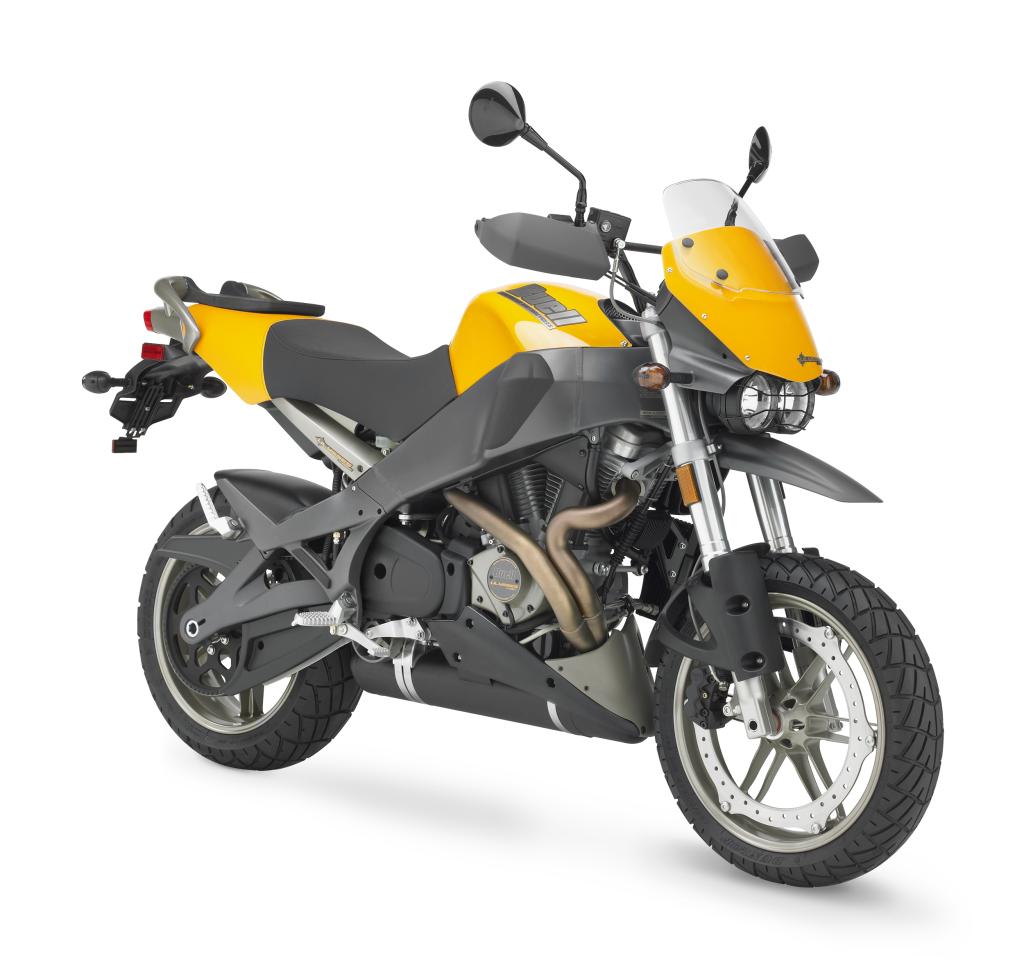
NEW ULYSSES AND LIGHTNING LONG LEAD BUELL LINE FOR 2006 New Transmission and Stiffer Swingarm for all XB Models Buell Motorcycle Company will extend the reach of its product line in 2006 with the introduction of two new models, the Ulysses XB12X Adventure Sportbike and the Lightning Long XB12Ss, a longer version of the original Lightning XB12S that maximizes comfort. In addition, all 2006 Buell Lightning and Firebolt models are enhanced with a new swingarm design, a new transmission and a redesigned intake system. The 2006 Buell product line features eight models: the Firebolt XB9R and Firebolt XB12R sportfighters; the Lightning family of streetfighters, including the Lightning CityX XB9SX, Lightning XB12S, Lightning XB12Scg and the new Lightning Long XB12Ss; the new Ulysses XB12X adventure sportbike and the versatile Buell Blast. “I’m really excited about the 2006 Buell line, because we are taking our proven XB platform in some bold, new directions, creating motorcycles that will appeal to more riders,” said Erik Buell, chairman and chief technical officer at Buell Motorcycle Company. “We also significantly improve our existing models. Call it evolution. At Buell, we will never stand still.” Buell Gets Dirty and Goes Long The new Ulysses XB12X is an Adventure Sportbike with long-travel suspension and aggressive tires designed to offer outstanding performance on paved and unpaved roads. With a dry weight of just 425 pounds and the broad powerband of the 103-hp Buell Thunderstorm 1203 V-Twin engine, the Ulysses will offer an outstanding power-to-weight ratio and sporting performance on the tight-and-twisty back roads that often lead to dirt roads. A larger frame and extended swingarm stretch the wheelbase of the new Lightning Long XB12Ss to 54 inches, two inches longer than the Lightning XB12S, to give this model a more relaxed personality and a cockpit that may better suit taller riders. Fuel capacity of the Lightning Long is 4.4 gallons, compared to 3.8 gallons for the Lightning XB12S. Handling remains quick and responsive, and the thrust of the Buell Thunderstorm 1203 V-Twin is undiminished. Updates Enhance All 2006 XB Models All Buell XB models benefit from the following design changes in 2006: New Swingarm Designed to be significantly lighter and stiffer, the new XB swingarm weighs 0.56 pounds less than the previous swingarm, a significant reduction in already low unsprung weight. The XB swingarm continues to double as the engine oil reservoir, and the oil-fill cap has a new easy-to-open design and is relocated for better access. The upper and lower belt guards and rear inner fenders have also been reshaped. A New Transmission, Lighter Clutch, Stronger Belt A redesigned transmission for all Buell XB models offers reduced mass and improved shift quality, quieter operation and extended service intervals. This transmission replaces moving/sliding gears with thin steel “dog rings” that slide to cause gear changes, a design commonly used in automotive racing gear boxes. Because the dog rings have less mass than gears, shifting is quicker. New heli-cal-cut gears are smoother and quieter than straight-cut gears. The new transmission requires Buell Formula + Oil, and the oil change interval for the primary/transmission case is extended from 5,000 miles to 10,000 miles. Clutch effort has been reduced by 15 percent (on 984cc powertrain) and 22 percent (on 1203cc powertrain) due to a lighter spring. Finally, a new Goodyear Hibrex final drive belt with Flexten Plus technology has been reinforced for enhanced durability. The new belt weighs just over one pound, compared to drive chains that can weigh up to five pounds, a significant contribution to the Buell philosophy of minimizing unsprung weight. New Air Intake System The engine air intake is relocated and integrated with a wrap-around fuel cap cowling in the airbox cover, where air flows through an aluminum hex screen. The new intake system replaces the intake duct that previously passed through the left-side frame section, and thus also results in increased fuel capacity to 3.82 gallons, as the frame doubles as the fuel tank. The duct on the left side of the motorcycle below the frame now delivers cool air exclusively to the rear cylinder. New Tie-Down Connection All XB models feature new rear reflector brackets with an eye designed to act as a tie-down point for cargo. The passenger heel guard can also act as a tie-down point. Buell Motorcycle Company, a subsidiary of Harley-Davidson, Inc., produces sport motorcycles, motorcycle parts, accessories and apparel. To learn more about Buell motorcycles, visit your local Buell dealer today and experience the pure streetfighter attitude, style and performance only found on board a Buell. Pull into www.buell.com for the Buell dealer nearest you.

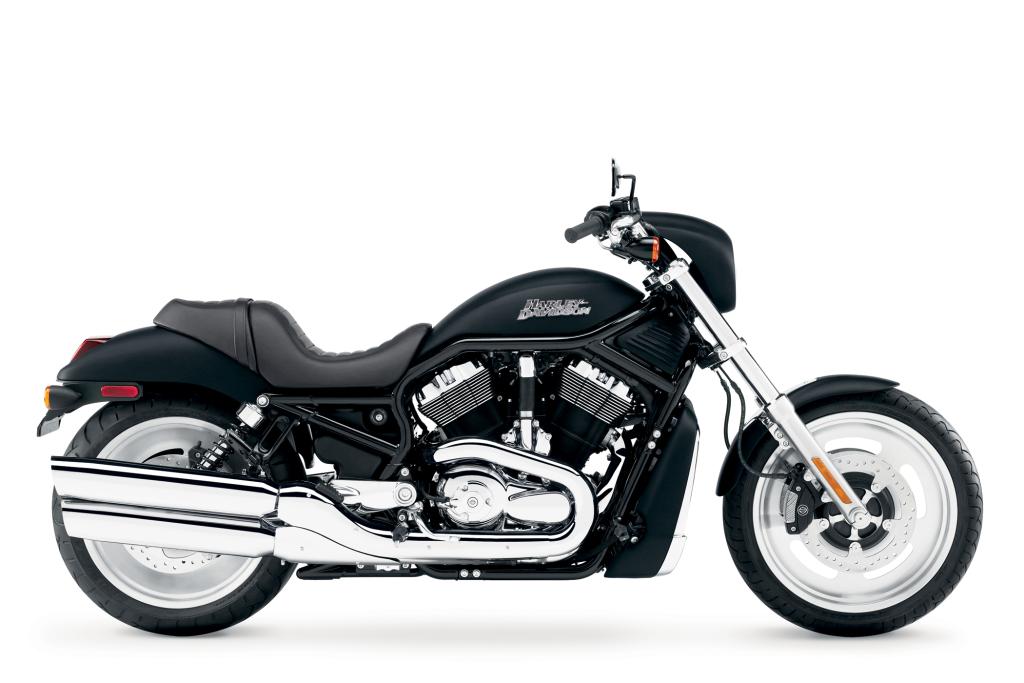
Harley-Davidson Introduces Its 2006 Model Line-up

2006 Harley models HARLEY-DAVIDSON PRESENTS SIX NEW MODELS FOR 2006 New Frame and 6-Speed Cruise Drive Transmission for All-New Dyna Platform Six new models and a host of styling and engineering updates highlight a diverse line of American V-Twin motorcycles from Harley-Davidson for 2006. Leading the way is the Dyna family of performance custom motorcycles, which has been completely re-engineered for 2006 and incorporates a new 6-speed Cruise Drive transmission and two new models: the minimalist FXDBI Street Bob and a limited-production FXDI 35th Anniversary Super Glide. New models also join the Softail, Touring and VRSC product families. “It’s especially appropriate that the debut of a retooled FXD Dyna line coincides with the 35th anniversary of the FX Super Glide, the motorcycle that sparked the concept of a factory custom motorcycle and evolved to the FXD,” said Bill Davidson, Harley-Davidson Director of Motorcycle Product Development. The 2006 motorcycles from Harley-Davidson represent generations of personal enthusiasm for riding with, and learning from, the most demanding customers on the road. Harley-Davidson believes a great motorcycle must function well as a machine and make an emotional statement. Each new Harley-Davidson motorcycle reflects a passion that has burned undiminished for more than a century. Highlights of the 2006 Harley-Davidson line include: “¢ The Dyna family is re-engineered and features new frame geometry, new 49mm forks, and the new 6-speed Cruise Drive transmission. The limited-edition FXDI 35th Anniversary Super Glide commemorates the introduction of the original factory custom, the 1971 FX Super Glide. The new FXDBI Street Bob offers minimalist stylingreminiscent of the early days of home-built customs. “¢ The Softail line features the reintroduction of the charismatic FLST/I Heritage Softail and the Bobtail goes wide with the debut of a wide, 200mm rear tire on the FXST/I Softail Standard, FXSTB/I Softail Night Train and FXSTS/I Springer Softail. “¢ The Touring family includes the new FLHX/I Street Glide, an “undressed” dresser that’s sure to cause a stir. The new Advanced Audio System by Harman/Kardon (available on all radio-equipped motorcycles) is an integrated advanced audio system that sets a new standard for the motorcycle industry. “¢ The liquid-cooled revolution continues for 2006 with the introduction of two new models to the VRSC family, the agile VRSCR Street Rod roadster and the menacing VRSCD Night Rod. “¢ All six models in the XL Sportster family offer a new, smoother-shifting transmission and significantly reduced clutch effort for 2006. “¢ Harley-Davidson will offer eight new paint colors and two-tone combinations for 2006. “¢ Harley-Davidson Custom Vehicle Operations (CVO) has created the new FLHTCUSE Screamin’ Eagle Ultra Classic Electra Glide for 2006. Powered by the Screamin’ Eagle 103 Stroker Twin Cam engine and featuring an exclusive paint scheme, the new Harman/Kardon Advanced Audio System, and a host of custom accessories, the new “¢ Screamin’ Eagle Ultra brings a new level of performance and style to the touring scene. The VRSCSE2 Screamin’ Eagle V-Rod, FLSTFSE2 Screamin’ Eagle Fat Boy and the VRXSE Screamin’ Eagle Destroyer professional-level drag-racing motorcycle round out the CVO line for 2006. NEW NIGHT ROD AND STREET ROD MODELS JOIN VRSC LINE Brembo Brakes, More Options for All VRSC Performance Motorcycles Harley-Davidson takes its VRSC platform in two new directions for 2006 with introduction of the VRSCD Night Rod, a raw street cruiser, and VRSCR Street Rod, an aggressive roadster. Both new models feature race-inspired technology, powered by the 120 hp liquid-cooled Revolution V-Twin engine. The Harley-Davidson VRSC family combines ground-breaking custom styling with performance driven by technology. VRSC is the latest branch on the Harley-Davidson family tree. Distinctive for its liquid-cooled, 60-degree Revolution V-Twin engine, signature aluminum bodywork and hydroformed perimeter frame, the VRSC line is fueled by the competitive spirit that propelled the Vance & Hines/Screamin’ Eagle V-Rod to the 2004 NHRA Pro Stock Bike Drag Racing Championship. The Revolution V-Twin engine features dual overhead cams and four-valve heads, backed by a five-speed transmission. On its way to a 9000-rpm redline, the Revolution engine pounds out up to 80 ft. lbs. of torque and up to 120 peak horsepower as tuned for the Street Rod and Night Rod. A sleek aluminum shell covers the massive airbox, while twin vortex scoops draw air into the aerodynamic radiator shroud. The fuel cell is hidden below the seat. For 2006, all VRSC models are equipped with new, high-performance Brembo brakes Ð dual 300 mm rotors on the front wheel with four-piston calipers, and a single 300 mm rotor on the rear wheel, also with a four-piston caliper. A new instrument display incorporates a clock and second trip meter, and all VRSC models have a new side stand with an easy-to-reach foot tab. VRSCD Night Rod The menacing presence of the new VRSCD Night Rod will cause a stir on the boulevard. This new model combines a raked-out, 36 degree fork angle with mid-mount controls for more aggressive cruising. Seat height is a low 26 inches. The highway pegs are standard for more relaxed riding. The Night Rod takes its styling cues right off the drag strip, with a color-matched speed screen visor, a black frame and blacked-out mirrors and controls, and chrome straight- shot dual exhaust pipes. The Revolution V-Twin engine is finished in black powdercoat with highlighted fins and polished covers. Slotted Machined Cast Aluminum disc wheels come standard, or order the optional black Staggered 10-spoke Cast Aluminum wheels for a more aggressive look. The Night Rod can be ordered with optional chrome engine covers and an optional security system. Eight color choices include new Black Denim, a flat-black finish. VRSCD Night Rod features: “¢ Liquid-cooled, 1130cc Revolution V-Twin engine “¢ 120 hp at 8250 rpm/ 80.0 ft. lbs. torque @ 7000 rpm “¢ New black powder-coated engine with highlighted fins and polished covers “¢ Mid-mount controls with highway pegs “¢ 36-degree fork angle “¢ 49 mm forks “¢ Brembo triple-disc brakes “¢ Black power-coated hydroformed frame “¢ Adjustable handlebars “¢ New 18-inch slotted disc rear wheel, 19-inch slotted disc front wheel “¢ Aluminum radiator shroud with twin vortex air scoops “¢ New black mirrors, hand controls and springs “¢ Round reflector-optic headlight “¢ New color-matched speed screen visor “¢ 3.7-gallon under-seat fuel cell “¢ Chrome straight-shot exhaust “¢ Low 26-inch seat height “¢ New clock and dual tripmeter “¢ Improved side-stand VRSCR Street Rod A high-performance roadster, the new VRSCR Street Rod combines an upright seating position, a 40-degree lean angle and retuned suspension to create a motorcycle that marries custom styling with a new level of cornering agility. Mid-mount foot controls, shorter handlebar risers and a taller seat move the rider forward into a more aggressive position, ready to attack the curves. Fork angle is reduced from 38 degrees to 32 degrees, and the Street Rod wheelbase is 66.8 inches, 0.7 inches shorter than the VRSCA V-Rod. The 43mm inverted forks and rear shocks have a performance calibration to help deliver a performance-oriented ride. A retuned silver-and-black Revolution V-Twin engine with straight-shot dual exhaust pipes is pumped up to make 120 hp and 80 ft. lbs. of torque. A new, five-gallon fuel cell offers extended range. Staggered 10-Spoke Cast Aluminum wheels wear ZR-rated Dunlop performance tires. Offered in Vivid Black with a black frame and in four additional colors with a silver-leafed aluminum frame. A security system is optional. VRSCR Street Rod features: “¢ Liquid-cooled, 1130cc Revolution V-Twin engine “¢ 120 hp @ 8250 rpm/80 ft. lbs. torque @ 7000 rpm “¢ Two-tone silver-and-black powder-coated engine with polished covers “¢ Chrome straight-shot dual exhaust pipes “¢ 32-degree fork angle “¢ 43 mm inverted forks “¢ Brembo triple-disc brakes “¢ Braided brake lines “¢ Powercoated hydroformed frame “¢ Adjustable handlebars “¢ Mid-mount foot controls “¢ 30-inch seat height “¢ Staggered 10-Spoke Cast Aluminum wheels, 18-inch rear/19-inch front “¢ Five-gallon under-seat fuel cell “¢ Aluminum radiator shroud with twin vortex air scoops “¢ Teardrop reflector-optic headlight “¢ New clock and dual tripmeter “¢ Improved side stand VRSCA V-Rod The VRSCA V-Rod redefined the power-cruiser category, offering an award-winning marriage of custom styling and liquid-cooled performance. Raked way out there, with a 38-degree fork angle, forward controls and pull back welded handlebars, drag-style aluminum disc wheels and chrome slash-cut exhaust, the V-Rod is one unmistakable motorcycle. The scooped-out seat is just 26 inches off the ground. Dual slash-cut chrome exhaust pipes deliver the wound-out song of a high-performance Revolution V-Twin. Triple-disc, four-piston Brembo brakes and black hand controls are new for 2006. Staggered 10-Spoke Cast Aluminum wheels are an option. A security system is standard. Choose from 13 color options plus the deep silver Anodized Aluminum finish that made V-Rod famous. VRSCA V-Rod features: “¢ Liquid-cooled, 1130cc Revolution V-Twin engine “¢ 115 hp at 8500 rpm/74 ft. lbs. torque @ 7000 rpm “¢ Two-tone silver and charcoal powder-coated cylinders with chrome covers “¢ Dual slash-cut chrome exhaust pipes “¢ 38-degree fork angle “¢ 49 mm forks “¢ New Brembo triple-disc brakes “¢ Braided brake lines “¢ Low 26-inch seat height “¢ Forward controls “¢ New black hand controls “¢ Silver-leafed aluminum powdercoat on hydroformed frame “¢ Welded pull back handlebars “¢ Clamshell instrument pod “¢ Teardrop reflector-optic headlight “¢ 18-inch disc rear wheel, 19-inch disc front wheel “¢ Aluminum radiator shroud with twin vortex air scoops “¢ Custom mirrors “¢ Standard security system “¢ New clock and dual tripmeter “¢ Improved side stand The VRSCB V-Rod model has been discontinued for 2006. SCREAMIN’ EAGLE V-ROD RIDES FAT REAR TIRE FOR 2006 CVO V-Rod Features Fresh Colors and Custom Components from Harley-Davidson The 2006 VRSCSE2 Screamin’ Eagle V-Rod rolls out of the Harley-Davidson Custom Vehicle Operations (CVO) shop on a new 240 mm rear tire, the widest rear tire ever mounted on a production Harley-Davidson motorcycle. The new rear tire is just one of many new components found on this second edition of the ultimate custom power-cruiser from Harley-Davidson. The Harley-Davidson CVO program creates low-volume, performance custom motorcycles produced by skilled technicians in special assembly areas at the Harley-Davidson plants in York, Pa., and Kansas City, Mo. Approximately 2,600 examples of the 2006 Screamin’ Eagle V-Rod will be assembled at the Kansas City Vehicle and Powertrain Operations facility. The suggested U.S. retail price for the Screamin’ Eagle V-Rod is $26,495 ($26,595 in California). The new 240 mm rear tire and a new 8-inch by 18-inch forged aluminum Reactor five-spoke rear wheel replace the 180 mm tire and 5.5-inch-wide Reactor combination used on the 2005 Screamin’ Eagle V-Rod. In order to accommodate the wider rear wheel and tire, the Screamin’ Eagle V-Rod also has new fender supports, new inner and outer fender custom shocks and narrow drive components. Spinning that big back wheel is a 1250cc Big Bore version of the liquid-cooled, fuel-injected 60-degree Revolution V-Twin engine with high flow cylinder heads for better intake and exhaust flow and optimized cam timing. This Screamin’ Eagle version of the Revolution V-Twin makes 86 ft. lbs. of torque and 10 percent more power than the standard Revolution engine. For 2006, the engine is finished in black and chrome. Other key features of the 2006 Screamin’ Eagle V-Rod include a 36 degree rake for a more nimble feel. A new rear turn signal module and custom license plate bracket smooth out the profile of the rear fender area. The ignition switch has been relocated to the right side of the frame below the front side cover. A new push-button latch for the seat is located in the right-rear side cover. New knurled grips and pegs lead a long list of custom components on the Screamin’ Eagle V-Rod, including a forged, chrome-plated handlebar riser, clamp and instrument bracket which support a traditional speedometer and tachometer with spun-aluminum faces. Handlebars are 1.25-inch-diameter and feature internal wiring. The airbox cover features an inset chrome console holding an LED display for the fuel gauge, indicator lights and a clock. Components from the Harley-Davidson Genuine Motor Accessories Catalog featured on the Screamin’ Eagle V-Rod include: chrome swingarm; chrome upper belt guard and lower debris deflector; chrome hand and foot controls; coated braided stainless steel control cables, clutch and brake lines; and a chrome side stand. Each Screamin’ Eagle V-Rod also includes a special CVO key and a CVO storage cover. The 2006 Screamin’ Eagle V-Rod will be offered in three new color combinations: Electric Orange and Black, Scarlet Red Pearl and Charcoal Slate, and Chrome Yellow Pearl and Platinum Pearl. The hydroformed perimeter frame tubes are color-coordinated with a powdercoat finish. The new paint design features the Screamin’ Eagle head on the sides of the airbox cover, and color-matched lower side covers and headlight shroud. A new radiator cover is color-matched with a chrome-plated insert. Features of the 2006 VRSCSE2 Screamin’ Eagle V-Rod include: “¢ Paint: Electric Orange and Black o Scarlet Red Pearl and Charcoal Slate o Chrome Yellow Pearl and Platinum Pearl o Frame is color-coordinated powdercoat “¢ Screamin’ Eagle 1250cc Powertrain o 105 mm Big Bore pistons o Big Bore cylinders o High flow heads o Optimized cam timing o New black and chrome finish “¢ New 240 mm rear tire “¢ New 8-inch x 18-inch rear wheel “¢ Improved heavy duty clutch with anodized Alumite coated hubs “¢ 10 percent stiffer clutch spring “¢ Brembo Brake systems “¢ New custom license plate bracket “¢ New push-button seat latch “¢ New relocated key switch “¢ Custom upper and lower side covers “¢ Five-spoke forged Reactor wheels “¢ New narrow Reactor rear sprocket “¢ New 21 mm rear drive belt “¢ Custom handlebar riser and rear riser cover “¢ Riser clamp and speedo/tachometer bracket “¢ 1.25-inch fat handlebars with internal wiring “¢ Spun aluminum-faced speedo and tachometer mounted on handlebar “¢ Airbox cover console with LED fuel gauge, indicator lights and clock “¢ Custom seat and passenger pillion with snakeskin embossed leather insert “¢ Chrome headlight bucket “¢ Muffler end caps “¢ Clutch release cover with CVO emblem “¢ Chrome billet front sprocket cover inserts “¢ Chrome upper and lower triple trees “¢ Chrome hand controls and master cylinders “¢ Chrome billet-style mirrors “¢ Braided coated stainless plated clutch and brake lines “¢ Braided coated stainless control cables “¢ Chrome rear swingarm “¢ Chrome front fork sliders “¢ Rear shocks with chrome uppers “¢ Chrome footpegs “¢ Chrome brake and shift levers “¢ Chrome passenger footpeg brackets “¢ Polished slotted stainless shift rod “¢ Chrome swingarm pivot covers “¢ Chrome oil dipstick “¢ Chrome jiffy stand “¢ Chrome front and rear wheel spacers “¢ Chrome upper shock spacers “¢ Chrome front axle nut covers “¢ Chrome rear axle nut cover kit “¢ CVO key “¢ CVO storage cover 2006 XL SPORTSTER MODELS FEATURE NEW TRANSMISSION Smoother Shifting and Lighter Clutch Improve Six XL Sportster Models A new, smoother-shifting transmission is among several key refinements to the 2006 Harley-Davidson XL Sportster line. All XL Sportster models will feature the new transmission and a new clutch that significantly reduces lever effort. The XL Sportster bike, a classic design bred on the racetrack and refined over 49 years of production to offer raw performance with minimalist styling. All Sportsters are powered by the XL Evolution V-Twin engine, rubber-mounted in the frame to isolate the rider from vibration and tuned to provide a broad powerband for outstanding street performance. The new transmission remains integral with the XL Evolution powertrain and shares a new die-cast case with the engine. Helical-cut gears mesh more quietly than the straight-cut gears used in the previous transmission. Shift effort is significantly reduced due to thin steel “dog rings” that slide to cause gear changes. Because the dog rings have less mass than gears, shifting is quicker. A new clutch assembly reduces lever effort by 12 percent on 1200cc Sportster models and 17 percent on 883cc Sportster models. XL 883 Sportster 883 This most affordable motorcycle in the Harley-Davidson line offers plenty of soul. The Sportster 883 features classic Sportster styling with the distinctive “peanut” fuel tank, staggered dual exhaust, sleek solo seat and 13-spoke cast aluminum wheels. The smooth power of the rubber-mounted XL Evolution 883 engine is now enhanced by the new smoother-shifting transmission. A new sidestand reduces the effort required to lift the bike off the stand by 40 percent. The Sportster 883 is offered in four colors for 2006, including new Fire Red Pearl. XL 883 Sportster 883 features: “¢ Rubber-mounted XL Evolution 883 engine “¢ Silver powder-coated engine with polished covers “¢ New smoother, quieter transmission “¢ New lighter clutch effort “¢ New sidestand design “¢ Low-rise handlebar “¢ Classic solo seat “¢ Chrome staggered shorty dual exhaust “¢ Mid-mounted foot controls “¢ Classic 3.3-gallon fuel tank “¢ Optional Steel Laced wheels XL 883R Sportster 883R The thundering Harley-Davidson XR flat-track racer is the inspiration for the XL Sportster 883R. The Evolution V-Twin powertrain is finished in wrinkle-black powdercoat. The 13-spoke cast-aluminum wheels, handlebars, fork sliders, headlamp eyebrow, air cleaner cover and rear springs are also finished in no-nonsense black. Top it off with dual front disc brakes, chrome shorty dual exhaust and Harley-Davidson racing graphics on the fuel tank. You can almost smell dirt and hear the crowd. A new sidestand reduces the effort required to lift the bike off the stand by 40 percent. Available for 2006 in new Mirage Orange, Vivid Black or Brilliant Silver. XL Sportster 883R features: “¢ Rubber-mounted XL Evolution 883 engine “¢ Black powder-coated engine with wrinkle-black covers “¢ New smoother, quieter transmission “¢ New lighter clutch effort “¢ Black handlebars, air cleaner cover, fork sliders, headlamp eyebrow and springs “¢ One-piece, two-up seat “¢ New black 13-spoke cast aluminum wheels “¢ Dual front disc brakes “¢ Low-rise handlebar “¢ Chrome staggered shorty dual exhaust “¢ Mid-mounted foot controls “¢ Classic 3.3-gallon fuel tank “¢ New sidestand design “¢ Race-inspired tank graphic XL 883L Sportster 883L A seat height of just 26 inches makes the XL Sportster 883L the lowest Sportster ever. Its ergonomics, designed specifically to fit smaller riders, include a solo seat with lower cushion height and positioned further forward than the Sportster 883. The handlebars are pulled further back and are wider, while mid-mount foot controls fit a wide variety of riders. Front and rear suspension is lowered and re-tuned to maintain precise handling. Offered in nine colors for 2006 with a special tank graphic. XL Sportster 883L features: “¢ Rubber-mounted 883cc XL Evolution engine “¢ Silver powder-coated engine with polished covers “¢ New smoother, quieter transmission “¢ New lighter clutch effort “¢ Silver 13-spoke cast aluminum wheels “¢ Wide polished handlebar “¢ Lowered front and rear suspension “¢ Low solo seat “¢ Special fuel tank graphics “¢ Chrome staggered shorty dual exhaust “¢ Mid-mount foot controls “¢ Classic 3.3-gallon fuel tank XL 883C Sportster 883 Custom The Sportster 883 Custom has forward controls and pullback handlebars for a lower profile and laid-back riding position. A 4.5-gallon fuel tank, two-up seat and 21-inch laced steel front wheel and cast aluminum solid disc rear wheel are standard. Chrome Aluminum Profile laced front and rear wheels are an option. Choose from 12 solid, pearl and two-tone paint combinations. XL 883C Sportster 883 Custom features: “¢ Rubber-mounted XL Evolution 883 engine “¢ Silver powder-coated engine and covers “¢ New smoother, quieter transmission “¢ New lighter clutch effort “¢ Chrome staggered shorty dual exhaust “¢ Chrome pullback handlebar riser “¢ Laced 21-inch front wheel, aluminum disc 16-inch rear wheel “¢ One-piece, two-up seat “¢ Forward foot controls “¢ 4.5-gallon fuel tank “¢ Optional Chrome Aluminum Profile Laced wheels XL 1200R Sportster 1200 Roadster The muscular profile of the XL Sportster 1200 Roadster make it clear this is the Sportster for performance. Dual front disc brakes and a high-mount tachometer are standard. The high-performance XL Evolution 1200 engine puts out 70 hp and 79 ft. lbs. of torque. Wide, polished handlebars, a 3.3-gallon fuel tank and 13-spoke cast aluminum wheels are classic Sportster style. Laced steel wheels are an option. A new sidestand reduces the effort required to lift the bike off the stand by 40 percent. Offered in eight solid and SunGlo color choices for 2006, with a new tank graphic on select colors and new wrinkle-black engine and covers. XL 1200R Sportster 1200 Roadster features: “¢ Rubber-mounted XL Evolution 1200 engine “¢ New Black powder-coated engine and wrinkle-black covers “¢ New smoother, quieter transmission “¢ New lighter clutch effort “¢ New sidestand design “¢ High-compression, high-flow cylinder heads “¢ High-performance cams “¢ Triple-disc brakes “¢ Tachometer “¢ Mid-mount foot controls “¢ 13-spoke aluminum wheels “¢ Wide polished handlebars “¢ Classic 3.3-gallon fuel tank XL 1200C Sportster 1200 Custom A classy, laid-back performer, the Sportster 1200 Custom features a laced 21-inch front wheel, chrome slotted aluminum disc rear wheel, forward controls, riser-mounted pullback handlebars and the longer, 4.5-gallon fuel tank. The high-performance, rubber-mounted XL Evolution 1200 puts down plenty of smooth power. Chrome Aluminum Profile Laced wheels are an available option. There are 16 color options offered for 2006, including solid, SunGlo and two-tone designs. XL 1200C Sportster 1200 Custom features: “¢ Rubber-mounted XL Evolution 1200 engine “¢ High-compression, high-flow cylinder heads “¢ High-performance cams “¢ Black powder-coated engine with chrome covers “¢ New smoother, quieter transmission “¢ New lighter clutch effort “¢ Laced 21-inch front wheel, slotted 16-inch chrome disc rear wheel “¢ Forward foot controls “¢ Chrome pullback handlebar riser “¢ Chrome bullet headlight “¢ 4.5-gallon fuel tank “¢ Optional Chrome Aluminum Profile Laced wheels NEW FXDBI STREET BOB JOINS REDESIGNED 2006 DYNA LINE New 6-Speed Transmission and Stiffer Frames for All FXD Models The new FXDBI Street Bob and a limited-production FXDI 35th Anniversary Super Glide join four returning models in an innovative Harley-Davidson Dyna line that has been completely re-engineered for 2006. Key changes to all Dyna models include a new 6-speed Cruise Drive transmission, new frames, new 49mm forks and a wider, 160mm rear tire. The result is improved performance and updated styling for all models in the Dyna family of custom-performance motorcycles. Rooted in the look of hard-edged Harley-Davidson FX factory customs of the 1970s, the Dyna family continues to blend stripped-down, custom styling with exhilarating performance. A complete redesign of the Dyna platform was implemented for 2006 to improve each Dyna model across the entire performance spectrum. Key Dyna styling elements – twin exposed rear shocks, a raked fork, a redesigned battery box and the classic Fat Bob fuel tank – remain in place on the 2006 models. All Dyna models are powered by the rubber-isolated 1450cc Twin Cam 88 engine. Electronic Sequential Port Fuel Injection (ESPFI) is standard on all 2006 Dyna models. The FXDX/I Dyna Super Glide Sport has been discontinued for 2006. Details on new features of the 2006 Dyna line include: 6-Speed Cruise Drive Transmission The new 6-speed Cruise Drive transmission replaces the five-speed transmission previously used on Dyna models, and offers a taller top-gear drive ratio for significantly reduced engine rpm at highway cruising speeds. A completely new design, the Cruise Drive transmission utilizes helical-cut gears that mesh more quietly than the straight-cut gears used in the previous transmission. Shift effort is significantly reduced because thin steel “dog rings” that slide to cause gear changes replace moving gears. Because the dog rings have less mass than gears, shifting is quicker and smoother, and the throw of the shift lever is reduced. Larger internal bearings, larger gears and a stiffer transmission housing all combine to improve over-all durability, and torque-carrying capacity is increased by 28 percent. External oil lines have been eliminated and all seals are improved. Reduced Clutch Lever Effort A redesign of the ball-and-ramp mechanism and the clutch diaphragm spring provide a 35 percent reduction of peak clutch lever effort on all 2006 Dyna models. The result is more clutch control, especially in stop-and-go traffic, and easier operation. Improved Twin Cam 88 Engine As part of the redesign of the Dyna platform, changes were made to the Twin Cam 88 engine, to both fit with the new 6-speed Cruise Drive transmission and to enhance overall customer satisfaction with the engine. The cam plate design has been improved to include new roller chain, plain cam bearings and a new hydraulic automatic chain tensioner. The improved oil pump provides 10 percent more flow and 23 percent more scavenging capacity, and the engine now has an integral oil filter adaptor and an integrated oil-cooler adaptor. A new design for the engine/transmission interface incorporates integral oil passages. Finally, the primary drive features a new inner and outer housing and a new automatic primary chain tensioner that eliminates the need for chain adjustment and the inspection cover. The primary drive ratio is raised from 1.44:1 (2005) to 1.353:1 (2006). New 49 mm Fork Tubes Fork tube diameter is increased to 49 mm from 39 mm on all Dyna models for more substantial front-end styling and improved handling. New Frame Designs All 2006 Dyna frames have been re-engineered to provide a significant improvement in handling plus enhanced styling and rider ergonomics. Each model has new fork rake and triple clamp offset specifications. New stiffer, one-inch diameter front and rear axles and a wider, stiffer swingarm combine to improve high-speed handling. Dyna Styling Changes All Dyna models have new seats offering improved comfort and styling. A new 160/70 B 17 rear tire and 17-inch wheel replaces the 150/80 B 16 tire and 16-inch wheel used on 2005 Dyna models. New battery covers and rear fender shapes offer more contemporary rear-end styling and compliment the new rear wheel and tire combinations. A new one-piece ignition switch/fork lock position provides easier reads. The FXDLI Dyna Low Rider, FXDI Dyna Super Glide and FXDCI Super Glide Custom feature the fresh custom style of new 10-Spoke Cast Aluminum wheels. FXDBI Street Bob The new FXDBI Street Bob takes minimalist styling to a new extreme. Inspired by the post-World War II “bobber” movement, the Street Bob discards any component not required by law … a passenger seat and pegs, for example. A solo seat sets the tone for a motorcycle designed for the individualist. Seat height is just 25.8 inches. Mini ape-hanger handlebars, the classic Fat Bob fuel tank, a new wrap-around rear fender and steel laced wheels complete a profile that will stand out in the cruiser crowd. A new wrinkle-black finish is applied to the battery box, console and belt guard. Four color choices include new Black Denim, a flat-black finish. FXDBI Street Bob features: “¢ Vibration-isolated Twin Cam 88 engine with ESPFI “¢ Black powder-coated engine with polished covers “¢ Chrome staggered shorty dual exhaust “¢ New 6-speed Cruise Drive transmission “¢ New 49 mm forks “¢ New 29 degree fork angle/29 degree steering head angle “¢ Mini ape-hanger handlebars “¢ Fat Bob fuel tank “¢ Street Bob air cleaner trim ring “¢ Special tank emblems “¢ Wrinkle-black console with turn signal indicators “¢ Wrinkle-black battery cover with polished trim “¢ Wrinkle-black belt guard “¢ Tank-mounted speedometer “¢ Solo seat “¢ Mid-mounted foot controls “¢ New wrap-around rear fender “¢ New 160 mm rear tire “¢ Steel Laced wheels “¢ New Black Denim paint available FXDI35 Dyna 35th Anniversary Super Glide Celebrating the introduction of an icon of American motorcycle design, the FXDI35 Dyna 35th Anniversary Super Glide pays homage to the original red, white and blue 1971 FX Super Glide designed by Willie G. Davidson. Its special Glacier White Pearl paint and graphics are similar to the those on the original model, including a metal emblem depicting the famous Number One logo on the fuel tank in metal. Special emblems and a special ribbed two-up seat complete the package. Production will be limited to 3,500 serialized motorcycles. FXDI35 Dyna 35th Anniversary Super Glide features: “¢ Vibration-isolated Twin Cam 88 engine with ESPFI “¢ Silver powder-coated engine with chrome covers “¢ Chrome staggered shorty dual exhaust “¢ New 6-speed Cruise Drive transmission “¢ New 49 mm forks “¢ New 29 degree fork angle/29 degree steering head angle “¢ Mini pull-back handlebars “¢ Fat Bob fuel tank “¢ Leather console with single speedometer “¢ Mid-mounted foot controls “¢ Ribbed two-up seat “¢ Chrome battery side cover “¢ Chrome Aluminum Profile Laced wheels “¢ New wrap-around rear fender “¢ New 160 mm rear tire “¢ Chrome belt guard, sprocket cover, electrical panel cover and coil cover “¢ Anniversary fuel tank medallions and decals “¢ Anniversary Number One logo on fuel tank “¢ Anniversary label on air cleaner and battery box “¢ Red-white-blue paint scheme with front and rear fender stripes “¢ Serialized production limited to 3,500 units FXDI Dyna Super Glide The aggressive performance of the FXDI Super Glide is enhanced for 2006 by the addition of the new Dyna chassis design and a wider, 160mm rear tire. The most affordable Harley-Davidson Big Twin model, the Super Glide serves as an entry point for owners with plans for extensive customization. A solo seat and silver 10-Spoke Cast Aluminum wheels are new features for 2006. The Super Glide is offered in four solid colors, with a new fuel tank decal. FXDI Dyna Super Glide features: “¢ Vibration-isolated Twin Cam 88 engine with ESPFI “¢ Silver powder-coated engine and polished covers “¢ Chrome staggered shorty dual exhaust “¢ New 6-speed Cruise Drive transmission “¢ New 49 mm forks “¢ New 29 degree fork angle/29 degree steering head angle “¢ New wrap-around rear fender “¢ New 160 mm rear tire “¢ Top-mounted speedometer “¢ Fat Bob fuel tank “¢ Flat-track handlebars “¢ New silver 10-Spoke Cast Aluminum wheels “¢ New solo seat “¢ New fuel tank decal FXDCI Super Glide Custom The FXDCI Super Glide Custom gleams night and day with an extra complement of chrome components, including chrome engine covers, chrome headlight cover and speedometer housing. The console is color-matched to the fuel tank and the fuel tank lid ring is chromed. A low-slung seat and silver 10-Spoke Cast Aluminum wheels are new for 2006. A new single floating brake rotor allows more of the front wheel to be visible. Chrome Aluminum Profile Laced wheels are an option. The Super Glide Custom is offered in nine solid and Sunglo colors. FXDCI Super Glide Custom features: “¢ Vibration-isolated Twin Cam 88 engine with ESPFI “¢ Silver powder-coated engine with chrome covers “¢ Chrome staggered shorty dual exhaust “¢ New 6-speed Cruise Drive transmission “¢ New 49 mm forks “¢ New 29 degree fork angle/29 degree steering head angle “¢ New wrap-around rear fender “¢ New 160 mm rear tire “¢ New silver 10-Spoke Cast Aluminum wheels “¢ New single floating front brake rotor “¢ Top-mounted speedometer with chrome housing “¢ Color-matched fuel tank console “¢ Chrome headlight cover “¢ Chrome fuel lid ring FXDLI Dyna Low Rider The FXDL Dyna Low Rider appeals to riders with traditional tastes seeking a motorcycle that’s comfortable and easy to handle. The seat height is just 25.8-inches and mid-mounted foot controls, highway pegs and new pull back bars combine for a low center of gravity and ergonomics that fit many riders. Black 10-Spoke Cast Aluminum wheels and a handlebar-mounted instrument cluster are new for 2006. A new single floating brake rotor allows more of the front wheel to be visible. Chrome Aluminum Profile Laced wheels are an option. The Low Rider is offered in 10 color combinations, including solid, Sunglo and two-tone combinations, with a new tank decal for 2006. FXDLI Dyna Low Rider features: “¢ Vibration-isolated Twin Cam 88 engine with ESPFI “¢ Black powder-coated engine with chrome covers “¢ Chrome staggered shorty dual exhaust “¢ New 6-speed Cruise Drive transmission “¢ New 49 mm forks “¢ New 30.5 degree fork angle/29 degree steering head angle “¢ New wrap-around rear fender “¢ New 160 mm rear tire “¢ New black 10-Spoke Cast Aluminum wheels “¢ New stylized low-profile suspension “¢ New low-slung custom seat “¢ New easy-reach pull-back handlebars “¢ New handlebar-mounted instrument cluster “¢ New single floating front brake rotor “¢ Mid-mounted foot controls FXDWGI Dyna Wide Glide The FXDWG Dyna Wide Glide takes the laid-back chopper profile to its street-legal limit. The Wide Glide is longer than ever, with a new 49mm fork is raked out to 36 degrees for 2006 and a 21-inch steel laced front wheel. The bobtail rear fender has a new shape that emphasizes the a wider, 160mm tire, and it carries a new, stepped chopper-style seat. New 1.25-inch ape-hanger handlebars on new short risers feature internal wiring for a cleaner look. The shocks have new forged tops. The Wide Glide is offered in 12 color combinations, including solid, Sunglo and two-tone combinations. Chrome Aluminum Profile Laced wheels are an option. FXDWGI Dyna Wide Glide features: “¢ Vibration-isolated Twin Cam 88 engine with ESPFI “¢ Black powder-coated engine with chrome covers “¢ Chrome staggered shorty dual exhaust “¢ New 6-speed Cruise Drive transmission “¢ New wide 49 mm forks “¢ New 36 degree fork angle/34 degree steering head angle “¢ New wrap-around rear fender “¢ New 160 mm rear tire “¢ 21-inch laced front wheel “¢ New 1.25-inch ape-hanger handlebars with internal wiring “¢ New shorter risers “¢ New bobtail rear fender “¢ New stylized battery cover “¢ Chrome sissy bar with backrest “¢ Forward foot controls “¢ Large, tank-mounted speedometer A DRESSER GETS UNDRESSED: THE BOLD NEW FLHX/I STREET GLIDE Reduced Clutch Effort and Advanced Audio System New for 2006 Touring Models Slammed, smooth and stripped of chrome, the new Harley-Davidson FLHX/I Street Glide takes the touring motorcycle in a new, minimalist direction. Street Glide is a dresser that makes a bold custom statement inspired by the street scene. Yet this newest member of the Harley-Davidson Touring family remains ready to answer the call of the open road. In addition to this exciting new model, the Harley-Davidson Touring family receives a number of new features for 2006. The Advanced Audio System by Harman/Kardon offers superior sound quality and the ability to integrate with a number of electronic devices that operate with the base radio controls. Clutch lever effort has been reduced by 24 percent on all Touring models. The Electra Glide Tour-Pak has been redesigned to offer increased passenger room and streamlined styling without compromising its generous storage capacity. While diverse in character, each of the eight models in the 2006 Harley-Davidson Touring line offers the smooth power of the rubber-isolated Twin Cam 88 powertrain, ergonomics and suspension designed to deliver long-haul comfort, and unmistakable Harley-Davidson styling that emphasizes the mechanical beauty of the motorcycle. Electronic Sequential Port Fuel Injection (ESPFI) is standard or available as an option on every 2006 Touring model, and Chrome Aluminum Profile Laced wheels and the Harley-Davidson Factory Security System are available for every model. Details on new features and upgrades for select models in the 2006 Harley-Davidson Touring line include: Advanced Audio System by Harman/Kardon Designed by Harman/Kardon to Harley-Davidson specifications and assembled in Northridge, Calif., this system sets a new standard for the motorcycle industry. The system is designed to withstand the motorcycle environment while providing improved function and sound quality, and the ability to integrate with other electronic devices from Harley- Davidson Genuine Motor Accessories. The system comes equipped with an integrated CB radio and intercom on the FLHTCUI Ultra Classic Electra Glide, as well as AM/FM/Weatherband/ and CD-MP3 capabilities on all radio equipped models. Reduced Clutch Lever Effort A redesigned ball-and-ramp mechanism and diaphragm spring reduce the peak pull-in force for the clutch lever by 24 percent. The result is less forearm fatigue, especially in stop-and-go traffic, and more clutch control. New Electra Glide Tour-Pak The Tour-Pak trunk has been redesigned and offers the following new features: “¢ Two-position front-and-back adjustability with a one-inch difference in position, to provide more passenger room, if desired. The forward position is the same as the 2005 fixed position. The passenger backrest is also in a lower, more comfortable position. “¢ The Tour-Pak has new contours and its height has been lowered by one inch to improve looks and lower the center of gravity. Luggage capacity has not been reduced. The lower position also better hides mounting hardware from view. The passenger backrest flap is now attached to the Tour-Pak base, rather than to the lid, to prevent backrest rub. “¢ The Tour-Pak shell is injection-molded black GTX nylon alloy that provides a smoother surface finish and eliminates internal “chalking.” “¢ New LED side lights have been added to Ultra Classic Electra Glides. “¢ New full-length chrome trim accents have been added to Electra Glide Classics. New High-Output Charging System A new three-phase, 50-amp/650-watt charging system is standard on all Touring models, an increase in charging capacity of 11 to 32 percent, depending on the model. The new system offers improved reliability and increased reserve capacity for accessory loading. New Reflector-Optics Auxiliary Lamps Models equipped with auxiliary lights feature a new design with a clear lens and reflector optics that matches the headlight design introduced in 2005. The new auxiliary lights are more durable and offer an improved light pattern and intensity. New Ignition Switch Electra Glide and Road Glide models have a new ignition switch that confirms the fork lock condition to the operator by requiring the fork to be at full-stop angle before the switch can be turned to the “fork lock” position. New Footboard Rubber Inserts New “pinstripe” rubber pads for the brake pedal and rider and passenger footboards debut on all models (except FLHRS/I and FLHX/I), with a Bar and Shield logo on the brake pedal. 2006 Harley-Davidson Touring models: FLHX/I Street Glide The new FLHX/I Street Glide is a bagger with an edgy vibe, the kind of stripped-down bike that appeals to a rider interested in functional beauty. The Street Glide retains full touring capability combining custom styling and comfort. It comes equipped with the traditional “bat wing” fairing, the 40-watt Advanced Audio System by Harman/Kardon, hard saddlebags, air-adjustable Touring rear suspension and triple-disc brakes. But the Street Glide is an “undressed” dresser. Off come the auxiliary lamps and the front fender trim. Off comes the full windshield, replaced with a smoked mini wind deflector. Off come the standard mirrors, replaced with fairing- mount mirrors that are almost invisible when the bike is viewed from the front. Low Profile rear suspension drops the Street Glide closer to the pavement and reduces seat height by one inch to just 26.3 inches. Rear fender “ground effects” fill the space between the saddlebags and fender and add Tri-line LED lighting to the bottom edge of the fender. Black Cast Slotted Alloy wheels and slash-down mufflers reinforce the new, lower profile. Custom touches include Streamliner footboards, brake pedal and passenger pegs. A stretched, chrome fuel tank console has an embossed, diamond-cut nameplate. The tank features a special smoked-chrome emblem. The result is a touring motorcycle that looks lower, lighter and cleaner than an Electra Glide and rolls down the road with more attitude. The Street Glide is available in four solid colors: Vivid Black, Black Pearl, Black Cherry and Deep Cobalt. FLHX/I Features: “¢ Vibration-isolated, 1450cc Twin Cam 88 engine “¢ Black powder-coated engine with chrome covers “¢ New low-effort clutch “¢ New 40-watt Advanced Audio System by Harman/Kardon “¢ Batwing fork-mounted fairing “¢ Smoked mini wind deflector “¢ Fairing-mounted mirrors “¢ Clean front fender “¢ New black Cast Slotted Alloy wheels “¢ Stretched chrome console “¢ New smoked chrome 3-D tank emblem “¢ New custom bucket seat with perforated insert “¢ Streamliner footboards, brake pedal and passenger pegs “¢ Low Profile rear suspension “¢ New rear fender ground effects with Tri-line LED lighting “¢ New low-hung license plate mount and hidden plate illuminator “¢ GTX Nylon hard saddlebags with color-matched latches “¢ New slash-down mufflers “¢ New 50 amp/650 watt charging system FLHT/I Electra Glide Standard The FLHT/I Electra Glide Standard offers a selection of basic touring amenities for the rider who’s looking for a no-nonsense, long-distance motorcycle. It also serves as an ideal entry point for an owner interested in creating a personalized custom. Locking GTX hard saddlebags, the classic Harley-Davidson fork-mounted touring fairing with instrumentation, air-adjustable rear suspension, triple-disc brakes and auxiliary lamps are standard. Electronic Sequential Port Fuel Injection is an available option. Offered in traditional Vivid Black, new Fire Red Pearl and new Sunglo Blue. FLHT/I Electra Glide Standard features: “¢ Vibration-isolated, 1450cc Twin Cam 88 engine “¢ Silver powder-coated engine “¢ New low-effort clutch “¢ New 50 amp/650 watt charging system “¢ Air-adjustable rear suspension “¢ Bat-wing, fork-mounted fairing “¢ Locking GTX nylon alloy saddlebags “¢ Comfort-stitch touring saddle “¢ Fairing-mounted speedometer and tachometer, voltmeter and fuel gauge “¢ Triple-disc brakes “¢ Cruise control-ready “¢ New clear-lens reflector-optics auxiliary lamps “¢ New Pinstripe footboard inserts “¢ New ignition switch FLHTCI Electra Glide Classic The FLHTCI Electra Glide Classic is a full-feature touring motorcycle, upgraded for 2006 with the new adjustable Tour-Pak and passenger seating area and the new 40-watt Advanced Audio System by Harman/Kardon. Now standard for 2006, Electronic Sequential Port Fuel Injection (ESPFI) delivers smooth throttle response and optimized engine performance in all weather and elevation conditions. Full engine instrumentation, additional fender and saddlebag trim, locking saddlebags and chrome engine covers are standard. Offered in nine color options for 2006, including solid, Sunglo and two-tone combinations. FLHTC/I Electra Glide Classic features: “¢ Vibration-isolated, 1450cc Twin Cam 88 engine “¢ Black powder-coated engine with chrome covers “¢ Electronic Sequential Port Fuel Injection (ESPFI) “¢ New low-effort clutch “¢ Bat-wing, fork-mounted fairing “¢ New 40-watt Advanced Audio System by Harman/Kardon “¢ New locking GTX nylon alloy adjustable Tour-Pak “¢ Locking GTX nylon alloy saddlebags “¢ Comfort-stitch touring saddle “¢ New lower passenger backrest “¢ Full instrumentation (electronic tachometer and speedometer, fuel gauge, voltmeter, oil-pressure gauge, “¢ ambient air temperature gauge and odometer/tripmeter) “¢ Triple-disc brakes “¢ Air-adjustable rear suspension “¢ Cruise control-ready “¢ New clear-lens, reflector-optic auxiliary lamps “¢ New Pinstripe footboard inserts “¢ New ignition switch “¢ New 50 amp/650 watt charging system FLHTCUI Ultra Classic Electra Glide The FLHTCUI Ultra Classic Electra Glide is the ultimate touring motorcycle from Harley-Davidson, made even better for 2006 with the addition of a redesigned adjustable Tour-Pak with LED side lights and the new 80-watt Advanced Audio System by Harman/Kardon. Electronic Sequential Port Fuel Injection, passenger sound system, CB radio and intercom system, cruise control and full instrumentation are all standard. Custom luggage liners add convenience for overnight tours. The lower fairings feature large vent doors for ventilation in warm weather. Offered in 12 color options for 2006, including solid, Sunglo and two-tone combinations. FLHTCUI Ultra Classic Electra Glide features: “¢ Vibration-isolated, 1450cc Twin Cam 88 engine with ESPFI “¢ Black powder-coated engine with chrome covers “¢ New low-effort clutch “¢ Bat-wing, fork-mounted fairing “¢ New 80-watt Advanced Audio System by Harman/Kardon “¢ Vented lower fairings with storage compartments “¢ New locking GTX nylon alloy adjustable Tour-Pak with LED side lights “¢ Tour-Pak mounted tail/stop light “¢ Locking GTX nylon alloy saddlebags “¢ Custom-fit soft luggage liners “¢ Comfort-stitch touring saddle “¢ New lower passenger backrest “¢ Full instrumentation (electronic tachometer and speedometer, fuel gauge, voltmeter, oil-pressure gauge, “¢ ambient air temperature gauge and odometer/tripmeter) “¢ CB and intercom “¢ Passenger sound system and CB/intercom controls “¢ Vented lower fairings with storage compartments “¢ Electronic cruise control “¢ Triple-disc brakes “¢ Air-adjustable rear suspension “¢ New clear-lens, reflector-optic auxiliary lamps “¢ New Pinstripe footboard inserts “¢ New ignition switch “¢ New 50 amp/650 watt charging system FLTRI Road Glide Clean, unadorned styling and a distinctive, frame-mounted fairing set the FLTRI Road Glide apart from other Harley-Davidson touring motorcycles. Because it’s mounted to the frame instead of the handlebars, the wind-splitting fairing reduces weight on the fork and handlebars to give the Road Glide responsive handling. Weather protection remains outstanding. The fairing holds a cockpit-style instrument display and a new 40-watt Advanced Audio System by Harman/Kardon. Hard-shell saddlebags, cruise control and Electronic Sequential Port Fuel Injection are standard. New black slashing graphics create a bold contrast on lighter color combinations that were not offered in the past. The Road Glide is available in eight color combinations for 2006, including new Fire Red Pearl and new Deep Cobalt and Yellow Pearl. FLTRI Road Glide features: “¢ Vibration-isolated, 1450cc Twin Cam 88 engine with ESPFI “¢ Silver powder-coated engine with chrome covers “¢ New low-effort clutch “¢ Dual clear-lens, reflector-optics headlights “¢ Frame-mounted, aerodynamic fairing “¢ Silver gauges, wheels and calipers “¢ New 40-watt Advanced Audio System by Harman/Kardon “¢ Custom bucket saddle “¢ Locking GTX nylon alloy saddlebags “¢ Full cockpit instrumentation (electronic tachometer and speedometer, fuel gauge, voltmeter, oil-pressure gauge, “¢ ambient air temperature gauge and odometer/tripmeter) “¢ Electronic cruise control “¢ Triple-disc brakes “¢ Slash-cut mufflers “¢ New Pinstripe footboard inserts “¢ New ignition switch “¢ New 50 amp/650 watt charging system FLHR/I Road King The FLHR/I Road King offers classic Harley-Davidson styling with the long-range comfort of the Touring chassis. Locking, weather-resistant hard-shell saddlebags and a large, detachable windshield handle luggage and the weather. A two-piece touring seat, air-adjustable rear Touring suspension and footboards make for all-day comfort. The big, clear-lens Hiawatha headlight and new clear-lens auxiliary passing lights, console-mounted speedometer and a deep skirted FL front fender deliver the style. There are 10 color options for 2006 including four two-tone combinations. FLHR/I Road King features: “¢ Vibration-isolated, 1450cc Twin Cam 88 engine “¢ Black powder-coated engine with chrome covers “¢ New low-effort clutch “¢ Heritage styling “¢ Large Hiawatha headlight “¢ Detachable windshield “¢ Large, tank-mounted speedometer “¢ Two-piece Touring seat “¢ Locking GTX nylon alloy saddlebags “¢ Triple-disc brakes “¢ Air-adjustable rear suspension “¢ Cruise control-ready “¢ New clear-lens, reflector-optic auxiliary lamps “¢ New Pinstripe footboard inserts “¢ New 50 amp/650 watt charging system FLHRS/I Road King Custom Lean and clean the FLHRS/I Road King Custom rolls with a cool attitude inspired by the California beach scene. A smooth front fender, swept-back chrome wind deflector and pull back Beach handlebars, and leather-covered smooth hard bags give the Road King Custom a streamlined, liquid profile. Low Profile rear suspension and a deep bucket seat combine for a seat height of just 26.1 inches, the lowest in the Touring family. Chrome Slotted Cast Alloy wheels, nickel-plated tank badges, bullet front and rear turn signals, streamlined rider footboards, passenger pegs and brake pedal, and a smooth chrome fuel tank console are exclusive custom features. Offered in eight solid, Sunglo and pearl colors for 2006. FLHRS/I Road King Custom features: “¢ Vibration-isolated, 1450cc Twin Cam 88 engine “¢ Black powder-coated engine with chrome covers “¢ New low-effort clutch “¢ Clear-lens, reflector-optics headlight with chrome nacelle “¢ Chrome wind deflector “¢ Pull back Beach handlebars “¢ Low 26.1-inch seat height “¢ Nickel-plated Harley-Davidson tank emblem “¢ Large, silver-faced speedometer in stretch chrome console “¢ Cast and chrome slotted alloy wheels “¢ Streamlined footboards, passenger pegs and brake pedal “¢ Smooth leather-covered saddlebag with no visible saddlebag guards “¢ Clean front and rear fenders “¢ Slash-cut mufflers “¢ Triple disc brakes “¢ Low-profile, air-adjustable rear suspension “¢ Cruise control-ready “¢ New 50 amp/650 watt charging system FLHRCI Road King Classic Immersed in Harley-Davidson heritage, the FLHRCI Road King Classic offers appealing details like wide whitewall tires wrapped over steel laced wheels, a tooled leather Touring seat and leather-covered hard-shell saddlebags, and unique metal trim items. It’s a stunning motorcycle, and always ready for the open road with a large detachable windshield, air-adjustable rear suspension, auxiliary passing lights, triple-disc brakes and standard Electronic Sequential Port Fuel Injection and cruise control. Offered in 10 solid, Sunglo and two-tone color combinations for 2006. FLHRCI Road King Classic features: “¢ Vibration-isolated, 1450cc Twin Cam 88 engine with ESPFI “¢ Black powder-coated engine with chrome covers “¢ New low-effort clutch “¢ Detachable windshield “¢ Large, tank-mounted speedometer “¢ Leather-wrapped, hard saddlebags “¢ Tooled leather seat “¢ Chrome tank and fender emblems “¢ Wide whitewall tires “¢ Steel laced wheels “¢ Triple-disc brakes “¢ Air-adjustable rear suspension “¢ Electronic cruise control “¢ New clear-lens, reflector-optic auxiliary lamps “¢ New footboard inserts “¢ New 50 amp/650 watt charging system FLST HERITAGE SOFTAIL REINTRODUCED FOR 2006 New Standard Wide Rear Tire and Fender Come Standard for Bobtail Softail Models The 2006 Harley-Davidson Softail family of motorcycles, the benchmark for custom motorcycle styling and performance, grows to nine models for 2006 with the reintroduction of the FLST/I Heritage Softail. The FLST/I Heritage Softail was originally in production from 1986 to 1990. Its revival for 2006 marks the return of a model that represents the roots of the Softail line and will serve as a new entry point for riders seeking an FL Softail model that’s ripe for personal customization. A new 200mm-wide rear tire is covered by a wider, more sculpted bobtail fender that gives all of the Softail models that receive it a more assertive look for 2006. The 200mm rear rubber tire is mounted on a new standard Slotted Cast Aluminum Disc rear wheel. These totally redesigned rear sections appear on FXST/I Softail Standard, the FXSTB/I Night Train and the FXSTS/I Softail Springer, replacing the 150mm tire laced steel wheel formerly used on these models. A new Forged Polished Aluminum Disc rear wheel and Chrome Aluminum Profile Laced front wheel will also be offered as an optional package on these three models. The Softail line takes its name from the innovative Harley-Davidson Softail chassis. Launched in 1984, the Softail mimics the look of a vintage “hardtail” frame and swingarm, but offers modern, comfortable suspension controlled by hidden, horizontal rear shock absorbers and springs. The result is an uncluttered, classic profile that lends itself to diverse interpretation by Harley-Davidson stylists, influenced both by Motor Company heritage and cutting-edge custom designs. Each Softail model is a premium custom designed to stir the soul and offer a reliable, comfortable riding experience. All Softail models are powered by the 1450cc Twin Cam 88B engine, rigid-mounted in the frame so that it becomes an integral element of the motorcycle, enhancing the emotional connection between the rider and road. The Twin Cam 88B engine, available with either a carburetor or optional Electronic Sequential Fuel Injection, is equipped with internal counter-balance shafts that quell 90 percent of primary engine vibration. FLST/I Heritage Softail The reintroduced FLST/I Heritage Softail offers the elemental styling traits of the Softail platform – hardtail styling and a rigid-mounted engine – with the classic Harley-Davidson FL “large” front end and wrap-around FL rear fender. The Heritage Softail comes equipped with laced steel wheels, a silver powder-coated engine with polished covers, and floorboards with a heel-and-toe shifter. A new seat design includes a quick-release passenger pillion that can be removed in seconds, leaving the rear fender uncovered behind a solo seat. A four-bolt rear-fender support attachment design makes it easy to add optional saddlebags to the Heritage Softail, and maintains a clean look when the bags are removed. Offered in four different solid colors, the Heritage Softail features a distinctive new broad- stripe tank graphic. Chrome Aluminum Profile Laced wheels are available as a factory-installed option. A satisfying motorcycle in its own right, the Heritage Softail also offers itself as a starting point for a rider planning extensive customization with Harley-Davidson Genuine Motor Accessories. FLST/I Heritage Softail features: “¢ Rigid-mount, 1450cc Twin Cam 88B balanced engine “¢ Silver powder-coated engine with polished covers “¢ Hardtail styling with hidden, horizontal rear shocks “¢ Laced wheels “¢ Black “horseshoe” oil tank “¢ FL front end and FL wrap-around rear fender “¢ Floorboards with heel-and-toe shifter “¢ Solo seat with convertible passenger pillion “¢ FLSTC/I Heritage Softail Classic “¢ Designed to offer comfortable touring accommodations with early dresser styling, the FLSTC/I Heritage Softail “¢ Classic features ample, 1950s-style leather saddlebags, the protection of a detachable windshield, touring “¢ handlebars and a comfortable passenger position with backrest. Laced wheels, passing lights, studded-leather trim “¢ and a full-skirted FL front fender over a fat Touring front tire complete a look that’s truly classic, but also comfortable “¢ for the long road ahead. Chrome Aluminum Profile Laced wheels are available as a factory-installed option. “¢ FLSTC/I Heritage Softail Classic features: “¢ Rigid-mount, 1450cc Twin Cam 88B balanced engine “¢ Black powder-coated engine with chrome covers “¢ Hardtail styling with hidden, horizontal rear shocks “¢ New clear-lens reflector-optics auxiliary lamps “¢ Detachable king-size Lexan windshield “¢ Studded leather saddlebags with quick-release buckles “¢ Passenger backrest “¢ Touring handlebars “¢ Full FL front fender with chrome accents “¢ Chrome passing lamps “¢ Chrome hub cover “¢ Chrome-plated directional light bar “¢ Laced wheels with blackwall tires “¢ Staggered shorty-dual exhaust “¢ Floorboards with heel-and-toe shifter FLSTN/I Softail Deluxe FLSTN/I Softail Deluxe combines easy-riding comfort with a heavy dose of nostalgia to create an eye-catching custom that’s a joy to ride. It hugs the road on lowered suspension. The pull-back riser and handlebars and 24.5-inch seat height make the Softail Deluxe comfortable for a wide range of riders. It’s also the lowest Softail in the line. Custom details include a tapered chrome luggage rack, checked seat side panels and a chrome grab rail, tapered floorboards with chrome trim and clean front and rear light bars with bullet signals. Wide whitewall tires over laced chrome wheels, distinctive tank and fender emblems and a classic tombstone tail light recall another era. Choose from seven paint schemes, including the two-tone combinations of Glacier White/Deep Cobalt and Glacier White/ Vivid Black. Chrome Aluminum Profile Laced wheels are available as a factory-installed option. FLSTN/I Softail Deluxe features: “¢ Rigid-mount, 1450cc Twin Cam 88B balanced engine “¢ Black powder-coated engine with chrome covers “¢ Hardtail styling with hidden, horizontal rear shocks “¢ New clear-lens reflector-optics auxiliary lamps “¢ Low 24.5-inch seat height “¢ Wide whitewall tires “¢ Laced wheels “¢ Chrome oil tank “¢ Chrome shotgun exhaust “¢ Pull-back risers and handlebars “¢ Chrome luggage rack and seat rail “¢ Tombstone taillight “¢ Distinctive headlight nacelle “¢ Easily removable passenger pillion “¢ Floorboards with heel-and-toe shifter “¢ New easy-reach sidestand FLSTSC/I Springer Classic The FLSTSC/I Springer Classic slides a fat front tire and clean FL fender between a Springer front end in black powdercoat with a chrome shock and springs. It’s a tough, retro look that’s pure Panhead, enhanced by the front- fender running light, a stamped aluminum tank graphic and wrap-around trim strip, as well as a vintage-style patent label on the oil tank. The crossover chrome dual exhaust system hangs long and low on each side of the rear wheel. The seat features embossed nameplates and a separate passenger pillion that can be removed easily. There is plenty of style, but loads of function, too. The Springer front suspension is engineered to deliver an outstanding ride and precise handling. A Silver Slotted Cast Aluminum disc rear wheel is new. The standard steel laced front wheel can be replaced with an optional Chrome Aluminum Profile Laced wheel. FLSTSC/I Springer Classic features: “¢ Rigid-mount, 1450cc Twin Cam 88B balanced engine “¢ Black powder-coated engine with chrome covers “¢ Hardtail styling with hidden, horizontal rear shocks “¢ Black powder-coated Springer front suspension “¢ New Silver Slotted Cast Aluminum Disc rear wheel “¢ Crossover dual exhaust “¢ Beach-style handlebars “¢ Laced wheels “¢ Tombstone taillight “¢ Fender-mounted running light “¢ Removable passenger pillion “¢ Retro fuel tank badge and trim “¢ Retro oil tank patent badge “¢ Floorboards with heel-and-toe shifter FLSTF/I Fat Boy One of the most recognizable motorcycles on the road, FLSTF/I Fat Boy offers a muscular profile with fat tires wrapping disc wheels front and rear. A big chrome headlight mounted on wide handlebars, a custom flared front fender and shotgun exhaust announce its arrival. Parked or rolling, the wide handlebar on the Fat Boy completes the large, aggressive and unmistakably Harley-Davidson look. New for the first time in the history of the Fat Boy, Chrome Aluminum Profile Laced wheels are an available option. FLSTF/I Fat Boy features: “¢ Rigid-mount, 1450cc Twin Cam 88B balanced engine “¢ Black powder-coated engine with chrome covers “¢ Hardtail styling with hidden, horizontal rear shocks “¢ Fat FL forks “¢ Solid disc front and rear wheels “¢ Floorboards “¢ FL rear fender “¢ Seven-inch headlight with chrome fork nacelle FXST/I Softail Standard A new, wide bobtail fender covers a fat, 200mm rear tire that gives the FXST/I Softail Standard an imposing new attitude. It’s a long, raked custom look that inspires customization among Softail Standard owners. This is the elemental Softail, with simple styling and clean lines that make the FXST/I the ultimate starting point for personalization. A Chrome Aluminum Profile Laced front wheel and Forged Polished Aluminum Disc rear wheel are available as factory-installed options. FXST/I Softail Standard features: “¢ Rigid-mount, 1450cc Twin Cam 88B balanced engine “¢ Silver powder-coated engine “¢ Hardtail styling with hidden, horizontal rear shocks “¢ New 200mm rear tire “¢ New Silver Slotted Cast Aluminum Disc rear wheel “¢ New wide rear bobtail fender “¢ New silver color-matched belt sprocket “¢ Laced 21-inch front wheel “¢ Black horseshoe oil tank “¢ Raked FX forks FXSTD/I Softail Deuce Long, low and lean in profile, the FXSTD/I Softail Deuce is a style icon of the Softail line. Its chromed FX front end, raked out 33 degrees, carries a laced 21-inch wheel and low-rise, flat-track style handlebars on a curved riser. The clipped rear fender and low-profile tail light are signature cues that blend seamlessly with a stretched fuel tank and console exclusive to the Deuce. In keeping with the long, low and lean custom profile, the Deuce rolls supremely on 160mm rear rubber that not only accentuates the look but delivers a great-handling ride. Choose from 12 solid, SunGlo and two-tone paint options for the Deuce. Chrome Aluminum Profile Laced wheels are a new option for 2006. FXSTD/I Softail Deuce features: “¢ Rigid-mount, 1450cc Twin Cam 88B balanced engine “¢ Black powder-coated engine with chrome covers “¢ Hardtail styling with hidden, horizontal rear shocks “¢ Stretched fuel tank “¢ Low, smooth Badlander seat “¢ Chrome forks “¢ Chrome riser with flat-track handlebars “¢ Chrome fender supports with hidden hardware “¢ Chrome full-length tank console “¢ Laced 21-inch front wheel, 17-inch disc rear wheel with 160mm tire “¢ Clipped rear fender “¢ Recessed tail light FXSTS/I Springer Softail The FXSTS/I Springer Softail offers a modern interpretation of the classic Springer front suspension design. Engineered by Harley-Davidson to deliver a smooth ride and precise road manners, it’s also a work of brilliantly chromed art. The bobtail rear fender covers a new 200mm rear tire wrapped around a Silver Slotted Cast Aluminum rear disc wheel. The traditional steel laced 21-inch wheel rolls out front. Chrome covers, air cleaner and staggered pipes flash off a black engine. The rider sits low and profile on a Badlander seat. Offered in seven color combinations. An Aluminum Profile Laced front wheel and Forged Polished Aluminum Disc rear wheel are available as factory-installed options for the Springer Softail. FXSTS/I Springer Softail features: “¢ Rigid-mount, 1450cc Twin Cam 88B balanced engine “¢ Black powder-coated engine with chrome covers “¢ Hardtail styling with hidden, horizontal rear shocks “¢ New 200mm rear tire “¢ New Silver Slotted Cast Aluminum Disc rear wheel “¢ New wide rear bobtail fender “¢ New silver color-matched belt sprocket “¢ Chrome Springer forks “¢ Laced 21-inch front wheel “¢ Chrome tank console, rear fender supports, oil tank and air cleaner “¢ Low, smooth Badlander seat FXSTB/I Night Train A new 200mm rear tire, Black Slotted Cast Aluminum Disc rear wheel with color-matched belt sprocket and a wider bobtail fender have the already menacing FXSTB/I Night Train looking tougher than ever for 2006. Staggered chrome pipes flash in front of an all-black powertrain with wrinkle-black trim on the engine covers and air cleaner, oil tank and rear fender supports. A black console is perched on the fuel tank. The raked FX front end carries a 21-inch laced wheel. The Chrome Aluminum Profile Laced front wheel and Forged Polished Aluminum Disc rear wheel are available as factory-installed options. Available in Vivid Black, Black Pearl and Black Cherry, of course. FXSTB/I Night Train features: “¢ Rigid-mount, 1450cc Twin Cam 88B balanced engine “¢ Black powder-coated engine with wrinkle-black and texture-black covers “¢ Hardtail styling with hidden, horizontal rear shocks “¢ New 200mm rear tire “¢ New Slotted Black Cast Aluminum Disc rear wheel “¢ New black color-matched belt sprocket “¢ New wide rear bobtail fender “¢ Laced 21-inch front wheel “¢ Low, smooth Badlander seat “¢ Drag bars on six-inch risers “¢ Black tank console, air cleaner, oil tank and rear fender supports “¢ Three-dimensional tank emblem SCREAMIN’ EAGLE FAT BOY EVEN FATTER FOR 2006 The Muscular Custom from Harley-Davidson CVO Rolls on New Wide Tires The FLSTFSE2 Screamin’ Eagle Fat Boy goes wide for 2006, as the powerful street cruiser from Harley-Davidson Custom Vehicle Operations (CVO) hits the boulevard sporting a new 200 mm rear tire and an all-new custom paint scheme guaranteed to turn heads. Back for an encore is the Screamin’ Eagle 103 Stroker Twin Cam engine, tuned to deliver more than 96 ft. lbs. of torque to that meaty rear tire as it powers the Screamin’ Eagle Fat Boy down the street. The Harley-Davidson CVO program creates low-volume, custom performance motorcycles produced by a hand-picked team of technicians in a special assembly area at the Harley-Davidson plants in York, Pa., and Kansas City, Mo. Approximately 3,900 examples of the 2006 Screamin’ Eagle Fat Boy will be assembled at the York Vehicle Operations facility. The suggested U.S. retail price for the 2006 Screamin’ Eagle Fat Boy is $28,495 ($28,595 in California). The new Dunlop 200/55R-17 rear tire is mounted on a 6-inch by 17-inch forged aluminum Road Winder wheel, replacing the Dunlop 150/80B-16 tire and 16-inch polished aluminum disc wheel used on the 2005 Screamin’ Eagle Fat Boy. To accommodate the wider rear tire, the Softail frame tails are widened, as are the rear fender and rear fender strut covers. To complement the new rear tire/wheel combination, the front gets fatter, too, with a Dunlop 140/75-17 tire on a 17-inch Road Winder wheel replacing the former Dunlop MT90B-16 tire and 16-inch disc wheel. A matching Road Winder billet sprocket and Road Winder brake rotors are showcased through the eight thin spokes of the Road Winder wheels. Lowered rear suspension accentuates the look of the wide rear tire and fender. The fuel-injected, counter-balanced Screamin’ Eagle 103 Stroker Twin Cam displaces 103 cubic inches (1690cc), the largest engine displacement offered in a production Harley-Davidson, and produces more than 96 ft. lbs. of torque at 4000 rpm. Based on the standard Twin Cam 88B V-Twin, the Screamin’ Eagle 103 Stroker features Big Bore cylinders and a new flywheel assembly, pistons and balance shaft to increase bore and stroke from 3.75 x 4.00 inches to 3.87 x 4.37 inches. A heavy-duty clutch is hydraulically controlled. A Stage 1 air cleaner kit fits under the teardrop-shaped chrome air cleaner cover. Slash-down mufflers feature bright chrome heat shields. Three new color combinations are offered for the 2006 Screamin’ Eagle Fat Boy: Nebula Yellow Pearl and Cobalt Blue, Autumn Haze and Abyss Blue, and Canyon Copper and Concord Purple. A new paint design features ghost flames and the industrial, clear-coat-covered metal grind accents that debuted on the 2005 Screamin’ Eagle Fat Boy. The frame, frame inserts and swingarm are color-matched to the body paint. New Buckshot hand grips match the Buckshot accessory collection that includes mirrors, strut covers, rear brake pedal, footboard inserts, shift lever, shifter linkage and derby cover. A solo seat rests on a chrome-plated steel pan and a decorative chrome pillion is perched on top of the rear fender. A Harley-Davidson alarm system with siren and a special CVO key and CVO storage cover are standard equipment with this custom motorcycle. Features of the 2006 FLSTFSE2 Screamin’ Eagle Fat Boy include: “¢ Paint: o Nebula Yellow Pearl and Cobalt Blue o Autumn Haze and Abyss Blue o Canyon Copper and Concord Purple o Frame, frame inserts and swingarm are color-matched “¢ Screamin’ Eagle 103 Stroker Twin Cam powertrain “¢ New 200 mm rear tire “¢ New 140 mm front tire “¢ New 17-inch Road Winder forged aluminum wheels “¢ New Road Winder billet sprocket “¢ Road Winder brake rotors “¢ Buckshot Accessory Collection: o New grips o Mirrors o Rear brake lever o Shifter lever o Shifter linkage o Strut covers o Derby cover “¢ Softail chrome front spoiler “¢ Aileron brake pedal pad and shifter peg pad “¢ Air cleaner and fuel tank console inserts “¢ Steel seat with padded insert “¢ Decorative chrome pillion “¢ 1.25-inch handlebar with internal wires “¢ Handlebar clamp with tachometer mount “¢ Chrome handlebar risers “¢ Chrome fuel tank console and leather extension “¢ Aileron rider footboard inserts “¢ Chrome footboard supports “¢ Slash-down mufflers with chrome heat shields “¢ Clear-coated, braided, stainless steel control cables “¢ Chrome wheel spacers “¢ Stage 1 air cleaner kit “¢ Teardrop-shaped chrome air cleaner cover “¢ High-performance clutch with hydraulic actuation “¢ Chrome voltage regulator “¢ Chrome headbolt covers “¢ Silver brake calipers with billet-style chrome inserts “¢ 1.4kW starter (black) “¢ Chrome clutch line clips “¢ Spun aluminum metal-faced speedometer and tachometer “¢ Chrome front axle nut covers “¢ Chrome swingarm pivot bolt covers “¢ Chrome smooth-look fork stem covers “¢ Bullet rear axle adjuster covers “¢ Smoked turn signal lenses with amber bulbs “¢ Chrome master cylinder assemblies and switch housings “¢ Chrome front and rear master cylinder reservoir covers “¢ Chrome front brake and hydraulic clutch levers “¢ Chrome license plate bracket “¢ Stainless switch housing and lever bracket hardware “¢ Lowered rear suspension “¢ Chrome lower belt guard “¢ Chrome sprocket bolt covers “¢ Chrome valve stem caps “¢ Chrome tapered tachometer can “¢ Harley-Davidson security system with siren alarm “¢ SYN3 synthetic lubricant “¢ CVO key and CVO storage cover NEW SCREAMIN’ EAGLE ULTRA OFFERS LUXURIOUS TOURING MUSCLE Tour in Custom Style with 103 Stroker Power from Harley-Davidson CVO Harley-Davidson Custom Vehicle Operations (CVO) will offer touring riders a new level of performance and luxury with the introduction of the 2006 FLHTCUSE Screamin’ Eagle Ultra Classic Electra Glide, a limited- production, high-performance custom motorcycle designed for riders who want to make short work of the open road. The Harley-Davidson CVO program creates low-volume, performance custom motorcycles produced by a handpicked team of technicians in a special assembly area at the Harley-Davidson plants in York, Pa., and Kansas City, Mo. Approximately 4,000 examples of the 2006 Screamin’ Eagle Ultra will be assembled at the York Vehicle Operations facility. The suggested U.S. retail price for the 2006 Screamin’ Eagle Ultra is $31,995 ($32,095 in California). The new Screamin’ Eagle Ultra Classic Electra Glide is based on the premium Harley-Davidson touring motorcycle, the FLHTCUI Ultra Classic Electra Glide, and includes the features and amenities of that model. A big performance boost is provided by the Screamin’ Eagle 103 Stroker Twin Cam V-Twin engine. At 1690cc, the 103 Stroker is the largest-displacement engine offered by Harley-Davidson and produces 20 percent more torque than the standard Twin Cam 88 engine. An exclusive paint scheme and a host of custom accessories and components from the Harley-Davidson Genuine Motor Accessories catalog make the Screamin’ Eagle Ultra a truly special touring motorcycle. The Screamin’ Eagle Ultra features Chrome Slotted cast aluminum wheels with matching front brake rotors. All trim is removed from the front fender, and a dark-tinted mini wind deflector completes this bike’s low silhouette. Rider and passenger accommodations include a custom leather, dual-controlled heated touring seat and Stealth Collection chrome-and-rubber heated hand grips. Hard saddlebags and an all-new leather-covered Tour-Pak with leather braiding and stitching provide secure luggage capacity. The Tour-Pak features LED interior lighting, a luggage rack and a leather lumbar-support passenger backrest. The new Tour-Pak is adjustable one inch front and back to better accommodate the passenger, and has a new one-inch lower stance that does not compromise its capacity. Plush saddlebag and Tour-Pak liners are also included. A new Advanced Audio System by Harman/Kardon designed specifically for Harley-Davidson delivers outstanding fidelity and the ability to support a number of electronic accessories that operate seamlessly with the base radio controls and display. The Screamin’ Eagle Ultra system includes AM/FM/Weather Band/CB/Intercom, a single disc CD/MP3 player, rear speakers and 150-channel digital XM Satellite Radio with three months of introductory service included. A 40-watt-per-channel amplifier further boosts the performance of the Advance Audio System. The Advanced Audio System resides in a traditional Harley-Davidson touring fairing with a custom black-leather inner fairing pad with chrome trim. Main and auxiliary instruments feature spun-aluminum faces and backlighting. The fuel-injected Screamin’ Eagle 103 Stroker Twin Cam engine produces more than 100 ft. lbs. of torque at 4000 rpm. Based on the standard Twin Cam 88 V-Twin, the Screamin’ Eagle 103 features high-performance cam shafts and cylinder heads. Screamin’ Eagle Big Bore cylinders, a stroker flywheel assembly and pistons increase bore and stroke from 3.75 x 4.00 inches to 3.87 x 4.37 inches. The Screamin’ Eagle Ultra has a high-performance clutch with hydraulic actuation. Finished in silver and chrome, the engine is dressed with a new ribbed air cleaner cover with an inset Screamin’ Eagle logo, Stratum Collection chrome billet derby and timer covers with color-filled script, and a custom thermostatically-controlled oil cooler with chrome cover. Exhaust flows through a set of chrome four-inch Touring mufflers with billet end caps and chrome shields. The Screamin’ Eagle Ultra will be offered in three exclusive color combinations: Black Emerald and Majestic Green Pearl, Autumn Haze and Vivid Black, and Black Candy Crimson and Charcoal Slate. The vented lower fairings and inner fairing and switch panel are color-matched to the selected paint scheme. A Harley-Davidson Factory Security System with Smart Siren, and indoor storage cover with CVO logo, and a commemorative CVO key in a presentation box are also included. Features of the 2006 FLHTCUSE Screamin’ Eagle Ultra include: “¢ Custom Colors: o Black Emerald and Majestic Green Pearl o Black Candy Crimson and Charcoal Slate o Autumn Haze and Vivid Black “¢ Paint: o Color-matched vented fairing lowers with storage compartments o Color-matched inner fairing and switch panel o Color-matched saddlebag filler strips “¢ Custom leather Tour-Pak styled with custom leather braiding and stitching including: o LED interior light o Luggage rack o Lumbar support passenger backrest “¢ Plush Tour-Pak and saddlebag liners “¢ Custom leather dash pad with chrome accent “¢ Twin Cam 103 powertrain finished in silver and chrome “¢ Screamin’ Eagle SYN3 synthetic lubricant “¢ Black high-torque 1.4 kW starter “¢ High-performance clutch with hydraulic actuation “¢ Custom oil cooler with chrome cover “¢ Custom oil filter mount with internal thermostat “¢ Chrome oil line cover “¢ Chrome oil vent line with chrome fitting “¢ Chrome voltage regulator “¢ Stratum Collection chrome billet timer and derby covers with color-filled script “¢ Ribbed air cleaner cover with Screamin’ Eagle insert “¢ Chrome slotted six spoke (cast) custom wheels “¢ Chrome front slotted six spoke custom floating brake discs “¢ Silver brake calipers with billet-style inserts “¢ Chrome front axle covers “¢ Chrome fork sliders and chrome upper fork covers “¢ Chrome lower triple tree cover “¢ Dual bulb halogen headlamp “¢ Chrome custom auxiliary lamp brackets with bullet-style front turn signals “¢ Smoked turn signal lenses with amber bulbs “¢ Dark tinted mini wind deflector and matching air deflectors “¢ Spun aluminum metal-faced speedo and tachometer with backlighting “¢ Spun aluminum metal-faced 2-inch auxiliary gauges with backlighting “¢ Advanced Audio System by Harman Kardon, XM Satellite Radio, CB/intercom, amplifier “¢ Front and rear speakers “¢ Chrome 1-inch diameter handlebar with internal wiring “¢ Chrome clutch and brake master cylinders “¢ Chrome switch housings and hand levers “¢ Bullet-style mirrors “¢ Cruise control “¢ Clear-coated, braided stainless steel control cables “¢ Clear-coated, braided stainless steel front brake and clutch lines “¢ Chrome CB pod with color-matched inserts “¢ Chrome extended-reach billet brake lever “¢ Chrome billet heel/toe shift levers “¢ Polished stainless steel hex shift linkage “¢ Chrome rider and passenger footboard supports “¢ Stealth Collection: “¢ Passenger footboard inserts “¢ Rider footboard inserts “¢ Stealth Collection chrome and rubber heated handgrips with chrome end caps “¢ Brake pedal pad “¢ Shifter pegs “¢ Custom leather dual control heated seat “¢ Adjustable rider backrest “¢ Chrome saddlebag cover trim “¢ Chrome valve stem caps “¢ Chrome front wheel bearing spacers “¢ Chrome 4-inch Touring mufflers with chrome billet end caps “¢ Chrome Touring muffler shields “¢ Right-hand front exhaust heat shield “¢ Bullet-style rear turn signals mounted on a chrome narrow turn signal bar “¢ Chrome push-button fuel door “¢ Integral garage door opener and receiver “¢ Carryout saddlebag and Tour-Pak liners “¢ Harley-Davidson factory security system with smart siren “¢ Indoor storage cover with embroidered CVO logo “¢ Commemorative CVO ignition key w/ box 2006 HARLEY-DAVIDSON TOURING MODELS FEATURE INDUSTRY-FIRST XM SATELLITE RADIO AND MP3 PLAYBACK New Advanced Audio System by Harman/Kardon on all Radio-Equipped Models Harley-Davidson sets a new standard for motorcycle audio systems with the introduction of the new Advanced Audio System by Harman/Kardon as standard equipment on four 2006 Touring motorcycles, including the new FLHX/I Street Glide. The new Advanced Audio System by Harman/Kardon has been designed to Harley-Davidson specifications by Harman/Kardon and is state-of-the-art for the motorcycle industry. The AM/FM/XM/WB/CD-MP3 system provides improved sound and function for the base radio, and is designed to integrate seamlessly with a number of new electronic accessories from Harley-Davidson Genuine Motor Accessories, includeing the industries first fully integrated XM Satellite Radio option. The base Advanced Audio System unit features improved speaker fidelity with fully utilized 20 watts of power per channel. The Compact Disc (CD) player is compatible with MP3-format discs that can store more than 10 hours on a single CD. The digital display enables flexible information views that are easy to read and have an intuitive menu. Upgraded materials provide improved durability of the speakers. New Plug-and-Play Accessories Harley-Davidson Genuine Motor Accessories will offer a number of new electronic accessories designed to integrate with the Advanced Audio System. XM Satellite Radio provides subscription-based, coast-to-coast reception of more than 150 channels of music and information in digital sound quality. If desired, one channel can be received continuously traveling from Maine to California, and riders can choose from various categories of music, as well as comedy, news, sports and talk radio. A 3-month trial subscription to the XM service is also included. The Advanced Audio high-output amplification system provides significant power increase and better sound quality at highway speeds with 40 watts per channel for up to 160 watts total output. The Advanced Audio Intercom is flashed into the base radio and includes push-to-talk hand controls and headset receptacles for rider-to-passenger intercom that provides easy and clear communication while riding. Advanced Audio Hands-Free Cell Phone Module utilizes Bluetooth protocol wireless transmission format to send and receive calls through the audio system, preferably with a headset. Mounted inside the Tour-Pak, the system requires a Bluetooth-equipped cell phone. Calls can be sent and received via the radio hand controls, and names and numbers can be viewed on the system screen to place outgoing calls. Full voice-activation can also be used to place outgoing calls. The Advanced Audio CB Bike-to-Bike Communications/Intercom Combination can be mounted inside the fairing and is included as standard equipment on Ultra Classic Electra Glide models. It can be used with other motorcycles equipped with the system and other vehicles with CB radios. Rider-to-passenger intercom function is included with the CB module for easy and clear communication. Additional future accessories are planned, including a Global Positioning Satellite (GPS) navigation system. For additional information on Harley-Davidson Genuine Motor Parts and Genuine Motor Accessories see your local Harley-Davidson dealer or visit the Harley-Davidson Web site at www.harley-davidson.com. To find a dealer near you, call toll free 1-800-443-2153 in the U.S.A. or Canada. Harley-Davidson, Inc. is the parent company for the group of companies doing business as Harley-Davidson Motor Company, Buell Motorcycle Company and Harley-Davidson Financial Services. Harley-Davidson Motor Company produces heavyweight street, custom and touring motorcycles and offers a complete line of motorcycle parts, accessories, apparel and general merchandise. Buell Motorcycle Company produces sport motorcycles in addition to motorcycle parts, accessories and apparel. Harley-Davidson Financial Services, Inc. provides wholesale and retail financing and insurance programs to Harley-Davidson/Buell dealers and customers.


Reward Offered For Return Of Backpack Missing From Mid-Ohio Garage

0

Erion Racing Honda’s Crew Chief Rick Hobbs is offering a reward for the no-questions-asked return of his red Oakley backpack, which turned up missing from his team’s garage Sunday evening, July 24, at Mid-Ohio Sports Car Course. Hobbs said the backpack contained nothing of significant value, but he needs the PDA/palm pilot device and keys that were in the backpack. Anyone with information can contact Hobbs at [email protected] .

Capirossi: Sachsenring Like Go-kart Track, Boating In Monaco Like Supermarket Parking

0

DUCATI MARLBORO MEN FIRED UP FOR GERMANY Ducati Marlboro Team riders Loris Capirossi and Carlos Checa are fired up for this weekend’s German Grand Prix, following their impressive rides in last Sunday’s rain-lashed British GP. Both men were amongst the fastest riders in the Donington race after a difficult two days of dry-weather practice. “We come to the Sachsenring in positive mood, after our good results at Donington,” says Ducati MotoGP manager Livio Suppo. “Maybe we were a little lucky with the weather, but in life you sometimes need a little luck! Bridgestone have proved they have fully competitive rain tyres that work wherever we go, like in China and in Britain. That’s a positive sign of the company’s capabilities, which is why we are confident we can obtain similarly consistent dry-weather performance. We are already strong in the dry at some tracks like Mugello, and Bridgestone will bring new spec tyres to the Sachsenring, which proves how hard they are working and makes us very confident for the future.” The Sachsenring is one of MotoGP’s tightest, slowest tracks, where easy handling counts for much more than sheer horsepower. “Straight-line speed isn’t that important at this track,” says Ducati Marlboro Team technical director Corrado Cecchinelli. “What matters is nimble handling and easy turning. Like all tracks, you need a compromise between manoeuvrability and stability, but for the Sachsenring you err on the side of manoeuvrability.” After a quick-fire trip to the USA and two back-to-back European GPs, the MotoGP circus takes a well-earned three-weekend break after Germany, reconvening in the Czech Republic at the end of August. CAPIROSSI: “IT’S LIKE A GO-KART TRACK’ Ducati Marlboro Team man Loris Capirossi was satisfied with his British GP ride but what the Italian really wants is to repeat his podium finish from June’s Mugello GP. “It’s a strange track, like a go-kart track,” he says. “For sure it’s very difficult on a MotoGP bike, anyway we go there with a strong feeling, determined to get a good result before the holidays, but we will see what new tyres Bridgestone bring. The first few corners are so, so slow, but after the horseshoe right-hander it becomes quite a nice track. There’s the fast run downhill and the very fast turn 12, a really exciting corner because you’re in fifth gear, maybe 220kmh, and it’s blind and also negative camber. After Germany I go home and I stay home, I’m going nowhere! I have a 45-foot motorboat, which we use most days. There are a lot of beautiful bays around Monaco, but the problem is there are also a lot of boats, so you have to go early, because it’s like supermarket parking!” CHECA: “SLOW DOESN’T MEAN EASY” Carlos Checa comes to Germany fresh from an impressive British GP, where he rode the third fastest lap on his way to finishing fifth, after running 17th at the end of the first lap. Checa was second at the Sachsenring in 2001. “It’s a special kind of track and I like it, apart from the first part, which is too slow,” says the Ducati Marlboro Team rider. “I always enjoy tracks that feature plenty of elevation changes and the Sachsenring is very up and down. It’s slow circuit but that doesn’t mean it’s easy because MotoGP bikes are big, very powerful and have wide tyres, so this place is a lot of work. It’s so tight that you hardly ever use full throttle, maybe only for seven per cent of the lap. Maximum horsepower means absolutely nothing, so you work in other areas of engine performance, like low- and mid-rpm. We don’t change the base set-up too much from track to track, we just hope that our Bridgestone tyres work well on this asphalt. My main aim during the break is to have some rest. I will spend some time at home in London, plus I’m going trekking and climbing in the Pyrenees for a few days. I’m really looking forward to that. It’s good that everyone in the team gets a break, we all need to recharge!” THE TRACK The Sachsenring first appeared on the World Championship calendar way back in 1961. The high-speed street circuit quickly became one of racing’s most popular venues, regularly attracting a quarter of a million sports-starved East German fans who flocked there to see Western teams take on the Eastern Bloc factories who were using groundbreaking two-stroke technology. The lethal street circuit hosted its last GP in 1972, an all-new short circuit returning the venue to the calendar in 1998. At that time the new circuit was the slowest in GP racing, with a lap speed of just 143kmh/89mph. Revisions for 2000 upped the pace to 150kmh/93mph and the addition of an extra loop in 2001 (which omitted the only remaining part of the old street circuit) increased lap speeds to the current 157kmh/97mph record. Initially deemed too slow, the Sachsenring is now a popular venue with most GP riders. Nevertheless the character of the anti-clockwise circuit is still tight and twisty, putting the emphasis on delicate mid-range engine performance rather than brute top-end horsepower. Lap record: Alex Barros (Honda), 1:24.056, 157.224kmh/97.694mph (2004) Pole position 2004: Max Biaggi (Honda), 1:22.756 DUCATI MARLBORO TEAM RIDER DATA LOGS LORIS CAPIROSSI Age: 32 (born April 4, 1973) Lives: Monaco Bike: Ducati Marlboro Team Desmosedici GP5 GP victories: 23 (1xMotoGP, 2×500, 12×250, 8×125) First GP victory: Britain, 1990 (125) First GP: Japan, 1990 (125) GP starts: 225 (55xMotoGP, 59×500, 84×250, 27×125) Pole positions: 36 (3xMotoGP, 5×500, 23×250, 5×125) First pole: Australia, 1991 (125) World Championships: 3 (125: 1990, 1991, 250: 1998) Sachsenring 2004 results: Grid: 10th. Race: DNF CARLOS CHECA Age: 32 (born October 15, 1972) Lives: London, England Bike: Ducati Marlboro Team Desmosedici GP5 GP victories: 2 (500) First GP victory: Catalunya, 1996 (500) First GP: Europe, 1993 (125) GP starts: 177 (57xMotoGP, 92×500, 27×250, 1×125) Pole positions: 3 (2xMotoGP, 1×500) First pole: Spain, 1998 (500) Sachsenring 2004 results: Grid: 7th. Race: DNF

Szoke Sweeps RACE Regional Double-header At Shannonville In Canada

0

Shannonville Motorsport Park Shannonville, Ontario RACE Super Series Round 5 July 24, 2005 Another ‘Wet’ Weekend, but a pair of wins! The on again, off again precipitation that has traveled through Ontario this week continued to challenge the teams at the RACE Super Series regional event held on the Long Track configuration at Shannonville Motorsport Park. RACE has a double header set up, with one Superbike race held on Saturday, and the other on Sunday. The rain caused scheduling delays, and led to the rescheduling of Saturday’s final to be run on Sunday. In race 1, Jordan finally got his Honda CBR100RR Superbike of to a good launch, and ran away for a relatively easy win from the pole position he secured in the heat race earlier on Saturday. RACE do not use a timing system for qualifying, so grid positions are set up by a single heat race for both Saturday and Sunday. Race 2 was an intense lead swapping battle between Frank Trombino, with Jordan edging out Frank for his second win of the day to top off what is considered to be a ‘perfect’ weekend for a racer. This is the same track configuration that will be used in the final 2005 National Championship race to be held here on Labour Day weekend. The FAST Company team was using this regional race to set up and practice for the final National of the year. In the National Series, Jordan is in second place with 196 points, two behind Francis Martin with two races to go in his quest to win his third National Championship. Jordan’s next race is in Schubenacadie Nova Scotia at Atlantic Motorsport Park in two weeks, August 5-7.

Benefit Track Day At Infineon Raceway Raises $41,000 For Injured Rider Haskovec

More Than $40,000 Raised in Benefit For Injured AMA Rider Vincent Haskovec SONOMA, Calif. “” Injured AMA rider Vincent Haskovec may not have been at Saturday’s open motorcycle day at Infineon Raceway, but his spirit was everywhere. More than 100 riders attended a benefit motorcycle day on Saturday at Infineon Raceway, helping to raise $41,000 for Haskovec, who sustained injuries during the Kawasaki AMA Superbike Showdown weekend at Infineon Raceway in May. He is currently being treated at Santa Clara Medical Center in the South Bay. His injuries include paralysis below the chest. The event attracted 115 riders, each paying a $300 entry fee, and an additional $6,500 was raised during a lunch-time raffle featuring donated gifts. Others who could not attend the event donated money. Moreover, most services provided for the day were donated, including a catered lunch and all corner workers. Riders spent the day traversing the road course, mingling and reminiscing about Haskovec (Team M4 EMGO Suzuki), one of the most-liked riders on the AMA circuit. The “3Js Motorcycle Day” was hosted by Jere Starks, vice president of facilities at Infineon Raceway, Jenah Smith and Jerry Wheeler (Infineon Raceway) and avid motorcyclists Jay Brosius and Jim Randolph. “The support demonstrated by the motorcycle community for Vincent was overwhelming,” Starks said. “I’m glad we were able to host this event and help Vincent in some small way.”

A Lap Of Germany’s Sachsenring With Melandri

0

GERMAN GP PREVIEW THE SASCHSENRING, A SLOW AND INTRICATE TRACK The 10th round of the season will be held Sunday, 31 of July at Sachsenring, situated 100 km south of Dresda, in what was known as East Germany. The German GP will be the last appointment before the well deserved summer break. LOOKING FORWARD TO THE GERMAN GP With the English GP behind him, the twice vice world champion of MotoGP looks forward to the German GP where he triumphed in 2003. “It is a difficult moment” comments Sete Gibernau from Donington Park, “but we will keep fighting to do our best in the races to come. There is no time to rest. From England we are going to Germany where next Sunday we will be racing. On the track of the Sachsenring I have raced one of the best races of my career.” SETE GIBERNAU AND THE TRACK OF THE SACHSENRING “The Sachsenring is a slow and difficult track for the MotoGP. It is the shortest and most tortuous of all the tracks of the championship and it is for this reason that the 250cc bikes times are similar to ours in MotoGP. Due to the weight of the bikes and the slowness of the track, this is a very physically demanding circuit. What are your memories of this track? I have very contrasting memories when I think of the Sachsenring. In 2003 I disputed one of my best ever races while I don’t have fond memories of the 2004 GP. What is the best part of the track? It is a difficult and tortuous track, I can’t really say I have a favourite part. Which is the best point to overtake? Definitely the last two corners (left-left), this is the best point to overtake. Which is the quickest part of the track? After the main straight, the descending part is for sure the most difficult and quickest of the entire track. The secret to a good lap? The bike setup has to be perfect. On this track it is important to control the throttle without being too aggressive. What is the atmosphere like? In Germany the atmosphere is really nice, there are always lots of fans, real afficionado’s. I am happy here as I have the support of one of my fan clubs which is based in Germany. From the track you can really here the roar of the fans, they can in fact sit really close to the track.” THE DESIRE TO PROVE HIMSELF “It is good that we are racing next week before the summer break” commented Marco Melandri from Donington Park right after the race. “I want to look ahead to the next race. In Germany I hope to find sun and a dry track.” Marco Melandri remained in England for two more day, in his home in Derby before going to the German track. For him two days of rest and exercise in the local gym which is not only well equipped with machines, but also with a great spa, is just enough to boost him with the energy needed to take on the next challenge. With the English GP out of the way, Marco Melandri looks with hope to the German GP, tenth race of the season. On this track Marco Melandri triumphed in the lower classes, winning in 1999 in 125 class and again in 2001 and 2002 in the 250 cc class. MARCO MELANDRI AND HIS COMMENTS OF THE SACHSENRING “The Sachsenring track is a tortuous one which does not well adapt to the characteristics of the MotoGP bike as it is also very slow. The first part of the track is very tight, slow and you can’t really open the throttle for more than 30% of the bikes potential. The track becomes a bit quicker during the second part, characterized by a series of left corners and descents. What is the best part of the track? The part I prefer is between the Audi Bruecke and the Sachsen. Which is the best point to overtake? On this track the MotoGP’s have a tough time expressing their real potential therefore overtaking is quite difficult. The best spot to overtake though is the braking at the end of the starting straight and at the Schsenkurve. The secret to a good lap? Here throttle control is fundamental because you need to spend a lot of time dosing your gas. What is the atmosphere like? At the Sachsenring the atmosphere is fantastic. There are a lot of spectators and the track is small so the public is all right there, near the track, and you can really feel their presence. What are your memories of this track? My best memory: On this track I achieved my first victory in the 250 class in 2001. My worst memory: Falling in MotoGP during the 2004 GP. A LAP OF THE SACHSENRING WITH MARCO MELANDRI “The straightaway is in ascent. The first braking is quite difficult because it is blind. When you start to brake you still can’t see the corner, you take on the first corner going from sixth gear to second. The COCA-COLA KURVE is slow, not too significant for your timed lap but difficult to take on as its surface is not level and changes several times. It is important to have a good ride while exiting the corner as you are not able to use all of your horsepower. After the first corner you have a descent this is a very tortuous part which must be taken on in second gear and, in MotoGP you cannot use a lot of throttle. It is a particular “S” : after the first right corner you take on a left corner to then take on a long right corner always in descent which half way through closes quite significantly to then start going uphill. It is a difficult part of the track, very tricky. It invites you to take it on quite quickly, when in reality it is important to be fluid. During the ascent you go into third gear to then start the boring part of the track. You next have a long left corner where you are leaning for a long time. The track continues to ascend while the rider is still leaning on the left using less than 20% of the throttle. Always leaning on the left the track starts its descent, the corner gets a bit quicker and always from leaning you need to go into fourth gear before taking on the last part of the corner which is taken on in fourth gear (AUDI-BRUECKE). You get to the lower part of the track with a small straight which you take on in fourth to then brake and begin a left hand corner, a fun and quick corner which is done in fourth gear. When exiting the corner you must open the gas quite slowly until you rip it open as the track goes uphill. It is a challenging part of the track as while in fourth gear you need to get into the correct line while still dosing the gas in order to take on another left corner ( SACHSEN KURVE). Just as you close the throttle, you need to go down one gear to then take on a third very difficult left corner. This is taken on very aggressively, half way through in fact it closes the radius of the corner. You need to start slowing down, and try to come out of the corner very tight and with a sustained speed to use the descent to the max. During the direction change you go into fourth gear to then start to open the throttle entirely, leaning to the right to the enter the last descent, steeper than the others, which brings you to the lowest part of the track. During this very short straight you can even go up to sixth gear, here you get to the max velocity as you do on the starting straight. A really nice braking follows, from sixth to second gear, you go into a 90º corner which is done in second gear, you exit strongly and you put in third gear to then enter the QUICKENBERG, the last corner in second gear. A very difficult corner as it is in ascent. Here it is fundamental to exit strongly to get in a good lap. The secret to a good lap is in the throttle control because you spend a lot of time dosing the gas just right.”

Controlling The Power Delivery Is Key At Sachsenring

0

TRACK FACTS – SACHSENRING One of the great centres of grand prix motorcycle racing that moved with the times to construct a short purpose built circuit that ensured the future of the German Grand Prix. The whole area around the Sachsenring is steeped in grand prix tradition with the famous 8.731km road circuit staging the East German Grand Prix in front of massive crowds between 1961 and 1972. Like many before, the road circuit was deemed too dangerous to stage grand prix racing depriving the community of a rare glimpse of western culture but when Germany became a united nation, plans to build a short circuit to stage the German Grand Prix were put in place. The first grand prix on the new circuit was in 1998 and won by World Champion Mick Doohan riding the Honda. The track was lengthened to its present day 3.671km configuration in 2003. It is the shortest track in the 17 round MotoGP calendar but only the third slowest and usually provides very close racing. Last year Max Biaggi won the race which he started from pole position, riding the Camel Honda with Makoto Tamada in sixth place. Alex Barros won the 500cc race in 2000 riding for Honda Pons and finished second behind Biaggi last year. His team-mate Troy Bayliss made a spectacular debut at the circuit in 2003 when he finished third behind Sete Gibernau and Valentino Rossi, riding the Ducati FROM THE SADDLE Alex Barros: “I’m happy to be heading to Sachsenring, where we are all hoping for a nice sunny day for the race! It is an unusual track; tight and twisty, but I like it because I’ve had some good results there both on the 500cc bikes and on the MotoGP bike. Last year I battled for victory with Max and I think I did one of the best races of the year, so I’m quite confident for Sunday. The podium in Donington was really satisfying beause the conditions were truly awful, but in Sachsenring I want to do even better before returning to Brazil for the summer break.” Troy Bayliss: “I was really annoyed at Donington, even though there’s nobody to blame for what happened considering the rotten conditions in the race. I returned home to Monaco, and took out my anger with a good bike ride and now I’m ready to race again. I love Sachsenring, I can’t wait to race there next Sunday. I feel so much more comfortable with the bike, we’ve made some steps forward with the settings and if we continue in this fashion, I will have my say on Sunday.” CIRCUIT – GERMAN GRAND PRIX – 31/07/05 SACHSENRING Track data: Length: 3.671 km Pole Position: Left Width: 10m Right corners: Four Left corners: Ten Longest straight: 780m Constructed: March 1996 Modified: 2003 Lap record: Alex Barros (Honda) 1:24.056 – 157.224 mph Pole record: Max Biaggi(Camel Honda) 1:22.756 – 155.694 mph Race winner 2004: Max Biaggi (Camel Honda) 42:23.287 – 155.888 km/h Alex Barros/Troy Bayliss 2004 Alex Barros: second Troy Bayliss: DNF TECHNICAL INSIGHT – GERMAN GRAND PRIX – 31/07/05 SACHSENRING The Sachsenring circuit is tight and twisty. It is, at 3671 metres, the shortest in the World Championship. However, surprisingly perhaps, the race distance is also the shortest of the season at 110.13 kms in MotoGP compared to the average which is around 120 kms. The explanation of the short distance is that the average lap speed is the third slowest of the championship at 157.828 Km/h, behind Cheste and Estoril, and therefore the number of laps to be completed is reduced. With only 110 km to cover, the race is run over 30 laps which makes the race seem never-ending to the riders and teams who are in the lead! Another characteristic of this circuit is its peculiar layout: the first section is tight and twisty and it is here where the bike must be very nimble in the changes of direction. In this section, which includes the first two intermediate time checks up to the exit of the Karthallen Corner, the average speed is less than 134 km/h. However, in the next section of the track leading up to the start/finish line, the average speed is over 177 Km/h and it is here where the bike speed through the corners is crucial in setting a good lap time. This is also the section of the circuit where we find pronounced undulations. With gradients of up to 13% on the down slopes and 10 % on the inclines, the Sachsenring Circuit, although short and twisty, is nevertheless a track where the power delivery of the engine is crucial in getting a good result. Another peculiarity about this track is the large difference between the number of left and right handed corners. Sachsenring, together with Phillip Island and Cheste, are the only three circuits in the World Championship where left handed corners outweigh right-handers. There are ten left handed corners and only four right handers. This factor has a significant influence on the compound of the tyres since they must be harder on the left side to withstand the accelerations in the Karthallen and Audi-Brucken corners, and relatively soft on the right side because there are relatively few right hand corners. Also the corner just before the downhill section leading into the Sachsenkurve is preceded by a series of seven continuous left hand corners which means that the right side of the tyre will be colder than normal and will lack grip, a situation which can cause a rider to crash out. Every year this corner is often the scene of frequent crashes where riders suffer physical injury because it’s taken at speeds of more than 200 Km/h. In the gear change set up, at a circuit where speeds are so slow and where first gear is not used, the gear change ratios must be set exactly, especially in second and fourth since these gears are used the most. It is a typical circuit where much discussion takes place about whether to use a five or six speed gear box. Normally the gears from second to sixth are used and first is only used at the start. This situation is repeated at other circuits, but at the Sachsenring second gear is very short and this makes first gear even shorter than would be normal for the race starts. Although on paper it seems that a shorter gear would permit a better start, in reality it is the other way around since the delivery of power is too sudden and causes wheelies and skidding as the bike leaves the starting grid. Sachsenring has a top speed of 270 Km/h which means the jumps between the gears are very short. This factor, together with the undulations, means that one of the main problems facing riders is trying to avoid wheelies in the main straight and in the first twisty section. This is a typical circuit where the control of power, whether it be by the rider or through electronics, is crucial in getting the maximum performance out of the bike.

Minnesota Ride For Kids Raised $81,000 For Pediatric Brain Tumor Foundation

MOTORCYCLISTS JOIN MINNESOTA RIDE FOR KIDS® TO RAISE FUNDS TO FIGHT PEDIATRIC BRAIN TUMORS Overcast skies cleared and the sun shone brightly in White Bear Lake, Minn., as 450 motorcyclists, fundraisers, physicians and patient families gathered for the 13th annual Minnesota Ride for Kids® on Sunday, July 24. The event raised $81,746 for the Pediatric Brain Tumor Foundation’s research and family support programs. Sparkling lakes and green fields were the backdrop of the police-escorted motorcycle ride. It was followed by a special Celebration of Life program featuring nine young brain tumor survivors””the Ride for Kids® “stars” of the day. “When there is a Will, there is a way,” read the T-shirts created as a fundraiser by brain tumor survivor Will, who graduated from college two years ago with the help of a PBTF scholarship. Rick, the father of 13-year-old survivor Josh, thanked the fundraisers for their hard work. Josh’s treatment was part of a study funded by the PBTF. “I can’t express to you how much what you are doing means to me,” Rick told the crowd. Dr. Joseph Neglia, a pediatric oncologist at the University of Minnesota Cancer Center, told the group how important their fundraising is. “The research we’re doing today will result in better treatments in less than five years,” he said. “We know this because the research of five years ago has resulted in better treatments that are being used today.” Top individual fundraiser honors went to Bruce and Sandy Schafer of Eagan, Minn., who raised $7,800. The top club, MN Wings-Twin Cities Chapter, brought in $12,385, and the customers of The Hitching Post of St. Paul raised $13,189 to make it the top motorcycle business. Sandy Schafer of Eagan was the lucky winner of a brand-new Honda motorcycle. Special thanks went to Minnesota’s Ride for Kids® task force leaders””Tippy Scully, Denny Schouveller Sr. and Sandy and Bruce Schafer””and their hardworking volunteer force for putting on a great event. Proceeds of the events fund the medical research and family support programs of the Pediatric Brain Tumor Foundation. Since 1984, the national Ride for Kids® program and PBTF have supported childhood brain tumor research and family support programs. Programs include free literature about brain tumors, the Helping Hand and Caring Hand national newsletters, the Informed Parent Internet Conference series and college scholarships for young brain tumor survivors. Thanks to the thousands of caring and generous motorcyclists and motorcycle dealers who have supported the program since its inception, PBTF has become the world’s largest non-governmental source of funding for pediatric brain tumor research. The next Ride for Kids® event is on Saturday, July 30 in Marysville, Ohio. For more information about the Ride for Kids® and the Pediatric Brain Tumor Foundation, please visit rideforkids.org or pbtfus.org, or call (800) 253-6530.

Results From This Past Weekend’s Can-Am Challenge Series Double-header at Shannonville

CAN-AM CHALLENGE SERIES Sponsored by Infinity GP Racing ROUNDS 3 & 4 JULY 22, 23, 24 SHANNONVILLE MOTORSPORT PARK, LONG TRACK Friday’s schedule would have the Can-Am/Infinity Challenge Series holding their qualifying sessions during that afternoon, as they started out on their double-header weekend. The Can-Am welcomed veteran rider Andre Kipin into the membership; Kipin made his way back onto his 250 this weekend after a crash last season left him with a broken neck during a regional at Shannonville. Also new to the roster was Michael Garbuio on a 125. The supply for 125 tires had run dry the previous weekend at Mosport; this meant that those who had been counting on buying fresh rubber for the double-header were forced to use the best of what scrubs were left in their possession, or that of fellow riders. John Crook would post the quickest time of the morning on his 250 with a 1:54.519; Alain Brault would challenge that time in a separate session with 1:54.962. In the 125 group, series leader John Dempsey lead the way with a 1:55.700, followed by Tim Harrington and Matt Cooper, 1:56.406 and 1:56.482. The afternoon qualifying sessions had the 125s out first; ten riders took to the track for fifteen minutes without incident. Dempsey lead the pack with 1:53.925, followed by Rick Bulmann, and Matt Cooper topped out the three fastest of the session. 125 Qualifying Results 1. John Dempsey, 1:53.925 2. Rick Bulmann, 1:55.285 3. Matt Cooper, 1:55.312 4. Tim Harrington, 1:55.808 5. Alex Welsh, 1:56.500 6. Mark White, 1:56.787 7. J.R. MacRae, 1:57.242 8. Joe Melchionda, 2:02.637 9. Don Murfin, 2:06.368 10. Michael Garbuio, 2:23.322 Darkening clouds started to make an appearance as the 250 qualifier neared its time; the rain did hold off, and eight 250s along with four 125s made it around the circuit without a drop landing on the track surface. (The 125s were permitted this weekend to run with the 250s up to Sunday as regional points were to be extracted from Saturday’s results.) With the series leader, Michele Danese, absent from the entry list, Alain Brault sailed into first with a time of 1:52.112, but his 250 suffered a seizure which tossed Brault off his machine going into the chicane. Brault walked away unscathed, however his machine and riding gear would have terminal damage; Brault, his time remaining at the top of the session, and in a position to take the series lead, packed up his broken 250 and went home. 250 Qualifying Results 1. Alain Brault 250, 1:52.112 2. John Dempsey 125, 1:53.942 3. Nick Colley 250, 1:54.046 4. John Crook 250, 1:54.269 5. Andre Kipin 250, 1:55.347 6. Tim Harrington 125, 1:55.357 7. Matt Cooper 125, 1:55.516 8. Gord MacKay 250, 1:55.590 9. Rick Bulmann 125, 1:57.946 10. Oliver Brama 250, 1:58.718 11. Mark Jaeckle 250, 1:59.166 12. Joe Melchionda 250, 2:02.134 13. Jerry Sadler 250, 2:03.538 SATURDAY: Saturday practices had the 125s and 250s out together for maximum track time. For the 125s, Tim Harrington would top the sessions with a 1:54.045; Andre Kipin would show the others how it’s done with a 1:54.151 in the 250 group. One of two late entries in the 250 class, Rosario Tomaino, sent his bike into the hay bales on the outside of corner one, but was unhurt, damage to his bike minimal. The first final for the 125s was yet another nail-biter; once again, the top three riders put on a show, with Dempsey, Cooper and the young Alex Welsh fighting to be at the top of the box. Welsh would make a pass on Cooper in the third lap, only to have Cooper get back into second place behind Dempsey on the fourth. Behind them, Tim Harrington and another teenaged rider, John-Ross MacRae of Calgary, had a great race of their own for fourth place, with MacRae losing a position to Harrington in lap five, and unable to get back in front of the more experienced rider. Rick Bulmann and Mark White also had their own battle, with Bulmann finally getting by seasoned rider White in lap six. Don Murfin and Mark Garbuio brought up the tail of the field, each riding unchallenged in their finishing positions. In a last lap effort to take away Dempsey’s lead, both Cooper and Welsh looked to the inside and outside of Allen’s Corner, making it look as if the three riders might go into the hard braking corner three abreast, but Dempsey remained steady while Cooper would settle to grab the better line behind him and shut Welsh out of a second place finish. G.P. 125 FINAL RESULTS, ROUND 3. (Best times) 1. JOHN DEMPSEY, 1:52.976 2. MATT COOPER, 1:52.495 3. ALEX WELSH, 1:52.647 4. TIM HARRINGTON, 1:54.609 5. J.R. MACRAE, 1:55.888 6. RICK BULMANN, 1:56.029 7. MARK WHITE, 1:56.499 8. JOE MELCHIONDA, 2:00.513 9. DON MURFIN, 2:05.383 10. MICHAEL GARBUIO, 2.23.320 SUNDAY: The 250s were scheduled for their round three final on Saturday. However, due to inclement weather, the rest of the day had been cancelled, so the riders waited patiently for Sunday morning to put another round down in the books. Brault’s pole position remained empty, while the three other positions on the front row were occupied by Dempsey, Nick Colley, and John Crook. (Again, the 125 riders entered were there only to have regional 250 points extracted from the results.) Kipin went straight to the lead for three laps, with Crook heavy on his rear wheel. Crook made a pass for first place in lap four, Kipin trying very hard, in his first race back from serious injury, to keep Crook within striking distance. Gord MacKay kept himself safely in third spot, as Colley maintained his fourth position, and Dempsey charging behind him in fifth. As neither Crook nor Kipin would back off the throttle, the race behind them for sixth overall raged with buzzing intensity between Oliver Brama, Tim Harrington and Matt Cooper. Brama, on his 250, was seriously harassed by the two 125 riders; Harrington finally pushed passed the 250 and Cooper in the sixth lap. Mark Jaeckle rode unchallenged, as Rick Bulmann took advantage of a fading Joe Melchionda. Jerry Sadler and Laird Shingleton both maintained their finishing positions without problems. G.P. 250 FINAL ROUND 2 RESULTS (Best times) 1. JOHN CROOK, 1:52.157 2. ANDRE KIPIN, 1:52.381 3. GORD MACKAY, 1:53.924 4. NICK COLLEY, 1:54.493 5. OLIVER BRAMA, 1:54.805 6. MARK JAECKLE, 1:55.659 7. JOE MELCHIONDA, 1:59.776 8. JERRY SADLER, 2:02.738 9. LAIRD SHINGLETON, 2:09.724 The third round for the 250s and the fourth for the 125s would be combined in the afternoon to help the event save track time, as well as create a better race for spectators to watch. The race had the 125s starting in the first wave, with the 250s behind them to be released as the smaller machines reached the Moss’s Carousel (corner four). In the 125 group, Dempsey would begin the ten laps with an open track in front of him, Cooper hot on his heels, and Welsh laying the pressure on thick in third. The third lap would have Welsh finally getting past Cooper; MacRae rode comfortably in fourth. White, Harrington, and Bulmann had their own struggle for fifth, with White leading the trio until the lap four, when Bulmann and Harrington both passed White. Melchionda and Murfin ran comfortably in eighth and ninth. Late in the race with two laps to go, Cooper, in a repeat heartbreaker from Mosport, lost control of his bike in corner eight, before the hairpin, handing MacRae third place on the podium. Dempsey and Welsh were left on their own to scrap it out for first; Welsh dove to the inside of the hairpin to take first away from Dempsey and managed to keep the series leader behind him past the finish line. G.P. 125 ROUND 4, FINAL RESULTS (Besy times) 1. ALEX WELSH, 1:52.299 2. JOHN DEMPSEY, 1:53.845 3. J.R. MACRAE, 1:54.894 4. TIM HARRINGTON, 1:54.912 5. RICK BULMANN, 1:55.330 6. MARK WHITE, 1:56.933 7. JOE MELCHIONDA, 2:00.645 8. DON MURFIN, 2:05.673 9. MATT COOPER, DNF, 1:53.615 In 250 action, Crook would lead a charging Andre Kipin; Kipin attempted to steal away first position late in the race, finally leading for two laps, but was forced back into second by a determined Crook. MacKay and Colley battled it out behind the race leaders; Colley would get past the wily 250 veteran MacKay in last lap excitement, and make it stick till the checkered flag. Brama lead Jaeckle for most of the ten lap race when Jaeckle made his move on lap 6 to keep Brama behind him for the final four laps. Sadler, Romaino and Shingleton finished in seventh, eighth and ninth. G.P. 250 ROUND 3, FINAL RESULTS (Best times) 1. JOHN CROOK, 1:51.625 2. ANDRE KIPIN, 1:52.735 3. NICK COLLEY, 1:54.168 4. GORD MACKAY, 1:54.302 5. MARK JAECKLE, 1:56.361 6. OLIVER BRAMA, 1:56.783 7. JERRY SADLER, 2:00.393 8. ROSARIO TOMAINO, 2:04.337 9. LAIRD SHINGELTON, 2:10.339 Action Continues Back at Mosport for Round 5 of the Can-Am Challenge Series where we join the VRRA for their Vintage Festival on Aug 19-21 2005. Dempsey is trying to keep the points lead in the 125 class. John Crook has jump to the lead with Winning both races at the double header, with Nick Colley looking to take some of that away from Crook.

Buell Announces 2006 XB Line-up, Including New “Adventure Sportbike”

NEW ULYSSES AND LIGHTNING LONG LEAD BUELL LINE FOR 2006 New Transmission and Stiffer Swingarm for all XB Models Buell Motorcycle Company will extend the reach of its product line in 2006 with the introduction of two new models, the Ulysses XB12X Adventure Sportbike and the Lightning Long XB12Ss, a longer version of the original Lightning XB12S that maximizes comfort. In addition, all 2006 Buell Lightning and Firebolt models are enhanced with a new swingarm design, a new transmission and a redesigned intake system. The 2006 Buell product line features eight models: the Firebolt XB9R and Firebolt XB12R sportfighters; the Lightning family of streetfighters, including the Lightning CityX XB9SX, Lightning XB12S, Lightning XB12Scg and the new Lightning Long XB12Ss; the new Ulysses XB12X adventure sportbike and the versatile Buell Blast. “I’m really excited about the 2006 Buell line, because we are taking our proven XB platform in some bold, new directions, creating motorcycles that will appeal to more riders,” said Erik Buell, chairman and chief technical officer at Buell Motorcycle Company. “We also significantly improve our existing models. Call it evolution. At Buell, we will never stand still.” Buell Gets Dirty and Goes Long The new Ulysses XB12X is an Adventure Sportbike with long-travel suspension and aggressive tires designed to offer outstanding performance on paved and unpaved roads. With a dry weight of just 425 pounds and the broad powerband of the 103-hp Buell Thunderstorm 1203 V-Twin engine, the Ulysses will offer an outstanding power-to-weight ratio and sporting performance on the tight-and-twisty back roads that often lead to dirt roads. A larger frame and extended swingarm stretch the wheelbase of the new Lightning Long XB12Ss to 54 inches, two inches longer than the Lightning XB12S, to give this model a more relaxed personality and a cockpit that may better suit taller riders. Fuel capacity of the Lightning Long is 4.4 gallons, compared to 3.8 gallons for the Lightning XB12S. Handling remains quick and responsive, and the thrust of the Buell Thunderstorm 1203 V-Twin is undiminished. Updates Enhance All 2006 XB Models All Buell XB models benefit from the following design changes in 2006: New Swingarm Designed to be significantly lighter and stiffer, the new XB swingarm weighs 0.56 pounds less than the previous swingarm, a significant reduction in already low unsprung weight. The XB swingarm continues to double as the engine oil reservoir, and the oil-fill cap has a new easy-to-open design and is relocated for better access. The upper and lower belt guards and rear inner fenders have also been reshaped. A New Transmission, Lighter Clutch, Stronger Belt A redesigned transmission for all Buell XB models offers reduced mass and improved shift quality, quieter operation and extended service intervals. This transmission replaces moving/sliding gears with thin steel “dog rings” that slide to cause gear changes, a design commonly used in automotive racing gear boxes. Because the dog rings have less mass than gears, shifting is quicker. New heli-cal-cut gears are smoother and quieter than straight-cut gears. The new transmission requires Buell Formula + Oil, and the oil change interval for the primary/transmission case is extended from 5,000 miles to 10,000 miles. Clutch effort has been reduced by 15 percent (on 984cc powertrain) and 22 percent (on 1203cc powertrain) due to a lighter spring. Finally, a new Goodyear Hibrex final drive belt with Flexten Plus technology has been reinforced for enhanced durability. The new belt weighs just over one pound, compared to drive chains that can weigh up to five pounds, a significant contribution to the Buell philosophy of minimizing unsprung weight. New Air Intake System The engine air intake is relocated and integrated with a wrap-around fuel cap cowling in the airbox cover, where air flows through an aluminum hex screen. The new intake system replaces the intake duct that previously passed through the left-side frame section, and thus also results in increased fuel capacity to 3.82 gallons, as the frame doubles as the fuel tank. The duct on the left side of the motorcycle below the frame now delivers cool air exclusively to the rear cylinder. New Tie-Down Connection All XB models feature new rear reflector brackets with an eye designed to act as a tie-down point for cargo. The passenger heel guard can also act as a tie-down point. Buell Motorcycle Company, a subsidiary of Harley-Davidson, Inc., produces sport motorcycles, motorcycle parts, accessories and apparel. To learn more about Buell motorcycles, visit your local Buell dealer today and experience the pure streetfighter attitude, style and performance only found on board a Buell. Pull into www.buell.com for the Buell dealer nearest you.

Harley-Davidson Introduces Its 2006 Model Line-up

2006 Harley models HARLEY-DAVIDSON PRESENTS SIX NEW MODELS FOR 2006 New Frame and 6-Speed Cruise Drive Transmission for All-New Dyna Platform Six new models and a host of styling and engineering updates highlight a diverse line of American V-Twin motorcycles from Harley-Davidson for 2006. Leading the way is the Dyna family of performance custom motorcycles, which has been completely re-engineered for 2006 and incorporates a new 6-speed Cruise Drive transmission and two new models: the minimalist FXDBI Street Bob and a limited-production FXDI 35th Anniversary Super Glide. New models also join the Softail, Touring and VRSC product families. “It’s especially appropriate that the debut of a retooled FXD Dyna line coincides with the 35th anniversary of the FX Super Glide, the motorcycle that sparked the concept of a factory custom motorcycle and evolved to the FXD,” said Bill Davidson, Harley-Davidson Director of Motorcycle Product Development. The 2006 motorcycles from Harley-Davidson represent generations of personal enthusiasm for riding with, and learning from, the most demanding customers on the road. Harley-Davidson believes a great motorcycle must function well as a machine and make an emotional statement. Each new Harley-Davidson motorcycle reflects a passion that has burned undiminished for more than a century. Highlights of the 2006 Harley-Davidson line include: “¢ The Dyna family is re-engineered and features new frame geometry, new 49mm forks, and the new 6-speed Cruise Drive transmission. The limited-edition FXDI 35th Anniversary Super Glide commemorates the introduction of the original factory custom, the 1971 FX Super Glide. The new FXDBI Street Bob offers minimalist stylingreminiscent of the early days of home-built customs. “¢ The Softail line features the reintroduction of the charismatic FLST/I Heritage Softail and the Bobtail goes wide with the debut of a wide, 200mm rear tire on the FXST/I Softail Standard, FXSTB/I Softail Night Train and FXSTS/I Springer Softail. “¢ The Touring family includes the new FLHX/I Street Glide, an “undressed” dresser that’s sure to cause a stir. The new Advanced Audio System by Harman/Kardon (available on all radio-equipped motorcycles) is an integrated advanced audio system that sets a new standard for the motorcycle industry. “¢ The liquid-cooled revolution continues for 2006 with the introduction of two new models to the VRSC family, the agile VRSCR Street Rod roadster and the menacing VRSCD Night Rod. “¢ All six models in the XL Sportster family offer a new, smoother-shifting transmission and significantly reduced clutch effort for 2006. “¢ Harley-Davidson will offer eight new paint colors and two-tone combinations for 2006. “¢ Harley-Davidson Custom Vehicle Operations (CVO) has created the new FLHTCUSE Screamin’ Eagle Ultra Classic Electra Glide for 2006. Powered by the Screamin’ Eagle 103 Stroker Twin Cam engine and featuring an exclusive paint scheme, the new Harman/Kardon Advanced Audio System, and a host of custom accessories, the new “¢ Screamin’ Eagle Ultra brings a new level of performance and style to the touring scene. The VRSCSE2 Screamin’ Eagle V-Rod, FLSTFSE2 Screamin’ Eagle Fat Boy and the VRXSE Screamin’ Eagle Destroyer professional-level drag-racing motorcycle round out the CVO line for 2006. NEW NIGHT ROD AND STREET ROD MODELS JOIN VRSC LINE Brembo Brakes, More Options for All VRSC Performance Motorcycles Harley-Davidson takes its VRSC platform in two new directions for 2006 with introduction of the VRSCD Night Rod, a raw street cruiser, and VRSCR Street Rod, an aggressive roadster. Both new models feature race-inspired technology, powered by the 120 hp liquid-cooled Revolution V-Twin engine. The Harley-Davidson VRSC family combines ground-breaking custom styling with performance driven by technology. VRSC is the latest branch on the Harley-Davidson family tree. Distinctive for its liquid-cooled, 60-degree Revolution V-Twin engine, signature aluminum bodywork and hydroformed perimeter frame, the VRSC line is fueled by the competitive spirit that propelled the Vance & Hines/Screamin’ Eagle V-Rod to the 2004 NHRA Pro Stock Bike Drag Racing Championship. The Revolution V-Twin engine features dual overhead cams and four-valve heads, backed by a five-speed transmission. On its way to a 9000-rpm redline, the Revolution engine pounds out up to 80 ft. lbs. of torque and up to 120 peak horsepower as tuned for the Street Rod and Night Rod. A sleek aluminum shell covers the massive airbox, while twin vortex scoops draw air into the aerodynamic radiator shroud. The fuel cell is hidden below the seat. For 2006, all VRSC models are equipped with new, high-performance Brembo brakes Ð dual 300 mm rotors on the front wheel with four-piston calipers, and a single 300 mm rotor on the rear wheel, also with a four-piston caliper. A new instrument display incorporates a clock and second trip meter, and all VRSC models have a new side stand with an easy-to-reach foot tab. VRSCD Night Rod The menacing presence of the new VRSCD Night Rod will cause a stir on the boulevard. This new model combines a raked-out, 36 degree fork angle with mid-mount controls for more aggressive cruising. Seat height is a low 26 inches. The highway pegs are standard for more relaxed riding. The Night Rod takes its styling cues right off the drag strip, with a color-matched speed screen visor, a black frame and blacked-out mirrors and controls, and chrome straight- shot dual exhaust pipes. The Revolution V-Twin engine is finished in black powdercoat with highlighted fins and polished covers. Slotted Machined Cast Aluminum disc wheels come standard, or order the optional black Staggered 10-spoke Cast Aluminum wheels for a more aggressive look. The Night Rod can be ordered with optional chrome engine covers and an optional security system. Eight color choices include new Black Denim, a flat-black finish. VRSCD Night Rod features: “¢ Liquid-cooled, 1130cc Revolution V-Twin engine “¢ 120 hp at 8250 rpm/ 80.0 ft. lbs. torque @ 7000 rpm “¢ New black powder-coated engine with highlighted fins and polished covers “¢ Mid-mount controls with highway pegs “¢ 36-degree fork angle “¢ 49 mm forks “¢ Brembo triple-disc brakes “¢ Black power-coated hydroformed frame “¢ Adjustable handlebars “¢ New 18-inch slotted disc rear wheel, 19-inch slotted disc front wheel “¢ Aluminum radiator shroud with twin vortex air scoops “¢ New black mirrors, hand controls and springs “¢ Round reflector-optic headlight “¢ New color-matched speed screen visor “¢ 3.7-gallon under-seat fuel cell “¢ Chrome straight-shot exhaust “¢ Low 26-inch seat height “¢ New clock and dual tripmeter “¢ Improved side-stand VRSCR Street Rod A high-performance roadster, the new VRSCR Street Rod combines an upright seating position, a 40-degree lean angle and retuned suspension to create a motorcycle that marries custom styling with a new level of cornering agility. Mid-mount foot controls, shorter handlebar risers and a taller seat move the rider forward into a more aggressive position, ready to attack the curves. Fork angle is reduced from 38 degrees to 32 degrees, and the Street Rod wheelbase is 66.8 inches, 0.7 inches shorter than the VRSCA V-Rod. The 43mm inverted forks and rear shocks have a performance calibration to help deliver a performance-oriented ride. A retuned silver-and-black Revolution V-Twin engine with straight-shot dual exhaust pipes is pumped up to make 120 hp and 80 ft. lbs. of torque. A new, five-gallon fuel cell offers extended range. Staggered 10-Spoke Cast Aluminum wheels wear ZR-rated Dunlop performance tires. Offered in Vivid Black with a black frame and in four additional colors with a silver-leafed aluminum frame. A security system is optional. VRSCR Street Rod features: “¢ Liquid-cooled, 1130cc Revolution V-Twin engine “¢ 120 hp @ 8250 rpm/80 ft. lbs. torque @ 7000 rpm “¢ Two-tone silver-and-black powder-coated engine with polished covers “¢ Chrome straight-shot dual exhaust pipes “¢ 32-degree fork angle “¢ 43 mm inverted forks “¢ Brembo triple-disc brakes “¢ Braided brake lines “¢ Powercoated hydroformed frame “¢ Adjustable handlebars “¢ Mid-mount foot controls “¢ 30-inch seat height “¢ Staggered 10-Spoke Cast Aluminum wheels, 18-inch rear/19-inch front “¢ Five-gallon under-seat fuel cell “¢ Aluminum radiator shroud with twin vortex air scoops “¢ Teardrop reflector-optic headlight “¢ New clock and dual tripmeter “¢ Improved side stand VRSCA V-Rod The VRSCA V-Rod redefined the power-cruiser category, offering an award-winning marriage of custom styling and liquid-cooled performance. Raked way out there, with a 38-degree fork angle, forward controls and pull back welded handlebars, drag-style aluminum disc wheels and chrome slash-cut exhaust, the V-Rod is one unmistakable motorcycle. The scooped-out seat is just 26 inches off the ground. Dual slash-cut chrome exhaust pipes deliver the wound-out song of a high-performance Revolution V-Twin. Triple-disc, four-piston Brembo brakes and black hand controls are new for 2006. Staggered 10-Spoke Cast Aluminum wheels are an option. A security system is standard. Choose from 13 color options plus the deep silver Anodized Aluminum finish that made V-Rod famous. VRSCA V-Rod features: “¢ Liquid-cooled, 1130cc Revolution V-Twin engine “¢ 115 hp at 8500 rpm/74 ft. lbs. torque @ 7000 rpm “¢ Two-tone silver and charcoal powder-coated cylinders with chrome covers “¢ Dual slash-cut chrome exhaust pipes “¢ 38-degree fork angle “¢ 49 mm forks “¢ New Brembo triple-disc brakes “¢ Braided brake lines “¢ Low 26-inch seat height “¢ Forward controls “¢ New black hand controls “¢ Silver-leafed aluminum powdercoat on hydroformed frame “¢ Welded pull back handlebars “¢ Clamshell instrument pod “¢ Teardrop reflector-optic headlight “¢ 18-inch disc rear wheel, 19-inch disc front wheel “¢ Aluminum radiator shroud with twin vortex air scoops “¢ Custom mirrors “¢ Standard security system “¢ New clock and dual tripmeter “¢ Improved side stand The VRSCB V-Rod model has been discontinued for 2006. SCREAMIN’ EAGLE V-ROD RIDES FAT REAR TIRE FOR 2006 CVO V-Rod Features Fresh Colors and Custom Components from Harley-Davidson The 2006 VRSCSE2 Screamin’ Eagle V-Rod rolls out of the Harley-Davidson Custom Vehicle Operations (CVO) shop on a new 240 mm rear tire, the widest rear tire ever mounted on a production Harley-Davidson motorcycle. The new rear tire is just one of many new components found on this second edition of the ultimate custom power-cruiser from Harley-Davidson. The Harley-Davidson CVO program creates low-volume, performance custom motorcycles produced by skilled technicians in special assembly areas at the Harley-Davidson plants in York, Pa., and Kansas City, Mo. Approximately 2,600 examples of the 2006 Screamin’ Eagle V-Rod will be assembled at the Kansas City Vehicle and Powertrain Operations facility. The suggested U.S. retail price for the Screamin’ Eagle V-Rod is $26,495 ($26,595 in California). The new 240 mm rear tire and a new 8-inch by 18-inch forged aluminum Reactor five-spoke rear wheel replace the 180 mm tire and 5.5-inch-wide Reactor combination used on the 2005 Screamin’ Eagle V-Rod. In order to accommodate the wider rear wheel and tire, the Screamin’ Eagle V-Rod also has new fender supports, new inner and outer fender custom shocks and narrow drive components. Spinning that big back wheel is a 1250cc Big Bore version of the liquid-cooled, fuel-injected 60-degree Revolution V-Twin engine with high flow cylinder heads for better intake and exhaust flow and optimized cam timing. This Screamin’ Eagle version of the Revolution V-Twin makes 86 ft. lbs. of torque and 10 percent more power than the standard Revolution engine. For 2006, the engine is finished in black and chrome. Other key features of the 2006 Screamin’ Eagle V-Rod include a 36 degree rake for a more nimble feel. A new rear turn signal module and custom license plate bracket smooth out the profile of the rear fender area. The ignition switch has been relocated to the right side of the frame below the front side cover. A new push-button latch for the seat is located in the right-rear side cover. New knurled grips and pegs lead a long list of custom components on the Screamin’ Eagle V-Rod, including a forged, chrome-plated handlebar riser, clamp and instrument bracket which support a traditional speedometer and tachometer with spun-aluminum faces. Handlebars are 1.25-inch-diameter and feature internal wiring. The airbox cover features an inset chrome console holding an LED display for the fuel gauge, indicator lights and a clock. Components from the Harley-Davidson Genuine Motor Accessories Catalog featured on the Screamin’ Eagle V-Rod include: chrome swingarm; chrome upper belt guard and lower debris deflector; chrome hand and foot controls; coated braided stainless steel control cables, clutch and brake lines; and a chrome side stand. Each Screamin’ Eagle V-Rod also includes a special CVO key and a CVO storage cover. The 2006 Screamin’ Eagle V-Rod will be offered in three new color combinations: Electric Orange and Black, Scarlet Red Pearl and Charcoal Slate, and Chrome Yellow Pearl and Platinum Pearl. The hydroformed perimeter frame tubes are color-coordinated with a powdercoat finish. The new paint design features the Screamin’ Eagle head on the sides of the airbox cover, and color-matched lower side covers and headlight shroud. A new radiator cover is color-matched with a chrome-plated insert. Features of the 2006 VRSCSE2 Screamin’ Eagle V-Rod include: “¢ Paint: Electric Orange and Black o Scarlet Red Pearl and Charcoal Slate o Chrome Yellow Pearl and Platinum Pearl o Frame is color-coordinated powdercoat “¢ Screamin’ Eagle 1250cc Powertrain o 105 mm Big Bore pistons o Big Bore cylinders o High flow heads o Optimized cam timing o New black and chrome finish “¢ New 240 mm rear tire “¢ New 8-inch x 18-inch rear wheel “¢ Improved heavy duty clutch with anodized Alumite coated hubs “¢ 10 percent stiffer clutch spring “¢ Brembo Brake systems “¢ New custom license plate bracket “¢ New push-button seat latch “¢ New relocated key switch “¢ Custom upper and lower side covers “¢ Five-spoke forged Reactor wheels “¢ New narrow Reactor rear sprocket “¢ New 21 mm rear drive belt “¢ Custom handlebar riser and rear riser cover “¢ Riser clamp and speedo/tachometer bracket “¢ 1.25-inch fat handlebars with internal wiring “¢ Spun aluminum-faced speedo and tachometer mounted on handlebar “¢ Airbox cover console with LED fuel gauge, indicator lights and clock “¢ Custom seat and passenger pillion with snakeskin embossed leather insert “¢ Chrome headlight bucket “¢ Muffler end caps “¢ Clutch release cover with CVO emblem “¢ Chrome billet front sprocket cover inserts “¢ Chrome upper and lower triple trees “¢ Chrome hand controls and master cylinders “¢ Chrome billet-style mirrors “¢ Braided coated stainless plated clutch and brake lines “¢ Braided coated stainless control cables “¢ Chrome rear swingarm “¢ Chrome front fork sliders “¢ Rear shocks with chrome uppers “¢ Chrome footpegs “¢ Chrome brake and shift levers “¢ Chrome passenger footpeg brackets “¢ Polished slotted stainless shift rod “¢ Chrome swingarm pivot covers “¢ Chrome oil dipstick “¢ Chrome jiffy stand “¢ Chrome front and rear wheel spacers “¢ Chrome upper shock spacers “¢ Chrome front axle nut covers “¢ Chrome rear axle nut cover kit “¢ CVO key “¢ CVO storage cover 2006 XL SPORTSTER MODELS FEATURE NEW TRANSMISSION Smoother Shifting and Lighter Clutch Improve Six XL Sportster Models A new, smoother-shifting transmission is among several key refinements to the 2006 Harley-Davidson XL Sportster line. All XL Sportster models will feature the new transmission and a new clutch that significantly reduces lever effort. The XL Sportster bike, a classic design bred on the racetrack and refined over 49 years of production to offer raw performance with minimalist styling. All Sportsters are powered by the XL Evolution V-Twin engine, rubber-mounted in the frame to isolate the rider from vibration and tuned to provide a broad powerband for outstanding street performance. The new transmission remains integral with the XL Evolution powertrain and shares a new die-cast case with the engine. Helical-cut gears mesh more quietly than the straight-cut gears used in the previous transmission. Shift effort is significantly reduced due to thin steel “dog rings” that slide to cause gear changes. Because the dog rings have less mass than gears, shifting is quicker. A new clutch assembly reduces lever effort by 12 percent on 1200cc Sportster models and 17 percent on 883cc Sportster models. XL 883 Sportster 883 This most affordable motorcycle in the Harley-Davidson line offers plenty of soul. The Sportster 883 features classic Sportster styling with the distinctive “peanut” fuel tank, staggered dual exhaust, sleek solo seat and 13-spoke cast aluminum wheels. The smooth power of the rubber-mounted XL Evolution 883 engine is now enhanced by the new smoother-shifting transmission. A new sidestand reduces the effort required to lift the bike off the stand by 40 percent. The Sportster 883 is offered in four colors for 2006, including new Fire Red Pearl. XL 883 Sportster 883 features: “¢ Rubber-mounted XL Evolution 883 engine “¢ Silver powder-coated engine with polished covers “¢ New smoother, quieter transmission “¢ New lighter clutch effort “¢ New sidestand design “¢ Low-rise handlebar “¢ Classic solo seat “¢ Chrome staggered shorty dual exhaust “¢ Mid-mounted foot controls “¢ Classic 3.3-gallon fuel tank “¢ Optional Steel Laced wheels XL 883R Sportster 883R The thundering Harley-Davidson XR flat-track racer is the inspiration for the XL Sportster 883R. The Evolution V-Twin powertrain is finished in wrinkle-black powdercoat. The 13-spoke cast-aluminum wheels, handlebars, fork sliders, headlamp eyebrow, air cleaner cover and rear springs are also finished in no-nonsense black. Top it off with dual front disc brakes, chrome shorty dual exhaust and Harley-Davidson racing graphics on the fuel tank. You can almost smell dirt and hear the crowd. A new sidestand reduces the effort required to lift the bike off the stand by 40 percent. Available for 2006 in new Mirage Orange, Vivid Black or Brilliant Silver. XL Sportster 883R features: “¢ Rubber-mounted XL Evolution 883 engine “¢ Black powder-coated engine with wrinkle-black covers “¢ New smoother, quieter transmission “¢ New lighter clutch effort “¢ Black handlebars, air cleaner cover, fork sliders, headlamp eyebrow and springs “¢ One-piece, two-up seat “¢ New black 13-spoke cast aluminum wheels “¢ Dual front disc brakes “¢ Low-rise handlebar “¢ Chrome staggered shorty dual exhaust “¢ Mid-mounted foot controls “¢ Classic 3.3-gallon fuel tank “¢ New sidestand design “¢ Race-inspired tank graphic XL 883L Sportster 883L A seat height of just 26 inches makes the XL Sportster 883L the lowest Sportster ever. Its ergonomics, designed specifically to fit smaller riders, include a solo seat with lower cushion height and positioned further forward than the Sportster 883. The handlebars are pulled further back and are wider, while mid-mount foot controls fit a wide variety of riders. Front and rear suspension is lowered and re-tuned to maintain precise handling. Offered in nine colors for 2006 with a special tank graphic. XL Sportster 883L features: “¢ Rubber-mounted 883cc XL Evolution engine “¢ Silver powder-coated engine with polished covers “¢ New smoother, quieter transmission “¢ New lighter clutch effort “¢ Silver 13-spoke cast aluminum wheels “¢ Wide polished handlebar “¢ Lowered front and rear suspension “¢ Low solo seat “¢ Special fuel tank graphics “¢ Chrome staggered shorty dual exhaust “¢ Mid-mount foot controls “¢ Classic 3.3-gallon fuel tank XL 883C Sportster 883 Custom The Sportster 883 Custom has forward controls and pullback handlebars for a lower profile and laid-back riding position. A 4.5-gallon fuel tank, two-up seat and 21-inch laced steel front wheel and cast aluminum solid disc rear wheel are standard. Chrome Aluminum Profile laced front and rear wheels are an option. Choose from 12 solid, pearl and two-tone paint combinations. XL 883C Sportster 883 Custom features: “¢ Rubber-mounted XL Evolution 883 engine “¢ Silver powder-coated engine and covers “¢ New smoother, quieter transmission “¢ New lighter clutch effort “¢ Chrome staggered shorty dual exhaust “¢ Chrome pullback handlebar riser “¢ Laced 21-inch front wheel, aluminum disc 16-inch rear wheel “¢ One-piece, two-up seat “¢ Forward foot controls “¢ 4.5-gallon fuel tank “¢ Optional Chrome Aluminum Profile Laced wheels XL 1200R Sportster 1200 Roadster The muscular profile of the XL Sportster 1200 Roadster make it clear this is the Sportster for performance. Dual front disc brakes and a high-mount tachometer are standard. The high-performance XL Evolution 1200 engine puts out 70 hp and 79 ft. lbs. of torque. Wide, polished handlebars, a 3.3-gallon fuel tank and 13-spoke cast aluminum wheels are classic Sportster style. Laced steel wheels are an option. A new sidestand reduces the effort required to lift the bike off the stand by 40 percent. Offered in eight solid and SunGlo color choices for 2006, with a new tank graphic on select colors and new wrinkle-black engine and covers. XL 1200R Sportster 1200 Roadster features: “¢ Rubber-mounted XL Evolution 1200 engine “¢ New Black powder-coated engine and wrinkle-black covers “¢ New smoother, quieter transmission “¢ New lighter clutch effort “¢ New sidestand design “¢ High-compression, high-flow cylinder heads “¢ High-performance cams “¢ Triple-disc brakes “¢ Tachometer “¢ Mid-mount foot controls “¢ 13-spoke aluminum wheels “¢ Wide polished handlebars “¢ Classic 3.3-gallon fuel tank XL 1200C Sportster 1200 Custom A classy, laid-back performer, the Sportster 1200 Custom features a laced 21-inch front wheel, chrome slotted aluminum disc rear wheel, forward controls, riser-mounted pullback handlebars and the longer, 4.5-gallon fuel tank. The high-performance, rubber-mounted XL Evolution 1200 puts down plenty of smooth power. Chrome Aluminum Profile Laced wheels are an available option. There are 16 color options offered for 2006, including solid, SunGlo and two-tone designs. XL 1200C Sportster 1200 Custom features: “¢ Rubber-mounted XL Evolution 1200 engine “¢ High-compression, high-flow cylinder heads “¢ High-performance cams “¢ Black powder-coated engine with chrome covers “¢ New smoother, quieter transmission “¢ New lighter clutch effort “¢ Laced 21-inch front wheel, slotted 16-inch chrome disc rear wheel “¢ Forward foot controls “¢ Chrome pullback handlebar riser “¢ Chrome bullet headlight “¢ 4.5-gallon fuel tank “¢ Optional Chrome Aluminum Profile Laced wheels NEW FXDBI STREET BOB JOINS REDESIGNED 2006 DYNA LINE New 6-Speed Transmission and Stiffer Frames for All FXD Models The new FXDBI Street Bob and a limited-production FXDI 35th Anniversary Super Glide join four returning models in an innovative Harley-Davidson Dyna line that has been completely re-engineered for 2006. Key changes to all Dyna models include a new 6-speed Cruise Drive transmission, new frames, new 49mm forks and a wider, 160mm rear tire. The result is improved performance and updated styling for all models in the Dyna family of custom-performance motorcycles. Rooted in the look of hard-edged Harley-Davidson FX factory customs of the 1970s, the Dyna family continues to blend stripped-down, custom styling with exhilarating performance. A complete redesign of the Dyna platform was implemented for 2006 to improve each Dyna model across the entire performance spectrum. Key Dyna styling elements – twin exposed rear shocks, a raked fork, a redesigned battery box and the classic Fat Bob fuel tank – remain in place on the 2006 models. All Dyna models are powered by the rubber-isolated 1450cc Twin Cam 88 engine. Electronic Sequential Port Fuel Injection (ESPFI) is standard on all 2006 Dyna models. The FXDX/I Dyna Super Glide Sport has been discontinued for 2006. Details on new features of the 2006 Dyna line include: 6-Speed Cruise Drive Transmission The new 6-speed Cruise Drive transmission replaces the five-speed transmission previously used on Dyna models, and offers a taller top-gear drive ratio for significantly reduced engine rpm at highway cruising speeds. A completely new design, the Cruise Drive transmission utilizes helical-cut gears that mesh more quietly than the straight-cut gears used in the previous transmission. Shift effort is significantly reduced because thin steel “dog rings” that slide to cause gear changes replace moving gears. Because the dog rings have less mass than gears, shifting is quicker and smoother, and the throw of the shift lever is reduced. Larger internal bearings, larger gears and a stiffer transmission housing all combine to improve over-all durability, and torque-carrying capacity is increased by 28 percent. External oil lines have been eliminated and all seals are improved. Reduced Clutch Lever Effort A redesign of the ball-and-ramp mechanism and the clutch diaphragm spring provide a 35 percent reduction of peak clutch lever effort on all 2006 Dyna models. The result is more clutch control, especially in stop-and-go traffic, and easier operation. Improved Twin Cam 88 Engine As part of the redesign of the Dyna platform, changes were made to the Twin Cam 88 engine, to both fit with the new 6-speed Cruise Drive transmission and to enhance overall customer satisfaction with the engine. The cam plate design has been improved to include new roller chain, plain cam bearings and a new hydraulic automatic chain tensioner. The improved oil pump provides 10 percent more flow and 23 percent more scavenging capacity, and the engine now has an integral oil filter adaptor and an integrated oil-cooler adaptor. A new design for the engine/transmission interface incorporates integral oil passages. Finally, the primary drive features a new inner and outer housing and a new automatic primary chain tensioner that eliminates the need for chain adjustment and the inspection cover. The primary drive ratio is raised from 1.44:1 (2005) to 1.353:1 (2006). New 49 mm Fork Tubes Fork tube diameter is increased to 49 mm from 39 mm on all Dyna models for more substantial front-end styling and improved handling. New Frame Designs All 2006 Dyna frames have been re-engineered to provide a significant improvement in handling plus enhanced styling and rider ergonomics. Each model has new fork rake and triple clamp offset specifications. New stiffer, one-inch diameter front and rear axles and a wider, stiffer swingarm combine to improve high-speed handling. Dyna Styling Changes All Dyna models have new seats offering improved comfort and styling. A new 160/70 B 17 rear tire and 17-inch wheel replaces the 150/80 B 16 tire and 16-inch wheel used on 2005 Dyna models. New battery covers and rear fender shapes offer more contemporary rear-end styling and compliment the new rear wheel and tire combinations. A new one-piece ignition switch/fork lock position provides easier reads. The FXDLI Dyna Low Rider, FXDI Dyna Super Glide and FXDCI Super Glide Custom feature the fresh custom style of new 10-Spoke Cast Aluminum wheels. FXDBI Street Bob The new FXDBI Street Bob takes minimalist styling to a new extreme. Inspired by the post-World War II “bobber” movement, the Street Bob discards any component not required by law … a passenger seat and pegs, for example. A solo seat sets the tone for a motorcycle designed for the individualist. Seat height is just 25.8 inches. Mini ape-hanger handlebars, the classic Fat Bob fuel tank, a new wrap-around rear fender and steel laced wheels complete a profile that will stand out in the cruiser crowd. A new wrinkle-black finish is applied to the battery box, console and belt guard. Four color choices include new Black Denim, a flat-black finish. FXDBI Street Bob features: “¢ Vibration-isolated Twin Cam 88 engine with ESPFI “¢ Black powder-coated engine with polished covers “¢ Chrome staggered shorty dual exhaust “¢ New 6-speed Cruise Drive transmission “¢ New 49 mm forks “¢ New 29 degree fork angle/29 degree steering head angle “¢ Mini ape-hanger handlebars “¢ Fat Bob fuel tank “¢ Street Bob air cleaner trim ring “¢ Special tank emblems “¢ Wrinkle-black console with turn signal indicators “¢ Wrinkle-black battery cover with polished trim “¢ Wrinkle-black belt guard “¢ Tank-mounted speedometer “¢ Solo seat “¢ Mid-mounted foot controls “¢ New wrap-around rear fender “¢ New 160 mm rear tire “¢ Steel Laced wheels “¢ New Black Denim paint available FXDI35 Dyna 35th Anniversary Super Glide Celebrating the introduction of an icon of American motorcycle design, the FXDI35 Dyna 35th Anniversary Super Glide pays homage to the original red, white and blue 1971 FX Super Glide designed by Willie G. Davidson. Its special Glacier White Pearl paint and graphics are similar to the those on the original model, including a metal emblem depicting the famous Number One logo on the fuel tank in metal. Special emblems and a special ribbed two-up seat complete the package. Production will be limited to 3,500 serialized motorcycles. FXDI35 Dyna 35th Anniversary Super Glide features: “¢ Vibration-isolated Twin Cam 88 engine with ESPFI “¢ Silver powder-coated engine with chrome covers “¢ Chrome staggered shorty dual exhaust “¢ New 6-speed Cruise Drive transmission “¢ New 49 mm forks “¢ New 29 degree fork angle/29 degree steering head angle “¢ Mini pull-back handlebars “¢ Fat Bob fuel tank “¢ Leather console with single speedometer “¢ Mid-mounted foot controls “¢ Ribbed two-up seat “¢ Chrome battery side cover “¢ Chrome Aluminum Profile Laced wheels “¢ New wrap-around rear fender “¢ New 160 mm rear tire “¢ Chrome belt guard, sprocket cover, electrical panel cover and coil cover “¢ Anniversary fuel tank medallions and decals “¢ Anniversary Number One logo on fuel tank “¢ Anniversary label on air cleaner and battery box “¢ Red-white-blue paint scheme with front and rear fender stripes “¢ Serialized production limited to 3,500 units FXDI Dyna Super Glide The aggressive performance of the FXDI Super Glide is enhanced for 2006 by the addition of the new Dyna chassis design and a wider, 160mm rear tire. The most affordable Harley-Davidson Big Twin model, the Super Glide serves as an entry point for owners with plans for extensive customization. A solo seat and silver 10-Spoke Cast Aluminum wheels are new features for 2006. The Super Glide is offered in four solid colors, with a new fuel tank decal. FXDI Dyna Super Glide features: “¢ Vibration-isolated Twin Cam 88 engine with ESPFI “¢ Silver powder-coated engine and polished covers “¢ Chrome staggered shorty dual exhaust “¢ New 6-speed Cruise Drive transmission “¢ New 49 mm forks “¢ New 29 degree fork angle/29 degree steering head angle “¢ New wrap-around rear fender “¢ New 160 mm rear tire “¢ Top-mounted speedometer “¢ Fat Bob fuel tank “¢ Flat-track handlebars “¢ New silver 10-Spoke Cast Aluminum wheels “¢ New solo seat “¢ New fuel tank decal FXDCI Super Glide Custom The FXDCI Super Glide Custom gleams night and day with an extra complement of chrome components, including chrome engine covers, chrome headlight cover and speedometer housing. The console is color-matched to the fuel tank and the fuel tank lid ring is chromed. A low-slung seat and silver 10-Spoke Cast Aluminum wheels are new for 2006. A new single floating brake rotor allows more of the front wheel to be visible. Chrome Aluminum Profile Laced wheels are an option. The Super Glide Custom is offered in nine solid and Sunglo colors. FXDCI Super Glide Custom features: “¢ Vibration-isolated Twin Cam 88 engine with ESPFI “¢ Silver powder-coated engine with chrome covers “¢ Chrome staggered shorty dual exhaust “¢ New 6-speed Cruise Drive transmission “¢ New 49 mm forks “¢ New 29 degree fork angle/29 degree steering head angle “¢ New wrap-around rear fender “¢ New 160 mm rear tire “¢ New silver 10-Spoke Cast Aluminum wheels “¢ New single floating front brake rotor “¢ Top-mounted speedometer with chrome housing “¢ Color-matched fuel tank console “¢ Chrome headlight cover “¢ Chrome fuel lid ring FXDLI Dyna Low Rider The FXDL Dyna Low Rider appeals to riders with traditional tastes seeking a motorcycle that’s comfortable and easy to handle. The seat height is just 25.8-inches and mid-mounted foot controls, highway pegs and new pull back bars combine for a low center of gravity and ergonomics that fit many riders. Black 10-Spoke Cast Aluminum wheels and a handlebar-mounted instrument cluster are new for 2006. A new single floating brake rotor allows more of the front wheel to be visible. Chrome Aluminum Profile Laced wheels are an option. The Low Rider is offered in 10 color combinations, including solid, Sunglo and two-tone combinations, with a new tank decal for 2006. FXDLI Dyna Low Rider features: “¢ Vibration-isolated Twin Cam 88 engine with ESPFI “¢ Black powder-coated engine with chrome covers “¢ Chrome staggered shorty dual exhaust “¢ New 6-speed Cruise Drive transmission “¢ New 49 mm forks “¢ New 30.5 degree fork angle/29 degree steering head angle “¢ New wrap-around rear fender “¢ New 160 mm rear tire “¢ New black 10-Spoke Cast Aluminum wheels “¢ New stylized low-profile suspension “¢ New low-slung custom seat “¢ New easy-reach pull-back handlebars “¢ New handlebar-mounted instrument cluster “¢ New single floating front brake rotor “¢ Mid-mounted foot controls FXDWGI Dyna Wide Glide The FXDWG Dyna Wide Glide takes the laid-back chopper profile to its street-legal limit. The Wide Glide is longer than ever, with a new 49mm fork is raked out to 36 degrees for 2006 and a 21-inch steel laced front wheel. The bobtail rear fender has a new shape that emphasizes the a wider, 160mm tire, and it carries a new, stepped chopper-style seat. New 1.25-inch ape-hanger handlebars on new short risers feature internal wiring for a cleaner look. The shocks have new forged tops. The Wide Glide is offered in 12 color combinations, including solid, Sunglo and two-tone combinations. Chrome Aluminum Profile Laced wheels are an option. FXDWGI Dyna Wide Glide features: “¢ Vibration-isolated Twin Cam 88 engine with ESPFI “¢ Black powder-coated engine with chrome covers “¢ Chrome staggered shorty dual exhaust “¢ New 6-speed Cruise Drive transmission “¢ New wide 49 mm forks “¢ New 36 degree fork angle/34 degree steering head angle “¢ New wrap-around rear fender “¢ New 160 mm rear tire “¢ 21-inch laced front wheel “¢ New 1.25-inch ape-hanger handlebars with internal wiring “¢ New shorter risers “¢ New bobtail rear fender “¢ New stylized battery cover “¢ Chrome sissy bar with backrest “¢ Forward foot controls “¢ Large, tank-mounted speedometer A DRESSER GETS UNDRESSED: THE BOLD NEW FLHX/I STREET GLIDE Reduced Clutch Effort and Advanced Audio System New for 2006 Touring Models Slammed, smooth and stripped of chrome, the new Harley-Davidson FLHX/I Street Glide takes the touring motorcycle in a new, minimalist direction. Street Glide is a dresser that makes a bold custom statement inspired by the street scene. Yet this newest member of the Harley-Davidson Touring family remains ready to answer the call of the open road. In addition to this exciting new model, the Harley-Davidson Touring family receives a number of new features for 2006. The Advanced Audio System by Harman/Kardon offers superior sound quality and the ability to integrate with a number of electronic devices that operate with the base radio controls. Clutch lever effort has been reduced by 24 percent on all Touring models. The Electra Glide Tour-Pak has been redesigned to offer increased passenger room and streamlined styling without compromising its generous storage capacity. While diverse in character, each of the eight models in the 2006 Harley-Davidson Touring line offers the smooth power of the rubber-isolated Twin Cam 88 powertrain, ergonomics and suspension designed to deliver long-haul comfort, and unmistakable Harley-Davidson styling that emphasizes the mechanical beauty of the motorcycle. Electronic Sequential Port Fuel Injection (ESPFI) is standard or available as an option on every 2006 Touring model, and Chrome Aluminum Profile Laced wheels and the Harley-Davidson Factory Security System are available for every model. Details on new features and upgrades for select models in the 2006 Harley-Davidson Touring line include: Advanced Audio System by Harman/Kardon Designed by Harman/Kardon to Harley-Davidson specifications and assembled in Northridge, Calif., this system sets a new standard for the motorcycle industry. The system is designed to withstand the motorcycle environment while providing improved function and sound quality, and the ability to integrate with other electronic devices from Harley- Davidson Genuine Motor Accessories. The system comes equipped with an integrated CB radio and intercom on the FLHTCUI Ultra Classic Electra Glide, as well as AM/FM/Weatherband/ and CD-MP3 capabilities on all radio equipped models. Reduced Clutch Lever Effort A redesigned ball-and-ramp mechanism and diaphragm spring reduce the peak pull-in force for the clutch lever by 24 percent. The result is less forearm fatigue, especially in stop-and-go traffic, and more clutch control. New Electra Glide Tour-Pak The Tour-Pak trunk has been redesigned and offers the following new features: “¢ Two-position front-and-back adjustability with a one-inch difference in position, to provide more passenger room, if desired. The forward position is the same as the 2005 fixed position. The passenger backrest is also in a lower, more comfortable position. “¢ The Tour-Pak has new contours and its height has been lowered by one inch to improve looks and lower the center of gravity. Luggage capacity has not been reduced. The lower position also better hides mounting hardware from view. The passenger backrest flap is now attached to the Tour-Pak base, rather than to the lid, to prevent backrest rub. “¢ The Tour-Pak shell is injection-molded black GTX nylon alloy that provides a smoother surface finish and eliminates internal “chalking.” “¢ New LED side lights have been added to Ultra Classic Electra Glides. “¢ New full-length chrome trim accents have been added to Electra Glide Classics. New High-Output Charging System A new three-phase, 50-amp/650-watt charging system is standard on all Touring models, an increase in charging capacity of 11 to 32 percent, depending on the model. The new system offers improved reliability and increased reserve capacity for accessory loading. New Reflector-Optics Auxiliary Lamps Models equipped with auxiliary lights feature a new design with a clear lens and reflector optics that matches the headlight design introduced in 2005. The new auxiliary lights are more durable and offer an improved light pattern and intensity. New Ignition Switch Electra Glide and Road Glide models have a new ignition switch that confirms the fork lock condition to the operator by requiring the fork to be at full-stop angle before the switch can be turned to the “fork lock” position. New Footboard Rubber Inserts New “pinstripe” rubber pads for the brake pedal and rider and passenger footboards debut on all models (except FLHRS/I and FLHX/I), with a Bar and Shield logo on the brake pedal. 2006 Harley-Davidson Touring models: FLHX/I Street Glide The new FLHX/I Street Glide is a bagger with an edgy vibe, the kind of stripped-down bike that appeals to a rider interested in functional beauty. The Street Glide retains full touring capability combining custom styling and comfort. It comes equipped with the traditional “bat wing” fairing, the 40-watt Advanced Audio System by Harman/Kardon, hard saddlebags, air-adjustable Touring rear suspension and triple-disc brakes. But the Street Glide is an “undressed” dresser. Off come the auxiliary lamps and the front fender trim. Off comes the full windshield, replaced with a smoked mini wind deflector. Off come the standard mirrors, replaced with fairing- mount mirrors that are almost invisible when the bike is viewed from the front. Low Profile rear suspension drops the Street Glide closer to the pavement and reduces seat height by one inch to just 26.3 inches. Rear fender “ground effects” fill the space between the saddlebags and fender and add Tri-line LED lighting to the bottom edge of the fender. Black Cast Slotted Alloy wheels and slash-down mufflers reinforce the new, lower profile. Custom touches include Streamliner footboards, brake pedal and passenger pegs. A stretched, chrome fuel tank console has an embossed, diamond-cut nameplate. The tank features a special smoked-chrome emblem. The result is a touring motorcycle that looks lower, lighter and cleaner than an Electra Glide and rolls down the road with more attitude. The Street Glide is available in four solid colors: Vivid Black, Black Pearl, Black Cherry and Deep Cobalt. FLHX/I Features: “¢ Vibration-isolated, 1450cc Twin Cam 88 engine “¢ Black powder-coated engine with chrome covers “¢ New low-effort clutch “¢ New 40-watt Advanced Audio System by Harman/Kardon “¢ Batwing fork-mounted fairing “¢ Smoked mini wind deflector “¢ Fairing-mounted mirrors “¢ Clean front fender “¢ New black Cast Slotted Alloy wheels “¢ Stretched chrome console “¢ New smoked chrome 3-D tank emblem “¢ New custom bucket seat with perforated insert “¢ Streamliner footboards, brake pedal and passenger pegs “¢ Low Profile rear suspension “¢ New rear fender ground effects with Tri-line LED lighting “¢ New low-hung license plate mount and hidden plate illuminator “¢ GTX Nylon hard saddlebags with color-matched latches “¢ New slash-down mufflers “¢ New 50 amp/650 watt charging system FLHT/I Electra Glide Standard The FLHT/I Electra Glide Standard offers a selection of basic touring amenities for the rider who’s looking for a no-nonsense, long-distance motorcycle. It also serves as an ideal entry point for an owner interested in creating a personalized custom. Locking GTX hard saddlebags, the classic Harley-Davidson fork-mounted touring fairing with instrumentation, air-adjustable rear suspension, triple-disc brakes and auxiliary lamps are standard. Electronic Sequential Port Fuel Injection is an available option. Offered in traditional Vivid Black, new Fire Red Pearl and new Sunglo Blue. FLHT/I Electra Glide Standard features: “¢ Vibration-isolated, 1450cc Twin Cam 88 engine “¢ Silver powder-coated engine “¢ New low-effort clutch “¢ New 50 amp/650 watt charging system “¢ Air-adjustable rear suspension “¢ Bat-wing, fork-mounted fairing “¢ Locking GTX nylon alloy saddlebags “¢ Comfort-stitch touring saddle “¢ Fairing-mounted speedometer and tachometer, voltmeter and fuel gauge “¢ Triple-disc brakes “¢ Cruise control-ready “¢ New clear-lens reflector-optics auxiliary lamps “¢ New Pinstripe footboard inserts “¢ New ignition switch FLHTCI Electra Glide Classic The FLHTCI Electra Glide Classic is a full-feature touring motorcycle, upgraded for 2006 with the new adjustable Tour-Pak and passenger seating area and the new 40-watt Advanced Audio System by Harman/Kardon. Now standard for 2006, Electronic Sequential Port Fuel Injection (ESPFI) delivers smooth throttle response and optimized engine performance in all weather and elevation conditions. Full engine instrumentation, additional fender and saddlebag trim, locking saddlebags and chrome engine covers are standard. Offered in nine color options for 2006, including solid, Sunglo and two-tone combinations. FLHTC/I Electra Glide Classic features: “¢ Vibration-isolated, 1450cc Twin Cam 88 engine “¢ Black powder-coated engine with chrome covers “¢ Electronic Sequential Port Fuel Injection (ESPFI) “¢ New low-effort clutch “¢ Bat-wing, fork-mounted fairing “¢ New 40-watt Advanced Audio System by Harman/Kardon “¢ New locking GTX nylon alloy adjustable Tour-Pak “¢ Locking GTX nylon alloy saddlebags “¢ Comfort-stitch touring saddle “¢ New lower passenger backrest “¢ Full instrumentation (electronic tachometer and speedometer, fuel gauge, voltmeter, oil-pressure gauge, “¢ ambient air temperature gauge and odometer/tripmeter) “¢ Triple-disc brakes “¢ Air-adjustable rear suspension “¢ Cruise control-ready “¢ New clear-lens, reflector-optic auxiliary lamps “¢ New Pinstripe footboard inserts “¢ New ignition switch “¢ New 50 amp/650 watt charging system FLHTCUI Ultra Classic Electra Glide The FLHTCUI Ultra Classic Electra Glide is the ultimate touring motorcycle from Harley-Davidson, made even better for 2006 with the addition of a redesigned adjustable Tour-Pak with LED side lights and the new 80-watt Advanced Audio System by Harman/Kardon. Electronic Sequential Port Fuel Injection, passenger sound system, CB radio and intercom system, cruise control and full instrumentation are all standard. Custom luggage liners add convenience for overnight tours. The lower fairings feature large vent doors for ventilation in warm weather. Offered in 12 color options for 2006, including solid, Sunglo and two-tone combinations. FLHTCUI Ultra Classic Electra Glide features: “¢ Vibration-isolated, 1450cc Twin Cam 88 engine with ESPFI “¢ Black powder-coated engine with chrome covers “¢ New low-effort clutch “¢ Bat-wing, fork-mounted fairing “¢ New 80-watt Advanced Audio System by Harman/Kardon “¢ Vented lower fairings with storage compartments “¢ New locking GTX nylon alloy adjustable Tour-Pak with LED side lights “¢ Tour-Pak mounted tail/stop light “¢ Locking GTX nylon alloy saddlebags “¢ Custom-fit soft luggage liners “¢ Comfort-stitch touring saddle “¢ New lower passenger backrest “¢ Full instrumentation (electronic tachometer and speedometer, fuel gauge, voltmeter, oil-pressure gauge, “¢ ambient air temperature gauge and odometer/tripmeter) “¢ CB and intercom “¢ Passenger sound system and CB/intercom controls “¢ Vented lower fairings with storage compartments “¢ Electronic cruise control “¢ Triple-disc brakes “¢ Air-adjustable rear suspension “¢ New clear-lens, reflector-optic auxiliary lamps “¢ New Pinstripe footboard inserts “¢ New ignition switch “¢ New 50 amp/650 watt charging system FLTRI Road Glide Clean, unadorned styling and a distinctive, frame-mounted fairing set the FLTRI Road Glide apart from other Harley-Davidson touring motorcycles. Because it’s mounted to the frame instead of the handlebars, the wind-splitting fairing reduces weight on the fork and handlebars to give the Road Glide responsive handling. Weather protection remains outstanding. The fairing holds a cockpit-style instrument display and a new 40-watt Advanced Audio System by Harman/Kardon. Hard-shell saddlebags, cruise control and Electronic Sequential Port Fuel Injection are standard. New black slashing graphics create a bold contrast on lighter color combinations that were not offered in the past. The Road Glide is available in eight color combinations for 2006, including new Fire Red Pearl and new Deep Cobalt and Yellow Pearl. FLTRI Road Glide features: “¢ Vibration-isolated, 1450cc Twin Cam 88 engine with ESPFI “¢ Silver powder-coated engine with chrome covers “¢ New low-effort clutch “¢ Dual clear-lens, reflector-optics headlights “¢ Frame-mounted, aerodynamic fairing “¢ Silver gauges, wheels and calipers “¢ New 40-watt Advanced Audio System by Harman/Kardon “¢ Custom bucket saddle “¢ Locking GTX nylon alloy saddlebags “¢ Full cockpit instrumentation (electronic tachometer and speedometer, fuel gauge, voltmeter, oil-pressure gauge, “¢ ambient air temperature gauge and odometer/tripmeter) “¢ Electronic cruise control “¢ Triple-disc brakes “¢ Slash-cut mufflers “¢ New Pinstripe footboard inserts “¢ New ignition switch “¢ New 50 amp/650 watt charging system FLHR/I Road King The FLHR/I Road King offers classic Harley-Davidson styling with the long-range comfort of the Touring chassis. Locking, weather-resistant hard-shell saddlebags and a large, detachable windshield handle luggage and the weather. A two-piece touring seat, air-adjustable rear Touring suspension and footboards make for all-day comfort. The big, clear-lens Hiawatha headlight and new clear-lens auxiliary passing lights, console-mounted speedometer and a deep skirted FL front fender deliver the style. There are 10 color options for 2006 including four two-tone combinations. FLHR/I Road King features: “¢ Vibration-isolated, 1450cc Twin Cam 88 engine “¢ Black powder-coated engine with chrome covers “¢ New low-effort clutch “¢ Heritage styling “¢ Large Hiawatha headlight “¢ Detachable windshield “¢ Large, tank-mounted speedometer “¢ Two-piece Touring seat “¢ Locking GTX nylon alloy saddlebags “¢ Triple-disc brakes “¢ Air-adjustable rear suspension “¢ Cruise control-ready “¢ New clear-lens, reflector-optic auxiliary lamps “¢ New Pinstripe footboard inserts “¢ New 50 amp/650 watt charging system FLHRS/I Road King Custom Lean and clean the FLHRS/I Road King Custom rolls with a cool attitude inspired by the California beach scene. A smooth front fender, swept-back chrome wind deflector and pull back Beach handlebars, and leather-covered smooth hard bags give the Road King Custom a streamlined, liquid profile. Low Profile rear suspension and a deep bucket seat combine for a seat height of just 26.1 inches, the lowest in the Touring family. Chrome Slotted Cast Alloy wheels, nickel-plated tank badges, bullet front and rear turn signals, streamlined rider footboards, passenger pegs and brake pedal, and a smooth chrome fuel tank console are exclusive custom features. Offered in eight solid, Sunglo and pearl colors for 2006. FLHRS/I Road King Custom features: “¢ Vibration-isolated, 1450cc Twin Cam 88 engine “¢ Black powder-coated engine with chrome covers “¢ New low-effort clutch “¢ Clear-lens, reflector-optics headlight with chrome nacelle “¢ Chrome wind deflector “¢ Pull back Beach handlebars “¢ Low 26.1-inch seat height “¢ Nickel-plated Harley-Davidson tank emblem “¢ Large, silver-faced speedometer in stretch chrome console “¢ Cast and chrome slotted alloy wheels “¢ Streamlined footboards, passenger pegs and brake pedal “¢ Smooth leather-covered saddlebag with no visible saddlebag guards “¢ Clean front and rear fenders “¢ Slash-cut mufflers “¢ Triple disc brakes “¢ Low-profile, air-adjustable rear suspension “¢ Cruise control-ready “¢ New 50 amp/650 watt charging system FLHRCI Road King Classic Immersed in Harley-Davidson heritage, the FLHRCI Road King Classic offers appealing details like wide whitewall tires wrapped over steel laced wheels, a tooled leather Touring seat and leather-covered hard-shell saddlebags, and unique metal trim items. It’s a stunning motorcycle, and always ready for the open road with a large detachable windshield, air-adjustable rear suspension, auxiliary passing lights, triple-disc brakes and standard Electronic Sequential Port Fuel Injection and cruise control. Offered in 10 solid, Sunglo and two-tone color combinations for 2006. FLHRCI Road King Classic features: “¢ Vibration-isolated, 1450cc Twin Cam 88 engine with ESPFI “¢ Black powder-coated engine with chrome covers “¢ New low-effort clutch “¢ Detachable windshield “¢ Large, tank-mounted speedometer “¢ Leather-wrapped, hard saddlebags “¢ Tooled leather seat “¢ Chrome tank and fender emblems “¢ Wide whitewall tires “¢ Steel laced wheels “¢ Triple-disc brakes “¢ Air-adjustable rear suspension “¢ Electronic cruise control “¢ New clear-lens, reflector-optic auxiliary lamps “¢ New footboard inserts “¢ New 50 amp/650 watt charging system FLST HERITAGE SOFTAIL REINTRODUCED FOR 2006 New Standard Wide Rear Tire and Fender Come Standard for Bobtail Softail Models The 2006 Harley-Davidson Softail family of motorcycles, the benchmark for custom motorcycle styling and performance, grows to nine models for 2006 with the reintroduction of the FLST/I Heritage Softail. The FLST/I Heritage Softail was originally in production from 1986 to 1990. Its revival for 2006 marks the return of a model that represents the roots of the Softail line and will serve as a new entry point for riders seeking an FL Softail model that’s ripe for personal customization. A new 200mm-wide rear tire is covered by a wider, more sculpted bobtail fender that gives all of the Softail models that receive it a more assertive look for 2006. The 200mm rear rubber tire is mounted on a new standard Slotted Cast Aluminum Disc rear wheel. These totally redesigned rear sections appear on FXST/I Softail Standard, the FXSTB/I Night Train and the FXSTS/I Softail Springer, replacing the 150mm tire laced steel wheel formerly used on these models. A new Forged Polished Aluminum Disc rear wheel and Chrome Aluminum Profile Laced front wheel will also be offered as an optional package on these three models. The Softail line takes its name from the innovative Harley-Davidson Softail chassis. Launched in 1984, the Softail mimics the look of a vintage “hardtail” frame and swingarm, but offers modern, comfortable suspension controlled by hidden, horizontal rear shock absorbers and springs. The result is an uncluttered, classic profile that lends itself to diverse interpretation by Harley-Davidson stylists, influenced both by Motor Company heritage and cutting-edge custom designs. Each Softail model is a premium custom designed to stir the soul and offer a reliable, comfortable riding experience. All Softail models are powered by the 1450cc Twin Cam 88B engine, rigid-mounted in the frame so that it becomes an integral element of the motorcycle, enhancing the emotional connection between the rider and road. The Twin Cam 88B engine, available with either a carburetor or optional Electronic Sequential Fuel Injection, is equipped with internal counter-balance shafts that quell 90 percent of primary engine vibration. FLST/I Heritage Softail The reintroduced FLST/I Heritage Softail offers the elemental styling traits of the Softail platform – hardtail styling and a rigid-mounted engine – with the classic Harley-Davidson FL “large” front end and wrap-around FL rear fender. The Heritage Softail comes equipped with laced steel wheels, a silver powder-coated engine with polished covers, and floorboards with a heel-and-toe shifter. A new seat design includes a quick-release passenger pillion that can be removed in seconds, leaving the rear fender uncovered behind a solo seat. A four-bolt rear-fender support attachment design makes it easy to add optional saddlebags to the Heritage Softail, and maintains a clean look when the bags are removed. Offered in four different solid colors, the Heritage Softail features a distinctive new broad- stripe tank graphic. Chrome Aluminum Profile Laced wheels are available as a factory-installed option. A satisfying motorcycle in its own right, the Heritage Softail also offers itself as a starting point for a rider planning extensive customization with Harley-Davidson Genuine Motor Accessories. FLST/I Heritage Softail features: “¢ Rigid-mount, 1450cc Twin Cam 88B balanced engine “¢ Silver powder-coated engine with polished covers “¢ Hardtail styling with hidden, horizontal rear shocks “¢ Laced wheels “¢ Black “horseshoe” oil tank “¢ FL front end and FL wrap-around rear fender “¢ Floorboards with heel-and-toe shifter “¢ Solo seat with convertible passenger pillion “¢ FLSTC/I Heritage Softail Classic “¢ Designed to offer comfortable touring accommodations with early dresser styling, the FLSTC/I Heritage Softail “¢ Classic features ample, 1950s-style leather saddlebags, the protection of a detachable windshield, touring “¢ handlebars and a comfortable passenger position with backrest. Laced wheels, passing lights, studded-leather trim “¢ and a full-skirted FL front fender over a fat Touring front tire complete a look that’s truly classic, but also comfortable “¢ for the long road ahead. Chrome Aluminum Profile Laced wheels are available as a factory-installed option. “¢ FLSTC/I Heritage Softail Classic features: “¢ Rigid-mount, 1450cc Twin Cam 88B balanced engine “¢ Black powder-coated engine with chrome covers “¢ Hardtail styling with hidden, horizontal rear shocks “¢ New clear-lens reflector-optics auxiliary lamps “¢ Detachable king-size Lexan windshield “¢ Studded leather saddlebags with quick-release buckles “¢ Passenger backrest “¢ Touring handlebars “¢ Full FL front fender with chrome accents “¢ Chrome passing lamps “¢ Chrome hub cover “¢ Chrome-plated directional light bar “¢ Laced wheels with blackwall tires “¢ Staggered shorty-dual exhaust “¢ Floorboards with heel-and-toe shifter FLSTN/I Softail Deluxe FLSTN/I Softail Deluxe combines easy-riding comfort with a heavy dose of nostalgia to create an eye-catching custom that’s a joy to ride. It hugs the road on lowered suspension. The pull-back riser and handlebars and 24.5-inch seat height make the Softail Deluxe comfortable for a wide range of riders. It’s also the lowest Softail in the line. Custom details include a tapered chrome luggage rack, checked seat side panels and a chrome grab rail, tapered floorboards with chrome trim and clean front and rear light bars with bullet signals. Wide whitewall tires over laced chrome wheels, distinctive tank and fender emblems and a classic tombstone tail light recall another era. Choose from seven paint schemes, including the two-tone combinations of Glacier White/Deep Cobalt and Glacier White/ Vivid Black. Chrome Aluminum Profile Laced wheels are available as a factory-installed option. FLSTN/I Softail Deluxe features: “¢ Rigid-mount, 1450cc Twin Cam 88B balanced engine “¢ Black powder-coated engine with chrome covers “¢ Hardtail styling with hidden, horizontal rear shocks “¢ New clear-lens reflector-optics auxiliary lamps “¢ Low 24.5-inch seat height “¢ Wide whitewall tires “¢ Laced wheels “¢ Chrome oil tank “¢ Chrome shotgun exhaust “¢ Pull-back risers and handlebars “¢ Chrome luggage rack and seat rail “¢ Tombstone taillight “¢ Distinctive headlight nacelle “¢ Easily removable passenger pillion “¢ Floorboards with heel-and-toe shifter “¢ New easy-reach sidestand FLSTSC/I Springer Classic The FLSTSC/I Springer Classic slides a fat front tire and clean FL fender between a Springer front end in black powdercoat with a chrome shock and springs. It’s a tough, retro look that’s pure Panhead, enhanced by the front- fender running light, a stamped aluminum tank graphic and wrap-around trim strip, as well as a vintage-style patent label on the oil tank. The crossover chrome dual exhaust system hangs long and low on each side of the rear wheel. The seat features embossed nameplates and a separate passenger pillion that can be removed easily. There is plenty of style, but loads of function, too. The Springer front suspension is engineered to deliver an outstanding ride and precise handling. A Silver Slotted Cast Aluminum disc rear wheel is new. The standard steel laced front wheel can be replaced with an optional Chrome Aluminum Profile Laced wheel. FLSTSC/I Springer Classic features: “¢ Rigid-mount, 1450cc Twin Cam 88B balanced engine “¢ Black powder-coated engine with chrome covers “¢ Hardtail styling with hidden, horizontal rear shocks “¢ Black powder-coated Springer front suspension “¢ New Silver Slotted Cast Aluminum Disc rear wheel “¢ Crossover dual exhaust “¢ Beach-style handlebars “¢ Laced wheels “¢ Tombstone taillight “¢ Fender-mounted running light “¢ Removable passenger pillion “¢ Retro fuel tank badge and trim “¢ Retro oil tank patent badge “¢ Floorboards with heel-and-toe shifter FLSTF/I Fat Boy One of the most recognizable motorcycles on the road, FLSTF/I Fat Boy offers a muscular profile with fat tires wrapping disc wheels front and rear. A big chrome headlight mounted on wide handlebars, a custom flared front fender and shotgun exhaust announce its arrival. Parked or rolling, the wide handlebar on the Fat Boy completes the large, aggressive and unmistakably Harley-Davidson look. New for the first time in the history of the Fat Boy, Chrome Aluminum Profile Laced wheels are an available option. FLSTF/I Fat Boy features: “¢ Rigid-mount, 1450cc Twin Cam 88B balanced engine “¢ Black powder-coated engine with chrome covers “¢ Hardtail styling with hidden, horizontal rear shocks “¢ Fat FL forks “¢ Solid disc front and rear wheels “¢ Floorboards “¢ FL rear fender “¢ Seven-inch headlight with chrome fork nacelle FXST/I Softail Standard A new, wide bobtail fender covers a fat, 200mm rear tire that gives the FXST/I Softail Standard an imposing new attitude. It’s a long, raked custom look that inspires customization among Softail Standard owners. This is the elemental Softail, with simple styling and clean lines that make the FXST/I the ultimate starting point for personalization. A Chrome Aluminum Profile Laced front wheel and Forged Polished Aluminum Disc rear wheel are available as factory-installed options. FXST/I Softail Standard features: “¢ Rigid-mount, 1450cc Twin Cam 88B balanced engine “¢ Silver powder-coated engine “¢ Hardtail styling with hidden, horizontal rear shocks “¢ New 200mm rear tire “¢ New Silver Slotted Cast Aluminum Disc rear wheel “¢ New wide rear bobtail fender “¢ New silver color-matched belt sprocket “¢ Laced 21-inch front wheel “¢ Black horseshoe oil tank “¢ Raked FX forks FXSTD/I Softail Deuce Long, low and lean in profile, the FXSTD/I Softail Deuce is a style icon of the Softail line. Its chromed FX front end, raked out 33 degrees, carries a laced 21-inch wheel and low-rise, flat-track style handlebars on a curved riser. The clipped rear fender and low-profile tail light are signature cues that blend seamlessly with a stretched fuel tank and console exclusive to the Deuce. In keeping with the long, low and lean custom profile, the Deuce rolls supremely on 160mm rear rubber that not only accentuates the look but delivers a great-handling ride. Choose from 12 solid, SunGlo and two-tone paint options for the Deuce. Chrome Aluminum Profile Laced wheels are a new option for 2006. FXSTD/I Softail Deuce features: “¢ Rigid-mount, 1450cc Twin Cam 88B balanced engine “¢ Black powder-coated engine with chrome covers “¢ Hardtail styling with hidden, horizontal rear shocks “¢ Stretched fuel tank “¢ Low, smooth Badlander seat “¢ Chrome forks “¢ Chrome riser with flat-track handlebars “¢ Chrome fender supports with hidden hardware “¢ Chrome full-length tank console “¢ Laced 21-inch front wheel, 17-inch disc rear wheel with 160mm tire “¢ Clipped rear fender “¢ Recessed tail light FXSTS/I Springer Softail The FXSTS/I Springer Softail offers a modern interpretation of the classic Springer front suspension design. Engineered by Harley-Davidson to deliver a smooth ride and precise road manners, it’s also a work of brilliantly chromed art. The bobtail rear fender covers a new 200mm rear tire wrapped around a Silver Slotted Cast Aluminum rear disc wheel. The traditional steel laced 21-inch wheel rolls out front. Chrome covers, air cleaner and staggered pipes flash off a black engine. The rider sits low and profile on a Badlander seat. Offered in seven color combinations. An Aluminum Profile Laced front wheel and Forged Polished Aluminum Disc rear wheel are available as factory-installed options for the Springer Softail. FXSTS/I Springer Softail features: “¢ Rigid-mount, 1450cc Twin Cam 88B balanced engine “¢ Black powder-coated engine with chrome covers “¢ Hardtail styling with hidden, horizontal rear shocks “¢ New 200mm rear tire “¢ New Silver Slotted Cast Aluminum Disc rear wheel “¢ New wide rear bobtail fender “¢ New silver color-matched belt sprocket “¢ Chrome Springer forks “¢ Laced 21-inch front wheel “¢ Chrome tank console, rear fender supports, oil tank and air cleaner “¢ Low, smooth Badlander seat FXSTB/I Night Train A new 200mm rear tire, Black Slotted Cast Aluminum Disc rear wheel with color-matched belt sprocket and a wider bobtail fender have the already menacing FXSTB/I Night Train looking tougher than ever for 2006. Staggered chrome pipes flash in front of an all-black powertrain with wrinkle-black trim on the engine covers and air cleaner, oil tank and rear fender supports. A black console is perched on the fuel tank. The raked FX front end carries a 21-inch laced wheel. The Chrome Aluminum Profile Laced front wheel and Forged Polished Aluminum Disc rear wheel are available as factory-installed options. Available in Vivid Black, Black Pearl and Black Cherry, of course. FXSTB/I Night Train features: “¢ Rigid-mount, 1450cc Twin Cam 88B balanced engine “¢ Black powder-coated engine with wrinkle-black and texture-black covers “¢ Hardtail styling with hidden, horizontal rear shocks “¢ New 200mm rear tire “¢ New Slotted Black Cast Aluminum Disc rear wheel “¢ New black color-matched belt sprocket “¢ New wide rear bobtail fender “¢ Laced 21-inch front wheel “¢ Low, smooth Badlander seat “¢ Drag bars on six-inch risers “¢ Black tank console, air cleaner, oil tank and rear fender supports “¢ Three-dimensional tank emblem SCREAMIN’ EAGLE FAT BOY EVEN FATTER FOR 2006 The Muscular Custom from Harley-Davidson CVO Rolls on New Wide Tires The FLSTFSE2 Screamin’ Eagle Fat Boy goes wide for 2006, as the powerful street cruiser from Harley-Davidson Custom Vehicle Operations (CVO) hits the boulevard sporting a new 200 mm rear tire and an all-new custom paint scheme guaranteed to turn heads. Back for an encore is the Screamin’ Eagle 103 Stroker Twin Cam engine, tuned to deliver more than 96 ft. lbs. of torque to that meaty rear tire as it powers the Screamin’ Eagle Fat Boy down the street. The Harley-Davidson CVO program creates low-volume, custom performance motorcycles produced by a hand-picked team of technicians in a special assembly area at the Harley-Davidson plants in York, Pa., and Kansas City, Mo. Approximately 3,900 examples of the 2006 Screamin’ Eagle Fat Boy will be assembled at the York Vehicle Operations facility. The suggested U.S. retail price for the 2006 Screamin’ Eagle Fat Boy is $28,495 ($28,595 in California). The new Dunlop 200/55R-17 rear tire is mounted on a 6-inch by 17-inch forged aluminum Road Winder wheel, replacing the Dunlop 150/80B-16 tire and 16-inch polished aluminum disc wheel used on the 2005 Screamin’ Eagle Fat Boy. To accommodate the wider rear tire, the Softail frame tails are widened, as are the rear fender and rear fender strut covers. To complement the new rear tire/wheel combination, the front gets fatter, too, with a Dunlop 140/75-17 tire on a 17-inch Road Winder wheel replacing the former Dunlop MT90B-16 tire and 16-inch disc wheel. A matching Road Winder billet sprocket and Road Winder brake rotors are showcased through the eight thin spokes of the Road Winder wheels. Lowered rear suspension accentuates the look of the wide rear tire and fender. The fuel-injected, counter-balanced Screamin’ Eagle 103 Stroker Twin Cam displaces 103 cubic inches (1690cc), the largest engine displacement offered in a production Harley-Davidson, and produces more than 96 ft. lbs. of torque at 4000 rpm. Based on the standard Twin Cam 88B V-Twin, the Screamin’ Eagle 103 Stroker features Big Bore cylinders and a new flywheel assembly, pistons and balance shaft to increase bore and stroke from 3.75 x 4.00 inches to 3.87 x 4.37 inches. A heavy-duty clutch is hydraulically controlled. A Stage 1 air cleaner kit fits under the teardrop-shaped chrome air cleaner cover. Slash-down mufflers feature bright chrome heat shields. Three new color combinations are offered for the 2006 Screamin’ Eagle Fat Boy: Nebula Yellow Pearl and Cobalt Blue, Autumn Haze and Abyss Blue, and Canyon Copper and Concord Purple. A new paint design features ghost flames and the industrial, clear-coat-covered metal grind accents that debuted on the 2005 Screamin’ Eagle Fat Boy. The frame, frame inserts and swingarm are color-matched to the body paint. New Buckshot hand grips match the Buckshot accessory collection that includes mirrors, strut covers, rear brake pedal, footboard inserts, shift lever, shifter linkage and derby cover. A solo seat rests on a chrome-plated steel pan and a decorative chrome pillion is perched on top of the rear fender. A Harley-Davidson alarm system with siren and a special CVO key and CVO storage cover are standard equipment with this custom motorcycle. Features of the 2006 FLSTFSE2 Screamin’ Eagle Fat Boy include: “¢ Paint: o Nebula Yellow Pearl and Cobalt Blue o Autumn Haze and Abyss Blue o Canyon Copper and Concord Purple o Frame, frame inserts and swingarm are color-matched “¢ Screamin’ Eagle 103 Stroker Twin Cam powertrain “¢ New 200 mm rear tire “¢ New 140 mm front tire “¢ New 17-inch Road Winder forged aluminum wheels “¢ New Road Winder billet sprocket “¢ Road Winder brake rotors “¢ Buckshot Accessory Collection: o New grips o Mirrors o Rear brake lever o Shifter lever o Shifter linkage o Strut covers o Derby cover “¢ Softail chrome front spoiler “¢ Aileron brake pedal pad and shifter peg pad “¢ Air cleaner and fuel tank console inserts “¢ Steel seat with padded insert “¢ Decorative chrome pillion “¢ 1.25-inch handlebar with internal wires “¢ Handlebar clamp with tachometer mount “¢ Chrome handlebar risers “¢ Chrome fuel tank console and leather extension “¢ Aileron rider footboard inserts “¢ Chrome footboard supports “¢ Slash-down mufflers with chrome heat shields “¢ Clear-coated, braided, stainless steel control cables “¢ Chrome wheel spacers “¢ Stage 1 air cleaner kit “¢ Teardrop-shaped chrome air cleaner cover “¢ High-performance clutch with hydraulic actuation “¢ Chrome voltage regulator “¢ Chrome headbolt covers “¢ Silver brake calipers with billet-style chrome inserts “¢ 1.4kW starter (black) “¢ Chrome clutch line clips “¢ Spun aluminum metal-faced speedometer and tachometer “¢ Chrome front axle nut covers “¢ Chrome swingarm pivot bolt covers “¢ Chrome smooth-look fork stem covers “¢ Bullet rear axle adjuster covers “¢ Smoked turn signal lenses with amber bulbs “¢ Chrome master cylinder assemblies and switch housings “¢ Chrome front and rear master cylinder reservoir covers “¢ Chrome front brake and hydraulic clutch levers “¢ Chrome license plate bracket “¢ Stainless switch housing and lever bracket hardware “¢ Lowered rear suspension “¢ Chrome lower belt guard “¢ Chrome sprocket bolt covers “¢ Chrome valve stem caps “¢ Chrome tapered tachometer can “¢ Harley-Davidson security system with siren alarm “¢ SYN3 synthetic lubricant “¢ CVO key and CVO storage cover NEW SCREAMIN’ EAGLE ULTRA OFFERS LUXURIOUS TOURING MUSCLE Tour in Custom Style with 103 Stroker Power from Harley-Davidson CVO Harley-Davidson Custom Vehicle Operations (CVO) will offer touring riders a new level of performance and luxury with the introduction of the 2006 FLHTCUSE Screamin’ Eagle Ultra Classic Electra Glide, a limited- production, high-performance custom motorcycle designed for riders who want to make short work of the open road. The Harley-Davidson CVO program creates low-volume, performance custom motorcycles produced by a handpicked team of technicians in a special assembly area at the Harley-Davidson plants in York, Pa., and Kansas City, Mo. Approximately 4,000 examples of the 2006 Screamin’ Eagle Ultra will be assembled at the York Vehicle Operations facility. The suggested U.S. retail price for the 2006 Screamin’ Eagle Ultra is $31,995 ($32,095 in California). The new Screamin’ Eagle Ultra Classic Electra Glide is based on the premium Harley-Davidson touring motorcycle, the FLHTCUI Ultra Classic Electra Glide, and includes the features and amenities of that model. A big performance boost is provided by the Screamin’ Eagle 103 Stroker Twin Cam V-Twin engine. At 1690cc, the 103 Stroker is the largest-displacement engine offered by Harley-Davidson and produces 20 percent more torque than the standard Twin Cam 88 engine. An exclusive paint scheme and a host of custom accessories and components from the Harley-Davidson Genuine Motor Accessories catalog make the Screamin’ Eagle Ultra a truly special touring motorcycle. The Screamin’ Eagle Ultra features Chrome Slotted cast aluminum wheels with matching front brake rotors. All trim is removed from the front fender, and a dark-tinted mini wind deflector completes this bike’s low silhouette. Rider and passenger accommodations include a custom leather, dual-controlled heated touring seat and Stealth Collection chrome-and-rubber heated hand grips. Hard saddlebags and an all-new leather-covered Tour-Pak with leather braiding and stitching provide secure luggage capacity. The Tour-Pak features LED interior lighting, a luggage rack and a leather lumbar-support passenger backrest. The new Tour-Pak is adjustable one inch front and back to better accommodate the passenger, and has a new one-inch lower stance that does not compromise its capacity. Plush saddlebag and Tour-Pak liners are also included. A new Advanced Audio System by Harman/Kardon designed specifically for Harley-Davidson delivers outstanding fidelity and the ability to support a number of electronic accessories that operate seamlessly with the base radio controls and display. The Screamin’ Eagle Ultra system includes AM/FM/Weather Band/CB/Intercom, a single disc CD/MP3 player, rear speakers and 150-channel digital XM Satellite Radio with three months of introductory service included. A 40-watt-per-channel amplifier further boosts the performance of the Advance Audio System. The Advanced Audio System resides in a traditional Harley-Davidson touring fairing with a custom black-leather inner fairing pad with chrome trim. Main and auxiliary instruments feature spun-aluminum faces and backlighting. The fuel-injected Screamin’ Eagle 103 Stroker Twin Cam engine produces more than 100 ft. lbs. of torque at 4000 rpm. Based on the standard Twin Cam 88 V-Twin, the Screamin’ Eagle 103 features high-performance cam shafts and cylinder heads. Screamin’ Eagle Big Bore cylinders, a stroker flywheel assembly and pistons increase bore and stroke from 3.75 x 4.00 inches to 3.87 x 4.37 inches. The Screamin’ Eagle Ultra has a high-performance clutch with hydraulic actuation. Finished in silver and chrome, the engine is dressed with a new ribbed air cleaner cover with an inset Screamin’ Eagle logo, Stratum Collection chrome billet derby and timer covers with color-filled script, and a custom thermostatically-controlled oil cooler with chrome cover. Exhaust flows through a set of chrome four-inch Touring mufflers with billet end caps and chrome shields. The Screamin’ Eagle Ultra will be offered in three exclusive color combinations: Black Emerald and Majestic Green Pearl, Autumn Haze and Vivid Black, and Black Candy Crimson and Charcoal Slate. The vented lower fairings and inner fairing and switch panel are color-matched to the selected paint scheme. A Harley-Davidson Factory Security System with Smart Siren, and indoor storage cover with CVO logo, and a commemorative CVO key in a presentation box are also included. Features of the 2006 FLHTCUSE Screamin’ Eagle Ultra include: “¢ Custom Colors: o Black Emerald and Majestic Green Pearl o Black Candy Crimson and Charcoal Slate o Autumn Haze and Vivid Black “¢ Paint: o Color-matched vented fairing lowers with storage compartments o Color-matched inner fairing and switch panel o Color-matched saddlebag filler strips “¢ Custom leather Tour-Pak styled with custom leather braiding and stitching including: o LED interior light o Luggage rack o Lumbar support passenger backrest “¢ Plush Tour-Pak and saddlebag liners “¢ Custom leather dash pad with chrome accent “¢ Twin Cam 103 powertrain finished in silver and chrome “¢ Screamin’ Eagle SYN3 synthetic lubricant “¢ Black high-torque 1.4 kW starter “¢ High-performance clutch with hydraulic actuation “¢ Custom oil cooler with chrome cover “¢ Custom oil filter mount with internal thermostat “¢ Chrome oil line cover “¢ Chrome oil vent line with chrome fitting “¢ Chrome voltage regulator “¢ Stratum Collection chrome billet timer and derby covers with color-filled script “¢ Ribbed air cleaner cover with Screamin’ Eagle insert “¢ Chrome slotted six spoke (cast) custom wheels “¢ Chrome front slotted six spoke custom floating brake discs “¢ Silver brake calipers with billet-style inserts “¢ Chrome front axle covers “¢ Chrome fork sliders and chrome upper fork covers “¢ Chrome lower triple tree cover “¢ Dual bulb halogen headlamp “¢ Chrome custom auxiliary lamp brackets with bullet-style front turn signals “¢ Smoked turn signal lenses with amber bulbs “¢ Dark tinted mini wind deflector and matching air deflectors “¢ Spun aluminum metal-faced speedo and tachometer with backlighting “¢ Spun aluminum metal-faced 2-inch auxiliary gauges with backlighting “¢ Advanced Audio System by Harman Kardon, XM Satellite Radio, CB/intercom, amplifier “¢ Front and rear speakers “¢ Chrome 1-inch diameter handlebar with internal wiring “¢ Chrome clutch and brake master cylinders “¢ Chrome switch housings and hand levers “¢ Bullet-style mirrors “¢ Cruise control “¢ Clear-coated, braided stainless steel control cables “¢ Clear-coated, braided stainless steel front brake and clutch lines “¢ Chrome CB pod with color-matched inserts “¢ Chrome extended-reach billet brake lever “¢ Chrome billet heel/toe shift levers “¢ Polished stainless steel hex shift linkage “¢ Chrome rider and passenger footboard supports “¢ Stealth Collection: “¢ Passenger footboard inserts “¢ Rider footboard inserts “¢ Stealth Collection chrome and rubber heated handgrips with chrome end caps “¢ Brake pedal pad “¢ Shifter pegs “¢ Custom leather dual control heated seat “¢ Adjustable rider backrest “¢ Chrome saddlebag cover trim “¢ Chrome valve stem caps “¢ Chrome front wheel bearing spacers “¢ Chrome 4-inch Touring mufflers with chrome billet end caps “¢ Chrome Touring muffler shields “¢ Right-hand front exhaust heat shield “¢ Bullet-style rear turn signals mounted on a chrome narrow turn signal bar “¢ Chrome push-button fuel door “¢ Integral garage door opener and receiver “¢ Carryout saddlebag and Tour-Pak liners “¢ Harley-Davidson factory security system with smart siren “¢ Indoor storage cover with embroidered CVO logo “¢ Commemorative CVO ignition key w/ box 2006 HARLEY-DAVIDSON TOURING MODELS FEATURE INDUSTRY-FIRST XM SATELLITE RADIO AND MP3 PLAYBACK New Advanced Audio System by Harman/Kardon on all Radio-Equipped Models Harley-Davidson sets a new standard for motorcycle audio systems with the introduction of the new Advanced Audio System by Harman/Kardon as standard equipment on four 2006 Touring motorcycles, including the new FLHX/I Street Glide. The new Advanced Audio System by Harman/Kardon has been designed to Harley-Davidson specifications by Harman/Kardon and is state-of-the-art for the motorcycle industry. The AM/FM/XM/WB/CD-MP3 system provides improved sound and function for the base radio, and is designed to integrate seamlessly with a number of new electronic accessories from Harley-Davidson Genuine Motor Accessories, includeing the industries first fully integrated XM Satellite Radio option. The base Advanced Audio System unit features improved speaker fidelity with fully utilized 20 watts of power per channel. The Compact Disc (CD) player is compatible with MP3-format discs that can store more than 10 hours on a single CD. The digital display enables flexible information views that are easy to read and have an intuitive menu. Upgraded materials provide improved durability of the speakers. New Plug-and-Play Accessories Harley-Davidson Genuine Motor Accessories will offer a number of new electronic accessories designed to integrate with the Advanced Audio System. XM Satellite Radio provides subscription-based, coast-to-coast reception of more than 150 channels of music and information in digital sound quality. If desired, one channel can be received continuously traveling from Maine to California, and riders can choose from various categories of music, as well as comedy, news, sports and talk radio. A 3-month trial subscription to the XM service is also included. The Advanced Audio high-output amplification system provides significant power increase and better sound quality at highway speeds with 40 watts per channel for up to 160 watts total output. The Advanced Audio Intercom is flashed into the base radio and includes push-to-talk hand controls and headset receptacles for rider-to-passenger intercom that provides easy and clear communication while riding. Advanced Audio Hands-Free Cell Phone Module utilizes Bluetooth protocol wireless transmission format to send and receive calls through the audio system, preferably with a headset. Mounted inside the Tour-Pak, the system requires a Bluetooth-equipped cell phone. Calls can be sent and received via the radio hand controls, and names and numbers can be viewed on the system screen to place outgoing calls. Full voice-activation can also be used to place outgoing calls. The Advanced Audio CB Bike-to-Bike Communications/Intercom Combination can be mounted inside the fairing and is included as standard equipment on Ultra Classic Electra Glide models. It can be used with other motorcycles equipped with the system and other vehicles with CB radios. Rider-to-passenger intercom function is included with the CB module for easy and clear communication. Additional future accessories are planned, including a Global Positioning Satellite (GPS) navigation system. For additional information on Harley-Davidson Genuine Motor Parts and Genuine Motor Accessories see your local Harley-Davidson dealer or visit the Harley-Davidson Web site at www.harley-davidson.com. To find a dealer near you, call toll free 1-800-443-2153 in the U.S.A. or Canada. Harley-Davidson, Inc. is the parent company for the group of companies doing business as Harley-Davidson Motor Company, Buell Motorcycle Company and Harley-Davidson Financial Services. Harley-Davidson Motor Company produces heavyweight street, custom and touring motorcycles and offers a complete line of motorcycle parts, accessories, apparel and general merchandise. Buell Motorcycle Company produces sport motorcycles in addition to motorcycle parts, accessories and apparel. Harley-Davidson Financial Services, Inc. provides wholesale and retail financing and insurance programs to Harley-Davidson/Buell dealers and customers.

Reward Offered For Return Of Backpack Missing From Mid-Ohio Garage

Erion Racing Honda’s Crew Chief Rick Hobbs is offering a reward for the no-questions-asked return of his red Oakley backpack, which turned up missing from his team’s garage Sunday evening, July 24, at Mid-Ohio Sports Car Course. Hobbs said the backpack contained nothing of significant value, but he needs the PDA/palm pilot device and keys that were in the backpack. Anyone with information can contact Hobbs at [email protected] .

Capirossi: Sachsenring Like Go-kart Track, Boating In Monaco Like Supermarket Parking

DUCATI MARLBORO MEN FIRED UP FOR GERMANY Ducati Marlboro Team riders Loris Capirossi and Carlos Checa are fired up for this weekend’s German Grand Prix, following their impressive rides in last Sunday’s rain-lashed British GP. Both men were amongst the fastest riders in the Donington race after a difficult two days of dry-weather practice. “We come to the Sachsenring in positive mood, after our good results at Donington,” says Ducati MotoGP manager Livio Suppo. “Maybe we were a little lucky with the weather, but in life you sometimes need a little luck! Bridgestone have proved they have fully competitive rain tyres that work wherever we go, like in China and in Britain. That’s a positive sign of the company’s capabilities, which is why we are confident we can obtain similarly consistent dry-weather performance. We are already strong in the dry at some tracks like Mugello, and Bridgestone will bring new spec tyres to the Sachsenring, which proves how hard they are working and makes us very confident for the future.” The Sachsenring is one of MotoGP’s tightest, slowest tracks, where easy handling counts for much more than sheer horsepower. “Straight-line speed isn’t that important at this track,” says Ducati Marlboro Team technical director Corrado Cecchinelli. “What matters is nimble handling and easy turning. Like all tracks, you need a compromise between manoeuvrability and stability, but for the Sachsenring you err on the side of manoeuvrability.” After a quick-fire trip to the USA and two back-to-back European GPs, the MotoGP circus takes a well-earned three-weekend break after Germany, reconvening in the Czech Republic at the end of August. CAPIROSSI: “IT’S LIKE A GO-KART TRACK’ Ducati Marlboro Team man Loris Capirossi was satisfied with his British GP ride but what the Italian really wants is to repeat his podium finish from June’s Mugello GP. “It’s a strange track, like a go-kart track,” he says. “For sure it’s very difficult on a MotoGP bike, anyway we go there with a strong feeling, determined to get a good result before the holidays, but we will see what new tyres Bridgestone bring. The first few corners are so, so slow, but after the horseshoe right-hander it becomes quite a nice track. There’s the fast run downhill and the very fast turn 12, a really exciting corner because you’re in fifth gear, maybe 220kmh, and it’s blind and also negative camber. After Germany I go home and I stay home, I’m going nowhere! I have a 45-foot motorboat, which we use most days. There are a lot of beautiful bays around Monaco, but the problem is there are also a lot of boats, so you have to go early, because it’s like supermarket parking!” CHECA: “SLOW DOESN’T MEAN EASY” Carlos Checa comes to Germany fresh from an impressive British GP, where he rode the third fastest lap on his way to finishing fifth, after running 17th at the end of the first lap. Checa was second at the Sachsenring in 2001. “It’s a special kind of track and I like it, apart from the first part, which is too slow,” says the Ducati Marlboro Team rider. “I always enjoy tracks that feature plenty of elevation changes and the Sachsenring is very up and down. It’s slow circuit but that doesn’t mean it’s easy because MotoGP bikes are big, very powerful and have wide tyres, so this place is a lot of work. It’s so tight that you hardly ever use full throttle, maybe only for seven per cent of the lap. Maximum horsepower means absolutely nothing, so you work in other areas of engine performance, like low- and mid-rpm. We don’t change the base set-up too much from track to track, we just hope that our Bridgestone tyres work well on this asphalt. My main aim during the break is to have some rest. I will spend some time at home in London, plus I’m going trekking and climbing in the Pyrenees for a few days. I’m really looking forward to that. It’s good that everyone in the team gets a break, we all need to recharge!” THE TRACK The Sachsenring first appeared on the World Championship calendar way back in 1961. The high-speed street circuit quickly became one of racing’s most popular venues, regularly attracting a quarter of a million sports-starved East German fans who flocked there to see Western teams take on the Eastern Bloc factories who were using groundbreaking two-stroke technology. The lethal street circuit hosted its last GP in 1972, an all-new short circuit returning the venue to the calendar in 1998. At that time the new circuit was the slowest in GP racing, with a lap speed of just 143kmh/89mph. Revisions for 2000 upped the pace to 150kmh/93mph and the addition of an extra loop in 2001 (which omitted the only remaining part of the old street circuit) increased lap speeds to the current 157kmh/97mph record. Initially deemed too slow, the Sachsenring is now a popular venue with most GP riders. Nevertheless the character of the anti-clockwise circuit is still tight and twisty, putting the emphasis on delicate mid-range engine performance rather than brute top-end horsepower. Lap record: Alex Barros (Honda), 1:24.056, 157.224kmh/97.694mph (2004) Pole position 2004: Max Biaggi (Honda), 1:22.756 DUCATI MARLBORO TEAM RIDER DATA LOGS LORIS CAPIROSSI Age: 32 (born April 4, 1973) Lives: Monaco Bike: Ducati Marlboro Team Desmosedici GP5 GP victories: 23 (1xMotoGP, 2×500, 12×250, 8×125) First GP victory: Britain, 1990 (125) First GP: Japan, 1990 (125) GP starts: 225 (55xMotoGP, 59×500, 84×250, 27×125) Pole positions: 36 (3xMotoGP, 5×500, 23×250, 5×125) First pole: Australia, 1991 (125) World Championships: 3 (125: 1990, 1991, 250: 1998) Sachsenring 2004 results: Grid: 10th. Race: DNF CARLOS CHECA Age: 32 (born October 15, 1972) Lives: London, England Bike: Ducati Marlboro Team Desmosedici GP5 GP victories: 2 (500) First GP victory: Catalunya, 1996 (500) First GP: Europe, 1993 (125) GP starts: 177 (57xMotoGP, 92×500, 27×250, 1×125) Pole positions: 3 (2xMotoGP, 1×500) First pole: Spain, 1998 (500) Sachsenring 2004 results: Grid: 7th. Race: DNF

Szoke Sweeps RACE Regional Double-header At Shannonville In Canada

Shannonville Motorsport Park Shannonville, Ontario RACE Super Series Round 5 July 24, 2005 Another ‘Wet’ Weekend, but a pair of wins! The on again, off again precipitation that has traveled through Ontario this week continued to challenge the teams at the RACE Super Series regional event held on the Long Track configuration at Shannonville Motorsport Park. RACE has a double header set up, with one Superbike race held on Saturday, and the other on Sunday. The rain caused scheduling delays, and led to the rescheduling of Saturday’s final to be run on Sunday. In race 1, Jordan finally got his Honda CBR100RR Superbike of to a good launch, and ran away for a relatively easy win from the pole position he secured in the heat race earlier on Saturday. RACE do not use a timing system for qualifying, so grid positions are set up by a single heat race for both Saturday and Sunday. Race 2 was an intense lead swapping battle between Frank Trombino, with Jordan edging out Frank for his second win of the day to top off what is considered to be a ‘perfect’ weekend for a racer. This is the same track configuration that will be used in the final 2005 National Championship race to be held here on Labour Day weekend. The FAST Company team was using this regional race to set up and practice for the final National of the year. In the National Series, Jordan is in second place with 196 points, two behind Francis Martin with two races to go in his quest to win his third National Championship. Jordan’s next race is in Schubenacadie Nova Scotia at Atlantic Motorsport Park in two weeks, August 5-7.

Benefit Track Day At Infineon Raceway Raises $41,000 For Injured Rider Haskovec

More Than $40,000 Raised in Benefit For Injured AMA Rider Vincent Haskovec SONOMA, Calif. “” Injured AMA rider Vincent Haskovec may not have been at Saturday’s open motorcycle day at Infineon Raceway, but his spirit was everywhere. More than 100 riders attended a benefit motorcycle day on Saturday at Infineon Raceway, helping to raise $41,000 for Haskovec, who sustained injuries during the Kawasaki AMA Superbike Showdown weekend at Infineon Raceway in May. He is currently being treated at Santa Clara Medical Center in the South Bay. His injuries include paralysis below the chest. The event attracted 115 riders, each paying a $300 entry fee, and an additional $6,500 was raised during a lunch-time raffle featuring donated gifts. Others who could not attend the event donated money. Moreover, most services provided for the day were donated, including a catered lunch and all corner workers. Riders spent the day traversing the road course, mingling and reminiscing about Haskovec (Team M4 EMGO Suzuki), one of the most-liked riders on the AMA circuit. The “3Js Motorcycle Day” was hosted by Jere Starks, vice president of facilities at Infineon Raceway, Jenah Smith and Jerry Wheeler (Infineon Raceway) and avid motorcyclists Jay Brosius and Jim Randolph. “The support demonstrated by the motorcycle community for Vincent was overwhelming,” Starks said. “I’m glad we were able to host this event and help Vincent in some small way.”

A Lap Of Germany’s Sachsenring With Melandri

GERMAN GP PREVIEW THE SASCHSENRING, A SLOW AND INTRICATE TRACK The 10th round of the season will be held Sunday, 31 of July at Sachsenring, situated 100 km south of Dresda, in what was known as East Germany. The German GP will be the last appointment before the well deserved summer break. LOOKING FORWARD TO THE GERMAN GP With the English GP behind him, the twice vice world champion of MotoGP looks forward to the German GP where he triumphed in 2003. “It is a difficult moment” comments Sete Gibernau from Donington Park, “but we will keep fighting to do our best in the races to come. There is no time to rest. From England we are going to Germany where next Sunday we will be racing. On the track of the Sachsenring I have raced one of the best races of my career.” SETE GIBERNAU AND THE TRACK OF THE SACHSENRING “The Sachsenring is a slow and difficult track for the MotoGP. It is the shortest and most tortuous of all the tracks of the championship and it is for this reason that the 250cc bikes times are similar to ours in MotoGP. Due to the weight of the bikes and the slowness of the track, this is a very physically demanding circuit. What are your memories of this track? I have very contrasting memories when I think of the Sachsenring. In 2003 I disputed one of my best ever races while I don’t have fond memories of the 2004 GP. What is the best part of the track? It is a difficult and tortuous track, I can’t really say I have a favourite part. Which is the best point to overtake? Definitely the last two corners (left-left), this is the best point to overtake. Which is the quickest part of the track? After the main straight, the descending part is for sure the most difficult and quickest of the entire track. The secret to a good lap? The bike setup has to be perfect. On this track it is important to control the throttle without being too aggressive. What is the atmosphere like? In Germany the atmosphere is really nice, there are always lots of fans, real afficionado’s. I am happy here as I have the support of one of my fan clubs which is based in Germany. From the track you can really here the roar of the fans, they can in fact sit really close to the track.” THE DESIRE TO PROVE HIMSELF “It is good that we are racing next week before the summer break” commented Marco Melandri from Donington Park right after the race. “I want to look ahead to the next race. In Germany I hope to find sun and a dry track.” Marco Melandri remained in England for two more day, in his home in Derby before going to the German track. For him two days of rest and exercise in the local gym which is not only well equipped with machines, but also with a great spa, is just enough to boost him with the energy needed to take on the next challenge. With the English GP out of the way, Marco Melandri looks with hope to the German GP, tenth race of the season. On this track Marco Melandri triumphed in the lower classes, winning in 1999 in 125 class and again in 2001 and 2002 in the 250 cc class. MARCO MELANDRI AND HIS COMMENTS OF THE SACHSENRING “The Sachsenring track is a tortuous one which does not well adapt to the characteristics of the MotoGP bike as it is also very slow. The first part of the track is very tight, slow and you can’t really open the throttle for more than 30% of the bikes potential. The track becomes a bit quicker during the second part, characterized by a series of left corners and descents. What is the best part of the track? The part I prefer is between the Audi Bruecke and the Sachsen. Which is the best point to overtake? On this track the MotoGP’s have a tough time expressing their real potential therefore overtaking is quite difficult. The best spot to overtake though is the braking at the end of the starting straight and at the Schsenkurve. The secret to a good lap? Here throttle control is fundamental because you need to spend a lot of time dosing your gas. What is the atmosphere like? At the Sachsenring the atmosphere is fantastic. There are a lot of spectators and the track is small so the public is all right there, near the track, and you can really feel their presence. What are your memories of this track? My best memory: On this track I achieved my first victory in the 250 class in 2001. My worst memory: Falling in MotoGP during the 2004 GP. A LAP OF THE SACHSENRING WITH MARCO MELANDRI “The straightaway is in ascent. The first braking is quite difficult because it is blind. When you start to brake you still can’t see the corner, you take on the first corner going from sixth gear to second. The COCA-COLA KURVE is slow, not too significant for your timed lap but difficult to take on as its surface is not level and changes several times. It is important to have a good ride while exiting the corner as you are not able to use all of your horsepower. After the first corner you have a descent this is a very tortuous part which must be taken on in second gear and, in MotoGP you cannot use a lot of throttle. It is a particular “S” : after the first right corner you take on a left corner to then take on a long right corner always in descent which half way through closes quite significantly to then start going uphill. It is a difficult part of the track, very tricky. It invites you to take it on quite quickly, when in reality it is important to be fluid. During the ascent you go into third gear to then start the boring part of the track. You next have a long left corner where you are leaning for a long time. The track continues to ascend while the rider is still leaning on the left using less than 20% of the throttle. Always leaning on the left the track starts its descent, the corner gets a bit quicker and always from leaning you need to go into fourth gear before taking on the last part of the corner which is taken on in fourth gear (AUDI-BRUECKE). You get to the lower part of the track with a small straight which you take on in fourth to then brake and begin a left hand corner, a fun and quick corner which is done in fourth gear. When exiting the corner you must open the gas quite slowly until you rip it open as the track goes uphill. It is a challenging part of the track as while in fourth gear you need to get into the correct line while still dosing the gas in order to take on another left corner ( SACHSEN KURVE). Just as you close the throttle, you need to go down one gear to then take on a third very difficult left corner. This is taken on very aggressively, half way through in fact it closes the radius of the corner. You need to start slowing down, and try to come out of the corner very tight and with a sustained speed to use the descent to the max. During the direction change you go into fourth gear to then start to open the throttle entirely, leaning to the right to the enter the last descent, steeper than the others, which brings you to the lowest part of the track. During this very short straight you can even go up to sixth gear, here you get to the max velocity as you do on the starting straight. A really nice braking follows, from sixth to second gear, you go into a 90º corner which is done in second gear, you exit strongly and you put in third gear to then enter the QUICKENBERG, the last corner in second gear. A very difficult corner as it is in ascent. Here it is fundamental to exit strongly to get in a good lap. The secret to a good lap is in the throttle control because you spend a lot of time dosing the gas just right.”

Controlling The Power Delivery Is Key At Sachsenring

TRACK FACTS – SACHSENRING One of the great centres of grand prix motorcycle racing that moved with the times to construct a short purpose built circuit that ensured the future of the German Grand Prix. The whole area around the Sachsenring is steeped in grand prix tradition with the famous 8.731km road circuit staging the East German Grand Prix in front of massive crowds between 1961 and 1972. Like many before, the road circuit was deemed too dangerous to stage grand prix racing depriving the community of a rare glimpse of western culture but when Germany became a united nation, plans to build a short circuit to stage the German Grand Prix were put in place. The first grand prix on the new circuit was in 1998 and won by World Champion Mick Doohan riding the Honda. The track was lengthened to its present day 3.671km configuration in 2003. It is the shortest track in the 17 round MotoGP calendar but only the third slowest and usually provides very close racing. Last year Max Biaggi won the race which he started from pole position, riding the Camel Honda with Makoto Tamada in sixth place. Alex Barros won the 500cc race in 2000 riding for Honda Pons and finished second behind Biaggi last year. His team-mate Troy Bayliss made a spectacular debut at the circuit in 2003 when he finished third behind Sete Gibernau and Valentino Rossi, riding the Ducati FROM THE SADDLE Alex Barros: “I’m happy to be heading to Sachsenring, where we are all hoping for a nice sunny day for the race! It is an unusual track; tight and twisty, but I like it because I’ve had some good results there both on the 500cc bikes and on the MotoGP bike. Last year I battled for victory with Max and I think I did one of the best races of the year, so I’m quite confident for Sunday. The podium in Donington was really satisfying beause the conditions were truly awful, but in Sachsenring I want to do even better before returning to Brazil for the summer break.” Troy Bayliss: “I was really annoyed at Donington, even though there’s nobody to blame for what happened considering the rotten conditions in the race. I returned home to Monaco, and took out my anger with a good bike ride and now I’m ready to race again. I love Sachsenring, I can’t wait to race there next Sunday. I feel so much more comfortable with the bike, we’ve made some steps forward with the settings and if we continue in this fashion, I will have my say on Sunday.” CIRCUIT – GERMAN GRAND PRIX – 31/07/05 SACHSENRING Track data: Length: 3.671 km Pole Position: Left Width: 10m Right corners: Four Left corners: Ten Longest straight: 780m Constructed: March 1996 Modified: 2003 Lap record: Alex Barros (Honda) 1:24.056 – 157.224 mph Pole record: Max Biaggi(Camel Honda) 1:22.756 – 155.694 mph Race winner 2004: Max Biaggi (Camel Honda) 42:23.287 – 155.888 km/h Alex Barros/Troy Bayliss 2004 Alex Barros: second Troy Bayliss: DNF TECHNICAL INSIGHT – GERMAN GRAND PRIX – 31/07/05 SACHSENRING The Sachsenring circuit is tight and twisty. It is, at 3671 metres, the shortest in the World Championship. However, surprisingly perhaps, the race distance is also the shortest of the season at 110.13 kms in MotoGP compared to the average which is around 120 kms. The explanation of the short distance is that the average lap speed is the third slowest of the championship at 157.828 Km/h, behind Cheste and Estoril, and therefore the number of laps to be completed is reduced. With only 110 km to cover, the race is run over 30 laps which makes the race seem never-ending to the riders and teams who are in the lead! Another characteristic of this circuit is its peculiar layout: the first section is tight and twisty and it is here where the bike must be very nimble in the changes of direction. In this section, which includes the first two intermediate time checks up to the exit of the Karthallen Corner, the average speed is less than 134 km/h. However, in the next section of the track leading up to the start/finish line, the average speed is over 177 Km/h and it is here where the bike speed through the corners is crucial in setting a good lap time. This is also the section of the circuit where we find pronounced undulations. With gradients of up to 13% on the down slopes and 10 % on the inclines, the Sachsenring Circuit, although short and twisty, is nevertheless a track where the power delivery of the engine is crucial in getting a good result. Another peculiarity about this track is the large difference between the number of left and right handed corners. Sachsenring, together with Phillip Island and Cheste, are the only three circuits in the World Championship where left handed corners outweigh right-handers. There are ten left handed corners and only four right handers. This factor has a significant influence on the compound of the tyres since they must be harder on the left side to withstand the accelerations in the Karthallen and Audi-Brucken corners, and relatively soft on the right side because there are relatively few right hand corners. Also the corner just before the downhill section leading into the Sachsenkurve is preceded by a series of seven continuous left hand corners which means that the right side of the tyre will be colder than normal and will lack grip, a situation which can cause a rider to crash out. Every year this corner is often the scene of frequent crashes where riders suffer physical injury because it’s taken at speeds of more than 200 Km/h. In the gear change set up, at a circuit where speeds are so slow and where first gear is not used, the gear change ratios must be set exactly, especially in second and fourth since these gears are used the most. It is a typical circuit where much discussion takes place about whether to use a five or six speed gear box. Normally the gears from second to sixth are used and first is only used at the start. This situation is repeated at other circuits, but at the Sachsenring second gear is very short and this makes first gear even shorter than would be normal for the race starts. Although on paper it seems that a shorter gear would permit a better start, in reality it is the other way around since the delivery of power is too sudden and causes wheelies and skidding as the bike leaves the starting grid. Sachsenring has a top speed of 270 Km/h which means the jumps between the gears are very short. This factor, together with the undulations, means that one of the main problems facing riders is trying to avoid wheelies in the main straight and in the first twisty section. This is a typical circuit where the control of power, whether it be by the rider or through electronics, is crucial in getting the maximum performance out of the bike.