Home Blog Page 6097

Roseville, California BMW Dealer To Host Vintage Bike Show

A&S BMW Motorcycles is celebrating motorcycle history with its third annual Vintage and Antique Bike Show. On Saturday October 14 from 9:00 a.m. – 5:00 p.m. bring your clean 1980 or earlier bike to show or just ride over to check out the sights. Free food, music and door prizes through the day. A&S BMW is located at 1125 Orlando Avenue Roseville, CA 95661. For information call 800 689.9893 or visit www.ascycles.com

Special Online Auction To Benefit MRA Safety Fund

0

Gene Bazyl Memorial Auction On July 2, 2006 there was a on-track accident that claimed the life of racer Gene Bazyl, MRA #502 and AMA #503. During the last several months of attempting to help his parents cope with the loss and Gene’s estate, we have been asked to do as much as we can to prevent this from happening again. We have decided to hold an auction with some of the things from Gene’s estate as well as items that were donated through our industry contacts. All of the proceeds will be donated, in Gene’s name, into a special MRA account designated specifically for the purpose of improving our tracks. We will be purchasing items such Airfence and fire extinguishers–100% of all proceeds will be spent on safety equipment. The link to the auction can be found here: http://axismoto.com/memorialfund.asp The auction started on September 18th and will end at 5:00 p.m. October 6th. Joe LoGalbo 4 Horsemen Racing MRA #55 Parker, Colorado The MRA has set up a special account that will hold these funds. None of these funds will be spent unless both the MRA Board and Joe Logalbo (representing the interests and wishes of Gene Bazyl’s family) agree that they are being spent on appropriate safety projects/equipment, etc. Glenn Conser President, Motorcycle Roadracing Association (MRA) Fort Collins, Colorado

American Suzuki Profiles AMA Superbike Points Leader Ben Spies

0

Yoshimura Suzuki’s Ben Spies: The Making of a Champion BREA, Calif., (Sept. 25, 2006) As the final round of AMA Superbike approaches next weekend at Mid-Ohio Sports Car Course in Lexington, Ohio, Yoshimura Suzuki’s Ben Spies leads the championship points standings. The 22-year-old from Longview, Texas, has won 10 Superbike races on his Yoshimura Suzuki GSX-R1000 and needs only to finish in 13th position at Mid-Ohio to clinch his first AMA Superbike title. “This has been a great year for us,” said Spies. “Everything just clicked this year. I didn’t have to ride out of my comfort level, my crew has been great and the Yoshimura Suzuki GSX-R1000 was everything I could want. I’ve been racing Suzuki motorcycles since 1999 and I’ve been with Suzuki for seven years now. I want to stay with Suzuki for my whole career. We’re a good combination.” Spies began riding motorcycles when he was just 5 years old. By the time he turned 10, he’d already won 27 consecutive races and by 1999, Spies had captured three amateur championships. The following year, he was awarded the AMA’s prestigious Horizon Award for road racing after turning Pro. In his first season riding for the factory Yoshimura Suzuki team in 2003, Spies brought home the AMA Formula Xtreme Championship. Last year, in his rookie AMA Superbike season, the young Texan finished second-overall in the premier class. Over a few short years, Spies’ professional motorcycle racing career has skyrocketed and he’s done it all aboard Suzuki motorcycles. 1995 1999 Spies won his first title ever when he was 11 years old a Central Motorcycle Racing Association (CMRA) YSR50 championship. For the next few years, he made a name for himself at first in Texas club races and later in WERA National events. “I won at least one title every year, from 1995 on,” recalled Spies. “I got into road racing when I was 7 and a family friend was doing it. He bought a little YSR and it fit me better than him. I started racing in school parking lots, wearing dirtbike gear and roller blade kneepads. Then I went to a track for the first time and fell in love with it. I did my first race in 1993 when I was 8 and I started dead last. But I was up to second place by Turn Two and then I had my first crash. I ran into the back of somebody I guess I thought he was going too slow. I fell down and started crying, but that’s where it all started.” 2000 2001 Spies turned Pro in 2000 and seriously began his road racing career with Suzuki. The teen signed with the Valvoline EMGO Suzuki support team and raced a Suzuki GSX-R750 to an impressive ninth-place overall in the 750 Supersport class. Such a remarkable rookie performance caught the AMA’s attention and Spies was rewarded with the prestigious AMA Horizon Award for Road Racing at the end of the season. The following year, Spies won his first AMA Pro race at Pikes Peak International Raceway in Fountain, Colo., and finished the 750 Supersport season in third-place overall. “I started racing Suzukis when I was 15,” said Spies. “Suzuki’s Jeff Wilson came to some of the WERA races and saw me ride. Shortly after that, I got a call from Valvoline EMGO Suzuki team owner John Ulrich. I signed with John and rode with him for a few years and went on from there.” 2002 After a successful run with the Valvoline Suzuki team, Spies signed with Attack Suzuki and his mentor, long-time Suzuki supporter Jason Pridmore. While racing with Pridmore, Spies branched out into additional classes of racing. Campaigning a Suzuki GSX-R750 in 750 Supersport and a GSX-R600 in Formula Xtreme, the young rider racked up multiple top-five finishes in both classes. This performance had him poised to join American Suzuki’s factory-supported Yoshimura Suzuki team the following year. “That year with Attack Suzuki was one of the most fun years I’ve had racing,” said Spies. “I got the chance to work with some real good guys and having Jason as my teammate was a plus. We built a really close friendship and he taught me a lot about riding, bike setup and focus. I could always go to him for guidance and, as a younger rider, it was great if I was a bit faster and he would come to me.” 2003 Armed with several years racing for Suzuki’s support teams, Spies joined the Yoshimura Suzuki team in 2003. In his first year racing for the factory-supported Suzuki team, the 18-year-old contested AMA Supersport on a Yoshimura Suzuki GSX-R600 and AMA Formula Xtreme on a Yoshimura Suzuki GSX-R1000. His rookie year with the Yoshimura crew could not have been better. Spies won the Formula Xtreme championship after carding five victories and two additional podiums. Icing on the cake for Spies was picking up a Supersport victory as well as finishing seventh on a Yoshimura Suzuki Superbike in the influential Daytona 200. “It was a really good rookie season,” said Spies of his first year with Yoshimura Suzuki. “That was when I decided to start training more and I got an old injury fixed that I had ridden with for a few years. I’d hurt my knee and that had been holding me back, but I had my knee fixed and I started training and went into ’03 with an awesome crew chief in Tom Houseworth. He had a lot of confidence in a young kid first coming into a factory team.” 2004 2005 Spies carried the momentum from this initial success into the next few years with Yoshimura Suzuki. Aboard the Yoshimura Suzuki GSX-R600, he continued to pick up victories and podium finishes in AMA Supersport and he contested the revamped AMA Superstock class aboard the Yoshimura Suzuki GSX-R1000. In the latter class, he celebrated two victories and two additional podium finishes. The following year, Spies made his Superbike debut and won his first Superbike race at California Speedway in Fontana, Calif., and finished an unprecedented second place in the premier class. “Last year, I finished second in the Superbike series and at the end of the season I knew I needed to move up,” said Spies. “The only way to do that is to go out and win the title. So I did my homework, I knew I needed to work closely with my crew and run every race hard. I’ve also been lucky to work with former Grand Prix Champion Kevin Schwantz. We’re good friends and I look up to him a lot. Actually, I looked up to everybody who raced in the early 1990s, but mostly Kevin and Colin Edwards and Doug Chandler. Kevin and Colin are both from Texas and I got to meet them a couple of times when I was younger. I’ve told Kevin many times that I want to be like him, though I’d like to win a few more championships and not be on the ground as much. But I admire his charisma on the bike.” 2006 Spies followed up his impressive Superbike debut with an even more remarkable sophomore effort. As Yoshimura Suzuki prepares for the final round of AMA Superbike at Mid-Ohio, Spies leads the way in championship points. He has surrounded himself with a strong crew led by Houseworth, as well as his family. He credits his mother, Mary, with much of his success. “I’ve really been inspired in life by my parents and my grandpa,” said Spies. “My dad’s a stand-up guy and a good business man. My mom has gone way beyond herself to get me where I am today. I don’t mean this in a cocky manner, but we knew that I had some talent and that I could be halfway decent at racing but I could never have gotten here if my mom hadn’t given her whole life to my racing. And my grandpa did so much for so many people he started a charity called Love for Kids, and we still do a lot with them. We also support the Roadracing World Action Fund. The racetracks in the United States are working to improve safety in a lot of different ways. But these improvements can’t happen overnight. The only safety-related change that can be made overnight is to install air fences. I think that’s really important and I want to be a part of that.” Final season results notwithstanding, Spies has signed on with Yoshimura Suzuki for two more years. His long-term plans are extensive, ambitious and involve Suzuki. “I would love to break every Superbike record to be broken in the U.S.,” said Spies. “It’s definitely possible. I look at my teammate Mat Mladin and how many races he’s won, and what he’s done and he really didn’t start dominating until he was in his late 20s. I want to be able to break every record Mat has set. I want to be the winningest rider over here. If we have another year like this year, it would be easy to do that by the time I’m 25 or 26. Of course, this was a great year for us and I don’t know if this will be a normal year or not. But we’ll keep on plugging away and keep everything clean.” For more information on Spies and Yoshimura Suzuki, log onto www.teamsuzuki.com.

VIR To Host 500k MOTO-ST Race In 2007

0

MOTO-ST Motorcycle Endurance Series to be Part of 2007 VIR 400 Weekend Alton, Va. (September 22) When the Grand American Rolex Sports Car Series presented by Crown Royal rolls into VIRginia International Raceway for the 2007 VIR 400 over the weekend of April 27-29, they will be accompanied by the brand-new MOTO-ST motorcycle endurance racing series. MOTO-ST (which stands for “Moto Sport Twins”), will specialize in long-distance team racing, and its inaugural race will be an eight-hour enduro on the traditional road course at Daytona International Speedway over the weekend of October 20-22. The 2007 season will kick off with a three-hour race at Daytona March 3-4 and the VIR round, the second race of the season, is scheduled for 500 kilometers. Other events scheduled thus far for 2007 include a three-hour race at the new Iowa Speedway July 12-13 and a season-ending eight-hour enduro at Daytona, October 19-20. MOTO-ST will consist of three classes, Super Sport Twins (SST), Grand Sport Twins (GST) and Sport Twins (ST). Motorcycles homologated for competition will be powered by twin-cylinder, four-stroke engines. Each machine will have its own list of specifications, including maximum horsepower and minimum weight. The 2007 National Championship schedule for MOTO-ST will consist of up to six points-paying endurance races. Event purses will be substantial and will feature lap prizes for the class leaders. Pirelli has been named as the sole supplier of MOTO-ST tires and all competitors will use Sunoco GT unleaded fuel. Horsepower limits will be enforced by a Dynojet chassis dynamometer. Due to the long-distance nature of the events, each team will be allowed to use as many as three riders per race. Timed practice will determine the starting grid, which will be set up in rows of two with separate rolling starts for each class. Safety car procedures will be in place for full-course caution periods, and the highest-placed lapped motorcycles in both classes will be allowed to make up one lap during any full-course caution. Scoring will be handled by transponders, giving teams on pit road with instant and complete information on their status. Two-way radio communication between riders and their crews will be allowed and encouraged. The series and its race events will be sanctioned by the American Motorcyclist Association (AMA) of Pickerington, Ohio and organized by Professional Motorsports Productions of Toronto, Ontario, Canada. The Daytona Beach-based Grand American Road Racing Association will assist the series with administrative and commercial support. “Virginia International Raceway has an amazing history with motorcycle racing, and we are thrilled to add to that with our inaugural MOTO-ST event at VIR next spring,” said MOTO-ST Director of Competition Colin Fraser. “VIR joins an impressive list of venues that have already signed-on to host MOTO-ST and we are still nearly a month away from turning a wheel in competition. That speaks volumes and we will definitely repay VIR and the other race tracks for their confidence by putting an exciting and unique brand of motorcycle racing on the track next year and for years to come.” “We are very pleased to be part of the inaugural season for the MOTO-ST series,” said VIR general manager Josh Lief. “Motorcycle racing is an integral part of what we do at VIR, and our fans will be ecstatic to have another new event on our schedule. We look forward to a long and successful relationship with the MOTO-ST organization and its teams.” VIRginia International Raceway is a multi-purpose road racing facility, located on the Dan River between Danville and South Boston, Virginia, just north of historic Milton, North Carolina. In addition to its 3.27 mile natural-terrain road racing circuit, VIR is the cornerstone of VIR Club, America’s first motorsports country club; the VIR Raceplex Industrial Park; the VIR Gallery, a sales showroom for high-end collector and racing cars; Plantation Valley Kart Track, a 5/8 mile paved karting circuit; The Lodge at VIR, a 27-room trackside hotel; the new VIR Paddock Suites and Garages, with 18 dual-purpose hospitality/lodging units and garages; and the Oak Tree Tavern, a full-service restaurant located within the circa-1840 Plantation Clubhouse. For more information, visit the track’s Web site at www.virclub.com or contact VIR at 434-822-7700. For more information on MOTO-ST, visit their website at www.moto-st.com. For more information on the Grand American Road Racing Association, visit their website at www.grandamerican.com.

Baltimore/Washington Ride For Kids® Raises $180,000 For Pediatric Brain Tumor Foundation

Motorcyclists from the metropolitan Baltimore/Washington area came out in full force for kids with brain tumors yesterday. Five hundred Ride for Kids® participants contributed more than $180,000 to the Pediatric Brain Tumor Foundation’s (PBTF) medical research and family support programs. The excitement started building at dawn as riders on all makes and models pulled into the parking lot at The Mall in Columbia, Md. At 9:30 sharp, the bikes formed a breathtaking column behind their police escort, taking the scenic route through rural Howard county. By the time the ride reached the end point at Lincoln Technical Institute, participants were primed for the inspiring Celebration of Life program, which starred 10 local brain tumor survivors. Ethan, 7, said he’s trying to be the fastest runner in his class, while 18-year-old Katelyn is working as a firefighter. “This is where my heart is. I will do this forever. It gives quality of life to families,” said Marcy, mother of 16-year-old brain tumor survivor Danielle. The crowd also heard from Johns Hopkins researcher Dr. Gregory Riggins, who said that PBTF funding is improving the quality and effectiveness of various treatments. The 15th annual event raised a total of $180,380. The top individual fundraiser was Bob Henig of Columbia, who brought $12,373. The top club was Manassas Honda Rider’s Club, whose members raised $16,499, while the customers of Bob’s BMW of Jessup turned in $31,399 to make it the top motorcycle business. Edwards Holliday of Columbia won the drawing for a brand-new Honda motorcycle. Special thanks went to Baltimore/Washington task force leaders Kevin and Christine Merrill, Rene Hernandez, Roy Carpenter and Taryn Wilson-Wheatley, the hardworking volunteer task force and event volunteers, for organizing a marvelous event. About the PBTF Ride for Kids® Since 1984, the national Ride for Kids® program and PBTF have promoted childhood brain tumor research and provided family support through free literature about brain tumors, educational newsletters, online conferences and college scholarships. With the help of America’s motorcyclists and motorcycle dealers, PBTF has become the world’s largest non-governmental source of funding for childhood brain tumor research. The next PBTF Ride for Kids® events are Sunday, Oct. 1 in Las Vegas and Sacramento. For more information, go to www.rideforkids.org or call 800-253-6530.

MotoGP Teams Test 2007 800cc Machines At Motegi

0

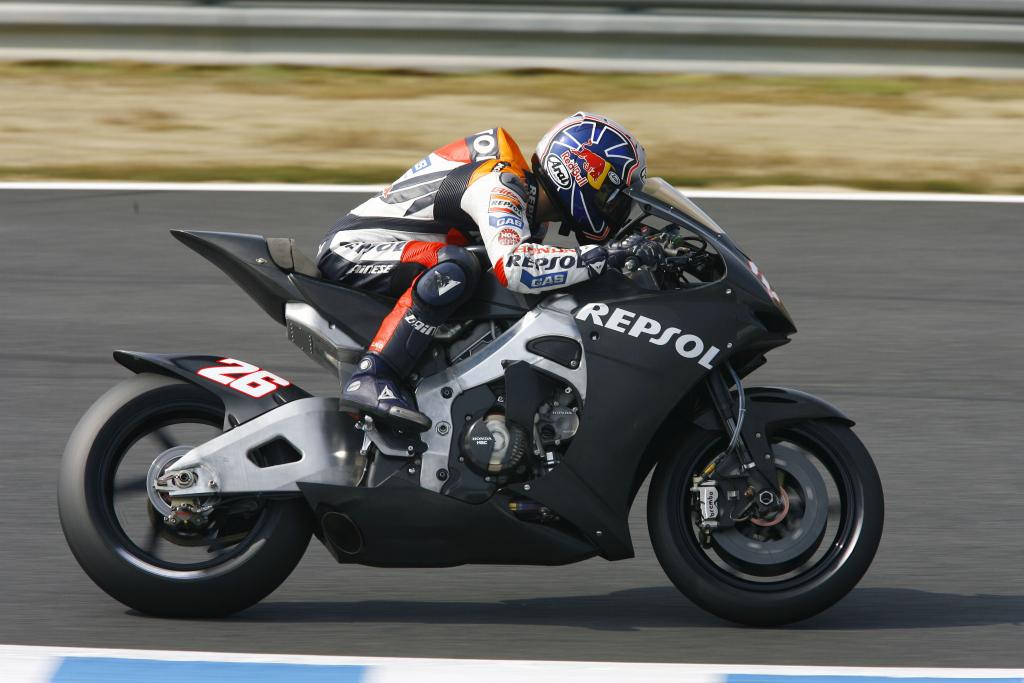
THE DUCATI MARLBORO TEAM TESTS THE GP7 800 AT MOTEGI Following yesterday’s extraordinary victory, the Ducati Marlboro Team stayed on at the Motegi track today to continue development work on the new 800cc GP7 machine. Sete Gibernau, who rode the 800 for the first time, confirmed the positive impressions that Capirossi received at Brno during the Italian’s first contact with the GP7. Sete did a total of 43 laps, setting a best time of 1m47.44s Loris Capirossi did the same number of laps, concentrating mainly on testing braking components, which come under considerable stress at the Japanese circuit. Loris set a good pace and a quickest time of 1m47.91s. More, from a press release issued Honda Racing: HONDA REVEAL NEW V4 800CC MOTOGP MACHINE AT MOTEGI TEST Repsol Honda team riders Nicky Hayden and Dani Pedrosa returned to action at the Motegi circuit for an afternoon of testing following yesterday’s Grand Prix of Japan. Hayden testing newly developed parts for his ‘New Generation’ RC211V while Pedrosa gave the V4 800cc MotoGP machine its first public viewing. Spaniard Pedrosa put in 30-laps of the 4.801km Japanese circuit to give the HRC race engineers valuable data as they prepare the machine to comply with the 800cc MotoGP regulations scheduled for the 2007 season. The initial shake-down test was positive and after a few visits to the pits for adjustments to various areas of machine set up the youngster lapped the multi-purpose race track at 1m 48.210s a time just over half a second slower than his best lap time set in Sundays Japanese grand prix. MotoGP world championship leader Hayden concentrated his efforts on improving his race starts with new clutch parts brought to the test by HRC engineers in a bid to help the American. Once he was satisfied with performance Hayden set about improving the corner speed stability of his RC211V. Hayden will now turn his attention to the V4 800cc Honda and hopes the forecast rain showers hold off long enough for him to evaluate the performance of the V4 as the test team prepare the machine for next test following the Grand Prix of Valencia in late October. Team Roberts arrived at Motegi with the first of the New Generation’ frames for the KR. The new machine was built in time for Friday morning practice. However, testing during a race weekend is very rarely successful and team rider Kenny Roberts Jnr struggled to find the necessary balance required for the super grippy surface at the Japanese circuit. Kenny improved the handling characteristics of the machine throughout practice for the main event and took ninth place in the race. Today with five hours track time the team the new chassis performed up to design expectations and their day ended with Kenny reeling off a series off fast laps under his best race lap time, the best at 1m 47.57s. Honda rider lap times and quotes: Nicky Hayden, Repsol Honda:1m 47.755s 54 laps. “Overall it was a pretty good day I was able to run 1m 47 laps easier than I had been over the weekend so even though the bike hadn’t changed I feel like I was riding a bit better. Today we mostly tested some different parts for the clutch, I did some practice starts and tried to find something that worked into the corners and can still handle the starts. We don’t want to use anything that’s too risky because the last thing we can afford right now is a DNF. I didn’t try the 800 because I’ve got plenty of work to do with the current bike and I don’t need to take on too many new projects right now. It looked really cool though and I’m looking forward to getting a crack on the 800 tomorrow.” Dani Pedrosa, Repsol Honda: 1m 48.210s 30 laps. “The first feeling is that the new bike runs well and this is very important – it works normally and everything feels fine. The engine character feels a little different and this is to be expected but the package feels quite similar to the RC211V. Some things about the bike fees smaller and the rear seat is much shorter which makes the whole bike look more compact. The bike has some characteristics which are a little more like a 250cc but it’s still a MotoGP bike. The lap time today is quite good for a first test though it’s too early to say whether it will be faster than the 990. The cornering speeds feel very similar to the RCV though the corner speed at Motegi is very low because there are many hairpins, so it’s very difficult to say definitely whether it’ll be quicker. This was a good first test though.” Kenny Roberts Jnr, KR211V: 1m 47.57s 63 laps. “That’s the best the bike has ever been, it’s the most rider friendly tractable bike the team have built for me. With this chassis we have been able to use a new suspension set up that has given the bike a better balance. We have also changed the power curve and some things on the brakes, the changes have helped give the machine the kind of rear wheel grip we need on circuits like Motegi and Sepang.”

Overflow Crowd Attends Viewing For Racer Jesus Amezcua

0

An overflow crowd attended a viewing and rosary for WSMC racer Jesus Amezcua on Sunday evening, including law enforcement associates, family members, friends and WSMC 250cc GP racers. Amezcua died as the result of injuries suffered in a last-corner, last-lap crash during the 250/50 at Willow Springs Raceway September 17. The viewing was held at All Souls Cemetery & Mausoleum in Long Beach, California. A funeral service is scheduled for 9:00 a.m. Monday morning at Holy Family Catholic Church in Wilmington, California. FIRST PERSON/OPINION Via e-mail: My son and I were shocked to learn of Jesus’s untimely passing. We met Jesus early this spring when we bought his old Hot Rod for a friend in France. We could tell Jesus was a dedicated man, serious about this hobby and his passion from the beauty of his equipment and his apparent care for work well done. He certainly was a gentle man and it was a true pleasure meeting him. We extend our deepest sympathy to his wife Araceli and his family. Godspeed, Jesus. Philippe & Teddy Danh Torrance, California Patrick & Agnes Levy Brunoy, France FIRST PERSON/OPINION: Via e-mail: Jesus Amezcua was a friend and a fierce competitor I looked forward to seeing everytime I arrived at the track. I met Jesus a couple of years ago when he showed up at my pits inquiring about my TZ250. He informed me he had purchased an RS250 and we immediately hit it off, exchanging information; I was more than happy to give him any advice he needed. I watched him rapidly improve in his riding and over this last season he quickly became one of my main competitors and beat me several times this year in wheel-to-wheel battles. We always enjoyed pre and post-race chats and I will truly miss his smiling face at the races. It has been an honor and a privilege to have known him and he will sadly be missed. The events of the past weekend have replayed in my mind dozens of times, as I was part of a four-rider battle in the 250/50 and Jesus’ accident happened feet in front of me. He was truly giving it his best and going for it in true warrior fashion. Godspeed Jesus. Alex White WSMC #46 Los Angeles, California

Jensen Takes WERA National Challenge Series Hat Trick At Barber

0

The rain held off for the WERA/Michelin National Challenge Series at Barber Motorsports Park on Sunday while Robert Jensen scored one win after another for a total of three victories. Jensen’s first win came in Open Superstock on his Butler Machinery Suzuki GSX-R1000. Vesrah Suzuki’s Lee Acree and Tray Batey raced briefly for the lead before Jensen caught and joined in the battle. Jensen took the lead on the fifth of 10 laps and kept the field behind him until the end. Acree finished second behind Jensen, closely followed by Brian Stokes. All three were on Suzuki GSX-R1000s. Acree was at the front again in 600cc Superstock, leading for two laps before Jensen came by, both on Suzuki GSX-R600s. The two traded the position several times before Jensen got the lead for the final time on lap nine. Stokes finished third on a Kawasaki ZX-6R 636. The 750cc Superstock race was all Jensen’s; he got the holeshot on his GSX-R750 and built up a 12-second lead over Acree, who rode a GSX-R600. Opie Caylor, also on a Suzuki GSX-R600, worked his way up from the rear of the grid to finish third, crossing the finish line just ahead of Taylor Knapp. In Formula 1, Jensen took the lead on the first lap and seemed to be on his way to his fourth win, but Stokes took over the top spot with just four laps to go. Jensen stayed close but was never able to get back ahead of Stokes, who won by 0.3-second. Batey took the third podium spot; all three were on Suzuki GSX-R1000s. Michael Beck took the 600cc Superbike race lead away from Daniel Parkerson on the second lap, but his pace slowed on the final lap when his Yamaha YZF-R6 began experiencing mechanical problems. By that point, Caylor had gone from a second-wave start to second place, and he passed Beck on his Suzuki GSX-R600 to take the win. Beck held onto second, while Parkerson narrowly got third on his Suzuki GSX-R600 over Mark Crozier, who was on the quickest of three Triumph 675s on the grid. Caylor took another win in 750cc Superbike, moving his Suzuki GSX-R600 into the lead on lap four while Mark Crozier moved up to second on his Triumph Daytona 675. Caylor went on to win by 7.222 seconds, leaving Crozier to hold off Justin Marm, who was third on his Suzuki GSX-R750. Batey won the Heavyweight Superstock race by nearly half a minute over Knapp. Cale Swiger followed them by another half minute to take third; all three riders were on Suzuki SV1000s. In Lightweight Twins, Jeff Walker and Chris Parrish had a race-long battle for the lead on their Suzuki SV650s. Walker had the advantage when a red flag came out on lap seven for a rider down in turn 16, bringing the race to an early end. Craig Montgomery finished third on his Suzuki SV650. Brad Duncan rode his Ducati 1000 to the Formula 2 win, crossing the finish line nearly six seconds ahead of Phil Fortune. Max Norton held off Zac Chapman for third. Fortune, Norton and Chapman were all on Suzuki SV650s.

Suzuki Introduces New Street, Cruiser, Dual Sport And Scooter Models

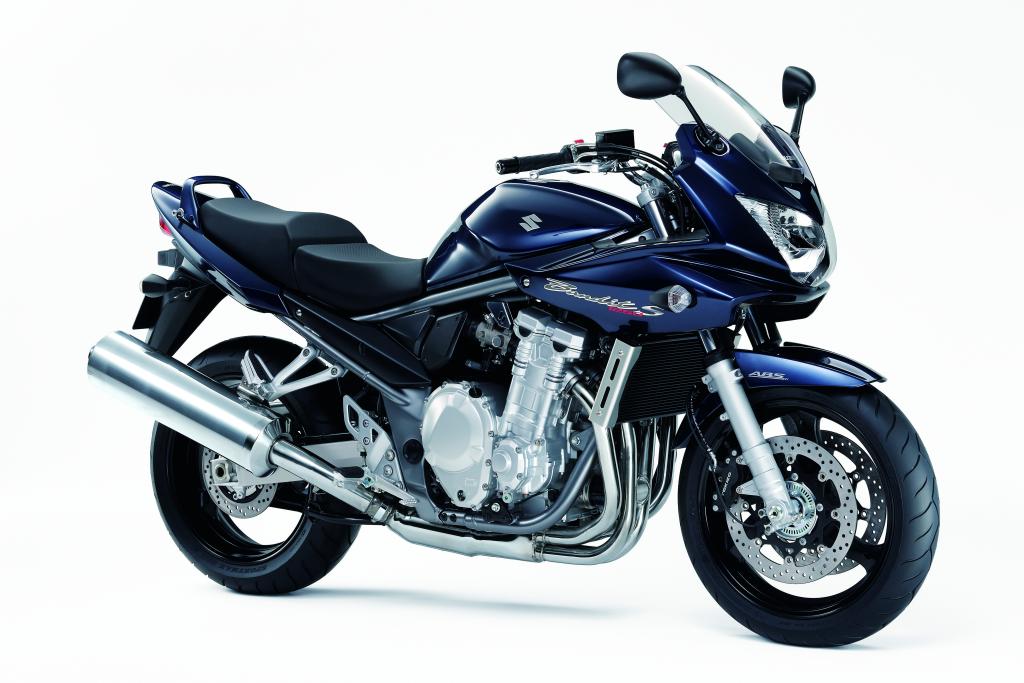
STREET 2007 SUZUKI HAYABUSA GSX1300RZ The Suzuki Hayabusa has been an icon of performance and styling for nearly a decade and the 2007 edition of the GSX1300R is no different. The Hayabusa blends a cohesive mix of high-performance aerodynamics with powerful engine design creating the ultimate in performance on the street and at the drag strip. New for ’07 the Hayabusa will now feature the serious and refined look of three monotone paint schemes complemented with black painted frame and swingarm. Motivation for the Hayabusa comes in the form of a potent inline-four-cylinder engine. The high-powered motor is equipped with a 16-valve, DOHC cylinder head with narrow 14-degree valve angles. Electronic fuel injection, ram-air intake, a gear-driven counterbalancer, six-speed transmission and large-capacity hydraulic clutch all enhance overall engine performance. Anchoring the hugely powerful 1300cc engine is an aluminum-alloy, black painted twin-spar frame suspended by 43mm titanium-nitride-coated forks offering 4.7 inches (120mm) of travel. A link-type rear suspension system mates a bridged aluminum swingarm with a fully adjustable shock for 140mm of travel. Wide, cast-aluminum wheels shod with radial tires provide ample traction at both ends. Braking comes from six-piston calipers gripping dual 320mm rotors in the front and a twin-piston caliper and 240mm rotor in the rear. Optimum aerodynamic efficiency requires a precise fairing shape and the GSX1300R achieves this. Indeed, the elements of the Hayabusa’s fairing, headlight and turn signals result in the lowest coefficient of drag of any Suzuki ever produced and an immediately recognizable look. GSX1300RZ (K7) AT A GLANCE Suggested Retail: TBD Engine Type: Four-stroke, DOHC, liquid cooled, inline four cylinder Bore and Stroke: 81.0mm x 63.0mm Front Brake: Dual Hydraulic Disc Rear Brake: Single Hydraulic Disc Wheelbase: 58.5 in. (1485mm) Dry Weight: 478 lbs. (217 kg), 480 lbs. (218 kg) CA. Model 2007 SUZUKI BANDIT 1250S/ BANDIT 1250S W/ ABS The Suzuki Bandit has become a hugely popular machine worldwide by delivering the perfect balance of performance, style and value for many years, now it’s even better. Introducing the new 2007 Suzuki Bandit 1250S. Boasting a combination of an all-new liquid cooled engine, a sporting chassis and distinctive styling, the new Bandit 1250S provides the perfect balance of qualities that today’s motorcycle rider is looking for. The new Bandit 1250S’s balance of power, style, and technology is a combination developed by a team of highly dedicated Suzuki engineers, working to produce a street machine of unmatched quality and style. Torque is what really counts when riding on the street and the Bandit 1250S will not disappoint. Featuring an all-new, liquid-cooled, fuel-injected, DOHC engine, the ’07 Bandit 1250 utilizes a bore and stroke of 79.0mm x 64.0mm displacing a full 1254.8cc’s and Suzuki’s legendary Suzuki Dual Throttle Valve fuel injection for optimum throttle response, smooth power delivery, improved mileage and reduced emissions. The engine is built specifically for the Bandit with a symmetrical layout, centralized cam chain, and four valves per cylinder. Intake and exhaust valves are set at a narrow valve angle in a compact high-compression combustion chamber with updated intake and exhaust ports. The new powerplant is also significantly more compact with vertically staggered transmission shafts for a shorter engine front to rear and tighter spacing between the two pairs of cylinders makes the cylinder head and throttle bodies significantly narrower. The hydraulic clutch utilizes coil springs for improved lever feel and a new six-speed transmission improves acceleration, reduces top gear rpm and a secondary balancer shaft further quells engine vibrations. A new large exhaust catalyzer is built into the high-volume muffler and when combined with the Suzuki Pulsed AIR system and the oxygen feed back closed loop engine management system make this the cleanest running Bandit ever built meeting tough Euro3 and Tier 2 emission standards. The Bandit 1250S’s classic tube frame chassis is built using larger diameter downtubes, improving torsional rigidity with rake and trail measurements remaining at 25.3 degrees of rake and 104mm of trail. Front forks are 43mm units and like the single rear shock is preload adjustable to accommodate riding with a passenger. Seat height is adjustable up or down by 20mm by flipping over and re-installing clever mounting spacers between the seat and frame rails. Braking duties are handled by dual full floating 310mm front disc brakes with four piston calipers, along with a 240mm rear disc and single piston caliper. Additionally the Bandit 1250S is also available with a digital ABS (Anti-lock Braking System) that monitors wheel speed and matches braking power to available traction. A sleek half fairing with a built-in line beam headlight and effective windscreen and fairing mounted mirrors clothe the Bandit 1250S and in combination with the color coordinated frames, powerful exposed engine, and three spoke cast aluminum wheels create a stunning new look for the Bandit 1250. The all-new Bandit 1250S; more torque, more performance, more style and most importantly more fun! Ride the new Bandit 1250S and experience what we call Total Balance. GSF1250S (K7) AT A GLANCE* Suggested Retail: TBD Engine Type: Four-stroke, DOHC, liquid cooled Inline four-cylinder Bore and Stroke: 79.0mm x 64.0mm Front Brake: Dual Hydraulic Disc Rear Brake: Single Hydraulic Disc Wheelbase: TBD Dry Weight: TBD GSF1250SA (K7) AT A GLANCE* Suggested Retail: TBD Engine Type: Four-stroke, DOHC, liquid cooled Inline four-cylinder Bore and Stroke: 79.0mm x 64.0mm Front Brake: Dual Hydraulic Disc w/ ABS Rear Brake: Single Hydraulic Disc Wheelbase: TBD Dry Weight: TBD * Specifications not final 2007 SUZUKI GS500F The Suzuki GS500F is the ultimate entry-level streetbike; it combines the aggressive, sporting GSXR look with a user-friendly personality. The overall result is a good-looking, un-intimidating and low-cost package. The most distinctive feature of the GS500F is its fully enclosed fairing, which provides an aggressive appearance and sporty character. The fairing features a pair of vertically stacked headlights that bear a striking resemblance to those on the hugely popular GSX-R1000. On either side of the bike, the two sharply styled vents feed fresh air to the engine. Handsome custom cutouts further enhance cooling efficiency, while still showing off the attractive engine cases. Remarkable looks aside, the fairing also offers the GS500F rider improved wind protection for improved overall effectiveness of the motorcycle. The GS500F is powered by a venerable yet reliable four-stroke, 487cc parallel-twin engine. Fed by dual 34mm Mikuni carburetors, the air-cooled motor is lightweight and compact with an abundance of low-rpm torque for easy riding and versatile performance. An easy-shifting six-speed transmission provides plenty of performance. Supporting the GS500F is a rigid box-section frame with a single shock suspension. A single hydraulic disc with four-piston caliper provides reliable braking in front, while a dual-piston caliper-and-disc combo is mounted out back. GS500F (K7) AT A GLANCE Suggested Retail: TBD Engine Type: Four-stroke, air-cooled, parallel-twin, DOHC Bore and Stroke: 74.0mm x 56.6mm Front Brake: Single Hydraulic Disc Rear Brake: Single Hydraulic Disc Wheelbase: 55.3 inches (1405 mm) Dry Weight: 396 lbs. (180 kg) BOULEVARD 2007 SUZUKI BOULEVARD C50C The Suzuki Boulevard C50C offers traditional looks, modern engineering and, in turn, unmatched value. No doubt, its class-leading features and championship-winning technology Suzuki DNA “” place it many steps above the competition. The Boulevard C50C is also the only 50 cubic inch Boulevard to come equipped with stylish cast aluminum wheels. The C50 comes equipped with Suzuki’s multi-championship-winning electronic fuel injection system. This modification brings a whole new level of performance to the 45-degree, 50-cubic-inch V-Twin engine. The Suzuki Dual Throttle Valve (SDTV) system, multi-hole injectors and 32-bit ECU from the GSX-R series provide the C50 with easier starting, improved mileage and smoother throttle response. Nostalgic styling cues include a classic 4.1-gallon fuel tank, wide fenders and a unique tribal style paint scheme. Dual staggered exhaust system, full-size floor boards with heel/toe shifter, and multi-reflector headlamp and turn signals enhance the overall package. Convenient hazard lamp and headlamp passing switches are standard. Boulevard C50C Features Include: “¢ New fuel gauge added to the speedometer “¢ Updated front brake master cylinder, brake lever, clutch lever, and handlebar switch design “¢ Stylish cast aluminum wheels for an impressive overall look “¢ GSX-R-derived electronic fuel injection for better throttle response, improved fuel consumption and smooth power delivery “¢ Special Tribal paint scheme combined with a studded seat and Boulevard logo on the seat. “¢ Utilizing exhaust catalyzer and PAIR system for better emissions control “¢ Dual-staggered exhaust and floor boards with heel-toe shift lever “¢ Comfortably wide saddle is low to the ground so most riders can be flat-footed at stops “¢ Multi-reflector headlamp and turn signals and hazard lamp and headlamp passing switches provide good looks and convenience C50C (K7) AT A GLANCE Suggested Retail: TBD Engine Type: Four-stroke, V-twin, liquid-cooled, SOHC Bore and Stroke: 83.0 mm x 74.4 mm Front Brake: Single Hydraulic Disc Rear Brake: Mechanical Drum Wheelbase: 65.2 in. (1655 mm) Dry Weight: 542 lbs. (246 kg) 2007 SUZUKI M109R LIMITED EDITION Building on the huge success of the Boulevard M109R, Suzuki proudly introduces the new limited edition M109R. This special M109R will feature an all new paint scheme with a sporty racing stripe and a unique new speedometer background. Also a clear taillight lens with red LED’s and a textured seat complete the limited edition look. Engine The heart of the Boulevard M109R is an all new 109-cubic-inch, liquid-cooled, 54-degree, V-twin powerplant with double overhead cams, four valves per cylinder and seamless Suzuki electronic fuel injection. This is an engine designed to produce massive waves of torque from just off idle all the way to redline. The Boulevard M109R is simply the most powerful cruiser Suzuki has ever produced. The Boulevard M109R starts with a massive 112mm bore and a 90.5mm stroke featuring forged aluminum alloy pistons with short skirts and cut-away sides mated to chrome-moly-steel connecting rods, just like those found on the GSX-R1000. Piston rings are finished with a race-proven chrome-nitride plating for reduced friction and optimum cylinder sealing. The massive, 112mm bore makes room for two 42mm intake valves and two 38mm exhaust valves set at an narrow 27-degree included angle in an efficient dual-spark plug, pent-roof combustion chamber design with a 10.5:1 compression ratio. The M109R utilizes a unique, two-stage chain-driven cam-drive system based on the high-performance gear-driven system used on the TL1000R. This design keeps the cylinder heads more compact, reducing overall engine height and lowering the center of gravity. The cylinders are positioned in a 54-degree V angle to accommodate straighter downdraft intake ports and crankpins are offset to produce the perfect primary balance of a 90-degree V-twin while still maintaining the aggressive look of a narrow-angle V engine. The motor is also rubber-mounted in six positions for minimal engine vibration. Feeding the amazing 109-cubic-inch motor is a purpose-built version of the Suzuki Dual Throttle Valve (SDTV) fuel injection system perfected on the high-performance GSX-R line of sportbikes. The SDTV system uses a computer-operated secondary throttle valve in each throttle body to maintain ideal intake velocity and smooth throttle response in any condition. The M109R features a pair of single-injector 56mm throttle bodies with controlled by a powerful 32-bit CPU equipped ECM. The entire SDTV system works in conjunction with a three-piece airbox with dual intakes and a massive 9.5 liters of internal volume. An innovative dry sump lubrication system called SASS (Suzuki Advanced Sump System) is also designed to reduce overall engine height and allow the crankshaft to be positioned lower in the crankcase, lowering the center of gravity and making the motorcycle easier to lift of the side-stand. The dry sump lubrication system also utilizes a scraper plate that pulls oil off the crankshaft, while a jet directs a cooling stream of oil at the underside of each piston for maximum performance. A slick-shifting five-speed transmission directs power smoothly from the engine back through a low-maintenance and reliable shaft-drive system. Nothing can match the sound of a big V-twin engine under acceleration and Suzuki engineers dedicated a serious amount of time and effort to find the perfect balance of performance and sound. The 2-into-1- into- 2 chromed, stainless-steel exhaust system features Suzuki’s digitally controlled SET (Suzuki Exhaust Tuning) system, which uses a butterfly valve to adjust the exhaust for optimum performance at all RPM ranges. The M109R also makes use of Suzuki’s proven PAIR system for reduced emissions. Chassis Power is nothing without control and the Boulevard M109R was designed to handle as well as it accelerates. The M109R chassis is built to comfortably handle all the power and torque of the massive M109R V-twin powerplant while also delivering agile handling and a comfortable riding position. Wheelbase measures in at 67.4 inches with 32 degrees of rake and 5.1 inches of trail for unmatched handling and ride comfort. Seat height is a low 27.6 inches, making it easier for the rider to reach the ground. The frame itself is made of high-tensile steel in a double-cradle layout designed for a perfect balance of comfort and handling. The cast-aluminum-alloy swingarm works with a progressive linkage and a preload adjustable single rear shock producing 4.66 inches of travel. Up front, inverted front forks with 46mm stanchion tubes and race-proven cartridge internals that deliver 5.12 inches of travel. The race-proven front brake system is based on that of the AMA Superbike Championship-winning GSX-R1000 sportbike including the radial-mounted four-piston brake calipers and 310mm brake rotors for the ultimate in braking performance. Rear brakes consist of a dual-piston caliper and 275mm rear disc. Spiral-spoke cast aluminum alloy wheels feature and aggressive design and measure 3.50 x 18 inches in front with a Dunlop 130/70-18 radial tire, while at the rear is a massively wide 8.50 x 18 inch rear wheel mated to the widest rear tire ever used on a Suzuki motorcycle: a radial Dunlop 240/40R 18 tire. Styling One look is all it takes to tell that the Boulevard M109R is not your average cruiser. Its muscular, innovative look of high performance, aggressive styling and long, sleek flowing lines define a new generation of Suzuki cruising machines. Aggressive, performance-oriented styling smoothly integrated with the sleek lines of a cruiser best defines the look of the M109R. From the GSX-R-inspired front fender to the purposeful front headlight housing all the way back through the long, low fuel tank and stylish rear fender, the M109R drips with deep rich paint complemented by miles of mirror-like chrome over the entire motorcycle. A wide, stretched-out fuel tank with a generous 5.2-gallon capacity flows smoothly into a low comfortable seat, integrated frame side covers and an incredibly stylish radiator cowl. Up front, a streamlined headlight cover houses a unique trapezoid-shaped multi-reflector H4 halogen headlight and a maintenance-free LED taillight is built into the tailsection. Chrome dual slash-cut mufflers complete the look of the amazing M109R. Dual triangle air cleaner covers are mounted on each side of the engine with traditional, chrome-plated bullet-shaped front and rear turn signals are utilized front and rear. Gauges consist of a tank-mounted analog speedometer, LCD odometer, dual tripmeters, fuel gauge and clock. Add to that a digital tachometer mounted on a large, one-inch chrome handlebar with 1.25-inch grips. You can have power and style all in one package. The Suzuki Boulevard M109R Limited Edition, ready when you are. M109RZ (K7) AT A GLANCE Suggested Retail: TBD Engine Type: Four-stroke, 54-degree V-twin, liquid-cooled, DOHC Bore and Stroke: 112.0mm x 90.5 mm Front Brake: Dual Hydraulic Disc Rear Brake: Single Hydraulic Disc Wheelbase: 67.9 inches (1710 mm) Dry Weight: 694 lbs. (315 kg)* DUAL SPORT/ADVENTURE 2007 SUZUKI DL1000 V-STROM In a world of increasingly specialized motorcycles, The Suzuki V-strom 1000 stands out as a true do-everything machine for riders who want it all. The proven combination of a powerful V-twin powerplant, nimble handling, unique styling and an all-day riding position have proven to be the ultimate recipe the perfect adventure-touring motorcycle. New for ’07 the V-strom 1000 will feature new swingarm pivot covers and clear turn signals for an updated and stylish new look. Powering the V-strom1000 is a 90-degree 996cc, liquid cooled, V-twin engine featuring four valves per cylinder, dual overhead cams and a big bore/short stroke 98.0mm x 66.0mm configuration. The DL1000 also utilizes gear-driven cams, vertically staggered transmission shafts and an exceptionally short crankshaft for an ultra-compact design. A five-speed transmission equipped with an overdrive gear completes the V-strom engine/transmission package. Feeding the 996cc V-twin powerplant is Suzuki’s Dual Throttle Valve fuel injection system for the amazing throttle response, improved low rpm torque and reduced emissions. The big V-strom also utilizes a built in Auto Fast Idling System (AFIS), which automatically sets the idle speed at start up. AFIS then monitors the engine coolant temperature and adjusts the idle as the engine reaches normal operating temperatures. An aluminum-alloy twin spar frame supports the DL1000 and features a 60.4 inch wheelbase and a comfortable 33.1 inch seat height. Front suspension duties are handled by 43mm cartridge forks with adjustable spring preload. Out back an aluminum-alloy swingarm works with a piggyback reservoir shock with adjustable rebound damping and a convenient knob operated spring preload adjuster. Wheels are lightweight cast aluminum-alloy units with radial tires and brakes consist of dual discs in front and a single disc brake mounted at the rear. Completing the V-strom 1000 is an aggressive front fairing, a huge 5.8-gallon fuel tank, high mounted dual mufflers and an off-road inspired skid plate. An adjustable windscreen covers a vertical range of 50mm and provides maximum wind protection for the V-strom rider. DL1000 (K7) AT A GLANCE Suggested Retail: TBD Engine Type: Four-stroke, 90-degree V-twin, Liquid cooled, DOHC Bore and Stroke: 98.0mm x 66.0mm Front Brake: Dual Hydraulic Disc Rear Brake: Single Hydraulic Disc Wheelbase: 60.4 inches (1535mm) Dry Weight: 458 lbs. (208 kg) 462 lbs. (210 kg) CA model SCOOTER 2007 SUZUKI BURGMAN 650/650 EXECUTIVE The Suzuki Burgman 650 is ideal for today’s modern scooter rider. Featuring advanced technology and performance, it offers a winning combination of easily accessible power, maximum convenience and modern styling for the ultimate scooter experience. For those looking for the ultimate in scooter style and sophistication, Suzuki proudly offers the Burgman Executive. The Burgman Executive boasts all the high tech features found on the standard Burgman 650 but ups the ante with an advanced Anti-lock Braking System (ABS), an electrically height-adjustable windscreen and a easy-to-use rear view mirror retraction button for squeezing into tight parking spaces or garages. Both 2007 Burgman 650’s are powered by a 638cc twin-cylinder engine with a 75.5mm x 71.3mm bore and stroke. The four-stroke DOHC, liquid-cooled powerplant features an 11.2:1 compression ratio and is fed by electronic fuel injection. Overall performance is enhanced by Suzuki’s own Twin Swirl Combustion Chamber (TSCC) design. With an emphasis on low- to mid-range torque, the compact engine transfers power to the rear wheel via the Suzuki Electronically controlled Continuously Variable Transmission (SECVT). The highly innovative SECVT utilizes an electronically controlled CVT system to create a smooth ride while simultaneously offering three shift modes for maximum versatility. The button-controlled system allows the Burgman 650 rider to choose from two automatic modes (normal and power) or one manual mode for sportier riding situations. Surrounding the muscular 650 twin cylinder motor is a tubular-steel frame designed for strength and agility. Suspension for the Burgman consists of a 41mm front fork producing 105mm of wheel travel working in conjunction with an aluminum swingarm with five-way preload adjustable shock with 100mm of wheel travel. Brakes are a pair of dual-piston calipers grasping two 260mm discs up front and a single 250mm disc mounted at the rear. An easy-to-use parking brake is also incorporated. Rolling stock for the Burgman are lightweight cast-aluminum wheels with tubeless radial tires, providing balanced performance and handling. The Burgman’s high-tech demeanor is complemented by its comfortable riding position. The scooter is endowed with a hugely comfortable saddle and a low seat height of 29.5 inches. The seat itself comes equipped with an adjustable backrest and, underneath, 56 liters of storage area capable of holding two full-face helmets and more. Three additional storage areas are also incorporated into the front fairing assembly, along with a DC outlet and a magnetically operated ignition switch cover. Swoopy good looks are the key to the Burgman 650 and Burgman Executive. The stylish front fairing houses dual multi-reflector headlights, a protective windscreen and fully integrated rear view mirrors and turn signals. Floorboards are conveniently sculpted with cut-outs for problem-free stops and comfortable foot placement. A digital instrument cluster incorporates one large LCD screen for the speedometer, tachometer, odometer, dual tripmeters, oil change indicator and oil level indicator. A shift-position indicator resides under the main LCD display while water temperature and fuel level indicators, as well as a clock and turn signal indicators, are also displayed within the instrument cluster. AN650/AN650 EXECUTIVE (K7) AT A GLANCE Suggested Retail: TBD (Burgman 650) TBD (Burgman 650 Executive) Engine Type: Two-cylinder, four-stroke, DOHC Bore and Stroke: 75.5mm x 71.3mm Front Brake: Dual Hydraulic Disc Rear Brake: Single Hydraulic Disc Wheelbase: 62.8 inches (1595 mm) Dry Weight: 518 lbs. (235 kg) Burgman 650 535 lbs. (243 kg) Burgman 650 Executive


Suzuki Introduces New 2007 GSX-R And SV Models

0

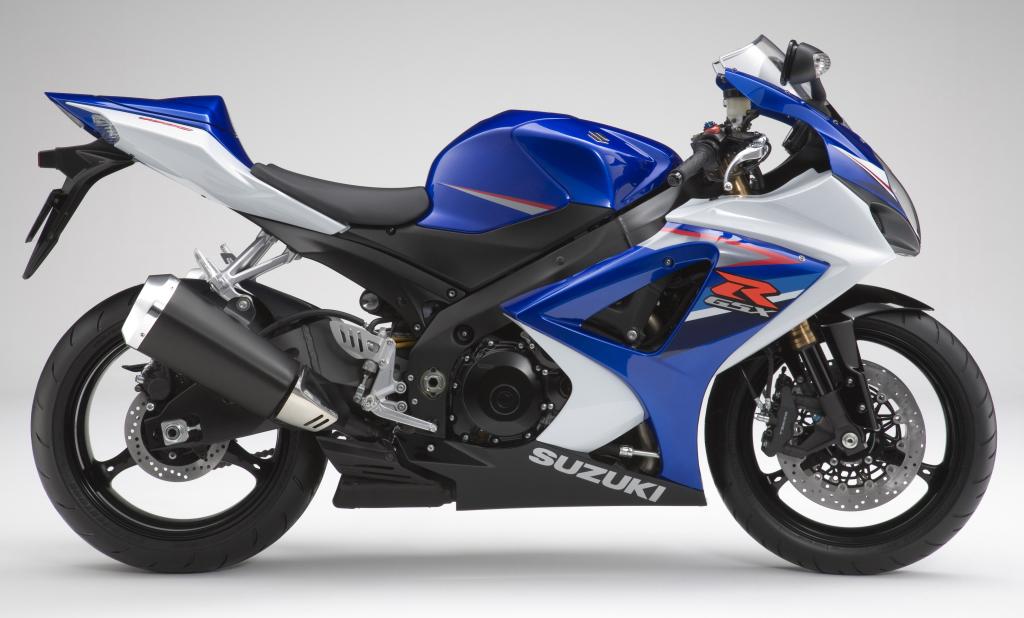
2007 SUZUKI GSX-R1000 To the team of Suzuki engineers responsible for the GSX-R1000, Own The Racetrack is not just a slogan, it is a way of life. It’s a life dedicated to making the most successful open-class motorcycle in the history of production-based racing even better. The key is the motorcycle’s ability to do precisely what the rider wants, when the rider wants, how the rider wants. Accelerate, brake, corner, repeat. Make it easier for the rider, and the results will show. Once again Suzuki has raised the level of open class sportbike performance. The 2007 Suzuki GSX-R1000, it’s the reason why Suzuki riders Own The Racetrack. The basic architecture of the compact 999cc liquid-cooled GSX-R1000 engine is well known, a model of race-winning design: Bore and stroke of 73.4mm x 59.0mm, forged aluminum-alloy pistons with short skirts and cut away sides, chrome-moly steel shotpeened connecting rods, hollow dual overhead cams, and lightweight titanium valves. Add to that a close-ratio six-speed transmission with staggered transmission shafts, an adjustable back-torque limiting clutch and a gear driven secondary balancer shaft for reduced vibration. A new more compact Suzuki Dual Throttle Valve fuel injection system is in place for 2007 with 12 smaller holes instead of four for improved fuel atomization and because the injectors are more compact and emit a finer spray, the secondary injectors can be positioned at a steeper 30 degree angle aimed directly at the intake ports for improved throttle response. Intake and exhaust ports are re-shaped and eight percent larger and exhaust valves are 2mm larger (26mm vs 24mm) to work with more aggressive camshafts and Iridium spark plugs are used for optimum combustion and longer life. Also a new Idle Speed Control (ISC) system improves cold starting and stabilizes engine idle under various conditions and larger ventilation holes between cylinders reduces pumping losses. The Suzuki Advanced Exhaust System (SAES) features equal length head pipes feeding a collector, a short mid-pipe and a unique under engine chamber that leads to two short aluminum and titanium mufflers on each side. This system nearly doubles exhaust internal volume while lowering the center of gravity, centralizes the mass and improving aerodynamics. A proven Suzuki Exhaust Tuning (SET) valve finds a home on the mid pipe and the combination of the Suzuki PAIR system, a catalyzer and a oxygen sensor equipped closed loop engine management system work in conjunction to reduce emissions and improve engine efficiency. A new larger radiator features a trapezoidal shape typically seen on works race bikes with nearly a ten percent increase in cooling capacity. The oil cooler is re-shaped with a third more cooling capacity and the oil pump is larger for increased flow. Controlling the new 2007 GSX-R1000 is a new engine management system with massive computing power with four times the capacity of the previous models. The new ECM controls not only the fuel injection and exhaust systems but also make it possible for the rider to select from three performance settings to match riding conditions, using a three way switch mounted on the right handlebar. Engine mapping will vary for each setting and each map was developed using experience gained building racebike maps for rainy, mixed and dry conditions. Switching from map to map will be instantaneous making it possible for the rider to use different maps for different sections of the racetrack. A new self adjusting hydraulic clutch system uses a radial master cylinder and minimizes the change in clutch feel over the course of long races. Taking lessons learned from the racetrack, the 2007 GSX-R1000 utilizes an all-new frame built to improve mass centralization by moving the rider toward the center of the wheelbase with a shorter fuel tank and moving the seat forward. The new frame is engineered to deliver the optimum rigidity balance for precise handling even at full lean. Constructed from five main aluminum alloy-castings the new frame uses less parts and less welding for improved accuracy and reduced weight. A new lighter and more rigid aluminum alloy swingarm finds a home under a two piece subframe and features a new rear shock mounting system with a link that pivots on the swingarm itself for improved traction and reduced side loads. Taking lessons learned from the latest GSX-R600 and GSX-R750, the new GSX-R1000 also features three position adjustable footpegs for maximum rider control and maneuverability. New high and low-speed compression damping adjustability is built into both front forks and the rear shock along with adjustable rebound and preload adjustments for maximum rider control. The outer tubes of the front forks are now larger in diameter below the lower triple clamp to improve rigidity while the DLC coated fork tubes remain at 43mm. Fork offset has been changed from 30mm to 28mm, increasing trail from 96mm to 98mm. Front wheel travel has also been increased from 120mm to 125mm. The ’07 GSX-R1000 also benefits from new front brake rotors and brake carriers. Each 310mm disc is attached to the carrier using 12 floating mounts instead of 8 for improved heat transfer away from the disc. The disc is also slightly thinner, measuring 5.0mm vs 5.5mm for reduced weight. The rear brake is a 220mm rear disc working with a single piston caliper now mounted above the swingarm, to reduce the effect of rear suspension movement caused by braking. Handling will also benefit from the use of an all-new electronically controlled steering damper. A solenoid valve operated by the engine management system controls a tapered needle, increasing or reducing oil flow for increased or reduced damping force. Extensive wind tunnel testing led to new and improved bodywork for the 2007 GSX-R1000, with an aggressive style and an overall reduced frontal area for amazing aerodynamic performance. A slightly taller windscreen also makes it easier for the rider to tuck in on the racetrack. New vertically stacked headlights also debut on the new GSX-R1000. The multi-reflector headlight has a new simpler shape and uses a 55w H7 halogen bulb positioned over a 70mm projector high beam. Because everything else is new on the ’07 GSX-R1000, the instrument cluster is new as well. The new instruments include a step motor controlled analog tachometer, digital LCD speedometer, dual LCD tripmeters, an LCD clock, coolant temp/fuel injection readout, gear position indicator and a programmable LED engine rpm indicator light. A new LCD engine mode indicator displays which performance setting has been selected by the rider. The new 2007 GSX-R1000 has been developed with lessons learned over more than 20 years of production racing domination. It is more than just a motorcycle. It is the most powerful and most efficient GSX-R ever built. The new 2007 Suzuki GSX-R1000, Own The Racetrack. GSX-R1000 (K7) AT A GLANCE Suggested Retail: TBD* Engine Type: Four-stroke, liquid-cooled, DOHC, four cylinder * Bore and Stroke: 73.4mm x 59.0mm* Front Brake: Dual Hydraulic Disc* Rear Brake: Single Hydraulic Disc* Wheelbase: TBD* Dry Weight: TBD* * Specifications not final 2007 SUZUKI GSX-R750 Introducing the 2007 Suzuki GSX-R750, built to be the incredibly fast, unbelievably nimble and offering unmatched performance for the true sportbike rider. Building on the passion and dedication found in all GSX-R machines, the ’07 GSX-R750 combines the outstanding size and handling of a 600 with the mind-numbing performance of a liter-class machine. The GSX-R750 utilizes a compact chassis, complete with an aluminum-alloy twin-spar frame built with optimum rigidity and maximum handling performance in mind. Rake and trail specifications have been chosen for razor sharp handling and the aluminum frame uses five cast sections for maximum control during production. Forks are inverted 41mm Showa units with rebound, compression and preload adjustability for maximum rider control and a carbonized titanium fork coating for reduced friction losses of 15 percent. A braced aluminum swingarm works with a Showa rear shock absorber and an innovative rear linkage system with a forged aluminum link that pivots on the swingarm itself with a one-piece forged aluminum link rod connected to the frame. The rear shock absorber features adjustable preload and rebound settings along with adjustable high and low speed compression settings for optimum suspension tuning. Brakes feature a radial pump master cylinder and 310mm rotors up front and a lightweight single piston rear caliper. Powering the GSX-R750 is a 749cc inline, water cooled, DOHC, four-cylinder engine with Suzuki fuel injection and an ultra-compact under-engine exhaust system. Bore and stroke measurements are 70.0mm x 48.7 with a compression ration of 12.5:1 and twin injector, 42mm Suzuki Dual Throttle Valve fuel injectors provide fuel and unmatched throttle control. Connecting rods are shotpeened chrome-moly steel and utilize a crankshaft designed with increased inertia for improved cornering performance and stability. Downshifts are a breeze with the proven slipper clutch system as found on the powerful GSX-R1000. In an effort to maximize mass centralization for optimum handling performance, the GSX-R750 utilizes an innovative under-engine exhaust chamber. The all-new system offers the ultimate benefits of mass centralization with the exhaust system mounted completely under the engine, and provides an aggressive new look for the GSX-R750. The new exhaust system also uses the proven Suzuki Exhaust Tuning system for maximum torque. Countless hours of wind tunnel testing have helped shape the look of the GSX-R750 resulting in a reduction in frontal area, decreased drag and a sharp overall look. The compact front fairing features an aggressive design, and when combined with the sharply styled fuel tank, upswept tail section with integrated turn signals creates an unmistakable and purposeful new look for the GSX-R750. All this combined with the new under-engine exhaust system create an aggressive and stylish look for the GSX-R750 along with unmatched aerodynamic performance. It is possible to have it all with the GSX-R750. It is the perfect balance of unmistakable style, unmatched engine performance and world class handling. The 2007 GSX-R750 the legacy continues. GSX-R750 (K7) AT A GLANCE Suggested Retail: TBD Engine Type: Four stroke, liquid-cooled, DOHC Bore and Stroke: 70.0mm x 48.7 mm Front Brake: Dual Hydraulic Disc Rear Brake: Single Hydraulic Disc Wheelbase: 55.1 inches (1400 mm) Dry Weight: 359 lbs. (163 kg), 361 lbs. (164 kg) CA model 2007 SUZUKI GSX-R600 Built with competition in mind, the 2007 GSX-R600 offers true 600cc sportbike performance and is designed with one simple goal: Own The Racetrack. The 2007 GSX-R600 bristles with innovative technology, aggressive and aerodynamic styling and delivers pure high performance excitement for sportbike riders who demand the very best. It all starts with an aluminum alloy frame consisting of five cast pieces and designed for optimum rigidity and maximum cornering performance. A two-piece die cast subframe reduces weight while maintaining maximum strength and mounts directly above a braced, aluminum-alloy swingarm with die-cast outer arms, a stamped inner plate and a cast front section. A compact riding position is created utilizing a short seat-to-bar measurement, a low seat height and three position adjustable rider footpegs. The combination of these elements creates a perfect riding environment for maximum rider mobility and unmatched rider control. Showa inverted 41mm inner cartridge front forks are utilized and provide adjustable preload, rebound and compression settings resulting in 4.7 inches (120mm) of front wheel travel. At the rear, an aluminum bodied Showa shock keeps things in complete control with a 40mm piston, 14mm shock rod and adjustable preload, rebound and both high and low speed compression settings. Slowing the machine are a pair of 310mm front disc brakes combined with radial mount four piston calipers and a radial pump master cylinder for superior stopping power in any condition. The rear brake is a lightweight single-piston caliper and single disc combination. Without the engine all you have is a rolling chassis and that’s no fun to ride! The GSX-R600 motor features a compact overall design, built to be narrow, lightweight and powerful. The 599cc engine utilizes a 67.0mm x 42.5mm bore and stroke for high rpm performance, ultra-narrow twin injector Suzuki Dual Throttle Valve fuel injectors, and 39mm ventilation holes between cylinders for reduced pumping losses. The transmission layout features a stacked design for a shorter engine front to rear, which allows for a longer swingarm and optimum rear wheel traction and handling. GSX-R600 (K7) AT A GLANCE Suggested Retail: TBD Engine Type: Four-stroke, liquid cooled, DOHC Bore and Stroke: 67.0mm x 42.5mm Front Brake: Dual Hydraulic Disc Rear Brake: Single Hydraulic Disc Wheelbase: 55.1 inches (1400mm) Dry Weight: 354 lbs. (161 kg) 357 lbs. (162 kg) CA Model 2007 SUZUKI SV MODELS For many riders the sound and feel of a sport V-twin motorcycle is the only way to go. A throaty exhaust note coupled with exceptional torque and agile handling are the primary reasons so many riders choose two cylinders instead of four. The award winning SV650 and SV650S provide a great starting point for new riders, but with enough performance to keep even experienced riders smiling. The larger SV1000S provides even greater performance, but with all the high-tech features and performance that Suzuki is known for. 2007 SUZUKI SV1000S The Suzuki SV1000S is built for the rider who craves the sound and feel of a sporty V-twin machine. The proven 996cc V-twin powerplant combined with a rigid and lightweight aluminum chassis, and sleek half fairing and tail section create the perfect V-twin sporting machine. The powerful V-twin is a classic big-bore, short-stroke powerplant utilizing dual overhead cams, four valve heads and a bore and stroke of 98.0mm x 66.0mm. Pistons are forged aluminum-alloy with short wrist pins and cut-away sides for less reciprocating mass. Compression ratio has been set at 11.6:1 for optimum combustion and 54mm fuel injection throttle bodies provide a steady diet of fuel for the high performance machine. Two shotpeened chrome-moly steel connecting rods work side by side on a single crankshaft journal and two plain main bearings support a short rigid crankshaft for optimum performance and torque. An advanced die-cast aluminum-alloy truss-style frame houses the V-twin motor and is blessed with lightweight, maximum rigidity and impeccable production quality. Front forks are three-way adjustable 46mm cartridge forks producing 4.5 inches of wheel travel. An aluminum alloy swingarm is connected to a fully adjustable single piggyback reservoir rear shock and provides the 5.12 inches of rear wheel travel. A pair of opposed four-piston calipers gripping dual 310mm front brake rotors provide the SV1000S with exceptional stopping power and control, while a single dual-piston caliper disc brake complements braking at the rear. Wheels are 17 inch aluminum alloy wheels, both wearing radial tires for optimum handling and performance. The SV1000S sports a sleek half fairing, complete with dual multi-reflector headlights flanked by smaller running lights. Clip on handlebars add to the sporty look and feel for the SV rider and a maintenance free LED taillight are mounted below an angled tailsection. The SV1000S utilizes a compact instrument cluster featuring an analog tachometer, digital LCD, speedometer, odometer/tripmeter, coolant temperature gauge, clock and low fuel indicator. SV1000S (K7) AT A GLANCE Suggested Retail: TBD Engine Type: Four-stroke, liquid-cooled, DOHC, 90 degree V-twin Bore and Stroke: 98.0mm x 66.0mm Front Brake: Dual Hydraulic Disc Rear Brake: Single Hydraulic Disc Wheelbase: 56.3 inches (1430mm) Dry Weight: 410 lbs (186 kg), 412 lbs. (187 kg.) CA Model 2007 SUZUKI SV650/SV650A The Suzuki SV650 and SV650S are widely known as being the best bang for the motorcyclist buck. Their throaty exhaust note coupled with exceptional engine torque, agile handling, and stylish good looks are the key reasons so many riders choose to ride the Suzuki SV650 and SV650S. New for ’07 the SV650 series will now be available with ABS and additionally all SV650 models come equipped with new dual spark plug heads for improved combustion and reduced emissions. Powering the SV650 and SV650S is a reliable 90-degree 645cc V-twin engine tuned for crisp throttle response and class-leading horsepower and torque. The 645cc motor utilizes four valves per cylinder, with a 11.5:1 compression ratio and an over-square bore and stroke of 81.0mm x 62.6mm. Cast aluminum pistons feature cut-away sides and short wrist pins for minimal reciprocating mass and a slick shifting six-speed transmission gets power to the rear wheel. An aluminum-alloy truss-style frame designed for minimal weight and maximum strength provides a home for the sporty V-twin powerplant, and in conjunction with preload adjustable forks and an aluminum-alloy swingarm offer exceptional handling and stability. The SV frame sections are constructed as a single precision die-casting using a pressurized vacuum molding process that eliminates air bubbles and porosity for improved consistency and more accurately controlled rigidity. Front suspension duties are handled by a preload adjustable 41mm fork combined with a preload adjustable single rear shock bolted to an aluminum alloy swingarm at the rear. Rolling stock consists of radial tires mounted on 17 inch aluminum wheels front and rear with dual disc brakes up front and a single disc rear brake. The SV650S still wears a slick half fairing housing dual multi-reflector headlights while the SV650 utilizes a classic round headlight with a sport styled cowl for a refined and modern look. A high visibility instrument cluster features an easy-to-read analog tachometer, digital LCD speedometer, odometer, tripmeter, coolant temperature gauge and low fuel indicator. Completing both machines are maintenance free LED taillights positioned beneath a sleekly angled tail section. SV650/SV650A (K7) AT A GLANCE Suggested Retail: TBD Engine Type: Four-stroke, liquid-cooled DOHC, 90 degree V-twin Bore and Stroke: 81.0mm x 62.6mm Front Brake: Dual Hydraulic Disc Rear Brake: Single Hydraulic Disc Wheelbase: 56.7 inches (1440mm) Dry Weight: 372 lbs. (169 kg.) (SV650) TBD (SV650A)* – ABS Version SV650S/SV650SA (K7) AT A GLANCE Suggested Retail: TBD Engine Type: Four-stroke, liquid-cooled DOHC, 90 degree V-twin Bore and Stroke: 81.0mm x 62.6mm Front Brake: Dual Hydraulic Disc Rear Brake: Single Hydraulic Disc Wheelbase: 56.3 inches (1430mm) Dry Weight: 363 lbs. (165 kg.) (SV650S) TBD (SV650SA)* – ABS Version * Specification not final

Roseville, California BMW Dealer To Host Vintage Bike Show

A&S BMW Motorcycles is celebrating motorcycle history with its third annual Vintage and Antique Bike Show. On Saturday October 14 from 9:00 a.m. – 5:00 p.m. bring your clean 1980 or earlier bike to show or just ride over to check out the sights. Free food, music and door prizes through the day. A&S BMW is located at 1125 Orlando Avenue Roseville, CA 95661. For information call 800 689.9893 or visit www.ascycles.com

Special Online Auction To Benefit MRA Safety Fund

Gene Bazyl Memorial Auction On July 2, 2006 there was a on-track accident that claimed the life of racer Gene Bazyl, MRA #502 and AMA #503. During the last several months of attempting to help his parents cope with the loss and Gene’s estate, we have been asked to do as much as we can to prevent this from happening again. We have decided to hold an auction with some of the things from Gene’s estate as well as items that were donated through our industry contacts. All of the proceeds will be donated, in Gene’s name, into a special MRA account designated specifically for the purpose of improving our tracks. We will be purchasing items such Airfence and fire extinguishers–100% of all proceeds will be spent on safety equipment. The link to the auction can be found here: http://axismoto.com/memorialfund.asp The auction started on September 18th and will end at 5:00 p.m. October 6th. Joe LoGalbo 4 Horsemen Racing MRA #55 Parker, Colorado The MRA has set up a special account that will hold these funds. None of these funds will be spent unless both the MRA Board and Joe Logalbo (representing the interests and wishes of Gene Bazyl’s family) agree that they are being spent on appropriate safety projects/equipment, etc. Glenn Conser President, Motorcycle Roadracing Association (MRA) Fort Collins, Colorado

American Suzuki Profiles AMA Superbike Points Leader Ben Spies

Yoshimura Suzuki’s Ben Spies: The Making of a Champion BREA, Calif., (Sept. 25, 2006) As the final round of AMA Superbike approaches next weekend at Mid-Ohio Sports Car Course in Lexington, Ohio, Yoshimura Suzuki’s Ben Spies leads the championship points standings. The 22-year-old from Longview, Texas, has won 10 Superbike races on his Yoshimura Suzuki GSX-R1000 and needs only to finish in 13th position at Mid-Ohio to clinch his first AMA Superbike title. “This has been a great year for us,” said Spies. “Everything just clicked this year. I didn’t have to ride out of my comfort level, my crew has been great and the Yoshimura Suzuki GSX-R1000 was everything I could want. I’ve been racing Suzuki motorcycles since 1999 and I’ve been with Suzuki for seven years now. I want to stay with Suzuki for my whole career. We’re a good combination.” Spies began riding motorcycles when he was just 5 years old. By the time he turned 10, he’d already won 27 consecutive races and by 1999, Spies had captured three amateur championships. The following year, he was awarded the AMA’s prestigious Horizon Award for road racing after turning Pro. In his first season riding for the factory Yoshimura Suzuki team in 2003, Spies brought home the AMA Formula Xtreme Championship. Last year, in his rookie AMA Superbike season, the young Texan finished second-overall in the premier class. Over a few short years, Spies’ professional motorcycle racing career has skyrocketed and he’s done it all aboard Suzuki motorcycles. 1995 1999 Spies won his first title ever when he was 11 years old a Central Motorcycle Racing Association (CMRA) YSR50 championship. For the next few years, he made a name for himself at first in Texas club races and later in WERA National events. “I won at least one title every year, from 1995 on,” recalled Spies. “I got into road racing when I was 7 and a family friend was doing it. He bought a little YSR and it fit me better than him. I started racing in school parking lots, wearing dirtbike gear and roller blade kneepads. Then I went to a track for the first time and fell in love with it. I did my first race in 1993 when I was 8 and I started dead last. But I was up to second place by Turn Two and then I had my first crash. I ran into the back of somebody I guess I thought he was going too slow. I fell down and started crying, but that’s where it all started.” 2000 2001 Spies turned Pro in 2000 and seriously began his road racing career with Suzuki. The teen signed with the Valvoline EMGO Suzuki support team and raced a Suzuki GSX-R750 to an impressive ninth-place overall in the 750 Supersport class. Such a remarkable rookie performance caught the AMA’s attention and Spies was rewarded with the prestigious AMA Horizon Award for Road Racing at the end of the season. The following year, Spies won his first AMA Pro race at Pikes Peak International Raceway in Fountain, Colo., and finished the 750 Supersport season in third-place overall. “I started racing Suzukis when I was 15,” said Spies. “Suzuki’s Jeff Wilson came to some of the WERA races and saw me ride. Shortly after that, I got a call from Valvoline EMGO Suzuki team owner John Ulrich. I signed with John and rode with him for a few years and went on from there.” 2002 After a successful run with the Valvoline Suzuki team, Spies signed with Attack Suzuki and his mentor, long-time Suzuki supporter Jason Pridmore. While racing with Pridmore, Spies branched out into additional classes of racing. Campaigning a Suzuki GSX-R750 in 750 Supersport and a GSX-R600 in Formula Xtreme, the young rider racked up multiple top-five finishes in both classes. This performance had him poised to join American Suzuki’s factory-supported Yoshimura Suzuki team the following year. “That year with Attack Suzuki was one of the most fun years I’ve had racing,” said Spies. “I got the chance to work with some real good guys and having Jason as my teammate was a plus. We built a really close friendship and he taught me a lot about riding, bike setup and focus. I could always go to him for guidance and, as a younger rider, it was great if I was a bit faster and he would come to me.” 2003 Armed with several years racing for Suzuki’s support teams, Spies joined the Yoshimura Suzuki team in 2003. In his first year racing for the factory-supported Suzuki team, the 18-year-old contested AMA Supersport on a Yoshimura Suzuki GSX-R600 and AMA Formula Xtreme on a Yoshimura Suzuki GSX-R1000. His rookie year with the Yoshimura crew could not have been better. Spies won the Formula Xtreme championship after carding five victories and two additional podiums. Icing on the cake for Spies was picking up a Supersport victory as well as finishing seventh on a Yoshimura Suzuki Superbike in the influential Daytona 200. “It was a really good rookie season,” said Spies of his first year with Yoshimura Suzuki. “That was when I decided to start training more and I got an old injury fixed that I had ridden with for a few years. I’d hurt my knee and that had been holding me back, but I had my knee fixed and I started training and went into ’03 with an awesome crew chief in Tom Houseworth. He had a lot of confidence in a young kid first coming into a factory team.” 2004 2005 Spies carried the momentum from this initial success into the next few years with Yoshimura Suzuki. Aboard the Yoshimura Suzuki GSX-R600, he continued to pick up victories and podium finishes in AMA Supersport and he contested the revamped AMA Superstock class aboard the Yoshimura Suzuki GSX-R1000. In the latter class, he celebrated two victories and two additional podium finishes. The following year, Spies made his Superbike debut and won his first Superbike race at California Speedway in Fontana, Calif., and finished an unprecedented second place in the premier class. “Last year, I finished second in the Superbike series and at the end of the season I knew I needed to move up,” said Spies. “The only way to do that is to go out and win the title. So I did my homework, I knew I needed to work closely with my crew and run every race hard. I’ve also been lucky to work with former Grand Prix Champion Kevin Schwantz. We’re good friends and I look up to him a lot. Actually, I looked up to everybody who raced in the early 1990s, but mostly Kevin and Colin Edwards and Doug Chandler. Kevin and Colin are both from Texas and I got to meet them a couple of times when I was younger. I’ve told Kevin many times that I want to be like him, though I’d like to win a few more championships and not be on the ground as much. But I admire his charisma on the bike.” 2006 Spies followed up his impressive Superbike debut with an even more remarkable sophomore effort. As Yoshimura Suzuki prepares for the final round of AMA Superbike at Mid-Ohio, Spies leads the way in championship points. He has surrounded himself with a strong crew led by Houseworth, as well as his family. He credits his mother, Mary, with much of his success. “I’ve really been inspired in life by my parents and my grandpa,” said Spies. “My dad’s a stand-up guy and a good business man. My mom has gone way beyond herself to get me where I am today. I don’t mean this in a cocky manner, but we knew that I had some talent and that I could be halfway decent at racing but I could never have gotten here if my mom hadn’t given her whole life to my racing. And my grandpa did so much for so many people he started a charity called Love for Kids, and we still do a lot with them. We also support the Roadracing World Action Fund. The racetracks in the United States are working to improve safety in a lot of different ways. But these improvements can’t happen overnight. The only safety-related change that can be made overnight is to install air fences. I think that’s really important and I want to be a part of that.” Final season results notwithstanding, Spies has signed on with Yoshimura Suzuki for two more years. His long-term plans are extensive, ambitious and involve Suzuki. “I would love to break every Superbike record to be broken in the U.S.,” said Spies. “It’s definitely possible. I look at my teammate Mat Mladin and how many races he’s won, and what he’s done and he really didn’t start dominating until he was in his late 20s. I want to be able to break every record Mat has set. I want to be the winningest rider over here. If we have another year like this year, it would be easy to do that by the time I’m 25 or 26. Of course, this was a great year for us and I don’t know if this will be a normal year or not. But we’ll keep on plugging away and keep everything clean.” For more information on Spies and Yoshimura Suzuki, log onto www.teamsuzuki.com.

VIR To Host 500k MOTO-ST Race In 2007

MOTO-ST Motorcycle Endurance Series to be Part of 2007 VIR 400 Weekend Alton, Va. (September 22) When the Grand American Rolex Sports Car Series presented by Crown Royal rolls into VIRginia International Raceway for the 2007 VIR 400 over the weekend of April 27-29, they will be accompanied by the brand-new MOTO-ST motorcycle endurance racing series. MOTO-ST (which stands for “Moto Sport Twins”), will specialize in long-distance team racing, and its inaugural race will be an eight-hour enduro on the traditional road course at Daytona International Speedway over the weekend of October 20-22. The 2007 season will kick off with a three-hour race at Daytona March 3-4 and the VIR round, the second race of the season, is scheduled for 500 kilometers. Other events scheduled thus far for 2007 include a three-hour race at the new Iowa Speedway July 12-13 and a season-ending eight-hour enduro at Daytona, October 19-20. MOTO-ST will consist of three classes, Super Sport Twins (SST), Grand Sport Twins (GST) and Sport Twins (ST). Motorcycles homologated for competition will be powered by twin-cylinder, four-stroke engines. Each machine will have its own list of specifications, including maximum horsepower and minimum weight. The 2007 National Championship schedule for MOTO-ST will consist of up to six points-paying endurance races. Event purses will be substantial and will feature lap prizes for the class leaders. Pirelli has been named as the sole supplier of MOTO-ST tires and all competitors will use Sunoco GT unleaded fuel. Horsepower limits will be enforced by a Dynojet chassis dynamometer. Due to the long-distance nature of the events, each team will be allowed to use as many as three riders per race. Timed practice will determine the starting grid, which will be set up in rows of two with separate rolling starts for each class. Safety car procedures will be in place for full-course caution periods, and the highest-placed lapped motorcycles in both classes will be allowed to make up one lap during any full-course caution. Scoring will be handled by transponders, giving teams on pit road with instant and complete information on their status. Two-way radio communication between riders and their crews will be allowed and encouraged. The series and its race events will be sanctioned by the American Motorcyclist Association (AMA) of Pickerington, Ohio and organized by Professional Motorsports Productions of Toronto, Ontario, Canada. The Daytona Beach-based Grand American Road Racing Association will assist the series with administrative and commercial support. “Virginia International Raceway has an amazing history with motorcycle racing, and we are thrilled to add to that with our inaugural MOTO-ST event at VIR next spring,” said MOTO-ST Director of Competition Colin Fraser. “VIR joins an impressive list of venues that have already signed-on to host MOTO-ST and we are still nearly a month away from turning a wheel in competition. That speaks volumes and we will definitely repay VIR and the other race tracks for their confidence by putting an exciting and unique brand of motorcycle racing on the track next year and for years to come.” “We are very pleased to be part of the inaugural season for the MOTO-ST series,” said VIR general manager Josh Lief. “Motorcycle racing is an integral part of what we do at VIR, and our fans will be ecstatic to have another new event on our schedule. We look forward to a long and successful relationship with the MOTO-ST organization and its teams.” VIRginia International Raceway is a multi-purpose road racing facility, located on the Dan River between Danville and South Boston, Virginia, just north of historic Milton, North Carolina. In addition to its 3.27 mile natural-terrain road racing circuit, VIR is the cornerstone of VIR Club, America’s first motorsports country club; the VIR Raceplex Industrial Park; the VIR Gallery, a sales showroom for high-end collector and racing cars; Plantation Valley Kart Track, a 5/8 mile paved karting circuit; The Lodge at VIR, a 27-room trackside hotel; the new VIR Paddock Suites and Garages, with 18 dual-purpose hospitality/lodging units and garages; and the Oak Tree Tavern, a full-service restaurant located within the circa-1840 Plantation Clubhouse. For more information, visit the track’s Web site at www.virclub.com or contact VIR at 434-822-7700. For more information on MOTO-ST, visit their website at www.moto-st.com. For more information on the Grand American Road Racing Association, visit their website at www.grandamerican.com.

Baltimore/Washington Ride For Kids® Raises $180,000 For Pediatric Brain Tumor Foundation

Motorcyclists from the metropolitan Baltimore/Washington area came out in full force for kids with brain tumors yesterday. Five hundred Ride for Kids® participants contributed more than $180,000 to the Pediatric Brain Tumor Foundation’s (PBTF) medical research and family support programs. The excitement started building at dawn as riders on all makes and models pulled into the parking lot at The Mall in Columbia, Md. At 9:30 sharp, the bikes formed a breathtaking column behind their police escort, taking the scenic route through rural Howard county. By the time the ride reached the end point at Lincoln Technical Institute, participants were primed for the inspiring Celebration of Life program, which starred 10 local brain tumor survivors. Ethan, 7, said he’s trying to be the fastest runner in his class, while 18-year-old Katelyn is working as a firefighter. “This is where my heart is. I will do this forever. It gives quality of life to families,” said Marcy, mother of 16-year-old brain tumor survivor Danielle. The crowd also heard from Johns Hopkins researcher Dr. Gregory Riggins, who said that PBTF funding is improving the quality and effectiveness of various treatments. The 15th annual event raised a total of $180,380. The top individual fundraiser was Bob Henig of Columbia, who brought $12,373. The top club was Manassas Honda Rider’s Club, whose members raised $16,499, while the customers of Bob’s BMW of Jessup turned in $31,399 to make it the top motorcycle business. Edwards Holliday of Columbia won the drawing for a brand-new Honda motorcycle. Special thanks went to Baltimore/Washington task force leaders Kevin and Christine Merrill, Rene Hernandez, Roy Carpenter and Taryn Wilson-Wheatley, the hardworking volunteer task force and event volunteers, for organizing a marvelous event. About the PBTF Ride for Kids® Since 1984, the national Ride for Kids® program and PBTF have promoted childhood brain tumor research and provided family support through free literature about brain tumors, educational newsletters, online conferences and college scholarships. With the help of America’s motorcyclists and motorcycle dealers, PBTF has become the world’s largest non-governmental source of funding for childhood brain tumor research. The next PBTF Ride for Kids® events are Sunday, Oct. 1 in Las Vegas and Sacramento. For more information, go to www.rideforkids.org or call 800-253-6530.

MotoGP Teams Test 2007 800cc Machines At Motegi

THE DUCATI MARLBORO TEAM TESTS THE GP7 800 AT MOTEGI Following yesterday’s extraordinary victory, the Ducati Marlboro Team stayed on at the Motegi track today to continue development work on the new 800cc GP7 machine. Sete Gibernau, who rode the 800 for the first time, confirmed the positive impressions that Capirossi received at Brno during the Italian’s first contact with the GP7. Sete did a total of 43 laps, setting a best time of 1m47.44s Loris Capirossi did the same number of laps, concentrating mainly on testing braking components, which come under considerable stress at the Japanese circuit. Loris set a good pace and a quickest time of 1m47.91s. More, from a press release issued Honda Racing: HONDA REVEAL NEW V4 800CC MOTOGP MACHINE AT MOTEGI TEST Repsol Honda team riders Nicky Hayden and Dani Pedrosa returned to action at the Motegi circuit for an afternoon of testing following yesterday’s Grand Prix of Japan. Hayden testing newly developed parts for his ‘New Generation’ RC211V while Pedrosa gave the V4 800cc MotoGP machine its first public viewing. Spaniard Pedrosa put in 30-laps of the 4.801km Japanese circuit to give the HRC race engineers valuable data as they prepare the machine to comply with the 800cc MotoGP regulations scheduled for the 2007 season. The initial shake-down test was positive and after a few visits to the pits for adjustments to various areas of machine set up the youngster lapped the multi-purpose race track at 1m 48.210s a time just over half a second slower than his best lap time set in Sundays Japanese grand prix. MotoGP world championship leader Hayden concentrated his efforts on improving his race starts with new clutch parts brought to the test by HRC engineers in a bid to help the American. Once he was satisfied with performance Hayden set about improving the corner speed stability of his RC211V. Hayden will now turn his attention to the V4 800cc Honda and hopes the forecast rain showers hold off long enough for him to evaluate the performance of the V4 as the test team prepare the machine for next test following the Grand Prix of Valencia in late October. Team Roberts arrived at Motegi with the first of the New Generation’ frames for the KR. The new machine was built in time for Friday morning practice. However, testing during a race weekend is very rarely successful and team rider Kenny Roberts Jnr struggled to find the necessary balance required for the super grippy surface at the Japanese circuit. Kenny improved the handling characteristics of the machine throughout practice for the main event and took ninth place in the race. Today with five hours track time the team the new chassis performed up to design expectations and their day ended with Kenny reeling off a series off fast laps under his best race lap time, the best at 1m 47.57s. Honda rider lap times and quotes: Nicky Hayden, Repsol Honda:1m 47.755s 54 laps. “Overall it was a pretty good day I was able to run 1m 47 laps easier than I had been over the weekend so even though the bike hadn’t changed I feel like I was riding a bit better. Today we mostly tested some different parts for the clutch, I did some practice starts and tried to find something that worked into the corners and can still handle the starts. We don’t want to use anything that’s too risky because the last thing we can afford right now is a DNF. I didn’t try the 800 because I’ve got plenty of work to do with the current bike and I don’t need to take on too many new projects right now. It looked really cool though and I’m looking forward to getting a crack on the 800 tomorrow.” Dani Pedrosa, Repsol Honda: 1m 48.210s 30 laps. “The first feeling is that the new bike runs well and this is very important – it works normally and everything feels fine. The engine character feels a little different and this is to be expected but the package feels quite similar to the RC211V. Some things about the bike fees smaller and the rear seat is much shorter which makes the whole bike look more compact. The bike has some characteristics which are a little more like a 250cc but it’s still a MotoGP bike. The lap time today is quite good for a first test though it’s too early to say whether it will be faster than the 990. The cornering speeds feel very similar to the RCV though the corner speed at Motegi is very low because there are many hairpins, so it’s very difficult to say definitely whether it’ll be quicker. This was a good first test though.” Kenny Roberts Jnr, KR211V: 1m 47.57s 63 laps. “That’s the best the bike has ever been, it’s the most rider friendly tractable bike the team have built for me. With this chassis we have been able to use a new suspension set up that has given the bike a better balance. We have also changed the power curve and some things on the brakes, the changes have helped give the machine the kind of rear wheel grip we need on circuits like Motegi and Sepang.”

Overflow Crowd Attends Viewing For Racer Jesus Amezcua

An overflow crowd attended a viewing and rosary for WSMC racer Jesus Amezcua on Sunday evening, including law enforcement associates, family members, friends and WSMC 250cc GP racers. Amezcua died as the result of injuries suffered in a last-corner, last-lap crash during the 250/50 at Willow Springs Raceway September 17. The viewing was held at All Souls Cemetery & Mausoleum in Long Beach, California. A funeral service is scheduled for 9:00 a.m. Monday morning at Holy Family Catholic Church in Wilmington, California. FIRST PERSON/OPINION Via e-mail: My son and I were shocked to learn of Jesus’s untimely passing. We met Jesus early this spring when we bought his old Hot Rod for a friend in France. We could tell Jesus was a dedicated man, serious about this hobby and his passion from the beauty of his equipment and his apparent care for work well done. He certainly was a gentle man and it was a true pleasure meeting him. We extend our deepest sympathy to his wife Araceli and his family. Godspeed, Jesus. Philippe & Teddy Danh Torrance, California Patrick & Agnes Levy Brunoy, France FIRST PERSON/OPINION: Via e-mail: Jesus Amezcua was a friend and a fierce competitor I looked forward to seeing everytime I arrived at the track. I met Jesus a couple of years ago when he showed up at my pits inquiring about my TZ250. He informed me he had purchased an RS250 and we immediately hit it off, exchanging information; I was more than happy to give him any advice he needed. I watched him rapidly improve in his riding and over this last season he quickly became one of my main competitors and beat me several times this year in wheel-to-wheel battles. We always enjoyed pre and post-race chats and I will truly miss his smiling face at the races. It has been an honor and a privilege to have known him and he will sadly be missed. The events of the past weekend have replayed in my mind dozens of times, as I was part of a four-rider battle in the 250/50 and Jesus’ accident happened feet in front of me. He was truly giving it his best and going for it in true warrior fashion. Godspeed Jesus. Alex White WSMC #46 Los Angeles, California

Jensen Takes WERA National Challenge Series Hat Trick At Barber

The rain held off for the WERA/Michelin National Challenge Series at Barber Motorsports Park on Sunday while Robert Jensen scored one win after another for a total of three victories. Jensen’s first win came in Open Superstock on his Butler Machinery Suzuki GSX-R1000. Vesrah Suzuki’s Lee Acree and Tray Batey raced briefly for the lead before Jensen caught and joined in the battle. Jensen took the lead on the fifth of 10 laps and kept the field behind him until the end. Acree finished second behind Jensen, closely followed by Brian Stokes. All three were on Suzuki GSX-R1000s. Acree was at the front again in 600cc Superstock, leading for two laps before Jensen came by, both on Suzuki GSX-R600s. The two traded the position several times before Jensen got the lead for the final time on lap nine. Stokes finished third on a Kawasaki ZX-6R 636. The 750cc Superstock race was all Jensen’s; he got the holeshot on his GSX-R750 and built up a 12-second lead over Acree, who rode a GSX-R600. Opie Caylor, also on a Suzuki GSX-R600, worked his way up from the rear of the grid to finish third, crossing the finish line just ahead of Taylor Knapp. In Formula 1, Jensen took the lead on the first lap and seemed to be on his way to his fourth win, but Stokes took over the top spot with just four laps to go. Jensen stayed close but was never able to get back ahead of Stokes, who won by 0.3-second. Batey took the third podium spot; all three were on Suzuki GSX-R1000s. Michael Beck took the 600cc Superbike race lead away from Daniel Parkerson on the second lap, but his pace slowed on the final lap when his Yamaha YZF-R6 began experiencing mechanical problems. By that point, Caylor had gone from a second-wave start to second place, and he passed Beck on his Suzuki GSX-R600 to take the win. Beck held onto second, while Parkerson narrowly got third on his Suzuki GSX-R600 over Mark Crozier, who was on the quickest of three Triumph 675s on the grid. Caylor took another win in 750cc Superbike, moving his Suzuki GSX-R600 into the lead on lap four while Mark Crozier moved up to second on his Triumph Daytona 675. Caylor went on to win by 7.222 seconds, leaving Crozier to hold off Justin Marm, who was third on his Suzuki GSX-R750. Batey won the Heavyweight Superstock race by nearly half a minute over Knapp. Cale Swiger followed them by another half minute to take third; all three riders were on Suzuki SV1000s. In Lightweight Twins, Jeff Walker and Chris Parrish had a race-long battle for the lead on their Suzuki SV650s. Walker had the advantage when a red flag came out on lap seven for a rider down in turn 16, bringing the race to an early end. Craig Montgomery finished third on his Suzuki SV650. Brad Duncan rode his Ducati 1000 to the Formula 2 win, crossing the finish line nearly six seconds ahead of Phil Fortune. Max Norton held off Zac Chapman for third. Fortune, Norton and Chapman were all on Suzuki SV650s.

Suzuki Introduces New Street, Cruiser, Dual Sport And Scooter Models

STREET 2007 SUZUKI HAYABUSA GSX1300RZ The Suzuki Hayabusa has been an icon of performance and styling for nearly a decade and the 2007 edition of the GSX1300R is no different. The Hayabusa blends a cohesive mix of high-performance aerodynamics with powerful engine design creating the ultimate in performance on the street and at the drag strip. New for ’07 the Hayabusa will now feature the serious and refined look of three monotone paint schemes complemented with black painted frame and swingarm. Motivation for the Hayabusa comes in the form of a potent inline-four-cylinder engine. The high-powered motor is equipped with a 16-valve, DOHC cylinder head with narrow 14-degree valve angles. Electronic fuel injection, ram-air intake, a gear-driven counterbalancer, six-speed transmission and large-capacity hydraulic clutch all enhance overall engine performance. Anchoring the hugely powerful 1300cc engine is an aluminum-alloy, black painted twin-spar frame suspended by 43mm titanium-nitride-coated forks offering 4.7 inches (120mm) of travel. A link-type rear suspension system mates a bridged aluminum swingarm with a fully adjustable shock for 140mm of travel. Wide, cast-aluminum wheels shod with radial tires provide ample traction at both ends. Braking comes from six-piston calipers gripping dual 320mm rotors in the front and a twin-piston caliper and 240mm rotor in the rear. Optimum aerodynamic efficiency requires a precise fairing shape and the GSX1300R achieves this. Indeed, the elements of the Hayabusa’s fairing, headlight and turn signals result in the lowest coefficient of drag of any Suzuki ever produced and an immediately recognizable look. GSX1300RZ (K7) AT A GLANCE Suggested Retail: TBD Engine Type: Four-stroke, DOHC, liquid cooled, inline four cylinder Bore and Stroke: 81.0mm x 63.0mm Front Brake: Dual Hydraulic Disc Rear Brake: Single Hydraulic Disc Wheelbase: 58.5 in. (1485mm) Dry Weight: 478 lbs. (217 kg), 480 lbs. (218 kg) CA. Model 2007 SUZUKI BANDIT 1250S/ BANDIT 1250S W/ ABS The Suzuki Bandit has become a hugely popular machine worldwide by delivering the perfect balance of performance, style and value for many years, now it’s even better. Introducing the new 2007 Suzuki Bandit 1250S. Boasting a combination of an all-new liquid cooled engine, a sporting chassis and distinctive styling, the new Bandit 1250S provides the perfect balance of qualities that today’s motorcycle rider is looking for. The new Bandit 1250S’s balance of power, style, and technology is a combination developed by a team of highly dedicated Suzuki engineers, working to produce a street machine of unmatched quality and style. Torque is what really counts when riding on the street and the Bandit 1250S will not disappoint. Featuring an all-new, liquid-cooled, fuel-injected, DOHC engine, the ’07 Bandit 1250 utilizes a bore and stroke of 79.0mm x 64.0mm displacing a full 1254.8cc’s and Suzuki’s legendary Suzuki Dual Throttle Valve fuel injection for optimum throttle response, smooth power delivery, improved mileage and reduced emissions. The engine is built specifically for the Bandit with a symmetrical layout, centralized cam chain, and four valves per cylinder. Intake and exhaust valves are set at a narrow valve angle in a compact high-compression combustion chamber with updated intake and exhaust ports. The new powerplant is also significantly more compact with vertically staggered transmission shafts for a shorter engine front to rear and tighter spacing between the two pairs of cylinders makes the cylinder head and throttle bodies significantly narrower. The hydraulic clutch utilizes coil springs for improved lever feel and a new six-speed transmission improves acceleration, reduces top gear rpm and a secondary balancer shaft further quells engine vibrations. A new large exhaust catalyzer is built into the high-volume muffler and when combined with the Suzuki Pulsed AIR system and the oxygen feed back closed loop engine management system make this the cleanest running Bandit ever built meeting tough Euro3 and Tier 2 emission standards. The Bandit 1250S’s classic tube frame chassis is built using larger diameter downtubes, improving torsional rigidity with rake and trail measurements remaining at 25.3 degrees of rake and 104mm of trail. Front forks are 43mm units and like the single rear shock is preload adjustable to accommodate riding with a passenger. Seat height is adjustable up or down by 20mm by flipping over and re-installing clever mounting spacers between the seat and frame rails. Braking duties are handled by dual full floating 310mm front disc brakes with four piston calipers, along with a 240mm rear disc and single piston caliper. Additionally the Bandit 1250S is also available with a digital ABS (Anti-lock Braking System) that monitors wheel speed and matches braking power to available traction. A sleek half fairing with a built-in line beam headlight and effective windscreen and fairing mounted mirrors clothe the Bandit 1250S and in combination with the color coordinated frames, powerful exposed engine, and three spoke cast aluminum wheels create a stunning new look for the Bandit 1250. The all-new Bandit 1250S; more torque, more performance, more style and most importantly more fun! Ride the new Bandit 1250S and experience what we call Total Balance. GSF1250S (K7) AT A GLANCE* Suggested Retail: TBD Engine Type: Four-stroke, DOHC, liquid cooled Inline four-cylinder Bore and Stroke: 79.0mm x 64.0mm Front Brake: Dual Hydraulic Disc Rear Brake: Single Hydraulic Disc Wheelbase: TBD Dry Weight: TBD GSF1250SA (K7) AT A GLANCE* Suggested Retail: TBD Engine Type: Four-stroke, DOHC, liquid cooled Inline four-cylinder Bore and Stroke: 79.0mm x 64.0mm Front Brake: Dual Hydraulic Disc w/ ABS Rear Brake: Single Hydraulic Disc Wheelbase: TBD Dry Weight: TBD * Specifications not final 2007 SUZUKI GS500F The Suzuki GS500F is the ultimate entry-level streetbike; it combines the aggressive, sporting GSXR look with a user-friendly personality. The overall result is a good-looking, un-intimidating and low-cost package. The most distinctive feature of the GS500F is its fully enclosed fairing, which provides an aggressive appearance and sporty character. The fairing features a pair of vertically stacked headlights that bear a striking resemblance to those on the hugely popular GSX-R1000. On either side of the bike, the two sharply styled vents feed fresh air to the engine. Handsome custom cutouts further enhance cooling efficiency, while still showing off the attractive engine cases. Remarkable looks aside, the fairing also offers the GS500F rider improved wind protection for improved overall effectiveness of the motorcycle. The GS500F is powered by a venerable yet reliable four-stroke, 487cc parallel-twin engine. Fed by dual 34mm Mikuni carburetors, the air-cooled motor is lightweight and compact with an abundance of low-rpm torque for easy riding and versatile performance. An easy-shifting six-speed transmission provides plenty of performance. Supporting the GS500F is a rigid box-section frame with a single shock suspension. A single hydraulic disc with four-piston caliper provides reliable braking in front, while a dual-piston caliper-and-disc combo is mounted out back. GS500F (K7) AT A GLANCE Suggested Retail: TBD Engine Type: Four-stroke, air-cooled, parallel-twin, DOHC Bore and Stroke: 74.0mm x 56.6mm Front Brake: Single Hydraulic Disc Rear Brake: Single Hydraulic Disc Wheelbase: 55.3 inches (1405 mm) Dry Weight: 396 lbs. (180 kg) BOULEVARD 2007 SUZUKI BOULEVARD C50C The Suzuki Boulevard C50C offers traditional looks, modern engineering and, in turn, unmatched value. No doubt, its class-leading features and championship-winning technology Suzuki DNA “” place it many steps above the competition. The Boulevard C50C is also the only 50 cubic inch Boulevard to come equipped with stylish cast aluminum wheels. The C50 comes equipped with Suzuki’s multi-championship-winning electronic fuel injection system. This modification brings a whole new level of performance to the 45-degree, 50-cubic-inch V-Twin engine. The Suzuki Dual Throttle Valve (SDTV) system, multi-hole injectors and 32-bit ECU from the GSX-R series provide the C50 with easier starting, improved mileage and smoother throttle response. Nostalgic styling cues include a classic 4.1-gallon fuel tank, wide fenders and a unique tribal style paint scheme. Dual staggered exhaust system, full-size floor boards with heel/toe shifter, and multi-reflector headlamp and turn signals enhance the overall package. Convenient hazard lamp and headlamp passing switches are standard. Boulevard C50C Features Include: “¢ New fuel gauge added to the speedometer “¢ Updated front brake master cylinder, brake lever, clutch lever, and handlebar switch design “¢ Stylish cast aluminum wheels for an impressive overall look “¢ GSX-R-derived electronic fuel injection for better throttle response, improved fuel consumption and smooth power delivery “¢ Special Tribal paint scheme combined with a studded seat and Boulevard logo on the seat. “¢ Utilizing exhaust catalyzer and PAIR system for better emissions control “¢ Dual-staggered exhaust and floor boards with heel-toe shift lever “¢ Comfortably wide saddle is low to the ground so most riders can be flat-footed at stops “¢ Multi-reflector headlamp and turn signals and hazard lamp and headlamp passing switches provide good looks and convenience C50C (K7) AT A GLANCE Suggested Retail: TBD Engine Type: Four-stroke, V-twin, liquid-cooled, SOHC Bore and Stroke: 83.0 mm x 74.4 mm Front Brake: Single Hydraulic Disc Rear Brake: Mechanical Drum Wheelbase: 65.2 in. (1655 mm) Dry Weight: 542 lbs. (246 kg) 2007 SUZUKI M109R LIMITED EDITION Building on the huge success of the Boulevard M109R, Suzuki proudly introduces the new limited edition M109R. This special M109R will feature an all new paint scheme with a sporty racing stripe and a unique new speedometer background. Also a clear taillight lens with red LED’s and a textured seat complete the limited edition look. Engine The heart of the Boulevard M109R is an all new 109-cubic-inch, liquid-cooled, 54-degree, V-twin powerplant with double overhead cams, four valves per cylinder and seamless Suzuki electronic fuel injection. This is an engine designed to produce massive waves of torque from just off idle all the way to redline. The Boulevard M109R is simply the most powerful cruiser Suzuki has ever produced. The Boulevard M109R starts with a massive 112mm bore and a 90.5mm stroke featuring forged aluminum alloy pistons with short skirts and cut-away sides mated to chrome-moly-steel connecting rods, just like those found on the GSX-R1000. Piston rings are finished with a race-proven chrome-nitride plating for reduced friction and optimum cylinder sealing. The massive, 112mm bore makes room for two 42mm intake valves and two 38mm exhaust valves set at an narrow 27-degree included angle in an efficient dual-spark plug, pent-roof combustion chamber design with a 10.5:1 compression ratio. The M109R utilizes a unique, two-stage chain-driven cam-drive system based on the high-performance gear-driven system used on the TL1000R. This design keeps the cylinder heads more compact, reducing overall engine height and lowering the center of gravity. The cylinders are positioned in a 54-degree V angle to accommodate straighter downdraft intake ports and crankpins are offset to produce the perfect primary balance of a 90-degree V-twin while still maintaining the aggressive look of a narrow-angle V engine. The motor is also rubber-mounted in six positions for minimal engine vibration. Feeding the amazing 109-cubic-inch motor is a purpose-built version of the Suzuki Dual Throttle Valve (SDTV) fuel injection system perfected on the high-performance GSX-R line of sportbikes. The SDTV system uses a computer-operated secondary throttle valve in each throttle body to maintain ideal intake velocity and smooth throttle response in any condition. The M109R features a pair of single-injector 56mm throttle bodies with controlled by a powerful 32-bit CPU equipped ECM. The entire SDTV system works in conjunction with a three-piece airbox with dual intakes and a massive 9.5 liters of internal volume. An innovative dry sump lubrication system called SASS (Suzuki Advanced Sump System) is also designed to reduce overall engine height and allow the crankshaft to be positioned lower in the crankcase, lowering the center of gravity and making the motorcycle easier to lift of the side-stand. The dry sump lubrication system also utilizes a scraper plate that pulls oil off the crankshaft, while a jet directs a cooling stream of oil at the underside of each piston for maximum performance. A slick-shifting five-speed transmission directs power smoothly from the engine back through a low-maintenance and reliable shaft-drive system. Nothing can match the sound of a big V-twin engine under acceleration and Suzuki engineers dedicated a serious amount of time and effort to find the perfect balance of performance and sound. The 2-into-1- into- 2 chromed, stainless-steel exhaust system features Suzuki’s digitally controlled SET (Suzuki Exhaust Tuning) system, which uses a butterfly valve to adjust the exhaust for optimum performance at all RPM ranges. The M109R also makes use of Suzuki’s proven PAIR system for reduced emissions. Chassis Power is nothing without control and the Boulevard M109R was designed to handle as well as it accelerates. The M109R chassis is built to comfortably handle all the power and torque of the massive M109R V-twin powerplant while also delivering agile handling and a comfortable riding position. Wheelbase measures in at 67.4 inches with 32 degrees of rake and 5.1 inches of trail for unmatched handling and ride comfort. Seat height is a low 27.6 inches, making it easier for the rider to reach the ground. The frame itself is made of high-tensile steel in a double-cradle layout designed for a perfect balance of comfort and handling. The cast-aluminum-alloy swingarm works with a progressive linkage and a preload adjustable single rear shock producing 4.66 inches of travel. Up front, inverted front forks with 46mm stanchion tubes and race-proven cartridge internals that deliver 5.12 inches of travel. The race-proven front brake system is based on that of the AMA Superbike Championship-winning GSX-R1000 sportbike including the radial-mounted four-piston brake calipers and 310mm brake rotors for the ultimate in braking performance. Rear brakes consist of a dual-piston caliper and 275mm rear disc. Spiral-spoke cast aluminum alloy wheels feature and aggressive design and measure 3.50 x 18 inches in front with a Dunlop 130/70-18 radial tire, while at the rear is a massively wide 8.50 x 18 inch rear wheel mated to the widest rear tire ever used on a Suzuki motorcycle: a radial Dunlop 240/40R 18 tire. Styling One look is all it takes to tell that the Boulevard M109R is not your average cruiser. Its muscular, innovative look of high performance, aggressive styling and long, sleek flowing lines define a new generation of Suzuki cruising machines. Aggressive, performance-oriented styling smoothly integrated with the sleek lines of a cruiser best defines the look of the M109R. From the GSX-R-inspired front fender to the purposeful front headlight housing all the way back through the long, low fuel tank and stylish rear fender, the M109R drips with deep rich paint complemented by miles of mirror-like chrome over the entire motorcycle. A wide, stretched-out fuel tank with a generous 5.2-gallon capacity flows smoothly into a low comfortable seat, integrated frame side covers and an incredibly stylish radiator cowl. Up front, a streamlined headlight cover houses a unique trapezoid-shaped multi-reflector H4 halogen headlight and a maintenance-free LED taillight is built into the tailsection. Chrome dual slash-cut mufflers complete the look of the amazing M109R. Dual triangle air cleaner covers are mounted on each side of the engine with traditional, chrome-plated bullet-shaped front and rear turn signals are utilized front and rear. Gauges consist of a tank-mounted analog speedometer, LCD odometer, dual tripmeters, fuel gauge and clock. Add to that a digital tachometer mounted on a large, one-inch chrome handlebar with 1.25-inch grips. You can have power and style all in one package. The Suzuki Boulevard M109R Limited Edition, ready when you are. M109RZ (K7) AT A GLANCE Suggested Retail: TBD Engine Type: Four-stroke, 54-degree V-twin, liquid-cooled, DOHC Bore and Stroke: 112.0mm x 90.5 mm Front Brake: Dual Hydraulic Disc Rear Brake: Single Hydraulic Disc Wheelbase: 67.9 inches (1710 mm) Dry Weight: 694 lbs. (315 kg)* DUAL SPORT/ADVENTURE 2007 SUZUKI DL1000 V-STROM In a world of increasingly specialized motorcycles, The Suzuki V-strom 1000 stands out as a true do-everything machine for riders who want it all. The proven combination of a powerful V-twin powerplant, nimble handling, unique styling and an all-day riding position have proven to be the ultimate recipe the perfect adventure-touring motorcycle. New for ’07 the V-strom 1000 will feature new swingarm pivot covers and clear turn signals for an updated and stylish new look. Powering the V-strom1000 is a 90-degree 996cc, liquid cooled, V-twin engine featuring four valves per cylinder, dual overhead cams and a big bore/short stroke 98.0mm x 66.0mm configuration. The DL1000 also utilizes gear-driven cams, vertically staggered transmission shafts and an exceptionally short crankshaft for an ultra-compact design. A five-speed transmission equipped with an overdrive gear completes the V-strom engine/transmission package. Feeding the 996cc V-twin powerplant is Suzuki’s Dual Throttle Valve fuel injection system for the amazing throttle response, improved low rpm torque and reduced emissions. The big V-strom also utilizes a built in Auto Fast Idling System (AFIS), which automatically sets the idle speed at start up. AFIS then monitors the engine coolant temperature and adjusts the idle as the engine reaches normal operating temperatures. An aluminum-alloy twin spar frame supports the DL1000 and features a 60.4 inch wheelbase and a comfortable 33.1 inch seat height. Front suspension duties are handled by 43mm cartridge forks with adjustable spring preload. Out back an aluminum-alloy swingarm works with a piggyback reservoir shock with adjustable rebound damping and a convenient knob operated spring preload adjuster. Wheels are lightweight cast aluminum-alloy units with radial tires and brakes consist of dual discs in front and a single disc brake mounted at the rear. Completing the V-strom 1000 is an aggressive front fairing, a huge 5.8-gallon fuel tank, high mounted dual mufflers and an off-road inspired skid plate. An adjustable windscreen covers a vertical range of 50mm and provides maximum wind protection for the V-strom rider. DL1000 (K7) AT A GLANCE Suggested Retail: TBD Engine Type: Four-stroke, 90-degree V-twin, Liquid cooled, DOHC Bore and Stroke: 98.0mm x 66.0mm Front Brake: Dual Hydraulic Disc Rear Brake: Single Hydraulic Disc Wheelbase: 60.4 inches (1535mm) Dry Weight: 458 lbs. (208 kg) 462 lbs. (210 kg) CA model SCOOTER 2007 SUZUKI BURGMAN 650/650 EXECUTIVE The Suzuki Burgman 650 is ideal for today’s modern scooter rider. Featuring advanced technology and performance, it offers a winning combination of easily accessible power, maximum convenience and modern styling for the ultimate scooter experience. For those looking for the ultimate in scooter style and sophistication, Suzuki proudly offers the Burgman Executive. The Burgman Executive boasts all the high tech features found on the standard Burgman 650 but ups the ante with an advanced Anti-lock Braking System (ABS), an electrically height-adjustable windscreen and a easy-to-use rear view mirror retraction button for squeezing into tight parking spaces or garages. Both 2007 Burgman 650’s are powered by a 638cc twin-cylinder engine with a 75.5mm x 71.3mm bore and stroke. The four-stroke DOHC, liquid-cooled powerplant features an 11.2:1 compression ratio and is fed by electronic fuel injection. Overall performance is enhanced by Suzuki’s own Twin Swirl Combustion Chamber (TSCC) design. With an emphasis on low- to mid-range torque, the compact engine transfers power to the rear wheel via the Suzuki Electronically controlled Continuously Variable Transmission (SECVT). The highly innovative SECVT utilizes an electronically controlled CVT system to create a smooth ride while simultaneously offering three shift modes for maximum versatility. The button-controlled system allows the Burgman 650 rider to choose from two automatic modes (normal and power) or one manual mode for sportier riding situations. Surrounding the muscular 650 twin cylinder motor is a tubular-steel frame designed for strength and agility. Suspension for the Burgman consists of a 41mm front fork producing 105mm of wheel travel working in conjunction with an aluminum swingarm with five-way preload adjustable shock with 100mm of wheel travel. Brakes are a pair of dual-piston calipers grasping two 260mm discs up front and a single 250mm disc mounted at the rear. An easy-to-use parking brake is also incorporated. Rolling stock for the Burgman are lightweight cast-aluminum wheels with tubeless radial tires, providing balanced performance and handling. The Burgman’s high-tech demeanor is complemented by its comfortable riding position. The scooter is endowed with a hugely comfortable saddle and a low seat height of 29.5 inches. The seat itself comes equipped with an adjustable backrest and, underneath, 56 liters of storage area capable of holding two full-face helmets and more. Three additional storage areas are also incorporated into the front fairing assembly, along with a DC outlet and a magnetically operated ignition switch cover. Swoopy good looks are the key to the Burgman 650 and Burgman Executive. The stylish front fairing houses dual multi-reflector headlights, a protective windscreen and fully integrated rear view mirrors and turn signals. Floorboards are conveniently sculpted with cut-outs for problem-free stops and comfortable foot placement. A digital instrument cluster incorporates one large LCD screen for the speedometer, tachometer, odometer, dual tripmeters, oil change indicator and oil level indicator. A shift-position indicator resides under the main LCD display while water temperature and fuel level indicators, as well as a clock and turn signal indicators, are also displayed within the instrument cluster. AN650/AN650 EXECUTIVE (K7) AT A GLANCE Suggested Retail: TBD (Burgman 650) TBD (Burgman 650 Executive) Engine Type: Two-cylinder, four-stroke, DOHC Bore and Stroke: 75.5mm x 71.3mm Front Brake: Dual Hydraulic Disc Rear Brake: Single Hydraulic Disc Wheelbase: 62.8 inches (1595 mm) Dry Weight: 518 lbs. (235 kg) Burgman 650 535 lbs. (243 kg) Burgman 650 Executive
Suzuki Introduces New 2007 GSX-R And SV Models

2007 SUZUKI GSX-R1000 To the team of Suzuki engineers responsible for the GSX-R1000, Own The Racetrack is not just a slogan, it is a way of life. It’s a life dedicated to making the most successful open-class motorcycle in the history of production-based racing even better. The key is the motorcycle’s ability to do precisely what the rider wants, when the rider wants, how the rider wants. Accelerate, brake, corner, repeat. Make it easier for the rider, and the results will show. Once again Suzuki has raised the level of open class sportbike performance. The 2007 Suzuki GSX-R1000, it’s the reason why Suzuki riders Own The Racetrack. The basic architecture of the compact 999cc liquid-cooled GSX-R1000 engine is well known, a model of race-winning design: Bore and stroke of 73.4mm x 59.0mm, forged aluminum-alloy pistons with short skirts and cut away sides, chrome-moly steel shotpeened connecting rods, hollow dual overhead cams, and lightweight titanium valves. Add to that a close-ratio six-speed transmission with staggered transmission shafts, an adjustable back-torque limiting clutch and a gear driven secondary balancer shaft for reduced vibration. A new more compact Suzuki Dual Throttle Valve fuel injection system is in place for 2007 with 12 smaller holes instead of four for improved fuel atomization and because the injectors are more compact and emit a finer spray, the secondary injectors can be positioned at a steeper 30 degree angle aimed directly at the intake ports for improved throttle response. Intake and exhaust ports are re-shaped and eight percent larger and exhaust valves are 2mm larger (26mm vs 24mm) to work with more aggressive camshafts and Iridium spark plugs are used for optimum combustion and longer life. Also a new Idle Speed Control (ISC) system improves cold starting and stabilizes engine idle under various conditions and larger ventilation holes between cylinders reduces pumping losses. The Suzuki Advanced Exhaust System (SAES) features equal length head pipes feeding a collector, a short mid-pipe and a unique under engine chamber that leads to two short aluminum and titanium mufflers on each side. This system nearly doubles exhaust internal volume while lowering the center of gravity, centralizes the mass and improving aerodynamics. A proven Suzuki Exhaust Tuning (SET) valve finds a home on the mid pipe and the combination of the Suzuki PAIR system, a catalyzer and a oxygen sensor equipped closed loop engine management system work in conjunction to reduce emissions and improve engine efficiency. A new larger radiator features a trapezoidal shape typically seen on works race bikes with nearly a ten percent increase in cooling capacity. The oil cooler is re-shaped with a third more cooling capacity and the oil pump is larger for increased flow. Controlling the new 2007 GSX-R1000 is a new engine management system with massive computing power with four times the capacity of the previous models. The new ECM controls not only the fuel injection and exhaust systems but also make it possible for the rider to select from three performance settings to match riding conditions, using a three way switch mounted on the right handlebar. Engine mapping will vary for each setting and each map was developed using experience gained building racebike maps for rainy, mixed and dry conditions. Switching from map to map will be instantaneous making it possible for the rider to use different maps for different sections of the racetrack. A new self adjusting hydraulic clutch system uses a radial master cylinder and minimizes the change in clutch feel over the course of long races. Taking lessons learned from the racetrack, the 2007 GSX-R1000 utilizes an all-new frame built to improve mass centralization by moving the rider toward the center of the wheelbase with a shorter fuel tank and moving the seat forward. The new frame is engineered to deliver the optimum rigidity balance for precise handling even at full lean. Constructed from five main aluminum alloy-castings the new frame uses less parts and less welding for improved accuracy and reduced weight. A new lighter and more rigid aluminum alloy swingarm finds a home under a two piece subframe and features a new rear shock mounting system with a link that pivots on the swingarm itself for improved traction and reduced side loads. Taking lessons learned from the latest GSX-R600 and GSX-R750, the new GSX-R1000 also features three position adjustable footpegs for maximum rider control and maneuverability. New high and low-speed compression damping adjustability is built into both front forks and the rear shock along with adjustable rebound and preload adjustments for maximum rider control. The outer tubes of the front forks are now larger in diameter below the lower triple clamp to improve rigidity while the DLC coated fork tubes remain at 43mm. Fork offset has been changed from 30mm to 28mm, increasing trail from 96mm to 98mm. Front wheel travel has also been increased from 120mm to 125mm. The ’07 GSX-R1000 also benefits from new front brake rotors and brake carriers. Each 310mm disc is attached to the carrier using 12 floating mounts instead of 8 for improved heat transfer away from the disc. The disc is also slightly thinner, measuring 5.0mm vs 5.5mm for reduced weight. The rear brake is a 220mm rear disc working with a single piston caliper now mounted above the swingarm, to reduce the effect of rear suspension movement caused by braking. Handling will also benefit from the use of an all-new electronically controlled steering damper. A solenoid valve operated by the engine management system controls a tapered needle, increasing or reducing oil flow for increased or reduced damping force. Extensive wind tunnel testing led to new and improved bodywork for the 2007 GSX-R1000, with an aggressive style and an overall reduced frontal area for amazing aerodynamic performance. A slightly taller windscreen also makes it easier for the rider to tuck in on the racetrack. New vertically stacked headlights also debut on the new GSX-R1000. The multi-reflector headlight has a new simpler shape and uses a 55w H7 halogen bulb positioned over a 70mm projector high beam. Because everything else is new on the ’07 GSX-R1000, the instrument cluster is new as well. The new instruments include a step motor controlled analog tachometer, digital LCD speedometer, dual LCD tripmeters, an LCD clock, coolant temp/fuel injection readout, gear position indicator and a programmable LED engine rpm indicator light. A new LCD engine mode indicator displays which performance setting has been selected by the rider. The new 2007 GSX-R1000 has been developed with lessons learned over more than 20 years of production racing domination. It is more than just a motorcycle. It is the most powerful and most efficient GSX-R ever built. The new 2007 Suzuki GSX-R1000, Own The Racetrack. GSX-R1000 (K7) AT A GLANCE Suggested Retail: TBD* Engine Type: Four-stroke, liquid-cooled, DOHC, four cylinder * Bore and Stroke: 73.4mm x 59.0mm* Front Brake: Dual Hydraulic Disc* Rear Brake: Single Hydraulic Disc* Wheelbase: TBD* Dry Weight: TBD* * Specifications not final 2007 SUZUKI GSX-R750 Introducing the 2007 Suzuki GSX-R750, built to be the incredibly fast, unbelievably nimble and offering unmatched performance for the true sportbike rider. Building on the passion and dedication found in all GSX-R machines, the ’07 GSX-R750 combines the outstanding size and handling of a 600 with the mind-numbing performance of a liter-class machine. The GSX-R750 utilizes a compact chassis, complete with an aluminum-alloy twin-spar frame built with optimum rigidity and maximum handling performance in mind. Rake and trail specifications have been chosen for razor sharp handling and the aluminum frame uses five cast sections for maximum control during production. Forks are inverted 41mm Showa units with rebound, compression and preload adjustability for maximum rider control and a carbonized titanium fork coating for reduced friction losses of 15 percent. A braced aluminum swingarm works with a Showa rear shock absorber and an innovative rear linkage system with a forged aluminum link that pivots on the swingarm itself with a one-piece forged aluminum link rod connected to the frame. The rear shock absorber features adjustable preload and rebound settings along with adjustable high and low speed compression settings for optimum suspension tuning. Brakes feature a radial pump master cylinder and 310mm rotors up front and a lightweight single piston rear caliper. Powering the GSX-R750 is a 749cc inline, water cooled, DOHC, four-cylinder engine with Suzuki fuel injection and an ultra-compact under-engine exhaust system. Bore and stroke measurements are 70.0mm x 48.7 with a compression ration of 12.5:1 and twin injector, 42mm Suzuki Dual Throttle Valve fuel injectors provide fuel and unmatched throttle control. Connecting rods are shotpeened chrome-moly steel and utilize a crankshaft designed with increased inertia for improved cornering performance and stability. Downshifts are a breeze with the proven slipper clutch system as found on the powerful GSX-R1000. In an effort to maximize mass centralization for optimum handling performance, the GSX-R750 utilizes an innovative under-engine exhaust chamber. The all-new system offers the ultimate benefits of mass centralization with the exhaust system mounted completely under the engine, and provides an aggressive new look for the GSX-R750. The new exhaust system also uses the proven Suzuki Exhaust Tuning system for maximum torque. Countless hours of wind tunnel testing have helped shape the look of the GSX-R750 resulting in a reduction in frontal area, decreased drag and a sharp overall look. The compact front fairing features an aggressive design, and when combined with the sharply styled fuel tank, upswept tail section with integrated turn signals creates an unmistakable and purposeful new look for the GSX-R750. All this combined with the new under-engine exhaust system create an aggressive and stylish look for the GSX-R750 along with unmatched aerodynamic performance. It is possible to have it all with the GSX-R750. It is the perfect balance of unmistakable style, unmatched engine performance and world class handling. The 2007 GSX-R750 the legacy continues. GSX-R750 (K7) AT A GLANCE Suggested Retail: TBD Engine Type: Four stroke, liquid-cooled, DOHC Bore and Stroke: 70.0mm x 48.7 mm Front Brake: Dual Hydraulic Disc Rear Brake: Single Hydraulic Disc Wheelbase: 55.1 inches (1400 mm) Dry Weight: 359 lbs. (163 kg), 361 lbs. (164 kg) CA model 2007 SUZUKI GSX-R600 Built with competition in mind, the 2007 GSX-R600 offers true 600cc sportbike performance and is designed with one simple goal: Own The Racetrack. The 2007 GSX-R600 bristles with innovative technology, aggressive and aerodynamic styling and delivers pure high performance excitement for sportbike riders who demand the very best. It all starts with an aluminum alloy frame consisting of five cast pieces and designed for optimum rigidity and maximum cornering performance. A two-piece die cast subframe reduces weight while maintaining maximum strength and mounts directly above a braced, aluminum-alloy swingarm with die-cast outer arms, a stamped inner plate and a cast front section. A compact riding position is created utilizing a short seat-to-bar measurement, a low seat height and three position adjustable rider footpegs. The combination of these elements creates a perfect riding environment for maximum rider mobility and unmatched rider control. Showa inverted 41mm inner cartridge front forks are utilized and provide adjustable preload, rebound and compression settings resulting in 4.7 inches (120mm) of front wheel travel. At the rear, an aluminum bodied Showa shock keeps things in complete control with a 40mm piston, 14mm shock rod and adjustable preload, rebound and both high and low speed compression settings. Slowing the machine are a pair of 310mm front disc brakes combined with radial mount four piston calipers and a radial pump master cylinder for superior stopping power in any condition. The rear brake is a lightweight single-piston caliper and single disc combination. Without the engine all you have is a rolling chassis and that’s no fun to ride! The GSX-R600 motor features a compact overall design, built to be narrow, lightweight and powerful. The 599cc engine utilizes a 67.0mm x 42.5mm bore and stroke for high rpm performance, ultra-narrow twin injector Suzuki Dual Throttle Valve fuel injectors, and 39mm ventilation holes between cylinders for reduced pumping losses. The transmission layout features a stacked design for a shorter engine front to rear, which allows for a longer swingarm and optimum rear wheel traction and handling. GSX-R600 (K7) AT A GLANCE Suggested Retail: TBD Engine Type: Four-stroke, liquid cooled, DOHC Bore and Stroke: 67.0mm x 42.5mm Front Brake: Dual Hydraulic Disc Rear Brake: Single Hydraulic Disc Wheelbase: 55.1 inches (1400mm) Dry Weight: 354 lbs. (161 kg) 357 lbs. (162 kg) CA Model 2007 SUZUKI SV MODELS For many riders the sound and feel of a sport V-twin motorcycle is the only way to go. A throaty exhaust note coupled with exceptional torque and agile handling are the primary reasons so many riders choose two cylinders instead of four. The award winning SV650 and SV650S provide a great starting point for new riders, but with enough performance to keep even experienced riders smiling. The larger SV1000S provides even greater performance, but with all the high-tech features and performance that Suzuki is known for. 2007 SUZUKI SV1000S The Suzuki SV1000S is built for the rider who craves the sound and feel of a sporty V-twin machine. The proven 996cc V-twin powerplant combined with a rigid and lightweight aluminum chassis, and sleek half fairing and tail section create the perfect V-twin sporting machine. The powerful V-twin is a classic big-bore, short-stroke powerplant utilizing dual overhead cams, four valve heads and a bore and stroke of 98.0mm x 66.0mm. Pistons are forged aluminum-alloy with short wrist pins and cut-away sides for less reciprocating mass. Compression ratio has been set at 11.6:1 for optimum combustion and 54mm fuel injection throttle bodies provide a steady diet of fuel for the high performance machine. Two shotpeened chrome-moly steel connecting rods work side by side on a single crankshaft journal and two plain main bearings support a short rigid crankshaft for optimum performance and torque. An advanced die-cast aluminum-alloy truss-style frame houses the V-twin motor and is blessed with lightweight, maximum rigidity and impeccable production quality. Front forks are three-way adjustable 46mm cartridge forks producing 4.5 inches of wheel travel. An aluminum alloy swingarm is connected to a fully adjustable single piggyback reservoir rear shock and provides the 5.12 inches of rear wheel travel. A pair of opposed four-piston calipers gripping dual 310mm front brake rotors provide the SV1000S with exceptional stopping power and control, while a single dual-piston caliper disc brake complements braking at the rear. Wheels are 17 inch aluminum alloy wheels, both wearing radial tires for optimum handling and performance. The SV1000S sports a sleek half fairing, complete with dual multi-reflector headlights flanked by smaller running lights. Clip on handlebars add to the sporty look and feel for the SV rider and a maintenance free LED taillight are mounted below an angled tailsection. The SV1000S utilizes a compact instrument cluster featuring an analog tachometer, digital LCD, speedometer, odometer/tripmeter, coolant temperature gauge, clock and low fuel indicator. SV1000S (K7) AT A GLANCE Suggested Retail: TBD Engine Type: Four-stroke, liquid-cooled, DOHC, 90 degree V-twin Bore and Stroke: 98.0mm x 66.0mm Front Brake: Dual Hydraulic Disc Rear Brake: Single Hydraulic Disc Wheelbase: 56.3 inches (1430mm) Dry Weight: 410 lbs (186 kg), 412 lbs. (187 kg.) CA Model 2007 SUZUKI SV650/SV650A The Suzuki SV650 and SV650S are widely known as being the best bang for the motorcyclist buck. Their throaty exhaust note coupled with exceptional engine torque, agile handling, and stylish good looks are the key reasons so many riders choose to ride the Suzuki SV650 and SV650S. New for ’07 the SV650 series will now be available with ABS and additionally all SV650 models come equipped with new dual spark plug heads for improved combustion and reduced emissions. Powering the SV650 and SV650S is a reliable 90-degree 645cc V-twin engine tuned for crisp throttle response and class-leading horsepower and torque. The 645cc motor utilizes four valves per cylinder, with a 11.5:1 compression ratio and an over-square bore and stroke of 81.0mm x 62.6mm. Cast aluminum pistons feature cut-away sides and short wrist pins for minimal reciprocating mass and a slick shifting six-speed transmission gets power to the rear wheel. An aluminum-alloy truss-style frame designed for minimal weight and maximum strength provides a home for the sporty V-twin powerplant, and in conjunction with preload adjustable forks and an aluminum-alloy swingarm offer exceptional handling and stability. The SV frame sections are constructed as a single precision die-casting using a pressurized vacuum molding process that eliminates air bubbles and porosity for improved consistency and more accurately controlled rigidity. Front suspension duties are handled by a preload adjustable 41mm fork combined with a preload adjustable single rear shock bolted to an aluminum alloy swingarm at the rear. Rolling stock consists of radial tires mounted on 17 inch aluminum wheels front and rear with dual disc brakes up front and a single disc rear brake. The SV650S still wears a slick half fairing housing dual multi-reflector headlights while the SV650 utilizes a classic round headlight with a sport styled cowl for a refined and modern look. A high visibility instrument cluster features an easy-to-read analog tachometer, digital LCD speedometer, odometer, tripmeter, coolant temperature gauge and low fuel indicator. Completing both machines are maintenance free LED taillights positioned beneath a sleekly angled tail section. SV650/SV650A (K7) AT A GLANCE Suggested Retail: TBD Engine Type: Four-stroke, liquid-cooled DOHC, 90 degree V-twin Bore and Stroke: 81.0mm x 62.6mm Front Brake: Dual Hydraulic Disc Rear Brake: Single Hydraulic Disc Wheelbase: 56.7 inches (1440mm) Dry Weight: 372 lbs. (169 kg.) (SV650) TBD (SV650A)* – ABS Version SV650S/SV650SA (K7) AT A GLANCE Suggested Retail: TBD Engine Type: Four-stroke, liquid-cooled DOHC, 90 degree V-twin Bore and Stroke: 81.0mm x 62.6mm Front Brake: Dual Hydraulic Disc Rear Brake: Single Hydraulic Disc Wheelbase: 56.3 inches (1430mm) Dry Weight: 363 lbs. (165 kg.) (SV650S) TBD (SV650SA)* – ABS Version * Specification not final