Wrooom Press Ski Meeting Madonna di Campiglio: Wrooom 2010 burst into life today as the first day of press conferences got underway with Casey Stoner and Nicky Hayden under the spotlight. The Ducati Marlboro Team pair were in jovial mood as they faced a barrage of questions from the world’s media. Many of them centred around a topic that has dominated the motorcycle racing headlines for the past few months the form and fitness of Casey Stoner. “I’m fine and I feel great,” smiled the Australian. “I’ve been asked the same question pretty much every day since last October, which is obviously understandable, but I’m happy to reiterate that everything is okay. The lactose-free diet I’m following is proving to be effective and this is the first winter in three years that I’ve been able to train without any operations or injuries so that has been a great help. I feel we’re ready for next season, also because the test we did at Valencia following the final race of 2009 was really positive. The new ‘big bang’ firing order that the Ducati engineers have been working on is definitely a step forward: it has improved traction and handling and it has reduced the bike’s tendency to wheelie. Now we have to work on finding the right settings for the GP10 and understanding how the bike reacts to different set-up changes, which will be different to the old bike. There are a few standout rivals for this season: Valentino Rossi is still the man to beat because he is the World Champion and he’s an extraordinary rider. Lorenzo and Dani will also be there they are both fast and I’m sure their motivation is higher than ever. I’m also sure Nicky will have plenty to celebrate this year he had a difficult and unlucky first season with the team but he improved a lot towards the end and he was on the pace. I’d be happy for him because we have a great relationship and I think it is unusual to have an atmosphere in the garage like the one we have. There have been a few changes to the team with the arrival of Vittoriano (Guareschi) and Alessandro (Cicognani) but they are both doing a great job and I can’t wait to get back out on track for the first test of the year. The objective for 2010 is to win, as it is for everybody of course, but whether or not we manage it the most important thing is that we give it our best shot and I feel we can do that now.” “I’m not going to start making excuses but 2009 was a very tough year for us tougher than we expected,” admitted the typically honest Nicky Hayden. “But I am proud of the way myself and my team reacted and of the results we managed through hard work and by keeping faith in ourselves and our bike. To step onto the podium at Indy and to score consistent top five finishes in races and tests towards the end of the year, having started out fifteenth or sixteenth at the start of the year, represents huge progress. I have high hopes for 2010: I like the bike I rode in the test at Valencia and I’m pleased with the changes. Now we have to find a good base set-up that is going to work at different circuits so that we can get straight on the pace without having to change too much. Having Vittoriano, a fellow rider who knows the bike to perfection and can pick up on our feedback immediately, is a great help. It is sometimes difficult to find the limit of the Desmosedici but its potential is huge – Casey has shown that in the past and he continues to do so. Sure, he has a special connection with the bike and he is an incredible talent, but I am confident that we can make some steps forward too.” Tomorrow (Wednesday 13th) the Director General of Ducati Motor, Mr Claudio Domenicali, will face the press ahead of the eagerly anticipated official unveiling of the Ducati Desmosedici GP 10. The promotional event, which is shared by the Ferrari Marlboro Team, will conclude on Friday 15th January.
Denver, Colorado – Dave Wagner and Steve Trujjilo of Coyote Motorsports have signed Jason Curdy and Zach Kinzler to represent Team Coyote Motorsports in the upcoming 2010 MRA season. With new sponsor, H.A.R.D Nutrition, 2010 season will be even bigger and better. Team Coyote Motorsports will have two Yamaha R6’s and a Yamaha R1 battling for top finishes and championships. “Stepping up to the 2009 R1 last year was a big change for me and I learned alot. With the upgrades Coyote Motorsports are making to the R1 for 2010 I’m really excited to be riding it again this year and with our new sponsor, H.A.R.D Nutrition joining the team, 2010 is going to be a great and exciting year! I’m looking forward to putting this R1 on the box and showing that we mean business this year.” stated team rider Jason Curdy. “We had a great time last year and we were extemely happy with how things went last year and decided to step up our program for 2010. We brought aboard H.A.R.D Nutrition and are really looking forward to another great and exciting year. Jason and Zach are two riders that represent the sport the way it should be and we couldn’t be happier with these two riders,” stated Dave Wagner of Coyote Motorsports. Steve Trujjilo stated, “When the new 2009 R1 came out we knew that Jason Curdy would the be right match for the superbike. We got alot of changes we are making to the R1 this year and I’m looking forward to seeing his perfomance on our bike. This team has been a big investment for Coyote Motorsports and we could not be happier with our two riders we have brought onboard. 2010 is going to be an awesome and exciting year for the sport of roadracing.” When asked about the 2010 season Zach “Spanky” Kinzler responded: “Last year was the best year of racing I’ve ever had and I could not have done it without Coyote Motorsports, and joining forces again in 2010 with Coyote Motorsports and now H.A.R.D Nutrition, I am part of a team that I have dreamed about. I’m looking forward to representing and putting Team Coyote Motorsports and H.A.R.D Nutrition on the podium in 2010.” Team Coyote Motorsports is proud to have H.A.R.D Nutrition join them in 2010 and are excited for the opportunities and friendships this has brought to the team. Team Coyote Motorsports will be seeing you all in a few months!! Lets go racing!!!
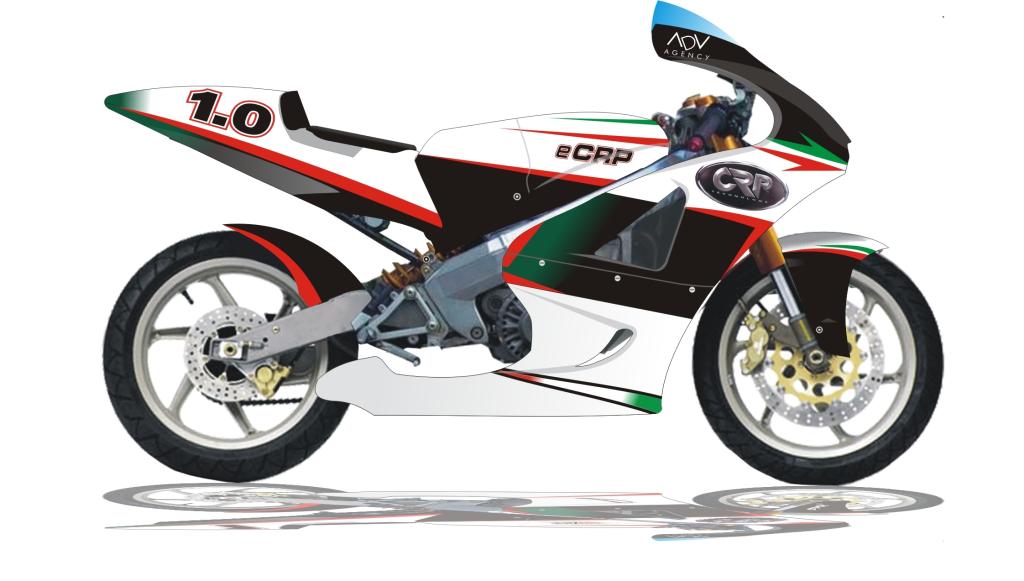
Lord Drayson, Minister of Science and Innovation and Le Mans race driver will not only make the Keynote Address at the Motorsport Industry Association’s (MIA) Cleaner Racing Conference but also launch, at 11.00 am, the Italian eCRP 1.0 electric superbike that will race in the TTxGP world championship in 2010. The R&D dept. of the Italian factory CRP Racing is producing its e-motorcycle for teams participating in TTXGP 2010 series, the world’s first zero carbon, clean emission motorsport event. The eCRP 1.0 will be unveiled in Birmingham on 13th January at the Green Conference “Cleaner Racing Conference” organized by the Motorsport Industry Association (MIA) and will be on show the following day at the Autosport exhibition. The Italian style and design on two wheels, the eCRP 1.0, is a pure racing bike, easy to handle for its dimensions and shape, with a strong “racing” look, coming from CRP’s extensive knowledge and experience in motorsport and state-of-the-art technologies. This is the first made-in-Italy zero emission motorcycle in the prestigious TTXGP 2010 Championships which will see races taking place in UK, North America and Italy! The combination of CRP and TTXGP shows the real benefit of working together to progress innovative technology and, at the same time, bring the first eGrandPrix to Italy. TTXGP is writing a new chapter in the history of motorsport and working with others to fuel the next generation of engineers and technologists who will make the difference in defining the future of our planet. eCRP 1.0 technical specs FRAME Aluminium double beam REAR SWING ARM Aluminum Alloy FRONT SUSPENSION “Upside-Down” telescopic hydraulic fork OHLINS Stem dia. 43 mm REAR SUSPENSION OHLINS Hydraulic progressive shock absorber FRONT BRAKE Floating Braking Wave diskDisc dia. 320 mm REAR BRAKE Single Braking Wave diskDisc dia. 220 mm CALIPER Four pistons radial “Brembo” caliper WHEEL RIMS Forged Aluminum MarchesiniFront Rim Size 3.50″x17”Rear Rim Size 5.50”x17″ FRONT TIRE Front Tire – Size 120 x 70-17 REAR TIRE Rear Tire Size 165 x 60- 17 WHEELBASE Wheelbase 1376 mm MOTORS Dual DC “Agni 95” electric motors. VOLTAGE 72 V BATTERIES 6 KW/h Batteries Pack52 packs (4 sets of 13 packs each) CONTROLLER Size 480mm x 150mm x 60mm CHARGER Zivan NG3 – 96 V BMS – Battery Management System WEIGHT 175 Kg. CHARGING TIME 2h ENDURANCE RANGE 40Km (depending on track conditions) SPEED 180 Km/h Race Calendar 2010 (Dates correct at time of going to press) TTXGP IOM May 29th June 11th 2010 Isle of Man TTXGP UK Championship 2010 July 3rd – 4th Cadwell Park, Lincolnshire July 17th – 18th Snetterton, Norfolk September 11th 12th Castle Combe, Wiltshire October 2nd – 3rd Brands Hatch TTXGP North America Championship 2010: May 14th – 16th Infineon Raceway, California. July 8th – 11th Mosport International Raceway, Canada August 13th – 15th VIRginia International Raceway, 4th date TBC TTXGP Italy 2010 26th – 27th June Magione 24th – 25th July Franciacorta 4th – 5th September Franciacorta 25th – 26th September Mugello TTXGP FINAL / UEM 2010 October 23rd – 24th Albacete, Spain (top 6 teams from the North America, UK and Italian championships”¦)
It’s Journalist Day in the Yoshimura Suzuki Camp. Several journalists–and OTT’s Dave Williams–were invited to ride seven-time AMA Superbike Champion Mat Mladin’s AMA American Superbike. The OTT crew also talks with Roadracing World guest test rider Steve Rapp about his ride on Mladin’s freshly retired steed. OTT’s Dave Moss dissects Mat Mladin’s 2009 Suzuki GSX-R1000 Superbike. Be sure to check out other Roadracing World feature videos. Videos provided by ~http://www.OnTheThrottle.tv~ and ~www.YouTube.com~ A Closer Look At Mat Mladin’s Racebikes By Dave Moss The 2009 rules package put into place by Daytona Motorsports Group for the AMA Pro Racing American Superbike class has required that the racebikes be a much closer representation of what is sold on the showroom floor. In the case of Mat Mladin’s 2009 Suzuki GSX-R1000 racebikes, you will still see the original frame, subframe, swingarm and external fork components. Once you a much more detailed eye over the bike in a very slow and careful way you quickly fill up pages of a notebook with parts that are different to stock and parts that have been added to the racebike. Also new is the fact that we already know a lot about what parts the teams use due to the parts homologation rules. With Mladin’s bike this is straightforward for the most part as almost everything added to the bike is manufactured by Yoshimura. However, there are a few parts that are not built by Yoshimura and for good reason, as there is no need for Yoshimura to create its own race data acquisition system, for example. We had an incredible opportunity to get up close with Mladin’s 2009 American Superbikes during a Yoshimura team test and media day at Auto Club Speedway. Normally that means some questions (most of which cannot be answered without giving away proprietary information), some generic information from a spec sheet and an opportunity to take some photos of the racebike with and without bodywork on it. In this instance, I had free access to take a tape measure to Mladin’s bike, and the crew actually answered questions about geometry, spring ratings and valving. Usually race teams are very careful about guarding their set-up information. Mladin’s A and B bikes were prepped for various journalists to ride and then brought to the track. The bikes were set up in an identical way in literal terms other than the offset and consequent steering head angle: One bike had 0.5-degree less rake. Steve Rapp was on hand to shake the bikes down for Roadracing World, doing five laps on each bike. His fastest time was a low-1:28, or nine seconds faster than any of the riders representing other media outlets. *** I looked at the “B” or spare bike with data acquisition specialist Herschel Auxier, who has worked with Yoshimura for eight years. There are two data acquisition systems on the bike. The first uses Magneti Marelli software and hardware. This system is fairly new to the Yoshimura race team with 2009 being the first year it was used. It is used to gather data primarily on engine management. Yoshimura has been using Motec software and hardware for over a decade. The Motec dash display unit features up to seven screens showing different data, with each screen selected via a red toggle switch. The race mode screen shows fuel map, lap timer, gear position, rpm, spin control setting (0 = off, 5 = max). Mladin used # 3 most of the time. And note the name, “spin control” not “traction control.” Nomenclature is everything. There are also screens showing fuel pressure, oil and water temp and battery voltage; throttle position and battery voltage; warm-up mode; brake pressure and suspension travel; throttle position and secondary throttle butterfly position; and air-fuel mixture. Suspension travel information is acquired via a linear potentiometer installed on the left fork leg along with the brake pressure sensor. A linear potentiometer is located on the right hand side of the rear shock. Yoshimura technicians use the warm-up mode on the Motec dash to check on engine oil and coolant temp, fuel pressure, battery voltage, brake pressure and suspension sensors. Once the bike is being ridden, the Motec dash converts to race mode display only. *** On streetbikes, the left handlebar control module features switches to select high and low beam, turn signals, emergency flashers and horn. On the GSX-R1000K9 it also houses a switch to select Mode A, B, or C which determines the fuel-map/power-delivery controlled by the ECU. Normal club racebikes and perhaps even some privateer AMA bikes have nothing on the left bar, but that’s not the case with Mladin’s bike. The stock handlebars have been replaced with Yoshimura clip ons, specifically designed to produce a favored bar position and down angle for Mladin. On the left clip-on we find the following: An on-the-fly fuel map selection switch with a choice of setting 1 or setting 2; an on-the-fly mode switch that controls wheel spin; an electric starter switch; a Brembo radial master cylinder for the hydraulic clutch; and a front brake lever position adjuster. The fuel map switch tells the ECU which map to use during the race. Sometimes this can be a slightly less powerful map as the tires go off, or a different map for different torque/bhp for more driveability through corners. The beauty of this switch is that the setting can be changed on the fly, just like changing from high beam to low beam on the street. The Mode switch selects what has been called spin control by Yohimura for many years. It senses the engine rpm so when the tire spins and the rpm suddenly rise, the ECU sees that and reacts depending on what level of spin control the rider has selected, (again, 0 = off, 1 is the lowest, 5 the highest). Mat’s most common setting was at # 3. The brake lever position can be adjusted via a dial at the end of a hydraulic line, and is a very common system on racebikes. Normally with a stock brake lever you would adjust the distance the lever is out from the throttle grip via a rotary dial adjuster that has numbers on it or via a dial control sticking forward of the brake lever in a radial master set-up. But you don’t have time in racing to pull over and adjust the lever position if the brakes fade so this tube and dial allow you to do that with your hand still on the left bar. Most racebikes allow clutchless upshifts via quick-shifter systems so any time you’re accelerating and changing gears you can use your left hand to adjust the brake-lever position. The right handlebar usually features the engine kill switch, the engine start button, and in the case of some sportbikes a switch that allows you to toggle through electronic dash functions. On Mladin’s bike the right clip-on carried the power on/off switch; the pit- speed-limiter on/off switch; the launch control switch; and the Brembo radial brake master cylinder connected to that position adjuster on the left bar. The pit speed limiter switch tells the ECU that the bike is limited to a set speed such as 50 mph. The ECU will not let the bike go any faster than that until you turn the switch into the off position. There is a very strict procedure for the launch control software that is only used at the start of the race. The engine must be running and the bike must be in neutral. Push the launch control button once and engage first gear. Bring the throttle to the stop and then feed the clutch out. Once second gear is engaged the launch control automatically shuts off. Standard triple clamps are often replaced when racing any bike. There are many reasons for this but the two main reasons are that aftermarket triple clamps allow rake and trail to be manipulated quickly and easily, and different upper triple clamps allow greater manipulation of the fork height. Mladin’s bikes featured Yoshimura’s offset triple clamps to modify rake and trail. Mechanics can install offset inserts above and below the upper triple clamp in a short period of time without removing the triple clamps; a bar slides through fittings on the frame and into special stands that hold the front end of the bike off the ground, independent of the front suspension. Taking out a couple of bolts and loosening the tank while supporting the forks and wheel gets the job done quickly. There are two height versions of the upper triple clamp: -10mm and -20mm drop from stock as measured from the steering stem center. Both bikes had the -10mm drop installed. The spare bike had that 0.5-degree reduction in rake, using a 26mm insert. The A bike used a 30mm insert. Fork tube height was set at 11mm above the upper triple clamps and the fork leg measured 490mm from top of the lower triple clamp to the center of the axle. The Showa Big Piston Forks have been tuned at street, track and at club races to work extremely well with minor tuning to compression, rebound and preload. But at the national level, the stock internals are removed and one of the principle reasons is because the fork spring resides at the bottom of the fork so to make spring changes you have to strip the fork apart. That cannot happen at the National level due to time constraints so the internals are replaced. With Mat’s bikes, Ohlins cartridges were installed with the OEM dust seals removed. The A bike had fork cap extenders installed but the forks were in the same position on each bike. The fully extended length of the fork tubes as measured from the bottom of the outer tube to the axle casting joint with the tube was 140mm with the bike in the air on a front stand. With the bike at rest on the ground and being picked up via the handlebars it will stop at 125mm. The difference is due to the top-out springs. The forks on Mat’s bike were normally run with springs rated at 11.0, but that was changed to 10.5 for the journalists; preload was set at 12 turns in; rebound damping was set at 12 clicks out; compression damping was set at six clicks out; the Ohlins valving coding listed on the fork was C5 R3; the oil viscosity, type, weight and level were all unknown. The brake pressure sensor is located at the bottom of the left fork leg. The stock bike has rear-set footpeg mounting blocks that offer a choice of three positions, along with lever adjustment. For racing much more adjustability is required to get the rider’s feet perfectly placed based on their positional needs and inseam. The Yoshimura rearsets offer a great deal more adjustability in this regard for both rider foot position on the peg and for rider toe placement for the shift and brake lever. In addition, the Yoshimura rearset kit includes a spring for the rear brake master cylinder to ensure that the brake lever returns to the fully off position. Adjacent to the rearsets is the swing arm pivot point. There is an insert in the frame that can be changed and is always changed for racing. This insert is absolutely critical to acquire the perfect swingarm angle to get maximum grip while on the edge of the tire under acceleration. Mladin’s bike had the stock insert removed and a Yoshimura insert installed which raised the swingarm pivot point by 2mm. Below the swing arm is the linkage attaching the swingarm to the shock. In many tests of the stock bike, much has been said about the progressive linkage and progressive shock spring. This type of a set-up works well for the street but must be changed for racing. Therefore, Mladin’s bike had a Yoshimura flat-rate link installed to create a linear or straight-rising rate along with a straight-rate spring for the shock. One of the most important measurements with the rear of the bike is the distance between the swingarm pivot point and the center of the rear axle. On both bikes the distance was 590mm. A GSX-R1000’s stock rear shock has adjustable preload, high and low speed compression damping, and rebound damping. Once the stock spring is replaced the stock shock can work quite well in conjunction with the Yoshimura link for a track-day rider. The one area that is critical with the shock is the ability to adjust rear ride height via shock length. True, shims can be added between the frame and shock clevis, but having ride height adjustability that can be done quickly is essential when testing at race events. Mladin’s bikes each had an Ohlins TTX shock installed. The normal spring rate used by Mladin (11.0kg/?) was changed to 10.5kg/? for the journalists. Preload was set at 12 turns in; compression was set at six clicks out; rebound was set at 12 clicks out; the Ohlins valving coding listed on the shock was C6 R7; 2mm of rear ride height was seen below the blue locknut; and there was a 7.5mm shock spacer between the frame and the shock clevis. *** Stock wheels are relatively heavy compared to magnesium racing wheels and thus require a lot of energy to accelerate and slow down. Heavier wheels also make the bike sluggish during transitions unless chassis geometry is modified to help with this condition. In order to get around the bulk of this problem, Mladin’s bike was fitted with lightweight JB (Jyo Bito) Power Magtan forged magnesium wheels. The tires installed were a 125/80-17 front compound # 6704 set at 30 psi cold and a 195/65-17 rear compound # 7704 set at 20 psi cold. Yoshimura uses Chicken Hawk tire warmers and the warmers were set to 85 degrees C for an hour to warm the tire and make sure the rim was hot before the bikes went on track. The stock OEM front brake rotors are 310mm. The stock monoblock calipers were replaced with Brembo Monoblocks mounted with 10mm spacers as the race-use rotors measure 320mm. The stock radial master cylinder was replaced with a Brembo radial master cylinder, bore and stroke unknown. The OEM brake lines were replaced with Galfer braided lines. The stock rear brake rotor and caliper were replaced with a Brembo caliper and a lightened rear rotor retaining the stock size of 220mm. This system was actually designed for Tommy Hayden who used the rear brake more than Blake Young and Mat Mladin combined. If it could withstand Tommy’s use, it certainly wasn’t going to fail Mat. The stock radiator has a considerable surface area to manage coolant temperatures. Mladin’s racebike is equipped with the full factory superbike radiator. The extra cooling capacity is needed to handle extreme heat due to not only racing use of the engine but also increased levels of performance that by default create a lot more heat than a stock engine. Stock GSX-R1000K9 gearing is 17-42. This allows the bike to travel in excess of 100 mph in first gear and such a high speed in first gear will not work for racing. Therefore Mladin’s bike was re-geared to 15-41 at Auto Club Speedway. This will reduce theoretical top speed but will provide much better drive off corners and better use of the transmission on the racetrack. All modern streetbikes come with the standard street-shift pattern of down for first gear and then up through the transmission for second though sixth gears. Mladin has always run a street-shift pattern while racing, with the explanation ranging from personal preference to adapting to an old ankle injury. Many of his counterparts prefer the alternative of reverse or GP shift, up for first and down for second through sixth. The rationale is that when accelerating it is easier to push the gear lever down than to get your foot under it and pull it up, and your foot doesn’t get trapped at lean when starting to accelerate out of a corner. Stock lower triple clamps have steering stops mounted or cast into them to make sure that the bars do not hit the frame or tank, pinching trapping the rider’s hands. With the Yoshimra adjustable triple clamps in place, these steering stops are mounted to the frame in the form of a bracket with removable plastic bumpers of varying thicknesses. This allows mechanics to adjust the range of motion appropriately. Since the full range of motion afforded by the stock steering locks is not required on the racetrack, the steering range is significantly reduced via these adjustable bumpers. This type of set-up can also limit the side-to-side motion of a tank-slapper, which could help the rider recover from that condition. In general terms the engine covers on both sides of most modern bikes are designed to keep the oil in with minimal weight. A typical stock engine cover is made of cast magnesium and will crack open in the slightest crash, allow oil to escape from the engine and gravel and dirt to get in. That’s why most race organizations require thicker, stronger aftermarket covers, typically made of billet or cast aluminum. Other solutions include a guard that bolts over the stock engine case cover, using the existing bolt holes and slightly longer bolts, and carbon-fiber pieces that are glued to the stock engine case cover. Mladin’s bikes have a Yoshimura case guard on the right hand side and a Yoshimura stator cover with a epoxy-adhered carbon-fiber piece installed on the left side. Mladin’s bikes were fitted with Sharkskinz race bodywork and Superbike tail/seat with raised (doubled) seat foam. The hand-made aluminum tank is larger than standard at 24 liters and isn’t fitted with any sort of tank-grip material (designed to give the rider a more secure knee-grip when braking or hanging off).
A dispute between the sole ambulance company authorized by Kern County to serve Willow Springs International Raceway (WSIR) and track management means that the Rosamond, California facility does not intend to have ambulances on-site at the opening round of the 2010 Willow Springs Motorcycle Club (WSMC) season this coming weekend. WSIR and WSMC owner Bill Huth says recent increases in the hourly rates charged by Hall Ambulance have left some clubs that operate at Willow reeling financially. And by county law, if Willow chooses to hire an ambulance to stand by at the track, it must use Hall Ambulance, Huth says. It is a political standoff between Huth, whose pioneering, independent streak is well-known, and the county’s system of providing monopolies for ambulance services in designated areas. Kern County’s Board of Supervisors set out “exclusive ambulance service operational areas for emergency, non-emergency, and stand-by ambulance service throughout the County,” to “ensure competent, efficient and adequate care is provided within the County,” according to documents available on the Kern County website: ~http://www.co.kern.ca.us/ems/AmbOrd812.pdf~ Huth says the “operational area” that includes WSIR is served by Hall Ambulance. The company, founded in 1971, provides exclusive 911 paramedic service for 87 percent of Kern County, according to the company website (~http://www.hallambulanceservice.com/corpindex.html~). It is the largest privately owned emergency and non-emergency medical transportation provider in California, and the 30th-largest in the United States. Hall is owned by Harvey L. Hall, mayor of Bakersfield, by far the largest city in Kern County, and also the home of the Kern County Board of Supervisors, which issues the exclusive ambulance service area contracts. Huth says that rather than pay the increased fees, the track will hire an EMT to remain on-site for the races and to ride in the crash truck, which reaches crashed riders first. The EMT will do immediate first aid at the scene of an accident, and can call in a helicopter from Bakersfield or an ambulance from a dispatch center in Rosamond which is located an eight-minute drive from the track if the injury is serious. Huth says he is infuriated that the cost of a Basic Life Support ambulance increased from $100 to $109 an hour, and that the cost of an Advanced Life Support ambulance went to $140 an hour. It is but the latest in a series of cost increases for ambulance service. One track-day provider said that under the Kern County monopoly system the cost of providing ambulance service at the track has nearly doubled in the past five years. Roadracingworld.com will provide more information as it becomes available.
Smith goes GREEN! Bryan Smith, formerly of the Screaming Eagle Harley Team, has agreed to race Kawasakis in the 2010 Grand National circuit in both the Twins class and the Singles class. He will be joined on the team by Chas Springsteen, (nephew of legendary dirt tracker Jay Springsteen), who will compete in the Pro Singles class. Bryan Smith will ride the Kawasaki Ninja 650R Twin in the G.N.C. Twins Class and the Kawasaki KX450 in the G.N.C. Singles Class. Chas Springsteen will ride a KX450 Kawasaki in the Pro Singles class. Jay Springsteen will serve as a team coach and mentor. Bill Werner will prepare the equipment for both series. Werner Springsteen Racing Kawasaki would like to thank the following sponsors: Werner & Springsteen -Kawasaki – Monster Energy – Wossner Pistons – Supertrapp – Millenium Technologies – Redline Oil -Web Camshafts – K&N – Sponseller Homes – Cometic Gaskets – Missle Enginering – Boughner Racing – Motion Pro – KK supply – PMP Sprockets – Decal Works – Shoei Helmets – Oakley – Tucker Rockey – Works Connection – MSR – Universal Coating – Rekluse -West Coast Hotshoes – Pro-Plates – EBC – Penske – Saddlemen – A&A – Terry Evertt – Rock Springs Land and Timber – Renton Coil Springs . Evolution Industries – Pilot Leathers – Daytona Sensors – Cycra
Strong Dealer Network, New Products, Make BMW Best Performing Motorcycle Company in America Woodcliff Lake, NJ January 11, 2010″¦ According to just-released Motorcycle Industry Council (MIC) reports, BMW Motorrad USA outperformed all of its competitors in 2009. Despite a U.S. motorcycle market that declined 41 percent and lost nearly 360,000 units, BMW motorcycle sales only declined 22 percent, which was the smallest decline among all motorcycle brands. This follows on the heels of 2008 when BMW Motorrad USA was one of only two motorcycle manufacturers to post positive growth. “Our dedicated dealers were the key to our success this past year,” commented Todd Andersen, BMW Motorrad USA Marketing Manager. “Despite the tough market, they continued serve our customers well and promote our new products like the K 1300 S and the K 1300 GT. They were supported by attractive financing programs from BMW Financial Services. While many other dealers struggled to finance their customers’ purchases, BMW dealers never lost access to good financing, and this will continue for 2010.” “We expect significant sales growth in 2010,” said Andersen, “on the strength of the launch of the production version of the S 1000 RR Superbike, the most powerful and sophisticated sport bike ever produced. Our dealers have confirmed deposits on over 600 bikes and deliveries to customers will begin January 26.” Also slated for the coming year are new versions of BMW Motorrad’s most popular models: the R 1200 GS, the R 1200 GS Adventure and the R 1200 RT.
James Randolph Pilots KTM RC8 R to First U.S. Victory at Fontana Randolph Tallies Heavyweight Twins Superbike Victory at WERA FONTANA, Calif. ÂÂ─ In what was the first U.S. racing test for KTM’s all-new 1190 RC8 R, Scuderia West rider James Randolph piloted the superbike to its first North American victory at the WERA season opener at Auto Club Speedway in Fontana, Calif., this past weekend. Randolph won the Heavyweight Twins Superbike race on the 1195 cc RC8 R, which was close to stock trim. “I think this says a lot about the bike’s capabilities,” Randolph said after the victory. “I was up against some highly modified bikes all weekend, and the near-stock RC8 R held its own. FMF provided a prototype pipe and it added some noticeable performance gains over the stock system. Considering the highly modified superbikes we were up against all weekend, I’m very pleased with the new KTM.” With the RC8 R just arriving in North America, Randolph had limited time to get accustomed to the new bike and its upgraded power and handling characteristics. “It’s hard to believe I only had the RC8 R for one week and only had the opportunity for one practice session before the WERA opener,” Randolph said. “It was a quick and easy transition. I’m looking forward to racing the RC8 R in future races and developing the racing platform even more.” Randolph would like to thank Scuderia West, Motorex, FMF, Arlen Ness, Pirelli, Kyle Racing and Lou Saare who helped make the first WERA round possible. Next up, Randolph heads to the second round of WERA action January 30 31 in Las Vegas. About KTM KTM, founded in 1953, is the second largest European motorcycle manufacturer specializing in “Ready to Race” street and off road motorcycles and ATVs. Proven successes in worldwide competition are embodied into the design and function of each KTM race machine. KTM has built a reputation for high-quality premium race ready machines suitable for street and off road race competition and recreation. With more than 160 World Championships and counting, the technology, design and performance of KTM continues to race past the competition time and again.
Torrance, CA: American Honda announced a 2010 Contingency Program during the opening round of the AMA Professional Supercross series in Anaheim California on January 9th 2010. The Red Rider Rewards program will support racing all across the United States by offering contingency payouts to a wide range of Honda-mounted professional and amateur racers during the 2010 race season. Administered by the Honda Riders Club of America™ (HRCA®), this rewards program covers a broad assortment of racing disciplines. Model-year 2008 and newer machines are eligible for the program, so whether you’re road racing, or competing in local motocross events, the Red Rider Rewards contingency program has something for you. Visit your local Honda dealer or log on to HondaRedRiders.com after 1/13/10 for more information. About Honda American Honda Motor Co., Inc. is the sole distributor of Honda motorcycles, scooters, ATVs and personal watercraft in the U.S. American Honda’s Motorcycle Division conducts the sales, marketing, and operational activities for these products through authorized Honda dealers. For more information on Honda products, go to www.powersports.honda.com Honda Red Rider Rewards program inquiries may be directed to the info hotline at 310-781-5111.
Daytona, MX Sports Announce Ricky Carmichael Daytona Amateur Supercross Championship MORGANTOWN, W. VA. — MX Sports, producer of the AMA Amateur National Motocross Championships, is pleased to announce the formation of two new and exciting opportunities for amateur riders. The inaugural Ricky Carmichael Daytona Amateur Supercross Championship will take place on Sunday, March 7 at Daytona International Speedway, and on Monday, March 8, Carmichael will then host Ricky Carmichael University, the first public riding school ever hosted by the 15-Time AMA National Champion. Both events will take place after the Daytona Supercross By Honda on Saturday, March 6, where those amateur families will have the opportunity to see the best stars in AMA Supercross, such as Chad Reed and James Stewart, battle in America’s toughest, most challenging Supercross event of the year. “This is an unprecedented opportunity for amateur racers to ride at Daytona International Speedway,” said Tim Cotter, director of MX Sports. “Every horsepower buff knows what Daytona stands for. It is the heartbeat of the racing universe, and now amateur riders will have the opportunity to race on these storied grounds and learn from the Greatest of All-Time.” “I’m super pumped to be involved with this,” said Carmichael, a five-time Daytona Supercross By Honda champion. “I feel like Daytona is one of my racing homes, and to be able to give back to the sport like this will be awesome. You never forget your roots. For the riders, this is an amazing opportunity to race on the Daytona track. I’m really looking forward to sharing my knowledge with them.” MX Sports will organize the event by utilizing their nearly 30 years of experience operating the AMA Amateur National Motocross Championship at Loretta Lynn Ranch. The class structure will include classes for youth riders on 50cc bikes all the way up to vet and senior classes. The race will follow a supercross format, using heat races and last-chance qualifiers to seed the field of riders into a main event in each class. Unlike the Loretta Lynn Ranch format, riders do not need to qualify at other races in advance in order to participate in the Daytona event. Full online signup information is posted on MXSports.com. While amateur riders have competed at Daytona before, the Ricky Carmichael University event on Monday, March 8, is an unprecedented opportunity. The Ricky Carmichael University will feature the legendary Supercross champion and his team sharing exclusive riding secrets during a one-day-only Supercross camp on the Daytona track. It marks the first time amateur racers have had the opportunity to tap into the techniques and skills of the Greatest of All-Time. The amateur track will run a basic layout similar to the Daytona Supercross By Honda with changes made to accommodate amateur and youth riders. Amateur riders and their families are encouraged to come down early and camp on the Daytona infield, where hookups are available. “Both of these two events are great additions to our busy motorcycle schedule,” Daytona International Speedway President Robin Braig said. “Our Supercross course is legendary around the country and it’s a special opportunity for these amateur riders to test their skills on it, as well as learn from a legend such as Ricky Carmichael.” Full information on the race and riding school is available at mxsports.com. About MX Sports MX Sports, Inc. is a Morgantown, West Virginia-based motocross production company. The group coordinates the AMA Amateur National Motocross Championships, which includes a national qualifying program consisting of 52 Area Qualifying races held annually from February through May and 12 Regional Championship races conducted in June at select motocross facilities across the country. The national championship event is held during the first week of August at the home of country music star Loretta Lynn in Hurricane Mills, Tenn. For more information, please visit www.mxsports.com.
A “press release” is promotional text issued by a rider, team, company or organization to inform
the public about an event, product, or service from the issuer’s own point of view, and if deemed
to have news value, may be placed on roadracingworld.com as a service to our readers.
A press release is not an article written by Roadracingworld.com staffers. When a post is labeled with the words “press release”, it means that Roadracingworld.com is not responsible for its content and that Roadracingworld.com makes no guarantee that it is accurate. Not all press releases are posted and Roadracingworld.com may reject press releases if the content is too heavy on commercial promotion with little or no news value or if the press release contains obvious errors.
Accessibility
Accessibility modes
Epilepsy Safe Mode
Dampens color and removes blinks
This mode enables people with epilepsy to use the website safely by eliminating the risk of seizures that result from flashing or blinking animations and risky color combinations.
Visually Impaired Mode
Improves website's visuals
This mode adjusts the website for the convenience of users with visual impairments such as Degrading Eyesight, Tunnel Vision, Cataract, Glaucoma, and others.
Cognitive Disability Mode
Helps to focus on specific content
This mode provides different assistive options to help users with cognitive impairments such as Dyslexia, Autism, CVA, and others, to focus on the essential elements of the website more easily.
ADHD Friendly Mode
Reduces distractions and improve focus
This mode helps users with ADHD and Neurodevelopmental disorders to read, browse, and focus on the main website elements more easily while significantly reducing distractions.
Blindness Mode
Allows using the site with your screen-reader
This mode configures the website to be compatible with screen-readers such as JAWS, NVDA, VoiceOver, and TalkBack. A screen-reader is software for blind users that is installed on a computer and smartphone, and websites must be compatible with it.
Online Dictionary
Readable Experience
Content Scaling
Default
Text Magnifier
Readable Font
Dyslexia Friendly
Highlight Titles
Highlight Links
Font Sizing
Default
Line Height
Default
Letter Spacing
Default
Left Aligned
Center Aligned
Right Aligned
Visually Pleasing Experience
Dark Contrast
Light Contrast
Monochrome
High Contrast
High Saturation
Low Saturation
Adjust Text Colors
Adjust Title Colors
Adjust Background Colors
Easy Orientation
Mute Sounds
Hide Images
Hide Emoji
Reading Guide
Stop Animations
Reading Mask
Highlight Hover
Highlight Focus
Big Dark Cursor
Big Light Cursor
Cognitive Reading
Virtual Keyboard
Navigation Keys
Voice Navigation
Accessibility Statement
www.roadracingworld.com
November 23, 2026
Compliance status
We firmly believe that the internet should be available and accessible to anyone, and are committed to providing a website that is accessible to the widest possible audience,
regardless of circumstance and ability.
To fulfill this, we aim to adhere as strictly as possible to the World Wide Web Consortium’s (W3C) Web Content Accessibility Guidelines 2.1 (WCAG 2.1) at the AA level.
These guidelines explain how to make web content accessible to people with a wide array of disabilities. Complying with those guidelines helps us ensure that the website is accessible
to all people: blind people, people with motor impairments, visual impairment, cognitive disabilities, and more.
This website utilizes various technologies that are meant to make it as accessible as possible at all times. We utilize an accessibility interface that allows persons with specific
disabilities to adjust the website’s UI (user interface) and design it to their personal needs.
Additionally, the website utilizes an AI-based application that runs in the background and optimizes its accessibility level constantly. This application remediates the website’s HTML,
adapts Its functionality and behavior for screen-readers used by the blind users, and for keyboard functions used by individuals with motor impairments.
If you’ve found a malfunction or have ideas for improvement, we’ll be happy to hear from you. You can reach out to the website’s operators by using the following email
Screen-reader and keyboard navigation
Our website implements the ARIA attributes (Accessible Rich Internet Applications) technique, alongside various different behavioral changes, to ensure blind users visiting with
screen-readers are able to read, comprehend, and enjoy the website’s functions. As soon as a user with a screen-reader enters your site, they immediately receive
a prompt to enter the Screen-Reader Profile so they can browse and operate your site effectively. Here’s how our website covers some of the most important screen-reader requirements,
alongside console screenshots of code examples:
Screen-reader optimization: we run a background process that learns the website’s components from top to bottom, to ensure ongoing compliance even when updating the website.
In this process, we provide screen-readers with meaningful data using the ARIA set of attributes. For example, we provide accurate form labels;
descriptions for actionable icons (social media icons, search icons, cart icons, etc.); validation guidance for form inputs; element roles such as buttons, menus, modal dialogues (popups),
and others. Additionally, the background process scans all the website’s images and provides an accurate and meaningful image-object-recognition-based description as an ALT (alternate text) tag
for images that are not described. It will also extract texts that are embedded within the image, using an OCR (optical character recognition) technology.
To turn on screen-reader adjustments at any time, users need only to press the Alt+1 keyboard combination. Screen-reader users also get automatic announcements to turn the Screen-reader mode on
as soon as they enter the website.
These adjustments are compatible with all popular screen readers, including JAWS and NVDA.
Keyboard navigation optimization: The background process also adjusts the website’s HTML, and adds various behaviors using JavaScript code to make the website operable by the keyboard. This includes the ability to navigate the website using the Tab and Shift+Tab keys, operate dropdowns with the arrow keys, close them with Esc, trigger buttons and links using the Enter key, navigate between radio and checkbox elements using the arrow keys, and fill them in with the Spacebar or Enter key.Additionally, keyboard users will find quick-navigation and content-skip menus, available at any time by clicking Alt+1, or as the first elements of the site while navigating with the keyboard. The background process also handles triggered popups by moving the keyboard focus towards them as soon as they appear, and not allow the focus drift outside it.
Users can also use shortcuts such as “M” (menus), “H” (headings), “F” (forms), “B” (buttons), and “G” (graphics) to jump to specific elements.
Disability profiles supported in our website
Epilepsy Safe Mode: this profile enables people with epilepsy to use the website safely by eliminating the risk of seizures that result from flashing or blinking animations and risky color combinations.
Visually Impaired Mode: this mode adjusts the website for the convenience of users with visual impairments such as Degrading Eyesight, Tunnel Vision, Cataract, Glaucoma, and others.
Cognitive Disability Mode: this mode provides different assistive options to help users with cognitive impairments such as Dyslexia, Autism, CVA, and others, to focus on the essential elements of the website more easily.
ADHD Friendly Mode: this mode helps users with ADHD and Neurodevelopmental disorders to read, browse, and focus on the main website elements more easily while significantly reducing distractions.
Blindness Mode: this mode configures the website to be compatible with screen-readers such as JAWS, NVDA, VoiceOver, and TalkBack. A screen-reader is software for blind users that is installed on a computer and smartphone, and websites must be compatible with it.
Keyboard Navigation Profile (Motor-Impaired): this profile enables motor-impaired persons to operate the website using the keyboard Tab, Shift+Tab, and the Enter keys. Users can also use shortcuts such as “M” (menus), “H” (headings), “F” (forms), “B” (buttons), and “G” (graphics) to jump to specific elements.
Additional UI, design, and readability adjustments
Font adjustments – users, can increase and decrease its size, change its family (type), adjust the spacing, alignment, line height, and more.
Color adjustments – users can select various color contrast profiles such as light, dark, inverted, and monochrome. Additionally, users can swap color schemes of titles, texts, and backgrounds, with over seven different coloring options.
Animations – person with epilepsy can stop all running animations with the click of a button. Animations controlled by the interface include videos, GIFs, and CSS flashing transitions.
Content highlighting – users can choose to emphasize important elements such as links and titles. They can also choose to highlight focused or hovered elements only.
Audio muting – users with hearing devices may experience headaches or other issues due to automatic audio playing. This option lets users mute the entire website instantly.
Cognitive disorders – we utilize a search engine that is linked to Wikipedia and Wiktionary, allowing people with cognitive disorders to decipher meanings of phrases, initials, slang, and others.
Additional functions – we provide users the option to change cursor color and size, use a printing mode, enable a virtual keyboard, and many other functions.
Browser and assistive technology compatibility
We aim to support the widest array of browsers and assistive technologies as possible, so our users can choose the best fitting tools for them, with as few limitations as possible. Therefore, we have worked very hard to be able to support all major systems that comprise over 95% of the user market share including Google Chrome, Mozilla Firefox, Apple Safari, Opera and Microsoft Edge, JAWS and NVDA (screen readers).
Notes, comments, and feedback
Despite our very best efforts to allow anybody to adjust the website to their needs. There may still be pages or sections that are not fully accessible, are in the process of becoming accessible, or are lacking an adequate technological solution to make them accessible. Still, we are continually improving our accessibility, adding, updating and improving its options and features, and developing and adopting new technologies. All this is meant to reach the optimal level of accessibility, following technological advancements. For any assistance, please reach out to