Home Blog Page 2464

Lucas Oil To Sponsor WERA West Again In 2017, Season Kicks Off This Coming Weekend At Auto Club Speedway

LUCAS OIL WERA WEST KICKS OFF!

2017 will see Lucas Oil back as the sponsor of the WERA West Sportsman Series which kicks off on January 29th at Auto Club Speedway, in Fontana, California. 

“We are very happy to have Lucas Oil continue their support of the WERA West Sportsman Series for 2017. Their products are great and they are a partner who cares about our sport,” said Evelyne Clarke, CEO of WERA Motorcycle Roadracing. “For 2017 we will also partner with the AMA in an effort to unify our sport and give our riders even more benefits with their AMA Memberships!”

WERA will hold registration on Saturday from 3:00 to 5:00 p.m. in the Media Center above pit in/out for Sunday’s full slate of sprint races and registration will open at 7:00 a.m. on Sunday with racing set to begin at 11:30 a.m. on Sunday the 29th! Fastrack Riders will host track days and practices on the Friday and Saturday prior to WERA’s Sunday sprints.

WERA Motorcycle Roadracing was founded in 1973 and remains the foremost place to develop talent in the sport of motorcycle Roadracing. The legacy of Pro riders on a National and World level is legendary. All events are run by WERA Motorcycle Roadracing and they go coast to coast offering entry level racing with the WERA Sportsman Series as well as a Pro-Am Series with the WERA National Challenge Series.

For further information contact WERA Motorcycle Roadracing or check the web site at www.wera.com.

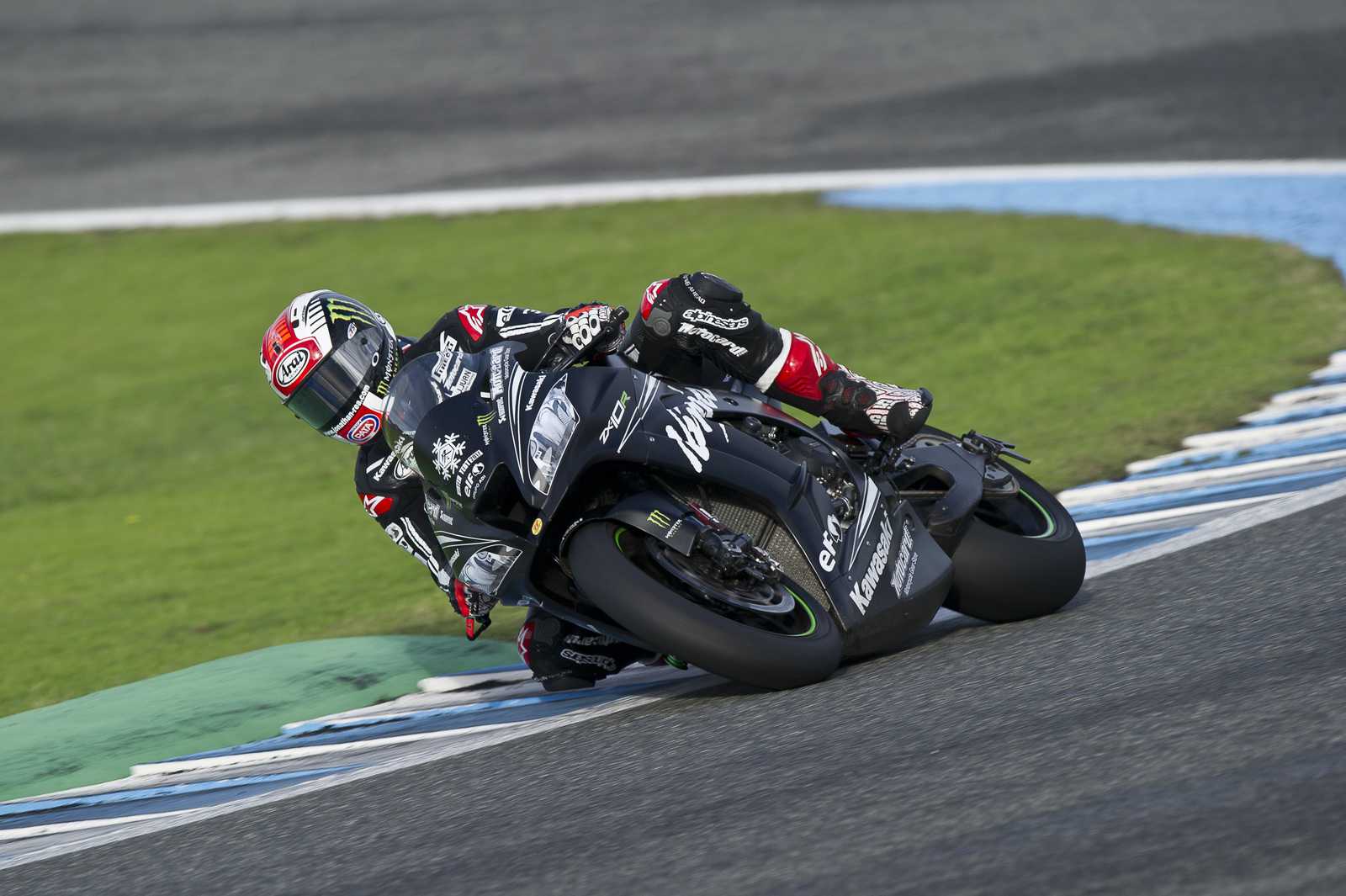
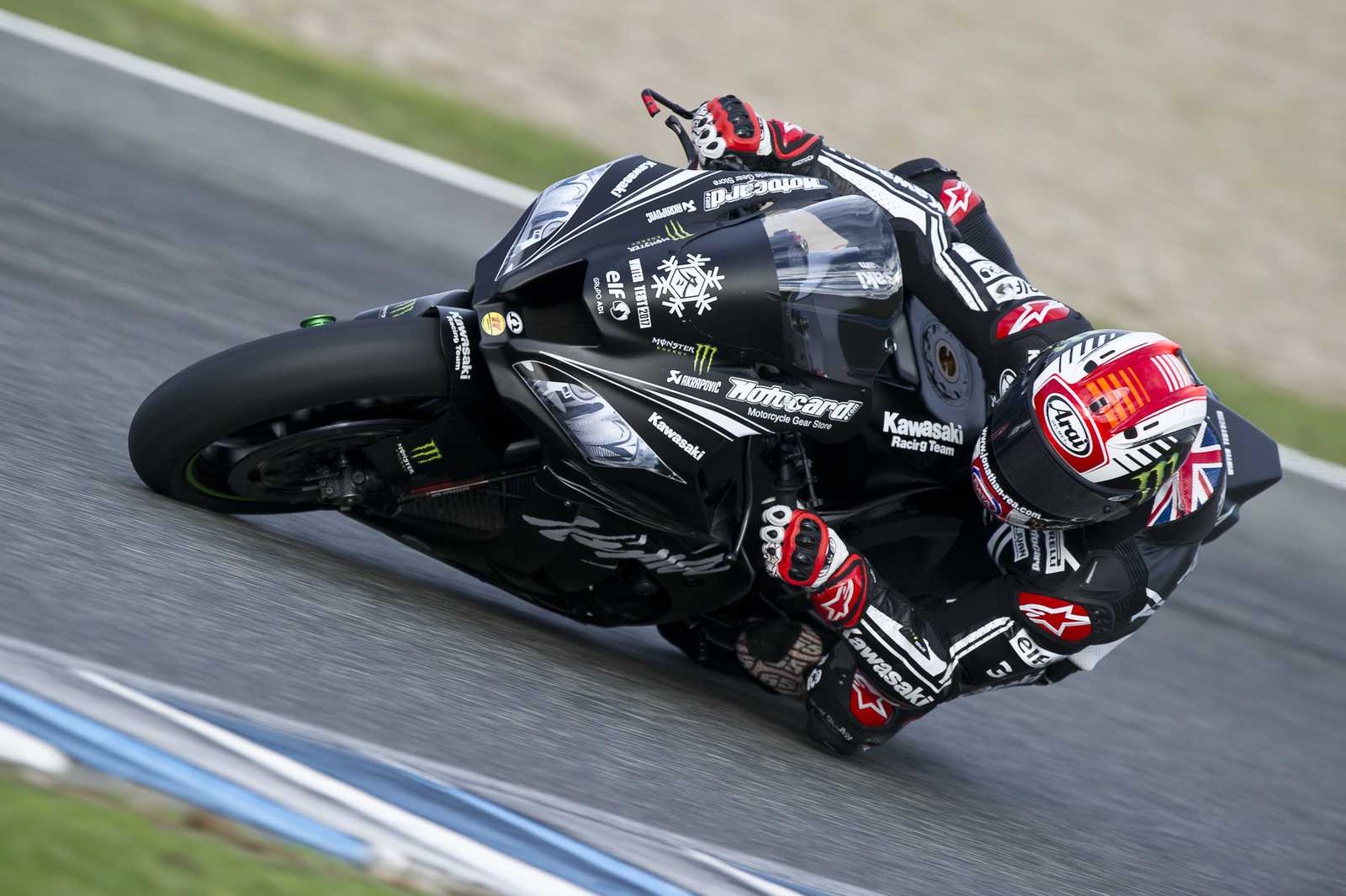
Jonathan Rea Quickest Aboard Kawasaki On Opening Day Of World Superbike Testing At Jerez

FIM Superbike World Championship Test

Circuito de Jerez, Spain

January 24, 2017

Unofficial Best Lap Times (all on Pirelli tires):

1. Jonathan Rea, UK (Kaw ZX-10RR), 1:40.162

2. Tom Sykes, UK (Kaw ZX-10RR), WSBK, 1:40.422

3. Chaz Davies, UK (Duc Panigale R), WSBK, 1:40.784

4. Marco Melandri, Italy (Duc Panigale R), WSBK, 1:40.812

5. Alex Lowes, UK (Yam YZF-R1), WSBK, 1:41.058

6. Xavi Fores, Spain (Duc Panigale R), WSBK, 1:41.396

7. Lorenzo Savadori, Italy (Apr RSV4), WSBK, 1:41.416

8. Jordi Torres, Spain (BMW S1000RR), WSBK, 1:41.619

9. Nicky Hayden, USA (Hon CBR1000RR SP2), WSBK, 1:41.830

10. Michael van der Mark, Netherlands (Yam YZF-R1), WSBK, 1:41.908

11. Eugene Laverty, Ireland (Apr RSV4), WSBK, 1:42.142

12. Stefan Bradl, Germany (Hon CBR1000RR SP2), WSBK, 1:42.255

13. Markus Reiterberger, Germany (BMW S1000RR), WSBK, 1:42.530

14. Randy Krummenacher, Switzerland (Kaw ZX-10RR), WSBK, 1:42.747

15. Leon Haslam, UK (Kaw ZX-10RR), BSB, 1:42.774

16. Luke Mossey, UK (Kaw ZX-10R), BSB, 1:43.574

17. Marco Faccani, Italy (BMW S1000RR), STK1000, 1:43.769

18. Michael Rinaldi, Italy (Duc Panigale R), STK1000, 1:44.023

19. Mike Jones, Australia (Duc Panigale R), STK1000, 1:44.211

20. Zulfahmi Khairuddin, Malaysia (Kaw ZX-6R), SS600, 1:45.658

MotoGP Rider Loris Baz Says He Wants To Take Things Step-By-Step In 2017

Next week the MotoGP bikes will be back at the Sepang International Circuit for the first test of the 2017 season. Avintia Racing rider Loris Baz looks forward to get back to business after several weeks at home. Baz took full advantage of the winter break to get back into shape. He underwent surgery on his right foot to remove all the screws and plates from last year’s injuries. He was also able to ride bikes on all surfaces imaginable, on ice in Switzerland, on sand at Valentino Rossi’s Ranch at Tavullia and on asphalt during last week’s track day with Avintia Racing’s Ducati Panigale. He also did some flat track at Requena last weekend, so he is ready to jump on his Ducati GP15 at Sepang. Loris wants to go step by step and to be ready for the first race in Qatar.

Do you look forward to get back to work at the first test of the season?

“Yes, I can’t wait any more, because although it was good to disconnect from MotoGP for a couple of weeks, I really missed riding the bike. I started doing some ice-riding at home and I also went to Rossi’s Ranch. Even though the weather was horrible, it was an amazing experience. We are getting stronger and I also had the chance to ride the Ducati Panigale in Valencia last week. And If the weather is good, I’ll race at Requena’s flat track this weekend.”

How was the surgery on your right foot? Are the injuries from last season a thing of the past?

“Everything went perfectly well and now I have a brand new foot.”

Following a difficult season, you finished the year with a smile on your face when you tested the Desmosedici GP15 for the first time. Is this the reason why you are impatient to get back in business?

“Of course, because during the last two tests I confirmed that I still know how to ride a bike. I hope to have more luck during this season, but I don’t want to set any goals, because last year we did and were not able to achieve them. I think that we have to go step by step and try to enjoy riding the bike. If we can do that, we will be fast and if we are fast, everybody will be happy. So we have to go test by test and race by race, because last year we did really well during the winter test, but then the season was a disaster. I want to be ready for the first race in Qatar and this is what we will work for during the winter tests.”

You have a new bike and a new chief engineer. How was it to work with Paolo Zavalloni at the test in November?

“I felt really good and this was a positive surprise. I’d seen Paolo in the past and we hadn’t spoken before, but from the first moment we connected well and he seems to be very motivated. I like the fact that he listens to my comments and that he always tries to find solutions to improve the bike and to adapt it to my riding style. He came to Rossi’s Ranch and he told me that he analysed all the data from the test during the winter break and that he has some ideas in mind for the upcoming test. I can see he’s motivation is high and that he looks forward to start working at Sepang next week as much as myself. I like his excitement. The whole team is very motivated.”

You new bike is quite different from the one you used last season. How was the feeling with the GP15 during the first test?

“The feeling was good. The main thing is that I had no chatter problems at all at both circuits. The bike feels better, you can see it is a newer bike. Both chassis and engine are clearly an evolution compared with last year’s bike. Hector showed during last season that it’s possible to achieve good results with a two-year old bike. I think I will be closer to the front, the feeling was good from the first time out, and this is positive.”

Brian Wismann Joins Zero Motorcycles As Vice President of Product Development

BRIAN WISMANN JOINS ZERO MOTORCYCLES AS VICE PRESIDENT OF PRODUCT DEVELOPMENT

Wismann Joins Zero with 13 Years of Electric Motorcycle Product Design and Development Experience

SANTA CRUZ, Calif., (January 23, 2017) – Zero Motorcycles, the global leader in electric motorcycle sales and technology, today announced that award-winning product development veteran Brian Wismann has joined the company as the new Vice President of Product Development. He will report to Zero’s Chief Technology Officer, Abe Askenazi.

“Brian’s addition to the team further establishes Zero Motorcycles position as the global leader in the electric motorcycle industry,” said Askenazi. “Few would argue with Brian’s credentials and accolades, having led development of award and race-winning e-powered machines.”

Wismann’s hire boosts Zero Motorcycles unmatched global leadership in design and development, and his knowledge and expertise will complement Zero’s engineering and executive teams. He spent the last 13 years at Brammo, Inc. where he was responsible for development of the company’s electric motorcycle and racing programs. His experience in the industry aligns with Zero’s strategy to provide consumers with a full range of performance motorcycles.

During his career, Wismann has designed electric motorcycles that have received praise from leading motorcycle and lifestyle enthusiast media outlets. Brian holds several patents in battery and electric motorcycle technology. In addition, he played an instrumental role in product development and program management that led to numerous racing championships and technical excellence awards.

“Electric motorcycles have been my passion for over a decade and I’m happy to have the opportunity to continue the work with the world leader in electric motorcycle production. Zero’s commitment to the market, EV performance, and a talented team that is 100% committed to delivering the best product to our customer is ultimately what convinced me to join. I’m looking forward to the ride!” said Wismann about the new role.

About Zero Motorcycles

Zero Motorcycles is committed to transforming the motorcycling experience by bringing innovative electric motorcycles to market with exceptional value and performance. Zero is powered by innovation, driven by passion, guided by integrity and measured by results. Through extensive research, insight and experience, Zero combines the art and science of motorcycle development in the design and execution of products that excite consumers and inspire brand loyalty. Zero is determined to remain the preeminent global electric motorcycle company.

Every Zero motorcycle is designed and built in California.

Become a fan of Zero Motorcycles on Facebook, follow Zero Motorcycles on Twitter @ZeroMC and Instagram @ZeroMotorcycles, and find us on YouTube at www.youtube.com/zeromotorcycles.

For more information on Zero Motorcycles or to learn more about its complete motorcycle line, including the Zero S, Zero SR, Zero DS, Zero DSR, Zero FX, and Zero FXS motorcycles, visit www.zeromotorcycles.com.

View the range of police/authority and military models at www.zeromotorcycles.com/fleet/.

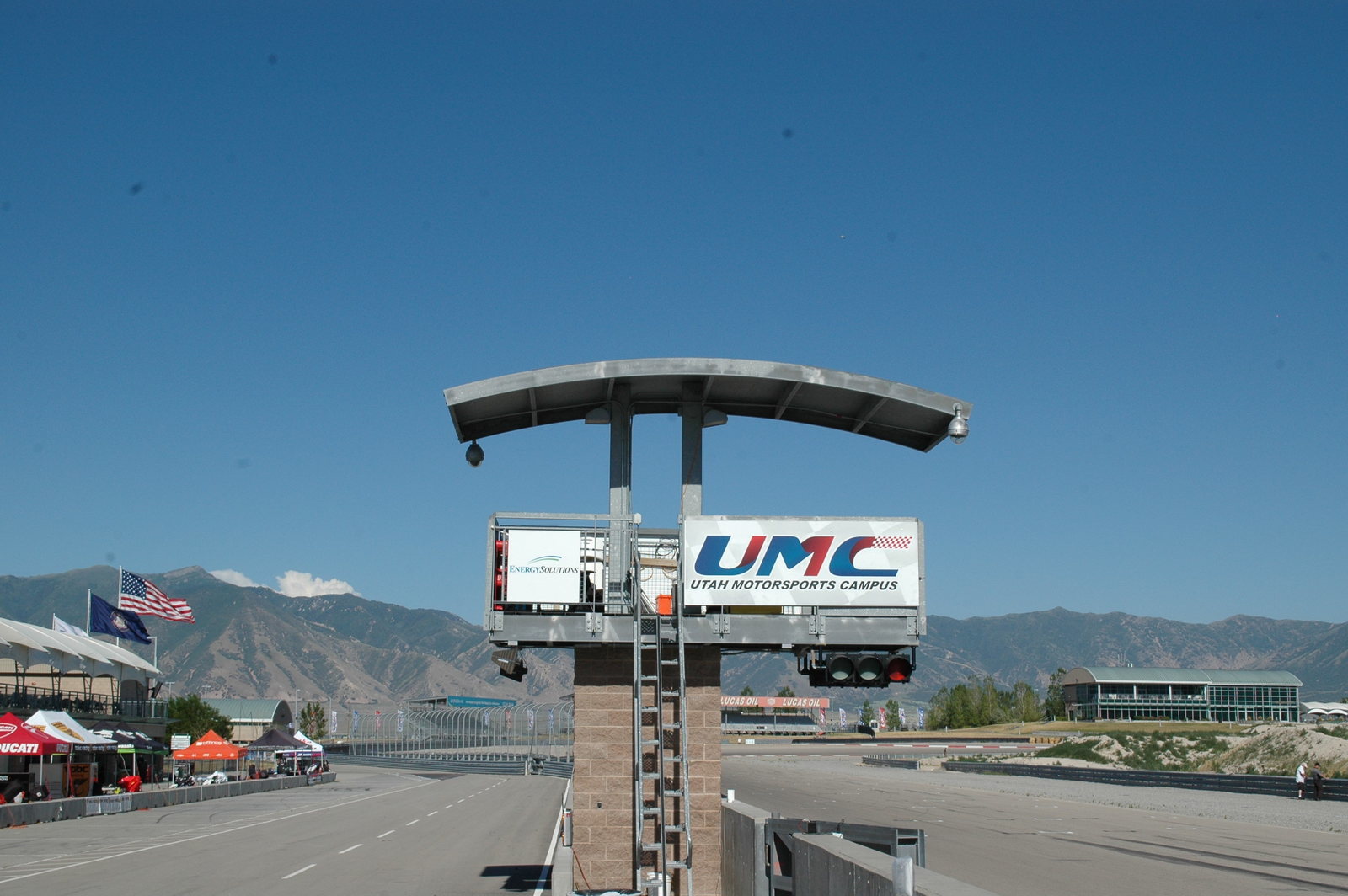
Mitime Group Withdraws From Negotiations To Purchase Utah Motorsports Campus But Agrees To Manage Facility In 2017

Mitime Group Agrees to Extend UMC Management Agreement

Company withdraws from track purchase negotiations

TOOELE VALLEY, UTAH (January 23, 2017) — Utah Motorsport Campus, Inc., a subsidiary of the Mitime Group, which operated Utah Motorsports Campus (UMC, formerly known as Miller Motorsports Park) under a facility management agreement with Tooele County during 2016, has notified the Tooele County Board of Commissioners that it will agree to an extension of the existing facility management agreement through December 31, 2017.

“We are very excited to complete the agreement to continue managing Utah Motorsports Campus,” said UMC General Manager Willem Geyer. “The County has been great to work with, and we look forward to another exciting season.” Once the agreement has been signed by both parties, UMC will announce its 2017 season schedule.

However, at the same time Mitime Utah Investment, LLC, also a subsidiary of the Mitime Group, informed the County that it is withdrawing from negotiations to purchase the 511-acre facility.

In a letter dated January 20, 2017 from Xinggui Wang, Manager of Mitime Utah Investment, LLC, Mitime cited unexpected legal challenges that started with a lawsuit in 2016 enjoining Mitime from purchasing the facility, ongoing legal challenges delaying the County from selling the facility and losses incurred by Mitime due to the delay and by the strengthening of the U.S. Dollar relative to the Chinese Yuan.

“When the County has resolved the issues underlying the challenges to a sale,” Wang stated in the letter, “should the County re-offer UMC for purchase in a new sale, open to public bidding, Mitime may have interest in bidding.”

For additional information regarding Utah Motorsports Campus, visit the track’s website at www.UtahMotorsportsCampus.com.

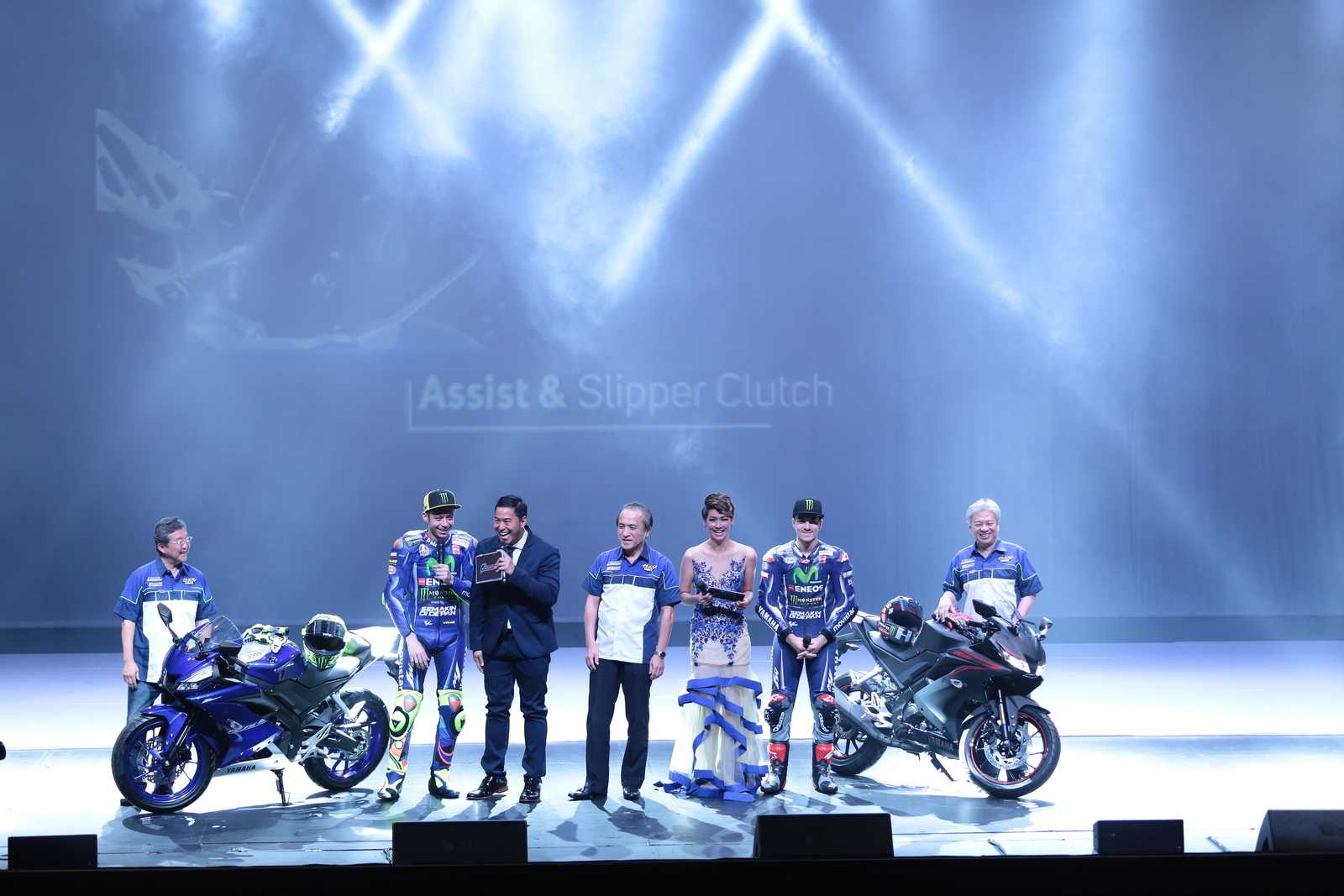
Valentino Rossi, Maverick Vinales Attend Yamaha Dealer Meeting, Media Event In Indonesia

Movistar Yamaha MotoGP Team’s Valentino Rossi and Maverick Viñales made headlines in Indonesia after a small ‘pre-MotoGP-season media tour’. The riders took time to visit some of their fans and the Indonesian media at Yamaha Indonesia Motor Manufacturing (YIMM)’s dealer meeting in Jakarta and Viñales also paid a visit to the Sentul International Circuit.

Jakarta (Indonesia), 23rd January 2017

Following the Movistar Yamaha MotoGP Team launch in Madrid, Spain, Valentino Rossi and Maverick Viñales headed straight to Indonesia for a quick stop at the Yamaha Indonesia Motor Manufacturing (YIMM)‘s dealer meeting, which is one of the biggest assemblies in the world among Yamaha distributors.

The event consisted of multiple interviews, meeting competition winners, photoshoots and an on stage presentation of the Yamaha All New R15, with the riders joined on stage by Yamaha Motor Co., Ltd’s President, Hiroyuki Yanagi.

The unveiling of the All New R15 was an exclusive as the new model is first introduced in Indonesia before being launched globally. During this presentation Rossi got a chance to meet up with Yamaha VR46 Master Camp riders Galang Hendra Pratama and Imanuel Pratna, who spent two training weeks at Rossi‘s Motor Ranch in Italy last summer.

The passion for motorsport, and especially MotoGP, was evident in the enthusiasm of the media present at the dealer meeting and made the riders feel very welcome.

Always enjoying Southeast Asia, Rossi was eager to have a few days off after the event to further experience the region, while Viñales prolonged his tour in Indonesia. The Spaniard went on an excursion to the Sentul International Circuit where he got the chance to test the Yamaha All New R15 and the AEROX 155VVA together with selected VIP customers and Yamaha Indonesia Motor Manufacturing’s President Minoru Morimoto. Though reluctant to leave the track, Viñales had to say goodbye to the All New R15 in the afternoon for a final media gathering, where he was showered with presents.

Viñales will now also have a short break before he makes his way to the Philippines to meet up with Rossi again on January 28th for some final media events, ahead of the first official IRTA Pre-season MotoGP test of 2017 in Sepang, Malaysia.

KOUICHI TSUJI

GENERAL MANAGER MOTORSPORTS DIVISION, YMC

As always, when we visit Indonesia, we are impressed with the Indonesian fans who really love motorsport. Yesterday, Valentino and Maverick had attended Yamaha Motor Indonesia‘s Dealer business meeting in Jakarta. It was a special occasion as the Yamaha Factory riders launched the All New R15 in front of Yamaha dealers. Today, Maverick came to the Sentul International Circuit to try the All New R15. It truly was a memorable “One Step Ahead (Semakin di Depan)”-event when Maverick rode as an official Yamaha rider together with the Indonesian fans today.

VALENTINO ROSSI

MOVISTAR YAMAHA MOTOGP RIDER

It was a short visit, but it was a great pleasure. The passion from the Indonesian fans and the media‘s interest is always nice to see and a good way to get motivated before the test in Sepang. I again felt very welcome in this fantastic country and I want to thank Yamaha Indonesia Motor Manufacturing for organising this trip. It was also great to catch up with Yamaha VR46 Master Camp riders Imanuel and Galang again. It had been a while since we last met and trained together and it‘s great to see that they are still very passionate about racing. It has been a fantastic day at the YIMM dealer meeting and I hope to stay longer the next time I come over, but now I will have a few days off so I can relax and prepare for the test in Sepang and one last media event in the Philippines.

MAVERICK VIÑALES

MOVISTAR YAMAHA MOTOGP RIDER

The event in Indonesia was really good. It surprised me how polite the people are here, they made us feel welcome and I‘m very thankful for that. The dealer event was nicely organised and the photoshoot was also fun, so we enjoyed it a lot. Before coming here I hadn‘t realised how big the city of Jakarta is. I felt really happy here and we‘ve had a great time, and especially today I had a lot of fun riding. I was there for the presentation of the All New R15 and I got to ride it on the track. I enjoyed the event a lot and in the afternoon we went to a big media gathering which was fun too, we got many presents so I‘m happy about today. Now I‘ll get some rest and train hard for the Sepang test.

Kawasaki’s Jonathan Rea, Tom Sykes Resume Testing Program Tuesday At Jerez

Jerez Track Sessions Set To Kick-Start KRT’s 2017 Title Defense

FIM Superbike World Championship contenders Jonathan Rea and Tom Sykes will be reintroduced to their 2017 Ninja ZX-10RR machines at the popular testing venue of Jerez de la Frontera on 24th and 25th January.

After two season-ending test sessions in November of last year, at Motorland Aragon and then Jerez, the official Kawasaki Racing Team riders will be able to exploit the latest race developments on the new model Ninja ZX-10RR during what will be the opening winter tests of 2017 at the 4.423km long Jerez circuit.

After so much recent success with the Ninja ZX-10R the RR model has retained the basic characteristics of the three-time championship-winning machine and added even more performance oriented initiatives to compete for greater success this year.

Jerez, in the south west of Spain, holds a variety of challenges for riders and machines, featuring superfast curves and tight hairpins, flowing sections and a variety of elevation and camber changes. This makes it a true test of a machine’s all-round potential.

Rea and Sykes each set impressive lap times during their 2016 tests at Jerez but most importantly of all they made real progress in defining and refining their 2017 race components and electronic systems.

The intention at the forthcoming test is to reconfirm recent developments and to make final set-up direction choices that will be used for real in the opening round of the championship at Phillip Island in Australia, to be held between 24th and 26th February.

Before the beginning of the new season KRT will return to Jerez for the final European winter test on 1st and 2nd February and then Rea and Sykes will take part in two days of official championship organisers’ tests at Phillip Island, on 21st and 22nd February.

Jonathan Rea, stated: “We have almost completed our winter test programme at Jerez after the last test there. We can start 2017 with a base package that we are already satisfied with. We are now starting to put all the pieces of the jigsaw together so I can start to build a package looking toward the first round of the championship at Phillip Island. Jerez is a track that presents different challenges at different times of the year, depending on the temperature and grip levels from the track, so we will have to see what the track surface presents to us when we arrive there. The first test of 2017 is about getting up to speed, throwing away the winter cobwebs and starting to work with my teams again to build up to Phillip Island. We have six days of testing before the first race weekend, so we have enough time to prepare. We have some new parts we are going to evaluate in the search for more power. After the last test we left Jerez very optimistic that we had done a good job both in lap times and consistency.”

Tom Sykes, stated: “There is no question that Jerez, as a venue, is a good one for testing. That’s why so many teams and categories go there for testing. You have to be careful because not only do lap times change day-to-day I find that Jerez is also sensitive to the time of day. We have not shown our full potential yet after the last test because we have not put the perfect set-up together yet. What we have been able to do in previous tests is explore some different parameters, explore a few things on the bike and try to understand more. With the recent technical rules we have not been as close to what I would class as a racing bike as we had been in some previous years. We have been stepping away from that and I have to say that it is about time that I need to try and adjust myself. I have to understand that it is not a thoroughbred racing bike and I need to adapt myself more to this. That has probably been my biggest struggle for the past couple of seasons. Now it is time to accept that there has to be a compromise. I am not able any more to fine-tune the bike set-up as in the past so now I probably need to bring a bit from myself.”

Guim Roda, KRT Team Manager, stated: “We will really start the 2017 project in Jerez with nearly everything in place to attack race one in Australia. We have all been working hard in the winter to improve many areas on the bike and in the team so we will put it all in place at Jerez. KHI and the suppliers have been working a lot to cover the crew chief and rider requests. From the team’s side we have been working to define the correct workflow inside our structure and introduce new staff into the system. I’m sure in 2017 we will be able to cover some weak points we had in 2016 and I expect us to have a more competitive package. Let’s see were we are in race one in Australia.”


2017 KRT Rider Statistics

Jonathan Rea: World Champion 2015 and 2016

2017: Races 0, Wins 0, Podiums 0, Superpoles 0

Career Race Wins: 38 (23 for Kawasaki)

Career Podiums: 88 (46 For Kawasaki)

Career Poles: 8 (4 For Kawasaki)

Tom Sykes: World Champion 2013

2017: Races: 0, Wins 0, Podiums 0, Superpoles 0

Career Race Wins: 31 (31 for Kawasaki)

Career Podiums: 84 (83 For Kawasaki)

Career Poles: 38 (38 For Kawasaki)

Kawasaki FIM Superbike World Championship Statistics

4 x Riders’ Championships (Scott Russell 1993, Sykes 2013, Rea 2015 & 2016), 1 x EVO Riders’ Championship (David Salom 2014)

2 x Manufacturers’ Championships (Ninja ZX-10R 2015 & 2016)

2 x Teams’ Championships (KRT/Provec Racing 2015 & 2016)

Kawasaki FIM Superbike World Championship Statistics

Total Kawasaki Race Wins: 91 – third overall

Total Kawasaki Podiums: 307 – third overall

Total Kawasaki Poles: 63 – second overall

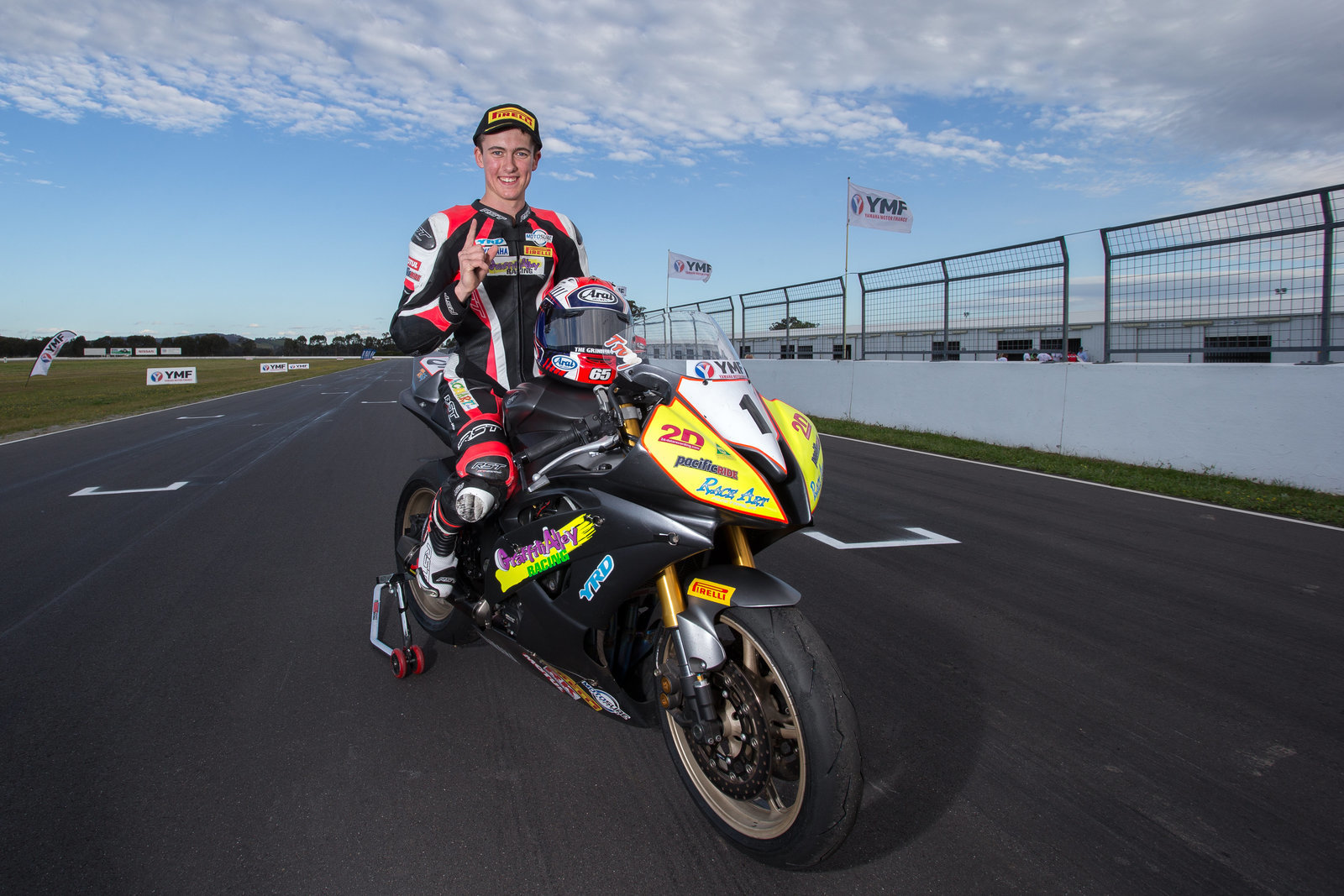
Former World Champion Steve Martin Profiles Australian Superbike Championship Rookies

As the Australian Superbike Championship (ASBK) Official Test Day on January 30 crackles into life ahead of the hotly anticipated ASBK Round One on 24-26 February, where riders have re-shuffled classes and wild card entries, new bikes and new teams have been announced, we wonder how the rookies will fair in 2017 ASBK.

This year’s Australian Superbike Championship is shaping up to be the biggest of them all, with plenty of rookie contenders heading in to the Superbike class, including last year’s Supersport Champion, Troy Guenther and hot 2016 Supersport contender, Callum Spriggs both stepping up to contest on the the full-litre bikes.

Endurance World Champion, race commentator and previous Australian Superbike Championship Ambassador, Steve Martin shared with Motorcycling Australia his predictions in relation to the rookie’s making the jump from the Supersport category, to the premiere Superbike class in the 2017.

“Rookies could not have picked a tougher year to come up to the Australian Superbikes. They will have to battle through the fullest grid we have seen to date. It will be really tough going for them.” He started.

“Troy Guenther is coming through with a Championship winning team in Next Gen BMW Motorsports, which is an amazing thing for him to have. He is a quick learner and we saw that last year.

“Callum Spriggs will jump on that DesmoSport Ducati, which is definitely not going to be an easy move. It’s a completely different beast from that Kawasaki he rode last year, but he will adapt quickly and he has all the help anyone could ever wish to have with the Troy Bayliss’ team that is behind him.

“Both Guenther and Spriggs will have issues as they step up to the larger capacity bike category, but it’s probably a much bigger challenge for Spriggs, who is coming from an in-line four 600 Kawasaki. He will have to get used to a bike with a completely different power delivery, a bigger, torquier v-twin that doesn’t rev anywhere near as high as his old bike. So, he will have to make that adaptation. We know how good that Ducati is, we’ve seen it win before.

“This year, if you are a rookie, you will have to lay it all out on the line, because you can’t back off even a little bit and expect to finish in the top five. That’s just not going to happen. It’s going to be one of those years that even placing in the top ten will be a massive achievement for those guys. With the talent pool increasing and with Kawasaki BC Performance coming into competition, it is not going to be easy.

As racers of that caliber, Callum and Troy won’t want to hang around sitting in 10th position all year long and they will need to score points early on to remain competitive. I am hoping that each one of them will get up on the podium at some point through-out the year.” Martin surmised.

The not to be missed Australian Superbike Championship round one at Phillip Island Grand Prix Circuit will be run in conjunction with the World Superbike Championship on February 24th to 26th. For more information on the ASBK and WSBK series, head to the ASBK website, like the ASBK on Facebook or follow @asbk on Instagram.

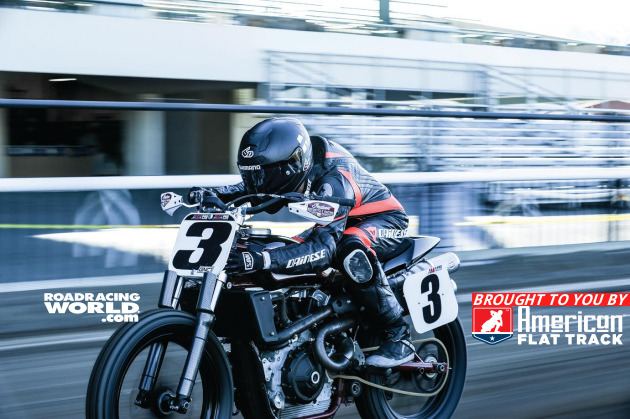
Magazine Feature: Indian FTR 750 Flat Tracker Test

This featured article is brought to you by American Flat Track. American Flat Track is America’s original extreme sport. At its core, it’s a highly competitive, adrenaline-fueled American motorcycle sport featuring customized motorcycles reaching top speeds of up to 140mph, piloted by world-class athletes. 

With roots dating back to the first two-wheel speed demons in the 1920s, American Flat Track is widely regarded as the most prestigious and competitive form of dirt track motorcycle racing in the world. A lot has changed over the last 90 years, but the spirit of the sport remains as perhaps the truest, purest test of man and machine.

American Flat Track will kick off the 2017 season during Daytona’s Bike Week festivities on Thursday, March 16 with the all-new DAYTONA TT, built inside the trioval at Daytona International Speedway. Following the season opener, the series heads north to Georgia to compete on the first Short Track circuit in 2017 at Dixie Speedway for the Atlanta Short Track on March 25. A week later, the series will revisit the famous red clay oval at The Dirt Track at Charlotte Motor Speedway for a fan-favorite, the Charlotte Half-Mile. For more information, or to purchase tickets, visit americanflattrack.com.


“Racebike Review: Indian FTR 750 Flat Tracker”

To read more articles like this January 2017 test ride please subscribe to Roadracing World.

By Kyle Wyman

“I get to ride what?” were my first words when I got the call to travel to Santa Rosa, California, to ride the new Indian FTR 750 flat tracker. It had been eight years since I last swung a leg over a proper AMA Pro Flat Track bike—at the Indy Mile in 2008, to be exact. I immediately called Lightshoe, based in Sturgis, South Dakota, to have them build me a brand-new custom steel skidshoe. 

The 1811cc V-Twin Indian Roadmaster touring bike in its natural habitat.

The 1811cc V-Twin Indian Roadmaster touring bike in its natural habitat.

Part of the deal was in the way I would travel to Santa Rosa—by Indian Motorcycle, of course. I had the opportunity to ride the Roadmaster model from Lake Elsinore up the California coast to Santa Rosa. I’ve logged many miles on Harley-Davidson streetbikes, from Sportsters to Ultra Classic “baggers,” so it was interesting to ride Harley-Davidson’s direct competitor and see what the Indian had to offer. 

I am not what you would call an avid street rider, but riding the Roadmaster had its perks. The riding position was comfortable and the fairing boasted a flashy and intuitive navigation system, making the ride stress-free as I always knew where my next turn would be. My only gripe was losing an hour or so when the bike wouldn’t start due to an issue with the electronics. Luckily we were in a group ride, had some tools handy and could pop the seat off to disconnect and reconnect the battery—re-booting the system. Regardless, the ride was relaxing and a nice escape from the typical airplane ride. 

The Roadmaster includes a GPS-based navigation system to make it hard to get lost, but the bike required re-booting once en route.

The Roadmaster includes a GPS-based navigation system to make it hard to get lost, but the bike required re-booting once en route.

As a former professional flat track racer, I have been keeping up on the Indian flat track project for some time. Harley-Davidson has dominated the sport for so many years with the XR750 platform, the same bike I rode throughout my career. In June 2016, Indian announced its plans to return to factory racing, to dethrone Harley-Davidson, and those plans revolve around the new FTR 750. 

With a modified engine based on the Indian Scout 750 powerplant, the FTR is as “factory” as racebikes get. With a full custom chassis, custom fuel tank, carbon-fiber bodywork and many other special, one-off parts, you’d be stretched to find much original equipment on the bike. It is a true racing machine in every way. 

Flat track racing is the original discipline of motorcycle racing in the U.S., and is widely known as a pure form of racing. Walking through the pit areas at flat track events can seem primitive to those who are fans of Superbike racing. The bikes are typically simple, carburated and fabricated from the ground up in garages across the country. Flat track teams typically consist of weekend warriors and rarely have well-funded, sponsor-­driven efforts. 

The exception to that rule for many years has been Harley-Davidson’s factory flat track team. The company’s “wrecking crew” has dominated flat track for years with name riders like Jay Springsteen, Scott Parker, Chris Carr and many others. The Harley-Davidson XR750 debuted in 1972 through dealers as a race-ready, complete motorcycle and eventually was offered only as an engine. So teams began building their own custom frames and chassis parts, eliminating the need for the complete unit. 

Now, Indian Motorcycles has brought out a complete, race-ready unit. Indian means business, and in the racing business, winning is everything.


The Bike

The FTR 750 is a fuel-injected, DOHC V-Twin with four valves per cylinder, built to beat the Harley-Davidson XR750, a carbureted, pushrod overhead-valve V-Twin with two valves per cylinder. Photo by Brian J. Nelson.

The FTR 750 is a fuel-injected, DOHC V-Twin with four valves per cylinder, built to beat the Harley-Davidson XR750, a carbureted, pushrod overhead-valve V-Twin with two valves per cylinder. Photo by Brian J. Nelson.

My first impression of the Indian FTR 750 involved its unique ergonomics set-up. 

Typical full-chassis flat track machines have a teardrop-shaped fuel tank, but the tank on the FTR is located under a tank-shaped carbon-fiber cowling, and is flatter in profile which allows the rider to easily move forward and back on the seat. It felt like a cross between a full-chassis “framer” flat track bike and the DTX style motocross-based flat track bikes you see in the GNC Singles events today. The pegs are offset as they should be on a true flat track bike—the left footpeg is higher and further back than the right, allowing more ground clearance on the left hand side of the bike. 

The wide and strategically-bent handlebars give the rider good leverage and feel. Flat track is a physical sport, especially in changing conditions, and the wide bars give the rider an opportunity to make quick adjustments in the corners for precise bike placement. The bars have off-road woods-riding type hand guards, used at loose tracks like Santa Rosa to block flying roost and stones thrown up by the bikes in front. Broken fingers would be likely without them. 

The FTR 750 has a four-speed transmission, with the gearshifter on the right hand side of the motorcycle, above the rear (and only) brake lever. Pulling out onto the mile course and shifting through the gears, the shift pattern is reverse on the right side, just like on the rival Harley-Davidson XR750. In flat track, the bike is traditionally geared to use only top gear around the entire racetrack. After reaching fourth gear, it’s only the bike, rider, throttle and rear brake. 

The rear brake on the FTR is well-developed. Brake lever location, size and throw is crucial in achieving a certain level of feel and feedback, and Indian engineers seem to have gotten it right. The lever location allowed me to use it with the toe of my boot, without taking my heel off the peg. 

Weighting the outside footpeg in flat track is an important technique, and the layout allowed me to do that. The rear brake was not touchy but offered good power and consistent feedback, allowing linear load to be introduced through the rear tire and chassis. 

Superbike team owner and Superbike racer Kyle Wyman rides Joe Kopp’s Indian FTR 750 on the Santa Rosa Mile track. Photo by Brian J. Nelson.

Kyle Wyman on the FTR 750, a day after the AMA Pro Santa Rosa Mile. Photo by Brian J. Nelson.

Indian is being very secretive about the FTR 750 and didn’t reveal much in the way of technical details or specifications, and some of the technical specs we were provided were clearly wrong—46-degree included valve angles went away a long time ago! The company does admit that the wet-sump DOHC V-Twin engine has four steel valves per cylinder, that the two cylinders are set at a 53-degree angle, that the engine has a bore and stroke of 88 mm x 61.5 mm, displaces 750cc and has a compression ratio of 14:1. And, when pressed, that the intake valves are 33.5 mm in diameter, the exhaust valves are 30 mm, and the included valve angle is actually 23 degrees, with the intake valve angle measuring 10.5 degrees and the exhaust valve angle measuring 12.5 degrees. And the cams are driven off the crank by a chain. 

Other specs released by the company include 38 mm throttle bodies and an oiled gauze air filter, plus a four-speed transmission and primary drive gearing of 32/60 for a ratio of 1.875:1. Published sources reveal that the company has selectively released additional information, including that rake is 25 degrees (+- 2 degrees), trail is 3.9 inches (99 mm) and wheelbase is 55 inches (1397 mm). 

Still secret? Connecting rod length and material. Engine redline. Valve stem diameters. Valve timing and lift. The type and number of clutch springs used. The number of clutch plates. The internal gear ratios. The type of ignition system used. Oil capacity. Seat height, peg height, fork tube diameter. Rim width. Claimed dry weight. And the ultra-top-secret— overall length, width and height!


Frame and Chassis

The FTR 750 features a full custom frame, designed with input from successful flat track teams and based on their bike designs. Many teams have entered flat track with new chassis and frames built around a variety of different engine brands and platforms. Many try, many fail, and very few have been able to consistently compete with the Harley-Davidson XR750. 

Indian’s first attempt at creating a flat track chassis seems to be extremely well-planned, with an incredible amount of research. The tube frame is designed to cradle the Scout motor snugly, removing any thought that the engine born to take cruiser riders down the road was just thrown into the frame. 

Right side of the Indian FTR 750, a modern flat-track racebike. Photo by Brian J. Nelson.

Right side of the Indian FTR 750, a modern flat-track racebike. Photo by Brian J. Nelson.

The Indian racer rolls on custom, 19-inch cast-aluminum-alloy wheels, with the rear wheel built using extra material, making it heavier than a conventional wheel. 

That’s because flat track rules specify a maximum weight for rear wheels, as heavier wheels can produce more traction and driving grip. Indian has clearly taken this into consideration and designed a wheel for its specific application. 

The Indian FTR 750’s triple clamps are custom designed and machined from aluminum alloy using computer controlled equipment; they only hold the fork tubes, handlebars and controls, with no front fender or braking components. The rear shock is directly mounted to the custom swingarm with no linkage system. Suspension adjustments are limited to spring rate, compression damping and rebound damping.


Innovation

As basic and primitive as a flat track bike can appear, the Indian FTR 750 has features never before been seen in the sport. 

One detail that really stands out is the location and design of the air intake. The carbon bodywork that covers the aluminum-alloy fuel cell has a mesh-covered intake duct that runs behind the tank. It is a design made possible by the Scout fuel injection, and the intake location virtually eliminates the possibility of dirt clogging the air filter. The absence of two large and clunky external air filters that are typically found on the right side of the carbureted Harley-Davidson XR750 is a major improvement in function and ergonomics. 

One very unique characteristic of flat track is the wide range of different venues that are raced on. They are broken down into four general categories—short track, TT, half-mile and mile. For 2017, pro flat track rules will now force riders to race their twin cylinder machines in all four flat-track disciplines for the first time in decades. Up until and through 2016, TT and short tracks were raced on single-­cylinder, motocross-based machines. The TT tracks that feature a jump and allow front brakes on the bikes will pose a major challenge to teams, which have previously only built twin-cylinder racebikes to compete in half-mile and mile oval flat track events. 

The Scout engine works with many CNC bits and parts, including a shift linkage and system that allows the shifter to be changed to the left side of the bike if needed.Riders prefer that the shifter be located on the left side of the bike for TT events, because the tracks require gear changes and rear brake use throughout the lap. Indian has taken note and is ahead of the game in this regard.

Because this particular bike was prepared specifically for the mile event, we don’t know what the front brake set-up will look like for TT races. Likely it will feature a single-disc system, and beefier front forks that can take the load of a single jump per lap.


The Mile

I rode the bike on the Santa Rosa Mile, located at the Sonoma County Fairgrounds, the day after the AMA Pro Flat Track national race where the FTR made its debut in the series. Joe Kopp had ridden the bike to a Dash for Cash victory, as well as seventh place in the 25-lap main event. After such an impressive showing for the new bike, I figured I would be in for a treat. 

Joe Kopp (3) on an Indian FTR 750 leads Jake Johnson (5) and his Harley-Davidson XR750 in the Dash For Cash during the AMA Pro Racing finale, held on the Santa Rosa Mile track at the Sonoma County Fairgrounds in Santa Rosa, California. Kopp won the Dash for Cash. Photo by Barry Hathaway.

Joe Kopp (3) on an Indian FTR 750 leads Jake Johnson (5) and his Harley-Davidson XR750 in the Dash For Cash during the AMA Pro Racing finale, held on the Santa Rosa Mile track at the Sonoma County Fairgrounds in Santa Rosa, California. Kopp won the Dash for Cash. Photo by Barry Hathaway.

The Santa Rosa track was originally designed for horse racing, with a very loose and sandy track surface. 

The AMA Pro race had left the track in treacherous condition, and the surface was inconsistent. In some areas it was very rough, while other areas were hard-packed with a rubber-covered groove, and other areas were loose—what you would call the “cushion.” It was in exactly the shape you would expect it to be after a full day of hard racing, and a 25-lap championship-deciding main event. But the varied track surfaces allowed for a very in-depth evaluation of the Indian FTR 750 and its handling characteristics.


Riding the FTR 750

Around the bottom of the corners, the bike’s handling was initially very unstable. The rubber groove that had formed after the big race had grip, but spotty grip. The bike felt light, twitchy and stiff as it searched for balance. My first impression of the handling wasn’t the best. However, as I grew more confident and pushed harder, the bike settled down. The more I pushed the chassis, the better it felt. The more force I was able to put through the rear shock, the more grip I had, and the more predictable that grip was. 

Around the top of the corners, on the cushion part of the track, the dirt was choppy but loose—much different than the hard-packed bottom where the groove had begun to form. One lap through the cushion was all that was needed for the FTR and myself to find some real common ground, and the versatile handling characteristics made running “high, wide and handsome” feel as natural as ever. As inconsistent and bumpy as the Santa Rosa race surface was, the Indian was at its home in all areas, lap after lap. There was grip when I needed grip, spin when I needed spin, and plenty of power to boot. 

Opening up onto the long straightaways gave me an opportunity to see what kind of power the bike really had. With more force into the chassis and plenty of driving grip out of the corners, getting to wide-open throttle seemed more and more natural the longer I rode. Muscle memory from my flat track days brought me into the classic “mile tuck” on the straightaways, taking my left hand off the handlebar grip and grabbing the fork tube for better aerodynamics. 

I was impressed with the way the power delivery was smooth in the mid-range, then ramped up toward the exit of the corner. The Scout engine seems to be a great baseline for racing. A common mistake when building a flat track machine is to have too much mid-range, making it impossible to control wheel spin on the exits. The FTR has a true balance of rideability and top speed that should make it a real weapon at racetracks around the country. 

The sights, sounds and feeling you get from riding a proper twin-cylinder flat-track bike are incredible at the very least. Riding the FTR 750 felt natural to me as a flat tracker, and it had a classic feel and classic characteristics, similar to the Harley-Davidson XR750 I rode in the past, but with world-class technology. The sound of the V-Twin firing through the custom S&S exhaust whistled through the empty grandstands. The view of the long front straightaway from the exit of Turn Four made me wish I had a competitor to fight over the draft and set up to pass in the run to the line. 

Superbike team owner and Superbike racer Kyle Wyman rides Joe Kopp’s Indian FTR 750 on the Santa Rosa Mile track. Photo by Brian J. Nelson.

Superbike team owner and Superbike racer Kyle Wyman rides Joe Kopp’s Indian FTR 750 on the Santa Rosa Mile track. Photo by Brian J. Nelson.

With professional flat track racing coming back into the spotlight around the world, it’s encouraging to see a manufacturer step in with a large commitment to the sport. Indian Motorcycles has not only designed the racebike of the future for flat track, but has signed three world-class riders to pilot the new bike. Indian’s own wrecking crew will consist of 3-time AMA Grand National Champion Jared Mees, 2013 AMA Grand National Champion Brad Baker, and the newly-crowned 2016 AMA Grand National Champion, Bryan Smith. 

With these three riders signed, there’s no doubt that Indian has plans to win with the FTR 750. In a sport that has been dominated by Harley-Davidson for decades, it’s apparent that the old-school Indian/Harley-Davidson rivalry is on its way back in full force. Will the Harley-Davidson flat-track empire respond? Only time will tell. Indian seems to be on its way to greatness with the FTR 750, and the next chapter of American flat track racing should be more exciting than ever.


To read more articles like this January 2017 test ride please subscribe to Roadracing World.

Taylor Robert, Chase Sexton Honored As AMA Athletes Of The Year

American Motorcyclist Association honors racers, organizers at annual banquet

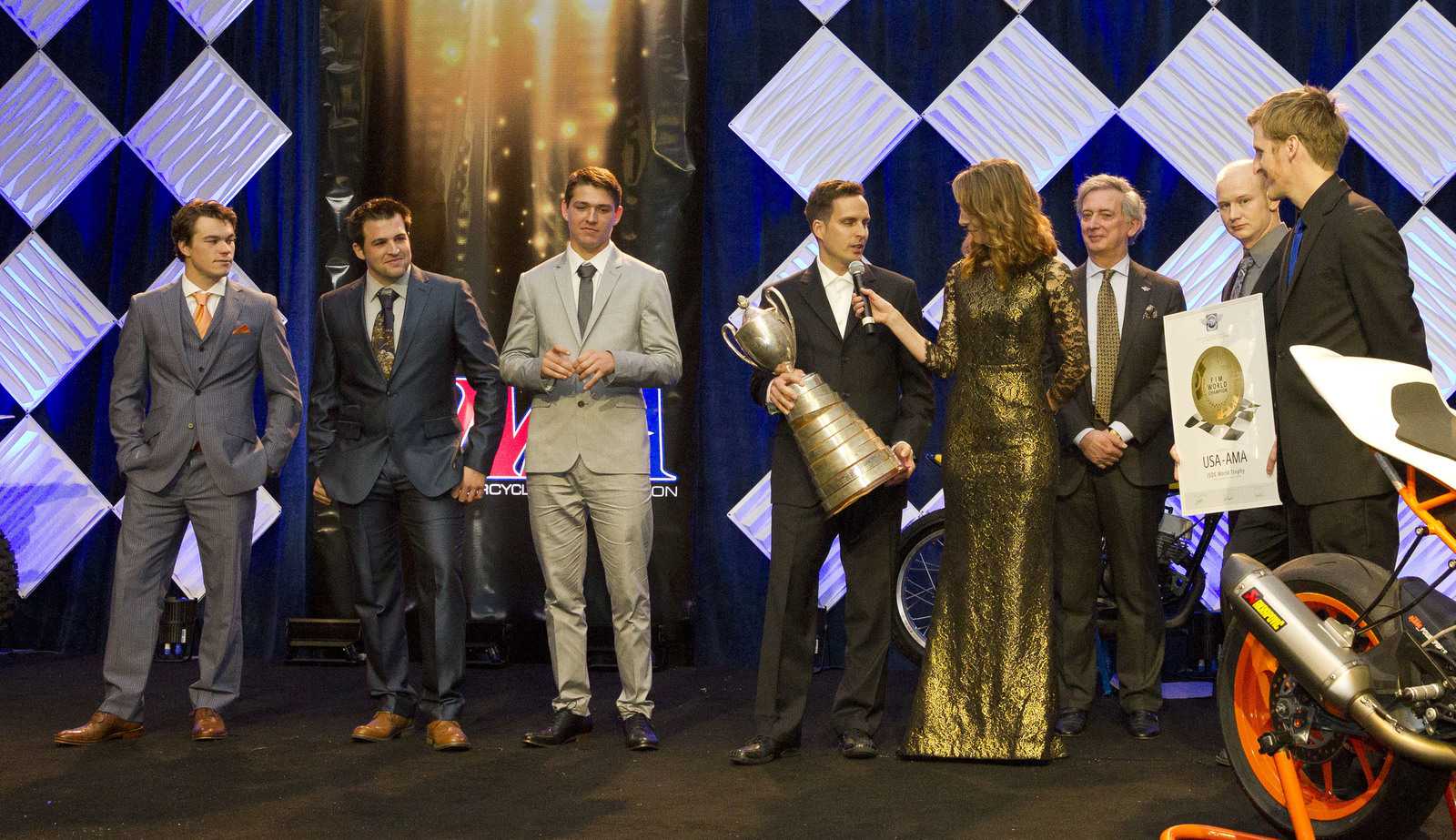
PICKERINGTON, Ohio — The American Motorcyclist Association recognized its greatest champions and hardest-working organizers from the 2016 season on Jan. 21 during the AMA Championship Banquet at the Hilton Downtown Columbus in Columbus, Ohio.

More than 500 racers and supporters watched as the AMA presented awards to the top three finishers in national and regional competition, and announced the winners of the prestigious AMA Racer of the Year Awards.

“It is well known in this room that the American Motorcyclist Association is the largest motorcycle and all-terrain vehicle sanctioning body in the world,” said AMA President and CEO Rob Dingman, addressing the crowd. “Our greatness comes from our racers, many who are here tonight. We have the young and the not-so-young and everyone in between. We are from a range of social and economic backgrounds, and we come from all corners of America. What we all share is our love of riding and racing motorcycles — and our status as AMA members.”

The world motorcycle sanctioning body, the Federation Internationale de Motocyclisme, also used the occasion to present U.S. riders and the AMA with world championship awards. FIM Board member Jos Driessen performed the honors for the FIM.

The program was emceed by Laurette Nicoll and Kevin Kelly.

Scottsdale, Ariz.’s Taylor Robert, who led the U.S. World Trophy Team to its first International Six Days Enduro world championship, was announced as the AMA Athlete of the Year from National Championship Series competition.

La Moille, Ill.’s Chase Sexton, the 2016 AMA Motocross Horizon Award winner, was selected as the AMA Athlete of the Year from Grand Championship events.

Sexton, who is competing in the 2017 AMA Supercross Championship Series, was unable to attend the banquet, but shared his gratitude in a video acceptance speech.

“I’m pumped to be chosen as the AMA Athlete of the Year and also the Horizon Award winner,” Sexton said. “Thank you to all the people who voted for me. I’m really excited to have this as one of my accomplishments. It’s my biggest one so far. I can’t thank everyone enough who supported me, like my team and my family. It’s been a big year for me, and I’m ready to get started on my pro career in Supercross.”

The FIM’s Driessen presented attending members of the U.S. World Trophy Team — Kailub Russell, Thad Duvall and Layne Michael — with their 2016 ISDE gold medals. Land-speed racer Erin Okonek received her official world record recognition.

Driessen also presented AMA President and CEO Rob Dingman and AMA Board of Directors Chair Maggie McNally-Bradshaw with the 2016 FIM Women in Motorcycling Award for the AMA Get Women Riding Campaign.

“The AMA has a long and rich history of promoting motorcycling to all groups, including women,” said Dingman, who thanked the FIM and Driessen for the honor. “The AMA Get Women Riding Campaign is just the latest example of that effort, and it certainly won’t be the last. We ask all of our members to endorse motorcycling as a safe, fun and exciting activity to all demographics.”

Grand National Cross Country racer Becca Sheets was the AMA Female Racer of the Year. The Columbus local was emotional on stage as she talked about her successful 2016 season.

“This is a huge honor to receive,” Sheets said. “I’ve been an AMA member for 17 years. I dreamed about being where I am now as a professional racer when I was a little girl. So, winning this award is the icing on the cake for me.”

Speedway racer Bart Bast from Forest Hill, Calif., was named AMA Vet Racer of the Year.

“Racing is my life,” Bast said. ” I’ve been an AMA member for 40 years, so winning this award means so much to me. I appreciate the AMA for this opportunity.”

The 2016 AMA Youth Racer of the Year was motocross phenom Jett Reynolds from Bakersfield, Calif. Desert and hare scrambles racer Colt Brinkerhoff from Utah was the 2016 AMA ATV Racer of the Year.

Top-three finishers were recognized from six regional championships and 21 national championships, representing all disciplines of AMA-sanctioned competition.

Among the most decorated national champions was Russell, who in addition to being a member of the U.S. World Trophy Team won the overall for the Amsoil GNCC series, the AMA’s national championship for hare scrambles competition.

“Winning the [World] Trophy was an unreal feeling,” Russell said. “It was so great to be over there with all the guys and be able to bond together and then celebrate with them afterward. A lot of hard work was put into winning this. I can’t thank the AMA enough for their efforts in supporting racing and making all of this possible.”

The AMA Sportsman of the Year was Ricky Rickords, who works with the Brett Downey Safety Foundation to improve flagger training and other safety aspects of motorcycle racing. The AMA Sportsman of the Year Award honors an individual in the AMA racing community who exemplifies the spirit of fair competition and sportsmanship, as well a strong dedication to motorcycling.

Sponsors and supporters of the 2016 AMA Championship Banquet included FLY Racing, Motonation, Strider, Bridgestone, Anthony’s Leatherworks/MX Boot Repair, Cycra Racing, Shoei Helmets, Liberty Sport, Maxima Racing Oils, Hinson Clutch Components Racing, Rocky Mountain ATV/MC, Twin Air and ASK Powersports.

Other award winners announced at the banquet were:

AMA Motocross Organizer of the Year

MX Sports Inc.

AMA Off-Road Organizer of the Year

Full Gas Sprint Enduro Series

AMA Track Racing Organizer of the Year

Fast Fridays Motorcycle Speedway

AMA ATV Organizer of the Year

Racer Productions (Grand National Cross Country Series)

AMA Recreational Road Riding Organizer of the Year

Roar on the Shore

AMA Recreational Off-Road Organizer of the Year

Knapp Creek Fire Department

AMA Club of the Year

Trials Inc.

AMA Media Award

Racer TV

About the American Motorcyclist Association

Founded in 1924, the AMA is a not-for-profit member-based association whose mission is to promote the motorcycle lifestyle and protect the future of motorcycling. As the world’s largest motorcycling rights and event sanctioning organization, the AMA advocates for riders’ interests at all levels of government and sanctions thousands of competition and recreational events every year. The AMA also provides money-saving discounts on products and services for its members. Through the AMA Motorcycle Hall of Fame in Pickerington, Ohio, the AMA honors the heroes and heritage of motorcycling. For more information, visit www.americanmotorcyclist.com.

Not a member? Join the AMA today: www.americanmotorcyclist.com/membership/join 

Lucas Oil To Sponsor WERA West Again In 2017, Season Kicks Off This Coming Weekend At Auto Club Speedway

LUCAS OIL WERA WEST KICKS OFF!

2017 will see Lucas Oil back as the sponsor of the WERA West Sportsman Series which kicks off on January 29th at Auto Club Speedway, in Fontana, California. 

“We are very happy to have Lucas Oil continue their support of the WERA West Sportsman Series for 2017. Their products are great and they are a partner who cares about our sport,” said Evelyne Clarke, CEO of WERA Motorcycle Roadracing. “For 2017 we will also partner with the AMA in an effort to unify our sport and give our riders even more benefits with their AMA Memberships!”

WERA will hold registration on Saturday from 3:00 to 5:00 p.m. in the Media Center above pit in/out for Sunday’s full slate of sprint races and registration will open at 7:00 a.m. on Sunday with racing set to begin at 11:30 a.m. on Sunday the 29th! Fastrack Riders will host track days and practices on the Friday and Saturday prior to WERA’s Sunday sprints.

WERA Motorcycle Roadracing was founded in 1973 and remains the foremost place to develop talent in the sport of motorcycle Roadracing. The legacy of Pro riders on a National and World level is legendary. All events are run by WERA Motorcycle Roadracing and they go coast to coast offering entry level racing with the WERA Sportsman Series as well as a Pro-Am Series with the WERA National Challenge Series.

For further information contact WERA Motorcycle Roadracing or check the web site at www.wera.com.

Jonathan Rea Quickest Aboard Kawasaki On Opening Day Of World Superbike Testing At Jerez

FIM Superbike World Championship Test

Circuito de Jerez, Spain

January 24, 2017

Unofficial Best Lap Times (all on Pirelli tires):

1. Jonathan Rea, UK (Kaw ZX-10RR), 1:40.162

2. Tom Sykes, UK (Kaw ZX-10RR), WSBK, 1:40.422

3. Chaz Davies, UK (Duc Panigale R), WSBK, 1:40.784

4. Marco Melandri, Italy (Duc Panigale R), WSBK, 1:40.812

5. Alex Lowes, UK (Yam YZF-R1), WSBK, 1:41.058

6. Xavi Fores, Spain (Duc Panigale R), WSBK, 1:41.396

7. Lorenzo Savadori, Italy (Apr RSV4), WSBK, 1:41.416

8. Jordi Torres, Spain (BMW S1000RR), WSBK, 1:41.619

9. Nicky Hayden, USA (Hon CBR1000RR SP2), WSBK, 1:41.830

10. Michael van der Mark, Netherlands (Yam YZF-R1), WSBK, 1:41.908

11. Eugene Laverty, Ireland (Apr RSV4), WSBK, 1:42.142

12. Stefan Bradl, Germany (Hon CBR1000RR SP2), WSBK, 1:42.255

13. Markus Reiterberger, Germany (BMW S1000RR), WSBK, 1:42.530

14. Randy Krummenacher, Switzerland (Kaw ZX-10RR), WSBK, 1:42.747

15. Leon Haslam, UK (Kaw ZX-10RR), BSB, 1:42.774

16. Luke Mossey, UK (Kaw ZX-10R), BSB, 1:43.574

17. Marco Faccani, Italy (BMW S1000RR), STK1000, 1:43.769

18. Michael Rinaldi, Italy (Duc Panigale R), STK1000, 1:44.023

19. Mike Jones, Australia (Duc Panigale R), STK1000, 1:44.211

20. Zulfahmi Khairuddin, Malaysia (Kaw ZX-6R), SS600, 1:45.658

MotoGP Rider Loris Baz Says He Wants To Take Things Step-By-Step In 2017

Next week the MotoGP bikes will be back at the Sepang International Circuit for the first test of the 2017 season. Avintia Racing rider Loris Baz looks forward to get back to business after several weeks at home. Baz took full advantage of the winter break to get back into shape. He underwent surgery on his right foot to remove all the screws and plates from last year’s injuries. He was also able to ride bikes on all surfaces imaginable, on ice in Switzerland, on sand at Valentino Rossi’s Ranch at Tavullia and on asphalt during last week’s track day with Avintia Racing’s Ducati Panigale. He also did some flat track at Requena last weekend, so he is ready to jump on his Ducati GP15 at Sepang. Loris wants to go step by step and to be ready for the first race in Qatar.

Do you look forward to get back to work at the first test of the season?

“Yes, I can’t wait any more, because although it was good to disconnect from MotoGP for a couple of weeks, I really missed riding the bike. I started doing some ice-riding at home and I also went to Rossi’s Ranch. Even though the weather was horrible, it was an amazing experience. We are getting stronger and I also had the chance to ride the Ducati Panigale in Valencia last week. And If the weather is good, I’ll race at Requena’s flat track this weekend.”

How was the surgery on your right foot? Are the injuries from last season a thing of the past?

“Everything went perfectly well and now I have a brand new foot.”

Following a difficult season, you finished the year with a smile on your face when you tested the Desmosedici GP15 for the first time. Is this the reason why you are impatient to get back in business?

“Of course, because during the last two tests I confirmed that I still know how to ride a bike. I hope to have more luck during this season, but I don’t want to set any goals, because last year we did and were not able to achieve them. I think that we have to go step by step and try to enjoy riding the bike. If we can do that, we will be fast and if we are fast, everybody will be happy. So we have to go test by test and race by race, because last year we did really well during the winter test, but then the season was a disaster. I want to be ready for the first race in Qatar and this is what we will work for during the winter tests.”

You have a new bike and a new chief engineer. How was it to work with Paolo Zavalloni at the test in November?

“I felt really good and this was a positive surprise. I’d seen Paolo in the past and we hadn’t spoken before, but from the first moment we connected well and he seems to be very motivated. I like the fact that he listens to my comments and that he always tries to find solutions to improve the bike and to adapt it to my riding style. He came to Rossi’s Ranch and he told me that he analysed all the data from the test during the winter break and that he has some ideas in mind for the upcoming test. I can see he’s motivation is high and that he looks forward to start working at Sepang next week as much as myself. I like his excitement. The whole team is very motivated.”

You new bike is quite different from the one you used last season. How was the feeling with the GP15 during the first test?

“The feeling was good. The main thing is that I had no chatter problems at all at both circuits. The bike feels better, you can see it is a newer bike. Both chassis and engine are clearly an evolution compared with last year’s bike. Hector showed during last season that it’s possible to achieve good results with a two-year old bike. I think I will be closer to the front, the feeling was good from the first time out, and this is positive.”

Brian Wismann Joins Zero Motorcycles As Vice President of Product Development

BRIAN WISMANN JOINS ZERO MOTORCYCLES AS VICE PRESIDENT OF PRODUCT DEVELOPMENT

Wismann Joins Zero with 13 Years of Electric Motorcycle Product Design and Development Experience

SANTA CRUZ, Calif., (January 23, 2017) – Zero Motorcycles, the global leader in electric motorcycle sales and technology, today announced that award-winning product development veteran Brian Wismann has joined the company as the new Vice President of Product Development. He will report to Zero’s Chief Technology Officer, Abe Askenazi.

“Brian’s addition to the team further establishes Zero Motorcycles position as the global leader in the electric motorcycle industry,” said Askenazi. “Few would argue with Brian’s credentials and accolades, having led development of award and race-winning e-powered machines.”

Wismann’s hire boosts Zero Motorcycles unmatched global leadership in design and development, and his knowledge and expertise will complement Zero’s engineering and executive teams. He spent the last 13 years at Brammo, Inc. where he was responsible for development of the company’s electric motorcycle and racing programs. His experience in the industry aligns with Zero’s strategy to provide consumers with a full range of performance motorcycles.

During his career, Wismann has designed electric motorcycles that have received praise from leading motorcycle and lifestyle enthusiast media outlets. Brian holds several patents in battery and electric motorcycle technology. In addition, he played an instrumental role in product development and program management that led to numerous racing championships and technical excellence awards.

“Electric motorcycles have been my passion for over a decade and I’m happy to have the opportunity to continue the work with the world leader in electric motorcycle production. Zero’s commitment to the market, EV performance, and a talented team that is 100% committed to delivering the best product to our customer is ultimately what convinced me to join. I’m looking forward to the ride!” said Wismann about the new role.

About Zero Motorcycles

Zero Motorcycles is committed to transforming the motorcycling experience by bringing innovative electric motorcycles to market with exceptional value and performance. Zero is powered by innovation, driven by passion, guided by integrity and measured by results. Through extensive research, insight and experience, Zero combines the art and science of motorcycle development in the design and execution of products that excite consumers and inspire brand loyalty. Zero is determined to remain the preeminent global electric motorcycle company.

Every Zero motorcycle is designed and built in California.

Become a fan of Zero Motorcycles on Facebook, follow Zero Motorcycles on Twitter @ZeroMC and Instagram @ZeroMotorcycles, and find us on YouTube at www.youtube.com/zeromotorcycles.

For more information on Zero Motorcycles or to learn more about its complete motorcycle line, including the Zero S, Zero SR, Zero DS, Zero DSR, Zero FX, and Zero FXS motorcycles, visit www.zeromotorcycles.com.

View the range of police/authority and military models at www.zeromotorcycles.com/fleet/.

Mitime Group Withdraws From Negotiations To Purchase Utah Motorsports Campus But Agrees To Manage Facility In 2017

Mitime Group Agrees to Extend UMC Management Agreement

Company withdraws from track purchase negotiations

TOOELE VALLEY, UTAH (January 23, 2017) — Utah Motorsport Campus, Inc., a subsidiary of the Mitime Group, which operated Utah Motorsports Campus (UMC, formerly known as Miller Motorsports Park) under a facility management agreement with Tooele County during 2016, has notified the Tooele County Board of Commissioners that it will agree to an extension of the existing facility management agreement through December 31, 2017.

“We are very excited to complete the agreement to continue managing Utah Motorsports Campus,” said UMC General Manager Willem Geyer. “The County has been great to work with, and we look forward to another exciting season.” Once the agreement has been signed by both parties, UMC will announce its 2017 season schedule.

However, at the same time Mitime Utah Investment, LLC, also a subsidiary of the Mitime Group, informed the County that it is withdrawing from negotiations to purchase the 511-acre facility.

In a letter dated January 20, 2017 from Xinggui Wang, Manager of Mitime Utah Investment, LLC, Mitime cited unexpected legal challenges that started with a lawsuit in 2016 enjoining Mitime from purchasing the facility, ongoing legal challenges delaying the County from selling the facility and losses incurred by Mitime due to the delay and by the strengthening of the U.S. Dollar relative to the Chinese Yuan.

“When the County has resolved the issues underlying the challenges to a sale,” Wang stated in the letter, “should the County re-offer UMC for purchase in a new sale, open to public bidding, Mitime may have interest in bidding.”

For additional information regarding Utah Motorsports Campus, visit the track’s website at www.UtahMotorsportsCampus.com.

Valentino Rossi, Maverick Vinales Attend Yamaha Dealer Meeting, Media Event In Indonesia

Movistar Yamaha MotoGP Team’s Valentino Rossi and Maverick Viñales made headlines in Indonesia after a small ‘pre-MotoGP-season media tour’. The riders took time to visit some of their fans and the Indonesian media at Yamaha Indonesia Motor Manufacturing (YIMM)’s dealer meeting in Jakarta and Viñales also paid a visit to the Sentul International Circuit.

Jakarta (Indonesia), 23rd January 2017

Following the Movistar Yamaha MotoGP Team launch in Madrid, Spain, Valentino Rossi and Maverick Viñales headed straight to Indonesia for a quick stop at the Yamaha Indonesia Motor Manufacturing (YIMM)‘s dealer meeting, which is one of the biggest assemblies in the world among Yamaha distributors.

The event consisted of multiple interviews, meeting competition winners, photoshoots and an on stage presentation of the Yamaha All New R15, with the riders joined on stage by Yamaha Motor Co., Ltd’s President, Hiroyuki Yanagi.

The unveiling of the All New R15 was an exclusive as the new model is first introduced in Indonesia before being launched globally. During this presentation Rossi got a chance to meet up with Yamaha VR46 Master Camp riders Galang Hendra Pratama and Imanuel Pratna, who spent two training weeks at Rossi‘s Motor Ranch in Italy last summer.

The passion for motorsport, and especially MotoGP, was evident in the enthusiasm of the media present at the dealer meeting and made the riders feel very welcome.

Always enjoying Southeast Asia, Rossi was eager to have a few days off after the event to further experience the region, while Viñales prolonged his tour in Indonesia. The Spaniard went on an excursion to the Sentul International Circuit where he got the chance to test the Yamaha All New R15 and the AEROX 155VVA together with selected VIP customers and Yamaha Indonesia Motor Manufacturing’s President Minoru Morimoto. Though reluctant to leave the track, Viñales had to say goodbye to the All New R15 in the afternoon for a final media gathering, where he was showered with presents.

Viñales will now also have a short break before he makes his way to the Philippines to meet up with Rossi again on January 28th for some final media events, ahead of the first official IRTA Pre-season MotoGP test of 2017 in Sepang, Malaysia.

KOUICHI TSUJI

GENERAL MANAGER MOTORSPORTS DIVISION, YMC

As always, when we visit Indonesia, we are impressed with the Indonesian fans who really love motorsport. Yesterday, Valentino and Maverick had attended Yamaha Motor Indonesia‘s Dealer business meeting in Jakarta. It was a special occasion as the Yamaha Factory riders launched the All New R15 in front of Yamaha dealers. Today, Maverick came to the Sentul International Circuit to try the All New R15. It truly was a memorable “One Step Ahead (Semakin di Depan)”-event when Maverick rode as an official Yamaha rider together with the Indonesian fans today.

VALENTINO ROSSI

MOVISTAR YAMAHA MOTOGP RIDER

It was a short visit, but it was a great pleasure. The passion from the Indonesian fans and the media‘s interest is always nice to see and a good way to get motivated before the test in Sepang. I again felt very welcome in this fantastic country and I want to thank Yamaha Indonesia Motor Manufacturing for organising this trip. It was also great to catch up with Yamaha VR46 Master Camp riders Imanuel and Galang again. It had been a while since we last met and trained together and it‘s great to see that they are still very passionate about racing. It has been a fantastic day at the YIMM dealer meeting and I hope to stay longer the next time I come over, but now I will have a few days off so I can relax and prepare for the test in Sepang and one last media event in the Philippines.

MAVERICK VIÑALES

MOVISTAR YAMAHA MOTOGP RIDER

The event in Indonesia was really good. It surprised me how polite the people are here, they made us feel welcome and I‘m very thankful for that. The dealer event was nicely organised and the photoshoot was also fun, so we enjoyed it a lot. Before coming here I hadn‘t realised how big the city of Jakarta is. I felt really happy here and we‘ve had a great time, and especially today I had a lot of fun riding. I was there for the presentation of the All New R15 and I got to ride it on the track. I enjoyed the event a lot and in the afternoon we went to a big media gathering which was fun too, we got many presents so I‘m happy about today. Now I‘ll get some rest and train hard for the Sepang test.

Kawasaki’s Jonathan Rea, Tom Sykes Resume Testing Program Tuesday At Jerez

Jerez Track Sessions Set To Kick-Start KRT’s 2017 Title Defense

FIM Superbike World Championship contenders Jonathan Rea and Tom Sykes will be reintroduced to their 2017 Ninja ZX-10RR machines at the popular testing venue of Jerez de la Frontera on 24th and 25th January.

After two season-ending test sessions in November of last year, at Motorland Aragon and then Jerez, the official Kawasaki Racing Team riders will be able to exploit the latest race developments on the new model Ninja ZX-10RR during what will be the opening winter tests of 2017 at the 4.423km long Jerez circuit.

After so much recent success with the Ninja ZX-10R the RR model has retained the basic characteristics of the three-time championship-winning machine and added even more performance oriented initiatives to compete for greater success this year.

Jerez, in the south west of Spain, holds a variety of challenges for riders and machines, featuring superfast curves and tight hairpins, flowing sections and a variety of elevation and camber changes. This makes it a true test of a machine’s all-round potential.

Rea and Sykes each set impressive lap times during their 2016 tests at Jerez but most importantly of all they made real progress in defining and refining their 2017 race components and electronic systems.

The intention at the forthcoming test is to reconfirm recent developments and to make final set-up direction choices that will be used for real in the opening round of the championship at Phillip Island in Australia, to be held between 24th and 26th February.

Before the beginning of the new season KRT will return to Jerez for the final European winter test on 1st and 2nd February and then Rea and Sykes will take part in two days of official championship organisers’ tests at Phillip Island, on 21st and 22nd February.

Jonathan Rea, stated: “We have almost completed our winter test programme at Jerez after the last test there. We can start 2017 with a base package that we are already satisfied with. We are now starting to put all the pieces of the jigsaw together so I can start to build a package looking toward the first round of the championship at Phillip Island. Jerez is a track that presents different challenges at different times of the year, depending on the temperature and grip levels from the track, so we will have to see what the track surface presents to us when we arrive there. The first test of 2017 is about getting up to speed, throwing away the winter cobwebs and starting to work with my teams again to build up to Phillip Island. We have six days of testing before the first race weekend, so we have enough time to prepare. We have some new parts we are going to evaluate in the search for more power. After the last test we left Jerez very optimistic that we had done a good job both in lap times and consistency.”

Tom Sykes, stated: “There is no question that Jerez, as a venue, is a good one for testing. That’s why so many teams and categories go there for testing. You have to be careful because not only do lap times change day-to-day I find that Jerez is also sensitive to the time of day. We have not shown our full potential yet after the last test because we have not put the perfect set-up together yet. What we have been able to do in previous tests is explore some different parameters, explore a few things on the bike and try to understand more. With the recent technical rules we have not been as close to what I would class as a racing bike as we had been in some previous years. We have been stepping away from that and I have to say that it is about time that I need to try and adjust myself. I have to understand that it is not a thoroughbred racing bike and I need to adapt myself more to this. That has probably been my biggest struggle for the past couple of seasons. Now it is time to accept that there has to be a compromise. I am not able any more to fine-tune the bike set-up as in the past so now I probably need to bring a bit from myself.”

Guim Roda, KRT Team Manager, stated: “We will really start the 2017 project in Jerez with nearly everything in place to attack race one in Australia. We have all been working hard in the winter to improve many areas on the bike and in the team so we will put it all in place at Jerez. KHI and the suppliers have been working a lot to cover the crew chief and rider requests. From the team’s side we have been working to define the correct workflow inside our structure and introduce new staff into the system. I’m sure in 2017 we will be able to cover some weak points we had in 2016 and I expect us to have a more competitive package. Let’s see were we are in race one in Australia.”


2017 KRT Rider Statistics

Jonathan Rea: World Champion 2015 and 2016

2017: Races 0, Wins 0, Podiums 0, Superpoles 0

Career Race Wins: 38 (23 for Kawasaki)

Career Podiums: 88 (46 For Kawasaki)

Career Poles: 8 (4 For Kawasaki)

Tom Sykes: World Champion 2013

2017: Races: 0, Wins 0, Podiums 0, Superpoles 0

Career Race Wins: 31 (31 for Kawasaki)

Career Podiums: 84 (83 For Kawasaki)

Career Poles: 38 (38 For Kawasaki)

Kawasaki FIM Superbike World Championship Statistics

4 x Riders’ Championships (Scott Russell 1993, Sykes 2013, Rea 2015 & 2016), 1 x EVO Riders’ Championship (David Salom 2014)

2 x Manufacturers’ Championships (Ninja ZX-10R 2015 & 2016)

2 x Teams’ Championships (KRT/Provec Racing 2015 & 2016)

Kawasaki FIM Superbike World Championship Statistics

Total Kawasaki Race Wins: 91 – third overall

Total Kawasaki Podiums: 307 – third overall

Total Kawasaki Poles: 63 – second overall

Former World Champion Steve Martin Profiles Australian Superbike Championship Rookies

As the Australian Superbike Championship (ASBK) Official Test Day on January 30 crackles into life ahead of the hotly anticipated ASBK Round One on 24-26 February, where riders have re-shuffled classes and wild card entries, new bikes and new teams have been announced, we wonder how the rookies will fair in 2017 ASBK.

This year’s Australian Superbike Championship is shaping up to be the biggest of them all, with plenty of rookie contenders heading in to the Superbike class, including last year’s Supersport Champion, Troy Guenther and hot 2016 Supersport contender, Callum Spriggs both stepping up to contest on the the full-litre bikes.

Endurance World Champion, race commentator and previous Australian Superbike Championship Ambassador, Steve Martin shared with Motorcycling Australia his predictions in relation to the rookie’s making the jump from the Supersport category, to the premiere Superbike class in the 2017.

“Rookies could not have picked a tougher year to come up to the Australian Superbikes. They will have to battle through the fullest grid we have seen to date. It will be really tough going for them.” He started.

“Troy Guenther is coming through with a Championship winning team in Next Gen BMW Motorsports, which is an amazing thing for him to have. He is a quick learner and we saw that last year.

“Callum Spriggs will jump on that DesmoSport Ducati, which is definitely not going to be an easy move. It’s a completely different beast from that Kawasaki he rode last year, but he will adapt quickly and he has all the help anyone could ever wish to have with the Troy Bayliss’ team that is behind him.

“Both Guenther and Spriggs will have issues as they step up to the larger capacity bike category, but it’s probably a much bigger challenge for Spriggs, who is coming from an in-line four 600 Kawasaki. He will have to get used to a bike with a completely different power delivery, a bigger, torquier v-twin that doesn’t rev anywhere near as high as his old bike. So, he will have to make that adaptation. We know how good that Ducati is, we’ve seen it win before.

“This year, if you are a rookie, you will have to lay it all out on the line, because you can’t back off even a little bit and expect to finish in the top five. That’s just not going to happen. It’s going to be one of those years that even placing in the top ten will be a massive achievement for those guys. With the talent pool increasing and with Kawasaki BC Performance coming into competition, it is not going to be easy.

As racers of that caliber, Callum and Troy won’t want to hang around sitting in 10th position all year long and they will need to score points early on to remain competitive. I am hoping that each one of them will get up on the podium at some point through-out the year.” Martin surmised.

The not to be missed Australian Superbike Championship round one at Phillip Island Grand Prix Circuit will be run in conjunction with the World Superbike Championship on February 24th to 26th. For more information on the ASBK and WSBK series, head to the ASBK website, like the ASBK on Facebook or follow @asbk on Instagram.

Magazine Feature: Indian FTR 750 Flat Tracker Test

This featured article is brought to you by American Flat Track. American Flat Track is America’s original extreme sport. At its core, it’s a highly competitive, adrenaline-fueled American motorcycle sport featuring customized motorcycles reaching top speeds of up to 140mph, piloted by world-class athletes. 

With roots dating back to the first two-wheel speed demons in the 1920s, American Flat Track is widely regarded as the most prestigious and competitive form of dirt track motorcycle racing in the world. A lot has changed over the last 90 years, but the spirit of the sport remains as perhaps the truest, purest test of man and machine.

American Flat Track will kick off the 2017 season during Daytona’s Bike Week festivities on Thursday, March 16 with the all-new DAYTONA TT, built inside the trioval at Daytona International Speedway. Following the season opener, the series heads north to Georgia to compete on the first Short Track circuit in 2017 at Dixie Speedway for the Atlanta Short Track on March 25. A week later, the series will revisit the famous red clay oval at The Dirt Track at Charlotte Motor Speedway for a fan-favorite, the Charlotte Half-Mile. For more information, or to purchase tickets, visit americanflattrack.com.


“Racebike Review: Indian FTR 750 Flat Tracker”

To read more articles like this January 2017 test ride please subscribe to Roadracing World.

By Kyle Wyman

“I get to ride what?” were my first words when I got the call to travel to Santa Rosa, California, to ride the new Indian FTR 750 flat tracker. It had been eight years since I last swung a leg over a proper AMA Pro Flat Track bike—at the Indy Mile in 2008, to be exact. I immediately called Lightshoe, based in Sturgis, South Dakota, to have them build me a brand-new custom steel skidshoe. 

The 1811cc V-Twin Indian Roadmaster touring bike in its natural habitat.

The 1811cc V-Twin Indian Roadmaster touring bike in its natural habitat.

Part of the deal was in the way I would travel to Santa Rosa—by Indian Motorcycle, of course. I had the opportunity to ride the Roadmaster model from Lake Elsinore up the California coast to Santa Rosa. I’ve logged many miles on Harley-Davidson streetbikes, from Sportsters to Ultra Classic “baggers,” so it was interesting to ride Harley-Davidson’s direct competitor and see what the Indian had to offer. 

I am not what you would call an avid street rider, but riding the Roadmaster had its perks. The riding position was comfortable and the fairing boasted a flashy and intuitive navigation system, making the ride stress-free as I always knew where my next turn would be. My only gripe was losing an hour or so when the bike wouldn’t start due to an issue with the electronics. Luckily we were in a group ride, had some tools handy and could pop the seat off to disconnect and reconnect the battery—re-booting the system. Regardless, the ride was relaxing and a nice escape from the typical airplane ride. 

The Roadmaster includes a GPS-based navigation system to make it hard to get lost, but the bike required re-booting once en route.

The Roadmaster includes a GPS-based navigation system to make it hard to get lost, but the bike required re-booting once en route.

As a former professional flat track racer, I have been keeping up on the Indian flat track project for some time. Harley-Davidson has dominated the sport for so many years with the XR750 platform, the same bike I rode throughout my career. In June 2016, Indian announced its plans to return to factory racing, to dethrone Harley-Davidson, and those plans revolve around the new FTR 750. 

With a modified engine based on the Indian Scout 750 powerplant, the FTR is as “factory” as racebikes get. With a full custom chassis, custom fuel tank, carbon-fiber bodywork and many other special, one-off parts, you’d be stretched to find much original equipment on the bike. It is a true racing machine in every way. 

Flat track racing is the original discipline of motorcycle racing in the U.S., and is widely known as a pure form of racing. Walking through the pit areas at flat track events can seem primitive to those who are fans of Superbike racing. The bikes are typically simple, carburated and fabricated from the ground up in garages across the country. Flat track teams typically consist of weekend warriors and rarely have well-funded, sponsor-­driven efforts. 

The exception to that rule for many years has been Harley-Davidson’s factory flat track team. The company’s “wrecking crew” has dominated flat track for years with name riders like Jay Springsteen, Scott Parker, Chris Carr and many others. The Harley-Davidson XR750 debuted in 1972 through dealers as a race-ready, complete motorcycle and eventually was offered only as an engine. So teams began building their own custom frames and chassis parts, eliminating the need for the complete unit. 

Now, Indian Motorcycles has brought out a complete, race-ready unit. Indian means business, and in the racing business, winning is everything.


The Bike

The FTR 750 is a fuel-injected, DOHC V-Twin with four valves per cylinder, built to beat the Harley-Davidson XR750, a carbureted, pushrod overhead-valve V-Twin with two valves per cylinder. Photo by Brian J. Nelson.

The FTR 750 is a fuel-injected, DOHC V-Twin with four valves per cylinder, built to beat the Harley-Davidson XR750, a carbureted, pushrod overhead-valve V-Twin with two valves per cylinder. Photo by Brian J. Nelson.

My first impression of the Indian FTR 750 involved its unique ergonomics set-up. 

Typical full-chassis flat track machines have a teardrop-shaped fuel tank, but the tank on the FTR is located under a tank-shaped carbon-fiber cowling, and is flatter in profile which allows the rider to easily move forward and back on the seat. It felt like a cross between a full-chassis “framer” flat track bike and the DTX style motocross-based flat track bikes you see in the GNC Singles events today. The pegs are offset as they should be on a true flat track bike—the left footpeg is higher and further back than the right, allowing more ground clearance on the left hand side of the bike. 

The wide and strategically-bent handlebars give the rider good leverage and feel. Flat track is a physical sport, especially in changing conditions, and the wide bars give the rider an opportunity to make quick adjustments in the corners for precise bike placement. The bars have off-road woods-riding type hand guards, used at loose tracks like Santa Rosa to block flying roost and stones thrown up by the bikes in front. Broken fingers would be likely without them. 

The FTR 750 has a four-speed transmission, with the gearshifter on the right hand side of the motorcycle, above the rear (and only) brake lever. Pulling out onto the mile course and shifting through the gears, the shift pattern is reverse on the right side, just like on the rival Harley-Davidson XR750. In flat track, the bike is traditionally geared to use only top gear around the entire racetrack. After reaching fourth gear, it’s only the bike, rider, throttle and rear brake. 

The rear brake on the FTR is well-developed. Brake lever location, size and throw is crucial in achieving a certain level of feel and feedback, and Indian engineers seem to have gotten it right. The lever location allowed me to use it with the toe of my boot, without taking my heel off the peg. 

Weighting the outside footpeg in flat track is an important technique, and the layout allowed me to do that. The rear brake was not touchy but offered good power and consistent feedback, allowing linear load to be introduced through the rear tire and chassis. 

Superbike team owner and Superbike racer Kyle Wyman rides Joe Kopp’s Indian FTR 750 on the Santa Rosa Mile track. Photo by Brian J. Nelson.

Kyle Wyman on the FTR 750, a day after the AMA Pro Santa Rosa Mile. Photo by Brian J. Nelson.

Indian is being very secretive about the FTR 750 and didn’t reveal much in the way of technical details or specifications, and some of the technical specs we were provided were clearly wrong—46-degree included valve angles went away a long time ago! The company does admit that the wet-sump DOHC V-Twin engine has four steel valves per cylinder, that the two cylinders are set at a 53-degree angle, that the engine has a bore and stroke of 88 mm x 61.5 mm, displaces 750cc and has a compression ratio of 14:1. And, when pressed, that the intake valves are 33.5 mm in diameter, the exhaust valves are 30 mm, and the included valve angle is actually 23 degrees, with the intake valve angle measuring 10.5 degrees and the exhaust valve angle measuring 12.5 degrees. And the cams are driven off the crank by a chain. 

Other specs released by the company include 38 mm throttle bodies and an oiled gauze air filter, plus a four-speed transmission and primary drive gearing of 32/60 for a ratio of 1.875:1. Published sources reveal that the company has selectively released additional information, including that rake is 25 degrees (+- 2 degrees), trail is 3.9 inches (99 mm) and wheelbase is 55 inches (1397 mm). 

Still secret? Connecting rod length and material. Engine redline. Valve stem diameters. Valve timing and lift. The type and number of clutch springs used. The number of clutch plates. The internal gear ratios. The type of ignition system used. Oil capacity. Seat height, peg height, fork tube diameter. Rim width. Claimed dry weight. And the ultra-top-secret— overall length, width and height!


Frame and Chassis

The FTR 750 features a full custom frame, designed with input from successful flat track teams and based on their bike designs. Many teams have entered flat track with new chassis and frames built around a variety of different engine brands and platforms. Many try, many fail, and very few have been able to consistently compete with the Harley-Davidson XR750. 

Indian’s first attempt at creating a flat track chassis seems to be extremely well-planned, with an incredible amount of research. The tube frame is designed to cradle the Scout motor snugly, removing any thought that the engine born to take cruiser riders down the road was just thrown into the frame. 

Right side of the Indian FTR 750, a modern flat-track racebike. Photo by Brian J. Nelson.

Right side of the Indian FTR 750, a modern flat-track racebike. Photo by Brian J. Nelson.

The Indian racer rolls on custom, 19-inch cast-aluminum-alloy wheels, with the rear wheel built using extra material, making it heavier than a conventional wheel. 

That’s because flat track rules specify a maximum weight for rear wheels, as heavier wheels can produce more traction and driving grip. Indian has clearly taken this into consideration and designed a wheel for its specific application. 

The Indian FTR 750’s triple clamps are custom designed and machined from aluminum alloy using computer controlled equipment; they only hold the fork tubes, handlebars and controls, with no front fender or braking components. The rear shock is directly mounted to the custom swingarm with no linkage system. Suspension adjustments are limited to spring rate, compression damping and rebound damping.


Innovation

As basic and primitive as a flat track bike can appear, the Indian FTR 750 has features never before been seen in the sport. 

One detail that really stands out is the location and design of the air intake. The carbon bodywork that covers the aluminum-alloy fuel cell has a mesh-covered intake duct that runs behind the tank. It is a design made possible by the Scout fuel injection, and the intake location virtually eliminates the possibility of dirt clogging the air filter. The absence of two large and clunky external air filters that are typically found on the right side of the carbureted Harley-Davidson XR750 is a major improvement in function and ergonomics. 

One very unique characteristic of flat track is the wide range of different venues that are raced on. They are broken down into four general categories—short track, TT, half-mile and mile. For 2017, pro flat track rules will now force riders to race their twin cylinder machines in all four flat-track disciplines for the first time in decades. Up until and through 2016, TT and short tracks were raced on single-­cylinder, motocross-based machines. The TT tracks that feature a jump and allow front brakes on the bikes will pose a major challenge to teams, which have previously only built twin-cylinder racebikes to compete in half-mile and mile oval flat track events. 

The Scout engine works with many CNC bits and parts, including a shift linkage and system that allows the shifter to be changed to the left side of the bike if needed.Riders prefer that the shifter be located on the left side of the bike for TT events, because the tracks require gear changes and rear brake use throughout the lap. Indian has taken note and is ahead of the game in this regard.

Because this particular bike was prepared specifically for the mile event, we don’t know what the front brake set-up will look like for TT races. Likely it will feature a single-disc system, and beefier front forks that can take the load of a single jump per lap.


The Mile

I rode the bike on the Santa Rosa Mile, located at the Sonoma County Fairgrounds, the day after the AMA Pro Flat Track national race where the FTR made its debut in the series. Joe Kopp had ridden the bike to a Dash for Cash victory, as well as seventh place in the 25-lap main event. After such an impressive showing for the new bike, I figured I would be in for a treat. 

Joe Kopp (3) on an Indian FTR 750 leads Jake Johnson (5) and his Harley-Davidson XR750 in the Dash For Cash during the AMA Pro Racing finale, held on the Santa Rosa Mile track at the Sonoma County Fairgrounds in Santa Rosa, California. Kopp won the Dash for Cash. Photo by Barry Hathaway.

Joe Kopp (3) on an Indian FTR 750 leads Jake Johnson (5) and his Harley-Davidson XR750 in the Dash For Cash during the AMA Pro Racing finale, held on the Santa Rosa Mile track at the Sonoma County Fairgrounds in Santa Rosa, California. Kopp won the Dash for Cash. Photo by Barry Hathaway.

The Santa Rosa track was originally designed for horse racing, with a very loose and sandy track surface. 

The AMA Pro race had left the track in treacherous condition, and the surface was inconsistent. In some areas it was very rough, while other areas were hard-packed with a rubber-covered groove, and other areas were loose—what you would call the “cushion.” It was in exactly the shape you would expect it to be after a full day of hard racing, and a 25-lap championship-deciding main event. But the varied track surfaces allowed for a very in-depth evaluation of the Indian FTR 750 and its handling characteristics.


Riding the FTR 750

Around the bottom of the corners, the bike’s handling was initially very unstable. The rubber groove that had formed after the big race had grip, but spotty grip. The bike felt light, twitchy and stiff as it searched for balance. My first impression of the handling wasn’t the best. However, as I grew more confident and pushed harder, the bike settled down. The more I pushed the chassis, the better it felt. The more force I was able to put through the rear shock, the more grip I had, and the more predictable that grip was. 

Around the top of the corners, on the cushion part of the track, the dirt was choppy but loose—much different than the hard-packed bottom where the groove had begun to form. One lap through the cushion was all that was needed for the FTR and myself to find some real common ground, and the versatile handling characteristics made running “high, wide and handsome” feel as natural as ever. As inconsistent and bumpy as the Santa Rosa race surface was, the Indian was at its home in all areas, lap after lap. There was grip when I needed grip, spin when I needed spin, and plenty of power to boot. 

Opening up onto the long straightaways gave me an opportunity to see what kind of power the bike really had. With more force into the chassis and plenty of driving grip out of the corners, getting to wide-open throttle seemed more and more natural the longer I rode. Muscle memory from my flat track days brought me into the classic “mile tuck” on the straightaways, taking my left hand off the handlebar grip and grabbing the fork tube for better aerodynamics. 

I was impressed with the way the power delivery was smooth in the mid-range, then ramped up toward the exit of the corner. The Scout engine seems to be a great baseline for racing. A common mistake when building a flat track machine is to have too much mid-range, making it impossible to control wheel spin on the exits. The FTR has a true balance of rideability and top speed that should make it a real weapon at racetracks around the country. 

The sights, sounds and feeling you get from riding a proper twin-cylinder flat-track bike are incredible at the very least. Riding the FTR 750 felt natural to me as a flat tracker, and it had a classic feel and classic characteristics, similar to the Harley-Davidson XR750 I rode in the past, but with world-class technology. The sound of the V-Twin firing through the custom S&S exhaust whistled through the empty grandstands. The view of the long front straightaway from the exit of Turn Four made me wish I had a competitor to fight over the draft and set up to pass in the run to the line. 

Superbike team owner and Superbike racer Kyle Wyman rides Joe Kopp’s Indian FTR 750 on the Santa Rosa Mile track. Photo by Brian J. Nelson.

Superbike team owner and Superbike racer Kyle Wyman rides Joe Kopp’s Indian FTR 750 on the Santa Rosa Mile track. Photo by Brian J. Nelson.

With professional flat track racing coming back into the spotlight around the world, it’s encouraging to see a manufacturer step in with a large commitment to the sport. Indian Motorcycles has not only designed the racebike of the future for flat track, but has signed three world-class riders to pilot the new bike. Indian’s own wrecking crew will consist of 3-time AMA Grand National Champion Jared Mees, 2013 AMA Grand National Champion Brad Baker, and the newly-crowned 2016 AMA Grand National Champion, Bryan Smith. 

With these three riders signed, there’s no doubt that Indian has plans to win with the FTR 750. In a sport that has been dominated by Harley-Davidson for decades, it’s apparent that the old-school Indian/Harley-Davidson rivalry is on its way back in full force. Will the Harley-Davidson flat-track empire respond? Only time will tell. Indian seems to be on its way to greatness with the FTR 750, and the next chapter of American flat track racing should be more exciting than ever.


To read more articles like this January 2017 test ride please subscribe to Roadracing World.

Taylor Robert, Chase Sexton Honored As AMA Athletes Of The Year

American Motorcyclist Association honors racers, organizers at annual banquet

PICKERINGTON, Ohio — The American Motorcyclist Association recognized its greatest champions and hardest-working organizers from the 2016 season on Jan. 21 during the AMA Championship Banquet at the Hilton Downtown Columbus in Columbus, Ohio.

More than 500 racers and supporters watched as the AMA presented awards to the top three finishers in national and regional competition, and announced the winners of the prestigious AMA Racer of the Year Awards.

“It is well known in this room that the American Motorcyclist Association is the largest motorcycle and all-terrain vehicle sanctioning body in the world,” said AMA President and CEO Rob Dingman, addressing the crowd. “Our greatness comes from our racers, many who are here tonight. We have the young and the not-so-young and everyone in between. We are from a range of social and economic backgrounds, and we come from all corners of America. What we all share is our love of riding and racing motorcycles — and our status as AMA members.”

The world motorcycle sanctioning body, the Federation Internationale de Motocyclisme, also used the occasion to present U.S. riders and the AMA with world championship awards. FIM Board member Jos Driessen performed the honors for the FIM.

The program was emceed by Laurette Nicoll and Kevin Kelly.

Scottsdale, Ariz.’s Taylor Robert, who led the U.S. World Trophy Team to its first International Six Days Enduro world championship, was announced as the AMA Athlete of the Year from National Championship Series competition.

La Moille, Ill.’s Chase Sexton, the 2016 AMA Motocross Horizon Award winner, was selected as the AMA Athlete of the Year from Grand Championship events.

Sexton, who is competing in the 2017 AMA Supercross Championship Series, was unable to attend the banquet, but shared his gratitude in a video acceptance speech.

“I’m pumped to be chosen as the AMA Athlete of the Year and also the Horizon Award winner,” Sexton said. “Thank you to all the people who voted for me. I’m really excited to have this as one of my accomplishments. It’s my biggest one so far. I can’t thank everyone enough who supported me, like my team and my family. It’s been a big year for me, and I’m ready to get started on my pro career in Supercross.”

The FIM’s Driessen presented attending members of the U.S. World Trophy Team — Kailub Russell, Thad Duvall and Layne Michael — with their 2016 ISDE gold medals. Land-speed racer Erin Okonek received her official world record recognition.

Driessen also presented AMA President and CEO Rob Dingman and AMA Board of Directors Chair Maggie McNally-Bradshaw with the 2016 FIM Women in Motorcycling Award for the AMA Get Women Riding Campaign.

“The AMA has a long and rich history of promoting motorcycling to all groups, including women,” said Dingman, who thanked the FIM and Driessen for the honor. “The AMA Get Women Riding Campaign is just the latest example of that effort, and it certainly won’t be the last. We ask all of our members to endorse motorcycling as a safe, fun and exciting activity to all demographics.”

Grand National Cross Country racer Becca Sheets was the AMA Female Racer of the Year. The Columbus local was emotional on stage as she talked about her successful 2016 season.

“This is a huge honor to receive,” Sheets said. “I’ve been an AMA member for 17 years. I dreamed about being where I am now as a professional racer when I was a little girl. So, winning this award is the icing on the cake for me.”

Speedway racer Bart Bast from Forest Hill, Calif., was named AMA Vet Racer of the Year.

“Racing is my life,” Bast said. ” I’ve been an AMA member for 40 years, so winning this award means so much to me. I appreciate the AMA for this opportunity.”

The 2016 AMA Youth Racer of the Year was motocross phenom Jett Reynolds from Bakersfield, Calif. Desert and hare scrambles racer Colt Brinkerhoff from Utah was the 2016 AMA ATV Racer of the Year.

Top-three finishers were recognized from six regional championships and 21 national championships, representing all disciplines of AMA-sanctioned competition.

Among the most decorated national champions was Russell, who in addition to being a member of the U.S. World Trophy Team won the overall for the Amsoil GNCC series, the AMA’s national championship for hare scrambles competition.

“Winning the [World] Trophy was an unreal feeling,” Russell said. “It was so great to be over there with all the guys and be able to bond together and then celebrate with them afterward. A lot of hard work was put into winning this. I can’t thank the AMA enough for their efforts in supporting racing and making all of this possible.”

The AMA Sportsman of the Year was Ricky Rickords, who works with the Brett Downey Safety Foundation to improve flagger training and other safety aspects of motorcycle racing. The AMA Sportsman of the Year Award honors an individual in the AMA racing community who exemplifies the spirit of fair competition and sportsmanship, as well a strong dedication to motorcycling.

Sponsors and supporters of the 2016 AMA Championship Banquet included FLY Racing, Motonation, Strider, Bridgestone, Anthony’s Leatherworks/MX Boot Repair, Cycra Racing, Shoei Helmets, Liberty Sport, Maxima Racing Oils, Hinson Clutch Components Racing, Rocky Mountain ATV/MC, Twin Air and ASK Powersports.

Other award winners announced at the banquet were:

AMA Motocross Organizer of the Year

MX Sports Inc.

AMA Off-Road Organizer of the Year

Full Gas Sprint Enduro Series

AMA Track Racing Organizer of the Year

Fast Fridays Motorcycle Speedway

AMA ATV Organizer of the Year

Racer Productions (Grand National Cross Country Series)

AMA Recreational Road Riding Organizer of the Year

Roar on the Shore

AMA Recreational Off-Road Organizer of the Year

Knapp Creek Fire Department

AMA Club of the Year

Trials Inc.

AMA Media Award

Racer TV

About the American Motorcyclist Association

Founded in 1924, the AMA is a not-for-profit member-based association whose mission is to promote the motorcycle lifestyle and protect the future of motorcycling. As the world’s largest motorcycling rights and event sanctioning organization, the AMA advocates for riders’ interests at all levels of government and sanctions thousands of competition and recreational events every year. The AMA also provides money-saving discounts on products and services for its members. Through the AMA Motorcycle Hall of Fame in Pickerington, Ohio, the AMA honors the heroes and heritage of motorcycling. For more information, visit www.americanmotorcyclist.com.

Not a member? Join the AMA today: www.americanmotorcyclist.com/membership/join