Home Blog Page 2219

Triumph Reports Strong Growth In Sales, Revenue, Profits During 2017 Fiscal Year

Triumph Motorcycles Group Limited FY17 Results Statement

Triumph Motorcycles Group Limited has today announced its financial results for the year ending 30 June 2017.

The Group manufactures and sells motorcycles, related parts, accessories and clothing merchandise in more than 57 countries across the globe.

In the financial year 2017, Triumph grew global revenues by £90.9m to £498.5m with profit before exceptional costs increasing by £8.1m to £24.7m.

Turnover: 2017 £498.5m – 2016 £407.6m

EBITDA: 2017 £41.1m – 2016 £27.8m

Profit before tax: 2017 £24.7m – 2016 £16.6m

Research & development costs: 2017 £29.2m – 2016 £26.9m

Motorcycles retailed: 2017 63,404 – 2016 56,253

Percentage of motorcycles sold in overseas countries: 2017 86.1% – 2016 85.3%

In the face of continuing challenging economic and currency conditions, including Brexit, Triumph Group has performed strongly and has maintained its commitment and investment in research and development, with a view to furthering the continuous improvements of its products.

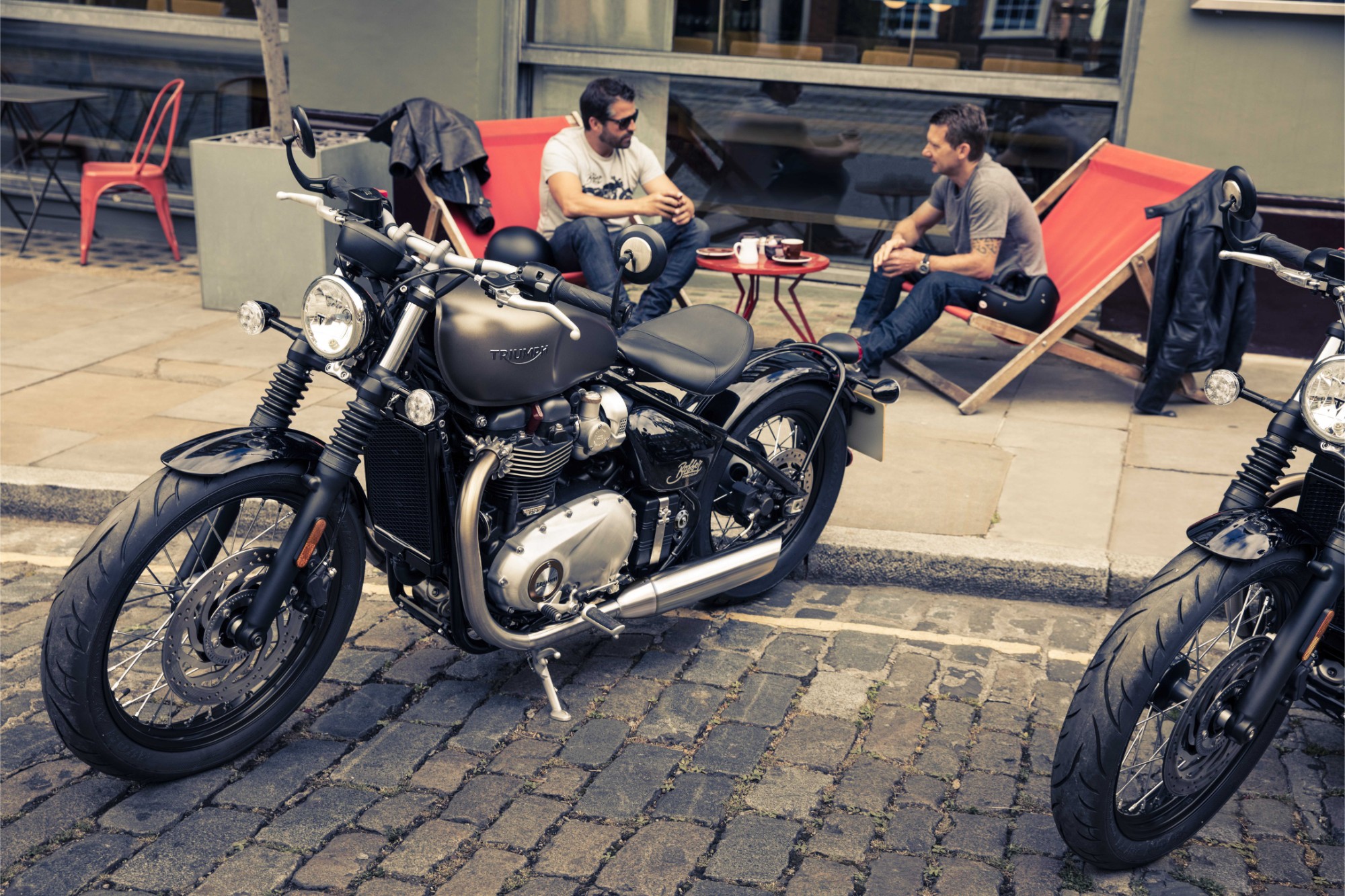
The Group has continued to develop its excellent motorcycle range, launching five new motorcycles in the last 12 months – the new Street Triple, the new Bobber Black, the new Speedmaster and the new Tiger 800 and Tiger 1200 adventure motorcycles.

It has also continued to demonstrate its commitment to meeting customer needs, with the opening of a £4m Factory Visitor Experience at its Hinckley base. The Factory Visitor Experience includes a museum charting the history of Triumph, which is free to enter, as well as an opportunity for fans and enthusiasts to take a tour of Triumph’s high-tech manufacturing plant to see where Triumph’s class-leading motorcycles are built.

Triumph is excited about the future and is committed to delivering its long-term vision through investment in the Company’s people, facilities and product that fuses character, heritage and performance to ensure the success of the brand.

Team Obsolete Hosts Holiday Party At Its Headquarters In New York City

Team Obsolete Annual Holiday Gathering at the Historic Clocktower Building

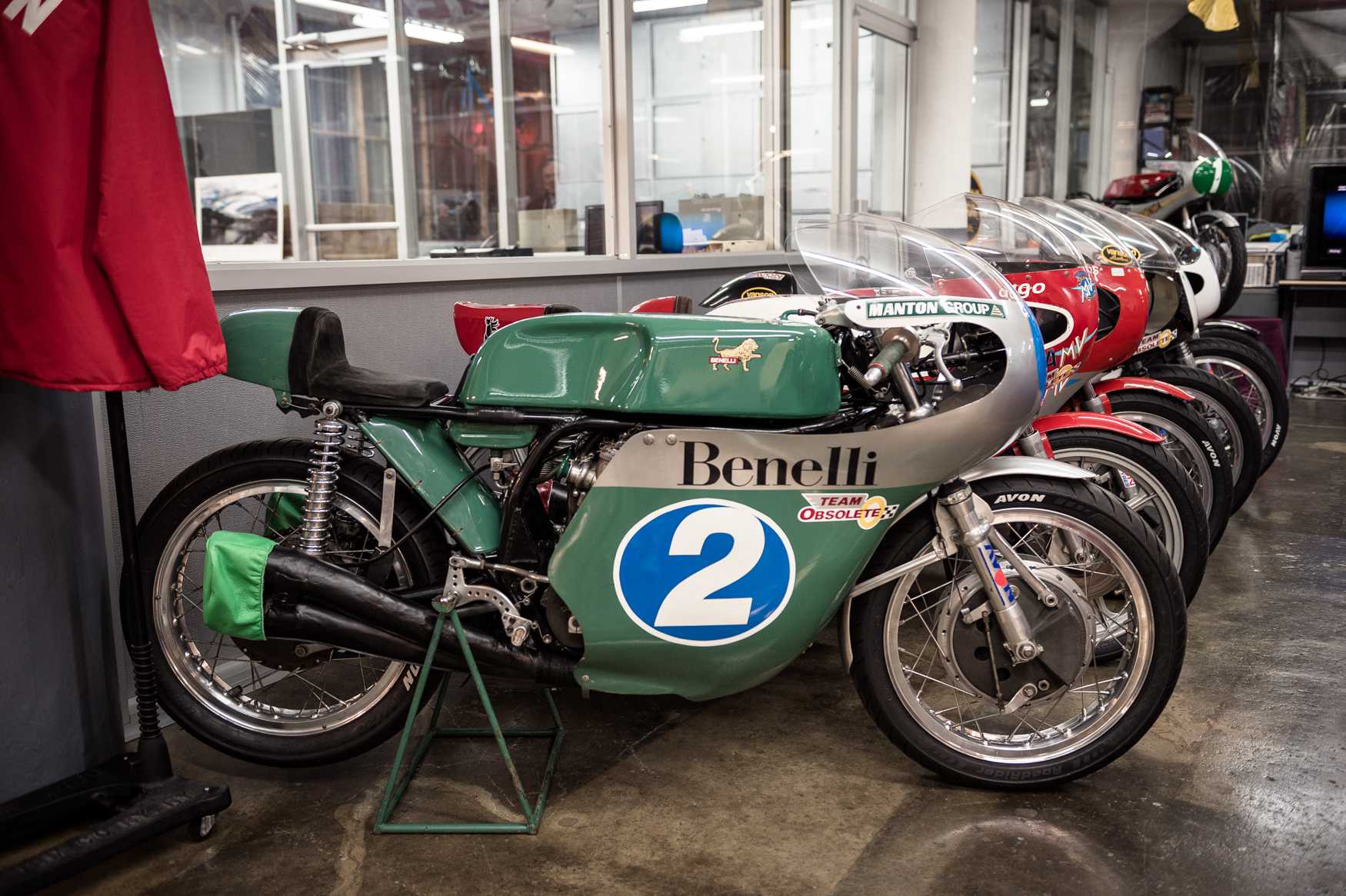
Racing notables attended an end of year celebration at the Team Obsolete headquarters, featuring the pedigree racing motorcycles campaigned this season. Including: Arter Matchless #1, “Surtees Special” AJS 7r, Agostini’s MV Agusta 350/4 “Electronica”, Benelli 350/4, Dick Mann’s BSA 750 triple, Don Vesco’s BSA a50r twin, MV Agusta 350/3 and of course the iconic Honda rc165 six cylinder 250.

This year’s guest of honor was none other than noted rider and team manager Roberto Gallina, who traveled from Italy just for the occasion. He spoke passionately about his partnership with Team Obsolete and the projects they have collaborated on over the years, trading tales with Dave Roper and team owner Rob Iannucci, describing their many experiences over the decades. Despite the snowy weather, the evening was well attended, and many friends old and new passed the hours bench racing. A great way to wrap up 2017 on a high note, and get everyone inspired for 2018.

Team Obsolete

The worlds first and foremost classic road racing team

www.TeamObsolete.com

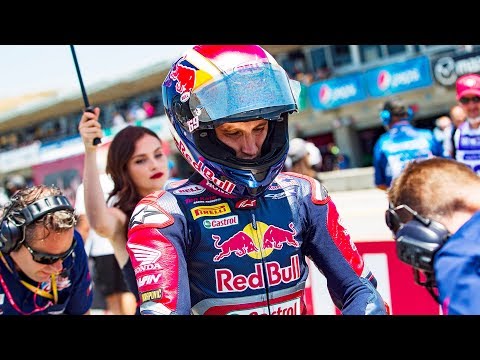
Racing Nicky Hayden’s Honda World Superbike at Laguna Seca | Moto Spy S2 E2 ft. Jake Gagne

0

American superbike racer Jake Gagne steps up to the international stage at Laguna Seca to pilot fellow American Nicky Hayden’s Factory Honda in his World Superbike series debut. _ Experience the world of Red Bull like you have never seen it before. With the best action sports clips on the web and original series, prepare for your “stoke factor” to be at an all time high. Watch Red Bull TV: http://win.gs/WatchRBTV See into our world: http://goo.gl/J49U Red Bull on Facebook: http://win.gs/redbullfb Red Bull on Twitter: http://win.gs/redbulltwitter Subscribe to Red Bull on Youtube: http://win.gs/SubToRedBull Subscribe to the Red Bulletin: http://win.gs/TheRedBulletin Sign up for our Newsletter here: http://win.gs/RedBullNewsletter

World Superbike Video: Jake Gagne Races Nicky Hayden’s Red Bull Honda At Laguna Seca

American superbike racer Jake Gagne steps up to the international stage at Laguna Seca to pilot fellow American Nicky Hayden’s Factory Honda in his World Superbike series debut.

Pirelli Increases Its Bounty For Track Records In 2018

Pirelli Expands Track Record Bounty Program for the 2018 Racing Season

$750 Tire Voucher Now Available for Riders Setting a New Absolute Motorcycle Track Record with Pirelli Race Compound Tires

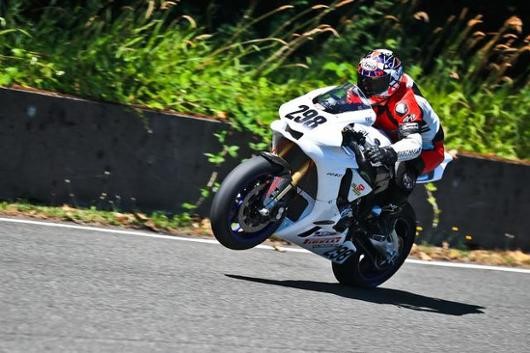
ROME, Ga. (December 21, 2017) – Pirelli Tire North America announced today, in collaboration with their road race vendors, an increase in its track record bounty program to $750 for the 2018 season. The bounty – issued in the form of a tire voucher – is available to riders who set a new absolute motorcycle track record on Pirelli race compound tires during a 2018 sanctioned event. Following the success of 2017 that saw six bounties awarded, Pirelli is strengthening its efforts as a way to give back to racers nationwide by putting forth its largest reward ever.

“The feedback we’ve received from riders about the track record bounty program has been very positive,” said Oscar Solis, Pirelli road racing manager. “For 2018, we’ve stepped things up even more by upping the ante, for a total of $750, to any racer with the skills to earn a new absolute track record. Let the hunting begin!”

In 2017, Pirelli-equipped riders relied on the performance of the DIABLO™ SUPERBIKE slicks to claim a total of six absolute motorcycle track records across the nation. As the official tire supplier of the MOTUL FIM Superbike World Championship, Pirelli’s research and development team has spent countless hours fine-tuning its race compound tires at the highest level and capable of performing in all conditions.

“I’m looking forward to the 2018 Pirelli track record bounty program incentives,” said Jason Farrell, professional racer and founder of Farrell Performance. “Having broken several track records the past few years on Pirelli race tires, it’s always nice to have that extra push knowing there is a reward for taking the fastest lap record. Every track record that I have set since 2000 were while using Pirelli race tires. In my region as a Pirelli race tire vendor, Pirelli has consistently been the top brand for finishes and fastest lap times.”

With three record-shattering lap times during the Westwood Motorcycle Racing Club Championship (WMRC) in 2017, Adam Robarts has continuously been one of the most impressive professional club riders to watch, and successful in “Bounty” hunting, during the past several seasons.

“I absolutely love Pirelli’s track record bounty program,” said Robarts. “It motivates me to push myself to the limits and showcases the outstanding performance of the Pirelli tires. Breaking an all-out lap record on any track is not an easy task, yet Pirelli’s continue to do it. It’s awesome that Pirelli is willing to reward their riders.”

This “bounty” is valid for qualifying riders at race-sanctioned events, including (but not exclusive to) AFM, ASRA, ASMA, CCS, CMRA, CVMA, CRA, FMRRA, MRA, MCRA, OMRRA, SMRI, USBA, WMRRA and WERA.

To qualify for a Pirelli track record bounty:

  • The rider and bike must be using Pirelli road race front and rear tires when the record is broken.
  • The race club must verify the new absolute motorcycle track record and Pirelli tire use. Pirelli and the vendor will confirm the new record with said race official.
  • If the lap record is broken more than once at a specific sanctioned race event, the last and fastest record will get the “bounty” (capped at one “bounty” per race event weekend).
  • Each track layout limits the “bounty” to two times per year for each rider.
  • Track days and open practice days are not eligible for riders to claim the “bounty.”
  • The “bounty” is limited to the first 10 riders to qualify in 2018
  • * Any questions need to be directed to local road race trackside vendor

    To learn more about the complete line of Pirelli motorcycle tires and to find a dealer near you, please click here: https://www.pirelli.com/tires/en-us/motorcycle/hom…

    BMW HP4 Race: Riding Fast On BMW’s Carbon-Fiber Masterpiece At Circuito Estoril In Portugal

    To read more articles like this one originally published in the August 2017 print issue of Roadracing World, subscribe to Roadracing World.

    Brought you by SportBikeTrackGear. For more information, visit SportBikeTrackGear.com.


    The BMW Way

    By Chris Ulrich

    Copyright 2017/2018 Roadracing World Publishing, Inc.

    I was skeptical of BMW’s carbon-fiber frame project when the HP4 Race concept was announced in the fall of 2016. Others manufacturers had tried to build motorcyles with carbon-fiber frames, and ultimately failed to create a machine that was user-friendly. The history of motorcycles with carbon-fiber frames goes back to the late 1980s when Cagiva Mito built a two-stroke 500cc Grand Prix racebike with a carbon-fiber frame. A more recent example of a carbon-frame motorcycle experiment would be the famous abandonment of the composite material by the Factory Ducati MotoGP team during Valentino Rossi’s tenure on the Desmosedici. But while it didn’t consistently work for Ducati in MotoGP, the brand has stuck with carbon-fiber for the super-high-end, limited-production Superleggera, which seems to be doing pretty well. And obviously, the struggles other brands have had in the past with composite frames have not deterred BMW from building a sportbike based on the S1000RR, with a carbon-fiber main frame.

    BMW engineers worked to create a carbon-fiber frame that had the right rigidity balance to deliver good feel for the rider in all sections of the corner.

    It can be argued that there isn’t a company better equipped to tackle a carbon-fiber main-frame project for a production motorcycle and do it right. BMW was the first to industrialize the use of structural carbon-fiber componentry in mass-produced cars such as the M3, i8, and electric i3, so company engineers have experience with the material.

    BMW introduced the high-performance HP4 production model in 2013, then incorporated the HP4’s upgrade into the S1000RR model update in 2015. BMW product planner and managers knew they needed to do something spectacular to create the next generation HP4, and they decided to go big, with a carbon-fiber main frame, and a race-spec engine. Elmar Jager, who works in the pre-development department at BMW Motorcycles, brought up the concept of a carbon fiber framed S1000RR. From there it was left up to Josef Maechler, who is in charge of Product Sales Strategy for BMW Motorcycles, and Rudolph “Double RR Rudi” Schneider, Head of 4 and 6-cylinder Product Projects, to figure out if it was possible. They did and they named it the 2018 HP4 Race.

    Christian Gonschor, 37, is a racing engineer turned HP4 Race Project Leader.

    Christian Gonschor, a 37-year-engineer with racing department experience, became the HP4 Race Project Leader. His mission was to bring lightweight material technology in motorcycles to the next level with a carbon-fiber main frame that retained the feel needed for a rider to push the limits of the bike. And his assignment brief including doing it in only twoyears. Easy task, right?

    Gonschor was unphased, seeing the assignment as an engineering exercise that would work if done right, explaining that he knew, “If you do it the right way, The BMW Way, the rider will feel the pure reduction in weight and the improvement in riding dynamics.”

    Adding to the overall performance would be Ohlins FGR 300 Superbike forks, an Ohlins TTX 36 shock, a Suter swingarm, and World Superbike electronics. The result is a motorcycle with that puts out a claimed 215 bhp at the crankshaft with an overall wet weight (including a full tank of fuel) of 377 pounds (171 Kg). By comparison, the minimum weight for a World Superbike after a race (with an empty tank) is 370.5 pounds (168 kg). The 2017 HP4 Race is a very light motorcycle, built for performance and performance only.

    The BMW HP4 race features Öhlins FGR 300 forks, Brembo GP4 PR Calipers, and 320 mm Brembo T-drive brake discs.

    Development focused on retaining the balance between frame rigidity and feel. To achieve this BMW engineers used Resin Transfer Molding (RTM). It’s a process in which a blend of non-woven carbon-fiber fabric with continuous fibers is placed in a large vacuum mold, (along with frame hardware), and a precise amount of resin is injected into the mold. The use of RTM gave BMW engineers the ability to mass -produce one-piece carbon-fiber frames without any inconsistencies in the performance from one unit to the other. The end result is a main frame with similar feel and flex characteristics when compared to the S1000RR’s aluminum frame while weighing 7.8 kg (17.1 Pounds)–which is about 8.8 pounds lighter than the aluminum frame.

    Resin transfer molding (RTM) made it possible for BMW to mass produce the one-piece carbon-fiber frame used for the 2018 HP4 Race.

    Make no mistake: It may too light for the Superbike World Championship, but the HP4 Race is a production racebike legal for use on public-road courses as seen on the Isle of Man and in Macau as well as in the Endurance World Championship and assorted regional and club racing series. It comes with all the adjustability a Superbike team could need to customize the motorcycle to the rider’s needs. Or, in some cases, enough adjustability for a rider to spin his or herself into outer space with the set-up!

    As delivered, the HP4 race has 30 mm of offset and the rake set at 23.5 degrees, which places the trail at 102.5 mm. BMW offers offset inserts that range from 26mm to 32mm, in 2mm increments. Rake can be adjusted in .5 or 1-degree increments on either side of the zero setting of 23.5 degrees. More adjustment is available at the rear of the HP4 with the option of moving the swingarm pivot up or down 4 mm, in 1 mm increments. That is a lot of adjustability!

    The HP4 Race mates a carbon-fiber frame with an underslung-design aluminum swingarm made by Suter Racing. Note the eccentric swingarm pivot position adjusters.

    World Championship-level Ohlins FGR 300 46mm inverted forks with C2 R3 valving and 10.5Nm springs come standard on the HP Race. At the rear the fully adjustable, large-body Ohlins TTX 36 GP shock comes with C6 R6 damping specs and a 95Nmm rear spring.

    As feel and total chassis balance is important, BMW engineers paid close attention the design of the Suter-manufactured aluminum swingarm while developing the HP4 Race. The swingarm is based on the underslung designed unit used in the Superbike World Championship, except the version used on the HP4 Race was optimized to work with the carbon fiber main. Overall length of the swingarm is a relatively short 604 mm.

    Additional weight savings were achieved on the HP4 Race by fitting carbon-fiber wheels built using a process known as braiding, where one piece of fabric is wrapped in place by a machine. A dense foam is also inserted into the wheel spokes to reduce vibration. The end result is a set of wheels that are 30% lighter than the aluminum racing wheels, reducing the gyroscopic effect of the rotating wheel, which theoretically improves the turning and transitioning of the bike. BMW engineers were careful to retain the same rigidity as the aluminum wheels to not reduce feel or create chatter at full lean.

    More World Championship level components were used for the brake system, with Brembo GP4 PR brake calipers that are actuated by a billet aluminum Brembo RSC 19×18 master cylinder. The brake calipers clamp onto a set of 6.75 mm thick, 320 mm Brembo T-drive discs rotors. The bottom-mounted Brembo rear brake caliper features four-pistons and work with a 4 mm thick, 220 mm rear disc.

    Adjustable race ready controls from Alpha Racing are used for the 7-degree-bend clips-ons along with fully adjustable rearsets. The rear subframe and seat assembly are made out a woven carbon fiber using a conventional lay-up technique. Using carbon fiber allowed BMW to easily build in seat adjustments in 15 mm increments. The HP4 Race is delivered with seat position at 32.7 inches (831 mm) and there is an option to lower the seat to 32.1 inches (816 mm) or raise the seat to 33.3 inches (846 mm), depending on the rider’s preference.

    At the center of the HP4 race is a race-tuned version of the S1000RR’s DOHC four-cylinder engine with an 80 mm bore and 49.7 mm stroke, displacing 999cc. The HP4 engine uses a combination of what BMW calls the 6.2 and 7.2 engine specs, and puts out a claimed 215 bhp at 13,900 rpm, at the crankshaft—or about 16 more horsepower than the S1000RR streetbike engine. The HP4 Race engine also makes 5.1 lbs.-ft. more torque than the S1000RR, putting out a claimed 88.5 lbs.-ft. at 10,000 rpm. While BMW engineers were tight-lipped about the valve timing and lift numbers, I can tell you that the 6.2 valve train is used in the Endurance World Championship and is designed to increase performance by allowing the redline to be to 14,500 rpm, while maintaining reliability as the miles pile up. Information on the compression ratio is also somewhat vague, with BMW claiming the ratio is between 13.7:1 and 13.9:1. To broaden the power curve, BMW uses its own version of electronically controlled variable-length intake funnels (a.k.a. velocity stacks) with the transition from long (for acceleration) to short (for top end) taking place at 11,500 rpm. The Akrapovic 4-2-1 titanium racing exhaust system comes with a carbon fiber muffler.

    The 7.2 bottom end comes from the Superbike World Championship program and is designed for durability and performance. As with all racing engines, careful attention was paid to sizing the plain main bearings to reduce mechanical losses without sacrificing durability. The crankshaft itself has been lightened by 200 grams compared to the standard S1000RR crank by removing material from the counterweights and from the primary drive sprocket on the right side of the engine. These modifications help increase acceleration, and also reduce the amount of force required to stop the HP4 Race. BMW uses Shell 0w40 high-performance oil to reduce further mechanical losses.

    Radiator size is the same as on the standard S1000RR, but the water pressure has been increased from 1.2 bar (17.4 psi) to 1.8 bar (26.1 psi) though the use of a high-output water pump. The added pressure circulates the water faster, which helps raise the boiling point of the coolant.

    More racing carry over can be found in the transmission of the HP4 Race. Gear ratios for first and second are taller for racetrack use when compared to the standard S1000RR. Third gear remains the same, while fourth through sixth gears are shorter. The primary gear ratio was unchanged; see the spec chart for ratios. Like most racebikes, the HP4 Race us set up for GP shift pattern (up for up) when delivered, and comes with the auto-blip function enabled for clutch-less up-shifts and down-shifts.

    Each engine is expected to last 5,000 km (3,100 miles) before needing to be replaced. If you take into account that the average track-day rider or club racer rides between 100-300 miles per weekend and does about five weekends per year, you are looking at an engine life of three to five years before needing to replace the engine. BMW representatives claim they will offer an engine exchange program through dealers at a cost of $10,000 to $15,000 per engine.

    Traction control and engine braking settings can be changed on the fly using switches on left handlebar.

    A motorcycle with cutting edge chassis design and powerful engine needs an electronic suite to match. The HP4 Race comes standard with an electronic package similar to what the brand uses in the Superbike World Championship. As delivered, the system comes with four riding modes: Wet, Intermediate, Dry1 and Dry2. Each mode has different throttle maps that control wheel torque (a.k.a. power delivery) by limiting the throttle butterfly valve opening. In Rain mode, throttle opening is limited to 67% in first gear, 71% in second gear, 75% in third gear, and 95% in fourth gear while fifth and sixth allow full throttle. The throttle map in Intermediate Mode is opened up slightly with 71% opening available in first gear, 79% in second gear, 88% in third gear, while fourth-through-sixth allow 100% throttle opening. Dry1 mode allows 75% opening in first, 83% opening in second, and 93% opening in third with full throttle available in fourth through sixth. The Wheelie Control function is also active in all gears in Rain, intermediate, and Dry1 mode. Dry2 mode’s map throttle progression is even more aggressive; first gear is limited to 75% throttle opening, but then the map jumps to 92% throttle opening in second, and 96% throttle opening in third. Full power is available in fourth, fifth, and sixth gear. The Wheelie Control function is only available in first and second gear in Dry2 mode. The advantage of controlling wheel torque by proactively limiting the throttle opening is a smoother and faster drive without needing the ECU to cut power to allow the tire to recovery after a slide.

    Further control of the power on the HP2 Race comes standard from BMW’s Dynamic Traction Control (DTC) system, which offers 15 levels of intervention, (+-7 plus 0). Inputs taken from the IMU and wheel speed sensors detect wheel slip. Once slip conditions are present, the ECU reduces power by removing spark and closing the throttle valves.

    Further help keeping the front wheel on the ground in the acceleration zone comes from five levels of Wheelie Control. Like with the DTC, the wheelie control relies on inputs from the IMU and wheel speed sensors to detect when wheelie conditions are present, then removes power according to the level selected.

    Fifteen (+-7 plus 0) levels of engine braking control are also standard on the HP4 Race. The system provides plenty of options; maps can be modified for each gear using the HP calibration.

    Other features available from the electronics system are a pit-lane speed limiter and launch control. All the functions can be adjusted on the fly though racing-style switch units mounted on the handlebars. The three-button switch on the left handlebar allows the user to toggle between rider aids, then change the selected rider aid on the fly. The right handlebar switch has the kill switch on top in red, and the pit-lane speed limiter in the center; the bottom button is used to toggle between riding modes. The throttle must be closed to change the riding mode while on the racetrack.

    The BMW HP4 Race comes with a 2D dashboard that features engine rpm, Map, EBR level, DTC level, Water temperature, predictive lap, and lap time. The screen can be customized for the rider’s needs. Data is logged using though the 2D system and stored on an easily accessible USD memory stick. BMW also offers the option to purchase additional sensors, including linear potentiometers to read suspension travel and brake-pressure sensors. Each sensor comes with the extra wiring required for easy fitment.

    BMW will produce 750 units of the HP4 Race worldwide that will be will be available to order on a first-come, first-served basis. While BMW North America hasn’t released the official MSRP, the HP4 Race should be priced somewhere around $80,000 U.S.

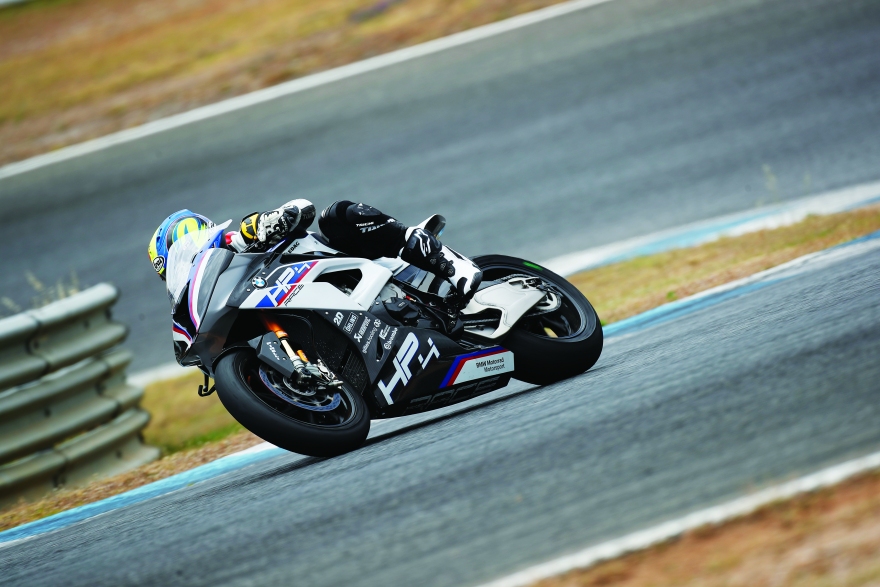
    Top view of the HP4 Race on track. Engineers tuned HP4’s flex characteristics and front-end feel with the top-triple clamps.

    Riding The HP4 Race

    The intro day at Estoril consisted of five, 20-minute riding sessions, and we had to spend two sessions on the standard BMW S1000RR before being let loose on the HP4 Race. Extra time on the standard bike suited me fine as it allowed me to learn the Estoril Circuit on a slightly less aggressive machine.

    Estoril’s layout is pretty straightforward, with a few blind exits and one really, really slow chicane a couple of corners before the front straight. The Portuguese track is 4.182 km (about 2.6 miles) in length and has 13 turns, with nine rights and four lefts. The surface is old and the track seems narrow, especially when compared to many more modern Grand Prix Circuits. But it is an old school European circuit, with old-school flow, like Jerez or Catalunya (before they put the new chicane in).

    Members of the press delegation were sent out for their first session on the HP4 Race with the ride mode set on Intermediate, DTC on level 5, and EBR on level 2. It had been more than 12 months since I threw a leg over anything that resembled a racebike, so spending the first few laps using softer throttle maps while I got used to the riding a high-horsepower, stiff-chassis motorcycle helped me get comfortable with the bike without any big surprises.

    Power delivery in intermediate mode was docile in the first three gears, and then it felt like hitting the afterburners once the throttle was allowed to open fully coming onto the front straight. There was a lot of intervention coming from the traction control and wheel control with the DTC turned up in Intermediate mode. However, the cuts were smooth and always ahead of the engine, and it was clear that the bike was removing power before the tire had a chance to start sliding in the acceleration zone.

    My initial impression of the chassis was also positive; the HP4 Race fell into the corner with much less effort than required to turn the standard S1000RR. In fact, it turned so quickly on my first lap that I had to adjust my turn-in rate to keep from running over the inside curb! Transitioning from side-to-side also required less effort when compared to the S1000RR. This is the big advantage of lightweight carbon-fiber wheels.

    I switched to the Dry1 mode three laps into my first session on the HP4 Race. Power delivery was still manageable, but with the more aggressive throttle maps available. With more power, there was slightly more intervention from the DTC, so I turned it down to help me slide the rear tire to finish the corners. The HP4 Race also wheelied slightly more in this setting, causing the WC to kick in, with the system allowing the front tire to just skim the top of the pavement without any massive power cut. It actually worked very well.

    Front and rear views of the 2018 BMW HP4 Race. The shape of the front fairing and seat/tailsection are identical to the parts on the S1000RR.

    As my speed increased on the bike during my three sessions, I increasingly found myself riding the bike like I would ride my old MotoAmerica Superbike. The chassis had great braking stability and plenty of front-end feel to allow me to trail-brake all the way to the apex without any drama. There was also plenty of feel at the apex at full lean in both slow and fast corners. Once the bike was rotated and I had my direction set, I could start to feed the throttle in without any hesitation. The combination of Pirelli tires and good chassis flex characteristics provided plenty of feel to allow me to start opening the throttle while still on the side of tire. Slide characteristics though the acceleration zone were predictable, giving me plenty of confidence to light the rear tire up to help finish the corner when needed.

    BMW’s carbon-fiber experiment actual performs the way a bike should. It has the right balance of rigidity and feel needed to push the chassis, and components from Ohlins and Brembo worked as expected from industry leading manufacturers. Adding World Superbike-level electronics and a high-spec engine make the BMW HP4 Race an extremely potent racetrack machine.

    The BMW engineers did it their way–and did it right.

    MotoGP: Medical Team Members Recognized As Some Of Best Doctors In Spain

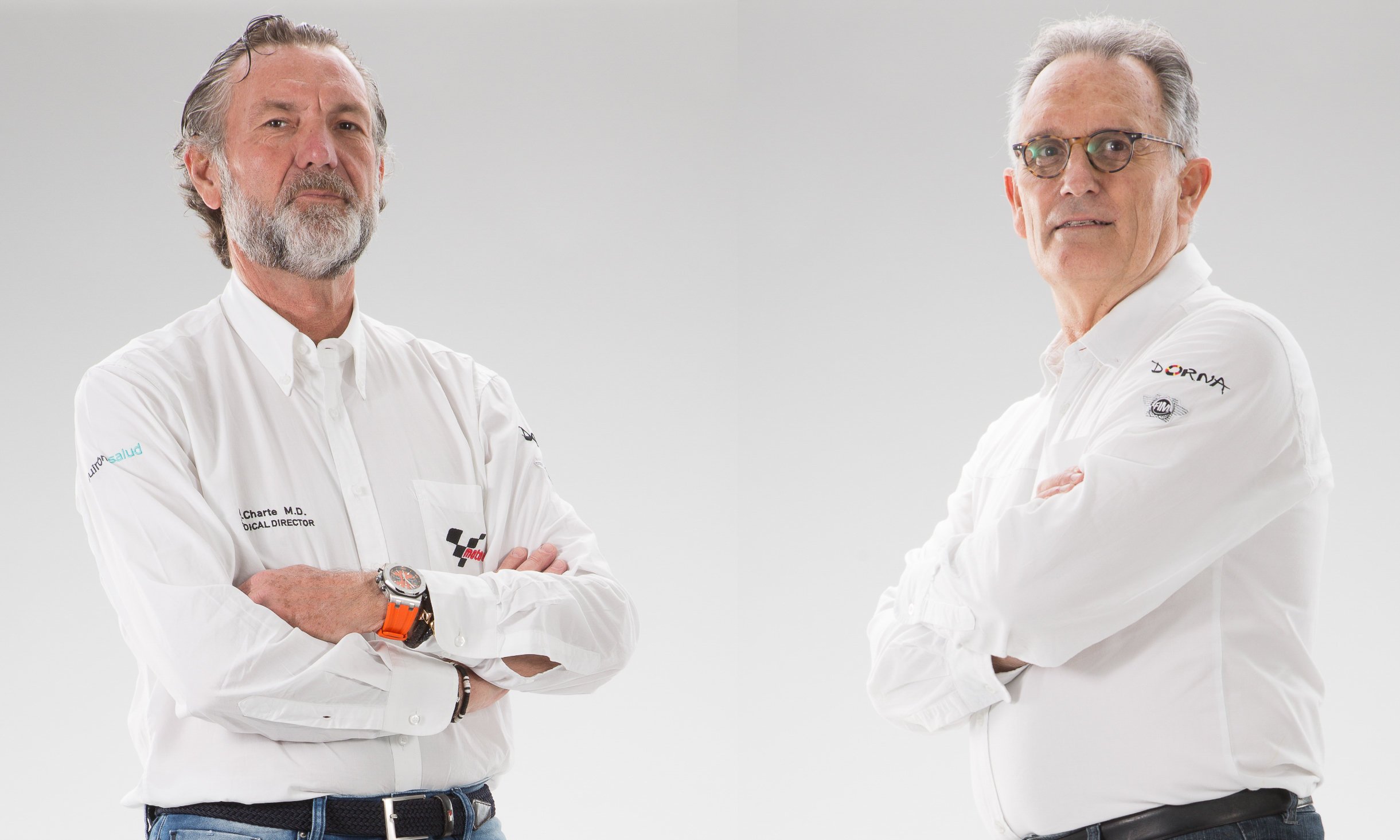
    Forbes identifies both MotoGP Medical Director Doctor Angel Charte and Traumatology Specialist Doctor Xavier Mir as two of the best doctors in the country

    MotoGP™ Medical Director Doctor Angel Charte and Traumatology Specialist Doctor Xavier Mir have been named two of the best doctors in Spain by Forbes. Both members of MotoGP™ Medical Direction, Doctor Charte is head of the Department of Internal Medicine at the Hospital Universitario Quirón Dexeus in Barcelona, where Doctor Mir is head of the Hand and Micro-Surgery Unit in the Department of Traumatology and Orthopedic Surgery.

    The hospital forms part of the Quirónsalud group, who were officially named MotoGP™ Medical Direction just ahead of the 2017 Catalan GP – strengthening the relationship between the two parties that began 2013. MotoGP™ has since benefitted from Medical Direction from both Doctor Angel Charte and Doctor Xavier Mir as well as key team member Doctor Enric Caceres, MotoGP™ Spinal Specialist, who is a member of the Spinal Unit at the Department of Traumatology and Orthopedic Surgery at the same Hospital Universitario Quirón Dexeus.

    Canadian Superbike: Amy Szoke, Wife Of 12-Time Champion Jordan Szoke, To Compete In Canadian Amateur Superbike In 2018

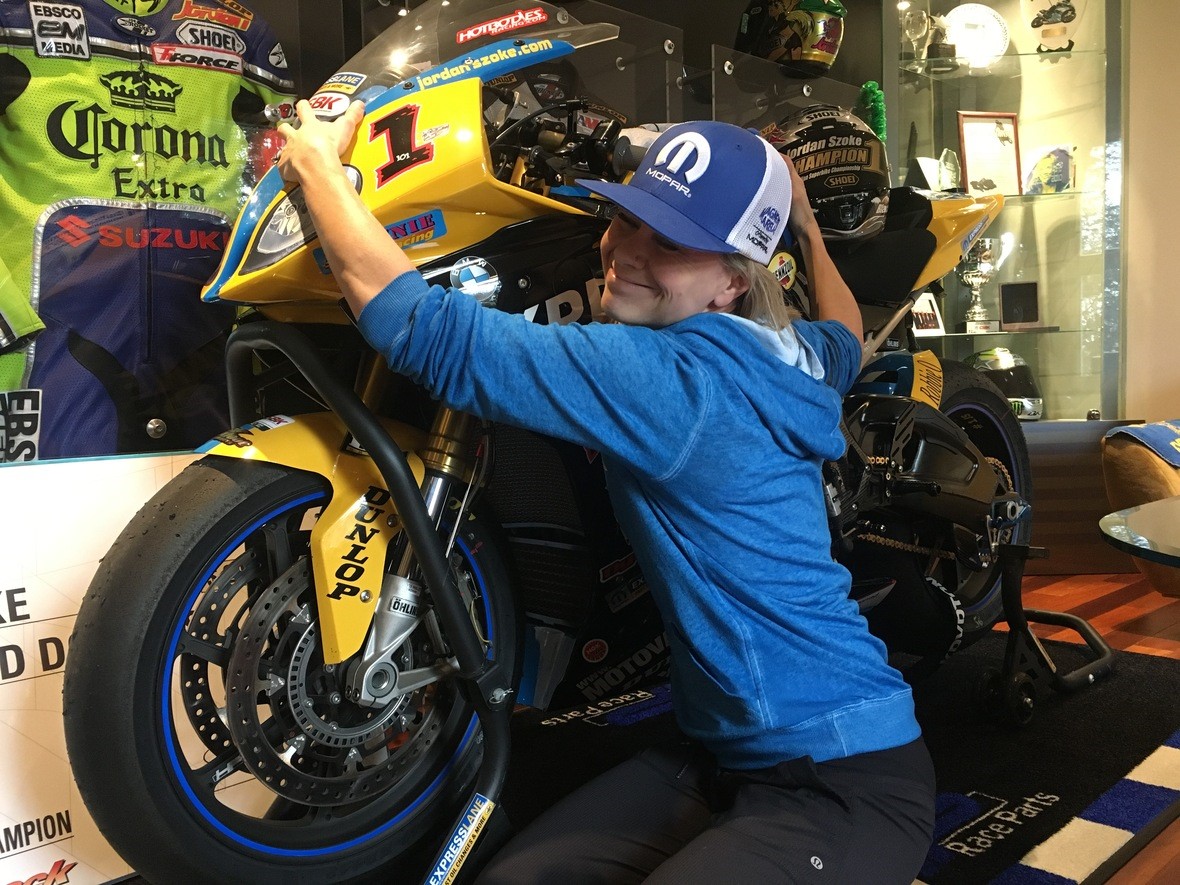
    Jordan Szoke’s Mopar Express Lane BMW Motorrad Team + Plus One

    Jordan Szoke’s Mopar Express Lane BMW Motorrad Superbike Team has grown by another team member for the 2018 season.

    Amy Szoke will be returning to the Mopar Canadian Superbike Championship, contesting the Amateur Superbike field on Jordan Szoke’s championship winning BMW S1000RR.

    Szoke (Amy Szoke that is;) was one of the top female racers in North America on a 600 super sport machine when she took a 5 year hiatus in 2010 to have a baby. Returning to a near full season in 2017 contesting the lightweight class, Amy landed on the podium in 4 of her 8 starts.

    “It had been a long time since I was able to compete on the national level for a full summer so last year I jumped at the chance to climb back on two wheels. I surprised myself at how competitive I could be. I forget sometimes I didn’t get an early start in my racing career so I suppose I’m a late bloomer;)” jokes Amy.

    Szoke will be aboard her husband’s 2015 Mopar Express Lane backed BMW S1000RR for most of the full season in 2018 in the CSBK Amateur Superbike class. When asked about her new opportunities Amy responds.

    “I’m nervous as heck, but when someone gives you the opportunity to ride the best bike with the best team, you just don’t say no. I mean I’ve never even ridden a Superbike before and I have no idea what to expect. Part of me wants to run away screaming, but the other part of me reminds me how important it is to myself, my family and my gender to get back out there and represent. At the end of the day it’s about fun, but truthfully I want to perform well. Just having the guts to throw my leg over the seat is a win so if I can bring it home in a decent position that’s all a bonus.”

    The Mopar Canadian Superbike Championship season opener starts May 25-27 2018 at Shannonville Motorsports Park in Bowmanville ON Canada.

    Australian Superbike: Bryan Staring Signs With Kawasaki BCperformance Racing Team For 2018

    Bryan Staring to Race for Kawasaki BCperformance in 2018 ASBK Championship

    21 December, 2017

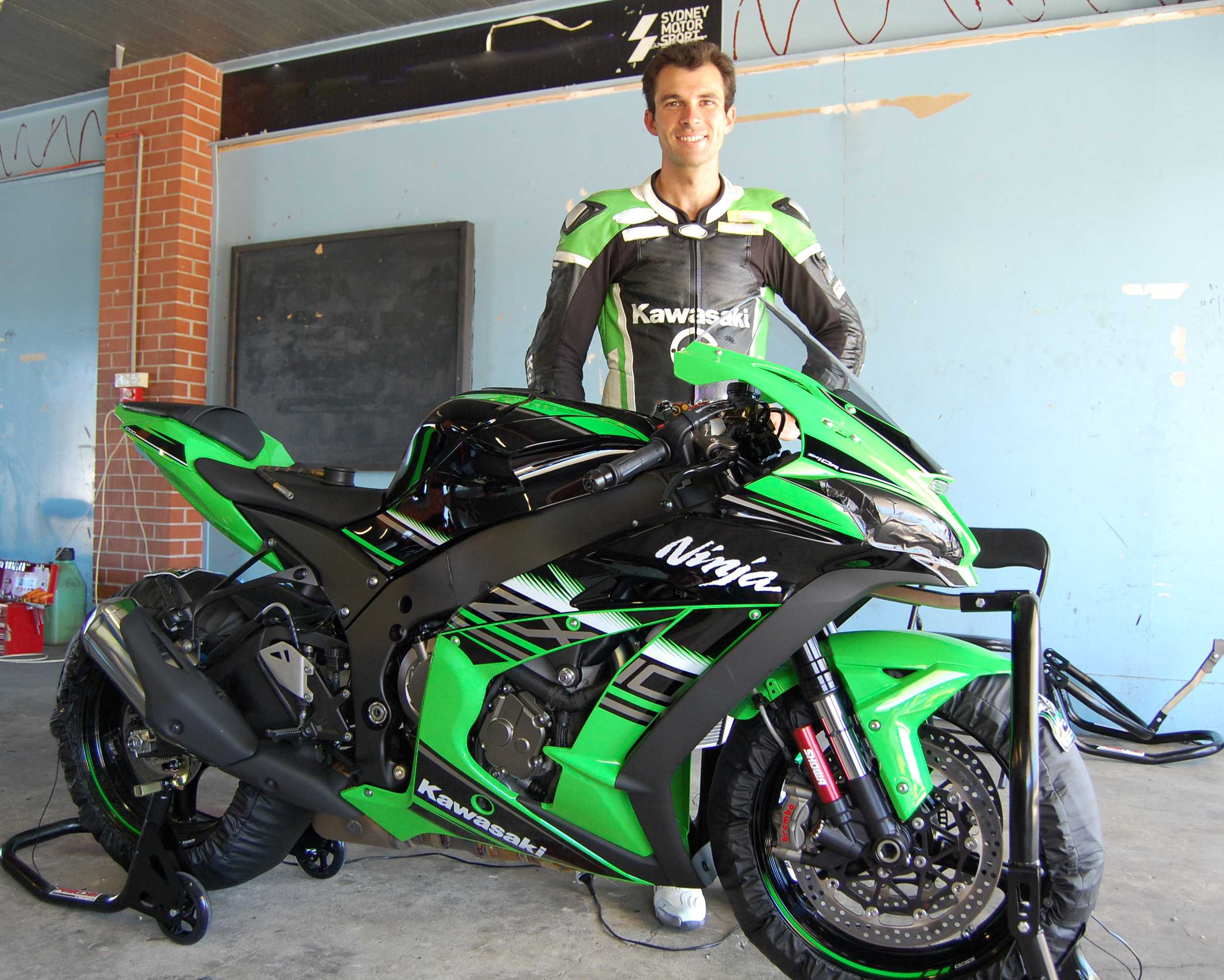
    Bryan Staring will contend aboard his Kawasaki Motors Australia backed Ninja ZX-10R in the 2018 Yamaha Motor Finance Australian Superbike Championship presented by Motul Pirelli (ASBK) under the Kawasaki BCperformance Racing Team banner.

    Following a stint on the world stage in the World Superbike (WSBK) Superstock class, Staring returned home to Australian racing in 2017. Having acclimatised himself to domestic racing and gearing up with the elite Kawasaki Ninja ZX-10R, Staring is poised for championship success.

    “I’m wrapped to be racing with the Kawasaki BCperformance Racing Team for 2018. Team Manager, Kelvin Reilly displayed his professionalism throughout 2017, showing that both BCperformance and Kawasaki are very competitive,” commented Staring.

    The 29-year-old from WA, has made his mark in Australian motorcycle racing with titles including the 2009 Australian Supersport Champion and the 2010 Australian Superbike Champion.

    “Since 2011, I have gained a lot of experience with the Kawasaki Ninja ZX-10R across many different championships around the world and I look forward to partnering with Kawasaki again to take on the ASBK championship with the BCperformance team,” Staring said.

    Arguably the most successful rookie in the YMI Superbike class this year, Kyle Buckley has re-signed with the team for the upcoming season.

    “I’m extremely excited to be able to race the Ninja ZX-10R for another year with Kawasaki BCperformance. 2017 wasn’t a year of great luck for me and I am very thankful to Kelvin and Kawasaki Motors for keeping their faith in me,” commented the modest 21-year-old from Queensland.

    “I feel that with this year’s experience, I will be able to get the ball rolling straight away and I can’t wait for the first test!”

    Team Manager, Kelvin Reilly has been campaigning with Kawasaki machinery in Australia since 2012. Kelvin draws from years of experience as a rider in the British Superbike championship where he was lining up with the likes of now Kawasaki World Superbike champions, Tom Sykes and Jonathan Rea.

    “With a big thanks to Kawasaki Motors Australia, I am looking forward to another year in the 2018 ASBK championship and I am really pleased to have Bryan Staring on our Kawasaki Ninja ZX-10R for the 2018 season,” Reilly commented.

    “Bryan showed good speed this year and I believe with his experience we will be a real title threat from the start. Kyle Buckley stays for a second season in the Superbike class and during the first three rounds last season he showed great potential by being consistent and top rookie until a leg injury mid-season that put an end to his progress. I’m looking forward to watching his development during his second year on a Kawasaki Ninja ZX-10R.

    “With both riders we have a really positive pairing for 2018 and a mixture of experience and youth. I would like to thank Robbie Bugden for his efforts during the past two seasons and I wish him all the best with his next move, although I’m pretty sure we will be seeing him in our pit garage during 2018! It’s a pleasure to be working with the same team of mechanics, the great team behind Kawasaki Motors Australia and our sponsors,” Reilly finished.

    Kawasaki Motors Australia National Sales and Marketing Manager, Robert Walker showed great enthusiasm about the renewed team partnership and addition of Staring, saying, “Obviously there is a significant history between Bryan Staring and Kawasaki, so we trust that he will settle in and kick some goals with the Kawasaki BCperformance Racing Team next year.

    “Kyle Buckley has been a strong contender as well so we are glad to be backing him through the team which will be our largest supported effort in the ASBK Championship. The combination of a proficient racing team and top-level riders makes the perfect recipe for success in 2018,” Walker finished.

    The team will look to set the pace at Round 1 of ASBK, which will take place at Phillip Island, Victoria in support of the first 2018 WSBK Championship round from 22-25 February 2018.

    MotoGP: PTT Named Title Sponsor Of Inaugural Event In Thailand

    Thai energy giant to take top billing at the first ever MotoGP™ race weekend in Buriram

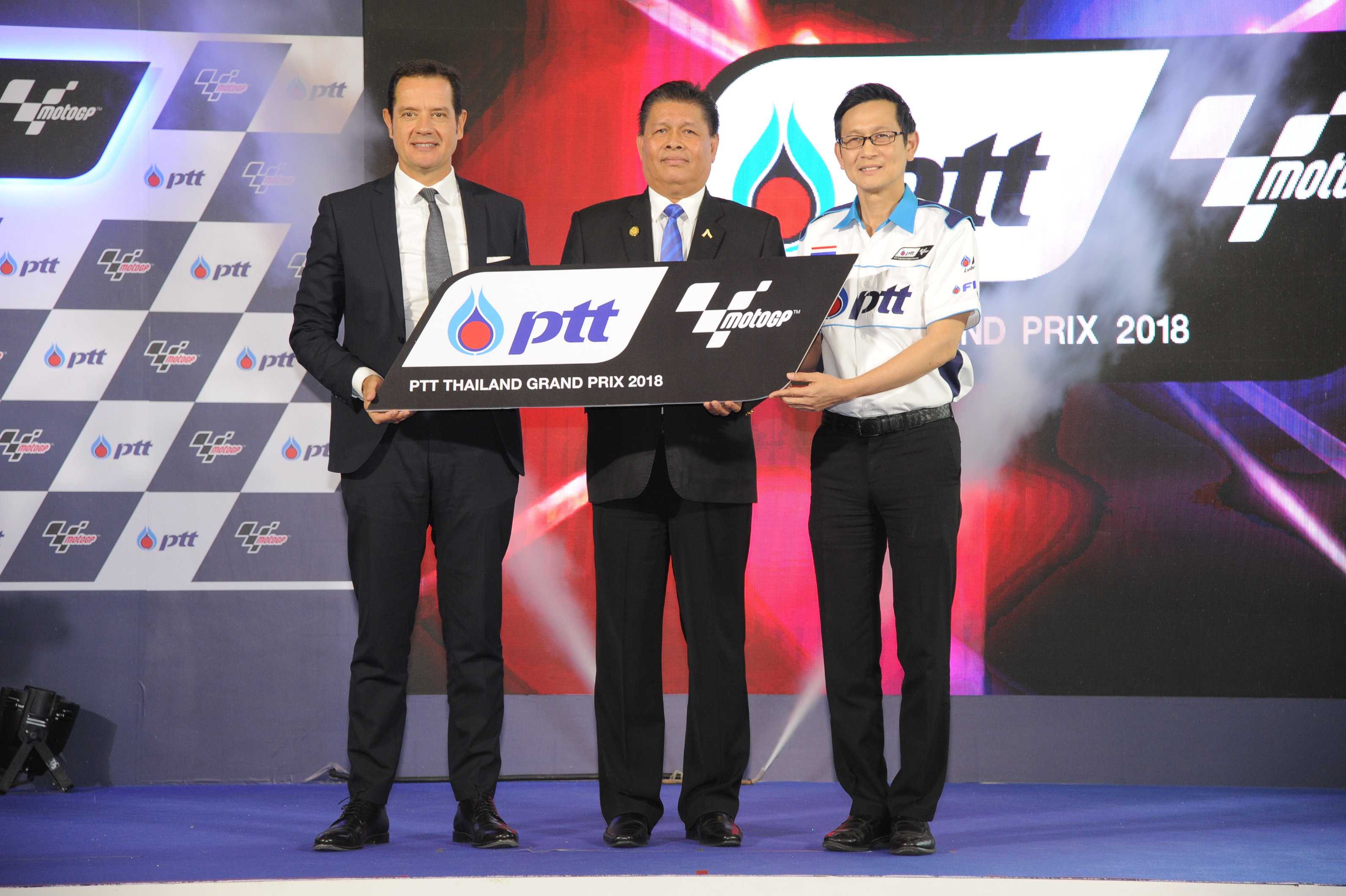
    Dorna Sports is delighted to announce that Thai company PTT will title sponsor the Thailand GP in 2018, naming the exciting inaugural race weekend – set for the 5th to 7th October 2018 – the PTT Thailand Grand Prix.

    PTT is a state-owned energy giant present throughout Thailand and one of the biggest companies within the Kingdom – making its partnership with MotoGP™ as title sponsor even more valuable as the world’s fastest motorcycle racing Championship prepares to go racing in the nation for the first time. PTT’s presence as title sponsor is an important display of investment ahead of the first Thailand GP, underpinning the wide-ranging benefits of hosting MotoGP™ once more.

    Auttapol Rerkpiboon, Chief Operating Officer – Downstream Petroleum Business Group, PTT Plc., says, “PTT supports the government to host MotoGP in order to show the world that we have one of the best motorsport circuits in the world, and that we are able to host a world-class motorsport event as efficiently as other nations. PTT and Thais are exceptionally proud to host the Grand Prix and welcome motorsport enthusiasts from all over the world, which will help boost the country’s revenue. This is what the government is trying to achieve. We believe that MotoGP in Thailand will be among the best races in the world and impress the organizers, as well as riders and their teams and supporters who will visit Thailand from all over the world. We also believe that a large number of motorsport fans will also take this chance to enjoy their holiday in the country, and this is one of the government’s key objectives in hosting MotoGP.”

    Pau Serracanta, Managing Director – Dorna Sports, commented: ”We are thrilled to begin racing in Buriram in collaboration with PTT. This agreement marks an important and valuable investment in the Thailand GP for everyone concerned and will surely prove a key contributory factor to the success of the the newest event on the calendar – from its debut onward.”

    MotoGP™ will first visit Buriram for a preseason test in February, before engines fire up for the first racing laps of the track in October.

    Triumph Reports Strong Growth In Sales, Revenue, Profits During 2017 Fiscal Year

    Triumph Motorcycles Group Limited FY17 Results Statement

    Triumph Motorcycles Group Limited has today announced its financial results for the year ending 30 June 2017.

    The Group manufactures and sells motorcycles, related parts, accessories and clothing merchandise in more than 57 countries across the globe.

    In the financial year 2017, Triumph grew global revenues by £90.9m to £498.5m with profit before exceptional costs increasing by £8.1m to £24.7m.

    Turnover: 2017 £498.5m – 2016 £407.6m

    EBITDA: 2017 £41.1m – 2016 £27.8m

    Profit before tax: 2017 £24.7m – 2016 £16.6m

    Research & development costs: 2017 £29.2m – 2016 £26.9m

    Motorcycles retailed: 2017 63,404 – 2016 56,253

    Percentage of motorcycles sold in overseas countries: 2017 86.1% – 2016 85.3%

    In the face of continuing challenging economic and currency conditions, including Brexit, Triumph Group has performed strongly and has maintained its commitment and investment in research and development, with a view to furthering the continuous improvements of its products.

    The Group has continued to develop its excellent motorcycle range, launching five new motorcycles in the last 12 months – the new Street Triple, the new Bobber Black, the new Speedmaster and the new Tiger 800 and Tiger 1200 adventure motorcycles.

    It has also continued to demonstrate its commitment to meeting customer needs, with the opening of a £4m Factory Visitor Experience at its Hinckley base. The Factory Visitor Experience includes a museum charting the history of Triumph, which is free to enter, as well as an opportunity for fans and enthusiasts to take a tour of Triumph’s high-tech manufacturing plant to see where Triumph’s class-leading motorcycles are built.

    Triumph is excited about the future and is committed to delivering its long-term vision through investment in the Company’s people, facilities and product that fuses character, heritage and performance to ensure the success of the brand.

    Team Obsolete Hosts Holiday Party At Its Headquarters In New York City

    Team Obsolete Annual Holiday Gathering at the Historic Clocktower Building

    Racing notables attended an end of year celebration at the Team Obsolete headquarters, featuring the pedigree racing motorcycles campaigned this season. Including: Arter Matchless #1, “Surtees Special” AJS 7r, Agostini’s MV Agusta 350/4 “Electronica”, Benelli 350/4, Dick Mann’s BSA 750 triple, Don Vesco’s BSA a50r twin, MV Agusta 350/3 and of course the iconic Honda rc165 six cylinder 250.

    This year’s guest of honor was none other than noted rider and team manager Roberto Gallina, who traveled from Italy just for the occasion. He spoke passionately about his partnership with Team Obsolete and the projects they have collaborated on over the years, trading tales with Dave Roper and team owner Rob Iannucci, describing their many experiences over the decades. Despite the snowy weather, the evening was well attended, and many friends old and new passed the hours bench racing. A great way to wrap up 2017 on a high note, and get everyone inspired for 2018.

    Team Obsolete

    The worlds first and foremost classic road racing team

    www.TeamObsolete.com

    Racing Nicky Hayden’s Honda World Superbike at Laguna Seca | Moto Spy S2 E2 ft. Jake Gagne

    American superbike racer Jake Gagne steps up to the international stage at Laguna Seca to pilot fellow American Nicky Hayden’s Factory Honda in his World Superbike series debut. _ Experience the world of Red Bull like you have never seen it before. With the best action sports clips on the web and original series, prepare for your “stoke factor” to be at an all time high. Watch Red Bull TV: http://win.gs/WatchRBTV See into our world: http://goo.gl/J49U Red Bull on Facebook: http://win.gs/redbullfb Red Bull on Twitter: http://win.gs/redbulltwitter Subscribe to Red Bull on Youtube: http://win.gs/SubToRedBull Subscribe to the Red Bulletin: http://win.gs/TheRedBulletin Sign up for our Newsletter here: http://win.gs/RedBullNewsletter

    World Superbike Video: Jake Gagne Races Nicky Hayden’s Red Bull Honda At Laguna Seca

    American superbike racer Jake Gagne steps up to the international stage at Laguna Seca to pilot fellow American Nicky Hayden’s Factory Honda in his World Superbike series debut.

    Pirelli Increases Its Bounty For Track Records In 2018

    Pirelli Expands Track Record Bounty Program for the 2018 Racing Season

    $750 Tire Voucher Now Available for Riders Setting a New Absolute Motorcycle Track Record with Pirelli Race Compound Tires

    ROME, Ga. (December 21, 2017) – Pirelli Tire North America announced today, in collaboration with their road race vendors, an increase in its track record bounty program to $750 for the 2018 season. The bounty – issued in the form of a tire voucher – is available to riders who set a new absolute motorcycle track record on Pirelli race compound tires during a 2018 sanctioned event. Following the success of 2017 that saw six bounties awarded, Pirelli is strengthening its efforts as a way to give back to racers nationwide by putting forth its largest reward ever.

    “The feedback we’ve received from riders about the track record bounty program has been very positive,” said Oscar Solis, Pirelli road racing manager. “For 2018, we’ve stepped things up even more by upping the ante, for a total of $750, to any racer with the skills to earn a new absolute track record. Let the hunting begin!”

    In 2017, Pirelli-equipped riders relied on the performance of the DIABLO™ SUPERBIKE slicks to claim a total of six absolute motorcycle track records across the nation. As the official tire supplier of the MOTUL FIM Superbike World Championship, Pirelli’s research and development team has spent countless hours fine-tuning its race compound tires at the highest level and capable of performing in all conditions.

    “I’m looking forward to the 2018 Pirelli track record bounty program incentives,” said Jason Farrell, professional racer and founder of Farrell Performance. “Having broken several track records the past few years on Pirelli race tires, it’s always nice to have that extra push knowing there is a reward for taking the fastest lap record. Every track record that I have set since 2000 were while using Pirelli race tires. In my region as a Pirelli race tire vendor, Pirelli has consistently been the top brand for finishes and fastest lap times.”

    With three record-shattering lap times during the Westwood Motorcycle Racing Club Championship (WMRC) in 2017, Adam Robarts has continuously been one of the most impressive professional club riders to watch, and successful in “Bounty” hunting, during the past several seasons.

    “I absolutely love Pirelli’s track record bounty program,” said Robarts. “It motivates me to push myself to the limits and showcases the outstanding performance of the Pirelli tires. Breaking an all-out lap record on any track is not an easy task, yet Pirelli’s continue to do it. It’s awesome that Pirelli is willing to reward their riders.”

    This “bounty” is valid for qualifying riders at race-sanctioned events, including (but not exclusive to) AFM, ASRA, ASMA, CCS, CMRA, CVMA, CRA, FMRRA, MRA, MCRA, OMRRA, SMRI, USBA, WMRRA and WERA.

    To qualify for a Pirelli track record bounty:

  • The rider and bike must be using Pirelli road race front and rear tires when the record is broken.
  • The race club must verify the new absolute motorcycle track record and Pirelli tire use. Pirelli and the vendor will confirm the new record with said race official.
  • If the lap record is broken more than once at a specific sanctioned race event, the last and fastest record will get the “bounty” (capped at one “bounty” per race event weekend).
  • Each track layout limits the “bounty” to two times per year for each rider.
  • Track days and open practice days are not eligible for riders to claim the “bounty.”
  • The “bounty” is limited to the first 10 riders to qualify in 2018
  • * Any questions need to be directed to local road race trackside vendor

    To learn more about the complete line of Pirelli motorcycle tires and to find a dealer near you, please click here: https://www.pirelli.com/tires/en-us/motorcycle/hom…

    BMW HP4 Race: Riding Fast On BMW’s Carbon-Fiber Masterpiece At Circuito Estoril In Portugal

    To read more articles like this one originally published in the August 2017 print issue of Roadracing World, subscribe to Roadracing World.

    Brought you by SportBikeTrackGear. For more information, visit SportBikeTrackGear.com.


    The BMW Way

    By Chris Ulrich

    Copyright 2017/2018 Roadracing World Publishing, Inc.

    I was skeptical of BMW’s carbon-fiber frame project when the HP4 Race concept was announced in the fall of 2016. Others manufacturers had tried to build motorcyles with carbon-fiber frames, and ultimately failed to create a machine that was user-friendly. The history of motorcycles with carbon-fiber frames goes back to the late 1980s when Cagiva Mito built a two-stroke 500cc Grand Prix racebike with a carbon-fiber frame. A more recent example of a carbon-frame motorcycle experiment would be the famous abandonment of the composite material by the Factory Ducati MotoGP team during Valentino Rossi’s tenure on the Desmosedici. But while it didn’t consistently work for Ducati in MotoGP, the brand has stuck with carbon-fiber for the super-high-end, limited-production Superleggera, which seems to be doing pretty well. And obviously, the struggles other brands have had in the past with composite frames have not deterred BMW from building a sportbike based on the S1000RR, with a carbon-fiber main frame.

    BMW engineers worked to create a carbon-fiber frame that had the right rigidity balance to deliver good feel for the rider in all sections of the corner.

    It can be argued that there isn’t a company better equipped to tackle a carbon-fiber main-frame project for a production motorcycle and do it right. BMW was the first to industrialize the use of structural carbon-fiber componentry in mass-produced cars such as the M3, i8, and electric i3, so company engineers have experience with the material.

    BMW introduced the high-performance HP4 production model in 2013, then incorporated the HP4’s upgrade into the S1000RR model update in 2015. BMW product planner and managers knew they needed to do something spectacular to create the next generation HP4, and they decided to go big, with a carbon-fiber main frame, and a race-spec engine. Elmar Jager, who works in the pre-development department at BMW Motorcycles, brought up the concept of a carbon fiber framed S1000RR. From there it was left up to Josef Maechler, who is in charge of Product Sales Strategy for BMW Motorcycles, and Rudolph “Double RR Rudi” Schneider, Head of 4 and 6-cylinder Product Projects, to figure out if it was possible. They did and they named it the 2018 HP4 Race.

    Christian Gonschor, 37, is a racing engineer turned HP4 Race Project Leader.

    Christian Gonschor, a 37-year-engineer with racing department experience, became the HP4 Race Project Leader. His mission was to bring lightweight material technology in motorcycles to the next level with a carbon-fiber main frame that retained the feel needed for a rider to push the limits of the bike. And his assignment brief including doing it in only twoyears. Easy task, right?

    Gonschor was unphased, seeing the assignment as an engineering exercise that would work if done right, explaining that he knew, “If you do it the right way, The BMW Way, the rider will feel the pure reduction in weight and the improvement in riding dynamics.”

    Adding to the overall performance would be Ohlins FGR 300 Superbike forks, an Ohlins TTX 36 shock, a Suter swingarm, and World Superbike electronics. The result is a motorcycle with that puts out a claimed 215 bhp at the crankshaft with an overall wet weight (including a full tank of fuel) of 377 pounds (171 Kg). By comparison, the minimum weight for a World Superbike after a race (with an empty tank) is 370.5 pounds (168 kg). The 2017 HP4 Race is a very light motorcycle, built for performance and performance only.

    The BMW HP4 race features Öhlins FGR 300 forks, Brembo GP4 PR Calipers, and 320 mm Brembo T-drive brake discs.

    Development focused on retaining the balance between frame rigidity and feel. To achieve this BMW engineers used Resin Transfer Molding (RTM). It’s a process in which a blend of non-woven carbon-fiber fabric with continuous fibers is placed in a large vacuum mold, (along with frame hardware), and a precise amount of resin is injected into the mold. The use of RTM gave BMW engineers the ability to mass -produce one-piece carbon-fiber frames without any inconsistencies in the performance from one unit to the other. The end result is a main frame with similar feel and flex characteristics when compared to the S1000RR’s aluminum frame while weighing 7.8 kg (17.1 Pounds)–which is about 8.8 pounds lighter than the aluminum frame.

    Resin transfer molding (RTM) made it possible for BMW to mass produce the one-piece carbon-fiber frame used for the 2018 HP4 Race.

    Make no mistake: It may too light for the Superbike World Championship, but the HP4 Race is a production racebike legal for use on public-road courses as seen on the Isle of Man and in Macau as well as in the Endurance World Championship and assorted regional and club racing series. It comes with all the adjustability a Superbike team could need to customize the motorcycle to the rider’s needs. Or, in some cases, enough adjustability for a rider to spin his or herself into outer space with the set-up!

    As delivered, the HP4 race has 30 mm of offset and the rake set at 23.5 degrees, which places the trail at 102.5 mm. BMW offers offset inserts that range from 26mm to 32mm, in 2mm increments. Rake can be adjusted in .5 or 1-degree increments on either side of the zero setting of 23.5 degrees. More adjustment is available at the rear of the HP4 with the option of moving the swingarm pivot up or down 4 mm, in 1 mm increments. That is a lot of adjustability!

    The HP4 Race mates a carbon-fiber frame with an underslung-design aluminum swingarm made by Suter Racing. Note the eccentric swingarm pivot position adjusters.

    World Championship-level Ohlins FGR 300 46mm inverted forks with C2 R3 valving and 10.5Nm springs come standard on the HP Race. At the rear the fully adjustable, large-body Ohlins TTX 36 GP shock comes with C6 R6 damping specs and a 95Nmm rear spring.

    As feel and total chassis balance is important, BMW engineers paid close attention the design of the Suter-manufactured aluminum swingarm while developing the HP4 Race. The swingarm is based on the underslung designed unit used in the Superbike World Championship, except the version used on the HP4 Race was optimized to work with the carbon fiber main. Overall length of the swingarm is a relatively short 604 mm.

    Additional weight savings were achieved on the HP4 Race by fitting carbon-fiber wheels built using a process known as braiding, where one piece of fabric is wrapped in place by a machine. A dense foam is also inserted into the wheel spokes to reduce vibration. The end result is a set of wheels that are 30% lighter than the aluminum racing wheels, reducing the gyroscopic effect of the rotating wheel, which theoretically improves the turning and transitioning of the bike. BMW engineers were careful to retain the same rigidity as the aluminum wheels to not reduce feel or create chatter at full lean.

    More World Championship level components were used for the brake system, with Brembo GP4 PR brake calipers that are actuated by a billet aluminum Brembo RSC 19×18 master cylinder. The brake calipers clamp onto a set of 6.75 mm thick, 320 mm Brembo T-drive discs rotors. The bottom-mounted Brembo rear brake caliper features four-pistons and work with a 4 mm thick, 220 mm rear disc.

    Adjustable race ready controls from Alpha Racing are used for the 7-degree-bend clips-ons along with fully adjustable rearsets. The rear subframe and seat assembly are made out a woven carbon fiber using a conventional lay-up technique. Using carbon fiber allowed BMW to easily build in seat adjustments in 15 mm increments. The HP4 Race is delivered with seat position at 32.7 inches (831 mm) and there is an option to lower the seat to 32.1 inches (816 mm) or raise the seat to 33.3 inches (846 mm), depending on the rider’s preference.

    At the center of the HP4 race is a race-tuned version of the S1000RR’s DOHC four-cylinder engine with an 80 mm bore and 49.7 mm stroke, displacing 999cc. The HP4 engine uses a combination of what BMW calls the 6.2 and 7.2 engine specs, and puts out a claimed 215 bhp at 13,900 rpm, at the crankshaft—or about 16 more horsepower than the S1000RR streetbike engine. The HP4 Race engine also makes 5.1 lbs.-ft. more torque than the S1000RR, putting out a claimed 88.5 lbs.-ft. at 10,000 rpm. While BMW engineers were tight-lipped about the valve timing and lift numbers, I can tell you that the 6.2 valve train is used in the Endurance World Championship and is designed to increase performance by allowing the redline to be to 14,500 rpm, while maintaining reliability as the miles pile up. Information on the compression ratio is also somewhat vague, with BMW claiming the ratio is between 13.7:1 and 13.9:1. To broaden the power curve, BMW uses its own version of electronically controlled variable-length intake funnels (a.k.a. velocity stacks) with the transition from long (for acceleration) to short (for top end) taking place at 11,500 rpm. The Akrapovic 4-2-1 titanium racing exhaust system comes with a carbon fiber muffler.

    The 7.2 bottom end comes from the Superbike World Championship program and is designed for durability and performance. As with all racing engines, careful attention was paid to sizing the plain main bearings to reduce mechanical losses without sacrificing durability. The crankshaft itself has been lightened by 200 grams compared to the standard S1000RR crank by removing material from the counterweights and from the primary drive sprocket on the right side of the engine. These modifications help increase acceleration, and also reduce the amount of force required to stop the HP4 Race. BMW uses Shell 0w40 high-performance oil to reduce further mechanical losses.

    Radiator size is the same as on the standard S1000RR, but the water pressure has been increased from 1.2 bar (17.4 psi) to 1.8 bar (26.1 psi) though the use of a high-output water pump. The added pressure circulates the water faster, which helps raise the boiling point of the coolant.

    More racing carry over can be found in the transmission of the HP4 Race. Gear ratios for first and second are taller for racetrack use when compared to the standard S1000RR. Third gear remains the same, while fourth through sixth gears are shorter. The primary gear ratio was unchanged; see the spec chart for ratios. Like most racebikes, the HP4 Race us set up for GP shift pattern (up for up) when delivered, and comes with the auto-blip function enabled for clutch-less up-shifts and down-shifts.

    Each engine is expected to last 5,000 km (3,100 miles) before needing to be replaced. If you take into account that the average track-day rider or club racer rides between 100-300 miles per weekend and does about five weekends per year, you are looking at an engine life of three to five years before needing to replace the engine. BMW representatives claim they will offer an engine exchange program through dealers at a cost of $10,000 to $15,000 per engine.

    Traction control and engine braking settings can be changed on the fly using switches on left handlebar.

    A motorcycle with cutting edge chassis design and powerful engine needs an electronic suite to match. The HP4 Race comes standard with an electronic package similar to what the brand uses in the Superbike World Championship. As delivered, the system comes with four riding modes: Wet, Intermediate, Dry1 and Dry2. Each mode has different throttle maps that control wheel torque (a.k.a. power delivery) by limiting the throttle butterfly valve opening. In Rain mode, throttle opening is limited to 67% in first gear, 71% in second gear, 75% in third gear, and 95% in fourth gear while fifth and sixth allow full throttle. The throttle map in Intermediate Mode is opened up slightly with 71% opening available in first gear, 79% in second gear, 88% in third gear, while fourth-through-sixth allow 100% throttle opening. Dry1 mode allows 75% opening in first, 83% opening in second, and 93% opening in third with full throttle available in fourth through sixth. The Wheelie Control function is also active in all gears in Rain, intermediate, and Dry1 mode. Dry2 mode’s map throttle progression is even more aggressive; first gear is limited to 75% throttle opening, but then the map jumps to 92% throttle opening in second, and 96% throttle opening in third. Full power is available in fourth, fifth, and sixth gear. The Wheelie Control function is only available in first and second gear in Dry2 mode. The advantage of controlling wheel torque by proactively limiting the throttle opening is a smoother and faster drive without needing the ECU to cut power to allow the tire to recovery after a slide.

    Further control of the power on the HP2 Race comes standard from BMW’s Dynamic Traction Control (DTC) system, which offers 15 levels of intervention, (+-7 plus 0). Inputs taken from the IMU and wheel speed sensors detect wheel slip. Once slip conditions are present, the ECU reduces power by removing spark and closing the throttle valves.

    Further help keeping the front wheel on the ground in the acceleration zone comes from five levels of Wheelie Control. Like with the DTC, the wheelie control relies on inputs from the IMU and wheel speed sensors to detect when wheelie conditions are present, then removes power according to the level selected.

    Fifteen (+-7 plus 0) levels of engine braking control are also standard on the HP4 Race. The system provides plenty of options; maps can be modified for each gear using the HP calibration.

    Other features available from the electronics system are a pit-lane speed limiter and launch control. All the functions can be adjusted on the fly though racing-style switch units mounted on the handlebars. The three-button switch on the left handlebar allows the user to toggle between rider aids, then change the selected rider aid on the fly. The right handlebar switch has the kill switch on top in red, and the pit-lane speed limiter in the center; the bottom button is used to toggle between riding modes. The throttle must be closed to change the riding mode while on the racetrack.

    The BMW HP4 Race comes with a 2D dashboard that features engine rpm, Map, EBR level, DTC level, Water temperature, predictive lap, and lap time. The screen can be customized for the rider’s needs. Data is logged using though the 2D system and stored on an easily accessible USD memory stick. BMW also offers the option to purchase additional sensors, including linear potentiometers to read suspension travel and brake-pressure sensors. Each sensor comes with the extra wiring required for easy fitment.

    BMW will produce 750 units of the HP4 Race worldwide that will be will be available to order on a first-come, first-served basis. While BMW North America hasn’t released the official MSRP, the HP4 Race should be priced somewhere around $80,000 U.S.

    Top view of the HP4 Race on track. Engineers tuned HP4’s flex characteristics and front-end feel with the top-triple clamps.

    Riding The HP4 Race

    The intro day at Estoril consisted of five, 20-minute riding sessions, and we had to spend two sessions on the standard BMW S1000RR before being let loose on the HP4 Race. Extra time on the standard bike suited me fine as it allowed me to learn the Estoril Circuit on a slightly less aggressive machine.

    Estoril’s layout is pretty straightforward, with a few blind exits and one really, really slow chicane a couple of corners before the front straight. The Portuguese track is 4.182 km (about 2.6 miles) in length and has 13 turns, with nine rights and four lefts. The surface is old and the track seems narrow, especially when compared to many more modern Grand Prix Circuits. But it is an old school European circuit, with old-school flow, like Jerez or Catalunya (before they put the new chicane in).

    Members of the press delegation were sent out for their first session on the HP4 Race with the ride mode set on Intermediate, DTC on level 5, and EBR on level 2. It had been more than 12 months since I threw a leg over anything that resembled a racebike, so spending the first few laps using softer throttle maps while I got used to the riding a high-horsepower, stiff-chassis motorcycle helped me get comfortable with the bike without any big surprises.

    Power delivery in intermediate mode was docile in the first three gears, and then it felt like hitting the afterburners once the throttle was allowed to open fully coming onto the front straight. There was a lot of intervention coming from the traction control and wheel control with the DTC turned up in Intermediate mode. However, the cuts were smooth and always ahead of the engine, and it was clear that the bike was removing power before the tire had a chance to start sliding in the acceleration zone.

    My initial impression of the chassis was also positive; the HP4 Race fell into the corner with much less effort than required to turn the standard S1000RR. In fact, it turned so quickly on my first lap that I had to adjust my turn-in rate to keep from running over the inside curb! Transitioning from side-to-side also required less effort when compared to the S1000RR. This is the big advantage of lightweight carbon-fiber wheels.

    I switched to the Dry1 mode three laps into my first session on the HP4 Race. Power delivery was still manageable, but with the more aggressive throttle maps available. With more power, there was slightly more intervention from the DTC, so I turned it down to help me slide the rear tire to finish the corners. The HP4 Race also wheelied slightly more in this setting, causing the WC to kick in, with the system allowing the front tire to just skim the top of the pavement without any massive power cut. It actually worked very well.

    Front and rear views of the 2018 BMW HP4 Race. The shape of the front fairing and seat/tailsection are identical to the parts on the S1000RR.

    As my speed increased on the bike during my three sessions, I increasingly found myself riding the bike like I would ride my old MotoAmerica Superbike. The chassis had great braking stability and plenty of front-end feel to allow me to trail-brake all the way to the apex without any drama. There was also plenty of feel at the apex at full lean in both slow and fast corners. Once the bike was rotated and I had my direction set, I could start to feed the throttle in without any hesitation. The combination of Pirelli tires and good chassis flex characteristics provided plenty of feel to allow me to start opening the throttle while still on the side of tire. Slide characteristics though the acceleration zone were predictable, giving me plenty of confidence to light the rear tire up to help finish the corner when needed.

    BMW’s carbon-fiber experiment actual performs the way a bike should. It has the right balance of rigidity and feel needed to push the chassis, and components from Ohlins and Brembo worked as expected from industry leading manufacturers. Adding World Superbike-level electronics and a high-spec engine make the BMW HP4 Race an extremely potent racetrack machine.

    The BMW engineers did it their way–and did it right.

    MotoGP: Medical Team Members Recognized As Some Of Best Doctors In Spain

    Forbes identifies both MotoGP Medical Director Doctor Angel Charte and Traumatology Specialist Doctor Xavier Mir as two of the best doctors in the country

    MotoGP™ Medical Director Doctor Angel Charte and Traumatology Specialist Doctor Xavier Mir have been named two of the best doctors in Spain by Forbes. Both members of MotoGP™ Medical Direction, Doctor Charte is head of the Department of Internal Medicine at the Hospital Universitario Quirón Dexeus in Barcelona, where Doctor Mir is head of the Hand and Micro-Surgery Unit in the Department of Traumatology and Orthopedic Surgery.

    The hospital forms part of the Quirónsalud group, who were officially named MotoGP™ Medical Direction just ahead of the 2017 Catalan GP – strengthening the relationship between the two parties that began 2013. MotoGP™ has since benefitted from Medical Direction from both Doctor Angel Charte and Doctor Xavier Mir as well as key team member Doctor Enric Caceres, MotoGP™ Spinal Specialist, who is a member of the Spinal Unit at the Department of Traumatology and Orthopedic Surgery at the same Hospital Universitario Quirón Dexeus.

    Canadian Superbike: Amy Szoke, Wife Of 12-Time Champion Jordan Szoke, To Compete In Canadian Amateur Superbike In 2018

    Jordan Szoke’s Mopar Express Lane BMW Motorrad Team + Plus One

    Jordan Szoke’s Mopar Express Lane BMW Motorrad Superbike Team has grown by another team member for the 2018 season.

    Amy Szoke will be returning to the Mopar Canadian Superbike Championship, contesting the Amateur Superbike field on Jordan Szoke’s championship winning BMW S1000RR.

    Szoke (Amy Szoke that is;) was one of the top female racers in North America on a 600 super sport machine when she took a 5 year hiatus in 2010 to have a baby. Returning to a near full season in 2017 contesting the lightweight class, Amy landed on the podium in 4 of her 8 starts.

    “It had been a long time since I was able to compete on the national level for a full summer so last year I jumped at the chance to climb back on two wheels. I surprised myself at how competitive I could be. I forget sometimes I didn’t get an early start in my racing career so I suppose I’m a late bloomer;)” jokes Amy.

    Szoke will be aboard her husband’s 2015 Mopar Express Lane backed BMW S1000RR for most of the full season in 2018 in the CSBK Amateur Superbike class. When asked about her new opportunities Amy responds.

    “I’m nervous as heck, but when someone gives you the opportunity to ride the best bike with the best team, you just don’t say no. I mean I’ve never even ridden a Superbike before and I have no idea what to expect. Part of me wants to run away screaming, but the other part of me reminds me how important it is to myself, my family and my gender to get back out there and represent. At the end of the day it’s about fun, but truthfully I want to perform well. Just having the guts to throw my leg over the seat is a win so if I can bring it home in a decent position that’s all a bonus.”

    The Mopar Canadian Superbike Championship season opener starts May 25-27 2018 at Shannonville Motorsports Park in Bowmanville ON Canada.

    Australian Superbike: Bryan Staring Signs With Kawasaki BCperformance Racing Team For 2018

    Bryan Staring to Race for Kawasaki BCperformance in 2018 ASBK Championship

    21 December, 2017

    Bryan Staring will contend aboard his Kawasaki Motors Australia backed Ninja ZX-10R in the 2018 Yamaha Motor Finance Australian Superbike Championship presented by Motul Pirelli (ASBK) under the Kawasaki BCperformance Racing Team banner.

    Following a stint on the world stage in the World Superbike (WSBK) Superstock class, Staring returned home to Australian racing in 2017. Having acclimatised himself to domestic racing and gearing up with the elite Kawasaki Ninja ZX-10R, Staring is poised for championship success.

    “I’m wrapped to be racing with the Kawasaki BCperformance Racing Team for 2018. Team Manager, Kelvin Reilly displayed his professionalism throughout 2017, showing that both BCperformance and Kawasaki are very competitive,” commented Staring.

    The 29-year-old from WA, has made his mark in Australian motorcycle racing with titles including the 2009 Australian Supersport Champion and the 2010 Australian Superbike Champion.

    “Since 2011, I have gained a lot of experience with the Kawasaki Ninja ZX-10R across many different championships around the world and I look forward to partnering with Kawasaki again to take on the ASBK championship with the BCperformance team,” Staring said.

    Arguably the most successful rookie in the YMI Superbike class this year, Kyle Buckley has re-signed with the team for the upcoming season.

    “I’m extremely excited to be able to race the Ninja ZX-10R for another year with Kawasaki BCperformance. 2017 wasn’t a year of great luck for me and I am very thankful to Kelvin and Kawasaki Motors for keeping their faith in me,” commented the modest 21-year-old from Queensland.

    “I feel that with this year’s experience, I will be able to get the ball rolling straight away and I can’t wait for the first test!”

    Team Manager, Kelvin Reilly has been campaigning with Kawasaki machinery in Australia since 2012. Kelvin draws from years of experience as a rider in the British Superbike championship where he was lining up with the likes of now Kawasaki World Superbike champions, Tom Sykes and Jonathan Rea.

    “With a big thanks to Kawasaki Motors Australia, I am looking forward to another year in the 2018 ASBK championship and I am really pleased to have Bryan Staring on our Kawasaki Ninja ZX-10R for the 2018 season,” Reilly commented.

    “Bryan showed good speed this year and I believe with his experience we will be a real title threat from the start. Kyle Buckley stays for a second season in the Superbike class and during the first three rounds last season he showed great potential by being consistent and top rookie until a leg injury mid-season that put an end to his progress. I’m looking forward to watching his development during his second year on a Kawasaki Ninja ZX-10R.

    “With both riders we have a really positive pairing for 2018 and a mixture of experience and youth. I would like to thank Robbie Bugden for his efforts during the past two seasons and I wish him all the best with his next move, although I’m pretty sure we will be seeing him in our pit garage during 2018! It’s a pleasure to be working with the same team of mechanics, the great team behind Kawasaki Motors Australia and our sponsors,” Reilly finished.

    Kawasaki Motors Australia National Sales and Marketing Manager, Robert Walker showed great enthusiasm about the renewed team partnership and addition of Staring, saying, “Obviously there is a significant history between Bryan Staring and Kawasaki, so we trust that he will settle in and kick some goals with the Kawasaki BCperformance Racing Team next year.

    “Kyle Buckley has been a strong contender as well so we are glad to be backing him through the team which will be our largest supported effort in the ASBK Championship. The combination of a proficient racing team and top-level riders makes the perfect recipe for success in 2018,” Walker finished.

    The team will look to set the pace at Round 1 of ASBK, which will take place at Phillip Island, Victoria in support of the first 2018 WSBK Championship round from 22-25 February 2018.

    MotoGP: PTT Named Title Sponsor Of Inaugural Event In Thailand

    Thai energy giant to take top billing at the first ever MotoGP™ race weekend in Buriram

    Dorna Sports is delighted to announce that Thai company PTT will title sponsor the Thailand GP in 2018, naming the exciting inaugural race weekend – set for the 5th to 7th October 2018 – the PTT Thailand Grand Prix.

    PTT is a state-owned energy giant present throughout Thailand and one of the biggest companies within the Kingdom – making its partnership with MotoGP™ as title sponsor even more valuable as the world’s fastest motorcycle racing Championship prepares to go racing in the nation for the first time. PTT’s presence as title sponsor is an important display of investment ahead of the first Thailand GP, underpinning the wide-ranging benefits of hosting MotoGP™ once more.

    Auttapol Rerkpiboon, Chief Operating Officer – Downstream Petroleum Business Group, PTT Plc., says, “PTT supports the government to host MotoGP in order to show the world that we have one of the best motorsport circuits in the world, and that we are able to host a world-class motorsport event as efficiently as other nations. PTT and Thais are exceptionally proud to host the Grand Prix and welcome motorsport enthusiasts from all over the world, which will help boost the country’s revenue. This is what the government is trying to achieve. We believe that MotoGP in Thailand will be among the best races in the world and impress the organizers, as well as riders and their teams and supporters who will visit Thailand from all over the world. We also believe that a large number of motorsport fans will also take this chance to enjoy their holiday in the country, and this is one of the government’s key objectives in hosting MotoGP.”

    Pau Serracanta, Managing Director – Dorna Sports, commented: ”We are thrilled to begin racing in Buriram in collaboration with PTT. This agreement marks an important and valuable investment in the Thailand GP for everyone concerned and will surely prove a key contributory factor to the success of the the newest event on the calendar – from its debut onward.”

    MotoGP™ will first visit Buriram for a preseason test in February, before engines fire up for the first racing laps of the track in October.