Home Blog Page 2185

Ducati Celebrating 25th Anniversary Of The Monster In 2018

Ducati ready to celebrate the 25th anniversary of the Monster
  • A programme of events and initiatives to celebrate the anniversary of the iconic Ducati Naked bike
  • A special celebratory parade on 24 March in France at the “Sunday Ride Classic 2018”
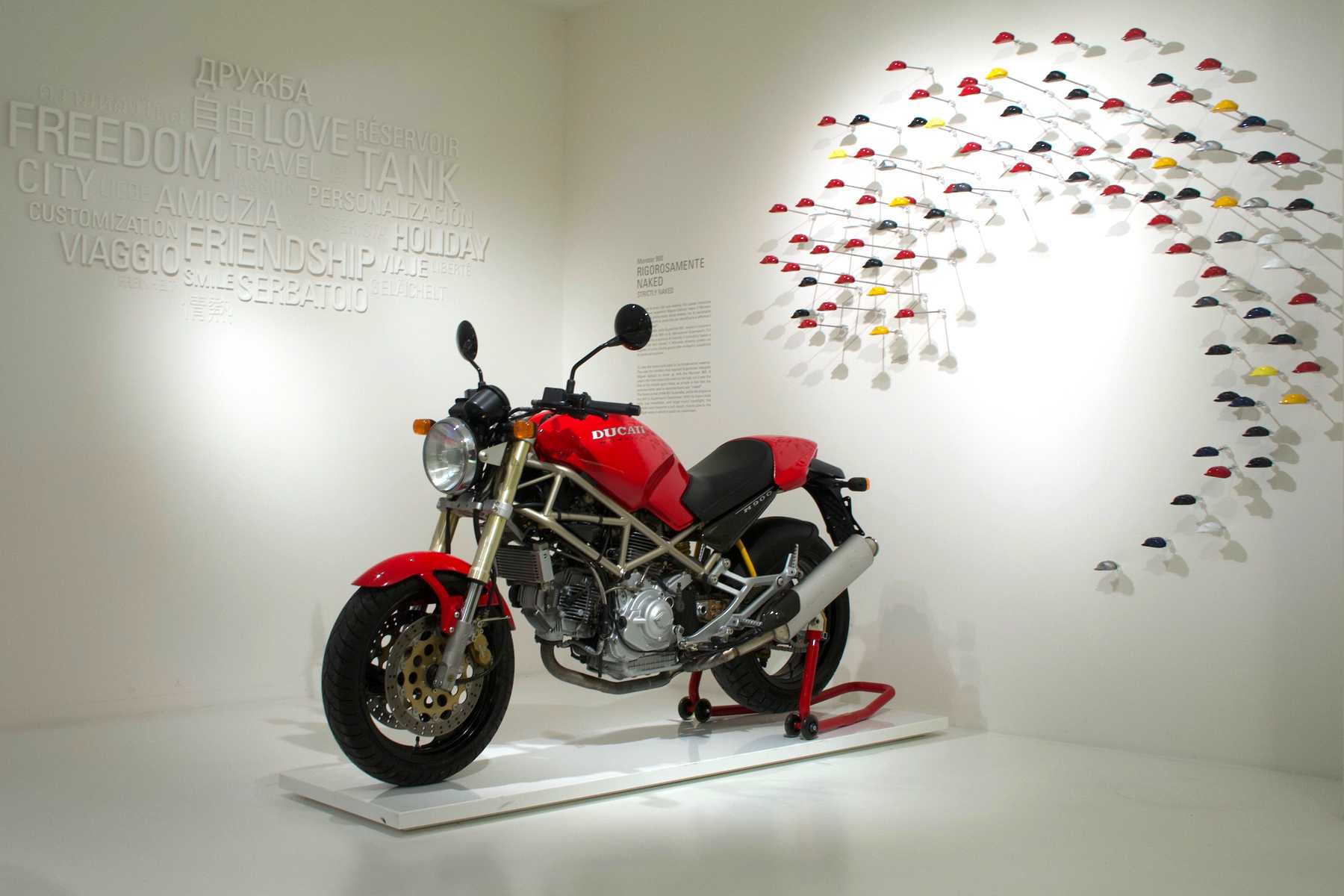
  • 25 years on from the start of production, Ducati displays a 1993 Monster 900 at the museum in Borgo Panigale

Borgo Panigale, (Bologna, Italy), 5 March 2018 – Twenty-five years have passed since the first Monster left the factory in Borgo Panigale, Bologna. Since its presentation to the public and the press at the “Intermot” international exhibition in Cologne in 1992, and its launch onto the market in 1993, this iconic Ducati model has brought a radical change to the world of motorcycles, creating a brand new sector – the naked sport bikes – and generating one of the most devoted communities of enthusiasts.

It’s an important anniversary for Ducati, a moment full of activities and initiatives to celebrate this significant landmark. Among the events is a Monster rally organised in France at the “Sunday Ride Classic 2018”, an international event dedicated to collectors’ bikes to be held at the “Paul Ricard” Circuit in Le Castellet during the afternoon of 24 March. Ducati and the European DOCs (Ducati Owners Clubs) involved in the event have called Monsteristi together to stage a racetrack parade to celebrate the anniversary in spectacular fashion. The invitation to take part in this peaceful invasion of the circuit is open to all Monster owners who need only to register for the event and turn up at the track.

March 5 is another date to remember. Exactly 25 years ago, the first Monster came off the Ducati production line in Borgo Panigale, Bologna. This year, to mark the anniversary, an original Monster 900 MY1993 is on display at the Ducati Museum. The bike, obtained via a collector and enthusiast who kept it in excellent condition, is ready to be admired by the museum’s thousands of visitors in the room dedicated to this iconic and historic motorcycle.

Lots more events aimed at celebrating the 25th anniversary of Ducati’s first Naked bike are planned for the 2018 World Ducati Week, the world’s largest Ducati rally, held every two years, which gathers together thousands of enthusiasts. The event will be held on 20, 21 and 22 July 2018 at the Marco Simoncelli Misano World Circuit in Misano Adriatico. Yet another reason not to miss this fantastic occasion.

For full information and to register to take part in the Monster parade at the “Sunday Ride Classic” see Ducati.fr.
The programme of events at WDW2018 will be communicated shortly on the official Ducati website.

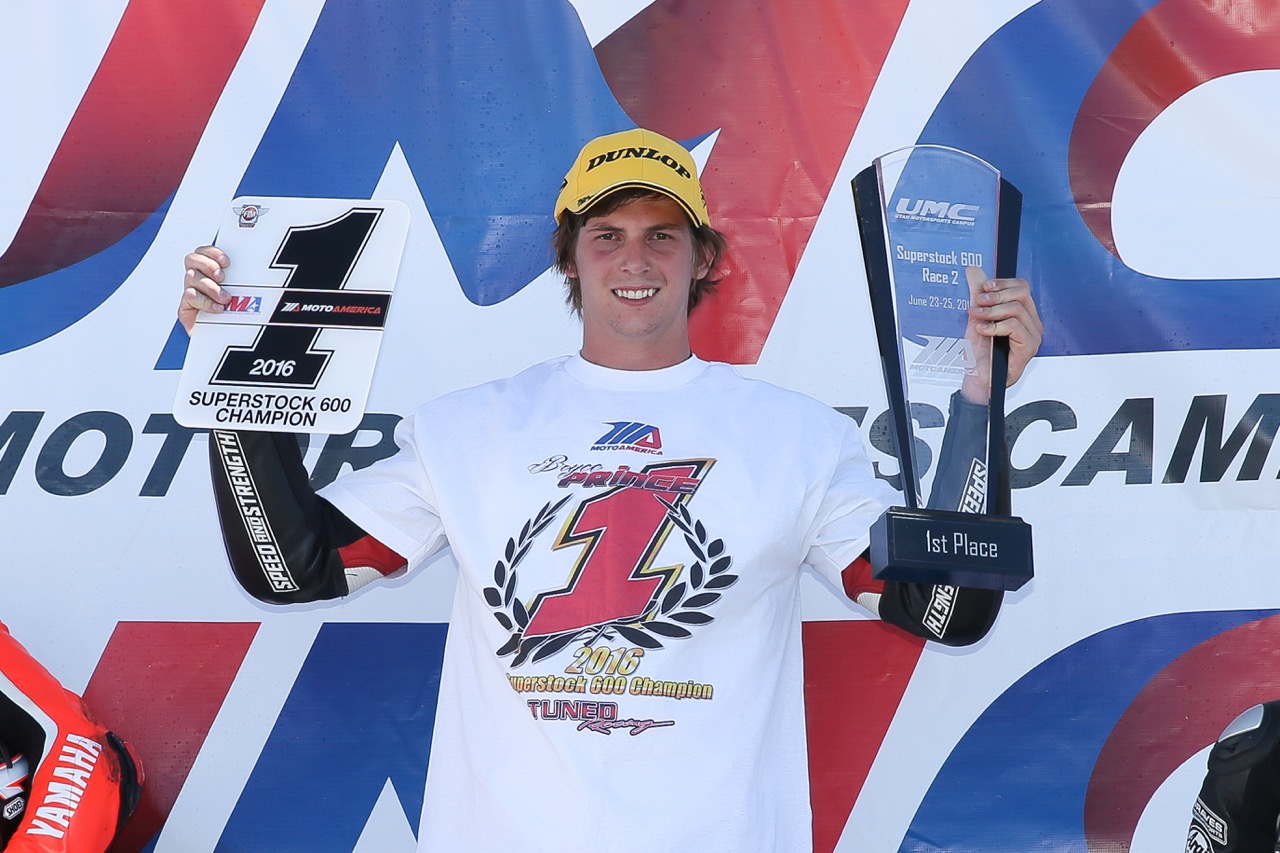
MotoAmerica: Former Superstock 600 Champion Bryce Prince Loses Ride For 2018

Bryce Prince will have to put his championship winning talent at the service of a new team for 2018.

After receiving an unforeseen phone call from Hudson Motorcycles owner Mark Shinder on Sunday March 4th 2018, I was informed that the team had decided to change plans with their 600 program for 2018, and we had to part ways.

Hudson Motorcycles and I had formed a solid bond during the 2017 season. We went into the off season with tremendous optimism for 2018 with the addition of Bobby Fong in the superbike class, and myself ready to take on the 600 Supersport championship with plenty of experience and a 600 championship under my belt.

With such dedicated team owner-operators, quality mechanics, Rocky Stargel as crew chief, and very little time testing on my 2018 Yamaha R6, I had a great level of confidence that was materialized by several wins last weekend at the last CVMA round.

Although being caught off guard, I would like to thank Hudson Motorcycles and all the sponsors I had helped join the team, and would like to wish them the best of luck for this exciting upcoming 2018 season.

With just over 3 weeks before the official Barber test, I will put all my resources together to find a way to be a part of this 2018 MotoAmerica season. My passion is greater than ever, I am ready and eager to make this happen, regardless of the challenges that lie ahead and that often make our beloved sport that much more rewarding and exciting.

Kawasaki Announces Its 2018 Road Racing Contingency Program, Including $350,000 For The Ninja 400

Foothill Ranch, Calif. – With spring right around the corner and racing season heating up, Kawasaki’s Road Racing Contingency is back for 2018, with over $2 million up for grabs. Racers competing on a wide variety of Kawasaki Ninja® models are eligible to win green, when they ride green.

“Kawasaki’s Ninja lineup is primed for another great season on the track,” said Kawasaki Senior Manager of Racing Dan Fahie. “Our Ninja lineup carries the same DNA as the 4-time and reigning World Superbike Champion Ninja ZX™-10RR and we are excited to support Kawasaki riders across all classes.”

2018 Kawasaki Road Racing Contingency

Events Total Posted
AMA MotoAmerica 10 $1,072,050
American Federation of Motorcyclists – AFM 7 $61,775
American Sportbike Racing Association – ASRA 8 $30,600
Championship Cup Series – CCS 40 $386,300
Chuckwalla Valley Motorcycle Association – CVMA 7 $21,350
Central Motorcycle Roadracing Association – CMRA 10 $68,000
Central Roadracing Association – CRA 6 $20,400
Motorcycle Roadracing Association – MRA 7 $32,725
Oregon Motorcycle Road Racing Association – OMRRA 14 $109,200
Utah Sport Bike Association — USBA 6 $36,600
WERA National Challenge 8 $38,000
WERA Sportsman Series 24 $228,150
Washington Motorcycle Road Racing Association – WMRRA 5 $41,500
TOTAL 182 $2,146,650
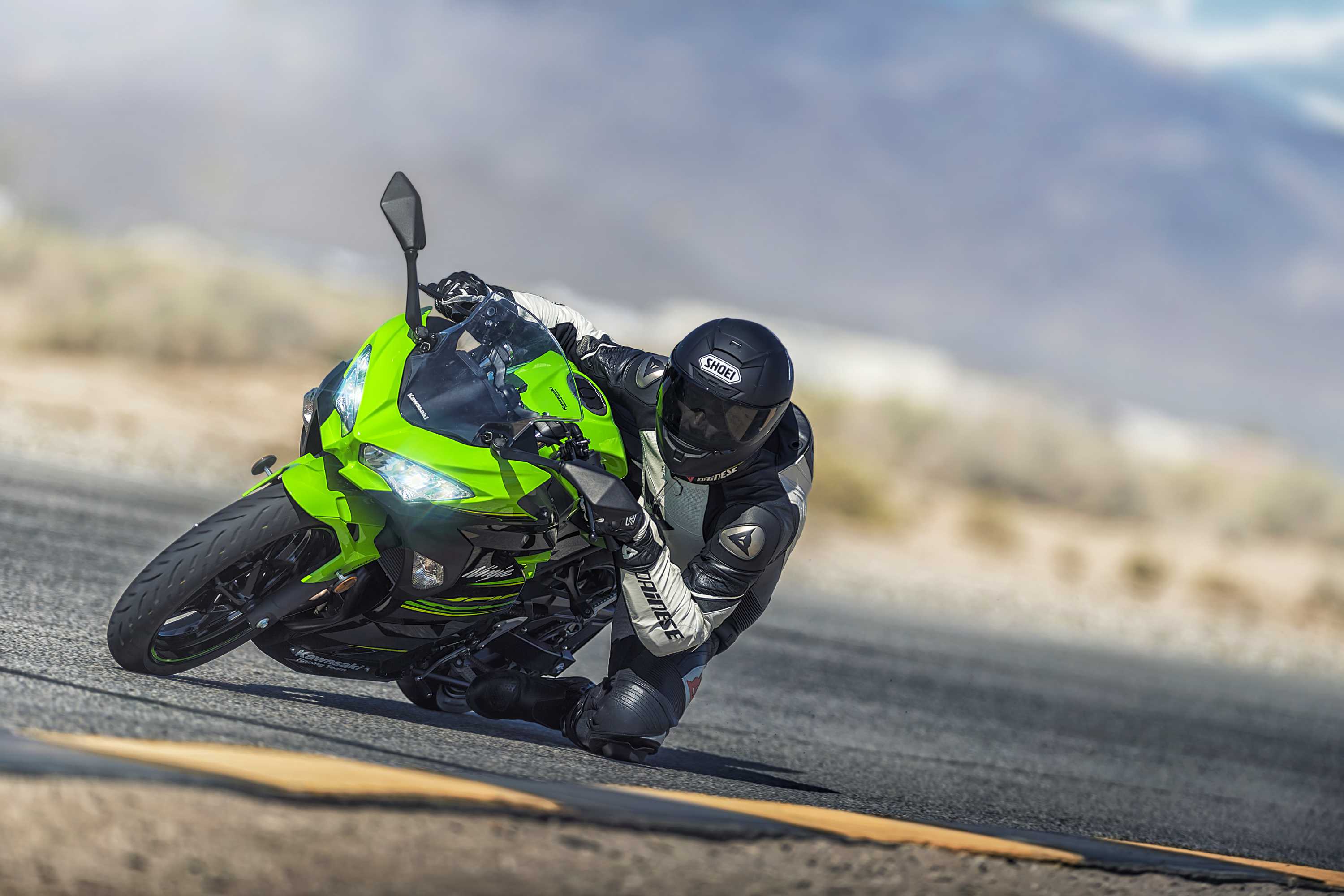
For 2018, the all-new Kawasaki Ninja 400 has already been turning heads on and off the track. The Ninja 400 is eligible in 21 classes, amongst 10 sanctioning bodies, including nearly $100,000 in the MotoAmerica Championship Junior Cup class. All told, the all-new Ninja 400 has more than $350,000 available to eligible racers. In addition to contingency, Kawasaki offers dealer support programs through Team Green™ dealerships.
Enrolled racers who earn contingency will enjoy:

  • Kawasaki Contingency Rewards MasterCard can be used wherever MasterCard is accepted
  • Contingency funds credited when results are approved
  • Online account balance and account tracking (24 hours)
  • Easy profile updates
  • ATM Access (Pro riders only)
  • Toll-Free customer service support at 1-866-535-2544

All existing Kawasaki Contingency racers must re-activate their contingency account each racing year. More information is available online at https://www.kawasaki.com/racing/team-green/contingency

Please also check with your local Kawasaki dealer for available Kawasaki genuine race kit parts and Kawasaki dealer race support programs.

MotoGP: KTM Makes It Official By Announcing It Will Work With Tech3 Starting In 2019

From the 2019 MotoGP season KTM Factory Racing will join forces with Hervé Poncharal and his Tech3 squad to field a strong satellite team putting all in all four KTM RC16 on the grid for the Austrian brand.

Since re-joining the MotoGP World Championship in 2012 KTM has achieved tremendous success. An initial foray for the inaugural Moto3 championship saw KTM become the most successful manufacturer in the class. This achievement fueled a year of development before joining the premier class in 2017. At the same time a move was made into the intermediate championship and soon victories followed in Moto2 and with seven top ten finishes in MotoGP KTM enjoyed a fruitful rookie campaign in both classes. KTM Motorsports will aim to further improve in all three categories during the upcoming season starting middle of March with the first round in Qatar.

Pit Beirer (KTM Motorsport Director): “We are very happy to join forces with Tech3 in MotoGP from 2019. The team has many years of experience and achieved a lot of great results in this championship. Their professional structure will make us even stronger. Having four KTM RC16 on the grid is also another big step for us, both for the development of our MotoGP bike and expanding KTM’s structure in the paddock. From the Red Bull Rookies Cup up to MotoGP there is a clear path to the top. We are looking forward to start a great cooperation and I’m thankful towards Hervé Poncharal for the future trust in KTM.”

​Life As A Corner Worker: Behind The Bales, Or, Who Are These People, And What Do They Do?

FIRST PERSON/OPINION:

By James Hesketh

It doesn’t matter who is at the track or how they got there. It could be the MotoAmerica series with a paddock full of semi-trucks, or MotoGP or World Superbike with a stack of containers flown in on a fleet of jumbo jets, or a bunch of locals with single-axle trailers and pickups parked on the grass alongside EZ-Ups and generators: No one is getting out onto the track until a group of people, usually dressed in white, perform a ritual almost as old as organized racing itself.

I only had a peripheral understanding of what those guys in white did out there during the few seasons I raced. But a decade ago, mostly out of curiosity, I signed on to work corners at Daytona during Bike Week and learned just how intense the job of corner working is—I liked doing it, and have been at it ever since. What follows is some of what I’ve learned and experienced as a corner worker (a.k.a. corner marshal) during that time.

Often before the teams are even fully set up in the paddock, the corner crew has held its morning meeting to review safety procedures, discuss particulars of the day’s event and get station assignments—and then everyone hauls a collection of flags, fire extinguishers, radios and personal gear out to their assigned stations.

Racer Nate Kern (center) stops by to say thanks to the corner worker crew at Daytona International Speedway. – Photo by www.etechphoto.com.

And while riders are still prepping for the first on-track session of the day, some variation of the following will take place: Race Control, the nucleus of the network, will call out through the radio: “We go hot in a few minutes, let’s do a course check beginning with Turn One.” The call is answered and replies come in from all around the entire course until control is confident there isn’t a spot on the track without eyes on it and that every tricky corner has a pick-up crew ready to respond to whatever incident may occur, whether it be a “self-cleaner”—a simple low-side crash where the rider picks up his own bike and continues on—or a multi-bike crash with a rider (or riders) possibly needing medical attention, or a fire extinguished, or an oil cleanup, or debris to collect, or dirt on the track to sweep off.

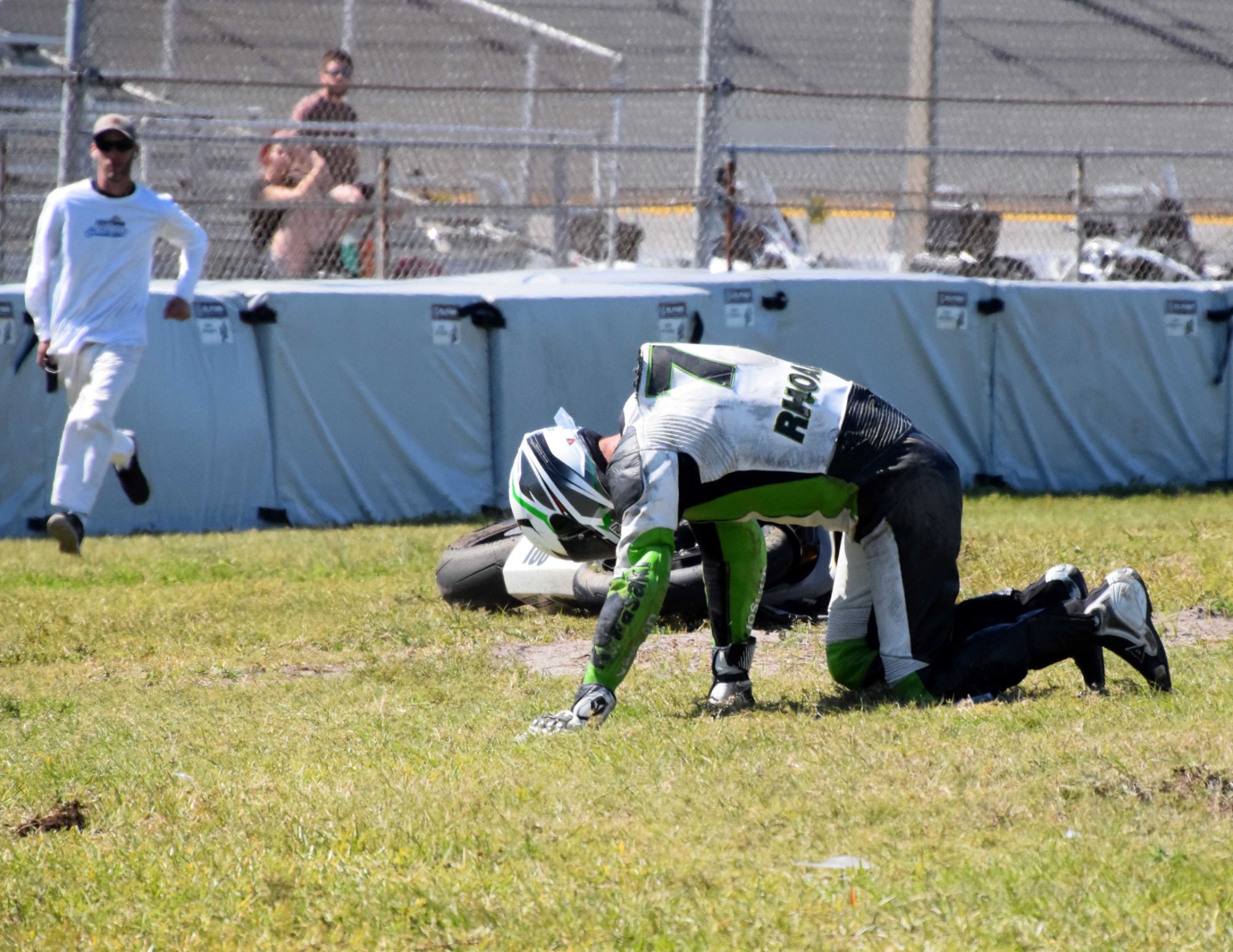
Dealing with crashes may be the most adrenalin-pumping aspect of a corner worker’s responsibilities, but it’s only a small percentage of the worker’s duties. The primary job of a corner-working crew is to use the flags to warn riders of issues ahead of them, and to help keep everyone safe when it does go wrong—starting with the corner workers first, followed by the riders who are still racing, the downed rider, the track surface, and, finally, the crashed bike. It takes training, experience and discipline to keep from acting hastily when a bad crash happens right in front of a corner worker.

Seeing the rider is up and walking after his crash, this corner worker directs his attention to the downed motorcycle and removing it from the impact area. (As an aside, note the inflated aftermarket air vest on the rider.) – Photo by Rick Hentz/RicksPics.

Most of us have seen the photos from last March at Daytona when—during the first lap of the Daytona 200—rider Dustin Apgar went down in Turn Six and got trapped underneath his burning bike. Any corner worker’s immediate reaction would be to want to get to the bike with a fire extinguisher and save the rider. But this crash happened in the lead group of a large pack and there were another 50 or so bikes still on track behind the incident.

Even though all necessary flags were displayed in that corner, it would not have been safe for a corner worker to go onto the hot track until all the bikes had passed. If a worker had run out and gotten hit, it would have made things worse for everyone, including Apgar. And that sort of thing has happened, albeit not often, but even once is too many times for that.

I was working a different corner, but could hear the urgency in the radio communications and I’ve since seen video with workers standing on the track’s edge waiting for the “all clear” notification. I’m glad that wasn’t me standing there fighting the urge to run out through traffic while watching the bike—and potentially the rider—burn.

Fortunately, rider Jody Barry, who’d also crashed, was right there, ran over and got Apgar free from his burning bike. Then Barry remounted his bike, rode back to the grid, made the restart and finished 14 th. He’s a true hero to riders, fans, and corner workers everywhere. (And he was later honored with a Racing Hero Award, presented by Roadracing World and ASRA/CCS, and more recently, was again honored by the AMA during its annual awards banquet.)

Meanwhile, Apgar’s bike had burned so badly that the bodywork had melted into the track surface. Workers came from corners all around the track to help track services workers clean up the mess, and racing resumed without the cloud of tragedy hanging over all of us.

Cleaning the racing surface after a crash or mechanical problem is one of the many jobs performed by corner workers. – Photo by Lisa Theobald.

Flags, fire bottles, radios and white clothing may be the most noticeable thing about us, but there is a lot that goes unseen. An experienced worker uses his or her eyes, nose, ears, and instincts to watch for any potential problems out on the track.

Maybe a worker smells hot oil when a pack of bikes goes through his or her corner. If it’s strong, the worker may call it in to Race Control immediately and all corners will be asked to pay attention and try to identify which bike it’s coming from. It might be that some fluid was spilled on the exhaust before going out and it quickly burns off so everyone forgets about it. Or it may strengthen and we all watch to see if it’s a possible issue: Are any riders acting like they notice it also? Is anyone starting to slide unexpectedly? Is a bike beginning to smoke? Some of the sharper-eyed workers may notice the telltale signs of an oil leak—a sheen on the swingarm or a misting in front of the rear tire in the vortex beneath the subframe.

A corner worker (left) inspects a motorcycle trackside for mechanical problems and fluid leaks, before the rider continues on the track. If it’s leaking, the rider will have to wait for the crash truck to haul the bike in to the pits. – Photo by Rick Hentz/RicksPics.

Once we think we know which bike it is and what the situation is, Race Control will decide what to do about it. If it’s the last lap of a race and hasn’t gotten worse, we’ll probably let it go. If it’s the beginning of a practice session we might show a black flag and get the bike back to the pits or pull it off at a flag station to inspect it ourselves. If there is fluid in the belly pan or on the rear tire we may ask Race Control to stop the session so we can inspect the track; if not, we’ll probably let the rider re-enter and continue to monitor the bike and situation.

That scenario is an extreme example—more often potential problems are much more obvious: Loose fairings, an unbuckled helmet, something falling off the bike, or sudden heavy smoke indicating an imminent engine failure. (It’s always a bit amusing and sometimes irritating when a two-stroke goes out when we have someone new on the crew. They’ll get all excited and start calling, “Smoker! Smoker!” until a more experienced worker gets a chance to educate them.) We also watch riders and will report any unsafe behavior, or sometimes will be asked to keep an eye on a particular rider who has been known to cause problems. If something looks wrong, we will call it in and let Race Control know about it. And there is also the track surface or adjacent area to keep an eye on: Small pieces of debris, fluids, dirt thrown onto the track where bikes cut the curbing, a mechanical issue where a rider quietly rolls his disabled bike up to a wall in a hard-to-see location—all these may require a flag or a call to stop and do a thorough cleanup or a retrieval. Also, during races, workers must watch for specific violations involving a rider gaining an advantage when running off course, passing under a waving yellow flag, or purposely bumping or pushing other riders off line. All these incidents need to be noted and reported so they can be addressed in the event of a post-race protest. We monitor the condition of Airfence or Alpina-brand soft barriers and other safety barriers, along with cones, too.

Although it’s not part of our official duties, we keep an eye out for spectators getting into restricted areas and make sure photographers have proper credentials. Sometimes we’ll have to ask enthusiastic fans to stop waving colored T-shirts or banners in support of their favorite rider if it might be seen from the track and interpreted as a warning flag. Occasionally, we may even tighten a shift-lever pinch bolt with a tool on our belt or secure a loose piece of fairing with duct tape out of our personal equipment bags so a rider can return to the track. A recent addition to all this is to report drones flying over the racetrack–generally, they aren’t allowed.

My path to corner-working grew out of a late-blooming passion for motorcycle racing. I’d been riding motorcycles most of my life and going to Daytona Bike Week for years, but hadn’t seen a race until watching the Daytona 200 one year just for something different to do. I got hooked on motorcycle racing and began attending local races. Then I took a class, got a CCS license and began racing Formula 40 on a yellow-plated, mostly-stock Suzuki SV650 while making friends in the racing community. I crewed in the pits for a Buell team during the MotoST series and helped friends for a few Daytona 200s and other races on the AMA Pro calendar. Eventually I saw a notice in Roadracing World looking for volunteers to join the safety crew during Bike Week that read something like: “Come work with the Best of the Best . . .” I made a call and got invited to join. I was fortunate to get introduced to corner-working with these guys.

Daytona Bike Week was a really big event then, with 11 consecutive days of track activity starting with the Team Hammer Advanced Riding School, followed by AHRMA, CCS and finally AMA Pro races and the Daytona 200. I got exposed to different levels of racing and was trained by people who had been working together for decades.

One corner worker waves a red flag while another communicates with Race Control via her headset radio. – Photo by Rick Hentz/RicksPics.

I met workers who had driven down from Canada and from all along the American East Coast. They really were the best of the best, and a few had come from the Midwest. Their home tracks included Mosport, Mid-Ohio, Road America, Loudon, Summit Point, V.I.R, Road Atlanta, Roebling Road Raceway, and, of course, Daytona. Most had traveled out to work big races on the West Coast at one time or another. Luckily for me, Flag Chief Andy Curro–now better known for his work repairing and deploying Airfence and Alpina soft barriers and called “Airfence Andy”–stationed me at a different corner each day, alongside different workers.

Each of these crews taught me something new: Firstly, because every corner has its own particularities that require a special way of watching the bikes, and secondly, because all corner workers have a different set of stories that illustrate how to do the job well.

I learned how to assess a racer at speed. First, check out the rider: Is his or her helmet fastened? Gloves on? Leathers zipped? Does he or she look comfortable on the bike? Then study the bike: Look at the numbers; does he or she belong in the group currently on track? Any loose or missing fairing parts? Look for fluid leaks; are tires properly inflated; does the chain tension look right? Is it smoking? If there is smoke, where is it coming from–exhaust on acceleration or deceleration, from the engine, or is a tire rubbing somewhere? If something doesn’t look right, call it in and let Race Control decide how to handle it.

A corner worker displays a red flag warning approaching riders that the session or race is being stopped; the rider is extending a leg to warn that they are slowing down and preparing to return to the pit area. – Photo by Rick Hentz/RicksPics.

Dave Ehrhart, whom I worked with on my first day at Turn Six at Daytona where the bikes come out of the infield and head up onto the West Banking, told me a story about spotting a worn tire during a MotoST endurance race in that corner. I’ve since worked with Dave many times and realize he has exceptional eyes and will spot things on a bike at speed most others would miss.

In this instance, he first noticed chunking on the rear tire of a bike as it accelerated past his station; the next time around the tire looked worse, so he called it into the tower. Race Control contacted the rider’s team (all riders had radio communication with the pits in that series) who were then able to get the bike in on the following lap, which was a few laps before the team’s planned stop. By that time—maybe three laps—steel cords were exposed around the center of the tire. After the race the spec-tire rep for that series tracked Dave down and thanked him for noticing and calling it in. The rep speculated the tire would not have lasted another lap around Daytona’s banking. It’s frightening to contemplate what could have happened if that tire had blown at speed. I believe that team won its class that race instead of driving home with a trailer full of junk and an injured rider, thanks to an exceptional corner worker.

That was a real example of how we sometimes get proactive and can prevent mishaps. But often working a corner can get pretty predictable and sometimes downright boring, which presents its own set of challenges.

It can be difficult to give full attention to the racetrack when there is nothing exciting happening. (When recruiting new workers I always explain one of the most important qualities for a worker today is to be able to manage 20 minutes at a time without checking their smart phones.) It can get brutal on the corners, too. Summers can get dangerously hot at some tracks, and cold, rain, mosquitos, wind, and sketchy access to restrooms are all part of the job. If the race promoter is running a tight schedule, there may not be a lunch break. If it’s been a bad day with lots of red flags and lengthy clean-ups, the races may run an hour or two longer than scheduled. But if even one bike is on the racetrack, workers must remain on station, alert with flags in hand ready for whatever may come up.

Author, corner worker and former racer James Hesketh manning a corner station at a racetrack. – Photo by Lisa Theobald.

From what I’ve heard from old timers at various tracks, “back in the day” a lot more people were interested in working corners, usually as members of a local club mostly made up of the families and friends of racers alongside hardcore fans who all worked together to help keep things safe, and knew what to expect from each other. But, with some notable exceptions, those days seem to be over. Daytona is one of the exceptions. As I mentioned, workers come from all along the East Coast and Midwest to work inside the high-banks. And experienced workers are usually willing to travel to major races. But drafting help for smaller events such as club races and track days can be a challenge nowadays.

Ideally every corner will have at least two people at the flag station: One standing with their back to traffic, looking downstream, flag in hand, ready to immediately display whatever is appropriate if/when necessary. A co-worker stands behind them, facing traffic, ready to get them both out of harm’s way if an errant bike is threatening their safety—he or she will also be able to notice numbers and any issues on approaching bikes. A pickup crew may be stationed with the flaggers or at one or more tricky places around the turn. And one person will be the designated “Corner Captain” and handle all radio communication with Race Control. Having a group of workers at a corner allows everyone to change positions throughout the day, which helps them stay sharp. When I work Daytona we always have full crews. MotoGP, World Superbike and MotoAmerica all attract enough workers for that, too—in fact, any FIM-sanctioned race will require a set number of workers at each station, and FIM officials drive around the track counting workers in the morning before allowing the track to go hot.

A corner worker signals Robertino Pietri (311) at Daytona International Speedway, gesturing that Pietri should stay to his right to avoid an on-track problem ahead. – Photo by Rick Hentz/RicksPics.

But smaller events may manage with minimal crews, often with only a single flagger per corner. This can be done without compromising safety but it takes well-trained, experienced workers to do that. It also means more red flags because with only one person on station no one can respond to a downed rider or even get out onto the track to remove debris until all bikes have returned to pit lane. Sometimes working with a short crew is necessary because there just isn’t a big enough pool of qualified workers to draw from, and other times the promoter simply needs to minimize costs to keep the event affordable for the participants. Track rental is expensive and staffing falls into that delicate balancing act between revenue and expense.

A corner worker uses a yellow flag to warn approaching riders that there is a hazard ahead on or near the track. In this case, the hazard is a rider and a crashed motorcycle just off the track surface. – Photo by Lisa Theobald.

Different clubs, promoters and tracks attract and train corner workers in various ways. Some clubs require new racers to spend time on corners as part of the licensing process, and then work corners between their races, maintaining that family/club/fellowship atmosphere of the old days. For many events the promoter is responsible for supplying his own workers and relies on a regular, but often fluid, crew. Sometimes someone has a business providing workers for multiple tracks in a geographic region and hires workers from the local communities. And, increasingly, sometimes corner workers are employees of the track itself.

This latest trend is often the result of legal concerns on the track’s side and the need for workers to be insured. One of my local tracks adopted this policy after a friend, Bob Hoffstetter, was killed while working a track day a couple years ago. It was one of those situations where a number of improbable factors came together with tragic results. A rider on a streetbike was coming down a long quarter-mile straight at speed and his throttle stuck open when he got to the brake markers. His split-second reaction was to aim the bike towards a wall–expecting it to crash–and bailing off onto the grass at the edge of the track. But instead of crashing, the bike glanced off the wall and ghost-rode back onto the track—witnesses said the bike was actually accelerating when it re-entered. My friend, a worker with multiple decades of experience, was stationed at the end of the straight. He called the previous corner to put out a waving yellow flag and stepped partially out from behind a tire barrier to (we’re guessing) get a better look at the tumbling rider, diverting his attention from the speeding bike. It was a micro-second and six-inch mistake. He got hit and died after being airlifted to the hospital.

After an O.S.H.A. investigation, the track made some changes on how workers are stationed in that corner and began requiring safety crew members to become employees so they all have Workers Comp insurance and other medical benefits. Supplemental insurance is something I could have used at that same track a few years before my friend Bob was killed. I was working a busy corner on race day and had been picking up bikes alone all morning. When I lifted the first downed bike in the afternoon a tendon in my arm snapped, which required surgery within a few days or it would have been irreparable. I had good personal insurance at the time, but co-pays, lost work during recovery time and incidentals still meant that I lost several thousand dollars out of my pocket—for a day’s work that paid me $85 before taxes. It sure would have been nice to have been insured through the track or promoter for that one! Now I try not to lift a bike without assistance and sometimes even ask the rider, if he of she is able, to help me get it back onto its wheels. If no one can help me get a downed bike out of an impact zone I should (but don’t always) request a stop so track crews can come out to clean it up.

We don’t do this job for the money. Often what pay we do receive for corner working may just barely cover a weekend’s expenses. Gas and tolls getting to the track, motels or camping fees, food and water for the day, white clothing, gloves and raingear, a good whistle, binoculars, a headset for the radio, and other special gear to do our jobs all comes out of a minimal (if any) stipend.

Corner workers have a passion for the sport and are proud of the role they play. We are happily willing to spend the money for equipment and to stand out in all weather to be part of the action—it really is the best seat in the house. And we all do the best we can, but, just as a rider may misjudge a corner sometimes, a worker may not always respond as quickly or perfectly to an incident as everyone would like. It takes years of training to get it down right, and even the most dedicated worker can get flustered when it suddenly gets busy.

I had an incident a couple years ago where I forgot all radio protocol while responding to a crash involving a friend who had high-sided directly in front of me. One of the first rules we learn is to never give a rider’s condition over the radio—we don’t know if his family, his crew, a spectator or a news organization might be listening to us—but he was hurt bad and I was emotionally involved with the situation. The bike had tumbled and landed on his chest and he was out cold. I called to stop the race. It was the last lap and Race Control asked if it was OK to let the race continue to the checkered flag, which was a reasonable question. But I lost it and started describing my friend’s injuries in a near panic. Two things wrong there: First, I shouldn’t have broadcast his condition, and secondly, the time I spent talking on the radio delayed Race Control from calling for the red flag and getting the ambulance dispatched. All I should have said was “No, we need to stop now. I need medical.” As usual, everything turned out OK. My friend had a couple broken ribs and a bruised lung. He has since healed and is still racing. And I learned a lesson and will never repeat that same mistake again—all part of my continuous learning curve. And I pray that any other mistakes I may make in the future are as equally inconsequential in the long run.

The basics of working a corner are simple: Wave a flag when needed, tend to injured riders as quickly as possible, pick up crashed bikes when you can do it safely, and tell Race Control what’s happening.

It takes years to get good at this.

The nuances are endless because there are so many variables, possibilities and priorities in almost every incident. Workers must depend on their own experience and judgment rather than a checklist to respond effectively. All workers have different skills and strengths where they excel. Some, like my friend Dave, have quick eyes and can see and analyze things on a speeding bike in a millisecond. Others can’t but might be better at communicating over the radio. A few have the ability to anticipate a crash and will be ready to get a flag waving before the rider hits the ground. Quick, strong, fast-thinking workers can get an incident cleaned up rapidly while a calmer, quieter worker may do better dealing with an injured rider. A good flag chief understands each worker’s abilities and strengths and knows how to station them where they can be most effective.

Corner workers are the eyes and ears of Race Control, but not the decision makers. When we have an incident in our corner we report it, then wait for instructions from the tower before responding.

In the tower, Race Control manages the big picture and must prioritize calls based on the information coming in from the corner stations. If a bike is down, is the rider up? Is the rider OK and out of danger? Is the bike on the track, and if so, is on or off the line? Are there workers that can get it out of the way before the pack comes around again? Is there fluid or debris on the track that will present a danger? If there are two incidents at different locations at the same time, which is most critical? Does medical or a fire crew need to be dispatched? When the Race Control person fully understands the situation, they can direct the workers in the corner to respond or call for a red flag. Safety for all is the guiding priority. And it’s not just emergencies that the Race Control person is concerned with. If there is a problem with a moving bike or rider, Race Control might need to call the corners to get it flagged off, or if it isn’t an immediate danger, Race Control may need to notify a pit-in worker to talk to the rider when he or she comes in.

Along with dealing with on-track issues, Race Control must also coordinate with track representatives—fire, medical and clean-up. And if it is a big race, the promoter will probably have someone in the tower giving input also. It’s a lot to keep in balance and it is very intimidating—every time. And each call from the corners gets logged—time of incident, bike number, which corner, what kind of damage, did the rider re-enter the session or race? Or did the rider take the bike back to the pits? Or was a crash truck sent to retrieve it? Was medical dispatched? Race Control also works with the starter and before each individual race must make sure all safety workers are in position and the track is clear before handing the track over to the starter. During the race, Race Control keeps the starter updated on the leader’s position and must communicate with timing and scoring if a worker tells him a rider cut a corner or somehow gained an unfair advantage.

Medical personnel attend to a rider after a crash at Daytona International Speedway. – Photo by Rick Hentz/RicksPics.

Keeping the corner crews safe and comfortable is also a concern. If it’s a hot day Race Control may have to send someone to deliver water to the corners or if bad weather is threatening to make sure that workers have a safe place to wait out lightning threats. (And occasionally toilet paper may have to be delivered to a port-a-potty.)

All of these decisions and duties must be made while remaining calm and avoiding getting flustered. It’s a lot to manage. There is an awful lot of behind-the-scenes work going on during a race, and if it all goes well no one knows about it. The bottom line is, we are a big coordinated team that cares for the riders and the racing, and we work hard to keep it all as safe as possible.

There is nothing worse than having to call for medical, then seeing a helicopter fly in to pick that rider up during the next race. We need to detach a bit, and often don’t get updates about injured riders after getting the incident cleaned up. We always assume “No news is good news,” after a bad crash. But occasionally a rider will make it a point to let us know they appreciated our work during their bad moment.

A crash truck takes a rider and his motorcycle back to the paddock at Daytona International Speedway. – Photo by Rick Hentz/RicksPics.

A couple years ago at my home track we had a young rider get flown out after a hard knock to the head during a crash in a Saturday practice session. The next day he came back to the track along with his parents. He wasn’t able to ride, was still sore, was walking with a limp, and had a slight concussion, but he tracked me down to ask that I thank the workers who tended to his crash for him. I was happy to do so. We appreciate that kind of thing from riders.

And in the fall a little less than 18 months ago at Daytona we had a late-afternoon crash in the West Horseshoe on the last day of racing—one of those exciting ones where the bike tumbles multiple times and goes airborne once or twice, destroying itself in the process. The rider was OK but it was a real busy few minutes for the workers in that corner getting everything cleaned off the track and getting the rider to a safe location without stopping the race. That rider came by our compound at the end of the day to thank us. We had a new worker that weekend, a young boy whose parents had worked with us for years and that was the first time he was old enough to join in. He shyly asked for an autograph from the rider who then went back to his garage and returned with the smashed instrument cluster from the bike and signed it for him. That was a wonderful gesture that made our new guy so happy I wouldn’t be surprised if that doesn’t make him a lifelong corner worker!

Working corners can be grueling, and occasionally dangerous. It can be a lot of hard work and hard hours. But it can also very satisfying, fun, sometimes rewarding, and at times as exciting as racing itself—but a lot more affordable. Every worker I know is thrilled and proud to be part of the action.

Racers and track day riders—give us a wave on your cool-down lap. We appreciate that bit of recognition.

A corner worker directs riders to exit the Daytona International Speedway infield road course at the International Horseshoe. – Photo by Rick Hentz/RicksPics.

Race fans—talk to a corner worker next time you get a chance, and ask how to get involved in your local area. We’d love to have you join us. Your sport–and all the safety crew members, racers, family and other fans—need you!

Daytona Bike Week Full Of AMA-Sanctioned Activities, Including The Daytona 200

More than 20 American Motorcyclist Association-sanctioned events on tap at 77th Annual Daytona Bike Week

PICKERINGTON, Ohio — The 77th Annual Daytona Bike Week features American Motorcyclist Association-sanctioned events for riders, racers and motorcycle fans of all ages.

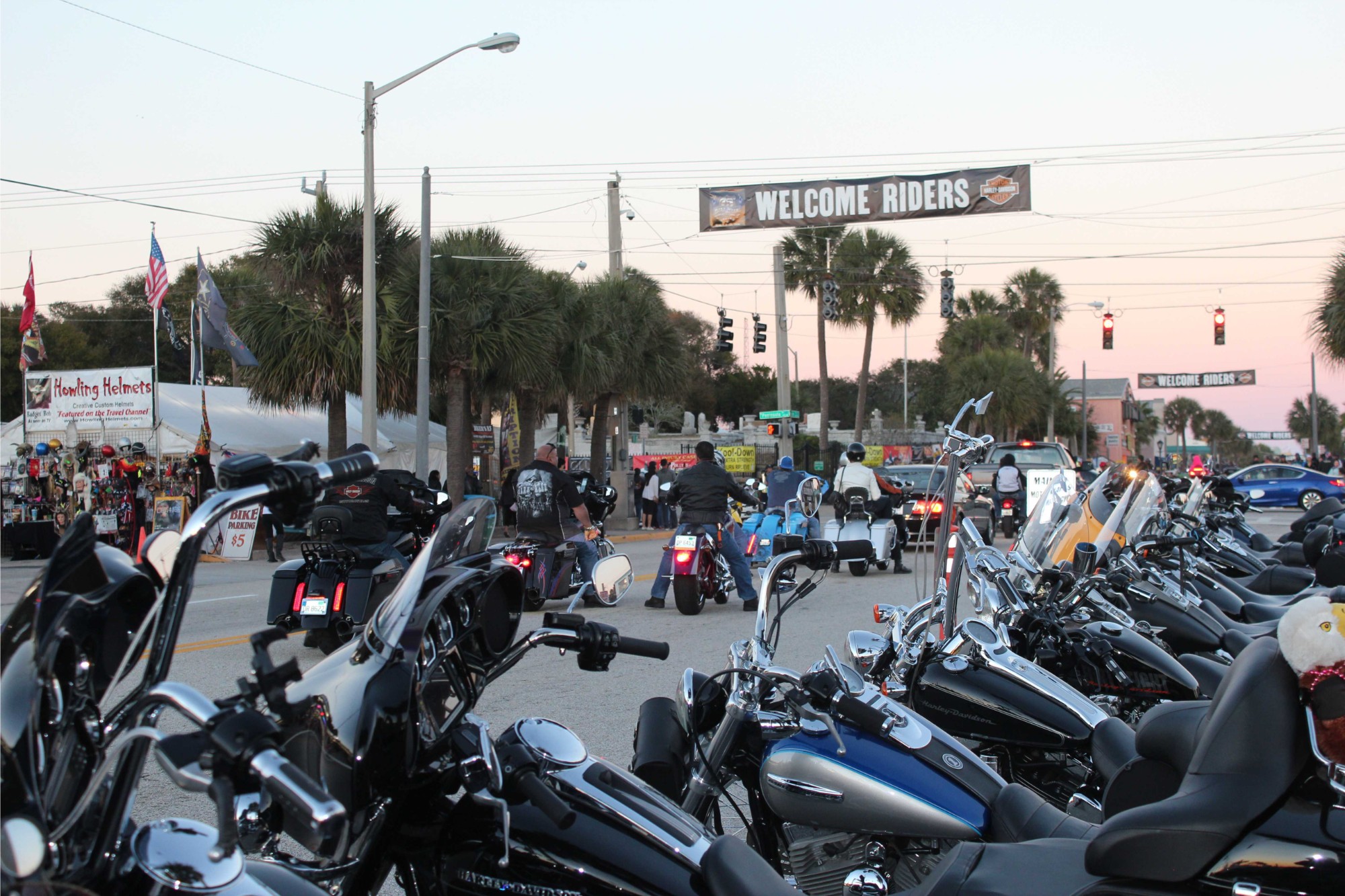
Bike Week runs from March 9 through March 18 in Daytona Beach, Fla. Those attending are encouraged to get involved in the many AMA events taking place during the week.

The 2018 AMA National Gypsy Tour, kicks off during Bike Week, with two locations for road riding enthusiasts to visit March 9 through March 17.

One spot is outside Daytona International Speedway and features this year’s AMA Motorcycle Hall of Fame raffle bike.

The second AMA National Gypsy Tour tent is on Beach Street near Riverfront Park, across from Indian Motorcycle Daytona Beach.

Both locations offer Bike Week attendees the opportunity to sign up for an AMA membership. Current AMA members may stop by either location to pick up a Gypsy Tour pin.

For those who want to get an early start on the action, Dixie Dual Sport has scheduled its 22nd Annual Devil’s Creek ride for March 2-4, starting in Brooksville, Fla. For more information, visit www.dixiedualsport.com/devilscreek.

The rest of the schedule includes:

Friday, March 9

Round 1 of the AMA All-Star National Flat Track Series, an AMA featured series, at Oglethorpe Speedway Park in Pooler, Ga. The race features amateur and professional racers of all ages competing on a half-mile course. Visit www.stevenaceracing.com for more information.

Saturday, March 10

Oglethorpe Speedway Park hosts Round 1 of the 2018 AMA Daytona Bike Week Flat Track Championship Series, an AMA Major Event. The race is in conjunction with the first round of the 2018 AMA Vintage Dirt Track National Championship series. More information is available at www.stevenaceracing.com.

Round 1 of the 2018 AMA Vintage Dirt Track National Championship Series takes place at Oglethorpe Speedway Park, alongside the AMA Daytona Bike Week Flat Track Championship. This event features vintage motorcycles racing on a half-mile course. To learn more, visit the Dirt Track Racing page on www.americanmotorcyclist.com.

The Florida Trials Association Motorcycle Club Inc. is hosting a two-day observed trials at Hardrock Motorcycle Park, 6849 N.W. Gainesville Road, Ocala, Fla. More information is available at www.floridatrials.net.

The 2017 Grand National Cross Country Series, an AMA National Championship, begins its two-day event with off-road ATV racing on Saturday, March 10 in Palatka, Fla. For more information visit www.gnccracing.com.

The stars of AMA Supercross fly into Daytona International Speedway for Round 8 of the Monster Energy AMA Supercross Championship on March 10. Ticket information is available at www.daytonainternationalspeedway.com.

Sunday, March 11

The AMA Organizer update meeting takes place from 9 a.m. to 11 a.m. at the Residence Inn Daytona Beach Speedway/Airport. AMA Riding/Racing Program Development Manager Joe Bromley will be presenting and answering questions on a number of topics related to sanctioning, chartering and volunteering. If you are interested in attending, RSVP to Serena Van Dyke at (800) 262-5646, ext. 1241 or email [email protected].

Round 2 of the AMA All-Star National Flat Track Series takes place at Volusia Speedway Park in Barberville, Fla. The race features amateur and professional racers of all ages competing on a half-mile course. Visit www.stevenaceracing.com for more information.

The second day of the observed trials by the Florida Trials Association Motorcycle Club Inc. is on March 11 at Hardrock Motorcycle Park, 6849 N.W. Gainesville Road, Ocala, Fla. More information is available at www.floridatrials.net.

The Grand National Cross Country Series, an AMA National Championship, continues with the second day of its two-day racing event, as motorcycles race the off-road course on Sunday, March 11 in Palatka Fla. To learn more, visit www.gnccracing.com.

The AMA-sanctioned Ricky Carmichael Daytona Amateur Supercross takes to the track inside the Daytona International Speedway on Sunday, March 11, for a two-day event. The race features some of the country’s fastest amateur motorcycle racers on the same track professional Supercrossers raced on the night before. More information is available at www.racedaytona.com.

Monday, March 12

AMA Board Chair Maggie McNally-Bradshaw will be a participant at the first Women in Racing Conference, hosted by MX Sports and Racer Productions. The event takes place in the Daytona International Speedway Pressroom from 10 a.m. to 2 p.m., with a working lunch served. The goal of the one-day conference is to conduct an in-depth inventory and evaluation of the current women’s racing programs and an examination of their performance. Women involved in all forms and at all levels of motorsports racing are invited to attend. To reserve your seat, email [email protected] or call Dana at (304) 284-0084.

Round 2 of the Daytona Bike Week Flat Track Championship, an AMA Major Event, is at Volusia Speedway Park. The race is in conjunction with Round 2 of the AMA Vintage Dirt Track National Championship. For more information, visit www.stevenaceracing.com.

Volusia Speedway Park also plays host to Round 2 of the AMA Vintage Dirt Track National Championship Series on March 12 in. Visit the Dirt Track Racing page on www.americanmotorcyclist.com to learn more.

Ricky Carmichael Daytona Amateur Supercross will host the second day of its two-day event at the Daytona International Speedway. To learn more visit www.racedaytona.com.

Tuesday, March 13

The third and final round of the Daytona Bike Week Flat Track Championship, an AMA Major Event, takes place on the short track at Volusia Speedway Park. Go to www.stevenaceracing.com to learn more.

Professional racers from the AMA Pro ATV Motocross National Championship compete on the Supercross track inside the Daytona International Speedway on March 13 at the Daytona ATV Supercross. Amateur ATV Supercross racing is also included. Details on the amateur classes and other event information are available at www.atvmotocross.com.

Round 3 of the AMA Vintage Dirt Track National Championship Series will take place on the short track at Volusia Speedway Park. More information about this event is available on the Dirt Track Racing page at www.americanmotorcyclist.com.

Wednesday, March 14

The Daytona 200 Motorcycle Club hosts a road run. For more information, visit the club’s website at www.daytona200mc.com.

Friday, March 16

In preparation for the AMA-sanctioned Daytona 200 and other road racing activity at Daytona International Speedway during Bike Week, road racers will practice March 16 at Daytona International Speedway. Visit www.daytonainternationalspeedway.com to get tickets.

American Sportbike Racing Association and Championship Cup Series racers have practice March 16 at the Daytona International Speedway. To find out which classes are practicing and the times, visit www.asraracing.com and ccsracing.us for details.

Saturday, March 17

The 77th running of the world-famous Daytona 200 takes place at 1 p.m. at the Daytona International Speedway on March on 17. The 200-mile features both national and international racers competing on a 3.51-mile speedway/infield road course. For ticket information, go to www.daytonainternationalspeedway.com.

Sunday, March 18

The American Sportbike Racing Association and Championship Cup Series racers compete at Daytona International Speedway on March 18 in a variety of classes. For a full list of classes visit www.asraracing.com.

Daytona Bike week also features multiple rides and races organized by AMA-chartered clubs and promoters, along with the thousands of AMA members who attend the event each year. All AMA riding and racing events can be found on the AMA calendar at www.americanmotorcyclist.com.

About the American Motorcyclist Association

Founded in 1924, the AMA is a not-for-profit member-based association whose mission is to promote the motorcycle lifestyle and protect the future of motorcycling. As the world’s largest motorcycling rights and event sanctioning organization, the AMA advocates for riders’ interests at all levels of government and sanctions thousands of competition and recreational events every year. The AMA also provides money-saving discounts on products and services for its members. Through the AMA Motorcycle Hall of Fame in Pickerington, Ohio, the AMA honors the heroes and heritage of motorcycling. For more information, visit www.americanmotorcyclist.com.

Not a member? Join the AMA today: www.americanmotorcyclist.com/mobile-join 

British Superbike: Tyco Renews Sponsorship Of TAS Racing

TYCO & TAS RACING LOOK TO FUTURE SUCCESS

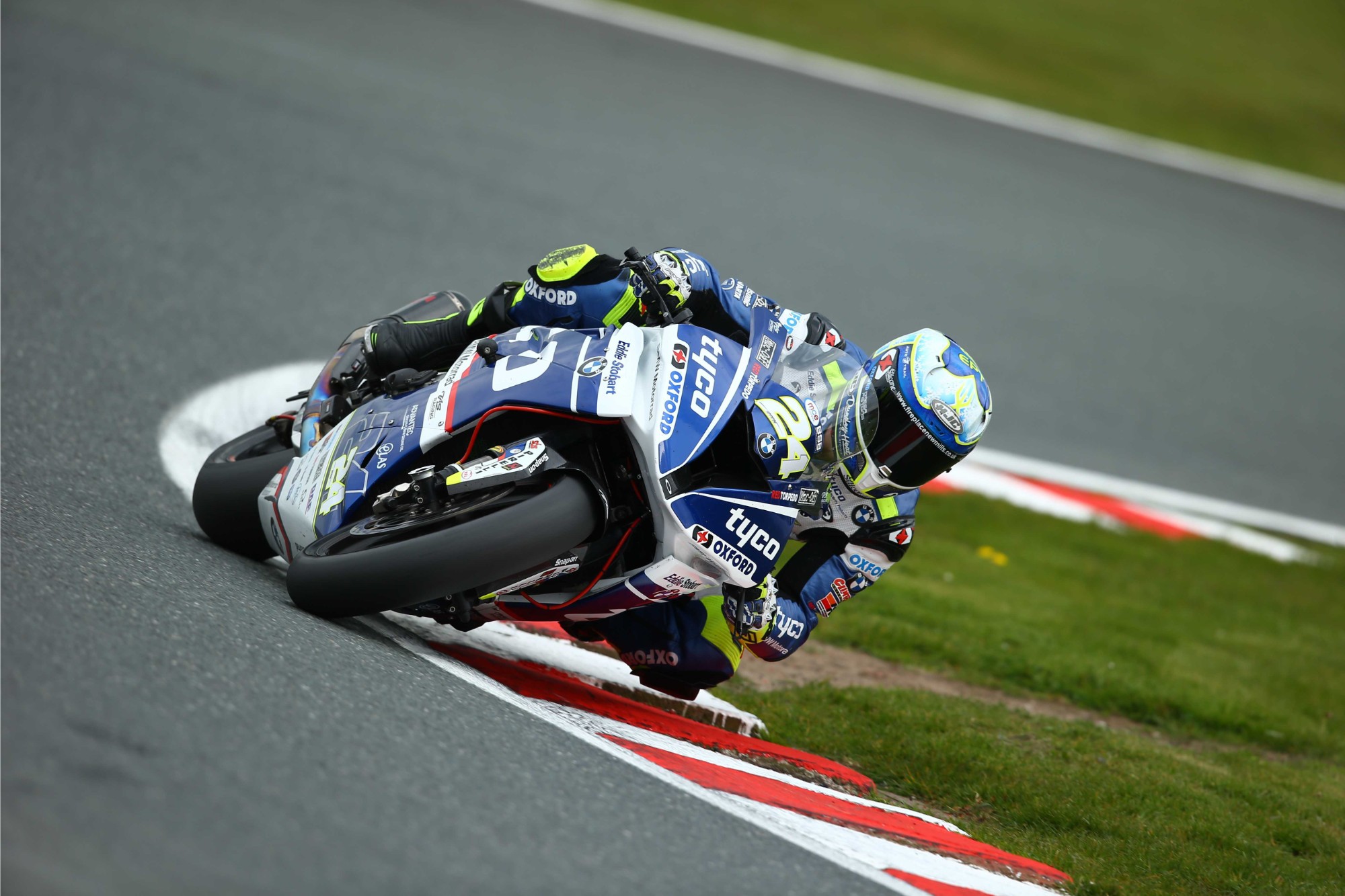
Tyco, the security products division of Johnson Controls, has confirmed its continuing association with TAS Racing who are the official representatives of BMW Motorrad UK running under the Tyco BMW banner in the British Superbike Championship and on the International Road Racing scene.

The combined force of TAS Racing and Tyco have together celebrated over 50 race victories and a further 100 podium finishes since their partnership began and are looking ahead positively to the 2018 racing season.

“We are delighted to have the opportunity to continue our association with TAS racing during 2018 as the Tyco/BMW Motorrad racing team reflects the quality and winning mentality of the Tyco brand,” said Paul Mildon, Senior Marketing Manager – EMEA, Security Products Building Technologies & Solutions for Johnson Controls.

“All the members of the Tyco/BMW Motorrad team share our ‘can-do’ positive attitude towards achieving our targets and to always look for opportunities for continual improvement in everything we do to support our customers.”

Tyco BMW Team Manager – Philip Neill: “The relationship between Tas Racing and Tyco is very much a partnership in the true sense of the word and we look forward to continuing together and building on our considerable success record. Together with BMW Motorrad we forward to a positive year ahead as we continue to represent our partners at the highest level across British Superbike and International Road racing”

The Tyco BMW Motorrad team will be looking to build on previous podium success on both the British short circuits and International roads this season. With the BMW S 1000 RR sporting a new 2018 livery, Christian Iddon and Michael Laverty will be spearheading the team’s assault on the Superbike class, with Keith Farmer challenging for the National Superstock 1000 title in the Bennetts British Superbike Championship. In addition, Dan Kneen will represent Tyco BMW on the International roads whilst Alastair Seeley has rejoined the team to compete in the Vauxhall International North West 200 race meeting.

A full list of the race meeting can be seen at www.tycobmw.com/calendar/

About Johnson Controls:

Johnson Controls is a global diversified technology and multi industrial leader serving a wide range of customers in more than 150 countries. Our 120,000 employees create intelligent buildings, efficient energy solutions, integrated infrastructure and next generation transportation systems that work seamlessly together to deliver on the promise of smart cities and communities. Our commitment to sustainability dates back to our roots in 1885, with the invention of the first electric room thermostat. We are committed to helping our customers win and creating greater value for all of our stakeholders through strategic focus on our buildings and energy growth platforms. For additional information, please visit http://www.johnsoncontrols.com or follow us @johnsoncontrols on Twitter.

About Johnson Controls Building Technologies & Solutions:

Johnson Controls Building Technologies & Solutions is making the world safer, smarter and more sustainable – one building at a time. Our technology portfolio integrates every aspect of a building – whether security systems, energy management, fire protection or HVACR – to ensure that we exceed customer expectations at all times. We operate in more than 150 countries through our unmatched network of branches and distribution channels, helping building owners, operators, engineers and contractors enhance the full lifecycle of any facility. Our arsenal of brands includes some of the most trusted names in the industry, such as Tyco®, YORK®, Metasys®, Ruskin®, Titus®, Frick®, PENN®, Sabroe®, Simplex® and Grinnell®. For more information, visit www.johnsoncontrols.com or follow @JCI_Buildings on Twitter.

British Superbike: Honda Unveils Its 2018 Livery

Honda Racing unveils 2018 Fireblade livery
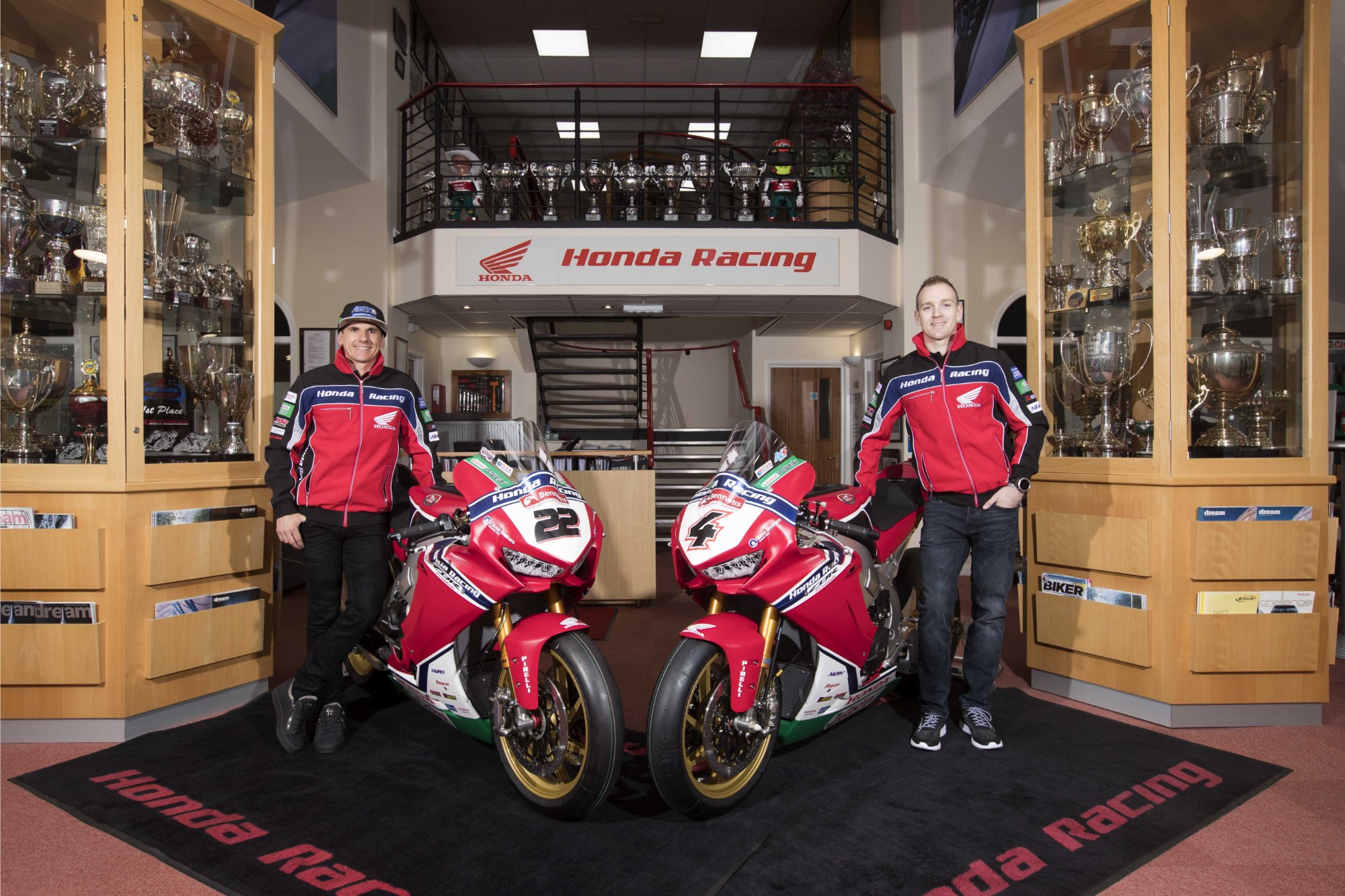
The Honda Racing team has unveiled its 2018 CBR1000RR Fireblade livery, which will be used by riders Dan Linfoot and Jason O’Halloran for their assault on the Bennetts British Superbike Championship this year.

The new racing Superbike livery keeps its Honda roots close to its heart, mirroring the colour scheme on the road-going 2018 Fireblade SP with the iconic tri-colour synonymous to CBR machinery.

With the first round of the Bennetts British Superbike Championship just around the corner at Donington Park (31 March – 2 April), the Honda Racing team is preparing for pre-season testing, where the new livery will be debuted at Monteblanco circuit in Spain from 5 March.

For all the latest information and news on the Honda Racing team follow @HondaRacingBSB on Twitter, or like the teams Facebook page.

Indian Introduces Limited-Edition Chieftain Elite

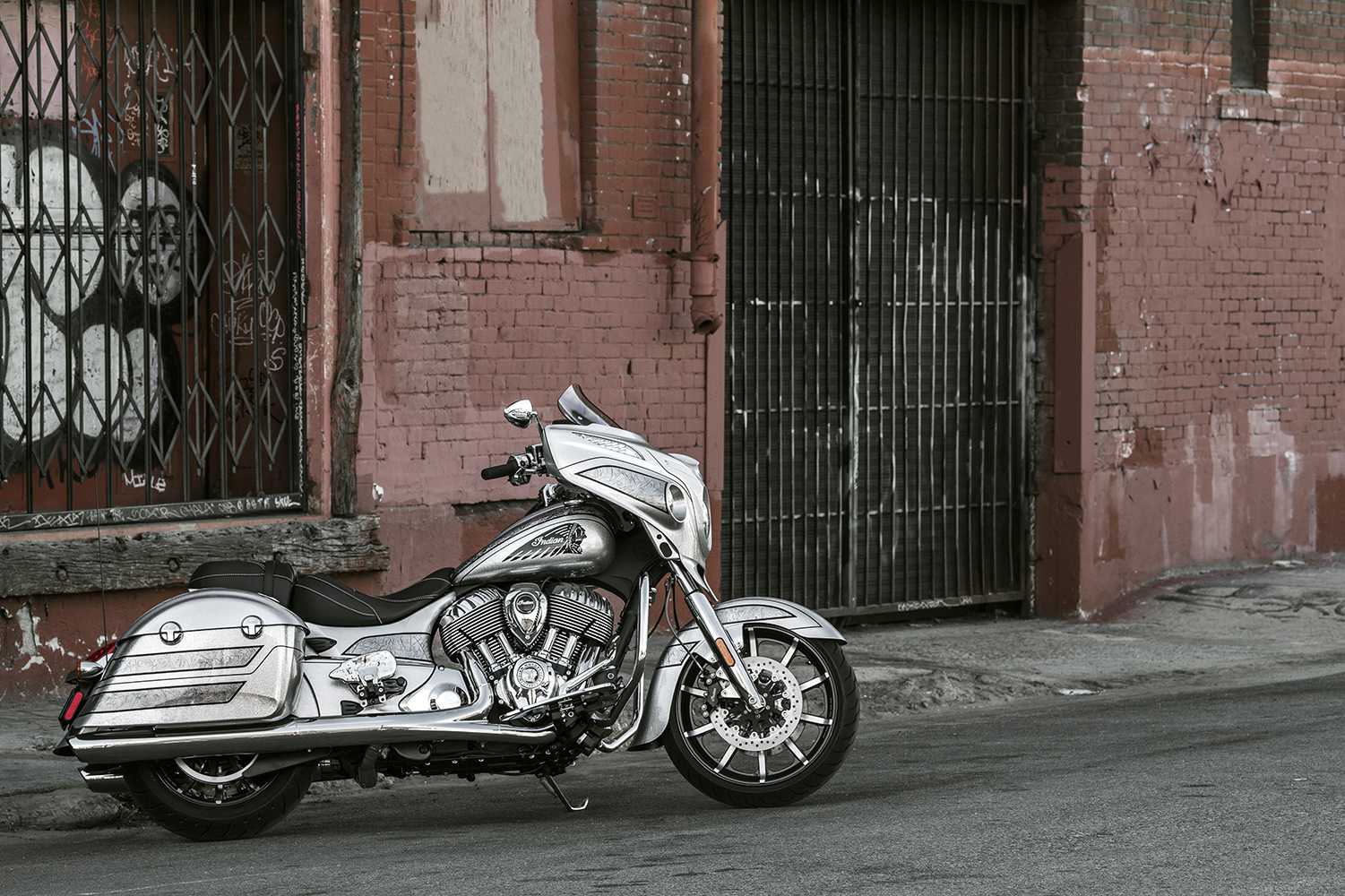
INDIAN MOTORCYCLE INTRODUCES 2018 LIMITED-EDITION CHIEFTAIN ELITE WITH ONE-OF-A-KIND BLACK HILLS SILVER PAINT

Ultra-Premium Bagger Pairs Stunning Paint Completed Entirely by Hand with Top-of-the-Line Amenities

Minneapolis – Indian Motorcycle, America’s first motorcycle company founded in 1901, today announced its new ultra-premium bagger, the 2018 Chieftain Elite. This limited-edition bagger pairs custom-inspired paint that’s completed by hand with top-of-the-line amenities for the rider who demands the best of the best.

Indian Motorcycle meticulously thought through the design to ensure every line, texture and material complemented the contours of this aggressive platform. The focal point of this bagger is the stunning, specialty paint featuring high-flake Black Hills Silver. As the name suggests, this paint was inspired by the silver mines in the Black Hills of South Dakota, which is near Indian Motorcycle’s custom paint facility in Spearfish, SD. A team of Indian Motorcycle experts mask the bodywork, lay the graphics, and hand-spray each Chieftain Elite. Each bike takes nearly 25 hours due to the time-intensive, painstaking processes that are completed by hand. Incredibly, no two bikes will look the same due to the level of human touch involved. There’s no question that this bold, one-of-a-kind bike will stand out in any crowd.

“Whether cruising around the city or touring the country backroads, the 2018 Chieftain Elite delivers on its promise of being the best bagger that money can buy,” said Reid Wilson, Senior Director – Marketing and Product Planning for Indian Motorcycle. “This bike was born to turn heads and provide an unmatched riding experience with all of the premium amenities included.”

The 2018 Chieftain Elite has a commanding stance that’s punctuated by its 19-inch, 10-spoke, contrast-cut front wheel and marbled graphics package. It’s equipped with premium features, including a 200-Watt premium audio system, Pathfinder LED headlight and driving lights, a push-button power flare windshield, billet aluminum Select Driver and Passenger Floorboards, and genuine leather seats. New for this year’s Chieftain Elite are pinnacle mirrors and updated, smaller hand controls for improved ergonomics.

A host of other features come standard, including Ride Command® – the largest, fastest, most customizable infotainment system on two wheels. The seven-inch, glove-compatible touchscreen features turn-by-turn navigation, customizable rider information screens and Bluetooth® compatibility. The Chieftain Elite also features ABS, cruise control, tire pressure monitoring, remote-locking saddlebags and keyless ignition.

At the soul of this bike is the Thunderstroke 111 engine, an award-winning American V-Twin that delivers a monstrous 119 ft-lbs of torque and power to spare in every gear.

A large number of accessories are also available for riders looking to add power or further customize the Chieftain Elite. The Thunder Stroke® 116 ci Stage 3 Big Bore Kit adds 20 percent more horsepower and 15 percent more torque for those looking to take performance to the next level. Color-matched accessories are also available for riders who want extra protection, style and storage, including a Quick Release Trunk, Hard Lower Fairings and a Valanced Front Fender.

The Chieftain Elite is a strong addition to Indian Motorcycle’s iconic lineup. Only a limited number of these motorcycles will be built. Pricing starts at $31,499 in the U.S. and $37,999 in Canada. Available at Indian Motorcycle dealers starting March 1.

Learn more about Indian Motorcycle and the 2018 Chieftain Elite by visitingIndianMotorcycle.comand following along onFacebook,TwitterandInstagram.

ABOUT INDIAN MOTORCYCLE®

Indian Motorcycle Company is America’s First Motorcycle Company®. Founded in 1901, Indian Motorcycle has won the hearts of motorcyclists around the world and earned distinction as one of America’s most legendary and iconic brands through unrivaled racing dominance, engineering prowess and countless innovations and industry firsts. Today that heritage and passion is reignited under new brand stewardship. To learn more, please visitwww.indianmotorcycle.com.

MotoGP: Johann Zarco Comes Out On Top As Testing Concludes In Qatar (Updated)

FIM MotoGP World Championship Test

Losail International Circuit, Qatar

March 3, 2018

Day Three Test Results (all on Michelin tires):

1. Johann Zarco, France (Yamaha), 1:54.029

2. Valentino Rossi, Italy (Yamaha), 1:54.276

3. Andrea Dovizioso, Italy (Ducati), 1:54.331

4. Cal Crutchlow, UK (Honda), 1:54.457

5. Maverick Vinales, Spain (Yamaha), 1:54.471

6. Marc Marquez, Spain (Honda), 1:54.591

7. Alex Rins, Spain (Suzuki), 1:54.650

8. Danilo Petrucci, Italy (Ducati), 1:54.659

9. Jorge Lorenzo, Spain (Ducati), 1:54.692

10. Jack Miller, Australia (Ducati), 1:54.749

11. Dani Pedrosa, Spain (Honda), 1:54.774

12. Franco Morbidelli, Italy (Honda), 1:55.132

13. Bradley Smith, UK (KTM), 1:55.179

14. Aleix Espargaro, Spain (Aprilia), 1:55.232

15. Hafizh Syahrin, Malaysia (Yamaha), 1:55.273

16. Karel Abraham, Czech Republic (Ducati), 1:55.300

17. Alvaro Bautista, Spain (Ducati), 1:55.347

18. Tito Rabat, Spain (Ducati), 1:55.465

19. Pol Espargaro, Spain (KTM), 1:55.489

20. Scott Redding, UK (Aprilia), 1:55.595

21. Takaaki Nakagami, Japan (Honda), 1:55.763

22. Xavier Simeon, Belgium (Ducati), 1:55.943

23. Tom Luthi, Switzerland (Honda), 1:56.122

24. Andrea Iannone, Italy (Suzuki), no time recorded

Best Combined Test Time (all on Michelin tires):

1. Johann Zarco, France (Yamaha), 1:54.029

2. Valentino Rossi, Italy (Yamaha), 1:54.276

3. Andrea Dovizioso, Italy (Ducati), 1:54.331

4. Cal Crutchlow, UK (Honda), 1:54.457

5. Maverick Vinales, Spain (Yamaha), 1:54.471

6. Andrea Iannone, Italy (Suzuki), 1:54.586

7. Marc Marquez, Spain (Honda), 1:54.591

8. Alex Rins, Spain (Suzuki), 1:54.650

9. Danilo Petrucci, Italy (Ducati), 1:54.659

10. Jorge Lorenzo, Spain (Ducati), 1:54.692

11. Jack Miller, Australia (Ducati), 1:54.749

12. Dani Pedrosa, Spain (Honda), 1:54.774

13. Franco Morbidelli, Italy (Honda), 1:55.132

14. Bradley Smith, UK (KTM), 1:55.179

15. Aleix Espargaro, Spain (Aprilia), 1:55.232

16. Hafizh Syahrin, Malaysia (Yamaha), 1:55.273

17. Karel Abraham, Czech Republic (Ducati), 1:55.300

18. Alvaro Bautista, Spain (Ducati), 1:55.347

19. Tito Rabat, Spain (Ducati), 1:55.465

20. Pol Espargaro, Spain (KTM), 1:55.489

21. Takaaki Nakagami, Japan (Honda), 1:55.539

22. Scott Redding, UK (Aprilia), 1:55.595

23. Xavier Simeon, Belgium (Ducati), 1:55.943

24. Tom Luthi, Switzerland (Honda), 1:56.122

25. Mika Kallio, Finland (KTM), 1:57.218

More, from a press release issued by Monster Yamaha Tech 3:

Zarco concludes final pre-season test superbly on top, while Syahrin shows impressive progress

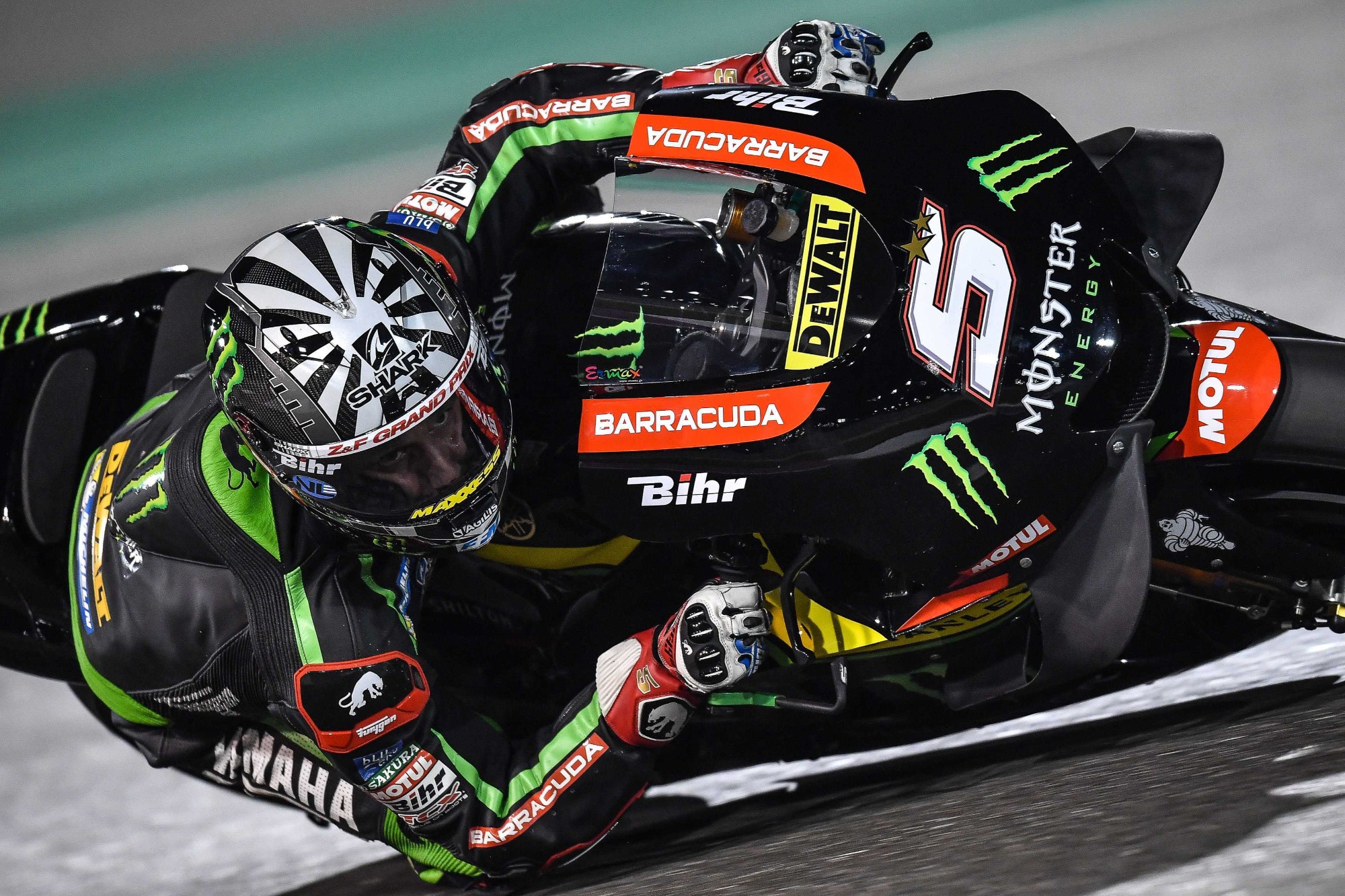
With a masterful lap of 1:54.029 Monster Yamaha Tech3 rider Johann Zarco dominated the MotoGP field on the last day of testing before the start of the 2018 season. The remarkable Frenchman took over the top spot with two hours to go, before he carried out a race simulation in order to be perfectly prepared for the first race, which takes place in two weeks’ time under the floodlights of the Losail International Circuit.

On the other side of the Tech3 garage, Hafizh Syahrin improved his pace aboard the Yamaha YZR-M1 considerably. The premier class rookie skimmed nearly 1.5 seconds from his best lap on day one to complete what is just his second MotoGP test only 0.141 behind the fastest newcomer of the category, with a fantastic accomplishment to reach the top 16 overall. Both, Zarco and Syahrin are eager to commence the season following highly promising signs during their respective preparations.

Johann ZARCO

Position: 1st – Time: 1’54.029 – Laps: 53

“That was a very good third day, I’m delighted to finish with the top lap time. I think it was even possible to ride inside the high 53s, but we have to accept that we have to understand step by step how to ride at this speed. We did some great work with the team and with everything we did during these three days, I felt more confidence and I could work well on this. When I did a very long run to test the race, it was not too fast. I did 17 laps in a row, but probably a bit tired after this intense days here. Anyway, we are constant and I can relax a lot on the bike. I’m really happy about that and I need to keep this feeling in mind to start the race weekend well in a fortnight.”

Hafizh SYAHRIN

Position: 15th – Time: 1’55.273- Laps: 44

“I’m very happy about this last day. I didn’t expect to be able to ride in the low 55s and keep this pace also consistently. A huge thank you to the Tech3 crew, they did a really good job. We are working hard in order to try to get closer to the top as much as we can. Honestly, this time today was surprising for me. I feel very confident, although I did a small mistake during the race simulation. But we quickly understood it and know what we have to do for race day. I’m very thrilled, thanks again to our team, all the sponsors and fans, they are fantastic!”

More, from a press release issued by Team Estrella Galicia 0,0 Marc VDS:

Big gains for Morbidelli on the final day in Qatar

Team Estrella Galicia 0,0 Marc VDS rider Franco Morbidelli made big gains on the third and final day of testing in Qatar, with the reigning Moto2 World Champion going almost a second faster compared to yesterday.

Morbidelli had been struggling to get the best from the softer option Michelin tyres, with a number of minor crashes in Thailand sapping the Italian’s confidence as he pushed to reduce the gap to the frontrunners on new tyres.

But solid work from Morbidelli and his crew during the three days in Qatar saw this confidence restored and in his final time attack the MotoGP rookie moved into the top 12 with a time of 1’55.132, to end the test on a high.

Lüthi also saw an improvement in his lap time after completing more than 50 laps of the 5.38km Losail International Circuit today, as he continued working with his crew to increase his understanding and familiarity with the Honda RC213V and Michelin tyres.

The Swiss rider has been playing catch up after missing two tests in 2017 due to injury, but made a big step forward during the second test of the season in Buriram, which he backed up with further progress here in Qatar. Lüthi is the first to admit that the learning curve is still steep, but maybe not quite as precipitous as it was when he threw a leg over the Honda RC213V for the first time in Sepang back in January.

The next time Morbidelli and Lüthi take to the track will be to make their premier class debut at the opening race of the season, which takes place on Sunday 18th March, again at the Losail International Circuit.

Franco Morbidelli: 1’55.132

“We made a fairly big change to the bike for the last part of the test yesterday, but today was more about refining the set up with just a few small changes. Now we’ve had three days on this track and we’ve done a lot of laps, which has allowed us to improve our pace and this is the important thing. The three days here in Qatar have gone pretty well, we kept improving and I feel more confortable with the bike, so it’s been a good way to end preseason testing. Now testing is done and I’m looking forward to the first race of the season in two weeks time.”

Tom Lüthi: 1’56.122

“We had some tyres left, which meant I could put in some laps today and more time on the bike is exactly what I need right now. We started today where we left off yesterday and we saw some improvement, but I’m definitely still looking for more. At the moment it’s the same each time for us; working on the bike, trying to understand and, above all else, trying to learn with each exit. What is important is that we’ve made progress every day of the preseason tests, even on the final day here in Qatar. The feeling is coming better and better and that’s exactly what I needed ahead of my first race in MotoGP.”

Michael Bartholemy: Team Principal

“I think Franco has shown that he’s now ready for the first race. He had an issue with getting the best from the soft tyre in Thailand, and crashed a few times as he tried to figure out the process, but that’s a scenario common to new riders in MotoGP. But today he mastered the soft tyre, posting a good lap time that compares favourably with the race times from last season, so we’re happy with this. On Tom’s side there has been constant improvement, even if his position on the timesheet doesn’t reflect this, but his lap time is similar to our times from the race last year, the difference is not so big, but everybody is improving and that’s how it is in racing. I think that soon we will see Tom make the same step that Franco made today, but we lost some time due to him missing the tests last year. I’m confident that in just one or two races Tom will at the same level as Franco is now.”

More, from a press release issued by Team Suzuki ECSTAR:

POSITIVE END FOR WINTER TESTING

Alex Rins: 7th – 1:54.650 (+ 0.621)

Andrea Iannone: N/A

  • Team Suzuki ECSTAR had mixed fortunes on the final day of the last winter test at Losail International Circuit. Nevertheless, overall it has been a positive three days, with the opportunity for the team to adjust and define settings and work on race setup for the first Grand Prix of the year in ten days’ time.
  • Alex Rins kept the crucial consistency which he has shown throughout the winter, and after trying a race simulation he completed the day in 7th place, +0.621 from the top of the timesheet. His overall feeling was very positive.

    Unfortunately Andrea Iannone could not take to the track due to sickness. The symptoms began to set in overnight on Friday and his condition worsened, especially with the addition of a fever. This made it impossible for him to ride. He was finally given the diagnosis of gastroenteritis with fever, which means he will need some time to recover.

    At the end of the session the track was flooded by the organisers in order for the riders to check the conditions should rain strike Qatar during the race weekend, it was compulsory for the riders to check the feel of the tyres and the glare of the wet track under the lights. With Andrea Iannone unable to ride, this task was undertaken by Alex Rins.

    Ken Kawauchi – Technical Manager

    “Overall it was a good test, except for the fact that Andrea was sick today and had to cancel his track time. But on the second day he did a race simulation and he could get some important information to prepare for the race. Alex did all three days of testing so we were able to define his settings for the race. I am confident that we have prepared well for the first race.”

    Davide Brivio – Team Manager

    “We have finished our testing. Today was good and bad; bad because unfortunately Andrea couldn’t ride due to his sickness, so that was a pity. But it’s OK, we’ll just have to finalise things with him during the race weekend. And Alex ended these winter tests with a long run and good pace, so I think we are ready for the GP weekend. Everybody wants to get to the race now, we’re all tired of testing, and we want to know the answers to our questions!”

    Alex Rins

    “I think the three days riding here have been very good, and it’s been a very positive test because we tried many things and we confirmed all these things. We also tried a race simulation and the race pace was quite good, so I’m really excited to start this new season with a lot of confidence, and I think that we have a great package.”

    Andrea Iannone

    “I’m disappointed I couldn’t ride today, but I was feeling very bad. I tried but it was impossible to go out on track. I felt very sick and weak. Anyway, the progress we’ve done in this last test leaves me quite satisfied, we had two positive days and we have a good base. We missed out on the fine tuning work we were supposed to do today, but we will work hard in free practice before the race to recover the tasks we lost. Apart from my sickness, my feeling is good with the bike and the team.”

    More, from a press release issued by Angel Nieto Team:

    NEXT CHALLENGE: GRAND PRIX OF QATAR

    Ángel Nieto Team complete MotoGP preseason with race simulations for both Álvaro Bautista and Karel Abraham

    Johann Zarco announced his arrival as a MotoGP rider on his debut in Qatar last season, when he led the race for several laps, and he will start his second year at the top level as the man in form after finishing the final preseason test at the Losail circuit with the fastest lap (1’54.029). Zarco finished just a tenth off the best ever lap of Losail, which was set by Jorge Lorenzo in 2008 (1’53.927), with Valentino Rossi, Andrea Dovizioso and Cal Crutchlow closely behind him as up to twelve riders dipped under the 1’55 mark. Current World Champion Marc Márquez will start his title defence after finishing seventh fastest tonight.

    For the Ángel Nieto Team, Karel Abraham finished with a best lap of 1’55.300, which left him sixteenth overall on the final day. The Czech rider completed a sixteen-lap run (the race here on 18th March will be 22 laps), maintaining a pace between 1’55.8 and 1’56.9. Abraham leaves Qatar feeling satisfied with the work done and with the experience gathered on the Ducati GP16. His team-mate Álvaro Bautista, meanwhile, was just 0.047 seconds behind Abraham after himself completing a full race simulation. The Spaniard improved his pace from yesterday but not enough to leave him completely happy as he targets further improvement during the Grand Prix weekend in a fortnight’s time.

    16th Karel Abraham 1:55.300 (50 laps): “The race simulation we did today was very positive, we set some good times and I am happy with the way it went. In general it has been a good test, we have done a lot of work on the set-up and gathered lots of experience with the new bike. At the end of the day in the wet test I found that the track had much more grip than I expected but the visibility wasn’t the best, there were a lot of reflections.”

    17th Álvaro Bautista 1:55.347 (58 laps): “Today we tried to work more on improving grip and feeling. We tried some things that didn’t work as well as we would have liked. We did improve the feeling but just not as much as we wanted. We also did another race simulation and I was able to go faster than yesterday, just not enough. I would have liked to make more progress today than we did and have a better feeling with the bike, but let’s see if we can improve for the race and be more competitive.”

    More, from a press release issued by Alma Pramac Racing:

    Qatar MotoGP™ Official Test – Losail Circuit (Doha)

    #QatarTest DAY 3. Fantastic long run for Petrux. Jack finishes in Top 10. See you in 2 weeks!

    The last winter tests of the 2018 MotoGP season end with extremely positive results for Alma Pramac Racing. Danilo Petrucci impressed with a great long run and Jack Miller improved his time again and confirmed himself in the TOP 10 (11th in the combined standings) after fifth place in Malaysia and Thailand. At the end of the session, the track was wetted to allow riders to try out the tarmac in wet-conditions.

    On the last day of activity on the Losail International Circuit, the main focus is on race simulation. Petrux got off to a strong start in the morning and remained at the top of the standings for a long time. Then he entered the track for the long run, and he shot consistently in low 55s, making him one of the fastest. The rider from Terni also recorded the Top Speed (346.2 km/h today) for the third consecutive day.

    Jack Miller also had a good feeling and he pushed a lot in the race simulation, managing to record interesting times between 56.0 and low 56s. In the time attack at the end of the session, the Australian rider then managed to score the Top 10, which gives him great confidence ahead of the race.

    8th – Danilo Petrucci 1:54.659

    “I’m really happy for the long run. I managed to make a very good race simulation with soft tyres both at the front and rear and this is a really positive fact also because we made very few changes to the bike. I didn’t look for lap time but that’s not important. Now we have to wait for two weeks but the confidence is very high”.

    10th – Jack Miller 1:54.749

    “We have also managed to make further improvement today, and that is why I am very pleased. We worked on the set up with choices that gave us positive indications. If I have to be honest, I still have a bit of trouble finding the right grip but during the race simulation I had a good feeling and the race pace was good. I am sure that we can improve further”.

    More, from a press release issued by Repsol Honda:

    Marquez and Pedrosa finish final pre-season test in Qatar

    The final day of the last test of the pre-season dawned sunny and dry but quite windy in Qatar. Marc Marquez headed out on the track soon after 3 pm. followed shortly by teammate Dani Pedrosa.

    Both riders used these three days to finalize their preparation for the start of the 2018 season and to work on the race setup of their RC213V. For the first time, today they also had the chance to ride in the wet at the Losail Circuit, as race direction organized a special test for the final hour, artificially soaking the track.

    Marc completed a 10-lap mini long run and a total of 75 laps, with a best time of 1’54.591” on lap 70 to finish sixth fastest for the day. Dani ended in 11th place with a best time of 1’54.774” on lap 29 of 44.

    The team will now fly back to Europe for two weeks but will return on track at Losail on Friday, 16 March, for the first practice of the Qatar GP (2.45 – 3.30 p.m., local time).

    Marc Marquez 93

    6TH (7TH IN THE COMBINED STANDINGS) 1’54.591

    “I’m satisfied with how our pre-season went in general. We’ve worked a lot on our race pace, which is the most important thing in the end. It’s true that we’ve struggled a bit here in Qatar, but we’re happy anyway, as today in particular we took a step forward and I was able to lap consistently enough in the low-to-medium 1’55” range. Today we also tried the carbon swing arm in just one run, and I managed to ride quite fast, though we need to work more on that. For sure the championship will be very competitive starting at the first race, but I hope to enjoy it. Regarding the test in the wet, well, with the reflection of the light it’s a bit more difficult than usual to see the kerbs and the white line, and the track is a bit slippery, but for me it should be possible to do the race if it rains.”

    Dani Pedrosa 26

    11TH (12TH IN THE COMBINED STANDINGS) 1’54.774

    “I’m quite happy with the pre-season overall, with the work we’ve done, and with our pace. We’ve been competitive in different conditions, which is positive. Unfortunately, the crash on the first day made things a bit difficult for us here, and the track itself is also a bit demanding for us, but we made some progress and improved our pace a little anyway. We’re not the fastest here at the moment, but we worked well and understood a lot about the conditions and how the track changes between having grip and not having it. We learned a lot about these things. Now we have to focus on ourselves, not looking at the others, and I think we can take another step for the race. I look forward to starting the championship! Regarding the wet test, I think that in case of rain for the race, we’ll have to speak and decide all together.”

    More, from a press release issued by Movistar Yamaha:

    MOVISTAR YAMAHA MOTOGP WRAP UP PRE-SEASON TESTING WITH POSITIVE RESULTS

    Today the Movistar Yamaha MotoGP Team successfully concluded the last day of the 2018 pre-season test in Qatar. Valentino Rossi and Maverick Viñales secured second and fifth position respectively in both today’s and the combined timesheets.

    Losail (Qatar), 3rd March 2018

    The Movistar Yamaha MotoGP Team were back on track in Qatar for a very special third and final day of MotoGP testing. Valentino Rossi and Maverick Viñales had a full schedule today, completing both a dry and a wet session. They ended the 2018 MotoGP pre-season testing on a positive note, finishing in second and fifth place respectively in today’s and the combined timesheets, and in third and seventh position in the wet session.

    Unable to complete his time attack yesterday, Rossi was eager to make strides today. The Doctor entered the track at 15:30 local time and he wasn’t to let a small set-back get in his way. Though he suffered a crash in turn 14 with still four hours of the dry session remaining, he was unharmed and quickly back out on track to make up for lost time.

    The Italian spent the remainder of the available dry time preparing for the first race of the season, to be held at the Losail International Circuit in two weeks’ time, and noticeably quickened his pace towards the end of the session. He ended the dry testing in second place with a 1’54.276s, set on lap 42 of 49 laps, 0.247s from first.

    Viñales also showed that hard work pays off. He started the session half an hour after his teammate, but went the extra mile to find a good set-up, ahead of the first round of the MotoGP season.

    He completed 40 laps in total and made a big step in the final 40 minutes of the dry testing time. He wrapped up the third day of testing in fifth place, posting a best time of 1’54.471s, set on lap 38, 0.442s off the front.

    Following the dry session, the riders were given the opportunity to test the Losail circuit in (artificial) wet conditions during the final hour. Rossi completed the wet session in third place with a 2’15.542s. Viñales secured seventh place in the wet session results, clocking a 2’21.302s.

    The Movistar Yamaha MotoGP Team will be back in Qatar on March 15th for the MotoGP 2018 Line-up Presentation and to commence the 2018 season, with the Grand Prix of Qatar being held from March 16th – 18th.

    MASSIMO MEREGALLI

    TEAM DIRECTOR

    We worked really hard these last three days and it wasn’t all smooth sailing. We encountered some difficulties along the way that took some time to fix, but in the end we managed to get a lot of testing done and find some solutions. We tried many things, some were good, some weren’t, and we made an important step at the end of the dry session. We also had the opportunity to try the track in wet conditions. The most important thing is that the riders are feeling good on the bike and can carry a competitive and consistent pace, because the season will start in two weeks’ time, which is something we are really looking forward to.

    VALENTINO ROSSI

    I’m quite happy after this test, especially after this afternoon, because I think we’ve worked hard in these last few days and also in the first part of today. This afternoon we put it all together and I was able to do a very good lap for second position and I also had a good rhythm, with a good pace. But, we are all still very close in the timesheets, there are a lot of riders that are strong. We continue to suffer with the tyres, front and rear, and I did just half a race distance. We have to try to understand what will happen from that point until the end of the race – we will see in two weeks.

    MAVERICK VIÑALES

    In the last 40 minutes I think we made a big step. I feel good on the bike, but not at 100% yet, so there’s still room for improvement. Anyway, we did three days of hard work, and we got a bit lost along the way. During those moments I couldn’t push and it shows we need to keep focused and pay attention when we make changes, because in the last 40 minutes it felt like a completely different bike. Like I said, we need to keep working. I think if I were to do a time attack right now, I could do a really good lap time. As soon as I got on the bike, after the changes, I felt comfortable and that I could keep a good rhythm – not as good as last year yet, but after today we came to some conclusions.

    More, from a press release issued by Aprilia Gresini Racing:

    TESTS CONCLUDED IN QATAR, APRILIA READY FOR THE RACE

    COMFORTING FEEDBACK FOR ESPARGARÓ AND REDDING

    The final tests before the start of the 2018 MotoGP Championship, also in Qatar, have just come to a close. For Aprilia these were three important days which provided comforting responses on the level of the new 2018 RS-GP, especially in terms of race pace, as demonstrated by the long-run done by Aleix Espargaró and Scott Redding.

    Both riders worked on refinements in view of the race, turning laps with used tyres to improve the performance of their RS-GP machines, a bike for which consistency over several laps is traditionally one of its strong points.

    ALEIX ESPARGARO’

    “I can’t wait to be back here in two weeks to really get to work. The tests are important but I’m happier when it’s a race. This year things will be even more interesting because all the teams and riders will be at a very high level. I gave it my best during this pre-season to improve the 2018 RS-GP. It was a pity that a small problem kept me from finishing the race simulation. The truth is that the winter tests are often deceiving. There are a lot of riders who manage to do some fast laps but values will change in the race. I believe in our potential and I am confident that we will be battling for the top 8 straight away.”

    SCOTT REDDING

    “We made a nice step forward again today with a few changes that increased my confidence straight away. I did another long run today and I was fast. I felt good on the bike and with a used tyre I did the same time that I had done yesterday with a new tyre. The RS-GP continues to perform very well with the tyres and that is something that has always been a problem for me in the past, whereas even with the soft tyre and a lot of laps I am able to be incisive and that makes me confident for the race.”

    More, from a press release issued by Dorna:

    Zarco, Rossi and Dovi rise to rule Day 3

    Yamaha blast back up top on Saturday, with Dovizioso once again a force to be reckoned with

    Johann Zarco (Monster Yamaha Tech 3) leaves the #QatarTest as the fastest man on track, with the Frenchman just over a tenth over Jorge Lorenzo’s 10-year-old pole lap record to top the test with a 1:54.029. Valentino Rossi (Movistar Yamaha MotoGP) shot back up into the higher echelons on Day 2 to get closest to the Frenchman as he was 0.247 further back – with Andrea Dovizioso (Ducati Team) completing the top three as he was once again a constant presence to be reckoned with.

    Lorenzo’s record that Zarco was hunting down is a 1:53.927, set in 2008 when the now five-time World Champion debuted – a longstanding mark of pace at the venue to add some extra lustre to the Tech 3 rider’s laptime. Behind that show of outright pace from the Frenchman’s Yamaha, Rossi’s two and a half tenth deficit was nevertheless enough to put the Italian into P2 despite a crash earlier in the day – and Dovizioso was just 0.055 off his compatriot.

    In fourth, Cal Crutchlow (LCR Honda Castrol) was the fastest Honda with a 1:54.457 – continuing his fantastic preseason form – after putting in 57 laps, which was the most of the top five. It was incredibly close between the Brit and the third Yamaha Maverick Viñales (Movistar Yamaha MotoGP), however, with the Spaniard – fastest in testing at the venue last season and the race winner – just 0.014 off after he made a late attack.

    The top five were the same as the combined times on Day 3, but the man who leaves the desert sixth overall set his best laptime on Day 2 – Andrea Iannone (Team Suzuki Ecstar). The Italian, whose 1:54.586 was the fastest lap on Friday, was sidelined on the third and final day of the third and final preseason test, suffering with illness.

    Slotting behind the ‘Maniac’ and his Day 2 assault, Marc Marquez (Repsol Honda Team) was seventh overall as he guns for his seventh title – and by another tiny margin, with only 0.005 in it. The reigning Champion also showed impressive pace on a long run, and did the most laps of anyone as he racked up 75. He ended the day sandwiched between the Team Suzuki Ecstar machines, as Alex Rins took P8 and ended preseason on form and fully healthy ahead of his sophomore season.

    Two Ducatis locked out the top ten overall, with Danilo Petrucci (Alma Pramac Racing) just 0.009 off Rins ahead of him and 0.033 ahead of the Ducati Team machine of Jorge Lorenzo. Lorenzo, who went fastest in Sepang with the quickest ever lap, put in a 1:54.692 in Qatar for P10. Second Alma Pramac Racing rider Jack Miller, who headed out late with a soft tyre for a time attack, was P11 overall and another tiny margin made the difference – just 0.057.

    Dani Pedrosa (Repsol Honda Team), after a big crash on Day 1 and having been affected since by some pain in his left hand, did the least laps on Friday of anyone but put in 44 more on the final day, ending the test in P12 overall after having topped the #ThaiTest.

    Franco Morbidelli (EG 0,0 Marc VDS) was the fastest rookie by the end of action in thirteenth, with the Italian-Brazilian leaping up the leaderboard to set a 1:55.132 and take back the honour of fastest rookie from Takaaki Nakagami (LCR Honda Indemitsu), who has largely been the man to watch in preseason. And the second quickest rookie was the newest kid on the block, Hafizh Syahrin (Monster Yamaha Tech 3), as the Malaysian – who debuted in Buriram as he steps in to replace Jonas Folger – took P16 and was only just over a tenth off Morbidelli. Nakagami was four tenths further back on Saturday, with fellow rookies Xavier Simeon (Reale Avintia Racing) and Tom Lüthi (EG 0,0 Marc VDS) another half second in arrears.

    Behind Morbidelli, Bradley Smith (Red Bull KTM Factory Racing) was the fastest rider for Austrian factory KTM in P14, just over a second off Zarco at the top, with teammate Pol Espargaro still affected by injury. Espargaro did, however, get back on track on Day 3 after sitting it out on Friday, and the Spaniard was three tenths off his teammate.

    The man completing the top fifteen was Aleix Espargaro (Aprilia Racing Team Gresini), after an early foray much further up the timesheets. The elder Espargaro brother did a 1:55.232 on the last day, with the Noale factory having four 2018 RS-GPs in Qatar for the first time ahead of the first race of the year.

    Wet test time: riders checked out conditions under the floodlights and in the wet

    After the end of the dry track time, there was one last thing on the preseason agenda – a wet test. After everyone was back in pitlane, crews around the venue set about getting the track wet in order to test Losail both in the wet and under the floodlights. After another, shorter session in those different conditions, the curtain then came down on the preseason.

    So that’s it. Decisions are made, programmes worked through and components compared – so all that remains now is to race. But there’s not long to wait, with the Qatar GP getting underway on the 16th March.


    Ducati Celebrating 25th Anniversary Of The Monster In 2018

    Ducati ready to celebrate the 25th anniversary of the Monster
    • A programme of events and initiatives to celebrate the anniversary of the iconic Ducati Naked bike
    • A special celebratory parade on 24 March in France at the “Sunday Ride Classic 2018”
    • 25 years on from the start of production, Ducati displays a 1993 Monster 900 at the museum in Borgo Panigale

    Borgo Panigale, (Bologna, Italy), 5 March 2018 – Twenty-five years have passed since the first Monster left the factory in Borgo Panigale, Bologna. Since its presentation to the public and the press at the “Intermot” international exhibition in Cologne in 1992, and its launch onto the market in 1993, this iconic Ducati model has brought a radical change to the world of motorcycles, creating a brand new sector – the naked sport bikes – and generating one of the most devoted communities of enthusiasts.

    It’s an important anniversary for Ducati, a moment full of activities and initiatives to celebrate this significant landmark. Among the events is a Monster rally organised in France at the “Sunday Ride Classic 2018”, an international event dedicated to collectors’ bikes to be held at the “Paul Ricard” Circuit in Le Castellet during the afternoon of 24 March. Ducati and the European DOCs (Ducati Owners Clubs) involved in the event have called Monsteristi together to stage a racetrack parade to celebrate the anniversary in spectacular fashion. The invitation to take part in this peaceful invasion of the circuit is open to all Monster owners who need only to register for the event and turn up at the track.

    March 5 is another date to remember. Exactly 25 years ago, the first Monster came off the Ducati production line in Borgo Panigale, Bologna. This year, to mark the anniversary, an original Monster 900 MY1993 is on display at the Ducati Museum. The bike, obtained via a collector and enthusiast who kept it in excellent condition, is ready to be admired by the museum’s thousands of visitors in the room dedicated to this iconic and historic motorcycle.

    Lots more events aimed at celebrating the 25th anniversary of Ducati’s first Naked bike are planned for the 2018 World Ducati Week, the world’s largest Ducati rally, held every two years, which gathers together thousands of enthusiasts. The event will be held on 20, 21 and 22 July 2018 at the Marco Simoncelli Misano World Circuit in Misano Adriatico. Yet another reason not to miss this fantastic occasion.

    For full information and to register to take part in the Monster parade at the “Sunday Ride Classic” see Ducati.fr.
    The programme of events at WDW2018 will be communicated shortly on the official Ducati website.

    MotoAmerica: Former Superstock 600 Champion Bryce Prince Loses Ride For 2018

    Bryce Prince will have to put his championship winning talent at the service of a new team for 2018.

    After receiving an unforeseen phone call from Hudson Motorcycles owner Mark Shinder on Sunday March 4th 2018, I was informed that the team had decided to change plans with their 600 program for 2018, and we had to part ways.

    Hudson Motorcycles and I had formed a solid bond during the 2017 season. We went into the off season with tremendous optimism for 2018 with the addition of Bobby Fong in the superbike class, and myself ready to take on the 600 Supersport championship with plenty of experience and a 600 championship under my belt.

    With such dedicated team owner-operators, quality mechanics, Rocky Stargel as crew chief, and very little time testing on my 2018 Yamaha R6, I had a great level of confidence that was materialized by several wins last weekend at the last CVMA round.

    Although being caught off guard, I would like to thank Hudson Motorcycles and all the sponsors I had helped join the team, and would like to wish them the best of luck for this exciting upcoming 2018 season.

    With just over 3 weeks before the official Barber test, I will put all my resources together to find a way to be a part of this 2018 MotoAmerica season. My passion is greater than ever, I am ready and eager to make this happen, regardless of the challenges that lie ahead and that often make our beloved sport that much more rewarding and exciting.

    Kawasaki Announces Its 2018 Road Racing Contingency Program, Including $350,000 For The Ninja 400

    Foothill Ranch, Calif. – With spring right around the corner and racing season heating up, Kawasaki’s Road Racing Contingency is back for 2018, with over $2 million up for grabs. Racers competing on a wide variety of Kawasaki Ninja® models are eligible to win green, when they ride green.

    “Kawasaki’s Ninja lineup is primed for another great season on the track,” said Kawasaki Senior Manager of Racing Dan Fahie. “Our Ninja lineup carries the same DNA as the 4-time and reigning World Superbike Champion Ninja ZX™-10RR and we are excited to support Kawasaki riders across all classes.”

    2018 Kawasaki Road Racing Contingency

    Events Total Posted
    AMA MotoAmerica 10 $1,072,050
    American Federation of Motorcyclists – AFM 7 $61,775
    American Sportbike Racing Association – ASRA 8 $30,600
    Championship Cup Series – CCS 40 $386,300
    Chuckwalla Valley Motorcycle Association – CVMA 7 $21,350
    Central Motorcycle Roadracing Association – CMRA 10 $68,000
    Central Roadracing Association – CRA 6 $20,400
    Motorcycle Roadracing Association – MRA 7 $32,725
    Oregon Motorcycle Road Racing Association – OMRRA 14 $109,200
    Utah Sport Bike Association — USBA 6 $36,600
    WERA National Challenge 8 $38,000
    WERA Sportsman Series 24 $228,150
    Washington Motorcycle Road Racing Association – WMRRA 5 $41,500
    TOTAL 182 $2,146,650
    For 2018, the all-new Kawasaki Ninja 400 has already been turning heads on and off the track. The Ninja 400 is eligible in 21 classes, amongst 10 sanctioning bodies, including nearly $100,000 in the MotoAmerica Championship Junior Cup class. All told, the all-new Ninja 400 has more than $350,000 available to eligible racers. In addition to contingency, Kawasaki offers dealer support programs through Team Green™ dealerships.
    Enrolled racers who earn contingency will enjoy:

    • Kawasaki Contingency Rewards MasterCard can be used wherever MasterCard is accepted
    • Contingency funds credited when results are approved
    • Online account balance and account tracking (24 hours)
    • Easy profile updates
    • ATM Access (Pro riders only)
    • Toll-Free customer service support at 1-866-535-2544

    All existing Kawasaki Contingency racers must re-activate their contingency account each racing year. More information is available online at https://www.kawasaki.com/racing/team-green/contingency

    Please also check with your local Kawasaki dealer for available Kawasaki genuine race kit parts and Kawasaki dealer race support programs.

    MotoGP: KTM Makes It Official By Announcing It Will Work With Tech3 Starting In 2019

    From the 2019 MotoGP season KTM Factory Racing will join forces with Hervé Poncharal and his Tech3 squad to field a strong satellite team putting all in all four KTM RC16 on the grid for the Austrian brand.

    Since re-joining the MotoGP World Championship in 2012 KTM has achieved tremendous success. An initial foray for the inaugural Moto3 championship saw KTM become the most successful manufacturer in the class. This achievement fueled a year of development before joining the premier class in 2017. At the same time a move was made into the intermediate championship and soon victories followed in Moto2 and with seven top ten finishes in MotoGP KTM enjoyed a fruitful rookie campaign in both classes. KTM Motorsports will aim to further improve in all three categories during the upcoming season starting middle of March with the first round in Qatar.

    Pit Beirer (KTM Motorsport Director): “We are very happy to join forces with Tech3 in MotoGP from 2019. The team has many years of experience and achieved a lot of great results in this championship. Their professional structure will make us even stronger. Having four KTM RC16 on the grid is also another big step for us, both for the development of our MotoGP bike and expanding KTM’s structure in the paddock. From the Red Bull Rookies Cup up to MotoGP there is a clear path to the top. We are looking forward to start a great cooperation and I’m thankful towards Hervé Poncharal for the future trust in KTM.”

    ​Life As A Corner Worker: Behind The Bales, Or, Who Are These People, And What Do They Do?

    FIRST PERSON/OPINION:

    By James Hesketh

    It doesn’t matter who is at the track or how they got there. It could be the MotoAmerica series with a paddock full of semi-trucks, or MotoGP or World Superbike with a stack of containers flown in on a fleet of jumbo jets, or a bunch of locals with single-axle trailers and pickups parked on the grass alongside EZ-Ups and generators: No one is getting out onto the track until a group of people, usually dressed in white, perform a ritual almost as old as organized racing itself.

    I only had a peripheral understanding of what those guys in white did out there during the few seasons I raced. But a decade ago, mostly out of curiosity, I signed on to work corners at Daytona during Bike Week and learned just how intense the job of corner working is—I liked doing it, and have been at it ever since. What follows is some of what I’ve learned and experienced as a corner worker (a.k.a. corner marshal) during that time.

    Often before the teams are even fully set up in the paddock, the corner crew has held its morning meeting to review safety procedures, discuss particulars of the day’s event and get station assignments—and then everyone hauls a collection of flags, fire extinguishers, radios and personal gear out to their assigned stations.

    Racer Nate Kern (center) stops by to say thanks to the corner worker crew at Daytona International Speedway. – Photo by www.etechphoto.com.

    And while riders are still prepping for the first on-track session of the day, some variation of the following will take place: Race Control, the nucleus of the network, will call out through the radio: “We go hot in a few minutes, let’s do a course check beginning with Turn One.” The call is answered and replies come in from all around the entire course until control is confident there isn’t a spot on the track without eyes on it and that every tricky corner has a pick-up crew ready to respond to whatever incident may occur, whether it be a “self-cleaner”—a simple low-side crash where the rider picks up his own bike and continues on—or a multi-bike crash with a rider (or riders) possibly needing medical attention, or a fire extinguished, or an oil cleanup, or debris to collect, or dirt on the track to sweep off.

    Dealing with crashes may be the most adrenalin-pumping aspect of a corner worker’s responsibilities, but it’s only a small percentage of the worker’s duties. The primary job of a corner-working crew is to use the flags to warn riders of issues ahead of them, and to help keep everyone safe when it does go wrong—starting with the corner workers first, followed by the riders who are still racing, the downed rider, the track surface, and, finally, the crashed bike. It takes training, experience and discipline to keep from acting hastily when a bad crash happens right in front of a corner worker.

    Seeing the rider is up and walking after his crash, this corner worker directs his attention to the downed motorcycle and removing it from the impact area. (As an aside, note the inflated aftermarket air vest on the rider.) – Photo by Rick Hentz/RicksPics.

    Most of us have seen the photos from last March at Daytona when—during the first lap of the Daytona 200—rider Dustin Apgar went down in Turn Six and got trapped underneath his burning bike. Any corner worker’s immediate reaction would be to want to get to the bike with a fire extinguisher and save the rider. But this crash happened in the lead group of a large pack and there were another 50 or so bikes still on track behind the incident.

    Even though all necessary flags were displayed in that corner, it would not have been safe for a corner worker to go onto the hot track until all the bikes had passed. If a worker had run out and gotten hit, it would have made things worse for everyone, including Apgar. And that sort of thing has happened, albeit not often, but even once is too many times for that.

    I was working a different corner, but could hear the urgency in the radio communications and I’ve since seen video with workers standing on the track’s edge waiting for the “all clear” notification. I’m glad that wasn’t me standing there fighting the urge to run out through traffic while watching the bike—and potentially the rider—burn.

    Fortunately, rider Jody Barry, who’d also crashed, was right there, ran over and got Apgar free from his burning bike. Then Barry remounted his bike, rode back to the grid, made the restart and finished 14 th. He’s a true hero to riders, fans, and corner workers everywhere. (And he was later honored with a Racing Hero Award, presented by Roadracing World and ASRA/CCS, and more recently, was again honored by the AMA during its annual awards banquet.)

    Meanwhile, Apgar’s bike had burned so badly that the bodywork had melted into the track surface. Workers came from corners all around the track to help track services workers clean up the mess, and racing resumed without the cloud of tragedy hanging over all of us.

    Cleaning the racing surface after a crash or mechanical problem is one of the many jobs performed by corner workers. – Photo by Lisa Theobald.

    Flags, fire bottles, radios and white clothing may be the most noticeable thing about us, but there is a lot that goes unseen. An experienced worker uses his or her eyes, nose, ears, and instincts to watch for any potential problems out on the track.

    Maybe a worker smells hot oil when a pack of bikes goes through his or her corner. If it’s strong, the worker may call it in to Race Control immediately and all corners will be asked to pay attention and try to identify which bike it’s coming from. It might be that some fluid was spilled on the exhaust before going out and it quickly burns off so everyone forgets about it. Or it may strengthen and we all watch to see if it’s a possible issue: Are any riders acting like they notice it also? Is anyone starting to slide unexpectedly? Is a bike beginning to smoke? Some of the sharper-eyed workers may notice the telltale signs of an oil leak—a sheen on the swingarm or a misting in front of the rear tire in the vortex beneath the subframe.

    A corner worker (left) inspects a motorcycle trackside for mechanical problems and fluid leaks, before the rider continues on the track. If it’s leaking, the rider will have to wait for the crash truck to haul the bike in to the pits. – Photo by Rick Hentz/RicksPics.

    Once we think we know which bike it is and what the situation is, Race Control will decide what to do about it. If it’s the last lap of a race and hasn’t gotten worse, we’ll probably let it go. If it’s the beginning of a practice session we might show a black flag and get the bike back to the pits or pull it off at a flag station to inspect it ourselves. If there is fluid in the belly pan or on the rear tire we may ask Race Control to stop the session so we can inspect the track; if not, we’ll probably let the rider re-enter and continue to monitor the bike and situation.

    That scenario is an extreme example—more often potential problems are much more obvious: Loose fairings, an unbuckled helmet, something falling off the bike, or sudden heavy smoke indicating an imminent engine failure. (It’s always a bit amusing and sometimes irritating when a two-stroke goes out when we have someone new on the crew. They’ll get all excited and start calling, “Smoker! Smoker!” until a more experienced worker gets a chance to educate them.) We also watch riders and will report any unsafe behavior, or sometimes will be asked to keep an eye on a particular rider who has been known to cause problems. If something looks wrong, we will call it in and let Race Control know about it. And there is also the track surface or adjacent area to keep an eye on: Small pieces of debris, fluids, dirt thrown onto the track where bikes cut the curbing, a mechanical issue where a rider quietly rolls his disabled bike up to a wall in a hard-to-see location—all these may require a flag or a call to stop and do a thorough cleanup or a retrieval. Also, during races, workers must watch for specific violations involving a rider gaining an advantage when running off course, passing under a waving yellow flag, or purposely bumping or pushing other riders off line. All these incidents need to be noted and reported so they can be addressed in the event of a post-race protest. We monitor the condition of Airfence or Alpina-brand soft barriers and other safety barriers, along with cones, too.

    Although it’s not part of our official duties, we keep an eye out for spectators getting into restricted areas and make sure photographers have proper credentials. Sometimes we’ll have to ask enthusiastic fans to stop waving colored T-shirts or banners in support of their favorite rider if it might be seen from the track and interpreted as a warning flag. Occasionally, we may even tighten a shift-lever pinch bolt with a tool on our belt or secure a loose piece of fairing with duct tape out of our personal equipment bags so a rider can return to the track. A recent addition to all this is to report drones flying over the racetrack–generally, they aren’t allowed.

    My path to corner-working grew out of a late-blooming passion for motorcycle racing. I’d been riding motorcycles most of my life and going to Daytona Bike Week for years, but hadn’t seen a race until watching the Daytona 200 one year just for something different to do. I got hooked on motorcycle racing and began attending local races. Then I took a class, got a CCS license and began racing Formula 40 on a yellow-plated, mostly-stock Suzuki SV650 while making friends in the racing community. I crewed in the pits for a Buell team during the MotoST series and helped friends for a few Daytona 200s and other races on the AMA Pro calendar. Eventually I saw a notice in Roadracing World looking for volunteers to join the safety crew during Bike Week that read something like: “Come work with the Best of the Best . . .” I made a call and got invited to join. I was fortunate to get introduced to corner-working with these guys.

    Daytona Bike Week was a really big event then, with 11 consecutive days of track activity starting with the Team Hammer Advanced Riding School, followed by AHRMA, CCS and finally AMA Pro races and the Daytona 200. I got exposed to different levels of racing and was trained by people who had been working together for decades.

    One corner worker waves a red flag while another communicates with Race Control via her headset radio. – Photo by Rick Hentz/RicksPics.

    I met workers who had driven down from Canada and from all along the American East Coast. They really were the best of the best, and a few had come from the Midwest. Their home tracks included Mosport, Mid-Ohio, Road America, Loudon, Summit Point, V.I.R, Road Atlanta, Roebling Road Raceway, and, of course, Daytona. Most had traveled out to work big races on the West Coast at one time or another. Luckily for me, Flag Chief Andy Curro–now better known for his work repairing and deploying Airfence and Alpina soft barriers and called “Airfence Andy”–stationed me at a different corner each day, alongside different workers.

    Each of these crews taught me something new: Firstly, because every corner has its own particularities that require a special way of watching the bikes, and secondly, because all corner workers have a different set of stories that illustrate how to do the job well.

    I learned how to assess a racer at speed. First, check out the rider: Is his or her helmet fastened? Gloves on? Leathers zipped? Does he or she look comfortable on the bike? Then study the bike: Look at the numbers; does he or she belong in the group currently on track? Any loose or missing fairing parts? Look for fluid leaks; are tires properly inflated; does the chain tension look right? Is it smoking? If there is smoke, where is it coming from–exhaust on acceleration or deceleration, from the engine, or is a tire rubbing somewhere? If something doesn’t look right, call it in and let Race Control decide how to handle it.

    A corner worker displays a red flag warning approaching riders that the session or race is being stopped; the rider is extending a leg to warn that they are slowing down and preparing to return to the pit area. – Photo by Rick Hentz/RicksPics.

    Dave Ehrhart, whom I worked with on my first day at Turn Six at Daytona where the bikes come out of the infield and head up onto the West Banking, told me a story about spotting a worn tire during a MotoST endurance race in that corner. I’ve since worked with Dave many times and realize he has exceptional eyes and will spot things on a bike at speed most others would miss.

    In this instance, he first noticed chunking on the rear tire of a bike as it accelerated past his station; the next time around the tire looked worse, so he called it into the tower. Race Control contacted the rider’s team (all riders had radio communication with the pits in that series) who were then able to get the bike in on the following lap, which was a few laps before the team’s planned stop. By that time—maybe three laps—steel cords were exposed around the center of the tire. After the race the spec-tire rep for that series tracked Dave down and thanked him for noticing and calling it in. The rep speculated the tire would not have lasted another lap around Daytona’s banking. It’s frightening to contemplate what could have happened if that tire had blown at speed. I believe that team won its class that race instead of driving home with a trailer full of junk and an injured rider, thanks to an exceptional corner worker.

    That was a real example of how we sometimes get proactive and can prevent mishaps. But often working a corner can get pretty predictable and sometimes downright boring, which presents its own set of challenges.

    It can be difficult to give full attention to the racetrack when there is nothing exciting happening. (When recruiting new workers I always explain one of the most important qualities for a worker today is to be able to manage 20 minutes at a time without checking their smart phones.) It can get brutal on the corners, too. Summers can get dangerously hot at some tracks, and cold, rain, mosquitos, wind, and sketchy access to restrooms are all part of the job. If the race promoter is running a tight schedule, there may not be a lunch break. If it’s been a bad day with lots of red flags and lengthy clean-ups, the races may run an hour or two longer than scheduled. But if even one bike is on the racetrack, workers must remain on station, alert with flags in hand ready for whatever may come up.

    Author, corner worker and former racer James Hesketh manning a corner station at a racetrack. – Photo by Lisa Theobald.

    From what I’ve heard from old timers at various tracks, “back in the day” a lot more people were interested in working corners, usually as members of a local club mostly made up of the families and friends of racers alongside hardcore fans who all worked together to help keep things safe, and knew what to expect from each other. But, with some notable exceptions, those days seem to be over. Daytona is one of the exceptions. As I mentioned, workers come from all along the East Coast and Midwest to work inside the high-banks. And experienced workers are usually willing to travel to major races. But drafting help for smaller events such as club races and track days can be a challenge nowadays.

    Ideally every corner will have at least two people at the flag station: One standing with their back to traffic, looking downstream, flag in hand, ready to immediately display whatever is appropriate if/when necessary. A co-worker stands behind them, facing traffic, ready to get them both out of harm’s way if an errant bike is threatening their safety—he or she will also be able to notice numbers and any issues on approaching bikes. A pickup crew may be stationed with the flaggers or at one or more tricky places around the turn. And one person will be the designated “Corner Captain” and handle all radio communication with Race Control. Having a group of workers at a corner allows everyone to change positions throughout the day, which helps them stay sharp. When I work Daytona we always have full crews. MotoGP, World Superbike and MotoAmerica all attract enough workers for that, too—in fact, any FIM-sanctioned race will require a set number of workers at each station, and FIM officials drive around the track counting workers in the morning before allowing the track to go hot.

    A corner worker signals Robertino Pietri (311) at Daytona International Speedway, gesturing that Pietri should stay to his right to avoid an on-track problem ahead. – Photo by Rick Hentz/RicksPics.

    But smaller events may manage with minimal crews, often with only a single flagger per corner. This can be done without compromising safety but it takes well-trained, experienced workers to do that. It also means more red flags because with only one person on station no one can respond to a downed rider or even get out onto the track to remove debris until all bikes have returned to pit lane. Sometimes working with a short crew is necessary because there just isn’t a big enough pool of qualified workers to draw from, and other times the promoter simply needs to minimize costs to keep the event affordable for the participants. Track rental is expensive and staffing falls into that delicate balancing act between revenue and expense.

    A corner worker uses a yellow flag to warn approaching riders that there is a hazard ahead on or near the track. In this case, the hazard is a rider and a crashed motorcycle just off the track surface. – Photo by Lisa Theobald.

    Different clubs, promoters and tracks attract and train corner workers in various ways. Some clubs require new racers to spend time on corners as part of the licensing process, and then work corners between their races, maintaining that family/club/fellowship atmosphere of the old days. For many events the promoter is responsible for supplying his own workers and relies on a regular, but often fluid, crew. Sometimes someone has a business providing workers for multiple tracks in a geographic region and hires workers from the local communities. And, increasingly, sometimes corner workers are employees of the track itself.

    This latest trend is often the result of legal concerns on the track’s side and the need for workers to be insured. One of my local tracks adopted this policy after a friend, Bob Hoffstetter, was killed while working a track day a couple years ago. It was one of those situations where a number of improbable factors came together with tragic results. A rider on a streetbike was coming down a long quarter-mile straight at speed and his throttle stuck open when he got to the brake markers. His split-second reaction was to aim the bike towards a wall–expecting it to crash–and bailing off onto the grass at the edge of the track. But instead of crashing, the bike glanced off the wall and ghost-rode back onto the track—witnesses said the bike was actually accelerating when it re-entered. My friend, a worker with multiple decades of experience, was stationed at the end of the straight. He called the previous corner to put out a waving yellow flag and stepped partially out from behind a tire barrier to (we’re guessing) get a better look at the tumbling rider, diverting his attention from the speeding bike. It was a micro-second and six-inch mistake. He got hit and died after being airlifted to the hospital.

    After an O.S.H.A. investigation, the track made some changes on how workers are stationed in that corner and began requiring safety crew members to become employees so they all have Workers Comp insurance and other medical benefits. Supplemental insurance is something I could have used at that same track a few years before my friend Bob was killed. I was working a busy corner on race day and had been picking up bikes alone all morning. When I lifted the first downed bike in the afternoon a tendon in my arm snapped, which required surgery within a few days or it would have been irreparable. I had good personal insurance at the time, but co-pays, lost work during recovery time and incidentals still meant that I lost several thousand dollars out of my pocket—for a day’s work that paid me $85 before taxes. It sure would have been nice to have been insured through the track or promoter for that one! Now I try not to lift a bike without assistance and sometimes even ask the rider, if he of she is able, to help me get it back onto its wheels. If no one can help me get a downed bike out of an impact zone I should (but don’t always) request a stop so track crews can come out to clean it up.

    We don’t do this job for the money. Often what pay we do receive for corner working may just barely cover a weekend’s expenses. Gas and tolls getting to the track, motels or camping fees, food and water for the day, white clothing, gloves and raingear, a good whistle, binoculars, a headset for the radio, and other special gear to do our jobs all comes out of a minimal (if any) stipend.

    Corner workers have a passion for the sport and are proud of the role they play. We are happily willing to spend the money for equipment and to stand out in all weather to be part of the action—it really is the best seat in the house. And we all do the best we can, but, just as a rider may misjudge a corner sometimes, a worker may not always respond as quickly or perfectly to an incident as everyone would like. It takes years of training to get it down right, and even the most dedicated worker can get flustered when it suddenly gets busy.

    I had an incident a couple years ago where I forgot all radio protocol while responding to a crash involving a friend who had high-sided directly in front of me. One of the first rules we learn is to never give a rider’s condition over the radio—we don’t know if his family, his crew, a spectator or a news organization might be listening to us—but he was hurt bad and I was emotionally involved with the situation. The bike had tumbled and landed on his chest and he was out cold. I called to stop the race. It was the last lap and Race Control asked if it was OK to let the race continue to the checkered flag, which was a reasonable question. But I lost it and started describing my friend’s injuries in a near panic. Two things wrong there: First, I shouldn’t have broadcast his condition, and secondly, the time I spent talking on the radio delayed Race Control from calling for the red flag and getting the ambulance dispatched. All I should have said was “No, we need to stop now. I need medical.” As usual, everything turned out OK. My friend had a couple broken ribs and a bruised lung. He has since healed and is still racing. And I learned a lesson and will never repeat that same mistake again—all part of my continuous learning curve. And I pray that any other mistakes I may make in the future are as equally inconsequential in the long run.

    The basics of working a corner are simple: Wave a flag when needed, tend to injured riders as quickly as possible, pick up crashed bikes when you can do it safely, and tell Race Control what’s happening.

    It takes years to get good at this.

    The nuances are endless because there are so many variables, possibilities and priorities in almost every incident. Workers must depend on their own experience and judgment rather than a checklist to respond effectively. All workers have different skills and strengths where they excel. Some, like my friend Dave, have quick eyes and can see and analyze things on a speeding bike in a millisecond. Others can’t but might be better at communicating over the radio. A few have the ability to anticipate a crash and will be ready to get a flag waving before the rider hits the ground. Quick, strong, fast-thinking workers can get an incident cleaned up rapidly while a calmer, quieter worker may do better dealing with an injured rider. A good flag chief understands each worker’s abilities and strengths and knows how to station them where they can be most effective.

    Corner workers are the eyes and ears of Race Control, but not the decision makers. When we have an incident in our corner we report it, then wait for instructions from the tower before responding.

    In the tower, Race Control manages the big picture and must prioritize calls based on the information coming in from the corner stations. If a bike is down, is the rider up? Is the rider OK and out of danger? Is the bike on the track, and if so, is on or off the line? Are there workers that can get it out of the way before the pack comes around again? Is there fluid or debris on the track that will present a danger? If there are two incidents at different locations at the same time, which is most critical? Does medical or a fire crew need to be dispatched? When the Race Control person fully understands the situation, they can direct the workers in the corner to respond or call for a red flag. Safety for all is the guiding priority. And it’s not just emergencies that the Race Control person is concerned with. If there is a problem with a moving bike or rider, Race Control might need to call the corners to get it flagged off, or if it isn’t an immediate danger, Race Control may need to notify a pit-in worker to talk to the rider when he or she comes in.

    Along with dealing with on-track issues, Race Control must also coordinate with track representatives—fire, medical and clean-up. And if it is a big race, the promoter will probably have someone in the tower giving input also. It’s a lot to keep in balance and it is very intimidating—every time. And each call from the corners gets logged—time of incident, bike number, which corner, what kind of damage, did the rider re-enter the session or race? Or did the rider take the bike back to the pits? Or was a crash truck sent to retrieve it? Was medical dispatched? Race Control also works with the starter and before each individual race must make sure all safety workers are in position and the track is clear before handing the track over to the starter. During the race, Race Control keeps the starter updated on the leader’s position and must communicate with timing and scoring if a worker tells him a rider cut a corner or somehow gained an unfair advantage.

    Medical personnel attend to a rider after a crash at Daytona International Speedway. – Photo by Rick Hentz/RicksPics.

    Keeping the corner crews safe and comfortable is also a concern. If it’s a hot day Race Control may have to send someone to deliver water to the corners or if bad weather is threatening to make sure that workers have a safe place to wait out lightning threats. (And occasionally toilet paper may have to be delivered to a port-a-potty.)

    All of these decisions and duties must be made while remaining calm and avoiding getting flustered. It’s a lot to manage. There is an awful lot of behind-the-scenes work going on during a race, and if it all goes well no one knows about it. The bottom line is, we are a big coordinated team that cares for the riders and the racing, and we work hard to keep it all as safe as possible.

    There is nothing worse than having to call for medical, then seeing a helicopter fly in to pick that rider up during the next race. We need to detach a bit, and often don’t get updates about injured riders after getting the incident cleaned up. We always assume “No news is good news,” after a bad crash. But occasionally a rider will make it a point to let us know they appreciated our work during their bad moment.

    A crash truck takes a rider and his motorcycle back to the paddock at Daytona International Speedway. – Photo by Rick Hentz/RicksPics.

    A couple years ago at my home track we had a young rider get flown out after a hard knock to the head during a crash in a Saturday practice session. The next day he came back to the track along with his parents. He wasn’t able to ride, was still sore, was walking with a limp, and had a slight concussion, but he tracked me down to ask that I thank the workers who tended to his crash for him. I was happy to do so. We appreciate that kind of thing from riders.

    And in the fall a little less than 18 months ago at Daytona we had a late-afternoon crash in the West Horseshoe on the last day of racing—one of those exciting ones where the bike tumbles multiple times and goes airborne once or twice, destroying itself in the process. The rider was OK but it was a real busy few minutes for the workers in that corner getting everything cleaned off the track and getting the rider to a safe location without stopping the race. That rider came by our compound at the end of the day to thank us. We had a new worker that weekend, a young boy whose parents had worked with us for years and that was the first time he was old enough to join in. He shyly asked for an autograph from the rider who then went back to his garage and returned with the smashed instrument cluster from the bike and signed it for him. That was a wonderful gesture that made our new guy so happy I wouldn’t be surprised if that doesn’t make him a lifelong corner worker!

    Working corners can be grueling, and occasionally dangerous. It can be a lot of hard work and hard hours. But it can also very satisfying, fun, sometimes rewarding, and at times as exciting as racing itself—but a lot more affordable. Every worker I know is thrilled and proud to be part of the action.

    Racers and track day riders—give us a wave on your cool-down lap. We appreciate that bit of recognition.

    A corner worker directs riders to exit the Daytona International Speedway infield road course at the International Horseshoe. – Photo by Rick Hentz/RicksPics.

    Race fans—talk to a corner worker next time you get a chance, and ask how to get involved in your local area. We’d love to have you join us. Your sport–and all the safety crew members, racers, family and other fans—need you!

    Daytona Bike Week Full Of AMA-Sanctioned Activities, Including The Daytona 200

    More than 20 American Motorcyclist Association-sanctioned events on tap at 77th Annual Daytona Bike Week

    PICKERINGTON, Ohio — The 77th Annual Daytona Bike Week features American Motorcyclist Association-sanctioned events for riders, racers and motorcycle fans of all ages.

    Bike Week runs from March 9 through March 18 in Daytona Beach, Fla. Those attending are encouraged to get involved in the many AMA events taking place during the week.

    The 2018 AMA National Gypsy Tour, kicks off during Bike Week, with two locations for road riding enthusiasts to visit March 9 through March 17.

    One spot is outside Daytona International Speedway and features this year’s AMA Motorcycle Hall of Fame raffle bike.

    The second AMA National Gypsy Tour tent is on Beach Street near Riverfront Park, across from Indian Motorcycle Daytona Beach.

    Both locations offer Bike Week attendees the opportunity to sign up for an AMA membership. Current AMA members may stop by either location to pick up a Gypsy Tour pin.

    For those who want to get an early start on the action, Dixie Dual Sport has scheduled its 22nd Annual Devil’s Creek ride for March 2-4, starting in Brooksville, Fla. For more information, visit www.dixiedualsport.com/devilscreek.

    The rest of the schedule includes:

    Friday, March 9

    Round 1 of the AMA All-Star National Flat Track Series, an AMA featured series, at Oglethorpe Speedway Park in Pooler, Ga. The race features amateur and professional racers of all ages competing on a half-mile course. Visit www.stevenaceracing.com for more information.

    Saturday, March 10

    Oglethorpe Speedway Park hosts Round 1 of the 2018 AMA Daytona Bike Week Flat Track Championship Series, an AMA Major Event. The race is in conjunction with the first round of the 2018 AMA Vintage Dirt Track National Championship series. More information is available at www.stevenaceracing.com.

    Round 1 of the 2018 AMA Vintage Dirt Track National Championship Series takes place at Oglethorpe Speedway Park, alongside the AMA Daytona Bike Week Flat Track Championship. This event features vintage motorcycles racing on a half-mile course. To learn more, visit the Dirt Track Racing page on www.americanmotorcyclist.com.

    The Florida Trials Association Motorcycle Club Inc. is hosting a two-day observed trials at Hardrock Motorcycle Park, 6849 N.W. Gainesville Road, Ocala, Fla. More information is available at www.floridatrials.net.

    The 2017 Grand National Cross Country Series, an AMA National Championship, begins its two-day event with off-road ATV racing on Saturday, March 10 in Palatka, Fla. For more information visit www.gnccracing.com.

    The stars of AMA Supercross fly into Daytona International Speedway for Round 8 of the Monster Energy AMA Supercross Championship on March 10. Ticket information is available at www.daytonainternationalspeedway.com.

    Sunday, March 11

    The AMA Organizer update meeting takes place from 9 a.m. to 11 a.m. at the Residence Inn Daytona Beach Speedway/Airport. AMA Riding/Racing Program Development Manager Joe Bromley will be presenting and answering questions on a number of topics related to sanctioning, chartering and volunteering. If you are interested in attending, RSVP to Serena Van Dyke at (800) 262-5646, ext. 1241 or email [email protected].

    Round 2 of the AMA All-Star National Flat Track Series takes place at Volusia Speedway Park in Barberville, Fla. The race features amateur and professional racers of all ages competing on a half-mile course. Visit www.stevenaceracing.com for more information.

    The second day of the observed trials by the Florida Trials Association Motorcycle Club Inc. is on March 11 at Hardrock Motorcycle Park, 6849 N.W. Gainesville Road, Ocala, Fla. More information is available at www.floridatrials.net.

    The Grand National Cross Country Series, an AMA National Championship, continues with the second day of its two-day racing event, as motorcycles race the off-road course on Sunday, March 11 in Palatka Fla. To learn more, visit www.gnccracing.com.

    The AMA-sanctioned Ricky Carmichael Daytona Amateur Supercross takes to the track inside the Daytona International Speedway on Sunday, March 11, for a two-day event. The race features some of the country’s fastest amateur motorcycle racers on the same track professional Supercrossers raced on the night before. More information is available at www.racedaytona.com.

    Monday, March 12

    AMA Board Chair Maggie McNally-Bradshaw will be a participant at the first Women in Racing Conference, hosted by MX Sports and Racer Productions. The event takes place in the Daytona International Speedway Pressroom from 10 a.m. to 2 p.m., with a working lunch served. The goal of the one-day conference is to conduct an in-depth inventory and evaluation of the current women’s racing programs and an examination of their performance. Women involved in all forms and at all levels of motorsports racing are invited to attend. To reserve your seat, email [email protected] or call Dana at (304) 284-0084.

    Round 2 of the Daytona Bike Week Flat Track Championship, an AMA Major Event, is at Volusia Speedway Park. The race is in conjunction with Round 2 of the AMA Vintage Dirt Track National Championship. For more information, visit www.stevenaceracing.com.

    Volusia Speedway Park also plays host to Round 2 of the AMA Vintage Dirt Track National Championship Series on March 12 in. Visit the Dirt Track Racing page on www.americanmotorcyclist.com to learn more.

    Ricky Carmichael Daytona Amateur Supercross will host the second day of its two-day event at the Daytona International Speedway. To learn more visit www.racedaytona.com.

    Tuesday, March 13

    The third and final round of the Daytona Bike Week Flat Track Championship, an AMA Major Event, takes place on the short track at Volusia Speedway Park. Go to www.stevenaceracing.com to learn more.

    Professional racers from the AMA Pro ATV Motocross National Championship compete on the Supercross track inside the Daytona International Speedway on March 13 at the Daytona ATV Supercross. Amateur ATV Supercross racing is also included. Details on the amateur classes and other event information are available at www.atvmotocross.com.

    Round 3 of the AMA Vintage Dirt Track National Championship Series will take place on the short track at Volusia Speedway Park. More information about this event is available on the Dirt Track Racing page at www.americanmotorcyclist.com.

    Wednesday, March 14

    The Daytona 200 Motorcycle Club hosts a road run. For more information, visit the club’s website at www.daytona200mc.com.

    Friday, March 16

    In preparation for the AMA-sanctioned Daytona 200 and other road racing activity at Daytona International Speedway during Bike Week, road racers will practice March 16 at Daytona International Speedway. Visit www.daytonainternationalspeedway.com to get tickets.

    American Sportbike Racing Association and Championship Cup Series racers have practice March 16 at the Daytona International Speedway. To find out which classes are practicing and the times, visit www.asraracing.com and ccsracing.us for details.

    Saturday, March 17

    The 77th running of the world-famous Daytona 200 takes place at 1 p.m. at the Daytona International Speedway on March on 17. The 200-mile features both national and international racers competing on a 3.51-mile speedway/infield road course. For ticket information, go to www.daytonainternationalspeedway.com.

    Sunday, March 18

    The American Sportbike Racing Association and Championship Cup Series racers compete at Daytona International Speedway on March 18 in a variety of classes. For a full list of classes visit www.asraracing.com.

    Daytona Bike week also features multiple rides and races organized by AMA-chartered clubs and promoters, along with the thousands of AMA members who attend the event each year. All AMA riding and racing events can be found on the AMA calendar at www.americanmotorcyclist.com.

    About the American Motorcyclist Association

    Founded in 1924, the AMA is a not-for-profit member-based association whose mission is to promote the motorcycle lifestyle and protect the future of motorcycling. As the world’s largest motorcycling rights and event sanctioning organization, the AMA advocates for riders’ interests at all levels of government and sanctions thousands of competition and recreational events every year. The AMA also provides money-saving discounts on products and services for its members. Through the AMA Motorcycle Hall of Fame in Pickerington, Ohio, the AMA honors the heroes and heritage of motorcycling. For more information, visit www.americanmotorcyclist.com.

    Not a member? Join the AMA today: www.americanmotorcyclist.com/mobile-join 

    British Superbike: Tyco Renews Sponsorship Of TAS Racing

    TYCO & TAS RACING LOOK TO FUTURE SUCCESS

    Tyco, the security products division of Johnson Controls, has confirmed its continuing association with TAS Racing who are the official representatives of BMW Motorrad UK running under the Tyco BMW banner in the British Superbike Championship and on the International Road Racing scene.

    The combined force of TAS Racing and Tyco have together celebrated over 50 race victories and a further 100 podium finishes since their partnership began and are looking ahead positively to the 2018 racing season.

    “We are delighted to have the opportunity to continue our association with TAS racing during 2018 as the Tyco/BMW Motorrad racing team reflects the quality and winning mentality of the Tyco brand,” said Paul Mildon, Senior Marketing Manager – EMEA, Security Products Building Technologies & Solutions for Johnson Controls.

    “All the members of the Tyco/BMW Motorrad team share our ‘can-do’ positive attitude towards achieving our targets and to always look for opportunities for continual improvement in everything we do to support our customers.”

    Tyco BMW Team Manager – Philip Neill: “The relationship between Tas Racing and Tyco is very much a partnership in the true sense of the word and we look forward to continuing together and building on our considerable success record. Together with BMW Motorrad we forward to a positive year ahead as we continue to represent our partners at the highest level across British Superbike and International Road racing”

    The Tyco BMW Motorrad team will be looking to build on previous podium success on both the British short circuits and International roads this season. With the BMW S 1000 RR sporting a new 2018 livery, Christian Iddon and Michael Laverty will be spearheading the team’s assault on the Superbike class, with Keith Farmer challenging for the National Superstock 1000 title in the Bennetts British Superbike Championship. In addition, Dan Kneen will represent Tyco BMW on the International roads whilst Alastair Seeley has rejoined the team to compete in the Vauxhall International North West 200 race meeting.

    A full list of the race meeting can be seen at www.tycobmw.com/calendar/

    About Johnson Controls:

    Johnson Controls is a global diversified technology and multi industrial leader serving a wide range of customers in more than 150 countries. Our 120,000 employees create intelligent buildings, efficient energy solutions, integrated infrastructure and next generation transportation systems that work seamlessly together to deliver on the promise of smart cities and communities. Our commitment to sustainability dates back to our roots in 1885, with the invention of the first electric room thermostat. We are committed to helping our customers win and creating greater value for all of our stakeholders through strategic focus on our buildings and energy growth platforms. For additional information, please visit http://www.johnsoncontrols.com or follow us @johnsoncontrols on Twitter.

    About Johnson Controls Building Technologies & Solutions:

    Johnson Controls Building Technologies & Solutions is making the world safer, smarter and more sustainable – one building at a time. Our technology portfolio integrates every aspect of a building – whether security systems, energy management, fire protection or HVACR – to ensure that we exceed customer expectations at all times. We operate in more than 150 countries through our unmatched network of branches and distribution channels, helping building owners, operators, engineers and contractors enhance the full lifecycle of any facility. Our arsenal of brands includes some of the most trusted names in the industry, such as Tyco®, YORK®, Metasys®, Ruskin®, Titus®, Frick®, PENN®, Sabroe®, Simplex® and Grinnell®. For more information, visit www.johnsoncontrols.com or follow @JCI_Buildings on Twitter.

    British Superbike: Honda Unveils Its 2018 Livery

    Honda Racing unveils 2018 Fireblade livery
    The Honda Racing team has unveiled its 2018 CBR1000RR Fireblade livery, which will be used by riders Dan Linfoot and Jason O’Halloran for their assault on the Bennetts British Superbike Championship this year.

    The new racing Superbike livery keeps its Honda roots close to its heart, mirroring the colour scheme on the road-going 2018 Fireblade SP with the iconic tri-colour synonymous to CBR machinery.

    With the first round of the Bennetts British Superbike Championship just around the corner at Donington Park (31 March – 2 April), the Honda Racing team is preparing for pre-season testing, where the new livery will be debuted at Monteblanco circuit in Spain from 5 March.

    For all the latest information and news on the Honda Racing team follow @HondaRacingBSB on Twitter, or like the teams Facebook page.

    Indian Introduces Limited-Edition Chieftain Elite

    INDIAN MOTORCYCLE INTRODUCES 2018 LIMITED-EDITION CHIEFTAIN ELITE WITH ONE-OF-A-KIND BLACK HILLS SILVER PAINT

    Ultra-Premium Bagger Pairs Stunning Paint Completed Entirely by Hand with Top-of-the-Line Amenities

    Minneapolis – Indian Motorcycle, America’s first motorcycle company founded in 1901, today announced its new ultra-premium bagger, the 2018 Chieftain Elite. This limited-edition bagger pairs custom-inspired paint that’s completed by hand with top-of-the-line amenities for the rider who demands the best of the best.

    Indian Motorcycle meticulously thought through the design to ensure every line, texture and material complemented the contours of this aggressive platform. The focal point of this bagger is the stunning, specialty paint featuring high-flake Black Hills Silver. As the name suggests, this paint was inspired by the silver mines in the Black Hills of South Dakota, which is near Indian Motorcycle’s custom paint facility in Spearfish, SD. A team of Indian Motorcycle experts mask the bodywork, lay the graphics, and hand-spray each Chieftain Elite. Each bike takes nearly 25 hours due to the time-intensive, painstaking processes that are completed by hand. Incredibly, no two bikes will look the same due to the level of human touch involved. There’s no question that this bold, one-of-a-kind bike will stand out in any crowd.

    “Whether cruising around the city or touring the country backroads, the 2018 Chieftain Elite delivers on its promise of being the best bagger that money can buy,” said Reid Wilson, Senior Director – Marketing and Product Planning for Indian Motorcycle. “This bike was born to turn heads and provide an unmatched riding experience with all of the premium amenities included.”

    The 2018 Chieftain Elite has a commanding stance that’s punctuated by its 19-inch, 10-spoke, contrast-cut front wheel and marbled graphics package. It’s equipped with premium features, including a 200-Watt premium audio system, Pathfinder LED headlight and driving lights, a push-button power flare windshield, billet aluminum Select Driver and Passenger Floorboards, and genuine leather seats. New for this year’s Chieftain Elite are pinnacle mirrors and updated, smaller hand controls for improved ergonomics.

    A host of other features come standard, including Ride Command® – the largest, fastest, most customizable infotainment system on two wheels. The seven-inch, glove-compatible touchscreen features turn-by-turn navigation, customizable rider information screens and Bluetooth® compatibility. The Chieftain Elite also features ABS, cruise control, tire pressure monitoring, remote-locking saddlebags and keyless ignition.

    At the soul of this bike is the Thunderstroke 111 engine, an award-winning American V-Twin that delivers a monstrous 119 ft-lbs of torque and power to spare in every gear.

    A large number of accessories are also available for riders looking to add power or further customize the Chieftain Elite. The Thunder Stroke® 116 ci Stage 3 Big Bore Kit adds 20 percent more horsepower and 15 percent more torque for those looking to take performance to the next level. Color-matched accessories are also available for riders who want extra protection, style and storage, including a Quick Release Trunk, Hard Lower Fairings and a Valanced Front Fender.

    The Chieftain Elite is a strong addition to Indian Motorcycle’s iconic lineup. Only a limited number of these motorcycles will be built. Pricing starts at $31,499 in the U.S. and $37,999 in Canada. Available at Indian Motorcycle dealers starting March 1.

    Learn more about Indian Motorcycle and the 2018 Chieftain Elite by visitingIndianMotorcycle.comand following along onFacebook,TwitterandInstagram.

    ABOUT INDIAN MOTORCYCLE®

    Indian Motorcycle Company is America’s First Motorcycle Company®. Founded in 1901, Indian Motorcycle has won the hearts of motorcyclists around the world and earned distinction as one of America’s most legendary and iconic brands through unrivaled racing dominance, engineering prowess and countless innovations and industry firsts. Today that heritage and passion is reignited under new brand stewardship. To learn more, please visitwww.indianmotorcycle.com.

    MotoGP: Johann Zarco Comes Out On Top As Testing Concludes In Qatar (Updated)

    FIM MotoGP World Championship Test

    Losail International Circuit, Qatar

    March 3, 2018

    Day Three Test Results (all on Michelin tires):

    1. Johann Zarco, France (Yamaha), 1:54.029

    2. Valentino Rossi, Italy (Yamaha), 1:54.276

    3. Andrea Dovizioso, Italy (Ducati), 1:54.331

    4. Cal Crutchlow, UK (Honda), 1:54.457

    5. Maverick Vinales, Spain (Yamaha), 1:54.471

    6. Marc Marquez, Spain (Honda), 1:54.591

    7. Alex Rins, Spain (Suzuki), 1:54.650

    8. Danilo Petrucci, Italy (Ducati), 1:54.659

    9. Jorge Lorenzo, Spain (Ducati), 1:54.692

    10. Jack Miller, Australia (Ducati), 1:54.749

    11. Dani Pedrosa, Spain (Honda), 1:54.774

    12. Franco Morbidelli, Italy (Honda), 1:55.132

    13. Bradley Smith, UK (KTM), 1:55.179

    14. Aleix Espargaro, Spain (Aprilia), 1:55.232

    15. Hafizh Syahrin, Malaysia (Yamaha), 1:55.273

    16. Karel Abraham, Czech Republic (Ducati), 1:55.300

    17. Alvaro Bautista, Spain (Ducati), 1:55.347

    18. Tito Rabat, Spain (Ducati), 1:55.465

    19. Pol Espargaro, Spain (KTM), 1:55.489

    20. Scott Redding, UK (Aprilia), 1:55.595

    21. Takaaki Nakagami, Japan (Honda), 1:55.763

    22. Xavier Simeon, Belgium (Ducati), 1:55.943

    23. Tom Luthi, Switzerland (Honda), 1:56.122

    24. Andrea Iannone, Italy (Suzuki), no time recorded

    Best Combined Test Time (all on Michelin tires):

    1. Johann Zarco, France (Yamaha), 1:54.029

    2. Valentino Rossi, Italy (Yamaha), 1:54.276

    3. Andrea Dovizioso, Italy (Ducati), 1:54.331

    4. Cal Crutchlow, UK (Honda), 1:54.457

    5. Maverick Vinales, Spain (Yamaha), 1:54.471

    6. Andrea Iannone, Italy (Suzuki), 1:54.586

    7. Marc Marquez, Spain (Honda), 1:54.591

    8. Alex Rins, Spain (Suzuki), 1:54.650

    9. Danilo Petrucci, Italy (Ducati), 1:54.659

    10. Jorge Lorenzo, Spain (Ducati), 1:54.692

    11. Jack Miller, Australia (Ducati), 1:54.749

    12. Dani Pedrosa, Spain (Honda), 1:54.774

    13. Franco Morbidelli, Italy (Honda), 1:55.132

    14. Bradley Smith, UK (KTM), 1:55.179

    15. Aleix Espargaro, Spain (Aprilia), 1:55.232

    16. Hafizh Syahrin, Malaysia (Yamaha), 1:55.273

    17. Karel Abraham, Czech Republic (Ducati), 1:55.300

    18. Alvaro Bautista, Spain (Ducati), 1:55.347

    19. Tito Rabat, Spain (Ducati), 1:55.465

    20. Pol Espargaro, Spain (KTM), 1:55.489

    21. Takaaki Nakagami, Japan (Honda), 1:55.539

    22. Scott Redding, UK (Aprilia), 1:55.595

    23. Xavier Simeon, Belgium (Ducati), 1:55.943

    24. Tom Luthi, Switzerland (Honda), 1:56.122

    25. Mika Kallio, Finland (KTM), 1:57.218

    More, from a press release issued by Monster Yamaha Tech 3:

    Zarco concludes final pre-season test superbly on top, while Syahrin shows impressive progress

    With a masterful lap of 1:54.029 Monster Yamaha Tech3 rider Johann Zarco dominated the MotoGP field on the last day of testing before the start of the 2018 season. The remarkable Frenchman took over the top spot with two hours to go, before he carried out a race simulation in order to be perfectly prepared for the first race, which takes place in two weeks’ time under the floodlights of the Losail International Circuit.

    On the other side of the Tech3 garage, Hafizh Syahrin improved his pace aboard the Yamaha YZR-M1 considerably. The premier class rookie skimmed nearly 1.5 seconds from his best lap on day one to complete what is just his second MotoGP test only 0.141 behind the fastest newcomer of the category, with a fantastic accomplishment to reach the top 16 overall. Both, Zarco and Syahrin are eager to commence the season following highly promising signs during their respective preparations.

    Johann ZARCO

    Position: 1st – Time: 1’54.029 – Laps: 53

    “That was a very good third day, I’m delighted to finish with the top lap time. I think it was even possible to ride inside the high 53s, but we have to accept that we have to understand step by step how to ride at this speed. We did some great work with the team and with everything we did during these three days, I felt more confidence and I could work well on this. When I did a very long run to test the race, it was not too fast. I did 17 laps in a row, but probably a bit tired after this intense days here. Anyway, we are constant and I can relax a lot on the bike. I’m really happy about that and I need to keep this feeling in mind to start the race weekend well in a fortnight.”

    Hafizh SYAHRIN

    Position: 15th – Time: 1’55.273- Laps: 44

    “I’m very happy about this last day. I didn’t expect to be able to ride in the low 55s and keep this pace also consistently. A huge thank you to the Tech3 crew, they did a really good job. We are working hard in order to try to get closer to the top as much as we can. Honestly, this time today was surprising for me. I feel very confident, although I did a small mistake during the race simulation. But we quickly understood it and know what we have to do for race day. I’m very thrilled, thanks again to our team, all the sponsors and fans, they are fantastic!”

    More, from a press release issued by Team Estrella Galicia 0,0 Marc VDS:

    Big gains for Morbidelli on the final day in Qatar

    Team Estrella Galicia 0,0 Marc VDS rider Franco Morbidelli made big gains on the third and final day of testing in Qatar, with the reigning Moto2 World Champion going almost a second faster compared to yesterday.

    Morbidelli had been struggling to get the best from the softer option Michelin tyres, with a number of minor crashes in Thailand sapping the Italian’s confidence as he pushed to reduce the gap to the frontrunners on new tyres.

    But solid work from Morbidelli and his crew during the three days in Qatar saw this confidence restored and in his final time attack the MotoGP rookie moved into the top 12 with a time of 1’55.132, to end the test on a high.

    Lüthi also saw an improvement in his lap time after completing more than 50 laps of the 5.38km Losail International Circuit today, as he continued working with his crew to increase his understanding and familiarity with the Honda RC213V and Michelin tyres.

    The Swiss rider has been playing catch up after missing two tests in 2017 due to injury, but made a big step forward during the second test of the season in Buriram, which he backed up with further progress here in Qatar. Lüthi is the first to admit that the learning curve is still steep, but maybe not quite as precipitous as it was when he threw a leg over the Honda RC213V for the first time in Sepang back in January.

    The next time Morbidelli and Lüthi take to the track will be to make their premier class debut at the opening race of the season, which takes place on Sunday 18th March, again at the Losail International Circuit.

    Franco Morbidelli: 1’55.132

    “We made a fairly big change to the bike for the last part of the test yesterday, but today was more about refining the set up with just a few small changes. Now we’ve had three days on this track and we’ve done a lot of laps, which has allowed us to improve our pace and this is the important thing. The three days here in Qatar have gone pretty well, we kept improving and I feel more confortable with the bike, so it’s been a good way to end preseason testing. Now testing is done and I’m looking forward to the first race of the season in two weeks time.”

    Tom Lüthi: 1’56.122

    “We had some tyres left, which meant I could put in some laps today and more time on the bike is exactly what I need right now. We started today where we left off yesterday and we saw some improvement, but I’m definitely still looking for more. At the moment it’s the same each time for us; working on the bike, trying to understand and, above all else, trying to learn with each exit. What is important is that we’ve made progress every day of the preseason tests, even on the final day here in Qatar. The feeling is coming better and better and that’s exactly what I needed ahead of my first race in MotoGP.”

    Michael Bartholemy: Team Principal

    “I think Franco has shown that he’s now ready for the first race. He had an issue with getting the best from the soft tyre in Thailand, and crashed a few times as he tried to figure out the process, but that’s a scenario common to new riders in MotoGP. But today he mastered the soft tyre, posting a good lap time that compares favourably with the race times from last season, so we’re happy with this. On Tom’s side there has been constant improvement, even if his position on the timesheet doesn’t reflect this, but his lap time is similar to our times from the race last year, the difference is not so big, but everybody is improving and that’s how it is in racing. I think that soon we will see Tom make the same step that Franco made today, but we lost some time due to him missing the tests last year. I’m confident that in just one or two races Tom will at the same level as Franco is now.”

    More, from a press release issued by Team Suzuki ECSTAR:

    POSITIVE END FOR WINTER TESTING

    Alex Rins: 7th – 1:54.650 (+ 0.621)

    Andrea Iannone: N/A

  • Team Suzuki ECSTAR had mixed fortunes on the final day of the last winter test at Losail International Circuit. Nevertheless, overall it has been a positive three days, with the opportunity for the team to adjust and define settings and work on race setup for the first Grand Prix of the year in ten days’ time.
  • Alex Rins kept the crucial consistency which he has shown throughout the winter, and after trying a race simulation he completed the day in 7th place, +0.621 from the top of the timesheet. His overall feeling was very positive.

    Unfortunately Andrea Iannone could not take to the track due to sickness. The symptoms began to set in overnight on Friday and his condition worsened, especially with the addition of a fever. This made it impossible for him to ride. He was finally given the diagnosis of gastroenteritis with fever, which means he will need some time to recover.

    At the end of the session the track was flooded by the organisers in order for the riders to check the conditions should rain strike Qatar during the race weekend, it was compulsory for the riders to check the feel of the tyres and the glare of the wet track under the lights. With Andrea Iannone unable to ride, this task was undertaken by Alex Rins.

    Ken Kawauchi – Technical Manager

    “Overall it was a good test, except for the fact that Andrea was sick today and had to cancel his track time. But on the second day he did a race simulation and he could get some important information to prepare for the race. Alex did all three days of testing so we were able to define his settings for the race. I am confident that we have prepared well for the first race.”

    Davide Brivio – Team Manager

    “We have finished our testing. Today was good and bad; bad because unfortunately Andrea couldn’t ride due to his sickness, so that was a pity. But it’s OK, we’ll just have to finalise things with him during the race weekend. And Alex ended these winter tests with a long run and good pace, so I think we are ready for the GP weekend. Everybody wants to get to the race now, we’re all tired of testing, and we want to know the answers to our questions!”

    Alex Rins

    “I think the three days riding here have been very good, and it’s been a very positive test because we tried many things and we confirmed all these things. We also tried a race simulation and the race pace was quite good, so I’m really excited to start this new season with a lot of confidence, and I think that we have a great package.”

    Andrea Iannone

    “I’m disappointed I couldn’t ride today, but I was feeling very bad. I tried but it was impossible to go out on track. I felt very sick and weak. Anyway, the progress we’ve done in this last test leaves me quite satisfied, we had two positive days and we have a good base. We missed out on the fine tuning work we were supposed to do today, but we will work hard in free practice before the race to recover the tasks we lost. Apart from my sickness, my feeling is good with the bike and the team.”

    More, from a press release issued by Angel Nieto Team:

    NEXT CHALLENGE: GRAND PRIX OF QATAR

    Ángel Nieto Team complete MotoGP preseason with race simulations for both Álvaro Bautista and Karel Abraham

    Johann Zarco announced his arrival as a MotoGP rider on his debut in Qatar last season, when he led the race for several laps, and he will start his second year at the top level as the man in form after finishing the final preseason test at the Losail circuit with the fastest lap (1’54.029). Zarco finished just a tenth off the best ever lap of Losail, which was set by Jorge Lorenzo in 2008 (1’53.927), with Valentino Rossi, Andrea Dovizioso and Cal Crutchlow closely behind him as up to twelve riders dipped under the 1’55 mark. Current World Champion Marc Márquez will start his title defence after finishing seventh fastest tonight.

    For the Ángel Nieto Team, Karel Abraham finished with a best lap of 1’55.300, which left him sixteenth overall on the final day. The Czech rider completed a sixteen-lap run (the race here on 18th March will be 22 laps), maintaining a pace between 1’55.8 and 1’56.9. Abraham leaves Qatar feeling satisfied with the work done and with the experience gathered on the Ducati GP16. His team-mate Álvaro Bautista, meanwhile, was just 0.047 seconds behind Abraham after himself completing a full race simulation. The Spaniard improved his pace from yesterday but not enough to leave him completely happy as he targets further improvement during the Grand Prix weekend in a fortnight’s time.

    16th Karel Abraham 1:55.300 (50 laps): “The race simulation we did today was very positive, we set some good times and I am happy with the way it went. In general it has been a good test, we have done a lot of work on the set-up and gathered lots of experience with the new bike. At the end of the day in the wet test I found that the track had much more grip than I expected but the visibility wasn’t the best, there were a lot of reflections.”

    17th Álvaro Bautista 1:55.347 (58 laps): “Today we tried to work more on improving grip and feeling. We tried some things that didn’t work as well as we would have liked. We did improve the feeling but just not as much as we wanted. We also did another race simulation and I was able to go faster than yesterday, just not enough. I would have liked to make more progress today than we did and have a better feeling with the bike, but let’s see if we can improve for the race and be more competitive.”

    More, from a press release issued by Alma Pramac Racing:

    Qatar MotoGP™ Official Test – Losail Circuit (Doha)

    #QatarTest DAY 3. Fantastic long run for Petrux. Jack finishes in Top 10. See you in 2 weeks!

    The last winter tests of the 2018 MotoGP season end with extremely positive results for Alma Pramac Racing. Danilo Petrucci impressed with a great long run and Jack Miller improved his time again and confirmed himself in the TOP 10 (11th in the combined standings) after fifth place in Malaysia and Thailand. At the end of the session, the track was wetted to allow riders to try out the tarmac in wet-conditions.

    On the last day of activity on the Losail International Circuit, the main focus is on race simulation. Petrux got off to a strong start in the morning and remained at the top of the standings for a long time. Then he entered the track for the long run, and he shot consistently in low 55s, making him one of the fastest. The rider from Terni also recorded the Top Speed (346.2 km/h today) for the third consecutive day.

    Jack Miller also had a good feeling and he pushed a lot in the race simulation, managing to record interesting times between 56.0 and low 56s. In the time attack at the end of the session, the Australian rider then managed to score the Top 10, which gives him great confidence ahead of the race.

    8th – Danilo Petrucci 1:54.659

    “I’m really happy for the long run. I managed to make a very good race simulation with soft tyres both at the front and rear and this is a really positive fact also because we made very few changes to the bike. I didn’t look for lap time but that’s not important. Now we have to wait for two weeks but the confidence is very high”.

    10th – Jack Miller 1:54.749

    “We have also managed to make further improvement today, and that is why I am very pleased. We worked on the set up with choices that gave us positive indications. If I have to be honest, I still have a bit of trouble finding the right grip but during the race simulation I had a good feeling and the race pace was good. I am sure that we can improve further”.

    More, from a press release issued by Repsol Honda:

    Marquez and Pedrosa finish final pre-season test in Qatar

    The final day of the last test of the pre-season dawned sunny and dry but quite windy in Qatar. Marc Marquez headed out on the track soon after 3 pm. followed shortly by teammate Dani Pedrosa.

    Both riders used these three days to finalize their preparation for the start of the 2018 season and to work on the race setup of their RC213V. For the first time, today they also had the chance to ride in the wet at the Losail Circuit, as race direction organized a special test for the final hour, artificially soaking the track.

    Marc completed a 10-lap mini long run and a total of 75 laps, with a best time of 1’54.591” on lap 70 to finish sixth fastest for the day. Dani ended in 11th place with a best time of 1’54.774” on lap 29 of 44.

    The team will now fly back to Europe for two weeks but will return on track at Losail on Friday, 16 March, for the first practice of the Qatar GP (2.45 – 3.30 p.m., local time).

    Marc Marquez 93

    6TH (7TH IN THE COMBINED STANDINGS) 1’54.591

    “I’m satisfied with how our pre-season went in general. We’ve worked a lot on our race pace, which is the most important thing in the end. It’s true that we’ve struggled a bit here in Qatar, but we’re happy anyway, as today in particular we took a step forward and I was able to lap consistently enough in the low-to-medium 1’55” range. Today we also tried the carbon swing arm in just one run, and I managed to ride quite fast, though we need to work more on that. For sure the championship will be very competitive starting at the first race, but I hope to enjoy it. Regarding the test in the wet, well, with the reflection of the light it’s a bit more difficult than usual to see the kerbs and the white line, and the track is a bit slippery, but for me it should be possible to do the race if it rains.”

    Dani Pedrosa 26

    11TH (12TH IN THE COMBINED STANDINGS) 1’54.774

    “I’m quite happy with the pre-season overall, with the work we’ve done, and with our pace. We’ve been competitive in different conditions, which is positive. Unfortunately, the crash on the first day made things a bit difficult for us here, and the track itself is also a bit demanding for us, but we made some progress and improved our pace a little anyway. We’re not the fastest here at the moment, but we worked well and understood a lot about the conditions and how the track changes between having grip and not having it. We learned a lot about these things. Now we have to focus on ourselves, not looking at the others, and I think we can take another step for the race. I look forward to starting the championship! Regarding the wet test, I think that in case of rain for the race, we’ll have to speak and decide all together.”

    More, from a press release issued by Movistar Yamaha:

    MOVISTAR YAMAHA MOTOGP WRAP UP PRE-SEASON TESTING WITH POSITIVE RESULTS

    Today the Movistar Yamaha MotoGP Team successfully concluded the last day of the 2018 pre-season test in Qatar. Valentino Rossi and Maverick Viñales secured second and fifth position respectively in both today’s and the combined timesheets.

    Losail (Qatar), 3rd March 2018

    The Movistar Yamaha MotoGP Team were back on track in Qatar for a very special third and final day of MotoGP testing. Valentino Rossi and Maverick Viñales had a full schedule today, completing both a dry and a wet session. They ended the 2018 MotoGP pre-season testing on a positive note, finishing in second and fifth place respectively in today’s and the combined timesheets, and in third and seventh position in the wet session.

    Unable to complete his time attack yesterday, Rossi was eager to make strides today. The Doctor entered the track at 15:30 local time and he wasn’t to let a small set-back get in his way. Though he suffered a crash in turn 14 with still four hours of the dry session remaining, he was unharmed and quickly back out on track to make up for lost time.

    The Italian spent the remainder of the available dry time preparing for the first race of the season, to be held at the Losail International Circuit in two weeks’ time, and noticeably quickened his pace towards the end of the session. He ended the dry testing in second place with a 1’54.276s, set on lap 42 of 49 laps, 0.247s from first.

    Viñales also showed that hard work pays off. He started the session half an hour after his teammate, but went the extra mile to find a good set-up, ahead of the first round of the MotoGP season.

    He completed 40 laps in total and made a big step in the final 40 minutes of the dry testing time. He wrapped up the third day of testing in fifth place, posting a best time of 1’54.471s, set on lap 38, 0.442s off the front.

    Following the dry session, the riders were given the opportunity to test the Losail circuit in (artificial) wet conditions during the final hour. Rossi completed the wet session in third place with a 2’15.542s. Viñales secured seventh place in the wet session results, clocking a 2’21.302s.

    The Movistar Yamaha MotoGP Team will be back in Qatar on March 15th for the MotoGP 2018 Line-up Presentation and to commence the 2018 season, with the Grand Prix of Qatar being held from March 16th – 18th.

    MASSIMO MEREGALLI

    TEAM DIRECTOR

    We worked really hard these last three days and it wasn’t all smooth sailing. We encountered some difficulties along the way that took some time to fix, but in the end we managed to get a lot of testing done and find some solutions. We tried many things, some were good, some weren’t, and we made an important step at the end of the dry session. We also had the opportunity to try the track in wet conditions. The most important thing is that the riders are feeling good on the bike and can carry a competitive and consistent pace, because the season will start in two weeks’ time, which is something we are really looking forward to.

    VALENTINO ROSSI

    I’m quite happy after this test, especially after this afternoon, because I think we’ve worked hard in these last few days and also in the first part of today. This afternoon we put it all together and I was able to do a very good lap for second position and I also had a good rhythm, with a good pace. But, we are all still very close in the timesheets, there are a lot of riders that are strong. We continue to suffer with the tyres, front and rear, and I did just half a race distance. We have to try to understand what will happen from that point until the end of the race – we will see in two weeks.

    MAVERICK VIÑALES

    In the last 40 minutes I think we made a big step. I feel good on the bike, but not at 100% yet, so there’s still room for improvement. Anyway, we did three days of hard work, and we got a bit lost along the way. During those moments I couldn’t push and it shows we need to keep focused and pay attention when we make changes, because in the last 40 minutes it felt like a completely different bike. Like I said, we need to keep working. I think if I were to do a time attack right now, I could do a really good lap time. As soon as I got on the bike, after the changes, I felt comfortable and that I could keep a good rhythm – not as good as last year yet, but after today we came to some conclusions.

    More, from a press release issued by Aprilia Gresini Racing:

    TESTS CONCLUDED IN QATAR, APRILIA READY FOR THE RACE

    COMFORTING FEEDBACK FOR ESPARGARÓ AND REDDING

    The final tests before the start of the 2018 MotoGP Championship, also in Qatar, have just come to a close. For Aprilia these were three important days which provided comforting responses on the level of the new 2018 RS-GP, especially in terms of race pace, as demonstrated by the long-run done by Aleix Espargaró and Scott Redding.

    Both riders worked on refinements in view of the race, turning laps with used tyres to improve the performance of their RS-GP machines, a bike for which consistency over several laps is traditionally one of its strong points.

    ALEIX ESPARGARO’

    “I can’t wait to be back here in two weeks to really get to work. The tests are important but I’m happier when it’s a race. This year things will be even more interesting because all the teams and riders will be at a very high level. I gave it my best during this pre-season to improve the 2018 RS-GP. It was a pity that a small problem kept me from finishing the race simulation. The truth is that the winter tests are often deceiving. There are a lot of riders who manage to do some fast laps but values will change in the race. I believe in our potential and I am confident that we will be battling for the top 8 straight away.”

    SCOTT REDDING

    “We made a nice step forward again today with a few changes that increased my confidence straight away. I did another long run today and I was fast. I felt good on the bike and with a used tyre I did the same time that I had done yesterday with a new tyre. The RS-GP continues to perform very well with the tyres and that is something that has always been a problem for me in the past, whereas even with the soft tyre and a lot of laps I am able to be incisive and that makes me confident for the race.”

    More, from a press release issued by Dorna:

    Zarco, Rossi and Dovi rise to rule Day 3

    Yamaha blast back up top on Saturday, with Dovizioso once again a force to be reckoned with

    Johann Zarco (Monster Yamaha Tech 3) leaves the #QatarTest as the fastest man on track, with the Frenchman just over a tenth over Jorge Lorenzo’s 10-year-old pole lap record to top the test with a 1:54.029. Valentino Rossi (Movistar Yamaha MotoGP) shot back up into the higher echelons on Day 2 to get closest to the Frenchman as he was 0.247 further back – with Andrea Dovizioso (Ducati Team) completing the top three as he was once again a constant presence to be reckoned with.

    Lorenzo’s record that Zarco was hunting down is a 1:53.927, set in 2008 when the now five-time World Champion debuted – a longstanding mark of pace at the venue to add some extra lustre to the Tech 3 rider’s laptime. Behind that show of outright pace from the Frenchman’s Yamaha, Rossi’s two and a half tenth deficit was nevertheless enough to put the Italian into P2 despite a crash earlier in the day – and Dovizioso was just 0.055 off his compatriot.

    In fourth, Cal Crutchlow (LCR Honda Castrol) was the fastest Honda with a 1:54.457 – continuing his fantastic preseason form – after putting in 57 laps, which was the most of the top five. It was incredibly close between the Brit and the third Yamaha Maverick Viñales (Movistar Yamaha MotoGP), however, with the Spaniard – fastest in testing at the venue last season and the race winner – just 0.014 off after he made a late attack.

    The top five were the same as the combined times on Day 3, but the man who leaves the desert sixth overall set his best laptime on Day 2 – Andrea Iannone (Team Suzuki Ecstar). The Italian, whose 1:54.586 was the fastest lap on Friday, was sidelined on the third and final day of the third and final preseason test, suffering with illness.

    Slotting behind the ‘Maniac’ and his Day 2 assault, Marc Marquez (Repsol Honda Team) was seventh overall as he guns for his seventh title – and by another tiny margin, with only 0.005 in it. The reigning Champion also showed impressive pace on a long run, and did the most laps of anyone as he racked up 75. He ended the day sandwiched between the Team Suzuki Ecstar machines, as Alex Rins took P8 and ended preseason on form and fully healthy ahead of his sophomore season.

    Two Ducatis locked out the top ten overall, with Danilo Petrucci (Alma Pramac Racing) just 0.009 off Rins ahead of him and 0.033 ahead of the Ducati Team machine of Jorge Lorenzo. Lorenzo, who went fastest in Sepang with the quickest ever lap, put in a 1:54.692 in Qatar for P10. Second Alma Pramac Racing rider Jack Miller, who headed out late with a soft tyre for a time attack, was P11 overall and another tiny margin made the difference – just 0.057.

    Dani Pedrosa (Repsol Honda Team), after a big crash on Day 1 and having been affected since by some pain in his left hand, did the least laps on Friday of anyone but put in 44 more on the final day, ending the test in P12 overall after having topped the #ThaiTest.

    Franco Morbidelli (EG 0,0 Marc VDS) was the fastest rookie by the end of action in thirteenth, with the Italian-Brazilian leaping up the leaderboard to set a 1:55.132 and take back the honour of fastest rookie from Takaaki Nakagami (LCR Honda Indemitsu), who has largely been the man to watch in preseason. And the second quickest rookie was the newest kid on the block, Hafizh Syahrin (Monster Yamaha Tech 3), as the Malaysian – who debuted in Buriram as he steps in to replace Jonas Folger – took P16 and was only just over a tenth off Morbidelli. Nakagami was four tenths further back on Saturday, with fellow rookies Xavier Simeon (Reale Avintia Racing) and Tom Lüthi (EG 0,0 Marc VDS) another half second in arrears.

    Behind Morbidelli, Bradley Smith (Red Bull KTM Factory Racing) was the fastest rider for Austrian factory KTM in P14, just over a second off Zarco at the top, with teammate Pol Espargaro still affected by injury. Espargaro did, however, get back on track on Day 3 after sitting it out on Friday, and the Spaniard was three tenths off his teammate.

    The man completing the top fifteen was Aleix Espargaro (Aprilia Racing Team Gresini), after an early foray much further up the timesheets. The elder Espargaro brother did a 1:55.232 on the last day, with the Noale factory having four 2018 RS-GPs in Qatar for the first time ahead of the first race of the year.

    Wet test time: riders checked out conditions under the floodlights and in the wet

    After the end of the dry track time, there was one last thing on the preseason agenda – a wet test. After everyone was back in pitlane, crews around the venue set about getting the track wet in order to test Losail both in the wet and under the floodlights. After another, shorter session in those different conditions, the curtain then came down on the preseason.

    So that’s it. Decisions are made, programmes worked through and components compared – so all that remains now is to race. But there’s not long to wait, with the Qatar GP getting underway on the 16th March.