Home Blog Page 2098

MotoGP: Andrea Dovizioso Quickest In FP3 At Catalunya

Gran Premi Monster Energy De Catalunya

FIM MotoGP World Championship

Circuit de Barcelona-Catalunya, Spain

June 16, 2018

Free Practice Three Results (all on Michelin tires):

1. Andrea Dovizioso, Italy (Ducati), 1:38.923

2. Maverick Vinales, Spain (Yamaha), 1:39.012

3. Cal Crutchlow, UK (Honda), 1:39.041

4. Johann Zarco, France (Yamaha), 1:39.143

5. Valentino Rossi, Italy (Yamaha), 1:39.150

6. Danilo Petrucci, Italy (Ducati), 1:39.202

7. Dani Pedrosa, Spain (Honda), 1:39.219

8. Tito Rabat, Spain (Ducati), 1:39.256

9. Marc Marquez, Spain (Honda), 1:39.390

10. Hafizh Syahrin, Malaysia (Yamaha), 1:39.528

11. Andrea Iannone, Italy (Suzuki), 1:39.597

12. Jorge Lorenzo, Spain (Ducati), 1:39.677

13. Aleix Espargaro, Spain (Aprilia), 1:39.712

14. Alvaro Bautista, Spain (Ducati), 1:39.720

15. Jack Miller, Australia (Ducati), 1:39.816

16. Takaaki Nakagami, Japan (Honda), 1:39.819

17. Franco Morbidelli, Italy (Honda), 1:39.872

18. Pol Espargaro, Spain (KTM), 1:39.973

19. Mika Kallio, Finland (KTM), 1:40.034

20. Alex Rins, Spain (Suzuki), 1:40.040

21. Bradley Smith, UK (KTM), 1:40.047

22. Xavier Simeon, Belgium (Ducati), 1:40.291

23. Scott Redding, UK (Aprilia), 1:40.389

24. Sylvain Guintoli, France (Suzuki), 1:40.615

25. Thomas Luthi, Switzerland (Honda), 1:40.638

26. Karel Abraham, Czech Republic (Ducati), 1:40.739

MotoAmerica: Full-Race Videos From Round Three At VIR, As Seen On beIN SPORTS USA TV

Round Three of the 2018 MotoAmerica AMA/FIM North American Road Racing Series was held May 4-6 at VIRginia International Raceway, in Alton, Virginia.

Here are the full-race videos (as seen on beIN SPORTS USA TV) from the Motul Superbike, Supersport, and Liqui Moly Junior Cup races. 

The race videos are courtesy of beIN SPORTS USA.

How do you get beIN SPORTS? See the related article links below for more information.

Motul Superbike Race One:

Motul Superbike Race Two:

Supersport Race One:

Supersport Race Two:

Liqui Moly Junior Cup Race One:

Liqui Moly Junior Cup Race Two:

British Superbike: Movuno.com Halsall Suzuki Team Splits With Tommy Bridewell

HALSALL RACING PARTS COMPANY WITH TOMMY BRIDEWELL

THE Movuno.com Halsall Racing Suzuki squad can today confirm it has terminated its contract with rider Tommy Bridewell.

The decision follows several weeks of discussions between team and rider, and following a few recent disagreements, the team feels the only way forward is to part company.

Halsall Racing and Tommy Bridewell have a long relationship dating back to 2013, and we have experienced some of our finest results with him on our machines.

However, under the current situation we feel that we have no option but to go our separate ways.

We wish Tommy the very best of luck for the future.

BMW HP4 Race: Riding Fast On BMW’s 215-Horsepower, Carbon-Fiber Masterpiece At Circuito Estoril In Portugal

This featured article is brought to you by BMW Motorrad USA.

This article was originally published in the August 2017 print issue of Roadracing World & Motorcycle Technology magazine, and is now being posted with sponsorship from BMW North America. To read more new bike test features like this, either in print or in a digital format, subscribe here: https://subscriber.pagesuite-professional.co.uk/su…


Editorial Note: BMW’s track-only HP4 RACE was an unprecedented technological marvel when it was introduced for retail sale last year. It still is, and is available from BMW dealers across North America…


SPORTBIKE INTRO: 2018 BMW HP4 Race

Estoril, Portugal

The BMW Way

By Chris Ulrich

Copyright 2017/2018, Roadracing World Publishing, Inc.

I was skeptical of BMW’s carbon-fiber frame project when the HP4 Race concept was announced in the fall of 2016. Others manufacturers had tried to build motorcyles with carbon-fiber frames, and ultimately failed to create a machine that was user-friendly. The history of motorcycles with carbon-fiber frames goes back to the late 1980s when Cagiva Mito built a two-stroke 500cc Grand Prix racebike with a carbon-fiber frame. A more recent example of a carbon-frame motorcycle experiment would be the famous abandonment of the composite material by the Factory Ducati MotoGP team during Valentino Rossi’s tenure on the Desmosedici. But while it didn’t consistently work for Ducati in MotoGP, the brand has stuck with carbon-fiber for the super-high-end, limited-production Superleggera, which seems to be doing pretty well. And obviously, the struggles other brands have had in the past with composite frames have not deterred BMW from building a sportbike based on the S1000RR, with a carbon-fiber main frame.

Chris Ulrich exits Estoril’s first-gear chicane on the carbon-fiber-framed BMW HP4 Race. Maps limit throttle opening in lower gears to improve drivability.

It can be argued that there isn’t a company better equipped to tackle a carbon-fiber main-frame project for a production motorcycle and do it right. BMW was the first to industrialize the use of structural carbon-fiber componentry in mass-produced cars such as the M3, i8, and electric i3, so company engineers have experience with the composite material.

BMW engineers worked to create a carbon-fiber frame that had the right rigidity balance to deliver good feel for the rider in all sections of the corner.

BMW initially introduced the high-performance HP4 production model in 2013, then incorporated the HP4’s upgrade into the S1000RR model update in 2015. BMW product planners and managers knew they needed to do something spectacular to create the next generation HP4, and they decided to go big, with a carbon-fiber main frame, and a race-spec engine. Elmar Jager, who works in the pre-development department at BMW Motorcycles, brought up the concept of a carbon fiber framed S1000RR. From there it was left up to Josef Maechler, who is in charge of Product Sales Strategy and Product Management for BMW Motorcycles, and Rudolph “Double RR Rudi” Schneider, Head of 4- and 6-cylinder Product Projects, to figure out if it was possible. They did and they named it the HP4 Race.

The HP4 Race mates a carbon-fiber frame with an underslung-design aluminum swingarm made by Suter Racing. Note the eccentric swingarm pivot position adjusters.

Christian Gonschor, a 37-year-engineer with racing department experience, became the HP4 Race Project Leader. His mission was to bring lightweight material technology in motorcycles to the next level with a carbon-fiber main frame that retained the feel needed for a rider to push the limits of the bike. And his assignment brief included doing it in only two years. Easy task, right?

Christian Gonschor, 37, is a racing engineer turned HP4 Race Project Leader.

Gonschor was unfazed, seeing the assignment as an engineering exercise that would work if done right, explaining that he knew “if you do it the right way, The BMW Way, the rider will feel the pure reduction in weight and the improvement in riding dynamics.”

Top view of the HP4 Race on track. Engineers tuned HP4’s flex characteristics and front-end feel with the top-triple clamps.

Adding to the overall performance would be Öhlins FGR 300 Superbike forks, an Öhlins TTX 36 shock, a Suter swingarm, and World Superbike electronics. The result is a motorcycle that puts out a claimed 215 bhp at the crankshaft with an overall wet weight (including a full tank of fuel) of 377 pounds (171 Kg). By comparison, the minimum weight for a World Superbike after a race (with an empty tank) is 370.5 pounds (168 kg). The 2017 HP4 Race is a very light motorcycle, built for performance and performance only.

The BMW HP4 Race features Öhlins FGR 300 forks, Brembo GP4 PR Calipers, and 320 mm Brembo T-drive brake discs.

Development focused on retaining the balance between frame rigidity and feel. To achieve this BMW engineers used Resin Transfer Molding (RTM). It’s a process in which a blend of non-woven carbon-fiber fabric with continuous fibers is placed in a large vacuum mold, (along with frame hardware), and a precise amount of resin is injected into the mold. The use of RTM gave BMW engineers the ability to mass-produce one-piece carbon-fiber frames without any inconsistencies in the performance from one unit to the other. The end result is a main frame with similar feel and flex characteristics when compared to the S1000RR’s aluminum frame while weighing 7.8 kg (17.1 Pounds)—which is about 8.8 pounds lighter than the conventional aluminum frame.

Resin transfer molding (RTM) made it possible for BMW to mass produce the one-piece carbon-fiber frame used for the 2018 HP4 Race.

Make no mistake: It may be too light for the Superbike World Championship, but the HP4 Race is a production racebike legal for use on public-road courses as seen on the Isle of Man and in Macau as well as in the Endurance World Championship and assorted regional and club racing series. It comes with all the adjustability a Superbike team could need to customize the motorcycle to the rider’s needs. Or, in some cases, enough adjustability for riders to spin themselves into outer space with the motorcycle set-up!

As delivered, the HP4 race has 30 mm of offset and the rake set at 23.5 degrees, which places the trail at 102.5 mm. BMW offers offset inserts that range from 26mm to 32mm, in 2mm increments. Rake can be adjusted in .5 or 1-degree increments on either side of the zero setting of 23.5 degrees. More adjustment is available at the rear of the HP4 with the option of moving the swingarm pivot up or down 4 mm, in 1 mm increments. That is a lot of adjustability!

World Championship-level Öhlins FGR 300 46 mm inverted forks with C2 (compression)/ R4 (rebound) valving and 10.5Nm springs come standard on the HP Race. At the rear the fully adjustable, large-body Öhlins TTX 36 GP shock comes with C6/R7 damping specs and a 95Nmm rear spring.

As feel and total chassis balance is important, BMW engineers paid close attention to the design of the Suter-manufactured aluminum swingarm while developing the HP4 Race. The swingarm is based on the underslung designed unit used in the Superbike World Championship, except the version used on the HP4 Race was optimized to work with the carbon fiber main. Overall length of the swingarm is a relatively short 604 mm.

The rear view of the 2018 BMW HP4 Race. The shape of the front fairing and seat/tailsection are identical to the parts on the S1000RR.

Additional weight savings was achieved on the HP4 Race by fitting carbon-fiber wheels built using a process known as braiding, where one piece of fabric is wrapped in place by a machine. A dense foam is also inserted into the wheel spokes to reduce vibration. The end result is a set of wheels that are 30% lighter than aluminum racing wheels, reducing the gyroscopic effect of the rotating wheel, which theoretically improves the turning and transitioning of the bike. BMW engineers were careful to retain the same rigidity as existing aluminum wheels in order to not reduce feel or create chatter or grip problems at full lean.

More World Championship level components were used for the brake system, with Brembo GP4 PR brake calipers that are actuated by a billet aluminum Brembo RSC 19×18 master cylinder. The brake calipers clamp onto a set of 6.75 mm thick, 320 mm Brembo T-drive discs rotors. The bottom-mounted Brembo rear brake caliper features four pistons and works with a 4mm—thick 220 mm rear disc.

The front view of the 2018 BMW HP4 Race. The shape of the front fairing and seat/tailsection are identical to the parts on the S1000RR.

Adjustable race ready controls from Alpha Racing are used for the 7-degree-bend clips-ons along with fully adjustable rearsets. The rear subframe and seat assembly are made out a woven carbon fiber using a conventional lay-up technique. Using carbon fiber allowed BMW to easily build in seat adjustments in 15 mm increments. The HP4 Race is delivered with seat position at 32.7 inches (831 mm) and there is an option to lower the seat to 32.1 inches (816 mm) or raise the seat to 33.3 inches (846 mm), depending on the rider’s preference.

At the center of the HP4 Race is a race-tuned version of the S1000RR’s DOHC four-cylinder engine with an 80 mm bore and 49.7 mm stroke, displacing 999cc. The HP4 engine uses a combination of what BMW calls the 6.2 and 7.2 engine specs, and puts out a claimed 215 bhp at 13,900 rpm, at the crankshaft—or about 16 more horsepower than the S1000RR streetbike engine. The HP4 Race engine also makes 5.1 lbs.-ft. more torque than the S1000RR, putting out a claimed 88.5 lbs.-ft. at 10,000 rpm. While BMW engineers were tight-lipped about the valve timing and lift numbers, I can tell you that the 6.2 valve train is used in the Endurance World Championship and is designed to increase performance by allowing the redline to be to 14,500 rpm, while maintaining reliability as the miles pile up. Information on the compression ratio is also somewhat vague, with BMW claiming the ratio is between 13.7:1 and 13.9:1. To broaden the power curve, BMW uses its own version of electronically controlled variable-length intake funnels (a.k.a. velocity stacks) with the transition from long (for acceleration) to short (for top end) taking place at 11,500 rpm. The Akrapovic 4-2-1 titanium racing exhaust system comes with a carbon fiber muffler.

The 7.2 bottom end comes from the Superbike World Championship program and is designed for durability and performance. As with all racing engines, careful attention was paid to sizing the plain main bearings to reduce mechanical losses without sacrificing durability. The crankshaft itself has been lightened by 200 grams compared to the standard S1000RR crank by removing material from the counterweights and from the primary drive sprocket on the right side of the engine. These modifications help increase acceleration, and also reduce the amount of force required to stop the HP4 Race. BMW uses Shell 0w40 high-performance oil to reduce further mechanical losses.

Radiator size is the same as on the standard S1000RR, but the water pressure has been increased from 1.2 bar (17.4 psi) to 1.8 bar (26.1 psi) through the use of a high-output water pump. The added pressure circulates the water faster, which helps raise the boiling point of the coolant.

More racing carryover can be found in the transmission of the HP4 Race. Gear ratios for first and second are taller for racetrack use when compared to the standard S1000RR parts. Third gear remains the same, while fourth through sixth gears are shorter. The primary gear ratio was unchanged; see the spec chart for ratios. Like most racebikes, the HP4 Race is set up for GP shift pattern (up for up) when delivered, and comes with the auto-blip function enabled for clutch-less up-shifts and down-shifts.

Each engine is expected to last 5,000 km (3,100 miles) before needing to be replaced. If you take into account that the average track-day rider or club racer rides between 100-300 miles per weekend and does about five weekends per year, you are looking at an engine life of three to five years before needing a replacement. BMW representatives claim they will offer an engine exchange program through BMW dealers at a cost of $10,000 to $15,000 per engine.

Traction control and engine braking settings can be changed on the fly using switches on left handlebar.

A motorcycle with cutting edge chassis design and a powerful engine needs an electronic suite to match. The HP4 Race comes standard with an electronic package similar to what the brand uses in the Superbike World Championship. As delivered, the system comes with four riding modes: Wet, Intermediate, Dry1 and Dry2. Each mode has different throttle maps that control wheel torque (a.k.a. power delivery) by limiting the throttle butterfly valve opening. In Rain mode, throttle opening is limited to 67% in first gear, 71% in second gear, 75% in third gear, and 95% in fourth gear while fifth and sixth allow full throttle. The throttle map in Intermediate Mode is opened up slightly with 71% opening available in first gear, 79% in second gear, and 88% in third gear, while fourth through sixth allow 100% throttle opening. Dry1 mode allows 75% opening in first, 83% opening in second, and 93% opening in third with full throttle available in fourth through sixth. The Wheelie Control function is also active in all gears in Rain, intermediate, and Dry1 mode. Dry 2 mode’s map throttle progression is even more aggressive; first gear is limited to 75% throttle opening, but then the map jumps to 92% throttle opening in second, and 96% throttle opening in third. Full power is available in fourth, fifth, and sixth gear. The Wheelie Control function is only available in first and second gear in Dry 2 mode. The advantage of controlling wheel torque by proactively limiting the throttle opening is a smoother and faster drive without needing the ECU to cut power to allow the tire to recovery after a slide.

Further control of the power on the HP2 Race comes standard from BMW’s Dynamic Traction Control (DTC) system, which offers 15 levels of intervention, (+-7 plus 0). Inputs taken from the IMU and wheel speed sensors detect wheel slip. Once slip conditions are present, the ECU reduces power by removing spark and closing the throttle valves.

Further help keeping the front wheel on the ground in the acceleration zone comes from five levels of Wheelie Control. Like with the DTC, the wheelie control relies on inputs from the IMU and wheel speed sensors to detect when wheelie conditions are present, then removes power according to the level selected.

Fifteen (+-7 plus 0) levels of engine braking control are also standard on the HP4 Race. The system provides plenty of options; maps can be modified for each gear using the HP calibration.

Other racing features available from the electronics system are a pit-lane speed limiter and launch control. All the functions can be adjusted on the fly through racing-style switch units mounted on the handlebars. The three-button switch on the left handlebar allows the user to toggle between rider aids, then change the selected rider aid on the fly. The right handlebar switch has the kill switch on top in red, and the pit-lane speed limiter in the center; the bottom button is used to toggle between riding modes. The throttle must be closed to change the riding mode while on the racetrack.

The BMW HP4 Race comes with a 2D dashboard that indicates engine rpm, map, EBR level, DTC level, water temperature, predictive lap, and lap time. The screen can be customized for the rider’s needs. Data is logged using though the 2D system and stored on an easily accessible USD memory stick. BMW also offers the option to purchase additional sensors, including linear potentiometers to read suspension travel and brake-pressure sensors. Each additional sensor comes with the extra wiring and connectors required for easy fitment.

BMW will produce 750 units of the HP4 Race worldwide that will be available to order on a first-come, first-serve basis. While BMW North America hasn’t released the official MSRP, the HP4 Race should be priced somewhere around $88,000 U.S.

Riding The HP4 Race

The intro day at Estoril consisted of five 20-minute riding sessions, and we had to spend two sessions on the standard BMW S1000RR before being let loose on the HP4 Race. Extra time on the standard S1000RR streetbike suited me fine as it allowed me to learn the Estoril Circuit on a slightly less aggressive machine.

Estoril’s layout is pretty straightforward, with a few blind exits and one really, really slow chicane a couple of corners before the front straight. The Portuguese track is 4.182 km (about 2.6 miles) in length and has 13 turns, with nine rights and four lefts. The surface is old and the track seems narrow, especially when compared to many more modern Grand Prix circuits. But it is an old school European circuit, with old-school flow, like Jerez or Catalunya (before they put the new chicane in).

Members of the press delegation were sent out for their first session on the HP4 Race with the ride mode set on Intermediate, DTC on level 5, and EBR on level 2. It had been more than 12 months since I threw a leg over anything that resembled a racebike, so spending the first few laps using softer throttle maps while I again got used to riding on a high-horsepower, stiff-chassis motorcycle helped me get comfortable with the bike without any big surprises.

Power delivery in intermediate mode was docile in the first three gears, and then it felt like hitting the afterburners once the throttle was allowed to open fully coming onto the front straight. There was a lot of intervention coming from the traction control and wheel control with the DTC turned up in Intermediate mode. However, the cuts were smooth and always ahead of the engine, and it was clear that the bike was removing power before the tire had a chance to start sliding in the acceleration zone.

My initial impression of the chassis was also positive; the HP4 Race fell into the corner with much less effort than required to turn the standard S1000RR. In fact, it turned so quickly on my first lap that I had to adjust my turn-in rate to keep from running over the inside curb! Transitioning from side to side also required less effort when compared to the S1000RR. This is the big advantage of lightweight carbon-fiber wheels.

I switched to the Dry1 mode three laps into my first session on the HP4 Race. Power delivery was still manageable, but with the more aggressive throttle maps available. With more power, there was slightly more intervention from the DTC, so I turned it down to help me slide the rear tire to finish the corners. The HP4 Race also wheelied slightly more in this setting, causing the WC to kick in, with the system allowing the front tire to just skim the top of the pavement without any massive power cut. It actually worked very well.

As my speed increased on the bike during my three sessions, I increasingly found myself riding the bike like I would ride my old MotoAmerica Superbike. The chassis had great braking stability and plenty of front-end feel to allow me to trail-brake all the way to the apex without any drama. There was also plenty of feel at the apex at full lean in both slow and fast corners. Once the bike was rotated and I had my direction set, I could start to feed the throttle in without any hesitation. The combination of Pirelli tires and good chassis flex characteristics provided plenty of feel to allow me to start opening the throttle while still on the side of tire. Slide characteristics though the acceleration zone were predictable, giving me plenty of confidence to light the rear tire up to help finish the corner when needed.

BMW’s carbon-fiber experiment actual performs the way a bike should. It has the right balance of rigidity and feel needed to push the chassis, and components from Öhlins and Brembo worked as expected from industry-leading manufacturers. Adding World Superbike-level electronics and a high-spec engine make the BMW HP4 Race an extremely potent racetrack machine.

The BMW engineers did it their way—and did it right.

Specifications: 2018 BMW HP4 Race

Engine Configuration: Inline Four, 4-stroke.

Engine Displacement: 999cc

Engine Cooling: Liquid

Compression Ratio: 13.7-13.9:1

Combustion Chamber Design: Pentroof

Valves Per Cylinder: 4

Intake Valves Per Cylinder: 2 (Titanium)

Exhaust Valves Per Cylinder: 2 (Titanium)

Bore x Stroke: 80.0 mm x 49.7 mm

Connecting Rod Length (center-to-center): 103.0 mm

Connecting Rod Material: Steel

Engine Redline: 14,500 rpm

Claimed Horsepower: 215 bhp @13,900 rpm

Claimed Torque: 88.5 lbs.-ft. @ 10,000 rpm

Valve Angle (Included): 11.2 degrees Intake/13.3 degrees Exhaust (24.5 degrees)

Combustion Chamber Volume: 19.5cc

Valvetrain Type: DOHC, Reduction Gear And Link-plate Chain Drive, Finger Followers, Shim-in-retainer Lash Adjustments

Intake Valve Diameter: 33.5 mm

Exhaust Valve Diameter: 27.2 mm

Intake Valve Stem Diameter: 5.0 mm

Exhaust Valve Stem Diameter: 5.0 mm

Valve Timing Measurement Point (lift): 3.0 mm

Fuel Delivery System: BMW BMS-K-P Digital Fuel Injection

Throttle Body Venturi Size: 48 mm

Air Filter Type: Pleated Paper

Exhaust System Type (Material): 4-2-1 (Titanium)

Ignition System: Digital

Lubrication System: Wet Sump

Oil Capacity: 4.1 quarts (3.9 liters)

Fuel Capacity: 4.6 gallons (17.5 liters)

Transmission Type: 6-speed, Constant Mesh

Clutch Type: Multi-plate, Wet, Back-torque-limiting

Clutch Actuation System: Cable

Clutch Spring Type: Coil

Number Of Clutch Springs: 6

Number Of Clutch Plates: 19

Drive Plates: 10

Driven Plates: 9

Primary Drive: Gear (Straight-cut)

Primary Drive Gear Teeth (Ratio): 76/46 (1.652:1)

Final Drive Sprocket Teeth (Ratio): 43/16 (2.687:1)

Transmission Gear Teeth (Ratios):

6th: 31/24 (1.291:1)

5th: 35/25 (1.400:1)

4th: 34/22 (1.545:1)

3rd: 38/22 (1.727:1)

2nd: 44/22 (2.000:1)

1st: 43/18 (2.388:1)

Transmission Overall Ratios:

6th: 5.730:1

5th: 6.214:1

4th: 6.858:1

3rd: 7.666:1

2nd: 8.877:1

1st: 10.600:1

Theoretical Speed In Gears At Redline:

6th: 186 mph

5th: 172 mph

4th: 156 mph

3rd: 139 mph

2nd: 120 mph

1st: 101 mph

Engine Speed At 60 mph: 4,673 rpm

Frame Design (Material): Twin-Spar (Carbon Fiber )

Rake/Trail: 23.5 degrees/4.03 inches (102.5 mm)

Offset: 30 mm

Claimed Wheelbase: 56.69 inches (1,440 mm)

Claimed Swingarm Length: 23.77 inches (604 mm)

Seat Height: 32.7 inches (831 mm) (as delivered)

Front Forks: Öhlins FGR 300, Inverted, Cartridge

Fork Tube Diameter: 46 mm

Fork Adjustments:

Rebound Damping: 25 Positions (Clicks)

Compression Damping: 25 Positions (Clicks)

Spring Preload: 15 mm Range

Front Wheel Travel: 4.7 inches (120 mm)

Rear Wheel Travel: 5.1 inches (130 mm)

Rear Suspension Type: Öhlins TTX 36 Single Shock, With Linkage

Rear Shock Adjustments:

Rebound Damping: 25 Positions (Clicks)

Compression Damping: 25 Positions (Clicks)

Spring Preload: 15mm Range

Front Brakes: 320 mm (12.6-inch) Dual Discs, 4-PistonRadial-mount Brembo Monobloc Calipers

Rear Brake: 220 mm (8.7-inch) Disc, Four-piston Brembo Caliper

Front Wheel: 3.50 x 17.0-inch Braided Carbon Fiber Composite

Rear Wheel: 6.00 x 17.0-inch Braided Carbon Fiber Composite

Front Tire: 120/70-ZR17 Pirelli Diablo Superbike Radial Slick (SC2 Compound)

Rear Tire: 200/60-ZR17 Pirelli Diablo Superbike Radial Slick (SC2 Compound)

Claimed Wet Weight: 377 pounds (171 kg)

Overall Length: 81.4 inches (2070 mm)

Overall Width: 30.5 inches (777 mm)

Overall Height: 46.9 inches (1193 mm)

Suggested Retail Price: N/A (Est. $88,000 U.S.)

This article was originally published in the August 2017 issue of Roadracing World & Motorcycle Technology. To read more new bike test features like this, either in print or in a digital format, you can subscribe here: https://subscriber.pagesuite-professional.co.uk/su…


Championship of Texas at COTA: Motul Superbike Race 2

0

Toni Elias turns in a flawless performance for his second Superbike race win in the Championship of Texas. MotoAmerica is throwing a true country tailgate camp out at the Championship of Virginia on the Virginia/North Carolina border. Joining the event are some of the top country acts to watch this year: High Valley, Chase Bryant, Larkin Poe and Annie Bosko. Camping is a whole new level, and the energy we saw at Atlanta is only growing at Virginia. Find out more: http://motoamerica.com/virginia/ Connect with beIN SPORTS Online: Watch us on TV: http://bit.ly/2d7bf5Y Watch us Online: http://bit.ly/1WNtvkc Visit our WEBSITE: http://beINSPORTS.com Like us on FACEBOOK: http://facebook.com/beINSPORTSUSA Follow us on TWITTER: http://twitter.com/beINSPORTSUSA Follow us on INSTAGRAM: http://instagram.com/beINSPORTSUSA

Championship of Texas at COTA: Motul Superbike Race 1

0

You thought last week’s weather was bad? Think again. The difficulty levels reach new heights as the riders face strong weather to complete this race. Connect with beIN SPORTS Online: Watch us on TV: http://bit.ly/2d7bf5Y Watch us Online: http://bit.ly/1WNtvkc Visit our WEBSITE: http://beINSPORTS.com Like us on FACEBOOK: http://facebook.com/beINSPORTSUSA Follow us on TWITTER: http://twitter.com/beINSPORTSUSA Follow us on INSTAGRAM: http://instagram.com/beINSPORTSUSA

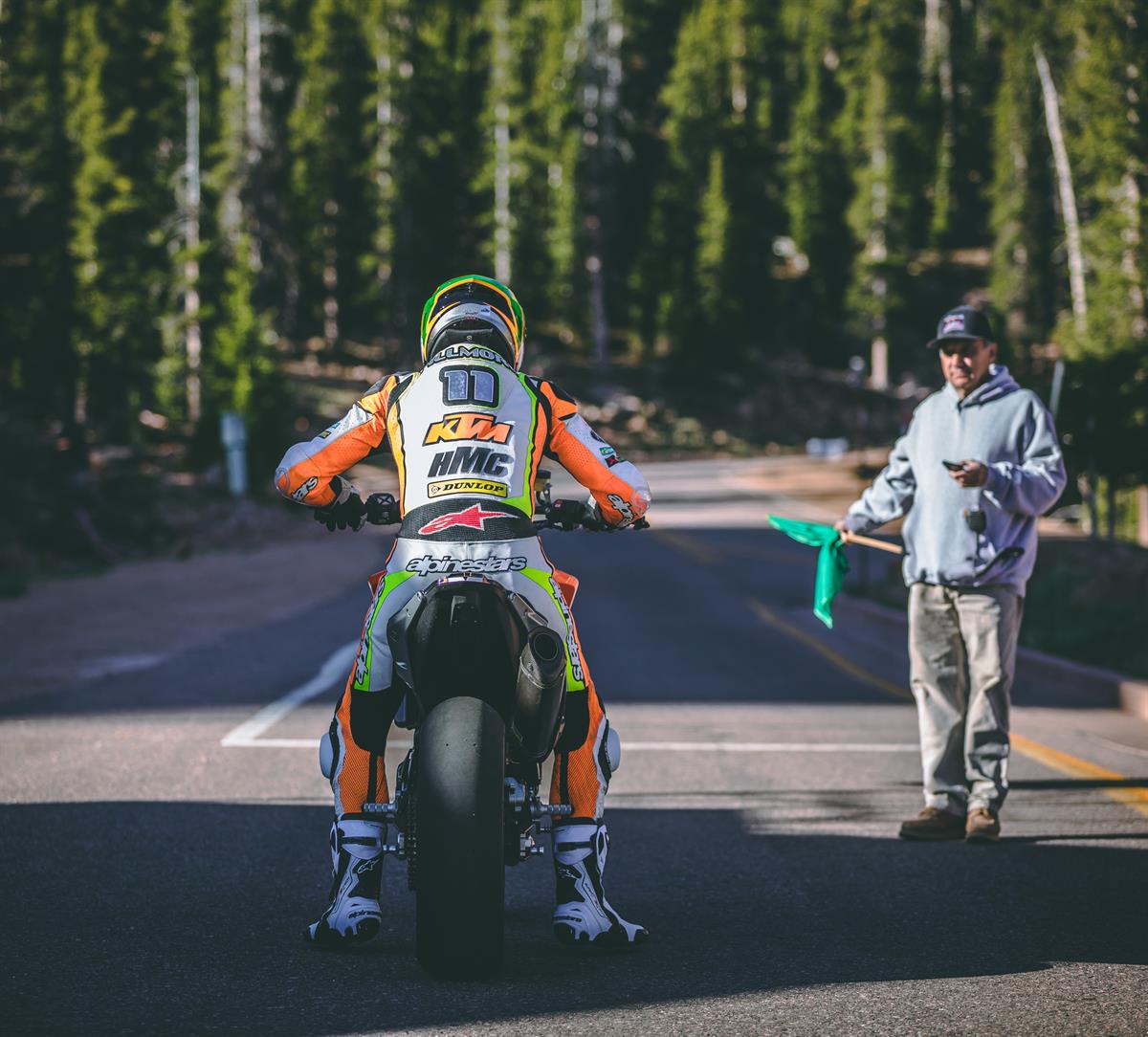
Chris Fillmore Tests KTM’s New 790 Duke For The Pikes Peak International Hill Climb

KTM AND CHRIS FILLMORE SET TO RETURN TO PIKES PEAK INTERNATIONAL HILL CLIMB WITH THE DEBUT OF THE 790 DUKE

Cycle News Editor Rennie Scaysbrook Completes the KTM Duo on the 1290 SUPER DUKE R

June 15, 2018

MURRIETA, Calif. – Following a record-breaking 2017 performance up Pikes Peak Mountain with the KTM 1290 SUPER DUKE R, Chris Fillmore and KTM’s Media Racing Department are set to return for the 96th running of the iconic Pikes Peak International Hill Climb, this time aboard the Austrian brand’s latest tool in its street arsenal, the 790 DUKE.

On June 24, ‘The Scalpel’ will make its highly-anticipated U.S. racing debut in the Pikes Peak Middleweight division as Fillmore attempts to top his own course motorcycle record of 9:49.265 on the 790 DUKE. With one year under his belt with the proven 1290 SUPER DUKE R, Fillmore has a READY TO RACE approach to the new challenges that come along with a new bike and new class.

Chris Fillmore: “Last year, racing up the mountain was an incredible experience. Being a Rookie, trying to learn everything about the event and the riding up the course was a lot to take in but to set the new course motorcycle record was incredible!! I had mixed feelings about returning but last winter when I was in Europe helping test the 790 DUKE, I immediately knew I wanted to build one to race in the Middleweight class and take on Pikes Peak again.”

Unlike ‘The Beast’, KTM didn’t design the 790 DUKE to be a track weapon but the company’s race-focused philosophy allowed for an easy transition to make ‘The Scalpel’ even sharper for competition. In preparation for The Race to The Clouds, Fillmore attended the official Pikes Peak Tire Test last weekend, where he quickly adapted his riding technique for the 790 DUKE.

“At the Tire Test, I focused on learning the mountain, finding a balance on chassis and choosing gearing for raceday. This new bike is awesome!” Fillmore exclaimed. “It’s so agile and so easy flipping it from side-to-side, I can carry much more corner speed, which I’m going to need if I want to get the class record and challenge for the outright podium.”

Fillmore added, “The stock bike is already on a high level, I know, because I tested it on track in Spain with Jeremy McWilliams against competitor bikes which was very encouraging. We took the stock machine and raided the KTM PowerParts catalog, adding some Wave brake discs, rearsets, a single seat and some other bling. Along with those, we removed the lights, threw in some different spring rates for the suspension, different tires, a special full Akrapovic system and the Brembo master cylinder from the KTM 1290 SUPER DUKE R.”

In addition to Fillmore’s bid for the Middleweight victory, he will be joined once again by Cycle News Road Test Editor, Rennie Scaysbrook, who put forth an impressive run up the Peak in 2017 to finish second overall in the motorcycle division, giving the KTM 1290 SUPER DUKE R a 1-2 sweep. Scaysbrook is back with vengeance as he vies for the top spot in the Heavyweight division with the 1290 SUPER DUKE R, as well as a chance to own the Pikes Peak overall course motorcycle record that he so narrowly missed last year.

The new KTM 790 DUKE will arrive to North American dealerships later this year. For more information on the bike, please visit www.ktm.com.

For information on the 96th running of the Pikes Peak International Hill Climb, including how to purchase tickets or follow the event live, please visit the official website at http://ppihc.org.

British Superbike: Leon Haslam Fastest During Practice Friday At Snetterton

Editorial Notes:

American James Rispoli, riding his Everquip Racing Yamaha YZF-R6, was fifth-fastest in British Supersport FP2 with a time of 1:52.895. Jack Kennedy set the fastest time in the session, a 1:51.629, on an Integro Yamaha YZF-R6.

The British MotoStar class, in which American Brandon Paasch competes on his Microlise Cresswell Racing Mahindra, is not part of the program this weekend at Snetterton.

Bennetts British Superbike Championship

Snetterton Circuit, England

June 15, 2018

Free Practice Two Results (all on Pirelli tires):

1. Leon Haslam, UK (Kawasaki), 1:47.674

2. Josh Brookes, Australia (Yamaha), 1:47.752

3. Glenn Irwin, UK (Ducati), 1:47.785

4. Jake Dixon, UK (Kawasaki), 1:47.800

5. Danny Buchan, UK (Kawasaki), 1:47.994

6. Luke Mossey, UK (Kawasaki), 1:48.292

7. Andrew Irwin, UK (Ducati), 1:48.374

8. James Ellison, UK (Yamaha), 1:48.401

9. Michael Laverty, UK (BMW), 1:48.452

10. Tarran Mackenzie, UK (Yamaha), 1:48.483

11. Bradley Ray, UK (Suzuki), 1:48.667

12. Richard Cooper, UK (Suzuki), 1:48.675

13. Peter Hickman, UK (BMW), 1:48.691

14. Gino Rea, UK (Suzuki), 1:48.922

15. Jason O’Halloran, UK (Honda), 1:48.927

16. Dan Linfoot, UK (Honda), 1:49.049

17. Christian Iddon, UK (BMW), 1:49.133

18. Tommy Bridewell, UK (Suzuki), 1:49.395

19. Taylor Mackenzie, UK (Ducati), 1:49.619

20. Mason Law, UK (Kawasaki), 1:49.698

21. Kyle Ryde, UK (Yamaha), 1:50.553

22. Sylvain Barrier, France (BMW), 1:51.567

23. Shaun Winfield, UK (Yamaha), 1:51.656

24. Aaron Zanotti, UK (Kawasaki), 1:52.800

25. Carl Phillips, UK (Kawasaki), 1:52.859

More, from a press release issued by MotorSport Vision Racing:

Haslam holds off Brookes as top 11 covered by 0.9s at Snetterton

Leon Haslam held off a hard-charging Josh Brookes to top the opening day at Snetterton as the Bennetts British Superbike Championship returned to the track with an incredibly close second free practice session that saw the top 11 riders covered by just 0.993s!

The session got underway in warmer conditions than earlier in the day and instantly Glenn Irwin was ready to build on setting the pace in free practice one, but Haslam was on a charge and moved ahead to put JG Speedfit Kawasaki at the top of the times.

Haslam was under fire though and the championship leader dropped to fifth place in the final ten minutes of the session as Brookes fired himself into the top position for the McAMS Yamaha team, with Jake Dixon and Danny Buchan moving up the order.

The final minutes of the session turned into a rush for the top spot and Irwin came within striking distance, but Haslam fired in another faster lap that put him 0.078s ahead with Brookes holding second ahead of Irwin at the chequered flag.

Dixon and the RAF Regular & Reserves Kawasaki team overcame a small crash at Agostinis to get back out on circuit for the final part of the session, pushing back into the top five at the team’s home round.

Buchan dropped two places in the closing moments to complete the top five, nudging Luke Mossey back into sixth position on the second of the JG Speedfit Kawasakis.

Andrew Irwin delivered an impressive performance on his Superbike debut at Snetterton to hold seventh place on the Be Wiser Ducati, moving ahead of his more experienced rivals James Ellison, Michael Laverty and Tarran Mackenzie who completed the top ten.

Bradley Ray missed out on a top ten position by just 0.184s as he bids to close the 14-point deficit to championship leader Haslam in the two races on Sunday.

Bennetts British Superbike Championship, Snetterton, Free Practice one:

1.Glenn Irwin (Be Wiser Ducati) 1m:48.051s

2.James Ellison (Anvil Hire TAG Yamaha) +0.395s

3.Luke Mossey (JG Speedfit Kawasaki) +0.663s

4.Danny Buchan (FS-3 Racing Kawasaki) +0.674s

5.Leon Haslam (JG Speedfit Kawasaki) +0.816s

6.Bradley Ray (Buildbase Suzuki) +0.841s

7.Josh Brookes (McAMS Yamaha) +0.909s

8.Richard Cooper (Buildbase Suzuki) +1.041s

9.Peter Hickman (Smiths Racing BMW) +1.114s

10.Dan Linfoot (Honda Racing) +1.197s

Bennetts British Superbike Championship, Snetterton, Free Practice two result:

1.Leon Haslam (JG Speedfit Kawasaki) 1m:47.674s

2.Josh Brookes (McAMS Yamaha) +0.078s

3.Glenn Irwin (Be Wiser Ducati) +0.111s

4.Jake Dixon (RAF Regular & Reserves Kawasaki) +0.126s

5.Danny Buchan (FS-3 Racing Kawasaki) +0.320s

6.Luke Mossey (JG Speedfit Kawasaki) +0.618s

7.Andrew Irwin (Be Wiser Ducati) +0.700s

8.James Ellison (Anvil Hire TAG Yamaha) +0.727s

9.Michael Laverty (Tyco BMW) +0.778s

10.Tarran Mackenzie (McAMS Yamaha) +0.809s

The next round of the 2018 Bennetts British Superbike Championship take place at Snetterton on June 15/16/17. For more information visit www.britishsuperbike.com


Leon Haslam

(JG Speedfit Kawasaki)

Free Practice pace-setter

“It is always nice to be fastest; we made steps from the test today and it felt good getting back on the BSB bike. You know it always feels different compared to both the World Superbike and the Suzuka 8 Hour bikes I have ridden recently, so I am really happy with the first day.

“Last year I was injured here, the year before we had a problem with the bike, for me podiums should always be possible, but the Ducati is always super strong here. I can’t remember when Kawasaki last won at Snetterton, but each track has strengths and weaknesses. We know we are losing out in a couple of parts of the track to the Ducatis and Yamahas, but we have strengths in different areas.

“For me it’s not about making our strong points stronger, it’s about making our weak parts better and that is what we are working on.”

World Superbike: Chaz Davies Talks About WeatherTech Raceway Laguna Seca And Vlogging

Chaz Davies Takes Us Inside the Helmet; World Superbike Returns to WeatherTech Raceway Laguna Seca June 22-24
Three-time GEICO Motorcycle U.S. Round winner talks track, visiting California, and his vlogs

MONTEREY, Calif. — World Superbike competitor Chaz Davies is a man of many talents. The rider of the No. 7 Aruba.it Racing Ducati is among the top motorcycle road racing talents across the globe. Additionally, the Welshman has shown his aptitude in the visual arts realm with a series of vlogs (video blogs) that he began this year.

With three previous victories at the event, Davies enters the MOTUL FIM Superbike World Championship GEICO Motorcycle U.S. Round featuring MotoAmerica Championship of Monterey at WeatherTech Raceway Laguna Seca on June 22-24 in a tie for the track record for most World Superbike wins. The only other active competitor in the six-way tie is Kawasaki rider Tom Sykes. Davies is one of four riders to sweep both races at a given event after doing so in 2015, though his Race 1 win at WeatherTech Raceway Laguna Seca in 2017 was perhaps his most memorable.

Declared fit to race following a scary accident at a previous event that left him with back injuries, Davies returned to the seat of his Ducati weeks later to score an emotional victory. Six weeks after the tragic loss of fan favorite champion rider Nicky Hayden, the thoughtful Davies spotted a No. 69 flag honoring Hayden in the grandstands following his victory and had a corner marshal retrieve it for him to carry during his victory lap.

Currently No. 2 in the World Championship standings, Davies has endeared himself to fans away from the track by revealing what goes on behind the scenes through a series of vlogs that he records and edits himself. Fans are taken behind the curtain to see that it isn’t all glamour for riders who compete on the world stage.

Davies answered questions below about WeatherTech Raceway Laguna Seca’s 11-turn, 2.238-mile circuit, what has made him so successful on it in recent years, visiting California, and the response to his vlogs.

Davies returns this year among a grid of 20 riders representing seven manufacturers and 11 countries, including three American riders. MotoAmerica also brings all four classes from the premier motorcycle road racing series in the United States to the event.

Meeting Davies is part of the special three-day Ducati Island ticket package that also includes a parade lap around the track on Sunday among other perks. Advanced ticket pricing is available through Father’s Day this Sunday at www.WeatherTechRaceway.com or 831-242-8200.

photo: DMT Imaging

Describe the challenge of competing at WeatherTech Raceway Laguna Seca.
Laguna Seca is a tough track. There are a lot of technical parts to it. There’s off-camber, on-camber, uphill, downhill, banked corners, hairpins, open stuff, and obviously the Corkscrew itself. Every corner there is quite different from the next. It’s hard to set the bike up. It’s quite a punchy track, so you want a bike that doesn’t wheelie too much, meaning you want a bike that’s a bit longer. At the same time, you also want a bike that’s a bit nimble for quick changes in direction in the last part of the track. It’s always a bit of a trade-off and quite challenging.

What has contributed to your past success at the GEICO Motorcycle U.S. Round?
A great starting point is enjoying the track and the atmosphere of Laguna Seca that goes along with it. Being at Laguna Seca and in California in general is a great way to start a weekend. After that, I think the track suits my style. It’s one I really enjoy riding. There are a few tracks a year that present such a fun challenge to me and where it really, really caters to our style. We keep pushing and try to get quicker and quicker.

What do you look forward to when you visit California?
Firstly, just being in California. It’s a great place to be. I think I speak for every rider when I say we enjoy being there in California and America in general. There is a good vibe there. Everyone is friendly. Having raced in the States for a few years, I know people in the paddock who it is nice to see once a year. We tend to go a week early or spend a week after the race and spend some time in Monterey and Los Angeles. Ducati North America is kind enough to give us a bike to use to cruise through the canyons of Malibu. It is generally a fun week of doing some cool stuff. There is a lot to look forward to when we come to this race.

What prompted you to start creating vlogs?
I started doing some vlogs this year. I have a few out there. It is difficult to find the time to edit them in the heat of the season by the time I get home, recover from the weekend, and train. I don’t want to slap some raw videos of me out there. I do enjoy the challenge of editing. That’s half the fun for me. The other side of the fun is showing people that we don’t just turn up and twist the throttle on a Sunday. There is a bit more to it than that. We’re human beings at the end of the day, and sometimes that is not really shown all that well behind the scenes. For example, the first vlog I put up was about me driving to the track in my van – one-man band – setting my bike up, working on my bike, and going home again. People just automatically assume that, as a World Championship rider, everything is done for you and you turn up and everything is laid out for you and you don’t pay your track fee and all sorts of perks like that. In reality, it’s very different. That is sort of what I want to show from the vlogs. I wish I had a little bit more time to keep banging them out. Obviously, the priority is to do the business on-track. There will be more to come. Hopefully, we will have one from our trip to America. I look forward to smashing more out in the future and give people a bit of an insight.

How have fans responded to the inside look you have given them to the life of a World Superbike racer?
They’ve been received quite well. A lot of people have commented on how they’ve enjoyed the insight. Sometimes they are surprised by what they’re seeing. I think there is a lot more I can show as well but all in due time.

View Davies’ vlogs from 2018 at the links below and subscribe to his YouTube channel:

VLOG 001 – Winter Biz
VLOG 002 – Road to Phillip Island
VLOG 003 – Qatar MotoGP
VLOG 004 – First Win of 2018

The July 2018 Issue Of Roadracing World & Motorcycle Technology Is Now Available Online

On the Front Cover: Chris Ulrich rides the 2018 Kawasaki ZX-10R SE at Chuckwalla Valley Raceway and checks out how its automated, real-time, self-adjusting suspension works. Photo by David Swarts.

Roadracing World & Motorcycle Technology magazine is available in print and digital formats.

Read the July 2018 issue of Roadracing World & Motorcycle Technology now with your online subscription.

Log in or subscribe HERE.

In This Issue:

FEATURES

Inside Info: Kawasaki 2018 Z900RS CAFE and more…

Historic Racebike Illustration: 1983-1985 Honda VF750F

Tire Intro: Dunlop’s New Q4 Street/Track Day Tires

Follow-Up: 2018 BMW G 310 R

Track Test: 2018 Kawasaki ZX-10R SE

MotoGP Analysis:

The Next Generation of Stars

Zarco’s Big 2019 Bet On KTM

Shops: CT Racing

My Favorite Portrait: Martin Cardenas

Back In The Day: Editor’s Scrapbook

PROFESSIONAL RACING

MotoGP: Marquez Wins Again As Rivals Implode In Spain

MotoGP: Marquez Marches On In France

MotoAmerica: Elias Wins Two More At VIR

World Superbike: Rea Still Leads After Donington

COLUMNS

Letters To The Editor

10 Years Ago

MotoGP Trivia/Numbers

Josh Hayes: Mississippi Madman

Melissa Paris: Just A Girl Who Likes To Go Fast

Kyle Wyman: Where’s Wyman?

The Kids’ Page: Andrew Preciado

The Crash Page: Andrea Dovizioso, Jorge Lorenzo, and Dani Pedrosa At Jerez

New Products

Racing, School, & Track Day Calendar

High Performance Parts & Services Directory

ASRA/CCS Newsletter

Classified Ads

Advertisers Index

Chris Ulrich: Adventures Of An Ex-Racer

MotoGP: Andrea Dovizioso Quickest In FP3 At Catalunya

Gran Premi Monster Energy De Catalunya

FIM MotoGP World Championship

Circuit de Barcelona-Catalunya, Spain

June 16, 2018

Free Practice Three Results (all on Michelin tires):

1. Andrea Dovizioso, Italy (Ducati), 1:38.923

2. Maverick Vinales, Spain (Yamaha), 1:39.012

3. Cal Crutchlow, UK (Honda), 1:39.041

4. Johann Zarco, France (Yamaha), 1:39.143

5. Valentino Rossi, Italy (Yamaha), 1:39.150

6. Danilo Petrucci, Italy (Ducati), 1:39.202

7. Dani Pedrosa, Spain (Honda), 1:39.219

8. Tito Rabat, Spain (Ducati), 1:39.256

9. Marc Marquez, Spain (Honda), 1:39.390

10. Hafizh Syahrin, Malaysia (Yamaha), 1:39.528

11. Andrea Iannone, Italy (Suzuki), 1:39.597

12. Jorge Lorenzo, Spain (Ducati), 1:39.677

13. Aleix Espargaro, Spain (Aprilia), 1:39.712

14. Alvaro Bautista, Spain (Ducati), 1:39.720

15. Jack Miller, Australia (Ducati), 1:39.816

16. Takaaki Nakagami, Japan (Honda), 1:39.819

17. Franco Morbidelli, Italy (Honda), 1:39.872

18. Pol Espargaro, Spain (KTM), 1:39.973

19. Mika Kallio, Finland (KTM), 1:40.034

20. Alex Rins, Spain (Suzuki), 1:40.040

21. Bradley Smith, UK (KTM), 1:40.047

22. Xavier Simeon, Belgium (Ducati), 1:40.291

23. Scott Redding, UK (Aprilia), 1:40.389

24. Sylvain Guintoli, France (Suzuki), 1:40.615

25. Thomas Luthi, Switzerland (Honda), 1:40.638

26. Karel Abraham, Czech Republic (Ducati), 1:40.739

MotoAmerica: Full-Race Videos From Round Three At VIR, As Seen On beIN SPORTS USA TV

Round Three of the 2018 MotoAmerica AMA/FIM North American Road Racing Series was held May 4-6 at VIRginia International Raceway, in Alton, Virginia.

Here are the full-race videos (as seen on beIN SPORTS USA TV) from the Motul Superbike, Supersport, and Liqui Moly Junior Cup races. 

The race videos are courtesy of beIN SPORTS USA.

How do you get beIN SPORTS? See the related article links below for more information.

Motul Superbike Race One:

Motul Superbike Race Two:

Supersport Race One:

Supersport Race Two:

Liqui Moly Junior Cup Race One:

Liqui Moly Junior Cup Race Two:

British Superbike: Movuno.com Halsall Suzuki Team Splits With Tommy Bridewell

HALSALL RACING PARTS COMPANY WITH TOMMY BRIDEWELL

THE Movuno.com Halsall Racing Suzuki squad can today confirm it has terminated its contract with rider Tommy Bridewell.

The decision follows several weeks of discussions between team and rider, and following a few recent disagreements, the team feels the only way forward is to part company.

Halsall Racing and Tommy Bridewell have a long relationship dating back to 2013, and we have experienced some of our finest results with him on our machines.

However, under the current situation we feel that we have no option but to go our separate ways.

We wish Tommy the very best of luck for the future.

BMW HP4 Race: Riding Fast On BMW’s 215-Horsepower, Carbon-Fiber Masterpiece At Circuito Estoril In Portugal

This featured article is brought to you by BMW Motorrad USA.

This article was originally published in the August 2017 print issue of Roadracing World & Motorcycle Technology magazine, and is now being posted with sponsorship from BMW North America. To read more new bike test features like this, either in print or in a digital format, subscribe here: https://subscriber.pagesuite-professional.co.uk/su…


Editorial Note: BMW’s track-only HP4 RACE was an unprecedented technological marvel when it was introduced for retail sale last year. It still is, and is available from BMW dealers across North America…


SPORTBIKE INTRO: 2018 BMW HP4 Race

Estoril, Portugal

The BMW Way

By Chris Ulrich

Copyright 2017/2018, Roadracing World Publishing, Inc.

I was skeptical of BMW’s carbon-fiber frame project when the HP4 Race concept was announced in the fall of 2016. Others manufacturers had tried to build motorcyles with carbon-fiber frames, and ultimately failed to create a machine that was user-friendly. The history of motorcycles with carbon-fiber frames goes back to the late 1980s when Cagiva Mito built a two-stroke 500cc Grand Prix racebike with a carbon-fiber frame. A more recent example of a carbon-frame motorcycle experiment would be the famous abandonment of the composite material by the Factory Ducati MotoGP team during Valentino Rossi’s tenure on the Desmosedici. But while it didn’t consistently work for Ducati in MotoGP, the brand has stuck with carbon-fiber for the super-high-end, limited-production Superleggera, which seems to be doing pretty well. And obviously, the struggles other brands have had in the past with composite frames have not deterred BMW from building a sportbike based on the S1000RR, with a carbon-fiber main frame.

Chris Ulrich exits Estoril’s first-gear chicane on the carbon-fiber-framed BMW HP4 Race. Maps limit throttle opening in lower gears to improve drivability.

It can be argued that there isn’t a company better equipped to tackle a carbon-fiber main-frame project for a production motorcycle and do it right. BMW was the first to industrialize the use of structural carbon-fiber componentry in mass-produced cars such as the M3, i8, and electric i3, so company engineers have experience with the composite material.

BMW engineers worked to create a carbon-fiber frame that had the right rigidity balance to deliver good feel for the rider in all sections of the corner.

BMW initially introduced the high-performance HP4 production model in 2013, then incorporated the HP4’s upgrade into the S1000RR model update in 2015. BMW product planners and managers knew they needed to do something spectacular to create the next generation HP4, and they decided to go big, with a carbon-fiber main frame, and a race-spec engine. Elmar Jager, who works in the pre-development department at BMW Motorcycles, brought up the concept of a carbon fiber framed S1000RR. From there it was left up to Josef Maechler, who is in charge of Product Sales Strategy and Product Management for BMW Motorcycles, and Rudolph “Double RR Rudi” Schneider, Head of 4- and 6-cylinder Product Projects, to figure out if it was possible. They did and they named it the HP4 Race.

The HP4 Race mates a carbon-fiber frame with an underslung-design aluminum swingarm made by Suter Racing. Note the eccentric swingarm pivot position adjusters.

Christian Gonschor, a 37-year-engineer with racing department experience, became the HP4 Race Project Leader. His mission was to bring lightweight material technology in motorcycles to the next level with a carbon-fiber main frame that retained the feel needed for a rider to push the limits of the bike. And his assignment brief included doing it in only two years. Easy task, right?

Christian Gonschor, 37, is a racing engineer turned HP4 Race Project Leader.

Gonschor was unfazed, seeing the assignment as an engineering exercise that would work if done right, explaining that he knew “if you do it the right way, The BMW Way, the rider will feel the pure reduction in weight and the improvement in riding dynamics.”

Top view of the HP4 Race on track. Engineers tuned HP4’s flex characteristics and front-end feel with the top-triple clamps.

Adding to the overall performance would be Öhlins FGR 300 Superbike forks, an Öhlins TTX 36 shock, a Suter swingarm, and World Superbike electronics. The result is a motorcycle that puts out a claimed 215 bhp at the crankshaft with an overall wet weight (including a full tank of fuel) of 377 pounds (171 Kg). By comparison, the minimum weight for a World Superbike after a race (with an empty tank) is 370.5 pounds (168 kg). The 2017 HP4 Race is a very light motorcycle, built for performance and performance only.

The BMW HP4 Race features Öhlins FGR 300 forks, Brembo GP4 PR Calipers, and 320 mm Brembo T-drive brake discs.

Development focused on retaining the balance between frame rigidity and feel. To achieve this BMW engineers used Resin Transfer Molding (RTM). It’s a process in which a blend of non-woven carbon-fiber fabric with continuous fibers is placed in a large vacuum mold, (along with frame hardware), and a precise amount of resin is injected into the mold. The use of RTM gave BMW engineers the ability to mass-produce one-piece carbon-fiber frames without any inconsistencies in the performance from one unit to the other. The end result is a main frame with similar feel and flex characteristics when compared to the S1000RR’s aluminum frame while weighing 7.8 kg (17.1 Pounds)—which is about 8.8 pounds lighter than the conventional aluminum frame.

Resin transfer molding (RTM) made it possible for BMW to mass produce the one-piece carbon-fiber frame used for the 2018 HP4 Race.

Make no mistake: It may be too light for the Superbike World Championship, but the HP4 Race is a production racebike legal for use on public-road courses as seen on the Isle of Man and in Macau as well as in the Endurance World Championship and assorted regional and club racing series. It comes with all the adjustability a Superbike team could need to customize the motorcycle to the rider’s needs. Or, in some cases, enough adjustability for riders to spin themselves into outer space with the motorcycle set-up!

As delivered, the HP4 race has 30 mm of offset and the rake set at 23.5 degrees, which places the trail at 102.5 mm. BMW offers offset inserts that range from 26mm to 32mm, in 2mm increments. Rake can be adjusted in .5 or 1-degree increments on either side of the zero setting of 23.5 degrees. More adjustment is available at the rear of the HP4 with the option of moving the swingarm pivot up or down 4 mm, in 1 mm increments. That is a lot of adjustability!

World Championship-level Öhlins FGR 300 46 mm inverted forks with C2 (compression)/ R4 (rebound) valving and 10.5Nm springs come standard on the HP Race. At the rear the fully adjustable, large-body Öhlins TTX 36 GP shock comes with C6/R7 damping specs and a 95Nmm rear spring.

As feel and total chassis balance is important, BMW engineers paid close attention to the design of the Suter-manufactured aluminum swingarm while developing the HP4 Race. The swingarm is based on the underslung designed unit used in the Superbike World Championship, except the version used on the HP4 Race was optimized to work with the carbon fiber main. Overall length of the swingarm is a relatively short 604 mm.

The rear view of the 2018 BMW HP4 Race. The shape of the front fairing and seat/tailsection are identical to the parts on the S1000RR.

Additional weight savings was achieved on the HP4 Race by fitting carbon-fiber wheels built using a process known as braiding, where one piece of fabric is wrapped in place by a machine. A dense foam is also inserted into the wheel spokes to reduce vibration. The end result is a set of wheels that are 30% lighter than aluminum racing wheels, reducing the gyroscopic effect of the rotating wheel, which theoretically improves the turning and transitioning of the bike. BMW engineers were careful to retain the same rigidity as existing aluminum wheels in order to not reduce feel or create chatter or grip problems at full lean.

More World Championship level components were used for the brake system, with Brembo GP4 PR brake calipers that are actuated by a billet aluminum Brembo RSC 19×18 master cylinder. The brake calipers clamp onto a set of 6.75 mm thick, 320 mm Brembo T-drive discs rotors. The bottom-mounted Brembo rear brake caliper features four pistons and works with a 4mm—thick 220 mm rear disc.

The front view of the 2018 BMW HP4 Race. The shape of the front fairing and seat/tailsection are identical to the parts on the S1000RR.

Adjustable race ready controls from Alpha Racing are used for the 7-degree-bend clips-ons along with fully adjustable rearsets. The rear subframe and seat assembly are made out a woven carbon fiber using a conventional lay-up technique. Using carbon fiber allowed BMW to easily build in seat adjustments in 15 mm increments. The HP4 Race is delivered with seat position at 32.7 inches (831 mm) and there is an option to lower the seat to 32.1 inches (816 mm) or raise the seat to 33.3 inches (846 mm), depending on the rider’s preference.

At the center of the HP4 Race is a race-tuned version of the S1000RR’s DOHC four-cylinder engine with an 80 mm bore and 49.7 mm stroke, displacing 999cc. The HP4 engine uses a combination of what BMW calls the 6.2 and 7.2 engine specs, and puts out a claimed 215 bhp at 13,900 rpm, at the crankshaft—or about 16 more horsepower than the S1000RR streetbike engine. The HP4 Race engine also makes 5.1 lbs.-ft. more torque than the S1000RR, putting out a claimed 88.5 lbs.-ft. at 10,000 rpm. While BMW engineers were tight-lipped about the valve timing and lift numbers, I can tell you that the 6.2 valve train is used in the Endurance World Championship and is designed to increase performance by allowing the redline to be to 14,500 rpm, while maintaining reliability as the miles pile up. Information on the compression ratio is also somewhat vague, with BMW claiming the ratio is between 13.7:1 and 13.9:1. To broaden the power curve, BMW uses its own version of electronically controlled variable-length intake funnels (a.k.a. velocity stacks) with the transition from long (for acceleration) to short (for top end) taking place at 11,500 rpm. The Akrapovic 4-2-1 titanium racing exhaust system comes with a carbon fiber muffler.

The 7.2 bottom end comes from the Superbike World Championship program and is designed for durability and performance. As with all racing engines, careful attention was paid to sizing the plain main bearings to reduce mechanical losses without sacrificing durability. The crankshaft itself has been lightened by 200 grams compared to the standard S1000RR crank by removing material from the counterweights and from the primary drive sprocket on the right side of the engine. These modifications help increase acceleration, and also reduce the amount of force required to stop the HP4 Race. BMW uses Shell 0w40 high-performance oil to reduce further mechanical losses.

Radiator size is the same as on the standard S1000RR, but the water pressure has been increased from 1.2 bar (17.4 psi) to 1.8 bar (26.1 psi) through the use of a high-output water pump. The added pressure circulates the water faster, which helps raise the boiling point of the coolant.

More racing carryover can be found in the transmission of the HP4 Race. Gear ratios for first and second are taller for racetrack use when compared to the standard S1000RR parts. Third gear remains the same, while fourth through sixth gears are shorter. The primary gear ratio was unchanged; see the spec chart for ratios. Like most racebikes, the HP4 Race is set up for GP shift pattern (up for up) when delivered, and comes with the auto-blip function enabled for clutch-less up-shifts and down-shifts.

Each engine is expected to last 5,000 km (3,100 miles) before needing to be replaced. If you take into account that the average track-day rider or club racer rides between 100-300 miles per weekend and does about five weekends per year, you are looking at an engine life of three to five years before needing a replacement. BMW representatives claim they will offer an engine exchange program through BMW dealers at a cost of $10,000 to $15,000 per engine.

Traction control and engine braking settings can be changed on the fly using switches on left handlebar.

A motorcycle with cutting edge chassis design and a powerful engine needs an electronic suite to match. The HP4 Race comes standard with an electronic package similar to what the brand uses in the Superbike World Championship. As delivered, the system comes with four riding modes: Wet, Intermediate, Dry1 and Dry2. Each mode has different throttle maps that control wheel torque (a.k.a. power delivery) by limiting the throttle butterfly valve opening. In Rain mode, throttle opening is limited to 67% in first gear, 71% in second gear, 75% in third gear, and 95% in fourth gear while fifth and sixth allow full throttle. The throttle map in Intermediate Mode is opened up slightly with 71% opening available in first gear, 79% in second gear, and 88% in third gear, while fourth through sixth allow 100% throttle opening. Dry1 mode allows 75% opening in first, 83% opening in second, and 93% opening in third with full throttle available in fourth through sixth. The Wheelie Control function is also active in all gears in Rain, intermediate, and Dry1 mode. Dry 2 mode’s map throttle progression is even more aggressive; first gear is limited to 75% throttle opening, but then the map jumps to 92% throttle opening in second, and 96% throttle opening in third. Full power is available in fourth, fifth, and sixth gear. The Wheelie Control function is only available in first and second gear in Dry 2 mode. The advantage of controlling wheel torque by proactively limiting the throttle opening is a smoother and faster drive without needing the ECU to cut power to allow the tire to recovery after a slide.

Further control of the power on the HP2 Race comes standard from BMW’s Dynamic Traction Control (DTC) system, which offers 15 levels of intervention, (+-7 plus 0). Inputs taken from the IMU and wheel speed sensors detect wheel slip. Once slip conditions are present, the ECU reduces power by removing spark and closing the throttle valves.

Further help keeping the front wheel on the ground in the acceleration zone comes from five levels of Wheelie Control. Like with the DTC, the wheelie control relies on inputs from the IMU and wheel speed sensors to detect when wheelie conditions are present, then removes power according to the level selected.

Fifteen (+-7 plus 0) levels of engine braking control are also standard on the HP4 Race. The system provides plenty of options; maps can be modified for each gear using the HP calibration.

Other racing features available from the electronics system are a pit-lane speed limiter and launch control. All the functions can be adjusted on the fly through racing-style switch units mounted on the handlebars. The three-button switch on the left handlebar allows the user to toggle between rider aids, then change the selected rider aid on the fly. The right handlebar switch has the kill switch on top in red, and the pit-lane speed limiter in the center; the bottom button is used to toggle between riding modes. The throttle must be closed to change the riding mode while on the racetrack.

The BMW HP4 Race comes with a 2D dashboard that indicates engine rpm, map, EBR level, DTC level, water temperature, predictive lap, and lap time. The screen can be customized for the rider’s needs. Data is logged using though the 2D system and stored on an easily accessible USD memory stick. BMW also offers the option to purchase additional sensors, including linear potentiometers to read suspension travel and brake-pressure sensors. Each additional sensor comes with the extra wiring and connectors required for easy fitment.

BMW will produce 750 units of the HP4 Race worldwide that will be available to order on a first-come, first-serve basis. While BMW North America hasn’t released the official MSRP, the HP4 Race should be priced somewhere around $88,000 U.S.

Riding The HP4 Race

The intro day at Estoril consisted of five 20-minute riding sessions, and we had to spend two sessions on the standard BMW S1000RR before being let loose on the HP4 Race. Extra time on the standard S1000RR streetbike suited me fine as it allowed me to learn the Estoril Circuit on a slightly less aggressive machine.

Estoril’s layout is pretty straightforward, with a few blind exits and one really, really slow chicane a couple of corners before the front straight. The Portuguese track is 4.182 km (about 2.6 miles) in length and has 13 turns, with nine rights and four lefts. The surface is old and the track seems narrow, especially when compared to many more modern Grand Prix circuits. But it is an old school European circuit, with old-school flow, like Jerez or Catalunya (before they put the new chicane in).

Members of the press delegation were sent out for their first session on the HP4 Race with the ride mode set on Intermediate, DTC on level 5, and EBR on level 2. It had been more than 12 months since I threw a leg over anything that resembled a racebike, so spending the first few laps using softer throttle maps while I again got used to riding on a high-horsepower, stiff-chassis motorcycle helped me get comfortable with the bike without any big surprises.

Power delivery in intermediate mode was docile in the first three gears, and then it felt like hitting the afterburners once the throttle was allowed to open fully coming onto the front straight. There was a lot of intervention coming from the traction control and wheel control with the DTC turned up in Intermediate mode. However, the cuts were smooth and always ahead of the engine, and it was clear that the bike was removing power before the tire had a chance to start sliding in the acceleration zone.

My initial impression of the chassis was also positive; the HP4 Race fell into the corner with much less effort than required to turn the standard S1000RR. In fact, it turned so quickly on my first lap that I had to adjust my turn-in rate to keep from running over the inside curb! Transitioning from side to side also required less effort when compared to the S1000RR. This is the big advantage of lightweight carbon-fiber wheels.

I switched to the Dry1 mode three laps into my first session on the HP4 Race. Power delivery was still manageable, but with the more aggressive throttle maps available. With more power, there was slightly more intervention from the DTC, so I turned it down to help me slide the rear tire to finish the corners. The HP4 Race also wheelied slightly more in this setting, causing the WC to kick in, with the system allowing the front tire to just skim the top of the pavement without any massive power cut. It actually worked very well.

As my speed increased on the bike during my three sessions, I increasingly found myself riding the bike like I would ride my old MotoAmerica Superbike. The chassis had great braking stability and plenty of front-end feel to allow me to trail-brake all the way to the apex without any drama. There was also plenty of feel at the apex at full lean in both slow and fast corners. Once the bike was rotated and I had my direction set, I could start to feed the throttle in without any hesitation. The combination of Pirelli tires and good chassis flex characteristics provided plenty of feel to allow me to start opening the throttle while still on the side of tire. Slide characteristics though the acceleration zone were predictable, giving me plenty of confidence to light the rear tire up to help finish the corner when needed.

BMW’s carbon-fiber experiment actual performs the way a bike should. It has the right balance of rigidity and feel needed to push the chassis, and components from Öhlins and Brembo worked as expected from industry-leading manufacturers. Adding World Superbike-level electronics and a high-spec engine make the BMW HP4 Race an extremely potent racetrack machine.

The BMW engineers did it their way—and did it right.

Specifications: 2018 BMW HP4 Race

Engine Configuration: Inline Four, 4-stroke.

Engine Displacement: 999cc

Engine Cooling: Liquid

Compression Ratio: 13.7-13.9:1

Combustion Chamber Design: Pentroof

Valves Per Cylinder: 4

Intake Valves Per Cylinder: 2 (Titanium)

Exhaust Valves Per Cylinder: 2 (Titanium)

Bore x Stroke: 80.0 mm x 49.7 mm

Connecting Rod Length (center-to-center): 103.0 mm

Connecting Rod Material: Steel

Engine Redline: 14,500 rpm

Claimed Horsepower: 215 bhp @13,900 rpm

Claimed Torque: 88.5 lbs.-ft. @ 10,000 rpm

Valve Angle (Included): 11.2 degrees Intake/13.3 degrees Exhaust (24.5 degrees)

Combustion Chamber Volume: 19.5cc

Valvetrain Type: DOHC, Reduction Gear And Link-plate Chain Drive, Finger Followers, Shim-in-retainer Lash Adjustments

Intake Valve Diameter: 33.5 mm

Exhaust Valve Diameter: 27.2 mm

Intake Valve Stem Diameter: 5.0 mm

Exhaust Valve Stem Diameter: 5.0 mm

Valve Timing Measurement Point (lift): 3.0 mm

Fuel Delivery System: BMW BMS-K-P Digital Fuel Injection

Throttle Body Venturi Size: 48 mm

Air Filter Type: Pleated Paper

Exhaust System Type (Material): 4-2-1 (Titanium)

Ignition System: Digital

Lubrication System: Wet Sump

Oil Capacity: 4.1 quarts (3.9 liters)

Fuel Capacity: 4.6 gallons (17.5 liters)

Transmission Type: 6-speed, Constant Mesh

Clutch Type: Multi-plate, Wet, Back-torque-limiting

Clutch Actuation System: Cable

Clutch Spring Type: Coil

Number Of Clutch Springs: 6

Number Of Clutch Plates: 19

Drive Plates: 10

Driven Plates: 9

Primary Drive: Gear (Straight-cut)

Primary Drive Gear Teeth (Ratio): 76/46 (1.652:1)

Final Drive Sprocket Teeth (Ratio): 43/16 (2.687:1)

Transmission Gear Teeth (Ratios):

6th: 31/24 (1.291:1)

5th: 35/25 (1.400:1)

4th: 34/22 (1.545:1)

3rd: 38/22 (1.727:1)

2nd: 44/22 (2.000:1)

1st: 43/18 (2.388:1)

Transmission Overall Ratios:

6th: 5.730:1

5th: 6.214:1

4th: 6.858:1

3rd: 7.666:1

2nd: 8.877:1

1st: 10.600:1

Theoretical Speed In Gears At Redline:

6th: 186 mph

5th: 172 mph

4th: 156 mph

3rd: 139 mph

2nd: 120 mph

1st: 101 mph

Engine Speed At 60 mph: 4,673 rpm

Frame Design (Material): Twin-Spar (Carbon Fiber )

Rake/Trail: 23.5 degrees/4.03 inches (102.5 mm)

Offset: 30 mm

Claimed Wheelbase: 56.69 inches (1,440 mm)

Claimed Swingarm Length: 23.77 inches (604 mm)

Seat Height: 32.7 inches (831 mm) (as delivered)

Front Forks: Öhlins FGR 300, Inverted, Cartridge

Fork Tube Diameter: 46 mm

Fork Adjustments:

Rebound Damping: 25 Positions (Clicks)

Compression Damping: 25 Positions (Clicks)

Spring Preload: 15 mm Range

Front Wheel Travel: 4.7 inches (120 mm)

Rear Wheel Travel: 5.1 inches (130 mm)

Rear Suspension Type: Öhlins TTX 36 Single Shock, With Linkage

Rear Shock Adjustments:

Rebound Damping: 25 Positions (Clicks)

Compression Damping: 25 Positions (Clicks)

Spring Preload: 15mm Range

Front Brakes: 320 mm (12.6-inch) Dual Discs, 4-PistonRadial-mount Brembo Monobloc Calipers

Rear Brake: 220 mm (8.7-inch) Disc, Four-piston Brembo Caliper

Front Wheel: 3.50 x 17.0-inch Braided Carbon Fiber Composite

Rear Wheel: 6.00 x 17.0-inch Braided Carbon Fiber Composite

Front Tire: 120/70-ZR17 Pirelli Diablo Superbike Radial Slick (SC2 Compound)

Rear Tire: 200/60-ZR17 Pirelli Diablo Superbike Radial Slick (SC2 Compound)

Claimed Wet Weight: 377 pounds (171 kg)

Overall Length: 81.4 inches (2070 mm)

Overall Width: 30.5 inches (777 mm)

Overall Height: 46.9 inches (1193 mm)

Suggested Retail Price: N/A (Est. $88,000 U.S.)

This article was originally published in the August 2017 issue of Roadracing World & Motorcycle Technology. To read more new bike test features like this, either in print or in a digital format, you can subscribe here: https://subscriber.pagesuite-professional.co.uk/su…
Championship of Texas at COTA: Motul Superbike Race 2

Toni Elias turns in a flawless performance for his second Superbike race win in the Championship of Texas. MotoAmerica is throwing a true country tailgate camp out at the Championship of Virginia on the Virginia/North Carolina border. Joining the event are some of the top country acts to watch this year: High Valley, Chase Bryant, Larkin Poe and Annie Bosko. Camping is a whole new level, and the energy we saw at Atlanta is only growing at Virginia. Find out more: http://motoamerica.com/virginia/ Connect with beIN SPORTS Online: Watch us on TV: http://bit.ly/2d7bf5Y Watch us Online: http://bit.ly/1WNtvkc Visit our WEBSITE: http://beINSPORTS.com Like us on FACEBOOK: http://facebook.com/beINSPORTSUSA Follow us on TWITTER: http://twitter.com/beINSPORTSUSA Follow us on INSTAGRAM: http://instagram.com/beINSPORTSUSA

Championship of Texas at COTA: Motul Superbike Race 1

You thought last week’s weather was bad? Think again. The difficulty levels reach new heights as the riders face strong weather to complete this race. Connect with beIN SPORTS Online: Watch us on TV: http://bit.ly/2d7bf5Y Watch us Online: http://bit.ly/1WNtvkc Visit our WEBSITE: http://beINSPORTS.com Like us on FACEBOOK: http://facebook.com/beINSPORTSUSA Follow us on TWITTER: http://twitter.com/beINSPORTSUSA Follow us on INSTAGRAM: http://instagram.com/beINSPORTSUSA

Chris Fillmore Tests KTM’s New 790 Duke For The Pikes Peak International Hill Climb

KTM AND CHRIS FILLMORE SET TO RETURN TO PIKES PEAK INTERNATIONAL HILL CLIMB WITH THE DEBUT OF THE 790 DUKE

Cycle News Editor Rennie Scaysbrook Completes the KTM Duo on the 1290 SUPER DUKE R

June 15, 2018

MURRIETA, Calif. – Following a record-breaking 2017 performance up Pikes Peak Mountain with the KTM 1290 SUPER DUKE R, Chris Fillmore and KTM’s Media Racing Department are set to return for the 96th running of the iconic Pikes Peak International Hill Climb, this time aboard the Austrian brand’s latest tool in its street arsenal, the 790 DUKE.

On June 24, ‘The Scalpel’ will make its highly-anticipated U.S. racing debut in the Pikes Peak Middleweight division as Fillmore attempts to top his own course motorcycle record of 9:49.265 on the 790 DUKE. With one year under his belt with the proven 1290 SUPER DUKE R, Fillmore has a READY TO RACE approach to the new challenges that come along with a new bike and new class.

Chris Fillmore: “Last year, racing up the mountain was an incredible experience. Being a Rookie, trying to learn everything about the event and the riding up the course was a lot to take in but to set the new course motorcycle record was incredible!! I had mixed feelings about returning but last winter when I was in Europe helping test the 790 DUKE, I immediately knew I wanted to build one to race in the Middleweight class and take on Pikes Peak again.”

Unlike ‘The Beast’, KTM didn’t design the 790 DUKE to be a track weapon but the company’s race-focused philosophy allowed for an easy transition to make ‘The Scalpel’ even sharper for competition. In preparation for The Race to The Clouds, Fillmore attended the official Pikes Peak Tire Test last weekend, where he quickly adapted his riding technique for the 790 DUKE.

“At the Tire Test, I focused on learning the mountain, finding a balance on chassis and choosing gearing for raceday. This new bike is awesome!” Fillmore exclaimed. “It’s so agile and so easy flipping it from side-to-side, I can carry much more corner speed, which I’m going to need if I want to get the class record and challenge for the outright podium.”

Fillmore added, “The stock bike is already on a high level, I know, because I tested it on track in Spain with Jeremy McWilliams against competitor bikes which was very encouraging. We took the stock machine and raided the KTM PowerParts catalog, adding some Wave brake discs, rearsets, a single seat and some other bling. Along with those, we removed the lights, threw in some different spring rates for the suspension, different tires, a special full Akrapovic system and the Brembo master cylinder from the KTM 1290 SUPER DUKE R.”

In addition to Fillmore’s bid for the Middleweight victory, he will be joined once again by Cycle News Road Test Editor, Rennie Scaysbrook, who put forth an impressive run up the Peak in 2017 to finish second overall in the motorcycle division, giving the KTM 1290 SUPER DUKE R a 1-2 sweep. Scaysbrook is back with vengeance as he vies for the top spot in the Heavyweight division with the 1290 SUPER DUKE R, as well as a chance to own the Pikes Peak overall course motorcycle record that he so narrowly missed last year.

The new KTM 790 DUKE will arrive to North American dealerships later this year. For more information on the bike, please visit www.ktm.com.

For information on the 96th running of the Pikes Peak International Hill Climb, including how to purchase tickets or follow the event live, please visit the official website at http://ppihc.org.

British Superbike: Leon Haslam Fastest During Practice Friday At Snetterton

Editorial Notes:

American James Rispoli, riding his Everquip Racing Yamaha YZF-R6, was fifth-fastest in British Supersport FP2 with a time of 1:52.895. Jack Kennedy set the fastest time in the session, a 1:51.629, on an Integro Yamaha YZF-R6.

The British MotoStar class, in which American Brandon Paasch competes on his Microlise Cresswell Racing Mahindra, is not part of the program this weekend at Snetterton.

Bennetts British Superbike Championship

Snetterton Circuit, England

June 15, 2018

Free Practice Two Results (all on Pirelli tires):

1. Leon Haslam, UK (Kawasaki), 1:47.674

2. Josh Brookes, Australia (Yamaha), 1:47.752

3. Glenn Irwin, UK (Ducati), 1:47.785

4. Jake Dixon, UK (Kawasaki), 1:47.800

5. Danny Buchan, UK (Kawasaki), 1:47.994

6. Luke Mossey, UK (Kawasaki), 1:48.292

7. Andrew Irwin, UK (Ducati), 1:48.374

8. James Ellison, UK (Yamaha), 1:48.401

9. Michael Laverty, UK (BMW), 1:48.452

10. Tarran Mackenzie, UK (Yamaha), 1:48.483

11. Bradley Ray, UK (Suzuki), 1:48.667

12. Richard Cooper, UK (Suzuki), 1:48.675

13. Peter Hickman, UK (BMW), 1:48.691

14. Gino Rea, UK (Suzuki), 1:48.922

15. Jason O’Halloran, UK (Honda), 1:48.927

16. Dan Linfoot, UK (Honda), 1:49.049

17. Christian Iddon, UK (BMW), 1:49.133

18. Tommy Bridewell, UK (Suzuki), 1:49.395

19. Taylor Mackenzie, UK (Ducati), 1:49.619

20. Mason Law, UK (Kawasaki), 1:49.698

21. Kyle Ryde, UK (Yamaha), 1:50.553

22. Sylvain Barrier, France (BMW), 1:51.567

23. Shaun Winfield, UK (Yamaha), 1:51.656

24. Aaron Zanotti, UK (Kawasaki), 1:52.800

25. Carl Phillips, UK (Kawasaki), 1:52.859

More, from a press release issued by MotorSport Vision Racing:

Haslam holds off Brookes as top 11 covered by 0.9s at Snetterton

Leon Haslam held off a hard-charging Josh Brookes to top the opening day at Snetterton as the Bennetts British Superbike Championship returned to the track with an incredibly close second free practice session that saw the top 11 riders covered by just 0.993s!

The session got underway in warmer conditions than earlier in the day and instantly Glenn Irwin was ready to build on setting the pace in free practice one, but Haslam was on a charge and moved ahead to put JG Speedfit Kawasaki at the top of the times.

Haslam was under fire though and the championship leader dropped to fifth place in the final ten minutes of the session as Brookes fired himself into the top position for the McAMS Yamaha team, with Jake Dixon and Danny Buchan moving up the order.

The final minutes of the session turned into a rush for the top spot and Irwin came within striking distance, but Haslam fired in another faster lap that put him 0.078s ahead with Brookes holding second ahead of Irwin at the chequered flag.

Dixon and the RAF Regular & Reserves Kawasaki team overcame a small crash at Agostinis to get back out on circuit for the final part of the session, pushing back into the top five at the team’s home round.

Buchan dropped two places in the closing moments to complete the top five, nudging Luke Mossey back into sixth position on the second of the JG Speedfit Kawasakis.

Andrew Irwin delivered an impressive performance on his Superbike debut at Snetterton to hold seventh place on the Be Wiser Ducati, moving ahead of his more experienced rivals James Ellison, Michael Laverty and Tarran Mackenzie who completed the top ten.

Bradley Ray missed out on a top ten position by just 0.184s as he bids to close the 14-point deficit to championship leader Haslam in the two races on Sunday.

Bennetts British Superbike Championship, Snetterton, Free Practice one:

1.Glenn Irwin (Be Wiser Ducati) 1m:48.051s

2.James Ellison (Anvil Hire TAG Yamaha) +0.395s

3.Luke Mossey (JG Speedfit Kawasaki) +0.663s

4.Danny Buchan (FS-3 Racing Kawasaki) +0.674s

5.Leon Haslam (JG Speedfit Kawasaki) +0.816s

6.Bradley Ray (Buildbase Suzuki) +0.841s

7.Josh Brookes (McAMS Yamaha) +0.909s

8.Richard Cooper (Buildbase Suzuki) +1.041s

9.Peter Hickman (Smiths Racing BMW) +1.114s

10.Dan Linfoot (Honda Racing) +1.197s

Bennetts British Superbike Championship, Snetterton, Free Practice two result:

1.Leon Haslam (JG Speedfit Kawasaki) 1m:47.674s

2.Josh Brookes (McAMS Yamaha) +0.078s

3.Glenn Irwin (Be Wiser Ducati) +0.111s

4.Jake Dixon (RAF Regular & Reserves Kawasaki) +0.126s

5.Danny Buchan (FS-3 Racing Kawasaki) +0.320s

6.Luke Mossey (JG Speedfit Kawasaki) +0.618s

7.Andrew Irwin (Be Wiser Ducati) +0.700s

8.James Ellison (Anvil Hire TAG Yamaha) +0.727s

9.Michael Laverty (Tyco BMW) +0.778s

10.Tarran Mackenzie (McAMS Yamaha) +0.809s

The next round of the 2018 Bennetts British Superbike Championship take place at Snetterton on June 15/16/17. For more information visit www.britishsuperbike.com


Leon Haslam

(JG Speedfit Kawasaki)

Free Practice pace-setter

“It is always nice to be fastest; we made steps from the test today and it felt good getting back on the BSB bike. You know it always feels different compared to both the World Superbike and the Suzuka 8 Hour bikes I have ridden recently, so I am really happy with the first day.

“Last year I was injured here, the year before we had a problem with the bike, for me podiums should always be possible, but the Ducati is always super strong here. I can’t remember when Kawasaki last won at Snetterton, but each track has strengths and weaknesses. We know we are losing out in a couple of parts of the track to the Ducatis and Yamahas, but we have strengths in different areas.

“For me it’s not about making our strong points stronger, it’s about making our weak parts better and that is what we are working on.”

World Superbike: Chaz Davies Talks About WeatherTech Raceway Laguna Seca And Vlogging

Chaz Davies Takes Us Inside the Helmet; World Superbike Returns to WeatherTech Raceway Laguna Seca June 22-24
Three-time GEICO Motorcycle U.S. Round winner talks track, visiting California, and his vlogs

MONTEREY, Calif. — World Superbike competitor Chaz Davies is a man of many talents. The rider of the No. 7 Aruba.it Racing Ducati is among the top motorcycle road racing talents across the globe. Additionally, the Welshman has shown his aptitude in the visual arts realm with a series of vlogs (video blogs) that he began this year.

With three previous victories at the event, Davies enters the MOTUL FIM Superbike World Championship GEICO Motorcycle U.S. Round featuring MotoAmerica Championship of Monterey at WeatherTech Raceway Laguna Seca on June 22-24 in a tie for the track record for most World Superbike wins. The only other active competitor in the six-way tie is Kawasaki rider Tom Sykes. Davies is one of four riders to sweep both races at a given event after doing so in 2015, though his Race 1 win at WeatherTech Raceway Laguna Seca in 2017 was perhaps his most memorable.

Declared fit to race following a scary accident at a previous event that left him with back injuries, Davies returned to the seat of his Ducati weeks later to score an emotional victory. Six weeks after the tragic loss of fan favorite champion rider Nicky Hayden, the thoughtful Davies spotted a No. 69 flag honoring Hayden in the grandstands following his victory and had a corner marshal retrieve it for him to carry during his victory lap.

Currently No. 2 in the World Championship standings, Davies has endeared himself to fans away from the track by revealing what goes on behind the scenes through a series of vlogs that he records and edits himself. Fans are taken behind the curtain to see that it isn’t all glamour for riders who compete on the world stage.

Davies answered questions below about WeatherTech Raceway Laguna Seca’s 11-turn, 2.238-mile circuit, what has made him so successful on it in recent years, visiting California, and the response to his vlogs.

Davies returns this year among a grid of 20 riders representing seven manufacturers and 11 countries, including three American riders. MotoAmerica also brings all four classes from the premier motorcycle road racing series in the United States to the event.

Meeting Davies is part of the special three-day Ducati Island ticket package that also includes a parade lap around the track on Sunday among other perks. Advanced ticket pricing is available through Father’s Day this Sunday at www.WeatherTechRaceway.com or 831-242-8200.

photo: DMT Imaging

Describe the challenge of competing at WeatherTech Raceway Laguna Seca.
Laguna Seca is a tough track. There are a lot of technical parts to it. There’s off-camber, on-camber, uphill, downhill, banked corners, hairpins, open stuff, and obviously the Corkscrew itself. Every corner there is quite different from the next. It’s hard to set the bike up. It’s quite a punchy track, so you want a bike that doesn’t wheelie too much, meaning you want a bike that’s a bit longer. At the same time, you also want a bike that’s a bit nimble for quick changes in direction in the last part of the track. It’s always a bit of a trade-off and quite challenging.

What has contributed to your past success at the GEICO Motorcycle U.S. Round?
A great starting point is enjoying the track and the atmosphere of Laguna Seca that goes along with it. Being at Laguna Seca and in California in general is a great way to start a weekend. After that, I think the track suits my style. It’s one I really enjoy riding. There are a few tracks a year that present such a fun challenge to me and where it really, really caters to our style. We keep pushing and try to get quicker and quicker.

What do you look forward to when you visit California?
Firstly, just being in California. It’s a great place to be. I think I speak for every rider when I say we enjoy being there in California and America in general. There is a good vibe there. Everyone is friendly. Having raced in the States for a few years, I know people in the paddock who it is nice to see once a year. We tend to go a week early or spend a week after the race and spend some time in Monterey and Los Angeles. Ducati North America is kind enough to give us a bike to use to cruise through the canyons of Malibu. It is generally a fun week of doing some cool stuff. There is a lot to look forward to when we come to this race.

What prompted you to start creating vlogs?
I started doing some vlogs this year. I have a few out there. It is difficult to find the time to edit them in the heat of the season by the time I get home, recover from the weekend, and train. I don’t want to slap some raw videos of me out there. I do enjoy the challenge of editing. That’s half the fun for me. The other side of the fun is showing people that we don’t just turn up and twist the throttle on a Sunday. There is a bit more to it than that. We’re human beings at the end of the day, and sometimes that is not really shown all that well behind the scenes. For example, the first vlog I put up was about me driving to the track in my van – one-man band – setting my bike up, working on my bike, and going home again. People just automatically assume that, as a World Championship rider, everything is done for you and you turn up and everything is laid out for you and you don’t pay your track fee and all sorts of perks like that. In reality, it’s very different. That is sort of what I want to show from the vlogs. I wish I had a little bit more time to keep banging them out. Obviously, the priority is to do the business on-track. There will be more to come. Hopefully, we will have one from our trip to America. I look forward to smashing more out in the future and give people a bit of an insight.

How have fans responded to the inside look you have given them to the life of a World Superbike racer?
They’ve been received quite well. A lot of people have commented on how they’ve enjoyed the insight. Sometimes they are surprised by what they’re seeing. I think there is a lot more I can show as well but all in due time.

View Davies’ vlogs from 2018 at the links below and subscribe to his YouTube channel:

VLOG 001 – Winter Biz
VLOG 002 – Road to Phillip Island
VLOG 003 – Qatar MotoGP
VLOG 004 – First Win of 2018

The July 2018 Issue Of Roadracing World & Motorcycle Technology Is Now Available Online

On the Front Cover: Chris Ulrich rides the 2018 Kawasaki ZX-10R SE at Chuckwalla Valley Raceway and checks out how its automated, real-time, self-adjusting suspension works. Photo by David Swarts.

Roadracing World & Motorcycle Technology magazine is available in print and digital formats.

Read the July 2018 issue of Roadracing World & Motorcycle Technology now with your online subscription.

Log in or subscribe HERE.

In This Issue:

FEATURES

Inside Info: Kawasaki 2018 Z900RS CAFE and more…

Historic Racebike Illustration: 1983-1985 Honda VF750F

Tire Intro: Dunlop’s New Q4 Street/Track Day Tires

Follow-Up: 2018 BMW G 310 R

Track Test: 2018 Kawasaki ZX-10R SE

MotoGP Analysis:

The Next Generation of Stars

Zarco’s Big 2019 Bet On KTM

Shops: CT Racing

My Favorite Portrait: Martin Cardenas

Back In The Day: Editor’s Scrapbook

PROFESSIONAL RACING

MotoGP: Marquez Wins Again As Rivals Implode In Spain

MotoGP: Marquez Marches On In France

MotoAmerica: Elias Wins Two More At VIR

World Superbike: Rea Still Leads After Donington

COLUMNS

Letters To The Editor

10 Years Ago

MotoGP Trivia/Numbers

Josh Hayes: Mississippi Madman

Melissa Paris: Just A Girl Who Likes To Go Fast

Kyle Wyman: Where’s Wyman?

The Kids’ Page: Andrew Preciado

The Crash Page: Andrea Dovizioso, Jorge Lorenzo, and Dani Pedrosa At Jerez

New Products

Racing, School, & Track Day Calendar

High Performance Parts & Services Directory

ASRA/CCS Newsletter

Classified Ads

Advertisers Index

Chris Ulrich: Adventures Of An Ex-Racer