Home Blog Page 1953

International Island Classic: Four-Time AMA Superbike Champion Josh Hayes Joining Team America For 2019 Event

THE YANKS ARE COMING…

HAYES JOINS PRIDMORE TO Head strong American team for International Challenge

Fans of January’s Island Classic, the big historic bike meet at Phillip Island, get ready because the Yanks are coming! An aggressive recruitment drive by Team America has bolstered its stocks for the three-nation shootout, the 2019 International Challenge, with first swords drawn in preparation for a battle royale come January 25-27.

After finishing third in 2018, Team America will be out to push defending champion Australia all the way with their crack squad announced today. Former AMA and FIM Endurance champion, Jason Pridmore, returns after his top five finishes last January, and he brings with him a massive talent bank led by four-time AMA Superbike champion, Josh Hayes.

The US corner is strengthened further with a bunch of ace riders including Larry Pegram, Steve Rapp and Dale Quarterley. Aussie expatriate Rennie Scaysbrook – a motorcycle journalist who’s been living, and racing successfully, in America for a number of years has also joined the US squad.

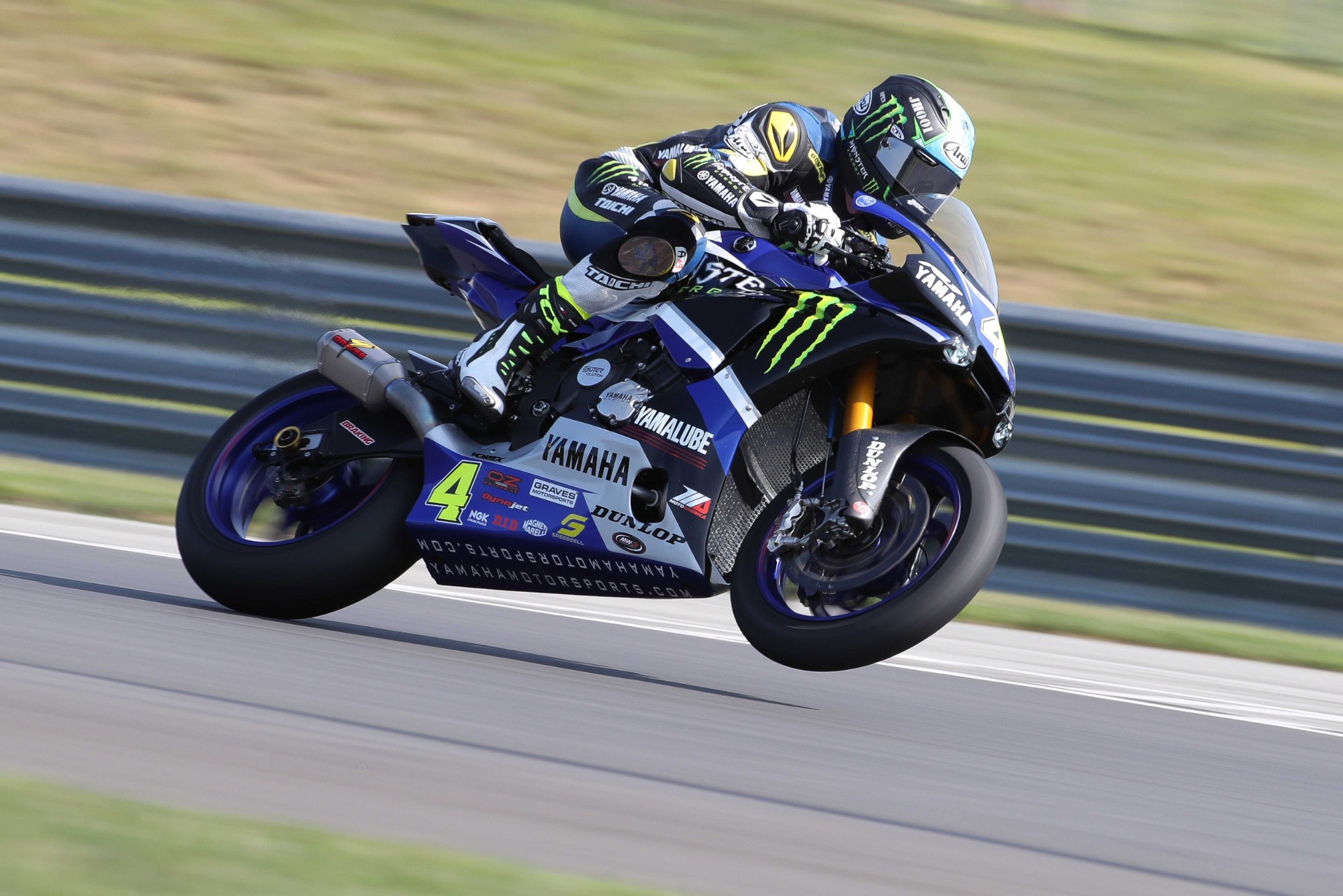
Josh Hayes, 43, dominated the AMA superbike title in the early part of this decade for the Yamaha factory squad, claiming the number one spot from 2010-2012 before winning again in 2014.

He also finished seventh in the season-ending MotoGP race at Valencia in 2011 as a replacement for injured compatriot Colin Edwards, while Rapp has also tasted action in the biggest league of all when he rode in the 2012 Indy round of the MotoGP title.

Rapp, Pegram and Quarterley were also staples of the AMA scene for many years, with Quarterley one of only a handful of riders to win a superbike race as privateer. The 57-year-old turned his talents to car racing when he retired from two-wheel competition, but recently won a major classic motorcycle race at Sonoma in California.

A large contingent of the American squad will be riding machines prepared by Mojo Yamaha, which is a motorcycle racing team focused on classic Yamahas with engine builder, Larry Cook, and chassis expert, Denis Curtis, the helm. Fans can find out more at www.mojoyamaha.com

The engines are a mix of oversized FJ1100 four-strokes and TZ750 two-strokes, housed in frames produced by CMR Racing.

“Immediately following the 2018 International Challenge, the build and preparation of the bikes for 2019 got underway,” said Team America riding captain Dave Crussell. “The goal is to engineer the most reliable bikes while keeping them as close to identical in build as possible.

“For 2019, we have five CMR/FJs and two TZ750s. These Yamahas have proven to be the best possible fit for Mojo Yamaha and should offer the most competitive advantage in our quest to win the event.”

America will compete against Australia and New Zealand in the 15th running of the International Challenge, which has hosted some of the most cut-throat racing ever seen at the 4.45km grand prix circuit. Each team can field up to 13 riders for their national squad.

The International Challenge is reserved for bikes manufactured between 1973 and 1984. There will be four six-lap races to decide the winner, with recognition for the highest individual scorer through the Ken Wootton Memorial Trophy.

Australia has already named its team: 2018 individual winner David Johnson, Jed Metcher, Steve Martin, Shawn Giles, Beau Beaton, Cam Donald, Dean Oughtred, Aaron Morris, Paul Byrne, Craig Ditchburn and Scott Webster. The New Zealand team will be named next week.

And in a first for the International Challenge, the 2019 event will be filmed for a two-hour television program to be broadcast in UK and Europe, USA and Canada, S.E. Asia, and in Australia on Foxsports and SBS in February.

The Island Classic, now in its 26th year, isn’t just about the International Challenge, though, with the event a pilgrimage for so many riders and spectators as they celebrate a century of motorcycling. There will be 56 races held across the weekend, catering for pre-WW1 bikes through to Vintage (1920-1945), Classic and Post Classic (from 1946 to 1972) and the more recent Forgotten Era and New Era classes.

The rider who scores the most points across the non-International Challenge races will be awarded the prestigious Phil Irving Perpetual Trophy. Over 500 bikes will either be racing or on display.

Tickets now on sale

Tickets are now on sale at islandclassic.com.au. A three-day adult ticket, purchased in advance, is just $82, and free for children 15 and under (accompanied by a full-paying adult). Packaged with four night camping the cost for a four-day weekend away is $164* for event entry and camping.

*All prices quoted are advance tickets. Advance ticket sales end midday Wednesday, January 23, 2019. Buy advance and save. Gate ticket prices are additional. Kids classified as age 15 and under.

USA Captain Dave Crussell www.mojoyamaha.com
Race No Rider Make Model Year Cap
273 Wade Boyd Moto Guzzi Le Mans 1988 1000
17 David Crussell Yamaha TZ750 1978 748
55 Michael Gilbert Yamaha FJ1100 1983 1250
219 Jorge Guerrero Suzuki XR69 1982 1200
0 Joshua Hayes Yamaha FJ 1983 1250
178 Bruce Lind Yamaha TZ750 1975 749
61 Eric Lindauer Kawasaki KZ 1980 1000
29 Barrett Long Kawasaki Harris 1982 1250
55 Martin Morrison Suzuki RGB500 MK7 1982 500
72 Larry Pegram Yamaha FJ1100 1983 1250
32 Joe Pethoud Yamaha Harris F1 1984 1250
43 Jason Pridmore Yamaha FJ1200 1983 1298
0 Dale Quarterley Suzuki XR69 1984 1250
15 Steve Rapp Yamaha CMR FJ 1100 0
62 Robert Ruwoldt Harris Kawasaki 1980 1200
33 Rennie Scaysbrook Suzuki GSX1100 XR69 1980 1170

New Management At Sandy Hook Speedway

Sandy Hook Speedway operation changes for 2019

Dennis & Janet Headley welcome Robert & Brianna Miller as new facility operators

STREET, MD – Long time operators Dennis & Janet Headley are happy to announce that Robert & Brianna Miller will begin their stewardship of Sandy Hook Speedway (SHS) in January 2019.

12 & 8 Years: The Headleys

“We have been involved with the track for 12 years & this season marks the end of our 8th year as the track operators. Life here at SHS has been great for us. We have created many friendships that are like family,” Dennis explained to all the Mini Moto & Kart competitors that attended the last two race events of the 2018 season.

He went on to explain that “Janet & I have decided to step away from our roles of operating Sandy Hook Speedway due to work and family commitments”.

It’s not a decision they took lightly or hastily. After a great deal of thought, they asked Robert & Brianna Miller to take the reins and move forward with the operations of Sandy Hook Speedway.

2019: The Millers

Robert is a former Grand National Championship Flat Track motorcycle competitor who began riding motorcycles at the age of 6. He was introduced to mini motorcycle road racing about 10 years ago. One track led to another & his path has led to competing at the Sandy Hook Speedway Mini Moto divisions of racing. He has been riding & racing for the past 6 seasons. Robert has become a huge fan of the facility.

“I began racing here and really liked the technical aspect of riding the track. But what really got me was the atmosphere of the track. It took me back to my youth, all the memories with my family jumping in a van & racing at the local and regional tracks. Sandy Hook Speedway felt like all those tracks wrapped up in one place,” Robert explained.

When the opportunity to take over as track operators was presented to the Millers, Brianna said “Robert enjoys riding & racing there so much! He has already been promoting the track for several years; through our current business, through track rental days and through organizing advertising opportunities for SHS at consumer events. As an operator of the track, he will work even harder at getting others to experience and enjoy the track.”

The Headleys and Millers will be working closely during the off-season to ensure a smooth transition into the 2019 season.

“The Millers are well informed about the Mini Moto world & are immersing themselves in the Kart world to learn as much as they can in a very short amount of time,” said Janet. She also explained, “The Millers already have many ideas of what they’d like to bring to Sandy Hook Speedway from a promotional & marketing aspect. But they have assured us that none of those things will be done in haste. Every decision will be made carefully, always doing what is best for Sandy Hook Speedway and the community of people that call it home!”

The Millers will be communicating with the competitors, crews, families and staff of the track to gather input and gain feedback on ideas they have for SHS. Surveys will be created to begin discussions. There will be a fresh push on advertising, participating at events to promote the speedway & racing series.

A new Sandy Hook Speedway website is in the works with an increase on the social media presence. In only the few short days since the announcement has been made, there is a positive buzz going on about Sandy Hook Speedway and what’s to come!

Also, while Dennis and Janet will no longer be the operators of SHS, they will still be seen at many events throughout the year.

“We realize that Robert & Brianna are new to many of you, but hope that you will take the time to get to know them and see them as part of your Sandy Hook family,” said Dennis.“They have goals of growth for Sandy Hook Speedway, and most importantly, they want to provide even more opportunities to get on the track. That’s something we can all get behind.”

Dennis & Janet will be wrapping up their 8 year stewardship of the track with the 2018 Awards Banquet, taking place on January 19th, 2019. It will also be a great opportunity to hear from and talk to Robert and Brianna. Be sure to mark your calendars. See you all there!

About Sandy Hook Speedway:

Sandy Hook Speedway began life in 1964. Still to this day is a favorite of many Kart racers with 2-cycle & 4-cycle Karts. It’s also a favorite of Mini Moto racers of all skill levels & goals. Located in Street, MD, the track draws racers from MD, PA, DE, VA, NJ, NY & CT. Both oval & road courses are paved asphalt with a 20 degree high-banked turn. www.sandyhookspeedway.com – Facebook – Instagram – Twitter.

For additional information contact:

Sandy Hook Speedway, 717-615-1820 or email [email protected]

This email was sent by: Sandy Hook Speedway LLC

Mailing address: 44 S. Kinzer Ave., New Holland, PA, 17557

Track address: 3050 Sandy Hook Rd, Street, MD, 21154

MotoGP: Thai Grand Prix Named Best GP Of 2018

The race weekend at Buriram was the most attended and has been voted the best of the season on its debut

2018 was an important year for Thailand and MotoGP™. On the paddock’s first visit to Chang International Circuit for testing, fans flocked to the track to get their first glimpse of the sport and ahead of the first ever Grand Prix in the country, the pre-event in Bangkok showed the fervor for MotoGP™ as more than 100 representatives of the media packed in to hear the thoughts of reigning Champion Marc Marquez. There was a lot of expectation but the Thai GP was an incredible success and has now been named the best of the season by the MotoGP™ Paddock and the decision communicated to the Grand Prix Commission.

The event at Buriram was also the best attended with over 220,000 people heading to Chang International Circuit over the three days. They were treated to a modern classic as Marquez fought it out with Andrea Dovizioso down to the final corner, coming out on top for the first time in one of the pair’s many head-to-head duels in the last few seasons. It was an exciting and fitting debut, with the Thai venue and crowds providing the perfect backdrop. Rewarded for the incredible organisation, facilities and atmosphere at the event, the Thai GP will now look ahead to 2019 in a bid to retain the prestigious prize.

Newin Chidchob, President of Chang International Circuit: “On behalf of both the people of Buriram and Thailand, we are extremely honored to receive the MotoGP Grand Prix of the year 2018. We are sincerely grateful for the recognition we have received for PTT Thailand Grand Prix. Of course, during the preparation of the event we ran into countless obstacles, but in overcoming them we grew, and ultimately resulted in the success of the event. A big thank you to all our event and circuit sponsors especially the Ministry of Tourism and Sports and PTT Public Company Limited for the immense support during this event. We must also thank the people of Buriram, for showing the capability of Thai people to the world. Many of the unique functions of the event such as the “E-Tan” truck which we utilized as the event’s shuttle bus. The Muay Thai (Thai boxing) expo to showcase Thai martial arts and culture. Not to mention all the volunteers who came to simply pick up the trash and keep the event clean. Everyone really came together to make this sports entertainment experience for our visitors from around the world unforgettable. Lastly, we would like to take this opportunity to say thank you to our good friends Dorna Sports who saw potential in us and gave us the opportunity to be a part of the world’s greatest motorcycle series. We promise to always use the experience gained in every event to create a better PTT Thailand Grand Prix every season. Thank you!”

Herve Poncharal, President of IRTA: “The whole MotoGP paddock was keen to discover how the new Thai GP would be, we were impatient for it to arrive and there was plenty of expectation. In the end we can be assured it was the best GP of the season due to many different aspects – we expected good, but we didn’t know quite what they would be able to achieve.

“Everything went smoothly, the commitment of the organisers was fantastic and they faced any problems through the weekend quickly, trying to find solutions as soon as possible. The crowd, the people…every single person involved was happy and always smiling. The fans’ support was incredible, the access to the circuit was fast and they demonstrated that they understood MotoGP – creating a commercial area close to the paddock, giving good exposure to our businesses, investors, sponsors, teams and riders. It’s also significant that a new event in this area – an important region for MotoGP – has achieved this result. It’s a perfect example for other countries to follow and this prize is fully deserved. From my point of view it will be hard for them to improve!”

Carmelo Ezpeleta, CEO of Dorna Sports: “I was delighted to welcome Buriram onto the MotoGP calendar and I’m delighted to see the Thai GP be recognised as the best this season. Asia is an important market for the Championship and events like Buriram only further underline the incredible popularity of our sport in the region. They are a perfect blueprint for future events and we’re excited to return to Buriram already.”

Suzuki Will Continue To Sell The Hayabusa In The United States

Brea, CA (December 13, 2018)– Suzuki Motor of America, Inc. (SMAI) has confirmed that U.S. market production of the Hayabusa sport motorcycle continues uninterrupted. Production of European specification Hayabusa models has been discontinued due to Euro 4 emission regulations. This situation, and resulting media reports, may have caused confusion and misunderstand among U.S. consumers, media, and dealers.

Commenting on the status of the iconic sports motorcycle, Kerry Graeber, Suzuki’s Vice President, MC/ATV Sales and Marketing, said the following, “From its inception 20 years ago, the iconic Hayabusa motorcycle has been a visually- and technologically-stunning representation of Suzuki’s commitment to motorcycle performance. Literally tens of thousands of riders have owned this beloved model and it continues to be sought after even today. GT riders, drag racers, and customizers worldwide are obsessively devoted to the Hayabusa and we are looking forward to continuing its legacy. Suzuki Motor Corporation’s commitment to this model means a new generation of motorcyclists can experience the unmatched performance and style that the Hayabusa is known for globally.”

AHRMA: Woodcraft To Continue Sponsoring Formula Lightning Class

AHRMA– Making the Past Fast!

AHRMA Announces Woodcraft Technologies as 2019 Title Sponsor for Formula Lightning Series

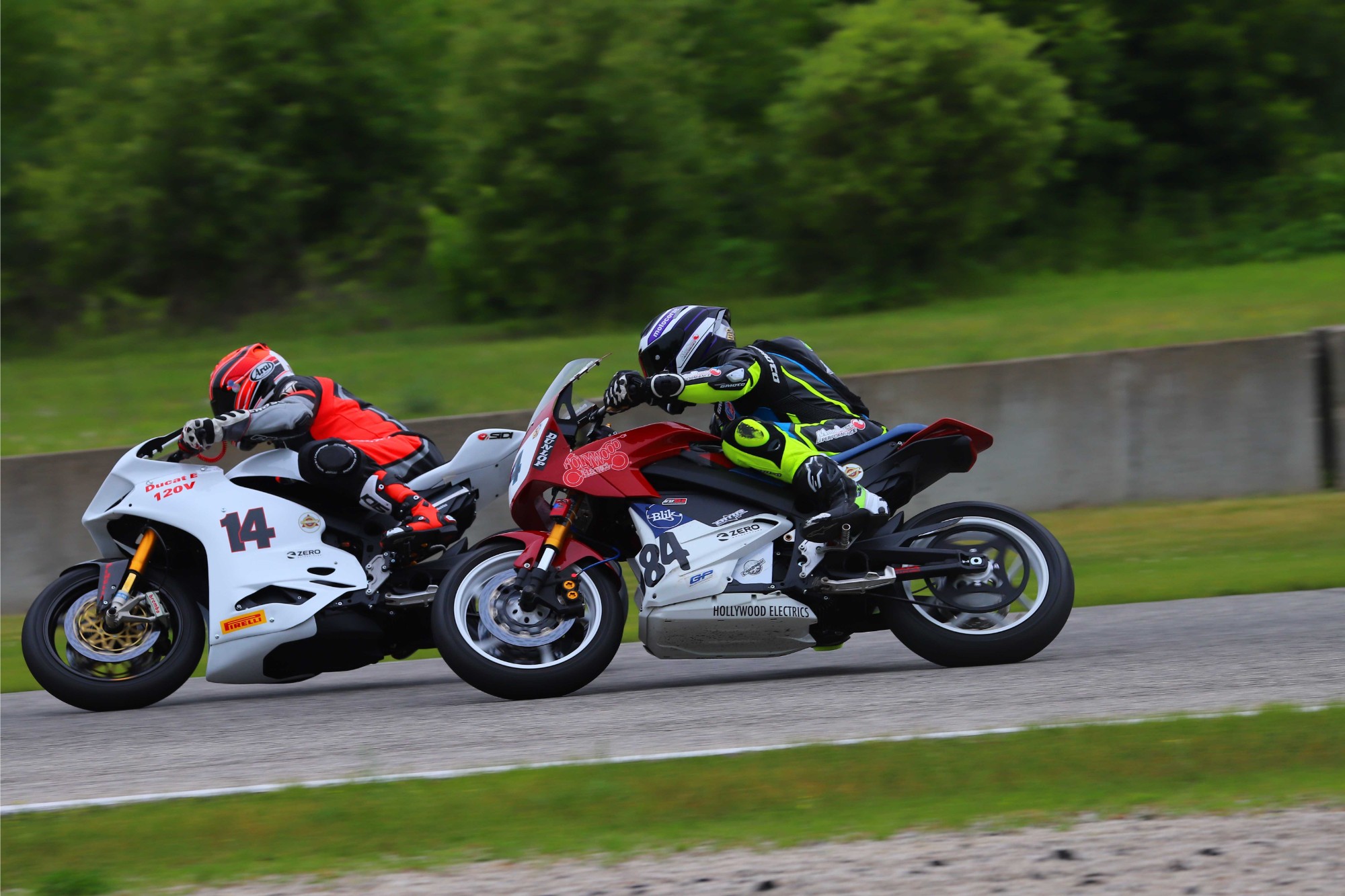
GOODLETTSVILLE, TN, DECEMBER 13, 2018 — AHRMA is pleased to announce that Woodcraft Technologies will be the 2019 title sponsor for AHRMA’s Formula Lightning Series. This 12-track series will be run nationwide beginning in February 2019. This solidifies Woodcraft’s commitment to the up and coming sport of zero-emissions racing. For the past five years, Woodcraft Technologies has sponsored the eMotoRacing “Varsity Challenge” scholarship.

What is Formula Lightning?

The Formula Lightning (formerly eMotoRacing) series is the PREMIER zero emissions motorcycle road racing series in the US. This means, if your race bike emits no exhaust while going around the track, you can use any means of propulsion you like; such as electricity, magnetism, gravity, flywheels, springs, etc. We welcome both stock and custom-built electric motorcycles, and innovations such as harnessing kinetic energy are encouraged.

Formula Lightning (FL) was established in 2013 to fill the demand for a zero-emissions motorcycle racing series that would demonstrate advanced and compact e-superbike technology and excitement. A strategic partnership with AHRMA has given us desirable race tracks and reliable race dates. Initially started by avid racer and solar power advocate, Arthur Kowitz of Ormond Beach, Florida, the Formula Lightning series is now in its sixth season, sponsored by Woodcraft Technologies, Inc. Competition bikes are race-prepped production units from Energica, Zero, and Brammo, plus custom-built prototypes of all kinds.

Formula Lightning Varsity Challenge

Along with our regular season events, Formula Lightning holds a Varsity Challenge (VC), where students from high-profile engineering colleges, around the nation, compete against each other with their handcrafted e-bikes for scholarship cash and bragging rights. This event provides the opportunity for students to hone their racing skills and advance technologies in the area of zero-emissions. 

Collegiate engineering teams are invited to design, build, and race production motorcycles converted to electric, full on prototypes, and even powered by any zero-emission method (flywheel, magnetism, piezo-electric, etc). The race is run concurrent with AHRMA’s Formula Lightning class, under all Formula Lightning rules except for battery voltage. VC teams are not limited as to battery voltage, as long as normal safety concerns are met.

AHRMA’s race director allows the VC teams to race on track side-by-side private ebike teams, with the understanding that the VC teams will not get points toward the Formula Lightning championship. To sweeten the race for VC teams, Woodcraft Technologies sponsors a $1000 scholarship to the top team. Recent entries have come from Virginia Tech, University of Sherbrooke (Quebec), Rochester Institute of Technology, and University of Calgary. Other schools with programs underway are Penn State and University of Michigan. Look for the Varsity Challenge this year at Gingerman Raceway, August 2-4.

Series Schedule

2019 CPL Systems National Roadrace Series

2/21-24 – Roebling Road Raceway; Bloomingdale, GA

3/8-10 – NOLA Motorsports Park; Avondale, LA

3/29-31 – Carolina Motorsports Park; Kershaw, SC

4/26-28 – Willow Springs International Raceway; Rosamond, CA

5/24-26 – New Jersey Motorsports Park; Millville, NJ

6/28-30 – Heartland Park, Topeka, KS

7/26-28 – Road America; Elkhart Lake, WI

8/2-4 – Gingerman Raceway; South Haven, MI

8/16-18 – Buttonwillow Raceway Park Buttonwillow, CA

8/30-9/1 – Utah Motorsports Campus; Grantsville, UT

9/6-8 – Talladega Gran Prix Raceway; Munford, AL

10/3-6 – Barber Motorsports Park; Birmingham, AL

​MotoAmerica: 2019 Rulebook Released, Including New Rules For Superbike Electronics

0

The American Motorcyclist Association (AMA), the sanctioning body of the MotoAmerica AMA/FIM North American Road Racing Series, has released the 2019 rulebook governing America’s premier road racing series, which includes a significant change in the technical rules for electronics in the Superbike class.

In the past, MotoAmerica Superbike rules were written to closely resemble the FIM Superbike World Championship rules, with a few exceptions. World Superbike teams are limited to how many engines they can use, and MotoAmerica Superbikes must use a standard gearbox while World Superbikes are allowed to run a standard gearbox or one alternate, homologated set of gear ratios.

Now, another significant differance has been added to the rules.

In 2018, teams fielding a Superbike had three options for their engine control electronics: Run the standard Engine Control Unit (ECU) and reprogram (reflash) it to suit their needs, run an approved “Superstock 1000” kit ECU like a programmable Yamaha YEC race kit ECU, or run an approved “Superbike Kit” electronics system.

The “Superbike Kit” system allowed the most advanced ECU and electronic systems to be used, offering the most advanced programming and performance. However, the rules stated “Only the machine manufacturer or one approved partner can submit a single system for approval.” In other words, Ducati assembles the “Superbike Kit” electronics they want to use that still meet the rules, that kit is then homologated, and anyone wanting to use a “Superbike Kit” electronics system on a Ducati has to use that same kit.

The parts, price, delivery lead time, firmware, software, software updates, and more are all stipulated in the rules, which in theory makes it possible for any team with the necessary resources to buy and run the same electronics as the factory team.

However, this rule also limited teams to getting their “Superbike Kit” electronics from the same source, and the level of support and customer service from that single source might vary from team to team, affecting performance.

For the 2019 MotoAmerica Superbike Championship, all three of the previous Superbike electronics options remain available, but a new fourth option that allows the use of advanced electronics from alternate sources has been added. Superbike teams can now choose to run MotoAmerica-approved “Superbike Kit” systems.

At first glance, the wording of the rules governing the MotoAmerica-approved “Superbike Kit” electronics appear nearly identical to the rules governing World Superbike “Superbike Kit” electronics with a couple significant exceptions.

The phrase “Only the machine manufacturer or one approved partner can submit a single system for approval” does not appear in the MotoAmerica-approved “Superbike Kit” rules, and the phrase “The ECU must be from the MotoAmerica approved Superbike ECU list.” has been added.

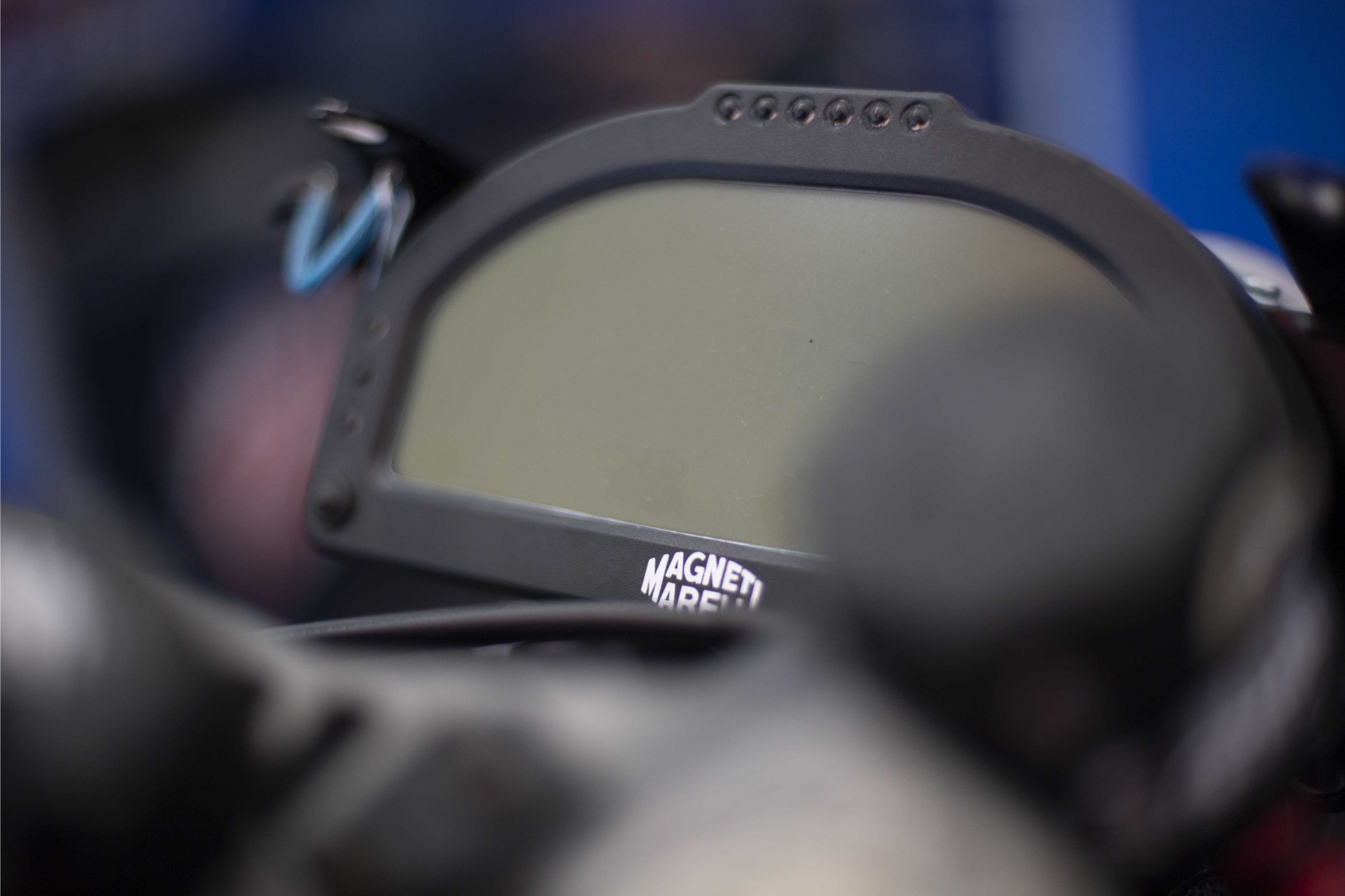
This means that a team can run a MoTec or other electronics system instead of the Magneti Marelli system homologated by most World Superbike teams, as long as the ECU is on MotoAmerica’s approved list.

Find the entire 2019 MotoAmerica rulebook here: http://www.americanmotorcyclist.com/Racing/Story/r…

Kawasaki ZX-6R Intro: Return Of The $10,000 600-Class Sportbike

To read more articles like this one originally published in the December 2018 print issue of Roadracing World, subscribe to Roadracing World.

This feature article is brought you by Kawasaki Motors Corp., USA.

Kawasaki Motors Corp., U.S.A. (KMC) markets and distributes Kawasaki motorcycles, ATVs, side x sides, and Jet Ski® watercraft through a network of almost 1,100 independent retailers, with close to an additional 7,400 retailers specializing in general purpose engines. KMC and its affiliates employ nearly 3,100 people in the United States, with approximately 260 of them located at KMC’s Foothill Ranch, California headquarters.

Kawasaki’s tagline, “Let the good times roll.®”, is recognized worldwide. The Kawasaki brand is synonymous with powerful, stylish and category-leading vehicles. Information about Kawasaki’s complete line of powersports products and Kawasaki affiliates can be found on the Internet at www.kawasaki.com.


Copyright 2018-2019, Roadracing World Publishing, Inc.

Return Of The $10,000 600cc Sportbike

By Chris Ulrich

Few things have changed since the last time Kawasaki introduced a new ZX-6R. The motorcycle sales environment is still tough. Road racing is still working to recover. Kawasaki doesn’t have any official entry in top-level road racing in the United States. And some media outlets are still making stuff up.

We’ve all read the headlines about the demise of the 600cc inline four-cylinder. The tales were so convincing that they fooled the powers that be at Dorna and Moto­America into looking at an alternate class featuring Middleweight Twins instead of Inline Fours. But the stories were Fake News and manufacturers keep building and selling fully-faired middleweight category sportbikes. Honda, the biggest target of the fiction, recently announced the return of the CBR600RR as a 2019 model. Suzuki also continues to build and sell the shared-platform GSX-R600 and GSX-R750 models, and Yamaha introduced an upgraded YZF-R6 in early 2017. And now I’m writing about an upgraded 2019 model Kawasaki ZX-6R. All indicators show the middleweight supersport category is still alive and still relevant. In fact, it makes up roughly 25 percent of the fully-faired sportbike market. 

There is no denying that the sportbike segment of the industry has some challenges, but people are still buying and riding sportbikes and there is still a place for middleweight three and four-cylinder sportbikes in the market. That place is right between the entry-level sportbike class and the 1000cc sportbike category. The safest and most responsible way to progress in riding is by matching the rider’s skill level with the appropriate displacement. The industry needs models that new riders can graduate to from the 300cc-500cc category. And the argument about 1000cc bikes having enough electronics that anyone can ride them may be great for marketing, but is not the right approach to keep riders in the sport for the long haul. Advanced electronics do a great job at adding a safety net when turned all the way up, but the forces generated by the larger displacement 1000cc engines will always be greater, the power output higher, and the centripetal forces created by a heavier crankshaft, a large stater, and larger pistons will always make larger-displacement motorcycles harder to stop and turn than smaller-displacement motorcycles. And the greater torque and horsepower will always require more physical effort to control on corner exit, no matter how much somebody turns up the traction control—at least if you want the bike to actually move forward and behave in a natural way. It’s physics, plain and simple. 

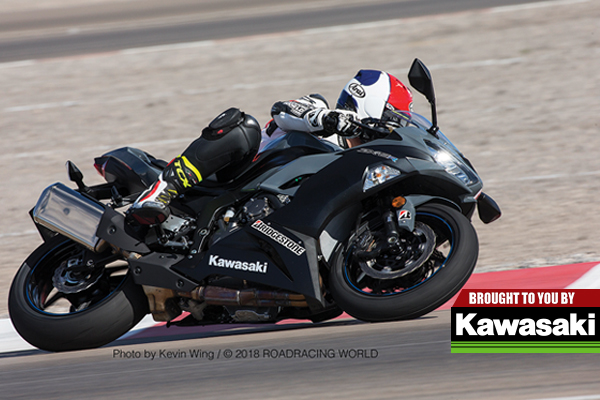
Fully-adjustable front and rear Showa suspension — including new Separate Fork Function-Big Piston (SFF-BP) front forks–allowed Racing Editor Chris Ulrich to tweak the set-up and thus continually improve the 2019 Kawasaki ZX-6R’s racetrack performance at Las Vegas Motor Speedway. – Photo by Kevin Wing, courtesy of Kawasaki.

But in recent years, the typical price of 600cc sportbikes has crept up closer and closer to base-model 1000cc motorcycles, and that seems to have changed consumer behavior. A 600 seemed too expensive for the entry-level rider, so they went for the 400. Then they gravitated to a 1000 when looking to upgrade from a 400 because it seemed like a better dollar-to-performance value than a 600. People often underestimate the massive jump in performance between a 400cc and a 1000cc sportbike.

Kawasaki has decided to do something to bridge the gap and try to change consumer behavior by offering the 2019 non-ABS-model ZX-6R for $9,999, and selling the ABS models for between $10,999 and $11,299. For comparison, the base model ZX-6R is priced $1,399 below the 2019 Suzuki GSX-R600, which has the next-lowest-price in the category. It is also priced $1,799 below the Honda CBR600RR, and $2,199 below the segment’s sales leader, the Yamaha YZF-R6. At 636cc, the ZX-6R also competes with Suzuki’s GSX-R750, which sells for $2,499 more than the base model ZX-6R. You see a pattern here? Kawasaki’s pricing is aggressive. There is no doubt Kawasaki’s margin on the ZX-6R is lower, but the company is not passing the pain on to dealers—the dealer cost-to-MSRP spread for the 2019 model is close to what it was in previous model years. Kawasaki plans to make up for reduced margins by increasing the volume of units sold. That approach could be pure genius or a massive bust, and it will take some time to see how it really plays out in the marketplace and on Kawasaki’s balance sheets.

That lower base price doesn’t mean Kawasaki is shorting its racing contingency programs. Team Green will offer over $500,000 in contingency support for the 2019 ZX-6R in 13 series across the United States, including MotoAmerica, where the ZX-6R is eligible to run the Supersport class with no additional restrictions beyond the general technical rules.

Kawasaki’s new approach for the 2019 ZX-6R follows the industry trend of delaying new model redesigns in an effort to amortize the design and manufacturing costs. So now, instead of ground-up redesigns, we get upgrades that add performance and value, meant to keep consumers engaged without bankrupting the OEM. For 2019, Kawasaki added a quickshifter (KQS) system, changed the gearing, revised the engine mapping to meet Euro 4 emission standards, changed the ergonomics, added LED lighting, and updated the bodywork design. All are smart changes that improve sales appeal and keep the ZX-6R relevant.

Starting with the powerplant, the 2019 ZX-6R retains the same DOHC, 16-valve, liquid-cooled 636cc inline four-cylinder engine featuring a 67.0 mm x 45.1 mm bore and stroke and 12.9:1 compression ratio. Changes to engine mapping allow the ZX-6R to meet Euro 4 emissions standards without adding ride-by-wire throttle control or losing engine performance compared to the 2013 non-Euro 4 specification model. Kawasaki engineers aimed to improve the mid-range performance of the ZX-6R by changing the final drive gear ratio from 16/43 (2.688:1) to 15/43 (2.866:1). The primary and internal transmission gear ratios were unchanged. The 2019 retains the cable-operated F.C.C. slip-assist back-torque-limiting clutch.

Photo by Kevin Wing, courtesy of Kawasaki.

The electronics suite is also mostly unchanged for 2019. Four Kawasaki TRaction Control (KTRC) levels (1-3, plus off) are available on the ZX-6R, along with two power modes. Full Power offers—no kidding—full power while Low Power cuts available output to 80% of maximum horsepower. Between the KTRC and the power modes, the ZX-6R offers eight variations of power control. And while engineers added the previously mentioned Kawasaki Quick Shifter (KQS) unit that allows upshifts without having to close the throttle, there is no auto-blip functionality, so downshifts still have to be made the old-fashioned way, using the clutch.

Kawasaki is offering two-­versions of the 2019 ZX-6R with Kawasaki Intelligent Anti-lock Brake System (KIBS). The system uses inputs from wheel speed and brake pressure sensors, plus the ECU, to regulate the amount of brake pressure reduction when slippery conditions are present. 

The 2019 ZX-6R chassis remains mostly unchanged, with rake and trail for the twin-spar pressed aluminum frame remaining 23.5 degrees and 102 mm. The two-piece die-cast aluminum sub-frame and rear swingarm are also unchanged. The front suspension consists of 41 mm Showa Separate Fork Function-Big Piston (SFF-BP) front forks. The SFF-BP system separates the fork functions with the pre-load adjustment located only in the left fork leg, while damping adjustments are located only in the right fork leg. Both legs have springs and the fork piston size is 37.2 mm, which should in theory make the fork more sensitive to adjustments. A fully adjustable Showa gas-charged piggyback-reservoir rear shock works through a Kawasaki Uni-Track linkage.

The 2019 model’s wheelbase is slightly longer, changed from 54.9-inches (1,385 mm) to 55.1-inches (1,399 mm), courtesy of the previously mentioned, smaller, 15-tooth countershaft sprocket. The Kawasaki ZX-6R rolls on a set of Bridgestone Hypersport S22 radial tires.

The biggest changes made for 2019 come in ergonomics and bodywork. While the rider triangle—the relative location of the footpegs, handlebars, and seat—is unchanged, the seat length between the tail section to the fuel tank is slightly shorter. Kawasaki engineers also added a new clutch lever with five positions of adjustability. A redesigned upper fairing retains the Ninja’s large center air intake while adding LED headlights and improving wind protection for the rider. The new LED rear taillight was modeled after the unit used on the ZX-10R. Kawasaki will offer the ZX-6R in three colors, Metallic Flat Spark Black (non-ABS), Pearl Strom Gray Metallic Spark Black (Non-ABS, ABS), and the KRT edition.

All the changes add appeal to what was already a solid, well-performing bike in the category. Selling the base model 2019 Kawasaki ZX-6R for $9,999 has the potential to turn the middleweight Supersport category on its head.

***

Kawasaki chose Las Vegas as the background to launch the ZX-6R, first unveiling the new model the morning of the media day during the 2018 American International Motorcycle Expo (AIMExpo), then allowing journalists to ride the bike on the street and racetrack over two days.

The route selected for the street segment took us west out of Las Vegas toward Mount Charleston, climbing 8,000 feet before heading back to the city. The route consisted of highways, twisty mountain roads, slick and wet roads, and some city riding as we headed from and then back to the speedway. Our ride for the day was the $11,299 KRT model with ABS, which makes sense since the ABS function on most road-going motorcycles is designed for use on the street. I could tell the ZX-6R had a good balance of sport and comfort a few miles into the ride. Ergonomics were good during longer stints on the bike; my knees were not too cramped and the bar position allowed me to relax my shoulders and limit fatigue. Wind protection, even at high speed, was more than adequate.

The added torque from the engine having that extra displacement came in handy when accelerating onto the highway or jumping from light to light. Cruising down the highway in top gear, the engine also allows relatively brisk acceleration without having to downshift. And engine vibration reaching the rider also seems to be pretty minimal.

The Kawasaki ZX-6R’s 636cc engine produces more mid-range torque than a typical 600cc-class sportbike, giving a street rider more gear-selection options on twisty roads. Ergonomics, comfort, suspension, and tire performance are also good for road use. – Photo by Kevin Wing, courtesy of Kawasaki.

Twisty-road performance was good; the 636cc engine gives plenty of gear selection options, and the quick-shifter (up only) worked as expected. A negative I noticed while on the street ride was the engine temperature while going from stoplight to stoplight. Ambient temperatures were in the 80s and the bike was running up around 225-230 degrees Fahrenheit while sitting in traffic.

The ZX-6R has a stable chassis that worked well on the highway and through the canyon roads at a good clip, while the Bridgestone Hypersport S22 performed well in all conditions, including slick, cold, wet roads at the top of Mount Charleston. But it would be irresponsible to test the ZX-6R’s limits on public roads, so we headed to the Classic Course at Las Vegas Motor Speedway to find the true high-speed performance potential of the Kawasaki ZX-6R. 

It had been about nine years since the last time I turned a wheel around the Classic Course. The racetrack is short, made up of mostly second-gear corners with two straightaways and one fast, fourth-gear right off the back straight. I was able to get my head wrapped back around the track after a few laps. Going from the street to the track, Kawasaki put us on the base model with no ABS. It was a smart choice as we were there to test racetrack performance and most ABS systems are made for safety on the road instead of fast lap times around a racetrack. Bridgestone R11 DOT-labelled racing tires were set at 34 psi in the front and 24 psi in the rear (coming off the tire warmers) for the track sessions.

The first thing I noticed rolling out of pits was the engine. The torquey 636cc engine makes the ZX-6R more user-friendly on the track—especially for larger riders. The rider can rev the engine for absolute maximum performance, or leave the bike in a higher gear than normal and use the mid-range torque to smoothly accelerate out of a corner. The ZX-6R pulls hard until 14,500 rpm, signing off about 1,500 rpm before the claimed 16,000 rpm redline. On deceleration, the F.C.C. back-torque-limiting clutch handled everything I asked it to do, without the rear wheel stepping out during heavy braking. 

The handling characteristics and feel are the same as on Kawasaki 600cc models I’ve tested in the past. The bike is stable on the brakes and at the corner apex, but takes more effort to turn in and struggles to finish a turn. The 2019 version of the ZX-6R was no different at the start of the day. Once up to speed I made systematic changes to the set-up to improve steering and increase overall support from the suspension.

My first change was to add two turns of rear spring pre-load (from 6 positions in to 8 positions in) to improve overall steering at the apex and exit of the corner. Next on the agenda was to increase front pre-load (from 6 turns in to 8 turns in) to balance the bike and add braking support. Then I focused on improving front feel by changing the damping settings, and I had a Kawasaki tech add a half turn of rebound (from 4 turns out to 3.5 turns out) to control rate of return, then added half a turn (from 4.5 to 4 turns out) of compression for more support. We continued to tweak on the chassis as the sessions went on and I pushed harder. The next step was adding a 2 mm shim under the shock clevis. From there we added more front pre-load, settling on 12 turns in, until there was adequate support on the brakes without ruining the chassis balance. The middleweight Kawasaki responded well to raising the entire bike. 

The ZX-6R liked more spring preload at both ends as well as inserting a shim under the shock clevis. – Photo by Kevin Wing, courtesy of Kawasaki.

A big part of my comfort came from understanding the Showa SFF-BP forks. They work better than standard Showa BPF forks through the entire range of travel and have more feel at the bottom of the stroke at the apex. The adjustment range is also precise. At the rear, the ZX-6R has decent edge grip along with plenty of feel when the rear tire starts to spin. I was very comfortable allowing the rear to spin once I had the bike stood up and pointed on corner exit. And as the laps piled up and I got even more comfortable, I was able to eventually turn a 1:21 lap around Las Vegas. That’s a solid lap time for a standard, stock motor­cycle and it shows the high performance potential of the ZX-6R. Performance potential that comes with a $9,999 MSRP.

There’s nothing not to like about that!

The specification chart for the 2019 Kawasaki ZX-6R. Copyright 2018-2019, Roadracing World Publishing, Inc.


Roger Lyle’s Motorcycle Xcitement Track Days And Road Racing School Releases Its 2019 Schedule

Roger Lyle’s Motorcycle Xcitement Track Days and Road Racing School is proud to announce our 2019 dates at Summit Point Motorsports Park in Summit Point, West Virginia, and NCBIKE in Garysburg, North Carolina.

Motorcycle Xcitement has a 42-year history with Summit Point Motorsports Park in wild and wonderful West Virginia. We are looking forward to 15 track days and road race schools at the three road race tracks: the legendary Summit Point Raceway, Bill Scott’s Shenandoah Circuit and the new Jefferson circuit. Summit Point Motorsports Park’s current winter project is deer fencing around the 400 acre facility! Thanks to track manager Chris White and all the fine folks at Summit Point for their commitment to keep the dream alive!

Motorcycle Xcitement Track Days travels to Garysburg, North Carolina, to the fun and friendly NCBIKE for 4 weekends riding on their 14 turn 2.2 mile road course. On Saturdays we ride counter clockwise. On Sunday we ride clockwise direction. That’s two tracks in one location that wears out both sides of your tires! Thanks to track manager Sam True and his crew for a wonderful safe facility and smooth operations.

Motorcycle Xcitement would like to thank the John Ulrich family, the Roadracing World Action Fund, and everyone who contributed, for saving motorcyclists lives since 2001. Thank You.

From everyone at Motorcycle Xcitement, We wish you a healthy new year!

Peace,

Roger Lyle

www.motorcyclexcitement.com

301-933-2599

Motorcycle Xcitement Track Days and Road Racing School 2019 Calendar

March 31 Jefferson Circuit, Summit Point, West Virginia

April 1 Summit Point Raceway, Summit Point, West Virginia

May 12 Shenandoah Circuit, Summit Point, West Virginia

May 13 Summit Point Raceway, Summit Point, West Virginia

June 1 NCBIKE , Garysburg, North Carolina

June 2 NCBIKE, Garysburg, North Carolina

June 16 Shenandoah Circuit, Summit Point, West Virginia

June 17 Summit Point Raceway, Summit Point, West Virginia

July 4 Summit Point Raceway, Summit Point, West Virginia

July 20 NCBIKE, Garysburg, North Carolina

July 21 NCBIKE, Garysburg, North Carolina

August 4 Jefferson Circuit, Summit Point, West Virginia

August 5 Summit Point Raceway, Summit Point, West Virginia

September 7 Summit Point Raceway, Summit Point, West Virginia

September 8 Summit Point Raceway, Summit Point, West Virginia

September 29 Jefferson Circuit, Summit Point, West Virginia

September 30 Summit Point Raceway, Summit Point, West Virginia

October 19 NCBIKE , Garysburg, North Carolina

October 20 NCBIKE , Garysburg, North Carolina

October 27 Shenandoah Circuit, Summit Point, West Virginia

October 28 Summit Point Raceway, Summit Point, West Virginia

November 2 NCBIKE , Garysburg, North Carolina

November 3 NCBIKE , Garysburg, North Carolina

Canadian Superbike: Jordan Szoke Returns To Kawasaki Roots For 2019-2020

Szoke Signs Two Year Deal with Canadian Kawasaki Motors and Blackfoot Motorsports

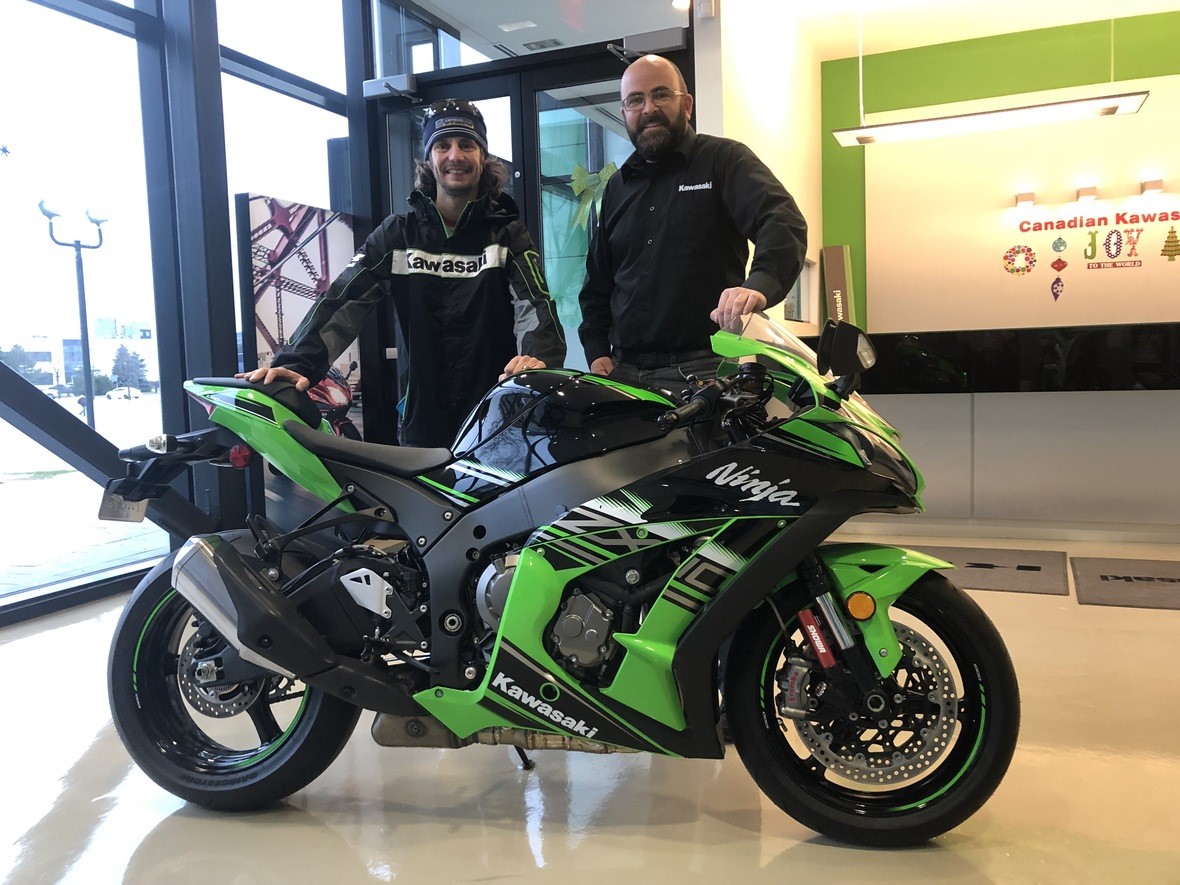
Jordan Szoke, the winningest racer in National Canadian Superbike History signs a two-year deal to run his Mopar Express Lane backed super bike team with brand new equipment for the next two seasons. Szoke will defend his Mopar Canadian Superbike National Title with the redesigned 2019 Kawasaki Ninja ZX-10R backed by Blackfoot Motorsports.

“I am really excited about this new venture.” grins Szoke. “I started out my super bike career on a Kawasaki so it just seems fitting to finish it on Team Green.”

Szoke started his “real Superbike” debut on a 1993 model Kawasaki Ninja ZX-7RR in 1997 at Atlantic Motorsports Park. In turn bringing home his very first National Superbike Championship to Kawasaki in 1998. Szoke and Kawasaki had one of the most successful runs in Canadian History with a 4-year winning streak sweeping both the Superbike and Pro 600 titles from 2006-2009.

“Kawasaki and I are a good fit.” says Szoke. “It is an exciting step for our National Series to have Kawasaki involved in our Superbike program and also a positive step forward for the rest of our competitors and fans to enjoy another brand gunning for the top spot. There is life after sitting in the riders seat and I feel that Kawasaki and I are a good fit to grow together to stay involved within the industry after racing.”

“We are excited to have Jordan back on a Ninja, the bike that helped launch his superbike career back in the late 90’s,” says Brad Goodbody of Canadian Kawasaki Motors. “With the global racing success of the Kawasaki Ninja ZX-10R, and the improvements made on the 2019 model, we are really looking forward to seeing what Jordan and his Waznie Racing Team can do in the CSBK Championship.”

Szoke is quick to thank BMW Motorrad for their unwavering support for the past 7 seasons, saying, “We part on really good terms. Chris (Duff) and I were kids are the racetrack together. We’ve known each other for years. Him and I both want to see our sport thrive. I am extremely thankful for the 6 Championships and one World Race Trophy Title we brought home to Canada.”

Backing Kawasaki with their new venture is Blackfoot Motorsports. Blackfoot Motorsports is one of Canada’s largest power sports dealers located in Calgary, AB. Blackfoot has a rich racing heritage both on and off road, winning multiple championships both on the asphalt and the dirt.

“Having Blackfoot as a larger part of our efforts really makes me happy. Pat, Doug and Jason have always supported me my entire career, so to have them play a bigger role on our team, the fit just couldn’t be more perfect. I can’t wait to see them back at the racetrack again,” says Szoke.

Szoke continues his relationship with famed tuner Scott Miller of Fast Company. Miller has agreed to help prepare the horsepower for Szoke’s already powerful ZX-10R. “Scott and I have worked together during many different parts of my career. When it came time to find a tuner for our engines, it was a no-brainer, just call Miller. He was always part of my successes throughout my career so I am grateful to have him back on board.”

Jordan’s wife Amy Szoke made her debut on a Superbike last season, finishing 8th in the Amateur Superbike season overall. Amy will return to CSBK National racing, this time on a Kawasaki Ninja 400 in the Lightweight Sportbike Class.

When asked about her switch from Superbikes to Lightweights, Amy explained, “Running a Superbike is really (really) expensive. My program ran us deep into the red last season so this is a good alternative to just sitting in the pits making sandwiches. My heart truly lies with the big bikes so I wouldn’t rule out a return at some point.

“I’ve found a new passion in film (Amy is a stunt performer in movies and television) and with this program modification it allows me to commit better to both. Kawasaki had given me an opportunity to climb back into the saddle in the past and once again offer me the same opportunity. I am eternally grateful to the green machines for that.”

“Amy brings a level of professionalism, positivity, and skill to the Lightweight Sportbike class that we are very excited about. I believe, much like Ana Carrasco did in the FIM World Supersport 300 Championship, that Amy and the Ninja 400 are more than capable of running up front and contending for the championship,” says Goodbody.

Mopar Express Lane continues to remain the title sponsor and welcomes Kawasaki and Blackfoot Motorsports to Szoke’s Superbike efforts.

Suzuki Tri Series Continues This Coming Weekend At Manfeild Circuit

OVERSEAS STARS SURE TO GAIN SUZUKI SERIES MOMENTUM

The popular annual Suzuki Series kicked off near Taupo on Sunday with all the usual fizz, fanfare and frenetic race action and, despite the star power of the international entries, it was the Kiwi locals who emerged as the early frontrunners.

That’s not to say that any of these New Zealand riders can afford to rest of their laurels, however, with the riders visiting from overseas sure to grit their teeth and fight back at round two in the Manawatu this coming Sunday.

Manfeild Circuit Chris Amon, on the outskirts of Feilding, is the venue for racing this Sunday and the visiting riders from the United Kingdom, The Netherlands, Germany and Australia are determined to make the most of Saturday’s practice day to ensure they’re fighting fit and fast for the racing proper on Sunday.

The prestige of the Suzuki Series is such that, each year since the inaugural running in 2008, it entices many of the world’s leading road-race exponents to make the long journey Downunder.

This year has been no exception with British rider Peter Hickman certainly a draw-card, despite this being his first time racing in New Zealand.

Internationally-renowned Hickman won at the Isle of Man earlier this year, setting a new lap record, and also celebrated wins in 2018 at the North West 200 in Northern Ireland and at the Ulster Grand Prix.

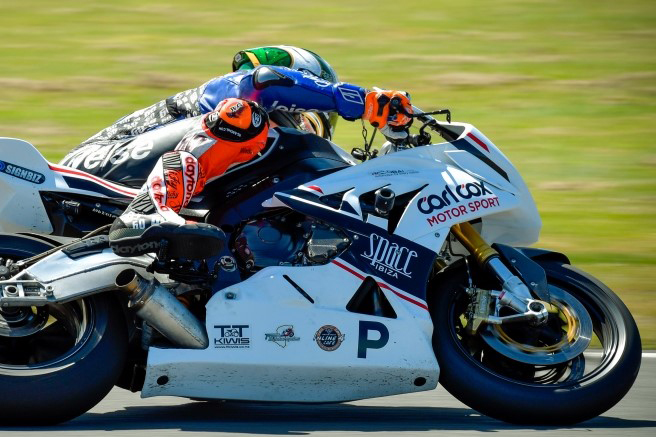
Hickman is here to compete at all three rounds of the Suzuki Series, racing his BMW motorcycle under the Carl Cox Motorsports banner, although his first foray at Taupo last weekend was stymied by a little off-track excursion.

Running with the leaders in Sunday’s first of two Formula One Superbike class races, Hickman’s bike was clipped from behind by another rider and the two of them shot off the track and into the catch-gravel, often endearingly referred to by the riders as the “kitty litter”.

Hickman managed to rejoin the race and settled for 14th at the finish. He crossed the finish line in 11th position in race two, the heat of the race track surface playing havoc with tyre traction and the pace of Kiwi riders Mitch Rees, Damon Rees, Shane Richardson and Scott Moir simply outrageous.

This year’s Suzuki Series has also welcomed the return of likeable Liechtenstein rider Horst Saiger.

Saiger was absent for family reasons last year but he did win the Suzuki Series’ F1 class in 2014. However, his experiences at this year’s series opener in Taupo was not a good one.

Suffering issues with the set-up of his suspension, Saiger managed only 10th and 15th in his two F1 outings on Sunday, well below what everyone knows he is capable of.

Expect to see a very different Saiger at Manfeild this weekend, a circuit that has been a happy hunting ground for him in the past.

Another international star who has made the trip to New Zealand is British and world sidecar championship contender John Holden, who has again this year teamed up with Tauranga’s Robbie Shorter as his “wingman”.

Holden and Shorter won the sidecars’ F1 class at the 2016 edition of the Suzuki Series and it looks as if they already have one hand on the sidecars trophy this year too.

The Holden and Shorter combo qualified fastest in the F1 sidecars class at Taupo and then blitzed the field in winning both of Sunday’s points races.

British sidecar duo Phil Hyde and Gary Bryan also added international sparkle to the F2 sidecars class in what was their first Kiwi appearance last weekend, and they twice finished runners-up, both times behind Bay of Plenty heroes Barry Smith and Tracey Bryan.

“This year’s entry list is the largest we’ve had in the 10 years since the inaugural Suzuki Series. The popularity is global, particularly for the Cemetery Circuit final round on Boxing Day,” confirmed Suzuki Series organiser Allan ‘Flea’ Willacy.

Hundreds of talented racers, engineers and mechanics, team managers, sponsors and the many fans have all become engrossed in this special ‘mini’ season of pre-nationals racing and there are still two weekends of racing to come.

After Manfeild on Sunday, the Suzuki Series will wrap up with its traditional Boxing Day street races, around Whanganui’s famous Cemetery Circuit.

Leading standings after Sunday’s first of three rounds in the Suzuki Series are:

Formula One superbike: 1. Shane Richardson (Wainuiomata) 44 points; 2. Scott Moir (Taupo) 40; 3. Jake Lewis (Rangiora) 36.

Formula Two 600: 1. Damon Rees (Whakatane) 51 points; 2. Avalon Biddle (Waimakariri) 44; 3. Toby Summers (Manukau) 38.

Formula three: 1. Jacob Stroud (Palmerston North) 26 points; 2. Leigh Tidman (Taumarunui) 22; 3. Glen Skachill (Wellington) 20.

GIXXER Cup: 1. Jesse Stroud (Hamilton) 48 points; 2. Zak Fuller (Taupiri) 47; 3= Shane Miller (Sanson) and Clark Fountain (Greymouth) 38.

Post Classics, Pre-89, Senior: 1. Duncan Coutts (Whangarei) 51 points; 2. Peter Bogusz (Paraparaumu) 44; 3. Gian Louie (Hastings) 40.

Post Classics, Pre-89, Junior: 1. Scott Findlay (Auckland) 51 points; 2= Chris Sales (Palmerston North) and Dean Bentley (Lower Hutt) 42.

Bears (non-Japanese bikes) and Formula Sport, Seniors: 1. Brendon Coad (Auckland) 51 points; 2. Steve Bridge (Ngaruawahia) 40; 3= Brad Groombridge (Taupo) and Malcolm Bielski (Wellington) and Glen Eggleton (Rotorua) 35.

Bears (non-Japanese bikes) and Formula Sport, Seniors: 1. Gary Morgan (Te Awamutu) 45 points; 2. Stephen Bates 44; 3= Paul Jenkins (Kaikohe) and Robert Lammas (Palmerston North) 36.

Super Motard: 1. Duncan Hart (Tauranga) 51 points; 2. Jette Josiah (Taumarunui) 44; 3= Russell Josiah (Taumarunui) and Andrew Rudd (Ashburton) and Will Young (Wellington) 36.

F1 Sidecars: 1. John Holden and Robbie Shorter (England/Tauranga) 51 points; 2. Chris and Richard Lawrance (Warkworth) 42; 3. Ian Staples and Mark Thompson (Whanganui) 38.

F2 Sidecars: 1. Barry Smith and Tracey Bryan (Tauranga) 51 points; 2. Gary Bryan and Philip Hyde (Leceister, UK) 44; 3. Mark Halls and Darren Prentis (Auckland) 40.

International Island Classic: Four-Time AMA Superbike Champion Josh Hayes Joining Team America For 2019 Event

THE YANKS ARE COMING…

HAYES JOINS PRIDMORE TO Head strong American team for International Challenge

Fans of January’s Island Classic, the big historic bike meet at Phillip Island, get ready because the Yanks are coming! An aggressive recruitment drive by Team America has bolstered its stocks for the three-nation shootout, the 2019 International Challenge, with first swords drawn in preparation for a battle royale come January 25-27.

After finishing third in 2018, Team America will be out to push defending champion Australia all the way with their crack squad announced today. Former AMA and FIM Endurance champion, Jason Pridmore, returns after his top five finishes last January, and he brings with him a massive talent bank led by four-time AMA Superbike champion, Josh Hayes.

The US corner is strengthened further with a bunch of ace riders including Larry Pegram, Steve Rapp and Dale Quarterley. Aussie expatriate Rennie Scaysbrook – a motorcycle journalist who’s been living, and racing successfully, in America for a number of years has also joined the US squad.

Josh Hayes, 43, dominated the AMA superbike title in the early part of this decade for the Yamaha factory squad, claiming the number one spot from 2010-2012 before winning again in 2014.

He also finished seventh in the season-ending MotoGP race at Valencia in 2011 as a replacement for injured compatriot Colin Edwards, while Rapp has also tasted action in the biggest league of all when he rode in the 2012 Indy round of the MotoGP title.

Rapp, Pegram and Quarterley were also staples of the AMA scene for many years, with Quarterley one of only a handful of riders to win a superbike race as privateer. The 57-year-old turned his talents to car racing when he retired from two-wheel competition, but recently won a major classic motorcycle race at Sonoma in California.

A large contingent of the American squad will be riding machines prepared by Mojo Yamaha, which is a motorcycle racing team focused on classic Yamahas with engine builder, Larry Cook, and chassis expert, Denis Curtis, the helm. Fans can find out more at www.mojoyamaha.com

The engines are a mix of oversized FJ1100 four-strokes and TZ750 two-strokes, housed in frames produced by CMR Racing.

“Immediately following the 2018 International Challenge, the build and preparation of the bikes for 2019 got underway,” said Team America riding captain Dave Crussell. “The goal is to engineer the most reliable bikes while keeping them as close to identical in build as possible.

“For 2019, we have five CMR/FJs and two TZ750s. These Yamahas have proven to be the best possible fit for Mojo Yamaha and should offer the most competitive advantage in our quest to win the event.”

America will compete against Australia and New Zealand in the 15th running of the International Challenge, which has hosted some of the most cut-throat racing ever seen at the 4.45km grand prix circuit. Each team can field up to 13 riders for their national squad.

The International Challenge is reserved for bikes manufactured between 1973 and 1984. There will be four six-lap races to decide the winner, with recognition for the highest individual scorer through the Ken Wootton Memorial Trophy.

Australia has already named its team: 2018 individual winner David Johnson, Jed Metcher, Steve Martin, Shawn Giles, Beau Beaton, Cam Donald, Dean Oughtred, Aaron Morris, Paul Byrne, Craig Ditchburn and Scott Webster. The New Zealand team will be named next week.

And in a first for the International Challenge, the 2019 event will be filmed for a two-hour television program to be broadcast in UK and Europe, USA and Canada, S.E. Asia, and in Australia on Foxsports and SBS in February.

The Island Classic, now in its 26th year, isn’t just about the International Challenge, though, with the event a pilgrimage for so many riders and spectators as they celebrate a century of motorcycling. There will be 56 races held across the weekend, catering for pre-WW1 bikes through to Vintage (1920-1945), Classic and Post Classic (from 1946 to 1972) and the more recent Forgotten Era and New Era classes.

The rider who scores the most points across the non-International Challenge races will be awarded the prestigious Phil Irving Perpetual Trophy. Over 500 bikes will either be racing or on display.

Tickets now on sale

Tickets are now on sale at islandclassic.com.au. A three-day adult ticket, purchased in advance, is just $82, and free for children 15 and under (accompanied by a full-paying adult). Packaged with four night camping the cost for a four-day weekend away is $164* for event entry and camping.

*All prices quoted are advance tickets. Advance ticket sales end midday Wednesday, January 23, 2019. Buy advance and save. Gate ticket prices are additional. Kids classified as age 15 and under.

USA Captain Dave Crussell www.mojoyamaha.com
Race No Rider Make Model Year Cap
273 Wade Boyd Moto Guzzi Le Mans 1988 1000
17 David Crussell Yamaha TZ750 1978 748
55 Michael Gilbert Yamaha FJ1100 1983 1250
219 Jorge Guerrero Suzuki XR69 1982 1200
0 Joshua Hayes Yamaha FJ 1983 1250
178 Bruce Lind Yamaha TZ750 1975 749
61 Eric Lindauer Kawasaki KZ 1980 1000
29 Barrett Long Kawasaki Harris 1982 1250
55 Martin Morrison Suzuki RGB500 MK7 1982 500
72 Larry Pegram Yamaha FJ1100 1983 1250
32 Joe Pethoud Yamaha Harris F1 1984 1250
43 Jason Pridmore Yamaha FJ1200 1983 1298
0 Dale Quarterley Suzuki XR69 1984 1250
15 Steve Rapp Yamaha CMR FJ 1100 0
62 Robert Ruwoldt Harris Kawasaki 1980 1200
33 Rennie Scaysbrook Suzuki GSX1100 XR69 1980 1170

New Management At Sandy Hook Speedway

Sandy Hook Speedway operation changes for 2019

Dennis & Janet Headley welcome Robert & Brianna Miller as new facility operators

STREET, MD – Long time operators Dennis & Janet Headley are happy to announce that Robert & Brianna Miller will begin their stewardship of Sandy Hook Speedway (SHS) in January 2019.

12 & 8 Years: The Headleys

“We have been involved with the track for 12 years & this season marks the end of our 8th year as the track operators. Life here at SHS has been great for us. We have created many friendships that are like family,” Dennis explained to all the Mini Moto & Kart competitors that attended the last two race events of the 2018 season.

He went on to explain that “Janet & I have decided to step away from our roles of operating Sandy Hook Speedway due to work and family commitments”.

It’s not a decision they took lightly or hastily. After a great deal of thought, they asked Robert & Brianna Miller to take the reins and move forward with the operations of Sandy Hook Speedway.

2019: The Millers

Robert is a former Grand National Championship Flat Track motorcycle competitor who began riding motorcycles at the age of 6. He was introduced to mini motorcycle road racing about 10 years ago. One track led to another & his path has led to competing at the Sandy Hook Speedway Mini Moto divisions of racing. He has been riding & racing for the past 6 seasons. Robert has become a huge fan of the facility.

“I began racing here and really liked the technical aspect of riding the track. But what really got me was the atmosphere of the track. It took me back to my youth, all the memories with my family jumping in a van & racing at the local and regional tracks. Sandy Hook Speedway felt like all those tracks wrapped up in one place,” Robert explained.

When the opportunity to take over as track operators was presented to the Millers, Brianna said “Robert enjoys riding & racing there so much! He has already been promoting the track for several years; through our current business, through track rental days and through organizing advertising opportunities for SHS at consumer events. As an operator of the track, he will work even harder at getting others to experience and enjoy the track.”

The Headleys and Millers will be working closely during the off-season to ensure a smooth transition into the 2019 season.

“The Millers are well informed about the Mini Moto world & are immersing themselves in the Kart world to learn as much as they can in a very short amount of time,” said Janet. She also explained, “The Millers already have many ideas of what they’d like to bring to Sandy Hook Speedway from a promotional & marketing aspect. But they have assured us that none of those things will be done in haste. Every decision will be made carefully, always doing what is best for Sandy Hook Speedway and the community of people that call it home!”

The Millers will be communicating with the competitors, crews, families and staff of the track to gather input and gain feedback on ideas they have for SHS. Surveys will be created to begin discussions. There will be a fresh push on advertising, participating at events to promote the speedway & racing series.

A new Sandy Hook Speedway website is in the works with an increase on the social media presence. In only the few short days since the announcement has been made, there is a positive buzz going on about Sandy Hook Speedway and what’s to come!

Also, while Dennis and Janet will no longer be the operators of SHS, they will still be seen at many events throughout the year.

“We realize that Robert & Brianna are new to many of you, but hope that you will take the time to get to know them and see them as part of your Sandy Hook family,” said Dennis.“They have goals of growth for Sandy Hook Speedway, and most importantly, they want to provide even more opportunities to get on the track. That’s something we can all get behind.”

Dennis & Janet will be wrapping up their 8 year stewardship of the track with the 2018 Awards Banquet, taking place on January 19th, 2019. It will also be a great opportunity to hear from and talk to Robert and Brianna. Be sure to mark your calendars. See you all there!

About Sandy Hook Speedway:

Sandy Hook Speedway began life in 1964. Still to this day is a favorite of many Kart racers with 2-cycle & 4-cycle Karts. It’s also a favorite of Mini Moto racers of all skill levels & goals. Located in Street, MD, the track draws racers from MD, PA, DE, VA, NJ, NY & CT. Both oval & road courses are paved asphalt with a 20 degree high-banked turn. www.sandyhookspeedway.com – Facebook – Instagram – Twitter.

For additional information contact:

Sandy Hook Speedway, 717-615-1820 or email [email protected]

This email was sent by: Sandy Hook Speedway LLC

Mailing address: 44 S. Kinzer Ave., New Holland, PA, 17557

Track address: 3050 Sandy Hook Rd, Street, MD, 21154

MotoGP: Thai Grand Prix Named Best GP Of 2018

The race weekend at Buriram was the most attended and has been voted the best of the season on its debut

2018 was an important year for Thailand and MotoGP™. On the paddock’s first visit to Chang International Circuit for testing, fans flocked to the track to get their first glimpse of the sport and ahead of the first ever Grand Prix in the country, the pre-event in Bangkok showed the fervor for MotoGP™ as more than 100 representatives of the media packed in to hear the thoughts of reigning Champion Marc Marquez. There was a lot of expectation but the Thai GP was an incredible success and has now been named the best of the season by the MotoGP™ Paddock and the decision communicated to the Grand Prix Commission.

The event at Buriram was also the best attended with over 220,000 people heading to Chang International Circuit over the three days. They were treated to a modern classic as Marquez fought it out with Andrea Dovizioso down to the final corner, coming out on top for the first time in one of the pair’s many head-to-head duels in the last few seasons. It was an exciting and fitting debut, with the Thai venue and crowds providing the perfect backdrop. Rewarded for the incredible organisation, facilities and atmosphere at the event, the Thai GP will now look ahead to 2019 in a bid to retain the prestigious prize.

Newin Chidchob, President of Chang International Circuit: “On behalf of both the people of Buriram and Thailand, we are extremely honored to receive the MotoGP Grand Prix of the year 2018. We are sincerely grateful for the recognition we have received for PTT Thailand Grand Prix. Of course, during the preparation of the event we ran into countless obstacles, but in overcoming them we grew, and ultimately resulted in the success of the event. A big thank you to all our event and circuit sponsors especially the Ministry of Tourism and Sports and PTT Public Company Limited for the immense support during this event. We must also thank the people of Buriram, for showing the capability of Thai people to the world. Many of the unique functions of the event such as the “E-Tan” truck which we utilized as the event’s shuttle bus. The Muay Thai (Thai boxing) expo to showcase Thai martial arts and culture. Not to mention all the volunteers who came to simply pick up the trash and keep the event clean. Everyone really came together to make this sports entertainment experience for our visitors from around the world unforgettable. Lastly, we would like to take this opportunity to say thank you to our good friends Dorna Sports who saw potential in us and gave us the opportunity to be a part of the world’s greatest motorcycle series. We promise to always use the experience gained in every event to create a better PTT Thailand Grand Prix every season. Thank you!”

Herve Poncharal, President of IRTA: “The whole MotoGP paddock was keen to discover how the new Thai GP would be, we were impatient for it to arrive and there was plenty of expectation. In the end we can be assured it was the best GP of the season due to many different aspects – we expected good, but we didn’t know quite what they would be able to achieve.

“Everything went smoothly, the commitment of the organisers was fantastic and they faced any problems through the weekend quickly, trying to find solutions as soon as possible. The crowd, the people…every single person involved was happy and always smiling. The fans’ support was incredible, the access to the circuit was fast and they demonstrated that they understood MotoGP – creating a commercial area close to the paddock, giving good exposure to our businesses, investors, sponsors, teams and riders. It’s also significant that a new event in this area – an important region for MotoGP – has achieved this result. It’s a perfect example for other countries to follow and this prize is fully deserved. From my point of view it will be hard for them to improve!”

Carmelo Ezpeleta, CEO of Dorna Sports: “I was delighted to welcome Buriram onto the MotoGP calendar and I’m delighted to see the Thai GP be recognised as the best this season. Asia is an important market for the Championship and events like Buriram only further underline the incredible popularity of our sport in the region. They are a perfect blueprint for future events and we’re excited to return to Buriram already.”

Suzuki Will Continue To Sell The Hayabusa In The United States

Brea, CA (December 13, 2018)– Suzuki Motor of America, Inc. (SMAI) has confirmed that U.S. market production of the Hayabusa sport motorcycle continues uninterrupted. Production of European specification Hayabusa models has been discontinued due to Euro 4 emission regulations. This situation, and resulting media reports, may have caused confusion and misunderstand among U.S. consumers, media, and dealers.

Commenting on the status of the iconic sports motorcycle, Kerry Graeber, Suzuki’s Vice President, MC/ATV Sales and Marketing, said the following, “From its inception 20 years ago, the iconic Hayabusa motorcycle has been a visually- and technologically-stunning representation of Suzuki’s commitment to motorcycle performance. Literally tens of thousands of riders have owned this beloved model and it continues to be sought after even today. GT riders, drag racers, and customizers worldwide are obsessively devoted to the Hayabusa and we are looking forward to continuing its legacy. Suzuki Motor Corporation’s commitment to this model means a new generation of motorcyclists can experience the unmatched performance and style that the Hayabusa is known for globally.”

AHRMA: Woodcraft To Continue Sponsoring Formula Lightning Class

AHRMA– Making the Past Fast!

AHRMA Announces Woodcraft Technologies as 2019 Title Sponsor for Formula Lightning Series

GOODLETTSVILLE, TN, DECEMBER 13, 2018 — AHRMA is pleased to announce that Woodcraft Technologies will be the 2019 title sponsor for AHRMA’s Formula Lightning Series. This 12-track series will be run nationwide beginning in February 2019. This solidifies Woodcraft’s commitment to the up and coming sport of zero-emissions racing. For the past five years, Woodcraft Technologies has sponsored the eMotoRacing “Varsity Challenge” scholarship.

What is Formula Lightning?

The Formula Lightning (formerly eMotoRacing) series is the PREMIER zero emissions motorcycle road racing series in the US. This means, if your race bike emits no exhaust while going around the track, you can use any means of propulsion you like; such as electricity, magnetism, gravity, flywheels, springs, etc. We welcome both stock and custom-built electric motorcycles, and innovations such as harnessing kinetic energy are encouraged.

Formula Lightning (FL) was established in 2013 to fill the demand for a zero-emissions motorcycle racing series that would demonstrate advanced and compact e-superbike technology and excitement. A strategic partnership with AHRMA has given us desirable race tracks and reliable race dates. Initially started by avid racer and solar power advocate, Arthur Kowitz of Ormond Beach, Florida, the Formula Lightning series is now in its sixth season, sponsored by Woodcraft Technologies, Inc. Competition bikes are race-prepped production units from Energica, Zero, and Brammo, plus custom-built prototypes of all kinds.

Formula Lightning Varsity Challenge

Along with our regular season events, Formula Lightning holds a Varsity Challenge (VC), where students from high-profile engineering colleges, around the nation, compete against each other with their handcrafted e-bikes for scholarship cash and bragging rights. This event provides the opportunity for students to hone their racing skills and advance technologies in the area of zero-emissions. 

Collegiate engineering teams are invited to design, build, and race production motorcycles converted to electric, full on prototypes, and even powered by any zero-emission method (flywheel, magnetism, piezo-electric, etc). The race is run concurrent with AHRMA’s Formula Lightning class, under all Formula Lightning rules except for battery voltage. VC teams are not limited as to battery voltage, as long as normal safety concerns are met.

AHRMA’s race director allows the VC teams to race on track side-by-side private ebike teams, with the understanding that the VC teams will not get points toward the Formula Lightning championship. To sweeten the race for VC teams, Woodcraft Technologies sponsors a $1000 scholarship to the top team. Recent entries have come from Virginia Tech, University of Sherbrooke (Quebec), Rochester Institute of Technology, and University of Calgary. Other schools with programs underway are Penn State and University of Michigan. Look for the Varsity Challenge this year at Gingerman Raceway, August 2-4.

Series Schedule

2019 CPL Systems National Roadrace Series

2/21-24 – Roebling Road Raceway; Bloomingdale, GA

3/8-10 – NOLA Motorsports Park; Avondale, LA

3/29-31 – Carolina Motorsports Park; Kershaw, SC

4/26-28 – Willow Springs International Raceway; Rosamond, CA

5/24-26 – New Jersey Motorsports Park; Millville, NJ

6/28-30 – Heartland Park, Topeka, KS

7/26-28 – Road America; Elkhart Lake, WI

8/2-4 – Gingerman Raceway; South Haven, MI

8/16-18 – Buttonwillow Raceway Park Buttonwillow, CA

8/30-9/1 – Utah Motorsports Campus; Grantsville, UT

9/6-8 – Talladega Gran Prix Raceway; Munford, AL

10/3-6 – Barber Motorsports Park; Birmingham, AL

​MotoAmerica: 2019 Rulebook Released, Including New Rules For Superbike Electronics

The American Motorcyclist Association (AMA), the sanctioning body of the MotoAmerica AMA/FIM North American Road Racing Series, has released the 2019 rulebook governing America’s premier road racing series, which includes a significant change in the technical rules for electronics in the Superbike class.

In the past, MotoAmerica Superbike rules were written to closely resemble the FIM Superbike World Championship rules, with a few exceptions. World Superbike teams are limited to how many engines they can use, and MotoAmerica Superbikes must use a standard gearbox while World Superbikes are allowed to run a standard gearbox or one alternate, homologated set of gear ratios.

Now, another significant differance has been added to the rules.

In 2018, teams fielding a Superbike had three options for their engine control electronics: Run the standard Engine Control Unit (ECU) and reprogram (reflash) it to suit their needs, run an approved “Superstock 1000” kit ECU like a programmable Yamaha YEC race kit ECU, or run an approved “Superbike Kit” electronics system.

The “Superbike Kit” system allowed the most advanced ECU and electronic systems to be used, offering the most advanced programming and performance. However, the rules stated “Only the machine manufacturer or one approved partner can submit a single system for approval.” In other words, Ducati assembles the “Superbike Kit” electronics they want to use that still meet the rules, that kit is then homologated, and anyone wanting to use a “Superbike Kit” electronics system on a Ducati has to use that same kit.

The parts, price, delivery lead time, firmware, software, software updates, and more are all stipulated in the rules, which in theory makes it possible for any team with the necessary resources to buy and run the same electronics as the factory team.

However, this rule also limited teams to getting their “Superbike Kit” electronics from the same source, and the level of support and customer service from that single source might vary from team to team, affecting performance.

For the 2019 MotoAmerica Superbike Championship, all three of the previous Superbike electronics options remain available, but a new fourth option that allows the use of advanced electronics from alternate sources has been added. Superbike teams can now choose to run MotoAmerica-approved “Superbike Kit” systems.

At first glance, the wording of the rules governing the MotoAmerica-approved “Superbike Kit” electronics appear nearly identical to the rules governing World Superbike “Superbike Kit” electronics with a couple significant exceptions.

The phrase “Only the machine manufacturer or one approved partner can submit a single system for approval” does not appear in the MotoAmerica-approved “Superbike Kit” rules, and the phrase “The ECU must be from the MotoAmerica approved Superbike ECU list.” has been added.

This means that a team can run a MoTec or other electronics system instead of the Magneti Marelli system homologated by most World Superbike teams, as long as the ECU is on MotoAmerica’s approved list.

Find the entire 2019 MotoAmerica rulebook here: http://www.americanmotorcyclist.com/Racing/Story/r…

Kawasaki ZX-6R Intro: Return Of The $10,000 600-Class Sportbike

To read more articles like this one originally published in the December 2018 print issue of Roadracing World, subscribe to Roadracing World.

This feature article is brought you by Kawasaki Motors Corp., USA.

Kawasaki Motors Corp., U.S.A. (KMC) markets and distributes Kawasaki motorcycles, ATVs, side x sides, and Jet Ski® watercraft through a network of almost 1,100 independent retailers, with close to an additional 7,400 retailers specializing in general purpose engines. KMC and its affiliates employ nearly 3,100 people in the United States, with approximately 260 of them located at KMC’s Foothill Ranch, California headquarters.

Kawasaki’s tagline, “Let the good times roll.®”, is recognized worldwide. The Kawasaki brand is synonymous with powerful, stylish and category-leading vehicles. Information about Kawasaki’s complete line of powersports products and Kawasaki affiliates can be found on the Internet at www.kawasaki.com.


Copyright 2018-2019, Roadracing World Publishing, Inc.

Return Of The $10,000 600cc Sportbike

By Chris Ulrich

Few things have changed since the last time Kawasaki introduced a new ZX-6R. The motorcycle sales environment is still tough. Road racing is still working to recover. Kawasaki doesn’t have any official entry in top-level road racing in the United States. And some media outlets are still making stuff up.

We’ve all read the headlines about the demise of the 600cc inline four-cylinder. The tales were so convincing that they fooled the powers that be at Dorna and Moto­America into looking at an alternate class featuring Middleweight Twins instead of Inline Fours. But the stories were Fake News and manufacturers keep building and selling fully-faired middleweight category sportbikes. Honda, the biggest target of the fiction, recently announced the return of the CBR600RR as a 2019 model. Suzuki also continues to build and sell the shared-platform GSX-R600 and GSX-R750 models, and Yamaha introduced an upgraded YZF-R6 in early 2017. And now I’m writing about an upgraded 2019 model Kawasaki ZX-6R. All indicators show the middleweight supersport category is still alive and still relevant. In fact, it makes up roughly 25 percent of the fully-faired sportbike market. 

There is no denying that the sportbike segment of the industry has some challenges, but people are still buying and riding sportbikes and there is still a place for middleweight three and four-cylinder sportbikes in the market. That place is right between the entry-level sportbike class and the 1000cc sportbike category. The safest and most responsible way to progress in riding is by matching the rider’s skill level with the appropriate displacement. The industry needs models that new riders can graduate to from the 300cc-500cc category. And the argument about 1000cc bikes having enough electronics that anyone can ride them may be great for marketing, but is not the right approach to keep riders in the sport for the long haul. Advanced electronics do a great job at adding a safety net when turned all the way up, but the forces generated by the larger displacement 1000cc engines will always be greater, the power output higher, and the centripetal forces created by a heavier crankshaft, a large stater, and larger pistons will always make larger-displacement motorcycles harder to stop and turn than smaller-displacement motorcycles. And the greater torque and horsepower will always require more physical effort to control on corner exit, no matter how much somebody turns up the traction control—at least if you want the bike to actually move forward and behave in a natural way. It’s physics, plain and simple. 

Fully-adjustable front and rear Showa suspension — including new Separate Fork Function-Big Piston (SFF-BP) front forks–allowed Racing Editor Chris Ulrich to tweak the set-up and thus continually improve the 2019 Kawasaki ZX-6R’s racetrack performance at Las Vegas Motor Speedway. – Photo by Kevin Wing, courtesy of Kawasaki.

But in recent years, the typical price of 600cc sportbikes has crept up closer and closer to base-model 1000cc motorcycles, and that seems to have changed consumer behavior. A 600 seemed too expensive for the entry-level rider, so they went for the 400. Then they gravitated to a 1000 when looking to upgrade from a 400 because it seemed like a better dollar-to-performance value than a 600. People often underestimate the massive jump in performance between a 400cc and a 1000cc sportbike.

Kawasaki has decided to do something to bridge the gap and try to change consumer behavior by offering the 2019 non-ABS-model ZX-6R for $9,999, and selling the ABS models for between $10,999 and $11,299. For comparison, the base model ZX-6R is priced $1,399 below the 2019 Suzuki GSX-R600, which has the next-lowest-price in the category. It is also priced $1,799 below the Honda CBR600RR, and $2,199 below the segment’s sales leader, the Yamaha YZF-R6. At 636cc, the ZX-6R also competes with Suzuki’s GSX-R750, which sells for $2,499 more than the base model ZX-6R. You see a pattern here? Kawasaki’s pricing is aggressive. There is no doubt Kawasaki’s margin on the ZX-6R is lower, but the company is not passing the pain on to dealers—the dealer cost-to-MSRP spread for the 2019 model is close to what it was in previous model years. Kawasaki plans to make up for reduced margins by increasing the volume of units sold. That approach could be pure genius or a massive bust, and it will take some time to see how it really plays out in the marketplace and on Kawasaki’s balance sheets.

That lower base price doesn’t mean Kawasaki is shorting its racing contingency programs. Team Green will offer over $500,000 in contingency support for the 2019 ZX-6R in 13 series across the United States, including MotoAmerica, where the ZX-6R is eligible to run the Supersport class with no additional restrictions beyond the general technical rules.

Kawasaki’s new approach for the 2019 ZX-6R follows the industry trend of delaying new model redesigns in an effort to amortize the design and manufacturing costs. So now, instead of ground-up redesigns, we get upgrades that add performance and value, meant to keep consumers engaged without bankrupting the OEM. For 2019, Kawasaki added a quickshifter (KQS) system, changed the gearing, revised the engine mapping to meet Euro 4 emission standards, changed the ergonomics, added LED lighting, and updated the bodywork design. All are smart changes that improve sales appeal and keep the ZX-6R relevant.

Starting with the powerplant, the 2019 ZX-6R retains the same DOHC, 16-valve, liquid-cooled 636cc inline four-cylinder engine featuring a 67.0 mm x 45.1 mm bore and stroke and 12.9:1 compression ratio. Changes to engine mapping allow the ZX-6R to meet Euro 4 emissions standards without adding ride-by-wire throttle control or losing engine performance compared to the 2013 non-Euro 4 specification model. Kawasaki engineers aimed to improve the mid-range performance of the ZX-6R by changing the final drive gear ratio from 16/43 (2.688:1) to 15/43 (2.866:1). The primary and internal transmission gear ratios were unchanged. The 2019 retains the cable-operated F.C.C. slip-assist back-torque-limiting clutch.

Photo by Kevin Wing, courtesy of Kawasaki.

The electronics suite is also mostly unchanged for 2019. Four Kawasaki TRaction Control (KTRC) levels (1-3, plus off) are available on the ZX-6R, along with two power modes. Full Power offers—no kidding—full power while Low Power cuts available output to 80% of maximum horsepower. Between the KTRC and the power modes, the ZX-6R offers eight variations of power control. And while engineers added the previously mentioned Kawasaki Quick Shifter (KQS) unit that allows upshifts without having to close the throttle, there is no auto-blip functionality, so downshifts still have to be made the old-fashioned way, using the clutch.

Kawasaki is offering two-­versions of the 2019 ZX-6R with Kawasaki Intelligent Anti-lock Brake System (KIBS). The system uses inputs from wheel speed and brake pressure sensors, plus the ECU, to regulate the amount of brake pressure reduction when slippery conditions are present. 

The 2019 ZX-6R chassis remains mostly unchanged, with rake and trail for the twin-spar pressed aluminum frame remaining 23.5 degrees and 102 mm. The two-piece die-cast aluminum sub-frame and rear swingarm are also unchanged. The front suspension consists of 41 mm Showa Separate Fork Function-Big Piston (SFF-BP) front forks. The SFF-BP system separates the fork functions with the pre-load adjustment located only in the left fork leg, while damping adjustments are located only in the right fork leg. Both legs have springs and the fork piston size is 37.2 mm, which should in theory make the fork more sensitive to adjustments. A fully adjustable Showa gas-charged piggyback-reservoir rear shock works through a Kawasaki Uni-Track linkage.

The 2019 model’s wheelbase is slightly longer, changed from 54.9-inches (1,385 mm) to 55.1-inches (1,399 mm), courtesy of the previously mentioned, smaller, 15-tooth countershaft sprocket. The Kawasaki ZX-6R rolls on a set of Bridgestone Hypersport S22 radial tires.

The biggest changes made for 2019 come in ergonomics and bodywork. While the rider triangle—the relative location of the footpegs, handlebars, and seat—is unchanged, the seat length between the tail section to the fuel tank is slightly shorter. Kawasaki engineers also added a new clutch lever with five positions of adjustability. A redesigned upper fairing retains the Ninja’s large center air intake while adding LED headlights and improving wind protection for the rider. The new LED rear taillight was modeled after the unit used on the ZX-10R. Kawasaki will offer the ZX-6R in three colors, Metallic Flat Spark Black (non-ABS), Pearl Strom Gray Metallic Spark Black (Non-ABS, ABS), and the KRT edition.

All the changes add appeal to what was already a solid, well-performing bike in the category. Selling the base model 2019 Kawasaki ZX-6R for $9,999 has the potential to turn the middleweight Supersport category on its head.

***

Kawasaki chose Las Vegas as the background to launch the ZX-6R, first unveiling the new model the morning of the media day during the 2018 American International Motorcycle Expo (AIMExpo), then allowing journalists to ride the bike on the street and racetrack over two days.

The route selected for the street segment took us west out of Las Vegas toward Mount Charleston, climbing 8,000 feet before heading back to the city. The route consisted of highways, twisty mountain roads, slick and wet roads, and some city riding as we headed from and then back to the speedway. Our ride for the day was the $11,299 KRT model with ABS, which makes sense since the ABS function on most road-going motorcycles is designed for use on the street. I could tell the ZX-6R had a good balance of sport and comfort a few miles into the ride. Ergonomics were good during longer stints on the bike; my knees were not too cramped and the bar position allowed me to relax my shoulders and limit fatigue. Wind protection, even at high speed, was more than adequate.

The added torque from the engine having that extra displacement came in handy when accelerating onto the highway or jumping from light to light. Cruising down the highway in top gear, the engine also allows relatively brisk acceleration without having to downshift. And engine vibration reaching the rider also seems to be pretty minimal.

The Kawasaki ZX-6R’s 636cc engine produces more mid-range torque than a typical 600cc-class sportbike, giving a street rider more gear-selection options on twisty roads. Ergonomics, comfort, suspension, and tire performance are also good for road use. – Photo by Kevin Wing, courtesy of Kawasaki.

Twisty-road performance was good; the 636cc engine gives plenty of gear selection options, and the quick-shifter (up only) worked as expected. A negative I noticed while on the street ride was the engine temperature while going from stoplight to stoplight. Ambient temperatures were in the 80s and the bike was running up around 225-230 degrees Fahrenheit while sitting in traffic.

The ZX-6R has a stable chassis that worked well on the highway and through the canyon roads at a good clip, while the Bridgestone Hypersport S22 performed well in all conditions, including slick, cold, wet roads at the top of Mount Charleston. But it would be irresponsible to test the ZX-6R’s limits on public roads, so we headed to the Classic Course at Las Vegas Motor Speedway to find the true high-speed performance potential of the Kawasaki ZX-6R. 

It had been about nine years since the last time I turned a wheel around the Classic Course. The racetrack is short, made up of mostly second-gear corners with two straightaways and one fast, fourth-gear right off the back straight. I was able to get my head wrapped back around the track after a few laps. Going from the street to the track, Kawasaki put us on the base model with no ABS. It was a smart choice as we were there to test racetrack performance and most ABS systems are made for safety on the road instead of fast lap times around a racetrack. Bridgestone R11 DOT-labelled racing tires were set at 34 psi in the front and 24 psi in the rear (coming off the tire warmers) for the track sessions.

The first thing I noticed rolling out of pits was the engine. The torquey 636cc engine makes the ZX-6R more user-friendly on the track—especially for larger riders. The rider can rev the engine for absolute maximum performance, or leave the bike in a higher gear than normal and use the mid-range torque to smoothly accelerate out of a corner. The ZX-6R pulls hard until 14,500 rpm, signing off about 1,500 rpm before the claimed 16,000 rpm redline. On deceleration, the F.C.C. back-torque-limiting clutch handled everything I asked it to do, without the rear wheel stepping out during heavy braking. 

The handling characteristics and feel are the same as on Kawasaki 600cc models I’ve tested in the past. The bike is stable on the brakes and at the corner apex, but takes more effort to turn in and struggles to finish a turn. The 2019 version of the ZX-6R was no different at the start of the day. Once up to speed I made systematic changes to the set-up to improve steering and increase overall support from the suspension.

My first change was to add two turns of rear spring pre-load (from 6 positions in to 8 positions in) to improve overall steering at the apex and exit of the corner. Next on the agenda was to increase front pre-load (from 6 turns in to 8 turns in) to balance the bike and add braking support. Then I focused on improving front feel by changing the damping settings, and I had a Kawasaki tech add a half turn of rebound (from 4 turns out to 3.5 turns out) to control rate of return, then added half a turn (from 4.5 to 4 turns out) of compression for more support. We continued to tweak on the chassis as the sessions went on and I pushed harder. The next step was adding a 2 mm shim under the shock clevis. From there we added more front pre-load, settling on 12 turns in, until there was adequate support on the brakes without ruining the chassis balance. The middleweight Kawasaki responded well to raising the entire bike. 

The ZX-6R liked more spring preload at both ends as well as inserting a shim under the shock clevis. – Photo by Kevin Wing, courtesy of Kawasaki.

A big part of my comfort came from understanding the Showa SFF-BP forks. They work better than standard Showa BPF forks through the entire range of travel and have more feel at the bottom of the stroke at the apex. The adjustment range is also precise. At the rear, the ZX-6R has decent edge grip along with plenty of feel when the rear tire starts to spin. I was very comfortable allowing the rear to spin once I had the bike stood up and pointed on corner exit. And as the laps piled up and I got even more comfortable, I was able to eventually turn a 1:21 lap around Las Vegas. That’s a solid lap time for a standard, stock motor­cycle and it shows the high performance potential of the ZX-6R. Performance potential that comes with a $9,999 MSRP.

There’s nothing not to like about that!

The specification chart for the 2019 Kawasaki ZX-6R. Copyright 2018-2019, Roadracing World Publishing, Inc.
Roger Lyle’s Motorcycle Xcitement Track Days And Road Racing School Releases Its 2019 Schedule

Roger Lyle’s Motorcycle Xcitement Track Days and Road Racing School is proud to announce our 2019 dates at Summit Point Motorsports Park in Summit Point, West Virginia, and NCBIKE in Garysburg, North Carolina.

Motorcycle Xcitement has a 42-year history with Summit Point Motorsports Park in wild and wonderful West Virginia. We are looking forward to 15 track days and road race schools at the three road race tracks: the legendary Summit Point Raceway, Bill Scott’s Shenandoah Circuit and the new Jefferson circuit. Summit Point Motorsports Park’s current winter project is deer fencing around the 400 acre facility! Thanks to track manager Chris White and all the fine folks at Summit Point for their commitment to keep the dream alive!

Motorcycle Xcitement Track Days travels to Garysburg, North Carolina, to the fun and friendly NCBIKE for 4 weekends riding on their 14 turn 2.2 mile road course. On Saturdays we ride counter clockwise. On Sunday we ride clockwise direction. That’s two tracks in one location that wears out both sides of your tires! Thanks to track manager Sam True and his crew for a wonderful safe facility and smooth operations.

Motorcycle Xcitement would like to thank the John Ulrich family, the Roadracing World Action Fund, and everyone who contributed, for saving motorcyclists lives since 2001. Thank You.

From everyone at Motorcycle Xcitement, We wish you a healthy new year!

Peace,

Roger Lyle

www.motorcyclexcitement.com

301-933-2599

Motorcycle Xcitement Track Days and Road Racing School 2019 Calendar

March 31 Jefferson Circuit, Summit Point, West Virginia

April 1 Summit Point Raceway, Summit Point, West Virginia

May 12 Shenandoah Circuit, Summit Point, West Virginia

May 13 Summit Point Raceway, Summit Point, West Virginia

June 1 NCBIKE , Garysburg, North Carolina

June 2 NCBIKE, Garysburg, North Carolina

June 16 Shenandoah Circuit, Summit Point, West Virginia

June 17 Summit Point Raceway, Summit Point, West Virginia

July 4 Summit Point Raceway, Summit Point, West Virginia

July 20 NCBIKE, Garysburg, North Carolina

July 21 NCBIKE, Garysburg, North Carolina

August 4 Jefferson Circuit, Summit Point, West Virginia

August 5 Summit Point Raceway, Summit Point, West Virginia

September 7 Summit Point Raceway, Summit Point, West Virginia

September 8 Summit Point Raceway, Summit Point, West Virginia

September 29 Jefferson Circuit, Summit Point, West Virginia

September 30 Summit Point Raceway, Summit Point, West Virginia

October 19 NCBIKE , Garysburg, North Carolina

October 20 NCBIKE , Garysburg, North Carolina

October 27 Shenandoah Circuit, Summit Point, West Virginia

October 28 Summit Point Raceway, Summit Point, West Virginia

November 2 NCBIKE , Garysburg, North Carolina

November 3 NCBIKE , Garysburg, North Carolina

Canadian Superbike: Jordan Szoke Returns To Kawasaki Roots For 2019-2020

Szoke Signs Two Year Deal with Canadian Kawasaki Motors and Blackfoot Motorsports

Jordan Szoke, the winningest racer in National Canadian Superbike History signs a two-year deal to run his Mopar Express Lane backed super bike team with brand new equipment for the next two seasons. Szoke will defend his Mopar Canadian Superbike National Title with the redesigned 2019 Kawasaki Ninja ZX-10R backed by Blackfoot Motorsports.

“I am really excited about this new venture.” grins Szoke. “I started out my super bike career on a Kawasaki so it just seems fitting to finish it on Team Green.”

Szoke started his “real Superbike” debut on a 1993 model Kawasaki Ninja ZX-7RR in 1997 at Atlantic Motorsports Park. In turn bringing home his very first National Superbike Championship to Kawasaki in 1998. Szoke and Kawasaki had one of the most successful runs in Canadian History with a 4-year winning streak sweeping both the Superbike and Pro 600 titles from 2006-2009.

“Kawasaki and I are a good fit.” says Szoke. “It is an exciting step for our National Series to have Kawasaki involved in our Superbike program and also a positive step forward for the rest of our competitors and fans to enjoy another brand gunning for the top spot. There is life after sitting in the riders seat and I feel that Kawasaki and I are a good fit to grow together to stay involved within the industry after racing.”

“We are excited to have Jordan back on a Ninja, the bike that helped launch his superbike career back in the late 90’s,” says Brad Goodbody of Canadian Kawasaki Motors. “With the global racing success of the Kawasaki Ninja ZX-10R, and the improvements made on the 2019 model, we are really looking forward to seeing what Jordan and his Waznie Racing Team can do in the CSBK Championship.”

Szoke is quick to thank BMW Motorrad for their unwavering support for the past 7 seasons, saying, “We part on really good terms. Chris (Duff) and I were kids are the racetrack together. We’ve known each other for years. Him and I both want to see our sport thrive. I am extremely thankful for the 6 Championships and one World Race Trophy Title we brought home to Canada.”

Backing Kawasaki with their new venture is Blackfoot Motorsports. Blackfoot Motorsports is one of Canada’s largest power sports dealers located in Calgary, AB. Blackfoot has a rich racing heritage both on and off road, winning multiple championships both on the asphalt and the dirt.

“Having Blackfoot as a larger part of our efforts really makes me happy. Pat, Doug and Jason have always supported me my entire career, so to have them play a bigger role on our team, the fit just couldn’t be more perfect. I can’t wait to see them back at the racetrack again,” says Szoke.

Szoke continues his relationship with famed tuner Scott Miller of Fast Company. Miller has agreed to help prepare the horsepower for Szoke’s already powerful ZX-10R. “Scott and I have worked together during many different parts of my career. When it came time to find a tuner for our engines, it was a no-brainer, just call Miller. He was always part of my successes throughout my career so I am grateful to have him back on board.”

Jordan’s wife Amy Szoke made her debut on a Superbike last season, finishing 8th in the Amateur Superbike season overall. Amy will return to CSBK National racing, this time on a Kawasaki Ninja 400 in the Lightweight Sportbike Class.

When asked about her switch from Superbikes to Lightweights, Amy explained, “Running a Superbike is really (really) expensive. My program ran us deep into the red last season so this is a good alternative to just sitting in the pits making sandwiches. My heart truly lies with the big bikes so I wouldn’t rule out a return at some point.

“I’ve found a new passion in film (Amy is a stunt performer in movies and television) and with this program modification it allows me to commit better to both. Kawasaki had given me an opportunity to climb back into the saddle in the past and once again offer me the same opportunity. I am eternally grateful to the green machines for that.”

“Amy brings a level of professionalism, positivity, and skill to the Lightweight Sportbike class that we are very excited about. I believe, much like Ana Carrasco did in the FIM World Supersport 300 Championship, that Amy and the Ninja 400 are more than capable of running up front and contending for the championship,” says Goodbody.

Mopar Express Lane continues to remain the title sponsor and welcomes Kawasaki and Blackfoot Motorsports to Szoke’s Superbike efforts.

Suzuki Tri Series Continues This Coming Weekend At Manfeild Circuit

OVERSEAS STARS SURE TO GAIN SUZUKI SERIES MOMENTUM

The popular annual Suzuki Series kicked off near Taupo on Sunday with all the usual fizz, fanfare and frenetic race action and, despite the star power of the international entries, it was the Kiwi locals who emerged as the early frontrunners.

That’s not to say that any of these New Zealand riders can afford to rest of their laurels, however, with the riders visiting from overseas sure to grit their teeth and fight back at round two in the Manawatu this coming Sunday.

Manfeild Circuit Chris Amon, on the outskirts of Feilding, is the venue for racing this Sunday and the visiting riders from the United Kingdom, The Netherlands, Germany and Australia are determined to make the most of Saturday’s practice day to ensure they’re fighting fit and fast for the racing proper on Sunday.

The prestige of the Suzuki Series is such that, each year since the inaugural running in 2008, it entices many of the world’s leading road-race exponents to make the long journey Downunder.

This year has been no exception with British rider Peter Hickman certainly a draw-card, despite this being his first time racing in New Zealand.

Internationally-renowned Hickman won at the Isle of Man earlier this year, setting a new lap record, and also celebrated wins in 2018 at the North West 200 in Northern Ireland and at the Ulster Grand Prix.

Hickman is here to compete at all three rounds of the Suzuki Series, racing his BMW motorcycle under the Carl Cox Motorsports banner, although his first foray at Taupo last weekend was stymied by a little off-track excursion.

Running with the leaders in Sunday’s first of two Formula One Superbike class races, Hickman’s bike was clipped from behind by another rider and the two of them shot off the track and into the catch-gravel, often endearingly referred to by the riders as the “kitty litter”.

Hickman managed to rejoin the race and settled for 14th at the finish. He crossed the finish line in 11th position in race two, the heat of the race track surface playing havoc with tyre traction and the pace of Kiwi riders Mitch Rees, Damon Rees, Shane Richardson and Scott Moir simply outrageous.

This year’s Suzuki Series has also welcomed the return of likeable Liechtenstein rider Horst Saiger.

Saiger was absent for family reasons last year but he did win the Suzuki Series’ F1 class in 2014. However, his experiences at this year’s series opener in Taupo was not a good one.

Suffering issues with the set-up of his suspension, Saiger managed only 10th and 15th in his two F1 outings on Sunday, well below what everyone knows he is capable of.

Expect to see a very different Saiger at Manfeild this weekend, a circuit that has been a happy hunting ground for him in the past.

Another international star who has made the trip to New Zealand is British and world sidecar championship contender John Holden, who has again this year teamed up with Tauranga’s Robbie Shorter as his “wingman”.

Holden and Shorter won the sidecars’ F1 class at the 2016 edition of the Suzuki Series and it looks as if they already have one hand on the sidecars trophy this year too.

The Holden and Shorter combo qualified fastest in the F1 sidecars class at Taupo and then blitzed the field in winning both of Sunday’s points races.

British sidecar duo Phil Hyde and Gary Bryan also added international sparkle to the F2 sidecars class in what was their first Kiwi appearance last weekend, and they twice finished runners-up, both times behind Bay of Plenty heroes Barry Smith and Tracey Bryan.

“This year’s entry list is the largest we’ve had in the 10 years since the inaugural Suzuki Series. The popularity is global, particularly for the Cemetery Circuit final round on Boxing Day,” confirmed Suzuki Series organiser Allan ‘Flea’ Willacy.

Hundreds of talented racers, engineers and mechanics, team managers, sponsors and the many fans have all become engrossed in this special ‘mini’ season of pre-nationals racing and there are still two weekends of racing to come.

After Manfeild on Sunday, the Suzuki Series will wrap up with its traditional Boxing Day street races, around Whanganui’s famous Cemetery Circuit.

Leading standings after Sunday’s first of three rounds in the Suzuki Series are:

Formula One superbike: 1. Shane Richardson (Wainuiomata) 44 points; 2. Scott Moir (Taupo) 40; 3. Jake Lewis (Rangiora) 36.

Formula Two 600: 1. Damon Rees (Whakatane) 51 points; 2. Avalon Biddle (Waimakariri) 44; 3. Toby Summers (Manukau) 38.

Formula three: 1. Jacob Stroud (Palmerston North) 26 points; 2. Leigh Tidman (Taumarunui) 22; 3. Glen Skachill (Wellington) 20.

GIXXER Cup: 1. Jesse Stroud (Hamilton) 48 points; 2. Zak Fuller (Taupiri) 47; 3= Shane Miller (Sanson) and Clark Fountain (Greymouth) 38.

Post Classics, Pre-89, Senior: 1. Duncan Coutts (Whangarei) 51 points; 2. Peter Bogusz (Paraparaumu) 44; 3. Gian Louie (Hastings) 40.

Post Classics, Pre-89, Junior: 1. Scott Findlay (Auckland) 51 points; 2= Chris Sales (Palmerston North) and Dean Bentley (Lower Hutt) 42.

Bears (non-Japanese bikes) and Formula Sport, Seniors: 1. Brendon Coad (Auckland) 51 points; 2. Steve Bridge (Ngaruawahia) 40; 3= Brad Groombridge (Taupo) and Malcolm Bielski (Wellington) and Glen Eggleton (Rotorua) 35.

Bears (non-Japanese bikes) and Formula Sport, Seniors: 1. Gary Morgan (Te Awamutu) 45 points; 2. Stephen Bates 44; 3= Paul Jenkins (Kaikohe) and Robert Lammas (Palmerston North) 36.

Super Motard: 1. Duncan Hart (Tauranga) 51 points; 2. Jette Josiah (Taumarunui) 44; 3= Russell Josiah (Taumarunui) and Andrew Rudd (Ashburton) and Will Young (Wellington) 36.

F1 Sidecars: 1. John Holden and Robbie Shorter (England/Tauranga) 51 points; 2. Chris and Richard Lawrance (Warkworth) 42; 3. Ian Staples and Mark Thompson (Whanganui) 38.

F2 Sidecars: 1. Barry Smith and Tracey Bryan (Tauranga) 51 points; 2. Gary Bryan and Philip Hyde (Leceister, UK) 44; 3. Mark Halls and Darren Prentis (Auckland) 40.