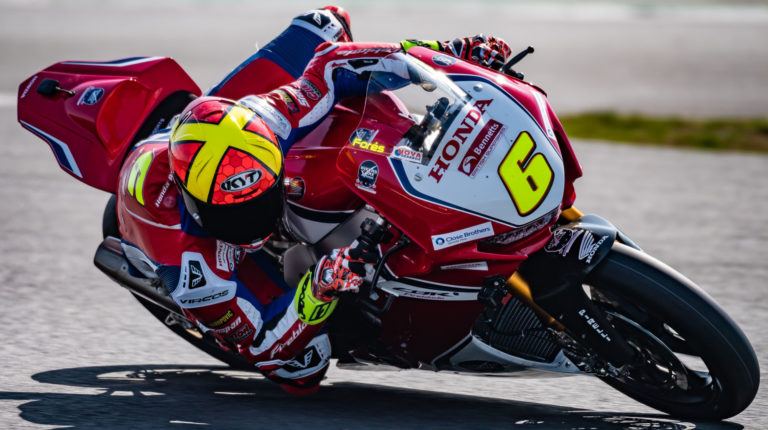
Experienced Spanish rider Xavi Fores will return to the WorldSBK paddock in 2020 inside the WorldSBK wing of the Kawasaki Puccetti Racing set-up.
As the 2019 campaign ends thoughts turn to a new season in WorldSBK and the Kawasaki Puccetti Racing team has much to look forward to with the signing of six-time WorldSBK podium finisher Xavi Fores.
The 34-year-old Xavi took part in 91 WorldSBK races before spending the 2019 season in the BSB championship, scoring four rookie-season podiums in what many consider the most competitive national championship of all.
The Kawasaki Puccetti Racing team, having already won races in 2019 with talented young rider Toprak Razgatlioglu, hope to use Xavi’s great experience in WorldSBK to let them move to the next level in their technical approach and consistency.
Xavi Fores, stated: “I am really happy to re-join WorldSBK with the Kawasaki Puccetti Racing Team for next season. Manuel and Kawasaki have built a very strong team in the last few seasons and it was very easy to make a deal with them. The bike is very strong and I think it can suit my riding style very well, so I was pushing hard to close the deal with Manuel. I can’t wait to jump on the bike and start to work hard to prepare for next season to make sure we start Round One in Australia with a strong package and in good shape. I want to thank Kawasaki Europe for their big effort and their support, and I also want to thank Manuel for his trust in me.”
Manuel Puccetti, Team Manager, stated: “We are very motivated to have Xavi ride for our team next season. He is an experienced rider and fast in all conditions as he has shown many times in the past. I believe we have all the ingredients for another great season in WSBK and we are all keen to get started.”
Steve Guttridge, Kawasaki Europe Racing manager, stated: “With Xavi joining us as our rider inside the Puccetti team we will exchange youth for experience. Our goal, as Kawasaki, is to help build up the team’s knowledge in the WorldSBK class to an even higher level again during the 2020 season. The team have a great infrastructure and using the Ninja ZX-10RR they also now have the rider to perform at the highest level again next year. We are all very excited to get started with this partnership.”
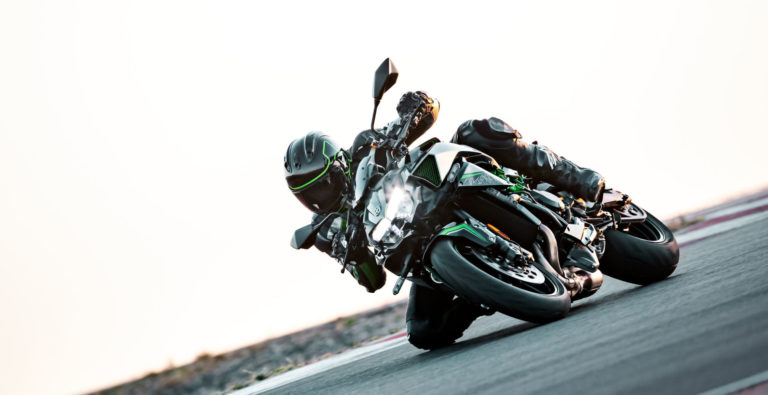
Kawasaki’s legacy of creating motorcycles that have unrivaled performance, excitement, and Sugomi™ styling continues with an all-new flagship model of the Kawasaki Z line of naked motorcycles, the 2020 Z H2. With the arrival of the hypernaked Z H2 and its powerful, balanced supercharged engine, the second chapter of Kawasaki’s Z history is about to begin, marking the beginning of a new era.
Featuring a powerful and balanced supercharged engine, performance can be enjoyed across its entire rev range while still offering superb fuel efficiency. The innovative new Z H2 offers refined naked styling, a high level of handling and comfort, and the latest technology worthy of the new Z series flagship model.
The Z H2 was developed to deliver the power you desire on-demand, a chassis that delivers superb maneuverability while harnessing the engine’s incredible power, comfort that enables you to ride for long distances, and a host of advanced features designed for maximum functionality. The Kawasaki Z H2 is a truly unique motorcycle and offers a glimpse of the future.
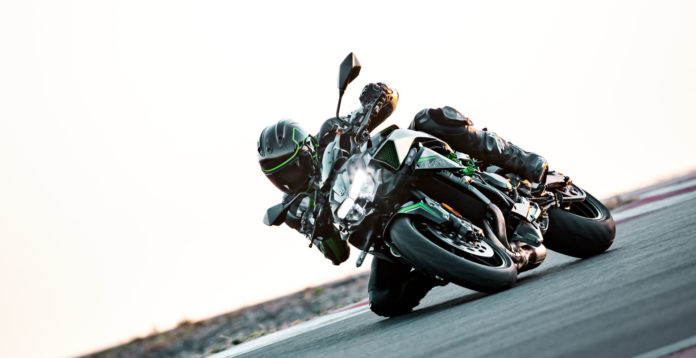
A 2020 Kawasaki Z H2. Photo courtesy of Kawasaki Motors Corp., U.S.A.
Highlights of the 2020 Z H2
Powerful 998cc Balanced Supercharged Engine
Dog-Ring Transmission
Specially Designed, Lightweight Trellis Frame
High-Performance Showa Suspension Components
Brembo® Monobloc Brake Calipers
Aggressive Sugomi™ Styling and Minimalist Bodywork
The Z H2’s Balanced Supercharged Engine is the product of Kawasaki Group technology, designed in-house not only by the Motorcycle and Engine Company, but also with collaboration from the Aerospace Systems Company, Energy System and Plant Engineering Company, and Corporate Technology Division. Kawasaki created a supercharged engine with high output, yet manageable power delivery. The water-cooled DOHC 4-valve parallel 4-cylinder 998cc supercharged engine of the Z H2 has been tuned to showcase high-performance throughout the rpm range. Its wide powerband creates optimal low-mid range torque for light handling and all out supercharged performance on the top end. Smooth acceleration in the low to mid rpm range was achieved by shortening the second reduction ratio and optimizing the valve timing. In the chamberless exhaust system, an increase in the tube length of the manifold assembly further improves the output in the low to mid rpm range. Where torque is more apparent, in the low to mid rpm range, the supercharged engine emphasizes easy-to-handle throttle response and smooth acceleration, while in the high-rpm range as the speed increases, the power from the supercharged engine is brought to the forefront. The Z H2 also features a ram air intake. The air duct provides a clean path for air flowing linearly from the ram air intake to the supercharged engine, contributing to higher performance.
The street specific Z H2 supercharger design and tuning were developed by Kawasaki Heavy Industries, Ltd. (KHI) showcasing the in-house knowledge of forced induction engine performance. The supercharger’s high efficiency and minimal heat gain meant an intercooler was unnecessary, allowing savings in both weight and space. The supercharger is located centrally in the best position to evenly distribute the compressed air to all four cylinders.
The supercharger is driven by a planetary gear train, which runs off the crankshaft. The gear train increases the impeller speed up to 9.2x the crank speed (1.15x step gear with an 8x planetary gear).
Transmission
The Z H2 uses a dog-ring transmission that has been developed through feedback from the Kawasaki Racing Team and utilizes optimal gear ratios for street performance. Rather than shifting the gears into place, the gears in this configuration stay in place, with the lightweight dog-rings moving to engage the gears. This design allows the shifting effort to be lighter and shorter for quicker acceleration.
Assist & Slipper Clutch
Complementing the transmission is an Assist & Slipper clutch, race-inspired technology that offers both a back-torque limiting function as well as a light feel at the lever.
The Assist function is noticed by the lighter pull at the clutch lever, helping to reduce rider fatigue especially in stop and go traffic situations.
The Slipper function is noticed when excessive engine braking occurs as a result of quick or accidental downshifts. The slipper cam comes into play, forcing the clutch hub and operating plate apart, which relieves pressure on the clutch plates to reduce back-torque and help prevent the rear tire from hopping and skidding.
Chassis
A specially designed, lightweight trellis frame delivers both light handling and excellent straight-line stability. The chassis offers excellent maneuverability while harnessing the massive supercharged power of the Z H2 engine. The compact naked model frame has a high-level of balance between flexibility and toughness so that you can ride on a variety of roads.
The new high-tensile steel frame utilizes wheelbase and caster angle dimensions that showcase the light, sporty handling unique to the Z H2. By achieving the desired riding position and center of gravity, the frame and suspension of the Z H2 performs well across a range of speeds.
A double-supported style of swingarm was chosen for the Z H2, similar to those found on Kawasaki supersport models. It offers the high rigidity and lightweight construction necessary for high performance. The swingarm mounting plate is located on the back of the engine, enabling it to play the role of a cross member in the frame, contributing to rigidity and weight reduction.
Suspension
Complementing the chassis design, the Z H2 motorcycle is equipped with the Showa SFF-BP (Separate Function Fork – Big Piston) fork. Combining the concepts of Showa SFF and BPF, this advanced fork offers both racetrack performance and everyday usability.
The Showa SFF-BP offers smooth action at the beginning of the stroke that contributes to excellent composure under braking. The large-diameter damping piston is much larger than what is found in a cartridge-type fork of the same size. The result is greater control as the fork begins to compress and a very calm attitude change as vehicle weight shifts forward when reducing speed, offering greater chassis stability on corner entry. The settings can be adjusted according to the rider’s size and the riding conditions.
The rear is held up by a Uni-Trak® swingarm system and Showa shock. This combination ensures performance in all speed ranges and achieves a strong withstanding force by maintaining hold in the suspension stroke even under high-adrenaline riding.
Brakes & Wheels
The Z H2 pursues ease of handling from low and medium speeds up to high speeds, and for that reason, a high performance brake system is required. On the front, Brembo monobloc calipers are used and consist of a highly rigid one-piece structure that is machined from a cast aluminum block, boasting a strong braking force. Radially mounting the caliper provides even higher levels of performance.
Nissin master cylinders provide excellent functionality suitable to the characteristics of the Z H2 by applying Kawasaki’s unique settings. Deceleration can be controlled from various speed ranges as well as controlling the starting point for changing body posture when needed.
The lightweight 17” wheels are equipped with Pirelli Diablo Rosso III tires, front and rear. The front tire is a 120/70ZR17 M/C 58W; the rear tire is a 190/55ZR17 M/C 75W.
Ergonomics
A relaxed riding position has been created by a combination of an upright handlebar shape and a seat with an optimized base plate and cushion thickness. This design provides a high degree of freedom for riding posture and low vibration, allowing for a pleasant and comfortable ride. Adding to the Z H2 motorcycle’s comfort and strength is a fat-type handlebar and handle switches.
Electronics & Rider Aids
The strength of Kawasaki’s cutting-edge electronics has always been the highly sophisticated programming that uses minimal hardware to give the ECU an accurate real-time picture of what the chassis is doing and what the rider wants, to best support the rider’s inputs with a natural feel. Using the latest evolution of Kawasaki’s advanced modeling software including input from a compact Bosch IMU (Inertial Measurement Unit), Kawasaki Cornering Management Function (KCMF) monitors engine and chassis parameters throughout the corner to assist riders in holding their intended line through the corner. The Z H2 utilizes the input from multiple sensors to optimize ride quality via the Kawasaki TRaction Control (KTRC), Kawasaki Launch Control Mode (KLCM) and the Kawasaki Intelligent Anti-Lock Braking System (KIBS).
Electronic Cruise Control
The Z H2 is equipped with electronic cruise control, which improves the overall comfort for those long days on the road. The cruise control system enables riders to set and maintain their desired speed with the simple press of a button. Once activated, the rider does not have to constantly apply the throttle to maintain speed. The cruise control helps to reduce ride fatigue when traveling long distances, allowing the rider to relax and enjoy cruising, contributing to a high level of riding comfort.
KQS (Kawasaki Quick Shifter)
The Z H2 features a highly reliable contactless-type quick shifter that allows for ultra quick, full power upshifts and seamless acceleration. The system detects that the shift lever has been actuated, and sends a signal to the ECU to cut ignition so that the next gear can be engaged for clutchless shifting.
Power Mode Selection
Riders can set power delivery to suit conditions and/or preference, choosing from Full, Middle and Low. Middle Power is 75% of Full Power, while Low Power is 50% of Full Power.
Styling
The styling of the Z series flagship Z H2 has been shaped according to Sugomi design concept and the minimalist bodywork that Kawasaki’s Z series lineup of motorcycles is known for. Sugomi describes the unique aura that radiates from beings possessing compelling presence and unrivalled power. Featuring a low crouching stance and the asymmetry of the air intake duct installed on the left side of the vehicle body, the Z H2 intensely and aggressively emphasizes the identity of Sugomi design. Only the air intake duct and the under cowl are asymmetrical, all other design work represents accurate symmetry, giving the Z H2 a well-balanced and highly harmonious design.
The supercharger housing is visible from the outside thanks to the naked model concept that does not have a cowl covering the motorcycle’s body. Providing a glimpse of the supercharger between the frame makes for a more impressive appearance.
The Z H2 is equipped with an LED headlight and taillight. The bulbs low power consumption and high durability improve maintainability while providing high-light intensity and high illumination. A clean headlight beam spread contributes to visibility of the rider’s surroundings. The frame-mounted headlamps also influence the styling around the front and create an innovative look that is different from previous naked models.
TFT Color Instrumentation
The 4.3” all-digital TFT color instrumentation gives the cockpit of the Z H2 motorcycle a high-tech, high-grade appearance. The full-color display features TFT (thin-film transistor) technology and delivers a high level of visibility. Display functions include: digital speedometer, gear position indicator, shift indicator, odometer, dual trip meter, fuel gauge, remaining range, current/average fuel consumption, outside temperature, coolant temperature, clock, Economical Riding Indicator, IMU indicator, KIBS indicator, boost pressure and boost temperature.
Smartphone Connectivity
Kawasaki continues to offer its Z lineup the addition of Smartphone Connectivity. A chip built into the instrument panel enables riders to connect to their motorcycle wirelessly. Using RIDEOLOGY THE APP*, a number of instrument functions can be accessed, logged, and reviewed contributing to an enhanced motorcycling experience. The following information can be viewed:
Vehicle Info
Check latest status update
Riding Log
Can be logged in detail, and played back for review
Route, Distance & Time traveled can be logged for review
Riding conditions can be recorded in detail
Telephone Notifications
Provides a notification on dash when a call or mail is received by smartphone
4. Tuning
General instrument display setting changes can be made on your smartphone
Kawasaki Riding Management modes can be set
The app can also be used when away from the motorcycle. When riding (with the app ON), the bike and smartphone are always connected and riding log data is being recorded by the app. After ride is complete, the latest riding information is stored by the app and may be viewed on the smartphone. Any changes made via the app while the engine is off, or while out of range, will be implemented as soon as the ignition is turned on and the smartphone is in range with the app ON.
* RIDEOLOGY THE APP is not intended for use during vehicle operation. Only use RIDEOLOGY THE APP when the vehicle is not being operated and it is safe to do so.
Colors
The 2020 Kawasaki Z H2 is available in:
Metallic Spark Black/ Metallic Graphite Gray/ Mirror Coated Spark Black
Westby Racing Team Tests At VIRginia International Raceway
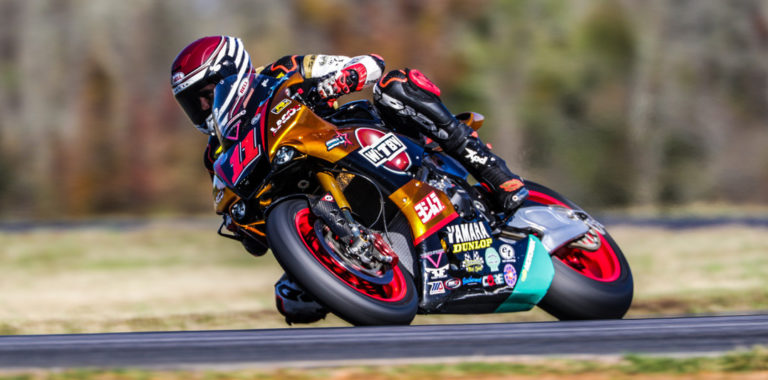
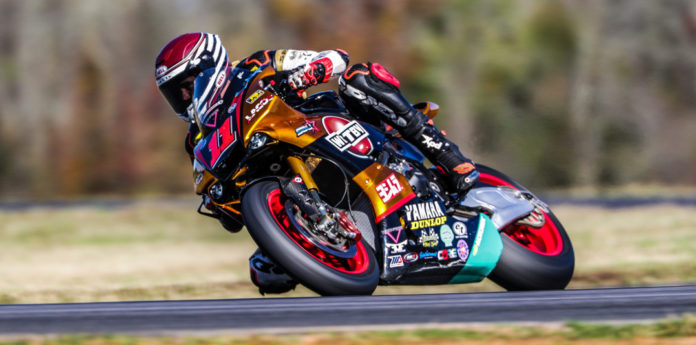
Tulsa, OK – October 29, 2019 – Continuing with their off-season testing program, Mathew Scholtz and the Westby Racing team were at VIRginia International Raceway on Monday, equipped with two Yamaha YZF-R1 Superbikes: one in the team’s iconic gold-and-black livery with Mathew’s familiar #11 on it and one in non-descript white bodywork with no competition number, but fully equipped to help refine the team’s setup by comparing different settings back to back. Performance Riding Experience (P.R.E.) hosted a track day at VIR on Monday, and they invited Mathew and the team to test during the event.
“We came out to one of the P.R.E. Track Days, and I think it was really beneficial for us,” Mathew said. “We had a few ideas with the electronics that we wanted to try…the traction control settings and a couple other things. We worked quite a bit on the engine torque mapping, just trying to smooth out the bike for me. That was one of the bigger things that (team electronics specialist) Herschel (Auxier) and (crew chief) Ed (Sullivan) were focusing on. Trying to give me a really smooth power delivery because I don’t have the best throttle control off the bottom. So, I think we made a couple of positive changes there.
“It’s a little bit difficult to get a good read of things because, obviously, it’s a track day, and you don’t always get a good, clean section of track. Your lap times are kind of fluctuating because of the other bikes that are circulating, so you’re only able to go quickly in a couple of the corners at a time.
“Despite that, personally, I feel that we made some really positive steps that will translate over to when we race, and the bike will be better. With the changes we made, it’s just easier now to ride the bike consistently. So, things were really good for us.
“Big thanks to the P.R.E. guys for having us out. They’ve really been an important part of our off-season testing program. It was awesome to be out there on the track. The weather at VIR wasn’t the greatest, but it’s getting towards wintertime, and being at the test was a lot better than being in rainy, freezing-cold Georgia, sitting on the couch. I’m very thankful that I was able to be out there riding and preparing for the 2020 Superbike season.”
Up next for Mathew and the team are off-season tests at Barber Motorsports Park and the Circuit of The Americas before the end of the calendar year.
INDIAN MOTORCYCLE PUSHES AMERICAN V-TWINS FORWARD WITH THE ALL-NEW 2020 CHALLENGER – THE ULTIMATE AMERICAN BAGGER
Featuring a Fixed Fairing, Inverted Front End, the Most Powerful Motor in Its Class and Intuitive Ride Technology, Indian Motorcycle’s State-of-the-Art Modern Bagger Redefines “Fully Loaded”
MINNEAPOLIS (October 29, 2019) – The bar for American motorcycles has officially been elevated. Indian Motorcycle, America’s First Motorcycle Company, has dramatically redefined the American bagger with its introduction of the 2020 Indian Challenger – a striking combination of American muscle, next-level technology, and premium comfort to deliver a truly unmatched riding experience.
Designed for the most knowledgeable and discerning riders, Indian designers stopped at nothing to ensure that the Challenger out-classed its competition and delivered the highest performing, fully loaded bagger on the market.
“The Indian Challenger delivers a new level of performance for riders who understand that the seemingly small details make a huge difference,” said Reid Wilson, Vice President of Indian Motorcycle. “Our mindset was to leave no stone unturned and deliver a bagger that exceeds the standards in categories like power, handling, comfort, and technology.”
It starts with the all-new Indian PowerPlus engine, Indian’s first liquid-cooled large displacement motor (108 cubic-inch, 60-degree V-twin) that packs a best-in-class 122 horsepower and 128 ft-lbs. of torque. The new powertrain also features a six-speed transmission with true overdrive, assist clutch to reduce clutch effort, and hydraulic valve lash adjusters and camshaft chain tensioners for a low maintenance, reliable powerplant. The PowerPlus’ overhead camshafts and four valves per cylinder deliver incredible V-twin performance and power. Riders can customize the bike’s throttle mapping by selecting one of three ride modes, including Rain, Standard and Sport – resulting in one motorcycle with three distinct performance personalities. Each ride mode has been engineered with its own distinct traction control setting to align with each mode’s specific throttle mapping.
Starting at $21,999, the Challenger features all the premium touring amenities riders expect from Indian Motorcycle, including electronic cruise control, full LED lighting, a long-haul seat, ABS, keyless ignition, and weatherproof saddlebags with over 18 gallons of storage space. In addition, a modern and aggressively styled chassis-mounted fairing sits over the Challenger’s inverted front suspension. This, combined with the bike’s lightweight cast aluminum frame and hydraulically adjustable FOX® rear shock, delivers unrivaled handling and rock-solid stability.
Race-spec radially-mounted Brembo® brakes provide superior stopping power, and new performance touring Metzeler® Cruistec® tires offer supreme traction. Challenger’s chassis-mounted fairing features an adjustable windscreen with nearly three inches of travel and adjustable air vents – delivering unprecedented rider protection from all elements. With menacing LED running lights, a central headlamp, and a redesigned and modernized Indian Motorcycle headdress adorning its front fender, the Challenger presents an unmistakable profile day and night.
A true state-of-the-art bagger, the Limited and Dark Horse variants of Challenger are equipped with Indian Motorcycle’s intuitive Smart Lean Technology™, keeping riders confidently grounded by utilizing a Bosch IMU to add cornering control to the dynamic traction control and ABS, as well as Drag Torque Control. These models also feature Indian Ride Command, the largest, most-customizable touchscreen infotainment system on two wheels. The Challenger’s seven-inch Ride Command system features weather and traffic overlays, key vehicle information, Bluetooth® and USB mobile pairing, and an all-new quad-core processor for faster response.
For its inaugural year, the Challenger lineup is accompanied by a variety of Indian Motorcycle Authentic Accessories that allow riders to upgrade their ride based on their preferences. With the Indian Challenger Rogue Collection, riders can improve sound and add blacked-out styling with the black stage 1 slip-on muffler and black PowerPlus stage 1 air intake. While a gloss black mid-rise handlebar, a tinted curved windshield and gloss black front highway bars add a premium blacked-out finish.
For an added measure of comfort over longer hauls there’s the Indian Challenger Tour Collection, including a 16-inch windshield, quick release passenger sissy bar, passenger backrest and passenger floorboards, an extended reach seat, rider backrest pad, infinite highway pegs and pinnacle heel shifter. Riders can also upgrade the Indian Challenger’s audio experience with the PowerBand Audio Plus system, which delivers exceptional sound and clarity from high-output fairing and saddlebag speakers that are 50% louder than the Challenger’s stock audio system.
With its modern, aggressive look, and a seemingly unlimited array of performance, comfort and technological features, the Indian Challenger stands alone as the ultimate bagger.
“While we are grounded in our iconic history, we are focused and driven to break new ground and establish a higher standard for riders; and the Challenger is a testament to that,” said Steve Menneto, President of Indian Motorcycle. “The amount of technology and level of detail packed into this bike is incredible, and it’s something we’re extremely proud of.”
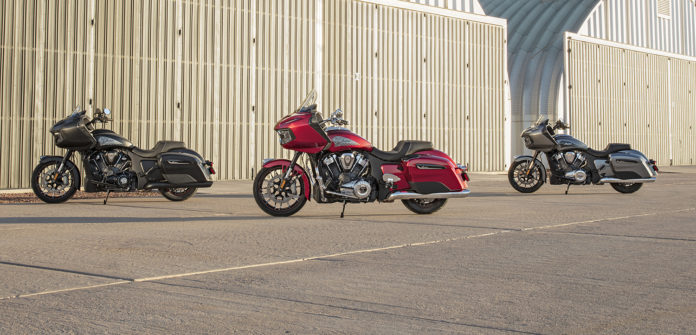
Pricing for the 2020 Indian Challenger, available in Titanium Metallic paint, starts at $21,999, while the Challenger Dark Horse, starting at $27,499, is available in Thunder Black Smoke, Sandstone Smoke, and White Smoke. The Indian Challenger Limited starts at $27,999, and is available in Thunder Black Pearl, Deepwater Metallic, and Ruby Metallic.
The Indian Challenger will be assembled at Indian Motorcycle’s production facility in Spirit Lake, Iowa. Learn more about Indian Motorcycle and the 2020 Indian Challenger by visiting IndianMotorcycle.com and following along on Facebook, Twitter and Instagram.
Penultimate push as Repsol Honda Team chase Team Championship
The flyaways draw to a close and the end of the season is fast approaching, but the Triple Crown is still wide open.
First hosting a Grand Prix in 1999, the Sepang International Circuit has been a constant fixture on the MotoGP World Championship calendar for both racing and testing. The 5.5km long Malaysian circuit is a physically demanding challenge no matter the conditions, air temperature rarely dropping below 30ºC even when the tropical storms hit.
Hunting a sixth straight Grand Prix victory in 2019 and his third at Sepang, Marc Marquez arrives in Malaysia in perfect form as he continues to dominate the premier class. Currently on 375 World Championship points, the Malaysian GP present the reigning MotoGP World Champion with his first opportunity to pass Jorge Lorenzo’s record of 383 points scored in a single season. As in Australia, Marquez is aware he’ll face a strong challenge from Yamaha and Ducati.
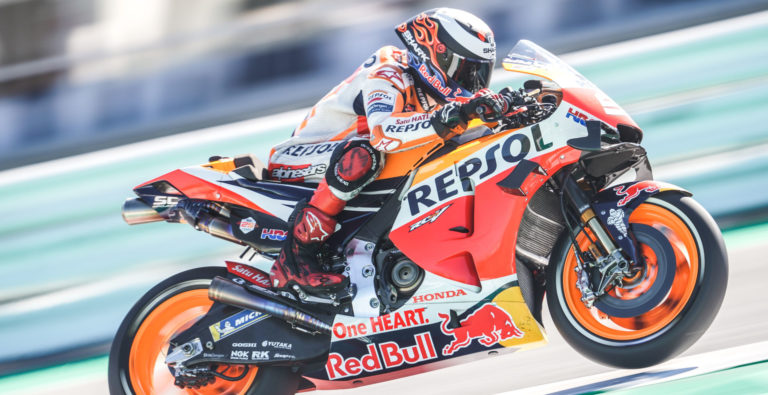
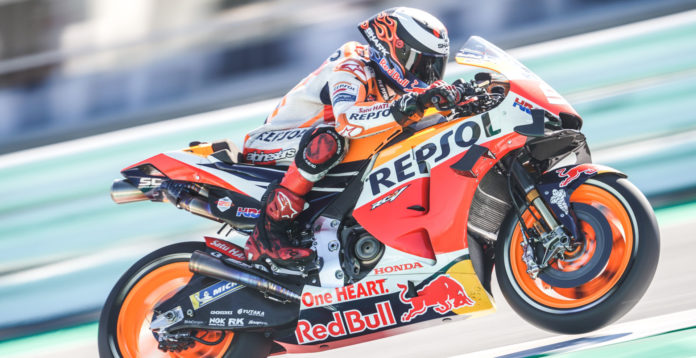
Lorenzo arrives in Malaysia hoping for better fortunes after a trying weekend in Phillip Island. Struggling in the cooler conditions, Sepang’s heat should offer Lorenzo a chance to continue improving his feeling on the Honda RC213V. The five-time World Champion has finished on the premier class podium seven times in Malaysia.
Just a single point separates the Ducati Team (409) from the Repsol Honda Team (408) in the Team Championship as Honda look to complete the prestigious Triple Crown. With both the Riders and a record 25th Constructors Championships achieved, the Team Championship is final objective to achieve in 2019.
Practice for the premier class begins at 10:50 Local Time on Friday, November 01 with the 20-lap Malaysian Grand Prix scheduled for 15:00 Local Time on Sunday, November 03.
Marc Marquez
“We enjoyed a great victory in Australia as me, the Repsol Honda Team and the bike are working very well together. Now we arrive at the last race of the triple, but it’s not time to stop and relax. Sepang is another track where I think Yamaha will be fast, as will Ducati, but the target is of course to try and fight for victory again. We will see how the weekend goes and adapt as we need to.”
Jorge Lorenzo
“Sepang is a track where I have had good success in the past. Earlier this year I was not able to test in Sepang because of my training injury, but my team were there testing so already we have some ideas of what to do with the bike. Compared to Australia, the circuit in Malaysia should suit me more and I think we will be able to get back to where we were in Motegi. We will see how the weekend progresses there.”
REVAMPED SCHEDULE PROPOSED FOR 2020 ISLE OF MAN TT RACES
It is proposed that the 2020 Isle of Man TT Races, promoted by the Department for Enterprise, will be run on a revamped schedule designed to improve spectator entertainment and mitigate the demands that are placed on teams, riders, volunteers including the TT Marshals Association and local residents. The proposed schedule will mean some changes to road closure periods and the established racing schedule.
Rob Callister MHK, Political Member with responsibility for tourism and motorsport, commented:“The proposed new schedule has been designed to optimise qualifying conditions and offer shorter race days, reducing the pressure placed on competitors, teams, volunteers and officials. This new format is also designed to minimise the impact that racing has on local residents and businesses with more clearly defined road closure schedules including the more definitive first weekend qualifying timetable and cutting the duration of road closures during race week which result in clearer, easier to follow road closure timetables. This will bring benefits to rider, visitors and locals throughout the TT period.”
The proposals mean the 2020 Isle of Man TT Races will begin a day later than previous years, starting on Sunday 31st May with an afternoon Qualifying Session. Evening Qualifying Sessions will then run as before from Monday 1st June to Thursday 4th June with the final session moved from the evening to a new afternoon slot on Friday 5th June. Provisional sessions remain in the schedule on Thursday afternoon and Friday evening now becomes a provisional session.
The new TT Race day format starts with a single lap ‘Morning Warm Up Session’ for solo competitors before the opening race of the week – the RST Superbike Race – which gets underway at midday on Saturday 6th June followed by the first Sidecar TT Race at 3pm.
Monday’s and Wednesday’s Race days – featuring the two Supersport Races, the RL360 Superstock and the Bennetts Lightweight Race – will also begin with a Solo Morning Warm Up Session, with a single lap Sidecar Shakedown Session added to the running order on Wednesday ahead of Friday’s second Sidecar Race and the Senior TT Race.
ACU Events Ltd, as race organiser for the TT Races, will now submit the programme to the Isle of Man Government Department of Infrastructure for consideration and approval.
This proposed new schedule will be integrated with a new off track entertainment programme that will be announced on Saturday 16th November at Motorcycle Live in Birmingham.
Full details of the proposed 2020 TT Races schedule can be found here.
The Motul Pirelli Australian Superbike Championship is set for a captivating title showdown in the seventh and final round at Sydney Motorsport Park this weekend, with the top three riders separated by just 4.5 points, and no less than six of the nation’s best motorcycle racers in with a shot of winning the crown.
In the previous round at Phillip Island, it was Troy Herfoss who prevailed after an enthralling wheel-to-wheel duel with Wayne Maxwell, the Honda rider claiming his second overall round victory of the season and launching to the top of the standings.
Maxwell has demonstrated an impressive combination of one-lap speed and race pace in recent rounds, and the Suzuki rider heads to SMP just three points in arrears of Herfoss. Like the Honda rider, Maxwell has taken two round wins this season.
Third in the standings is Ducati runner Mike Jones, who arrived at Phillip Island with a handy points advantage, and has been the form rider in qualifying with four pole positions on the trot. However, a collision with Maxwell in Race 2, and subsequent non-finish, saw Jones slipping behind Herfoss and Maxwell.
19 points away from the lead is Cru Halliday; the Yamaha rider featured at the pointy end of the points table for the first half of the season, but struggled to match the outright pace of the front-runners at Phillip Island and lost valuable points with a crash in Race 2. Nevertheless, all it will take is one slip-up from the three main protagonists and Halliday will be right in the hunt.
A little further adrift of Halliday are Josh Waters (Suzuki) and The Bend round winner Bryan Staring, who realistically need all their main opponents to strike trouble in at least one of the races to be a chance of snaring a come-from-behind victory.
The last time the ASBK visited the Western Sydney venue was in 2017; on that occasion, it was Josh Waters who dominated the weekend, scoring pole position and victories in both races to claim the round from Troy Herfoss and Glenn Allerton.
This weekend’s Superbike action will consist of three practice sessions on Friday followed by an official timed session on Saturday morning, two-part qualifying on Saturday afternoon and two races on Sunday. Download the event schedule here.
Tickets are now on sale for the event, and can be purchased online here. All patrons who purchase tickets before 11:59pm on Thursday evening will receive a FREE Sunday pit-lane walk.
Kawasaki Superbikes – Points after Round 6
1. Troy Herfoss – 241
2. Wayne Maxwell – 238
3. Mike Jones – 236.5
4. Cru Halliday – 222
5. Josh Waters – 216
6. Bryan Staring – 211.5
7. Matt Walters – 160.5
8. Daniel Falzon – 156
9. Alex Phillis – 131
10. Arthur Sissis – 106.5
Head to ASBK.com.au for more info about Round 6 of the 2019 Australian Superbike Championship.
For the latest updates from the ASBK, follow us on Facebook and Instagram.
Circuit de Barcelona-Catalunya welcomed onto 2020 WorldSBK calendar
A new track awaits the MOTUL FIM Superbike World Championship, as the historic Circuit de Barcelona-Catalunya readies for WorldSBK action
For the first time in its history, the Circuit de Barcelona-Catalunya will host a round of the MOTUL FIM Superbike World Championship. The agreement between the Circuit, Dorna WorldSBK Organization and the Gemocat event manager will make the Catalunya Round of WorldSBK one of the biggest events to be on the 2020 calendar and is set to be held from the 18th – 20th September.
Joan Fontserè, General Director of the Circuit of Barcelona-Catalunya has expressed his appreciation of the new event, saying: “With the inclusion of WorldSBK at the circuit, in addition to making history, the missing piece fits into our calendar of events, which will in-turn make for an exceptional 2020 season. We are very happy to be able to host the Catalunya Round of WorldSBK and we are sure that the fans will turn to this event and make this first addition a resounding success”.
Ricard Cardús, spokesman for Gemocat, added: “We are very excited about bringing the Superbike World Championship show to Catalonia for the first time. We want the weekend from September 18th to 20th to be a real party for the fan and we will organize events and activities around the event; there will be a limit of 30,000 tickets in order to offer an exclusive experience to the public. We hope that the Catalunya Round of WorldSBK will become a classic on the fans’ agenda.”
Gregorio Lavilla, WorldSBK Executive director – Sporting & Organization depts: “The new addition to the 2020 WorldSBK calendar is warmly welcomed and expected in great anticipation. The circuit has seen many memorable races in various motorsport disciplines and WorldSBK cannot wait to join the list. With such a rich heritage in motorcycle racing in Spain and the region, the Catalunya WorldSBK Round promises to be a great success for all parties involved.”
Featured In the October 2019 issue of Roadracing World:
There’s a certain amount of confusion between Yamaha TZ750s and factory 0W models and the 0W term itself. In the UK and USA, the number zero is often pronounced “oh,” so the Yamaha factory bikes were 0Ws not OWs! Yamaha factory racebikes were not sold to the public and differed from those that were. If you see a TZ750 being called an 0W31, it’s highly unlikely it actually is one.
The first factory 750 was a twin-shock 0W29 that Giacomo Agostini rode to victory at Daytona in 1975. The 0W31 was introduced in 1976 as a monoshock machine made available to Yamaha’s five leading distributors and their riders: Europe and Agostini; Canada and Steve Baker; Venezuela/South America and Johnny Cecotto; Japan and Hideo Kanaya; and the USA and Kenny Roberts.
Cecotto won Daytona that year but Victor Palermo won the F750 Championship with TZ750-engines in Nico Bakker monoshock frames. The following year Baker won the F750 Championship, by that time given world status, with five wins on the Yamaha Canada 0W31.
The 1977 TZ750D production racebikes appeared to be similar to the previous year’s 0Ws: Monoshock suspension, factory style fiberglass and exhaust system (see the September 2013 issue of Roadracing World, Historic Racebike Illustrations) but appearances were deceptive!
–Historic Racebike Illustrations: 1978 Yamaha 0W31, by Mick Ofield
The Yamaha TZ750 racebike was an amazing machine that defined road racing for years, but when the Yamaha factory race shop got through with the bike, it was at an even higher level. The 1978 Yamaha 0W31 utilized 500cc GP bike technology and was lighter, more powerful and faster than the production racer. Read all of the details about why the factory Yamaha was such an awe-inspiring machine – it’s all in the October issue of Roadracing World!
Roadracing World & Motorcycle Technologyis THE definitive source for motorcycle racing, riding, and tech information.
PREVIEWthe October 2019 issue of Roadracing World & Motorcycle Technology!
Roadracing World & Motorcycle Technology magazine is available in print and digital formats. SUBSCRIBE NOW FOR INSTANT ACCESS!
Log in or subscribe HERE. Or call (909) 654-4779, 9:00 a.m. – 5:00 p.m. Pacific Time, Monday through Friday.
3:16 Trackdays announces The America Superbike Camp at COTA [Circuit of The Americas] to be held on July 6, 2020
3:16 Trackdays LLC has developed a new format in through experience working with Texas Motorcycle Academy led by retired AMA Pro Craig Gleason and facilitating the Central Motorcycle Roadracing Association (CMRA) race school. The format has been named “The America Superbike Camp.”
The America Superbike Camp has completed the 2019 season with this unique
format which includes mentor coaching done by experienced road racing
athletes from the novice level all the way to the MotoAmerica level.
Coaching “student-to-teacher” ratio is extremely low 4:1 and sessions will be
30 minutes long at COTA.
Coaching is personalized by gathering key focus points from riders to
focus on. The riders are then matched with a mentor coach according to
their needs and skill levels.
These high value events are reasonably priced and will go on sale via the
website https://316trackdays.com on December 1, 2019 there will be one COTA
event, other events will be held at club level tracks in Cresson, Texas
and Houston, Texas. (MSRC and MSRH)
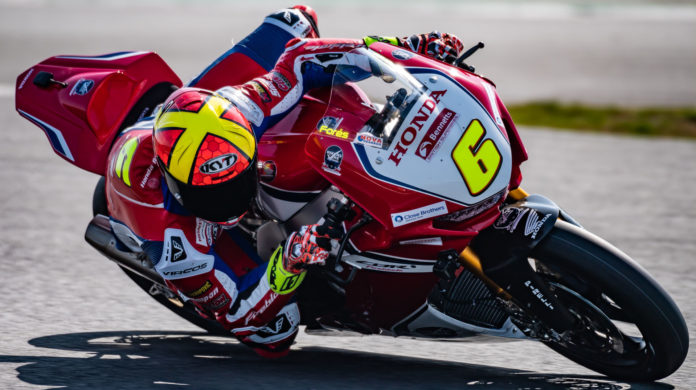
Xavi Fores (6) rode for the Honda UK factory team in the 2019 British Superbike Championship. Photo by Barry Clay.
Fores Joins Kawasaki Puccetti Racing For 2020
Experienced Spanish rider Xavi Fores will return to the WorldSBK paddock in 2020 inside the WorldSBK wing of the Kawasaki Puccetti Racing set-up.
As the 2019 campaign ends thoughts turn to a new season in WorldSBK and the Kawasaki Puccetti Racing team has much to look forward to with the signing of six-time WorldSBK podium finisher Xavi Fores.
The 34-year-old Xavi took part in 91 WorldSBK races before spending the 2019 season in the BSB championship, scoring four rookie-season podiums in what many consider the most competitive national championship of all.
The Kawasaki Puccetti Racing team, having already won races in 2019 with talented young rider Toprak Razgatlioglu, hope to use Xavi’s great experience in WorldSBK to let them move to the next level in their technical approach and consistency.
Xavi Fores, stated: “I am really happy to re-join WorldSBK with the Kawasaki Puccetti Racing Team for next season. Manuel and Kawasaki have built a very strong team in the last few seasons and it was very easy to make a deal with them. The bike is very strong and I think it can suit my riding style very well, so I was pushing hard to close the deal with Manuel. I can’t wait to jump on the bike and start to work hard to prepare for next season to make sure we start Round One in Australia with a strong package and in good shape. I want to thank Kawasaki Europe for their big effort and their support, and I also want to thank Manuel for his trust in me.”
Manuel Puccetti, Team Manager, stated: “We are very motivated to have Xavi ride for our team next season. He is an experienced rider and fast in all conditions as he has shown many times in the past. I believe we have all the ingredients for another great season in WSBK and we are all keen to get started.”
Steve Guttridge, Kawasaki Europe Racing manager, stated: “With Xavi joining us as our rider inside the Puccetti team we will exchange youth for experience. Our goal, as Kawasaki, is to help build up the team’s knowledge in the WorldSBK class to an even higher level again during the 2020 season. The team have a great infrastructure and using the Ninja ZX-10RR they also now have the rider to perform at the highest level again next year. We are all very excited to get started with this partnership.”
A 2020 Kawasaki Z H2 at speed. Photo courtesy of Kawasaki Motors Corp., U.S.A.
2020 KAWASAKI Z H2 MOTORCYCLE
Supernaked Just Got Supercharged
Kawasaki’s legacy of creating motorcycles that have unrivaled performance, excitement, and Sugomi™ styling continues with an all-new flagship model of the Kawasaki Z line of naked motorcycles, the 2020 Z H2. With the arrival of the hypernaked Z H2 and its powerful, balanced supercharged engine, the second chapter of Kawasaki’s Z history is about to begin, marking the beginning of a new era.
Featuring a powerful and balanced supercharged engine, performance can be enjoyed across its entire rev range while still offering superb fuel efficiency. The innovative new Z H2 offers refined naked styling, a high level of handling and comfort, and the latest technology worthy of the new Z series flagship model.
The Z H2 was developed to deliver the power you desire on-demand, a chassis that delivers superb maneuverability while harnessing the engine’s incredible power, comfort that enables you to ride for long distances, and a host of advanced features designed for maximum functionality. The Kawasaki Z H2 is a truly unique motorcycle and offers a glimpse of the future.
A 2020 Kawasaki Z H2. Photo courtesy of Kawasaki Motors Corp., U.S.A.
Highlights of the 2020 Z H2
Powerful 998cc Balanced Supercharged Engine
Dog-Ring Transmission
Specially Designed, Lightweight Trellis Frame
High-Performance Showa Suspension Components
Brembo® Monobloc Brake Calipers
Aggressive Sugomi™ Styling and Minimalist Bodywork
The Z H2’s Balanced Supercharged Engine is the product of Kawasaki Group technology, designed in-house not only by the Motorcycle and Engine Company, but also with collaboration from the Aerospace Systems Company, Energy System and Plant Engineering Company, and Corporate Technology Division. Kawasaki created a supercharged engine with high output, yet manageable power delivery. The water-cooled DOHC 4-valve parallel 4-cylinder 998cc supercharged engine of the Z H2 has been tuned to showcase high-performance throughout the rpm range. Its wide powerband creates optimal low-mid range torque for light handling and all out supercharged performance on the top end. Smooth acceleration in the low to mid rpm range was achieved by shortening the second reduction ratio and optimizing the valve timing. In the chamberless exhaust system, an increase in the tube length of the manifold assembly further improves the output in the low to mid rpm range. Where torque is more apparent, in the low to mid rpm range, the supercharged engine emphasizes easy-to-handle throttle response and smooth acceleration, while in the high-rpm range as the speed increases, the power from the supercharged engine is brought to the forefront. The Z H2 also features a ram air intake. The air duct provides a clean path for air flowing linearly from the ram air intake to the supercharged engine, contributing to higher performance.
The street specific Z H2 supercharger design and tuning were developed by Kawasaki Heavy Industries, Ltd. (KHI) showcasing the in-house knowledge of forced induction engine performance. The supercharger’s high efficiency and minimal heat gain meant an intercooler was unnecessary, allowing savings in both weight and space. The supercharger is located centrally in the best position to evenly distribute the compressed air to all four cylinders.
The supercharger is driven by a planetary gear train, which runs off the crankshaft. The gear train increases the impeller speed up to 9.2x the crank speed (1.15x step gear with an 8x planetary gear).
Transmission
The Z H2 uses a dog-ring transmission that has been developed through feedback from the Kawasaki Racing Team and utilizes optimal gear ratios for street performance. Rather than shifting the gears into place, the gears in this configuration stay in place, with the lightweight dog-rings moving to engage the gears. This design allows the shifting effort to be lighter and shorter for quicker acceleration.
Assist & Slipper Clutch
Complementing the transmission is an Assist & Slipper clutch, race-inspired technology that offers both a back-torque limiting function as well as a light feel at the lever.
The Assist function is noticed by the lighter pull at the clutch lever, helping to reduce rider fatigue especially in stop and go traffic situations.
The Slipper function is noticed when excessive engine braking occurs as a result of quick or accidental downshifts. The slipper cam comes into play, forcing the clutch hub and operating plate apart, which relieves pressure on the clutch plates to reduce back-torque and help prevent the rear tire from hopping and skidding.
Chassis
A specially designed, lightweight trellis frame delivers both light handling and excellent straight-line stability. The chassis offers excellent maneuverability while harnessing the massive supercharged power of the Z H2 engine. The compact naked model frame has a high-level of balance between flexibility and toughness so that you can ride on a variety of roads.
The new high-tensile steel frame utilizes wheelbase and caster angle dimensions that showcase the light, sporty handling unique to the Z H2. By achieving the desired riding position and center of gravity, the frame and suspension of the Z H2 performs well across a range of speeds.
A double-supported style of swingarm was chosen for the Z H2, similar to those found on Kawasaki supersport models. It offers the high rigidity and lightweight construction necessary for high performance. The swingarm mounting plate is located on the back of the engine, enabling it to play the role of a cross member in the frame, contributing to rigidity and weight reduction.
Suspension
Complementing the chassis design, the Z H2 motorcycle is equipped with the Showa SFF-BP (Separate Function Fork – Big Piston) fork. Combining the concepts of Showa SFF and BPF, this advanced fork offers both racetrack performance and everyday usability.
The Showa SFF-BP offers smooth action at the beginning of the stroke that contributes to excellent composure under braking. The large-diameter damping piston is much larger than what is found in a cartridge-type fork of the same size. The result is greater control as the fork begins to compress and a very calm attitude change as vehicle weight shifts forward when reducing speed, offering greater chassis stability on corner entry. The settings can be adjusted according to the rider’s size and the riding conditions.
The rear is held up by a Uni-Trak® swingarm system and Showa shock. This combination ensures performance in all speed ranges and achieves a strong withstanding force by maintaining hold in the suspension stroke even under high-adrenaline riding.
Brakes & Wheels
The Z H2 pursues ease of handling from low and medium speeds up to high speeds, and for that reason, a high performance brake system is required. On the front, Brembo monobloc calipers are used and consist of a highly rigid one-piece structure that is machined from a cast aluminum block, boasting a strong braking force. Radially mounting the caliper provides even higher levels of performance.
Nissin master cylinders provide excellent functionality suitable to the characteristics of the Z H2 by applying Kawasaki’s unique settings. Deceleration can be controlled from various speed ranges as well as controlling the starting point for changing body posture when needed.
The lightweight 17” wheels are equipped with Pirelli Diablo Rosso III tires, front and rear. The front tire is a 120/70ZR17 M/C 58W; the rear tire is a 190/55ZR17 M/C 75W.
Ergonomics
A relaxed riding position has been created by a combination of an upright handlebar shape and a seat with an optimized base plate and cushion thickness. This design provides a high degree of freedom for riding posture and low vibration, allowing for a pleasant and comfortable ride. Adding to the Z H2 motorcycle’s comfort and strength is a fat-type handlebar and handle switches.
Electronics & Rider Aids
The strength of Kawasaki’s cutting-edge electronics has always been the highly sophisticated programming that uses minimal hardware to give the ECU an accurate real-time picture of what the chassis is doing and what the rider wants, to best support the rider’s inputs with a natural feel. Using the latest evolution of Kawasaki’s advanced modeling software including input from a compact Bosch IMU (Inertial Measurement Unit), Kawasaki Cornering Management Function (KCMF) monitors engine and chassis parameters throughout the corner to assist riders in holding their intended line through the corner. The Z H2 utilizes the input from multiple sensors to optimize ride quality via the Kawasaki TRaction Control (KTRC), Kawasaki Launch Control Mode (KLCM) and the Kawasaki Intelligent Anti-Lock Braking System (KIBS).
Electronic Cruise Control
The Z H2 is equipped with electronic cruise control, which improves the overall comfort for those long days on the road. The cruise control system enables riders to set and maintain their desired speed with the simple press of a button. Once activated, the rider does not have to constantly apply the throttle to maintain speed. The cruise control helps to reduce ride fatigue when traveling long distances, allowing the rider to relax and enjoy cruising, contributing to a high level of riding comfort.
KQS (Kawasaki Quick Shifter)
The Z H2 features a highly reliable contactless-type quick shifter that allows for ultra quick, full power upshifts and seamless acceleration. The system detects that the shift lever has been actuated, and sends a signal to the ECU to cut ignition so that the next gear can be engaged for clutchless shifting.
Power Mode Selection
Riders can set power delivery to suit conditions and/or preference, choosing from Full, Middle and Low. Middle Power is 75% of Full Power, while Low Power is 50% of Full Power.
Styling
The styling of the Z series flagship Z H2 has been shaped according to Sugomi design concept and the minimalist bodywork that Kawasaki’s Z series lineup of motorcycles is known for. Sugomi describes the unique aura that radiates from beings possessing compelling presence and unrivalled power. Featuring a low crouching stance and the asymmetry of the air intake duct installed on the left side of the vehicle body, the Z H2 intensely and aggressively emphasizes the identity of Sugomi design. Only the air intake duct and the under cowl are asymmetrical, all other design work represents accurate symmetry, giving the Z H2 a well-balanced and highly harmonious design.
The supercharger housing is visible from the outside thanks to the naked model concept that does not have a cowl covering the motorcycle’s body. Providing a glimpse of the supercharger between the frame makes for a more impressive appearance.
The Z H2 is equipped with an LED headlight and taillight. The bulbs low power consumption and high durability improve maintainability while providing high-light intensity and high illumination. A clean headlight beam spread contributes to visibility of the rider’s surroundings. The frame-mounted headlamps also influence the styling around the front and create an innovative look that is different from previous naked models.
TFT Color Instrumentation
The 4.3” all-digital TFT color instrumentation gives the cockpit of the Z H2 motorcycle a high-tech, high-grade appearance. The full-color display features TFT (thin-film transistor) technology and delivers a high level of visibility. Display functions include: digital speedometer, gear position indicator, shift indicator, odometer, dual trip meter, fuel gauge, remaining range, current/average fuel consumption, outside temperature, coolant temperature, clock, Economical Riding Indicator, IMU indicator, KIBS indicator, boost pressure and boost temperature.
Smartphone Connectivity
Kawasaki continues to offer its Z lineup the addition of Smartphone Connectivity. A chip built into the instrument panel enables riders to connect to their motorcycle wirelessly. Using RIDEOLOGY THE APP*, a number of instrument functions can be accessed, logged, and reviewed contributing to an enhanced motorcycling experience. The following information can be viewed:
Vehicle Info
Check latest status update
Riding Log
Can be logged in detail, and played back for review
Route, Distance & Time traveled can be logged for review
Riding conditions can be recorded in detail
Telephone Notifications
Provides a notification on dash when a call or mail is received by smartphone
4. Tuning
General instrument display setting changes can be made on your smartphone
Kawasaki Riding Management modes can be set
The app can also be used when away from the motorcycle. When riding (with the app ON), the bike and smartphone are always connected and riding log data is being recorded by the app. After ride is complete, the latest riding information is stored by the app and may be viewed on the smartphone. Any changes made via the app while the engine is off, or while out of range, will be implemented as soon as the ignition is turned on and the smartphone is in range with the app ON.
* RIDEOLOGY THE APP is not intended for use during vehicle operation. Only use RIDEOLOGY THE APP when the vehicle is not being operated and it is safe to do so.
Colors
The 2020 Kawasaki Z H2 is available in:
Metallic Spark Black/ Metallic Graphite Gray/ Mirror Coated Spark Black
Mathew Scholtz (11) in action at VIR. Photo by Joshua Barnett/Apex Pro Photography, courtesy of Westby Racing.
Westby Racing Team Tests At VIRginia International Raceway
Tulsa, OK – October 29, 2019 – Continuing with their off-season testing program, Mathew Scholtz and the Westby Racing team were at VIRginia International Raceway on Monday, equipped with two Yamaha YZF-R1 Superbikes: one in the team’s iconic gold-and-black livery with Mathew’s familiar #11 on it and one in non-descript white bodywork with no competition number, but fully equipped to help refine the team’s setup by comparing different settings back to back. Performance Riding Experience (P.R.E.) hosted a track day at VIR on Monday, and they invited Mathew and the team to test during the event.
“We came out to one of the P.R.E. Track Days, and I think it was really beneficial for us,” Mathew said. “We had a few ideas with the electronics that we wanted to try…the traction control settings and a couple other things. We worked quite a bit on the engine torque mapping, just trying to smooth out the bike for me. That was one of the bigger things that (team electronics specialist) Herschel (Auxier) and (crew chief) Ed (Sullivan) were focusing on. Trying to give me a really smooth power delivery because I don’t have the best throttle control off the bottom. So, I think we made a couple of positive changes there.
“It’s a little bit difficult to get a good read of things because, obviously, it’s a track day, and you don’t always get a good, clean section of track. Your lap times are kind of fluctuating because of the other bikes that are circulating, so you’re only able to go quickly in a couple of the corners at a time.
“Despite that, personally, I feel that we made some really positive steps that will translate over to when we race, and the bike will be better. With the changes we made, it’s just easier now to ride the bike consistently. So, things were really good for us.
“Big thanks to the P.R.E. guys for having us out. They’ve really been an important part of our off-season testing program. It was awesome to be out there on the track. The weather at VIR wasn’t the greatest, but it’s getting towards wintertime, and being at the test was a lot better than being in rainy, freezing-cold Georgia, sitting on the couch. I’m very thankful that I was able to be out there riding and preparing for the 2020 Superbike season.”
Up next for Mathew and the team are off-season tests at Barber Motorsports Park and the Circuit of The Americas before the end of the calendar year.
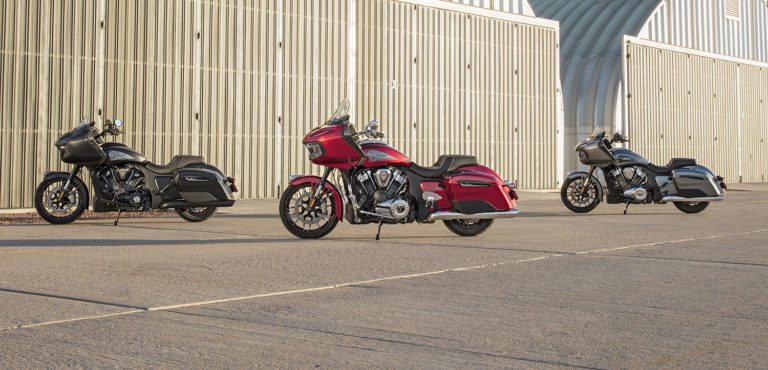
A 2020-model Indian Challenger (right), Indian Challenger Dark Horse (left), and Indian Challenger Limited (center). Photo courtesy of Indian Motorcycle.
INDIAN MOTORCYCLE PUSHES AMERICAN V-TWINS FORWARD WITH THE ALL-NEW 2020 CHALLENGER – THE ULTIMATE AMERICAN BAGGER
Featuring a Fixed Fairing, Inverted Front End, the Most Powerful Motor in Its Class and Intuitive Ride Technology, Indian Motorcycle’s State-of-the-Art Modern Bagger Redefines “Fully Loaded”
MINNEAPOLIS (October 29, 2019) – The bar for American motorcycles has officially been elevated. Indian Motorcycle, America’s First Motorcycle Company, has dramatically redefined the American bagger with its introduction of the 2020 Indian Challenger – a striking combination of American muscle, next-level technology, and premium comfort to deliver a truly unmatched riding experience.
Designed for the most knowledgeable and discerning riders, Indian designers stopped at nothing to ensure that the Challenger out-classed its competition and delivered the highest performing, fully loaded bagger on the market.
“The Indian Challenger delivers a new level of performance for riders who understand that the seemingly small details make a huge difference,” said Reid Wilson, Vice President of Indian Motorcycle. “Our mindset was to leave no stone unturned and deliver a bagger that exceeds the standards in categories like power, handling, comfort, and technology.”
It starts with the all-new Indian PowerPlus engine, Indian’s first liquid-cooled large displacement motor (108 cubic-inch, 60-degree V-twin) that packs a best-in-class 122 horsepower and 128 ft-lbs. of torque. The new powertrain also features a six-speed transmission with true overdrive, assist clutch to reduce clutch effort, and hydraulic valve lash adjusters and camshaft chain tensioners for a low maintenance, reliable powerplant. The PowerPlus’ overhead camshafts and four valves per cylinder deliver incredible V-twin performance and power. Riders can customize the bike’s throttle mapping by selecting one of three ride modes, including Rain, Standard and Sport – resulting in one motorcycle with three distinct performance personalities. Each ride mode has been engineered with its own distinct traction control setting to align with each mode’s specific throttle mapping.
Starting at $21,999, the Challenger features all the premium touring amenities riders expect from Indian Motorcycle, including electronic cruise control, full LED lighting, a long-haul seat, ABS, keyless ignition, and weatherproof saddlebags with over 18 gallons of storage space. In addition, a modern and aggressively styled chassis-mounted fairing sits over the Challenger’s inverted front suspension. This, combined with the bike’s lightweight cast aluminum frame and hydraulically adjustable FOX® rear shock, delivers unrivaled handling and rock-solid stability.
Race-spec radially-mounted Brembo® brakes provide superior stopping power, and new performance touring Metzeler® Cruistec® tires offer supreme traction. Challenger’s chassis-mounted fairing features an adjustable windscreen with nearly three inches of travel and adjustable air vents – delivering unprecedented rider protection from all elements. With menacing LED running lights, a central headlamp, and a redesigned and modernized Indian Motorcycle headdress adorning its front fender, the Challenger presents an unmistakable profile day and night.
A true state-of-the-art bagger, the Limited and Dark Horse variants of Challenger are equipped with Indian Motorcycle’s intuitive Smart Lean Technology™, keeping riders confidently grounded by utilizing a Bosch IMU to add cornering control to the dynamic traction control and ABS, as well as Drag Torque Control. These models also feature Indian Ride Command, the largest, most-customizable touchscreen infotainment system on two wheels. The Challenger’s seven-inch Ride Command system features weather and traffic overlays, key vehicle information, Bluetooth® and USB mobile pairing, and an all-new quad-core processor for faster response.
For its inaugural year, the Challenger lineup is accompanied by a variety of Indian Motorcycle Authentic Accessories that allow riders to upgrade their ride based on their preferences. With the Indian Challenger Rogue Collection, riders can improve sound and add blacked-out styling with the black stage 1 slip-on muffler and black PowerPlus stage 1 air intake. While a gloss black mid-rise handlebar, a tinted curved windshield and gloss black front highway bars add a premium blacked-out finish.
For an added measure of comfort over longer hauls there’s the Indian Challenger Tour Collection, including a 16-inch windshield, quick release passenger sissy bar, passenger backrest and passenger floorboards, an extended reach seat, rider backrest pad, infinite highway pegs and pinnacle heel shifter. Riders can also upgrade the Indian Challenger’s audio experience with the PowerBand Audio Plus system, which delivers exceptional sound and clarity from high-output fairing and saddlebag speakers that are 50% louder than the Challenger’s stock audio system.
With its modern, aggressive look, and a seemingly unlimited array of performance, comfort and technological features, the Indian Challenger stands alone as the ultimate bagger.
“While we are grounded in our iconic history, we are focused and driven to break new ground and establish a higher standard for riders; and the Challenger is a testament to that,” said Steve Menneto, President of Indian Motorcycle. “The amount of technology and level of detail packed into this bike is incredible, and it’s something we’re extremely proud of.”
Pricing for the 2020 Indian Challenger, available in Titanium Metallic paint, starts at $21,999, while the Challenger Dark Horse, starting at $27,499, is available in Thunder Black Smoke, Sandstone Smoke, and White Smoke. The Indian Challenger Limited starts at $27,999, and is available in Thunder Black Pearl, Deepwater Metallic, and Ruby Metallic.
The Indian Challenger will be assembled at Indian Motorcycle’s production facility in Spirit Lake, Iowa. Learn more about Indian Motorcycle and the 2020 Indian Challenger by visiting IndianMotorcycle.com and following along on Facebook, Twitter and Instagram.
Repsol Honda's Jorge Lorenzo (99). Photo courtesy of Repsol Honda.
Penultimate push as Repsol Honda Team chase Team Championship
The flyaways draw to a close and the end of the season is fast approaching, but the Triple Crown is still wide open.
First hosting a Grand Prix in 1999, the Sepang International Circuit has been a constant fixture on the MotoGP World Championship calendar for both racing and testing. The 5.5km long Malaysian circuit is a physically demanding challenge no matter the conditions, air temperature rarely dropping below 30ºC even when the tropical storms hit.
Hunting a sixth straight Grand Prix victory in 2019 and his third at Sepang, Marc Marquez arrives in Malaysia in perfect form as he continues to dominate the premier class. Currently on 375 World Championship points, the Malaysian GP present the reigning MotoGP World Champion with his first opportunity to pass Jorge Lorenzo’s record of 383 points scored in a single season. As in Australia, Marquez is aware he’ll face a strong challenge from Yamaha and Ducati.
Lorenzo arrives in Malaysia hoping for better fortunes after a trying weekend in Phillip Island. Struggling in the cooler conditions, Sepang’s heat should offer Lorenzo a chance to continue improving his feeling on the Honda RC213V. The five-time World Champion has finished on the premier class podium seven times in Malaysia.
Just a single point separates the Ducati Team (409) from the Repsol Honda Team (408) in the Team Championship as Honda look to complete the prestigious Triple Crown. With both the Riders and a record 25th Constructors Championships achieved, the Team Championship is final objective to achieve in 2019.
Practice for the premier class begins at 10:50 Local Time on Friday, November 01 with the 20-lap Malaysian Grand Prix scheduled for 15:00 Local Time on Sunday, November 03.
Marc Marquez
“We enjoyed a great victory in Australia as me, the Repsol Honda Team and the bike are working very well together. Now we arrive at the last race of the triple, but it’s not time to stop and relax. Sepang is another track where I think Yamaha will be fast, as will Ducati, but the target is of course to try and fight for victory again. We will see how the weekend goes and adapt as we need to.”
Jorge Lorenzo
“Sepang is a track where I have had good success in the past. Earlier this year I was not able to test in Sepang because of my training injury, but my team were there testing so already we have some ideas of what to do with the bike. Compared to Australia, the circuit in Malaysia should suit me more and I think we will be able to get back to where we were in Motegi. We will see how the weekend progresses there.”
Peter Hickman (10), as seen during the Senior TT in 2018. Photo courtesy of Isle of Man TT Press Office.
REVAMPED SCHEDULE PROPOSED FOR 2020 ISLE OF MAN TT RACES
It is proposed that the 2020 Isle of Man TT Races, promoted by the Department for Enterprise, will be run on a revamped schedule designed to improve spectator entertainment and mitigate the demands that are placed on teams, riders, volunteers including the TT Marshals Association and local residents. The proposed schedule will mean some changes to road closure periods and the established racing schedule.
Rob Callister MHK, Political Member with responsibility for tourism and motorsport, commented:“The proposed new schedule has been designed to optimise qualifying conditions and offer shorter race days, reducing the pressure placed on competitors, teams, volunteers and officials. This new format is also designed to minimise the impact that racing has on local residents and businesses with more clearly defined road closure schedules including the more definitive first weekend qualifying timetable and cutting the duration of road closures during race week which result in clearer, easier to follow road closure timetables. This will bring benefits to rider, visitors and locals throughout the TT period.”
The proposals mean the 2020 Isle of Man TT Races will begin a day later than previous years, starting on Sunday 31st May with an afternoon Qualifying Session. Evening Qualifying Sessions will then run as before from Monday 1st June to Thursday 4th June with the final session moved from the evening to a new afternoon slot on Friday 5th June. Provisional sessions remain in the schedule on Thursday afternoon and Friday evening now becomes a provisional session.
The new TT Race day format starts with a single lap ‘Morning Warm Up Session’ for solo competitors before the opening race of the week – the RST Superbike Race – which gets underway at midday on Saturday 6th June followed by the first Sidecar TT Race at 3pm.
Monday’s and Wednesday’s Race days – featuring the two Supersport Races, the RL360 Superstock and the Bennetts Lightweight Race – will also begin with a Solo Morning Warm Up Session, with a single lap Sidecar Shakedown Session added to the running order on Wednesday ahead of Friday’s second Sidecar Race and the Senior TT Race.
ACU Events Ltd, as race organiser for the TT Races, will now submit the programme to the Isle of Man Government Department of Infrastructure for consideration and approval.
This proposed new schedule will be integrated with a new off track entertainment programme that will be announced on Saturday 16th November at Motorcycle Live in Birmingham.
Full details of the proposed 2020 TT Races schedule can be found here.
Australian Superbike front-runners Mike Jones (46), Troy Herfoss (1), Cru Halliday (65), Bryan Staring (behind Halliday), Daniel Falzon (25), and Josh Waters (behind Falzon). Photo by Andrew Gosling/TBG Sport, courtesy of Motorcycling Australia.
STAGE SET FOR TENSE ASBK TITLE DECIDER
29 October 2019
The Motul Pirelli Australian Superbike Championship is set for a captivating title showdown in the seventh and final round at Sydney Motorsport Park this weekend, with the top three riders separated by just 4.5 points, and no less than six of the nation’s best motorcycle racers in with a shot of winning the crown.
In the previous round at Phillip Island, it was Troy Herfoss who prevailed after an enthralling wheel-to-wheel duel with Wayne Maxwell, the Honda rider claiming his second overall round victory of the season and launching to the top of the standings.
Maxwell has demonstrated an impressive combination of one-lap speed and race pace in recent rounds, and the Suzuki rider heads to SMP just three points in arrears of Herfoss. Like the Honda rider, Maxwell has taken two round wins this season.
Third in the standings is Ducati runner Mike Jones, who arrived at Phillip Island with a handy points advantage, and has been the form rider in qualifying with four pole positions on the trot. However, a collision with Maxwell in Race 2, and subsequent non-finish, saw Jones slipping behind Herfoss and Maxwell.
19 points away from the lead is Cru Halliday; the Yamaha rider featured at the pointy end of the points table for the first half of the season, but struggled to match the outright pace of the front-runners at Phillip Island and lost valuable points with a crash in Race 2. Nevertheless, all it will take is one slip-up from the three main protagonists and Halliday will be right in the hunt.
A little further adrift of Halliday are Josh Waters (Suzuki) and The Bend round winner Bryan Staring, who realistically need all their main opponents to strike trouble in at least one of the races to be a chance of snaring a come-from-behind victory.
The last time the ASBK visited the Western Sydney venue was in 2017; on that occasion, it was Josh Waters who dominated the weekend, scoring pole position and victories in both races to claim the round from Troy Herfoss and Glenn Allerton.
This weekend’s Superbike action will consist of three practice sessions on Friday followed by an official timed session on Saturday morning, two-part qualifying on Saturday afternoon and two races on Sunday. Download the event schedule here.
Tickets are now on sale for the event, and can be purchased online here. All patrons who purchase tickets before 11:59pm on Thursday evening will receive a FREE Sunday pit-lane walk.
Kawasaki Superbikes – Points after Round 6
1. Troy Herfoss – 241
2. Wayne Maxwell – 238
3. Mike Jones – 236.5
4. Cru Halliday – 222
5. Josh Waters – 216
6. Bryan Staring – 211.5
7. Matt Walters – 160.5
8. Daniel Falzon – 156
9. Alex Phillis – 131
10. Arthur Sissis – 106.5
Head to ASBK.com.au for more info about Round 6 of the 2019 Australian Superbike Championship.
For the latest updates from the ASBK, follow us on Facebook and Instagram.
Circuit de Barcelona-Catalunya welcomed onto 2020 WorldSBK calendar
A new track awaits the MOTUL FIM Superbike World Championship, as the historic Circuit de Barcelona-Catalunya readies for WorldSBK action
For the first time in its history, the Circuit de Barcelona-Catalunya will host a round of the MOTUL FIM Superbike World Championship. The agreement between the Circuit, Dorna WorldSBK Organization and the Gemocat event manager will make the Catalunya Round of WorldSBK one of the biggest events to be on the 2020 calendar and is set to be held from the 18th – 20th September.
Joan Fontserè, General Director of the Circuit of Barcelona-Catalunya has expressed his appreciation of the new event, saying: “With the inclusion of WorldSBK at the circuit, in addition to making history, the missing piece fits into our calendar of events, which will in-turn make for an exceptional 2020 season. We are very happy to be able to host the Catalunya Round of WorldSBK and we are sure that the fans will turn to this event and make this first addition a resounding success”.
Ricard Cardús, spokesman for Gemocat, added: “We are very excited about bringing the Superbike World Championship show to Catalonia for the first time. We want the weekend from September 18th to 20th to be a real party for the fan and we will organize events and activities around the event; there will be a limit of 30,000 tickets in order to offer an exclusive experience to the public. We hope that the Catalunya Round of WorldSBK will become a classic on the fans’ agenda.”
Gregorio Lavilla, WorldSBK Executive director – Sporting & Organization depts: “The new addition to the 2020 WorldSBK calendar is warmly welcomed and expected in great anticipation. The circuit has seen many memorable races in various motorsport disciplines and WorldSBK cannot wait to join the list. With such a rich heritage in motorcycle racing in Spain and the region, the Catalunya WorldSBK Round promises to be a great success for all parties involved.”
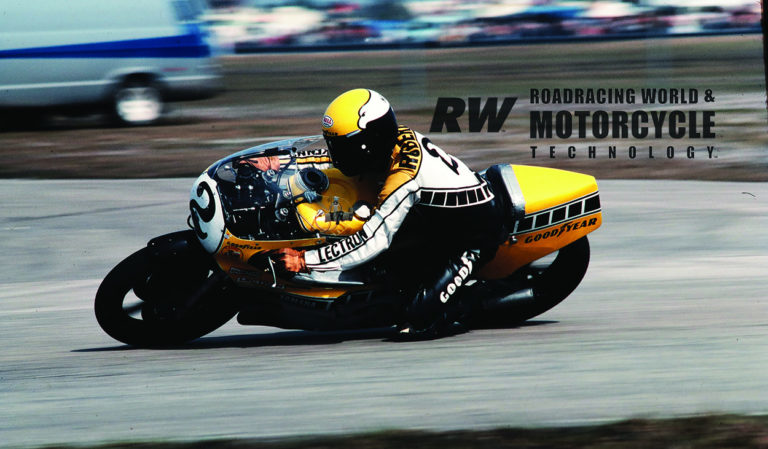
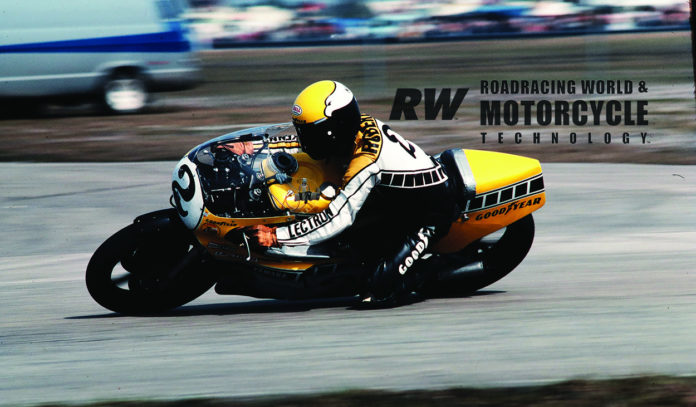
Kenny Roberts (2) won the Daytona 200—which was the opening round of the 1978 FIM F750 World Championship—riding an 0W31 factory version of the TZ750 Inline Four two-stroke racebike sold by Yamaha. Roberts preferred Lectron carbs on his bike, instead of Mikuni carbs. Photo by Shigeo Kibiki.
Featured In the October 2019 issue of Roadracing World:
There’s a certain amount of confusion between Yamaha TZ750s and factory 0W models and the 0W term itself. In the UK and USA, the number zero is often pronounced “oh,” so the Yamaha factory bikes were 0Ws not OWs! Yamaha factory racebikes were not sold to the public and differed from those that were. If you see a TZ750 being called an 0W31, it’s highly unlikely it actually is one.
The first factory 750 was a twin-shock 0W29 that Giacomo Agostini rode to victory at Daytona in 1975. The 0W31 was introduced in 1976 as a monoshock machine made available to Yamaha’s five leading distributors and their riders: Europe and Agostini; Canada and Steve Baker; Venezuela/South America and Johnny Cecotto; Japan and Hideo Kanaya; and the USA and Kenny Roberts.
Cecotto won Daytona that year but Victor Palermo won the F750 Championship with TZ750-engines in Nico Bakker monoshock frames. The following year Baker won the F750 Championship, by that time given world status, with five wins on the Yamaha Canada 0W31.
The 1977 TZ750D production racebikes appeared to be similar to the previous year’s 0Ws: Monoshock suspension, factory style fiberglass and exhaust system (see the September 2013 issue of Roadracing World, Historic Racebike Illustrations) but appearances were deceptive!
–Historic Racebike Illustrations: 1978 Yamaha 0W31, by Mick Ofield
The Yamaha TZ750 racebike was an amazing machine that defined road racing for years, but when the Yamaha factory race shop got through with the bike, it was at an even higher level. The 1978 Yamaha 0W31 utilized 500cc GP bike technology and was lighter, more powerful and faster than the production racer. Read all of the details about why the factory Yamaha was such an awe-inspiring machine – it’s all in the October issue of Roadracing World!
Roadracing World & Motorcycle Technologyis THE definitive source for motorcycle racing, riding, and tech information.
PREVIEWthe October 2019 issue of Roadracing World & Motorcycle Technology!
Roadracing World & Motorcycle Technology magazine is available in print and digital formats. SUBSCRIBE NOW FOR INSTANT ACCESS!
Log in or subscribe HERE. Or call (909) 654-4779, 9:00 a.m. – 5:00 p.m. Pacific Time, Monday through Friday.
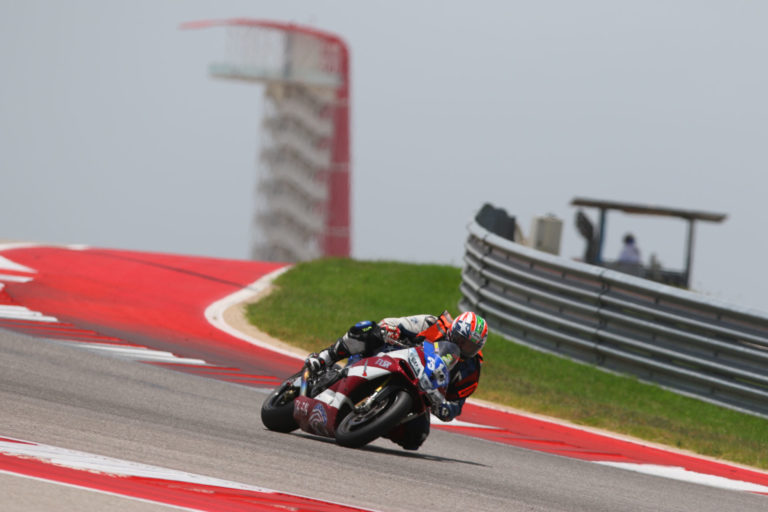
3:16 Trackdays owner Ignacio Pedregon III (316) in action at COTA. Photo by Hart Photography, courtesy of 3:16 Trackdays.
3:16 Trackdays announces The America Superbike Camp at COTA [Circuit of The Americas] to be held on July 6, 2020
3:16 Trackdays LLC has developed a new format in through experience working with Texas Motorcycle Academy led by retired AMA Pro Craig Gleason and facilitating the Central Motorcycle Roadracing Association (CMRA) race school. The format has been named “The America Superbike Camp.”
The America Superbike Camp has completed the 2019 season with this unique
format which includes mentor coaching done by experienced road racing
athletes from the novice level all the way to the MotoAmerica level.
Coaching “student-to-teacher” ratio is extremely low 4:1 and sessions will be
30 minutes long at COTA.
Coaching is personalized by gathering key focus points from riders to
focus on. The riders are then matched with a mentor coach according to
their needs and skill levels.
These high value events are reasonably priced and will go on sale via the
website https://316trackdays.com on December 1, 2019 there will be one COTA
event, other events will be held at club level tracks in Cresson, Texas
and Houston, Texas. (MSRC and MSRH)
A “press release” is promotional text issued by a rider, team, company or organization to inform
the public about an event, product, or service from the issuer’s own point of view, and if deemed
to have news value, may be placed on roadracingworld.com as a service to our readers.
A press release is not an article written by Roadracingworld.com staffers. When a post is labeled with the words “press release”, it means that Roadracingworld.com is not responsible for its content and that Roadracingworld.com makes no guarantee that it is accurate. Not all press releases are posted and Roadracingworld.com may reject press releases if the content is too heavy on commercial promotion with little or no news value or if the press release contains obvious errors.
Accessibility
Accessibility modes
Epilepsy Safe Mode
Dampens color and removes blinks
This mode enables people with epilepsy to use the website safely by eliminating the risk of seizures that result from flashing or blinking animations and risky color combinations.
Visually Impaired Mode
Improves website's visuals
This mode adjusts the website for the convenience of users with visual impairments such as Degrading Eyesight, Tunnel Vision, Cataract, Glaucoma, and others.
Cognitive Disability Mode
Helps to focus on specific content
This mode provides different assistive options to help users with cognitive impairments such as Dyslexia, Autism, CVA, and others, to focus on the essential elements of the website more easily.
ADHD Friendly Mode
Reduces distractions and improve focus
This mode helps users with ADHD and Neurodevelopmental disorders to read, browse, and focus on the main website elements more easily while significantly reducing distractions.
Blindness Mode
Allows using the site with your screen-reader
This mode configures the website to be compatible with screen-readers such as JAWS, NVDA, VoiceOver, and TalkBack. A screen-reader is software for blind users that is installed on a computer and smartphone, and websites must be compatible with it.
Online Dictionary
Readable Experience
Content Scaling
Default
Text Magnifier
Readable Font
Dyslexia Friendly
Highlight Titles
Highlight Links
Font Sizing
Default
Line Height
Default
Letter Spacing
Default
Left Aligned
Center Aligned
Right Aligned
Visually Pleasing Experience
Dark Contrast
Light Contrast
Monochrome
High Contrast
High Saturation
Low Saturation
Adjust Text Colors
Adjust Title Colors
Adjust Background Colors
Easy Orientation
Mute Sounds
Hide Images
Hide Emoji
Reading Guide
Stop Animations
Reading Mask
Highlight Hover
Highlight Focus
Big Dark Cursor
Big Light Cursor
Cognitive Reading
Virtual Keyboard
Navigation Keys
Voice Navigation
Accessibility Statement
www.roadracingworld.com
November 20, 2026
Compliance status
We firmly believe that the internet should be available and accessible to anyone, and are committed to providing a website that is accessible to the widest possible audience,
regardless of circumstance and ability.
To fulfill this, we aim to adhere as strictly as possible to the World Wide Web Consortium’s (W3C) Web Content Accessibility Guidelines 2.1 (WCAG 2.1) at the AA level.
These guidelines explain how to make web content accessible to people with a wide array of disabilities. Complying with those guidelines helps us ensure that the website is accessible
to all people: blind people, people with motor impairments, visual impairment, cognitive disabilities, and more.
This website utilizes various technologies that are meant to make it as accessible as possible at all times. We utilize an accessibility interface that allows persons with specific
disabilities to adjust the website’s UI (user interface) and design it to their personal needs.
Additionally, the website utilizes an AI-based application that runs in the background and optimizes its accessibility level constantly. This application remediates the website’s HTML,
adapts Its functionality and behavior for screen-readers used by the blind users, and for keyboard functions used by individuals with motor impairments.
If you’ve found a malfunction or have ideas for improvement, we’ll be happy to hear from you. You can reach out to the website’s operators by using the following email
Screen-reader and keyboard navigation
Our website implements the ARIA attributes (Accessible Rich Internet Applications) technique, alongside various different behavioral changes, to ensure blind users visiting with
screen-readers are able to read, comprehend, and enjoy the website’s functions. As soon as a user with a screen-reader enters your site, they immediately receive
a prompt to enter the Screen-Reader Profile so they can browse and operate your site effectively. Here’s how our website covers some of the most important screen-reader requirements,
alongside console screenshots of code examples:
Screen-reader optimization: we run a background process that learns the website’s components from top to bottom, to ensure ongoing compliance even when updating the website.
In this process, we provide screen-readers with meaningful data using the ARIA set of attributes. For example, we provide accurate form labels;
descriptions for actionable icons (social media icons, search icons, cart icons, etc.); validation guidance for form inputs; element roles such as buttons, menus, modal dialogues (popups),
and others. Additionally, the background process scans all the website’s images and provides an accurate and meaningful image-object-recognition-based description as an ALT (alternate text) tag
for images that are not described. It will also extract texts that are embedded within the image, using an OCR (optical character recognition) technology.
To turn on screen-reader adjustments at any time, users need only to press the Alt+1 keyboard combination. Screen-reader users also get automatic announcements to turn the Screen-reader mode on
as soon as they enter the website.
These adjustments are compatible with all popular screen readers, including JAWS and NVDA.
Keyboard navigation optimization: The background process also adjusts the website’s HTML, and adds various behaviors using JavaScript code to make the website operable by the keyboard. This includes the ability to navigate the website using the Tab and Shift+Tab keys, operate dropdowns with the arrow keys, close them with Esc, trigger buttons and links using the Enter key, navigate between radio and checkbox elements using the arrow keys, and fill them in with the Spacebar or Enter key.Additionally, keyboard users will find quick-navigation and content-skip menus, available at any time by clicking Alt+1, or as the first elements of the site while navigating with the keyboard. The background process also handles triggered popups by moving the keyboard focus towards them as soon as they appear, and not allow the focus drift outside it.
Users can also use shortcuts such as “M” (menus), “H” (headings), “F” (forms), “B” (buttons), and “G” (graphics) to jump to specific elements.
Disability profiles supported in our website
Epilepsy Safe Mode: this profile enables people with epilepsy to use the website safely by eliminating the risk of seizures that result from flashing or blinking animations and risky color combinations.
Visually Impaired Mode: this mode adjusts the website for the convenience of users with visual impairments such as Degrading Eyesight, Tunnel Vision, Cataract, Glaucoma, and others.
Cognitive Disability Mode: this mode provides different assistive options to help users with cognitive impairments such as Dyslexia, Autism, CVA, and others, to focus on the essential elements of the website more easily.
ADHD Friendly Mode: this mode helps users with ADHD and Neurodevelopmental disorders to read, browse, and focus on the main website elements more easily while significantly reducing distractions.
Blindness Mode: this mode configures the website to be compatible with screen-readers such as JAWS, NVDA, VoiceOver, and TalkBack. A screen-reader is software for blind users that is installed on a computer and smartphone, and websites must be compatible with it.
Keyboard Navigation Profile (Motor-Impaired): this profile enables motor-impaired persons to operate the website using the keyboard Tab, Shift+Tab, and the Enter keys. Users can also use shortcuts such as “M” (menus), “H” (headings), “F” (forms), “B” (buttons), and “G” (graphics) to jump to specific elements.
Additional UI, design, and readability adjustments
Font adjustments – users, can increase and decrease its size, change its family (type), adjust the spacing, alignment, line height, and more.
Color adjustments – users can select various color contrast profiles such as light, dark, inverted, and monochrome. Additionally, users can swap color schemes of titles, texts, and backgrounds, with over seven different coloring options.
Animations – person with epilepsy can stop all running animations with the click of a button. Animations controlled by the interface include videos, GIFs, and CSS flashing transitions.
Content highlighting – users can choose to emphasize important elements such as links and titles. They can also choose to highlight focused or hovered elements only.
Audio muting – users with hearing devices may experience headaches or other issues due to automatic audio playing. This option lets users mute the entire website instantly.
Cognitive disorders – we utilize a search engine that is linked to Wikipedia and Wiktionary, allowing people with cognitive disorders to decipher meanings of phrases, initials, slang, and others.
Additional functions – we provide users the option to change cursor color and size, use a printing mode, enable a virtual keyboard, and many other functions.
Browser and assistive technology compatibility
We aim to support the widest array of browsers and assistive technologies as possible, so our users can choose the best fitting tools for them, with as few limitations as possible. Therefore, we have worked very hard to be able to support all major systems that comprise over 95% of the user market share including Google Chrome, Mozilla Firefox, Apple Safari, Opera and Microsoft Edge, JAWS and NVDA (screen readers).
Notes, comments, and feedback
Despite our very best efforts to allow anybody to adjust the website to their needs. There may still be pages or sections that are not fully accessible, are in the process of becoming accessible, or are lacking an adequate technological solution to make them accessible. Still, we are continually improving our accessibility, adding, updating and improving its options and features, and developing and adopting new technologies. All this is meant to reach the optimal level of accessibility, following technological advancements. For any assistance, please reach out to