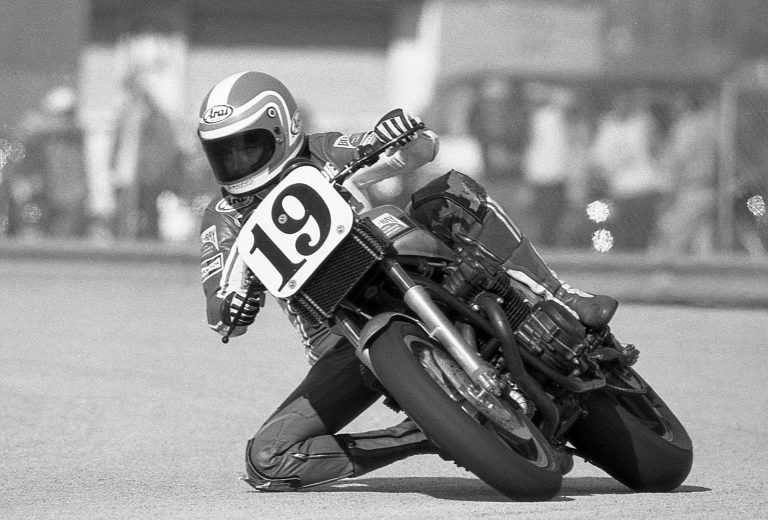
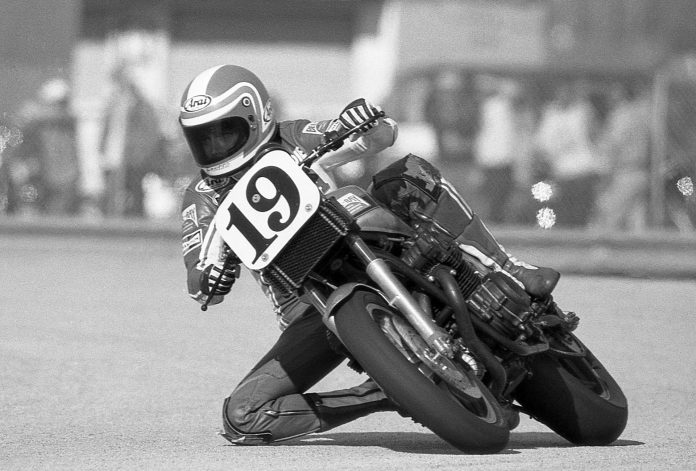
PICKERINGTON, Ohio — Three-time world roadracing champion “Fast Freddie” Spencer, one of the most iconic road racers in American motorcycling history, will serve as the grand marshal of the 2026 Permco AMA Vintage Motorcycle Days presented by Turn 14 Distribution.
A 1999 AMA Motorcycle Hall of Fame inductee, Spencer was a leading competitor in AMA Superbike, Formula II and Formula 1 competition in the U.S. before heading to the Grand Prix circuit in the early 1980s en route to a trio of world championships — the 500cc title in 1983 and, in ’85, the 250cc and 500cc world titles, the first person to accomplish that feat.
This summer, he will be the premier guest at the AMA’s largest event, which runs July 24-26 at the Mid-Ohio Sports Car Course in Lexington, Ohio. This year’s event will celebrate the 50th anniversary of AMA Superbike, making Spencer the perfect Grand Marshal to ring in the festivities.
“I raced at Mid-Ohio several times during my early career,” Spencer said, “and while I haven’t ever attended the AMA’s Vintage Motorcycle Days event, I have heard a lot about it, and so I’m really excited to be heading there this July to act as Grand Marshal. It’s a fantastic venue, and with all the other exciting stuff happening during VMD weekend, and all those enthusiastic fans, it’s bound to be a memorable weekend. See you there!”
Born in 1961 in Shreveport, La., Spencer displayed incredible talent from a very young age. He first learned to ride at 4 years old and started racing just a year later. By age 11, Spencer had already won a number of regional dirt track racing championships, and soon after, set his focus toward road racing.
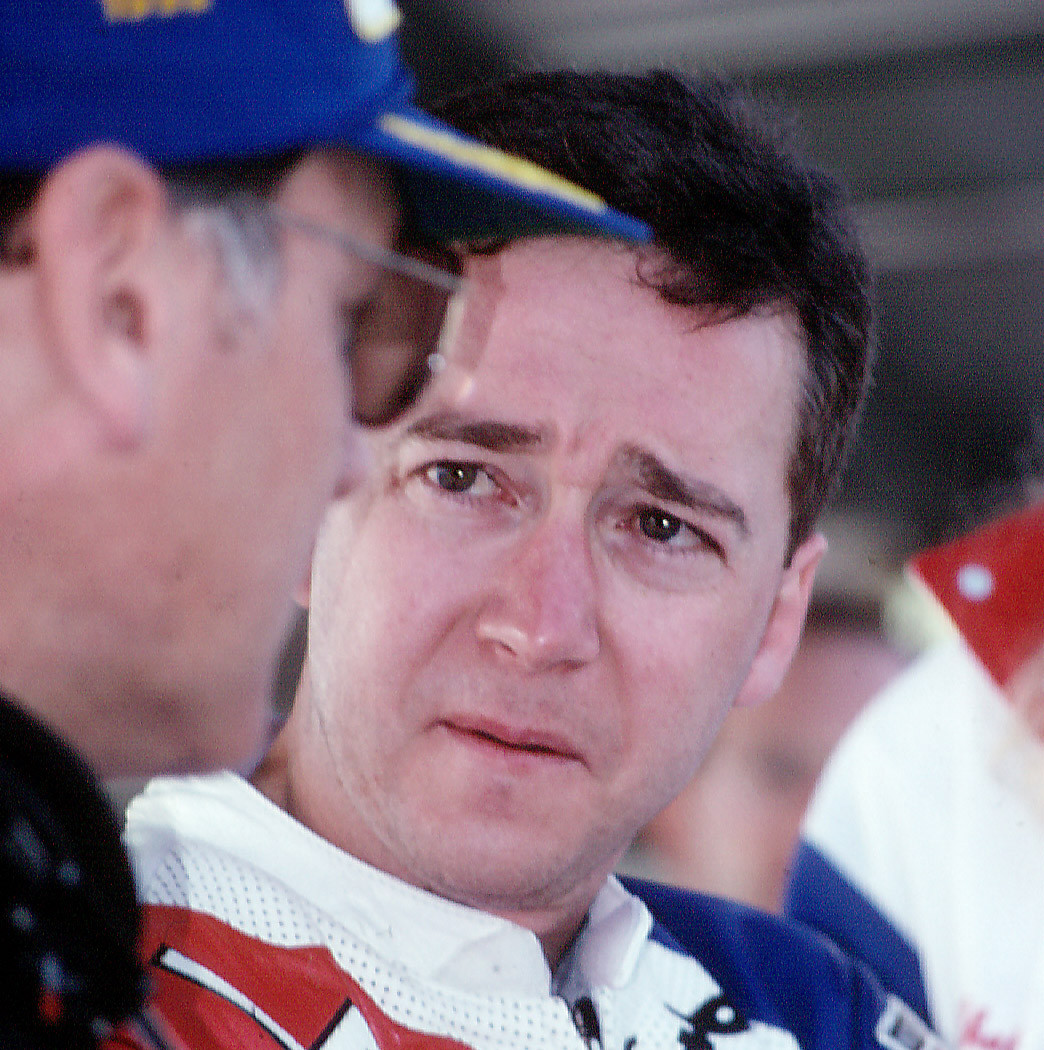
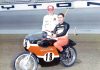
Freddie Spencer. Photo courtesy AMA
In 1979, Spencer captured his first AMA National Win and went on to win the Formula II/250GP title over fellow AMA Motorcycle Hall of Famer Eddie Lawson that season. This sparked an outstanding rivalry between the pair of future Hall of Famers, with Spencer and Lawson in constant contention for the 1980 and 1981 AMA Superbike titles.
In 1981, Spencer began racing in Europe, splitting his time between the AMA Superbike and 500cc World Championship series. One year later, he dedicated his full attention to his international pursuits, securing his first world championship victory at the 1982 Belgium 500cc Grand Prix at just 20 years old.
Spencer captured his first Grand Prix world championship in 1983, edging out veteran Kenny Roberts — a 1998 inductee to the AMA Motorcycle Hall of Fame — for the crown by only two points. Two years later, Spencer produced one of the greatest single seasons in the sport, winning the 250cc and 500cc Grand Prix World Championships. For his efforts during the 1985 season, Spencer was named the AMA’s Pro Athlete of the Year and earned a special citation from President Ronald Reagan.
Spencer retired from full-time GP racing in 1988 but went on to win three more AMA Superbike national events before officially retiring from racing in 1996.
“It’s only right that we bring in one of the most decorated American road racers to one of the most famed road venues in the country for AMA Vintage Motorcycle Days this year,” AMA President and CEO Rob Dingman said. “We are eager to welcome Freddie as the grand marshal for this year’s Vintage Motorcycle Days, and look forward to celebrating his mark on road racing history and motorcycling as a whole.”
In his role as grand marshal, Spencer will be available to speak with enthusiasts and sign autographs, while also participating in the Lap for History on the road course at the Mid-Ohio Sports Car Course, and much more!
Permco AMA Vintage Motorcycle Days presented by Turn 14 Distribution is fast approaching and will be jampacked with a number of exciting opportunities for motorcycle enthusiasts, including North America’s largest motorcycle swap meet, the AMA Motorcycle Hall of Fame Bike Show, vendor displays, demo rides and near-endless racing.
The 2026 season opener for the Motorcycle Roadracing Association officially roared to life on May 10th at High Plains Raceway, launching what promises to be one of the most competitive and exciting seasons in recent memory. With ACES Motorcycles serving as the MRA’s 2026 Presenting Sponsor, racers and fans alike were greeted with an incredible weekend of competition, camaraderie, and nonstop action.
The weekend festivities began on Saturday with a racer practice day hosted by LegionMoto that drew an impressive 160 riders to High Plains Raceway. Riders of all skill levels took advantage of the valuable track time to prepare for the first round of championship competition, filling the paddock with excitement and anticipation for Sunday’s races.
Mother Nature briefly threatened to complicate the weekend’s plans late Saturday night and into Sunday morning as rain showers moved through the area, potentially creating difficult track conditions for racers. Fortunately, the weather quickly improved as the morning progressed. By 9:00 a.m., the track had fully dried, the sun had emerged, and racers were treated to near-perfect conditions for the remainder of the day with partly cloudy skies and temperatures settling comfortably into the 70s.
The enthusiasm surrounding the new season was impossible to ignore, as the MRA welcomed an explosive turnout of 110 racers on Sunday alone — including an incredible 33 newly licensed racers making their debut appearances. From seasoned veterans to first- year competitors, the paddock was filled with energy and optimism as riders took to the track for the first championship battles of 2026.
Fay Myers Race of the Rockies Open
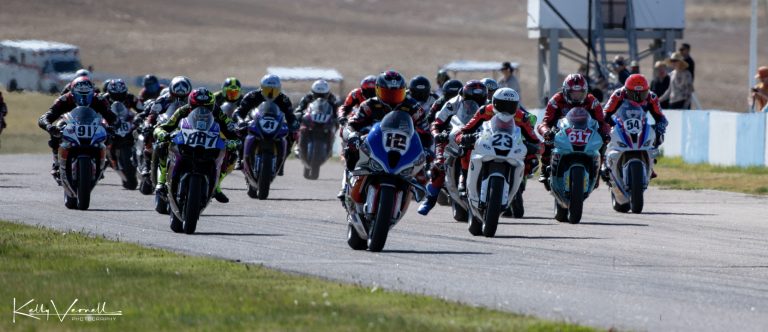
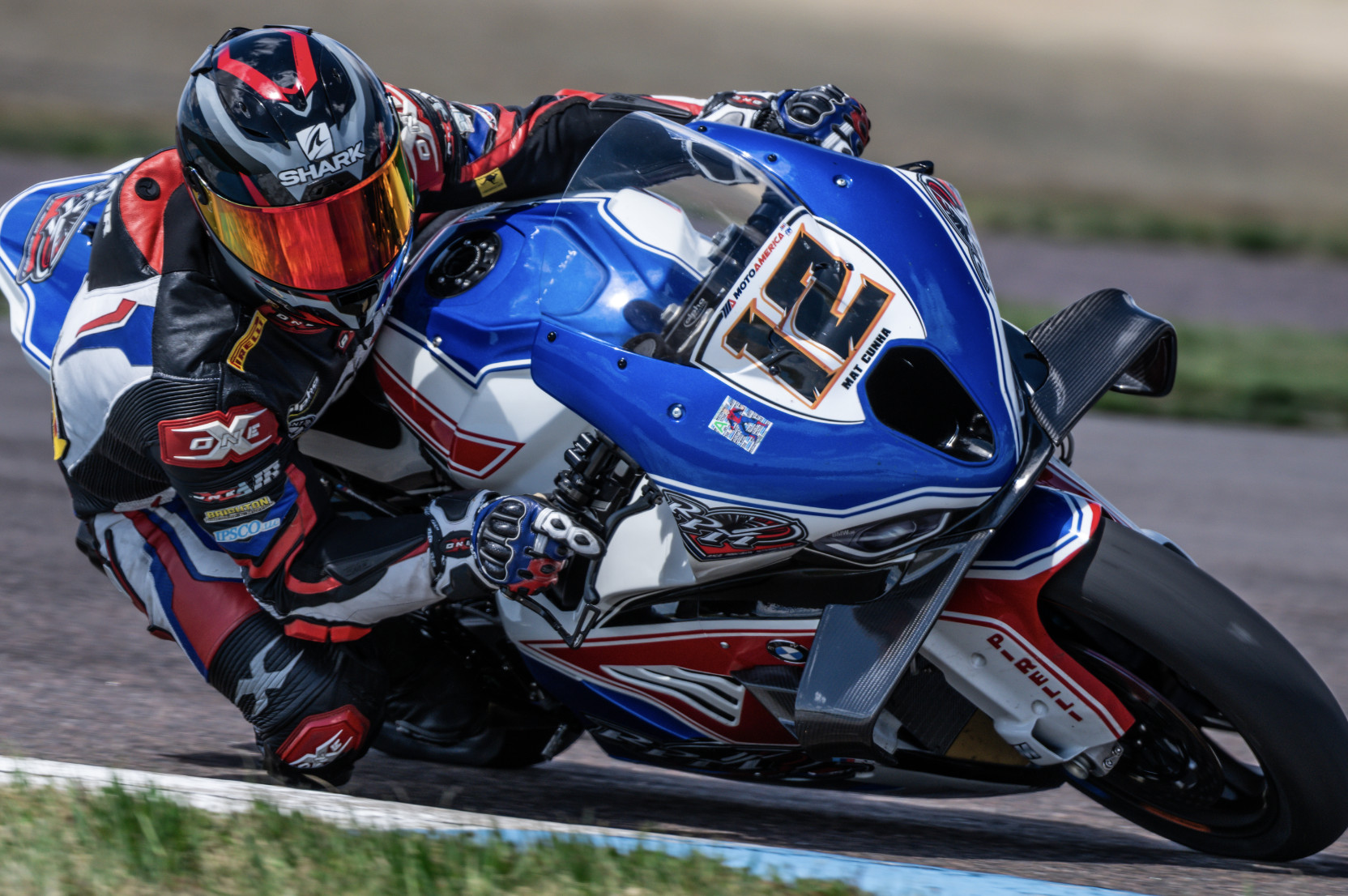
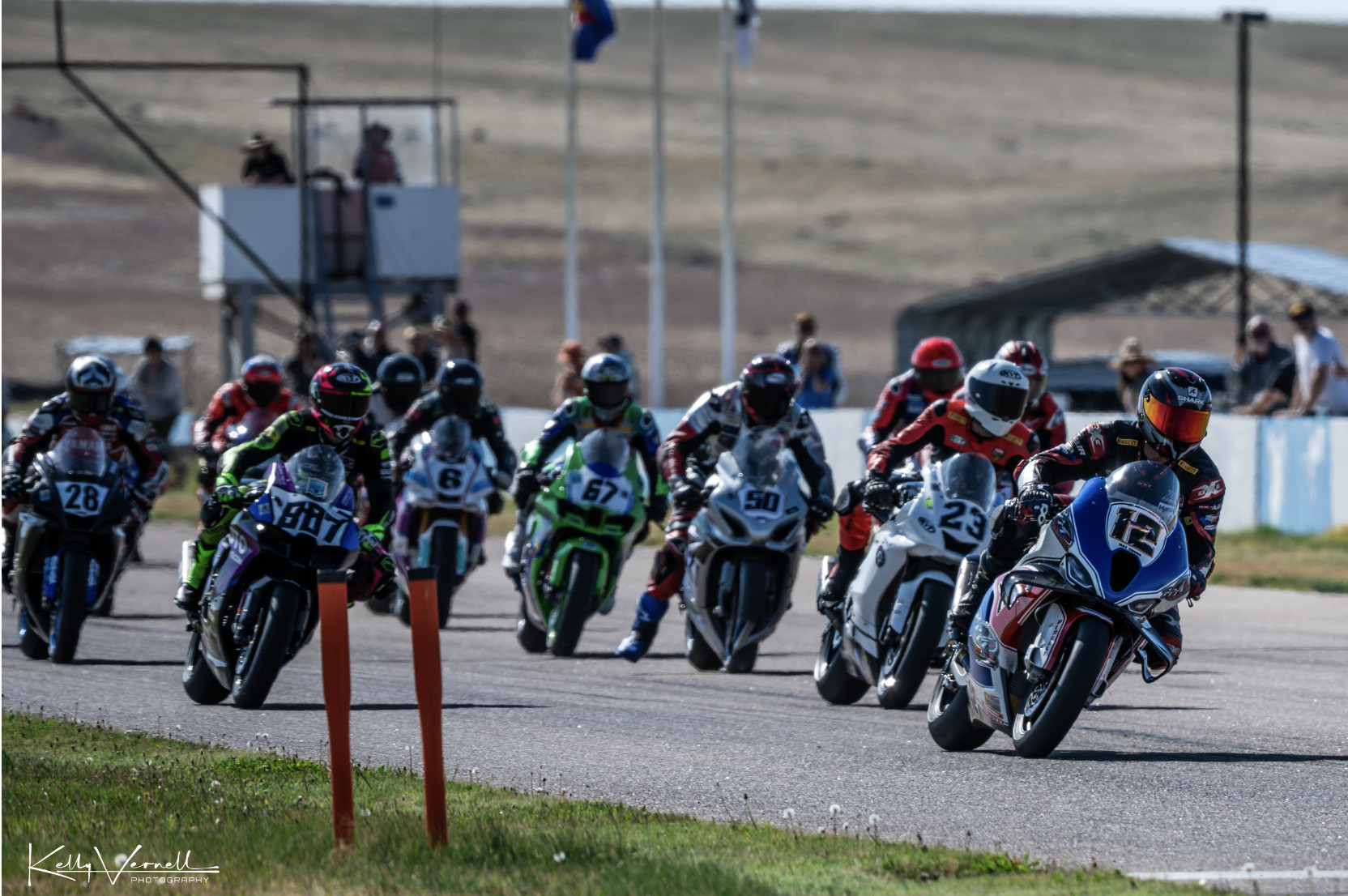
Mathew Cunha #12 leads the charge in Race of the Rockies Open. Photo By Kelly Vernell.
The opening premier-class race of the season delivered everything fans could hope for — blistering pace, fierce battles throughout the field, and a statement victory from one of the MRA’s top championship contenders.
After narrowly missing the 2025 championship by only 19 points, Mathew Cunha #12 came into the season opener with clear intentions. Cunha wasted no time establishing himself as the rider to beat, setting the fastest qualifying time with an impressive 1:47.675 lap to earn pole position for the Fay Myers Race of the Rockies Open race. Joining him on the front row were Kreece Elliot #97 and Jayden Fernandez #23.
Mathew Cunha collects the holeshot into turn 1 in Race of the Rockies Open. Photo by Kelly Vernell.
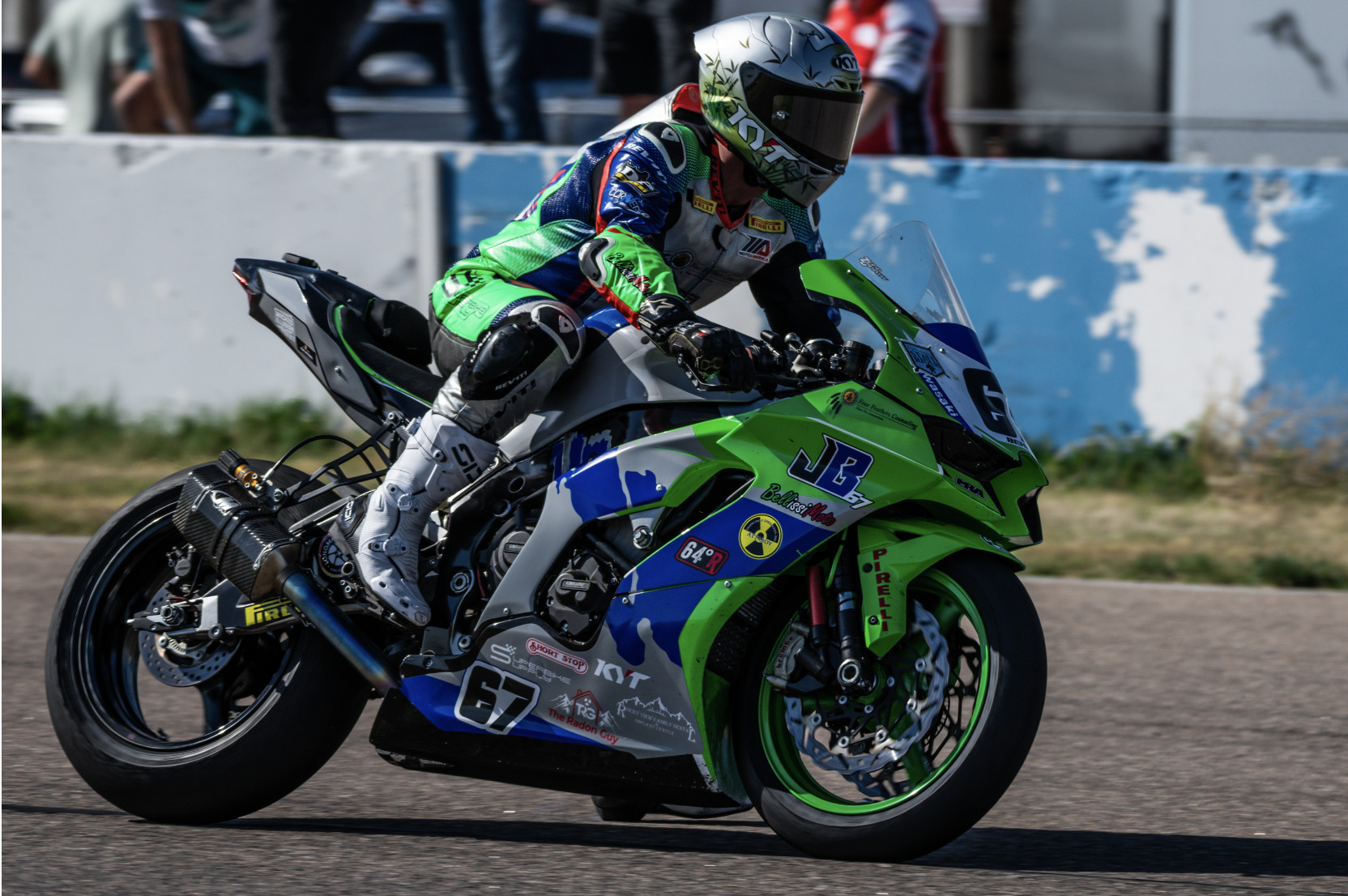
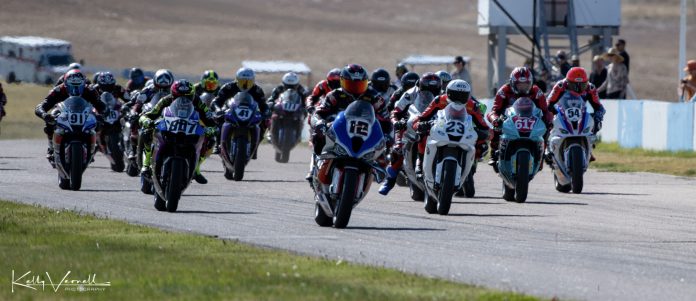
When the lights went out, Cunha immediately capitalized on his pole position, grabbing the holeshot into Turn 1 ahead of Fernandez, Kreece Elliot #97 and Justen Behmer #67. Behmer quickly made his presence known, slicing past Fernandez down the back straight to move into second position as the opening laps unfolded.
From there, Cunha began putting on a clinic at the front. By lap three, he had already started stretching a gap over the rest of the field, leaving the battle for the remaining podium positions to intensify behind him.
Justen Behmer #67 holding off Elliot #97 mid race for the podium in Race of the Rockies. Photo by Kelly Vernell.
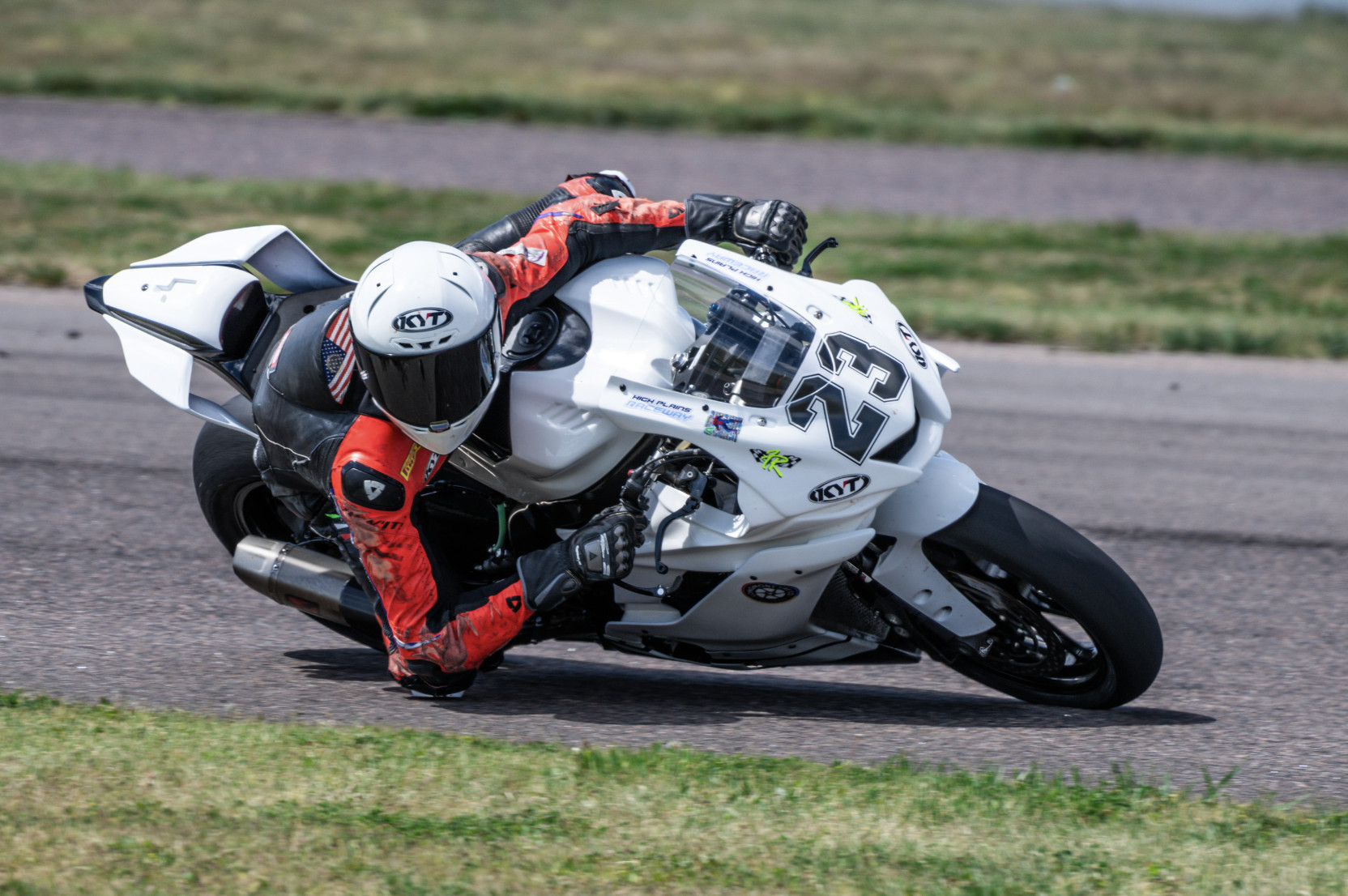
Behmer held onto second for several laps with Elliot close behind, but Fernandez — riding a 600cc Yamaha R6 against a field of 1000cc superbikes — continued showing incredible pace and composure. The young rider appeared patient and calculated, carefully studying the riders ahead while remaining firmly in contention.
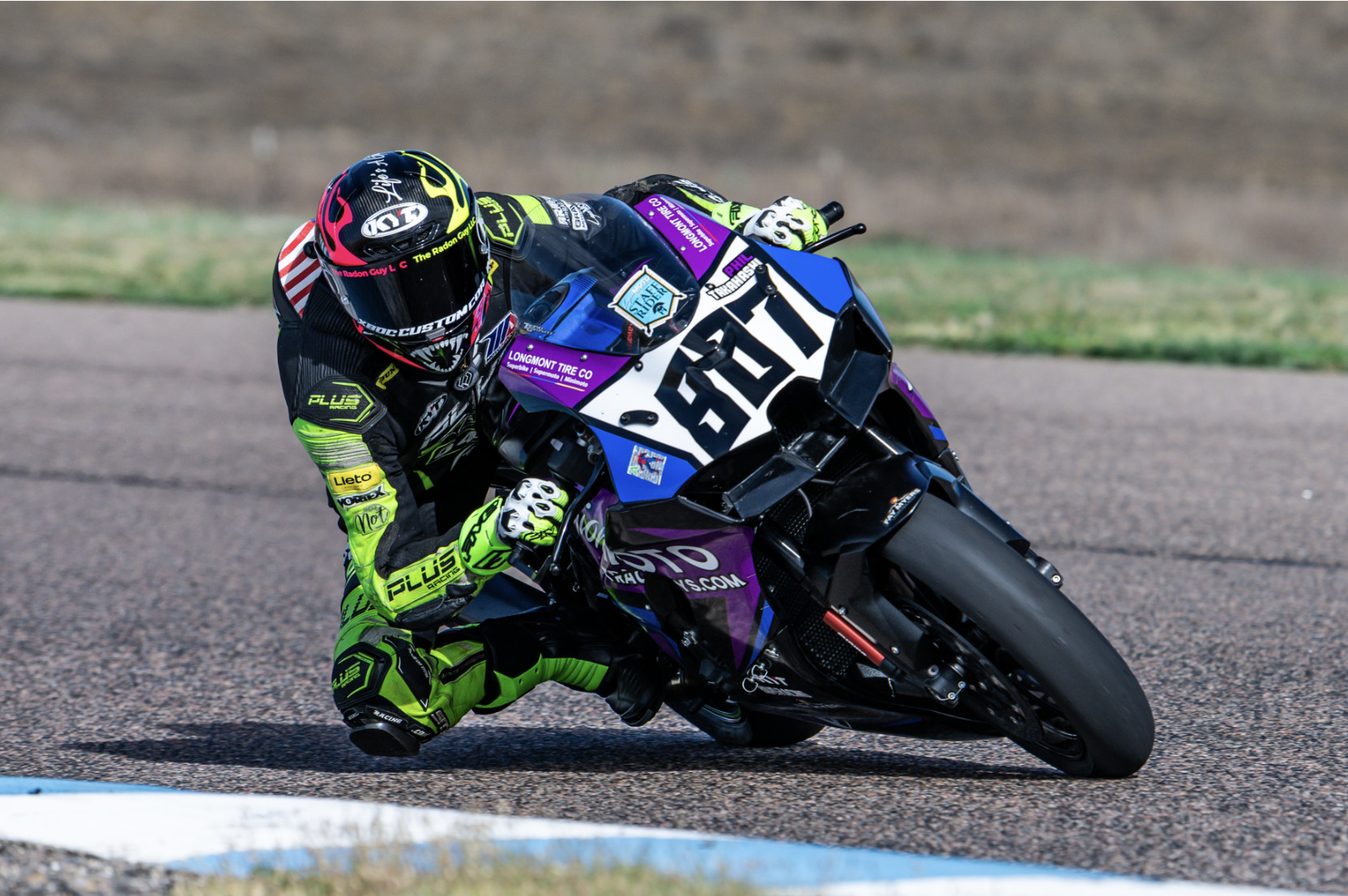
As the trio fought for every inch of racetrack, Gage Mollman #617 was steadily reeling them in from behind, adding even more pressure to an already heated contest.
On lap six, Fernandez made his first major attack on Elliot through the backside section of the circuit, but Elliot used the horsepower advantage of his superbike to answer back on the straightaways. The battle became one of the highlights of the afternoon, with positions constantly under threat at every braking zone and corner exit.
Meanwhile, Cunha continued his flawless ride at the front. By lap eight, the race leader encountered heavy lap traffic for the first time but expertly navigated through the slower riders without losing momentum, further extending his advantage.
Then came lap ten — the moment that completely reshaped the podium fight.
Jayden Fernandez #23 pushing incredible pace in Race of the Rockies Open. Photo by Kelly Vernell.
Fernandez launched an aggressive move through the backside of the racetrack with Elliot making a minor mistake and stunningly passed not only Elliot, but Behmer as well on the very same lap. Once clear, Fernandez immediately laid down several strong sectors and built just enough of a cushion before the start-finish straight to defend against the superior straight-line speed of the liter bikes behind him.
Kreece Elliot #97 pushing to make the pass for the final podium spot. Photo by Kelly Vernell.
With Fernandez pulling away into a secure second position, Behmer and Elliot turned their focus toward the final remaining podium spot. The battle went all the way to the final lap, where Elliot found exceptional drive exiting Turn 15 and completed a dramatic pass on Behmer just before the start-finish line, stealing third place by only a fraction of a second.
At the checkered flag, it was Mathew Cunha claiming a dominant opening victory to begin his 2026 championship campaign. Jayden Fernandez delivered one of the standout rides of the weekend with an incredible second-place finish aboard his 600cc machine, while Kreece Elliot completed the podium after his thrilling last-lap pass.
Fay Myers Race of the Rockies Open Results
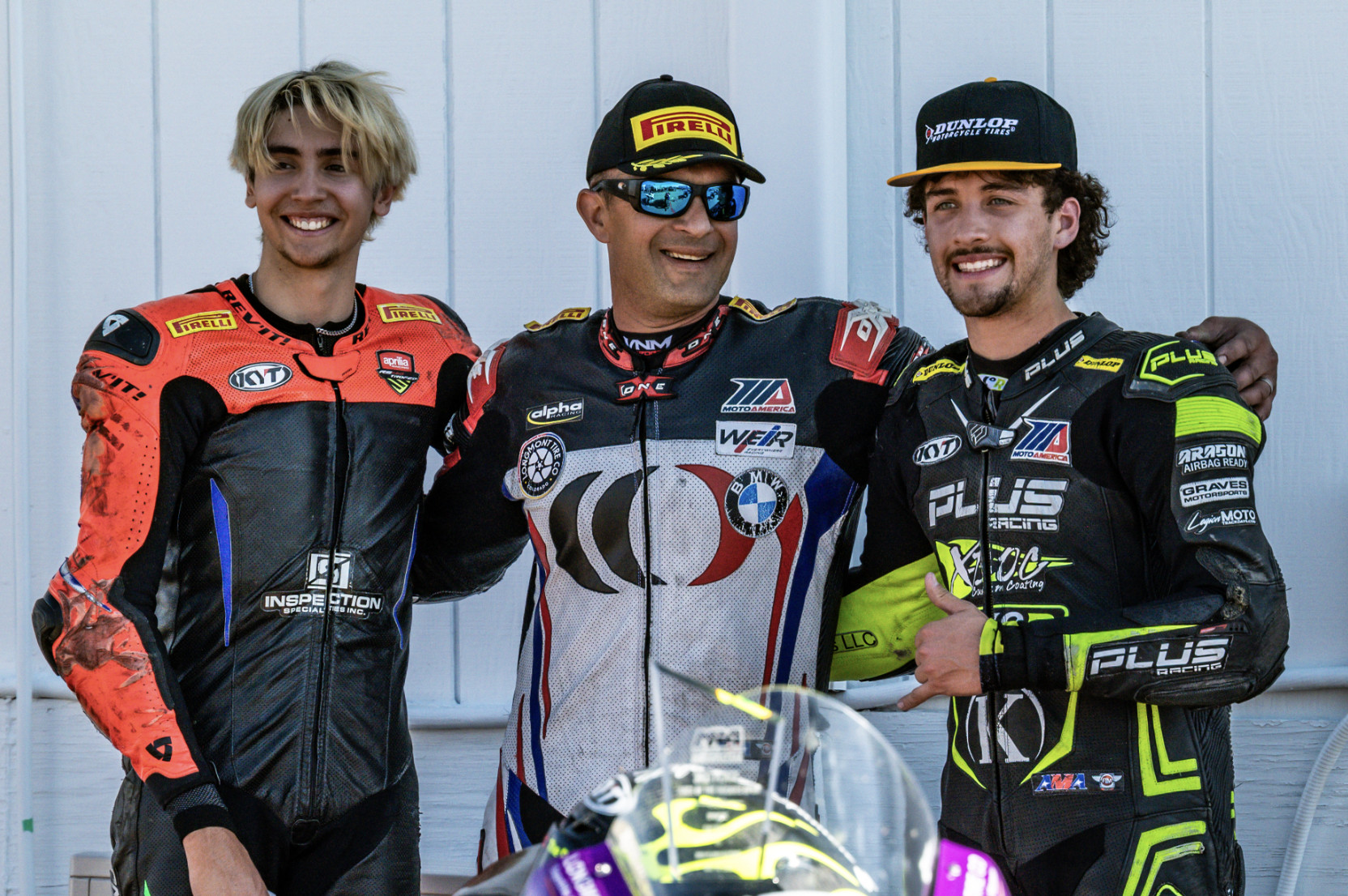
Race of the Rockies podium, (from left) Jayden Fernandez, Mathew Cunha, Kreece Elliot. Photo by Kelly Vernell.
1. Mathew Cunha #12
2. Jayden Fernandez #23
3. Kreece Elliot #97
Apex Autoglass Race of the Rockies Middleweight
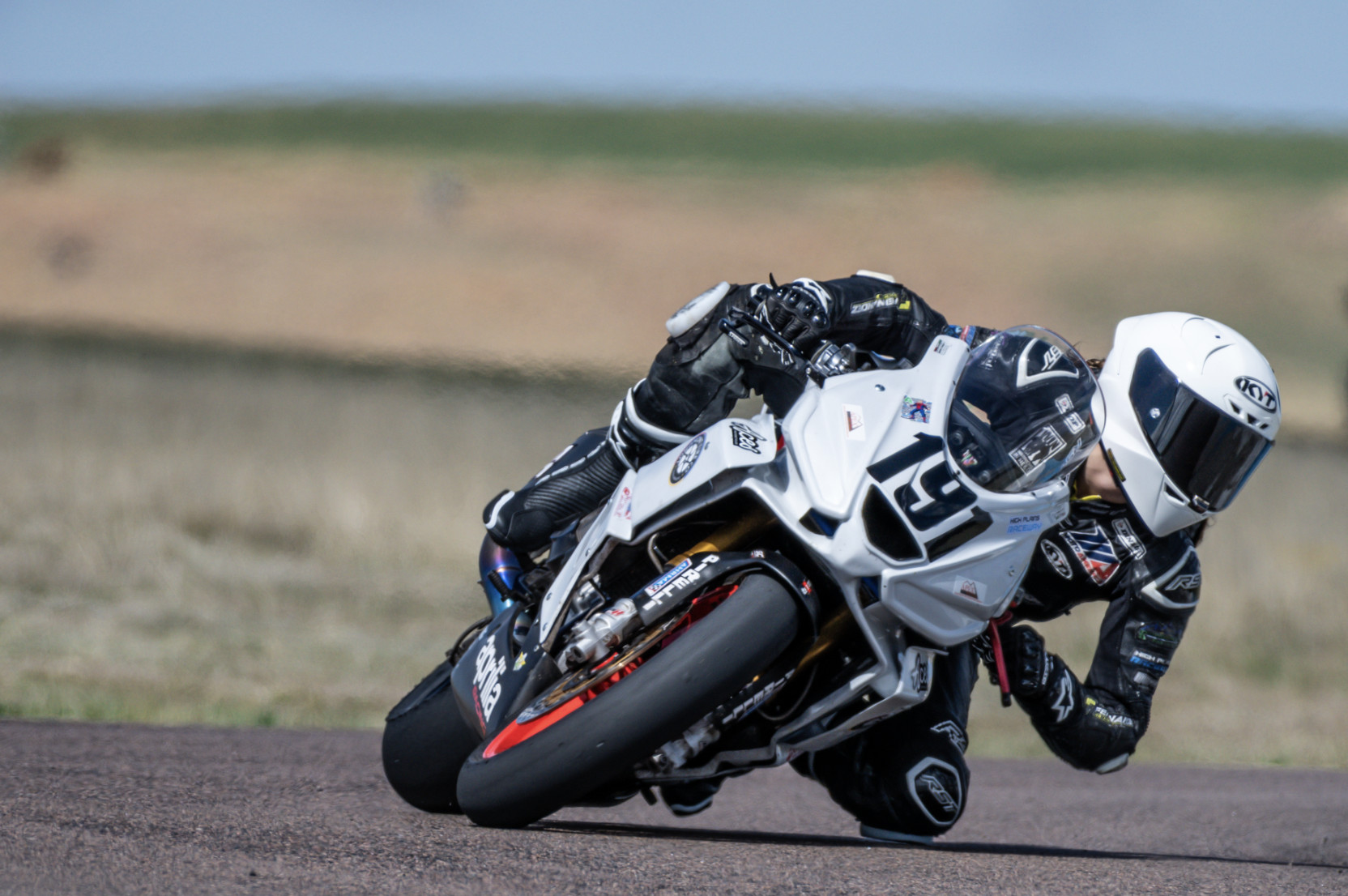
Juliana Fernandez #191 Leads the pack in Race of the Rockies Middleweight. Photo by Kelly Vernell.
The Apex Autoglass Race of the Rockies Middleweight race delivered another exciting contest at High Plains Raceway, showcasing impressive pace and consistency from some of the MRA’s rising stars.
When the race got underway, Juliana Fernandez #191 wasted no time asserting herself at the front of the field, launching off the line to secure the holeshot into Turn 1. Close behind was Nick Weishaar #175, followed by Josh Radcliffe #342 as the trio quickly separated themselves from the rest of the field.
Fernandez immediately established an aggressive pace, opening an early two-second advantage while consistently turning 1:55 lap times. Her smooth riding style and ability to maintain momentum around the flowing High Plains Raceway circuit made it difficult for the riders behind her to gain ground during the opening stages of the race.
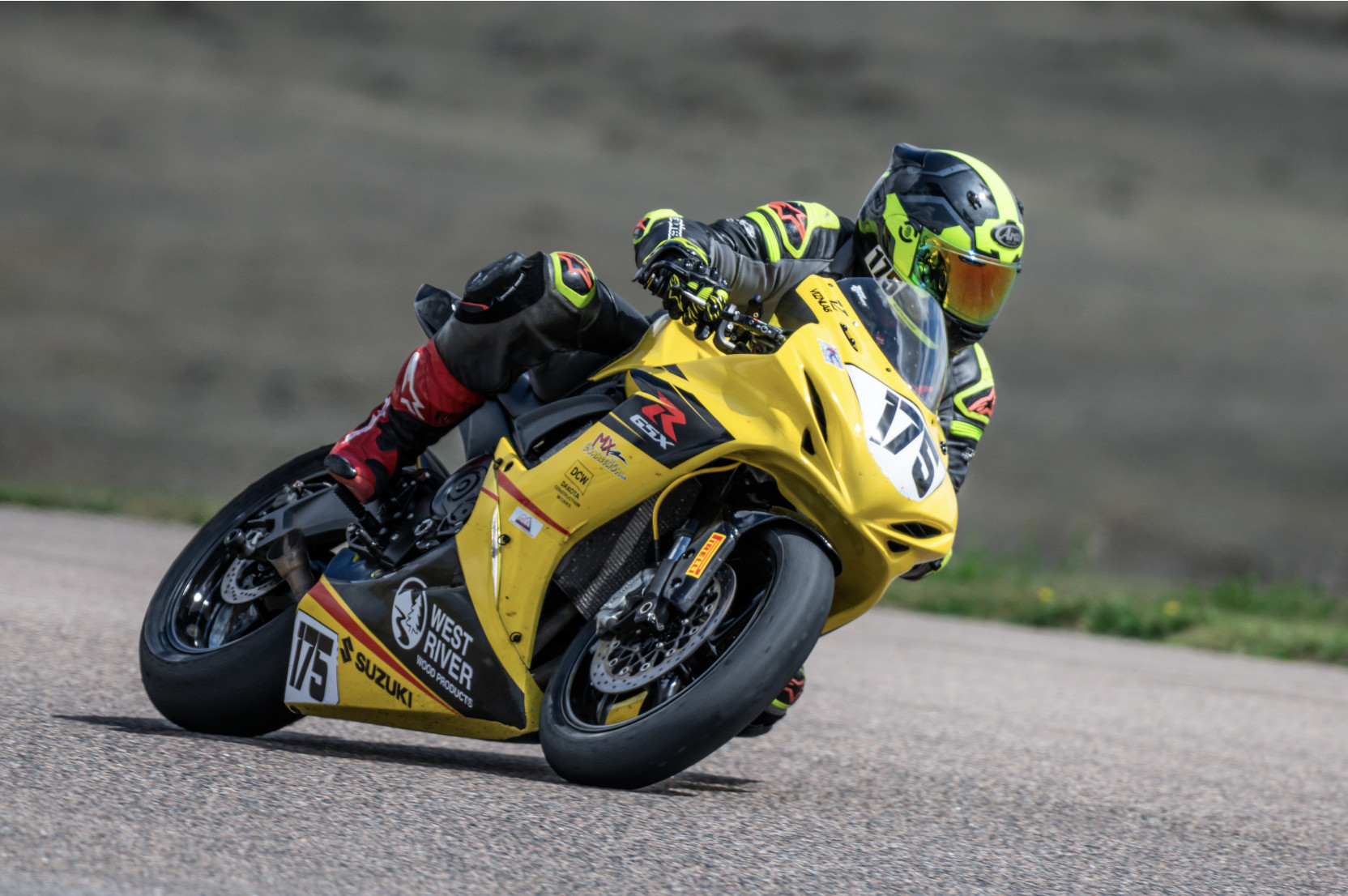
Nick Weishaar #175 pushes hard to keep Fernandez #191 in his sights. Photo by Kelly Vernell.
Weishaar responded by increasing his pace and slowly began chipping away at Fernandez’s advantage, reducing the lead to under a second as the race approached the halfway point. Sensing the pressure from behind, Fernandez answered emphatically by elevating her pace even further and dropping into the 1:53 lap range, reestablishing control of the race.
Behind the leaders, Radcliffe was quietly mounting an impressive charge of his own. Consistently running low 1:54 lap times, he steadily closed the gap to Weishaar while positioning himself for a podium challenge.
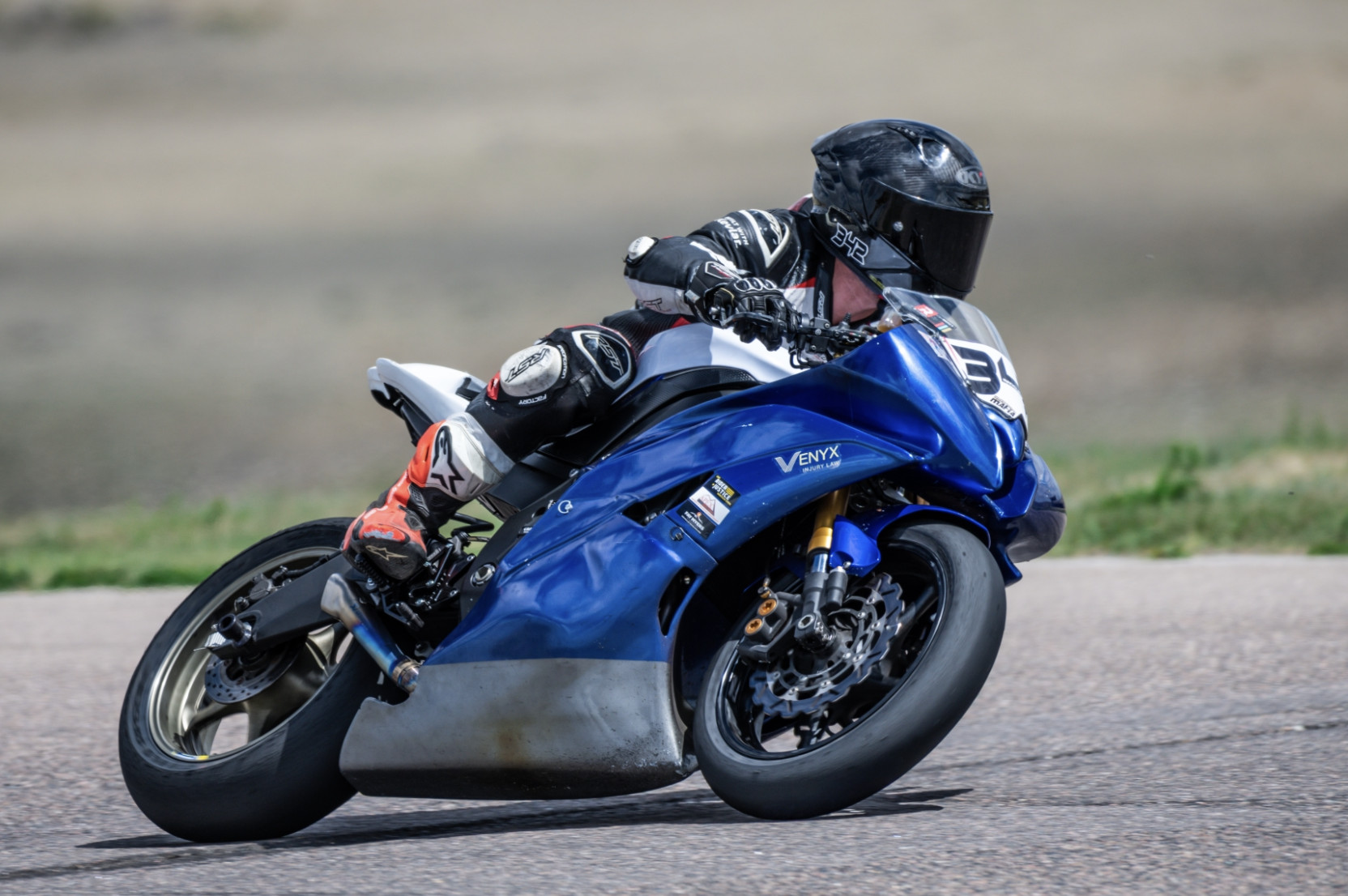
Josh Radcliffe #342 turning up the heat as he takes over 2nd place in Race of the Rockies Middleweight. Photo by Kelly Vernell.
The decisive move came on lap six when Radcliffe made a clean and calculated block pass on Weishaar entering Turn 4, successfully taking over second position. Once clear, Radcliffe continued pushing hard to secure the runner-up spot while Weishaar attempted to regroup and reel him back in. Despite the effort, Weishaar ultimately settled into a strong rhythm and maintained a comfortable hold on third place through the closing laps.
Out front, Fernandez remained untouchable to the checkered flag, delivering a dominant performance and one of the most commanding rides of the weekend.
Apex Autoglass Race of the Rockies Middleweight Results
Race of the Rockies Middleweight, from left, Juliana Fernandez, Josh Radcliffe, Nick Weishaar. Photo by Kelly Vernell.
1. Juliana Fernandez #191
2. Josh Radcliffe #342
3. Nick Weishaar #175
Rider Justice Amateur Open
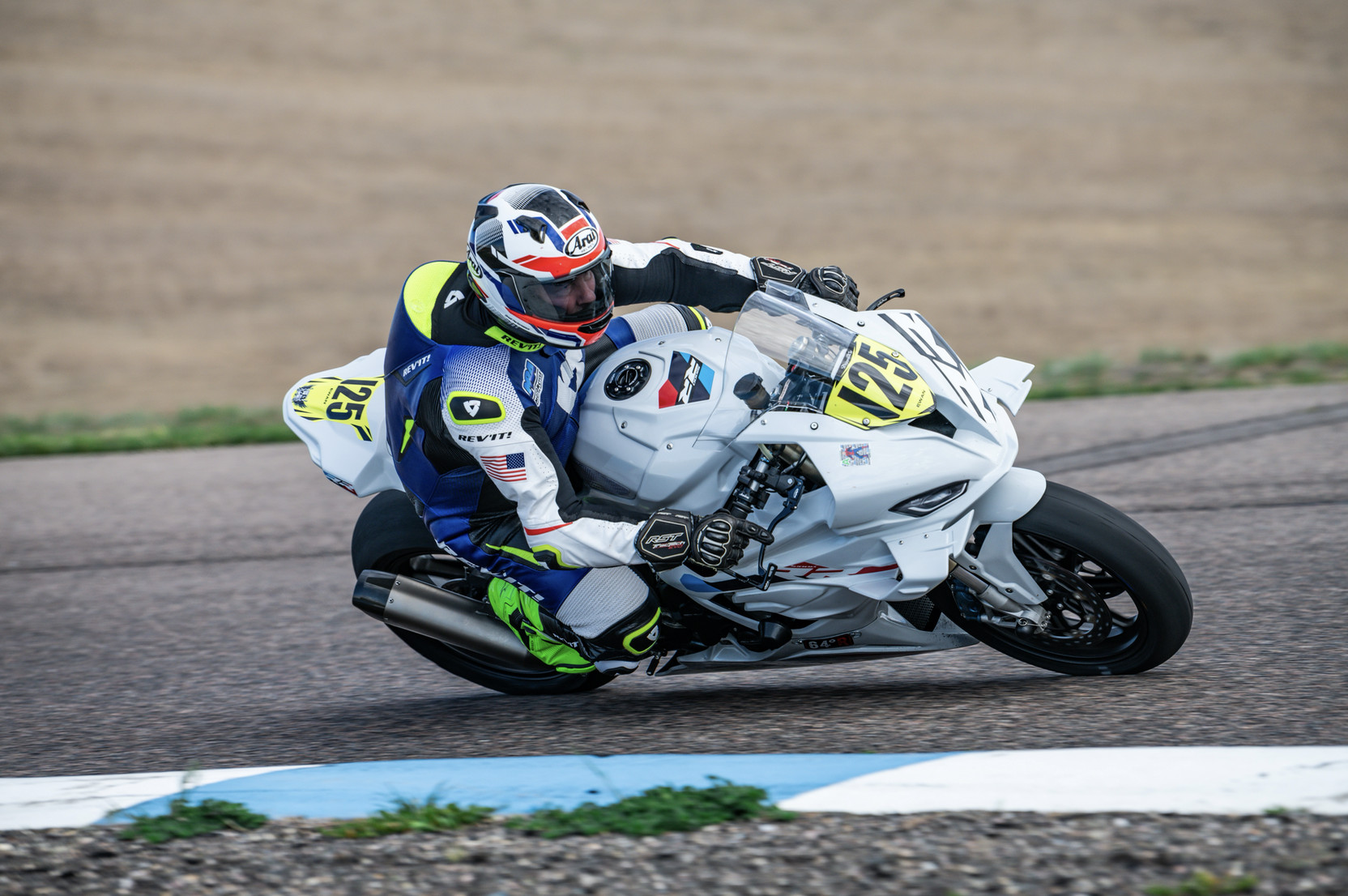
Tony Ewan #125 leads in Amateur Open. Photo by Kelly Vernell.
The Rider Justice Amateur Open provided yet another thrilling chapter to an already action- packed opening weekend for the Motorcycle Roadracing Association, featuring dominant speed at the front and late-race heartbreak that dramatically reshaped the podium.
Starting from pole position was Tony Ewan #125, joined on the front row next to Jay Hollman #53 and Jim Bassett #130. When the race began, Bassett launched perfectly off the line and secured the holeshot into Turn 1, briefly leading the field through the opening corners.
Ewan quickly demonstrated the power advantage of his BMW superbike, driving hard down the back straight and making the move for the lead entering Turn 4. Hollman also capitalized on the early shuffle and settled into second place behind Ewan as the field completed the opening lap.
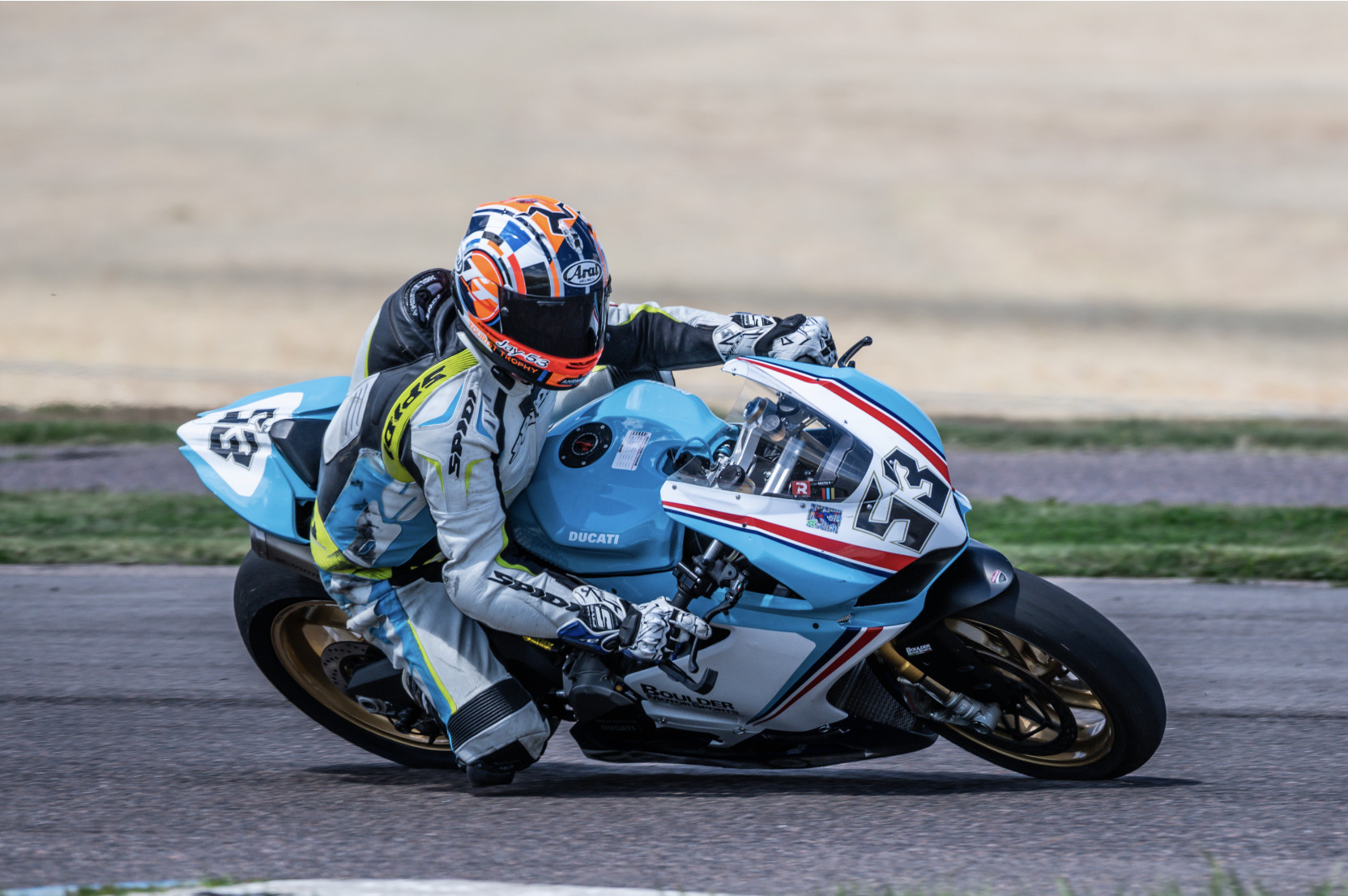
Jay Hollman #53 takes over 2nd place in Amateur Open. Photo by Kelly Vernell.
Once out front, Ewan immediately began building a substantial gap over the rest of the field. Consistently turning fast laps and maintaining smooth, mistake-free riding, he steadily stretched his advantage while Hollman focused on securing second position with a strong and consistent pace in the 1:58 range.
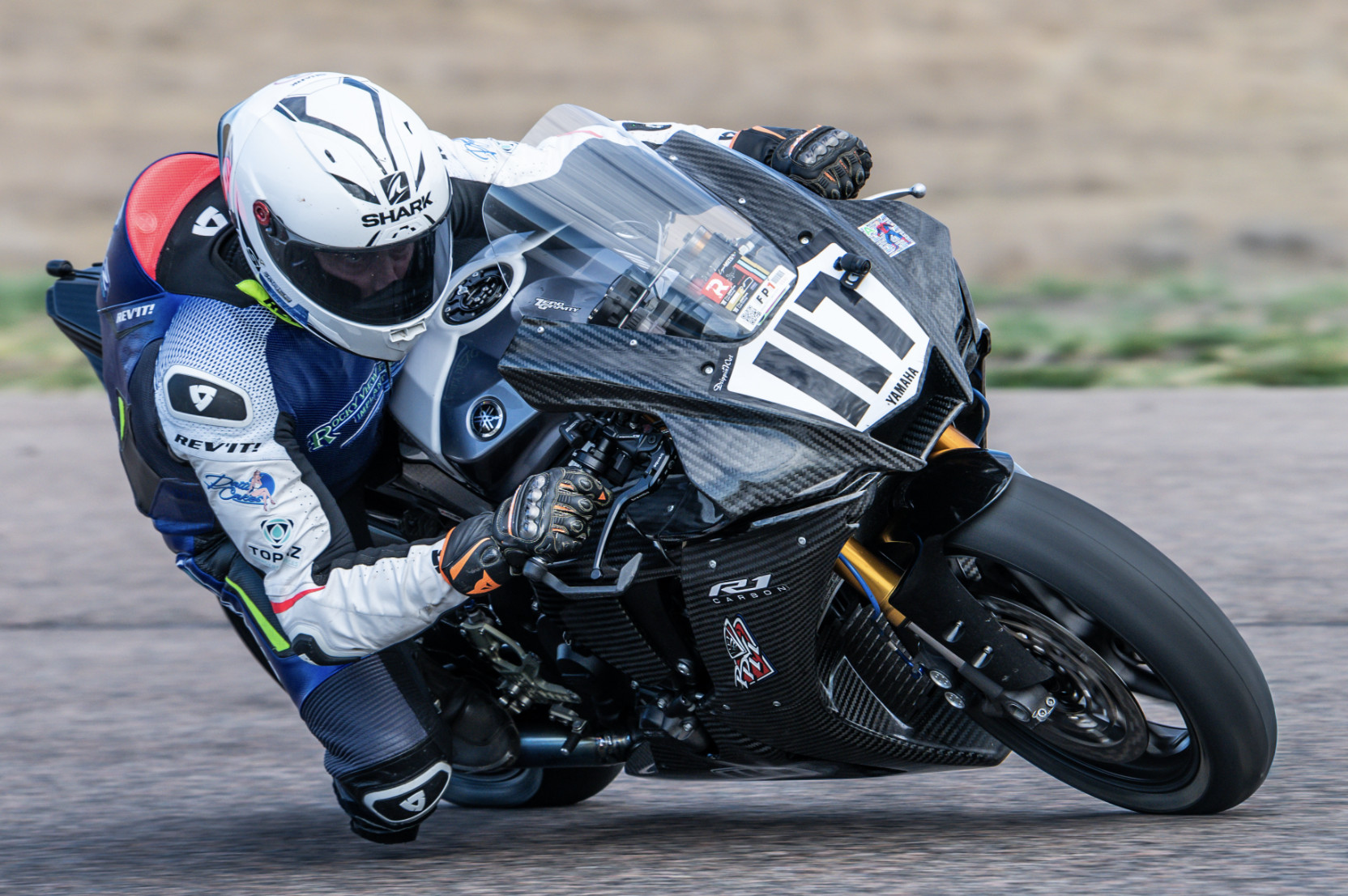
Behind them, Walt Vogl #117 held firm in third place for much of the race and appeared poised to secure a podium finish without major pressure from behind.
Walt Vogl #117 pushing pace to remain on the podium of Amateur Open. Photo by Kelly Vernell.
But quietly working his way forward was Nick Stentiford #851, who had locked onto the rear of Vogl and was steadily closing the gap lap after lap. By lap six, Stentiford made his move, executing a clean pass on Vogl in Turn 12 to take over third position and place himself into podium contention.
Nick Stentiford #851 overtakes for 3rd in Amateur Open. Photo by Kelly Vernell.
Then, just as the race appeared settled, disaster struck for Hollman.
With second place seemingly secured and the white flag already waving, Hollman suffered a mechanical issue as he crossed the start-finish line to begin the final lap. The unfortunate problem forced him to retire from the race, ending what had been an impressive ride and opening the door for dramatic last-lap position changes.
The mechanical failure promoted Stentiford into second place and elevated Vogl back onto the podium in third.
At the checkered flag, it was Tony Ewan claiming a commanding victory in the Rider Justice Amateur Open after a flawless performance at the front of the field. Stentiford capitalized on both pace and persistence to finish second, while Vogl completed the podium after a consistent ride throughout the race.
Rider Justice Amateur Open Results
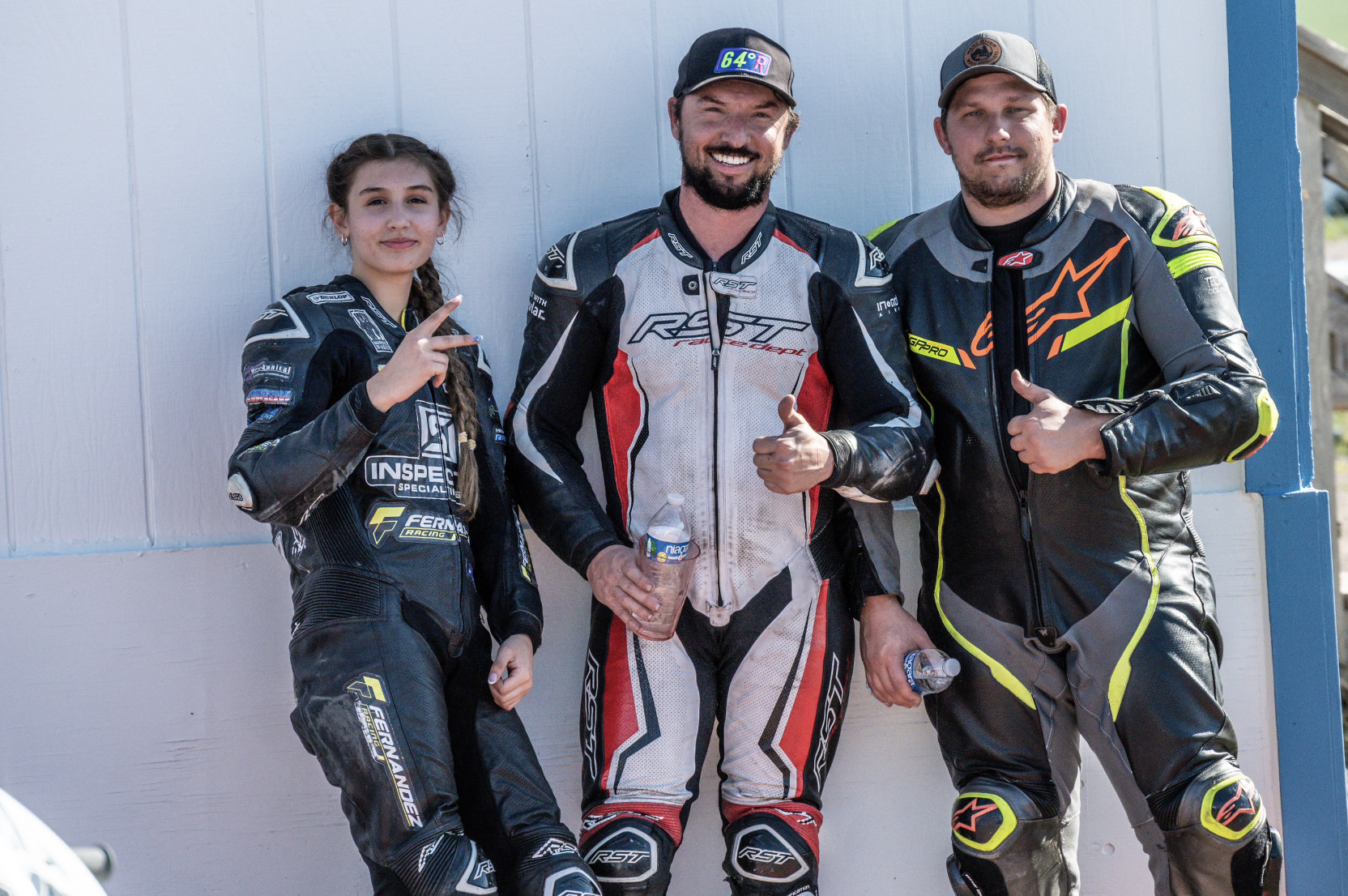
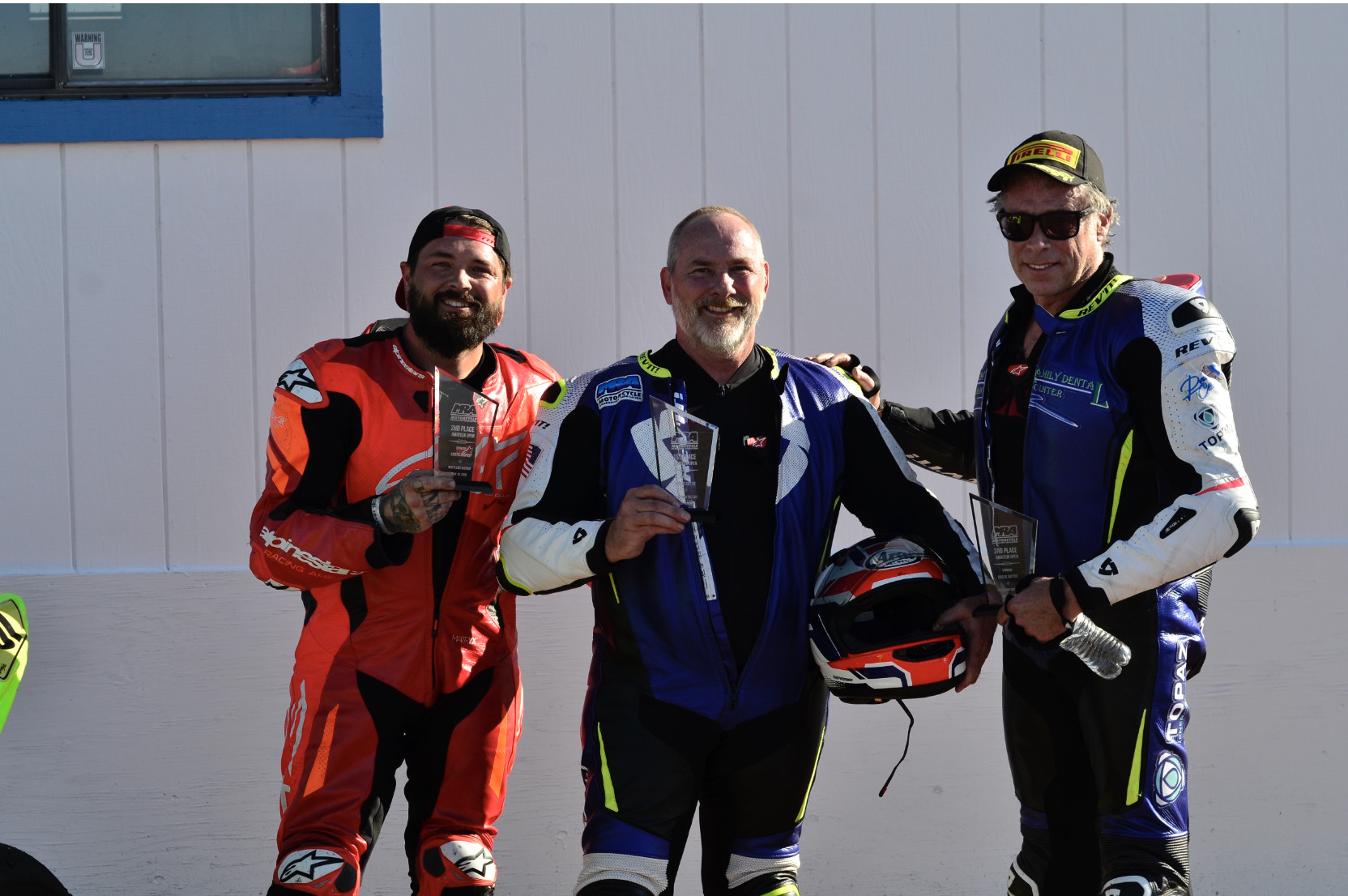
Amateur Open podium, from left Nick Stantiford, Tony Ewan, Walt Vogl. Photo by Chandler Dahl.
1. Tony Ewan #125
2. Nick Stentiford #851
3. Walt Vogl #117
Looking Ahead
The opening round of the 2026 season proved that the Motorcycle Roadracing Association is entering the new year with incredible momentum. From dominant performances at the front of the field to dramatic last-lap battles and breakthrough rides from emerging talent, the weekend at High Plains Raceway delivered exactly the kind of excitement that has made the MRA one of the premier motorcycle road racing organizations in the region.
The strong rider turnout, including 33 newly licensed racers, highlighted the continued growth and enthusiasm surrounding Colorado road racing. Combined with the support of 2026 Presenting Sponsor ACES Motorcycles and the passionate racing community that fills the paddock each weekend, the future of the MRA continues to look exceptionally bright.
If the season opener was any indication, fans can expect fierce championship battles, unforgettable racing moments, and nonstop action throughout the remainder of the 2026 campaign. The road to this year’s championships is officially underway — and after one incredible weekend at High Plains Raceway, the battle is already heating up. Join us for round 2, June 7th at Pueblo Motorsports Park.
Chase Sexton takes the win at season finale in Salt Lake City.
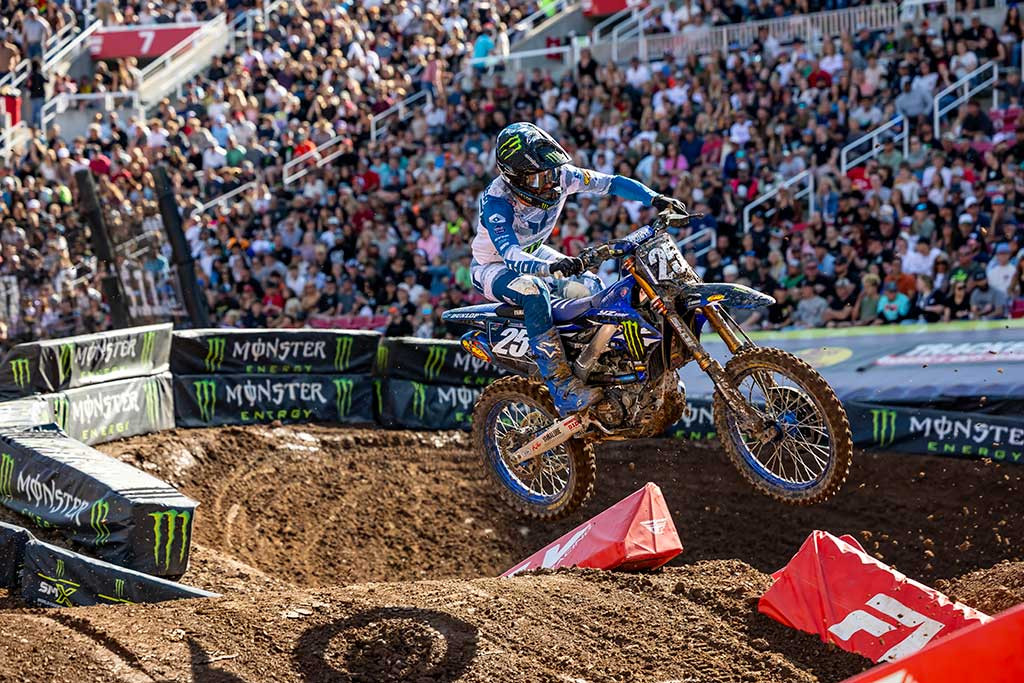
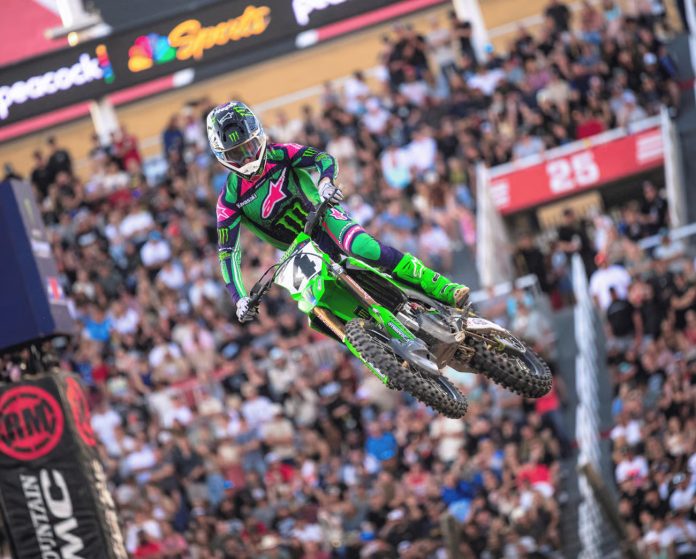
Monster Energy® Kawasaki closed out the 2026 Monster Energy AMA Supercross Championship with a statement performance at the final round in Salt Lake City. Chase Sexton powered to a dramatic 450SX Main Event victory, while Levi Kitchen secured a second-place podium finish in the 250SX East/West Showdown. Garrett Marchbanks earned 12th in the finale and capped off his rookie premier class campaign with AMA 450SX Rookie of the Year honors. Nick Romano added a hard-fought 15th-place finish in the main event, while Seth Hammaker and Cameron McAdoo both showed front-running pace before an early-race incident cut their nights short. Together, Monster Energy Kawasaki and Monster Energy Pro Circuit Kawasaki capped off the season with victories, podiums, and championship-defining milestones.
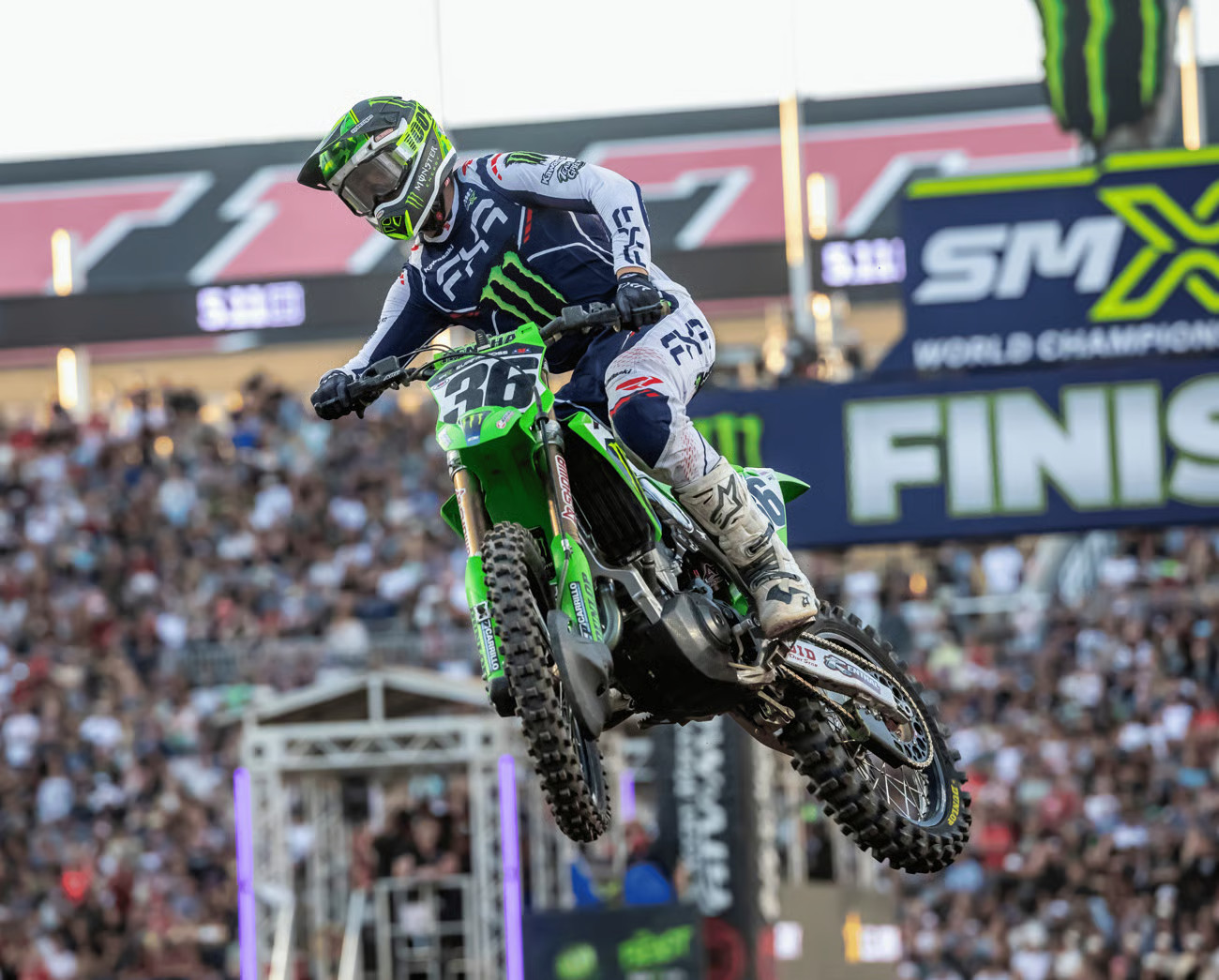
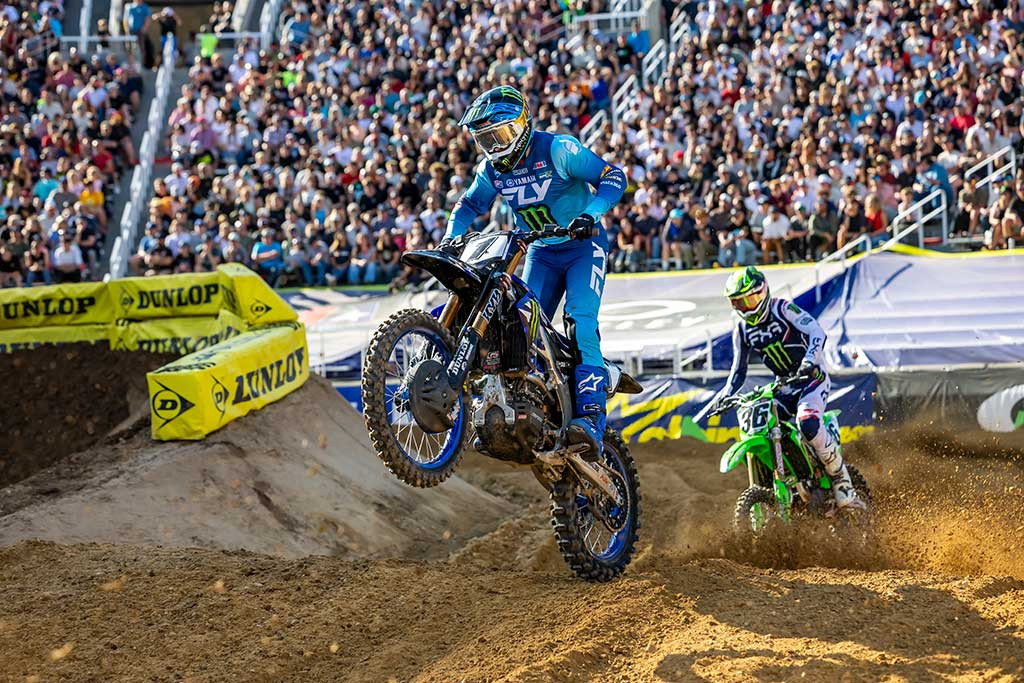
Garrett Marchbanks (36) at Salt Lake City. Photo courtesy Kawasaki.
In 450SX Qualifying, Sexton and Marchbanks showed strong pace aboard their KX™450SR machines from the opening laps. Sexton consistently placed fourth in both sessions to qualify fourth overall, while Marchbanks showed early speed before securing 11th overall heading into the night program.
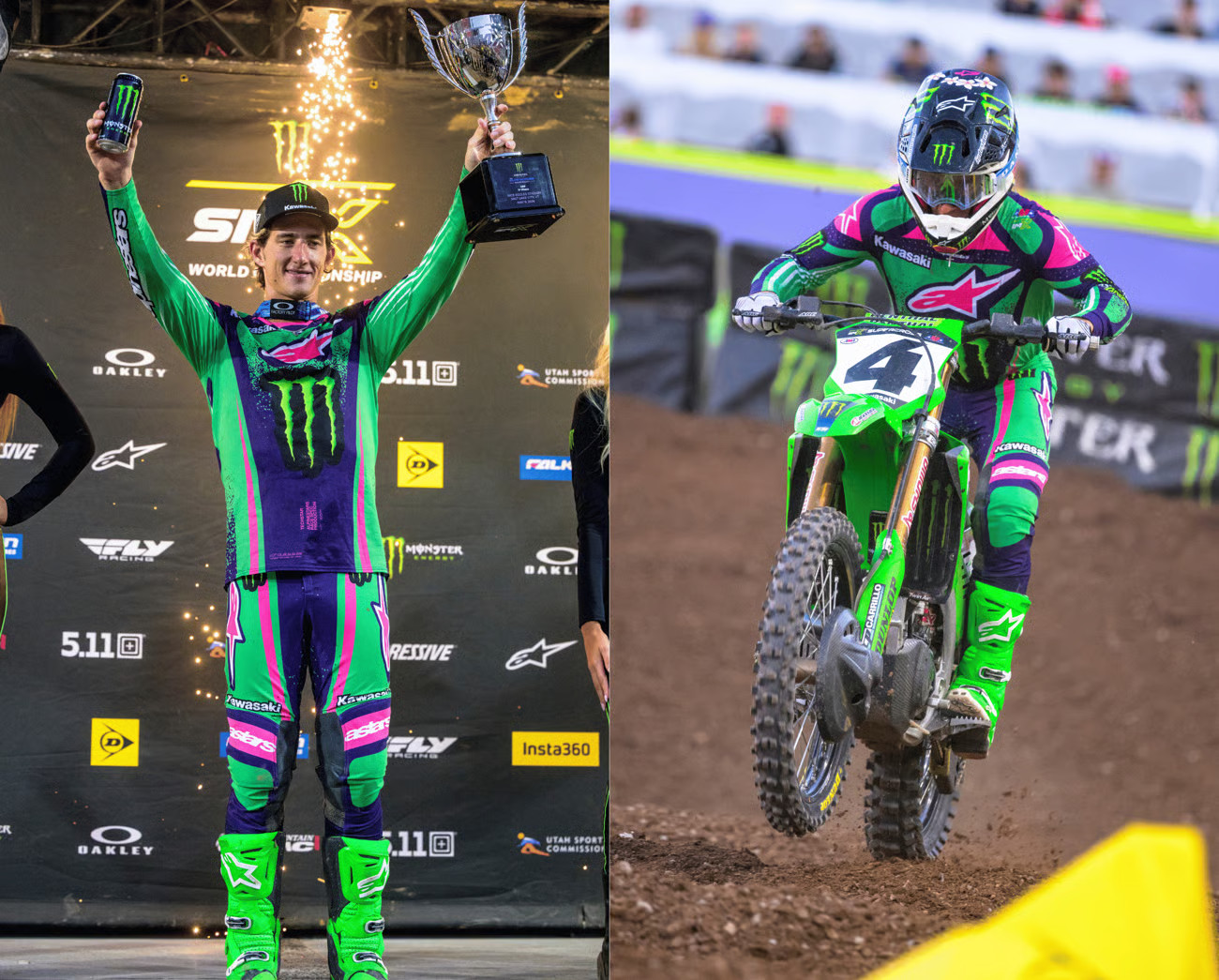
Chase Sexton (4) at Salt Lake City. Photo courtesy Kawasaki.
In 450 Heat 1, Sexton rounded the first turn in second and immediately applied pressure to the leader. Showcasing his speed with multiple fastest sector times, Sexton stayed patient before making the pass for the lead and taking control of the race to secure the heat race win. In 450 Heat 2, Marchbanks got off to a commanding start and briefly led the field early. After the intense opening laps shuffled him backward, Marchbanks regrouped while setting the fastest Sector 4 time to finish sixth.
In the final 450 Main Event of the season, Sexton once again put himself in contention with a front-running start while Marchbanks battled from mid-pack. Sexton strategically managed the opening half of the race before charging forward, first making the pass for third, then moving into second. With the lead in sight, Sexton closed to within two tenths of a second from the leader before executing the race-winning pass late in the race. Backed by multiple fastest sector times, Sexton rode his KX™450SR to his fourth consecutive victory in Salt Lake City. Marchbanks continued to battle throughout the main event, pushing through the pack to secure 12th. Sexton concluded the 450SX Championship sixth overall, while Marchbanks finished 14th in points and added AMA 450SX Rookie of the Year honors to his breakout season.
Chase Sexton:“Salt Lake was a good way to end the season. I had a solid qualifying session, and we kept making good progress as the night went on. In the main event, I just tried to stay patient early, hit my marks, and put myself in a position to make a push late. Once I got close to Ken [Roczen], I knew I had to be aggressive. I wish I could have left with a championship, but it feels good to finish with a win. I’m proud of the effort from everyone on my team.”
Garrett Marchbanks:“The last round of the season was a solid one for me, and it was really nice to be able to make it here. I haven’t been able to race Salt Lake too many times, so it was really fun for me to be able to race this year on the 450. It wasn’t the exact result I wanted, but qualifying was super solid. At the end of the day, we found some really good settings that felt like we were going in the right direction. In the heat race, I felt great, got off to a good start, and put in some good laps. In the main event, I had an okay start and had to work my way through the pack. I got into 11th trying to make some more passes, but the track was difficult tonight, and the whoops were part of it. I’m super happy to come out of it healthy, heading into the outdoors.”
More from a press release issued by Yamaha:
Justin Cooper Returns to the Podium in Dramatic Salt Lake City Finale. Monster Energy Yamaha Star Racing finishes the 450SX season strong with a runner-up finish from Justin Cooper and Cooper Webb coming just shy of the podium at the Supercross season finale.
The Monster Energy AMA Supercross season came to an exciting close last Saturday inside Rice-Eccles Stadium in Salt Lake City, Utah. It wasn’t the night Monster Energy Yamaha Star Racing had drawn up with poor starts from both riders in the final 450SX Main Event of the year, but they fought to finish. Justin Cooper and Cooper Webb charged through the field to be in position for a dramatic late-race battle for the podium, with Cooper finishing runner-up and Webb just shy of the box in fourth.
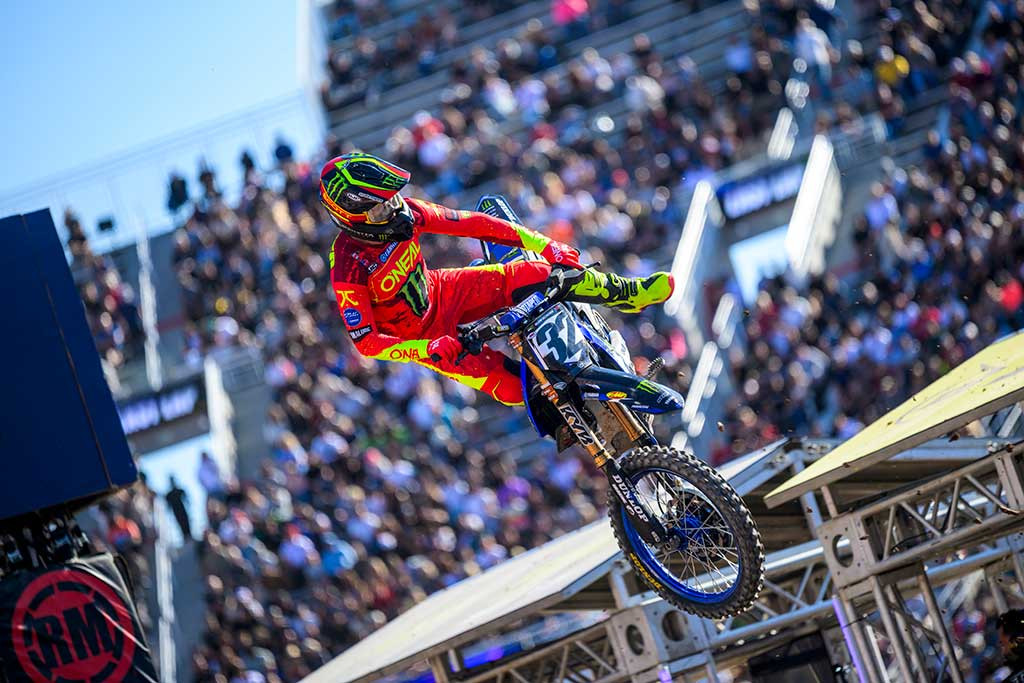
After qualifying sixth, Cooper got a good start to the heat race in third, and while he closed in on Jorge Prado in the final laps, he would finish there. In the main event, the New Yorker did not get off the gate as he had hoped and found himself back in eighth. He steadily worked his way into fourth and continued charging as the battle for the podium tightened. It turned into an intense four-rider battle for the podium, with his teammate Webb right behind. With two laps to go, Cooper made the pass on Ken Roczen and Prado in succession, claiming the runner-up spot and returning to the podium for the fourth time this season.
Justin Cooper (32) at Salt Lake City. Photo courtesy Yamaha.
“My main event was solid, I just didn’t get off the gate great,” said Cooper. “I was able to work my way through the field pretty well. People got tired, and Kenny was drifting back with no one really there. So, it got a little bit crazy. Everyone bunched up. We made a two-for-one pass before the finish, and suddenly we were in second with a couple laps to go. We almost got up there and made something happen. A better start definitely would’ve helped, but it was still an awesome way to cap off a great season.”
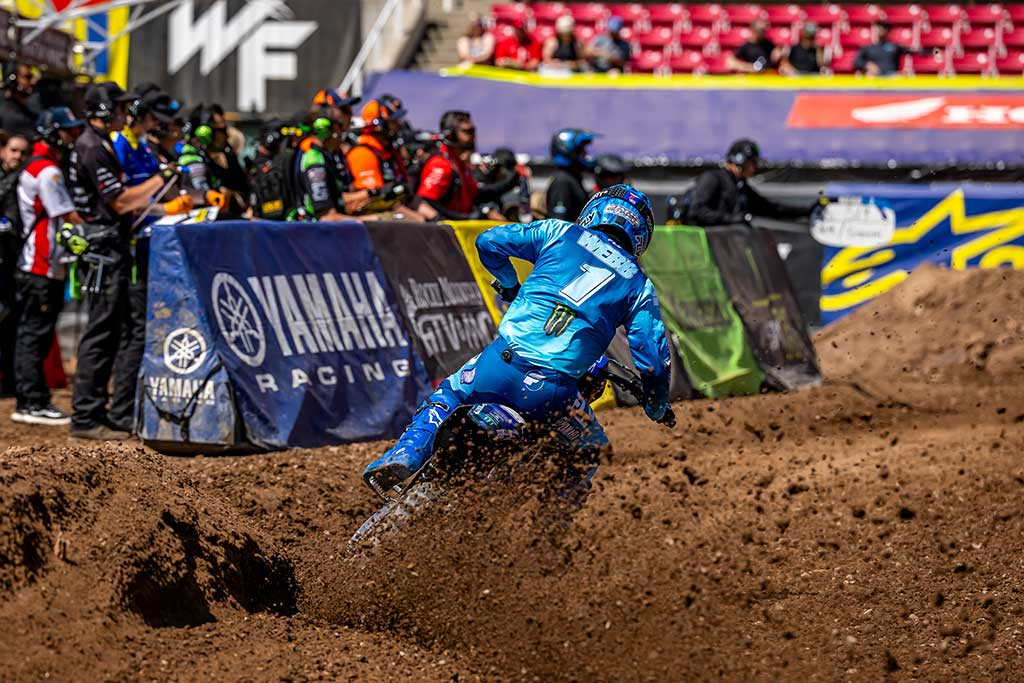
Cooper Webb felt good heading into the finale. The 2025 450SX Champion qualified fifth, but had to charge back from 10th to fifth in his heat race. In the main event, another bad start put him 13th on the opening lap. In true Webb fashion, he immediately went to work to make it into the top five. As the race tightened up at the end, Webb closed in on the riders ahead and made the pass on Roczen after his teammate made his way through, claiming fourth. He made a run at third but finished just shy in the end.
Cooper Webb (1) at Salt Lake City. Photo courtesy Yamaha.
“Honestly, it was just a horrible start, which was unfortunate because I was feeling really good all day,” said Webb. “I started way too far back, so it turned into a hard charge all race long. J Coop and I were coming through the pack together, and there at the end it got pretty close. It was a challenging season and not where we want to be. We were able to get third overall in the points, but we expect more. We’ll get back to work and get ready for outdoors.”
“The day went fairly well,” said Rich Simmons, Monster Energy Yamaha Star Racing’s 450 Team Manager. “We qualified fifth and sixth, then the heat races were okay. I’d say we lacked in starts tonight; that’s what really hurt us. Justin got on the podium, which was good, but a little bit of a lost opportunity for his first win there. Cooper was right there for a podium at the end, and it would have been nice to get both guys up there. Overall, I think it was a good season. It’s not what we all strive for, especially coming off a championship, but I’m really proud of the team and proud of the riders. We’re moving on to outdoors and looking forward to it with all three guys, as Haiden moves up to the 450 class with us.”
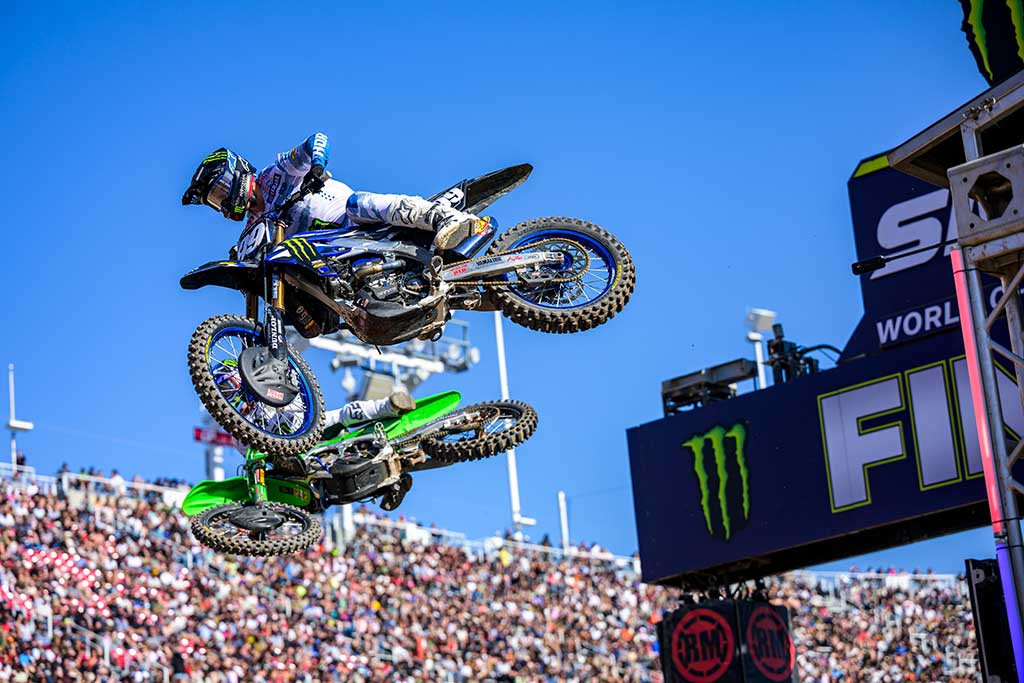
Cooper Webb (1) and Garrett Marchbanks (36) at Salt Lake City. Photo courtesy Yamaha.
Together with the efforts of the team in the 250 class, it was a standout season for Yamaha Motor Corporation, USA, which earned the 2026 Manufacturers Cup by a commanding 121-point margin. Cooper Webb finished third in the 450SX Championship with a win and eight podiums, with Justin Cooper ending the year with a top-five overall finish with his four podiums.
The 2026 Pro Motocross season kicks off in two weeks’ time, which is also Round 18 of the Monster Energy SuperMotocross World Championship, at Fox Raceway in Pala, California, on May 30.
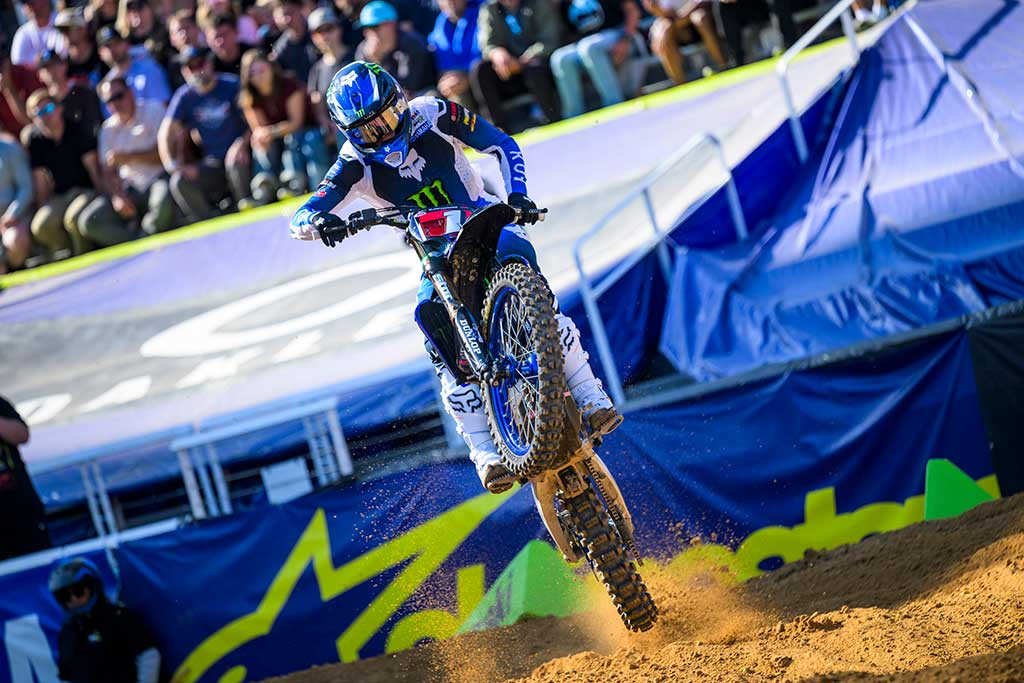
Cole Davies Wins East-West Showdown at Supercross Season Finale. Monster Energy Yamaha Star Racing’s 250 champions deliver a thriller in Salt Lake City, with Davies coming out on top.
With both 250SX titles already secured early by Monster Energy Yamaha Star Racing’s Haiden Deegan and Cole Davies, one thing remained – bragging rights as to who was best in the East and West. The stage was set for an epic showdown at the Monster Energy AMA Supercross season finale inside Rice-Eccles Stadium in Salt Lake City, and it did not disappoint.
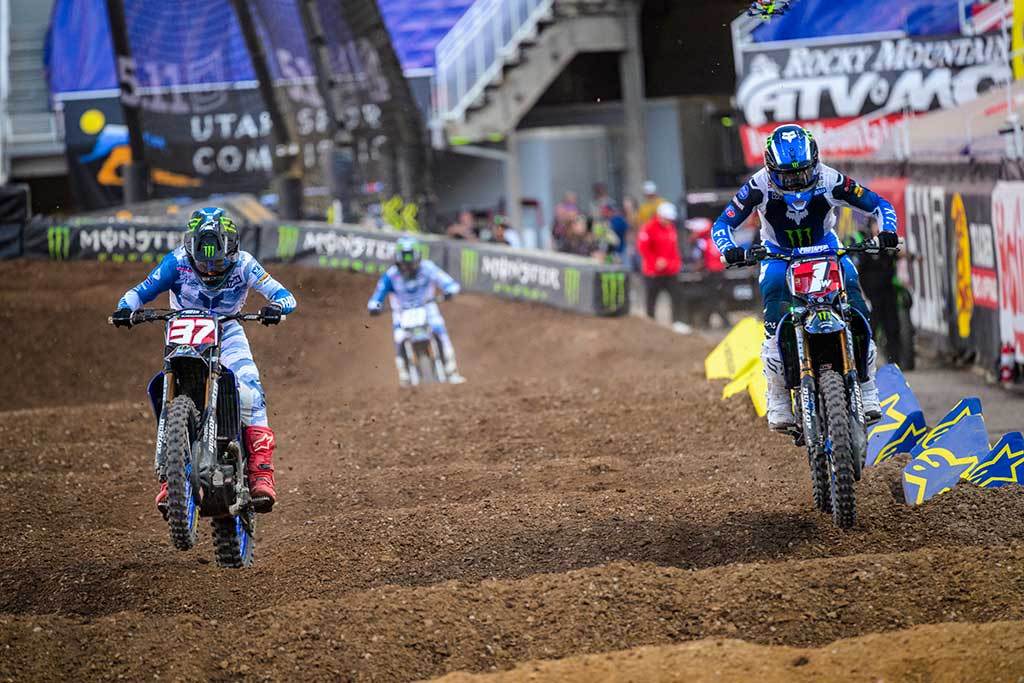
After qualifying third in his division and finishing second in the 250SX East Heat Race, Davies got a strong start in the Dave Combs Sr. East-West Showdown, slotting into third. He passed Max Anstie five laps in and began closing in on Deegan with around 10 minutes on the clock. What followed was one of those battles fans will look back on. Two champions. One track. Zero backing down.
At the halfway mark, Davies made the pass, with the pair making contact and Deegan nearly going down, losing some time. With plenty of time still on the clock, the anticipated rematch quickly materialized as Deegan charged back to his teammate. On Lap 13, Deegan made his move, but the two came together again, and Deegan went down. From there, Davies rode on to secure his sixth win of the year, completing a standout sophomore season that included his first 250SX title.
Haiden Deegan (1w) and Cole Davies (37) at Salt Lake City. Photo courtesy Yamaha
“That was a crazy race,” said Davies. “I didn’t get off to a great start, but I made it happen. The pressure was off with the championship wrapped up, so I could come out and ride with nothing to lose. It was really fun racing like that with Haiden – back and forth, cat-and-mouse. Coming back to Salt Lake City and winning the shootout after what happened here last year feels like redemption.”
Deegan also entered the night with no pressure, putting together a dominant final season aboard the YZ250F to add to his already storied 250 career. On track for another perfect day at the season finale, the back-to-back 250SX West champ was the fastest qualifier in his division and won his heat race. In the showdown, he grabbed the holeshot, and although Anstie briefly took over the lead, Deegan reclaimed it on Lap 2. In the end, after the incident with his teammate, he crashed again in the sand and rejoined in fourth, where he would finish.
“I’ve got to give it up to Cole – that was a dogfight,” Deegan said. “We were giving the fans the best show possible. We were hitting each other… man, that was awesome! Even though I came out fourth, that was one of the funnest races I’ve had, besides battling Levi (Kitchen). That was sick. I hope you fans enjoyed that.”
“Today was solid,” said Deegan about the day as a whole. “I had a good qualifying, went undefeated in heat races, which was awesome. And then we had a pretty rowdy main event. Cole and I went at it, and I ended up going down. I made my way back up to him, then got impatient and slid out in the sand. So, I kind of threw the win away. It was a solid 250 career, and now onto the 450s.”
Max Anstie had a challenging start to the night show. He found himself 10th off the gate and worked his way forward to finish seventh in the 250SX West Heat Race. Then, in the Showdown, the British rider turned it around. Anstie got a great start and quickly claimed the lead. Although he was passed by his teammates in the first five laps, he continued to run a strong pace and moved back into second after Deegan went down. He was later passed by Levi Kitchen and rode on to secure third to return to the podium and finish third in the 250SX West Championship.
“Man, what great way to finish off the season,” said Anstie. “It was a tricky day, the track was tough, but the bike worked well. The whole Monster Energy Yamaha Star Racing team has done an awesome job this season. We had started off great, with a win at Anaheim 1, but it’s been up and down. It’s been tough. I’ve had a lot of random things off the bike, like having my appendix taken out, and then little things from all of that that have kind of slowed things down. So to be able to bring it all together and get back on the podium in the last race and have a great start was a good way to finish it off. I’m definitely looking forward to the outdoors. I’m looking forward to regrouping, pulling it all together, and being a step better next year, and hopefully fighting for this title.”
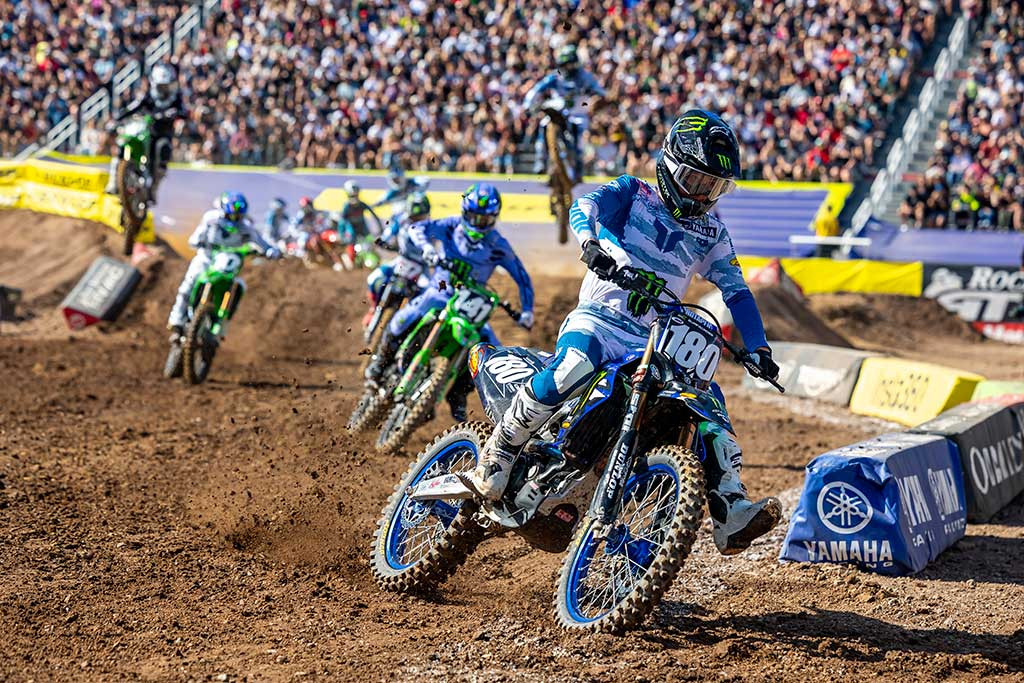
Rookie Landen Gordon continued to impress with great starts and a strong heat race. He grabbed the holeshot and led the first five laps of the 250SX East Heat Race. The rookie found himself under pressure from Seth Hammaker, but put in a good fight, holding him off until Lap 6. He was passed by his teammate on the following lap, finishing third. In the main event, he got another great start, slotting into fourth behind his teammates, but was shuffled back to eighth in the opening laps. He kept fighting but ultimately finished ninth.
Landen Gordon (180) at Salt Lake City. Photo courtesy Yamaha
“Overall, it was a good day in Salt Lake City to finish out the Supercross season,” said Gordon. “I was feeling pretty beat up from a crash on Friday for press day. All things considered, I was very happy with my heat race and got to lead a few laps, and then finished ninth in the main event. I’m excited for the outdoors!”
Kayden Minear had a solid outing in just his second pro Supercross round. He got a great start to the 250SX West Heat Race and quickly claimed the runner-up spot, where he rode the first half of the race before being passed by McAdoo on Lap 6, and then on the following lap by Kitchen, finishing fourth. In the main event, a bad start had him towards the back of the field on the opening lap, but he put his head down and fought his way through to finish 12th.
Kayden Minear (99) at Salt Lake City. Photo courtesy Yamaha.
“Last round of the season is done and dusted,” said Minear. “I had a good heat race, which I was happy about. In the main event, I didn’t execute my start and had to make my way back from 20th. I felt good. I can’t wait for outdoors.”
Nate Thrasher had a good start to the day, qualifying second in the east, but didn’t get the start he was looking for and fought his way back from eighth to finish fourth in the 250SX East Heat Race. In the showdown, he was 10th on the opening lap, but kept pushing and made his way into the top five after the halfway mark. Unfortunately, a technical issue late in the race would have him scoring 18th. It was a roller coaster season for the Tennessee rider, but he continued to push on, bringing his career win total to seven and finishing fifth in the 250SX East standings.
Nate Thrasher (25) at Salt Lake City. Photo courtesy Yamaha.
“I was riding well all day,” said Thrasher. “So I’m super bummed with how the Supercross season ended, but that’s part of it. I’m ready to turn the page to the outdoors.”
When you look back at the season, it was a remarkable campaign for Monster Energy Yamaha Star Racing – both 250SX titles and 16 race wins, which surpassed the single-season win record for a team and manufacturer by two. Five riders contributed to that tally, with Max Anstie and Pierce Brown winning their respective divisional openers, Nate Thrasher leading a Monster Energy Yamaha Star Racing podium sweep in Cleveland, and Haiden Deegan and Cole Davies delivering the bulk of the victories.
Davies heads into the outdoor season with a 51-point lead in the combined 250SMX points, with Deegan set to make his 450MX debut. The 20-year-old heads into the premier class with six 250 titles, 32 wins (14 wins in both 250SX and 250MX and four in 250SMX), and an impressive number of stats. In addition to his seven wins and eight podiums this season, Deegan had six perfect rounds and won all of his heat races and the Triple Crown in Houston.
Haiden Deegan (1w) at Salt Lake City. Photo courtesy Yamaha
The team also saw three amateur riders make strong debuts, with Caden Dudney named 250SX Rookie of the Year, Landen Gordon scoring a runner-up finish in Cleveland, and Kayden Minear securing a top-five in his debut. Yamaha also earned the 2026 Manufacturers Cup by a commanding 121-point margin.
“A lot went into it,” said Wil Hahn, Monster Energy Yamaha Star Racing’s 250 Team General Manager. “It’s just really cool. It’s a massive team effort to go through all this. All the wins this season, all the podiums, the records, and a lot of firsts for guys – it’s just a really special year for us. So yeah, we’re stoked. It’s really a credit to all these guys behind the scenes who don’t always get enough recognition.”
Monster Energy Yamaha Star Racing now shifts its focus outdoors, preparing for the 2026 Pro Motocross season, which kicks off May 30 at Fox Raceway in Pala, California.
More from a press release issued by KTM:
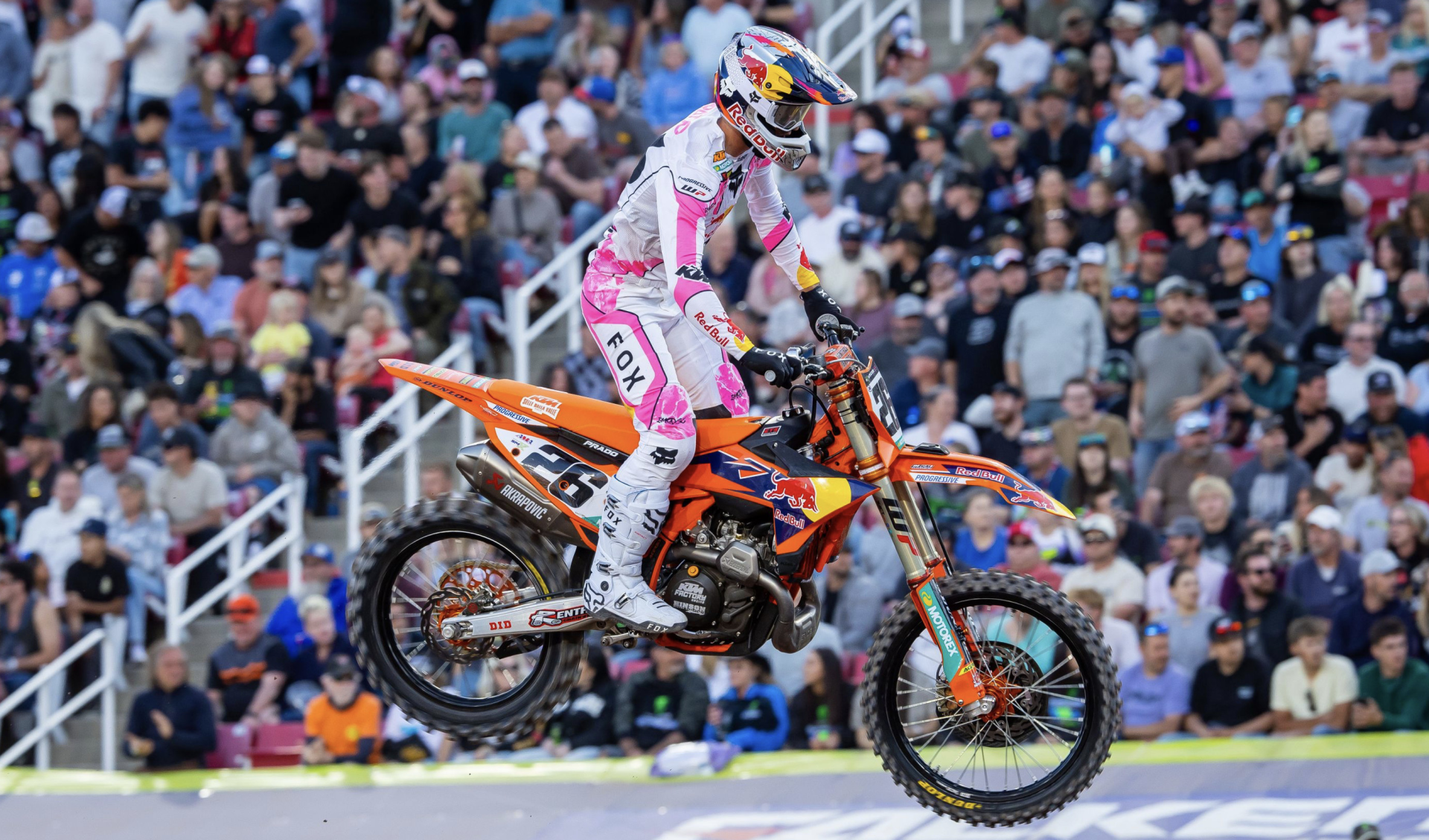
Red Bull KTM Factory Racing’s Jorge Prado lands 450SX podium in Salt Lake City.
Red Bull KTM Factory Racing’s Jorge Prado ended the 2026 AMA Supercross Championship with a hard-fought P3 podium result in Salt Lake City on Saturday night, completing a standout season of 450SX competition.
The four-time world champion set the eighth-fastest qualifying time onboard his KTM 450 SX-F FACTORY EDITION at Rice-Eccles Stadium, before capturing the holeshot and racing to a second-place finish in his Heat Race.
Prado then completed the opening lap of the Main Event in third position, running at the front of the field as the 450SX title contenders battled directly ahead. Remaining patient throughout the race’s duration, the 25-year-old climbed as high as P2 before securing a third-place finish.
The Spaniard pieced together a standout first season teamed with Red Bull KTM Factory Racing in Supercross, collecting two podium finishes alongside seven additional top-10 results, and ninth in the point-standings. Attention now turns to the Pro Motocross component of the SMX World Championship, which will commence in Pala, California, on May 30.
Jorge Prado (26) at Salt Lake City. Photo courtesy KTM.
Jorge Prado:“It has been a pretty cool Supercross season for me! I’m very happy to have made it to the end, and then obviously starting A1 with a podium, my expectations were high all year long, but I knew it was a learning curve. We had some good and bad moments, but at the end of the day, we got here to the last round and put ourselves back on the box with a great ride. So, I am very proud of myself and the work I put in every day, but also the Red Bull KTM Factory Racing team. They have been putting a lot of work in as well at the test track, improving the bike with me. We learned so much this year – to be honest, I thought the change coming from MXGP to Supercross was going to be a little bit easier, but Supercross is a whole different world.”
Two-time premier class champion Eli Tomac entered Salt Lake City with momentum after a return to the podium last time out in Denver, powering his KTM 450 SX-F FACTORY EDITION to P1 in qualifying with a 49.065s lap-time.
An untimely crash just moments into 450SX Heat 2, however, saw the 33-year-old unfortunately withdraw from the event, with the team confirming the decision as a precaution following a heavy impact to his stomach/hip in the incident.
Tomac’s maiden AMA Supercross campaign with Red Bull KTM Factory Racing began in spectacular fashion, claiming victory on debut at Anaheim 1 before backing it up with another win the following weekend in San Diego. He added further victories in Seattle and Daytona – alongside five additional podium finishes – to claim fourth overall in the final 450SX standings.
Next Race: May 30 – Pala, California
More from a press release issued by Suzuki:
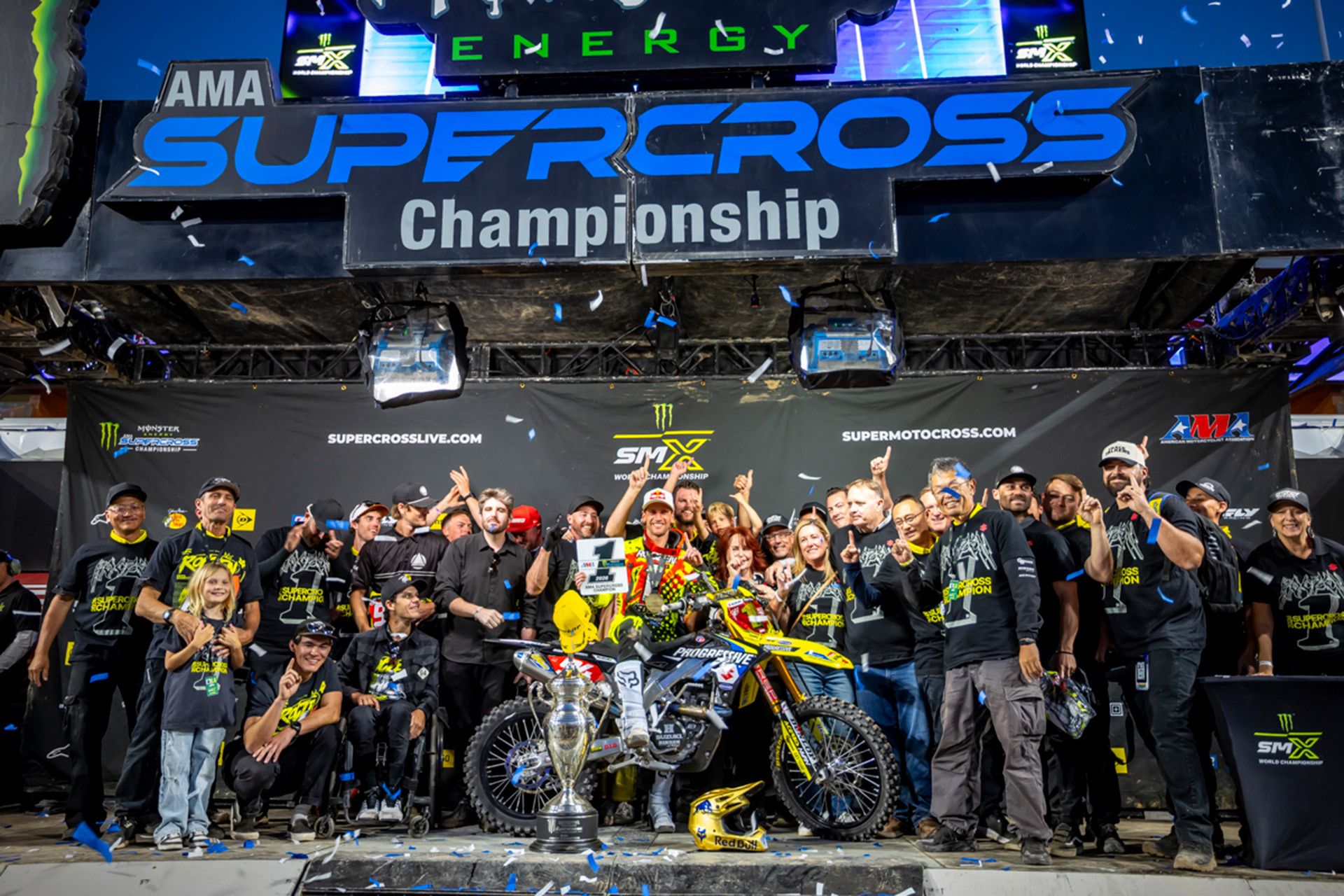
Suzuki’s Ken Roczen is the 2026 Supercross Champion.
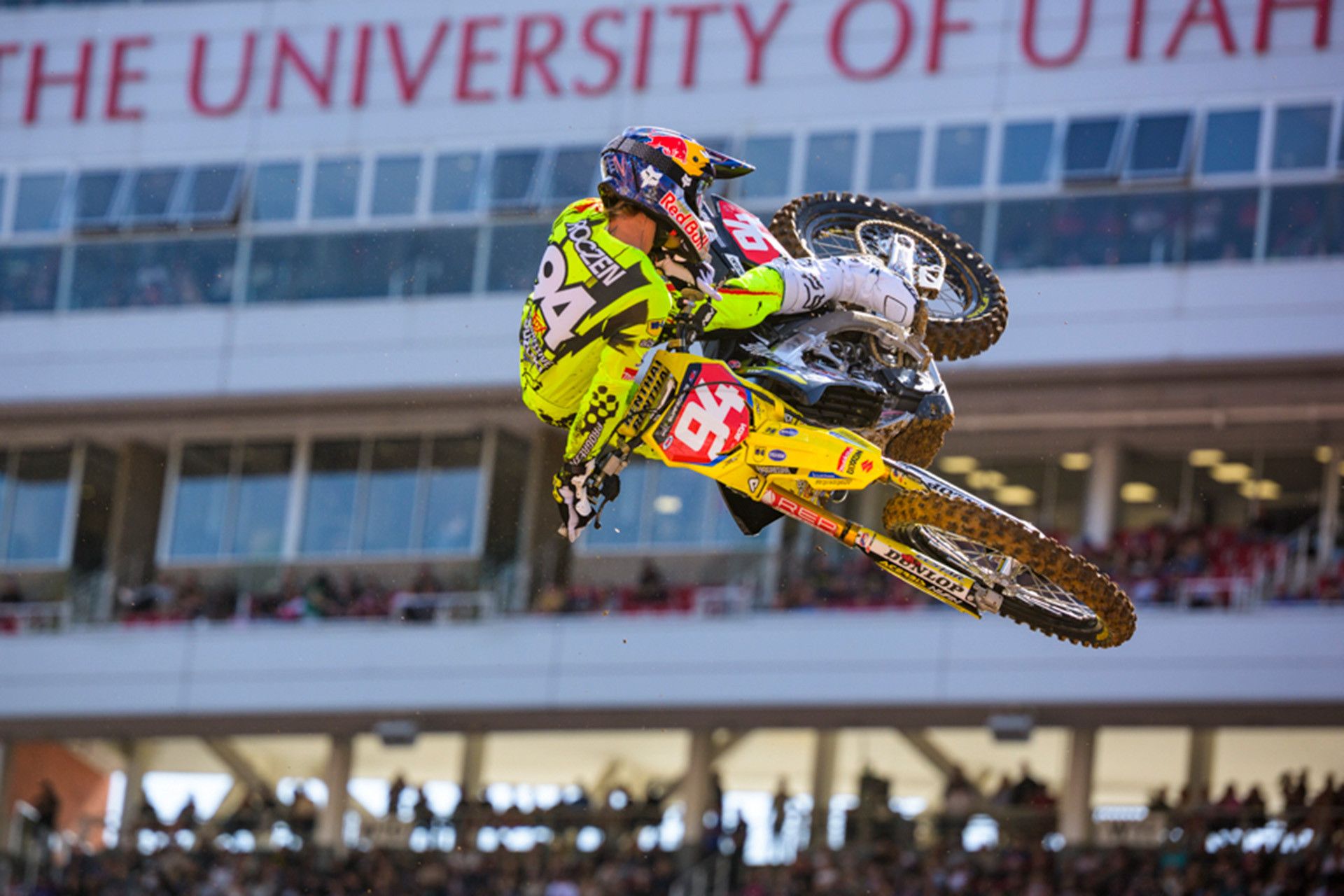
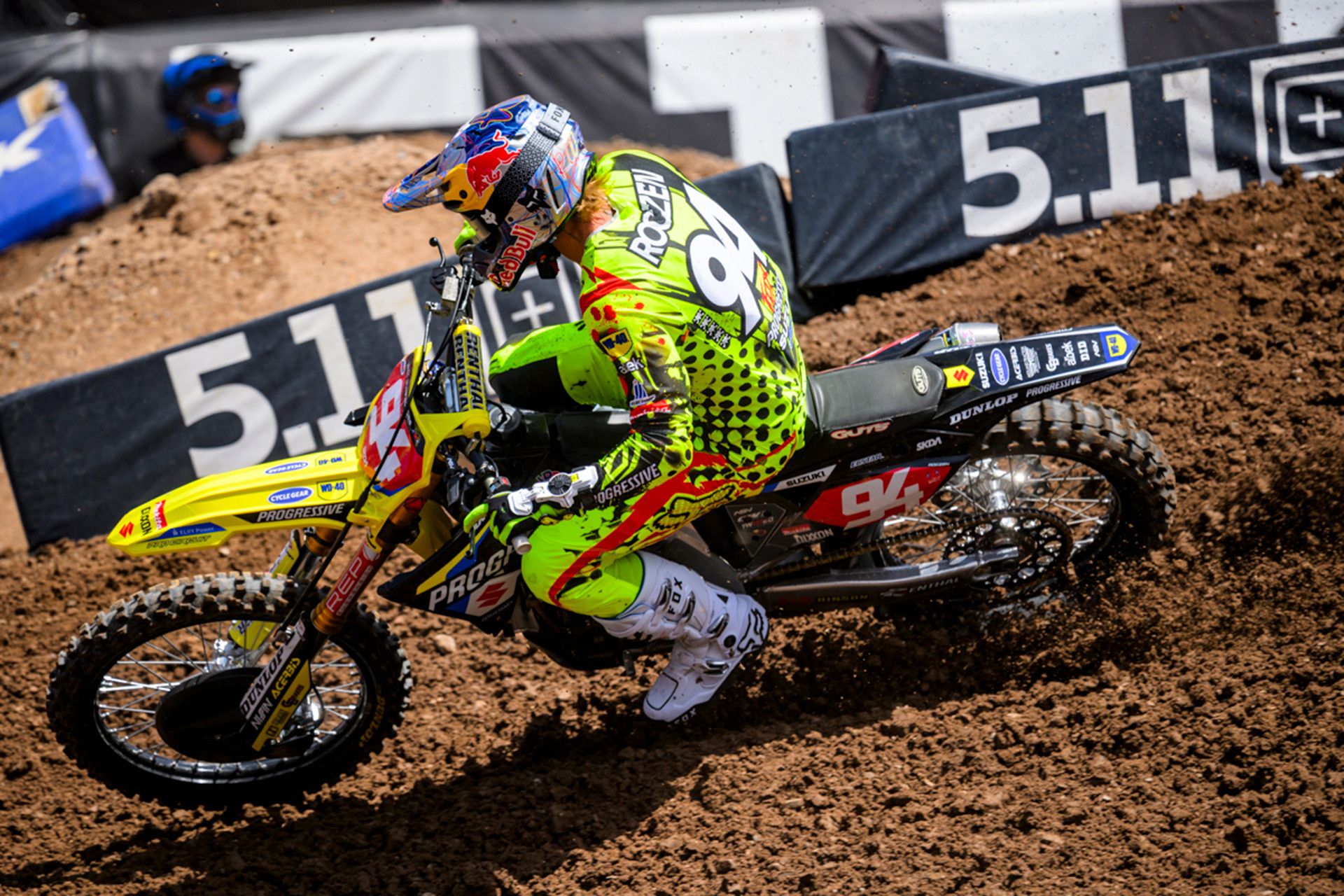
The final round of the 2026 Monster Energy AMA Supercross season will go down in history as one of the most emotional and memorable title fights the sport has ever seen. Ken Roczen entered Rice-Eccles Stadium in Salt Lake City holding the championship points lead, with the red plate mounted to his Suzuki RM-Z450 heading into the final race of the 17-round series.
After 13 seasons in the premier class, Roczen had accumulated 28 career 450SX victories, but the championship had always remained just out of reach. The 2026 season marked Roczen’s sixth year aboard the RM-Z450 and his fourth season with Progressive Insurance Cycle Gear ECSTAR Suzuki. Against the odds, against the industry narrative, and against one of the deepest fields in modern Supercross history, Roczen delivered one of the most memorable championship victories the sport has seen.
Roczen Grabs Monster Energy AMA Supercross Title in Salt Lake City Thriller. Photo courtesy Suzuki.
Inside a sold-out Rice-Eccles Stadium, Roczen launched off the gate and immediately put the power of his Suzuki RM-Z450 to the Utah dirt. He crossed the holeshot stripe in second position before taking over the lead in the very next corner. With the championship pressure at its absolute peak and his title rival close behind, Roczen responded with flawless laps, setting the fastest lap time of the Main Event and keeping control of the championship firmly in his hands.
As Roczen circled the stadium floor lap after lap, the roar from the crowd built into a rolling wave of emotion. Just before the halfway point of the race, the other championship contender went down and dropped outside the top positions. Roczen capitalized, stretching the lead to four seconds and controlling the pace out front for 22 laps on his way to securing the championship.
Ken Roczen was the fastest rider in the main event and captured the 2026 Supercross Championship. Photo courtesy Suzuki
“Alright boys and girls, Salt Lake is done and dusted and what a fairy tale ending it was for me and the team,” said Roczen back at the rig beside his championship-winning RM-Z450. “It took so much work to get here. Today wasn’t easy, [there were] just a lot of nerves going on. When it counted the most in the main event we got a great start, made a pass happen, had an insane main event, and then just had a little bit of peace and quiet toward the end to bring it home. What a dreamy ending. We won the championship tonight. This is so huge. I can’t wait to really process everything. I’ve already had an incredible time celebrating with the team — 2026 Supercross Champ!”
“Never had a doubt,” stated Dustin Pipes, Team Principal for Twisted Tea/H.E.P. Motorsports/Suzuki presented by Progressive Insurance. “Thank you to all the team members and partners that make nights like these possible. Ken earned this championship.”
“Emotionally, I think we’re all just on a high right now,” said Team Manager Larry Brooks during a post-race interview. “I am so proud of the team. When I was unplugged after the second round while going through (my) cancer treatments, they picked up the ball and ran with it. Everyone stepped up under an incredible amount of pressure and never stopped believing. I couldn’t be more proud.”
Ken Roczen put together an incredible late-season rally aboard his Suzuki RM-Z450. He won four of five at one stretch and took over the points lead with his victory at round 14. Photo courtesy Suzuki
At a time when much of the industry had written off the RM-Z450 platform, Suzuki and Pipes Motorsports Group doubled down on what they believed mattered most: a motorcycle with proven race-winning DNA, predictable handling, exceptional balance, and the ability to win at the highest level when placed in the right hands.
For Suzuki, the moment represented far more than a championship. It was validation that consistency, balance, rider confidence, and purposeful engineering still matter. In an era of constant change and escalating complexity, Suzuki remained committed to building a machine designed to excel at its intended purpose: winning races.
Suzuki’s racing heritage has always been built on challenging convention and doing things differently. From motocross to road racing, Suzuki motorcycles have earned championships by focusing on performance where it matters most — on the racetrack.
Now, the RM-Z450 adds another defining chapter to that legacy.
The 2026 Monster Energy AMA Supercross Championship will forever be remembered as the season the yellow bike shocked the sport and reminded the entire industry what Suzuki is capable of.
With this title, Roczen adds the 2026 Monster Energy AMA Supercross Championship to an already legendary résumé that includes two World Supercross Championships (2022, 2023), two AMA Pro Motocross Championships (2014, 2016), the 2013 250SX West Championship, and the 2011 MX2 World Championship. Three of Roczen’s seven professional championships have now been earned aboard Suzuki RM-Z machinery.
Hunter Lawrence Ends Hard-Fought ’26 AMA Supercross Championship Second in the Series Standings.
With a seventh-place finish at the finale, the Australian finishes three points short
Honda congratulates Roczen and Suzuki following an exciting season-long battle
The 2026 AMA Supercross season came down to a thrilling showdown in Salt Lake City, where Honda HRC Progressive’s Hunter Lawrence entered the final round just one point behind championship leader Ken Roczen in one of the closest title fights ever. The best efforts of the Australian and his Honda HRC Progressive team weren’t quite enough this time and, although he was battling for the win early, a seventh-place result meant they had to settle for a runner-up showing in the final tally.
The highly anticipated main event delivered immediate excitement, as Lawrence grabbed the holeshot aboard his CRF450RWE, with Roczen quickly moving into the lead. A tense, mano-a-mano battle unfolded during the first part of the race, with Lawrence maintaining touch and occasionally applying pressure while also holding off Jorge Prado in third. Unfortunately, a pair of miscues—the first sending him briefly off the track, the second resulting in a fall—meant Lawrence found himself in seventh place with just over half the race remaining. That’s where he would eventually finish, and with Roczen posting a fifth-place result, Lawrence concluded the series second in the final standings, just three points shy of the title.
Throughout the 2026 series, Lawrence demonstrated impressive speed, consistency and progress. Everyone at Honda HRC Progressive and American Honda is proud of Hunter for the effort, professionalism and growth he displayed while battling for the championship until the final checkered flag.
Quad Lock Honda riders Joey Savatgy, Christian Craig, Shane McElrath, and Dean Wilson concluded the season in eighth, 12th, 13th and 21st, respectively, a solid effort by the satellite team.
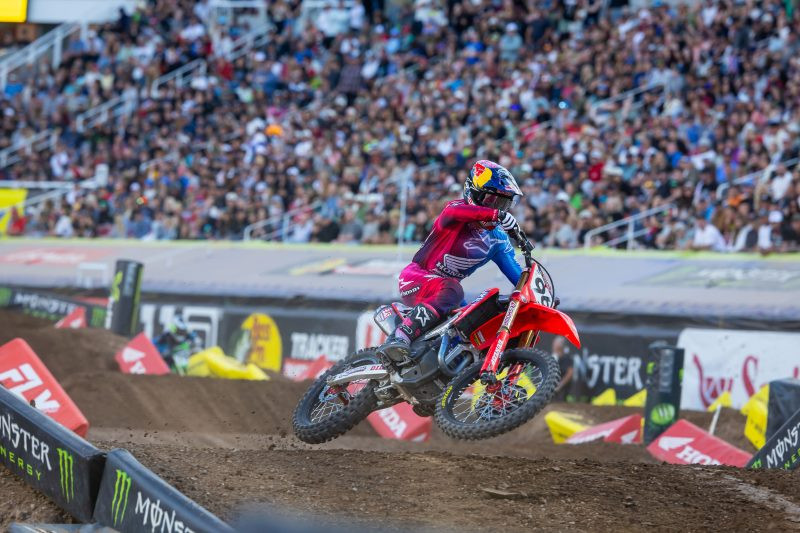
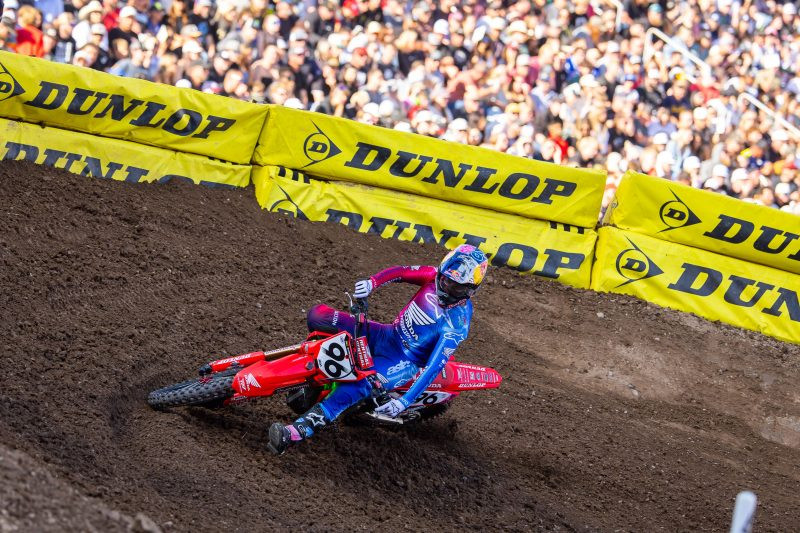
Hunter Lawrence (96) at Salt Lake City. Photo courtesy Honda
NOTES
On Friday, Hunter Lawrence participated in a formal press conference organized by Feld ahead of the 2026 Supercross finale. He later took part in riding sessions, in which invited riders were able to ride the full track.
A pair of local dealerships—Honda World and Young Honda Powerhouse—enhanced the fan experience in the Honda HRC Progressive pit area through an interactive pop-up booth. Staff engaged directly with fans and customers at the display, which featured a CRF450RX, two CRF125F models, and a CRF110F.
Jett Lawrence attended the event in support of his brother, and they both participated in an autograph session during FanFest.
Race Day Live aired a feature on Hunter Lawrence’s life and career progression.
Motocross Hall of Famer Johnny O’Mara was interviewed about his career and transition into training Hunter and Jett Lawrence.
In 250SX combined qualifying—featuring both East and West Divisions—participating Red Riders included Phoenix Racing Honda’s Gavin Towers in 21st, SLR Honda’s Justin Rodbell in 25th, Storm Lake’s Luke Neese in 26th, Next Level’s Hunter Schlosser in 38th, Lasting Impressions’ Ronnie Orres in 44th, and TiLube Honda’s Ryder Floyd in 50th.
Rodbell and Towers qualified by finishing third and fourth in the LCQ, and they finished 16th and 17th in the 250 East-West Showdown.
Lawrence had the third-fastest time in 450SX qualifying. Quad Lock Honda riders Christian Craig, Shane McElrath and Dean Wilson qualified in 12th, 13th and 14th, respectively. Jeremy Hand (Valley Motorsports) was 26th, John Short IV (Short Racing) was 28th, privateer Red Rider Zack Williams (McGinley Clinic) qualified 33rd, and Western Honda Racing’s Ty Freehill was 41st.
Lawrence won the first heat race from holeshot to checkered flag, while Wilson (sixth), Craig (seventh), and McElrath (eighth) also advanced directly to the main event.
Honda HRC Progressive now heads into a two-week break before opening the AMA Pro Motocross season in Pala, California, on May 30. The team is expected to field a full roster: Hunter and Jett Lawrence in the 450 class, and Jo Shimoda and Chance Hymas in the 250 division.
Hunter Lawrence (96) at Salt Lake City. Photo courtesy Honda
Hunter Lawrence: “I was just asking a little too much of the front end coming into the corners, but congrats to Kenny—well earned, he was the better man tonight in the main. Congrats to him and the team, it was fun battling with him. We’ll get ready for outdoors.”
Lars Lindstrom – Team Manager:“Looking back on the season, it has been a pretty incredible rollercoaster for us. There have been so many positives that make it easier to swallow the bitter pill of not winning the championship after being so close. I think we worked really well as a team the whole year, with definitely some difficult times, and I’m proud of everyone involved. Absolutely the MVP is of course, Hunter, who took himself to a new level in the elite class, and showed that he will be a threat for championships every year that he lines up. The professionalism, mental strength, speed, and how much of a genuine, good person he is make us all want to work harder and do anything and everything possible to help him achieve his goals.
I also want to say congratulations to the Progressive Suzuki team and to Ken Roczen on their championship. With how well we know Kenny, and being there through his injuries and struggles, it was hard not to be emotional and happy for him; if we were going to lose the championship, I’m glad it was to him. I think this really completes his career, and he performed when he needed to make it happen.”
More from a press release issued by Husqvarna:
Ryder DiFrancesco earns top-five finish in Salt Lake City 250SX Showdown. Teammate Daxton Bennick places P3 in final Eastern Division standings.
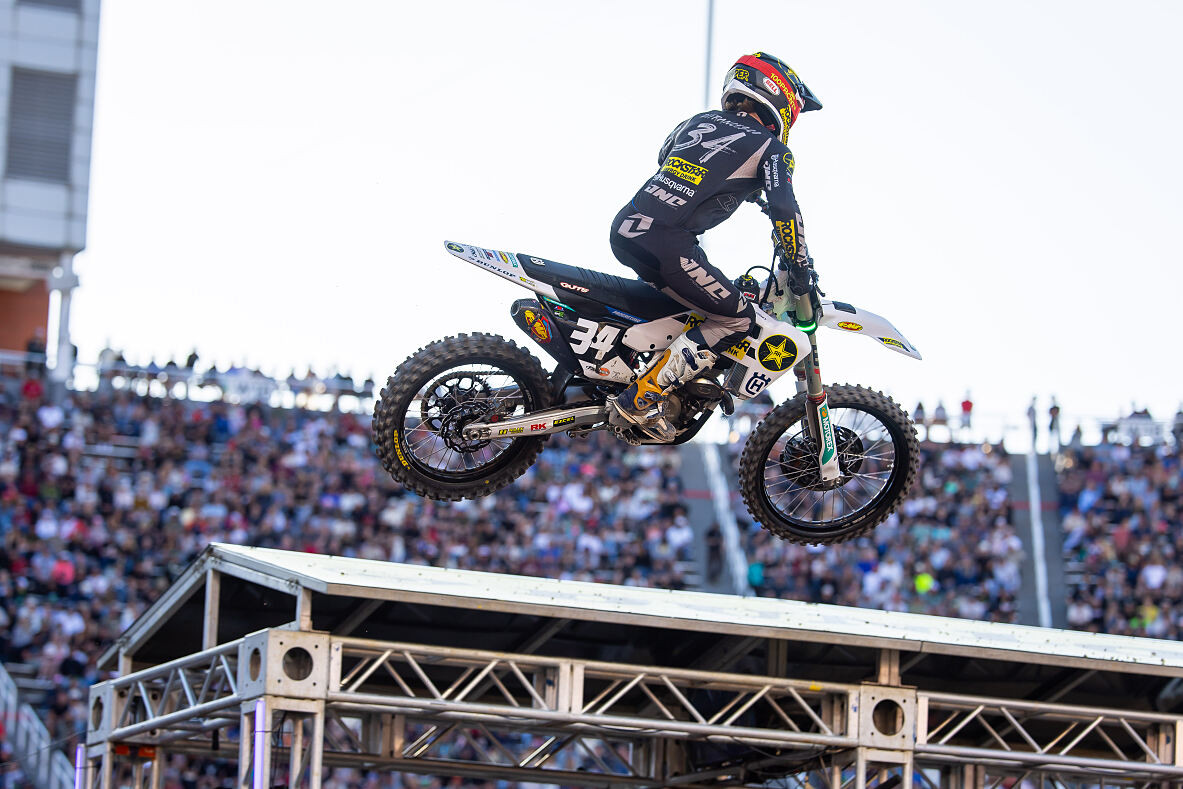
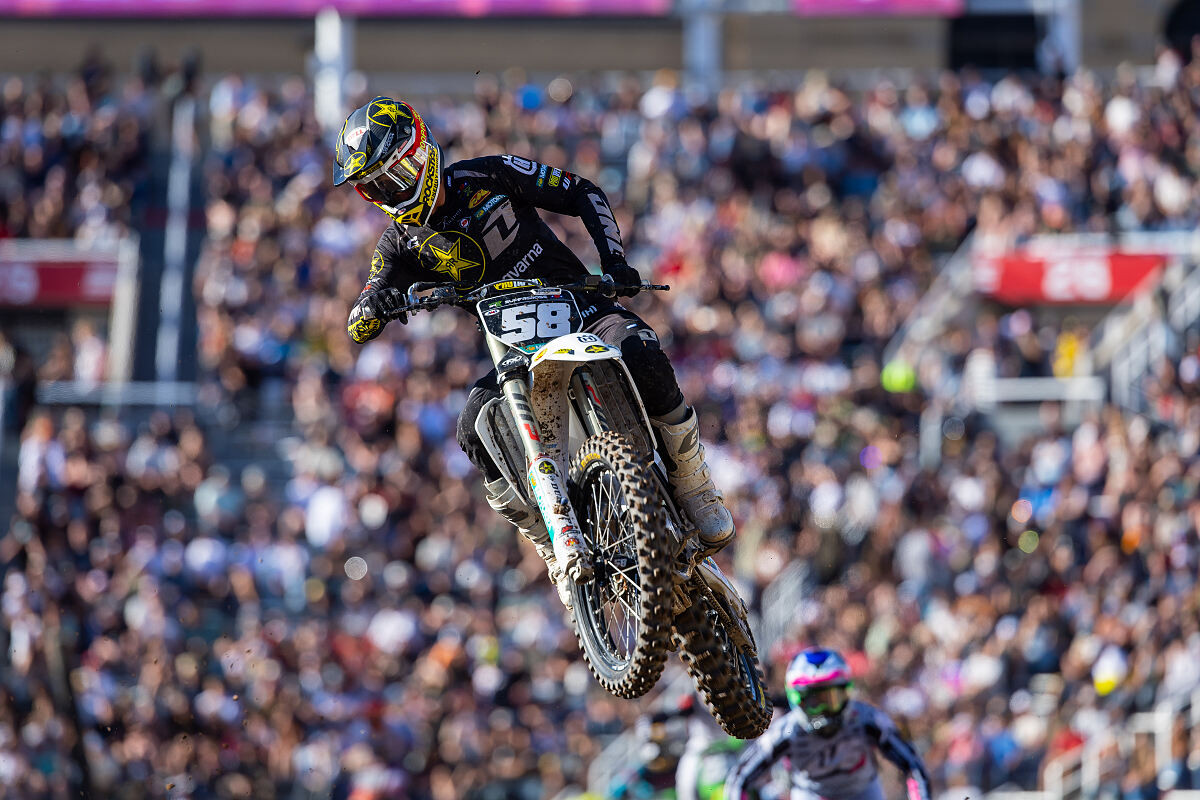
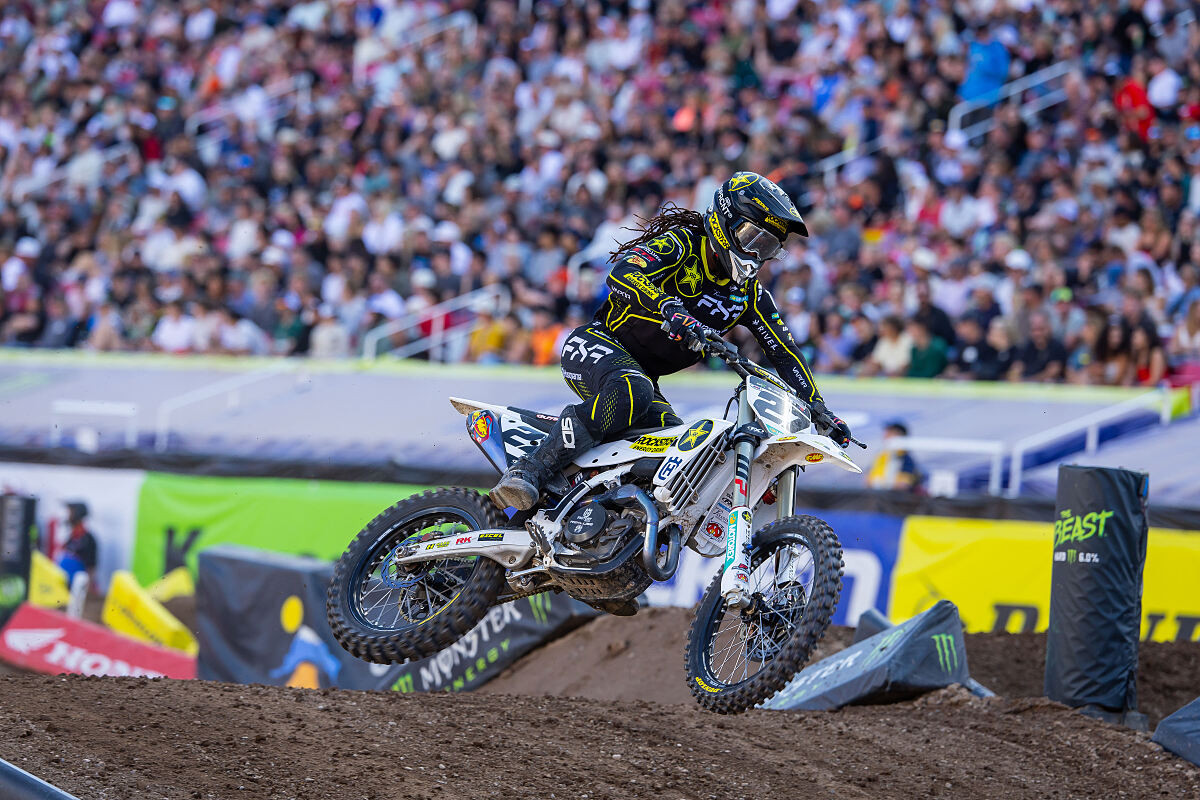
Rockstar Energy Husqvarna Factory Racing’s Ryder DiFrancesco recorded a fifth-place finish at the final round of the 2026 AMA Supercross Championship in Salt Lake City, where 450SX teammate Malcolm Stewart claimed a top 10 result and seventh in the final standings.
Both 250SX riders DiFrancesco and Daxton Bennick were in action for the third East/West Showdown of the year, with Bennick qualifying sixth overall on combined times, as DiFrancesco set the ninth-fastest time.
Equipped with the Husqvarna FC 250 Factory Edition, DiFrancesco endured a difficult Heat Race to finish 11th, forcing him into the Last Chance Qualifier (LCQ), which he would go on to win and transfer to the Main Event.
Starting outside the top 10, the 21-year-old pieced together a strong ride throughout the 15-minute plus one-lap Main Event, charging to fifth position in an impressive performance at the 2026 season finale.
Following 10 rounds of competition, Ryder D completed the 250SX West Championship in fourth overall, recording three podium finishes alongside four additional top-five results in his first season with Rockstar Energy Husqvarna Factory Racing.
Ryder DiFrancesco at Salt Lake City. Photo courtesy Husqvarna.
“Salt Lake was a bit of a struggle all day,”commented DiFrancesco. “I just didn’t have the raw speed that I really wanted – it came a little tougher for me this weekend. The Heat Race didn’t go well, and then of course, we were off to the LCQ, which wasn’t ideal. The Main Event was a bit of a turnaround, after I rode well in that one and now we’ll get ready for outdoors.”
Bennick also had a tough Heat Race in 250SX East, finishing 12th and transferring to the LCQ. He would go on to claim eighth position, unfortunately missing out on the night’s 250SX East/West Showdown Main Event.
Daxton Bennick at Salt Lake City. Photo courtesy Husqvarna.
Still, the 20-year-old completed the Supercross season with Rockstar Energy Husqvarna Factory Racing third overall in the 250SX East standings, achieving two podium finishes – including a season-best P2 result in Philadelphia – alongside four additional top-five scores.
Stewart qualified seventh on the combined 450SX timesheets aboard his Husqvarna FC 450 Factory Edition at Salt Lake City, achieving a 49.511s lap-time on the dry, technical track layout.
The 33-year-old carried that momentum into his Heat Race, riding to a convincing P3 finish and strong gate selection for the Main Event. Stewart then posted a measured P8 result in the Main Event, concluding the series seventh in the standings. He took a podium finish in Detroit, as well as two additional top-fives during the season.
Malcolm Stewart at Salt Lake City. Photo courtesy Husqvarna.
“The fans are always awesome in Salt Lake!” said Stewart. “Usually, I ride pretty well at this track, but this year I kind of struggled a little bit. But at the end of the day, every time I come through for opening ceremonies and hear those fans, it brings back some awesome memories. Tonight may not have gone exactly as we’d planned, but that’s racing, and I’m happy to be leaving Supercross healthy with attention now shifting to Pro Motocross.”
Hot headlines: one point in it. France was full of firsts – now some of the key players look to back it up in Barcelona.
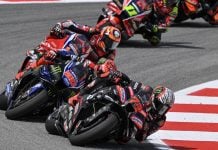
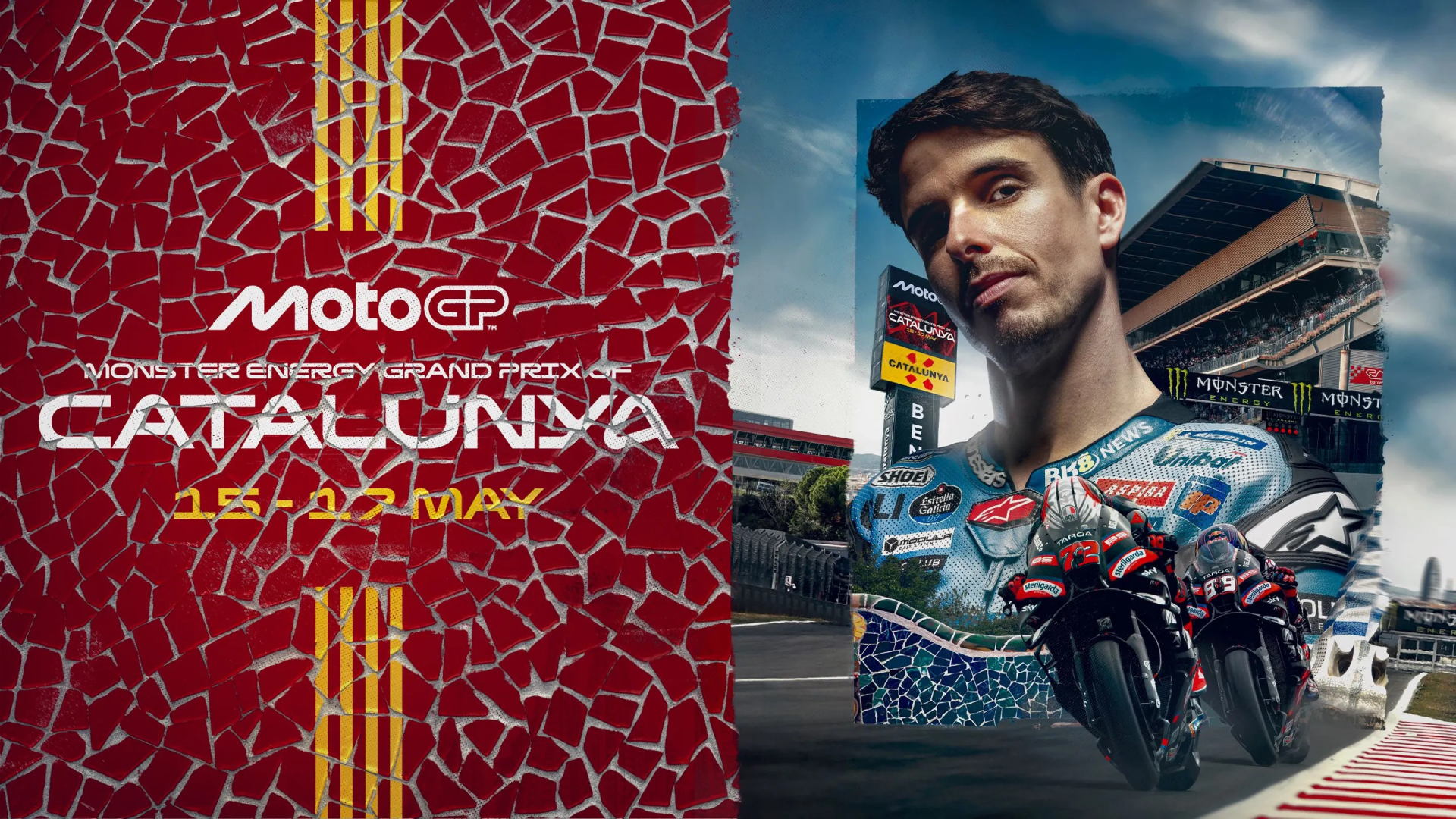
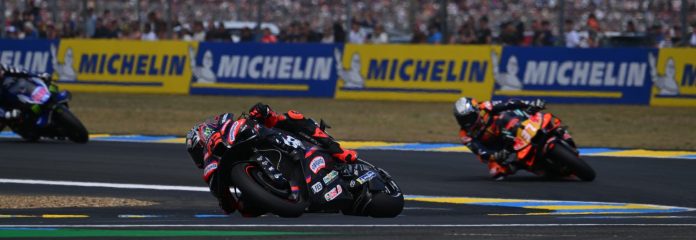
Catalonia calls. The most exciting sport on Earth, arrives in Barcelona with the top two riders in the World Championship split by a single point. While reigning World Champion Marc Marquez (Ducati Lenovo Team) is sidelined, the scrap between Aprilia Racing teammates Marco Bezzecchi and Jorge Martin is bubbling up nicely as we enter the Circuit de Barcelona-Catalunya cauldron.
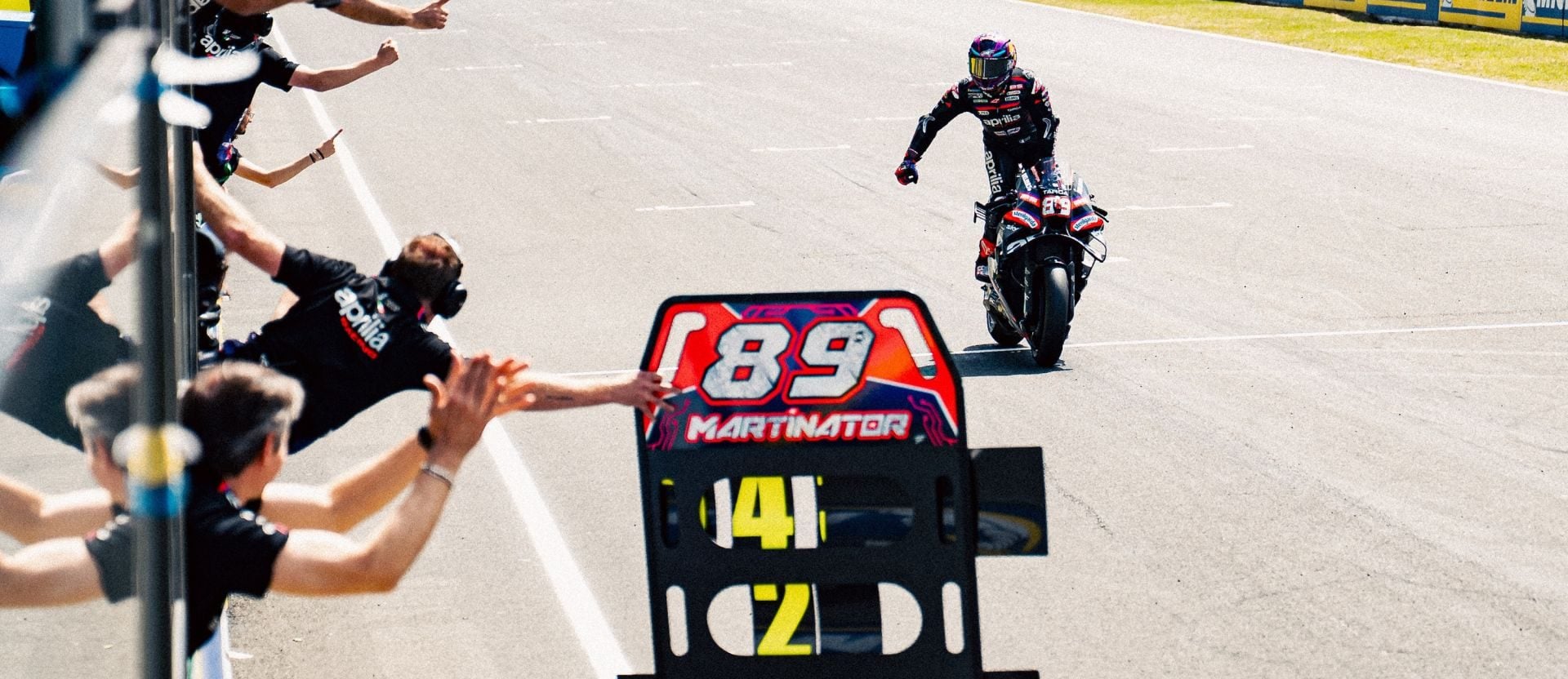
Jorge Martin (89) at Le Mans. Photo courtesy Aprilia.
ONE POINT IN IT: BEZ VS MARTIN ROLLS INTO BARCELONA
588 days after his Indonesian Grand Prix victory in 2024, Martin returned to the Sunday top step for the first time since becoming a MotoGP World Champion. And it was some ride – an unreal weekend. A Sprint and Grand Prix double, maximum points haul weekend, which the #89 hasn’t been able to achieve since he did the same at the 2024 French GP. And a clear message to Bezzecchi, and the millions tuning in around the globe, that he’s back. And Martin will be soaking up plenty of support from the Catalan GP crowd this weekend too, the circuit which saw him crowned World Champion in 2024.
The fact that neither he nor Bezzecchi have finished outside the top four on a Sunday this season is a clear sign that they’re in this title race for the long haul. The Italian, who secured back-to-back P2s to support his opening three Grand Prix wins, still tops the championship. But only just. Who leaves Barcelona with the points advantage?
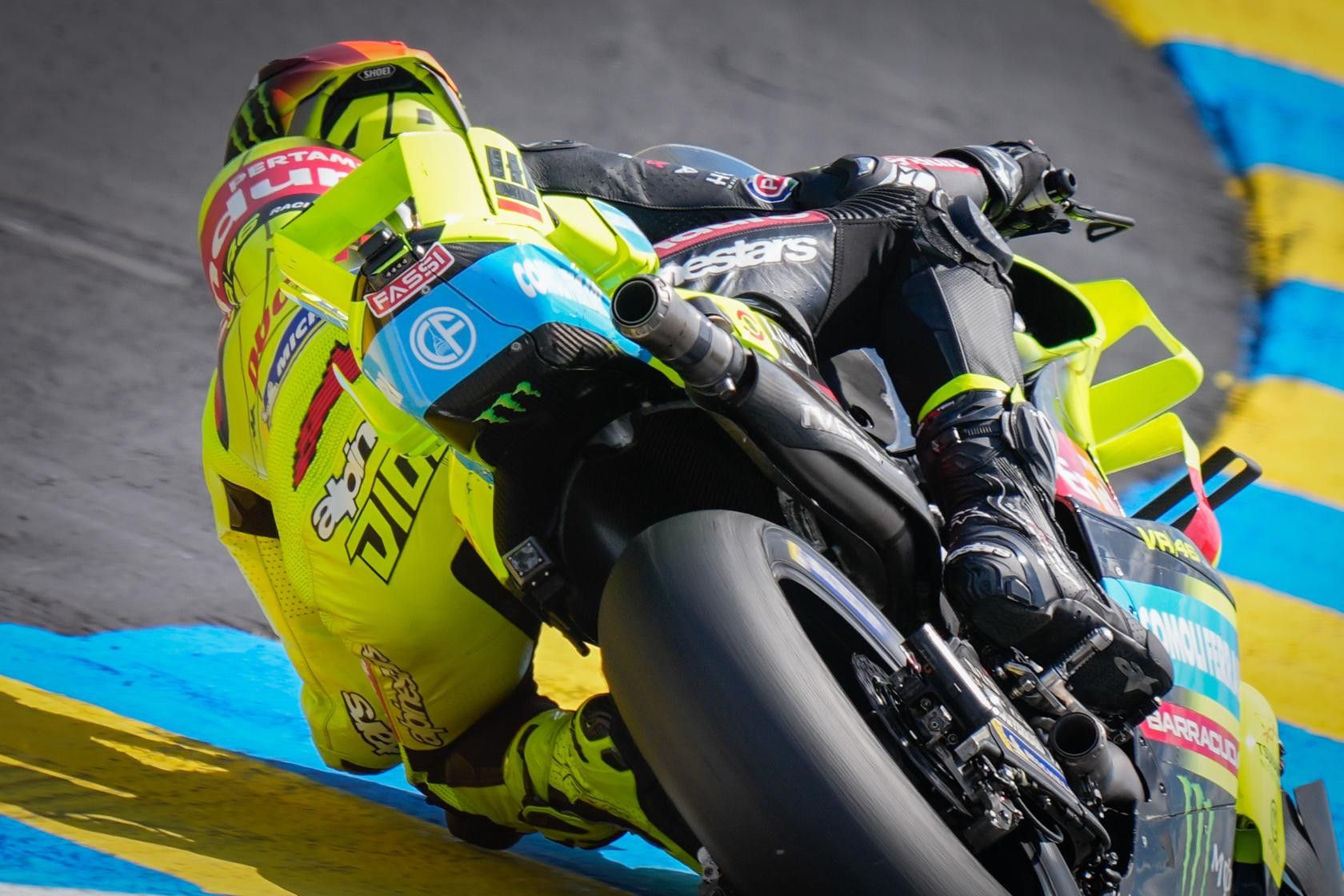
Fabio Di Giannantonio (49) at Le Mans. Photo courtesy MotoGP
CAN THE CHASERS CLAW POINTS BACK IN CATALONIA?
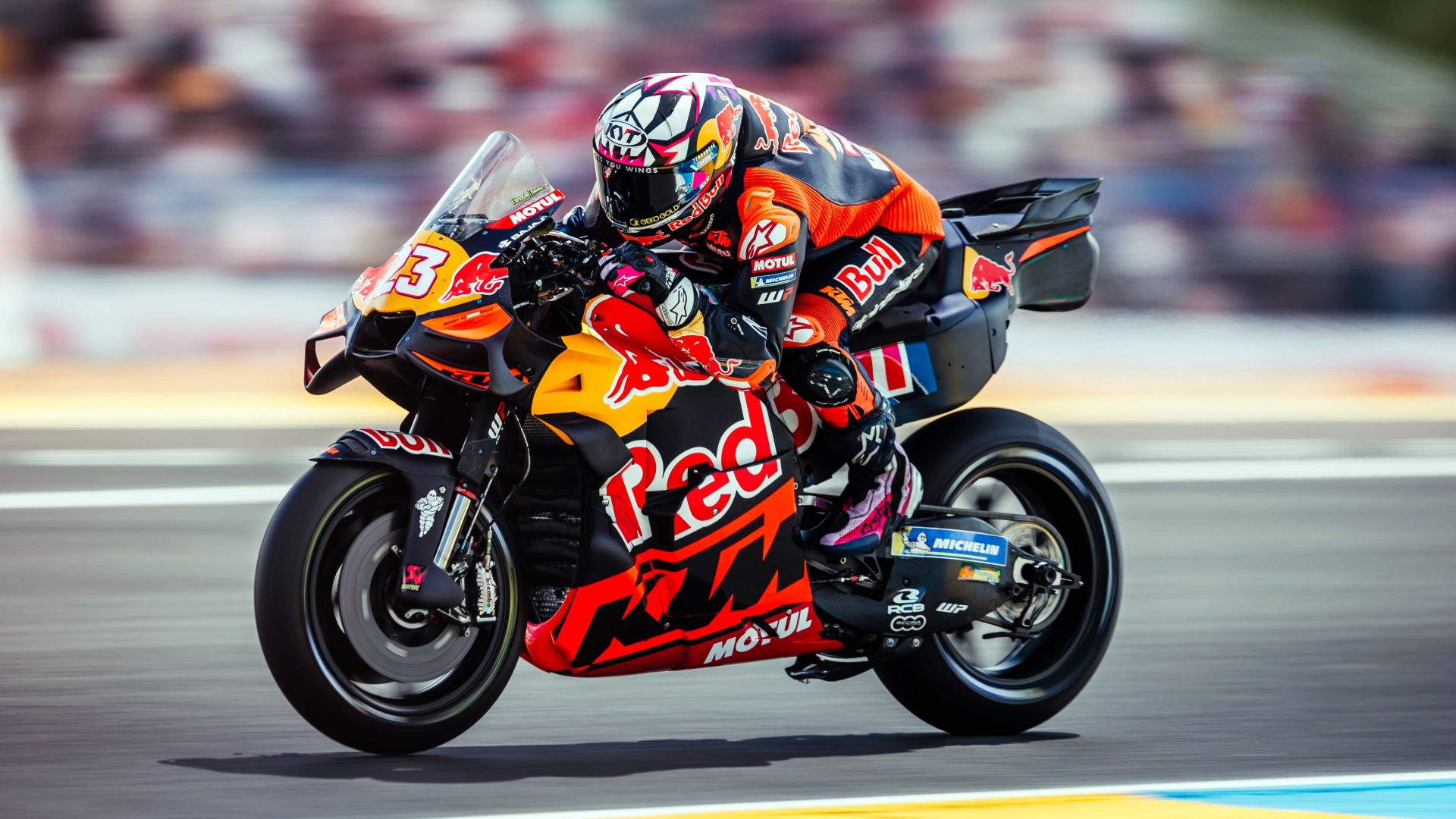
The chief chaser when you glance at the standings remains Fabio Di Giannantonio (Pertamina Enduro VR46 Racing Team). The Italian, remarkably, is the only Ducati rider in the top six after five rounds, and after his penultimate corner move on fourth in the championship Pedro Acosta(Red Bull KTM Factory Racing) – including a cheeky look behind, one the #37 vows revenge for – meant ‘Diggia’ moved back ahead of the KTM star by one point. Watch out for that rumbling rivalry.
Di Giannantonio and Acosta will be desperate for a podium return in Barcelona after being dispatched by a rapid Ai Ogura (Trackhouse MotoGP Team) in Le Mans. That podium had been coming, hadn’t it? And it arrived in style. The first Japanese rider to stand on a MotoGP rostrum since 2012, Ogura is now P5 in the championship – and if that pesky qualifying can be sorted out, the 2024 Moto2 World Champion could be a regular victory challenger.
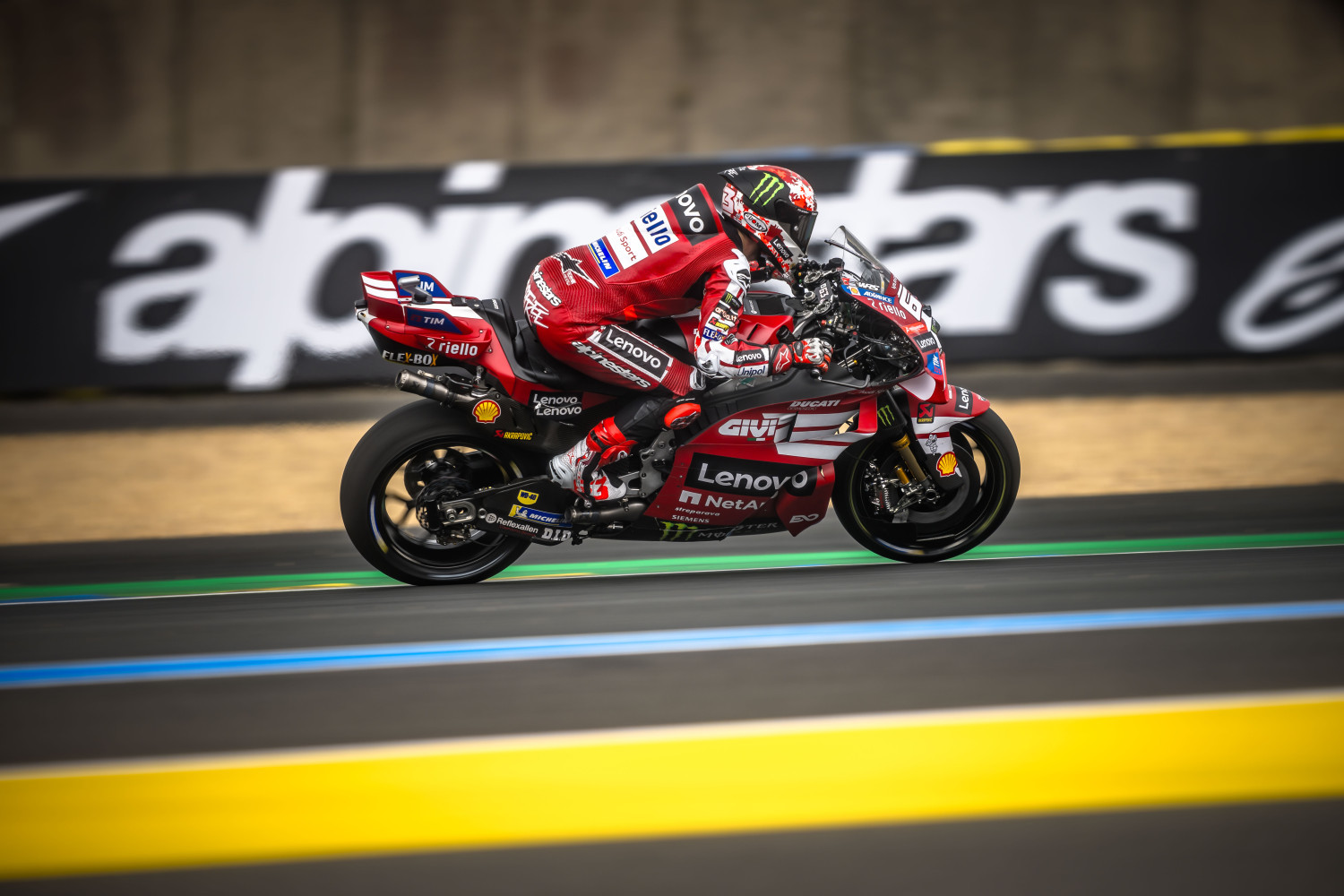
Francesco Bagnaia (63) at Le Mans. Photo courtesy Ducati
MORE TO COME
Having seen Aprilia clinch a 1-2-3 result on Sunday, Raul Fernandez (Trackhouse MotoGP Team) lamented slipstream woes in Le Mans, which saw the Spaniard finish P8. Teammate Ogura has leapfrogged the #25 in the championship ahead of a date with Barcelona, so Fernandez will be keen for a response on home turf.
A weekend that promised much more than a Tissot watch and a silver medal? That was the overriding feeling for Francesco Bagnaia (Ducati Lenovo Team) in France. Despite the Sunday DNF though, Pecco radiated positivity having shown he was one of the fastest riders all weekend. Time to repeat it, minus the crash, in Barcelona – a track he won at twice in 2024.
Another Ducati rider who suffered a Sunday DNF was Alex Marquez (BK8 Gresini Racing MotoGP). The Spanish GP winner, who admitted pre-weekend Le Mans is one of his weaker circuits, couldn’t repeat his Jerez heroics, but keep an eye on the 2025 Catalan GP winner this weekend. We should be seeing more Jerez, less Le Mans, from AM73 on home territory.
Enea Bastianini (23) at Le Mans. Photo courtesy Tech3
ON THE UP
Enea Bastianini (Red Bull KTM Tech3), last year’s P3 finisher in Barcelona, is stringing together a solid run of results after a tough opening two Grands Prix. It’s now three Sunday top eights in a row for the Italian, who is just four points behind former teammate Pecco in the championship. Is a podium attack on the cards for ‘The Beast’ this weekend? Meanwhile, on the other side of the Red Bull KTM Tech3 box, we wait to see if Maverick Viñales is back in business – returning to the fold after his injury layoff.
Fabio Quartararo (Monster Energy Yamaha MotoGP) couldn’t have squeezed much more out of his YZR-M1 for the 300,000 crowd across the weekend in Le Mans. A double top six performance was by far the Frenchman’s best weekend of the season so far, so hopefully those steps forward can be maintained in Montmelo. It’s a track he’s reigned before.
Chipping away after his pre-season injury is Fermin Aldeguer (BK8 Gresini Racing MotoGP). A P9 in France was the 2025 Rookie of the Year’s third top 10 of the season, and while that’s not the results Aldeguer is here for, the Spaniard is far from fully fit.
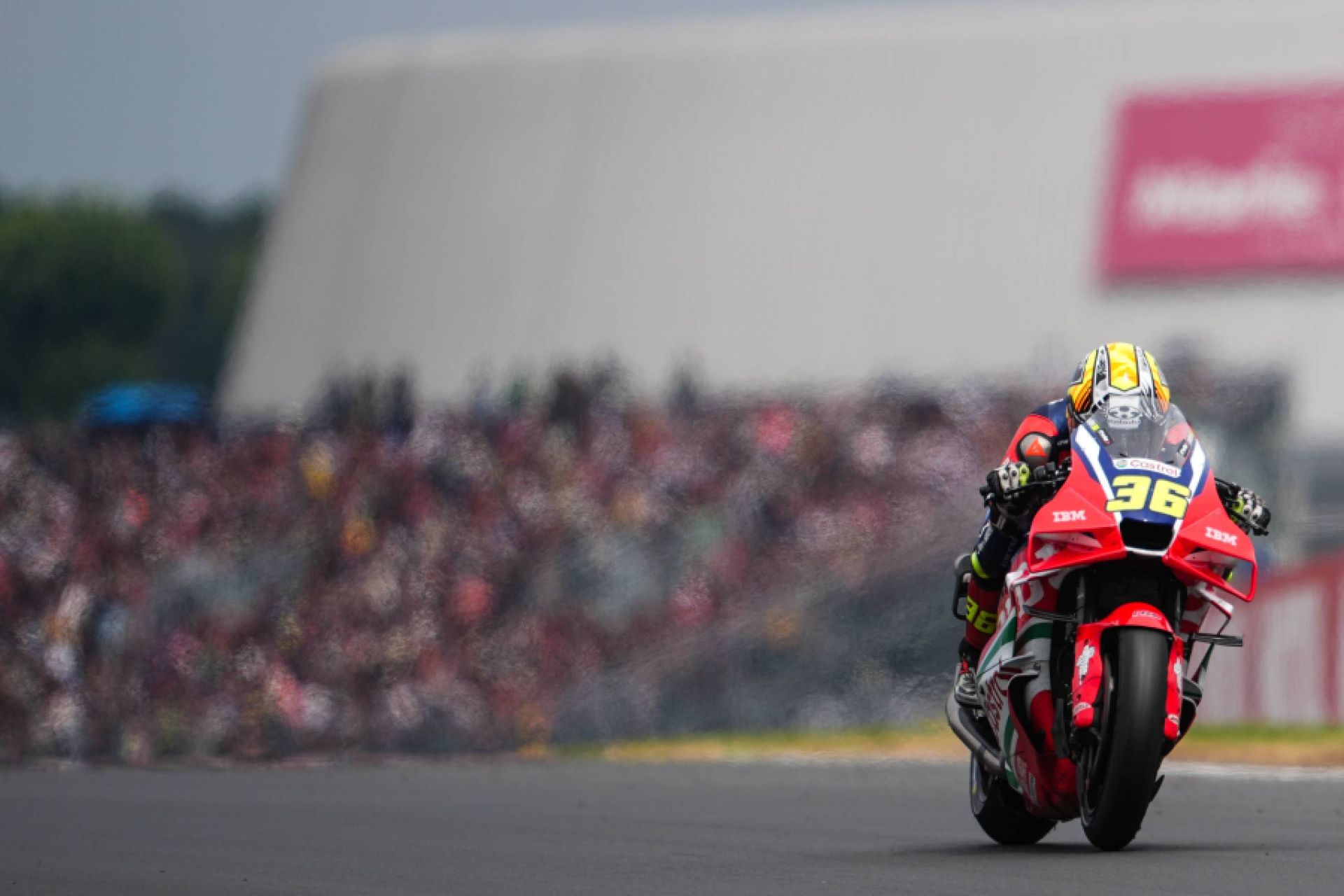
Joan Mir (36) at Le Mans. Photo courtesy Honda HRC
HRC HUNT FORTUNE TURNAROUND
There was more than one sign (again) in France that HRC aren’t far away, but it’s the points that do the talking. The results didn’t reflect the true potential after Joan Mir’s (Honda HRC Castrol) crash from the top six on Sunday, meaning that’s four DNFs in five for the 2020 World Champion. Johann Zarco’s (Castrol Honda LCR) home Grand Prix weekend faded after a table-topping Friday, with the Frenchman and Luca Marini (Honda HRC Castrol) collecting P11 and P10 on Sunday. And having pocketed his first Sprint point on the Saturday, Diogo Moreira (Pro Honda LCR) suffered his first DNF on the Sunday. More to come from the Japanese giants.
Alex Rins (42) at Le Mans. Photo courtesy Yamaha
CRAVING IMPROVEMENTS IN CATALONIA
While it was a very promising Friday for Alex Rins (Monster Energy Yamaha MotoGP) in Le Mans, Saturday and Sunday never really got going for the Spaniard. Still, it was points on the board for the #42, Toprak Razgatlioglu and the Turk’s Prima Pramac Yamaha MotoGP teammate Jack Miller, with all four Yamahas inside the top 15 for the first time this season. Small steps forward.
A step forward is what Franco Morbidelli (Pertamina Enduro VR46 Racing Team) will be grinding towards in Barcelona, with a P14 in France meaning the Italian is without a Sunday top 10 since Thailand. And despite a Turn 7 crash on Sunday for Brad Binder, the Red Bull KTM Factory Racing rider left Le Mans with added confidence after finding some performance on Sunday. The South African looks to carry that over into this weekend.
There have been some huge twists and turns already in 2026, and Barcelona could give us even more. One single point is the gap on the way in – so who’s stamping their authority on the Monster Energy Grand Prix of Catalunya? We’ll find out this weekend.
Boughen takes FIM Flat Track World Championship lead with dynamite debut.
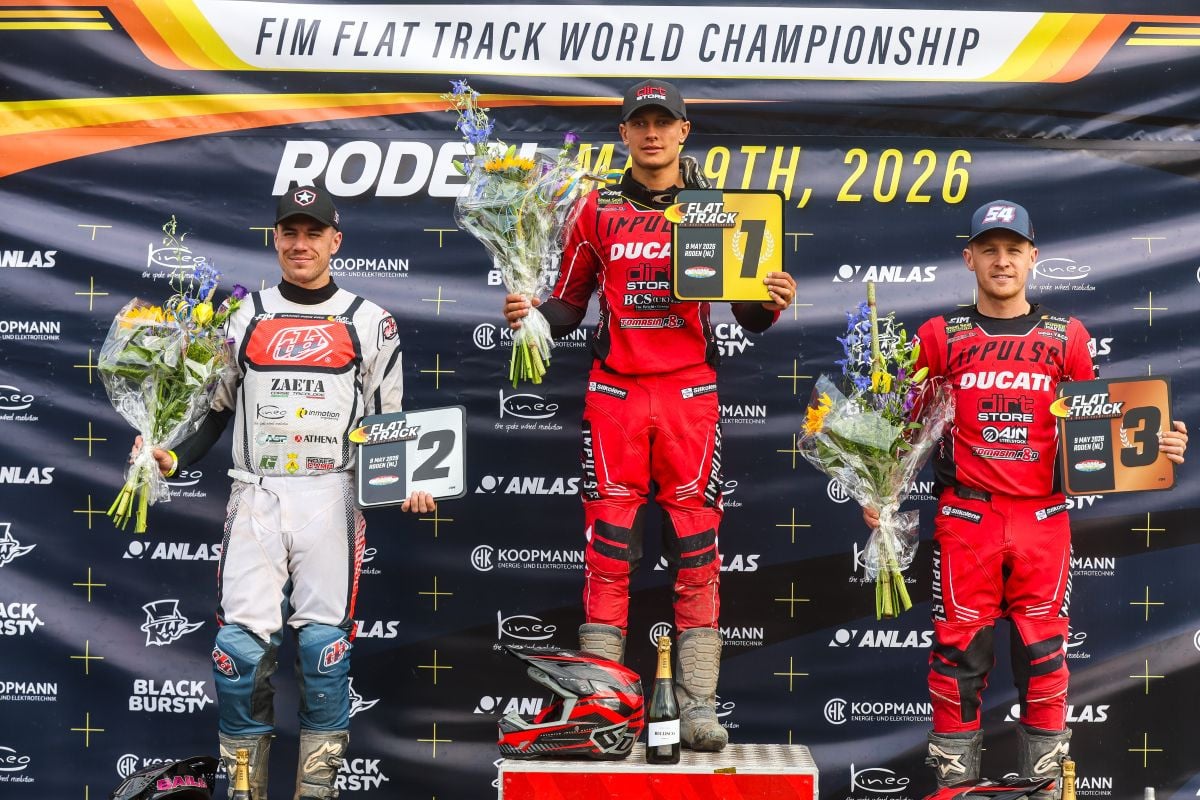
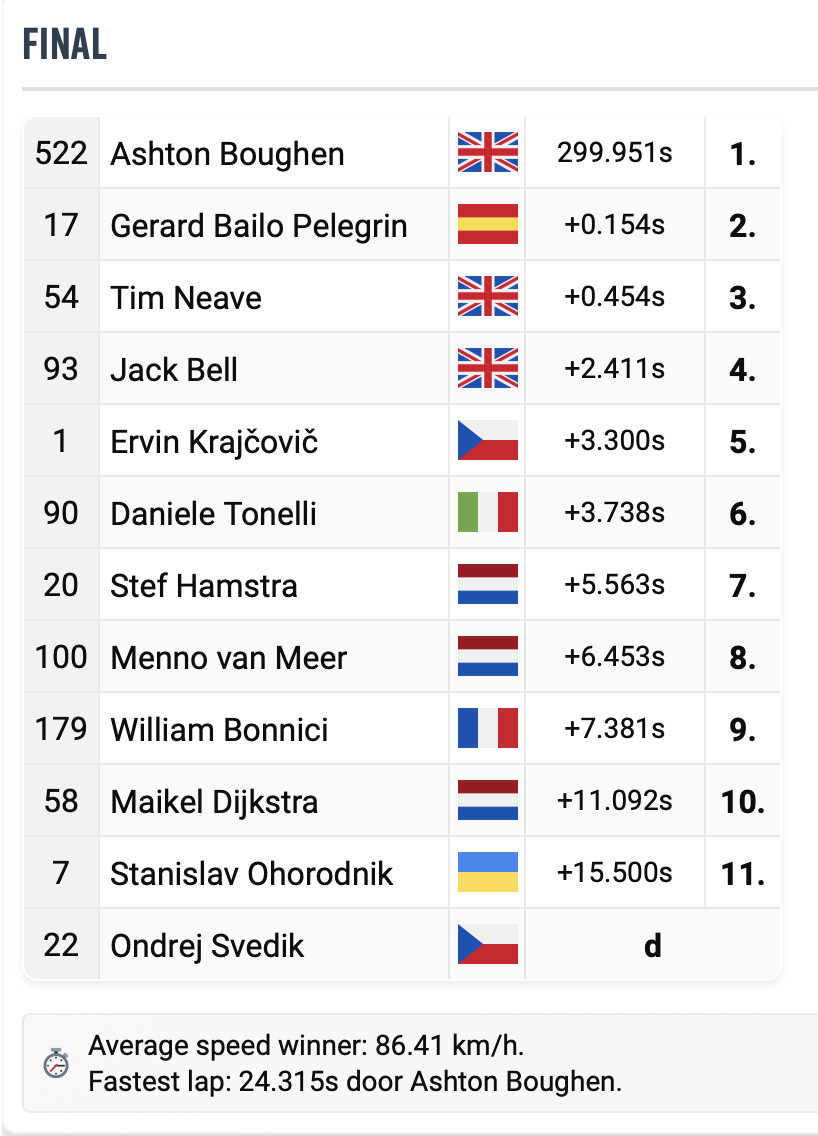
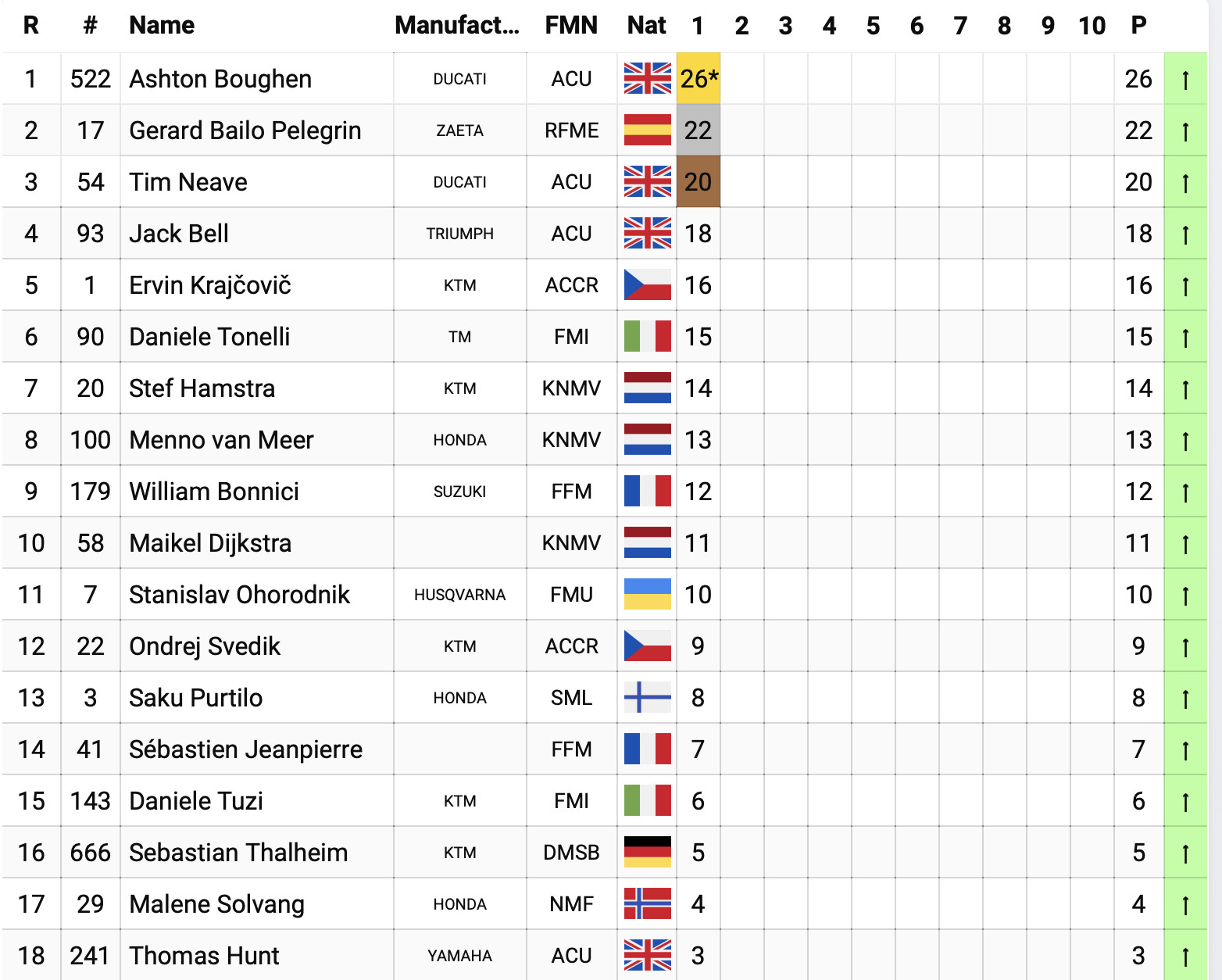
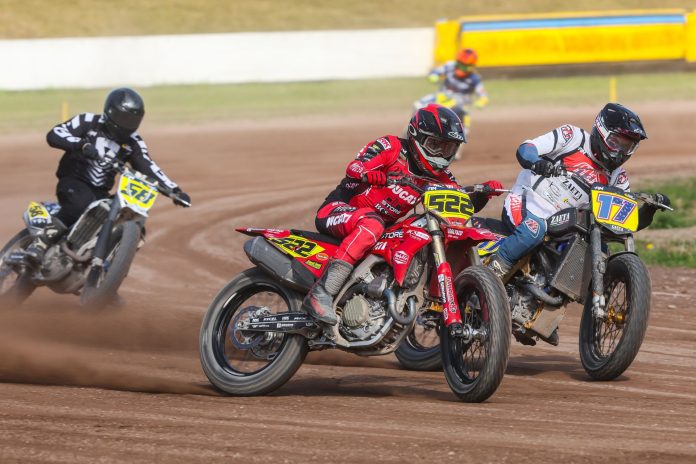
Series newcomer Ashton Boughen (Ducati) turned the 2026 FIM Flat Track World Championship on its head on Saturday afternoon, storming to a stunning victory at the opening round at Roden in the Netherlands and sealing an incredible debut win both for himself and for the Italian manufacturer that celebrated its entry into the series with two riders on the podium.
· FIM Flat Track World Championship gets under way with Dutch date
· Series newcomer Ashton Boughen shocks established stars
· Roden opener sets the scene for sensational season of racing
With interest in the extended ten-round championship at an all-time high and a number of new competitors and manufacturers lining up at the Speed Centre Roden for the Netherlands’ debut on the championship calendar, there was a sense of anticipation in the paddock where a truly international entry of riders from twelve countries and two continents had assembled.
Defending champion Ervin Krajčovič (KTM) sewed up his second title in three years last season, but the Czech hero could only claim a tentative fourth in the opening eight-lap Heat as Britain’s Jack Bell(Triumph) celebrated his twenty-third birthday with victory ahead of Ondřej Švédík (KTM) and Tim Neave (Ducati).
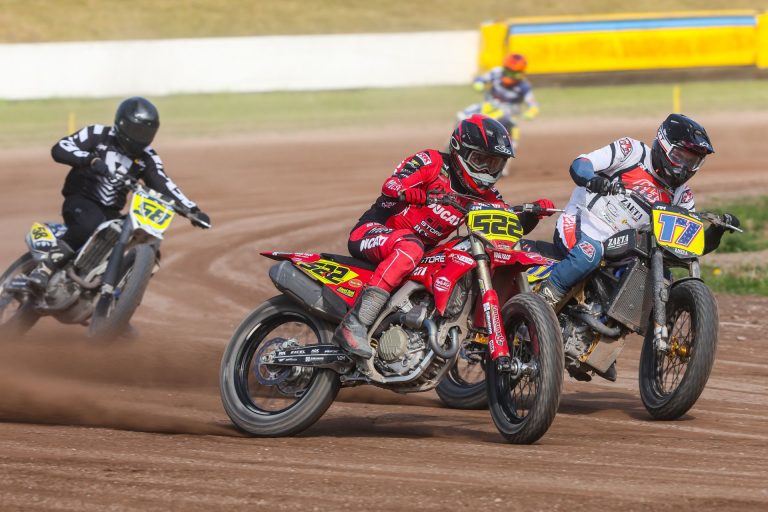
Following a restart, the second Heat saw a tapes-to-flag victory for eighteen-year-old Boughen who wasted no time in throwing the gauntlet down to his rivals, although he was forced to fight hard as Spain’s Gerard Bailo (Zaeta) – champion in 2022 – poured on the pressure with his favoured inside lines allowing him to close through the turns before the British rookie pulled clear with faster, wider lines along the straights.
Local hero Maikel Dijkstra then took a popular victory ahead of Italy’s Daniele Tonelli (TM) and William Bonnici (Suzuki) from France to complete the first block of racing.
Since finishing second in 2023, Bailo has struggled to replicate his title-contending form, but the Spaniard looked back to his best when he swept by Tonelli during the early stages of the fourth Heat to record an impressive win with the Ukraine’s Stanislav Ohorodnik taking third from the Czech Republic’s Švédík, last season’s bronze medallist.
Krajčovič then claimed his first Heat victory of the campaign ahead of Bell and Dutch racer Menno van Meer (Honda) as Boughen slipped to fourth before Britain’s Neave led home his compatriot and series newcomer Gary Birtwhistle (Royal Enfield) who was representing the famous manufacturer on its championship debut.
Sharing the lead with Bell at the halfway mark, Bailo’s second victory of the afternoon – this time at the expense of Švédík and van Meer – moved him into a clear lead as Tonelli won from Bell and Boughen and Krajčovič led home Dijkstra and Bonnici.
Podium at 2026 FIM Flat Track World Championship at Roden in the Netherlands with, from left to right, Gerard Bailo Pelegrin, Ashton Boughen and Tim Neave. Photo by Jesper Veldhuizen / courtesy FIM Flat Track.
With the top ten riders following the Heats transferring directly to the Grand Final and the next ten contesting the Last Chance Heat, tensions were running high as Švédík led home van Meer and Krajčovič. Neave then picked up his second win of the afternoon, this time ahead of Bell who also booked his place in the Grand Final along with Tonelli and Bonnici, before Boughen led home Bailo for a second time with Dijkstra’s third ensuring he also progressed.
After finishing one-two in the Last Chance Heat, Ohorodnik and Dutch racer Stef Hamstra (KTM) took their places alongside the automatic qualifiers for the twelve-lap Grand Final before Boughen launched into the lead around the opening turn chased by Tonelli, Neave and Bailo.
The Italian moved to the front at the end of lap one, but there was nothing to choose between the leading trio as Boughen and Bailo forced their way to the front and Neave began to apply pressure in fourth before taking third from Tonelli at half-distance.
pWith Boughen again running wide lines and Bailo favouring the inside, lap-after-lap the Spaniard appeared to draw level through the sweeping turns before Boughen pulled clear on the straights to claim an historic debut victory as Bailo was forced to defend in the closing stages from Neave.
Bell put the seal on a famous dayfor British racers with an impressive fourth ahead of Krajčovič and Tonelli as Hamstra, Van Meer, Bonnici and Dijkstra completed the top ten.
The focus now shifts to Terenzano in Italy for round two on 30 May.
With its mix of established stars, fast-rising talent and series newcomers, the 2026 FIM Flat Track World Championship is taking shape to be one of the most exciting in the sport’s history and FIM-MOTO.TV will stream all rounds LIVE including behind-the-scenes footage, interviews and expert analysis.
The online reach will be extended by dedicated Facebook, Instagram and Tik Tok channels where fans can interact with riders and like-minded enthusiasts. Please follow us!
SMP Preview: Young chases Superbike history, Tremblay eyes Supersport revenge in 2026 opener.
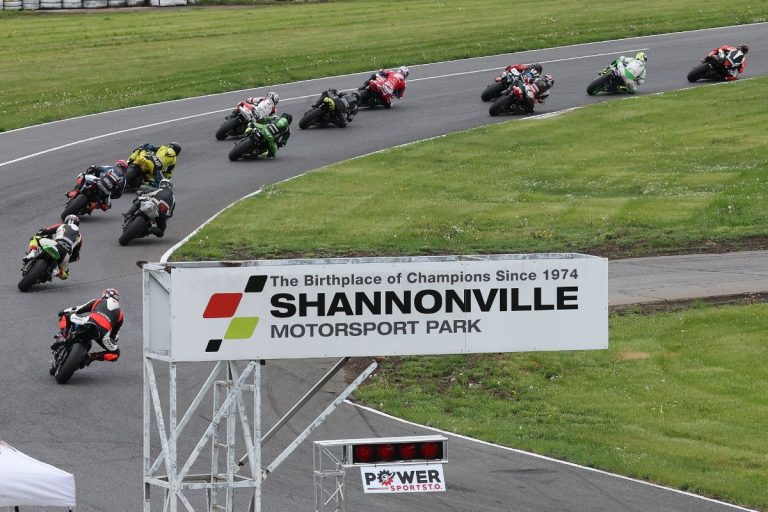
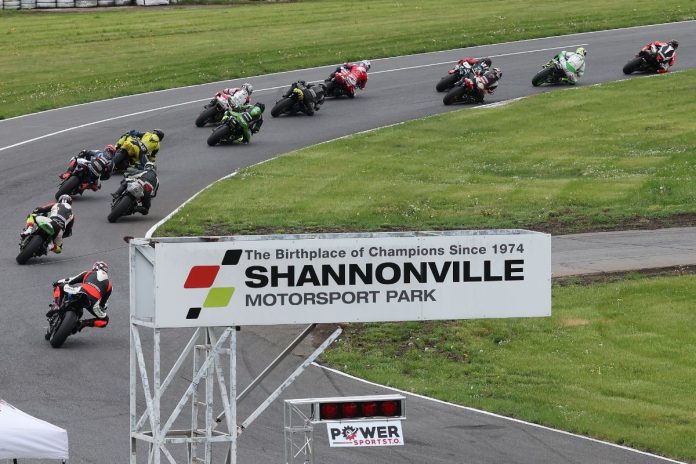
Hamilton, ON – The first round of the 2026 Bridgestone Canadian Superbike Championship season is finally on the horizon, with action getting underway at historic Shannonville Motorsport Park this upcoming weekend, May 15-17.
Every new season brings changes to the pro grids, but the 2026 opener will look even more different than usual when Friday practice kicks off at the venue near Kingston, Ontario.
Retirements and absentees will be replaced by a number of young talents – some new, some returning – who are hungry to fill the void this season, and Shannonville’s fast ten-turn, 2.47 km layout will offer plenty of opportunity for the chasing packs.
However, a few significant names at the top of the order remain the same, with a pair of recent champions looking to kickstart the campaign with two massive victories at the doubleheader weekend.
Young, Szoke renew rivalry in GP Bikes Pro Superbike
The feature GP Bikes Pro Superbike class will see it’s reigning #1 back on track this weekend, as Ben Young defends his fifth career Canada Cup but first as a Honda rider.
Having won four titles for BMW, Young made the bold switch to Honda in 2025 and retained his crown in dramatic fashion, winning the CTMP finale last season in a three-way championship shootout over Alex Dumas and Sam Guerin.
The Van Dolder’s Home Team Honda rider will now get some reprieve with both Dumas and Guerin gone – the former returning south to MotoAmerica, while the latter retired following his heartbreaking crash at the finale last season – but that doesn’t mean things will be easy for Young at the season opener.
His debut weekend on the Honda last season was a difficult one by his lofty standards, finishing third and second at Shannonville but battling some growing pains as he adjusted to the CBR1000RR-R.
That left him dead even entering round two with a familiar rival in Jordan Szoke, who is back for a 26th season in 2026. The most accomplished rider in CSBK history, Szoke was once the dominant champion who saw Young as the thorn in his side, but now will try to reverse that script as he enters Shannonville as the closest challenger for what would be his record-extending 15th Canada Cup.
Szoke has won seven times at Shannonville, just once more than Young, but the Canadian Kawasaki Motors rider has more experience than anybody to draw from in what could be a cool and damp weekend.
The bigger story is who will be chasing the pair, as the absence of Dumas and Guerin has opened up a massive opportunity for the rest of the feature class.
Leading the charge is 2025 breakout star David MacKay, the most consistent “best of the rest” rider last season who seems poised to take the next step in 2026.
The ODH/Snow City Cycle Honda rider finished inside the top-six in seven of his nine races last season, including a pair of fourth-place finishes at the opener in Shannonville, as he matched his fifth-overall finish in the championship from his rookie year.
The 2023 Supersport champion has yet to step on a Superbike podium but has a golden opportunity to do so many times this season, playing a pivotal role for Honda as he and Young chase the brand’s first ever Constructors Championship.
MacKay won’t be without his own challengers, however, headlined by a pair of new Kawasaki teammates in Connor Campbell and Alex Michel.
Campbell’s horrid injury luck continued in 2025 as he missed the final five races, ending what was a promising start with a pair of top-seven finishes at Shannonville and Shubenacadie, but he still put his ZX-10R Ninja to use in the season finale as he offered Michel a wildcard appearance aboard it.
The young Quebecois rider smashed the opportunity, finishing sixth and fifth at CTMP, and he will now join Campbell full-time aboard his own Canadian Kawasaki Motors superbike.
Another former Supersport frontrunner will make the step up to Superbike in 2026, as last year’s championship runner-up in middleweight Andrew Van Winkle finds himself on a Mountainview Motorsports Honda this season.
The B.C. teenager will have a steep learning curve in the feature class but has aced every step of his CSBK career thus far, though round one in Shannonville was a difficult weekend for him last year in Supersport as he missed the podium both times.
Rounding out the midfield is Zoltan Frast, who leads BMW’s charge in 2026 aboard his Clare’s Cycle S1000RR. The former Supersport podium-finisher only raced four times in 2025, but finished inside the top-eight on each occasion including a career-best sixth in the CTMP finale, making him an underrated choice to join the podium battle this season.
Tremblay looks to capitalize on Collins’ absence
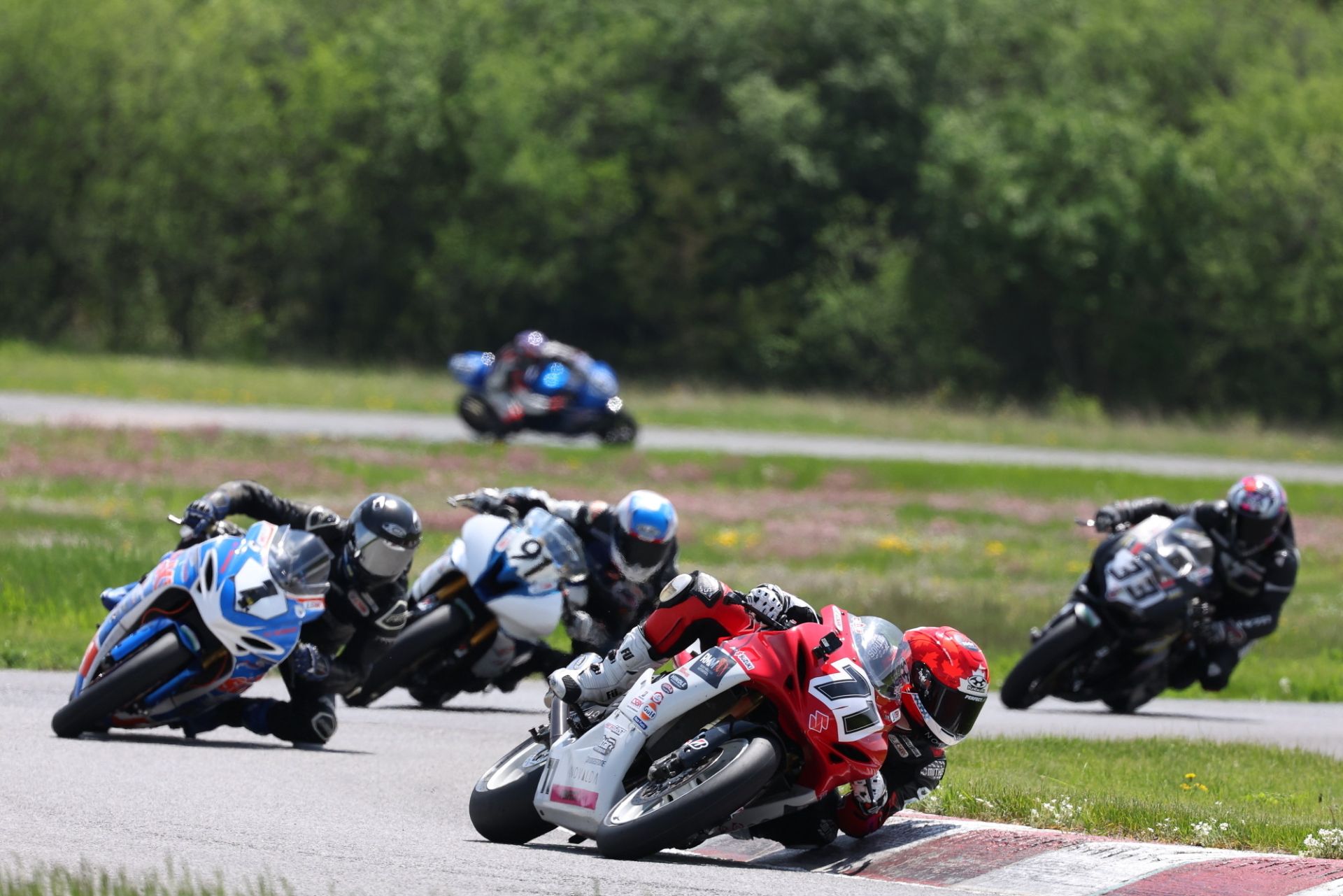
This is what the opening round of 2025 Pro Supersport looked like, with eventual champion Torin Collins (71) going on to win both races at Shannonville. However, Collins is racing in the US and missing the start of the 2026 season this weekend, leaving the battle up front to include two-time champion Sebastien Tremblay (1), Matt Simpson (91), Elliot Vieira (33), and more in the competitive middleweight class. Photo by Rob O’Brien.
As for the newly-rebranded OPP Racing Pro Supersport class, it will more than likely be a vacated crown in 2026 as reigning champion Torin Collins juggles double-duty with the MotoAmerica season – meaning he will be absent for round one at Shannonville as he heads south to Barber.
His unfortunate departure, combined with the promotion of Van Winkle to Superbike, opens the door for a major bounce-back season for Sebastien Tremblay, one of the most accomplished riders in middleweight history who largely had a 2025 to forget.
Tremblay still posed a significant challenge for Collins and Van Winkle last season, winning the last race of the year and scoring six podiums to finish third in the championship, but it never looked like the proper title defence many were expecting from the 2024 champion.
Now rejuvenated aboard his Turcotte Performance Suzuki, Tremblay enters Shannonville as the betting favourite for both a season-opening victory and the 2026 crown, but he won’t be without his own rivals when round one gets underway.
Tops amongst them is a pair of race winners in Elliot Vieira and Matt Simpson, the former still unconfirmed aboard his GP Bikes Ducati but would be an automatic threat if he is on-track after finishing top-six in every single race last season.
Simpson, meanwhile, will be present for round one aboard his Evans Racing Suzuki and is almost a guaranteed frontrunner after battling Collins for the lead at Shannonville last season, ultimately crashing out but proving to be one of his toughest tests of the entire campaign.
Another young rider swapping machinery in 2026 is runaway rookie of the year Laurent Laliberte-Girard, who joins Moto Falardeau Kawasaki after earning a pair of podiums last season for Yamaha, finishing sixth in the overall championship.
He will be looking to take the next step for Kawasaki this season as will be former amateur frontrunner Mackenzie Weil, who already carved out a career-best season for Snow City Cycle Kawasaki in 2025 with a midseason run of five top-ten finishes in a row.
Hoping to put a disastrous 2025 behind him will be Brad Macrae, a former race winner in the class and genuine threat who will be flying under the radar entering round one.
The local favourite pioneered the Yamaha YZF-R9 at CTMP last season but was fairly anonymous in 12th and tenth, battling a number of issues with the new machine. Now having had a full offseason to sort out the kinks, Macrae is talented enough to vault right back to the top of the timesheets at Shannonville if he can untap the potential of the R9.
Rounding out the group will be a trio of graduating rookies in Cole Alexander, Zaim Laflamme, and Nicolas Audet, all stepping up from the amateur ranks after strong years in 2025.
Alexander will headline the group as the double-champion in both Superbike and Supersport, having taken three out of four victories at Shannonville last season for Suzuki, but Laflamme was no slouch with a win and two runner-up results. Audet had less success at last year’s opener, but can’t be discounted after a run of five consecutive podiums to end the year in Amateur Supersport.
The wide-open Supersport ranks will also present the most unpredictable Constructors Championship fight yet, with Tremblay and Simpson leading the charge for reigning champions Suzuki but with Kawasaki, Yamaha, and Ducati all squarely in the mix.
The weekend will kick off with official practice and qualifying on Friday at Shannonville Motorsport Park, just an hour west of Kingston, Ontario, before racing gets underway May 16-17.
For more information on the Bridgestone Canadian Superbike Championship, visit www.csbk.ca or email info@csbk.ca.
The experts with Sportbike Tire Service are trackside at most STT events for sales and superior service. Contact Sportbike Tire Service at [email protected] or (734) 210-8859 with questions!
NEW! Sportbike Tire Service is proud to offer Bridgestone tires; contact them to learn more!
Got a question? Feel free to drop us a line at [email protected].
We’d be happy to hear from you!
May 12, 2026 – Le Mans, France. The American Racing Team left the Circuit Bugatti this Sunday with its best result of the 2026 Moto2 World Championship season, scoring 15 points after a weekend that confirmed the team’s clear step forward.
Filip Salač produced a stunning final flying lap in qualifying to vault to third on the grid, earning a place in parc fermé and the team’s first front-row start of the year. Joe Roberts secured sixth on the grid — his best qualifying of the season so far.
In the race, Filip Salač and Joe Roberts both reached the top ten in a Grand Prix that was red-flagged on the opening laps and then decided over a nine lap quick-started race. Joe crossed the line in eighth, while Filip, after fighting for first place before the red flag, recovered from being pushed wide on the restart to finish ninth.
The team now turns its attention to the next round of the 2026 Moto2 World Championship in Catalunya, confident that the recent development steps are paying off.
Three-Time World Champion Freddie Spencer Named Grand Marshal of 2026 Permco AMA Vintage Motorcycle Days. Photo courtesy AMA.
PICKERINGTON, Ohio — Three-time world roadracing champion “Fast Freddie” Spencer, one of the most iconic road racers in American motorcycling history, will serve as the grand marshal of the 2026 Permco AMA Vintage Motorcycle Days presented by Turn 14 Distribution.
A 1999 AMA Motorcycle Hall of Fame inductee, Spencer was a leading competitor in AMA Superbike, Formula II and Formula 1 competition in the U.S. before heading to the Grand Prix circuit in the early 1980s en route to a trio of world championships — the 500cc title in 1983 and, in ’85, the 250cc and 500cc world titles, the first person to accomplish that feat.
This summer, he will be the premier guest at the AMA’s largest event, which runs July 24-26 at the Mid-Ohio Sports Car Course in Lexington, Ohio. This year’s event will celebrate the 50th anniversary of AMA Superbike, making Spencer the perfect Grand Marshal to ring in the festivities.
“I raced at Mid-Ohio several times during my early career,” Spencer said, “and while I haven’t ever attended the AMA’s Vintage Motorcycle Days event, I have heard a lot about it, and so I’m really excited to be heading there this July to act as Grand Marshal. It’s a fantastic venue, and with all the other exciting stuff happening during VMD weekend, and all those enthusiastic fans, it’s bound to be a memorable weekend. See you there!”
Born in 1961 in Shreveport, La., Spencer displayed incredible talent from a very young age. He first learned to ride at 4 years old and started racing just a year later. By age 11, Spencer had already won a number of regional dirt track racing championships, and soon after, set his focus toward road racing.
Freddie Spencer. Photo courtesy AMA
In 1979, Spencer captured his first AMA National Win and went on to win the Formula II/250GP title over fellow AMA Motorcycle Hall of Famer Eddie Lawson that season. This sparked an outstanding rivalry between the pair of future Hall of Famers, with Spencer and Lawson in constant contention for the 1980 and 1981 AMA Superbike titles.
In 1981, Spencer began racing in Europe, splitting his time between the AMA Superbike and 500cc World Championship series. One year later, he dedicated his full attention to his international pursuits, securing his first world championship victory at the 1982 Belgium 500cc Grand Prix at just 20 years old.
Spencer captured his first Grand Prix world championship in 1983, edging out veteran Kenny Roberts — a 1998 inductee to the AMA Motorcycle Hall of Fame — for the crown by only two points. Two years later, Spencer produced one of the greatest single seasons in the sport, winning the 250cc and 500cc Grand Prix World Championships. For his efforts during the 1985 season, Spencer was named the AMA’s Pro Athlete of the Year and earned a special citation from President Ronald Reagan.
Spencer retired from full-time GP racing in 1988 but went on to win three more AMA Superbike national events before officially retiring from racing in 1996.
“It’s only right that we bring in one of the most decorated American road racers to one of the most famed road venues in the country for AMA Vintage Motorcycle Days this year,” AMA President and CEO Rob Dingman said. “We are eager to welcome Freddie as the grand marshal for this year’s Vintage Motorcycle Days, and look forward to celebrating his mark on road racing history and motorcycling as a whole.”
In his role as grand marshal, Spencer will be available to speak with enthusiasts and sign autographs, while also participating in the Lap for History on the road course at the Mid-Ohio Sports Car Course, and much more!
Permco AMA Vintage Motorcycle Days presented by Turn 14 Distribution is fast approaching and will be jampacked with a number of exciting opportunities for motorcycle enthusiasts, including North America’s largest motorcycle swap meet, the AMA Motorcycle Hall of Fame Bike Show, vendor displays, demo rides and near-endless racing.
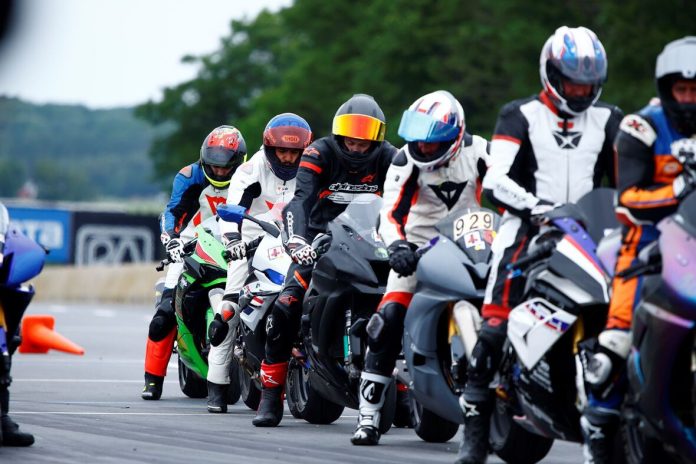
Race start for Race of the Rockies, Colorado’s premiere race class. Photo By Kelly Vernell.
The 2026 season opener for the Motorcycle Roadracing Association officially roared to life on May 10th at High Plains Raceway, launching what promises to be one of the most competitive and exciting seasons in recent memory. With ACES Motorcycles serving as the MRA’s 2026 Presenting Sponsor, racers and fans alike were greeted with an incredible weekend of competition, camaraderie, and nonstop action.
The weekend festivities began on Saturday with a racer practice day hosted by LegionMoto that drew an impressive 160 riders to High Plains Raceway. Riders of all skill levels took advantage of the valuable track time to prepare for the first round of championship competition, filling the paddock with excitement and anticipation for Sunday’s races.
Mother Nature briefly threatened to complicate the weekend’s plans late Saturday night and into Sunday morning as rain showers moved through the area, potentially creating difficult track conditions for racers. Fortunately, the weather quickly improved as the morning progressed. By 9:00 a.m., the track had fully dried, the sun had emerged, and racers were treated to near-perfect conditions for the remainder of the day with partly cloudy skies and temperatures settling comfortably into the 70s.
The enthusiasm surrounding the new season was impossible to ignore, as the MRA welcomed an explosive turnout of 110 racers on Sunday alone — including an incredible 33 newly licensed racers making their debut appearances. From seasoned veterans to first- year competitors, the paddock was filled with energy and optimism as riders took to the track for the first championship battles of 2026.
Fay Myers Race of the Rockies Open
Mathew Cunha #12 leads the charge in Race of the Rockies Open. Photo By Kelly Vernell.
The opening premier-class race of the season delivered everything fans could hope for — blistering pace, fierce battles throughout the field, and a statement victory from one of the MRA’s top championship contenders.
After narrowly missing the 2025 championship by only 19 points, Mathew Cunha #12 came into the season opener with clear intentions. Cunha wasted no time establishing himself as the rider to beat, setting the fastest qualifying time with an impressive 1:47.675 lap to earn pole position for the Fay Myers Race of the Rockies Open race. Joining him on the front row were Kreece Elliot #97 and Jayden Fernandez #23.
Mathew Cunha collects the holeshot into turn 1 in Race of the Rockies Open. Photo by Kelly Vernell.
When the lights went out, Cunha immediately capitalized on his pole position, grabbing the holeshot into Turn 1 ahead of Fernandez, Kreece Elliot #97 and Justen Behmer #67. Behmer quickly made his presence known, slicing past Fernandez down the back straight to move into second position as the opening laps unfolded.
From there, Cunha began putting on a clinic at the front. By lap three, he had already started stretching a gap over the rest of the field, leaving the battle for the remaining podium positions to intensify behind him.
Justen Behmer #67 holding off Elliot #97 mid race for the podium in Race of the Rockies. Photo by Kelly Vernell.
Behmer held onto second for several laps with Elliot close behind, but Fernandez — riding a 600cc Yamaha R6 against a field of 1000cc superbikes — continued showing incredible pace and composure. The young rider appeared patient and calculated, carefully studying the riders ahead while remaining firmly in contention.
As the trio fought for every inch of racetrack, Gage Mollman #617 was steadily reeling them in from behind, adding even more pressure to an already heated contest.
On lap six, Fernandez made his first major attack on Elliot through the backside section of the circuit, but Elliot used the horsepower advantage of his superbike to answer back on the straightaways. The battle became one of the highlights of the afternoon, with positions constantly under threat at every braking zone and corner exit.
Meanwhile, Cunha continued his flawless ride at the front. By lap eight, the race leader encountered heavy lap traffic for the first time but expertly navigated through the slower riders without losing momentum, further extending his advantage.
Then came lap ten — the moment that completely reshaped the podium fight.
Jayden Fernandez #23 pushing incredible pace in Race of the Rockies Open. Photo by Kelly Vernell.
Fernandez launched an aggressive move through the backside of the racetrack with Elliot making a minor mistake and stunningly passed not only Elliot, but Behmer as well on the very same lap. Once clear, Fernandez immediately laid down several strong sectors and built just enough of a cushion before the start-finish straight to defend against the superior straight-line speed of the liter bikes behind him.
Kreece Elliot #97 pushing to make the pass for the final podium spot. Photo by Kelly Vernell.
With Fernandez pulling away into a secure second position, Behmer and Elliot turned their focus toward the final remaining podium spot. The battle went all the way to the final lap, where Elliot found exceptional drive exiting Turn 15 and completed a dramatic pass on Behmer just before the start-finish line, stealing third place by only a fraction of a second.
At the checkered flag, it was Mathew Cunha claiming a dominant opening victory to begin his 2026 championship campaign. Jayden Fernandez delivered one of the standout rides of the weekend with an incredible second-place finish aboard his 600cc machine, while Kreece Elliot completed the podium after his thrilling last-lap pass.
Fay Myers Race of the Rockies Open Results
Race of the Rockies podium, (from left) Jayden Fernandez, Mathew Cunha, Kreece Elliot. Photo by Kelly Vernell.
1. Mathew Cunha #12
2. Jayden Fernandez #23
3. Kreece Elliot #97
Apex Autoglass Race of the Rockies Middleweight
Juliana Fernandez #191 Leads the pack in Race of the Rockies Middleweight. Photo by Kelly Vernell.
The Apex Autoglass Race of the Rockies Middleweight race delivered another exciting contest at High Plains Raceway, showcasing impressive pace and consistency from some of the MRA’s rising stars.
When the race got underway, Juliana Fernandez #191 wasted no time asserting herself at the front of the field, launching off the line to secure the holeshot into Turn 1. Close behind was Nick Weishaar #175, followed by Josh Radcliffe #342 as the trio quickly separated themselves from the rest of the field.
Fernandez immediately established an aggressive pace, opening an early two-second advantage while consistently turning 1:55 lap times. Her smooth riding style and ability to maintain momentum around the flowing High Plains Raceway circuit made it difficult for the riders behind her to gain ground during the opening stages of the race.
Nick Weishaar #175 pushes hard to keep Fernandez #191 in his sights. Photo by Kelly Vernell.
Weishaar responded by increasing his pace and slowly began chipping away at Fernandez’s advantage, reducing the lead to under a second as the race approached the halfway point. Sensing the pressure from behind, Fernandez answered emphatically by elevating her pace even further and dropping into the 1:53 lap range, reestablishing control of the race.
Behind the leaders, Radcliffe was quietly mounting an impressive charge of his own. Consistently running low 1:54 lap times, he steadily closed the gap to Weishaar while positioning himself for a podium challenge.
Josh Radcliffe #342 turning up the heat as he takes over 2nd place in Race of the Rockies Middleweight. Photo by Kelly Vernell.
The decisive move came on lap six when Radcliffe made a clean and calculated block pass on Weishaar entering Turn 4, successfully taking over second position. Once clear, Radcliffe continued pushing hard to secure the runner-up spot while Weishaar attempted to regroup and reel him back in. Despite the effort, Weishaar ultimately settled into a strong rhythm and maintained a comfortable hold on third place through the closing laps.
Out front, Fernandez remained untouchable to the checkered flag, delivering a dominant performance and one of the most commanding rides of the weekend.
Apex Autoglass Race of the Rockies Middleweight Results
Race of the Rockies Middleweight, from left, Juliana Fernandez, Josh Radcliffe, Nick Weishaar. Photo by Kelly Vernell.
1. Juliana Fernandez #191
2. Josh Radcliffe #342
3. Nick Weishaar #175
Rider Justice Amateur Open
Tony Ewan #125 leads in Amateur Open. Photo by Kelly Vernell.
The Rider Justice Amateur Open provided yet another thrilling chapter to an already action- packed opening weekend for the Motorcycle Roadracing Association, featuring dominant speed at the front and late-race heartbreak that dramatically reshaped the podium.
Starting from pole position was Tony Ewan #125, joined on the front row next to Jay Hollman #53 and Jim Bassett #130. When the race began, Bassett launched perfectly off the line and secured the holeshot into Turn 1, briefly leading the field through the opening corners.
Ewan quickly demonstrated the power advantage of his BMW superbike, driving hard down the back straight and making the move for the lead entering Turn 4. Hollman also capitalized on the early shuffle and settled into second place behind Ewan as the field completed the opening lap.
Jay Hollman #53 takes over 2nd place in Amateur Open. Photo by Kelly Vernell.
Once out front, Ewan immediately began building a substantial gap over the rest of the field. Consistently turning fast laps and maintaining smooth, mistake-free riding, he steadily stretched his advantage while Hollman focused on securing second position with a strong and consistent pace in the 1:58 range.
Behind them, Walt Vogl #117 held firm in third place for much of the race and appeared poised to secure a podium finish without major pressure from behind.
Walt Vogl #117 pushing pace to remain on the podium of Amateur Open. Photo by Kelly Vernell.
But quietly working his way forward was Nick Stentiford #851, who had locked onto the rear of Vogl and was steadily closing the gap lap after lap. By lap six, Stentiford made his move, executing a clean pass on Vogl in Turn 12 to take over third position and place himself into podium contention.
Nick Stentiford #851 overtakes for 3rd in Amateur Open. Photo by Kelly Vernell.
Then, just as the race appeared settled, disaster struck for Hollman.
With second place seemingly secured and the white flag already waving, Hollman suffered a mechanical issue as he crossed the start-finish line to begin the final lap. The unfortunate problem forced him to retire from the race, ending what had been an impressive ride and opening the door for dramatic last-lap position changes.
The mechanical failure promoted Stentiford into second place and elevated Vogl back onto the podium in third.
At the checkered flag, it was Tony Ewan claiming a commanding victory in the Rider Justice Amateur Open after a flawless performance at the front of the field. Stentiford capitalized on both pace and persistence to finish second, while Vogl completed the podium after a consistent ride throughout the race.
Rider Justice Amateur Open Results
Amateur Open podium, from left Nick Stantiford, Tony Ewan, Walt Vogl. Photo by Chandler Dahl.
1. Tony Ewan #125
2. Nick Stentiford #851
3. Walt Vogl #117
Looking Ahead
The opening round of the 2026 season proved that the Motorcycle Roadracing Association is entering the new year with incredible momentum. From dominant performances at the front of the field to dramatic last-lap battles and breakthrough rides from emerging talent, the weekend at High Plains Raceway delivered exactly the kind of excitement that has made the MRA one of the premier motorcycle road racing organizations in the region.
The strong rider turnout, including 33 newly licensed racers, highlighted the continued growth and enthusiasm surrounding Colorado road racing. Combined with the support of 2026 Presenting Sponsor ACES Motorcycles and the passionate racing community that fills the paddock each weekend, the future of the MRA continues to look exceptionally bright.
If the season opener was any indication, fans can expect fierce championship battles, unforgettable racing moments, and nonstop action throughout the remainder of the 2026 campaign. The road to this year’s championships is officially underway — and after one incredible weekend at High Plains Raceway, the battle is already heating up. Join us for round 2, June 7th at Pueblo Motorsports Park.
Chase Sexton (4) at Salt Lake City. Photo courtesy Kawasaki.
More from a press release issued by Kawasaki:
Chase Sexton takes the win at season finale in Salt Lake City.
Monster Energy® Kawasaki closed out the 2026 Monster Energy AMA Supercross Championship with a statement performance at the final round in Salt Lake City. Chase Sexton powered to a dramatic 450SX Main Event victory, while Levi Kitchen secured a second-place podium finish in the 250SX East/West Showdown. Garrett Marchbanks earned 12th in the finale and capped off his rookie premier class campaign with AMA 450SX Rookie of the Year honors. Nick Romano added a hard-fought 15th-place finish in the main event, while Seth Hammaker and Cameron McAdoo both showed front-running pace before an early-race incident cut their nights short. Together, Monster Energy Kawasaki and Monster Energy Pro Circuit Kawasaki capped off the season with victories, podiums, and championship-defining milestones.
Garrett Marchbanks (36) at Salt Lake City. Photo courtesy Kawasaki.
In 450SX Qualifying, Sexton and Marchbanks showed strong pace aboard their KX™450SR machines from the opening laps. Sexton consistently placed fourth in both sessions to qualify fourth overall, while Marchbanks showed early speed before securing 11th overall heading into the night program.
Chase Sexton (4) at Salt Lake City. Photo courtesy Kawasaki.
In 450 Heat 1, Sexton rounded the first turn in second and immediately applied pressure to the leader. Showcasing his speed with multiple fastest sector times, Sexton stayed patient before making the pass for the lead and taking control of the race to secure the heat race win. In 450 Heat 2, Marchbanks got off to a commanding start and briefly led the field early. After the intense opening laps shuffled him backward, Marchbanks regrouped while setting the fastest Sector 4 time to finish sixth.
In the final 450 Main Event of the season, Sexton once again put himself in contention with a front-running start while Marchbanks battled from mid-pack. Sexton strategically managed the opening half of the race before charging forward, first making the pass for third, then moving into second. With the lead in sight, Sexton closed to within two tenths of a second from the leader before executing the race-winning pass late in the race. Backed by multiple fastest sector times, Sexton rode his KX™450SR to his fourth consecutive victory in Salt Lake City. Marchbanks continued to battle throughout the main event, pushing through the pack to secure 12th. Sexton concluded the 450SX Championship sixth overall, while Marchbanks finished 14th in points and added AMA 450SX Rookie of the Year honors to his breakout season.
Chase Sexton:“Salt Lake was a good way to end the season. I had a solid qualifying session, and we kept making good progress as the night went on. In the main event, I just tried to stay patient early, hit my marks, and put myself in a position to make a push late. Once I got close to Ken [Roczen], I knew I had to be aggressive. I wish I could have left with a championship, but it feels good to finish with a win. I’m proud of the effort from everyone on my team.”
Garrett Marchbanks:“The last round of the season was a solid one for me, and it was really nice to be able to make it here. I haven’t been able to race Salt Lake too many times, so it was really fun for me to be able to race this year on the 450. It wasn’t the exact result I wanted, but qualifying was super solid. At the end of the day, we found some really good settings that felt like we were going in the right direction. In the heat race, I felt great, got off to a good start, and put in some good laps. In the main event, I had an okay start and had to work my way through the pack. I got into 11th trying to make some more passes, but the track was difficult tonight, and the whoops were part of it. I’m super happy to come out of it healthy, heading into the outdoors.”
More from a press release issued by Yamaha:
Justin Cooper Returns to the Podium in Dramatic Salt Lake City Finale. Monster Energy Yamaha Star Racing finishes the 450SX season strong with a runner-up finish from Justin Cooper and Cooper Webb coming just shy of the podium at the Supercross season finale.
The Monster Energy AMA Supercross season came to an exciting close last Saturday inside Rice-Eccles Stadium in Salt Lake City, Utah. It wasn’t the night Monster Energy Yamaha Star Racing had drawn up with poor starts from both riders in the final 450SX Main Event of the year, but they fought to finish. Justin Cooper and Cooper Webb charged through the field to be in position for a dramatic late-race battle for the podium, with Cooper finishing runner-up and Webb just shy of the box in fourth.
After qualifying sixth, Cooper got a good start to the heat race in third, and while he closed in on Jorge Prado in the final laps, he would finish there. In the main event, the New Yorker did not get off the gate as he had hoped and found himself back in eighth. He steadily worked his way into fourth and continued charging as the battle for the podium tightened. It turned into an intense four-rider battle for the podium, with his teammate Webb right behind. With two laps to go, Cooper made the pass on Ken Roczen and Prado in succession, claiming the runner-up spot and returning to the podium for the fourth time this season.
Justin Cooper (32) at Salt Lake City. Photo courtesy Yamaha.
“My main event was solid, I just didn’t get off the gate great,” said Cooper. “I was able to work my way through the field pretty well. People got tired, and Kenny was drifting back with no one really there. So, it got a little bit crazy. Everyone bunched up. We made a two-for-one pass before the finish, and suddenly we were in second with a couple laps to go. We almost got up there and made something happen. A better start definitely would’ve helped, but it was still an awesome way to cap off a great season.”
Cooper Webb felt good heading into the finale. The 2025 450SX Champion qualified fifth, but had to charge back from 10th to fifth in his heat race. In the main event, another bad start put him 13th on the opening lap. In true Webb fashion, he immediately went to work to make it into the top five. As the race tightened up at the end, Webb closed in on the riders ahead and made the pass on Roczen after his teammate made his way through, claiming fourth. He made a run at third but finished just shy in the end.
Cooper Webb (1) at Salt Lake City. Photo courtesy Yamaha.
“Honestly, it was just a horrible start, which was unfortunate because I was feeling really good all day,” said Webb. “I started way too far back, so it turned into a hard charge all race long. J Coop and I were coming through the pack together, and there at the end it got pretty close. It was a challenging season and not where we want to be. We were able to get third overall in the points, but we expect more. We’ll get back to work and get ready for outdoors.”
“The day went fairly well,” said Rich Simmons, Monster Energy Yamaha Star Racing’s 450 Team Manager. “We qualified fifth and sixth, then the heat races were okay. I’d say we lacked in starts tonight; that’s what really hurt us. Justin got on the podium, which was good, but a little bit of a lost opportunity for his first win there. Cooper was right there for a podium at the end, and it would have been nice to get both guys up there. Overall, I think it was a good season. It’s not what we all strive for, especially coming off a championship, but I’m really proud of the team and proud of the riders. We’re moving on to outdoors and looking forward to it with all three guys, as Haiden moves up to the 450 class with us.”
Cooper Webb (1) and Garrett Marchbanks (36) at Salt Lake City. Photo courtesy Yamaha.
Together with the efforts of the team in the 250 class, it was a standout season for Yamaha Motor Corporation, USA, which earned the 2026 Manufacturers Cup by a commanding 121-point margin. Cooper Webb finished third in the 450SX Championship with a win and eight podiums, with Justin Cooper ending the year with a top-five overall finish with his four podiums.
The 2026 Pro Motocross season kicks off in two weeks’ time, which is also Round 18 of the Monster Energy SuperMotocross World Championship, at Fox Raceway in Pala, California, on May 30.
Cole Davies Wins East-West Showdown at Supercross Season Finale. Monster Energy Yamaha Star Racing’s 250 champions deliver a thriller in Salt Lake City, with Davies coming out on top.
With both 250SX titles already secured early by Monster Energy Yamaha Star Racing’s Haiden Deegan and Cole Davies, one thing remained – bragging rights as to who was best in the East and West. The stage was set for an epic showdown at the Monster Energy AMA Supercross season finale inside Rice-Eccles Stadium in Salt Lake City, and it did not disappoint.
After qualifying third in his division and finishing second in the 250SX East Heat Race, Davies got a strong start in the Dave Combs Sr. East-West Showdown, slotting into third. He passed Max Anstie five laps in and began closing in on Deegan with around 10 minutes on the clock. What followed was one of those battles fans will look back on. Two champions. One track. Zero backing down.
At the halfway mark, Davies made the pass, with the pair making contact and Deegan nearly going down, losing some time. With plenty of time still on the clock, the anticipated rematch quickly materialized as Deegan charged back to his teammate. On Lap 13, Deegan made his move, but the two came together again, and Deegan went down. From there, Davies rode on to secure his sixth win of the year, completing a standout sophomore season that included his first 250SX title.
Haiden Deegan (1w) and Cole Davies (37) at Salt Lake City. Photo courtesy Yamaha
“That was a crazy race,” said Davies. “I didn’t get off to a great start, but I made it happen. The pressure was off with the championship wrapped up, so I could come out and ride with nothing to lose. It was really fun racing like that with Haiden – back and forth, cat-and-mouse. Coming back to Salt Lake City and winning the shootout after what happened here last year feels like redemption.”
Deegan also entered the night with no pressure, putting together a dominant final season aboard the YZ250F to add to his already storied 250 career. On track for another perfect day at the season finale, the back-to-back 250SX West champ was the fastest qualifier in his division and won his heat race. In the showdown, he grabbed the holeshot, and although Anstie briefly took over the lead, Deegan reclaimed it on Lap 2. In the end, after the incident with his teammate, he crashed again in the sand and rejoined in fourth, where he would finish.
“I’ve got to give it up to Cole – that was a dogfight,” Deegan said. “We were giving the fans the best show possible. We were hitting each other… man, that was awesome! Even though I came out fourth, that was one of the funnest races I’ve had, besides battling Levi (Kitchen). That was sick. I hope you fans enjoyed that.”
“Today was solid,” said Deegan about the day as a whole. “I had a good qualifying, went undefeated in heat races, which was awesome. And then we had a pretty rowdy main event. Cole and I went at it, and I ended up going down. I made my way back up to him, then got impatient and slid out in the sand. So, I kind of threw the win away. It was a solid 250 career, and now onto the 450s.”
Max Anstie had a challenging start to the night show. He found himself 10th off the gate and worked his way forward to finish seventh in the 250SX West Heat Race. Then, in the Showdown, the British rider turned it around. Anstie got a great start and quickly claimed the lead. Although he was passed by his teammates in the first five laps, he continued to run a strong pace and moved back into second after Deegan went down. He was later passed by Levi Kitchen and rode on to secure third to return to the podium and finish third in the 250SX West Championship.
“Man, what great way to finish off the season,” said Anstie. “It was a tricky day, the track was tough, but the bike worked well. The whole Monster Energy Yamaha Star Racing team has done an awesome job this season. We had started off great, with a win at Anaheim 1, but it’s been up and down. It’s been tough. I’ve had a lot of random things off the bike, like having my appendix taken out, and then little things from all of that that have kind of slowed things down. So to be able to bring it all together and get back on the podium in the last race and have a great start was a good way to finish it off. I’m definitely looking forward to the outdoors. I’m looking forward to regrouping, pulling it all together, and being a step better next year, and hopefully fighting for this title.”
Rookie Landen Gordon continued to impress with great starts and a strong heat race. He grabbed the holeshot and led the first five laps of the 250SX East Heat Race. The rookie found himself under pressure from Seth Hammaker, but put in a good fight, holding him off until Lap 6. He was passed by his teammate on the following lap, finishing third. In the main event, he got another great start, slotting into fourth behind his teammates, but was shuffled back to eighth in the opening laps. He kept fighting but ultimately finished ninth.
Landen Gordon (180) at Salt Lake City. Photo courtesy Yamaha
“Overall, it was a good day in Salt Lake City to finish out the Supercross season,” said Gordon. “I was feeling pretty beat up from a crash on Friday for press day. All things considered, I was very happy with my heat race and got to lead a few laps, and then finished ninth in the main event. I’m excited for the outdoors!”
Kayden Minear had a solid outing in just his second pro Supercross round. He got a great start to the 250SX West Heat Race and quickly claimed the runner-up spot, where he rode the first half of the race before being passed by McAdoo on Lap 6, and then on the following lap by Kitchen, finishing fourth. In the main event, a bad start had him towards the back of the field on the opening lap, but he put his head down and fought his way through to finish 12th.
Kayden Minear (99) at Salt Lake City. Photo courtesy Yamaha.
“Last round of the season is done and dusted,” said Minear. “I had a good heat race, which I was happy about. In the main event, I didn’t execute my start and had to make my way back from 20th. I felt good. I can’t wait for outdoors.”
Nate Thrasher had a good start to the day, qualifying second in the east, but didn’t get the start he was looking for and fought his way back from eighth to finish fourth in the 250SX East Heat Race. In the showdown, he was 10th on the opening lap, but kept pushing and made his way into the top five after the halfway mark. Unfortunately, a technical issue late in the race would have him scoring 18th. It was a roller coaster season for the Tennessee rider, but he continued to push on, bringing his career win total to seven and finishing fifth in the 250SX East standings.
Nate Thrasher (25) at Salt Lake City. Photo courtesy Yamaha.
“I was riding well all day,” said Thrasher. “So I’m super bummed with how the Supercross season ended, but that’s part of it. I’m ready to turn the page to the outdoors.”
When you look back at the season, it was a remarkable campaign for Monster Energy Yamaha Star Racing – both 250SX titles and 16 race wins, which surpassed the single-season win record for a team and manufacturer by two. Five riders contributed to that tally, with Max Anstie and Pierce Brown winning their respective divisional openers, Nate Thrasher leading a Monster Energy Yamaha Star Racing podium sweep in Cleveland, and Haiden Deegan and Cole Davies delivering the bulk of the victories.
Davies heads into the outdoor season with a 51-point lead in the combined 250SMX points, with Deegan set to make his 450MX debut. The 20-year-old heads into the premier class with six 250 titles, 32 wins (14 wins in both 250SX and 250MX and four in 250SMX), and an impressive number of stats. In addition to his seven wins and eight podiums this season, Deegan had six perfect rounds and won all of his heat races and the Triple Crown in Houston.
Haiden Deegan (1w) at Salt Lake City. Photo courtesy Yamaha
The team also saw three amateur riders make strong debuts, with Caden Dudney named 250SX Rookie of the Year, Landen Gordon scoring a runner-up finish in Cleveland, and Kayden Minear securing a top-five in his debut. Yamaha also earned the 2026 Manufacturers Cup by a commanding 121-point margin.
“A lot went into it,” said Wil Hahn, Monster Energy Yamaha Star Racing’s 250 Team General Manager. “It’s just really cool. It’s a massive team effort to go through all this. All the wins this season, all the podiums, the records, and a lot of firsts for guys – it’s just a really special year for us. So yeah, we’re stoked. It’s really a credit to all these guys behind the scenes who don’t always get enough recognition.”
Monster Energy Yamaha Star Racing now shifts its focus outdoors, preparing for the 2026 Pro Motocross season, which kicks off May 30 at Fox Raceway in Pala, California.
More from a press release issued by KTM:
Red Bull KTM Factory Racing’s Jorge Prado lands 450SX podium in Salt Lake City.
Red Bull KTM Factory Racing’s Jorge Prado ended the 2026 AMA Supercross Championship with a hard-fought P3 podium result in Salt Lake City on Saturday night, completing a standout season of 450SX competition.
The four-time world champion set the eighth-fastest qualifying time onboard his KTM 450 SX-F FACTORY EDITION at Rice-Eccles Stadium, before capturing the holeshot and racing to a second-place finish in his Heat Race.
Prado then completed the opening lap of the Main Event in third position, running at the front of the field as the 450SX title contenders battled directly ahead. Remaining patient throughout the race’s duration, the 25-year-old climbed as high as P2 before securing a third-place finish.
The Spaniard pieced together a standout first season teamed with Red Bull KTM Factory Racing in Supercross, collecting two podium finishes alongside seven additional top-10 results, and ninth in the point-standings. Attention now turns to the Pro Motocross component of the SMX World Championship, which will commence in Pala, California, on May 30.
Jorge Prado (26) at Salt Lake City. Photo courtesy KTM.
Jorge Prado:“It has been a pretty cool Supercross season for me! I’m very happy to have made it to the end, and then obviously starting A1 with a podium, my expectations were high all year long, but I knew it was a learning curve. We had some good and bad moments, but at the end of the day, we got here to the last round and put ourselves back on the box with a great ride. So, I am very proud of myself and the work I put in every day, but also the Red Bull KTM Factory Racing team. They have been putting a lot of work in as well at the test track, improving the bike with me. We learned so much this year – to be honest, I thought the change coming from MXGP to Supercross was going to be a little bit easier, but Supercross is a whole different world.”
Two-time premier class champion Eli Tomac entered Salt Lake City with momentum after a return to the podium last time out in Denver, powering his KTM 450 SX-F FACTORY EDITION to P1 in qualifying with a 49.065s lap-time.
An untimely crash just moments into 450SX Heat 2, however, saw the 33-year-old unfortunately withdraw from the event, with the team confirming the decision as a precaution following a heavy impact to his stomach/hip in the incident.
Tomac’s maiden AMA Supercross campaign with Red Bull KTM Factory Racing began in spectacular fashion, claiming victory on debut at Anaheim 1 before backing it up with another win the following weekend in San Diego. He added further victories in Seattle and Daytona – alongside five additional podium finishes – to claim fourth overall in the final 450SX standings.
Next Race: May 30 – Pala, California
More from a press release issued by Suzuki:
Suzuki’s Ken Roczen is the 2026 Supercross Champion.
The final round of the 2026 Monster Energy AMA Supercross season will go down in history as one of the most emotional and memorable title fights the sport has ever seen. Ken Roczen entered Rice-Eccles Stadium in Salt Lake City holding the championship points lead, with the red plate mounted to his Suzuki RM-Z450 heading into the final race of the 17-round series.
After 13 seasons in the premier class, Roczen had accumulated 28 career 450SX victories, but the championship had always remained just out of reach. The 2026 season marked Roczen’s sixth year aboard the RM-Z450 and his fourth season with Progressive Insurance Cycle Gear ECSTAR Suzuki. Against the odds, against the industry narrative, and against one of the deepest fields in modern Supercross history, Roczen delivered one of the most memorable championship victories the sport has seen.
Roczen Grabs Monster Energy AMA Supercross Title in Salt Lake City Thriller. Photo courtesy Suzuki.
Inside a sold-out Rice-Eccles Stadium, Roczen launched off the gate and immediately put the power of his Suzuki RM-Z450 to the Utah dirt. He crossed the holeshot stripe in second position before taking over the lead in the very next corner. With the championship pressure at its absolute peak and his title rival close behind, Roczen responded with flawless laps, setting the fastest lap time of the Main Event and keeping control of the championship firmly in his hands.
As Roczen circled the stadium floor lap after lap, the roar from the crowd built into a rolling wave of emotion. Just before the halfway point of the race, the other championship contender went down and dropped outside the top positions. Roczen capitalized, stretching the lead to four seconds and controlling the pace out front for 22 laps on his way to securing the championship.
Ken Roczen was the fastest rider in the main event and captured the 2026 Supercross Championship. Photo courtesy Suzuki
“Alright boys and girls, Salt Lake is done and dusted and what a fairy tale ending it was for me and the team,” said Roczen back at the rig beside his championship-winning RM-Z450. “It took so much work to get here. Today wasn’t easy, [there were] just a lot of nerves going on. When it counted the most in the main event we got a great start, made a pass happen, had an insane main event, and then just had a little bit of peace and quiet toward the end to bring it home. What a dreamy ending. We won the championship tonight. This is so huge. I can’t wait to really process everything. I’ve already had an incredible time celebrating with the team — 2026 Supercross Champ!”
“Never had a doubt,” stated Dustin Pipes, Team Principal for Twisted Tea/H.E.P. Motorsports/Suzuki presented by Progressive Insurance. “Thank you to all the team members and partners that make nights like these possible. Ken earned this championship.”
“Emotionally, I think we’re all just on a high right now,” said Team Manager Larry Brooks during a post-race interview. “I am so proud of the team. When I was unplugged after the second round while going through (my) cancer treatments, they picked up the ball and ran with it. Everyone stepped up under an incredible amount of pressure and never stopped believing. I couldn’t be more proud.”
Ken Roczen put together an incredible late-season rally aboard his Suzuki RM-Z450. He won four of five at one stretch and took over the points lead with his victory at round 14. Photo courtesy Suzuki
At a time when much of the industry had written off the RM-Z450 platform, Suzuki and Pipes Motorsports Group doubled down on what they believed mattered most: a motorcycle with proven race-winning DNA, predictable handling, exceptional balance, and the ability to win at the highest level when placed in the right hands.
For Suzuki, the moment represented far more than a championship. It was validation that consistency, balance, rider confidence, and purposeful engineering still matter. In an era of constant change and escalating complexity, Suzuki remained committed to building a machine designed to excel at its intended purpose: winning races.
Suzuki’s racing heritage has always been built on challenging convention and doing things differently. From motocross to road racing, Suzuki motorcycles have earned championships by focusing on performance where it matters most — on the racetrack.
Now, the RM-Z450 adds another defining chapter to that legacy.
The 2026 Monster Energy AMA Supercross Championship will forever be remembered as the season the yellow bike shocked the sport and reminded the entire industry what Suzuki is capable of.
With this title, Roczen adds the 2026 Monster Energy AMA Supercross Championship to an already legendary résumé that includes two World Supercross Championships (2022, 2023), two AMA Pro Motocross Championships (2014, 2016), the 2013 250SX West Championship, and the 2011 MX2 World Championship. Three of Roczen’s seven professional championships have now been earned aboard Suzuki RM-Z machinery.
Hunter Lawrence Ends Hard-Fought ’26 AMA Supercross Championship Second in the Series Standings.
With a seventh-place finish at the finale, the Australian finishes three points short
Honda congratulates Roczen and Suzuki following an exciting season-long battle
The 2026 AMA Supercross season came down to a thrilling showdown in Salt Lake City, where Honda HRC Progressive’s Hunter Lawrence entered the final round just one point behind championship leader Ken Roczen in one of the closest title fights ever. The best efforts of the Australian and his Honda HRC Progressive team weren’t quite enough this time and, although he was battling for the win early, a seventh-place result meant they had to settle for a runner-up showing in the final tally.
The highly anticipated main event delivered immediate excitement, as Lawrence grabbed the holeshot aboard his CRF450RWE, with Roczen quickly moving into the lead. A tense, mano-a-mano battle unfolded during the first part of the race, with Lawrence maintaining touch and occasionally applying pressure while also holding off Jorge Prado in third. Unfortunately, a pair of miscues—the first sending him briefly off the track, the second resulting in a fall—meant Lawrence found himself in seventh place with just over half the race remaining. That’s where he would eventually finish, and with Roczen posting a fifth-place result, Lawrence concluded the series second in the final standings, just three points shy of the title.
Throughout the 2026 series, Lawrence demonstrated impressive speed, consistency and progress. Everyone at Honda HRC Progressive and American Honda is proud of Hunter for the effort, professionalism and growth he displayed while battling for the championship until the final checkered flag.
Quad Lock Honda riders Joey Savatgy, Christian Craig, Shane McElrath, and Dean Wilson concluded the season in eighth, 12th, 13th and 21st, respectively, a solid effort by the satellite team.
Hunter Lawrence (96) at Salt Lake City. Photo courtesy Honda
NOTES
On Friday, Hunter Lawrence participated in a formal press conference organized by Feld ahead of the 2026 Supercross finale. He later took part in riding sessions, in which invited riders were able to ride the full track.
A pair of local dealerships—Honda World and Young Honda Powerhouse—enhanced the fan experience in the Honda HRC Progressive pit area through an interactive pop-up booth. Staff engaged directly with fans and customers at the display, which featured a CRF450RX, two CRF125F models, and a CRF110F.
Jett Lawrence attended the event in support of his brother, and they both participated in an autograph session during FanFest.
Race Day Live aired a feature on Hunter Lawrence’s life and career progression.
Motocross Hall of Famer Johnny O’Mara was interviewed about his career and transition into training Hunter and Jett Lawrence.
In 250SX combined qualifying—featuring both East and West Divisions—participating Red Riders included Phoenix Racing Honda’s Gavin Towers in 21st, SLR Honda’s Justin Rodbell in 25th, Storm Lake’s Luke Neese in 26th, Next Level’s Hunter Schlosser in 38th, Lasting Impressions’ Ronnie Orres in 44th, and TiLube Honda’s Ryder Floyd in 50th.
Rodbell and Towers qualified by finishing third and fourth in the LCQ, and they finished 16th and 17th in the 250 East-West Showdown.
Lawrence had the third-fastest time in 450SX qualifying. Quad Lock Honda riders Christian Craig, Shane McElrath and Dean Wilson qualified in 12th, 13th and 14th, respectively. Jeremy Hand (Valley Motorsports) was 26th, John Short IV (Short Racing) was 28th, privateer Red Rider Zack Williams (McGinley Clinic) qualified 33rd, and Western Honda Racing’s Ty Freehill was 41st.
Lawrence won the first heat race from holeshot to checkered flag, while Wilson (sixth), Craig (seventh), and McElrath (eighth) also advanced directly to the main event.
Honda HRC Progressive now heads into a two-week break before opening the AMA Pro Motocross season in Pala, California, on May 30. The team is expected to field a full roster: Hunter and Jett Lawrence in the 450 class, and Jo Shimoda and Chance Hymas in the 250 division.
Hunter Lawrence (96) at Salt Lake City. Photo courtesy Honda
Hunter Lawrence: “I was just asking a little too much of the front end coming into the corners, but congrats to Kenny—well earned, he was the better man tonight in the main. Congrats to him and the team, it was fun battling with him. We’ll get ready for outdoors.”
Lars Lindstrom – Team Manager:“Looking back on the season, it has been a pretty incredible rollercoaster for us. There have been so many positives that make it easier to swallow the bitter pill of not winning the championship after being so close. I think we worked really well as a team the whole year, with definitely some difficult times, and I’m proud of everyone involved. Absolutely the MVP is of course, Hunter, who took himself to a new level in the elite class, and showed that he will be a threat for championships every year that he lines up. The professionalism, mental strength, speed, and how much of a genuine, good person he is make us all want to work harder and do anything and everything possible to help him achieve his goals.
I also want to say congratulations to the Progressive Suzuki team and to Ken Roczen on their championship. With how well we know Kenny, and being there through his injuries and struggles, it was hard not to be emotional and happy for him; if we were going to lose the championship, I’m glad it was to him. I think this really completes his career, and he performed when he needed to make it happen.”
More from a press release issued by Husqvarna:
Ryder DiFrancesco earns top-five finish in Salt Lake City 250SX Showdown. Teammate Daxton Bennick places P3 in final Eastern Division standings.
Rockstar Energy Husqvarna Factory Racing’s Ryder DiFrancesco recorded a fifth-place finish at the final round of the 2026 AMA Supercross Championship in Salt Lake City, where 450SX teammate Malcolm Stewart claimed a top 10 result and seventh in the final standings.
Both 250SX riders DiFrancesco and Daxton Bennick were in action for the third East/West Showdown of the year, with Bennick qualifying sixth overall on combined times, as DiFrancesco set the ninth-fastest time.
Equipped with the Husqvarna FC 250 Factory Edition, DiFrancesco endured a difficult Heat Race to finish 11th, forcing him into the Last Chance Qualifier (LCQ), which he would go on to win and transfer to the Main Event.
Starting outside the top 10, the 21-year-old pieced together a strong ride throughout the 15-minute plus one-lap Main Event, charging to fifth position in an impressive performance at the 2026 season finale.
Following 10 rounds of competition, Ryder D completed the 250SX West Championship in fourth overall, recording three podium finishes alongside four additional top-five results in his first season with Rockstar Energy Husqvarna Factory Racing.
Ryder DiFrancesco at Salt Lake City. Photo courtesy Husqvarna.
“Salt Lake was a bit of a struggle all day,”commented DiFrancesco. “I just didn’t have the raw speed that I really wanted – it came a little tougher for me this weekend. The Heat Race didn’t go well, and then of course, we were off to the LCQ, which wasn’t ideal. The Main Event was a bit of a turnaround, after I rode well in that one and now we’ll get ready for outdoors.”
Bennick also had a tough Heat Race in 250SX East, finishing 12th and transferring to the LCQ. He would go on to claim eighth position, unfortunately missing out on the night’s 250SX East/West Showdown Main Event.
Daxton Bennick at Salt Lake City. Photo courtesy Husqvarna.
Still, the 20-year-old completed the Supercross season with Rockstar Energy Husqvarna Factory Racing third overall in the 250SX East standings, achieving two podium finishes – including a season-best P2 result in Philadelphia – alongside four additional top-five scores.
Stewart qualified seventh on the combined 450SX timesheets aboard his Husqvarna FC 450 Factory Edition at Salt Lake City, achieving a 49.511s lap-time on the dry, technical track layout.
The 33-year-old carried that momentum into his Heat Race, riding to a convincing P3 finish and strong gate selection for the Main Event. Stewart then posted a measured P8 result in the Main Event, concluding the series seventh in the standings. He took a podium finish in Detroit, as well as two additional top-fives during the season.
Malcolm Stewart at Salt Lake City. Photo courtesy Husqvarna.
“The fans are always awesome in Salt Lake!” said Stewart. “Usually, I ride pretty well at this track, but this year I kind of struggled a little bit. But at the end of the day, every time I come through for opening ceremonies and hear those fans, it brings back some awesome memories. Tonight may not have gone exactly as we’d planned, but that’s racing, and I’m happy to be leaving Supercross healthy with attention now shifting to Pro Motocross.”
Marco Bezzecchi (72), Pedro Acosta (37) and Fabio Quartararo (20) at Le Mans. Photo courtesy Michelin
Hot headlines: one point in it. France was full of firsts – now some of the key players look to back it up in Barcelona.
Catalonia calls. The most exciting sport on Earth, arrives in Barcelona with the top two riders in the World Championship split by a single point. While reigning World Champion Marc Marquez (Ducati Lenovo Team) is sidelined, the scrap between Aprilia Racing teammates Marco Bezzecchi and Jorge Martin is bubbling up nicely as we enter the Circuit de Barcelona-Catalunya cauldron.
Jorge Martin (89) at Le Mans. Photo courtesy Aprilia.
ONE POINT IN IT: BEZ VS MARTIN ROLLS INTO BARCELONA
588 days after his Indonesian Grand Prix victory in 2024, Martin returned to the Sunday top step for the first time since becoming a MotoGP World Champion. And it was some ride – an unreal weekend. A Sprint and Grand Prix double, maximum points haul weekend, which the #89 hasn’t been able to achieve since he did the same at the 2024 French GP. And a clear message to Bezzecchi, and the millions tuning in around the globe, that he’s back. And Martin will be soaking up plenty of support from the Catalan GP crowd this weekend too, the circuit which saw him crowned World Champion in 2024.
The fact that neither he nor Bezzecchi have finished outside the top four on a Sunday this season is a clear sign that they’re in this title race for the long haul. The Italian, who secured back-to-back P2s to support his opening three Grand Prix wins, still tops the championship. But only just. Who leaves Barcelona with the points advantage?
Fabio Di Giannantonio (49) at Le Mans. Photo courtesy MotoGP
CAN THE CHASERS CLAW POINTS BACK IN CATALONIA?
The chief chaser when you glance at the standings remains Fabio Di Giannantonio (Pertamina Enduro VR46 Racing Team). The Italian, remarkably, is the only Ducati rider in the top six after five rounds, and after his penultimate corner move on fourth in the championship Pedro Acosta(Red Bull KTM Factory Racing) – including a cheeky look behind, one the #37 vows revenge for – meant ‘Diggia’ moved back ahead of the KTM star by one point. Watch out for that rumbling rivalry.
Di Giannantonio and Acosta will be desperate for a podium return in Barcelona after being dispatched by a rapid Ai Ogura (Trackhouse MotoGP Team) in Le Mans. That podium had been coming, hadn’t it? And it arrived in style. The first Japanese rider to stand on a MotoGP rostrum since 2012, Ogura is now P5 in the championship – and if that pesky qualifying can be sorted out, the 2024 Moto2 World Champion could be a regular victory challenger.
Francesco Bagnaia (63) at Le Mans. Photo courtesy Ducati
MORE TO COME
Having seen Aprilia clinch a 1-2-3 result on Sunday, Raul Fernandez (Trackhouse MotoGP Team) lamented slipstream woes in Le Mans, which saw the Spaniard finish P8. Teammate Ogura has leapfrogged the #25 in the championship ahead of a date with Barcelona, so Fernandez will be keen for a response on home turf.
A weekend that promised much more than a Tissot watch and a silver medal? That was the overriding feeling for Francesco Bagnaia (Ducati Lenovo Team) in France. Despite the Sunday DNF though, Pecco radiated positivity having shown he was one of the fastest riders all weekend. Time to repeat it, minus the crash, in Barcelona – a track he won at twice in 2024.
Another Ducati rider who suffered a Sunday DNF was Alex Marquez (BK8 Gresini Racing MotoGP). The Spanish GP winner, who admitted pre-weekend Le Mans is one of his weaker circuits, couldn’t repeat his Jerez heroics, but keep an eye on the 2025 Catalan GP winner this weekend. We should be seeing more Jerez, less Le Mans, from AM73 on home territory.
Enea Bastianini (23) at Le Mans. Photo courtesy Tech3
ON THE UP
Enea Bastianini (Red Bull KTM Tech3), last year’s P3 finisher in Barcelona, is stringing together a solid run of results after a tough opening two Grands Prix. It’s now three Sunday top eights in a row for the Italian, who is just four points behind former teammate Pecco in the championship. Is a podium attack on the cards for ‘The Beast’ this weekend? Meanwhile, on the other side of the Red Bull KTM Tech3 box, we wait to see if Maverick Viñales is back in business – returning to the fold after his injury layoff.
Fabio Quartararo (Monster Energy Yamaha MotoGP) couldn’t have squeezed much more out of his YZR-M1 for the 300,000 crowd across the weekend in Le Mans. A double top six performance was by far the Frenchman’s best weekend of the season so far, so hopefully those steps forward can be maintained in Montmelo. It’s a track he’s reigned before.
Chipping away after his pre-season injury is Fermin Aldeguer (BK8 Gresini Racing MotoGP). A P9 in France was the 2025 Rookie of the Year’s third top 10 of the season, and while that’s not the results Aldeguer is here for, the Spaniard is far from fully fit.
Joan Mir (36) at Le Mans. Photo courtesy Honda HRC
HRC HUNT FORTUNE TURNAROUND
There was more than one sign (again) in France that HRC aren’t far away, but it’s the points that do the talking. The results didn’t reflect the true potential after Joan Mir’s (Honda HRC Castrol) crash from the top six on Sunday, meaning that’s four DNFs in five for the 2020 World Champion. Johann Zarco’s (Castrol Honda LCR) home Grand Prix weekend faded after a table-topping Friday, with the Frenchman and Luca Marini (Honda HRC Castrol) collecting P11 and P10 on Sunday. And having pocketed his first Sprint point on the Saturday, Diogo Moreira (Pro Honda LCR) suffered his first DNF on the Sunday. More to come from the Japanese giants.
Alex Rins (42) at Le Mans. Photo courtesy Yamaha
CRAVING IMPROVEMENTS IN CATALONIA
While it was a very promising Friday for Alex Rins (Monster Energy Yamaha MotoGP) in Le Mans, Saturday and Sunday never really got going for the Spaniard. Still, it was points on the board for the #42, Toprak Razgatlioglu and the Turk’s Prima Pramac Yamaha MotoGP teammate Jack Miller, with all four Yamahas inside the top 15 for the first time this season. Small steps forward.
A step forward is what Franco Morbidelli (Pertamina Enduro VR46 Racing Team) will be grinding towards in Barcelona, with a P14 in France meaning the Italian is without a Sunday top 10 since Thailand. And despite a Turn 7 crash on Sunday for Brad Binder, the Red Bull KTM Factory Racing rider left Le Mans with added confidence after finding some performance on Sunday. The South African looks to carry that over into this weekend.
There have been some huge twists and turns already in 2026, and Barcelona could give us even more. One single point is the gap on the way in – so who’s stamping their authority on the Monster Energy Grand Prix of Catalunya? We’ll find out this weekend.
Ervin Krajčovič at 2025 FIM Flat Track World Championship, Pardubice. Photo by Jesper Veldhuizen / courtesy FIM Flat Track.
Boughen takes FIM Flat Track World Championship lead with dynamite debut.
Series newcomer Ashton Boughen (Ducati) turned the 2026 FIM Flat Track World Championship on its head on Saturday afternoon, storming to a stunning victory at the opening round at Roden in the Netherlands and sealing an incredible debut win both for himself and for the Italian manufacturer that celebrated its entry into the series with two riders on the podium.
· FIM Flat Track World Championship gets under way with Dutch date
· Series newcomer Ashton Boughen shocks established stars
· Roden opener sets the scene for sensational season of racing
With interest in the extended ten-round championship at an all-time high and a number of new competitors and manufacturers lining up at the Speed Centre Roden for the Netherlands’ debut on the championship calendar, there was a sense of anticipation in the paddock where a truly international entry of riders from twelve countries and two continents had assembled.
Defending champion Ervin Krajčovič (KTM) sewed up his second title in three years last season, but the Czech hero could only claim a tentative fourth in the opening eight-lap Heat as Britain’s Jack Bell(Triumph) celebrated his twenty-third birthday with victory ahead of Ondřej Švédík (KTM) and Tim Neave (Ducati).
Following a restart, the second Heat saw a tapes-to-flag victory for eighteen-year-old Boughen who wasted no time in throwing the gauntlet down to his rivals, although he was forced to fight hard as Spain’s Gerard Bailo (Zaeta) – champion in 2022 – poured on the pressure with his favoured inside lines allowing him to close through the turns before the British rookie pulled clear with faster, wider lines along the straights.
Local hero Maikel Dijkstra then took a popular victory ahead of Italy’s Daniele Tonelli (TM) and William Bonnici (Suzuki) from France to complete the first block of racing.
Since finishing second in 2023, Bailo has struggled to replicate his title-contending form, but the Spaniard looked back to his best when he swept by Tonelli during the early stages of the fourth Heat to record an impressive win with the Ukraine’s Stanislav Ohorodnik taking third from the Czech Republic’s Švédík, last season’s bronze medallist.
Krajčovič then claimed his first Heat victory of the campaign ahead of Bell and Dutch racer Menno van Meer (Honda) as Boughen slipped to fourth before Britain’s Neave led home his compatriot and series newcomer Gary Birtwhistle (Royal Enfield) who was representing the famous manufacturer on its championship debut.
Sharing the lead with Bell at the halfway mark, Bailo’s second victory of the afternoon – this time at the expense of Švédík and van Meer – moved him into a clear lead as Tonelli won from Bell and Boughen and Krajčovič led home Dijkstra and Bonnici.
Podium at 2026 FIM Flat Track World Championship at Roden in the Netherlands with, from left to right, Gerard Bailo Pelegrin, Ashton Boughen and Tim Neave. Photo by Jesper Veldhuizen / courtesy FIM Flat Track.
With the top ten riders following the Heats transferring directly to the Grand Final and the next ten contesting the Last Chance Heat, tensions were running high as Švédík led home van Meer and Krajčovič. Neave then picked up his second win of the afternoon, this time ahead of Bell who also booked his place in the Grand Final along with Tonelli and Bonnici, before Boughen led home Bailo for a second time with Dijkstra’s third ensuring he also progressed.
After finishing one-two in the Last Chance Heat, Ohorodnik and Dutch racer Stef Hamstra (KTM) took their places alongside the automatic qualifiers for the twelve-lap Grand Final before Boughen launched into the lead around the opening turn chased by Tonelli, Neave and Bailo.
The Italian moved to the front at the end of lap one, but there was nothing to choose between the leading trio as Boughen and Bailo forced their way to the front and Neave began to apply pressure in fourth before taking third from Tonelli at half-distance.
pWith Boughen again running wide lines and Bailo favouring the inside, lap-after-lap the Spaniard appeared to draw level through the sweeping turns before Boughen pulled clear on the straights to claim an historic debut victory as Bailo was forced to defend in the closing stages from Neave.
Bell put the seal on a famous dayfor British racers with an impressive fourth ahead of Krajčovič and Tonelli as Hamstra, Van Meer, Bonnici and Dijkstra completed the top ten.
The focus now shifts to Terenzano in Italy for round two on 30 May.
With its mix of established stars, fast-rising talent and series newcomers, the 2026 FIM Flat Track World Championship is taking shape to be one of the most exciting in the sport’s history and FIM-MOTO.TV will stream all rounds LIVE including behind-the-scenes footage, interviews and expert analysis.
The online reach will be extended by dedicated Facebook, Instagram and Tik Tok channels where fans can interact with riders and like-minded enthusiasts. Please follow us!
The GP Bikes Pro Superbike field files through turn one at Shannonville Motorsport Park during the opening round of the Bridgestone Canadian Superbike Championship one year ago. The 2026 season kicks off this coming weekend at the historic venue. Photo: Rob O'Brien.
SMP Preview: Young chases Superbike history, Tremblay eyes Supersport revenge in 2026 opener.
Hamilton, ON – The first round of the 2026 Bridgestone Canadian Superbike Championship season is finally on the horizon, with action getting underway at historic Shannonville Motorsport Park this upcoming weekend, May 15-17.
Every new season brings changes to the pro grids, but the 2026 opener will look even more different than usual when Friday practice kicks off at the venue near Kingston, Ontario.
Retirements and absentees will be replaced by a number of young talents – some new, some returning – who are hungry to fill the void this season, and Shannonville’s fast ten-turn, 2.47 km layout will offer plenty of opportunity for the chasing packs.
However, a few significant names at the top of the order remain the same, with a pair of recent champions looking to kickstart the campaign with two massive victories at the doubleheader weekend.
Young, Szoke renew rivalry in GP Bikes Pro Superbike
The feature GP Bikes Pro Superbike class will see it’s reigning #1 back on track this weekend, as Ben Young defends his fifth career Canada Cup but first as a Honda rider.
Having won four titles for BMW, Young made the bold switch to Honda in 2025 and retained his crown in dramatic fashion, winning the CTMP finale last season in a three-way championship shootout over Alex Dumas and Sam Guerin.
The Van Dolder’s Home Team Honda rider will now get some reprieve with both Dumas and Guerin gone – the former returning south to MotoAmerica, while the latter retired following his heartbreaking crash at the finale last season – but that doesn’t mean things will be easy for Young at the season opener.
His debut weekend on the Honda last season was a difficult one by his lofty standards, finishing third and second at Shannonville but battling some growing pains as he adjusted to the CBR1000RR-R.
That left him dead even entering round two with a familiar rival in Jordan Szoke, who is back for a 26th season in 2026. The most accomplished rider in CSBK history, Szoke was once the dominant champion who saw Young as the thorn in his side, but now will try to reverse that script as he enters Shannonville as the closest challenger for what would be his record-extending 15th Canada Cup.
Szoke has won seven times at Shannonville, just once more than Young, but the Canadian Kawasaki Motors rider has more experience than anybody to draw from in what could be a cool and damp weekend.
The bigger story is who will be chasing the pair, as the absence of Dumas and Guerin has opened up a massive opportunity for the rest of the feature class.
Leading the charge is 2025 breakout star David MacKay, the most consistent “best of the rest” rider last season who seems poised to take the next step in 2026.
The ODH/Snow City Cycle Honda rider finished inside the top-six in seven of his nine races last season, including a pair of fourth-place finishes at the opener in Shannonville, as he matched his fifth-overall finish in the championship from his rookie year.
The 2023 Supersport champion has yet to step on a Superbike podium but has a golden opportunity to do so many times this season, playing a pivotal role for Honda as he and Young chase the brand’s first ever Constructors Championship.
MacKay won’t be without his own challengers, however, headlined by a pair of new Kawasaki teammates in Connor Campbell and Alex Michel.
Campbell’s horrid injury luck continued in 2025 as he missed the final five races, ending what was a promising start with a pair of top-seven finishes at Shannonville and Shubenacadie, but he still put his ZX-10R Ninja to use in the season finale as he offered Michel a wildcard appearance aboard it.
The young Quebecois rider smashed the opportunity, finishing sixth and fifth at CTMP, and he will now join Campbell full-time aboard his own Canadian Kawasaki Motors superbike.
Another former Supersport frontrunner will make the step up to Superbike in 2026, as last year’s championship runner-up in middleweight Andrew Van Winkle finds himself on a Mountainview Motorsports Honda this season.
The B.C. teenager will have a steep learning curve in the feature class but has aced every step of his CSBK career thus far, though round one in Shannonville was a difficult weekend for him last year in Supersport as he missed the podium both times.
Rounding out the midfield is Zoltan Frast, who leads BMW’s charge in 2026 aboard his Clare’s Cycle S1000RR. The former Supersport podium-finisher only raced four times in 2025, but finished inside the top-eight on each occasion including a career-best sixth in the CTMP finale, making him an underrated choice to join the podium battle this season.
Tremblay looks to capitalize on Collins’ absence
This is what the opening round of 2025 Pro Supersport looked like, with eventual champion Torin Collins (71) going on to win both races at Shannonville. However, Collins is racing in the US and missing the start of the 2026 season this weekend, leaving the battle up front to include two-time champion Sebastien Tremblay (1), Matt Simpson (91), Elliot Vieira (33), and more in the competitive middleweight class. Photo by Rob O’Brien.
As for the newly-rebranded OPP Racing Pro Supersport class, it will more than likely be a vacated crown in 2026 as reigning champion Torin Collins juggles double-duty with the MotoAmerica season – meaning he will be absent for round one at Shannonville as he heads south to Barber.
His unfortunate departure, combined with the promotion of Van Winkle to Superbike, opens the door for a major bounce-back season for Sebastien Tremblay, one of the most accomplished riders in middleweight history who largely had a 2025 to forget.
Tremblay still posed a significant challenge for Collins and Van Winkle last season, winning the last race of the year and scoring six podiums to finish third in the championship, but it never looked like the proper title defence many were expecting from the 2024 champion.
Now rejuvenated aboard his Turcotte Performance Suzuki, Tremblay enters Shannonville as the betting favourite for both a season-opening victory and the 2026 crown, but he won’t be without his own rivals when round one gets underway.
Tops amongst them is a pair of race winners in Elliot Vieira and Matt Simpson, the former still unconfirmed aboard his GP Bikes Ducati but would be an automatic threat if he is on-track after finishing top-six in every single race last season.
Simpson, meanwhile, will be present for round one aboard his Evans Racing Suzuki and is almost a guaranteed frontrunner after battling Collins for the lead at Shannonville last season, ultimately crashing out but proving to be one of his toughest tests of the entire campaign.
Another young rider swapping machinery in 2026 is runaway rookie of the year Laurent Laliberte-Girard, who joins Moto Falardeau Kawasaki after earning a pair of podiums last season for Yamaha, finishing sixth in the overall championship.
He will be looking to take the next step for Kawasaki this season as will be former amateur frontrunner Mackenzie Weil, who already carved out a career-best season for Snow City Cycle Kawasaki in 2025 with a midseason run of five top-ten finishes in a row.
Hoping to put a disastrous 2025 behind him will be Brad Macrae, a former race winner in the class and genuine threat who will be flying under the radar entering round one.
The local favourite pioneered the Yamaha YZF-R9 at CTMP last season but was fairly anonymous in 12th and tenth, battling a number of issues with the new machine. Now having had a full offseason to sort out the kinks, Macrae is talented enough to vault right back to the top of the timesheets at Shannonville if he can untap the potential of the R9.
Rounding out the group will be a trio of graduating rookies in Cole Alexander, Zaim Laflamme, and Nicolas Audet, all stepping up from the amateur ranks after strong years in 2025.
Alexander will headline the group as the double-champion in both Superbike and Supersport, having taken three out of four victories at Shannonville last season for Suzuki, but Laflamme was no slouch with a win and two runner-up results. Audet had less success at last year’s opener, but can’t be discounted after a run of five consecutive podiums to end the year in Amateur Supersport.
The wide-open Supersport ranks will also present the most unpredictable Constructors Championship fight yet, with Tremblay and Simpson leading the charge for reigning champions Suzuki but with Kawasaki, Yamaha, and Ducati all squarely in the mix.
The weekend will kick off with official practice and qualifying on Friday at Shannonville Motorsport Park, just an hour west of Kingston, Ontario, before racing gets underway May 16-17.
For more information on the Bridgestone Canadian Superbike Championship, visit www.csbk.ca or email info@csbk.ca.
The experts with Sportbike Tire Service are trackside at most STT events for sales and superior service. Contact Sportbike Tire Service at [email protected] or (734) 210-8859 with questions!
NEW! Sportbike Tire Service is proud to offer Bridgestone tires; contact them to learn more!
Got a question? Feel free to drop us a line at [email protected].
We’d be happy to hear from you!
Joe Roberts (16) leading Sergio Garcia (3), Ayumu Sasaki (71) and Senna Agius (81) at Mans. Photo courtesy American Racing.
May 12, 2026 – Le Mans, France. The American Racing Team left the Circuit Bugatti this Sunday with its best result of the 2026 Moto2 World Championship season, scoring 15 points after a weekend that confirmed the team’s clear step forward.
Filip Salač produced a stunning final flying lap in qualifying to vault to third on the grid, earning a place in parc fermé and the team’s first front-row start of the year. Joe Roberts secured sixth on the grid — his best qualifying of the season so far.
In the race, Filip Salač and Joe Roberts both reached the top ten in a Grand Prix that was red-flagged on the opening laps and then decided over a nine lap quick-started race. Joe crossed the line in eighth, while Filip, after fighting for first place before the red flag, recovered from being pushed wide on the restart to finish ninth.
The team now turns its attention to the next round of the 2026 Moto2 World Championship in Catalunya, confident that the recent development steps are paying off.
A “press release” is promotional text issued by a rider, team, company or organization to inform
the public about an event, product, or service from the issuer’s own point of view, and if deemed
to have news value, may be placed on roadracingworld.com as a service to our readers.
A press release is not an article written by Roadracingworld.com staffers. When a post is labeled with the words “press release”, it means that Roadracingworld.com is not responsible for its content and that Roadracingworld.com makes no guarantee that it is accurate. Not all press releases are posted and Roadracingworld.com may reject press releases if the content is too heavy on commercial promotion with little or no news value or if the press release contains obvious errors.
Accessibility
Accessibility modes
Epilepsy Safe Mode
Dampens color and removes blinks
This mode enables people with epilepsy to use the website safely by eliminating the risk of seizures that result from flashing or blinking animations and risky color combinations.
Visually Impaired Mode
Improves website's visuals
This mode adjusts the website for the convenience of users with visual impairments such as Degrading Eyesight, Tunnel Vision, Cataract, Glaucoma, and others.
Cognitive Disability Mode
Helps to focus on specific content
This mode provides different assistive options to help users with cognitive impairments such as Dyslexia, Autism, CVA, and others, to focus on the essential elements of the website more easily.
ADHD Friendly Mode
Reduces distractions and improve focus
This mode helps users with ADHD and Neurodevelopmental disorders to read, browse, and focus on the main website elements more easily while significantly reducing distractions.
Blindness Mode
Allows using the site with your screen-reader
This mode configures the website to be compatible with screen-readers such as JAWS, NVDA, VoiceOver, and TalkBack. A screen-reader is software for blind users that is installed on a computer and smartphone, and websites must be compatible with it.
Online Dictionary
Readable Experience
Content Scaling
Default
Text Magnifier
Readable Font
Dyslexia Friendly
Highlight Titles
Highlight Links
Font Sizing
Default
Line Height
Default
Letter Spacing
Default
Left Aligned
Center Aligned
Right Aligned
Visually Pleasing Experience
Dark Contrast
Light Contrast
Monochrome
High Contrast
High Saturation
Low Saturation
Adjust Text Colors
Adjust Title Colors
Adjust Background Colors
Easy Orientation
Mute Sounds
Hide Images
Hide Emoji
Reading Guide
Stop Animations
Reading Mask
Highlight Hover
Highlight Focus
Big Dark Cursor
Big Light Cursor
Cognitive Reading
Virtual Keyboard
Navigation Keys
Voice Navigation
Accessibility Statement
www.roadracingworld.com
May 27, 2026
Compliance status
We firmly believe that the internet should be available and accessible to anyone, and are committed to providing a website that is accessible to the widest possible audience,
regardless of circumstance and ability.
To fulfill this, we aim to adhere as strictly as possible to the World Wide Web Consortium’s (W3C) Web Content Accessibility Guidelines 2.1 (WCAG 2.1) at the AA level.
These guidelines explain how to make web content accessible to people with a wide array of disabilities. Complying with those guidelines helps us ensure that the website is accessible
to all people: blind people, people with motor impairments, visual impairment, cognitive disabilities, and more.
This website utilizes various technologies that are meant to make it as accessible as possible at all times. We utilize an accessibility interface that allows persons with specific
disabilities to adjust the website’s UI (user interface) and design it to their personal needs.
Additionally, the website utilizes an AI-based application that runs in the background and optimizes its accessibility level constantly. This application remediates the website’s HTML,
adapts Its functionality and behavior for screen-readers used by the blind users, and for keyboard functions used by individuals with motor impairments.
If you’ve found a malfunction or have ideas for improvement, we’ll be happy to hear from you. You can reach out to the website’s operators by using the following email
Screen-reader and keyboard navigation
Our website implements the ARIA attributes (Accessible Rich Internet Applications) technique, alongside various different behavioral changes, to ensure blind users visiting with
screen-readers are able to read, comprehend, and enjoy the website’s functions. As soon as a user with a screen-reader enters your site, they immediately receive
a prompt to enter the Screen-Reader Profile so they can browse and operate your site effectively. Here’s how our website covers some of the most important screen-reader requirements,
alongside console screenshots of code examples:
Screen-reader optimization: we run a background process that learns the website’s components from top to bottom, to ensure ongoing compliance even when updating the website.
In this process, we provide screen-readers with meaningful data using the ARIA set of attributes. For example, we provide accurate form labels;
descriptions for actionable icons (social media icons, search icons, cart icons, etc.); validation guidance for form inputs; element roles such as buttons, menus, modal dialogues (popups),
and others. Additionally, the background process scans all the website’s images and provides an accurate and meaningful image-object-recognition-based description as an ALT (alternate text) tag
for images that are not described. It will also extract texts that are embedded within the image, using an OCR (optical character recognition) technology.
To turn on screen-reader adjustments at any time, users need only to press the Alt+1 keyboard combination. Screen-reader users also get automatic announcements to turn the Screen-reader mode on
as soon as they enter the website.
These adjustments are compatible with all popular screen readers, including JAWS and NVDA.
Keyboard navigation optimization: The background process also adjusts the website’s HTML, and adds various behaviors using JavaScript code to make the website operable by the keyboard. This includes the ability to navigate the website using the Tab and Shift+Tab keys, operate dropdowns with the arrow keys, close them with Esc, trigger buttons and links using the Enter key, navigate between radio and checkbox elements using the arrow keys, and fill them in with the Spacebar or Enter key.Additionally, keyboard users will find quick-navigation and content-skip menus, available at any time by clicking Alt+1, or as the first elements of the site while navigating with the keyboard. The background process also handles triggered popups by moving the keyboard focus towards them as soon as they appear, and not allow the focus drift outside it.
Users can also use shortcuts such as “M” (menus), “H” (headings), “F” (forms), “B” (buttons), and “G” (graphics) to jump to specific elements.
Disability profiles supported in our website
Epilepsy Safe Mode: this profile enables people with epilepsy to use the website safely by eliminating the risk of seizures that result from flashing or blinking animations and risky color combinations.
Visually Impaired Mode: this mode adjusts the website for the convenience of users with visual impairments such as Degrading Eyesight, Tunnel Vision, Cataract, Glaucoma, and others.
Cognitive Disability Mode: this mode provides different assistive options to help users with cognitive impairments such as Dyslexia, Autism, CVA, and others, to focus on the essential elements of the website more easily.
ADHD Friendly Mode: this mode helps users with ADHD and Neurodevelopmental disorders to read, browse, and focus on the main website elements more easily while significantly reducing distractions.
Blindness Mode: this mode configures the website to be compatible with screen-readers such as JAWS, NVDA, VoiceOver, and TalkBack. A screen-reader is software for blind users that is installed on a computer and smartphone, and websites must be compatible with it.
Keyboard Navigation Profile (Motor-Impaired): this profile enables motor-impaired persons to operate the website using the keyboard Tab, Shift+Tab, and the Enter keys. Users can also use shortcuts such as “M” (menus), “H” (headings), “F” (forms), “B” (buttons), and “G” (graphics) to jump to specific elements.
Additional UI, design, and readability adjustments
Font adjustments – users, can increase and decrease its size, change its family (type), adjust the spacing, alignment, line height, and more.
Color adjustments – users can select various color contrast profiles such as light, dark, inverted, and monochrome. Additionally, users can swap color schemes of titles, texts, and backgrounds, with over seven different coloring options.
Animations – person with epilepsy can stop all running animations with the click of a button. Animations controlled by the interface include videos, GIFs, and CSS flashing transitions.
Content highlighting – users can choose to emphasize important elements such as links and titles. They can also choose to highlight focused or hovered elements only.
Audio muting – users with hearing devices may experience headaches or other issues due to automatic audio playing. This option lets users mute the entire website instantly.
Cognitive disorders – we utilize a search engine that is linked to Wikipedia and Wiktionary, allowing people with cognitive disorders to decipher meanings of phrases, initials, slang, and others.
Additional functions – we provide users the option to change cursor color and size, use a printing mode, enable a virtual keyboard, and many other functions.
Browser and assistive technology compatibility
We aim to support the widest array of browsers and assistive technologies as possible, so our users can choose the best fitting tools for them, with as few limitations as possible. Therefore, we have worked very hard to be able to support all major systems that comprise over 95% of the user market share including Google Chrome, Mozilla Firefox, Apple Safari, Opera and Microsoft Edge, JAWS and NVDA (screen readers).
Notes, comments, and feedback
Despite our very best efforts to allow anybody to adjust the website to their needs. There may still be pages or sections that are not fully accessible, are in the process of becoming accessible, or are lacking an adequate technological solution to make them accessible. Still, we are continually improving our accessibility, adding, updating and improving its options and features, and developing and adopting new technologies. All this is meant to reach the optimal level of accessibility, following technological advancements. For any assistance, please reach out to