(Editorial Note: Requiring All Teams To Use Brembo Brakes Could Increase Costs)
WorldSBK enters a new technical era with Brembo Hyction™ braking disc technology from 2027
WorldSBK and Brembo open a new technical chapter in production-based motorcycle racing with the introduction of Brembo’s carboceramic braking material from the 2027 season.
Earlier this year, Brembo was announced as the Championship’s Official Innovation Partner. The introduction of Hyction™ technology represents the next step in this collaboration, with WorldSBK becoming the exclusive platform for the debut of the new material in motorcycle competition.
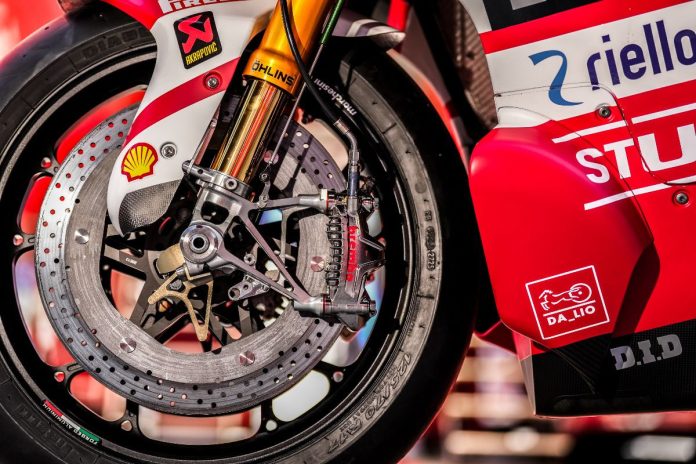
From 2027, Brembo will become the exclusive braking systems supplier for the WorldSBK class, building on a long-standing presence within the paddock where the majority of teams already rely on Brembo technology.
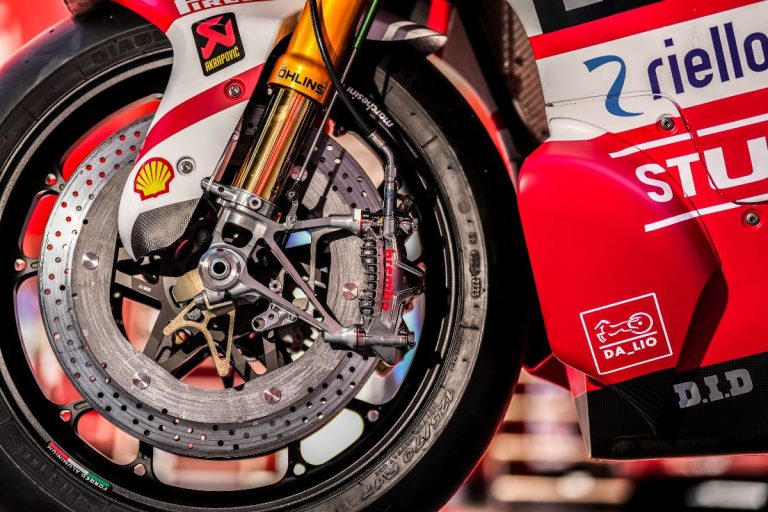
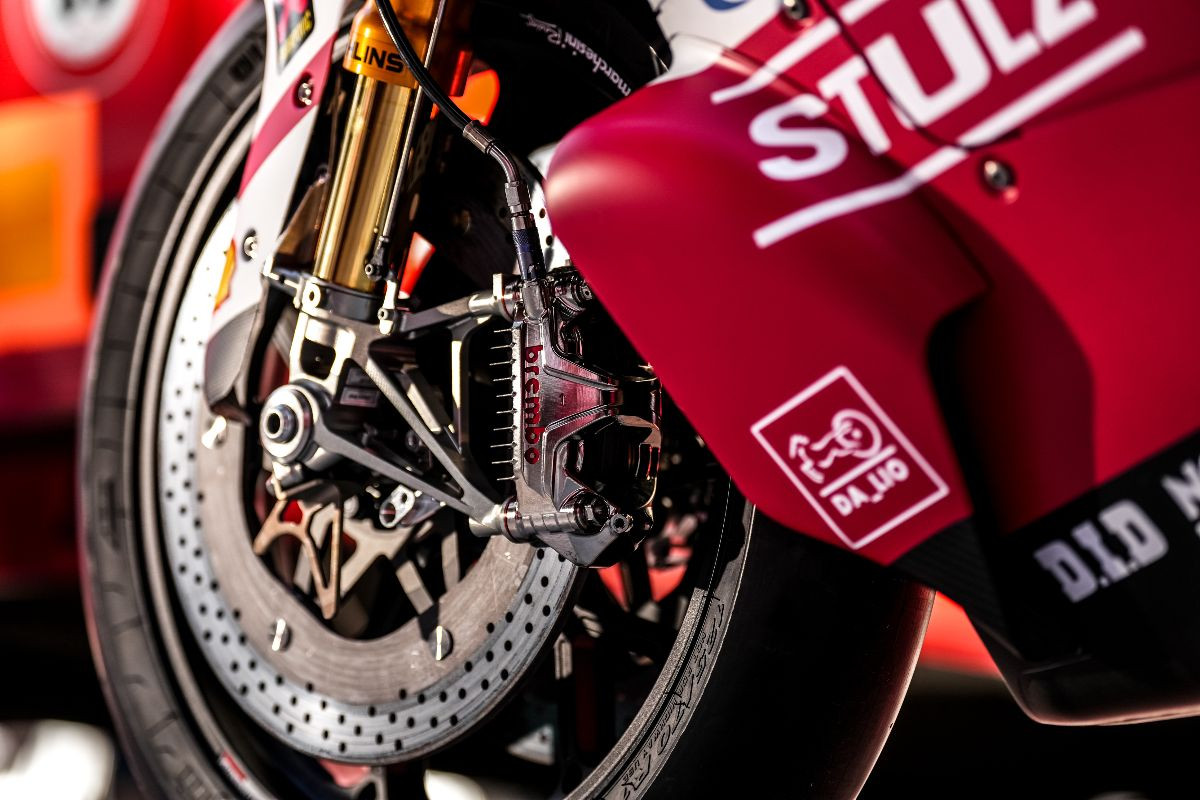
Making Brembo the exclusive brake system supplier in 2027 will eliminate competing brands and will likely increase costs. Brembo photo.
This marks an evolution in the Championship’s braking philosophy, reflecting the direction of modern production motorcycles and the broader evolution of the motorcycle industry.
Gregorio Lavilla, WorldSBK Executive Director:
“WorldSBK represents the closest link between racing and the machinery used by enthusiasts around the world. By expanding our collaboration with Brembo into this new technical chapter, we reinforce the Championship’s relevance as a platform where innovation developed in competition contributes to the future of production motorcycles. I would also like to thank the manufacturers, teams and the FIM for their collaboration and support in shaping a technical direction that keeps WorldSBK closely aligned with the development of the motorcycle industry.”
Mauro Piccoli, Brembo Chief Marketing Officer:
“In WorldSBK, performance is forged under pressure, corner after corner. With Hyction™, we are introducing a technology designed to give riders a more direct and predictable relationship with braking. Becoming the exclusive supplier from 2027 means playing an active role in the technical evolution of the Championship, helping define its new standards. WorldSBK is our ideal laboratory: here we work closely with the best riders and teams in the world, and what we develop on track directly fuels innovation for road applications as well.”
Current steel solutions used in WorldSBK are optimised around different specifications depending on circuit characteristics and operating conditions. The newest Hyction™ material is designed to deliver greater consistency, thermal stability and durability under the wide range of conditions encountered throughout a WorldSBK season.
Hyction™ technology also reflects a broader focus on operational efficiency and long-term sustainability, reducing the need for multiple specifications while improving component longevity and overall system optimisation.
As the world’s leading production-based motorcycle racing Championship, WorldSBK offers a uniquely relevant environment for the development of future technologies. The diversity of circuits, braking zones and racing conditions, combined with the demands placed on components by elite riders, creates an ideal real-world laboratory for material innovation.
This collaboration reflects Brembo’s long-standing “track to road” philosophy, where technologies developed and validated under racing conditions progressively inform future production applications for riders and enthusiasts worldwide.
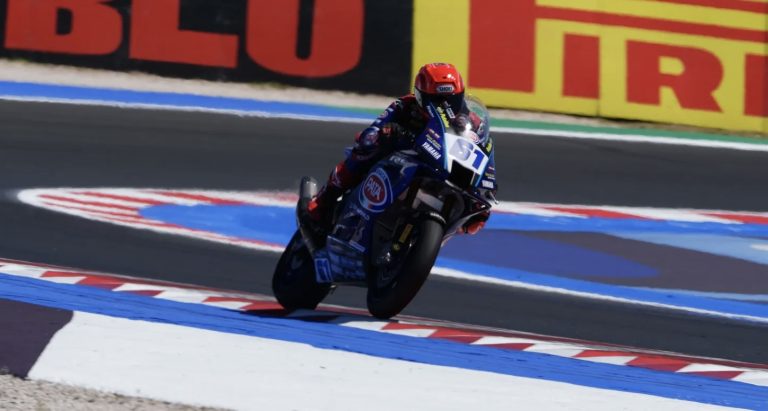
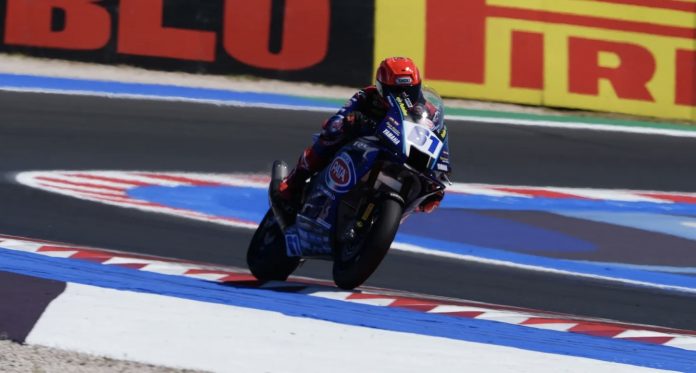
Can Oncu topped FIM Supersport World Championship Superpole qualifying Friday afternoon at Misano World Circuit Marco Simoncelli, in San Marino. Riding his Pata Yamaha Ten Kate Racing Yamaha YZF-R9 on Pirelli control tires, the Turkish rider lapped the 2.63-mile (4.23 km) course in 1:36.755 to top the field of 34 riders and earn pole position.
Albert Arenas was the best of the rest with a 1:36.855 on his AS BLU CRU Racing Team Yamaha YZF-R9, and Valentin Debise earned the third and final spot on the front row with a lap time of 1:36.869 on his Eastroc Evan Bros ZXMOTO 820RR.
Oncu holds on after late red flag for third pole of 2026 ahead of title leader Arenas and ZXMOTO’s Debise.
Debutant Hector Garzo crashed out with two minutes to go, prompting a mad dash to improve their starting positions
The mayhem at the Misano World Circuit “Marco Simoncelli” is a go as WorldSSP set off to lock in the best position possible in their first race in Italy of the 2026 campaign. Can Oncu (Pata Yamaha Ten Kate Racing) locked down pole position to kick off the FIM Supersport World Championship’s Pirelli Emilia-Romagna Round. His effort saw him tie Andrea Locatelli with seven WorldSSP poles for 14th-most all time. Following the Turk onto the front row will be Yamaha rider Albert Arenas (AS BLU CRU Racing Team), and ZXMOTO rider Valentin Debise (EASTROC ZXMOTO Factory Evan Bros Racing).
ONCU BACK IN POLE POSITION
Can Oncu (Pata Yamaha Ten Kate Racing) had a tough go of things at Aragon, in no small part due to his back of the grid penalty in Race 1. On Friday at Misano, the #61 sent himself to P1 with a time of 1’36.755s. His effort spells his third pole position of the season so far, and a dream start to his Italian weekend. With just under three minutes left, the new addition to the grid, Hector Garzo (Renzi Corse), crashed at the high-speed Turn 13, sending his bike tumbling into pieces, Garzo to the medical centre, and bringing out the red flag. After the restart, Oncu and others were only able to log one lap in the remaining two minutes, but the Turk won’t care as he will see daylight at lights out. Albert Arenas (AS BLU CRU Racing Team) languished around P10 throughout the session’s early going, before, around the ’20 mark, he jumped up to P3, going on to finish with a time of 1’36.855s and gained another position to finish in P2. Valentin Debise (EASTROC ZXMOTO Factory Evan Bros Racing) is back on the front row for the third consecutive round; he will hope to ride to a result better than his pair of P8’s at Aragon.
OETTL TO LEAD THE SECOND ROW
Philipp Oettl (Feel Racing WorldSSP Team) topped the morning’s Free Practice session and led at the start of the session. While he and his 1’37.022s time would go on to slide down to P4, the result stands as his best of the season so far. Matteo Ferrari (WRP Racing) continues his positive run of form as he hung around the provisional front row positions most of the session before the German pipped him by three hundredths of a second, leaving Ferrari in P5. Alessandro Zaccone (Ecosantagata Althea Racing Team) is looking to keep the ball rolling after a surprise Race 1 win at Aragon with a P6-earning 1’37.104s time.
TWO TRIUMPHS ON THE THIRD ROW
Tom Booth-Amos (PTR Triumph Factory Racing) rode in P4 early on, but after sliding down the order, the Brit recovered to P7 and finished just a tenth slower than Zaccone after the red flag. Oli Bayliss (PTR Triumph Factory Racing) continues to give his teammate a run for his money in the race for bragging rights of top Triumph rider. The Aussie finished in P8 with a strong 1’37.119s time. Mattia Casadei (D34G WorldSSP Racing Team) shone at home, his Ducati Panigale V2 sitting in a conditional P7 early on, and he went on to land a 1’37.131s time to take P9, landing his second-best result of the season so far. Rounding out the top ten, Jaume Masia (Orelac Racing VerdNatura) made a miraculous 1’37.169s recovery run late in the session to take P10. His result saved him after he was locked out of the top ten for most of the session, as his Superpole woes continue.
The top six from the WorldSSP Tissot Superpole session, full results here!
Nicolò Bulega led FIM Superbike World Championship Free Practice Two (FP2) Friday afternoon at Misano World Circuit Marco Simoncelli, in San Marino. Riding his Aruba.It Racing – Ducati Panigale V4R on spec Pirelli tires, the Italian rider covered the 2.63-mile (4.23 km) track in 1:32.235 to lead the field of 22 riders.
His teammate, Iker Lecuona was second-best with a 1:32.401.
Yari Montella was third with a 1:32.811 on his Barni Spark Racing Team Ducati Panigale V4R.
American Garrett Gerloff was 17th with a time of 1:33.657 on his Kawasaki ZX-10RR.
Bulega pips Lecuona by 0.166s on Friday at Misano, #7 crashes as Montella completes the top three.
The Championship leader topped the running on the opening day of action at his home round
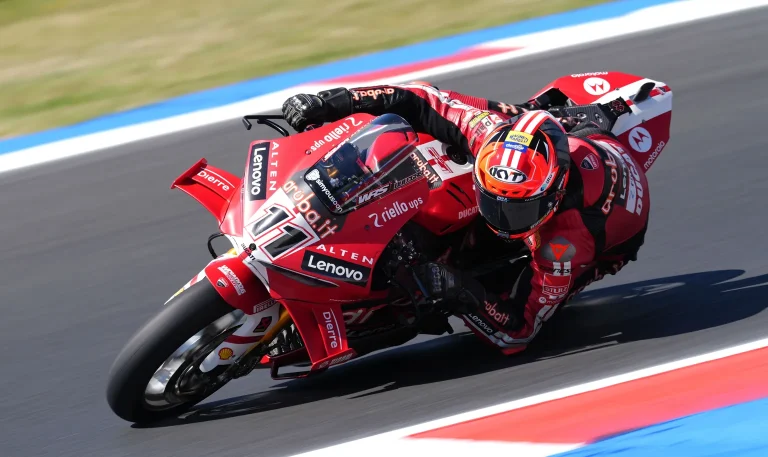
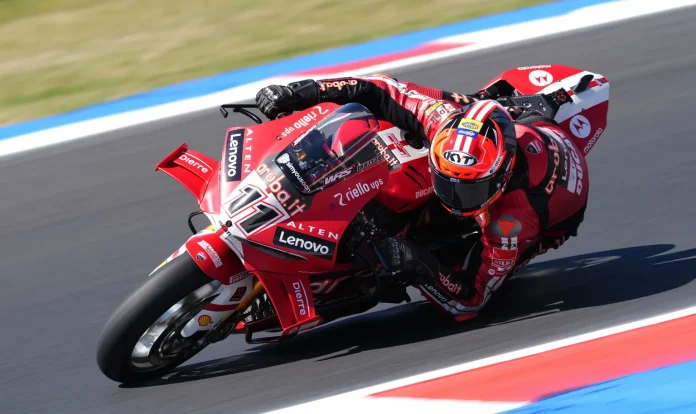
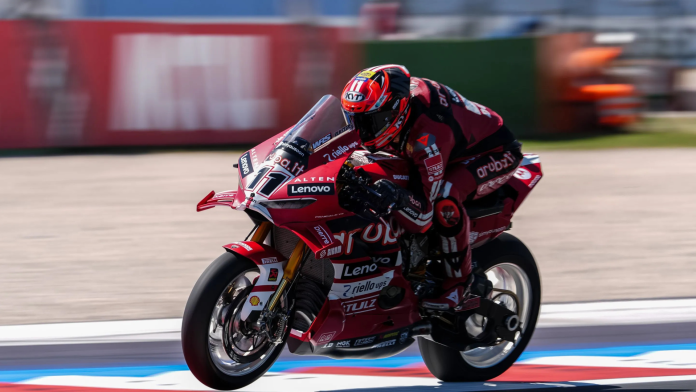
Nicolo Bulega (Aruba.it Racing – Ducati) made it a clean sweep on Friday at the Misano World Circuit “Marco Simoncelli” in the MOTUL FIM Superbike World Championship as he topped both Free Practice 1 and Free Practice 2. The #11 was 0.166s quicker than teammate Iker Lecuona in second as the first day of the Pirelli Emilia-Romagna Round concluded, with Yari Montella (Barni Spark Racing Team) rounding out the top three.
BULEGA FASTEST, LECUONA CRASHES
Bulega topped Free Practice 1 on Friday morning and backed that up in Free Practice 2, immediately setting a 1’32.265s to set the pace, before improving to a 1’32.235s later on as he completed a short stint at the start of the 45-minute session. Bulega’s teammate, Lecuona, was just under two tenths away from the #11 but had a dramatic afternoon when he crashed at Turn 8 with around 12 minutes remaining. He quickly brought his Panigale V4R back to the pits for repairs, and rejoined the track action in the final five minutes. His best time was a 1’32.401s. Montella completed the top three with a 1’32.811s, finishing a tenth ahead of Sam Lowes (ELF Marc VDS Racing Team) in P4. Alberto Surra (Motocorsa Racing) put in a late lap to claim P6 overall after posting a 1’33.014s, continuing his fine run of form, with Lorenzo Baldassarri (Team GoEleven) and Tarran Mackenzie (MGM Optical Express Racing) in eighth and ninth respectively. Tommy Bridewell (Superbike Advocates) finished in 11th with a 1’33.518s, half-a-tenth clear of Alvaro Bautista (Barni Spark Racing Team) in 12th.
BOTH BIMOTAS IN THE TOP SEVEN
Bimota secured a front row start at Misano in 2025, thanks to Axel Bassani (bimota by Kawasaki Racing Team), and they will be hoping to repeat that this year. ‘El Bocia’ finished Free Practice 2 in fifth place, after posting a 1’33.003s, and in the same position on the combined classification, as he finished two places and less than a tenth clear of teammate Alex Lowes.
VIERGE IN THE TOP TEN
Xavi Vierge (Pata Maxus Yamaha) led Yamaha’s charge on Friday as he finished in 10th place with a 1’33.431s, around 1.2s down on Bulega. GYTR GRT Yamaha WorldSBK Team duo Remy Gardner and Stefano Manzi finished line astern in 13th and 14th respectively, with just 0.036s separating the pair. Andrea Locatelli (Pata Maxus Yamaha) was just 0.009s away from Manzi as he finished in P15. Bahattin Sofuoglu (Motoxracing WorldSBK Team) finished in 20th place with his teammate, Mattia Rato, the last classified rider in 22nd; the #13 was one of only two riders not to improve their time in FP2.
GERLOFF DOWN THE ORDER
Garrett Gerloff (Kawasaki WorldSBK Team) started his Friday with a 2027 contract renewal in his pocket, although the Texan was the highest-placed rider not to improve his time in the afternoon. In the combined classification, his 1’33.640s was good enough for P16 overall.
OLIVEIRA RETURNS TO WORLD SUPERBIKE ACTION
Miguel Oliveira (ROKiT BMW Motorrad WorldSBK Team) made his comeback from injury at Misano after a medical check on Thursday, and he was reassessed again after FP1 before being declared fit. The Portuguese star finished in 17th place on the combined timesheets after posting a 1’33.645s. He’s joined this weekend by Michael van der Mark, who is standing in for Danilo Petrucci, who heads to Misano on the back of WorldSBK testing and an FIM EWC race last weekend. The Dutchman was one place and 0.182s behind his teammate.
CHANTRA ON TOP AT HONDA
Somkiat Chantra (Honda HRC) was the lead Honda rider on Friday in Italy, finishing in 19th place after posting a 1’34.002s. The Thai rider has Ryan Vickers as his teammate for the Emilia-Romagna Round, as Jake Dixon continues his rehabilitation from the wrist injury he sustained in Australia, and Vickers was the 21stfastest on the timesheets, posting a 1’34.693s.
Paola Ramos topped FIM World Women’s Circuit Racing Superpole qualifying Friday afternoon at Misano World Circuit Marco Simoncelli, in San Marino. Riding her Klint Racing Team Yamaha YZF-R7 on Pirelli control tires, Ramos lapped the 2.63-mile (4.23 km) course in 1:47.718 to top the field of 26 riders and earn pole position.
Maria Herrera was the best of the rest with a 1:48.007 on her Terra & Vita GRT Yamaha YZF-R7, and Beatriz Neila earned the third and final spot on the front row with a lap time of 1:48.045 on her Ampito Crescent Yamaha YZF-R7.
American Mallory Dobbs got 22nd on her YVS Sabadell Diva Racing Yamaha YZF-R7 with a time of 1:51.868.
Maiden pole: Ramos claims P1 in WorldWCR Superpole ahead of Herrera and Neila.Rookie Ramos took her first WorldWCR pole position by obliterating the all-time lap record at Misano.
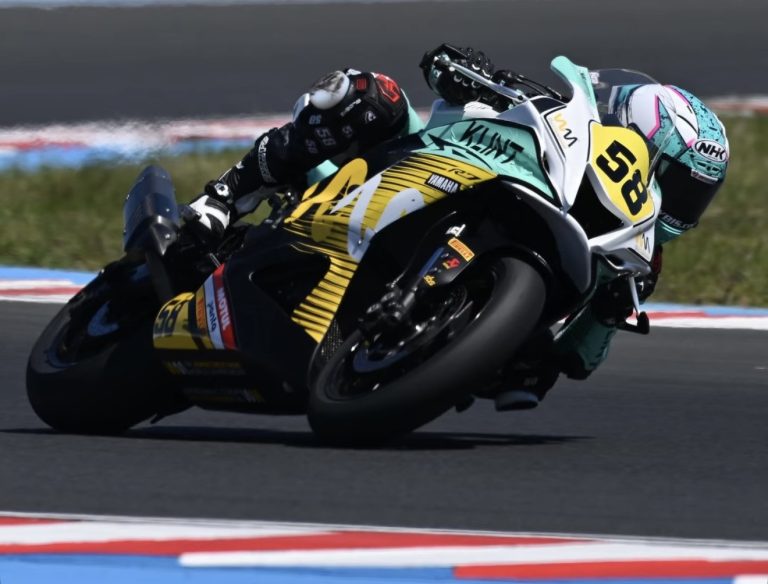
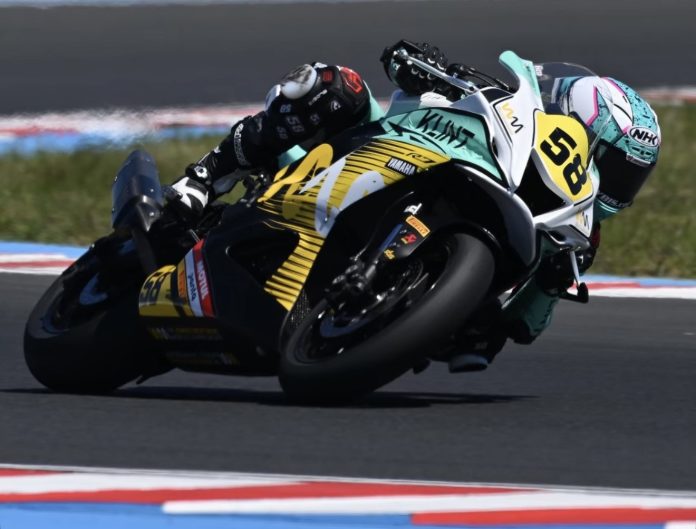
Paola Ramos (Klint Racing Team) put in a stunning lap time to claim pole position in the FIM Women’s Circuit Racing World Championship as she smashed the existing all-time lap record set in 2024. The #58 was the only rider in the 1’47s as she took her maiden pole position at the Misano World Circuit “Marco Simoncelli”, denying Maria Herrera (Terra & Vita GRT Yamaha WorldWCR) and Beatriz Neila (Ampito Crescent Yamaha) at the Pirelli Emilia-Romagna Round.
FIERCE FIGHT FOR POLE
Herrera left the pit lane a bit later than her rivals, but the reigning Champion wasted no time in getting up to speed as she set a 1’48.692s, immediately smashing the pole lap record at Misano. However, Ramos smashed that time with a 1’48.144s on her third flying lap, going half-a-second quicker than Herrera, before improving again to a 1’47.718s to break the all-time lap record, which was set in Race 2 in 2024. Ramos’ time remained unbeaten throughout the second half of the session as she claimed her first WorldWCR pole position. Herrera found seven tenths compared to her first effort, but remained 0.289s behind the #58 as she finished in second, while Beatriz Neila (Ampito Crescent Yamaha) completed the front row with a 1’48.045s.
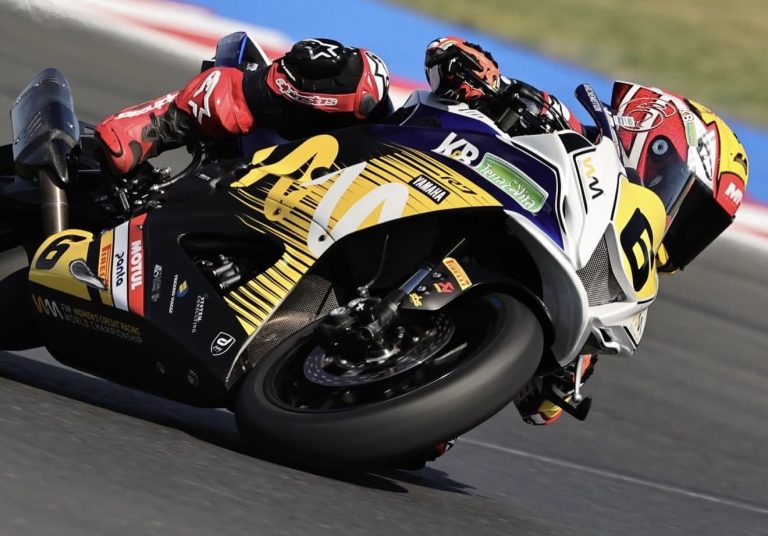
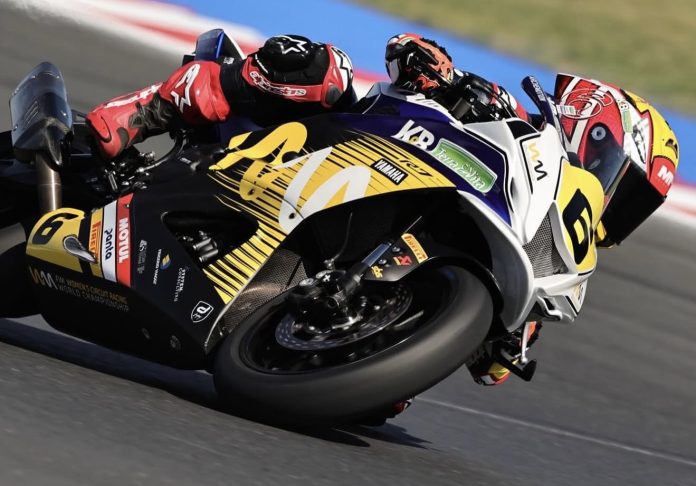
Maria Herrera (6) at Misano. Photo courtesy WorldSBK.
WILDCARD BRUNO IMPRESSES
Roberta Ponziani (Klint Racing Team) will go from the second row for her home round after claiming fourth after posting a 1’48.141s, after she usurped wildcard Joy Bruno (Team Trasimeno). The #80, making her WorldWCR debut at Misano, finished just 0.441s away from pole position. Karolina Danak (Prata Motor Sport) marked her first weekend with her new team by taking P6, improving her best grid position in WorldWCR by six places.
Beatriz Neila (36) at Misano. Photo courtesy WorldSBK.
ROUNDING OUT THE TOP TEN
Yvonne Cerpa (MotosCerpa-Gradara Corse) will lead away the third row after she claimed seventh place with a 1’49.198s, finishing ahead of Muklada Sarapuech (EEST NJT Racing Team) in eighth place; less than a tenth separated the Spanish and Thai riders. Chloe Jones (Monster Energy Crescent Yamaha) will complete the third row after she posted a 1’49.650s, with Justine Pedemonte (GMT94 Yamaha) rounding out the top ten.
Simon Jespersen was quickest during FIM Supersport World Championship Free practice Friday morning at Misano World Circuit Marco Simoncelli, in San Marino. Riding his EAB Racing Team Ducati Panigale V2 on Pirelli control tires, the Danish rider covered the 2.63-mile (4.23 km) road course in 1:37.242, topping the field of 34 riders.
Philipp Oettl was the best of the rest with a 1:37.390 on his Feel Racing Team Ducati Panigale V2.
Albert Arenas was third with a lap time of 1:37.434 on his AS BLU CRU Racing Team Yamaha YZF-R9.
Former MotoAmerica Supersport regular Valentin Debise was 14th with a 1:37.862 on his Eastroc Evan Bros ZXMOTO 820RR.
Nicolo Bulega was quickest during FIM Superbike World Championship Free Practice 1 (FP1) Friday morning at Misano World Circuit Marco Simoncelli, in San Marino. Riding his Pirelli-shod Aruba.it Racing Ducati Panigale V4R on the 2.63-mile (4.23 km) track, the Italian recorded a 1:32.733 to lead the field of 22 riders.
His teammate, Iker Lecuona, was the best of the rest with a 1:32.792.
Sam Lowes was third-fastest with a 1:33.039 on his ELF Marc VDS Racing Team Ducati Panigale V4R.
American Garrett Gerloff finished the opening session in 9th with a 1:33.640 on his Kawasaki ZX-10RR.
Bulega lays down a gauntlet in FP1 as he tops the opening session at Misano, Lecuona P2 and Sam Lowes P3.
The Championship leader was 0.059s clear of his rivals during the opening Free Practice session of the weekend.
Nicolo Bulega (Aruba.it Racing – Ducati) topped Free Practice 1 for the MOTUL FIM Superbike World Championship at the Misano World Circuit “Marco Simoncelli” by less than a tenth ahead of teammate Iker Lecuona, while Sam Lowes completed an all-Ducati top-three as the Pirelli Emilia-Romagna Round got underway.
Iker Lecuona (7) at Misano. Photo courtesy WorldSBK.
Bulega was quick out of the blocks as he surged to the top of the timesheets, eventually topping the times with a 1’32.733s as he claimed an early P1 in the first session of his home round. He was directly ahead of teammate Lecuona, who set a 1’32.792s to secure second; the factory Ducati duo were the only riders in the 1’32s bracket. Sam Lowes completed the top three, missing out on a 1’32s time by just 0.039s.
Sam Lowes (14) at Misano. Photo courtesy WorldSBK.
Yari Montella (Barni Spark Racing Team) will look to take a podium on home soil for the first time in WorldSBK this weekend and he started with P4 in Free Practice 1, setting a 1’33.115s. Alberto Surra (Motocorsa Racing) put in a couple of late, fast laps to move up to P5 with a 1’33.135s, just 0.020s behind Montella and four tenths away from Bulega. Lorenzo Baldassarri (Team GoEleven) rounded out the top six.
Xavi Vierge (Pata Maxus Yamaha) claimed Yamaha honours in FP1 with seventh place, posting a 1’33.446s. Axel Bassani (bimota by Kawasaki Racing Team) has been quick at Misano in the past and will hope to repeat that in 2026, starting off his weekend with P8, nine tenths away from Bulega. Garrett Gerloff (Kawasaki WorldSBK Team), fresh from a 2027 contract in his pocket, claimed ninth ahead of Remy Gardner (GYTR GRT Yamaha WorldSBK Team), who completed the top ten.
Miguel Oliveira (ROKiT BMW Motorrad WorldSBK Team) made his WorldSBK return at Misano, with the #88 finishing in 17th place with a 1’34.125s. He finished less than a tenth behind teammate Michael van der Mark, who is replacing Danilo Petrucci this weekend. Ryan Vickers (Honda HRC), replacing Jake Dixon, was 21st.
Maria Herrera was fastest during FIM World Women’s Circuit Racing Free Practice Friday morning at Misano World Circuit Marco Simoncelli, in San Marino. Riding her Terra & Vita GRT Yamaha YZF-R7 on Pirelli control tires, Herrera covered the 2.63-mile (4.23 km) road course in 1:49.256, topping the field of 26 riders.
Josephine Bruno was the runner-up on her Team Trasimeno Yamaha YZF-R7 with a time of 1:49.745, and Roberta Ponziani got third on her Klint Racing Team Yamaha YZF-R7 with a lap time of 1:50.012.
American Mallory Dobbs got 21st on her YVS Sabadell Diva Racing Yamaha YZF-R7 with a lap time of 1:53.300.
SBS Tributes the Mountain: Clean Sweep Across the Podium at the 2026 Isle of Man TT.
DOUGLAS – The 2026 Isle of Man TT belonged to SBS Partners In Racing. Across the headline solo races of the week, SBS-supported riders and teams locked out the podium time and again, finishing P1, P2 and P3 in the Superbike, Supersport, Senior and Sportbike contests on the Mountain Course. It was a week of speed, control and racecraft. It was also a week that underlined a simple truth: when the pressure is highest at the TT, the riders chasing victory must trust their brakes. They trust SBS.
That story started with Dean Harrison, who arrived on the Island in sharp form and never let it go. He opened qualifying by setting the fastest-ever opening qualifying lap in TT history at 133.925mph, then continued to top the times as race week took shape. Harrison looked comfortable, decisive, and fully in tune with the Mountain Course from the first run. By the time the race week began, he had already shown the field where the benchmark would sit.
Harrison then delivered in race trim. In the RST Superbike TT, Harrison took command from the front and never blinked. Riding for Honda Racing UK, he won by 15.5 seconds, set the fastest lap of the race at 134.892mph, and led home Peter Hickman in P2 and Michael Dunlop P3 to give SBS a full podium sweep in one of the week’s biggest contests. It was Harrison’s first Superbike TT victory, and his sixth TT win overall, but more than that, it was the ride of a man fully locked in with the circuit.
Dean Harrison (in the middle) celebrates his Superbike TT victory on the podium alongside Peter Hickman (on the left) and Michael Dunlop (on the right). Photo courtesy SBS.
The Supersport class told a similar story. In Race 1, Michael Dunlop overhauled Harrison after the opening lap and powered away to win by 24.47 seconds, with Hickman completing the podium in P3. Dunlop also set the fastest lap of the race at 127.672mph. In Race 2, the pattern repeated: Harrison hit the front early, Dunlop was relentless, and pit work plus outright rhythm swung the race his way. Dunlop claimed his 35th TT victory in Race 2, beating Harrison by 26.1 seconds, with Hickman again in P3. For SBS, it was another pair of podium lockouts in one of the TT’s most fiercely contested classes.
Then came the blue-riband race. The Senior TT is the one every rider wants. It has been the TT’s showpiece since 1911 – the race that carries the greatest weight in the paddock and the deepest legacy in road racing. This year’s edition was shaped by disruption, weather pressure, and a revised race schedule designed to protect the event’s headline contest. Even then, the drama did not stop. The original running of the race was red- flagged on lap two with Harrison already over 14 seconds clear and running at a pace that threatened the outright lap record. The race could not be declared on Friday because less than half the distance had been completed, but after the event’s conclusion, Harrison was officially declared the winner based on the positions at the end of lap one of the original start.
Honda Racing’s Dean Harrison with the Senior TT trophy after being officially confirmed as the race winner. Photo courtesy SBS.
That result mattered. Harrison’s opening lap of 135.166mph from a standing start was blistering. He was already stretching the field, already on lap-record pace before the stoppage, and already making the Senior race his own. The final classification gave him his seventh TT victory, his second Senior TT success, and a second double-winning week in succession. Behind him, Peter Hickman took P2 and Josh Brookes finished in P3, sealing yet another SBS clean sweep of the podium in the race that matters most. Even with the race modified by circumstance, the message was clear: SBS was at the front together with our Partners In Racing when the stakes were highest.
If Harrison was the week’s pace-setter on the big bikes, Michael Dunlop remained the relentless force of the equally epic classes. Riding for MD Racing, Dunlop continued to build on one of the greatest records the event has ever seen. Before race week, the Ballymoney rider was already being framed as the man to beat, with 33 wins and 100 starts in sight. By the end of the week, he had extended that legacy once again. He won both Supersport races and added the first Sportbike TT of the week aboard the Paton by MD Racing, setting a new lap record of 124.530mph in the process. In that race, Mike Browne took P2 and Paul Jordan P3, making it another all-SBS podium.
That Sportbike result was especially telling. Dunlop did not merely win; he controlled the race. He built the gap sector by sector, broke the class lap record, and crossed the line 28.775 seconds clear. Behind him, Browne and Jordan fought all the way to the flag, with just 0.663 seconds covering second and third. It was pure TT racing: flat-out commitment, narrow margins, and SBS riders occupying every step of the podium.
Jordan’s week also added another layer to the story. In the Superbike TT, he became the 31st member of the 130 Club with a lap of 130.656mph, another reminder of the level required even to break into the TT’s inner circle. It was one more sign of the pace carried by SBS-supported riders throughout the week – not only race winners, but a broader frontline of competitors pushing the standard upwards on every lap.
And no TT story is complete without John McGuinness. The Honda Racing veteran may not have stood on the podium this year, but his presence still framed the event. Now 30 years on from his first TT, McGuinness remains one of the race’s defining figures – a rider who knows every camber, every jump and, as they say in the paddock, every stone on the Mountain Course. He is a 23-time TT winner, a seven-time Senior TT winner, and the man who first broke the 130mph barrier around the Island back in 2007. His special 1996 tribute livery this year connected the present field to the deeper history of the TT itself.
That is what makes SBS’s 2026 TT impact so strong. It is not just about winning races. It is about winning with the riders and teams who define the event. Harrison brought outright speed and authority. Dunlop added more chapters to a record-breaking career with MD Racing. Hickman remained a constant factor at the sharp end. Brookes, Browne, and Jordan all played their part. McGuinness carried the event’s heritage forward. Across the classes, across the week, SBS was present at the front of the field and on every major podium.
For a brand built on racing, that matters. The TT is not a controlled circuit. It is not forgiving. It is 37.73 miles of walls, bumps, crests, and consequences. To win there means handling speed and pressure in equal measure. To dominate there means earning trust from riders who are chasing the hardest victory in road racing. In 2026, that trust was visible in both the qualifying and race week. SBS did not just show up at the Isle of Man TT. SBS owned the Mountain (through its Partners In Racing).
About SBS Friction A/S:
SBS Friction A/S is the preferred OE and aftermarket supplier of brake pads and friction solutions for motorcycles, scooters, ATV/UTVs, special cars, and industrial applications, including wind turbines. Our product portfolio also includes brake rotors, clutch kits, brake shoes, brake shims, and more. SBS has, as an industry-first, received full approval according to the ECE R90 regulation, providing riders with the most reliable quality in terms of design, manufacturing, and performance. Furthermore, SBS brake pads are reinforced with NUCAP NRS technology, which secures a mechanical and indestructible bonding of the compound. SBS is your reliable brake part supplier when you seek braking excellence. Go Ahead – we have the power to stop you! Visit https://www.sbsbrakes.com/
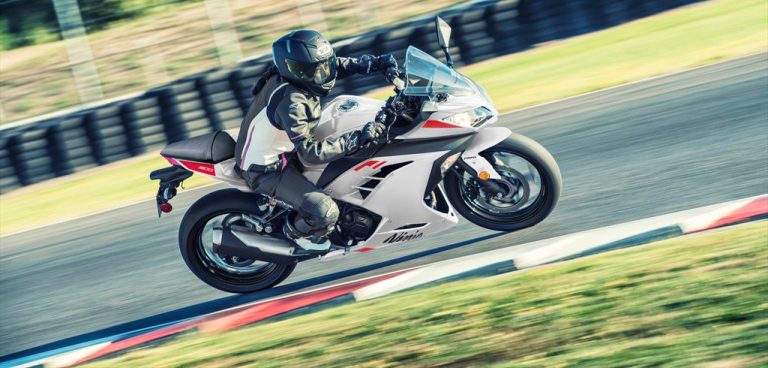
Kawasaki proudly announces the return of the iconicNinja® 300 ABS motorcycle for 2026, bringing back one ofthe most popular entry-level sportbikes to its lineup. True to the Ninja® name, the Ninja 300 boasts a 296cc liquid-cooled, parallel-twin engine, chassis stability inspired by Kawasaki’s supersport machines, and Assist & Slipper Clutch technology for smooth, confident riding.
Visually, the 2026 Ninja 300 ABS makes a bold statement with large-volume bodywork and sharp lines that echo its bigger Ninja siblings. Aggressive dual headlights, a sleek tail cowl, and premium fit-and-finish details give it a commanding presence. From every angle, the Ninja 300 ABS exudesKawasaki’s signature supersport styling while delivering practicality and everyday usability.
NINJA® 300 ABS HIGHLIGHTS:
● 296cc liquid-cooled, parallel-twin engine
● Assist & slipper clutch
● Lightweight, steel-tube diamond frame
● 110/70-17 and 140/70-17 sporty tires
● Low 30.9” seat height
● Aggressive Ninja family styling
Kawasaki Ninja® 300 ABS engine. Photo courtesy of Kawasaki.
ENGINE
The Ninja 300 ABS is powered by a highly refined 296cc liquid-cooled, parallel-twin engine that blends strong performance with everyday usability. Featuring a bore and stroke of 62.0 x 49.0mm, the engine benefits from lightweight pistons with flat crowns that maximize combustion efficiency, paired with a 10.6:1 compression ratio that helps reduce piston operating temperatures for improved reliability. The pistons’ hard alumite coating, along with a unique underside groove that channels cooling oil, further contributes to durability and consistent performance. With a maximum of 13,000 RPM, riders can enjoy a wide powerband that delivers excitement across the rev range.
Advanced engineering contributes to smoothness and rider comfort as well. A balancer shaft, partial rubber engine mounting, and carefully designed crank web work together to reduce vibration and deliver a refined, confidence-inspiring ride. The sleeveless, die-cast aluminum cylinder with platedbores – similar to Kawasaki’s high-performance Ninja® ZX™-10R and Ninja® ZX™-6R models –features an open-deck design for excellent heat dissipation. Cooling efficiency is further optimized by a rectangular coolant entrance, redesigned water impeller, and fins integrated into the large-capacity oilpan, all helping maintain stable engine temperatures under varying conditions.
The fuel injection system enhances both performance and efficiency. Dual throttle valves paired with 32mm main and 40.2mm sub-throttle valves regulate intake flow with precision, producing smooth, linear throttle response across the rpm range. Fine-atomizing injectors, delivering fuel with droplet sizes as small as 60 μm, ensure optimal combustion, while lightweight Denso ignition coils minimize interference. Together, these systems provide reliable starting, responsive power delivery, and favorable fuel consumption.
Complementing the intake system, the Ninja 300 ABS features a stainless steel 2-into-1 exhaust system engineered for both performance and practicality. The short silencer design allows for ample lean angles while its complex cross-section provides necessary volume and contributes to reduced noise output. Large header pipes, a curved center pipe tailored to engine displacement, and a single honeycomb catalyzer help ensure strong low- to mid-range performance. Rounding out the powertrain, Kawasaki’s Assist & Slipper Clutch – developed with racing feedback – offers a light clutch lever feel during normal riding and reduces back-torque during sudden downshifts, helping maintain stability and control.
INSTRUMENTATION
The Ninja 300 ABS features a modern instrument panel that reflects the advanced technology and premium quality of the Ninja series. A large, analog-style tachometer takes center stage, providing both excellent legibility and sporty appeal, while a multi-function LCD screen displays essential information such as speed, fuel level, clock, odometer, dual trip meters, and Kawasaki’s Economical Riding Indicator. This indicator helps riders maximize fuel efficiency by signaling when the bike is being ridden in a way that promotes favorable consumption. Thoughtful details enhance usability in all conditions – the tachometer’s dial adds a stylish touch during the day, while clear and colored transparent sections are backlit at night, ensuring quick, easy readability at a glance.
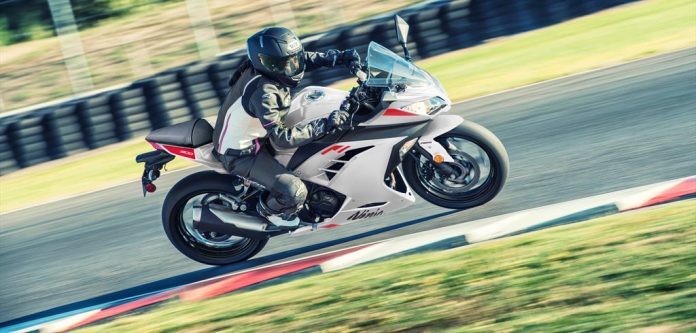
Right-side view of the Kawasaki Ninja® 300 ABS. Photo courtesy Kawasaki.
Left-side view of the Kawasaki Ninja® 300 ABS. Photo courtesy Kawasaki.
CHASSIS
The Ninja 300 ABS is built around a strong yet lightweight steel-tube diamond frame that delivers the durability and stability expected from a high-performance sportbike. Constructed with high-tensile steel main tubes reinforced with gusseting, the frame offers excellent longitudinal rigidity, giving riders a stable platform whether cornering or navigating city streets. Wide main tubes positioned beneath the fuel tank further enhance the balance between rigidity and flex, ensuring predictable handling and confidence.
Attention to comfort and ride quality is equally evident in the chassis design. Rubber-mounted front engine mounts help reduce vibration, creating a smoother, more refined ride that complements the Ninja 300 ABS’s responsive engine. At the rear, the seat rails are mounted at a flat angle, compensating for the height of the large rear tire and keeping the seat height accessible for a wide range of riders. The result is a chassis that not only performs at a high level but also offers comfort and approachability, making the Ninja 300 ABS a well-rounded machine.
SUSPENSION
The Ninja 300 ABS features a 37mm telescopic front fork tuned to balance comfort and performance. Its settings are designed to absorb bumps and imperfections on city streets while providing the firmer, more controlled feel riders expect when leaning into corners. Working in conjunction with the rigid steel-tube diamond frame, the fork contributes to smooth, stable handling that inspires confidence whether commuting or enjoying a spirited ride.
At the rear, Kawasaki’s Uni-Trak® linkage-equipped suspension system ensures consistent stability across a wide variety of road conditions and operating levels. The rear shock is calibrated with similar dual-purpose settings, offering comfort in everyday riding and a firmer response during sportier cornering. With five-step preload adjustability, riders can fine-tune the suspension to suit their weight, preferred riding style, or the added load of a passenger. Adjustments can be made using the onboard tool kit, giving the Ninja 300 ABS adaptability to meet the needs of both solo and two-up riding.
Inside the Kawasaki Ninja® 300 ABS: a closer look at its front brake system. Photo courtesy Kawasaki.
BRAKES & WHEELS
Braking performance on the Ninja 300 ABS is both powerful and reassuring, thanks to its large 290mm front petal disc with a dual-piston caliper that delivers strong stopping power and a natural feel at the lever. At the rear, a 220mm petal disc paired with a two-piston caliper ensures balanced, dependable braking. The petal disc design, shared with Kawasaki’s larger Ninja supersport machines, enhances heat dissipation for consistent performance, while resin brake pads provide excellent wear resistance and precise controllability. For added confidence, ABS is equipped as standard, giving riders reassurance in a variety of road and weather conditions.
The Ninja 300 ABS also reflects Kawasaki’s sportbike DNA in its wheel and tire setup. Stylish 10-spoke wheels contribute not only to the motorcycle’s premium appearance but also to its lightweight handling. The combination of a 110/70-17 front tire and a 140/70-17 rear tire enhances grip, stability, and cornering performance, underscoring the Ninja 300 ABS’s sporty character while maintaining everyday usability.
ERGONOMICS
The Ninja 300 ABS was designed with rider comfort and versatility in mind, offering ergonomics that suit a wide range of motorcyclists. A slightly forward-slanting seat paired with wide, raised handlebars creates a natural riding position that works equally well for sporty rides, commuting, or carrying a passenger. The handlebar position also enhances maneuverability, giving the bike light and responsive steering that enables handling in both city traffic and on backroads.
With a seat height of 30.9”, the Ninja 300 ABS is approachable for a range of riders. The seat narrows near the tank, allowing a more convenient reach to the ground, which boosts confidence when stopping or maneuvering at low speeds. The clutch lever is mounted close to the handlebar for easy operation, while supersport-style aluminum footpegs deliver a direct, connected feel when cornering. Together, these thoughtful ergonomic features make the Ninja 300 ABS comfortable, confidence-inspiring, and highly adaptable to a variety of riding situations.
STYLING
The Ninja 300 ABS carries forward the unmistakable styling language of Kawasaki’s Ninja family, giving it a true “big bike” presence despite its approachable displacement. Large-volume bodywork enhances the sense of size, while the sharp silhouette of the front cowl mirrors the aggressive lines of its larger Ninja siblings. A floating-style windscreen, mounted cleanly using only the mirror stay bolts, adds to the streamlined, elegant design, while the aggressive dual headlamp setup reinforces the supersport image and provides excellent illumination. The fairing’s integrated fin design and large ventilation holes are both functional and stylish, contributing to effective heat management while complementing the sleek look.
Attention to detail is evident throughout the design. Built-in front turn signals, sharp clear-lens rear indicators, and a redesigned compact front fender all contribute to the bike’s refined, sporty appearance. Kawasaki reduced the number of visible bolts by using a combination of hooks, push rivets, and selective fasteners– resulting in a seamless, high-quality finish. Mirrors enhance rearward visibility without increasing the bike’s width and can be conveniently folded in when parking, with stoppers allowing them to return to their original position.
From every angle, the Ninja 300 ABS projects an aggressive and modern image. The supersport-style fuel tank, flared and forward-slanting, not only enhances rider ergonomics but also houses a generous 4.4-gallon capacity for longer rides. At the rear, a short-style muffler, minimalist tail cowl, and wide rear tire combine to give the bike a muscular stance. Even the engine covers contribute to the styling, with the right-side crankcase cover stamped with the Kawasaki logo, underscoring the Ninja 300 ABS’s blend of practicality, performance, and signature Ninja sportbike design.
All trademarks, registered trademarks, logos, and copyrights are the property of their respective owners.
2026 Model Variations
Kawasaki Ninja® 300 ABS
Color: Pearl Blizzard White
MSRP: $4,999
Availability: Now
ABOUT KAWASAKI:
Kawasaki started full-scale production of motorcycles over a half century ago. The first Kawasaki motorcycle engine was designed based on technical know-how garnered from the development and production of aircraft engines, and Kawasaki’s entry into the motorcycle industry was driven by the company’s constant effort to develop new technologies. Numerous new Kawasaki models introduced over the years have helped shape the market, and in the process have created enduring legends based on their unique engineering, power, design and riding pleasure. In the future, Kawasaki Motors, Ltd. is committed to maintaining and furthering these strengths which will surely give birth to new legends. Kawasaki Motors Corp., U.S.A. markets and distributes Kawasaki motorcycles, ATVs, side x sides, and JET SKI® watercraft through a network of approximately 1,100 independent retailers, with close to an additional 7,700 retailers specializing in general purpose engines. Kawasaki and its affiliates employ nearly 3,100 people in the United States, with approximately 260 of them located at Kawasaki’s Foothill Ranch, California headquarters.
Kawasaki’s tagline, “Let the Good Times Roll.®”, is recognized worldwide. The Kawasaki brand is synonymous with powerful, stylish and category-leading vehicles. Information about Kawasaki’s complete line of powersports products and Kawasaki affiliates can be found on the Internet at www.kawasaki.com.
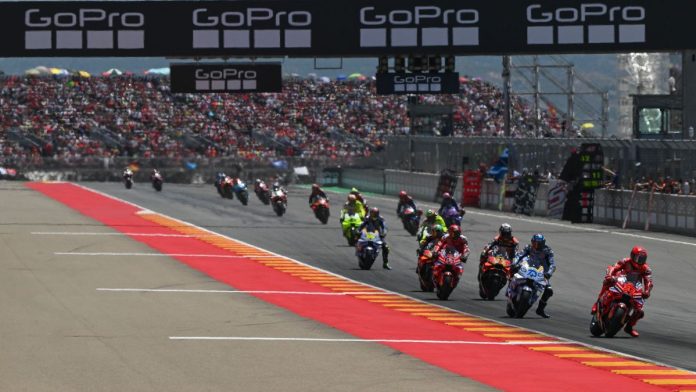
MotorLand Aragon will continue to host the Aragon Grand Prix in 2027 following a new agreement between the Government of Aragon and MotoGP. The renewed deal was officially announced today, the 10th of June, at an event held in Zaragoza.
Although the renewal to host the Grand Prix is only for 2027, the circuit will remain part of the MotoGP structure as an official reserve circuit from 2028 to 2031.
Carmelo Ezpeleta, CEO of MotoGP, said, “MotorLand Aragon has been an important partner for MotoGP for almost two decades, playing a key role in the championship’s presence in Spain. The renewal for 2027 reflects both the strength of that partnership and the value the event brings to the region. We are very pleased to continue working together and to keep Aragón as part of the MotoGP family in the years ahead as a reserve circuit.”
The staging of the Aragon Grand Prix represents an investment of €12 million and delivers significant returns for the region. On an annual basis, MotorLand Aragon generates close to €50 million in direct and indirect economic impact, with nearly half of this figure directly linked to the MotoGP Grand Prix.
Every year, more than 110,000 fans attend the Grand Prix weekend, with thousands travelling from across Spain and internationally. The event provides a major opportunity to showcase Aragon, while driving business for hotels, restaurants, and local commerce, often reaching full capacity during race weekend.
“We are pleased to confirm that the Aragon Grand Prix will return next year. Motorcycles will once again roar around the Alcañiz circuit in 2027,” said Aragon’s regional president, Jorge Azcon. “MotorLand will also continue to be linked to MotoGP between 2028 and 2031 as a reserve venue.”
The return of MotoGP to MotorLand Aragon in 2027 ensures that fans can once again experience world-class racing at one of the championship’s most technically demanding and spectacular venues.
World Superbike will require all teams and riders to use Brembo composite discs and other brake components in 2027 on. Brembo photo.
(Editorial Note: Requiring All Teams To Use Brembo Brakes Could Increase Costs)
WorldSBK enters a new technical era with Brembo Hyction™ braking disc technology from 2027
WorldSBK and Brembo open a new technical chapter in production-based motorcycle racing with the introduction of Brembo’s carboceramic braking material from the 2027 season.
Earlier this year, Brembo was announced as the Championship’s Official Innovation Partner. The introduction of Hyction™ technology represents the next step in this collaboration, with WorldSBK becoming the exclusive platform for the debut of the new material in motorcycle competition.
From 2027, Brembo will become the exclusive braking systems supplier for the WorldSBK class, building on a long-standing presence within the paddock where the majority of teams already rely on Brembo technology.
Making Brembo the exclusive brake system supplier in 2027 will eliminate competing brands and will likely increase costs. Brembo photo.
This marks an evolution in the Championship’s braking philosophy, reflecting the direction of modern production motorcycles and the broader evolution of the motorcycle industry.
Gregorio Lavilla, WorldSBK Executive Director:
“WorldSBK represents the closest link between racing and the machinery used by enthusiasts around the world. By expanding our collaboration with Brembo into this new technical chapter, we reinforce the Championship’s relevance as a platform where innovation developed in competition contributes to the future of production motorcycles. I would also like to thank the manufacturers, teams and the FIM for their collaboration and support in shaping a technical direction that keeps WorldSBK closely aligned with the development of the motorcycle industry.”
Mauro Piccoli, Brembo Chief Marketing Officer:
“In WorldSBK, performance is forged under pressure, corner after corner. With Hyction™, we are introducing a technology designed to give riders a more direct and predictable relationship with braking. Becoming the exclusive supplier from 2027 means playing an active role in the technical evolution of the Championship, helping define its new standards. WorldSBK is our ideal laboratory: here we work closely with the best riders and teams in the world, and what we develop on track directly fuels innovation for road applications as well.”
Current steel solutions used in WorldSBK are optimised around different specifications depending on circuit characteristics and operating conditions. The newest Hyction™ material is designed to deliver greater consistency, thermal stability and durability under the wide range of conditions encountered throughout a WorldSBK season.
Hyction™ technology also reflects a broader focus on operational efficiency and long-term sustainability, reducing the need for multiple specifications while improving component longevity and overall system optimisation.
As the world’s leading production-based motorcycle racing Championship, WorldSBK offers a uniquely relevant environment for the development of future technologies. The diversity of circuits, braking zones and racing conditions, combined with the demands placed on components by elite riders, creates an ideal real-world laboratory for material innovation.
This collaboration reflects Brembo’s long-standing “track to road” philosophy, where technologies developed and validated under racing conditions progressively inform future production applications for riders and enthusiasts worldwide.
Can Oncu topped FIM Supersport World Championship Superpole qualifying Friday afternoon at Misano World Circuit Marco Simoncelli, in San Marino. Riding his Pata Yamaha Ten Kate Racing Yamaha YZF-R9 on Pirelli control tires, the Turkish rider lapped the 2.63-mile (4.23 km) course in 1:36.755 to top the field of 34 riders and earn pole position.
Albert Arenas was the best of the rest with a 1:36.855 on his AS BLU CRU Racing Team Yamaha YZF-R9, and Valentin Debise earned the third and final spot on the front row with a lap time of 1:36.869 on his Eastroc Evan Bros ZXMOTO 820RR.
Oncu holds on after late red flag for third pole of 2026 ahead of title leader Arenas and ZXMOTO’s Debise.
Debutant Hector Garzo crashed out with two minutes to go, prompting a mad dash to improve their starting positions
The mayhem at the Misano World Circuit “Marco Simoncelli” is a go as WorldSSP set off to lock in the best position possible in their first race in Italy of the 2026 campaign. Can Oncu (Pata Yamaha Ten Kate Racing) locked down pole position to kick off the FIM Supersport World Championship’s Pirelli Emilia-Romagna Round. His effort saw him tie Andrea Locatelli with seven WorldSSP poles for 14th-most all time. Following the Turk onto the front row will be Yamaha rider Albert Arenas (AS BLU CRU Racing Team), and ZXMOTO rider Valentin Debise (EASTROC ZXMOTO Factory Evan Bros Racing).
ONCU BACK IN POLE POSITION
Can Oncu (Pata Yamaha Ten Kate Racing) had a tough go of things at Aragon, in no small part due to his back of the grid penalty in Race 1. On Friday at Misano, the #61 sent himself to P1 with a time of 1’36.755s. His effort spells his third pole position of the season so far, and a dream start to his Italian weekend. With just under three minutes left, the new addition to the grid, Hector Garzo (Renzi Corse), crashed at the high-speed Turn 13, sending his bike tumbling into pieces, Garzo to the medical centre, and bringing out the red flag. After the restart, Oncu and others were only able to log one lap in the remaining two minutes, but the Turk won’t care as he will see daylight at lights out. Albert Arenas (AS BLU CRU Racing Team) languished around P10 throughout the session’s early going, before, around the ’20 mark, he jumped up to P3, going on to finish with a time of 1’36.855s and gained another position to finish in P2. Valentin Debise (EASTROC ZXMOTO Factory Evan Bros Racing) is back on the front row for the third consecutive round; he will hope to ride to a result better than his pair of P8’s at Aragon.
OETTL TO LEAD THE SECOND ROW
Philipp Oettl (Feel Racing WorldSSP Team) topped the morning’s Free Practice session and led at the start of the session. While he and his 1’37.022s time would go on to slide down to P4, the result stands as his best of the season so far. Matteo Ferrari (WRP Racing) continues his positive run of form as he hung around the provisional front row positions most of the session before the German pipped him by three hundredths of a second, leaving Ferrari in P5. Alessandro Zaccone (Ecosantagata Althea Racing Team) is looking to keep the ball rolling after a surprise Race 1 win at Aragon with a P6-earning 1’37.104s time.
TWO TRIUMPHS ON THE THIRD ROW
Tom Booth-Amos (PTR Triumph Factory Racing) rode in P4 early on, but after sliding down the order, the Brit recovered to P7 and finished just a tenth slower than Zaccone after the red flag. Oli Bayliss (PTR Triumph Factory Racing) continues to give his teammate a run for his money in the race for bragging rights of top Triumph rider. The Aussie finished in P8 with a strong 1’37.119s time. Mattia Casadei (D34G WorldSSP Racing Team) shone at home, his Ducati Panigale V2 sitting in a conditional P7 early on, and he went on to land a 1’37.131s time to take P9, landing his second-best result of the season so far. Rounding out the top ten, Jaume Masia (Orelac Racing VerdNatura) made a miraculous 1’37.169s recovery run late in the session to take P10. His result saved him after he was locked out of the top ten for most of the session, as his Superpole woes continue.
The top six from the WorldSSP Tissot Superpole session, full results here!
Nicolò Bulega led FIM Superbike World Championship Free Practice Two (FP2) Friday afternoon at Misano World Circuit Marco Simoncelli, in San Marino. Riding his Aruba.It Racing – Ducati Panigale V4R on spec Pirelli tires, the Italian rider covered the 2.63-mile (4.23 km) track in 1:32.235 to lead the field of 22 riders.
His teammate, Iker Lecuona was second-best with a 1:32.401.
Yari Montella was third with a 1:32.811 on his Barni Spark Racing Team Ducati Panigale V4R.
American Garrett Gerloff was 17th with a time of 1:33.657 on his Kawasaki ZX-10RR.
Bulega pips Lecuona by 0.166s on Friday at Misano, #7 crashes as Montella completes the top three.
The Championship leader topped the running on the opening day of action at his home round
Nicolo Bulega (Aruba.it Racing – Ducati) made it a clean sweep on Friday at the Misano World Circuit “Marco Simoncelli” in the MOTUL FIM Superbike World Championship as he topped both Free Practice 1 and Free Practice 2. The #11 was 0.166s quicker than teammate Iker Lecuona in second as the first day of the Pirelli Emilia-Romagna Round concluded, with Yari Montella (Barni Spark Racing Team) rounding out the top three.
BULEGA FASTEST, LECUONA CRASHES
Bulega topped Free Practice 1 on Friday morning and backed that up in Free Practice 2, immediately setting a 1’32.265s to set the pace, before improving to a 1’32.235s later on as he completed a short stint at the start of the 45-minute session. Bulega’s teammate, Lecuona, was just under two tenths away from the #11 but had a dramatic afternoon when he crashed at Turn 8 with around 12 minutes remaining. He quickly brought his Panigale V4R back to the pits for repairs, and rejoined the track action in the final five minutes. His best time was a 1’32.401s. Montella completed the top three with a 1’32.811s, finishing a tenth ahead of Sam Lowes (ELF Marc VDS Racing Team) in P4. Alberto Surra (Motocorsa Racing) put in a late lap to claim P6 overall after posting a 1’33.014s, continuing his fine run of form, with Lorenzo Baldassarri (Team GoEleven) and Tarran Mackenzie (MGM Optical Express Racing) in eighth and ninth respectively. Tommy Bridewell (Superbike Advocates) finished in 11th with a 1’33.518s, half-a-tenth clear of Alvaro Bautista (Barni Spark Racing Team) in 12th.
BOTH BIMOTAS IN THE TOP SEVEN
Bimota secured a front row start at Misano in 2025, thanks to Axel Bassani (bimota by Kawasaki Racing Team), and they will be hoping to repeat that this year. ‘El Bocia’ finished Free Practice 2 in fifth place, after posting a 1’33.003s, and in the same position on the combined classification, as he finished two places and less than a tenth clear of teammate Alex Lowes.
VIERGE IN THE TOP TEN
Xavi Vierge (Pata Maxus Yamaha) led Yamaha’s charge on Friday as he finished in 10th place with a 1’33.431s, around 1.2s down on Bulega. GYTR GRT Yamaha WorldSBK Team duo Remy Gardner and Stefano Manzi finished line astern in 13th and 14th respectively, with just 0.036s separating the pair. Andrea Locatelli (Pata Maxus Yamaha) was just 0.009s away from Manzi as he finished in P15. Bahattin Sofuoglu (Motoxracing WorldSBK Team) finished in 20th place with his teammate, Mattia Rato, the last classified rider in 22nd; the #13 was one of only two riders not to improve their time in FP2.
GERLOFF DOWN THE ORDER
Garrett Gerloff (Kawasaki WorldSBK Team) started his Friday with a 2027 contract renewal in his pocket, although the Texan was the highest-placed rider not to improve his time in the afternoon. In the combined classification, his 1’33.640s was good enough for P16 overall.
OLIVEIRA RETURNS TO WORLD SUPERBIKE ACTION
Miguel Oliveira (ROKiT BMW Motorrad WorldSBK Team) made his comeback from injury at Misano after a medical check on Thursday, and he was reassessed again after FP1 before being declared fit. The Portuguese star finished in 17th place on the combined timesheets after posting a 1’33.645s. He’s joined this weekend by Michael van der Mark, who is standing in for Danilo Petrucci, who heads to Misano on the back of WorldSBK testing and an FIM EWC race last weekend. The Dutchman was one place and 0.182s behind his teammate.
CHANTRA ON TOP AT HONDA
Somkiat Chantra (Honda HRC) was the lead Honda rider on Friday in Italy, finishing in 19th place after posting a 1’34.002s. The Thai rider has Ryan Vickers as his teammate for the Emilia-Romagna Round, as Jake Dixon continues his rehabilitation from the wrist injury he sustained in Australia, and Vickers was the 21stfastest on the timesheets, posting a 1’34.693s.
Paola Ramos (58) at Misano. Photo courtesy KLINT Racing Team.
Paola Ramos topped FIM World Women’s Circuit Racing Superpole qualifying Friday afternoon at Misano World Circuit Marco Simoncelli, in San Marino. Riding her Klint Racing Team Yamaha YZF-R7 on Pirelli control tires, Ramos lapped the 2.63-mile (4.23 km) course in 1:47.718 to top the field of 26 riders and earn pole position.
Maria Herrera was the best of the rest with a 1:48.007 on her Terra & Vita GRT Yamaha YZF-R7, and Beatriz Neila earned the third and final spot on the front row with a lap time of 1:48.045 on her Ampito Crescent Yamaha YZF-R7.
American Mallory Dobbs got 22nd on her YVS Sabadell Diva Racing Yamaha YZF-R7 with a time of 1:51.868.
Maiden pole: Ramos claims P1 in WorldWCR Superpole ahead of Herrera and Neila.Rookie Ramos took her first WorldWCR pole position by obliterating the all-time lap record at Misano.
Paola Ramos (Klint Racing Team) put in a stunning lap time to claim pole position in the FIM Women’s Circuit Racing World Championship as she smashed the existing all-time lap record set in 2024. The #58 was the only rider in the 1’47s as she took her maiden pole position at the Misano World Circuit “Marco Simoncelli”, denying Maria Herrera (Terra & Vita GRT Yamaha WorldWCR) and Beatriz Neila (Ampito Crescent Yamaha) at the Pirelli Emilia-Romagna Round.
FIERCE FIGHT FOR POLE
Herrera left the pit lane a bit later than her rivals, but the reigning Champion wasted no time in getting up to speed as she set a 1’48.692s, immediately smashing the pole lap record at Misano. However, Ramos smashed that time with a 1’48.144s on her third flying lap, going half-a-second quicker than Herrera, before improving again to a 1’47.718s to break the all-time lap record, which was set in Race 2 in 2024. Ramos’ time remained unbeaten throughout the second half of the session as she claimed her first WorldWCR pole position. Herrera found seven tenths compared to her first effort, but remained 0.289s behind the #58 as she finished in second, while Beatriz Neila (Ampito Crescent Yamaha) completed the front row with a 1’48.045s.
Maria Herrera (6) at Misano. Photo courtesy WorldSBK.
WILDCARD BRUNO IMPRESSES
Roberta Ponziani (Klint Racing Team) will go from the second row for her home round after claiming fourth after posting a 1’48.141s, after she usurped wildcard Joy Bruno (Team Trasimeno). The #80, making her WorldWCR debut at Misano, finished just 0.441s away from pole position. Karolina Danak (Prata Motor Sport) marked her first weekend with her new team by taking P6, improving her best grid position in WorldWCR by six places.
Beatriz Neila (36) at Misano. Photo courtesy WorldSBK.
ROUNDING OUT THE TOP TEN
Yvonne Cerpa (MotosCerpa-Gradara Corse) will lead away the third row after she claimed seventh place with a 1’49.198s, finishing ahead of Muklada Sarapuech (EEST NJT Racing Team) in eighth place; less than a tenth separated the Spanish and Thai riders. Chloe Jones (Monster Energy Crescent Yamaha) will complete the third row after she posted a 1’49.650s, with Justine Pedemonte (GMT94 Yamaha) rounding out the top ten.
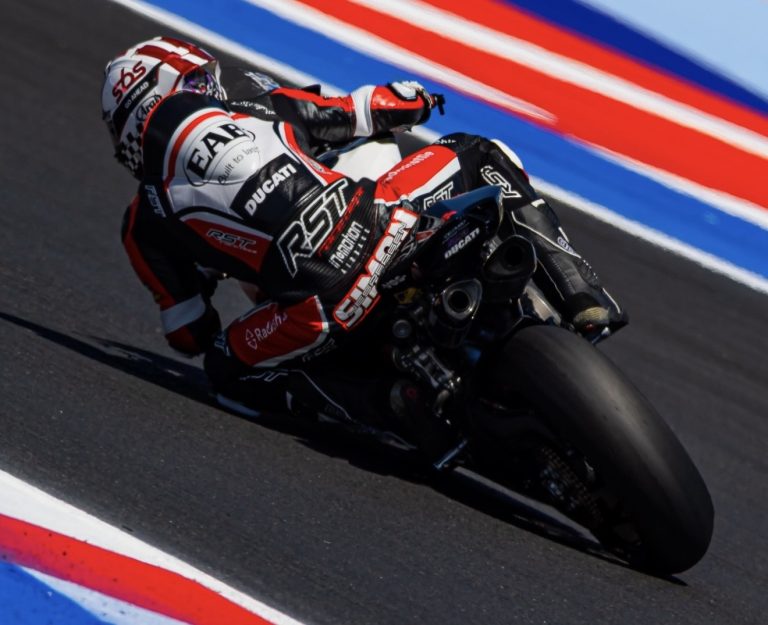
Simon Jespersen (43) at Misano. Photo courtesy EAB Team.
Simon Jespersen was quickest during FIM Supersport World Championship Free practice Friday morning at Misano World Circuit Marco Simoncelli, in San Marino. Riding his EAB Racing Team Ducati Panigale V2 on Pirelli control tires, the Danish rider covered the 2.63-mile (4.23 km) road course in 1:37.242, topping the field of 34 riders.
Philipp Oettl was the best of the rest with a 1:37.390 on his Feel Racing Team Ducati Panigale V2.
Albert Arenas was third with a lap time of 1:37.434 on his AS BLU CRU Racing Team Yamaha YZF-R9.
Former MotoAmerica Supersport regular Valentin Debise was 14th with a 1:37.862 on his Eastroc Evan Bros ZXMOTO 820RR.
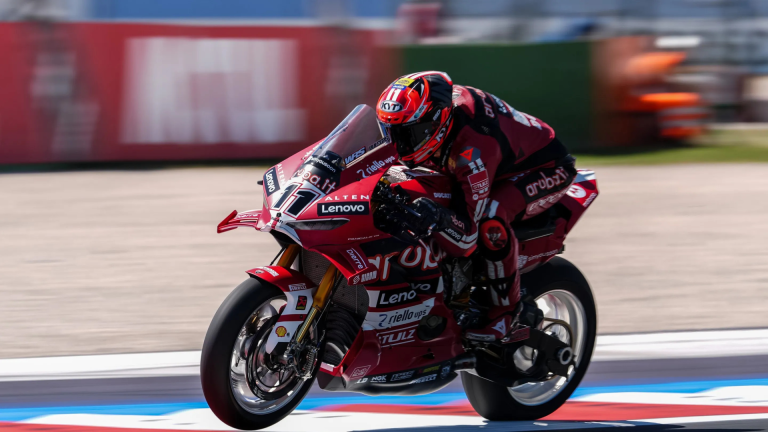
Nicolo Bulega (11) at Misano. Photo courtesy WorldSBK.
Nicolo Bulega was quickest during FIM Superbike World Championship Free Practice 1 (FP1) Friday morning at Misano World Circuit Marco Simoncelli, in San Marino. Riding his Pirelli-shod Aruba.it Racing Ducati Panigale V4R on the 2.63-mile (4.23 km) track, the Italian recorded a 1:32.733 to lead the field of 22 riders.
His teammate, Iker Lecuona, was the best of the rest with a 1:32.792.
Sam Lowes was third-fastest with a 1:33.039 on his ELF Marc VDS Racing Team Ducati Panigale V4R.
American Garrett Gerloff finished the opening session in 9th with a 1:33.640 on his Kawasaki ZX-10RR.
Bulega lays down a gauntlet in FP1 as he tops the opening session at Misano, Lecuona P2 and Sam Lowes P3.
The Championship leader was 0.059s clear of his rivals during the opening Free Practice session of the weekend.
Nicolo Bulega (Aruba.it Racing – Ducati) topped Free Practice 1 for the MOTUL FIM Superbike World Championship at the Misano World Circuit “Marco Simoncelli” by less than a tenth ahead of teammate Iker Lecuona, while Sam Lowes completed an all-Ducati top-three as the Pirelli Emilia-Romagna Round got underway.
Iker Lecuona (7) at Misano. Photo courtesy WorldSBK.
Bulega was quick out of the blocks as he surged to the top of the timesheets, eventually topping the times with a 1’32.733s as he claimed an early P1 in the first session of his home round. He was directly ahead of teammate Lecuona, who set a 1’32.792s to secure second; the factory Ducati duo were the only riders in the 1’32s bracket. Sam Lowes completed the top three, missing out on a 1’32s time by just 0.039s.
Sam Lowes (14) at Misano. Photo courtesy WorldSBK.
Yari Montella (Barni Spark Racing Team) will look to take a podium on home soil for the first time in WorldSBK this weekend and he started with P4 in Free Practice 1, setting a 1’33.115s. Alberto Surra (Motocorsa Racing) put in a couple of late, fast laps to move up to P5 with a 1’33.135s, just 0.020s behind Montella and four tenths away from Bulega. Lorenzo Baldassarri (Team GoEleven) rounded out the top six.
Xavi Vierge (Pata Maxus Yamaha) claimed Yamaha honours in FP1 with seventh place, posting a 1’33.446s. Axel Bassani (bimota by Kawasaki Racing Team) has been quick at Misano in the past and will hope to repeat that in 2026, starting off his weekend with P8, nine tenths away from Bulega. Garrett Gerloff (Kawasaki WorldSBK Team), fresh from a 2027 contract in his pocket, claimed ninth ahead of Remy Gardner (GYTR GRT Yamaha WorldSBK Team), who completed the top ten.
Miguel Oliveira (ROKiT BMW Motorrad WorldSBK Team) made his WorldSBK return at Misano, with the #88 finishing in 17th place with a 1’34.125s. He finished less than a tenth behind teammate Michael van der Mark, who is replacing Danilo Petrucci this weekend. Ryan Vickers (Honda HRC), replacing Jake Dixon, was 21st.
Maria Herrera (6) at Misano. Photo courtesy WorldWCR.
Maria Herrera was fastest during FIM World Women’s Circuit Racing Free Practice Friday morning at Misano World Circuit Marco Simoncelli, in San Marino. Riding her Terra & Vita GRT Yamaha YZF-R7 on Pirelli control tires, Herrera covered the 2.63-mile (4.23 km) road course in 1:49.256, topping the field of 26 riders.
Josephine Bruno was the runner-up on her Team Trasimeno Yamaha YZF-R7 with a time of 1:49.745, and Roberta Ponziani got third on her Klint Racing Team Yamaha YZF-R7 with a lap time of 1:50.012.
American Mallory Dobbs got 21st on her YVS Sabadell Diva Racing Yamaha YZF-R7 with a lap time of 1:53.300.
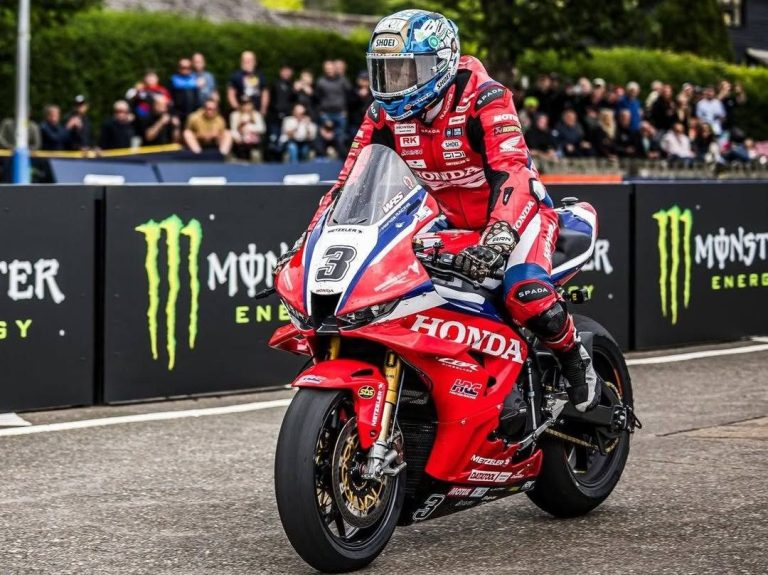
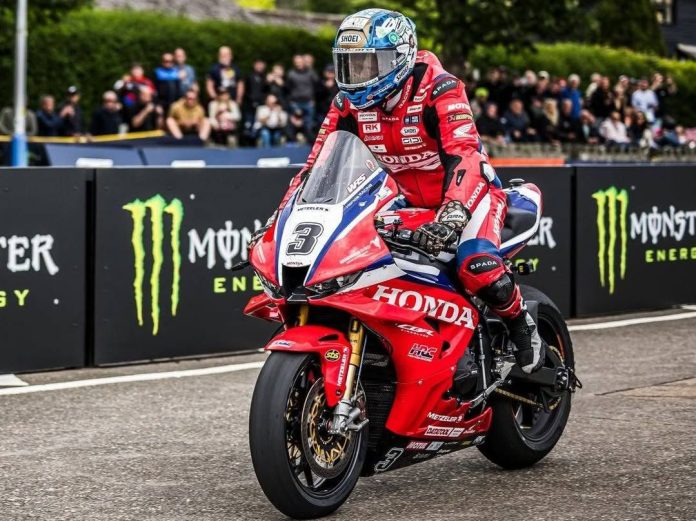
TT 2026 Senior Race Winner Dean Harrison. Photo courtesy SBS.
SBS Tributes the Mountain: Clean Sweep Across the Podium at the 2026 Isle of Man TT.
DOUGLAS – The 2026 Isle of Man TT belonged to SBS Partners In Racing. Across the headline solo races of the week, SBS-supported riders and teams locked out the podium time and again, finishing P1, P2 and P3 in the Superbike, Supersport, Senior and Sportbike contests on the Mountain Course. It was a week of speed, control and racecraft. It was also a week that underlined a simple truth: when the pressure is highest at the TT, the riders chasing victory must trust their brakes. They trust SBS.
That story started with Dean Harrison, who arrived on the Island in sharp form and never let it go. He opened qualifying by setting the fastest-ever opening qualifying lap in TT history at 133.925mph, then continued to top the times as race week took shape. Harrison looked comfortable, decisive, and fully in tune with the Mountain Course from the first run. By the time the race week began, he had already shown the field where the benchmark would sit.
Harrison then delivered in race trim. In the RST Superbike TT, Harrison took command from the front and never blinked. Riding for Honda Racing UK, he won by 15.5 seconds, set the fastest lap of the race at 134.892mph, and led home Peter Hickman in P2 and Michael Dunlop P3 to give SBS a full podium sweep in one of the week’s biggest contests. It was Harrison’s first Superbike TT victory, and his sixth TT win overall, but more than that, it was the ride of a man fully locked in with the circuit.
Dean Harrison (in the middle) celebrates his Superbike TT victory on the podium alongside Peter Hickman (on the left) and Michael Dunlop (on the right). Photo courtesy SBS.
The Supersport class told a similar story. In Race 1, Michael Dunlop overhauled Harrison after the opening lap and powered away to win by 24.47 seconds, with Hickman completing the podium in P3. Dunlop also set the fastest lap of the race at 127.672mph. In Race 2, the pattern repeated: Harrison hit the front early, Dunlop was relentless, and pit work plus outright rhythm swung the race his way. Dunlop claimed his 35th TT victory in Race 2, beating Harrison by 26.1 seconds, with Hickman again in P3. For SBS, it was another pair of podium lockouts in one of the TT’s most fiercely contested classes.
Then came the blue-riband race. The Senior TT is the one every rider wants. It has been the TT’s showpiece since 1911 – the race that carries the greatest weight in the paddock and the deepest legacy in road racing. This year’s edition was shaped by disruption, weather pressure, and a revised race schedule designed to protect the event’s headline contest. Even then, the drama did not stop. The original running of the race was red- flagged on lap two with Harrison already over 14 seconds clear and running at a pace that threatened the outright lap record. The race could not be declared on Friday because less than half the distance had been completed, but after the event’s conclusion, Harrison was officially declared the winner based on the positions at the end of lap one of the original start.
Honda Racing’s Dean Harrison with the Senior TT trophy after being officially confirmed as the race winner. Photo courtesy SBS.
That result mattered. Harrison’s opening lap of 135.166mph from a standing start was blistering. He was already stretching the field, already on lap-record pace before the stoppage, and already making the Senior race his own. The final classification gave him his seventh TT victory, his second Senior TT success, and a second double-winning week in succession. Behind him, Peter Hickman took P2 and Josh Brookes finished in P3, sealing yet another SBS clean sweep of the podium in the race that matters most. Even with the race modified by circumstance, the message was clear: SBS was at the front together with our Partners In Racing when the stakes were highest.
If Harrison was the week’s pace-setter on the big bikes, Michael Dunlop remained the relentless force of the equally epic classes. Riding for MD Racing, Dunlop continued to build on one of the greatest records the event has ever seen. Before race week, the Ballymoney rider was already being framed as the man to beat, with 33 wins and 100 starts in sight. By the end of the week, he had extended that legacy once again. He won both Supersport races and added the first Sportbike TT of the week aboard the Paton by MD Racing, setting a new lap record of 124.530mph in the process. In that race, Mike Browne took P2 and Paul Jordan P3, making it another all-SBS podium.
That Sportbike result was especially telling. Dunlop did not merely win; he controlled the race. He built the gap sector by sector, broke the class lap record, and crossed the line 28.775 seconds clear. Behind him, Browne and Jordan fought all the way to the flag, with just 0.663 seconds covering second and third. It was pure TT racing: flat-out commitment, narrow margins, and SBS riders occupying every step of the podium.
Jordan’s week also added another layer to the story. In the Superbike TT, he became the 31st member of the 130 Club with a lap of 130.656mph, another reminder of the level required even to break into the TT’s inner circle. It was one more sign of the pace carried by SBS-supported riders throughout the week – not only race winners, but a broader frontline of competitors pushing the standard upwards on every lap.
And no TT story is complete without John McGuinness. The Honda Racing veteran may not have stood on the podium this year, but his presence still framed the event. Now 30 years on from his first TT, McGuinness remains one of the race’s defining figures – a rider who knows every camber, every jump and, as they say in the paddock, every stone on the Mountain Course. He is a 23-time TT winner, a seven-time Senior TT winner, and the man who first broke the 130mph barrier around the Island back in 2007. His special 1996 tribute livery this year connected the present field to the deeper history of the TT itself.
That is what makes SBS’s 2026 TT impact so strong. It is not just about winning races. It is about winning with the riders and teams who define the event. Harrison brought outright speed and authority. Dunlop added more chapters to a record-breaking career with MD Racing. Hickman remained a constant factor at the sharp end. Brookes, Browne, and Jordan all played their part. McGuinness carried the event’s heritage forward. Across the classes, across the week, SBS was present at the front of the field and on every major podium.
For a brand built on racing, that matters. The TT is not a controlled circuit. It is not forgiving. It is 37.73 miles of walls, bumps, crests, and consequences. To win there means handling speed and pressure in equal measure. To dominate there means earning trust from riders who are chasing the hardest victory in road racing. In 2026, that trust was visible in both the qualifying and race week. SBS did not just show up at the Isle of Man TT. SBS owned the Mountain (through its Partners In Racing).
About SBS Friction A/S:
SBS Friction A/S is the preferred OE and aftermarket supplier of brake pads and friction solutions for motorcycles, scooters, ATV/UTVs, special cars, and industrial applications, including wind turbines. Our product portfolio also includes brake rotors, clutch kits, brake shoes, brake shims, and more. SBS has, as an industry-first, received full approval according to the ECE R90 regulation, providing riders with the most reliable quality in terms of design, manufacturing, and performance. Furthermore, SBS brake pads are reinforced with NUCAP NRS technology, which secures a mechanical and indestructible bonding of the compound. SBS is your reliable brake part supplier when you seek braking excellence. Go Ahead – we have the power to stop you! Visit https://www.sbsbrakes.com/
Kawasaki proudly announces the return of the iconicNinja® 300 ABS motorcycle for 2026, bringing back one ofthe most popular entry-level sportbikes to its lineup. True to the Ninja® name, the Ninja 300 boasts a 296cc liquid-cooled, parallel-twin engine, chassis stability inspired by Kawasaki’s supersport machines, and Assist & Slipper Clutch technology for smooth, confident riding.
Visually, the 2026 Ninja 300 ABS makes a bold statement with large-volume bodywork and sharp lines that echo its bigger Ninja siblings. Aggressive dual headlights, a sleek tail cowl, and premium fit-and-finish details give it a commanding presence. From every angle, the Ninja 300 ABS exudesKawasaki’s signature supersport styling while delivering practicality and everyday usability.
NINJA® 300 ABS HIGHLIGHTS:
● 296cc liquid-cooled, parallel-twin engine
● Assist & slipper clutch
● Lightweight, steel-tube diamond frame
● 110/70-17 and 140/70-17 sporty tires
● Low 30.9” seat height
● Aggressive Ninja family styling
Kawasaki Ninja® 300 ABS engine. Photo courtesy of Kawasaki.
ENGINE
The Ninja 300 ABS is powered by a highly refined 296cc liquid-cooled, parallel-twin engine that blends strong performance with everyday usability. Featuring a bore and stroke of 62.0 x 49.0mm, the engine benefits from lightweight pistons with flat crowns that maximize combustion efficiency, paired with a 10.6:1 compression ratio that helps reduce piston operating temperatures for improved reliability. The pistons’ hard alumite coating, along with a unique underside groove that channels cooling oil, further contributes to durability and consistent performance. With a maximum of 13,000 RPM, riders can enjoy a wide powerband that delivers excitement across the rev range.
Advanced engineering contributes to smoothness and rider comfort as well. A balancer shaft, partial rubber engine mounting, and carefully designed crank web work together to reduce vibration and deliver a refined, confidence-inspiring ride. The sleeveless, die-cast aluminum cylinder with platedbores – similar to Kawasaki’s high-performance Ninja® ZX™-10R and Ninja® ZX™-6R models –features an open-deck design for excellent heat dissipation. Cooling efficiency is further optimized by a rectangular coolant entrance, redesigned water impeller, and fins integrated into the large-capacity oilpan, all helping maintain stable engine temperatures under varying conditions.
The fuel injection system enhances both performance and efficiency. Dual throttle valves paired with 32mm main and 40.2mm sub-throttle valves regulate intake flow with precision, producing smooth, linear throttle response across the rpm range. Fine-atomizing injectors, delivering fuel with droplet sizes as small as 60 μm, ensure optimal combustion, while lightweight Denso ignition coils minimize interference. Together, these systems provide reliable starting, responsive power delivery, and favorable fuel consumption.
Complementing the intake system, the Ninja 300 ABS features a stainless steel 2-into-1 exhaust system engineered for both performance and practicality. The short silencer design allows for ample lean angles while its complex cross-section provides necessary volume and contributes to reduced noise output. Large header pipes, a curved center pipe tailored to engine displacement, and a single honeycomb catalyzer help ensure strong low- to mid-range performance. Rounding out the powertrain, Kawasaki’s Assist & Slipper Clutch – developed with racing feedback – offers a light clutch lever feel during normal riding and reduces back-torque during sudden downshifts, helping maintain stability and control.
INSTRUMENTATION
The Ninja 300 ABS features a modern instrument panel that reflects the advanced technology and premium quality of the Ninja series. A large, analog-style tachometer takes center stage, providing both excellent legibility and sporty appeal, while a multi-function LCD screen displays essential information such as speed, fuel level, clock, odometer, dual trip meters, and Kawasaki’s Economical Riding Indicator. This indicator helps riders maximize fuel efficiency by signaling when the bike is being ridden in a way that promotes favorable consumption. Thoughtful details enhance usability in all conditions – the tachometer’s dial adds a stylish touch during the day, while clear and colored transparent sections are backlit at night, ensuring quick, easy readability at a glance.
Right-side view of the Kawasaki Ninja® 300 ABS. Photo courtesy Kawasaki.
Left-side view of the Kawasaki Ninja® 300 ABS. Photo courtesy Kawasaki.
CHASSIS
The Ninja 300 ABS is built around a strong yet lightweight steel-tube diamond frame that delivers the durability and stability expected from a high-performance sportbike. Constructed with high-tensile steel main tubes reinforced with gusseting, the frame offers excellent longitudinal rigidity, giving riders a stable platform whether cornering or navigating city streets. Wide main tubes positioned beneath the fuel tank further enhance the balance between rigidity and flex, ensuring predictable handling and confidence.
Attention to comfort and ride quality is equally evident in the chassis design. Rubber-mounted front engine mounts help reduce vibration, creating a smoother, more refined ride that complements the Ninja 300 ABS’s responsive engine. At the rear, the seat rails are mounted at a flat angle, compensating for the height of the large rear tire and keeping the seat height accessible for a wide range of riders. The result is a chassis that not only performs at a high level but also offers comfort and approachability, making the Ninja 300 ABS a well-rounded machine.
SUSPENSION
The Ninja 300 ABS features a 37mm telescopic front fork tuned to balance comfort and performance. Its settings are designed to absorb bumps and imperfections on city streets while providing the firmer, more controlled feel riders expect when leaning into corners. Working in conjunction with the rigid steel-tube diamond frame, the fork contributes to smooth, stable handling that inspires confidence whether commuting or enjoying a spirited ride.
At the rear, Kawasaki’s Uni-Trak® linkage-equipped suspension system ensures consistent stability across a wide variety of road conditions and operating levels. The rear shock is calibrated with similar dual-purpose settings, offering comfort in everyday riding and a firmer response during sportier cornering. With five-step preload adjustability, riders can fine-tune the suspension to suit their weight, preferred riding style, or the added load of a passenger. Adjustments can be made using the onboard tool kit, giving the Ninja 300 ABS adaptability to meet the needs of both solo and two-up riding.
Inside the Kawasaki Ninja® 300 ABS: a closer look at its front brake system. Photo courtesy Kawasaki.
BRAKES & WHEELS
Braking performance on the Ninja 300 ABS is both powerful and reassuring, thanks to its large 290mm front petal disc with a dual-piston caliper that delivers strong stopping power and a natural feel at the lever. At the rear, a 220mm petal disc paired with a two-piston caliper ensures balanced, dependable braking. The petal disc design, shared with Kawasaki’s larger Ninja supersport machines, enhances heat dissipation for consistent performance, while resin brake pads provide excellent wear resistance and precise controllability. For added confidence, ABS is equipped as standard, giving riders reassurance in a variety of road and weather conditions.
The Ninja 300 ABS also reflects Kawasaki’s sportbike DNA in its wheel and tire setup. Stylish 10-spoke wheels contribute not only to the motorcycle’s premium appearance but also to its lightweight handling. The combination of a 110/70-17 front tire and a 140/70-17 rear tire enhances grip, stability, and cornering performance, underscoring the Ninja 300 ABS’s sporty character while maintaining everyday usability.
ERGONOMICS
The Ninja 300 ABS was designed with rider comfort and versatility in mind, offering ergonomics that suit a wide range of motorcyclists. A slightly forward-slanting seat paired with wide, raised handlebars creates a natural riding position that works equally well for sporty rides, commuting, or carrying a passenger. The handlebar position also enhances maneuverability, giving the bike light and responsive steering that enables handling in both city traffic and on backroads.
With a seat height of 30.9”, the Ninja 300 ABS is approachable for a range of riders. The seat narrows near the tank, allowing a more convenient reach to the ground, which boosts confidence when stopping or maneuvering at low speeds. The clutch lever is mounted close to the handlebar for easy operation, while supersport-style aluminum footpegs deliver a direct, connected feel when cornering. Together, these thoughtful ergonomic features make the Ninja 300 ABS comfortable, confidence-inspiring, and highly adaptable to a variety of riding situations.
STYLING
The Ninja 300 ABS carries forward the unmistakable styling language of Kawasaki’s Ninja family, giving it a true “big bike” presence despite its approachable displacement. Large-volume bodywork enhances the sense of size, while the sharp silhouette of the front cowl mirrors the aggressive lines of its larger Ninja siblings. A floating-style windscreen, mounted cleanly using only the mirror stay bolts, adds to the streamlined, elegant design, while the aggressive dual headlamp setup reinforces the supersport image and provides excellent illumination. The fairing’s integrated fin design and large ventilation holes are both functional and stylish, contributing to effective heat management while complementing the sleek look.
Attention to detail is evident throughout the design. Built-in front turn signals, sharp clear-lens rear indicators, and a redesigned compact front fender all contribute to the bike’s refined, sporty appearance. Kawasaki reduced the number of visible bolts by using a combination of hooks, push rivets, and selective fasteners– resulting in a seamless, high-quality finish. Mirrors enhance rearward visibility without increasing the bike’s width and can be conveniently folded in when parking, with stoppers allowing them to return to their original position.
From every angle, the Ninja 300 ABS projects an aggressive and modern image. The supersport-style fuel tank, flared and forward-slanting, not only enhances rider ergonomics but also houses a generous 4.4-gallon capacity for longer rides. At the rear, a short-style muffler, minimalist tail cowl, and wide rear tire combine to give the bike a muscular stance. Even the engine covers contribute to the styling, with the right-side crankcase cover stamped with the Kawasaki logo, underscoring the Ninja 300 ABS’s blend of practicality, performance, and signature Ninja sportbike design.
All trademarks, registered trademarks, logos, and copyrights are the property of their respective owners.
2026 Model Variations
Kawasaki Ninja® 300 ABS
Color: Pearl Blizzard White
MSRP: $4,999
Availability: Now
ABOUT KAWASAKI:
Kawasaki started full-scale production of motorcycles over a half century ago. The first Kawasaki motorcycle engine was designed based on technical know-how garnered from the development and production of aircraft engines, and Kawasaki’s entry into the motorcycle industry was driven by the company’s constant effort to develop new technologies. Numerous new Kawasaki models introduced over the years have helped shape the market, and in the process have created enduring legends based on their unique engineering, power, design and riding pleasure. In the future, Kawasaki Motors, Ltd. is committed to maintaining and furthering these strengths which will surely give birth to new legends. Kawasaki Motors Corp., U.S.A. markets and distributes Kawasaki motorcycles, ATVs, side x sides, and JET SKI® watercraft through a network of approximately 1,100 independent retailers, with close to an additional 7,700 retailers specializing in general purpose engines. Kawasaki and its affiliates employ nearly 3,100 people in the United States, with approximately 260 of them located at Kawasaki’s Foothill Ranch, California headquarters.
Kawasaki’s tagline, “Let the Good Times Roll.®”, is recognized worldwide. The Kawasaki brand is synonymous with powerful, stylish and category-leading vehicles. Information about Kawasaki’s complete line of powersports products and Kawasaki affiliates can be found on the Internet at www.kawasaki.com.
MotoGP Race at Aragon in 2025. Photo courtesy MotoGP.
MotorLand Aragon will continue to host the Aragon Grand Prix in 2027 following a new agreement between the Government of Aragon and MotoGP. The renewed deal was officially announced today, the 10th of June, at an event held in Zaragoza.
Although the renewal to host the Grand Prix is only for 2027, the circuit will remain part of the MotoGP structure as an official reserve circuit from 2028 to 2031.
Carmelo Ezpeleta, CEO of MotoGP, said, “MotorLand Aragon has been an important partner for MotoGP for almost two decades, playing a key role in the championship’s presence in Spain. The renewal for 2027 reflects both the strength of that partnership and the value the event brings to the region. We are very pleased to continue working together and to keep Aragón as part of the MotoGP family in the years ahead as a reserve circuit.”
The staging of the Aragon Grand Prix represents an investment of €12 million and delivers significant returns for the region. On an annual basis, MotorLand Aragon generates close to €50 million in direct and indirect economic impact, with nearly half of this figure directly linked to the MotoGP Grand Prix.
Every year, more than 110,000 fans attend the Grand Prix weekend, with thousands travelling from across Spain and internationally. The event provides a major opportunity to showcase Aragon, while driving business for hotels, restaurants, and local commerce, often reaching full capacity during race weekend.
“We are pleased to confirm that the Aragon Grand Prix will return next year. Motorcycles will once again roar around the Alcañiz circuit in 2027,” said Aragon’s regional president, Jorge Azcon. “MotorLand will also continue to be linked to MotoGP between 2028 and 2031 as a reserve venue.”
The return of MotoGP to MotorLand Aragon in 2027 ensures that fans can once again experience world-class racing at one of the championship’s most technically demanding and spectacular venues.
A “press release” is promotional text issued by a rider, team, company or organization to inform
the public about an event, product, or service from the issuer’s own point of view, and if deemed
to have news value, may be placed on roadracingworld.com as a service to our readers.
A press release is not an article written by Roadracingworld.com staffers. When a post is labeled with the words “press release”, it means that Roadracingworld.com is not responsible for its content and that Roadracingworld.com makes no guarantee that it is accurate. Not all press releases are posted and Roadracingworld.com may reject press releases if the content is too heavy on commercial promotion with little or no news value or if the press release contains obvious errors.
Accessibility
Accessibility modes
Epilepsy Safe Mode
Dampens color and removes blinks
This mode enables people with epilepsy to use the website safely by eliminating the risk of seizures that result from flashing or blinking animations and risky color combinations.
Visually Impaired Mode
Improves website's visuals
This mode adjusts the website for the convenience of users with visual impairments such as Degrading Eyesight, Tunnel Vision, Cataract, Glaucoma, and others.
Cognitive Disability Mode
Helps to focus on specific content
This mode provides different assistive options to help users with cognitive impairments such as Dyslexia, Autism, CVA, and others, to focus on the essential elements of the website more easily.
ADHD Friendly Mode
Reduces distractions and improve focus
This mode helps users with ADHD and Neurodevelopmental disorders to read, browse, and focus on the main website elements more easily while significantly reducing distractions.
Blindness Mode
Allows using the site with your screen-reader
This mode configures the website to be compatible with screen-readers such as JAWS, NVDA, VoiceOver, and TalkBack. A screen-reader is software for blind users that is installed on a computer and smartphone, and websites must be compatible with it.
Online Dictionary
Readable Experience
Content Scaling
Default
Text Magnifier
Readable Font
Dyslexia Friendly
Highlight Titles
Highlight Links
Font Sizing
Default
Line Height
Default
Letter Spacing
Default
Left Aligned
Center Aligned
Right Aligned
Visually Pleasing Experience
Dark Contrast
Light Contrast
Monochrome
High Contrast
High Saturation
Low Saturation
Adjust Text Colors
Adjust Title Colors
Adjust Background Colors
Easy Orientation
Mute Sounds
Hide Images
Hide Emoji
Reading Guide
Stop Animations
Reading Mask
Highlight Hover
Highlight Focus
Big Dark Cursor
Big Light Cursor
Cognitive Reading
Virtual Keyboard
Navigation Keys
Voice Navigation
Accessibility Statement
www.roadracingworld.com
November 10, 2026
Compliance status
We firmly believe that the internet should be available and accessible to anyone, and are committed to providing a website that is accessible to the widest possible audience,
regardless of circumstance and ability.
To fulfill this, we aim to adhere as strictly as possible to the World Wide Web Consortium’s (W3C) Web Content Accessibility Guidelines 2.1 (WCAG 2.1) at the AA level.
These guidelines explain how to make web content accessible to people with a wide array of disabilities. Complying with those guidelines helps us ensure that the website is accessible
to all people: blind people, people with motor impairments, visual impairment, cognitive disabilities, and more.
This website utilizes various technologies that are meant to make it as accessible as possible at all times. We utilize an accessibility interface that allows persons with specific
disabilities to adjust the website’s UI (user interface) and design it to their personal needs.
Additionally, the website utilizes an AI-based application that runs in the background and optimizes its accessibility level constantly. This application remediates the website’s HTML,
adapts Its functionality and behavior for screen-readers used by the blind users, and for keyboard functions used by individuals with motor impairments.
If you’ve found a malfunction or have ideas for improvement, we’ll be happy to hear from you. You can reach out to the website’s operators by using the following email
Screen-reader and keyboard navigation
Our website implements the ARIA attributes (Accessible Rich Internet Applications) technique, alongside various different behavioral changes, to ensure blind users visiting with
screen-readers are able to read, comprehend, and enjoy the website’s functions. As soon as a user with a screen-reader enters your site, they immediately receive
a prompt to enter the Screen-Reader Profile so they can browse and operate your site effectively. Here’s how our website covers some of the most important screen-reader requirements,
alongside console screenshots of code examples:
Screen-reader optimization: we run a background process that learns the website’s components from top to bottom, to ensure ongoing compliance even when updating the website.
In this process, we provide screen-readers with meaningful data using the ARIA set of attributes. For example, we provide accurate form labels;
descriptions for actionable icons (social media icons, search icons, cart icons, etc.); validation guidance for form inputs; element roles such as buttons, menus, modal dialogues (popups),
and others. Additionally, the background process scans all the website’s images and provides an accurate and meaningful image-object-recognition-based description as an ALT (alternate text) tag
for images that are not described. It will also extract texts that are embedded within the image, using an OCR (optical character recognition) technology.
To turn on screen-reader adjustments at any time, users need only to press the Alt+1 keyboard combination. Screen-reader users also get automatic announcements to turn the Screen-reader mode on
as soon as they enter the website.
These adjustments are compatible with all popular screen readers, including JAWS and NVDA.
Keyboard navigation optimization: The background process also adjusts the website’s HTML, and adds various behaviors using JavaScript code to make the website operable by the keyboard. This includes the ability to navigate the website using the Tab and Shift+Tab keys, operate dropdowns with the arrow keys, close them with Esc, trigger buttons and links using the Enter key, navigate between radio and checkbox elements using the arrow keys, and fill them in with the Spacebar or Enter key.Additionally, keyboard users will find quick-navigation and content-skip menus, available at any time by clicking Alt+1, or as the first elements of the site while navigating with the keyboard. The background process also handles triggered popups by moving the keyboard focus towards them as soon as they appear, and not allow the focus drift outside it.
Users can also use shortcuts such as “M” (menus), “H” (headings), “F” (forms), “B” (buttons), and “G” (graphics) to jump to specific elements.
Disability profiles supported in our website
Epilepsy Safe Mode: this profile enables people with epilepsy to use the website safely by eliminating the risk of seizures that result from flashing or blinking animations and risky color combinations.
Visually Impaired Mode: this mode adjusts the website for the convenience of users with visual impairments such as Degrading Eyesight, Tunnel Vision, Cataract, Glaucoma, and others.
Cognitive Disability Mode: this mode provides different assistive options to help users with cognitive impairments such as Dyslexia, Autism, CVA, and others, to focus on the essential elements of the website more easily.
ADHD Friendly Mode: this mode helps users with ADHD and Neurodevelopmental disorders to read, browse, and focus on the main website elements more easily while significantly reducing distractions.
Blindness Mode: this mode configures the website to be compatible with screen-readers such as JAWS, NVDA, VoiceOver, and TalkBack. A screen-reader is software for blind users that is installed on a computer and smartphone, and websites must be compatible with it.
Keyboard Navigation Profile (Motor-Impaired): this profile enables motor-impaired persons to operate the website using the keyboard Tab, Shift+Tab, and the Enter keys. Users can also use shortcuts such as “M” (menus), “H” (headings), “F” (forms), “B” (buttons), and “G” (graphics) to jump to specific elements.
Additional UI, design, and readability adjustments
Font adjustments – users, can increase and decrease its size, change its family (type), adjust the spacing, alignment, line height, and more.
Color adjustments – users can select various color contrast profiles such as light, dark, inverted, and monochrome. Additionally, users can swap color schemes of titles, texts, and backgrounds, with over seven different coloring options.
Animations – person with epilepsy can stop all running animations with the click of a button. Animations controlled by the interface include videos, GIFs, and CSS flashing transitions.
Content highlighting – users can choose to emphasize important elements such as links and titles. They can also choose to highlight focused or hovered elements only.
Audio muting – users with hearing devices may experience headaches or other issues due to automatic audio playing. This option lets users mute the entire website instantly.
Cognitive disorders – we utilize a search engine that is linked to Wikipedia and Wiktionary, allowing people with cognitive disorders to decipher meanings of phrases, initials, slang, and others.
Additional functions – we provide users the option to change cursor color and size, use a printing mode, enable a virtual keyboard, and many other functions.
Browser and assistive technology compatibility
We aim to support the widest array of browsers and assistive technologies as possible, so our users can choose the best fitting tools for them, with as few limitations as possible. Therefore, we have worked very hard to be able to support all major systems that comprise over 95% of the user market share including Google Chrome, Mozilla Firefox, Apple Safari, Opera and Microsoft Edge, JAWS and NVDA (screen readers).
Notes, comments, and feedback
Despite our very best efforts to allow anybody to adjust the website to their needs. There may still be pages or sections that are not fully accessible, are in the process of becoming accessible, or are lacking an adequate technological solution to make them accessible. Still, we are continually improving our accessibility, adding, updating and improving its options and features, and developing and adopting new technologies. All this is meant to reach the optimal level of accessibility, following technological advancements. For any assistance, please reach out to