Home Blog Page 7108

More Reader Comments Regarding Quick Shifters, And What’s Behind Their Proposed Legalization

0

Copyright 2002, Roadracing World Publishing, Inc.


Just a note on Quick Shifters…

I remember reading that the World Superbike Ducati team had experimented with a number of shifting devices ranging from quick shifters to button/automatic shifters (Formula-One-like) and had determined to their surprise that there was no discernible advantage on track (rider being Troy Baylis). That being no decrease in lap times consistently. And, having found this out they opted out of putting them on the bike.

I find it hard to believe that this is completely true but I am very skeptical of a-half-second gain in lap times from a quick shifter. Most modern transmissions are so well made and smooth that a concentrated effort to maximize shift speed manually might just add up to a bit better/smoother rider in the end anyway. If half the privateers I have seen race in the Pros (me included) spent that kind of money making sure their suspension and set-up was done by a professional – they’d be a lot more than a-half-second a lap faster.

Given the fact that it seems quick shifters are easily hidden and already in use by some of the Pro teams it probably won’t get you any closer to the front anyway. Just one more thing to go wrong and cost you money.

It seems to me tighter restrictions on race weekend tire usage or testing or “one off” factory parts would be a more worthwhile cause to expend all of this editorial energy on.

Dean de St. Croix
Toronto, Ontario, Canada


I completely fail to see the logic in Tom Houseworth’s letter. It doesn’t matter how much time the quick-shifter is worth, the point is that it’s worth something, it’s not a stock part, and it costs money to buy, maintain and set-up.

Therefore allowing it in SS-based class extends the advantage that the well-financed (the factories) have over the not-so-well-financed (the privateers). It goes against the two basic reasons SS classes exist, to race bikes as close to their showroom configuration as possible and to make the racing as even as possible.

Is there any intelligent life at the AMA?

Rich Desmond
Oklahoma City, Oklahoma


Regarding Houseworth’s comments on the quick-shift set-up: I’m aware of Tom Houseworth’s accomplishments & respect his position in the industry. Regarding his comments on quick-shifter set-ups, sure, they’re worth half-a-second. I know that & so do many other guys. So, when we all get them we’ll be going half-a-second faster & we’ll all have spent X amount more dollars on a class which is supposed to be a “cost saving” class.

You know damn well that once they’re allowed, privateers will have the $800 model & the factory guys will have the $2500 model. I see the point of going faster, but the whole point of dis-allowing a certain modification isn’t to keep racers from going fast, it’s to keep the playing field level. Once they allow quick-shifters it will cost that much more & be one more thing to worry about in order to keep the playing field level. Talk to anyone who really knows what’s going on in Supersport today & they’ll tell you how far from level the playing field already is. Talk to a privateer doing the whole series & see if he’d like to spend $800 on a quick-shifter on top of all his other annual expenses so he can try keep up with the factory quick-shift system.

Make them illegal & everyone is equal (in this regard, at least) which is the way the class was designed. Just another case of the AMA bowing to pressure from the factories. Isn’t the first time, sure it won’t be the last.

Enzo Assainte
Bergenfield, New Jersey


(Editorial note: According to the proposal’s author, the real reason behind the proposal to allow quick-shifters is the belief that the factory teams are already using them, built into the black-box and activated by disguised switches, and the belief that AMA Pro Racing cannot enforce existing rules banning the use of quick-shifters.)

New Triumph 600 Introduced In England

0

From a press release issued by Triumph:

Triumph Introduces New Superports Daytona 600 at NEC Show in Birmingham, UK


Newnan, GA – – Some three years since its introduction the Triumph TT600 has evolved into one of the most complete all-round 600cc sports machines available, winning many fans for its sheer usability and almost perfect chassis.

So, with the TT600 cementing its place in the model line-up for 2003 Triumph have responded to their customers’ desire for a fully focused -– yet very distinct and very British – supersports middleweight machine. Thus, the Daytona 600 is now reality.


The Daytona name is the stuff of legends for Triumph Motorcycles, and not used lightly. The subtle, discreet logo on the Daytona 600’s sleek bodywork reinforces just what this new bike is about; power, poise and complete control. Fully aware of its lineage Triumph has honed the Daytona 600 into an individual package that provides complete rider involvement and satisfaction, on every level.

Producing a competitive 600cc supersports machine is no easy task and, using knowledge learnt from the TT600 combined with major investment in new technology and new manufacturing processes, Triumph has done just that.


Also, impressed with the need for individuality Triumph has, in the Daytona 600, produced a machine that not only looks very different thanks to its purposeful styling and understated paintwork, but is also built with a great level of care and attention to detail – harking back to the greatest traditions of British engineering and craftsmanship.


Design Brief

Triumph’s engineers had two things in mind in the early stages of the Daytona 600’s development: less weight, more power. Simple on paper – make it lighter and faster – but much harder in reality when success in the supersport class revolves around fractions saved here, linked to tiny gains there.


But every motorcycle is the sum of its parts, so Triumph looked very hard at every single part produced during the Daytona 600’s prototype development. Finite Element Analysis (FEA) was used heavily in the design of the Daytona 600, meaning simply that highly sophisticated computer programs exhaustively examined what sort of stress any given part would be subjected to, applying strength where needed and saving mass – therefore weight – where not.

Massive work went into the Daytona’s 599cc engine – its heart and lungs. Operating efficiency in every single area was examined; friction reduced and weight saved (see Engine Tech). The target output – a super strong 112ps – was reached but not at the expense of drivability and, by utilizing Keihin twin-butterfly EFI throttle bodies and electronic ‘brain,’ throttle response is razor sharp and precise.

Triumph have proved they can build brilliant handling motorcycles, but the Daytona 600’s chassis benefited greatly from both FEA and extensive road and track evaluation at locations all over Europe.

The Daytona 600’s aerodynamically proven bodywork breaks new ground for Triumph and is an indication of the work that’s been put in by the bike’s design team. Its look, although very aggressive (as befits a supersports machine) is multi-faceted, carved with subtle ellipses giving the Daytona 600 a strong, individual presence

There was one other thing on the mind of Triumph’s engineers – class. They wanted the Daytona 600 to be a class act in every respect and to this end the solid color paint schemes are subtle, and perfectly complemented by the satin black frame and swingarm finish.


Development

Engine Tech
A supersports 600cc engine is perhaps the most finely balanced of all motorcycle power plants, packing a great deal of power into a very small space. Fuel injection has proven key in unleashing ever greater horsepower numbers from a given cubic capacity and Triumph have long been involved in pioneering this technology for motorcycle application.

A great deal of work has gone into the Daytona 600’s intake system, maximizing efficiency and therefore power. The new intake duct at the front of the fairing is placed in a positive pressure area, feeding approximately 15% more air to the 8.5-liter air box. Japanese specialist manufacturer Keihin worked very closely with Triumph during the R&D stage of the Daytona 600’s life, and have developed the four twin butterfly 38mm diameter throttle bodies specifically for the 599cc engine. To improve airflow and atomization the first butterfly is controlled by the throttle while the injector itself has been repositioned in the throttle body to inject fuel – at full throttle – directly at the back of the first butterfly. The Keihin Electronic Control Module controls the second butterfly, greatly improving the all-round drivability of the power unit. All four intake trumpet lengths have been optimized for intake pulse tuning and new transition pieces employed for the throttle bodies. In addition, a cam’d throttle actuator gives a 30% reduction in throttle travel.

The Keihin ECM utilizes a 32-bit processor. The Electronic Fuel Injection system itself is fed information from a total of seven sensors; a Manifold Air Pressure (MAP) sensor, located after the first butterfly gives a very precise gauge of the amount of fuel needed, while a barometric pressure sensor measures ambient air pressure. The wheel speed sensor monitors velocity and ensures that fuelling and ignition are perfectly matched to throttle – and crankshaft – position, which have their own sensors. The air box and water temperatures are also constantly monitored.

The Daytona 600’s engine internals have received major attention from Triumph’s engineers. Both inlet and exhaust ports have benefited from time on the flow-bench and correspondingly flow more fuel; the inlet flows 2% extra (at 9mm lift) while the exhaust flows 11% more (at 8mm lift). The combustion chamber and ports are now CNC machined, allowing much greater accuracy and consistent performance. The thermostat has been moved into the head casting for improved aesthetics while the temperature sensor is sited at the back of the head for more precise readings.

The lightweight exhaust system is made from 1.2mm wall thickness steel tubing and is of a 4-2-1design with headers 1-2 and 3-4 being linked, the header lengths have also been tuned to suit the new intake system, head porting and combustion chamber shape.

Final gearing has been optimized in order to make best use of the engine’s extra power. Peak power of 112ps arrives at 12,750rpm, with a peak torque figure of 68N/M (50.15 ft. lbs.) at 11,000rpm. Redline is set at 12,750rpm.

Weight Savings/engine (Daytona 600 compared directly to TT600)
Crankshaft – 700g
Starter motor – 420g
Plastic clutch surround suppression plate – 120g
Wrap-wrap silencer – 600g
Magnesium cam cover – 450g

Chassis Tech
Although the TT600 has been widely acclaimed as one of the finest handling middleweight machines available, Triumph were not prepared to rest on their laurels during the Daytona 600’s development. FEA was once again employed and every aspect of the new bike’s chassis underwent a stringent program of analysis, design and evaluation.

The aluminum twin spar frame may look unchanged, but is in fact a brand new design incorporating a three-cell construction, as opposed to the four-cell of the TT600 and is lighter without sacrificing any rigidity. Geometry-wise rake and trail are a fast-steering 24.6 degrees/89.1mm, wheelbase a compact 1390mm.

The bolt-on rear sub frame is made from 2mm box section aluminum and lighter also, but has a very precise amount of ‘flex’ engineered in to absorb energy (collected by the rider’s body in the air stream) which would otherwise be transmitted into the chassis at high speed. It supports the rakish tail section, stepped two-piece seat and pillion pad (which can be swapped for a color matched seat cowl) and also houses the centralized loom and electrical system, itself much lighter. One important note – the seat cowl is supplied with every Daytona 600, as is a color matched rear hugger. New foot controls save weight and are also aesthetically improved.

Unsprung mass is highly undesirable in a supersports machine as it slows steering response, so close scrutiny was paid to the Daytona 600’s suspension. The front 43mm cartridge fork benefited from a complete ground-up redesign and the use of single-rate springs. All internals – rods, cartridges and fixings – are made from aluminum saving a huge 1kg of unsprung weight, resulting in a much tauter feel and improved damping control. They are adjustable for spring preload, compression and rebound damping. The remote-reservoir rear shock has been re-valved and is also adjustable for spring preload, compression and rebound damping.

Optimization of the brake pad/disc interface allowed a reduction in disc diameter of 2mm to 308mm and a savings of 170g of unsprung mass, with no reduction in braking power or sensitivity. A pair of four-piston calipers operates on the front discs and one single-piston caliper on the rear 220mm disc.

Lightweight three spoke wheels are cast aluminum. Tires are Pirelli Dragon Corsas, 120/70 ZR17 front and 180/55 ZR17 rear, a super high performance sports compound tire fitted as standard, marking the Daytona 600’s serious track and road intent.

Weight Savings/chassis (Daytona 600 compared directly to TT600)
Frame – 685g
Bolt-on sub frame – 200g
Wiring loom – 670g
Foot control assembly – 130g
Forged gear lever – 50g
Front fork – 1kg
Front discs – 170g

Conclusion
The Daytona 600 is an important milestone for Triumph Motorcycles. It marks the ability of the British manufacturer to respond, not only to the fast-changing motorcycle market, but also to their customers’ wishes for a machine that can perform extremely well in both racetrack and sporting road environments. And just as importantly, also proves a hugely satisfying bike to simply own.

Many of Triumph’s existing customers would love a hard-edged machine either as a first or second bike, but really don’t want to own ‘just’ another 600cc sportsbike. They want cutting edge technology blended with that essential quality of Britishness that marks every Triumph motorcycle as unique. Now, in the Daytona 600, they have the machine they’ve been waiting for. Two paint finish options are available – Racing Yellow and Aluminum Silver, both featuring black frames and swingarms.

Thanks to Triumph’s commitment to producing a no-compromise sports machine there’s now a new choice for any motorcyclist considering a supersports 600 machine in 2003. The Daytona 600 blends technology, performance, class, ability and beauty in one very compact and useable package. For no small reason does Triumph’s new bike proudly wear its Daytona badge, and rightly so.


Yates’ Comment Leads To Repaving Of Barber Motorsports Park

0

Copyright 2002, Roadracing World Publishing, Inc.


Posted by David Swarts

From an e-mail from Landers Sevier V, Corona Extra Suzuki team principal:

A bit of newsworthy info regarding the Barber track.

As you may already know, Aaron Yates tested at Barber Motorsports Park about three weeks ago in what was to be a shake-down or test of the track itself.

Aaron is the first qualified rider to evaluate the much anticipated circuit. At the time of the initial test, the track was 99% complete. All curbing was in place, gravel run-off areas were in place and the final wear surface of asphalt had been laid. After doing 20 laps on Jimmy Moore’s Corona Extra SuperStock Championship-winning GSX-R750 Yates stated, “the facilty is amazing – 80% better than any track we (the AMA Superbike series) currently compete on.” Yates went on to say that the track layout was “fast and flowing and offered lots of places to make passes. Varied elevation changes and lots of good viewing for spectators.”

Track management (and Mr. Barber), at that time, simply wanted Yates’ non-biased feedback specifically on the track surface itself as there was some concern that the surface wasn’t the absolute best it could be. Yates’ evaluation of the surface – “the surface right now is awesome. I have no complaints whatsoever. Let’s get it on the schedule for ’03.” Yates’ only constructive criticism of the surface was a slight roughness on the inside line of the downhill carousel section and one small dip on the entry to turn 7.

After Yates pointed out those two areas – Mr. Barber made the call to totally repave the ENTIRE surface. According to Mr. Barber, “patches and repair work will not be acceptable. This facility is to set the bar for road courses in North America – period. It will be the standard by which all others are judged. It will be considered The Augusta of motorsports and if it costs us several hundred thousand extra to make our surface absolutely perfect then so be it. Let’s repave.”

The original surface was ground-up and removed. Within three weeks of the initial test, Yates was invited back.

Yates, after seeing the circuit, the museum, and the overall project coming together so quickly and after he realized Mr. Barber’s dedication and commitment to making this course the finest in North America referenced Mr. Barber as…”Man, this guy ain’t no joke.”

You should call him for more of an in-depth opinion of the track and the facility as a whole. Wonder what he thinks about making a simple statement about a track surface – then seeing someone drop a half million or so dollars at the drop of hat.


Editorial Note: The Porsche Driving Experience driving school is relocating its program from Sebring and Road Atlanta to Barber effective March 2003, according to Betsy Sexton, Porsche Driving Experience Program Coordinator.

There are also reports that Porsche intends to hold the press launch for its much anticipated new SUV at Barber in January.

An inside source at Barber reports that the Barber track may host the final round of the 2003 AMA Superbike season.

Attempts to reach Jeff Ray, Executive Director of the Barber Motorsports Park, and AMA Pro Racing Superbike Operations Manager Ron Barrick to confirm the 2003 AMA race date have been unsuccessful at post time.

Shifters Should Be Legal, Graves Says

0

Copyright 2002, Roadracing World Publishing, Inc.

Racer and Graves Motorsports co-owner Chuck Graves says that AMA Pro Racing should allow electronic quick-shifters in the Superstock and Supersport classes in 2003.

“I believe it’s a standard racing item on most racing motorcycles and costs less than a set of tires,” said Graves in a phone call to Roadracingworld.com. “It’s cheap. They’re available for many motorcycles from many sources.

“Take for instance the Yoshimura EMS system, which is an inline engine and fuel management system. They have a provision there with an additional box and a small switch which attaches to the shift shaft, and you use the sidestand switch and you have an automatic shift kill built in.

“I believe that it would be easy to mask having one (under current rules). The privateers are smart enough to know, it’s common knowledge that the shifter is a standard racing item today.”

USGPRU Adopts New Rules After Online Forum

0

From a press release issued by USGPRU:

United States Grand Prix Riders’ Union
125cc Road Racing Grand Prix National Championship

Wednesday November 13, 2002 — In an online discussion open to all riders last evening, the USGPRU discussed and took comment on a number or rule revisions effecting the 2003 125GP National Championship Series.

Notice was sent to all members last week inviting them to attend the online discussion which was held at the USGPRU Yahoo Group chat area from 7-9:00 p.m. PST. The discussion lasted for over two hours and was attended by riders from all regions of the country.

After discussion on numerous topics and a brief question and answer period decisions were reached on a number of key rules for both 2003 and 2004 including fuel regulations, Points distribution, Teams Championships, etc.

Among the key decisions, reached by near consensus (riders and officials), was the decision to adopt the AMA Fuel Regulations currently governing the 250GP class in AMA competition in 2003. These rules permit the continued use of “leaded” fuel for the 2003 Championship.

We did this because fuel manufacturers are already familiar with the AMA rule and manufacture fuels specifically to meet the requirements outlined in the AMA’s regulations. Testing is straightforward and the rule addresses concern many riders had about the addition of dangerous and toxic performance/power enhancing fuel additives.

Information on the most common fuels and their compliance with the AMA rule is detailed in the tech are of the USGPRU website.

For 2004 it was resolved, with dramatic support from riders, to adopt a fuel regulation patterned after the FIM Unleaded fuel regulations. We were absolutely stunned at the support we got for this from the riders for the switch to Unleaded in 2004.

As an association we had increasing concern that US Grand Prix racing was becoming too divergent after nearly 6 years of leaded fuel use in the US after the near global switch to unleaded in 1997. Every other major national and International Championship mandates the use of unleaded fuels and the bikes have been specifically designed and manufactured to run on unleaded fuels since 1997.

By continuing to run on leaded fuels US riders were ignoring the continued advances in every aspect of engine development and punishing riders and teams who commit to the purchase of new Grand Prix machines by forcing them to convert to outdated fuels and standards that are no longer in use throughout the rest of the world. We feel this will encourage more teams to invest in new bikes in the coming seasons and elevate the level of competition throughout the field.

The decision to adopt unleaded in 2004 was made to allow over a year’s time for teams to make the conversion back to unleaded. In most cases the only change required will be to the head volume which can be done for less that $125.00 per head as machines manufactured after 1996 we all equipped with CDI’s for unleaded fuel. The rule will not apply to machines manufactured prior to 1995.

The use of Double Points for key regional and final events will be discontinued and the USGPRU will score riders and teams on the same FIM points schedule used in 2002 without the application of Double points awards at particular events.

The USGPRU has also instituted a National Team Championship. Teams will consist of two riders riding on near identical machinery of the same manufacture. Teams will be required to have identical paint schemes on both machines and may only substitute riders in the event of injury. A minimum standard for appearance of machines will be enforced and all crew members for participating teams will be required to be in uniform at all times. Team Championship sponsor decals will be required on all machines and riders will be required to list these in their individual sponsor listings as well.

Information on cost effective uniform suppliers will be posted shortly to the USGPRU web site at www.usgpru.org as well as details on rules regulating the Team Championship.

Absolutely The Last Comments We’re Posting On USGP At Homestead…Maybe

0

Copyright 2002, Roadracing World Publishing, Inc.

I am an avid racing fan. I live in Orlando and this year I rode my SV650 to the races at Atlanta, Ohio, Daytona (of course) and Laguna Seca (California rocks!). My thoughts on the Tony Bell and Dorna debacle? I can tell you that I’d much rather ride two days to Indy or a full day to the Barber track in Alabama to see a real race than to ride a few hours to Homestead to see a promotional joke…

Larry Gilbert
Orlando, Florida


I couldn’t help but be disappointed when I heard that Homestead was being considered as the location of a USGP. If we are to have another chance at establishing a USGP, lets give it the best odds of survival we can. Put it at a real roadcourse, and make it convienient for fans to attend.

The solution’s obvious, use the new facility that’s been built to FIM standards in Alabama. It’s a real racetrack, not an infield-oval compromise. And at least as important, it is located much closer to the bulk of the population that you’d be trying to attract. If a fan can ride or drive to the venue in a day or less, they’re much more likely to make the journey. And yes, Miami is remotely located. I live in Missouri and it’s still 1400 miles away. The farther people have to travel, the more you’re going to restrict your customer base to the relatively few die hard fanatics(like myself), and exclude the more numerous casual fans.

Let’s do it right this time.

Matt Winnacker
AHRMA #1 BOT F2/F3
CCS #91
Fulton, Missouri


It is so apparent you have almost all missed the call here. The only thing Dorna or anyone else connected with MotoGP is interested in is the bottom line. Money talks, bullshit walks and ISC has money, hence Dorna isn’t even interested in anyone else’s racetracks at this time.

No further discussion needed.

Gordon Lunde
Milwaukee, Wisconsin

Hayden Rides RC211V, And Moriwaki Honda Debuts

0

From a press release issued by Honda:

HONDA RACING INFORMATION

Nicky Hayden Tests the Honda RC211V


American Superbike Champion Nicky Hayden today took his first step in MotoGP racing when he tested the Honda RC211V at the Twin Ring Motegi circuit, in Japan. Hayden, 21 years old from Owensboro Kentucky, completed just 50 laps of the circuit as he acquainted himself with the characteristics of the World Championship winning five-cylinder 990cc four-stroke.


Weather at the 4.801km circuit was half-wet in the morning, because of overnight rain, as Hayden took to the track but turned out to be fine after lunch. At the end of the day Hayden said: “I’m impressed how fast it is, but the power is still real smooth. It’s like wheelie-ing everywhere. Acceleration is so hard, but really smooth. In the morning it was a little bit difficult, as the machine, tyres, carbon discs, the track, everything was new, the track was half-wet, and I haven’t been riding since the final round of AMA Superbike in August. When I hit the brake for the first time, I was kind of surprised how it doesn’t work when it’s cold!

“In the afternoon session, I started feeling more comfortable, after I had finished more than 20 laps in the morning and also after I changed the position a little bit. The bike is much smaller than the Superbike and feels different, but I like it! I really enjoyed riding. But you know, I’m still kind of learning the track and also the bike, so I’m not real comfortable yet.” Concluded the American.

The new development project leader of the RC211V, Mr. Shogo Kanaumi said:

“The purpose of this test is not to make fast lap times, but basically to let Nicky get used to the new machine, make basic adjustments for him, and correct his own request about the set-up. The track conditions were not so good in the morning, but it got better and we tried many things and completed everything what we planed to do. The machine, the track, tyres, carbon brake, everything was totally new for Nicky, and considering that, we realized his adaptability and machine control ability once again. I’m really looking forward to his success during next season.”

Team Moriwaki Honda took the opportunity offered by HRC to test at Motegi. The team brought their prototype MD211VF, RC211V’s V5 powered MotoGP machine to the track for initial shake down testing. Ridden by Masao Okuno the machine completed a full day of data recording laps.

Team owner Mamoru Moriwaki was pleased with the day’s work. He said. “Today’s test was OK for the shake-down test. I’m filled with emotions right now, as I know how hard have everyone in the team has been working until today. This is my first step to challenge the world, and I’m so happy.”

Moriwaki went on to say. “Of course we found various technical problems, but we expected that and to find problems is exactly what this test is for. But from today’s result, I became more confident about participating in MotoGP as a wild-card entry during 03. That is our first goal at this moment, and we’ll keep on working hard for that. At this moment, our MD211VF is like a newly born Deer that has stood up for the first time. We will try hard to let it run actively in the field from now on!”


Assen Named Best World Superbike Venue

0

From a press release issued by SBK International:

PRESS RELEASE

ORGANIZER AWARD 2002

Paolo Alberto Flammini, SBK International President, has the great pleasure to announce that the World Superbike Organizer Award for 2002 has been assigned to the TT Assen Circuit.

The top management of SBK International together with its staff, the SBK Top Teams and a Jury made up of the most representative international journalists, carefully analysed each event from an organisational, promotional and sporting point of view and awarded for the 2002 season:

Assen as the best circuit overall

We hope that this well-deserved success will be seen as reward for some of the significant investments and developments already undertaken at the circuit.

This award is a reconfirmation of the success already achieved in 2000.

London November 2002

SBK Press Officer
Renata Nosetto


The Superbike World Championship’s current achievements can be categorized as follows:
– 13 Rounds on the 5 Continents
– 2 Billion Worldwide Television Viewers
– 85 Television Networks covering 171 Countries
– 1,670 Broadcast hours during 2001 with a Television Media Value of US$ 552 Million
– 1,000,000 Race Spectators during 2001
– 25 Million Internet page views

Scuderia West Donates To Wegman Benefit Fund

0

From a press release issued by Gordy Lunde of the Wegmen Benefit Fund:

Scuderia West has donated a check for $1825 from their annual charity raffle to the Wegman Benefit Fund, which was their charity of choice for this year’s benefit event.

For more information on the Wegman Benefit Fund contact Gordon Lunde at 414-321-2338 or [email protected].

Hopper Reports In From GSV-R Testing In Malaysia

0

Copyright 2002, Roadracing World Publishing, Inc.

This just in from John Hopkins, via cell-phone from Malaysia:

I’m testing with my new team here at Sepang in Malaysia right now, and everything’s going pretty good.

The track conditions here aren’t that great with all of the moisture. It’s actually raining at the moment. That’s how it is here in Malaysia, especially around November.

On the first day, we just put in some laps and just got to a basic set-up. We didn’t want to go to any extremes. We just wanted to learn the bike, put in a good amount of laps and got comfortable with the machine.

Yesterday went really well as well. It got cut short to a half day by the rain, but we started messing with suspension settings.

One thing I definitely had to get comfortable with again was engine braking, getting into the corners and then changing lines getting out of the corners.

I guess they had a couple of problems with the clutch last year, and I think we’re running into the same problems.

Even with the clutch deal, the Suzuki four-stroke is a lot easier to ride than a 500.

The Suzuki’s quite a bit faster, but it doesn’t really feel too much faster.

I’m pretty close to my qualifying time right now on the Michelin race tires, and I’ve already gone a-second-and-a-half faster than my race lap times, consistently. At the moment, we’re not too far off the times Kenny is running, and he is testing the new prototype chassis.

I’m learning to change my style all around; I’m going back to the style I used back home in AMA.

Other than that, it’s good to get on a set of grippy tires, that’s for sure! There’s a big difference between the Dunlops and the Michelins.

It’s a big difference with the factory bike and team because you, as the rider, are taking a part in the development, and I’ve never had that before.

Kevin Schwantz is out here right now, so I’ve been hanging and talking with him. He’s going to ride the bike during a media day tomorrow. Then we don’t test again until January. It’s going to be pretty busy after January, so it’ll be good to go back home, take a little bit of time off, hang out and be a 19-year-old guy again…for a month or two.


For more, see John Hopkins’ column, “The GP Kid,” in the January issue of Roadracing World & Motorcycle Technology.


More Reader Comments Regarding Quick Shifters, And What’s Behind Their Proposed Legalization

Copyright 2002, Roadracing World Publishing, Inc.


Just a note on Quick Shifters…

I remember reading that the World Superbike Ducati team had experimented with a number of shifting devices ranging from quick shifters to button/automatic shifters (Formula-One-like) and had determined to their surprise that there was no discernible advantage on track (rider being Troy Baylis). That being no decrease in lap times consistently. And, having found this out they opted out of putting them on the bike.

I find it hard to believe that this is completely true but I am very skeptical of a-half-second gain in lap times from a quick shifter. Most modern transmissions are so well made and smooth that a concentrated effort to maximize shift speed manually might just add up to a bit better/smoother rider in the end anyway. If half the privateers I have seen race in the Pros (me included) spent that kind of money making sure their suspension and set-up was done by a professional – they’d be a lot more than a-half-second a lap faster.

Given the fact that it seems quick shifters are easily hidden and already in use by some of the Pro teams it probably won’t get you any closer to the front anyway. Just one more thing to go wrong and cost you money.

It seems to me tighter restrictions on race weekend tire usage or testing or “one off” factory parts would be a more worthwhile cause to expend all of this editorial energy on.

Dean de St. Croix
Toronto, Ontario, Canada


I completely fail to see the logic in Tom Houseworth’s letter. It doesn’t matter how much time the quick-shifter is worth, the point is that it’s worth something, it’s not a stock part, and it costs money to buy, maintain and set-up.

Therefore allowing it in SS-based class extends the advantage that the well-financed (the factories) have over the not-so-well-financed (the privateers). It goes against the two basic reasons SS classes exist, to race bikes as close to their showroom configuration as possible and to make the racing as even as possible.

Is there any intelligent life at the AMA?

Rich Desmond
Oklahoma City, Oklahoma


Regarding Houseworth’s comments on the quick-shift set-up: I’m aware of Tom Houseworth’s accomplishments & respect his position in the industry. Regarding his comments on quick-shifter set-ups, sure, they’re worth half-a-second. I know that & so do many other guys. So, when we all get them we’ll be going half-a-second faster & we’ll all have spent X amount more dollars on a class which is supposed to be a “cost saving” class.

You know damn well that once they’re allowed, privateers will have the $800 model & the factory guys will have the $2500 model. I see the point of going faster, but the whole point of dis-allowing a certain modification isn’t to keep racers from going fast, it’s to keep the playing field level. Once they allow quick-shifters it will cost that much more & be one more thing to worry about in order to keep the playing field level. Talk to anyone who really knows what’s going on in Supersport today & they’ll tell you how far from level the playing field already is. Talk to a privateer doing the whole series & see if he’d like to spend $800 on a quick-shifter on top of all his other annual expenses so he can try keep up with the factory quick-shift system.

Make them illegal & everyone is equal (in this regard, at least) which is the way the class was designed. Just another case of the AMA bowing to pressure from the factories. Isn’t the first time, sure it won’t be the last.

Enzo Assainte
Bergenfield, New Jersey


(Editorial note: According to the proposal’s author, the real reason behind the proposal to allow quick-shifters is the belief that the factory teams are already using them, built into the black-box and activated by disguised switches, and the belief that AMA Pro Racing cannot enforce existing rules banning the use of quick-shifters.)

New Triumph 600 Introduced In England

From a press release issued by Triumph:

Triumph Introduces New Superports Daytona 600 at NEC Show in Birmingham, UK


Newnan, GA – – Some three years since its introduction the Triumph TT600 has evolved into one of the most complete all-round 600cc sports machines available, winning many fans for its sheer usability and almost perfect chassis.

So, with the TT600 cementing its place in the model line-up for 2003 Triumph have responded to their customers’ desire for a fully focused -– yet very distinct and very British – supersports middleweight machine. Thus, the Daytona 600 is now reality.


The Daytona name is the stuff of legends for Triumph Motorcycles, and not used lightly. The subtle, discreet logo on the Daytona 600’s sleek bodywork reinforces just what this new bike is about; power, poise and complete control. Fully aware of its lineage Triumph has honed the Daytona 600 into an individual package that provides complete rider involvement and satisfaction, on every level.

Producing a competitive 600cc supersports machine is no easy task and, using knowledge learnt from the TT600 combined with major investment in new technology and new manufacturing processes, Triumph has done just that.


Also, impressed with the need for individuality Triumph has, in the Daytona 600, produced a machine that not only looks very different thanks to its purposeful styling and understated paintwork, but is also built with a great level of care and attention to detail – harking back to the greatest traditions of British engineering and craftsmanship.


Design Brief

Triumph’s engineers had two things in mind in the early stages of the Daytona 600’s development: less weight, more power. Simple on paper – make it lighter and faster – but much harder in reality when success in the supersport class revolves around fractions saved here, linked to tiny gains there.


But every motorcycle is the sum of its parts, so Triumph looked very hard at every single part produced during the Daytona 600’s prototype development. Finite Element Analysis (FEA) was used heavily in the design of the Daytona 600, meaning simply that highly sophisticated computer programs exhaustively examined what sort of stress any given part would be subjected to, applying strength where needed and saving mass – therefore weight – where not.

Massive work went into the Daytona’s 599cc engine – its heart and lungs. Operating efficiency in every single area was examined; friction reduced and weight saved (see Engine Tech). The target output – a super strong 112ps – was reached but not at the expense of drivability and, by utilizing Keihin twin-butterfly EFI throttle bodies and electronic ‘brain,’ throttle response is razor sharp and precise.

Triumph have proved they can build brilliant handling motorcycles, but the Daytona 600’s chassis benefited greatly from both FEA and extensive road and track evaluation at locations all over Europe.

The Daytona 600’s aerodynamically proven bodywork breaks new ground for Triumph and is an indication of the work that’s been put in by the bike’s design team. Its look, although very aggressive (as befits a supersports machine) is multi-faceted, carved with subtle ellipses giving the Daytona 600 a strong, individual presence

There was one other thing on the mind of Triumph’s engineers – class. They wanted the Daytona 600 to be a class act in every respect and to this end the solid color paint schemes are subtle, and perfectly complemented by the satin black frame and swingarm finish.


Development

Engine Tech
A supersports 600cc engine is perhaps the most finely balanced of all motorcycle power plants, packing a great deal of power into a very small space. Fuel injection has proven key in unleashing ever greater horsepower numbers from a given cubic capacity and Triumph have long been involved in pioneering this technology for motorcycle application.

A great deal of work has gone into the Daytona 600’s intake system, maximizing efficiency and therefore power. The new intake duct at the front of the fairing is placed in a positive pressure area, feeding approximately 15% more air to the 8.5-liter air box. Japanese specialist manufacturer Keihin worked very closely with Triumph during the R&D stage of the Daytona 600’s life, and have developed the four twin butterfly 38mm diameter throttle bodies specifically for the 599cc engine. To improve airflow and atomization the first butterfly is controlled by the throttle while the injector itself has been repositioned in the throttle body to inject fuel – at full throttle – directly at the back of the first butterfly. The Keihin Electronic Control Module controls the second butterfly, greatly improving the all-round drivability of the power unit. All four intake trumpet lengths have been optimized for intake pulse tuning and new transition pieces employed for the throttle bodies. In addition, a cam’d throttle actuator gives a 30% reduction in throttle travel.

The Keihin ECM utilizes a 32-bit processor. The Electronic Fuel Injection system itself is fed information from a total of seven sensors; a Manifold Air Pressure (MAP) sensor, located after the first butterfly gives a very precise gauge of the amount of fuel needed, while a barometric pressure sensor measures ambient air pressure. The wheel speed sensor monitors velocity and ensures that fuelling and ignition are perfectly matched to throttle – and crankshaft – position, which have their own sensors. The air box and water temperatures are also constantly monitored.

The Daytona 600’s engine internals have received major attention from Triumph’s engineers. Both inlet and exhaust ports have benefited from time on the flow-bench and correspondingly flow more fuel; the inlet flows 2% extra (at 9mm lift) while the exhaust flows 11% more (at 8mm lift). The combustion chamber and ports are now CNC machined, allowing much greater accuracy and consistent performance. The thermostat has been moved into the head casting for improved aesthetics while the temperature sensor is sited at the back of the head for more precise readings.

The lightweight exhaust system is made from 1.2mm wall thickness steel tubing and is of a 4-2-1design with headers 1-2 and 3-4 being linked, the header lengths have also been tuned to suit the new intake system, head porting and combustion chamber shape.

Final gearing has been optimized in order to make best use of the engine’s extra power. Peak power of 112ps arrives at 12,750rpm, with a peak torque figure of 68N/M (50.15 ft. lbs.) at 11,000rpm. Redline is set at 12,750rpm.

Weight Savings/engine (Daytona 600 compared directly to TT600)
Crankshaft – 700g
Starter motor – 420g
Plastic clutch surround suppression plate – 120g
Wrap-wrap silencer – 600g
Magnesium cam cover – 450g

Chassis Tech
Although the TT600 has been widely acclaimed as one of the finest handling middleweight machines available, Triumph were not prepared to rest on their laurels during the Daytona 600’s development. FEA was once again employed and every aspect of the new bike’s chassis underwent a stringent program of analysis, design and evaluation.

The aluminum twin spar frame may look unchanged, but is in fact a brand new design incorporating a three-cell construction, as opposed to the four-cell of the TT600 and is lighter without sacrificing any rigidity. Geometry-wise rake and trail are a fast-steering 24.6 degrees/89.1mm, wheelbase a compact 1390mm.

The bolt-on rear sub frame is made from 2mm box section aluminum and lighter also, but has a very precise amount of ‘flex’ engineered in to absorb energy (collected by the rider’s body in the air stream) which would otherwise be transmitted into the chassis at high speed. It supports the rakish tail section, stepped two-piece seat and pillion pad (which can be swapped for a color matched seat cowl) and also houses the centralized loom and electrical system, itself much lighter. One important note – the seat cowl is supplied with every Daytona 600, as is a color matched rear hugger. New foot controls save weight and are also aesthetically improved.

Unsprung mass is highly undesirable in a supersports machine as it slows steering response, so close scrutiny was paid to the Daytona 600’s suspension. The front 43mm cartridge fork benefited from a complete ground-up redesign and the use of single-rate springs. All internals – rods, cartridges and fixings – are made from aluminum saving a huge 1kg of unsprung weight, resulting in a much tauter feel and improved damping control. They are adjustable for spring preload, compression and rebound damping. The remote-reservoir rear shock has been re-valved and is also adjustable for spring preload, compression and rebound damping.

Optimization of the brake pad/disc interface allowed a reduction in disc diameter of 2mm to 308mm and a savings of 170g of unsprung mass, with no reduction in braking power or sensitivity. A pair of four-piston calipers operates on the front discs and one single-piston caliper on the rear 220mm disc.

Lightweight three spoke wheels are cast aluminum. Tires are Pirelli Dragon Corsas, 120/70 ZR17 front and 180/55 ZR17 rear, a super high performance sports compound tire fitted as standard, marking the Daytona 600’s serious track and road intent.

Weight Savings/chassis (Daytona 600 compared directly to TT600)
Frame – 685g
Bolt-on sub frame – 200g
Wiring loom – 670g
Foot control assembly – 130g
Forged gear lever – 50g
Front fork – 1kg
Front discs – 170g

Conclusion
The Daytona 600 is an important milestone for Triumph Motorcycles. It marks the ability of the British manufacturer to respond, not only to the fast-changing motorcycle market, but also to their customers’ wishes for a machine that can perform extremely well in both racetrack and sporting road environments. And just as importantly, also proves a hugely satisfying bike to simply own.

Many of Triumph’s existing customers would love a hard-edged machine either as a first or second bike, but really don’t want to own ‘just’ another 600cc sportsbike. They want cutting edge technology blended with that essential quality of Britishness that marks every Triumph motorcycle as unique. Now, in the Daytona 600, they have the machine they’ve been waiting for. Two paint finish options are available – Racing Yellow and Aluminum Silver, both featuring black frames and swingarms.

Thanks to Triumph’s commitment to producing a no-compromise sports machine there’s now a new choice for any motorcyclist considering a supersports 600 machine in 2003. The Daytona 600 blends technology, performance, class, ability and beauty in one very compact and useable package. For no small reason does Triumph’s new bike proudly wear its Daytona badge, and rightly so.
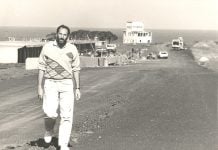
Yates’ Comment Leads To Repaving Of Barber Motorsports Park

Copyright 2002, Roadracing World Publishing, Inc.


Posted by David Swarts

From an e-mail from Landers Sevier V, Corona Extra Suzuki team principal:

A bit of newsworthy info regarding the Barber track.

As you may already know, Aaron Yates tested at Barber Motorsports Park about three weeks ago in what was to be a shake-down or test of the track itself.

Aaron is the first qualified rider to evaluate the much anticipated circuit. At the time of the initial test, the track was 99% complete. All curbing was in place, gravel run-off areas were in place and the final wear surface of asphalt had been laid. After doing 20 laps on Jimmy Moore’s Corona Extra SuperStock Championship-winning GSX-R750 Yates stated, “the facilty is amazing – 80% better than any track we (the AMA Superbike series) currently compete on.” Yates went on to say that the track layout was “fast and flowing and offered lots of places to make passes. Varied elevation changes and lots of good viewing for spectators.”

Track management (and Mr. Barber), at that time, simply wanted Yates’ non-biased feedback specifically on the track surface itself as there was some concern that the surface wasn’t the absolute best it could be. Yates’ evaluation of the surface – “the surface right now is awesome. I have no complaints whatsoever. Let’s get it on the schedule for ’03.” Yates’ only constructive criticism of the surface was a slight roughness on the inside line of the downhill carousel section and one small dip on the entry to turn 7.

After Yates pointed out those two areas – Mr. Barber made the call to totally repave the ENTIRE surface. According to Mr. Barber, “patches and repair work will not be acceptable. This facility is to set the bar for road courses in North America – period. It will be the standard by which all others are judged. It will be considered The Augusta of motorsports and if it costs us several hundred thousand extra to make our surface absolutely perfect then so be it. Let’s repave.”

The original surface was ground-up and removed. Within three weeks of the initial test, Yates was invited back.

Yates, after seeing the circuit, the museum, and the overall project coming together so quickly and after he realized Mr. Barber’s dedication and commitment to making this course the finest in North America referenced Mr. Barber as…”Man, this guy ain’t no joke.”

You should call him for more of an in-depth opinion of the track and the facility as a whole. Wonder what he thinks about making a simple statement about a track surface – then seeing someone drop a half million or so dollars at the drop of hat.


Editorial Note: The Porsche Driving Experience driving school is relocating its program from Sebring and Road Atlanta to Barber effective March 2003, according to Betsy Sexton, Porsche Driving Experience Program Coordinator.

There are also reports that Porsche intends to hold the press launch for its much anticipated new SUV at Barber in January.

An inside source at Barber reports that the Barber track may host the final round of the 2003 AMA Superbike season.

Attempts to reach Jeff Ray, Executive Director of the Barber Motorsports Park, and AMA Pro Racing Superbike Operations Manager Ron Barrick to confirm the 2003 AMA race date have been unsuccessful at post time.

Shifters Should Be Legal, Graves Says

Copyright 2002, Roadracing World Publishing, Inc.

Racer and Graves Motorsports co-owner Chuck Graves says that AMA Pro Racing should allow electronic quick-shifters in the Superstock and Supersport classes in 2003.

“I believe it’s a standard racing item on most racing motorcycles and costs less than a set of tires,” said Graves in a phone call to Roadracingworld.com. “It’s cheap. They’re available for many motorcycles from many sources.

“Take for instance the Yoshimura EMS system, which is an inline engine and fuel management system. They have a provision there with an additional box and a small switch which attaches to the shift shaft, and you use the sidestand switch and you have an automatic shift kill built in.

“I believe that it would be easy to mask having one (under current rules). The privateers are smart enough to know, it’s common knowledge that the shifter is a standard racing item today.”

USGPRU Adopts New Rules After Online Forum

From a press release issued by USGPRU:

United States Grand Prix Riders’ Union
125cc Road Racing Grand Prix National Championship

Wednesday November 13, 2002 — In an online discussion open to all riders last evening, the USGPRU discussed and took comment on a number or rule revisions effecting the 2003 125GP National Championship Series.

Notice was sent to all members last week inviting them to attend the online discussion which was held at the USGPRU Yahoo Group chat area from 7-9:00 p.m. PST. The discussion lasted for over two hours and was attended by riders from all regions of the country.

After discussion on numerous topics and a brief question and answer period decisions were reached on a number of key rules for both 2003 and 2004 including fuel regulations, Points distribution, Teams Championships, etc.

Among the key decisions, reached by near consensus (riders and officials), was the decision to adopt the AMA Fuel Regulations currently governing the 250GP class in AMA competition in 2003. These rules permit the continued use of “leaded” fuel for the 2003 Championship.

We did this because fuel manufacturers are already familiar with the AMA rule and manufacture fuels specifically to meet the requirements outlined in the AMA’s regulations. Testing is straightforward and the rule addresses concern many riders had about the addition of dangerous and toxic performance/power enhancing fuel additives.

Information on the most common fuels and their compliance with the AMA rule is detailed in the tech are of the USGPRU website.

For 2004 it was resolved, with dramatic support from riders, to adopt a fuel regulation patterned after the FIM Unleaded fuel regulations. We were absolutely stunned at the support we got for this from the riders for the switch to Unleaded in 2004.

As an association we had increasing concern that US Grand Prix racing was becoming too divergent after nearly 6 years of leaded fuel use in the US after the near global switch to unleaded in 1997. Every other major national and International Championship mandates the use of unleaded fuels and the bikes have been specifically designed and manufactured to run on unleaded fuels since 1997.

By continuing to run on leaded fuels US riders were ignoring the continued advances in every aspect of engine development and punishing riders and teams who commit to the purchase of new Grand Prix machines by forcing them to convert to outdated fuels and standards that are no longer in use throughout the rest of the world. We feel this will encourage more teams to invest in new bikes in the coming seasons and elevate the level of competition throughout the field.

The decision to adopt unleaded in 2004 was made to allow over a year’s time for teams to make the conversion back to unleaded. In most cases the only change required will be to the head volume which can be done for less that $125.00 per head as machines manufactured after 1996 we all equipped with CDI’s for unleaded fuel. The rule will not apply to machines manufactured prior to 1995.

The use of Double Points for key regional and final events will be discontinued and the USGPRU will score riders and teams on the same FIM points schedule used in 2002 without the application of Double points awards at particular events.

The USGPRU has also instituted a National Team Championship. Teams will consist of two riders riding on near identical machinery of the same manufacture. Teams will be required to have identical paint schemes on both machines and may only substitute riders in the event of injury. A minimum standard for appearance of machines will be enforced and all crew members for participating teams will be required to be in uniform at all times. Team Championship sponsor decals will be required on all machines and riders will be required to list these in their individual sponsor listings as well.

Information on cost effective uniform suppliers will be posted shortly to the USGPRU web site at www.usgpru.org as well as details on rules regulating the Team Championship.

Absolutely The Last Comments We’re Posting On USGP At Homestead…Maybe

Copyright 2002, Roadracing World Publishing, Inc.

I am an avid racing fan. I live in Orlando and this year I rode my SV650 to the races at Atlanta, Ohio, Daytona (of course) and Laguna Seca (California rocks!). My thoughts on the Tony Bell and Dorna debacle? I can tell you that I’d much rather ride two days to Indy or a full day to the Barber track in Alabama to see a real race than to ride a few hours to Homestead to see a promotional joke…

Larry Gilbert
Orlando, Florida


I couldn’t help but be disappointed when I heard that Homestead was being considered as the location of a USGP. If we are to have another chance at establishing a USGP, lets give it the best odds of survival we can. Put it at a real roadcourse, and make it convienient for fans to attend.

The solution’s obvious, use the new facility that’s been built to FIM standards in Alabama. It’s a real racetrack, not an infield-oval compromise. And at least as important, it is located much closer to the bulk of the population that you’d be trying to attract. If a fan can ride or drive to the venue in a day or less, they’re much more likely to make the journey. And yes, Miami is remotely located. I live in Missouri and it’s still 1400 miles away. The farther people have to travel, the more you’re going to restrict your customer base to the relatively few die hard fanatics(like myself), and exclude the more numerous casual fans.

Let’s do it right this time.

Matt Winnacker
AHRMA #1 BOT F2/F3
CCS #91
Fulton, Missouri


It is so apparent you have almost all missed the call here. The only thing Dorna or anyone else connected with MotoGP is interested in is the bottom line. Money talks, bullshit walks and ISC has money, hence Dorna isn’t even interested in anyone else’s racetracks at this time.

No further discussion needed.

Gordon Lunde
Milwaukee, Wisconsin

Hayden Rides RC211V, And Moriwaki Honda Debuts

From a press release issued by Honda:

HONDA RACING INFORMATION

Nicky Hayden Tests the Honda RC211V


American Superbike Champion Nicky Hayden today took his first step in MotoGP racing when he tested the Honda RC211V at the Twin Ring Motegi circuit, in Japan. Hayden, 21 years old from Owensboro Kentucky, completed just 50 laps of the circuit as he acquainted himself with the characteristics of the World Championship winning five-cylinder 990cc four-stroke.


Weather at the 4.801km circuit was half-wet in the morning, because of overnight rain, as Hayden took to the track but turned out to be fine after lunch. At the end of the day Hayden said: “I’m impressed how fast it is, but the power is still real smooth. It’s like wheelie-ing everywhere. Acceleration is so hard, but really smooth. In the morning it was a little bit difficult, as the machine, tyres, carbon discs, the track, everything was new, the track was half-wet, and I haven’t been riding since the final round of AMA Superbike in August. When I hit the brake for the first time, I was kind of surprised how it doesn’t work when it’s cold!

“In the afternoon session, I started feeling more comfortable, after I had finished more than 20 laps in the morning and also after I changed the position a little bit. The bike is much smaller than the Superbike and feels different, but I like it! I really enjoyed riding. But you know, I’m still kind of learning the track and also the bike, so I’m not real comfortable yet.” Concluded the American.

The new development project leader of the RC211V, Mr. Shogo Kanaumi said:

“The purpose of this test is not to make fast lap times, but basically to let Nicky get used to the new machine, make basic adjustments for him, and correct his own request about the set-up. The track conditions were not so good in the morning, but it got better and we tried many things and completed everything what we planed to do. The machine, the track, tyres, carbon brake, everything was totally new for Nicky, and considering that, we realized his adaptability and machine control ability once again. I’m really looking forward to his success during next season.”

Team Moriwaki Honda took the opportunity offered by HRC to test at Motegi. The team brought their prototype MD211VF, RC211V’s V5 powered MotoGP machine to the track for initial shake down testing. Ridden by Masao Okuno the machine completed a full day of data recording laps.

Team owner Mamoru Moriwaki was pleased with the day’s work. He said. “Today’s test was OK for the shake-down test. I’m filled with emotions right now, as I know how hard have everyone in the team has been working until today. This is my first step to challenge the world, and I’m so happy.”

Moriwaki went on to say. “Of course we found various technical problems, but we expected that and to find problems is exactly what this test is for. But from today’s result, I became more confident about participating in MotoGP as a wild-card entry during 03. That is our first goal at this moment, and we’ll keep on working hard for that. At this moment, our MD211VF is like a newly born Deer that has stood up for the first time. We will try hard to let it run actively in the field from now on!”


Assen Named Best World Superbike Venue

From a press release issued by SBK International:

PRESS RELEASE

ORGANIZER AWARD 2002

Paolo Alberto Flammini, SBK International President, has the great pleasure to announce that the World Superbike Organizer Award for 2002 has been assigned to the TT Assen Circuit.

The top management of SBK International together with its staff, the SBK Top Teams and a Jury made up of the most representative international journalists, carefully analysed each event from an organisational, promotional and sporting point of view and awarded for the 2002 season:

Assen as the best circuit overall

We hope that this well-deserved success will be seen as reward for some of the significant investments and developments already undertaken at the circuit.

This award is a reconfirmation of the success already achieved in 2000.

London November 2002

SBK Press Officer
Renata Nosetto


The Superbike World Championship’s current achievements can be categorized as follows:
– 13 Rounds on the 5 Continents
– 2 Billion Worldwide Television Viewers
– 85 Television Networks covering 171 Countries
– 1,670 Broadcast hours during 2001 with a Television Media Value of US$ 552 Million
– 1,000,000 Race Spectators during 2001
– 25 Million Internet page views

Scuderia West Donates To Wegman Benefit Fund

From a press release issued by Gordy Lunde of the Wegmen Benefit Fund:

Scuderia West has donated a check for $1825 from their annual charity raffle to the Wegman Benefit Fund, which was their charity of choice for this year’s benefit event.

For more information on the Wegman Benefit Fund contact Gordon Lunde at 414-321-2338 or [email protected].

Hopper Reports In From GSV-R Testing In Malaysia

Copyright 2002, Roadracing World Publishing, Inc.

This just in from John Hopkins, via cell-phone from Malaysia:

I’m testing with my new team here at Sepang in Malaysia right now, and everything’s going pretty good.

The track conditions here aren’t that great with all of the moisture. It’s actually raining at the moment. That’s how it is here in Malaysia, especially around November.

On the first day, we just put in some laps and just got to a basic set-up. We didn’t want to go to any extremes. We just wanted to learn the bike, put in a good amount of laps and got comfortable with the machine.

Yesterday went really well as well. It got cut short to a half day by the rain, but we started messing with suspension settings.

One thing I definitely had to get comfortable with again was engine braking, getting into the corners and then changing lines getting out of the corners.

I guess they had a couple of problems with the clutch last year, and I think we’re running into the same problems.

Even with the clutch deal, the Suzuki four-stroke is a lot easier to ride than a 500.

The Suzuki’s quite a bit faster, but it doesn’t really feel too much faster.

I’m pretty close to my qualifying time right now on the Michelin race tires, and I’ve already gone a-second-and-a-half faster than my race lap times, consistently. At the moment, we’re not too far off the times Kenny is running, and he is testing the new prototype chassis.

I’m learning to change my style all around; I’m going back to the style I used back home in AMA.

Other than that, it’s good to get on a set of grippy tires, that’s for sure! There’s a big difference between the Dunlops and the Michelins.

It’s a big difference with the factory bike and team because you, as the rider, are taking a part in the development, and I’ve never had that before.

Kevin Schwantz is out here right now, so I’ve been hanging and talking with him. He’s going to ride the bike during a media day tomorrow. Then we don’t test again until January. It’s going to be pretty busy after January, so it’ll be good to go back home, take a little bit of time off, hang out and be a 19-year-old guy again…for a month or two.


For more, see John Hopkins’ column, “The GP Kid,” in the January issue of Roadracing World & Motorcycle Technology.


0FansLike
0FollowersFollow
0FollowersFollow
1,620SubscribersSubscribe

Latest Posts