

Home Blog Page 7081

Foggy Petronas Racing Previews Tests In Australia, Malaysia

0

From two press release issued by Foggy Petronas Racing:

FPR’s Logistical Challenge

Mobilising a World Superbike team for a long-haul race or test is no mean feat.

And Foggy PETRONAS Racing experienced this first hand during a busy Christmas break as the team prepared its freight to be shipped overseas for two back-to-back tests this month in Phillip Island, Australia followed by Sepang near Kuala Lumpur in Malaysia – the home of team sponsors PETRONAS.

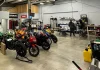
With hundreds of different items from plastic funnels to engines having been collated, the team packed 5,200 kilograms of equipment into 22 flight cases, which departed FPR’s Burton headquarters this morning for the twenty four hour flight to Australia.

Robin Budinger, Foggy PETRONAS Racing’s Stores and Stock Controller commented: “The volume and range of equipment and parts required for a fly-away test or race never ceases to amaze me and, it’s hard to appreciate what a logistical challenge a ‘pack-up’ is until you do it!

“As the team will not be returning to the UK in between the tests, it’s vital that they have enough equipment and parts with them to cater for every eventuality. Should the team desperately need something when testing in Europe, then at a last resort it could be flown out, but with a long haul there isn’t that luxury.”

Along with four Foggy FP1 bikes, a raft of spare parts were included to ensure the team has ample supplies for both tests, as was hundreds of litres of various lubricants for the engine, gearbox, suspension and brakes, and even dustbins for the pit garage.

The fourteen sets of spare wheel rims required a freight case all to themselves, although a box of 5,000 essential plastic tie-wraps used to tidily secure the hundreds of metres of cabling throughout the pit garage, a mere twenty cans of polish for keeping the Foggy FP1 bikes sparkling clean and even the hoover, all had their carefully allocated places in the freight!

FPR’s Aussie Troy Corser is excited to be returning to his home soil to test at the Phillip Island track, and both he and team-mate James Haydon are greatly looking forward to their first outing on the spectacular Sepang circuit in Malaysia at the end of the month.


Foggy Focus On Key Test

Carl Fogarty is hoping to the next two tests will provide a real indication of the chances of Foggy PETRONAS Racing for the 2003 World Superbike championship campaign.

His team is due to test at the Australian circuit of Phillip Island next week, followed by a three-day test in Malaysia the following week.

And the team owner recognises that the remaining track time is crucial for his two riders, James Haydon and Troy Corser.

Carl, who will not be in Phillip Island because of family commitments but who will be joining the team in Malaysia, said: “Australia is a big test for us.

“Whatever happens in the next two tests is probably going to reflect how we will kick-off at the first race of the year in Valencia on 2 March.

“We are hoping for a little more power and reliability from the engine so that we can get some race distances under our belts.

“Troy will have a good idea of what to expect as he knows the track inside out and knows what a Ducati and Aprilia would do round there. And I’ve got a good knowledge of the times to expect at Phillip Island. I think James has only been there once in the past.

“So, all things considered, we should get some good pointers before we head off to Sepang.”

Harris WCM MotoGP Team Signs British Racer Chris Burns

0

Copyright 2003, Roadracing World Publishing, Inc.

By David Swarts

Harris WCM, formerly known as Red Bull Yamaha WCM, has signed 22-year-old British racer Chris Burns to ride for the team in the 2003 MotoGP World Championship, say sources in Europe. Harris WCM will race a prototype with a Harris-designed chassis powered by a highly-modified Yamaha YZF-R1 engine.

Burns has experience in the British Superstock series and the FIM 125cc Grand Prix World Championships but is a relative unknown in International racing. However, taking a gamble on an unproven-in-Grand-Prix racer who has shown some talent is nothing new for WCM Director of Racing Peter Clifford. Clifford gambled when he signed Aussie Garry McCoy, who went on to win several 500cc World Championship Grands Prix with WCM, and again on young American John Hopkins, who impressed enough in 2002 to earn a ride on the factory Suzuki MotoGP bike for 2003.

Marco Melandri Talks About His Jump From An Aprilia RSW250 To A Yamaha YZR-M1

0

From a press release issued by Fortuna Yamaha, which will test again at Jerez January 20-22 and at Valencia January 25-27):

QUESTIONS & ANSWERS WITH MARCO MELANDRI AFTER YAMAHA FACTORY TEST IN VALENCIA (DECEMBER ’02)

Q: How do you feel having ridden the YZR-M1 for the first time at these tests in Valencia and Jerez? What is your first impression of the bike?

A: The night before I rode the bike for the first time in Valencia I was so excited I didn’t sleep at all! The first lap with the M1 was really strange – I could not believe a bike could go so fast. And the thing that I noticed most was the power. It felt hard to control at first but after a few laps it got easier and easier. At this stage I feel like I need maybe eight days more of testing until I can control the bike properly. I am pleased and surprised with my best lap time from this test – 1:34.83.

Q: From your first impressions, how does the four-stroke differ from the 250cc you have ridden until now?

A: I thought the engine braking would be stronger on the four-stroke but in fact it feels more similar to the 250. The biggest difference between the two is in the power delivery. With the four-stroke, the straight does not seem long enough! The M1 feels very light and more manoeuvrable than the 250. I would say that I felt a greater general difference when I changed from a 125cc bike to a 250cc, than I have done from the 250cc to the four-stroke MotoGP bike.

Q: How does it feel to be working with a completely new team?

A: I am really happy because the team is great, everyone wants to help me as much as they can. No-one has compared me to Biaggi so far! They have told me that I should keep my head down, learn as much as I can and enjoy myself. I am very lucky to have Fiorenzo Fanali as my crew chief, he has worked with so many great riders in the past including heroes of mine like Agostini and Lawson. I am trying to improve my English and I now need to speak it to the Japanese Yamaha engineers, even though most of my crew are Italian.

Q: How is it to have Carlos Checa as your new team-mate?

A: I am also very happy to work with Carlos – I think he’s a really good guy. I can learn a lot from him, and sometimes I can see from his times and lap data where I should be improving.

Q: What are your hopes for next season?

A: I’ve only had three days of testing, and the weather conditions at Jerez were very difficult so I couldn’t test much. But I can feel myself getting better each day with the bike, and we have many tests before the first Grand Prix in April. The Barcelona test in March, the last test before we start racing, is where I will see my true potential for the first race.

Pramac Announces Deal To Run Tamada On A Honda In MotoGP

0

From a press release issued by Pramac:

PRAMAC HONDA TEAM


The Tuscany-based Pramac Industrial Group has long been interested in and committed to sport, and its racing department, Pramac Racing, will be working at the forefront of the forthcoming MotoGP championship. Today sees the official launch of the ‘Pramac Honda Team’ which will be participating in the world championship with the five-cylinder Honda RC 211V, ridden by Japanese ace Makoto Tamada, and with the colossal Japanese tyre manufacturer Bridgestone as a technical partner.

For the Tuscan industrial group, this involvement in the MotoGP will be a new and significant step in its commitment to sport, and it provides clear demonstration of Pramac’s great interest in and passion for motorcycle racing. It is an important project and is one that flanks the prestigious challenge for the 2003 world title.

The ‘Pramac Honda Team’ is the outcome of the programme made possible thanks to the acquisition only for 2003, of one of the Spanish D’Antin team’s MotoGP World Championship entry seats.

The ‘Pramac Honda’ project has come into being thanks to the close ties between the Pramac Industrial Group and the Honda Racing Corporation, and in addition there is the considerable interest of Bridgestone in continuing its research and development in first-class motorcycle racing. The Japanese tyre manufacturer’s undisputed dominance of Formula 1 has paved the way for this decisive operation in the world of motorcycling, and the results acquired in recent years suggest there are excellent reasons for continuing along this track.

Pramac Group also makes official the top-level appointment of Mr Tetsuo Iida. Mr Iida is the new President of Pramac Racing. His international career with the Japanese giant Honda has taken him all the way up to become President of Honda Europe, a post he has held for nine years. Mr Iida today picks up the gauntlet thrown down by the Campinoti family and the Pramac Industrial Group, and he will be taking part in this new world-championship adventure as a head of the Racing Division.

General management of the ‘Pramac Honda Team’ has been entrusted to Gianluca Montiron, who successfully managed the Pramac Group MotoGP project last year. Twenty-six year old Makoto Tamada from Ehime, runner-up in the Japanese Superbike and winner of three SBK world championship races, is facing a challenge of immense importance. His task will be to combine the phenomenal competitiveness of the Honda RC 211V with the Bridgestone’s tire development work.

The Pramac Honda Team is set to make its first sortie on the track in the winter tests slated for 20/21/22 January at Sepang (Malaysia).

CRA Releases 2003 Schedule

0

From a press release issued by CRA:

The Central Roadracing Association has firmed dates for the 2003 racing season. CRA has sustained the same racing fees as last year, along with eliminating a DB Com fee to provide the most affordable racing! CRA has also deployed Airfence at Brainerd International Raceway for added safety measures.

For more information on CRA racing, volunteering or spectating, please visit www.cra-mn.org or call (612) 3320-4070

April 11-13 Midamerica Motorplex*

May 2-4 Brainerd International Raceway*

June 21-22 Brainerd International Raceway (wkd before AMA)

July 19-20 Brainerd International Raceway

Aug 23-24 Midamerica Motorplex

Sept 12-14 Brainerd International Raceway

*Indicates New Riders School


Rapisarda Now In Charge Of Ducati Corse Communications

0

From a press release issued by Ducati Corse:

NEW DUCATI CORSE COMMUNICATIONS STRUCTURE

In order to face up to a demanding 2003 racing season, Ducati Corse has reorganised its communications sector with the creation of a new structure.

45-year-old journalist Francesco Rapisarda has been appointed Director of Communications. Francesco, who has considerable experience in motorcycles (Motosprint, RJ Reynolds and Aprilia) returns to the sector after a period spent working in football and tennis (Director of Communications Lotto Sport Italia).

Francesco Rapisarda, who will report directly to Ducati Corse Managing Director Claudio Domenicali, will be responsible for the management of this important and delicate structure. He will be present at all the MotoGP races and will also coordinate Ducati Corse’s Superbike and Corporate activities.

The Ducati Corse Communications Office will be completed by Julian Thomas (Superbike Press Officer) and Sonia Braggio (Assistant).

The new structure becomes operational from January 8, 2003.

(Editorial Note: Rapisarda handled PR for Aprilia at the time the original Aprilia Mille was launched.)


F-1 Designer Barnard Joins Team Roberts In MotoGP

0

From a press release issued by Team Roberts:

Formula One Designer John Barnard Joins Team Roberts

Banbury, England – January 7, 2003: Team Roberts is proud to announce that John Barnard has joined the team as Technical Director. Mr. Barnard assumes this role, effective immediately, at the team’s United Kingdom base of operations.

Mr. Barnard is famous for his prolific design work with racing cars, especially in Formula One. In a career spanning some 35 years he has worked for companies such as Lola Cars, McLaren, Benetton, Ferrari, Arrows and Prost.

Barnard assisted Gordon Coppuck in the design of McLaren’s 1974 F1 World Championship-winning M23. From 1975 through 1978 he designed the Vel’s Parnelli Jones VPJ6 series of Indy Cars. The series used an in-house developed turbocharged Cosworth DFV engine, the first turbo application of that of engine type. The VPJ6B is also noteworthy for initiating the use of a transverse mounted gearbox.

Other notable Barnard penned cars include Jim Hall’s 1980 Indy 500 and Indy Car championship winning Chaparral 2K, and the first all composite monocoque Formula One car – the McLaren MP4/1, which claimed it’s first victory by taking the 1981 British GP at Silverstone during it’s maiden season. The MP4/1 led to McLaren’s dominance of F1 in the mid-80’s. While heading up Ferrari’s Guildford Technical Office in England, Barnard developed Formula One’s first semi-automatic gearbox. The 1998 Arrows A19 F1 car was the first car to use a carbon composite gearbox, which was designed by Barnard.

In the capacity of Technical Director for Team Roberts, Mr. Barnard will be responsible for all engineering and technical development of the organization’s projects, including the 2003 Proton KR V-5 four-stroke grand prix racing motorcycle. He will also oversee all technical aspects of the racing team.

“There are a lot of things that can be done with motorcycles,” stated Barnard. “It’s all very exciting. There are new ways to make things as well as new ways to approach things in general.” He added, “Above all we must be realistic. We need to build a good foundation and get our feet on the ground, from there we can move forward.”

Team Roberts owner, Kenny Roberts commented, “Bringing John into our organization is another step in our quest to achieve a higher level of engineering, overall expertise, and competitiveness. He added, “I’ve known John for a lot of years and have complete faith in his ability to help us evolve our company and our team to a higher level.”

Chrysler Shows 8300cc V10, 500-horsepower Tomahawk Concept Motorcycle–Or Maybe It’s An ATV–At Detroit Auto Show

0

From a press release issued by the Chrysler Group of Daimler-Chrysler:


Dodge Tomahawk: Breaking Boundaries at Full Throttle

Life just got more extreme. Much more extreme.

The Viper-powered Dodge Tomahawk concept vehicle shatters all the barriers of conventional thinking about personal transportation. This four-wheel, single-passenger vehicle is a sleek, rolling sculpture that combines art-deco styling with extreme engineering.


The 500-horsepower Viper V-10 engine powering the dual rear wheels gives this radical vehicle a potential top speed of nearly 400 miles per hour – for anyone who wants to test it. The Tomahawk roared into public view at the North American International Auto Show.


“The Dodge brand philosophy always challenges us to grab life by the horns,” said Trevor Creed, Senior Vice President – Design, Chrysler Group. “In the case of Tomahawk, grabbing and holding onto anything for dear life is a necessity. It’s just that extreme and passionate; a glimpse into the soul and commitment of true enthusiasts.”

Initial reaction to the concept vehicle typically comes in two words: “Wow” and “why.”

The “wow” is easy to understand from Dodge, the brand that continues to drive its foot to the floor – most recently with the all-new 2003 Viper, Heavy Duty and Light Duty Rams and an SRT lineup dedicated to engineering the most powerful production vehicles in their segments.

But “why” would a company, famous for its innovative car and truck designs, go down this particular path?

“Tomahawk is an icon of the extreme thinking for a brand that is known not only for the legendary Viper and Ram, but also for all new, innovative vehicles such as the Magnum SRT-8 and Durango concepts,” said Creed.


That extreme thinking produced a machine in the true tradition of power-junkie passion, powered by a 505 cu. in., 8300 cc aluminum Viper V-10 engine.

“This is a bold faced slap against mediocrity,” Creed said. “Tomahawk is a scintillating example of what creative minds can do when given the opportunity to run free. It is a pure mechanical sculpture and a joyous celebration of the artistry and emotion of design.”

The Dodge Tomahawk is a Chrysler Group design concept that is as much a Viper-powered work of art as it is a whole new type of vehicle invention. It is both a sculpture that can be ridden, as well as a bold statement about the Chrysler Group’s enthusiast culture and passion for design.

“Tomahawk moves design concept introductions and the concept car game to a whole new level – as only Dodge and the Chrysler Group can,” said Creed.

DODGE TOMAHAWK CONCEPT VEHICLE SPECIFICATIONS

GENERAL INFORMATION

Body Style: Single-seat Viper-powered motorcycle concept vehicle

DIMENSIONS:

Overall Length: 102 inches
Overall Width: 27.7 inches
Overall Height: 36.9 inches
Wheelbase: 76 inches
Seat Height: 29 inches
Curb Weight: 1,500 lbs.
Track, Front: 8.75 inches
Track, Rear: 10 inches
Weight Dist., % F/R: 49/51
Ground Clearance: 3 inches
Fuel Tank Capacity: 3.25 gallons

ENGINE: 8.3-LITER, OHV, 20-VALVE SMPI V-10

Type and Description: 10-cylinder 90-degree V-type, liquid-cooled
Displacement: 505 cubic inches (8277 cc)
Construction: 356-T6 aluminum alloy block with cast-iron liners, aluminum alloy cylinder heads
Bore x Stroke: 4.03 inches x 3.96 inches (102.4 x 100.6)
Valve System: Two pushrod-actuated overhead valves per cylinder with roller-type hydraulic lifters
Fuel Injection:Sequential, multi-port electronic with individual runners
Compression Ratio: 9.6:1
Power (SAE net): 500 bhp (372 kW) @ 5600 rpm (60.4 bhp/liter)
Torque (SAE net): 525 lb.-ft. (712 N•m) @ 4200 rpm
Max Engine Speed: 6000 rpm
Fuel Requirement: Unleaded premium, 93 octane (R+M/2)
Oil System: Dry Sump
Oil Capacity: 8 qts. Mobil1 10W30 Synthetic
Cooling System: Twin aluminum radiators mounted atop engine intake manifolds, force-fed from front-mounted, belt-driven turbine fan
Coolant Capacity: 11 qts.
Exhaust System: Equal-length tubular stainless steel headers with dual collectors and central rear outlets

ELECTRICAL SYSTEM:

Alternator: 136-amp high-speed
Battery: Leak-resistant, maintenance-free 600 CCA
Lighting: Headlights consist of 12 five-watt LEDs, front, with beam-modifying optics and masked lenses. Eight LEDs, rear. Headlamps articulate with wheels.

TRANSMISSION: Manual, foot-shifted two-speed

Type: Aluminum-cased two-speed, sequential racing-style with dog ring, straight-cut gears
Gear Ratios:
1st18:38
2nd23:25
Clutch:Double-disc, dry-plate with organic friction materials, hand lever actuated with assist

FINAL DRIVE: Dual 110-link motorcycle-style chains

Front Sprockets: 14 teeth
Rear Sprockets:35 teeth

BODY/CHASSIS:

Layout:Longitudinal, centrally mounted engine, rear-wheel drive
Chassis Construction: Monocoque, engine is central, stressed member
Body Construction: Billet aluminum

SUSPENSION:

Front: Outboard, single-sided parallel upper and lower control arms made from polished billet aluminum. Mounted via ball joint to aluminum steering uprights and hubs. Five degrees caster. Single, fully adjustable centrally located coil-over damper (2.25-inch coil with adjustable spring perch); pullrod and rocker-actuated mono linkage. Center-lock racing-style hubs

Rear: Hand-fabricated box-section steel inboard swing arms, incorporating “hydral-link” lockable recirculating hydraulic circuit parking stand. Single fully adjustable centrally located Koni coil-over damper (2.25-inch coil with adjustable spring perch); pushrod and rocker-actuated mono linkage. Center-lock racing-style hubs

STEERING:

Type: Dual hub center type.
Steering Linkage: Rocker arm and push/pull rod with roller bearings. Polished billet aluminum steering yoke with turned aluminum grips and billet levers
Steering Lock: 20 degrees, left and right
Lean Angle: 45 degrees, left and right

TIRES (4):

Mfr. and Model:Dunlop custom-made symmetrical
Size, Front (2): P120/60R-20
Size, Rear (2): P150/50R-20

WHEELS (4):

Type and Material: Billet aluminum discs, asymmetrical
Size, Front (2): 20×4
Size, Rear (2):20×5

BRAKES:

Front:20-inch perimeter-mounted drilled machined stainless steel rotors, one per wheel. Two four-piston fixed aluminum calipers per wheel (16 pistons total), custom designed. Blue anodized caliper finish. Hand-activated.
Rear:20-inch perimeter-mounted drilled cast-iron rotors, one per wheel. One four-piston fixed aluminum caliper per wheel (8 pistons total), custom designed. Blue anodized caliper finish. Foot-activated.

PERFORMANCE:

0-60 mph:2.5 seconds (est.)
Top Speed: 300+ mph (est.)


Tul-aris Racing Registers As Business, Adds Sponsors

0

From a press release issued by Dr. Rob Tuluie:

Tul-aris Racing Team Business Registered; New Tul-aris Sponsors


Minneapolis, MN: Dr. Rob Tuluie’s Tul-aris racing team will continue its design and development of racing motorcycles, in particular the day-to-day operation of the Tul-aris racing team under the name MotoLab.

In addition, we welcome as new official sponsors:

Carbon Fiber Specialty Products, a business specializing in carbon fiber and other composites products for motorcycle

DCM Services, a manufacturer of limited production, high-performance machined components

Deus Ex Machina Engineering, Inc., an electronic design and embedded software consulting business

Look for their logos as well as our regular sponsors’ decals on the side of the Tul-aris fairing.

In other news, the Tul-aris will be on display at the Cycle World Motorcycle Show from January 24-26th.

MotoLab and the Tul-aris project is sponsored by:

Michelin Tires – Walt Schaeffer Michelin Racing Tires
Nutec Racing Fuel
Hot Seat Performance
Ohlins USA
Lofgren Racing/Manley Cycle
Mason Racing Tires
MTS Systems Corporation
Yoyodyne Titanium
GP Tech
Carbon Fiber Specialties Products
DCM Services
Deus Ex Machina

Special thanks to:
Chad Pierce and Eric Christensen (Polaris) for engine parts
Arrowhead Printing


FIM Grand Prix Commission Introduces Rolling Restarts In MotoGP

0

From a press release issued by the FIM:

Mies, January 7

Road Racing World Championship Grand Prix
Main changes to the Rules for the 2003 season

The Grand Prix Commission, composed of Messrs. Carmelo Ezpeleta (Dorna, Chairman), Claude Danis (FIM), Sito Pons (IRTA) and Takanao Tsubouchi (MSMA), in the presence of Mr Paul Butler (Secretary of the meeting), unanimously decided to introduce the following modifications to the Road Racing World Championship Grand Prix Regulations, among which the introduction of the neutralisation of the race in the MotoGP class for climatic reasons, with safety car, pit stop and rolling start. For immediate application:

SPORTING REGULATIONS

1.18 Start Procedure
(…) On returning to the grid the riders must take up their positions with the front wheel of their motorcycle up to or behind the front line and between the side lines defining the grid position and keep their engines running.
(…) Anticipation of the start is defined by the motorcycle moving forward when the red lights are on.

1.20 “Wet” and “Dry” Races
(…) Dry Races – A race classified as dry will be interrupted (125cc/250cc) or neutralised (MotoGP) by the Race Director, if he considers that climatic conditions affecting the surface of the track makes it likely that riders will wish to change tyres.
Wet Races – A race classified as wet, usually commenced in varying or wet conditions, will not be interrupted (125cc/250cc) or neutralised (MotoGP) for climatic reasons and riders who wish to change tyres must enter the pits and do so during the actual race.
In all cases where the first race is interrupted (125cc/250cc) or neutralised (MotoGP) for climatic reasons, then the restart will, automatically, be a “wet” race.

1.22 Flags and Lights used to provide information
Green Flag: (…) Two green flags will be waved at the start line (one at each side) to resume a neutralised race.
Flashing Blue Lights: Will be switched on at the pit lane exit at all time during practices and races.
White Flag with diagonal red cross: Shown motionless at each flag marshal post. The race is neutralised. Riders must slow down. A SAFETY CAR is on the race track. Riders may enter the pit lane at the end of the current lap or may continue on the track to catch up the SAFETY CAR. Overtaking the SAFETY CAR is forbidden.

1.25 Interruption of a race
If the Race Director decides to interrupt a race, then red flags will be displayed at the finish line and at all marshals’ posts and he will switch on the red lights around the circuit. Riders must immediately slow down and return to the pit lane. (…)
If three laps or more have been completed by the leader of the race and all other riders on the same lap as the leader, but less than two-thirds of the original race distance, rounded down to the nearest whole number of laps, then for the 125cc/250cc class, the race will be re-started according to art. 1.26 with the laps and times of the two races added together to arrive at a final result. For the MotoGP class, the race will be resumed according to art. 1.28.
If it is found impossible to re-start or to resume the race, then the results will count and half points will be awarded in the Championship.
If the results calculated show that two-thirds of the original race distance rounded down to the nearest whole number of laps have been completed by the leader of the race and by all other riders on the same lap as the leader, then for the 125cc and 250cc classes the race will be deemed to have been completed and full Championship points will be awarded. For the MotoGP class, the race will be resumed according to art. 1.28. If it is found impossible to resume the race, then the results will count and full Championship points will be awarded.

1.26 Re-Starting a race that has been interrupted
If a race has to be re-started, then it will be done as quickly as possible, consistent with track conditions allowing. As soon as the riders have returned to the pits the Clerk of the Course will announce a time for the new start procedure to begin which, conditions permitting, should not be later than 10 minutes after the initial display of the red flag. (…)

1.27 Neutralisation of a Race (MotoGP only) – New article
According to circumstances a MotoGP class race may be neutralised several times.
If the Race Director decides to neutralise a race due to climatic conditions or some other reason then the following procedure will apply:
1. White flags with a diagonal red cross will be displayed motionless at each flag marshal post.
2. A safety car will leave the pit lane and make one lap. The pit lane exit will be closed with red lights and red flag.
3. Riders may enter the pit lane at the end of their current lap or make one more lap to check the conditions of the track and then enter the pit lane.
4. Riders who decide to make one more lap must prepare to catch up the safety car. Overtaking the safety car is forbidden.
5. At the end of his lap the safety car will enter the pit lane and the track will be closed with red flags. Riders following the safety car must enter the pit lane.
6. The safety car will stop approximately 50 metres beyond the exit of pit lane.
7. In the pit lane riders may change tyres, make adjustments to the motorcycle, refuel or change machine.
8. If the race is neutralised before the last lap, a provisional race classification will be published. The provisional race classification will be the results taken at the last point where the leader and all other riders on the same lap as the leader had completed a full lap without the neutralisation flags being displayed calculated as in the principle set out in article 1.25.1. Riders already in the pit lane can be classified. Riders who did not complete 75% of the laps completed by the leader will not be classified. The race will be resumed according to article 1.28.
9. In case of neutralisation during the last lap the following procedure will apply:
if at least one rider has completed the scheduled number of laps of the original race, the race classification will be calculated as in the principle set out in the exception in article 1.25.1 and race will not be resumed.
if no rider has completed the scheduled number of laps of the original race, the provision of article 1.27.8 will apply and the race will be resumed according to article 1.28.
10. In the case of more than one neutralisation the provisional race classification for positions and eligibility to take part in the resumed start will always be those based on the provisional race classification taken at the latest neutralisation.
11. In all cases the provisional race classification will be displayed on the official timekeeping monitors.

1.28 Resuming a race that has been neutralised (MotoGP only) – New article
1. The Race Direction will announce when the Safety Car will leave the pit lane to resume the race.
2. The number of laps to go will be the difference between the scheduled number of laps of the original race and the number of laps of the provisional race classification. If the difference is less than 3 the number of laps to go will be 3 laps.
3. In the case of more than one neutralisation, the number of laps to go will be the difference between the scheduled number of laps of the original race and the number of laps completed in all the previous parts. If the difference is less than 3, the number of laps to go will be 3 laps.
4. Only riders included in the latest provisional race classification may resume the race.
5. 2 minutes before the Safety Car leaves the pit lane, the pit lane exit will be opened with green lights and flags to allow the riders to form up behind the safety car in the order of the provisional race classification.
6. 30 seconds before the Safety Car leaves the pit lane, all riders should be ready behind the safety car in the order of the provisional race classification.
7. At the time announced by the Race Direction, the pit lane exit will be closed with red flags and lights and the safety car will make one lap followed by the riders. Overtaking the safety car is forbidden. Any riders remaining in the pit lane will resume the race from the pit lane.
8. In all cases the time to go before the safety car departs and the pit lane exit closes will be displayed on a countdown board or clock at the pit lane exit and on the official timekeeping monitors.
9. At the end of his lap the safety car will enter the pit lane whilst the riders continue on the track.
10. The race will resume by rolling start when the riders cross the start line where two green flags (one at each side) will be waved and the green start lights will be switched on. At that time a time penalty may be imposed by the Race Direction on any rider:
* who is not behind the rear wheel of the motorcycle in front of him.
* who is in a higher position than in the provisional race classification.
* who is more than 3 seconds behind the rider in front of him.
11. After the last rider in the file has passed the pit lane exit the green lights will be switched on and the green flag will be waved to allow the riders who are still in the pit lane to resume the race.
12. The final race classification will be established according to the position and the consolidated number of laps of each rider at the time he crossed the finish line at the end of the race. Provisions of article 1.23.5. will apply.

TECHNICAL REGULATIONS

2.5 Weights
The following are the minimum weights permitted:
– 125cc motorcycle + rider 136 kg
– 250cc 1 cylinder motorcycle 100 kg
2 cylinders motorcycle 100 kg
(…) For the 125cc class the weight checked will be the total of the rider with full protective clothing plus the weight of the motorcycle. Random weight controls may be carried out during practice in a designated weighing area.

2.6 Fuel Tanks
The fuel tank capacities for prototype motorcycles are:
(…)- 4-stroke engines: maximum 24 litres

2.7.3 Brakes
(…) In the 125cc and 250cc classes, only brake discs of ferrous materials are allowed.

2.9 Numbers and Backgrounds
(…) Numbers must be a minimum height of 140mm.
Backgrounds must be of one single colour over an area large enough to provide a minimum clear area of 25mm around the numbers.

Foggy Petronas Racing Previews Tests In Australia, Malaysia

From two press release issued by Foggy Petronas Racing:

FPR’s Logistical Challenge

Mobilising a World Superbike team for a long-haul race or test is no mean feat.

And Foggy PETRONAS Racing experienced this first hand during a busy Christmas break as the team prepared its freight to be shipped overseas for two back-to-back tests this month in Phillip Island, Australia followed by Sepang near Kuala Lumpur in Malaysia – the home of team sponsors PETRONAS.

With hundreds of different items from plastic funnels to engines having been collated, the team packed 5,200 kilograms of equipment into 22 flight cases, which departed FPR’s Burton headquarters this morning for the twenty four hour flight to Australia.

Robin Budinger, Foggy PETRONAS Racing’s Stores and Stock Controller commented: “The volume and range of equipment and parts required for a fly-away test or race never ceases to amaze me and, it’s hard to appreciate what a logistical challenge a ‘pack-up’ is until you do it!

“As the team will not be returning to the UK in between the tests, it’s vital that they have enough equipment and parts with them to cater for every eventuality. Should the team desperately need something when testing in Europe, then at a last resort it could be flown out, but with a long haul there isn’t that luxury.”

Along with four Foggy FP1 bikes, a raft of spare parts were included to ensure the team has ample supplies for both tests, as was hundreds of litres of various lubricants for the engine, gearbox, suspension and brakes, and even dustbins for the pit garage.

The fourteen sets of spare wheel rims required a freight case all to themselves, although a box of 5,000 essential plastic tie-wraps used to tidily secure the hundreds of metres of cabling throughout the pit garage, a mere twenty cans of polish for keeping the Foggy FP1 bikes sparkling clean and even the hoover, all had their carefully allocated places in the freight!

FPR’s Aussie Troy Corser is excited to be returning to his home soil to test at the Phillip Island track, and both he and team-mate James Haydon are greatly looking forward to their first outing on the spectacular Sepang circuit in Malaysia at the end of the month.


Foggy Focus On Key Test

Carl Fogarty is hoping to the next two tests will provide a real indication of the chances of Foggy PETRONAS Racing for the 2003 World Superbike championship campaign.

His team is due to test at the Australian circuit of Phillip Island next week, followed by a three-day test in Malaysia the following week.

And the team owner recognises that the remaining track time is crucial for his two riders, James Haydon and Troy Corser.

Carl, who will not be in Phillip Island because of family commitments but who will be joining the team in Malaysia, said: “Australia is a big test for us.

“Whatever happens in the next two tests is probably going to reflect how we will kick-off at the first race of the year in Valencia on 2 March.

“We are hoping for a little more power and reliability from the engine so that we can get some race distances under our belts.

“Troy will have a good idea of what to expect as he knows the track inside out and knows what a Ducati and Aprilia would do round there. And I’ve got a good knowledge of the times to expect at Phillip Island. I think James has only been there once in the past.

“So, all things considered, we should get some good pointers before we head off to Sepang.”

Harris WCM MotoGP Team Signs British Racer Chris Burns

Copyright 2003, Roadracing World Publishing, Inc.

By David Swarts

Harris WCM, formerly known as Red Bull Yamaha WCM, has signed 22-year-old British racer Chris Burns to ride for the team in the 2003 MotoGP World Championship, say sources in Europe. Harris WCM will race a prototype with a Harris-designed chassis powered by a highly-modified Yamaha YZF-R1 engine.

Burns has experience in the British Superstock series and the FIM 125cc Grand Prix World Championships but is a relative unknown in International racing. However, taking a gamble on an unproven-in-Grand-Prix racer who has shown some talent is nothing new for WCM Director of Racing Peter Clifford. Clifford gambled when he signed Aussie Garry McCoy, who went on to win several 500cc World Championship Grands Prix with WCM, and again on young American John Hopkins, who impressed enough in 2002 to earn a ride on the factory Suzuki MotoGP bike for 2003.

Marco Melandri Talks About His Jump From An Aprilia RSW250 To A Yamaha YZR-M1

From a press release issued by Fortuna Yamaha, which will test again at Jerez January 20-22 and at Valencia January 25-27):

QUESTIONS & ANSWERS WITH MARCO MELANDRI AFTER YAMAHA FACTORY TEST IN VALENCIA (DECEMBER ’02)

Q: How do you feel having ridden the YZR-M1 for the first time at these tests in Valencia and Jerez? What is your first impression of the bike?

A: The night before I rode the bike for the first time in Valencia I was so excited I didn’t sleep at all! The first lap with the M1 was really strange – I could not believe a bike could go so fast. And the thing that I noticed most was the power. It felt hard to control at first but after a few laps it got easier and easier. At this stage I feel like I need maybe eight days more of testing until I can control the bike properly. I am pleased and surprised with my best lap time from this test – 1:34.83.

Q: From your first impressions, how does the four-stroke differ from the 250cc you have ridden until now?

A: I thought the engine braking would be stronger on the four-stroke but in fact it feels more similar to the 250. The biggest difference between the two is in the power delivery. With the four-stroke, the straight does not seem long enough! The M1 feels very light and more manoeuvrable than the 250. I would say that I felt a greater general difference when I changed from a 125cc bike to a 250cc, than I have done from the 250cc to the four-stroke MotoGP bike.

Q: How does it feel to be working with a completely new team?

A: I am really happy because the team is great, everyone wants to help me as much as they can. No-one has compared me to Biaggi so far! They have told me that I should keep my head down, learn as much as I can and enjoy myself. I am very lucky to have Fiorenzo Fanali as my crew chief, he has worked with so many great riders in the past including heroes of mine like Agostini and Lawson. I am trying to improve my English and I now need to speak it to the Japanese Yamaha engineers, even though most of my crew are Italian.

Q: How is it to have Carlos Checa as your new team-mate?

A: I am also very happy to work with Carlos – I think he’s a really good guy. I can learn a lot from him, and sometimes I can see from his times and lap data where I should be improving.

Q: What are your hopes for next season?

A: I’ve only had three days of testing, and the weather conditions at Jerez were very difficult so I couldn’t test much. But I can feel myself getting better each day with the bike, and we have many tests before the first Grand Prix in April. The Barcelona test in March, the last test before we start racing, is where I will see my true potential for the first race.

Pramac Announces Deal To Run Tamada On A Honda In MotoGP

From a press release issued by Pramac:

PRAMAC HONDA TEAM


The Tuscany-based Pramac Industrial Group has long been interested in and committed to sport, and its racing department, Pramac Racing, will be working at the forefront of the forthcoming MotoGP championship. Today sees the official launch of the ‘Pramac Honda Team’ which will be participating in the world championship with the five-cylinder Honda RC 211V, ridden by Japanese ace Makoto Tamada, and with the colossal Japanese tyre manufacturer Bridgestone as a technical partner.

For the Tuscan industrial group, this involvement in the MotoGP will be a new and significant step in its commitment to sport, and it provides clear demonstration of Pramac’s great interest in and passion for motorcycle racing. It is an important project and is one that flanks the prestigious challenge for the 2003 world title.

The ‘Pramac Honda Team’ is the outcome of the programme made possible thanks to the acquisition only for 2003, of one of the Spanish D’Antin team’s MotoGP World Championship entry seats.

The ‘Pramac Honda’ project has come into being thanks to the close ties between the Pramac Industrial Group and the Honda Racing Corporation, and in addition there is the considerable interest of Bridgestone in continuing its research and development in first-class motorcycle racing. The Japanese tyre manufacturer’s undisputed dominance of Formula 1 has paved the way for this decisive operation in the world of motorcycling, and the results acquired in recent years suggest there are excellent reasons for continuing along this track.

Pramac Group also makes official the top-level appointment of Mr Tetsuo Iida. Mr Iida is the new President of Pramac Racing. His international career with the Japanese giant Honda has taken him all the way up to become President of Honda Europe, a post he has held for nine years. Mr Iida today picks up the gauntlet thrown down by the Campinoti family and the Pramac Industrial Group, and he will be taking part in this new world-championship adventure as a head of the Racing Division.

General management of the ‘Pramac Honda Team’ has been entrusted to Gianluca Montiron, who successfully managed the Pramac Group MotoGP project last year. Twenty-six year old Makoto Tamada from Ehime, runner-up in the Japanese Superbike and winner of three SBK world championship races, is facing a challenge of immense importance. His task will be to combine the phenomenal competitiveness of the Honda RC 211V with the Bridgestone’s tire development work.

The Pramac Honda Team is set to make its first sortie on the track in the winter tests slated for 20/21/22 January at Sepang (Malaysia).

CRA Releases 2003 Schedule

From a press release issued by CRA:

The Central Roadracing Association has firmed dates for the 2003 racing season. CRA has sustained the same racing fees as last year, along with eliminating a DB Com fee to provide the most affordable racing! CRA has also deployed Airfence at Brainerd International Raceway for added safety measures.

For more information on CRA racing, volunteering or spectating, please visit www.cra-mn.org or call (612) 3320-4070

April 11-13 Midamerica Motorplex*

May 2-4 Brainerd International Raceway*

June 21-22 Brainerd International Raceway (wkd before AMA)

July 19-20 Brainerd International Raceway

Aug 23-24 Midamerica Motorplex

Sept 12-14 Brainerd International Raceway

*Indicates New Riders School


Rapisarda Now In Charge Of Ducati Corse Communications

From a press release issued by Ducati Corse:

NEW DUCATI CORSE COMMUNICATIONS STRUCTURE

In order to face up to a demanding 2003 racing season, Ducati Corse has reorganised its communications sector with the creation of a new structure.

45-year-old journalist Francesco Rapisarda has been appointed Director of Communications. Francesco, who has considerable experience in motorcycles (Motosprint, RJ Reynolds and Aprilia) returns to the sector after a period spent working in football and tennis (Director of Communications Lotto Sport Italia).

Francesco Rapisarda, who will report directly to Ducati Corse Managing Director Claudio Domenicali, will be responsible for the management of this important and delicate structure. He will be present at all the MotoGP races and will also coordinate Ducati Corse’s Superbike and Corporate activities.

The Ducati Corse Communications Office will be completed by Julian Thomas (Superbike Press Officer) and Sonia Braggio (Assistant).

The new structure becomes operational from January 8, 2003.

(Editorial Note: Rapisarda handled PR for Aprilia at the time the original Aprilia Mille was launched.)


F-1 Designer Barnard Joins Team Roberts In MotoGP

From a press release issued by Team Roberts:

Formula One Designer John Barnard Joins Team Roberts

Banbury, England – January 7, 2003: Team Roberts is proud to announce that John Barnard has joined the team as Technical Director. Mr. Barnard assumes this role, effective immediately, at the team’s United Kingdom base of operations.

Mr. Barnard is famous for his prolific design work with racing cars, especially in Formula One. In a career spanning some 35 years he has worked for companies such as Lola Cars, McLaren, Benetton, Ferrari, Arrows and Prost.

Barnard assisted Gordon Coppuck in the design of McLaren’s 1974 F1 World Championship-winning M23. From 1975 through 1978 he designed the Vel’s Parnelli Jones VPJ6 series of Indy Cars. The series used an in-house developed turbocharged Cosworth DFV engine, the first turbo application of that of engine type. The VPJ6B is also noteworthy for initiating the use of a transverse mounted gearbox.

Other notable Barnard penned cars include Jim Hall’s 1980 Indy 500 and Indy Car championship winning Chaparral 2K, and the first all composite monocoque Formula One car – the McLaren MP4/1, which claimed it’s first victory by taking the 1981 British GP at Silverstone during it’s maiden season. The MP4/1 led to McLaren’s dominance of F1 in the mid-80’s. While heading up Ferrari’s Guildford Technical Office in England, Barnard developed Formula One’s first semi-automatic gearbox. The 1998 Arrows A19 F1 car was the first car to use a carbon composite gearbox, which was designed by Barnard.

In the capacity of Technical Director for Team Roberts, Mr. Barnard will be responsible for all engineering and technical development of the organization’s projects, including the 2003 Proton KR V-5 four-stroke grand prix racing motorcycle. He will also oversee all technical aspects of the racing team.

“There are a lot of things that can be done with motorcycles,” stated Barnard. “It’s all very exciting. There are new ways to make things as well as new ways to approach things in general.” He added, “Above all we must be realistic. We need to build a good foundation and get our feet on the ground, from there we can move forward.”

Team Roberts owner, Kenny Roberts commented, “Bringing John into our organization is another step in our quest to achieve a higher level of engineering, overall expertise, and competitiveness. He added, “I’ve known John for a lot of years and have complete faith in his ability to help us evolve our company and our team to a higher level.”

Chrysler Shows 8300cc V10, 500-horsepower Tomahawk Concept Motorcycle–Or Maybe It’s An ATV–At Detroit Auto Show

From a press release issued by the Chrysler Group of Daimler-Chrysler:


Dodge Tomahawk: Breaking Boundaries at Full Throttle

Life just got more extreme. Much more extreme.

The Viper-powered Dodge Tomahawk concept vehicle shatters all the barriers of conventional thinking about personal transportation. This four-wheel, single-passenger vehicle is a sleek, rolling sculpture that combines art-deco styling with extreme engineering.


The 500-horsepower Viper V-10 engine powering the dual rear wheels gives this radical vehicle a potential top speed of nearly 400 miles per hour – for anyone who wants to test it. The Tomahawk roared into public view at the North American International Auto Show.


“The Dodge brand philosophy always challenges us to grab life by the horns,” said Trevor Creed, Senior Vice President – Design, Chrysler Group. “In the case of Tomahawk, grabbing and holding onto anything for dear life is a necessity. It’s just that extreme and passionate; a glimpse into the soul and commitment of true enthusiasts.”

Initial reaction to the concept vehicle typically comes in two words: “Wow” and “why.”

The “wow” is easy to understand from Dodge, the brand that continues to drive its foot to the floor – most recently with the all-new 2003 Viper, Heavy Duty and Light Duty Rams and an SRT lineup dedicated to engineering the most powerful production vehicles in their segments.

But “why” would a company, famous for its innovative car and truck designs, go down this particular path?

“Tomahawk is an icon of the extreme thinking for a brand that is known not only for the legendary Viper and Ram, but also for all new, innovative vehicles such as the Magnum SRT-8 and Durango concepts,” said Creed.


That extreme thinking produced a machine in the true tradition of power-junkie passion, powered by a 505 cu. in., 8300 cc aluminum Viper V-10 engine.

“This is a bold faced slap against mediocrity,” Creed said. “Tomahawk is a scintillating example of what creative minds can do when given the opportunity to run free. It is a pure mechanical sculpture and a joyous celebration of the artistry and emotion of design.”

The Dodge Tomahawk is a Chrysler Group design concept that is as much a Viper-powered work of art as it is a whole new type of vehicle invention. It is both a sculpture that can be ridden, as well as a bold statement about the Chrysler Group’s enthusiast culture and passion for design.

“Tomahawk moves design concept introductions and the concept car game to a whole new level – as only Dodge and the Chrysler Group can,” said Creed.

DODGE TOMAHAWK CONCEPT VEHICLE SPECIFICATIONS

GENERAL INFORMATION

Body Style: Single-seat Viper-powered motorcycle concept vehicle

DIMENSIONS:

Overall Length: 102 inches
Overall Width: 27.7 inches
Overall Height: 36.9 inches
Wheelbase: 76 inches
Seat Height: 29 inches
Curb Weight: 1,500 lbs.
Track, Front: 8.75 inches
Track, Rear: 10 inches
Weight Dist., % F/R: 49/51
Ground Clearance: 3 inches
Fuel Tank Capacity: 3.25 gallons

ENGINE: 8.3-LITER, OHV, 20-VALVE SMPI V-10

Type and Description: 10-cylinder 90-degree V-type, liquid-cooled
Displacement: 505 cubic inches (8277 cc)
Construction: 356-T6 aluminum alloy block with cast-iron liners, aluminum alloy cylinder heads
Bore x Stroke: 4.03 inches x 3.96 inches (102.4 x 100.6)
Valve System: Two pushrod-actuated overhead valves per cylinder with roller-type hydraulic lifters
Fuel Injection:Sequential, multi-port electronic with individual runners
Compression Ratio: 9.6:1
Power (SAE net): 500 bhp (372 kW) @ 5600 rpm (60.4 bhp/liter)
Torque (SAE net): 525 lb.-ft. (712 N•m) @ 4200 rpm
Max Engine Speed: 6000 rpm
Fuel Requirement: Unleaded premium, 93 octane (R+M/2)
Oil System: Dry Sump
Oil Capacity: 8 qts. Mobil1 10W30 Synthetic
Cooling System: Twin aluminum radiators mounted atop engine intake manifolds, force-fed from front-mounted, belt-driven turbine fan
Coolant Capacity: 11 qts.
Exhaust System: Equal-length tubular stainless steel headers with dual collectors and central rear outlets

ELECTRICAL SYSTEM:

Alternator: 136-amp high-speed
Battery: Leak-resistant, maintenance-free 600 CCA
Lighting: Headlights consist of 12 five-watt LEDs, front, with beam-modifying optics and masked lenses. Eight LEDs, rear. Headlamps articulate with wheels.

TRANSMISSION: Manual, foot-shifted two-speed

Type: Aluminum-cased two-speed, sequential racing-style with dog ring, straight-cut gears
Gear Ratios:
1st18:38
2nd23:25
Clutch:Double-disc, dry-plate with organic friction materials, hand lever actuated with assist

FINAL DRIVE: Dual 110-link motorcycle-style chains

Front Sprockets: 14 teeth
Rear Sprockets:35 teeth

BODY/CHASSIS:

Layout:Longitudinal, centrally mounted engine, rear-wheel drive
Chassis Construction: Monocoque, engine is central, stressed member
Body Construction: Billet aluminum

SUSPENSION:

Front: Outboard, single-sided parallel upper and lower control arms made from polished billet aluminum. Mounted via ball joint to aluminum steering uprights and hubs. Five degrees caster. Single, fully adjustable centrally located coil-over damper (2.25-inch coil with adjustable spring perch); pullrod and rocker-actuated mono linkage. Center-lock racing-style hubs

Rear: Hand-fabricated box-section steel inboard swing arms, incorporating “hydral-link” lockable recirculating hydraulic circuit parking stand. Single fully adjustable centrally located Koni coil-over damper (2.25-inch coil with adjustable spring perch); pushrod and rocker-actuated mono linkage. Center-lock racing-style hubs

STEERING:

Type: Dual hub center type.
Steering Linkage: Rocker arm and push/pull rod with roller bearings. Polished billet aluminum steering yoke with turned aluminum grips and billet levers
Steering Lock: 20 degrees, left and right
Lean Angle: 45 degrees, left and right

TIRES (4):

Mfr. and Model:Dunlop custom-made symmetrical
Size, Front (2): P120/60R-20
Size, Rear (2): P150/50R-20

WHEELS (4):

Type and Material: Billet aluminum discs, asymmetrical
Size, Front (2): 20×4
Size, Rear (2):20×5

BRAKES:

Front:20-inch perimeter-mounted drilled machined stainless steel rotors, one per wheel. Two four-piston fixed aluminum calipers per wheel (16 pistons total), custom designed. Blue anodized caliper finish. Hand-activated.
Rear:20-inch perimeter-mounted drilled cast-iron rotors, one per wheel. One four-piston fixed aluminum caliper per wheel (8 pistons total), custom designed. Blue anodized caliper finish. Foot-activated.

PERFORMANCE:

0-60 mph:2.5 seconds (est.)
Top Speed: 300+ mph (est.)


Tul-aris Racing Registers As Business, Adds Sponsors

From a press release issued by Dr. Rob Tuluie:

Tul-aris Racing Team Business Registered; New Tul-aris Sponsors


Minneapolis, MN: Dr. Rob Tuluie’s Tul-aris racing team will continue its design and development of racing motorcycles, in particular the day-to-day operation of the Tul-aris racing team under the name MotoLab.

In addition, we welcome as new official sponsors:

Carbon Fiber Specialty Products, a business specializing in carbon fiber and other composites products for motorcycle

DCM Services, a manufacturer of limited production, high-performance machined components

Deus Ex Machina Engineering, Inc., an electronic design and embedded software consulting business

Look for their logos as well as our regular sponsors’ decals on the side of the Tul-aris fairing.

In other news, the Tul-aris will be on display at the Cycle World Motorcycle Show from January 24-26th.

MotoLab and the Tul-aris project is sponsored by:

Michelin Tires – Walt Schaeffer Michelin Racing Tires
Nutec Racing Fuel
Hot Seat Performance
Ohlins USA
Lofgren Racing/Manley Cycle
Mason Racing Tires
MTS Systems Corporation
Yoyodyne Titanium
GP Tech
Carbon Fiber Specialties Products
DCM Services
Deus Ex Machina

Special thanks to:
Chad Pierce and Eric Christensen (Polaris) for engine parts
Arrowhead Printing


FIM Grand Prix Commission Introduces Rolling Restarts In MotoGP

From a press release issued by the FIM:

Mies, January 7

Road Racing World Championship Grand Prix
Main changes to the Rules for the 2003 season

The Grand Prix Commission, composed of Messrs. Carmelo Ezpeleta (Dorna, Chairman), Claude Danis (FIM), Sito Pons (IRTA) and Takanao Tsubouchi (MSMA), in the presence of Mr Paul Butler (Secretary of the meeting), unanimously decided to introduce the following modifications to the Road Racing World Championship Grand Prix Regulations, among which the introduction of the neutralisation of the race in the MotoGP class for climatic reasons, with safety car, pit stop and rolling start. For immediate application:

SPORTING REGULATIONS

1.18 Start Procedure
(…) On returning to the grid the riders must take up their positions with the front wheel of their motorcycle up to or behind the front line and between the side lines defining the grid position and keep their engines running.
(…) Anticipation of the start is defined by the motorcycle moving forward when the red lights are on.

1.20 “Wet” and “Dry” Races
(…) Dry Races – A race classified as dry will be interrupted (125cc/250cc) or neutralised (MotoGP) by the Race Director, if he considers that climatic conditions affecting the surface of the track makes it likely that riders will wish to change tyres.
Wet Races – A race classified as wet, usually commenced in varying or wet conditions, will not be interrupted (125cc/250cc) or neutralised (MotoGP) for climatic reasons and riders who wish to change tyres must enter the pits and do so during the actual race.
In all cases where the first race is interrupted (125cc/250cc) or neutralised (MotoGP) for climatic reasons, then the restart will, automatically, be a “wet” race.

1.22 Flags and Lights used to provide information
Green Flag: (…) Two green flags will be waved at the start line (one at each side) to resume a neutralised race.
Flashing Blue Lights: Will be switched on at the pit lane exit at all time during practices and races.
White Flag with diagonal red cross: Shown motionless at each flag marshal post. The race is neutralised. Riders must slow down. A SAFETY CAR is on the race track. Riders may enter the pit lane at the end of the current lap or may continue on the track to catch up the SAFETY CAR. Overtaking the SAFETY CAR is forbidden.

1.25 Interruption of a race
If the Race Director decides to interrupt a race, then red flags will be displayed at the finish line and at all marshals’ posts and he will switch on the red lights around the circuit. Riders must immediately slow down and return to the pit lane. (…)
If three laps or more have been completed by the leader of the race and all other riders on the same lap as the leader, but less than two-thirds of the original race distance, rounded down to the nearest whole number of laps, then for the 125cc/250cc class, the race will be re-started according to art. 1.26 with the laps and times of the two races added together to arrive at a final result. For the MotoGP class, the race will be resumed according to art. 1.28.
If it is found impossible to re-start or to resume the race, then the results will count and half points will be awarded in the Championship.
If the results calculated show that two-thirds of the original race distance rounded down to the nearest whole number of laps have been completed by the leader of the race and by all other riders on the same lap as the leader, then for the 125cc and 250cc classes the race will be deemed to have been completed and full Championship points will be awarded. For the MotoGP class, the race will be resumed according to art. 1.28. If it is found impossible to resume the race, then the results will count and full Championship points will be awarded.

1.26 Re-Starting a race that has been interrupted
If a race has to be re-started, then it will be done as quickly as possible, consistent with track conditions allowing. As soon as the riders have returned to the pits the Clerk of the Course will announce a time for the new start procedure to begin which, conditions permitting, should not be later than 10 minutes after the initial display of the red flag. (…)

1.27 Neutralisation of a Race (MotoGP only) – New article
According to circumstances a MotoGP class race may be neutralised several times.
If the Race Director decides to neutralise a race due to climatic conditions or some other reason then the following procedure will apply:
1. White flags with a diagonal red cross will be displayed motionless at each flag marshal post.
2. A safety car will leave the pit lane and make one lap. The pit lane exit will be closed with red lights and red flag.
3. Riders may enter the pit lane at the end of their current lap or make one more lap to check the conditions of the track and then enter the pit lane.
4. Riders who decide to make one more lap must prepare to catch up the safety car. Overtaking the safety car is forbidden.
5. At the end of his lap the safety car will enter the pit lane and the track will be closed with red flags. Riders following the safety car must enter the pit lane.
6. The safety car will stop approximately 50 metres beyond the exit of pit lane.
7. In the pit lane riders may change tyres, make adjustments to the motorcycle, refuel or change machine.
8. If the race is neutralised before the last lap, a provisional race classification will be published. The provisional race classification will be the results taken at the last point where the leader and all other riders on the same lap as the leader had completed a full lap without the neutralisation flags being displayed calculated as in the principle set out in article 1.25.1. Riders already in the pit lane can be classified. Riders who did not complete 75% of the laps completed by the leader will not be classified. The race will be resumed according to article 1.28.
9. In case of neutralisation during the last lap the following procedure will apply:
if at least one rider has completed the scheduled number of laps of the original race, the race classification will be calculated as in the principle set out in the exception in article 1.25.1 and race will not be resumed.
if no rider has completed the scheduled number of laps of the original race, the provision of article 1.27.8 will apply and the race will be resumed according to article 1.28.
10. In the case of more than one neutralisation the provisional race classification for positions and eligibility to take part in the resumed start will always be those based on the provisional race classification taken at the latest neutralisation.
11. In all cases the provisional race classification will be displayed on the official timekeeping monitors.

1.28 Resuming a race that has been neutralised (MotoGP only) – New article
1. The Race Direction will announce when the Safety Car will leave the pit lane to resume the race.
2. The number of laps to go will be the difference between the scheduled number of laps of the original race and the number of laps of the provisional race classification. If the difference is less than 3 the number of laps to go will be 3 laps.
3. In the case of more than one neutralisation, the number of laps to go will be the difference between the scheduled number of laps of the original race and the number of laps completed in all the previous parts. If the difference is less than 3, the number of laps to go will be 3 laps.
4. Only riders included in the latest provisional race classification may resume the race.
5. 2 minutes before the Safety Car leaves the pit lane, the pit lane exit will be opened with green lights and flags to allow the riders to form up behind the safety car in the order of the provisional race classification.
6. 30 seconds before the Safety Car leaves the pit lane, all riders should be ready behind the safety car in the order of the provisional race classification.
7. At the time announced by the Race Direction, the pit lane exit will be closed with red flags and lights and the safety car will make one lap followed by the riders. Overtaking the safety car is forbidden. Any riders remaining in the pit lane will resume the race from the pit lane.
8. In all cases the time to go before the safety car departs and the pit lane exit closes will be displayed on a countdown board or clock at the pit lane exit and on the official timekeeping monitors.
9. At the end of his lap the safety car will enter the pit lane whilst the riders continue on the track.
10. The race will resume by rolling start when the riders cross the start line where two green flags (one at each side) will be waved and the green start lights will be switched on. At that time a time penalty may be imposed by the Race Direction on any rider:
* who is not behind the rear wheel of the motorcycle in front of him.
* who is in a higher position than in the provisional race classification.
* who is more than 3 seconds behind the rider in front of him.
11. After the last rider in the file has passed the pit lane exit the green lights will be switched on and the green flag will be waved to allow the riders who are still in the pit lane to resume the race.
12. The final race classification will be established according to the position and the consolidated number of laps of each rider at the time he crossed the finish line at the end of the race. Provisions of article 1.23.5. will apply.

TECHNICAL REGULATIONS

2.5 Weights
The following are the minimum weights permitted:
– 125cc motorcycle + rider 136 kg
– 250cc 1 cylinder motorcycle 100 kg
2 cylinders motorcycle 100 kg
(…) For the 125cc class the weight checked will be the total of the rider with full protective clothing plus the weight of the motorcycle. Random weight controls may be carried out during practice in a designated weighing area.

2.6 Fuel Tanks
The fuel tank capacities for prototype motorcycles are:
(…)- 4-stroke engines: maximum 24 litres

2.7.3 Brakes
(…) In the 125cc and 250cc classes, only brake discs of ferrous materials are allowed.

2.9 Numbers and Backgrounds
(…) Numbers must be a minimum height of 140mm.
Backgrounds must be of one single colour over an area large enough to provide a minimum clear area of 25mm around the numbers.

0FansLike
0FollowersFollow
0FollowersFollow
1,620SubscribersSubscribe

Latest Posts