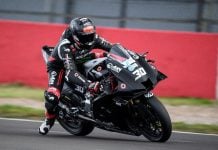
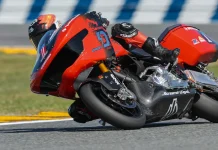
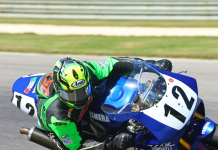
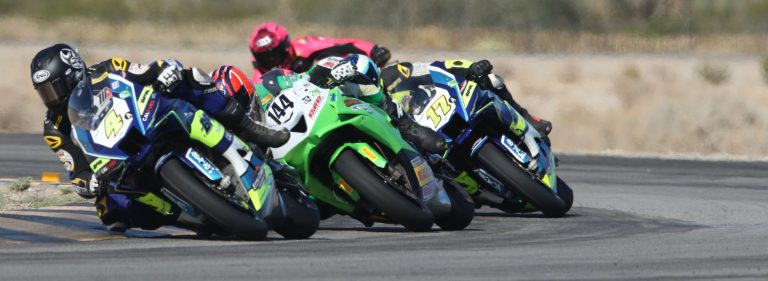
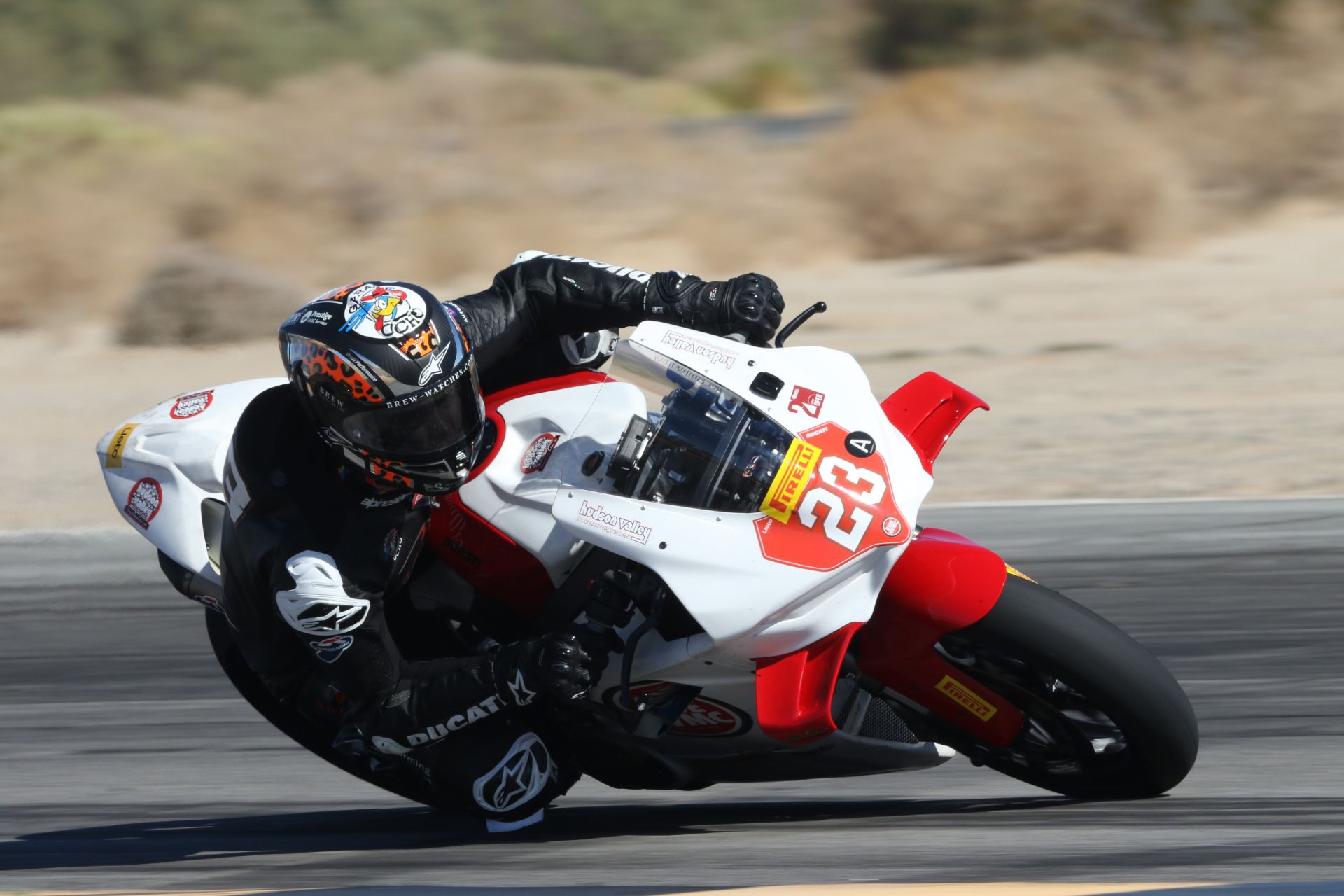
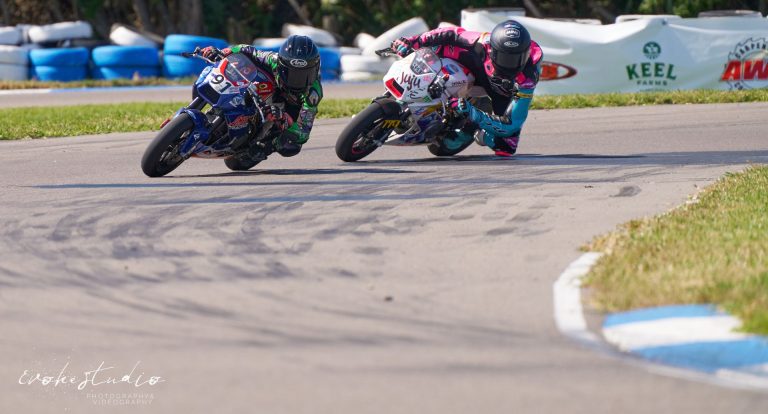
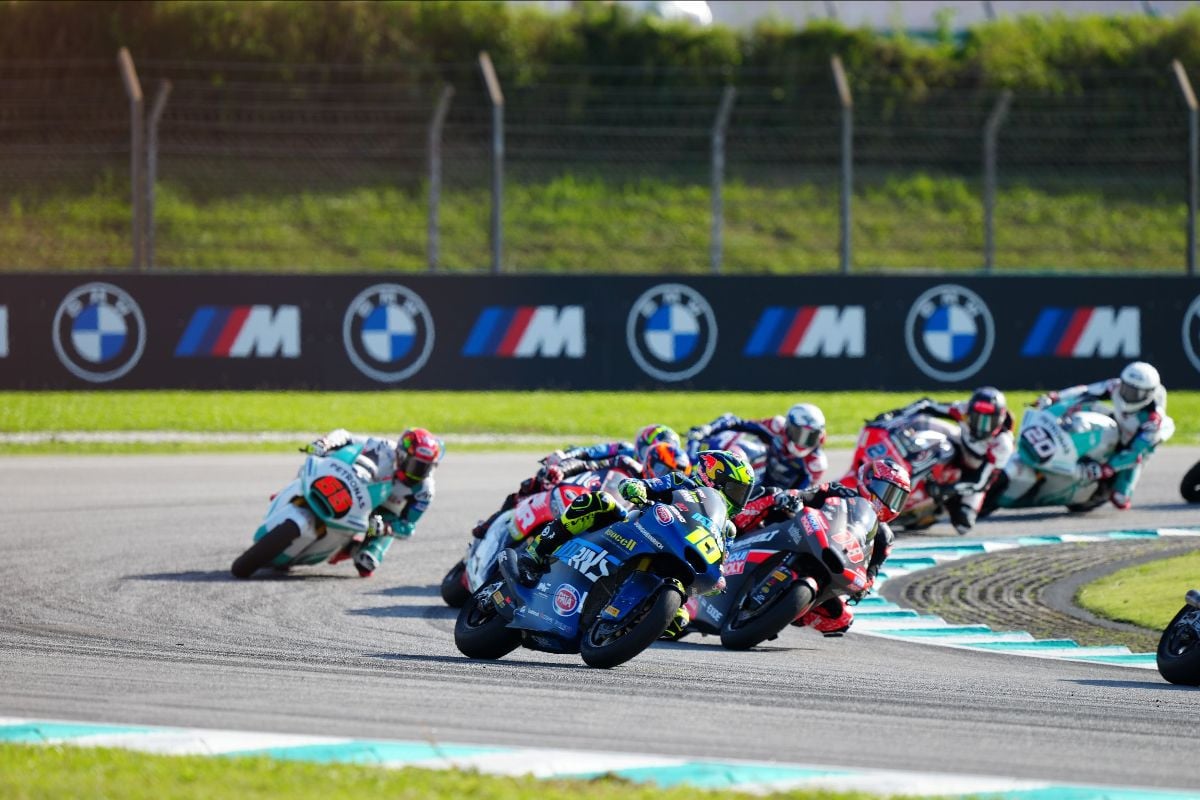
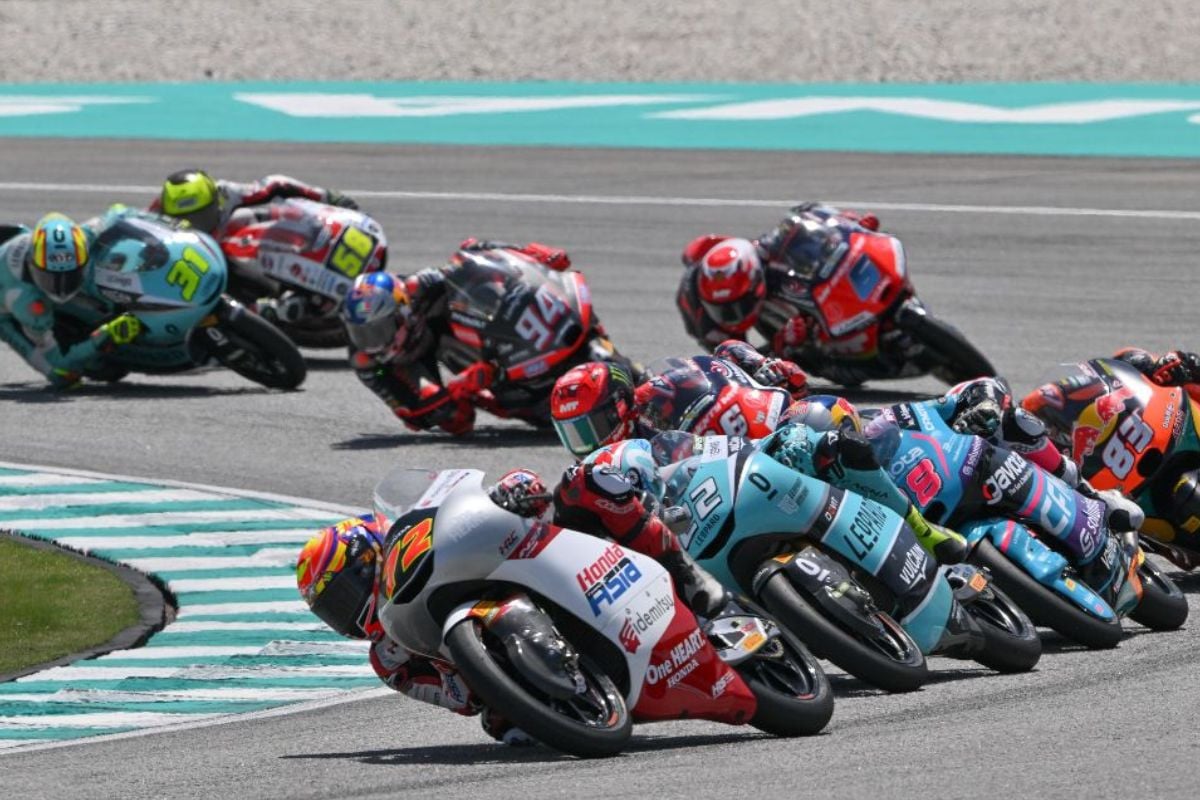
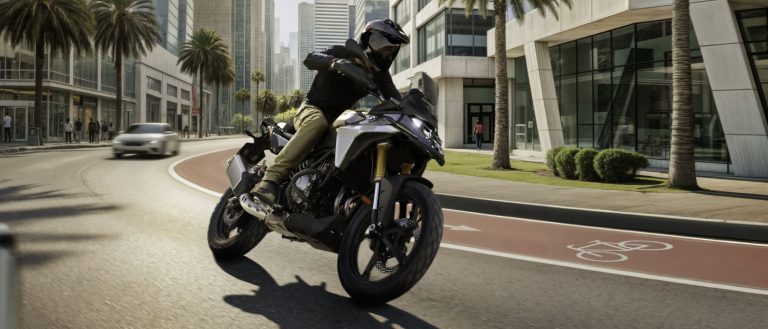
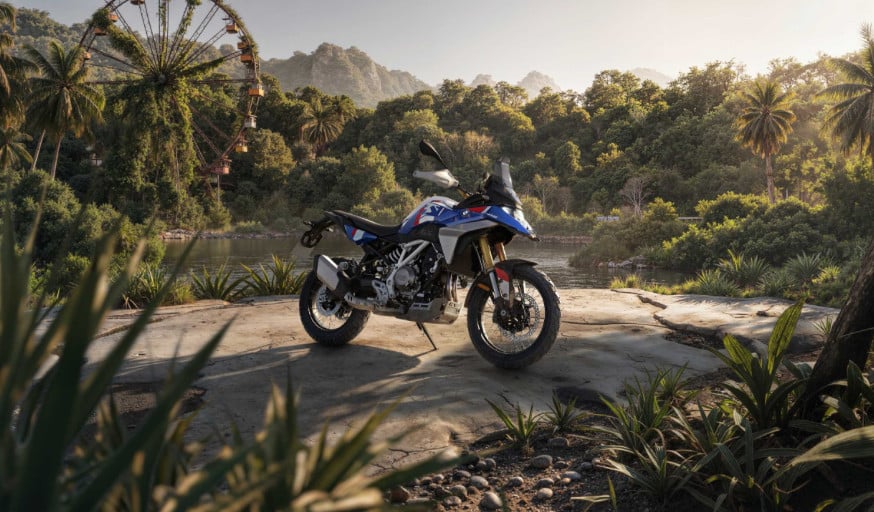
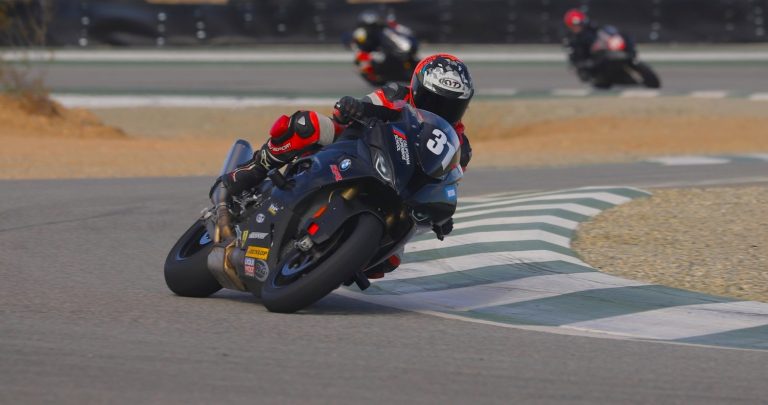
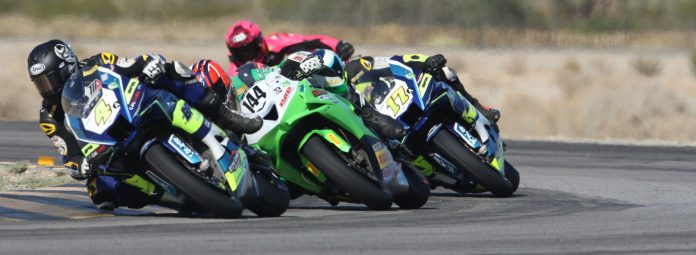
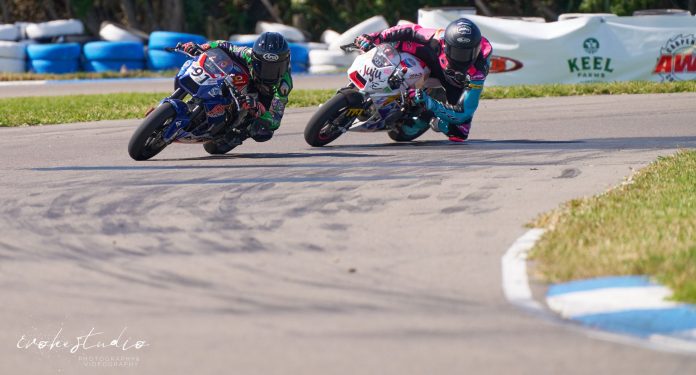
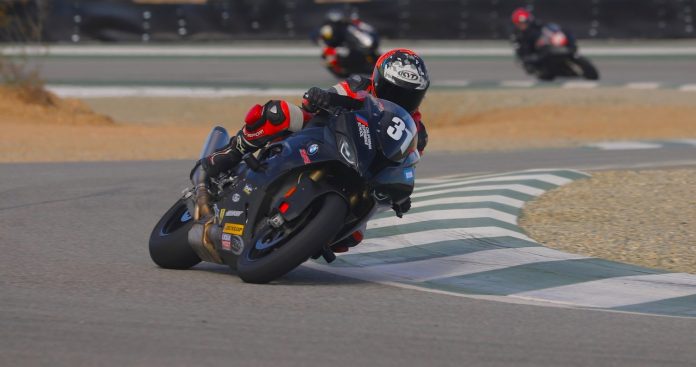
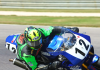
The CVMA round 2 event was graced with excellent weather and fantastic racing. Attendance at the Round 2 event was strong, starting on Friday with seven riders completing the New Racer School and obtaining their racing licenses.
Saturday’s racing was very competitive with some of the fastest riders in the country competing for CVMA championship points and sponsor rewards. The Saturday night party sponsored by Kneedragers 619 and CVMA was a ton of fun for everyone and featured a costume contest and lots of fun games.
CVMA also ran a pilot program in conjunction with 951 Live, streaming the racing action live to YouTube. The trial went well; racers and fans from all over the country were able to watch the races live, accompanied by color commentary on 951 Live’s channel.
Saturday Qualifying
The fastest of all in Saturday morning qualifying, Bryce Kornbau turned a 1:44.601 lap time on his middleweight bike.
Michael Gilbert topped the field of open-class bikes, turning a 1:44.930 lap time.
Gio Alvarez was fastest on a lightweight bike with a 1:51.817 lap time.
Alex George was fastest on an ultra-lightweight bike with a 1:55.471 lap time.
Bill Coolahan was fastest on a CVMA Hooligan bike with a 1:53.566 lap time.
Saturday Races
After qualifying on Saturday morning, the racing started off with Brenden Ketelesen besting Josh Hayes in the first race of the day, Formula Middleweight. Ketelesen turned a 1:44.6 Lap time, lowering his existing lap record for the class.
Other standouts on Saturday included Tyler Crozier, who won two amateur races on his middleweight bike, and Gio Alvarez, who won two lightweight races. Sawyer Lafayette was the class of the ultra-lightweight field winning two races and Justin Fite won two races on his open class bike.
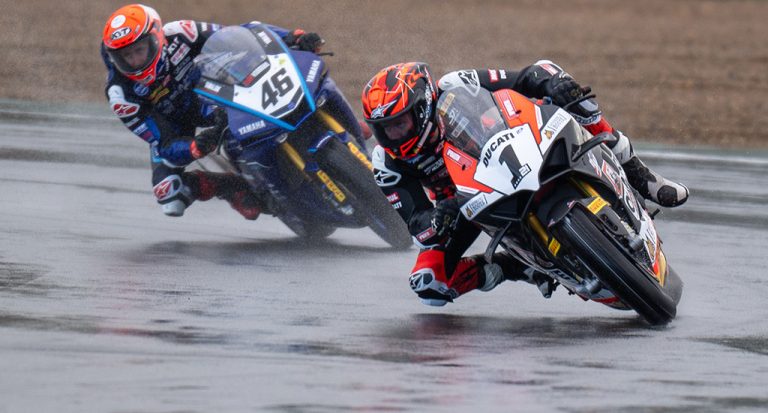
Corey Alexander leading The Shootout on his new Ducati Panigale V4. Photo credit CaliPhotography.
Sunday Shootouts
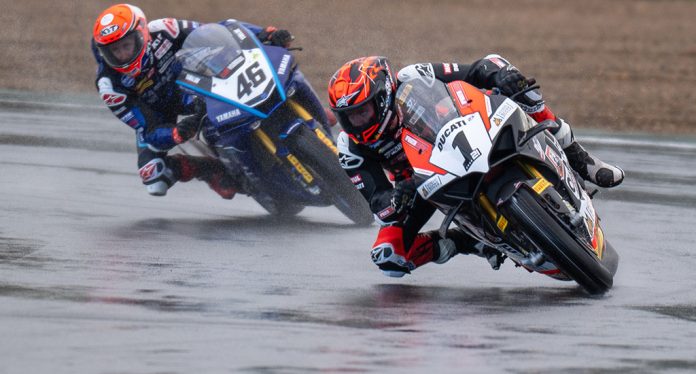
In the premier race of the day, The Shootout, Nick Ciling (Yamaha YZF-R1) was first into turn one, scoring the hole shot. Corey Alexander quickly passed Ciling on his new Ducati Panigale V4 race bike. At the end of the first lap, Alexander was in the lead, followed by Ciling, and Michael Gilbert (BPR Yamaha YZF-R1) in third. Alexander, Ciling, and Gilbert ran close for the first few laps. Alexander started to stretch out his lead through the middle of the race, turning near lap record times. Gilbert was able to get past Ciling on the eighth lap to take second place, and that would set the order for the race. At the stripe, it was Alexander for the win, followed by Gilbert in second and Ciling third.
The Formula Lightweight Twins Shootout started with Luke Sanzone first into turn one. Gio Alvarez (Aprilia RS 660) passed Sanzone on the exit of the first turn, and Matt Hornschu (Yamaha YZF-R7) would also pass Sanzone in The Bowl (turn 13) to take second. Alvarez led Hornschu and Sanzone at the end of the first lap. On the third lap, Geiser Hernandez (Aprilia RS 660) passed Sanzone on the brakes into turn ten to take the final spot on the podium. In the end, it was Alvarez for the win, Hornschu second, and Hernandez third.
At the start of the Middleweight Shootout, Josh Hayes (BPR Yamaha YZF-R9) jumped into the lead. At the end of the first lap, Hayes led, followed by Brenden Ketelesen (Kawasaki ZX-6R) and Bryce Kornbau (BPR Yamaha YZF-R). Ketelesen was able to pass Hayes on the brakes into turn ten to take the lead on lap three. Hayes would later crash out in turn five, handing second to Kornbau and third to Joel Ohman (Suzuki GSX-R750). At the finish, Ketelesen took the win with Kornbau in second and Ohman third.
In the final shootout race of the day, the Formula Ultra Lightweight Shootout, Nathan Gravelle took the hole shot. By the end of the first lap, Sawyer Lafayette was leading, followed by Wesly Lakis and Gravelle. On lap six, Lakis ran off the track, and Gravelle inherited second. Anthony Estrada was promoted to third. The order at the finish was Lafayette in first, Gravelle second, and Estrada third.
Next Round. Come out and join us for the next round of the CVMA 25/26 Winter Series on Dec. 5-7, 2025.
CVMA offers two full days of racing every race weekend and also includes Saturday qualifying for grid position in all classes, amateur, and expert, as well as a wide variety of classes to choose from.
CVMA offers free reciprocity as a means of encouraging racers from other clubs to come out and compete. CVMA also offers a New Racers School for those starting in racing on the Friday before each race weekend. Log on to www.cvmaracing.com to sign up or for more information.
CVMA. Built for racers by racers and offering the best racing experience around!
CVMA would also like to thank the 2024/2025 Winter Series Sponsors: Support Moto Racing, Apex Assassins, Ryder Gear, CaliPhotography, Racers Edge/Dunlop, RoadRace City/Bridgestone, Del’s Flooring, The California Superbike School, Ride HMVC, First Team IT, Yamaha, CT Racing/Pirelli, Compact Octane Trackdays, 2 Fast Track Days, Statewide Services Inc.
NRS Sponsors: Alpinestars, 6D Helmets, Five Gloves, and Racers Edge/Dunlop
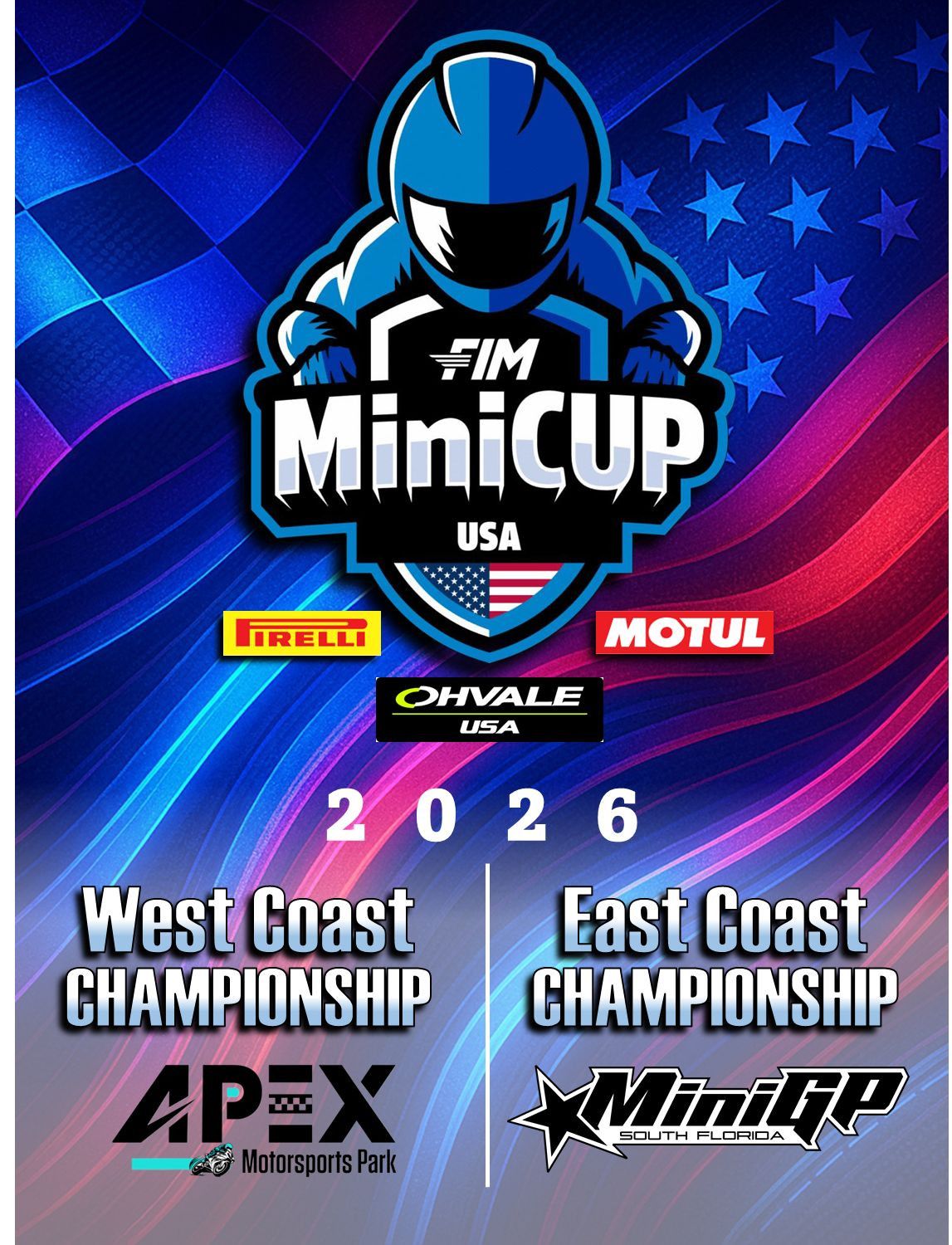
November 5, 2025 – Ohvale USA, in collaboration with the FIM Mini Cup, is thrilled to announce a major expansion of the FIM/AMA Mini Cup USA Championship for the 2026 season. The championship will now feature dual, independent East Coast and West Coast series, significantly increasing accessibility for American youth racers aiming for the global stage.
This groundbreaking initiative is made possible through a strategic partnership between Ohvale USA (led by John Hopkins), and the dedicated organizations running the championships: South Florida MiniGP (led by Michael Correa) for the East Coast, and the newly formed West Coast Championship at Apex Motorsports Park (also led by John Hopkins).
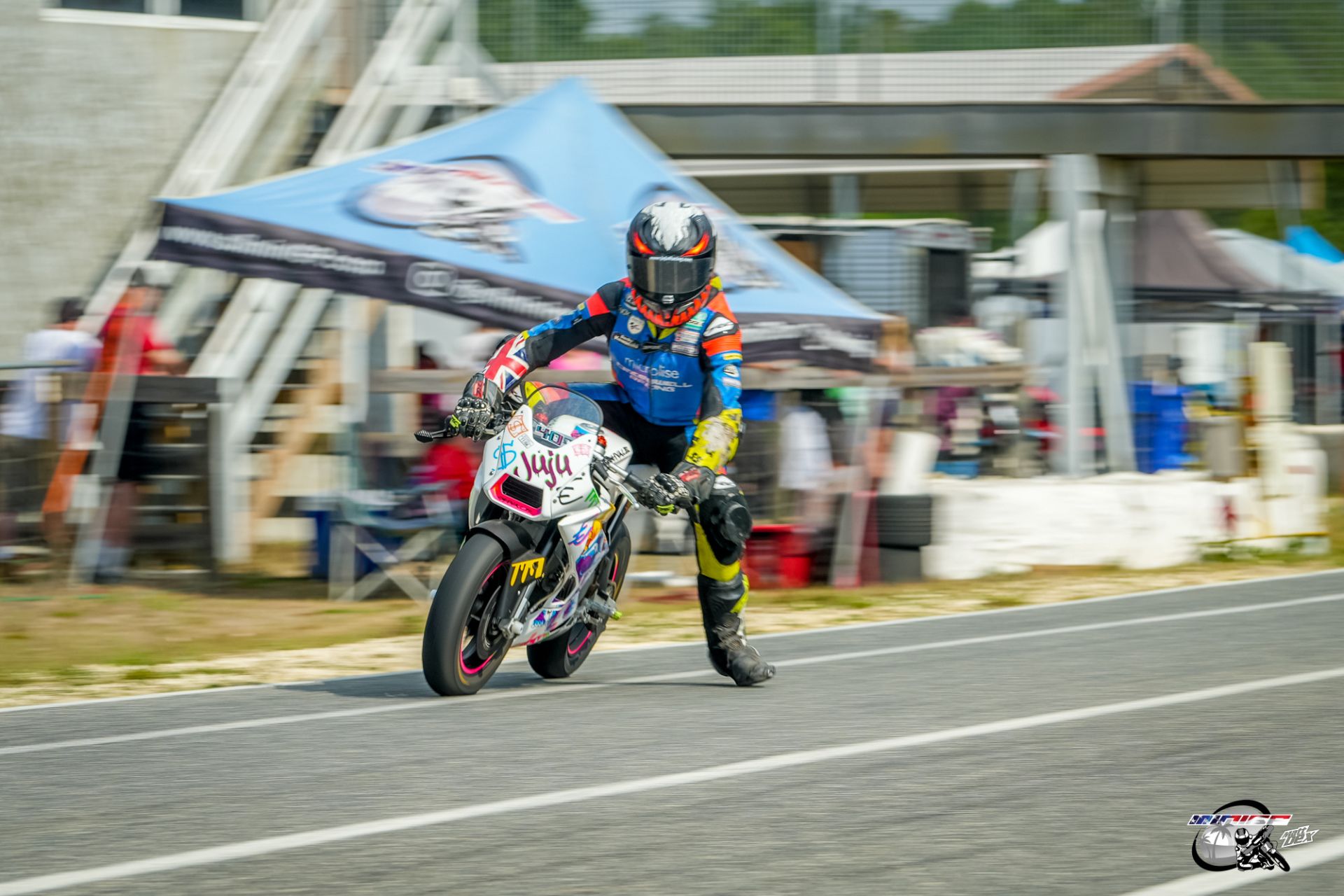
Julian correa at Bushnell Motorsports Park. Photo courtesy SF MiniGP.
The newly structured 2026 FIM Mini Cup USA Championship will consist of two parallel series:
West Coast Championship at Apex Motorsports Park (Managed by John Hopkins/Ohvale USA).
East Coast Championship run by South Florida MiniGP (Managed by Michael Correa).
This expansion is explicitly designed to provide all American racers with a more manageable and cost-effective path to compete for the prestigious opportunity to represent the USA at the FIM Mini Cup World Championship Finals in Spain in 2026. The major impact for racing families is the reduced travel requirement, offering an accessible location on both coasts to qualify for the global event.
“This is a massive step forward for American youth road racing,” said John Hopkins, leader of Ohvale USA and the West Coast effort. “By taking the championship to both coasts, we are directly addressing the financial and logistical burden families face. Our primary goal is to foster talent, and this dual-championship structure, run on high-quality circuits like Apex and the East Coast venues, makes the dream of racing in a World Final a reality for far more young riders.”
“This expansion is the culmination of a long-term goal: bringing the FIM Mini Cup Championship directly to American soil,” stated Michael Correa, Owner/Operator of South Florida MiniGP. “I’ve been collaborating with John Hopkins since he took the helm, meticulously building a two-coast system to guarantee access for every eligible racer nationwide. Earning FIM approval was crucial, but just as vital was finding a way to drastically reduce travel costs for our racing families. Our new ‘Arrive & Drive’ service at both coastal championships is a cornerstone of this effort—it allows competitors to fly in, race, and fly out, completely bypassing long-haul travel. My mission has always been to remove all possible obstacles, and now, we’ve succeeded in removing the biggest ones.”
Key Partnerships Driving American Talent
The success of this initiative is built on the expertise of its leaders:
John Hopkins, through Ohvale USA and the new West Coast Championship at Apex Motorsports Park, leverages his vast racing experience to shape the competitive structure and promote growth.
Michael Correa and the South Florida MiniGP organization will spearhead the East Coast efforts, bringing their proven track record of operational excellence and commitment to racer development to their region.
FIM Mini Cup: The official global governing body provides the structure and the ultimate prize: a spot in the World Championship Finals.
The expansion is a direct investment in the future of American road racing, ensuring that the country’s best young talent can compete at the highest level without the prohibitive demands of constant cross-country travel.
Join the Championship
The East and West Coast Championships are set to kick off in 2026. Interested racers, teams, and families are encouraged to follow Ohvale USA, South Florida MiniGP, and Apex Motorsports Park for official schedules and registration details coming soon.
One point. That’s all Josh Waters requires to clinch a history-making fifth Superbike title at the grand finale of the 2025 mi-bike Motorcycle Insurance Australian Superbike Championship presented by Motul (ASBK) at The Bend from November 7-9.
After yet another towering season from Waters, the McMartin Racing Ducati rider holds a 50pt (338 to 288) lead over Mike Jones (Yamaha Racing Team) in the SW-Motech Superbike class heading into The Bend, where a maximum 51pts will be up for grabs across qualifying and the two 11-lap races.
And with The Bend’s expansive layout more receptive to the Ducati’s brute horsepower compared to the last round at One Raceway, Waters can certainly wrap up the championship during qualifying on Saturday afternoon.
However, Waters is yet to claim pole position at The Bend during his storied career, while Jones has started at the pointy end three times, including last year. If the silky-smooth Jones can pull out another one-lap blinder on Saturday on his YZF-R1 M, the focus will then shift to a high-stakes super Sunday.
And it’s not just SW-Motech Superbike which is going to the wire at The Bend, with 2025 champions to also be crowned in Kawasaki Supersport – featuring the immense talent of two-time British Superbike champion Kyle Ryde – the ShopYamaha R3 Cup, BLU CRU Oceania Junior Cup and Superbike Masters. Scott Nicholson wrapped up the Race and Road Supersport 300 class in the penultimate round at One Raceway.
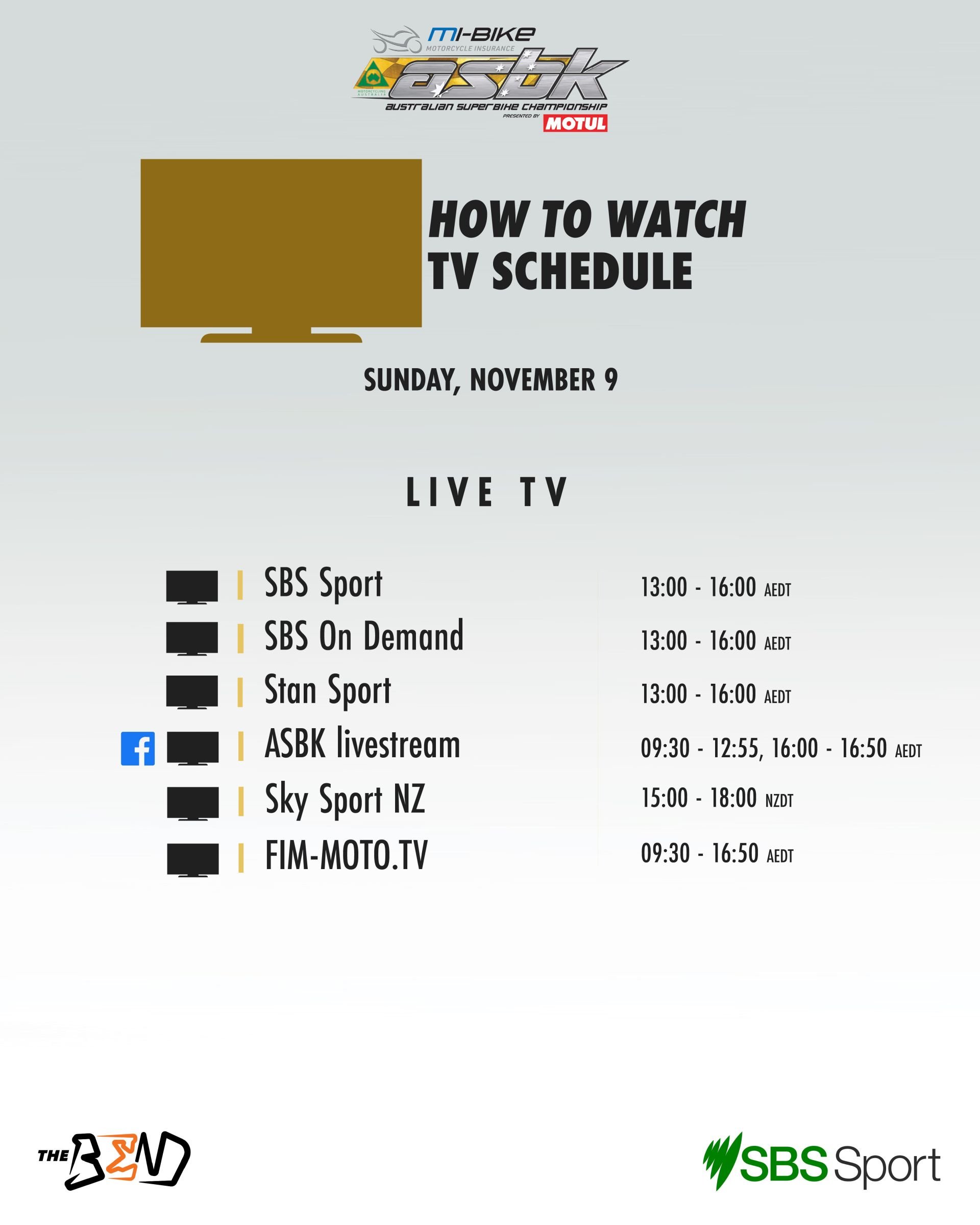
The full catalogue of ASBK classes adds up to a massive program at The Bend, with on-track action starting from 8am ACDT (8:30am AEDT) on Saturday and Sunday.
There will be 17 races across the weekend, as well as multiple press conferences in the circuit’s welcome centre featuring Waters, Ryde, the top three in Superbike qualifying, the top three in all races, and Aussie circuit racing legends Chris Vermeulen, Garry McCoy and Steve Martin.
The traditional ASBK pit lane walk will also be held during the Sunday lunch interval, where spectators can grab autographs from their favourite riders.
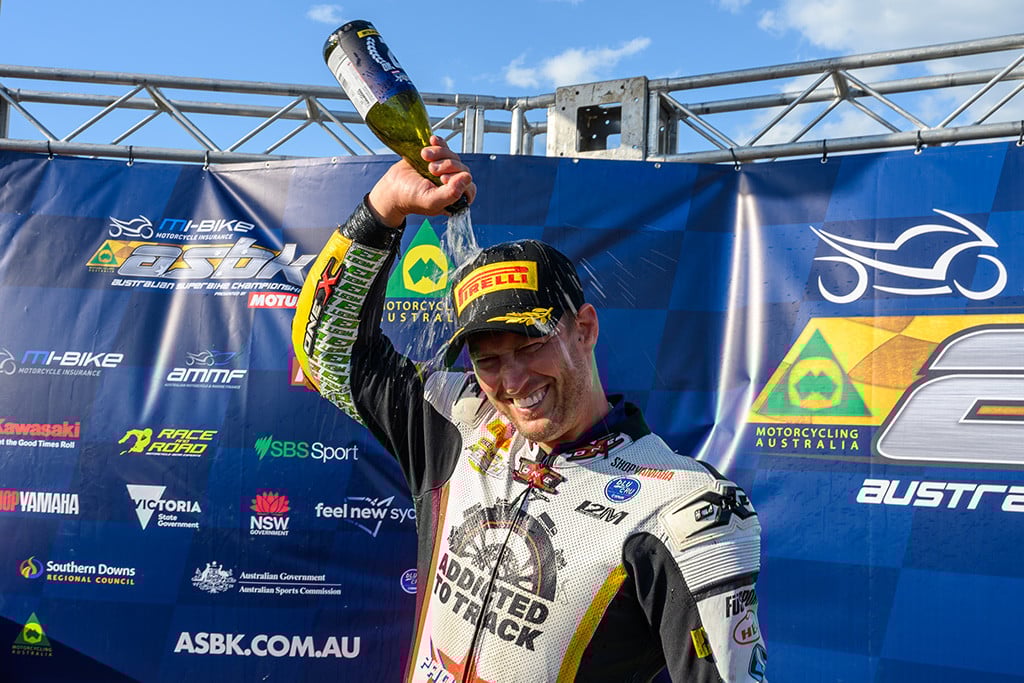
Anthony West has produced a stellar Superbike season. Photo by RbMotoLens.
At One Raceway (NSW), Jones claimed two wins in a superb rearguard action to keep his title hopes hanging by a thread, but he was forced to dig deep as rising star Cameron Dunker (MotoGO Yamaha) made him work hard for the victories.
For Waters, One Raceway was his worst outing of the year with a pair of fifth places. In race two he missed out on a fourth place by a miniscule 0.088sec to Jones’ newly drafted teammate Troy Herfoss. Those nonoseconds were just enough to ensure that Jones kept his championship hopes alive.
Jones is just 19pts (288 to 269) in front of Anthony West (Addicted to Track Yamaha) in the Superbike standings, which is probably where the real pragmatist in Jones is channelling his major focus at The Bend: keeping his fellow Queenslander at bay, especially with the rich vein of form shown by West in the second half of the season.
With no idea rider in contention for a top three championship finish, Dunker, Glenn Allerton (Superbike Advocates Ducati) and Broc Pearson (DesmoSport Ducati) are separated by just 3pts in their battle for fourth, while Jonathan Nahlous (Omega Racing Team Yamaha) is seventh and on the cusp of claiming rookie of the year honours.
Cru Halliday (Stop and Seal Ducati) and Max Stauffer (Yamaha) will also be in contention, while Herfoss is returning to a happy hunting ground where he has won a remarkable six races: twice from pole position and four times from outside the front row.
The 20-rider field will also include Luca Durning (DesmoSport Ducati), who is stepping up from his normal Supersport Next Gen mount.
Kawasaki Supersport and Supersport Next Gen
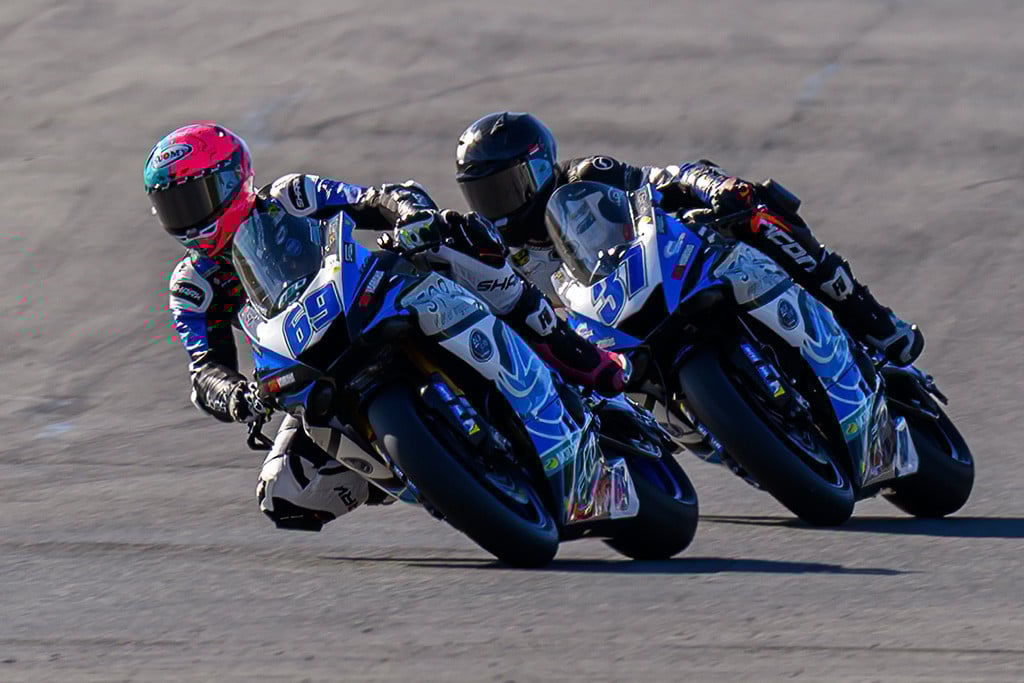
Archie McDonald (69) and Jack Mahaffy (37) in close Kawasaki Supersport combat. Photo by RbMotoLens.
Ryde is a spectacular addition to the Kawasaki Supersport grid, having been drafted into the Stop and Seal team alongside the two major title protagonists: Jack Mahaffy and Archie McDonald.
With a 24pt (265 to 241) buffer over McDonald, Mahaffy clearly has the stronger hand but the mercurial McDonald – coming off an impressive outing in last weekend’s European Stock round in Barcelona – won’t make it easy.
Oli Simpson (BCperformance Kawasaki) is third in the standings on 234pts, and at his home track will be pushing hard to force an error from Mahaffy and/or McDonald – but Ryde could well be the fly in the ointment, with the Briton returning to the Supersport ranks for the first time in a decade.
As always, the likes of Tom Bramich (Yamaha), Hayden Nelson (BCperformance Kawasaki), Jake Farnsworth (Yamaha), Marcus Hamod (Motocity Honda), Tom Edwards (TeamBWR Yamaha), Levi Russo (Motoschool Racing Team Yamaha), Will Nassif (Omega Racing Team Yamaha) and Josh Newman (Addicted to Track Yamaha) will be in the hunt, while Tom Toparis and visiting international Eugene McManus will ride Stop and Seal Ducatis in the Supersport Next Gen class.
McManus, from Ireland, competed in two World Supersport rounds this season on a Panigale V2.
Race and Road Supersport 300/ShopYamaha R3 Cup
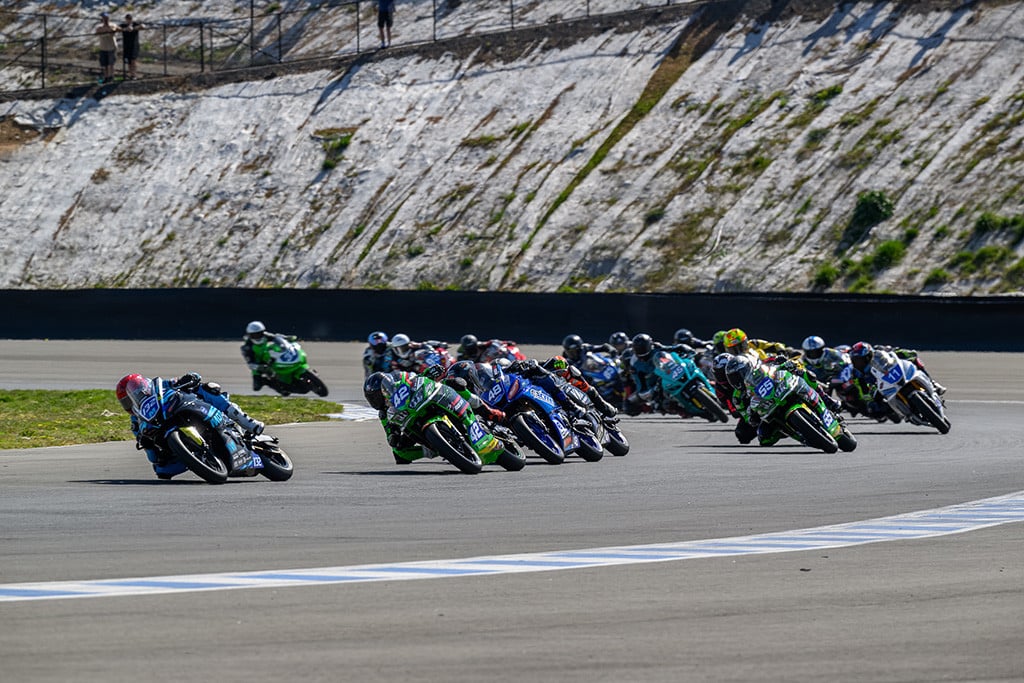
Race and Road Supersport 300 action from One Raceway, with Hudson Thompson out front. Photo by RbMotoLens.
The Race and Road Supersport 300 class may have already crowned Nicholson (Kawasaki) with a round to spare, but the action will be as manic as ever with a freight train of riders in the front pack.
Tara Morrison (Kawasaki) was in second spot all season until an inexplicably disastrous weekend at One Raceway saw her drop to fourth place behind round winner Jake Paige (Champions Ride Days Kawasaki) and Jordy Simpson (Yamaha) – and with Tyler King (Kawasaki) and Mitch Simpson (Yamaha) now nipping at her heels as well.
It all makes for a tantalising grand finale, with others to watch out for including Riley Nauta (Champions Ride Days Kawasaki), Hudson Thompson (Yamaha), Valentino Knezovic (Yamaha) and Nikolas Lazos (Yamaha).
Such is the intensity, any of 20 riders could snare a win in the three races.
In the ShopYamaha R3 Cup, Mitch Simpson, Lazos, Jordy Simpson, Thompson and John Pelgrave hold the top five positions, with the title still wide open.
BLU CRU Oceania Junior Cup
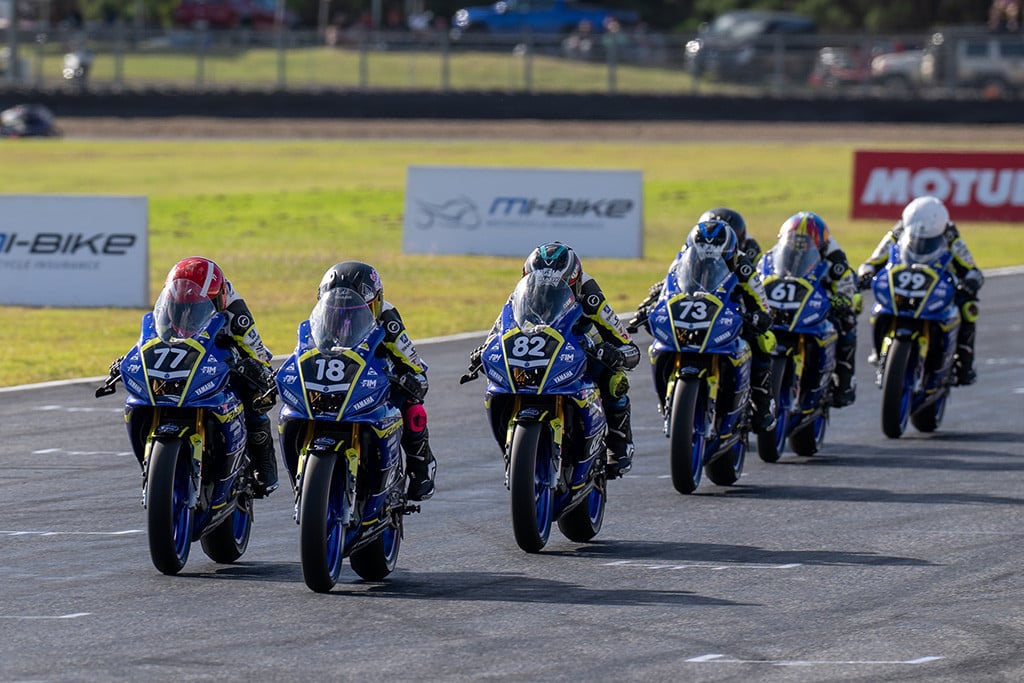
Who will win the BLU CRU Oceania Junior Cup: Connor Lewis (77) or Chaz Williams (18)? Photo by RbMotoLens.
After a see-sawing season at the sharp end of the standings between Connor Lewis and Chaz Williams, Australia’s newest junior road race champion will be crowned at The Bend.
Lewis leads by 3pts (270 to 267), while Rossi McAdam (232pts) could come from the clouds if it goes pear-shaped for the top two.
Still plenty to play out for the junior jets!
Superbike Masters
Beau Beaton is aiming for Superbike Masters history. Photo by RbMotoLens.
In Superbike Masters, Beau Beaton (Ducati) is looking to become the first rider to go through the series undefeated.
On paper, Beaton should get the job done with a minimum of fuss, leaving the likes of Michael Berti Mendez (Ducati), Phil Allen (Ducati), Phillip Burke (Honda), Ben Burke (Honda) and Scott Nicholson (Honda) – yes, the newly minted Supersport 300 champion! – battling for the minor places.
For more information on the 2025 mi-bike Motorcycle Insurance Australian Superbike Championship presented by Motul:
HOT HEADLINES: who’s taking the reins at the rollercoaster?
With two maiden winners already and seven different victors… will we see another this weekend?
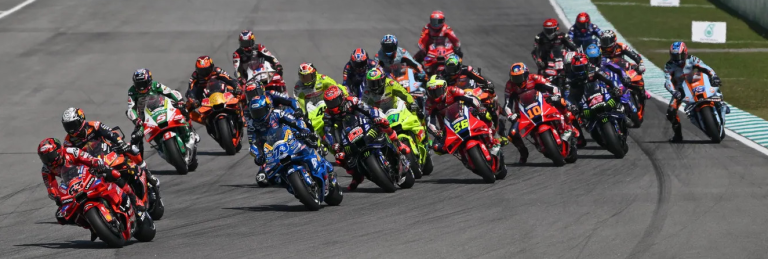
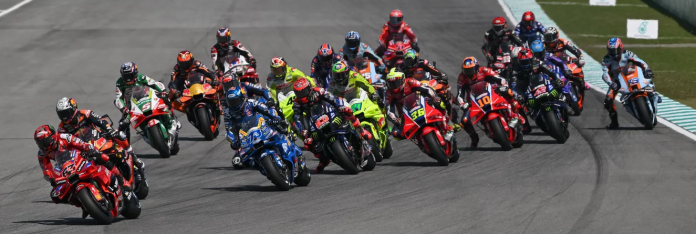
Two maiden winners and seven winners so far is the state of play as the 2025 MotoGP season touches down in Portimão. One of the most exciting circuits on the calendar, it’s called the rollercoaster for a reason and is a whole new challenge for the grid – with plenty of interesting track records and form books to read through on the way in. So who’s taking the reins this weekend?
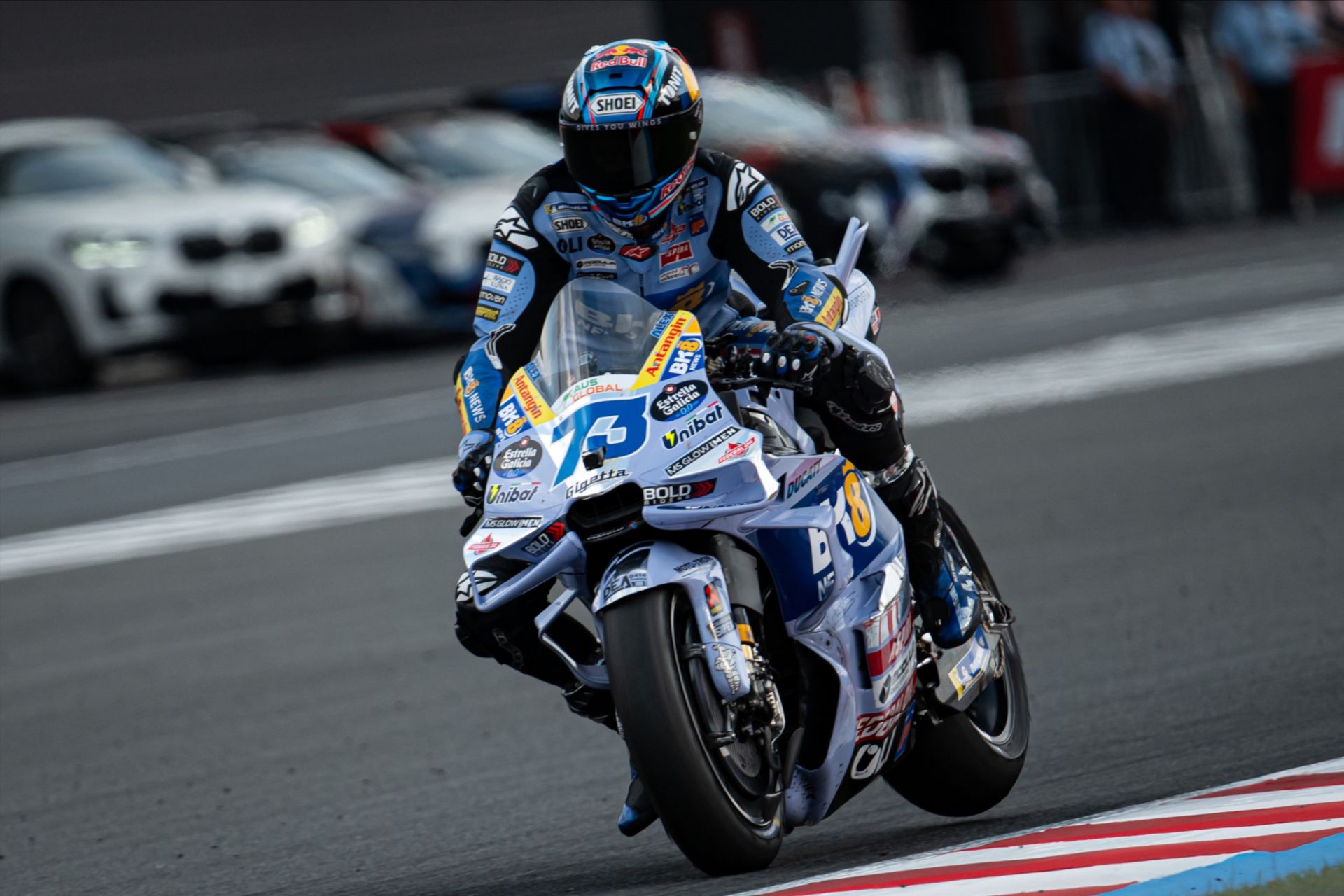
Alex Marquez (73) at Motegi. Photo courtesy BK8 Gresini Racing Team.
PRESSURE OFF, PRESSURE ON: Alex Marquez throws down, Bulega called up
1 and 2 is wrapped up as the Marquez brothers make history as the first siblings to become Champion and runner-up. And while Marc Marquez (Ducati Lenovo Team) won’t be back competing until next year, Alex Marquez (BK8 Gresini Racing MotoGP) most definitely is. An impressive and perfectly poised win at Sepang underlined his runner-up spot in style and as he has been all year, he’ll be in the crosshairs for many.
So who’s stepping in this weekend? 2025 WorldSBK runner-up Nicolo Bulega is going to beat Champion Toprak Razgatliouglu to it and debut in MotoGP first, albeit for two races. Bulega has already been signed up and announced as part of Ducati’s development team in 2026 in preparation for the new regulations in 2027, and now he’s going to race the GP25 too, further adding to his knowledge before the switch to 850cc.
A test at Jerez on the Thursday before Portimao gave Bulega a first spin out. Now it’s in at the deep end to race in place of a seven-time MotoGP World Champion, and on Michelin rubber too. His targets will likely be modest, but the experience should be of incredible value.
Francesco Bagnaia (63) at Sepang. Photo courtesy Ducati
THE BATTLE FOR BRONZE: three riders & three factories
The pendulum continues to swing in the battle for third place overall. Francesco Bagnaia (Ducati Lenovo Team) and Marco Bezzecchi (Aprilia Racing) were tied on points after the Sepang Sprint but after Pecco’s Grand Prix DNF on Sunday and Bezzecchi scraping P11, the Aprilia star has a narrow advantage. Bagnaia’s a winner at Portimao from 2023 but suffered a Sunday DNF there last year after his clash with current teammate Marquez, whereas Bezzecchi was third in 2023 and sixth last year on different machinery.
Meanwhile, slashing 20 points out of Bagnaia’s advantage is Pedro Acosta (Red Bull KTM Factory Racing). P2 at Sepang on Sunday, he’s just 31 behind Bezzecchi and 26 behind Bagnaia. Dare he dream of bronze? If anyone’s winning their maiden GP at Portimao and becoming the eighth winner of the season, you’d be hard pushed to bet against the #37…
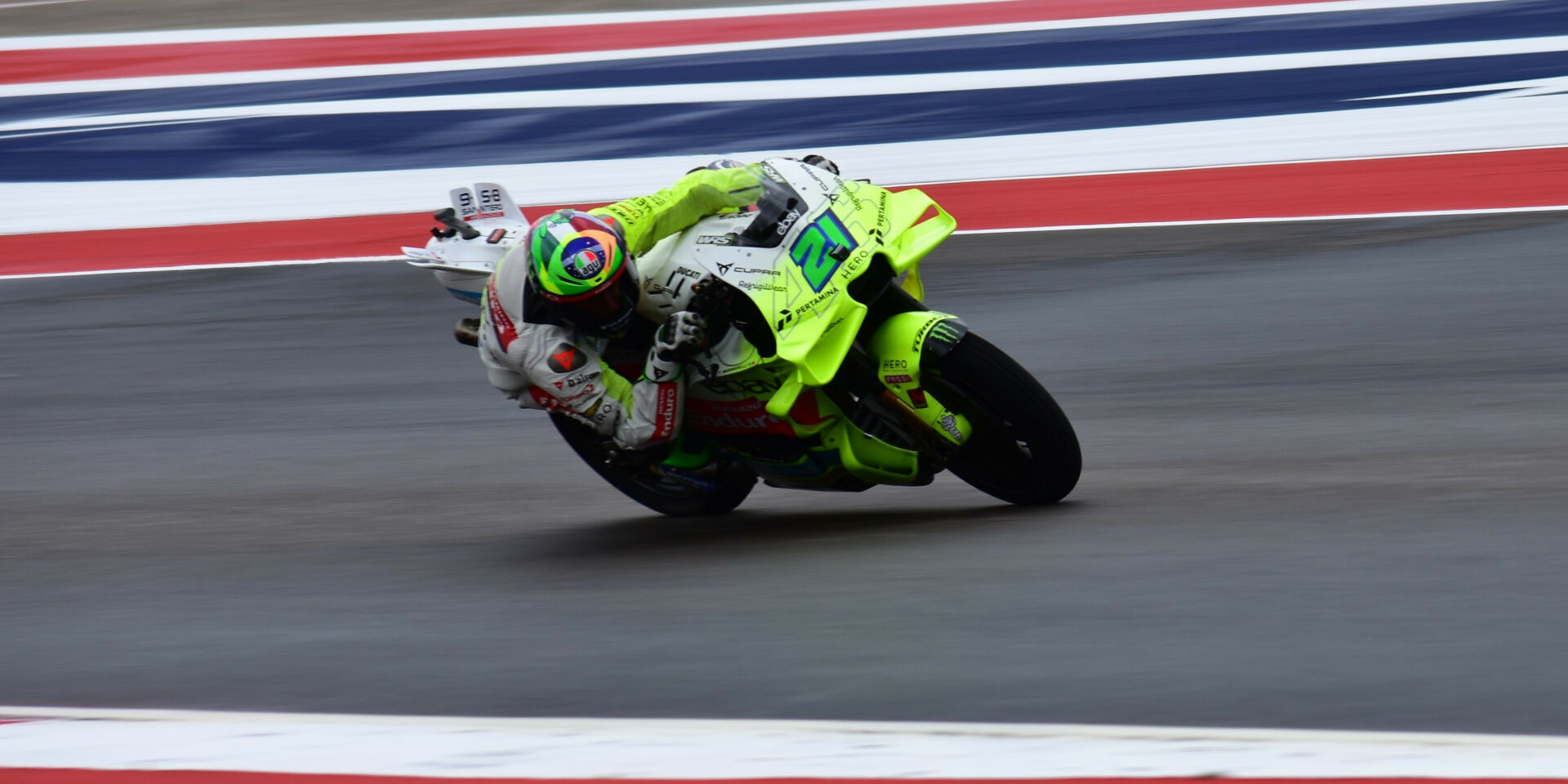
Franco Morbidelli (21). Photo by Michael Gougis.
TARGETING MORE: tight fight in the top ten
Things continue to change hands for P6. Teammates Franco Morbidelli (Pertamina Enduro VR46 Racing Team) and Fabio Di Giannantonio are separated by just one point with two GPs remaining. And it’s Diggia who has achieved the only top ten between them at Portimao in the last two years – although Morbidelli has a podium from 2020 after his memorable throwdown with Miller.
Joan Mir (Honda HRC Castrol), meanwhile, arrives from his second podium in four GPs and has a third from the Portuguese GP from 2021 he aims to replicate. Honda, after such a difficult stint one year ago, are now on the verge of moving up a rank in concessions. If they score 19 or more points across Portugal and Valencia, they move from D to C – and lose things like their free testing with any rider at any track. See here for the full ranks!
Back a little further up in the standings, however, Fabio Quartararo’s (Monster Energy Yamaha MotoGP) strong fifth from Sepang puts him just four points behind Fermin Aldeguer (BK8 Gresini Racing MotoGP) now. Quartararo has two wins at Portimao and it’s a track you would expect the #20 to be strong at once again. Aldeguer, however, has had a tougher time of it since his Mandalika win, although he did wrap up Rookie of the Year in Sepang despite that tyre pressure penalty. Raul Fernandez (Trackhouse MotoGP Team) is another who suffered a dip after his maiden win and will want to prove a point in Portugal.
Johann Zarco (5) at Sepang. Photo courtesy Dorna.
LATE RUN ON THE TOP TEN: looking for form & fortune
28 points cover 11th to 14th and just one splits Johann Zarco (LCR Honda CASTROL) and Brad Binder (Red Bull KTM Factory Racing) as the South African edges ever closer thanks to three consecutive top tens. He’s been in the top six in every Portuguese GP he’s finished, so watch out for the #33. Likewise on a run of three consecutive top ten results is Luca Marini (Honda HRC Castrol), just five points behind Binder, whilst Enea Bastianini’s (Red Bull KTM Tech 3) Sunday rallies from tougher qualifying mean he’s 36 points off the top ten. Bastianini has been on the podium here before too, and when it goes well out the box – like Barcelona – he can have plenty to say at the sharp end.
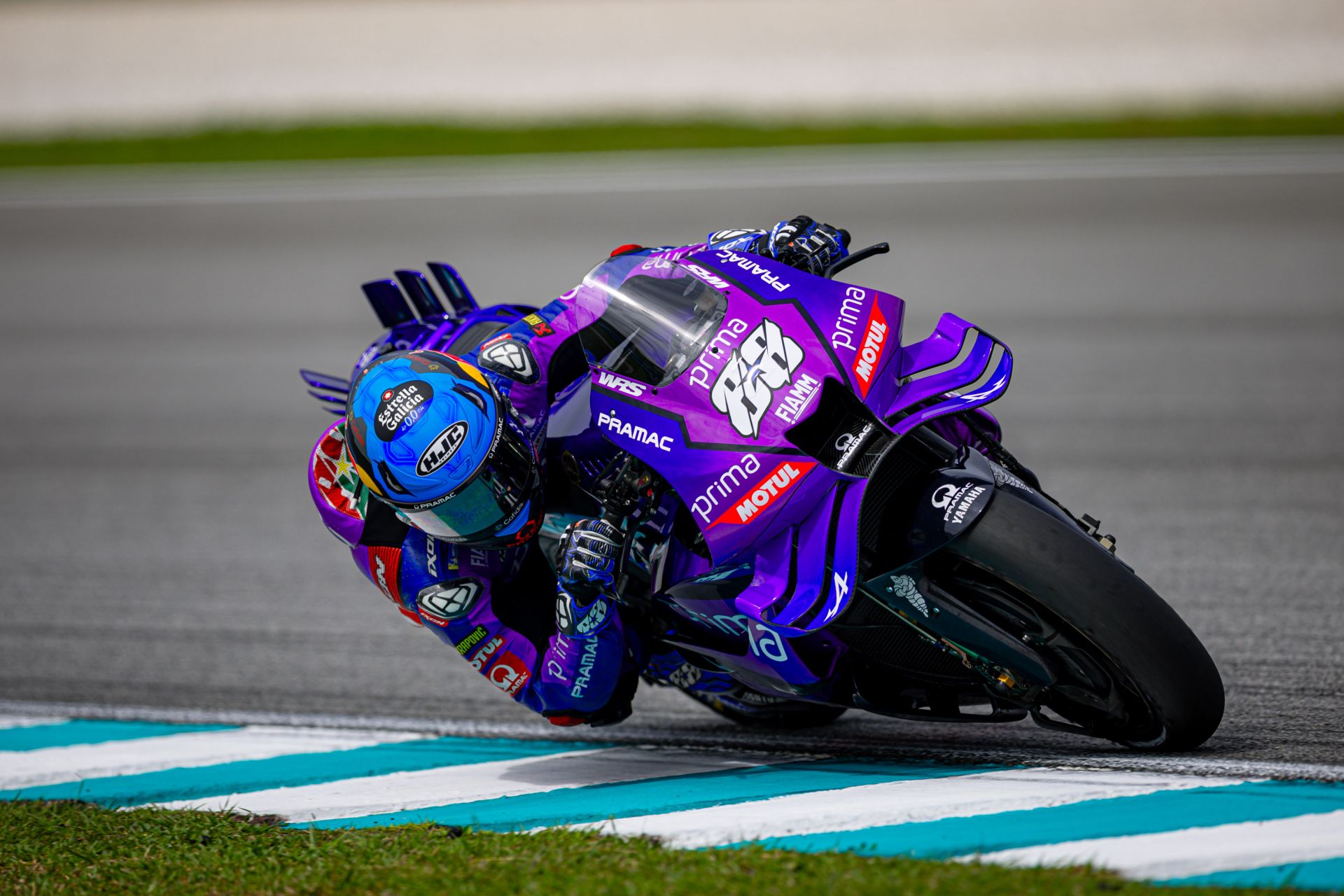
Miguel Oliveira (88) at Sepang. Photo courtesy Prima Pramac Yamaha
HOME HERO: Oliveira’s swansong on home soil
It’s a final home GP for Miguel Oliveira (Prima Pramac Yamaha MotoGP), with the #88 aiming to return to the points. The first Portuguese rider to win in MotoGP, and the first to win on home turf after his stunning Portimão victory in 2020, it will be an emotional weekend and he’ll be more motivated than ever to attack at the front.
Teammate Jack Miller, meanwhile, seeks a return to the top ten on Sunday for the first time since Brno after a tougher run of DNFs. A few places ahead, and aiming to take his first back-to-back top ten Grand Prix finishes since Jerez and Le Mans, is Ai Ogura (Trackhouse MotoGP Team), whereas Alex Rins (Monster Energy Yamaha MotoGP) has previous top five pace in Portugal. Somkiat Chantra (IDEMITSU Honda LCR) hopes to finish his rookie season, and before his new adventure in WorldSBK, adding to his points tally whilst Lorenzo Savadori (Aprilia Racing) and Pol Espargaro (Red Bull KTM Tech 3) continue to replace Jorge Martinand Maverick Viñales respectively – the latter often a Q2 threat to watch out for.
A chance at another maiden winner, a swansong for a home hero and the penultimate GP of the year promises much… so strap yourselves in for the Qatar Airways Grand Prix of Portugal!
Moto2™: match point Moreira as title race lands in Portugal
Diogo Moreira (10) and Manuel Gonzalez (18). Photo courtesy Dorna
Moto2’s fascinating title race took a huge twist in Malaysia. Manuel Gonzalez’s (Liqui Moly Dynavolt Intact GP) rare crash while ahead of Diogo Moreira (Italtrans Racing Team) handed the latter a Sunday gift, and now, it’s the Brazilian who lands in Portugal with a chance to clinch the crown.
The gap between the two sits at nine points following Moreira’s P16 to P5 salvage job, and with just two Grands Prix to go, that means the title can be won this weekend. If by Sunday afternoon the margin is 26 points or more in the #10’s favour over Gonzalez, plus the other three riders who are in mathematical contention, Moreira will become Moto2 World Champion.
Those other three riders? Malaysian GP P3 finisher Barry Baltus (Fantic Racing) is 35 points behind, Sepang winner Jake Dixon (ELF Marc VDS Racing Team) is 41 points adrift, with Aron Canet (Fantic Racing) now 43 points away. The #7, #96 and #44 need a titanic turnaround, starting in Portimao, but they’re still in the equation.
Another contest to keep an eye on is the Rookie of the Year fight between CFMOTO Inde Aspar Team’s Daniel Holgado and David Alonso. The Colombian’s second P2 in as many Grands Prix means the gap has shrunk to 42 points to his Spanish teammate, but Holgado remains firmly in the driving seat to collect that sought-after accolade.
All that being said, an unmissable weekend of Moto2 action awaits in Portugal.
Moto3™: the fight for second into the final stretch
Moto3 race at Sepang. Photo courtesy Dorna
As we look forward to the penultimate round of the 2025 Moto3 campaign in Portimao, our thoughts remain firmly with Noah Dettwiler (CIP Green Power) and World Champion Jose Antonio Rueda (Red Bull KTM Ajo) as the duo continue their recoveries.
Back on the track, the fight for P2 overall will be in the spotlight as Angel Piqueras (FRINSA – MT Helmets – MSI) looks to leave Portimao with that battle won. After his P2 in Sepang, his lead over Maximo Quiles (CFMOTO Gaviota Aspar Team) is now 14 points after the newly crowned Rookie of the Year finished P7 last time out, so if that grows to 25 points or more come Sunday, Piqueras will officially be the runner-up.
After his maiden victory finally arrived in Malaysia, Taiyo Furusato (Honda Team Asia) will be a rider full of confidence in Portimao. Top Honda honours are also up for grabs, with Malaysian GP podium finisher Adrian Fernandez (Leopard Racing) currently leading the Japanese rider by 23 points.
Meanwhile, Joel Kelso (LEVELUP – MTA) and Alvaro Carpe (Red Bull KTM Ajo) are level on points in P5 and P6, so there’s lots to keep an eye on as the Moto3 field face up to Portimao’s famous rollercoaster. Tune in for more this weekend!
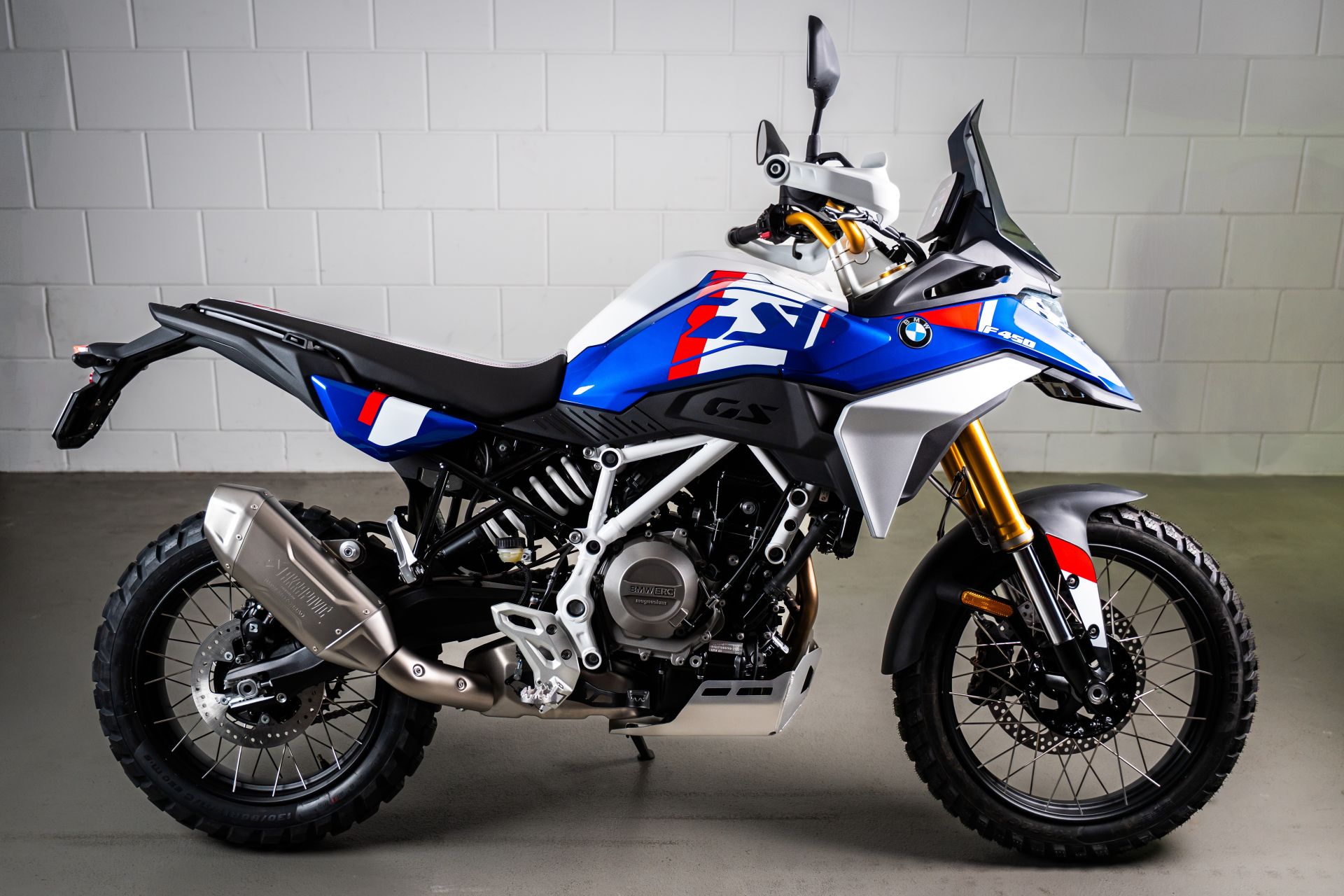
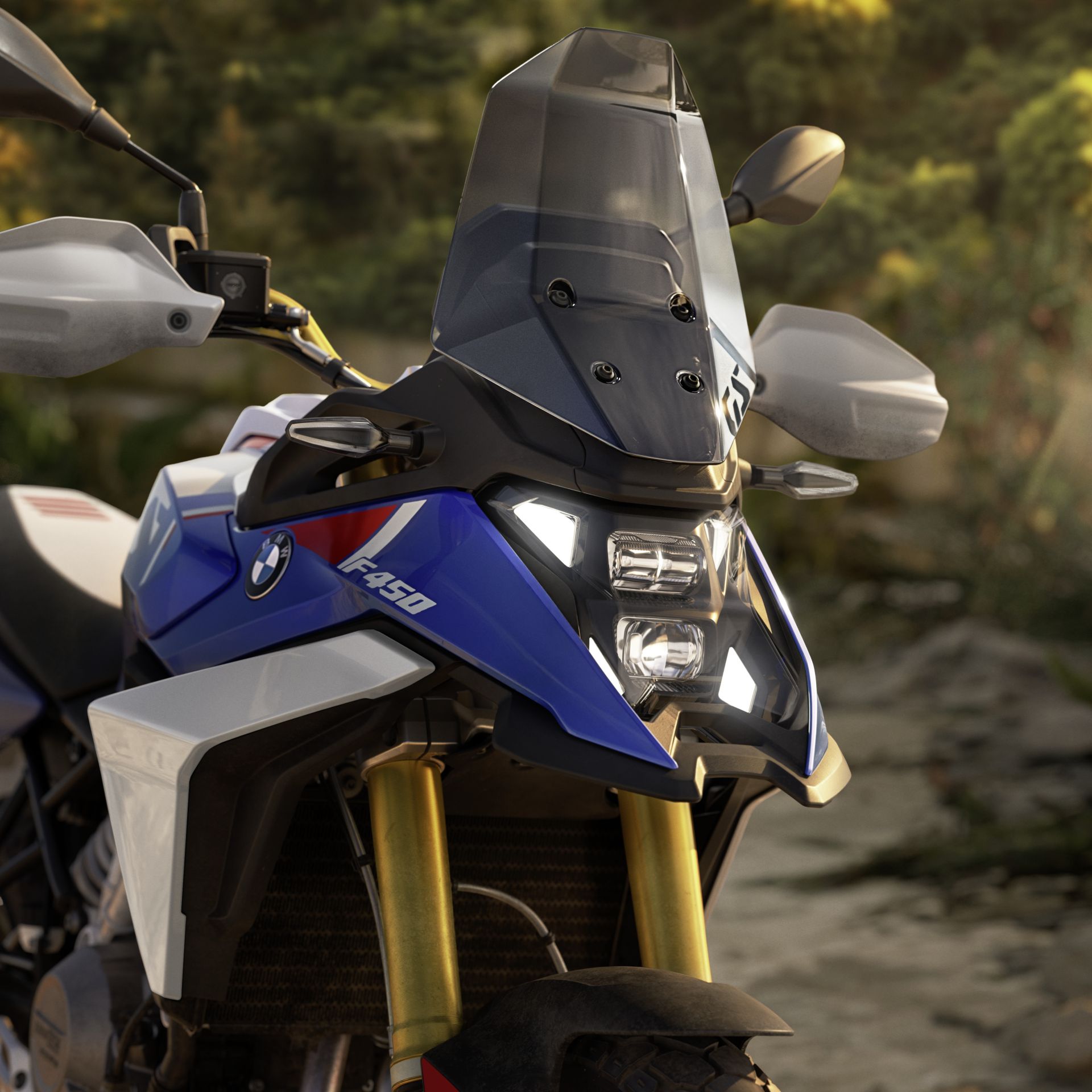
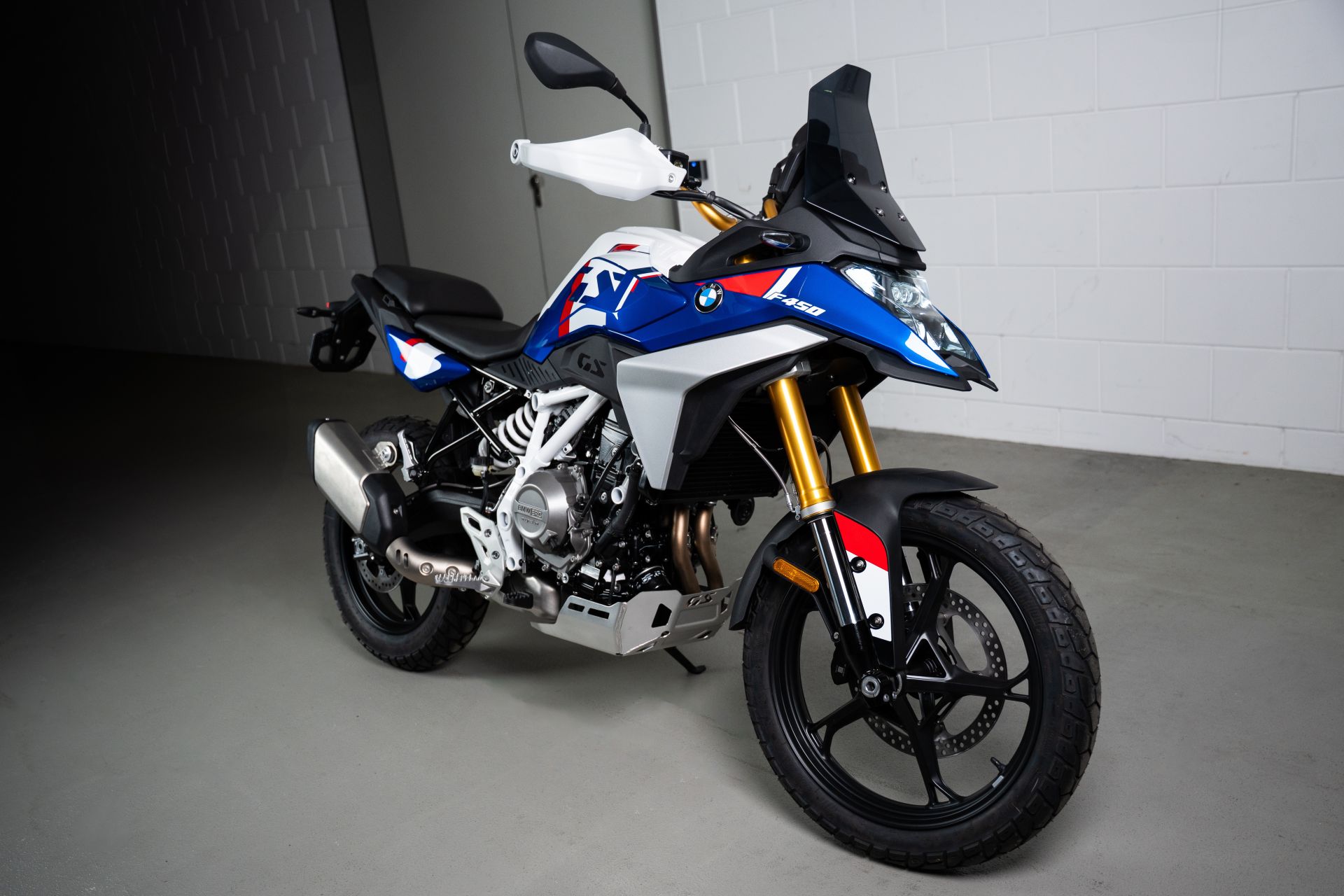
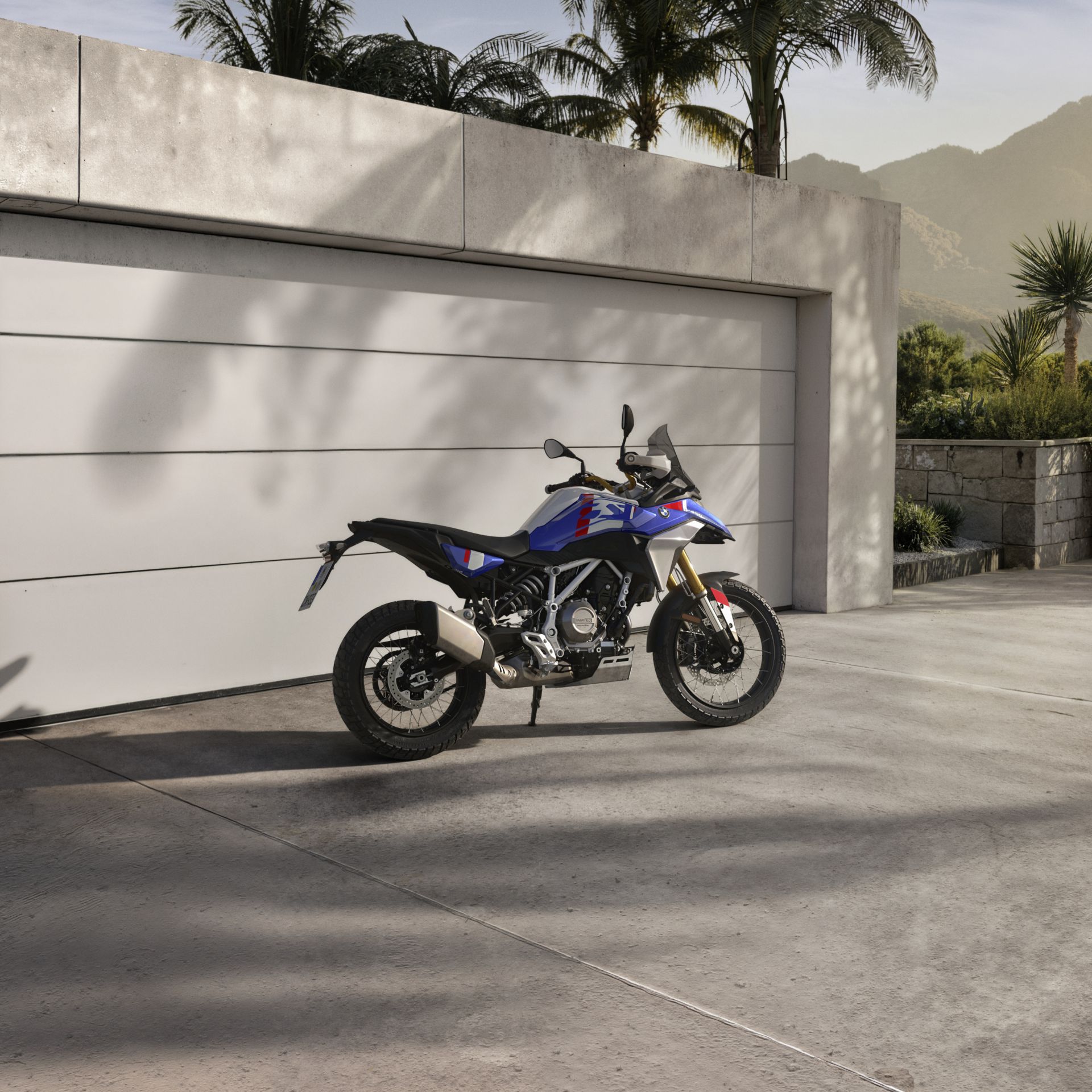
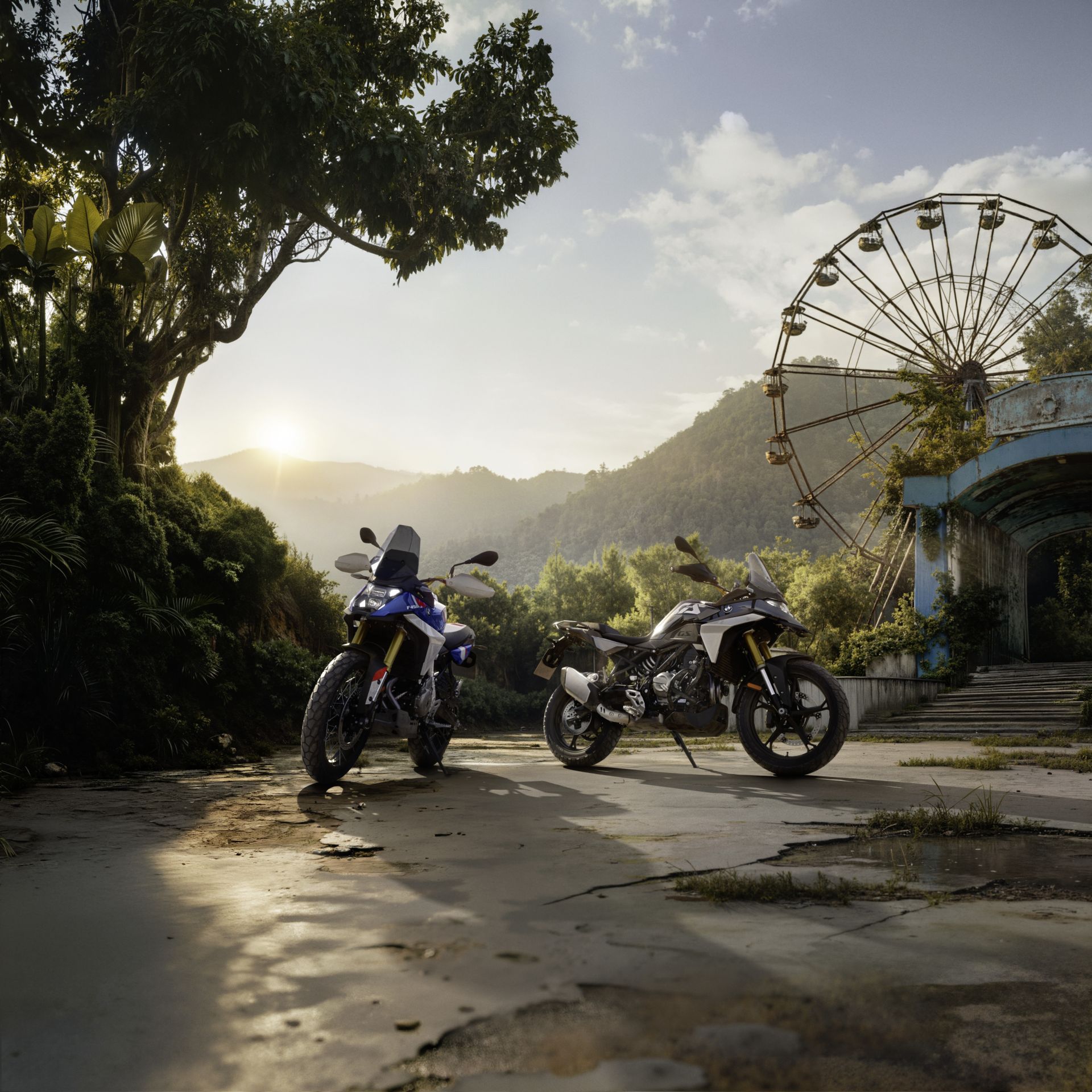
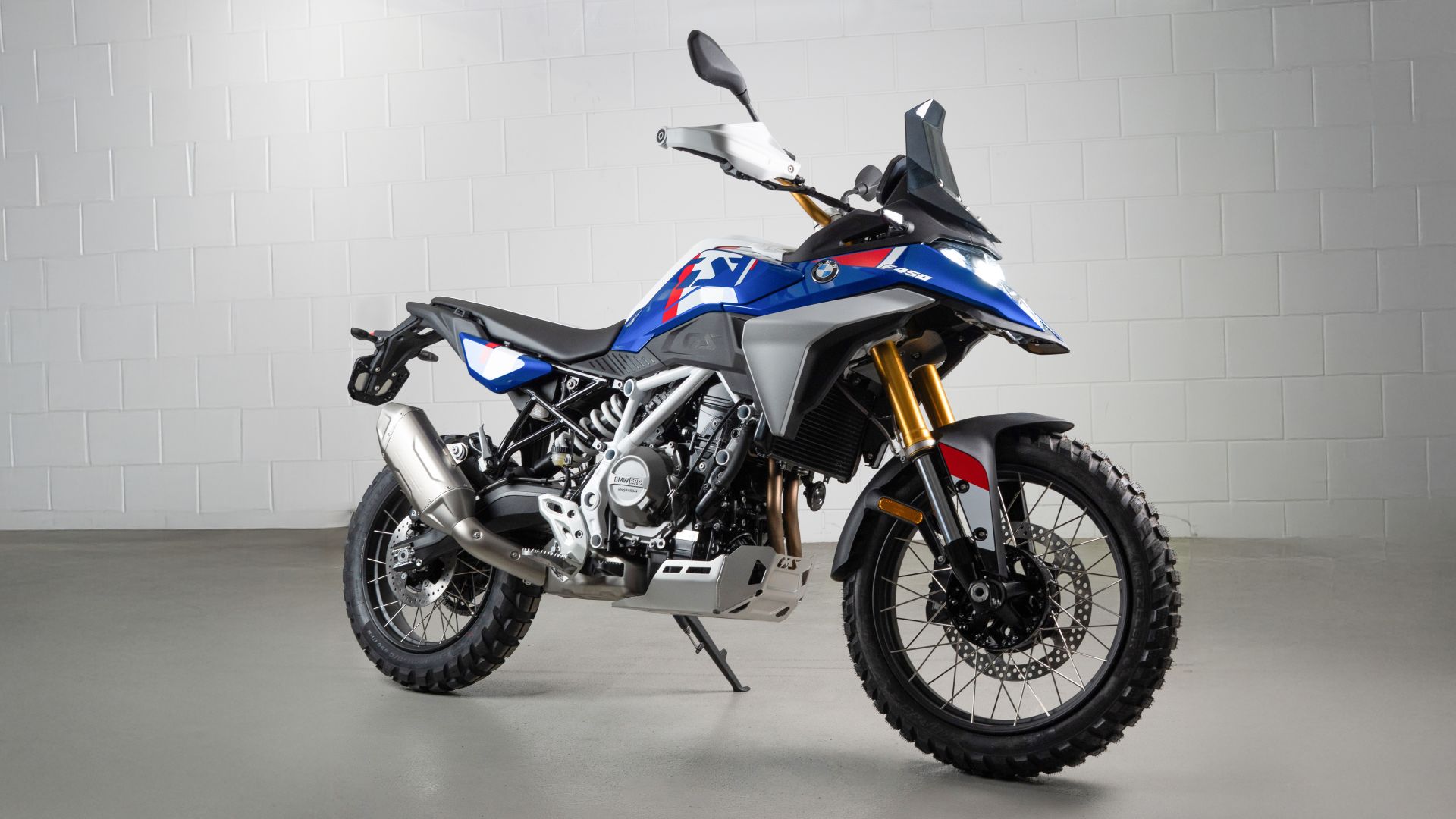
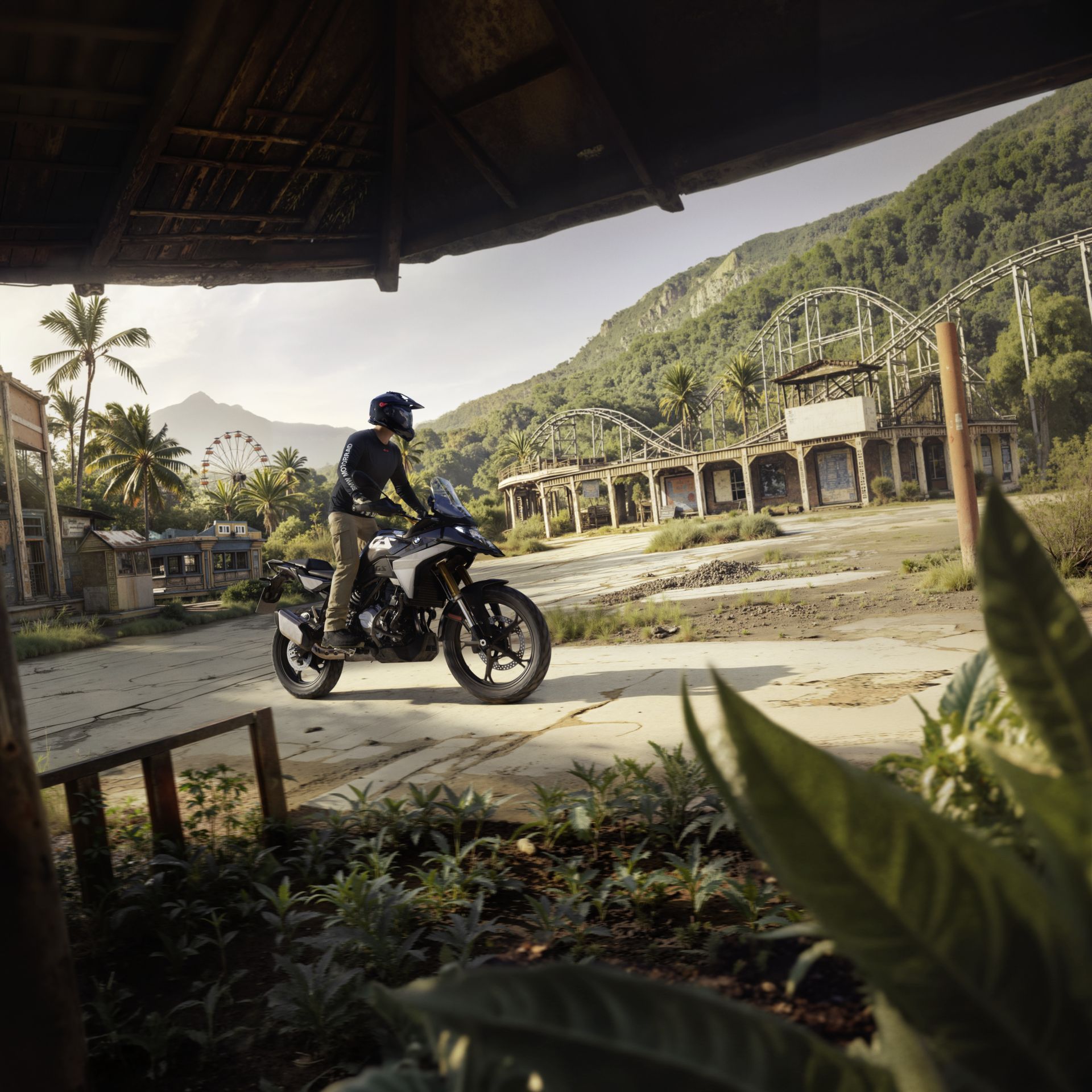
Woodcliff Lake, NJ – November 4, 2025 – BMW Motorrad USA is proud to announce the new, 2027 BMW F 450 GS. A genuine GS that delivers class leading technology, safety systems, excellent power and torque, and agile handling both on- and off-road – all combining to maximize both short and long distance riding enjoyment, just as its larger displacement Adventure siblings do.
New 420cc parallel-twin engine delivers 48 hp and 32 lb-ft of torque.
New Easy Ride centrifugal Clutch allows starting without clutch lever use.
Available in the GS Trophy variant in the U.S.
U.S. Market launch is expected in late Q4 2026 or early Q1 2027.
Pricing to be announced closer to Market Launch date.
BMW F 450 GS. Photo courtesy BMW of North America
“With the new BMW F 450 GS, BMW Motorrad presents a genuine BMW GS in the 48 hp A2 class. It embodies the essence of a GS: Get on, twist the throttle, have fun – with full control and maximum confidence. Its low weight, superior performance and perfect balance between agility and stability ensure a particularly intuitive riding experience. Thanks to its precise handling and typical GS expertise, it performs impressively both on and off the road. The F 450 GS is the perfect ‘best buddy’ for every riding situation. It is uncomplicated, robust, and always ready. It sets the benchmark for sporty adventure bikes in its class.” – Markus Flasch, CEO BMW Motorrad
BMW F 450 GS FEATURES
420 cc parallel twin with balance shaft and 135 degree crankpin offset.
48 hp at 8,750 rpm and 32 lb-ft of torque at 6,750 rpm.
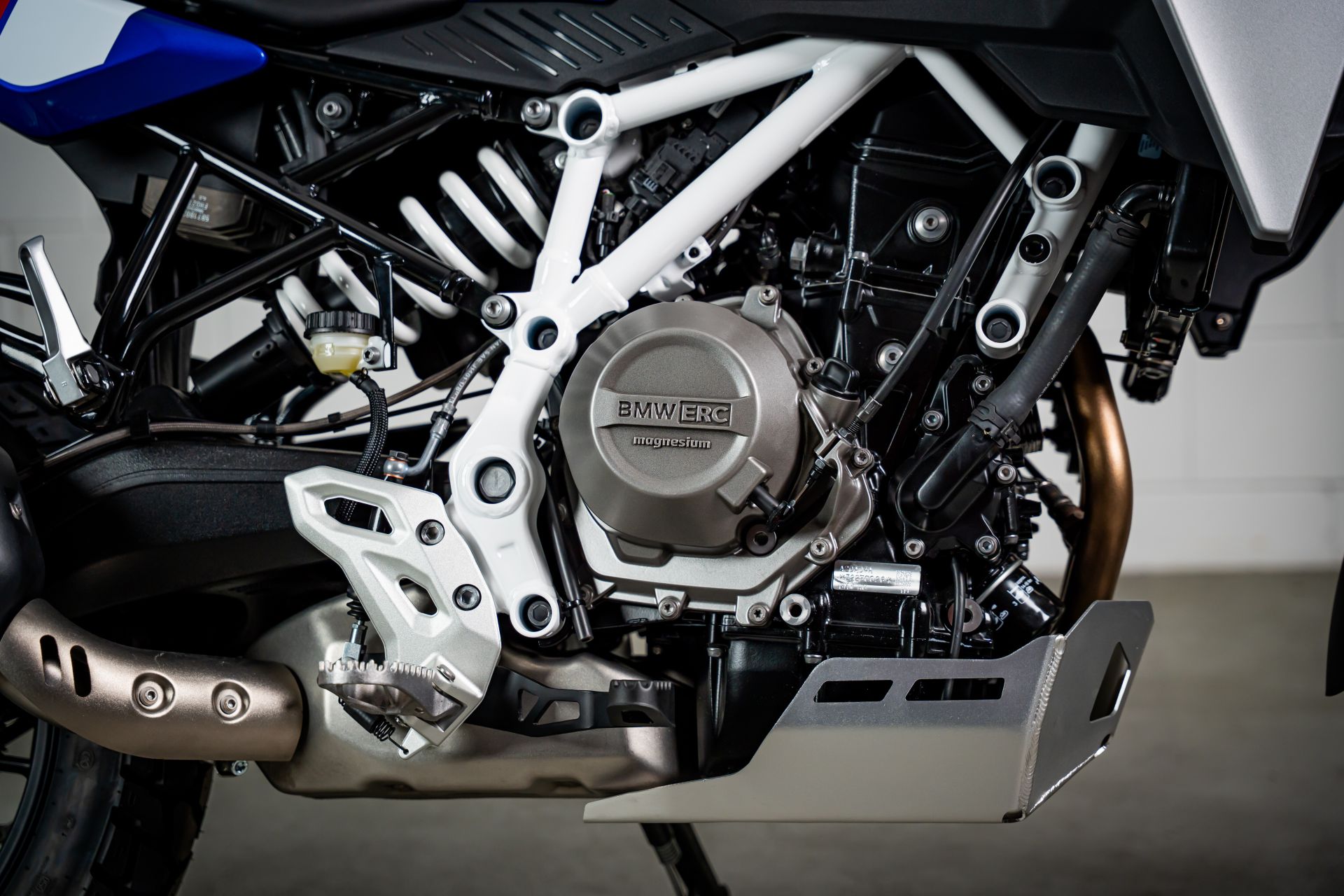
Easy Ride Clutch (ERC) for significantly improved operating and riding comfort.
Six-speed transmission and Gear Shift Assist Pro for quick, clutchless shifting.
Stainless steel exhaust system with two catalytic converters. Euro 5+ compliant.
Standard “Rain,” “Road,” and “Enduro” riding modes, as well as ABS Pro, DBC, DTC, and MSR. “Enduro Pro” riding mode part of GS Trophy package.
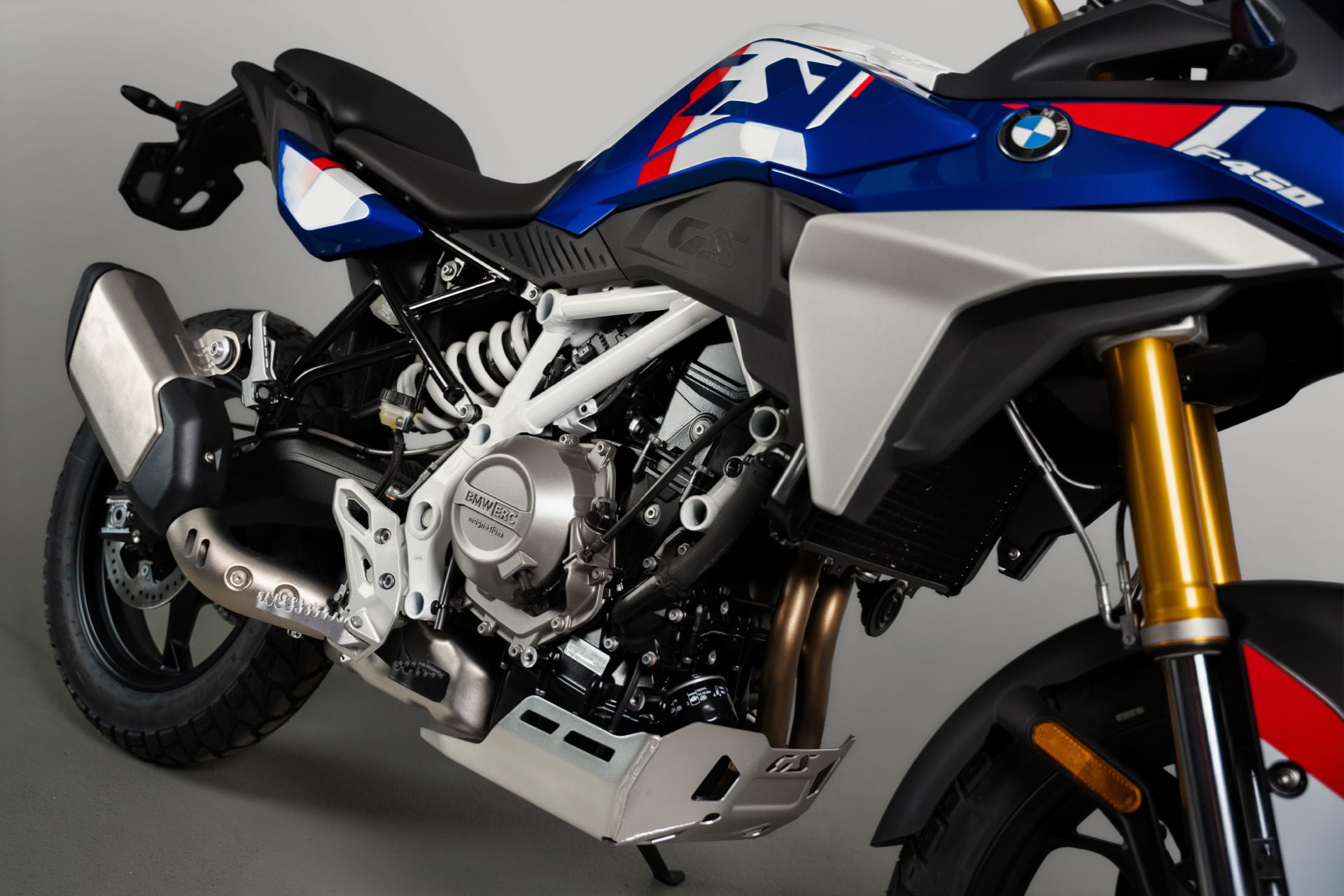
Newly developed chassis with a tubular steel frame for optimal rigidity.
Front KYB upside-down telescopic fork and rear hollow-cast aluminum double-sided swing arm with KYB central spring strut, adjustable for spring preload/rebound, and with travel-dependent damping.
Powerful Brembo braking system with BMW Motorrad ABS Pro for safe braking, when leaning and Dynamic Brake Control (DBC).
Optimum ergonomics for relaxed yet dynamic riding on and off-road.
Standard adjustable gearshift and footbrake levers for on- and off-road riding.
Standard adjustable hand levers.
Standard heated grips.
Standard full LED lighting.
Standard large 6.5 inch TFT color display with Connectivity.
Standard USB-C charging socket.
The new BMW F 450 GS. Photo courtesy BMW of North America
DESIGN
“With the BMW GS-typical flyline, the recognizable radiator grille, signature lighting, and sleek rear end, the design language of the new BMW F 450 GS deliberately draws close attention to the iconic design of its big sister, the R 1300 GS. It skillfully transfers its spirit to the 48 hp 400 – 500 cc range. This also includes sophisticated ergonomics for the best possible accessibility and vehicle control.” – Alexander Buckan, Head of Design, BMW Motorrad
The new BMW F 450 GS. Photo courtesy BMW of North America
Iconic BMW GS design in the 400 – 500 cc class.
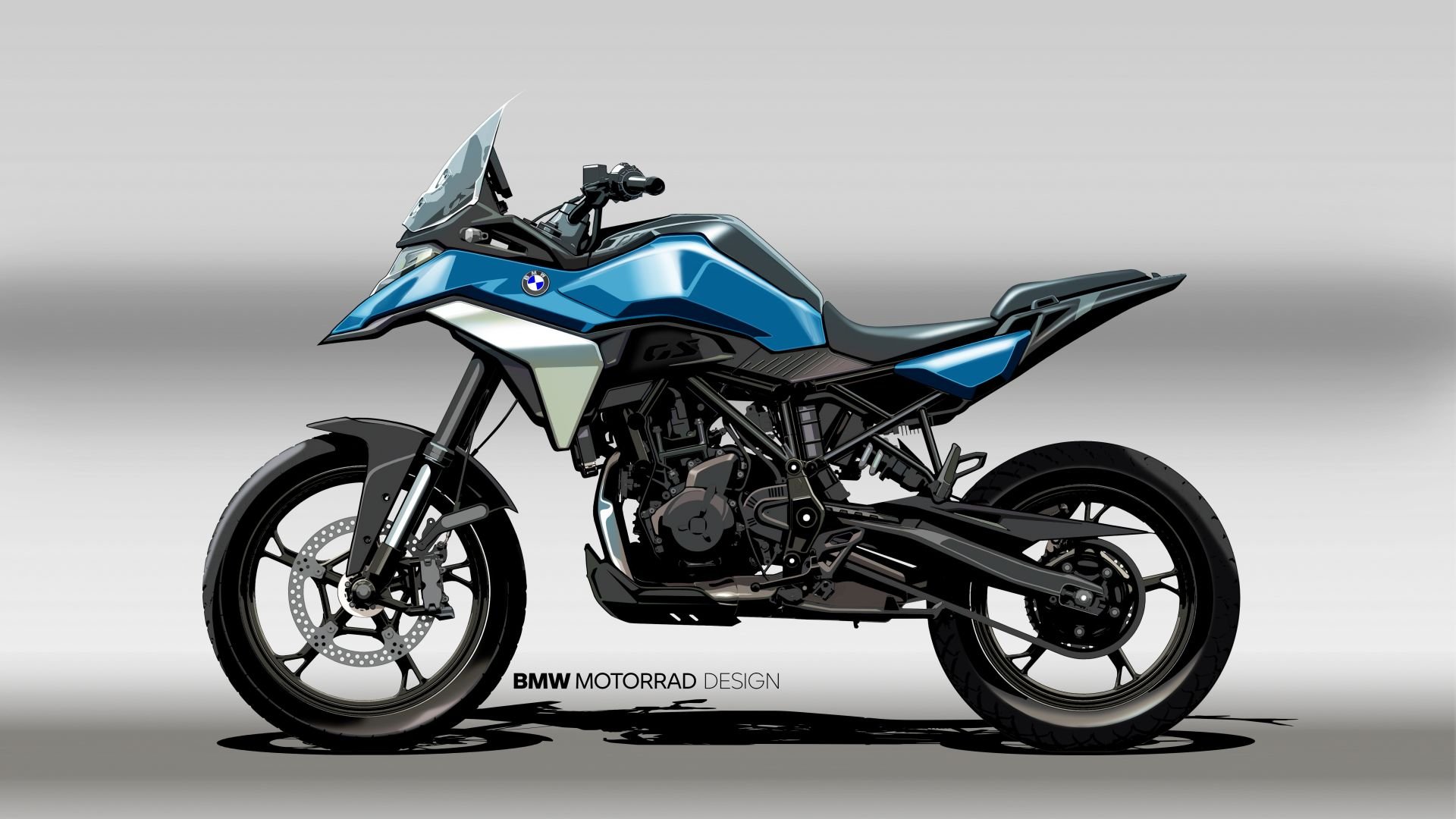
The new BMW F 450 GS is a completely redesigned, new construction for the 48 hp 400 – 500 cc class. Its design focuses on implementing the current BMW GS design language. With iconic features such as the LED headlight with “X” lighting elements and the distinctive flyline, the bike’s affiliation with the BMW Motorrad GS family is apparent at first glance.
The characteristic flyline runs from the front GS “beak,” across the tank and seat, and continues to the very narrow, slim rear. The agility and lightness of the rear section emphasize the dynamic character of the new BMW F 450 GS.
Optimum ergonomics for both relaxed and dynamic on- and off-road riding.
In terms of both drivetrain and chassis, the new BMW F 450 GS offers everything you would expect from a GS.
The ideal riding position in all conditions is ensured by an ergonomic triangle that was developed over countless miles of testing in a wide variety of conditions. The handlebars, made of butted aluminum, are positioned high and close to the body. The body and the 3.6 gallon fuel tank underneath are designed to provide optimal support and a good knee fit when sitting or riding off-road in a standing position.
The new BMW F 450 GS. Photo courtesy BMW of North America
Touring and everyday usability thanks to weather protection and a comprehensive storage space concept.
The modular design of the available optional windshields allows for customization. Depending on the intended use and personal preferences, customers can choose the high Tour windshield (height-adjustable) or the clear Rallye windshield. This allows the comfort and protective effect of the new BMW F 450 GS to be tailored to individual requirements.
In the event of a fall or crash, Original BMW Motorrad Accessories effectively protect the motorcycle from damage with engine guard, engine protection bars, front axle protectors, and other protective components.
The wide range of storage accessories – whether side bags, rear bags, luggage rolls, tank bags, luggage racks or top cases – offers maximum flexibility for almost every application.
Three different seat variants, adjustable handlebar levers, handlebar risers and sure-footed foot pegs with adjustable gearshift lever and footbrake lever for optimum riding on- and off-road.
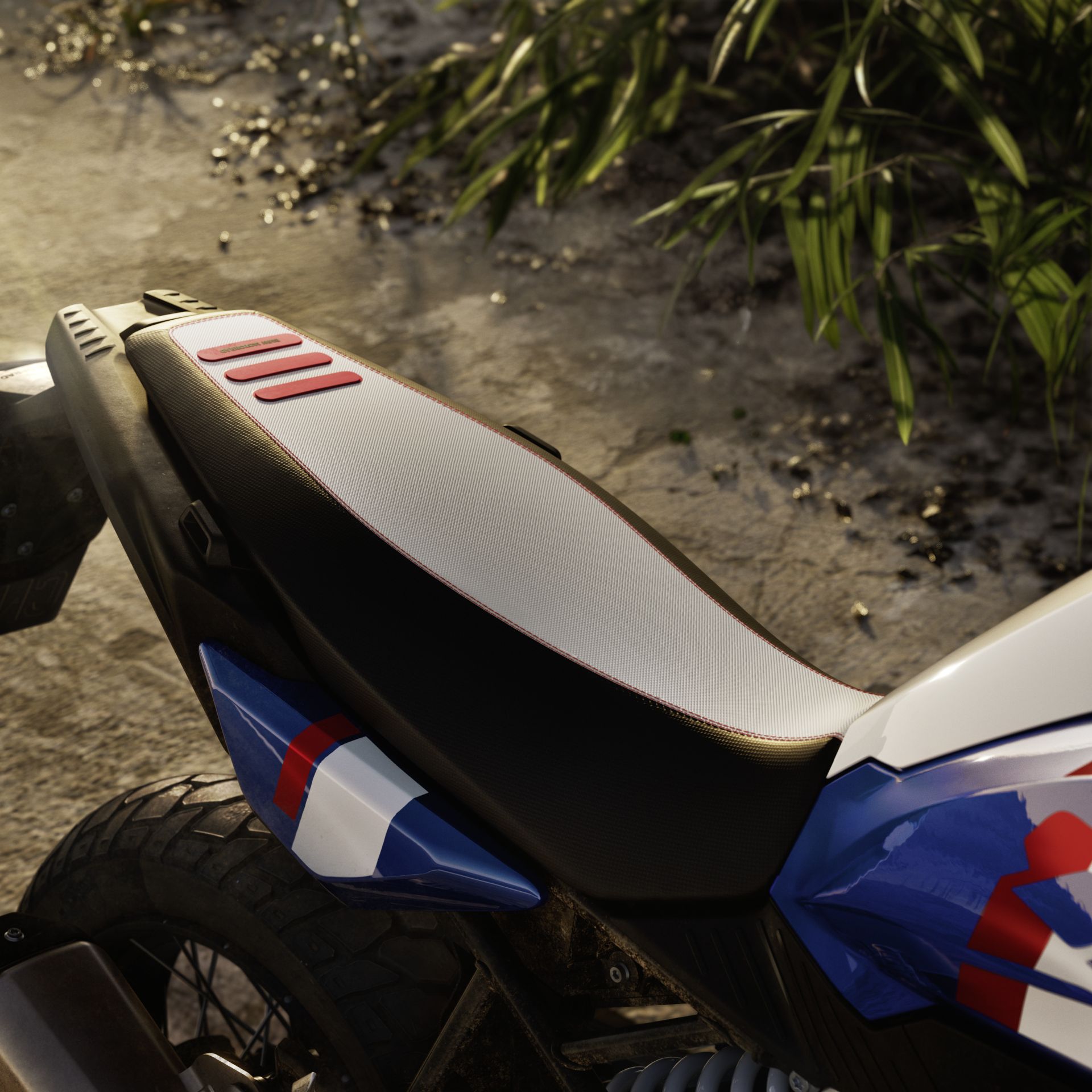
The new BMW F 450 GS comes with a two-piece seat (33.3-inch) as standard. With its flat, straight design, it provides an ideal ergonomic position for comfort and dynamics for most riders. The low black rider’s seat (32.7 inches) and the high Rallye seat in Black/White/Red (34.0 inches), available as part of the Original BMW Motorrad Accessories, can be adapted to individual needs. The standard adjustable handlebar levers and the optional accessory 0.79-inch handlebar risers in silver, offer further customization options.
The new BMW F 450 GS in the GS Trophy Variant comes standard with wider enduro footrests. While primarily designed for on-road use, their serrated profile also makes them suitable for off-road use. The enduro footrests offer an optimal balance between grip and comfort. A very practical feature is the height-adjustable footbrake lever. Using a tool, it can be adjusted vertically by 0.79-inch to two positions to suit individual on- and off-road riding needs. The gearshift lever is also height-adjustable – via a toothed mechanism on the shift shaft.
The new BMW F 450 GS. Photo courtesy BMW of North America
DRIVETRAIN
“With its new two-cylinder inline engine, the new BMW F 450 GS boasts an outstanding powertrain for dynamic riding pleasure on- and off-road. Low weight, ample torque, and exceptional smoothness thanks to the unique 135-degree crankpin offset make it a perfect partner for a wide range of applications typical of a GS. With our new Easy Ride Clutch (ERC), the new F 450 GS also offers a significant increase in operating comfort and dynamic performance.” Johann Simon, Project Manager BMW F 450 GS
Completely redesigned, smooth-running and distinctive two-cylinder in-line engine for dynamic riding fun on asphalt and for off-road use.
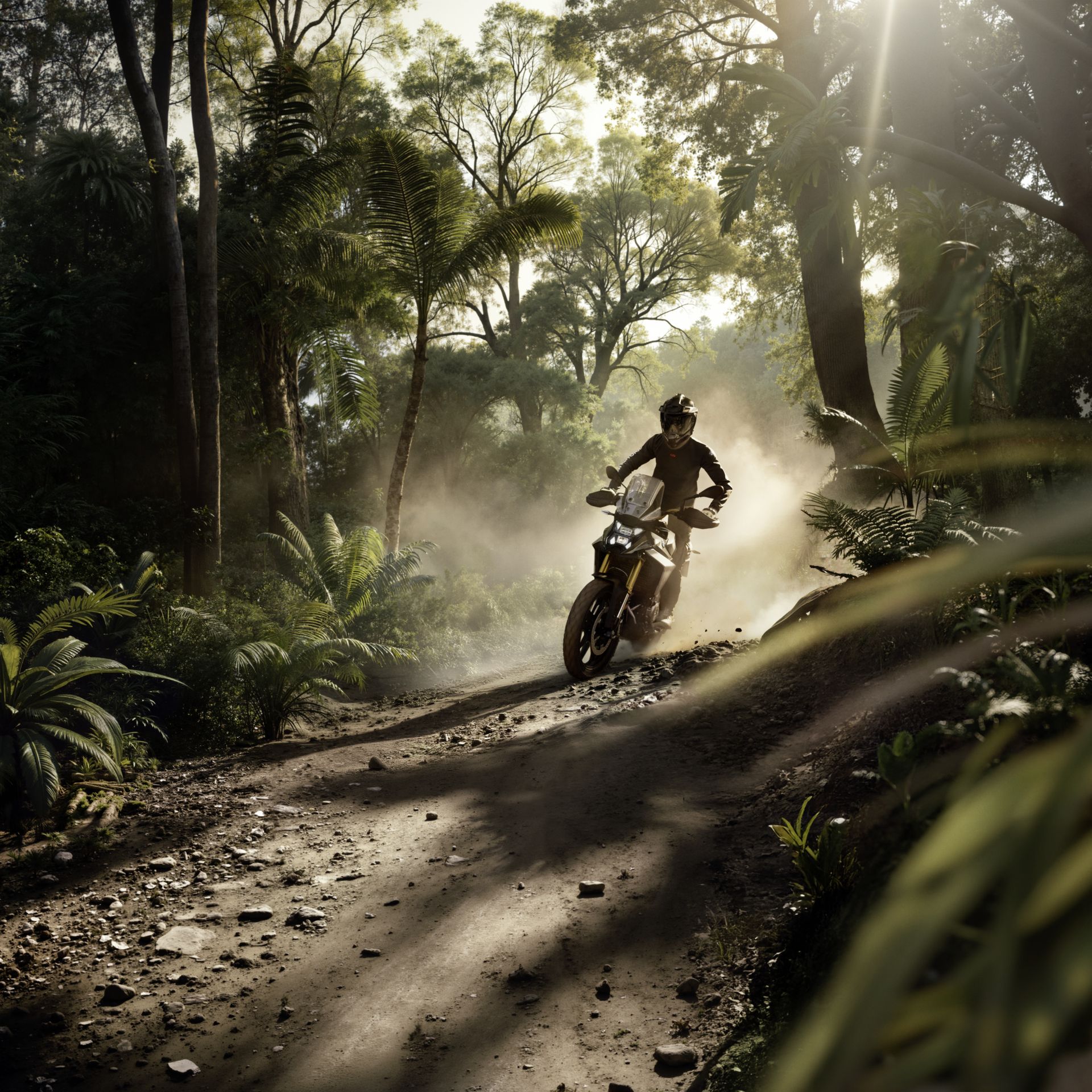
For decades, BMW’s F Series GS models have stood for premium offerings in their respective mid-range segments. Their all-around qualities, paragon of riding fun on asphalt roads, and easy and safe handling on off-road terrain have always characterized them. With the F 450 GS, BMW Motorrad is bringing this successful formula to the market in a completely redesigned form for the popular 400 – 500 cc class. It provides optimum riding fun on all types of terrain, whether on asphalt roads or off-road.
At the heart of the new BMW F 450 GS is a completely redesigned two-cylinder in-line engine. The main development goals were to build a lightweight, powerful, high-torque, and smooth-running engine. Additionally, during the development of the new engine, particular emphasis was placed on achieving low fuel consumption values and a distinctive sound.
The 420 cc displacement results from a 72 mm bore and a 51.6 mm stroke. The new F 450 GS delivers powerful performance and pulling power with a power output of 48 hp at 8,750 rpm and a maximum torque of 32 lb-ft at 6,750 rpm.
Characterful and emotional sound thanks to a crankshaft with a 135-degree crankpin offset and uneven ignition interval.
The new BMW F 450 GS’s two-cylinder, in-line, liquid-cooled engine is installed transversely. Unique on the motorcycle market, it features a crankshaft with crankpins offset by 135 degrees. This design is accompanied by a strong emotional character, while at the same time a very low vibration level for the rider.
The new BMW F 450 GS. Photo courtesy BMW of North America
Optimized smooth running is achieved thanks to a counter-rotating counterbalance shaft and wet-sump lubrication.
The engine of the new BMW F 450 GS has a counterweight shaft (counterbalance shaft) positioned in front of the crankshaft that absorbs unwanted vibrations. It is driven by a spur gear. In conjunction with the 135-degree offset of the crankshaft, this results in smooth operation.
A wet-sump lubrication system with a chain-driven oil pump ensures a reliable oil supply under all operating conditions. The new F 450 GS has an engine guard, which is standard on the GS Trophy, to protect the oil pan from damage during off-road use.
Two overhead camshafts, four valves per cylinder operated by rocker arms.
Two overhead camshafts rotate in the cylinder head of the new F 450 GS, actuating four valves-per-cylinder via lightweight rocker arms. The timing chain is driven on the right side of the engine by a toothed chain from the crankshaft to the exhaust camshaft. The intake camshaft is driven by a pair of gears via the exhaust camshaft.
The valve angles are sized for an optimal combustion chamber design to provide the best possible power, torque, and efficiency. The valve angle is 12 degrees on the intake side and 12.4 degrees on the exhaust side. The valves have a valve head diameter of 29 mm (intake) and 24.3 mm (exhaust). The compression ratio is 13.0:1.
An intake manifold fuel injection system with the latest BMS-Z engine management technology is responsible for the air-fuel mixture. An E-Gas system sends the rider’s request directly from the throttle grip sensor to the engine control unit. This unit regulates the opening angle of the throttle valves for optimal controllability and response.
The new BMW F 450 GS. Photo courtesy BMW of North America
Easy Ride Clutch (ERC) for a significant increase in operating and riding comfort.
A special technical highlight of the new BMW F 450 GS is the Easy Ride Clutch (ERC). This innovative system is installed as standard on the GS Trophy variant. In combination with the BMW Gear Shift Assist Pro, manual operation of the clutch lever is completely eliminated – from starting off to gear changes to demanding maneuvers.
The clutch lever, however, remains installed. This allows the rider to use the clutch manually when needed – a decisive advantage in special riding situations, for example, to lift the front wheel over an obstacle or to improve control when descending on slippery surfaces.
The heart of the ERC is a centrifugal unit in the clutch, which engages the clutch depending on the engine speed. The handling is similar to that of a conventional clutch operation: Starting off is achieved simply by opening the throttle with a gear engaged. If a gear that’s too high is selected, a corresponding warning appears on the display. In heavy city traffic, on tight bends, or off-road, the ERC provides noticeable relief for the rider, as it effectively prevents the engine from stalling.
Technologically, it is a particularly advanced form of the centrifugal clutch. Unlike conventional systems, it remains closed during overrun. The result is familiar and predictable handling, equivalent to that of a conventional clutch. The clutch can be used as usual at any time while riding, if necessary. Engine braking is fully maintained until the vehicle is almost at a standstill; only when the idle speed is reached does the clutch automatically open – just as the rider would otherwise do manually.
Even when rolling with the vehicle in gear, for example when riding downhill, the engine is actively dragged along, generating effective engine braking torque. The clutch remains closed during overrun, ensuring maximum control. At the same time, the rider can intervene at any time using the clutch lever and manually override the system.
The ERC thus enables confident handling even in complex driving situations – whether maneuvering, in city traffic, on winding roads, or off-road – and elevates driving dynamics and comfort to a new level.
Six-speed transmission with Gear Shift Assist Pro for fast upshifts and downshifts without the need to use the clutch.
To optimize riding dynamics, the redesigned six-speed transmission transmits torque to the left-hand secondary drive via an X-ring chain. For fast upshifts and downshifts without clutch operation, the new F 450 GS is offered with the Gear Shift Assist Pro in the GS Trophy variant.
It allows the rider to shift up without using the clutch, providing perfect acceleration with virtually no interruption in traction. Additionally, Gear Shift Assist Pro allows for downshifts without using the clutch. This feature enables very fast gear changes, minimizes clutch actuation, and significantly reduces undesirable influences on the rear wheel and jerking movements caused by load changes.
Gear Shift Assist Pro also significantly reduces the independent movements of the rider and passenger during conventional gear changes, making shared motorcycle enjoyment even more comfortable.
The new BMW F 450 GS. Photo courtesy BMW of North America
The exhaust system of the new BMW F 450 GS is made entirely of stainless steel and is equipped with two catalytic converters for emission control. Mounting on the right-hand side of the vehicle is particularly advantageous when pushing the motorcycles – usually from the left-hand side. The muffler, which is also on the right, provides the necessary clearance and reduces the risk of getting burnt on the hot muffler.
Standard riding modes “Rain”, “Road” and “Enduro” as well as ABS, DBC, DTC and Engine Drag Torque control provide a high degree of riding fun and safety. “Enduro Pro” Riding Mode part of GS Trophy variant.
The new BMW F 450 GS offers three standard riding modes: “Rain”, “Road” and “Enduro”, allowing the motorcycle to be adapted to suit individual preferences. Standard equipment also includes ABS Pro, DBC, Dynamic Traction Control (DTC) as well as Engine Drag Torque control (MSR). The “Rain”, “Road” and “Enduro” riding modes are intelligently linked to the control systems and allow the new BMW F 450 GS to be adapted specifically to the respective riding conditions.
The “Rain” mode is designed for use on wet roads. Throttle response is softer, and all control systems are designed to maximize stability and control.
“Road” mode is intended for use on dry roads. The engine’s throttle response is direct, and the traction control remains stable in the mid-range. All other control systems are also designed for maximum stability.
The “Enduro” mode is designed for off-road use with standard road tires and provides the same throttle response as the “Rain” mode. Traction control provides maximum stability, while front wheel lift-off detection, engine drag torque control, and dynamic traction control remain minimally active.
The additional “Enduro Pro” mode, available as part of the GS Trophy variant, is designed for off-road use with rough terrain tires. Wheelie control and rear wheel ABS are deactivated in this mode. ABS Pro, DTC, and throttle response can be customized in this mode as well.
The new BMW F 450 GS. Photo courtesy BMW of North America
CHASSIS
“Our chassis concept for the new BMW F 450 GS is based on a completely redesigned tubular steel frame that integrates the two-cylinder inline engine as a load-bearing element,” explains Marc Weber, engineer for the BMW F 450 GS. “The focus of development was on compact packaging for optimal accessibility, high riding precision, and agile handling on and off-road. The short wheelbase and balanced chassis geometry enabled us to achieve particularly agile yet stable handling.”
New chassis with tubular steel frame for optimal rigidity and riding precision.
The newly developed chassis of the BMW F 450 GS relies on a welded tubular steel frame with integrated forged parts. This design combines low weight with high strength, thus meeting the demands of both dynamic road riding and demanding off-road passages. The use of steel as a frame material offers advantages over aluminum, especially in tougher terrain.
Geometry plays a key role in the vehicle’s dynamic performance: A wheelbase of 57.7 inches, a steering head angle of 28.1 degrees, and a trail of 4.5 inches ensure precise steering response, high stability, and playful handling. At the same time, the compact packaging ensures excellent accessibility to the key components – a plus for both maintenance and tough off-road use.
Front KYB upside-down telescopic forks and rear KYB central spring strut featuring progressive damping.
BMW GS models always present challenging tasks for chassis developers. In addition to operating on asphalt roads and accommodating a sporty riding style, the requirements of off-road use must also be met. The new BMW F 450 GS is equipped with high-quality KYB spring and damper elements that reflect this diverse range of applications. The result is a responsive chassis that maximizes traction in any riding situation.
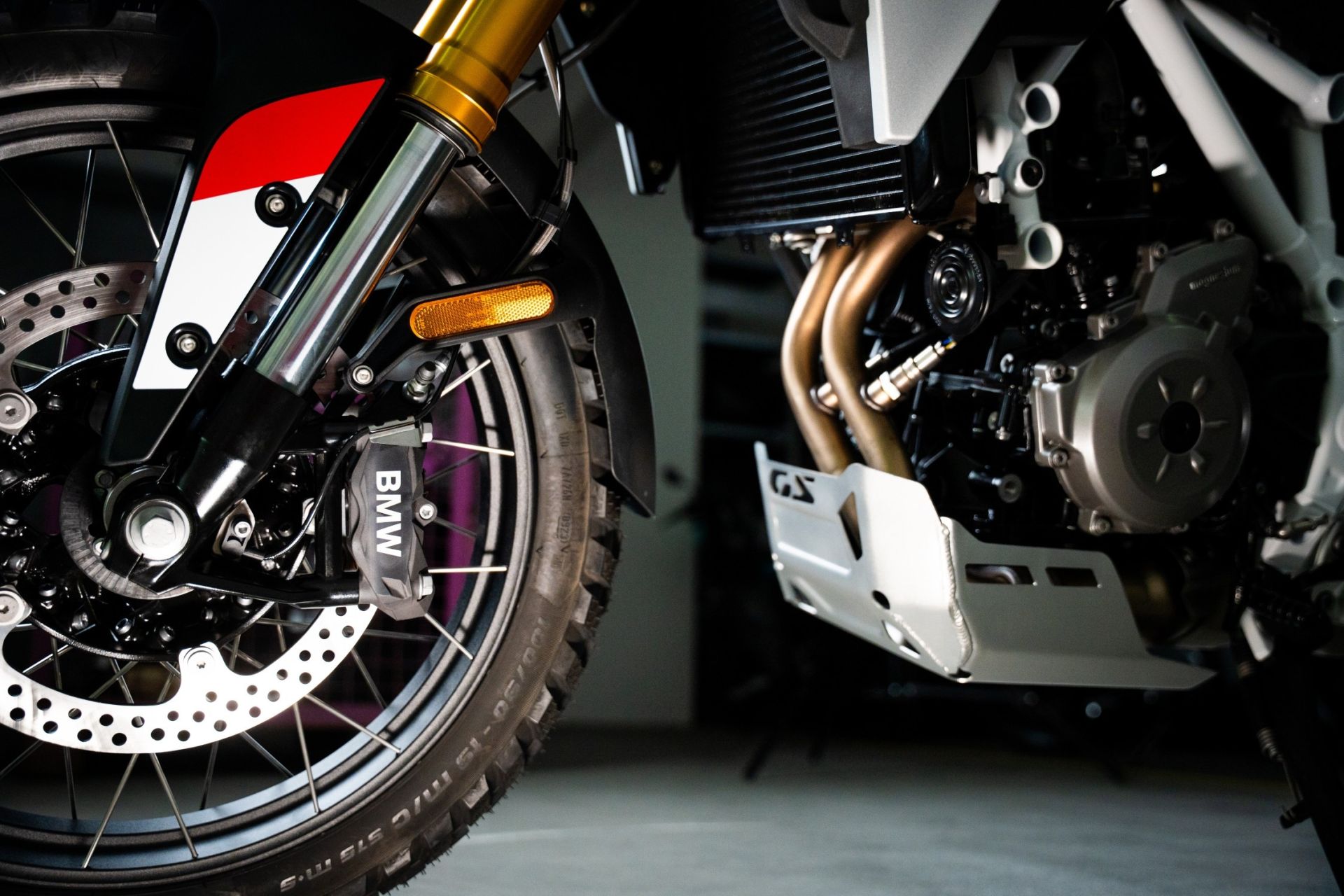
The front wheel is guided by torsionally rigid 43 mm KYB upside-down telescopic forks. Front suspension travel is 7.1 inches. The “Sport Suspension” is part of the GS Trophy variant and here, the forks are adjustable for both rebound and compression. The fixed fork tubes are anodized in gold, as are the butted aluminum handlebars. The fork bridge is made from forged aluminum.
The rear wheel is guided by a closed, lightweight, hollow cast aluminum, double armed swinging arm with a directly linked, central suspension shock with progressive damping, which is unique in this segment. This damping principle originates from off-road sports. BMW Motorrad has patented this technology as the WAD system and has developed it further. A damping system prevents the spring strut from bottoming out by increasing compression damping with increasing compression. The central KYB spring strut of the new F 450 GS has an adjustable spring base (“spring preload”) and adjustable rebound damping. Rear suspension travel is 7.1 inches.
The new BMW F 450 GS. Photo courtesy BMW of North America
The wheels and tires are tailored to BMW GS applications.
Sporty, dynamic cornering on the road as well as off-road adventures are reflected in the choice of wheels.
Accordingly, the new BMW F 450 GS in the GS Trophy variant comes with lightweight yet strong cross-spoked wheels measuring 2.5 x 19 inches the front and 3.5 x 17 inches the rear. The new F 450 GS is fitted with tubeless tires for road and off-road use, sized 100/90-19 at the front and 130/80-17 at the rear. Type approval for the F 450 GS permits fitting all common tire types, including enduro tires.
High-performance brake system in conjunction with BMW Motorrad ABS Pro for safer braking, even when leaning in corners.
The front wheel of the new BMW F 450 GS features a floating single-disc brake with a Brembo 4-piston fixed caliper and a 310 mm brake disc diameter for efficient, stable deceleration. A single disc brake with 1-piston floating caliper and 240 mm diameter is used on the rear wheel.
The new BMW F 450 GS is equipped with BMW Motorrad ABS Pro as standard. ABS Pro offers more safety when braking in turns by enabling ABS-assisted braking when leaning into corners. ABS Pro prevents the wheels from locking even when the brakes are applied quickly and reduces abrupt changes in steering force and thus the bike from returning to the upright position, even during sudden braking. The benefits are increased braking and riding stability combined with the best possible deceleration even when leaning into corners. Depending on the selected riding mode, ABS Pro and the engine drag torque control (MSR) offer adapted control characteristics for optimum braking maneuvers.
Dynamic Brake Control (DBC) increases safety when braking, even in difficult situations, by preventing the throttle from being activated unintentionally. As soon as the sensor cluster supplies a certain deceleration value during braking, any simultaneous desire to accelerate on the part of the rider is detected as implausible and throttle valve opening is suppressed. This keeps the motorcycle stable and shortens the braking distance.
The new BMW F 450 GS. Photo courtesy BMW of North America
ELECTRONICS
The new F 450 GS offers comprehensive standard equipment such as LED headlight and turn indicators and a 6.5-inch TFT color display with a wealth of connectivity options.
Powerful standard LED lighting.
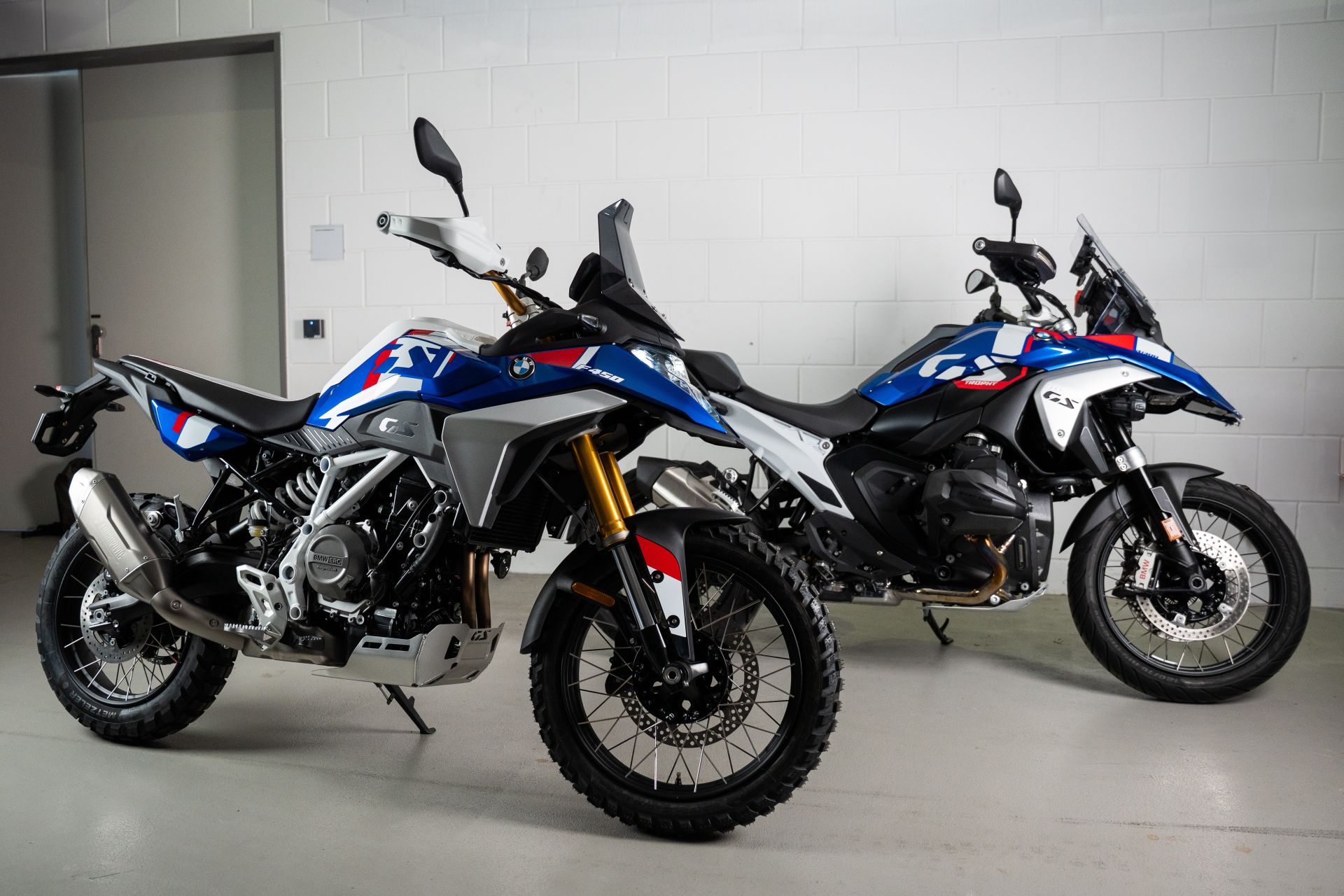
The new BMW F 450 GS features an LED headlight with the iconic “X” lighting signature. Based closely on its big sister, the R 1300 GS, it clearly shows its family affiliation. The turn indicator and control lamps of the new F 450 GS also use LED technology.
BMW F 450 GS and R 1300 GS next to each other. Photo courtesy BMW of North America
Connectivity – unrivaled information diversity and functionality in the form of a large, easy to read 6.5-inch TFT display.
The new F 450 GS already features a large 6.5-inch TFT color display as standard. The quantity of information, quality of its presentation, and user-friendliness are unrivaled. The display was designed to be large to ensure optimum readability, even under difficult lighting conditions. It is linked to the multi-controller on the left handlebar fitting, allowing for quick, safe, and convenient operation. There is a practical USB-C socket in the handlebar area.
It offers screen displays tailored to the BMW GS world: the Pure Ride Screen and the Sport Screen (part of the GS Trophy variant), which provide detailed information on DTC, braking power, and lean angle.
It is also possible to make phone calls, listen to music and navigate comfortably while riding. If a smartphone and a BMW Motorrad Communication System are connected via Bluetooth to the TFT screen, for example, the rider can conveniently access media playback and telephone functions. These functions can be used without installing an app. If there is an active Bluetooth connection to a standard smartphone, the rider can listen to music while riding. In addition, the free BMW Motorrad Connected app offers practical turn-by-turn navigation directly via the TFT display. Basic navigation is particularly convenient for everyday rides or short trips without additional equipment.
For customers who want more than arrow navigation, BMW Motorrad offers map navigation with navigation preparation, available as an accessory, either with the BMW Motorrad ConnectedRide Navigator (an Original BMW Motorrad Accessory) or the ConnectedRide Smartphone Cradle (used with the BMW Motorrad Connected App). Both can be controlled via the control wheel on the left (MMC).
The new BMW F 450 GS. Photo courtesy BMW of North America
COLOR AND STYLE
GS Trophy Variant
The 2027 F 450 GS will arrive in the GS Trophy variant, which includes the following additional equipment.
Racing Blue Metallic paint.
Wider off-road foot pegs.
Hand guards, White.
Main frame, White.
Aluminum engine guard.
Riding Modes Pro.
Gear Shift Assist Pro.
Sport Suspension.
Cross-spoked wheels.
Windshield Rallye.
Easy Ride Clutch (ERC).
The new BMW F 450 GS. Photo courtesy BMW of North America
STANDARD EQUIPMENT
420cc 2-cylinder water-cooled engine, Chain drive, E-gas (Ride by Wire), 6-speed transmission with spur gearing, Single disc front brake, ABS Pro, Upside down front fork (Rebound and Compression adjustable), Rear suspension strut with travel dependent damping (WAD), Rear rebound adjustable, DTC Dynamic Traction Control, Rear preload adjustable, Heated grips, 6.5-inch TFT color display with Connectivity, USB-C port, LED headlight, turn indicators and brake light, Comfort turn indicators, Multi-Controller, One key for all locks, Adjustable footbrake lever, Adjustable gear shift lever, Engine skid plate, On-board computer, Adjustable clutch lever, Adjustable handbrake lever, Connectivity, MSR (Dynamic engine brake control), DTC Dynamic traction control-disengageable, Ultimate Care Break-In Service.
All 2027 model year BMW motorcycle models include the Ultimate Care Break-In Service, or “600 Mile Service” as standard. This included service further provides BMW customers with a truly premium experience. Time and mileage limits apply – maximum 6 months from the in-service date or maximum 750 miles – whichever comes first.
The new BMW F 450 GS. Photo courtesy BMW of North America
OPTIONS AND PACKAGES
The 2027 BMW F 450 GS is expected to arrive in the U.S. in one package configuration – Style GS Trophy.
GS Trophy Package contains: Racing Blue Metallic Paint, White Frame, Gear Shift Assist Pro, Riding Modes Pro, Easy Ride Clutch, Sports Suspension, White Hand Protection, Silver Engine Guard (skid plate), and Aluminum Cross-Spoked Wheels.
Individual Options
Accessories
Akrapovič stainless steel rear silencer.
Tank pad.
Rider’s seat, low, Black (32.7 inches).
Rallye seat, high. Black/White/Red (34.0 inches).
Tour windshield, high (height adjustable with tools).
Navigation preparation.
ConnectedRide Smartphone Cradle.
ConnectedRide Navigator.
ConnectedRide Navigator protective glass.
Protective glass TFT display 6.5 inch.
Handlebar Risers, silver (+0.79 inches)
Engine housing protectors, left/right.
Engine protection bars, Black.
Front axle protector, Black.
Radiator grille guard.
Hand guards, Black.
Luggage rack.
Luggage rack bag.
Topcase, small, Black, 29L.
Side bag mounts, left/right.
Side bag, Black, Urban or Soulfuel Collection, waterproof, 10L + 16L.
BMW of North America, LLC was established 50 years ago to support the sales, marketing and distribution of BMW automobiles and motorcycles in the U.S. In 1993 BMW Group Financial Services NA, LLC was founded, and one year later BMW Manufacturing Co., LLC began assembling vehicles in South Carolina. In 2002 and 2003, BMW Group established MINI USA, and Rolls-Royce Motor Cars NA, LLC relaunching two iconic brands and rounding out its product portfolio.
Today, the BMW Group has a nationwide corporate footprint in the U.S. which consists of nearly 30 locations in 12 different states. Beyond the National Sales Company and Financial Services headquarters in Woodcliff Lake, NJ, its manufacturing plant in Spartanburg, South Carolina, and numerous other operational facilities, BMW Group in the U.S. also includes Designworks, a strategic design consultancy in Santa Monica, CA, BMW Group Technology Office USA, a technology research and development center in Silicon Valley, and BMW i Ventures, a venture capital fund, also in Silicon Valley.
BMW Group Plant Spartanburg is the largest single BMW production facility in the world, and the global center of competence for BMW Sports Activity Vehicles including the X3, X4, X5, X6, X7, and XM. The plant assembles more than 1,500 vehicles each day, and up to 450,000 annually. Since 1994, Plant Spartanburg has assembled more than 7 million BMW vehicles in the U.S.
The BMW Group sales organization in the U.S. is represented through a network of 351 BMW retailers, 143 BMW motorcycle retailers,105 MINI passenger car dealers, and 38 Rolls-Royce Motor Car dealers. The company’s activities provide and support over 120,000 jobs across the U.S. and contribute more than 43.3 billion to the U.S. economy annually.
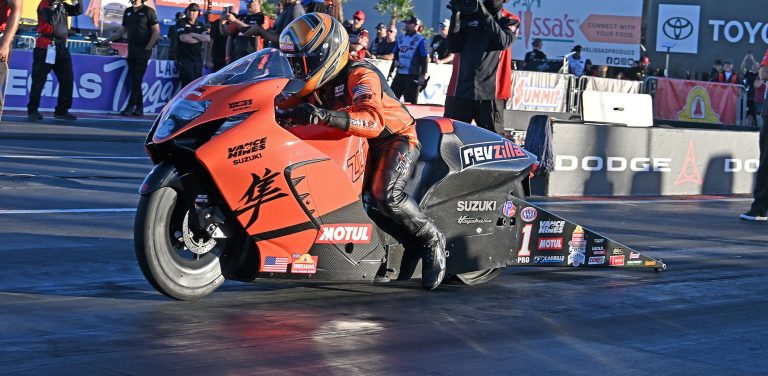
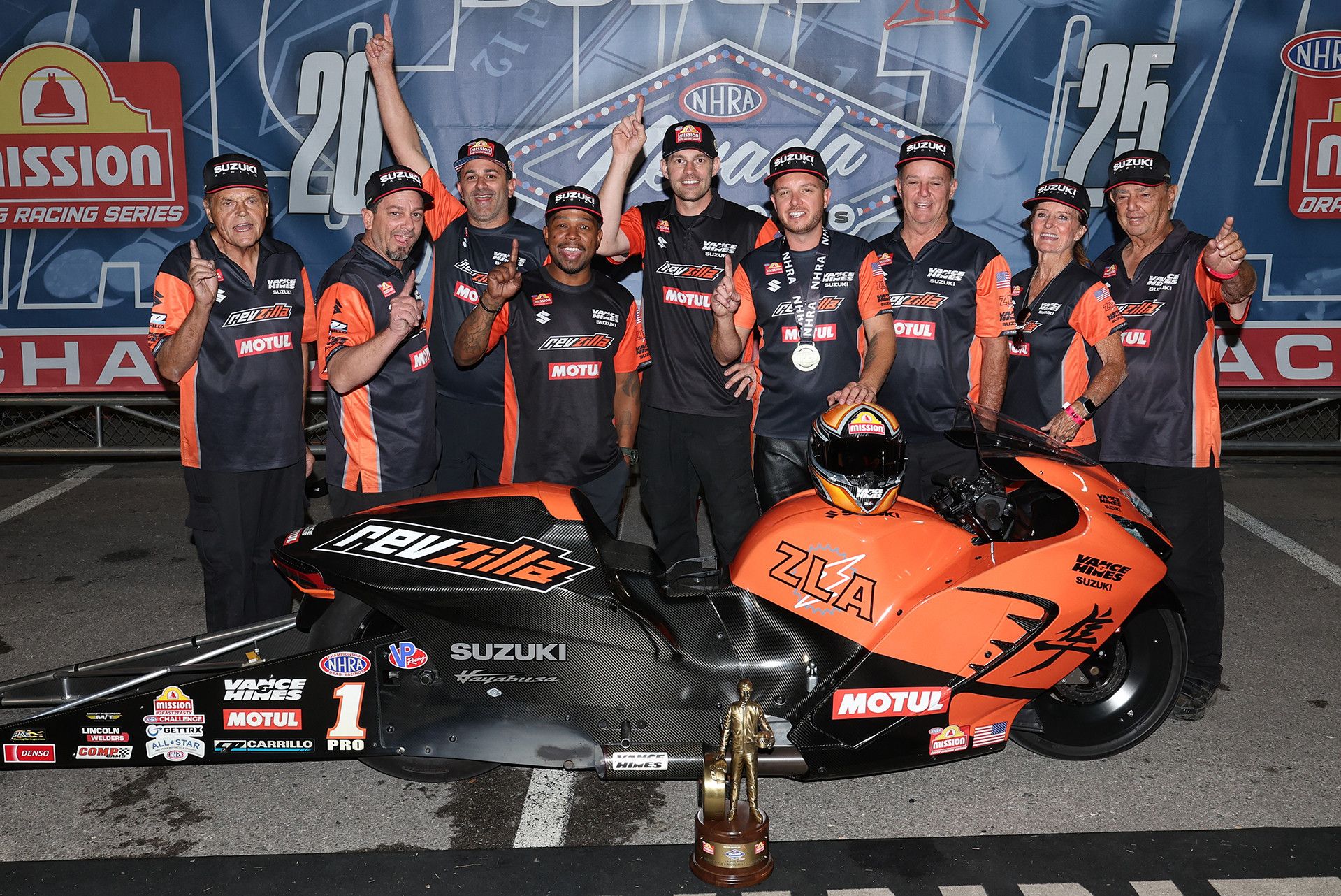
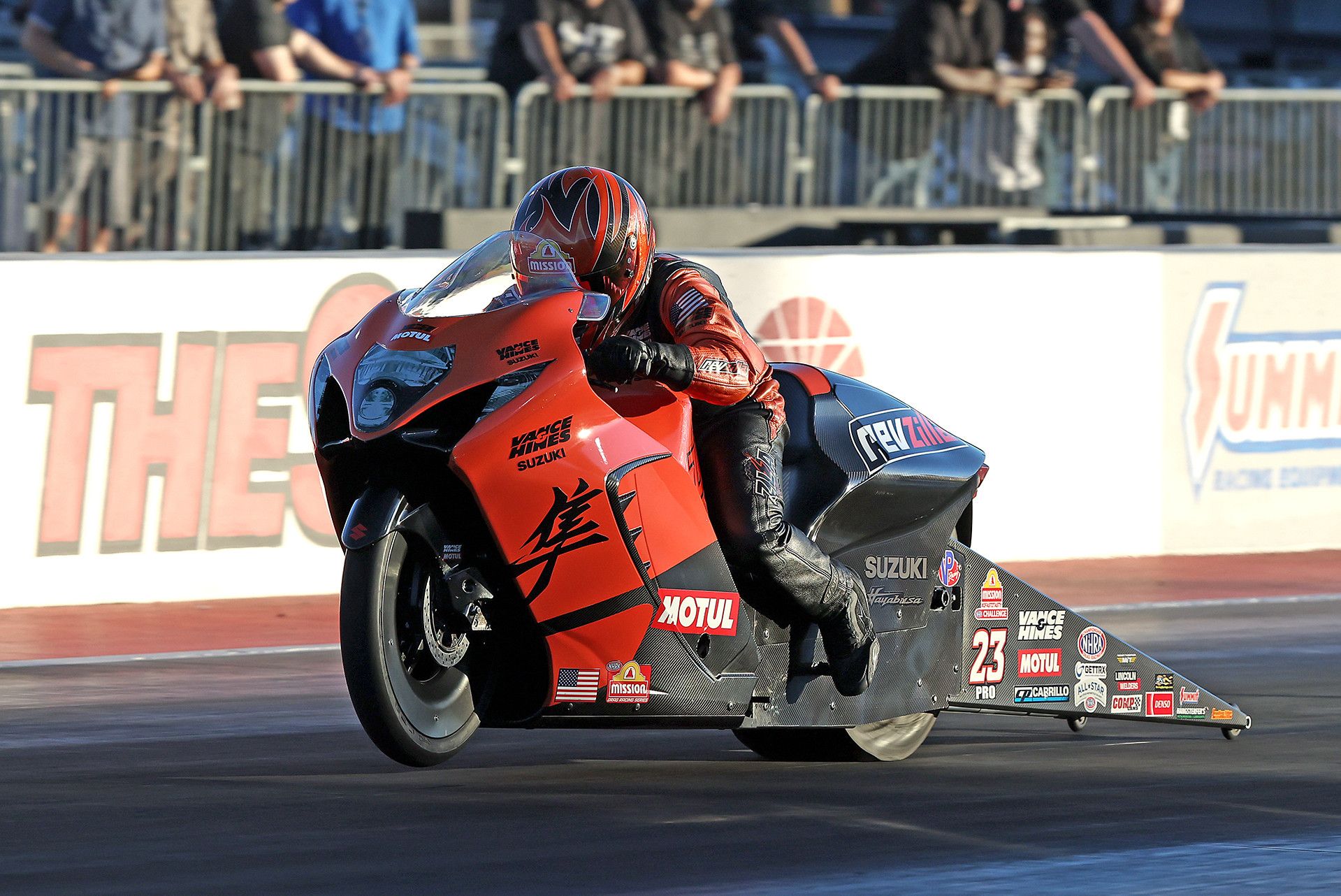
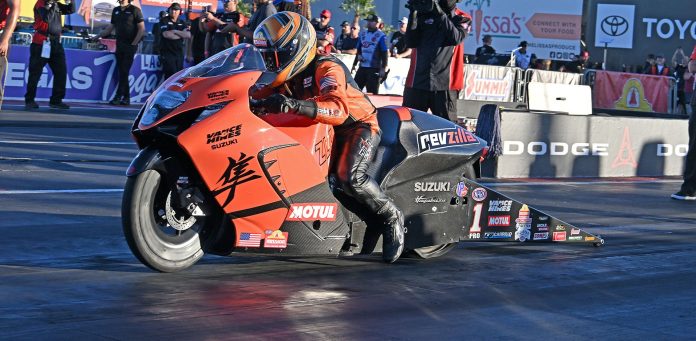
Brea, CA – Gaige Herrera kept his hopes of winning a third straight Pro Stock Motorcycle championship alive by racing his RevZilla/Motul/Vance & Hines Suzuki Gen 3 Hayabusa to his seventh victory of the season at the Dodge NHRA Nevada Nationals powered by Direct Connection at The Strip at Las Vegas Motor Speedway in Las Vegas, NV, on Sunday.
Race Highlights:
Gaige Herrera qualified first, won his seventh race of the season and closed to within 21 points of the championship lead with one race remaining in the NHRA Countdown to the Championship
Richard Gadson qualified fourth, advanced to the semi-final round and maintained a narrow points advantage heading into the season finale in Pomona
Gaige Herrera Wins in Las Vegas to Set Up Dramatic Championship Finale At Pomona. Picture by Matt Polito
Unlike in his past two championship-winning campaigns, Herrera arrived at the penultimate race of the season in the unusual position of chasing a third Pro Stock Motorcycle title from behind. The rabbit he’s chasing is his own RevZilla/Motul/Vance & Hines Suzuki teammate, Richard Gadson, who built a commanding points lead by winning two of first four races in the six-race Countdown to the Championship playoffs.
Facing a 72-point deficit to Gadson and needing a strong performance to maintain any hope of a three-peat, Herrera qualified first for the eighth time this season and 31st time in his career with a 6.800-second/199.17 mph run in Friday afternoon’s qualifying session.
Herrera opened Sunday eliminations with a 6.809-second/199.29 mph victory in round one over Karen Stoffer (7.043 seconds/188.12 mph), then defeated newcomer Clayton Howey (6.913 seconds/195.87 mph) with a 6.820-second/198.64 mph run in round two.
In a matchup with huge championship implications, Herrera faced off against Gadson in a semi-final round battle that played out dramatically after the points leader left the starting line with a perfect .000-second reaction time. But Herrera countered with his own razor-sharp skills on the tree, cutting a near-equal .005-second light and outgunning Gadson’s 6.857-second/197.48 mph run with a 6.825-second/198.26 mph pass to advance to his eighth final round appearance of the season.
Herrera claimed his 28th career victory and seventh this season with a 6.809-second/198.17 mph win over Angie Smith (6.813 seconds/199.37 mph) in the final round that narrowed his deficit to Gadson to 21 points ahead of the season’s final race in Pomona, California, in two weeks.
With 30 points per elimination round available in the points-and-a-half format of the finale, the 2025 championship is set to come down to a winner-takes-all shootout between the Vance & Hines teammates.
“He got me on the light there, but luckily I had a better bike in that round, and it saved my butt. If I didn’t have a little bit faster bike, he would have had me,” Herrera said. “I love having Richard on the team because we push each other so hard every round. We’ve made each other betters riders. This season has set me back to reality after two great seasons where I kind of ran away with it. It’s been going back and forth all year long, and I feel like the toughest competition out here is under my tent,” Herrera said. “There’s nothing better than going into the last race of the season with a winner-takes-all scenario. I would honestly love for both of us to get to the final round and whoever wins takes it home. It’s going to be fun.”
Championship leader Richard Gadson advanced to the semi-final round aboard his RevZilla/Motul/Vance & Hines Suzuki Gen 3 Hayabusa to maintain a narrow points advantage heading into the Pomona finale. Picture by Matt Polito
Richard Gadson qualified fourth with a 6.834-second/198.06 mph run on Saturday that put him on the same side of the elimination bracket as Herrera, a development that would take on greater significance for both of their championship hopes later in the weekend.
In the first round of eliminations, Gadson defeated Chris Bostick (foul) with a 6.842-second/198.67 mph pass, then ran 6.876 seconds at 196.99 mph in round two against John Hall (6.895 seconds/197.13 mph).
Given the dominant performance of the squad’s two Suzuki Gen 3 Hayabusas, an eventual clash with Herrera in Vegas was inevitable, but the semi-final round matchup between the Vance & Hines teammates came a round earlier than Gadson would have hoped. Despite posting a perfect .000-second reaction time, Gadson was left watching from the rear as Herrera’s Hayabusa crossed the finish line first and his championship lead shrank by 51 points.
“I knew at some point during this Countdown that I’d run into Gaige, and it would be mano-a-mano. It happened today and it’s likely going to happen again in Pomona. There’s no way around it. To be the champion, you need to beat the champion. That cliché is true. We both want to win it and we’re both willing to lay it all on the line,” Gadson said. “I’m racing for an NHRA championship against someone who is regarded as the best in the world and I’m in the fight. I’m a fighter to my core and I’m going to fight with every ounce in me to win it. This is how championship drag racing is supposed to be. We’re going to let it all hang out in Pomona and see what happens. You couldn’t write a better story.”
RevZilla/Motul/Vance & Hines Suzuki crew chief Andrew Hines acknowledged that even he was caught up in the excitement of the showdown between the team’s riders and its championship implications.
“My heart was pounding when I left the trailer before that round because it was a make-or-break session for how the rest of this season would play out. Either Richard would have a commanding lead, or it would be going down to the wire in Pomona. Those guys were fired up to go do whatever they could do to makes themselves a winner. A triple-zero and a double-oh five, it doesn’t get much better than that,” Hines said. “Richard is still the leader, but Gaige’s gap is less than one round, so it may come down to the final round on Sunday. We’ll give each rider our best tuning effort and whatever happens, happens. The best package will win.”
With one race remaining in the Countdown to the Championship, Gadson and Herrera sit first and second in the standings, with 2,584 and 2,563 points, respectively.
The RevZilla/Motul/Vance & Hines Suzuki team will close out the 2025 season November 13-16 at the In-N-Out Burger NHRA Finals at In-N-Out Burger Pomona Dragstrip in Pomona, CA.
Vance & Hines Motorsports is a powerhouse in the world of motorcycle racing, boasting a rich legacy of success. With a focus on innovation, performance, and a commitment to pushing boundaries, the team continues to redefine excellence in the NHRA and MotoAmerica. For more information, visit www.vanceandhinesmotorsports.com.
About Suzuki:
Suzuki Motor USA, LLC (SMO) distributes Motorcycles, ATVs, Scooters, Accessories, and ECSTAR Oils & Chemicals via an extensive dealer network throughout 49 states. Suzuki Motor Corporation (SMC), based in Hamamatsu, Japan, is a diversified worldwide manufacturer of Motorcycles, ATVs, Scooters, Automobiles, Outboard Motors, and related products. Founded in 1909 and incorporated in 1920, SMC has business relations with 201 countries/regions. For more information, visit www.suzuki.com.
Joe Roberts to sit out final rounds to focus on recovery – Xabi Zurutuza to replace him.
November 4, 2025 – Los Angeles, USA.After returning home to Los Angeles, Joe Roberts underwent additional medical checks that revealed a small fracture in his left wrist sustained during the Malaysian GP weekend. To prioritize a full and fast recovery ahead of the off-season tests after the last Grand Prix, the American Racing Team and Joe have decided that he will remain in LA to focus on rehabilitation. As a result, Joe will not participate in the final two rounds of the Moto2 World Championship in Portugal and Valencia.
Eitan Butbul, Team Principal:“Unfortunately, when Joe got back to LA and did an MRI, we found that he suffered a fracture in his left wrist and won’t be able to ride for a couple of weeks. Together, we agreed that Joe will stay in LA to ensure a fast recovery and be ready for the first test after the Valencia GP. The team will have Xabi from our JuniorGP team as his replacement.”
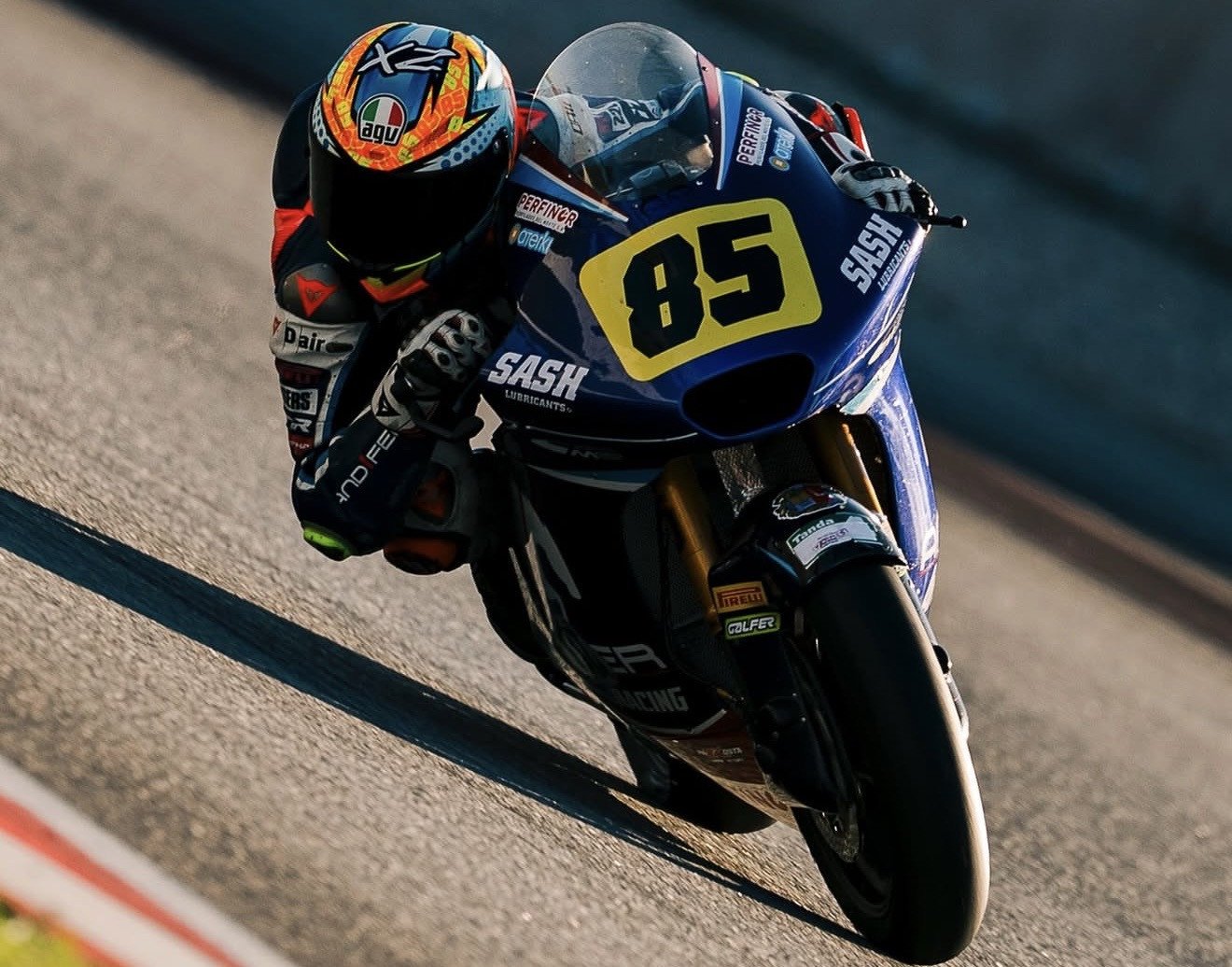
Xabi Zurutuza (85) at Barcelona. Photo courtesy Andover American Racing
Spanish rider Xabi Zurutuza from the American Racing JuniorGP program, Andifer American Racing, who competes in the JuniorGP championship, will make his Moto2 debut with the team. The team wishes Joe a smooth and speedy recovery and looks forward to having him back on the bike soon.
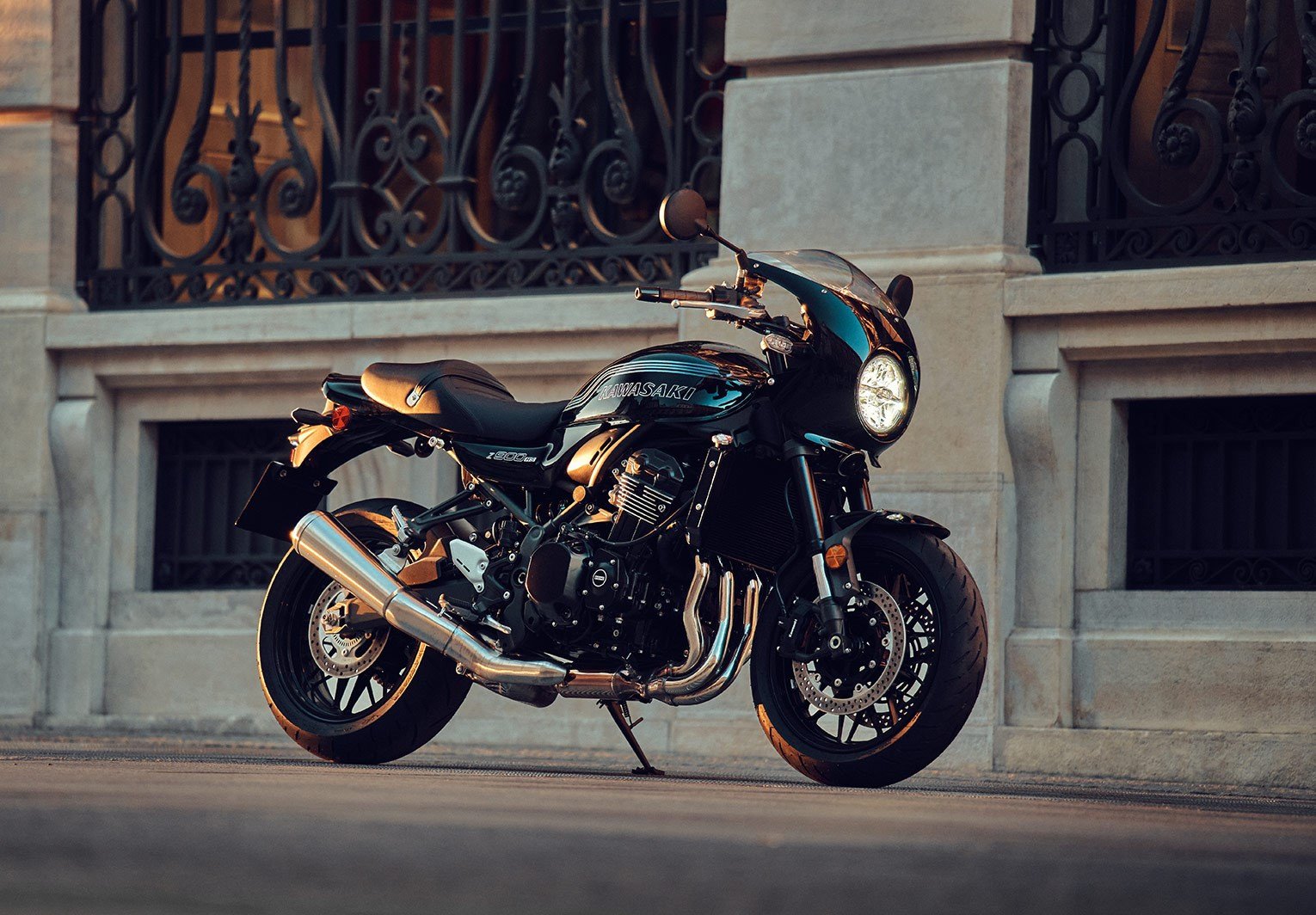
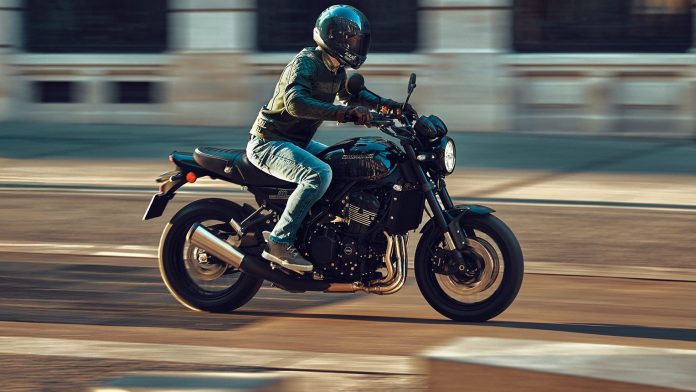
The new 2026 Kawasaki Z900RS family carries forward the spirit of the legendary Z1, blending its unmistakable styling with modern technology, performance, and comfort. Since its debut in 2018, the Z900RS has served as the ultimate match of Kawasaki heritage and contemporary craftsmanship, and the 2026 models take that concept even further.
Preserving the Z’s relaxed, planted feel and iconic silhouette, the 2026 lineup consisting of the Z900RS, Z900RS SE ABS, and Z900RS CAFE ABS introduce key updates to enhance both enjoyment and ease of use. Electronic Throttle Valves, electronic cruise control, and an IMU-equipped rider support package featuring Kawasaki Cornering Management Function (KCMF) and Kawasaki Quick Shifter (KQS) work together to deliver smooth performance, confident control, and greater comfort over long rides. A newly styled megaphone muffler and reshaped exhaust header pipes further reinforce the timeless Z design philosophy.
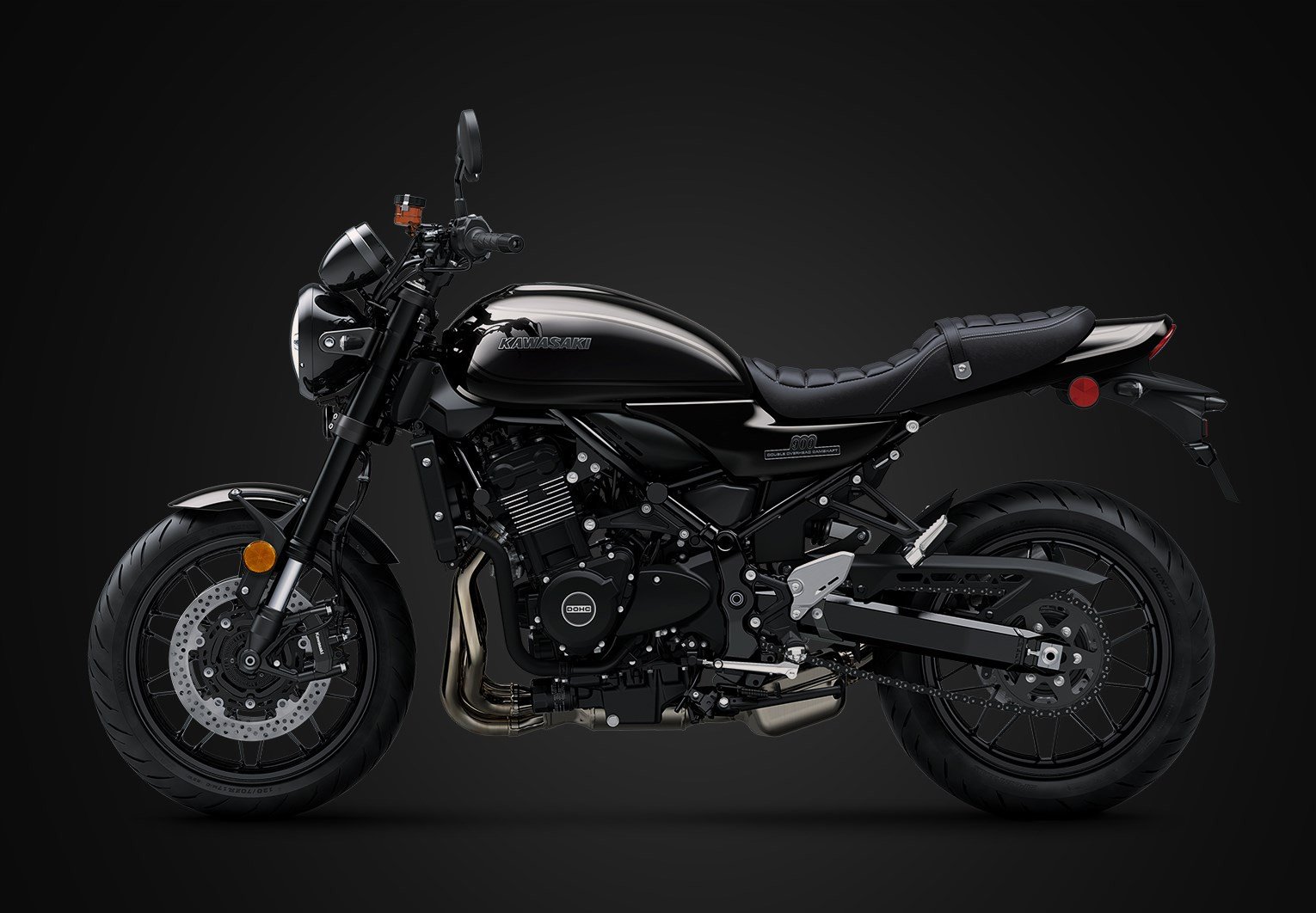
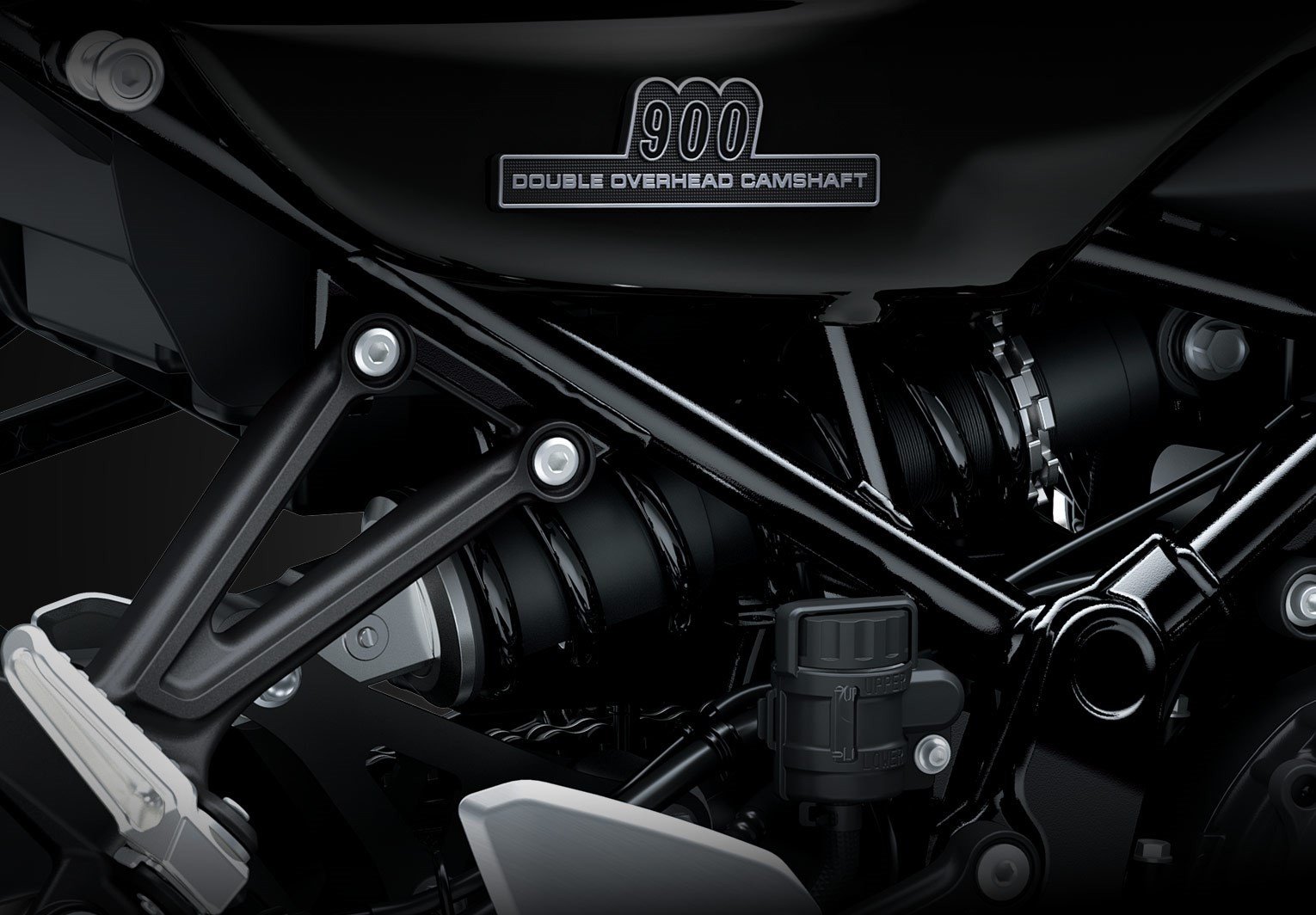
Distinctive styling remains central to the Z900RS identity, with fresh colorways adding to the model’s appeal. The new “Black Ball” edition offers a striking blacked-out design with heritage-inspired emblems, while the Z900RS SE debuts a new version of the iconic “Fireball” color scheme, complemented by upgraded Brembo brakes and an Öhlins rear shock. With these updates, the Z900RS family continues to evolve, offering riders an authentic retro sport experience built for today.
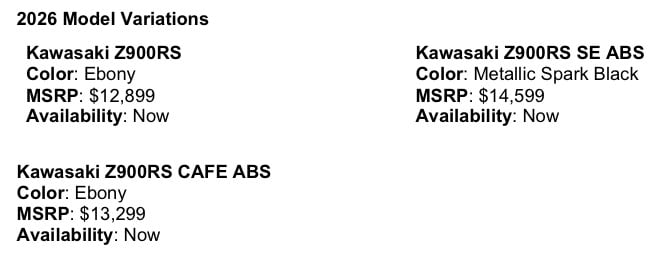
The 2026 Z900RS, Z900RS SE ABS, and Z900RS CAFE ABS will be available through a limited order period, beginning in November.
Z900RS HIGHLIGHTS:
● NEW 948cc in-line four engine with ETV
● NEW megaphone-style silencer and tuned exhaust note
● NEW IMU-equipped electronic riding support technology
● NEW Smartphone connectivity via RIDEOLOGY THE APP MOTORCYCLE*
● NEW Electronic cruise control
● Lightweight trellis frame
● NEW relaxed riding position
● Z-1 inspired styling
● NEW retro sport colorways
The combination of a lightweight trellis frame and powerful new engine allows the Z900RS ABS to achieve a superb balance of power and handling. Photo courtesy Kawasaki.
ENGINE:
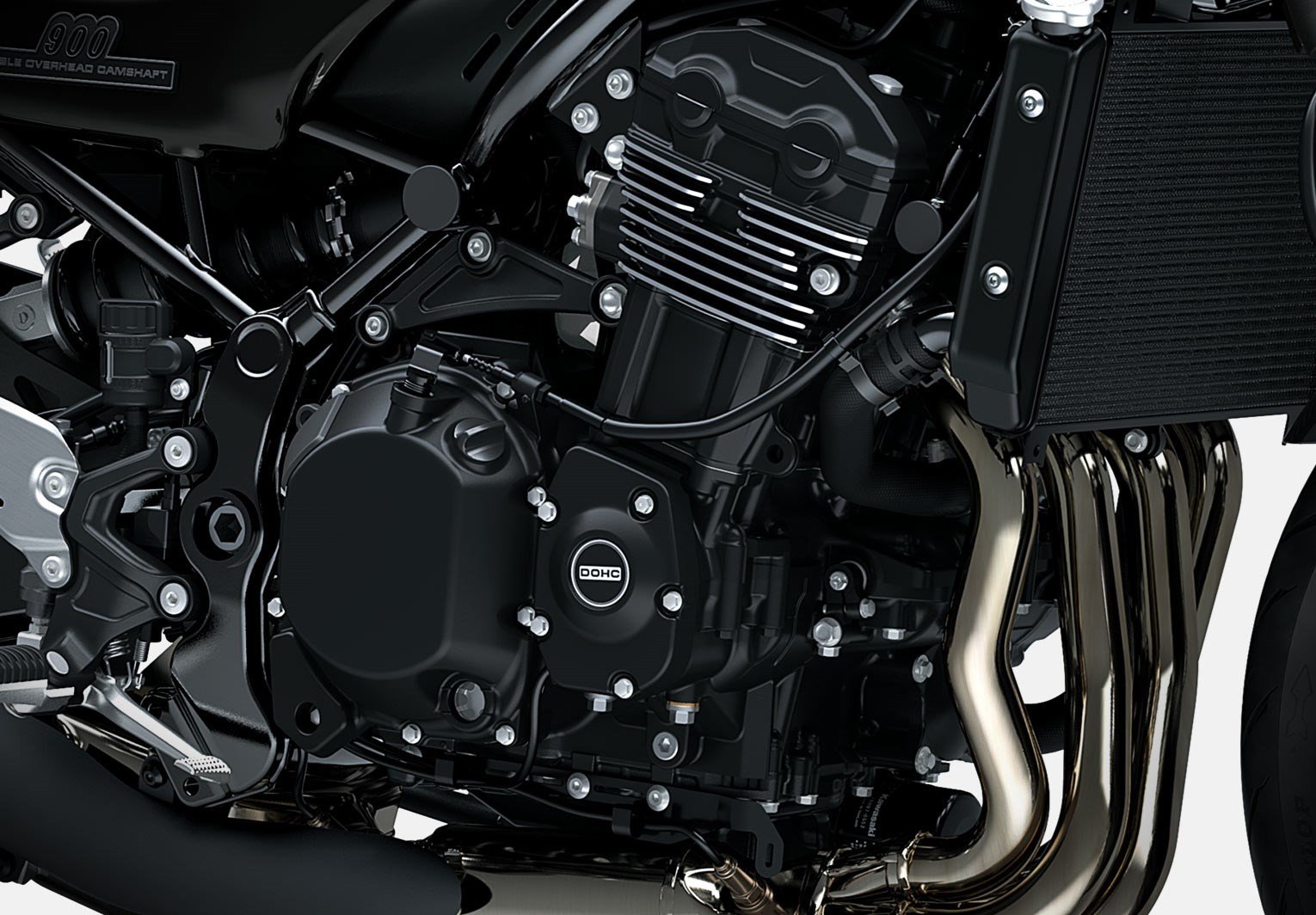
Powering the Z900RS is a liquid-cooled, DOHC, 16-valve 948cc in-line four engine that blends modern performance with the timeless character expected of a Kawasaki “Z.” Significant refinements have been made to enhance responsiveness, high-rpm performance, and overall ride feel. A key update comes from revised cam profiles, which increase both duration and lift, paired with a higher compression ratio of 11.8:1 (up from 10.8:1). Together, these changes deliver a stronger, sportier character at higher engine speeds while retaining smooth, controllable performance in everyday riding situations.
The intake system was carefully re-engineered to strike a balance between low-end tractability and top-end excitement. Downdraft throttle bodies shorten the path for intake air, further contributing to performance, while the airbox design and funnel dimensions were chosen to emphasize the Z900RS’ distinctive ride feel. Complementing these changes, optimized valve sizing – 29mm intake and 24mm exhaust –supports a responsive and lively mid-to-high rpm character.
The adoption of Electronic Throttle Valves brings an additional layer of precision to engine management. By allowing the ECU to directly control both air and fuel delivery, the system ensures ideal combustion for smooth response, linear acceleration, and improved fuel economy. This technology also enables advanced features such as Kawasaki Quick Shifter (KQS) for clutchless up and down shifting, as well as electronic cruise control for added comfort on longer rides. Throttle bores of 36mm were specifically chosen to provide the best balance of midrange response and high-rpm breathing, underscoring the engine’s versatile nature.
Internally, weight savings and durability go hand in hand. Lightweight cast pistons, produced using a unique process that achieves the rigidity of forged components, contribute to reduced reciprocating mass. A V-groove on the piston’s second land ensures a cleaner gas seal, helping reduce blow-by and oil consumption. The die-cast cylinder features an open-deck design for ideal rigidity and weight savings, while interconnecting passageways between cylinders reduce pumping losses, enhancing efficiency and throttle response. A redesigned crankshaft with approximately 10% less flywheel mass allows the engine to spin more freely at high rpm, sharpening throttle feel while retaining the linear delivery riders expect.
Refined ECU settings complete the package, offering a gradual throttle response at lower rpm for greater manageability, while allowing the engine to rev with exhilaration at the top end. A secondary balancer reduces unwanted vibration while maintaining the degree of engine pulse that contributes to the Z900RS’ engaging character. Closer gear ratios combined with a new 43-tooth rear sprocket keep the engine in the heart of its powerband, improving acceleration and delivering a rewarding, connected riding experience on meandering roads. Together, these updates ensure that the Z900RS’ engine delivers not only impressive performance, but also the soulful, responsive feel that defines Kawasaki’s modern classic.
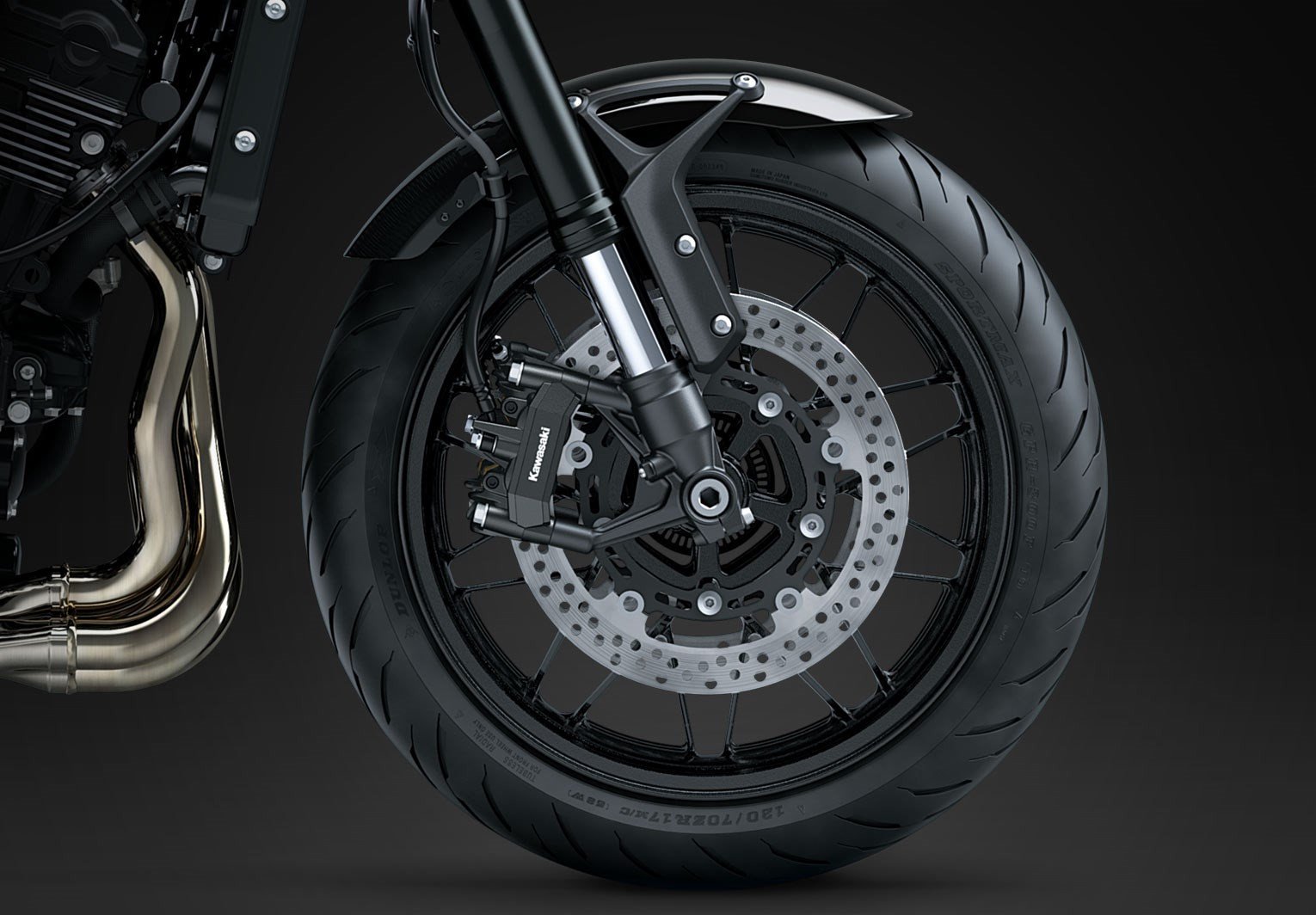
The Z900RS’ exhaust system was carefully crafted to highlight the presence of its in-line four engine while reinforcing its timeless retro sport identity. A 4-into-1 layout with a stainless-steel pre-chamber and new megaphone-style silencer delivers both visual impact and performance. The dual-wall header pipes, now revised with a more forward-extended shape, not only enhance the muscular appearance of the front end but also resist discoloration over time. Their construction, with a narrower inner pipe and larger outer pipe, ensures strong low- to mid-range performance while maintaining the robust styling that defines the RS. A compact pre-chamber contributes to mass centralization and a cleaner underside, while the longer, tapered silencer – extended by 70mm compared to the previous model – provides a more balanced proportion and classic silhouette.
High-quality stainless steel is used throughout the exhaust system, with each component undergoing a three-stage buffing process to achieve a lustrous finish worthy of a premium motorcycle. Beyond styling, performance and efficiency were also improved. The revised pre-chamber reduces heat, while the addition of a sub-catalyst complements the main catalyst, contributing to lower CO₂ emissions and improved fuel economy. By deliberately avoiding connector pipes and exhaust devices, Kawasaki preserved the clean, uninterrupted lines of the system, staying true to the bike’s classic design brief.
Equally important to the Z900RS’ character is its signature exhaust note. Kawasaki engineers devoted extensive development to achieving a deep, sonorous tone reminiscent of vintage 4-into-1 systems. Tuning was focused on the moments when the rider is most engaged—the rich resonance at idle, the deep pulse during low-speed cruising, and the satisfying growl under acceleration. Inside the silencer, the packing material, fiber density, and revised perforation pattern were carefully engineered to emphasize lower frequencies while retaining a hint of raw character. The result is an exhaust sound that is both modern and refined, yet unmistakably evocative of Kawasaki’s iconic heritage.
The Z900RS is equipped with Kawasaki’s Assist & Slipper Clutch, which combines two cam mechanisms to deliver both light lever action and enhanced control. Under normal operation, the assist cam acts as a self-servo, pulling the clutch hub and operating plate together, allowing for reduced spring load and a noticeably lighter clutch lever pull. During sudden downshifts or instances of excessive engine braking, the slipper can engages, momentarily separating the clutch hub and operating plate to relieve pressure on the plates. This helps reduce back-torque, minimizing the risk of rear-wheel hop or skid, and ensuring smooth, controlled corner entries.
Kawasaki Corner Management Function (KCMF) helps modulate brake force and engine power for more precise control through corners. Photo courtesy Kawasaki
KAWASAKI CORNERING MANAGEMENT FUNCTION (KCMF):
KCMF enhances rider control by continuously monitoring engine and chassis parameters throughout a corner – from entry, through the apex, to exit. On the Z900RS, KCMF works in concert with KTRC and the enhanced ABS system, which incorporates IMU feedback to manage pitching and corner braking. By modulating both brake force and engine power, KCMF facilitates smooth transitions between acceleration and braking, helping riders maintain their intended line and enjoy greater confidence when navigating corners.
New IMU-equipped electronic riding support technology brings advanced capability to the ultimate riding experience. Photo courtesy Kawasaki.
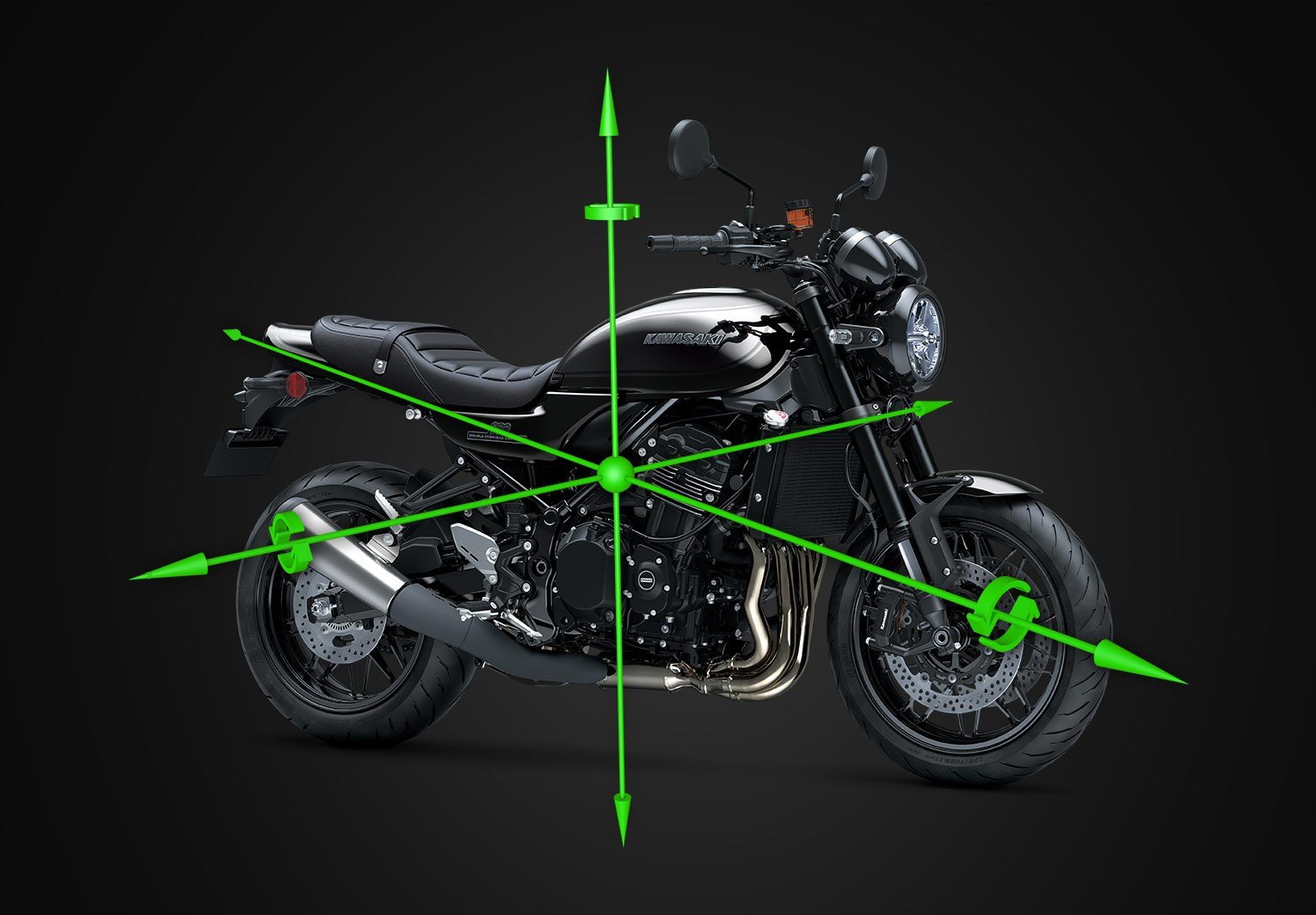
The Z900RS is equipped with a sophisticated IMU that tracks inertia along six degrees of freedom, measuring acceleration along the longitudinal, transverse, and vertical axes, as well as roll, yaw, and pitch rates. This multi-dimensional feedback gives the bike an accurate, real-time understanding of its orientation and movement in space. By analyzing this data, systems such as Kawasaki Cornering Management Function (KCMF), KTRC, and enhanced ABS can respond with greater precision – modulating engine power, braking, and stability controls to optimize handling through corners, maintain the intended line, and ensure smooth transitions between acceleration and deceleration. The IMU’s detailed insights enhance both performance and rider confidence, providing a seamless integration of advanced electronics with the Z900RS’ retro-inspired riding experience.
KAWASAKI TRACTION CONTROL (KTRC):
The Z900RS features KTRC, a sophisticated system designed to provide both performance and confidence across a variety of riding conditions. By continuously monitoring multiple parameters, KTRC generates a precise, real-time picture of wheel grip and chassis behavior. Riders can select from two modes tailored to different scenarios, ensuring optimal control whether tackling spirited sport riding or navigating low-traction surfaces.
Mode 1 is the least intrusive setting, ideal for sport riding, and helps manage traction through corners by maximizing rear-wheel drive for smooth, controlled acceleration out of bends. Mode 2 is more interventionist, reducing engine output when excessive wheel spin is detected. This allows riders to traverse short, challenging patches such as train tracks or manhole covers, as well as longer stretches of low-traction surfaces like wet pavement, cobblestones, or gravel, offering reassurance and stability in variable conditions.
KAWASAKI QUICK SHIFTER (KQS):
The KQS on the Z900RS allows riders to take full advantage of the bike’s lively engine by enabling clutchless upshifts and downshifts, delivering seamless acceleration and effortless deceleration. During acceleration, the system detects when the shift lever is actuated and sends a signal to the ECU to momentarily cut ignition, allowing the next gear to engage without the need for clutch operation.
During deceleration, KQS automatically adjusts engine speed, enabling smooth downshifts without operating the clutch. The system employs a contactless-type sensor for exceptional reliability and functions from as low as 1,500 RPM, ensuring smooth, precise shifts even at slower speeds.
Highway cruising just got more comfortable with new cruise control functionality. Set and maintain your speed with the push of a button. Photo courtesy Kawasaki.
ELECTRONIC CRUISE CONTROL:
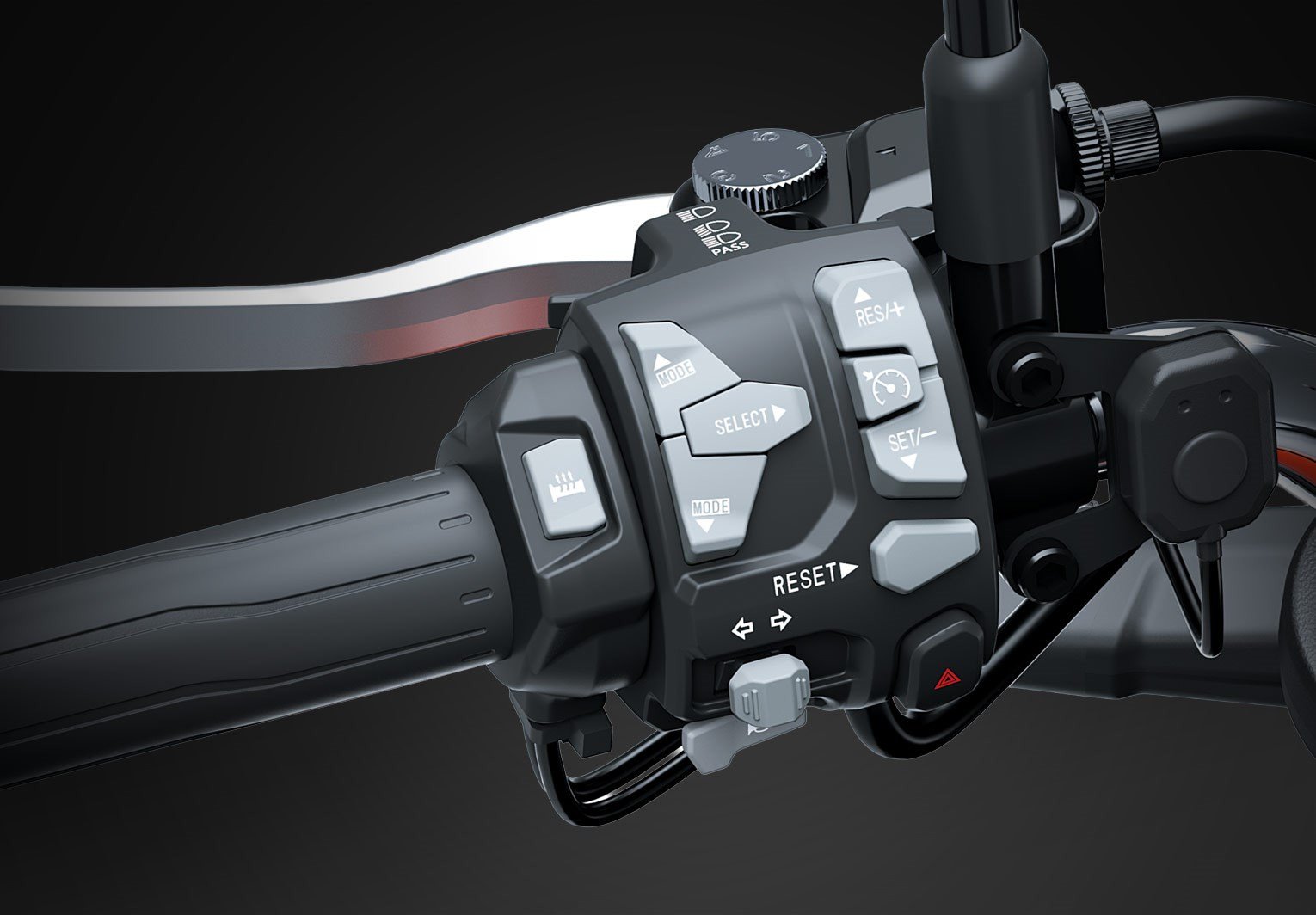
The Z900RS features Kawasaki’s Electronic Cruise Control, allowing riders to maintain a desired speed with the simple press of a button, reducing the need to constantly operate the throttle. Conveniently controlled from the left handlebar, the system automatically adjusts engine output through the Electronic Throttle Valves to maintain a steady speed, even when ascending or descending hills. This helps reduce fatigue on long rides, providing a more relaxed and comfortable cruising experience.
The set speed can be easily adjusted using the “+” and “-” buttons, while instinctive actions such as operating the brake, clutch, or rear brake pedal, closing the throttle past the zero-throttle position, or shifting into 1st or 2nd gear will disengage the system. Additionally, Electronic Cruise Control will automatically disengage if significant traction control intervention occurs, ensuring seamless integration with the Z900RS’ advanced riding technologies.
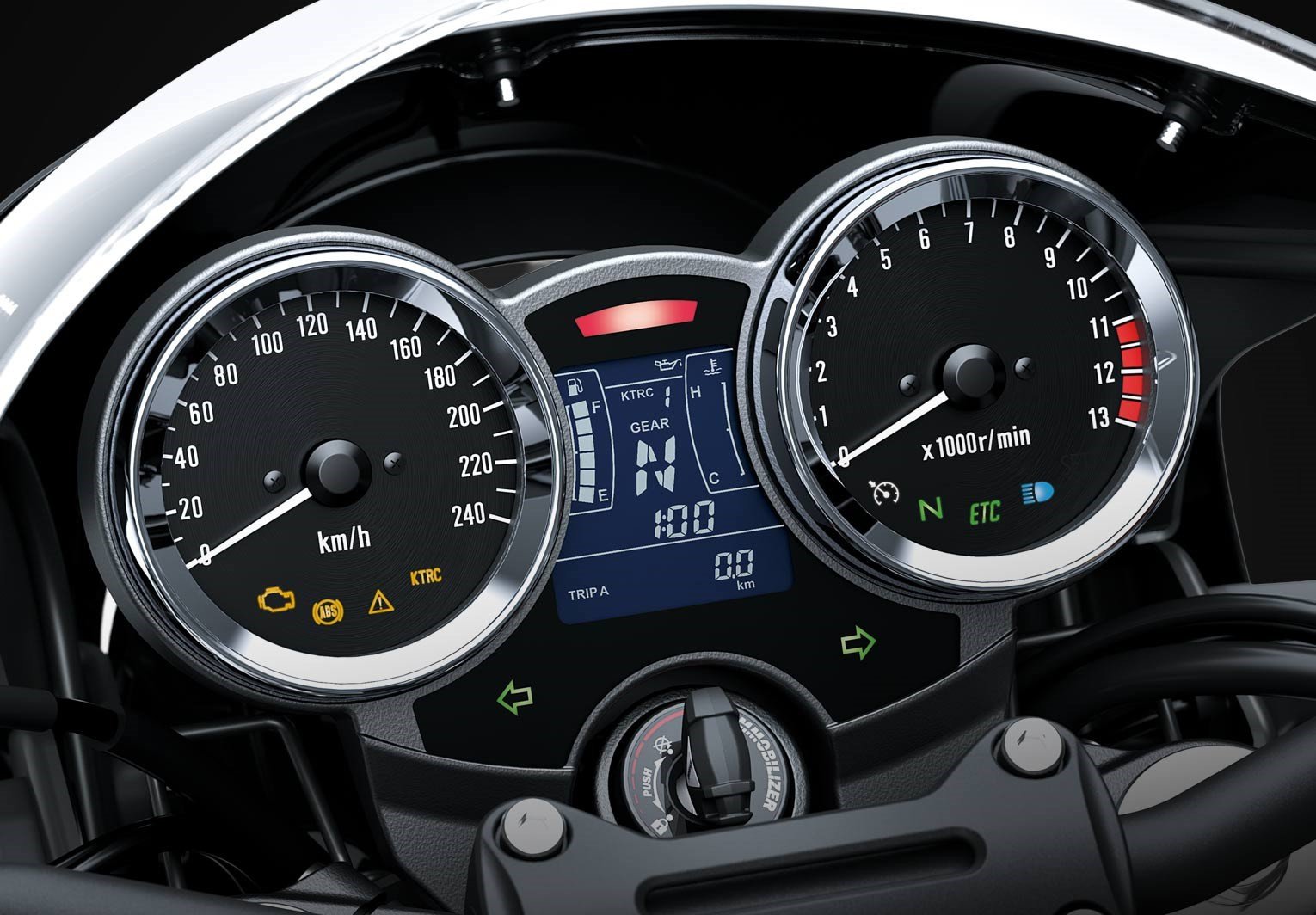
The high-tech multi-function LCD screen nestles between bullet-shape analog dials, creating a balance of retro style and modern functionality. A new internal-cut key adds today’s security to help protect your ride. Photo courtesy Kawasaki
INSTRUMENTATION:
The Z900RS instrumentation strikes a perfect balance between retro style and modern functionality. Classic analogue-style speedometer and tachometer dials are complemented by a multi-functional LCD screen, all housed in bullet-shaped cases that echo the bike’s heritage. Spindle-finished dial faces add a refined, high-quality touch, while the LCD screen features a negative display with white lettering on a black background, enhancing its sporty, contemporary appearance.
Adding to its versatility, the Z900RS now offers smartphone connectivity via a discreet Bluetooth unit housed inside the right-side cover, preserving the clean, dual-dial aesthetic. The LCD screen provides a comprehensive range of information, including a gear position indicator, odometer, dual trip meters, fuel gauge, remaining range, fuel consumption data, coolant and external temperatures, clock, cruise control, app connection status, and an Economical Riding Indicator. This indicator helps riders optimize fuel efficiency, blending practicality with the classic, high-quality design that defines the Z900RS.
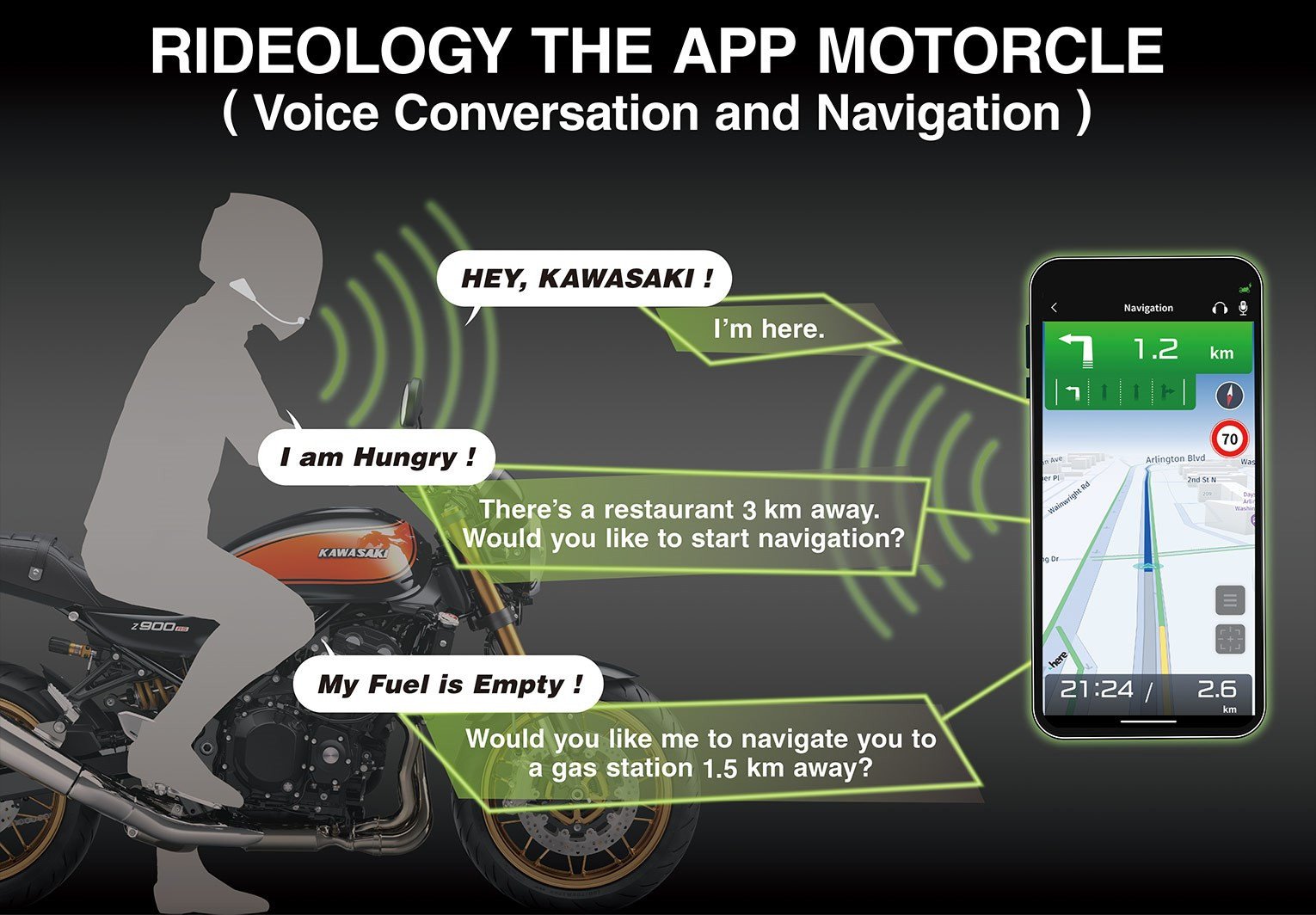
Smartphone connectivity via RIDEOLOGY THE APP MOTORCYCLE† with available voice command and navigation functions allows you to view vehicle info, riding log, phone call and email notifications, and tuning of general settings. Photo courtesy Kawasaki.
SMARTPHONE CONNECTIVITY:
The Z900RS enhances the riding experience through seamless smartphone connectivity using the RIDEOLOGY THE APP MOTORCYCLE* application. Riders can wirelessly access a wide range of functions, from vehicle information such as fuel gauge, odometer, and maintenance schedules, to riding logs that track GPS routes and vehicle performance. Telephone notices for incoming calls and messages are displayed directly on the instrument cluster, keeping riders informed without distraction. General instrument settings, including the clock, can also be conveniently adjusted via the app, providing both convenience and control.
Navigation and voice command features further elevate the Z900RS experience. Riders can view route information on their smartphones, search for destinations, store waypoints, and adjust route sequences, all while keeping their hands and feet free thanks to the availability of the voice command feature.
The modern lightweight trellis frame provides strength to harness the in-line 4-cylinder power and balanced flex to achieve responsive and agile handling. Photo courtesy Kawasaki.
CHASSIS:
The Z900RS features a lightweight trellis frame engineered with Kawasaki’s advanced analysis technology to deliver both responsive handling and timeless styling. Designed to accommodate the slim teardrop-style fuel tank, the frame balances rigidity and geometry for predictable, natural handling that responds seamlessly to rider input. Compared to the aggressive forward-leaning stance of the Z900, the Z900RS adopts a more neutral posture, achieved by raising the front and lowering the rear, giving the bike a relaxed yet sporty presence that suits its retro sport character.
Careful attention to chassis design ensures both performance and rider confidence. The specially designed upper triple clamp incorporates a 34mm steering offset, reducing trail to contribute to light, effortless steering. High-tensile steel frame components follow straight, optimized lines, dispersing stress effectively while minimizing material for reduced weight. Rigid engine mounting at five points allows the engine itself to serve as a stressed member, further trimming mass while enhancing overall chassis rigidity. At the rear, a lightweight extruded aluminum swingarm keeps unsprung weight low, contributing to the Z900RS’ agile, responsive handling.
Practical considerations also shaped the frame’s design. The twin-tube rear frame supports a low seat height for easier ground reach, while its straight-line construction helps minimize vibration felt through the seat. Together, the chassis components deliver a balanced riding experience – stable yet nimble, comfortable yet engaging – making the Z900RS as enjoyable to cruise through town on as it is to navigate meandering backroads.
A fully adjustable 41mm inverted front fork and a horizontal back-link rear suspension offer progressive damping that delivers both ride comfort and sporty performance. Photo courtesy Kawasaki.
SUSPENSION:
The Z900RS is equipped with a 41mm inverted front fork that balances excellent ride comfort with sporty performance. Its smooth, deliberate response provides riders with a reassuring sense of control, whether navigating city streets or flowing through backroads. The high-grade fork is fully adjustable, featuring 12-way compression damping, 10-way rebound damping, and stepless preload adjustability, giving riders the ability to fine-tune settings to suit individual preferences and riding styles.
At the rear, Kawasaki’s advanced horizontal back-link suspension replaces the twin-shock design of the original Z1. This modern system, also found on Kawasaki’s supersport and supernaked models, delivers the kind of precise handling and performance that riders expect today – something Kawasaki engineers were unwilling to compromise. Positioning the shock and linkage above the swingarm aids mass centralization and ensures the components remain isolated from exhaust heat, maintaining consistent performance.
Together, the suspension components embody the Z900RS’ retro-sport philosophy: blending timeless styling with thoroughly modern engineering. The rear shock features stepless rebound damping and preload adjustability, complementing the highly tunable front fork. This combination gives riders a suspension package that is as capable on a relaxed weekend cruise as it is on spirited rides, reinforcing the Z900RS’ role as a machine that honors Kawasaki heritage while delivering contemporary performance.
A classic look with machining on the spokes and rim plus high-quality paint demonstrates superb craftsmanship. Photo courtesy Kawasaki.
BRAKES & WHEELS:
At the front, 300mm brake discs are paired with opposed 4-piston radial-mount monobloc calipers, delivering superb stopping power with precise, controllable feel. The monobloc design ensures a firm initial bite, while the radial-pump master cylinder further enhances modulation and feedback, allowing riders to brake with confidence in a variety of conditions. At the rear, a 250mm disc with a single-piston pin-slide caliper provides additional control, while sintered pads front and rear contribute to consistent performance and responsive feel. For added reassurance, a lightweight and compact Nissin ABS unit comes standard, ensuring reliable braking support without detracting from the bike’s natural handling character.
The Z900RS rolls on original cast wheels that were designed to capture the timeless look of classic wire-spoked wheels while delivering the benefits of modern engineering. Featuring flat spokes with machined detailing, the wheels exude a premium, high-quality appearance that complements the bike’s retro sport styling. Kawasaki’s advanced analysis technology was applied to achieve the ideal balance of strength and reduced weight, minimizing unsprung mass, and contributing to the Z900RS’ light, natural handling. Wrapped in Dunlop SPORTMAX GPR-300 tires, the wheels not only complete the retro-inspired aesthetic but also provide excellent grip and stability, ensuring riders enjoy both confident performance and authentic style.
Thicker than the previous models, this seat is well cushioned and comfortable for extended highway cruising and enhanced road bump absorption. Photo courtesy Kawasaki.
ERGONOMICS:
The Z900RS was designed to deliver a relaxed, confidence-inspiring riding position that suits everything from city streets to country roads. The relationship between the footpegs, seat, and handlebars was carefully engineered to enhance communication between rider and machine, giving riders a natural feeling of control that complements the bike’s light, predictable handling. A wide, flat handlebar not only contributes to the retro sport styling but also provides a broad grip for precise input and maneuverability, supported by a generous 35º steering angle that facilitates low-speed riding and tight turns. Rubber-mounted bars and bar-ends further dampen vibration, ensuring a smooth andcomfortable ride.
Attention to rider comfort and accessibility is evident throughout the design. The slim fuel tank tapers at the rear, allowing riders to grip the bike with their knees, while the narrow frame and engine create a compact package that makes it easy to keep feet close together. With a 32.8” seat height and a slim front section, riders of varying sizes can reach the ground with confidence, while the stepped seat provides ample comfort for both rider and passenger. The seat can be removed without tools for access to the battery, fuse box, and tool kit – an added convenience for everyday use.
Combining vibration-damping footpeg pads and adjustable brake and clutch levers, the Z900RS’ ergonomics cater to a wide range of riders, blending retro style with modern comfort and versatility.
A relaxed upright riding position accommodates both comfortable cruising and sporty riding. A low seat height allows a comfortable reach to the ground while an upright handlebar position adds leverage for cornering and low-speed maneuvering. Photo courtesy Kawasaki.
STYLING:
The Kawasaki Z900RS masterfully fuses classic Z1-inspired design with modern craftsmanship, resulting in a motorcycle that exudes timeless style. Its centerpiece, the teardrop fuel tank, draws a direct line to Kawasaki’s legendary heritage, while the innovative oval LED taillight and meticulous attention to detail showcase the bike’s modern sensibilities. From the high-quality paint and graphics to the carefully selected bolt coatings, every element of the Z900RS reflects a pursuit of refined, functional beauty. Rounded lines and subtle design cues set it apart from the sharp-edged Z supernaked models, creating a retro-style profile that remains unmistakably contemporary.
The Z900RS’ proportions were meticulously engineered, with the tank’s placement dictating the optimal dimensions for the seat, tandem section, and tail cowl. Extending behind the side covers, the 4.4-gallon tank achieves a slim, elegant appearance without compromising range, while the absence of knee indentations preserves its graceful curves. Complementing the tank, side covers and knee grip panels feature premium materials and finishes, seamlessly blending form and function. Every detail, from wire routing to die-cast aluminum parts, contributes to the high-quality, retro-sport aesthetic.
As a naked bike, the Z900RS engine plays a central role in its visual identity. With clean, uncluttered lines, engine fins evoke the appearance of air-cooled cylinders, paying homage to Kawasaki’s Z1 legacy, while black-painted die-cast aluminum covers with subtle Z1 motifs reinforce its heritage. New design touches, including a tapered megaphone-style silencer with a bolt-on stainless steel end and concealed exhaust routing, integrate seamlessly with the bike’s overall proportions, enhancing both style and function. The forged aluminum shift lever and brake pedal further underline the blend of beauty and practicality.
Lighting and ergonomics extend the Z900RS’ retro-modern appeal. A large 170mm LED headlamp, chromed ring, and six-chamber design offer bright, white illumination while evoking a classic bulb-style appearance. Round mirrors, three-piece front fender supports, stylish seats with double stitching, and the flowing rear cowl echo the Z1’s design language, while LED turn signals and functional luggage hooks deliver modern convenience. From the oval surface-emitting taillight to the accessory grab bar, every component reinforces the Z900RS’ balance of timeless style and contemporary performance.
The Z900RS offers riders a choice of iconic colorways that pay tribute to Kawasaki’s legendary heritage while providing a modern, premium finish. The Candy Tone Red colorway celebrates the 1975 Z1/Z2, capturing the essence of the original two-coat metallic-and-candy finish in a single-coatapplication using advanced pearlescent materials. Smooth, seamless graphics applied via transfer film evoke the style of the 1970s while delivering a refined, high-quality surface that enhances the bike’s overall premium feel.
For those seeking a bolder, contemporary statement, the new Black Ball Edition delivers a striking all-black presence. Its metallic black Fireball graphic appears subtle at first glance, only revealing itself when catching the light, creating a dynamic visual effect. Key components, including the meter bezel, headlamp rim, handlebar, levers, fenders, wheels, and other elements, are finished in black, reinforcing the model’s aggressive, heritage-inspired styling.
The Black Ball Edition also emphasizes the Z900RS’ connection to its storied lineage. Side covers proudly display the “Double Overhead Camshaft” emblems, while the engine’s aluminum badges feature “DOHC” motifs reminiscent of the original Z1’s advanced engineering. Even functional elements, such as the silencer end-cap and exhaust heat guard, receive a matte black finish that enhances durability and complements the overall aesthetic. Together, these colorways offer riders the choice between classic retro flair and bold, modern sophistication.
Special edition. The Z900RS SE ABS retro-sport is the high-grade variation featuring advanced suspension, brake upgrades, gold-colored wheels, and the iconic Fireball colorway. Photo courtesy Kawasaki.
Z900RS SE ABS:
The special edition Z900RS SE ABS represents a high-grade evolution of Kawasaki’s retro sport masterpiece, offering enhanced performance, control, and refinement. At the forefront, a Brembo brake package delivers superior stopping power, featuring 300mm front discs with M4.32 radial-mount monobloc calipers paired with a smaller-diameter Nissin radial-pump master cylinder and stainless-steel braided lines. This combination provides smooth, linear lever feel, allowing riders to precisely modulate braking force in any situation. Complementing the front, the Öhlins S46 rear shock, with its single-tube aluminum body, 46mm piston, and floating piston design, ensures exceptional grip, handling, and a suppler ride, while a double-lipped dust seal guarantees reliable performance over time.
The suspension system has been carefully tuned to work in harmony, with front fork settings optimized to match the Öhlins rear shock. The rear suspension includes a convenient remote preload adjuster, allowing riders to quickly adapt to tandem riding or added luggage without tools. Visually, the SE model is distinguished by gold-colored fork outer tubes and a matching Öhlins rear shock, while an embossed Öhlins plate adds a premium touch. A USB Type-C outlet on the right handlebar adds modern convenience.
The Z900RS SE ABS also stands out with a distinctive Fireball colorway, inspired by the iconic Z1. Compared to the 2018 version, the 2026 SE uses metallic black bodywork contrasted by vibrant orange transfer-film graphics that highlight the upgraded sporty suspension. Gold-colored wheels reinforce the model’s premium, eye-catching aesthetic, while the “RS” letters on the side covers are finished in red, marking the Z900RS SE as a true special edition. Together, these enhancements combine performance, style, and modern functionality to create a high-grade retro sport motorcycle that is both visually striking and exhilarating to ride.
Cafe Edition. Allow us to reintroduce the Z900RS CAFE ABS retro-sport. In true café-racer style, this edition brings a rebellious spirit and fierce features to every destination. Photo courtesy Kawasaki.
Z900RS CAFE ABS:
The Z900RS CAFE ABS offers riders a unique way to experience Kawasaki’s retro sport heritage, blending classic cafe-racer styling with modern performance and comfort. A signature front cowl not only gives the bike a distinctively sporty profile compared to the standard Z900RS, but also provides effective wind protection for longer rides. Complementing the cowl, a black drop handlebar reinforces the cafe-racer aesthetic while maintaining functional ergonomics.
The CAFE model also features a custom seat with a more pronounced step, designed for both style and comfort, with a seat height of 32.2”. The silencer and exhaust heat guard receive a refined finish, adding to the bike’s polished, sporty appearance. Graphics are applied exclusively to the fuel tank, creating a simple yet dynamic look that pays homage to the iconic rainbow line of Kawasaki’s legendary Mach series, celebrated for its performance and design.
Further distinguishing the Z900RS CAFE, the fuel tank’s Kawasaki logo is applied using smooth transfer film rather than a raised emblem, matching the model’s understated, sporty image. The transfer film and graphics are composed solely of pearlescent materials, allowing the underlying paint color to show through and creating a unique visual effect. Black lettering on the side cover emblems complements the outline-style logo on the fuel tank, ensuring that every detail contributes to the Z900RS CAFE ABS’ cohesive retro-inspired design.
KAWASAKI GENUINE ACCESSORIES:
Kawasaki offers a wide range of genuine accessories that allow riders to personalize the Z900RS for style, comfort, and convenience. ERGO-FIT seats are available in both Low and High options, with the Low Seat reducing height by 25mm for an easier reach to the ground, while both feature two-tone leather and double stitching. A USB Type-C outlet, standard on the SE model, provides a convenient charging point for small devices. Additional accessories include heated grips, tank pad, indicator and meter covers, front fork caps, radiator screen, front axle and frame sliders, center stand with side grip for easier maneuvering, and a chromed grab bar – enabling riders to tailor their Z900RS to their individual needs and preferences.
All trademarks, registered trademarks, logos, and copyrights are the property of their respective owners.
*RIDEOLOGY THE APP MOTORCYCLE and all trademarks, registered trademarks, logos, andcopyrights are the property of their respective owners. Voice command and navigation functions will beavailable only to users who have purchased a license for those functions. Feature availability may varyto meet individual markets.
ABOUT KAWASAKI:
Kawasaki started full-scale production of motorcycles over a half century ago. The first Kawasaki motorcycle engine was designed based on technical know-how garnered from the development and production of aircraft engines, and Kawasaki’s entry into the motorcycle industry was driven by the company’s constant effort to develop new technologies. Numerous new Kawasaki models introduced over the years have helped shape the market, and in the process have created enduring legends based on their unique engineering, power, design and riding pleasure. In the future, Kawasaki Motors, Ltd. is committed to maintaining and furthering these strengths which will surely give birth to new legends.
Kawasaki Motors Corp., U.S.A. markets and distributes Kawasaki motorcycles, ATVs, side x sides, and JET SKI® watercraft through a network of approximately 1,100 independent retailers, with close to an additional 7,700 retailers specializing in general purpose engines. Kawasaki and its affiliates employ nearly 3,100 people in the United States, with approximately 260 of them located at Kawasaki’s Foothill Ranch, California headquarters.
MARIETTA, Ga. – November 4, 2025 – Yamaha Motor Corporation, USA, is proud to announce the release its 2026 street motorcycle lineup highlighted by an extensively updated new YZF-R7 Supersport model and the introduction of the all-new WR125R Dual Sport model. Starting with the new YZF-R7, the bike that redefined the Supersport class with a focus on performance, accessibility and fun is raising the bar again with a sharper handling chassis, advanced electronics package and sleek new-generation R-Series styling. Next, Yamaha’s all-new entry-level WR125R makes the thrill of dual sport riding accessible to riders of all skill levels with versatile all-terrain capability in a simple, low-cost package.
Additionally, Yamaha is celebrating the 70th anniversary of the 1955 founding of the Yamaha Motor Company by offering four special edition R-Series models adorned in iconic white and red speed block livery inspired by the legendary 1999 Yamaha YZF-R7 Superbike: the 2026 YZF-R1 70th Anniversary Edition, YZF-R9 70th Anniversary Edition, YZF-R7 70th Anniversary Edition and YZF-R3 70th Anniversary Edition.
Yamaha’s game changing YZF-R7 leaps forward for 2026 with an extensive list of new and updated features focused on enhancing performance, comfort and control. The new R7 receives a compact, aerodynamic new look that underlines its refined Supersport capabilities, while still retaining its instantly recognizable R-Series DNA.
New 2026 Yamaha YZF-R7. Photo courtesy Yamaha Motor Corporation
2026 YZF-R7: Ultra-Sleek New-Generation Styling
Sharp new aerodynamic styling fuses beauty and functionality with a compact front fairing design, slim, contoured side fairings, new aerodynamic winglets and LED turn signals now integrated into the rearview mirrors. Minimalist LED headlight and position lights combine with the R7’s signature M-shaped duct and tail wing to reflect unmistakable Yamaha R-Series DNA from every angle.
New 2026 Yamaha YZF-R7. Photo courtesy Yamaha Motor Corporation
2026 YZF-R7: Tuned Induction
Contributing to the visceral connection between rider and machine, the new YZF-R7 adopts the same intake duct shape and asymmetrical funnel lengths as the current MT-07, harnessing the bike’s induction roar for an enhanced feeling of acceleration from its renowned CP2 cross-plane engine.
New 2026 Yamaha YZF-R7. Photo courtesy Yamaha Motor Corporation
2026 YZF-R7: New Five-Inch TFT & Enhanced Connectivity
A stunning new full-color five-inch TFT instrument display features four selectable display backgrounds, along with a track-specific display background. Smartphone connectivity enabled through Yamaha’s free Y-Connect app allows riders to receive message notifications, calls and listen to music (through use of an aftermarket Bluetooth® headset, not provided). Additionally, full turn-by-turn navigation is now available through the free Garmin® StreetCross app.
New 2026 Yamaha YZF-R7. Photo courtesy Yamaha Motor Corporation
2026 YZF-R7: New Third-Generation Quickshifter
The 2026 YZF-R7 is equipped with Yamaha’s advanced third-generation Quick Shift System (QSS), enabling quick, clutchless upshifts and downshifts under both acceleration and deceleration. This system makes full-on acceleration on the track more exciting and downshifting faster and smoother with less chassis disruption when changing gears. The system operates at speeds above 9 mph (15 kph), with upshifts above 2,000 RPM and downshifts above 1,600 RPM.
New 2026 Yamaha YZF-R7. Photo courtesy Yamaha Motor Corporation
2026 YZF-R7: New IMU-Enabled Electronic Suite
The YZF-R7 now features an advanced six-axis Inertial Measurement Unit (IMU) developed from the YZF-R1 Superbike. The six-axis IMU continuously monitors motorcycle dynamics while riding and sends highly accurate data directly to the Engine Control Unit (ECU), and other electronic control units. Onboard electronic control systems use this inertial data in conjunction with vehicle sensor data to provide a high-tech suite of lean-sensitive rider aids including a Traction Control System (TCS), Slide Control System (SCS), front wheel Lift Control System (LIF), Brake Control (BC), Engine Brake Management (EBM) and Launch Control (LC). Each of these systems can have their levels of intervention adjusted to preference.
2026 YZF-R7: New Yamaha Chip Controlled Throttle (YCC-T)
The YZF-R7 now features the Yamaha Chip Controlled Throttle (YCC-T) system. The Engine Control Unit (ECU) detects throttle inputs using an electronic sensor at the throttle housing and instantly calculates the ideal degree of throttle opening to match. The ECU then controls the throttle valves using an electronic motor mounted to the throttle bodies. This eliminates the need for maintenance of a traditional cable system. YCC-T also allows for the YRC settings for power delivery and traction control, Cruise Control, and Yamaha’s third-generation Quick Shift System (QSS).
New 2026 Yamaha YZF-R7. Photo courtesy Yamaha Motor Corporation
2026 YZF-R7: New Customizable YRC Ride Modes
Owners can customize their riding experience via Yamaha Ride Control (YRC) settings, which allow the selection of engine power characteristics and electronic intervention levels to suit conditions. For quick, easy selections, three integrated riding modes are programmed with factory settings to suit different situations: SPORT, STREET and RAIN. Additionally, riders can create two CUSTOM modes or four TRACK modes with tailored settings to suit exact preferences. YRC settings can be customized either directly within the dashboard menu or on a smartphone via the Yamaha Y-Connect app.
New 2026 Yamaha YZF-R7. Photo courtesy Yamaha Motor Corporation
2026 YZF-R7: New Frame & Swingarm
The YZF-R7’s high-tensile steel tubular frame has been completely revised for enhanced strength and higher torsional, longitudinal, and lateral rigidity, while still retaining the same weight as the previous model. To complement the updated frame, the design of the asymmetrical swingarm has also been revised to optimize rigidity. The result is a solid chassis feel and clear feedback from the road surface.
New 2026 Yamaha YZF-R7. Photo courtesy Yamaha Motor Corporation
2026 YZF-R7: New Lightweight SpinForged Wheels
Through Yamaha’s exclusive spin-forging process, sporty 10-spoke aluminum wheels enhance looks while significantly reducing unsprung weight. The result is improved suspension action and decreased moment of inertia for a more responsive feel, especially during cornering and braking. The 2026 YZF-R7 also comes equipped with high performance Bridgestone® Battlax Hypersport S23 tires.
New 2026 Yamaha YZF-R7. Photo courtesy Yamaha Motor Corporation
2026 YZF-R7: Updated Ergonomics
The riding position has been revised for 2026 with the aim of enhancing rider movement and comfort. Handlebar positioning slightly higher and closer to the rider aids upper body movement, while a redesigned seat shape and slightly lower seat height eases reach to the ground for enhanced accessibility. Additionally, a new fuel tank shape improves rider’s grip at the leg and allows for greater freedom of movement both forward and rearward.
New 2026 Yamaha YZF-R7. Photo courtesy Yamaha Motor Corporation
2026 YZF-R7: Y-TRAC Rev App Compatibility
For track enthusiasts the YZF-R7 is now compatible with Yamaha’s new Y-TRAC Rev app making it possible to receive messages from your pit crew while on track, and analyze real riding data back in the paddock. The free Y-TRAC Rev App can be downloaded on any smartphone and allows riders to record lap times, receive messages from the Virtual Pit-board feature, and analyze detailed post session ride data via a tablet or smartphone.
New Yamaha Chip Controlled Throttle (YCC-T) system
New Third-generation Yamaha Quick Shift System (QSS)
New Full-color five-inch TFT display
New Smartphone connectivity with Yamaha Y-Connect
New Garmin® navigation compatible with Garmin® StreetCross app
New six-axis Inertial Measurement Unit
New Yamaha Ride Control (YRC) featuring:
Three-level Power Delivery Mode (PWR)
Lean-sensitive Traction Control (TCS) with four intervention levels (including OFF)
Four-level (including OFF) Slide Control System (SCS)
Four-level (including OFF) Lift Control System (LIF)
Lean-sensitive Brake Control (BC) System
Two-level Engine Brake Management (EBM) system
Back Slip Regulator (BSR)
Launch Control System (LC)
New Yamaha Variable Speed Limiter (YVSL)
New Y-TRAC Rev App
New Rear ABS OFF feature
New aerodynamic styling
New MotoGP®-inspired triple clamp design
Revised high-tensile steel tubular frame
Revised asymmetrical swingarm
Inverted fully adjustable 41mm KYB® front fork
Linked-type Monocross rear shock
Updated rear shock linkage
Brembo® radial front master cylinder
New black anodized brake and clutch levers
New footpegs
New 10-spoke SpinForged aluminum wheels
New handlebar switchgear
New self-cancelling turn signals
New Cruise Control System
Revised ergonomics
Modern LED lighting
Radial-mounted front brake calipers and dual 298mm front rotors
High performance Bridgestone® Battlax Hypersport S23 tires.
Assist & Slipper clutch
Six-speed transmission
New 2026 Yamaha YZF-R7. Photo courtesy Yamaha Motor Corporation
2026 YZF-R7: Colors, Availability & Price
The new 2026 Yamaha YZF-R7 will be available in Team Yamaha Blue, Raven Black or Breaker Cyan/Raven for $9,399 MSRP and will begin arriving to dealers in February 2026. The new 2026 Yamaha YZF-R7 70th Anniversary Edition for $9,699 MSRP and will begin arriving to dealers in February 2026.
Yamaha’s remaining R-Series models return unchanged for 2026. The 2026 Yamaha R1M will be available in Carbon Fiber for $27,899 MSRP and will begin arriving to dealers in December 2025. The 2026 Yamaha R1 will be available in Team Yamaha Blue for $19,199 MSRP and will begin arriving to dealers in December 2025. The 2026 Yamaha R1 70th Anniversary Edition will be available for $19,699 MSRP and will begin arriving to dealers in December 2025. The 2026 Yamaha R9 will be available in Team Yamaha Blue for $12,499 MSRP. and will begin arriving to dealers in January 2026. The 2026 Yamaha R9 70th Anniversary Edition will be available for $12,899 MSRP and will begin arriving to dealers in December 2025. The 2026 YZF-R3 will be available in Team Yamaha Blue, Midnight Black or Miami Mint Green/Stealth Matte Black for $5,499 MSRP and will begin arriving to dealers in December 2025. The 2026 Yamaha R3 70th Anniversary Edition will be available for $5,699 MSRP and will begin arriving to dealers in December 2025.
All-New Adventure-Ready WR125R Dual Sport
2026 Yamaha WR125R. Photo courtesy Yamaha Motor Corporation
New 2026 Yamaha WR125R
Yamaha’s all-new 2026 WR125R is a lightweight, highly capable Dual Sport aimed at introducing beginning and experienced riders alike to the thrilling fun of urban and off-road adventuring. Its potent 125cc Variable Valve Actuation (VVA) engine delivers power and torque throughout the RPM range. Combined with its light, rugged chassis, supremely capable suspension and low running costs, the WR125R is a simple, economical and incredibly fun do-it-all machine designed to open the gates of two-wheeled adventure.
2026 Yamaha WR125R. Photo courtesy Yamaha Motor Corporation
2026 WR125R: Advanced 125cc Engine with VVA
The new WR125R’s advanced 125cc liquid-cooled engine features Variable Valve Actuation (VVA) for excellent power and torque across the rev range. The VVA system uses two intake cam profiles—one for low RPM and the other for high RPM—which are switched according to engine speed and throttle opening to optimize low- to mid-range torque and top-end power. The single-cylinder engine also delivers excellent fuel economy.
2026 Yamaha WR125R. Photo courtesy Yamaha Motor Corporation
2026 WR125R: Versatile KYB® Suspension
A high-quality 41mm KYB® front fork and linkage-type rear shock are tuned to provide a plush ride and excellent damping characteristics for both off-road and on-road riding while providing an ample 8.5-inches of travel up front and 7.3-inches of travel at the rear.
2026 Yamaha WR125R. Photo courtesy Yamaha Motor Corporation
2026 WR125R: Front & Rear Disc Brakes with Front-Only ABS
The front brake features a 267mm disc with a two-pot caliper and rear brake with a 220mm disc and a single-pot caliper combine to deliver highly controllable braking power in a wide variety of conditions. The WR125R front braking system also features a single-channel ABS system with a Bosch® hydraulic unit for braking confidence.
2026 Yamaha WR125R. Photo courtesy Yamaha Motor Corporation
2026 WR125R: Dual Sport Ergonomics
Slim, compact ergonomics and roomy upright seating position increase rider comfort on commutes. Smooth body panels and a flat motocross-style seat allow riders to easily move their body weight forward when cornering and backward when tackling off-road obstacles. Wide motocross-style footpegs contribute to excellent stability and confidence in a variety of conditions.
2026 Yamaha WR125R. Photo courtesy Yamaha Motor Corporation
2026 WR125R: Large Wheels & Dual Sport Tires
The new WR125R is equipped with a 21-inch front wheel and 18-inch rear wheel for excellent off-road performance. They come wrapped in versatile Dunlop® D605 dual sport tires providing excellent grip on both paved and unpaved roads.
2026 Yamaha WR125R. Photo courtesy Yamaha Motor Corporation
2026 WR125R: Y-Connect Smartphone Connectivity
The 2026 WR125R features Yamaha Motorcycle Connect (Y-Connect) smartphone connectivity which works in conjunction with the free-of-charge Y-Connect app (available for iOS and Android) to enable a direct connection between motorcycle and smartphone. Y-Connect capability includes the ability to view incoming call, email and message notifications. Additional useful functions include the ability to track and record key motorcycle ride data within the app like distance covered, fuel consumption, acceleration, motorcycle location and much more.
Advanced 125cc Engine with Variable Valve Actuation (VVA). Photo courtesy Yamaha Motor Corporation
Intake and exhaust system optimized for off-road riding
Exceptional fuel efficiency with nearly 200 mile range.
Semi-double cradle frame
Upright 41mm KYB® front fork with 8.5-inches of travel
Gas-filled monocross KYB® rear shock with 7.3-inches of travel
Front and rear disc brakes with front brake ABS
Large 21-inch front wheel and 18-inch rear wheel
Versatile Dunlop® D605 dual sport tires
Slim, compact ergonomics and roomy upright seating position
Smooth body panels and a flat motocross-style seat
Wide motocross-style footpegs
Compact multi-function LCD instrument panel
Smartphone connectivity with Yamaha Y-Connect
Front fairing housing distinctive split twin-lens LED headlights
Styling inspired by Yamaha’s competition YZ and WR models
2026 WR125R: Colors, Availability & Price
The new 2026 Yamaha WR125R will be available in Team Yamaha Blue or Black for $3,999 MSRP and will begin arriving to dealers in November 2025.
2026 Yamaha WR125R. Photo courtesy Yamaha Motor Corporation
The remainder of Yamaha’s 2026 Street lineup returns unchanged for 2026.
2026 Hyper Naked Colors, Availability & Price
The 2026 Yamaha MT-10 SP will be available in Liquid Metal/Raven for $17,399 MSRP and will begin arriving to dealers in December 2025. The 2026 Yamaha MT-10 will be available in Ice Storm for $14,899 MSRP and will begin arriving to dealers in December 2025. The 2026 Yamaha MT-09 SP will be available in Liquid Metal/Raven for $12,699 MSRP and will begin arriving to dealers in December 2025. The 2026 Yamaha MT-09 will be available in Team Yamaha Blue, Matte Raven Black or Ice Storm for $10,899 MSRP and will begin arriving to dealers in December 2025. The 2026 MT-07 will be available in Team Yamaha Blue, Matte Charcoal Black or Ice Storm for $8,599 MSRP and will begin arriving to dealers in December 2025. The 2026 MT-03 will be available in Team Yamaha Blue, Matte Stealth Black or Ice Storm for $4,999 MSRP and will begin arriving to dealers in March 2026.
2026 Yamaha MT-10 SP. Photo courtesy Yamaha Motor Corporation
2026 Sport Heritage Colors, Availability & Price
The 2026 Yamaha XSR900 will be available in Raven or Heritage White for $10,599 MSRP and will begin arriving to dealers in January 2026. The 2026 Yamaha XSR700 will be available in Raven for $8,599 MSRP and will begin arriving to dealers in February 2026. The 2026 Yamaha V Star 250 will be available in Raven for $4,799 MSRP and will begin arriving to dealers in February 2026.
2026 Yamaha XSR900. Photo courtesy Yamaha Motor Corporation
2026 Sport Touring Colors, Availability & Price
The 2026 Yamaha TRACER9 will be available in Raven for $12,599 and will begin arriving to dealers in December 2025.
2026 Yamaha TRACER9. Photo courtesy Yamaha Motor Corporation
2026 Scooters Colors, Availability & Price
The 2026 Yamaha XMAX will be available in Midnight Black for $6399 MSRP and will begin arriving to dealers in December 2025. The 2026 Yamaha ZUMA 125 will be available in Sand Gray or Matte Black for $3,799 MSRP and will begin arriving to dealers in March 2026.
2026 Yamaha XMAX. Photo courtesy Yamaha Motor Corporation
Learn more about Yamaha’s complete Street motorcycle lineup, as well as other Yamaha products at: www.yamahamotorsports.com.
Yamaha Motor Corporation, USA (YMUS), is a recognized leader in the outdoor recreation industry. The company’s ever-expanding product offerings include Motorcycles and Scooters, ATV and Side-by-Side vehicles, Snowmobiles, Personal Watercraft, Boats, Outboard Motors, Outdoor Power Equipment, Power Assist Bicycles, Golf Cars [sold, serviced, and distributed by Yamaha Golf-Car Company], Power Assist Wheelchair Systems, Surface Mount Technology and Robotic Machines, Unmanned Helicopters, Accessories, Apparel, Yamalube products, and much more. YMUS products are sold through a nationwide network of distributors and dealers in the United States.
YMUS has a corporate office in California, three corporate offices in Georgia, as well as facilities in Wisconsin, Alabama, and Florida. YMUS subsidiaries Yamaha Motor Manufacturing Corporation of America (YMMC), based in Georgia, and Yamaha Jet Boat Manufacturing USA (YJBM) based in Tennessee, each assemble and manufacture selected Yamaha brand products. YMUS owns Skeeter Boats [Texas] with its division G3 Boats [Missouri]. Additional U.S.-based subsidiaries include Yamaha Marine Systems Company, Inc. (YMSC) with subsidiary Siren Marine [Rhode Island] and divisions Bennett Marine [Florida], Yamaha Marine Rotational Molders [Wisconsin] and Yamaha Precision Propeller Inc. [Indiana].
Yamaha Motor Finance Corporation, USA (Yamaha Financial Services), an affiliate of YMUS, offers financing solutions to support Yamaha Dealers and loyal Yamaha Customers nationwide. Yamaha Financial Services provides retail and commercial financing for the diverse line of Yamaha brand motor products based out of Cypress, CA and Marietta, GA.
Josh Hayes (4) leading Brenden Ketelesen (144), Bryce Kornbau (17), and Joel Ohman (partially hidden). Photo by CaliPhotography.
The CVMA round 2 event was graced with excellent weather and fantastic racing. Attendance at the Round 2 event was strong, starting on Friday with seven riders completing the New Racer School and obtaining their racing licenses.
Saturday’s racing was very competitive with some of the fastest riders in the country competing for CVMA championship points and sponsor rewards. The Saturday night party sponsored by Kneedragers 619 and CVMA was a ton of fun for everyone and featured a costume contest and lots of fun games.
CVMA also ran a pilot program in conjunction with 951 Live, streaming the racing action live to YouTube. The trial went well; racers and fans from all over the country were able to watch the races live, accompanied by color commentary on 951 Live’s channel.
Saturday Qualifying
The fastest of all in Saturday morning qualifying, Bryce Kornbau turned a 1:44.601 lap time on his middleweight bike.
Michael Gilbert topped the field of open-class bikes, turning a 1:44.930 lap time.
Gio Alvarez was fastest on a lightweight bike with a 1:51.817 lap time.
Alex George was fastest on an ultra-lightweight bike with a 1:55.471 lap time.
Bill Coolahan was fastest on a CVMA Hooligan bike with a 1:53.566 lap time.
Saturday Races
After qualifying on Saturday morning, the racing started off with Brenden Ketelesen besting Josh Hayes in the first race of the day, Formula Middleweight. Ketelesen turned a 1:44.6 Lap time, lowering his existing lap record for the class.
Other standouts on Saturday included Tyler Crozier, who won two amateur races on his middleweight bike, and Gio Alvarez, who won two lightweight races. Sawyer Lafayette was the class of the ultra-lightweight field winning two races and Justin Fite won two races on his open class bike.
Corey Alexander leading The Shootout on his new Ducati Panigale V4. Photo credit CaliPhotography.
Sunday Shootouts
In the premier race of the day, The Shootout, Nick Ciling (Yamaha YZF-R1) was first into turn one, scoring the hole shot. Corey Alexander quickly passed Ciling on his new Ducati Panigale V4 race bike. At the end of the first lap, Alexander was in the lead, followed by Ciling, and Michael Gilbert (BPR Yamaha YZF-R1) in third. Alexander, Ciling, and Gilbert ran close for the first few laps. Alexander started to stretch out his lead through the middle of the race, turning near lap record times. Gilbert was able to get past Ciling on the eighth lap to take second place, and that would set the order for the race. At the stripe, it was Alexander for the win, followed by Gilbert in second and Ciling third.
The Formula Lightweight Twins Shootout started with Luke Sanzone first into turn one. Gio Alvarez (Aprilia RS 660) passed Sanzone on the exit of the first turn, and Matt Hornschu (Yamaha YZF-R7) would also pass Sanzone in The Bowl (turn 13) to take second. Alvarez led Hornschu and Sanzone at the end of the first lap. On the third lap, Geiser Hernandez (Aprilia RS 660) passed Sanzone on the brakes into turn ten to take the final spot on the podium. In the end, it was Alvarez for the win, Hornschu second, and Hernandez third.
At the start of the Middleweight Shootout, Josh Hayes (BPR Yamaha YZF-R9) jumped into the lead. At the end of the first lap, Hayes led, followed by Brenden Ketelesen (Kawasaki ZX-6R) and Bryce Kornbau (BPR Yamaha YZF-R). Ketelesen was able to pass Hayes on the brakes into turn ten to take the lead on lap three. Hayes would later crash out in turn five, handing second to Kornbau and third to Joel Ohman (Suzuki GSX-R750). At the finish, Ketelesen took the win with Kornbau in second and Ohman third.
In the final shootout race of the day, the Formula Ultra Lightweight Shootout, Nathan Gravelle took the hole shot. By the end of the first lap, Sawyer Lafayette was leading, followed by Wesly Lakis and Gravelle. On lap six, Lakis ran off the track, and Gravelle inherited second. Anthony Estrada was promoted to third. The order at the finish was Lafayette in first, Gravelle second, and Estrada third.
Next Round. Come out and join us for the next round of the CVMA 25/26 Winter Series on Dec. 5-7, 2025.
CVMA offers two full days of racing every race weekend and also includes Saturday qualifying for grid position in all classes, amateur, and expert, as well as a wide variety of classes to choose from.
CVMA offers free reciprocity as a means of encouraging racers from other clubs to come out and compete. CVMA also offers a New Racers School for those starting in racing on the Friday before each race weekend. Log on to www.cvmaracing.com to sign up or for more information.
CVMA. Built for racers by racers and offering the best racing experience around!
CVMA would also like to thank the 2024/2025 Winter Series Sponsors: Support Moto Racing, Apex Assassins, Ryder Gear, CaliPhotography, Racers Edge/Dunlop, RoadRace City/Bridgestone, Del’s Flooring, The California Superbike School, Ride HMVC, First Team IT, Yamaha, CT Racing/Pirelli, Compact Octane Trackdays, 2 Fast Track Days, Statewide Services Inc.
NRS Sponsors: Alpinestars, 6D Helmets, Five Gloves, and Racers Edge/Dunlop
Connor Raymond (on the left) and Julian Correa (on the right) at T4Kartplex. Photo courtesy SF MiniGP.
November 5, 2025 – Ohvale USA, in collaboration with the FIM Mini Cup, is thrilled to announce a major expansion of the FIM/AMA Mini Cup USA Championship for the 2026 season. The championship will now feature dual, independent East Coast and West Coast series, significantly increasing accessibility for American youth racers aiming for the global stage.
This groundbreaking initiative is made possible through a strategic partnership between Ohvale USA (led by John Hopkins), and the dedicated organizations running the championships: South Florida MiniGP (led by Michael Correa) for the East Coast, and the newly formed West Coast Championship at Apex Motorsports Park (also led by John Hopkins).
Julian correa at Bushnell Motorsports Park. Photo courtesy SF MiniGP.
The newly structured 2026 FIM Mini Cup USA Championship will consist of two parallel series:
West Coast Championship at Apex Motorsports Park (Managed by John Hopkins/Ohvale USA).
East Coast Championship run by South Florida MiniGP (Managed by Michael Correa).
This expansion is explicitly designed to provide all American racers with a more manageable and cost-effective path to compete for the prestigious opportunity to represent the USA at the FIM Mini Cup World Championship Finals in Spain in 2026. The major impact for racing families is the reduced travel requirement, offering an accessible location on both coasts to qualify for the global event.
“This is a massive step forward for American youth road racing,” said John Hopkins, leader of Ohvale USA and the West Coast effort. “By taking the championship to both coasts, we are directly addressing the financial and logistical burden families face. Our primary goal is to foster talent, and this dual-championship structure, run on high-quality circuits like Apex and the East Coast venues, makes the dream of racing in a World Final a reality for far more young riders.”
“This expansion is the culmination of a long-term goal: bringing the FIM Mini Cup Championship directly to American soil,” stated Michael Correa, Owner/Operator of South Florida MiniGP. “I’ve been collaborating with John Hopkins since he took the helm, meticulously building a two-coast system to guarantee access for every eligible racer nationwide. Earning FIM approval was crucial, but just as vital was finding a way to drastically reduce travel costs for our racing families. Our new ‘Arrive & Drive’ service at both coastal championships is a cornerstone of this effort—it allows competitors to fly in, race, and fly out, completely bypassing long-haul travel. My mission has always been to remove all possible obstacles, and now, we’ve succeeded in removing the biggest ones.”
Key Partnerships Driving American Talent
The success of this initiative is built on the expertise of its leaders:
John Hopkins, through Ohvale USA and the new West Coast Championship at Apex Motorsports Park, leverages his vast racing experience to shape the competitive structure and promote growth.
Michael Correa and the South Florida MiniGP organization will spearhead the East Coast efforts, bringing their proven track record of operational excellence and commitment to racer development to their region.
FIM Mini Cup: The official global governing body provides the structure and the ultimate prize: a spot in the World Championship Finals.
The expansion is a direct investment in the future of American road racing, ensuring that the country’s best young talent can compete at the highest level without the prohibitive demands of constant cross-country travel.
Join the Championship
The East and West Coast Championships are set to kick off in 2026. Interested racers, teams, and families are encouraged to follow Ohvale USA, South Florida MiniGP, and Apex Motorsports Park for official schedules and registration details coming soon.
It all comes down to The Bend for SW-Motech Superbike veterans Josh Waters (1) and Mike Jones (46). Photo by RbMotoLens.
One point. That’s all Josh Waters requires to clinch a history-making fifth Superbike title at the grand finale of the 2025 mi-bike Motorcycle Insurance Australian Superbike Championship presented by Motul (ASBK) at The Bend from November 7-9.
After yet another towering season from Waters, the McMartin Racing Ducati rider holds a 50pt (338 to 288) lead over Mike Jones (Yamaha Racing Team) in the SW-Motech Superbike class heading into The Bend, where a maximum 51pts will be up for grabs across qualifying and the two 11-lap races.
And with The Bend’s expansive layout more receptive to the Ducati’s brute horsepower compared to the last round at One Raceway, Waters can certainly wrap up the championship during qualifying on Saturday afternoon.
However, Waters is yet to claim pole position at The Bend during his storied career, while Jones has started at the pointy end three times, including last year. If the silky-smooth Jones can pull out another one-lap blinder on Saturday on his YZF-R1 M, the focus will then shift to a high-stakes super Sunday.
And it’s not just SW-Motech Superbike which is going to the wire at The Bend, with 2025 champions to also be crowned in Kawasaki Supersport – featuring the immense talent of two-time British Superbike champion Kyle Ryde – the ShopYamaha R3 Cup, BLU CRU Oceania Junior Cup and Superbike Masters. Scott Nicholson wrapped up the Race and Road Supersport 300 class in the penultimate round at One Raceway.
The full catalogue of ASBK classes adds up to a massive program at The Bend, with on-track action starting from 8am ACDT (8:30am AEDT) on Saturday and Sunday.
There will be 17 races across the weekend, as well as multiple press conferences in the circuit’s welcome centre featuring Waters, Ryde, the top three in Superbike qualifying, the top three in all races, and Aussie circuit racing legends Chris Vermeulen, Garry McCoy and Steve Martin.
The traditional ASBK pit lane walk will also be held during the Sunday lunch interval, where spectators can grab autographs from their favourite riders.
Anthony West has produced a stellar Superbike season. Photo by RbMotoLens.
At One Raceway (NSW), Jones claimed two wins in a superb rearguard action to keep his title hopes hanging by a thread, but he was forced to dig deep as rising star Cameron Dunker (MotoGO Yamaha) made him work hard for the victories.
For Waters, One Raceway was his worst outing of the year with a pair of fifth places. In race two he missed out on a fourth place by a miniscule 0.088sec to Jones’ newly drafted teammate Troy Herfoss. Those nonoseconds were just enough to ensure that Jones kept his championship hopes alive.
Jones is just 19pts (288 to 269) in front of Anthony West (Addicted to Track Yamaha) in the Superbike standings, which is probably where the real pragmatist in Jones is channelling his major focus at The Bend: keeping his fellow Queenslander at bay, especially with the rich vein of form shown by West in the second half of the season.
With no idea rider in contention for a top three championship finish, Dunker, Glenn Allerton (Superbike Advocates Ducati) and Broc Pearson (DesmoSport Ducati) are separated by just 3pts in their battle for fourth, while Jonathan Nahlous (Omega Racing Team Yamaha) is seventh and on the cusp of claiming rookie of the year honours.
Cru Halliday (Stop and Seal Ducati) and Max Stauffer (Yamaha) will also be in contention, while Herfoss is returning to a happy hunting ground where he has won a remarkable six races: twice from pole position and four times from outside the front row.
The 20-rider field will also include Luca Durning (DesmoSport Ducati), who is stepping up from his normal Supersport Next Gen mount.
Kawasaki Supersport and Supersport Next Gen
Archie McDonald (69) and Jack Mahaffy (37) in close Kawasaki Supersport combat. Photo by RbMotoLens.
Ryde is a spectacular addition to the Kawasaki Supersport grid, having been drafted into the Stop and Seal team alongside the two major title protagonists: Jack Mahaffy and Archie McDonald.
With a 24pt (265 to 241) buffer over McDonald, Mahaffy clearly has the stronger hand but the mercurial McDonald – coming off an impressive outing in last weekend’s European Stock round in Barcelona – won’t make it easy.
Oli Simpson (BCperformance Kawasaki) is third in the standings on 234pts, and at his home track will be pushing hard to force an error from Mahaffy and/or McDonald – but Ryde could well be the fly in the ointment, with the Briton returning to the Supersport ranks for the first time in a decade.
As always, the likes of Tom Bramich (Yamaha), Hayden Nelson (BCperformance Kawasaki), Jake Farnsworth (Yamaha), Marcus Hamod (Motocity Honda), Tom Edwards (TeamBWR Yamaha), Levi Russo (Motoschool Racing Team Yamaha), Will Nassif (Omega Racing Team Yamaha) and Josh Newman (Addicted to Track Yamaha) will be in the hunt, while Tom Toparis and visiting international Eugene McManus will ride Stop and Seal Ducatis in the Supersport Next Gen class.
McManus, from Ireland, competed in two World Supersport rounds this season on a Panigale V2.
Race and Road Supersport 300/ShopYamaha R3 Cup
Race and Road Supersport 300 action from One Raceway, with Hudson Thompson out front. Photo by RbMotoLens.
The Race and Road Supersport 300 class may have already crowned Nicholson (Kawasaki) with a round to spare, but the action will be as manic as ever with a freight train of riders in the front pack.
Tara Morrison (Kawasaki) was in second spot all season until an inexplicably disastrous weekend at One Raceway saw her drop to fourth place behind round winner Jake Paige (Champions Ride Days Kawasaki) and Jordy Simpson (Yamaha) – and with Tyler King (Kawasaki) and Mitch Simpson (Yamaha) now nipping at her heels as well.
It all makes for a tantalising grand finale, with others to watch out for including Riley Nauta (Champions Ride Days Kawasaki), Hudson Thompson (Yamaha), Valentino Knezovic (Yamaha) and Nikolas Lazos (Yamaha).
Such is the intensity, any of 20 riders could snare a win in the three races.
In the ShopYamaha R3 Cup, Mitch Simpson, Lazos, Jordy Simpson, Thompson and John Pelgrave hold the top five positions, with the title still wide open.
BLU CRU Oceania Junior Cup
Who will win the BLU CRU Oceania Junior Cup: Connor Lewis (77) or Chaz Williams (18)? Photo by RbMotoLens.
After a see-sawing season at the sharp end of the standings between Connor Lewis and Chaz Williams, Australia’s newest junior road race champion will be crowned at The Bend.
Lewis leads by 3pts (270 to 267), while Rossi McAdam (232pts) could come from the clouds if it goes pear-shaped for the top two.
Still plenty to play out for the junior jets!
Superbike Masters
Beau Beaton is aiming for Superbike Masters history. Photo by RbMotoLens.
In Superbike Masters, Beau Beaton (Ducati) is looking to become the first rider to go through the series undefeated.
On paper, Beaton should get the job done with a minimum of fuss, leaving the likes of Michael Berti Mendez (Ducati), Phil Allen (Ducati), Phillip Burke (Honda), Ben Burke (Honda) and Scott Nicholson (Honda) – yes, the newly minted Supersport 300 champion! – battling for the minor places.
For more information on the 2025 mi-bike Motorcycle Insurance Australian Superbike Championship presented by Motul:
MotoGP Race start at Sepang. Photo courtesy Dorna.
HOT HEADLINES: who’s taking the reins at the rollercoaster?
With two maiden winners already and seven different victors… will we see another this weekend?
Two maiden winners and seven winners so far is the state of play as the 2025 MotoGP season touches down in Portimão. One of the most exciting circuits on the calendar, it’s called the rollercoaster for a reason and is a whole new challenge for the grid – with plenty of interesting track records and form books to read through on the way in. So who’s taking the reins this weekend?
Alex Marquez (73) at Motegi. Photo courtesy BK8 Gresini Racing Team.
PRESSURE OFF, PRESSURE ON: Alex Marquez throws down, Bulega called up
1 and 2 is wrapped up as the Marquez brothers make history as the first siblings to become Champion and runner-up. And while Marc Marquez (Ducati Lenovo Team) won’t be back competing until next year, Alex Marquez (BK8 Gresini Racing MotoGP) most definitely is. An impressive and perfectly poised win at Sepang underlined his runner-up spot in style and as he has been all year, he’ll be in the crosshairs for many.
So who’s stepping in this weekend? 2025 WorldSBK runner-up Nicolo Bulega is going to beat Champion Toprak Razgatliouglu to it and debut in MotoGP first, albeit for two races. Bulega has already been signed up and announced as part of Ducati’s development team in 2026 in preparation for the new regulations in 2027, and now he’s going to race the GP25 too, further adding to his knowledge before the switch to 850cc.
A test at Jerez on the Thursday before Portimao gave Bulega a first spin out. Now it’s in at the deep end to race in place of a seven-time MotoGP World Champion, and on Michelin rubber too. His targets will likely be modest, but the experience should be of incredible value.
Francesco Bagnaia (63) at Sepang. Photo courtesy Ducati
THE BATTLE FOR BRONZE: three riders & three factories
The pendulum continues to swing in the battle for third place overall. Francesco Bagnaia (Ducati Lenovo Team) and Marco Bezzecchi (Aprilia Racing) were tied on points after the Sepang Sprint but after Pecco’s Grand Prix DNF on Sunday and Bezzecchi scraping P11, the Aprilia star has a narrow advantage. Bagnaia’s a winner at Portimao from 2023 but suffered a Sunday DNF there last year after his clash with current teammate Marquez, whereas Bezzecchi was third in 2023 and sixth last year on different machinery.
Meanwhile, slashing 20 points out of Bagnaia’s advantage is Pedro Acosta (Red Bull KTM Factory Racing). P2 at Sepang on Sunday, he’s just 31 behind Bezzecchi and 26 behind Bagnaia. Dare he dream of bronze? If anyone’s winning their maiden GP at Portimao and becoming the eighth winner of the season, you’d be hard pushed to bet against the #37…
Franco Morbidelli (21). Photo by Michael Gougis.
TARGETING MORE: tight fight in the top ten
Things continue to change hands for P6. Teammates Franco Morbidelli (Pertamina Enduro VR46 Racing Team) and Fabio Di Giannantonio are separated by just one point with two GPs remaining. And it’s Diggia who has achieved the only top ten between them at Portimao in the last two years – although Morbidelli has a podium from 2020 after his memorable throwdown with Miller.
Joan Mir (Honda HRC Castrol), meanwhile, arrives from his second podium in four GPs and has a third from the Portuguese GP from 2021 he aims to replicate. Honda, after such a difficult stint one year ago, are now on the verge of moving up a rank in concessions. If they score 19 or more points across Portugal and Valencia, they move from D to C – and lose things like their free testing with any rider at any track. See here for the full ranks!
Back a little further up in the standings, however, Fabio Quartararo’s (Monster Energy Yamaha MotoGP) strong fifth from Sepang puts him just four points behind Fermin Aldeguer (BK8 Gresini Racing MotoGP) now. Quartararo has two wins at Portimao and it’s a track you would expect the #20 to be strong at once again. Aldeguer, however, has had a tougher time of it since his Mandalika win, although he did wrap up Rookie of the Year in Sepang despite that tyre pressure penalty. Raul Fernandez (Trackhouse MotoGP Team) is another who suffered a dip after his maiden win and will want to prove a point in Portugal.
Johann Zarco (5) at Sepang. Photo courtesy Dorna.
LATE RUN ON THE TOP TEN: looking for form & fortune
28 points cover 11th to 14th and just one splits Johann Zarco (LCR Honda CASTROL) and Brad Binder (Red Bull KTM Factory Racing) as the South African edges ever closer thanks to three consecutive top tens. He’s been in the top six in every Portuguese GP he’s finished, so watch out for the #33. Likewise on a run of three consecutive top ten results is Luca Marini (Honda HRC Castrol), just five points behind Binder, whilst Enea Bastianini’s (Red Bull KTM Tech 3) Sunday rallies from tougher qualifying mean he’s 36 points off the top ten. Bastianini has been on the podium here before too, and when it goes well out the box – like Barcelona – he can have plenty to say at the sharp end.
Miguel Oliveira (88) at Sepang. Photo courtesy Prima Pramac Yamaha
HOME HERO: Oliveira’s swansong on home soil
It’s a final home GP for Miguel Oliveira (Prima Pramac Yamaha MotoGP), with the #88 aiming to return to the points. The first Portuguese rider to win in MotoGP, and the first to win on home turf after his stunning Portimão victory in 2020, it will be an emotional weekend and he’ll be more motivated than ever to attack at the front.
Teammate Jack Miller, meanwhile, seeks a return to the top ten on Sunday for the first time since Brno after a tougher run of DNFs. A few places ahead, and aiming to take his first back-to-back top ten Grand Prix finishes since Jerez and Le Mans, is Ai Ogura (Trackhouse MotoGP Team), whereas Alex Rins (Monster Energy Yamaha MotoGP) has previous top five pace in Portugal. Somkiat Chantra (IDEMITSU Honda LCR) hopes to finish his rookie season, and before his new adventure in WorldSBK, adding to his points tally whilst Lorenzo Savadori (Aprilia Racing) and Pol Espargaro (Red Bull KTM Tech 3) continue to replace Jorge Martinand Maverick Viñales respectively – the latter often a Q2 threat to watch out for.
A chance at another maiden winner, a swansong for a home hero and the penultimate GP of the year promises much… so strap yourselves in for the Qatar Airways Grand Prix of Portugal!
Moto2™: match point Moreira as title race lands in Portugal
Diogo Moreira (10) and Manuel Gonzalez (18). Photo courtesy Dorna
Moto2’s fascinating title race took a huge twist in Malaysia. Manuel Gonzalez’s (Liqui Moly Dynavolt Intact GP) rare crash while ahead of Diogo Moreira (Italtrans Racing Team) handed the latter a Sunday gift, and now, it’s the Brazilian who lands in Portugal with a chance to clinch the crown.
The gap between the two sits at nine points following Moreira’s P16 to P5 salvage job, and with just two Grands Prix to go, that means the title can be won this weekend. If by Sunday afternoon the margin is 26 points or more in the #10’s favour over Gonzalez, plus the other three riders who are in mathematical contention, Moreira will become Moto2 World Champion.
Those other three riders? Malaysian GP P3 finisher Barry Baltus (Fantic Racing) is 35 points behind, Sepang winner Jake Dixon (ELF Marc VDS Racing Team) is 41 points adrift, with Aron Canet (Fantic Racing) now 43 points away. The #7, #96 and #44 need a titanic turnaround, starting in Portimao, but they’re still in the equation.
Another contest to keep an eye on is the Rookie of the Year fight between CFMOTO Inde Aspar Team’s Daniel Holgado and David Alonso. The Colombian’s second P2 in as many Grands Prix means the gap has shrunk to 42 points to his Spanish teammate, but Holgado remains firmly in the driving seat to collect that sought-after accolade.
All that being said, an unmissable weekend of Moto2 action awaits in Portugal.
Moto3™: the fight for second into the final stretch
Moto3 race at Sepang. Photo courtesy Dorna
As we look forward to the penultimate round of the 2025 Moto3 campaign in Portimao, our thoughts remain firmly with Noah Dettwiler (CIP Green Power) and World Champion Jose Antonio Rueda (Red Bull KTM Ajo) as the duo continue their recoveries.
Back on the track, the fight for P2 overall will be in the spotlight as Angel Piqueras (FRINSA – MT Helmets – MSI) looks to leave Portimao with that battle won. After his P2 in Sepang, his lead over Maximo Quiles (CFMOTO Gaviota Aspar Team) is now 14 points after the newly crowned Rookie of the Year finished P7 last time out, so if that grows to 25 points or more come Sunday, Piqueras will officially be the runner-up.
After his maiden victory finally arrived in Malaysia, Taiyo Furusato (Honda Team Asia) will be a rider full of confidence in Portimao. Top Honda honours are also up for grabs, with Malaysian GP podium finisher Adrian Fernandez (Leopard Racing) currently leading the Japanese rider by 23 points.
Meanwhile, Joel Kelso (LEVELUP – MTA) and Alvaro Carpe (Red Bull KTM Ajo) are level on points in P5 and P6, so there’s lots to keep an eye on as the Moto3 field face up to Portimao’s famous rollercoaster. Tune in for more this weekend!
Woodcliff Lake, NJ – November 4, 2025 – BMW Motorrad USA is proud to announce the new, 2027 BMW F 450 GS. A genuine GS that delivers class leading technology, safety systems, excellent power and torque, and agile handling both on- and off-road – all combining to maximize both short and long distance riding enjoyment, just as its larger displacement Adventure siblings do.
New 420cc parallel-twin engine delivers 48 hp and 32 lb-ft of torque.
New Easy Ride centrifugal Clutch allows starting without clutch lever use.
Available in the GS Trophy variant in the U.S.
U.S. Market launch is expected in late Q4 2026 or early Q1 2027.
Pricing to be announced closer to Market Launch date.
BMW F 450 GS. Photo courtesy BMW of North America
“With the new BMW F 450 GS, BMW Motorrad presents a genuine BMW GS in the 48 hp A2 class. It embodies the essence of a GS: Get on, twist the throttle, have fun – with full control and maximum confidence. Its low weight, superior performance and perfect balance between agility and stability ensure a particularly intuitive riding experience. Thanks to its precise handling and typical GS expertise, it performs impressively both on and off the road. The F 450 GS is the perfect ‘best buddy’ for every riding situation. It is uncomplicated, robust, and always ready. It sets the benchmark for sporty adventure bikes in its class.” – Markus Flasch, CEO BMW Motorrad
BMW F 450 GS FEATURES
420 cc parallel twin with balance shaft and 135 degree crankpin offset.
48 hp at 8,750 rpm and 32 lb-ft of torque at 6,750 rpm.
Easy Ride Clutch (ERC) for significantly improved operating and riding comfort.
Six-speed transmission and Gear Shift Assist Pro for quick, clutchless shifting.
Stainless steel exhaust system with two catalytic converters. Euro 5+ compliant.
Standard “Rain,” “Road,” and “Enduro” riding modes, as well as ABS Pro, DBC, DTC, and MSR. “Enduro Pro” riding mode part of GS Trophy package.
Newly developed chassis with a tubular steel frame for optimal rigidity.
Front KYB upside-down telescopic fork and rear hollow-cast aluminum double-sided swing arm with KYB central spring strut, adjustable for spring preload/rebound, and with travel-dependent damping.
Powerful Brembo braking system with BMW Motorrad ABS Pro for safe braking, when leaning and Dynamic Brake Control (DBC).
Optimum ergonomics for relaxed yet dynamic riding on and off-road.
Standard adjustable gearshift and footbrake levers for on- and off-road riding.
Standard adjustable hand levers.
Standard heated grips.
Standard full LED lighting.
Standard large 6.5 inch TFT color display with Connectivity.
Standard USB-C charging socket.
The new BMW F 450 GS. Photo courtesy BMW of North America
DESIGN
“With the BMW GS-typical flyline, the recognizable radiator grille, signature lighting, and sleek rear end, the design language of the new BMW F 450 GS deliberately draws close attention to the iconic design of its big sister, the R 1300 GS. It skillfully transfers its spirit to the 48 hp 400 – 500 cc range. This also includes sophisticated ergonomics for the best possible accessibility and vehicle control.” – Alexander Buckan, Head of Design, BMW Motorrad
The new BMW F 450 GS. Photo courtesy BMW of North America
Iconic BMW GS design in the 400 – 500 cc class.
The new BMW F 450 GS is a completely redesigned, new construction for the 48 hp 400 – 500 cc class. Its design focuses on implementing the current BMW GS design language. With iconic features such as the LED headlight with “X” lighting elements and the distinctive flyline, the bike’s affiliation with the BMW Motorrad GS family is apparent at first glance.
The characteristic flyline runs from the front GS “beak,” across the tank and seat, and continues to the very narrow, slim rear. The agility and lightness of the rear section emphasize the dynamic character of the new BMW F 450 GS.
Optimum ergonomics for both relaxed and dynamic on- and off-road riding.
In terms of both drivetrain and chassis, the new BMW F 450 GS offers everything you would expect from a GS.
The ideal riding position in all conditions is ensured by an ergonomic triangle that was developed over countless miles of testing in a wide variety of conditions. The handlebars, made of butted aluminum, are positioned high and close to the body. The body and the 3.6 gallon fuel tank underneath are designed to provide optimal support and a good knee fit when sitting or riding off-road in a standing position.
The new BMW F 450 GS. Photo courtesy BMW of North America
Touring and everyday usability thanks to weather protection and a comprehensive storage space concept.
The modular design of the available optional windshields allows for customization. Depending on the intended use and personal preferences, customers can choose the high Tour windshield (height-adjustable) or the clear Rallye windshield. This allows the comfort and protective effect of the new BMW F 450 GS to be tailored to individual requirements.
In the event of a fall or crash, Original BMW Motorrad Accessories effectively protect the motorcycle from damage with engine guard, engine protection bars, front axle protectors, and other protective components.
The wide range of storage accessories – whether side bags, rear bags, luggage rolls, tank bags, luggage racks or top cases – offers maximum flexibility for almost every application.
Three different seat variants, adjustable handlebar levers, handlebar risers and sure-footed foot pegs with adjustable gearshift lever and footbrake lever for optimum riding on- and off-road.
The new BMW F 450 GS comes with a two-piece seat (33.3-inch) as standard. With its flat, straight design, it provides an ideal ergonomic position for comfort and dynamics for most riders. The low black rider’s seat (32.7 inches) and the high Rallye seat in Black/White/Red (34.0 inches), available as part of the Original BMW Motorrad Accessories, can be adapted to individual needs. The standard adjustable handlebar levers and the optional accessory 0.79-inch handlebar risers in silver, offer further customization options.
The new BMW F 450 GS in the GS Trophy Variant comes standard with wider enduro footrests. While primarily designed for on-road use, their serrated profile also makes them suitable for off-road use. The enduro footrests offer an optimal balance between grip and comfort. A very practical feature is the height-adjustable footbrake lever. Using a tool, it can be adjusted vertically by 0.79-inch to two positions to suit individual on- and off-road riding needs. The gearshift lever is also height-adjustable – via a toothed mechanism on the shift shaft.
The new BMW F 450 GS. Photo courtesy BMW of North America
DRIVETRAIN
“With its new two-cylinder inline engine, the new BMW F 450 GS boasts an outstanding powertrain for dynamic riding pleasure on- and off-road. Low weight, ample torque, and exceptional smoothness thanks to the unique 135-degree crankpin offset make it a perfect partner for a wide range of applications typical of a GS. With our new Easy Ride Clutch (ERC), the new F 450 GS also offers a significant increase in operating comfort and dynamic performance.” Johann Simon, Project Manager BMW F 450 GS
Completely redesigned, smooth-running and distinctive two-cylinder in-line engine for dynamic riding fun on asphalt and for off-road use.
For decades, BMW’s F Series GS models have stood for premium offerings in their respective mid-range segments. Their all-around qualities, paragon of riding fun on asphalt roads, and easy and safe handling on off-road terrain have always characterized them. With the F 450 GS, BMW Motorrad is bringing this successful formula to the market in a completely redesigned form for the popular 400 – 500 cc class. It provides optimum riding fun on all types of terrain, whether on asphalt roads or off-road.
At the heart of the new BMW F 450 GS is a completely redesigned two-cylinder in-line engine. The main development goals were to build a lightweight, powerful, high-torque, and smooth-running engine. Additionally, during the development of the new engine, particular emphasis was placed on achieving low fuel consumption values and a distinctive sound.
The 420 cc displacement results from a 72 mm bore and a 51.6 mm stroke. The new F 450 GS delivers powerful performance and pulling power with a power output of 48 hp at 8,750 rpm and a maximum torque of 32 lb-ft at 6,750 rpm.
Characterful and emotional sound thanks to a crankshaft with a 135-degree crankpin offset and uneven ignition interval.
The new BMW F 450 GS’s two-cylinder, in-line, liquid-cooled engine is installed transversely. Unique on the motorcycle market, it features a crankshaft with crankpins offset by 135 degrees. This design is accompanied by a strong emotional character, while at the same time a very low vibration level for the rider.
The new BMW F 450 GS. Photo courtesy BMW of North America
Optimized smooth running is achieved thanks to a counter-rotating counterbalance shaft and wet-sump lubrication.
The engine of the new BMW F 450 GS has a counterweight shaft (counterbalance shaft) positioned in front of the crankshaft that absorbs unwanted vibrations. It is driven by a spur gear. In conjunction with the 135-degree offset of the crankshaft, this results in smooth operation.
A wet-sump lubrication system with a chain-driven oil pump ensures a reliable oil supply under all operating conditions. The new F 450 GS has an engine guard, which is standard on the GS Trophy, to protect the oil pan from damage during off-road use.
Two overhead camshafts, four valves per cylinder operated by rocker arms.
Two overhead camshafts rotate in the cylinder head of the new F 450 GS, actuating four valves-per-cylinder via lightweight rocker arms. The timing chain is driven on the right side of the engine by a toothed chain from the crankshaft to the exhaust camshaft. The intake camshaft is driven by a pair of gears via the exhaust camshaft.
The valve angles are sized for an optimal combustion chamber design to provide the best possible power, torque, and efficiency. The valve angle is 12 degrees on the intake side and 12.4 degrees on the exhaust side. The valves have a valve head diameter of 29 mm (intake) and 24.3 mm (exhaust). The compression ratio is 13.0:1.
An intake manifold fuel injection system with the latest BMS-Z engine management technology is responsible for the air-fuel mixture. An E-Gas system sends the rider’s request directly from the throttle grip sensor to the engine control unit. This unit regulates the opening angle of the throttle valves for optimal controllability and response.
The new BMW F 450 GS. Photo courtesy BMW of North America
Easy Ride Clutch (ERC) for a significant increase in operating and riding comfort.
A special technical highlight of the new BMW F 450 GS is the Easy Ride Clutch (ERC). This innovative system is installed as standard on the GS Trophy variant. In combination with the BMW Gear Shift Assist Pro, manual operation of the clutch lever is completely eliminated – from starting off to gear changes to demanding maneuvers.
The clutch lever, however, remains installed. This allows the rider to use the clutch manually when needed – a decisive advantage in special riding situations, for example, to lift the front wheel over an obstacle or to improve control when descending on slippery surfaces.
The heart of the ERC is a centrifugal unit in the clutch, which engages the clutch depending on the engine speed. The handling is similar to that of a conventional clutch operation: Starting off is achieved simply by opening the throttle with a gear engaged. If a gear that’s too high is selected, a corresponding warning appears on the display. In heavy city traffic, on tight bends, or off-road, the ERC provides noticeable relief for the rider, as it effectively prevents the engine from stalling.
Technologically, it is a particularly advanced form of the centrifugal clutch. Unlike conventional systems, it remains closed during overrun. The result is familiar and predictable handling, equivalent to that of a conventional clutch. The clutch can be used as usual at any time while riding, if necessary. Engine braking is fully maintained until the vehicle is almost at a standstill; only when the idle speed is reached does the clutch automatically open – just as the rider would otherwise do manually.
Even when rolling with the vehicle in gear, for example when riding downhill, the engine is actively dragged along, generating effective engine braking torque. The clutch remains closed during overrun, ensuring maximum control. At the same time, the rider can intervene at any time using the clutch lever and manually override the system.
The ERC thus enables confident handling even in complex driving situations – whether maneuvering, in city traffic, on winding roads, or off-road – and elevates driving dynamics and comfort to a new level.
Six-speed transmission with Gear Shift Assist Pro for fast upshifts and downshifts without the need to use the clutch.
To optimize riding dynamics, the redesigned six-speed transmission transmits torque to the left-hand secondary drive via an X-ring chain. For fast upshifts and downshifts without clutch operation, the new F 450 GS is offered with the Gear Shift Assist Pro in the GS Trophy variant.
It allows the rider to shift up without using the clutch, providing perfect acceleration with virtually no interruption in traction. Additionally, Gear Shift Assist Pro allows for downshifts without using the clutch. This feature enables very fast gear changes, minimizes clutch actuation, and significantly reduces undesirable influences on the rear wheel and jerking movements caused by load changes.
Gear Shift Assist Pro also significantly reduces the independent movements of the rider and passenger during conventional gear changes, making shared motorcycle enjoyment even more comfortable.
The new BMW F 450 GS. Photo courtesy BMW of North America
The exhaust system of the new BMW F 450 GS is made entirely of stainless steel and is equipped with two catalytic converters for emission control. Mounting on the right-hand side of the vehicle is particularly advantageous when pushing the motorcycles – usually from the left-hand side. The muffler, which is also on the right, provides the necessary clearance and reduces the risk of getting burnt on the hot muffler.
Standard riding modes “Rain”, “Road” and “Enduro” as well as ABS, DBC, DTC and Engine Drag Torque control provide a high degree of riding fun and safety. “Enduro Pro” Riding Mode part of GS Trophy variant.
The new BMW F 450 GS offers three standard riding modes: “Rain”, “Road” and “Enduro”, allowing the motorcycle to be adapted to suit individual preferences. Standard equipment also includes ABS Pro, DBC, Dynamic Traction Control (DTC) as well as Engine Drag Torque control (MSR). The “Rain”, “Road” and “Enduro” riding modes are intelligently linked to the control systems and allow the new BMW F 450 GS to be adapted specifically to the respective riding conditions.
The “Rain” mode is designed for use on wet roads. Throttle response is softer, and all control systems are designed to maximize stability and control.
“Road” mode is intended for use on dry roads. The engine’s throttle response is direct, and the traction control remains stable in the mid-range. All other control systems are also designed for maximum stability.
The “Enduro” mode is designed for off-road use with standard road tires and provides the same throttle response as the “Rain” mode. Traction control provides maximum stability, while front wheel lift-off detection, engine drag torque control, and dynamic traction control remain minimally active.
The additional “Enduro Pro” mode, available as part of the GS Trophy variant, is designed for off-road use with rough terrain tires. Wheelie control and rear wheel ABS are deactivated in this mode. ABS Pro, DTC, and throttle response can be customized in this mode as well.
The new BMW F 450 GS. Photo courtesy BMW of North America
CHASSIS
“Our chassis concept for the new BMW F 450 GS is based on a completely redesigned tubular steel frame that integrates the two-cylinder inline engine as a load-bearing element,” explains Marc Weber, engineer for the BMW F 450 GS. “The focus of development was on compact packaging for optimal accessibility, high riding precision, and agile handling on and off-road. The short wheelbase and balanced chassis geometry enabled us to achieve particularly agile yet stable handling.”
New chassis with tubular steel frame for optimal rigidity and riding precision.
The newly developed chassis of the BMW F 450 GS relies on a welded tubular steel frame with integrated forged parts. This design combines low weight with high strength, thus meeting the demands of both dynamic road riding and demanding off-road passages. The use of steel as a frame material offers advantages over aluminum, especially in tougher terrain.
Geometry plays a key role in the vehicle’s dynamic performance: A wheelbase of 57.7 inches, a steering head angle of 28.1 degrees, and a trail of 4.5 inches ensure precise steering response, high stability, and playful handling. At the same time, the compact packaging ensures excellent accessibility to the key components – a plus for both maintenance and tough off-road use.
Front KYB upside-down telescopic forks and rear KYB central spring strut featuring progressive damping.
BMW GS models always present challenging tasks for chassis developers. In addition to operating on asphalt roads and accommodating a sporty riding style, the requirements of off-road use must also be met. The new BMW F 450 GS is equipped with high-quality KYB spring and damper elements that reflect this diverse range of applications. The result is a responsive chassis that maximizes traction in any riding situation.
The front wheel is guided by torsionally rigid 43 mm KYB upside-down telescopic forks. Front suspension travel is 7.1 inches. The “Sport Suspension” is part of the GS Trophy variant and here, the forks are adjustable for both rebound and compression. The fixed fork tubes are anodized in gold, as are the butted aluminum handlebars. The fork bridge is made from forged aluminum.
The rear wheel is guided by a closed, lightweight, hollow cast aluminum, double armed swinging arm with a directly linked, central suspension shock with progressive damping, which is unique in this segment. This damping principle originates from off-road sports. BMW Motorrad has patented this technology as the WAD system and has developed it further. A damping system prevents the spring strut from bottoming out by increasing compression damping with increasing compression. The central KYB spring strut of the new F 450 GS has an adjustable spring base (“spring preload”) and adjustable rebound damping. Rear suspension travel is 7.1 inches.
The new BMW F 450 GS. Photo courtesy BMW of North America
The wheels and tires are tailored to BMW GS applications.
Sporty, dynamic cornering on the road as well as off-road adventures are reflected in the choice of wheels.
Accordingly, the new BMW F 450 GS in the GS Trophy variant comes with lightweight yet strong cross-spoked wheels measuring 2.5 x 19 inches the front and 3.5 x 17 inches the rear. The new F 450 GS is fitted with tubeless tires for road and off-road use, sized 100/90-19 at the front and 130/80-17 at the rear. Type approval for the F 450 GS permits fitting all common tire types, including enduro tires.
High-performance brake system in conjunction with BMW Motorrad ABS Pro for safer braking, even when leaning in corners.
The front wheel of the new BMW F 450 GS features a floating single-disc brake with a Brembo 4-piston fixed caliper and a 310 mm brake disc diameter for efficient, stable deceleration. A single disc brake with 1-piston floating caliper and 240 mm diameter is used on the rear wheel.
The new BMW F 450 GS is equipped with BMW Motorrad ABS Pro as standard. ABS Pro offers more safety when braking in turns by enabling ABS-assisted braking when leaning into corners. ABS Pro prevents the wheels from locking even when the brakes are applied quickly and reduces abrupt changes in steering force and thus the bike from returning to the upright position, even during sudden braking. The benefits are increased braking and riding stability combined with the best possible deceleration even when leaning into corners. Depending on the selected riding mode, ABS Pro and the engine drag torque control (MSR) offer adapted control characteristics for optimum braking maneuvers.
Dynamic Brake Control (DBC) increases safety when braking, even in difficult situations, by preventing the throttle from being activated unintentionally. As soon as the sensor cluster supplies a certain deceleration value during braking, any simultaneous desire to accelerate on the part of the rider is detected as implausible and throttle valve opening is suppressed. This keeps the motorcycle stable and shortens the braking distance.
The new BMW F 450 GS. Photo courtesy BMW of North America
ELECTRONICS
The new F 450 GS offers comprehensive standard equipment such as LED headlight and turn indicators and a 6.5-inch TFT color display with a wealth of connectivity options.
Powerful standard LED lighting.
The new BMW F 450 GS features an LED headlight with the iconic “X” lighting signature. Based closely on its big sister, the R 1300 GS, it clearly shows its family affiliation. The turn indicator and control lamps of the new F 450 GS also use LED technology.
BMW F 450 GS and R 1300 GS next to each other. Photo courtesy BMW of North America
Connectivity – unrivaled information diversity and functionality in the form of a large, easy to read 6.5-inch TFT display.
The new F 450 GS already features a large 6.5-inch TFT color display as standard. The quantity of information, quality of its presentation, and user-friendliness are unrivaled. The display was designed to be large to ensure optimum readability, even under difficult lighting conditions. It is linked to the multi-controller on the left handlebar fitting, allowing for quick, safe, and convenient operation. There is a practical USB-C socket in the handlebar area.
It offers screen displays tailored to the BMW GS world: the Pure Ride Screen and the Sport Screen (part of the GS Trophy variant), which provide detailed information on DTC, braking power, and lean angle.
It is also possible to make phone calls, listen to music and navigate comfortably while riding. If a smartphone and a BMW Motorrad Communication System are connected via Bluetooth to the TFT screen, for example, the rider can conveniently access media playback and telephone functions. These functions can be used without installing an app. If there is an active Bluetooth connection to a standard smartphone, the rider can listen to music while riding. In addition, the free BMW Motorrad Connected app offers practical turn-by-turn navigation directly via the TFT display. Basic navigation is particularly convenient for everyday rides or short trips without additional equipment.
For customers who want more than arrow navigation, BMW Motorrad offers map navigation with navigation preparation, available as an accessory, either with the BMW Motorrad ConnectedRide Navigator (an Original BMW Motorrad Accessory) or the ConnectedRide Smartphone Cradle (used with the BMW Motorrad Connected App). Both can be controlled via the control wheel on the left (MMC).
The new BMW F 450 GS. Photo courtesy BMW of North America
COLOR AND STYLE
GS Trophy Variant
The 2027 F 450 GS will arrive in the GS Trophy variant, which includes the following additional equipment.
Racing Blue Metallic paint.
Wider off-road foot pegs.
Hand guards, White.
Main frame, White.
Aluminum engine guard.
Riding Modes Pro.
Gear Shift Assist Pro.
Sport Suspension.
Cross-spoked wheels.
Windshield Rallye.
Easy Ride Clutch (ERC).
The new BMW F 450 GS. Photo courtesy BMW of North America
STANDARD EQUIPMENT
420cc 2-cylinder water-cooled engine, Chain drive, E-gas (Ride by Wire), 6-speed transmission with spur gearing, Single disc front brake, ABS Pro, Upside down front fork (Rebound and Compression adjustable), Rear suspension strut with travel dependent damping (WAD), Rear rebound adjustable, DTC Dynamic Traction Control, Rear preload adjustable, Heated grips, 6.5-inch TFT color display with Connectivity, USB-C port, LED headlight, turn indicators and brake light, Comfort turn indicators, Multi-Controller, One key for all locks, Adjustable footbrake lever, Adjustable gear shift lever, Engine skid plate, On-board computer, Adjustable clutch lever, Adjustable handbrake lever, Connectivity, MSR (Dynamic engine brake control), DTC Dynamic traction control-disengageable, Ultimate Care Break-In Service.
All 2027 model year BMW motorcycle models include the Ultimate Care Break-In Service, or “600 Mile Service” as standard. This included service further provides BMW customers with a truly premium experience. Time and mileage limits apply – maximum 6 months from the in-service date or maximum 750 miles – whichever comes first.
The new BMW F 450 GS. Photo courtesy BMW of North America
OPTIONS AND PACKAGES
The 2027 BMW F 450 GS is expected to arrive in the U.S. in one package configuration – Style GS Trophy.
GS Trophy Package contains: Racing Blue Metallic Paint, White Frame, Gear Shift Assist Pro, Riding Modes Pro, Easy Ride Clutch, Sports Suspension, White Hand Protection, Silver Engine Guard (skid plate), and Aluminum Cross-Spoked Wheels.
Individual Options
Accessories
Akrapovič stainless steel rear silencer.
Tank pad.
Rider’s seat, low, Black (32.7 inches).
Rallye seat, high. Black/White/Red (34.0 inches).
Tour windshield, high (height adjustable with tools).
Navigation preparation.
ConnectedRide Smartphone Cradle.
ConnectedRide Navigator.
ConnectedRide Navigator protective glass.
Protective glass TFT display 6.5 inch.
Handlebar Risers, silver (+0.79 inches)
Engine housing protectors, left/right.
Engine protection bars, Black.
Front axle protector, Black.
Radiator grille guard.
Hand guards, Black.
Luggage rack.
Luggage rack bag.
Topcase, small, Black, 29L.
Side bag mounts, left/right.
Side bag, Black, Urban or Soulfuel Collection, waterproof, 10L + 16L.
BMW of North America, LLC was established 50 years ago to support the sales, marketing and distribution of BMW automobiles and motorcycles in the U.S. In 1993 BMW Group Financial Services NA, LLC was founded, and one year later BMW Manufacturing Co., LLC began assembling vehicles in South Carolina. In 2002 and 2003, BMW Group established MINI USA, and Rolls-Royce Motor Cars NA, LLC relaunching two iconic brands and rounding out its product portfolio.
Today, the BMW Group has a nationwide corporate footprint in the U.S. which consists of nearly 30 locations in 12 different states. Beyond the National Sales Company and Financial Services headquarters in Woodcliff Lake, NJ, its manufacturing plant in Spartanburg, South Carolina, and numerous other operational facilities, BMW Group in the U.S. also includes Designworks, a strategic design consultancy in Santa Monica, CA, BMW Group Technology Office USA, a technology research and development center in Silicon Valley, and BMW i Ventures, a venture capital fund, also in Silicon Valley.
BMW Group Plant Spartanburg is the largest single BMW production facility in the world, and the global center of competence for BMW Sports Activity Vehicles including the X3, X4, X5, X6, X7, and XM. The plant assembles more than 1,500 vehicles each day, and up to 450,000 annually. Since 1994, Plant Spartanburg has assembled more than 7 million BMW vehicles in the U.S.
The BMW Group sales organization in the U.S. is represented through a network of 351 BMW retailers, 143 BMW motorcycle retailers,105 MINI passenger car dealers, and 38 Rolls-Royce Motor Car dealers. The company’s activities provide and support over 120,000 jobs across the U.S. and contribute more than 43.3 billion to the U.S. economy annually.
Gaige Herrera powered his RevZilla/Motul/Vance & Hines Suzuki Gen 3 Hayabusa to victory in Las Vegas, earning his seventh win of the season and closing the championship gap to just 21 points. Picture by Matt Polito
Brea, CA – Gaige Herrera kept his hopes of winning a third straight Pro Stock Motorcycle championship alive by racing his RevZilla/Motul/Vance & Hines Suzuki Gen 3 Hayabusa to his seventh victory of the season at the Dodge NHRA Nevada Nationals powered by Direct Connection at The Strip at Las Vegas Motor Speedway in Las Vegas, NV, on Sunday.
Race Highlights:
Gaige Herrera qualified first, won his seventh race of the season and closed to within 21 points of the championship lead with one race remaining in the NHRA Countdown to the Championship
Richard Gadson qualified fourth, advanced to the semi-final round and maintained a narrow points advantage heading into the season finale in Pomona
Gaige Herrera Wins in Las Vegas to Set Up Dramatic Championship Finale At Pomona. Picture by Matt Polito
Unlike in his past two championship-winning campaigns, Herrera arrived at the penultimate race of the season in the unusual position of chasing a third Pro Stock Motorcycle title from behind. The rabbit he’s chasing is his own RevZilla/Motul/Vance & Hines Suzuki teammate, Richard Gadson, who built a commanding points lead by winning two of first four races in the six-race Countdown to the Championship playoffs.
Facing a 72-point deficit to Gadson and needing a strong performance to maintain any hope of a three-peat, Herrera qualified first for the eighth time this season and 31st time in his career with a 6.800-second/199.17 mph run in Friday afternoon’s qualifying session.
Herrera opened Sunday eliminations with a 6.809-second/199.29 mph victory in round one over Karen Stoffer (7.043 seconds/188.12 mph), then defeated newcomer Clayton Howey (6.913 seconds/195.87 mph) with a 6.820-second/198.64 mph run in round two.
In a matchup with huge championship implications, Herrera faced off against Gadson in a semi-final round battle that played out dramatically after the points leader left the starting line with a perfect .000-second reaction time. But Herrera countered with his own razor-sharp skills on the tree, cutting a near-equal .005-second light and outgunning Gadson’s 6.857-second/197.48 mph run with a 6.825-second/198.26 mph pass to advance to his eighth final round appearance of the season.
Herrera claimed his 28th career victory and seventh this season with a 6.809-second/198.17 mph win over Angie Smith (6.813 seconds/199.37 mph) in the final round that narrowed his deficit to Gadson to 21 points ahead of the season’s final race in Pomona, California, in two weeks.
With 30 points per elimination round available in the points-and-a-half format of the finale, the 2025 championship is set to come down to a winner-takes-all shootout between the Vance & Hines teammates.
“He got me on the light there, but luckily I had a better bike in that round, and it saved my butt. If I didn’t have a little bit faster bike, he would have had me,” Herrera said. “I love having Richard on the team because we push each other so hard every round. We’ve made each other betters riders. This season has set me back to reality after two great seasons where I kind of ran away with it. It’s been going back and forth all year long, and I feel like the toughest competition out here is under my tent,” Herrera said. “There’s nothing better than going into the last race of the season with a winner-takes-all scenario. I would honestly love for both of us to get to the final round and whoever wins takes it home. It’s going to be fun.”
Championship leader Richard Gadson advanced to the semi-final round aboard his RevZilla/Motul/Vance & Hines Suzuki Gen 3 Hayabusa to maintain a narrow points advantage heading into the Pomona finale. Picture by Matt Polito
Richard Gadson qualified fourth with a 6.834-second/198.06 mph run on Saturday that put him on the same side of the elimination bracket as Herrera, a development that would take on greater significance for both of their championship hopes later in the weekend.
In the first round of eliminations, Gadson defeated Chris Bostick (foul) with a 6.842-second/198.67 mph pass, then ran 6.876 seconds at 196.99 mph in round two against John Hall (6.895 seconds/197.13 mph).
Given the dominant performance of the squad’s two Suzuki Gen 3 Hayabusas, an eventual clash with Herrera in Vegas was inevitable, but the semi-final round matchup between the Vance & Hines teammates came a round earlier than Gadson would have hoped. Despite posting a perfect .000-second reaction time, Gadson was left watching from the rear as Herrera’s Hayabusa crossed the finish line first and his championship lead shrank by 51 points.
“I knew at some point during this Countdown that I’d run into Gaige, and it would be mano-a-mano. It happened today and it’s likely going to happen again in Pomona. There’s no way around it. To be the champion, you need to beat the champion. That cliché is true. We both want to win it and we’re both willing to lay it all on the line,” Gadson said. “I’m racing for an NHRA championship against someone who is regarded as the best in the world and I’m in the fight. I’m a fighter to my core and I’m going to fight with every ounce in me to win it. This is how championship drag racing is supposed to be. We’re going to let it all hang out in Pomona and see what happens. You couldn’t write a better story.”
RevZilla/Motul/Vance & Hines Suzuki crew chief Andrew Hines acknowledged that even he was caught up in the excitement of the showdown between the team’s riders and its championship implications.
“My heart was pounding when I left the trailer before that round because it was a make-or-break session for how the rest of this season would play out. Either Richard would have a commanding lead, or it would be going down to the wire in Pomona. Those guys were fired up to go do whatever they could do to makes themselves a winner. A triple-zero and a double-oh five, it doesn’t get much better than that,” Hines said. “Richard is still the leader, but Gaige’s gap is less than one round, so it may come down to the final round on Sunday. We’ll give each rider our best tuning effort and whatever happens, happens. The best package will win.”
With one race remaining in the Countdown to the Championship, Gadson and Herrera sit first and second in the standings, with 2,584 and 2,563 points, respectively.
The RevZilla/Motul/Vance & Hines Suzuki team will close out the 2025 season November 13-16 at the In-N-Out Burger NHRA Finals at In-N-Out Burger Pomona Dragstrip in Pomona, CA.
Vance & Hines Motorsports is a powerhouse in the world of motorcycle racing, boasting a rich legacy of success. With a focus on innovation, performance, and a commitment to pushing boundaries, the team continues to redefine excellence in the NHRA and MotoAmerica. For more information, visit www.vanceandhinesmotorsports.com.
About Suzuki:
Suzuki Motor USA, LLC (SMO) distributes Motorcycles, ATVs, Scooters, Accessories, and ECSTAR Oils & Chemicals via an extensive dealer network throughout 49 states. Suzuki Motor Corporation (SMC), based in Hamamatsu, Japan, is a diversified worldwide manufacturer of Motorcycles, ATVs, Scooters, Automobiles, Outboard Motors, and related products. Founded in 1909 and incorporated in 1920, SMC has business relations with 201 countries/regions. For more information, visit www.suzuki.com.
Joe Roberts (16) at Misano. Photo courtesy American Racing Team.
Joe Roberts to sit out final rounds to focus on recovery – Xabi Zurutuza to replace him.
November 4, 2025 – Los Angeles, USA.After returning home to Los Angeles, Joe Roberts underwent additional medical checks that revealed a small fracture in his left wrist sustained during the Malaysian GP weekend. To prioritize a full and fast recovery ahead of the off-season tests after the last Grand Prix, the American Racing Team and Joe have decided that he will remain in LA to focus on rehabilitation. As a result, Joe will not participate in the final two rounds of the Moto2 World Championship in Portugal and Valencia.
Eitan Butbul, Team Principal:“Unfortunately, when Joe got back to LA and did an MRI, we found that he suffered a fracture in his left wrist and won’t be able to ride for a couple of weeks. Together, we agreed that Joe will stay in LA to ensure a fast recovery and be ready for the first test after the Valencia GP. The team will have Xabi from our JuniorGP team as his replacement.”
Xabi Zurutuza (85) at Barcelona. Photo courtesy Andover American Racing
Spanish rider Xabi Zurutuza from the American Racing JuniorGP program, Andifer American Racing, who competes in the JuniorGP championship, will make his Moto2 debut with the team. The team wishes Joe a smooth and speedy recovery and looks forward to having him back on the bike soon.
The new 2026 Kawasaki Z900RS family carries forward the spirit of the legendary Z1, blending its unmistakable styling with modern technology, performance, and comfort. Since its debut in 2018, the Z900RS has served as the ultimate match of Kawasaki heritage and contemporary craftsmanship, and the 2026 models take that concept even further.
Preserving the Z’s relaxed, planted feel and iconic silhouette, the 2026 lineup consisting of the Z900RS, Z900RS SE ABS, and Z900RS CAFE ABS introduce key updates to enhance both enjoyment and ease of use. Electronic Throttle Valves, electronic cruise control, and an IMU-equipped rider support package featuring Kawasaki Cornering Management Function (KCMF) and Kawasaki Quick Shifter (KQS) work together to deliver smooth performance, confident control, and greater comfort over long rides. A newly styled megaphone muffler and reshaped exhaust header pipes further reinforce the timeless Z design philosophy.
Distinctive styling remains central to the Z900RS identity, with fresh colorways adding to the model’s appeal. The new “Black Ball” edition offers a striking blacked-out design with heritage-inspired emblems, while the Z900RS SE debuts a new version of the iconic “Fireball” color scheme, complemented by upgraded Brembo brakes and an Öhlins rear shock. With these updates, the Z900RS family continues to evolve, offering riders an authentic retro sport experience built for today.
The 2026 Z900RS, Z900RS SE ABS, and Z900RS CAFE ABS will be available through a limited order period, beginning in November.
Z900RS HIGHLIGHTS:
● NEW 948cc in-line four engine with ETV
● NEW megaphone-style silencer and tuned exhaust note
● NEW IMU-equipped electronic riding support technology
● NEW Smartphone connectivity via RIDEOLOGY THE APP MOTORCYCLE*
● NEW Electronic cruise control
● Lightweight trellis frame
● NEW relaxed riding position
● Z-1 inspired styling
● NEW retro sport colorways
The combination of a lightweight trellis frame and powerful new engine allows the Z900RS ABS to achieve a superb balance of power and handling. Photo courtesy Kawasaki.
ENGINE:
Powering the Z900RS is a liquid-cooled, DOHC, 16-valve 948cc in-line four engine that blends modern performance with the timeless character expected of a Kawasaki “Z.” Significant refinements have been made to enhance responsiveness, high-rpm performance, and overall ride feel. A key update comes from revised cam profiles, which increase both duration and lift, paired with a higher compression ratio of 11.8:1 (up from 10.8:1). Together, these changes deliver a stronger, sportier character at higher engine speeds while retaining smooth, controllable performance in everyday riding situations.
The intake system was carefully re-engineered to strike a balance between low-end tractability and top-end excitement. Downdraft throttle bodies shorten the path for intake air, further contributing to performance, while the airbox design and funnel dimensions were chosen to emphasize the Z900RS’ distinctive ride feel. Complementing these changes, optimized valve sizing – 29mm intake and 24mm exhaust –supports a responsive and lively mid-to-high rpm character.
The adoption of Electronic Throttle Valves brings an additional layer of precision to engine management. By allowing the ECU to directly control both air and fuel delivery, the system ensures ideal combustion for smooth response, linear acceleration, and improved fuel economy. This technology also enables advanced features such as Kawasaki Quick Shifter (KQS) for clutchless up and down shifting, as well as electronic cruise control for added comfort on longer rides. Throttle bores of 36mm were specifically chosen to provide the best balance of midrange response and high-rpm breathing, underscoring the engine’s versatile nature.
Internally, weight savings and durability go hand in hand. Lightweight cast pistons, produced using a unique process that achieves the rigidity of forged components, contribute to reduced reciprocating mass. A V-groove on the piston’s second land ensures a cleaner gas seal, helping reduce blow-by and oil consumption. The die-cast cylinder features an open-deck design for ideal rigidity and weight savings, while interconnecting passageways between cylinders reduce pumping losses, enhancing efficiency and throttle response. A redesigned crankshaft with approximately 10% less flywheel mass allows the engine to spin more freely at high rpm, sharpening throttle feel while retaining the linear delivery riders expect.
Refined ECU settings complete the package, offering a gradual throttle response at lower rpm for greater manageability, while allowing the engine to rev with exhilaration at the top end. A secondary balancer reduces unwanted vibration while maintaining the degree of engine pulse that contributes to the Z900RS’ engaging character. Closer gear ratios combined with a new 43-tooth rear sprocket keep the engine in the heart of its powerband, improving acceleration and delivering a rewarding, connected riding experience on meandering roads. Together, these updates ensure that the Z900RS’ engine delivers not only impressive performance, but also the soulful, responsive feel that defines Kawasaki’s modern classic.
The Z900RS’ exhaust system was carefully crafted to highlight the presence of its in-line four engine while reinforcing its timeless retro sport identity. A 4-into-1 layout with a stainless-steel pre-chamber and new megaphone-style silencer delivers both visual impact and performance. The dual-wall header pipes, now revised with a more forward-extended shape, not only enhance the muscular appearance of the front end but also resist discoloration over time. Their construction, with a narrower inner pipe and larger outer pipe, ensures strong low- to mid-range performance while maintaining the robust styling that defines the RS. A compact pre-chamber contributes to mass centralization and a cleaner underside, while the longer, tapered silencer – extended by 70mm compared to the previous model – provides a more balanced proportion and classic silhouette.
High-quality stainless steel is used throughout the exhaust system, with each component undergoing a three-stage buffing process to achieve a lustrous finish worthy of a premium motorcycle. Beyond styling, performance and efficiency were also improved. The revised pre-chamber reduces heat, while the addition of a sub-catalyst complements the main catalyst, contributing to lower CO₂ emissions and improved fuel economy. By deliberately avoiding connector pipes and exhaust devices, Kawasaki preserved the clean, uninterrupted lines of the system, staying true to the bike’s classic design brief.
Equally important to the Z900RS’ character is its signature exhaust note. Kawasaki engineers devoted extensive development to achieving a deep, sonorous tone reminiscent of vintage 4-into-1 systems. Tuning was focused on the moments when the rider is most engaged—the rich resonance at idle, the deep pulse during low-speed cruising, and the satisfying growl under acceleration. Inside the silencer, the packing material, fiber density, and revised perforation pattern were carefully engineered to emphasize lower frequencies while retaining a hint of raw character. The result is an exhaust sound that is both modern and refined, yet unmistakably evocative of Kawasaki’s iconic heritage.
The Z900RS is equipped with Kawasaki’s Assist & Slipper Clutch, which combines two cam mechanisms to deliver both light lever action and enhanced control. Under normal operation, the assist cam acts as a self-servo, pulling the clutch hub and operating plate together, allowing for reduced spring load and a noticeably lighter clutch lever pull. During sudden downshifts or instances of excessive engine braking, the slipper can engages, momentarily separating the clutch hub and operating plate to relieve pressure on the plates. This helps reduce back-torque, minimizing the risk of rear-wheel hop or skid, and ensuring smooth, controlled corner entries.
Kawasaki Corner Management Function (KCMF) helps modulate brake force and engine power for more precise control through corners. Photo courtesy Kawasaki
KAWASAKI CORNERING MANAGEMENT FUNCTION (KCMF):
KCMF enhances rider control by continuously monitoring engine and chassis parameters throughout a corner – from entry, through the apex, to exit. On the Z900RS, KCMF works in concert with KTRC and the enhanced ABS system, which incorporates IMU feedback to manage pitching and corner braking. By modulating both brake force and engine power, KCMF facilitates smooth transitions between acceleration and braking, helping riders maintain their intended line and enjoy greater confidence when navigating corners.
New IMU-equipped electronic riding support technology brings advanced capability to the ultimate riding experience. Photo courtesy Kawasaki.
The Z900RS is equipped with a sophisticated IMU that tracks inertia along six degrees of freedom, measuring acceleration along the longitudinal, transverse, and vertical axes, as well as roll, yaw, and pitch rates. This multi-dimensional feedback gives the bike an accurate, real-time understanding of its orientation and movement in space. By analyzing this data, systems such as Kawasaki Cornering Management Function (KCMF), KTRC, and enhanced ABS can respond with greater precision – modulating engine power, braking, and stability controls to optimize handling through corners, maintain the intended line, and ensure smooth transitions between acceleration and deceleration. The IMU’s detailed insights enhance both performance and rider confidence, providing a seamless integration of advanced electronics with the Z900RS’ retro-inspired riding experience.
KAWASAKI TRACTION CONTROL (KTRC):
The Z900RS features KTRC, a sophisticated system designed to provide both performance and confidence across a variety of riding conditions. By continuously monitoring multiple parameters, KTRC generates a precise, real-time picture of wheel grip and chassis behavior. Riders can select from two modes tailored to different scenarios, ensuring optimal control whether tackling spirited sport riding or navigating low-traction surfaces.
Mode 1 is the least intrusive setting, ideal for sport riding, and helps manage traction through corners by maximizing rear-wheel drive for smooth, controlled acceleration out of bends. Mode 2 is more interventionist, reducing engine output when excessive wheel spin is detected. This allows riders to traverse short, challenging patches such as train tracks or manhole covers, as well as longer stretches of low-traction surfaces like wet pavement, cobblestones, or gravel, offering reassurance and stability in variable conditions.
KAWASAKI QUICK SHIFTER (KQS):
The KQS on the Z900RS allows riders to take full advantage of the bike’s lively engine by enabling clutchless upshifts and downshifts, delivering seamless acceleration and effortless deceleration. During acceleration, the system detects when the shift lever is actuated and sends a signal to the ECU to momentarily cut ignition, allowing the next gear to engage without the need for clutch operation.
During deceleration, KQS automatically adjusts engine speed, enabling smooth downshifts without operating the clutch. The system employs a contactless-type sensor for exceptional reliability and functions from as low as 1,500 RPM, ensuring smooth, precise shifts even at slower speeds.
Highway cruising just got more comfortable with new cruise control functionality. Set and maintain your speed with the push of a button. Photo courtesy Kawasaki.
ELECTRONIC CRUISE CONTROL:
The Z900RS features Kawasaki’s Electronic Cruise Control, allowing riders to maintain a desired speed with the simple press of a button, reducing the need to constantly operate the throttle. Conveniently controlled from the left handlebar, the system automatically adjusts engine output through the Electronic Throttle Valves to maintain a steady speed, even when ascending or descending hills. This helps reduce fatigue on long rides, providing a more relaxed and comfortable cruising experience.
The set speed can be easily adjusted using the “+” and “-” buttons, while instinctive actions such as operating the brake, clutch, or rear brake pedal, closing the throttle past the zero-throttle position, or shifting into 1st or 2nd gear will disengage the system. Additionally, Electronic Cruise Control will automatically disengage if significant traction control intervention occurs, ensuring seamless integration with the Z900RS’ advanced riding technologies.
The high-tech multi-function LCD screen nestles between bullet-shape analog dials, creating a balance of retro style and modern functionality. A new internal-cut key adds today’s security to help protect your ride. Photo courtesy Kawasaki
INSTRUMENTATION:
The Z900RS instrumentation strikes a perfect balance between retro style and modern functionality. Classic analogue-style speedometer and tachometer dials are complemented by a multi-functional LCD screen, all housed in bullet-shaped cases that echo the bike’s heritage. Spindle-finished dial faces add a refined, high-quality touch, while the LCD screen features a negative display with white lettering on a black background, enhancing its sporty, contemporary appearance.
Adding to its versatility, the Z900RS now offers smartphone connectivity via a discreet Bluetooth unit housed inside the right-side cover, preserving the clean, dual-dial aesthetic. The LCD screen provides a comprehensive range of information, including a gear position indicator, odometer, dual trip meters, fuel gauge, remaining range, fuel consumption data, coolant and external temperatures, clock, cruise control, app connection status, and an Economical Riding Indicator. This indicator helps riders optimize fuel efficiency, blending practicality with the classic, high-quality design that defines the Z900RS.
Smartphone connectivity via RIDEOLOGY THE APP MOTORCYCLE† with available voice command and navigation functions allows you to view vehicle info, riding log, phone call and email notifications, and tuning of general settings. Photo courtesy Kawasaki.
SMARTPHONE CONNECTIVITY:
The Z900RS enhances the riding experience through seamless smartphone connectivity using the RIDEOLOGY THE APP MOTORCYCLE* application. Riders can wirelessly access a wide range of functions, from vehicle information such as fuel gauge, odometer, and maintenance schedules, to riding logs that track GPS routes and vehicle performance. Telephone notices for incoming calls and messages are displayed directly on the instrument cluster, keeping riders informed without distraction. General instrument settings, including the clock, can also be conveniently adjusted via the app, providing both convenience and control.
Navigation and voice command features further elevate the Z900RS experience. Riders can view route information on their smartphones, search for destinations, store waypoints, and adjust route sequences, all while keeping their hands and feet free thanks to the availability of the voice command feature.
The modern lightweight trellis frame provides strength to harness the in-line 4-cylinder power and balanced flex to achieve responsive and agile handling. Photo courtesy Kawasaki.
CHASSIS:
The Z900RS features a lightweight trellis frame engineered with Kawasaki’s advanced analysis technology to deliver both responsive handling and timeless styling. Designed to accommodate the slim teardrop-style fuel tank, the frame balances rigidity and geometry for predictable, natural handling that responds seamlessly to rider input. Compared to the aggressive forward-leaning stance of the Z900, the Z900RS adopts a more neutral posture, achieved by raising the front and lowering the rear, giving the bike a relaxed yet sporty presence that suits its retro sport character.
Careful attention to chassis design ensures both performance and rider confidence. The specially designed upper triple clamp incorporates a 34mm steering offset, reducing trail to contribute to light, effortless steering. High-tensile steel frame components follow straight, optimized lines, dispersing stress effectively while minimizing material for reduced weight. Rigid engine mounting at five points allows the engine itself to serve as a stressed member, further trimming mass while enhancing overall chassis rigidity. At the rear, a lightweight extruded aluminum swingarm keeps unsprung weight low, contributing to the Z900RS’ agile, responsive handling.
Practical considerations also shaped the frame’s design. The twin-tube rear frame supports a low seat height for easier ground reach, while its straight-line construction helps minimize vibration felt through the seat. Together, the chassis components deliver a balanced riding experience – stable yet nimble, comfortable yet engaging – making the Z900RS as enjoyable to cruise through town on as it is to navigate meandering backroads.
A fully adjustable 41mm inverted front fork and a horizontal back-link rear suspension offer progressive damping that delivers both ride comfort and sporty performance. Photo courtesy Kawasaki.
SUSPENSION:
The Z900RS is equipped with a 41mm inverted front fork that balances excellent ride comfort with sporty performance. Its smooth, deliberate response provides riders with a reassuring sense of control, whether navigating city streets or flowing through backroads. The high-grade fork is fully adjustable, featuring 12-way compression damping, 10-way rebound damping, and stepless preload adjustability, giving riders the ability to fine-tune settings to suit individual preferences and riding styles.
At the rear, Kawasaki’s advanced horizontal back-link suspension replaces the twin-shock design of the original Z1. This modern system, also found on Kawasaki’s supersport and supernaked models, delivers the kind of precise handling and performance that riders expect today – something Kawasaki engineers were unwilling to compromise. Positioning the shock and linkage above the swingarm aids mass centralization and ensures the components remain isolated from exhaust heat, maintaining consistent performance.
Together, the suspension components embody the Z900RS’ retro-sport philosophy: blending timeless styling with thoroughly modern engineering. The rear shock features stepless rebound damping and preload adjustability, complementing the highly tunable front fork. This combination gives riders a suspension package that is as capable on a relaxed weekend cruise as it is on spirited rides, reinforcing the Z900RS’ role as a machine that honors Kawasaki heritage while delivering contemporary performance.
A classic look with machining on the spokes and rim plus high-quality paint demonstrates superb craftsmanship. Photo courtesy Kawasaki.
BRAKES & WHEELS:
At the front, 300mm brake discs are paired with opposed 4-piston radial-mount monobloc calipers, delivering superb stopping power with precise, controllable feel. The monobloc design ensures a firm initial bite, while the radial-pump master cylinder further enhances modulation and feedback, allowing riders to brake with confidence in a variety of conditions. At the rear, a 250mm disc with a single-piston pin-slide caliper provides additional control, while sintered pads front and rear contribute to consistent performance and responsive feel. For added reassurance, a lightweight and compact Nissin ABS unit comes standard, ensuring reliable braking support without detracting from the bike’s natural handling character.
The Z900RS rolls on original cast wheels that were designed to capture the timeless look of classic wire-spoked wheels while delivering the benefits of modern engineering. Featuring flat spokes with machined detailing, the wheels exude a premium, high-quality appearance that complements the bike’s retro sport styling. Kawasaki’s advanced analysis technology was applied to achieve the ideal balance of strength and reduced weight, minimizing unsprung mass, and contributing to the Z900RS’ light, natural handling. Wrapped in Dunlop SPORTMAX GPR-300 tires, the wheels not only complete the retro-inspired aesthetic but also provide excellent grip and stability, ensuring riders enjoy both confident performance and authentic style.
Thicker than the previous models, this seat is well cushioned and comfortable for extended highway cruising and enhanced road bump absorption. Photo courtesy Kawasaki.
ERGONOMICS:
The Z900RS was designed to deliver a relaxed, confidence-inspiring riding position that suits everything from city streets to country roads. The relationship between the footpegs, seat, and handlebars was carefully engineered to enhance communication between rider and machine, giving riders a natural feeling of control that complements the bike’s light, predictable handling. A wide, flat handlebar not only contributes to the retro sport styling but also provides a broad grip for precise input and maneuverability, supported by a generous 35º steering angle that facilitates low-speed riding and tight turns. Rubber-mounted bars and bar-ends further dampen vibration, ensuring a smooth andcomfortable ride.
Attention to rider comfort and accessibility is evident throughout the design. The slim fuel tank tapers at the rear, allowing riders to grip the bike with their knees, while the narrow frame and engine create a compact package that makes it easy to keep feet close together. With a 32.8” seat height and a slim front section, riders of varying sizes can reach the ground with confidence, while the stepped seat provides ample comfort for both rider and passenger. The seat can be removed without tools for access to the battery, fuse box, and tool kit – an added convenience for everyday use.
Combining vibration-damping footpeg pads and adjustable brake and clutch levers, the Z900RS’ ergonomics cater to a wide range of riders, blending retro style with modern comfort and versatility.
A relaxed upright riding position accommodates both comfortable cruising and sporty riding. A low seat height allows a comfortable reach to the ground while an upright handlebar position adds leverage for cornering and low-speed maneuvering. Photo courtesy Kawasaki.
STYLING:
The Kawasaki Z900RS masterfully fuses classic Z1-inspired design with modern craftsmanship, resulting in a motorcycle that exudes timeless style. Its centerpiece, the teardrop fuel tank, draws a direct line to Kawasaki’s legendary heritage, while the innovative oval LED taillight and meticulous attention to detail showcase the bike’s modern sensibilities. From the high-quality paint and graphics to the carefully selected bolt coatings, every element of the Z900RS reflects a pursuit of refined, functional beauty. Rounded lines and subtle design cues set it apart from the sharp-edged Z supernaked models, creating a retro-style profile that remains unmistakably contemporary.
The Z900RS’ proportions were meticulously engineered, with the tank’s placement dictating the optimal dimensions for the seat, tandem section, and tail cowl. Extending behind the side covers, the 4.4-gallon tank achieves a slim, elegant appearance without compromising range, while the absence of knee indentations preserves its graceful curves. Complementing the tank, side covers and knee grip panels feature premium materials and finishes, seamlessly blending form and function. Every detail, from wire routing to die-cast aluminum parts, contributes to the high-quality, retro-sport aesthetic.
As a naked bike, the Z900RS engine plays a central role in its visual identity. With clean, uncluttered lines, engine fins evoke the appearance of air-cooled cylinders, paying homage to Kawasaki’s Z1 legacy, while black-painted die-cast aluminum covers with subtle Z1 motifs reinforce its heritage. New design touches, including a tapered megaphone-style silencer with a bolt-on stainless steel end and concealed exhaust routing, integrate seamlessly with the bike’s overall proportions, enhancing both style and function. The forged aluminum shift lever and brake pedal further underline the blend of beauty and practicality.
Lighting and ergonomics extend the Z900RS’ retro-modern appeal. A large 170mm LED headlamp, chromed ring, and six-chamber design offer bright, white illumination while evoking a classic bulb-style appearance. Round mirrors, three-piece front fender supports, stylish seats with double stitching, and the flowing rear cowl echo the Z1’s design language, while LED turn signals and functional luggage hooks deliver modern convenience. From the oval surface-emitting taillight to the accessory grab bar, every component reinforces the Z900RS’ balance of timeless style and contemporary performance.
The Z900RS offers riders a choice of iconic colorways that pay tribute to Kawasaki’s legendary heritage while providing a modern, premium finish. The Candy Tone Red colorway celebrates the 1975 Z1/Z2, capturing the essence of the original two-coat metallic-and-candy finish in a single-coatapplication using advanced pearlescent materials. Smooth, seamless graphics applied via transfer film evoke the style of the 1970s while delivering a refined, high-quality surface that enhances the bike’s overall premium feel.
For those seeking a bolder, contemporary statement, the new Black Ball Edition delivers a striking all-black presence. Its metallic black Fireball graphic appears subtle at first glance, only revealing itself when catching the light, creating a dynamic visual effect. Key components, including the meter bezel, headlamp rim, handlebar, levers, fenders, wheels, and other elements, are finished in black, reinforcing the model’s aggressive, heritage-inspired styling.
The Black Ball Edition also emphasizes the Z900RS’ connection to its storied lineage. Side covers proudly display the “Double Overhead Camshaft” emblems, while the engine’s aluminum badges feature “DOHC” motifs reminiscent of the original Z1’s advanced engineering. Even functional elements, such as the silencer end-cap and exhaust heat guard, receive a matte black finish that enhances durability and complements the overall aesthetic. Together, these colorways offer riders the choice between classic retro flair and bold, modern sophistication.
Special edition. The Z900RS SE ABS retro-sport is the high-grade variation featuring advanced suspension, brake upgrades, gold-colored wheels, and the iconic Fireball colorway. Photo courtesy Kawasaki.
Z900RS SE ABS:
The special edition Z900RS SE ABS represents a high-grade evolution of Kawasaki’s retro sport masterpiece, offering enhanced performance, control, and refinement. At the forefront, a Brembo brake package delivers superior stopping power, featuring 300mm front discs with M4.32 radial-mount monobloc calipers paired with a smaller-diameter Nissin radial-pump master cylinder and stainless-steel braided lines. This combination provides smooth, linear lever feel, allowing riders to precisely modulate braking force in any situation. Complementing the front, the Öhlins S46 rear shock, with its single-tube aluminum body, 46mm piston, and floating piston design, ensures exceptional grip, handling, and a suppler ride, while a double-lipped dust seal guarantees reliable performance over time.
The suspension system has been carefully tuned to work in harmony, with front fork settings optimized to match the Öhlins rear shock. The rear suspension includes a convenient remote preload adjuster, allowing riders to quickly adapt to tandem riding or added luggage without tools. Visually, the SE model is distinguished by gold-colored fork outer tubes and a matching Öhlins rear shock, while an embossed Öhlins plate adds a premium touch. A USB Type-C outlet on the right handlebar adds modern convenience.
The Z900RS SE ABS also stands out with a distinctive Fireball colorway, inspired by the iconic Z1. Compared to the 2018 version, the 2026 SE uses metallic black bodywork contrasted by vibrant orange transfer-film graphics that highlight the upgraded sporty suspension. Gold-colored wheels reinforce the model’s premium, eye-catching aesthetic, while the “RS” letters on the side covers are finished in red, marking the Z900RS SE as a true special edition. Together, these enhancements combine performance, style, and modern functionality to create a high-grade retro sport motorcycle that is both visually striking and exhilarating to ride.
Cafe Edition. Allow us to reintroduce the Z900RS CAFE ABS retro-sport. In true café-racer style, this edition brings a rebellious spirit and fierce features to every destination. Photo courtesy Kawasaki.
Z900RS CAFE ABS:
The Z900RS CAFE ABS offers riders a unique way to experience Kawasaki’s retro sport heritage, blending classic cafe-racer styling with modern performance and comfort. A signature front cowl not only gives the bike a distinctively sporty profile compared to the standard Z900RS, but also provides effective wind protection for longer rides. Complementing the cowl, a black drop handlebar reinforces the cafe-racer aesthetic while maintaining functional ergonomics.
The CAFE model also features a custom seat with a more pronounced step, designed for both style and comfort, with a seat height of 32.2”. The silencer and exhaust heat guard receive a refined finish, adding to the bike’s polished, sporty appearance. Graphics are applied exclusively to the fuel tank, creating a simple yet dynamic look that pays homage to the iconic rainbow line of Kawasaki’s legendary Mach series, celebrated for its performance and design.
Further distinguishing the Z900RS CAFE, the fuel tank’s Kawasaki logo is applied using smooth transfer film rather than a raised emblem, matching the model’s understated, sporty image. The transfer film and graphics are composed solely of pearlescent materials, allowing the underlying paint color to show through and creating a unique visual effect. Black lettering on the side cover emblems complements the outline-style logo on the fuel tank, ensuring that every detail contributes to the Z900RS CAFE ABS’ cohesive retro-inspired design.
KAWASAKI GENUINE ACCESSORIES:
Kawasaki offers a wide range of genuine accessories that allow riders to personalize the Z900RS for style, comfort, and convenience. ERGO-FIT seats are available in both Low and High options, with the Low Seat reducing height by 25mm for an easier reach to the ground, while both feature two-tone leather and double stitching. A USB Type-C outlet, standard on the SE model, provides a convenient charging point for small devices. Additional accessories include heated grips, tank pad, indicator and meter covers, front fork caps, radiator screen, front axle and frame sliders, center stand with side grip for easier maneuvering, and a chromed grab bar – enabling riders to tailor their Z900RS to their individual needs and preferences.
All trademarks, registered trademarks, logos, and copyrights are the property of their respective owners.
*RIDEOLOGY THE APP MOTORCYCLE and all trademarks, registered trademarks, logos, andcopyrights are the property of their respective owners. Voice command and navigation functions will beavailable only to users who have purchased a license for those functions. Feature availability may varyto meet individual markets.
ABOUT KAWASAKI:
Kawasaki started full-scale production of motorcycles over a half century ago. The first Kawasaki motorcycle engine was designed based on technical know-how garnered from the development and production of aircraft engines, and Kawasaki’s entry into the motorcycle industry was driven by the company’s constant effort to develop new technologies. Numerous new Kawasaki models introduced over the years have helped shape the market, and in the process have created enduring legends based on their unique engineering, power, design and riding pleasure. In the future, Kawasaki Motors, Ltd. is committed to maintaining and furthering these strengths which will surely give birth to new legends.
Kawasaki Motors Corp., U.S.A. markets and distributes Kawasaki motorcycles, ATVs, side x sides, and JET SKI® watercraft through a network of approximately 1,100 independent retailers, with close to an additional 7,700 retailers specializing in general purpose engines. Kawasaki and its affiliates employ nearly 3,100 people in the United States, with approximately 260 of them located at Kawasaki’s Foothill Ranch, California headquarters.
The new 2026 Yamaha YZF-R7. Photo courtesy Yamaha Motor Corporation
MARIETTA, Ga. – November 4, 2025 – Yamaha Motor Corporation, USA, is proud to announce the release its 2026 street motorcycle lineup highlighted by an extensively updated new YZF-R7 Supersport model and the introduction of the all-new WR125R Dual Sport model. Starting with the new YZF-R7, the bike that redefined the Supersport class with a focus on performance, accessibility and fun is raising the bar again with a sharper handling chassis, advanced electronics package and sleek new-generation R-Series styling. Next, Yamaha’s all-new entry-level WR125R makes the thrill of dual sport riding accessible to riders of all skill levels with versatile all-terrain capability in a simple, low-cost package.
Additionally, Yamaha is celebrating the 70th anniversary of the 1955 founding of the Yamaha Motor Company by offering four special edition R-Series models adorned in iconic white and red speed block livery inspired by the legendary 1999 Yamaha YZF-R7 Superbike: the 2026 YZF-R1 70th Anniversary Edition, YZF-R9 70th Anniversary Edition, YZF-R7 70th Anniversary Edition and YZF-R3 70th Anniversary Edition.
Yamaha’s game changing YZF-R7 leaps forward for 2026 with an extensive list of new and updated features focused on enhancing performance, comfort and control. The new R7 receives a compact, aerodynamic new look that underlines its refined Supersport capabilities, while still retaining its instantly recognizable R-Series DNA.
New 2026 Yamaha YZF-R7. Photo courtesy Yamaha Motor Corporation
2026 YZF-R7: Ultra-Sleek New-Generation Styling
Sharp new aerodynamic styling fuses beauty and functionality with a compact front fairing design, slim, contoured side fairings, new aerodynamic winglets and LED turn signals now integrated into the rearview mirrors. Minimalist LED headlight and position lights combine with the R7’s signature M-shaped duct and tail wing to reflect unmistakable Yamaha R-Series DNA from every angle.
New 2026 Yamaha YZF-R7. Photo courtesy Yamaha Motor Corporation
2026 YZF-R7: Tuned Induction
Contributing to the visceral connection between rider and machine, the new YZF-R7 adopts the same intake duct shape and asymmetrical funnel lengths as the current MT-07, harnessing the bike’s induction roar for an enhanced feeling of acceleration from its renowned CP2 cross-plane engine.
New 2026 Yamaha YZF-R7. Photo courtesy Yamaha Motor Corporation
2026 YZF-R7: New Five-Inch TFT & Enhanced Connectivity
A stunning new full-color five-inch TFT instrument display features four selectable display backgrounds, along with a track-specific display background. Smartphone connectivity enabled through Yamaha’s free Y-Connect app allows riders to receive message notifications, calls and listen to music (through use of an aftermarket Bluetooth® headset, not provided). Additionally, full turn-by-turn navigation is now available through the free Garmin® StreetCross app.
New 2026 Yamaha YZF-R7. Photo courtesy Yamaha Motor Corporation
2026 YZF-R7: New Third-Generation Quickshifter
The 2026 YZF-R7 is equipped with Yamaha’s advanced third-generation Quick Shift System (QSS), enabling quick, clutchless upshifts and downshifts under both acceleration and deceleration. This system makes full-on acceleration on the track more exciting and downshifting faster and smoother with less chassis disruption when changing gears. The system operates at speeds above 9 mph (15 kph), with upshifts above 2,000 RPM and downshifts above 1,600 RPM.
New 2026 Yamaha YZF-R7. Photo courtesy Yamaha Motor Corporation
2026 YZF-R7: New IMU-Enabled Electronic Suite
The YZF-R7 now features an advanced six-axis Inertial Measurement Unit (IMU) developed from the YZF-R1 Superbike. The six-axis IMU continuously monitors motorcycle dynamics while riding and sends highly accurate data directly to the Engine Control Unit (ECU), and other electronic control units. Onboard electronic control systems use this inertial data in conjunction with vehicle sensor data to provide a high-tech suite of lean-sensitive rider aids including a Traction Control System (TCS), Slide Control System (SCS), front wheel Lift Control System (LIF), Brake Control (BC), Engine Brake Management (EBM) and Launch Control (LC). Each of these systems can have their levels of intervention adjusted to preference.
2026 YZF-R7: New Yamaha Chip Controlled Throttle (YCC-T)
The YZF-R7 now features the Yamaha Chip Controlled Throttle (YCC-T) system. The Engine Control Unit (ECU) detects throttle inputs using an electronic sensor at the throttle housing and instantly calculates the ideal degree of throttle opening to match. The ECU then controls the throttle valves using an electronic motor mounted to the throttle bodies. This eliminates the need for maintenance of a traditional cable system. YCC-T also allows for the YRC settings for power delivery and traction control, Cruise Control, and Yamaha’s third-generation Quick Shift System (QSS).
New 2026 Yamaha YZF-R7. Photo courtesy Yamaha Motor Corporation
2026 YZF-R7: New Customizable YRC Ride Modes
Owners can customize their riding experience via Yamaha Ride Control (YRC) settings, which allow the selection of engine power characteristics and electronic intervention levels to suit conditions. For quick, easy selections, three integrated riding modes are programmed with factory settings to suit different situations: SPORT, STREET and RAIN. Additionally, riders can create two CUSTOM modes or four TRACK modes with tailored settings to suit exact preferences. YRC settings can be customized either directly within the dashboard menu or on a smartphone via the Yamaha Y-Connect app.
New 2026 Yamaha YZF-R7. Photo courtesy Yamaha Motor Corporation
2026 YZF-R7: New Frame & Swingarm
The YZF-R7’s high-tensile steel tubular frame has been completely revised for enhanced strength and higher torsional, longitudinal, and lateral rigidity, while still retaining the same weight as the previous model. To complement the updated frame, the design of the asymmetrical swingarm has also been revised to optimize rigidity. The result is a solid chassis feel and clear feedback from the road surface.
New 2026 Yamaha YZF-R7. Photo courtesy Yamaha Motor Corporation
2026 YZF-R7: New Lightweight SpinForged Wheels
Through Yamaha’s exclusive spin-forging process, sporty 10-spoke aluminum wheels enhance looks while significantly reducing unsprung weight. The result is improved suspension action and decreased moment of inertia for a more responsive feel, especially during cornering and braking. The 2026 YZF-R7 also comes equipped with high performance Bridgestone® Battlax Hypersport S23 tires.
New 2026 Yamaha YZF-R7. Photo courtesy Yamaha Motor Corporation
2026 YZF-R7: Updated Ergonomics
The riding position has been revised for 2026 with the aim of enhancing rider movement and comfort. Handlebar positioning slightly higher and closer to the rider aids upper body movement, while a redesigned seat shape and slightly lower seat height eases reach to the ground for enhanced accessibility. Additionally, a new fuel tank shape improves rider’s grip at the leg and allows for greater freedom of movement both forward and rearward.
New 2026 Yamaha YZF-R7. Photo courtesy Yamaha Motor Corporation
2026 YZF-R7: Y-TRAC Rev App Compatibility
For track enthusiasts the YZF-R7 is now compatible with Yamaha’s new Y-TRAC Rev app making it possible to receive messages from your pit crew while on track, and analyze real riding data back in the paddock. The free Y-TRAC Rev App can be downloaded on any smartphone and allows riders to record lap times, receive messages from the Virtual Pit-board feature, and analyze detailed post session ride data via a tablet or smartphone.
New Yamaha Chip Controlled Throttle (YCC-T) system
New Third-generation Yamaha Quick Shift System (QSS)
New Full-color five-inch TFT display
New Smartphone connectivity with Yamaha Y-Connect
New Garmin® navigation compatible with Garmin® StreetCross app
New six-axis Inertial Measurement Unit
New Yamaha Ride Control (YRC) featuring:
Three-level Power Delivery Mode (PWR)
Lean-sensitive Traction Control (TCS) with four intervention levels (including OFF)
Four-level (including OFF) Slide Control System (SCS)
Four-level (including OFF) Lift Control System (LIF)
Lean-sensitive Brake Control (BC) System
Two-level Engine Brake Management (EBM) system
Back Slip Regulator (BSR)
Launch Control System (LC)
New Yamaha Variable Speed Limiter (YVSL)
New Y-TRAC Rev App
New Rear ABS OFF feature
New aerodynamic styling
New MotoGP®-inspired triple clamp design
Revised high-tensile steel tubular frame
Revised asymmetrical swingarm
Inverted fully adjustable 41mm KYB® front fork
Linked-type Monocross rear shock
Updated rear shock linkage
Brembo® radial front master cylinder
New black anodized brake and clutch levers
New footpegs
New 10-spoke SpinForged aluminum wheels
New handlebar switchgear
New self-cancelling turn signals
New Cruise Control System
Revised ergonomics
Modern LED lighting
Radial-mounted front brake calipers and dual 298mm front rotors
High performance Bridgestone® Battlax Hypersport S23 tires.
Assist & Slipper clutch
Six-speed transmission
New 2026 Yamaha YZF-R7. Photo courtesy Yamaha Motor Corporation
2026 YZF-R7: Colors, Availability & Price
The new 2026 Yamaha YZF-R7 will be available in Team Yamaha Blue, Raven Black or Breaker Cyan/Raven for $9,399 MSRP and will begin arriving to dealers in February 2026. The new 2026 Yamaha YZF-R7 70th Anniversary Edition for $9,699 MSRP and will begin arriving to dealers in February 2026.
Yamaha’s remaining R-Series models return unchanged for 2026. The 2026 Yamaha R1M will be available in Carbon Fiber for $27,899 MSRP and will begin arriving to dealers in December 2025. The 2026 Yamaha R1 will be available in Team Yamaha Blue for $19,199 MSRP and will begin arriving to dealers in December 2025. The 2026 Yamaha R1 70th Anniversary Edition will be available for $19,699 MSRP and will begin arriving to dealers in December 2025. The 2026 Yamaha R9 will be available in Team Yamaha Blue for $12,499 MSRP. and will begin arriving to dealers in January 2026. The 2026 Yamaha R9 70th Anniversary Edition will be available for $12,899 MSRP and will begin arriving to dealers in December 2025. The 2026 YZF-R3 will be available in Team Yamaha Blue, Midnight Black or Miami Mint Green/Stealth Matte Black for $5,499 MSRP and will begin arriving to dealers in December 2025. The 2026 Yamaha R3 70th Anniversary Edition will be available for $5,699 MSRP and will begin arriving to dealers in December 2025.
All-New Adventure-Ready WR125R Dual Sport
2026 Yamaha WR125R. Photo courtesy Yamaha Motor Corporation
New 2026 Yamaha WR125R
Yamaha’s all-new 2026 WR125R is a lightweight, highly capable Dual Sport aimed at introducing beginning and experienced riders alike to the thrilling fun of urban and off-road adventuring. Its potent 125cc Variable Valve Actuation (VVA) engine delivers power and torque throughout the RPM range. Combined with its light, rugged chassis, supremely capable suspension and low running costs, the WR125R is a simple, economical and incredibly fun do-it-all machine designed to open the gates of two-wheeled adventure.
2026 Yamaha WR125R. Photo courtesy Yamaha Motor Corporation
2026 WR125R: Advanced 125cc Engine with VVA
The new WR125R’s advanced 125cc liquid-cooled engine features Variable Valve Actuation (VVA) for excellent power and torque across the rev range. The VVA system uses two intake cam profiles—one for low RPM and the other for high RPM—which are switched according to engine speed and throttle opening to optimize low- to mid-range torque and top-end power. The single-cylinder engine also delivers excellent fuel economy.
2026 Yamaha WR125R. Photo courtesy Yamaha Motor Corporation
2026 WR125R: Versatile KYB® Suspension
A high-quality 41mm KYB® front fork and linkage-type rear shock are tuned to provide a plush ride and excellent damping characteristics for both off-road and on-road riding while providing an ample 8.5-inches of travel up front and 7.3-inches of travel at the rear.
2026 Yamaha WR125R. Photo courtesy Yamaha Motor Corporation
2026 WR125R: Front & Rear Disc Brakes with Front-Only ABS
The front brake features a 267mm disc with a two-pot caliper and rear brake with a 220mm disc and a single-pot caliper combine to deliver highly controllable braking power in a wide variety of conditions. The WR125R front braking system also features a single-channel ABS system with a Bosch® hydraulic unit for braking confidence.
2026 Yamaha WR125R. Photo courtesy Yamaha Motor Corporation
2026 WR125R: Dual Sport Ergonomics
Slim, compact ergonomics and roomy upright seating position increase rider comfort on commutes. Smooth body panels and a flat motocross-style seat allow riders to easily move their body weight forward when cornering and backward when tackling off-road obstacles. Wide motocross-style footpegs contribute to excellent stability and confidence in a variety of conditions.
2026 Yamaha WR125R. Photo courtesy Yamaha Motor Corporation
2026 WR125R: Large Wheels & Dual Sport Tires
The new WR125R is equipped with a 21-inch front wheel and 18-inch rear wheel for excellent off-road performance. They come wrapped in versatile Dunlop® D605 dual sport tires providing excellent grip on both paved and unpaved roads.
2026 Yamaha WR125R. Photo courtesy Yamaha Motor Corporation
2026 WR125R: Y-Connect Smartphone Connectivity
The 2026 WR125R features Yamaha Motorcycle Connect (Y-Connect) smartphone connectivity which works in conjunction with the free-of-charge Y-Connect app (available for iOS and Android) to enable a direct connection between motorcycle and smartphone. Y-Connect capability includes the ability to view incoming call, email and message notifications. Additional useful functions include the ability to track and record key motorcycle ride data within the app like distance covered, fuel consumption, acceleration, motorcycle location and much more.
Advanced 125cc Engine with Variable Valve Actuation (VVA). Photo courtesy Yamaha Motor Corporation
Intake and exhaust system optimized for off-road riding
Exceptional fuel efficiency with nearly 200 mile range.
Semi-double cradle frame
Upright 41mm KYB® front fork with 8.5-inches of travel
Gas-filled monocross KYB® rear shock with 7.3-inches of travel
Front and rear disc brakes with front brake ABS
Large 21-inch front wheel and 18-inch rear wheel
Versatile Dunlop® D605 dual sport tires
Slim, compact ergonomics and roomy upright seating position
Smooth body panels and a flat motocross-style seat
Wide motocross-style footpegs
Compact multi-function LCD instrument panel
Smartphone connectivity with Yamaha Y-Connect
Front fairing housing distinctive split twin-lens LED headlights
Styling inspired by Yamaha’s competition YZ and WR models
2026 WR125R: Colors, Availability & Price
The new 2026 Yamaha WR125R will be available in Team Yamaha Blue or Black for $3,999 MSRP and will begin arriving to dealers in November 2025.
2026 Yamaha WR125R. Photo courtesy Yamaha Motor Corporation
The remainder of Yamaha’s 2026 Street lineup returns unchanged for 2026.
2026 Hyper Naked Colors, Availability & Price
The 2026 Yamaha MT-10 SP will be available in Liquid Metal/Raven for $17,399 MSRP and will begin arriving to dealers in December 2025. The 2026 Yamaha MT-10 will be available in Ice Storm for $14,899 MSRP and will begin arriving to dealers in December 2025. The 2026 Yamaha MT-09 SP will be available in Liquid Metal/Raven for $12,699 MSRP and will begin arriving to dealers in December 2025. The 2026 Yamaha MT-09 will be available in Team Yamaha Blue, Matte Raven Black or Ice Storm for $10,899 MSRP and will begin arriving to dealers in December 2025. The 2026 MT-07 will be available in Team Yamaha Blue, Matte Charcoal Black or Ice Storm for $8,599 MSRP and will begin arriving to dealers in December 2025. The 2026 MT-03 will be available in Team Yamaha Blue, Matte Stealth Black or Ice Storm for $4,999 MSRP and will begin arriving to dealers in March 2026.
2026 Yamaha MT-10 SP. Photo courtesy Yamaha Motor Corporation
2026 Sport Heritage Colors, Availability & Price
The 2026 Yamaha XSR900 will be available in Raven or Heritage White for $10,599 MSRP and will begin arriving to dealers in January 2026. The 2026 Yamaha XSR700 will be available in Raven for $8,599 MSRP and will begin arriving to dealers in February 2026. The 2026 Yamaha V Star 250 will be available in Raven for $4,799 MSRP and will begin arriving to dealers in February 2026.
2026 Yamaha XSR900. Photo courtesy Yamaha Motor Corporation
2026 Sport Touring Colors, Availability & Price
The 2026 Yamaha TRACER9 will be available in Raven for $12,599 and will begin arriving to dealers in December 2025.
2026 Yamaha TRACER9. Photo courtesy Yamaha Motor Corporation
2026 Scooters Colors, Availability & Price
The 2026 Yamaha XMAX will be available in Midnight Black for $6399 MSRP and will begin arriving to dealers in December 2025. The 2026 Yamaha ZUMA 125 will be available in Sand Gray or Matte Black for $3,799 MSRP and will begin arriving to dealers in March 2026.
2026 Yamaha XMAX. Photo courtesy Yamaha Motor Corporation
Learn more about Yamaha’s complete Street motorcycle lineup, as well as other Yamaha products at: www.yamahamotorsports.com.
Yamaha Motor Corporation, USA (YMUS), is a recognized leader in the outdoor recreation industry. The company’s ever-expanding product offerings include Motorcycles and Scooters, ATV and Side-by-Side vehicles, Snowmobiles, Personal Watercraft, Boats, Outboard Motors, Outdoor Power Equipment, Power Assist Bicycles, Golf Cars [sold, serviced, and distributed by Yamaha Golf-Car Company], Power Assist Wheelchair Systems, Surface Mount Technology and Robotic Machines, Unmanned Helicopters, Accessories, Apparel, Yamalube products, and much more. YMUS products are sold through a nationwide network of distributors and dealers in the United States.
YMUS has a corporate office in California, three corporate offices in Georgia, as well as facilities in Wisconsin, Alabama, and Florida. YMUS subsidiaries Yamaha Motor Manufacturing Corporation of America (YMMC), based in Georgia, and Yamaha Jet Boat Manufacturing USA (YJBM) based in Tennessee, each assemble and manufacture selected Yamaha brand products. YMUS owns Skeeter Boats [Texas] with its division G3 Boats [Missouri]. Additional U.S.-based subsidiaries include Yamaha Marine Systems Company, Inc. (YMSC) with subsidiary Siren Marine [Rhode Island] and divisions Bennett Marine [Florida], Yamaha Marine Rotational Molders [Wisconsin] and Yamaha Precision Propeller Inc. [Indiana].
Yamaha Motor Finance Corporation, USA (Yamaha Financial Services), an affiliate of YMUS, offers financing solutions to support Yamaha Dealers and loyal Yamaha Customers nationwide. Yamaha Financial Services provides retail and commercial financing for the diverse line of Yamaha brand motor products based out of Cypress, CA and Marietta, GA.
A “press release” is promotional text issued by a rider, team, company or organization to inform
the public about an event, product, or service from the issuer’s own point of view, and if deemed
to have news value, may be placed on roadracingworld.com as a service to our readers.
A press release is not an article written by Roadracingworld.com staffers. When a post is labeled with the words “press release”, it means that Roadracingworld.com is not responsible for its content and that Roadracingworld.com makes no guarantee that it is accurate. Not all press releases are posted and Roadracingworld.com may reject press releases if the content is too heavy on commercial promotion with little or no news value or if the press release contains obvious errors.
Accessibility
Accessibility modes
Epilepsy Safe Mode
Dampens color and removes blinks
This mode enables people with epilepsy to use the website safely by eliminating the risk of seizures that result from flashing or blinking animations and risky color combinations.
Visually Impaired Mode
Improves website's visuals
This mode adjusts the website for the convenience of users with visual impairments such as Degrading Eyesight, Tunnel Vision, Cataract, Glaucoma, and others.
Cognitive Disability Mode
Helps to focus on specific content
This mode provides different assistive options to help users with cognitive impairments such as Dyslexia, Autism, CVA, and others, to focus on the essential elements of the website more easily.
ADHD Friendly Mode
Reduces distractions and improve focus
This mode helps users with ADHD and Neurodevelopmental disorders to read, browse, and focus on the main website elements more easily while significantly reducing distractions.
Blindness Mode
Allows using the site with your screen-reader
This mode configures the website to be compatible with screen-readers such as JAWS, NVDA, VoiceOver, and TalkBack. A screen-reader is software for blind users that is installed on a computer and smartphone, and websites must be compatible with it.
Online Dictionary
Readable Experience
Content Scaling
Default
Text Magnifier
Readable Font
Dyslexia Friendly
Highlight Titles
Highlight Links
Font Sizing
Default
Line Height
Default
Letter Spacing
Default
Left Aligned
Center Aligned
Right Aligned
Visually Pleasing Experience
Dark Contrast
Light Contrast
Monochrome
High Contrast
High Saturation
Low Saturation
Adjust Text Colors
Adjust Title Colors
Adjust Background Colors
Easy Orientation
Mute Sounds
Hide Images
Hide Emoji
Reading Guide
Stop Animations
Reading Mask
Highlight Hover
Highlight Focus
Big Dark Cursor
Big Light Cursor
Cognitive Reading
Virtual Keyboard
Navigation Keys
Voice Navigation
Accessibility Statement
www.roadracingworld.com
April 5, 2026
Compliance status
We firmly believe that the internet should be available and accessible to anyone, and are committed to providing a website that is accessible to the widest possible audience,
regardless of circumstance and ability.
To fulfill this, we aim to adhere as strictly as possible to the World Wide Web Consortium’s (W3C) Web Content Accessibility Guidelines 2.1 (WCAG 2.1) at the AA level.
These guidelines explain how to make web content accessible to people with a wide array of disabilities. Complying with those guidelines helps us ensure that the website is accessible
to all people: blind people, people with motor impairments, visual impairment, cognitive disabilities, and more.
This website utilizes various technologies that are meant to make it as accessible as possible at all times. We utilize an accessibility interface that allows persons with specific
disabilities to adjust the website’s UI (user interface) and design it to their personal needs.
Additionally, the website utilizes an AI-based application that runs in the background and optimizes its accessibility level constantly. This application remediates the website’s HTML,
adapts Its functionality and behavior for screen-readers used by the blind users, and for keyboard functions used by individuals with motor impairments.
If you’ve found a malfunction or have ideas for improvement, we’ll be happy to hear from you. You can reach out to the website’s operators by using the following email
Screen-reader and keyboard navigation
Our website implements the ARIA attributes (Accessible Rich Internet Applications) technique, alongside various different behavioral changes, to ensure blind users visiting with
screen-readers are able to read, comprehend, and enjoy the website’s functions. As soon as a user with a screen-reader enters your site, they immediately receive
a prompt to enter the Screen-Reader Profile so they can browse and operate your site effectively. Here’s how our website covers some of the most important screen-reader requirements,
alongside console screenshots of code examples:
Screen-reader optimization: we run a background process that learns the website’s components from top to bottom, to ensure ongoing compliance even when updating the website.
In this process, we provide screen-readers with meaningful data using the ARIA set of attributes. For example, we provide accurate form labels;
descriptions for actionable icons (social media icons, search icons, cart icons, etc.); validation guidance for form inputs; element roles such as buttons, menus, modal dialogues (popups),
and others. Additionally, the background process scans all the website’s images and provides an accurate and meaningful image-object-recognition-based description as an ALT (alternate text) tag
for images that are not described. It will also extract texts that are embedded within the image, using an OCR (optical character recognition) technology.
To turn on screen-reader adjustments at any time, users need only to press the Alt+1 keyboard combination. Screen-reader users also get automatic announcements to turn the Screen-reader mode on
as soon as they enter the website.
These adjustments are compatible with all popular screen readers, including JAWS and NVDA.
Keyboard navigation optimization: The background process also adjusts the website’s HTML, and adds various behaviors using JavaScript code to make the website operable by the keyboard. This includes the ability to navigate the website using the Tab and Shift+Tab keys, operate dropdowns with the arrow keys, close them with Esc, trigger buttons and links using the Enter key, navigate between radio and checkbox elements using the arrow keys, and fill them in with the Spacebar or Enter key.Additionally, keyboard users will find quick-navigation and content-skip menus, available at any time by clicking Alt+1, or as the first elements of the site while navigating with the keyboard. The background process also handles triggered popups by moving the keyboard focus towards them as soon as they appear, and not allow the focus drift outside it.
Users can also use shortcuts such as “M” (menus), “H” (headings), “F” (forms), “B” (buttons), and “G” (graphics) to jump to specific elements.
Disability profiles supported in our website
Epilepsy Safe Mode: this profile enables people with epilepsy to use the website safely by eliminating the risk of seizures that result from flashing or blinking animations and risky color combinations.
Visually Impaired Mode: this mode adjusts the website for the convenience of users with visual impairments such as Degrading Eyesight, Tunnel Vision, Cataract, Glaucoma, and others.
Cognitive Disability Mode: this mode provides different assistive options to help users with cognitive impairments such as Dyslexia, Autism, CVA, and others, to focus on the essential elements of the website more easily.
ADHD Friendly Mode: this mode helps users with ADHD and Neurodevelopmental disorders to read, browse, and focus on the main website elements more easily while significantly reducing distractions.
Blindness Mode: this mode configures the website to be compatible with screen-readers such as JAWS, NVDA, VoiceOver, and TalkBack. A screen-reader is software for blind users that is installed on a computer and smartphone, and websites must be compatible with it.
Keyboard Navigation Profile (Motor-Impaired): this profile enables motor-impaired persons to operate the website using the keyboard Tab, Shift+Tab, and the Enter keys. Users can also use shortcuts such as “M” (menus), “H” (headings), “F” (forms), “B” (buttons), and “G” (graphics) to jump to specific elements.
Additional UI, design, and readability adjustments
Font adjustments – users, can increase and decrease its size, change its family (type), adjust the spacing, alignment, line height, and more.
Color adjustments – users can select various color contrast profiles such as light, dark, inverted, and monochrome. Additionally, users can swap color schemes of titles, texts, and backgrounds, with over seven different coloring options.
Animations – person with epilepsy can stop all running animations with the click of a button. Animations controlled by the interface include videos, GIFs, and CSS flashing transitions.
Content highlighting – users can choose to emphasize important elements such as links and titles. They can also choose to highlight focused or hovered elements only.
Audio muting – users with hearing devices may experience headaches or other issues due to automatic audio playing. This option lets users mute the entire website instantly.
Cognitive disorders – we utilize a search engine that is linked to Wikipedia and Wiktionary, allowing people with cognitive disorders to decipher meanings of phrases, initials, slang, and others.
Additional functions – we provide users the option to change cursor color and size, use a printing mode, enable a virtual keyboard, and many other functions.
Browser and assistive technology compatibility
We aim to support the widest array of browsers and assistive technologies as possible, so our users can choose the best fitting tools for them, with as few limitations as possible. Therefore, we have worked very hard to be able to support all major systems that comprise over 95% of the user market share including Google Chrome, Mozilla Firefox, Apple Safari, Opera and Microsoft Edge, JAWS and NVDA (screen readers).
Notes, comments, and feedback
Despite our very best efforts to allow anybody to adjust the website to their needs. There may still be pages or sections that are not fully accessible, are in the process of becoming accessible, or are lacking an adequate technological solution to make them accessible. Still, we are continually improving our accessibility, adding, updating and improving its options and features, and developing and adopting new technologies. All this is meant to reach the optimal level of accessibility, following technological advancements. For any assistance, please reach out to