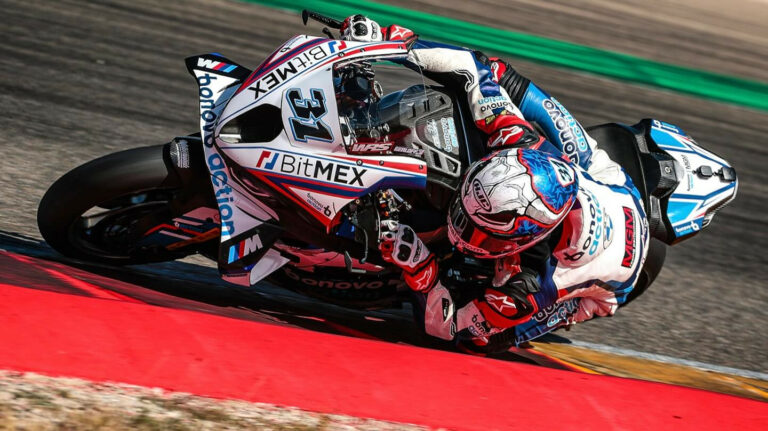
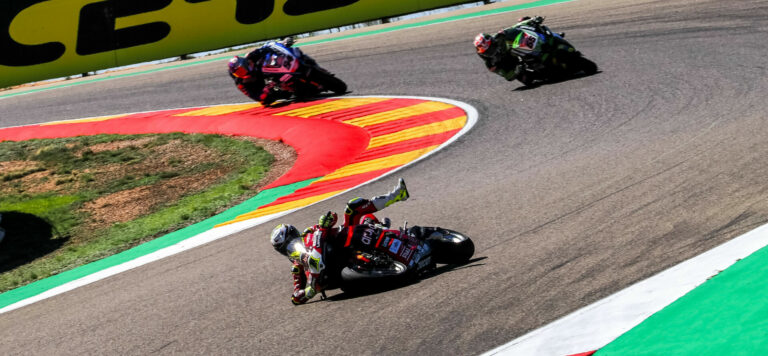
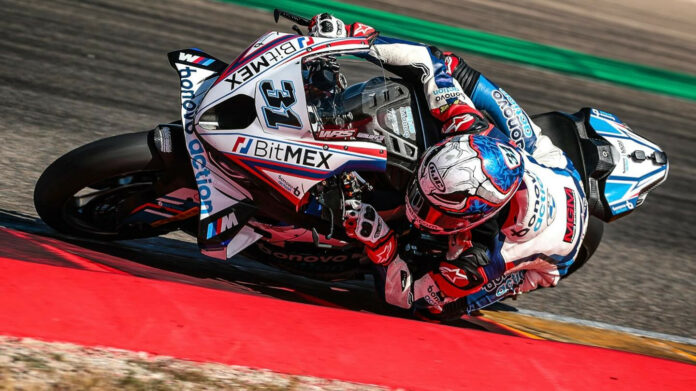
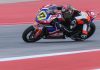
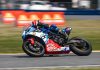
American Garrett Gerloff was quickest during World Superbike Free Practice One (FP1) Friday morning at Algarve International Circuit, in Portimao, Portugal. Riding his Bonovo Action BMW M 1000 RR, the Texan lapped the 2.9-mile (4.6 km) road course in 1:40.763 to lead the field of 25 riders.
Gerloff was 0.433 second quicker than the next rider, Alvaro Bautista (1:41.196), and nearly a full second faster than the next BMW rider, Scott Redding (1:41.708).
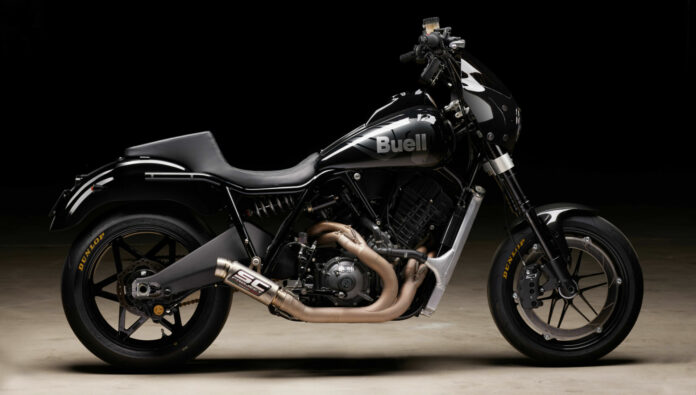
Buell® Surpasses $120 Million in Preorders for New Super Cruiser Concept Bike
Grand Rapids, MI – It was never just a tagline or an ad campaign. They told us Buell was back. And now they’re proving it.
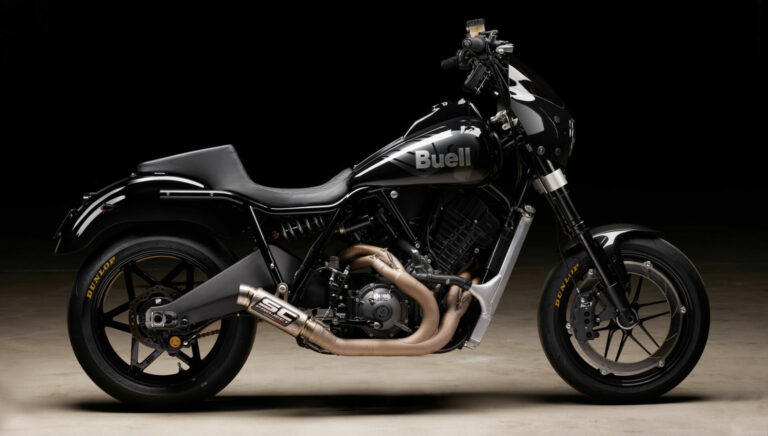
In an unprecedented show of support from motorcycle enthusiasts worldwide, Buell Motorcycle Co. has achieved a remarkable milestone. In just six months, Buell has amassed over $120 million in preorders for their groundbreaking Super Cruiser 1190 collaboration with iconic motorcycle designer, Roland Sands.
Unveiled in February, the Super Cruiser has captured the hearts of diehard bikers everywhere and sent a wave of excitement through the American motorcycle industry.
Bill Melvin, CEO of Buell, voiced his confidence, “Americans love style, muscle, and performance. The Super Cruiser breaks the mold for all three, and the response shows that Buell simply nailed it. This is utterly unheard of for an American V-Twin.”
Indeed, the Super Cruiser is an evolution to Buell’s innovation in engineering. Weighing 450 lbs. and boasting an impressive 175 hp, it seamlessly combines the West Coast cruiser aesthetic with the agility and handling of a sport bike, positioning Buell as the undisputed high-performance leader in American motorcycles for the foreseeable future.
Making its triumphant return to the industry in 2021, Buell set up shop in Grand Rapids, MI, launching with two models, claiming the Hammerhead 1190 as America’s Fastest Production Motorcycle. Rapid expansion of their lineup soon included sport, touring, and adventure bikes. Now, the highly anticipated Super Cruiser will enter production in 2025, estimated to retail in the $20,000-$30,000 range.
As Buell continues to chart its path, the company is keeping a sky’s-the-limit attitude toward growth. As ongoing engagement with state and federal agencies helps ensure continued expansion, Buell is eager to create additional high-quality jobs, collaborate with new suppliers and vendors, find strategic development partners, and fortify their team for the future.
“We’ve laid a solid foundation over the last two years with an amazing team and support from West Michigan leaders,” said Melvin. “Now, the overwhelming demand for the Super Cruiser puts Buell on a trajectory for significant long-term growth. This ramp-up will be nothing short of exhilarating. Anyone interested in joining us for this exciting ride – in any capacity – should reach out now. We want to work with you.”
Buell’s Super Cruiser is changing the American motorcycle design-performance paradigm. With its remarkable preorder success merely underscoring the enduring appeal of the American motorcycle, Buell is reasserting their claim: Buell is back.
About Buell Motorcycles:
Buell Motorcycles is an iconic American motorcycle manufacturer known for its rich heritage, exceptional performance, and unwavering commitment to rider satisfaction. With 40 years of experience, Buell Motorcycles continues to push boundaries and deliver exhilarating two-wheeled experiences.
For more information, please visit www.buellmotorcycle.com, and connect with us on social media for the latest updates and news.
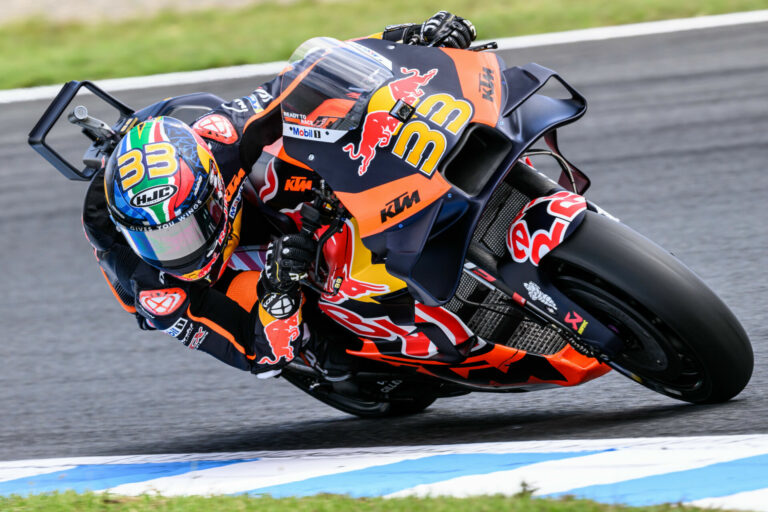
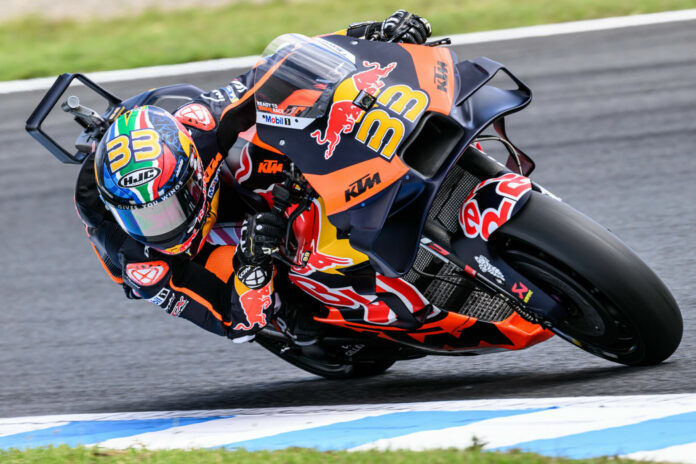
Brad Binder broke the All-Time Lap Record during MotoGP Free Practice Two (FP2) Friday afternoon at Mobility Resort Motegi, in Japan. Riding his Red Bull KTM RC 16, the South African covered the 3.0-mile (4.8 km) infield road course in 1:43.489, which broke Jorge Lorenzo’s mark of 1:43.790, which he set in 2015!
Defending World Champion Francesco Bagnaia was second-best with a time of 1:43.518 on his Lenovo Team Ducati, and Aleix Espargaro was P3 with a 1:43.784 on his factory Aprilia RS-GP.
All of the top three riders were under the previous All-Time Lap Record.
The top 10 riders from FP2 go directly to Qualifying Two (Q2) on Saturday. Riders outside of the top 10 in FP2 – including Miguel Oliveira, Joan Mir, Fabio Quartararo, and Marc Marquez – will have to go to Qualifying One and then be one of the two fastest riders to advance to Q2 and fight for one of the top 12 grid spots.
Alex Rins, returning from a badly broken right leg, rode in both of Friday’s sessions, and then decided to withdraw from the event. He is being replaced by test rider Stefan Bradl.
“I started the day feeling good, but then after a couple of laps, I started to feel pain in the leg,” said Rins. “Today was important because now I know which is the starting point and how to continue with my recovery process. The plan is to keep working at home and try again in Indonesia, let’s see how everything goes.”
Binder outguns Bagnaia for stunning new Motegi lap record
KTM rule, Bagnaia bounces back, Aprilia in the mix and Marquez out of Q2: headlines from Day 1 in Japan
Friday, 29 September 2023
One of the longest-standing lap records is no more thanks to a blockbuster performance from Brad Binder (Red Bull KTM Factory Racing) on Friday at the Motul Grand Prix of Japan, with the South African smashing MotoGP™ Legend Jorge Lorenzo’s 2015 record by more than three tenths. It’s a statement opener to the weekend as KTM make a final stand against the Ducati onslaught in the Constructors’ Championship, but Binder did have company… and it was from Ducati. Francesco Bagnaia (Ducati Lenovo Team) ended the day 0.029 off the KTM, making his own impressive statement as his final effort dug him out of a trip to Q1.
Third goes to Aleix Espargaro (Aprilia Racing) as he also just pipped Lorenzo’s 2015 best but by thousandths. Still, it was a strong opening day for the agile RS-GP at the hard-braking Motegi as the number 41 slotted in on the timesheets right ahead of Jorge Martin (Prima Pramac Racing) and Marco Bezzecchi (Mooney VR46 Racing Team).
In terms of the Championship top three, Bagnaia seemed on the back foot for much of the day before his sweltering lap at the end of Practice, and he said he’s solved some of his recent braking issues. Martin destroyed the opposition in FP1 but then crashed and took fourth in the afternoon, and Bezzecchi chipped away to ending Practice in fifth.
There was an impressive showing from Gresini Racing MotoGP™’s Fabio Di Giannantonio. The #49 was the first rider to break into the 1:43s in Japan, and with sixth on the timesheets, the Italian secured just his second Q2 appearance of the campaign. Elsewhere, Pol Espargaro (GASGAS Factory Racing Tech3) will appear in Q2 for the first time this year, having put in the ninth fastest time of the day behind Johann Zarco (Prima Pramac Racing) and the second RS-GP of Maverick Viñales (Aprilia Racing).
Rounding out the top 10 for the day is Jack Miller (Red Bull KTM Factory Racing), the 2022 winner at Motegi now taking in on in orange. The Australian had crashed earlier in the session but squeezed into Q2 courtesy of his last ditch effort.
Some late yellow flags played their part too, due to Raul Fernandez’ (CryptoDATA RNF MotoGP™ Team) second crash of the day, with Binder just escaping this time after the KTM rider found his Practice AND Q1 bests scrubbed off in India.
Marc Marquez (Repsol Honda Team) lost one lap and then ultimately missed out as he was among the late fallers at Motegi, with the eight-time World Champion going down at Turn 1 while in pursuit of a flying lap that would place him at the business end of proceedings. Instead, he is facing down Q1, along with 2021 World Champion Fabio Quartararo (Monster Energy Yamaha MotoGP™), who went down at Turn 6 earlier in the session. On home turf for Honda and Yamaha, it’s going to be quite a fight to move through.
There are only two places up for grabs in the morning to get into the battle for pole position, with even more talent joining Marquez and Quartararo in Q1. It’s set to be another scintillating chapter of MotoGP™ action in Japan!
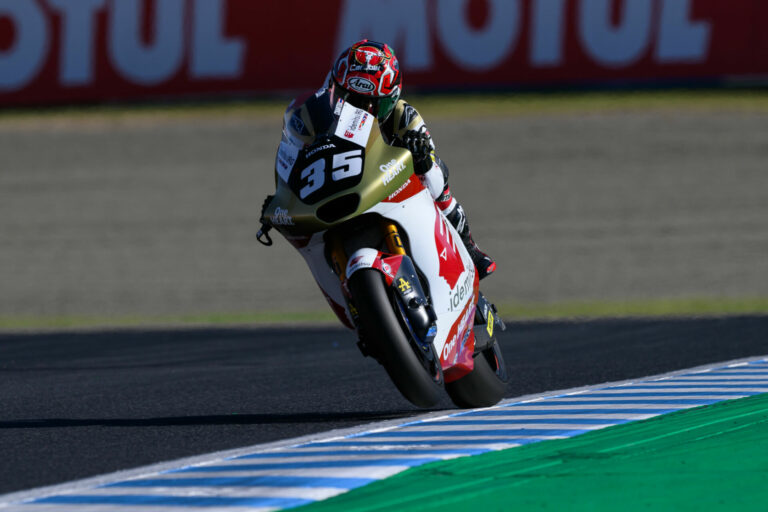
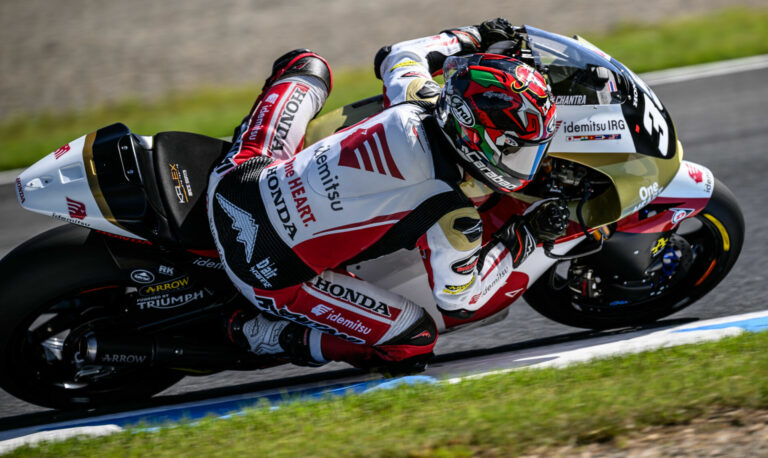
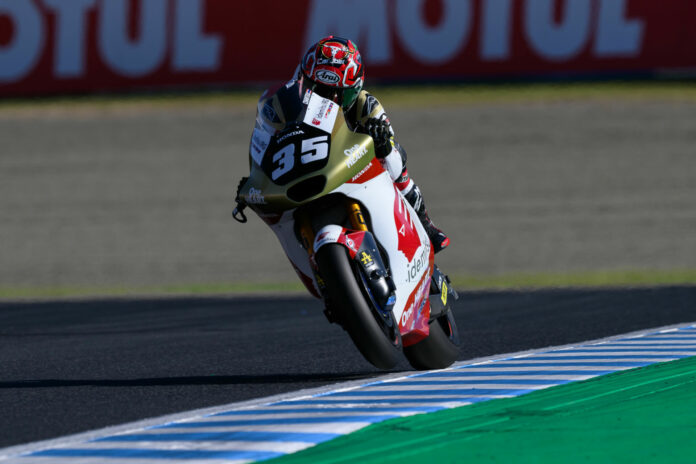
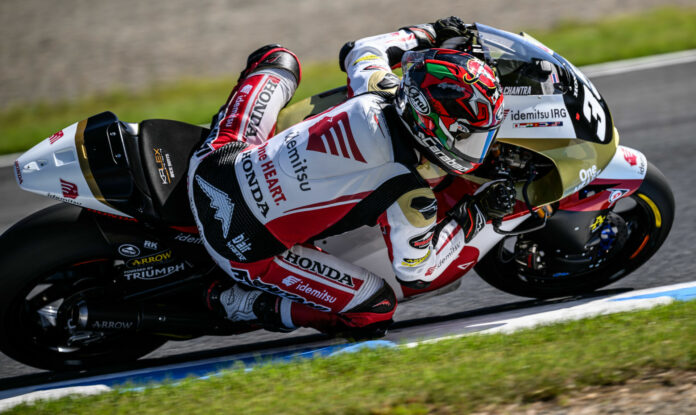
Thailand’s Somkiat Chantra led Moto2 World Championship Free Practice Two (FP2) Friday afternoon at Mobility Resort Motegi, in Japan. Riding his Idemitsu Honda Team Asia Kalex, Chantra navigated the 3.0-mile (4.8 km) stop-and-go course in 1:50.396 to top the field of 30 competitors.
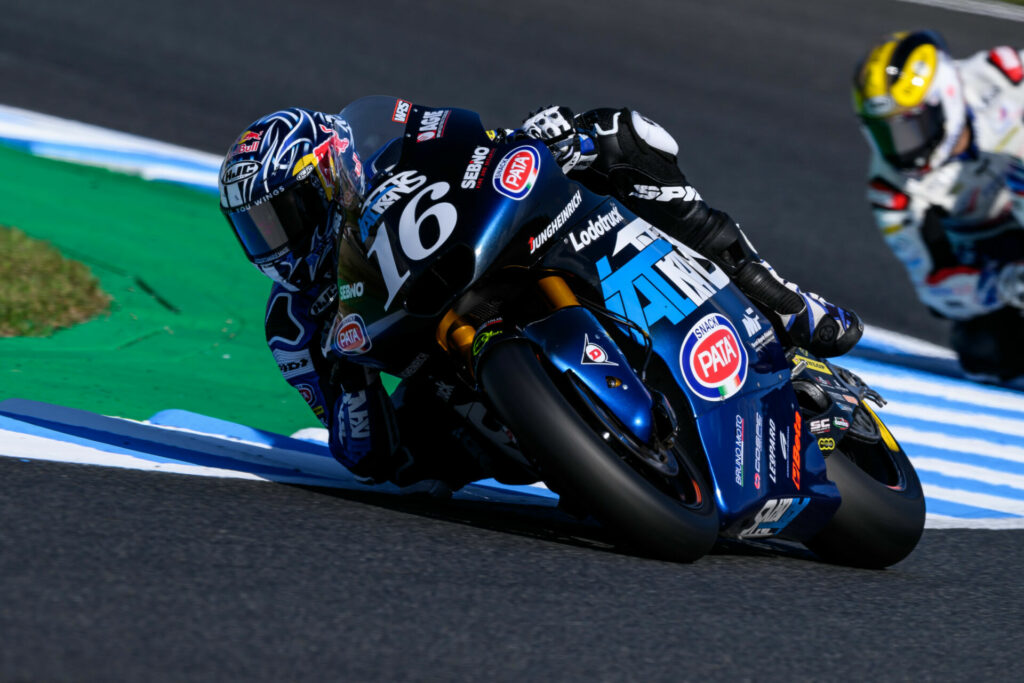
Joe Roberts (16). Photo by Kohei Hirota.
American Joe Roberts ranked 11th in the session with a 1:51.095 on his Italtrans Racing Kalex, and fellow American Sean Dylan Kelly (SDK) was 26th with a time of 1:52.411 on his Forward Racing machine.
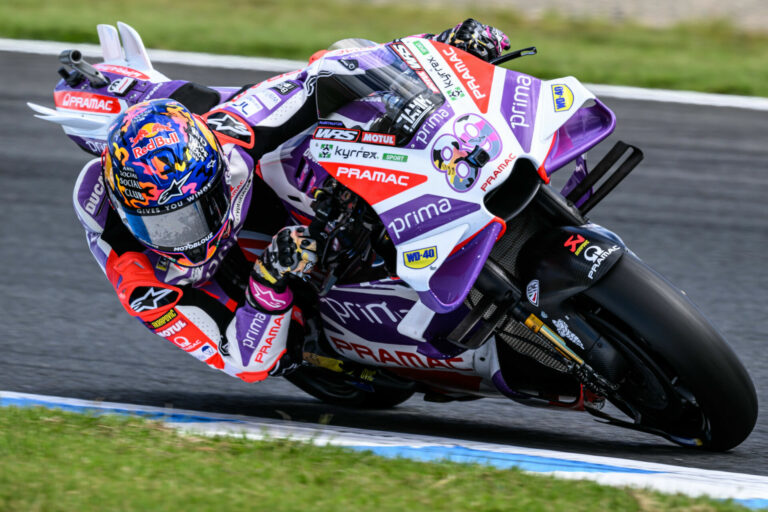
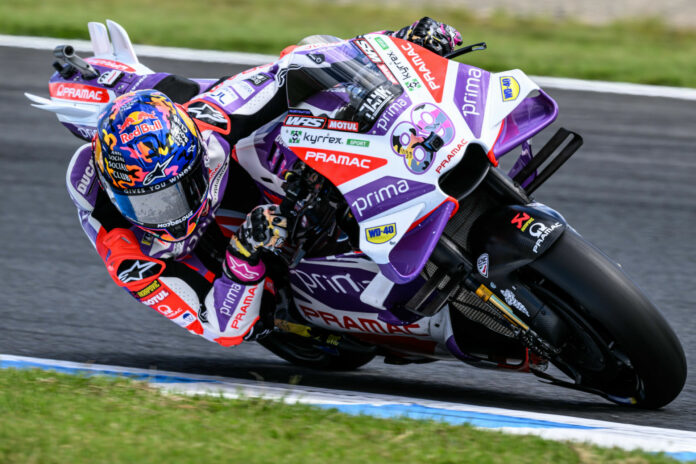
Championship contender Jorge Martin was quickest during MotoGP Free Practice One (FP1) Friday morning at Mobility Resort Motegi, in Japan. Riding his Prima Pramac Racing Ducati Desmosedici, Martin covered the 3.0-mile (4.8 km) infield road course in 1:45.192, which was the fastest of the 21 riders in the field and quicker than Jack Miller’s 2022 Race Lap Record of 1:45.198.
Somkiat Chantra topped Moto2 World Championship Free Practice One (FP1) Friday morning at Mobility Resort Motegi, in Japan. Riding his Idemitsu Honda Team Asia Kalex, the Thai racer lapped the 3.0-mile (4.8 km) infield road course in 1:50.477 to lead the field of 30 competitors.
American Joe Roberts finished the session 10th with a 1:51.382 on his Italtrans Racing Kalex, and his countryman Sean Dylan Kelly (SDK) was 25th with a time of 1:52.647 on his Forward Racing machine.
Nerves are jangling as Portimao awaits WorldSBK in 2023, with the tension in the air and the title on the line this weekend
It’s Thursday, so it can only mean one thing in the 2023 MOTUL FIM Superbike World Championship paddock: media day! With a microphone waiting to pick up the hottest quotes ahead of the Pirelli Portuguese Round at the ‘rollercoaster’ of Portimao in the Algarve, we’ve put all the best bits below, with topics ranging from the ever-changing title fight to the 2024 rider line-up and more.
Alvaro Bautista (Aruba.it Racing – Ducati): “I hope to not make more mistakes”
Championship leader Alvaro Bautista leads the title race by 47 points, but how is he feeling about this match point weekend? “The title isn’t 100% dependent on my side, so I’m not thinking about that. I just want to focus on myself and try to get the maximum in all conditions. It’ll be a tough weekend because it’ll be hot. It’s better to think about the important things, the weekend and managing all three days, than the other things. Best way to enjoy the moment and not feel more pressure. I’m not a big fan of combinations or statistics or records, I just think about the present. I know if I do my best, it’ll be a good weekend. In the end, crashes or technical problems are part of the game. You prefer to not have it but it’s a possibility for all the riders in all races. I hope to not make more mistakes like on Saturday at Aragon, but it’s part of the game.”
Toprak Razgatlioglu (Pata Yamaha Prometeon WorldSBK): “I’m taking a lot of risks… I always need more”
Toprak Razgatlioglu is always fast at Portimao and he’ll need to be this year to keep his hopes of title number two alive: “I have very good memories here, especially last year. I had a big fight with Alvaro in the Superpole Race. I hope we are fighting with him because it’s one of my favourite tracks. I’m strong here, also Jonny’s very strong. Alvaro, every track we go to, is very strong and we’re fighting together. I’m taking a lot of risks because it looks like I’m now in second position but, if I win all the races and he’s second, he’s again World Champion. I always need more. I’m only looking at winning the races. Maybe he makes some mistakes and the Championship changes again. I’m just focused on my race, trying to win again. A hat-trick won’t be easy because Alvaro is very strong. Jonny’s very strong and my teammate is getting strong. This weekend I will try the jump, especially at the end of FP1. We will see how many metres I jump!”
Jonathan Rea (Kawasaki Racing Team WorldSBK): “Momentum was all with Alvaro, now it seems to be going against him; It’s all for him to lose”
Having his say on the title fight ahead of him, six-time World Champion Jonathan Rea shared his thoughts before talking about his own Portimao chances: “When I was in Alvaro’s position, you start to think about the gap coming down and how many races are left. With every race that goes by, the gap can be less and less but you see how quick an advantage can swing with a good weekend or bad one. It seems the momentum was all with Alvaro at the beginning of the season, now in the last races, they’ve faced difficulties. It seems to be going against him right now with uncharacteristic mistakes and Toprak’s riding in a good way but you have to win races. The points gap between winning and finishing second means a lot at this stage; it’s all for him to lose. We have to look at our competition to understand our strengths and weaknesses and exploit them at different circuits. This is one that might not penalise our weaknesses as much; we come on in fourth gear, carrying momentum and hopefully around the rest of the track, we can make a difference.”
Michael Ruben Rinaldi (Aruba.it Racing – Ducati): “Details not depending on me… I need a big project”
Speaking about the weekend ahead and his future, Michael Ruben Rinaldi said: “The pressure being off is an important fact and it helped to ride in a more relaxed way, thinking to ride the bike and nothing else. I feel great; I’ll try my best from Friday morning to have a good weekend and challenge for the podium. We know that in the last seasons, the top three – Jonny, Toprak and Alvaro – are making the difference, as they’re tough riders to beat. To be the only one in two years who has been able to do that is something incredible. I want to join the titanic trio, so I think we need to work even harder and I’m looking forward to having a seat next year to beat them again. Making good results helps but there’s no right decision yet about 2024 because there are details not depending on me. I want to have a good opportunity but also a good proposal. I’m at a point in my career where I can’t ride a bike just for fun or just for money. I need a good background, results and support from the manufacturer, as I’m not 19-years-old anymore, so I need a big project. I’d like a two-year project but not just a move because I need a seat.”
Iker Lecuona (Team HRC): “I can say I’ll stay with Honda”
After a strong weekend last time out, Iker Lecuona is keen for more of the same: “After Aragon, I am really happy and I say the same to my manager when we travelled to Valencia. I needed one weekend like that. I’ve struggled a lot all season, with many crashes and many things that I don’t understand well. The best race was the first one in Australia and until this moment, I struggled every weekend and I can’t enjoy. We had something different on the bike at Aragon and after this weekend, with three top ten finishes and two top six results, I’m really satisfied. It was a motivation for me. About my future, we need to wait. I’m happy here and I can say I’ll stay with Honda but we will see when we can say something. I understand that I can put my mind to the things that I can manage. Things I can’t manage, like a third person, I can’t do anything.”
Michael van der Mark (ROKiT BMW Motorrad WorldSBK Team): “Everything is improving”
Seeking a return to the top ten, Michael van der Mark always stars at Portimao: “I was quite happy with P11; it’s not a place where we should be proud but I am getting the rhythm and speed back, so it was good progress. Portimao is one of my favourite tracks that I enjoy and I’ve always done well at, so I am happy to be here. 2021’s win seems like forever ago; the speed I had with the bike in the rain, without even pushing, was incredible. It looks like there will be no rain this weekend but we’ll get there again. It’s difficult to say what is missing but if you miss most of the season, for sure it won’t be easy. The bike is improving, everything is improving but the midfield is so close. We can only keep working, developing the bike and we need to have a package that is stronger everywhere.”
Lorenzo Baldassarri (GMT94 Yamaha): “We’re looking at other brands to continue in WorldSBK”
With his future uncertain, Lorenzo Baldassarri gave an update about his hopes for 2024: “I hope to continue in WorldSBK. I enjoy it a lot and I feel like it’s more my bike than a World Supersport bike. I hope to continue with Yamaha because they invested money in me and trusted in me for this first year. I don’t know where at the moment but it’s not easy for us. We started the year with GMT94 Yamaha and last year the Championship finished very late and started early, so we didn’t have much testing. WorldSBK needs a lot of laps to put all these things together. I can’t wait to know about next year. We are also looking at other brands to continue in WorldSBK but, the main target is to continue in WorldSBK or other categories but I want to be competitive. I want to compete for good results.”
Nicolo Bulega (Aruba.it Racing WorldSSP Team): “Could be a very special weekend”
Looking ahead to the weekend and discussing the possibility of being crowned, Bulega said: “It could be a very special weekend for me and my team but, first, I’d only like to continue as I did from the first race and start my Friday trying to find a good setup. If it’s possible, I’d like to secure the title in Race 1. I start this weekend like always as I want to find a good setup, have fun with my bike and try to win. If I will be Champion after the race, even better. Honestly, I’m very relaxed because I feel very good with my bike. I feel like I can push every lap that I want. This is the most important and makes me happy and calm. To bring back Ducati to this condition in WorldSSP is something that makes me very proud. It’s something special.”
Jeffrey Buis (MTM Kawasaki): “A lot of people asked me if I’m nervous”
Talking about the season finale, Buis said: “A lot of people asked me if I’m nervous but, for me, it’s just a normal race weekend. I just do what I can do always. I’ll try to be in the top positions and that’s very important for this weekend. Back in 2020, I was quite nervous and also younger. Now, I have a bit more experience and I’ll try to stay calm. I’ll do my best and that’s all I can do. My goal is to do it in Race 1 because then in Race 2 I can ride freely.”
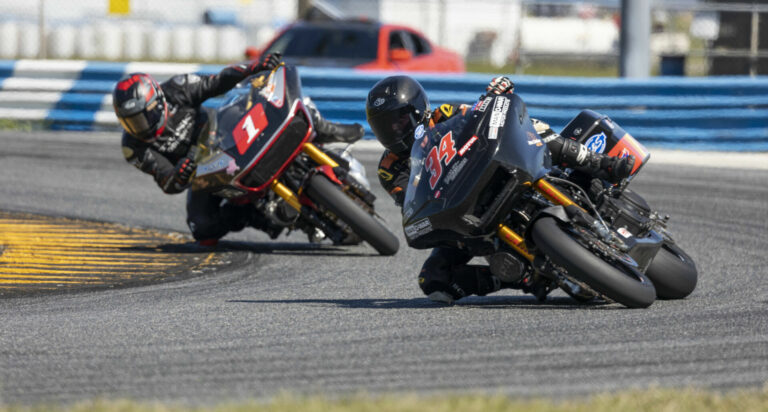
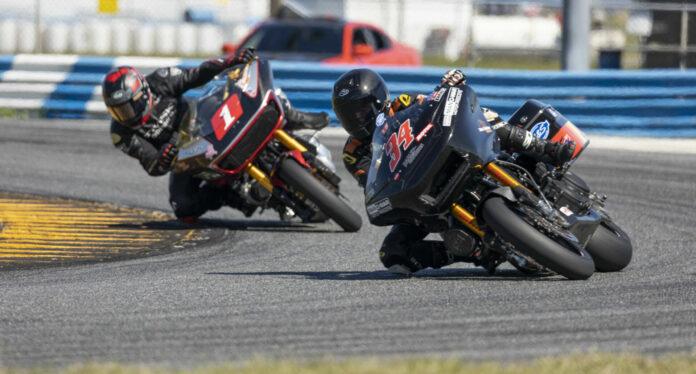
Bagger Racing League is Back at the Daytona International Speedway!
BOARDMAN, OHIO – The Bagger Racing League (BRL) and the American Sport Bike Racing Association (ASRA) are teaming up to bring back two, thrilling bagger racing classes to ASRA’s Race of Champions at the iconic Daytona International Speedway on October 21st.
After successful races in Pittsburgh and Blackhawk Farms, Bagger Racing League and ASRA are joining forces to deliver a full lineup of action-packed races. You won’t want to miss BRL’s renowned Bagger GP class and an exciting new AMA-sanctioned Production Stock Bagger class, featuring the hottest up-and-coming racers.
“We are excited to team up with Bagger Racing League and AMA to bring back these two bagger racing classes to our championship series in Daytona said ASRA President, Alex Spellman. As the originators of bagger racing, BRL brings an unrivaled level of cool factor and competitive spirit to our races.” “We plan to expand BRL’s participation into our national race series for 2024 and in the years to come.”
In addition to the Daytona Race of Champions, Bagger Racing League is also hosting its own championship race at the Willow Springs International Raceway in Rosamond, CA on November 18th, and 19th. This grand finale will determine the best Harley-Davidson and Indian Motorcycle bagger racers for the 2023 series.
Rob Buydos, the founder, and president of Bagger Racing League, sees ASRA’s national race series as a tremendous opportunity for the V-Twin industry. He believes that this partnership will expose the next generation of consumers to the thrill of riding and racing American, V-Twin motorcycles. Don’t miss out on the thrilling action at ASRA’s Daytona Race of Champions and Bagger Racing League’s grand finale in Rosamond, CA.
New 1,300 cc boxer engine delivering 145 hp and 110 lbs.-ft. of torque.
New frame and suspension. 26 lbs. lighter than predecessor.
New technology including Adaptive Vehicle Height Control.
MSRP $18,895 plus Destination
Estimated Market launch early 2024.
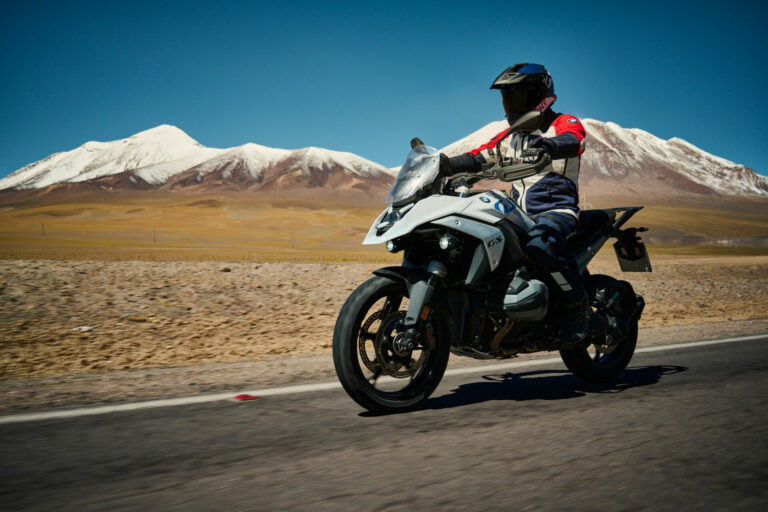
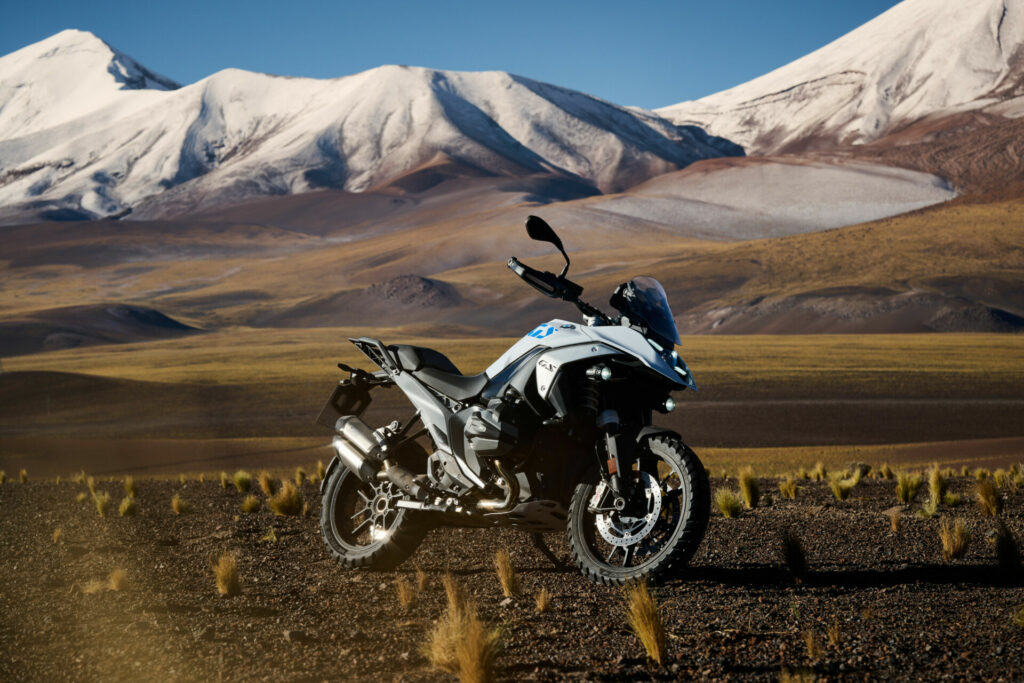
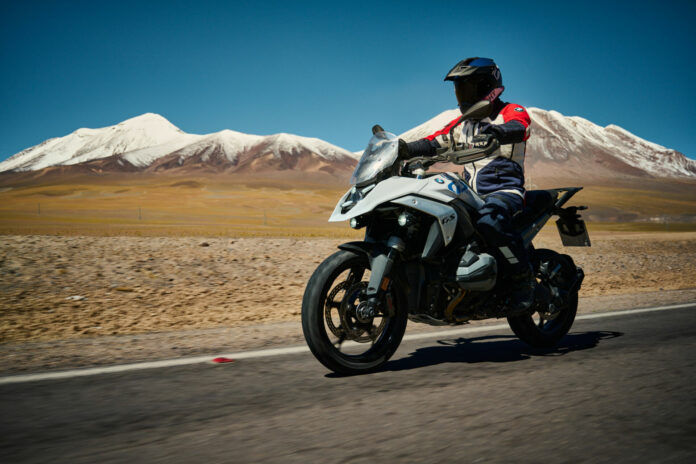
Woodcliff Lake, NJ – September 28, 2023 . . .BMW Motorrad proudly introduces the new 2024 BMW R 1300 GS. More than 43 years ago, BMW Motorrad established a new segment for touring enduros with the R 80 G/S. The boxer BMW GS has been the undisputed leader of the competitive field ever since. To ensure this remains the case in the future, BMW Motorrad has opted for an almost completely new design for the new R 1300 GS, with a weight saving of 26 lbs. compared to the previous model.
The center piece is the legendary two-cylinder boxer engine. Its new design is more compact than ever before thanks to a gearbox located under the engine and a new camshaft drive arrangement. From exactly 1,300 cc it produces 145 hp at 7,750 rpm and 110 lb-ft. of torque at 6,500 rpm. This makes it by far the most powerful BMW boxer engine ever to be produced in series.
At the center of the new suspension is the steel, sheet metal shell main frame, which in addition to being significantly optimized in terms of space, also offers higher levels of stiffness than the predecessor model. For the rear frame, the previous tubular steel structure has now been replaced with a die-cast aluminum unit. The new EVO Telelever front suspension with flex element and the revised EVO Paralever rear suspension also provide greater steering precision and ride stability.
“With the new BMW R 1300 GS we will once again take the competition by surprise. It is defined by an even broader spread of product substance, while the reduction in complexity and vehicle weight, combined with focused equipment, enable the essence of the boxer GS to be showcased even more strikingly. With a new engine, outstanding handling, and impressive ride qualities, it will set the pace both on and off the road.” – Thilo Fuchs, Head of Water-cooled Boxer Models.
A 2024 BMW R 1300 GS at rest. Photo courtesy BMW Motorrad North America.
Unique R 1300 GS features
Completely new boxer engine with bottom-mounted gearbox and BMW ShiftCam technology for varying the valve timing and valve stroke on the intake side.
Most powerful BMW boxer engine ever.
145 hp at 7,750 rpm and 110 lb-ft at 6,500 rpm.
Powerful response across the entire rpm range, exemplary fuel consumption, emission levels, smoothness, and refinement.
Completely redesigned frame with sheet metal shell main frame and die-cast aluminum rear section.
Greater steering precision and ride stability thanks to new EVO Telelever with flex element and revised rear wheel guide EVO Paralever.
Weight reduction of 26 lbs. compared to the previous model.
Standard BMW Motorrad Full Integral ABS Pro.
Standard four riding modes.
Optional Riding Modes Pro with additional riding modes.
Standard Dynamic Traction Control (DTC), Engine Drag Torque Control (MSR), Dynamic Brake Assist (DBC) and Hill Start Control (HSC).
Optional Electronic Dynamic Suspension Adjustment (DSA) with dynamic adjustment of the damping, spring rate, and load compensation.
Optional adaptive vehicle height control and sports suspension.
New standard matrix LED headlamp.
Optional Headlight Pro with adaptive turning light.
Standard hand protectors with integrated turn signals.
Standard lithium-ion 12v battery with Battery Guard (function via BMW Motorrad Connected App).
Standard Dynamic Cruise Control (DCC).
Optional Riding Assistant with Active Cruise Control (ACC), Front Collision Warning (FCW) and Lane Change Warning (SWW).
Standard smartphone charging compartment with integrated USB socket and additional 12 V on-board power socket.
Optional seat heating for rider and passenger for enhanced touring suitability.
Optional handlebar riser by up to 30 mm / 1.2 inches.
Wide range of available seat heights.
Connectivity: standard multifunctional instrument cluster with 6.5-inch full-color TFT screen.
Standard RDC, Keyless Ride and heated grips.
Standard Intelligent Emergency Call.
Extensive range of optional equipment and Original BMW Motorrad Accessories.
1. Engine and Drivetrain
“With a noticeable increase in power and torque combined with significantly reduced weight and a very compact design, the newly designed boxer engine is the perfect drivetrain for the new R 1300 GS and a genuine milestone in the 100-year history of BMW Motorrad.” – Christof Lischka, Head of Development BMW Motorrad.
Newly developed boxer engine with improved power and torque, optimized for smoothness and efficiency.
BMW Motorrad has completely redesigned the original two-cylinder boxer engine for the new BMW R 1300 GS. The new boxer has a capacity of exactly 1,300 cc with a bore of 106.5 mm and stroke of 73 mm (predecessor: 102.5 mm and 76 mm). This increase in displacement comes from an enlarged cylinder bore and a new crankshaft with reduced stroke. It has an output of 145 hp (predecessor: 136 hp), still at 7,750 rpm, and develops a maximum torque of 110 lb-ft at 6,500 rpm (predecessor: 105 lb-ft at 6,250 rpm), making it the most powerful serial production BMW boxer engine to date. The maximum engine speed is 9,000 rpm.
In addition to the increased maximum output, the new BMW R 1300 GS benefits from a notable torque increase across the entire rpm range, especially between 3,600 and 7,800 rpm, where more than 96 lb-ft is constantly available. This makes the new R 1300 GS more potent than ever before, combining enormous pulling power with impressive peak output. And this applies to riding fun both solo and with a passenger, for sporty runs on winding roads, and on long distance cross-country rides.
It was also possible to optimize efficiency. Despite a significant increase in power and torque, the fuel consumption of the new BMW R 1300 GS is almost identical to that of its predecessor. The new boxer engine sets standards in terms of smoothness, too, offering a more direct response to throttle commands. Improved positioning of the engine within the frame also increases vibration damping.
The boxer engine in the new R 1300 GS uses the well-established air/liquid cooling system where coolant flows through engine components that are subject to particularly high thermal stress, such as the cylinder heads. Other features that are retained include the vertical-flow cylinder heads, variable oil intake, effective piston base cooling and the DOHC valve gear with light cam followers. In the new boxer engine, the two camshafts are powered on each side of the cylinder by a timing chain running over both camshafts, each from a reduction sprocket. On the right-hand side, the drive is located in front of the cylinder, while on the left-hand side the timing chain shaft is arranged behind the cylinder. Furthermore, the engine of the new BMW R 1300 GS features the tried-and tested knock sensor system and the highly effective BMS-O engine management system.
With a significantly increased output and torque, the new engine compresses the fuel-air mixture in a ratio of 13.3:1 (predecessor: 12.5:1). The gain in power and torque with high efficiency is due to recalculated timing and larger valve diameters: these now measure 44 instead of 40 mm on the intake side and 35.6 instead of 34 mm on the exhaust side.
New gearbox is now located below the engine for more compact packaging and reduced weight. New driveshaft and rear axle.
The six-speed gearbox and clutch are integrated in the engine housing in the new R 1300 GS. The gearbox is no longer located behind the engine, however, but underneath it. The advantages of this new arrangement are a reduced overall length and in improved packaging and weight balance since it was possible to make the transmission shafts significantly shorter. Compared to the power unit of the predecessor models, it was possible to achieve a weight saving of 8.6 lbs. for the engine and 14.3 lbs. overall for the entire powertrain. At the same time, the greater concentration of mass towards the center of gravity of the motorcycle ensures better handling qualities. As before, power is transmitted to the six-speed gearbox via a wet clutch with ten lining discs and a self-reinforcing anti-hopping mechanism. Output is via two spur gears, one of which has an integrated vibration damper.
In the interests of increased shifting precision, the gearbox now has a sensor signal transmitter for the optional Shift Assistant Pro using a torsion magnet. This delivers a more direct feel when shifting gears.
The driveshaft and rear axle assembly have also been newly designed. The driveshaft now has larger universal joints, a reduced angle reduces the deflection of the rotational mass that is inherent in cardan shaft joints. The rear axle has been redesigned and now has a longer wheel axle stub for easier mounting and dismounting of the rear wheel.
BMW ShiftCam technology for superior performance and smoothness as well as excellent fuel consumption and emissions.
The boxer engine of the new BMW R 1300 GS is equipped with the unique BMW ShiftCam technology for varying the valve timing and valve stroke on the intake side. At the heart of this technology is a single-section intake shift camshaft which has a partial-load and a full-load cam for each valve to be actuated, each with a different cam geometry that has been recalculated for the R 1300 GS. While the partial-load cam has been configured to ensure optimized fuel consumption and refinement, the full-load cam is designed for optimized output.
The intake cams for the left and right-hand intake valves of the partial-load cam differ in stroke and position. This phase shift means that the two intake valves are opened to different degrees and on a time-staggered basis. The effect of this is to create a swirl and therefore greater agitation of the fuel-air mixture flowing into the combustion chamber. As a result, the new BMW R 1300 GS benefits from even more effective combustion and fuel utilization.
Lightweight stainless steel exhaust system for optimum performance and weight.
The 2-in-1 stainless steel exhaust system of the new R 1300 GS is designed for optimum output and torque in conjunction with BMW ShiftCam technology and for very low weight. It enables a very wide power and torque curve, thereby ensuring the best possible rideability and performance – whether on the road, off-road or on extended tours. Exhaust gasses are treated by a closed-loop catalytic converter controlled by an oxygen sensor. In this way, the new R 1300 GS complies not just with current exhaust standards, it is excellently equipped to meet future requirements, too.
Four riding modes including “Enduro” mode for an enhanced off-road riding experience.
The new R 1300 GS now includes four rather than three riding modes. The “Rain” and “Road” riding modes allow riding characteristics to be adapted to most road conditions. The “Eco” riding mode makes it possible to use the innovative BMW ShiftCam technology to maximize the range for every tank of fuel. In this riding mode, a gentle throttle curve and moderate torque limitation promote a riding style that is as economical as possible. In order to provide visual support for a riding style geared towards optimized fuel consumption, an efficiency indicator in the upper status line of the TFT color screen provides feedback when “Eco” mode is activated. If maximum performance is required – e.g., on hills or when overtaking – it is simple to quickly switch to another riding mode using the riding mode button. The riding mode “Enduro” enables an enhanced riding experience off the beaten track with a specific set-up for off-road use.
Riding Modes Pro with additional riding modes is optional. Engine drag torque control (MSR) and riding mode pre-selection is standard.
The new R 1300 GS can be fitted with optional “Riding Modes Pro” which includes the additional riding modes “Dynamic”, “Dynamic Pro” and “Enduro Pro”. In addition, the “Dynamic Pro” and “Enduro Pro” riding modes each allow further individualization.
With the standard riding mode pre-selection, the rider can use the riding mode button to make an individual selection. For this purpose, at least two and a maximum of four riding modes can be chosen from a list in the settings menu, and these can be selected successively using the riding mode button. This offers a wide range of options for configuring the new R 1300 GS to suit the rider’s personal needs. One option is to create a performance-oriented configuration, for example: “Dynamic” and “Dynamic Pro” for the road and “Enduro” and “Enduro Pro” for off-road. Another possibility is to reduce complexity to a maximum of only two riding modes, such as “Eco” and “Road”. In this way, a preferred and easily manageable number of riding modes can be configured and selected while riding.
Engine drag torque control (MSR) is standard. This feature can be used to safely avoid unstable riding conditions that can occur during coasting or downshifting due to excessive brake slip at the rear wheel. In these cases, MSR opens the throttle valves at lightning speed to such an extent that drag torque is equalized and the motorcycle stabilizes.
The control response depends on the riding mode: in “Eco”, “Rain” and “Road” riding modes, MSR ensures maximum ride stability, whereas in “Dynamic” and “Dynamic Pro” riding mode the control system allows a little more slip. In “Enduro” mode, however, the engine drag torque is only minimally reduced so that the available slip torque can be used to improve traction. MSR is deactivated in “Enduro Pro” mode so as to leave the ambitious off-road rider to take care of rear wheel slip control via the clutch lever – for the purpose of drifting, for example.
2. Suspension
“Another thing we wanted to achieve with the new BMW R 1300 GS was to stop the trend of getting bigger and bigger – and in fact we managed to reverse this trend. Our team achieved a significant reduction in weight and dimensions, resulting in an extremely focused and lean GS. The bike’s engineering is packaged as compactly as possible using innovative design and manufacturing methods.” – Jochen Beck, Project Manager BMW R 1300 GS.
Completely new developed chassis with steel sheet metal shell main frame and aluminum rear frame section.
Like the engine, the entire frame and suspension of the new BMW R 1300 GS were redesigned. The center piece is the new steel sheet metal main frame, which in addition to a significant optimization of the installation space for even more compact packaging also offers higher levels of stiffness than the predecessor model. In the course of the redesign, the rear frame was also completely reconceived. In place of the previous tubular steel construction, the new R 1300 GS now has a rear frame made of die-cast aluminum. In addition to excellent stiffness levels and low weight, this new solution also has advantages in terms of optimized installation space as well as offering a high degree of freedom for innovative design. For example, a short, slim, and dynamic rear end in the new R 1300 GS forms a significantly stiffer bond with the main frame compared to its predecessor. This results in a noticeable increase in riding precision and stability.
In combination with a drive unit that is now much more compact, the new design of the suspension achieved a significant concentration of mass towards the center of gravity, which is reflected in noticeable handling benefits. At the same time, the new R 1300 GS is even more precise and stable when braking, requires noticeably less effort to ride, and offers an even more satisfyingly precise response of the suspension components.
The best of both worlds: new front EVO Telelever with flex element and new rear EVO Paralever for even greater steering precision and ride stability.
The front suspension of the new R 1300 GS still follows the Telelever principle introduced by BMW Motorrad 30 years ago – but in an innovative, newly designed form that combines the best of both worlds.
On sporty BMW motorbikes such as the R 1200 S or the HP2 Sport, the upper fork bridge is clamped directly to the fork tubes and attached to the frame via a ball joint mounted on the frame. This creates a very stiff connection between the fork legs and fork bridge, so the tilting movement of the upper fork bridge which is inherent in the Telelever system is hardly noticeable due to the short handlebars. In motorcycles such as the BMW boxer GS models, long spring travel and high handlebars, however, this tilting movement would be disadvantageous. For this reason, the upper fork bridge is rigidly but rotatably bolted to the frame via a deep groove ball bearing. The swivel connection to the fork legs is via a flexible bearing with spherical roller bearings. This tilt decoupling frees the handlebars clamped to the fork bridge from the tilting movement, thereby ensuring that handlebar movement is not influenced by the suspension. Compared to the rigid bolting on the sporty models, however, lower stiffness levels have to be considered with this construction.
With the new Evo Telelever, BMW Motorrad now combines the strengths of the two previously used Telelever variants. Clamped tightly to the fork tubes – as previously in the sporty design – the upper fork construction incorporates a handlebar decoupling system that prevents any detrimental tilting movement and only transmits steering forces. The tubular handlebar is clamped in a handlebar bridge via two clamps. The connection from the handlebar bridge to the upper fork bridge is the core element of this construction: a strikingly showcased stainless steel plate – the so-called flex element. Due to its flexibility and geometric design, it is able to compensate for the tilting movement while at the same time transmitting steering forces. The actual upper fork bridge is pivotally and rotatably connected via a radial swivel bearing to a sturdy steering shaft tube, which in turn is guided in the main frame via a cylindrical roller bearing at the top and a deep groove ball bearing at the bottom. This sophisticated construction creates significantly greater rigidity, which is reflected in the noticeably increased ride stability of the new R 1300 GS. The simultaneous addition of an extra roller bearing for the ball joint in the lower fork bridge also ensures thrilling steering precision due to the lower bearing friction. The diameter of the quick-release axle, which is approximately 1.7 oz. lighter, has been increased by 0.2 inches to 1.0 inches, increasing the stiffness of the front wheel guide.
The rear suspension of the new R 1300 GS has also been redesigned. The hallmark of the revised Evo Paralever is a significantly stiffer connection via the suspension in the frame, which has been extended for greater traction, and a continuous swinging arm quick-release axle. In addition, the swinging arm bearing is arranged off-axis to the axis of rotation of the cardan shaft joint. The spring travel is 7.5 inches at the front and 7.9 inches at the rear.
New optional electronic Dynamic Suspension Adjustment (DSA) with dynamic adjustment of the damping, spring rate and load compensation.
The previous Dynamic ESA Next Generation electronic suspension offered a high level of ride safety and riding fun on a wide variety of terrain with its dynamic adjustment of the damping and adjustable rear spring rest. The new electronic Dynamic Suspension Adjustment (DSA) now goes one step further, combining the dynamic adjustment of the front and rear damping with a corresponding adjustment of the spring rate – depending on the selected riding mode, riding condition and maneuvers. The automatic adjustment of the spring rest ensures load compensation.
This makes for an even more thrilling riding experience on all surfaces. Whether solo, with a passenger or with luggage – DSA ensures an even higher level of ride safety, performance, and comfort. DSA significantly simplifies usability due to better integration in different riding modes and therefore worlds of experience. Within these worlds of experience, the riding modes can be individualized by means of click-setting in the vehicle settings menu, offering a wealth of options for customizing the new R 1300 GS to suit personal preferences.
Available adaptive vehicle height control and sports suspension.
In conjunction with optional DSA, two further items are available for the suspension of the new R 1300 GS: the new adaptive vehicle height control and the sports suspension.
With adaptive vehicle height control, the new R 1300 GS offers fully automatic adjustment of the vehicle height depending on the operating condition, ensuring the greatest possible comfort without having to compromise on riding dynamics and banking freedom. Seat height is reduced from 33.5 inches to 32.3 inches at standstill and during slow travel.
When stopping, a low vehicle height is set for the best possible ground accessibility and for easier maneuvering, while the standard vehicle height with full spring travel is available when riding. Unlike the various previous systems of this type, the lowering or raising happens quickly and almost imperceptibly for the rider – and only when it truly makes sense. Parking the R 1300 GS when it is lowered is now easier due to the Comfort side stand together with the optional center stand, which is fitted with a fold-out and extended step for easier use. In addition, the adaptive vehicle height control can be customized, and the rider can choose between automatic or permanent lowering and the permanent high setting, depending on personal requirements.
With the available sports suspension, the new R 1300 GS gains more off-road competence. With 0.8 inches more spring travel at the front and rear and a firm set-up specially developed for the GS, off-road riders are well catered for, with the suspension offering greater reserves for use off the beaten track.
Powerful braking system with Integral ABS Pro and Dynamic Brake Control (DBC) as standard. Available cast forged or cross-spoke wheels.
The new R 1300 GS comes standard with a twin disc brake featuring two newly developed, radially mounted four-piston fixed calipers at the front and a single disc brake with two-piston floating caliper at the rear in conjunction with BMW Motorrad Full Integral ABS Pro. Here, the handbrake lever activates the front and rear brakes simultaneously. The foot brake lever now likewise actuates the front and rear brakes at the same time. Full Integral ABS Pro is optimized for on-road and off-road use with an additional set-up that depends on the riding mode. In the ABS Pro settings, it is possible to lock the rear wheel via the foot brake lever.
As a back-up system to BMW Motorrad Fully Integral ABS Pro, Dynamic Brake Control (DBC) offers increased safety when braking, by preventing unintentional throttle application. By means of intervention in the engine control, the drive torque is reduced during braking, making full use of the braking power at the rear wheel. This keeps the motorcycle stable and shortens the braking distance.
Three different wheels are available for the new R 1300 GS in 3.0 x 19” at the front and 4.5 x 17” at the rear. The basic model and the Triple Black model variant have newly developed and very light cast aluminum wheels, while the Trophy and Option 719 Tramuntana model variants come with newly developed cross-spoke wheels featuring aluminum rings for dedicated off-road use. In addition to the new cross-spoke wheels, newly developed Enduro forged wheels are now available as an optional. They are intended for off-road use and offer a weight advantage of approx. 3.9 lbs. compared to the somewhat more robust cross-spoke wheels.
Excellent ergonomics for off-road use thanks to optional 1.2-inch handlebar riser.
The unique success story of the BMW GS models is not least due to their excellent ergonomics for both rider and passenger. For the rider, the key factor is the so-called ergonomic triangle consisting of handlebars, seat, and footrests. It is this triangle that largely determines the degree of seating comfort, vehicle control and maneuvering characteristics as well as touring suitability. The ergonomic design of the body significantly influences these properties. The ergonomic triangle of the new R 1300 GS has been optimized for a sporty, yet relaxed riding position.
Riders of different heights have differing needs in terms of the position of the seat, handlebar grips and footrests. With the optional handlebar riser included in the Enduro Package Pro, in addition to the different seats and footrests available as optional equipment or as Original BMW Motorrad Accessories, the handlebar height can be adjusted to ensure the new R 1300 GS perfectly meets a rider’s personal needs. The rider has a unique set of possibilities for personalizing the ergonomic triangle, with a total of four available seat variants, three different footrests, Comfort handlebars, and hand and foot levers.
3. Electronics
“With the new Riding Assistant featuring Active Cruise Control, Front Collision Warning and Lane Change Warning, we offer a safety package in the new R 1300 GS that is unprecedented in this segment.” – Markus Hamm, Functional Development Control Systems BMW Motorrad.
New standard matrix full LED headlamps, state-of-the-art LED light units all round with turn indicators integrated in the hand protectors. Optional adaptive turning light “Headlight Pro”.
BMW Motorrad is regarded as the pioneer when it comes to motorcycling safety and related innovations. Accordingly, the new R 1300 GS offers a new, standard, very small and attractive full LED headlamp with a novel, distinctive light icon. This illuminates the road with unrivalled clarity, thereby ensuring better visibility in traffic. State-of-the-art LED light units with newly designed LED turn indicators – integrated in the hand protectors at the front, function-integrated at the rear – round off the lighting concept of the new R 1300 GS.
With the optional “Headlight Pro”, the beam of the matrix full LED headlamp turns into the corner according to the lean angle. In this way, the turn is almost fully illuminated because the light moves to where the motorcycle is heading. Due to the adaptive turning light function, the horizon of the light remains relatively constant and is seamlessly adapted to the respective banking angle. This dynamic adjustment of the light cone, also with the support of the daytime running light elements, creates a wide illumination of the road.
Riding Assistant with Active Cruise Control (ACC), Front Collision Warning (FCW) and Lane Change Warning (SWW) (SWW) for safe and comfortable motorcycling.
The new BMW R 1300 GS comes with the new Riding Assistant, which consists of Active Cruise Control (ACC), Front Collision Warning (FCW) and Lane Change Warning (SWW).
Active Cruise Control (ACC) enables maximum comfort and the best possible safety when motorcycling: the electronic cruise control with integrated distance control can be used to set the desired riding speed as well as the distance to the vehicle in front. A radar sensor at the front of the motorbike determines the distance to the vehicle ahead based on the yaw rate and vehicle speed. If this distance decreases, the system reduces speed and automatically restores the desired distance. This frees the mind for carefree riding fun – also ensuring a relaxed ride, especially on lengthy tours.
Front Collision Warning (FCW) with brake intervention is designed to prevent collisions and help reduce the severity of accidents.
Lane Change Warning monitors the lanes to the left and right and can help ensure a safe lane change. A radar sensor monitors the area behind the motorcycle, as well as covering the blind spot. If another vehicle is approaching or dangerously close and could potentially be overlooked by the rider, the lane change warning function detects this and warns against changing lanes. This is indicated by a symbol in the respective rear mirror.
Optional Comfort rider seats and seat heating for rider and passenger for enhanced travel and touring.
The new R 1300 GS offers optional Comfort seats and seat heating for rider and passenger, significantly increasing comfort on longer rides and during low outside temperatures.
The Comfort rider’s seats are available in three different seat heights and include a tilt adjustment (4°), as well as the option to select three levels of seat heating. The heating functions are operated via a menu function in the TFT display. In combination with the optional seat heating, heated grips also offer three heating levels. The selection is made via the new multi rocker switch on the left handlebar: here it is possible to choose between seat heating and heated grips. The passenger seat heating is operated by a toggle switch with two heating levels that is located at the bottom left-hand side on the seat.
Standard on-board power and USB socket along with ventilated smartphone charging compartment and lightweight lithium-ion12v battery.
The new BMW R 1300 GS offers two different sockets as standard. A 12-volt on-board power socket is installed on the right-hand side of the cockpit. In addition, there is a USB-A socket with 5-volt power supply in the fold-out smartphone charging compartment behind the handlebars. Charging current is available up to 2,400 mA, enabling fast charging depending on smartphone type. This most widely used USB-A socket type with newly developed charging electronics allows a smartphone to be charged while riding. The original BMW Motorrad Accessories include a USB adapter cable for this purpose that has been tested over time and is equipped with a sturdy kink protection.
In BMW Motorrad manner, the external and easily accessible socket is designed to be short-circuit-proof and is protected from overvoltage. Thanks to the integrated sealing cap, it is also effectively protected against environmental influences such as water.
The drive to reduce weight in the development of the new BMW R 1300 GS is reflected in the new, very light lithium-ion battery (12 V/10 Ah) whose charge status can be monitored by means of the new Battery Guard function. This alone resulted in a weight saving of around 5.5 lbs.
The new R 1300 GS features standard Connectivity, including a 6.5-inch full-color TFT screen. In conjunction with the standard BMW Motorrad Multi-Controller, it gives the rider fast access to vehicle and connectivity functions. An additional Sport screen enables the display of additional information, making it possible to have the physically experienced riding dynamics of the new R 1300 GS translated into visible form on the display. Information on banking angle, traction and braking behavior is displayed, as well as a sports tachometer with gear indicator.
This means it is possible to conveniently make a phone call or listen to music during travel. If a smartphone and a helmet are connected via Bluetooth to the TFT screen, for example, the rider can conveniently access media playback and telephone functions. These phone and media functions can be used without installing an app. With an active Bluetooth connection to a standard smartphone, the rider can listen to music during travel. In addition, the free BMW Motorrad Connected app offers practical arrow navigation directly via the TFT display. The BMW Motorrad Connected App can be downloaded free of charge from the Google and Apple app stores. It also includes attractive additional functions such as route logging and the display of other travel statistics and information. In this way, logged routes can also be shared directly with other motorcyclists via the Rever community. The basic navigation is particularly attractive for motorcyclists who want to comfortably manage everyday traffic or short trips without additional equipment.
Standard Intelligent Emergency Call for further increased safety.
Ensuring the fastest possible assistance in the event of an accident or in situations of emergency and danger can save people’s lives. For this reason, BMW Motorrad has developed an eCall system – “Intelligent Emergency Call” – which aims to get help to the scene of the incident as quickly as possible.
Standard Service Assistant for automatic notification when service work is due and for information to be sent to the BMW Motorrad Connected App.
The Service Assistant service automatically informs the BMW Motorrad dealer (specified in the customer’s BMW ID) that service work is due. This selected authorized dealer then contacts the customer to arrange a service appointment. The Battery Guard uses special electronics to monitor the state of charge of the LiO 12v battery. If the charge level is too low, the vehicle sends information to the customer’s BMW Motorrad Connected App. The Status Report function sends current status data relating to the motorcycle to the BMW Motorrad Connected App – even if the smartphone is not paired with the vehicle. This includes information such as fuel level, remaining range, mileage, and service requirements.
4. Design
“In the new BMW R 1300 GS we’ve focused on honing the GS concept even further. The new design is defined by integration and modularity, thereby offering optimum performance and functionality for all riders. The components have been arranged as efficiently as possible to achieve an integrative architecture and stunning looks – entirely in the tradition of the legendary GS flyline.” – Christian Hahn-Wörnle, Vehicle Design BMW R 1300 GS.
The new R 1300 GS: the very highest level of touring and off-road expertise in an attractive package along with the variants Triple Black, GS Trophy and Option 719 Tramuntana.
The new R 1300 GS features an entirely new design which is based on the traditional GS icons while at the same time reflecting extreme compactness and significant weight reduction. With its significantly flatter tank, the flyline is largely responsible for the very dynamic, light, and accessible appearance of the new R 1300 GS. Continuing on through the upholstered center cover over the aluminum fuel tank, the seat gives the GS a typically enduro-style silhouette.
A striking break with tradition in terms of design was achieved in the motorcycle sector. The integration of high beam and low beam in a single projector unit, results in a redesign of the iconic face of the GS headlamp. The new LED matrix technology offers a very small symmetrical layout, so the new headlamp signature was simply a logical consequence of this.
The modular concept of the new R 1300 GS allows customers to tailor it entirely to their individual needs and preferences. This concept is brought to life by the innovative design of the die-cast aluminum rear frame, which serves as the basis for a wealth of independently combinable options, including seamlessly integrated features such as case holder, top case holder, luggage carrier, radar sensors and various seat configurations.
The new BMW R 1300 GS: pure GS.
The basic variant of the new BMW R 1300 GS embodies what the BMW Motorrad development team has endowed the GS legend with: compact layout of the components, high functionality of the equipment – and everything focused on the essentials. In Light White solid paint and in conjunction with its sharply drawn lines and very clean appearance, the new R 1300 GS has a truly muscular appearance and embodies the boxer GS theme in pristine style.
The compact and low front end, together with the Sport windshield and wide handlebars, provide an excellent overview, while the redefined GS ergonomics offer a confident, relaxed riding position. A sporty, slimline passenger seat, in combination with the functional sports grab handle bridge, emphasizes the steeply rising and short rear end and at the same time offers good seating comfort for the passenger. In the basic version, the standard rider’s seat has a seat height of 33.5 inches and is fitted with a two-tone cover that forms a continuous functional unit in light grey texture extending from the fuel filler cap to the passenger seat.
BMW R 1300 GS model variant Triple Black.
The Triple Black has been the most successful model variant of the boxer GS for many years. This color scheme gives the new BMW R 1300 GS even more attitude.
The rear frame is likewise finished in black, as are most of the other surfaces: the aim here is to present the surfaces running from the front of the vehicle to the number plate holder in an interplay of shapes which is muted in terms of color. The motorcycle’s dynamic performance is powerfully emphasized with a forward-sloping gesture.
Also finished in black, the luggage carrier included in the Triple Black model variant is perfectly integrated in these shapes. In addition, the R 1300 GS Triple Black has Comfort seats, Comfort passenger footrests and a center stand. The electrically adjustable high windshield also comes with this model variant in combination with the cockpit trim and the wind deflectors.
Together with the main frame coated in matt black, the new cast alloy wheels in solid Night Black paint and the powertrain finished in Avus black delineate the lower section of the motorcycle against the light front body section, thereby highlighting the powerful appearance of the new BMW R 1300 GS.
A standard feature on all model variants of the new BMW R 1300 GS, the spray guard on the rear wheel helps keep itself clean. Due to the double-shell design, the air flowing through the resulting air duct during travel ensures that dirt particles and water are discharged. This amazingly effective function is a result of intensive work in the wind tunnel, where the aerodynamic properties of the new BMW R 1300 GS were refined in detail.
BMW R 1300 GS model variant GS Trophy.
The basic, Racing Blue Metallic, sets the tone for the model variant GS Trophy. With red and white tapes and inscriptions combined with a rear frame in White Metallic Matte, the GS Trophy stands for the highest level of performance and sporty use off-road. The high rider’s seat in combination with the Sport passenger seat offers the look and ergonomics of a rally seat (34.2-inch seat height), which in conjunction with the seat cover continued on the fuel tank cover forms a unit that can be used along its entire length.
In the spirit of outstanding off-road competence, the GS Trophy is equipped with standard radiator guards for damage protection – from stone chips, for example. The robust cross-spoke wheels also belong to the range of off-road-oriented equipment. They are supplied with black rims, but these are also available in gold as an option.
As with all model variants, the flat tank ramp and the steeply rising rear end are crucial for off-road riding: optimum freedom of movement is essential here. The conceptual division of the seat enables the ergonomics to be varied via the integrated seat angle adjustment for the rider’s seat. Instead of the high rider’s seat, the standard (33.5-inch mm) and low (32.7 inch) comfort rider’s seats can alternatively be mounted, independently of the passenger seat.
BMW R 1300 GS Option 719 Tramuntana.
The new R 1300 GS shows its exclusive and technically sophisticated side in the model variant Option 719 Tramuntana. This combines cross-spoke wheels in gold with black components such as the main and rear frames, powertrain, and the luggage carrier with grab handle. The gold anodized handlebar provides the perfect accentuation to match the gold-colored lining on the body components and the gold rims.
The model variant Option 719 Tramuntana lives up to its aspiration to offer elegantly packaged technology in particular by means of a high-quality paint finish. The side trim sections and the front wheel cover at the top are finished in Aurelius Green Metallic, while the aluminum tank and intake silencer cover are finished in Aurelius Green Metallic but with a matte clear coating. The fuel tank center cover in Luxor Black/Grey and the cylinder head covers in Avus Black Metallic Matte blend in harmoniously with this.
The optional equipment available for the Option 719 Tramuntana model variant include a top case carrier in Avus Black Metallic, a grey-colored hand protector extension, cross-spoke wheels with black rims and the titanium-colored anodized sport brakes.
5. BMW Group Plant Berlin.
“We are very proud of over 40 years of GS production at the traditional Berlin plant. For us, innovation and tradition go hand in hand. As the lead plant for international BMW Motorrad production, we rely on the use of high technology for an efficient manufacturing process and the highest product quality. The factory team has proven this once again when producing the new BMW R 1300 GS.” – Helmut Schramm, Head of BMW Motorrad Production.
The BMW Group plant in Berlin looks back on a longstanding tradition of motorcycle production. BMW motorcycles have been built in Berlin-Spandau ever since 1969. With over 2,200 employees and a production capacity of up to 900 motorcycles and premium e-scooters per day, the plant is the heart of the BMW Motorrad global production operations. Almost the entire BMW Motorrad model range is produced in Berlin. Not only does a wide range of vehicles roll off the assembly lines in Berlin, but the site itself offers significant depth of production, too. Core engine components such as crankcases, cylinder heads, crankshafts and connecting rods are machined in the Mechanical Production department and completed into units in the Engine Construction department – including the engine of the new R 1300 GS. For a large share of the vehicles produced, the surface finish of body and chassis parts is carried out in the plant’s own paint shops.
Production of the GS series at the Berlin site has a longstanding tradition that goes back to the very first R 80 G/S in 1980. Since then, over one million GS vehicles have come out of the plant. The one millionth BMW GS with a boxer engine, an R 1250 GS, rolled off the production line in Berlin on 21 June 2023.
A completely newly developed assembly line for the 1300 boxer engine was put into operation when production of the new R 1300 GS started. In contrast to the flow production system used for other engine assembly lines, the BMW Group plant in Berlin uses interlinked island production for its new assembly line. The individual assembly cells are connected to each other by means of robots. After completing one assembly step, the robot passes the engine on to the next assembly cell. This innovative system makes the assembly structure more compact and flexible than conventional assembly line production. It also enables a higher production volume.
Virtual tools such as factory digitization were used in the planning and commissioning of the new engine assembly line. This methodology is used to create a three-dimensional, true-to-life image of a production plant that is accurate to within a few millimeters. As a result, it was possible to set up, test and optimize the new production line in the virtual sphere in advance.
6. Equipment
Standard Equipment
Ultimate Care break-in service included.
1,300 cc air/liquid cooled boxer motor with BMW ShiftCam technology.
6-speed transmission with wet anti-hopping clutch and Cardan driveshaft.
6.5-inch TFT display with enhanced Connectivity.
Heated grips.
Keyless Ride (steering, ignition and fuel tank lock).
Tire Pressure Monitor TPM.
Dynamic Traction Control DTC.
Engine Drag Torque Control MSR.
Dynamic Brake Assist DBC.
Hill Hold Control HSC.
BMW Motorrad Full Integral ABS Pro.
Cruise control DCC with brake function.
Matrix LED Headlight
Four Ride Modes
LiO 12v battery with Battery Guard.
12v power socket.
Hand protectors with integrated turn indicators.
Smartphone charging compartment with integrated USB-A socket.
Intelligent Emergency Call.
Optional Equipment
Premium Package
Headlight Pro, Dynamic Suspension Adjustment, Riding Assistant, Shift Assistant Pro, Riding Modes Pro, Sport Brakes, Central Locking, Preparation for navigation, Chrome-plated exhaust manifold, Vario side and top case mounts, Hand protector extensions.
Comfort Package
Electrically adjustable high windshield, Center stand, Comfort Passenger seat, Comfort passenger footrests, Luggage carrier.
Enduro Package Pro
Handlebar risers, Engine protection bars, Enduro aluminum engine guard, Short Enduro handlebar levers, GS adjustable rider footrests, Exhaust mount for single seat, Adjustable foot brake and gearshift levers, Large frame guards, tight-fitting turn signal stalks.
Individual Options
Enduro forged wheels.
Akrapovič Stainless Double silencer.
Adaptive vehicle height control (32.3” – 33.5” seat height).
Comfort handlebars.
Off-road tires.
Sport suspension.
Cross-spoke wheels II (gold).
Cross-spoke wheels (black).
Seat heating.
Comfort rider’s seat, low.
Comfort rider’s seat, high.
Comfort rider’s seat (standard height).
Anti-theft alarm (DWA).
Accessories
Vario side and top case.
Liners for Vario side and top cases.
Back pad, Vario top case.
Luggage plate for passenger seat.
Adventure Collection olive tank bags, rear bags and backpack.
Black Collection black tank bags, rear bags and backpacks.
Urban Collection white tank bags, rear bags and backpack.
Titanium Double silencer.
Titanium Double silencer, black.
Enduro forged wheels.
Front wheel fender extension.
Carbon wind deflectors.
Shadow hand levers.
Shadow footrests.
Chrome-plated manifold.
Rear axle cover.
Navigation preparation.
ConnectedRide Smartphone Cradle.
ConnectedRide Navigator.
Cylinder head cover guards.
Hand protector extension.
Auxiliary LED headlights.
Tamper-proof oil filler plug.
Engine protection bars.
Enduro aluminum engine guard.
Rear frame protectors.
Radiator guards.
Headlight guard.
Alarm system.
Comfort passenger footrests.
Enduro hand levers and rider footrests.
Handlebar risers.
Shift Assistant Pro.
Comfort rider’s seat, standard, low or high.
Comfort passenger seat.
Sport passenger seat.
Sport windshield.
Additional power socket.
Center stand.
7. Technical specifications.
R 1300 GS
Engine
Capacity
cc/cu. in.
1,300 / 79
Bore x stroke
mm
106.5 x 73
Output
hp
145 @ 7,750 rpm
Torque
lb-ft.
105 @ 6,500 rpm
Type
Air/liquid-cooled 2-cylinder 4-stroke boxer
No. of cylinders
2
Compression / fuel
13.3:1 / premium unleaded
Valve / accelerator actuation
OHV / 4-valves per cylinder
Ø intake/exhaust valve dia.
mm
44.0 / 35.6
Ø throttle body dia.
mm
52
Engine control
BMS-O
Emission control
Closed-loop 3-way catalytic converter, EU5
Electrical system
Alternator
W
650
Battery
V/Ah
12/10 maintenance-free
Headlight
LED low and high beam
Starter
W
900
Transmission
Clutch
Hydraulically activated, anti-hopping wet clutch
Gearbox
Constant-mesh 6-speed gearbox
Primary ratio
1.479
Transmission ratios I
2.438
II
1.714
III
1.296
IV
1.059
V
0.906
VI
0.794
Rear wheel drive
Universal shaft
Transmission ratio
2.910
Suspension
Frame construction type
Steel, two-section with bolt on rear frame
Front suspension
EVO Telelever
Rear suspension
EVO Paralever with cast aluminum single sided swing arm
Suspension travel front/rear
in.
7.5 / 7.9
Wheel castor
in.
4.4
Wheelbase
in.
59.8
Steering head angle
°
63.8
Brakes
front
Twin disc brake Ø 310 mm 4-piston
radial calipers
rear
Single-disc brake Ø 285 mm
2-piston floating calipers
ABS
BMW Motorrad ABS Pro
Wheels
Light alloy cast wheels
front
3.00 x 19″
rear
4.5 x 17”
Tires
Front
120/70 R 19
Rear
170/60 R 17
Dimensions and weights
Total length
in.
87.1
Total width with handguards
in.
39.4
Seat height
in.
33.5
DIN unladen weight
lbs.
523
Permitted total weight
lbs.
1,025
Fuel tank capacity
gal.
5.0
Performance figures
0-62 mph
sec.
3.39
Top speed
mph
124
BMW Group in America
BMW of North America, LLC has been present in the United States since 1975. Rolls-Royce Motor Cars NA, LLC began distributing vehicles in 2003. The BMW Group in the United States has grown to include marketing, sales, and financial service organizations for the BMW brand of motor vehicles, including motorcycles, the MINI brand, and Rolls-Royce Motor Cars; Designworks, a strategic design consultancy based in California; a technology office in Silicon Valley and various other operations throughout the country. BMW Manufacturing Co., LLC in South Carolina is the BMW Group global center of competence for BMW X models and manufactures the X3, X4, X5, X6 and X7 Sports Activity Vehicles as well as the BMW XM. The BMW Group sales organization is represented in the U.S. through networks of 350 BMW passenger car and BMW Sports Activity Vehicle centers,146 BMW motorcycle retailers, 104 MINI passenger car dealers, and 38 Rolls-Royce Motor Car dealers. BMW (US) Holding Corp., the BMW Group’s sales headquarters for North America, is located in Woodcliff Lake, New Jersey.
Featured In the September 2023 Issue of Roadracing World:
In England during the mid-to-late 1960s I was able to experience the Grand Prix atmosphere without ever going to a GP! There were non-championship races like the Post TT and the Race Of The Year at my local track, Mallory Park, and factory riders with their exotic bikes would show up and compete for money and fame.
“Historic Racebike Illustrations: 1968 Yamaha RA31,” by Mick Ofield
With few technical restrictions, the war in the 125cc class had escalated to the point of Honda fielding the RC149 five-cylinder 8-speed four-stroke that revved to 20,000 rpm! Yamaha responded with the RA31 four cylinder, 9-speed two-stroke that revved to 17,500 rpm. Compare these specifications to today’s GP classes of spec this and spec that, and endless technical and access restrictions and you can see why 1960s road racing was called the Golden Era! Read the details of the jewel-like Yamaha in the latest issue of Roadracing World!
Roadracing World & Motorcycle Technology magazine is available in print and digital formats.
PREVIEW the September 2023 Issue of Roadracing World
Click to SUBSCRIBE NOW ! Or call (909) 654-4779, 9:00 a.m. – 5:00 p.m. Pacific Time, Monday through Friday.
—Read the September 2023 issue of Roadracing World & Motorcycle Technologywith your online subscription. Log in HERE
Available at Cycle Gear and other motorcycle retailers.
Visit www.roadracingworld.com daily for breaking news and events.
Like us on Facebook https://www.facebook.com/roadracingworld
Follow us on Twitter: https://twitter.com @roadracingworld
Follow us on Instagram https://instagram.com @roadracing_world
American Garrett Gerloff was quickest during World Superbike Free Practice One (FP1) Friday morning at Algarve International Circuit, in Portimao, Portugal. Riding his Bonovo Action BMW M 1000 RR, the Texan lapped the 2.9-mile (4.6 km) road course in 1:40.763 to lead the field of 25 riders.
Gerloff was 0.433 second quicker than the next rider, Alvaro Bautista (1:41.196), and nearly a full second faster than the next BMW rider, Scott Redding (1:41.708).
A Buell Super Cruiser concept bike. Photo courtesy Buell.
Buell® Surpasses $120 Million in Preorders for New Super Cruiser Concept Bike
Grand Rapids, MI – It was never just a tagline or an ad campaign. They told us Buell was back. And now they’re proving it.
In an unprecedented show of support from motorcycle enthusiasts worldwide, Buell Motorcycle Co. has achieved a remarkable milestone. In just six months, Buell has amassed over $120 million in preorders for their groundbreaking Super Cruiser 1190 collaboration with iconic motorcycle designer, Roland Sands.
Unveiled in February, the Super Cruiser has captured the hearts of diehard bikers everywhere and sent a wave of excitement through the American motorcycle industry.
Bill Melvin, CEO of Buell, voiced his confidence, “Americans love style, muscle, and performance. The Super Cruiser breaks the mold for all three, and the response shows that Buell simply nailed it. This is utterly unheard of for an American V-Twin.”
Indeed, the Super Cruiser is an evolution to Buell’s innovation in engineering. Weighing 450 lbs. and boasting an impressive 175 hp, it seamlessly combines the West Coast cruiser aesthetic with the agility and handling of a sport bike, positioning Buell as the undisputed high-performance leader in American motorcycles for the foreseeable future.
Making its triumphant return to the industry in 2021, Buell set up shop in Grand Rapids, MI, launching with two models, claiming the Hammerhead 1190 as America’s Fastest Production Motorcycle. Rapid expansion of their lineup soon included sport, touring, and adventure bikes. Now, the highly anticipated Super Cruiser will enter production in 2025, estimated to retail in the $20,000-$30,000 range.
As Buell continues to chart its path, the company is keeping a sky’s-the-limit attitude toward growth. As ongoing engagement with state and federal agencies helps ensure continued expansion, Buell is eager to create additional high-quality jobs, collaborate with new suppliers and vendors, find strategic development partners, and fortify their team for the future.
“We’ve laid a solid foundation over the last two years with an amazing team and support from West Michigan leaders,” said Melvin. “Now, the overwhelming demand for the Super Cruiser puts Buell on a trajectory for significant long-term growth. This ramp-up will be nothing short of exhilarating. Anyone interested in joining us for this exciting ride – in any capacity – should reach out now. We want to work with you.”
Buell’s Super Cruiser is changing the American motorcycle design-performance paradigm. With its remarkable preorder success merely underscoring the enduring appeal of the American motorcycle, Buell is reasserting their claim: Buell is back.
About Buell Motorcycles:
Buell Motorcycles is an iconic American motorcycle manufacturer known for its rich heritage, exceptional performance, and unwavering commitment to rider satisfaction. With 40 years of experience, Buell Motorcycles continues to push boundaries and deliver exhilarating two-wheeled experiences.
For more information, please visit www.buellmotorcycle.com, and connect with us on social media for the latest updates and news.
Brad Binder broke the All-Time Lap Record during MotoGP Free Practice Two (FP2) Friday afternoon at Mobility Resort Motegi, in Japan. Riding his Red Bull KTM RC 16, the South African covered the 3.0-mile (4.8 km) infield road course in 1:43.489, which broke Jorge Lorenzo’s mark of 1:43.790, which he set in 2015!
Defending World Champion Francesco Bagnaia was second-best with a time of 1:43.518 on his Lenovo Team Ducati, and Aleix Espargaro was P3 with a 1:43.784 on his factory Aprilia RS-GP.
All of the top three riders were under the previous All-Time Lap Record.
The top 10 riders from FP2 go directly to Qualifying Two (Q2) on Saturday. Riders outside of the top 10 in FP2 – including Miguel Oliveira, Joan Mir, Fabio Quartararo, and Marc Marquez – will have to go to Qualifying One and then be one of the two fastest riders to advance to Q2 and fight for one of the top 12 grid spots.
Alex Rins, returning from a badly broken right leg, rode in both of Friday’s sessions, and then decided to withdraw from the event. He is being replaced by test rider Stefan Bradl.
“I started the day feeling good, but then after a couple of laps, I started to feel pain in the leg,” said Rins. “Today was important because now I know which is the starting point and how to continue with my recovery process. The plan is to keep working at home and try again in Indonesia, let’s see how everything goes.”
Binder outguns Bagnaia for stunning new Motegi lap record
KTM rule, Bagnaia bounces back, Aprilia in the mix and Marquez out of Q2: headlines from Day 1 in Japan
Friday, 29 September 2023
One of the longest-standing lap records is no more thanks to a blockbuster performance from Brad Binder (Red Bull KTM Factory Racing) on Friday at the Motul Grand Prix of Japan, with the South African smashing MotoGP™ Legend Jorge Lorenzo’s 2015 record by more than three tenths. It’s a statement opener to the weekend as KTM make a final stand against the Ducati onslaught in the Constructors’ Championship, but Binder did have company… and it was from Ducati. Francesco Bagnaia (Ducati Lenovo Team) ended the day 0.029 off the KTM, making his own impressive statement as his final effort dug him out of a trip to Q1.
Third goes to Aleix Espargaro (Aprilia Racing) as he also just pipped Lorenzo’s 2015 best but by thousandths. Still, it was a strong opening day for the agile RS-GP at the hard-braking Motegi as the number 41 slotted in on the timesheets right ahead of Jorge Martin (Prima Pramac Racing) and Marco Bezzecchi (Mooney VR46 Racing Team).
In terms of the Championship top three, Bagnaia seemed on the back foot for much of the day before his sweltering lap at the end of Practice, and he said he’s solved some of his recent braking issues. Martin destroyed the opposition in FP1 but then crashed and took fourth in the afternoon, and Bezzecchi chipped away to ending Practice in fifth.
There was an impressive showing from Gresini Racing MotoGP™’s Fabio Di Giannantonio. The #49 was the first rider to break into the 1:43s in Japan, and with sixth on the timesheets, the Italian secured just his second Q2 appearance of the campaign. Elsewhere, Pol Espargaro (GASGAS Factory Racing Tech3) will appear in Q2 for the first time this year, having put in the ninth fastest time of the day behind Johann Zarco (Prima Pramac Racing) and the second RS-GP of Maverick Viñales (Aprilia Racing).
Rounding out the top 10 for the day is Jack Miller (Red Bull KTM Factory Racing), the 2022 winner at Motegi now taking in on in orange. The Australian had crashed earlier in the session but squeezed into Q2 courtesy of his last ditch effort.
Some late yellow flags played their part too, due to Raul Fernandez’ (CryptoDATA RNF MotoGP™ Team) second crash of the day, with Binder just escaping this time after the KTM rider found his Practice AND Q1 bests scrubbed off in India.
Marc Marquez (Repsol Honda Team) lost one lap and then ultimately missed out as he was among the late fallers at Motegi, with the eight-time World Champion going down at Turn 1 while in pursuit of a flying lap that would place him at the business end of proceedings. Instead, he is facing down Q1, along with 2021 World Champion Fabio Quartararo (Monster Energy Yamaha MotoGP™), who went down at Turn 6 earlier in the session. On home turf for Honda and Yamaha, it’s going to be quite a fight to move through.
There are only two places up for grabs in the morning to get into the battle for pole position, with even more talent joining Marquez and Quartararo in Q1. It’s set to be another scintillating chapter of MotoGP™ action in Japan!
Thailand’s Somkiat Chantra led Moto2 World Championship Free Practice Two (FP2) Friday afternoon at Mobility Resort Motegi, in Japan. Riding his Idemitsu Honda Team Asia Kalex, Chantra navigated the 3.0-mile (4.8 km) stop-and-go course in 1:50.396 to top the field of 30 competitors.
Joe Roberts (16). Photo by Kohei Hirota.
American Joe Roberts ranked 11th in the session with a 1:51.095 on his Italtrans Racing Kalex, and fellow American Sean Dylan Kelly (SDK) was 26th with a time of 1:52.411 on his Forward Racing machine.
Championship contender Jorge Martin was quickest during MotoGP Free Practice One (FP1) Friday morning at Mobility Resort Motegi, in Japan. Riding his Prima Pramac Racing Ducati Desmosedici, Martin covered the 3.0-mile (4.8 km) infield road course in 1:45.192, which was the fastest of the 21 riders in the field and quicker than Jack Miller’s 2022 Race Lap Record of 1:45.198.
Somkiat Chantra topped Moto2 World Championship Free Practice One (FP1) Friday morning at Mobility Resort Motegi, in Japan. Riding his Idemitsu Honda Team Asia Kalex, the Thai racer lapped the 3.0-mile (4.8 km) infield road course in 1:50.477 to lead the field of 30 competitors.
American Joe Roberts finished the session 10th with a 1:51.382 on his Italtrans Racing Kalex, and his countryman Sean Dylan Kelly (SDK) was 25th with a time of 1:52.647 on his Forward Racing machine.
Alvaro Bautista (1) crashed twice during Race One last weekend at MotorLand Aragon. The first fall came ahead of Jonathan Rea (65) and Toprak Razgatlioglu (54). Photo courtesy Dorna.
Outspoken ahead of Portimao
Nerves are jangling as Portimao awaits WorldSBK in 2023, with the tension in the air and the title on the line this weekend
It’s Thursday, so it can only mean one thing in the 2023 MOTUL FIM Superbike World Championship paddock: media day! With a microphone waiting to pick up the hottest quotes ahead of the Pirelli Portuguese Round at the ‘rollercoaster’ of Portimao in the Algarve, we’ve put all the best bits below, with topics ranging from the ever-changing title fight to the 2024 rider line-up and more.
Alvaro Bautista (Aruba.it Racing – Ducati): “I hope to not make more mistakes”
Championship leader Alvaro Bautista leads the title race by 47 points, but how is he feeling about this match point weekend? “The title isn’t 100% dependent on my side, so I’m not thinking about that. I just want to focus on myself and try to get the maximum in all conditions. It’ll be a tough weekend because it’ll be hot. It’s better to think about the important things, the weekend and managing all three days, than the other things. Best way to enjoy the moment and not feel more pressure. I’m not a big fan of combinations or statistics or records, I just think about the present. I know if I do my best, it’ll be a good weekend. In the end, crashes or technical problems are part of the game. You prefer to not have it but it’s a possibility for all the riders in all races. I hope to not make more mistakes like on Saturday at Aragon, but it’s part of the game.”
Toprak Razgatlioglu (Pata Yamaha Prometeon WorldSBK): “I’m taking a lot of risks… I always need more”
Toprak Razgatlioglu is always fast at Portimao and he’ll need to be this year to keep his hopes of title number two alive: “I have very good memories here, especially last year. I had a big fight with Alvaro in the Superpole Race. I hope we are fighting with him because it’s one of my favourite tracks. I’m strong here, also Jonny’s very strong. Alvaro, every track we go to, is very strong and we’re fighting together. I’m taking a lot of risks because it looks like I’m now in second position but, if I win all the races and he’s second, he’s again World Champion. I always need more. I’m only looking at winning the races. Maybe he makes some mistakes and the Championship changes again. I’m just focused on my race, trying to win again. A hat-trick won’t be easy because Alvaro is very strong. Jonny’s very strong and my teammate is getting strong. This weekend I will try the jump, especially at the end of FP1. We will see how many metres I jump!”
Jonathan Rea (Kawasaki Racing Team WorldSBK): “Momentum was all with Alvaro, now it seems to be going against him; It’s all for him to lose”
Having his say on the title fight ahead of him, six-time World Champion Jonathan Rea shared his thoughts before talking about his own Portimao chances: “When I was in Alvaro’s position, you start to think about the gap coming down and how many races are left. With every race that goes by, the gap can be less and less but you see how quick an advantage can swing with a good weekend or bad one. It seems the momentum was all with Alvaro at the beginning of the season, now in the last races, they’ve faced difficulties. It seems to be going against him right now with uncharacteristic mistakes and Toprak’s riding in a good way but you have to win races. The points gap between winning and finishing second means a lot at this stage; it’s all for him to lose. We have to look at our competition to understand our strengths and weaknesses and exploit them at different circuits. This is one that might not penalise our weaknesses as much; we come on in fourth gear, carrying momentum and hopefully around the rest of the track, we can make a difference.”
Michael Ruben Rinaldi (Aruba.it Racing – Ducati): “Details not depending on me… I need a big project”
Speaking about the weekend ahead and his future, Michael Ruben Rinaldi said: “The pressure being off is an important fact and it helped to ride in a more relaxed way, thinking to ride the bike and nothing else. I feel great; I’ll try my best from Friday morning to have a good weekend and challenge for the podium. We know that in the last seasons, the top three – Jonny, Toprak and Alvaro – are making the difference, as they’re tough riders to beat. To be the only one in two years who has been able to do that is something incredible. I want to join the titanic trio, so I think we need to work even harder and I’m looking forward to having a seat next year to beat them again. Making good results helps but there’s no right decision yet about 2024 because there are details not depending on me. I want to have a good opportunity but also a good proposal. I’m at a point in my career where I can’t ride a bike just for fun or just for money. I need a good background, results and support from the manufacturer, as I’m not 19-years-old anymore, so I need a big project. I’d like a two-year project but not just a move because I need a seat.”
Iker Lecuona (Team HRC): “I can say I’ll stay with Honda”
After a strong weekend last time out, Iker Lecuona is keen for more of the same: “After Aragon, I am really happy and I say the same to my manager when we travelled to Valencia. I needed one weekend like that. I’ve struggled a lot all season, with many crashes and many things that I don’t understand well. The best race was the first one in Australia and until this moment, I struggled every weekend and I can’t enjoy. We had something different on the bike at Aragon and after this weekend, with three top ten finishes and two top six results, I’m really satisfied. It was a motivation for me. About my future, we need to wait. I’m happy here and I can say I’ll stay with Honda but we will see when we can say something. I understand that I can put my mind to the things that I can manage. Things I can’t manage, like a third person, I can’t do anything.”
Michael van der Mark (ROKiT BMW Motorrad WorldSBK Team): “Everything is improving”
Seeking a return to the top ten, Michael van der Mark always stars at Portimao: “I was quite happy with P11; it’s not a place where we should be proud but I am getting the rhythm and speed back, so it was good progress. Portimao is one of my favourite tracks that I enjoy and I’ve always done well at, so I am happy to be here. 2021’s win seems like forever ago; the speed I had with the bike in the rain, without even pushing, was incredible. It looks like there will be no rain this weekend but we’ll get there again. It’s difficult to say what is missing but if you miss most of the season, for sure it won’t be easy. The bike is improving, everything is improving but the midfield is so close. We can only keep working, developing the bike and we need to have a package that is stronger everywhere.”
Lorenzo Baldassarri (GMT94 Yamaha): “We’re looking at other brands to continue in WorldSBK”
With his future uncertain, Lorenzo Baldassarri gave an update about his hopes for 2024: “I hope to continue in WorldSBK. I enjoy it a lot and I feel like it’s more my bike than a World Supersport bike. I hope to continue with Yamaha because they invested money in me and trusted in me for this first year. I don’t know where at the moment but it’s not easy for us. We started the year with GMT94 Yamaha and last year the Championship finished very late and started early, so we didn’t have much testing. WorldSBK needs a lot of laps to put all these things together. I can’t wait to know about next year. We are also looking at other brands to continue in WorldSBK but, the main target is to continue in WorldSBK or other categories but I want to be competitive. I want to compete for good results.”
Nicolo Bulega (Aruba.it Racing WorldSSP Team): “Could be a very special weekend”
Looking ahead to the weekend and discussing the possibility of being crowned, Bulega said: “It could be a very special weekend for me and my team but, first, I’d only like to continue as I did from the first race and start my Friday trying to find a good setup. If it’s possible, I’d like to secure the title in Race 1. I start this weekend like always as I want to find a good setup, have fun with my bike and try to win. If I will be Champion after the race, even better. Honestly, I’m very relaxed because I feel very good with my bike. I feel like I can push every lap that I want. This is the most important and makes me happy and calm. To bring back Ducati to this condition in WorldSSP is something that makes me very proud. It’s something special.”
Jeffrey Buis (MTM Kawasaki): “A lot of people asked me if I’m nervous”
Talking about the season finale, Buis said: “A lot of people asked me if I’m nervous but, for me, it’s just a normal race weekend. I just do what I can do always. I’ll try to be in the top positions and that’s very important for this weekend. Back in 2020, I was quite nervous and also younger. Now, I have a bit more experience and I’ll try to stay calm. I’ll do my best and that’s all I can do. My goal is to do it in Race 1 because then in Race 2 I can ride freely.”
Michael Barnes (34) leads 2021 BRL Bagger GP Champion Shane Narbonne (1) during a race at Daytona International Speedway in October 2022. Photo by Cayla Kaolelopono, courtesy BRL.
Bagger Racing League is Back at the Daytona International Speedway!
BOARDMAN, OHIO – The Bagger Racing League (BRL) and the American Sport Bike Racing Association (ASRA) are teaming up to bring back two, thrilling bagger racing classes to ASRA’s Race of Champions at the iconic Daytona International Speedway on October 21st.
After successful races in Pittsburgh and Blackhawk Farms, Bagger Racing League and ASRA are joining forces to deliver a full lineup of action-packed races. You won’t want to miss BRL’s renowned Bagger GP class and an exciting new AMA-sanctioned Production Stock Bagger class, featuring the hottest up-and-coming racers.
“We are excited to team up with Bagger Racing League and AMA to bring back these two bagger racing classes to our championship series in Daytona said ASRA President, Alex Spellman. As the originators of bagger racing, BRL brings an unrivaled level of cool factor and competitive spirit to our races.” “We plan to expand BRL’s participation into our national race series for 2024 and in the years to come.”
In addition to the Daytona Race of Champions, Bagger Racing League is also hosting its own championship race at the Willow Springs International Raceway in Rosamond, CA on November 18th, and 19th. This grand finale will determine the best Harley-Davidson and Indian Motorcycle bagger racers for the 2023 series.
Rob Buydos, the founder, and president of Bagger Racing League, sees ASRA’s national race series as a tremendous opportunity for the V-Twin industry. He believes that this partnership will expose the next generation of consumers to the thrill of riding and racing American, V-Twin motorcycles. Don’t miss out on the thrilling action at ASRA’s Daytona Race of Champions and Bagger Racing League’s grand finale in Rosamond, CA.
A 2024 BMW R 1300 GS at speed. Photo courtesy BMW Motorrad North America.
The new 2024 BMW R 1300 GS
New 1,300 cc boxer engine delivering 145 hp and 110 lbs.-ft. of torque.
New frame and suspension. 26 lbs. lighter than predecessor.
New technology including Adaptive Vehicle Height Control.
MSRP $18,895 plus Destination
Estimated Market launch early 2024.
Woodcliff Lake, NJ – September 28, 2023 . . .BMW Motorrad proudly introduces the new 2024 BMW R 1300 GS. More than 43 years ago, BMW Motorrad established a new segment for touring enduros with the R 80 G/S. The boxer BMW GS has been the undisputed leader of the competitive field ever since. To ensure this remains the case in the future, BMW Motorrad has opted for an almost completely new design for the new R 1300 GS, with a weight saving of 26 lbs. compared to the previous model.
The center piece is the legendary two-cylinder boxer engine. Its new design is more compact than ever before thanks to a gearbox located under the engine and a new camshaft drive arrangement. From exactly 1,300 cc it produces 145 hp at 7,750 rpm and 110 lb-ft. of torque at 6,500 rpm. This makes it by far the most powerful BMW boxer engine ever to be produced in series.
At the center of the new suspension is the steel, sheet metal shell main frame, which in addition to being significantly optimized in terms of space, also offers higher levels of stiffness than the predecessor model. For the rear frame, the previous tubular steel structure has now been replaced with a die-cast aluminum unit. The new EVO Telelever front suspension with flex element and the revised EVO Paralever rear suspension also provide greater steering precision and ride stability.
“With the new BMW R 1300 GS we will once again take the competition by surprise. It is defined by an even broader spread of product substance, while the reduction in complexity and vehicle weight, combined with focused equipment, enable the essence of the boxer GS to be showcased even more strikingly. With a new engine, outstanding handling, and impressive ride qualities, it will set the pace both on and off the road.” – Thilo Fuchs, Head of Water-cooled Boxer Models.
A 2024 BMW R 1300 GS at rest. Photo courtesy BMW Motorrad North America.
Unique R 1300 GS features
Completely new boxer engine with bottom-mounted gearbox and BMW ShiftCam technology for varying the valve timing and valve stroke on the intake side.
Most powerful BMW boxer engine ever.
145 hp at 7,750 rpm and 110 lb-ft at 6,500 rpm.
Powerful response across the entire rpm range, exemplary fuel consumption, emission levels, smoothness, and refinement.
Completely redesigned frame with sheet metal shell main frame and die-cast aluminum rear section.
Greater steering precision and ride stability thanks to new EVO Telelever with flex element and revised rear wheel guide EVO Paralever.
Weight reduction of 26 lbs. compared to the previous model.
Standard BMW Motorrad Full Integral ABS Pro.
Standard four riding modes.
Optional Riding Modes Pro with additional riding modes.
Standard Dynamic Traction Control (DTC), Engine Drag Torque Control (MSR), Dynamic Brake Assist (DBC) and Hill Start Control (HSC).
Optional Electronic Dynamic Suspension Adjustment (DSA) with dynamic adjustment of the damping, spring rate, and load compensation.
Optional adaptive vehicle height control and sports suspension.
New standard matrix LED headlamp.
Optional Headlight Pro with adaptive turning light.
Standard hand protectors with integrated turn signals.
Standard lithium-ion 12v battery with Battery Guard (function via BMW Motorrad Connected App).
Standard Dynamic Cruise Control (DCC).
Optional Riding Assistant with Active Cruise Control (ACC), Front Collision Warning (FCW) and Lane Change Warning (SWW).
Standard smartphone charging compartment with integrated USB socket and additional 12 V on-board power socket.
Optional seat heating for rider and passenger for enhanced touring suitability.
Optional handlebar riser by up to 30 mm / 1.2 inches.
Wide range of available seat heights.
Connectivity: standard multifunctional instrument cluster with 6.5-inch full-color TFT screen.
Standard RDC, Keyless Ride and heated grips.
Standard Intelligent Emergency Call.
Extensive range of optional equipment and Original BMW Motorrad Accessories.
1. Engine and Drivetrain
“With a noticeable increase in power and torque combined with significantly reduced weight and a very compact design, the newly designed boxer engine is the perfect drivetrain for the new R 1300 GS and a genuine milestone in the 100-year history of BMW Motorrad.” – Christof Lischka, Head of Development BMW Motorrad.
Newly developed boxer engine with improved power and torque, optimized for smoothness and efficiency.
BMW Motorrad has completely redesigned the original two-cylinder boxer engine for the new BMW R 1300 GS. The new boxer has a capacity of exactly 1,300 cc with a bore of 106.5 mm and stroke of 73 mm (predecessor: 102.5 mm and 76 mm). This increase in displacement comes from an enlarged cylinder bore and a new crankshaft with reduced stroke. It has an output of 145 hp (predecessor: 136 hp), still at 7,750 rpm, and develops a maximum torque of 110 lb-ft at 6,500 rpm (predecessor: 105 lb-ft at 6,250 rpm), making it the most powerful serial production BMW boxer engine to date. The maximum engine speed is 9,000 rpm.
In addition to the increased maximum output, the new BMW R 1300 GS benefits from a notable torque increase across the entire rpm range, especially between 3,600 and 7,800 rpm, where more than 96 lb-ft is constantly available. This makes the new R 1300 GS more potent than ever before, combining enormous pulling power with impressive peak output. And this applies to riding fun both solo and with a passenger, for sporty runs on winding roads, and on long distance cross-country rides.
It was also possible to optimize efficiency. Despite a significant increase in power and torque, the fuel consumption of the new BMW R 1300 GS is almost identical to that of its predecessor. The new boxer engine sets standards in terms of smoothness, too, offering a more direct response to throttle commands. Improved positioning of the engine within the frame also increases vibration damping.
The boxer engine in the new R 1300 GS uses the well-established air/liquid cooling system where coolant flows through engine components that are subject to particularly high thermal stress, such as the cylinder heads. Other features that are retained include the vertical-flow cylinder heads, variable oil intake, effective piston base cooling and the DOHC valve gear with light cam followers. In the new boxer engine, the two camshafts are powered on each side of the cylinder by a timing chain running over both camshafts, each from a reduction sprocket. On the right-hand side, the drive is located in front of the cylinder, while on the left-hand side the timing chain shaft is arranged behind the cylinder. Furthermore, the engine of the new BMW R 1300 GS features the tried-and tested knock sensor system and the highly effective BMS-O engine management system.
With a significantly increased output and torque, the new engine compresses the fuel-air mixture in a ratio of 13.3:1 (predecessor: 12.5:1). The gain in power and torque with high efficiency is due to recalculated timing and larger valve diameters: these now measure 44 instead of 40 mm on the intake side and 35.6 instead of 34 mm on the exhaust side.
New gearbox is now located below the engine for more compact packaging and reduced weight. New driveshaft and rear axle.
The six-speed gearbox and clutch are integrated in the engine housing in the new R 1300 GS. The gearbox is no longer located behind the engine, however, but underneath it. The advantages of this new arrangement are a reduced overall length and in improved packaging and weight balance since it was possible to make the transmission shafts significantly shorter. Compared to the power unit of the predecessor models, it was possible to achieve a weight saving of 8.6 lbs. for the engine and 14.3 lbs. overall for the entire powertrain. At the same time, the greater concentration of mass towards the center of gravity of the motorcycle ensures better handling qualities. As before, power is transmitted to the six-speed gearbox via a wet clutch with ten lining discs and a self-reinforcing anti-hopping mechanism. Output is via two spur gears, one of which has an integrated vibration damper.
In the interests of increased shifting precision, the gearbox now has a sensor signal transmitter for the optional Shift Assistant Pro using a torsion magnet. This delivers a more direct feel when shifting gears.
The driveshaft and rear axle assembly have also been newly designed. The driveshaft now has larger universal joints, a reduced angle reduces the deflection of the rotational mass that is inherent in cardan shaft joints. The rear axle has been redesigned and now has a longer wheel axle stub for easier mounting and dismounting of the rear wheel.
BMW ShiftCam technology for superior performance and smoothness as well as excellent fuel consumption and emissions.
The boxer engine of the new BMW R 1300 GS is equipped with the unique BMW ShiftCam technology for varying the valve timing and valve stroke on the intake side. At the heart of this technology is a single-section intake shift camshaft which has a partial-load and a full-load cam for each valve to be actuated, each with a different cam geometry that has been recalculated for the R 1300 GS. While the partial-load cam has been configured to ensure optimized fuel consumption and refinement, the full-load cam is designed for optimized output.
The intake cams for the left and right-hand intake valves of the partial-load cam differ in stroke and position. This phase shift means that the two intake valves are opened to different degrees and on a time-staggered basis. The effect of this is to create a swirl and therefore greater agitation of the fuel-air mixture flowing into the combustion chamber. As a result, the new BMW R 1300 GS benefits from even more effective combustion and fuel utilization.
Lightweight stainless steel exhaust system for optimum performance and weight.
The 2-in-1 stainless steel exhaust system of the new R 1300 GS is designed for optimum output and torque in conjunction with BMW ShiftCam technology and for very low weight. It enables a very wide power and torque curve, thereby ensuring the best possible rideability and performance – whether on the road, off-road or on extended tours. Exhaust gasses are treated by a closed-loop catalytic converter controlled by an oxygen sensor. In this way, the new R 1300 GS complies not just with current exhaust standards, it is excellently equipped to meet future requirements, too.
Four riding modes including “Enduro” mode for an enhanced off-road riding experience.
The new R 1300 GS now includes four rather than three riding modes. The “Rain” and “Road” riding modes allow riding characteristics to be adapted to most road conditions. The “Eco” riding mode makes it possible to use the innovative BMW ShiftCam technology to maximize the range for every tank of fuel. In this riding mode, a gentle throttle curve and moderate torque limitation promote a riding style that is as economical as possible. In order to provide visual support for a riding style geared towards optimized fuel consumption, an efficiency indicator in the upper status line of the TFT color screen provides feedback when “Eco” mode is activated. If maximum performance is required – e.g., on hills or when overtaking – it is simple to quickly switch to another riding mode using the riding mode button. The riding mode “Enduro” enables an enhanced riding experience off the beaten track with a specific set-up for off-road use.
Riding Modes Pro with additional riding modes is optional. Engine drag torque control (MSR) and riding mode pre-selection is standard.
The new R 1300 GS can be fitted with optional “Riding Modes Pro” which includes the additional riding modes “Dynamic”, “Dynamic Pro” and “Enduro Pro”. In addition, the “Dynamic Pro” and “Enduro Pro” riding modes each allow further individualization.
With the standard riding mode pre-selection, the rider can use the riding mode button to make an individual selection. For this purpose, at least two and a maximum of four riding modes can be chosen from a list in the settings menu, and these can be selected successively using the riding mode button. This offers a wide range of options for configuring the new R 1300 GS to suit the rider’s personal needs. One option is to create a performance-oriented configuration, for example: “Dynamic” and “Dynamic Pro” for the road and “Enduro” and “Enduro Pro” for off-road. Another possibility is to reduce complexity to a maximum of only two riding modes, such as “Eco” and “Road”. In this way, a preferred and easily manageable number of riding modes can be configured and selected while riding.
Engine drag torque control (MSR) is standard. This feature can be used to safely avoid unstable riding conditions that can occur during coasting or downshifting due to excessive brake slip at the rear wheel. In these cases, MSR opens the throttle valves at lightning speed to such an extent that drag torque is equalized and the motorcycle stabilizes.
The control response depends on the riding mode: in “Eco”, “Rain” and “Road” riding modes, MSR ensures maximum ride stability, whereas in “Dynamic” and “Dynamic Pro” riding mode the control system allows a little more slip. In “Enduro” mode, however, the engine drag torque is only minimally reduced so that the available slip torque can be used to improve traction. MSR is deactivated in “Enduro Pro” mode so as to leave the ambitious off-road rider to take care of rear wheel slip control via the clutch lever – for the purpose of drifting, for example.
2. Suspension
“Another thing we wanted to achieve with the new BMW R 1300 GS was to stop the trend of getting bigger and bigger – and in fact we managed to reverse this trend. Our team achieved a significant reduction in weight and dimensions, resulting in an extremely focused and lean GS. The bike’s engineering is packaged as compactly as possible using innovative design and manufacturing methods.” – Jochen Beck, Project Manager BMW R 1300 GS.
Completely new developed chassis with steel sheet metal shell main frame and aluminum rear frame section.
Like the engine, the entire frame and suspension of the new BMW R 1300 GS were redesigned. The center piece is the new steel sheet metal main frame, which in addition to a significant optimization of the installation space for even more compact packaging also offers higher levels of stiffness than the predecessor model. In the course of the redesign, the rear frame was also completely reconceived. In place of the previous tubular steel construction, the new R 1300 GS now has a rear frame made of die-cast aluminum. In addition to excellent stiffness levels and low weight, this new solution also has advantages in terms of optimized installation space as well as offering a high degree of freedom for innovative design. For example, a short, slim, and dynamic rear end in the new R 1300 GS forms a significantly stiffer bond with the main frame compared to its predecessor. This results in a noticeable increase in riding precision and stability.
In combination with a drive unit that is now much more compact, the new design of the suspension achieved a significant concentration of mass towards the center of gravity, which is reflected in noticeable handling benefits. At the same time, the new R 1300 GS is even more precise and stable when braking, requires noticeably less effort to ride, and offers an even more satisfyingly precise response of the suspension components.
The best of both worlds: new front EVO Telelever with flex element and new rear EVO Paralever for even greater steering precision and ride stability.
The front suspension of the new R 1300 GS still follows the Telelever principle introduced by BMW Motorrad 30 years ago – but in an innovative, newly designed form that combines the best of both worlds.
On sporty BMW motorbikes such as the R 1200 S or the HP2 Sport, the upper fork bridge is clamped directly to the fork tubes and attached to the frame via a ball joint mounted on the frame. This creates a very stiff connection between the fork legs and fork bridge, so the tilting movement of the upper fork bridge which is inherent in the Telelever system is hardly noticeable due to the short handlebars. In motorcycles such as the BMW boxer GS models, long spring travel and high handlebars, however, this tilting movement would be disadvantageous. For this reason, the upper fork bridge is rigidly but rotatably bolted to the frame via a deep groove ball bearing. The swivel connection to the fork legs is via a flexible bearing with spherical roller bearings. This tilt decoupling frees the handlebars clamped to the fork bridge from the tilting movement, thereby ensuring that handlebar movement is not influenced by the suspension. Compared to the rigid bolting on the sporty models, however, lower stiffness levels have to be considered with this construction.
With the new Evo Telelever, BMW Motorrad now combines the strengths of the two previously used Telelever variants. Clamped tightly to the fork tubes – as previously in the sporty design – the upper fork construction incorporates a handlebar decoupling system that prevents any detrimental tilting movement and only transmits steering forces. The tubular handlebar is clamped in a handlebar bridge via two clamps. The connection from the handlebar bridge to the upper fork bridge is the core element of this construction: a strikingly showcased stainless steel plate – the so-called flex element. Due to its flexibility and geometric design, it is able to compensate for the tilting movement while at the same time transmitting steering forces. The actual upper fork bridge is pivotally and rotatably connected via a radial swivel bearing to a sturdy steering shaft tube, which in turn is guided in the main frame via a cylindrical roller bearing at the top and a deep groove ball bearing at the bottom. This sophisticated construction creates significantly greater rigidity, which is reflected in the noticeably increased ride stability of the new R 1300 GS. The simultaneous addition of an extra roller bearing for the ball joint in the lower fork bridge also ensures thrilling steering precision due to the lower bearing friction. The diameter of the quick-release axle, which is approximately 1.7 oz. lighter, has been increased by 0.2 inches to 1.0 inches, increasing the stiffness of the front wheel guide.
The rear suspension of the new R 1300 GS has also been redesigned. The hallmark of the revised Evo Paralever is a significantly stiffer connection via the suspension in the frame, which has been extended for greater traction, and a continuous swinging arm quick-release axle. In addition, the swinging arm bearing is arranged off-axis to the axis of rotation of the cardan shaft joint. The spring travel is 7.5 inches at the front and 7.9 inches at the rear.
New optional electronic Dynamic Suspension Adjustment (DSA) with dynamic adjustment of the damping, spring rate and load compensation.
The previous Dynamic ESA Next Generation electronic suspension offered a high level of ride safety and riding fun on a wide variety of terrain with its dynamic adjustment of the damping and adjustable rear spring rest. The new electronic Dynamic Suspension Adjustment (DSA) now goes one step further, combining the dynamic adjustment of the front and rear damping with a corresponding adjustment of the spring rate – depending on the selected riding mode, riding condition and maneuvers. The automatic adjustment of the spring rest ensures load compensation.
This makes for an even more thrilling riding experience on all surfaces. Whether solo, with a passenger or with luggage – DSA ensures an even higher level of ride safety, performance, and comfort. DSA significantly simplifies usability due to better integration in different riding modes and therefore worlds of experience. Within these worlds of experience, the riding modes can be individualized by means of click-setting in the vehicle settings menu, offering a wealth of options for customizing the new R 1300 GS to suit personal preferences.
Available adaptive vehicle height control and sports suspension.
In conjunction with optional DSA, two further items are available for the suspension of the new R 1300 GS: the new adaptive vehicle height control and the sports suspension.
With adaptive vehicle height control, the new R 1300 GS offers fully automatic adjustment of the vehicle height depending on the operating condition, ensuring the greatest possible comfort without having to compromise on riding dynamics and banking freedom. Seat height is reduced from 33.5 inches to 32.3 inches at standstill and during slow travel.
When stopping, a low vehicle height is set for the best possible ground accessibility and for easier maneuvering, while the standard vehicle height with full spring travel is available when riding. Unlike the various previous systems of this type, the lowering or raising happens quickly and almost imperceptibly for the rider – and only when it truly makes sense. Parking the R 1300 GS when it is lowered is now easier due to the Comfort side stand together with the optional center stand, which is fitted with a fold-out and extended step for easier use. In addition, the adaptive vehicle height control can be customized, and the rider can choose between automatic or permanent lowering and the permanent high setting, depending on personal requirements.
With the available sports suspension, the new R 1300 GS gains more off-road competence. With 0.8 inches more spring travel at the front and rear and a firm set-up specially developed for the GS, off-road riders are well catered for, with the suspension offering greater reserves for use off the beaten track.
Powerful braking system with Integral ABS Pro and Dynamic Brake Control (DBC) as standard. Available cast forged or cross-spoke wheels.
The new R 1300 GS comes standard with a twin disc brake featuring two newly developed, radially mounted four-piston fixed calipers at the front and a single disc brake with two-piston floating caliper at the rear in conjunction with BMW Motorrad Full Integral ABS Pro. Here, the handbrake lever activates the front and rear brakes simultaneously. The foot brake lever now likewise actuates the front and rear brakes at the same time. Full Integral ABS Pro is optimized for on-road and off-road use with an additional set-up that depends on the riding mode. In the ABS Pro settings, it is possible to lock the rear wheel via the foot brake lever.
As a back-up system to BMW Motorrad Fully Integral ABS Pro, Dynamic Brake Control (DBC) offers increased safety when braking, by preventing unintentional throttle application. By means of intervention in the engine control, the drive torque is reduced during braking, making full use of the braking power at the rear wheel. This keeps the motorcycle stable and shortens the braking distance.
Three different wheels are available for the new R 1300 GS in 3.0 x 19” at the front and 4.5 x 17” at the rear. The basic model and the Triple Black model variant have newly developed and very light cast aluminum wheels, while the Trophy and Option 719 Tramuntana model variants come with newly developed cross-spoke wheels featuring aluminum rings for dedicated off-road use. In addition to the new cross-spoke wheels, newly developed Enduro forged wheels are now available as an optional. They are intended for off-road use and offer a weight advantage of approx. 3.9 lbs. compared to the somewhat more robust cross-spoke wheels.
Excellent ergonomics for off-road use thanks to optional 1.2-inch handlebar riser.
The unique success story of the BMW GS models is not least due to their excellent ergonomics for both rider and passenger. For the rider, the key factor is the so-called ergonomic triangle consisting of handlebars, seat, and footrests. It is this triangle that largely determines the degree of seating comfort, vehicle control and maneuvering characteristics as well as touring suitability. The ergonomic design of the body significantly influences these properties. The ergonomic triangle of the new R 1300 GS has been optimized for a sporty, yet relaxed riding position.
Riders of different heights have differing needs in terms of the position of the seat, handlebar grips and footrests. With the optional handlebar riser included in the Enduro Package Pro, in addition to the different seats and footrests available as optional equipment or as Original BMW Motorrad Accessories, the handlebar height can be adjusted to ensure the new R 1300 GS perfectly meets a rider’s personal needs. The rider has a unique set of possibilities for personalizing the ergonomic triangle, with a total of four available seat variants, three different footrests, Comfort handlebars, and hand and foot levers.
3. Electronics
“With the new Riding Assistant featuring Active Cruise Control, Front Collision Warning and Lane Change Warning, we offer a safety package in the new R 1300 GS that is unprecedented in this segment.” – Markus Hamm, Functional Development Control Systems BMW Motorrad.
New standard matrix full LED headlamps, state-of-the-art LED light units all round with turn indicators integrated in the hand protectors. Optional adaptive turning light “Headlight Pro”.
BMW Motorrad is regarded as the pioneer when it comes to motorcycling safety and related innovations. Accordingly, the new R 1300 GS offers a new, standard, very small and attractive full LED headlamp with a novel, distinctive light icon. This illuminates the road with unrivalled clarity, thereby ensuring better visibility in traffic. State-of-the-art LED light units with newly designed LED turn indicators – integrated in the hand protectors at the front, function-integrated at the rear – round off the lighting concept of the new R 1300 GS.
With the optional “Headlight Pro”, the beam of the matrix full LED headlamp turns into the corner according to the lean angle. In this way, the turn is almost fully illuminated because the light moves to where the motorcycle is heading. Due to the adaptive turning light function, the horizon of the light remains relatively constant and is seamlessly adapted to the respective banking angle. This dynamic adjustment of the light cone, also with the support of the daytime running light elements, creates a wide illumination of the road.
Riding Assistant with Active Cruise Control (ACC), Front Collision Warning (FCW) and Lane Change Warning (SWW) (SWW) for safe and comfortable motorcycling.
The new BMW R 1300 GS comes with the new Riding Assistant, which consists of Active Cruise Control (ACC), Front Collision Warning (FCW) and Lane Change Warning (SWW).
Active Cruise Control (ACC) enables maximum comfort and the best possible safety when motorcycling: the electronic cruise control with integrated distance control can be used to set the desired riding speed as well as the distance to the vehicle in front. A radar sensor at the front of the motorbike determines the distance to the vehicle ahead based on the yaw rate and vehicle speed. If this distance decreases, the system reduces speed and automatically restores the desired distance. This frees the mind for carefree riding fun – also ensuring a relaxed ride, especially on lengthy tours.
Front Collision Warning (FCW) with brake intervention is designed to prevent collisions and help reduce the severity of accidents.
Lane Change Warning monitors the lanes to the left and right and can help ensure a safe lane change. A radar sensor monitors the area behind the motorcycle, as well as covering the blind spot. If another vehicle is approaching or dangerously close and could potentially be overlooked by the rider, the lane change warning function detects this and warns against changing lanes. This is indicated by a symbol in the respective rear mirror.
Optional Comfort rider seats and seat heating for rider and passenger for enhanced travel and touring.
The new R 1300 GS offers optional Comfort seats and seat heating for rider and passenger, significantly increasing comfort on longer rides and during low outside temperatures.
The Comfort rider’s seats are available in three different seat heights and include a tilt adjustment (4°), as well as the option to select three levels of seat heating. The heating functions are operated via a menu function in the TFT display. In combination with the optional seat heating, heated grips also offer three heating levels. The selection is made via the new multi rocker switch on the left handlebar: here it is possible to choose between seat heating and heated grips. The passenger seat heating is operated by a toggle switch with two heating levels that is located at the bottom left-hand side on the seat.
Standard on-board power and USB socket along with ventilated smartphone charging compartment and lightweight lithium-ion12v battery.
The new BMW R 1300 GS offers two different sockets as standard. A 12-volt on-board power socket is installed on the right-hand side of the cockpit. In addition, there is a USB-A socket with 5-volt power supply in the fold-out smartphone charging compartment behind the handlebars. Charging current is available up to 2,400 mA, enabling fast charging depending on smartphone type. This most widely used USB-A socket type with newly developed charging electronics allows a smartphone to be charged while riding. The original BMW Motorrad Accessories include a USB adapter cable for this purpose that has been tested over time and is equipped with a sturdy kink protection.
In BMW Motorrad manner, the external and easily accessible socket is designed to be short-circuit-proof and is protected from overvoltage. Thanks to the integrated sealing cap, it is also effectively protected against environmental influences such as water.
The drive to reduce weight in the development of the new BMW R 1300 GS is reflected in the new, very light lithium-ion battery (12 V/10 Ah) whose charge status can be monitored by means of the new Battery Guard function. This alone resulted in a weight saving of around 5.5 lbs.
The new R 1300 GS features standard Connectivity, including a 6.5-inch full-color TFT screen. In conjunction with the standard BMW Motorrad Multi-Controller, it gives the rider fast access to vehicle and connectivity functions. An additional Sport screen enables the display of additional information, making it possible to have the physically experienced riding dynamics of the new R 1300 GS translated into visible form on the display. Information on banking angle, traction and braking behavior is displayed, as well as a sports tachometer with gear indicator.
This means it is possible to conveniently make a phone call or listen to music during travel. If a smartphone and a helmet are connected via Bluetooth to the TFT screen, for example, the rider can conveniently access media playback and telephone functions. These phone and media functions can be used without installing an app. With an active Bluetooth connection to a standard smartphone, the rider can listen to music during travel. In addition, the free BMW Motorrad Connected app offers practical arrow navigation directly via the TFT display. The BMW Motorrad Connected App can be downloaded free of charge from the Google and Apple app stores. It also includes attractive additional functions such as route logging and the display of other travel statistics and information. In this way, logged routes can also be shared directly with other motorcyclists via the Rever community. The basic navigation is particularly attractive for motorcyclists who want to comfortably manage everyday traffic or short trips without additional equipment.
Standard Intelligent Emergency Call for further increased safety.
Ensuring the fastest possible assistance in the event of an accident or in situations of emergency and danger can save people’s lives. For this reason, BMW Motorrad has developed an eCall system – “Intelligent Emergency Call” – which aims to get help to the scene of the incident as quickly as possible.
Standard Service Assistant for automatic notification when service work is due and for information to be sent to the BMW Motorrad Connected App.
The Service Assistant service automatically informs the BMW Motorrad dealer (specified in the customer’s BMW ID) that service work is due. This selected authorized dealer then contacts the customer to arrange a service appointment. The Battery Guard uses special electronics to monitor the state of charge of the LiO 12v battery. If the charge level is too low, the vehicle sends information to the customer’s BMW Motorrad Connected App. The Status Report function sends current status data relating to the motorcycle to the BMW Motorrad Connected App – even if the smartphone is not paired with the vehicle. This includes information such as fuel level, remaining range, mileage, and service requirements.
4. Design
“In the new BMW R 1300 GS we’ve focused on honing the GS concept even further. The new design is defined by integration and modularity, thereby offering optimum performance and functionality for all riders. The components have been arranged as efficiently as possible to achieve an integrative architecture and stunning looks – entirely in the tradition of the legendary GS flyline.” – Christian Hahn-Wörnle, Vehicle Design BMW R 1300 GS.
The new R 1300 GS: the very highest level of touring and off-road expertise in an attractive package along with the variants Triple Black, GS Trophy and Option 719 Tramuntana.
The new R 1300 GS features an entirely new design which is based on the traditional GS icons while at the same time reflecting extreme compactness and significant weight reduction. With its significantly flatter tank, the flyline is largely responsible for the very dynamic, light, and accessible appearance of the new R 1300 GS. Continuing on through the upholstered center cover over the aluminum fuel tank, the seat gives the GS a typically enduro-style silhouette.
A striking break with tradition in terms of design was achieved in the motorcycle sector. The integration of high beam and low beam in a single projector unit, results in a redesign of the iconic face of the GS headlamp. The new LED matrix technology offers a very small symmetrical layout, so the new headlamp signature was simply a logical consequence of this.
The modular concept of the new R 1300 GS allows customers to tailor it entirely to their individual needs and preferences. This concept is brought to life by the innovative design of the die-cast aluminum rear frame, which serves as the basis for a wealth of independently combinable options, including seamlessly integrated features such as case holder, top case holder, luggage carrier, radar sensors and various seat configurations.
The new BMW R 1300 GS: pure GS.
The basic variant of the new BMW R 1300 GS embodies what the BMW Motorrad development team has endowed the GS legend with: compact layout of the components, high functionality of the equipment – and everything focused on the essentials. In Light White solid paint and in conjunction with its sharply drawn lines and very clean appearance, the new R 1300 GS has a truly muscular appearance and embodies the boxer GS theme in pristine style.
The compact and low front end, together with the Sport windshield and wide handlebars, provide an excellent overview, while the redefined GS ergonomics offer a confident, relaxed riding position. A sporty, slimline passenger seat, in combination with the functional sports grab handle bridge, emphasizes the steeply rising and short rear end and at the same time offers good seating comfort for the passenger. In the basic version, the standard rider’s seat has a seat height of 33.5 inches and is fitted with a two-tone cover that forms a continuous functional unit in light grey texture extending from the fuel filler cap to the passenger seat.
BMW R 1300 GS model variant Triple Black.
The Triple Black has been the most successful model variant of the boxer GS for many years. This color scheme gives the new BMW R 1300 GS even more attitude.
The rear frame is likewise finished in black, as are most of the other surfaces: the aim here is to present the surfaces running from the front of the vehicle to the number plate holder in an interplay of shapes which is muted in terms of color. The motorcycle’s dynamic performance is powerfully emphasized with a forward-sloping gesture.
Also finished in black, the luggage carrier included in the Triple Black model variant is perfectly integrated in these shapes. In addition, the R 1300 GS Triple Black has Comfort seats, Comfort passenger footrests and a center stand. The electrically adjustable high windshield also comes with this model variant in combination with the cockpit trim and the wind deflectors.
Together with the main frame coated in matt black, the new cast alloy wheels in solid Night Black paint and the powertrain finished in Avus black delineate the lower section of the motorcycle against the light front body section, thereby highlighting the powerful appearance of the new BMW R 1300 GS.
A standard feature on all model variants of the new BMW R 1300 GS, the spray guard on the rear wheel helps keep itself clean. Due to the double-shell design, the air flowing through the resulting air duct during travel ensures that dirt particles and water are discharged. This amazingly effective function is a result of intensive work in the wind tunnel, where the aerodynamic properties of the new BMW R 1300 GS were refined in detail.
BMW R 1300 GS model variant GS Trophy.
The basic, Racing Blue Metallic, sets the tone for the model variant GS Trophy. With red and white tapes and inscriptions combined with a rear frame in White Metallic Matte, the GS Trophy stands for the highest level of performance and sporty use off-road. The high rider’s seat in combination with the Sport passenger seat offers the look and ergonomics of a rally seat (34.2-inch seat height), which in conjunction with the seat cover continued on the fuel tank cover forms a unit that can be used along its entire length.
In the spirit of outstanding off-road competence, the GS Trophy is equipped with standard radiator guards for damage protection – from stone chips, for example. The robust cross-spoke wheels also belong to the range of off-road-oriented equipment. They are supplied with black rims, but these are also available in gold as an option.
As with all model variants, the flat tank ramp and the steeply rising rear end are crucial for off-road riding: optimum freedom of movement is essential here. The conceptual division of the seat enables the ergonomics to be varied via the integrated seat angle adjustment for the rider’s seat. Instead of the high rider’s seat, the standard (33.5-inch mm) and low (32.7 inch) comfort rider’s seats can alternatively be mounted, independently of the passenger seat.
BMW R 1300 GS Option 719 Tramuntana.
The new R 1300 GS shows its exclusive and technically sophisticated side in the model variant Option 719 Tramuntana. This combines cross-spoke wheels in gold with black components such as the main and rear frames, powertrain, and the luggage carrier with grab handle. The gold anodized handlebar provides the perfect accentuation to match the gold-colored lining on the body components and the gold rims.
The model variant Option 719 Tramuntana lives up to its aspiration to offer elegantly packaged technology in particular by means of a high-quality paint finish. The side trim sections and the front wheel cover at the top are finished in Aurelius Green Metallic, while the aluminum tank and intake silencer cover are finished in Aurelius Green Metallic but with a matte clear coating. The fuel tank center cover in Luxor Black/Grey and the cylinder head covers in Avus Black Metallic Matte blend in harmoniously with this.
The optional equipment available for the Option 719 Tramuntana model variant include a top case carrier in Avus Black Metallic, a grey-colored hand protector extension, cross-spoke wheels with black rims and the titanium-colored anodized sport brakes.
5. BMW Group Plant Berlin.
“We are very proud of over 40 years of GS production at the traditional Berlin plant. For us, innovation and tradition go hand in hand. As the lead plant for international BMW Motorrad production, we rely on the use of high technology for an efficient manufacturing process and the highest product quality. The factory team has proven this once again when producing the new BMW R 1300 GS.” – Helmut Schramm, Head of BMW Motorrad Production.
The BMW Group plant in Berlin looks back on a longstanding tradition of motorcycle production. BMW motorcycles have been built in Berlin-Spandau ever since 1969. With over 2,200 employees and a production capacity of up to 900 motorcycles and premium e-scooters per day, the plant is the heart of the BMW Motorrad global production operations. Almost the entire BMW Motorrad model range is produced in Berlin. Not only does a wide range of vehicles roll off the assembly lines in Berlin, but the site itself offers significant depth of production, too. Core engine components such as crankcases, cylinder heads, crankshafts and connecting rods are machined in the Mechanical Production department and completed into units in the Engine Construction department – including the engine of the new R 1300 GS. For a large share of the vehicles produced, the surface finish of body and chassis parts is carried out in the plant’s own paint shops.
Production of the GS series at the Berlin site has a longstanding tradition that goes back to the very first R 80 G/S in 1980. Since then, over one million GS vehicles have come out of the plant. The one millionth BMW GS with a boxer engine, an R 1250 GS, rolled off the production line in Berlin on 21 June 2023.
A completely newly developed assembly line for the 1300 boxer engine was put into operation when production of the new R 1300 GS started. In contrast to the flow production system used for other engine assembly lines, the BMW Group plant in Berlin uses interlinked island production for its new assembly line. The individual assembly cells are connected to each other by means of robots. After completing one assembly step, the robot passes the engine on to the next assembly cell. This innovative system makes the assembly structure more compact and flexible than conventional assembly line production. It also enables a higher production volume.
Virtual tools such as factory digitization were used in the planning and commissioning of the new engine assembly line. This methodology is used to create a three-dimensional, true-to-life image of a production plant that is accurate to within a few millimeters. As a result, it was possible to set up, test and optimize the new production line in the virtual sphere in advance.
6. Equipment
Standard Equipment
Ultimate Care break-in service included.
1,300 cc air/liquid cooled boxer motor with BMW ShiftCam technology.
6-speed transmission with wet anti-hopping clutch and Cardan driveshaft.
6.5-inch TFT display with enhanced Connectivity.
Heated grips.
Keyless Ride (steering, ignition and fuel tank lock).
Tire Pressure Monitor TPM.
Dynamic Traction Control DTC.
Engine Drag Torque Control MSR.
Dynamic Brake Assist DBC.
Hill Hold Control HSC.
BMW Motorrad Full Integral ABS Pro.
Cruise control DCC with brake function.
Matrix LED Headlight
Four Ride Modes
LiO 12v battery with Battery Guard.
12v power socket.
Hand protectors with integrated turn indicators.
Smartphone charging compartment with integrated USB-A socket.
Intelligent Emergency Call.
Optional Equipment
Premium Package
Headlight Pro, Dynamic Suspension Adjustment, Riding Assistant, Shift Assistant Pro, Riding Modes Pro, Sport Brakes, Central Locking, Preparation for navigation, Chrome-plated exhaust manifold, Vario side and top case mounts, Hand protector extensions.
Comfort Package
Electrically adjustable high windshield, Center stand, Comfort Passenger seat, Comfort passenger footrests, Luggage carrier.
Enduro Package Pro
Handlebar risers, Engine protection bars, Enduro aluminum engine guard, Short Enduro handlebar levers, GS adjustable rider footrests, Exhaust mount for single seat, Adjustable foot brake and gearshift levers, Large frame guards, tight-fitting turn signal stalks.
Individual Options
Enduro forged wheels.
Akrapovič Stainless Double silencer.
Adaptive vehicle height control (32.3” – 33.5” seat height).
Comfort handlebars.
Off-road tires.
Sport suspension.
Cross-spoke wheels II (gold).
Cross-spoke wheels (black).
Seat heating.
Comfort rider’s seat, low.
Comfort rider’s seat, high.
Comfort rider’s seat (standard height).
Anti-theft alarm (DWA).
Accessories
Vario side and top case.
Liners for Vario side and top cases.
Back pad, Vario top case.
Luggage plate for passenger seat.
Adventure Collection olive tank bags, rear bags and backpack.
Black Collection black tank bags, rear bags and backpacks.
Urban Collection white tank bags, rear bags and backpack.
Titanium Double silencer.
Titanium Double silencer, black.
Enduro forged wheels.
Front wheel fender extension.
Carbon wind deflectors.
Shadow hand levers.
Shadow footrests.
Chrome-plated manifold.
Rear axle cover.
Navigation preparation.
ConnectedRide Smartphone Cradle.
ConnectedRide Navigator.
Cylinder head cover guards.
Hand protector extension.
Auxiliary LED headlights.
Tamper-proof oil filler plug.
Engine protection bars.
Enduro aluminum engine guard.
Rear frame protectors.
Radiator guards.
Headlight guard.
Alarm system.
Comfort passenger footrests.
Enduro hand levers and rider footrests.
Handlebar risers.
Shift Assistant Pro.
Comfort rider’s seat, standard, low or high.
Comfort passenger seat.
Sport passenger seat.
Sport windshield.
Additional power socket.
Center stand.
7. Technical specifications.
R 1300 GS
Engine
Capacity
cc/cu. in.
1,300 / 79
Bore x stroke
mm
106.5 x 73
Output
hp
145 @ 7,750 rpm
Torque
lb-ft.
105 @ 6,500 rpm
Type
Air/liquid-cooled 2-cylinder 4-stroke boxer
No. of cylinders
2
Compression / fuel
13.3:1 / premium unleaded
Valve / accelerator actuation
OHV / 4-valves per cylinder
Ø intake/exhaust valve dia.
mm
44.0 / 35.6
Ø throttle body dia.
mm
52
Engine control
BMS-O
Emission control
Closed-loop 3-way catalytic converter, EU5
Electrical system
Alternator
W
650
Battery
V/Ah
12/10 maintenance-free
Headlight
LED low and high beam
Starter
W
900
Transmission
Clutch
Hydraulically activated, anti-hopping wet clutch
Gearbox
Constant-mesh 6-speed gearbox
Primary ratio
1.479
Transmission ratios I
2.438
II
1.714
III
1.296
IV
1.059
V
0.906
VI
0.794
Rear wheel drive
Universal shaft
Transmission ratio
2.910
Suspension
Frame construction type
Steel, two-section with bolt on rear frame
Front suspension
EVO Telelever
Rear suspension
EVO Paralever with cast aluminum single sided swing arm
Suspension travel front/rear
in.
7.5 / 7.9
Wheel castor
in.
4.4
Wheelbase
in.
59.8
Steering head angle
°
63.8
Brakes
front
Twin disc brake Ø 310 mm 4-piston
radial calipers
rear
Single-disc brake Ø 285 mm
2-piston floating calipers
ABS
BMW Motorrad ABS Pro
Wheels
Light alloy cast wheels
front
3.00 x 19″
rear
4.5 x 17”
Tires
Front
120/70 R 19
Rear
170/60 R 17
Dimensions and weights
Total length
in.
87.1
Total width with handguards
in.
39.4
Seat height
in.
33.5
DIN unladen weight
lbs.
523
Permitted total weight
lbs.
1,025
Fuel tank capacity
gal.
5.0
Performance figures
0-62 mph
sec.
3.39
Top speed
mph
124
BMW Group in America
BMW of North America, LLC has been present in the United States since 1975. Rolls-Royce Motor Cars NA, LLC began distributing vehicles in 2003. The BMW Group in the United States has grown to include marketing, sales, and financial service organizations for the BMW brand of motor vehicles, including motorcycles, the MINI brand, and Rolls-Royce Motor Cars; Designworks, a strategic design consultancy based in California; a technology office in Silicon Valley and various other operations throughout the country. BMW Manufacturing Co., LLC in South Carolina is the BMW Group global center of competence for BMW X models and manufactures the X3, X4, X5, X6 and X7 Sports Activity Vehicles as well as the BMW XM. The BMW Group sales organization is represented in the U.S. through networks of 350 BMW passenger car and BMW Sports Activity Vehicle centers,146 BMW motorcycle retailers, 104 MINI passenger car dealers, and 38 Rolls-Royce Motor Car dealers. BMW (US) Holding Corp., the BMW Group’s sales headquarters for North America, is located in Woodcliff Lake, New Jersey.
Featured In the September 2023 Issue of Roadracing World:
In England during the mid-to-late 1960s I was able to experience the Grand Prix atmosphere without ever going to a GP! There were non-championship races like the Post TT and the Race Of The Year at my local track, Mallory Park, and factory riders with their exotic bikes would show up and compete for money and fame.
“Historic Racebike Illustrations: 1968 Yamaha RA31,” by Mick Ofield
With few technical restrictions, the war in the 125cc class had escalated to the point of Honda fielding the RC149 five-cylinder 8-speed four-stroke that revved to 20,000 rpm! Yamaha responded with the RA31 four cylinder, 9-speed two-stroke that revved to 17,500 rpm. Compare these specifications to today’s GP classes of spec this and spec that, and endless technical and access restrictions and you can see why 1960s road racing was called the Golden Era! Read the details of the jewel-like Yamaha in the latest issue of Roadracing World!
Roadracing World & Motorcycle Technology magazine is available in print and digital formats.
PREVIEW the September 2023 Issue of Roadracing World
Click to SUBSCRIBE NOW ! Or call (909) 654-4779, 9:00 a.m. – 5:00 p.m. Pacific Time, Monday through Friday.
—Read the September 2023 issue of Roadracing World & Motorcycle Technologywith your online subscription. Log in HERE
Available at Cycle Gear and other motorcycle retailers.
Visit www.roadracingworld.com daily for breaking news and events.
Like us on Facebook https://www.facebook.com/roadracingworld
Follow us on Twitter: https://twitter.com @roadracingworld
Follow us on Instagram https://instagram.com @roadracing_world
A “press release” is promotional text issued by a rider, team, company or organization to inform
the public about an event, product, or service from the issuer’s own point of view, and if deemed
to have news value, may be placed on roadracingworld.com as a service to our readers.
A press release is not an article written by Roadracingworld.com staffers. When a post is labeled with the words “press release”, it means that Roadracingworld.com is not responsible for its content and that Roadracingworld.com makes no guarantee that it is accurate. Not all press releases are posted and Roadracingworld.com may reject press releases if the content is too heavy on commercial promotion with little or no news value or if the press release contains obvious errors.
Accessibility
Accessibility modes
Epilepsy Safe Mode
Dampens color and removes blinks
This mode enables people with epilepsy to use the website safely by eliminating the risk of seizures that result from flashing or blinking animations and risky color combinations.
Visually Impaired Mode
Improves website's visuals
This mode adjusts the website for the convenience of users with visual impairments such as Degrading Eyesight, Tunnel Vision, Cataract, Glaucoma, and others.
Cognitive Disability Mode
Helps to focus on specific content
This mode provides different assistive options to help users with cognitive impairments such as Dyslexia, Autism, CVA, and others, to focus on the essential elements of the website more easily.
ADHD Friendly Mode
Reduces distractions and improve focus
This mode helps users with ADHD and Neurodevelopmental disorders to read, browse, and focus on the main website elements more easily while significantly reducing distractions.
Blindness Mode
Allows using the site with your screen-reader
This mode configures the website to be compatible with screen-readers such as JAWS, NVDA, VoiceOver, and TalkBack. A screen-reader is software for blind users that is installed on a computer and smartphone, and websites must be compatible with it.
Online Dictionary
Readable Experience
Content Scaling
Default
Text Magnifier
Readable Font
Dyslexia Friendly
Highlight Titles
Highlight Links
Font Sizing
Default
Line Height
Default
Letter Spacing
Default
Left Aligned
Center Aligned
Right Aligned
Visually Pleasing Experience
Dark Contrast
Light Contrast
Monochrome
High Contrast
High Saturation
Low Saturation
Adjust Text Colors
Adjust Title Colors
Adjust Background Colors
Easy Orientation
Mute Sounds
Hide Images
Hide Emoji
Reading Guide
Stop Animations
Reading Mask
Highlight Hover
Highlight Focus
Big Dark Cursor
Big Light Cursor
Cognitive Reading
Virtual Keyboard
Navigation Keys
Voice Navigation
Accessibility Statement
www.roadracingworld.com
April 3, 2026
Compliance status
We firmly believe that the internet should be available and accessible to anyone, and are committed to providing a website that is accessible to the widest possible audience,
regardless of circumstance and ability.
To fulfill this, we aim to adhere as strictly as possible to the World Wide Web Consortium’s (W3C) Web Content Accessibility Guidelines 2.1 (WCAG 2.1) at the AA level.
These guidelines explain how to make web content accessible to people with a wide array of disabilities. Complying with those guidelines helps us ensure that the website is accessible
to all people: blind people, people with motor impairments, visual impairment, cognitive disabilities, and more.
This website utilizes various technologies that are meant to make it as accessible as possible at all times. We utilize an accessibility interface that allows persons with specific
disabilities to adjust the website’s UI (user interface) and design it to their personal needs.
Additionally, the website utilizes an AI-based application that runs in the background and optimizes its accessibility level constantly. This application remediates the website’s HTML,
adapts Its functionality and behavior for screen-readers used by the blind users, and for keyboard functions used by individuals with motor impairments.
If you’ve found a malfunction or have ideas for improvement, we’ll be happy to hear from you. You can reach out to the website’s operators by using the following email
Screen-reader and keyboard navigation
Our website implements the ARIA attributes (Accessible Rich Internet Applications) technique, alongside various different behavioral changes, to ensure blind users visiting with
screen-readers are able to read, comprehend, and enjoy the website’s functions. As soon as a user with a screen-reader enters your site, they immediately receive
a prompt to enter the Screen-Reader Profile so they can browse and operate your site effectively. Here’s how our website covers some of the most important screen-reader requirements,
alongside console screenshots of code examples:
Screen-reader optimization: we run a background process that learns the website’s components from top to bottom, to ensure ongoing compliance even when updating the website.
In this process, we provide screen-readers with meaningful data using the ARIA set of attributes. For example, we provide accurate form labels;
descriptions for actionable icons (social media icons, search icons, cart icons, etc.); validation guidance for form inputs; element roles such as buttons, menus, modal dialogues (popups),
and others. Additionally, the background process scans all the website’s images and provides an accurate and meaningful image-object-recognition-based description as an ALT (alternate text) tag
for images that are not described. It will also extract texts that are embedded within the image, using an OCR (optical character recognition) technology.
To turn on screen-reader adjustments at any time, users need only to press the Alt+1 keyboard combination. Screen-reader users also get automatic announcements to turn the Screen-reader mode on
as soon as they enter the website.
These adjustments are compatible with all popular screen readers, including JAWS and NVDA.
Keyboard navigation optimization: The background process also adjusts the website’s HTML, and adds various behaviors using JavaScript code to make the website operable by the keyboard. This includes the ability to navigate the website using the Tab and Shift+Tab keys, operate dropdowns with the arrow keys, close them with Esc, trigger buttons and links using the Enter key, navigate between radio and checkbox elements using the arrow keys, and fill them in with the Spacebar or Enter key.Additionally, keyboard users will find quick-navigation and content-skip menus, available at any time by clicking Alt+1, or as the first elements of the site while navigating with the keyboard. The background process also handles triggered popups by moving the keyboard focus towards them as soon as they appear, and not allow the focus drift outside it.
Users can also use shortcuts such as “M” (menus), “H” (headings), “F” (forms), “B” (buttons), and “G” (graphics) to jump to specific elements.
Disability profiles supported in our website
Epilepsy Safe Mode: this profile enables people with epilepsy to use the website safely by eliminating the risk of seizures that result from flashing or blinking animations and risky color combinations.
Visually Impaired Mode: this mode adjusts the website for the convenience of users with visual impairments such as Degrading Eyesight, Tunnel Vision, Cataract, Glaucoma, and others.
Cognitive Disability Mode: this mode provides different assistive options to help users with cognitive impairments such as Dyslexia, Autism, CVA, and others, to focus on the essential elements of the website more easily.
ADHD Friendly Mode: this mode helps users with ADHD and Neurodevelopmental disorders to read, browse, and focus on the main website elements more easily while significantly reducing distractions.
Blindness Mode: this mode configures the website to be compatible with screen-readers such as JAWS, NVDA, VoiceOver, and TalkBack. A screen-reader is software for blind users that is installed on a computer and smartphone, and websites must be compatible with it.
Keyboard Navigation Profile (Motor-Impaired): this profile enables motor-impaired persons to operate the website using the keyboard Tab, Shift+Tab, and the Enter keys. Users can also use shortcuts such as “M” (menus), “H” (headings), “F” (forms), “B” (buttons), and “G” (graphics) to jump to specific elements.
Additional UI, design, and readability adjustments
Font adjustments – users, can increase and decrease its size, change its family (type), adjust the spacing, alignment, line height, and more.
Color adjustments – users can select various color contrast profiles such as light, dark, inverted, and monochrome. Additionally, users can swap color schemes of titles, texts, and backgrounds, with over seven different coloring options.
Animations – person with epilepsy can stop all running animations with the click of a button. Animations controlled by the interface include videos, GIFs, and CSS flashing transitions.
Content highlighting – users can choose to emphasize important elements such as links and titles. They can also choose to highlight focused or hovered elements only.
Audio muting – users with hearing devices may experience headaches or other issues due to automatic audio playing. This option lets users mute the entire website instantly.
Cognitive disorders – we utilize a search engine that is linked to Wikipedia and Wiktionary, allowing people with cognitive disorders to decipher meanings of phrases, initials, slang, and others.
Additional functions – we provide users the option to change cursor color and size, use a printing mode, enable a virtual keyboard, and many other functions.
Browser and assistive technology compatibility
We aim to support the widest array of browsers and assistive technologies as possible, so our users can choose the best fitting tools for them, with as few limitations as possible. Therefore, we have worked very hard to be able to support all major systems that comprise over 95% of the user market share including Google Chrome, Mozilla Firefox, Apple Safari, Opera and Microsoft Edge, JAWS and NVDA (screen readers).
Notes, comments, and feedback
Despite our very best efforts to allow anybody to adjust the website to their needs. There may still be pages or sections that are not fully accessible, are in the process of becoming accessible, or are lacking an adequate technological solution to make them accessible. Still, we are continually improving our accessibility, adding, updating and improving its options and features, and developing and adopting new technologies. All this is meant to reach the optimal level of accessibility, following technological advancements. For any assistance, please reach out to