Home Blog Page 5342

More On VIR’s ‘Holiday Laps’ Charity Fundraiser

DANVILLE, VA. Participants in VIRginia International Raceway’s annual Holiday Laps on Friday, November 14, will get the chance to do more than just drive the track for their donation to the Salvation Army: local driver and race mechanic Dave Handy is offering the lucky winner of the WAKG/WBTM holiday auction the ride of a lifetime in his 1968 McLaren M6B Can-Am racer. One lucky ticket buyer will have the chance to ride along with Dave in this historic race car, harking back to the days when a couple of good mechanics could build a car to compete at the top of the heap. This aluminum-chassis, fiberglass bodied sports racer has a history of wins at Dave’s hands in recent vintage sports car races, and is well capable of running lap times that would be competitive in the Grand-Am Rolex Daytona Prototype class. “We really expect this to be the biggest and best Holiday Laps yet,” said VIR managing partner Connie Nyholm. “Every year it pulls in bigger and better donations than the year before and with Dave’s generous offer, the auction should be the best one yet.” The chance to ride in an historic sports racer isn’t the only attraction. Every car that participates will receive an 8×10 photograph, taken during the day, of the car on track, courtesy F&S Enterprises, the track’s official photographers. “We want to give something back,” said F&S manager Nancy Sinnott. “The track and community give us so much enjoyment that in comparison this seems only a small gesture. Holiday Laps is a part of the seasonal charity fund-raising effort by WAKG/WBTM and VIR. WAKG and WBTM hold on-air auctions of prizes and services to raise funds for the local Salvation Army, with VIR just one of many area businesses contributing to the cause, joined at Holiday Laps by Car clubs from as far as 100 miles away. Some of these clubs’ members drive session after session, filling a pickup truck bed with donated toys. “It’s just amazing to know they’re willing to help us out,” said Captain Allen Tanner of the Salvation Army last year. “This allows us to take what we saved from not having to purchase items for those who don’t get adopted on ‘Angel Trees’ and get additional things for families in the area.” In 2007, Steve Fitzpatrick, president of the Heart of Carolina Mustang Club from Raleigh, N.C., presented Captain Tanner with a check for $500, representing an additional donation from that club, beyond their Holiday Laps payments. “We’ve upped our contribution each year,” Fitzpatrick said. “This is something we can all support.” VIR’s Oak Tree Tavern, the restaurant in the 1840s Plantation Club House, will be open to the public that evening, as it is every week, Thursday through Sunday. The Club House features fun dining in the full-service restaurant and the Irish-style Connie’s Pub. Reservations are accepted but not required by calling 434.822.7700, ext. 330. The auctions by WAKG and WBTM include prizes consisting of race weekend tickets and nights in the Lodge at VIR, with proceeds from the sales benefiting the charities. VIRginia International Raceway is a multi-purpose road racing facility, located on the Dan River between Danville and South Boston, Virginia. Reopened in 2000, VIR hosts a wide range professional and amateur auto and motorcycle racing and track events, and is well established as “America’s Motorsport Resort.” In addition to its historic 3.27 mile natural-terrain road racing circuit, VIR is the cornerstone of VIR Club, America’s first motorsports country club; the VIR Raceplex Industrial Park and Motorsports Technology Park, which includes the Virginia Institute for Performance Engineering and Research (“VIPER”); the Plantation Valley Kart Track, a 5/8 mile paved natural terrain karting circuit; an expanding variety of on-site lodging (including 45 hotel rooms and the trackside Villas which are for sale); Camp Motorsport for enthusiasts of all ages; and the Oak Tree Tavern, a full-service restaurant located within the circa-1840 Plantation Clubhouse. For information on the track and other event schedules, call 434-822-7700 or check our web site at www.virclub.com.

Manufacturers’ Reaction To Latest AMA Pro Racing Plans Will Determine Course Of Action For MIC

Earlier today, AMA Pro Racing (a.k.a. Daytona Motorsports Group, or DMG) announced the latest and likely final version of its 2009 professional road racing class structure. The announcement included a quote from AMA Pro Racing President Roger Edmondson that read, in part, “We were fortunate to have the assistance of many stakeholders in the creation of the program, including the Motorcycle Industry Council (MIC).” Asked to comment, MIC President Tim Buche told Roadracingworld.com, “I don’t have a comment at this time and will let what AMA has announced settle. I think a number of companies will respond to that, and those responses would determine any next steps MIC would make. “Obviously the manufacturers have something they can now consider, and once they’ve made their determinations that would set any course of action for us going forward.”

Eric Bostrom Confirms That He’s Retiring To Brazil

0

Returning a phone call to Roadracingworld.com today, Eric Bostrom confirmed that he is leaving motorcycle racing and heading to Brazil to run a farm. “I would say it is a hiatus,” said Bostrom of his break from racing. “I’m putting a lot of my time and resources into this. There’s a lot of incentives to invest in Brazil, a lot of tax breaks. “It seems like there’s a lot more stability down there. The stock market here is getting hammered. “This can lead to a lot of other opportunities, things I’ve wanted to do like study, learn some other languages, play guitar. “And if I get bored with this after a year and want to return to racing I think I’m still young enough that I can do it. Ben (Bostrom) has shown that you can come back and still do well.” Bostrom said that he’s leaving for Brazil this coming Monday. Roadracingworld.com wishes him well.

Pirelli Congratulates Dunlop On Winning AMA Superbike Spec Tire Bid

0

Pirelli Congratulates Dunlop Rome, Georgia: Per the announcement by the AMA that its forthcoming road-racing series will be a Dunlop spec-tire series, Pirelli Tire NA would like to congratulate Dunlop on being granted this opportunity. Scott Griffin, VP of Pirelli Motorcycle Tire North America, said, “The AMA invited bids from all tire companies and Dunlop was chosen. We at Pirelli respect and applaud the AMA’s transparent bidding process and congratulate Dunlop for its efforts. Because of the various series worldwide that are Pirelli spec-tire series, from World Superbike to British Superbike and the Parts Canada Superbike Championship, we understand the technical and logistical challenge Dunlop faces, and we wish them the best in this endeavor.” For racers competing in all other North American racing series, Pirelli Tire will apply the proven assets of its ongoing development of high-performance tires in World Superbike and World Supersport to other avenues in the North American market. Again, Pirelli wishes all the best to Dunlop and its new challenges. Pirelli Tire North America specializes in the manufacture and marketing of high-performance tires for passenger vehicles, motorcycles and motorsports. An industry leader in technology and quality, Pirelli operates its highly advanced Modular Integrated Robotized System (MIRS) in Rome, Georgia, to better serve the North American OEM and Replacement markets. For more information please visit: www.us.pirelli.com, or www.us.pirellimoto.com.

AMA Pro Racing Releases Final 2009 Rules Package

0

2009 SPECIFIC CLASS EQUIPMENT REGULATIONS FOR ROAD RACING COMPETITION EVERYTHING THAT IS NOT AUTHORIZED AND PRESCRIBED IN THESE REGULATIONS IS STRICTLY FORBIDDEN. Each homologated machine will have a published Technical Information Form (TIF) containing the AMA approved specifications requiredallowed for competition. Specifications will include, but not be limited to make, model, year, original displacement, and special allowances (if any) for this specific homologated machine. Aftermarket parts and equipment must be approved by AMA Pro Racing and must appear on the Eligible Equipment List before being used in competition. Each company with approved equipment must post bonus awards for those products. American SuperBike Only homologated machines approved by AMA Pro Racing are eligible for participation in American Superbike. All items not mentioned in the following articles must remain as originally produced by the manufacturer for the homologated machine. In addition, every motorcycle entered must meet the requirements listed in the General Equipment Standards. SBK 1 – DISPLACEMENT CAPACITIES AND WEIGHT LIMITS Minimum weight in the exact condition the machine finishes any competition activity (qualifying or race final) without the addition of fluids or other items of any kind. 4 cylinder 375 pounds 2 cylinder 390 pounds Displacement capacities 4 cylinders 749cc up to 1000 cc 4-stroke. 2 cylinders 901cc up to 1200 cc 4-stroke Engine type, configuration, stroke and any modifications of engine components to alter the stock OEM firing order of the cylinders are not permitted. The displacement capacities must remain at the homologated size. Stock bore and stroke must be maintained. SBK 2 – TIRES Dunlop is the Official Tire Supplier of AMA Pro Road Racing and only tires produced by Dunlop and mounted at the meet may be used in competition. Unless otherwise announced, tires approved for use in dry conditions will be available in three compound choices. Intermediate tires and tires approved for use in wet conditions will be available in a single compound. Unless otherwise announced, the maximum number of dry tires allowed each competitor at any meet will be 6 fronts and 9 rears. Teams participating in SuperPole qualifying will be authorized one additional set of dry tires. Quantity of intermediate or wet tires is not regulated. SBK 3 – FUEL Official Fuel – The Official Fuel of AMA Pro Racing is Sunoco 260 GTX, and its exclusive use in unadulterated form shall be mandatory. Only air may be mixed with the fuel as an oxidant, and no other substances, chemicals and/or liquids whatsoever shall be added, combined, mixed and/or introduced to said Official Fuel whether intentionally or unintentionally unless approved in advance in writing by the AMA for use by all competitors. All competitors must use the official fuel, as supplied by the manufacturer at the track, during all on-track sessions. All motorcycles must prominently display the appropriate unmodified official fuel company decal on the motorcycle at all times. AMA Pro Racing has the right to sample a competitor’s fuel at any time. Competitors are responsible for the safe and proper handling and security of their fuel from when it is dispensed to them until it is used. Competitors are responsible for properly disposing of all unused fuel. Complete specifications for Sunoco 260 GTX are posted in the General Equipment Regulations section of this rule book. SBK 4 – WHEELS/BRAKES Wheels Wheels and associated parts may be modified or replaced from those fitted to the homologated motorcycle. Front wheels = 17″ x 3.5″ all machines Rear wheels = 17″ x 6.25 all machines Carbon fiber or carbon composite wheels are not allowed. Bearings, seals and axles may be altered or replaced from those fitted to the homologated motorcycle, however they must be made from the same materials as the original homologated parts. Rear wheel sprocket and brake rotor must remain with the wheel unless part of the original homologated design. Brakes Front and rear master cylinder including lever/pedal may be modified or replaced from those fitted to the homologated motorcycle. Front and rear calipers may be modified or replaced from those fitted to the homologated motorcycle. Brake pads or shoes may be modified or replaced from those fitted to the homologated motorcycle. Brake hoses and brake fittings may be modified or replaced from those fitted to the homologated motorcycle. Brake discs may be modified or replaced from those fitted to the homologated motorcycle. The use of carbon fiber, carbon composite or titanium materials for brake discs is not allowed. SBK 5 – FRONT SUSPENSION Original front forks must be retained, including inner and outer tubes, fork bottoms, and caliper mounts. Aftermarket Cartridge kits appearing on the Eligible Equipment List are permitted and aftermarket fork caps may be substituted. Internal parts may be modified consistent and within the foregoing restrictions, including substitution of springs, change of shims and/or spacers, and addition of kit/aftermarket valving units appearing on the Eligible Equipment List. External Compression Adjusters may be modified/changed. Steering Head inserts to adjust rake may be used as long as no part of the frame is modified. No machining or welding of the frame to accommodate steering head inserts is permitted. The upper and lower fork clamps (triple clamp, fork bridges) including steering stem, can be changed or modified using adjustable fork clamps or inserts to adjust rake. Steering damper may be added, relocated or replaced with an aftermarket damper. The steering damper cannot act as a steering lock limiting device. Active, semi-active or computer-controlled suspension units are not permitted. SBK 6 – REAR SUSPENSION Rear suspension unit can be changed but a similar unit must be used (i.e. dual or single shock). The rear suspension linkage may be modified or replaced. SBK 7 – FRAME Frame and Sub Frame The main Frame must remain as originally produced by the manufacturer for use on the homologated motorcycle with the following modifications allowed: Strengthening gussets and tubes may be added, but none may be removed. Accessory brackets (radiator, shock reservoir, stands, etc.) may be changed, relocated, added or removed. Holes may be drilled only for the purpose of attaching brackets or other components. The homologated dimensions and the position of the steering head, engine, swing arm pivot point, rear shock, and suspension linkage mounting points must remain as homologated on the original machine. The use of offset bearing races for the purpose of altering the steering angle is allowed. The swing arm pivot location may only be adjusted if the design was part of the homologated frame. Rear sub frame may be modified or replaced, but the material must remain as homologated. Polishing of frame materials is not allowed. Frame must display vehicle identification number. Swingarm Swingarm may be modified as follows: Rear wheel stand mounts may be added to the swingarm by welding or by bolts. Brackets must have rounded edges (with a large radius). Mounting bolts must be recessed. Swingarm may be replaced by units appearing on the Eligible Equipment List provided the wheelbase does not exceed the maximum possible with the original equipment unit. SBK 8 – BODYWORK/CONTROLS/APPEARANCE Fairing and Bodywork Fairing and bodywork, including the front fender and windscreen may be modified or replaced with aftermarket parts which resemble the originally approved parts in design and which maintain similar dimensions. Construction must be of plastic or fiberglass (no carbon or carbon composite fiber) See Fairing and Bodywork under General Equipment Standards for other restrictions and fluid containment. Seat Seat may be altered or replaced from those fitted to the homologated motorcycle. The top portion of the rear bodywork around the seat may be modified to a solo seat. The solo seat then must incorporate the rear number plate. The appearance from both front, rear, and profile must conform in principle to the homologated shape. The seat/rear cowl must allow for proper number display. All exposed edges must be rounded. Construction must be of plastic or fiberglass (no carbon or carbon composite fiber). Instrument Panel Aftermarket instrument panels are allowed. A shift/indicator light may be added even if one did not exist from the factory. Foot Rest/Foot Controls Foot rest/foot controls may be may be modified, relocated or replaced from those fitted to the homologated motorcycle. Foot rests may be rigidly mounted or a folding type which must incorporate a device to return to the normal position. The end of the footrest must have an 8mm solid spherical radius. Handle Bars and Hand Controls Handle bars, hand controls and cables may be altered or replaced from those fitted to the homologated motorcycle. Engine stop switch must be located on the handlebars. SBK 9 – ENGINE MODIFICATIONS Cylinder Head Cylinder heads must remain as homologated with the following modifications allowed. Porting and polishing of the cylinder head and INTAKE MANIFOLD normally associated with individual tuning such as gas flowing of the cylinder head, including the combustion chamber is allowed. Welding or the addition of material is allowed. The compression ratio is unrestricted. Combustion chamber may be modified. Replacement valve seats and guides are permitted. Cylinders Only the following modifications to the cylinders are allowed: Cylinder head gasket surface may be machined to allow the adjustment of compression ratio or resurfacing to repair a warped cylinder surface deck. Homologated materials and castings for cylinders must be used. Cylinder liners or coatings may be replaced or added. Crankcase and all other Engine Cases (i.e. ignition case, clutch case). Crankcases must remain as homologated. No modifications are allowed. Engine case guards in the form of strengthened engine side covers or approved guards must be installed on certain models. Replacement covers must be no lighter in weight than the stock covers. See Engine under General Equipment Standards. The countershaft cover may be removed. The addition of a crankcase protector at the countershaft is allowed. Valves, Springs, and Retainers Aftermarket or modified valves, springs, retainers and other valve-train components are permitted. The original number of valves must be maintained. Valve diameter and minimum weight, including stem, must remain as homologated. Valves must remain in the same location and at the same angle as the homologated model. The material and dimensions of the rocker arms (if any) must remain as homologated. The material of the tappets/buckets must remain as homologated. Camshafts and Sprockets The original camshaft may be modified or replaced from those fitted to the homologated motorcycle. The method of drive must remain as homologated. The duration is unrestricted but the lift must remain as homologated. The tensioning devise(s) for the cam chain or cam belt is unrestricted. Cam sprockets can be modified or replaced to allow the degreeing of camshafts. Crankshaft Crankshaft must remain as homologated with the following modifications allowed. Balancing. This may only be achieved by the same method used by the OEM. For example, heavy metal (i.e. Mallory metal) inserts are not permitted unless they were originally specified by the OEM. Bearing surfaces may be polished or surface treated. Polishing and lightening of the crankshaft is not allowed. Primary gears can not be changed or modified. Oil galley plugs may be modified, removed or replaced. Connecting Rods Connecting rods must remain as homologated. No modifications are allowed. Polishing and lightening is not allowed. Pistons Pistons must remain as homologated. No modifications are allowed. Polishing and lightening is not allowed. Piston Rings Piston rings must remain as homologated and installed. No modifications are allowed. Piston Pins and Clips Piston pins and clips must remain as homologated. No modifications are allowed. Oil Pumps and Oil Lines and Water Pumps Oil pump must remain as homologated. Modifications are allowed. Oil lines may be modified or replaced. Oil lines containing positive pressure, if replaced, must be of metal reinforced construction with swaged or threaded connectors. The internal parts of the water pump may be changed or modified. The drive ratio may be changed. The external appearance must remain as homologated. Water lines may be modified or replaced. Clutch Clutch type (wet or dry) must remain as homologated. Aftermarket, modified or stock-type clutches with back-torque limiting capabilities are permitted. Transmission Shafts and Gear Sets Stock transmission shafts and gear set only. Undercutting and surface treatments are the only modifications allowed. Fuel injection system and throttle-body assemblies Fuel injection throttle body assemblies must remain as homologated. Assemblies include all attached parts with the exception of injectors, fasteners, cables, cable actuating pulleys, flexible fuel lines, vacuum lines, air box connection tubes and velocity stacks. Variable-length fuel injection intake tract devices that function while the engine is operating are prohibited unless it is standard equipment on the homologated OEM production model. Fuel injectors may be replaced with aftermarket units provided the original mounting locations are maintained and no modifications are made to the throttle body assemblies for injector fitment. The total number of installed injectors must be the same as originally produced. Secondary butterfly valves may be fixed in the open position. Fuel pump and fuel pressure regulator must remain as homologated with no modifications. Engine Control System Engine control system may be modified or replaced with aftermarket products. Wiring harness may be modified or replaced. Spark plugs and plug wires may be replaced. Data acquisition is allowed. Aftermarket sensors are permitted. Generator The generator may be modified or replaced. The starting system, electrical or manual may be modified or replaced but must work. SBK 10 – AIR BOX/INTAKES/FUEL SUPPLY Intake Air Boxes Air box must remain as originally produced by the manufacturer on the homologated motorcycle. Air filters, internal flap type valve, sensors and vacuum fittings may be removed, modified, or replaced with aftermarket parts. Any holes in the air box to the outside atmosphere resulting from the removal of components must be completely sealed from incoming air. All incoming air must pass through the original, unmodified air box inlets. Ram air tubes or ducts may be modified, replaced with aftermarket parts or removed. If tubes/ducts are utilized, they must be attached to the original, unmodified air box inlets. Velocity stacks may be modified, replaced with aftermarket parts or removed. The only modification permitted to the air box to allow use of alternate velocity stacks is the removal of internal debris deflectors/plates. Fuel Tanks Fuel tank may be modified or replaced provided that it maintains the stock appearance. Non metallic fuel tanks are not allowed unless when standard equipment on homologated machine. Fuel tanks may be modified to achieve a maximum capacity of 24 liters (6.341 gallons). The fuel cap may be replaced with a single delivery quick-fill coupler. Both couplers must be installed in the top of the tank. Maximum inner diameter of quick-fill or vent coupler is 63.5mm (2.5″). Fuel Supply Fuel petcocks may be modified or replaced. Fuel lines may be replaced. Quick connectors or dry break quick connectors may be used. Fuel vent lines may be replaced. Fuel filters may be added. SBK 11 – MISCELLANEOUS Exhaust System The exhaust pipes and silencers may be modified or replaced from those fitted to the homologated motorcycle. Catalytic converters must be removed. For safety reasons, the exposed edge(s) of the exhaust pipes(s) outlet(s) must be rounded to avoid sharp edges. Radiators and oil coolers The original radiator or oil cooler may be modified or replaced from those fitted to the homologated motorcycle. Additional radiators and oil coolers are allowed. Oil coolers must not be mounted on or above the rear mudguard. The appearance from the front, rear and profile of the machine must conform to the homologated shape after the installation of additional radiators or oil coolers. The following items may be modified or replaced from those fitted to the homologated motorcycle. Any type of lubrication, brake or suspension fluid may be used. Any type of spark plug and plug cap may be used. Gasket and gasket material Bearings (ball, roller, taper, plain, etc.) of any type or brand may be used, except where addressed previously in these rules. Fasteners (nuts, bolts, screws etc.) Main wiring harness and connectors. Battery and switches. Countershaft sprocket, rear wheel sprocket and chain. Oil and fuel filters The Following Items May Be Removed Instrument and instrument bracket and associated cables. Radiator fan and wiring Cooling system thermostat Chain guard. Daytona SportBike Only homologated machines approved by AMA Pro Racing are eligible for participation in Daytona SportBike. All items not mentioned in the following articles must remain as originally produced by the manufacturer for the homologated machine. Unless otherwise specified, all parts must originate from the same make/model as the homologated machine, meaning no up-dating or back-dating is permitted In addition, every motorcycle entered must meet the requirements listed in General Equipment Standards. Machines currently eligible for homologation for competition in 2009 are: Aprilia RSV, BMW HP2 Sport, Buell 1125R, Ducati 848, Honda CBR600RR, Kawasaki Ninja ZX-6R, KTM Super Duke, Suzuki GSX-R600, Triumph Daytona 675, Yamaha YZF-R6. Additional brands and models may apply for homologation at any time during a competition season. DSB 1 – WEIGHT Minimum weight for each machine will be established during the homologation process, and listed on the TIF. Compliance with the minimum weight will be determined by weighing the machine in the exact condition in which the machine finishes any competition activity (qualifying or race final) without the addition of fluids or other items of any kind. DSB 2 – TIRES Dunlop is the Official Tire Supplier of AMA Pro Road Racing and only tires produced by Dunlop and mounted at the meet may be used in competition. Unless otherwise announced, tires approved for use in dry conditions will be available in three compound choices. Intermediate tires and tires approved for use in wet conditions will be available in a single compound. Unless otherwise announced, the maximum number of dry tires allowed each competitor at any meet will be 6 fronts and 9 rears. Teams participating in SuperPole qualifying will be authorized one additional set of dry tires. Quantity of intermediate or wet tires is not regulated. DSB 3 – FUEL Official Fuel – The Official Fuel of AMA Pro Racing is Sunoco 260 GTX, and its exclusive use in unadulterated form shall be mandatory. Only air may be mixed with the fuel as an oxidant, and no other substances, chemicals and/or liquids whatsoever shall be added, combined, mixed and/or introduced to said Official Fuel whether intentionally or unintentionally unless approved in advance in writing by the AMA for use by all competitors. All competitors must use the official fuel, as supplied by the manufacturer at the track, during all on-track sessions. All motorcycles must prominently display the appropriate unmodified official fuel company decal on the motorcycle at all times. AMA Pro Racing has the right to sample a competitor’s fuel at any time. Competitors are responsible for the safe and proper handling and security of their fuel from when it is dispensed to them until it is used. Competitors are responsible for properly disposing of all unused fuel. Complete specifications for Sunoco 260 GTX are posted in the General Equipment Competitors are responsible for the safe and proper handling and security of their fuel from when it is dispensed to them until it is used. DSB 4 – WHEELS/BRAKES Original equipment wheels must be used, except where a TIF provides for substitutes. Substitutes must appear on the Eligible Equipment List. Front wheels = 17″ x 3.5″ all machines Rear wheels = 17″ x 5.5″ or 17″ x 6″ (See TIF for each machine) Original equipment brake calipers must be used, except where a TIF provides for substitutes. Substitutes must appear on the Eligible Equipment List. Aftermarket brake pads and lines may be substituted by homologated units appearing on the Eligible Equipment List. The brake master cylinders may be substituted by homologated units appearing on the Eligible Equipment List. With approval of the Technical Inspector, front wheel spacers may be made “captive”. With approval of the Technical Inspector, rear wheel spacers may be made “captive”, and a caliper retaining device may be used. Chain adjuster must be OEM. DSB 5 – FRONT SUSPENSION Original front forks must be retained, including inner and outer tubes, fork bottoms, and caliper mounts. Aftermarket Cartridge kits appearing on the Eligible Equipment List are permitted and aftermarket fork caps may be substituted. A steering damper may be installed with a homologated unit appearing on the Eligible Equipment List. A fork brace may be installed with a homologated unit appearing on the Eligible Equipment List. Triple Clamps may be substituted with a homologated unit appearing on the Eligible Equipment List. Front suspension modifications are limited to: Internal parts may be modified consistent and within the foregoing restrictions, including substitution of springs, change of shims and/or spacers, and addition of kit/aftermarket valving units appearing on the Eligible Equipment List. External Compression Adjusters may be modified/changed. Steering Head inserts to adjust rake may be used as long as no part of the frame is modified. DSB 6 – REAR SUSPENSION The original model, stock swingarm must be retained, unchanged, except that the axle adjustment opening/slot may be lengthened, with the permission of the Technical Inspector. The rear shock linkage may be substituted with a homologated unit appearing on the Eligible Equipment List. The rear shock may be modified or replaced by units appearing on the Eligible Equipment List. DSB 7 – FRAME/ADJUSTABLE PIVOT Unless otherwise provided for on the TIF, the original frame must be used. Unnecessary brackets may be removed. Adjustable swingarm pivots are permitted, where included on the homologated model, but no modifications to the frame or swingarm can be made to allow this adjustability to machines not originally equipped. DSB 8 – BODYWORK/CONTROLS/APPEARANCE Aftermarket, OEM-style bodywork and custom fairing mounts may be used. The fairing must match the shape of the OEM machine in silhouette and profile and the AMA shall have the right to use templates and go-no-go devices therefor. An oil retaining, “sealed” lower fairing is mandatory. The stock gas tank must be used, but aftermarket gas caps are allowed. A front fender must be mounted. Aftermarket footpegs, clip-on bars, shift/brake mechanisms and fasteners may be used. Non-standard “Kill Switches” must not be spring loaded and must be well marked. Titanium Fasteners are not permitted. Tail sections may be increased in size to allow for required number display. Final approval rests with the Chief Technical Inspector. DSB 9 – ENGINE MODIFICATIONS Cylinder Head No modifications are allowed except as follows: Cylinder head, cylinder and crankcase gasket surfaces only may be machined for increased compression. All other surfaces of the cylinder head, cylinder and crankcases must remain absolutely as homologated with no metal removal. Light cleaning of gasket surfaces with steel wool, Scotch-Brite®, etc., is permitted. Deburring radius of machined area must not be greater than 0.020 inches or 0.5mm. The cylinder head gasket may be changed. The valves, valve seats, guides, springs, tappets, oil seals, shims, cotter valve, spring base and spring retainers must be as originally produced by the manufacturer for the homologated machine. Valve spring shims are allowed. Camshaft No modifications are allowed. At the technical checks: for direct cam drive systems, the cam lobe lift is measured; for non direct cam drive systems (i.e. with rocker arms), the valve lift is measured. The timing of the camshaft is free. Cam Sprockets No dimensional modifications are allowed. Cam sprockets may be slotted solely TO alter cam timing. Press-on cam sprockets may be replaced with aftermarket steel bolt-on cam sprockets and adapters. Aftermarket cam chain tensioners are permitted. Crankshaft Crankshaft must remain as homologated with the following modifications allowed. Balancing. This may only be achieved by the same method used by the OEM. For example, heavy metal (i.e. Mallory metal) inserts are not permitted unless they were originally specified by the OEM. Bearing surfaces may be polished or surface treated. Polishing and lightening of the crankshaft is not allowed. Primary gears cannot be changed or modified. Oil galley plugs may be modified, removed or replaced. Oil Pumps and Oil Lines No pump modifications are allowed. Oil lines must remain as produced on the homologated model. Connecting Rods No modifications are allowed (including polishing and lightening). Pistons No modifications are allowed (including polishing and lightening). Piston Rings No modifications are allowed. Piston Pins and Clips No modifications are allowed. Cylinders No modifications are allowed. Crankcase and all other Engine Cases (i.e. ignition cover, clutch cover, etc.) No modifications to the crankcases are allowed except as provided for above. Lateral (side) covers may be altered, modified or replaced. If replaced, the cover must be made in material of same or higher specific weight and the total weight of the cover must not be less than the original one. On motorcycles where lateral covers or engine cases contain oil, strengthened engine side covers or case guards must be installed. All such protection devices must weigh no less than the original homologated parts and must be approved by the AMA Pro Tech Inspector. Transmission/Gearbox Kit-type Electronic “quick shifters” are allowed. Manual “secondary” hand operated kill switch/quick shifters are not allowed. Final drive system, if not by chain, may be modified to chain type, using kits specified on the Eligible Equipment List. Original equipment shift drum detent stars may be modified or replaced with approved, homologated aftermarket parts included on the Eligible Equipment List. Other modifications to gearbox or selector mechanism are not allowed. Countershaft sprocket, rear wheel sprocket, chain pitch and size can be changed. The sprocket cover can be modified. Fuel Injection System and throttle body assemblies. Stock carb bodies or stock fuel injection systems must be used, but carb internals, velocity stacks and injection management systems may be altered or replaced with items on the Eligible Equipment List. Injectors must be stock and unaltered from the original specification and manufacture. Stock fuel mixture and exhaust sensor devices must be as provided on the homologated model. Aftermarket exhaust systems appearing on the Eligible Equipment List may be installed. “Dry Clutches” are only permitted when used on the equivalent OE production model. Aftermarket “Slipper” clutches appearing on the Eligible Equipment List are permitted. Engine Control System Engine Control unit must be as homologated or an ECU kit model appearing on the Eligible Equipment List can be used. A special connector can be used to connect the kit ECU and the original wire loom. DSB 10 – AIR BOX/INTAKE/SCOOPS Original equipment air box is required, without modification. An air filter is required. Original equipment air filter and air filters appearing on the Eligible Equipment List are permitted. Ram air systems are permitted if specified and used on the homologated motorcycle. Ducts and scoops, must be identical in specification to the original equipment system. DSB 11 – POST QUALIFYING/POST RACE TECH Immediately following each qualifying session or race, the top three finishers plus other motorcycles chosen at random at the discretion of AMA Pro Racing will be secured for inspection by AMA Pro Racing staff members. Motorcycle weights will be checked immediately following qualifying or races, in the same condition in which they finish the activity. No fluid and/or any other item(s) may be added to the motorcycle before the determination of weight. SuperSport Only homologated machines approved by AMA Pro Racing are eligible for participation in SuperSport. All items not mentioned in the following articles must remain as originally produced by the manufacturer for the homologated machine. Unless otherwise specified, all parts must originate from the same make/model as the homologated machine, meaning no updating or backdating is permitted In addition, every motorcycle entered must meet the requirements listed in the General Equipment Standards. Machines eligible for homologation for competition in 2009 are: Aprilia RSV, BMW HP2 Sport, Buell 1125R, Ducati 848, Honda CBR600RR, Kawasaki Ninja ZX-6R, KTM Super Duke, Suzuki GSX-R600, Triumph Daytona 675, Yamaha YZF-R6. SS 1 – WEIGHT Minimum weight for each machine will be established during the homologation process. Compliance with the minimum weight will be determined by weighing the machine in the exact condition in which the machine finishes any competition activity (qualifying or race final) without the addition of fluids or other items of any kind. SS 2 – TIRES Dunlop is the Official Tire Supplier of AMA Pro Road Racing and only tires produced by Dunlop and mounted at the meet may be used in competition. Unless otherwise announced, tires approved for use in dry conditions will be available in three compound choices. Intermediate tires and tires approved for use in wet conditions will be available in a single compound. SS 3 – FUEL Official Fuel – The Official Fuel of AMA Pro Racing is Sunoco 260 GTX, and its exclusive use in unadulterated form shall be mandatory. Only air may be mixed with the fuel as an oxidant, and no other substances, chemicals and/or liquids whatsoever shall be added, combined, mixed and/or introduced to said Official Fuel whether intentionally or unintentionally unless approved in advance in writing by the AMA for use by all competitors. All competitors must use the official fuel, as supplied by the manufacturer at the track, during all on-track sessions. All motorcycles must prominently display the appropriate unmodified official fuel company decal on the motorcycle at all times. AMA Pro Racing has the right to sample a competitor’s fuel at any time. Competitors are responsible for the safe and proper handling and security of their fuel from when it is dispensed to them until it is used. Competitors are responsible for properly disposing of all unused fuel. Complete specifications for Sunoco 260 GTX are posted in the General Equipment Regulations section of this rule book. SS 4 – WHEELS/BRAKES Original equipment wheels must be used, except where a TIF provides for substitutes. Substitutes must appear on the Eligible Equipment List. Brake discs must remain as originally produced by the manufacturer for the homologated machine. Front discs can be made floating, using original rotors. Front and rear brake calipers (mount, carrier, hanger) must remain as originally produced by the manufacturer for the homologated machine. The rear brake caliper bracket may be fixed on the swingarm, but the bracket (support) must maintain the same mounting (fixing) points for the caliper as used on the homologated machine. A modification of these parts is authorized. The Swingarm may be modified to aid the location of the rear brake caliper bracket, by welding, drilling or using a helicoil. The front and rear master cylinder must remain as originally produced by the manufacturers for the homologated machine. Front and rear hydraulic brake lines may be changed. SS 5 – FRONT SUSPENSION Forks structure (spindle, stanchions, bridge, stem , etc. must remain as originally produced by the manufacturer for the homologated machine. Standard original internal parts of the forks may be modified. After market damper kits or valves may be installed. The fork caps can be modified or changed to add spring preload/compression adjusters. Any quality and quantity of oil can be used in the front forks. The height and position of the front fork on the fork crowns is free. The upper and lower fork clamps (triple clamp, fork bridges) must remain as originally produced by the manufacturer on the homologated machine. Steering damper may be added or replaced with an after-market damper. The steering damper cannot act as a steering lock limiting device. SS 6 – REAR SUSPENSION Rear suspension unit (shock absorber) may be modified or replaced, but the original attachments to the frame and rear fork (swing arm) must be used and the rear suspension linkage must remain as originally produced by the manufacturer for the homologated machine. Rear suspension unit spring may be changed Every part of the rear fork must remain as originally produced by the manufacturer for the homologated machine (including rear fork pivot bolt and rear axle adjuster). Rear wheel stand positioning (support) brackets may be added to the rear fork. Brackets must have rounded edges (with a large radius) viewed from all sides. Fastening screws must be recessed. It is compulsory to use a chain guard fitted in such a way as to prevent trapping between the lower chain run and the final driven sprocket at the rear wheel. SS 7 – FRAME Frame must remain as originally produced by the manufacturer for the homologated machine. The sides of the frame-body may be covered by a protective part made of composite material. These protectors must fit the form of the frame. Nothing can be added by welding or removed by machining from the frame body. All motorcycles must display the manufacturers’ vehicle identification number on the frame body (chassis number). Engine mounting brackets or plates must remain as originally produced by the manufacturer for the homologated machine. Rear sub frame must remain as originally produced by the manufacturer for the homologated machine. Additional seat brackets may be added, non-stressed protruding brackets may be removed if they do not affect the safety of the construction or assembly. Bolt on accessories to the rear sub-frame may be removed. The paint scheme is not restricted but polishing the frame body or the sub frame is not allowed. SS 8 – BODYWORK/CONTROLS/APPEARANCE A foot operated quick shifter is not authorized Handlebars may be replaced (does not include brake master cylinder). Handlebars and hand controls may be relocated. Throttle assembly and associated cables may be modified or replaced. Clutch and brake lever may be exchanged by an aftermarket copy. Switches can be changed but electric starter switch and engine stop switch must be located on the handlebars. Fairing and bodywork may be replaced with exact cosmetic duplicates of the original parts, but must appear to be as originally produced by the manufacturer for the homologated machine, with slight differences due to the racing use (different attachment points, fairing bottom , etc.). The materials may be changed. The use of carbon fiber or carbon composite materials is not allowed. Overall size and dimensions must be the same as the original part. Windscreens may be replaced with a duplicate of transparent material. Motorcycles that were not originally equipped with streamlining are not allowed to add streamlining in any form, except for a lower fairing device, as described in the General Equipment Standards. This device cannot exceed above a line drawn horizontally from axle to axle. The original combination instrument/fairing brackets may be replaced, but the use of titanium and carbon (or similar composite materials) is forbidden. All other fairing brackets may be altered or replaced. The original air ducts running between the fairing and the air box may not be altered. Front fenders may be replaced with a cosmetic duplicates of the original parts and may be spaced upwards for increased tire clearance. Rear fenders fixed on the swinging arm can be modified or changed but the original profile must be respected. The top portion of the rear bodywork around the seat may be modified to a solo seat. The appearance from both front rear and profile must conform to the homologated shape. Aftermarket, OEM-style bodywork and custom fairing mounts may be used. The fairing must match the shape of the OEM machine in silhouette and profile and the AMA shall have the right to use templates and go-no-go devices therefor. An oil retaining, “sealed” lower fairing is mandatory. The stock gas tank must be used, but aftermarket gas caps are allowed. Aftermarket footpegs, clip-on bars, shift/brake mechanisms and fasteners may be used. Nonstandard “Kill Switches” must not be spring loaded and must be well marked. Titanium Fasteners are not permitted. Tail sections may be increased in size to allow for required number display. Final approval rests with the Chief Technical Inspector. SS 9 – ENGINE MODIFICATIONS Cylinder Head No modifications are allowed except as follows: Cylinder head, cylinder and crankcase gasket surfaces only may be machined for increased compression. All other surfaces of the cylinder head, cylinder and crankcases must remain absolutely as homologated with no metal removal. Light cleaning of gasket surfaces with steel wool, Scotch-Brite®, etc., is permitted. Deburring radius of machined area must not be greater than 0.020 inches or 0.5mm. The cylinder head gasket may be changed. The valves, valve seats, guides, springs, tappets, oil seals, shims, cotter valve, spring base and spring retainers must be as originally produced by the manufacturer for the homologated machine. Valve spring shims are allowed. Camshaft No modifications are allowed. At the technical checks: for direct cam drive systems, the cam lobe lift is measured; for non direct cam drive systems (i.e. with rocker arms), the valve lift is measured. The timing of the camshaft is free. Cam Sprockets No dimensional modifications are allowed. Cam sprockets may be slotted solely to alter cam timing. Press-on cam sprockets may be replaced with aftermarket steel bolt-on cam sprockets and adapters. Aftermarket cam chain tensioners are permitted. Crankshaft Crankshaft must remain as homologated with the following modifications allowed. Balancing. This may only be achieved by the same method used by the OEM. For example, heavy metal (i.e. Mallory metal) inserts are not permitted unless they were originally specified by the OEM. Bearing surfaces may be polished or surface treated. Polishing and lightening of the crankshaft is not allowed. Primary gears cannot be changed or modified. Oil galley plugs may be modified, removed or replaced. Oil Pumps and Oil Lines No pump modifications are allowed. Oil lines may be modified or replaced. Oil lines containing positive pressure, if replaced, must be of metal reinforced construction with swaged or threaded connectors. Connecting Rods No modifications are allowed (including polishing and lightening). Pistons No modifications are allowed (including polishing and lightening). Piston Rings No modifications are allowed. Piston Pins and Clips No modifications are allowed. Cylinders No modifications are allowed except as provided for above. Crankcase and all other Engine Cases (i.e. ignition case, clutch case, etc.) No modifications to the crankcases are allowed except as provided for above. Lateral (side) covers may be altered, modified or replaced. If replaced, the cover must be made in material of same or higher specific weight and the total weight of the cover must not be less than the original one. On motorcycles where lateral covers or engine cases contain oil, strengthened engine side covers or case guards must be installed. All such protection devices must weigh no less than the original homologated parts and must be approved by the AMA Pro Tech Inspector. Transmission/Gearbox Kit-type Electronic “quick shifters” are allowed. Manual “secondary” hand operated kill switch/quick shifters are not allowed. Final drive system, if not by chain, may be modified to chain type, using kits specified on the Eligible Equipment List. Original equipment shift drum detent stars may be modified or replaced with approved, homologated aftermarket parts. Other modifications to gearbox or selector mechanism are not allowed. Countershaft sprocket, rear wheel sprocket, chain pitch and size can be changed. The sprocket cover can be modified. Stock carb bodies or stock fuel injection systems must be used, but carb internals, velocity stacks and injection management systems may be altered or replaced. Injectors must be stock and unaltered from the original specification and manufacture. Aftermarket exhaust systems appearing on the Eligible Equipment List may be installed. “Dry Clutches” are only permitted when used on the equivalent OE production model. Aftermarket “Slipper” clutches appearing on the Eligible Equipment List are permitted. Engine Control System Homologated engine control unit (ECU), must be as homologated and inner software can be changed; SS 10 – AIR BOX/INTAKE/SCOOPS Original equipment air box is required, without modification. An air filter is required. Original equipment air filter and air filters appearing on the Eligible Equipment List are permitted. Ram air systems are permitted if specified and used on the homologated motorcycle. Ducts and scoops, must be identical in specification to the original equipment system. SS 11 – POST QUALIFYING/POST RACE TECH Immediately following each qualifying session or race, the top three finishers plus other motorcycles chosen at random at the discretion of AMA Pro will be secured for inspection by AMA Pro staff members. Motorcycle weights will be checked immediately following qualifying or races, in the same condition in which they finish the activity, including all fluids such as oil, water and fuel. No fluid and/or any other item(s) may be added to the motorcycle before the determination of weight. Moto-GT All items not mentioned in the following articles must remain as originally produced by the manufacturer for the homologated machine. Unless otherwise specified, all parts must originate from the same make/model as the homologated machine, meaning no updating or backdating is permitted In addition, every motorcycle entered must meet the requirements listed in General Equipment Standards. MGT 1 – CLASSES, HORSEPOWER LIMITS, LEGAL WEIGHTS GT 1 Machines that develop between 90hp and 130hp when tested for compliance. Minimum weight is 3lbs for every 1hp. GT 2 Machines that develop no more than 90hp when tested for compliance. Minimum weight is 360lbs. Immediately following each qualifying session or race, the top finishers plus other motorcycles chosen at random will be tested on the Official Series Dynojet dynamometer to verify rear wheel horsepower. The test numbers will be generated on the dynamometer using only numeric readings, with the “smoothing” set on five, using an “SAE” horsepower calculation. Compliance with the minimum weight will be determined by weighing the machine in the exact condition in which the machine finishes any competition activity (qualifying or race final) without the addition of fluids or other items of any kind. MGT 2 – TIRES Dunlop is the Official Tire Supplier of AMA Pro Road Racing and only tires produced by Dunlop and mounted at the meet may be used in competition. Unless otherwise announced, tires approved for use in dry conditions will be available in three compound choices. Intermediate tires and tires approved for use in wet conditions will be available in a single compound. MGT 3 – FUEL Official Fuel – The Official Fuel of AMA Pro Racing is Sunoco 260 GTX, and its exclusive use in unadulterated form shall be mandatory. Only air may be mixed with the fuel as an oxidant, and no other substances, chemicals and/or liquids whatsoever shall be added, combined, mixed and/or introduced to said Official Fuel whether intentionally or unintentionally unless approved in advance in writing by the AMA for use by all competitors. All competitors must use the official fuel, as supplied by the manufacturer at the track, during all on-track sessions. All motorcycles must prominently display the appropriate unmodified official fuel company decal on the motorcycle at all times. AMA Pro Racing has the right to sample a competitor’s fuel at any time. Competitors are responsible for the safe and proper handling and security of their fuel from when it is dispensed to them until it is used. Competitors are responsible for properly disposing of all unused fuel. Complete specifications for Sunoco 260 GTX are posted in the General Equipment Regulations section of this rule book. MGT 4 – WHEELS/BRAKES Original equipment wheels must be used, except where a TIF provides for substitutes. Substitutes must appear on the Eligible Equipment List. Front wheels = 17″ x 3.5″ all machines Rear wheels = 17″ x 5.5″ or 17″ x 6″ (See TIF for each machine) Original equipment brake systems and wheels must be used, unless the OE wheels are wire-spoke wheels or not 17″ in diameter, in which case they must be replaced by 17″ non-wire spoke wheels from another model within the same manufacturer’s product offering or aftermarket wheels as long as the aftermarket wheels with bearings, seals, brake rotors have a total weight equal to or greater than the original wire-spoke wheel in the same application. Aftermarket brake pads and lines may be installed. The front brake master cylinder may be substituted. Aftermarket front brake rotors may be used as long as the rotors are the same size (diameter) as OEM equipment. Caliper mounts and hangers, front and rear, may not be modified or substituted. Front wheel spacers may be made “captive” at the approval of Tech. Inspector to allow for faster front wheel changes. At the rear wheel, stock parts must be used, including the caliper mount and chain adjuster, but wheel spacers may be made “captive,” and a caliper retaining device may be used, but must be approved by the Technical Inspector. Brake caliper mountings must be wire locked front and rear. The use of safety wired quick-change clips is permitted. Axles and/or pinch bolts must be safety wired or otherwise secured by acceptable means except for wheel mounting nuts and/or bolts for single sided swingarms. MGT 5 – FRONT SUSPENSION Original front forks must be retained, including inner and outer tubes, fork bottoms, and caliper mounts. Aftermarket Cartridge kits appearing on the Eligible Equipment List are permitted and aftermarket fork caps may be substituted. A steering damper may be installed with a homologated unit appearing on the Eligible Equipment List. A fork brace may be installed with a homologated unit appearing on the Eligible Equipment List. Triple Clamps may be substituted with a homologated unit appearing on the Eligible Equipment List. Front suspension modifications are limited to: Internal parts may be modified consistent and within the foregoing restrictions, including substitution of springs, change of shims and/or spacers, and addition of kit/aftermarket valving units appearing on the Eligible Equipment List. External Compression Adjusters may be modified/changed. Steering Head inserts to adjust rake may be used as long as no part of the frame is modified. MGT 6 – REAR SUSPENSION The original model, stock swingarm must be retained, unchanged, except that the axle adjustment opening/slot may be lengthened, with the permission of the Technical Inspector. The rear shock linkage may be substituted with a homologated unit appearing on the Eligible Equipment List. The rear shock may be modified or replaced by units appearing on the Eligible Equipment List. MGT 7 – FRAME/ADJUSTABLE PIVOT Unless otherwise provided for on the TIF, the original frame must be used. Unnecessary brackets may be removed. Adjustable swingarm pivots are permitted, but no modifications to the frame or swingarm can be made to allow this adjustability. MGT 8 – BODYWORK/CONTROLS/APPEARANCE Aftermarket, OEM-style bodywork and custom fairing mounts may be used. The fairing must match the shape of the OEM machine in silhouette and profile and the AMA shall have the right to use templates and go-no-go devices therefor. An oil retaining, “sealed” lower fairing is mandatory. The stock gas tank must be used, but aftermarket gas caps are allowed. A front fender must be mounted. Aftermarket footpegs, clip-on bars, shift/brake mechanisms and fasteners may be used. Nonstandard “Kill Switches” must not be spring loaded and must be well marked. Titanium Fasteners are not permitted. Tail sections may be increased in size to allow for required number display. Final approval rests with the Chief Technical Inspector. MGT 9 – ENGINE MODIFICATIONS Engine Control System Homologated engine control unit (ECU), must be either: As homologated and inner software can be changed; Or the ECU kit model (produced and/or approved by the machine Manufacturer) can be used. A special connector can be used to connect the kit ECU and the original wire loom. MGT 10 – AIR BOX/INTAKE/SCOOPS Original equipment air box is required, without modification. An air filter is required. Original equipment air filter and air filters appearing on the Eligible Equipment List are permitted. Ram air systems are permitted if specified and used on the homologated motorcycle. Ducts and scoops, must be identical in specification to the original equipment system. MGT 11 – POST QUALIFYING/POST RACE TECH Immediately following each qualifying session or race, the top three finishers plus other motorcycles chosen at random at the discretion of AMA Pro will be secured for inspection by AMA Pro staff members. Motorcycle weights will be checked immediately following qualifying or races, in the same condition in which they finish the activity, including all fluids such as oil, water and fuel. No fluid and/or any other item(s) may be added to the motorcycle before the determination of weight. The Rulebook will be finalized November, 20th 2008. Should you have questions or comments please email them to [email protected] attention: Roy Janson

Sunoco Named Spec Fuel For 2009 AMA Superbike Series

0

SUNOCO NAMED OFFICIAL FUEL OF AMA ROAD RACING DAYTONA BEACH, Fla. (October 24, 2008) AMA Pro Racing today announced that Sunoco has been chosen as the fuel of AMA Road Racing. Sunoco 260 GTX unleaded racing fuel, which contains no oxygenates and no metallic additives, will be used in all of the series’ classes, including American Superbike, Daytona SportBike, SunTrust MOTO-GT and SuperSport. “We are extremely honored to have been selected as the Official Fuel of AMA Road Racing,” said Rob Marro, Sunoco General Manager of Performance Products and Automotive Events, in announcing the three year agreement. “We look forward to playing an integral role as AMA Pro Racing executes its vision for professional motorcycle racing in the U.S.” Sunoco will be supporting the series in both commercial and technical areas. AMA Pro Racing also announced a contribution of $10,000 on behalf of Sunoco for a special award, which will be presented at the season-ending road racing awards banquet. “I am thrilled to welcome Sunoco to the AMA Pro Racing family,” said Roger Edmondson, President of AMA Pro Racing. “In addition to supplying quality, world-class fuels, they will be very aggressive in their marketing of AMA Road Racing. Consistent, affordable, high quality fuel used by every competitor, will help us in our drive for parity and cost containment.” In addition to AMA Pro Racing, Sunoco racing gasoline is the fuel of choice for a prestigious lineup of American motorsports organizations, including NASCAR, Grand-Am Road Racing and ARCA. In addition, Sunoco has been a consistent and valued supplier to grassroots motorsports. Currently, more than 400 race tracks throughout the United States offer Sunoco racing gasoline at their facilities. The 2009 AMA Pro Racing schedule will kick off on Friday, March 6 with the running of the Daytona 200 By Honda, marking the first time that America’s premier motorcycle race will be run under the lights at Daytona International Speedway. For addition information, visit www.amaproracing.com.

Dunlop Named Spec Tire For 2009 AMA Superbike Series

0

DUNLOP OFFICIAL TIRE OF AMA ROAD RACING DAYTONA BEACH, Fla. (October 24, 2008) AMA Pro Racing today announced that Dunlop has been chosen as the sole tire supplier of AMA Road Racing. Use of Dunlop tires will be required in all of the series’ road racing classes, including American Superbike, Daytona SportBike, SunTrust MOTO-GT and SuperSport, beginning in 2009. “This is a very exciting announcement,” said Roger Edmondson, President of AMA Pro Racing. “Dunlop is a logical selection, and the continuation of a long partnership Dunlop has fostered with many of the AMA Road Racing teams. We are confident they will continue to supply an outstanding product for AMA Road Racing. Having all of our competitors on the same tires will help us in our drive for parity, safety, and cost containment.” “We’re pleased and excited about the opportunity to continue our long standing relationship with the teams and riders that make up the AMA paddock,” said Mike Buckley, Vice President Motorcycle, Dunlop Tire N.A. “Professional road racing always has and will continue to be an integral part of the Dunlop marketing efforts and of course the venue for development of the next generation of sport radial products enjoyed by all our customers today and in the future. We’d like to thank everyone involved at AMA Pro Racing for selecting us. We’re looking forward to getting the 2009 season underway at upcoming tests.” Dunlop, a long-time supporter of AMA Road Racing, has supported teams that have captured the last 22 Superbike championships including the last 18 in a row and have won 21 consecutive titles in the former Supersport division. In addition, Dunlop was undefeated in AMA Superstock and won all but one of the 11 titles in Formula Xtreme. Dunlop will be supporting the series in both a marketing and technical role, and will contribute to the AMA Road Racing contingency program. The 2009 AMA Pro Racing schedule will kick off on Friday, March 6 with the running of the Daytona 200 By Honda, marking the first time that America’s premier motorcycle race will be run under the lights at Daytona International Speedway. For addition information, visit www.amaproracing.com.

AMA Pro Racing Announces Final Version Of 2009 Class Structure

0

AMA Pro Racing Announces Class Structure for 2009 Season DAYTONA BEACH, Fla. (October 24, 2008) AMA Pro Racing announced today its class structure and weekend event package for the 2009 motorcycle road racing season. American Superbike will be the new premier class for AMA Pro Racing, and will showcase the traditional 1,000cc machines that competed in the former AMA Superbike class in the past. The new rules for the class are based on rules that were adopted by a committee comprised of the AMA staff, representatives of the various manufacturers, as well as experienced personnel from the American road racing infrastructure. Much of the new class structure has been architected with the participation and counsel of the major motorcycle manufacturers. The class will adopt a spec tire and spec fuel and features changes that were made as a means to promote parity and to address the ever-escalating costs of competing in professional motorsports programs. American Superbike will compete in two feature races of 50 miles each at most events. Also featured at all AMA Pro Racing weekends will be a new middleweight class to be known as Daytona SportBike. This class has been designed to include a broad range of competition equipment that formerly competed in AMA Supersport and AMA Formula Xtreme, as well as two- and three-cylinder machines not normally featured in AMA Professional events. This class will make its competition debut in the 2009 Daytona 200 By Honda, America’s most prestigious motorcycle event. The green flag will drop on the field for the first time under the lights at Daytona International Speedway on Friday, March 6. AMA Pro Racing will include a third class, newly created for 2009, known as SuperSport. This category is designed as an entry-level class for professionally licensed riders aged 16-21, competing on 600cc production motorcycles with minimal modifications. Riders will be limited to three years of competition in the new class. SuperSport competition will provide young riders an affordable opportunity to hone their skills at AMA National events and create a clear path to advance to the higher levels of professional road racing. Many 2009 race weekends will also include the popular Red Bull AMA U.S. Rookies Cup. This class showcases future road racing stars aged 14-16 that have been selected for the Series through Red Bull’s national competition program. In addition, the SunTrust MOTO-ST Series is being revamped to include 600cc four-cylinder machines. The structure will go from three classes to two (GT1 and GT2) and will compete at select events, concluding with the 8 Hours At Daytona during Biketoberfest. The revamped program will be renamed SunTrust MOTO-GT. AMA Pro Racing will review the specific lineup for each event weekend with the event promoters, who will announce their own weekend event schedules. “The class structure we are announcing today bears little resemblance to that which we proposed several months ago, however I believe it will accomplish our goals of increased safety, parity and cost containment,” said Roger Edmondson, President of AMA Pro Racing. “The program we have worked out with input from the industry will provide for participation by a wide variety of brands, and should provide a showcase for the best riders in American racing, with the added benefit of running at the best venues in the United States. We were fortunate to have the assistance of many stakeholders in the creation of the program, including the Motorcycle Industry Council (MIC).” AMA Pro Racing has already released a 12-event schedule for 2009. In addition to its traditional events, pending safety committee input, American Superbikes and the AMA Pro Racing Program will return July 31-August 2 to Heartland Park in Topeka, Kansas, for the first time in several years, and make their first visit to New Jersey Motorsports Park in Millville, N.J., September 4-6. The class rules are posted on the internet at www.amasuperbike.com. The complete rulebook will be finalized on November 20th, 2008. If you have questions or comments, please email them to [email protected] attention: Roy Janson.

GIL Motorsport Will Not Run Kawasaki’s World Supersport Team In 2009

0

Kawasaki Motors Europe and GIL Motorsport will not continue their working relationship in the World Supersport Championship after the end of the 2008 season. Steve Guttridge, European Race Planning Manager, expressed his thanks and best wishes to the team for their efforts with the following comments. “It’s been nice to work with this professional team during this season and it’s unfortunate to see them moving on. Team owner Mr Ponsson has worked hard for Kawasaki during 3 years of collaboration and always wanted to give us the best results possible in this highly competitive category. We wish him and the individuals within the GIL Motorsport team the best of luck with their future projects.” The GIL team will have its final outing of the 2008 season at the all-new Parkalgar circuit, near Portimao in Portugal, on November 2nd.

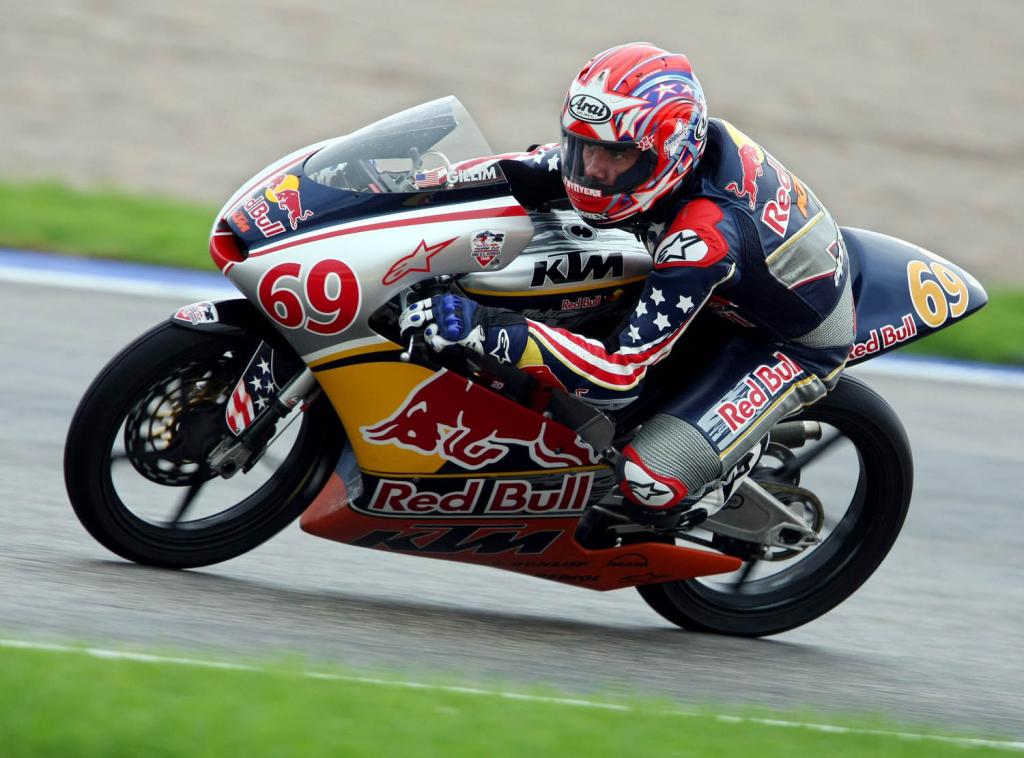
Hayden Gillim Takes Red Bull Rookies Riders Cup Pole Position At Soggy Valencia

Wet Conditions Make Racing Difficult for Young Racers

Valencia, Spain (October 24, 2008) — Hayden Gillim of Owensboro, Ky., won pole position for the Red Bull Riders Cup race in Valencia, Spain on Friday. The 13-year-old set his best time in the first of two qualifying sessions held today with a mark of 2:02.032, set in slick, rainy conditions. Gillim, representing the Red Bull AMA U.S. Rookies Cup team, challenged for the race win at the first Red Bull Riders Cup event in Indianapolis earlier this season.

 “It was very slick out there but I was pretty happy with my best lap,” said Gillim. “The weather was tough but I was in the top three for most of the first session. I was able to get some good laps in towards the end and that’s when I had my fastest time. I’m disappointed that I crashed on the next lap, though. In the second session, it was raining too hard to go faster. I’ll be looking to get a good start and do well tomorrow.” 

Gillim was joined on the front row by three riders from the Red Bull MotoGP Rookies Cup: Mathew Scholtz of South Africa, Matthew Hoyle of Great Britain, and Jakub Kornfeil of the Czech Republic. All 20 riders compete on identical Dunlop-shod KTM RC125 machines, as they have throughout their respective seasons. 

 “If it rains tomorrow, I have a good position to do well in the race,” said the 16-year-old Scholtz. 

The rain fell heavily before the first of three sessions at the beautiful stadium circuit near the Mediterranean, and it continued to rain throughout the day. The conditions were difficult and the group of select riders who won the chance to represent their team in the Rookies Cup event by finishing in the top ten in points during the 2008 season produced an unusual number of crashes on the day. Red Bull AMA U.S. Rookies were also challenged with learning a new circuit in the wet. 

The first practice session of the day in the full wet saw 15-year-old Jake Gagne of Ramona, Calif., take the fifth position despite a lack of grip. Gagne was the fastest American in the first session. He qualified fifth with a best time of 2:07.205. 

“I’m on the second row, which is not so bad. These were the worst conditions I’ve ridden in since I have been roadracing,” said Gagne.

 A spate of crashes by many of the Red Bull AMA U.S. Rookies Cup riders left their machines damaged but none of the team’s riders were injured. 2008 Red Bull AMA U.S. Rookies Cup champion Benny Solis struggled to a sixteenth-fastest time, while the Red Bull MotoGP Rookies Cup champion, JD Beach, qualified eighth.

“It was a tough day for our guys and the MotoGP Rookies, too,” said Riders Coach Kevin Schwantz, the 1993 World Champion. “We had too many bikes on the ground today and the conditions were really tough. There’s not a lot of grip at Valencia in the wet. I thought the rain might equalize things for our guys but that really wasn’t the case today. We’ll see what tomorrow brings, but the weather might throw us a curve ball again.” 

While racing is a priority this weekend, it hasn’t been strictly business for the Red Bull AMA U.S. Rookies in Spain. The talented young motorcycle racers arrived early for the event and toured historic Valencia in the days before the race weekend. The young motorcycle racers visited the Old Town section of Valencia and attended the bullfighting museum. They also sampled the local cuisine. 

 Up for grabs in the unique team competition is the Red Bull Riders Cup trophy. Riders from each squad can add to the team’s tally, with the total points added up to determine the winning side. At Indianapolis, the Red Bull MotoGP Rookies Cup team earned the Cup, with Sturla Fagerhaug of Norway winning the race and the Europeans dominating the top ten, and winning 114-26, in wet conditions. Saturday’s 17-lap race will determine which team keeps the Riders Cup until 2009. 

1. Hayden Gillim USA 2:02.032* 2. Mathew Scholtz RSA 2:02.220 3. Matthew Hoyle GBR 2:02.876 4. Jakub Kornfeil CZE 2:03.519 5. Nelson Major FRA 2:04.578 6. Markus Reiterberger GER 2:06.302 7. Jake Gagne USA 2:07.205* 8. JD Beach USA 2:07.901 9. Luis Salom SPA 2:09.174 10. Florian Marino FRA 2:09.222 11. Tomas Puerta COL 2:10.309* 12. Sturla Fagerhaug NOR 2:10.759 13. Joey Pascarella USA 2:10.987* 14. Bryce Prince USA 2:11.508* 15. Emerson Connor CAN 2:11.680* 16. Benny Solis, Jr. USA 2:12.647* 17. Austin DeHaven USA 2:13.129* 18. Huntley Nash USA 2:15.221* 19. Leandro Mercado ARG 2:21.429* 20. Daniel Ruiz SPA No time * denotes Red Bull AMA U.S. Rookies Cup team member

More, from another press release issued by Red Bull:

Few heroes, few left standing.

Pole position for Saturday’s Red Bull Riders Cup went to the AMA U.S. Team and visiting American 13 year old Hayden Gillim on a day when wet and slippery conditions saw almost all the Red Bull Rookies, including Gillim crash at least once in the three practice sessions. Second fastest was 16 year old South African Mathew Scholtz who led a solid block of MotoGP Team members filling positions 2 to 6.

Scholtz blotted his record by sliding off in each of the three sessions making Matthew Hoyle and Jakub Kornfeil the stars for the MotoGP team as they qualified third and fourth without making an error all day. They were quick and very consistent even as the track began to dry and then got soaked again.

“I’m happy with that,” said 17 year old Englishman Hoyle. “It puts me in a good position on the grid and they say that there is a 70% chance of rain tomorrow so that would be OK. I went out in that final session when it was really wet and went quicker than I did this morning so I’m happy with that.”

Kornfeil, the 15 year old from the Czech Republic was surprised to have done so well. “I don’t like racing in the rain. The wet track isn’t too bad but I hate the rain because it makes it difficult to see. I was feeling good today though and I guess it will be OK if it is wet tomorrow but I think all riders would prefer to race in the dry. The bike is good and I know the track well now so I am hoping for a good race.”

With 8 of the top 10 riders belonging to the MotoGP team the European based squad are favoured to hang on to the Riders Cup but know that things could easily change if they make mistakes as so many of them did in practice. Indianapolis winner Sturla Fagerhaug did himself no favours when he crashed early in the first qualifying session. “The back slid out and as it tried to highside me it wrenched my wrist so the damage was done before I hit the ground,” said the 16 year old Norwegian. “I went out in the second session but I could hardly turn the throttle coming out of the corner, it’s not going to be easy in the race.

Fagerhaug was actually 3rd fastest behind Hoyle and Kornfeil in the wetter second qualifying session but 12th overall thanks to the dryer session being the one he crashed in. So he starts on the third row of the grid. MotoGP Rookies Cup winner JD Beach sits in front of him on the outside of the second row. The 16 year old American also fell and twisted his ankle but claims that it will not slow him down too much. AMA U.S. Cup winner, 14 year old Benny Solis, also slid off in the first qualifying session, missed a few minutes of the second qualifying session while his bike was still being repaired but was unhurt and sits behind Fagerhaug in 16th place on the grid.

Gillim was one of the stars of the Indianapolis Riders Cup race but slid of then in similarly slippery conditions while battling for the lead with Fagerhaug and Scholtz. Wet or dry the pole man is in with a good chance on Saturday. “It was pretty slick out there but I was pretty happy to be near the front through the sessions and happy to be on pole but disappointed that I crashed on the next lap,” said Gillim.

Scholtz sits second and could also be in the hunt for the win but knows he can’t repeat the error strewn day of practice. “I don’t know what to say, three crashes in three sessions. Not good.”

More On VIR’s ‘Holiday Laps’ Charity Fundraiser

DANVILLE, VA. Participants in VIRginia International Raceway’s annual Holiday Laps on Friday, November 14, will get the chance to do more than just drive the track for their donation to the Salvation Army: local driver and race mechanic Dave Handy is offering the lucky winner of the WAKG/WBTM holiday auction the ride of a lifetime in his 1968 McLaren M6B Can-Am racer. One lucky ticket buyer will have the chance to ride along with Dave in this historic race car, harking back to the days when a couple of good mechanics could build a car to compete at the top of the heap. This aluminum-chassis, fiberglass bodied sports racer has a history of wins at Dave’s hands in recent vintage sports car races, and is well capable of running lap times that would be competitive in the Grand-Am Rolex Daytona Prototype class. “We really expect this to be the biggest and best Holiday Laps yet,” said VIR managing partner Connie Nyholm. “Every year it pulls in bigger and better donations than the year before and with Dave’s generous offer, the auction should be the best one yet.” The chance to ride in an historic sports racer isn’t the only attraction. Every car that participates will receive an 8×10 photograph, taken during the day, of the car on track, courtesy F&S Enterprises, the track’s official photographers. “We want to give something back,” said F&S manager Nancy Sinnott. “The track and community give us so much enjoyment that in comparison this seems only a small gesture. Holiday Laps is a part of the seasonal charity fund-raising effort by WAKG/WBTM and VIR. WAKG and WBTM hold on-air auctions of prizes and services to raise funds for the local Salvation Army, with VIR just one of many area businesses contributing to the cause, joined at Holiday Laps by Car clubs from as far as 100 miles away. Some of these clubs’ members drive session after session, filling a pickup truck bed with donated toys. “It’s just amazing to know they’re willing to help us out,” said Captain Allen Tanner of the Salvation Army last year. “This allows us to take what we saved from not having to purchase items for those who don’t get adopted on ‘Angel Trees’ and get additional things for families in the area.” In 2007, Steve Fitzpatrick, president of the Heart of Carolina Mustang Club from Raleigh, N.C., presented Captain Tanner with a check for $500, representing an additional donation from that club, beyond their Holiday Laps payments. “We’ve upped our contribution each year,” Fitzpatrick said. “This is something we can all support.” VIR’s Oak Tree Tavern, the restaurant in the 1840s Plantation Club House, will be open to the public that evening, as it is every week, Thursday through Sunday. The Club House features fun dining in the full-service restaurant and the Irish-style Connie’s Pub. Reservations are accepted but not required by calling 434.822.7700, ext. 330. The auctions by WAKG and WBTM include prizes consisting of race weekend tickets and nights in the Lodge at VIR, with proceeds from the sales benefiting the charities. VIRginia International Raceway is a multi-purpose road racing facility, located on the Dan River between Danville and South Boston, Virginia. Reopened in 2000, VIR hosts a wide range professional and amateur auto and motorcycle racing and track events, and is well established as “America’s Motorsport Resort.” In addition to its historic 3.27 mile natural-terrain road racing circuit, VIR is the cornerstone of VIR Club, America’s first motorsports country club; the VIR Raceplex Industrial Park and Motorsports Technology Park, which includes the Virginia Institute for Performance Engineering and Research (“VIPER”); the Plantation Valley Kart Track, a 5/8 mile paved natural terrain karting circuit; an expanding variety of on-site lodging (including 45 hotel rooms and the trackside Villas which are for sale); Camp Motorsport for enthusiasts of all ages; and the Oak Tree Tavern, a full-service restaurant located within the circa-1840 Plantation Clubhouse. For information on the track and other event schedules, call 434-822-7700 or check our web site at www.virclub.com.

Manufacturers’ Reaction To Latest AMA Pro Racing Plans Will Determine Course Of Action For MIC

Earlier today, AMA Pro Racing (a.k.a. Daytona Motorsports Group, or DMG) announced the latest and likely final version of its 2009 professional road racing class structure. The announcement included a quote from AMA Pro Racing President Roger Edmondson that read, in part, “We were fortunate to have the assistance of many stakeholders in the creation of the program, including the Motorcycle Industry Council (MIC).” Asked to comment, MIC President Tim Buche told Roadracingworld.com, “I don’t have a comment at this time and will let what AMA has announced settle. I think a number of companies will respond to that, and those responses would determine any next steps MIC would make. “Obviously the manufacturers have something they can now consider, and once they’ve made their determinations that would set any course of action for us going forward.”

Eric Bostrom Confirms That He’s Retiring To Brazil

Returning a phone call to Roadracingworld.com today, Eric Bostrom confirmed that he is leaving motorcycle racing and heading to Brazil to run a farm. “I would say it is a hiatus,” said Bostrom of his break from racing. “I’m putting a lot of my time and resources into this. There’s a lot of incentives to invest in Brazil, a lot of tax breaks. “It seems like there’s a lot more stability down there. The stock market here is getting hammered. “This can lead to a lot of other opportunities, things I’ve wanted to do like study, learn some other languages, play guitar. “And if I get bored with this after a year and want to return to racing I think I’m still young enough that I can do it. Ben (Bostrom) has shown that you can come back and still do well.” Bostrom said that he’s leaving for Brazil this coming Monday. Roadracingworld.com wishes him well.

Pirelli Congratulates Dunlop On Winning AMA Superbike Spec Tire Bid

Pirelli Congratulates Dunlop Rome, Georgia: Per the announcement by the AMA that its forthcoming road-racing series will be a Dunlop spec-tire series, Pirelli Tire NA would like to congratulate Dunlop on being granted this opportunity. Scott Griffin, VP of Pirelli Motorcycle Tire North America, said, “The AMA invited bids from all tire companies and Dunlop was chosen. We at Pirelli respect and applaud the AMA’s transparent bidding process and congratulate Dunlop for its efforts. Because of the various series worldwide that are Pirelli spec-tire series, from World Superbike to British Superbike and the Parts Canada Superbike Championship, we understand the technical and logistical challenge Dunlop faces, and we wish them the best in this endeavor.” For racers competing in all other North American racing series, Pirelli Tire will apply the proven assets of its ongoing development of high-performance tires in World Superbike and World Supersport to other avenues in the North American market. Again, Pirelli wishes all the best to Dunlop and its new challenges. Pirelli Tire North America specializes in the manufacture and marketing of high-performance tires for passenger vehicles, motorcycles and motorsports. An industry leader in technology and quality, Pirelli operates its highly advanced Modular Integrated Robotized System (MIRS) in Rome, Georgia, to better serve the North American OEM and Replacement markets. For more information please visit: www.us.pirelli.com, or www.us.pirellimoto.com.

AMA Pro Racing Releases Final 2009 Rules Package

2009 SPECIFIC CLASS EQUIPMENT REGULATIONS FOR ROAD RACING COMPETITION EVERYTHING THAT IS NOT AUTHORIZED AND PRESCRIBED IN THESE REGULATIONS IS STRICTLY FORBIDDEN. Each homologated machine will have a published Technical Information Form (TIF) containing the AMA approved specifications requiredallowed for competition. Specifications will include, but not be limited to make, model, year, original displacement, and special allowances (if any) for this specific homologated machine. Aftermarket parts and equipment must be approved by AMA Pro Racing and must appear on the Eligible Equipment List before being used in competition. Each company with approved equipment must post bonus awards for those products. American SuperBike Only homologated machines approved by AMA Pro Racing are eligible for participation in American Superbike. All items not mentioned in the following articles must remain as originally produced by the manufacturer for the homologated machine. In addition, every motorcycle entered must meet the requirements listed in the General Equipment Standards. SBK 1 – DISPLACEMENT CAPACITIES AND WEIGHT LIMITS Minimum weight in the exact condition the machine finishes any competition activity (qualifying or race final) without the addition of fluids or other items of any kind. 4 cylinder 375 pounds 2 cylinder 390 pounds Displacement capacities 4 cylinders 749cc up to 1000 cc 4-stroke. 2 cylinders 901cc up to 1200 cc 4-stroke Engine type, configuration, stroke and any modifications of engine components to alter the stock OEM firing order of the cylinders are not permitted. The displacement capacities must remain at the homologated size. Stock bore and stroke must be maintained. SBK 2 – TIRES Dunlop is the Official Tire Supplier of AMA Pro Road Racing and only tires produced by Dunlop and mounted at the meet may be used in competition. Unless otherwise announced, tires approved for use in dry conditions will be available in three compound choices. Intermediate tires and tires approved for use in wet conditions will be available in a single compound. Unless otherwise announced, the maximum number of dry tires allowed each competitor at any meet will be 6 fronts and 9 rears. Teams participating in SuperPole qualifying will be authorized one additional set of dry tires. Quantity of intermediate or wet tires is not regulated. SBK 3 – FUEL Official Fuel – The Official Fuel of AMA Pro Racing is Sunoco 260 GTX, and its exclusive use in unadulterated form shall be mandatory. Only air may be mixed with the fuel as an oxidant, and no other substances, chemicals and/or liquids whatsoever shall be added, combined, mixed and/or introduced to said Official Fuel whether intentionally or unintentionally unless approved in advance in writing by the AMA for use by all competitors. All competitors must use the official fuel, as supplied by the manufacturer at the track, during all on-track sessions. All motorcycles must prominently display the appropriate unmodified official fuel company decal on the motorcycle at all times. AMA Pro Racing has the right to sample a competitor’s fuel at any time. Competitors are responsible for the safe and proper handling and security of their fuel from when it is dispensed to them until it is used. Competitors are responsible for properly disposing of all unused fuel. Complete specifications for Sunoco 260 GTX are posted in the General Equipment Regulations section of this rule book. SBK 4 – WHEELS/BRAKES Wheels Wheels and associated parts may be modified or replaced from those fitted to the homologated motorcycle. Front wheels = 17″ x 3.5″ all machines Rear wheels = 17″ x 6.25 all machines Carbon fiber or carbon composite wheels are not allowed. Bearings, seals and axles may be altered or replaced from those fitted to the homologated motorcycle, however they must be made from the same materials as the original homologated parts. Rear wheel sprocket and brake rotor must remain with the wheel unless part of the original homologated design. Brakes Front and rear master cylinder including lever/pedal may be modified or replaced from those fitted to the homologated motorcycle. Front and rear calipers may be modified or replaced from those fitted to the homologated motorcycle. Brake pads or shoes may be modified or replaced from those fitted to the homologated motorcycle. Brake hoses and brake fittings may be modified or replaced from those fitted to the homologated motorcycle. Brake discs may be modified or replaced from those fitted to the homologated motorcycle. The use of carbon fiber, carbon composite or titanium materials for brake discs is not allowed. SBK 5 – FRONT SUSPENSION Original front forks must be retained, including inner and outer tubes, fork bottoms, and caliper mounts. Aftermarket Cartridge kits appearing on the Eligible Equipment List are permitted and aftermarket fork caps may be substituted. Internal parts may be modified consistent and within the foregoing restrictions, including substitution of springs, change of shims and/or spacers, and addition of kit/aftermarket valving units appearing on the Eligible Equipment List. External Compression Adjusters may be modified/changed. Steering Head inserts to adjust rake may be used as long as no part of the frame is modified. No machining or welding of the frame to accommodate steering head inserts is permitted. The upper and lower fork clamps (triple clamp, fork bridges) including steering stem, can be changed or modified using adjustable fork clamps or inserts to adjust rake. Steering damper may be added, relocated or replaced with an aftermarket damper. The steering damper cannot act as a steering lock limiting device. Active, semi-active or computer-controlled suspension units are not permitted. SBK 6 – REAR SUSPENSION Rear suspension unit can be changed but a similar unit must be used (i.e. dual or single shock). The rear suspension linkage may be modified or replaced. SBK 7 – FRAME Frame and Sub Frame The main Frame must remain as originally produced by the manufacturer for use on the homologated motorcycle with the following modifications allowed: Strengthening gussets and tubes may be added, but none may be removed. Accessory brackets (radiator, shock reservoir, stands, etc.) may be changed, relocated, added or removed. Holes may be drilled only for the purpose of attaching brackets or other components. The homologated dimensions and the position of the steering head, engine, swing arm pivot point, rear shock, and suspension linkage mounting points must remain as homologated on the original machine. The use of offset bearing races for the purpose of altering the steering angle is allowed. The swing arm pivot location may only be adjusted if the design was part of the homologated frame. Rear sub frame may be modified or replaced, but the material must remain as homologated. Polishing of frame materials is not allowed. Frame must display vehicle identification number. Swingarm Swingarm may be modified as follows: Rear wheel stand mounts may be added to the swingarm by welding or by bolts. Brackets must have rounded edges (with a large radius). Mounting bolts must be recessed. Swingarm may be replaced by units appearing on the Eligible Equipment List provided the wheelbase does not exceed the maximum possible with the original equipment unit. SBK 8 – BODYWORK/CONTROLS/APPEARANCE Fairing and Bodywork Fairing and bodywork, including the front fender and windscreen may be modified or replaced with aftermarket parts which resemble the originally approved parts in design and which maintain similar dimensions. Construction must be of plastic or fiberglass (no carbon or carbon composite fiber) See Fairing and Bodywork under General Equipment Standards for other restrictions and fluid containment. Seat Seat may be altered or replaced from those fitted to the homologated motorcycle. The top portion of the rear bodywork around the seat may be modified to a solo seat. The solo seat then must incorporate the rear number plate. The appearance from both front, rear, and profile must conform in principle to the homologated shape. The seat/rear cowl must allow for proper number display. All exposed edges must be rounded. Construction must be of plastic or fiberglass (no carbon or carbon composite fiber). Instrument Panel Aftermarket instrument panels are allowed. A shift/indicator light may be added even if one did not exist from the factory. Foot Rest/Foot Controls Foot rest/foot controls may be may be modified, relocated or replaced from those fitted to the homologated motorcycle. Foot rests may be rigidly mounted or a folding type which must incorporate a device to return to the normal position. The end of the footrest must have an 8mm solid spherical radius. Handle Bars and Hand Controls Handle bars, hand controls and cables may be altered or replaced from those fitted to the homologated motorcycle. Engine stop switch must be located on the handlebars. SBK 9 – ENGINE MODIFICATIONS Cylinder Head Cylinder heads must remain as homologated with the following modifications allowed. Porting and polishing of the cylinder head and INTAKE MANIFOLD normally associated with individual tuning such as gas flowing of the cylinder head, including the combustion chamber is allowed. Welding or the addition of material is allowed. The compression ratio is unrestricted. Combustion chamber may be modified. Replacement valve seats and guides are permitted. Cylinders Only the following modifications to the cylinders are allowed: Cylinder head gasket surface may be machined to allow the adjustment of compression ratio or resurfacing to repair a warped cylinder surface deck. Homologated materials and castings for cylinders must be used. Cylinder liners or coatings may be replaced or added. Crankcase and all other Engine Cases (i.e. ignition case, clutch case). Crankcases must remain as homologated. No modifications are allowed. Engine case guards in the form of strengthened engine side covers or approved guards must be installed on certain models. Replacement covers must be no lighter in weight than the stock covers. See Engine under General Equipment Standards. The countershaft cover may be removed. The addition of a crankcase protector at the countershaft is allowed. Valves, Springs, and Retainers Aftermarket or modified valves, springs, retainers and other valve-train components are permitted. The original number of valves must be maintained. Valve diameter and minimum weight, including stem, must remain as homologated. Valves must remain in the same location and at the same angle as the homologated model. The material and dimensions of the rocker arms (if any) must remain as homologated. The material of the tappets/buckets must remain as homologated. Camshafts and Sprockets The original camshaft may be modified or replaced from those fitted to the homologated motorcycle. The method of drive must remain as homologated. The duration is unrestricted but the lift must remain as homologated. The tensioning devise(s) for the cam chain or cam belt is unrestricted. Cam sprockets can be modified or replaced to allow the degreeing of camshafts. Crankshaft Crankshaft must remain as homologated with the following modifications allowed. Balancing. This may only be achieved by the same method used by the OEM. For example, heavy metal (i.e. Mallory metal) inserts are not permitted unless they were originally specified by the OEM. Bearing surfaces may be polished or surface treated. Polishing and lightening of the crankshaft is not allowed. Primary gears can not be changed or modified. Oil galley plugs may be modified, removed or replaced. Connecting Rods Connecting rods must remain as homologated. No modifications are allowed. Polishing and lightening is not allowed. Pistons Pistons must remain as homologated. No modifications are allowed. Polishing and lightening is not allowed. Piston Rings Piston rings must remain as homologated and installed. No modifications are allowed. Piston Pins and Clips Piston pins and clips must remain as homologated. No modifications are allowed. Oil Pumps and Oil Lines and Water Pumps Oil pump must remain as homologated. Modifications are allowed. Oil lines may be modified or replaced. Oil lines containing positive pressure, if replaced, must be of metal reinforced construction with swaged or threaded connectors. The internal parts of the water pump may be changed or modified. The drive ratio may be changed. The external appearance must remain as homologated. Water lines may be modified or replaced. Clutch Clutch type (wet or dry) must remain as homologated. Aftermarket, modified or stock-type clutches with back-torque limiting capabilities are permitted. Transmission Shafts and Gear Sets Stock transmission shafts and gear set only. Undercutting and surface treatments are the only modifications allowed. Fuel injection system and throttle-body assemblies Fuel injection throttle body assemblies must remain as homologated. Assemblies include all attached parts with the exception of injectors, fasteners, cables, cable actuating pulleys, flexible fuel lines, vacuum lines, air box connection tubes and velocity stacks. Variable-length fuel injection intake tract devices that function while the engine is operating are prohibited unless it is standard equipment on the homologated OEM production model. Fuel injectors may be replaced with aftermarket units provided the original mounting locations are maintained and no modifications are made to the throttle body assemblies for injector fitment. The total number of installed injectors must be the same as originally produced. Secondary butterfly valves may be fixed in the open position. Fuel pump and fuel pressure regulator must remain as homologated with no modifications. Engine Control System Engine control system may be modified or replaced with aftermarket products. Wiring harness may be modified or replaced. Spark plugs and plug wires may be replaced. Data acquisition is allowed. Aftermarket sensors are permitted. Generator The generator may be modified or replaced. The starting system, electrical or manual may be modified or replaced but must work. SBK 10 – AIR BOX/INTAKES/FUEL SUPPLY Intake Air Boxes Air box must remain as originally produced by the manufacturer on the homologated motorcycle. Air filters, internal flap type valve, sensors and vacuum fittings may be removed, modified, or replaced with aftermarket parts. Any holes in the air box to the outside atmosphere resulting from the removal of components must be completely sealed from incoming air. All incoming air must pass through the original, unmodified air box inlets. Ram air tubes or ducts may be modified, replaced with aftermarket parts or removed. If tubes/ducts are utilized, they must be attached to the original, unmodified air box inlets. Velocity stacks may be modified, replaced with aftermarket parts or removed. The only modification permitted to the air box to allow use of alternate velocity stacks is the removal of internal debris deflectors/plates. Fuel Tanks Fuel tank may be modified or replaced provided that it maintains the stock appearance. Non metallic fuel tanks are not allowed unless when standard equipment on homologated machine. Fuel tanks may be modified to achieve a maximum capacity of 24 liters (6.341 gallons). The fuel cap may be replaced with a single delivery quick-fill coupler. Both couplers must be installed in the top of the tank. Maximum inner diameter of quick-fill or vent coupler is 63.5mm (2.5″). Fuel Supply Fuel petcocks may be modified or replaced. Fuel lines may be replaced. Quick connectors or dry break quick connectors may be used. Fuel vent lines may be replaced. Fuel filters may be added. SBK 11 – MISCELLANEOUS Exhaust System The exhaust pipes and silencers may be modified or replaced from those fitted to the homologated motorcycle. Catalytic converters must be removed. For safety reasons, the exposed edge(s) of the exhaust pipes(s) outlet(s) must be rounded to avoid sharp edges. Radiators and oil coolers The original radiator or oil cooler may be modified or replaced from those fitted to the homologated motorcycle. Additional radiators and oil coolers are allowed. Oil coolers must not be mounted on or above the rear mudguard. The appearance from the front, rear and profile of the machine must conform to the homologated shape after the installation of additional radiators or oil coolers. The following items may be modified or replaced from those fitted to the homologated motorcycle. Any type of lubrication, brake or suspension fluid may be used. Any type of spark plug and plug cap may be used. Gasket and gasket material Bearings (ball, roller, taper, plain, etc.) of any type or brand may be used, except where addressed previously in these rules. Fasteners (nuts, bolts, screws etc.) Main wiring harness and connectors. Battery and switches. Countershaft sprocket, rear wheel sprocket and chain. Oil and fuel filters The Following Items May Be Removed Instrument and instrument bracket and associated cables. Radiator fan and wiring Cooling system thermostat Chain guard. Daytona SportBike Only homologated machines approved by AMA Pro Racing are eligible for participation in Daytona SportBike. All items not mentioned in the following articles must remain as originally produced by the manufacturer for the homologated machine. Unless otherwise specified, all parts must originate from the same make/model as the homologated machine, meaning no up-dating or back-dating is permitted In addition, every motorcycle entered must meet the requirements listed in General Equipment Standards. Machines currently eligible for homologation for competition in 2009 are: Aprilia RSV, BMW HP2 Sport, Buell 1125R, Ducati 848, Honda CBR600RR, Kawasaki Ninja ZX-6R, KTM Super Duke, Suzuki GSX-R600, Triumph Daytona 675, Yamaha YZF-R6. Additional brands and models may apply for homologation at any time during a competition season. DSB 1 – WEIGHT Minimum weight for each machine will be established during the homologation process, and listed on the TIF. Compliance with the minimum weight will be determined by weighing the machine in the exact condition in which the machine finishes any competition activity (qualifying or race final) without the addition of fluids or other items of any kind. DSB 2 – TIRES Dunlop is the Official Tire Supplier of AMA Pro Road Racing and only tires produced by Dunlop and mounted at the meet may be used in competition. Unless otherwise announced, tires approved for use in dry conditions will be available in three compound choices. Intermediate tires and tires approved for use in wet conditions will be available in a single compound. Unless otherwise announced, the maximum number of dry tires allowed each competitor at any meet will be 6 fronts and 9 rears. Teams participating in SuperPole qualifying will be authorized one additional set of dry tires. Quantity of intermediate or wet tires is not regulated. DSB 3 – FUEL Official Fuel – The Official Fuel of AMA Pro Racing is Sunoco 260 GTX, and its exclusive use in unadulterated form shall be mandatory. Only air may be mixed with the fuel as an oxidant, and no other substances, chemicals and/or liquids whatsoever shall be added, combined, mixed and/or introduced to said Official Fuel whether intentionally or unintentionally unless approved in advance in writing by the AMA for use by all competitors. All competitors must use the official fuel, as supplied by the manufacturer at the track, during all on-track sessions. All motorcycles must prominently display the appropriate unmodified official fuel company decal on the motorcycle at all times. AMA Pro Racing has the right to sample a competitor’s fuel at any time. Competitors are responsible for the safe and proper handling and security of their fuel from when it is dispensed to them until it is used. Competitors are responsible for properly disposing of all unused fuel. Complete specifications for Sunoco 260 GTX are posted in the General Equipment Competitors are responsible for the safe and proper handling and security of their fuel from when it is dispensed to them until it is used. DSB 4 – WHEELS/BRAKES Original equipment wheels must be used, except where a TIF provides for substitutes. Substitutes must appear on the Eligible Equipment List. Front wheels = 17″ x 3.5″ all machines Rear wheels = 17″ x 5.5″ or 17″ x 6″ (See TIF for each machine) Original equipment brake calipers must be used, except where a TIF provides for substitutes. Substitutes must appear on the Eligible Equipment List. Aftermarket brake pads and lines may be substituted by homologated units appearing on the Eligible Equipment List. The brake master cylinders may be substituted by homologated units appearing on the Eligible Equipment List. With approval of the Technical Inspector, front wheel spacers may be made “captive”. With approval of the Technical Inspector, rear wheel spacers may be made “captive”, and a caliper retaining device may be used. Chain adjuster must be OEM. DSB 5 – FRONT SUSPENSION Original front forks must be retained, including inner and outer tubes, fork bottoms, and caliper mounts. Aftermarket Cartridge kits appearing on the Eligible Equipment List are permitted and aftermarket fork caps may be substituted. A steering damper may be installed with a homologated unit appearing on the Eligible Equipment List. A fork brace may be installed with a homologated unit appearing on the Eligible Equipment List. Triple Clamps may be substituted with a homologated unit appearing on the Eligible Equipment List. Front suspension modifications are limited to: Internal parts may be modified consistent and within the foregoing restrictions, including substitution of springs, change of shims and/or spacers, and addition of kit/aftermarket valving units appearing on the Eligible Equipment List. External Compression Adjusters may be modified/changed. Steering Head inserts to adjust rake may be used as long as no part of the frame is modified. DSB 6 – REAR SUSPENSION The original model, stock swingarm must be retained, unchanged, except that the axle adjustment opening/slot may be lengthened, with the permission of the Technical Inspector. The rear shock linkage may be substituted with a homologated unit appearing on the Eligible Equipment List. The rear shock may be modified or replaced by units appearing on the Eligible Equipment List. DSB 7 – FRAME/ADJUSTABLE PIVOT Unless otherwise provided for on the TIF, the original frame must be used. Unnecessary brackets may be removed. Adjustable swingarm pivots are permitted, where included on the homologated model, but no modifications to the frame or swingarm can be made to allow this adjustability to machines not originally equipped. DSB 8 – BODYWORK/CONTROLS/APPEARANCE Aftermarket, OEM-style bodywork and custom fairing mounts may be used. The fairing must match the shape of the OEM machine in silhouette and profile and the AMA shall have the right to use templates and go-no-go devices therefor. An oil retaining, “sealed” lower fairing is mandatory. The stock gas tank must be used, but aftermarket gas caps are allowed. A front fender must be mounted. Aftermarket footpegs, clip-on bars, shift/brake mechanisms and fasteners may be used. Non-standard “Kill Switches” must not be spring loaded and must be well marked. Titanium Fasteners are not permitted. Tail sections may be increased in size to allow for required number display. Final approval rests with the Chief Technical Inspector. DSB 9 – ENGINE MODIFICATIONS Cylinder Head No modifications are allowed except as follows: Cylinder head, cylinder and crankcase gasket surfaces only may be machined for increased compression. All other surfaces of the cylinder head, cylinder and crankcases must remain absolutely as homologated with no metal removal. Light cleaning of gasket surfaces with steel wool, Scotch-Brite®, etc., is permitted. Deburring radius of machined area must not be greater than 0.020 inches or 0.5mm. The cylinder head gasket may be changed. The valves, valve seats, guides, springs, tappets, oil seals, shims, cotter valve, spring base and spring retainers must be as originally produced by the manufacturer for the homologated machine. Valve spring shims are allowed. Camshaft No modifications are allowed. At the technical checks: for direct cam drive systems, the cam lobe lift is measured; for non direct cam drive systems (i.e. with rocker arms), the valve lift is measured. The timing of the camshaft is free. Cam Sprockets No dimensional modifications are allowed. Cam sprockets may be slotted solely TO alter cam timing. Press-on cam sprockets may be replaced with aftermarket steel bolt-on cam sprockets and adapters. Aftermarket cam chain tensioners are permitted. Crankshaft Crankshaft must remain as homologated with the following modifications allowed. Balancing. This may only be achieved by the same method used by the OEM. For example, heavy metal (i.e. Mallory metal) inserts are not permitted unless they were originally specified by the OEM. Bearing surfaces may be polished or surface treated. Polishing and lightening of the crankshaft is not allowed. Primary gears cannot be changed or modified. Oil galley plugs may be modified, removed or replaced. Oil Pumps and Oil Lines No pump modifications are allowed. Oil lines must remain as produced on the homologated model. Connecting Rods No modifications are allowed (including polishing and lightening). Pistons No modifications are allowed (including polishing and lightening). Piston Rings No modifications are allowed. Piston Pins and Clips No modifications are allowed. Cylinders No modifications are allowed. Crankcase and all other Engine Cases (i.e. ignition cover, clutch cover, etc.) No modifications to the crankcases are allowed except as provided for above. Lateral (side) covers may be altered, modified or replaced. If replaced, the cover must be made in material of same or higher specific weight and the total weight of the cover must not be less than the original one. On motorcycles where lateral covers or engine cases contain oil, strengthened engine side covers or case guards must be installed. All such protection devices must weigh no less than the original homologated parts and must be approved by the AMA Pro Tech Inspector. Transmission/Gearbox Kit-type Electronic “quick shifters” are allowed. Manual “secondary” hand operated kill switch/quick shifters are not allowed. Final drive system, if not by chain, may be modified to chain type, using kits specified on the Eligible Equipment List. Original equipment shift drum detent stars may be modified or replaced with approved, homologated aftermarket parts included on the Eligible Equipment List. Other modifications to gearbox or selector mechanism are not allowed. Countershaft sprocket, rear wheel sprocket, chain pitch and size can be changed. The sprocket cover can be modified. Fuel Injection System and throttle body assemblies. Stock carb bodies or stock fuel injection systems must be used, but carb internals, velocity stacks and injection management systems may be altered or replaced with items on the Eligible Equipment List. Injectors must be stock and unaltered from the original specification and manufacture. Stock fuel mixture and exhaust sensor devices must be as provided on the homologated model. Aftermarket exhaust systems appearing on the Eligible Equipment List may be installed. “Dry Clutches” are only permitted when used on the equivalent OE production model. Aftermarket “Slipper” clutches appearing on the Eligible Equipment List are permitted. Engine Control System Engine Control unit must be as homologated or an ECU kit model appearing on the Eligible Equipment List can be used. A special connector can be used to connect the kit ECU and the original wire loom. DSB 10 – AIR BOX/INTAKE/SCOOPS Original equipment air box is required, without modification. An air filter is required. Original equipment air filter and air filters appearing on the Eligible Equipment List are permitted. Ram air systems are permitted if specified and used on the homologated motorcycle. Ducts and scoops, must be identical in specification to the original equipment system. DSB 11 – POST QUALIFYING/POST RACE TECH Immediately following each qualifying session or race, the top three finishers plus other motorcycles chosen at random at the discretion of AMA Pro Racing will be secured for inspection by AMA Pro Racing staff members. Motorcycle weights will be checked immediately following qualifying or races, in the same condition in which they finish the activity. No fluid and/or any other item(s) may be added to the motorcycle before the determination of weight. SuperSport Only homologated machines approved by AMA Pro Racing are eligible for participation in SuperSport. All items not mentioned in the following articles must remain as originally produced by the manufacturer for the homologated machine. Unless otherwise specified, all parts must originate from the same make/model as the homologated machine, meaning no updating or backdating is permitted In addition, every motorcycle entered must meet the requirements listed in the General Equipment Standards. Machines eligible for homologation for competition in 2009 are: Aprilia RSV, BMW HP2 Sport, Buell 1125R, Ducati 848, Honda CBR600RR, Kawasaki Ninja ZX-6R, KTM Super Duke, Suzuki GSX-R600, Triumph Daytona 675, Yamaha YZF-R6. SS 1 – WEIGHT Minimum weight for each machine will be established during the homologation process. Compliance with the minimum weight will be determined by weighing the machine in the exact condition in which the machine finishes any competition activity (qualifying or race final) without the addition of fluids or other items of any kind. SS 2 – TIRES Dunlop is the Official Tire Supplier of AMA Pro Road Racing and only tires produced by Dunlop and mounted at the meet may be used in competition. Unless otherwise announced, tires approved for use in dry conditions will be available in three compound choices. Intermediate tires and tires approved for use in wet conditions will be available in a single compound. SS 3 – FUEL Official Fuel – The Official Fuel of AMA Pro Racing is Sunoco 260 GTX, and its exclusive use in unadulterated form shall be mandatory. Only air may be mixed with the fuel as an oxidant, and no other substances, chemicals and/or liquids whatsoever shall be added, combined, mixed and/or introduced to said Official Fuel whether intentionally or unintentionally unless approved in advance in writing by the AMA for use by all competitors. All competitors must use the official fuel, as supplied by the manufacturer at the track, during all on-track sessions. All motorcycles must prominently display the appropriate unmodified official fuel company decal on the motorcycle at all times. AMA Pro Racing has the right to sample a competitor’s fuel at any time. Competitors are responsible for the safe and proper handling and security of their fuel from when it is dispensed to them until it is used. Competitors are responsible for properly disposing of all unused fuel. Complete specifications for Sunoco 260 GTX are posted in the General Equipment Regulations section of this rule book. SS 4 – WHEELS/BRAKES Original equipment wheels must be used, except where a TIF provides for substitutes. Substitutes must appear on the Eligible Equipment List. Brake discs must remain as originally produced by the manufacturer for the homologated machine. Front discs can be made floating, using original rotors. Front and rear brake calipers (mount, carrier, hanger) must remain as originally produced by the manufacturer for the homologated machine. The rear brake caliper bracket may be fixed on the swingarm, but the bracket (support) must maintain the same mounting (fixing) points for the caliper as used on the homologated machine. A modification of these parts is authorized. The Swingarm may be modified to aid the location of the rear brake caliper bracket, by welding, drilling or using a helicoil. The front and rear master cylinder must remain as originally produced by the manufacturers for the homologated machine. Front and rear hydraulic brake lines may be changed. SS 5 – FRONT SUSPENSION Forks structure (spindle, stanchions, bridge, stem , etc. must remain as originally produced by the manufacturer for the homologated machine. Standard original internal parts of the forks may be modified. After market damper kits or valves may be installed. The fork caps can be modified or changed to add spring preload/compression adjusters. Any quality and quantity of oil can be used in the front forks. The height and position of the front fork on the fork crowns is free. The upper and lower fork clamps (triple clamp, fork bridges) must remain as originally produced by the manufacturer on the homologated machine. Steering damper may be added or replaced with an after-market damper. The steering damper cannot act as a steering lock limiting device. SS 6 – REAR SUSPENSION Rear suspension unit (shock absorber) may be modified or replaced, but the original attachments to the frame and rear fork (swing arm) must be used and the rear suspension linkage must remain as originally produced by the manufacturer for the homologated machine. Rear suspension unit spring may be changed Every part of the rear fork must remain as originally produced by the manufacturer for the homologated machine (including rear fork pivot bolt and rear axle adjuster). Rear wheel stand positioning (support) brackets may be added to the rear fork. Brackets must have rounded edges (with a large radius) viewed from all sides. Fastening screws must be recessed. It is compulsory to use a chain guard fitted in such a way as to prevent trapping between the lower chain run and the final driven sprocket at the rear wheel. SS 7 – FRAME Frame must remain as originally produced by the manufacturer for the homologated machine. The sides of the frame-body may be covered by a protective part made of composite material. These protectors must fit the form of the frame. Nothing can be added by welding or removed by machining from the frame body. All motorcycles must display the manufacturers’ vehicle identification number on the frame body (chassis number). Engine mounting brackets or plates must remain as originally produced by the manufacturer for the homologated machine. Rear sub frame must remain as originally produced by the manufacturer for the homologated machine. Additional seat brackets may be added, non-stressed protruding brackets may be removed if they do not affect the safety of the construction or assembly. Bolt on accessories to the rear sub-frame may be removed. The paint scheme is not restricted but polishing the frame body or the sub frame is not allowed. SS 8 – BODYWORK/CONTROLS/APPEARANCE A foot operated quick shifter is not authorized Handlebars may be replaced (does not include brake master cylinder). Handlebars and hand controls may be relocated. Throttle assembly and associated cables may be modified or replaced. Clutch and brake lever may be exchanged by an aftermarket copy. Switches can be changed but electric starter switch and engine stop switch must be located on the handlebars. Fairing and bodywork may be replaced with exact cosmetic duplicates of the original parts, but must appear to be as originally produced by the manufacturer for the homologated machine, with slight differences due to the racing use (different attachment points, fairing bottom , etc.). The materials may be changed. The use of carbon fiber or carbon composite materials is not allowed. Overall size and dimensions must be the same as the original part. Windscreens may be replaced with a duplicate of transparent material. Motorcycles that were not originally equipped with streamlining are not allowed to add streamlining in any form, except for a lower fairing device, as described in the General Equipment Standards. This device cannot exceed above a line drawn horizontally from axle to axle. The original combination instrument/fairing brackets may be replaced, but the use of titanium and carbon (or similar composite materials) is forbidden. All other fairing brackets may be altered or replaced. The original air ducts running between the fairing and the air box may not be altered. Front fenders may be replaced with a cosmetic duplicates of the original parts and may be spaced upwards for increased tire clearance. Rear fenders fixed on the swinging arm can be modified or changed but the original profile must be respected. The top portion of the rear bodywork around the seat may be modified to a solo seat. The appearance from both front rear and profile must conform to the homologated shape. Aftermarket, OEM-style bodywork and custom fairing mounts may be used. The fairing must match the shape of the OEM machine in silhouette and profile and the AMA shall have the right to use templates and go-no-go devices therefor. An oil retaining, “sealed” lower fairing is mandatory. The stock gas tank must be used, but aftermarket gas caps are allowed. Aftermarket footpegs, clip-on bars, shift/brake mechanisms and fasteners may be used. Nonstandard “Kill Switches” must not be spring loaded and must be well marked. Titanium Fasteners are not permitted. Tail sections may be increased in size to allow for required number display. Final approval rests with the Chief Technical Inspector. SS 9 – ENGINE MODIFICATIONS Cylinder Head No modifications are allowed except as follows: Cylinder head, cylinder and crankcase gasket surfaces only may be machined for increased compression. All other surfaces of the cylinder head, cylinder and crankcases must remain absolutely as homologated with no metal removal. Light cleaning of gasket surfaces with steel wool, Scotch-Brite®, etc., is permitted. Deburring radius of machined area must not be greater than 0.020 inches or 0.5mm. The cylinder head gasket may be changed. The valves, valve seats, guides, springs, tappets, oil seals, shims, cotter valve, spring base and spring retainers must be as originally produced by the manufacturer for the homologated machine. Valve spring shims are allowed. Camshaft No modifications are allowed. At the technical checks: for direct cam drive systems, the cam lobe lift is measured; for non direct cam drive systems (i.e. with rocker arms), the valve lift is measured. The timing of the camshaft is free. Cam Sprockets No dimensional modifications are allowed. Cam sprockets may be slotted solely to alter cam timing. Press-on cam sprockets may be replaced with aftermarket steel bolt-on cam sprockets and adapters. Aftermarket cam chain tensioners are permitted. Crankshaft Crankshaft must remain as homologated with the following modifications allowed. Balancing. This may only be achieved by the same method used by the OEM. For example, heavy metal (i.e. Mallory metal) inserts are not permitted unless they were originally specified by the OEM. Bearing surfaces may be polished or surface treated. Polishing and lightening of the crankshaft is not allowed. Primary gears cannot be changed or modified. Oil galley plugs may be modified, removed or replaced. Oil Pumps and Oil Lines No pump modifications are allowed. Oil lines may be modified or replaced. Oil lines containing positive pressure, if replaced, must be of metal reinforced construction with swaged or threaded connectors. Connecting Rods No modifications are allowed (including polishing and lightening). Pistons No modifications are allowed (including polishing and lightening). Piston Rings No modifications are allowed. Piston Pins and Clips No modifications are allowed. Cylinders No modifications are allowed except as provided for above. Crankcase and all other Engine Cases (i.e. ignition case, clutch case, etc.) No modifications to the crankcases are allowed except as provided for above. Lateral (side) covers may be altered, modified or replaced. If replaced, the cover must be made in material of same or higher specific weight and the total weight of the cover must not be less than the original one. On motorcycles where lateral covers or engine cases contain oil, strengthened engine side covers or case guards must be installed. All such protection devices must weigh no less than the original homologated parts and must be approved by the AMA Pro Tech Inspector. Transmission/Gearbox Kit-type Electronic “quick shifters” are allowed. Manual “secondary” hand operated kill switch/quick shifters are not allowed. Final drive system, if not by chain, may be modified to chain type, using kits specified on the Eligible Equipment List. Original equipment shift drum detent stars may be modified or replaced with approved, homologated aftermarket parts. Other modifications to gearbox or selector mechanism are not allowed. Countershaft sprocket, rear wheel sprocket, chain pitch and size can be changed. The sprocket cover can be modified. Stock carb bodies or stock fuel injection systems must be used, but carb internals, velocity stacks and injection management systems may be altered or replaced. Injectors must be stock and unaltered from the original specification and manufacture. Aftermarket exhaust systems appearing on the Eligible Equipment List may be installed. “Dry Clutches” are only permitted when used on the equivalent OE production model. Aftermarket “Slipper” clutches appearing on the Eligible Equipment List are permitted. Engine Control System Homologated engine control unit (ECU), must be as homologated and inner software can be changed; SS 10 – AIR BOX/INTAKE/SCOOPS Original equipment air box is required, without modification. An air filter is required. Original equipment air filter and air filters appearing on the Eligible Equipment List are permitted. Ram air systems are permitted if specified and used on the homologated motorcycle. Ducts and scoops, must be identical in specification to the original equipment system. SS 11 – POST QUALIFYING/POST RACE TECH Immediately following each qualifying session or race, the top three finishers plus other motorcycles chosen at random at the discretion of AMA Pro will be secured for inspection by AMA Pro staff members. Motorcycle weights will be checked immediately following qualifying or races, in the same condition in which they finish the activity, including all fluids such as oil, water and fuel. No fluid and/or any other item(s) may be added to the motorcycle before the determination of weight. Moto-GT All items not mentioned in the following articles must remain as originally produced by the manufacturer for the homologated machine. Unless otherwise specified, all parts must originate from the same make/model as the homologated machine, meaning no updating or backdating is permitted In addition, every motorcycle entered must meet the requirements listed in General Equipment Standards. MGT 1 – CLASSES, HORSEPOWER LIMITS, LEGAL WEIGHTS GT 1 Machines that develop between 90hp and 130hp when tested for compliance. Minimum weight is 3lbs for every 1hp. GT 2 Machines that develop no more than 90hp when tested for compliance. Minimum weight is 360lbs. Immediately following each qualifying session or race, the top finishers plus other motorcycles chosen at random will be tested on the Official Series Dynojet dynamometer to verify rear wheel horsepower. The test numbers will be generated on the dynamometer using only numeric readings, with the “smoothing” set on five, using an “SAE” horsepower calculation. Compliance with the minimum weight will be determined by weighing the machine in the exact condition in which the machine finishes any competition activity (qualifying or race final) without the addition of fluids or other items of any kind. MGT 2 – TIRES Dunlop is the Official Tire Supplier of AMA Pro Road Racing and only tires produced by Dunlop and mounted at the meet may be used in competition. Unless otherwise announced, tires approved for use in dry conditions will be available in three compound choices. Intermediate tires and tires approved for use in wet conditions will be available in a single compound. MGT 3 – FUEL Official Fuel – The Official Fuel of AMA Pro Racing is Sunoco 260 GTX, and its exclusive use in unadulterated form shall be mandatory. Only air may be mixed with the fuel as an oxidant, and no other substances, chemicals and/or liquids whatsoever shall be added, combined, mixed and/or introduced to said Official Fuel whether intentionally or unintentionally unless approved in advance in writing by the AMA for use by all competitors. All competitors must use the official fuel, as supplied by the manufacturer at the track, during all on-track sessions. All motorcycles must prominently display the appropriate unmodified official fuel company decal on the motorcycle at all times. AMA Pro Racing has the right to sample a competitor’s fuel at any time. Competitors are responsible for the safe and proper handling and security of their fuel from when it is dispensed to them until it is used. Competitors are responsible for properly disposing of all unused fuel. Complete specifications for Sunoco 260 GTX are posted in the General Equipment Regulations section of this rule book. MGT 4 – WHEELS/BRAKES Original equipment wheels must be used, except where a TIF provides for substitutes. Substitutes must appear on the Eligible Equipment List. Front wheels = 17″ x 3.5″ all machines Rear wheels = 17″ x 5.5″ or 17″ x 6″ (See TIF for each machine) Original equipment brake systems and wheels must be used, unless the OE wheels are wire-spoke wheels or not 17″ in diameter, in which case they must be replaced by 17″ non-wire spoke wheels from another model within the same manufacturer’s product offering or aftermarket wheels as long as the aftermarket wheels with bearings, seals, brake rotors have a total weight equal to or greater than the original wire-spoke wheel in the same application. Aftermarket brake pads and lines may be installed. The front brake master cylinder may be substituted. Aftermarket front brake rotors may be used as long as the rotors are the same size (diameter) as OEM equipment. Caliper mounts and hangers, front and rear, may not be modified or substituted. Front wheel spacers may be made “captive” at the approval of Tech. Inspector to allow for faster front wheel changes. At the rear wheel, stock parts must be used, including the caliper mount and chain adjuster, but wheel spacers may be made “captive,” and a caliper retaining device may be used, but must be approved by the Technical Inspector. Brake caliper mountings must be wire locked front and rear. The use of safety wired quick-change clips is permitted. Axles and/or pinch bolts must be safety wired or otherwise secured by acceptable means except for wheel mounting nuts and/or bolts for single sided swingarms. MGT 5 – FRONT SUSPENSION Original front forks must be retained, including inner and outer tubes, fork bottoms, and caliper mounts. Aftermarket Cartridge kits appearing on the Eligible Equipment List are permitted and aftermarket fork caps may be substituted. A steering damper may be installed with a homologated unit appearing on the Eligible Equipment List. A fork brace may be installed with a homologated unit appearing on the Eligible Equipment List. Triple Clamps may be substituted with a homologated unit appearing on the Eligible Equipment List. Front suspension modifications are limited to: Internal parts may be modified consistent and within the foregoing restrictions, including substitution of springs, change of shims and/or spacers, and addition of kit/aftermarket valving units appearing on the Eligible Equipment List. External Compression Adjusters may be modified/changed. Steering Head inserts to adjust rake may be used as long as no part of the frame is modified. MGT 6 – REAR SUSPENSION The original model, stock swingarm must be retained, unchanged, except that the axle adjustment opening/slot may be lengthened, with the permission of the Technical Inspector. The rear shock linkage may be substituted with a homologated unit appearing on the Eligible Equipment List. The rear shock may be modified or replaced by units appearing on the Eligible Equipment List. MGT 7 – FRAME/ADJUSTABLE PIVOT Unless otherwise provided for on the TIF, the original frame must be used. Unnecessary brackets may be removed. Adjustable swingarm pivots are permitted, but no modifications to the frame or swingarm can be made to allow this adjustability. MGT 8 – BODYWORK/CONTROLS/APPEARANCE Aftermarket, OEM-style bodywork and custom fairing mounts may be used. The fairing must match the shape of the OEM machine in silhouette and profile and the AMA shall have the right to use templates and go-no-go devices therefor. An oil retaining, “sealed” lower fairing is mandatory. The stock gas tank must be used, but aftermarket gas caps are allowed. A front fender must be mounted. Aftermarket footpegs, clip-on bars, shift/brake mechanisms and fasteners may be used. Nonstandard “Kill Switches” must not be spring loaded and must be well marked. Titanium Fasteners are not permitted. Tail sections may be increased in size to allow for required number display. Final approval rests with the Chief Technical Inspector. MGT 9 – ENGINE MODIFICATIONS Engine Control System Homologated engine control unit (ECU), must be either: As homologated and inner software can be changed; Or the ECU kit model (produced and/or approved by the machine Manufacturer) can be used. A special connector can be used to connect the kit ECU and the original wire loom. MGT 10 – AIR BOX/INTAKE/SCOOPS Original equipment air box is required, without modification. An air filter is required. Original equipment air filter and air filters appearing on the Eligible Equipment List are permitted. Ram air systems are permitted if specified and used on the homologated motorcycle. Ducts and scoops, must be identical in specification to the original equipment system. MGT 11 – POST QUALIFYING/POST RACE TECH Immediately following each qualifying session or race, the top three finishers plus other motorcycles chosen at random at the discretion of AMA Pro will be secured for inspection by AMA Pro staff members. Motorcycle weights will be checked immediately following qualifying or races, in the same condition in which they finish the activity, including all fluids such as oil, water and fuel. No fluid and/or any other item(s) may be added to the motorcycle before the determination of weight. The Rulebook will be finalized November, 20th 2008. Should you have questions or comments please email them to [email protected] attention: Roy Janson

Sunoco Named Spec Fuel For 2009 AMA Superbike Series

SUNOCO NAMED OFFICIAL FUEL OF AMA ROAD RACING DAYTONA BEACH, Fla. (October 24, 2008) AMA Pro Racing today announced that Sunoco has been chosen as the fuel of AMA Road Racing. Sunoco 260 GTX unleaded racing fuel, which contains no oxygenates and no metallic additives, will be used in all of the series’ classes, including American Superbike, Daytona SportBike, SunTrust MOTO-GT and SuperSport. “We are extremely honored to have been selected as the Official Fuel of AMA Road Racing,” said Rob Marro, Sunoco General Manager of Performance Products and Automotive Events, in announcing the three year agreement. “We look forward to playing an integral role as AMA Pro Racing executes its vision for professional motorcycle racing in the U.S.” Sunoco will be supporting the series in both commercial and technical areas. AMA Pro Racing also announced a contribution of $10,000 on behalf of Sunoco for a special award, which will be presented at the season-ending road racing awards banquet. “I am thrilled to welcome Sunoco to the AMA Pro Racing family,” said Roger Edmondson, President of AMA Pro Racing. “In addition to supplying quality, world-class fuels, they will be very aggressive in their marketing of AMA Road Racing. Consistent, affordable, high quality fuel used by every competitor, will help us in our drive for parity and cost containment.” In addition to AMA Pro Racing, Sunoco racing gasoline is the fuel of choice for a prestigious lineup of American motorsports organizations, including NASCAR, Grand-Am Road Racing and ARCA. In addition, Sunoco has been a consistent and valued supplier to grassroots motorsports. Currently, more than 400 race tracks throughout the United States offer Sunoco racing gasoline at their facilities. The 2009 AMA Pro Racing schedule will kick off on Friday, March 6 with the running of the Daytona 200 By Honda, marking the first time that America’s premier motorcycle race will be run under the lights at Daytona International Speedway. For addition information, visit www.amaproracing.com.

Dunlop Named Spec Tire For 2009 AMA Superbike Series

DUNLOP OFFICIAL TIRE OF AMA ROAD RACING DAYTONA BEACH, Fla. (October 24, 2008) AMA Pro Racing today announced that Dunlop has been chosen as the sole tire supplier of AMA Road Racing. Use of Dunlop tires will be required in all of the series’ road racing classes, including American Superbike, Daytona SportBike, SunTrust MOTO-GT and SuperSport, beginning in 2009. “This is a very exciting announcement,” said Roger Edmondson, President of AMA Pro Racing. “Dunlop is a logical selection, and the continuation of a long partnership Dunlop has fostered with many of the AMA Road Racing teams. We are confident they will continue to supply an outstanding product for AMA Road Racing. Having all of our competitors on the same tires will help us in our drive for parity, safety, and cost containment.” “We’re pleased and excited about the opportunity to continue our long standing relationship with the teams and riders that make up the AMA paddock,” said Mike Buckley, Vice President Motorcycle, Dunlop Tire N.A. “Professional road racing always has and will continue to be an integral part of the Dunlop marketing efforts and of course the venue for development of the next generation of sport radial products enjoyed by all our customers today and in the future. We’d like to thank everyone involved at AMA Pro Racing for selecting us. We’re looking forward to getting the 2009 season underway at upcoming tests.” Dunlop, a long-time supporter of AMA Road Racing, has supported teams that have captured the last 22 Superbike championships including the last 18 in a row and have won 21 consecutive titles in the former Supersport division. In addition, Dunlop was undefeated in AMA Superstock and won all but one of the 11 titles in Formula Xtreme. Dunlop will be supporting the series in both a marketing and technical role, and will contribute to the AMA Road Racing contingency program. The 2009 AMA Pro Racing schedule will kick off on Friday, March 6 with the running of the Daytona 200 By Honda, marking the first time that America’s premier motorcycle race will be run under the lights at Daytona International Speedway. For addition information, visit www.amaproracing.com.

AMA Pro Racing Announces Final Version Of 2009 Class Structure

AMA Pro Racing Announces Class Structure for 2009 Season DAYTONA BEACH, Fla. (October 24, 2008) AMA Pro Racing announced today its class structure and weekend event package for the 2009 motorcycle road racing season. American Superbike will be the new premier class for AMA Pro Racing, and will showcase the traditional 1,000cc machines that competed in the former AMA Superbike class in the past. The new rules for the class are based on rules that were adopted by a committee comprised of the AMA staff, representatives of the various manufacturers, as well as experienced personnel from the American road racing infrastructure. Much of the new class structure has been architected with the participation and counsel of the major motorcycle manufacturers. The class will adopt a spec tire and spec fuel and features changes that were made as a means to promote parity and to address the ever-escalating costs of competing in professional motorsports programs. American Superbike will compete in two feature races of 50 miles each at most events. Also featured at all AMA Pro Racing weekends will be a new middleweight class to be known as Daytona SportBike. This class has been designed to include a broad range of competition equipment that formerly competed in AMA Supersport and AMA Formula Xtreme, as well as two- and three-cylinder machines not normally featured in AMA Professional events. This class will make its competition debut in the 2009 Daytona 200 By Honda, America’s most prestigious motorcycle event. The green flag will drop on the field for the first time under the lights at Daytona International Speedway on Friday, March 6. AMA Pro Racing will include a third class, newly created for 2009, known as SuperSport. This category is designed as an entry-level class for professionally licensed riders aged 16-21, competing on 600cc production motorcycles with minimal modifications. Riders will be limited to three years of competition in the new class. SuperSport competition will provide young riders an affordable opportunity to hone their skills at AMA National events and create a clear path to advance to the higher levels of professional road racing. Many 2009 race weekends will also include the popular Red Bull AMA U.S. Rookies Cup. This class showcases future road racing stars aged 14-16 that have been selected for the Series through Red Bull’s national competition program. In addition, the SunTrust MOTO-ST Series is being revamped to include 600cc four-cylinder machines. The structure will go from three classes to two (GT1 and GT2) and will compete at select events, concluding with the 8 Hours At Daytona during Biketoberfest. The revamped program will be renamed SunTrust MOTO-GT. AMA Pro Racing will review the specific lineup for each event weekend with the event promoters, who will announce their own weekend event schedules. “The class structure we are announcing today bears little resemblance to that which we proposed several months ago, however I believe it will accomplish our goals of increased safety, parity and cost containment,” said Roger Edmondson, President of AMA Pro Racing. “The program we have worked out with input from the industry will provide for participation by a wide variety of brands, and should provide a showcase for the best riders in American racing, with the added benefit of running at the best venues in the United States. We were fortunate to have the assistance of many stakeholders in the creation of the program, including the Motorcycle Industry Council (MIC).” AMA Pro Racing has already released a 12-event schedule for 2009. In addition to its traditional events, pending safety committee input, American Superbikes and the AMA Pro Racing Program will return July 31-August 2 to Heartland Park in Topeka, Kansas, for the first time in several years, and make their first visit to New Jersey Motorsports Park in Millville, N.J., September 4-6. The class rules are posted on the internet at www.amasuperbike.com. The complete rulebook will be finalized on November 20th, 2008. If you have questions or comments, please email them to [email protected] attention: Roy Janson.

GIL Motorsport Will Not Run Kawasaki’s World Supersport Team In 2009

Kawasaki Motors Europe and GIL Motorsport will not continue their working relationship in the World Supersport Championship after the end of the 2008 season. Steve Guttridge, European Race Planning Manager, expressed his thanks and best wishes to the team for their efforts with the following comments. “It’s been nice to work with this professional team during this season and it’s unfortunate to see them moving on. Team owner Mr Ponsson has worked hard for Kawasaki during 3 years of collaboration and always wanted to give us the best results possible in this highly competitive category. We wish him and the individuals within the GIL Motorsport team the best of luck with their future projects.” The GIL team will have its final outing of the 2008 season at the all-new Parkalgar circuit, near Portimao in Portugal, on November 2nd.

Hayden Gillim Takes Red Bull Rookies Riders Cup Pole Position At Soggy Valencia

Wet Conditions Make Racing Difficult for Young Racers

Valencia, Spain (October 24, 2008) — Hayden Gillim of Owensboro, Ky., won pole position for the Red Bull Riders Cup race in Valencia, Spain on Friday. The 13-year-old set his best time in the first of two qualifying sessions held today with a mark of 2:02.032, set in slick, rainy conditions. Gillim, representing the Red Bull AMA U.S. Rookies Cup team, challenged for the race win at the first Red Bull Riders Cup event in Indianapolis earlier this season.

 “It was very slick out there but I was pretty happy with my best lap,” said Gillim. “The weather was tough but I was in the top three for most of the first session. I was able to get some good laps in towards the end and that’s when I had my fastest time. I’m disappointed that I crashed on the next lap, though. In the second session, it was raining too hard to go faster. I’ll be looking to get a good start and do well tomorrow.” 

Gillim was joined on the front row by three riders from the Red Bull MotoGP Rookies Cup: Mathew Scholtz of South Africa, Matthew Hoyle of Great Britain, and Jakub Kornfeil of the Czech Republic. All 20 riders compete on identical Dunlop-shod KTM RC125 machines, as they have throughout their respective seasons. 

 “If it rains tomorrow, I have a good position to do well in the race,” said the 16-year-old Scholtz. 

The rain fell heavily before the first of three sessions at the beautiful stadium circuit near the Mediterranean, and it continued to rain throughout the day. The conditions were difficult and the group of select riders who won the chance to represent their team in the Rookies Cup event by finishing in the top ten in points during the 2008 season produced an unusual number of crashes on the day. Red Bull AMA U.S. Rookies were also challenged with learning a new circuit in the wet. 

The first practice session of the day in the full wet saw 15-year-old Jake Gagne of Ramona, Calif., take the fifth position despite a lack of grip. Gagne was the fastest American in the first session. He qualified fifth with a best time of 2:07.205. 

“I’m on the second row, which is not so bad. These were the worst conditions I’ve ridden in since I have been roadracing,” said Gagne.

 A spate of crashes by many of the Red Bull AMA U.S. Rookies Cup riders left their machines damaged but none of the team’s riders were injured. 2008 Red Bull AMA U.S. Rookies Cup champion Benny Solis struggled to a sixteenth-fastest time, while the Red Bull MotoGP Rookies Cup champion, JD Beach, qualified eighth.

“It was a tough day for our guys and the MotoGP Rookies, too,” said Riders Coach Kevin Schwantz, the 1993 World Champion. “We had too many bikes on the ground today and the conditions were really tough. There’s not a lot of grip at Valencia in the wet. I thought the rain might equalize things for our guys but that really wasn’t the case today. We’ll see what tomorrow brings, but the weather might throw us a curve ball again.” 

While racing is a priority this weekend, it hasn’t been strictly business for the Red Bull AMA U.S. Rookies in Spain. The talented young motorcycle racers arrived early for the event and toured historic Valencia in the days before the race weekend. The young motorcycle racers visited the Old Town section of Valencia and attended the bullfighting museum. They also sampled the local cuisine. 

 Up for grabs in the unique team competition is the Red Bull Riders Cup trophy. Riders from each squad can add to the team’s tally, with the total points added up to determine the winning side. At Indianapolis, the Red Bull MotoGP Rookies Cup team earned the Cup, with Sturla Fagerhaug of Norway winning the race and the Europeans dominating the top ten, and winning 114-26, in wet conditions. Saturday’s 17-lap race will determine which team keeps the Riders Cup until 2009. 

1. Hayden Gillim USA 2:02.032* 2. Mathew Scholtz RSA 2:02.220 3. Matthew Hoyle GBR 2:02.876 4. Jakub Kornfeil CZE 2:03.519 5. Nelson Major FRA 2:04.578 6. Markus Reiterberger GER 2:06.302 7. Jake Gagne USA 2:07.205* 8. JD Beach USA 2:07.901 9. Luis Salom SPA 2:09.174 10. Florian Marino FRA 2:09.222 11. Tomas Puerta COL 2:10.309* 12. Sturla Fagerhaug NOR 2:10.759 13. Joey Pascarella USA 2:10.987* 14. Bryce Prince USA 2:11.508* 15. Emerson Connor CAN 2:11.680* 16. Benny Solis, Jr. USA 2:12.647* 17. Austin DeHaven USA 2:13.129* 18. Huntley Nash USA 2:15.221* 19. Leandro Mercado ARG 2:21.429* 20. Daniel Ruiz SPA No time * denotes Red Bull AMA U.S. Rookies Cup team member

More, from another press release issued by Red Bull:

Few heroes, few left standing.

Pole position for Saturday’s Red Bull Riders Cup went to the AMA U.S. Team and visiting American 13 year old Hayden Gillim on a day when wet and slippery conditions saw almost all the Red Bull Rookies, including Gillim crash at least once in the three practice sessions. Second fastest was 16 year old South African Mathew Scholtz who led a solid block of MotoGP Team members filling positions 2 to 6.

Scholtz blotted his record by sliding off in each of the three sessions making Matthew Hoyle and Jakub Kornfeil the stars for the MotoGP team as they qualified third and fourth without making an error all day. They were quick and very consistent even as the track began to dry and then got soaked again.

“I’m happy with that,” said 17 year old Englishman Hoyle. “It puts me in a good position on the grid and they say that there is a 70% chance of rain tomorrow so that would be OK. I went out in that final session when it was really wet and went quicker than I did this morning so I’m happy with that.”

Kornfeil, the 15 year old from the Czech Republic was surprised to have done so well. “I don’t like racing in the rain. The wet track isn’t too bad but I hate the rain because it makes it difficult to see. I was feeling good today though and I guess it will be OK if it is wet tomorrow but I think all riders would prefer to race in the dry. The bike is good and I know the track well now so I am hoping for a good race.”

With 8 of the top 10 riders belonging to the MotoGP team the European based squad are favoured to hang on to the Riders Cup but know that things could easily change if they make mistakes as so many of them did in practice. Indianapolis winner Sturla Fagerhaug did himself no favours when he crashed early in the first qualifying session. “The back slid out and as it tried to highside me it wrenched my wrist so the damage was done before I hit the ground,” said the 16 year old Norwegian. “I went out in the second session but I could hardly turn the throttle coming out of the corner, it’s not going to be easy in the race.

Fagerhaug was actually 3rd fastest behind Hoyle and Kornfeil in the wetter second qualifying session but 12th overall thanks to the dryer session being the one he crashed in. So he starts on the third row of the grid. MotoGP Rookies Cup winner JD Beach sits in front of him on the outside of the second row. The 16 year old American also fell and twisted his ankle but claims that it will not slow him down too much. AMA U.S. Cup winner, 14 year old Benny Solis, also slid off in the first qualifying session, missed a few minutes of the second qualifying session while his bike was still being repaired but was unhurt and sits behind Fagerhaug in 16th place on the grid.

Gillim was one of the stars of the Indianapolis Riders Cup race but slid of then in similarly slippery conditions while battling for the lead with Fagerhaug and Scholtz. Wet or dry the pole man is in with a good chance on Saturday. “It was pretty slick out there but I was pretty happy to be near the front through the sessions and happy to be on pole but disappointed that I crashed on the next lap,” said Gillim.

Scholtz sits second and could also be in the hunt for the win but knows he can’t repeat the error strewn day of practice. “I don’t know what to say, three crashes in three sessions. Not good.”