Home Blog Page 3081

Pianykh, Quinones Take Season-Ending WERA West Formula One Race Wins At Vegas

0

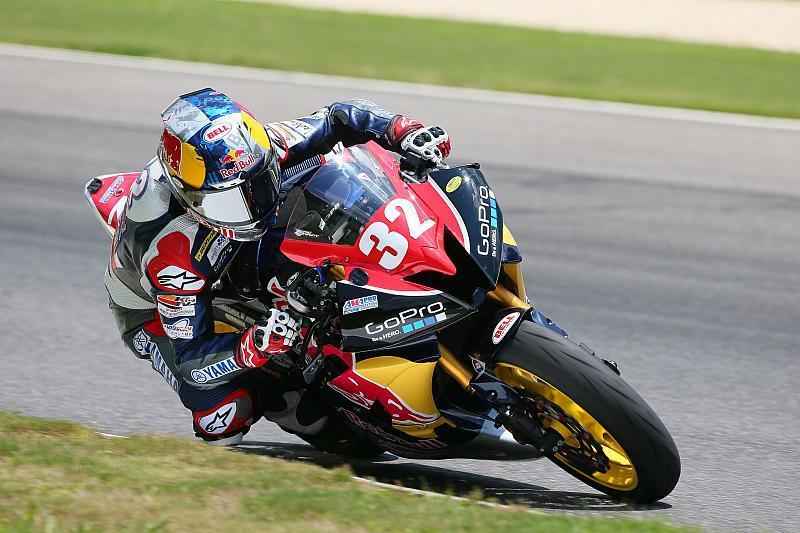
Oleg Pianykh and Luis Quinones split Formula One race wins at the Pirelli/WERA West Presented by Lucas Oils double-header season finale at Las Vegas Motor Speedway.

On Saturday, Pianykh, who took his first WERA West Formula One win earlier in the season at Miller Motorsports Park, led every one of the six laps around the 1.8-mile Classic circuit en route to a 4.388-second margin of victory aboard his Pirelli-shod, Moto-Station-backed Suzuki GSX-R1000.

Chad Lewin recovered from an earlier spill and took his CM Motorsports-backed, Dunlop-shod Yamaha YZF-R6 to second, ahead of Marcel Irnie on his Mobibuff-backed, Dunlop-shod BMW S1000RR.

The newly resurfaced track, along with gusty winds, kept the lap times slower than expected–Pianykh, a two-time UtahSBA King Of The Mountains champion, was unable to crack the 1:20 barrier at a track where the lap record on a literbike is a 1:15.210 held by Jeremy Toye aboard a Kawasaki ZX-10R. Pianykh’s best in the Formula One race was a 1:20.3. Helmut Kohler Jr. finished fourth, ahead of Mario Orozco.

Pianykh also won the A Superbike race on Saturday, while Lewin’s only other finish on Saturday was a 13th in C Superbike. Irnie crashed in the A Superbike race, but recovered to win the A Superstock race.

Sunday’s Formula One race saw Quinones take his CM Motorsports-backed, Bridgestone-shod Yamaha YZR-F6 straight to the front and lead all six laps, turning a best of 1:21.068 en route to a 2.934-second margin of victory over Javelin Broderick and his MV Agusta 675. Irnie finished third, ahead of Orozco.

Broderick, who won the C Superstock race on Saturday, won it again on Sunday, and backed it up with a second in the B Superstock race. Irnie took the A Superbike and A Superstock wins.

RESULTS:

SATURDAY:

MINIS:
1. Cheyenne Covarrubias (Hon 50)
2. Andrew Kenefick (Hon 50)
3. Roni Schuetrum (Hon 50)

C SUPERBIKE EXPERT:
1. Sahar Zvik (Kaw ZX-6R)
2. Brad Saenz (Kaw ZX-6R)
3. Luis Quinones (Yam YZF-R6)
4. Andrew Zabzdyr (Yam YZF-R6)
5. Christopher Carron (Tri 675)
6. Ryan Harper (Yam YZF-R6)

C SUPERBIKE NOVICE:
1. Garrett Johnson (Kaw ZX-6R)
2. David Guerrero (Yam YZF-R6)
3. Andrew Buckland (Suz GSX-R600)
4. Lance Gittinger (Yam YZF-R6)
5. Jamison Woodworth (Yam YZF-R6)

FORMULA ONE EXPERT:
1. Oleg Pianykh (Suz GSX-R1000)
2. Chad Lewin (Yam YZF-R6)
3. Marcel Irnie (BMW S1000RR)
4. Helmut Kohler Jr. (Kaw ZX-10R)
5. Mario Orozco (BMW S1000RR)

FORMULA ONE NOVICE:
1. Robert Perez (BMW S1000RR)
2. Timothy Chin (Kaw ZX-10R)
3. Jeff Semmig (Yam YZF-R1)
4. Michael Weir (BMW S1000RR)
5. Gary Lee Smalz (Hon CBR1000RR)
6. Tim Parchman (Yam YZF-R1)

D SUPERBIKE EXPERT:
1. Jack Baker (Suz 450)

D SUPERBIKE NOVICE:
1. Mike Ripley (Kaw 300R)

E SUPERSTOCK NOVICE:
1. Ruben Casearez (Kaw 250R)
2. Ezra Beaubier (Kaw 250R)

HEAVYWEIGHT TWINS SUPERBIKE EXPERT:
1. Jason Catching (Suz SV650)

B SUPERBIKE EXPERT:
1. Sahar Zvik (Kaw ZX-6R)
2. Luis Quinones (Yam YZF-R6)
3. Brad Saenz (Kaw ZX-6R)
4. Christopher Carron (Tri 675)
5. Ryan Harper (Yam YZF-R6)
6. Robert Pierce (Hon CBR600RR)

B SUPERBIKE NOVICE:
1. David Guerrero (Yam YZF-R6)
2. Jamison Woodworth (Yam YZF-R6)

SRA SIDECARS:
1. Bernard Juchli
2. Heidi Neidhofer
3. Chris Wood
4. Donn Sayre
5. John Wood
6. Phil Wood

D SUPERSTOCK NOVICE:
1. Ruben Casarez (Kaw 250R)
2. Mike Ripley (Kaw 300R)
3. Ezra Beaubier (Kaw 250R)

LIGHTWEIGHT TWINS SUPERBIKE EXPERT:
1. Jason Catching (Suz SV650)
2. Michael Gougis (Suz SV650)

LIGHTWEIGHT TWINS SUPERBIKE NOVICE:
1. Anthony Morrison (Suz SV650)
2. William Catching (Suz SV650)

A SUPERBIKE EXPERT:
1. Oleg Pianykh (Suz GSX-R1000)
2. Steve Zoumaras (Kaw ZX-10R)
3. Sherwick Min (Apr RSV4)
4. Helmut Kohler Jr. (Kaw ZX-10R)
5. Mario Orozco (BMW S1000RR)

A SUPERBIKE NOVICE:
1. John Wagner (Hon CBR1000RR)
2. Michael Weir (BMW S1000RR)
3. Timothy Chin (Kaw ZX-10R)
4. Brian Morris (Yam YZF-R1)
5. Gary Lee Smalz (Hon CBR1000RR)
6. Robert Perez (BMW S1000RR)

CLUBMAN EXPERT:
1. Jack Baker (Suz 450)

CLUBMAN NOVICE:
1. Ruben Casarez (Kaw 250R)
2. Ezra Beaubier (Kaw 250R)

KENNY ANDERSON FORMULA THREE:
1. Gabriel Hernandez (Hon RS125)
2. Peter Yates (Hon RS125)

A SUPERSTOCK EXPERT:
1. Marcel Irnie (BMW S1000RR)
2. Sherwick Min (Apr RSV4)
3. Helmut Kohler Jr. (Kaw ZX-10R)
4. Mario Orozco (BMW S1000RR)

A SUPERSTOCK NOVICE:
1. Michael Weir (BMW S1000RR)
2. Brian Morris (Yam YZF-R1)
3. Gary Lee Smalz (Hon CBR1000RR)
4. David Guerrero (Yam YZF-R6)
5. Jeff Semmig (Yam YZF-R1)
6. Tim Parchman (Yam YZF-R1)

FORMULA TWO EXPERT:
1. Jason Catching (Suz SV650)
2. Gabriel Hernandez (Hon RS125)
3. Peter Yates (Hon RS125)

FORMULA TWO NOVICE:
1. Anthony Morrison (Suz SV650)

C SUPERSTOCK EXPERT:
1. Javelin Broderick (MV 675)
2. Luis Quinones (Yam YZF-R6)
3. Sahar Zvik (Kaw ZX-6R)
4. Andrew Zabzdyr (Yam YZF-R6)
5. Christopher Carron (Tri 675)
6. James Toohey (Kaw ZX-6R)

EZ-UP SHELTERS C SUPERSTOCK NOVICE:
1. Garrett Johnson (Kaw ZX-6R)
2. Andrew Buckland (Suz GSX-R600)

SENIOR SUPERBIKE HEAVYWEIGHT EXPERT:
1. Steve Zoumaras (Kaw ZX-10R)
2. Sherwick Min (Apr RSV4)
3. Mario Orozco (BMW S1000RR)

SENIOR SUPERBIKE HEAVYWEIGHT NOVICE:
1. John Wagner (Hon CBR1000RR)
2. Jeff Semmig (Yam YZF-R1)

SENIOR SUPERBIKE MEDIUMWEIGHT EXPERT:
1. Eric Anderson (Yam YZF-R6)
2. James Toohey (Kaw ZX-6R)
3. John Slee (Yam YZF-R6)
4. Ron Gentile (Tri 675)
5. Tony D’Augusta (Suz GSX-R600)
6. Keith Stie (Yam YZF-R6)

SENIOR SUPERBIKE MEDIUMWEIGHT NOVICE:
1. Lance Gittinger (Yam YZF-R6)
2. Jamison Woodworth (Yam YZF-R6)

B SUPERSTOCK EXPERT:
1. Sahar Zvik (Kaw ZX-6R)
2. Javelin Broderick (MV 675)
3. Christopher Carron (Tri 675)
4. Robert Pierce (Hon CBR600RR)
5. John Slee (Yam YZF-R6)

B SUPERSTOCK NOVICE:
1. Garrett Johnson (Kaw ZX-6R)

SUNDAY:

MINIS:
1. Andrew Kenefick (Hon 50)
2. Roni Schuetrum (Hon 50)

C SUPERBIKE EXPERT:
1. Luis Quinones (Yam YZF-R6)
2. Sahar Zvik (Kaw ZX-6R)
3. Andrew Zabzdyr (Yam YZF-R6)
4. Christopher Carron (Tri 675)
5. Ryan Harper (Yam YZF-R6)
6. Robert Pierce (Hon CBR600RR)

C SUPERBIKE NOVICE:
1. David Guerrero (Yam YZF-R6)
2. Garrett Johnson (Kaw ZX-6R)
3. Andrew Buckland (Suz GSX-R600)
4. Lance Gittinger (Yam YZF-R6)
5. Jamison Woodworth (Yam YZF-R6)

HEAVYWEIGHT TWINS SUPERSTOCK EXPERT:
1. Don MacEwan (Tri 675)

HEAVYWEIGHT TWINS SUPERSTOCK NOVICE:
1. Adam Taylor (Duc 996)

FORMULA ONE EXPERT:
1. Luis Quinones (Yam YZF-R6)
2. Javelin Broderick (MV 675)
3. Marcel Irnie (BMW S1000RR)
4. Mario Orozco (BMW S1000RR)

FORMULA ONE NOVICE:
1. John Wagner (Hon CBR1000RR)
2. Timothy Chin (Kaw ZX-10R)
3. Robert Perez (BMW S1000RR)
4. Michael Weir (BMW S1000RR)
5. Brian Morris (BMW S1000RR)
6. Gary Lee Smalz (Hon CBR1000RR)

D SUPERBIKE EXPERT:
1. Jack Baker (Suz 450)

D SUPERBIKE NOVICE:
1. Mike Ripley (Kaw 300R)

E SUPERSTOCK NOVICE:
1. Ruben Casarez (Kaw 250R)
2. Ezra Beaubier (Kaw 250R)

B SUPERBIKE EXPERT:
1. Sahar Zvik (Kaw ZX-6R)
2. Christopher Carron (Tri 675)
3. Luis Quinones (Yam YZF-R6)
4. Robert Pierce (Hon CBR600RR)
5. Danielle Diaz (Kaw ZX-6R)
6. Luke Luciano (Yam YZF-R6)

B SUPERBIKE NOVICE:
1. Jamison Woodworth (Yam YZF-R6)

SRA SIDECARS:
1. Bernard Juchli
2. Kelly Bell
3. Chris Wood
4. Phil Wood
5. Heidi Neidhofer
6. John Wood

LIGHTWEIGHT TWINS SUPERBIKE NOVICE:
1. Anthony Morrison (Suz SV650)
2. William Catching (Suz SV650)

HEAVYWEIGHT TWINS SUPERBIKE NOVICE:
1. Adam Taylor (Duc 996)

D SUPERSTOCK NOVICE:
1. Ruben Casarez (Kaw 250R)
2. Ezra Beaubier (Kaw 250R)

A SUPERBIKE EXPERT:
1. Marcel Irnie (BMW S1000RR)
2. Steve Zoumaras (Kaw ZX-10R)
3. Sherwick Min (Apr RSV4)
4. Mario Orozco (BMW S1000RR)

A SUPERBIKE NOVICE:
1. John Wagner (Hon CBR1000RR)
2. Robert Perez (BMW S1000RR)
3. Timothy Chin (Kaw ZX-10R)
4. Michael Weir (BMW S1000RR)
5. Brian Morris (BMW S1000RR)
6. Gary Lee Smalz (Hon CBR1000RR)

KENNY ANDERSON FORMULA THREE:
1. Gabriel Hernandez (Hon RS125)
2. Nicholas Swensgard (Hon RS125)
3. Peter Yates (Hon RS125)

CLUBMAN NOVICE:
1. Ruben Casarez (Kaw 250R)
2. Ezra Beaubier (Kaw 250R)

CLUBMAN EXPERT:
1. Jack Baker (Suz 450)

A SUPERSTOCK EXPERT:
1. Marcel Irnie (BMW S1000RR)
2. Sherwick Min (Apr RSV4)

A SUPERSTOCK NOVICE:
1. Michael Weir (BMW S1000RR)
2. David Guerrero (Yam YZF-R6)
3. Brian Morris (Yam YZF-R1)
4. Gary Lee Smalz (Hon CBR1000RR)
5. Tim Parchman (Yam YZF-R1)
6. Jose Guillermo Bruce (Suz GSX-R1000)

FORMULA TWO EXPERT:
1. Gabriel Hernandez (Hon RS125)
2. Nicholas Swensgard (Hon RS125)
3. Peter Yates (Hon RS125)

FORMULA TWO NOVICE:
1. Anthony Morrison (Suz SV650)

C SUPERSTOCK EXPERT:
1. Javelin Broderick (MV 675)
2. Sahar Zvik (Kaw ZX-6R)
3. Andrew Zabzdyr (Yam YZF-R6)
4. Christopher Carron (Tri 675)
5. Thiago Leal (Yam YZF-R6)
6. Robert Pierce (Hon CBR600RR)

EZ-UP SHELTERS C SUPERSTOCK NOVICE:
1. Garrett Johnson (Kaw ZX-6R)
2. Andrew Buckland (Suz GSX-R600)

SENIOR SUPERBIKE HEAVYWEIGHT EXPERT:
1. Steve Zoumaras (Kaw ZX-10R)
2. Sherwick Min (Apr RSV4)

SENIOR SUPERBIKE HEAVYWEIGHT NOVICE:
1. Jeff Semmig (Yam YZF-R1)

SENIOR SUPERBIKE MEDIUMWEIGHT EXPERT:
1. Ryan Harper (Yam YZF-R6)
2. John Slee (Yam YZF-R6)
3. Thomas Bednash (Yam YZF-R6)
4. Tony D’Augusta (Suz GSX-R600)
5. Ron Gentile (Tri 675)
6. Keith Stie (Yam YZF-R6)

SENIOR SUPERBIKE MEDIUMWEIGHT NOVICE:
1. Jamison Woodworth (Yam YZF-R6)
2. Lance Gittinger (Yam YZF-R6)

B SUPERSTOCK EXPERT:
1. Sahar Zvik (Kaw ZX-6R)
2. Javelin Broderick (MV 675)
3. Christopher Carron (Tri 675)
4. Robert Pierce (Hon CBR600RR)

B SUPERSTOCK NOVICE:
1. David Guerrero (Yam YZF-R6)
2. Garrett Johnson (Kaw ZX-6R)

Macau GP Teaser 2014

0

Macau GP Teaser 2014. Brandon Cretu and Mark Miller at back at it again for the Macau GP.

Kawasaki’s $25,000 Ninja H2 Debuts At EICMA Show In Milan

2015 KAWASAKI NINJA H2™

Built Beyond Belief

The launching point for the development of the Ninja H2™ motorcycle was a strong desire to offer riders something they had never experienced before. Convinced that an extraordinary riding experience would not be found by merely building on the performance of existing models, the design team committed to developing the “ultimate motorcycle” from a clean slate.

The bike needed to deliver intense acceleration and ultra-high top speed, coupled with supersport-level circuit performance. To realize this goal, help was enlisted from other companies within the Kawasaki Heavy Industries, Ltd (KHI) group, precipitating an unprecedented level of collaboration.

Ninja H2 development pursued two paths. The first was the Ninja H2™R, which is a closed-course model that allowed the unadulterated pursuit of performance without the limitations of street homologation. This motorcycle is followed by the Ninja H2 street model, which is based closely on the H2R but meets all market regulations. The results are incredible, with both models offering a sensory experience surpassing anything else that riders can find today.

A supercharged engine closely based on the same powerplant as the Ninja H2R powers the Ninja H2. High output notwithstanding, the compact design is on par with power units found in supersport liter-class models. The key to achieving this incredible performance lies in the supercharger – a motorcycle-specific unit designed completely in-house with technology from the Gas Turbine & Machinery Company, Aerospace Company and Corporate Technology Division.

HIGHLIGHTS OF THE 2015 KAWASAKI NINJA H2™:

-Street model based on closed-circuit Ninja H2R

-998cc four-cylinder engine fitted with Kawasaki supercharger for intense acceleration

-Supercharger uses planetary gears, spins at up to 130,000rpm and develops up to 20.5psi boost pressure

-Dog-ring transmission allows fast shifting and works with standard quick shifter

-Bodywork developed with Kawasaki Aerospace Company to generate downforce

-Kawasaki River Mark used to indicate combined Kawasaki Group technology

-Trellis frame used for first time to provide strength, controlled flex and air circulation

-Single-sided swingarm used for first time, mounted to engine as a stressed member

-KYB® AOS-II Air-Oil Separate cartridge fork, adjustable KYB rear shock

-330mm front discs with four-piston Brembo® calipers

-Multi-mode traction control, launch control, engine braking control, ABS and a quick shifter

KHI Group’s technology was not limited to the supercharger. Advanced technological know-how shared from other Group companies is found throughout the innovative engine and chassis design. For example, the aerodynamic mirror mounts were designed with assistance from Kawasaki’s Aerospace Company to add stability for high-speed riding. This highlights the collaboration, and the level of technology poured into the model was the reason the Kawasaki River Mark* is prominently displayed on the upper cowl.

When it came time to name this model, “Ninja®” was an obvious choice because it is synonymous with Kawasaki performance, and is shared by legendary models over the years. It is also named for another iconic model: the “H2” (also known as the 750SS Mach IV in some markets), which was powered by a two-stroke 748cc triple and boasted the sort of intense acceleration that made it a worldwide sensation. For a motorcycle that delivers supersport-level handling coupled with the kind of acceleration no rider has experienced before, Ninja H2 was the perfect name. And so Kawasaki is again ready to unleash a new sensation upon the world.

*The Kawasaki River Mark is a long-time symbol of KHI dating back to the 1870s. As a policy, its use on products is limited to models with historical significance. But permission was granted for the Ninja H2 to use this special symbol.

THE QUEST FOR POWER

In order to offer intense acceleration, it was essential that the engine was able to produce big power. While a large-displacement engine could easily provide high output, the engineers preferred it to be compact to help ensure a lightweight, compact motorcycle.

Using a supercharged engine enabled these engine design requirements to be met. Aside from minor differences in the engine, as well as an intake and exhaust system tailored for street use to meet noise and emissions standards, the supercharged engine is essentially the same as the closed-course Ninja H2R. It delivers intense acceleration unlike anything you can experience on a naturally aspirated bike. Designed in-house, the immense potential of the compact, highly efficient engine is a testament to the technology possessed by the KHI Group.

SUPERCHARGED 998cc IN-LINE FOUR

KHI-DESIGNED SUPERCHARGER

The supercharger used by the Ninja H2 was designed by Kawasaki motorcycle engineers with assistance from other companies within the KHI Group, namely the Gas Turbine & Machinery Company, Aerospace Company, and Corporate Technology Division. Designing the supercharger completely in-house allowed it to be developed to perfectly match the engine characteristics of the Ninja H2. The highly efficient, motorcycle-specific supercharger was the key to achieving the maximum power and intense acceleration the engineers wanted.

•One of the greatest benefits of designing the supercharger in-house and tailoring its design to match the character of the Ninja H2 engine was that engineers were able to achieve high-efficiency over a wide range of conditions – something that would not have been possible by simply using an aftermarket automotive supercharger.

•The importance of high efficiency in a supercharger is so that, as air is compressed, power-robbing heat gain is minimal. And while many superchargers are able to offer high-efficiency operation in a limited range of conditions, the KHI-designed supercharger for the Ninja H2 offers high efficiency over a wide range of pressure ratios and flow rates – so it is over a wide range of engine- and vehicle speeds. This wide range of efficient operation (similar to having a wide powerband) translates into strong acceleration.

•The supercharger’s high efficiency and minimal heat gain meant an intercooler was unnecessary, allowing savings in both weight and space.

•The supercharger is a centrifugal-type unit – ideal for high-RPM performance – with a cast aluminium housing.

•The unit is located centrally, behind the cylinder bank, in the best position to evenly distribute compressed air to all four cylinders.

•The supercharger uses engine oil for lubrication. By not requiring an independent oil source, it contributed to the compact, lightweight design.

•The supercharger is driven by a planetary gear train, which runs off the crankshaft. Designing the gear train using technology from Kawasaki’s Aerospace Company resulted in a compact unit with minimal power loss.

•The gear train increases the impeller speed up to 9.2x the crank speed (1.15x step gear with an 8x planetary gear). This means at a maximum engine speed of approximately 14,000rpm, the impeller shaft is spinning at almost 130,000rpm.

•The impeller is formed from a forged aluminium block using a 5-axis CNC machine to help ensure precision and durability. The 69mm impeller features six blades at the tip, expanding to 12 blades at the base. Grooves etched into the blade surfaces help direct the airflow.

•The impeller’s pumping capacity is more than 200 liters/second (measured at atmospheric pressure), with intake air reaching speeds of up to 100m/s. After passing through the supercharger, air pressure is increased to as much as 2.4x atmospheric pressure (35psi).

POWER UNIT DESIGNED FROM THE CLOSED-COURSE NINJA H2R

Despite its familiar in-line four configuration, the Ninja H2 engine is loaded with technology developed specifically for this supercharged engine: some new, others with know-how from the Kawasaki Group.

Every component of the engine was chosen to achieve a certain function. In order to accommodate the higher air pressure from the supercharger, as well as to help ensure reliability of the closed-course Ninja H2R, the entire engine was designed to be able to handle stresses 1.5-2x greater than a naturally aspirated liter-class engine. In fact, aside from its camshafts, head gaskets and clutch, the engine is the same as the unit found in the Ninja H2R.

•The combustion chamber design is complemented by flat piston crowns. The shape, inspired by the pistons used in the Green® Gas Engine developed by Kawasaki’s Gas Turbine & Machinery Company, also contributes to the engine’s anti-knock performance.

•While the intake valves are stainless steel, the exhaust valves needed to be able to withstand the supercharged engine’s high-temperature exhaust gases. So the exhaust valves are formed from two materials that are friction-welded at the center: Inconel – an extremely heat-resistant alloy ¬– is used for the valve head and lower half of the stem; while heat-resistant steel is used for the upper half. The stems are tapered, varying in diameter from 4.5-5mm.

•A dummy head is used during the cylinder honing process. The more precise circular and cylindrical shape that results allows the use of low-tension piston rings, which help reduce mechanical loss.

•The pistons are cast, since they offer better strength than forged pistons under the very high temperatures generated by the high-performance supercharged engine. A unique casting process (similar to forging) sees unnecessary material removed, with hollows created to achieve the ideal thickness. This produces a piston weight on par with forged pistons.

DOG-RING TRANSMISSION

To facilitate smooth, quick shifting, a dog-ring-type transmission was selected. This is similar to the kind of transmission commonly found in MotoGP™ or Formula 1®, and was developed with feedback from the Kawasaki Racing Team.

•Unlike a standard motorcycle transmission, where the shift forks slide the gears into position, the gears remain in place in a dog-ring transmission. Only the dog rings move, sliding into position to engage the desired gear.

•Because the dog rings are lighter than transmission gears, this type of transmission offers a significantly lighter shift effort. Shift feel is also improved, and a much quicker shift is possible, facilitating quicker acceleration.

HYDRAULIC CLUTCH & BACK-TORQUE LIMITER

A high-quality hydraulic clutch offers less maintenance and helps to ensure that the initial bite point can be maintained. By using Brembo® components, superb linearity and smooth actuation are further benefits.

•Brembo parts are used for both the clutch lever’s radial-pump master cylinder and the clutch release mechanism. They receive extra attention from Brembo before being shipped to Kawasaki. Each part is examined and adjusted to help eliminate any ineffective (idle) stroke, resulting in superb control.

•The back-torque limiter contributes to stability by helping prevent wheel hop when downshifting. The back-torque limiter is also adjustable.

MAXIMIZING AIRFLOW EFFICIENCY

To maximize the performance of the supercharged engine, airflow efficiency was of paramount importance. How air enters the supercharger, how the compressed air enters the engine, and how the combusted air/fuel mixture is discharged were all carefully analyzed for maximum efficiency to help ensure the airflow characteristics would create the desired engine character.

RAM AIR INTAKE

•Air supplied to the supercharger enters via a single ram air intake in the left side of the upper cowl. The total frontal area is approximately 3x the area of the supercharger inlet.

•A ram air duct was designed to take the fresh air to the supercharger in as straight a line as possible. Its shape was created to match the impeller characteristics, further contributing to the engine’s output.

•For optimum efficiency for the Ninja H2 engine, the air cleaner is positioned directly in front of the supercharger.

ALUMINIUM INTAKE CHAMBER

•The intake chamber has a large volume (6 liters), and is ideally shaped for high efficiency and engine output.

•Being constructed from rigid aluminium offers two advantages:

1) Aluminium offers excellent surface heat dissipation, helping to keep the intake air cool;

2) The rigid structure helps to ensure an airtight seal for the pressurized air at approximately 2-bar (29.4psi).

•Inside the intake chamber, newly developed Kawasaki technology contributes to the engine’s high performance. The top injectors spray fuel onto stainless steel mesh positioned over the intake funnels. This has an ordering effect, creating a more uniform air/fuel mixture as the fuel is drawn into the intake funnel. The mesh also promotes fuel misting, which helps cool the intake air and increases combustion chamber efficiency.

ELECTRONIC THROTTLE VALVES

Kawasaki’s fully electronic throttle actuation system enables the ECU to control the volume of fuel (via fuel injectors) and air (via throttle valves) delivered to the engine. Ideal fuel injection and throttle valve position results in smooth, natural engine response and the ideal engine output. The system also makes a significant contribution to reduced emissions.*

* The system enables more precise control of KTRC (Kawasaki Traction Control), and facilitates implementation of other electronic systems like KLCM (Kawasaki Launch Control Mode) and Kawasaki Engine Braking Control – see below.

INTAKE & EXHAUST PORTS, CAMSHAFT PROFILES

•The intake ports are polished to help ensure smooth air/fuel flow and minimize resistance.

•Straight exhaust ports – one for each exhaust valve – do not converge in the cylinder head. The straight-line design enables the most efficient removal of air from the combustion chamber and also contributes to efficient combustion chamber filling.

•Camshaft profiles were optimized for the Ninja H2 engine and are tuned to offer strong low-speed torque.

EXHAUST SYSTEM

•The entrance to the header pipes is oval to match the two exhaust ports per cylinder. Partly formed by hydroforming, each header pipe tapers from an oval to a round cross-section. The collector pipes are also hydroformed.

•Designed to suit the output and characteristics of the Ninja H2 engine, the stainless steel header pipes have a 45mm diameter. For the ideal exhaust pressure, all four header pipes are connected.

•The exhaust system also includes a compact under-engine pre-chamber, with double-wall construction for rigidity. This construction helps reduce radiating noise and high frequency exhaust noise.

•The single right-side silencer ensures noise and exhaust gas emissions meet market regulations.

KEEPING THE ENGINE COOL

Cooling performance can be a substantial limiting factor for engine output, so maximizing the cooling efficiency was a key consideration when designing the engine. In addition to helping ensure that intake air remain as cool as possible, the heat generated by the high-output engine needs to be dissipated, and engine components themselves need to be kept cool to help ensure efficient operation. The extensive pursuit of cooling performance led to a highly complex engine layout, both for the lubrication system (oil is used for cooling as well as lubrication) and the cooling system.

CYLINDER HEAD

A number of considerations were given to the aluminum cylinder head design to provide the necessary cooling performance. The large coolant passageways result in excellent cooling for the combustion chamber.

•The water jacket extends between the twin exhaust ports of each cylinder, while large coolant passageways around the spark plug holes and valve seat areas offer superior cooling. The steel spark plugs and valve seats have a greater tendency to retain heat than the aluminum cylinder head, so cooling them is very important and makes a big difference to temperature control.

OIL JETS

In the interest of keeping the engine compact and simple, a single lubrication system provides cooling oil for the engine components, supercharger and the transmission.

•Oil jets lubricate the supercharger chain in two places – at the contact points where the chain meets the upper and lower sprockets.

•In addition to the two oil jets, the supercharger drivetrain’s lower gear has an oil passage.

•Inside the engine, there are two oil jets per cylinder to ensure the hot pistons are effectively cooled.

•Transmission oil jets (used for the first time in a Kawasaki motorcycle) enable a compact transmission with high durability.

LUBRICATION SYSTEM COMPONENTS

Because the lubrication system is servicing so many components, oil volume is 5.0 liters (1.3 gallons) – that is about 35% more than usually seen in a naturally aspirated engine of the same displacement.

RADIATOR

•The radiator’s size and capacity is on par with those found on current liter-class supersport motorcycles, but it offers superior cooling performance because it flows approximately 1.5x more air than other bikes. This was found to be more effective than simply increasing the size of the radiator.

•Airflow is facilitated by the compact side-cowl design, and leaving the lower part of the engine open (except for the small under cowls) to the air was designed to extract hot air.

LIQUID-COOLED OIL COOLER

•A liquid-cooled oil cooler adds to the extremely high cooling performance necessary for the high output engine.

HIGH-SPEED STABILITY & LIGHT HANDLING

Designed for the performance parameters of the closed-course Ninja H2R and shared with the street-going Ninja H2, the objectives for the chassis were to provide superb motorcycle composure at ultra-high speeds, while offer cornering performance that allows the rider to enjoy riding on a circuit, and finally to be very accommodating to the rider. Ordinarily, high-speed stability can easily be achieved with a long wheelbase, but a shorter wheelbase was selected to achieve the compact overall package and sharp handling that were desired. So the frame needed to not only be stiff, but also to be able to absorb external disturbances, which could otherwise unsettle the chassis when encountered at high speed. A trellis frame provided both the strength to harness the incredible power of the supercharged engine, and the balanced flex to achieve stability for high-speed riding.

INNOVATIVE CHASSIS DESIGN

TRELLIS FRAME

Using a trellis frame offered an elegant, lightweight solution to meeting the performance requirements for the chassis of the closed-course Ninja H2R. Able to harness the massive power of its engine, it has a balance of stiffness and flexibility that enables a high level of stability while being able to handle external disturbances at high speeds. Its open design also helps dissipate heat generated by the supercharged engine.

•Development of the trellis frame made good use of the latest analysis technology and substantial test rider feedback.

•Pipe diameter, thickness and the bend of each piece of the trellis frame were carefully selected to obtain the necessary stiffness for each part of the frame. The trellis pieces are primarily made from high-tensile steel.

SWINGARM MOUNTING PLATE

This innovative new chassis mechanism allows the engine to act as part of the frame.

•The swingarm mounting plate bolts to the back of the engine. The swingarm pivot shaft goes through this plate, essentially allowing the swingarm to be mounted directly to the engine.

•Thanks to the swingarm mounting plate, the frame does not need to use crossmembers for stability. This contributes to the frame’s low weight.

SINGLE-SIDED SWINGARM

The Ninja H2 and H2R feature Kawasaki’s first single-sided swingarm.

•Having a single-sided swingarm allows the exhaust silencer to be mounted closer to the bike centerline, providing a high bank angle for sporty cornering.

CHASSIS GEOMETRY

To ensure fun at high speeds as well as on the racing circuit, a compact package was desired. Therefore, the chassis geometry is very similar to that of a liter-class supersport motorcycle.

FRONT SUSPENSION

KYB® AOS-II racing suspension makes its debut on a street bike.

•Based on the Air-Oil Separate cartridge fork that was developed for motocross racing.

•Designed for low friction, the 43mm front fork offers superb action, with a smooth initial action followed by strong damping at the end of the stroke.

•As the suspension works, a large 32mm free-floating piston at the bottom of the oil-damping cartridge pumps oil up to a sealed area between the inner and outer tubes. The oil in this area provides a friction-reducing film on which the tubes can slide against each other, resulting in an extremely smooth action.

REAR SUSPENSION

Fully adjustable KYB rear suspension offers superb stability.

•The top of the rear shock mounts to the swingarm mounting plate. Again, doing away with the need for frame crossmembers.

•The bottom of the rear shock is mounted via a revised Uni-Trak® linkage that offers excellent feedback for rear tire grip. The new linkage, situated below the swingarm, also mounts to the swingarm mounting plate.

BRAKES

Given the high-speed potential of the Ninja H2, the brakes chosen were the best available for a production motorcycle. Special tuning helped ensure that all play in the lever was removed from the system, so that when the brakes are applied they respond immediately.

•A pair of massive 330mm Brembo semi-floating discs, with a thickness of 5.5mm, delivers superb braking force.

•The brake discs have grooves running down the center of the outer edge to increase the discs’ surface area for greater heat dissipation.

•Dual radial-mount Brembo cast aluminum monobloc calipers grip the front discs. The rigid, opposed four-piston calipers with 30mm pistons contribute to the superb braking force of the Ninja H2, as well as a high-quality image.

•A Brembo radial-pump master cylinder and reservoir receive extra attention before being shipped to Kawasaki. Each part is examined and adjusted to help eliminate any play in the lever stroke.

•A large 250mm disc generates strong braking force at the rear.

ORIGINAL WHEEL DESIGN

The cast aluminum wheels were designed specifically for the Ninja H2 and H2R.

•The star-pattern five-spoke wheel design was selected based on the optimum balance of rigidity for high-speed performance.

•The analysis technology used in the wheel development comes from Kawasaki’s World Superbike involvement.

•Knurling on the inside of the rear wheel rim helps prevent tire slipping on the wheel that could be caused by the massive torque generated by the engine.

HIGH-SPEED TIRES

To help ensure sufficient tire durability when riding at high speed, high-performance tires must be used.

•A massive 200mm rear tire transmits the Ninja H2’s power to the tarmac.

•The Ninja H2 is able to use high-performance street tires.

SHAPED FOR SPEED

As speed increases, wind resistance increases exponentially. To enable high-speed operation, a combination of high power and slippery aerodynamics was needed. With power requirements taken care of by the supercharged engine, the next step was to design bodywork that provides both minimal drag and good control when riding at high speed. Assistance from Kawasaki’s Aerospace Company was enlisted in creating the aerodynamically sculpted bodywork to provide maximum aerodynamic efficiency.

AERODYNAMICS

AERODYNAMICALLY DESIGNED BODYWORK

It is no accident that when viewed from the side, the Ninja H2 and H2R do not have the aggressive forward-canted stance of most modern supersport motorcycles. While supersport bikes use their front-leaning attitude to aid quick steering, at the speeds for which the closed-course Ninja H2R was designed, such a posture would create drag, which would hinder top speed potential. Therefore, the H2 stance is very neutral, almost flat – like a Formula 1 car – to make the body as aerodynamically sleek as possible.

•The aerodynamically shaped upper cowl uses lips and lines to direct airflow over its surface.

•The upper cowl locates the ram air intake in the most efficient position.

•Compact side cowls and under cowls were designed to assist heat dissipation.

•The rear cowl has an extremely compact three-piece design. The center portion is taller, creating an aerodynamic form that helps smooth airflow as it passes the rider. Wind is also able to pass between the center and side pieces, further reducing air resistance.

GENERATING DOWNFORCE

In order to maintain both straight-line stability and the ability to change direction while running at high speed, the Ninja H2 features a number of aerodynamic devices to help ensure the front wheel has strong contact with the ground.

•The design of the upper cowl incorporates a chin spoiler. Rather than being a cosmetic flourish, it produces downforce that contributes to high-speed stability.

•Further contributing to high-speed stability, the Ninja H2 features mirror mounts with airfoil cross-sections. Like the wings on the closed-course Ninja H2R, the mounts were also designed by Kawasaki’s Aerospace Company. The trailing edges are equipped with Gurney flaps that increase the effectiveness of the simple airfoil shape, allowing greater downforce to be generated by the small surface.

MAN / MACHINE INTERFACE

Since the Ninja H2 was not intended to be a pure race bike, it did not need the spartan accommodations found on most purpose-built supersport models. As a result, the Ninja H2’s man / machine interface enables riders to enjoy the bike’s performance with a degree of comfort. While the riding position, ergonomics and cockpit layout were designed first and foremost to put the rider in the best position to control this amazing machine, the impression from the rider’s perspective is not one of austerity, but is more about quality, high-tech control and the impeccable fit and finish.

SEATING FOR ONE

RIDING POSITION & ERGONOMICS

With the kind of riding the Ninja H2 was designed for, and a desire for a compact package resulted in a riding position similar to that of a supersport bike without being quite as aggressive. As enjoyment of the intense acceleration and high-speed capability was the first priority, a solo seat for the rider is the only seating provided.

•The riding position was designed for high speed and circuit riding. The rider triangle is similar to that of the Ninja® ZX™-10R motorcycle, but more relaxed.

•To help support the rider during intense acceleration, hip-supporting pads flank the rear of the seat. The hip support is adjustable 15mm backward to suit the rider’s size.

INSTRUMENTATION & CONTROLS

The advanced, high-tech design of the instrumentation conveys the image of piloting a fighter jet. Handlebar control switches put all mode selection and display options at the rider’s fingertips.

•The new instrumentation design combines a full digital LCD screen with an analog-style tachometer.

•The LCD screen uses a black / white reverse display (white characters on a black background), contributing to the high-quality image.

•In addition to the digital speedometer and gear position indicator, display functions include: odometer, dual trip meters, current mileage, average mileage, fuel consumption, coolant temperature, boost indicator, boost (intake air chamber) temperature, stopwatch (lap timer), clock and the Economical Riding Indicator.

•The tachometer design uses an actual needle, but the black dial “face” looks blank until engine speed increases. Backlit RPM numbers light up to chase the tachometer needle as it moves around the dial.

•Compact new switch design allows all instrument functions to be controlled from the handles.

ELECTRONIC RIDER SUPPORT

Complementing the Ninja H2’s incredible engine and chassis performance, advanced electronics work behind the scenes to provide rider support. Depending on rider preference, many of the systems may be turned off. And while the high-performance engine was designed to be accommodating even without the benefit of rider aids, when electing to fully experience the Ninja H2’s intense acceleration or high-speed potential, these systems are available to provide an extra degree of rider confidence.

ENGINE & CHASSIS MANAGEMENT SYSTEMS

KTRC (KAWASAKI TRACTION CONTROL)

The new KTRC system used on the Ninja H2 combines the best elements of Kawasaki’s earlier traction control systems. Multi-level modes offer riders a greater number of settings to choose from, with each mode providing a different level of intrusion to suit riding conditions and rider preference. And all modes are designed to manage output when sudden wheel slip occurs. The new system offers both enhanced sport riding performance and the peace of mind to negotiate slippery surfaces with confidence.

•Riders can choose from three modes, each offering a progressively greater level of intrusion. Each of these modes also has three rider-selectable levels, adding more or less intrusion (rider preferences for each mode are programmable for on-the-move selection), giving a total of nine possible settings. Riders may also elect to turn the system off.

•Mode 1 is for the circuit, Mode 2 for the street, and Mode 3 for wet pavement conditions. A Rain Mode is also available, as outlined below.

•Using complex analysis, the system is able to predict when traction conditions are about to become unfavorable. By acting before slippage exceeds the range for optimum traction, it means that drops in power can be minimized, resulting in smoother operation.

•Rain Mode can be turned on and off independently from KTRC. Activating Rain Mode sets KTRC to Mode 3+, and limits power output, torque and response. Similar to a Low Power setting, maximum engine output is less than 50% of full power, with a gentler throttle response.

KLCM (KAWASAKI LAUNCH CONTROL MODE)

Designed to assist the rider by optimizing acceleration from a stop, KLCM electronically controls engine output to prevent wheelspin and minimize wheelies when launching.

•Riders can choose from three modes, each offering a progressively greater level of intrusion. Each mode allows the rider to launch from a stop with the throttle held wide open.

KAWASAKI ENGINE BRAKE CONTROL

The system allows riders to select the amount of engine braking they prefer.

•When the system is activated (by selecting “LIGHT” in the Engine Braking settings), the engine braking effect is reduced, providing less interference when riding on the circuit.

KIBS (KAWASAKI INTELLIGENT ANTI-LOCK BRAKE SYSTEM)

Kawasaki’s supersport-style ABS is standard equipment on the Ninja H2. This is based on the same system used on the Ninja ZX-10R, with programming and settings revised to suit the performance parameters of the Ninja H2.

•High-precision brake pressure control enables the system to avoid reduced brake performance due to excessive pressure drops, allows lever feel to be maintained when KIBS is active, and helps ensure ABS pulses feel smooth (not heavy).

•High-precision brake pressure control also offers a number of sport riding benefits:

1. Rear lift suppression

2. Minimal kickback during operation

3. Accounts for back-torque

KQS (KAWASAKI QUICK SHIFTER)

Ninja H2 is the first Kawasaki motorcycle to be fitted with a standard quick shifter.

•Complementing the engine’s strong power and the dog-ring transmission, a contactless-type quick shifter enables rapid upshifts for seamless acceleration.

ÖHLINS ELECTRONIC STEERING DAMPER

Unlike a mechanical steering damper – in which the settings, once fixed, must cover all riding conditions and speeds – the damping characteristics are changed electronically, according to vehicle speed, and the degree of acceleration or deceleration.

At low speeds, the settings were chosen so that damping does not interfere with the bike’s intrinsic lightweight handling. At high speeds, damping increases to provide enhanced stability.

•Kawasaki’s electronic steering damper was developed with Öhlins, one of the most popular and respected steering damper manufacturers.

•The electronic steering damper provides just the right amount of damping based on what the bike is doing. Using input from the rear wheel speed sensor (provided via the engine ECU), the electronic steering damper’s ECU determines the vehicle speed as well as the degree the bike is accelerating or decelerating.

STYLING & CRAFTSMANSHIP

Wanting to ensure a bold design worthy of a model that carries both the “Ninja” and “H2” names, the prime styling concept for the Ninja H2 was “Intense Force” design. As a flagship for the Kawasaki brand, it needs to have presence, and styling that reflects its incredible performance. But the design is much more than cosmetic. While its edged styling certainly looks the part, the Ninja H2 also possesses a functional beauty: each piece of its bodywork was aerodynamically sculpted to enhance high speed stability; the cowling design also maximizes cooling performance and heat dissipation, aiding the engine’s incredible output; and the ram air duct is ideally positioned to bring fresh air to the supercharger.

More than any Kawasaki motorcycle to date, the Ninja H2 is a showcase of craftsmanship, build quality and superb fit and finish – right down to the high-tech mirror-like paint specially developed for this model.

INTENSE FORCE DESIGN

STYLING & CRAFTSMANSHIP DETAILS

•Machined surfaces on the wheel spokes and painted rims contribute to a high-quality finish.

•High-level attention to detail is evident in the numerous machined fastener designs (such as the steering stem and rear hub nuts).

•Welding bead quality for the trellis frame is uniformly high, contributing to the Ninja H2’s superb fit and finish. Depending on the weld, some are efficiently and precisely welded by Kawasaki robots, while others are welded by expert Kawasaki craftsmen.

LIGHTING EQUIPMENT

Ninja H2 is equipped with all the lights needed for street-legal operation. And with the exception of the bulb illuminating the license plate, all lighting equipment on the Ninja H2 uses LEDs.

•The bright, compact LED headlamp is positioned low, at the front of the upper cowl, contributing to the “Intense Force” design.

•The design of the LED front position lamps brings to mind the fangs of a predator.

•The elegant LED tail light is flanked by surface-emitting LED position lamps.

•New LED rear turn signals designs feature an inner lens, surface texturing and surface-emitting LEDs that contribute to the bike’s high-quality image.

HIGH-TECH PAINT

The Kawasaki original silver mirror-like paint used on the Ninja H2 – known as Mirror Coated Black – was developed by Kawasaki specifically for motorcycles. The highly reflective surface adds to the bike’s stunning design.

•In the shade, the paint appears black, but once in the sunlight its highly reflective surface takes on the appearance of the surrounding scenery. The stark difference in the way the paint appears in the light and shade emphasizes the beautiful curvature of the bike’s sculpted bodywork.

•While this kind of paint is similar in appearance to what has been used by top custom builders, this is the first time it has been used on a mass-production vehicle in either the automotive or motorcycle industries. Strict Kawasaki quality control measures help to ensure a long-lasting finish.

•The highly reflective surface is created by inducing a silver mirror-like reaction (a chemical reaction between a solution of silver ions and a reducing agent) that forms a layer of silver. This silver (Ag) layer is what creates the paint’s glass-like metal appearance. Compared to candy paints, which use aluminum flakes to generate a sparkling effect, the Ag layer appears as a uniform metallic surface.

•In the shade the Ag layer is translucent, allowing the base coat color to show through. This gives the paint a deep, three-dimensional quality.

•While the multiple layers of paint on typical production vehicles are applied by robot painters, each layer of the paint on the Ninja H2 – from primer to clearcoat – is carefully finished by hand by Kawasaki craftsmen to ensure a flawless, lustrous surface. Twice the layers of clearcoat (two on standard pieces, four on pieces with decals) adds to the high-quality finish.

•The paint on the fuel tank is finished with a UV coat (the only layer where robot painters are used) to protect the tank’s brilliant finish.

KAWASAKI RIVER MARK

Special permission was obtained to use the River Mark on the Ninja H2. Its use is reserved for models of historical significance.

HIGH-PRECISION PRODUCTION

Unlike a regular mass-production model, the high-precision production of the Ninja H2 requires greater hands-on participation by skilled Kawasaki craftsmen. So each step, from metalworking, treatment, welding and painting to assembly, fine-tuning and inspection is carefully attended to create a product of superior quality. Within Kawasaki’s Akashi Factory, production takes place in an area dedicated exclusively to the Ninja H2 motorcycle.

COLOR

The Kawasaki Ninja H2 is only available in its very special Mirror Coated Black paint.

ORDERING INFORMATION

The Kawasaki Ninja H2R and H2 are limited-release production motorcycles, available for a short time in select markets. In order to reserve one of the world’s first supercharged production streetbikes, make a deposit at your local authorized Kawasaki dealer no later than December 19, 2014. Reservations will be taken on a first-come, first-served basis and are secured only with a deposit.

ABOUT KAWASAKI

Kawasaki Heavy Industries, Ltd. (KHI) started full-scale production of motorcycles over a half century ago. The first Kawasaki motorcycle engine was designed based on technical know-how garnered from the development and production of aircraft engines, and Kawasaki’s entry into the motorcycle industry was driven by the company’s constant effort to develop new technologies. Numerous new Kawasaki models introduced over the years have helped shape the market, and in the process have created enduring legends based on their unique engineering, power, design and riding pleasure. In the future, Kawasaki’s commitment to maintaining and furthering these strengths will surely give birth to new legends.

Kawasaki Motors Corp., U.S.A. (KMC) markets and distributes Kawasaki motorcycles, ATVs, side x sides, and Jet Ski® watercraft through a network of almost 1,200 independent retailers, with close to an additional 7,400 retailers specializing in general purpose engines. KMC and its affiliates employ nearly 3,100 people in the United States, with approximately 300 of them located at KMC’s Irvine, California headquarters.

Kawasaki’s tagline, “Let the good times roll.™”, is recognized worldwide. The Kawasaki brand is synonymous with powerful, stylish and category-leading vehicles. Information about Kawasaki’s complete line of powersports products and Kawasaki affiliates can be found on the Internet at www.kawasaki.com.

# # #

2015 Kawasaki Ninja H2™ Specifications*

Ninja H2

Engine Liquid-cooled, 4-stroke in-line four

Displacement 998cc

Bore x Stroke 76 x 55mm

Compression Ratio 8.5:1

Fuel System Fuel injection: 50mm x 4 with dual injection

Intake System Kawasaki supercharger

Cooling System Water-cooled

Lubrication Forced lubrication, wet sump with oil cooler

Ignition Digital

Transmission 6-speed, return, dog-ring

Final Drive Chain

Frame Type Trellis, high-tensile steel, with swingarm mounting plate

Rake/Trail 24.4° / 4″

Fuel Capacity 4.5 gallons

Front Suspension / Wheel Travel 43mm inverted fork with rebound and compression damping, spring preload adjustability and top-out springs / 4.7

Rear Suspension / Wheel Travel New Uni-Trak® with gas-charged shock, piggyback reservoir, dual-range (high/low-speed) compression damping, rebound damping and preload adjustability, and top-out spring / 5.3″

Front Tire Size 120/70 ZR17 M/C (58W)

Rear Tire Size 200/55 ZR17 M/C (78W)

Front Brakes Dual radial-mount, opposed 4-piston calipers, dual semi-floating 330mm discs

Rear Brakes Opposed 2-piston calipers, single 250mm disc

Overall Length 82″

Overall Width 30.3″

Overall Height 44.3

Overall Height Windscreen Lowered/Raised N/A

Ground Clearance 5.1″

Seat Height 32.5″

Curb Weight** 524.7 lb

Wheelbase 57.3

Color Choices Mirror Coated Black

MSRP $25,000

Warranty TBD

Kawasaki Protection Plus (optional) TBD

Wholesale Distributor Kawasaki Motors Corp., U.S.A.

9950 Jeronimo Road, Irvine, California 92618

949-770-0400 www.kawasaki.com

*Specifications are subject to change. 

**Curb weight includes all necessary materials and fluids to operate correctly, full tank of fuel (more than 90 percent capacity) and tool kit (if supplied).


American Brandon Cretu Previews The 2014 Macau Motorcycle Grand Prix

Splitlath Motorsports Rider Brandon Cretu Previews The 2014 Macau GP

American roads racer, Brandon Cretu, will make the long journey from the Northeast USA to Macau, China this week to compete in the 61st Macau Grand Prix. Cretu will ride again for Splitlath Motorsport, the same team he scored a 20th place with during last year’s Macau GP. They will once again be on the American made EBR 1190RS. Dunlop USA has signed up again to supply Cretu and his fellow American teammate, Mark Miller, with fresh off the line KR451 slicks which are made in New York.

“Needless to say, I am stoked to be going back to Macau this year and cannot thank the organizers enough for extending an invite to me for the third year running. Last year was a huge confidence boost for me competing at the Guia Circuit with a top 20 finish. I have no doubts in the package this year that Splitlath has given me with the EBR 1190RS and a fresh supply of US made Dunlops. I can’t wait to dice it up around the streets of Macau and go for another top 20 finish!” commented Cretu.

The 61st Macau Grand Prix begins racing festivities on November 9 through to November 16. Fans can follow Cretu on his personal Twitter @brandoncretu, and be sure to follow the whole Splitlath team on Twitter for daily updates, @splitlath. Also, be sure check their website for more detailed information on the team and their unique ventures, www.splitlathgroup.com.

Yamaha Introduces Two New YZF-R1s That Are “As Close As You Can Get To A Street-Legal M1 MotoGP Bike”

Iconic R1 Begins New Era As Yamaha Introduces The 2015 YZF-R1 And YZF-R1M

Cypress, CA – November 3, 2014 – When the Yamaha YZF-R1 debuted in 1998, it was called a “game-changer.” The term “R1” entered the motorcycle lexicon and became synonymous with the pinnacle of Superbike performance and racing success.

For 2015, Yamaha introduces two all-new R1 models that promise to make as big of an impact in sportbike and road racing circles as the original R1 did nearly two decades ago. The 2015 R1 and limited-edition R1M are both highly advanced, distinctive, and paradigm-shifting motorcycles.

2015 YZF-R1: THE SUPREME EXPRESSION OF “SUPERBIKE”

The all-new 2015 R1 was conceived, designed, and built to showcase Yamaha’s engineering and performance prowess, and the advanced features of the bike are destined to make it not only a success on the racetrack, but also a superior performer on the street.

A New Dimension In Controllability And Performance

Featuring the first six-axis Inertial Measurement Unit (IMU) ever featured on a street-going motorcycle, the 2015 R1 represents the dawn of a new digital era where all riders can experience total 3D controllability.

Fully equipped with banking-sensitive Traction Control, as well as Slide Control, Anti-Wheelie Control, Quickshifter, Launch Control, ABS, a Unified Braking System, and much more, the all-new R1 gives street riders, track day participants, and full-on racers an unmatched and unprecedented level of rider-adaptive performance. For the first time, all riders have the opportunity to experience MotoGP-winning YZR-M1 technology previously only available to Yamaha Factory Riders Valentino Rossi and Jorge Lorenzo.

An Engine Designed To Fully Fuel Your Superbike Passion

The 2015 R1 features a completely new, lightweight and compact, crossplane-concept, inline-four-cylinder, 998cc engine that delivers high horsepower and a strong pulse of linear torque for outstanding performance.

The R1 has twin injectors fueling each cylinder. A bi-directional spray in the lower injectors directs fuel toward the back of the intake valves to maximize the number of droplets that go directly into the combustion chamber and, at high RPMs, the secondary injectors add a boost in fuel delivery.

Among the many innovative, breakthrough features on the new R1 engine are titanium fracture-split connecting rods, which are an industry first for a production motorcycle. The specific titanium alloy used to manufacture the new con rods is around 60% lighter than steel, and this major reduction in weight gives the new R1 engine an extremely responsive and potent character at high rpm.

And, speaking of titanium, the 2015 R1 is equipped with a newly designed exhaust system manufactured mainly from titanium. Plus, a compact, midship muffler contributes towards the mass centralization that is a key feature on the R1.

A Chassis And Bodywork Sharply Focused On Winning

A brand-new Deltabox aluminum frame was designed and developed for the 2015 R1. The engine is incorporated as a fully stressed member and is mounted rigidly to the frame at four points. Also, an upward-truss-type aluminum swingarm create an immensely strong and lightweight structure.

The new short-wheelbase chassis benefits from weight-reducing features such as a magnesium subframe and–another first on a production motorcycle–magnesium wheels. Also, an aluminum fuel tank is 3.5 pounds lighter than if it were made from steel.

The M1-inspired fairing on the new R1 is equipped with LED headlights and position lights, which not only provide weight savings but also deliver high luminosity and style. Two small-diameter LED headlights are positioned on either side of the central air intake and, because of their compact design, they appear to be virtually hidden in the new fairing.

In addition, twin-LED linear position lights located within the front fairing give the R1 a truly unique frontal expression. And, for added style, when the ignition is turned off, the LED position lights gradually lose their luminosity as if the bike is gently going to sleep.

The all-new 2015 YZF-R1 will be available in three distinctive color options–Team Yamaha Blue/Matte Silver, Rapid Red/Pearl White, and Raven–and will retail for $16,490, with bikes available in dealerships beginning in late February 2015.

2015 YZF-R1M: THE CLOSEST YOU CAN GET TO A PRODUCTION YZR-M1

From the beginning, Yamaha has always faithfully adhered to the mantra, “We Race. You Win.” And the YZF-R1M is arguably the truest and most direct representation of that belief. As much as the 2015 R1 bristles with performance, style, and race-bred substance, the R1M actually kicks things up yet another notch, giving you a production Superbike that’s as close as you can get to a street-legal M1 MotoGP bike, effectively blurring the line between the two.

The R1M showcases an additional range of highly sophisticated components–including Öhlins Electronic Racing Suspension (ERS), carbon fiber bodywork (upper fairing, side fairings, and front fender), and a Communication Control Unit (CCU) with GPS that enables the rider to capture ride data (including GPS tracking) and then download it via WiFi to the Yamaha Y-trac smartphone and tablet app. Once the data is downloaded, the rider can analyze it overlaid with the track map, make setting changes, and upload those changes back to the R1M.

The R1M’s specially developed tires are the result of a joint collaboration between Yamaha and Bridgestone. The 200/55-ZR17 rear tire and 120/70-ZR17 front tire use a special compound formulated to optimize the performance characteristics of the R1 and allow the rider to experience outstanding levels of traction with extreme lean angles.

Additional R1M features include a clear-coated aluminum fuel tank, a highly polished aluminum swingarm, gold-colored front radial-mount calipers, specially finished gold inner tubes on the 43mm Öhlins front forks, and a special R1M badge on the airbox cover.

After riding this Superbike taken to the Mth degree, four-time AMA Pro Superbike Champion Josh Hayes said, “If you’ve ever ridden an R1–or any literbike for that matter–chances are, you’ve got a secret wish to swing your leg over a full-on, race-ready Superbike. Well, with the R1M, now you can.

“The R1M is as close to race-ready as I’ve ever seen in a production bike. It’s so far ahead of the competition that it’s tough to even make comparisons. It’s really in a league of its own, and I can’t wait to race it next year in the new MotoAmerica series.”

Since the R1M is intended for professional racers and highly experienced riders who demand the ultimate in track performance, less than 500 of the limited-edition model will be available in the U.S. beginning in late February 2015. Offered in a first-of-its-kind Carbon Fiber/Liquid Metal color scheme, the R1M will carry a suggested retail price of $21,990.

For more information on all Yamaha models–including features, specifications, photos, and videos–please visit www.yamahamotorsports.com. Also, check out “YamahaMotorUSA” on your favorite social media site.

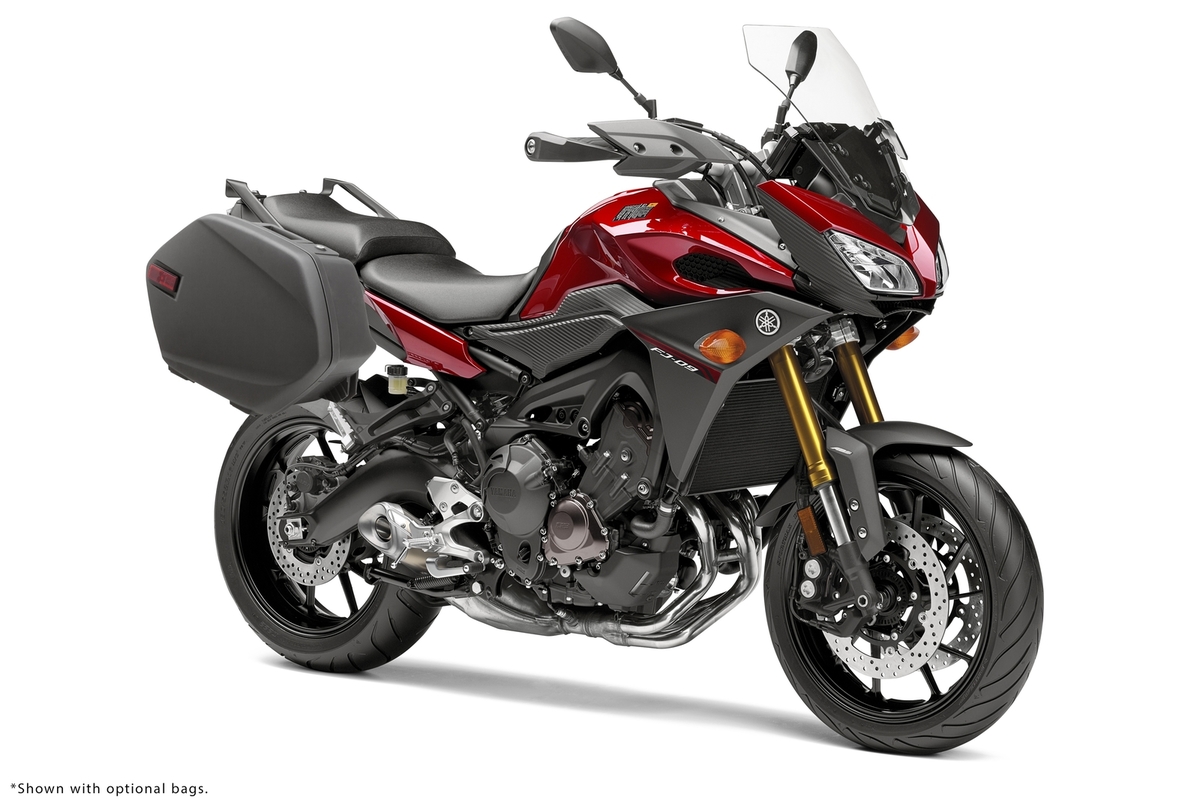
Yamaha Adds All-New FJ-09 Sport Tourer To Lineup

All-New 2015 Yamaha FJ-09 Offers Unique Blend Of Exciting Performance In A Versatile, Sport Touring Package

Cypress, CA – November 3, 2014 – The Yamaha FZ-09 has been a huge success, garnering enthusastic praise from riders and the media alike. And now, Yamaha takes the popular FZ-09 sportbike formula and adds even more versatility with the all-new 2015 FJ-09.

The FJ-09 utilizes the FZ-09’s crossplane-concept, liquid-cooled, four-stroke, inline-three-cylinder, 847cc, fuel-injected engine in a versatile package that provides a sporty, agile, and comfortable ride for everything from daily commuting, to spirited canyon-carving, to full-on touring.

With excellent acceleration, response, and handling characteristics, the FJ-09 offers an upright riding position for a stress-free, comfortable experience, whether riding solo or with a passenger. The FJ-09 sports a whole host of position-adjustable components–including windscreen, handlebars, and seat–designed to further accommodate a wide range of riders and riding preferences. And the large, 4.8-gallon fuel tank enables you to log a lot of miles between fuel stops.

In addition, the FJ-09 comes equipped with electronic control technologies that include YCC-T (Yamaha Chip Controlled Throttle), ABS (Anti-lock Braking System), and TCS (Traction Control System) to ensure smooth-running performance. And, as if that weren’t enough versatility and adjustability, the bike also features the Yamaha D-MODE (Drive Mode) variable-throttle-control system, which allows the rider to choose the optimum engine character for their riding situation.

Yamaha will offer a complete range of custom accessories for the FJ-09, including a top case, side cases, taller windscreen, heated handgrips, and a comfort saddle seat.

The 2015 FJ-09 will be available in two color options–Matte Gray and Candy Red–and will retail for $10,490, with bikes available in dealerships beginning in December.

For more information on all Yamaha models–including features, specifications, photos, and videos–please visit www.yamahamotorsports.com. Also, check out “YamahaMotorUSA” on your favorite social media site.

MV Agusta Announces Refinements For Its 2015 Three-Cylinder Models

MV AGUSTA THREE-CYLINDER PLATFORM 

MODEL YEAR 2015

Varese, 3rd November 2014 – For 2015 the three-cylinder range is back with its exclusive characteristics, further refined after constant development and testing carried out by MV Agusta testers. The new models maintain their leadership in terms of style and functionality thanks to a few new details, which highlight the extreme attention to aesthetics, safety and comfort. The taillight is LED on all the models now, characterised by a brand new light diffusion system to increase passive safety and make the rear end even more attractive. On the Brutale 800 the seat has been redesigned to increase comfort, further improving the bike’s unique design.

The 2015 models can be recognised at a glance thanks in part to the brand new colour.

The in-line three-cylinder engine guarantees maximum thermodynamic efficiency through the careful study of the flows in the ducts and in the combustion chamber: efficiency which optimises consumption and reduces environmental impact with high performance at any engine rpm. The refined MVICS (Motor &Vehicle Integrated Control System) electronic management includes full Ride By Wire. The decision to develop a specific vehicle control system also allowed us to achieve excellent results in personalisation of the four riding modes (Sport, Normal, Rain and Custom). Adjustable traction control is another of the features designed to increase active safety and performance, with 8 different levels that can be selected according to the prevalent conditions and rider preferences: this constitutes an essential safeguard for use on the road, but it can also be disabled for riding in conditions where optimal grip is available. The advanced Bosch 9MP ABS with RLM (Rear Lift-Up Mitigation) comes as standard equipment throughout the entire range: compact and lightweight, alongside the traditional anti-lock features it prevents the rear wheel from lifting up, making potentially dangerous changes to the setup avoidable.

Brutale 800 RR and Dragster 800 RR

For MV Agusta the RR designated models have always represented top shelf evolution, the synthesis of performance, design and exclusivity. The Brutale 800 RR and Dragster 800 RR set new frontiers with an exceptional weight-to-power ratio for the segment and the engine capacity. To achieve this result, which allows us to take on competitors with larger capacity engines, operations were focused on the engine and the fuel system: specifically a second bank of shower injectors was placed in the filter box. These two RR bikes boast specific electronic equipment: the new MVICS 2.0 system, which optimises engine response at any rpm, adjusting output and further improving the already impressive stride of the MV Agusta three cylinder models. The EAS 2.0 quickshifter is part of the standard equipment that makes the RR bikes so exclusive: it provides electronic assistance not only in the gear selection phase but also when downshifting. It works in the Sport and Custom maps as long as the speed is above 30 kph. And it revolutionises your approach to riding. First and foremost, it optimises shifting times when riding sportily: at the same time it increases comfort if you are using the bike in the city or for touring. Last but not least, the Brutale 800 RR is even more attentive to ergonomics: the seat has been reshaped to be more comfortable, functional and attractive.

The arrival of the three-cylinder engines in the MV Agusta range has reaffirmed the brand’s technological supremacy: in fact, it has allowed us to widen the range of models on offer, as well as differentiating the available displacements and the price ranges. With this product development strategy focused on design excellence and racing-derived solutions, MV Agusta has achieved a level of commercial success that has lead to expansion throughout Europe and beyond, not to mention the fantastic victories it has taken in the Supersport World Championship. Of the many three-cylinder engine characteristics worth a mention, first and foremost are the compact engine size and extremely low weight: MV Agusta was ahead of what is now the popular trend of making vehicles ever lighter, gaining clear advantages in terms of riding dynamics. In fact, all of the three-cylinder models have been voted top of the class in their respective segments by testers for major publications around the world.

Second Call For Young Guns, Class Of 2015

0

We are collecting nominations for the 18th Annual Roadracing World Young Guns feature, highlighting up-and-coming young road racers from the United States and Canada.

To be considered for the Young Guns feature, a racer must be between the ages of 12 and 18 at the start of 2015; have finished in the top three in a sanctioned Expert-level road race or Championship on a 125cc two-stroke/250cc four-stroke or larger motorcycle with full-size (17-inch) wheels; and reside within the United States or Canada. Amateurs/Novices with extraordinary road racing accomplishments will also be considered. Teenagers with paid professional rides may or may not be excluded to make room for up-and-coming riders.

Rides can nominate themselves. Race sanctioning bodies, sponsors and race teams are encouraged to nominate young riders, but riders or their parents must themselves request and submit completed applications and provide photos suitable for publication by our deadline to be considered.

Riders who have previously been selected as a Young Gun should call David Swarts at 951-245-6411 between 9:00 a.m. and 5:00 p.m. (Pacific Time) Monday through Friday to quickly update their profile information and arrange submission of up-to-date photos. 

To be considered for the next Young Guns feature, obtain, fill out and return a 2015 Young Guns questionnaire to Roadracing World by December 31, 2014. Requests for questionnaires should be sent via e-mail to [email protected]. Questionnaires must be filled out completely and legibly. Completed questionnaires should be returned to the same e-mail address, but we will also accept completed questionnaires submitted via U.S. mail or submitted via overnight delivery service (see addresses listed below).

In addition to their completed questionnaires, candidates must also submit an action photo and a head shot (a photo clearly showing the rider’s face) suitable for magazine reproduction. Each submitted photo must include written permission (an e-mail is acceptable) from the photographer (even if the photographer is a parent) giving Roadracing World Publishing the specific right to publish that photo(s) free of charge in the Young Guns feature. Scans and photocopies of photos are not usable. Digital images must be high-resolution, or 3000 pixels wide or tall at 4 inches. All photos must be accompanied by the name of the rider and the name of the photographer along with when and where the photo was taken, including the racetrack. Photographers will receive a photo credit. Photos should not have any watermarks or graphics added. Digital photos are preferred, but hard copies of photos will be scanned and returned if a self-addressed, stamped envelope is included.

The mailing address is: Roadracing World, Attn: Young Guns, P.O. Box 1428, Lake Elsinore, CA 92531-1428

The FedEx or other overnight delivery address is: Roadracing World, Attn: Young Guns, 581-C Birch St., Lake Elsinore, CA 92530.

Late and incomplete submissions may not be considered. The 17 Young Guns features to date appeared in the November 1997, March 1999, February 2000, March 2001, February 2002, April 2003, April 2004, May 2005, June 2006, April 2007, April 2008, April 2009, April 2010, April 2011, April 2012, March 2013 and April 2014 issues of Roadracing World.

If you have any questions, call 951-245-6411 between the hours of 9:00 a.m. and 5:00 p.m. (Pacific Time) and ask to speak to David Swarts or e-mail [email protected].

The Roadracing World Young Guns series started as an answer to critics who said America lacked up-and-coming young riders. Current or former Roadracing World Young Guns have: raced in all classes of the MotoGP World Championship (including the Red Bull MotoGP Rookies Cup series) and FIM Superbike and Supersport World Championships, winning races and capturing World Championships; competed in European Championship and well as British, Canadian, Czech Republic, German, Italian and Spanish National series; raced in the AMA Pro Championships (winning many races and Championships in all classes, including multiple Superbike titles); finished on the podium at the Suzuki GSX-R World Cup; won Superbike Shootout races in the Superbike and Pro Sportbike classes and won the 2014 Dynojet Pro Sportbike Champinship; won Suzuki Cup Championships in the U.S.; earned WERA National Challenge, National Endurance and Sportsman National Championships; won ASRA/Formula USA Grand National and CCS National Championships; collected USGPRU titles; and won many local and regional Championships.

Some of the riders who have graduated from Young Guns and gone on to racing success in National or International series include: 2013 AMA Pro SuperSport East Champion Corey Alexander; AMA Pro Daytona SportBike race winner Tommy Aquino (R.I.P); 2010 AMA Pro SuperSport East Champion and former Red Bull MotoGP Rookies Cup Champion J.D. Beach; 2013 AMA Pro Daytona SportBike Champion and current Yamaha factory Superbike racerCameron Beaubier; AMA Pro SuperSport podium finisher Conner Blevins; three-time Canadian Sport Bike Champion and 2014 Canadian Superbike Champion Jodi Christie; former AMA Pro SuperSport East Champion and current FIM 1000cc Superstock Cup racerJosh Day; 2011 Daytona 200 winner Jason DiSalvo; 2014 AMA Pro SuperSport Championship runner-up Dustin Dominguez; Pikes Peak International Hill Climb motorcycle track record holder Carlin Dunne; Canadian Superbike race winner Bodhi Edie; two-time AMA Pro Daytona SportBike Champion and two-time AMA Pro XR1200/Harley-Davidson Champion Danny Eslick; AMA Pro SuperSport podium finisher Wyatt Farris; AMA Pro Daytona SportBike and Superbike Shootout Dynojet Pro Sportbike race winner Bobby Fong; 2014 AMA Pro Daytona SportBike Champion and former Red Bull MotoGP Rookies Cup Champion Jake Gagne; 2014 Superbike Shootout Dynojet Pro Sportbike Champion Garrett Gerloff; 2014 AMA Pro SuperSport Champion Hayden Gillim; 2006 FIM MotoGP World Champion Nicky Hayden; former AMA Pro 600cc Supersport Champion and 2014 AMA Pro Superbike Championship runner-up Roger Hayden; eight-time AMA Pro Superbike race winner Tommy Hayden; 2013 AMA Pro Superbike Champion Josh Herrin; AMA Pro Superstock race winner Jake Holden; 2011 British Superbike Championship runner-up and former MotoGP and World Superbike regular John Hopkins; British Superbike and World Supersport podium finisher Patrick “P.J.” Jacobsen; AMA Pro Superbike regular and former Suzuki Cup Champion Taylor Knapp; Canadian Superbike race winner Kevin Lacombe; 2014 AMA Pro Daytona SportBike Championship runner-up Jake Lewis; AMA Pro SuperSport race winner Stefano Mesa; Elena Myers, the first woman to win an AMA Pro Supersport race; AMA Pro XR1200 race winner Shane Narbonne; AMA Pro SuperSport race winner Huntley Nash; 2012 Canadian Superbike Championship runner-up Andrew Nelson; AMA Pro SuperSport race winner Tyler Odom; AMA Pro SuperSport regular Travis Ohge; 2012 Daytona 200 winner and 2010 AMA Pro SuperSport West Champion Joey Pascarella; AMA Pro SuperSport podium finisher Bryce Prince; AMA Pro and Canadian National race winner Chris Peris; two-time AMA Pro SuperSport National Champion and British Supersport podium finisher James Rispoli; former Red Bull AMA U.S. Rookies Cup Champion and 2011 AMA Pro SuperSport West Championship runner-up Benny Solis, Jr.; three-time AMA Pro Superbike Champion, 2009 Superbike World Champion and MotoGP race winner Ben Spies; AMA Pro SuperSport podium finisher Miles Thornton; WERA Sportsman National Champion Kris Turner; multi-time AMA Pro race winner Chris Ulrich; Canadian Superbike race winner Alex Welsh; former AMA Pro Superbike Rookie of the Year Cory West; and two-time AMA Pro Superbike Championship runner-up Blake Young.

The December 2014 Issue Of Roadracing World & Motorcycle Technology Is Now Available Online

0

Read the December 2014 issue of Roadracing World & Motorcycle Technology now with your online subscription at www.roadracingworld.com/magazine/digital/.


INSIDE THIS ISSUE:

FEATURES

Inside Info

Historic Racebike Illustrations: How They’re Made

Racebike Test: HMC Racing KTM RC8R Superbike

Roadracing World Holiday Gift Guide 2014

MotoGP Analysis: Honda versus KTM in Moto3

Quick Look: 2015 Yamaha FZ-07

Back In The Day: Editor’s Scrapbook

How To Turn A Streetbike Into A Racebike, Part X

Inventor Dan Hanebrink Does It His Way

At Home With: Tommy Hayden

PROFESSIONAL RACING

MotoGP At Aragon: Lorenzo Wins Amid Wet Chaos

MotoGP At Motegi: Marquez Is World Champion Again

MotoGP At Phillip Island: Rossi’s Incredible Victory

World Superbike At Magny-Cours: Aprilia Domination Continues

SEMI-PRO AND CLUB RACING

Racer Profile: Canadian Superbike Champion Jodi Christie

COLUMNS

Letters To The Editor

10 Years Ago

Numbers

MotoGP Trivia

Josh Hayes: Mississippi Madman

Melissa Paris: Just A Girl Who Likes To Go Fast

Kyle Wyman: Where’s Wyman?

Jayson Uribe: Chasing The Dream

The Kids’ Page

Racing, School, & Track Day Calendar

The Crash Page

High Performance Parts & Services Directory

Racing School & Track Day Directory

Racing Organizations

Classified Ads

Advertisers Index

ASRA/CCS Newsletter

Chris Ulrich: Adventures Of A Racer

MotoGP World Championship Season Concludes This Coming Weekend At Valencia

MotoGP™: Rossi and Lorenzo contest second as champion Marquez arrives home

The fans at the Gran Premio Generali de la Comunitat Valenciana will gather to salute double MotoGP™ World Champion Marc Marquez this weekend, with the battle for the runner-up spot between Valentino Rossi and Jorge Lorenzo to be settled at the 2014 season finale.

This year will be the 16th Valencia GP, which has been held every year since the first visit in 1999 and indeed this is the 13th successive year that the Ricardo Tormo circuit has hosted the final race of the season.

Last year Marquez arrived at the Spanish track for the final round looking to become the youngest ever premier class World Champion and this time he arrives in a more relaxed mood, having made history this season with his incredible performances to become the youngest ever back-to-back title winner at the top level.

The win by Marquez in Malaysia at the penultimate round was his 12th victory this year, equaling the record for most wins in the premier class in a single season, held by Mick Doohan since 1997. Another triumph would see Marquez take the record outright, with the Repsol Honda rider having already also set a record of 13 premier class poles in a season last time out at Sepang.

Spanish riders have won the last 10 MotoGP races on Spanish soil and the last non-Spanish rider to win a MotoGP race in Spain was Casey Stoner at Jerez in 2012.

The task for Movistar Yamaha MotoGP’s nine time World Champion Rossi is to end that run, which would also see him clinch second place in the 2014 World Championship over his teammate Lorenzo, who trails him by 12 points as they head to Valencia.

Meanwhile, Marquez’s teammate Dani Pedrosa is out of the race for second but could well be a contender for victory on Sunday. Pedrosa is the most successful rider at the Valencia circuit with six wins, three in MotoGP, two in 250cc, and one in the 125cc class. No other rider has had more than three GP wins at the Valencia circuit.

Since the introduction of the four-stroke MotoGP formula in 2002, Honda has been the most successful manufacturer at Valencia with seven wins, whilst Yamaha has had three and Ducati two.

Andrea Dovizioso (Ducati Team) will do his best to add to the Italian manufacturer’s Valencia win tally, with the Italian rider set to race alongside his British colleague Cal Crutchlow for the last time this weekend. Crutchlow will head to the CWM-LCR Honda Team for 2015 and in the post Valencia test next week he will get his first ride with his new squad.

Sunday’s race will also see the battle for sixth place overall come to a head, with Monster Yamaha Tech 3 teammates Pol Espargaro and Bradley Smith, in addition to Aleix Espargaro (NGM Forward Racing) and Stefan Bradl (LCR Honda MotoGP), all in contention.

Andrea Iannone (Pramac Racing) still has an outside chance of taking sixth but it would require a race win from the Italian on his return from injury, after he missed the Sepang contest due to a severe contusion to his left arm. Pol Espargaro will have checks on his injured foot this week but is expected to be fit to race.

Only two riders have competed at all 15 previous Grand Prix events at the Valencia circuit. Rossi is one of them and Randy de Puniet is the other, with the Frenchman set to extend that run of appearances with a wild card ride for Suzuki as the Japanese factory prepares to return to MotoGP in 2015.

Moto2™: Rabat to ride as champion on home territory at final round

Having already clinched the Moto2™ World title in a dominant fashion Tito Rabat arrives at the final race of the year with an opportunity to go in search of another victory in front of the noisy home crowd at the Gran Premio Generali de la Comunitat Valenciana.

Rabat has already attained a total of 326 points in the World Championship this year and if he finishes in 13th place or better in Valencia he will set a new record highest points’ total in the intermediate class of Grand Prix racing. That record is currently held by Marc Marquez who scored 328 points in winning the Moto2 World title in 2012 over the course of a 17 round season, though this year there are 18 races in total.

Rabat has also finished on the podium 13 times so far in 2014 and another top three finish at the final race of the year in Valencia means he will equal the record of 14 podiums in a season in the intermediate class, also set by Marquez in 2012.

On the other side of the Marc VDS Racing Team pit box, Rabat’s colleague Mika Kallio has amassed a total of 289 points so far this year, which is already the greatest ever points’ total than any rider has achieved in finishing second in the intermediate class World Championship. Kallio’s performances this year have been commendable and he has made Rabat work extremely hard to take the title.

Meanwhile, Moto2’s remarkable Rookie of the Year Maverick Viñales (Paginas Amarillas HP 40), who is still only 19 years-old and is still the reigning Moto3™ World Champion, took the 16th victory of his Grand Prix career in Malaysia. Only three riders have scored more than 16 GP wins before reaching the age of 20: Marc Marquez, Dani Pedrosa and Valentino Rossi.

That is good company to aim to be keeping and Viñales will join them in the premier class next year, though before he does he will strive for another win, to make it four victories in his last five Moto2 races before he moves up to MotoGP™.

Behind Viñales in the standings an intriguing battle for fourth overall will be settled on Sunday with Swiss compatriots Thomas Luthi (Interwetten Sitag) and Dominique Aegerter (Technomag carXpert) both keen to finish ahead of each other.

Moto3™: Alex Marquez and Jack Miller ready for title showdown at Valencia

The 2014 Moto3™ World Championship title battle goes down to the final event of the year with just 11 points separating standings leader Alex Marquez and Jack Miller, as they prepare for Valencia.

Miller’s victory at his home race in Australia and his second place in Malaysia have seen him fight his way back into contention for the title at the last race of the year. Marquez still has the advantage though and will have a passionate home crowd behind him on Sunday.

Of the several possible scenarios on Sunday with regard to the championship title, Miller winning the race would mean he would become World Champion if Marquez does not finish on the podium.

If Miller finishes second then Marquez needs to finish sixth or better to clinch the title, whilst if Miller finishes third then Marquez needs to finish 10th or better to become World Champion.

There are other potential results which would also give Marquez the title and if Miller does not finish in the top five then the Spaniard would also be this year’s Moto3™ championship winner.

Both Estrella Galicia 0,0’s Marquez and Red Bull KTM Ajo’s Miller will bid farewell to the lightweight class on Sunday – Marquez moving up to Moto2™ in 2015 and Miller heading straight up to MotoGP™. Both are desperate to do so as World Champion.

This is the seventh time that the lightweight class World title has been settled in Valencia since it became the final event on the Grand Prix calendar in 2002.

Last year with five points separating Luis Salom, Alex Rins and Maverick Viñales any of the three could have won the World title in Valencia with a race victory, irrespective of where their rivals finished. Salom’s chances disappeared when he crashed on the 15th lap and the battle between Rins and Viñales went down to the final corner, with Viñales taking the win to clinch the title.

This year Estrella Galicia 0,0’s Rins is aiming to clinch third overall in the standings, with Sepang race winner Efren Vazquez (SaxoPrint-RTG) 14 points behind him in fourth going into the final round.

Pianykh, Quinones Take Season-Ending WERA West Formula One Race Wins At Vegas

Oleg Pianykh and Luis Quinones split Formula One race wins at the Pirelli/WERA West Presented by Lucas Oils double-header season finale at Las Vegas Motor Speedway.

On Saturday, Pianykh, who took his first WERA West Formula One win earlier in the season at Miller Motorsports Park, led every one of the six laps around the 1.8-mile Classic circuit en route to a 4.388-second margin of victory aboard his Pirelli-shod, Moto-Station-backed Suzuki GSX-R1000.

Chad Lewin recovered from an earlier spill and took his CM Motorsports-backed, Dunlop-shod Yamaha YZF-R6 to second, ahead of Marcel Irnie on his Mobibuff-backed, Dunlop-shod BMW S1000RR.

The newly resurfaced track, along with gusty winds, kept the lap times slower than expected–Pianykh, a two-time UtahSBA King Of The Mountains champion, was unable to crack the 1:20 barrier at a track where the lap record on a literbike is a 1:15.210 held by Jeremy Toye aboard a Kawasaki ZX-10R. Pianykh’s best in the Formula One race was a 1:20.3. Helmut Kohler Jr. finished fourth, ahead of Mario Orozco.

Pianykh also won the A Superbike race on Saturday, while Lewin’s only other finish on Saturday was a 13th in C Superbike. Irnie crashed in the A Superbike race, but recovered to win the A Superstock race.

Sunday’s Formula One race saw Quinones take his CM Motorsports-backed, Bridgestone-shod Yamaha YZR-F6 straight to the front and lead all six laps, turning a best of 1:21.068 en route to a 2.934-second margin of victory over Javelin Broderick and his MV Agusta 675. Irnie finished third, ahead of Orozco.

Broderick, who won the C Superstock race on Saturday, won it again on Sunday, and backed it up with a second in the B Superstock race. Irnie took the A Superbike and A Superstock wins.

RESULTS:

SATURDAY:

MINIS:
1. Cheyenne Covarrubias (Hon 50)
2. Andrew Kenefick (Hon 50)
3. Roni Schuetrum (Hon 50)

C SUPERBIKE EXPERT:
1. Sahar Zvik (Kaw ZX-6R)
2. Brad Saenz (Kaw ZX-6R)
3. Luis Quinones (Yam YZF-R6)
4. Andrew Zabzdyr (Yam YZF-R6)
5. Christopher Carron (Tri 675)
6. Ryan Harper (Yam YZF-R6)

C SUPERBIKE NOVICE:
1. Garrett Johnson (Kaw ZX-6R)
2. David Guerrero (Yam YZF-R6)
3. Andrew Buckland (Suz GSX-R600)
4. Lance Gittinger (Yam YZF-R6)
5. Jamison Woodworth (Yam YZF-R6)

FORMULA ONE EXPERT:
1. Oleg Pianykh (Suz GSX-R1000)
2. Chad Lewin (Yam YZF-R6)
3. Marcel Irnie (BMW S1000RR)
4. Helmut Kohler Jr. (Kaw ZX-10R)
5. Mario Orozco (BMW S1000RR)

FORMULA ONE NOVICE:
1. Robert Perez (BMW S1000RR)
2. Timothy Chin (Kaw ZX-10R)
3. Jeff Semmig (Yam YZF-R1)
4. Michael Weir (BMW S1000RR)
5. Gary Lee Smalz (Hon CBR1000RR)
6. Tim Parchman (Yam YZF-R1)

D SUPERBIKE EXPERT:
1. Jack Baker (Suz 450)

D SUPERBIKE NOVICE:
1. Mike Ripley (Kaw 300R)

E SUPERSTOCK NOVICE:
1. Ruben Casearez (Kaw 250R)
2. Ezra Beaubier (Kaw 250R)

HEAVYWEIGHT TWINS SUPERBIKE EXPERT:
1. Jason Catching (Suz SV650)

B SUPERBIKE EXPERT:
1. Sahar Zvik (Kaw ZX-6R)
2. Luis Quinones (Yam YZF-R6)
3. Brad Saenz (Kaw ZX-6R)
4. Christopher Carron (Tri 675)
5. Ryan Harper (Yam YZF-R6)
6. Robert Pierce (Hon CBR600RR)

B SUPERBIKE NOVICE:
1. David Guerrero (Yam YZF-R6)
2. Jamison Woodworth (Yam YZF-R6)

SRA SIDECARS:
1. Bernard Juchli
2. Heidi Neidhofer
3. Chris Wood
4. Donn Sayre
5. John Wood
6. Phil Wood

D SUPERSTOCK NOVICE:
1. Ruben Casarez (Kaw 250R)
2. Mike Ripley (Kaw 300R)
3. Ezra Beaubier (Kaw 250R)

LIGHTWEIGHT TWINS SUPERBIKE EXPERT:
1. Jason Catching (Suz SV650)
2. Michael Gougis (Suz SV650)

LIGHTWEIGHT TWINS SUPERBIKE NOVICE:
1. Anthony Morrison (Suz SV650)
2. William Catching (Suz SV650)

A SUPERBIKE EXPERT:
1. Oleg Pianykh (Suz GSX-R1000)
2. Steve Zoumaras (Kaw ZX-10R)
3. Sherwick Min (Apr RSV4)
4. Helmut Kohler Jr. (Kaw ZX-10R)
5. Mario Orozco (BMW S1000RR)

A SUPERBIKE NOVICE:
1. John Wagner (Hon CBR1000RR)
2. Michael Weir (BMW S1000RR)
3. Timothy Chin (Kaw ZX-10R)
4. Brian Morris (Yam YZF-R1)
5. Gary Lee Smalz (Hon CBR1000RR)
6. Robert Perez (BMW S1000RR)

CLUBMAN EXPERT:
1. Jack Baker (Suz 450)

CLUBMAN NOVICE:
1. Ruben Casarez (Kaw 250R)
2. Ezra Beaubier (Kaw 250R)

KENNY ANDERSON FORMULA THREE:
1. Gabriel Hernandez (Hon RS125)
2. Peter Yates (Hon RS125)

A SUPERSTOCK EXPERT:
1. Marcel Irnie (BMW S1000RR)
2. Sherwick Min (Apr RSV4)
3. Helmut Kohler Jr. (Kaw ZX-10R)
4. Mario Orozco (BMW S1000RR)

A SUPERSTOCK NOVICE:
1. Michael Weir (BMW S1000RR)
2. Brian Morris (Yam YZF-R1)
3. Gary Lee Smalz (Hon CBR1000RR)
4. David Guerrero (Yam YZF-R6)
5. Jeff Semmig (Yam YZF-R1)
6. Tim Parchman (Yam YZF-R1)

FORMULA TWO EXPERT:
1. Jason Catching (Suz SV650)
2. Gabriel Hernandez (Hon RS125)
3. Peter Yates (Hon RS125)

FORMULA TWO NOVICE:
1. Anthony Morrison (Suz SV650)

C SUPERSTOCK EXPERT:
1. Javelin Broderick (MV 675)
2. Luis Quinones (Yam YZF-R6)
3. Sahar Zvik (Kaw ZX-6R)
4. Andrew Zabzdyr (Yam YZF-R6)
5. Christopher Carron (Tri 675)
6. James Toohey (Kaw ZX-6R)

EZ-UP SHELTERS C SUPERSTOCK NOVICE:
1. Garrett Johnson (Kaw ZX-6R)
2. Andrew Buckland (Suz GSX-R600)

SENIOR SUPERBIKE HEAVYWEIGHT EXPERT:
1. Steve Zoumaras (Kaw ZX-10R)
2. Sherwick Min (Apr RSV4)
3. Mario Orozco (BMW S1000RR)

SENIOR SUPERBIKE HEAVYWEIGHT NOVICE:
1. John Wagner (Hon CBR1000RR)
2. Jeff Semmig (Yam YZF-R1)

SENIOR SUPERBIKE MEDIUMWEIGHT EXPERT:
1. Eric Anderson (Yam YZF-R6)
2. James Toohey (Kaw ZX-6R)
3. John Slee (Yam YZF-R6)
4. Ron Gentile (Tri 675)
5. Tony D’Augusta (Suz GSX-R600)
6. Keith Stie (Yam YZF-R6)

SENIOR SUPERBIKE MEDIUMWEIGHT NOVICE:
1. Lance Gittinger (Yam YZF-R6)
2. Jamison Woodworth (Yam YZF-R6)

B SUPERSTOCK EXPERT:
1. Sahar Zvik (Kaw ZX-6R)
2. Javelin Broderick (MV 675)
3. Christopher Carron (Tri 675)
4. Robert Pierce (Hon CBR600RR)
5. John Slee (Yam YZF-R6)

B SUPERSTOCK NOVICE:
1. Garrett Johnson (Kaw ZX-6R)

SUNDAY:

MINIS:
1. Andrew Kenefick (Hon 50)
2. Roni Schuetrum (Hon 50)

C SUPERBIKE EXPERT:
1. Luis Quinones (Yam YZF-R6)
2. Sahar Zvik (Kaw ZX-6R)
3. Andrew Zabzdyr (Yam YZF-R6)
4. Christopher Carron (Tri 675)
5. Ryan Harper (Yam YZF-R6)
6. Robert Pierce (Hon CBR600RR)

C SUPERBIKE NOVICE:
1. David Guerrero (Yam YZF-R6)
2. Garrett Johnson (Kaw ZX-6R)
3. Andrew Buckland (Suz GSX-R600)
4. Lance Gittinger (Yam YZF-R6)
5. Jamison Woodworth (Yam YZF-R6)

HEAVYWEIGHT TWINS SUPERSTOCK EXPERT:
1. Don MacEwan (Tri 675)

HEAVYWEIGHT TWINS SUPERSTOCK NOVICE:
1. Adam Taylor (Duc 996)

FORMULA ONE EXPERT:
1. Luis Quinones (Yam YZF-R6)
2. Javelin Broderick (MV 675)
3. Marcel Irnie (BMW S1000RR)
4. Mario Orozco (BMW S1000RR)

FORMULA ONE NOVICE:
1. John Wagner (Hon CBR1000RR)
2. Timothy Chin (Kaw ZX-10R)
3. Robert Perez (BMW S1000RR)
4. Michael Weir (BMW S1000RR)
5. Brian Morris (BMW S1000RR)
6. Gary Lee Smalz (Hon CBR1000RR)

D SUPERBIKE EXPERT:
1. Jack Baker (Suz 450)

D SUPERBIKE NOVICE:
1. Mike Ripley (Kaw 300R)

E SUPERSTOCK NOVICE:
1. Ruben Casarez (Kaw 250R)
2. Ezra Beaubier (Kaw 250R)

B SUPERBIKE EXPERT:
1. Sahar Zvik (Kaw ZX-6R)
2. Christopher Carron (Tri 675)
3. Luis Quinones (Yam YZF-R6)
4. Robert Pierce (Hon CBR600RR)
5. Danielle Diaz (Kaw ZX-6R)
6. Luke Luciano (Yam YZF-R6)

B SUPERBIKE NOVICE:
1. Jamison Woodworth (Yam YZF-R6)

SRA SIDECARS:
1. Bernard Juchli
2. Kelly Bell
3. Chris Wood
4. Phil Wood
5. Heidi Neidhofer
6. John Wood

LIGHTWEIGHT TWINS SUPERBIKE NOVICE:
1. Anthony Morrison (Suz SV650)
2. William Catching (Suz SV650)

HEAVYWEIGHT TWINS SUPERBIKE NOVICE:
1. Adam Taylor (Duc 996)

D SUPERSTOCK NOVICE:
1. Ruben Casarez (Kaw 250R)
2. Ezra Beaubier (Kaw 250R)

A SUPERBIKE EXPERT:
1. Marcel Irnie (BMW S1000RR)
2. Steve Zoumaras (Kaw ZX-10R)
3. Sherwick Min (Apr RSV4)
4. Mario Orozco (BMW S1000RR)

A SUPERBIKE NOVICE:
1. John Wagner (Hon CBR1000RR)
2. Robert Perez (BMW S1000RR)
3. Timothy Chin (Kaw ZX-10R)
4. Michael Weir (BMW S1000RR)
5. Brian Morris (BMW S1000RR)
6. Gary Lee Smalz (Hon CBR1000RR)

KENNY ANDERSON FORMULA THREE:
1. Gabriel Hernandez (Hon RS125)
2. Nicholas Swensgard (Hon RS125)
3. Peter Yates (Hon RS125)

CLUBMAN NOVICE:
1. Ruben Casarez (Kaw 250R)
2. Ezra Beaubier (Kaw 250R)

CLUBMAN EXPERT:
1. Jack Baker (Suz 450)

A SUPERSTOCK EXPERT:
1. Marcel Irnie (BMW S1000RR)
2. Sherwick Min (Apr RSV4)

A SUPERSTOCK NOVICE:
1. Michael Weir (BMW S1000RR)
2. David Guerrero (Yam YZF-R6)
3. Brian Morris (Yam YZF-R1)
4. Gary Lee Smalz (Hon CBR1000RR)
5. Tim Parchman (Yam YZF-R1)
6. Jose Guillermo Bruce (Suz GSX-R1000)

FORMULA TWO EXPERT:
1. Gabriel Hernandez (Hon RS125)
2. Nicholas Swensgard (Hon RS125)
3. Peter Yates (Hon RS125)

FORMULA TWO NOVICE:
1. Anthony Morrison (Suz SV650)

C SUPERSTOCK EXPERT:
1. Javelin Broderick (MV 675)
2. Sahar Zvik (Kaw ZX-6R)
3. Andrew Zabzdyr (Yam YZF-R6)
4. Christopher Carron (Tri 675)
5. Thiago Leal (Yam YZF-R6)
6. Robert Pierce (Hon CBR600RR)

EZ-UP SHELTERS C SUPERSTOCK NOVICE:
1. Garrett Johnson (Kaw ZX-6R)
2. Andrew Buckland (Suz GSX-R600)

SENIOR SUPERBIKE HEAVYWEIGHT EXPERT:
1. Steve Zoumaras (Kaw ZX-10R)
2. Sherwick Min (Apr RSV4)

SENIOR SUPERBIKE HEAVYWEIGHT NOVICE:
1. Jeff Semmig (Yam YZF-R1)

SENIOR SUPERBIKE MEDIUMWEIGHT EXPERT:
1. Ryan Harper (Yam YZF-R6)
2. John Slee (Yam YZF-R6)
3. Thomas Bednash (Yam YZF-R6)
4. Tony D’Augusta (Suz GSX-R600)
5. Ron Gentile (Tri 675)
6. Keith Stie (Yam YZF-R6)

SENIOR SUPERBIKE MEDIUMWEIGHT NOVICE:
1. Jamison Woodworth (Yam YZF-R6)
2. Lance Gittinger (Yam YZF-R6)

B SUPERSTOCK EXPERT:
1. Sahar Zvik (Kaw ZX-6R)
2. Javelin Broderick (MV 675)
3. Christopher Carron (Tri 675)
4. Robert Pierce (Hon CBR600RR)

B SUPERSTOCK NOVICE:
1. David Guerrero (Yam YZF-R6)
2. Garrett Johnson (Kaw ZX-6R)

Macau GP Teaser 2014

Macau GP Teaser 2014. Brandon Cretu and Mark Miller at back at it again for the Macau GP.

Kawasaki’s $25,000 Ninja H2 Debuts At EICMA Show In Milan

2015 KAWASAKI NINJA H2™

Built Beyond Belief

The launching point for the development of the Ninja H2™ motorcycle was a strong desire to offer riders something they had never experienced before. Convinced that an extraordinary riding experience would not be found by merely building on the performance of existing models, the design team committed to developing the “ultimate motorcycle” from a clean slate.

The bike needed to deliver intense acceleration and ultra-high top speed, coupled with supersport-level circuit performance. To realize this goal, help was enlisted from other companies within the Kawasaki Heavy Industries, Ltd (KHI) group, precipitating an unprecedented level of collaboration.

Ninja H2 development pursued two paths. The first was the Ninja H2™R, which is a closed-course model that allowed the unadulterated pursuit of performance without the limitations of street homologation. This motorcycle is followed by the Ninja H2 street model, which is based closely on the H2R but meets all market regulations. The results are incredible, with both models offering a sensory experience surpassing anything else that riders can find today.

A supercharged engine closely based on the same powerplant as the Ninja H2R powers the Ninja H2. High output notwithstanding, the compact design is on par with power units found in supersport liter-class models. The key to achieving this incredible performance lies in the supercharger – a motorcycle-specific unit designed completely in-house with technology from the Gas Turbine & Machinery Company, Aerospace Company and Corporate Technology Division.

HIGHLIGHTS OF THE 2015 KAWASAKI NINJA H2™:

-Street model based on closed-circuit Ninja H2R

-998cc four-cylinder engine fitted with Kawasaki supercharger for intense acceleration

-Supercharger uses planetary gears, spins at up to 130,000rpm and develops up to 20.5psi boost pressure

-Dog-ring transmission allows fast shifting and works with standard quick shifter

-Bodywork developed with Kawasaki Aerospace Company to generate downforce

-Kawasaki River Mark used to indicate combined Kawasaki Group technology

-Trellis frame used for first time to provide strength, controlled flex and air circulation

-Single-sided swingarm used for first time, mounted to engine as a stressed member

-KYB® AOS-II Air-Oil Separate cartridge fork, adjustable KYB rear shock

-330mm front discs with four-piston Brembo® calipers

-Multi-mode traction control, launch control, engine braking control, ABS and a quick shifter

KHI Group’s technology was not limited to the supercharger. Advanced technological know-how shared from other Group companies is found throughout the innovative engine and chassis design. For example, the aerodynamic mirror mounts were designed with assistance from Kawasaki’s Aerospace Company to add stability for high-speed riding. This highlights the collaboration, and the level of technology poured into the model was the reason the Kawasaki River Mark* is prominently displayed on the upper cowl.

When it came time to name this model, “Ninja®” was an obvious choice because it is synonymous with Kawasaki performance, and is shared by legendary models over the years. It is also named for another iconic model: the “H2” (also known as the 750SS Mach IV in some markets), which was powered by a two-stroke 748cc triple and boasted the sort of intense acceleration that made it a worldwide sensation. For a motorcycle that delivers supersport-level handling coupled with the kind of acceleration no rider has experienced before, Ninja H2 was the perfect name. And so Kawasaki is again ready to unleash a new sensation upon the world.

*The Kawasaki River Mark is a long-time symbol of KHI dating back to the 1870s. As a policy, its use on products is limited to models with historical significance. But permission was granted for the Ninja H2 to use this special symbol.

THE QUEST FOR POWER

In order to offer intense acceleration, it was essential that the engine was able to produce big power. While a large-displacement engine could easily provide high output, the engineers preferred it to be compact to help ensure a lightweight, compact motorcycle.

Using a supercharged engine enabled these engine design requirements to be met. Aside from minor differences in the engine, as well as an intake and exhaust system tailored for street use to meet noise and emissions standards, the supercharged engine is essentially the same as the closed-course Ninja H2R. It delivers intense acceleration unlike anything you can experience on a naturally aspirated bike. Designed in-house, the immense potential of the compact, highly efficient engine is a testament to the technology possessed by the KHI Group.

SUPERCHARGED 998cc IN-LINE FOUR

KHI-DESIGNED SUPERCHARGER

The supercharger used by the Ninja H2 was designed by Kawasaki motorcycle engineers with assistance from other companies within the KHI Group, namely the Gas Turbine & Machinery Company, Aerospace Company, and Corporate Technology Division. Designing the supercharger completely in-house allowed it to be developed to perfectly match the engine characteristics of the Ninja H2. The highly efficient, motorcycle-specific supercharger was the key to achieving the maximum power and intense acceleration the engineers wanted.

•One of the greatest benefits of designing the supercharger in-house and tailoring its design to match the character of the Ninja H2 engine was that engineers were able to achieve high-efficiency over a wide range of conditions – something that would not have been possible by simply using an aftermarket automotive supercharger.

•The importance of high efficiency in a supercharger is so that, as air is compressed, power-robbing heat gain is minimal. And while many superchargers are able to offer high-efficiency operation in a limited range of conditions, the KHI-designed supercharger for the Ninja H2 offers high efficiency over a wide range of pressure ratios and flow rates – so it is over a wide range of engine- and vehicle speeds. This wide range of efficient operation (similar to having a wide powerband) translates into strong acceleration.

•The supercharger’s high efficiency and minimal heat gain meant an intercooler was unnecessary, allowing savings in both weight and space.

•The supercharger is a centrifugal-type unit – ideal for high-RPM performance – with a cast aluminium housing.

•The unit is located centrally, behind the cylinder bank, in the best position to evenly distribute compressed air to all four cylinders.

•The supercharger uses engine oil for lubrication. By not requiring an independent oil source, it contributed to the compact, lightweight design.

•The supercharger is driven by a planetary gear train, which runs off the crankshaft. Designing the gear train using technology from Kawasaki’s Aerospace Company resulted in a compact unit with minimal power loss.

•The gear train increases the impeller speed up to 9.2x the crank speed (1.15x step gear with an 8x planetary gear). This means at a maximum engine speed of approximately 14,000rpm, the impeller shaft is spinning at almost 130,000rpm.

•The impeller is formed from a forged aluminium block using a 5-axis CNC machine to help ensure precision and durability. The 69mm impeller features six blades at the tip, expanding to 12 blades at the base. Grooves etched into the blade surfaces help direct the airflow.

•The impeller’s pumping capacity is more than 200 liters/second (measured at atmospheric pressure), with intake air reaching speeds of up to 100m/s. After passing through the supercharger, air pressure is increased to as much as 2.4x atmospheric pressure (35psi).

POWER UNIT DESIGNED FROM THE CLOSED-COURSE NINJA H2R

Despite its familiar in-line four configuration, the Ninja H2 engine is loaded with technology developed specifically for this supercharged engine: some new, others with know-how from the Kawasaki Group.

Every component of the engine was chosen to achieve a certain function. In order to accommodate the higher air pressure from the supercharger, as well as to help ensure reliability of the closed-course Ninja H2R, the entire engine was designed to be able to handle stresses 1.5-2x greater than a naturally aspirated liter-class engine. In fact, aside from its camshafts, head gaskets and clutch, the engine is the same as the unit found in the Ninja H2R.

•The combustion chamber design is complemented by flat piston crowns. The shape, inspired by the pistons used in the Green® Gas Engine developed by Kawasaki’s Gas Turbine & Machinery Company, also contributes to the engine’s anti-knock performance.

•While the intake valves are stainless steel, the exhaust valves needed to be able to withstand the supercharged engine’s high-temperature exhaust gases. So the exhaust valves are formed from two materials that are friction-welded at the center: Inconel – an extremely heat-resistant alloy ¬– is used for the valve head and lower half of the stem; while heat-resistant steel is used for the upper half. The stems are tapered, varying in diameter from 4.5-5mm.

•A dummy head is used during the cylinder honing process. The more precise circular and cylindrical shape that results allows the use of low-tension piston rings, which help reduce mechanical loss.

•The pistons are cast, since they offer better strength than forged pistons under the very high temperatures generated by the high-performance supercharged engine. A unique casting process (similar to forging) sees unnecessary material removed, with hollows created to achieve the ideal thickness. This produces a piston weight on par with forged pistons.

DOG-RING TRANSMISSION

To facilitate smooth, quick shifting, a dog-ring-type transmission was selected. This is similar to the kind of transmission commonly found in MotoGP™ or Formula 1®, and was developed with feedback from the Kawasaki Racing Team.

•Unlike a standard motorcycle transmission, where the shift forks slide the gears into position, the gears remain in place in a dog-ring transmission. Only the dog rings move, sliding into position to engage the desired gear.

•Because the dog rings are lighter than transmission gears, this type of transmission offers a significantly lighter shift effort. Shift feel is also improved, and a much quicker shift is possible, facilitating quicker acceleration.

HYDRAULIC CLUTCH & BACK-TORQUE LIMITER

A high-quality hydraulic clutch offers less maintenance and helps to ensure that the initial bite point can be maintained. By using Brembo® components, superb linearity and smooth actuation are further benefits.

•Brembo parts are used for both the clutch lever’s radial-pump master cylinder and the clutch release mechanism. They receive extra attention from Brembo before being shipped to Kawasaki. Each part is examined and adjusted to help eliminate any ineffective (idle) stroke, resulting in superb control.

•The back-torque limiter contributes to stability by helping prevent wheel hop when downshifting. The back-torque limiter is also adjustable.

MAXIMIZING AIRFLOW EFFICIENCY

To maximize the performance of the supercharged engine, airflow efficiency was of paramount importance. How air enters the supercharger, how the compressed air enters the engine, and how the combusted air/fuel mixture is discharged were all carefully analyzed for maximum efficiency to help ensure the airflow characteristics would create the desired engine character.

RAM AIR INTAKE

•Air supplied to the supercharger enters via a single ram air intake in the left side of the upper cowl. The total frontal area is approximately 3x the area of the supercharger inlet.

•A ram air duct was designed to take the fresh air to the supercharger in as straight a line as possible. Its shape was created to match the impeller characteristics, further contributing to the engine’s output.

•For optimum efficiency for the Ninja H2 engine, the air cleaner is positioned directly in front of the supercharger.

ALUMINIUM INTAKE CHAMBER

•The intake chamber has a large volume (6 liters), and is ideally shaped for high efficiency and engine output.

•Being constructed from rigid aluminium offers two advantages:

1) Aluminium offers excellent surface heat dissipation, helping to keep the intake air cool;

2) The rigid structure helps to ensure an airtight seal for the pressurized air at approximately 2-bar (29.4psi).

•Inside the intake chamber, newly developed Kawasaki technology contributes to the engine’s high performance. The top injectors spray fuel onto stainless steel mesh positioned over the intake funnels. This has an ordering effect, creating a more uniform air/fuel mixture as the fuel is drawn into the intake funnel. The mesh also promotes fuel misting, which helps cool the intake air and increases combustion chamber efficiency.

ELECTRONIC THROTTLE VALVES

Kawasaki’s fully electronic throttle actuation system enables the ECU to control the volume of fuel (via fuel injectors) and air (via throttle valves) delivered to the engine. Ideal fuel injection and throttle valve position results in smooth, natural engine response and the ideal engine output. The system also makes a significant contribution to reduced emissions.*

* The system enables more precise control of KTRC (Kawasaki Traction Control), and facilitates implementation of other electronic systems like KLCM (Kawasaki Launch Control Mode) and Kawasaki Engine Braking Control – see below.

INTAKE & EXHAUST PORTS, CAMSHAFT PROFILES

•The intake ports are polished to help ensure smooth air/fuel flow and minimize resistance.

•Straight exhaust ports – one for each exhaust valve – do not converge in the cylinder head. The straight-line design enables the most efficient removal of air from the combustion chamber and also contributes to efficient combustion chamber filling.

•Camshaft profiles were optimized for the Ninja H2 engine and are tuned to offer strong low-speed torque.

EXHAUST SYSTEM

•The entrance to the header pipes is oval to match the two exhaust ports per cylinder. Partly formed by hydroforming, each header pipe tapers from an oval to a round cross-section. The collector pipes are also hydroformed.

•Designed to suit the output and characteristics of the Ninja H2 engine, the stainless steel header pipes have a 45mm diameter. For the ideal exhaust pressure, all four header pipes are connected.

•The exhaust system also includes a compact under-engine pre-chamber, with double-wall construction for rigidity. This construction helps reduce radiating noise and high frequency exhaust noise.

•The single right-side silencer ensures noise and exhaust gas emissions meet market regulations.

KEEPING THE ENGINE COOL

Cooling performance can be a substantial limiting factor for engine output, so maximizing the cooling efficiency was a key consideration when designing the engine. In addition to helping ensure that intake air remain as cool as possible, the heat generated by the high-output engine needs to be dissipated, and engine components themselves need to be kept cool to help ensure efficient operation. The extensive pursuit of cooling performance led to a highly complex engine layout, both for the lubrication system (oil is used for cooling as well as lubrication) and the cooling system.

CYLINDER HEAD

A number of considerations were given to the aluminum cylinder head design to provide the necessary cooling performance. The large coolant passageways result in excellent cooling for the combustion chamber.

•The water jacket extends between the twin exhaust ports of each cylinder, while large coolant passageways around the spark plug holes and valve seat areas offer superior cooling. The steel spark plugs and valve seats have a greater tendency to retain heat than the aluminum cylinder head, so cooling them is very important and makes a big difference to temperature control.

OIL JETS

In the interest of keeping the engine compact and simple, a single lubrication system provides cooling oil for the engine components, supercharger and the transmission.

•Oil jets lubricate the supercharger chain in two places – at the contact points where the chain meets the upper and lower sprockets.

•In addition to the two oil jets, the supercharger drivetrain’s lower gear has an oil passage.

•Inside the engine, there are two oil jets per cylinder to ensure the hot pistons are effectively cooled.

•Transmission oil jets (used for the first time in a Kawasaki motorcycle) enable a compact transmission with high durability.

LUBRICATION SYSTEM COMPONENTS

Because the lubrication system is servicing so many components, oil volume is 5.0 liters (1.3 gallons) – that is about 35% more than usually seen in a naturally aspirated engine of the same displacement.

RADIATOR

•The radiator’s size and capacity is on par with those found on current liter-class supersport motorcycles, but it offers superior cooling performance because it flows approximately 1.5x more air than other bikes. This was found to be more effective than simply increasing the size of the radiator.

•Airflow is facilitated by the compact side-cowl design, and leaving the lower part of the engine open (except for the small under cowls) to the air was designed to extract hot air.

LIQUID-COOLED OIL COOLER

•A liquid-cooled oil cooler adds to the extremely high cooling performance necessary for the high output engine.

HIGH-SPEED STABILITY & LIGHT HANDLING

Designed for the performance parameters of the closed-course Ninja H2R and shared with the street-going Ninja H2, the objectives for the chassis were to provide superb motorcycle composure at ultra-high speeds, while offer cornering performance that allows the rider to enjoy riding on a circuit, and finally to be very accommodating to the rider. Ordinarily, high-speed stability can easily be achieved with a long wheelbase, but a shorter wheelbase was selected to achieve the compact overall package and sharp handling that were desired. So the frame needed to not only be stiff, but also to be able to absorb external disturbances, which could otherwise unsettle the chassis when encountered at high speed. A trellis frame provided both the strength to harness the incredible power of the supercharged engine, and the balanced flex to achieve stability for high-speed riding.

INNOVATIVE CHASSIS DESIGN

TRELLIS FRAME

Using a trellis frame offered an elegant, lightweight solution to meeting the performance requirements for the chassis of the closed-course Ninja H2R. Able to harness the massive power of its engine, it has a balance of stiffness and flexibility that enables a high level of stability while being able to handle external disturbances at high speeds. Its open design also helps dissipate heat generated by the supercharged engine.

•Development of the trellis frame made good use of the latest analysis technology and substantial test rider feedback.

•Pipe diameter, thickness and the bend of each piece of the trellis frame were carefully selected to obtain the necessary stiffness for each part of the frame. The trellis pieces are primarily made from high-tensile steel.

SWINGARM MOUNTING PLATE

This innovative new chassis mechanism allows the engine to act as part of the frame.

•The swingarm mounting plate bolts to the back of the engine. The swingarm pivot shaft goes through this plate, essentially allowing the swingarm to be mounted directly to the engine.

•Thanks to the swingarm mounting plate, the frame does not need to use crossmembers for stability. This contributes to the frame’s low weight.

SINGLE-SIDED SWINGARM

The Ninja H2 and H2R feature Kawasaki’s first single-sided swingarm.

•Having a single-sided swingarm allows the exhaust silencer to be mounted closer to the bike centerline, providing a high bank angle for sporty cornering.

CHASSIS GEOMETRY

To ensure fun at high speeds as well as on the racing circuit, a compact package was desired. Therefore, the chassis geometry is very similar to that of a liter-class supersport motorcycle.

FRONT SUSPENSION

KYB® AOS-II racing suspension makes its debut on a street bike.

•Based on the Air-Oil Separate cartridge fork that was developed for motocross racing.

•Designed for low friction, the 43mm front fork offers superb action, with a smooth initial action followed by strong damping at the end of the stroke.

•As the suspension works, a large 32mm free-floating piston at the bottom of the oil-damping cartridge pumps oil up to a sealed area between the inner and outer tubes. The oil in this area provides a friction-reducing film on which the tubes can slide against each other, resulting in an extremely smooth action.

REAR SUSPENSION

Fully adjustable KYB rear suspension offers superb stability.

•The top of the rear shock mounts to the swingarm mounting plate. Again, doing away with the need for frame crossmembers.

•The bottom of the rear shock is mounted via a revised Uni-Trak® linkage that offers excellent feedback for rear tire grip. The new linkage, situated below the swingarm, also mounts to the swingarm mounting plate.

BRAKES

Given the high-speed potential of the Ninja H2, the brakes chosen were the best available for a production motorcycle. Special tuning helped ensure that all play in the lever was removed from the system, so that when the brakes are applied they respond immediately.

•A pair of massive 330mm Brembo semi-floating discs, with a thickness of 5.5mm, delivers superb braking force.

•The brake discs have grooves running down the center of the outer edge to increase the discs’ surface area for greater heat dissipation.

•Dual radial-mount Brembo cast aluminum monobloc calipers grip the front discs. The rigid, opposed four-piston calipers with 30mm pistons contribute to the superb braking force of the Ninja H2, as well as a high-quality image.

•A Brembo radial-pump master cylinder and reservoir receive extra attention before being shipped to Kawasaki. Each part is examined and adjusted to help eliminate any play in the lever stroke.

•A large 250mm disc generates strong braking force at the rear.

ORIGINAL WHEEL DESIGN

The cast aluminum wheels were designed specifically for the Ninja H2 and H2R.

•The star-pattern five-spoke wheel design was selected based on the optimum balance of rigidity for high-speed performance.

•The analysis technology used in the wheel development comes from Kawasaki’s World Superbike involvement.

•Knurling on the inside of the rear wheel rim helps prevent tire slipping on the wheel that could be caused by the massive torque generated by the engine.

HIGH-SPEED TIRES

To help ensure sufficient tire durability when riding at high speed, high-performance tires must be used.

•A massive 200mm rear tire transmits the Ninja H2’s power to the tarmac.

•The Ninja H2 is able to use high-performance street tires.

SHAPED FOR SPEED

As speed increases, wind resistance increases exponentially. To enable high-speed operation, a combination of high power and slippery aerodynamics was needed. With power requirements taken care of by the supercharged engine, the next step was to design bodywork that provides both minimal drag and good control when riding at high speed. Assistance from Kawasaki’s Aerospace Company was enlisted in creating the aerodynamically sculpted bodywork to provide maximum aerodynamic efficiency.

AERODYNAMICS

AERODYNAMICALLY DESIGNED BODYWORK

It is no accident that when viewed from the side, the Ninja H2 and H2R do not have the aggressive forward-canted stance of most modern supersport motorcycles. While supersport bikes use their front-leaning attitude to aid quick steering, at the speeds for which the closed-course Ninja H2R was designed, such a posture would create drag, which would hinder top speed potential. Therefore, the H2 stance is very neutral, almost flat – like a Formula 1 car – to make the body as aerodynamically sleek as possible.

•The aerodynamically shaped upper cowl uses lips and lines to direct airflow over its surface.

•The upper cowl locates the ram air intake in the most efficient position.

•Compact side cowls and under cowls were designed to assist heat dissipation.

•The rear cowl has an extremely compact three-piece design. The center portion is taller, creating an aerodynamic form that helps smooth airflow as it passes the rider. Wind is also able to pass between the center and side pieces, further reducing air resistance.

GENERATING DOWNFORCE

In order to maintain both straight-line stability and the ability to change direction while running at high speed, the Ninja H2 features a number of aerodynamic devices to help ensure the front wheel has strong contact with the ground.

•The design of the upper cowl incorporates a chin spoiler. Rather than being a cosmetic flourish, it produces downforce that contributes to high-speed stability.

•Further contributing to high-speed stability, the Ninja H2 features mirror mounts with airfoil cross-sections. Like the wings on the closed-course Ninja H2R, the mounts were also designed by Kawasaki’s Aerospace Company. The trailing edges are equipped with Gurney flaps that increase the effectiveness of the simple airfoil shape, allowing greater downforce to be generated by the small surface.

MAN / MACHINE INTERFACE

Since the Ninja H2 was not intended to be a pure race bike, it did not need the spartan accommodations found on most purpose-built supersport models. As a result, the Ninja H2’s man / machine interface enables riders to enjoy the bike’s performance with a degree of comfort. While the riding position, ergonomics and cockpit layout were designed first and foremost to put the rider in the best position to control this amazing machine, the impression from the rider’s perspective is not one of austerity, but is more about quality, high-tech control and the impeccable fit and finish.

SEATING FOR ONE

RIDING POSITION & ERGONOMICS

With the kind of riding the Ninja H2 was designed for, and a desire for a compact package resulted in a riding position similar to that of a supersport bike without being quite as aggressive. As enjoyment of the intense acceleration and high-speed capability was the first priority, a solo seat for the rider is the only seating provided.

•The riding position was designed for high speed and circuit riding. The rider triangle is similar to that of the Ninja® ZX™-10R motorcycle, but more relaxed.

•To help support the rider during intense acceleration, hip-supporting pads flank the rear of the seat. The hip support is adjustable 15mm backward to suit the rider’s size.

INSTRUMENTATION & CONTROLS

The advanced, high-tech design of the instrumentation conveys the image of piloting a fighter jet. Handlebar control switches put all mode selection and display options at the rider’s fingertips.

•The new instrumentation design combines a full digital LCD screen with an analog-style tachometer.

•The LCD screen uses a black / white reverse display (white characters on a black background), contributing to the high-quality image.

•In addition to the digital speedometer and gear position indicator, display functions include: odometer, dual trip meters, current mileage, average mileage, fuel consumption, coolant temperature, boost indicator, boost (intake air chamber) temperature, stopwatch (lap timer), clock and the Economical Riding Indicator.

•The tachometer design uses an actual needle, but the black dial “face” looks blank until engine speed increases. Backlit RPM numbers light up to chase the tachometer needle as it moves around the dial.

•Compact new switch design allows all instrument functions to be controlled from the handles.

ELECTRONIC RIDER SUPPORT

Complementing the Ninja H2’s incredible engine and chassis performance, advanced electronics work behind the scenes to provide rider support. Depending on rider preference, many of the systems may be turned off. And while the high-performance engine was designed to be accommodating even without the benefit of rider aids, when electing to fully experience the Ninja H2’s intense acceleration or high-speed potential, these systems are available to provide an extra degree of rider confidence.

ENGINE & CHASSIS MANAGEMENT SYSTEMS

KTRC (KAWASAKI TRACTION CONTROL)

The new KTRC system used on the Ninja H2 combines the best elements of Kawasaki’s earlier traction control systems. Multi-level modes offer riders a greater number of settings to choose from, with each mode providing a different level of intrusion to suit riding conditions and rider preference. And all modes are designed to manage output when sudden wheel slip occurs. The new system offers both enhanced sport riding performance and the peace of mind to negotiate slippery surfaces with confidence.

•Riders can choose from three modes, each offering a progressively greater level of intrusion. Each of these modes also has three rider-selectable levels, adding more or less intrusion (rider preferences for each mode are programmable for on-the-move selection), giving a total of nine possible settings. Riders may also elect to turn the system off.

•Mode 1 is for the circuit, Mode 2 for the street, and Mode 3 for wet pavement conditions. A Rain Mode is also available, as outlined below.

•Using complex analysis, the system is able to predict when traction conditions are about to become unfavorable. By acting before slippage exceeds the range for optimum traction, it means that drops in power can be minimized, resulting in smoother operation.

•Rain Mode can be turned on and off independently from KTRC. Activating Rain Mode sets KTRC to Mode 3+, and limits power output, torque and response. Similar to a Low Power setting, maximum engine output is less than 50% of full power, with a gentler throttle response.

KLCM (KAWASAKI LAUNCH CONTROL MODE)

Designed to assist the rider by optimizing acceleration from a stop, KLCM electronically controls engine output to prevent wheelspin and minimize wheelies when launching.

•Riders can choose from three modes, each offering a progressively greater level of intrusion. Each mode allows the rider to launch from a stop with the throttle held wide open.

KAWASAKI ENGINE BRAKE CONTROL

The system allows riders to select the amount of engine braking they prefer.

•When the system is activated (by selecting “LIGHT” in the Engine Braking settings), the engine braking effect is reduced, providing less interference when riding on the circuit.

KIBS (KAWASAKI INTELLIGENT ANTI-LOCK BRAKE SYSTEM)

Kawasaki’s supersport-style ABS is standard equipment on the Ninja H2. This is based on the same system used on the Ninja ZX-10R, with programming and settings revised to suit the performance parameters of the Ninja H2.

•High-precision brake pressure control enables the system to avoid reduced brake performance due to excessive pressure drops, allows lever feel to be maintained when KIBS is active, and helps ensure ABS pulses feel smooth (not heavy).

•High-precision brake pressure control also offers a number of sport riding benefits:

1. Rear lift suppression

2. Minimal kickback during operation

3. Accounts for back-torque

KQS (KAWASAKI QUICK SHIFTER)

Ninja H2 is the first Kawasaki motorcycle to be fitted with a standard quick shifter.

•Complementing the engine’s strong power and the dog-ring transmission, a contactless-type quick shifter enables rapid upshifts for seamless acceleration.

ÖHLINS ELECTRONIC STEERING DAMPER

Unlike a mechanical steering damper – in which the settings, once fixed, must cover all riding conditions and speeds – the damping characteristics are changed electronically, according to vehicle speed, and the degree of acceleration or deceleration.

At low speeds, the settings were chosen so that damping does not interfere with the bike’s intrinsic lightweight handling. At high speeds, damping increases to provide enhanced stability.

•Kawasaki’s electronic steering damper was developed with Öhlins, one of the most popular and respected steering damper manufacturers.

•The electronic steering damper provides just the right amount of damping based on what the bike is doing. Using input from the rear wheel speed sensor (provided via the engine ECU), the electronic steering damper’s ECU determines the vehicle speed as well as the degree the bike is accelerating or decelerating.

STYLING & CRAFTSMANSHIP

Wanting to ensure a bold design worthy of a model that carries both the “Ninja” and “H2” names, the prime styling concept for the Ninja H2 was “Intense Force” design. As a flagship for the Kawasaki brand, it needs to have presence, and styling that reflects its incredible performance. But the design is much more than cosmetic. While its edged styling certainly looks the part, the Ninja H2 also possesses a functional beauty: each piece of its bodywork was aerodynamically sculpted to enhance high speed stability; the cowling design also maximizes cooling performance and heat dissipation, aiding the engine’s incredible output; and the ram air duct is ideally positioned to bring fresh air to the supercharger.

More than any Kawasaki motorcycle to date, the Ninja H2 is a showcase of craftsmanship, build quality and superb fit and finish – right down to the high-tech mirror-like paint specially developed for this model.

INTENSE FORCE DESIGN

STYLING & CRAFTSMANSHIP DETAILS

•Machined surfaces on the wheel spokes and painted rims contribute to a high-quality finish.

•High-level attention to detail is evident in the numerous machined fastener designs (such as the steering stem and rear hub nuts).

•Welding bead quality for the trellis frame is uniformly high, contributing to the Ninja H2’s superb fit and finish. Depending on the weld, some are efficiently and precisely welded by Kawasaki robots, while others are welded by expert Kawasaki craftsmen.

LIGHTING EQUIPMENT

Ninja H2 is equipped with all the lights needed for street-legal operation. And with the exception of the bulb illuminating the license plate, all lighting equipment on the Ninja H2 uses LEDs.

•The bright, compact LED headlamp is positioned low, at the front of the upper cowl, contributing to the “Intense Force” design.

•The design of the LED front position lamps brings to mind the fangs of a predator.

•The elegant LED tail light is flanked by surface-emitting LED position lamps.

•New LED rear turn signals designs feature an inner lens, surface texturing and surface-emitting LEDs that contribute to the bike’s high-quality image.

HIGH-TECH PAINT

The Kawasaki original silver mirror-like paint used on the Ninja H2 – known as Mirror Coated Black – was developed by Kawasaki specifically for motorcycles. The highly reflective surface adds to the bike’s stunning design.

•In the shade, the paint appears black, but once in the sunlight its highly reflective surface takes on the appearance of the surrounding scenery. The stark difference in the way the paint appears in the light and shade emphasizes the beautiful curvature of the bike’s sculpted bodywork.

•While this kind of paint is similar in appearance to what has been used by top custom builders, this is the first time it has been used on a mass-production vehicle in either the automotive or motorcycle industries. Strict Kawasaki quality control measures help to ensure a long-lasting finish.

•The highly reflective surface is created by inducing a silver mirror-like reaction (a chemical reaction between a solution of silver ions and a reducing agent) that forms a layer of silver. This silver (Ag) layer is what creates the paint’s glass-like metal appearance. Compared to candy paints, which use aluminum flakes to generate a sparkling effect, the Ag layer appears as a uniform metallic surface.

•In the shade the Ag layer is translucent, allowing the base coat color to show through. This gives the paint a deep, three-dimensional quality.

•While the multiple layers of paint on typical production vehicles are applied by robot painters, each layer of the paint on the Ninja H2 – from primer to clearcoat – is carefully finished by hand by Kawasaki craftsmen to ensure a flawless, lustrous surface. Twice the layers of clearcoat (two on standard pieces, four on pieces with decals) adds to the high-quality finish.

•The paint on the fuel tank is finished with a UV coat (the only layer where robot painters are used) to protect the tank’s brilliant finish.

KAWASAKI RIVER MARK

Special permission was obtained to use the River Mark on the Ninja H2. Its use is reserved for models of historical significance.

HIGH-PRECISION PRODUCTION

Unlike a regular mass-production model, the high-precision production of the Ninja H2 requires greater hands-on participation by skilled Kawasaki craftsmen. So each step, from metalworking, treatment, welding and painting to assembly, fine-tuning and inspection is carefully attended to create a product of superior quality. Within Kawasaki’s Akashi Factory, production takes place in an area dedicated exclusively to the Ninja H2 motorcycle.

COLOR

The Kawasaki Ninja H2 is only available in its very special Mirror Coated Black paint.

ORDERING INFORMATION

The Kawasaki Ninja H2R and H2 are limited-release production motorcycles, available for a short time in select markets. In order to reserve one of the world’s first supercharged production streetbikes, make a deposit at your local authorized Kawasaki dealer no later than December 19, 2014. Reservations will be taken on a first-come, first-served basis and are secured only with a deposit.

ABOUT KAWASAKI

Kawasaki Heavy Industries, Ltd. (KHI) started full-scale production of motorcycles over a half century ago. The first Kawasaki motorcycle engine was designed based on technical know-how garnered from the development and production of aircraft engines, and Kawasaki’s entry into the motorcycle industry was driven by the company’s constant effort to develop new technologies. Numerous new Kawasaki models introduced over the years have helped shape the market, and in the process have created enduring legends based on their unique engineering, power, design and riding pleasure. In the future, Kawasaki’s commitment to maintaining and furthering these strengths will surely give birth to new legends.

Kawasaki Motors Corp., U.S.A. (KMC) markets and distributes Kawasaki motorcycles, ATVs, side x sides, and Jet Ski® watercraft through a network of almost 1,200 independent retailers, with close to an additional 7,400 retailers specializing in general purpose engines. KMC and its affiliates employ nearly 3,100 people in the United States, with approximately 300 of them located at KMC’s Irvine, California headquarters.

Kawasaki’s tagline, “Let the good times roll.™”, is recognized worldwide. The Kawasaki brand is synonymous with powerful, stylish and category-leading vehicles. Information about Kawasaki’s complete line of powersports products and Kawasaki affiliates can be found on the Internet at www.kawasaki.com.

# # #

2015 Kawasaki Ninja H2™ Specifications*

Ninja H2

Engine Liquid-cooled, 4-stroke in-line four

Displacement 998cc

Bore x Stroke 76 x 55mm

Compression Ratio 8.5:1

Fuel System Fuel injection: 50mm x 4 with dual injection

Intake System Kawasaki supercharger

Cooling System Water-cooled

Lubrication Forced lubrication, wet sump with oil cooler

Ignition Digital

Transmission 6-speed, return, dog-ring

Final Drive Chain

Frame Type Trellis, high-tensile steel, with swingarm mounting plate

Rake/Trail 24.4° / 4″

Fuel Capacity 4.5 gallons

Front Suspension / Wheel Travel 43mm inverted fork with rebound and compression damping, spring preload adjustability and top-out springs / 4.7

Rear Suspension / Wheel Travel New Uni-Trak® with gas-charged shock, piggyback reservoir, dual-range (high/low-speed) compression damping, rebound damping and preload adjustability, and top-out spring / 5.3″

Front Tire Size 120/70 ZR17 M/C (58W)

Rear Tire Size 200/55 ZR17 M/C (78W)

Front Brakes Dual radial-mount, opposed 4-piston calipers, dual semi-floating 330mm discs

Rear Brakes Opposed 2-piston calipers, single 250mm disc

Overall Length 82″

Overall Width 30.3″

Overall Height 44.3

Overall Height Windscreen Lowered/Raised N/A

Ground Clearance 5.1″

Seat Height 32.5″

Curb Weight** 524.7 lb

Wheelbase 57.3

Color Choices Mirror Coated Black

MSRP $25,000

Warranty TBD

Kawasaki Protection Plus (optional) TBD

Wholesale Distributor Kawasaki Motors Corp., U.S.A.

9950 Jeronimo Road, Irvine, California 92618

949-770-0400 www.kawasaki.com

*Specifications are subject to change. 

**Curb weight includes all necessary materials and fluids to operate correctly, full tank of fuel (more than 90 percent capacity) and tool kit (if supplied).
American Brandon Cretu Previews The 2014 Macau Motorcycle Grand Prix

Splitlath Motorsports Rider Brandon Cretu Previews The 2014 Macau GP

American roads racer, Brandon Cretu, will make the long journey from the Northeast USA to Macau, China this week to compete in the 61st Macau Grand Prix. Cretu will ride again for Splitlath Motorsport, the same team he scored a 20th place with during last year’s Macau GP. They will once again be on the American made EBR 1190RS. Dunlop USA has signed up again to supply Cretu and his fellow American teammate, Mark Miller, with fresh off the line KR451 slicks which are made in New York.

“Needless to say, I am stoked to be going back to Macau this year and cannot thank the organizers enough for extending an invite to me for the third year running. Last year was a huge confidence boost for me competing at the Guia Circuit with a top 20 finish. I have no doubts in the package this year that Splitlath has given me with the EBR 1190RS and a fresh supply of US made Dunlops. I can’t wait to dice it up around the streets of Macau and go for another top 20 finish!” commented Cretu.

The 61st Macau Grand Prix begins racing festivities on November 9 through to November 16. Fans can follow Cretu on his personal Twitter @brandoncretu, and be sure to follow the whole Splitlath team on Twitter for daily updates, @splitlath. Also, be sure check their website for more detailed information on the team and their unique ventures, www.splitlathgroup.com.

Yamaha Introduces Two New YZF-R1s That Are “As Close As You Can Get To A Street-Legal M1 MotoGP Bike”

Iconic R1 Begins New Era As Yamaha Introduces The 2015 YZF-R1 And YZF-R1M

Cypress, CA – November 3, 2014 – When the Yamaha YZF-R1 debuted in 1998, it was called a “game-changer.” The term “R1” entered the motorcycle lexicon and became synonymous with the pinnacle of Superbike performance and racing success.

For 2015, Yamaha introduces two all-new R1 models that promise to make as big of an impact in sportbike and road racing circles as the original R1 did nearly two decades ago. The 2015 R1 and limited-edition R1M are both highly advanced, distinctive, and paradigm-shifting motorcycles.

2015 YZF-R1: THE SUPREME EXPRESSION OF “SUPERBIKE”

The all-new 2015 R1 was conceived, designed, and built to showcase Yamaha’s engineering and performance prowess, and the advanced features of the bike are destined to make it not only a success on the racetrack, but also a superior performer on the street.

A New Dimension In Controllability And Performance

Featuring the first six-axis Inertial Measurement Unit (IMU) ever featured on a street-going motorcycle, the 2015 R1 represents the dawn of a new digital era where all riders can experience total 3D controllability.

Fully equipped with banking-sensitive Traction Control, as well as Slide Control, Anti-Wheelie Control, Quickshifter, Launch Control, ABS, a Unified Braking System, and much more, the all-new R1 gives street riders, track day participants, and full-on racers an unmatched and unprecedented level of rider-adaptive performance. For the first time, all riders have the opportunity to experience MotoGP-winning YZR-M1 technology previously only available to Yamaha Factory Riders Valentino Rossi and Jorge Lorenzo.

An Engine Designed To Fully Fuel Your Superbike Passion

The 2015 R1 features a completely new, lightweight and compact, crossplane-concept, inline-four-cylinder, 998cc engine that delivers high horsepower and a strong pulse of linear torque for outstanding performance.

The R1 has twin injectors fueling each cylinder. A bi-directional spray in the lower injectors directs fuel toward the back of the intake valves to maximize the number of droplets that go directly into the combustion chamber and, at high RPMs, the secondary injectors add a boost in fuel delivery.

Among the many innovative, breakthrough features on the new R1 engine are titanium fracture-split connecting rods, which are an industry first for a production motorcycle. The specific titanium alloy used to manufacture the new con rods is around 60% lighter than steel, and this major reduction in weight gives the new R1 engine an extremely responsive and potent character at high rpm.

And, speaking of titanium, the 2015 R1 is equipped with a newly designed exhaust system manufactured mainly from titanium. Plus, a compact, midship muffler contributes towards the mass centralization that is a key feature on the R1.

A Chassis And Bodywork Sharply Focused On Winning

A brand-new Deltabox aluminum frame was designed and developed for the 2015 R1. The engine is incorporated as a fully stressed member and is mounted rigidly to the frame at four points. Also, an upward-truss-type aluminum swingarm create an immensely strong and lightweight structure.

The new short-wheelbase chassis benefits from weight-reducing features such as a magnesium subframe and–another first on a production motorcycle–magnesium wheels. Also, an aluminum fuel tank is 3.5 pounds lighter than if it were made from steel.

The M1-inspired fairing on the new R1 is equipped with LED headlights and position lights, which not only provide weight savings but also deliver high luminosity and style. Two small-diameter LED headlights are positioned on either side of the central air intake and, because of their compact design, they appear to be virtually hidden in the new fairing.

In addition, twin-LED linear position lights located within the front fairing give the R1 a truly unique frontal expression. And, for added style, when the ignition is turned off, the LED position lights gradually lose their luminosity as if the bike is gently going to sleep.

The all-new 2015 YZF-R1 will be available in three distinctive color options–Team Yamaha Blue/Matte Silver, Rapid Red/Pearl White, and Raven–and will retail for $16,490, with bikes available in dealerships beginning in late February 2015.

2015 YZF-R1M: THE CLOSEST YOU CAN GET TO A PRODUCTION YZR-M1

From the beginning, Yamaha has always faithfully adhered to the mantra, “We Race. You Win.” And the YZF-R1M is arguably the truest and most direct representation of that belief. As much as the 2015 R1 bristles with performance, style, and race-bred substance, the R1M actually kicks things up yet another notch, giving you a production Superbike that’s as close as you can get to a street-legal M1 MotoGP bike, effectively blurring the line between the two.

The R1M showcases an additional range of highly sophisticated components–including Öhlins Electronic Racing Suspension (ERS), carbon fiber bodywork (upper fairing, side fairings, and front fender), and a Communication Control Unit (CCU) with GPS that enables the rider to capture ride data (including GPS tracking) and then download it via WiFi to the Yamaha Y-trac smartphone and tablet app. Once the data is downloaded, the rider can analyze it overlaid with the track map, make setting changes, and upload those changes back to the R1M.

The R1M’s specially developed tires are the result of a joint collaboration between Yamaha and Bridgestone. The 200/55-ZR17 rear tire and 120/70-ZR17 front tire use a special compound formulated to optimize the performance characteristics of the R1 and allow the rider to experience outstanding levels of traction with extreme lean angles.

Additional R1M features include a clear-coated aluminum fuel tank, a highly polished aluminum swingarm, gold-colored front radial-mount calipers, specially finished gold inner tubes on the 43mm Öhlins front forks, and a special R1M badge on the airbox cover.

After riding this Superbike taken to the Mth degree, four-time AMA Pro Superbike Champion Josh Hayes said, “If you’ve ever ridden an R1–or any literbike for that matter–chances are, you’ve got a secret wish to swing your leg over a full-on, race-ready Superbike. Well, with the R1M, now you can.

“The R1M is as close to race-ready as I’ve ever seen in a production bike. It’s so far ahead of the competition that it’s tough to even make comparisons. It’s really in a league of its own, and I can’t wait to race it next year in the new MotoAmerica series.”

Since the R1M is intended for professional racers and highly experienced riders who demand the ultimate in track performance, less than 500 of the limited-edition model will be available in the U.S. beginning in late February 2015. Offered in a first-of-its-kind Carbon Fiber/Liquid Metal color scheme, the R1M will carry a suggested retail price of $21,990.

For more information on all Yamaha models–including features, specifications, photos, and videos–please visit www.yamahamotorsports.com. Also, check out “YamahaMotorUSA” on your favorite social media site.

Yamaha Adds All-New FJ-09 Sport Tourer To Lineup

All-New 2015 Yamaha FJ-09 Offers Unique Blend Of Exciting Performance In A Versatile, Sport Touring Package

Cypress, CA – November 3, 2014 – The Yamaha FZ-09 has been a huge success, garnering enthusastic praise from riders and the media alike. And now, Yamaha takes the popular FZ-09 sportbike formula and adds even more versatility with the all-new 2015 FJ-09.

The FJ-09 utilizes the FZ-09’s crossplane-concept, liquid-cooled, four-stroke, inline-three-cylinder, 847cc, fuel-injected engine in a versatile package that provides a sporty, agile, and comfortable ride for everything from daily commuting, to spirited canyon-carving, to full-on touring.

With excellent acceleration, response, and handling characteristics, the FJ-09 offers an upright riding position for a stress-free, comfortable experience, whether riding solo or with a passenger. The FJ-09 sports a whole host of position-adjustable components–including windscreen, handlebars, and seat–designed to further accommodate a wide range of riders and riding preferences. And the large, 4.8-gallon fuel tank enables you to log a lot of miles between fuel stops.

In addition, the FJ-09 comes equipped with electronic control technologies that include YCC-T (Yamaha Chip Controlled Throttle), ABS (Anti-lock Braking System), and TCS (Traction Control System) to ensure smooth-running performance. And, as if that weren’t enough versatility and adjustability, the bike also features the Yamaha D-MODE (Drive Mode) variable-throttle-control system, which allows the rider to choose the optimum engine character for their riding situation.

Yamaha will offer a complete range of custom accessories for the FJ-09, including a top case, side cases, taller windscreen, heated handgrips, and a comfort saddle seat.

The 2015 FJ-09 will be available in two color options–Matte Gray and Candy Red–and will retail for $10,490, with bikes available in dealerships beginning in December.

For more information on all Yamaha models–including features, specifications, photos, and videos–please visit www.yamahamotorsports.com. Also, check out “YamahaMotorUSA” on your favorite social media site.

MV Agusta Announces Refinements For Its 2015 Three-Cylinder Models

MV AGUSTA THREE-CYLINDER PLATFORM 

MODEL YEAR 2015

Varese, 3rd November 2014 – For 2015 the three-cylinder range is back with its exclusive characteristics, further refined after constant development and testing carried out by MV Agusta testers. The new models maintain their leadership in terms of style and functionality thanks to a few new details, which highlight the extreme attention to aesthetics, safety and comfort. The taillight is LED on all the models now, characterised by a brand new light diffusion system to increase passive safety and make the rear end even more attractive. On the Brutale 800 the seat has been redesigned to increase comfort, further improving the bike’s unique design.

The 2015 models can be recognised at a glance thanks in part to the brand new colour.

The in-line three-cylinder engine guarantees maximum thermodynamic efficiency through the careful study of the flows in the ducts and in the combustion chamber: efficiency which optimises consumption and reduces environmental impact with high performance at any engine rpm. The refined MVICS (Motor &Vehicle Integrated Control System) electronic management includes full Ride By Wire. The decision to develop a specific vehicle control system also allowed us to achieve excellent results in personalisation of the four riding modes (Sport, Normal, Rain and Custom). Adjustable traction control is another of the features designed to increase active safety and performance, with 8 different levels that can be selected according to the prevalent conditions and rider preferences: this constitutes an essential safeguard for use on the road, but it can also be disabled for riding in conditions where optimal grip is available. The advanced Bosch 9MP ABS with RLM (Rear Lift-Up Mitigation) comes as standard equipment throughout the entire range: compact and lightweight, alongside the traditional anti-lock features it prevents the rear wheel from lifting up, making potentially dangerous changes to the setup avoidable.

Brutale 800 RR and Dragster 800 RR

For MV Agusta the RR designated models have always represented top shelf evolution, the synthesis of performance, design and exclusivity. The Brutale 800 RR and Dragster 800 RR set new frontiers with an exceptional weight-to-power ratio for the segment and the engine capacity. To achieve this result, which allows us to take on competitors with larger capacity engines, operations were focused on the engine and the fuel system: specifically a second bank of shower injectors was placed in the filter box. These two RR bikes boast specific electronic equipment: the new MVICS 2.0 system, which optimises engine response at any rpm, adjusting output and further improving the already impressive stride of the MV Agusta three cylinder models. The EAS 2.0 quickshifter is part of the standard equipment that makes the RR bikes so exclusive: it provides electronic assistance not only in the gear selection phase but also when downshifting. It works in the Sport and Custom maps as long as the speed is above 30 kph. And it revolutionises your approach to riding. First and foremost, it optimises shifting times when riding sportily: at the same time it increases comfort if you are using the bike in the city or for touring. Last but not least, the Brutale 800 RR is even more attentive to ergonomics: the seat has been reshaped to be more comfortable, functional and attractive.

The arrival of the three-cylinder engines in the MV Agusta range has reaffirmed the brand’s technological supremacy: in fact, it has allowed us to widen the range of models on offer, as well as differentiating the available displacements and the price ranges. With this product development strategy focused on design excellence and racing-derived solutions, MV Agusta has achieved a level of commercial success that has lead to expansion throughout Europe and beyond, not to mention the fantastic victories it has taken in the Supersport World Championship. Of the many three-cylinder engine characteristics worth a mention, first and foremost are the compact engine size and extremely low weight: MV Agusta was ahead of what is now the popular trend of making vehicles ever lighter, gaining clear advantages in terms of riding dynamics. In fact, all of the three-cylinder models have been voted top of the class in their respective segments by testers for major publications around the world.

Second Call For Young Guns, Class Of 2015

We are collecting nominations for the 18th Annual Roadracing World Young Guns feature, highlighting up-and-coming young road racers from the United States and Canada.

To be considered for the Young Guns feature, a racer must be between the ages of 12 and 18 at the start of 2015; have finished in the top three in a sanctioned Expert-level road race or Championship on a 125cc two-stroke/250cc four-stroke or larger motorcycle with full-size (17-inch) wheels; and reside within the United States or Canada. Amateurs/Novices with extraordinary road racing accomplishments will also be considered. Teenagers with paid professional rides may or may not be excluded to make room for up-and-coming riders.

Rides can nominate themselves. Race sanctioning bodies, sponsors and race teams are encouraged to nominate young riders, but riders or their parents must themselves request and submit completed applications and provide photos suitable for publication by our deadline to be considered.

Riders who have previously been selected as a Young Gun should call David Swarts at 951-245-6411 between 9:00 a.m. and 5:00 p.m. (Pacific Time) Monday through Friday to quickly update their profile information and arrange submission of up-to-date photos. 

To be considered for the next Young Guns feature, obtain, fill out and return a 2015 Young Guns questionnaire to Roadracing World by December 31, 2014. Requests for questionnaires should be sent via e-mail to [email protected]. Questionnaires must be filled out completely and legibly. Completed questionnaires should be returned to the same e-mail address, but we will also accept completed questionnaires submitted via U.S. mail or submitted via overnight delivery service (see addresses listed below).

In addition to their completed questionnaires, candidates must also submit an action photo and a head shot (a photo clearly showing the rider’s face) suitable for magazine reproduction. Each submitted photo must include written permission (an e-mail is acceptable) from the photographer (even if the photographer is a parent) giving Roadracing World Publishing the specific right to publish that photo(s) free of charge in the Young Guns feature. Scans and photocopies of photos are not usable. Digital images must be high-resolution, or 3000 pixels wide or tall at 4 inches. All photos must be accompanied by the name of the rider and the name of the photographer along with when and where the photo was taken, including the racetrack. Photographers will receive a photo credit. Photos should not have any watermarks or graphics added. Digital photos are preferred, but hard copies of photos will be scanned and returned if a self-addressed, stamped envelope is included.

The mailing address is: Roadracing World, Attn: Young Guns, P.O. Box 1428, Lake Elsinore, CA 92531-1428

The FedEx or other overnight delivery address is: Roadracing World, Attn: Young Guns, 581-C Birch St., Lake Elsinore, CA 92530.

Late and incomplete submissions may not be considered. The 17 Young Guns features to date appeared in the November 1997, March 1999, February 2000, March 2001, February 2002, April 2003, April 2004, May 2005, June 2006, April 2007, April 2008, April 2009, April 2010, April 2011, April 2012, March 2013 and April 2014 issues of Roadracing World.

If you have any questions, call 951-245-6411 between the hours of 9:00 a.m. and 5:00 p.m. (Pacific Time) and ask to speak to David Swarts or e-mail [email protected].

The Roadracing World Young Guns series started as an answer to critics who said America lacked up-and-coming young riders. Current or former Roadracing World Young Guns have: raced in all classes of the MotoGP World Championship (including the Red Bull MotoGP Rookies Cup series) and FIM Superbike and Supersport World Championships, winning races and capturing World Championships; competed in European Championship and well as British, Canadian, Czech Republic, German, Italian and Spanish National series; raced in the AMA Pro Championships (winning many races and Championships in all classes, including multiple Superbike titles); finished on the podium at the Suzuki GSX-R World Cup; won Superbike Shootout races in the Superbike and Pro Sportbike classes and won the 2014 Dynojet Pro Sportbike Champinship; won Suzuki Cup Championships in the U.S.; earned WERA National Challenge, National Endurance and Sportsman National Championships; won ASRA/Formula USA Grand National and CCS National Championships; collected USGPRU titles; and won many local and regional Championships.

Some of the riders who have graduated from Young Guns and gone on to racing success in National or International series include: 2013 AMA Pro SuperSport East Champion Corey Alexander; AMA Pro Daytona SportBike race winner Tommy Aquino (R.I.P); 2010 AMA Pro SuperSport East Champion and former Red Bull MotoGP Rookies Cup Champion J.D. Beach; 2013 AMA Pro Daytona SportBike Champion and current Yamaha factory Superbike racerCameron Beaubier; AMA Pro SuperSport podium finisher Conner Blevins; three-time Canadian Sport Bike Champion and 2014 Canadian Superbike Champion Jodi Christie; former AMA Pro SuperSport East Champion and current FIM 1000cc Superstock Cup racerJosh Day; 2011 Daytona 200 winner Jason DiSalvo; 2014 AMA Pro SuperSport Championship runner-up Dustin Dominguez; Pikes Peak International Hill Climb motorcycle track record holder Carlin Dunne; Canadian Superbike race winner Bodhi Edie; two-time AMA Pro Daytona SportBike Champion and two-time AMA Pro XR1200/Harley-Davidson Champion Danny Eslick; AMA Pro SuperSport podium finisher Wyatt Farris; AMA Pro Daytona SportBike and Superbike Shootout Dynojet Pro Sportbike race winner Bobby Fong; 2014 AMA Pro Daytona SportBike Champion and former Red Bull MotoGP Rookies Cup Champion Jake Gagne; 2014 Superbike Shootout Dynojet Pro Sportbike Champion Garrett Gerloff; 2014 AMA Pro SuperSport Champion Hayden Gillim; 2006 FIM MotoGP World Champion Nicky Hayden; former AMA Pro 600cc Supersport Champion and 2014 AMA Pro Superbike Championship runner-up Roger Hayden; eight-time AMA Pro Superbike race winner Tommy Hayden; 2013 AMA Pro Superbike Champion Josh Herrin; AMA Pro Superstock race winner Jake Holden; 2011 British Superbike Championship runner-up and former MotoGP and World Superbike regular John Hopkins; British Superbike and World Supersport podium finisher Patrick “P.J.” Jacobsen; AMA Pro Superbike regular and former Suzuki Cup Champion Taylor Knapp; Canadian Superbike race winner Kevin Lacombe; 2014 AMA Pro Daytona SportBike Championship runner-up Jake Lewis; AMA Pro SuperSport race winner Stefano Mesa; Elena Myers, the first woman to win an AMA Pro Supersport race; AMA Pro XR1200 race winner Shane Narbonne; AMA Pro SuperSport race winner Huntley Nash; 2012 Canadian Superbike Championship runner-up Andrew Nelson; AMA Pro SuperSport race winner Tyler Odom; AMA Pro SuperSport regular Travis Ohge; 2012 Daytona 200 winner and 2010 AMA Pro SuperSport West Champion Joey Pascarella; AMA Pro SuperSport podium finisher Bryce Prince; AMA Pro and Canadian National race winner Chris Peris; two-time AMA Pro SuperSport National Champion and British Supersport podium finisher James Rispoli; former Red Bull AMA U.S. Rookies Cup Champion and 2011 AMA Pro SuperSport West Championship runner-up Benny Solis, Jr.; three-time AMA Pro Superbike Champion, 2009 Superbike World Champion and MotoGP race winner Ben Spies; AMA Pro SuperSport podium finisher Miles Thornton; WERA Sportsman National Champion Kris Turner; multi-time AMA Pro race winner Chris Ulrich; Canadian Superbike race winner Alex Welsh; former AMA Pro Superbike Rookie of the Year Cory West; and two-time AMA Pro Superbike Championship runner-up Blake Young.

The December 2014 Issue Of Roadracing World & Motorcycle Technology Is Now Available Online

Read the December 2014 issue of Roadracing World & Motorcycle Technology now with your online subscription at www.roadracingworld.com/magazine/digital/.


INSIDE THIS ISSUE:

FEATURES

Inside Info

Historic Racebike Illustrations: How They’re Made

Racebike Test: HMC Racing KTM RC8R Superbike

Roadracing World Holiday Gift Guide 2014

MotoGP Analysis: Honda versus KTM in Moto3

Quick Look: 2015 Yamaha FZ-07

Back In The Day: Editor’s Scrapbook

How To Turn A Streetbike Into A Racebike, Part X

Inventor Dan Hanebrink Does It His Way

At Home With: Tommy Hayden

PROFESSIONAL RACING

MotoGP At Aragon: Lorenzo Wins Amid Wet Chaos

MotoGP At Motegi: Marquez Is World Champion Again

MotoGP At Phillip Island: Rossi’s Incredible Victory

World Superbike At Magny-Cours: Aprilia Domination Continues

SEMI-PRO AND CLUB RACING

Racer Profile: Canadian Superbike Champion Jodi Christie

COLUMNS

Letters To The Editor

10 Years Ago

Numbers

MotoGP Trivia

Josh Hayes: Mississippi Madman

Melissa Paris: Just A Girl Who Likes To Go Fast

Kyle Wyman: Where’s Wyman?

Jayson Uribe: Chasing The Dream

The Kids’ Page

Racing, School, & Track Day Calendar

The Crash Page

High Performance Parts & Services Directory

Racing School & Track Day Directory

Racing Organizations

Classified Ads

Advertisers Index

ASRA/CCS Newsletter

Chris Ulrich: Adventures Of A Racer

MotoGP World Championship Season Concludes This Coming Weekend At Valencia

MotoGP™: Rossi and Lorenzo contest second as champion Marquez arrives home

The fans at the Gran Premio Generali de la Comunitat Valenciana will gather to salute double MotoGP™ World Champion Marc Marquez this weekend, with the battle for the runner-up spot between Valentino Rossi and Jorge Lorenzo to be settled at the 2014 season finale.

This year will be the 16th Valencia GP, which has been held every year since the first visit in 1999 and indeed this is the 13th successive year that the Ricardo Tormo circuit has hosted the final race of the season.

Last year Marquez arrived at the Spanish track for the final round looking to become the youngest ever premier class World Champion and this time he arrives in a more relaxed mood, having made history this season with his incredible performances to become the youngest ever back-to-back title winner at the top level.

The win by Marquez in Malaysia at the penultimate round was his 12th victory this year, equaling the record for most wins in the premier class in a single season, held by Mick Doohan since 1997. Another triumph would see Marquez take the record outright, with the Repsol Honda rider having already also set a record of 13 premier class poles in a season last time out at Sepang.

Spanish riders have won the last 10 MotoGP races on Spanish soil and the last non-Spanish rider to win a MotoGP race in Spain was Casey Stoner at Jerez in 2012.

The task for Movistar Yamaha MotoGP’s nine time World Champion Rossi is to end that run, which would also see him clinch second place in the 2014 World Championship over his teammate Lorenzo, who trails him by 12 points as they head to Valencia.

Meanwhile, Marquez’s teammate Dani Pedrosa is out of the race for second but could well be a contender for victory on Sunday. Pedrosa is the most successful rider at the Valencia circuit with six wins, three in MotoGP, two in 250cc, and one in the 125cc class. No other rider has had more than three GP wins at the Valencia circuit.

Since the introduction of the four-stroke MotoGP formula in 2002, Honda has been the most successful manufacturer at Valencia with seven wins, whilst Yamaha has had three and Ducati two.

Andrea Dovizioso (Ducati Team) will do his best to add to the Italian manufacturer’s Valencia win tally, with the Italian rider set to race alongside his British colleague Cal Crutchlow for the last time this weekend. Crutchlow will head to the CWM-LCR Honda Team for 2015 and in the post Valencia test next week he will get his first ride with his new squad.

Sunday’s race will also see the battle for sixth place overall come to a head, with Monster Yamaha Tech 3 teammates Pol Espargaro and Bradley Smith, in addition to Aleix Espargaro (NGM Forward Racing) and Stefan Bradl (LCR Honda MotoGP), all in contention.

Andrea Iannone (Pramac Racing) still has an outside chance of taking sixth but it would require a race win from the Italian on his return from injury, after he missed the Sepang contest due to a severe contusion to his left arm. Pol Espargaro will have checks on his injured foot this week but is expected to be fit to race.

Only two riders have competed at all 15 previous Grand Prix events at the Valencia circuit. Rossi is one of them and Randy de Puniet is the other, with the Frenchman set to extend that run of appearances with a wild card ride for Suzuki as the Japanese factory prepares to return to MotoGP in 2015.

Moto2™: Rabat to ride as champion on home territory at final round

Having already clinched the Moto2™ World title in a dominant fashion Tito Rabat arrives at the final race of the year with an opportunity to go in search of another victory in front of the noisy home crowd at the Gran Premio Generali de la Comunitat Valenciana.

Rabat has already attained a total of 326 points in the World Championship this year and if he finishes in 13th place or better in Valencia he will set a new record highest points’ total in the intermediate class of Grand Prix racing. That record is currently held by Marc Marquez who scored 328 points in winning the Moto2 World title in 2012 over the course of a 17 round season, though this year there are 18 races in total.

Rabat has also finished on the podium 13 times so far in 2014 and another top three finish at the final race of the year in Valencia means he will equal the record of 14 podiums in a season in the intermediate class, also set by Marquez in 2012.

On the other side of the Marc VDS Racing Team pit box, Rabat’s colleague Mika Kallio has amassed a total of 289 points so far this year, which is already the greatest ever points’ total than any rider has achieved in finishing second in the intermediate class World Championship. Kallio’s performances this year have been commendable and he has made Rabat work extremely hard to take the title.

Meanwhile, Moto2’s remarkable Rookie of the Year Maverick Viñales (Paginas Amarillas HP 40), who is still only 19 years-old and is still the reigning Moto3™ World Champion, took the 16th victory of his Grand Prix career in Malaysia. Only three riders have scored more than 16 GP wins before reaching the age of 20: Marc Marquez, Dani Pedrosa and Valentino Rossi.

That is good company to aim to be keeping and Viñales will join them in the premier class next year, though before he does he will strive for another win, to make it four victories in his last five Moto2 races before he moves up to MotoGP™.

Behind Viñales in the standings an intriguing battle for fourth overall will be settled on Sunday with Swiss compatriots Thomas Luthi (Interwetten Sitag) and Dominique Aegerter (Technomag carXpert) both keen to finish ahead of each other.

Moto3™: Alex Marquez and Jack Miller ready for title showdown at Valencia

The 2014 Moto3™ World Championship title battle goes down to the final event of the year with just 11 points separating standings leader Alex Marquez and Jack Miller, as they prepare for Valencia.

Miller’s victory at his home race in Australia and his second place in Malaysia have seen him fight his way back into contention for the title at the last race of the year. Marquez still has the advantage though and will have a passionate home crowd behind him on Sunday.

Of the several possible scenarios on Sunday with regard to the championship title, Miller winning the race would mean he would become World Champion if Marquez does not finish on the podium.

If Miller finishes second then Marquez needs to finish sixth or better to clinch the title, whilst if Miller finishes third then Marquez needs to finish 10th or better to become World Champion.

There are other potential results which would also give Marquez the title and if Miller does not finish in the top five then the Spaniard would also be this year’s Moto3™ championship winner.

Both Estrella Galicia 0,0’s Marquez and Red Bull KTM Ajo’s Miller will bid farewell to the lightweight class on Sunday – Marquez moving up to Moto2™ in 2015 and Miller heading straight up to MotoGP™. Both are desperate to do so as World Champion.

This is the seventh time that the lightweight class World title has been settled in Valencia since it became the final event on the Grand Prix calendar in 2002.

Last year with five points separating Luis Salom, Alex Rins and Maverick Viñales any of the three could have won the World title in Valencia with a race victory, irrespective of where their rivals finished. Salom’s chances disappeared when he crashed on the 15th lap and the battle between Rins and Viñales went down to the final corner, with Viñales taking the win to clinch the title.

This year Estrella Galicia 0,0’s Rins is aiming to clinch third overall in the standings, with Sepang race winner Efren Vazquez (SaxoPrint-RTG) 14 points behind him in fourth going into the final round.