
Home Blog Page 2249

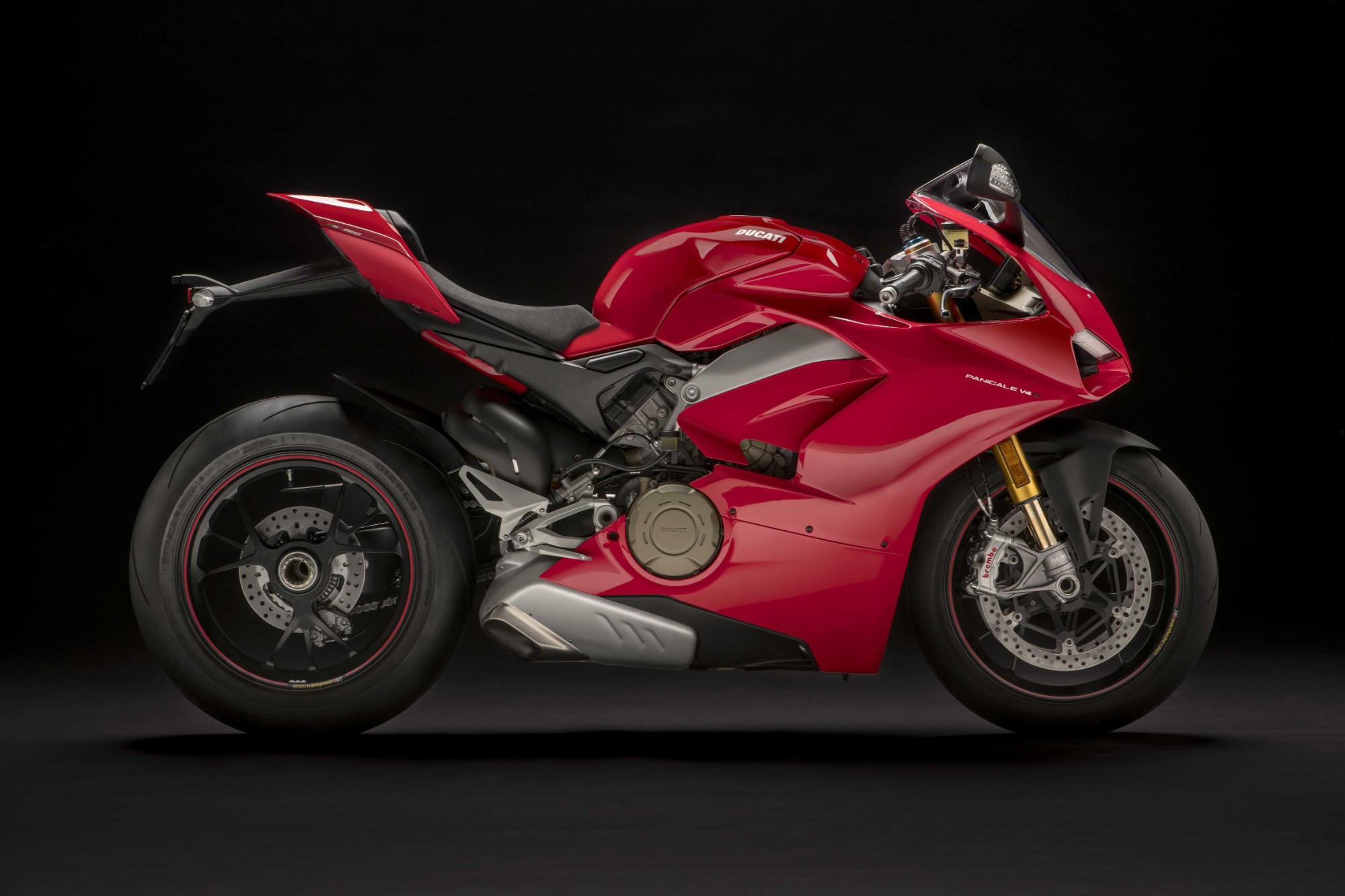
Ducati Unveils 214-Horsepower, 430-Pounds-Wet Panigale V4 Sportbike

DUCATI PANIGALE V4

The Panigale V4. A bike that begins an exciting new chapter in the Ducati story, a new “symphony” of all-Italian performance and emotion. The Panigale V4 is the first mass-produced Ducati bike to mount a four-cylinder engine, derived directly from the MotoGP Desmosedici. It’s a concentrate of Ducati technology, style and performance. With an engine displacement of 1,103 cm3, 214 hp and a power/weight ratio of 1.1 hp/kg, this bike sets a new standard in the supersport production bike segment.

The Panigale V4 replaces the iconic 1299 at the top of the Ducati supersport range, doing so by enhancing performance and ridability so that riders of all skill levels can enjoy boundless fun and excitement. The Panigale V4 has been developed in close collaboration with Ducati Corse, drawing directly on know-how and technology from the racing world to provide a road bike that is the closest thing possible to its MotoGP counterpart.

The outstanding performance of the Panigale V4 is underlined by a completely new design which, while it follows on from that of the supersport bikes that preceded it, now even more effectively transmits the power and essentialness of Ducati racing bikes. The Panigale V4 name combines the alluring “Panigale” tag with the “V4” designation that marks the break with the past, indicating the start of a whole new era for the Bologna-based bike manufacturer.

The new Ducati supersports family consists of the Panigale V4 – the essence of the new sports bike – and the Panigale V4 S. The latter mounts Öhlins suspension featuring the Smart EC 2.0 system with a new adjustment interface and top-drawer components such as forged aluminium wheels and the lithium ion battery. Completing the range is the exclusive Panigale V4 Speciale, a numbered, limited-edition bike with a dedicated livery, titanium exhaust and machined from solid components.

The philosophy followed by the Panigale V4 development team mirrors the approach taken by Ducati when developing a racing bike: total integration of engine, chassis and rider. To achieve that goal MotoGP-derived technology has been employed. Development has involved Ducati Corse technicians and riders, making the Panigale V4 a production sports bike that comes close to being a MotoGP prototype, built for both excellent on-track performance and outstanding on-road ridability.

The Desmosedici Stradale engine is a 90° V4 with Desmodromic timing, just like the Desmosedici GP from which it also takes an 81 mm bore (the maximum allowed by MotoGP rules). This has been combined with a longer stroke than that used in racing (giving a total displacement of 1,103 cm³) to boost low-to-mid rev torque and reduce maximum revs so that the power is easier to handle. The new Ducati engine puts out a maximum of 214 hp at 13,000 rpm, making the Panigale V4 the most powerful bike in the segment, yet easy to handle thanks to a torque of 12.6 Kgm at 10,000 rpm. Despite such outstanding performance, the Desmosedici Stradale has long maintenance intervals, with valve clearance inspection only necessary every 24,000 km.

The Panigale V4 engine is the only one in the sports segment with a 90° V configuration. It’s also the only engine to use technology such as the counter-rotating crankshaft and twin pulse ignition. These solutions have a positive impact on bike dynamics, making it more agile during changes of direction, fast and stable on the straight and ensuring easier out-of-the-corner torque handling.

The already high power of the standard Desmosedici Stradale configuration can be boosted to 226 hp by mounting the all-titanium racing exhaust, made by Akrapovic as per Ducati Corse specifications.

To contain the inevitable weight gain with respect to the 1299 Panigale (because of the 4 cylinders) Ducati has developed an all-new frame where the Desmosedici Stradale itself has a load-bearing function. Called Front Frame, it’s more compact and lighter than a perimeter frame and uses the engine as a stressed chassis element. This solution ensures the right torsional rigidity for on-the-edge riding and gives riders outstanding “feel”. The Front Frame has allowed the designer to create a bike that is slender in the tank-seat merge zone: this, together with seat/handlebar/footpeg triangulation, ensures perfect bike-rider integration. Together with meticulous design and the use of light materials, the new frame keeps the kerb weight of the S and Special versions down to 195 kg. This weight, combined with the 214 hp, means a power/weight ratio of 1.1 hp/kg, putting the Panigale V4 S at the top of the sport bike segment.

The Panigale V4 doesn’t just set new performance standards. Thanks to the potential of the six-axis Bosch inertial platform, a latest-generation electronics package with some previously unseen features defines new active safety and dynamic vehicle control standards in all riding situations. The Panigale V4 introduces controls such as controlled drift during braking, ABS Cornering on the front wheel only thanks to a set-up specially designed for track riding and Quickshift Up & Down with a strategy that takes lean angles into account. All these controls – developed on the track together with official Ducati riders and test riders – are incorporated in the three new Riding Modes (Race, Sport and Street) and can be adjusted via the advanced TFT panel that makes the Panigale V4 the highest-tech bike in the category.

The range

Panigale V4

Colour

o Ducati Red with grey frame and black wheels

Main standard features

o New Desmosedici Stradale engine, 1,103 cm3

o New “Front Frame”

o 43 mm Showa Big Piston Forks (BPF), fully adjustable

o Sachs monoshock, fully adjustable

o Sachs steering damper

o Latest-generation electronic package with 6-axis Inertial Measurement Unit (6D IMU): ABS Cornering Bosch EVO; Ducati Traction Control EVO (DTC EVO); Ducati Slide Control (DSC); Ducati Wheelie Control EVO (DWC EVO); Ducati Power Launch (DPL); Ducati Quick Shift up/down EVO (DQS EVO); Engine Brake Control EVO (EBC EVO)

o Buttons for quick level shifting

o Riding Modes (Race, Sport, Street)

o 16 litre aluminium tank

o 5″ full-TFT dashboard

o Full-LED headlight with DRL

o Two-seater configuration kit

o Braking system with new Brembo Stylema® monobloc calipers

o New Pirelli Diablo Supercorsa SP tyres, 200/60 at the rear

o Pre-setting for Ducati Data Analyser + GPS (DDA + GPS) and Ducati Multimedia System (DMS)

Panigale V4 S

Colour

o Ducati Red with grey frame and black wheels

Same standard features as the Panigale V4 with the exception of:

o Suspension and steering damper with Öhlins Smart EC 2.0 system

o Öhlins NIX-30 forks

o Öhlins TTX 36 shock absorber

o Öhlins steering damper

o Aluminium forged wheels

o Lithium-ion battery

o Cast Magnesium alloy front sub frame

Panigale V4 Speciale

Colour

o “Speciale” colour scheme with grey frame and black wheels

Same standard features as the Panigale V4 S with the exception of:

o Carbon fibre front/rear mudguards

o Machined-from-solid top yoke with identification number

o Alcantara® seat

o Dedicated handle grips

o Adjustable foot pegs

o Carbon fiber heel guard

o Carbon fiber cover swinging arm

o Racing articulated levers

o Racing fuel tank cap

o Brake level protection

Supplied kit:

o Full racing titanium Ducati Performance by Akrapovic exhaust system

o Racing screen

o Plate holder removal kit

o Machined-from solid mirror replacement plugs

o Ducati Data Analyser+ GPS (DDA + GPS)

o Bike cover

Desmosedici Stradale, the new Ducati V4 engine

90-degree V4: the racing engine par excellence

Ducati sees the 90-degree V4 layout as the pinnacle of motorcycle engine sports performance. It’s no coincidence that this same solution is employed on Desmosedici MotoGP engines. The 90-degree V layout evens up first order forces naturally without having to resort to a balancing countershaft to eliminate vibration, a solution that, as is known, increases weight and drains power. This key benefit, crucial to the reliability and mechanical efficiency of an engine that revs as high as 14,000 rpm, is just one of many that make this Ducati-selected configuration the most technically refined possible.

Compared to a classic in-line 4, the lateral compactness of the V arrangement allows for better mass centralization and reduces the bike’s frontal cross-section. Moreover, the shorter crankshaft diminishes the gyroscopic effect. All these aspects have a positive impact on motorcycle dynamics, making it lighter and faster when changing direction. Ample space inside the V provides room for both the water pump and an outsize airbox (12.8 litres) that lets the Desmosedici Stradale breathe better.

Smooth integration of engine and chassis set-up forms the foundation of every Ducati. That’s why the Desmosedici Stradale is designed to be banked rearward 42°, just like the Ducati engines used in MotoGP. This optimises weight distribution, allows for larger radiators and brings the swingarm pivot as far forward as possible.

Moreover, the Desmosedici Stradale has been designed as a structural chassis element. The main frame attachment points have been incorporated in the front of the upper crankcase half and in the rear cylinder bank head. What’s more, the crankcase acts as a rear suspension and swingarm attachment point.

Light and compact

Synergies with Ducati Corse has yielded a compact, light, high-performance engine. Meticulous design and development by Ducati’s engine team has resulted in power delivery that maximises road riding pleasure and gives supreme track performance.

Weighing in at 64.9 kg, the Desmosedici Stradale is just 2.2 kg heavier than the 1,285 cm³ Superquadro twin, clearly demonstrating the attention to lightness that lies at the heart of every Ducati project.

Engine casings are made of gravity die cast aluminium and are coupled horizontally. The upper crankcase half incorporates the four Nikasil-coated aluminium cylinder liners ensuring wear protection and low friction.

The 81 mm diameter pistons that slide inside the liners have two low-attrition compression rings and an oil ring. Made of moulded aluminium, the pistons feature “box in box” technology: this contains both skirt height and below-chamber thickness, helping to reduce attrition and inertial loads while maintaining the necessary strength and stiffness.

Racing-derived design is also underscored by a high compression ratio of 14:1. The pistons are coupled to forged steel con rods with a centre-to-centre of 101.8 mm.

Mounted on brass bushings, the crankshaft rotates on three supports and is made of nitrided steel with crank pins ground twice over and offset at 70° as on the Desmosedici engines that compete in MotoGP.

This particular shaft geometry, combined with the V engine layout, allows for a special “Twin Pulse” ignition sequence.

To limit weight, all engine casings are made of die cast magnesium. The same material has been used to make the cam covers, the oil sump, the alternator cover and the two-piece clutch cover.

Counter-rotating crankshaft

On normal factory bikes, the crankshaft turns in the same direction as the wheels. In MotoGP, instead, counter-rotating crankshafts that run in the opposite direction are widely used. Ducati engineers have borrowed this top-level racing solution for the same reasons that first saw it applied in competition. Its benefits stem from two aspects of physics: gyroscopic effect and inertia.

A counter-rotating crankshaft offsets some of the gyroscopic effect generated by the turning wheels and that, in turn, improves handling and makes the bike more agile when changing direction.

The second benefit has to do with the inertia (i.e. the tendency of an object to oppose any change of state) of the vehicle and the rotating engine parts. During acceleration, drive torque is put down on the ground, causing the bike to wheelie. A counter-rotating crankshaft, however, produces inertia-linked torque in the opposite direction, lowering the front of the bike, limiting the wheelie effect and thus boosting acceleration performance.

Similarly, during hard braking/deceleration the bike undergoes rear wheel lift-up: however, the crankshaft itself also decelerates (i.e. its revs drop), producing an inertial torque that works against lift-up. So a counter-rotating crankshaft has advantages during both acceleration and braking.

Of course, this layout demands the addition of the so-called ‘jackshaft’ (*) to transfer crankshaft drive through the gearbox to the rear wheel so it turns the right way.

* The jackshaft adds an extra transmission element to the crankshaft-wheel connection system. This needs to be taken into consideration when establishing crankshaft power if the latter is obtained from measurements made at the wheel. During both homologation and measurement on acceleration test benches it is, therefore, necessary to consider an efficiency or, in any case, an additional coefficient that is, by law, fixed at 0.98.

Twin Pulse ignition

A combination of 70° crank pin offset and 90-degree V layout generates what Ducati calls a “Twin Pulse” firing order because it’s as if the engine were reproducing the firing sequence of a twin-cylinder. The distinctiveness lies in the fact that the two left-hand cylinders fire closely together, as do the two right-hand ones. In the timing chart, the ignition points are, then, at 0°, 90°, 290° and 380°. It’s this particular firing order makes the V4 sound like a MotoGP Desmosedici.

In practice, if we imagine a cycle starting from 0°, the first cylinder to fire is the front one on the alternator side. After just 90° of rotation, the rear cylinder on the same side fires. There then follows an interval in which the engine generates no drive torque until the two cylinders on the clutch side fire, again just 90° apart. In addition to an exhaust rumble like no other in the motorcycle world, the Twin Pulse ignition sequence provides a power delivery that Ducati MotoGP riders deem unbeatable as it provides outstanding engine performance and, therefore, smooth handling, especially on corners and out-of-the-corner stretches.

Variable Intake System

The Desmosedici Stradale engine takes in air through four oval throttle bodies (52 mm diameter equivalent), connected to variable-height air intake horns, featured for the first time on a Ducati engine. This solution optimises cylinder intake across the rev range, giving major advantages in terms of power delivery and handling.

As rpm and rider-requested power vary, the air intake horns take on a configuration that lengthens or shortens the ducts, optimising the fluid dynamics of the pressure waves that run along the duct itself.

Controlled by the ECU, the system consists of two stages: a fixed horn on the throttle body and a mobile one that is moved along steel guides by an electric motor. When the latter is lowered, it comes into contact with the short horn, geometrically lengthening the duct. When raised, the fluid dynamics involve only the fixed lower horn and the engine configuration is characterised by a very short duct.

Each throttle body has two injectors: a sub-butterfly one for low-load use and another above it that comes into play when maximum engine performance is required. The throttle bodies of each cylinder bank are moved by a dedicated electric motor. Thanks to the full Ride by Wire system, this allows complex electronic control strategies and modulation of engine ‘feel’ according to the selected riding mode.

Latest-generation Desmodromic system

As on all Ducati engines, the Desmosedici Stradale sees Desmodromic design playing a pivotal performance role. On the Desmosedici Stradale, the Desmodromic system uses fully redesigned, miniaturised components that have allowed for the construction of very small cylinder heads, achieving a degree of sophistication, lightness and compactness never before seen on a Ducati. Every single system component has been designed and tested to operate safely at the high revs the V4 is capable of. New spark plugs – smaller than standard models – also help keep the heads compact.

The four Desmosedici Stradale engine camshafts control the sixteen valves: valve diameters are 34 mm diameter on intakes and 27.5 mm on exhausts, values decidedly on the high side given the 81 mm bore. The valve seats are made of sintered steel.

Given the high revs attained by the V4 and the large valves, a traditional spring system would be inadequate because the valves would be unable to follow the steep cam profiles. This, then, is where the Desmodromic system becomes a must. With the “Desmo” system the valves are closed mechanically with the same level of accuracy as they’re opened. This allows the steep cam profiles and radical cam timings that optimise intake and exhaust fluid dynamics to provide higher engine performance.

The camshafts are controlled by two “silent” timing chains. At the front, the chain drives the intake camshaft which, in turn, transmits drive to the exhaust camshaft via a pair of cogs (hybrid chain-cog timing). On rear timing, instead, the chain drives the exhaust camshaft, which transmits drive to the intake camshaft. This solution minimises timing power absorption, enhancing performance and reliability. Front cylinder timing is controlled by the chain on the right-hand side of the engine, turned by the crankshaft via a gear obtained on the primary drive pinion. The one that controls rear cylinder timing is on the left-hand side of the engine and is driven by a monobloc gear on the crankshaft. Each cylinder head has an “anti-knocking” sensor that optimises spark advance to prevent any combustion shock.

Semi-dry sump lubrication

As on MotoGP engines, the Desmosedici Stradale uses semi-dry sump lubrication with delivery and return stages that ensure effective lubrication of all moving parts at all times.

The oil circulation system consists of four pumps: one delivery lobe pump and three recovery pumps. One of the latter, a gear pump, draws oil from the heads via two ducts while the other two lobe pumps ensure efficient oil recovery under all conditions, keeping the crankcase zone under the pistons in a controlled, constant low pressure state and thus reducing airing losses (i.e. power absorption caused by the aerodynamic resistance exerted by the air and splashing of the oil in the con rod casing).

The oil tank – which also acts as a filter housing – is in a magnesium sump mounted underneath the crankcase and connected to the gearbox but separate from the crankcase. A dedicated radiator, attached just below the water radiator, cools the oil.

Cooling system

Housed in the engine ‘V’, the water pump is operated by a shaft, in turn driven by a gear train. This positioning solution is designed to minimise circuit size, boost efficiency and optimise engine weight.

Gearbox and clutch

The 6-speed gearbox is specially designed for the Desmosedici Stradale engine and features a rotary gear sensor to ensure optimal operation with Ducati Quick Shift (DQS) up & down.

The sensor assesses the position of the gear shift drum and, consequently, of the gear shift forks, with extreme accuracy to ensure precise gear selection. This, then, allows for a strategy that can restore torque transmission only once the gear change has been completed, thus preventing undue gear mesh stress so shifts are always complete, precise and swift.

The hydraulically controlled wet clutch has 11 driving plates and features a progressive self-servo mechanism that compresses the friction plates when under drive from the engine without requiring any extra effort from the rider to release the clutch.

While enhancing frictional efficiency, this also results in a rider-friendly, light clutch lever “feel”. In sport riding conditions, the same mechanism reduces pressure on the friction plates, enabling a pure racing “slipper” action and reducing rear end destabilisation during aggressive down-shifting, with the added benefit of a super-responsive lever.

Long maintenance intervals

While performance levels surpass even those of the Superquadro, the valve clearance inspection and adjustment (Desmo Service) interval remains at 24,000 km (15,000 miles), while general service intervals remain unchanged at 12 months/12,000 km (7,500 miles).

Shapes modelled on mechanics

The new Panigale V4 was designed by the Ducati Design Center, starting from the 1299 Panigale styling elements and evolving them into a muscular machine, with sleek surfaces and assertive profiles. The styling development has followed three typical racing model guidelines: design minimalism, integration among components and the power transmitted by surface treatment. An extra touch to this project has been added by the improved aerodynamic efficiency achieved through wind tunnel testing by the Ducati Corse engineers.

The motorcycle’s bodywork develops around the technical parts, and in particular, the new “Front Frame” left exposed, with the two pillars extending laterally to the Desmosedici Stradale cylinder heads. The front is dominated by two large airbox air intakes, which incorporate the full-LED headlight in the top part, overshadowed by the ports. The headlight sizing is reduced with the precise aim of enhancing the aggressive look of the two oversized ports, especially when the engine is switched off. Below the air intakes are two wing attachments designed to accelerate the incoming airflow. The full-LED headlight includes a Daytime Running Light outlining with a double-edged profile the top of the air intakes, and two compact LED modules ensuring low-beam and high-beam functions.

The nose fairing is a perfect example of the concept of integration underlying the new Panigale V4 stylistic approach. The front sub-frame, made of magnesium, is partially exposed to become part of the bodywork. The sub-frame also supports the mirrors with LED turn indicators integrated in the outer shell.

The search for essentiality and integration has also led to the dual-layer fairing design: a less stretched out main fairing, and another layer that also acts as an air outtake. The “dual layer” solution emphasises the compact nature of the vehicle mechanics and is inspired by the iconic clean lines of Ducati racing models – traditionally characterised by their stylish fairings. The main fairing extends upward by embracing the tank with two muscular shoulders which, at the top, morph into the cover of the compartment that accommodates easily accessible electrical and electronic components.

The tank has a shape designed to support the rider during track riding and stretches out to below the seat – just like in racing models. This feature is highlighted by exposing the tank in the tail area. The tail is made of two shell-cast aluminium half-shells, which starting from the rear cylinder head, reach out to hug the tank part below the seat, ending up in the single-seater one-piece tail end, whose wing-shaped design is inspired by the shape of a car spoiler. The tail faring integrates the full LED light that is also wing shaped: although a single piece, it features the signature split lighting typical of Ducati racing models.

Innovative Front Frame

The racing soul of the new Panigale V4 is apparent in its technical specifications including a kerb weight of 195 kg for the “S” and Speciale versions (only 5.5 kg more than the 1299 Panigale S). It would be impossible to achieve these values by using a traditional perimeter frame. For this reason, a “Front Frame” has been developed – using the Desmosedici Stradale engine as a load-bearing feature. This solution is an evolution of the monocoque design and was developed on the strength of the experience gained in MotoGP.

Compared to the Monocoque design, the “Front Frame” allows torsional rigidity and lateral rigidity to be kept separate, so as to obtain the right response to the stress transmitted to the frame and better absorb any

road surface roughness in cornering, ensuring the necessary stability. All this results in superior agility and riding precision – ensuring easier control and less fatigue for the Panigale V4 rider.

The main difference in lay-out over traditional perimeter frames is the use of the engine as a structural element of the frame. At just 4 kg, the “Front Frame” features a compact frontal structure, secured directly to the upper half-crankcase of the front cylinder head and to the V4 rear cylinder head, with the engine also acting as a fixing point for the rear suspension and a fulcrum point for the single-sided swingarm.

The most important advantage offered by the Ducati “Front Frame” is that the Desmosedici Stradale engine can be used to achieve the required rigidity, making it possible to significantly reduce the outreach, and consequently, the weight, of the main frame, resulting in a better rigidity/weight ratio. Another plus is the fact that the reduced length of the pillars running alongside the engine has resulted in a more compact motorcycle design – especially in the rider seat area.

The frame is complemented by the lightweight front sub-frame, made of magnesium, and the shell-cast aluminium seat sub-frame, secured to the “Front-Frame” at the top, and screwed into the top of the rear cylinder head at the bottom.

The rear suspension uses a rising-rate linkage mechanism attached to the Desmosedici Stradale engine via a forged aluminium element. The linkage responds to the motion transmitted by a 600 mm long high-triangulation cast aluminium single-sided swingarm, among the longest in the segment, to ensure the best performance riding out of corners.

The rake and trail are 24,5° and 100 mm – respectively.

Sophisticated suspension

The Panigale V4 is equipped with 43 mm Showa Big Piston Forks (BPF), fully adjustable in spring pre-load and compression and rebound damping. The fork bodies house chrome sliders with Brembo radial caliper mountings. A Sachs steering damper completes the front-end package. The rear unit is a fully adjustable Sachs shock, fixed at one end to the Desmosedici Stradale through a forged aluminium element.

The Panigale V4 S and Panigale V4 Speciale are equipped with Öhlins NIX-30 forks, Öhlins TTX36 rear shock and Öhlins steering damper, with an event-based control system. In these versions, the suspension and the steering damper are controlled by the second-generation control system Öhlins Smart EC 2.0, featuring, among other things, the new Objective Based Tuning Interface (OBTi).

Wheels and Tyres

While the Panigale V4 is fitted with 3-spoke cast aluminium wheels, the Panigale V4 S and Speciale feature 3-spoke forged aluminium alloy wheels.

Ducati and Pirelli worked hand in hand to develop the new Panigale V4, the first motorcycle ever to feature as factory equipment the new Pirelli DIABLO™ Supercorsa SP 120/70 ZR17 at the front and the revolutionary size 200/60 ZR 17 at the rear. The latest version of the DIABLO™ Supercorsa SP, in the new 200/60 ZR 17 size already popular as a slick option in the FIM World Superbike Championship, is a pioneer in the field of racing replica tyres. The innovative profile of the resized rear tyre maximises the contact patch at extreme lean angles and makes the most of the bi-compound technology used: the SC2 compound used for the shoulder area is the same used for racing slick products, ensuring the enhanced grip of racing tyres

while guaranteeing at the same time the strength and versatility needed for road use. In order to work in perfect harmony with the rear tyre, the front tyre has gone through an extra, major development step: all the riding items related to handling, from rider feedback through support solidity to safety feeling and grip loss predictability, have been optimised by creating a new front profile, slightly increased in terms of maximum section width with respect to the previous version of the product. Redesigning the geometries of the semi-finished products and the belt pattern has made it possible to set new agility and rideability standards, with at the same time top racing level performance. Finally, the new tread pattern of the DIABLO™ Supercorsa SP features a new “flash” geometry to optimise track performance by improving wear, and reduced groove widths designed to provide adequate support for stronger side thrusts.

Exclusive braking system with new Brembo Stylema® calipers

The Panigale V4 range is fitted exclusively with the brand new Brembo Stylema® monobloc calipers – the latest evolution of the already high-performance M50.

The new Stylema® calipers, machined from a single piece of alloy, feature lighter-weight areas in the fixing bushings and in the body, which, compared to the M50, make them visually more compact – allowing at the same time a weight reduction of 70 g for each caliper, without compromising on rigidity. Other improvements have been introduced in terms of internal ventilation to ensure higher efficiency.

The new Stylema® calipers ensure improved hydraulic performance thanks to their extreme rigidity, which translates into excellent fingertip feel, a shorter brake lever travel and prompt response.

The twin Brembo calipers each have four 30mm pistons that grip 330mm discs to achieve outstanding braking performance – with at the rear a single 245 mm disc with a 2 piston caliper. The braking system is supported by the ABS Cornering EVO system, which uses the extra-lightweight 9.1MP Bosch control unit.

Racing tank

The Panigale V4’s racing soul is enhanced by the 16 litre lightweight aluminium tank which, just like in racing motorcycles, relocates part of the fuel storage to below the rider’s seat. The space not occupied by the fuel has been used to store all the electronics at front of the tank, under a plastic cover: this includes the battery, which in the Panigale V4 S and Panigale V4 Speciale versions is a lithium-ion pack.

Electronics

Latest-generation electronic controls

The Panigale V4 not only sets new benchmarks in terms of top performance, but also defines new active safety standards and vehicle dynamics control – thanks to a state-of-the-art electronic package, based on the use of a 6-axis inertial platform (6D IMU – Inertial Measurement Unit) that instantly detects the motorcycle’s roll, yaw and pitch angles in space.

The Panigale V4 electronic package includes controls to ensure management of all the riding phases; some of these control the start, acceleration and braking phases, others manage traction, while others kick in when riding into and out of corners.

ABS Cornering Bosch EVO

Ducati Traction Control EVO (DTC EVO)

Ducati Slide Control (DSC)

Ducati Wheelie Control EVO (DWC EVO)

Ducati Power Launch (DPL)

Ducati Quick Shift up/down EVO (DQS EVO)

Engine Brake Control EVO (EBC EVO)

Ducati Electronic Suspension EVO (DES EVO)

The operating parameters of each control are factory-associated with the three Panigale V4’s signature Riding Modes. The rider can customise his or her riding style and restore Ducati’s factory settings. The level of one of the DTC, DWC, DSC or EBC control functions can be quickly adjusted via the direct access buttons provided on the left-hand switchgear.

ABS Cornering Bosch EVO

The Bosch ABS system, equipped with a “Cornering” function that extends ABS action to situations in which the vehicle is leaning in corners, has undergone a major evolution to reflect the latest action logic and types of control.

The Bosch EVO Cornering ABS is settable to three different levels to fully meet track and road riding needs, even in the most critical low-grip situations.

While level 3 is indicated on the road or for low-grip conditions, ensuring safer and more stable braking, levels 2 and 1, the hard-braking options, are more suited to higher grip surfaces and track racing.

Selecting level 2 enables the rider to skid into corners safely, enhancing racing performance.

The ABS Level 1, recommended for track riding, is activated while maintaining the “Cornering” feature – for extremely hard braking into corner and to help rectify any rider mistakes.

Ducati Traction Control EVO (DTC EVO)

The DTC EVO featured by the Panigale V4 is based on an algorithm that makes intervention faster and more accurate. The DTC EVO interfaces with the Bosch Inertial Measurement Unit (IMU), constantly

monitoring the vehicle’s lean angle and using it to accurately calculate the degree of intervention needed to ensure suitable rear wheelspin (according to the DTC EVO level setting).

Moreover, the DTC EVO also acts on the throttle body valves and controls spark and injection advance. In all situations in which fast intervention of the DTC EVO is not required, the use of the throttle body valves ensures maintenance of optimal combustion parameters, ensuring a smoother Desmosedici Stradale response and system intervention.

With simpler types of traction control, detection of rear wheelspin sees the system kick in to hold it in check. When optimal grip is re-established, the system reduces intervention until spin reoccurs, and the cycle repeats. This produces a graph that shows intervention oscillating around a theoretical “ideal intervention line” that represents the traction limit. The DTC EVO reduces the magnitude of those oscillations, making the system operate closer to the perfect intervention line. This kind of behaviour is highly advantageous as its effect on the dynamic balance of the motorcycle is minimal. In addition, the system is designed to be stronger and more consistent, allowing the motorcycle to maintain constant and predictable behaviour even when the grip level changes – i.e. in case of rear tyre wear.

In addition to this enhanced intervention precision, when set to level “1” or “2”, the DTC EVO introduces a new function, named “spin on demand”, allowing the rider to control the motorcycle up to levels that would previously only have been possible for experts or pros. Now, when the machine is leaned over, the rider can use the throttle to request more wheelspin than that obtained at the normal intervention level, allowing the motorcycle to pivot around its front wheel and close the cornering line. The DTC EVO allows riders to do this while keeping safety parameters under control, effectively letting them ‘close’ the cornering line with the rear wheel.

Ducati Slide Control (DSC)

The introduction of the 6D IMU has allowed the Ducati Slide Control (DSC) – developed in conjunction with Ducati Corse – to be added to the Ducati Traction Control EVO (DTC EVO). This new system provides the rider with further support by controlling the torque delivered by the Desmosedici Stradale engine as a function of the slide angle; its goal is to improve out-of-the-corner performance by preventing slide angles that might otherwise be difficult to handle. The DSC relies on the 6D IMU that provides the vehicle control unit with crucial information on vehicle dynamics (such as lean angle, acceleration and much more). Thanks to these data – and depending on the user-selected level – the DSC extends the performance range of the motorcycle for everyone, providing improved assistance under extreme riding conditions.

Like the DTC EVO, the DSC controls torque reduction by acting on the throttle body valves, spark advance decrease and injection cuts. In every situation in which fast intervention of the DSC is not required, the use of the throttle body valves ensures optimal combustion parameters, with a smoother Desmosedici Stradale engine response and system intervention.

The DSC has two different settings: switching from level 1 to level 2 results in easier control of slide angles that would otherwise be difficult to handle. DSC intervention levels can be changed by accessing a special menu, in which DTC EVO and DWC EVO values can also be set. It is also possible to set direct DSC control via the direct access buttons on the left-hand switchgear. The DSC setting is always shown on the display.

Ducati Wheelie Control EVO (DWC EVO)

The Panigale V4 also comes equipped with the latest version of Ducati Wheelie Control EVO (DWC EVO). This system, using Bosch 6D IMU information, ensures wheelie control to obtain top acceleration performance in a smooth, safe manner. The DWC EVO detects the occurrence and extent of wheelies to control them with a higher level of precision – ensuring a more accurate response to rider input.

Ducati Power Launch (DPL)

This 3-level adjustable system ensures lightning-fast starts, letting the rider focus only on releasing the clutch. Once set, the rider simply engages the first gear and opens the throttle. During the first stage of starting off, while the rider is modulating the clutch release, the DPL stabilises the Desmosedici Stradale at optimal revs as a function of the selected DPL level. In the second phase, when the clutch has been fully released, the DPL controls torque delivery to ensure the maximum degree of acceleration according to the chosen level.

The DPL makes use of the DWC functions and always keeps the DTC active to ensure maximum safety at all times. Automatic deactivation of the system occurs above the end-of-start speed, or once third gear is selected. To protect the clutch, a specially developed algorithm allows only a limited number of consecutive starts. The number of available starts resets itself when the rider uses the motorcycle normally.

The DPL is adjustable to three different levels, and is activated by pressing the special button on the right handlebar. Level 1 favours high-performance starts, level 3 is safer and more stable.

Ducati Quick Shift up/down EVO (DQS EVO)

The DQS EVO with up/down function, developed for the Panigale V4, compared to the previous Panigale 1299 system uses the information concerning the lean angle to maximise motorcycle stability when shifting gears in corners.

The DQS EVO, as well as minimising gear shifting times, allows down-shifting without using the clutch – ensuring even more effective hard braking. The system consists of a two-way microswitch built into the linkage of the gear change lever; each time that the gearbox is actuated, it sends a signal to the Desmosedici Stradale ECU. The system works differently for upshifts and downshifts, integrating adjustment of the spark advance and injection during upshifts with a controlled opening of the throttle valve during downshifts – ensured by the full Ride-by-Wire system management.

The extent and duration of system operation are designed to ensure seamless gear meshing even under extreme track riding conditions; during downshifts the system works synergetically with the slipper clutch and the Engine Brake Control (EBC).

Engine Brake Control EVO (EBC EVO)

The EBC (Engine Brake Control) system has been developed to help riders optimise vehicle stability under extreme turn-in conditions, by balancing the forces applied to the rear tyre under severe Desmosedici Stradale engine-braking conditions. The Panigale V4 EBC EVO, optimised on the basis of the lean angle, monitors the throttle position, selected gear and crankshaft deceleration rate under heavy braking and fine-tunes throttle opening to balance the torque forces acting on the tyre. The EBC EVO can be set to three levels integrated in the Riding Modes.

Ducati Electronic Suspension EVO (DES EVO)

The “S” and Speciale versions are equipped with the event-based electronic control Öhlins suspension system, based on the second-generation Öhlins Smart EC (Electronic Control) system which, in addition to leveraging all the potential offered by the 6D IMU, has a new and more intuitive rider interface, OBTi (Objective Based Tuning Interface).

The electronic suspension offers the choice between manual mode (“Fixed”) – allowing compression, rebound, and damping of the steering damper to be manually set via “virtual clicks” (32, from fully open to fully closed, for the suspension, and 10 for the shock absorber) – and automatic (“Dynamic”).

When the “Dynamic” mode is selected, based on the information received from the 6D IMU and other sensors, the system automatically adjusts compression and rebound damping in response to the riding style.

The main advantages offered by the Öhlins Smart EC 2.0 system concern the rider’s option to customise the level of intervention on the suspension, depending on individual riding events (braking, cornering, acceleration), as well as to adjust the operating parameters of individual hardware components. For the rider, this means having access to a superior level of motorcycle dynamics control – improving road safety and track lap time efficiency.

New Ducati Riding Mode strategy

The Riding Modes allow the rider to choose from three different factory-set riding styles, perfectly adapting the Panigale V4’s behaviour to the rider’s, to the track type, and to environmental conditions. Each Riding Mode is programmed to instantly change the engine’s character, electronic control parameters and, in the “S” and “Speciale” versions, also the suspension set-up. Each rider can customise his or her riding style and later restore Ducati’s factory settings.

Riding Mode Race – As the name implies, the Race RM has been developed for experienced riders who wish to make the most of all the potential of the Panigale V4 on high-grip track surfaces. By selecting Race, the rider can rely on 214 HP, with direct Ride-by-Wire throttle response and, on the ‘S’ and Speciale versions, a high-performance hard suspension set-up. The Race mode implies a low-intervention default electronics setting, without, however, compromising on safety, with the ABS only intervening on the front wheel to provide maximum braking performance, but with the Cornering feature always active.

Riding Mode Sport – By selecting the Sport Riding Mode, the rider can count on 214 HP power delivery with a sporty Ride-by-Wire response to throttle opening and, in the S and Speciale versions, an equally sport-oriented suspension set-up. Electronic controls are set in such a way as to help also less experienced riders adopt an effective, highly spectacular riding style. In the Sport mode, for instance, the controlled braking drift feature is active, allowing for safe wheel skidding when turning into corners. The rear wheel lift control function is active and the ABS Cornering function is set to provide maximum cornering performance.

Riding Mode Street – The Street Riding Mode is the one recommended for road use of the Panigale V4. This RM offers the rider 214 HP power delivery with progressive Ride-by-Wire response to throttle opening, like in the Sport RM, and, in the Panigale V4 S and Panigale V4 Speciale versions, an extremely soft suspension set-up to absorb any bumps in the road. The default setting of electronic controls helps ensure maximum safety, by guaranteeing the best grip and stability.

Second generation TFT display instrumentation

Ducati was the first motorcycle manufacturer to fit a model, the 2012 1199 Panigale, with full-TFT (Thin Film Transistor) colour display instrumentation.

Six years later, with the Panigale V4, Ducati sets a new standard by launching an advanced 5″ full-TFT, high-res (186.59 PPI – 800xRGBx480) and high-brightness colour display, completely redesigned in terms of lay-out and up-to-date graphics, and even more alluring. In developing the motorcycle’s instrumentation, the main focus was on readability and easy access to functions.

The most visible element of the brand new dashboard is the “virtual” circular rev-counter, located on the right side, a clean break with past equipment tradition, inspired by high-end automotive production. The Desmosedici Stradale revs are displayed in the 1,000 to 15,000 rpm range via a needle indicator, whose motion is highlighted by a white trail acting as a “shiftlight”, changing from white to orange and then going red when approaching the over-rev area.

Two different layouts are available to – and can be recalled by – the rider: the “Track” display, which focuses attention on the lap time indication and in which the rev counter scale highlights the engine rpm values related to the track-specific range of use; and the “Road” display, which instead of lap times, shows Ducati Multimedia System (DMS) information, and highlights engine rpm values typical of road riding. For improved readability, the indications of the (digital) top speed, selected Riding Mode, and selected gear do not change position when the selected lay-out is changed.

The Panigale V4 dashboard, in addition to the classic menu including total kilometres, Trip 1, Trip 2, fuel consumption, average fuel consumption, Trip Fuel, Trip Time, Average Speed, Air Temperature, Lap On/Off (in “Track” mode only), and Player On/Off (in “Road” mode only), also features another menu in the bottom right corner with two available functions: display/indication of parameters related to the selected Riding Mode or quick changing of DTC, DWC, EBC and DSC parameters. Finally, the Panigale V4 has an “auto off” function for its direction indicators: the indicators will go off automatically after riding out of a corner or, if pressed unintentionally, after a few hundred metres on a straight stretch (variable between 200 and 2000 metres depending on the current speed of the vehicle when the indicator button is actuated).

Ducati Lap Timer GPS (DLT GPS)

The DLT GPS allows lap times to be automatically recorded, stored and displayed directly on the dashboard each time the finish line is crossed – providing the rider has previously entered the finish line coordinates, by pressing the light flasher button. The system has a useful “Best Lap” feature that displays the lap time flashing for 5 seconds if it is the best recorded lap time in the current track session. For each lap, and for a total of 15 consecutive laps, the lap time, max rpm and top speed are stored; this information can be viewed on the dashboard by accessing the special menu. The DLT GPS is part of the standard equipment on the Panigale V4 Speciale and is available as a Ducati Performance plug-and-play accessory for the Panigale V4 and Panigale V4 S.

Ducati Data Analyser + GPS (DDA + GPS)

The Ducati Data Analyser + GPS (DDA + GPS), evaluates the performance of the motorcycle and its rider by graphically presenting specific channels of information. The DDA + GPS is an essential piece of equipment for track use: it monitors the rider’s performance, in addition to automatically recording and displaying lap times whenever the Panigale V4 crosses the start and finish line. It stores a number of data channels including throttle opening, vehicle speed, engine rpm, gear selection, engine temperature, distance

travelled, revs and DTC index. DDA + GPS is available as a Ducati Performance plug-and-play accessory, while it is supplied as standard with the Speciale.

Ducati Multimedia System (DMS)

The Panigale V4’s versatility is demonstrated by a pre-setting for the Ducati Multimedia System (DMS) – allowing the rider to accept incoming calls, select and listen to a music track, and receive SMS notifications thanks to Bluetooth technology.

When the rider gets on the motorcycle, his or her smartphone automatically connects to the vehicle via Bluetooth, allowing the rider to handle the main multimedia features. The TFT display shows the played track, the icon indicating new incoming SMS or the name of the caller. The call or music sound are transmitted to the rider’s helmet earphones. The DMS is available for the entire Panigale V4 range as an accessory.
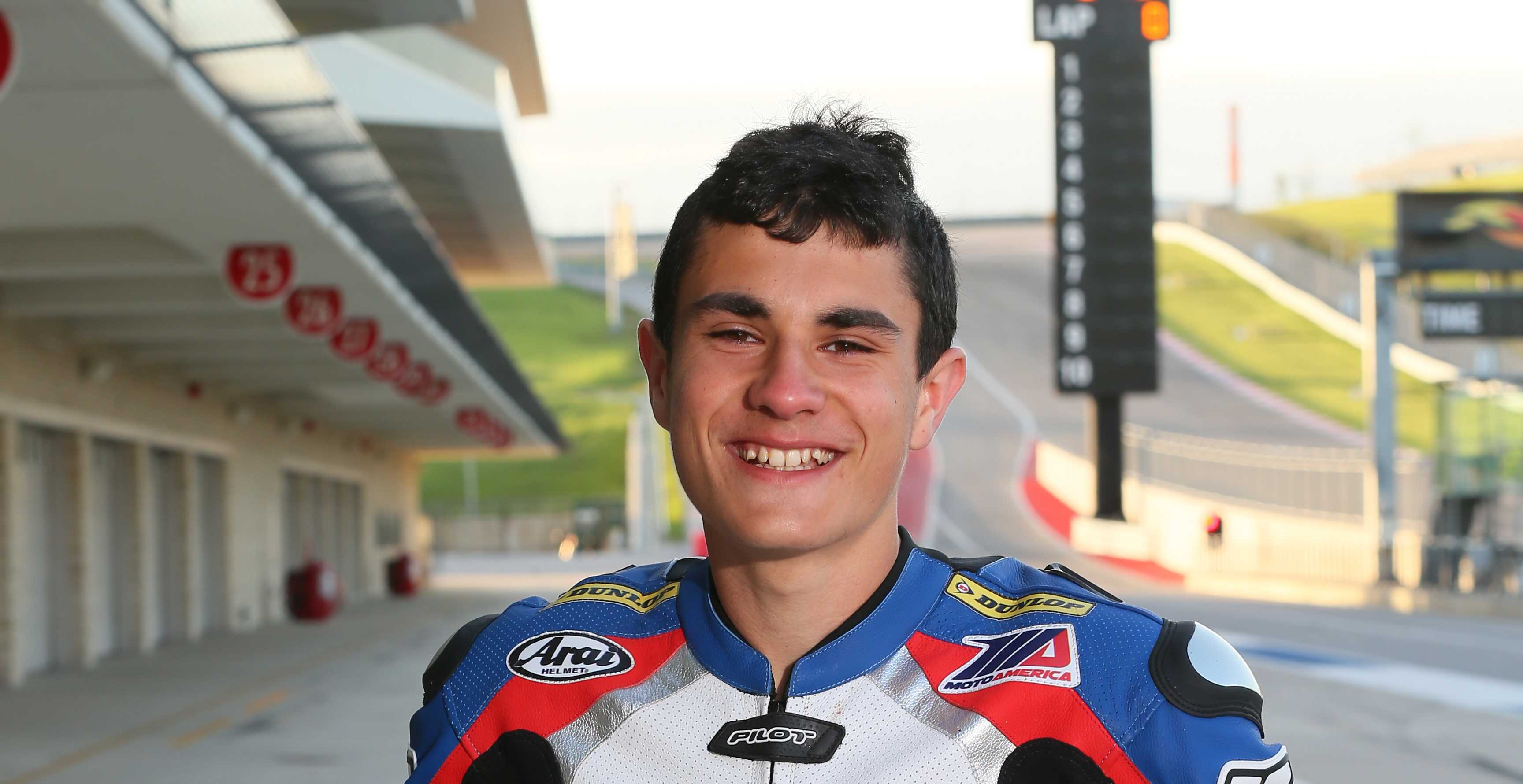
Yamaha bLU cRU R3 Cup: Xavier Zayat Wins Expert Race, 2017 YZF-R6 Grand Prize At Barber Motorsports Park

Xavier Zayat, an 18-year-old from New York, won the Yamaha bLU cRU R3 Cup Expert race Sunday at the 45th WERA Grand Nationals Finals at Barber Motorsports Park, Birmingham, Alabama.

Zayat fought with Chris Parrish, Joshua Jovi, Damian Jigalov, Ashton Yates, Nathan McDonald and Toby Khamsouk throughout the eight-lap, winner-take-all race. On the final lap, Zayat was able to take the lead and get his Pirelli-shod RBoM Racing YZF-R3 across the finish line 0.068 second ahead of 40-year-old veteran Parrish and his YamahaR3Racing.com machine. Jovi, age 17, earned the final podium position with third place on his Bridgestone-backed YZF-R3.

After the race, Zayat’s motor was protested by another competitor in the field. WERA and Yamaha officials confiscated Zayat’s camshafts so they could be compared with stock parts at Yamaha’s facilities in Georgia. As a result of the protest, WERA and Yamaha decided not to hold a winner’s circle ceremony or give out any prizes, including the grand prize of a brand new 2017 Yamaha YZF-R6, to the Experts.

In the Novice race, K&N Yamaha’s Erica Muse won over runner-up Damon Luchette and Nicole Karamichael. For taking first place in the Novice race Muse won a large Yamaha pop-up canopy, Luchette won a $500 voucher for Yamaha parts and accessories, and Karamichael won a $250 voucher for Yamaha parts and accessories.

45th WERA Grand National Finals

Yamaha bLU cRU R3 Cup 

Barber Motorsports Park

Birmingham, Alabama

November 5, 2017

Provisional Expert Race Results (all on Yamaha YZF-R3s):

1. Xavier Zayat, 8 laps, Best Lap Time 1:39.784

2. Chris Parrish, -0.068 second, 1:39.564

3. Joshua Jovi, -0.549, 1:39.683

4. Damian Jigalov, -0.582, 1:39.770

5. Ashton Yates, -0.726, 1:40.291

6. Nathan McDonald, -1.512 seconds, 1:39.966

7. Toby Khamsouk, -5.968, 1:40.443

8. Tyler Freeman, -30.450, 1:43.935

9. Joseph Blasius, -30.476, 1:43.280

10. Blake Davis, -62.635, 1:47.543

11. Samuel Wang, -73.822, 1:48.584

Provisional Novice Race Results (all on Yamaha YZF-R3s):

1. Erica Muse, 8 laps, Best Lap Time 1:46.783

2. Damon Luchette, -7.396 seconds, 1:46.669

3. Nicole Karamichael, -54.751, 1:53.396

4. Hadley Roche, -1 lap, 1:53.914

5. Heather Hunter, -1 lap, 1:55.973

6. Steven V. Thurlo, Jr., -1 lap, 2:01.087

Pirelli And MV Agusta Celebrate New Partnership With Limited-Edition Brutale 800 RR

New partnership agreement between Pirelli and MV Agusta: to celebrate it, a limited edition version of the Brutale 800 RR with Pirelli Design

After decades of collaboration, the brand with the long “P” was selected by the company from Schiranna as sole tire supplier and, to celebrate this agreement, a dedicated version of the Brutale 800 RR was designed in a limited production that can be enhanced with exclusive colored tires

The “Brutale 800 RR PIRELLI” was created by MV Agusta along with Pirelli Design, the Bicocca laboratory specialized in conceiving design projects in collaboration with partners par excellence and it will be on display in the MV Agusta stand at EICMA

Milan/Varese – Pirelli and MV Agusta are pleased to announce that they have reached a new partnership agreement based on which Pirelli has been officially selected as Sole Tire Supplier for all the motorcycles manufactured by the company from Schiranna. This means that all the models currently in production, as well as those that MV Agusta will sell in the future, will mount Pirelli tires as standard equipment.

A vocation for excellence, strong roots in Italy and a sport and industrial heritage: MV Agusta and Pirelli have many characteristics in common. This agreement seals and makes official what has been a profitable and reciprocal collaboration for decades between these two Italian giants, popular all over the world and bound by common core values such as design and the “Made in Italy” brand, combined with a spirit of sports and maximum innovation that is acknowledged by all gearheads.

The increasingly close collaboration between the two companies merits celebration. And so, a limited production edition of a highly successful model was born – the Brutale 800 RR – customized by the Castiglioni Research Center in collaboration with Pirelli Design, the Bicocca laboratory specialized in conceiving design projects with partners par excellence.

The result of this synergy is the “Brutale 800 RR PIRELLI”, as this version of the naked from Varese is called, with truly exclusive equipment and components, manufactured in a very limited production run.

The technical base is made up of the Brutale 800 RR, the sport naked that sets the bar in the segment, thanks primarily to the performance of the compact, three-cylinder, in-line engine. The chassis architecture, built around the original, mixed-structure frame made up of a steel tube trellis and aluminium alloy lateral plates, is also essential to achieving the right riding feel and the dynamic exuberance that the Brutale 800 RR has provided since it was first launched.

The customization of this model in a limited edition focused mainly on the components and color schemes. For example, the saddle was custom created for the Brutale 800 RR PIRELLI and it stands out with its stitching that is colored to match each of the two available color schemes. The headlight unit bracket is painted black, as is the rear subframe. The airbox output grilles are also painted and the wheel rims also boast new features: to reduce weight and increase handling, the engineers decided to mount components derived from the F4, which are characterized by their racing design, very essential and elegant. The rear rim also has a wider channel, now 6 inches, to hold the new tire size, which is specific for this version of the Brutale 800 RR.

Obviously, the tires also play a role of primary importance. Compared to the standard model that comes standard with DIABLO™ ROSSO III tires, the Brutale 800 RR PIRELLI mounts DIABLO™ SUPERCORSA SP tires in the 120/70 ZR17 front size and 200/55 ZR17 on the 6” rear rim made specifically for this model. A rather spectacular option that can be chosen when you order your Brutale 800 RR PIRELLI is the limited edition tire with colored walls.

The color schemes conceived by specialists from the Castiglioni Research Center and Pirelli Design are intended to enhance the lines of the Brutale 800 RR and to highlight the exclusive partnership with Pirelli. The first proposal has a matte black base with glossy red painted inserts. The Pirelli logo is also done in red on the sides of the fuel tank. The DIABLO™ logo also appears to identify the range of high performance Pirelli tires and it’s placed on the fuel tank near the cap and the tank guard itself. The second color scheme is on a grey base with Blue inserts.

The (optional) colored tires will respectively have a red or blue band, depending on which color version they are mounted on.

Pirelli has already collaborated with MV Agusta in the past on customizing a Brutale 800, as in the case of the “Diablo Brutale”, but always as a single, non-commercialized unit.

The “Brutale 800 RR PIRELLI”, on the other hand, is the first MV Agusta model customized by Pirelli that will go into production and be sold in a limited edition, thanks to a separate license agreement between Pirelli and MV Agusta.

The “Brutale 800 RR PIRELLI” can be admired by all motorcycle enthusiasts at the EICMA show, scheduled from November 9-12, 2017 at Rho Fiera (Milan) in the MV Agusta exhibit area, Pavilion 22, Stand I48.

Altus Motorsports Hires Andy Palmer As Service Manager, Acquires FZ07R Program

November 4, 2017 – Andy Palmer of AP MotoArts/MotoShop will join Altus Motorsports as Service Manager and move the FZ07R program to Oklahoma. The move will give the dealership an additional motorcycle expert and gain the FZ07R the support it needs to grow to the next level.

“I’ve known Andy for a few years,” said George Nassaney, owner of Altus Motorsports. “We met in the MotoAmerica paddock and out at Chuckwalla during winter testing and training. Altus has been growing in the past few years and we are always in need of experienced leadership in our service department. Andy brings years of knowledge and problem-solving, as well as a deep understanding of sport and road race bikes.”

“The past few years have been a lot of travel. Between the MotoAmerica series and supporting the FZ07R program from California, I’ve logged more than 200,000 miles on the road. Every time we headed out to drop off a new set of FZ07Rs or to a MotoAmerica round, I’d think, ‘This would be easier if i was more centrally located.’ Well, you don’t get much more ‘central’ than Oklahoma,” said Andy Palmer.

In a year where the FZ07R has gained in popularity and orders started rolling in, Palmer was hit with a major setback when his exclusive bodywork vendor suddenly closed. Unwilling to sell the molds to an outsourced company, Andy documented the process of bringing the work in-house and the painful learning curve of producing a great product via social media. He will move production of the bodywork as well as many of the other custom parts with him to Oklahoma.

“George is committed to helping grow the FZ07R program. We will have staff for building bikes, fabricating our custom parts and creating bodywork. We will also have amazing customer support and possibly even financing,” added Palmer. “And, I’m not just there for the FZ07R, I am going there to work. Whatever I can do to help Altus be a premier dealership in the U.S.”

Altus Motorsports has fielded a team in the MotoAmerica Series for the past three years. In 2017 they supported two riders in the SuperStock 600 class: JC Camacho, who finished the season in 8th place, and Jaret Nassaney in 24th place. In 2018, Palmer will support the new twins class and junior cup entries while anchoring the service department at the dealership and maintaining all the bikes under the banner between rounds.

“We love what MotoAmerica is doing for the sport of Road Racing in America and we are proud to be a part of it. We started with a KTM Cup team in 2015 and have moved into the SuperStock 600 class. The FZ07R is a beautiful bike. We think it has a lot of potential to revitalize the lightweight Twins Class. With the new Twins Class being added to the MotoAmerica schedule for 2018, it made sense to get involved and see how we can support and build that platform,” said Nassaney.

Over the winter, Palmer will slowly move the bulk of his operation to Altus, including the Dyno. Andy plans to keep a small footprint in Southern California for the foreseeable future: “We do a lot of testing out here and I still have a customer base here. It makes sense to keep a small presence here.”

Altus Motorsports, an Altus, OK motorcycle dealer, has been in business since June 1998. They are the largest volume Polaris, Kawasaki, Yamaha, KTM and Honda dealer in the Southwest Oklahoma / North Texas region and have over 26,000SF of fun, including new and used Honda, Yamaha, Kawasaki and KTM Motorcycles, trike motorcycles, Watercrafts, and ATVs featuring Goldwing, Ninja, Vulcan & other models for sale. We also carry Honda Power Equipment, Cub Cadet Lawnmowers, Redmax, and Wright (Lawnmowers and Generators). Lawton Motorsports is also part of the Altus Motorsports family. Opened in April 2009, Lawton Motorsports sells Kawasaki, Polaris, Victory, Polaris Slingshot and Suzuki powersports products and Polaris UTV sales like the Polaris RZR and Polaris Ranger. Our sister store also carries Honda Power equipment, Wright Mowers, Gravely Mowers, Redmax, and YBravo. Both stores have motorcycle, Polaris UTV, and ATV accessories, gear, and apparel for sale to include: No Fear Motocross Gear, Fox Motocross Gear, Answer Gear, Thor Gear, and MSR Gear are just a few examples of our off-road gear. Kuryakyn, Alpinestars boots, ShowChrome, Cobra, Vance Hines, Muzzy, Yoshimura, and ICON are also available.

2116 E. Broadway, Altus, OK 73521

Phone: 580.477.1500

WERA National Challenge Series: Joseph Giannotto Wins Two Races At Barber Motorsports Park

45th WERA Grand National Finals

WERA National Challenge Series

Barber Motorsports Park

Birmingham, Alabama

November 4, 2017

Provisional Race Results (listed in chronological order):

600cc Superstock Expert:

1. Joseph Giannotto (Yam YZF-R6), 8 laps, Best Lap Time 1:31.223

2. Daniel Paine (Yam YZF-R6), -4.585 seconds, 1:32.132

3. Matt Burdett (Suz GSX-R600), -5.453, 1:31.908

4. Chuck Ivey (Yam YZF-R6), -13.254, 1:32.672

5. Joseph Blasius (Tri Daytona 675R), -22.917, 1:34.085

6. Garrett O’Brien (Yam YZF-R6), -23.232, 1:33.902

7. Aaron Graham (Yam YZF-R6), -23.857, 1:33.797

8. Brian Hebeisen (Yam YZF-R6), -32.239, 1:34.851

9. Brian Grossman (Yam YZF-R6), -32.402, 1:35.015

10. Timothy A. Wilson (Kaw ZX-6R), -33.219, 1:34.917

11. Eric Telger (Yam YZF-R6), -33.960, 1:34.878

12. Major L. Long, Jr. (Yam YZF-R6), -34.248, 1:35.022

13. Jeremiah Walker, -34.554, 1:35.351

14. Paxton Jones (Kaw ZX-6R), -53.666, 1:38.175

15. Thomas Bowen (Yam YZF-R6), -57.690, 1:36.987

16. Dustin Ducote (Kaw ZX-6R), -73.420, 1:39.133

600cc Superstock Novice:

1. Andrew Lamoureaux (Tri Daytona 675R), 8 laps, Best Lap Time 1:35.147

2. Alex Brooks (Yam YZF-R6), -5.019 seconds, 1:36.671

3. Chris Wiemann (Yam YZF-R6), -10.618, 1:37.229

4. Dallas Daniels (Yam YZF-R6), -12.024, 1:37.428

5. William Posse (Yam YZF-R6), -12.630, 1:37.274

6. Aaron Hernandez (Suz GSX-R600), -43.363, jump start/stop-and-go penalty, 1:36.330

7. Robert Cichelo, Jr. (Yam YZF-R6), -47.493, 1:41.248

8. Tyler Bragg (Kaw ZX-6R), -48.177, 1:41.021

9. Daniel Goodnight (Yam YZF-R6), -1 lap, 1:41.667

10. Michael Martin (Yam YZF-R6), -1 lap, 1:42.928

11. Justin Bourland (Yam YZF-R6), -1 lap, 1:44.189

12. Clyde Dixon (Yam YZF-R6), -1 lap, 1:43.885

13. Joshua Shiflet (Yam YZF-R6), -1 lap, 1:45.257

Pro 600cc Superbike Expert:

1. Joseph Giannotto (Yam YZF-R6), 7 laps, Best Lap Time 1:30.436

2. Daniel Paine (Yam YZF-R6), -9.069 seconds, 1:32.013

3. Chuck Ivey (Yam YZF-R6), -12.606, 1:32.638

4. Aaron Graham (Yam YZF-R6), -21.874, 1:33.546

5. Chris Bays (Yam YZF-R6), -22.141, 1:33.347

6. Joseph Blasius (Tri Daytona 675R), -22.714, 1:34.209

7. Timothy A. Wilson (Kaw ZX-6R), -23.058, 1:33.493

8. Garrett O’Brien (Yam YZF-R6), -24.799, 1:33.811

9. Brian Hebeisen (Yam YZF-R6), -31.741, 1:34.825

10. Andrew Bowen (Tri Daytona 675), -37.056, 1:35.484

11. Eric Telger (Yam YZF-R6), -37.377, 1:35.893

12. Jeremiah Walker, -44.088, 1:36.388

13. Jace Hasskew, -44.174, 1:36.249

14. Daniel Wallace (Hon CBR600RR), -45.996, 1:36.672

15. John James (Hon CBR600RR), -56.880, 1:38.562

16. Thomas Bowen (Yam YZF-R6), -61.955, 1:38.586

17. Paxton Jones (Kaw ZX-6R), -88.300, 1:38.525

18. Brian Grossman (Yam YZF-R6), -1 lap, DNF, 1:34.853

19. Matt Burdett (Suz GSX-R600), -1 lap, DNF, mechanical, 1:31.043

20. Mark Keown (Tri Daytona 675), -5 laps, DNF, 1:47.975

21. Dustin Ducote (Kaw ZX-6R), DNS

600cc Superbike Novice:

1. Andrew Lamoureaux (Tri Daytona 675R), 8 laps, Best Lap Time 1:34.791

2. William Posse (Yam YZF-R6), -1.791 seconds, 1:34.944

3. Aaron Hernandez (Suz GSX-R600), -4.847, 1:35.961

4. Alex Brooks (Yam YZF-R6), -12.715, 1:36.995

5. Chris Wiemann (Yam YZF-R6), -12.916, 1:36.649

6. Dallas Daniels (Yam YZF-R6), -21.669, 1:37.708

7. Steven Tyler Witoshynsky (Kaw ZX-6R), -21.952, 1:37.526

8. Kevin Netto (Hon CBR600RR), -22.602, 1:37.512

9. Steven Roth (Yam YZF-R6), -39.596, 1:39.487

10. Anthony R. Bryant (Yam YZF-R6), -39.877, 1:38.891

11. Robert Cichelo, Jr. (Yam YZF-R6), -51.719, 1:40.208

12. Justin Bourland (Yam YZF-R6), -60.456, 1:42.532

13. Michael Martin (Yam YZF-R6), -61.775, 1:42.236

14. Joshua Shiflet (Yam YZF-R6), -85.006, 1:44.503

15. Edwin Cosme (Yam YZF-R6), -4 laps, DNF, 1:43.935

WERA Grand National Finals And AMA Road Race Grand National Championship: Saturday’s Race Results From Barber Motorsports Park

45th WERA Grand National Finals and AMA Road Race Grand Championships

Barber Motorsports Park

Birmingham, Alabama

November 4, 2017

Provisional Race Results (listed in chronological order):

Sportsman A Superstock Expert:

1. Geoff May (Kaw ZX-10RR), 8 laps, Best Lap Time 1:27.977

2. Billy Ethridge (Suz GSX-R1000), -12.172 seconds, 1:30.456

3. Alan J. Nelson (Kaw ZX-10R), -12.451, 1:30.669

4. Luie Zendejas (Suz GSX-R1000), -20.552, 1:31.226

5. John Dunham (Yam YZF-R1), -23.758, 1:31.751

6. Jeremy Kolewski (Kaw ZX-10R), -33.878, 1:33.292

Sportsman A Superstock Novice:

1. Rhett Norman (Yam YZF-R1), 8 laps, no lap time provided

2. Jesse Ruehling (Kaw ZX-10R), no margin provided, Best Lap Time 1:34.262

3. Dario Chavarro (Suz GSX-R1000R), -1.080 seconds, 1:34.015

4. Joshua Goodrich (BMW S1000RR), -8.061, 1:35.511

5. Nathanial Mollohan (Yam YZF-R1), -21.651, 1:36.550

6. Don McClary (Suz GSX-R1000), -30.334, 1:37.715

Grom Cup by Honda:

1. Kayla Yaakov (Honda 125), 4 laps, Best Lap Time 2:14.678

2. Owen Foretich (Hon 125), -22.692 seconds, 2:20.037

3. Colin Gast (Hon 125), -22.768, 2:20.127

4. Michael Killian (Hon 125), -23.114, 2:20.346

5. Heather Hickerson (Hon 125), -23.377, 2:19.550

6. Vasiliy Zhulin (Hon 125), -46.374, 2:26.047

WERA Mini 50cc:

1. Clarence Randall (Hon 100), 4 laps, Best Lap Time 2:20.398

2. Trey Nolde (Kaw 65), -18.070 seconds, 2:18.699

3. Brogan Richards (Hon 100), -67.381, 2:35.592

WERA Mini 80cc:

1. Ben Montgomery (Yam 85), 4 laps, Best Lap Time 2:13.215

2. Steve Olson (Yam 125), no margin provided, no lap time provided

3. Zach Nolde (Hon 85), -54.425 seconds, 2:17.669

4. Kevin Bradford Nolde (Yam 85), -2 laps, DNF, 1:57.416

Sportsman Formula Two Expert:

1. Brad Perdiew (Yam FZ-07), 4 laps, Best Lap Time 1:37.072

2. Chris Bays (Suz SV650), -0.351 second, 1:36.793

3. Jon Crawford (Suz SV650), -1.020 seconds, 1:37.870

4. Daniel Adams (Suz SV650), -1.136, 1:37.748

5. Kevin Tucker (Suz SV650), -1.380, 1:37.439

6. Michael Copoulos (Suz SV650), -6.751, 1:38.535

Sportsman Formula Two Novice:

1. Kayla Yaakov (Mor MD250), 4 laps, Best Lap Time 1:42.951

2. Todd Eads (Suz SV650), -3.932 seconds, 1:44.555

3. Blake Werner (Suz SV650), -10.081, 1:45.828

4. Freddie McAuley (Suz SV650), -17.042, 1:47.295

Sportsman Formula One Expert:

1. Geoff May (Kaw ZX-10RR), 8 laps, Best Lap Time 1:28.679

2. Billy Ethridge (Suz GSX-R1000), -11.439 seconds, 1:30.437

3. Alan J. Nelson (Kaw ZX-10R), -14.654, 1:30.833

4. Luie Zendejas (Suz GSX-R1000), -15.168, 1:31.029

5. Brad Burns (Kaw ZX-10R), -35.653, 1:33.755

6. John Dunham (Yam YZF-R1), -35.701, 1:32.407

Sportsman Formula One Novice:

1. Dario Chavarro (Suz GSX-R1000R), 8 laps, Best Lap Time 1:35.206

2. Joshua Goodrich (BMW S1000RR), -11.529 seconds, 1:36.494

3. Chris Stanton (Yam YZF-R1), -12.251, 1:36.493

4. Eli Narramore (BMW S1000RR), -1 lap, 1:39.652

5. Daniel Goodnight (Yam YZF-R6), -1 lap, 1:40.902

6. Edwin Cosme (Yam YZF-R1), -1 lap, 1:40.672

Sportsman Clubman Expert:

1. Mookie Wilkerson (Yam YZF-R6/450), 8 laps, Best Lap Time 1:40.550

2. Joshua Jovi (Yam YZF-R3), -0.403 second, 1:41.199

3. Damian Jigalov (Yam YZF-R3), -0.407, 1:41.461

4. Toby Khamsouk (Yam YZF-R3), -11.309 seconds, 1:42.716

5. Joseph Blasius (Yam YZF-R3), -13.863, 1:42.914

6. Jordan Reid (Hon 250), -22.072, 1:42.684

Sportsman Clubman Novice:

1. Kayla Yaakov (Mor MD250), 8 laps, Best Lap Time 1:44.302

2. Tyler Fullerton (Yam Seca II), -12.194 seconds, 1:46.994

3. Damon Luchette (Yam YZF-R3), -36.159, 1:47.085

4. Peter L. Xenakis (KTM 450), -1 lap, 1:52.653

5. Nicole Karamichael (Yam YZF-R3), -1 lap, 1:53.708

6. George Zarragoitia (Kaw 300), -1 lap, 1:54.583

Sportsman Formula Three Combined:

1. Blake Davis (Hon RS125), 8 laps, Best Lap Time 1:40.002

2. Tyler Scott (Hon 250), -0.036 second, 1:39.399

3. Frank Guadagnino (Hon RS125), -17.072, 1:42.078

4. Matthew Wallace (Hon RS125), -26.181, 1:43.599

5. Jeff Crowell (Mor MD250), -104.670, 1:49.231

6. Adrian Jasso (Yam TZ125), -1 lap, DNF, crash, no lap time provided

Sportsman A Superbike Expert:

1. Geoff May (Kaw ZX-10RR), 8 laps, Best Lap Time 1:28.211

2. Luie Zendejas (Suz GSX-R1000), -19.630 seconds, 1:31.878

3. Alan J. Nelson (Kaw ZX-10R), -35.695, 1:32.611

4. Manny Segura (Kaw ZX-10R), -38.194, 1:33.572

5. John Dunham (Yam YZF-R1), -38.724, 1:32.770

6. Jeremy Kolewski (Kaw ZX-10R), -42.035, 1:34.471

Sportsman A Superbike Novice:

1. Rhett Norman (Yam YZF-R1), 8 laps, Best Lap Time 1:33.490

2. Jesse Ruehling (Kaw ZX-10R), -0.608 second, 1:33.874

3. Dario Chavarro (Suz GSX-R1000R), -14.627 seconds, 1:35.369

4. Joshua Goodrich (BMW S1000RR), -18.615, 1:35.335

5. Nathaniel Mollohan (Yam YZF-R1), -20.572, 1:36.535

6. Chris Stanton (Yam YZF-R1), -25.956, 1:36.244

AMA Lightweight Twins Superstock Expert:

1. Daniel Adams (Suz SV650), 8 laps, Best Lap Time 1:36.713

2. Kevin Tucker (Suz SV650), -4.475 seconds, 1:37.519

3. Ray Hofman (Suz SV650), -5.082, 1:37.492

4. Brian Mullins (Suz SV650), -19.623, 1:39.541

5. Kevin Boda (Suz SV650), -31.621, 1:41.184

6. Damian Jigalov (Yam YZF-R3), -32.560, 1:41.184

7. Jace Hasskew (Suz SV650), -32.912, 1:40.397

8. Jackson Blackmon (Yam YZF-R3), -73.660, 1:45.494

9. Edward F. Scammon (Suz SV650), -85.666, 1:46.621

AMA Lightweight Twins Superstock Novice:

1. William Nash (Suz SV650), 8 laps, Best Lap Time 1:40.807

2. Blake Werner (Suz SV650), -41.011 seconds, 1:46.089

3. Todd Eads (Suz SV650), -2 laps, 1:45.588

4. Jeremy Barker (Suz SV650), -2 laps, DNF, 1:45.802

AMA 600 Superstock Expert:

1. Joseph Giannotto (Yam YZF-R6), 5 laps, Best Lap Time 1:31.299

2. Daniel Paine (Yam YZF-R6), -0.594 second, 1:31.740

3. Matt Burdett (Yam YZF-R6), -2.233 seconds, 1:32.284

4. Ashton Yates (Yam YZF-R6), -2.275, 1:31.461

5. Aaron Graham (Yam YZF-R6), -12.195, 1:33.907

6. Brian Hebeisen (Yam YZF-R6), -14.925, 1:34.203

7. Garrett O’Brien (Yam YZF-R6), -16.891, 1:34.626

8. Joseph Blasius (Tri Daytona 675R), -17.416, 1:35.562

9. Major L. Long, Jr. (Yam YZF-R6), -22.237, 1:36.044

10. Eric Telger (Yam YZF-R6), -22.955, 1:36.545

11. Jeremiah Walker, -25.681, 1:36.635

12. John Knowles (Yam YZF-R6), -27.726, 1:37.053

13. Andrew Bowen (Tri Daytona 675), -28.029, 1:37.024

14. Thomas Bowen (Yam YZF-R6), -40.784, 1:39.766

15. Paxton Jones (Kaw ZX-6R), -45.622, 1:40.432

16. Brandon Salyer (Yam YZF-R6), -46.718, 1:41.112

17. Timothy A. Wilson (Kaw ZX-6R), -4 laps, DNF, 1:37.434

AMA 600 Superstock Novice:

1. Hunter Dunham (Yam YZF-R6), 5 laps, Best Lap Time 1:34.583

2. Andrew Lamoureaux (Tri Daytona 675R), -3.353 seconds, 1:34.626

3. Aaron Hernandez (Suz GSX-R600), -10.673, 1:36.570

4. Robert Leavitt (Hon CBR600RR), -11.018, 1:36.366

5. Dallas Daniels (Yam YZF-R6), -14.580, 1:37.222

6. Anthony R. Bryant (Yam YZF-R6), -20.506, 1:38.386

7. Jonathan Schweiger (Tri Daytona 675), -26.514, 1:38.954

8. Ben Montgomery (Yam YZF-R6), -30.054, 1:40.202

9. Tyler Bragg (Kaw ZX-6R), -31.238, 1:39.699

10. Daniel Goodnight (Yam YZF-R6), -46.064, 1:43.381

11. Joshua Shiflet (Yam YZF-R6), -53.410, 1:45.333

17. Clyde Dixon (Yam YZF-R6), -1 lap, 1:43.885

AMA Formula Three Combined:

1. Tyler Scott (Hon 250), 8 laps, Best Lap Time 1:40.083

2. Xavier Zayat (Yam YZF-R3), -5.650 seconds, 1:40.719

3. Frank Guadagnino (Hon RS125), -7.776, 1:40.537

4. Blake Davis (Hon RS125), -8.713, 1:40.221

5. Toby Khamsouk (Yam YZF-R3), -16.615, 1:42.544

6. Matthew Wallace (Hon RS125), -28.180, 1:42.038

7. Jackson Blackmon (Yam YZF-R3), -28.240, 1:42.218

8. Jeff Crowell (Hon 249), -1 lap, 1:48.501

9. Dallas Daniels (Kaw 250), -1 lap, 1:53.017

AMA Lightweight Twins Superbike Expert:

1. Chris Parrish (Suz SV650), 8 laps, Best Lap Time 1:34.921

2. Daniel Adams (Suz SV650), -0.406 second, 1:35.037

3. Chris Bays (Suz SV650), -5.580 seconds, 1:35.674

4. Brad Perdiew (Suz SV650), -7.738, 1:36.106

5. Kevin Tucker (Suz SV650), -15.707, 1:36.954

6. Jon Crawford (Suz SV650), -21.590, 1:37.312

7. Shawn Adams (Suz SV650), -23.007, 1:37.294

8. Kevin Boda (Suz SV650), -36.960, 1:39.042

9. Russell Masecar (Suz SV650), -37.436, 1:39.827

10. Jace Hasskew (Suz SV650), -46.932, 1:40.669

11. Steven Olson (Suz SV650), -68.761, 1:43.227

12. Trevor Standish (Suz SV650), -69.786, 1:43.418

13. Greg Reisinger (Suz SV650), -75.805, 1:44.374

14. Edward F. Scammon (Suz SV650), -94.416, 1:45.363

15. Michael Copoulos (Suz SV650), -3 laps, DNF, 1:43.417

16. Ray Hofman (Suz SV650), -8 laps, DNF, no lap time recorded

AMA Lightweight Twins Superbike Novice:

1. William Nash (Suz SV650), 8 laps, Best Lap Time 1:39.228

2. Kayla Yaakov (Mor MD250H), -5.911 seconds, 1:40.301

3. Blake Werner (Suz SV650), -34.806, 1:44.831

4. Jeremy Barker (Suz SV650), -37.233, 1:44.813

AMA 1000 Superstock Expert:

1. Dustin Dominguez (Suz GSX-R1000), 8 laps, Best Lap Time 1:29.618

2. Billy Ethridge (Suz GSX-R1000), -1.765 seconds, 1:31.144

3. Alan J. Nelson (Kaw ZX-10R), -3.797, 1:31.374

4. Garrick Schneiderman (Yam YZF-R1), -19.397, 1:29.732

5. Vasiliy Zhulin (Yam YZF-R1), -28.946, 1:34.188

6. Jeremy Kolewski (Kaw ZX-10R), -29.606, 1:34.128

7. Corey Heflin (Yam YZF-R1), -29.839, 1:34.010

8. Gregory Ludt (BMW S1000RR), -30.224, 1:34.260

9. Manny Segura (Kaw ZX-10R), -30.572, 1:34.410

10. John Dunham (Yam YZF-R1), -32.848, 1:33.548

11. Dr. Jeffrey Purk, DDS (Yam YZF-R1), -35.177, 1:34.000

12. Stephen Tsotsoros (Buell 1125), -40.075, 1:35.334

13. Alexander Acenan (Suz GSX-R750), -45.344, 1:35.612

14. Robert Scudder (BMW S1000RR), -53.278, 1:36.925

15. Shane Hobgood (Kaw ZX-10R), -72.932, 1:39.221

16. Andrew Fahsholtz (Suz GSX-R1000), -5 laps, DNF, 1:35.527

17. Carlos Gonzalez (Suz), -8 laps, DNF, no lap time recorded

18. Brad E. Riggins (Hon CBR1000RR), -8 laps, DNF, no lap time recorded

AMA 1000 Superstock Novice:

1. Rhett Norman (Yam YZF-R1), 8 laps, Best Lap Time 1:34.703

2. Joshua Goodrich (BMW S1000RR), -14.857, 1:36.705

3. Nathaniel Mollohan (Yam YZF-R1), -14.949, 1:35.728

4. Chris Stanton (Yam YZF-R1), -17.171, 1:36.633

5. Jessica Capizzi (BMW S1000RR), -17.181, 1:36.502

6. Jonathan Schweiger (Tri Daytona 675), -34.992, 1:38.339

7. Will Allison (Yam YZF-R1), -37.381, 1:37.682

8. Dmitrij Maslovskij (Duc 1198), -40.019, 1:39.519

9. Marc Perrone (Suz GSX-R1000), -46.514, 1:39.950

10. Ryan Damm (Duc 1199 Panigale), -1 lap, 1:46.102

World Superbike Race Two Results From Losail International Circuit (Updated)

Motul FIM Superbike World Championship

Losail International Circuit

Doha, Qatar

November 4, 2017

Race Two Results (all on Pirelli tires):

1. Jonathan REA, UK (Kawasaki ZX-10RR), 17 laps, Total Race Time 33:39.718, Best Lap Time 1:57.061

2. Chaz DAVIES, UK (Ducati Panigale R), -1.961 seconds, 1:57.932

3. Alex LOWES, UK (Yamaha YZF-R1), -4.185, 1:58.196

4. Michael VAN DER MARK, Netherlands (Yamaha YZF-R1), -5.843, 1:58.221

5. Xavi FORÉS, Spain (Ducati Panigale R), -8.987, 1:58.624

6. Marco MELANDRI, Italy (Ducati Panigale R), -14.675, 1:58.134

7. Eugene LAVERTY, Ireland (Aprilia RSV4 RF), -16.251, 1:58.936

8. Sylvain GUINTOLI, France (Kawasaki ZX-10RR), -16.675, 1:58.975

9. Leon CAMIER, UK (MV Agusta F4 RC), -19.607, 1:59.309

10. Roman RAMOS, Spain (Kawasaki ZX-10RR), -20.628, 1:59.141

11. Raffaele DE ROSA, Italy (BMW S1000RR), -26.043, 1:59.370

12. Jake GAGNE, USA (Honda CBR1000RR), -32.656, 1:59.385

13. Alessandro ANDREOZZI, Italy (Yamaha YZF-R1), -41.197, 1:59.596

14. Ondrej JEZEK, Czech Republic (Kawasaki ZX-10RR), -41.844, 2:00.304

15. Roberto ROLFO, Italy (Kawasaki ZX-10RR), -47.116, 2:00.220

16. Jeremy GUARNONI, France (Kawasaki ZX-10RR), -2 laps, pitted, 1:59.421

17. Tom SYKES, UK (Kawasaki ZX-10RR), -15 laps, DNF, crash, 1:58.403

18. Lorenzo SAVADORI, Italy (Aprilia RSV4 RF), -15 laps, DNF, mechanical, 2:00.302

19. Jordi TORRES, Spain (BMW S1000RR), -16 laps, DNF, crash, no lap time recorded

20. Davide GIUGLIANO, Italy (Honda CBR1000RR), DNS

World Championship Point Standings (after 26 of 26 races):

1. Rea, 556 points (clinched World Championship)

2. Davies, 403

3. Sykes, 373

4. Melandri, 327

5. Lowes, 242

6. Van Der Mark, 223

7. Fores, 196

8. Camier, 168

9. Torres, 158

10. Laverty, 157

11. Savadori, 124

12. Ramos, 118

13. Leandro Mercado, 115

14. Stefan Bradl, 67

15. De Rosa, 53

16. Randy Krummenacher, 50

17. Nicky Hayden (RIP), 40

18. Guintoli, 34

19. Alex De Angelis, 32

20. Markus Reiterberger, 29

21. Ayrton Badovini, 26

22. Jezek, 22

23. Leon Haslam, 20

24. TIE, Gagne/Andreozzi, 14

26. TIE, Giugliano/Anthony West/Riccardo Russo, 13

29. Takumi Takahashi, 8

30. Jake Dixon, 7

31. Guarnoni, 5

32. TIE, Rolfo/Josh Brookes/Julian Simon, 4

More, from a press release issued by Althea BMW Racing:

Tough season finale for Althea BMW at Losail

Doha (Qatar), Saturday 4 November 2017

The 2017 Superbike world championship concluded today at the Losail International Circuit and, for the Althea BMW Racing team, it proved to be a tough final outing. De Rosa crossed the line in eleventh position but a highside for Jordi Torres unfortunately ruled him out of the race very early on.

Superbike – Race 2 – fourth on the grid having finished seventh in yesterday’s race, Torres was lying eighth through the first corners. Unfortunately, it wasn’t the Spaniard’s day though, as a big highside at turn 5 on just the second lap saw him end his race in the gravel. Fortunately Jordi was not seriously injured, but this wasn’t how he had hoped to conclude his adventure with the Althea BMW team.

From thirteenth, De Rosa got away well to position twelfth. Earning several places through the first laps, the Italian was up into ninth by lap three. Following Guintoli, Raffaele maintained good pace, lapping in tenth position through the central phase of the race. Pushing all the way to the line, the Althea BMW rider crossed the line in eleventh place.

As the 2017 championship draws to a close, Torres closes in ninth place with 158 points, De Rosa fifteenth with 53 points. In the manufacturer’s standings, BMW finishes fifth with 187 points, while the Althea BMW Racing team positions fifth in the team standings having accumulated a total of 230 points during the 2017 season.

Jordi Torres:

“We started out well and I was confident we could make a good race. Unfortunately though, on lap two, as soon as I touched the gas through turn 5 the bike threw me off. Luckily I haven’t broken anything though I may have some muscle injury. I didn’t want to end the season like this of course, we hoped to do more… Of course I want to thank Genesio, the team and BMW for these last two years. We’ve had some great moments, I’ve learned a great deal and I’m very proud of the fact that as a team we never gave up, always giving it our all. So huge thanks to everyone.”

Raffaele De Rosa:

“After yesterday’s crash, it was important to cross the line today. After Jordi fell, I too risked a highside but was able to continue, it actually happened a couple of times, I’m not sure why. I got into a rhythm after that though and was doing OK until about lap eleven when I started to have problems managing the rear, particularly in braking. I was at least able to finish the race though… Huge thanks to Genesio and the entire team, as they’ve always done everything in their power to help me. Thanks also to my family and everyone who’s supported me this season. I’m just sorry I wasn’t able to do more…”

More, from a press release issued by Kawasaki:

Record Points Haul For Rea With Sixteenth Win

Three time FIM Superbike World Champion Jonathan Rea (KRT) secured his 16th race win of the season this evening in Losail to set a record total of 556 points in one year. Tom Sykes (KRT) crashed out from a podium position early in the last race of the 2017 season and no scored.

An almost perfect season for Jonathan Rea culminated with a double win at the final round in Qatar on the Ninja ZX-10RR. In winning race two by 1.961 seconds he won two more races in a single season than he had managed in his previous best winning year of 2015.

For the final race of 2017 Rea started from ninth place, under the reverse grid Superpole regulations, but got up to the lead on lap four. From that point he started easing his way forward and maintaining a gap to the riders behind.

His strong finish saw him 153 ahead of overall second place finisher in the points, Chaz Davies, after 13 rounds. Rea was never off the podium in any race he finished this year.

Sykes lost his chance of finishing the season in second place after he fell on lap three, at turn 14. His machine was too badly damaged to continue. Tom finished his season a clear third overall in the rankings, with 373 points.

After the finale under the floodlights KRT will now head back to Europe to make preparations for the first of the winter tests, to be fully ready for the new technical challenges that the 2018 season will bring.

Jonathan Rea, stated: “The points tally is nice but the championship is the main thing. To win 16 races in a season, more than 50% of the races, is not normal. That’s the biggest thing I take away. This year, like I keep saying, I have no words. It has been feeling normal to be here on the podium and that is kind of scary. Right now is my time, so I really am enjoying the moment. Next year it could easily be somebody else so we really need to enjoy this and celebrate an incredible year. I know how difficult it is when things are not coming naturally, and it is an uphill struggle, so that is why I am so grateful to Kawasaki for this opportunity. It is a huge team effort. In a few weeks’ time we can start turning our attention to 2018.”

Tom Sykes, stated: “We started this final weekend so well but things just turned against us. In race two the bike felt much better. Initially I missed a bit of lap time but the bike was coming to me. I was just in a fast turn, clipped the white line and fell. People are running up and over kerbs here but I go and touch a white line and lose the front. It has been one of those things. The lap times were right there for the race today because we had made slight modifications from yesterday, so I cannot believe the way it finished. Jonathan has had an incredible season this year, he has done a fantastic job.”

Shigemi Tanaka of Kawasaki Heavy Industries, Motorcycle and Engine Company, Marketing Department, stated: “We send our congratulations to Jonathan on behalf of KHI. It is a great achievement to score so many points, in a season which has been remarkable.”

More, from a press release issued by Red Bull Honda:

Solid performance by Jake Gagne in race two to wrap up the season

Qatar Round

Losail International Circuit, Qatar

The Red Bull Honda World Superbike Team wraps up the 2017 FIM Superbike World Championship with a solid performance by Jake Gagne, who was twelfth again at the end of the 17-lap, final encounter of the season at the Losail International Circuit. Gagne’s team mate Davide Giugliano was declared unfit to race following an outbreak of gastroenteritis.

Gagne got a good launch from 17th place on the grid and – after a few laps – he got up to speed on board his Honda CBR1000RR Fireblade SP2 machine and made his way into the top-15. In the first half of the race, the 24-year-old American lapped consistently in the 1’59secs – a pace which helped him consolidate twelfth position as the laps went by. Gagne then rode a lonely second part of the final encounter to equal yesterday’s race one result, albeit with a smaller gap to the top.

The Red Bull Honda World Superbike Team will begin preparations for the 2018 FIM Superbike World Championship with a private test on November 22-24 at ‘Circuito de Jerez’ in Spain.

Jake Gagne 45

12th

I was happy with the progress made today in warm up because we improved the feeling with the front-end of the bike and the rear grip got better, too. My start to the race was pretty good, but unfortunately I found myself on the outside at turn two and that cost me a couple of places. Because of that, I ended up losing a couple of seconds from the group ahead. It was kind of a bummer, because I think we could have stayed with them and battled for a better finish. But nevertheless I’m happy because we made a lot of progress throughout the weekend and I learned a lot, so thanks to the team and Honda for inviting me back for one more race this year.

Davide Giugliano 34

DNS

It’s a real shame that I was unable to take part into this final race of the season, but unfortunately the gastroenteritis has been debilitating me for a few days now, and today I was in no condition to compete. I want to thank Honda and the team for this great opportunity to get back to the World Superbike paddock this year, it has been a pleasure to work with such a great squad. The boys have done an incredible job and Ronald has put together a great group of people. It has been a tough year for all of them no doubt, but I’m sure things will turn around for the better soon and I think we have done a good job with the bike in these few rounds together, which will hopefully set things into a good direction for the future.

Ronald ten Kate

Team Manager

Today it became evident as we got closer to the race that Davide’s physical condition was getting worse and worse, so it was a wise decision by the Medical Director to declare him unfit to compete. We want to thank him for stepping in this year as well as for his contribution and feedback to the development of the Fireblade. Jake managed to equal his best WorldSBK result today to wrap up what was a very positive round for him: he improved session after session and he could have aimed for a top-10 finish had he not lost touch with the group ahead in the early stages. Let’s not forget this was only his third-ever World Superbike round and the first under floodlights – on a track he had never ridden before. So hats off to him for today’s performance and a thank you for racing with us. All in all, it has been a very difficult season from many angles but we will come back stronger and hopefully this year will serve us well for a better 2018.

More, from a press release issued by Aruba.it Racing Ducati:

Second place in both the race and the championship for Davies in the season finale in Qatar, Melandri 6th

The Aruba.it Racing – Ducati team took it back to the track at Losail (Qatar) for the final race of the 2017 WorldSBK Championship. Chaz Davies, second under the checkered flag as in Race 1, thus seized the goal to finish the championship in second position with 403 points to his tally. Marco Melandri, third in Race 1, struggled with grip issues to finish in sixth position.

Thanks to a blistering start from third row, Davies took the lead going into turn 1 and dictated the pace early on. After saving a near crash at turn 5, the Welshman managed the race from second position given that Sykes, his rival for runner-up position, was forced to retire. Melandri faced an uphill race due to lingering grip issues. The Italian, who in his first year on the Panigale R took 13 podiums (including one win) to finish fourth overall, fought valiantly to take sixth position.

The Aruba.it Racing – Ducati team would like to thank Ernesto Marinelli, Superbike Project Director, for the great work done together in the past three seasons, which resulted in 24 wins and 73 podiums overall, and wishes him the best for his future professional endeavors. The team will resume action on November 22-24 at Jerez de la Frontera (Spain) for the first winter tests ahead of the 2018 championship.

Chaz Davies (Aruba.it Racing – Ducati #7) – 2nd

“We sealed second position in the championship, which was our goal going into this round, so I’m very happy. It’s been another tough race. I probably made the best start of my career, then got my head down while keeping an eye on Sykes’ position. I nearly crashed at turn 5, it felt like a rodeo but we hung on to it. Once I saw Sykes was out, I just tried to control the gap as second place was the best we could do today. Thanks to Ducati and Aruba.it for another exciting season, I’m looking forward to 2018.”

Marco Melandri (Aruba.it Racing – Ducati #33) – 6th

“Despite the great work done with the team in these three days, we couldn’t find grip and in Race 2 we had to manage a few extra issues. I didn’t have much traction at maximum lean angle, and even on the straight the bike was moving a lot and I couldn’t open the throttle at 100 percent. I would have liked to finish the year with a different result but, looking at the bright side, we had some memorable races and we still have plenty of room for improvement. Now we’ll recharge to start winter testing, which will be very important, in our best shape. We want to be title contenders in 2018.”

Ernesto Marinelli, Superbike Project Director

“It’s been a very intense weekend. With Chaz we managed, thanks to his incredibile determination, to take second position in the championship, which we barely missed last year, even though we always race to win. It’s been a special round for me, as it was my last race with the team. I want to thank from the bottom of my heart Ducati, Aruba.it, and the guys in the team for all their efforts, and all the Ducati fans for the great moments we shared, which I’ll always remember.” 

More, from a press release issued by Dorna WSBK Press Office:

Rea signs off fantastic season with Losail victory

Triple World Champion concludes 2017 campaign with another triumph, whilst Davies and Lowes join him on the podium

The final race of the 2017 season at the Acerbis Qatar Round on Saturday night brought another win for Jonathan Rea (Kawasaki Racing Team) as he crossed the line just under two seconds ahead of Chaz Davies (Aruba.it Racing – Ducati), with Alex Lowes (Pata Yamaha Official WorldSBK Team) in third. The victory gives Rea the record of most points in a single WorldSBK season (556 points), beating the previous record set by Colin Edwards in 2002, as the Northern Irishman ends the year with 16 victories and 24 podiums in 2017.

Davies made an incredible start as he shot from eighth on the grid to first within the first two corners, but Rea soon took control of the race on lap four and he did not look back from there.

With 14 laps to go Welshman Davies survived a big wobble – with perhaps the biggest save of the season – holding his nerve to continue on the pace and ultimately wrap up second place in the race and second place in the final championship standings.

Lowes got the better of his Pata Yamaha Official WorldSBK Team colleague Michael van der Mark in the second half of the race and finally finished 1.658s ahead of the Dutchman.

Xavi Fores (BARNI Racing Team) ended the season on a high in fifth place, whilst Marco Melandri (Aruba.it Racing – Ducati) was 5.688s behind the Spaniard in sixth place. Eugene Laverty (Milwaukee Aprilia) beat Sylvain Guintoli (Kawasaki Puccetti Racing) to seventh by less than half a second, overcoming the Frenchman on the last lap.

Leon Camier completed his last race with MV Agusta Reparto Corse in ninth place just ahead of Roman Ramos (Team Kawasaki Go Eleven).

A huge crash for Jordi Torres (Althea BMW Racing Team) at Turn 5 in the early running meant his last race with BMW ended in the gravel, the Spanish rider seen bravely walking away after the massive highside. On the third lap Tom Sykes (Kawasaki Racing Team) crashed out of third place at turn 14, ending his hopes of challenging Davies for the championship runner-up spot.

Davide Giugliano (Red Bull Honda World Superbike Team) was declared unfit due to gastroenteritis and therefore the unwell Italian missed out on the last race of the year.

The WorldSBK riders will be back in action at the first round of the 2018 season at Phillip Island in Australia next February.

P1 – Jonathan Rea (Kawasaki Racing Team)

“It’s incredible, I don’t really have emotions or words, just a lot of thanks to the people who have put me in this position. Most of all I want to thank my rivals, I’ve really enjoyed this season and I’m excited about the prospect of 2018, these seasons don’t come along every day, so I just want to savor it for now.”

P2 – Chaz Davies (Aruba.it Racing – Ducati)

“I had the biggest save and the one I needed to do the most, I put my chest though the screen and as soon as I realized I could save it I managed to hold onto second spot. We sealed P2 which was our objective so I’m really happy, it was a tough race but I’m so happy with the results”

P3 – Alex Lowes (Pata Yamaha Official WorldSBK Team)

“To be honest yesterday I was really disappointed, I knew I had the pace to challenge for the podium. I am happy with today, it wasn’t easy and I was a long way back but I stayed calm; I did a good job and I’m so happy for the whole team.”

More, from a press release issued by Pata Yamaha:

Lowes Back on the Podium as Pata Yamaha End Season in Sensational Fashion

The Pata Yamaha Official WorldSBK Team bounced back in incredible style on Saturday under the floodlights in Qatar at the final round of the 2017 FIM Superbike World Championship, to confirm the progress made this year after their unfortunate double DNF in Race 1. Alex Lowes rode one of his best races of the season to charge from 10th on the grid to third, claiming his fourth podium of 2017 and ensuring he ended the year on a high. Not to be outdone, his teammate Michael van der Mark was also involved in the battle for the podium, just missing out as he crossed the line in fourth behind Lowes, to cap off a season that has seen the Pata Yamaha Team emerge as serious WorldSBK contenders.

Lowes was determined to bounce back in the final race of 2017 after Race 1’s misfortune, but had his work cut out for him from tenth on the grid. When the lights went out, the 27-year-old British rider had a good start and set about finding his rhythm on his Pata Yamaha R1. Up into eighth by the end of the first lap, he continued to make superb progress and by the fourth lap, he had fought this way up to fourth, just behind his teammate van der Mark, who had made a sensational start and was closing the gap to the leaders.

As the race developed, Lowes’ pace got quicker and quicker as he hunted down his teammate, making an excellent move entering Turn 1 on the 13th lap for third position. He then set his sights on Chaz Davis and Jonathan Rea ahead of him, matching the Kawasaki and Ducati for pace and showing just how much the Pata Yamaha R1 has improved in 2017. To highlight the progress made this season, Lowes’ R1 recorded the highest top speed down the 1068m straight at the Losail International Circuit, a scorching 320.5kph. Pushing as hard as he could in the latter stages, the 2013 British Superbike Champion managed to stick with Davies, but could not quite get close enough to challenge for second position, eventually crossing the line in third just 4.185s behind the race winner Jonathan Rea, to finish the season in style. Lowes’ fourth podium of the year sees him end 2017 fifth in the championship standings with 242 points and he now heads into the winter break full of confidence and looking forward to 2018.

His teammate van der Mark had also suffered from bad luck in Race 1, as he crashed out after a misjudgement saw him make contact with Tom Sykes bringing an end to his incredible run of 11 consecutive point-scoring finishes. Like his teammate Lowes, he showed what he is made of on Saturday in the hot and humid conditions in Qatar as he pulled off a breathtaking ride in Race 2. Lining up 12th on the grid, he made a blistering start that, incredibly, saw him up into fifth by the end of the first lap.

Showing scintillating race pace, he stayed within two seconds of Davies and Rea ahead of him until lap 9 but, unfortunately, in charging through the field in such aggressive fashion, he had used up his rear tyre. When his teammate Lowes made a move on him with 5 laps to go he did just did not have the grip levels to fight back but, undeterred, he continued to ride superbly and match the pace of the riders in front of him to bring his R1 home in fourth, to complete an excellent end to the season for the Pata Yamaha Team. In doing so, he recorded his 20th top ten finish of the year and secured sixth in the championship standings with 223 points but, more importantly, confirmed the pace he had shown in the last few rounds, establishing himself as a regular podium contender in the process and the 2014 Supersport World Champion is already looking forward to the start of the 2018 season.

The Pata Yamaha Official WorldSBK Team ended the season on a high and will now head to the official off-season test in Jerez on the 22-24th of November full of confidence and knowing that they are entering into the 2018 season in the best possible way. Check out the Race 2 results.

Alex Lowes

Pata Yamaha Official WorldSBK Team – 3rd +4.185s

“Yesterday’s race was really hard to take for me because, honestly, I felt really good all weekend and I just made a mistake in the last corner when trying to challenge Chaz Davies. Unfortunately, it was a little mistake that had a big consequence. It was hard mentally to come back today and push hard as I knew starting from tenth was going to be difficult. In the first six laps, I didn’t feel as good on the bike as I hoped to. I was losing time to the riders in front but then I felt really strong and I was coming forward all the time and was able to match the leaders’ pace. It is fantastic to get a podium after the crash yesterday; the team and Yamaha fully deserve it and I am happy to end the season like this and go into the winter break with a smile on my face and motivated next year to fight the top guys at every race!!”

Michael van der Mark

Pata Yamaha Official WorldSBK Team – 4th +5.843s

“It’s been a good last race of the season and I am happy with fourth place after coming from 12th on the grid. I had a really good start and a strong first lap, plus I was feeling so much better with the bike today than yesterday and my pace was quite good. I tried everything to follow Chaz Davies but could not close the gap and Alex was closing quickly behind me, then he passed me and I couldn’t stay with him because I had used up my rear tyre. To finish the season with Alex on the podium and myself in fourth is really good because in the last couple of races we have improved so much with the R1. We have been more consistent and it gives us something to build on during the winter and for the new season with the new rules. I am looking forward to testing again and already I am thinking about Race 1 in Phillip Island next year!”

Paul Denning

Pata Yamaha Official WorldSBK Team Principal

“This evening’s race was a great way to end the 2017 season for Alex, Michael and the whole Pata Yamaha Team! The performance from both riders from the fourth row of the grid, after last night’s misfortunes, is another confirmation of the steps taken, especially in the second half of this season, and gives us real confidence going into the winter and the 2018 season. We are getting consistently closer to the championship’s dominant riders, backed up by the fact that on lap 3 Alex was 3.3s behind the leader and on lap 15 had actually closed the gap to 3 seconds. The pace of the Yamaha R1 has improved significantly and there are more exciting developments coming in the test at the end of November. Whilst it is positive to look forward, I would also like to reflect on this season and thank everyone involved in the project for their dedication and hard work in helping Yamaha to become a serious contender for WorldSBK honours. In addition, a fond farewell to Alex’s crew chief Ian Prestwood who is moving onto a new project, and a big “welcome” to former Yamaha WorldSBK rider Andrew Pitt who will work with Alex in 2018. Finally, huge congratulations to Lucas Mahias and the GRT Yamaha Team on winning the WorldSSP Championship after an incredible end to the season.”

World Supersport Race Results From Losail International Circuit (Updated)

FIM Supersport World Championship

Losail International Circuit

Doha, Qatar

November 4, 2017

Race Results (all on Pirelli tires):

1. Lucas MAHIAS, France (Yamaha YZF-R6), 15 laps, Total Race Time 30:39.805, Best Lap Time 2:01.918 

2. Jules CLUZEL, France (Honda CBR600RR), -0.023 second, 2:01.877

3. Kenan SOFUOGLU, Turkey (Kawasaki ZX-6R), -3.788 seconds, 2:01.832

4. Federico CARICASULO, Italy (Yamaha YZF-R6), -3.845, 2:01.985

5. Anthony WEST, Australia (Kawasaki ZX-6R), -7.946, 2:01.952

6. Niki TUULI, Finland (Yamaha YZF-R6), -8.112, 2:02.377

7. Sheridan MORAIS, South Africa (Yamaha YZF-R6), -8.336, 2:02.380

8. Luke STAPLEFORD, UK (Triumph Daytona 675R), -10.435, 2:02.258

9. Gino REA, UK (Kawasaki ZX-6R), -10.551, 2:02.435

10. Kyle SMITH, UK (Honda CBR600RR), -13.349, 2:02.187

22. PJ JACOBSEN, USA (MV Agusta F3 675), -8 laps, DNF, mechanical, 2:02.399

World Championship Point Standings (after 12 of 12 races):

1. Mahias, 190 points (clinched World Championship)

2. Sofuoglu, 161

3. Cluzel, 155

4. Morais, 141

5. Caricasulo, 118

6. Jacobsen, 108

7. Tuuli, 82

8. West, 73

9. Smith, 57

10. Stapleford, 55

More, from a press release issued by Dorna WSBK Press Office:

Mahias seals WorldSSP title with superb Qatar win

Under the floodlights at Losail Frenchman secures the title with victory, as Cluzel and Sofuoglu join him on the podium

At the season-concluding Acerbis Qatar Round on Saturday evening an enthralling WorldSSP race saw the title fight go right down to the last lap, as Lucas Mahias (GRT Yamaha Official WorldSSP Team) clinched the crown with a narrow (0.023s) victory over his compatriot Jules Cluzel (CIA Landlord Insurance Honda). Meanwhile, comeback hero Kenan Sofuoglu (Kawasaki Puccetti Racing) performed brilliantly to finish in third place, though it was just not enough for him to keep the title he has won on five previous occasions.

Mahias and Sofuoglu embraced during the post-race celebrations after a breathtaking contest at the Losail International Circuit.

French rider Mahias held his nerve in the final stages to cross the line just in front of his countryman Cluzel to seal the title with a victory. Federico Caricasulo (GRT Yamaha Official WorldSSP Team) finished a close fourth, being beaten across the line by the gritty Sofuoglu.

Mahias, Cluzel and Caricasulo had contested the podium spots for most of the race, though Mahias led the way for the majority of the 15 lap battle. Sofuoglu was caught up further back in the field, fighting with the likes of Sheridan Morais (Kallio Racing), Niki Tuuli (Kallio Racing), Kyle Smith (GEMAR Team Lorini) and PJ Jacobsen (MV Agusta Reparto Corse) as he made his way through the pack to fourth and then chased Caricasulo down in the final stages.

It was incredible that Sofuoglu had even made it onto the starting grid given that he suffered a triple hip fracture in France just over one month ago, the Turkish rider bravely making a comeback far earlier than expected, as he did his best to defend his title. It was an outside shot as he went into the race 20 points behind Mahias, but it was a hugely valiant effort by the five-time World Champion. Sofuoglu remarkably even set a new race fastest lap around the Losail track on lap 12.

Anthony West (Kawasaki Puccetti Racing) finished in fifth place, followed by Tuuli, Morais, Luke Stapleford (Profile Racing), Gino Rea (Team Kawasaki Go Eleven) and Smith in the top ten.

There was drama on the first lap of the final WorldSSP race of 2017 as Christoffer Bergman (CIA Landlord Insurance Honda) and Michael Canducci (Puccetti Racing Junior Team FMI) went down at turn 6. Zulfahmi Khairuddin (Orelac Racing VerdNatura) was another victim of turn 6 with 8 laps to go, whilst that lap also brought an end to the race for American rider Jacobsen who had been well placed for a top ten finish.

P1 – Lucas Mahias (GRT Yamaha Official WorldSSP Team):

“It is incredible, I push a lot in the race to win the race. In the beginning ti was not my plan, it was to win the title but the feeling in the bike is very good and I think today is my day. The bike felt fantastic and I pushed and fought with Jules. The feeling I have now is amazing, 10 years ago I was dreaming of this and now I am world champion. I want to thank Yamaha, my team and my family, because this title was not only won by me, it was a team effort.”

More, from a press release issued by Kawasaki:

Final Push Sees Kenan Third And West Fifth

Kawasaki Puccetti Racing rider Kenan Sofuoglu rode like the five times WorldSSP champion he is to overcome the effects of his recent pelvic injuries and finish third in the final race of the 2017 WorldSSP season. Anthony West (Kawasaki Puccetti Racing) came from 12th on lap one to take a strong fifth place at the flag.

After qualifying fourth in SP2 on Friday Kenan rode with a degree of restraint in the first few laps at the Losail International circuit, especially with so many other riders making aggressive early moves, but he worked his way from ninth on lap one to an eventual third, increasing his pace as the race went on.

He set a new lap record twice, the final one on lap 12 of 15, to close the gap down to Federico Caricasulo. He passed the Italian rider more than once but his final manoeuvre gave him third place right at the flag. It was a remarkable podium result for a rider who was so badly injured only a few weeks earlier.

Kenan was also fighting to keep his last chance of retaining the championship crown, but after Lucas Mahias won the race the French rider was crowned champion for the first time. Kenan was second overall, by 29 points.

When he has been allowed to start or finish a race in 2017 Sofuoglu has secured a podium finish. He has scored five wins this year, extending his career total to 43.

In only his second race for the Kawasaki Puccetti Racing WorldSSP team in 2017, West set a lap record on his push through to the front, only for Sofuoglu to beat it during his own charge forward.

West ended his season in eighth place, having ridden some races on his own privateer machine earlier in the 2017 season.

Kenan Sofuoglu, stated: “At the beginning of the race it was very difficult with everyone riding around me. When they had all calmed down and started to ride normally, I started to pass them and put in very good lap times. I almost got to the leaders’ group but Caricasulo was riding very aggressively. We still got to the podium at the end, set the lap record and were second in the world championship. I am very happy, honestly, because we did not lose the championship today, we lost the championship in the races we did not start. All the races we rode to the finish we took a podium. I just need to be happy and say thank you to all the doctors who supported me this weekend.”

Anthony West, stated: “My start was good but being on the inside you could either be lucky if everybody goes wide, or unlucky if they don’t, and nobody did. I got stuck a little bit and a few guys got past me. Then a few guys crashed in front of me, so I was baulked a little bit. I felt strong during the race and was able to catch people on the track. I wish the result was a little bit better but I am happy as the last two years have been hard ones. Now I have started to enjoy the racing again and to be fighting for something.”

Michael Canducci (3570 Puccetti Racing FMI Kawasaki) did not finish the race and ended his season in 14th place overall.

Gino Rea (Team Kawasaki Go Eleven) was ninth today, and completed the 2017 season 17th overall. Kazuki Watanabe (Team Kawasaki Go Eleven) retired at Losail and finished his year 20th.

Nacho Calero (Orelac Racing VerdNatura Kawasaki) was a no-scorer in Qatar but ended up 28th, one place ahead of Aussie rider Lachlan Epis (Response RE Racing Kawasaki) who was 29th in his second WorldSSP season. Zulfahmi Khairuddin (Orelac Racing VerdNatura Kawasaki) placed 35th in the final rankings.

Michelin Releases New “Road 5” Sport Touring Tire

GREENVILLE, S.C. – Michelin today announced the MICHELIN® Road 5, its newest motorcycle tire, designed specifically for sport touring motorcycles with patented technologies that provide riders with enhanced grip, comfort, and stability, particularly in wet conditions.

Available in January, the MICHELIN Road 5 incorporates patented XST Evo siping and ACT+ technology to add a new dimension of confidence in wet and dry conditions over the life of the tire. Even after 3,000 miles, a MICHELIN Road 5 tire stops as short as a new MICHELIN Pilot® Road 4 tire when braking in wet conditions.

“The MICHELIN Road 5 tire represents a breakthrough in motorcycle tire technology,” said Ross Shields, vice president of Two Wheel, Michelin North America. “With design and technology DNA incorporated from Michelin’s leading research and development team, we are able to set a new benchmark for the effects of tire wear and performance over time.”

The MICHELIN Road 5 tire builds on the innovative designs of two distinct predecessors, the MICHELIN Pilot Road 4, and Michelin’s leading automobile tire, the MICHELIN® Premier® A/S.

Superior Wet Grip

The wet grip of a worn MICHELIN Road 5 tire is as good as a new MICHELIN Pilot Road 4 tire thanks to Michelin’s revolutionary patented MICHELIN XST Evo water drop sipes, which grow wider mile after mile.

In 2011, Michelin revolutionized motorcycle tire design with the patented MICHELIN XST sipe design which was enhanced again in 2014 with XST+ siping technology found in the MICHELIN Pilot Road 4. Designed to evacuate water efficiently, which helps increase confidence during wet conditions, this technology now leads the segment for wet grip performance.

The MICHELIN XST Evo represents a new iteration of siping in the MICHELIN Road 5 tires. This technology is borrowed from the tiremaker’s Evergrip™ tread design, first introduced in the MICHELIN Premier A/S tire in 2014. The Premier A/S for passenger cars introduced the breakthrough concept of maintaining wet-braking performance as the tire wears.

Impeccable Dry Grip, Stability and Agility

In addition to optimizing wet grip, the MICHELIN® Road 5 tire is designed to ensure outstanding grip on dry roads and superior stability compared with its predecessor, thanks to a combination of all new tread compounds and revolutionary adaptive casing technology called MICHELIN ACT+.

The design of the casing ply, introduced in MICHELIN Power RS tires, incorporates high angles and overlapping cross plies, which allows for exceptional cornering stability while maintaining the high-flexibility in the crown for straight-line stability.

The new MICHELIN® Road 5 will be available in two front and five rear sizes to fit a wide range of sport touring motorcycles. The tire will go on sale at retail locations nationwide starting Jan. 1, 2018.

Based on internal wet lap times comparing MICHELIN® Road 5 tires with METZELER® Roadtec 01 tires, DUNLOP® ROADSMART III tires, CONTINENTAL® ContiRoadAttack 3 tires, PIRELLI® Angel GT tires, BRIDGESTONE® T30 EVO tires, and MICHELIN® Pilot® Road 4 tires in dimensions 120/70 ZR17 (front) and 180/55/ZR17 (rear) on a 2013 Suzuki® Bandit 1250, conducted in Ladoux, France. Actual results may vary.

Based on internal wet braking testing comparing new MICHELIN® Pilot® Road 4 tires and worn (3,502 miles) MICHELIN Road 5 tires in tire sizes 120/70 ZR 17 (front) and 180/55 ZR17 (rear) on a 2013 Suzuki® 1250 Bandit S, conducted in 2016 in Ladoux, France. Actual results may vary.

Based on third party commissioned tests comparing MICHELIN® Road 5 tires with MICHELIN Pilot® Road 4 tires in tire sizes 120/70 ZR 17 (front) and 180/55 ZR17 (rear) using a 2017 Kawasaki® Z900 conducted by MTE Test Center in Stuttgart, Germany. Actual results may vary.

About Michelin North America

Dedicated to the improvement of sustainable mobility, Michelin designs, manufactures and sells tires for every type of vehicle, including airplanes, automobiles, bicycles, earthmovers, farm equipment, heavy-duty trucks and motorcycles. The company has earned a long-standing reputation for building innovative premium tires. In addition to tires, the company also publishes travel guides, hotel and restaurant guides, maps and road atlases. Headquartered in Greenville, S.C., Michelin North America (www.michelinman.com) employs about 22,700 and operates 19 major manufacturing plants.

Yamaha Motor Europe Announces Its R3 bLU cRU Challenge Riders For 2018

Yamaha R3 bLU cRU Challenge Riders for 2018 Announced

Yamaha Motor Europe is pleased to announce the six young riders that will compete in the Yamaha R3 bLU cRU Challenge within the 2018 FIM Supersport 300 World Championship. After impressing throughout the season in their respective national R3 Cups, 11 riders were invited to attend the recent Masterclass in Latina, Italy, and the six who will benefit from a Yamaha bLU cRU racing package as they compete on the world stage next season are Luca Bernardi (16) and Alessandro Arcangeli (16) from Italy, Dutchman Dennis Koopman (20), Notis Papapavlou (17) from Greece, French rider Hugo de Cancellis (16) and the 18-year-old Indonesian who has already made his mark in the WorldSSP300 Championship by winning the last race of the season in Jerez as a wildcard, Galang Hendra Pratama.

The Yamaha bLU cRU project is a truly unique scheme designed to identify, nurture, and develop the best young riding talent from around the world, providing a clear career path for them to fulfil their dreams on the world stage. Starting in 2015 for off-road riders, the road-racing side of the project began two years later with six riders selected to compete in the 2017 FIM Supersport 300 World Championship as a part of the Yamaha R3 bLU cRU Challenge. The first year of the project saw it deliver on its potential, with 20-year-old Italian Alfonso Coppola winning the challenge and just missing out on the overall championship by one point with all six bLU cRU riders impressing throughout the season.

On the 26th-28th of October in Latina, Italy, 11 of the best performing riders in their national R3 Cups got the chance to showcase their potential at the first Yamaha R3 Masterclass to Yamaha Motor Europe’s bLU cRU Racing Manager Alberto Barozzi and bLU cRU Ambassadors David Checa & Niccolò Canepa from the GMT94 Yamaha Official EWC Team, GRT Yamaha Official WorldSSP Team’s Federico Caricasulo and winner of the inaugural Yamaha R3 bLU cRU Challenge, Alfonso Coppola. The Masterclass allowed the riders to demonstrate not just their ability on track, but also the qualities that Yamaha look for in a rider away from the track, such as the ability to learn, how they work with their team, their attitude, and much more.

From these 11, five were selected to join Hendra in the WorldSSP300 Championship onboard a Yamaha YZF-R3 in 2018 after the Indonesian rider impressed in two wildcard appearances this season, including his stunning victory at the last round in Jerez. These six will benefit from the Yamaha R3 bLU cRU Challenge rider package, dedicated to supporting young riders in the international racing environment. This includes racing kit parts, a race service support at the track, a full paddock clothing kit and much more. The riders will participate in the Yamaha R3 bLU cRU Challenge within the championship, with the top rider at the end of the season moving up the racing pyramid with an official Yamaha supported ride in a higher class the following year, just as the inaugural winner Coppola will do in 2018. It is not the end of the road for those who did not make the cut for the 2018 season, as they will compete in their national R3 Cups next year, with another chance to impress and be invited back to the 2018 Yamaha R3 Masterclass.

The first ever Yamaha R3 Masterclass took place alongside the second edition of the Yamaha YZ125 bLU cRU Cup Masterclass, featuring Yamaha MXGP legend Steven Frossard, that searches for the best young off-road riders to take part in the YZ125 bLU cRU Cup, a project that has grown into the most successful feeder program into the European EMX125 Championship – with 15-year-old Estonian Jörgen-Mathias Talviku emerging as the victor. The Yamaha bLU cRU project continues to go from strength to strength in both disciplines as it grows in stature, with the scheme one of the only of its kind in motorcycle racing and, despite being in the early stages, its success is evident for all to see already.

David Checa

GMT94 Yamaha Official EWC Team

“It was very difficult to assess the riders in two days because you can’t get to know someone completely in that time, but I think that the ones we have chosen were the stand out guys. We didn’t pick the riders just because they were fast, which they all were, but based on our impressions of the many different things that go into making a Yamaha rider. I do believe that one of the guys will go on to become WorldSSP300 Champion next season as the level was very, very high and all of the riders selected for 2018 really impressed me. I look forward to seeing them race in WorldSSP300 next season, and welcome them all to the Yamaha family!”

Niccolo Canepa

GMT94 Yamaha Official EWC Team

“I am really happy to announce the new bLU cRU riders for next season. I really believe we have selected the best riders to represent Yamaha in the WorldSPP300 Championship next season. I saw a lot of potential in the guys we have selected from the Masterclass, not only are they fast, they are professional, showed great attitude, had good technical knowledge and they are ready to race on the world stage. I did not expect the riders to be at such a high level, but they impressed me massively. Obviously, there is always room for improvement and they will learn a lot during next season. I see so much potential in the six that have been selected, I cannot wait to see them ride next year in the World SSP300 Championship and I hope that one of them can go on to lift the title!”

Federico Caricasulo

GRT Yamaha Official WorldSSP Team

“The selection process was very tricky, simply because of the very high level of everyone that attended. I was so impressed by the young riders! They were very fast and everyone gave it their all. It is never easy to try and judge a rider in just two days, but by the end, I had a clear picture in my head of who I thought should be picked. Honestly, I can’t stress how good everyone at the Masterclass was but I think we have made the right selection and I am very pleased for the guys that have made it through. It will be awesome to see them in the WorldSBK paddock next year and I wish them good luck in WorldSPP300 in 2018!”

Alfonso Coppola

2017 Yamaha R3 bLU cRU Challenge Winner

“The Masterclass was quite simply incredible! To get to ride with all these young talented guys was brilliant and to learn from David, Niccolò and Federico was incredible for them…and for me! It was great to be able to pass on my experience of riding in WorldSSP300 for Yamaha this year and I feel that the new bLU cRU line up is very strong, they are young, fast, and have great attitudes. I think the quality of the riders reflects how much effort Yamaha have put into bringing through the best young talent and I hope the guys continue to work hard and make the most of this incredible Yamaha support.”

Alberto Barozzi

Yamaha Motor Europe’s bLU cRU Racing Manager

“The first R3 bLU cRU Masterclass completed the 2017 program, where the best riders in their respective national R3 Cups/Challenges from around the Europe where picked to come to this event. Overall, I am so happy with the results, all 11 riders did an incredible job, not just on track, but off it as well. I truly hope each and everyone one of them took something away from this unique experience, getting to spend two days learning and riding with our bLU cRU Ambassadors. The final selection was very tough, as everyone performed so well but the five that have been selected, alongside Galang Hendra, should be delighted with their achievement as they have earned it. There are all young, fast, and hungry for success and will be excellent additions to the Yamaha family. We will do our best and use all of the resources at our disposal to support them next season as they compete in the WorldSSP300 Championship and I think they will make us proud. I would like to thank all of the Yamaha Motor Europe staff involved in this event, Team MotoX Racing for providing brilliant support throughout the two days and, of course, the bLU cRU Ambassadors David, Niccolò, Federico and Alfonso. This is just the beginning of the Yamaha adventure for these six young riders!”

Ducati Unveils 214-Horsepower, 430-Pounds-Wet Panigale V4 Sportbike

DUCATI PANIGALE V4

The Panigale V4. A bike that begins an exciting new chapter in the Ducati story, a new “symphony” of all-Italian performance and emotion. The Panigale V4 is the first mass-produced Ducati bike to mount a four-cylinder engine, derived directly from the MotoGP Desmosedici. It’s a concentrate of Ducati technology, style and performance. With an engine displacement of 1,103 cm3, 214 hp and a power/weight ratio of 1.1 hp/kg, this bike sets a new standard in the supersport production bike segment.

The Panigale V4 replaces the iconic 1299 at the top of the Ducati supersport range, doing so by enhancing performance and ridability so that riders of all skill levels can enjoy boundless fun and excitement. The Panigale V4 has been developed in close collaboration with Ducati Corse, drawing directly on know-how and technology from the racing world to provide a road bike that is the closest thing possible to its MotoGP counterpart.

The outstanding performance of the Panigale V4 is underlined by a completely new design which, while it follows on from that of the supersport bikes that preceded it, now even more effectively transmits the power and essentialness of Ducati racing bikes. The Panigale V4 name combines the alluring “Panigale” tag with the “V4” designation that marks the break with the past, indicating the start of a whole new era for the Bologna-based bike manufacturer.

The new Ducati supersports family consists of the Panigale V4 – the essence of the new sports bike – and the Panigale V4 S. The latter mounts Öhlins suspension featuring the Smart EC 2.0 system with a new adjustment interface and top-drawer components such as forged aluminium wheels and the lithium ion battery. Completing the range is the exclusive Panigale V4 Speciale, a numbered, limited-edition bike with a dedicated livery, titanium exhaust and machined from solid components.

The philosophy followed by the Panigale V4 development team mirrors the approach taken by Ducati when developing a racing bike: total integration of engine, chassis and rider. To achieve that goal MotoGP-derived technology has been employed. Development has involved Ducati Corse technicians and riders, making the Panigale V4 a production sports bike that comes close to being a MotoGP prototype, built for both excellent on-track performance and outstanding on-road ridability.

The Desmosedici Stradale engine is a 90° V4 with Desmodromic timing, just like the Desmosedici GP from which it also takes an 81 mm bore (the maximum allowed by MotoGP rules). This has been combined with a longer stroke than that used in racing (giving a total displacement of 1,103 cm³) to boost low-to-mid rev torque and reduce maximum revs so that the power is easier to handle. The new Ducati engine puts out a maximum of 214 hp at 13,000 rpm, making the Panigale V4 the most powerful bike in the segment, yet easy to handle thanks to a torque of 12.6 Kgm at 10,000 rpm. Despite such outstanding performance, the Desmosedici Stradale has long maintenance intervals, with valve clearance inspection only necessary every 24,000 km.

The Panigale V4 engine is the only one in the sports segment with a 90° V configuration. It’s also the only engine to use technology such as the counter-rotating crankshaft and twin pulse ignition. These solutions have a positive impact on bike dynamics, making it more agile during changes of direction, fast and stable on the straight and ensuring easier out-of-the-corner torque handling.

The already high power of the standard Desmosedici Stradale configuration can be boosted to 226 hp by mounting the all-titanium racing exhaust, made by Akrapovic as per Ducati Corse specifications.

To contain the inevitable weight gain with respect to the 1299 Panigale (because of the 4 cylinders) Ducati has developed an all-new frame where the Desmosedici Stradale itself has a load-bearing function. Called Front Frame, it’s more compact and lighter than a perimeter frame and uses the engine as a stressed chassis element. This solution ensures the right torsional rigidity for on-the-edge riding and gives riders outstanding “feel”. The Front Frame has allowed the designer to create a bike that is slender in the tank-seat merge zone: this, together with seat/handlebar/footpeg triangulation, ensures perfect bike-rider integration. Together with meticulous design and the use of light materials, the new frame keeps the kerb weight of the S and Special versions down to 195 kg. This weight, combined with the 214 hp, means a power/weight ratio of 1.1 hp/kg, putting the Panigale V4 S at the top of the sport bike segment.

The Panigale V4 doesn’t just set new performance standards. Thanks to the potential of the six-axis Bosch inertial platform, a latest-generation electronics package with some previously unseen features defines new active safety and dynamic vehicle control standards in all riding situations. The Panigale V4 introduces controls such as controlled drift during braking, ABS Cornering on the front wheel only thanks to a set-up specially designed for track riding and Quickshift Up & Down with a strategy that takes lean angles into account. All these controls – developed on the track together with official Ducati riders and test riders – are incorporated in the three new Riding Modes (Race, Sport and Street) and can be adjusted via the advanced TFT panel that makes the Panigale V4 the highest-tech bike in the category.

The range

Panigale V4

Colour

o Ducati Red with grey frame and black wheels

Main standard features

o New Desmosedici Stradale engine, 1,103 cm3

o New “Front Frame”

o 43 mm Showa Big Piston Forks (BPF), fully adjustable

o Sachs monoshock, fully adjustable

o Sachs steering damper

o Latest-generation electronic package with 6-axis Inertial Measurement Unit (6D IMU): ABS Cornering Bosch EVO; Ducati Traction Control EVO (DTC EVO); Ducati Slide Control (DSC); Ducati Wheelie Control EVO (DWC EVO); Ducati Power Launch (DPL); Ducati Quick Shift up/down EVO (DQS EVO); Engine Brake Control EVO (EBC EVO)

o Buttons for quick level shifting

o Riding Modes (Race, Sport, Street)

o 16 litre aluminium tank

o 5″ full-TFT dashboard

o Full-LED headlight with DRL

o Two-seater configuration kit

o Braking system with new Brembo Stylema® monobloc calipers

o New Pirelli Diablo Supercorsa SP tyres, 200/60 at the rear

o Pre-setting for Ducati Data Analyser + GPS (DDA + GPS) and Ducati Multimedia System (DMS)

Panigale V4 S

Colour

o Ducati Red with grey frame and black wheels

Same standard features as the Panigale V4 with the exception of:

o Suspension and steering damper with Öhlins Smart EC 2.0 system

o Öhlins NIX-30 forks

o Öhlins TTX 36 shock absorber

o Öhlins steering damper

o Aluminium forged wheels

o Lithium-ion battery

o Cast Magnesium alloy front sub frame

Panigale V4 Speciale

Colour

o “Speciale” colour scheme with grey frame and black wheels

Same standard features as the Panigale V4 S with the exception of:

o Carbon fibre front/rear mudguards

o Machined-from-solid top yoke with identification number

o Alcantara® seat

o Dedicated handle grips

o Adjustable foot pegs

o Carbon fiber heel guard

o Carbon fiber cover swinging arm

o Racing articulated levers

o Racing fuel tank cap

o Brake level protection

Supplied kit:

o Full racing titanium Ducati Performance by Akrapovic exhaust system

o Racing screen

o Plate holder removal kit

o Machined-from solid mirror replacement plugs

o Ducati Data Analyser+ GPS (DDA + GPS)

o Bike cover

Desmosedici Stradale, the new Ducati V4 engine

90-degree V4: the racing engine par excellence

Ducati sees the 90-degree V4 layout as the pinnacle of motorcycle engine sports performance. It’s no coincidence that this same solution is employed on Desmosedici MotoGP engines. The 90-degree V layout evens up first order forces naturally without having to resort to a balancing countershaft to eliminate vibration, a solution that, as is known, increases weight and drains power. This key benefit, crucial to the reliability and mechanical efficiency of an engine that revs as high as 14,000 rpm, is just one of many that make this Ducati-selected configuration the most technically refined possible.

Compared to a classic in-line 4, the lateral compactness of the V arrangement allows for better mass centralization and reduces the bike’s frontal cross-section. Moreover, the shorter crankshaft diminishes the gyroscopic effect. All these aspects have a positive impact on motorcycle dynamics, making it lighter and faster when changing direction. Ample space inside the V provides room for both the water pump and an outsize airbox (12.8 litres) that lets the Desmosedici Stradale breathe better.

Smooth integration of engine and chassis set-up forms the foundation of every Ducati. That’s why the Desmosedici Stradale is designed to be banked rearward 42°, just like the Ducati engines used in MotoGP. This optimises weight distribution, allows for larger radiators and brings the swingarm pivot as far forward as possible.

Moreover, the Desmosedici Stradale has been designed as a structural chassis element. The main frame attachment points have been incorporated in the front of the upper crankcase half and in the rear cylinder bank head. What’s more, the crankcase acts as a rear suspension and swingarm attachment point.

Light and compact

Synergies with Ducati Corse has yielded a compact, light, high-performance engine. Meticulous design and development by Ducati’s engine team has resulted in power delivery that maximises road riding pleasure and gives supreme track performance.

Weighing in at 64.9 kg, the Desmosedici Stradale is just 2.2 kg heavier than the 1,285 cm³ Superquadro twin, clearly demonstrating the attention to lightness that lies at the heart of every Ducati project.

Engine casings are made of gravity die cast aluminium and are coupled horizontally. The upper crankcase half incorporates the four Nikasil-coated aluminium cylinder liners ensuring wear protection and low friction.

The 81 mm diameter pistons that slide inside the liners have two low-attrition compression rings and an oil ring. Made of moulded aluminium, the pistons feature “box in box” technology: this contains both skirt height and below-chamber thickness, helping to reduce attrition and inertial loads while maintaining the necessary strength and stiffness.

Racing-derived design is also underscored by a high compression ratio of 14:1. The pistons are coupled to forged steel con rods with a centre-to-centre of 101.8 mm.

Mounted on brass bushings, the crankshaft rotates on three supports and is made of nitrided steel with crank pins ground twice over and offset at 70° as on the Desmosedici engines that compete in MotoGP.

This particular shaft geometry, combined with the V engine layout, allows for a special “Twin Pulse” ignition sequence.

To limit weight, all engine casings are made of die cast magnesium. The same material has been used to make the cam covers, the oil sump, the alternator cover and the two-piece clutch cover.

Counter-rotating crankshaft

On normal factory bikes, the crankshaft turns in the same direction as the wheels. In MotoGP, instead, counter-rotating crankshafts that run in the opposite direction are widely used. Ducati engineers have borrowed this top-level racing solution for the same reasons that first saw it applied in competition. Its benefits stem from two aspects of physics: gyroscopic effect and inertia.

A counter-rotating crankshaft offsets some of the gyroscopic effect generated by the turning wheels and that, in turn, improves handling and makes the bike more agile when changing direction.

The second benefit has to do with the inertia (i.e. the tendency of an object to oppose any change of state) of the vehicle and the rotating engine parts. During acceleration, drive torque is put down on the ground, causing the bike to wheelie. A counter-rotating crankshaft, however, produces inertia-linked torque in the opposite direction, lowering the front of the bike, limiting the wheelie effect and thus boosting acceleration performance.

Similarly, during hard braking/deceleration the bike undergoes rear wheel lift-up: however, the crankshaft itself also decelerates (i.e. its revs drop), producing an inertial torque that works against lift-up. So a counter-rotating crankshaft has advantages during both acceleration and braking.

Of course, this layout demands the addition of the so-called ‘jackshaft’ (*) to transfer crankshaft drive through the gearbox to the rear wheel so it turns the right way.

* The jackshaft adds an extra transmission element to the crankshaft-wheel connection system. This needs to be taken into consideration when establishing crankshaft power if the latter is obtained from measurements made at the wheel. During both homologation and measurement on acceleration test benches it is, therefore, necessary to consider an efficiency or, in any case, an additional coefficient that is, by law, fixed at 0.98.

Twin Pulse ignition

A combination of 70° crank pin offset and 90-degree V layout generates what Ducati calls a “Twin Pulse” firing order because it’s as if the engine were reproducing the firing sequence of a twin-cylinder. The distinctiveness lies in the fact that the two left-hand cylinders fire closely together, as do the two right-hand ones. In the timing chart, the ignition points are, then, at 0°, 90°, 290° and 380°. It’s this particular firing order makes the V4 sound like a MotoGP Desmosedici.

In practice, if we imagine a cycle starting from 0°, the first cylinder to fire is the front one on the alternator side. After just 90° of rotation, the rear cylinder on the same side fires. There then follows an interval in which the engine generates no drive torque until the two cylinders on the clutch side fire, again just 90° apart. In addition to an exhaust rumble like no other in the motorcycle world, the Twin Pulse ignition sequence provides a power delivery that Ducati MotoGP riders deem unbeatable as it provides outstanding engine performance and, therefore, smooth handling, especially on corners and out-of-the-corner stretches.

Variable Intake System

The Desmosedici Stradale engine takes in air through four oval throttle bodies (52 mm diameter equivalent), connected to variable-height air intake horns, featured for the first time on a Ducati engine. This solution optimises cylinder intake across the rev range, giving major advantages in terms of power delivery and handling.

As rpm and rider-requested power vary, the air intake horns take on a configuration that lengthens or shortens the ducts, optimising the fluid dynamics of the pressure waves that run along the duct itself.

Controlled by the ECU, the system consists of two stages: a fixed horn on the throttle body and a mobile one that is moved along steel guides by an electric motor. When the latter is lowered, it comes into contact with the short horn, geometrically lengthening the duct. When raised, the fluid dynamics involve only the fixed lower horn and the engine configuration is characterised by a very short duct.

Each throttle body has two injectors: a sub-butterfly one for low-load use and another above it that comes into play when maximum engine performance is required. The throttle bodies of each cylinder bank are moved by a dedicated electric motor. Thanks to the full Ride by Wire system, this allows complex electronic control strategies and modulation of engine ‘feel’ according to the selected riding mode.

Latest-generation Desmodromic system

As on all Ducati engines, the Desmosedici Stradale sees Desmodromic design playing a pivotal performance role. On the Desmosedici Stradale, the Desmodromic system uses fully redesigned, miniaturised components that have allowed for the construction of very small cylinder heads, achieving a degree of sophistication, lightness and compactness never before seen on a Ducati. Every single system component has been designed and tested to operate safely at the high revs the V4 is capable of. New spark plugs – smaller than standard models – also help keep the heads compact.

The four Desmosedici Stradale engine camshafts control the sixteen valves: valve diameters are 34 mm diameter on intakes and 27.5 mm on exhausts, values decidedly on the high side given the 81 mm bore. The valve seats are made of sintered steel.

Given the high revs attained by the V4 and the large valves, a traditional spring system would be inadequate because the valves would be unable to follow the steep cam profiles. This, then, is where the Desmodromic system becomes a must. With the “Desmo” system the valves are closed mechanically with the same level of accuracy as they’re opened. This allows the steep cam profiles and radical cam timings that optimise intake and exhaust fluid dynamics to provide higher engine performance.

The camshafts are controlled by two “silent” timing chains. At the front, the chain drives the intake camshaft which, in turn, transmits drive to the exhaust camshaft via a pair of cogs (hybrid chain-cog timing). On rear timing, instead, the chain drives the exhaust camshaft, which transmits drive to the intake camshaft. This solution minimises timing power absorption, enhancing performance and reliability. Front cylinder timing is controlled by the chain on the right-hand side of the engine, turned by the crankshaft via a gear obtained on the primary drive pinion. The one that controls rear cylinder timing is on the left-hand side of the engine and is driven by a monobloc gear on the crankshaft. Each cylinder head has an “anti-knocking” sensor that optimises spark advance to prevent any combustion shock.

Semi-dry sump lubrication

As on MotoGP engines, the Desmosedici Stradale uses semi-dry sump lubrication with delivery and return stages that ensure effective lubrication of all moving parts at all times.

The oil circulation system consists of four pumps: one delivery lobe pump and three recovery pumps. One of the latter, a gear pump, draws oil from the heads via two ducts while the other two lobe pumps ensure efficient oil recovery under all conditions, keeping the crankcase zone under the pistons in a controlled, constant low pressure state and thus reducing airing losses (i.e. power absorption caused by the aerodynamic resistance exerted by the air and splashing of the oil in the con rod casing).

The oil tank – which also acts as a filter housing – is in a magnesium sump mounted underneath the crankcase and connected to the gearbox but separate from the crankcase. A dedicated radiator, attached just below the water radiator, cools the oil.

Cooling system

Housed in the engine ‘V’, the water pump is operated by a shaft, in turn driven by a gear train. This positioning solution is designed to minimise circuit size, boost efficiency and optimise engine weight.

Gearbox and clutch

The 6-speed gearbox is specially designed for the Desmosedici Stradale engine and features a rotary gear sensor to ensure optimal operation with Ducati Quick Shift (DQS) up & down.

The sensor assesses the position of the gear shift drum and, consequently, of the gear shift forks, with extreme accuracy to ensure precise gear selection. This, then, allows for a strategy that can restore torque transmission only once the gear change has been completed, thus preventing undue gear mesh stress so shifts are always complete, precise and swift.

The hydraulically controlled wet clutch has 11 driving plates and features a progressive self-servo mechanism that compresses the friction plates when under drive from the engine without requiring any extra effort from the rider to release the clutch.

While enhancing frictional efficiency, this also results in a rider-friendly, light clutch lever “feel”. In sport riding conditions, the same mechanism reduces pressure on the friction plates, enabling a pure racing “slipper” action and reducing rear end destabilisation during aggressive down-shifting, with the added benefit of a super-responsive lever.

Long maintenance intervals

While performance levels surpass even those of the Superquadro, the valve clearance inspection and adjustment (Desmo Service) interval remains at 24,000 km (15,000 miles), while general service intervals remain unchanged at 12 months/12,000 km (7,500 miles).

Shapes modelled on mechanics

The new Panigale V4 was designed by the Ducati Design Center, starting from the 1299 Panigale styling elements and evolving them into a muscular machine, with sleek surfaces and assertive profiles. The styling development has followed three typical racing model guidelines: design minimalism, integration among components and the power transmitted by surface treatment. An extra touch to this project has been added by the improved aerodynamic efficiency achieved through wind tunnel testing by the Ducati Corse engineers.

The motorcycle’s bodywork develops around the technical parts, and in particular, the new “Front Frame” left exposed, with the two pillars extending laterally to the Desmosedici Stradale cylinder heads. The front is dominated by two large airbox air intakes, which incorporate the full-LED headlight in the top part, overshadowed by the ports. The headlight sizing is reduced with the precise aim of enhancing the aggressive look of the two oversized ports, especially when the engine is switched off. Below the air intakes are two wing attachments designed to accelerate the incoming airflow. The full-LED headlight includes a Daytime Running Light outlining with a double-edged profile the top of the air intakes, and two compact LED modules ensuring low-beam and high-beam functions.

The nose fairing is a perfect example of the concept of integration underlying the new Panigale V4 stylistic approach. The front sub-frame, made of magnesium, is partially exposed to become part of the bodywork. The sub-frame also supports the mirrors with LED turn indicators integrated in the outer shell.

The search for essentiality and integration has also led to the dual-layer fairing design: a less stretched out main fairing, and another layer that also acts as an air outtake. The “dual layer” solution emphasises the compact nature of the vehicle mechanics and is inspired by the iconic clean lines of Ducati racing models – traditionally characterised by their stylish fairings. The main fairing extends upward by embracing the tank with two muscular shoulders which, at the top, morph into the cover of the compartment that accommodates easily accessible electrical and electronic components.

The tank has a shape designed to support the rider during track riding and stretches out to below the seat – just like in racing models. This feature is highlighted by exposing the tank in the tail area. The tail is made of two shell-cast aluminium half-shells, which starting from the rear cylinder head, reach out to hug the tank part below the seat, ending up in the single-seater one-piece tail end, whose wing-shaped design is inspired by the shape of a car spoiler. The tail faring integrates the full LED light that is also wing shaped: although a single piece, it features the signature split lighting typical of Ducati racing models.

Innovative Front Frame

The racing soul of the new Panigale V4 is apparent in its technical specifications including a kerb weight of 195 kg for the “S” and Speciale versions (only 5.5 kg more than the 1299 Panigale S). It would be impossible to achieve these values by using a traditional perimeter frame. For this reason, a “Front Frame” has been developed – using the Desmosedici Stradale engine as a load-bearing feature. This solution is an evolution of the monocoque design and was developed on the strength of the experience gained in MotoGP.

Compared to the Monocoque design, the “Front Frame” allows torsional rigidity and lateral rigidity to be kept separate, so as to obtain the right response to the stress transmitted to the frame and better absorb any

road surface roughness in cornering, ensuring the necessary stability. All this results in superior agility and riding precision – ensuring easier control and less fatigue for the Panigale V4 rider.

The main difference in lay-out over traditional perimeter frames is the use of the engine as a structural element of the frame. At just 4 kg, the “Front Frame” features a compact frontal structure, secured directly to the upper half-crankcase of the front cylinder head and to the V4 rear cylinder head, with the engine also acting as a fixing point for the rear suspension and a fulcrum point for the single-sided swingarm.

The most important advantage offered by the Ducati “Front Frame” is that the Desmosedici Stradale engine can be used to achieve the required rigidity, making it possible to significantly reduce the outreach, and consequently, the weight, of the main frame, resulting in a better rigidity/weight ratio. Another plus is the fact that the reduced length of the pillars running alongside the engine has resulted in a more compact motorcycle design – especially in the rider seat area.

The frame is complemented by the lightweight front sub-frame, made of magnesium, and the shell-cast aluminium seat sub-frame, secured to the “Front-Frame” at the top, and screwed into the top of the rear cylinder head at the bottom.

The rear suspension uses a rising-rate linkage mechanism attached to the Desmosedici Stradale engine via a forged aluminium element. The linkage responds to the motion transmitted by a 600 mm long high-triangulation cast aluminium single-sided swingarm, among the longest in the segment, to ensure the best performance riding out of corners.

The rake and trail are 24,5° and 100 mm – respectively.

Sophisticated suspension

The Panigale V4 is equipped with 43 mm Showa Big Piston Forks (BPF), fully adjustable in spring pre-load and compression and rebound damping. The fork bodies house chrome sliders with Brembo radial caliper mountings. A Sachs steering damper completes the front-end package. The rear unit is a fully adjustable Sachs shock, fixed at one end to the Desmosedici Stradale through a forged aluminium element.

The Panigale V4 S and Panigale V4 Speciale are equipped with Öhlins NIX-30 forks, Öhlins TTX36 rear shock and Öhlins steering damper, with an event-based control system. In these versions, the suspension and the steering damper are controlled by the second-generation control system Öhlins Smart EC 2.0, featuring, among other things, the new Objective Based Tuning Interface (OBTi).

Wheels and Tyres

While the Panigale V4 is fitted with 3-spoke cast aluminium wheels, the Panigale V4 S and Speciale feature 3-spoke forged aluminium alloy wheels.

Ducati and Pirelli worked hand in hand to develop the new Panigale V4, the first motorcycle ever to feature as factory equipment the new Pirelli DIABLO™ Supercorsa SP 120/70 ZR17 at the front and the revolutionary size 200/60 ZR 17 at the rear. The latest version of the DIABLO™ Supercorsa SP, in the new 200/60 ZR 17 size already popular as a slick option in the FIM World Superbike Championship, is a pioneer in the field of racing replica tyres. The innovative profile of the resized rear tyre maximises the contact patch at extreme lean angles and makes the most of the bi-compound technology used: the SC2 compound used for the shoulder area is the same used for racing slick products, ensuring the enhanced grip of racing tyres

while guaranteeing at the same time the strength and versatility needed for road use. In order to work in perfect harmony with the rear tyre, the front tyre has gone through an extra, major development step: all the riding items related to handling, from rider feedback through support solidity to safety feeling and grip loss predictability, have been optimised by creating a new front profile, slightly increased in terms of maximum section width with respect to the previous version of the product. Redesigning the geometries of the semi-finished products and the belt pattern has made it possible to set new agility and rideability standards, with at the same time top racing level performance. Finally, the new tread pattern of the DIABLO™ Supercorsa SP features a new “flash” geometry to optimise track performance by improving wear, and reduced groove widths designed to provide adequate support for stronger side thrusts.

Exclusive braking system with new Brembo Stylema® calipers

The Panigale V4 range is fitted exclusively with the brand new Brembo Stylema® monobloc calipers – the latest evolution of the already high-performance M50.

The new Stylema® calipers, machined from a single piece of alloy, feature lighter-weight areas in the fixing bushings and in the body, which, compared to the M50, make them visually more compact – allowing at the same time a weight reduction of 70 g for each caliper, without compromising on rigidity. Other improvements have been introduced in terms of internal ventilation to ensure higher efficiency.

The new Stylema® calipers ensure improved hydraulic performance thanks to their extreme rigidity, which translates into excellent fingertip feel, a shorter brake lever travel and prompt response.

The twin Brembo calipers each have four 30mm pistons that grip 330mm discs to achieve outstanding braking performance – with at the rear a single 245 mm disc with a 2 piston caliper. The braking system is supported by the ABS Cornering EVO system, which uses the extra-lightweight 9.1MP Bosch control unit.

Racing tank

The Panigale V4’s racing soul is enhanced by the 16 litre lightweight aluminium tank which, just like in racing motorcycles, relocates part of the fuel storage to below the rider’s seat. The space not occupied by the fuel has been used to store all the electronics at front of the tank, under a plastic cover: this includes the battery, which in the Panigale V4 S and Panigale V4 Speciale versions is a lithium-ion pack.

Electronics

Latest-generation electronic controls

The Panigale V4 not only sets new benchmarks in terms of top performance, but also defines new active safety standards and vehicle dynamics control – thanks to a state-of-the-art electronic package, based on the use of a 6-axis inertial platform (6D IMU – Inertial Measurement Unit) that instantly detects the motorcycle’s roll, yaw and pitch angles in space.

The Panigale V4 electronic package includes controls to ensure management of all the riding phases; some of these control the start, acceleration and braking phases, others manage traction, while others kick in when riding into and out of corners.

ABS Cornering Bosch EVO

Ducati Traction Control EVO (DTC EVO)

Ducati Slide Control (DSC)

Ducati Wheelie Control EVO (DWC EVO)

Ducati Power Launch (DPL)

Ducati Quick Shift up/down EVO (DQS EVO)

Engine Brake Control EVO (EBC EVO)

Ducati Electronic Suspension EVO (DES EVO)

The operating parameters of each control are factory-associated with the three Panigale V4’s signature Riding Modes. The rider can customise his or her riding style and restore Ducati’s factory settings. The level of one of the DTC, DWC, DSC or EBC control functions can be quickly adjusted via the direct access buttons provided on the left-hand switchgear.

ABS Cornering Bosch EVO

The Bosch ABS system, equipped with a “Cornering” function that extends ABS action to situations in which the vehicle is leaning in corners, has undergone a major evolution to reflect the latest action logic and types of control.

The Bosch EVO Cornering ABS is settable to three different levels to fully meet track and road riding needs, even in the most critical low-grip situations.

While level 3 is indicated on the road or for low-grip conditions, ensuring safer and more stable braking, levels 2 and 1, the hard-braking options, are more suited to higher grip surfaces and track racing.

Selecting level 2 enables the rider to skid into corners safely, enhancing racing performance.

The ABS Level 1, recommended for track riding, is activated while maintaining the “Cornering” feature – for extremely hard braking into corner and to help rectify any rider mistakes.

Ducati Traction Control EVO (DTC EVO)

The DTC EVO featured by the Panigale V4 is based on an algorithm that makes intervention faster and more accurate. The DTC EVO interfaces with the Bosch Inertial Measurement Unit (IMU), constantly

monitoring the vehicle’s lean angle and using it to accurately calculate the degree of intervention needed to ensure suitable rear wheelspin (according to the DTC EVO level setting).

Moreover, the DTC EVO also acts on the throttle body valves and controls spark and injection advance. In all situations in which fast intervention of the DTC EVO is not required, the use of the throttle body valves ensures maintenance of optimal combustion parameters, ensuring a smoother Desmosedici Stradale response and system intervention.

With simpler types of traction control, detection of rear wheelspin sees the system kick in to hold it in check. When optimal grip is re-established, the system reduces intervention until spin reoccurs, and the cycle repeats. This produces a graph that shows intervention oscillating around a theoretical “ideal intervention line” that represents the traction limit. The DTC EVO reduces the magnitude of those oscillations, making the system operate closer to the perfect intervention line. This kind of behaviour is highly advantageous as its effect on the dynamic balance of the motorcycle is minimal. In addition, the system is designed to be stronger and more consistent, allowing the motorcycle to maintain constant and predictable behaviour even when the grip level changes – i.e. in case of rear tyre wear.

In addition to this enhanced intervention precision, when set to level “1” or “2”, the DTC EVO introduces a new function, named “spin on demand”, allowing the rider to control the motorcycle up to levels that would previously only have been possible for experts or pros. Now, when the machine is leaned over, the rider can use the throttle to request more wheelspin than that obtained at the normal intervention level, allowing the motorcycle to pivot around its front wheel and close the cornering line. The DTC EVO allows riders to do this while keeping safety parameters under control, effectively letting them ‘close’ the cornering line with the rear wheel.

Ducati Slide Control (DSC)

The introduction of the 6D IMU has allowed the Ducati Slide Control (DSC) – developed in conjunction with Ducati Corse – to be added to the Ducati Traction Control EVO (DTC EVO). This new system provides the rider with further support by controlling the torque delivered by the Desmosedici Stradale engine as a function of the slide angle; its goal is to improve out-of-the-corner performance by preventing slide angles that might otherwise be difficult to handle. The DSC relies on the 6D IMU that provides the vehicle control unit with crucial information on vehicle dynamics (such as lean angle, acceleration and much more). Thanks to these data – and depending on the user-selected level – the DSC extends the performance range of the motorcycle for everyone, providing improved assistance under extreme riding conditions.

Like the DTC EVO, the DSC controls torque reduction by acting on the throttle body valves, spark advance decrease and injection cuts. In every situation in which fast intervention of the DSC is not required, the use of the throttle body valves ensures optimal combustion parameters, with a smoother Desmosedici Stradale engine response and system intervention.

The DSC has two different settings: switching from level 1 to level 2 results in easier control of slide angles that would otherwise be difficult to handle. DSC intervention levels can be changed by accessing a special menu, in which DTC EVO and DWC EVO values can also be set. It is also possible to set direct DSC control via the direct access buttons on the left-hand switchgear. The DSC setting is always shown on the display.

Ducati Wheelie Control EVO (DWC EVO)

The Panigale V4 also comes equipped with the latest version of Ducati Wheelie Control EVO (DWC EVO). This system, using Bosch 6D IMU information, ensures wheelie control to obtain top acceleration performance in a smooth, safe manner. The DWC EVO detects the occurrence and extent of wheelies to control them with a higher level of precision – ensuring a more accurate response to rider input.

Ducati Power Launch (DPL)

This 3-level adjustable system ensures lightning-fast starts, letting the rider focus only on releasing the clutch. Once set, the rider simply engages the first gear and opens the throttle. During the first stage of starting off, while the rider is modulating the clutch release, the DPL stabilises the Desmosedici Stradale at optimal revs as a function of the selected DPL level. In the second phase, when the clutch has been fully released, the DPL controls torque delivery to ensure the maximum degree of acceleration according to the chosen level.

The DPL makes use of the DWC functions and always keeps the DTC active to ensure maximum safety at all times. Automatic deactivation of the system occurs above the end-of-start speed, or once third gear is selected. To protect the clutch, a specially developed algorithm allows only a limited number of consecutive starts. The number of available starts resets itself when the rider uses the motorcycle normally.

The DPL is adjustable to three different levels, and is activated by pressing the special button on the right handlebar. Level 1 favours high-performance starts, level 3 is safer and more stable.

Ducati Quick Shift up/down EVO (DQS EVO)

The DQS EVO with up/down function, developed for the Panigale V4, compared to the previous Panigale 1299 system uses the information concerning the lean angle to maximise motorcycle stability when shifting gears in corners.

The DQS EVO, as well as minimising gear shifting times, allows down-shifting without using the clutch – ensuring even more effective hard braking. The system consists of a two-way microswitch built into the linkage of the gear change lever; each time that the gearbox is actuated, it sends a signal to the Desmosedici Stradale ECU. The system works differently for upshifts and downshifts, integrating adjustment of the spark advance and injection during upshifts with a controlled opening of the throttle valve during downshifts – ensured by the full Ride-by-Wire system management.

The extent and duration of system operation are designed to ensure seamless gear meshing even under extreme track riding conditions; during downshifts the system works synergetically with the slipper clutch and the Engine Brake Control (EBC).

Engine Brake Control EVO (EBC EVO)

The EBC (Engine Brake Control) system has been developed to help riders optimise vehicle stability under extreme turn-in conditions, by balancing the forces applied to the rear tyre under severe Desmosedici Stradale engine-braking conditions. The Panigale V4 EBC EVO, optimised on the basis of the lean angle, monitors the throttle position, selected gear and crankshaft deceleration rate under heavy braking and fine-tunes throttle opening to balance the torque forces acting on the tyre. The EBC EVO can be set to three levels integrated in the Riding Modes.

Ducati Electronic Suspension EVO (DES EVO)

The “S” and Speciale versions are equipped with the event-based electronic control Öhlins suspension system, based on the second-generation Öhlins Smart EC (Electronic Control) system which, in addition to leveraging all the potential offered by the 6D IMU, has a new and more intuitive rider interface, OBTi (Objective Based Tuning Interface).

The electronic suspension offers the choice between manual mode (“Fixed”) – allowing compression, rebound, and damping of the steering damper to be manually set via “virtual clicks” (32, from fully open to fully closed, for the suspension, and 10 for the shock absorber) – and automatic (“Dynamic”).

When the “Dynamic” mode is selected, based on the information received from the 6D IMU and other sensors, the system automatically adjusts compression and rebound damping in response to the riding style.

The main advantages offered by the Öhlins Smart EC 2.0 system concern the rider’s option to customise the level of intervention on the suspension, depending on individual riding events (braking, cornering, acceleration), as well as to adjust the operating parameters of individual hardware components. For the rider, this means having access to a superior level of motorcycle dynamics control – improving road safety and track lap time efficiency.

New Ducati Riding Mode strategy

The Riding Modes allow the rider to choose from three different factory-set riding styles, perfectly adapting the Panigale V4’s behaviour to the rider’s, to the track type, and to environmental conditions. Each Riding Mode is programmed to instantly change the engine’s character, electronic control parameters and, in the “S” and “Speciale” versions, also the suspension set-up. Each rider can customise his or her riding style and later restore Ducati’s factory settings.

Riding Mode Race – As the name implies, the Race RM has been developed for experienced riders who wish to make the most of all the potential of the Panigale V4 on high-grip track surfaces. By selecting Race, the rider can rely on 214 HP, with direct Ride-by-Wire throttle response and, on the ‘S’ and Speciale versions, a high-performance hard suspension set-up. The Race mode implies a low-intervention default electronics setting, without, however, compromising on safety, with the ABS only intervening on the front wheel to provide maximum braking performance, but with the Cornering feature always active.

Riding Mode Sport – By selecting the Sport Riding Mode, the rider can count on 214 HP power delivery with a sporty Ride-by-Wire response to throttle opening and, in the S and Speciale versions, an equally sport-oriented suspension set-up. Electronic controls are set in such a way as to help also less experienced riders adopt an effective, highly spectacular riding style. In the Sport mode, for instance, the controlled braking drift feature is active, allowing for safe wheel skidding when turning into corners. The rear wheel lift control function is active and the ABS Cornering function is set to provide maximum cornering performance.

Riding Mode Street – The Street Riding Mode is the one recommended for road use of the Panigale V4. This RM offers the rider 214 HP power delivery with progressive Ride-by-Wire response to throttle opening, like in the Sport RM, and, in the Panigale V4 S and Panigale V4 Speciale versions, an extremely soft suspension set-up to absorb any bumps in the road. The default setting of electronic controls helps ensure maximum safety, by guaranteeing the best grip and stability.

Second generation TFT display instrumentation

Ducati was the first motorcycle manufacturer to fit a model, the 2012 1199 Panigale, with full-TFT (Thin Film Transistor) colour display instrumentation.

Six years later, with the Panigale V4, Ducati sets a new standard by launching an advanced 5″ full-TFT, high-res (186.59 PPI – 800xRGBx480) and high-brightness colour display, completely redesigned in terms of lay-out and up-to-date graphics, and even more alluring. In developing the motorcycle’s instrumentation, the main focus was on readability and easy access to functions.

The most visible element of the brand new dashboard is the “virtual” circular rev-counter, located on the right side, a clean break with past equipment tradition, inspired by high-end automotive production. The Desmosedici Stradale revs are displayed in the 1,000 to 15,000 rpm range via a needle indicator, whose motion is highlighted by a white trail acting as a “shiftlight”, changing from white to orange and then going red when approaching the over-rev area.

Two different layouts are available to – and can be recalled by – the rider: the “Track” display, which focuses attention on the lap time indication and in which the rev counter scale highlights the engine rpm values related to the track-specific range of use; and the “Road” display, which instead of lap times, shows Ducati Multimedia System (DMS) information, and highlights engine rpm values typical of road riding. For improved readability, the indications of the (digital) top speed, selected Riding Mode, and selected gear do not change position when the selected lay-out is changed.

The Panigale V4 dashboard, in addition to the classic menu including total kilometres, Trip 1, Trip 2, fuel consumption, average fuel consumption, Trip Fuel, Trip Time, Average Speed, Air Temperature, Lap On/Off (in “Track” mode only), and Player On/Off (in “Road” mode only), also features another menu in the bottom right corner with two available functions: display/indication of parameters related to the selected Riding Mode or quick changing of DTC, DWC, EBC and DSC parameters. Finally, the Panigale V4 has an “auto off” function for its direction indicators: the indicators will go off automatically after riding out of a corner or, if pressed unintentionally, after a few hundred metres on a straight stretch (variable between 200 and 2000 metres depending on the current speed of the vehicle when the indicator button is actuated).

Ducati Lap Timer GPS (DLT GPS)

The DLT GPS allows lap times to be automatically recorded, stored and displayed directly on the dashboard each time the finish line is crossed – providing the rider has previously entered the finish line coordinates, by pressing the light flasher button. The system has a useful “Best Lap” feature that displays the lap time flashing for 5 seconds if it is the best recorded lap time in the current track session. For each lap, and for a total of 15 consecutive laps, the lap time, max rpm and top speed are stored; this information can be viewed on the dashboard by accessing the special menu. The DLT GPS is part of the standard equipment on the Panigale V4 Speciale and is available as a Ducati Performance plug-and-play accessory for the Panigale V4 and Panigale V4 S.

Ducati Data Analyser + GPS (DDA + GPS)

The Ducati Data Analyser + GPS (DDA + GPS), evaluates the performance of the motorcycle and its rider by graphically presenting specific channels of information. The DDA + GPS is an essential piece of equipment for track use: it monitors the rider’s performance, in addition to automatically recording and displaying lap times whenever the Panigale V4 crosses the start and finish line. It stores a number of data channels including throttle opening, vehicle speed, engine rpm, gear selection, engine temperature, distance

travelled, revs and DTC index. DDA + GPS is available as a Ducati Performance plug-and-play accessory, while it is supplied as standard with the Speciale.

Ducati Multimedia System (DMS)

The Panigale V4’s versatility is demonstrated by a pre-setting for the Ducati Multimedia System (DMS) – allowing the rider to accept incoming calls, select and listen to a music track, and receive SMS notifications thanks to Bluetooth technology.

When the rider gets on the motorcycle, his or her smartphone automatically connects to the vehicle via Bluetooth, allowing the rider to handle the main multimedia features. The TFT display shows the played track, the icon indicating new incoming SMS or the name of the caller. The call or music sound are transmitted to the rider’s helmet earphones. The DMS is available for the entire Panigale V4 range as an accessory.

Yamaha bLU cRU R3 Cup: Xavier Zayat Wins Expert Race, 2017 YZF-R6 Grand Prize At Barber Motorsports Park

Xavier Zayat, an 18-year-old from New York, won the Yamaha bLU cRU R3 Cup Expert race Sunday at the 45th WERA Grand Nationals Finals at Barber Motorsports Park, Birmingham, Alabama.

Zayat fought with Chris Parrish, Joshua Jovi, Damian Jigalov, Ashton Yates, Nathan McDonald and Toby Khamsouk throughout the eight-lap, winner-take-all race. On the final lap, Zayat was able to take the lead and get his Pirelli-shod RBoM Racing YZF-R3 across the finish line 0.068 second ahead of 40-year-old veteran Parrish and his YamahaR3Racing.com machine. Jovi, age 17, earned the final podium position with third place on his Bridgestone-backed YZF-R3.

After the race, Zayat’s motor was protested by another competitor in the field. WERA and Yamaha officials confiscated Zayat’s camshafts so they could be compared with stock parts at Yamaha’s facilities in Georgia. As a result of the protest, WERA and Yamaha decided not to hold a winner’s circle ceremony or give out any prizes, including the grand prize of a brand new 2017 Yamaha YZF-R6, to the Experts.

In the Novice race, K&N Yamaha’s Erica Muse won over runner-up Damon Luchette and Nicole Karamichael. For taking first place in the Novice race Muse won a large Yamaha pop-up canopy, Luchette won a $500 voucher for Yamaha parts and accessories, and Karamichael won a $250 voucher for Yamaha parts and accessories.

45th WERA Grand National Finals

Yamaha bLU cRU R3 Cup 

Barber Motorsports Park

Birmingham, Alabama

November 5, 2017

Provisional Expert Race Results (all on Yamaha YZF-R3s):

1. Xavier Zayat, 8 laps, Best Lap Time 1:39.784

2. Chris Parrish, -0.068 second, 1:39.564

3. Joshua Jovi, -0.549, 1:39.683

4. Damian Jigalov, -0.582, 1:39.770

5. Ashton Yates, -0.726, 1:40.291

6. Nathan McDonald, -1.512 seconds, 1:39.966

7. Toby Khamsouk, -5.968, 1:40.443

8. Tyler Freeman, -30.450, 1:43.935

9. Joseph Blasius, -30.476, 1:43.280

10. Blake Davis, -62.635, 1:47.543

11. Samuel Wang, -73.822, 1:48.584

Provisional Novice Race Results (all on Yamaha YZF-R3s):

1. Erica Muse, 8 laps, Best Lap Time 1:46.783

2. Damon Luchette, -7.396 seconds, 1:46.669

3. Nicole Karamichael, -54.751, 1:53.396

4. Hadley Roche, -1 lap, 1:53.914

5. Heather Hunter, -1 lap, 1:55.973

6. Steven V. Thurlo, Jr., -1 lap, 2:01.087

Pirelli And MV Agusta Celebrate New Partnership With Limited-Edition Brutale 800 RR

New partnership agreement between Pirelli and MV Agusta: to celebrate it, a limited edition version of the Brutale 800 RR with Pirelli Design

After decades of collaboration, the brand with the long “P” was selected by the company from Schiranna as sole tire supplier and, to celebrate this agreement, a dedicated version of the Brutale 800 RR was designed in a limited production that can be enhanced with exclusive colored tires

The “Brutale 800 RR PIRELLI” was created by MV Agusta along with Pirelli Design, the Bicocca laboratory specialized in conceiving design projects in collaboration with partners par excellence and it will be on display in the MV Agusta stand at EICMA

Milan/Varese – Pirelli and MV Agusta are pleased to announce that they have reached a new partnership agreement based on which Pirelli has been officially selected as Sole Tire Supplier for all the motorcycles manufactured by the company from Schiranna. This means that all the models currently in production, as well as those that MV Agusta will sell in the future, will mount Pirelli tires as standard equipment.

A vocation for excellence, strong roots in Italy and a sport and industrial heritage: MV Agusta and Pirelli have many characteristics in common. This agreement seals and makes official what has been a profitable and reciprocal collaboration for decades between these two Italian giants, popular all over the world and bound by common core values such as design and the “Made in Italy” brand, combined with a spirit of sports and maximum innovation that is acknowledged by all gearheads.

The increasingly close collaboration between the two companies merits celebration. And so, a limited production edition of a highly successful model was born – the Brutale 800 RR – customized by the Castiglioni Research Center in collaboration with Pirelli Design, the Bicocca laboratory specialized in conceiving design projects with partners par excellence.

The result of this synergy is the “Brutale 800 RR PIRELLI”, as this version of the naked from Varese is called, with truly exclusive equipment and components, manufactured in a very limited production run.

The technical base is made up of the Brutale 800 RR, the sport naked that sets the bar in the segment, thanks primarily to the performance of the compact, three-cylinder, in-line engine. The chassis architecture, built around the original, mixed-structure frame made up of a steel tube trellis and aluminium alloy lateral plates, is also essential to achieving the right riding feel and the dynamic exuberance that the Brutale 800 RR has provided since it was first launched.

The customization of this model in a limited edition focused mainly on the components and color schemes. For example, the saddle was custom created for the Brutale 800 RR PIRELLI and it stands out with its stitching that is colored to match each of the two available color schemes. The headlight unit bracket is painted black, as is the rear subframe. The airbox output grilles are also painted and the wheel rims also boast new features: to reduce weight and increase handling, the engineers decided to mount components derived from the F4, which are characterized by their racing design, very essential and elegant. The rear rim also has a wider channel, now 6 inches, to hold the new tire size, which is specific for this version of the Brutale 800 RR.

Obviously, the tires also play a role of primary importance. Compared to the standard model that comes standard with DIABLO™ ROSSO III tires, the Brutale 800 RR PIRELLI mounts DIABLO™ SUPERCORSA SP tires in the 120/70 ZR17 front size and 200/55 ZR17 on the 6” rear rim made specifically for this model. A rather spectacular option that can be chosen when you order your Brutale 800 RR PIRELLI is the limited edition tire with colored walls.

The color schemes conceived by specialists from the Castiglioni Research Center and Pirelli Design are intended to enhance the lines of the Brutale 800 RR and to highlight the exclusive partnership with Pirelli. The first proposal has a matte black base with glossy red painted inserts. The Pirelli logo is also done in red on the sides of the fuel tank. The DIABLO™ logo also appears to identify the range of high performance Pirelli tires and it’s placed on the fuel tank near the cap and the tank guard itself. The second color scheme is on a grey base with Blue inserts.

The (optional) colored tires will respectively have a red or blue band, depending on which color version they are mounted on.

Pirelli has already collaborated with MV Agusta in the past on customizing a Brutale 800, as in the case of the “Diablo Brutale”, but always as a single, non-commercialized unit.

The “Brutale 800 RR PIRELLI”, on the other hand, is the first MV Agusta model customized by Pirelli that will go into production and be sold in a limited edition, thanks to a separate license agreement between Pirelli and MV Agusta.

The “Brutale 800 RR PIRELLI” can be admired by all motorcycle enthusiasts at the EICMA show, scheduled from November 9-12, 2017 at Rho Fiera (Milan) in the MV Agusta exhibit area, Pavilion 22, Stand I48.

Altus Motorsports Hires Andy Palmer As Service Manager, Acquires FZ07R Program

November 4, 2017 – Andy Palmer of AP MotoArts/MotoShop will join Altus Motorsports as Service Manager and move the FZ07R program to Oklahoma. The move will give the dealership an additional motorcycle expert and gain the FZ07R the support it needs to grow to the next level.

“I’ve known Andy for a few years,” said George Nassaney, owner of Altus Motorsports. “We met in the MotoAmerica paddock and out at Chuckwalla during winter testing and training. Altus has been growing in the past few years and we are always in need of experienced leadership in our service department. Andy brings years of knowledge and problem-solving, as well as a deep understanding of sport and road race bikes.”

“The past few years have been a lot of travel. Between the MotoAmerica series and supporting the FZ07R program from California, I’ve logged more than 200,000 miles on the road. Every time we headed out to drop off a new set of FZ07Rs or to a MotoAmerica round, I’d think, ‘This would be easier if i was more centrally located.’ Well, you don’t get much more ‘central’ than Oklahoma,” said Andy Palmer.

In a year where the FZ07R has gained in popularity and orders started rolling in, Palmer was hit with a major setback when his exclusive bodywork vendor suddenly closed. Unwilling to sell the molds to an outsourced company, Andy documented the process of bringing the work in-house and the painful learning curve of producing a great product via social media. He will move production of the bodywork as well as many of the other custom parts with him to Oklahoma.

“George is committed to helping grow the FZ07R program. We will have staff for building bikes, fabricating our custom parts and creating bodywork. We will also have amazing customer support and possibly even financing,” added Palmer. “And, I’m not just there for the FZ07R, I am going there to work. Whatever I can do to help Altus be a premier dealership in the U.S.”

Altus Motorsports has fielded a team in the MotoAmerica Series for the past three years. In 2017 they supported two riders in the SuperStock 600 class: JC Camacho, who finished the season in 8th place, and Jaret Nassaney in 24th place. In 2018, Palmer will support the new twins class and junior cup entries while anchoring the service department at the dealership and maintaining all the bikes under the banner between rounds.

“We love what MotoAmerica is doing for the sport of Road Racing in America and we are proud to be a part of it. We started with a KTM Cup team in 2015 and have moved into the SuperStock 600 class. The FZ07R is a beautiful bike. We think it has a lot of potential to revitalize the lightweight Twins Class. With the new Twins Class being added to the MotoAmerica schedule for 2018, it made sense to get involved and see how we can support and build that platform,” said Nassaney.

Over the winter, Palmer will slowly move the bulk of his operation to Altus, including the Dyno. Andy plans to keep a small footprint in Southern California for the foreseeable future: “We do a lot of testing out here and I still have a customer base here. It makes sense to keep a small presence here.”

Altus Motorsports, an Altus, OK motorcycle dealer, has been in business since June 1998. They are the largest volume Polaris, Kawasaki, Yamaha, KTM and Honda dealer in the Southwest Oklahoma / North Texas region and have over 26,000SF of fun, including new and used Honda, Yamaha, Kawasaki and KTM Motorcycles, trike motorcycles, Watercrafts, and ATVs featuring Goldwing, Ninja, Vulcan & other models for sale. We also carry Honda Power Equipment, Cub Cadet Lawnmowers, Redmax, and Wright (Lawnmowers and Generators). Lawton Motorsports is also part of the Altus Motorsports family. Opened in April 2009, Lawton Motorsports sells Kawasaki, Polaris, Victory, Polaris Slingshot and Suzuki powersports products and Polaris UTV sales like the Polaris RZR and Polaris Ranger. Our sister store also carries Honda Power equipment, Wright Mowers, Gravely Mowers, Redmax, and YBravo. Both stores have motorcycle, Polaris UTV, and ATV accessories, gear, and apparel for sale to include: No Fear Motocross Gear, Fox Motocross Gear, Answer Gear, Thor Gear, and MSR Gear are just a few examples of our off-road gear. Kuryakyn, Alpinestars boots, ShowChrome, Cobra, Vance Hines, Muzzy, Yoshimura, and ICON are also available.

2116 E. Broadway, Altus, OK 73521

Phone: 580.477.1500

WERA National Challenge Series: Joseph Giannotto Wins Two Races At Barber Motorsports Park

45th WERA Grand National Finals

WERA National Challenge Series

Barber Motorsports Park

Birmingham, Alabama

November 4, 2017

Provisional Race Results (listed in chronological order):

600cc Superstock Expert:

1. Joseph Giannotto (Yam YZF-R6), 8 laps, Best Lap Time 1:31.223

2. Daniel Paine (Yam YZF-R6), -4.585 seconds, 1:32.132

3. Matt Burdett (Suz GSX-R600), -5.453, 1:31.908

4. Chuck Ivey (Yam YZF-R6), -13.254, 1:32.672

5. Joseph Blasius (Tri Daytona 675R), -22.917, 1:34.085

6. Garrett O’Brien (Yam YZF-R6), -23.232, 1:33.902

7. Aaron Graham (Yam YZF-R6), -23.857, 1:33.797

8. Brian Hebeisen (Yam YZF-R6), -32.239, 1:34.851

9. Brian Grossman (Yam YZF-R6), -32.402, 1:35.015

10. Timothy A. Wilson (Kaw ZX-6R), -33.219, 1:34.917

11. Eric Telger (Yam YZF-R6), -33.960, 1:34.878

12. Major L. Long, Jr. (Yam YZF-R6), -34.248, 1:35.022

13. Jeremiah Walker, -34.554, 1:35.351

14. Paxton Jones (Kaw ZX-6R), -53.666, 1:38.175

15. Thomas Bowen (Yam YZF-R6), -57.690, 1:36.987

16. Dustin Ducote (Kaw ZX-6R), -73.420, 1:39.133

600cc Superstock Novice:

1. Andrew Lamoureaux (Tri Daytona 675R), 8 laps, Best Lap Time 1:35.147

2. Alex Brooks (Yam YZF-R6), -5.019 seconds, 1:36.671

3. Chris Wiemann (Yam YZF-R6), -10.618, 1:37.229

4. Dallas Daniels (Yam YZF-R6), -12.024, 1:37.428

5. William Posse (Yam YZF-R6), -12.630, 1:37.274

6. Aaron Hernandez (Suz GSX-R600), -43.363, jump start/stop-and-go penalty, 1:36.330

7. Robert Cichelo, Jr. (Yam YZF-R6), -47.493, 1:41.248

8. Tyler Bragg (Kaw ZX-6R), -48.177, 1:41.021

9. Daniel Goodnight (Yam YZF-R6), -1 lap, 1:41.667

10. Michael Martin (Yam YZF-R6), -1 lap, 1:42.928

11. Justin Bourland (Yam YZF-R6), -1 lap, 1:44.189

12. Clyde Dixon (Yam YZF-R6), -1 lap, 1:43.885

13. Joshua Shiflet (Yam YZF-R6), -1 lap, 1:45.257

Pro 600cc Superbike Expert:

1. Joseph Giannotto (Yam YZF-R6), 7 laps, Best Lap Time 1:30.436

2. Daniel Paine (Yam YZF-R6), -9.069 seconds, 1:32.013

3. Chuck Ivey (Yam YZF-R6), -12.606, 1:32.638

4. Aaron Graham (Yam YZF-R6), -21.874, 1:33.546

5. Chris Bays (Yam YZF-R6), -22.141, 1:33.347

6. Joseph Blasius (Tri Daytona 675R), -22.714, 1:34.209

7. Timothy A. Wilson (Kaw ZX-6R), -23.058, 1:33.493

8. Garrett O’Brien (Yam YZF-R6), -24.799, 1:33.811

9. Brian Hebeisen (Yam YZF-R6), -31.741, 1:34.825

10. Andrew Bowen (Tri Daytona 675), -37.056, 1:35.484

11. Eric Telger (Yam YZF-R6), -37.377, 1:35.893

12. Jeremiah Walker, -44.088, 1:36.388

13. Jace Hasskew, -44.174, 1:36.249

14. Daniel Wallace (Hon CBR600RR), -45.996, 1:36.672

15. John James (Hon CBR600RR), -56.880, 1:38.562

16. Thomas Bowen (Yam YZF-R6), -61.955, 1:38.586

17. Paxton Jones (Kaw ZX-6R), -88.300, 1:38.525

18. Brian Grossman (Yam YZF-R6), -1 lap, DNF, 1:34.853

19. Matt Burdett (Suz GSX-R600), -1 lap, DNF, mechanical, 1:31.043

20. Mark Keown (Tri Daytona 675), -5 laps, DNF, 1:47.975

21. Dustin Ducote (Kaw ZX-6R), DNS

600cc Superbike Novice:

1. Andrew Lamoureaux (Tri Daytona 675R), 8 laps, Best Lap Time 1:34.791

2. William Posse (Yam YZF-R6), -1.791 seconds, 1:34.944

3. Aaron Hernandez (Suz GSX-R600), -4.847, 1:35.961

4. Alex Brooks (Yam YZF-R6), -12.715, 1:36.995

5. Chris Wiemann (Yam YZF-R6), -12.916, 1:36.649

6. Dallas Daniels (Yam YZF-R6), -21.669, 1:37.708

7. Steven Tyler Witoshynsky (Kaw ZX-6R), -21.952, 1:37.526

8. Kevin Netto (Hon CBR600RR), -22.602, 1:37.512

9. Steven Roth (Yam YZF-R6), -39.596, 1:39.487

10. Anthony R. Bryant (Yam YZF-R6), -39.877, 1:38.891

11. Robert Cichelo, Jr. (Yam YZF-R6), -51.719, 1:40.208

12. Justin Bourland (Yam YZF-R6), -60.456, 1:42.532

13. Michael Martin (Yam YZF-R6), -61.775, 1:42.236

14. Joshua Shiflet (Yam YZF-R6), -85.006, 1:44.503

15. Edwin Cosme (Yam YZF-R6), -4 laps, DNF, 1:43.935

WERA Grand National Finals And AMA Road Race Grand National Championship: Saturday’s Race Results From Barber Motorsports Park

45th WERA Grand National Finals and AMA Road Race Grand Championships

Barber Motorsports Park

Birmingham, Alabama

November 4, 2017

Provisional Race Results (listed in chronological order):

Sportsman A Superstock Expert:

1. Geoff May (Kaw ZX-10RR), 8 laps, Best Lap Time 1:27.977

2. Billy Ethridge (Suz GSX-R1000), -12.172 seconds, 1:30.456

3. Alan J. Nelson (Kaw ZX-10R), -12.451, 1:30.669

4. Luie Zendejas (Suz GSX-R1000), -20.552, 1:31.226

5. John Dunham (Yam YZF-R1), -23.758, 1:31.751

6. Jeremy Kolewski (Kaw ZX-10R), -33.878, 1:33.292

Sportsman A Superstock Novice:

1. Rhett Norman (Yam YZF-R1), 8 laps, no lap time provided

2. Jesse Ruehling (Kaw ZX-10R), no margin provided, Best Lap Time 1:34.262

3. Dario Chavarro (Suz GSX-R1000R), -1.080 seconds, 1:34.015

4. Joshua Goodrich (BMW S1000RR), -8.061, 1:35.511

5. Nathanial Mollohan (Yam YZF-R1), -21.651, 1:36.550

6. Don McClary (Suz GSX-R1000), -30.334, 1:37.715

Grom Cup by Honda:

1. Kayla Yaakov (Honda 125), 4 laps, Best Lap Time 2:14.678

2. Owen Foretich (Hon 125), -22.692 seconds, 2:20.037

3. Colin Gast (Hon 125), -22.768, 2:20.127

4. Michael Killian (Hon 125), -23.114, 2:20.346

5. Heather Hickerson (Hon 125), -23.377, 2:19.550

6. Vasiliy Zhulin (Hon 125), -46.374, 2:26.047

WERA Mini 50cc:

1. Clarence Randall (Hon 100), 4 laps, Best Lap Time 2:20.398

2. Trey Nolde (Kaw 65), -18.070 seconds, 2:18.699

3. Brogan Richards (Hon 100), -67.381, 2:35.592

WERA Mini 80cc:

1. Ben Montgomery (Yam 85), 4 laps, Best Lap Time 2:13.215

2. Steve Olson (Yam 125), no margin provided, no lap time provided

3. Zach Nolde (Hon 85), -54.425 seconds, 2:17.669

4. Kevin Bradford Nolde (Yam 85), -2 laps, DNF, 1:57.416

Sportsman Formula Two Expert:

1. Brad Perdiew (Yam FZ-07), 4 laps, Best Lap Time 1:37.072

2. Chris Bays (Suz SV650), -0.351 second, 1:36.793

3. Jon Crawford (Suz SV650), -1.020 seconds, 1:37.870

4. Daniel Adams (Suz SV650), -1.136, 1:37.748

5. Kevin Tucker (Suz SV650), -1.380, 1:37.439

6. Michael Copoulos (Suz SV650), -6.751, 1:38.535

Sportsman Formula Two Novice:

1. Kayla Yaakov (Mor MD250), 4 laps, Best Lap Time 1:42.951

2. Todd Eads (Suz SV650), -3.932 seconds, 1:44.555

3. Blake Werner (Suz SV650), -10.081, 1:45.828

4. Freddie McAuley (Suz SV650), -17.042, 1:47.295

Sportsman Formula One Expert:

1. Geoff May (Kaw ZX-10RR), 8 laps, Best Lap Time 1:28.679

2. Billy Ethridge (Suz GSX-R1000), -11.439 seconds, 1:30.437

3. Alan J. Nelson (Kaw ZX-10R), -14.654, 1:30.833

4. Luie Zendejas (Suz GSX-R1000), -15.168, 1:31.029

5. Brad Burns (Kaw ZX-10R), -35.653, 1:33.755

6. John Dunham (Yam YZF-R1), -35.701, 1:32.407

Sportsman Formula One Novice:

1. Dario Chavarro (Suz GSX-R1000R), 8 laps, Best Lap Time 1:35.206

2. Joshua Goodrich (BMW S1000RR), -11.529 seconds, 1:36.494

3. Chris Stanton (Yam YZF-R1), -12.251, 1:36.493

4. Eli Narramore (BMW S1000RR), -1 lap, 1:39.652

5. Daniel Goodnight (Yam YZF-R6), -1 lap, 1:40.902

6. Edwin Cosme (Yam YZF-R1), -1 lap, 1:40.672

Sportsman Clubman Expert:

1. Mookie Wilkerson (Yam YZF-R6/450), 8 laps, Best Lap Time 1:40.550

2. Joshua Jovi (Yam YZF-R3), -0.403 second, 1:41.199

3. Damian Jigalov (Yam YZF-R3), -0.407, 1:41.461

4. Toby Khamsouk (Yam YZF-R3), -11.309 seconds, 1:42.716

5. Joseph Blasius (Yam YZF-R3), -13.863, 1:42.914

6. Jordan Reid (Hon 250), -22.072, 1:42.684

Sportsman Clubman Novice:

1. Kayla Yaakov (Mor MD250), 8 laps, Best Lap Time 1:44.302

2. Tyler Fullerton (Yam Seca II), -12.194 seconds, 1:46.994

3. Damon Luchette (Yam YZF-R3), -36.159, 1:47.085

4. Peter L. Xenakis (KTM 450), -1 lap, 1:52.653

5. Nicole Karamichael (Yam YZF-R3), -1 lap, 1:53.708

6. George Zarragoitia (Kaw 300), -1 lap, 1:54.583

Sportsman Formula Three Combined:

1. Blake Davis (Hon RS125), 8 laps, Best Lap Time 1:40.002

2. Tyler Scott (Hon 250), -0.036 second, 1:39.399

3. Frank Guadagnino (Hon RS125), -17.072, 1:42.078

4. Matthew Wallace (Hon RS125), -26.181, 1:43.599

5. Jeff Crowell (Mor MD250), -104.670, 1:49.231

6. Adrian Jasso (Yam TZ125), -1 lap, DNF, crash, no lap time provided

Sportsman A Superbike Expert:

1. Geoff May (Kaw ZX-10RR), 8 laps, Best Lap Time 1:28.211

2. Luie Zendejas (Suz GSX-R1000), -19.630 seconds, 1:31.878

3. Alan J. Nelson (Kaw ZX-10R), -35.695, 1:32.611

4. Manny Segura (Kaw ZX-10R), -38.194, 1:33.572

5. John Dunham (Yam YZF-R1), -38.724, 1:32.770

6. Jeremy Kolewski (Kaw ZX-10R), -42.035, 1:34.471

Sportsman A Superbike Novice:

1. Rhett Norman (Yam YZF-R1), 8 laps, Best Lap Time 1:33.490

2. Jesse Ruehling (Kaw ZX-10R), -0.608 second, 1:33.874

3. Dario Chavarro (Suz GSX-R1000R), -14.627 seconds, 1:35.369

4. Joshua Goodrich (BMW S1000RR), -18.615, 1:35.335

5. Nathaniel Mollohan (Yam YZF-R1), -20.572, 1:36.535

6. Chris Stanton (Yam YZF-R1), -25.956, 1:36.244

AMA Lightweight Twins Superstock Expert:

1. Daniel Adams (Suz SV650), 8 laps, Best Lap Time 1:36.713

2. Kevin Tucker (Suz SV650), -4.475 seconds, 1:37.519

3. Ray Hofman (Suz SV650), -5.082, 1:37.492

4. Brian Mullins (Suz SV650), -19.623, 1:39.541

5. Kevin Boda (Suz SV650), -31.621, 1:41.184

6. Damian Jigalov (Yam YZF-R3), -32.560, 1:41.184

7. Jace Hasskew (Suz SV650), -32.912, 1:40.397

8. Jackson Blackmon (Yam YZF-R3), -73.660, 1:45.494

9. Edward F. Scammon (Suz SV650), -85.666, 1:46.621

AMA Lightweight Twins Superstock Novice:

1. William Nash (Suz SV650), 8 laps, Best Lap Time 1:40.807

2. Blake Werner (Suz SV650), -41.011 seconds, 1:46.089

3. Todd Eads (Suz SV650), -2 laps, 1:45.588

4. Jeremy Barker (Suz SV650), -2 laps, DNF, 1:45.802

AMA 600 Superstock Expert:

1. Joseph Giannotto (Yam YZF-R6), 5 laps, Best Lap Time 1:31.299

2. Daniel Paine (Yam YZF-R6), -0.594 second, 1:31.740

3. Matt Burdett (Yam YZF-R6), -2.233 seconds, 1:32.284

4. Ashton Yates (Yam YZF-R6), -2.275, 1:31.461

5. Aaron Graham (Yam YZF-R6), -12.195, 1:33.907

6. Brian Hebeisen (Yam YZF-R6), -14.925, 1:34.203

7. Garrett O’Brien (Yam YZF-R6), -16.891, 1:34.626

8. Joseph Blasius (Tri Daytona 675R), -17.416, 1:35.562

9. Major L. Long, Jr. (Yam YZF-R6), -22.237, 1:36.044

10. Eric Telger (Yam YZF-R6), -22.955, 1:36.545

11. Jeremiah Walker, -25.681, 1:36.635

12. John Knowles (Yam YZF-R6), -27.726, 1:37.053

13. Andrew Bowen (Tri Daytona 675), -28.029, 1:37.024

14. Thomas Bowen (Yam YZF-R6), -40.784, 1:39.766

15. Paxton Jones (Kaw ZX-6R), -45.622, 1:40.432

16. Brandon Salyer (Yam YZF-R6), -46.718, 1:41.112

17. Timothy A. Wilson (Kaw ZX-6R), -4 laps, DNF, 1:37.434

AMA 600 Superstock Novice:

1. Hunter Dunham (Yam YZF-R6), 5 laps, Best Lap Time 1:34.583

2. Andrew Lamoureaux (Tri Daytona 675R), -3.353 seconds, 1:34.626

3. Aaron Hernandez (Suz GSX-R600), -10.673, 1:36.570

4. Robert Leavitt (Hon CBR600RR), -11.018, 1:36.366

5. Dallas Daniels (Yam YZF-R6), -14.580, 1:37.222

6. Anthony R. Bryant (Yam YZF-R6), -20.506, 1:38.386

7. Jonathan Schweiger (Tri Daytona 675), -26.514, 1:38.954

8. Ben Montgomery (Yam YZF-R6), -30.054, 1:40.202

9. Tyler Bragg (Kaw ZX-6R), -31.238, 1:39.699

10. Daniel Goodnight (Yam YZF-R6), -46.064, 1:43.381

11. Joshua Shiflet (Yam YZF-R6), -53.410, 1:45.333

17. Clyde Dixon (Yam YZF-R6), -1 lap, 1:43.885

AMA Formula Three Combined:

1. Tyler Scott (Hon 250), 8 laps, Best Lap Time 1:40.083

2. Xavier Zayat (Yam YZF-R3), -5.650 seconds, 1:40.719

3. Frank Guadagnino (Hon RS125), -7.776, 1:40.537

4. Blake Davis (Hon RS125), -8.713, 1:40.221

5. Toby Khamsouk (Yam YZF-R3), -16.615, 1:42.544

6. Matthew Wallace (Hon RS125), -28.180, 1:42.038

7. Jackson Blackmon (Yam YZF-R3), -28.240, 1:42.218

8. Jeff Crowell (Hon 249), -1 lap, 1:48.501

9. Dallas Daniels (Kaw 250), -1 lap, 1:53.017

AMA Lightweight Twins Superbike Expert:

1. Chris Parrish (Suz SV650), 8 laps, Best Lap Time 1:34.921

2. Daniel Adams (Suz SV650), -0.406 second, 1:35.037

3. Chris Bays (Suz SV650), -5.580 seconds, 1:35.674

4. Brad Perdiew (Suz SV650), -7.738, 1:36.106

5. Kevin Tucker (Suz SV650), -15.707, 1:36.954

6. Jon Crawford (Suz SV650), -21.590, 1:37.312

7. Shawn Adams (Suz SV650), -23.007, 1:37.294

8. Kevin Boda (Suz SV650), -36.960, 1:39.042

9. Russell Masecar (Suz SV650), -37.436, 1:39.827

10. Jace Hasskew (Suz SV650), -46.932, 1:40.669

11. Steven Olson (Suz SV650), -68.761, 1:43.227

12. Trevor Standish (Suz SV650), -69.786, 1:43.418

13. Greg Reisinger (Suz SV650), -75.805, 1:44.374

14. Edward F. Scammon (Suz SV650), -94.416, 1:45.363

15. Michael Copoulos (Suz SV650), -3 laps, DNF, 1:43.417

16. Ray Hofman (Suz SV650), -8 laps, DNF, no lap time recorded

AMA Lightweight Twins Superbike Novice:

1. William Nash (Suz SV650), 8 laps, Best Lap Time 1:39.228

2. Kayla Yaakov (Mor MD250H), -5.911 seconds, 1:40.301

3. Blake Werner (Suz SV650), -34.806, 1:44.831

4. Jeremy Barker (Suz SV650), -37.233, 1:44.813

AMA 1000 Superstock Expert:

1. Dustin Dominguez (Suz GSX-R1000), 8 laps, Best Lap Time 1:29.618

2. Billy Ethridge (Suz GSX-R1000), -1.765 seconds, 1:31.144

3. Alan J. Nelson (Kaw ZX-10R), -3.797, 1:31.374

4. Garrick Schneiderman (Yam YZF-R1), -19.397, 1:29.732

5. Vasiliy Zhulin (Yam YZF-R1), -28.946, 1:34.188

6. Jeremy Kolewski (Kaw ZX-10R), -29.606, 1:34.128

7. Corey Heflin (Yam YZF-R1), -29.839, 1:34.010

8. Gregory Ludt (BMW S1000RR), -30.224, 1:34.260

9. Manny Segura (Kaw ZX-10R), -30.572, 1:34.410

10. John Dunham (Yam YZF-R1), -32.848, 1:33.548

11. Dr. Jeffrey Purk, DDS (Yam YZF-R1), -35.177, 1:34.000

12. Stephen Tsotsoros (Buell 1125), -40.075, 1:35.334

13. Alexander Acenan (Suz GSX-R750), -45.344, 1:35.612

14. Robert Scudder (BMW S1000RR), -53.278, 1:36.925

15. Shane Hobgood (Kaw ZX-10R), -72.932, 1:39.221

16. Andrew Fahsholtz (Suz GSX-R1000), -5 laps, DNF, 1:35.527

17. Carlos Gonzalez (Suz), -8 laps, DNF, no lap time recorded

18. Brad E. Riggins (Hon CBR1000RR), -8 laps, DNF, no lap time recorded

AMA 1000 Superstock Novice:

1. Rhett Norman (Yam YZF-R1), 8 laps, Best Lap Time 1:34.703

2. Joshua Goodrich (BMW S1000RR), -14.857, 1:36.705

3. Nathaniel Mollohan (Yam YZF-R1), -14.949, 1:35.728

4. Chris Stanton (Yam YZF-R1), -17.171, 1:36.633

5. Jessica Capizzi (BMW S1000RR), -17.181, 1:36.502

6. Jonathan Schweiger (Tri Daytona 675), -34.992, 1:38.339

7. Will Allison (Yam YZF-R1), -37.381, 1:37.682

8. Dmitrij Maslovskij (Duc 1198), -40.019, 1:39.519

9. Marc Perrone (Suz GSX-R1000), -46.514, 1:39.950

10. Ryan Damm (Duc 1199 Panigale), -1 lap, 1:46.102

World Superbike Race Two Results From Losail International Circuit (Updated)

Motul FIM Superbike World Championship

Losail International Circuit

Doha, Qatar

November 4, 2017

Race Two Results (all on Pirelli tires):

1. Jonathan REA, UK (Kawasaki ZX-10RR), 17 laps, Total Race Time 33:39.718, Best Lap Time 1:57.061

2. Chaz DAVIES, UK (Ducati Panigale R), -1.961 seconds, 1:57.932

3. Alex LOWES, UK (Yamaha YZF-R1), -4.185, 1:58.196

4. Michael VAN DER MARK, Netherlands (Yamaha YZF-R1), -5.843, 1:58.221

5. Xavi FORÉS, Spain (Ducati Panigale R), -8.987, 1:58.624

6. Marco MELANDRI, Italy (Ducati Panigale R), -14.675, 1:58.134

7. Eugene LAVERTY, Ireland (Aprilia RSV4 RF), -16.251, 1:58.936

8. Sylvain GUINTOLI, France (Kawasaki ZX-10RR), -16.675, 1:58.975

9. Leon CAMIER, UK (MV Agusta F4 RC), -19.607, 1:59.309

10. Roman RAMOS, Spain (Kawasaki ZX-10RR), -20.628, 1:59.141

11. Raffaele DE ROSA, Italy (BMW S1000RR), -26.043, 1:59.370

12. Jake GAGNE, USA (Honda CBR1000RR), -32.656, 1:59.385

13. Alessandro ANDREOZZI, Italy (Yamaha YZF-R1), -41.197, 1:59.596

14. Ondrej JEZEK, Czech Republic (Kawasaki ZX-10RR), -41.844, 2:00.304

15. Roberto ROLFO, Italy (Kawasaki ZX-10RR), -47.116, 2:00.220

16. Jeremy GUARNONI, France (Kawasaki ZX-10RR), -2 laps, pitted, 1:59.421

17. Tom SYKES, UK (Kawasaki ZX-10RR), -15 laps, DNF, crash, 1:58.403

18. Lorenzo SAVADORI, Italy (Aprilia RSV4 RF), -15 laps, DNF, mechanical, 2:00.302

19. Jordi TORRES, Spain (BMW S1000RR), -16 laps, DNF, crash, no lap time recorded

20. Davide GIUGLIANO, Italy (Honda CBR1000RR), DNS

World Championship Point Standings (after 26 of 26 races):

1. Rea, 556 points (clinched World Championship)

2. Davies, 403

3. Sykes, 373

4. Melandri, 327

5. Lowes, 242

6. Van Der Mark, 223

7. Fores, 196

8. Camier, 168

9. Torres, 158

10. Laverty, 157

11. Savadori, 124

12. Ramos, 118

13. Leandro Mercado, 115

14. Stefan Bradl, 67

15. De Rosa, 53

16. Randy Krummenacher, 50

17. Nicky Hayden (RIP), 40

18. Guintoli, 34

19. Alex De Angelis, 32

20. Markus Reiterberger, 29

21. Ayrton Badovini, 26

22. Jezek, 22

23. Leon Haslam, 20

24. TIE, Gagne/Andreozzi, 14

26. TIE, Giugliano/Anthony West/Riccardo Russo, 13

29. Takumi Takahashi, 8

30. Jake Dixon, 7

31. Guarnoni, 5

32. TIE, Rolfo/Josh Brookes/Julian Simon, 4

More, from a press release issued by Althea BMW Racing:

Tough season finale for Althea BMW at Losail

Doha (Qatar), Saturday 4 November 2017

The 2017 Superbike world championship concluded today at the Losail International Circuit and, for the Althea BMW Racing team, it proved to be a tough final outing. De Rosa crossed the line in eleventh position but a highside for Jordi Torres unfortunately ruled him out of the race very early on.

Superbike – Race 2 – fourth on the grid having finished seventh in yesterday’s race, Torres was lying eighth through the first corners. Unfortunately, it wasn’t the Spaniard’s day though, as a big highside at turn 5 on just the second lap saw him end his race in the gravel. Fortunately Jordi was not seriously injured, but this wasn’t how he had hoped to conclude his adventure with the Althea BMW team.

From thirteenth, De Rosa got away well to position twelfth. Earning several places through the first laps, the Italian was up into ninth by lap three. Following Guintoli, Raffaele maintained good pace, lapping in tenth position through the central phase of the race. Pushing all the way to the line, the Althea BMW rider crossed the line in eleventh place.

As the 2017 championship draws to a close, Torres closes in ninth place with 158 points, De Rosa fifteenth with 53 points. In the manufacturer’s standings, BMW finishes fifth with 187 points, while the Althea BMW Racing team positions fifth in the team standings having accumulated a total of 230 points during the 2017 season.

Jordi Torres:

“We started out well and I was confident we could make a good race. Unfortunately though, on lap two, as soon as I touched the gas through turn 5 the bike threw me off. Luckily I haven’t broken anything though I may have some muscle injury. I didn’t want to end the season like this of course, we hoped to do more… Of course I want to thank Genesio, the team and BMW for these last two years. We’ve had some great moments, I’ve learned a great deal and I’m very proud of the fact that as a team we never gave up, always giving it our all. So huge thanks to everyone.”

Raffaele De Rosa:

“After yesterday’s crash, it was important to cross the line today. After Jordi fell, I too risked a highside but was able to continue, it actually happened a couple of times, I’m not sure why. I got into a rhythm after that though and was doing OK until about lap eleven when I started to have problems managing the rear, particularly in braking. I was at least able to finish the race though… Huge thanks to Genesio and the entire team, as they’ve always done everything in their power to help me. Thanks also to my family and everyone who’s supported me this season. I’m just sorry I wasn’t able to do more…”

More, from a press release issued by Kawasaki:

Record Points Haul For Rea With Sixteenth Win

Three time FIM Superbike World Champion Jonathan Rea (KRT) secured his 16th race win of the season this evening in Losail to set a record total of 556 points in one year. Tom Sykes (KRT) crashed out from a podium position early in the last race of the 2017 season and no scored.

An almost perfect season for Jonathan Rea culminated with a double win at the final round in Qatar on the Ninja ZX-10RR. In winning race two by 1.961 seconds he won two more races in a single season than he had managed in his previous best winning year of 2015.

For the final race of 2017 Rea started from ninth place, under the reverse grid Superpole regulations, but got up to the lead on lap four. From that point he started easing his way forward and maintaining a gap to the riders behind.

His strong finish saw him 153 ahead of overall second place finisher in the points, Chaz Davies, after 13 rounds. Rea was never off the podium in any race he finished this year.

Sykes lost his chance of finishing the season in second place after he fell on lap three, at turn 14. His machine was too badly damaged to continue. Tom finished his season a clear third overall in the rankings, with 373 points.

After the finale under the floodlights KRT will now head back to Europe to make preparations for the first of the winter tests, to be fully ready for the new technical challenges that the 2018 season will bring.

Jonathan Rea, stated: “The points tally is nice but the championship is the main thing. To win 16 races in a season, more than 50% of the races, is not normal. That’s the biggest thing I take away. This year, like I keep saying, I have no words. It has been feeling normal to be here on the podium and that is kind of scary. Right now is my time, so I really am enjoying the moment. Next year it could easily be somebody else so we really need to enjoy this and celebrate an incredible year. I know how difficult it is when things are not coming naturally, and it is an uphill struggle, so that is why I am so grateful to Kawasaki for this opportunity. It is a huge team effort. In a few weeks’ time we can start turning our attention to 2018.”

Tom Sykes, stated: “We started this final weekend so well but things just turned against us. In race two the bike felt much better. Initially I missed a bit of lap time but the bike was coming to me. I was just in a fast turn, clipped the white line and fell. People are running up and over kerbs here but I go and touch a white line and lose the front. It has been one of those things. The lap times were right there for the race today because we had made slight modifications from yesterday, so I cannot believe the way it finished. Jonathan has had an incredible season this year, he has done a fantastic job.”

Shigemi Tanaka of Kawasaki Heavy Industries, Motorcycle and Engine Company, Marketing Department, stated: “We send our congratulations to Jonathan on behalf of KHI. It is a great achievement to score so many points, in a season which has been remarkable.”

More, from a press release issued by Red Bull Honda:

Solid performance by Jake Gagne in race two to wrap up the season

Qatar Round

Losail International Circuit, Qatar

The Red Bull Honda World Superbike Team wraps up the 2017 FIM Superbike World Championship with a solid performance by Jake Gagne, who was twelfth again at the end of the 17-lap, final encounter of the season at the Losail International Circuit. Gagne’s team mate Davide Giugliano was declared unfit to race following an outbreak of gastroenteritis.

Gagne got a good launch from 17th place on the grid and – after a few laps – he got up to speed on board his Honda CBR1000RR Fireblade SP2 machine and made his way into the top-15. In the first half of the race, the 24-year-old American lapped consistently in the 1’59secs – a pace which helped him consolidate twelfth position as the laps went by. Gagne then rode a lonely second part of the final encounter to equal yesterday’s race one result, albeit with a smaller gap to the top.

The Red Bull Honda World Superbike Team will begin preparations for the 2018 FIM Superbike World Championship with a private test on November 22-24 at ‘Circuito de Jerez’ in Spain.

Jake Gagne 45

12th

I was happy with the progress made today in warm up because we improved the feeling with the front-end of the bike and the rear grip got better, too. My start to the race was pretty good, but unfortunately I found myself on the outside at turn two and that cost me a couple of places. Because of that, I ended up losing a couple of seconds from the group ahead. It was kind of a bummer, because I think we could have stayed with them and battled for a better finish. But nevertheless I’m happy because we made a lot of progress throughout the weekend and I learned a lot, so thanks to the team and Honda for inviting me back for one more race this year.

Davide Giugliano 34

DNS

It’s a real shame that I was unable to take part into this final race of the season, but unfortunately the gastroenteritis has been debilitating me for a few days now, and today I was in no condition to compete. I want to thank Honda and the team for this great opportunity to get back to the World Superbike paddock this year, it has been a pleasure to work with such a great squad. The boys have done an incredible job and Ronald has put together a great group of people. It has been a tough year for all of them no doubt, but I’m sure things will turn around for the better soon and I think we have done a good job with the bike in these few rounds together, which will hopefully set things into a good direction for the future.

Ronald ten Kate

Team Manager

Today it became evident as we got closer to the race that Davide’s physical condition was getting worse and worse, so it was a wise decision by the Medical Director to declare him unfit to compete. We want to thank him for stepping in this year as well as for his contribution and feedback to the development of the Fireblade. Jake managed to equal his best WorldSBK result today to wrap up what was a very positive round for him: he improved session after session and he could have aimed for a top-10 finish had he not lost touch with the group ahead in the early stages. Let’s not forget this was only his third-ever World Superbike round and the first under floodlights – on a track he had never ridden before. So hats off to him for today’s performance and a thank you for racing with us. All in all, it has been a very difficult season from many angles but we will come back stronger and hopefully this year will serve us well for a better 2018.

More, from a press release issued by Aruba.it Racing Ducati:

Second place in both the race and the championship for Davies in the season finale in Qatar, Melandri 6th

The Aruba.it Racing – Ducati team took it back to the track at Losail (Qatar) for the final race of the 2017 WorldSBK Championship. Chaz Davies, second under the checkered flag as in Race 1, thus seized the goal to finish the championship in second position with 403 points to his tally. Marco Melandri, third in Race 1, struggled with grip issues to finish in sixth position.

Thanks to a blistering start from third row, Davies took the lead going into turn 1 and dictated the pace early on. After saving a near crash at turn 5, the Welshman managed the race from second position given that Sykes, his rival for runner-up position, was forced to retire. Melandri faced an uphill race due to lingering grip issues. The Italian, who in his first year on the Panigale R took 13 podiums (including one win) to finish fourth overall, fought valiantly to take sixth position.

The Aruba.it Racing – Ducati team would like to thank Ernesto Marinelli, Superbike Project Director, for the great work done together in the past three seasons, which resulted in 24 wins and 73 podiums overall, and wishes him the best for his future professional endeavors. The team will resume action on November 22-24 at Jerez de la Frontera (Spain) for the first winter tests ahead of the 2018 championship.

Chaz Davies (Aruba.it Racing – Ducati #7) – 2nd

“We sealed second position in the championship, which was our goal going into this round, so I’m very happy. It’s been another tough race. I probably made the best start of my career, then got my head down while keeping an eye on Sykes’ position. I nearly crashed at turn 5, it felt like a rodeo but we hung on to it. Once I saw Sykes was out, I just tried to control the gap as second place was the best we could do today. Thanks to Ducati and Aruba.it for another exciting season, I’m looking forward to 2018.”

Marco Melandri (Aruba.it Racing – Ducati #33) – 6th

“Despite the great work done with the team in these three days, we couldn’t find grip and in Race 2 we had to manage a few extra issues. I didn’t have much traction at maximum lean angle, and even on the straight the bike was moving a lot and I couldn’t open the throttle at 100 percent. I would have liked to finish the year with a different result but, looking at the bright side, we had some memorable races and we still have plenty of room for improvement. Now we’ll recharge to start winter testing, which will be very important, in our best shape. We want to be title contenders in 2018.”

Ernesto Marinelli, Superbike Project Director

“It’s been a very intense weekend. With Chaz we managed, thanks to his incredibile determination, to take second position in the championship, which we barely missed last year, even though we always race to win. It’s been a special round for me, as it was my last race with the team. I want to thank from the bottom of my heart Ducati, Aruba.it, and the guys in the team for all their efforts, and all the Ducati fans for the great moments we shared, which I’ll always remember.” 

More, from a press release issued by Dorna WSBK Press Office:

Rea signs off fantastic season with Losail victory

Triple World Champion concludes 2017 campaign with another triumph, whilst Davies and Lowes join him on the podium

The final race of the 2017 season at the Acerbis Qatar Round on Saturday night brought another win for Jonathan Rea (Kawasaki Racing Team) as he crossed the line just under two seconds ahead of Chaz Davies (Aruba.it Racing – Ducati), with Alex Lowes (Pata Yamaha Official WorldSBK Team) in third. The victory gives Rea the record of most points in a single WorldSBK season (556 points), beating the previous record set by Colin Edwards in 2002, as the Northern Irishman ends the year with 16 victories and 24 podiums in 2017.

Davies made an incredible start as he shot from eighth on the grid to first within the first two corners, but Rea soon took control of the race on lap four and he did not look back from there.

With 14 laps to go Welshman Davies survived a big wobble – with perhaps the biggest save of the season – holding his nerve to continue on the pace and ultimately wrap up second place in the race and second place in the final championship standings.

Lowes got the better of his Pata Yamaha Official WorldSBK Team colleague Michael van der Mark in the second half of the race and finally finished 1.658s ahead of the Dutchman.

Xavi Fores (BARNI Racing Team) ended the season on a high in fifth place, whilst Marco Melandri (Aruba.it Racing – Ducati) was 5.688s behind the Spaniard in sixth place. Eugene Laverty (Milwaukee Aprilia) beat Sylvain Guintoli (Kawasaki Puccetti Racing) to seventh by less than half a second, overcoming the Frenchman on the last lap.

Leon Camier completed his last race with MV Agusta Reparto Corse in ninth place just ahead of Roman Ramos (Team Kawasaki Go Eleven).

A huge crash for Jordi Torres (Althea BMW Racing Team) at Turn 5 in the early running meant his last race with BMW ended in the gravel, the Spanish rider seen bravely walking away after the massive highside. On the third lap Tom Sykes (Kawasaki Racing Team) crashed out of third place at turn 14, ending his hopes of challenging Davies for the championship runner-up spot.

Davide Giugliano (Red Bull Honda World Superbike Team) was declared unfit due to gastroenteritis and therefore the unwell Italian missed out on the last race of the year.

The WorldSBK riders will be back in action at the first round of the 2018 season at Phillip Island in Australia next February.

P1 – Jonathan Rea (Kawasaki Racing Team)

“It’s incredible, I don’t really have emotions or words, just a lot of thanks to the people who have put me in this position. Most of all I want to thank my rivals, I’ve really enjoyed this season and I’m excited about the prospect of 2018, these seasons don’t come along every day, so I just want to savor it for now.”

P2 – Chaz Davies (Aruba.it Racing – Ducati)

“I had the biggest save and the one I needed to do the most, I put my chest though the screen and as soon as I realized I could save it I managed to hold onto second spot. We sealed P2 which was our objective so I’m really happy, it was a tough race but I’m so happy with the results”

P3 – Alex Lowes (Pata Yamaha Official WorldSBK Team)

“To be honest yesterday I was really disappointed, I knew I had the pace to challenge for the podium. I am happy with today, it wasn’t easy and I was a long way back but I stayed calm; I did a good job and I’m so happy for the whole team.”

More, from a press release issued by Pata Yamaha:

Lowes Back on the Podium as Pata Yamaha End Season in Sensational Fashion

The Pata Yamaha Official WorldSBK Team bounced back in incredible style on Saturday under the floodlights in Qatar at the final round of the 2017 FIM Superbike World Championship, to confirm the progress made this year after their unfortunate double DNF in Race 1. Alex Lowes rode one of his best races of the season to charge from 10th on the grid to third, claiming his fourth podium of 2017 and ensuring he ended the year on a high. Not to be outdone, his teammate Michael van der Mark was also involved in the battle for the podium, just missing out as he crossed the line in fourth behind Lowes, to cap off a season that has seen the Pata Yamaha Team emerge as serious WorldSBK contenders.

Lowes was determined to bounce back in the final race of 2017 after Race 1’s misfortune, but had his work cut out for him from tenth on the grid. When the lights went out, the 27-year-old British rider had a good start and set about finding his rhythm on his Pata Yamaha R1. Up into eighth by the end of the first lap, he continued to make superb progress and by the fourth lap, he had fought this way up to fourth, just behind his teammate van der Mark, who had made a sensational start and was closing the gap to the leaders.

As the race developed, Lowes’ pace got quicker and quicker as he hunted down his teammate, making an excellent move entering Turn 1 on the 13th lap for third position. He then set his sights on Chaz Davis and Jonathan Rea ahead of him, matching the Kawasaki and Ducati for pace and showing just how much the Pata Yamaha R1 has improved in 2017. To highlight the progress made this season, Lowes’ R1 recorded the highest top speed down the 1068m straight at the Losail International Circuit, a scorching 320.5kph. Pushing as hard as he could in the latter stages, the 2013 British Superbike Champion managed to stick with Davies, but could not quite get close enough to challenge for second position, eventually crossing the line in third just 4.185s behind the race winner Jonathan Rea, to finish the season in style. Lowes’ fourth podium of the year sees him end 2017 fifth in the championship standings with 242 points and he now heads into the winter break full of confidence and looking forward to 2018.

His teammate van der Mark had also suffered from bad luck in Race 1, as he crashed out after a misjudgement saw him make contact with Tom Sykes bringing an end to his incredible run of 11 consecutive point-scoring finishes. Like his teammate Lowes, he showed what he is made of on Saturday in the hot and humid conditions in Qatar as he pulled off a breathtaking ride in Race 2. Lining up 12th on the grid, he made a blistering start that, incredibly, saw him up into fifth by the end of the first lap.

Showing scintillating race pace, he stayed within two seconds of Davies and Rea ahead of him until lap 9 but, unfortunately, in charging through the field in such aggressive fashion, he had used up his rear tyre. When his teammate Lowes made a move on him with 5 laps to go he did just did not have the grip levels to fight back but, undeterred, he continued to ride superbly and match the pace of the riders in front of him to bring his R1 home in fourth, to complete an excellent end to the season for the Pata Yamaha Team. In doing so, he recorded his 20th top ten finish of the year and secured sixth in the championship standings with 223 points but, more importantly, confirmed the pace he had shown in the last few rounds, establishing himself as a regular podium contender in the process and the 2014 Supersport World Champion is already looking forward to the start of the 2018 season.

The Pata Yamaha Official WorldSBK Team ended the season on a high and will now head to the official off-season test in Jerez on the 22-24th of November full of confidence and knowing that they are entering into the 2018 season in the best possible way. Check out the Race 2 results.

Alex Lowes

Pata Yamaha Official WorldSBK Team – 3rd +4.185s

“Yesterday’s race was really hard to take for me because, honestly, I felt really good all weekend and I just made a mistake in the last corner when trying to challenge Chaz Davies. Unfortunately, it was a little mistake that had a big consequence. It was hard mentally to come back today and push hard as I knew starting from tenth was going to be difficult. In the first six laps, I didn’t feel as good on the bike as I hoped to. I was losing time to the riders in front but then I felt really strong and I was coming forward all the time and was able to match the leaders’ pace. It is fantastic to get a podium after the crash yesterday; the team and Yamaha fully deserve it and I am happy to end the season like this and go into the winter break with a smile on my face and motivated next year to fight the top guys at every race!!”

Michael van der Mark

Pata Yamaha Official WorldSBK Team – 4th +5.843s

“It’s been a good last race of the season and I am happy with fourth place after coming from 12th on the grid. I had a really good start and a strong first lap, plus I was feeling so much better with the bike today than yesterday and my pace was quite good. I tried everything to follow Chaz Davies but could not close the gap and Alex was closing quickly behind me, then he passed me and I couldn’t stay with him because I had used up my rear tyre. To finish the season with Alex on the podium and myself in fourth is really good because in the last couple of races we have improved so much with the R1. We have been more consistent and it gives us something to build on during the winter and for the new season with the new rules. I am looking forward to testing again and already I am thinking about Race 1 in Phillip Island next year!”

Paul Denning

Pata Yamaha Official WorldSBK Team Principal

“This evening’s race was a great way to end the 2017 season for Alex, Michael and the whole Pata Yamaha Team! The performance from both riders from the fourth row of the grid, after last night’s misfortunes, is another confirmation of the steps taken, especially in the second half of this season, and gives us real confidence going into the winter and the 2018 season. We are getting consistently closer to the championship’s dominant riders, backed up by the fact that on lap 3 Alex was 3.3s behind the leader and on lap 15 had actually closed the gap to 3 seconds. The pace of the Yamaha R1 has improved significantly and there are more exciting developments coming in the test at the end of November. Whilst it is positive to look forward, I would also like to reflect on this season and thank everyone involved in the project for their dedication and hard work in helping Yamaha to become a serious contender for WorldSBK honours. In addition, a fond farewell to Alex’s crew chief Ian Prestwood who is moving onto a new project, and a big “welcome” to former Yamaha WorldSBK rider Andrew Pitt who will work with Alex in 2018. Finally, huge congratulations to Lucas Mahias and the GRT Yamaha Team on winning the WorldSSP Championship after an incredible end to the season.”

World Supersport Race Results From Losail International Circuit (Updated)

FIM Supersport World Championship

Losail International Circuit

Doha, Qatar

November 4, 2017

Race Results (all on Pirelli tires):

1. Lucas MAHIAS, France (Yamaha YZF-R6), 15 laps, Total Race Time 30:39.805, Best Lap Time 2:01.918 

2. Jules CLUZEL, France (Honda CBR600RR), -0.023 second, 2:01.877

3. Kenan SOFUOGLU, Turkey (Kawasaki ZX-6R), -3.788 seconds, 2:01.832

4. Federico CARICASULO, Italy (Yamaha YZF-R6), -3.845, 2:01.985

5. Anthony WEST, Australia (Kawasaki ZX-6R), -7.946, 2:01.952

6. Niki TUULI, Finland (Yamaha YZF-R6), -8.112, 2:02.377

7. Sheridan MORAIS, South Africa (Yamaha YZF-R6), -8.336, 2:02.380

8. Luke STAPLEFORD, UK (Triumph Daytona 675R), -10.435, 2:02.258

9. Gino REA, UK (Kawasaki ZX-6R), -10.551, 2:02.435

10. Kyle SMITH, UK (Honda CBR600RR), -13.349, 2:02.187

22. PJ JACOBSEN, USA (MV Agusta F3 675), -8 laps, DNF, mechanical, 2:02.399

World Championship Point Standings (after 12 of 12 races):

1. Mahias, 190 points (clinched World Championship)

2. Sofuoglu, 161

3. Cluzel, 155

4. Morais, 141

5. Caricasulo, 118

6. Jacobsen, 108

7. Tuuli, 82

8. West, 73

9. Smith, 57

10. Stapleford, 55

More, from a press release issued by Dorna WSBK Press Office:

Mahias seals WorldSSP title with superb Qatar win

Under the floodlights at Losail Frenchman secures the title with victory, as Cluzel and Sofuoglu join him on the podium

At the season-concluding Acerbis Qatar Round on Saturday evening an enthralling WorldSSP race saw the title fight go right down to the last lap, as Lucas Mahias (GRT Yamaha Official WorldSSP Team) clinched the crown with a narrow (0.023s) victory over his compatriot Jules Cluzel (CIA Landlord Insurance Honda). Meanwhile, comeback hero Kenan Sofuoglu (Kawasaki Puccetti Racing) performed brilliantly to finish in third place, though it was just not enough for him to keep the title he has won on five previous occasions.

Mahias and Sofuoglu embraced during the post-race celebrations after a breathtaking contest at the Losail International Circuit.

French rider Mahias held his nerve in the final stages to cross the line just in front of his countryman Cluzel to seal the title with a victory. Federico Caricasulo (GRT Yamaha Official WorldSSP Team) finished a close fourth, being beaten across the line by the gritty Sofuoglu.

Mahias, Cluzel and Caricasulo had contested the podium spots for most of the race, though Mahias led the way for the majority of the 15 lap battle. Sofuoglu was caught up further back in the field, fighting with the likes of Sheridan Morais (Kallio Racing), Niki Tuuli (Kallio Racing), Kyle Smith (GEMAR Team Lorini) and PJ Jacobsen (MV Agusta Reparto Corse) as he made his way through the pack to fourth and then chased Caricasulo down in the final stages.

It was incredible that Sofuoglu had even made it onto the starting grid given that he suffered a triple hip fracture in France just over one month ago, the Turkish rider bravely making a comeback far earlier than expected, as he did his best to defend his title. It was an outside shot as he went into the race 20 points behind Mahias, but it was a hugely valiant effort by the five-time World Champion. Sofuoglu remarkably even set a new race fastest lap around the Losail track on lap 12.

Anthony West (Kawasaki Puccetti Racing) finished in fifth place, followed by Tuuli, Morais, Luke Stapleford (Profile Racing), Gino Rea (Team Kawasaki Go Eleven) and Smith in the top ten.

There was drama on the first lap of the final WorldSSP race of 2017 as Christoffer Bergman (CIA Landlord Insurance Honda) and Michael Canducci (Puccetti Racing Junior Team FMI) went down at turn 6. Zulfahmi Khairuddin (Orelac Racing VerdNatura) was another victim of turn 6 with 8 laps to go, whilst that lap also brought an end to the race for American rider Jacobsen who had been well placed for a top ten finish.

P1 – Lucas Mahias (GRT Yamaha Official WorldSSP Team):

“It is incredible, I push a lot in the race to win the race. In the beginning ti was not my plan, it was to win the title but the feeling in the bike is very good and I think today is my day. The bike felt fantastic and I pushed and fought with Jules. The feeling I have now is amazing, 10 years ago I was dreaming of this and now I am world champion. I want to thank Yamaha, my team and my family, because this title was not only won by me, it was a team effort.”

More, from a press release issued by Kawasaki:

Final Push Sees Kenan Third And West Fifth

Kawasaki Puccetti Racing rider Kenan Sofuoglu rode like the five times WorldSSP champion he is to overcome the effects of his recent pelvic injuries and finish third in the final race of the 2017 WorldSSP season. Anthony West (Kawasaki Puccetti Racing) came from 12th on lap one to take a strong fifth place at the flag.

After qualifying fourth in SP2 on Friday Kenan rode with a degree of restraint in the first few laps at the Losail International circuit, especially with so many other riders making aggressive early moves, but he worked his way from ninth on lap one to an eventual third, increasing his pace as the race went on.

He set a new lap record twice, the final one on lap 12 of 15, to close the gap down to Federico Caricasulo. He passed the Italian rider more than once but his final manoeuvre gave him third place right at the flag. It was a remarkable podium result for a rider who was so badly injured only a few weeks earlier.

Kenan was also fighting to keep his last chance of retaining the championship crown, but after Lucas Mahias won the race the French rider was crowned champion for the first time. Kenan was second overall, by 29 points.

When he has been allowed to start or finish a race in 2017 Sofuoglu has secured a podium finish. He has scored five wins this year, extending his career total to 43.

In only his second race for the Kawasaki Puccetti Racing WorldSSP team in 2017, West set a lap record on his push through to the front, only for Sofuoglu to beat it during his own charge forward.

West ended his season in eighth place, having ridden some races on his own privateer machine earlier in the 2017 season.

Kenan Sofuoglu, stated: “At the beginning of the race it was very difficult with everyone riding around me. When they had all calmed down and started to ride normally, I started to pass them and put in very good lap times. I almost got to the leaders’ group but Caricasulo was riding very aggressively. We still got to the podium at the end, set the lap record and were second in the world championship. I am very happy, honestly, because we did not lose the championship today, we lost the championship in the races we did not start. All the races we rode to the finish we took a podium. I just need to be happy and say thank you to all the doctors who supported me this weekend.”

Anthony West, stated: “My start was good but being on the inside you could either be lucky if everybody goes wide, or unlucky if they don’t, and nobody did. I got stuck a little bit and a few guys got past me. Then a few guys crashed in front of me, so I was baulked a little bit. I felt strong during the race and was able to catch people on the track. I wish the result was a little bit better but I am happy as the last two years have been hard ones. Now I have started to enjoy the racing again and to be fighting for something.”

Michael Canducci (3570 Puccetti Racing FMI Kawasaki) did not finish the race and ended his season in 14th place overall.

Gino Rea (Team Kawasaki Go Eleven) was ninth today, and completed the 2017 season 17th overall. Kazuki Watanabe (Team Kawasaki Go Eleven) retired at Losail and finished his year 20th.

Nacho Calero (Orelac Racing VerdNatura Kawasaki) was a no-scorer in Qatar but ended up 28th, one place ahead of Aussie rider Lachlan Epis (Response RE Racing Kawasaki) who was 29th in his second WorldSSP season. Zulfahmi Khairuddin (Orelac Racing VerdNatura Kawasaki) placed 35th in the final rankings.

Michelin Releases New “Road 5” Sport Touring Tire

GREENVILLE, S.C. – Michelin today announced the MICHELIN® Road 5, its newest motorcycle tire, designed specifically for sport touring motorcycles with patented technologies that provide riders with enhanced grip, comfort, and stability, particularly in wet conditions.

Available in January, the MICHELIN Road 5 incorporates patented XST Evo siping and ACT+ technology to add a new dimension of confidence in wet and dry conditions over the life of the tire. Even after 3,000 miles, a MICHELIN Road 5 tire stops as short as a new MICHELIN Pilot® Road 4 tire when braking in wet conditions.

“The MICHELIN Road 5 tire represents a breakthrough in motorcycle tire technology,” said Ross Shields, vice president of Two Wheel, Michelin North America. “With design and technology DNA incorporated from Michelin’s leading research and development team, we are able to set a new benchmark for the effects of tire wear and performance over time.”

The MICHELIN Road 5 tire builds on the innovative designs of two distinct predecessors, the MICHELIN Pilot Road 4, and Michelin’s leading automobile tire, the MICHELIN® Premier® A/S.

Superior Wet Grip

The wet grip of a worn MICHELIN Road 5 tire is as good as a new MICHELIN Pilot Road 4 tire thanks to Michelin’s revolutionary patented MICHELIN XST Evo water drop sipes, which grow wider mile after mile.

In 2011, Michelin revolutionized motorcycle tire design with the patented MICHELIN XST sipe design which was enhanced again in 2014 with XST+ siping technology found in the MICHELIN Pilot Road 4. Designed to evacuate water efficiently, which helps increase confidence during wet conditions, this technology now leads the segment for wet grip performance.

The MICHELIN XST Evo represents a new iteration of siping in the MICHELIN Road 5 tires. This technology is borrowed from the tiremaker’s Evergrip™ tread design, first introduced in the MICHELIN Premier A/S tire in 2014. The Premier A/S for passenger cars introduced the breakthrough concept of maintaining wet-braking performance as the tire wears.

Impeccable Dry Grip, Stability and Agility

In addition to optimizing wet grip, the MICHELIN® Road 5 tire is designed to ensure outstanding grip on dry roads and superior stability compared with its predecessor, thanks to a combination of all new tread compounds and revolutionary adaptive casing technology called MICHELIN ACT+.

The design of the casing ply, introduced in MICHELIN Power RS tires, incorporates high angles and overlapping cross plies, which allows for exceptional cornering stability while maintaining the high-flexibility in the crown for straight-line stability.

The new MICHELIN® Road 5 will be available in two front and five rear sizes to fit a wide range of sport touring motorcycles. The tire will go on sale at retail locations nationwide starting Jan. 1, 2018.

Based on internal wet lap times comparing MICHELIN® Road 5 tires with METZELER® Roadtec 01 tires, DUNLOP® ROADSMART III tires, CONTINENTAL® ContiRoadAttack 3 tires, PIRELLI® Angel GT tires, BRIDGESTONE® T30 EVO tires, and MICHELIN® Pilot® Road 4 tires in dimensions 120/70 ZR17 (front) and 180/55/ZR17 (rear) on a 2013 Suzuki® Bandit 1250, conducted in Ladoux, France. Actual results may vary.

Based on internal wet braking testing comparing new MICHELIN® Pilot® Road 4 tires and worn (3,502 miles) MICHELIN Road 5 tires in tire sizes 120/70 ZR 17 (front) and 180/55 ZR17 (rear) on a 2013 Suzuki® 1250 Bandit S, conducted in 2016 in Ladoux, France. Actual results may vary.

Based on third party commissioned tests comparing MICHELIN® Road 5 tires with MICHELIN Pilot® Road 4 tires in tire sizes 120/70 ZR 17 (front) and 180/55 ZR17 (rear) using a 2017 Kawasaki® Z900 conducted by MTE Test Center in Stuttgart, Germany. Actual results may vary.

About Michelin North America

Dedicated to the improvement of sustainable mobility, Michelin designs, manufactures and sells tires for every type of vehicle, including airplanes, automobiles, bicycles, earthmovers, farm equipment, heavy-duty trucks and motorcycles. The company has earned a long-standing reputation for building innovative premium tires. In addition to tires, the company also publishes travel guides, hotel and restaurant guides, maps and road atlases. Headquartered in Greenville, S.C., Michelin North America (www.michelinman.com) employs about 22,700 and operates 19 major manufacturing plants.

Yamaha Motor Europe Announces Its R3 bLU cRU Challenge Riders For 2018

Yamaha R3 bLU cRU Challenge Riders for 2018 Announced

Yamaha Motor Europe is pleased to announce the six young riders that will compete in the Yamaha R3 bLU cRU Challenge within the 2018 FIM Supersport 300 World Championship. After impressing throughout the season in their respective national R3 Cups, 11 riders were invited to attend the recent Masterclass in Latina, Italy, and the six who will benefit from a Yamaha bLU cRU racing package as they compete on the world stage next season are Luca Bernardi (16) and Alessandro Arcangeli (16) from Italy, Dutchman Dennis Koopman (20), Notis Papapavlou (17) from Greece, French rider Hugo de Cancellis (16) and the 18-year-old Indonesian who has already made his mark in the WorldSSP300 Championship by winning the last race of the season in Jerez as a wildcard, Galang Hendra Pratama.

The Yamaha bLU cRU project is a truly unique scheme designed to identify, nurture, and develop the best young riding talent from around the world, providing a clear career path for them to fulfil their dreams on the world stage. Starting in 2015 for off-road riders, the road-racing side of the project began two years later with six riders selected to compete in the 2017 FIM Supersport 300 World Championship as a part of the Yamaha R3 bLU cRU Challenge. The first year of the project saw it deliver on its potential, with 20-year-old Italian Alfonso Coppola winning the challenge and just missing out on the overall championship by one point with all six bLU cRU riders impressing throughout the season.

On the 26th-28th of October in Latina, Italy, 11 of the best performing riders in their national R3 Cups got the chance to showcase their potential at the first Yamaha R3 Masterclass to Yamaha Motor Europe’s bLU cRU Racing Manager Alberto Barozzi and bLU cRU Ambassadors David Checa & Niccolò Canepa from the GMT94 Yamaha Official EWC Team, GRT Yamaha Official WorldSSP Team’s Federico Caricasulo and winner of the inaugural Yamaha R3 bLU cRU Challenge, Alfonso Coppola. The Masterclass allowed the riders to demonstrate not just their ability on track, but also the qualities that Yamaha look for in a rider away from the track, such as the ability to learn, how they work with their team, their attitude, and much more.

From these 11, five were selected to join Hendra in the WorldSSP300 Championship onboard a Yamaha YZF-R3 in 2018 after the Indonesian rider impressed in two wildcard appearances this season, including his stunning victory at the last round in Jerez. These six will benefit from the Yamaha R3 bLU cRU Challenge rider package, dedicated to supporting young riders in the international racing environment. This includes racing kit parts, a race service support at the track, a full paddock clothing kit and much more. The riders will participate in the Yamaha R3 bLU cRU Challenge within the championship, with the top rider at the end of the season moving up the racing pyramid with an official Yamaha supported ride in a higher class the following year, just as the inaugural winner Coppola will do in 2018. It is not the end of the road for those who did not make the cut for the 2018 season, as they will compete in their national R3 Cups next year, with another chance to impress and be invited back to the 2018 Yamaha R3 Masterclass.

The first ever Yamaha R3 Masterclass took place alongside the second edition of the Yamaha YZ125 bLU cRU Cup Masterclass, featuring Yamaha MXGP legend Steven Frossard, that searches for the best young off-road riders to take part in the YZ125 bLU cRU Cup, a project that has grown into the most successful feeder program into the European EMX125 Championship – with 15-year-old Estonian Jörgen-Mathias Talviku emerging as the victor. The Yamaha bLU cRU project continues to go from strength to strength in both disciplines as it grows in stature, with the scheme one of the only of its kind in motorcycle racing and, despite being in the early stages, its success is evident for all to see already.

David Checa

GMT94 Yamaha Official EWC Team

“It was very difficult to assess the riders in two days because you can’t get to know someone completely in that time, but I think that the ones we have chosen were the stand out guys. We didn’t pick the riders just because they were fast, which they all were, but based on our impressions of the many different things that go into making a Yamaha rider. I do believe that one of the guys will go on to become WorldSSP300 Champion next season as the level was very, very high and all of the riders selected for 2018 really impressed me. I look forward to seeing them race in WorldSSP300 next season, and welcome them all to the Yamaha family!”

Niccolo Canepa

GMT94 Yamaha Official EWC Team

“I am really happy to announce the new bLU cRU riders for next season. I really believe we have selected the best riders to represent Yamaha in the WorldSPP300 Championship next season. I saw a lot of potential in the guys we have selected from the Masterclass, not only are they fast, they are professional, showed great attitude, had good technical knowledge and they are ready to race on the world stage. I did not expect the riders to be at such a high level, but they impressed me massively. Obviously, there is always room for improvement and they will learn a lot during next season. I see so much potential in the six that have been selected, I cannot wait to see them ride next year in the World SSP300 Championship and I hope that one of them can go on to lift the title!”

Federico Caricasulo

GRT Yamaha Official WorldSSP Team

“The selection process was very tricky, simply because of the very high level of everyone that attended. I was so impressed by the young riders! They were very fast and everyone gave it their all. It is never easy to try and judge a rider in just two days, but by the end, I had a clear picture in my head of who I thought should be picked. Honestly, I can’t stress how good everyone at the Masterclass was but I think we have made the right selection and I am very pleased for the guys that have made it through. It will be awesome to see them in the WorldSBK paddock next year and I wish them good luck in WorldSPP300 in 2018!”

Alfonso Coppola

2017 Yamaha R3 bLU cRU Challenge Winner

“The Masterclass was quite simply incredible! To get to ride with all these young talented guys was brilliant and to learn from David, Niccolò and Federico was incredible for them…and for me! It was great to be able to pass on my experience of riding in WorldSSP300 for Yamaha this year and I feel that the new bLU cRU line up is very strong, they are young, fast, and have great attitudes. I think the quality of the riders reflects how much effort Yamaha have put into bringing through the best young talent and I hope the guys continue to work hard and make the most of this incredible Yamaha support.”

Alberto Barozzi

Yamaha Motor Europe’s bLU cRU Racing Manager

“The first R3 bLU cRU Masterclass completed the 2017 program, where the best riders in their respective national R3 Cups/Challenges from around the Europe where picked to come to this event. Overall, I am so happy with the results, all 11 riders did an incredible job, not just on track, but off it as well. I truly hope each and everyone one of them took something away from this unique experience, getting to spend two days learning and riding with our bLU cRU Ambassadors. The final selection was very tough, as everyone performed so well but the five that have been selected, alongside Galang Hendra, should be delighted with their achievement as they have earned it. There are all young, fast, and hungry for success and will be excellent additions to the Yamaha family. We will do our best and use all of the resources at our disposal to support them next season as they compete in the WorldSSP300 Championship and I think they will make us proud. I would like to thank all of the Yamaha Motor Europe staff involved in this event, Team MotoX Racing for providing brilliant support throughout the two days and, of course, the bLU cRU Ambassadors David, Niccolò, Federico and Alfonso. This is just the beginning of the Yamaha adventure for these six young riders!”