Home Blog Page 2242

Honda Launches Restyled CB1000R With “Neo-Sports Cafe” Design

Honda Announces New Styling Direction For CB1000R

New Neo-Sports Café design matched with performance updates for 2018

MILAN, Italy

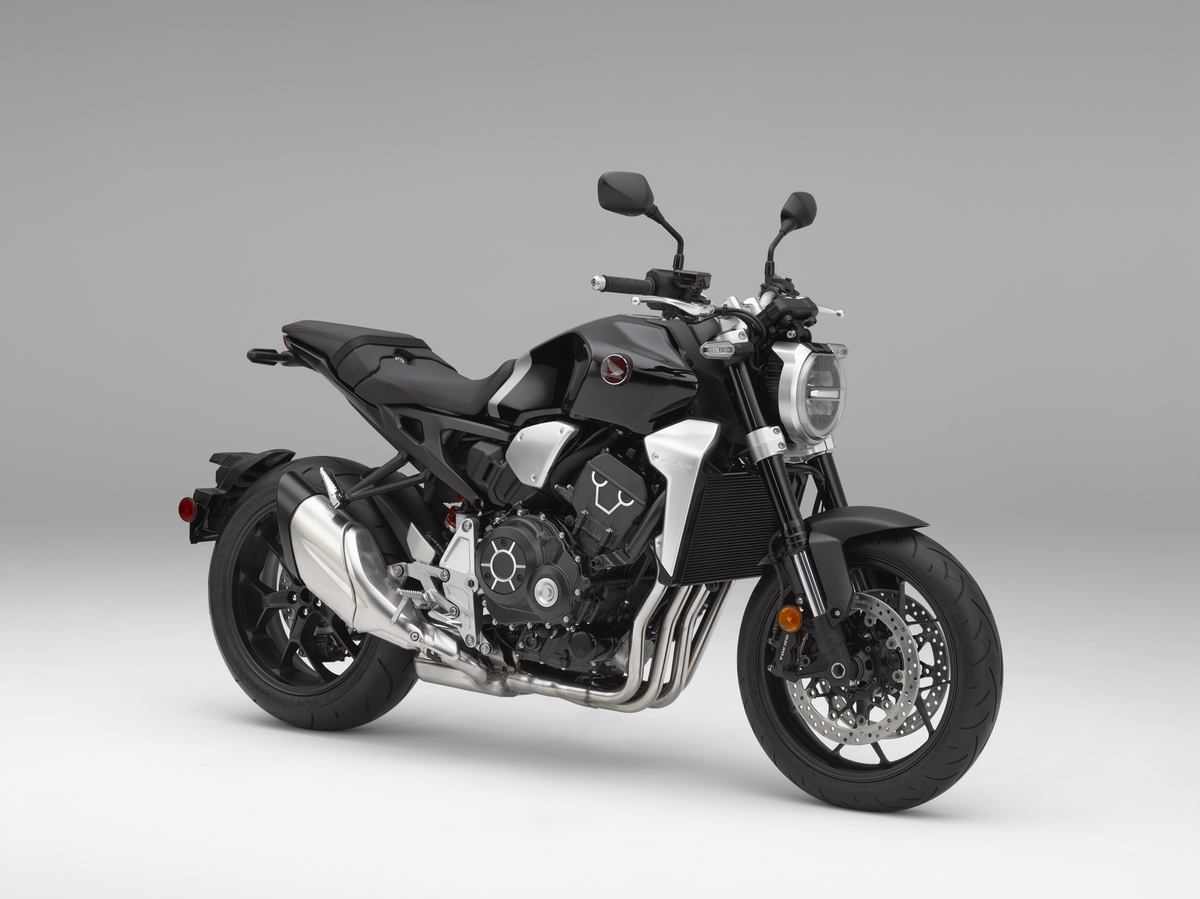
Honda’s leading sport naked model is reborn today with the introduction of a minimalist but aggressively styled 2018 CB1000R. Unveiled at the EICMA motorcycle show, the model is a production version of the Neo-Sports Café Concept showcased at the recent Tokyo Motor Show. Following an early-2018 European release, the new CB1000R will be available in the U.S. in summer of next year.

The CB1000R’s bold shift in identity is bolstered by an impressive list of updates to the chassis, engine, and electronics package, which deftly bridge the gap between performance and bare-boned café racer inspirations.

“The CB1000R has always represented high performance in a naked four-cylinder machine, and while we knew that retaining that approach was important, we also felt it was time to take the platform in a new direction,” said Lee Edmunds, American Honda’s Manager of Motorcycle Marketing Communications. “Increasingly, customer expectations walk a line between high-end performance and character, so it’s vital that there be a strong, emotional connection between rider and machine. With the new approach of the 2018 CB1000R, customers will experience increased pride in ownership while also benefiting from greatly improved handling and engine performance.”

  • Availability: Summer 2018

KEY FEATURES

–Distinctly styled round headlight has 3.5-inch shorter overhang, while the swingarm-mounted rear mudguard unit (a first for Honda) contributes to compact, trapezoidal shape silhouette that offers more elegant, refined appearance

–Premium feel thanks to burnished-aluminum radiator shroud and airbox cover plus machined engine cases, cylinder head, and sprocket hub

–Flangeless tank offers elegant styling and provides plenty of knee room through distinct cutaways

–All-LED lighting and horseshoe-shaped light ring bring a modern flare to retro styling

–0.5-inch wider tapered-aluminum handlebar sits 0.5 inches higher for more relaxed riding position, making the café-racer inspired model ideal for around-town rides

–Mono-backbone steel frame uses split-tightening aluminum pivot plates to save 5.5 pounds while still offering optimum handling characteristics

–Total curb weight has been reduced for improved handling and more rider-friendly performance

–Showa Separate Function Fr Fork Big Piston unit (SFF-BP) offers reduced weight and excellent on-road performance

–190/55 ZR17 rear tire (compared to 180/55 ZR17 tire on previous model)

–998cc DOHC four-cylinder engine shares same architecture and layout as CBR1000RR and now employs forged pistons (rather than cast)

–Higher valve lift, larger valves (8.5mm intake and 8.1mm exhaust), larger-diameter inlet ports, and new combustion-chamber shape improve gas flow and offer improved torque in midrange, for more engaging riding experience

–4% reduction in gear ratios improves acceleration for more exciting, rapid-roll-on acceleration

–Assist/slipper clutch offers light lever pull and helps manage aggressive downshifts

–New 4-2-1 exhaust system boosts torque at 5,000 rpm and above, saves 10 pounds, and provides the CB1000R with a deeper, rawer exhaust note for added character and emotion

–Throttle By Wire opens the door to four riding modes (STANDARD, SPORT, RAIN, and USER), as well as Engine Brake and Honda Selectable Torque Control (HSTC)—technological advances that bridge the gap between performance and café racer inspirations

World Superbike: Turkish Rider Toprak Razgatlioglu Moving Up To Superbike Class In 2018

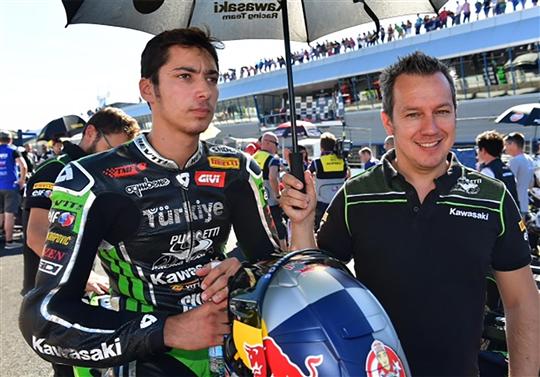
Toprak Razgatlioglu will step up to WorldSBK with Kawasaki Puccetti Racing in 2018

Toprak Razgatlioglu will ride with the team Kawasaki Puccetti Racing in the FIM Superbike World Championship in 2018.

After ending a brilliant 2017 season in SKT1000 battling for the title till the very end and finishing second in the standings aided by the fact that he missed Magny Cours race in France due to an injury, the European STK600 Champion has signed for one year with the team from Reggio Emilia in the factory derivative premier class.

The Kawasaki Puccetti Racing team will continue to line up one bike in the FIM Superbike World Championship in 2018, while in the FIM WorldSSP Championship Kenan Sofuoglu and Hikari Okubo will be riding on board the two Kawasaki Ninja ZX-6R of the team.

Manuel Puccetti, team principal:

“In the 2018 we will continue to line up one bike in the WorldSBK championship. This year and also in the past Toprak has showed to be a very talented rider and we are sure that he is ready to step up to the premier class. This was our first year as private team in Superbike and it ended with a positive balance for us. We gained a lot of experience together with Randy and Anthony first, but also with top riders as Haslam and Guintoli. We are ready now to face next year in the best way possible. Thanks to the new regulation the gap between our bike and the official ones will decrease and so we believe that in 2018 we will be able to give all what Toprak needs to learn and be competitive”.

Toprak Razgatlioglu #54:

“The 2017 season has been a very positive year for me. We missed the STK1000 title after my injury in France for just a few points. If I had been in Magny Cours, probably it would have been easier to fight for the championship. Anyway I am happy to step up in WorldSBK next year! I have been riding with the team Puccetti for a couple of season now and so I know the professionalism of the people working here. I am confident that I will have all what I need to learn the new bike and be able to fight for good results soon. I would like to thank Manuel and Kawasaki for this opportunity and I cannot wait to be in Jerez at the end of November for the first winter test”.

Öhlins Showcasing New Products, Including Updated TTX GP Shock, At EICMA Show In Italy

ÖHLINS KICKS INTO 2018, LAUNCHING NEW PRODUCTS AT EICMA SHOW

Öhlins showcases new suspension products for key market segments, at their stand at the EICMA show in Milan (Location: Hall 22, Stand I53, opposite Yamaha).

Öhlins announces new and revised products for the hypersports, Adventure and its original specialism; motocross for 2018. It has also been another successful year on track with Championship victories in Moto3, Moto2 alongside domination in MotoGP with the top ten finishers all sporting gold forks and yellow springs! (Full product specs in attached pdf releases)

The first 2018 product release actually complements a popular new Adventure application from last season. Öhlins released its STX46 piggyback rear shock for Honda’s Africa Twin in 2016, and now the firm has produced a matching fork upgrade for the big Honda’s front end. An entirely new product, the Africa Twin fork kit blends two of Öhlins’ most important technology pillars – the RXF motocross racing fork, and the NIX30 Adventure fork cartridge design. The synergy from these two technology strands gives the new fork the tough, high-performance design needed for hard-core offroad riding, while also providing the essential ride sophistication, grip and comfort needed for use on the asphalt. The new fork offers full adjustability, with easy access at the fork tops, and its super-high-quality exterior finish is the perfect match to Honda’s stylish adventure machine.

Getting more hardcore off-road, Öhlins has also updated its acclaimed 48mm motocross fork for 2018, now dubbed the RXF 48 S. There are obvious changes to the exterior design, with a new blue guide sleeve accent but, of course, the most important changes lie inside, with a completely new cartridge design, revised shim stack arrangement and optimised internal valve components. The result? Improved stability and rigidity, higher impact capacity, and even finer front wheel feedback for the rider.

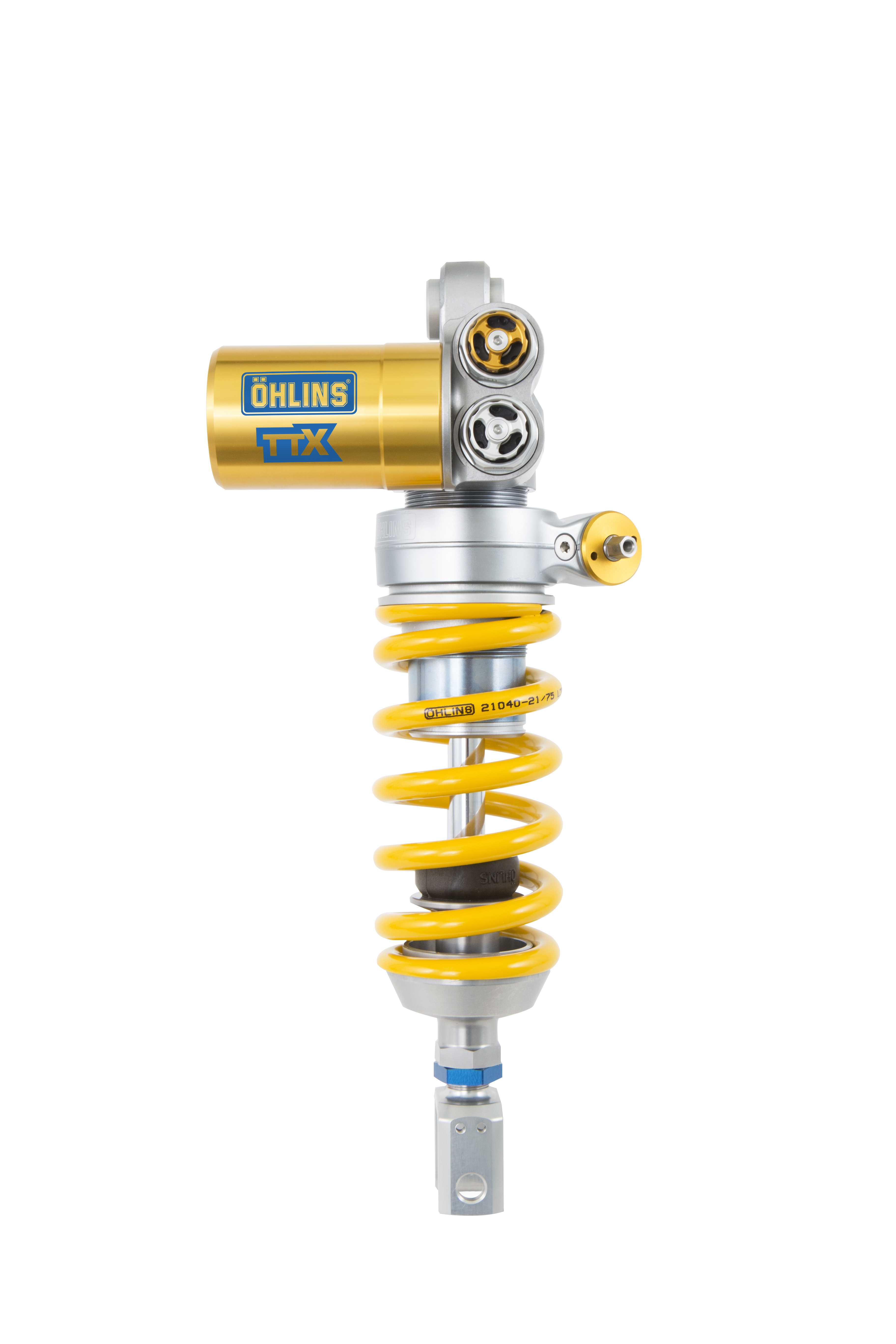
Finally, for those addicted to ultimate race and superbike performance, Öhlins has been working hard on its top-level rear shock. The TTX GP shock has long been the byword for the very best in track performance on road and race sportsbikes. Now, Öhlins has raised the bar once more, with a new valve system, updated piston and seals, plus lower overall weight. The 2018 TTX GP also offers new ‘tool-free’ adjuster dials, which can be adjusted by hand or hex-key, as the owner prefers.

The Öhlins stand at EICMA is in Hall 22, Stand I53, opposite Yamaha. The EICMA show runs from November 7-12th November (7-8th for press and trade visitors only) at the Milano Rho Fiera exhibition centre. More info: www.eicma.it.

For more info on the full line-up of Öhlins products visit www.ohlins.com

MotoGP World Championship To Be Decided This Coming Weekend At Valencia

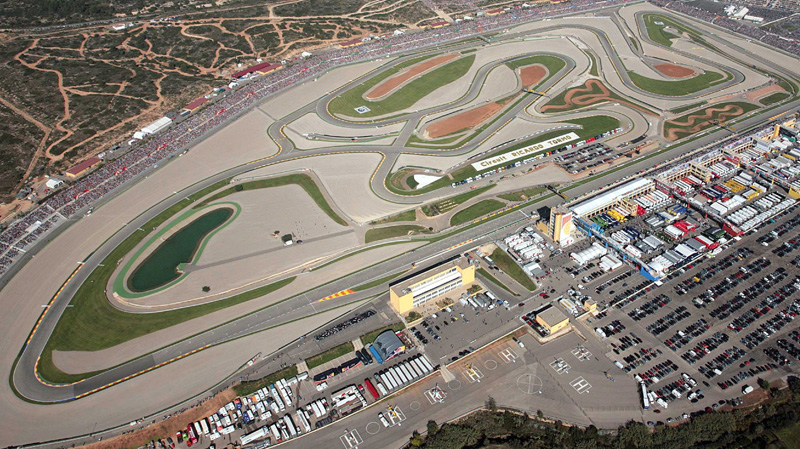
Two men, one crown: Valencia awaits the #FinalShowdown

The reigning Champion vs the once dark horse will be decided in the season finale – and it may be 21 points in it, but anything can happen

The twists and turns of 2017 have seen contenders flicker and fade; wins celebrated, cava sprayed and the wounds of defeat healed bar the points that have escaped some into the gravel. After 17 race weekends and thousands of laps since those first forays on track at Valencia last year, there remain two contenders as MotoGP™ returns to the venue: reigning Champion Marc Marquez (Repsol Honda Team), who holds a 21 point lead, and dark horse turned key challenger Andrea Dovizioso (Ducati Team) – the only man in between Marquez and a sixth world title.

Marquez’ path to the finale began off the podium in the season opener, before a crash at Argentina seemed to spell doom for his early hopes of retaining the crown. But the King of COTA returned to his throne in Austin, and the number 93 was on the podium next time out at Jerez. Then the tale twisted once more with a crash at Le Mans and a more difficult Mugello, before the fuse was lit and Marquez took five podiums in a row, including back-to-back wins at Sachsenring and Brno. Silverstone is what brought that run to an end as the Repsol Honda rider suffered a mechanical failure and retired. Losing out on the chance of a big chunk of points there, the following wins at Misano and Aragon were victories that put him back up at the front. His Phillip Island stunner then sealed his status as leader and made Sepang his first shot at an unbelievable sixth crown. But the man on his tail couldn’t be shaken off and Dovizioso turned a must win race in Malaysia into 25 points. Now, here we are.

Dovizioso, unlike Marquez, began the season on the podium. In Argentina he was collected in another rider’s crash, and since then the Italian has avoided a single DNF. Solid mid top ten results prefaced his first win of the year at Mugello – an incredibly special victory on home turf – before the Italian cemented his status as a true threat by taking the next victory too, at the Circuit de Barcelona-Catalunya. And he did it again when he took back-to-back wins at the Red Bull Ring and Silverstone – the former proving one of the duels of the century. Few people have beaten Marquez on the last lap or last corner, and Dovizioso made himself one of them. Later in the season, as the battle boiled down to two, ‘DesmoDovi’ would do it again: another spectacular duel between the two lit up the Twin Ring Motegi, this time in the pouring rain – and Dovizioso went from one of the men to have beaten Marquez on the final lap to the only man to have done so when the reigning Champion began that lap in the lead. Now, it makes a statistic and a race that history will remember – then, it was the Italian simply using what he says is his key characteristic, and outthinking the opposition.

There are only three men who have overturned a deficit in the season finale. The most recent is Dovizioso’s now-teammate Jorge Lorenzo in 2015, and Wayne Rainey did the same in 1992 to become the first. The late, great Nicky Hayden is the other man to have achieved the feat, in the famous final race of 2006. Dovizioso’s shot is long, and he must win the race to have a chance. But from dueling the same ‘Kentucky Kid’ and hopping over the kerbs at Indianapolis when the two were fighting for ninth in 2013, every shot seemed a long one for the Borgo Panigale factory. Those days are over. They have been long years of hard work for Ducati to claw their way back to the top, but back at the top they are. Sometimes motorcycle racing is decided by luck and circumstance. Sometimes it is decided by sweat. At Valencia, Dovizioso will be hoping both ring true for the red corner, and Marquez will do anything to keep the crown with him and Honda.

A two horse race is, of course, not the reality out on track. Marquez is gunning to be the youngest winner of six titles and the youngest winner of four in MotoGP™, but there are decorated veterans for both Dovizioso and the reigning Champion to overcome. Jorge Lorenzo (Ducati Team) and Dani Pedrosa (Repsol Honda Team), their respective teammates, both have good records at Cheste – what role could they play? Maverick Viñales (Movistar Yamaha MotoGP) too has good form at Valencia, and the cast from here have no interest in the title fight. His teammate Valentino Rossi has found it a more challenging track than some at times, but the ‘Doctor’ is never to be counted out. Johann Zarco (Monster Yamaha Tech 3), confirmed as top Independent Team rider, will come out swinging. More than 20 riders representing Honda, Ducati, Yamaha, Suzuki, Aprilia and KTM will make it a race to remember, as has been the case throughout this incredible season.

But for Marquez or Dovizioso – or both for opposing reasons – it will be more than a good memory in a photo album of 2017, or a milestone on the way to the next. It will be the day for one to continue rewriting the possible in the premier class since he took his first and rookie title at the same venue in 2013, or a doggedly-fought and definitive first MotoGP™ crown for the man who would be the oldest since Mick Doohan in 1998 to achieve the feat.

The throne cannot be shared, but after 2017, the glory surely has been. The coronation begins on Sunday at 14:00 (GMT +1).

MotoGP World Championship Classification

1 – Marc Márquez (SPA – Honda) 282 points

2 – Andrea Dovizioso (ITA – Ducati) 261 points

3 – Maverick Viñales (SPA – Yamaha) 226 points

4 – Valentino Rossi (ITA – Yamaha) 197 points

5 – Dani Pedrosa (SPA – Honda) 185 points


Morbidelli and Nakagami look to bow out on a high

Next year’s MotoGP graduates ready for a final showdown in the intermediate class – with plenty of competition in the way

After wrapping up the title in Malaysia even ahead of the race after key rival Tom Lüthi (CarXpert Interwetten) was declared unfit, Franco Morbidelli (EG 0,0 Marc VDS) is now gearing up for graduation to MotoGP™ and has one last intermediate class chance to win. Lüthi won’t be present ahead of his move, replaced by Ricky Cardus, but there will be two more names looking to make a last mark: Takaaki Nakagami (LCR Honda) and Xavier Simeon (Tasca Racing Scuderia Moto2).

Morbidelli will want to win, as will Nakagami. Simeon is coming back from injury and will aim as high as possible. But after the last two races have been dominated by Red Bull KTM Ajo, Miguel Oliveira and Brad Binder could be about to spoil the party once more and end the season with three highs in a row.

Alex Marquez (EG 0,0 Marc VDS) is another big consideration at the front, having won both races on Spanish soil that he’s contested injury-free. Added to a stunner in the wet at Motegi, it has been a good year for the 2014 Moto3™ World Champion and he will want to bounce back after a crash in Malaysia to get as close as he can to Oliveira in the points. More home heroes like Xavi Vierge (Tech 3 Racing) and local man Jorge Navarro (Federal Oil Gresini Moto2) are gunning for the same glory, too, and Navarro returns from injury. His fellow rookie and Rookie of the Year Francesco Bagnaia (Sky Racing Team VR46) is another to watch – always a dark horse to make a serious dent at the front.

As well as the usual cast of close-fighting rivals in the class, there’s also the addition of Eric Granado (Promoracing) – the European Moto2™ Championship leader in the FIM CEV Repsol and full-time rider at world level next season – and Jake Dixon (Dynavolt Intact GP), who wildcards. More interesting battles throughout the field are assured, as well as the customary fight at the front after a stunning 2017 season – with Morbidelli and Nakagami wanting to bow out on a high.

Moto2 World Championship Classification

1 – Franco Morbidelli (ITA – Kalex) 288 points

2 – Thomas Lüthi (SWI – Kalex) 243 points

3 – Miguel Oliveira (POR – KTM) 216 points

4 – Álex Márquez (SPA – Kalex) 190 points

5 – Francesco Bagnaia (ITA – Kalex) 161 points


Graduation day: Mir and Fenati on the hunt for history

Mir has a chance to equal Rossi, and Fenati the chance to equal Mir

Last time out, 2017 World Champion Joan Mir (Leopard Racing) pushed to the limit in the Malaysian GP to hunt down early leader Jorge Martin (Del Conca Gresini Moto3). In doing so and taking his tenth win of the year, he became the first rider since Marc Marquez to take ten victories in one season in the lightweight class – one more and the Majorcan equals Rossi in 1997. Mir already has 11 wins overall, too, with one added from last season – making him the rider with the most victories in Moto3™ since its introduction in 2012. Fenati is on 10, so there is some history at stake for the two before they graduate to Moto2™.

Martin, meanwhile, remains on the hunt for his maiden win. After getting closer than ever at Sepang, he will want to round out the year not just with another pole position, but also with a number one spot on Sunday. Home turf would be a good place to do it. Fabio Di Giannantonio, his teammate, is more in enemy territory – but is similarly searching for his maiden victory. Aron Canet (Estrella Galicia 0,0) is the man just ahead of both in the standings and is back on home turf, and he’ll also want to go out with a bang to gear up for a push at the title next season. And on the other side of his garage is Enea Bastianini, who completed the podium last time out and is on form as we get to Cheste.

Close behind in the final rush for points is British Talent Team rider John McPhee, who took a front row start and top five at Sepang. He’ll be pushing to both catch the ‘Beast’ and put some distance in the points between himself and Mugello winner Andrea Migno, who is only five points behind.

There are many home heroes on the grid looking for a final celebration in the season, too, and Maria Herrera will be back on track in the extra entry MH6 team. 2017 FIM CEV Repsol Moto3™ Junior World Champion Dennis Foggia will also be wildcarding, and he could prove an interesting addition – having destroyed the field in stunning style in both CEV races at the track this season.

Home glory, history, points and the chance to close out the year on a high are all on offer – with the pressure off, and the gloves off too.

Moto3 World Championship Classification

1 – Joan Mir (SPA – Honda) 321 points

2 – Romano Fenati (ITA – Honda) 235 points

3 – Aron Canet (SPA – Honda) 192 points

4 – Jorge Martín (SPA – Honda) 171 points

5 – Fabio Di Giannantonio (ITA – Honda) 153 points

Ducati Introduces New Scrambler 1100 Lineup

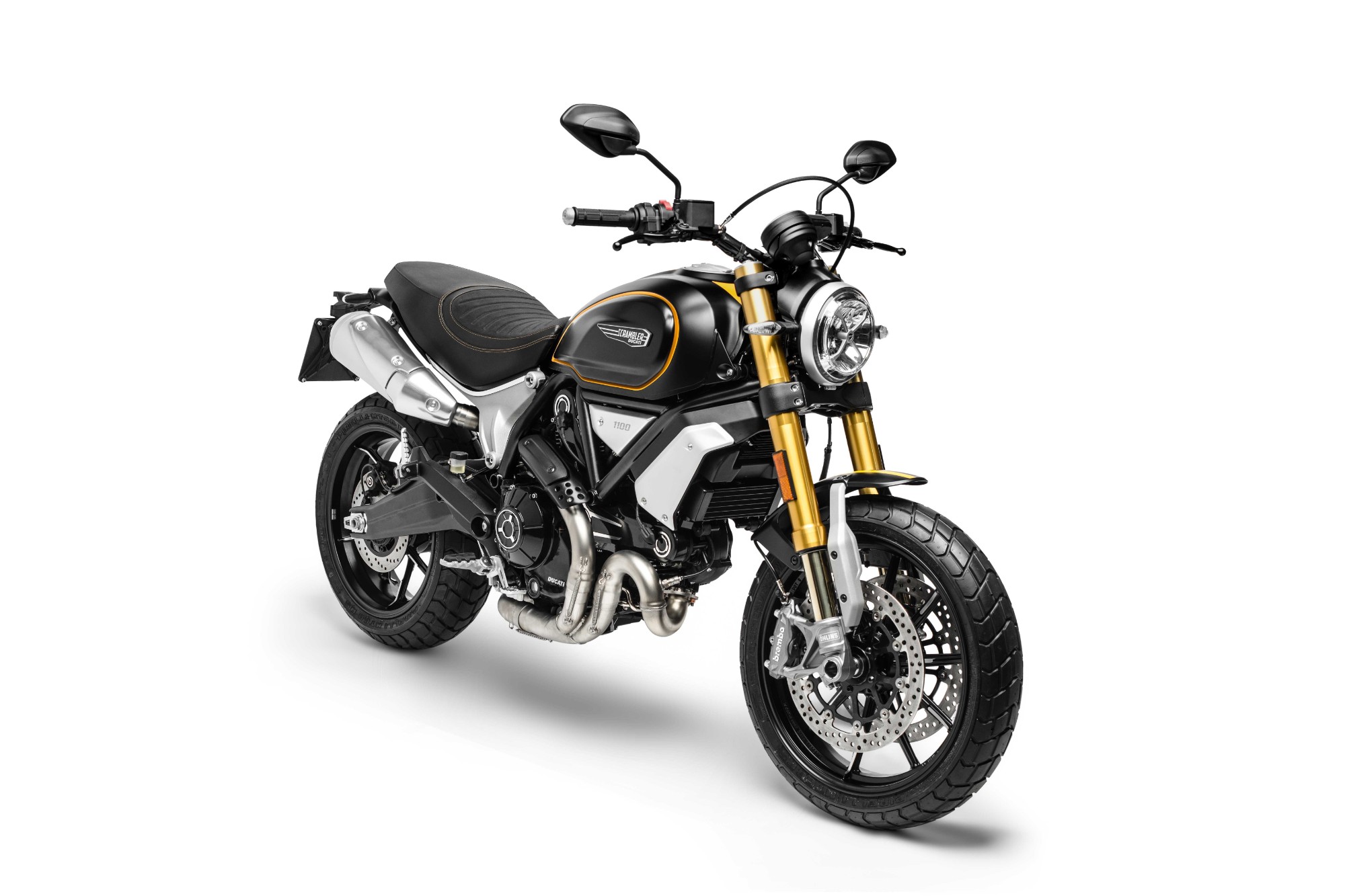
Ducati Scrambler 1100

The Scrambler has come of age and the Land of Joy is now bigger and better.

The Ducati Scrambler 1100 aims to meet the needs of even the most demanding, expert motorcyclists – but without compromising the fun, style and freedom that the Scrambler stands for. A beefier bike with a bigger engine and an even better set of standard equipmentthat lets riders upgrade without leaving the Scrambler family.

Just like in the ’60s when the Scrambler was available with three different engines (250, 350 and 450 cm3), today’s Land of Joy bikes offer three different displacements (400, 800 and 1100 cm3), resulting in a complete range with a flair for fun, iconic style, simplicity and self-expression.

Key features include a new 1079 cm3 engine, which delivers generous torque right from the bottom of the rev range, and an agile Scrambler chassis set-up that has been developed in parallel with the engine to put higher performance within reach of all riders.

With excellent pulling power and outstanding chassis geometry, the Ducati Scrambler 1100 maximises freedom and combines it with the excellent safety that comes with Bosch Cornering ABS and Traction Control: two features that go hand-in-hand with the superbly comfortable riding position specially developed for this model. On this Scrambler model the electronics package has evolved in line with Ducati tradition, maximising active safety thanks to the Bosch inertial platform.

Just like every other Ducati Scrambler bike, the 1100 is designed for boundless freedom of expression. The bike has been developed so it can be modified with ease and comes in three different versions: in addition to the Scrambler 1100, in fact, there’s the Scrambler 1100 Special, which draws its inspiration from the custom world, and the Scrambler 1100 Sport equipped with Öhlins suspension for the sportiest Scrambler riders.

With the 1100, the Ducati Scrambler sees the introduction of new, specially designed accessories and a dedicated apparel line that includes a leather jacket, a fabric jacket and an open-face helmet co-produced with Roland Sands.

Ducati Scrambler 1100 Special

Taking its cue from customisation, the Scrambler 1100 Special has a decidedly “modern classic” feel thanks to black-spoked wheels, chrome exhausts and aluminium front/rear mudguards. The “Custom Grey” colour is unique to this version, as is the brushed-effect swingarm and the adjustable front fork with gold-coloured anodized sleeves. Other distinctive Scrambler 1100 Special elements include low-slung tapered handlebars and a brown seat with dedicated lining.

Ducati Scrambler 1100 Sport

As the name implies, the Scrambler 1100 Sport takes a sportier angle. Inspired by the numerous “racer” bikes put together by Scrambler owners, this model is easily recognised by its forks and adjustable Öhlins shock. The Scrambler 1100 Sport comes in “Viper Black” with yellow tank sides and dual yellow striping down the middle of the tank and mudguards. It also features aluminium wheels with machine-finished spokes, tapered handlebars and a seat with a dedicated lining.

Main as-standard features

Ducati Scrambler 1100

  • Colours
  • “’62 Yellow”, with black frame and black seat

    “Shining Black”, with black frame and black seat

  • Equipment
  • Steel teardrop fuel tank with interchangeable aluminium side panels

    Low seat (810 mm) for perfect at-standstill manoeuvrability

    Wide handlebars for a more relaxed riding position

    Round headlight with glass lens and DRL

    Diffused LED tail light

    Dual-element LCD instrument panel

    1,079 cm³ air-cooled L-twin engine

    Machine-finished aluminium belt covers

    Twin spar steel Trellis frame and aluminium subframe

    Double sided swingarm

    10-spoke wheels in light alloy, 18″ at the front and 17″ at the rear

    Enduro-derived Pirelli tyres optimised for the Ducati Scrambler

    Bosch Cornering ABS

    Traction Control

    3 Riding Modes (Active, Journey and City)

    Under-seat USB socket to recharge mobile devices

    Ducati Scrambler Special

  • Colours
  • “Custom Grey” with black frame and black spoked wheels.

  • Equipment
  • Steel teardrop fuel tank with interchangeable aluminium side panels

    Low, tapered handlebars

    Round headlight with glass lens and DRL

    Diffused LED tail light

    Dual-element LCD instrument panel

    1,079 cm³ air-cooled L-twin engine

    Machine-finished aluminium belt covers

    Twin spar steel Trellis frame and aluminium subframe

    Double-sided swingarm with brushed surface finishing

    Adjustable fork and shock

    Spoked wheels, 18″ at the front and 17″ at the rear

    Enduro-derived Pirelli tyres optimised for the Ducati Scrambler

    Bosch Cornering ABS

    Traction Control

    3 Riding Modes (Active, Journey and City)

    Under-seat USB socket to recharge mobile devices

    Aluminium front/rear mudguard

    Dedicated seat lining

    Chrome exhaust pipes

    Gold-coloured anodized fork sleeves

    Ducati Scrambler Sport

  • Colours
  • “Viper Black” with yellow tank sides and dual yellow striping down the middle of the tank and mudguards, with black frame and wheels

  • Equipment
  • Steel teardrop fuel tank with interchangeable aluminium side panels

    Low seat (810 mm) for perfect at-standstill manoeuvrability

    Low, tapered aluminium handlebars

    Round headlight with glass lens and DRL

    Diffused LED tail light

    Dual-element LCD instrument panel

    1,079 cm³ air-cooled L-twin engine

    Machine-finished aluminium belt covers

    Twin spar steel Trellis frame and aluminium subframe

    Double sided swingarm

    10-spoke wheels in light alloy, 18″ at the front and 17″ at the rear

    Enduro-derived Pirelli tyres optimised for the Ducati Scrambler

    Bosch Cornering ABS

    Traction Control

    3 Riding Modes (Active, Journey and City)

    Under-seat USB socket to recharge mobile devices

    Dedicated seat lining

    Adjustable Öhlins forks

    Adjustable Öhlins shock

    Design

    The Scrambler 1100 is essential, mature and carefully thought out, taking inspiration from the iconic ’70s model while remaining faithful to the “Land of Joy” spirit. Larger than the other Ducati Scrambler brand models, the bike’s balanced proportions make it compact yet beefy and ensure outstanding rider comfort as well as unprecedented handling.

    The upgraded fork and rear shock absorber are, like the 320 mm dual front brake discs, indicative of a leap forwards in terms of both performance and mature styling.

    An high-performance swingarm merges smoothly with the lines of the footrest plates, enhancing the essential styling of the Scrambler 1100. Moreover, quality-conscious finishing reaches new heights thanks to the use of authentic materials such as steel and aluminium.

    Attention to detail and the quest for simplicity have minimised the number of pieces used, leading to fewer covers and plastic components.

    A focus on styling has allowed up-sizing without compromising on iconic brand features: a more rugged, beefier teardrop tank and interchangeable aluminium side panels, that are classic yet have a new line, make this Scrambler model immediately recognisable.

    The seat – different on each version – is more generously shaped than its Scrambler 800 counterpart and has been designed to provide the utmost comfort for rider and passenger alike. A beautifully stitched cover and an embroidered Ducati logo at the rear make this seat particularly eye-catching.

    The two silencers merge smoothly with the rear of the bike and the high plate holder while the dual tail pipes give the Scrambler 1100 a more muscular, instantly recognisable look.

    In keeping with the self-expression that is the raison d’et?e of the Scrambler brand, the rear subframe is separate from the chassis to make personalisation easier. Made of aluminium, the subframe also features a gleaming, machine-finished aluminium trim. The front mudguard is held in place by two die cast aluminium supports while the rear one incorporates LED indicators.

    Another distinctive Scrambler 1100 feature is the round headlight. This retains the glass parabola shared by all Ducati Scrambler models and is now enhanced by a new aluminium rim. Its interior mounts an aluminium X-grille with a clearly visible Ducati logo. The grille divides up the DRL (Daytime Running Light) system on the Scrambler 1100 to create the four trademark Land of Joy light segments.

    Careful design has produced a two-element instrument panel: a classic round section, as seen on all the Scrambler bikes, and an additional oval element to display a broader info range.

    Every single part of the Ducati Scrambler 1100 has been meticulously designed down to the very last detail. A painted aluminium logo adds a stylish finishing touch. Machine-

    finished aluminium bar plugs match the headlight assembly, as does the logo on the spark plug caps.

    The rear brake lever – made, like the clutch lever, of aluminium – has specifically been designed for easy replacement or personalisation. Aluminium is also used for the airbox covers while machine-finished wheel spokes add a further distinctive touch to the Scrambler 1100.

    Components

    Evocative headlight assembly

    The front headlight on the Ducati Scrambler 1100 takes its cue from those on the other bikes in the range. The LED ring around the headlight rim that acts as a side light is now a DRL (Daytime Running Light), making the Scrambler 1100 clearly visible in daylight too. Also in keeping with the Scrambler heritage is the grey metal “X” mounted inside the headlight (a feature inspired by the tape once applied on offroad bikes back in the ’70s to protect the headlight assembly). This also gives the bike a unique look with the lights off. The dipped headlight beam relies on a “Blue Vision” bulb, which emits a white light like the DRL.

    At the rear, instead, a fully LED tail light assembly emits a soft light, making use of a technology unique within the motorcycling world. This ‘softening’ effect is produced by combining a dulled diffuser cover and a 12-LED electrical card (18-LED for the brake light).

    LED indicators, positioned to the sides of the headlight assembly and the rear mudguard, complement the Ducati Scrambler 1100 style to perfection. LED lighting is also used to illuminate the number plate. To activate the hazard lights on the Ducati Scrambler 1100 all the rider needs to do is press the dedicated button on the right switchgear.

    Instrumentation

    The Ducati Scrambler 1100 instrument panel has two main elements. As on the other bikes in the range, the main one has a round design. Positioned above and to the right of the headlight, this unit is fully digital. The scale on the rpm indicator resembles the speedometer on the bikes of the ’70s (i.e. positioned low down in the instrument assembly). As engine revs increase the digits light up clockwise (right to left). The round section also shows the fuel level, selected riding mode and the selected Traction Control level. Further info includes Trip 1, Trip 2, miles remaining and air temperature, plus grip heater operation (available on the Scrambler 1100 as an accessory). The second, oval element, instead, has a speedo, a kickstand warning light and information from the Ducati Multimedia System, available as an accessory when the Bluetooth module is fitted.

    Controls

    The Ducati Scrambler 1100 features new multi-function switchgears that let riders select Riding Modes and modify them. A Ride By Wire throttle is accompanied by hydraulically operated brake pumps and clutch, making the controls modern yet faithful to the classic Scrambler style. Brake and clutch levers are adjustable. The black painted die cast aluminium footrest plates (grey on the Scrambler 1100 Special) support the gear shift and rear brake levers, both made of forged aluminium.

    Standard equipment

    Advanced electronics to maximise safety and riding pleasure.

    A bigger, higher-performing bike but with a full complement of easy-going Scrambler freedom. Thanks to the electronic Ride by Wire control system and the inertial platform, the Scrambler 1100 puts outstanding safety and performance in the grasp of all riders and, thanks to the three Riding Modes, does so whatever the riding conditions.

    Brembo braking system with Bosch 9.1 MP Cornering ABS

    Thanks to installation of the inertial platform, the Ducati Scrambler 1100 is equipped with a Brembo braking system with Bosch 9.1 MP Cornering ABS to ensure safety whatever the situation. To maximise stopping performance, the front wheel has a dual 330 mm disc with two 4-piston Brembo M 4.32B monobloc calipers with radial attachment whereas at the rear, a 245 mm disc is gripped by a caliper with a 34 mm piston. The single-setting ABS cannot be deactivated.

    Traction Control

    The Ducati Scrambler 1100 is the first bike in the family to feature Ducati Traction Control (DTC). This active safety system – specially designed for the Scrambler – can be adjusted to 4 different levels. This solution offers outstanding performance while making adjustment as easy as possible for the rider. Level 1 is the least intrusive while level 4 maximises intervention and, therefore, safety. On the Scrambler 1100, Traction Control can be deactivated.

    Three Riding Modes

    The Ducati Scrambler 1100 has three Riding Modes: Active, Journey and City. Active Riding Mode provides full engine power (86 hp), a direct throttle connection and a Traction Control level that’s compatible with sport riding. Journey Riding Mode is perfect for everyday use: full L-twin power (86 hp), a more fluid throttle connection than with Active mode and a Traction Control level developed for carefree riding. The third Riding Mode, City, lowers engine power to 75 hp (and 88 Nm of maximum torque), the same as on the Scrambler 800. Throttle control is extremely fluid and Traction Control ensures maximum safety.

    A new L-twin

    Engine

    The Ducati Scrambler 1100 is powered by a Euro 4 compliant oil/air-cooled 1079 cm³ L-twin two-valve engine. A development of the Monster 1100 engine, this power unit has, in perfect Scrambler style, a 98 mm bore and a 71.5 mm stroke. The engine has been redesigned to prioritise fluid acceleration across the rev range and great handling. The Desmodue engine on the Ducati Scrambler 1100 has light machine-finished aluminium covers, including those on the clutch and alternator. Other aluminium items include the two belt covers, machine-finished to provide a further touch of flair.

    The twin cylinder Desmodue engine on the Ducati Scrambler 1100 has been equipped with a single 55 mm full Ride by Wire throttle body with two sub-butterfly injectors: this solution, together with a generously sized airbox, ensures fluid power delivery and accurate control of the fuel mix aspirated into the cylinders. For this same reason each cylinder is fitted with twin spark plugs and a secondary air system.

    Excellent pulling power is also put within everyone’s reach by the 16° valve overlap angle. Thanks to these solutions the Ducati Scrambler L-twin puts out a maximum power of 86 hp at 7,500 rpm and a maximum torque of 88.4 Nm at 4,750 rpm, with smooth delivery across the rev range. The gearbox is a 6-speed unit while the clutch is the wet multiplate type with hydraulic control. The clutch also has a servo-assisted slipper function that limits rear wheel destabilisation during down-shifting.

    The exhaust pipes on the Ducati Scrambler 1100 have a larger diameter than those on the Scrambler 800. The exhaust has a low-slung catalytic converter and dual steel silencers with aluminium sleeves, die cast aluminium end caps and 4 aluminium covers (two per silencer).

    Designed to be simple and accessible – just like the Scrambler itself – this twin-cylinder engine also features competitive 12,000 km maintenance intervals (every 7,500 miles).

    Desmo delight

    The Ducati Scrambler is iconic, as is the celebrated Ducati Desmo, the engine valve closure system that has made Ducati famous all over the world. Thanks to this system, the intake and exhaust valves are closed positively and precisely using a technique analogous to that employed to open the valves. The term desmodromic stems from the

    Greek words desmos (link) and dromos (stroke); mechanically speaking, the term refers to control mechanisms enabling operation in both one direction (e.g. opening) and another acting in the opposite direction (closure or return).

    However, the desmodromic concept is not a recent one and has been used in the motorcycle and car industries for some time. It first appeared, in a variety of forms, way back at the start of the twentieth century. In 1956 renowned engineer Fabio Taglioni set Ducati off along the desmodromic path: the first bike to feature the solution was the Grand Prix 125, which had three overhead camshafts, driven by a vertical shaft and a bevel gear. From that point on desmodromic history became a Ducati exclusive and in 1968 the company started producing this timing system as standard with the Mark 3 Desmo 350. This milestone of a motorcycle essentially had the same timing system as current 2-valve twin cylinder engines like the one on the Ducati Scrambler, clear evidence of the concept’s soundness. Used on all Ducati models, the system is also employed on Ducati Corse’s Superbikes and Desmosedici MotoGP bikes.

    Dedicated chassis set-up

    Frame

    The Ducati Scrambler 1100 features an all-new twin upper spar steel Trellis frame. As essential as the Ducati Scrambler itself, this engine-hugging frame is completed by a rear aluminium subframe. Thanks to a steering head angle of 24.5° and a 110 mm offset on the fork yokes, manoeuvrability is as outstanding in city traffic as it is on Alpine hairpins. Compared to the Scrambler 800, the aluminium fork yokes boast wider inter-fork clearance. Thanks to the wide handlebars, weaving your way through an urban obstacle course on the Scrambler is child’s play, while the 1,514 mm wheelbase maximises stability at high speeds. Up-sizing of the bike has given the Scrambler 1100 a new riding position: compared to the 800 version, the seat-footpeg gap is wider and the handlebars are further forwards and lower.

    The steel fuel tank, with that unmistakeable teardrop silhouette, can hold 15 litres. With an excellent frame and outstanding chassis geometry, the Ducati Scrambler 1100 makes for relaxed riding that is easy yet fun. Despite the beefed-up size and performance with respect to the 800 cm3 versions, the Scrambler 1100 remains user-friendly and agile, a source of endless satisfaction on both city streets and the open road.

    Suspension

    The Sport version of the Ducati Scrambler 1100 mounts Öhlins suspension (Kayaba on the Scrambler 1100 and Scrambler 1100 Special), with upside-down 45 mm forks and a rear shock with adjustable spring preload and rebound damping. Both provide 150 mm of wheel travel, ensuring the tyres hug the ground on any terrain, from city streets to easy-going off-road routes. It is this mix of comfort and performance that makes the Ducati Scrambler 1100 unique, letting riders express themselves to the max everywhere and anywhere.

    Wheels and tyres

    The Scrambler 1100 comes with all-new aluminium machine-finished 10-spoke wheels – of evident flat-track origin – as standard. The design is a throwback to the days of thin, criss-crossed spokes inserted in the hub. The 3.5″ x 18″ front wheel and the rear 5.5″ x 17″” one have been designed to be light. They mount an enduro-type Pirelli MT60 RS 120/80 ZR18 tyre at the front and the 180/55 ZR17 at the rear. Pirelli has designed the front tyre specially for the Ducati Scrambler 1100.

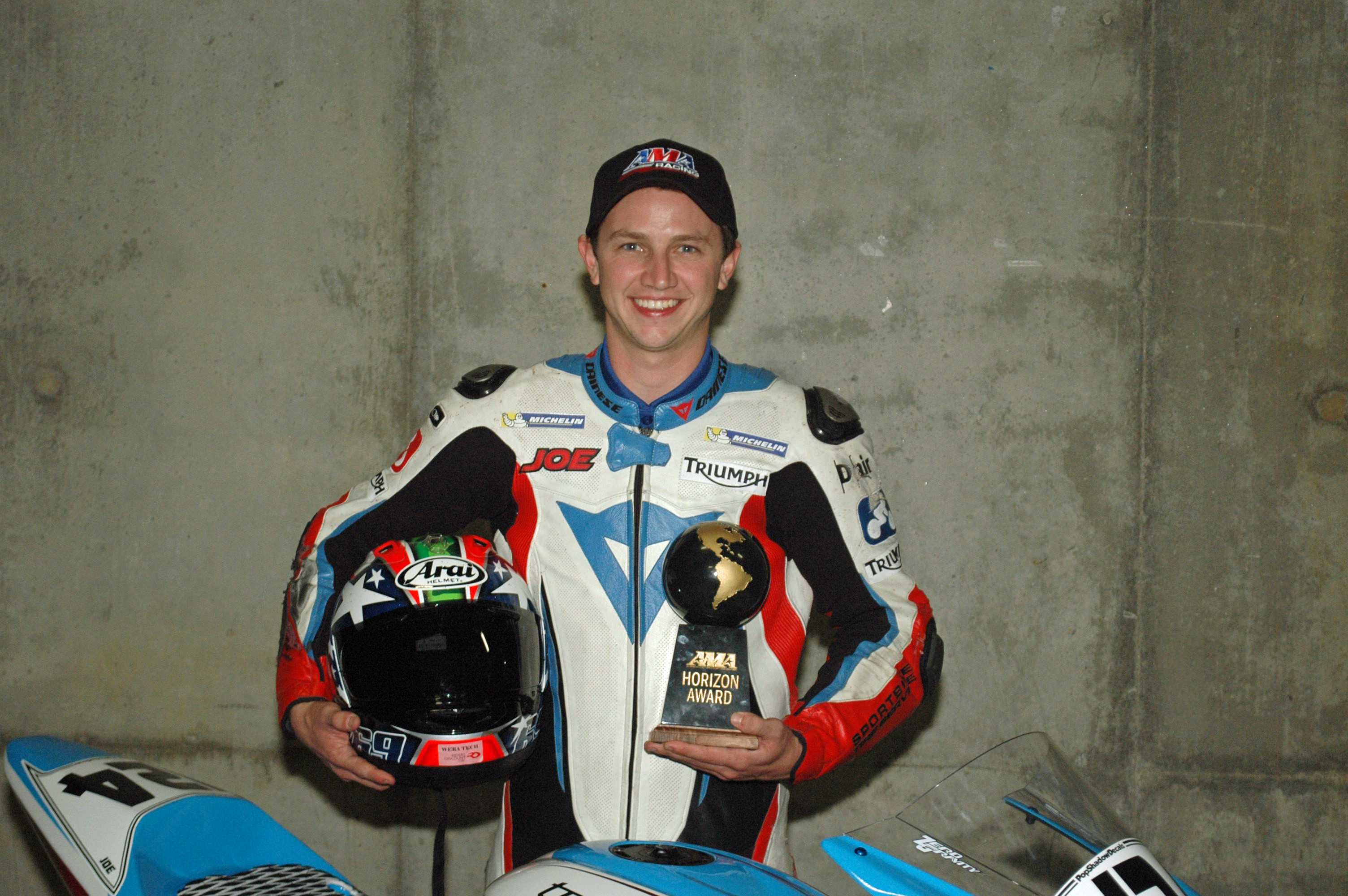
    Nicky Hayden AMA Road Race Horizon Award Presented To Joseph Blasius (Updated)

    Joseph Blasius, a 25-year-old second-year-Expert racer from Northville, Michigan, was awarded the Nicky Hayden AMA Road Race Horizon Award Sunday at the AMA Road Race Grand Championships, held in conjunction with the 45th WERA Grand National Finals, at Barber Motorsports Park, in Birmingham, Alabama.

    Riding his Michelin-equipped, Apex Manufacturing Triumph Daytona 675R, Blasius finished sixth in the AMA 600cc Superbike Expert race and eighth in the AMA 600cc Superstock Expert race. Also during the weekend event Blasius won the WERA 750cc Superbike Expert National Challenge race and wrapped up WERA National Challenge Championships in three classes (750cc Superbike Expert, 600cc Superbike Expert and 600cc Superstock Expert).

    AMA Track Racing Manager Ken Saillant, working in consultation with WERA and Roadracingworld.com, determined that Blasius’s results on the track, character off the track and plans to launch his professional career made him the most worthy choice for the 2017 Nicky Hayden AMA Road Race Horizon Award.

    “Everyone thinks the Horizon Award is basically, ‘Hey, who scored the most points? Who does this? Who does that?’ That’s not the case. If that was the case it would be a very easy selection when we’re picking out the Horizon Award winner,” said Saillant said during the presentation of the award. “The Horizon Award winner is the person that the AMA feels is best suited to have a successful launch of a Pro career. That’s one thing. But we also take into consideration character, integrity, enthusiasm, sportsmanship – all the things that Nicky Hayden brought to events.”

    “I was definitely not expecting to get this award,” Blasius told Roadracingworld.com. “Going into this I had high hopes for the weekend, but my progress at the track wasn’t there. I thought [the award] was going to go to one of these little kids because they were absolutely killing it this weekend. To win this, I’m shaking still. I’m really excited.

    “I really have to thank my dad. He got me on a motorcycle before I could even ride a bicycle. I rode around my house until I was like six years old. And then I got into dirt biking in high school. Me and a buddy bought sportbikes in college, and then I went to a STT [Sportbike Track Time] track day and met up with David [Grey] and Richard [Harris]. They got me on the Triumphs, I started racing three years ago as a Novice, and thanks to them I’ve been winning and progressing ever since.

    “To be able to get this award is a huge honor. I’m really proud of myself, and I’m really happy with the people who have gotten me here. I’m excited to see where next year takes me. I’m going to be doing the [Junior Cup] in MotoAmerica. So I’ll see if I can run with those guys. I’ll probably also do a couple of MotoAmerica races in the 600 [Supersport] class.”

    Winning the AMA Youth Road Racer of the Year Award was Kayla Yaakov, a 10-year-old from Biglerville, Pennsylvania, who just graduated to racing full-size motorcycles on full-size racetracks with WERA in 2017. Yaakov finished her 2017 season by taking second in the AMA Lightweight Twins Superbike Novice race and earning a total of six WERA race wins on her Trackday Winner and ONE-X leathers-backed Moriwaki MD250H, Honda NSF250 and Honda Grom at the Grand National Finals.

    “When I went up there I didn’t know it was coming. I was about to cry, really. That’s how honored I am,” Yaakov told Roadracingworld.com. “This is cool. My dad [former racer David Yaakov] said I earned it, so I guess I did. I pushed hard this year, and I loved racing with WERA. This was the best year.”

    Kayla Yaakov said she plans to continue racing with WERA until she turns 14 and becomes old enough to start racing in the MotoAmerica Junior Cup.

    Daniel Adams was selected to receive the AMA Senior/Vet Racer of the Year, and Andrew Lamoureux was chosen as the AMA Novice Road Racer of the Year. Neither Adams nor Lamoureux were present to receive their awards.

    45th WERA Grand National Finals and AMA Road Race Grand Championship

    Barber Motorsports Park

    Birmingham, Alabama

    November 5, 2017

    Provisional Race Results:

    AMA 600cc Superbike Expert:

    1. Joseph Gianotto (Yam YZF-R6), 8 laps, Best Lap Time 1:30.787

    2. Matt Burdett (Suz GSX-R600), -6.463 seconds, 1:31.953

    3. Tulio Pinto (Yam YZF-R6), -11.819, 1:31.764

    4. Daniel Paine (Yam YZF-R6), -13.203, 1:32.672

    5. Chuck Ivey (Yam YZF-R6), -13.831, 1:33.066

    6. Joseph Blasius (Tri Daytona 675R), -15.309, 1:33.066

    7. Garrett O’Brien (Yam YZF-R6), -22.340, 1:33.413

    8. Timothy A. Wilson (Kaw ZX-6R), -22.365, 1:33.905

    9. Aaron Graham (Yam YZF-R6), -22.380, 1:33.163

    10. Jeremiah Walker (MV Agusta F3 675), -23.624, 1:33.415

    11. Andrew Bowen (Tri Daytona 675), -24.586, 1:34.301

    12. Jace Hasskew (Suz GSX-R600), -28.462, 1:33.749

    13. Brian Hebeisen (Yam YZF-R6), -29.365, 1:34.155

    14. Eric Telger (Yam YZF-R6), -34.220, 1:34.873

    15. John Knowles (Yam YZF-R6), -43.436, 1:36.520

    16. Brandon Salyer (Yam YZF-R6), -55.472, 1:37.643

    17. Paxton Jones (Kaw ZX-6R), -66.617, 1:38.795

    18. John James (Hon CBR600RR), -70.827, 1:39.426

    AMA 600cc Superbike Novice:

    1. Andrew Lamoureux (Tri Daytona 675), 8 laps, Best Lap Time 1:34.201

    2. Aaron Hernandez (Suz GSX-R600), -3.443 seconds, 1:34.197

    3. William Posse (Yam YZF-R6), -12.458, 1:35.368

    4. Alex Brooks (Yam YZF-R6), -20.913, 1:35.862

    5. Jonathan Schweiger (Tri Daytona 675), -27.351, 1:37.801

    6. Kevin Netto (Hon CBR600RR), -31.514, 1:38.299

    7. Steven Roth (Yam YZF-R6), -44.048, 1:38.666

    8. Justin Bourland (Yam YZF-R6), -44.610, 1:39.093

    9. Robert Cichelo, Jr. (Yam YZF-R6), -52.730, 1:40.554

    10. Hunter Dunham (Yam YZF-R6), -1 lap, 1:35.688

    11. Michael Martin (Yam YZF-R6), -1 lap, 1:42.311

    12. Edwin Cosme (Yam YZF-R6), -1 lap, 1:43.096

    13. Clyde Dixon (Yam YZF-R6), -1 lap, 1:44.319

    14. Tyler Andrews (Yam YZF-R6), -5 laps, DNF, 1:45.696

    15. Dallas Daniels (Yam YZF-R6), -7 laps, DNF, 1:40.914

    AMA 1000cc Superbike Expert:

    1. Alan J. Nelson (Kaw ZX-10R), 8 laps, Best Lap Time 1:30.716

    2. Billy Ethridge (Suz GSX-R1000), -7.169 seconds, 1:31.176

    3. Brad Burns (Kaw ZX-10R), -7.222, 1:31.410

    4. Vasiliy Zhulin (Yam YZF-R1), -17.963, 1:32.570

    5. Dr. Jeffrey Purk, DDS (Yam YZF-R1), -24.188, 1:33.501

    6. Manny Segura (Kaw ZX-10R), -24.714, 1:33.552

    7. Jeremy Kolewski (Kaw ZX-10R), -25.219, 1:33.834

    8. John Dunham (Yam YZF-R1), -28.813, 1:31.789

    9. Stephen Incledon (Yam YZF-R1), -31.068, 1:33.905

    10. Corey Heflin (Yam YZF-R1), -36.517, 1:34.936

    11. Shane Richardson (Kaw ZX-10R), -40.254, 1:34.904

    12. Robert Scudder (BMW S1000RR), -43.965, 1:36.996

    13. Freddy Carswell (Yam YZF-R1), -1 lap, DNF, 1:34.225

    14. Andrew Fahsholtz (Suz GSX-R1000), -7 laps, DNF, 1:37.480

    AMA 1000cc Superbike Novice:

    1. Jesse Ruehling (Kaw ZX-10R), 8 laps, Best Lap Time 1:33.520

    2. Rhett Norman (Yam YZF-R1), -2.505 seconds, 1:33.697

    3. Dario Chavarro (Suz GSX-R1000), -5.215, 1:33.910

    4. Nathaniel Mollohan (Yam YZF-R1), -11.104, 1:34.469

    5. William Posse (Yam YZF-R6), -22.462, 1:36.082

    6. Joshua Goodrich (BMW S1000RR), -23.515, 1:36.307

    7. Jessica Capizzi (BMW S1000RR), -35.381, 1:36.898

    8. Jonathan Schweiger (Tri Daytona 675), -42.400, 1:38.131

    9. Edwin Cosme (Yam YZF-R1), -53.907, 1:38.405

    WERA Grand National Finals: Geoff May Wins Two National Challenge Races At Barber Motorsports Park

    45th WERA Grand National Finals

    Pirelli WERA National Challenge Series

    Barber Motorsports Park

    Birmingham, Alabama

    November 5, 2017

    Provisional Race Results (listed in chronological order):

    Open Superstock Expert:

    1. Geoff May (Kaw ZX-10RR), 8 laps, Best Lap Time 1:27.374

    2. Dustin Dominguez (Suz GSX-R1000), -9.601 seconds, 1:29.203

    3. Garrick Schneiderman (Yam YZF-R1), -15.422, 1:29.217

    4. Alan J. Nelson (Kaw ZX-10R), -18.546, 1:30.456

    5. Brad Burns (Kaw ZX-10R), -19.356, 1:30.509

    6. Luie Zendejas (Suz GSX-R1000), -28.057, 1:31.508

    7. Andrew Fahsholtz (Suz GSX-R1000), -40.035, 1:32.018

    8. Jeremy Kolewski (Kaw ZX-10R), -40.658, 1:33.511

    9. Vasiliy Zhulin (Yam YZF-R1), -50.343, 1:33.765

    10. Stephen Incledon (Yam YZF-R1), no margin provided, no lap time provided

    11. John Dunham (Yam YZF-R1), -50.974, 1:33.526

    12. Gregory A. Ludt (BMW S1000RR), -51.104, 1:33.511

    13. Corey Heflin (Yam YZF-R1), -55.901, 1:34.732

    14. Garrett O’Brien (Yam YZF-R6), -58.313, 1:34.596

    15. Peyton Inge (Kaw ZX-10R), -58.340, 1:35.669

    16. Robert Scudder (BMW S1000RR), -58.792, 1:35.039

    17. Dr. Jeffrey Purk, DDS (Yam YZF-R1), -59.538, 1:33.577

    18. Shane Richardson (Kaw ZX-10R), -60.713, 1:34.599

    19. Carlos Gonzalez (Suz), -62.902, 1:35.305

    20. Alexander Acenan (Suz GSX-R750), -70.458, 1:36.771

    21. Shane Hobgood (Kaw ZX-10R), -73.844, 1:37.107

    22. Billy Ethridge (Suz GSX-R1000), -2 laps, DNF, retired, 1:30.915

    23. Freddy Carswell (Yam YZF-R1), -2 laps, DNF, 1:31.766

    24. Manny Segura (Kaw ZX-10R), -7 laps, DNF, 1:38.692

    Open Superstock Novice:

    1. Jesse Ruehling (Kaw ZX-10R), 8 laps, Best Lap Time 1:33.207

    2. Rhett Norman (Yam YZF-R1), -1.254 seconds, 1:33.219

    3. Dario Chavarro (Suz GSX-R1000R), -14.025, 1:34.832

    4. Nathanial Mollohan (Yam YZF-R1), -14.951, 1:34.846

    5. Joshua Goodrich (BMW S1000RR), -24.737, 1:36.328

    6. Jessica Capizzi (BMW S1000RR), -36.567, 1:36.656

    Grom Cup by Honda Fun Race:

    1. Kayla Yaakov (Honda 125), 4 laps, Best Lap Time 2:15.662

    2. Owen Foretich (Hon 125), -21.778 seconds, 2:19.748

    3. Brandon Johnson (Hon 125), -58.379, 2:30.263

    4. Kyle Johnstone (Hon 125), -74.011, 2:33.374

    5. Vasiliy Zhulin (Hon 125), DNF

    WERA Mini 50cc Fun Race:

    1. Trey Nolde (Kaw 65), 4 laps, Best Lap Time 2:13.761

    2. Ben Montgomery (Hon 100), -17.123 seconds, 2:19.851

    3. Clarence Randall (Hon 100), -25.330, 2:21.237

    4. Brogan Richards (Hon 100), -64.465, 2:29.599

    WERA Mini 80cc Fun Race:

    1. Kevin Bradford Nolde (Yam 85), 4 laps, Best Lap Time 1:58.936

    Heavyweight Twins Superbike Expert:

    1. Michael Hilton (Duc 999), 8 laps, Best Lap Time 1:32.221

    2. Carlos Gonzalez (EBR 1190RX), -10.247 seconds, 1:34.957

    3. Stephen Tsotsoros (Buell 1125R), -10.802, 1:34.956

    4. Jeremiah Walker (MV Agusta F3 675), -16.181, 1:35.087

    5. Brad Perdiew (Yam FZ-07), -36.605, 1:36.730

    6. Jon Crawford (Suz SV650), -40.358, 1:38.409

    7. James E. Blasius (Tri Daytona 675R), -54.850, 1:39.940

    8. Steve Olson (Suz SV650), -83.055, 1:42.513

    9. Greg Reisinger (Suz SV650), -83.555, 1:44.220

    Heavyweight Twins Superbike Novice:

    1. Kayla Yaakov (Mor MD250H), 8 laps, Best Lap Time 1:40.368

    2. Ryan Damm (Duc 1199 Panigale), -6.524 seconds, 1:40.971

    750cc Superstock Expert:

    1. Tulio Pinto (Yam YZF-R6), 8 laps, Best Lap Time 1:33.239

    2. Aaron Graham (Yam YZF-R6), -0.142 second, 1:33.136

    3. Eric Telger (Yam YZF-R6), -1.878 seconds, 1:33.452

    4. Andrew Bowen (Tri Daytona 675), -4.654, 1:33.963

    5. Brian Hebeisen (Yam YZF-R6), -5.627, 1:34.486

    750cc Superstock Novice:

    1. Aaron Hernandez (Suz GSX-R600), 8 laps, Best Lap Time 1:34.645

    2. Daniel Goodnight (Yam YZF-R6), -37.934 seconds, 1:40.101

    3. Tyler Bragg (Kaw ZX-6R), -38.055, 1:39.487

    4. Justin Bourland (Yam YZF-R6), -50.025, 1:40.880

    5. Julie Klinger (Kaw ZX-6R), -59.216, 1:42.762

    6. Clyde Dixon (Yam YZF-R6), -59.528, 1:42.918

    Formula Three Combined:

    1. Tyler Scott (Hon NSF250), 8 laps, Best Lap Time 1:38.808

    2. Kayla Yaakov (Hon NSF250), -5.541 seconds, 1:39.317

    3. Blake Davis (Hon RS125), -7.306, 1:39.585

    4. Frank Guadagnino (Hon RS125), -25.269, 1:41.504

    5. Jordan Reid (Hon NSF250), -25.464, 1:41.838

    6. Jackson Blackmon (Yam YZF-R3), -26.408, 1:41.824

    7. Matthew Wallace (Hon RS125), -31.644, 1:41.865

    8. Jeff Crowell (Hon NSF250), -102.082, 1:51.535

    Lightweight Twins Superstock Expert:

    1. Daniel Adams (Suz SV650), 8 laps, Best Lap Time 1:36.535

    2. Ray Hofman (Suz SV650), -0.594 second, 1:37.012

    3. Kevin Tucker (Suz SV650), -9.667 seconds, 1:37.856

    4. Trevor Standish (Suz SV650), -29.588, 1:40.182

    5. Kevin Boda (Suz SV650), -30.877, 1:40.341

    6. Edward F. Scammon (Suz SV650), -86.719, 1:46.866

    7. Michael Ketterer (Suz SV650), -1 lap, 1:51.360

    8. Jace Hasskew (Suz SV650), -5 laps, DNF, 1:38.591

    Lightweight Twins Superstock Novice:

    1. William Nash (Suz SV650), 8 laps, Best Lap Time 1:41.424

    2. Blake Werner (Suz SV650), -18.560, 1:42.426

    3. Todd Eads (Suz SV650), -18.911, 1:42.767

    4. Jeremy Barker (Suz SV650), -23.129, 1:43.602

    5. Freddie McAuley (Suz SV650), -40.142, 1:46.422

    750cc Superbike Expert:

    1. Joseph Blasius (Tri Daytona 675R), 8 laps, Best Lap Time 1:32.957

    2. Tulio Pinto (Yam YZF-R6), -0.166 second, 1:32.823

    3. Timothy A. Wilson (Kaw ZX-6R), -10.138 seconds, 1:34.123

    4. Brian Hebeisen (Yam YZF-R6), -16.494, 1:34.237

    5. Eric Telger (Yam YZF-R6), -20.137, 1:35.482

    6. James E. Blasius (Tri Daytona 675R), -63.991, 1:41.077

    7. Alexander Acenan (Suz GSX-R750), -1 lap, 1:35.507

    8. Aaron Graham (Yam YZF-R3), -7 laps, DNF, 1:37.340

    750cc Superbike Novice:

    1. Aaron Hernandez (Suz GSX-R600), 8 laps, Best Lap Time 1:36.236

    2. Samuel Sparks (Suz GSX-R750), -1 lap, 1:50.279

    3. Julie Klinger (Kaw ZX-6R), -3 laps, 1:44.230

    Formula Two Expert:

    1. Daniel Adams (Suz SV650), 8 laps, Best Lap Time 1:35.044

    2. Ray Hofman (Suz SV650), -9.778 seconds, 1:36.166

    3. Brad Perdiew (Yam FZ-07), -11.297, 1:36.038

    4. Jon Crawford (Suz SV650), -16.306, 1:37.317

    5. Tyler Scott (Hon NSF250), -28.544, 1:38.366

    6. Jackson Blackmon (Yam YZF-R3), -29.799, 1:39.070

    Formula Two Novice:

    1. Kayla Yaakov (Hon NSF250), 8 laps, Best Lap Time 1:40.621

    2. Todd Eads (Suz SV650), -21.470 seconds, 1:43.386

    3. Blake Werner (Suz SV650), -33.060, 1:43.774

    4. Willian Nash (Suz SV650), -7 laps, DNF, crash, 1:44.293

    5. Jeremy Barker (Suz SV650), -8 laps, DNF, no lap time provided

    Michelin WERA Superbike Expert:

    1. Geoff May (Kaw ZX-10RR), 10 laps, Best Lap Time 1:27.339

    2. Dustin Dominguez (Suz GSX-R1000), -17.845 seconds, 1:28.071

    3. Billy Ethridge (Suz GSX-R1000), -31.274, 1:30.843

    4. Alan J. Nelson (Kaw ZX-10R), -39.709, 1:31.979

    5. Dr. Jeffrey Purk DDS (Yam YZF-R1), -40.443, 1:31.620

    6. Jeremy Kolewski (Kaw ZX-10R), -48.127, 1:33.025

    7. Freddy Carswell (Yam YZF-R1), -59.116, 1:33.487

    8. Manny Segura (Kaw ZX-10R), -59.496, 1:33.916

    9. Vasiliy Zhulin (Yam YZF-R1), -59.843, 1:33.989

    10. Andrew Fahsholtz (Suz GSX-R1000), -60.269, 1:33.573

    11. Peyton Inge (Kaw ZX-10R), -64.185, 1:33.876

    12. Stephen Incledon (Yam YZF-R1), -73.506, 1:34.289

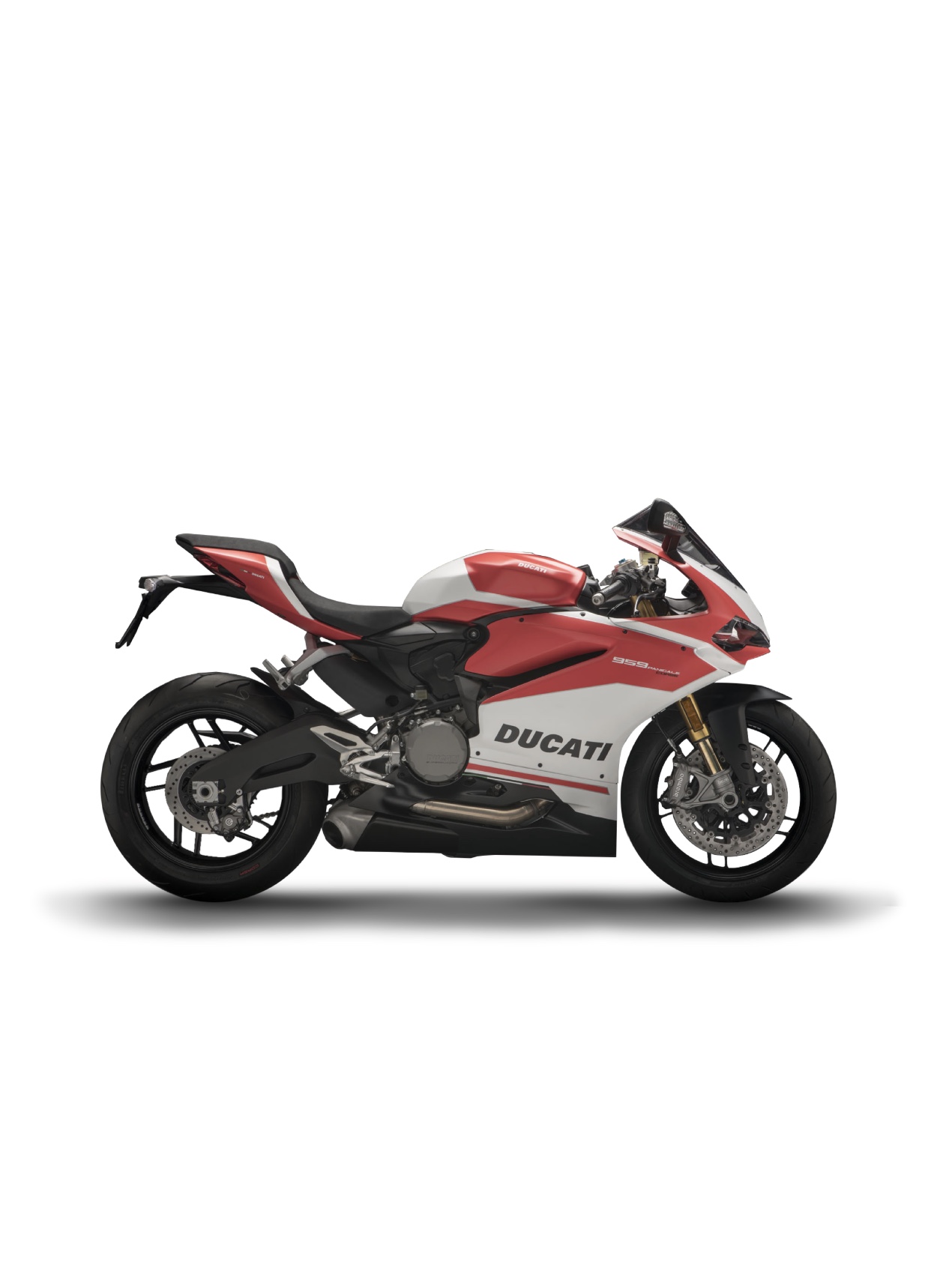
    Ducati Adds New 959 Panigale Corse Model For 2018

    Ducati 959 Panigale Corse

    The 959 Panigale Corse is the superlative sports version of the legendary Italian twin cylinder. Thanks to suspensions by Öhlins, type-approved Ducati Performance silencers in titanium by Akrapovic, a lithium-ion battery and a dedicated colour scheme inspired by the colours of the MotoGP, the 959 Panigale Corse is ready to race.

    The 955 cm3 Superquadro engine is Euro 4 type-approved and has a maximum power of 150 hp at 10,500 rpm. The maximum torque is 102 Nm at 9,000 rpm. Such characteristics enable high performance on the track and enjoyable on-road riding, without having to compromise on long maintenance intervals. The valve clearance control is in fact every 24,000 km.

    The chassis of the 959 Panigale Corse is based on a compact monocoque structure, in die-cast aluminium for added resistance with the Superquadro engine incorporated as a structural element. Attached directly to the cylinder heads, it houses two aluminium bushes to the front which in turn house the steering head bearings. In addition to working as a frame, the monocoque also acts as an air-box. It contains, in fact, the air filter as well as the throttle bodies and the fuel circuit, complete with injectors and it’s sealed off by the bottom of the aluminium fuel tank.

    This exclusive version of the 959 Panigale is equipped with high-quality Öhlins suspensions. It has a multi-adjustable titanium-nitride treated Öhlins NIX30 fork with a diameter of 43 mm, and a multi-adjustable Öhlins TTX36 shock-absorber. The suspension fittings are completed by an adjustable steering damper, also by Öhlins.

    The 959 Panigale Corse has a weight (kerb – bike with fluids, battery and fuel tank 90% full) of only 197.5 kg, 2.5 kg less than the 959 Panigale, thanks to the lithium-ion battery and titanium silencer.

    The 959 Panigale Corse is fitted with an electronics package which includes ABS, Ducati Traction Control (DTC), Ducati Quick Shift (DQS), Engine Brake Control (EBC) and Ride-by-Wire (RbW). Thanks to the Ducati Riding Mode technology, these systems can be combined differently to give the bike three different personalities. The 3 Riding Modes available to the 959 Panigale Corse are Race, Sport and Wet.

    Such features and characteristics confirm once again how the 959 Panigale Corse embodies absolute excellence through the advanced technologies used in its creation.

    959 Panigale Corse main standard features

    Colours

    o Special racing colour scheme with black wheel rims

    Equipment

    o Superquadro 955 cm³ engine

    o EURO 4 compliant

    o Servo-assisted slipper function clutch

    o Multi-adjustable titanium-nitride treated Öhlins NIX30 fork with 43 mm diameter

    o Multi-adjustable Öhlins TTX36 shock absorber

    o Öhlins adjustable steering damper

    o Lithium-ion battery

    o Ducati Performance type-approved double exhaust in titanium by Akrapovic*

    o Riding Modes (Race, Sport, Wet)

    o Ducati Safety Pack (ABS, DTC)

    o EBC, DQS

    *Country specific

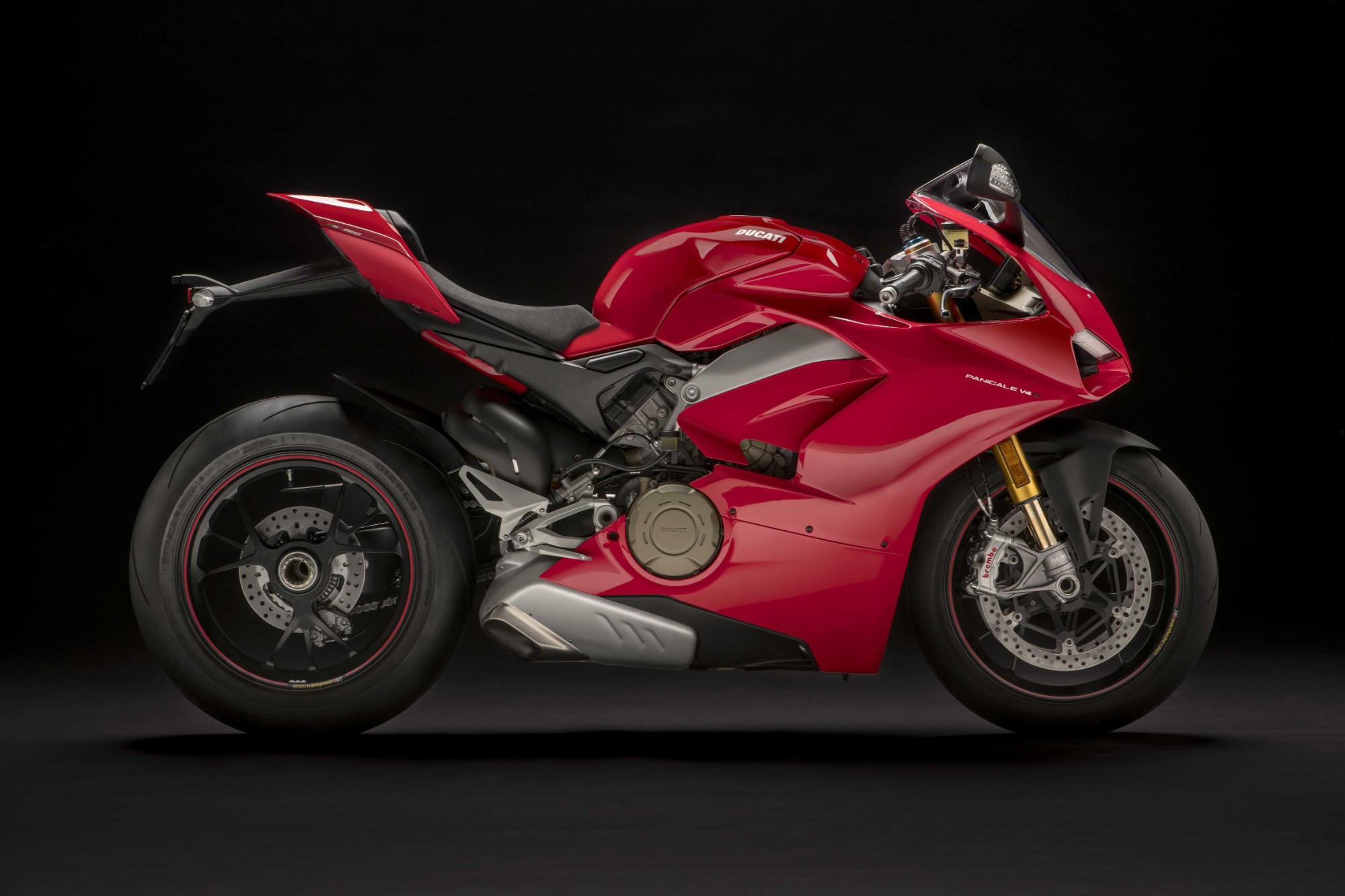
    Ducati Unveils 214-Horsepower, 430-Pounds-Wet Panigale V4 Sportbike

    DUCATI PANIGALE V4

    The Panigale V4. A bike that begins an exciting new chapter in the Ducati story, a new “symphony” of all-Italian performance and emotion. The Panigale V4 is the first mass-produced Ducati bike to mount a four-cylinder engine, derived directly from the MotoGP Desmosedici. It’s a concentrate of Ducati technology, style and performance. With an engine displacement of 1,103 cm3, 214 hp and a power/weight ratio of 1.1 hp/kg, this bike sets a new standard in the supersport production bike segment.

    The Panigale V4 replaces the iconic 1299 at the top of the Ducati supersport range, doing so by enhancing performance and ridability so that riders of all skill levels can enjoy boundless fun and excitement. The Panigale V4 has been developed in close collaboration with Ducati Corse, drawing directly on know-how and technology from the racing world to provide a road bike that is the closest thing possible to its MotoGP counterpart.

    The outstanding performance of the Panigale V4 is underlined by a completely new design which, while it follows on from that of the supersport bikes that preceded it, now even more effectively transmits the power and essentialness of Ducati racing bikes. The Panigale V4 name combines the alluring “Panigale” tag with the “V4” designation that marks the break with the past, indicating the start of a whole new era for the Bologna-based bike manufacturer.

    The new Ducati supersports family consists of the Panigale V4 – the essence of the new sports bike – and the Panigale V4 S. The latter mounts Öhlins suspension featuring the Smart EC 2.0 system with a new adjustment interface and top-drawer components such as forged aluminium wheels and the lithium ion battery. Completing the range is the exclusive Panigale V4 Speciale, a numbered, limited-edition bike with a dedicated livery, titanium exhaust and machined from solid components.

    The philosophy followed by the Panigale V4 development team mirrors the approach taken by Ducati when developing a racing bike: total integration of engine, chassis and rider. To achieve that goal MotoGP-derived technology has been employed. Development has involved Ducati Corse technicians and riders, making the Panigale V4 a production sports bike that comes close to being a MotoGP prototype, built for both excellent on-track performance and outstanding on-road ridability.

    The Desmosedici Stradale engine is a 90° V4 with Desmodromic timing, just like the Desmosedici GP from which it also takes an 81 mm bore (the maximum allowed by MotoGP rules). This has been combined with a longer stroke than that used in racing (giving a total displacement of 1,103 cm³) to boost low-to-mid rev torque and reduce maximum revs so that the power is easier to handle. The new Ducati engine puts out a maximum of 214 hp at 13,000 rpm, making the Panigale V4 the most powerful bike in the segment, yet easy to handle thanks to a torque of 12.6 Kgm at 10,000 rpm. Despite such outstanding performance, the Desmosedici Stradale has long maintenance intervals, with valve clearance inspection only necessary every 24,000 km.

    The Panigale V4 engine is the only one in the sports segment with a 90° V configuration. It’s also the only engine to use technology such as the counter-rotating crankshaft and twin pulse ignition. These solutions have a positive impact on bike dynamics, making it more agile during changes of direction, fast and stable on the straight and ensuring easier out-of-the-corner torque handling.

    The already high power of the standard Desmosedici Stradale configuration can be boosted to 226 hp by mounting the all-titanium racing exhaust, made by Akrapovic as per Ducati Corse specifications.

    To contain the inevitable weight gain with respect to the 1299 Panigale (because of the 4 cylinders) Ducati has developed an all-new frame where the Desmosedici Stradale itself has a load-bearing function. Called Front Frame, it’s more compact and lighter than a perimeter frame and uses the engine as a stressed chassis element. This solution ensures the right torsional rigidity for on-the-edge riding and gives riders outstanding “feel”. The Front Frame has allowed the designer to create a bike that is slender in the tank-seat merge zone: this, together with seat/handlebar/footpeg triangulation, ensures perfect bike-rider integration. Together with meticulous design and the use of light materials, the new frame keeps the kerb weight of the S and Special versions down to 195 kg. This weight, combined with the 214 hp, means a power/weight ratio of 1.1 hp/kg, putting the Panigale V4 S at the top of the sport bike segment.

    The Panigale V4 doesn’t just set new performance standards. Thanks to the potential of the six-axis Bosch inertial platform, a latest-generation electronics package with some previously unseen features defines new active safety and dynamic vehicle control standards in all riding situations. The Panigale V4 introduces controls such as controlled drift during braking, ABS Cornering on the front wheel only thanks to a set-up specially designed for track riding and Quickshift Up & Down with a strategy that takes lean angles into account. All these controls – developed on the track together with official Ducati riders and test riders – are incorporated in the three new Riding Modes (Race, Sport and Street) and can be adjusted via the advanced TFT panel that makes the Panigale V4 the highest-tech bike in the category.

    The range

    Panigale V4

    Colour

    o Ducati Red with grey frame and black wheels

    Main standard features

    o New Desmosedici Stradale engine, 1,103 cm3

    o New “Front Frame”

    o 43 mm Showa Big Piston Forks (BPF), fully adjustable

    o Sachs monoshock, fully adjustable

    o Sachs steering damper

    o Latest-generation electronic package with 6-axis Inertial Measurement Unit (6D IMU): ABS Cornering Bosch EVO; Ducati Traction Control EVO (DTC EVO); Ducati Slide Control (DSC); Ducati Wheelie Control EVO (DWC EVO); Ducati Power Launch (DPL); Ducati Quick Shift up/down EVO (DQS EVO); Engine Brake Control EVO (EBC EVO)

    o Buttons for quick level shifting

    o Riding Modes (Race, Sport, Street)

    o 16 litre aluminium tank

    o 5″ full-TFT dashboard

    o Full-LED headlight with DRL

    o Two-seater configuration kit

    o Braking system with new Brembo Stylema® monobloc calipers

    o New Pirelli Diablo Supercorsa SP tyres, 200/60 at the rear

    o Pre-setting for Ducati Data Analyser + GPS (DDA + GPS) and Ducati Multimedia System (DMS)

    Panigale V4 S

    Colour

    o Ducati Red with grey frame and black wheels

    Same standard features as the Panigale V4 with the exception of:

    o Suspension and steering damper with Öhlins Smart EC 2.0 system

    o Öhlins NIX-30 forks

    o Öhlins TTX 36 shock absorber

    o Öhlins steering damper

    o Aluminium forged wheels

    o Lithium-ion battery

    o Cast Magnesium alloy front sub frame

    Panigale V4 Speciale

    Colour

    o “Speciale” colour scheme with grey frame and black wheels

    Same standard features as the Panigale V4 S with the exception of:

    o Carbon fibre front/rear mudguards

    o Machined-from-solid top yoke with identification number

    o Alcantara® seat

    o Dedicated handle grips

    o Adjustable foot pegs

    o Carbon fiber heel guard

    o Carbon fiber cover swinging arm

    o Racing articulated levers

    o Racing fuel tank cap

    o Brake level protection

    Supplied kit:

    o Full racing titanium Ducati Performance by Akrapovic exhaust system

    o Racing screen

    o Plate holder removal kit

    o Machined-from solid mirror replacement plugs

    o Ducati Data Analyser+ GPS (DDA + GPS)

    o Bike cover

    Desmosedici Stradale, the new Ducati V4 engine

    90-degree V4: the racing engine par excellence

    Ducati sees the 90-degree V4 layout as the pinnacle of motorcycle engine sports performance. It’s no coincidence that this same solution is employed on Desmosedici MotoGP engines. The 90-degree V layout evens up first order forces naturally without having to resort to a balancing countershaft to eliminate vibration, a solution that, as is known, increases weight and drains power. This key benefit, crucial to the reliability and mechanical efficiency of an engine that revs as high as 14,000 rpm, is just one of many that make this Ducati-selected configuration the most technically refined possible.

    Compared to a classic in-line 4, the lateral compactness of the V arrangement allows for better mass centralization and reduces the bike’s frontal cross-section. Moreover, the shorter crankshaft diminishes the gyroscopic effect. All these aspects have a positive impact on motorcycle dynamics, making it lighter and faster when changing direction. Ample space inside the V provides room for both the water pump and an outsize airbox (12.8 litres) that lets the Desmosedici Stradale breathe better.

    Smooth integration of engine and chassis set-up forms the foundation of every Ducati. That’s why the Desmosedici Stradale is designed to be banked rearward 42°, just like the Ducati engines used in MotoGP. This optimises weight distribution, allows for larger radiators and brings the swingarm pivot as far forward as possible.

    Moreover, the Desmosedici Stradale has been designed as a structural chassis element. The main frame attachment points have been incorporated in the front of the upper crankcase half and in the rear cylinder bank head. What’s more, the crankcase acts as a rear suspension and swingarm attachment point.

    Light and compact

    Synergies with Ducati Corse has yielded a compact, light, high-performance engine. Meticulous design and development by Ducati’s engine team has resulted in power delivery that maximises road riding pleasure and gives supreme track performance.

    Weighing in at 64.9 kg, the Desmosedici Stradale is just 2.2 kg heavier than the 1,285 cm³ Superquadro twin, clearly demonstrating the attention to lightness that lies at the heart of every Ducati project.

    Engine casings are made of gravity die cast aluminium and are coupled horizontally. The upper crankcase half incorporates the four Nikasil-coated aluminium cylinder liners ensuring wear protection and low friction.

    The 81 mm diameter pistons that slide inside the liners have two low-attrition compression rings and an oil ring. Made of moulded aluminium, the pistons feature “box in box” technology: this contains both skirt height and below-chamber thickness, helping to reduce attrition and inertial loads while maintaining the necessary strength and stiffness.

    Racing-derived design is also underscored by a high compression ratio of 14:1. The pistons are coupled to forged steel con rods with a centre-to-centre of 101.8 mm.

    Mounted on brass bushings, the crankshaft rotates on three supports and is made of nitrided steel with crank pins ground twice over and offset at 70° as on the Desmosedici engines that compete in MotoGP.

    This particular shaft geometry, combined with the V engine layout, allows for a special “Twin Pulse” ignition sequence.

    To limit weight, all engine casings are made of die cast magnesium. The same material has been used to make the cam covers, the oil sump, the alternator cover and the two-piece clutch cover.

    Counter-rotating crankshaft

    On normal factory bikes, the crankshaft turns in the same direction as the wheels. In MotoGP, instead, counter-rotating crankshafts that run in the opposite direction are widely used. Ducati engineers have borrowed this top-level racing solution for the same reasons that first saw it applied in competition. Its benefits stem from two aspects of physics: gyroscopic effect and inertia.

    A counter-rotating crankshaft offsets some of the gyroscopic effect generated by the turning wheels and that, in turn, improves handling and makes the bike more agile when changing direction.

    The second benefit has to do with the inertia (i.e. the tendency of an object to oppose any change of state) of the vehicle and the rotating engine parts. During acceleration, drive torque is put down on the ground, causing the bike to wheelie. A counter-rotating crankshaft, however, produces inertia-linked torque in the opposite direction, lowering the front of the bike, limiting the wheelie effect and thus boosting acceleration performance.

    Similarly, during hard braking/deceleration the bike undergoes rear wheel lift-up: however, the crankshaft itself also decelerates (i.e. its revs drop), producing an inertial torque that works against lift-up. So a counter-rotating crankshaft has advantages during both acceleration and braking.

    Of course, this layout demands the addition of the so-called ‘jackshaft’ (*) to transfer crankshaft drive through the gearbox to the rear wheel so it turns the right way.

    * The jackshaft adds an extra transmission element to the crankshaft-wheel connection system. This needs to be taken into consideration when establishing crankshaft power if the latter is obtained from measurements made at the wheel. During both homologation and measurement on acceleration test benches it is, therefore, necessary to consider an efficiency or, in any case, an additional coefficient that is, by law, fixed at 0.98.

    Twin Pulse ignition

    A combination of 70° crank pin offset and 90-degree V layout generates what Ducati calls a “Twin Pulse” firing order because it’s as if the engine were reproducing the firing sequence of a twin-cylinder. The distinctiveness lies in the fact that the two left-hand cylinders fire closely together, as do the two right-hand ones. In the timing chart, the ignition points are, then, at 0°, 90°, 290° and 380°. It’s this particular firing order makes the V4 sound like a MotoGP Desmosedici.

    In practice, if we imagine a cycle starting from 0°, the first cylinder to fire is the front one on the alternator side. After just 90° of rotation, the rear cylinder on the same side fires. There then follows an interval in which the engine generates no drive torque until the two cylinders on the clutch side fire, again just 90° apart. In addition to an exhaust rumble like no other in the motorcycle world, the Twin Pulse ignition sequence provides a power delivery that Ducati MotoGP riders deem unbeatable as it provides outstanding engine performance and, therefore, smooth handling, especially on corners and out-of-the-corner stretches.

    Variable Intake System

    The Desmosedici Stradale engine takes in air through four oval throttle bodies (52 mm diameter equivalent), connected to variable-height air intake horns, featured for the first time on a Ducati engine. This solution optimises cylinder intake across the rev range, giving major advantages in terms of power delivery and handling.

    As rpm and rider-requested power vary, the air intake horns take on a configuration that lengthens or shortens the ducts, optimising the fluid dynamics of the pressure waves that run along the duct itself.

    Controlled by the ECU, the system consists of two stages: a fixed horn on the throttle body and a mobile one that is moved along steel guides by an electric motor. When the latter is lowered, it comes into contact with the short horn, geometrically lengthening the duct. When raised, the fluid dynamics involve only the fixed lower horn and the engine configuration is characterised by a very short duct.

    Each throttle body has two injectors: a sub-butterfly one for low-load use and another above it that comes into play when maximum engine performance is required. The throttle bodies of each cylinder bank are moved by a dedicated electric motor. Thanks to the full Ride by Wire system, this allows complex electronic control strategies and modulation of engine ‘feel’ according to the selected riding mode.

    Latest-generation Desmodromic system

    As on all Ducati engines, the Desmosedici Stradale sees Desmodromic design playing a pivotal performance role. On the Desmosedici Stradale, the Desmodromic system uses fully redesigned, miniaturised components that have allowed for the construction of very small cylinder heads, achieving a degree of sophistication, lightness and compactness never before seen on a Ducati. Every single system component has been designed and tested to operate safely at the high revs the V4 is capable of. New spark plugs – smaller than standard models – also help keep the heads compact.

    The four Desmosedici Stradale engine camshafts control the sixteen valves: valve diameters are 34 mm diameter on intakes and 27.5 mm on exhausts, values decidedly on the high side given the 81 mm bore. The valve seats are made of sintered steel.

    Given the high revs attained by the V4 and the large valves, a traditional spring system would be inadequate because the valves would be unable to follow the steep cam profiles. This, then, is where the Desmodromic system becomes a must. With the “Desmo” system the valves are closed mechanically with the same level of accuracy as they’re opened. This allows the steep cam profiles and radical cam timings that optimise intake and exhaust fluid dynamics to provide higher engine performance.

    The camshafts are controlled by two “silent” timing chains. At the front, the chain drives the intake camshaft which, in turn, transmits drive to the exhaust camshaft via a pair of cogs (hybrid chain-cog timing). On rear timing, instead, the chain drives the exhaust camshaft, which transmits drive to the intake camshaft. This solution minimises timing power absorption, enhancing performance and reliability. Front cylinder timing is controlled by the chain on the right-hand side of the engine, turned by the crankshaft via a gear obtained on the primary drive pinion. The one that controls rear cylinder timing is on the left-hand side of the engine and is driven by a monobloc gear on the crankshaft. Each cylinder head has an “anti-knocking” sensor that optimises spark advance to prevent any combustion shock.

    Semi-dry sump lubrication

    As on MotoGP engines, the Desmosedici Stradale uses semi-dry sump lubrication with delivery and return stages that ensure effective lubrication of all moving parts at all times.

    The oil circulation system consists of four pumps: one delivery lobe pump and three recovery pumps. One of the latter, a gear pump, draws oil from the heads via two ducts while the other two lobe pumps ensure efficient oil recovery under all conditions, keeping the crankcase zone under the pistons in a controlled, constant low pressure state and thus reducing airing losses (i.e. power absorption caused by the aerodynamic resistance exerted by the air and splashing of the oil in the con rod casing).

    The oil tank – which also acts as a filter housing – is in a magnesium sump mounted underneath the crankcase and connected to the gearbox but separate from the crankcase. A dedicated radiator, attached just below the water radiator, cools the oil.

    Cooling system

    Housed in the engine ‘V’, the water pump is operated by a shaft, in turn driven by a gear train. This positioning solution is designed to minimise circuit size, boost efficiency and optimise engine weight.

    Gearbox and clutch

    The 6-speed gearbox is specially designed for the Desmosedici Stradale engine and features a rotary gear sensor to ensure optimal operation with Ducati Quick Shift (DQS) up & down.

    The sensor assesses the position of the gear shift drum and, consequently, of the gear shift forks, with extreme accuracy to ensure precise gear selection. This, then, allows for a strategy that can restore torque transmission only once the gear change has been completed, thus preventing undue gear mesh stress so shifts are always complete, precise and swift.

    The hydraulically controlled wet clutch has 11 driving plates and features a progressive self-servo mechanism that compresses the friction plates when under drive from the engine without requiring any extra effort from the rider to release the clutch.

    While enhancing frictional efficiency, this also results in a rider-friendly, light clutch lever “feel”. In sport riding conditions, the same mechanism reduces pressure on the friction plates, enabling a pure racing “slipper” action and reducing rear end destabilisation during aggressive down-shifting, with the added benefit of a super-responsive lever.

    Long maintenance intervals

    While performance levels surpass even those of the Superquadro, the valve clearance inspection and adjustment (Desmo Service) interval remains at 24,000 km (15,000 miles), while general service intervals remain unchanged at 12 months/12,000 km (7,500 miles).

    Shapes modelled on mechanics

    The new Panigale V4 was designed by the Ducati Design Center, starting from the 1299 Panigale styling elements and evolving them into a muscular machine, with sleek surfaces and assertive profiles. The styling development has followed three typical racing model guidelines: design minimalism, integration among components and the power transmitted by surface treatment. An extra touch to this project has been added by the improved aerodynamic efficiency achieved through wind tunnel testing by the Ducati Corse engineers.

    The motorcycle’s bodywork develops around the technical parts, and in particular, the new “Front Frame” left exposed, with the two pillars extending laterally to the Desmosedici Stradale cylinder heads. The front is dominated by two large airbox air intakes, which incorporate the full-LED headlight in the top part, overshadowed by the ports. The headlight sizing is reduced with the precise aim of enhancing the aggressive look of the two oversized ports, especially when the engine is switched off. Below the air intakes are two wing attachments designed to accelerate the incoming airflow. The full-LED headlight includes a Daytime Running Light outlining with a double-edged profile the top of the air intakes, and two compact LED modules ensuring low-beam and high-beam functions.

    The nose fairing is a perfect example of the concept of integration underlying the new Panigale V4 stylistic approach. The front sub-frame, made of magnesium, is partially exposed to become part of the bodywork. The sub-frame also supports the mirrors with LED turn indicators integrated in the outer shell.

    The search for essentiality and integration has also led to the dual-layer fairing design: a less stretched out main fairing, and another layer that also acts as an air outtake. The “dual layer” solution emphasises the compact nature of the vehicle mechanics and is inspired by the iconic clean lines of Ducati racing models – traditionally characterised by their stylish fairings. The main fairing extends upward by embracing the tank with two muscular shoulders which, at the top, morph into the cover of the compartment that accommodates easily accessible electrical and electronic components.

    The tank has a shape designed to support the rider during track riding and stretches out to below the seat – just like in racing models. This feature is highlighted by exposing the tank in the tail area. The tail is made of two shell-cast aluminium half-shells, which starting from the rear cylinder head, reach out to hug the tank part below the seat, ending up in the single-seater one-piece tail end, whose wing-shaped design is inspired by the shape of a car spoiler. The tail faring integrates the full LED light that is also wing shaped: although a single piece, it features the signature split lighting typical of Ducati racing models.

    Innovative Front Frame

    The racing soul of the new Panigale V4 is apparent in its technical specifications including a kerb weight of 195 kg for the “S” and Speciale versions (only 5.5 kg more than the 1299 Panigale S). It would be impossible to achieve these values by using a traditional perimeter frame. For this reason, a “Front Frame” has been developed – using the Desmosedici Stradale engine as a load-bearing feature. This solution is an evolution of the monocoque design and was developed on the strength of the experience gained in MotoGP.

    Compared to the Monocoque design, the “Front Frame” allows torsional rigidity and lateral rigidity to be kept separate, so as to obtain the right response to the stress transmitted to the frame and better absorb any

    road surface roughness in cornering, ensuring the necessary stability. All this results in superior agility and riding precision – ensuring easier control and less fatigue for the Panigale V4 rider.

    The main difference in lay-out over traditional perimeter frames is the use of the engine as a structural element of the frame. At just 4 kg, the “Front Frame” features a compact frontal structure, secured directly to the upper half-crankcase of the front cylinder head and to the V4 rear cylinder head, with the engine also acting as a fixing point for the rear suspension and a fulcrum point for the single-sided swingarm.

    The most important advantage offered by the Ducati “Front Frame” is that the Desmosedici Stradale engine can be used to achieve the required rigidity, making it possible to significantly reduce the outreach, and consequently, the weight, of the main frame, resulting in a better rigidity/weight ratio. Another plus is the fact that the reduced length of the pillars running alongside the engine has resulted in a more compact motorcycle design – especially in the rider seat area.

    The frame is complemented by the lightweight front sub-frame, made of magnesium, and the shell-cast aluminium seat sub-frame, secured to the “Front-Frame” at the top, and screwed into the top of the rear cylinder head at the bottom.

    The rear suspension uses a rising-rate linkage mechanism attached to the Desmosedici Stradale engine via a forged aluminium element. The linkage responds to the motion transmitted by a 600 mm long high-triangulation cast aluminium single-sided swingarm, among the longest in the segment, to ensure the best performance riding out of corners.

    The rake and trail are 24,5° and 100 mm – respectively.

    Sophisticated suspension

    The Panigale V4 is equipped with 43 mm Showa Big Piston Forks (BPF), fully adjustable in spring pre-load and compression and rebound damping. The fork bodies house chrome sliders with Brembo radial caliper mountings. A Sachs steering damper completes the front-end package. The rear unit is a fully adjustable Sachs shock, fixed at one end to the Desmosedici Stradale through a forged aluminium element.

    The Panigale V4 S and Panigale V4 Speciale are equipped with Öhlins NIX-30 forks, Öhlins TTX36 rear shock and Öhlins steering damper, with an event-based control system. In these versions, the suspension and the steering damper are controlled by the second-generation control system Öhlins Smart EC 2.0, featuring, among other things, the new Objective Based Tuning Interface (OBTi).

    Wheels and Tyres

    While the Panigale V4 is fitted with 3-spoke cast aluminium wheels, the Panigale V4 S and Speciale feature 3-spoke forged aluminium alloy wheels.

    Ducati and Pirelli worked hand in hand to develop the new Panigale V4, the first motorcycle ever to feature as factory equipment the new Pirelli DIABLO™ Supercorsa SP 120/70 ZR17 at the front and the revolutionary size 200/60 ZR 17 at the rear. The latest version of the DIABLO™ Supercorsa SP, in the new 200/60 ZR 17 size already popular as a slick option in the FIM World Superbike Championship, is a pioneer in the field of racing replica tyres. The innovative profile of the resized rear tyre maximises the contact patch at extreme lean angles and makes the most of the bi-compound technology used: the SC2 compound used for the shoulder area is the same used for racing slick products, ensuring the enhanced grip of racing tyres

    while guaranteeing at the same time the strength and versatility needed for road use. In order to work in perfect harmony with the rear tyre, the front tyre has gone through an extra, major development step: all the riding items related to handling, from rider feedback through support solidity to safety feeling and grip loss predictability, have been optimised by creating a new front profile, slightly increased in terms of maximum section width with respect to the previous version of the product. Redesigning the geometries of the semi-finished products and the belt pattern has made it possible to set new agility and rideability standards, with at the same time top racing level performance. Finally, the new tread pattern of the DIABLO™ Supercorsa SP features a new “flash” geometry to optimise track performance by improving wear, and reduced groove widths designed to provide adequate support for stronger side thrusts.

    Exclusive braking system with new Brembo Stylema® calipers

    The Panigale V4 range is fitted exclusively with the brand new Brembo Stylema® monobloc calipers – the latest evolution of the already high-performance M50.

    The new Stylema® calipers, machined from a single piece of alloy, feature lighter-weight areas in the fixing bushings and in the body, which, compared to the M50, make them visually more compact – allowing at the same time a weight reduction of 70 g for each caliper, without compromising on rigidity. Other improvements have been introduced in terms of internal ventilation to ensure higher efficiency.

    The new Stylema® calipers ensure improved hydraulic performance thanks to their extreme rigidity, which translates into excellent fingertip feel, a shorter brake lever travel and prompt response.

    The twin Brembo calipers each have four 30mm pistons that grip 330mm discs to achieve outstanding braking performance – with at the rear a single 245 mm disc with a 2 piston caliper. The braking system is supported by the ABS Cornering EVO system, which uses the extra-lightweight 9.1MP Bosch control unit.

    Racing tank

    The Panigale V4’s racing soul is enhanced by the 16 litre lightweight aluminium tank which, just like in racing motorcycles, relocates part of the fuel storage to below the rider’s seat. The space not occupied by the fuel has been used to store all the electronics at front of the tank, under a plastic cover: this includes the battery, which in the Panigale V4 S and Panigale V4 Speciale versions is a lithium-ion pack.

    Electronics

    Latest-generation electronic controls

    The Panigale V4 not only sets new benchmarks in terms of top performance, but also defines new active safety standards and vehicle dynamics control – thanks to a state-of-the-art electronic package, based on the use of a 6-axis inertial platform (6D IMU – Inertial Measurement Unit) that instantly detects the motorcycle’s roll, yaw and pitch angles in space.

    The Panigale V4 electronic package includes controls to ensure management of all the riding phases; some of these control the start, acceleration and braking phases, others manage traction, while others kick in when riding into and out of corners.

    ABS Cornering Bosch EVO

    Ducati Traction Control EVO (DTC EVO)

    Ducati Slide Control (DSC)

    Ducati Wheelie Control EVO (DWC EVO)

    Ducati Power Launch (DPL)

    Ducati Quick Shift up/down EVO (DQS EVO)

    Engine Brake Control EVO (EBC EVO)

    Ducati Electronic Suspension EVO (DES EVO)

    The operating parameters of each control are factory-associated with the three Panigale V4’s signature Riding Modes. The rider can customise his or her riding style and restore Ducati’s factory settings. The level of one of the DTC, DWC, DSC or EBC control functions can be quickly adjusted via the direct access buttons provided on the left-hand switchgear.

    ABS Cornering Bosch EVO

    The Bosch ABS system, equipped with a “Cornering” function that extends ABS action to situations in which the vehicle is leaning in corners, has undergone a major evolution to reflect the latest action logic and types of control.

    The Bosch EVO Cornering ABS is settable to three different levels to fully meet track and road riding needs, even in the most critical low-grip situations.

    While level 3 is indicated on the road or for low-grip conditions, ensuring safer and more stable braking, levels 2 and 1, the hard-braking options, are more suited to higher grip surfaces and track racing.

    Selecting level 2 enables the rider to skid into corners safely, enhancing racing performance.

    The ABS Level 1, recommended for track riding, is activated while maintaining the “Cornering” feature – for extremely hard braking into corner and to help rectify any rider mistakes.

    Ducati Traction Control EVO (DTC EVO)

    The DTC EVO featured by the Panigale V4 is based on an algorithm that makes intervention faster and more accurate. The DTC EVO interfaces with the Bosch Inertial Measurement Unit (IMU), constantly

    monitoring the vehicle’s lean angle and using it to accurately calculate the degree of intervention needed to ensure suitable rear wheelspin (according to the DTC EVO level setting).

    Moreover, the DTC EVO also acts on the throttle body valves and controls spark and injection advance. In all situations in which fast intervention of the DTC EVO is not required, the use of the throttle body valves ensures maintenance of optimal combustion parameters, ensuring a smoother Desmosedici Stradale response and system intervention.

    With simpler types of traction control, detection of rear wheelspin sees the system kick in to hold it in check. When optimal grip is re-established, the system reduces intervention until spin reoccurs, and the cycle repeats. This produces a graph that shows intervention oscillating around a theoretical “ideal intervention line” that represents the traction limit. The DTC EVO reduces the magnitude of those oscillations, making the system operate closer to the perfect intervention line. This kind of behaviour is highly advantageous as its effect on the dynamic balance of the motorcycle is minimal. In addition, the system is designed to be stronger and more consistent, allowing the motorcycle to maintain constant and predictable behaviour even when the grip level changes – i.e. in case of rear tyre wear.

    In addition to this enhanced intervention precision, when set to level “1” or “2”, the DTC EVO introduces a new function, named “spin on demand”, allowing the rider to control the motorcycle up to levels that would previously only have been possible for experts or pros. Now, when the machine is leaned over, the rider can use the throttle to request more wheelspin than that obtained at the normal intervention level, allowing the motorcycle to pivot around its front wheel and close the cornering line. The DTC EVO allows riders to do this while keeping safety parameters under control, effectively letting them ‘close’ the cornering line with the rear wheel.

    Ducati Slide Control (DSC)

    The introduction of the 6D IMU has allowed the Ducati Slide Control (DSC) – developed in conjunction with Ducati Corse – to be added to the Ducati Traction Control EVO (DTC EVO). This new system provides the rider with further support by controlling the torque delivered by the Desmosedici Stradale engine as a function of the slide angle; its goal is to improve out-of-the-corner performance by preventing slide angles that might otherwise be difficult to handle. The DSC relies on the 6D IMU that provides the vehicle control unit with crucial information on vehicle dynamics (such as lean angle, acceleration and much more). Thanks to these data – and depending on the user-selected level – the DSC extends the performance range of the motorcycle for everyone, providing improved assistance under extreme riding conditions.

    Like the DTC EVO, the DSC controls torque reduction by acting on the throttle body valves, spark advance decrease and injection cuts. In every situation in which fast intervention of the DSC is not required, the use of the throttle body valves ensures optimal combustion parameters, with a smoother Desmosedici Stradale engine response and system intervention.

    The DSC has two different settings: switching from level 1 to level 2 results in easier control of slide angles that would otherwise be difficult to handle. DSC intervention levels can be changed by accessing a special menu, in which DTC EVO and DWC EVO values can also be set. It is also possible to set direct DSC control via the direct access buttons on the left-hand switchgear. The DSC setting is always shown on the display.

    Ducati Wheelie Control EVO (DWC EVO)

    The Panigale V4 also comes equipped with the latest version of Ducati Wheelie Control EVO (DWC EVO). This system, using Bosch 6D IMU information, ensures wheelie control to obtain top acceleration performance in a smooth, safe manner. The DWC EVO detects the occurrence and extent of wheelies to control them with a higher level of precision – ensuring a more accurate response to rider input.

    Ducati Power Launch (DPL)

    This 3-level adjustable system ensures lightning-fast starts, letting the rider focus only on releasing the clutch. Once set, the rider simply engages the first gear and opens the throttle. During the first stage of starting off, while the rider is modulating the clutch release, the DPL stabilises the Desmosedici Stradale at optimal revs as a function of the selected DPL level. In the second phase, when the clutch has been fully released, the DPL controls torque delivery to ensure the maximum degree of acceleration according to the chosen level.

    The DPL makes use of the DWC functions and always keeps the DTC active to ensure maximum safety at all times. Automatic deactivation of the system occurs above the end-of-start speed, or once third gear is selected. To protect the clutch, a specially developed algorithm allows only a limited number of consecutive starts. The number of available starts resets itself when the rider uses the motorcycle normally.

    The DPL is adjustable to three different levels, and is activated by pressing the special button on the right handlebar. Level 1 favours high-performance starts, level 3 is safer and more stable.

    Ducati Quick Shift up/down EVO (DQS EVO)

    The DQS EVO with up/down function, developed for the Panigale V4, compared to the previous Panigale 1299 system uses the information concerning the lean angle to maximise motorcycle stability when shifting gears in corners.

    The DQS EVO, as well as minimising gear shifting times, allows down-shifting without using the clutch – ensuring even more effective hard braking. The system consists of a two-way microswitch built into the linkage of the gear change lever; each time that the gearbox is actuated, it sends a signal to the Desmosedici Stradale ECU. The system works differently for upshifts and downshifts, integrating adjustment of the spark advance and injection during upshifts with a controlled opening of the throttle valve during downshifts – ensured by the full Ride-by-Wire system management.

    The extent and duration of system operation are designed to ensure seamless gear meshing even under extreme track riding conditions; during downshifts the system works synergetically with the slipper clutch and the Engine Brake Control (EBC).

    Engine Brake Control EVO (EBC EVO)

    The EBC (Engine Brake Control) system has been developed to help riders optimise vehicle stability under extreme turn-in conditions, by balancing the forces applied to the rear tyre under severe Desmosedici Stradale engine-braking conditions. The Panigale V4 EBC EVO, optimised on the basis of the lean angle, monitors the throttle position, selected gear and crankshaft deceleration rate under heavy braking and fine-tunes throttle opening to balance the torque forces acting on the tyre. The EBC EVO can be set to three levels integrated in the Riding Modes.

    Ducati Electronic Suspension EVO (DES EVO)

    The “S” and Speciale versions are equipped with the event-based electronic control Öhlins suspension system, based on the second-generation Öhlins Smart EC (Electronic Control) system which, in addition to leveraging all the potential offered by the 6D IMU, has a new and more intuitive rider interface, OBTi (Objective Based Tuning Interface).

    The electronic suspension offers the choice between manual mode (“Fixed”) – allowing compression, rebound, and damping of the steering damper to be manually set via “virtual clicks” (32, from fully open to fully closed, for the suspension, and 10 for the shock absorber) – and automatic (“Dynamic”).

    When the “Dynamic” mode is selected, based on the information received from the 6D IMU and other sensors, the system automatically adjusts compression and rebound damping in response to the riding style.

    The main advantages offered by the Öhlins Smart EC 2.0 system concern the rider’s option to customise the level of intervention on the suspension, depending on individual riding events (braking, cornering, acceleration), as well as to adjust the operating parameters of individual hardware components. For the rider, this means having access to a superior level of motorcycle dynamics control – improving road safety and track lap time efficiency.

    New Ducati Riding Mode strategy

    The Riding Modes allow the rider to choose from three different factory-set riding styles, perfectly adapting the Panigale V4’s behaviour to the rider’s, to the track type, and to environmental conditions. Each Riding Mode is programmed to instantly change the engine’s character, electronic control parameters and, in the “S” and “Speciale” versions, also the suspension set-up. Each rider can customise his or her riding style and later restore Ducati’s factory settings.

    Riding Mode Race – As the name implies, the Race RM has been developed for experienced riders who wish to make the most of all the potential of the Panigale V4 on high-grip track surfaces. By selecting Race, the rider can rely on 214 HP, with direct Ride-by-Wire throttle response and, on the ‘S’ and Speciale versions, a high-performance hard suspension set-up. The Race mode implies a low-intervention default electronics setting, without, however, compromising on safety, with the ABS only intervening on the front wheel to provide maximum braking performance, but with the Cornering feature always active.

    Riding Mode Sport – By selecting the Sport Riding Mode, the rider can count on 214 HP power delivery with a sporty Ride-by-Wire response to throttle opening and, in the S and Speciale versions, an equally sport-oriented suspension set-up. Electronic controls are set in such a way as to help also less experienced riders adopt an effective, highly spectacular riding style. In the Sport mode, for instance, the controlled braking drift feature is active, allowing for safe wheel skidding when turning into corners. The rear wheel lift control function is active and the ABS Cornering function is set to provide maximum cornering performance.

    Riding Mode Street – The Street Riding Mode is the one recommended for road use of the Panigale V4. This RM offers the rider 214 HP power delivery with progressive Ride-by-Wire response to throttle opening, like in the Sport RM, and, in the Panigale V4 S and Panigale V4 Speciale versions, an extremely soft suspension set-up to absorb any bumps in the road. The default setting of electronic controls helps ensure maximum safety, by guaranteeing the best grip and stability.

    Second generation TFT display instrumentation

    Ducati was the first motorcycle manufacturer to fit a model, the 2012 1199 Panigale, with full-TFT (Thin Film Transistor) colour display instrumentation.

    Six years later, with the Panigale V4, Ducati sets a new standard by launching an advanced 5″ full-TFT, high-res (186.59 PPI – 800xRGBx480) and high-brightness colour display, completely redesigned in terms of lay-out and up-to-date graphics, and even more alluring. In developing the motorcycle’s instrumentation, the main focus was on readability and easy access to functions.

    The most visible element of the brand new dashboard is the “virtual” circular rev-counter, located on the right side, a clean break with past equipment tradition, inspired by high-end automotive production. The Desmosedici Stradale revs are displayed in the 1,000 to 15,000 rpm range via a needle indicator, whose motion is highlighted by a white trail acting as a “shiftlight”, changing from white to orange and then going red when approaching the over-rev area.

    Two different layouts are available to – and can be recalled by – the rider: the “Track” display, which focuses attention on the lap time indication and in which the rev counter scale highlights the engine rpm values related to the track-specific range of use; and the “Road” display, which instead of lap times, shows Ducati Multimedia System (DMS) information, and highlights engine rpm values typical of road riding. For improved readability, the indications of the (digital) top speed, selected Riding Mode, and selected gear do not change position when the selected lay-out is changed.

    The Panigale V4 dashboard, in addition to the classic menu including total kilometres, Trip 1, Trip 2, fuel consumption, average fuel consumption, Trip Fuel, Trip Time, Average Speed, Air Temperature, Lap On/Off (in “Track” mode only), and Player On/Off (in “Road” mode only), also features another menu in the bottom right corner with two available functions: display/indication of parameters related to the selected Riding Mode or quick changing of DTC, DWC, EBC and DSC parameters. Finally, the Panigale V4 has an “auto off” function for its direction indicators: the indicators will go off automatically after riding out of a corner or, if pressed unintentionally, after a few hundred metres on a straight stretch (variable between 200 and 2000 metres depending on the current speed of the vehicle when the indicator button is actuated).

    Ducati Lap Timer GPS (DLT GPS)

    The DLT GPS allows lap times to be automatically recorded, stored and displayed directly on the dashboard each time the finish line is crossed – providing the rider has previously entered the finish line coordinates, by pressing the light flasher button. The system has a useful “Best Lap” feature that displays the lap time flashing for 5 seconds if it is the best recorded lap time in the current track session. For each lap, and for a total of 15 consecutive laps, the lap time, max rpm and top speed are stored; this information can be viewed on the dashboard by accessing the special menu. The DLT GPS is part of the standard equipment on the Panigale V4 Speciale and is available as a Ducati Performance plug-and-play accessory for the Panigale V4 and Panigale V4 S.

    Ducati Data Analyser + GPS (DDA + GPS)

    The Ducati Data Analyser + GPS (DDA + GPS), evaluates the performance of the motorcycle and its rider by graphically presenting specific channels of information. The DDA + GPS is an essential piece of equipment for track use: it monitors the rider’s performance, in addition to automatically recording and displaying lap times whenever the Panigale V4 crosses the start and finish line. It stores a number of data channels including throttle opening, vehicle speed, engine rpm, gear selection, engine temperature, distance

    travelled, revs and DTC index. DDA + GPS is available as a Ducati Performance plug-and-play accessory, while it is supplied as standard with the Speciale.

    Ducati Multimedia System (DMS)

    The Panigale V4’s versatility is demonstrated by a pre-setting for the Ducati Multimedia System (DMS) – allowing the rider to accept incoming calls, select and listen to a music track, and receive SMS notifications thanks to Bluetooth technology.

    When the rider gets on the motorcycle, his or her smartphone automatically connects to the vehicle via Bluetooth, allowing the rider to handle the main multimedia features. The TFT display shows the played track, the icon indicating new incoming SMS or the name of the caller. The call or music sound are transmitted to the rider’s helmet earphones. The DMS is available for the entire Panigale V4 range as an accessory.


    Yamaha bLU cRU R3 Cup: Xavier Zayat Wins Expert Race, 2017 YZF-R6 Grand Prize At Barber Motorsports Park

    Xavier Zayat, an 18-year-old from New York, won the Yamaha bLU cRU R3 Cup Expert race Sunday at the 45th WERA Grand Nationals Finals at Barber Motorsports Park, Birmingham, Alabama.

    Zayat fought with Chris Parrish, Joshua Jovi, Damian Jigalov, Ashton Yates, Nathan McDonald and Toby Khamsouk throughout the eight-lap, winner-take-all race. On the final lap, Zayat was able to take the lead and get his Pirelli-shod RBoM Racing YZF-R3 across the finish line 0.068 second ahead of 40-year-old veteran Parrish and his YamahaR3Racing.com machine. Jovi, age 17, earned the final podium position with third place on his Bridgestone-backed YZF-R3.

    After the race, Zayat’s motor was protested by another competitor in the field. WERA and Yamaha officials confiscated Zayat’s camshafts so they could be compared with stock parts at Yamaha’s facilities in Georgia. As a result of the protest, WERA and Yamaha decided not to hold a winner’s circle ceremony or give out any prizes, including the grand prize of a brand new 2017 Yamaha YZF-R6, to the Experts.

    In the Novice race, K&N Yamaha’s Erica Muse won over runner-up Damon Luchette and Nicole Karamichael. For taking first place in the Novice race Muse won a large Yamaha pop-up canopy, Luchette won a $500 voucher for Yamaha parts and accessories, and Karamichael won a $250 voucher for Yamaha parts and accessories.

    45th WERA Grand National Finals

    Yamaha bLU cRU R3 Cup 

    Barber Motorsports Park

    Birmingham, Alabama

    November 5, 2017

    Provisional Expert Race Results (all on Yamaha YZF-R3s):

    1. Xavier Zayat, 8 laps, Best Lap Time 1:39.784

    2. Chris Parrish, -0.068 second, 1:39.564

    3. Joshua Jovi, -0.549, 1:39.683

    4. Damian Jigalov, -0.582, 1:39.770

    5. Ashton Yates, -0.726, 1:40.291

    6. Nathan McDonald, -1.512 seconds, 1:39.966

    7. Toby Khamsouk, -5.968, 1:40.443

    8. Tyler Freeman, -30.450, 1:43.935

    9. Joseph Blasius, -30.476, 1:43.280

    10. Blake Davis, -62.635, 1:47.543

    11. Samuel Wang, -73.822, 1:48.584

    Provisional Novice Race Results (all on Yamaha YZF-R3s):

    1. Erica Muse, 8 laps, Best Lap Time 1:46.783

    2. Damon Luchette, -7.396 seconds, 1:46.669

    3. Nicole Karamichael, -54.751, 1:53.396

    4. Hadley Roche, -1 lap, 1:53.914

    5. Heather Hunter, -1 lap, 1:55.973

    6. Steven V. Thurlo, Jr., -1 lap, 2:01.087

    Honda Launches Restyled CB1000R With “Neo-Sports Cafe” Design

    Honda Announces New Styling Direction For CB1000R

    New Neo-Sports Café design matched with performance updates for 2018

    MILAN, Italy

    Honda’s leading sport naked model is reborn today with the introduction of a minimalist but aggressively styled 2018 CB1000R. Unveiled at the EICMA motorcycle show, the model is a production version of the Neo-Sports Café Concept showcased at the recent Tokyo Motor Show. Following an early-2018 European release, the new CB1000R will be available in the U.S. in summer of next year.

    The CB1000R’s bold shift in identity is bolstered by an impressive list of updates to the chassis, engine, and electronics package, which deftly bridge the gap between performance and bare-boned café racer inspirations.

    “The CB1000R has always represented high performance in a naked four-cylinder machine, and while we knew that retaining that approach was important, we also felt it was time to take the platform in a new direction,” said Lee Edmunds, American Honda’s Manager of Motorcycle Marketing Communications. “Increasingly, customer expectations walk a line between high-end performance and character, so it’s vital that there be a strong, emotional connection between rider and machine. With the new approach of the 2018 CB1000R, customers will experience increased pride in ownership while also benefiting from greatly improved handling and engine performance.”

    • Availability: Summer 2018

    KEY FEATURES

    –Distinctly styled round headlight has 3.5-inch shorter overhang, while the swingarm-mounted rear mudguard unit (a first for Honda) contributes to compact, trapezoidal shape silhouette that offers more elegant, refined appearance

    –Premium feel thanks to burnished-aluminum radiator shroud and airbox cover plus machined engine cases, cylinder head, and sprocket hub

    –Flangeless tank offers elegant styling and provides plenty of knee room through distinct cutaways

    –All-LED lighting and horseshoe-shaped light ring bring a modern flare to retro styling

    –0.5-inch wider tapered-aluminum handlebar sits 0.5 inches higher for more relaxed riding position, making the café-racer inspired model ideal for around-town rides

    –Mono-backbone steel frame uses split-tightening aluminum pivot plates to save 5.5 pounds while still offering optimum handling characteristics

    –Total curb weight has been reduced for improved handling and more rider-friendly performance

    –Showa Separate Function Fr Fork Big Piston unit (SFF-BP) offers reduced weight and excellent on-road performance

    –190/55 ZR17 rear tire (compared to 180/55 ZR17 tire on previous model)

    –998cc DOHC four-cylinder engine shares same architecture and layout as CBR1000RR and now employs forged pistons (rather than cast)

    –Higher valve lift, larger valves (8.5mm intake and 8.1mm exhaust), larger-diameter inlet ports, and new combustion-chamber shape improve gas flow and offer improved torque in midrange, for more engaging riding experience

    –4% reduction in gear ratios improves acceleration for more exciting, rapid-roll-on acceleration

    –Assist/slipper clutch offers light lever pull and helps manage aggressive downshifts

    –New 4-2-1 exhaust system boosts torque at 5,000 rpm and above, saves 10 pounds, and provides the CB1000R with a deeper, rawer exhaust note for added character and emotion

    –Throttle By Wire opens the door to four riding modes (STANDARD, SPORT, RAIN, and USER), as well as Engine Brake and Honda Selectable Torque Control (HSTC)—technological advances that bridge the gap between performance and café racer inspirations

    World Superbike: Turkish Rider Toprak Razgatlioglu Moving Up To Superbike Class In 2018

    Toprak Razgatlioglu will step up to WorldSBK with Kawasaki Puccetti Racing in 2018

    Toprak Razgatlioglu will ride with the team Kawasaki Puccetti Racing in the FIM Superbike World Championship in 2018.

    After ending a brilliant 2017 season in SKT1000 battling for the title till the very end and finishing second in the standings aided by the fact that he missed Magny Cours race in France due to an injury, the European STK600 Champion has signed for one year with the team from Reggio Emilia in the factory derivative premier class.

    The Kawasaki Puccetti Racing team will continue to line up one bike in the FIM Superbike World Championship in 2018, while in the FIM WorldSSP Championship Kenan Sofuoglu and Hikari Okubo will be riding on board the two Kawasaki Ninja ZX-6R of the team.

    Manuel Puccetti, team principal:

    “In the 2018 we will continue to line up one bike in the WorldSBK championship. This year and also in the past Toprak has showed to be a very talented rider and we are sure that he is ready to step up to the premier class. This was our first year as private team in Superbike and it ended with a positive balance for us. We gained a lot of experience together with Randy and Anthony first, but also with top riders as Haslam and Guintoli. We are ready now to face next year in the best way possible. Thanks to the new regulation the gap between our bike and the official ones will decrease and so we believe that in 2018 we will be able to give all what Toprak needs to learn and be competitive”.

    Toprak Razgatlioglu #54:

    “The 2017 season has been a very positive year for me. We missed the STK1000 title after my injury in France for just a few points. If I had been in Magny Cours, probably it would have been easier to fight for the championship. Anyway I am happy to step up in WorldSBK next year! I have been riding with the team Puccetti for a couple of season now and so I know the professionalism of the people working here. I am confident that I will have all what I need to learn the new bike and be able to fight for good results soon. I would like to thank Manuel and Kawasaki for this opportunity and I cannot wait to be in Jerez at the end of November for the first winter test”.

    Öhlins Showcasing New Products, Including Updated TTX GP Shock, At EICMA Show In Italy

    ÖHLINS KICKS INTO 2018, LAUNCHING NEW PRODUCTS AT EICMA SHOW

    Öhlins showcases new suspension products for key market segments, at their stand at the EICMA show in Milan (Location: Hall 22, Stand I53, opposite Yamaha).

    Öhlins announces new and revised products for the hypersports, Adventure and its original specialism; motocross for 2018. It has also been another successful year on track with Championship victories in Moto3, Moto2 alongside domination in MotoGP with the top ten finishers all sporting gold forks and yellow springs! (Full product specs in attached pdf releases)

    The first 2018 product release actually complements a popular new Adventure application from last season. Öhlins released its STX46 piggyback rear shock for Honda’s Africa Twin in 2016, and now the firm has produced a matching fork upgrade for the big Honda’s front end. An entirely new product, the Africa Twin fork kit blends two of Öhlins’ most important technology pillars – the RXF motocross racing fork, and the NIX30 Adventure fork cartridge design. The synergy from these two technology strands gives the new fork the tough, high-performance design needed for hard-core offroad riding, while also providing the essential ride sophistication, grip and comfort needed for use on the asphalt. The new fork offers full adjustability, with easy access at the fork tops, and its super-high-quality exterior finish is the perfect match to Honda’s stylish adventure machine.

    Getting more hardcore off-road, Öhlins has also updated its acclaimed 48mm motocross fork for 2018, now dubbed the RXF 48 S. There are obvious changes to the exterior design, with a new blue guide sleeve accent but, of course, the most important changes lie inside, with a completely new cartridge design, revised shim stack arrangement and optimised internal valve components. The result? Improved stability and rigidity, higher impact capacity, and even finer front wheel feedback for the rider.

    Finally, for those addicted to ultimate race and superbike performance, Öhlins has been working hard on its top-level rear shock. The TTX GP shock has long been the byword for the very best in track performance on road and race sportsbikes. Now, Öhlins has raised the bar once more, with a new valve system, updated piston and seals, plus lower overall weight. The 2018 TTX GP also offers new ‘tool-free’ adjuster dials, which can be adjusted by hand or hex-key, as the owner prefers.

    The Öhlins stand at EICMA is in Hall 22, Stand I53, opposite Yamaha. The EICMA show runs from November 7-12th November (7-8th for press and trade visitors only) at the Milano Rho Fiera exhibition centre. More info: www.eicma.it.

    For more info on the full line-up of Öhlins products visit www.ohlins.com

    MotoGP World Championship To Be Decided This Coming Weekend At Valencia

    Two men, one crown: Valencia awaits the #FinalShowdown

    The reigning Champion vs the once dark horse will be decided in the season finale – and it may be 21 points in it, but anything can happen

    The twists and turns of 2017 have seen contenders flicker and fade; wins celebrated, cava sprayed and the wounds of defeat healed bar the points that have escaped some into the gravel. After 17 race weekends and thousands of laps since those first forays on track at Valencia last year, there remain two contenders as MotoGP™ returns to the venue: reigning Champion Marc Marquez (Repsol Honda Team), who holds a 21 point lead, and dark horse turned key challenger Andrea Dovizioso (Ducati Team) – the only man in between Marquez and a sixth world title.

    Marquez’ path to the finale began off the podium in the season opener, before a crash at Argentina seemed to spell doom for his early hopes of retaining the crown. But the King of COTA returned to his throne in Austin, and the number 93 was on the podium next time out at Jerez. Then the tale twisted once more with a crash at Le Mans and a more difficult Mugello, before the fuse was lit and Marquez took five podiums in a row, including back-to-back wins at Sachsenring and Brno. Silverstone is what brought that run to an end as the Repsol Honda rider suffered a mechanical failure and retired. Losing out on the chance of a big chunk of points there, the following wins at Misano and Aragon were victories that put him back up at the front. His Phillip Island stunner then sealed his status as leader and made Sepang his first shot at an unbelievable sixth crown. But the man on his tail couldn’t be shaken off and Dovizioso turned a must win race in Malaysia into 25 points. Now, here we are.

    Dovizioso, unlike Marquez, began the season on the podium. In Argentina he was collected in another rider’s crash, and since then the Italian has avoided a single DNF. Solid mid top ten results prefaced his first win of the year at Mugello – an incredibly special victory on home turf – before the Italian cemented his status as a true threat by taking the next victory too, at the Circuit de Barcelona-Catalunya. And he did it again when he took back-to-back wins at the Red Bull Ring and Silverstone – the former proving one of the duels of the century. Few people have beaten Marquez on the last lap or last corner, and Dovizioso made himself one of them. Later in the season, as the battle boiled down to two, ‘DesmoDovi’ would do it again: another spectacular duel between the two lit up the Twin Ring Motegi, this time in the pouring rain – and Dovizioso went from one of the men to have beaten Marquez on the final lap to the only man to have done so when the reigning Champion began that lap in the lead. Now, it makes a statistic and a race that history will remember – then, it was the Italian simply using what he says is his key characteristic, and outthinking the opposition.

    There are only three men who have overturned a deficit in the season finale. The most recent is Dovizioso’s now-teammate Jorge Lorenzo in 2015, and Wayne Rainey did the same in 1992 to become the first. The late, great Nicky Hayden is the other man to have achieved the feat, in the famous final race of 2006. Dovizioso’s shot is long, and he must win the race to have a chance. But from dueling the same ‘Kentucky Kid’ and hopping over the kerbs at Indianapolis when the two were fighting for ninth in 2013, every shot seemed a long one for the Borgo Panigale factory. Those days are over. They have been long years of hard work for Ducati to claw their way back to the top, but back at the top they are. Sometimes motorcycle racing is decided by luck and circumstance. Sometimes it is decided by sweat. At Valencia, Dovizioso will be hoping both ring true for the red corner, and Marquez will do anything to keep the crown with him and Honda.

    A two horse race is, of course, not the reality out on track. Marquez is gunning to be the youngest winner of six titles and the youngest winner of four in MotoGP™, but there are decorated veterans for both Dovizioso and the reigning Champion to overcome. Jorge Lorenzo (Ducati Team) and Dani Pedrosa (Repsol Honda Team), their respective teammates, both have good records at Cheste – what role could they play? Maverick Viñales (Movistar Yamaha MotoGP) too has good form at Valencia, and the cast from here have no interest in the title fight. His teammate Valentino Rossi has found it a more challenging track than some at times, but the ‘Doctor’ is never to be counted out. Johann Zarco (Monster Yamaha Tech 3), confirmed as top Independent Team rider, will come out swinging. More than 20 riders representing Honda, Ducati, Yamaha, Suzuki, Aprilia and KTM will make it a race to remember, as has been the case throughout this incredible season.

    But for Marquez or Dovizioso – or both for opposing reasons – it will be more than a good memory in a photo album of 2017, or a milestone on the way to the next. It will be the day for one to continue rewriting the possible in the premier class since he took his first and rookie title at the same venue in 2013, or a doggedly-fought and definitive first MotoGP™ crown for the man who would be the oldest since Mick Doohan in 1998 to achieve the feat.

    The throne cannot be shared, but after 2017, the glory surely has been. The coronation begins on Sunday at 14:00 (GMT +1).

    MotoGP World Championship Classification

    1 – Marc Márquez (SPA – Honda) 282 points

    2 – Andrea Dovizioso (ITA – Ducati) 261 points

    3 – Maverick Viñales (SPA – Yamaha) 226 points

    4 – Valentino Rossi (ITA – Yamaha) 197 points

    5 – Dani Pedrosa (SPA – Honda) 185 points


    Morbidelli and Nakagami look to bow out on a high

    Next year’s MotoGP graduates ready for a final showdown in the intermediate class – with plenty of competition in the way

    After wrapping up the title in Malaysia even ahead of the race after key rival Tom Lüthi (CarXpert Interwetten) was declared unfit, Franco Morbidelli (EG 0,0 Marc VDS) is now gearing up for graduation to MotoGP™ and has one last intermediate class chance to win. Lüthi won’t be present ahead of his move, replaced by Ricky Cardus, but there will be two more names looking to make a last mark: Takaaki Nakagami (LCR Honda) and Xavier Simeon (Tasca Racing Scuderia Moto2).

    Morbidelli will want to win, as will Nakagami. Simeon is coming back from injury and will aim as high as possible. But after the last two races have been dominated by Red Bull KTM Ajo, Miguel Oliveira and Brad Binder could be about to spoil the party once more and end the season with three highs in a row.

    Alex Marquez (EG 0,0 Marc VDS) is another big consideration at the front, having won both races on Spanish soil that he’s contested injury-free. Added to a stunner in the wet at Motegi, it has been a good year for the 2014 Moto3™ World Champion and he will want to bounce back after a crash in Malaysia to get as close as he can to Oliveira in the points. More home heroes like Xavi Vierge (Tech 3 Racing) and local man Jorge Navarro (Federal Oil Gresini Moto2) are gunning for the same glory, too, and Navarro returns from injury. His fellow rookie and Rookie of the Year Francesco Bagnaia (Sky Racing Team VR46) is another to watch – always a dark horse to make a serious dent at the front.

    As well as the usual cast of close-fighting rivals in the class, there’s also the addition of Eric Granado (Promoracing) – the European Moto2™ Championship leader in the FIM CEV Repsol and full-time rider at world level next season – and Jake Dixon (Dynavolt Intact GP), who wildcards. More interesting battles throughout the field are assured, as well as the customary fight at the front after a stunning 2017 season – with Morbidelli and Nakagami wanting to bow out on a high.

    Moto2 World Championship Classification

    1 – Franco Morbidelli (ITA – Kalex) 288 points

    2 – Thomas Lüthi (SWI – Kalex) 243 points

    3 – Miguel Oliveira (POR – KTM) 216 points

    4 – Álex Márquez (SPA – Kalex) 190 points

    5 – Francesco Bagnaia (ITA – Kalex) 161 points


    Graduation day: Mir and Fenati on the hunt for history

    Mir has a chance to equal Rossi, and Fenati the chance to equal Mir

    Last time out, 2017 World Champion Joan Mir (Leopard Racing) pushed to the limit in the Malaysian GP to hunt down early leader Jorge Martin (Del Conca Gresini Moto3). In doing so and taking his tenth win of the year, he became the first rider since Marc Marquez to take ten victories in one season in the lightweight class – one more and the Majorcan equals Rossi in 1997. Mir already has 11 wins overall, too, with one added from last season – making him the rider with the most victories in Moto3™ since its introduction in 2012. Fenati is on 10, so there is some history at stake for the two before they graduate to Moto2™.

    Martin, meanwhile, remains on the hunt for his maiden win. After getting closer than ever at Sepang, he will want to round out the year not just with another pole position, but also with a number one spot on Sunday. Home turf would be a good place to do it. Fabio Di Giannantonio, his teammate, is more in enemy territory – but is similarly searching for his maiden victory. Aron Canet (Estrella Galicia 0,0) is the man just ahead of both in the standings and is back on home turf, and he’ll also want to go out with a bang to gear up for a push at the title next season. And on the other side of his garage is Enea Bastianini, who completed the podium last time out and is on form as we get to Cheste.

    Close behind in the final rush for points is British Talent Team rider John McPhee, who took a front row start and top five at Sepang. He’ll be pushing to both catch the ‘Beast’ and put some distance in the points between himself and Mugello winner Andrea Migno, who is only five points behind.

    There are many home heroes on the grid looking for a final celebration in the season, too, and Maria Herrera will be back on track in the extra entry MH6 team. 2017 FIM CEV Repsol Moto3™ Junior World Champion Dennis Foggia will also be wildcarding, and he could prove an interesting addition – having destroyed the field in stunning style in both CEV races at the track this season.

    Home glory, history, points and the chance to close out the year on a high are all on offer – with the pressure off, and the gloves off too.

    Moto3 World Championship Classification

    1 – Joan Mir (SPA – Honda) 321 points

    2 – Romano Fenati (ITA – Honda) 235 points

    3 – Aron Canet (SPA – Honda) 192 points

    4 – Jorge Martín (SPA – Honda) 171 points

    5 – Fabio Di Giannantonio (ITA – Honda) 153 points

    Ducati Introduces New Scrambler 1100 Lineup

    Ducati Scrambler 1100

    The Scrambler has come of age and the Land of Joy is now bigger and better.

    The Ducati Scrambler 1100 aims to meet the needs of even the most demanding, expert motorcyclists – but without compromising the fun, style and freedom that the Scrambler stands for. A beefier bike with a bigger engine and an even better set of standard equipmentthat lets riders upgrade without leaving the Scrambler family.

    Just like in the ’60s when the Scrambler was available with three different engines (250, 350 and 450 cm3), today’s Land of Joy bikes offer three different displacements (400, 800 and 1100 cm3), resulting in a complete range with a flair for fun, iconic style, simplicity and self-expression.

    Key features include a new 1079 cm3 engine, which delivers generous torque right from the bottom of the rev range, and an agile Scrambler chassis set-up that has been developed in parallel with the engine to put higher performance within reach of all riders.

    With excellent pulling power and outstanding chassis geometry, the Ducati Scrambler 1100 maximises freedom and combines it with the excellent safety that comes with Bosch Cornering ABS and Traction Control: two features that go hand-in-hand with the superbly comfortable riding position specially developed for this model. On this Scrambler model the electronics package has evolved in line with Ducati tradition, maximising active safety thanks to the Bosch inertial platform.

    Just like every other Ducati Scrambler bike, the 1100 is designed for boundless freedom of expression. The bike has been developed so it can be modified with ease and comes in three different versions: in addition to the Scrambler 1100, in fact, there’s the Scrambler 1100 Special, which draws its inspiration from the custom world, and the Scrambler 1100 Sport equipped with Öhlins suspension for the sportiest Scrambler riders.

    With the 1100, the Ducati Scrambler sees the introduction of new, specially designed accessories and a dedicated apparel line that includes a leather jacket, a fabric jacket and an open-face helmet co-produced with Roland Sands.

    Ducati Scrambler 1100 Special

    Taking its cue from customisation, the Scrambler 1100 Special has a decidedly “modern classic” feel thanks to black-spoked wheels, chrome exhausts and aluminium front/rear mudguards. The “Custom Grey” colour is unique to this version, as is the brushed-effect swingarm and the adjustable front fork with gold-coloured anodized sleeves. Other distinctive Scrambler 1100 Special elements include low-slung tapered handlebars and a brown seat with dedicated lining.

    Ducati Scrambler 1100 Sport

    As the name implies, the Scrambler 1100 Sport takes a sportier angle. Inspired by the numerous “racer” bikes put together by Scrambler owners, this model is easily recognised by its forks and adjustable Öhlins shock. The Scrambler 1100 Sport comes in “Viper Black” with yellow tank sides and dual yellow striping down the middle of the tank and mudguards. It also features aluminium wheels with machine-finished spokes, tapered handlebars and a seat with a dedicated lining.

    Main as-standard features

    Ducati Scrambler 1100

  • Colours
  • “’62 Yellow”, with black frame and black seat

    “Shining Black”, with black frame and black seat

  • Equipment
  • Steel teardrop fuel tank with interchangeable aluminium side panels

    Low seat (810 mm) for perfect at-standstill manoeuvrability

    Wide handlebars for a more relaxed riding position

    Round headlight with glass lens and DRL

    Diffused LED tail light

    Dual-element LCD instrument panel

    1,079 cm³ air-cooled L-twin engine

    Machine-finished aluminium belt covers

    Twin spar steel Trellis frame and aluminium subframe

    Double sided swingarm

    10-spoke wheels in light alloy, 18″ at the front and 17″ at the rear

    Enduro-derived Pirelli tyres optimised for the Ducati Scrambler

    Bosch Cornering ABS

    Traction Control

    3 Riding Modes (Active, Journey and City)

    Under-seat USB socket to recharge mobile devices

    Ducati Scrambler Special

  • Colours
  • “Custom Grey” with black frame and black spoked wheels.

  • Equipment
  • Steel teardrop fuel tank with interchangeable aluminium side panels

    Low, tapered handlebars

    Round headlight with glass lens and DRL

    Diffused LED tail light

    Dual-element LCD instrument panel

    1,079 cm³ air-cooled L-twin engine

    Machine-finished aluminium belt covers

    Twin spar steel Trellis frame and aluminium subframe

    Double-sided swingarm with brushed surface finishing

    Adjustable fork and shock

    Spoked wheels, 18″ at the front and 17″ at the rear

    Enduro-derived Pirelli tyres optimised for the Ducati Scrambler

    Bosch Cornering ABS

    Traction Control

    3 Riding Modes (Active, Journey and City)

    Under-seat USB socket to recharge mobile devices

    Aluminium front/rear mudguard

    Dedicated seat lining

    Chrome exhaust pipes

    Gold-coloured anodized fork sleeves

    Ducati Scrambler Sport

  • Colours
  • “Viper Black” with yellow tank sides and dual yellow striping down the middle of the tank and mudguards, with black frame and wheels

  • Equipment
  • Steel teardrop fuel tank with interchangeable aluminium side panels

    Low seat (810 mm) for perfect at-standstill manoeuvrability

    Low, tapered aluminium handlebars

    Round headlight with glass lens and DRL

    Diffused LED tail light

    Dual-element LCD instrument panel

    1,079 cm³ air-cooled L-twin engine

    Machine-finished aluminium belt covers

    Twin spar steel Trellis frame and aluminium subframe

    Double sided swingarm

    10-spoke wheels in light alloy, 18″ at the front and 17″ at the rear

    Enduro-derived Pirelli tyres optimised for the Ducati Scrambler

    Bosch Cornering ABS

    Traction Control

    3 Riding Modes (Active, Journey and City)

    Under-seat USB socket to recharge mobile devices

    Dedicated seat lining

    Adjustable Öhlins forks

    Adjustable Öhlins shock

    Design

    The Scrambler 1100 is essential, mature and carefully thought out, taking inspiration from the iconic ’70s model while remaining faithful to the “Land of Joy” spirit. Larger than the other Ducati Scrambler brand models, the bike’s balanced proportions make it compact yet beefy and ensure outstanding rider comfort as well as unprecedented handling.

    The upgraded fork and rear shock absorber are, like the 320 mm dual front brake discs, indicative of a leap forwards in terms of both performance and mature styling.

    An high-performance swingarm merges smoothly with the lines of the footrest plates, enhancing the essential styling of the Scrambler 1100. Moreover, quality-conscious finishing reaches new heights thanks to the use of authentic materials such as steel and aluminium.

    Attention to detail and the quest for simplicity have minimised the number of pieces used, leading to fewer covers and plastic components.

    A focus on styling has allowed up-sizing without compromising on iconic brand features: a more rugged, beefier teardrop tank and interchangeable aluminium side panels, that are classic yet have a new line, make this Scrambler model immediately recognisable.

    The seat – different on each version – is more generously shaped than its Scrambler 800 counterpart and has been designed to provide the utmost comfort for rider and passenger alike. A beautifully stitched cover and an embroidered Ducati logo at the rear make this seat particularly eye-catching.

    The two silencers merge smoothly with the rear of the bike and the high plate holder while the dual tail pipes give the Scrambler 1100 a more muscular, instantly recognisable look.

    In keeping with the self-expression that is the raison d’et?e of the Scrambler brand, the rear subframe is separate from the chassis to make personalisation easier. Made of aluminium, the subframe also features a gleaming, machine-finished aluminium trim. The front mudguard is held in place by two die cast aluminium supports while the rear one incorporates LED indicators.

    Another distinctive Scrambler 1100 feature is the round headlight. This retains the glass parabola shared by all Ducati Scrambler models and is now enhanced by a new aluminium rim. Its interior mounts an aluminium X-grille with a clearly visible Ducati logo. The grille divides up the DRL (Daytime Running Light) system on the Scrambler 1100 to create the four trademark Land of Joy light segments.

    Careful design has produced a two-element instrument panel: a classic round section, as seen on all the Scrambler bikes, and an additional oval element to display a broader info range.

    Every single part of the Ducati Scrambler 1100 has been meticulously designed down to the very last detail. A painted aluminium logo adds a stylish finishing touch. Machine-

    finished aluminium bar plugs match the headlight assembly, as does the logo on the spark plug caps.

    The rear brake lever – made, like the clutch lever, of aluminium – has specifically been designed for easy replacement or personalisation. Aluminium is also used for the airbox covers while machine-finished wheel spokes add a further distinctive touch to the Scrambler 1100.

    Components

    Evocative headlight assembly

    The front headlight on the Ducati Scrambler 1100 takes its cue from those on the other bikes in the range. The LED ring around the headlight rim that acts as a side light is now a DRL (Daytime Running Light), making the Scrambler 1100 clearly visible in daylight too. Also in keeping with the Scrambler heritage is the grey metal “X” mounted inside the headlight (a feature inspired by the tape once applied on offroad bikes back in the ’70s to protect the headlight assembly). This also gives the bike a unique look with the lights off. The dipped headlight beam relies on a “Blue Vision” bulb, which emits a white light like the DRL.

    At the rear, instead, a fully LED tail light assembly emits a soft light, making use of a technology unique within the motorcycling world. This ‘softening’ effect is produced by combining a dulled diffuser cover and a 12-LED electrical card (18-LED for the brake light).

    LED indicators, positioned to the sides of the headlight assembly and the rear mudguard, complement the Ducati Scrambler 1100 style to perfection. LED lighting is also used to illuminate the number plate. To activate the hazard lights on the Ducati Scrambler 1100 all the rider needs to do is press the dedicated button on the right switchgear.

    Instrumentation

    The Ducati Scrambler 1100 instrument panel has two main elements. As on the other bikes in the range, the main one has a round design. Positioned above and to the right of the headlight, this unit is fully digital. The scale on the rpm indicator resembles the speedometer on the bikes of the ’70s (i.e. positioned low down in the instrument assembly). As engine revs increase the digits light up clockwise (right to left). The round section also shows the fuel level, selected riding mode and the selected Traction Control level. Further info includes Trip 1, Trip 2, miles remaining and air temperature, plus grip heater operation (available on the Scrambler 1100 as an accessory). The second, oval element, instead, has a speedo, a kickstand warning light and information from the Ducati Multimedia System, available as an accessory when the Bluetooth module is fitted.

    Controls

    The Ducati Scrambler 1100 features new multi-function switchgears that let riders select Riding Modes and modify them. A Ride By Wire throttle is accompanied by hydraulically operated brake pumps and clutch, making the controls modern yet faithful to the classic Scrambler style. Brake and clutch levers are adjustable. The black painted die cast aluminium footrest plates (grey on the Scrambler 1100 Special) support the gear shift and rear brake levers, both made of forged aluminium.

    Standard equipment

    Advanced electronics to maximise safety and riding pleasure.

    A bigger, higher-performing bike but with a full complement of easy-going Scrambler freedom. Thanks to the electronic Ride by Wire control system and the inertial platform, the Scrambler 1100 puts outstanding safety and performance in the grasp of all riders and, thanks to the three Riding Modes, does so whatever the riding conditions.

    Brembo braking system with Bosch 9.1 MP Cornering ABS

    Thanks to installation of the inertial platform, the Ducati Scrambler 1100 is equipped with a Brembo braking system with Bosch 9.1 MP Cornering ABS to ensure safety whatever the situation. To maximise stopping performance, the front wheel has a dual 330 mm disc with two 4-piston Brembo M 4.32B monobloc calipers with radial attachment whereas at the rear, a 245 mm disc is gripped by a caliper with a 34 mm piston. The single-setting ABS cannot be deactivated.

    Traction Control

    The Ducati Scrambler 1100 is the first bike in the family to feature Ducati Traction Control (DTC). This active safety system – specially designed for the Scrambler – can be adjusted to 4 different levels. This solution offers outstanding performance while making adjustment as easy as possible for the rider. Level 1 is the least intrusive while level 4 maximises intervention and, therefore, safety. On the Scrambler 1100, Traction Control can be deactivated.

    Three Riding Modes

    The Ducati Scrambler 1100 has three Riding Modes: Active, Journey and City. Active Riding Mode provides full engine power (86 hp), a direct throttle connection and a Traction Control level that’s compatible with sport riding. Journey Riding Mode is perfect for everyday use: full L-twin power (86 hp), a more fluid throttle connection than with Active mode and a Traction Control level developed for carefree riding. The third Riding Mode, City, lowers engine power to 75 hp (and 88 Nm of maximum torque), the same as on the Scrambler 800. Throttle control is extremely fluid and Traction Control ensures maximum safety.

    A new L-twin

    Engine

    The Ducati Scrambler 1100 is powered by a Euro 4 compliant oil/air-cooled 1079 cm³ L-twin two-valve engine. A development of the Monster 1100 engine, this power unit has, in perfect Scrambler style, a 98 mm bore and a 71.5 mm stroke. The engine has been redesigned to prioritise fluid acceleration across the rev range and great handling. The Desmodue engine on the Ducati Scrambler 1100 has light machine-finished aluminium covers, including those on the clutch and alternator. Other aluminium items include the two belt covers, machine-finished to provide a further touch of flair.

    The twin cylinder Desmodue engine on the Ducati Scrambler 1100 has been equipped with a single 55 mm full Ride by Wire throttle body with two sub-butterfly injectors: this solution, together with a generously sized airbox, ensures fluid power delivery and accurate control of the fuel mix aspirated into the cylinders. For this same reason each cylinder is fitted with twin spark plugs and a secondary air system.

    Excellent pulling power is also put within everyone’s reach by the 16° valve overlap angle. Thanks to these solutions the Ducati Scrambler L-twin puts out a maximum power of 86 hp at 7,500 rpm and a maximum torque of 88.4 Nm at 4,750 rpm, with smooth delivery across the rev range. The gearbox is a 6-speed unit while the clutch is the wet multiplate type with hydraulic control. The clutch also has a servo-assisted slipper function that limits rear wheel destabilisation during down-shifting.

    The exhaust pipes on the Ducati Scrambler 1100 have a larger diameter than those on the Scrambler 800. The exhaust has a low-slung catalytic converter and dual steel silencers with aluminium sleeves, die cast aluminium end caps and 4 aluminium covers (two per silencer).

    Designed to be simple and accessible – just like the Scrambler itself – this twin-cylinder engine also features competitive 12,000 km maintenance intervals (every 7,500 miles).

    Desmo delight

    The Ducati Scrambler is iconic, as is the celebrated Ducati Desmo, the engine valve closure system that has made Ducati famous all over the world. Thanks to this system, the intake and exhaust valves are closed positively and precisely using a technique analogous to that employed to open the valves. The term desmodromic stems from the

    Greek words desmos (link) and dromos (stroke); mechanically speaking, the term refers to control mechanisms enabling operation in both one direction (e.g. opening) and another acting in the opposite direction (closure or return).

    However, the desmodromic concept is not a recent one and has been used in the motorcycle and car industries for some time. It first appeared, in a variety of forms, way back at the start of the twentieth century. In 1956 renowned engineer Fabio Taglioni set Ducati off along the desmodromic path: the first bike to feature the solution was the Grand Prix 125, which had three overhead camshafts, driven by a vertical shaft and a bevel gear. From that point on desmodromic history became a Ducati exclusive and in 1968 the company started producing this timing system as standard with the Mark 3 Desmo 350. This milestone of a motorcycle essentially had the same timing system as current 2-valve twin cylinder engines like the one on the Ducati Scrambler, clear evidence of the concept’s soundness. Used on all Ducati models, the system is also employed on Ducati Corse’s Superbikes and Desmosedici MotoGP bikes.

    Dedicated chassis set-up

    Frame

    The Ducati Scrambler 1100 features an all-new twin upper spar steel Trellis frame. As essential as the Ducati Scrambler itself, this engine-hugging frame is completed by a rear aluminium subframe. Thanks to a steering head angle of 24.5° and a 110 mm offset on the fork yokes, manoeuvrability is as outstanding in city traffic as it is on Alpine hairpins. Compared to the Scrambler 800, the aluminium fork yokes boast wider inter-fork clearance. Thanks to the wide handlebars, weaving your way through an urban obstacle course on the Scrambler is child’s play, while the 1,514 mm wheelbase maximises stability at high speeds. Up-sizing of the bike has given the Scrambler 1100 a new riding position: compared to the 800 version, the seat-footpeg gap is wider and the handlebars are further forwards and lower.

    The steel fuel tank, with that unmistakeable teardrop silhouette, can hold 15 litres. With an excellent frame and outstanding chassis geometry, the Ducati Scrambler 1100 makes for relaxed riding that is easy yet fun. Despite the beefed-up size and performance with respect to the 800 cm3 versions, the Scrambler 1100 remains user-friendly and agile, a source of endless satisfaction on both city streets and the open road.

    Suspension

    The Sport version of the Ducati Scrambler 1100 mounts Öhlins suspension (Kayaba on the Scrambler 1100 and Scrambler 1100 Special), with upside-down 45 mm forks and a rear shock with adjustable spring preload and rebound damping. Both provide 150 mm of wheel travel, ensuring the tyres hug the ground on any terrain, from city streets to easy-going off-road routes. It is this mix of comfort and performance that makes the Ducati Scrambler 1100 unique, letting riders express themselves to the max everywhere and anywhere.

    Wheels and tyres

    The Scrambler 1100 comes with all-new aluminium machine-finished 10-spoke wheels – of evident flat-track origin – as standard. The design is a throwback to the days of thin, criss-crossed spokes inserted in the hub. The 3.5″ x 18″ front wheel and the rear 5.5″ x 17″” one have been designed to be light. They mount an enduro-type Pirelli MT60 RS 120/80 ZR18 tyre at the front and the 180/55 ZR17 at the rear. Pirelli has designed the front tyre specially for the Ducati Scrambler 1100.

    Nicky Hayden AMA Road Race Horizon Award Presented To Joseph Blasius (Updated)

    Joseph Blasius, a 25-year-old second-year-Expert racer from Northville, Michigan, was awarded the Nicky Hayden AMA Road Race Horizon Award Sunday at the AMA Road Race Grand Championships, held in conjunction with the 45th WERA Grand National Finals, at Barber Motorsports Park, in Birmingham, Alabama.

    Riding his Michelin-equipped, Apex Manufacturing Triumph Daytona 675R, Blasius finished sixth in the AMA 600cc Superbike Expert race and eighth in the AMA 600cc Superstock Expert race. Also during the weekend event Blasius won the WERA 750cc Superbike Expert National Challenge race and wrapped up WERA National Challenge Championships in three classes (750cc Superbike Expert, 600cc Superbike Expert and 600cc Superstock Expert).

    AMA Track Racing Manager Ken Saillant, working in consultation with WERA and Roadracingworld.com, determined that Blasius’s results on the track, character off the track and plans to launch his professional career made him the most worthy choice for the 2017 Nicky Hayden AMA Road Race Horizon Award.

    “Everyone thinks the Horizon Award is basically, ‘Hey, who scored the most points? Who does this? Who does that?’ That’s not the case. If that was the case it would be a very easy selection when we’re picking out the Horizon Award winner,” said Saillant said during the presentation of the award. “The Horizon Award winner is the person that the AMA feels is best suited to have a successful launch of a Pro career. That’s one thing. But we also take into consideration character, integrity, enthusiasm, sportsmanship – all the things that Nicky Hayden brought to events.”

    “I was definitely not expecting to get this award,” Blasius told Roadracingworld.com. “Going into this I had high hopes for the weekend, but my progress at the track wasn’t there. I thought [the award] was going to go to one of these little kids because they were absolutely killing it this weekend. To win this, I’m shaking still. I’m really excited.

    “I really have to thank my dad. He got me on a motorcycle before I could even ride a bicycle. I rode around my house until I was like six years old. And then I got into dirt biking in high school. Me and a buddy bought sportbikes in college, and then I went to a STT [Sportbike Track Time] track day and met up with David [Grey] and Richard [Harris]. They got me on the Triumphs, I started racing three years ago as a Novice, and thanks to them I’ve been winning and progressing ever since.

    “To be able to get this award is a huge honor. I’m really proud of myself, and I’m really happy with the people who have gotten me here. I’m excited to see where next year takes me. I’m going to be doing the [Junior Cup] in MotoAmerica. So I’ll see if I can run with those guys. I’ll probably also do a couple of MotoAmerica races in the 600 [Supersport] class.”

    Winning the AMA Youth Road Racer of the Year Award was Kayla Yaakov, a 10-year-old from Biglerville, Pennsylvania, who just graduated to racing full-size motorcycles on full-size racetracks with WERA in 2017. Yaakov finished her 2017 season by taking second in the AMA Lightweight Twins Superbike Novice race and earning a total of six WERA race wins on her Trackday Winner and ONE-X leathers-backed Moriwaki MD250H, Honda NSF250 and Honda Grom at the Grand National Finals.

    “When I went up there I didn’t know it was coming. I was about to cry, really. That’s how honored I am,” Yaakov told Roadracingworld.com. “This is cool. My dad [former racer David Yaakov] said I earned it, so I guess I did. I pushed hard this year, and I loved racing with WERA. This was the best year.”

    Kayla Yaakov said she plans to continue racing with WERA until she turns 14 and becomes old enough to start racing in the MotoAmerica Junior Cup.

    Daniel Adams was selected to receive the AMA Senior/Vet Racer of the Year, and Andrew Lamoureux was chosen as the AMA Novice Road Racer of the Year. Neither Adams nor Lamoureux were present to receive their awards.

    45th WERA Grand National Finals and AMA Road Race Grand Championship

    Barber Motorsports Park

    Birmingham, Alabama

    November 5, 2017

    Provisional Race Results:

    AMA 600cc Superbike Expert:

    1. Joseph Gianotto (Yam YZF-R6), 8 laps, Best Lap Time 1:30.787

    2. Matt Burdett (Suz GSX-R600), -6.463 seconds, 1:31.953

    3. Tulio Pinto (Yam YZF-R6), -11.819, 1:31.764

    4. Daniel Paine (Yam YZF-R6), -13.203, 1:32.672

    5. Chuck Ivey (Yam YZF-R6), -13.831, 1:33.066

    6. Joseph Blasius (Tri Daytona 675R), -15.309, 1:33.066

    7. Garrett O’Brien (Yam YZF-R6), -22.340, 1:33.413

    8. Timothy A. Wilson (Kaw ZX-6R), -22.365, 1:33.905

    9. Aaron Graham (Yam YZF-R6), -22.380, 1:33.163

    10. Jeremiah Walker (MV Agusta F3 675), -23.624, 1:33.415

    11. Andrew Bowen (Tri Daytona 675), -24.586, 1:34.301

    12. Jace Hasskew (Suz GSX-R600), -28.462, 1:33.749

    13. Brian Hebeisen (Yam YZF-R6), -29.365, 1:34.155

    14. Eric Telger (Yam YZF-R6), -34.220, 1:34.873

    15. John Knowles (Yam YZF-R6), -43.436, 1:36.520

    16. Brandon Salyer (Yam YZF-R6), -55.472, 1:37.643

    17. Paxton Jones (Kaw ZX-6R), -66.617, 1:38.795

    18. John James (Hon CBR600RR), -70.827, 1:39.426

    AMA 600cc Superbike Novice:

    1. Andrew Lamoureux (Tri Daytona 675), 8 laps, Best Lap Time 1:34.201

    2. Aaron Hernandez (Suz GSX-R600), -3.443 seconds, 1:34.197

    3. William Posse (Yam YZF-R6), -12.458, 1:35.368

    4. Alex Brooks (Yam YZF-R6), -20.913, 1:35.862

    5. Jonathan Schweiger (Tri Daytona 675), -27.351, 1:37.801

    6. Kevin Netto (Hon CBR600RR), -31.514, 1:38.299

    7. Steven Roth (Yam YZF-R6), -44.048, 1:38.666

    8. Justin Bourland (Yam YZF-R6), -44.610, 1:39.093

    9. Robert Cichelo, Jr. (Yam YZF-R6), -52.730, 1:40.554

    10. Hunter Dunham (Yam YZF-R6), -1 lap, 1:35.688

    11. Michael Martin (Yam YZF-R6), -1 lap, 1:42.311

    12. Edwin Cosme (Yam YZF-R6), -1 lap, 1:43.096

    13. Clyde Dixon (Yam YZF-R6), -1 lap, 1:44.319

    14. Tyler Andrews (Yam YZF-R6), -5 laps, DNF, 1:45.696

    15. Dallas Daniels (Yam YZF-R6), -7 laps, DNF, 1:40.914

    AMA 1000cc Superbike Expert:

    1. Alan J. Nelson (Kaw ZX-10R), 8 laps, Best Lap Time 1:30.716

    2. Billy Ethridge (Suz GSX-R1000), -7.169 seconds, 1:31.176

    3. Brad Burns (Kaw ZX-10R), -7.222, 1:31.410

    4. Vasiliy Zhulin (Yam YZF-R1), -17.963, 1:32.570

    5. Dr. Jeffrey Purk, DDS (Yam YZF-R1), -24.188, 1:33.501

    6. Manny Segura (Kaw ZX-10R), -24.714, 1:33.552

    7. Jeremy Kolewski (Kaw ZX-10R), -25.219, 1:33.834

    8. John Dunham (Yam YZF-R1), -28.813, 1:31.789

    9. Stephen Incledon (Yam YZF-R1), -31.068, 1:33.905

    10. Corey Heflin (Yam YZF-R1), -36.517, 1:34.936

    11. Shane Richardson (Kaw ZX-10R), -40.254, 1:34.904

    12. Robert Scudder (BMW S1000RR), -43.965, 1:36.996

    13. Freddy Carswell (Yam YZF-R1), -1 lap, DNF, 1:34.225

    14. Andrew Fahsholtz (Suz GSX-R1000), -7 laps, DNF, 1:37.480

    AMA 1000cc Superbike Novice:

    1. Jesse Ruehling (Kaw ZX-10R), 8 laps, Best Lap Time 1:33.520

    2. Rhett Norman (Yam YZF-R1), -2.505 seconds, 1:33.697

    3. Dario Chavarro (Suz GSX-R1000), -5.215, 1:33.910

    4. Nathaniel Mollohan (Yam YZF-R1), -11.104, 1:34.469

    5. William Posse (Yam YZF-R6), -22.462, 1:36.082

    6. Joshua Goodrich (BMW S1000RR), -23.515, 1:36.307

    7. Jessica Capizzi (BMW S1000RR), -35.381, 1:36.898

    8. Jonathan Schweiger (Tri Daytona 675), -42.400, 1:38.131

    9. Edwin Cosme (Yam YZF-R1), -53.907, 1:38.405

    WERA Grand National Finals: Geoff May Wins Two National Challenge Races At Barber Motorsports Park

    45th WERA Grand National Finals

    Pirelli WERA National Challenge Series

    Barber Motorsports Park

    Birmingham, Alabama

    November 5, 2017

    Provisional Race Results (listed in chronological order):

    Open Superstock Expert:

    1. Geoff May (Kaw ZX-10RR), 8 laps, Best Lap Time 1:27.374

    2. Dustin Dominguez (Suz GSX-R1000), -9.601 seconds, 1:29.203

    3. Garrick Schneiderman (Yam YZF-R1), -15.422, 1:29.217

    4. Alan J. Nelson (Kaw ZX-10R), -18.546, 1:30.456

    5. Brad Burns (Kaw ZX-10R), -19.356, 1:30.509

    6. Luie Zendejas (Suz GSX-R1000), -28.057, 1:31.508

    7. Andrew Fahsholtz (Suz GSX-R1000), -40.035, 1:32.018

    8. Jeremy Kolewski (Kaw ZX-10R), -40.658, 1:33.511

    9. Vasiliy Zhulin (Yam YZF-R1), -50.343, 1:33.765

    10. Stephen Incledon (Yam YZF-R1), no margin provided, no lap time provided

    11. John Dunham (Yam YZF-R1), -50.974, 1:33.526

    12. Gregory A. Ludt (BMW S1000RR), -51.104, 1:33.511

    13. Corey Heflin (Yam YZF-R1), -55.901, 1:34.732

    14. Garrett O’Brien (Yam YZF-R6), -58.313, 1:34.596

    15. Peyton Inge (Kaw ZX-10R), -58.340, 1:35.669

    16. Robert Scudder (BMW S1000RR), -58.792, 1:35.039

    17. Dr. Jeffrey Purk, DDS (Yam YZF-R1), -59.538, 1:33.577

    18. Shane Richardson (Kaw ZX-10R), -60.713, 1:34.599

    19. Carlos Gonzalez (Suz), -62.902, 1:35.305

    20. Alexander Acenan (Suz GSX-R750), -70.458, 1:36.771

    21. Shane Hobgood (Kaw ZX-10R), -73.844, 1:37.107

    22. Billy Ethridge (Suz GSX-R1000), -2 laps, DNF, retired, 1:30.915

    23. Freddy Carswell (Yam YZF-R1), -2 laps, DNF, 1:31.766

    24. Manny Segura (Kaw ZX-10R), -7 laps, DNF, 1:38.692

    Open Superstock Novice:

    1. Jesse Ruehling (Kaw ZX-10R), 8 laps, Best Lap Time 1:33.207

    2. Rhett Norman (Yam YZF-R1), -1.254 seconds, 1:33.219

    3. Dario Chavarro (Suz GSX-R1000R), -14.025, 1:34.832

    4. Nathanial Mollohan (Yam YZF-R1), -14.951, 1:34.846

    5. Joshua Goodrich (BMW S1000RR), -24.737, 1:36.328

    6. Jessica Capizzi (BMW S1000RR), -36.567, 1:36.656

    Grom Cup by Honda Fun Race:

    1. Kayla Yaakov (Honda 125), 4 laps, Best Lap Time 2:15.662

    2. Owen Foretich (Hon 125), -21.778 seconds, 2:19.748

    3. Brandon Johnson (Hon 125), -58.379, 2:30.263

    4. Kyle Johnstone (Hon 125), -74.011, 2:33.374

    5. Vasiliy Zhulin (Hon 125), DNF

    WERA Mini 50cc Fun Race:

    1. Trey Nolde (Kaw 65), 4 laps, Best Lap Time 2:13.761

    2. Ben Montgomery (Hon 100), -17.123 seconds, 2:19.851

    3. Clarence Randall (Hon 100), -25.330, 2:21.237

    4. Brogan Richards (Hon 100), -64.465, 2:29.599

    WERA Mini 80cc Fun Race:

    1. Kevin Bradford Nolde (Yam 85), 4 laps, Best Lap Time 1:58.936

    Heavyweight Twins Superbike Expert:

    1. Michael Hilton (Duc 999), 8 laps, Best Lap Time 1:32.221

    2. Carlos Gonzalez (EBR 1190RX), -10.247 seconds, 1:34.957

    3. Stephen Tsotsoros (Buell 1125R), -10.802, 1:34.956

    4. Jeremiah Walker (MV Agusta F3 675), -16.181, 1:35.087

    5. Brad Perdiew (Yam FZ-07), -36.605, 1:36.730

    6. Jon Crawford (Suz SV650), -40.358, 1:38.409

    7. James E. Blasius (Tri Daytona 675R), -54.850, 1:39.940

    8. Steve Olson (Suz SV650), -83.055, 1:42.513

    9. Greg Reisinger (Suz SV650), -83.555, 1:44.220

    Heavyweight Twins Superbike Novice:

    1. Kayla Yaakov (Mor MD250H), 8 laps, Best Lap Time 1:40.368

    2. Ryan Damm (Duc 1199 Panigale), -6.524 seconds, 1:40.971

    750cc Superstock Expert:

    1. Tulio Pinto (Yam YZF-R6), 8 laps, Best Lap Time 1:33.239

    2. Aaron Graham (Yam YZF-R6), -0.142 second, 1:33.136

    3. Eric Telger (Yam YZF-R6), -1.878 seconds, 1:33.452

    4. Andrew Bowen (Tri Daytona 675), -4.654, 1:33.963

    5. Brian Hebeisen (Yam YZF-R6), -5.627, 1:34.486

    750cc Superstock Novice:

    1. Aaron Hernandez (Suz GSX-R600), 8 laps, Best Lap Time 1:34.645

    2. Daniel Goodnight (Yam YZF-R6), -37.934 seconds, 1:40.101

    3. Tyler Bragg (Kaw ZX-6R), -38.055, 1:39.487

    4. Justin Bourland (Yam YZF-R6), -50.025, 1:40.880

    5. Julie Klinger (Kaw ZX-6R), -59.216, 1:42.762

    6. Clyde Dixon (Yam YZF-R6), -59.528, 1:42.918

    Formula Three Combined:

    1. Tyler Scott (Hon NSF250), 8 laps, Best Lap Time 1:38.808

    2. Kayla Yaakov (Hon NSF250), -5.541 seconds, 1:39.317

    3. Blake Davis (Hon RS125), -7.306, 1:39.585

    4. Frank Guadagnino (Hon RS125), -25.269, 1:41.504

    5. Jordan Reid (Hon NSF250), -25.464, 1:41.838

    6. Jackson Blackmon (Yam YZF-R3), -26.408, 1:41.824

    7. Matthew Wallace (Hon RS125), -31.644, 1:41.865

    8. Jeff Crowell (Hon NSF250), -102.082, 1:51.535

    Lightweight Twins Superstock Expert:

    1. Daniel Adams (Suz SV650), 8 laps, Best Lap Time 1:36.535

    2. Ray Hofman (Suz SV650), -0.594 second, 1:37.012

    3. Kevin Tucker (Suz SV650), -9.667 seconds, 1:37.856

    4. Trevor Standish (Suz SV650), -29.588, 1:40.182

    5. Kevin Boda (Suz SV650), -30.877, 1:40.341

    6. Edward F. Scammon (Suz SV650), -86.719, 1:46.866

    7. Michael Ketterer (Suz SV650), -1 lap, 1:51.360

    8. Jace Hasskew (Suz SV650), -5 laps, DNF, 1:38.591

    Lightweight Twins Superstock Novice:

    1. William Nash (Suz SV650), 8 laps, Best Lap Time 1:41.424

    2. Blake Werner (Suz SV650), -18.560, 1:42.426

    3. Todd Eads (Suz SV650), -18.911, 1:42.767

    4. Jeremy Barker (Suz SV650), -23.129, 1:43.602

    5. Freddie McAuley (Suz SV650), -40.142, 1:46.422

    750cc Superbike Expert:

    1. Joseph Blasius (Tri Daytona 675R), 8 laps, Best Lap Time 1:32.957

    2. Tulio Pinto (Yam YZF-R6), -0.166 second, 1:32.823

    3. Timothy A. Wilson (Kaw ZX-6R), -10.138 seconds, 1:34.123

    4. Brian Hebeisen (Yam YZF-R6), -16.494, 1:34.237

    5. Eric Telger (Yam YZF-R6), -20.137, 1:35.482

    6. James E. Blasius (Tri Daytona 675R), -63.991, 1:41.077

    7. Alexander Acenan (Suz GSX-R750), -1 lap, 1:35.507

    8. Aaron Graham (Yam YZF-R3), -7 laps, DNF, 1:37.340

    750cc Superbike Novice:

    1. Aaron Hernandez (Suz GSX-R600), 8 laps, Best Lap Time 1:36.236

    2. Samuel Sparks (Suz GSX-R750), -1 lap, 1:50.279

    3. Julie Klinger (Kaw ZX-6R), -3 laps, 1:44.230

    Formula Two Expert:

    1. Daniel Adams (Suz SV650), 8 laps, Best Lap Time 1:35.044

    2. Ray Hofman (Suz SV650), -9.778 seconds, 1:36.166

    3. Brad Perdiew (Yam FZ-07), -11.297, 1:36.038

    4. Jon Crawford (Suz SV650), -16.306, 1:37.317

    5. Tyler Scott (Hon NSF250), -28.544, 1:38.366

    6. Jackson Blackmon (Yam YZF-R3), -29.799, 1:39.070

    Formula Two Novice:

    1. Kayla Yaakov (Hon NSF250), 8 laps, Best Lap Time 1:40.621

    2. Todd Eads (Suz SV650), -21.470 seconds, 1:43.386

    3. Blake Werner (Suz SV650), -33.060, 1:43.774

    4. Willian Nash (Suz SV650), -7 laps, DNF, crash, 1:44.293

    5. Jeremy Barker (Suz SV650), -8 laps, DNF, no lap time provided

    Michelin WERA Superbike Expert:

    1. Geoff May (Kaw ZX-10RR), 10 laps, Best Lap Time 1:27.339

    2. Dustin Dominguez (Suz GSX-R1000), -17.845 seconds, 1:28.071

    3. Billy Ethridge (Suz GSX-R1000), -31.274, 1:30.843

    4. Alan J. Nelson (Kaw ZX-10R), -39.709, 1:31.979

    5. Dr. Jeffrey Purk DDS (Yam YZF-R1), -40.443, 1:31.620

    6. Jeremy Kolewski (Kaw ZX-10R), -48.127, 1:33.025

    7. Freddy Carswell (Yam YZF-R1), -59.116, 1:33.487

    8. Manny Segura (Kaw ZX-10R), -59.496, 1:33.916

    9. Vasiliy Zhulin (Yam YZF-R1), -59.843, 1:33.989

    10. Andrew Fahsholtz (Suz GSX-R1000), -60.269, 1:33.573

    11. Peyton Inge (Kaw ZX-10R), -64.185, 1:33.876

    12. Stephen Incledon (Yam YZF-R1), -73.506, 1:34.289

    Ducati Adds New 959 Panigale Corse Model For 2018

    Ducati 959 Panigale Corse

    The 959 Panigale Corse is the superlative sports version of the legendary Italian twin cylinder. Thanks to suspensions by Öhlins, type-approved Ducati Performance silencers in titanium by Akrapovic, a lithium-ion battery and a dedicated colour scheme inspired by the colours of the MotoGP, the 959 Panigale Corse is ready to race.

    The 955 cm3 Superquadro engine is Euro 4 type-approved and has a maximum power of 150 hp at 10,500 rpm. The maximum torque is 102 Nm at 9,000 rpm. Such characteristics enable high performance on the track and enjoyable on-road riding, without having to compromise on long maintenance intervals. The valve clearance control is in fact every 24,000 km.

    The chassis of the 959 Panigale Corse is based on a compact monocoque structure, in die-cast aluminium for added resistance with the Superquadro engine incorporated as a structural element. Attached directly to the cylinder heads, it houses two aluminium bushes to the front which in turn house the steering head bearings. In addition to working as a frame, the monocoque also acts as an air-box. It contains, in fact, the air filter as well as the throttle bodies and the fuel circuit, complete with injectors and it’s sealed off by the bottom of the aluminium fuel tank.

    This exclusive version of the 959 Panigale is equipped with high-quality Öhlins suspensions. It has a multi-adjustable titanium-nitride treated Öhlins NIX30 fork with a diameter of 43 mm, and a multi-adjustable Öhlins TTX36 shock-absorber. The suspension fittings are completed by an adjustable steering damper, also by Öhlins.

    The 959 Panigale Corse has a weight (kerb – bike with fluids, battery and fuel tank 90% full) of only 197.5 kg, 2.5 kg less than the 959 Panigale, thanks to the lithium-ion battery and titanium silencer.

    The 959 Panigale Corse is fitted with an electronics package which includes ABS, Ducati Traction Control (DTC), Ducati Quick Shift (DQS), Engine Brake Control (EBC) and Ride-by-Wire (RbW). Thanks to the Ducati Riding Mode technology, these systems can be combined differently to give the bike three different personalities. The 3 Riding Modes available to the 959 Panigale Corse are Race, Sport and Wet.

    Such features and characteristics confirm once again how the 959 Panigale Corse embodies absolute excellence through the advanced technologies used in its creation.

    959 Panigale Corse main standard features

    Colours

    o Special racing colour scheme with black wheel rims

    Equipment

    o Superquadro 955 cm³ engine

    o EURO 4 compliant

    o Servo-assisted slipper function clutch

    o Multi-adjustable titanium-nitride treated Öhlins NIX30 fork with 43 mm diameter

    o Multi-adjustable Öhlins TTX36 shock absorber

    o Öhlins adjustable steering damper

    o Lithium-ion battery

    o Ducati Performance type-approved double exhaust in titanium by Akrapovic*

    o Riding Modes (Race, Sport, Wet)

    o Ducati Safety Pack (ABS, DTC)

    o EBC, DQS

    *Country specific

    Ducati Unveils 214-Horsepower, 430-Pounds-Wet Panigale V4 Sportbike

    DUCATI PANIGALE V4

    The Panigale V4. A bike that begins an exciting new chapter in the Ducati story, a new “symphony” of all-Italian performance and emotion. The Panigale V4 is the first mass-produced Ducati bike to mount a four-cylinder engine, derived directly from the MotoGP Desmosedici. It’s a concentrate of Ducati technology, style and performance. With an engine displacement of 1,103 cm3, 214 hp and a power/weight ratio of 1.1 hp/kg, this bike sets a new standard in the supersport production bike segment.

    The Panigale V4 replaces the iconic 1299 at the top of the Ducati supersport range, doing so by enhancing performance and ridability so that riders of all skill levels can enjoy boundless fun and excitement. The Panigale V4 has been developed in close collaboration with Ducati Corse, drawing directly on know-how and technology from the racing world to provide a road bike that is the closest thing possible to its MotoGP counterpart.

    The outstanding performance of the Panigale V4 is underlined by a completely new design which, while it follows on from that of the supersport bikes that preceded it, now even more effectively transmits the power and essentialness of Ducati racing bikes. The Panigale V4 name combines the alluring “Panigale” tag with the “V4” designation that marks the break with the past, indicating the start of a whole new era for the Bologna-based bike manufacturer.

    The new Ducati supersports family consists of the Panigale V4 – the essence of the new sports bike – and the Panigale V4 S. The latter mounts Öhlins suspension featuring the Smart EC 2.0 system with a new adjustment interface and top-drawer components such as forged aluminium wheels and the lithium ion battery. Completing the range is the exclusive Panigale V4 Speciale, a numbered, limited-edition bike with a dedicated livery, titanium exhaust and machined from solid components.

    The philosophy followed by the Panigale V4 development team mirrors the approach taken by Ducati when developing a racing bike: total integration of engine, chassis and rider. To achieve that goal MotoGP-derived technology has been employed. Development has involved Ducati Corse technicians and riders, making the Panigale V4 a production sports bike that comes close to being a MotoGP prototype, built for both excellent on-track performance and outstanding on-road ridability.

    The Desmosedici Stradale engine is a 90° V4 with Desmodromic timing, just like the Desmosedici GP from which it also takes an 81 mm bore (the maximum allowed by MotoGP rules). This has been combined with a longer stroke than that used in racing (giving a total displacement of 1,103 cm³) to boost low-to-mid rev torque and reduce maximum revs so that the power is easier to handle. The new Ducati engine puts out a maximum of 214 hp at 13,000 rpm, making the Panigale V4 the most powerful bike in the segment, yet easy to handle thanks to a torque of 12.6 Kgm at 10,000 rpm. Despite such outstanding performance, the Desmosedici Stradale has long maintenance intervals, with valve clearance inspection only necessary every 24,000 km.

    The Panigale V4 engine is the only one in the sports segment with a 90° V configuration. It’s also the only engine to use technology such as the counter-rotating crankshaft and twin pulse ignition. These solutions have a positive impact on bike dynamics, making it more agile during changes of direction, fast and stable on the straight and ensuring easier out-of-the-corner torque handling.

    The already high power of the standard Desmosedici Stradale configuration can be boosted to 226 hp by mounting the all-titanium racing exhaust, made by Akrapovic as per Ducati Corse specifications.

    To contain the inevitable weight gain with respect to the 1299 Panigale (because of the 4 cylinders) Ducati has developed an all-new frame where the Desmosedici Stradale itself has a load-bearing function. Called Front Frame, it’s more compact and lighter than a perimeter frame and uses the engine as a stressed chassis element. This solution ensures the right torsional rigidity for on-the-edge riding and gives riders outstanding “feel”. The Front Frame has allowed the designer to create a bike that is slender in the tank-seat merge zone: this, together with seat/handlebar/footpeg triangulation, ensures perfect bike-rider integration. Together with meticulous design and the use of light materials, the new frame keeps the kerb weight of the S and Special versions down to 195 kg. This weight, combined with the 214 hp, means a power/weight ratio of 1.1 hp/kg, putting the Panigale V4 S at the top of the sport bike segment.

    The Panigale V4 doesn’t just set new performance standards. Thanks to the potential of the six-axis Bosch inertial platform, a latest-generation electronics package with some previously unseen features defines new active safety and dynamic vehicle control standards in all riding situations. The Panigale V4 introduces controls such as controlled drift during braking, ABS Cornering on the front wheel only thanks to a set-up specially designed for track riding and Quickshift Up & Down with a strategy that takes lean angles into account. All these controls – developed on the track together with official Ducati riders and test riders – are incorporated in the three new Riding Modes (Race, Sport and Street) and can be adjusted via the advanced TFT panel that makes the Panigale V4 the highest-tech bike in the category.

    The range

    Panigale V4

    Colour

    o Ducati Red with grey frame and black wheels

    Main standard features

    o New Desmosedici Stradale engine, 1,103 cm3

    o New “Front Frame”

    o 43 mm Showa Big Piston Forks (BPF), fully adjustable

    o Sachs monoshock, fully adjustable

    o Sachs steering damper

    o Latest-generation electronic package with 6-axis Inertial Measurement Unit (6D IMU): ABS Cornering Bosch EVO; Ducati Traction Control EVO (DTC EVO); Ducati Slide Control (DSC); Ducati Wheelie Control EVO (DWC EVO); Ducati Power Launch (DPL); Ducati Quick Shift up/down EVO (DQS EVO); Engine Brake Control EVO (EBC EVO)

    o Buttons for quick level shifting

    o Riding Modes (Race, Sport, Street)

    o 16 litre aluminium tank

    o 5″ full-TFT dashboard

    o Full-LED headlight with DRL

    o Two-seater configuration kit

    o Braking system with new Brembo Stylema® monobloc calipers

    o New Pirelli Diablo Supercorsa SP tyres, 200/60 at the rear

    o Pre-setting for Ducati Data Analyser + GPS (DDA + GPS) and Ducati Multimedia System (DMS)

    Panigale V4 S

    Colour

    o Ducati Red with grey frame and black wheels

    Same standard features as the Panigale V4 with the exception of:

    o Suspension and steering damper with Öhlins Smart EC 2.0 system

    o Öhlins NIX-30 forks

    o Öhlins TTX 36 shock absorber

    o Öhlins steering damper

    o Aluminium forged wheels

    o Lithium-ion battery

    o Cast Magnesium alloy front sub frame

    Panigale V4 Speciale

    Colour

    o “Speciale” colour scheme with grey frame and black wheels

    Same standard features as the Panigale V4 S with the exception of:

    o Carbon fibre front/rear mudguards

    o Machined-from-solid top yoke with identification number

    o Alcantara® seat

    o Dedicated handle grips

    o Adjustable foot pegs

    o Carbon fiber heel guard

    o Carbon fiber cover swinging arm

    o Racing articulated levers

    o Racing fuel tank cap

    o Brake level protection

    Supplied kit:

    o Full racing titanium Ducati Performance by Akrapovic exhaust system

    o Racing screen

    o Plate holder removal kit

    o Machined-from solid mirror replacement plugs

    o Ducati Data Analyser+ GPS (DDA + GPS)

    o Bike cover

    Desmosedici Stradale, the new Ducati V4 engine

    90-degree V4: the racing engine par excellence

    Ducati sees the 90-degree V4 layout as the pinnacle of motorcycle engine sports performance. It’s no coincidence that this same solution is employed on Desmosedici MotoGP engines. The 90-degree V layout evens up first order forces naturally without having to resort to a balancing countershaft to eliminate vibration, a solution that, as is known, increases weight and drains power. This key benefit, crucial to the reliability and mechanical efficiency of an engine that revs as high as 14,000 rpm, is just one of many that make this Ducati-selected configuration the most technically refined possible.

    Compared to a classic in-line 4, the lateral compactness of the V arrangement allows for better mass centralization and reduces the bike’s frontal cross-section. Moreover, the shorter crankshaft diminishes the gyroscopic effect. All these aspects have a positive impact on motorcycle dynamics, making it lighter and faster when changing direction. Ample space inside the V provides room for both the water pump and an outsize airbox (12.8 litres) that lets the Desmosedici Stradale breathe better.

    Smooth integration of engine and chassis set-up forms the foundation of every Ducati. That’s why the Desmosedici Stradale is designed to be banked rearward 42°, just like the Ducati engines used in MotoGP. This optimises weight distribution, allows for larger radiators and brings the swingarm pivot as far forward as possible.

    Moreover, the Desmosedici Stradale has been designed as a structural chassis element. The main frame attachment points have been incorporated in the front of the upper crankcase half and in the rear cylinder bank head. What’s more, the crankcase acts as a rear suspension and swingarm attachment point.

    Light and compact

    Synergies with Ducati Corse has yielded a compact, light, high-performance engine. Meticulous design and development by Ducati’s engine team has resulted in power delivery that maximises road riding pleasure and gives supreme track performance.

    Weighing in at 64.9 kg, the Desmosedici Stradale is just 2.2 kg heavier than the 1,285 cm³ Superquadro twin, clearly demonstrating the attention to lightness that lies at the heart of every Ducati project.

    Engine casings are made of gravity die cast aluminium and are coupled horizontally. The upper crankcase half incorporates the four Nikasil-coated aluminium cylinder liners ensuring wear protection and low friction.

    The 81 mm diameter pistons that slide inside the liners have two low-attrition compression rings and an oil ring. Made of moulded aluminium, the pistons feature “box in box” technology: this contains both skirt height and below-chamber thickness, helping to reduce attrition and inertial loads while maintaining the necessary strength and stiffness.

    Racing-derived design is also underscored by a high compression ratio of 14:1. The pistons are coupled to forged steel con rods with a centre-to-centre of 101.8 mm.

    Mounted on brass bushings, the crankshaft rotates on three supports and is made of nitrided steel with crank pins ground twice over and offset at 70° as on the Desmosedici engines that compete in MotoGP.

    This particular shaft geometry, combined with the V engine layout, allows for a special “Twin Pulse” ignition sequence.

    To limit weight, all engine casings are made of die cast magnesium. The same material has been used to make the cam covers, the oil sump, the alternator cover and the two-piece clutch cover.

    Counter-rotating crankshaft

    On normal factory bikes, the crankshaft turns in the same direction as the wheels. In MotoGP, instead, counter-rotating crankshafts that run in the opposite direction are widely used. Ducati engineers have borrowed this top-level racing solution for the same reasons that first saw it applied in competition. Its benefits stem from two aspects of physics: gyroscopic effect and inertia.

    A counter-rotating crankshaft offsets some of the gyroscopic effect generated by the turning wheels and that, in turn, improves handling and makes the bike more agile when changing direction.

    The second benefit has to do with the inertia (i.e. the tendency of an object to oppose any change of state) of the vehicle and the rotating engine parts. During acceleration, drive torque is put down on the ground, causing the bike to wheelie. A counter-rotating crankshaft, however, produces inertia-linked torque in the opposite direction, lowering the front of the bike, limiting the wheelie effect and thus boosting acceleration performance.

    Similarly, during hard braking/deceleration the bike undergoes rear wheel lift-up: however, the crankshaft itself also decelerates (i.e. its revs drop), producing an inertial torque that works against lift-up. So a counter-rotating crankshaft has advantages during both acceleration and braking.

    Of course, this layout demands the addition of the so-called ‘jackshaft’ (*) to transfer crankshaft drive through the gearbox to the rear wheel so it turns the right way.

    * The jackshaft adds an extra transmission element to the crankshaft-wheel connection system. This needs to be taken into consideration when establishing crankshaft power if the latter is obtained from measurements made at the wheel. During both homologation and measurement on acceleration test benches it is, therefore, necessary to consider an efficiency or, in any case, an additional coefficient that is, by law, fixed at 0.98.

    Twin Pulse ignition

    A combination of 70° crank pin offset and 90-degree V layout generates what Ducati calls a “Twin Pulse” firing order because it’s as if the engine were reproducing the firing sequence of a twin-cylinder. The distinctiveness lies in the fact that the two left-hand cylinders fire closely together, as do the two right-hand ones. In the timing chart, the ignition points are, then, at 0°, 90°, 290° and 380°. It’s this particular firing order makes the V4 sound like a MotoGP Desmosedici.

    In practice, if we imagine a cycle starting from 0°, the first cylinder to fire is the front one on the alternator side. After just 90° of rotation, the rear cylinder on the same side fires. There then follows an interval in which the engine generates no drive torque until the two cylinders on the clutch side fire, again just 90° apart. In addition to an exhaust rumble like no other in the motorcycle world, the Twin Pulse ignition sequence provides a power delivery that Ducati MotoGP riders deem unbeatable as it provides outstanding engine performance and, therefore, smooth handling, especially on corners and out-of-the-corner stretches.

    Variable Intake System

    The Desmosedici Stradale engine takes in air through four oval throttle bodies (52 mm diameter equivalent), connected to variable-height air intake horns, featured for the first time on a Ducati engine. This solution optimises cylinder intake across the rev range, giving major advantages in terms of power delivery and handling.

    As rpm and rider-requested power vary, the air intake horns take on a configuration that lengthens or shortens the ducts, optimising the fluid dynamics of the pressure waves that run along the duct itself.

    Controlled by the ECU, the system consists of two stages: a fixed horn on the throttle body and a mobile one that is moved along steel guides by an electric motor. When the latter is lowered, it comes into contact with the short horn, geometrically lengthening the duct. When raised, the fluid dynamics involve only the fixed lower horn and the engine configuration is characterised by a very short duct.

    Each throttle body has two injectors: a sub-butterfly one for low-load use and another above it that comes into play when maximum engine performance is required. The throttle bodies of each cylinder bank are moved by a dedicated electric motor. Thanks to the full Ride by Wire system, this allows complex electronic control strategies and modulation of engine ‘feel’ according to the selected riding mode.

    Latest-generation Desmodromic system

    As on all Ducati engines, the Desmosedici Stradale sees Desmodromic design playing a pivotal performance role. On the Desmosedici Stradale, the Desmodromic system uses fully redesigned, miniaturised components that have allowed for the construction of very small cylinder heads, achieving a degree of sophistication, lightness and compactness never before seen on a Ducati. Every single system component has been designed and tested to operate safely at the high revs the V4 is capable of. New spark plugs – smaller than standard models – also help keep the heads compact.

    The four Desmosedici Stradale engine camshafts control the sixteen valves: valve diameters are 34 mm diameter on intakes and 27.5 mm on exhausts, values decidedly on the high side given the 81 mm bore. The valve seats are made of sintered steel.

    Given the high revs attained by the V4 and the large valves, a traditional spring system would be inadequate because the valves would be unable to follow the steep cam profiles. This, then, is where the Desmodromic system becomes a must. With the “Desmo” system the valves are closed mechanically with the same level of accuracy as they’re opened. This allows the steep cam profiles and radical cam timings that optimise intake and exhaust fluid dynamics to provide higher engine performance.

    The camshafts are controlled by two “silent” timing chains. At the front, the chain drives the intake camshaft which, in turn, transmits drive to the exhaust camshaft via a pair of cogs (hybrid chain-cog timing). On rear timing, instead, the chain drives the exhaust camshaft, which transmits drive to the intake camshaft. This solution minimises timing power absorption, enhancing performance and reliability. Front cylinder timing is controlled by the chain on the right-hand side of the engine, turned by the crankshaft via a gear obtained on the primary drive pinion. The one that controls rear cylinder timing is on the left-hand side of the engine and is driven by a monobloc gear on the crankshaft. Each cylinder head has an “anti-knocking” sensor that optimises spark advance to prevent any combustion shock.

    Semi-dry sump lubrication

    As on MotoGP engines, the Desmosedici Stradale uses semi-dry sump lubrication with delivery and return stages that ensure effective lubrication of all moving parts at all times.

    The oil circulation system consists of four pumps: one delivery lobe pump and three recovery pumps. One of the latter, a gear pump, draws oil from the heads via two ducts while the other two lobe pumps ensure efficient oil recovery under all conditions, keeping the crankcase zone under the pistons in a controlled, constant low pressure state and thus reducing airing losses (i.e. power absorption caused by the aerodynamic resistance exerted by the air and splashing of the oil in the con rod casing).

    The oil tank – which also acts as a filter housing – is in a magnesium sump mounted underneath the crankcase and connected to the gearbox but separate from the crankcase. A dedicated radiator, attached just below the water radiator, cools the oil.

    Cooling system

    Housed in the engine ‘V’, the water pump is operated by a shaft, in turn driven by a gear train. This positioning solution is designed to minimise circuit size, boost efficiency and optimise engine weight.

    Gearbox and clutch

    The 6-speed gearbox is specially designed for the Desmosedici Stradale engine and features a rotary gear sensor to ensure optimal operation with Ducati Quick Shift (DQS) up & down.

    The sensor assesses the position of the gear shift drum and, consequently, of the gear shift forks, with extreme accuracy to ensure precise gear selection. This, then, allows for a strategy that can restore torque transmission only once the gear change has been completed, thus preventing undue gear mesh stress so shifts are always complete, precise and swift.

    The hydraulically controlled wet clutch has 11 driving plates and features a progressive self-servo mechanism that compresses the friction plates when under drive from the engine without requiring any extra effort from the rider to release the clutch.

    While enhancing frictional efficiency, this also results in a rider-friendly, light clutch lever “feel”. In sport riding conditions, the same mechanism reduces pressure on the friction plates, enabling a pure racing “slipper” action and reducing rear end destabilisation during aggressive down-shifting, with the added benefit of a super-responsive lever.

    Long maintenance intervals

    While performance levels surpass even those of the Superquadro, the valve clearance inspection and adjustment (Desmo Service) interval remains at 24,000 km (15,000 miles), while general service intervals remain unchanged at 12 months/12,000 km (7,500 miles).

    Shapes modelled on mechanics

    The new Panigale V4 was designed by the Ducati Design Center, starting from the 1299 Panigale styling elements and evolving them into a muscular machine, with sleek surfaces and assertive profiles. The styling development has followed three typical racing model guidelines: design minimalism, integration among components and the power transmitted by surface treatment. An extra touch to this project has been added by the improved aerodynamic efficiency achieved through wind tunnel testing by the Ducati Corse engineers.

    The motorcycle’s bodywork develops around the technical parts, and in particular, the new “Front Frame” left exposed, with the two pillars extending laterally to the Desmosedici Stradale cylinder heads. The front is dominated by two large airbox air intakes, which incorporate the full-LED headlight in the top part, overshadowed by the ports. The headlight sizing is reduced with the precise aim of enhancing the aggressive look of the two oversized ports, especially when the engine is switched off. Below the air intakes are two wing attachments designed to accelerate the incoming airflow. The full-LED headlight includes a Daytime Running Light outlining with a double-edged profile the top of the air intakes, and two compact LED modules ensuring low-beam and high-beam functions.

    The nose fairing is a perfect example of the concept of integration underlying the new Panigale V4 stylistic approach. The front sub-frame, made of magnesium, is partially exposed to become part of the bodywork. The sub-frame also supports the mirrors with LED turn indicators integrated in the outer shell.

    The search for essentiality and integration has also led to the dual-layer fairing design: a less stretched out main fairing, and another layer that also acts as an air outtake. The “dual layer” solution emphasises the compact nature of the vehicle mechanics and is inspired by the iconic clean lines of Ducati racing models – traditionally characterised by their stylish fairings. The main fairing extends upward by embracing the tank with two muscular shoulders which, at the top, morph into the cover of the compartment that accommodates easily accessible electrical and electronic components.

    The tank has a shape designed to support the rider during track riding and stretches out to below the seat – just like in racing models. This feature is highlighted by exposing the tank in the tail area. The tail is made of two shell-cast aluminium half-shells, which starting from the rear cylinder head, reach out to hug the tank part below the seat, ending up in the single-seater one-piece tail end, whose wing-shaped design is inspired by the shape of a car spoiler. The tail faring integrates the full LED light that is also wing shaped: although a single piece, it features the signature split lighting typical of Ducati racing models.

    Innovative Front Frame

    The racing soul of the new Panigale V4 is apparent in its technical specifications including a kerb weight of 195 kg for the “S” and Speciale versions (only 5.5 kg more than the 1299 Panigale S). It would be impossible to achieve these values by using a traditional perimeter frame. For this reason, a “Front Frame” has been developed – using the Desmosedici Stradale engine as a load-bearing feature. This solution is an evolution of the monocoque design and was developed on the strength of the experience gained in MotoGP.

    Compared to the Monocoque design, the “Front Frame” allows torsional rigidity and lateral rigidity to be kept separate, so as to obtain the right response to the stress transmitted to the frame and better absorb any

    road surface roughness in cornering, ensuring the necessary stability. All this results in superior agility and riding precision – ensuring easier control and less fatigue for the Panigale V4 rider.

    The main difference in lay-out over traditional perimeter frames is the use of the engine as a structural element of the frame. At just 4 kg, the “Front Frame” features a compact frontal structure, secured directly to the upper half-crankcase of the front cylinder head and to the V4 rear cylinder head, with the engine also acting as a fixing point for the rear suspension and a fulcrum point for the single-sided swingarm.

    The most important advantage offered by the Ducati “Front Frame” is that the Desmosedici Stradale engine can be used to achieve the required rigidity, making it possible to significantly reduce the outreach, and consequently, the weight, of the main frame, resulting in a better rigidity/weight ratio. Another plus is the fact that the reduced length of the pillars running alongside the engine has resulted in a more compact motorcycle design – especially in the rider seat area.

    The frame is complemented by the lightweight front sub-frame, made of magnesium, and the shell-cast aluminium seat sub-frame, secured to the “Front-Frame” at the top, and screwed into the top of the rear cylinder head at the bottom.

    The rear suspension uses a rising-rate linkage mechanism attached to the Desmosedici Stradale engine via a forged aluminium element. The linkage responds to the motion transmitted by a 600 mm long high-triangulation cast aluminium single-sided swingarm, among the longest in the segment, to ensure the best performance riding out of corners.

    The rake and trail are 24,5° and 100 mm – respectively.

    Sophisticated suspension

    The Panigale V4 is equipped with 43 mm Showa Big Piston Forks (BPF), fully adjustable in spring pre-load and compression and rebound damping. The fork bodies house chrome sliders with Brembo radial caliper mountings. A Sachs steering damper completes the front-end package. The rear unit is a fully adjustable Sachs shock, fixed at one end to the Desmosedici Stradale through a forged aluminium element.

    The Panigale V4 S and Panigale V4 Speciale are equipped with Öhlins NIX-30 forks, Öhlins TTX36 rear shock and Öhlins steering damper, with an event-based control system. In these versions, the suspension and the steering damper are controlled by the second-generation control system Öhlins Smart EC 2.0, featuring, among other things, the new Objective Based Tuning Interface (OBTi).

    Wheels and Tyres

    While the Panigale V4 is fitted with 3-spoke cast aluminium wheels, the Panigale V4 S and Speciale feature 3-spoke forged aluminium alloy wheels.

    Ducati and Pirelli worked hand in hand to develop the new Panigale V4, the first motorcycle ever to feature as factory equipment the new Pirelli DIABLO™ Supercorsa SP 120/70 ZR17 at the front and the revolutionary size 200/60 ZR 17 at the rear. The latest version of the DIABLO™ Supercorsa SP, in the new 200/60 ZR 17 size already popular as a slick option in the FIM World Superbike Championship, is a pioneer in the field of racing replica tyres. The innovative profile of the resized rear tyre maximises the contact patch at extreme lean angles and makes the most of the bi-compound technology used: the SC2 compound used for the shoulder area is the same used for racing slick products, ensuring the enhanced grip of racing tyres

    while guaranteeing at the same time the strength and versatility needed for road use. In order to work in perfect harmony with the rear tyre, the front tyre has gone through an extra, major development step: all the riding items related to handling, from rider feedback through support solidity to safety feeling and grip loss predictability, have been optimised by creating a new front profile, slightly increased in terms of maximum section width with respect to the previous version of the product. Redesigning the geometries of the semi-finished products and the belt pattern has made it possible to set new agility and rideability standards, with at the same time top racing level performance. Finally, the new tread pattern of the DIABLO™ Supercorsa SP features a new “flash” geometry to optimise track performance by improving wear, and reduced groove widths designed to provide adequate support for stronger side thrusts.

    Exclusive braking system with new Brembo Stylema® calipers

    The Panigale V4 range is fitted exclusively with the brand new Brembo Stylema® monobloc calipers – the latest evolution of the already high-performance M50.

    The new Stylema® calipers, machined from a single piece of alloy, feature lighter-weight areas in the fixing bushings and in the body, which, compared to the M50, make them visually more compact – allowing at the same time a weight reduction of 70 g for each caliper, without compromising on rigidity. Other improvements have been introduced in terms of internal ventilation to ensure higher efficiency.

    The new Stylema® calipers ensure improved hydraulic performance thanks to their extreme rigidity, which translates into excellent fingertip feel, a shorter brake lever travel and prompt response.

    The twin Brembo calipers each have four 30mm pistons that grip 330mm discs to achieve outstanding braking performance – with at the rear a single 245 mm disc with a 2 piston caliper. The braking system is supported by the ABS Cornering EVO system, which uses the extra-lightweight 9.1MP Bosch control unit.

    Racing tank

    The Panigale V4’s racing soul is enhanced by the 16 litre lightweight aluminium tank which, just like in racing motorcycles, relocates part of the fuel storage to below the rider’s seat. The space not occupied by the fuel has been used to store all the electronics at front of the tank, under a plastic cover: this includes the battery, which in the Panigale V4 S and Panigale V4 Speciale versions is a lithium-ion pack.

    Electronics

    Latest-generation electronic controls

    The Panigale V4 not only sets new benchmarks in terms of top performance, but also defines new active safety standards and vehicle dynamics control – thanks to a state-of-the-art electronic package, based on the use of a 6-axis inertial platform (6D IMU – Inertial Measurement Unit) that instantly detects the motorcycle’s roll, yaw and pitch angles in space.

    The Panigale V4 electronic package includes controls to ensure management of all the riding phases; some of these control the start, acceleration and braking phases, others manage traction, while others kick in when riding into and out of corners.

    ABS Cornering Bosch EVO

    Ducati Traction Control EVO (DTC EVO)

    Ducati Slide Control (DSC)

    Ducati Wheelie Control EVO (DWC EVO)

    Ducati Power Launch (DPL)

    Ducati Quick Shift up/down EVO (DQS EVO)

    Engine Brake Control EVO (EBC EVO)

    Ducati Electronic Suspension EVO (DES EVO)

    The operating parameters of each control are factory-associated with the three Panigale V4’s signature Riding Modes. The rider can customise his or her riding style and restore Ducati’s factory settings. The level of one of the DTC, DWC, DSC or EBC control functions can be quickly adjusted via the direct access buttons provided on the left-hand switchgear.

    ABS Cornering Bosch EVO

    The Bosch ABS system, equipped with a “Cornering” function that extends ABS action to situations in which the vehicle is leaning in corners, has undergone a major evolution to reflect the latest action logic and types of control.

    The Bosch EVO Cornering ABS is settable to three different levels to fully meet track and road riding needs, even in the most critical low-grip situations.

    While level 3 is indicated on the road or for low-grip conditions, ensuring safer and more stable braking, levels 2 and 1, the hard-braking options, are more suited to higher grip surfaces and track racing.

    Selecting level 2 enables the rider to skid into corners safely, enhancing racing performance.

    The ABS Level 1, recommended for track riding, is activated while maintaining the “Cornering” feature – for extremely hard braking into corner and to help rectify any rider mistakes.

    Ducati Traction Control EVO (DTC EVO)

    The DTC EVO featured by the Panigale V4 is based on an algorithm that makes intervention faster and more accurate. The DTC EVO interfaces with the Bosch Inertial Measurement Unit (IMU), constantly

    monitoring the vehicle’s lean angle and using it to accurately calculate the degree of intervention needed to ensure suitable rear wheelspin (according to the DTC EVO level setting).

    Moreover, the DTC EVO also acts on the throttle body valves and controls spark and injection advance. In all situations in which fast intervention of the DTC EVO is not required, the use of the throttle body valves ensures maintenance of optimal combustion parameters, ensuring a smoother Desmosedici Stradale response and system intervention.

    With simpler types of traction control, detection of rear wheelspin sees the system kick in to hold it in check. When optimal grip is re-established, the system reduces intervention until spin reoccurs, and the cycle repeats. This produces a graph that shows intervention oscillating around a theoretical “ideal intervention line” that represents the traction limit. The DTC EVO reduces the magnitude of those oscillations, making the system operate closer to the perfect intervention line. This kind of behaviour is highly advantageous as its effect on the dynamic balance of the motorcycle is minimal. In addition, the system is designed to be stronger and more consistent, allowing the motorcycle to maintain constant and predictable behaviour even when the grip level changes – i.e. in case of rear tyre wear.

    In addition to this enhanced intervention precision, when set to level “1” or “2”, the DTC EVO introduces a new function, named “spin on demand”, allowing the rider to control the motorcycle up to levels that would previously only have been possible for experts or pros. Now, when the machine is leaned over, the rider can use the throttle to request more wheelspin than that obtained at the normal intervention level, allowing the motorcycle to pivot around its front wheel and close the cornering line. The DTC EVO allows riders to do this while keeping safety parameters under control, effectively letting them ‘close’ the cornering line with the rear wheel.

    Ducati Slide Control (DSC)

    The introduction of the 6D IMU has allowed the Ducati Slide Control (DSC) – developed in conjunction with Ducati Corse – to be added to the Ducati Traction Control EVO (DTC EVO). This new system provides the rider with further support by controlling the torque delivered by the Desmosedici Stradale engine as a function of the slide angle; its goal is to improve out-of-the-corner performance by preventing slide angles that might otherwise be difficult to handle. The DSC relies on the 6D IMU that provides the vehicle control unit with crucial information on vehicle dynamics (such as lean angle, acceleration and much more). Thanks to these data – and depending on the user-selected level – the DSC extends the performance range of the motorcycle for everyone, providing improved assistance under extreme riding conditions.

    Like the DTC EVO, the DSC controls torque reduction by acting on the throttle body valves, spark advance decrease and injection cuts. In every situation in which fast intervention of the DSC is not required, the use of the throttle body valves ensures optimal combustion parameters, with a smoother Desmosedici Stradale engine response and system intervention.

    The DSC has two different settings: switching from level 1 to level 2 results in easier control of slide angles that would otherwise be difficult to handle. DSC intervention levels can be changed by accessing a special menu, in which DTC EVO and DWC EVO values can also be set. It is also possible to set direct DSC control via the direct access buttons on the left-hand switchgear. The DSC setting is always shown on the display.

    Ducati Wheelie Control EVO (DWC EVO)

    The Panigale V4 also comes equipped with the latest version of Ducati Wheelie Control EVO (DWC EVO). This system, using Bosch 6D IMU information, ensures wheelie control to obtain top acceleration performance in a smooth, safe manner. The DWC EVO detects the occurrence and extent of wheelies to control them with a higher level of precision – ensuring a more accurate response to rider input.

    Ducati Power Launch (DPL)

    This 3-level adjustable system ensures lightning-fast starts, letting the rider focus only on releasing the clutch. Once set, the rider simply engages the first gear and opens the throttle. During the first stage of starting off, while the rider is modulating the clutch release, the DPL stabilises the Desmosedici Stradale at optimal revs as a function of the selected DPL level. In the second phase, when the clutch has been fully released, the DPL controls torque delivery to ensure the maximum degree of acceleration according to the chosen level.

    The DPL makes use of the DWC functions and always keeps the DTC active to ensure maximum safety at all times. Automatic deactivation of the system occurs above the end-of-start speed, or once third gear is selected. To protect the clutch, a specially developed algorithm allows only a limited number of consecutive starts. The number of available starts resets itself when the rider uses the motorcycle normally.

    The DPL is adjustable to three different levels, and is activated by pressing the special button on the right handlebar. Level 1 favours high-performance starts, level 3 is safer and more stable.

    Ducati Quick Shift up/down EVO (DQS EVO)

    The DQS EVO with up/down function, developed for the Panigale V4, compared to the previous Panigale 1299 system uses the information concerning the lean angle to maximise motorcycle stability when shifting gears in corners.

    The DQS EVO, as well as minimising gear shifting times, allows down-shifting without using the clutch – ensuring even more effective hard braking. The system consists of a two-way microswitch built into the linkage of the gear change lever; each time that the gearbox is actuated, it sends a signal to the Desmosedici Stradale ECU. The system works differently for upshifts and downshifts, integrating adjustment of the spark advance and injection during upshifts with a controlled opening of the throttle valve during downshifts – ensured by the full Ride-by-Wire system management.

    The extent and duration of system operation are designed to ensure seamless gear meshing even under extreme track riding conditions; during downshifts the system works synergetically with the slipper clutch and the Engine Brake Control (EBC).

    Engine Brake Control EVO (EBC EVO)

    The EBC (Engine Brake Control) system has been developed to help riders optimise vehicle stability under extreme turn-in conditions, by balancing the forces applied to the rear tyre under severe Desmosedici Stradale engine-braking conditions. The Panigale V4 EBC EVO, optimised on the basis of the lean angle, monitors the throttle position, selected gear and crankshaft deceleration rate under heavy braking and fine-tunes throttle opening to balance the torque forces acting on the tyre. The EBC EVO can be set to three levels integrated in the Riding Modes.

    Ducati Electronic Suspension EVO (DES EVO)

    The “S” and Speciale versions are equipped with the event-based electronic control Öhlins suspension system, based on the second-generation Öhlins Smart EC (Electronic Control) system which, in addition to leveraging all the potential offered by the 6D IMU, has a new and more intuitive rider interface, OBTi (Objective Based Tuning Interface).

    The electronic suspension offers the choice between manual mode (“Fixed”) – allowing compression, rebound, and damping of the steering damper to be manually set via “virtual clicks” (32, from fully open to fully closed, for the suspension, and 10 for the shock absorber) – and automatic (“Dynamic”).

    When the “Dynamic” mode is selected, based on the information received from the 6D IMU and other sensors, the system automatically adjusts compression and rebound damping in response to the riding style.

    The main advantages offered by the Öhlins Smart EC 2.0 system concern the rider’s option to customise the level of intervention on the suspension, depending on individual riding events (braking, cornering, acceleration), as well as to adjust the operating parameters of individual hardware components. For the rider, this means having access to a superior level of motorcycle dynamics control – improving road safety and track lap time efficiency.

    New Ducati Riding Mode strategy

    The Riding Modes allow the rider to choose from three different factory-set riding styles, perfectly adapting the Panigale V4’s behaviour to the rider’s, to the track type, and to environmental conditions. Each Riding Mode is programmed to instantly change the engine’s character, electronic control parameters and, in the “S” and “Speciale” versions, also the suspension set-up. Each rider can customise his or her riding style and later restore Ducati’s factory settings.

    Riding Mode Race – As the name implies, the Race RM has been developed for experienced riders who wish to make the most of all the potential of the Panigale V4 on high-grip track surfaces. By selecting Race, the rider can rely on 214 HP, with direct Ride-by-Wire throttle response and, on the ‘S’ and Speciale versions, a high-performance hard suspension set-up. The Race mode implies a low-intervention default electronics setting, without, however, compromising on safety, with the ABS only intervening on the front wheel to provide maximum braking performance, but with the Cornering feature always active.

    Riding Mode Sport – By selecting the Sport Riding Mode, the rider can count on 214 HP power delivery with a sporty Ride-by-Wire response to throttle opening and, in the S and Speciale versions, an equally sport-oriented suspension set-up. Electronic controls are set in such a way as to help also less experienced riders adopt an effective, highly spectacular riding style. In the Sport mode, for instance, the controlled braking drift feature is active, allowing for safe wheel skidding when turning into corners. The rear wheel lift control function is active and the ABS Cornering function is set to provide maximum cornering performance.

    Riding Mode Street – The Street Riding Mode is the one recommended for road use of the Panigale V4. This RM offers the rider 214 HP power delivery with progressive Ride-by-Wire response to throttle opening, like in the Sport RM, and, in the Panigale V4 S and Panigale V4 Speciale versions, an extremely soft suspension set-up to absorb any bumps in the road. The default setting of electronic controls helps ensure maximum safety, by guaranteeing the best grip and stability.

    Second generation TFT display instrumentation

    Ducati was the first motorcycle manufacturer to fit a model, the 2012 1199 Panigale, with full-TFT (Thin Film Transistor) colour display instrumentation.

    Six years later, with the Panigale V4, Ducati sets a new standard by launching an advanced 5″ full-TFT, high-res (186.59 PPI – 800xRGBx480) and high-brightness colour display, completely redesigned in terms of lay-out and up-to-date graphics, and even more alluring. In developing the motorcycle’s instrumentation, the main focus was on readability and easy access to functions.

    The most visible element of the brand new dashboard is the “virtual” circular rev-counter, located on the right side, a clean break with past equipment tradition, inspired by high-end automotive production. The Desmosedici Stradale revs are displayed in the 1,000 to 15,000 rpm range via a needle indicator, whose motion is highlighted by a white trail acting as a “shiftlight”, changing from white to orange and then going red when approaching the over-rev area.

    Two different layouts are available to – and can be recalled by – the rider: the “Track” display, which focuses attention on the lap time indication and in which the rev counter scale highlights the engine rpm values related to the track-specific range of use; and the “Road” display, which instead of lap times, shows Ducati Multimedia System (DMS) information, and highlights engine rpm values typical of road riding. For improved readability, the indications of the (digital) top speed, selected Riding Mode, and selected gear do not change position when the selected lay-out is changed.

    The Panigale V4 dashboard, in addition to the classic menu including total kilometres, Trip 1, Trip 2, fuel consumption, average fuel consumption, Trip Fuel, Trip Time, Average Speed, Air Temperature, Lap On/Off (in “Track” mode only), and Player On/Off (in “Road” mode only), also features another menu in the bottom right corner with two available functions: display/indication of parameters related to the selected Riding Mode or quick changing of DTC, DWC, EBC and DSC parameters. Finally, the Panigale V4 has an “auto off” function for its direction indicators: the indicators will go off automatically after riding out of a corner or, if pressed unintentionally, after a few hundred metres on a straight stretch (variable between 200 and 2000 metres depending on the current speed of the vehicle when the indicator button is actuated).

    Ducati Lap Timer GPS (DLT GPS)

    The DLT GPS allows lap times to be automatically recorded, stored and displayed directly on the dashboard each time the finish line is crossed – providing the rider has previously entered the finish line coordinates, by pressing the light flasher button. The system has a useful “Best Lap” feature that displays the lap time flashing for 5 seconds if it is the best recorded lap time in the current track session. For each lap, and for a total of 15 consecutive laps, the lap time, max rpm and top speed are stored; this information can be viewed on the dashboard by accessing the special menu. The DLT GPS is part of the standard equipment on the Panigale V4 Speciale and is available as a Ducati Performance plug-and-play accessory for the Panigale V4 and Panigale V4 S.

    Ducati Data Analyser + GPS (DDA + GPS)

    The Ducati Data Analyser + GPS (DDA + GPS), evaluates the performance of the motorcycle and its rider by graphically presenting specific channels of information. The DDA + GPS is an essential piece of equipment for track use: it monitors the rider’s performance, in addition to automatically recording and displaying lap times whenever the Panigale V4 crosses the start and finish line. It stores a number of data channels including throttle opening, vehicle speed, engine rpm, gear selection, engine temperature, distance

    travelled, revs and DTC index. DDA + GPS is available as a Ducati Performance plug-and-play accessory, while it is supplied as standard with the Speciale.

    Ducati Multimedia System (DMS)

    The Panigale V4’s versatility is demonstrated by a pre-setting for the Ducati Multimedia System (DMS) – allowing the rider to accept incoming calls, select and listen to a music track, and receive SMS notifications thanks to Bluetooth technology.

    When the rider gets on the motorcycle, his or her smartphone automatically connects to the vehicle via Bluetooth, allowing the rider to handle the main multimedia features. The TFT display shows the played track, the icon indicating new incoming SMS or the name of the caller. The call or music sound are transmitted to the rider’s helmet earphones. The DMS is available for the entire Panigale V4 range as an accessory.
    Yamaha bLU cRU R3 Cup: Xavier Zayat Wins Expert Race, 2017 YZF-R6 Grand Prize At Barber Motorsports Park

    Xavier Zayat, an 18-year-old from New York, won the Yamaha bLU cRU R3 Cup Expert race Sunday at the 45th WERA Grand Nationals Finals at Barber Motorsports Park, Birmingham, Alabama.

    Zayat fought with Chris Parrish, Joshua Jovi, Damian Jigalov, Ashton Yates, Nathan McDonald and Toby Khamsouk throughout the eight-lap, winner-take-all race. On the final lap, Zayat was able to take the lead and get his Pirelli-shod RBoM Racing YZF-R3 across the finish line 0.068 second ahead of 40-year-old veteran Parrish and his YamahaR3Racing.com machine. Jovi, age 17, earned the final podium position with third place on his Bridgestone-backed YZF-R3.

    After the race, Zayat’s motor was protested by another competitor in the field. WERA and Yamaha officials confiscated Zayat’s camshafts so they could be compared with stock parts at Yamaha’s facilities in Georgia. As a result of the protest, WERA and Yamaha decided not to hold a winner’s circle ceremony or give out any prizes, including the grand prize of a brand new 2017 Yamaha YZF-R6, to the Experts.

    In the Novice race, K&N Yamaha’s Erica Muse won over runner-up Damon Luchette and Nicole Karamichael. For taking first place in the Novice race Muse won a large Yamaha pop-up canopy, Luchette won a $500 voucher for Yamaha parts and accessories, and Karamichael won a $250 voucher for Yamaha parts and accessories.

    45th WERA Grand National Finals

    Yamaha bLU cRU R3 Cup 

    Barber Motorsports Park

    Birmingham, Alabama

    November 5, 2017

    Provisional Expert Race Results (all on Yamaha YZF-R3s):

    1. Xavier Zayat, 8 laps, Best Lap Time 1:39.784

    2. Chris Parrish, -0.068 second, 1:39.564

    3. Joshua Jovi, -0.549, 1:39.683

    4. Damian Jigalov, -0.582, 1:39.770

    5. Ashton Yates, -0.726, 1:40.291

    6. Nathan McDonald, -1.512 seconds, 1:39.966

    7. Toby Khamsouk, -5.968, 1:40.443

    8. Tyler Freeman, -30.450, 1:43.935

    9. Joseph Blasius, -30.476, 1:43.280

    10. Blake Davis, -62.635, 1:47.543

    11. Samuel Wang, -73.822, 1:48.584

    Provisional Novice Race Results (all on Yamaha YZF-R3s):

    1. Erica Muse, 8 laps, Best Lap Time 1:46.783

    2. Damon Luchette, -7.396 seconds, 1:46.669

    3. Nicole Karamichael, -54.751, 1:53.396

    4. Hadley Roche, -1 lap, 1:53.914

    5. Heather Hunter, -1 lap, 1:55.973

    6. Steven V. Thurlo, Jr., -1 lap, 2:01.087