Home Blog Page 2142

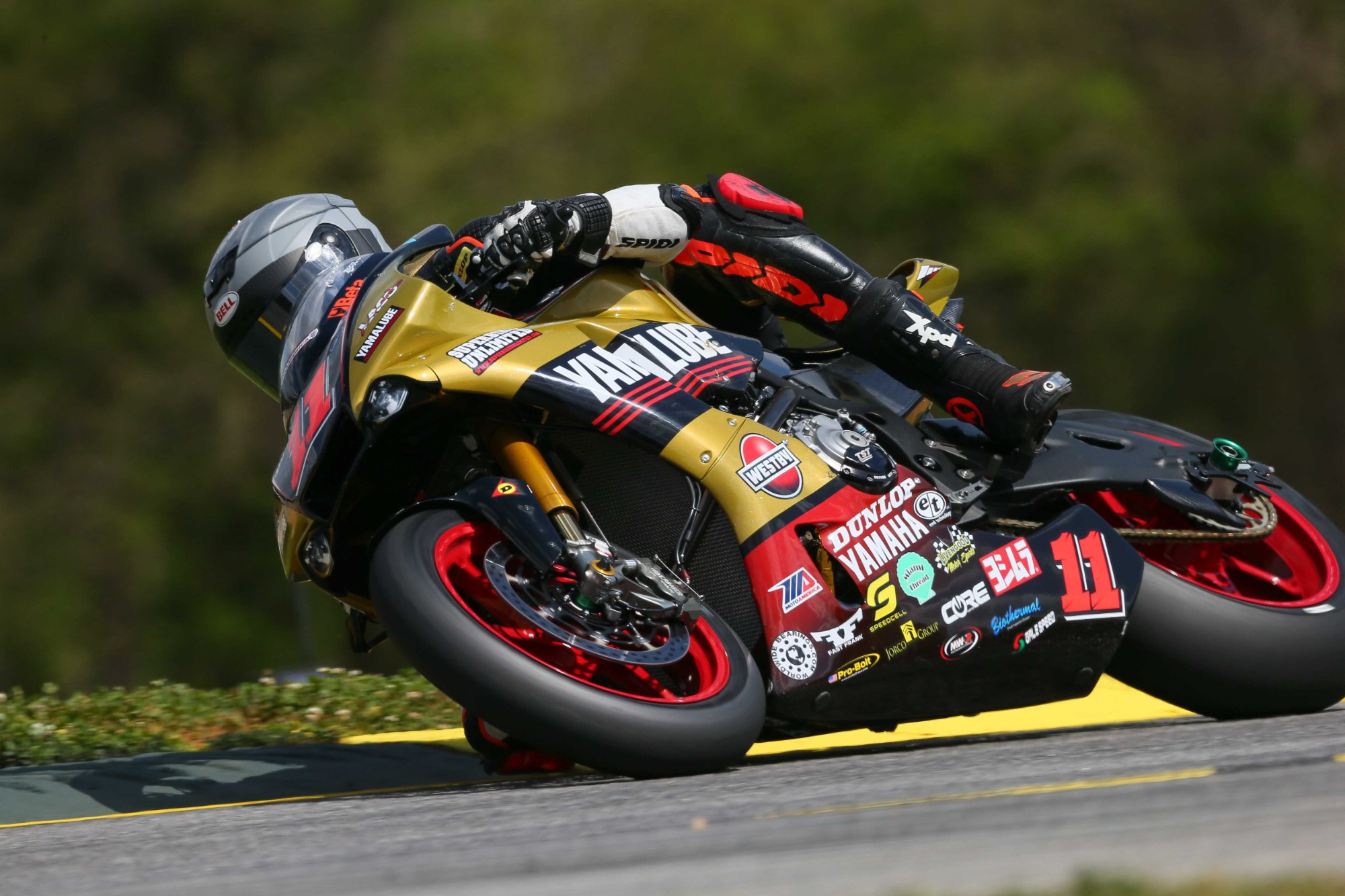
MotoAmerica: Mathew Scholtz Fastest In Superbike Qualifying Practice One At VIR

MotoAmerica Championship Of Virginia

MotoAmerica AMA/FIM North American Road Racing Series

VIRginia International Raceway

Alton, Virginia

May 4, 2018

Motul Superbike Qualifying Practice One Results (all on Dunlop tires):

1. Mathew Scholtz (Yam YZF-R1), 1:24.432

2. Roger Hayden (Suz GSX-R1000), 1:24.691

3. Cameron Beaubier (Yam YZF-R1), 1:24.845

4. Josh Herrin (Yam YZF-R1), 1:25.008

5. Garrett Gerloff (Yam YZF-R1), 1:25.119

6. Toni Elias (Suz GSX-R1000), 1:25.130

7. Jake Lewis (Suz GSX-R1000), 1:25.402

8. Bobby Fong (Yam YZF-R1), 1:25.904

9. David Anthony (Kaw ZX-10RR), 1:26.227

10. Kyle Wyman (Yam YZF-R1), 1:26.325

11. Cameron Petersen (Hon CBR1000RR SP2), 1:26.456

12. Danny Eslick (BMW S1000RR), 1:28.334

13. Sam Verderico (Yam YZF-R1), 1:30.147

14. Max Flinders (Yam YZF-R1), 1:30.417

15. Sebastiao Ferreira (Yam YZF-R1), 1:30.655

16. Bruno Silva (Kaw ZX-10R), 1:30.954

17. Michael Leon (BMW S1000RR), 1:32.279

MotoAmerica: Hayden Gillim Heads Supersport FP1 In Virginia

MotoAmerica Championship Of Virginia

MotoAmerica AMA/FIM North American Road Racing Series

VIRginia International Raceway

Alton, Virginia

May 4, 2018

Supersport Free Practice One Results (all on Dunlop tires):

1. Hayden Gillim (Yam YZF-R6), 1:27.123

2. JD Beach (Yam YZF-R6), 1:27.601

3. Michael Gilbert (Yam YZF-R6), 1:29.128

4. Nick McFadden (Suz GSX-R600), 1:29.215

5. Richie Escalante (Yam YZF-R6), 1:29.321

6. Anthony Mazziotto III (Yam YZF-R6), 1:29.531

7. Cory West (Suz GSX-R600), 1:29.985

8. Bryce Prince (Yam YZF-R6), 1:29.986

9. Ashton Yates (Yam YZF-R6), 1:30.125

10. JC Camacho (Yam YZF-R6), 1:30.567

11. Braeden Ortt (Yam YZF-R6), 1:30.598

12. Jason Aguilar (Yam YZF-R6), 1:30.671

13. Miles Thornton (Suz GSX-R600), 1:30.698

14. Max Angles (Yam YZF-R6), 1:30.848

15. Joseph Giannotto (Yam YZF-R6), 1:31.780

16. Lucas Silva (Yam YZF-R6), 1:31.896

17. Daytona Anderson (Suz GSX-R600), 1:32.070

18. Bailey Cox (Kaw ZX-6R), 1:32.591

19. Fernando Silva (Yam YZF-R6), 1:32.684

20. Benjamin Smith (Suz GSX-R600), 1:32.812

21. Kinzer Naylor (Kaw ZX-6R), 1:33.756

22. Jaret Nassaney (Suz GSX-R600), 1:34.067

23. Gillis Glidewell (Tri Daytona 675), 1:34.692

24. Jeremy Simmons (Yam YZF-R6), 1:34.889

25. Nolan Lamkin (Yam YZF-R6), 1:35.242

26. Tim Wilson (Kaw ZX-6R), 1:35.413

27. Aaron Graham (Yam YZF-R6), 1:35.852

28. Andrew Bowen (Tri Daytona 675), 1:37.811

29. Nickalus Schmitt (Tri Daytona 675), 1:42.209

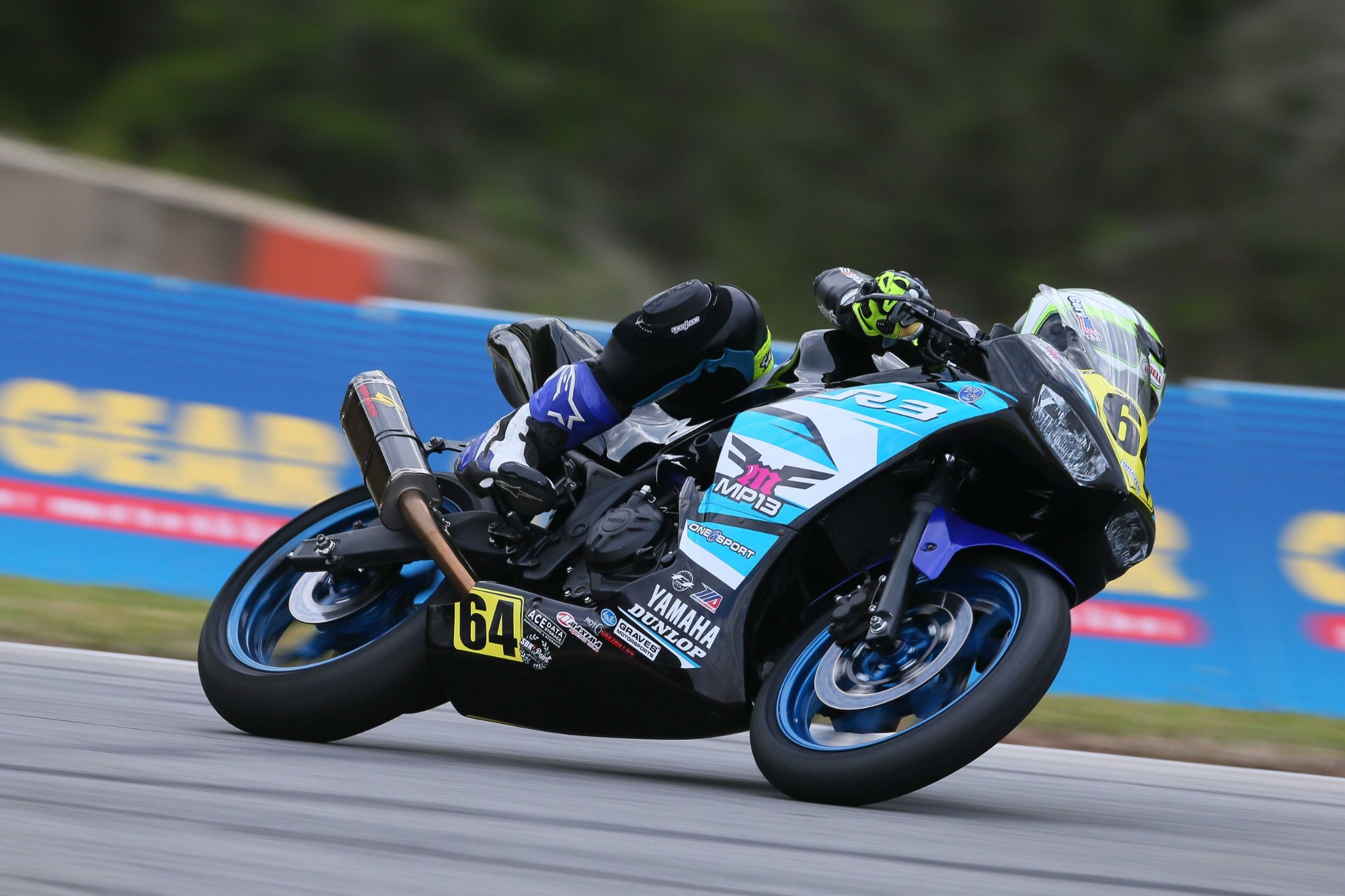
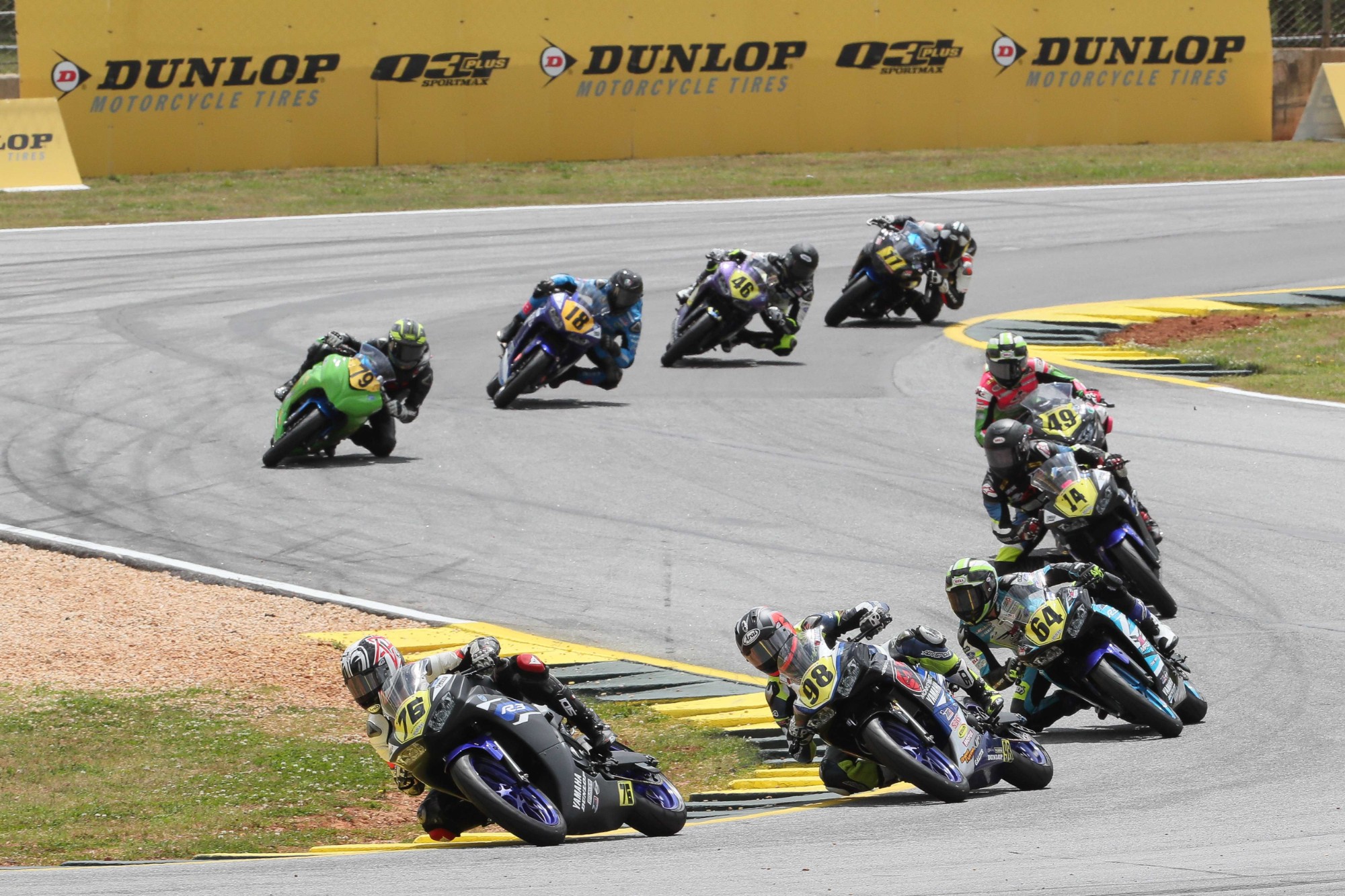
MotoAmerica: Cory Ventura Puts Yamaha On Top In Junior Cup FP1 At VIR

MotoAmerica Championship Of Virginia

MotoAmerica AMA/FIM North American Road Racing Series

VIRginia International Raceway

Alton, Virginia

May 4, 2018

Liqui Moly Junior Cup Free Practice One Results (all on Dunlop tires):

1. Cory Ventura (Yam YZF-R3), 1:39.204

2. Kevin Olmedo (Yam YZF-R3), 1:39.561

3. Alex Dumas (KTM RC 390 R), 1:39.629

4. Gavin Anthony (Yam YZF-R3), 1:39.671

5. Jay Newton (Yam YZF-R3), 1:39.804

6. Jackson Blackmon (Yam YZF-R3), 1:40.794

7. Sean Ungvarsky (KTM RC 390 R), 1:41.316

8. Dallas Daniels (Kaw Ninja 400), 1:41.381

9. Gauge Rees (Yam YZF-R3), 1:41.603

10. Joseph Blasius (Yam YZF-R3), 1:41.721

11. Tyler Freeman (Yam YZF-R3), 1:42.144

12. Marc Edwards (Yam YZF-R3), 1:42.160

13. Draik Beauchamp (Yam YZF-R3), 1:42.534

14. Nate Minster (Yam YZF-R3), 1:42.538

15. Dylan Deutschlander (Yam YZF-R3), 1:42.591

16. Tyler Wissel (Yam YZF-R3), 1:42.622

17. Cameron Jones (Kaw Ninja 400), 1:42.771

18. Jamie Astudillo (Kaw Ninja 400), 1:42.838

19. Toby Khamsouk (Yam YZF-R3), 1:42.862

20. Ashton Yates (Kaw Ninja 400), 1:43.396

21. Ryan Deutschlander (Yam YZF-R3), 1:43.522

22. Teagg Hobbs (Kaw Ninja 400), 1:43.660

23. Trevor Standish (Yam YZF-R3), 1:44.264

24. Joshua Jovi (Yam YZF-R3), 1:48.419

25. Benjamin Ferris (Yam YZF-R3), 1:50.008

26. Hunter Dunham (Yam YZF-R3), no lap time recorded

MotoAmerica: Curtis Murray Tops Twins Cup FP1 At VIR

MotoAmerica Championship Of Virginia

MotoAmerica AMA/FIM North American Road Racing Series

VIRginia International Raceway

Alton, Virginia

May 4, 2018

Twins Cup Free Practice One Results (all on Dunlop tires):

1. Curtis Murray (Suz SV650), 1:36.366

2. Chris Parrish (Suz SV650), 1:36.741

3. Jason Madama (Yam MT-07/FZ-07), 1:38.240

4. Sam Wiest (Suz SV650), 1:39.630

5. Sean Dougherty (Suz SV650), 1:41.005

6. Matt DiLorenzo (Suz SV650), 1:41.376

7. Tyler Freeman (Suz SV650),1:41.787

8. Shane Perry (Suz SV650), 1:43.017

9. Ryan Roth (Yam MT-07/FZ-07), 1:43.219

10. Darrell Ricks (Suz SV650), 1:44.361

11. Dustin Ducote (Suz SV650), 1:44.429

12. Samuel Wang (Yam MT-07/FZ-07), 1:45.576

13. Xavier Zayat (Suz SV650), no lap time recorded

FIM SBK Technical Director Scott Smart Explains FIM Supersport 300/MotoAmerica Junior Cup Balancing Regulations And Changes

The FIM Supersport 300 World Championship was an immediate success when it was introduced in 2017. Three different manufacturers – Honda, Kawasaki and Yamaha – won races with motorcycles that varied in engine displacement and, remarkably, there was very little controversy within the new class. This led to similar classes being started in other series, including MotoAmerica’s new Junior Cup.

That lack of controversy changed, however, during the last few months and the start of the 2018 FIM Supersport 300 World Championship thanks to the introduction and homologation of Kawasaki’s new Ninja 400 and KTM’s RC 390 R.

Suddenly, riders on Yamaha’s YZF-R3, the motorcycle that won the 2017 Supersport 300 World Championship, couldn’t even break into the top 10 as riders on the new models in the class crushed the qualifying and race lap records at the opening round at Motorland Aragon by five seconds!

A similar situation, although not quite as lopsided, occurred during the opening round of MotoAmerica’s Junior Cup, which was held on the same weekend at Road Atlanta.

Then between the first and second rounds of the FIM Supersport 300 World Championship, FIM announced a change to the rulebook and to the balancing regulations for the class that lowered the maximum rpm limits of the Kawasaki and KTM and allowed Yamahas to rev higher and have new air box modifications.

Now, just before the start of this weekend’s MotoAmerica event at VIRginia International Raceway, the balancing regulations for Supersport 300 and Junior Cup were adjusted even further, lowering the rev limits of the Kawasaki and KTM even more.

To learn more, Roadracingworld.com sat down with FIM SBK Technical Director Scott Smart during this weekend’s event at VIR and asked him about the situation with the FIM Supersport 300 World Championship rules (which are also the rules for MotoAmerica’s Junior Cup) and the recent changes.

“Obviously, there are multiple facets to making the adjustments because just the peak horsepower figure isn’t going to be enough information,” said Smart. “As much as lot of people say, ‘Oh, well this bike makes this much horsepower, so it should be unfair.’ There’s a lot more to it than that.

“As you know, chassis can play an important role. So it’s important to understand the performance of the bikes on the track but to also use the data we get from the dyno runs.

“When you look at the new Kawasaki Ninja 400’s power it’s got quite a unique and pretty incredible power delivery. It makes peak horsepower around 9,600 rpm and continues to make that peak horsepower all the way through to 12,000 rpm. It’s like something you’ve never seen before.

“So even if you play around in that rpm range with the [rpm] limiter it doesn’t make a difference because you’re not actually reducing anything, but it means the rider can stay at peak horsepower more or less the whole race. So now, we’ve reduced the limit down to more or less the peak horsepower area. So that when you make the shifts and when you’re at lower rpm you’re actually going to be wading in a lower horsepower area of the bike.

“The KTM is much the same although the KTM makes its peak horsepower near its actual rev limiter. So as we reduce the rpm on that machine we are actually reducing the peak horsepower quite a lot. And we’re reducing the flexibility of the bikes [in terms of gear choices and gearing setup].

“Now some people have questioned why it wasn’t done this sooner. There are several reasons for that, some political and some actual mechanical, as well. Firstly, the rules had to be done at the end of 2017, so you don’t have the track information and lots of dyno information. We had one dyno run from Japan from a pre-production or prototype [Kawasaki Ninja 400], so you don’t know exactly what you’re dealing with but you have to make a call. So a decision was made and something was set.

“And obviously at the same time we were making a lot of changes in World Superbike with rev limits. So it was certainly delicate politically, as well, making big changes.

“So we set that in stone, published the regulations.

“Now, once we got to the beginning of March and saw the bike in testing we understood that the Kawasaki’s performance was quite a lot better and that the KTM had made a big leap from the KTM [RC 390] Cup bike. Whist it’s not that different [mechanically] the lap time is a lot better. It’s not just the engine. The engine is a little bit better, it’s making a little more horsepower, a little bit more torque, but the chassis setup is a lot better. They’ve got Jeremy McWilliams, Arie Vos, Chris Fillmore as test riders, and these are guys who have been MotoGP [and Superbike] racers. The bike is dialed, quite frankly. So that is how the KTM made a big leap in the winter from a KTM [RC 390] Cup bike.

“A lot of the Yamaha teams said, ‘Well, why can’t you change before we even get to the first race?’ Well, there’s several reasons for not changing. One, in the regulations you can’t just change them. As part of the FIM World Championship, it [requires] a Superbike Commission meeting, which is the manufacturers – the MSMA [Motorcycle Sport Manufacturers Association], the promoter – which is Dorna, and the FIM that have to make the decision.

“Now, we had to obviously had to get Kawasaki and KTM on [the] side to allow the regulation to change to allow Dorna and FIM to make the changes more quickly, and therefore the MotoAmerica, the CIV [Italian] and CEV [Spanish] Championships [regulations], as well. We’re trying to keep the rules fairly standardized across all the different Championships.

“So that was a lot of work. It wasn’t the case of us having to push through a rule change for the different rpm. It was a case of us pushing through a rule change that allows us to change, almost on the fly, the rpm [limits] and the weight balancing. So that was really important. That took nearly three months, and that was finalized on the Thursday [before] Aragon.

“You have to remember that Kawasaki and KTM had to agree to this. Part of that agreement was the fact that we actually had to wait and see what the performance of the bikes was like under controlled conditions.

“By saying controlled conditions, we had seen them testing at Aragon but they didn’t have the weight on them (and bearing in mind Kawasaki is running nearly 20 pounds of lead) and they weren’t with the control shifter [and rev limiter], so they were revving higher.

“So their performance is always going to be a little bit better in testing. But you don’t know by how much until you get to an event where everyone’s on the track at the same time, in the same conditions, with the same tires, with the fixed rpm and with weight so we can tech the bikes and ensure that they’re all meeting the regulations. So it’s only at that point that you have real data with which to make a decision.

“We also dynoed the bikes. We dynoed a lot of bikes in the British Championship, as well, so we could see exactly what they do in race trim, because obviously even with no engine tuning just by slightly changing the cam timing, by putting a fuel controller on them, and changing the exhaust system you can end up with not massively different power but a different shape of power delivery so they all rev on a little more. For example, a Kawasaki [Ninja 400] street bike does have the peak horsepower and slowly loses horsepower. And in race trim it just maintains that horsepower, and it’s up a couple of horsepower over the stock bike.

“So you have to take all of that into account. Until we got to the first race meeting, we didn’t have enough data. But the actual clincher for not being able to remove the rpm straight away is the lack of gearing. People completely forget that you don’t have an infinite range of chains and sprockets available to you.

“So if we had brought the rpm of the Kawasaki and KTM down to the level we’ve gone to now halfway down the straight they would have been on the rev limiter, and that’s way more dangerous than them being a bit faster. We actually had to sit down with all the Yamaha teams at the World [Championship] level [at Motorland Aragon] and say, ‘Here’s the process. For the last two months we’ve been working to change the regulation. That was agreed by your competition yesterday. So you actually have them to thank for that. We had to make a decision in December. So you can all sit here and go, we knew this was going to happen. But you didn’t genuinely know that was going to happen. None of us had even seen a Ninja 400 at that point. We’ve put in the ability to change stuff, but even if I changed it right now these teams don’t have the chains and sprockets and they won’t have them even during Assen.’

“So we went through the chains and sprockets that the teams had and we reduced it a little bit at Assen. But we could only do about half of what we felt was needed, maybe even a bit less, but that was more or less the limit of the chains and sprockets available to the teams. Because Aragon to Assen was consecutive weekends. Literally, the teams packed up and drove from one event to the other.

“Chains and sprockets actually started to become available just before Aragon. Now, everyone’s been warned, and there was a notice to the MotoAmerica teams [10 days] ago, to be prepared with the correct chains and sprockets to know that you can gear a bike that’s going to be revving a lot less.

“It’s quite an interesting process. You can’t do it all in one hit.

“When we had the initial dyno figures with the exhaust and Power Commander, we pretty much knew where we need to be. We’re going to be +/- 300 rpm now, but we couldn’t do it in one go. And unfortunately, that’s disadvantaged the Yamaha for the first round of the Championship. That’s undeniable. But Yamaha didn’t make really any improvements to their machine over the winter and unfortunately, the KTM improved massively and the Kawasaki is a new motorcycle with a bigger engine. It still fits completely inside the right homologation category for the European homologation, but it’s maximizing its power-to-weight ratio. Unfortunately, that’s made it a bit quicker.

“We’ll continue to work with all the teams. We’re also going to continue to work with the Honda and Yamaha to see in what ways we can make the bikes faster and more competitive without it costing a lot of money or effecting their reliability. Because obviously you can take one of these small engines and tune them like a Superbike. You can port them, you can put camshafts in them, you can make them rev a lot more, but then you’re going to be doing an awful lot of work on them and it’s beyond the scope of the teams that we’re aiming at. We’re aiming at families and father-and-son efforts, maybe one good mechanic, that can go and get a little bit of work done on a dyno from somebody and come and race competitively. We don’t want them in a position where they’re having to service an engine every 500 miles. It would be all too easy to fall into that trap. It’s definitely a difficult balancing situation. In the World Championship races the racing has been phenomenal. Unfortunately, the Yamahas…in the last race at Assen they were in the hunt for the podium but on the last lap, I think, six people crashed out of the leading 15, and they were all together on track. And unfortunately the Yamahas were run off the track during that. So they ended up finishing 10 seconds down, having done a trip through the gravel and the grass on the last lap. We’ve made the Yamaha a little more competitive. Hopefully what we did this weekend will be, like I said, plus or minus a couple hundred rpm of where we need to be to get everyone in the hunt to get the win.”

Roadracingworld.com: And the reason the Kawasaki Ninja 400 was even allowed in the class to begin with was because the class was based upon the European A2 licensing tier, right?

Scott Smart: “Exactly, it’s not about an engine capacity class. If you look in the regulations it doesn’t say one or two cylinder machines between this range [of displacement]. It says it has to be an A2 category bike.”

Roadracingworld.com: “So if Yamaha decided next year it’s going to come out with a 450cc parallel twin or single that in stock form meets the A2 horsepower regulations you will have to start all over again?

Scott Smart: “It just flips the problem on its head again. But yeah, exactly that. We will probably put a few more things in place. Obviously, like I said, we’ve changed the regulations, so we can change things now much more quickly. So provided we have controlled conditions for testing at the beginning of next year then we can deal with it sooner.

“It’s been quite a political couple of weeks, and hopefully we’re going to see some good racing this weekend.”


WERA Triple Crown +1: Xavier Zayat Leads FP1 At VIR

MotoAmerica Championship Of Virginia

WERA Triple Crown +1 Presented by Honda

VIRginia International Raceway

Alton, Virginia

May 4, 2018

WERA Superbike Free Practice One Results:

1. Xavier Zayat (Yam), 1:30.521

2. Stefano Mesa (Kaw ZX-10R), 1:31.343

3. Brad Burns (Kaw ZX-10R), 1:32.199

4. John Dunham (Yam YZF-R1), 1:34.294

5. Ned Brown (Yam), 1:34.377

6. Chuck Ivey (Yam YZF-R6), 1:35.173

7. Billy Ethridge (Suz GSX-R1000), 1:35.463

8. Peyton Inge (Yam), 1:37.585

9. Gary Yancoskie (Kaw), 1:38.580

10. Jeremy Kolewski (Kaw), 1:38.842

11. Stephen Tsotsoros (EBR 1190), 1:39.194

12. James Barry (Yam YZF-R1), 1:39.397

13. Corey Heflin (Yam YZF-R1), 1:41.152

14. Felipe MacLean (Suz GSX-R1000), 1:41.770

15. Daniel Goodnight (Yam YZF-R6), 1:43.508

Moto2 World Championship: Francesco Bagnaia Close To Race Lap Record In FP1 At Jerez

Gran Premio Red Bull de Espana

FIM Moto2 World Championship

Circuito de Jerez – Angel Nieto

Jerez de la Frontera, Spain

May 4, 2018

Free Practice One Results (all using Honda engines and Dunlop tires):

1. Francesco Bagnaia, Italy (Kalex), 1:42.836

2. Sam Lowes, UK (KTM), 1:43.019

3. Romano Fenati, Italy (Kalex), 1:43.116

4. Alex Marquez, Spain (Kalex), 1:43.186

5. Miguel Oliveira, Portugal (KTM), 1:43.208

6. Joan Mir, Spain (Kalex), 1:43.237

7. Iker Lecuona, Spain (KTM), 1:43.242

8. Lorenzo Baldassari, Italy (Kalex), 1:43.258

9. Jorge Navarro, Spain (Kalex), 1:43.279

10. Brad Binder, South Africa (KTM), 1:43.327

11. Mattia Pasini, Italy (Kalex), 1:43.444

12. Danny Kent, UK (Speed Up), 1:43.502

13. Khairul Idham Pawi, Malaysia (Kalex), 1:43.570

14. Xavi Vierge, Spain (Kalex), 1:43.672

15. Bo Bendsneyder, Netherlands (Tech 3), 1:43.693

16. Steven Odendaal, South Africa (NTS), 1:43.712

17. Tetsuta Nagashima, Japan (Kalex), 1:43.723

18. Simone Corsi, Italy (Kalex), 1:43.762

19. Andrea Locatelli, Italy (Kalex), 1:43.846

20. Stefano Manzi, Italy (Suter), 1:43.866

21. Isaac Vinales, Spain (Kalex), 1:43.871

22. Fabio Quartararo, France (Speed Up), 1:43.881

23. Hector Barbera, Spain (Kalex), 1:44.035

24. Luca Marini, Italy (Kalex), 1:44.083

25. Marcel Schrotter, Germany (Kalex), 1:44.171

26. Eric Granado, Brazil (Suter), 1:44.414

27. Joe Roberts, USA (NTS), 1:44.767

28. Lukas Tulovic, Germany (KTM), 1:44.950

29. Jules Danilo, France (Kalex), 1:45.666

30. Xavi Cardelus, Andorra (Kalex), 1:45.896

31. Hector Garzo, Spain (Tech 3), 1:45.990

32. Federico Fuligni, Italy (Kalex), 1:46.467

33. Zulfahmi Khairuddin, Malaysia (Kalex), 1:46.509

MotoGP: Andrea Dovizioso Quickest, Top 18 Within One Second In FP1 At Jerez

Gran Premio Red Bull de Espana

FIM MotoGP World Championship

Circuito de Jerez – Angel Nieto

Jerez de la Frontera, Spain

May 4, 2018

Free Practice One Results (all on Michelin tires):

1. Andrea Dovizioso, Italy (Ducati), 1:39.268

2. Marc Marquez, Spain (Honda), 1:39.275

3. Pol Espargaro, Spain (KTM), 1:39.311

4. Danilo Petrucci, Italy (Ducati), 1:39.429

5. Jack Miller, Australia (Ducati), 1:39.483

6. Valentino Rossi, Italy (Yamaha), 1:39.488

7. Johann Zarco, France (Yamaha), 1:39.518

8. Cal Crutchlow, UK (Honda), 1:39.548

9. Maverick Vinales, Spain (Yamaha), 1:39.559

10. Scott Redding, UK (Aprilia), 1:39.585

11. Andrea Iannone, Italy (Suzuki), 1:39.614

12. Mika Kallio, Finland (KTM), 1:39.817

13. Aleix Espargaro, Spain (Aprilia), 1:39.899

14. Dani Pedrosa, Spain (Honda), 1:39.934

15. Jorge Lorenzo, Spain (Ducati), 1:39.986

16. Takaaki Nakagami, Japan (Honda), 1:40.007

17. Karel Abraham, Czech Republic (Ducati), 1:40.032

18. Alvaro Bautista, Spain (Ducati), 1:40.193

19. Tito Rabat, Spain (Ducati), 1:40.366

20. Bradley Smith, UK (KTM), 1:40.371

21. Alex Rins, Spain (Suzuki), 1:40.537

22. Thomas Luthi, Switzerland (Honda), 1:40.585

23. Franco Morbidelli, Italy (Honda), 1:40.605

24. Xavier Simeon, Belgium (Ducati), 1:41.471

25. Hafizh Syahrin, Malaysia (Yamaha), 1:42.074

Moto3 World Championship: Fabio Di Giannantonio Fastest In FP1 At Jerez

Gran Premio Red Bull de Espana

FIM Moto3 World Championship

Circuito de Jerez –  Angel Nieto

Jerez de la Frontera, Spain

May 4, 2018

Free Practice One Results (all on Dunlop tires):

1. Fabio Di Giannantonio, Italy (Honda), 1:47.159

2. Aron Canet, Spain (Honda), 1:47.471

3. Philipp Oettl, Germany (KTM), 1:47.687

4. Jorge Martin, Spain (Honda), 1:47.717

5. Marcos Ramirez, Spain (KTM), 1:47.737

6. Gabriel Rodriguez, Argentina (KTM), 1:47.817

7. Enea Bastianini, Italy (Honda), 1:47.922

8. Andrea Migno, Italy (KTM), 1:47.957

9. Lorenzo Dalla Porta, Italy (Honda), 1:47.989

10. Tony Arbolino, Italy (Honda), 1:48.075

Ducati Celebrating 25th Anniversary Of The Monster At The Quail Motorcycle Gathering

Ducati Celebrates the Monster’s 25th Anniversary at The Quail Motorcycle Gathering

The Monster created the motorcycle industry’s “naked bike” category and is the best-selling Ducati in the history of the company

Ducati fans from across the U.S. to gather in Carmel to celebrate 25 years of the Monster

Ducati will announce a winner at the Monster 25th Anniversary award ceremony

Mountain View, Calif., May 3, 2018 – Ducati North America is celebrating the 25th Anniversary of the Monster at the 2018 Quail Motorcycle Gathering on Saturday, May 5. The Monster will be featured at the prestigious event with motorcycles showcased from throughout the model’s lineage. Ducati has invited its loyal fan group of “Ducatisti” to join the celebration and owners to showcase their Monsters for an opportunity to be honored at this year’s special Monster 25th Anniversary award ceremony.

The Quail Motorcycle Gathering takes place at the beautiful Quail Lodge Resort in Carmel, Calif., on Saturday, May 5, from 10 a.m. to 4 p.m. Fans will need to purchase a ticket in order to access the event and Monster area, which includes Ducati-only parking, gourmet lunch and live music. Registration and Ducati ticket package information can be found at www.DucatiUSA.com. Special pricing is available for Ducatisti (use code QL18DUCATI upon checkout).

The Ducati Monster created the compact, sporty and essential “naked bike” category. Designed with the philosophy, “All you need is a saddle, tank, engine, two wheels and handlebars,” the Monster 900 was unveiled as a prototype at the 1992 Cologne International Motorcycle Show with a Trellis frame from the 851/888 series and the 904 cc air/oil cooled “Pompone” engine from the Supersport range.

The Monster is most successful Ducati in history with more than 250,000 released from the production lines of the Ducati Factory in Borgo Panigale, Italy.

The Ducati Monster is known as the most approachable and accessible model in the Ducati range and with Ducati Premier financing, aspiring Ducati owners can purchase their own Monster 797 starting at only $96 per month. Plus, Ducati just introduced the New Rider Program, which will reimburse $250 toward a state authorized rider education course with the purchase of an eligible Ducati.

About Ducati:

Additional information about Ducati, including participating dealers and availability can be found at www.ducati.com.

Ducati Motor Holding S.p.A. – A Sole Shareholder Company – A Company subject to the Management and Coordination activities of AUDI AG

Founded in 1926, since 1946 Ducati has been manufacturing sport-inspired motorcycles characterised by high-performance Desmodromic engines, innovative design and cutting-edge technology. With its factory located in Bologna’s Borgo Panigale district, in 2016 Ducati celebrated 90 years since it was founded. The model range covers several market segments with the following families: Diavel, Hypermotard, Monster, Multistrada, SuperSport and Panigale. In 2015 Ducati presented the Ducati Scrambler: a new brand made of bikes, accessories and apparel that provide the last word in creativity and self-expression. These authentic icons representing what the world knows as “Made in Italy”, together with an extensive range of associated accessories and technical and lifestyle apparel, are distributed in 90 countries globally. Breaking all records for the company, in 2017 Ducati delivered to customers 55,871 bikes to customers. Ducati competes in both the World Superbike and MotoGP World Championships. In Superbike, Ducati has won 17 Manufacturers’ titles and 14 Riders’ titles. Ducati has been competing in MotoGP since 2003, winning both the Manufacturers’ and Riders’ titles in 2007.

MotoAmerica: Mathew Scholtz Fastest In Superbike Qualifying Practice One At VIR

MotoAmerica Championship Of Virginia

MotoAmerica AMA/FIM North American Road Racing Series

VIRginia International Raceway

Alton, Virginia

May 4, 2018

Motul Superbike Qualifying Practice One Results (all on Dunlop tires):

1. Mathew Scholtz (Yam YZF-R1), 1:24.432

2. Roger Hayden (Suz GSX-R1000), 1:24.691

3. Cameron Beaubier (Yam YZF-R1), 1:24.845

4. Josh Herrin (Yam YZF-R1), 1:25.008

5. Garrett Gerloff (Yam YZF-R1), 1:25.119

6. Toni Elias (Suz GSX-R1000), 1:25.130

7. Jake Lewis (Suz GSX-R1000), 1:25.402

8. Bobby Fong (Yam YZF-R1), 1:25.904

9. David Anthony (Kaw ZX-10RR), 1:26.227

10. Kyle Wyman (Yam YZF-R1), 1:26.325

11. Cameron Petersen (Hon CBR1000RR SP2), 1:26.456

12. Danny Eslick (BMW S1000RR), 1:28.334

13. Sam Verderico (Yam YZF-R1), 1:30.147

14. Max Flinders (Yam YZF-R1), 1:30.417

15. Sebastiao Ferreira (Yam YZF-R1), 1:30.655

16. Bruno Silva (Kaw ZX-10R), 1:30.954

17. Michael Leon (BMW S1000RR), 1:32.279

MotoAmerica: Hayden Gillim Heads Supersport FP1 In Virginia

MotoAmerica Championship Of Virginia

MotoAmerica AMA/FIM North American Road Racing Series

VIRginia International Raceway

Alton, Virginia

May 4, 2018

Supersport Free Practice One Results (all on Dunlop tires):

1. Hayden Gillim (Yam YZF-R6), 1:27.123

2. JD Beach (Yam YZF-R6), 1:27.601

3. Michael Gilbert (Yam YZF-R6), 1:29.128

4. Nick McFadden (Suz GSX-R600), 1:29.215

5. Richie Escalante (Yam YZF-R6), 1:29.321

6. Anthony Mazziotto III (Yam YZF-R6), 1:29.531

7. Cory West (Suz GSX-R600), 1:29.985

8. Bryce Prince (Yam YZF-R6), 1:29.986

9. Ashton Yates (Yam YZF-R6), 1:30.125

10. JC Camacho (Yam YZF-R6), 1:30.567

11. Braeden Ortt (Yam YZF-R6), 1:30.598

12. Jason Aguilar (Yam YZF-R6), 1:30.671

13. Miles Thornton (Suz GSX-R600), 1:30.698

14. Max Angles (Yam YZF-R6), 1:30.848

15. Joseph Giannotto (Yam YZF-R6), 1:31.780

16. Lucas Silva (Yam YZF-R6), 1:31.896

17. Daytona Anderson (Suz GSX-R600), 1:32.070

18. Bailey Cox (Kaw ZX-6R), 1:32.591

19. Fernando Silva (Yam YZF-R6), 1:32.684

20. Benjamin Smith (Suz GSX-R600), 1:32.812

21. Kinzer Naylor (Kaw ZX-6R), 1:33.756

22. Jaret Nassaney (Suz GSX-R600), 1:34.067

23. Gillis Glidewell (Tri Daytona 675), 1:34.692

24. Jeremy Simmons (Yam YZF-R6), 1:34.889

25. Nolan Lamkin (Yam YZF-R6), 1:35.242

26. Tim Wilson (Kaw ZX-6R), 1:35.413

27. Aaron Graham (Yam YZF-R6), 1:35.852

28. Andrew Bowen (Tri Daytona 675), 1:37.811

29. Nickalus Schmitt (Tri Daytona 675), 1:42.209

MotoAmerica: Cory Ventura Puts Yamaha On Top In Junior Cup FP1 At VIR

MotoAmerica Championship Of Virginia

MotoAmerica AMA/FIM North American Road Racing Series

VIRginia International Raceway

Alton, Virginia

May 4, 2018

Liqui Moly Junior Cup Free Practice One Results (all on Dunlop tires):

1. Cory Ventura (Yam YZF-R3), 1:39.204

2. Kevin Olmedo (Yam YZF-R3), 1:39.561

3. Alex Dumas (KTM RC 390 R), 1:39.629

4. Gavin Anthony (Yam YZF-R3), 1:39.671

5. Jay Newton (Yam YZF-R3), 1:39.804

6. Jackson Blackmon (Yam YZF-R3), 1:40.794

7. Sean Ungvarsky (KTM RC 390 R), 1:41.316

8. Dallas Daniels (Kaw Ninja 400), 1:41.381

9. Gauge Rees (Yam YZF-R3), 1:41.603

10. Joseph Blasius (Yam YZF-R3), 1:41.721

11. Tyler Freeman (Yam YZF-R3), 1:42.144

12. Marc Edwards (Yam YZF-R3), 1:42.160

13. Draik Beauchamp (Yam YZF-R3), 1:42.534

14. Nate Minster (Yam YZF-R3), 1:42.538

15. Dylan Deutschlander (Yam YZF-R3), 1:42.591

16. Tyler Wissel (Yam YZF-R3), 1:42.622

17. Cameron Jones (Kaw Ninja 400), 1:42.771

18. Jamie Astudillo (Kaw Ninja 400), 1:42.838

19. Toby Khamsouk (Yam YZF-R3), 1:42.862

20. Ashton Yates (Kaw Ninja 400), 1:43.396

21. Ryan Deutschlander (Yam YZF-R3), 1:43.522

22. Teagg Hobbs (Kaw Ninja 400), 1:43.660

23. Trevor Standish (Yam YZF-R3), 1:44.264

24. Joshua Jovi (Yam YZF-R3), 1:48.419

25. Benjamin Ferris (Yam YZF-R3), 1:50.008

26. Hunter Dunham (Yam YZF-R3), no lap time recorded

MotoAmerica: Curtis Murray Tops Twins Cup FP1 At VIR

MotoAmerica Championship Of Virginia

MotoAmerica AMA/FIM North American Road Racing Series

VIRginia International Raceway

Alton, Virginia

May 4, 2018

Twins Cup Free Practice One Results (all on Dunlop tires):

1. Curtis Murray (Suz SV650), 1:36.366

2. Chris Parrish (Suz SV650), 1:36.741

3. Jason Madama (Yam MT-07/FZ-07), 1:38.240

4. Sam Wiest (Suz SV650), 1:39.630

5. Sean Dougherty (Suz SV650), 1:41.005

6. Matt DiLorenzo (Suz SV650), 1:41.376

7. Tyler Freeman (Suz SV650),1:41.787

8. Shane Perry (Suz SV650), 1:43.017

9. Ryan Roth (Yam MT-07/FZ-07), 1:43.219

10. Darrell Ricks (Suz SV650), 1:44.361

11. Dustin Ducote (Suz SV650), 1:44.429

12. Samuel Wang (Yam MT-07/FZ-07), 1:45.576

13. Xavier Zayat (Suz SV650), no lap time recorded

FIM SBK Technical Director Scott Smart Explains FIM Supersport 300/MotoAmerica Junior Cup Balancing Regulations And Changes

The FIM Supersport 300 World Championship was an immediate success when it was introduced in 2017. Three different manufacturers – Honda, Kawasaki and Yamaha – won races with motorcycles that varied in engine displacement and, remarkably, there was very little controversy within the new class. This led to similar classes being started in other series, including MotoAmerica’s new Junior Cup.

That lack of controversy changed, however, during the last few months and the start of the 2018 FIM Supersport 300 World Championship thanks to the introduction and homologation of Kawasaki’s new Ninja 400 and KTM’s RC 390 R.

Suddenly, riders on Yamaha’s YZF-R3, the motorcycle that won the 2017 Supersport 300 World Championship, couldn’t even break into the top 10 as riders on the new models in the class crushed the qualifying and race lap records at the opening round at Motorland Aragon by five seconds!

A similar situation, although not quite as lopsided, occurred during the opening round of MotoAmerica’s Junior Cup, which was held on the same weekend at Road Atlanta.

Then between the first and second rounds of the FIM Supersport 300 World Championship, FIM announced a change to the rulebook and to the balancing regulations for the class that lowered the maximum rpm limits of the Kawasaki and KTM and allowed Yamahas to rev higher and have new air box modifications.

Now, just before the start of this weekend’s MotoAmerica event at VIRginia International Raceway, the balancing regulations for Supersport 300 and Junior Cup were adjusted even further, lowering the rev limits of the Kawasaki and KTM even more.

To learn more, Roadracingworld.com sat down with FIM SBK Technical Director Scott Smart during this weekend’s event at VIR and asked him about the situation with the FIM Supersport 300 World Championship rules (which are also the rules for MotoAmerica’s Junior Cup) and the recent changes.

“Obviously, there are multiple facets to making the adjustments because just the peak horsepower figure isn’t going to be enough information,” said Smart. “As much as lot of people say, ‘Oh, well this bike makes this much horsepower, so it should be unfair.’ There’s a lot more to it than that.

“As you know, chassis can play an important role. So it’s important to understand the performance of the bikes on the track but to also use the data we get from the dyno runs.

“When you look at the new Kawasaki Ninja 400’s power it’s got quite a unique and pretty incredible power delivery. It makes peak horsepower around 9,600 rpm and continues to make that peak horsepower all the way through to 12,000 rpm. It’s like something you’ve never seen before.

“So even if you play around in that rpm range with the [rpm] limiter it doesn’t make a difference because you’re not actually reducing anything, but it means the rider can stay at peak horsepower more or less the whole race. So now, we’ve reduced the limit down to more or less the peak horsepower area. So that when you make the shifts and when you’re at lower rpm you’re actually going to be wading in a lower horsepower area of the bike.

“The KTM is much the same although the KTM makes its peak horsepower near its actual rev limiter. So as we reduce the rpm on that machine we are actually reducing the peak horsepower quite a lot. And we’re reducing the flexibility of the bikes [in terms of gear choices and gearing setup].

“Now some people have questioned why it wasn’t done this sooner. There are several reasons for that, some political and some actual mechanical, as well. Firstly, the rules had to be done at the end of 2017, so you don’t have the track information and lots of dyno information. We had one dyno run from Japan from a pre-production or prototype [Kawasaki Ninja 400], so you don’t know exactly what you’re dealing with but you have to make a call. So a decision was made and something was set.

“And obviously at the same time we were making a lot of changes in World Superbike with rev limits. So it was certainly delicate politically, as well, making big changes.

“So we set that in stone, published the regulations.

“Now, once we got to the beginning of March and saw the bike in testing we understood that the Kawasaki’s performance was quite a lot better and that the KTM had made a big leap from the KTM [RC 390] Cup bike. Whist it’s not that different [mechanically] the lap time is a lot better. It’s not just the engine. The engine is a little bit better, it’s making a little more horsepower, a little bit more torque, but the chassis setup is a lot better. They’ve got Jeremy McWilliams, Arie Vos, Chris Fillmore as test riders, and these are guys who have been MotoGP [and Superbike] racers. The bike is dialed, quite frankly. So that is how the KTM made a big leap in the winter from a KTM [RC 390] Cup bike.

“A lot of the Yamaha teams said, ‘Well, why can’t you change before we even get to the first race?’ Well, there’s several reasons for not changing. One, in the regulations you can’t just change them. As part of the FIM World Championship, it [requires] a Superbike Commission meeting, which is the manufacturers – the MSMA [Motorcycle Sport Manufacturers Association], the promoter – which is Dorna, and the FIM that have to make the decision.

“Now, we had to obviously had to get Kawasaki and KTM on [the] side to allow the regulation to change to allow Dorna and FIM to make the changes more quickly, and therefore the MotoAmerica, the CIV [Italian] and CEV [Spanish] Championships [regulations], as well. We’re trying to keep the rules fairly standardized across all the different Championships.

“So that was a lot of work. It wasn’t the case of us having to push through a rule change for the different rpm. It was a case of us pushing through a rule change that allows us to change, almost on the fly, the rpm [limits] and the weight balancing. So that was really important. That took nearly three months, and that was finalized on the Thursday [before] Aragon.

“You have to remember that Kawasaki and KTM had to agree to this. Part of that agreement was the fact that we actually had to wait and see what the performance of the bikes was like under controlled conditions.

“By saying controlled conditions, we had seen them testing at Aragon but they didn’t have the weight on them (and bearing in mind Kawasaki is running nearly 20 pounds of lead) and they weren’t with the control shifter [and rev limiter], so they were revving higher.

“So their performance is always going to be a little bit better in testing. But you don’t know by how much until you get to an event where everyone’s on the track at the same time, in the same conditions, with the same tires, with the fixed rpm and with weight so we can tech the bikes and ensure that they’re all meeting the regulations. So it’s only at that point that you have real data with which to make a decision.

“We also dynoed the bikes. We dynoed a lot of bikes in the British Championship, as well, so we could see exactly what they do in race trim, because obviously even with no engine tuning just by slightly changing the cam timing, by putting a fuel controller on them, and changing the exhaust system you can end up with not massively different power but a different shape of power delivery so they all rev on a little more. For example, a Kawasaki [Ninja 400] street bike does have the peak horsepower and slowly loses horsepower. And in race trim it just maintains that horsepower, and it’s up a couple of horsepower over the stock bike.

“So you have to take all of that into account. Until we got to the first race meeting, we didn’t have enough data. But the actual clincher for not being able to remove the rpm straight away is the lack of gearing. People completely forget that you don’t have an infinite range of chains and sprockets available to you.

“So if we had brought the rpm of the Kawasaki and KTM down to the level we’ve gone to now halfway down the straight they would have been on the rev limiter, and that’s way more dangerous than them being a bit faster. We actually had to sit down with all the Yamaha teams at the World [Championship] level [at Motorland Aragon] and say, ‘Here’s the process. For the last two months we’ve been working to change the regulation. That was agreed by your competition yesterday. So you actually have them to thank for that. We had to make a decision in December. So you can all sit here and go, we knew this was going to happen. But you didn’t genuinely know that was going to happen. None of us had even seen a Ninja 400 at that point. We’ve put in the ability to change stuff, but even if I changed it right now these teams don’t have the chains and sprockets and they won’t have them even during Assen.’

“So we went through the chains and sprockets that the teams had and we reduced it a little bit at Assen. But we could only do about half of what we felt was needed, maybe even a bit less, but that was more or less the limit of the chains and sprockets available to the teams. Because Aragon to Assen was consecutive weekends. Literally, the teams packed up and drove from one event to the other.

“Chains and sprockets actually started to become available just before Aragon. Now, everyone’s been warned, and there was a notice to the MotoAmerica teams [10 days] ago, to be prepared with the correct chains and sprockets to know that you can gear a bike that’s going to be revving a lot less.

“It’s quite an interesting process. You can’t do it all in one hit.

“When we had the initial dyno figures with the exhaust and Power Commander, we pretty much knew where we need to be. We’re going to be +/- 300 rpm now, but we couldn’t do it in one go. And unfortunately, that’s disadvantaged the Yamaha for the first round of the Championship. That’s undeniable. But Yamaha didn’t make really any improvements to their machine over the winter and unfortunately, the KTM improved massively and the Kawasaki is a new motorcycle with a bigger engine. It still fits completely inside the right homologation category for the European homologation, but it’s maximizing its power-to-weight ratio. Unfortunately, that’s made it a bit quicker.

“We’ll continue to work with all the teams. We’re also going to continue to work with the Honda and Yamaha to see in what ways we can make the bikes faster and more competitive without it costing a lot of money or effecting their reliability. Because obviously you can take one of these small engines and tune them like a Superbike. You can port them, you can put camshafts in them, you can make them rev a lot more, but then you’re going to be doing an awful lot of work on them and it’s beyond the scope of the teams that we’re aiming at. We’re aiming at families and father-and-son efforts, maybe one good mechanic, that can go and get a little bit of work done on a dyno from somebody and come and race competitively. We don’t want them in a position where they’re having to service an engine every 500 miles. It would be all too easy to fall into that trap. It’s definitely a difficult balancing situation. In the World Championship races the racing has been phenomenal. Unfortunately, the Yamahas…in the last race at Assen they were in the hunt for the podium but on the last lap, I think, six people crashed out of the leading 15, and they were all together on track. And unfortunately the Yamahas were run off the track during that. So they ended up finishing 10 seconds down, having done a trip through the gravel and the grass on the last lap. We’ve made the Yamaha a little more competitive. Hopefully what we did this weekend will be, like I said, plus or minus a couple hundred rpm of where we need to be to get everyone in the hunt to get the win.”

Roadracingworld.com: And the reason the Kawasaki Ninja 400 was even allowed in the class to begin with was because the class was based upon the European A2 licensing tier, right?

Scott Smart: “Exactly, it’s not about an engine capacity class. If you look in the regulations it doesn’t say one or two cylinder machines between this range [of displacement]. It says it has to be an A2 category bike.”

Roadracingworld.com: “So if Yamaha decided next year it’s going to come out with a 450cc parallel twin or single that in stock form meets the A2 horsepower regulations you will have to start all over again?

Scott Smart: “It just flips the problem on its head again. But yeah, exactly that. We will probably put a few more things in place. Obviously, like I said, we’ve changed the regulations, so we can change things now much more quickly. So provided we have controlled conditions for testing at the beginning of next year then we can deal with it sooner.

“It’s been quite a political couple of weeks, and hopefully we’re going to see some good racing this weekend.”
WERA Triple Crown +1: Xavier Zayat Leads FP1 At VIR

MotoAmerica Championship Of Virginia

WERA Triple Crown +1 Presented by Honda

VIRginia International Raceway

Alton, Virginia

May 4, 2018

WERA Superbike Free Practice One Results:

1. Xavier Zayat (Yam), 1:30.521

2. Stefano Mesa (Kaw ZX-10R), 1:31.343

3. Brad Burns (Kaw ZX-10R), 1:32.199

4. John Dunham (Yam YZF-R1), 1:34.294

5. Ned Brown (Yam), 1:34.377

6. Chuck Ivey (Yam YZF-R6), 1:35.173

7. Billy Ethridge (Suz GSX-R1000), 1:35.463

8. Peyton Inge (Yam), 1:37.585

9. Gary Yancoskie (Kaw), 1:38.580

10. Jeremy Kolewski (Kaw), 1:38.842

11. Stephen Tsotsoros (EBR 1190), 1:39.194

12. James Barry (Yam YZF-R1), 1:39.397

13. Corey Heflin (Yam YZF-R1), 1:41.152

14. Felipe MacLean (Suz GSX-R1000), 1:41.770

15. Daniel Goodnight (Yam YZF-R6), 1:43.508

Moto2 World Championship: Francesco Bagnaia Close To Race Lap Record In FP1 At Jerez

Gran Premio Red Bull de Espana

FIM Moto2 World Championship

Circuito de Jerez – Angel Nieto

Jerez de la Frontera, Spain

May 4, 2018

Free Practice One Results (all using Honda engines and Dunlop tires):

1. Francesco Bagnaia, Italy (Kalex), 1:42.836

2. Sam Lowes, UK (KTM), 1:43.019

3. Romano Fenati, Italy (Kalex), 1:43.116

4. Alex Marquez, Spain (Kalex), 1:43.186

5. Miguel Oliveira, Portugal (KTM), 1:43.208

6. Joan Mir, Spain (Kalex), 1:43.237

7. Iker Lecuona, Spain (KTM), 1:43.242

8. Lorenzo Baldassari, Italy (Kalex), 1:43.258

9. Jorge Navarro, Spain (Kalex), 1:43.279

10. Brad Binder, South Africa (KTM), 1:43.327

11. Mattia Pasini, Italy (Kalex), 1:43.444

12. Danny Kent, UK (Speed Up), 1:43.502

13. Khairul Idham Pawi, Malaysia (Kalex), 1:43.570

14. Xavi Vierge, Spain (Kalex), 1:43.672

15. Bo Bendsneyder, Netherlands (Tech 3), 1:43.693

16. Steven Odendaal, South Africa (NTS), 1:43.712

17. Tetsuta Nagashima, Japan (Kalex), 1:43.723

18. Simone Corsi, Italy (Kalex), 1:43.762

19. Andrea Locatelli, Italy (Kalex), 1:43.846

20. Stefano Manzi, Italy (Suter), 1:43.866

21. Isaac Vinales, Spain (Kalex), 1:43.871

22. Fabio Quartararo, France (Speed Up), 1:43.881

23. Hector Barbera, Spain (Kalex), 1:44.035

24. Luca Marini, Italy (Kalex), 1:44.083

25. Marcel Schrotter, Germany (Kalex), 1:44.171

26. Eric Granado, Brazil (Suter), 1:44.414

27. Joe Roberts, USA (NTS), 1:44.767

28. Lukas Tulovic, Germany (KTM), 1:44.950

29. Jules Danilo, France (Kalex), 1:45.666

30. Xavi Cardelus, Andorra (Kalex), 1:45.896

31. Hector Garzo, Spain (Tech 3), 1:45.990

32. Federico Fuligni, Italy (Kalex), 1:46.467

33. Zulfahmi Khairuddin, Malaysia (Kalex), 1:46.509

MotoGP: Andrea Dovizioso Quickest, Top 18 Within One Second In FP1 At Jerez

Gran Premio Red Bull de Espana

FIM MotoGP World Championship

Circuito de Jerez – Angel Nieto

Jerez de la Frontera, Spain

May 4, 2018

Free Practice One Results (all on Michelin tires):

1. Andrea Dovizioso, Italy (Ducati), 1:39.268

2. Marc Marquez, Spain (Honda), 1:39.275

3. Pol Espargaro, Spain (KTM), 1:39.311

4. Danilo Petrucci, Italy (Ducati), 1:39.429

5. Jack Miller, Australia (Ducati), 1:39.483

6. Valentino Rossi, Italy (Yamaha), 1:39.488

7. Johann Zarco, France (Yamaha), 1:39.518

8. Cal Crutchlow, UK (Honda), 1:39.548

9. Maverick Vinales, Spain (Yamaha), 1:39.559

10. Scott Redding, UK (Aprilia), 1:39.585

11. Andrea Iannone, Italy (Suzuki), 1:39.614

12. Mika Kallio, Finland (KTM), 1:39.817

13. Aleix Espargaro, Spain (Aprilia), 1:39.899

14. Dani Pedrosa, Spain (Honda), 1:39.934

15. Jorge Lorenzo, Spain (Ducati), 1:39.986

16. Takaaki Nakagami, Japan (Honda), 1:40.007

17. Karel Abraham, Czech Republic (Ducati), 1:40.032

18. Alvaro Bautista, Spain (Ducati), 1:40.193

19. Tito Rabat, Spain (Ducati), 1:40.366

20. Bradley Smith, UK (KTM), 1:40.371

21. Alex Rins, Spain (Suzuki), 1:40.537

22. Thomas Luthi, Switzerland (Honda), 1:40.585

23. Franco Morbidelli, Italy (Honda), 1:40.605

24. Xavier Simeon, Belgium (Ducati), 1:41.471

25. Hafizh Syahrin, Malaysia (Yamaha), 1:42.074

Moto3 World Championship: Fabio Di Giannantonio Fastest In FP1 At Jerez

Gran Premio Red Bull de Espana

FIM Moto3 World Championship

Circuito de Jerez –  Angel Nieto

Jerez de la Frontera, Spain

May 4, 2018

Free Practice One Results (all on Dunlop tires):

1. Fabio Di Giannantonio, Italy (Honda), 1:47.159

2. Aron Canet, Spain (Honda), 1:47.471

3. Philipp Oettl, Germany (KTM), 1:47.687

4. Jorge Martin, Spain (Honda), 1:47.717

5. Marcos Ramirez, Spain (KTM), 1:47.737

6. Gabriel Rodriguez, Argentina (KTM), 1:47.817

7. Enea Bastianini, Italy (Honda), 1:47.922

8. Andrea Migno, Italy (KTM), 1:47.957

9. Lorenzo Dalla Porta, Italy (Honda), 1:47.989

10. Tony Arbolino, Italy (Honda), 1:48.075

Ducati Celebrating 25th Anniversary Of The Monster At The Quail Motorcycle Gathering

Ducati Celebrates the Monster’s 25th Anniversary at The Quail Motorcycle Gathering

The Monster created the motorcycle industry’s “naked bike” category and is the best-selling Ducati in the history of the company

Ducati fans from across the U.S. to gather in Carmel to celebrate 25 years of the Monster

Ducati will announce a winner at the Monster 25th Anniversary award ceremony

Mountain View, Calif., May 3, 2018 – Ducati North America is celebrating the 25th Anniversary of the Monster at the 2018 Quail Motorcycle Gathering on Saturday, May 5. The Monster will be featured at the prestigious event with motorcycles showcased from throughout the model’s lineage. Ducati has invited its loyal fan group of “Ducatisti” to join the celebration and owners to showcase their Monsters for an opportunity to be honored at this year’s special Monster 25th Anniversary award ceremony.

The Quail Motorcycle Gathering takes place at the beautiful Quail Lodge Resort in Carmel, Calif., on Saturday, May 5, from 10 a.m. to 4 p.m. Fans will need to purchase a ticket in order to access the event and Monster area, which includes Ducati-only parking, gourmet lunch and live music. Registration and Ducati ticket package information can be found at www.DucatiUSA.com. Special pricing is available for Ducatisti (use code QL18DUCATI upon checkout).

The Ducati Monster created the compact, sporty and essential “naked bike” category. Designed with the philosophy, “All you need is a saddle, tank, engine, two wheels and handlebars,” the Monster 900 was unveiled as a prototype at the 1992 Cologne International Motorcycle Show with a Trellis frame from the 851/888 series and the 904 cc air/oil cooled “Pompone” engine from the Supersport range.

The Monster is most successful Ducati in history with more than 250,000 released from the production lines of the Ducati Factory in Borgo Panigale, Italy.

The Ducati Monster is known as the most approachable and accessible model in the Ducati range and with Ducati Premier financing, aspiring Ducati owners can purchase their own Monster 797 starting at only $96 per month. Plus, Ducati just introduced the New Rider Program, which will reimburse $250 toward a state authorized rider education course with the purchase of an eligible Ducati.

About Ducati:

Additional information about Ducati, including participating dealers and availability can be found at www.ducati.com.

Ducati Motor Holding S.p.A. – A Sole Shareholder Company – A Company subject to the Management and Coordination activities of AUDI AG

Founded in 1926, since 1946 Ducati has been manufacturing sport-inspired motorcycles characterised by high-performance Desmodromic engines, innovative design and cutting-edge technology. With its factory located in Bologna’s Borgo Panigale district, in 2016 Ducati celebrated 90 years since it was founded. The model range covers several market segments with the following families: Diavel, Hypermotard, Monster, Multistrada, SuperSport and Panigale. In 2015 Ducati presented the Ducati Scrambler: a new brand made of bikes, accessories and apparel that provide the last word in creativity and self-expression. These authentic icons representing what the world knows as “Made in Italy”, together with an extensive range of associated accessories and technical and lifestyle apparel, are distributed in 90 countries globally. Breaking all records for the company, in 2017 Ducati delivered to customers 55,871 bikes to customers. Ducati competes in both the World Superbike and MotoGP World Championships. In Superbike, Ducati has won 17 Manufacturers’ titles and 14 Riders’ titles. Ducati has been competing in MotoGP since 2003, winning both the Manufacturers’ and Riders’ titles in 2007.