

Alpinestars has shared this video from the Friends and Family Ride Day it hosted October 16 at Willow Springs International Raceway, in Rosamond, California.
© , Roadracing World Publishing, Inc.

Alpinestars has shared this video from the Friends and Family Ride Day it hosted October 16 at Willow Springs International Raceway, in Rosamond, California.
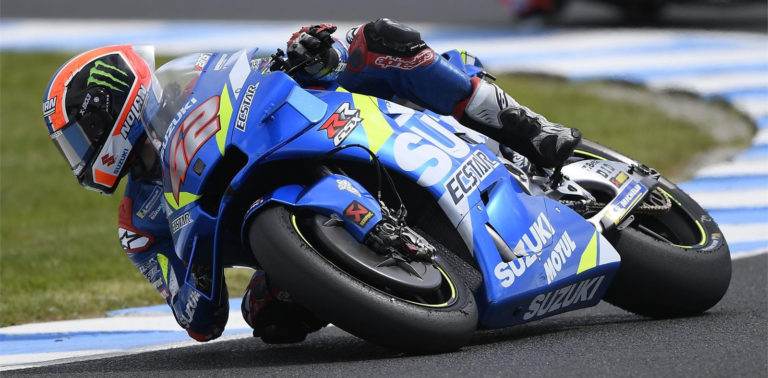
SUZUKI ECSTAR MOVES TO MALAYSIA FOR 2019 PENULTIMATE RACE
Sepang International Circuit, the third in a trio of ‘fly-away’ races, will this weekend play host the penultimate round of the 2019 MotoGP World Championship.
Alex Rins had a tricky time of it at the Australian GP just a few days ago, the Spaniard struggled to set a hot lap during qualifying and then found he had to fight hard through the pack on Sunday. However, he managed 9th place and collected useful points. Rins finished last year’s Malaysian GP in an impressive 2nd place, and he is highly motivated to run at the front again in 2019’s race.
Joan Mir enjoyed an excellent race in Phillip Island, and the rookie managed to score his best ever MotoGP result with 5th place, after battling against some of his more experienced rivals. Mir won in Sepang in 2017 in the Moto3 class and finished 10th last year in Moto2. The youngster is keeping his sights set on getting closer to the podium in the final two races of the year.
The Malaysian circuit, located 50km from the capital city of Kuala Lumpur, opened its gates to MotoGP 20 years ago, and the track is nestled within a complex which includes a golf course, a hotel, and a shopping centre. The GP boasts incredibly high attendance figures, with more and more spectators pouring in to watch the action ever year. In 2018, a record 103,984 passionate fans packed the grandstands.
Sepang’s iconic pair of long straights, separated by a beautiful pagoda, are instantly recognisable to GP fans. The circuit is one of the fastest on the calendar, whilst also providing plenty of exciting over-taking hot spots. It is also very physically draining as the highly humid climate saps energy from the riders.
Davide Brivio – Team Manager:
“Sepang could be a good track for us, even if the weather can be problematic sometimes. We’re looking forward to getting on track. It’s good for Joan to go straight into this race after such a strong result last week, and Alex is keen to get back to better results too, he was really strong last year. Let’s see what we can do.”
Alex Rins:
“I really like being in Malaysia, the circuit suits our bike and I love the vibe and how the track is so ‘full power’. I’ve had some good results there in the past, especially last year, and I feel that I can do well this weekend. I’m looking forward to getting back on the bike and trying my best.”
Joan Mir:
“I think Sepang could be even better for me than Phillip Island, because I have already ridden there during the test, so I’m more familiar with how it feels on a MotoGP bike. Also, I have won in Sepang in the past, so I’m expecting a good weekend. Everything is going well with my GSX-RR and I feel close to the podium now, maybe my first one can be achieved there…”
TECHNICAL HIGHLIGHTS OF SEPANG
Frankie Carchedi – Joan Mir’s Crew Chief:
“Sepang is one of the most technical tracks on the calendar, there are slow corners and tight hairpins and then some really fast sections. The grip and the temperatures can change suddenly and dramatically, from session to session. It’s quite often dry and chilly in the morning and then hot and rainy in the afternoon. Everything on the setup has to be balanced because this track is so varied, so that can be a challenge. The final sector of the circuit has really hard braking and strong acceleration, so we need to use the aerodynamic package to help with the anti-wheelie.”
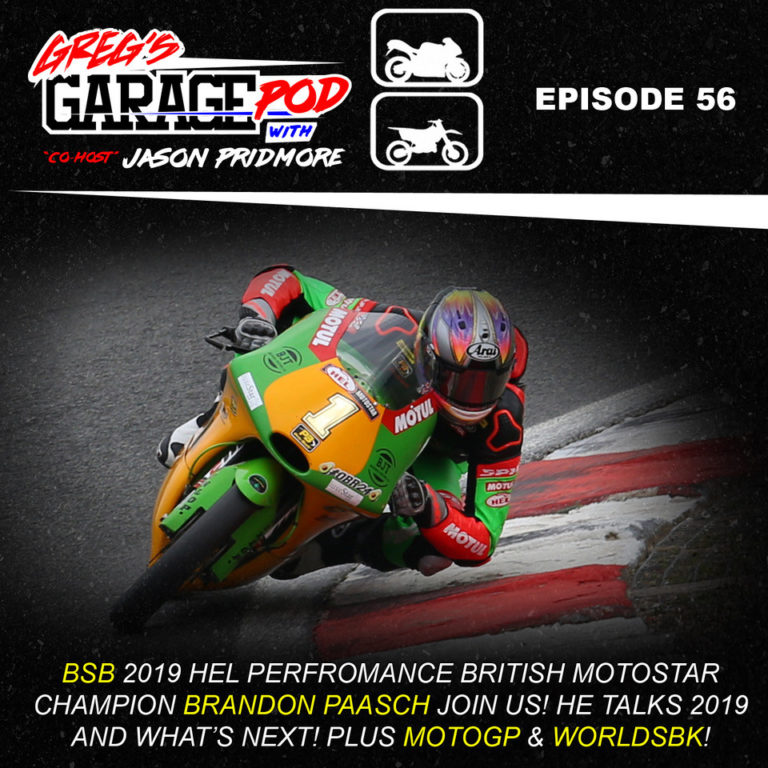
Greg’s Garage Pod with Co-Host Jason Pridmore – A motorcycle racing Pod about MotoGP, MotoAmerica and World Superbike, Pro Motocross, American Flat Track and more. In this episode Co-Hosts Greg White and Jason Pridmore talk:
MotoGP – The boys review what happened at Phillip Island in Australia. MotoGP, Moto2, and Moto3 discussed. Plus a quick preview of this weekend’s Sepang race.
WorldSBK – The final round of 2019 happened in Qatar. We talk WorldSBK, WorldSS, and WorldSS300, plus some crazy stats on Champ Jonathan Rea.
Brandon Paasch – The 18-year-old New Jersey native becomes the first American to win a British Superbike National Championship. We talk with him about that and what the future holds.
Race Calendar
SUCCESSFUL SHOULDER OPERATION FOR NAKAGAMI
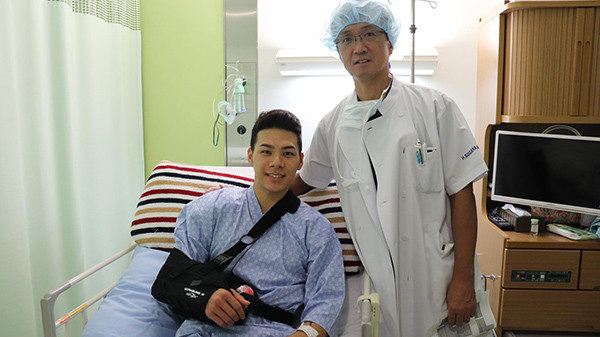
LCR Honda IDEMITSU rider Takaaki Nakagami has undergone successful surgery on his injured right shoulder. The Japanese star opted to have the work done after his home Grand Prix at Motegi to give himself the best chance of being fully fit for the 2020 MotoGP season and has been replaced by Johann Zarco for the final three races of the 2019 calendar.
Taka was operated on by Doctor Hiroyuki Sugaya at the Funabashi Orthopedic Surgical Hospital on Tuesday. The surgeon was pleased with how procedure went and Nakagami is already looking forward to getting started on his rehabilitation program.
Dr. Hiroyuki Sugaya:
“I’ve finished surgery on Mr Nakagami and he had severe cartilage damage in the shoulder, so I removed the damaged cartilage to mobilize (the shoulder). The final outcome looks very nice, so I think he will be ok for the next MotoGP season.”
Takaaki Nakagami:
“Yesterday I had surgery and it was successful. I’m really grateful to Doctor Sugaya. I’ll start physiotherapy when I can and will hopefully be fit and well as soon as possible. I want to thank IDEMITSU, HRC and LCR for understanding my decision and for giving me their support. I can’t wait to be back for the Sepang test.”
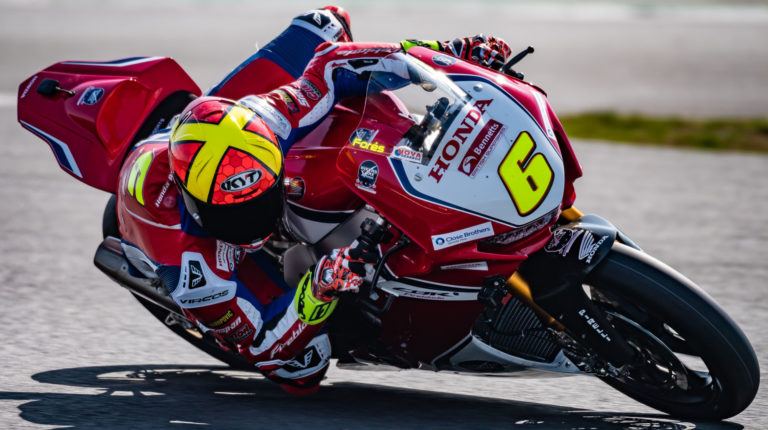
Fores Joins Kawasaki Puccetti Racing For 2020
Experienced Spanish rider Xavi Fores will return to the WorldSBK paddock in 2020 inside the WorldSBK wing of the Kawasaki Puccetti Racing set-up.
As the 2019 campaign ends thoughts turn to a new season in WorldSBK and the Kawasaki Puccetti Racing team has much to look forward to with the signing of six-time WorldSBK podium finisher Xavi Fores.
The 34-year-old Xavi took part in 91 WorldSBK races before spending the 2019 season in the BSB championship, scoring four rookie-season podiums in what many consider the most competitive national championship of all.
The Kawasaki Puccetti Racing team, having already won races in 2019 with talented young rider Toprak Razgatlioglu, hope to use Xavi’s great experience in WorldSBK to let them move to the next level in their technical approach and consistency.
Xavi Fores, stated: “I am really happy to re-join WorldSBK with the Kawasaki Puccetti Racing Team for next season. Manuel and Kawasaki have built a very strong team in the last few seasons and it was very easy to make a deal with them. The bike is very strong and I think it can suit my riding style very well, so I was pushing hard to close the deal with Manuel. I can’t wait to jump on the bike and start to work hard to prepare for next season to make sure we start Round One in Australia with a strong package and in good shape. I want to thank Kawasaki Europe for their big effort and their support, and I also want to thank Manuel for his trust in me.”
Manuel Puccetti, Team Manager, stated: “We are very motivated to have Xavi ride for our team next season. He is an experienced rider and fast in all conditions as he has shown many times in the past. I believe we have all the ingredients for another great season in WSBK and we are all keen to get started.”
Steve Guttridge, Kawasaki Europe Racing manager, stated: “With Xavi joining us as our rider inside the Puccetti team we will exchange youth for experience. Our goal, as Kawasaki, is to help build up the team’s knowledge in the WorldSBK class to an even higher level again during the 2020 season. The team have a great infrastructure and using the Ninja ZX-10RR they also now have the rider to perform at the highest level again next year. We are all very excited to get started with this partnership.”
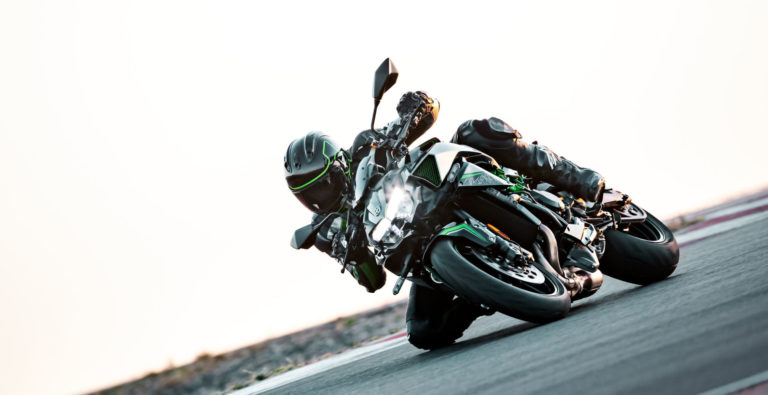
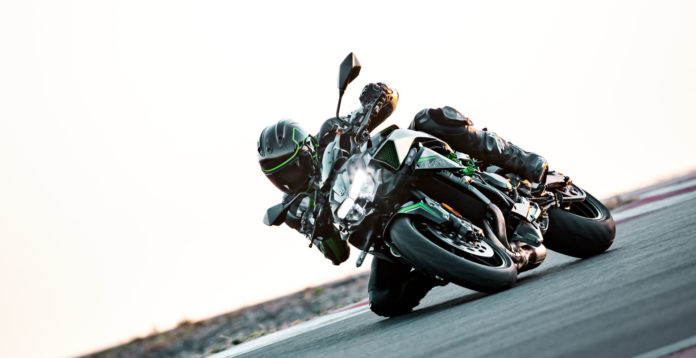
2020 KAWASAKI Z H2 MOTORCYCLE
Kawasaki’s legacy of creating motorcycles that have unrivaled performance, excitement, and Sugomi™ styling continues with an all-new flagship model of the Kawasaki Z line of naked motorcycles, the 2020 Z H2. With the arrival of the hypernaked Z H2 and its powerful, balanced supercharged engine, the second chapter of Kawasaki’s Z history is about to begin, marking the beginning of a new era.
Featuring a powerful and balanced supercharged engine, performance can be enjoyed across its entire rev range while still offering superb fuel efficiency. The innovative new Z H2 offers refined naked styling, a high level of handling and comfort, and the latest technology worthy of the new Z series flagship model.
The Z H2 was developed to deliver the power you desire on-demand, a chassis that delivers superb maneuverability while harnessing the engine’s incredible power, comfort that enables you to ride for long distances, and a host of advanced features designed for maximum functionality. The Kawasaki Z H2 is a truly unique motorcycle and offers a glimpse of the future.

Highlights of the 2020 Z H2
Engine
The Z H2’s Balanced Supercharged Engine is the product of Kawasaki Group technology, designed in-house not only by the Motorcycle and Engine Company, but also with collaboration from the Aerospace Systems Company, Energy System and Plant Engineering Company, and Corporate Technology Division. Kawasaki created a supercharged engine with high output, yet manageable power delivery. The water-cooled DOHC 4-valve parallel 4-cylinder 998cc supercharged engine of the Z H2 has been tuned to showcase high-performance throughout the rpm range. Its wide powerband creates optimal low-mid range torque for light handling and all out supercharged performance on the top end. Smooth acceleration in the low to mid rpm range was achieved by shortening the second reduction ratio and optimizing the valve timing. In the chamberless exhaust system, an increase in the tube length of the manifold assembly further improves the output in the low to mid rpm range. Where torque is more apparent, in the low to mid rpm range, the supercharged engine emphasizes easy-to-handle throttle response and smooth acceleration, while in the high-rpm range as the speed increases, the power from the supercharged engine is brought to the forefront. The Z H2 also features a ram air intake. The air duct provides a clean path for air flowing linearly from the ram air intake to the supercharged engine, contributing to higher performance.
The street specific Z H2 supercharger design and tuning were developed by Kawasaki Heavy Industries, Ltd. (KHI) showcasing the in-house knowledge of forced induction engine performance. The supercharger’s high efficiency and minimal heat gain meant an intercooler was unnecessary, allowing savings in both weight and space. The supercharger is located centrally in the best position to evenly distribute the compressed air to all four cylinders.
The supercharger is driven by a planetary gear train, which runs off the crankshaft. The gear train increases the impeller speed up to 9.2x the crank speed (1.15x step gear with an 8x planetary gear).
Transmission
The Z H2 uses a dog-ring transmission that has been developed through feedback from the Kawasaki Racing Team and utilizes optimal gear ratios for street performance. Rather than shifting the gears into place, the gears in this configuration stay in place, with the lightweight dog-rings moving to engage the gears. This design allows the shifting effort to be lighter and shorter for quicker acceleration.
Assist & Slipper Clutch
Complementing the transmission is an Assist & Slipper clutch, race-inspired technology that offers both a back-torque limiting function as well as a light feel at the lever.
The Assist function is noticed by the lighter pull at the clutch lever, helping to reduce rider fatigue especially in stop and go traffic situations.
The Slipper function is noticed when excessive engine braking occurs as a result of quick or accidental downshifts. The slipper cam comes into play, forcing the clutch hub and operating plate apart, which relieves pressure on the clutch plates to reduce back-torque and help prevent the rear tire from hopping and skidding.
Chassis
A specially designed, lightweight trellis frame delivers both light handling and excellent straight-line stability. The chassis offers excellent maneuverability while harnessing the massive supercharged power of the Z H2 engine. The compact naked model frame has a high-level of balance between flexibility and toughness so that you can ride on a variety of roads.
The new high-tensile steel frame utilizes wheelbase and caster angle dimensions that showcase the light, sporty handling unique to the Z H2. By achieving the desired riding position and center of gravity, the frame and suspension of the Z H2 performs well across a range of speeds.
A double-supported style of swingarm was chosen for the Z H2, similar to those found on Kawasaki supersport models. It offers the high rigidity and lightweight construction necessary for high performance. The swingarm mounting plate is located on the back of the engine, enabling it to play the role of a cross member in the frame, contributing to rigidity and weight reduction.
Suspension
Complementing the chassis design, the Z H2 motorcycle is equipped with the Showa SFF-BP (Separate Function Fork – Big Piston) fork. Combining the concepts of Showa SFF and BPF, this advanced fork offers both racetrack performance and everyday usability.
The Showa SFF-BP offers smooth action at the beginning of the stroke that contributes to excellent composure under braking. The large-diameter damping piston is much larger than what is found in a cartridge-type fork of the same size. The result is greater control as the fork begins to compress and a very calm attitude change as vehicle weight shifts forward when reducing speed, offering greater chassis stability on corner entry. The settings can be adjusted according to the rider’s size and the riding conditions.
The rear is held up by a Uni-Trak® swingarm system and Showa shock. This combination ensures performance in all speed ranges and achieves a strong withstanding force by maintaining hold in the suspension stroke even under high-adrenaline riding.
Brakes & Wheels
The Z H2 pursues ease of handling from low and medium speeds up to high speeds, and for that reason, a high performance brake system is required. On the front, Brembo monobloc calipers are used and consist of a highly rigid one-piece structure that is machined from a cast aluminum block, boasting a strong braking force. Radially mounting the caliper provides even higher levels of performance.
Nissin master cylinders provide excellent functionality suitable to the characteristics of the Z H2 by applying Kawasaki’s unique settings. Deceleration can be controlled from various speed ranges as well as controlling the starting point for changing body posture when needed.
The lightweight 17” wheels are equipped with Pirelli Diablo Rosso III tires, front and rear. The front tire is a 120/70ZR17 M/C 58W; the rear tire is a 190/55ZR17 M/C 75W.
Ergonomics
A relaxed riding position has been created by a combination of an upright handlebar shape and a seat with an optimized base plate and cushion thickness. This design provides a high degree of freedom for riding posture and low vibration, allowing for a pleasant and comfortable ride. Adding to the Z H2 motorcycle’s comfort and strength is a fat-type handlebar and handle switches.
Electronics & Rider Aids
The strength of Kawasaki’s cutting-edge electronics has always been the highly sophisticated programming that uses minimal hardware to give the ECU an accurate real-time picture of what the chassis is doing and what the rider wants, to best support the rider’s inputs with a natural feel. Using the latest evolution of Kawasaki’s advanced modeling software including input from a compact Bosch IMU (Inertial Measurement Unit), Kawasaki Cornering Management Function (KCMF) monitors engine and chassis parameters throughout the corner to assist riders in holding their intended line through the corner. The Z H2 utilizes the input from multiple sensors to optimize ride quality via the Kawasaki TRaction Control (KTRC), Kawasaki Launch Control Mode (KLCM) and the Kawasaki Intelligent Anti-Lock Braking System (KIBS).
Electronic Cruise Control
The Z H2 is equipped with electronic cruise control, which improves the overall comfort for those long days on the road. The cruise control system enables riders to set and maintain their desired speed with the simple press of a button. Once activated, the rider does not have to constantly apply the throttle to maintain speed. The cruise control helps to reduce ride fatigue when traveling long distances, allowing the rider to relax and enjoy cruising, contributing to a high level of riding comfort.
KQS (Kawasaki Quick Shifter)
The Z H2 features a highly reliable contactless-type quick shifter that allows for ultra quick, full power upshifts and seamless acceleration. The system detects that the shift lever has been actuated, and sends a signal to the ECU to cut ignition so that the next gear can be engaged for clutchless shifting.
Power Mode Selection
Riders can set power delivery to suit conditions and/or preference, choosing from Full, Middle and Low. Middle Power is 75% of Full Power, while Low Power is 50% of Full Power.
Styling
The styling of the Z series flagship Z H2 has been shaped according to Sugomi design concept and the minimalist bodywork that Kawasaki’s Z series lineup of motorcycles is known for. Sugomi describes the unique aura that radiates from beings possessing compelling presence and unrivalled power. Featuring a low crouching stance and the asymmetry of the air intake duct installed on the left side of the vehicle body, the Z H2 intensely and aggressively emphasizes the identity of Sugomi design. Only the air intake duct and the under cowl are asymmetrical, all other design work represents accurate symmetry, giving the Z H2 a well-balanced and highly harmonious design.
The supercharger housing is visible from the outside thanks to the naked model concept that does not have a cowl covering the motorcycle’s body. Providing a glimpse of the supercharger between the frame makes for a more impressive appearance.
The Z H2 is equipped with an LED headlight and taillight. The bulbs low power consumption and high durability improve maintainability while providing high-light intensity and high illumination. A clean headlight beam spread contributes to visibility of the rider’s surroundings. The frame-mounted headlamps also influence the styling around the front and create an innovative look that is different from previous naked models.
TFT Color Instrumentation
The 4.3” all-digital TFT color instrumentation gives the cockpit of the Z H2 motorcycle a high-tech, high-grade appearance. The full-color display features TFT (thin-film transistor) technology and delivers a high level of visibility. Display functions include: digital speedometer, gear position indicator, shift indicator, odometer, dual trip meter, fuel gauge, remaining range, current/average fuel consumption, outside temperature, coolant temperature, clock, Economical Riding Indicator, IMU indicator, KIBS indicator, boost pressure and boost temperature.
Smartphone Connectivity
Kawasaki continues to offer its Z lineup the addition of Smartphone Connectivity. A chip built into the instrument panel enables riders to connect to their motorcycle wirelessly. Using RIDEOLOGY THE APP*, a number of instrument functions can be accessed, logged, and reviewed contributing to an enhanced motorcycling experience. The following information can be viewed:
The app can also be used when away from the motorcycle. When riding (with the app ON), the bike and smartphone are always connected and riding log data is being recorded by the app. After ride is complete, the latest riding information is stored by the app and may be viewed on the smartphone. Any changes made via the app while the engine is off, or while out of range, will be implemented as soon as the ignition is turned on and the smartphone is in range with the app ON.
* RIDEOLOGY THE APP is not intended for use during vehicle operation. Only use RIDEOLOGY THE APP when the vehicle is not being operated and it is safe to do so.
Colors
The 2020 Kawasaki Z H2 is available in:
Metallic Spark Black/ Metallic Graphite Gray/ Mirror Coated Spark Black
MSRP
$17,000
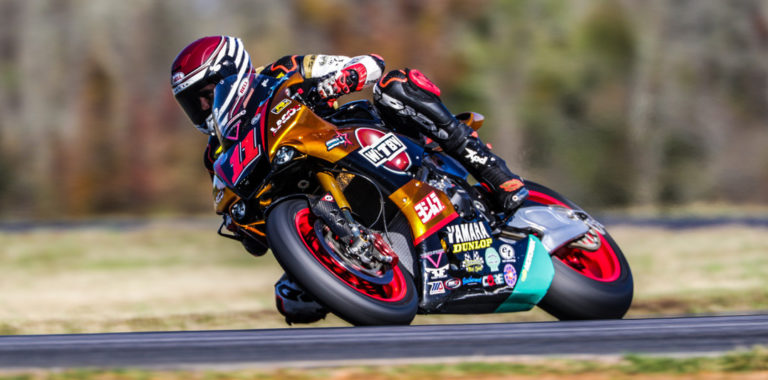
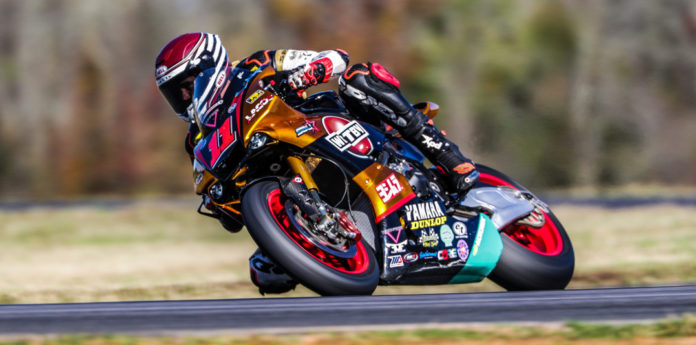
Westby Racing Team Tests At VIRginia International Raceway
Tulsa, OK – October 29, 2019 – Continuing with their off-season testing program, Mathew Scholtz and the Westby Racing team were at VIRginia International Raceway on Monday, equipped with two Yamaha YZF-R1 Superbikes: one in the team’s iconic gold-and-black livery with Mathew’s familiar #11 on it and one in non-descript white bodywork with no competition number, but fully equipped to help refine the team’s setup by comparing different settings back to back. Performance Riding Experience (P.R.E.) hosted a track day at VIR on Monday, and they invited Mathew and the team to test during the event.
“We came out to one of the P.R.E. Track Days, and I think it was really beneficial for us,” Mathew said. “We had a few ideas with the electronics that we wanted to try…the traction control settings and a couple other things. We worked quite a bit on the engine torque mapping, just trying to smooth out the bike for me. That was one of the bigger things that (team electronics specialist) Herschel (Auxier) and (crew chief) Ed (Sullivan) were focusing on. Trying to give me a really smooth power delivery because I don’t have the best throttle control off the bottom. So, I think we made a couple of positive changes there.
“It’s a little bit difficult to get a good read of things because, obviously, it’s a track day, and you don’t always get a good, clean section of track. Your lap times are kind of fluctuating because of the other bikes that are circulating, so you’re only able to go quickly in a couple of the corners at a time.
“Despite that, personally, I feel that we made some really positive steps that will translate over to when we race, and the bike will be better. With the changes we made, it’s just easier now to ride the bike consistently. So, things were really good for us.
“Big thanks to the P.R.E. guys for having us out. They’ve really been an important part of our off-season testing program. It was awesome to be out there on the track. The weather at VIR wasn’t the greatest, but it’s getting towards wintertime, and being at the test was a lot better than being in rainy, freezing-cold Georgia, sitting on the couch. I’m very thankful that I was able to be out there riding and preparing for the 2020 Superbike season.”
Up next for Mathew and the team are off-season tests at Barber Motorsports Park and the Circuit of The Americas before the end of the calendar year.
For more Westby Racing updates, including news, photos, and videos, visit https://www.westbyracing.com
Also, visit “Westby Racing” on your favorite social media site.
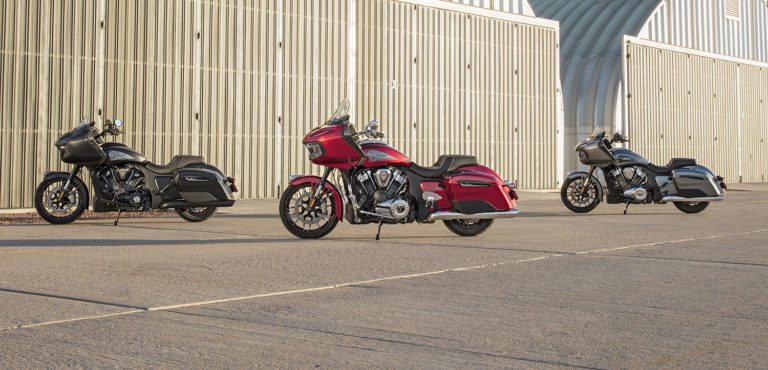
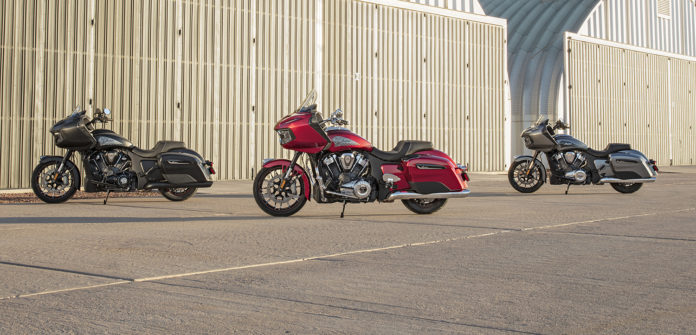
INDIAN MOTORCYCLE PUSHES AMERICAN V-TWINS FORWARD WITH THE ALL-NEW 2020 CHALLENGER – THE ULTIMATE AMERICAN BAGGER
Featuring a Fixed Fairing, Inverted Front End, the Most Powerful Motor in Its Class and Intuitive Ride Technology, Indian Motorcycle’s State-of-the-Art Modern Bagger Redefines “Fully Loaded”
MINNEAPOLIS (October 29, 2019) – The bar for American motorcycles has officially been elevated. Indian Motorcycle, America’s First Motorcycle Company, has dramatically redefined the American bagger with its introduction of the 2020 Indian Challenger – a striking combination of American muscle, next-level technology, and premium comfort to deliver a truly unmatched riding experience.
Designed for the most knowledgeable and discerning riders, Indian designers stopped at nothing to ensure that the Challenger out-classed its competition and delivered the highest performing, fully loaded bagger on the market.
“The Indian Challenger delivers a new level of performance for riders who understand that the seemingly small details make a huge difference,” said Reid Wilson, Vice President of Indian Motorcycle. “Our mindset was to leave no stone unturned and deliver a bagger that exceeds the standards in categories like power, handling, comfort, and technology.”
It starts with the all-new Indian PowerPlus engine, Indian’s first liquid-cooled large displacement motor (108 cubic-inch, 60-degree V-twin) that packs a best-in-class 122 horsepower and 128 ft-lbs. of torque. The new powertrain also features a six-speed transmission with true overdrive, assist clutch to reduce clutch effort, and hydraulic valve lash adjusters and camshaft chain tensioners for a low maintenance, reliable powerplant. The PowerPlus’ overhead camshafts and four valves per cylinder deliver incredible V-twin performance and power. Riders can customize the bike’s throttle mapping by selecting one of three ride modes, including Rain, Standard and Sport – resulting in one motorcycle with three distinct performance personalities. Each ride mode has been engineered with its own distinct traction control setting to align with each mode’s specific throttle mapping.
Starting at $21,999, the Challenger features all the premium touring amenities riders expect from Indian Motorcycle, including electronic cruise control, full LED lighting, a long-haul seat, ABS, keyless ignition, and weatherproof saddlebags with over 18 gallons of storage space. In addition, a modern and aggressively styled chassis-mounted fairing sits over the Challenger’s inverted front suspension. This, combined with the bike’s lightweight cast aluminum frame and hydraulically adjustable FOX® rear shock, delivers unrivaled handling and rock-solid stability.
Race-spec radially-mounted Brembo® brakes provide superior stopping power, and new performance touring Metzeler® Cruistec® tires offer supreme traction. Challenger’s chassis-mounted fairing features an adjustable windscreen with nearly three inches of travel and adjustable air vents – delivering unprecedented rider protection from all elements. With menacing LED running lights, a central headlamp, and a redesigned and modernized Indian Motorcycle headdress adorning its front fender, the Challenger presents an unmistakable profile day and night.
A true state-of-the-art bagger, the Limited and Dark Horse variants of Challenger are equipped with Indian Motorcycle’s intuitive Smart Lean Technology™, keeping riders confidently grounded by utilizing a Bosch IMU to add cornering control to the dynamic traction control and ABS, as well as Drag Torque Control. These models also feature Indian Ride Command, the largest, most-customizable touchscreen infotainment system on two wheels. The Challenger’s seven-inch Ride Command system features weather and traffic overlays, key vehicle information, Bluetooth® and USB mobile pairing, and an all-new quad-core processor for faster response.
For its inaugural year, the Challenger lineup is accompanied by a variety of Indian Motorcycle Authentic Accessories that allow riders to upgrade their ride based on their preferences. With the Indian Challenger Rogue Collection, riders can improve sound and add blacked-out styling with the black stage 1 slip-on muffler and black PowerPlus stage 1 air intake. While a gloss black mid-rise handlebar, a tinted curved windshield and gloss black front highway bars add a premium blacked-out finish.
For an added measure of comfort over longer hauls there’s the Indian Challenger Tour Collection, including a 16-inch windshield, quick release passenger sissy bar, passenger backrest and passenger floorboards, an extended reach seat, rider backrest pad, infinite highway pegs and pinnacle heel shifter. Riders can also upgrade the Indian Challenger’s audio experience with the PowerBand Audio Plus system, which delivers exceptional sound and clarity from high-output fairing and saddlebag speakers that are 50% louder than the Challenger’s stock audio system.
With its modern, aggressive look, and a seemingly unlimited array of performance, comfort and technological features, the Indian Challenger stands alone as the ultimate bagger.
“While we are grounded in our iconic history, we are focused and driven to break new ground and establish a higher standard for riders; and the Challenger is a testament to that,” said Steve Menneto, President of Indian Motorcycle. “The amount of technology and level of detail packed into this bike is incredible, and it’s something we’re extremely proud of.”
Pricing for the 2020 Indian Challenger, available in Titanium Metallic paint, starts at $21,999, while the Challenger Dark Horse, starting at $27,499, is available in Thunder Black Smoke, Sandstone Smoke, and White Smoke. The Indian Challenger Limited starts at $27,999, and is available in Thunder Black Pearl, Deepwater Metallic, and Ruby Metallic.
The Indian Challenger will be assembled at Indian Motorcycle’s production facility in Spirit Lake, Iowa. Learn more about Indian Motorcycle and the 2020 Indian Challenger by visiting IndianMotorcycle.com and following along on Facebook, Twitter and Instagram.
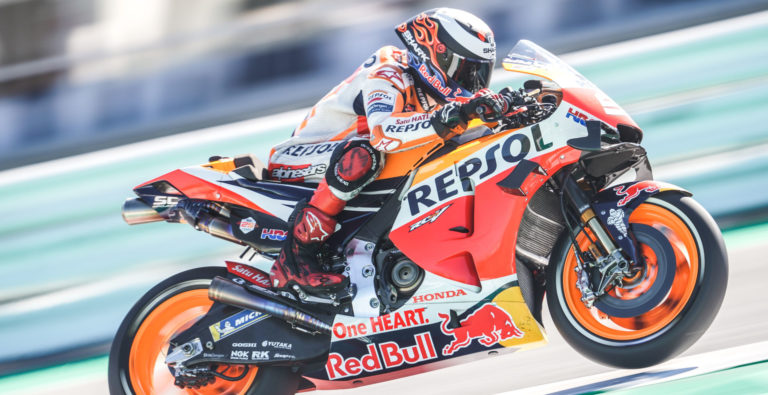
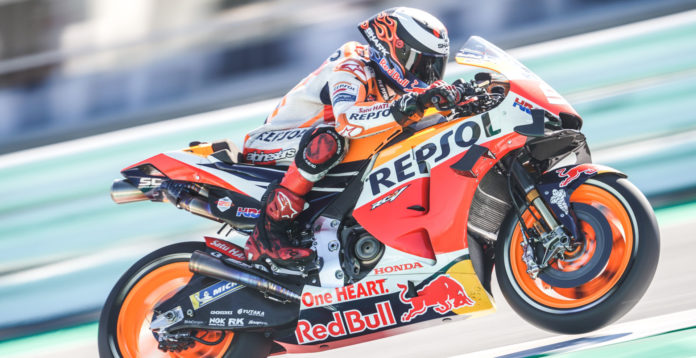
Penultimate push as Repsol Honda Team chase Team Championship
The flyaways draw to a close and the end of the season is fast approaching, but the Triple Crown is still wide open.
First hosting a Grand Prix in 1999, the Sepang International Circuit has been a constant fixture on the MotoGP World Championship calendar for both racing and testing. The 5.5km long Malaysian circuit is a physically demanding challenge no matter the conditions, air temperature rarely dropping below 30ºC even when the tropical storms hit.
Hunting a sixth straight Grand Prix victory in 2019 and his third at Sepang, Marc Marquez arrives in Malaysia in perfect form as he continues to dominate the premier class. Currently on 375 World Championship points, the Malaysian GP present the reigning MotoGP World Champion with his first opportunity to pass Jorge Lorenzo’s record of 383 points scored in a single season. As in Australia, Marquez is aware he’ll face a strong challenge from Yamaha and Ducati.
Lorenzo arrives in Malaysia hoping for better fortunes after a trying weekend in Phillip Island. Struggling in the cooler conditions, Sepang’s heat should offer Lorenzo a chance to continue improving his feeling on the Honda RC213V. The five-time World Champion has finished on the premier class podium seven times in Malaysia.
Just a single point separates the Ducati Team (409) from the Repsol Honda Team (408) in the Team Championship as Honda look to complete the prestigious Triple Crown. With both the Riders and a record 25th Constructors Championships achieved, the Team Championship is final objective to achieve in 2019.
Practice for the premier class begins at 10:50 Local Time on Friday, November 01 with the 20-lap Malaysian Grand Prix scheduled for 15:00 Local Time on Sunday, November 03.
Marc Marquez
“We enjoyed a great victory in Australia as me, the Repsol Honda Team and the bike are working very well together. Now we arrive at the last race of the triple, but it’s not time to stop and relax. Sepang is another track where I think Yamaha will be fast, as will Ducati, but the target is of course to try and fight for victory again. We will see how the weekend goes and adapt as we need to.”
Jorge Lorenzo
“Sepang is a track where I have had good success in the past. Earlier this year I was not able to test in Sepang because of my training injury, but my team were there testing so already we have some ideas of what to do with the bike. Compared to Australia, the circuit in Malaysia should suit me more and I think we will be able to get back to where we were in Motegi. We will see how the weekend progresses there.”
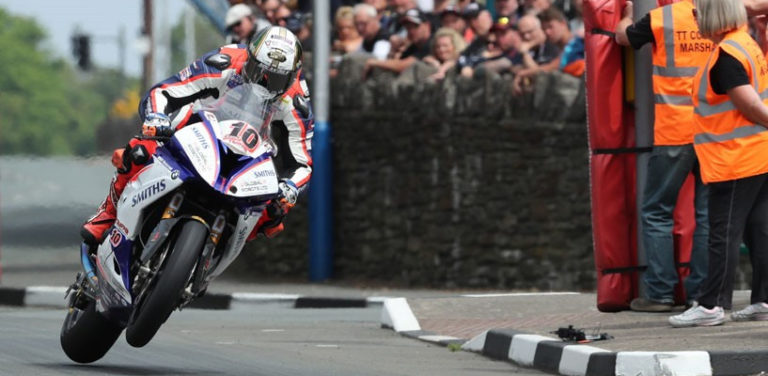
| REVAMPED SCHEDULE PROPOSED FOR 2020 ISLE OF MAN TT RACES |
| It is proposed that the 2020 Isle of Man TT Races, promoted by the Department for Enterprise, will be run on a revamped schedule designed to improve spectator entertainment and mitigate the demands that are placed on teams, riders, volunteers including the TT Marshals Association and local residents. The proposed schedule will mean some changes to road closure periods and the established racing schedule.
Rob Callister MHK, Political Member with responsibility for tourism and motorsport, commented: “The proposed new schedule has been designed to optimise qualifying conditions and offer shorter race days, reducing the pressure placed on competitors, teams, volunteers and officials. This new format is also designed to minimise the impact that racing has on local residents and businesses with more clearly defined road closure schedules including the more definitive first weekend qualifying timetable and cutting the duration of road closures during race week which result in clearer, easier to follow road closure timetables. This will bring benefits to rider, visitors and locals throughout the TT period.” The proposals mean the 2020 Isle of Man TT Races will begin a day later than previous years, starting on Sunday 31st May with an afternoon Qualifying Session. Evening Qualifying Sessions will then run as before from Monday 1st June to Thursday 4th June with the final session moved from the evening to a new afternoon slot on Friday 5th June. Provisional sessions remain in the schedule on Thursday afternoon and Friday evening now becomes a provisional session. The new TT Race day format starts with a single lap ‘Morning Warm Up Session’ for solo competitors before the opening race of the week – the RST Superbike Race – which gets underway at midday on Saturday 6th June followed by the first Sidecar TT Race at 3pm. Monday’s and Wednesday’s Race days – featuring the two Supersport Races, the RL360 Superstock and the Bennetts Lightweight Race – will also begin with a Solo Morning Warm Up Session, with a single lap Sidecar Shakedown Session added to the running order on Wednesday ahead of Friday’s second Sidecar Race and the Senior TT Race. ACU Events Ltd, as race organiser for the TT Races, will now submit the programme to the Isle of Man Government Department of Infrastructure for consideration and approval. This proposed new schedule will be integrated with a new off track entertainment programme that will be announced on Saturday 16th November at Motorcycle Live in Birmingham. Full details of the proposed 2020 TT Races schedule can be found here. |
Alpinestars has shared this video from the Friends and Family Ride Day it hosted October 16 at Willow Springs International Raceway, in Rosamond, California.
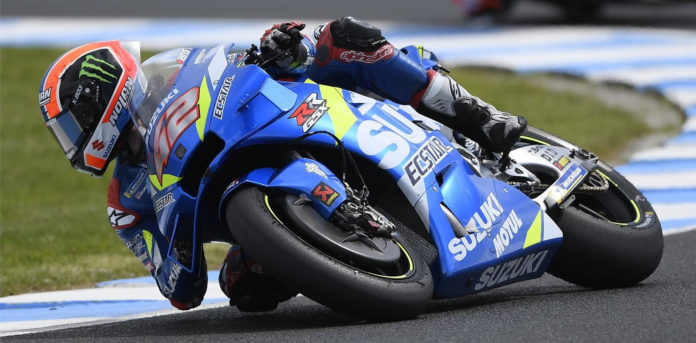
SUZUKI ECSTAR MOVES TO MALAYSIA FOR 2019 PENULTIMATE RACE
Sepang International Circuit, the third in a trio of ‘fly-away’ races, will this weekend play host the penultimate round of the 2019 MotoGP World Championship.
Alex Rins had a tricky time of it at the Australian GP just a few days ago, the Spaniard struggled to set a hot lap during qualifying and then found he had to fight hard through the pack on Sunday. However, he managed 9th place and collected useful points. Rins finished last year’s Malaysian GP in an impressive 2nd place, and he is highly motivated to run at the front again in 2019’s race.
Joan Mir enjoyed an excellent race in Phillip Island, and the rookie managed to score his best ever MotoGP result with 5th place, after battling against some of his more experienced rivals. Mir won in Sepang in 2017 in the Moto3 class and finished 10th last year in Moto2. The youngster is keeping his sights set on getting closer to the podium in the final two races of the year.
The Malaysian circuit, located 50km from the capital city of Kuala Lumpur, opened its gates to MotoGP 20 years ago, and the track is nestled within a complex which includes a golf course, a hotel, and a shopping centre. The GP boasts incredibly high attendance figures, with more and more spectators pouring in to watch the action ever year. In 2018, a record 103,984 passionate fans packed the grandstands.
Sepang’s iconic pair of long straights, separated by a beautiful pagoda, are instantly recognisable to GP fans. The circuit is one of the fastest on the calendar, whilst also providing plenty of exciting over-taking hot spots. It is also very physically draining as the highly humid climate saps energy from the riders.
Davide Brivio – Team Manager:
“Sepang could be a good track for us, even if the weather can be problematic sometimes. We’re looking forward to getting on track. It’s good for Joan to go straight into this race after such a strong result last week, and Alex is keen to get back to better results too, he was really strong last year. Let’s see what we can do.”
Alex Rins:
“I really like being in Malaysia, the circuit suits our bike and I love the vibe and how the track is so ‘full power’. I’ve had some good results there in the past, especially last year, and I feel that I can do well this weekend. I’m looking forward to getting back on the bike and trying my best.”
Joan Mir:
“I think Sepang could be even better for me than Phillip Island, because I have already ridden there during the test, so I’m more familiar with how it feels on a MotoGP bike. Also, I have won in Sepang in the past, so I’m expecting a good weekend. Everything is going well with my GSX-RR and I feel close to the podium now, maybe my first one can be achieved there…”
TECHNICAL HIGHLIGHTS OF SEPANG
Frankie Carchedi – Joan Mir’s Crew Chief:
“Sepang is one of the most technical tracks on the calendar, there are slow corners and tight hairpins and then some really fast sections. The grip and the temperatures can change suddenly and dramatically, from session to session. It’s quite often dry and chilly in the morning and then hot and rainy in the afternoon. Everything on the setup has to be balanced because this track is so varied, so that can be a challenge. The final sector of the circuit has really hard braking and strong acceleration, so we need to use the aerodynamic package to help with the anti-wheelie.”
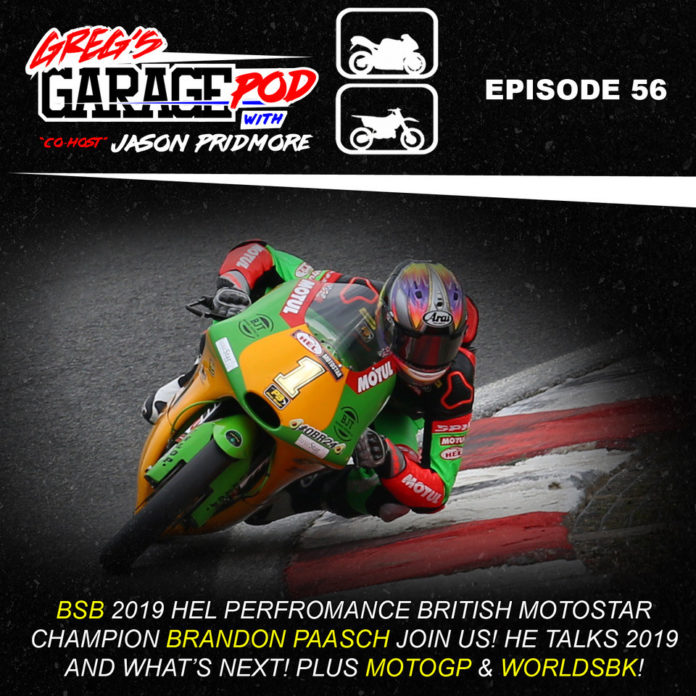
Greg’s Garage Pod with Co-Host Jason Pridmore – A motorcycle racing Pod about MotoGP, MotoAmerica and World Superbike, Pro Motocross, American Flat Track and more. In this episode Co-Hosts Greg White and Jason Pridmore talk:
MotoGP – The boys review what happened at Phillip Island in Australia. MotoGP, Moto2, and Moto3 discussed. Plus a quick preview of this weekend’s Sepang race.
WorldSBK – The final round of 2019 happened in Qatar. We talk WorldSBK, WorldSS, and WorldSS300, plus some crazy stats on Champ Jonathan Rea.
Brandon Paasch – The 18-year-old New Jersey native becomes the first American to win a British Superbike National Championship. We talk with him about that and what the future holds.
Race Calendar
SUCCESSFUL SHOULDER OPERATION FOR NAKAGAMI
LCR Honda IDEMITSU rider Takaaki Nakagami has undergone successful surgery on his injured right shoulder. The Japanese star opted to have the work done after his home Grand Prix at Motegi to give himself the best chance of being fully fit for the 2020 MotoGP season and has been replaced by Johann Zarco for the final three races of the 2019 calendar.
Taka was operated on by Doctor Hiroyuki Sugaya at the Funabashi Orthopedic Surgical Hospital on Tuesday. The surgeon was pleased with how procedure went and Nakagami is already looking forward to getting started on his rehabilitation program.
Dr. Hiroyuki Sugaya:
“I’ve finished surgery on Mr Nakagami and he had severe cartilage damage in the shoulder, so I removed the damaged cartilage to mobilize (the shoulder). The final outcome looks very nice, so I think he will be ok for the next MotoGP season.”
Takaaki Nakagami:
“Yesterday I had surgery and it was successful. I’m really grateful to Doctor Sugaya. I’ll start physiotherapy when I can and will hopefully be fit and well as soon as possible. I want to thank IDEMITSU, HRC and LCR for understanding my decision and for giving me their support. I can’t wait to be back for the Sepang test.”
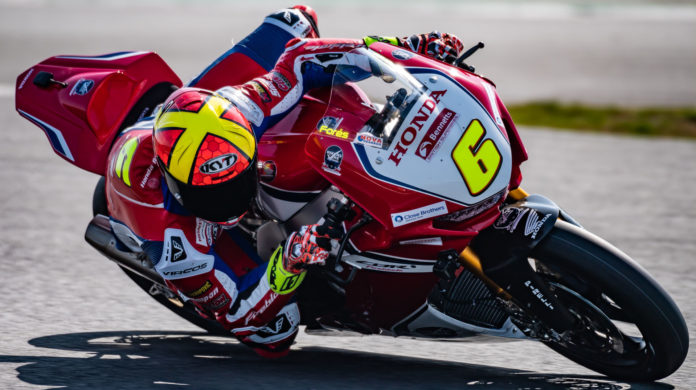
Fores Joins Kawasaki Puccetti Racing For 2020
Experienced Spanish rider Xavi Fores will return to the WorldSBK paddock in 2020 inside the WorldSBK wing of the Kawasaki Puccetti Racing set-up.
As the 2019 campaign ends thoughts turn to a new season in WorldSBK and the Kawasaki Puccetti Racing team has much to look forward to with the signing of six-time WorldSBK podium finisher Xavi Fores.
The 34-year-old Xavi took part in 91 WorldSBK races before spending the 2019 season in the BSB championship, scoring four rookie-season podiums in what many consider the most competitive national championship of all.
The Kawasaki Puccetti Racing team, having already won races in 2019 with talented young rider Toprak Razgatlioglu, hope to use Xavi’s great experience in WorldSBK to let them move to the next level in their technical approach and consistency.
Xavi Fores, stated: “I am really happy to re-join WorldSBK with the Kawasaki Puccetti Racing Team for next season. Manuel and Kawasaki have built a very strong team in the last few seasons and it was very easy to make a deal with them. The bike is very strong and I think it can suit my riding style very well, so I was pushing hard to close the deal with Manuel. I can’t wait to jump on the bike and start to work hard to prepare for next season to make sure we start Round One in Australia with a strong package and in good shape. I want to thank Kawasaki Europe for their big effort and their support, and I also want to thank Manuel for his trust in me.”
Manuel Puccetti, Team Manager, stated: “We are very motivated to have Xavi ride for our team next season. He is an experienced rider and fast in all conditions as he has shown many times in the past. I believe we have all the ingredients for another great season in WSBK and we are all keen to get started.”
Steve Guttridge, Kawasaki Europe Racing manager, stated: “With Xavi joining us as our rider inside the Puccetti team we will exchange youth for experience. Our goal, as Kawasaki, is to help build up the team’s knowledge in the WorldSBK class to an even higher level again during the 2020 season. The team have a great infrastructure and using the Ninja ZX-10RR they also now have the rider to perform at the highest level again next year. We are all very excited to get started with this partnership.”
2020 KAWASAKI Z H2 MOTORCYCLE
Kawasaki’s legacy of creating motorcycles that have unrivaled performance, excitement, and Sugomi™ styling continues with an all-new flagship model of the Kawasaki Z line of naked motorcycles, the 2020 Z H2. With the arrival of the hypernaked Z H2 and its powerful, balanced supercharged engine, the second chapter of Kawasaki’s Z history is about to begin, marking the beginning of a new era.
Featuring a powerful and balanced supercharged engine, performance can be enjoyed across its entire rev range while still offering superb fuel efficiency. The innovative new Z H2 offers refined naked styling, a high level of handling and comfort, and the latest technology worthy of the new Z series flagship model.
The Z H2 was developed to deliver the power you desire on-demand, a chassis that delivers superb maneuverability while harnessing the engine’s incredible power, comfort that enables you to ride for long distances, and a host of advanced features designed for maximum functionality. The Kawasaki Z H2 is a truly unique motorcycle and offers a glimpse of the future.
Highlights of the 2020 Z H2
Engine
The Z H2’s Balanced Supercharged Engine is the product of Kawasaki Group technology, designed in-house not only by the Motorcycle and Engine Company, but also with collaboration from the Aerospace Systems Company, Energy System and Plant Engineering Company, and Corporate Technology Division. Kawasaki created a supercharged engine with high output, yet manageable power delivery. The water-cooled DOHC 4-valve parallel 4-cylinder 998cc supercharged engine of the Z H2 has been tuned to showcase high-performance throughout the rpm range. Its wide powerband creates optimal low-mid range torque for light handling and all out supercharged performance on the top end. Smooth acceleration in the low to mid rpm range was achieved by shortening the second reduction ratio and optimizing the valve timing. In the chamberless exhaust system, an increase in the tube length of the manifold assembly further improves the output in the low to mid rpm range. Where torque is more apparent, in the low to mid rpm range, the supercharged engine emphasizes easy-to-handle throttle response and smooth acceleration, while in the high-rpm range as the speed increases, the power from the supercharged engine is brought to the forefront. The Z H2 also features a ram air intake. The air duct provides a clean path for air flowing linearly from the ram air intake to the supercharged engine, contributing to higher performance.
The street specific Z H2 supercharger design and tuning were developed by Kawasaki Heavy Industries, Ltd. (KHI) showcasing the in-house knowledge of forced induction engine performance. The supercharger’s high efficiency and minimal heat gain meant an intercooler was unnecessary, allowing savings in both weight and space. The supercharger is located centrally in the best position to evenly distribute the compressed air to all four cylinders.
The supercharger is driven by a planetary gear train, which runs off the crankshaft. The gear train increases the impeller speed up to 9.2x the crank speed (1.15x step gear with an 8x planetary gear).
Transmission
The Z H2 uses a dog-ring transmission that has been developed through feedback from the Kawasaki Racing Team and utilizes optimal gear ratios for street performance. Rather than shifting the gears into place, the gears in this configuration stay in place, with the lightweight dog-rings moving to engage the gears. This design allows the shifting effort to be lighter and shorter for quicker acceleration.
Assist & Slipper Clutch
Complementing the transmission is an Assist & Slipper clutch, race-inspired technology that offers both a back-torque limiting function as well as a light feel at the lever.
The Assist function is noticed by the lighter pull at the clutch lever, helping to reduce rider fatigue especially in stop and go traffic situations.
The Slipper function is noticed when excessive engine braking occurs as a result of quick or accidental downshifts. The slipper cam comes into play, forcing the clutch hub and operating plate apart, which relieves pressure on the clutch plates to reduce back-torque and help prevent the rear tire from hopping and skidding.
Chassis
A specially designed, lightweight trellis frame delivers both light handling and excellent straight-line stability. The chassis offers excellent maneuverability while harnessing the massive supercharged power of the Z H2 engine. The compact naked model frame has a high-level of balance between flexibility and toughness so that you can ride on a variety of roads.
The new high-tensile steel frame utilizes wheelbase and caster angle dimensions that showcase the light, sporty handling unique to the Z H2. By achieving the desired riding position and center of gravity, the frame and suspension of the Z H2 performs well across a range of speeds.
A double-supported style of swingarm was chosen for the Z H2, similar to those found on Kawasaki supersport models. It offers the high rigidity and lightweight construction necessary for high performance. The swingarm mounting plate is located on the back of the engine, enabling it to play the role of a cross member in the frame, contributing to rigidity and weight reduction.
Suspension
Complementing the chassis design, the Z H2 motorcycle is equipped with the Showa SFF-BP (Separate Function Fork – Big Piston) fork. Combining the concepts of Showa SFF and BPF, this advanced fork offers both racetrack performance and everyday usability.
The Showa SFF-BP offers smooth action at the beginning of the stroke that contributes to excellent composure under braking. The large-diameter damping piston is much larger than what is found in a cartridge-type fork of the same size. The result is greater control as the fork begins to compress and a very calm attitude change as vehicle weight shifts forward when reducing speed, offering greater chassis stability on corner entry. The settings can be adjusted according to the rider’s size and the riding conditions.
The rear is held up by a Uni-Trak® swingarm system and Showa shock. This combination ensures performance in all speed ranges and achieves a strong withstanding force by maintaining hold in the suspension stroke even under high-adrenaline riding.
Brakes & Wheels
The Z H2 pursues ease of handling from low and medium speeds up to high speeds, and for that reason, a high performance brake system is required. On the front, Brembo monobloc calipers are used and consist of a highly rigid one-piece structure that is machined from a cast aluminum block, boasting a strong braking force. Radially mounting the caliper provides even higher levels of performance.
Nissin master cylinders provide excellent functionality suitable to the characteristics of the Z H2 by applying Kawasaki’s unique settings. Deceleration can be controlled from various speed ranges as well as controlling the starting point for changing body posture when needed.
The lightweight 17” wheels are equipped with Pirelli Diablo Rosso III tires, front and rear. The front tire is a 120/70ZR17 M/C 58W; the rear tire is a 190/55ZR17 M/C 75W.
Ergonomics
A relaxed riding position has been created by a combination of an upright handlebar shape and a seat with an optimized base plate and cushion thickness. This design provides a high degree of freedom for riding posture and low vibration, allowing for a pleasant and comfortable ride. Adding to the Z H2 motorcycle’s comfort and strength is a fat-type handlebar and handle switches.
Electronics & Rider Aids
The strength of Kawasaki’s cutting-edge electronics has always been the highly sophisticated programming that uses minimal hardware to give the ECU an accurate real-time picture of what the chassis is doing and what the rider wants, to best support the rider’s inputs with a natural feel. Using the latest evolution of Kawasaki’s advanced modeling software including input from a compact Bosch IMU (Inertial Measurement Unit), Kawasaki Cornering Management Function (KCMF) monitors engine and chassis parameters throughout the corner to assist riders in holding their intended line through the corner. The Z H2 utilizes the input from multiple sensors to optimize ride quality via the Kawasaki TRaction Control (KTRC), Kawasaki Launch Control Mode (KLCM) and the Kawasaki Intelligent Anti-Lock Braking System (KIBS).
Electronic Cruise Control
The Z H2 is equipped with electronic cruise control, which improves the overall comfort for those long days on the road. The cruise control system enables riders to set and maintain their desired speed with the simple press of a button. Once activated, the rider does not have to constantly apply the throttle to maintain speed. The cruise control helps to reduce ride fatigue when traveling long distances, allowing the rider to relax and enjoy cruising, contributing to a high level of riding comfort.
KQS (Kawasaki Quick Shifter)
The Z H2 features a highly reliable contactless-type quick shifter that allows for ultra quick, full power upshifts and seamless acceleration. The system detects that the shift lever has been actuated, and sends a signal to the ECU to cut ignition so that the next gear can be engaged for clutchless shifting.
Power Mode Selection
Riders can set power delivery to suit conditions and/or preference, choosing from Full, Middle and Low. Middle Power is 75% of Full Power, while Low Power is 50% of Full Power.
Styling
The styling of the Z series flagship Z H2 has been shaped according to Sugomi design concept and the minimalist bodywork that Kawasaki’s Z series lineup of motorcycles is known for. Sugomi describes the unique aura that radiates from beings possessing compelling presence and unrivalled power. Featuring a low crouching stance and the asymmetry of the air intake duct installed on the left side of the vehicle body, the Z H2 intensely and aggressively emphasizes the identity of Sugomi design. Only the air intake duct and the under cowl are asymmetrical, all other design work represents accurate symmetry, giving the Z H2 a well-balanced and highly harmonious design.
The supercharger housing is visible from the outside thanks to the naked model concept that does not have a cowl covering the motorcycle’s body. Providing a glimpse of the supercharger between the frame makes for a more impressive appearance.
The Z H2 is equipped with an LED headlight and taillight. The bulbs low power consumption and high durability improve maintainability while providing high-light intensity and high illumination. A clean headlight beam spread contributes to visibility of the rider’s surroundings. The frame-mounted headlamps also influence the styling around the front and create an innovative look that is different from previous naked models.
TFT Color Instrumentation
The 4.3” all-digital TFT color instrumentation gives the cockpit of the Z H2 motorcycle a high-tech, high-grade appearance. The full-color display features TFT (thin-film transistor) technology and delivers a high level of visibility. Display functions include: digital speedometer, gear position indicator, shift indicator, odometer, dual trip meter, fuel gauge, remaining range, current/average fuel consumption, outside temperature, coolant temperature, clock, Economical Riding Indicator, IMU indicator, KIBS indicator, boost pressure and boost temperature.
Smartphone Connectivity
Kawasaki continues to offer its Z lineup the addition of Smartphone Connectivity. A chip built into the instrument panel enables riders to connect to their motorcycle wirelessly. Using RIDEOLOGY THE APP*, a number of instrument functions can be accessed, logged, and reviewed contributing to an enhanced motorcycling experience. The following information can be viewed:
The app can also be used when away from the motorcycle. When riding (with the app ON), the bike and smartphone are always connected and riding log data is being recorded by the app. After ride is complete, the latest riding information is stored by the app and may be viewed on the smartphone. Any changes made via the app while the engine is off, or while out of range, will be implemented as soon as the ignition is turned on and the smartphone is in range with the app ON.
* RIDEOLOGY THE APP is not intended for use during vehicle operation. Only use RIDEOLOGY THE APP when the vehicle is not being operated and it is safe to do so.
Colors
The 2020 Kawasaki Z H2 is available in:
Metallic Spark Black/ Metallic Graphite Gray/ Mirror Coated Spark Black
MSRP
$17,000
Westby Racing Team Tests At VIRginia International Raceway
Tulsa, OK – October 29, 2019 – Continuing with their off-season testing program, Mathew Scholtz and the Westby Racing team were at VIRginia International Raceway on Monday, equipped with two Yamaha YZF-R1 Superbikes: one in the team’s iconic gold-and-black livery with Mathew’s familiar #11 on it and one in non-descript white bodywork with no competition number, but fully equipped to help refine the team’s setup by comparing different settings back to back. Performance Riding Experience (P.R.E.) hosted a track day at VIR on Monday, and they invited Mathew and the team to test during the event.
“We came out to one of the P.R.E. Track Days, and I think it was really beneficial for us,” Mathew said. “We had a few ideas with the electronics that we wanted to try…the traction control settings and a couple other things. We worked quite a bit on the engine torque mapping, just trying to smooth out the bike for me. That was one of the bigger things that (team electronics specialist) Herschel (Auxier) and (crew chief) Ed (Sullivan) were focusing on. Trying to give me a really smooth power delivery because I don’t have the best throttle control off the bottom. So, I think we made a couple of positive changes there.
“It’s a little bit difficult to get a good read of things because, obviously, it’s a track day, and you don’t always get a good, clean section of track. Your lap times are kind of fluctuating because of the other bikes that are circulating, so you’re only able to go quickly in a couple of the corners at a time.
“Despite that, personally, I feel that we made some really positive steps that will translate over to when we race, and the bike will be better. With the changes we made, it’s just easier now to ride the bike consistently. So, things were really good for us.
“Big thanks to the P.R.E. guys for having us out. They’ve really been an important part of our off-season testing program. It was awesome to be out there on the track. The weather at VIR wasn’t the greatest, but it’s getting towards wintertime, and being at the test was a lot better than being in rainy, freezing-cold Georgia, sitting on the couch. I’m very thankful that I was able to be out there riding and preparing for the 2020 Superbike season.”
Up next for Mathew and the team are off-season tests at Barber Motorsports Park and the Circuit of The Americas before the end of the calendar year.
For more Westby Racing updates, including news, photos, and videos, visit https://www.westbyracing.com
Also, visit “Westby Racing” on your favorite social media site.
INDIAN MOTORCYCLE PUSHES AMERICAN V-TWINS FORWARD WITH THE ALL-NEW 2020 CHALLENGER – THE ULTIMATE AMERICAN BAGGER
Featuring a Fixed Fairing, Inverted Front End, the Most Powerful Motor in Its Class and Intuitive Ride Technology, Indian Motorcycle’s State-of-the-Art Modern Bagger Redefines “Fully Loaded”
MINNEAPOLIS (October 29, 2019) – The bar for American motorcycles has officially been elevated. Indian Motorcycle, America’s First Motorcycle Company, has dramatically redefined the American bagger with its introduction of the 2020 Indian Challenger – a striking combination of American muscle, next-level technology, and premium comfort to deliver a truly unmatched riding experience.
Designed for the most knowledgeable and discerning riders, Indian designers stopped at nothing to ensure that the Challenger out-classed its competition and delivered the highest performing, fully loaded bagger on the market.
“The Indian Challenger delivers a new level of performance for riders who understand that the seemingly small details make a huge difference,” said Reid Wilson, Vice President of Indian Motorcycle. “Our mindset was to leave no stone unturned and deliver a bagger that exceeds the standards in categories like power, handling, comfort, and technology.”
It starts with the all-new Indian PowerPlus engine, Indian’s first liquid-cooled large displacement motor (108 cubic-inch, 60-degree V-twin) that packs a best-in-class 122 horsepower and 128 ft-lbs. of torque. The new powertrain also features a six-speed transmission with true overdrive, assist clutch to reduce clutch effort, and hydraulic valve lash adjusters and camshaft chain tensioners for a low maintenance, reliable powerplant. The PowerPlus’ overhead camshafts and four valves per cylinder deliver incredible V-twin performance and power. Riders can customize the bike’s throttle mapping by selecting one of three ride modes, including Rain, Standard and Sport – resulting in one motorcycle with three distinct performance personalities. Each ride mode has been engineered with its own distinct traction control setting to align with each mode’s specific throttle mapping.
Starting at $21,999, the Challenger features all the premium touring amenities riders expect from Indian Motorcycle, including electronic cruise control, full LED lighting, a long-haul seat, ABS, keyless ignition, and weatherproof saddlebags with over 18 gallons of storage space. In addition, a modern and aggressively styled chassis-mounted fairing sits over the Challenger’s inverted front suspension. This, combined with the bike’s lightweight cast aluminum frame and hydraulically adjustable FOX® rear shock, delivers unrivaled handling and rock-solid stability.
Race-spec radially-mounted Brembo® brakes provide superior stopping power, and new performance touring Metzeler® Cruistec® tires offer supreme traction. Challenger’s chassis-mounted fairing features an adjustable windscreen with nearly three inches of travel and adjustable air vents – delivering unprecedented rider protection from all elements. With menacing LED running lights, a central headlamp, and a redesigned and modernized Indian Motorcycle headdress adorning its front fender, the Challenger presents an unmistakable profile day and night.
A true state-of-the-art bagger, the Limited and Dark Horse variants of Challenger are equipped with Indian Motorcycle’s intuitive Smart Lean Technology™, keeping riders confidently grounded by utilizing a Bosch IMU to add cornering control to the dynamic traction control and ABS, as well as Drag Torque Control. These models also feature Indian Ride Command, the largest, most-customizable touchscreen infotainment system on two wheels. The Challenger’s seven-inch Ride Command system features weather and traffic overlays, key vehicle information, Bluetooth® and USB mobile pairing, and an all-new quad-core processor for faster response.
For its inaugural year, the Challenger lineup is accompanied by a variety of Indian Motorcycle Authentic Accessories that allow riders to upgrade their ride based on their preferences. With the Indian Challenger Rogue Collection, riders can improve sound and add blacked-out styling with the black stage 1 slip-on muffler and black PowerPlus stage 1 air intake. While a gloss black mid-rise handlebar, a tinted curved windshield and gloss black front highway bars add a premium blacked-out finish.
For an added measure of comfort over longer hauls there’s the Indian Challenger Tour Collection, including a 16-inch windshield, quick release passenger sissy bar, passenger backrest and passenger floorboards, an extended reach seat, rider backrest pad, infinite highway pegs and pinnacle heel shifter. Riders can also upgrade the Indian Challenger’s audio experience with the PowerBand Audio Plus system, which delivers exceptional sound and clarity from high-output fairing and saddlebag speakers that are 50% louder than the Challenger’s stock audio system.
With its modern, aggressive look, and a seemingly unlimited array of performance, comfort and technological features, the Indian Challenger stands alone as the ultimate bagger.
“While we are grounded in our iconic history, we are focused and driven to break new ground and establish a higher standard for riders; and the Challenger is a testament to that,” said Steve Menneto, President of Indian Motorcycle. “The amount of technology and level of detail packed into this bike is incredible, and it’s something we’re extremely proud of.”
Pricing for the 2020 Indian Challenger, available in Titanium Metallic paint, starts at $21,999, while the Challenger Dark Horse, starting at $27,499, is available in Thunder Black Smoke, Sandstone Smoke, and White Smoke. The Indian Challenger Limited starts at $27,999, and is available in Thunder Black Pearl, Deepwater Metallic, and Ruby Metallic.
The Indian Challenger will be assembled at Indian Motorcycle’s production facility in Spirit Lake, Iowa. Learn more about Indian Motorcycle and the 2020 Indian Challenger by visiting IndianMotorcycle.com and following along on Facebook, Twitter and Instagram.
Penultimate push as Repsol Honda Team chase Team Championship
The flyaways draw to a close and the end of the season is fast approaching, but the Triple Crown is still wide open.
First hosting a Grand Prix in 1999, the Sepang International Circuit has been a constant fixture on the MotoGP World Championship calendar for both racing and testing. The 5.5km long Malaysian circuit is a physically demanding challenge no matter the conditions, air temperature rarely dropping below 30ºC even when the tropical storms hit.
Hunting a sixth straight Grand Prix victory in 2019 and his third at Sepang, Marc Marquez arrives in Malaysia in perfect form as he continues to dominate the premier class. Currently on 375 World Championship points, the Malaysian GP present the reigning MotoGP World Champion with his first opportunity to pass Jorge Lorenzo’s record of 383 points scored in a single season. As in Australia, Marquez is aware he’ll face a strong challenge from Yamaha and Ducati.
Lorenzo arrives in Malaysia hoping for better fortunes after a trying weekend in Phillip Island. Struggling in the cooler conditions, Sepang’s heat should offer Lorenzo a chance to continue improving his feeling on the Honda RC213V. The five-time World Champion has finished on the premier class podium seven times in Malaysia.
Just a single point separates the Ducati Team (409) from the Repsol Honda Team (408) in the Team Championship as Honda look to complete the prestigious Triple Crown. With both the Riders and a record 25th Constructors Championships achieved, the Team Championship is final objective to achieve in 2019.
Practice for the premier class begins at 10:50 Local Time on Friday, November 01 with the 20-lap Malaysian Grand Prix scheduled for 15:00 Local Time on Sunday, November 03.
Marc Marquez
“We enjoyed a great victory in Australia as me, the Repsol Honda Team and the bike are working very well together. Now we arrive at the last race of the triple, but it’s not time to stop and relax. Sepang is another track where I think Yamaha will be fast, as will Ducati, but the target is of course to try and fight for victory again. We will see how the weekend goes and adapt as we need to.”
Jorge Lorenzo
“Sepang is a track where I have had good success in the past. Earlier this year I was not able to test in Sepang because of my training injury, but my team were there testing so already we have some ideas of what to do with the bike. Compared to Australia, the circuit in Malaysia should suit me more and I think we will be able to get back to where we were in Motegi. We will see how the weekend progresses there.”
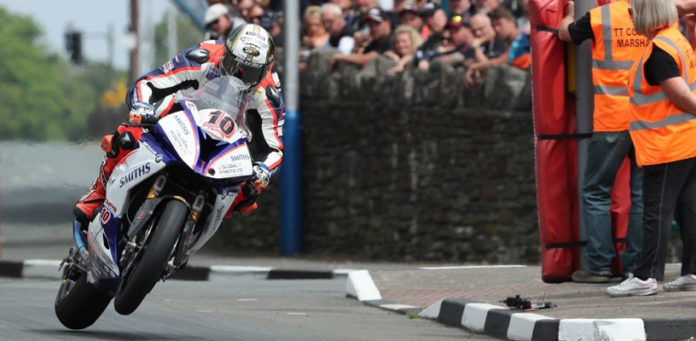
| REVAMPED SCHEDULE PROPOSED FOR 2020 ISLE OF MAN TT RACES |
| It is proposed that the 2020 Isle of Man TT Races, promoted by the Department for Enterprise, will be run on a revamped schedule designed to improve spectator entertainment and mitigate the demands that are placed on teams, riders, volunteers including the TT Marshals Association and local residents. The proposed schedule will mean some changes to road closure periods and the established racing schedule.
Rob Callister MHK, Political Member with responsibility for tourism and motorsport, commented: “The proposed new schedule has been designed to optimise qualifying conditions and offer shorter race days, reducing the pressure placed on competitors, teams, volunteers and officials. This new format is also designed to minimise the impact that racing has on local residents and businesses with more clearly defined road closure schedules including the more definitive first weekend qualifying timetable and cutting the duration of road closures during race week which result in clearer, easier to follow road closure timetables. This will bring benefits to rider, visitors and locals throughout the TT period.” The proposals mean the 2020 Isle of Man TT Races will begin a day later than previous years, starting on Sunday 31st May with an afternoon Qualifying Session. Evening Qualifying Sessions will then run as before from Monday 1st June to Thursday 4th June with the final session moved from the evening to a new afternoon slot on Friday 5th June. Provisional sessions remain in the schedule on Thursday afternoon and Friday evening now becomes a provisional session. The new TT Race day format starts with a single lap ‘Morning Warm Up Session’ for solo competitors before the opening race of the week – the RST Superbike Race – which gets underway at midday on Saturday 6th June followed by the first Sidecar TT Race at 3pm. Monday’s and Wednesday’s Race days – featuring the two Supersport Races, the RL360 Superstock and the Bennetts Lightweight Race – will also begin with a Solo Morning Warm Up Session, with a single lap Sidecar Shakedown Session added to the running order on Wednesday ahead of Friday’s second Sidecar Race and the Senior TT Race. ACU Events Ltd, as race organiser for the TT Races, will now submit the programme to the Isle of Man Government Department of Infrastructure for consideration and approval. This proposed new schedule will be integrated with a new off track entertainment programme that will be announced on Saturday 16th November at Motorcycle Live in Birmingham. Full details of the proposed 2020 TT Races schedule can be found here. |