

Home Blog Page 1492

Aprilia Racers Test New RS 660 At Misano

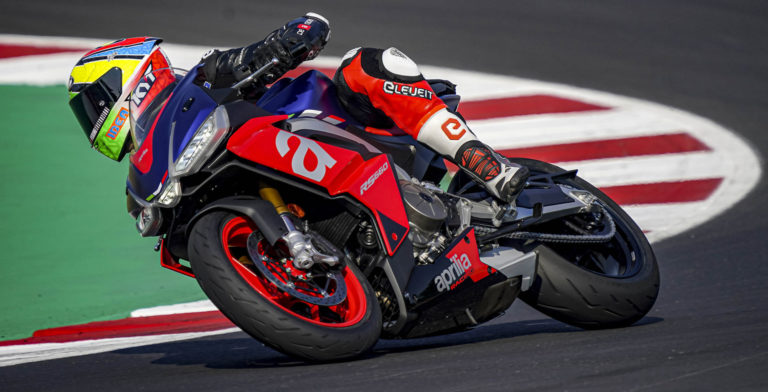
THE APRILIA MOTOGP RIDERS ON THE TRACK WITH THE RS 660

ALEIX ESPARGARÓ, BRADLEY SMITH AND LORENZO SAVADORI EXCEPTIONAL TESTERS IN MISANO FOR THE NEW APRILIA RS 660, JUST A FEW WEEKS BEFORE PRODUCTION STARTS

THEIR UNANIMOUS OPINION: NEVER RIDDEN SUCH AN AGILE AND FUN STREET SPORT BIKE BEFORE

Misano, 17 September 2020 – Just a few days ahead of the second MotoGP race to be held in Misano this weekend, the Aprilia Racing riders were on the track as exceptional testers for the anxiously-awaited Aprilia RS 660, the new, medium engine capacity sport bike which will go into production from October.

Aleix Espargarό, Bradley Smith and Lorenzo Savadori were sure not to miss out on the chance to put one of the most anxiously awaited bikes of the season through its paces.


Bradley Smith and Lorenzo Savadori riding new Aprilia RS 660 streetbikes at Misano. Photo courtesy Aprilia.
Bradley Smith (right) and Lorenzo Savadori (left) riding new Aprilia RS 660 streetbikes at Misano. Photo courtesy Aprilia.


It only took a few laps to bring out a unanimous opinion: RS 660 is another masterpiece from Aprilia in terms of the quality of the chassis architecture and engine performance, capable of providing just as fun a ride on everyday streets as on the track.

Aleix Espargarό said: ”It’s extremely stable and the engine really pushes hard. I really liked the quick shift feature.” A smiling Bradley Smith commented: ”After the first two corners, you have total confidence. It’s incredible how you can push hard straight away.” Lorenzo Savadori added: “More than anything, I was astonished at the comfort. I discovered a sport bike that was unexpectedly comfortable.”


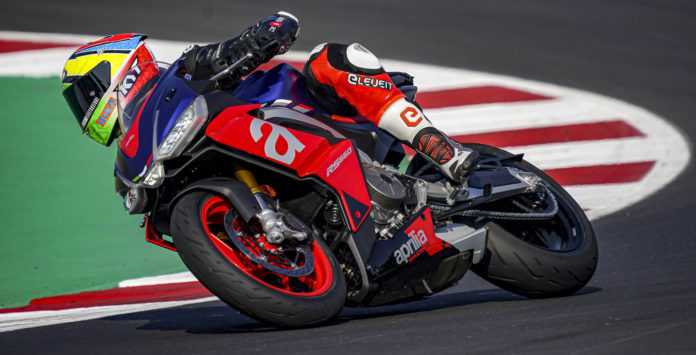
Lorenzo Savadori testing an Aprilia RS 660 at Misano. Photo courtesy Aprilia.


RS 660 marks the beginning of a new era for Aprilia and is the first model of a new generation of lightweight and high performance medium engine capacity bikes, supported by the electronics and technology of the Aprilia Racing department. Aprilia RS 660 is the answer to the demand of new generations of riders for a fun, easy and satisfying bike, capable of thrilling on the road as well as on the occasional track day, and it interprets the sport concept based on new standards, focusing on the outstanding weight/power ratio of 169 kg for 100 HP.

The new aluminium twin spar frame uses the engine as a bearing element and is an excellent example of Aprilia’s proverbial ability to build superb chassis architecture. Aprilia RS 660 is built around a new engine – a compact and lightweight parallel twin with dual overhead cam distribution and 4 valves per cylinder derived from the front bank of the 1100 cc V4, which it follows in terms of concepts and measurements. Also racing-derived and at the service of both daily and sport riding are the active APRC electronic controls, with highly advanced operating strategies thanks to the use of the electronic Ride-by-Wire accelerator and the six-axis inertial platform.

The on-board electronics are completed by five Riding Modes, designed to maximise the riding experience even in extremely different conditions of use, the advanced multimap Cornering ABS system and the digital colour TFT instrumentation. Aprilia RS 660 will also be available with a 95 HP engine that can be reduced in power, ideal for novice riders.
World Supersport: Mahias Marvelous In FP1 At Catalunya

Editorial Note: Use the zoom and scrolling tools in the bottom left corner of the PDF viewer to better see all pages of the race results.

SS FP1

World Superbike: Razgatlioglu Quickest, Gerloff 3rd In FP1 At Catalunya

Editorial Note: Use the zoom and scrolling tools in the bottom left corner of the PDF viewer to better see all pages of the race results.

SBK FP1

BMW R 18 Power Cruiser: Berlin Built For The U.S.A.

0

BMW R 18: A Modern Power Cruiser From The Past

By Michael Gougis

BMW has officially introduced the latest addition to its two-wheel lineup, a long, low, powerful cruiser rooted in the company’s motorcycling past that features its largest-ever boxer twin and a full complement of modern technology.

The BMW R 18 is uniquely German (featuring the phrase “Berlin Built” in several places on the machine) yet is aimed squarely at the North American audience, with half of the worldwide production of the bikes headed for the U.S. and Canada.

“This will be an important motorcycle for the U.S.,” said Trudy Hardy, head of Region America, BMW Motorrad, at the international launch of the R 18. “It was made for us.”

Central to the all-new machine, the first to be built on this platform, is the 1802cc twin-cylinder engine, designed to place the machine squarely in the heavy cruiser category that is dominated by Harley-Davidson. BMW says the air- and oil-cooled twin pumps out 91 horsepower at 4750 rpm, 116 lbs.-ft. of torque at 3000 rpm, and has more than 110 lbs.-ft. of torque available from 2000 to 4000 rpm. A six-speed transmission delivers power to the rear wheel via an exposed drive shaft on the right side of the tubular steel swingarm.


The drive shaft on the BMW R 18 is exposed. Photo courtesy BMW Motorrad.


A double-wall, double-loop steel frame provides a low 27.2-inch seat height. Conventional Showa forks and a single ZF shock at the rear handle suspension duties, while dual discs at the front and a single disc at the rear are operated through an ABS system. The wheelbase is 68.1 inches long, and the spoked rims wear a 120/70/19 tire in the front and a 180/65/16 in the rear.

The extensive use of steel and metal throughout the machine (the turn signal buckets are metal) means that the R 18 is hefty, at 761 pounds. The use of steel for things like fenders and side covers is deliberate, as the bike is designed to deliver an impression of solidity and stability. Even the handlebars are solidly-mounted to produce a more direct physical connection with the bike’s vibrations and motions – the R 18 is about delivering a feel, rather than a performance number.

While BMW has gone through great lengths to hide hoses, wiring, etc., the R 18 has a wide variety of technology and rider aids designed to make the beast easy to manage. ABS, traction control and rear wheel slip control (electronic and via a mechanical slipper clutch) are integrated into three ride modes – Rain, Roll and Rock. The bike has a keyless ignition, and Hill Start mode allows the rider to pull away from a stop without having to balance the clutch against the brakes to avoid rolling backward. And speaking of backward, the R 18 has reverse, as well.


The 1802cc boxer twin generates 91 horsepower and 116 pounds-feet of torque, and pumps it all through a six-speed transmission and an exposed drive shaft. Photo courtesy BMW Motorrad.


Styling cues are lifted from significant BMW models of the past, especially the R5 of 1936 and 1937. The tank shape, the straight line of the upper frame tube, colors, exposed drive shaft and boxer engine all were chosen as representative of iconic BMW models, said Vinnie Kung, Product Manager, Motorrad Division. “We were able to pull from our own book,” Kung said.

BMW considers the $17,495 R 18 its first real entry into the cruiser market, and studied that segment long and hard while preparing the R 18, said Edgar Heinrich, head of the development team responsible for the R 18. While the cruiser-styled R1200C (1997 to 2004) sold well, it did so as kind of a stylized standard, not in the cruiser segment that the stout, powerful, low-slung R 18 is designed to penetrate.

“It (the R1200C) was very successful, but not in the cruiser market,” Heinrich said. “It did well as a kind of standard. But if we go into this (cruiser) market, if we want to be successful, we have to play by the rules there.”

ASRA/CCS Race Of Champions At Daytona Cut To Two-Days Only

The 37th annual ASRA/CCS Race of Champions (ROC) will be held at Daytona International Speedway, in Daytona Beach, Florida, in October, but issues related to the COVID-19 pandemic have forced changes to the long-running race event.

Due to the Daytona Beach city government deciding not to issue the special event permits that make “Biketoberfest” and most of its activities possible, plus the cancellation of the postponed Daytona 200, the 2020 version of the ROC has been scaled back to a two-day event, October 17-18. This change eliminates the Team Hammer Advanced Riding School & Pro Practice day that traditionally runs on Friday.

“We presented several options to Daytona International Speedway to proceed with the traditional October event,” said ASRA/CCS President Kevin Elliott, “but after careful consideration, speedway officials opted for a two-day program with assurance that the Team Hammer Advanced Riding School & Pro Practice would be part of future October events with ASRA/CCS.”

Riders who had pre-registered for the Team Hammer Advanced Riding School & Pro Practice should have already been contacted by Team Hammer and issued a refund. Anyone with questions can submit them to [email protected] or by calling (951) 245-6414 between 9:00 a.m. and 5:00 p.m. Pacific Time, Monday through Friday.

ASRA/CCS is now accepting pre-entries for the ROC event until October 2 at www.ccsracing.us and www.asraracing.com.

Aprilia Racers Test New RS 660 At Misano

Lorenzo Savadori riding a new Aprilia RS 660 at Misano. Photo courtesy Aprilia.

THE APRILIA MOTOGP RIDERS ON THE TRACK WITH THE RS 660

ALEIX ESPARGARÓ, BRADLEY SMITH AND LORENZO SAVADORI EXCEPTIONAL TESTERS IN MISANO FOR THE NEW APRILIA RS 660, JUST A FEW WEEKS BEFORE PRODUCTION STARTS

THEIR UNANIMOUS OPINION: NEVER RIDDEN SUCH AN AGILE AND FUN STREET SPORT BIKE BEFORE

Misano, 17 September 2020 – Just a few days ahead of the second MotoGP race to be held in Misano this weekend, the Aprilia Racing riders were on the track as exceptional testers for the anxiously-awaited Aprilia RS 660, the new, medium engine capacity sport bike which will go into production from October.

Aleix Espargarό, Bradley Smith and Lorenzo Savadori were sure not to miss out on the chance to put one of the most anxiously awaited bikes of the season through its paces.


Bradley Smith and Lorenzo Savadori riding new Aprilia RS 660 streetbikes at Misano. Photo courtesy Aprilia.
Bradley Smith (right) and Lorenzo Savadori (left) riding new Aprilia RS 660 streetbikes at Misano. Photo courtesy Aprilia.


It only took a few laps to bring out a unanimous opinion: RS 660 is another masterpiece from Aprilia in terms of the quality of the chassis architecture and engine performance, capable of providing just as fun a ride on everyday streets as on the track.

Aleix Espargarό said: ”It’s extremely stable and the engine really pushes hard. I really liked the quick shift feature.” A smiling Bradley Smith commented: ”After the first two corners, you have total confidence. It’s incredible how you can push hard straight away.” Lorenzo Savadori added: “More than anything, I was astonished at the comfort. I discovered a sport bike that was unexpectedly comfortable.”


Lorenzo Savadori testing an Aprilia RS 660 at Misano. Photo courtesy Aprilia.


RS 660 marks the beginning of a new era for Aprilia and is the first model of a new generation of lightweight and high performance medium engine capacity bikes, supported by the electronics and technology of the Aprilia Racing department. Aprilia RS 660 is the answer to the demand of new generations of riders for a fun, easy and satisfying bike, capable of thrilling on the road as well as on the occasional track day, and it interprets the sport concept based on new standards, focusing on the outstanding weight/power ratio of 169 kg for 100 HP.

The new aluminium twin spar frame uses the engine as a bearing element and is an excellent example of Aprilia’s proverbial ability to build superb chassis architecture. Aprilia RS 660 is built around a new engine – a compact and lightweight parallel twin with dual overhead cam distribution and 4 valves per cylinder derived from the front bank of the 1100 cc V4, which it follows in terms of concepts and measurements. Also racing-derived and at the service of both daily and sport riding are the active APRC electronic controls, with highly advanced operating strategies thanks to the use of the electronic Ride-by-Wire accelerator and the six-axis inertial platform.

The on-board electronics are completed by five Riding Modes, designed to maximise the riding experience even in extremely different conditions of use, the advanced multimap Cornering ABS system and the digital colour TFT instrumentation. Aprilia RS 660 will also be available with a 95 HP engine that can be reduced in power, ideal for novice riders.
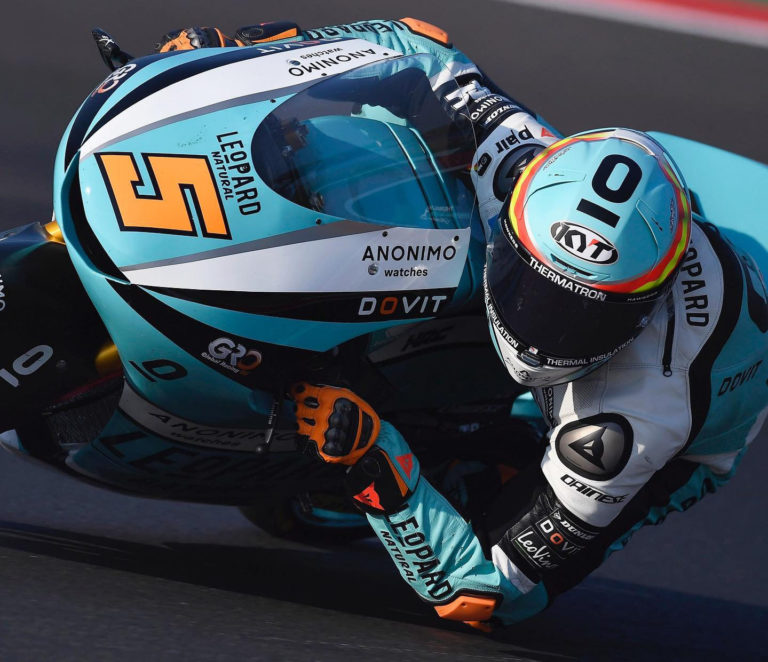
Moto3: Masia Breaks Lap Record In FP2 At Misano II

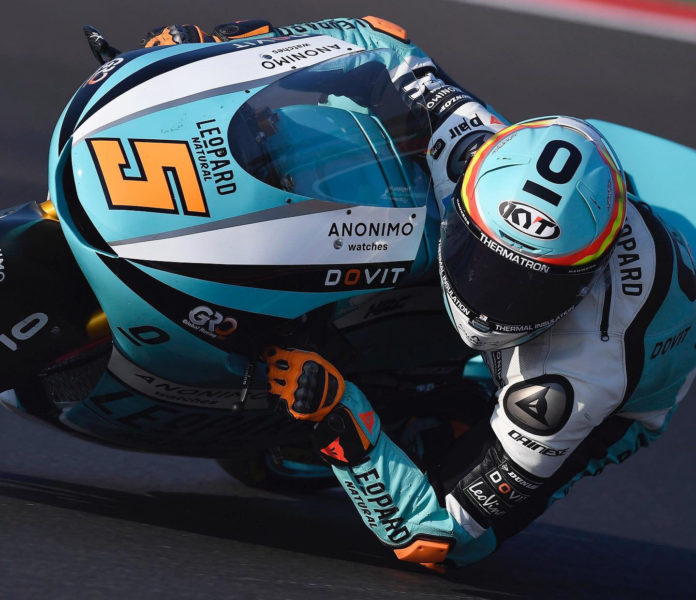
Jaume Masia (5). Photo courtesy Leopard Racing.
Moto3 FP2

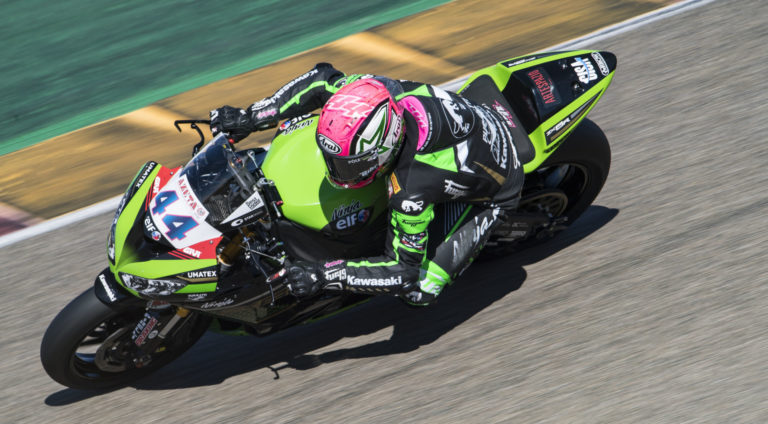
World Supersport: Mahias Marvelous In FP1 At Catalunya

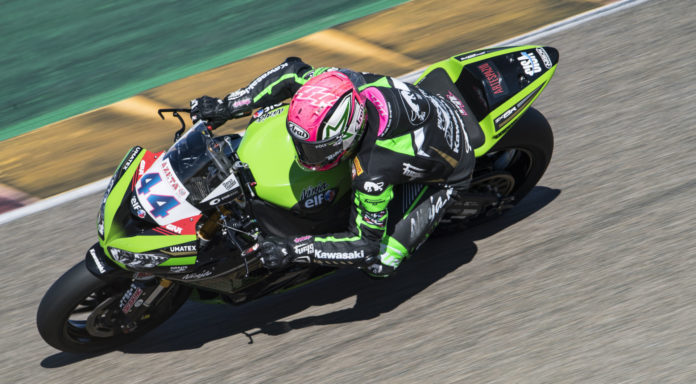
Lucas Mahias 44). Photo courtesy Kawasaki.
Lucas Mahias (44). Photo courtesy Kawasaki.

Editorial Note: Use the zoom and scrolling tools in the bottom left corner of the PDF viewer to better see all pages of the race results.

SS FP1

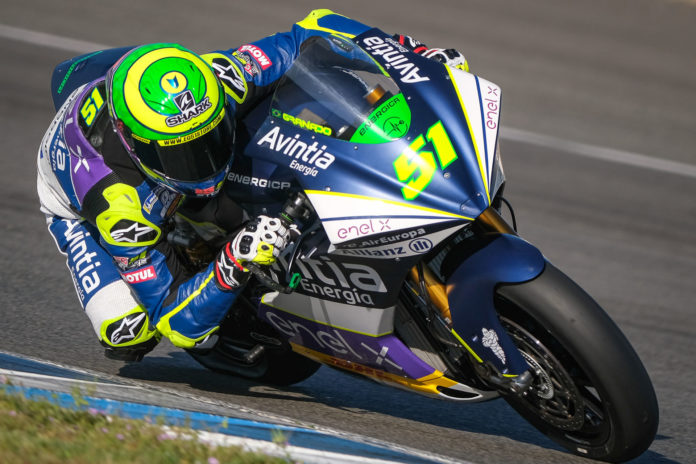
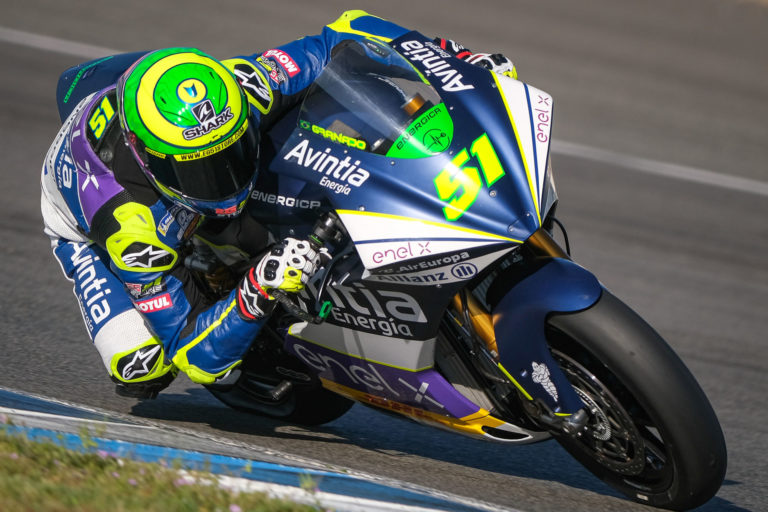
MotoE: Granado Tops FP1 At Misano II

Eric Granado (51). Photo courtesy of Dorna.
motoE FP1

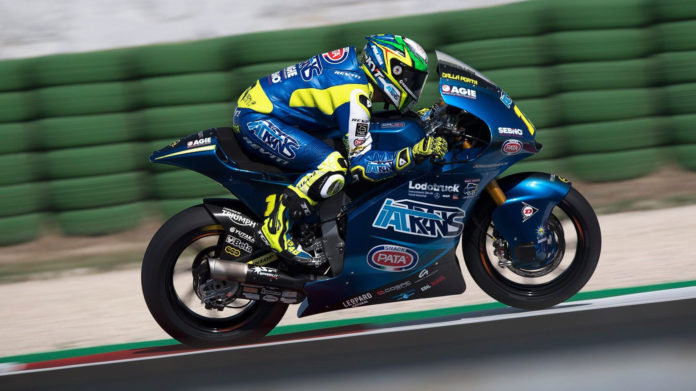
Moto2: Bastianini Close To Lap Record In FP1 At Misano II

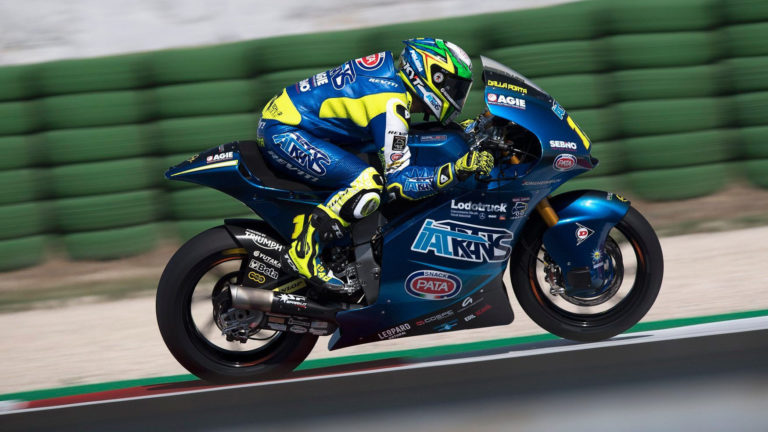
Enea Bastianini (33). Photo courtesy ItalTrans Racing Team.
Moto2 FP1

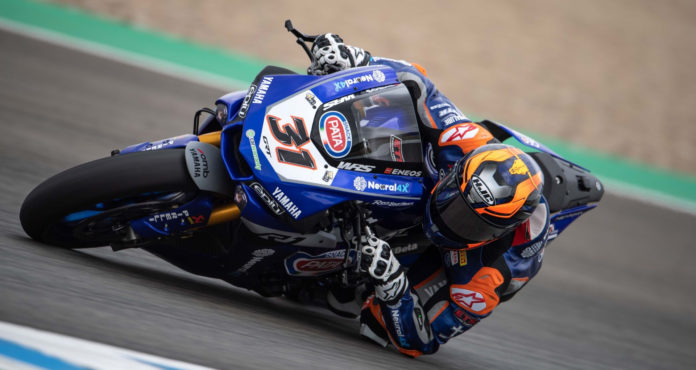
World Superbike: Razgatlioglu Quickest, Gerloff 3rd In FP1 At Catalunya

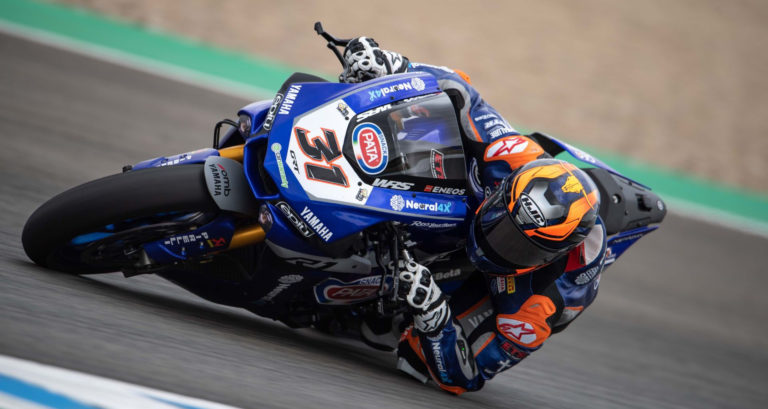
Garrett Gerloff (31). Photo courtesy Yamaha.

Editorial Note: Use the zoom and scrolling tools in the bottom left corner of the PDF viewer to better see all pages of the race results.

SBK FP1

BMW R 18 Power Cruiser: Berlin Built For The U.S.A.

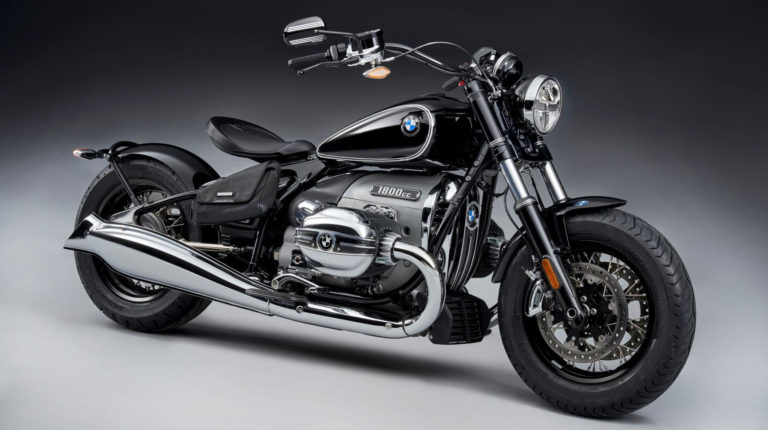
The new 2021 BMW R 18 cruiser. Photo courtesy of BMW Motorrad.
The BMW R 18 features the company's biggest-ever boxer twin, a long, low-slung chassis, modern technology and styling cues from the company's history. Photo courtesy BMW Motorrad.

BMW R 18: A Modern Power Cruiser From The Past

By Michael Gougis

BMW has officially introduced the latest addition to its two-wheel lineup, a long, low, powerful cruiser rooted in the company’s motorcycling past that features its largest-ever boxer twin and a full complement of modern technology.

The BMW R 18 is uniquely German (featuring the phrase “Berlin Built” in several places on the machine) yet is aimed squarely at the North American audience, with half of the worldwide production of the bikes headed for the U.S. and Canada.

“This will be an important motorcycle for the U.S.,” said Trudy Hardy, head of Region America, BMW Motorrad, at the international launch of the R 18. “It was made for us.”

Central to the all-new machine, the first to be built on this platform, is the 1802cc twin-cylinder engine, designed to place the machine squarely in the heavy cruiser category that is dominated by Harley-Davidson. BMW says the air- and oil-cooled twin pumps out 91 horsepower at 4750 rpm, 116 lbs.-ft. of torque at 3000 rpm, and has more than 110 lbs.-ft. of torque available from 2000 to 4000 rpm. A six-speed transmission delivers power to the rear wheel via an exposed drive shaft on the right side of the tubular steel swingarm.


The drive shaft on the BMW R 18 is exposed. Photo courtesy BMW Motorrad.


A double-wall, double-loop steel frame provides a low 27.2-inch seat height. Conventional Showa forks and a single ZF shock at the rear handle suspension duties, while dual discs at the front and a single disc at the rear are operated through an ABS system. The wheelbase is 68.1 inches long, and the spoked rims wear a 120/70/19 tire in the front and a 180/65/16 in the rear.

The extensive use of steel and metal throughout the machine (the turn signal buckets are metal) means that the R 18 is hefty, at 761 pounds. The use of steel for things like fenders and side covers is deliberate, as the bike is designed to deliver an impression of solidity and stability. Even the handlebars are solidly-mounted to produce a more direct physical connection with the bike’s vibrations and motions – the R 18 is about delivering a feel, rather than a performance number.

While BMW has gone through great lengths to hide hoses, wiring, etc., the R 18 has a wide variety of technology and rider aids designed to make the beast easy to manage. ABS, traction control and rear wheel slip control (electronic and via a mechanical slipper clutch) are integrated into three ride modes – Rain, Roll and Rock. The bike has a keyless ignition, and Hill Start mode allows the rider to pull away from a stop without having to balance the clutch against the brakes to avoid rolling backward. And speaking of backward, the R 18 has reverse, as well.


The 1802cc boxer twin generates 91 horsepower and 116 pounds-feet of torque, and pumps it all through a six-speed transmission and an exposed drive shaft. Photo courtesy BMW Motorrad.


Styling cues are lifted from significant BMW models of the past, especially the R5 of 1936 and 1937. The tank shape, the straight line of the upper frame tube, colors, exposed drive shaft and boxer engine all were chosen as representative of iconic BMW models, said Vinnie Kung, Product Manager, Motorrad Division. “We were able to pull from our own book,” Kung said.

BMW considers the $17,495 R 18 its first real entry into the cruiser market, and studied that segment long and hard while preparing the R 18, said Edgar Heinrich, head of the development team responsible for the R 18. While the cruiser-styled R1200C (1997 to 2004) sold well, it did so as kind of a stylized standard, not in the cruiser segment that the stout, powerful, low-slung R 18 is designed to penetrate.

“It (the R1200C) was very successful, but not in the cruiser market,” Heinrich said. “It did well as a kind of standard. But if we go into this (cruiser) market, if we want to be successful, we have to play by the rules there.”

ASRA/CCS Race Of Champions At Daytona Cut To Two-Days Only

Daytona International Speedway. Photo courtesy of Daytona International Speedway.
Daytona International Speedway. Photo courtesy Daytona International Speedway.

The 37th annual ASRA/CCS Race of Champions (ROC) will be held at Daytona International Speedway, in Daytona Beach, Florida, in October, but issues related to the COVID-19 pandemic have forced changes to the long-running race event.

Due to the Daytona Beach city government deciding not to issue the special event permits that make “Biketoberfest” and most of its activities possible, plus the cancellation of the postponed Daytona 200, the 2020 version of the ROC has been scaled back to a two-day event, October 17-18. This change eliminates the Team Hammer Advanced Riding School & Pro Practice day that traditionally runs on Friday.

“We presented several options to Daytona International Speedway to proceed with the traditional October event,” said ASRA/CCS President Kevin Elliott, “but after careful consideration, speedway officials opted for a two-day program with assurance that the Team Hammer Advanced Riding School & Pro Practice would be part of future October events with ASRA/CCS.”

Riders who had pre-registered for the Team Hammer Advanced Riding School & Pro Practice should have already been contacted by Team Hammer and issued a refund. Anyone with questions can submit them to [email protected] or by calling (951) 245-6414 between 9:00 a.m. and 5:00 p.m. Pacific Time, Monday through Friday.

ASRA/CCS is now accepting pre-entries for the ROC event until October 2 at www.ccsracing.us and www.asraracing.com.

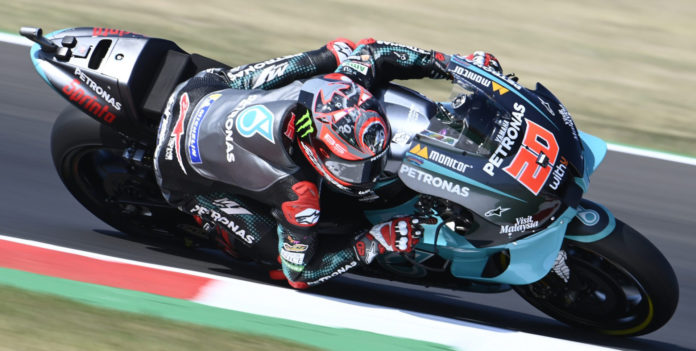
MotoGP: Quartararo Under Race Lap Record In FP1 At Misano II

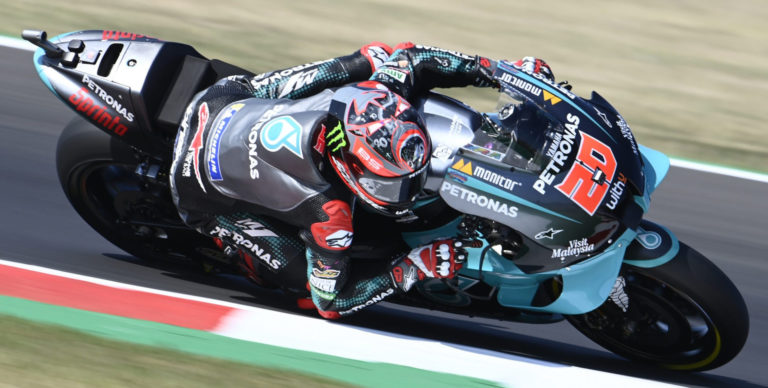
Fabio Quartararo (20). Photo courtesy PETRONAS Yamaha SRT.
MotoGP FP1

Moto3: Fernandez Fastest In FP1 At Misano II

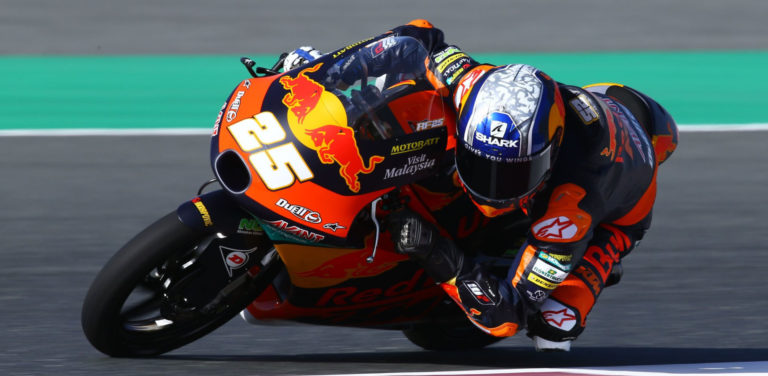
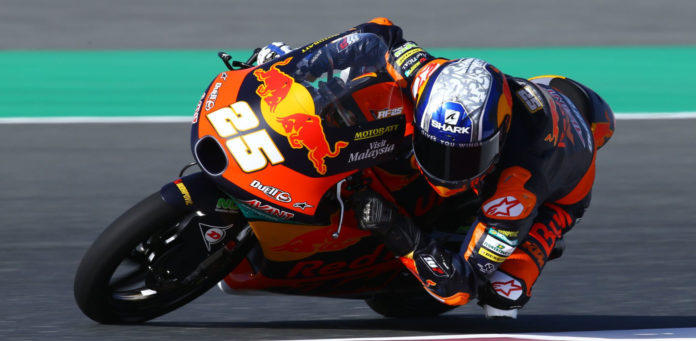
Raul Fernandez (25). Photo courtesy of Red Bull KTM Ajo.
Moto3 FP1