

First Person/Opinion
By Michael Gougis
Sunday morning of the MotoGP race weekend at Circuit of The Americas, 2026, and I am at the sink in the washroom standing next to Gareth Harford, one of the photographers of the famous Gold & Goose motorsports photography agency. We greeted each other, and then at the same time said, almost as if we were afraid to say something as stupid as it was going to sound, “That was Marc!”
There is a small medical office between the media room and the washrooms at COTA. And in the early, quiet hours of Sunday morning, then nine-time Grand Prix World Champion Marc Marquez was sitting in the darkened doorway of that medical center, on the floor, by himself, staring at his phone. No entourage, no handler. Just Marc, waiting to see the doctor.
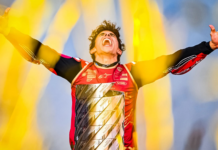
I think it was at that moment that I knew for certain what I had suspected. Marc was hurt, far more than he was letting on. Look back at the podium celebration from the Sprint race at Brazil, and you won’t see the typical physical exuberance of a Marquez win. He looks tired. He barely moves on the podium.
As we all know now, Marquez was hiding the extent of his injuries. Later in the season, he had the doctors patch him up as best they could, and then he went out and made history. Typical Marc.
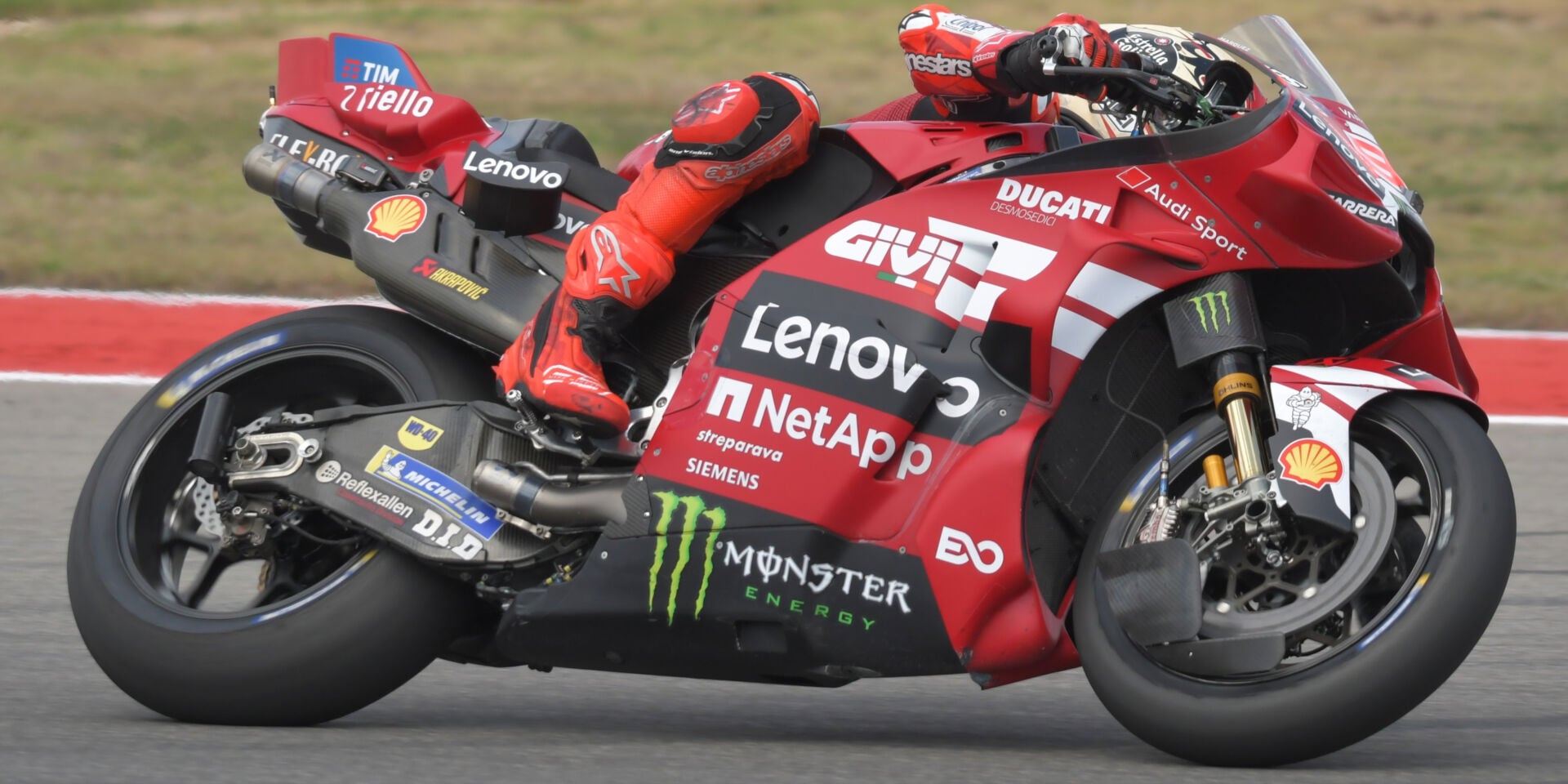
Again, you have to have the context necessary to understand what is so impressive about his 10th World Championship. No racebike is easy to ride at a race-winning pace. But the current, soon-to-disappear literbikes of the modern MotoGP era are insanely physically demanding to ride. They take more out of a rider than any motorcycle in history, in terms of the sheer physical force and effort it takes to wrestle them around a racetrack.
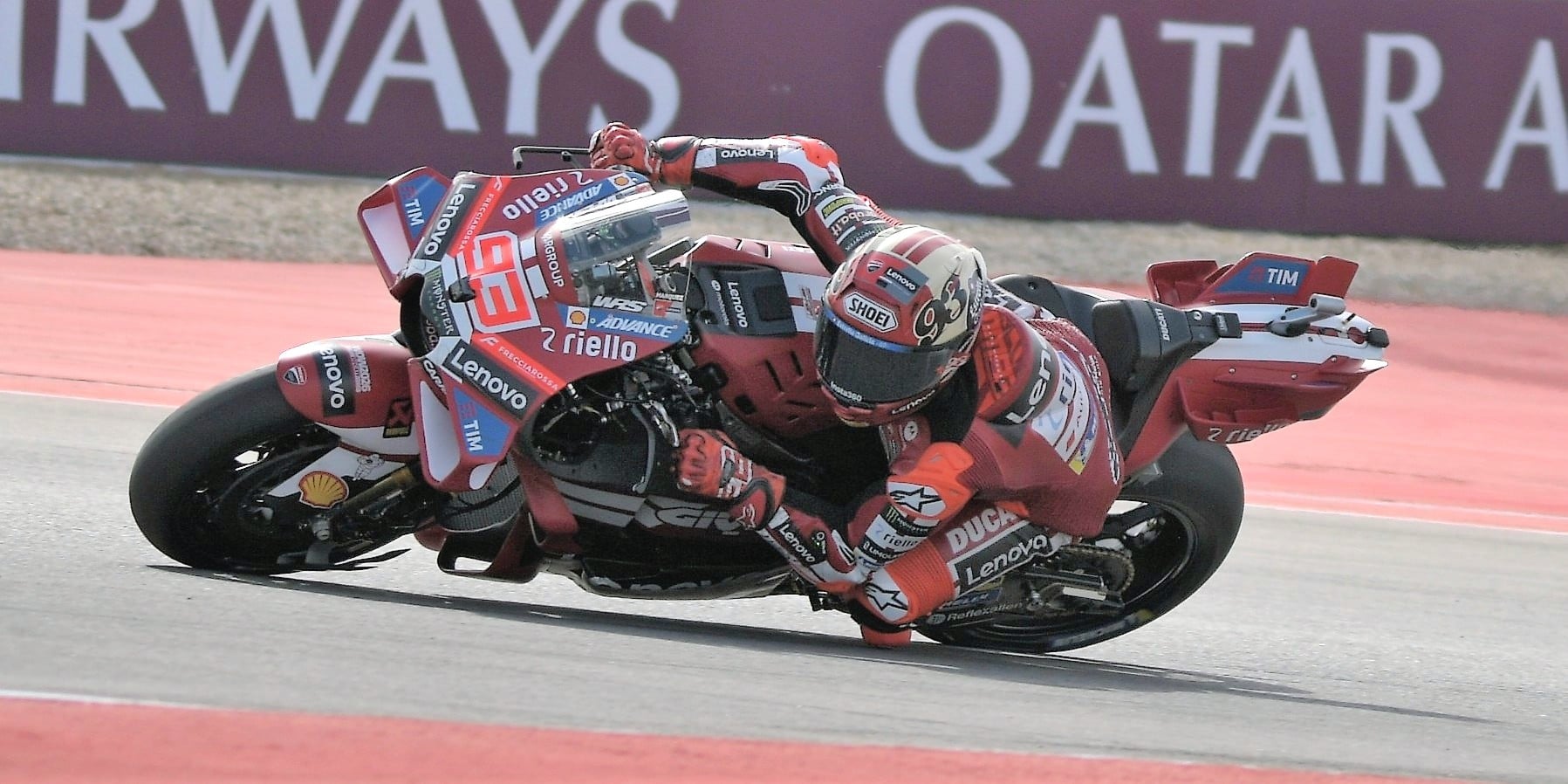
MotoGP Legend Randy Mamola spent years giving VIPs two-up rides on a Ducati Desmosedici at race events, and he told me all the way back in 2018 that the physical demands of riding a MotoGP racebike didn’t even compare to the effort required to ride a 500cc Grand Prix bike. “You watch a MotoGP machine come into a corner and you think there is no way they are going to be able to brake hard enough to make the corner,” Mamola says, “and then they do. You have to be so strong. You have to be so in tune with everything. The physical conditioning you need is incredible.” And that was on a demo bike based on the 2012 Desmosedici. It barely had any aero on it.
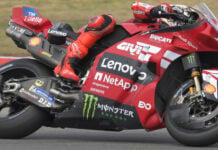
Aero is the key to understanding why these machines are so hard to ride. The wings on the front of the fairing shove the front tire into the ground, making turning the bike harder and giving more grip during braking, which means more force on the rider during braking. Once the bike is on its side, the ground effect downforce created by the fairing sides – and increasingly aero appendages on the fork and swingarm – suck the machine to the ground. There’s more grip, which means harder acceleration out of the corner and more speed at the apex. But it takes pure muscle to pull the machine back to the upright position. This explains why Marquez struggled at the tracks that featured side-to-side transitions at speed. It takes physical strength to overcome the aero forces sucking the bike to the ground, and he simply didn’t have enough of it.
(As an aside, this is one of the reasons I’m so disappointed in the 2027 technical revisions for MotoGP. They had a chance to really cut back on the ground effect fairings and other devices, and didn’t. MotoGP officials really need to talk to someone who understands how aero works, because judging by the rules it has promulgated, it looks like the engineers and manufacturers have pulled the wool over their eyes – again. The 850s look like they will be more aero-dependent than any other racebike in history. It would not be hard to write a set of rules that would eliminate the swingarm, fork and fairing lower ground effects devices and configurations. But I digress.)
Honda knew that aero would make the bikes so much harder to ride, years ago. When the current aero arms race began, the company tested a bike in private that was equipped with wings and Honda said it was several seconds a lap faster than its non-winged counterpart. But the bike wore out its test riders quickly.
Current riders also know just how hard it is to actually ride one of these machines. This year, Pol Espargaro bounced back and forth from the 850cc racebike he’s developing for KTM to the current 1000cc RC16 for wild card appearances. He said that in testing the 850, his heart rate never exceeded 160 beats per minute. At Aragon, aboard the literbike, his heart race spiked to 190 beats per minute – “And I was last,” he said. His brother Aleix, when riding the factory Aprilia one year at Portimao, told me that the ground effects made the bike a missile through the last three fast right-handers that end the lap, but the suction made the machine a beast to fight back to the upright position going onto the front straight.
Andrea Iannone rode the Desmosedici for the VR46 team in 2024 in Malaysia, substituting for Fabio Di Giannantonio. Iannone was in the middle of a full season on World Superbike machinery, and never complained about the effort required to ride one of those racebikes. After the Sprint race at Malaysia, Iannone said: “After just five laps, I was exhausted.” After Sunday’s race, he said to GPOne: “I’m really finished – my arms, my shoulder, my upper body, it’s all finished … I had every possible pain a man can imagine this morning. My toes even hurt. I’m walking on my heels. I asked myself, did I even use my toes?”
Honda MotoGP rookie Diogo Moreira moved up from winning the Moto2 Championship to the RC213V this season and found that even he wasn’t up to the task. “I was finishing the races and I was super tired. I knew I needed some extra power to be able to fight in those last five laps, to be able to keep the pace until the end. I was aching and had pain,” he told MotorSport magazine.
Ignore anyone who says these machines are easy to ride. Yes, electronics help with wheelspin, wheelies, engine braking, etc. But in terms of the raw physical forces the riders cope with, these are the hardest racebikes in history to push to the limit.
So if fully fit riders are struggling, it gives you a new appreciation for Marquez’ physical condition and what he overcame. He has spoken in interviews about not being able to sleep on his right side, about staying in Madrid to be near the team of doctors and therapists who keep him functioning, and the training photo of his mangled right shoulder was a classic example of a picture being worth a thousand words.
Yes, Marquez is wily, intelligent, strategic, insanely talented and all of the other things you have to be to become a World Champion even once. But alongside all of the other debates about strategy, luck, Aprilia’s implosion, etc., have a bit of respect for the sheer physical toll this Championship run took out of Marquez. And have a lot of respect for the sheer physical effort it took to take the title from the best riders in the world.
Again.