





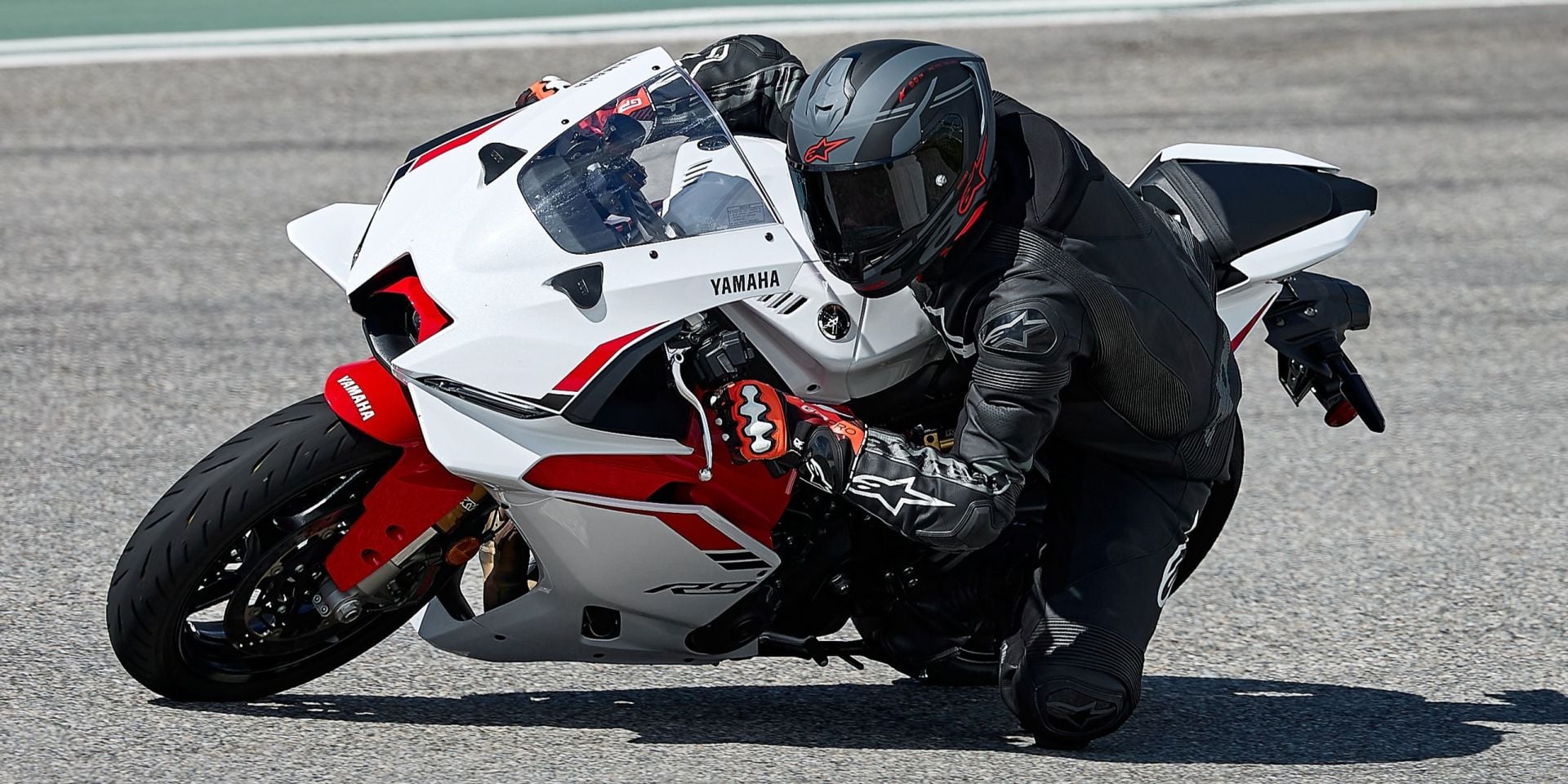
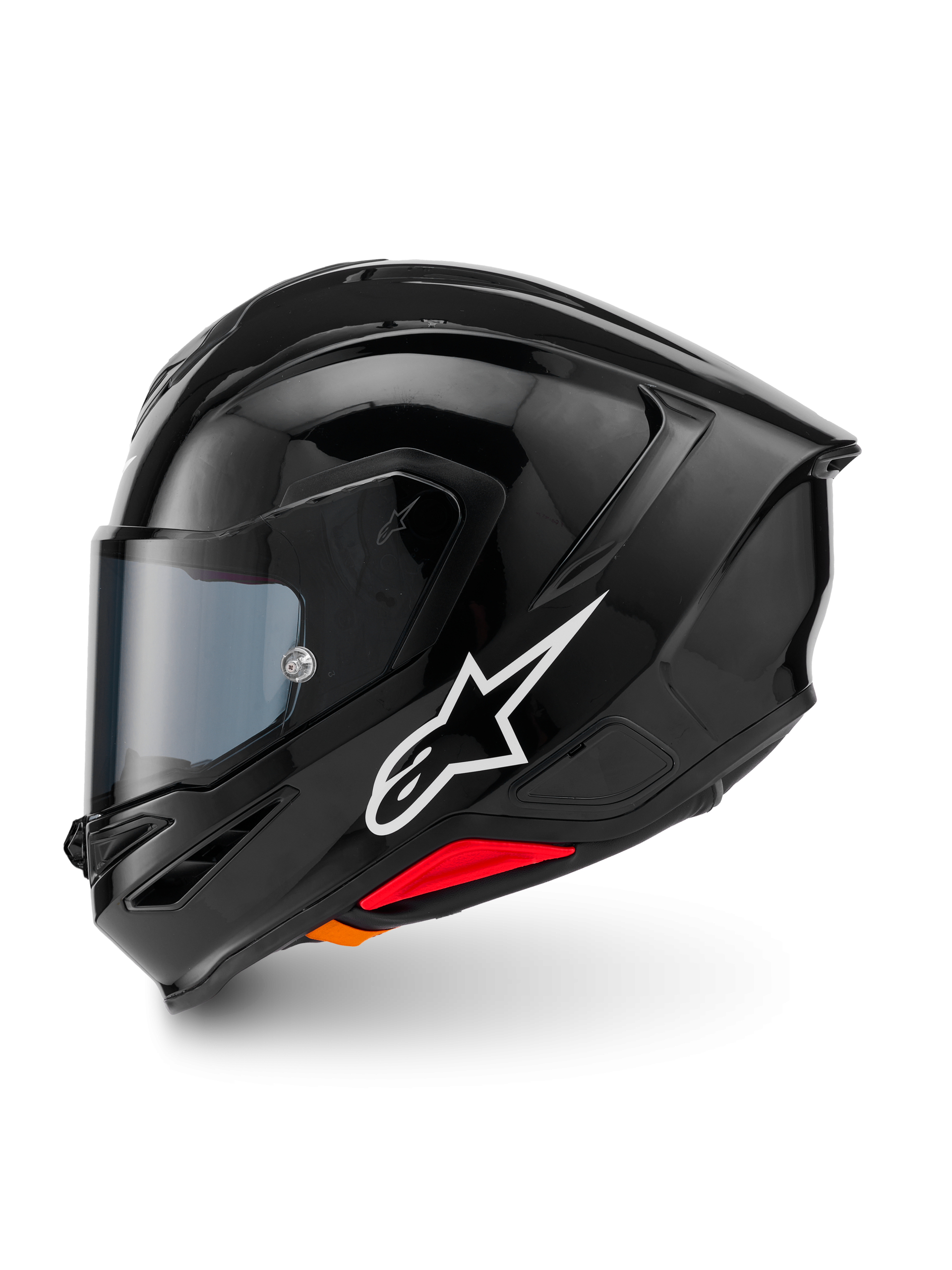
When Alpinestars jumped into the streetbike helmet market, even it was surprised by the success of its very first offering, the Supertech R10. After all of its careful planning and projections, when the helmet was introduced in 2024, the company sold its first-year production run in 30 days. Even now, several models of the R10 remain on back order. In total, the company sold more than 10 times what it anticipated selling in the first year the R10 was available.
Encouraged by this runaway success, Alpinestars followed up with another, more accessible, more street-oriented helmet. At a track day at the Streets of Willow, Alpinestars introduced its Supertech R7 helmet to motojournalists, then turned them loose for a day of track riding, followed by a street ride the following day.
In short, Alpinestars has followed the R10 with a sophisticated helmet that differs in construction material, design and cost, but one that incorporates the lessons learned in developing the R10, particularly the aerodynamic features. After all, air is air, and noise management, volume and stability matter when you’re shoving a helmet through it, whether you’re moving at highway speeds or at Mugello front straight speeds.
Alpinestars R7 Technical Details
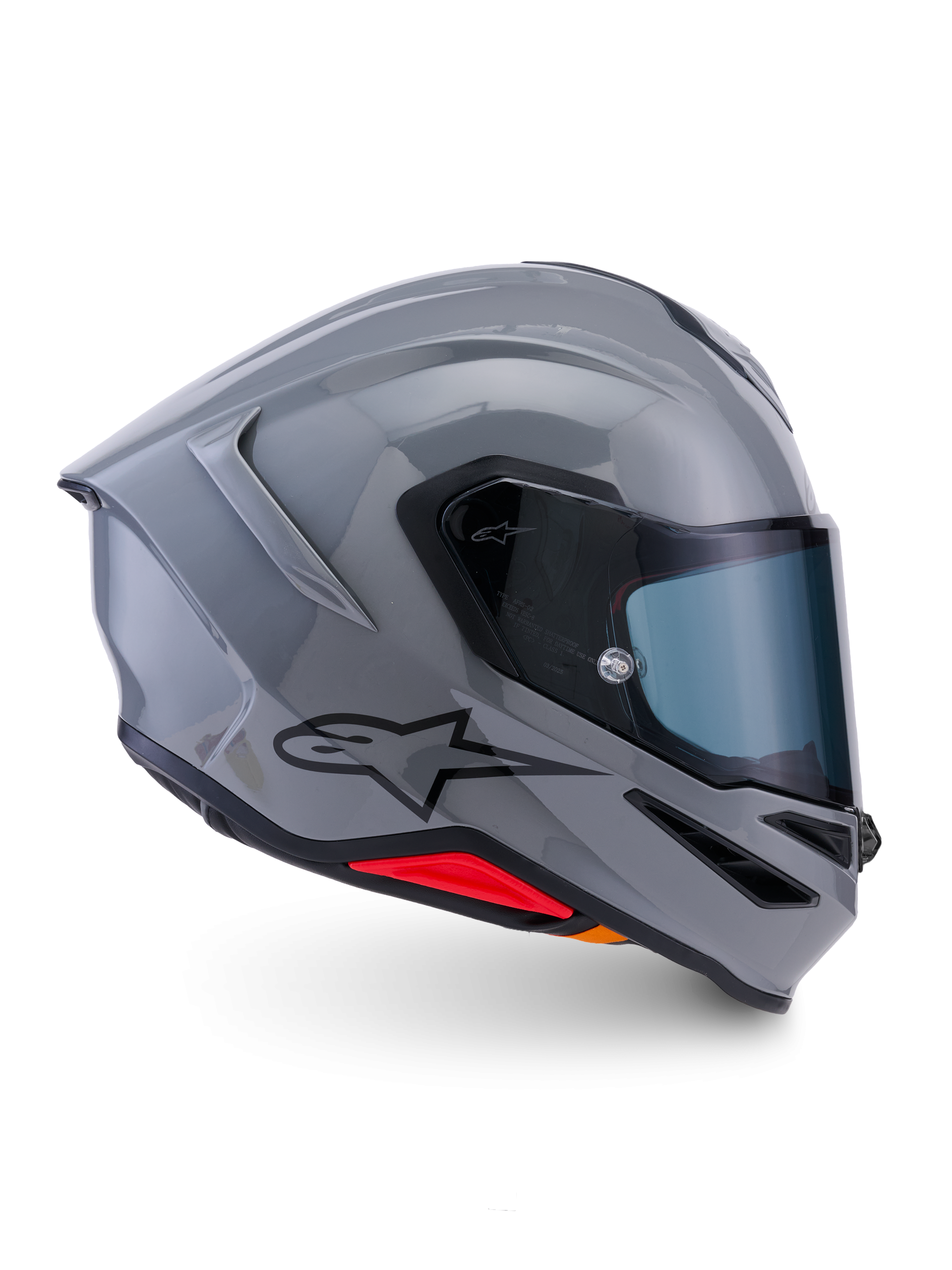
One of the biggest differences between the R7 and the R10 is the shell material. While the R10 has a full carbon-fiber shell, the R7 features a shell of an outer fiberglass layer, a unidirectional carbon composite layer, a carbon aramid fiber layer and an internal fiberglass layer. The base of the helmet is slightly wider than that of the R10 to ease putting it on and taking it off. The inner shell is a seven-piece expanded polystyrene construct with six densities. Alpinestars has certified the helmet to DOT and ECE 22.06 standards, and claims that the R7 undercuts the maximum allowed peak linear acceleration of the ECE 22.06 standard by 50 percent and the peak rotational acceleration standard by 80 percent. To help protect from rotational forces, the inner lining of the EPS layer has a slick coating, allowing the helmet to slip slightly on the rider’s head in an oblique impact and reduce the force transmitted to the brain.
Weight is close to that of the R10, at about 3.3 pounds (1500 grams) for the medium size version that meets both ECE and DOT standards – the ECE-only medium weighs in at 1400 grams, or 3.08 pounds. The R7 shares the cutouts in the lower edge with the R10 that are designed to prevent the helmet from impacting the collarbone in a crash, but on the R7, the cutout is filled with the company’s Nucleon PLASMA viscoelastic material that is soft and pliable but stiffens on impact.
The A-head system allows the rider to adjust the height and angle at which the helmet sits on their head. The cheek pads have an emergency release system, a channel for eyeglass temples (arms) and an integrated hydration tube channel. The cheek pads come in different sizes, allowing even more customization of the fit.
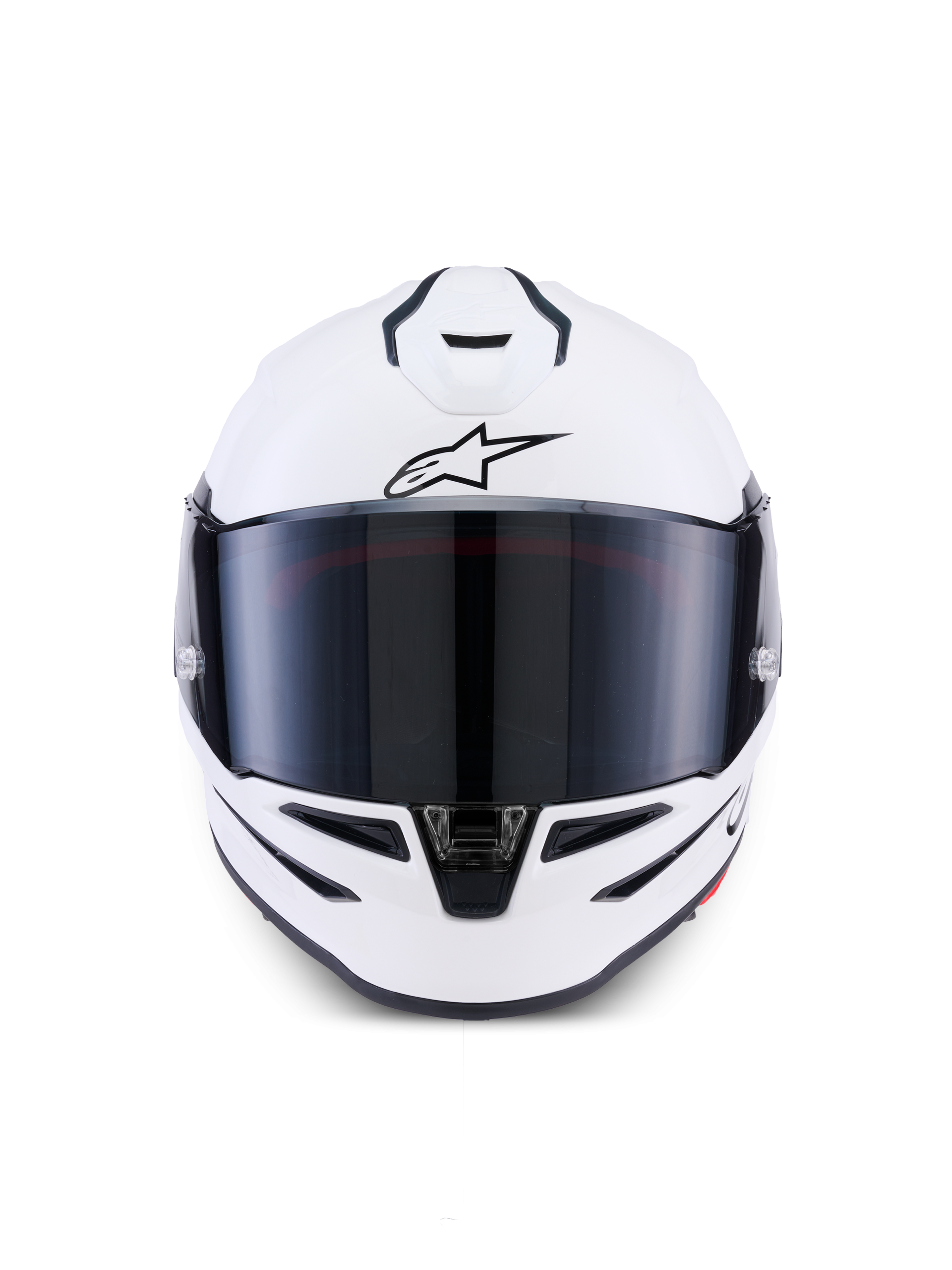
The ECE-certified face shield is interchangeable with the one on the R10 and comes in a multitude of colors, and the helmet itself is available in a wide variety of solids and graphic schemes. The field of view is 220 degrees of lateral vision and 57 degrees vertically. Aerodynamic features include a built-in rear spoiler, the “turbulator” elements on the face shield that reduce noise and turbulence and side winglets that reduce drag. The R7 features 10 vents, six intake and four exhausts, managed by a pair of chin inlets and a sliding forehead vent.
Suggested retail starts at $679.95.
Alpinestars says the R7 is slightly easier to pull on than the R10, but it’s still a snug fit to get the lid over the ears. I’d ridden with my R10 just a couple of days before the intro, and honestly, if there is a difference, it is slight. And the race nature of the helmet is evident, as the cheekpads were quite aggressive at first, although they broke in significantly during a few hours of riding at the Streets.
The shield is easy to use once you know what to feel for, and it snaps securely into place, again suggesting its race-oriented origins. Once the shield is down, the interior is quiet and serene, and that imparts a sense of solidity to the entire helmet. There is a plastic plug in the chin bar; removing that helps reduce fogging. Learning to operate the vents BEFORE you go out onto the track also helps reduce fogging. D’oh!
Streets is not the fastest track on the planet, and the highest indicated top speed I saw all day long was 120 miles per hour. At that speed, noise was minimal, as was buffeting, and the ventilation was more than adequate without being “windy” inside the shield. The helmet didn’t impede my ability to crank my head sideways to look up the track, and the large eyeport was welcome when tucked in. At no point did I ever notice any aerodynamic lift or sideways forces. It might get lost in the product messaging, but let me be clear – this helmet is perfectly at home on the racetrack.
Alpinestars reps helped me try some thinner cheek pads and we removed the chin skirt, but I went back to the original 25mm pads and I am glad I did, as they broke in nicely. Helmet fit, to me, is always a trade-off between comfort and security, and a helmet that feels awesome at 60 mph could definitely feel ill-fitting and loose at double that speed on a hypernaked. The R7 is definitely toward the performance end of the spectrum. But as I told the company representatives who asked what I thought about the helmet, I didn’t think about it at all once I was moving – and that is the best compliment I can give to a piece of safety equipment that I haven’t crash tested!