

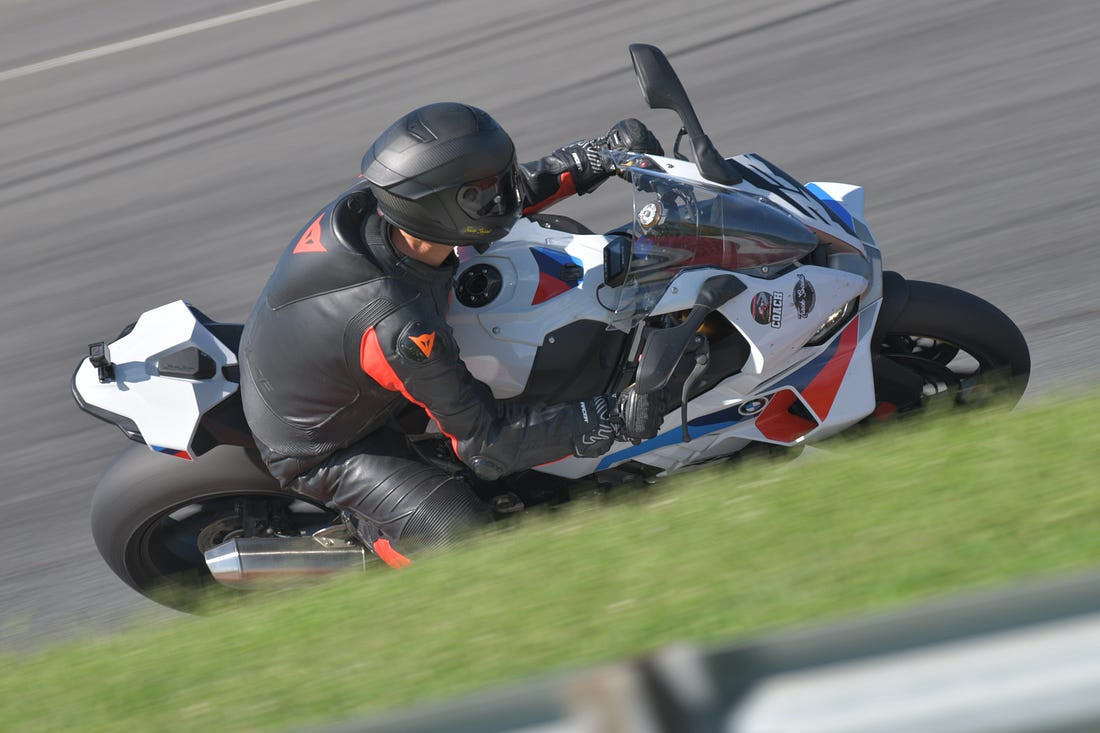
By Ken Hill:
Develop a plan for every inch of the track and lock it in through a combination of visual and feel references.
When I’m on track, my goal is to have a plan for every inch of asphalt. That gives me something specific to do, to evaluate, and to adjust. Every action produces feedback, and that feedback shapes the next action. That’s how confidence is built, one reference at a time.
That plan is built around two types of references:
- Visual references define your location.
- Feel references communicate what’s happening.
Used independently, both provide valuable information. But when connected, they create something far more powerful: a repeatable process for knowing where to act, what the action should feel like, and whether it produced the intended result.
That connection is how professional drivers and riders produce incredibly consistent laps, even as track conditions, grip, traffic, and other variables change in real time. That same process also allows them to get up to speed quickly.
They aren’t simply memorizing where to brake, turn in, or accelerate. They are building a continuous bridge between what they see, what they do, and what they feel. Let’s break down each one.
Visual references
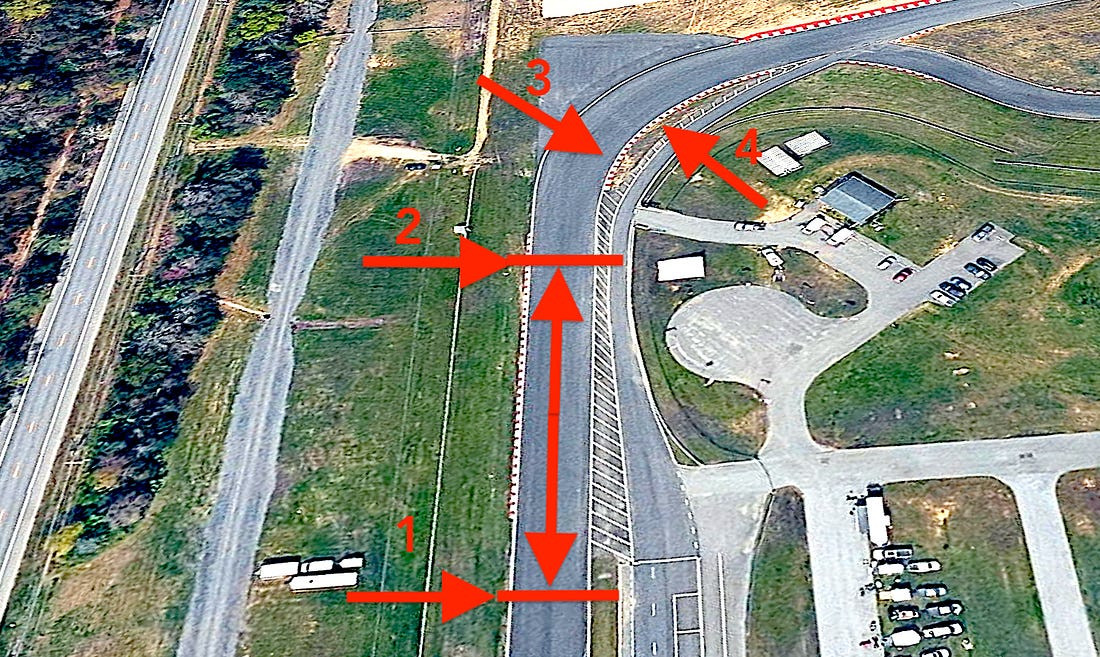
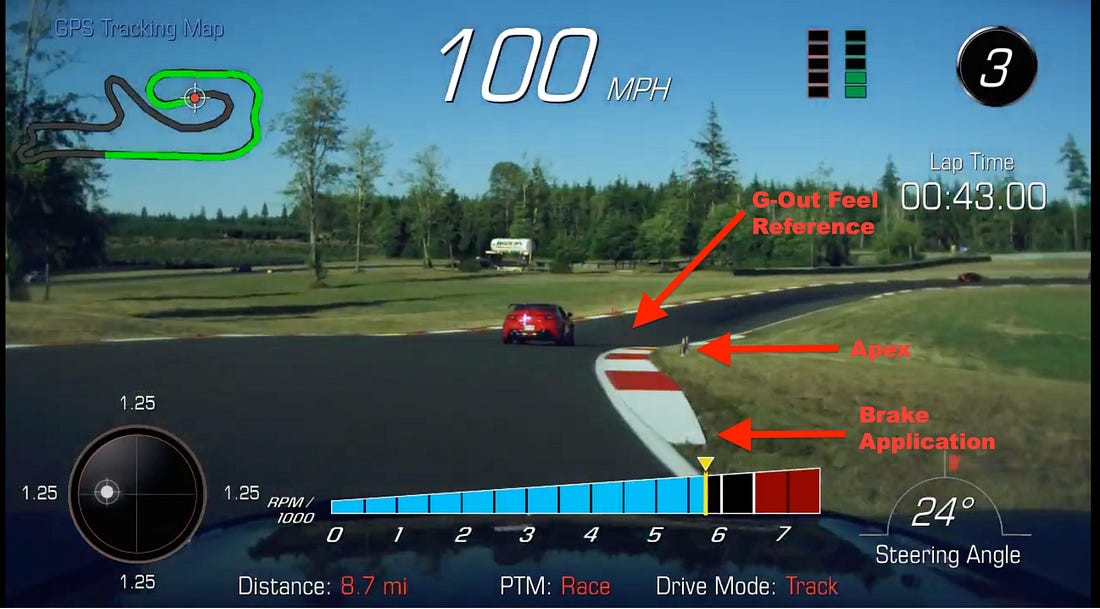
Visual references are identifiable points around the track that help organize your actions. They might include a brake marker, a turn-in point, a brake-release point, an apex, or an exit reference.
They answer questions, such as:
- Where do I brake?
- Where do I turn in?
- Where is the slow point?
- Where should I accelerate?
- Where should I finish the corner?
Visual references create structure. Instead of braking somewhere near the end of the straightaway or turning when a corner “looks right,” you connect each action to a specific location on the track.
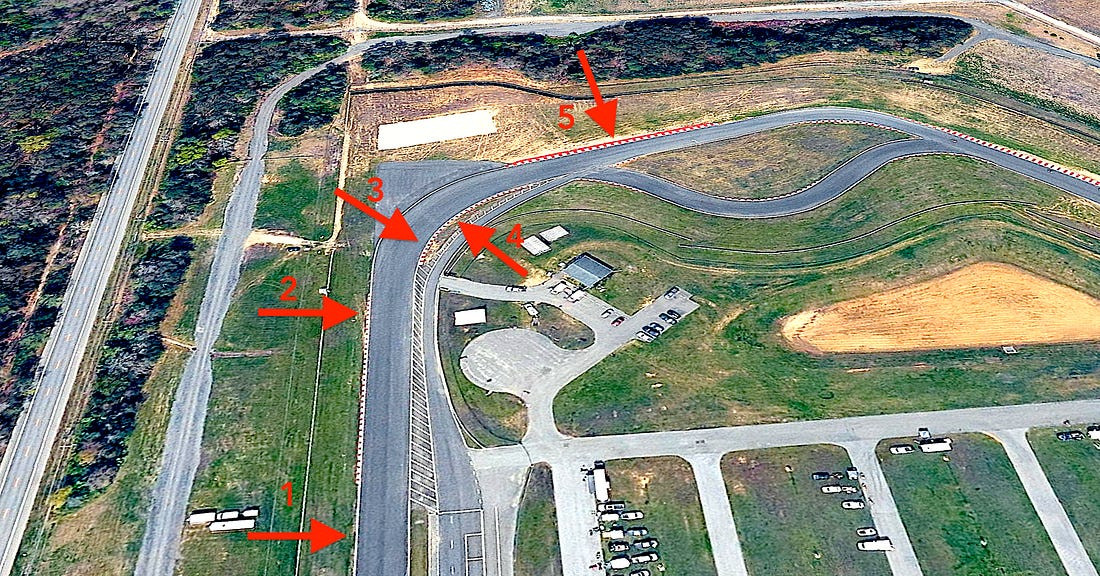
But a visual reference only tells you where to perform that action. It does not tell you whether the action was correct or whether it was performed with the proper timing, force, or degree of application.
You may begin braking at the same marker every lap but use a different degree of brake pressure. You may turn in at the same point but add steering angle or lean angle at a different rate.
You may reach the apex of a corner but arrive with too much speed, too little direction, or the wrong balance of brake and steering. This is when feel references become essential to your progress.
Feel references
Feel references are the sensations that help you understand what your inputs produce. But a feel reference is not only about what you feel, it is also about when you feel it.
During initial braking, can you feel the weight transferring forward? At turn-in, can you recognize the relationship between brake pressure, steering input, and grip?
At the slow point, does the vehicle naturally finish turning toward the apex? On the exit, does acceleration push you toward the exit reference in a predictable, linear fashion?
Feel references answer a different set of questions:
- When I built brake force, how quickly did weight transfer forward?
- At turn-in, could I feel the load on the front tire(s)?
- As I released the brakes, what did the changing weight transfer tell me?
- Did the slow point feel deliberate and clearly defined?
- On initial acceleration, could I feel the weight transfer rearward?
- As hard-drive throttle was applied, did the vehicle remain composed or was there movement?
These sensations are not random. Each one should occur at a specific time and location within the corner.
Note: Some track features, such as elevation changes, g-outs, crests, bumps, or pavement transitions, can make feel more important than sight. In those moments, what the vehicle is doing may be the most reliable reference you have. A compression, a set of bumps, or a pavement change can identify where you are and trigger the next action, allowing a feel reference to serve the same purpose as a visual reference.
Building the bridge
The real skill is learning to connect the two, knowing what to look for, what action that a visual reference should trigger, and when you should feel the resulting response.
Brake application: You’re approaching a corner. You see your brake reference. That visual reference tells you when to act. You get there, you brake.
Feel references:
- Initial weight transfer
- Suspension and tires loading
- Stability
-
Capacity to stop harder
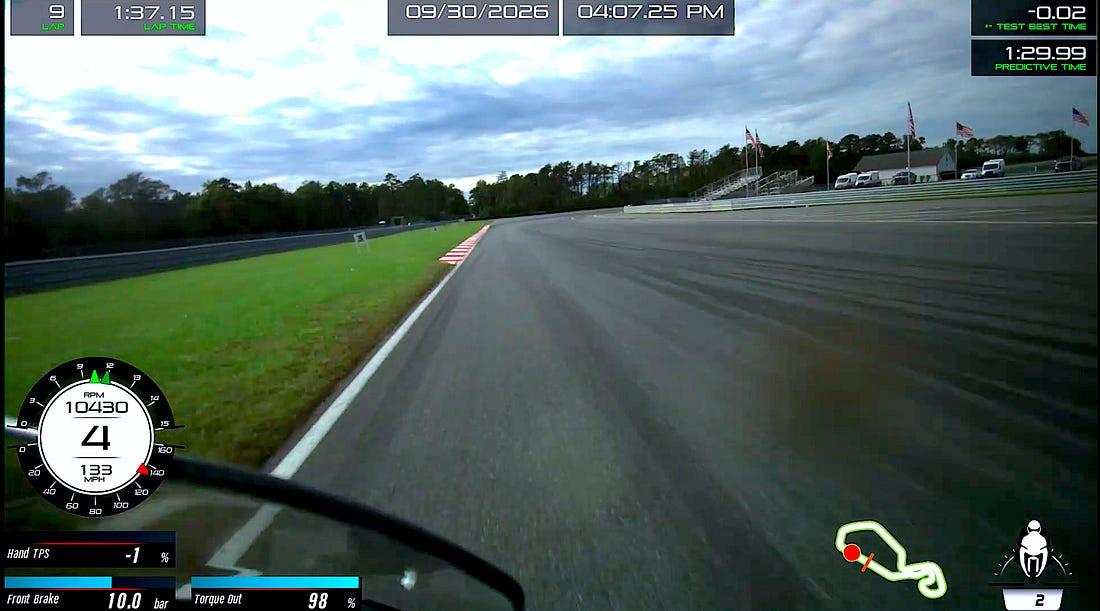
Turn in: As the turn-in reference approaches, your vision moves into the corner and triggers the steering input. The vehicle’s response—what you feel—tells you whether your brake pressure, speed, and turn-in rate match what the corner requires.
Feel references:
- Strong brake pressure
- Weight forward
- Vehicle steering to apex
- Sense of rotation
Slow point and apex: Your vision moves toward the slow point and apex. At the same time, you feel the brakes releasing, speed decreasing, steering or lean angle increasing, and the vehicle approaching the slow point.
Feel references:
- Brake pressure reduction
- Weight smoothly releasing off the front of the vehicle
- Deliberate slow point
- Continued turning toward apex
Exit: The exit reference gives acceleration a destination. As you apply the throttle, the vehicle’s response tells you whether the weight transferred rearward predictably, whether it remained composed, and whether your acceleration is carrying you toward that reference.
Feel references:
- Weight moving rearward with initial throttle
- Suspension setting as tires load
- Suspension and tire movement as heavy drive throttle builds
-
Stability
The Takeaway
Hoping for a good session or wishing for a faster lap time is not a process. Reduce the guesswork by combining visual and feel references throughout the entire lap. A visual reference triggers an action. A feel reference confirms what that action produced.
That consistent confirmation, lap after lap, session after session, shapes what you do next, creating a continuous loop: See the reference, perform the action, feel the response, evaluate the result, and move on to the next reference.
About Ken Hill:
Ken Hill is considered the top motorcycle riding coach in the U.S. He bought his first motorcycle at age 30 and began road racing the very same year. Despite the late start, Ken went on to set track records and win class championships before making his professional debut in the AMA Superbike class, where he finished in the top 10 at age 41. Ken’s passion for learning and, ultimately, bettering the sport, led him to retire from racing in 2007 and devote himself full-time to coaching. Learn more at khcoaching.com.